
Heidelberg Castle
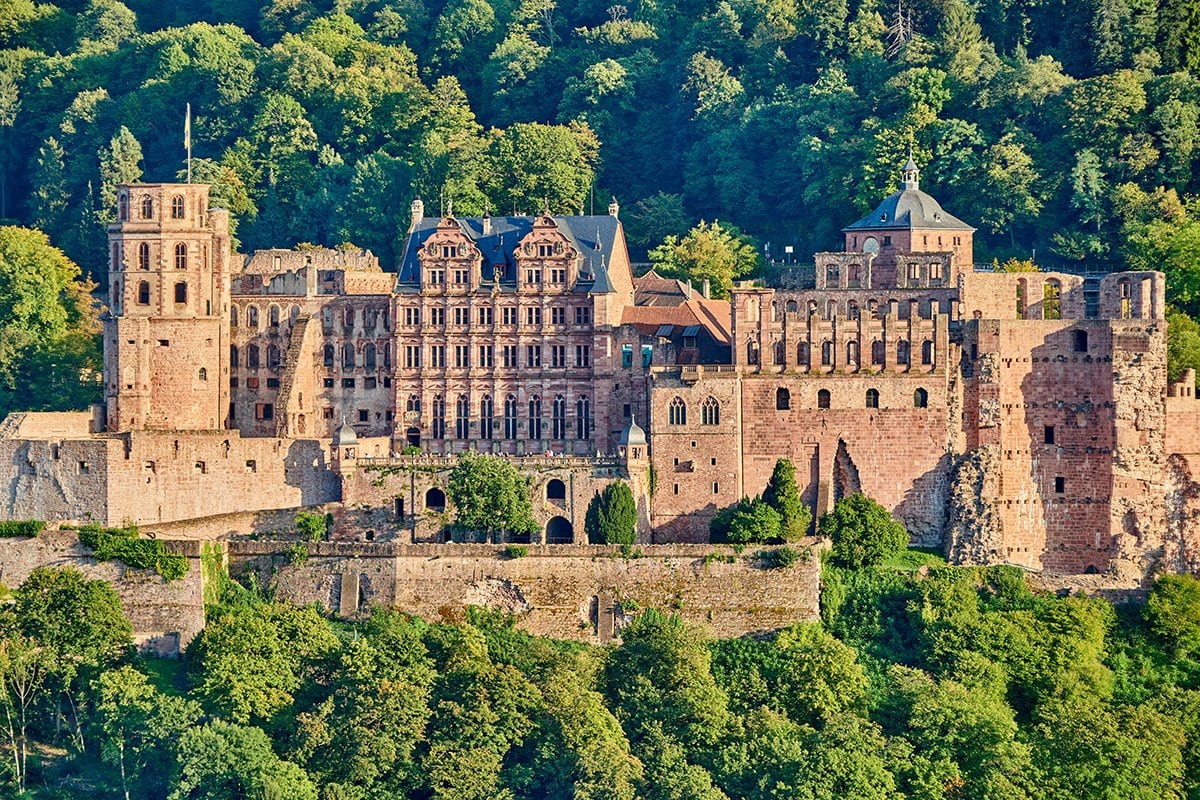
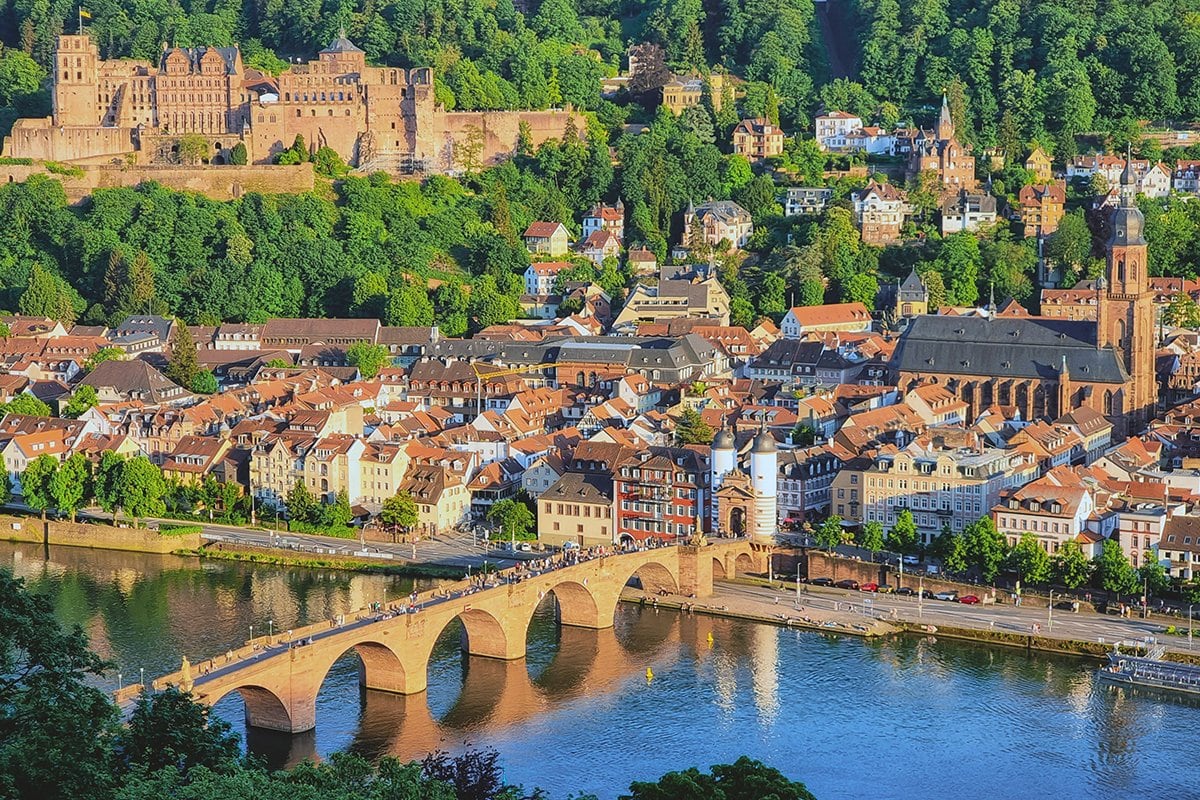
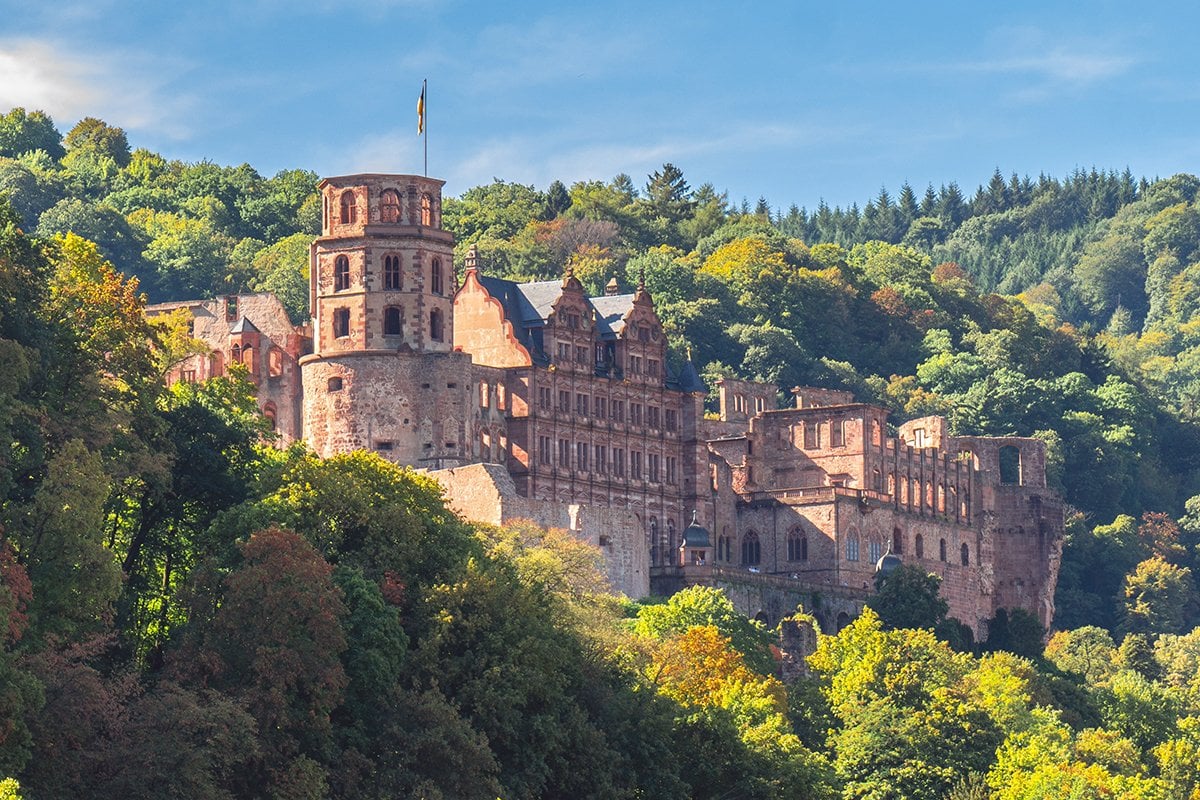
Heidelberg Castle (Heidelberger Schloss), the great red sandstone ruin above the Neckar, looks down on the rooftops and spires of Heidelberg’s Old Town from a wooded ledge on the northern slope of the Königstuhl. From below, the silhouette is unmistakable: broken towers and roofless palace wings framed by dark forest, the warm color of the stone shifting from amber to rust as the light moves across it. For five centuries this was the residence of the Counts Palatine, later Electors Palatine, of the Rhine, one of the most powerful dynasties in the Holy Roman Empire, and the castle they raised here counts among the most important Renaissance buildings north of the Alps.
Its fame, though, rests as much on what was lost as on what was built. The palace was devastated twice by the armies of Louis XIV, struck by lightning in 1764, and then, in a decision that helped shape modern conservation, deliberately preserved as a ruin rather than rebuilt. Around a million visitors a year now climb to a place that is celebrated precisely for being broken. This is the paradox at the heart of Heidelberg Castle, and the thread that runs through its whole story.
Quick Facts
| Country | Germany |
| Region / State | Baden-Württemberg |
| Nearest Town | Heidelberg |
| Construction Period | Castle first documented 1225; Renaissance expansion 16th–early 17th century |
| Founder / Dynasty | Counts, later Electors, Palatine of the Rhine (House of Wittelsbach) |
| Architectural Style | German Renaissance, with Gothic and Baroque elements |
| Building Type | Hilltop palace-castle (Schloss) |
| Current Condition | Partial ruin |
| Open to Visitors | Yes |
| UNESCO Status | Not listed |
| Official Website | schloss-heidelberg.de |
From Hilltop Burg to Electoral Seat
Heidelberg appears in the written record in 1196, when a document names the settlement as Heidelberch. A castle on the hill is first mentioned in 1225, when Ludwig I of the House of Wittelsbach held the site as a fief from the Bishop of Worms. By then the Palatinate already had a long association with the dynasty: Conrad of Hohenstaufen had been made Count Palatine of the Rhine in 1156 by his half-brother, the Emperor Frederick Barbarossa, and around 1182 the Palatine court shifted from Bacharach on the Rhine toward Heidelberg. Whether Conrad himself lived on the Jettenbühl, the spur where the present ruins stand, cannot be proven from the sources.
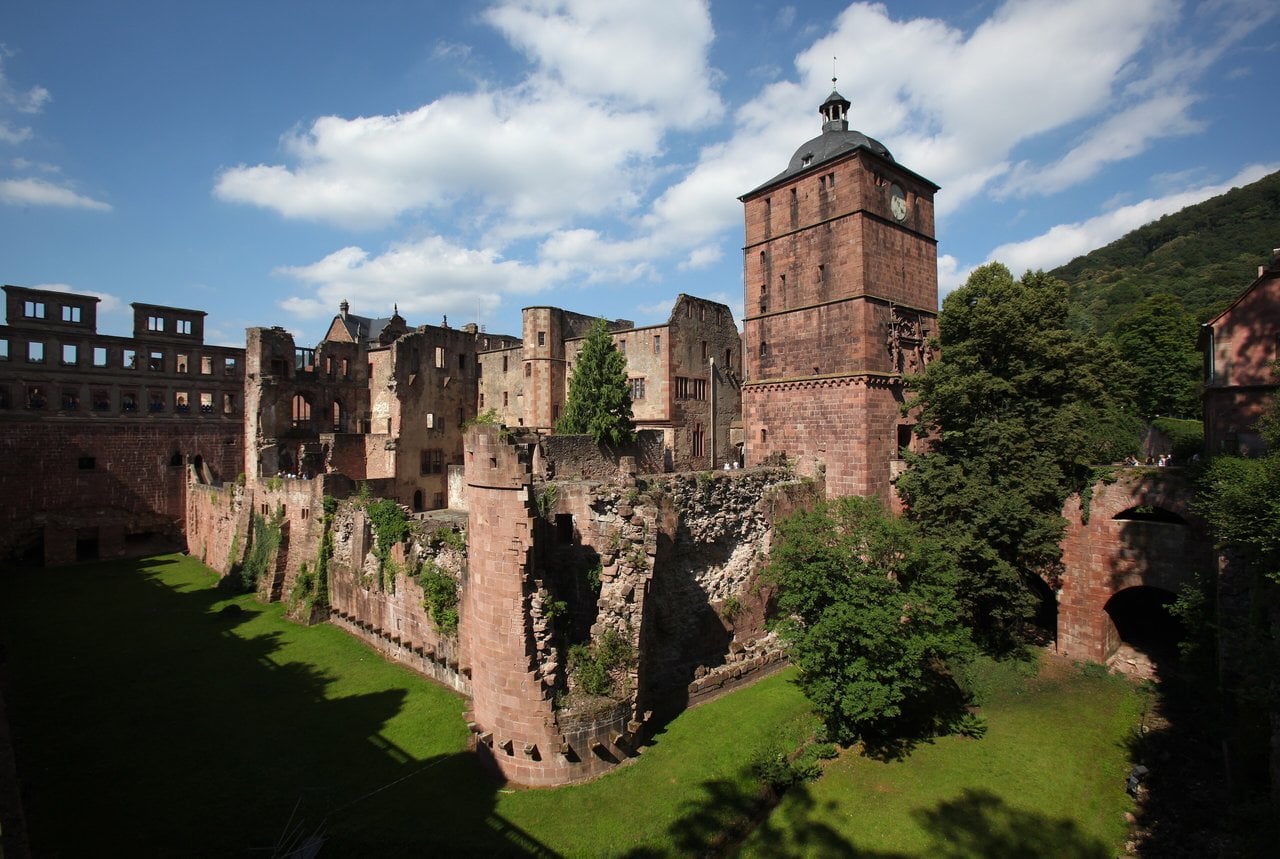
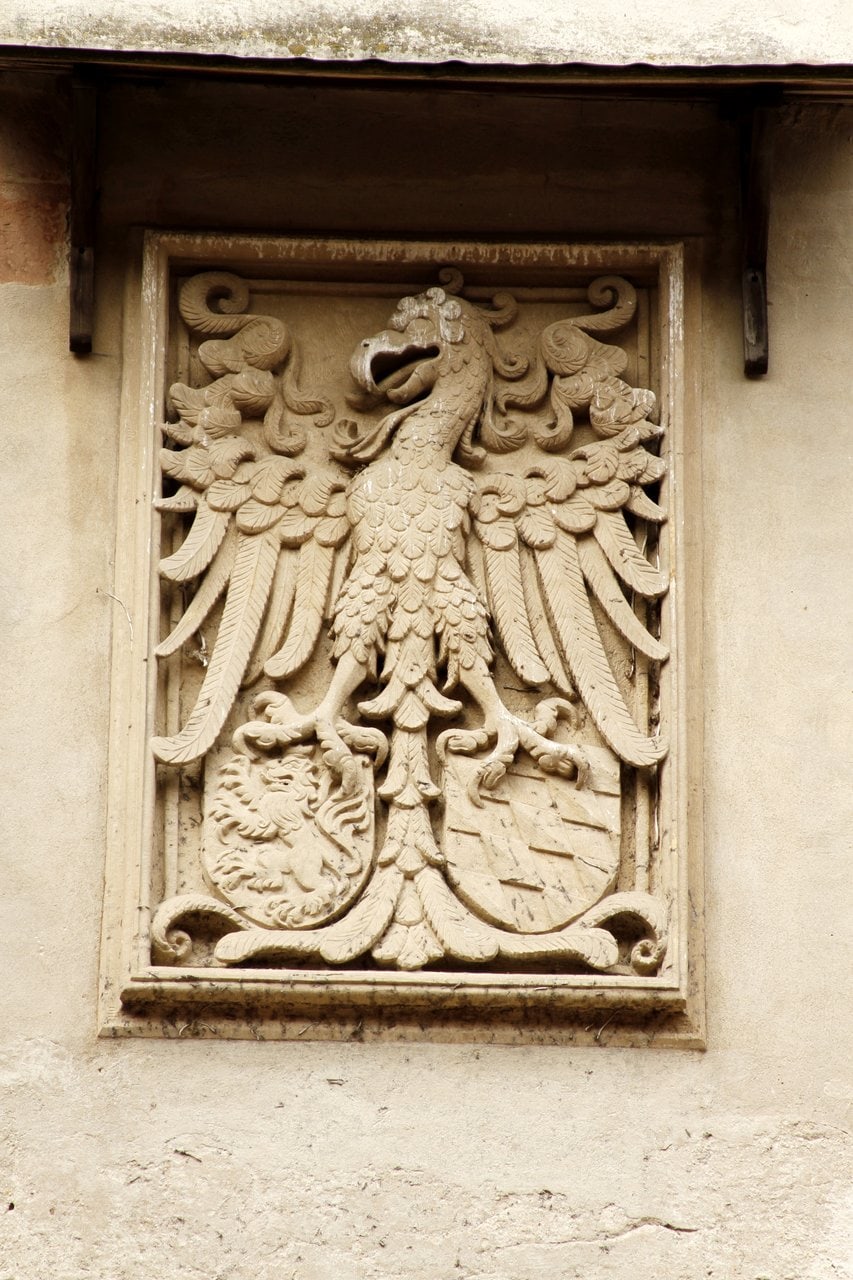
For a time there were two castles. A document of 1303 lists an upper fortress on the Kleiner Gaisberg and a lower residence on the Jettenbühl below it. Lightning destroyed the upper castle in 1537, and the lower one, the site of everything a visitor sees today, grew steadily into one of the great building ensembles of the Empire. Its transformation from a medieval Burg into a princely residence began around 1400 under Elector Ruprecht III, who needed room for a growing court. The oldest wing still standing, the Ruprechtsbau, dates from his reign; its portal carries the imperial eagle, the Palatine lion, and the Wittelsbach lozenge cut into stone. When Ruprecht returned from his coronation as King of the Romans in 1401, the story goes, the castle was still so cramped that his entourage had to camp at the Augustinian monastery in the town below.
 CC BY 2.0" srcset="https://stonekeepatlas.com/wp-content/uploads/2026/06/heidelberg_gate-tower-moat-ruined-wings_WC.jpg 1280w, https://stonekeepatlas.com/wp-content/uploads/2026/06/heidelberg_gate-tower-moat-ruined-wings_WC-300x201.jpg 300w, https://stonekeepatlas.com/wp-content/uploads/2026/06/heidelberg_gate-tower-moat-ruined-wings_WC-1024x687.jpg 1024w, https://stonekeepatlas.com/wp-content/uploads/2026/06/heidelberg_gate-tower-moat-ruined-wings_WC-768x515.jpg 768w" sizes="auto, (max-width: 1280px) 100vw, 1280px" />
The Renaissance Palace of the Electors Palatine
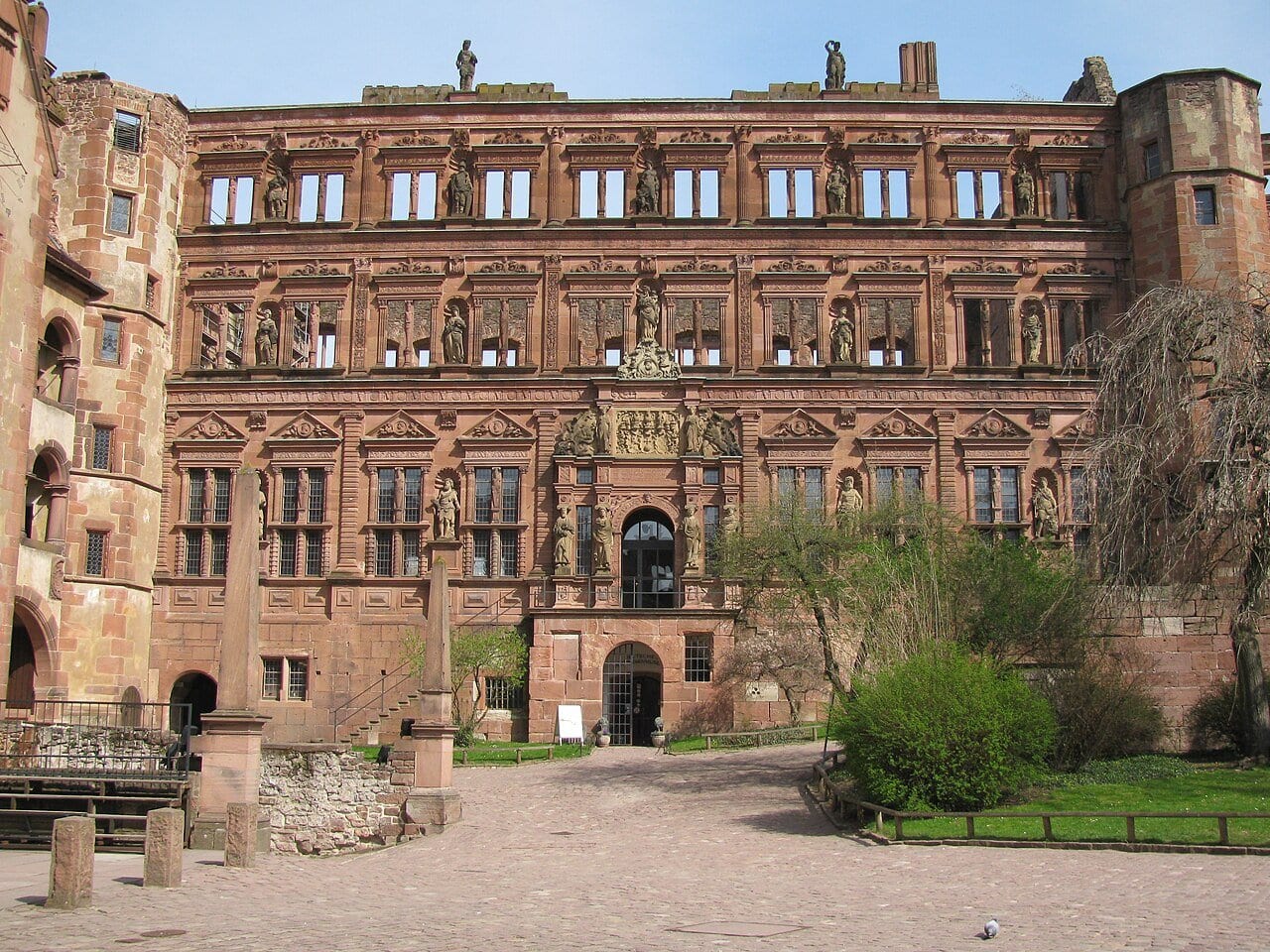
The courtyard of Heidelberg Castle reads like an open textbook of German architectural history, and its two finest pages face each other across the open space. The first is the Ottheinrichsbau, begun in 1556 for Elector Ottheinrich and completed after his death in 1559. Its four-story façade, carved by the Flemish sculptor Alexander Colin of Mechelen, carries a program of sixteen larger-than-life figures: biblical and classical heroes at ground level, the virtues of a Christian ruler above them, and the planetary deities of antiquity higher still, with Ottheinrich himself presiding over the central portal. The mix of biblical and pagan imagery earned the wing its old nickname, the Pagan Building. Art historians regard it as one of the earliest and most accomplished Renaissance palace façades in Germany. French troops and then lightning stripped away its upper floors, so that the richly worked stone now stands open to the sky above a single intact story; the figures on the façade today are copies, with the weathered originals sheltered indoors.
 CC0" srcset="https://stonekeepatlas.com/wp-content/uploads/2026/04/heidelberg_ottheinrichsbau-facade-courtyard_WC.jpg 1280w, https://stonekeepatlas.com/wp-content/uploads/2026/04/heidelberg_ottheinrichsbau-facade-courtyard_WC-300x225.jpg 300w, https://stonekeepatlas.com/wp-content/uploads/2026/04/heidelberg_ottheinrichsbau-facade-courtyard_WC-1024x768.jpg 1024w, https://stonekeepatlas.com/wp-content/uploads/2026/04/heidelberg_ottheinrichsbau-facade-courtyard_WC-768x576.jpg 768w" sizes="auto, (max-width: 1280px) 100vw, 1280px" />
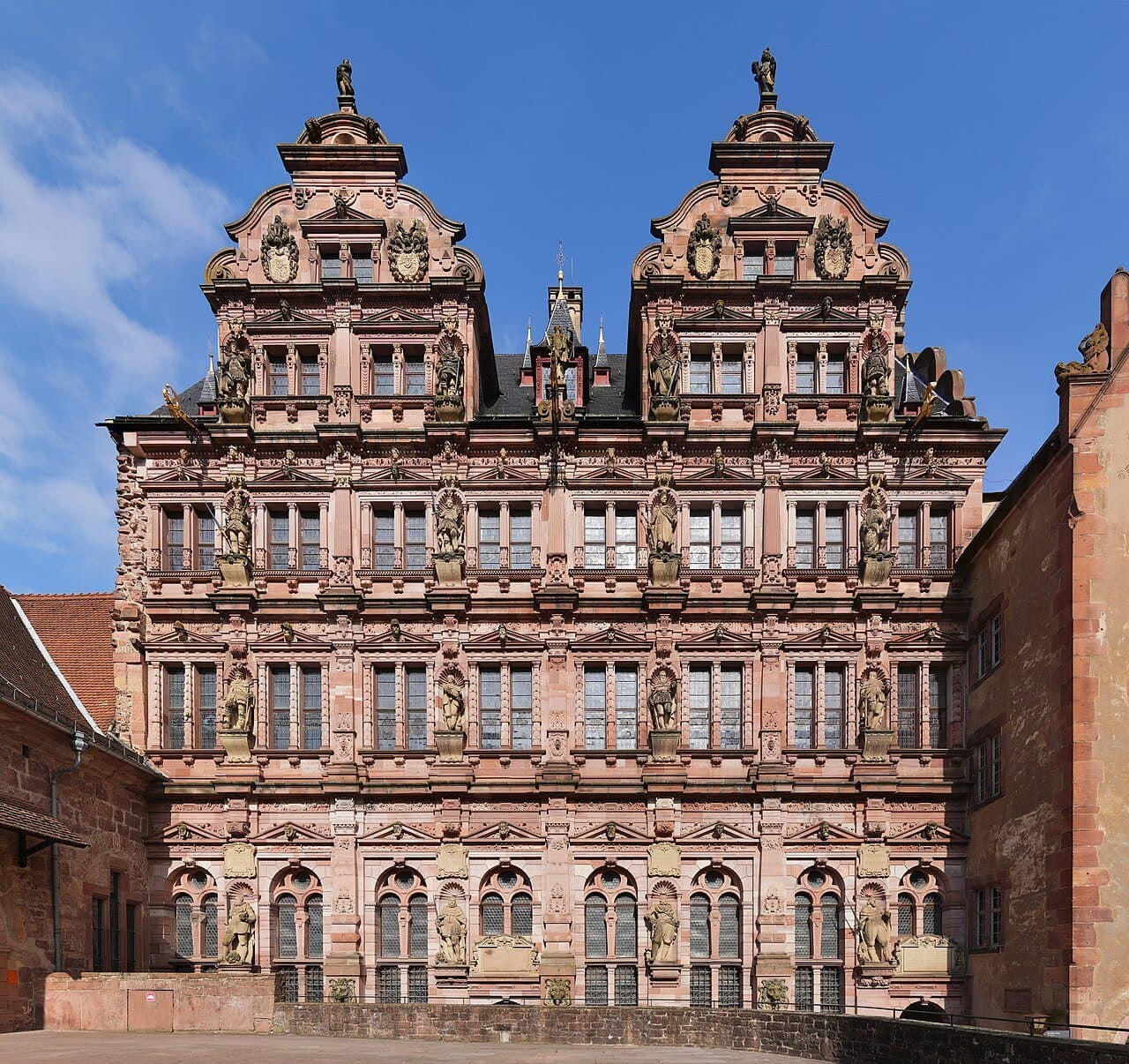
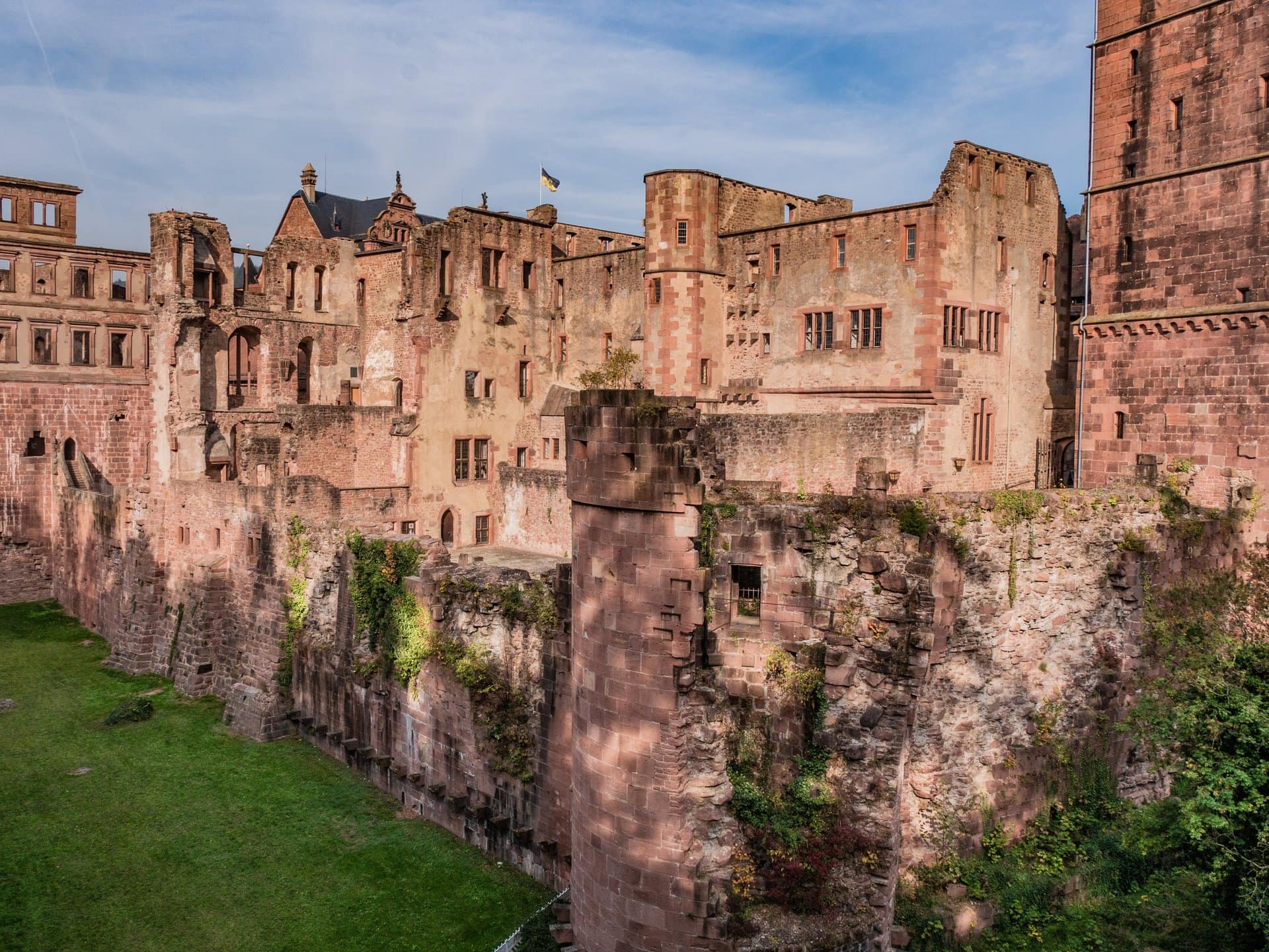
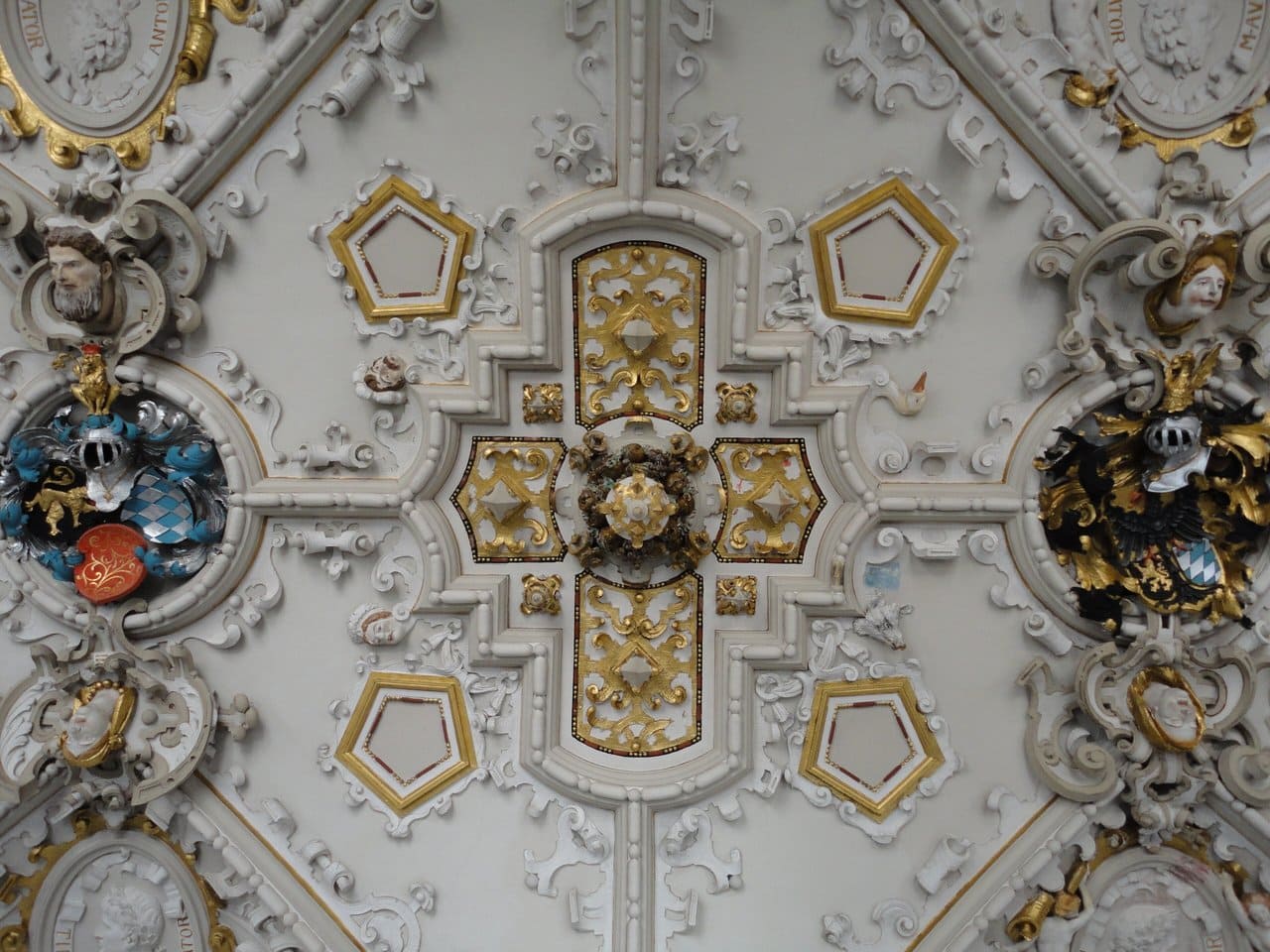
Facing it stands the Friedrichsbau, built between 1601 and 1607 for Elector Friedrich IV by the architect Johannes Schoch, with sculpture by Sebastian Götz of Chur. Its façade is a dynasty rendered in stone: sixteen statues in four ranks, running from Charlemagne at the summit down to Friedrich IV himself at the foot, a stone genealogy meant to anchor the Palatine electors among the great rulers of Europe. Between these two wings, the Gläserner Saalbau, finished in 1549 under Elector Friedrich II, contributes three tiers of Renaissance arcades; its upper hall once glittered with Venetian mirror-glass, the source of its name. Behind the courtyard façades lay a working court. The Königssaal, or King’s Hall, on the ground floor of the Ladies’ Building, ran some thirty-five meters in length and served for banquets and receptions; service buildings, a bakery, and a slaughterhouse crowded the western end, and a deep moat with a gatehouse of 1528 guarded the approach. Taken together, these buildings made Heidelberg, before the Thirty Years’ War, one of the most admired residences in the Holy Roman Empire.
 CC BY-SA 3.0" srcset="https://stonekeepatlas.com/wp-content/uploads/2026/04/heidelberg_friedrichsbau-facade-full-courtyard_WC.jpg 1280w, https://stonekeepatlas.com/wp-content/uploads/2026/04/heidelberg_friedrichsbau-facade-full-courtyard_WC-300x283.jpg 300w, https://stonekeepatlas.com/wp-content/uploads/2026/04/heidelberg_friedrichsbau-facade-full-courtyard_WC-1024x965.jpg 1024w, https://stonekeepatlas.com/wp-content/uploads/2026/04/heidelberg_friedrichsbau-facade-full-courtyard_WC-768x724.jpg 768w" sizes="auto, (max-width: 1280px) 100vw, 1280px" />
The Winter King, Elizabeth Stuart, and the Hortus Palatinus
The last great age of building at Heidelberg belongs to one couple. On February 14, 1613, Elector Friedrich V married Elizabeth Stuart, daughter of King James I of England, at the royal chapel in Whitehall. The match had been arranged to seal an alliance of Protestant powers, yet it grew into a genuine partnership, and the lively English princess and the melancholy young elector spent some of their happiest years at Heidelberg. Friedrich brought back from England the French Huguenot engineer Salomon de Caus, who had served the Stuart court, and for a time the architect Inigo Jones moved in the same circle. What followed was an attempt to remake the medieval castle in the spirit of an English and Italian court.
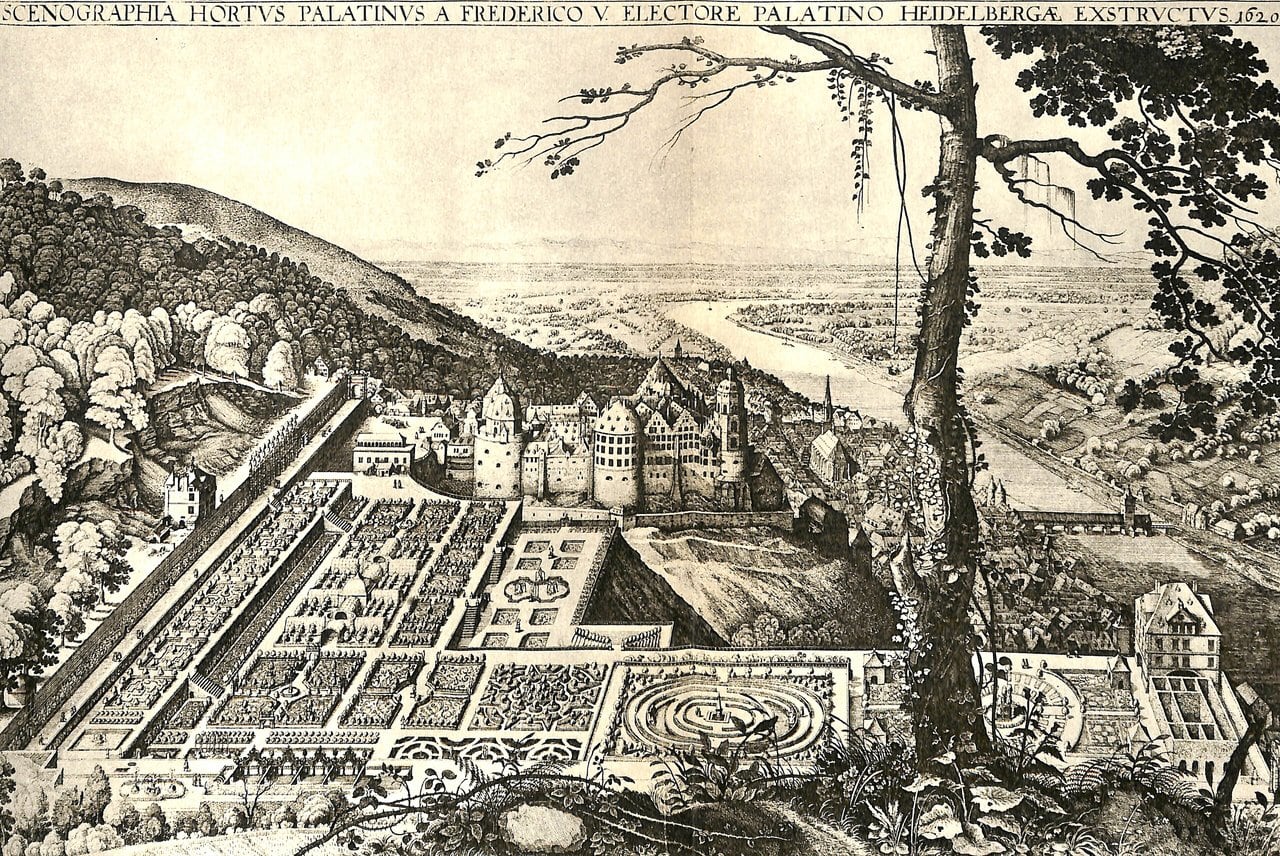
Friedrich added a new wing for his bride, the Englischer Bau, or English Building, raised between about 1612 and 1614 on the northern rampart for want of room inside the main quadrangle. Today it stands roofless, its empty windows open to the valley. De Caus then turned to the gardens. For Elizabeth’s birthday in 1615 he designed the Elisabethentor, a small triumphal arch whose columns are carved as living tree trunks, with squirrels, lizards, and frogs hidden in the stone branches; legend holds that Friedrich had it built in a single night and presented it the next morning, its arch dedicated to “my much beloved consort.” His larger gift was the Hortus Palatinus, a terraced garden of parterres, grottoes, and fountains that contemporaries called the eighth wonder of the world. Work was still unfinished when politics overtook it.
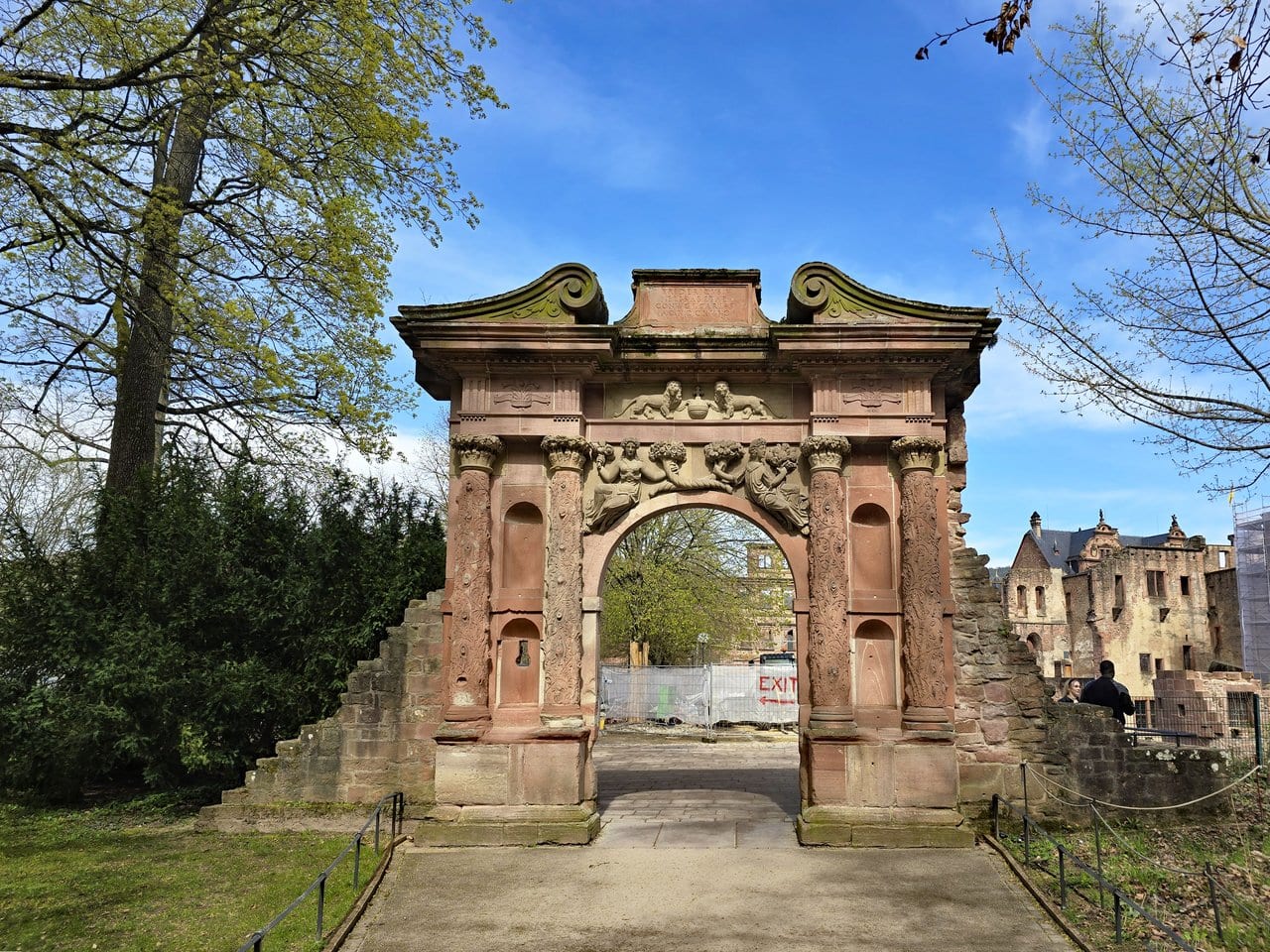 CC BY-SA 4.0" srcset="https://stonekeepatlas.com/wp-content/uploads/2026/06/heidelberg_elisabethentor-elizabeth-gate_WC.jpg 1280w, https://stonekeepatlas.com/wp-content/uploads/2026/06/heidelberg_elisabethentor-elizabeth-gate_WC-300x225.jpg 300w, https://stonekeepatlas.com/wp-content/uploads/2026/06/heidelberg_elisabethentor-elizabeth-gate_WC-1024x768.jpg 1024w, https://stonekeepatlas.com/wp-content/uploads/2026/06/heidelberg_elisabethentor-elizabeth-gate_WC-768x576.jpg 768w" sizes="auto, (max-width: 1280px) 100vw, 1280px" />
In 1619 Friedrich accepted the crown of Bohemia, a Protestant gamble against the Catholic Habsburgs. His army was broken at the Battle of White Mountain on November 8, 1620, after a reign of barely a year, and he passed into history as the Winter King. He lost Bohemia, his lands, and the Palatine electoral dignity, which was handed to Bavaria. The garden was never completed, and Heidelberg’s golden century ended almost as soon as it had begun.
War, Fire, and Ruin
The Thirty Years’ War reached Heidelberg in 1622, when the Catholic League army under Tilly stormed the town. The following year the Bibliotheca Palatina, the famous library assembled at the Reformed court of the Palatinate, was carried off over the Alps and presented to the Pope, a loss the Vatican still holds today. At least 847 of the German-language manuscripts returned to Heidelberg in 1816, handed over in the peace settlement at the Congress of Vienna; the bulk of the collection remains in the Vatican Library. Heidelberg had been a stronghold of Reformed Protestantism since 1563, when Elector Friedrich III commissioned the Heidelberg Catechism, and that confessional weight made the castle a target in the religious wars. A fuller account of the castle’s place in those conflicts appears in The Reformation and the Castle.
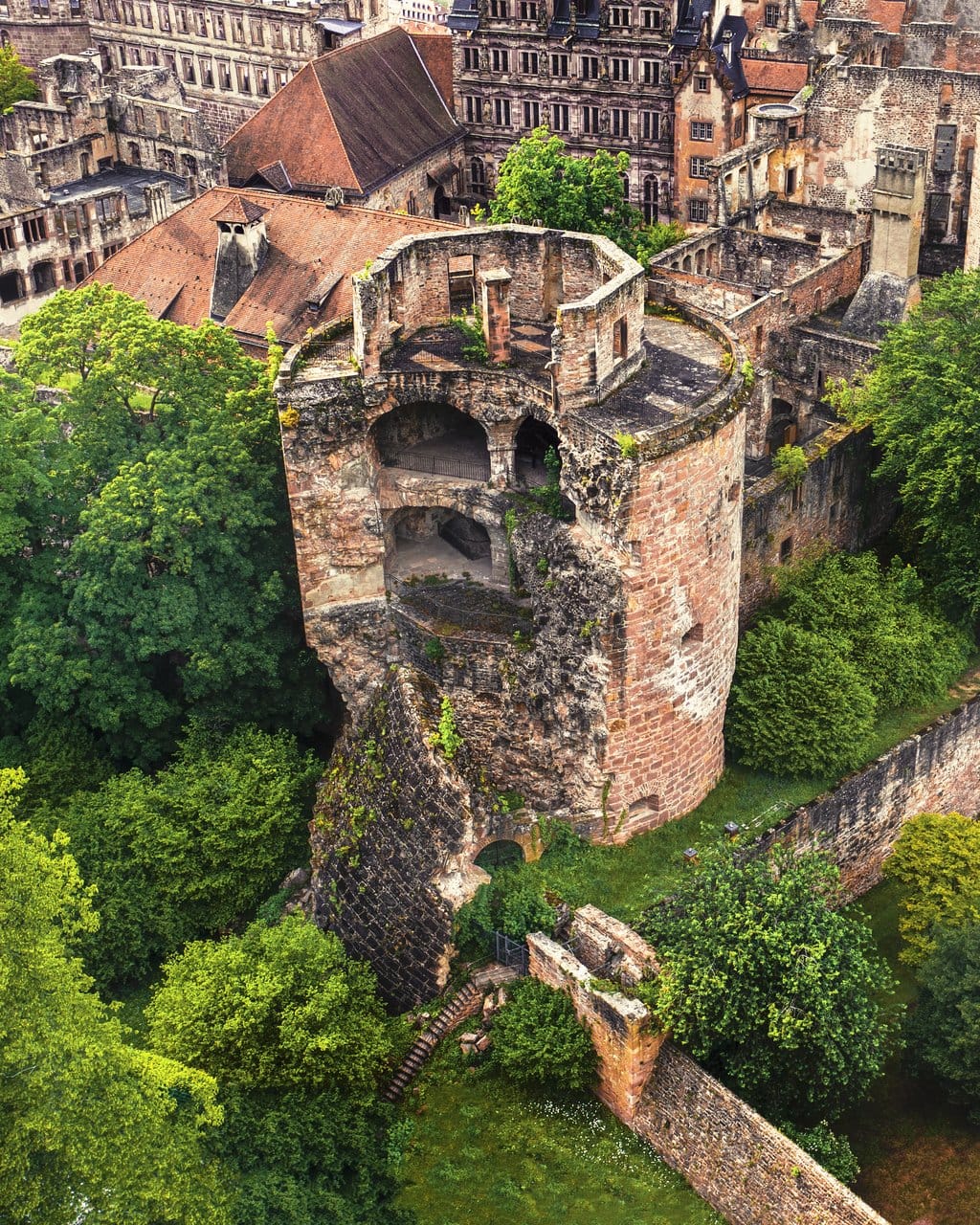
Worse came at the century’s end. In the War of the Palatine Succession, Louis XIV pressed a claim to the territory through his sister-in-law, Liselotte of the Palatinate, and sent his armies up the Neckar. In March 1689 French troops set fire to the castle and blew the face off the great round Dicker Turm, the Thick Tower, whose walls were some seven meters deep and whose upper floor Friedrich V had once fitted out as a theater in the English style. They returned in 1693 and finished the work, packing the Krautturm, the powder tower, with mines until half of it sheared away and toppled whole into the moat. That shattered hulk, the Gesprengter Turm or Blown-up Tower, became one of the most photographed images of the ruin.
The electors never truly recovered the castle. In 1720, after a quarrel with Heidelberg’s Protestant townspeople over a church, Elector Karl III Philipp moved the residence down to the plain at Mannheim, ending Heidelberg’s role as the seat of the Palatinate. His successor, Karl Theodor, briefly considered making the castle habitable again. Then, on a June day in 1764, lightning struck the rebuilt halls twice in quick succession and set them ablaze. Victor Hugo, who visited in 1840, later relished the timing: the strike came, he wrote, on the eve of the day the elector was to come and take up residence, with his furniture already set down at the door, in the Church of the Holy Spirit. After that the plan was abandoned for good, and the castle was left to the weather and to the townspeople, who carried off its dressed stone to build their houses.
The Ruin Reborn: Romanticism and a Conservation Principle
What saved Heidelberg was a change in taste. Around 1800 the broken towers and ivy-grown walls, set against forested hills and the curve of the river, became exactly the kind of scene the Romantic age longed for. Poets and painters made the pilgrimage; the English painter J. M. W. Turner came back again and again between 1817 and 1844 to paint the castle above the Neckar. The university, re-founded in 1803, filled the town with students who read the ruin as a symbol of German history. The strangest of its admirers was a French émigré. Count Charles de Graimberg, who had fled the Revolution, settled below the castle in 1810 and devoted his life and fortune to saving it, documenting every wall in meticulous drawings and fighting the quarrymen. His vast collection became the seed of Heidelberg’s Kurpfälzisches Museum. When Mark Twain published A Tramp Abroad in 1880 and described the ruin as “deserted, discrowned, beaten by the storms, but royal still, and beautiful,” he carried Heidelberg to a wide English-speaking audience.
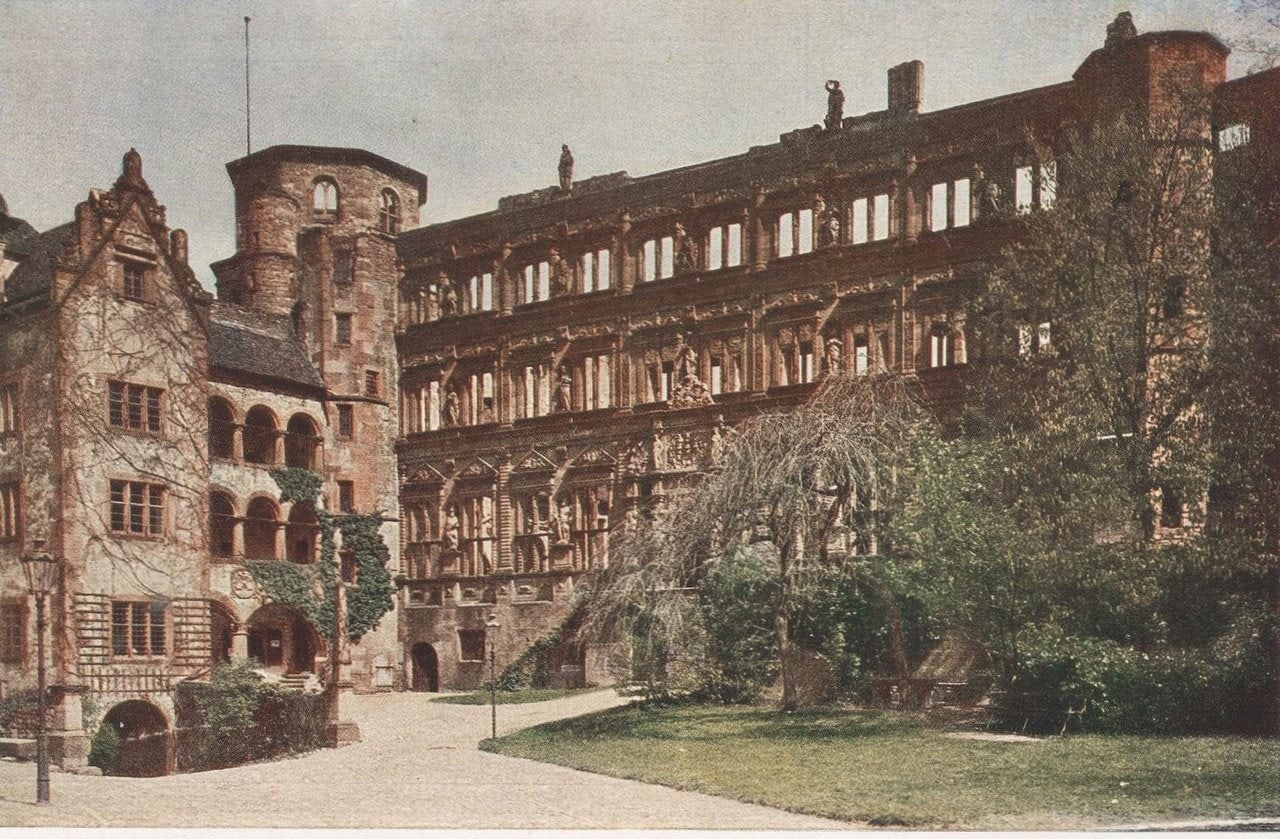
By 1900 the affection had hardened into a dilemma. Some argued for rebuilding the castle to its Renaissance glory; others insisted that the ruin itself was the monument, and that to restore it would be to destroy it. This Heidelberg Castle Dispute, the Heidelberger Schlossstreit, drew in the leading conservators of the day. The art historian Georg Dehio argued the case against restoration in an 1901 pamphlet and won it decisively at the national heritage congress of 1905, where his maxim “Konservieren, nicht restaurieren,” conserve, do not restore, became a founding principle of modern monument care. The verdict held. Only the Friedrichsbau, whose walls had survived nearly whole, was restored between 1897 and 1903 by the Karlsruhe architect Carl Schäfer. Everything else was only secured as it stood, and the ruin that visitors see was quarried by the townspeople as well as broken by the wars and the lightning. The opposite choice was being made at that very moment in Alsace, where the Château du Haut-Kœnigsbourg was rebuilt from its ruins for Kaiser Wilhelm II rather than left as one.
Visiting Heidelberg Castle
Most visitors ride up on the Heidelberger Bergbahn, the funicular that climbs from Kornmarkt in the Old Town to the castle terrace and continues to the summit of the Königstuhl. Its lower section opened in 1890; the upper stretch, with historic wooden cars dating from 1907, is among the oldest funiculars in Germany. The standard Schlossticket covers the round-trip funicular ride together with the castle courtyard, the Great Barrel, and the German Apothecary Museum. Walkers can take the stepped path up from the Kornmarkt instead, which arrives at the same gate.
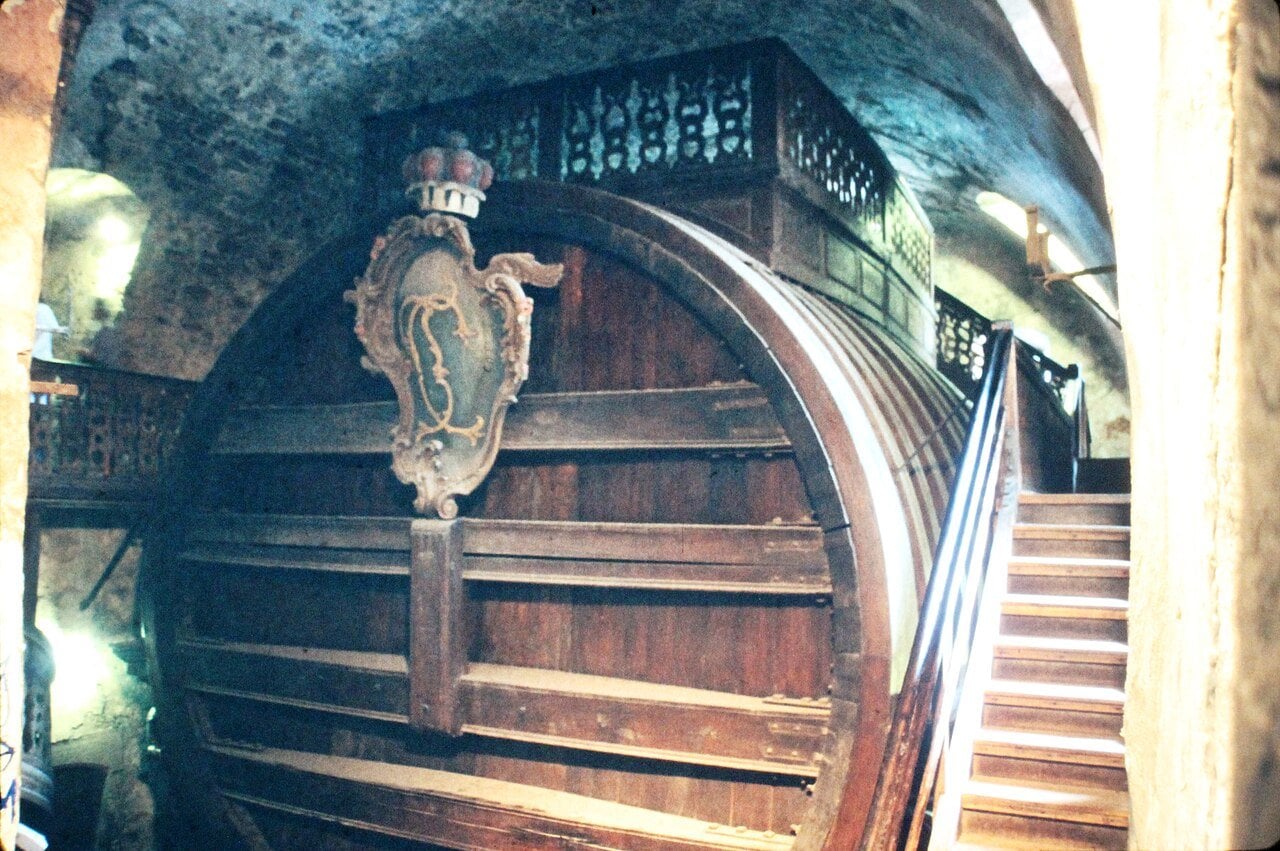
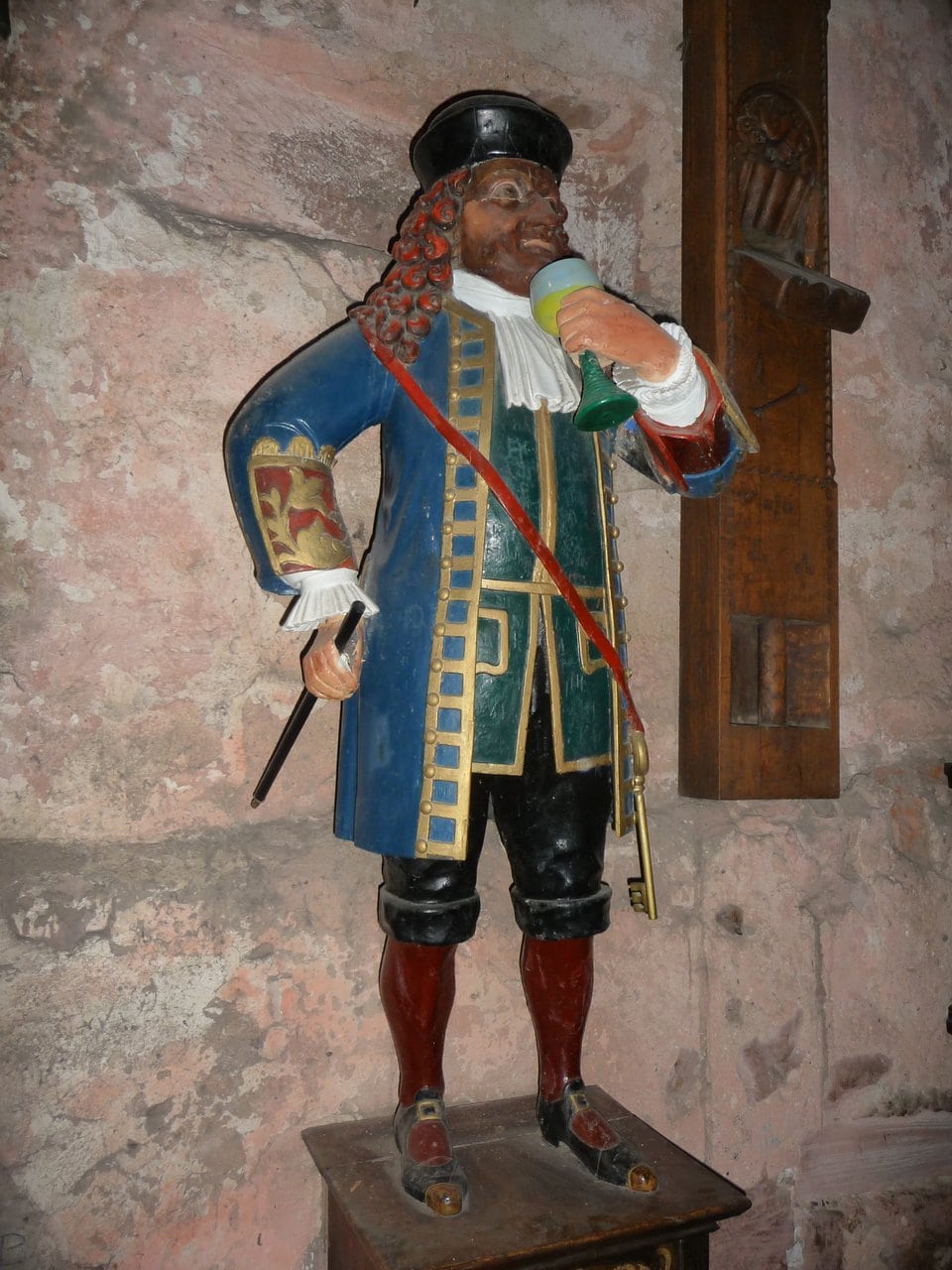
The single most popular sight inside is the Great Barrel, the Großes Fass, built in 1751 under Elector Karl Theodor in the cellar of the Barrel Building. About seven meters high and eight and a half across, with a dance floor on its top, it held a little over 221,000 liters of wine paid as tithe by the vineyards of the Palatinate, and remains the largest of four such vats raised here over two centuries. A carved figure of the court jester Perkeo, a Tyrolean dwarf who served Elector Karl III Philipp and was legendary for his drinking, stands guard beside it. In the basement of the Ottheinrichsbau, the German Apothecary Museum has gathered historic pharmacies, laboratories, and over a thousand crude drugs and remedies since 1957, one of the most visited collections in the country.
 CC0" srcset="https://stonekeepatlas.com/wp-content/uploads/2026/04/heidelberg_grosses-fass-great-barrel-cellar_WC.jpg 1280w, https://stonekeepatlas.com/wp-content/uploads/2026/04/heidelberg_grosses-fass-great-barrel-cellar_WC-300x199.jpg 300w, https://stonekeepatlas.com/wp-content/uploads/2026/04/heidelberg_grosses-fass-great-barrel-cellar_WC-1024x681.jpg 1024w, https://stonekeepatlas.com/wp-content/uploads/2026/04/heidelberg_grosses-fass-great-barrel-cellar_WC-768x511.jpg 768w" sizes="auto, (max-width: 1280px) 100vw, 1280px" />
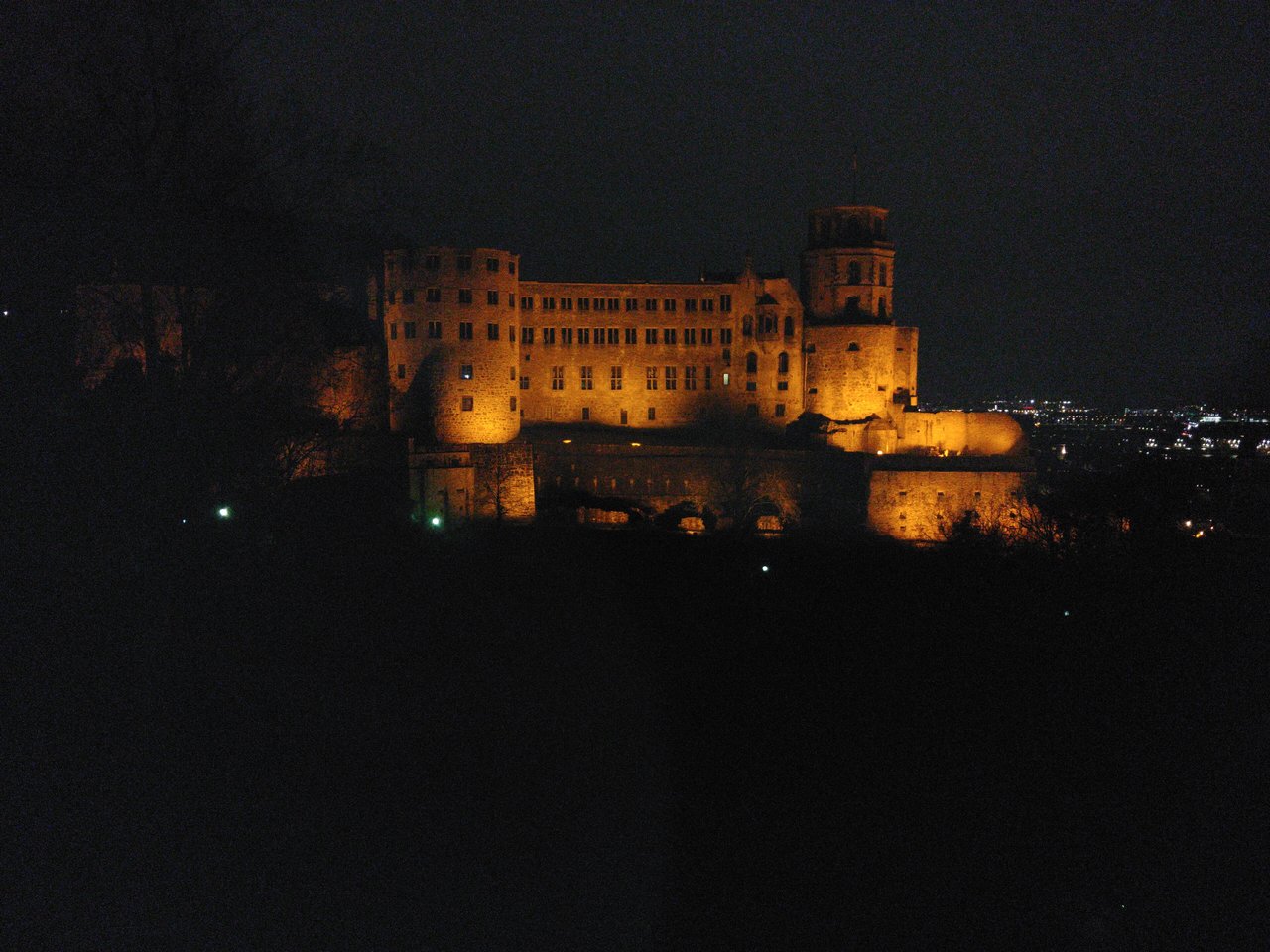
The restored interiors of the Friedrichsbau, including its chapel and the upper state rooms, can be seen only on a guided tour, which carries a separate ticket. The courtyard itself is reached across a stone bridge over the old moat and through the main gate of 1528, past the Soldatenbau where the castle guard was once quartered. From the Altan, the broad terrace beside the Friedrichsbau, the view reaches across the red roofs of the Old Town to the Neckar and the Rhine plain beyond, one of the most photographed prospects in Germany. The complementary view, looking up at the ruin from the Alte Brücke or the Philosophers’ Walk across the river, is the one that drew the Romantic painters two centuries ago. Several times a year the ruin is floodlit red for the Schlossbeleuchtung, a display whose red bengal fires recall the burning of the castle by French troops in 1689 and 1693; in 2026 the illuminations are scheduled for July 11 and September 5, with the operator’s site the place to confirm any additional summer date.
| Ticket (2026) | Adult | Reduced |
| Schlossticket (courtyard, funicular, Great Barrel, Apothecary Museum) | €11.00 | €5.50 |
| Guided tour of the Friedrichsbau interior (additional) | €6.00 | €3.00 |
| Opening hours | Daily 09:00–18:00 (last admission 17:30) | |
Heidelberg is easy to reach, lying about twenty kilometers from Mannheim, eighty from Frankfurt, and 120 from Stuttgart, with frequent trains from all three. Allow two to three hours for the courtyard, the barrel, and the museum, and longer if you take a guided tour or walk the surviving garden terraces. Guided tours and timed-entry tickets can be booked in advance through GetYourGuide, and rooms in the Old Town below the castle through Booking.com.
Some links on this page are affiliate links, which means StoneKeep Atlas may earn a small commission, at no extra cost to you, if you book through them.
More Views of Heidelberg Castle
A gallery of the castle and its setting, from the classic riverside view to the courtyard buildings and the floodlit ruin.
Beyond Heidelberg Castle
Heidelberg sits at the head of a region thick with castles and palaces, many of them in the care of the same state heritage agency. The Electors Palatine left their mark up and down the Neckar, from hunting lodges to the smaller fortresses that once answered to the great residence on the Jettenbühl. Their Baroque successors built on a grand scale once the court had moved to the plain: Ludwigsburg, the vast residence often called the Versailles of Swabia, and the garden palace of Schwetzingen both lie within an easy drive.
Farther south, two very different Baden-Württemberg castles make natural companions to a Heidelberg visit. Hohenzollern Castle, the ancestral seat of the Prussian royal house, rises on a lone peak of the Swabian Jura, a 19th-century vision of a medieval fortress. Lichtenstein Castle nearby is the “fairy-tale castle of Württemberg,” a Romantic creation inspired by a novel, and a reminder that the cult of the picturesque ruin which Heidelberg helped to create soon inspired castles built new in the old style. For a wider tour, Heidelberg features among The 15 Best Castles in Germany.
Heidelberg is one of the castles we have filmed, and the episode is collected with our other documentaries about castles.
Conclusion
Heidelberg Castle was built to project the power of the Electors Palatine across the Neckar Valley, and for a century and a half it did exactly that. That it endures instead as a ruin, and that the ruin is precisely what draws a million people a year, is the paradox at its heart. When Georg Dehio argued for conserving rather than restoring it, he was making a case not only about one Renaissance palace but about how a society should treat the broken inheritance of its own past. The castle the French destroyed and the lightning finished became, in its broken state, more eloquent than the palace it had once been, and the most photogenic ruin of the religious wars that shaped it.
Principal Sources
- Dehio-Handbuch der deutschen Kunstdenkmäler. Baden-Württemberg volume, for the architectural account.
- Encyclopaedia Britannica. Consulted for general synthesis.
- Staatliche Schlösser und Gärten Baden-Württemberg. The state agency that manages the monument; primary authority for the castle’s buildings, history, and visitor information. schloss-heidelberg.de, including the dossiers “Doppelter Blitzeinschlag” (the 1764 lightning) and “Denkmalstreit” (the conservation dispute), and the page on Charles von Graimberg.
The architectural account also draws on the scholarship surrounding the Heidelberger Schlossstreit and Georg Dehio’s conservation writings. Dynastic and biographical details were checked against German-language heritage sources; visitor figures, prices, and event dates reflect the operator’s published information for 2026 and should be confirmed before travel.
Image credits. Featured image and riverside gallery views (Philosophenweg, Alte Brücke): via Envato Elements. Gate tower, ruined wings, and moat: Steve Jurvetson, CC BY 2.0, via Wikimedia Commons. Ottheinrichsbau façade: Anaconda74, CC0, via Wikimedia Commons. Friedrichsbau ancestral gallery: imehling, CC BY-SA 3.0, via Wikimedia Commons. Elisabethentor: Rigorius, CC BY-SA 4.0, via Wikimedia Commons. Hortus Palatinus engraving (1620): Wenceslaus Hollar, public domain, via Wikimedia Commons. Ruined wings and moat: via Pixabay. Gesprengter Turm: via Envato Elements. Courtyard with the roofless Ottheinrichsbau (early colour view): Hermann Boll, public domain, via Wikimedia Commons. The Great Barrel: Gary Todd, CC0, via Wikimedia Commons. Gallery images: castle floodlit at night, Qwertz1234567, CC BY-SA 3.0, via Wikimedia Commons; Friedrichsbau interior ceiling: Paul Sableman, CC BY 2.0, via Wikimedia Commons; Große Grotte river-god fountain: Mabit1, CC BY-SA 4.0, via Wikimedia Commons; Friedrichsbau lion-head spout and Ruprechtsbau portal heraldry: © José Luiz Bernardes Ribeiro, CC BY-SA 4.0, via Wikimedia Commons; figure of the court jester Perkeo: Immanuel Giel, CC0, via Wikimedia Commons. Freely licensed images are resized to fit; otherwise unaltered.