
Fort Saint-André
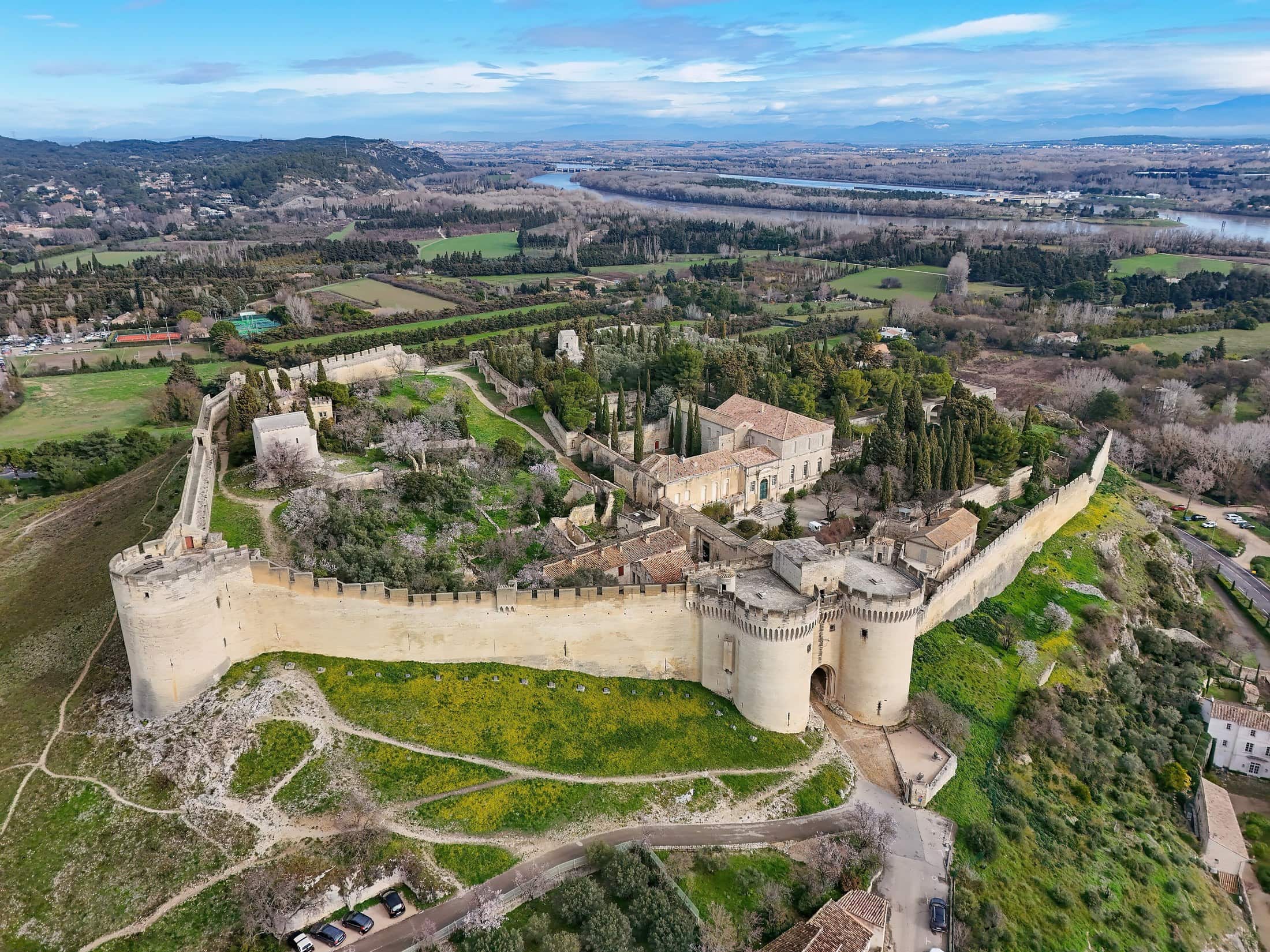
Fort Saint-André is the royal fortress that France raised on Mount Andaon to stare down the popes of Avignon across the Rhône. From the right bank at Villeneuve-lès-Avignon, its twin towers and seven hundred and fifty meters of curtain wall command the river and the papal city beyond, a deliberate statement of the king’s power planted where every cardinal could see it. Behind that military front the fort encloses something gentler, the old Benedictine Abbey of Saint-André and its famous terraced gardens, so that a single hilltop holds both a stronghold of the Crown and a quiet monastic refuge.
Quick Facts
| Location | Villeneuve-lès-Avignon, Gard, Occitanie, France |
| Built | c. 1362 – c. 1370s |
| Founder | French Crown (Philip IV; John II; Charles V) |
| Type | Royal frontier fortress |
| Setting | Hilltop (Mount Andaon) |
| Enclosure | ≈750 m of curtain wall around more than 3 hectares |
| Condition | Well preserved |
| Protection | Monument historique (1903, 1925); Base Mérimée PA00103306 |
| Managed by | Centre des monuments nationaux (CMN) |
| Coordinates | 43.9657° N, 4.8006° E |
| Official site | fort-saint-andre.fr |
A frontier on the Rhône
For most of the Middle Ages the Rhône was a border. By the Treaty of Paris of 1229, which ended the Albigensian Crusade, the French crown gained a long strip of land west of the river, from Pont-Saint-Esprit down to the Mediterranean. Across the water lay Provence and, beyond it, the Holy Roman Empire, so the river itself became the visible edge of the realm. Villeneuve-lès-Avignon grew up on the French side as a “new town,” and Mount Andaon, a rocky outcrop with steep faces to the north and east rising about fifty meters above the floodplain, made an obvious watchpost over the crossing.
What sharpened the frontier into something worth fortifying was the arrival of the papacy. In 1309 the popes settled in Avignon, directly across the water, and for most of the century that followed the small city on the left bank was the center of Western Christendom. A French king could hardly let the wealth and traffic of a papal capital sit unwatched at his doorstep. A paréage treaty of 1292, struck between Philip IV and the Benedictine abbey that already held the hill, gave the Crown its foothold on Mount Andaon and the right to build. Philip IV’s first stone answer rose just below the hill, at the western end of the Pont Saint-Bénézet, the bridge that carried the road across the river into Avignon: the Tour Philippe-le-Bel, a tall square tower built between about 1300 and 1307 to set a royal garrison squarely on the crossing.
A fortress against the popes
Philip IV, known as Philip the Fair, set the project in motion at the end of the thirteenth century, but the fortress that survives was largely the work of his successors, begun in earnest under John II, called John the Good, and carried on under his son Charles V. The architect who completed the work under Charles V, Jean de Louvres, was the same master then raising the great new palace of the popes across the river, so the two rival strongholds shared a designer even as they stared each other down. A surviving document of 1362 records the intention that Saint-André be “enclosed and fortified with walls and towers,” so that the monks could pray in peace and the townspeople enjoy their privileges in safety. A carved date of July 20, 1367 survives on the entrance arch, a marker of work in progress rather than of completion, for the great enclosure was not finished until the following decade.
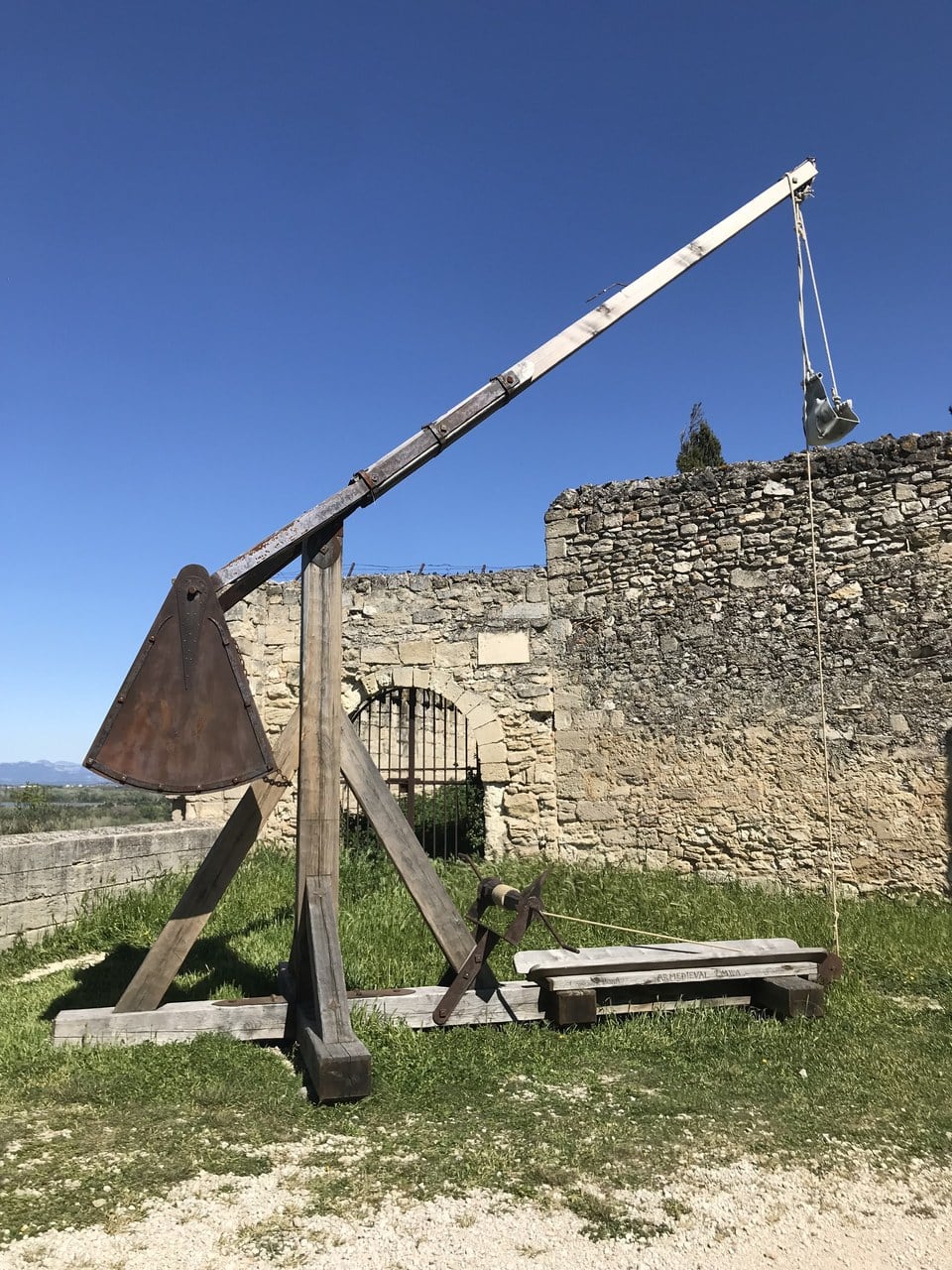
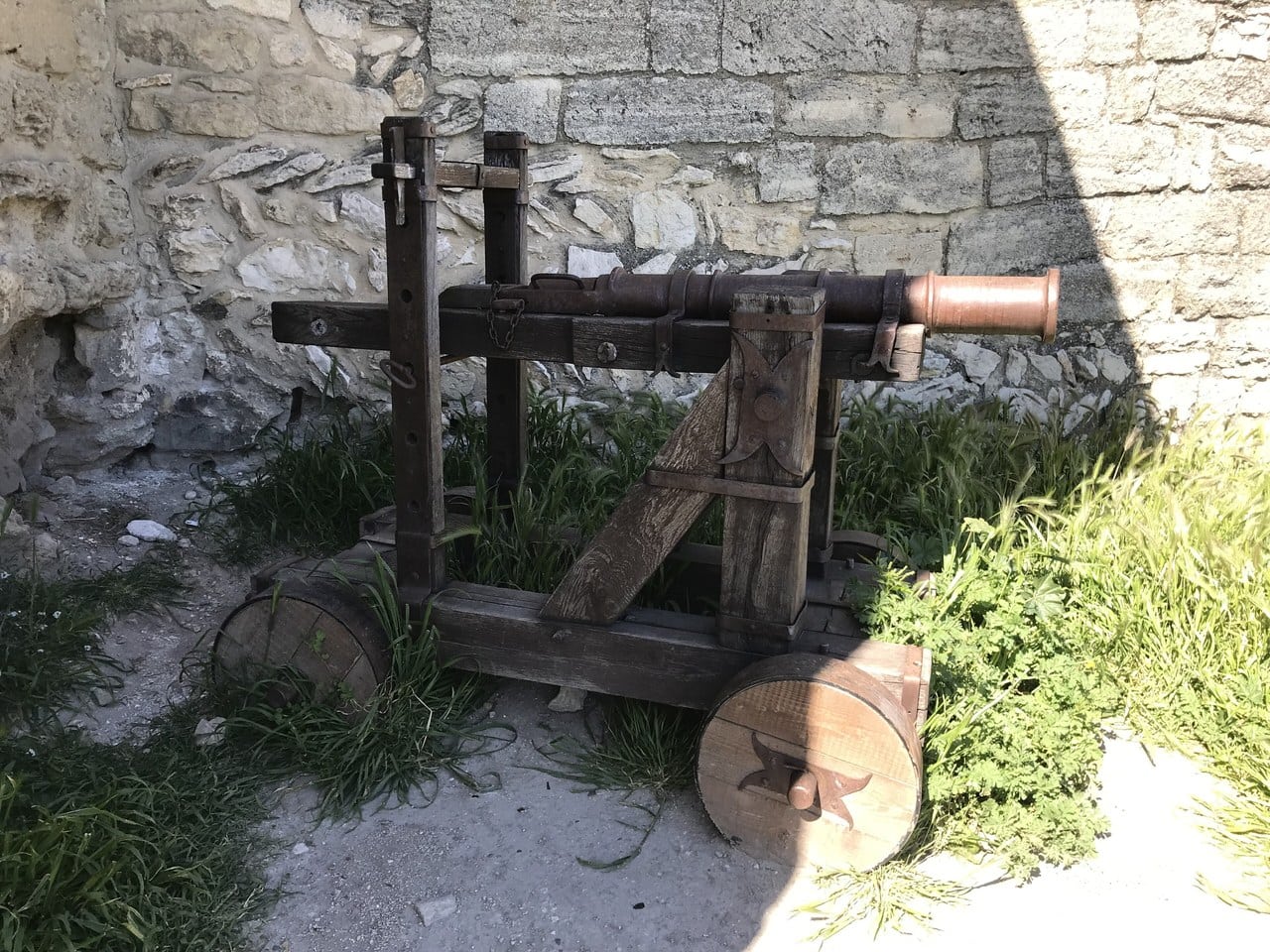
What rose was a full military enclosure, roughly seven hundred and fifty meters of curtain wall ringing more than three hectares, with battlements, machicolations, watchtowers, and a pair of portcullises guarding the entrance. Founding the Carthusian monastery of Val-de-Bénédiction in 1356, at the foot of the hill, the Avignon pope Innocent VI only raised the stakes. Now royal soldiers on the ramparts looked down not only on Avignon across the river but on a papal foundation immediately below them. The fort answered with a permanent garrison, a court of justice, and a prison, the apparatus of royal authority made solid in stone on a hill the king did not entirely own.
Twin towers and the great enclosure
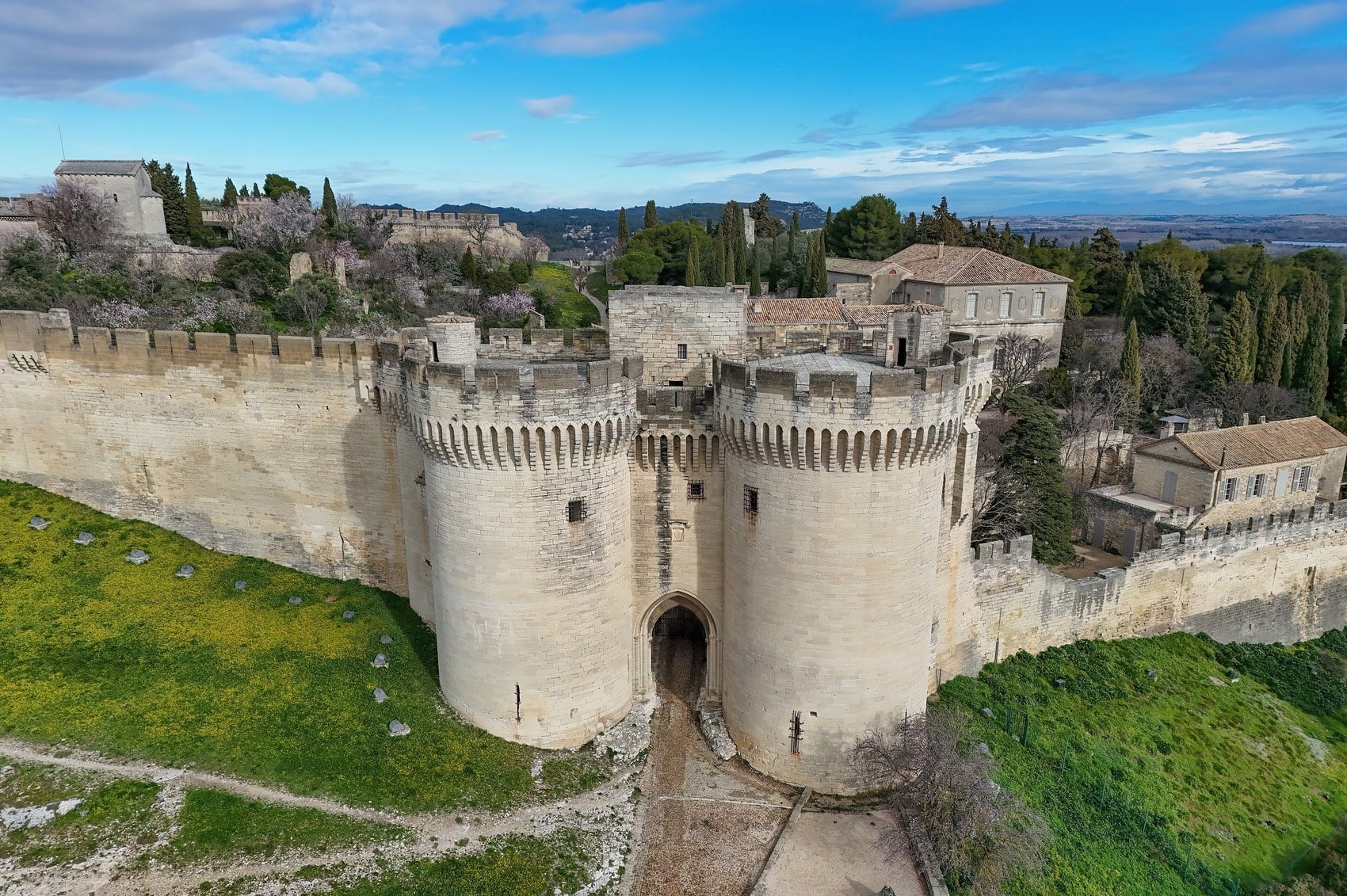
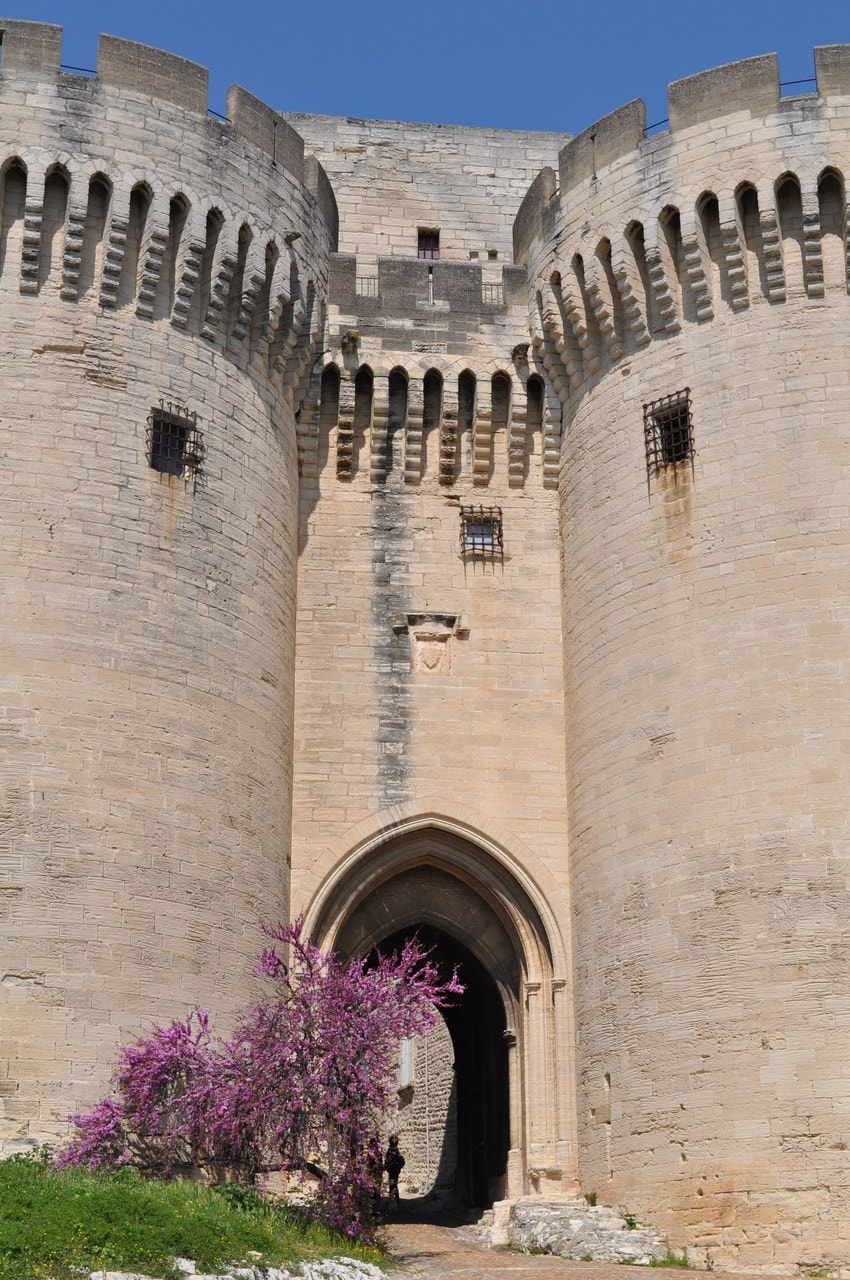
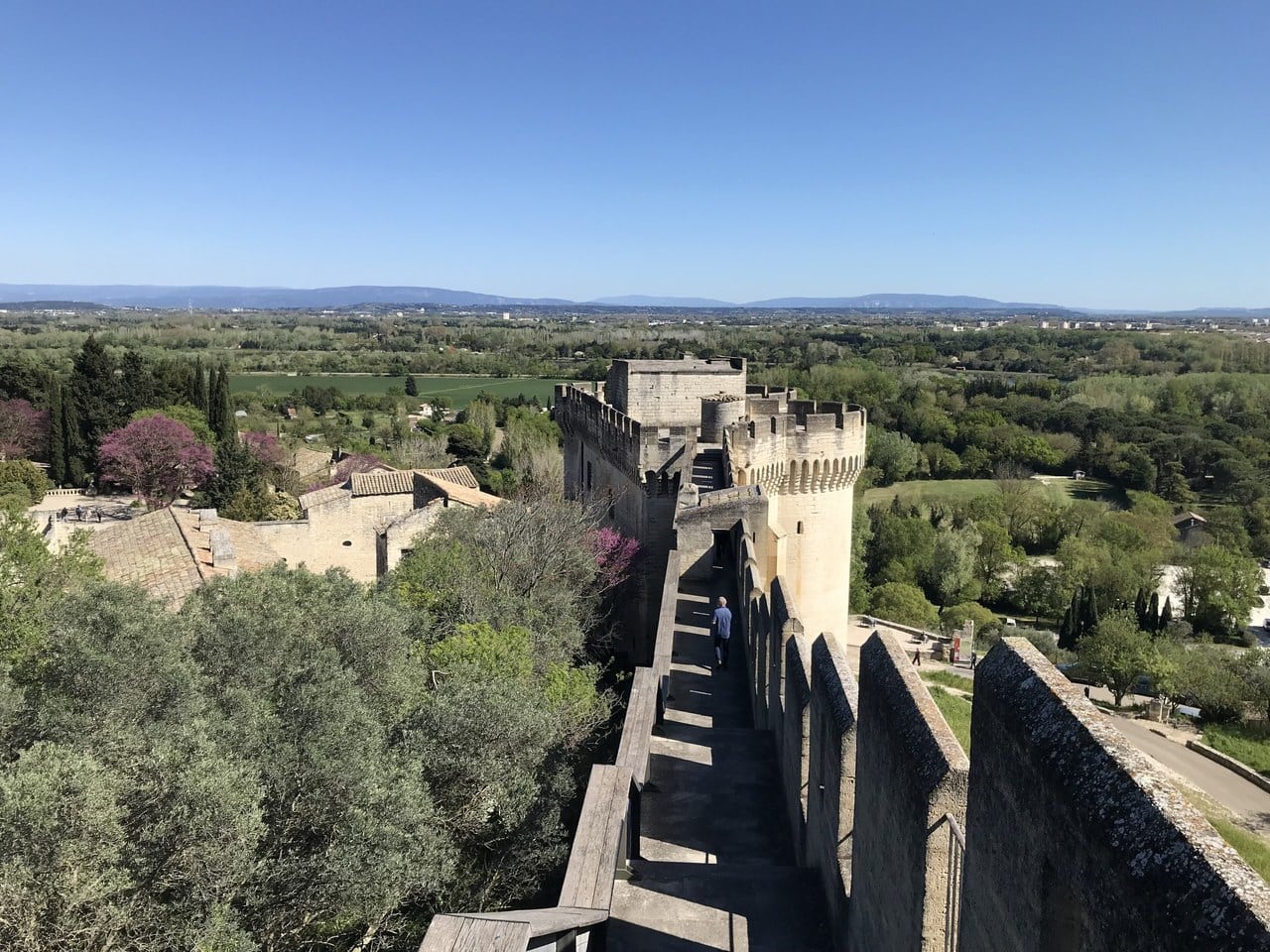
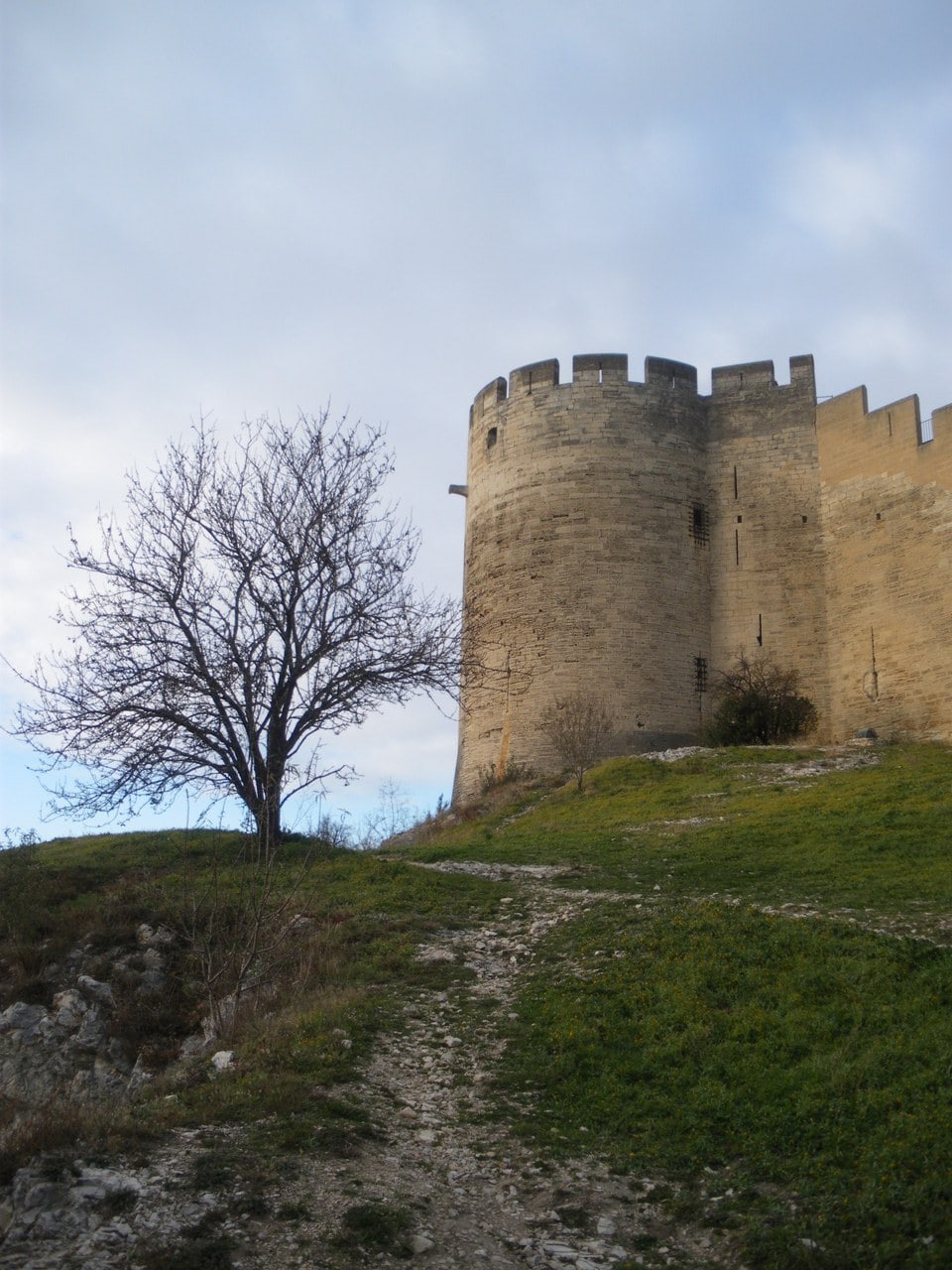
Fort Saint-André’s signature is its gatehouse, the châtelet, two tall cylindrical towers linked above a fortified passage, their crenellations, arrow loops, and machicolations giving the entrance the look of an impregnable citadel. Visitors still climb to the rampart walk at the top, where a continuous chemin de ronde once let sentries circle the whole enclosure and now offers a panorama that sweeps from Mont Ventoux to the Alpilles, with Avignon and its papal palace laid out across the Rhône.
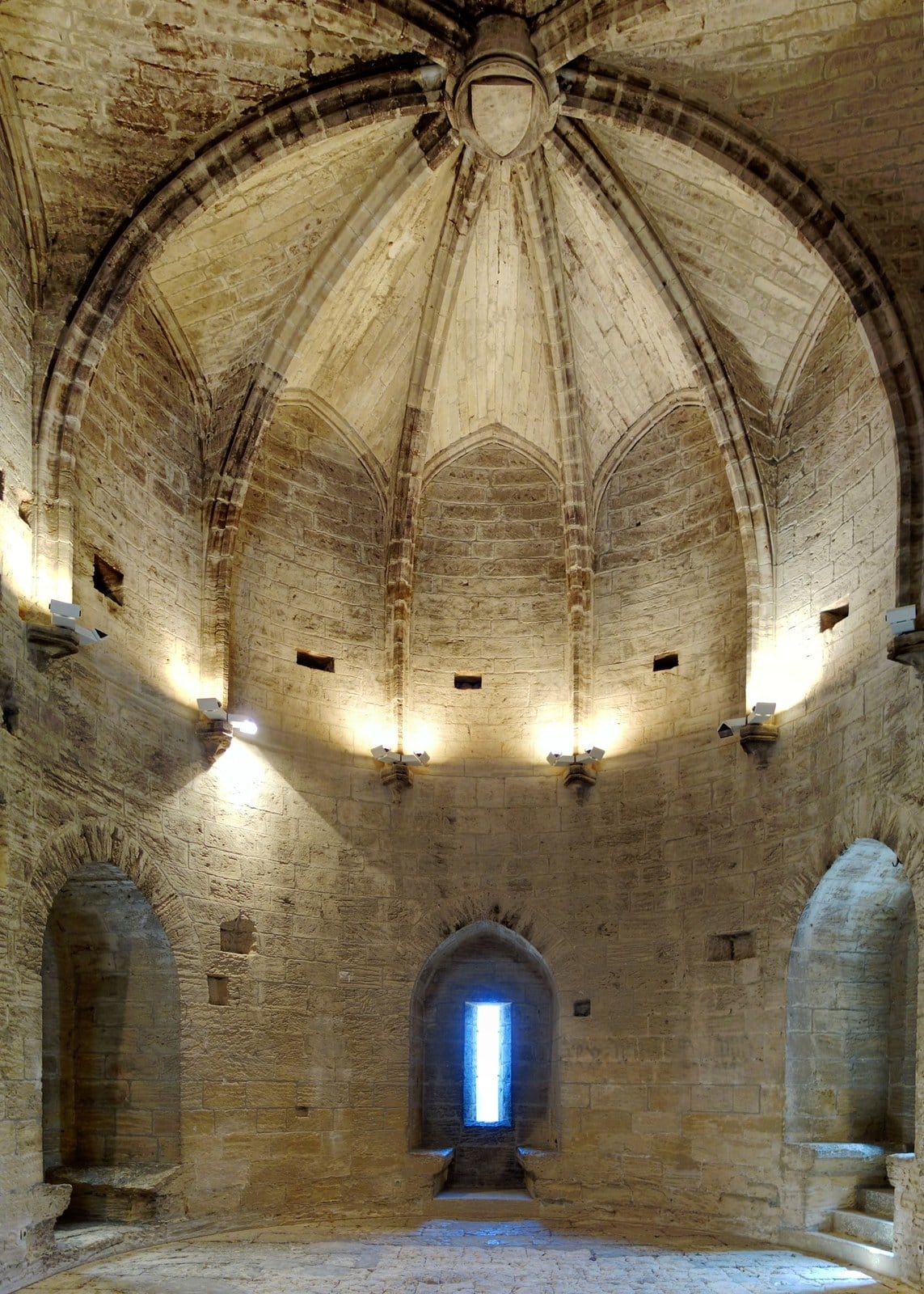
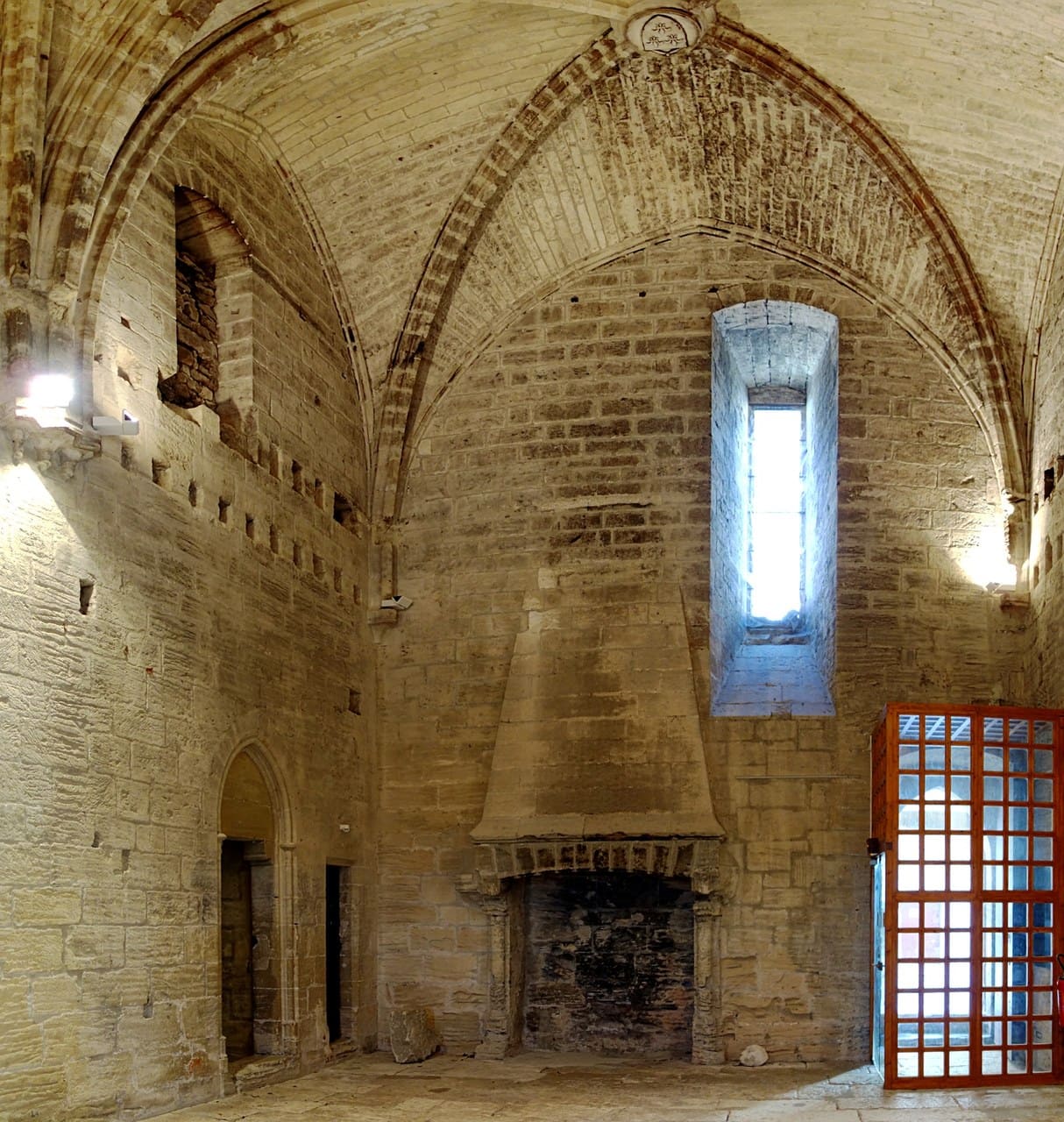
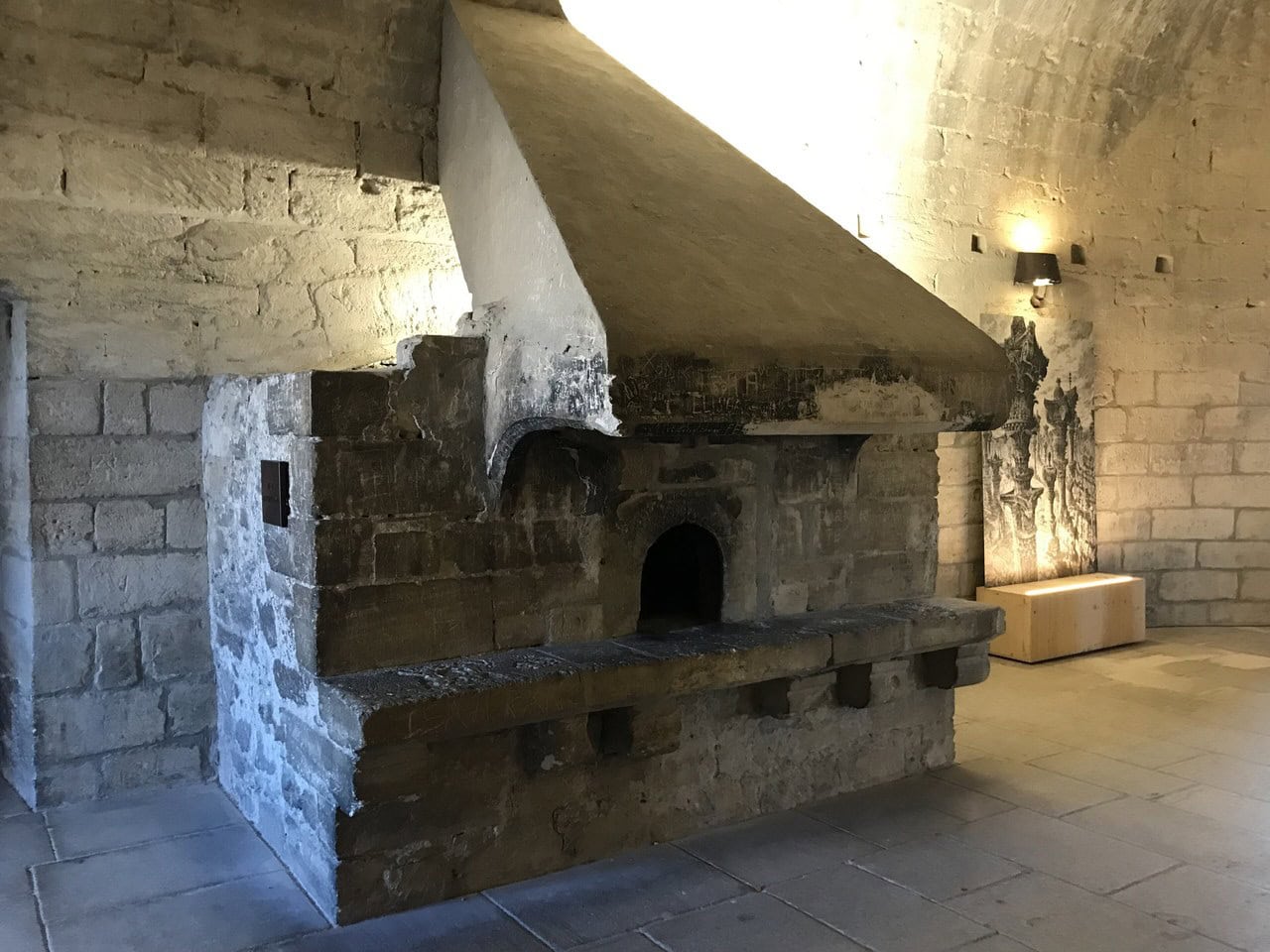
The defenses were unusually sophisticated for their date. At ground level the walls carried arrow slits set in protected niches; along the parapet, merlons pierced with loops shielded the men on the walkway. The builders even softened the austerity of the place with latrines and fireplaces inside the châtelet and small guérites along the rampart, comforts rare in a fourteenth-century fort. A second strong point, the Tour des Masques, anchors another stretch of the wall and would later serve as a prison tower in its own right.
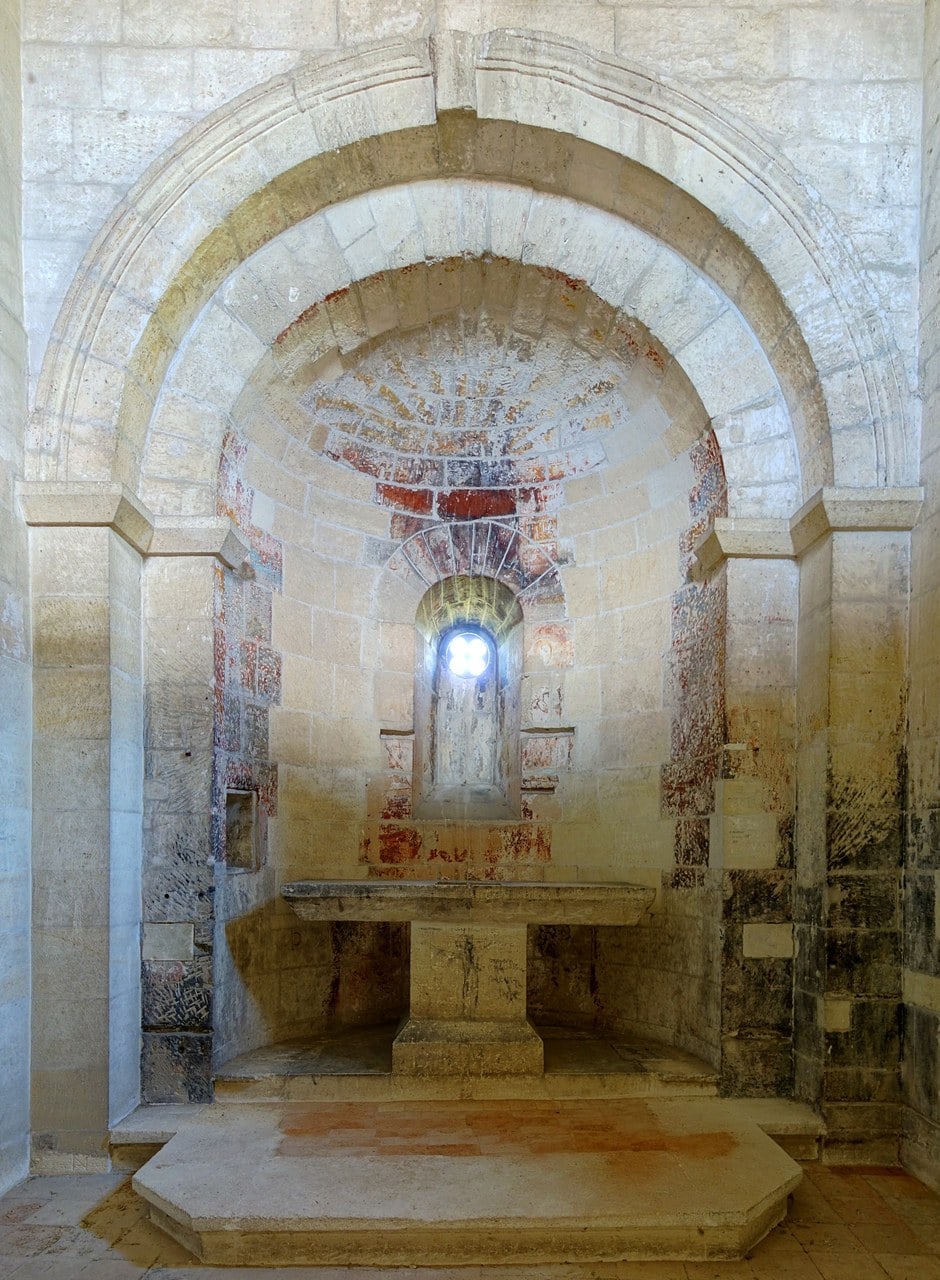
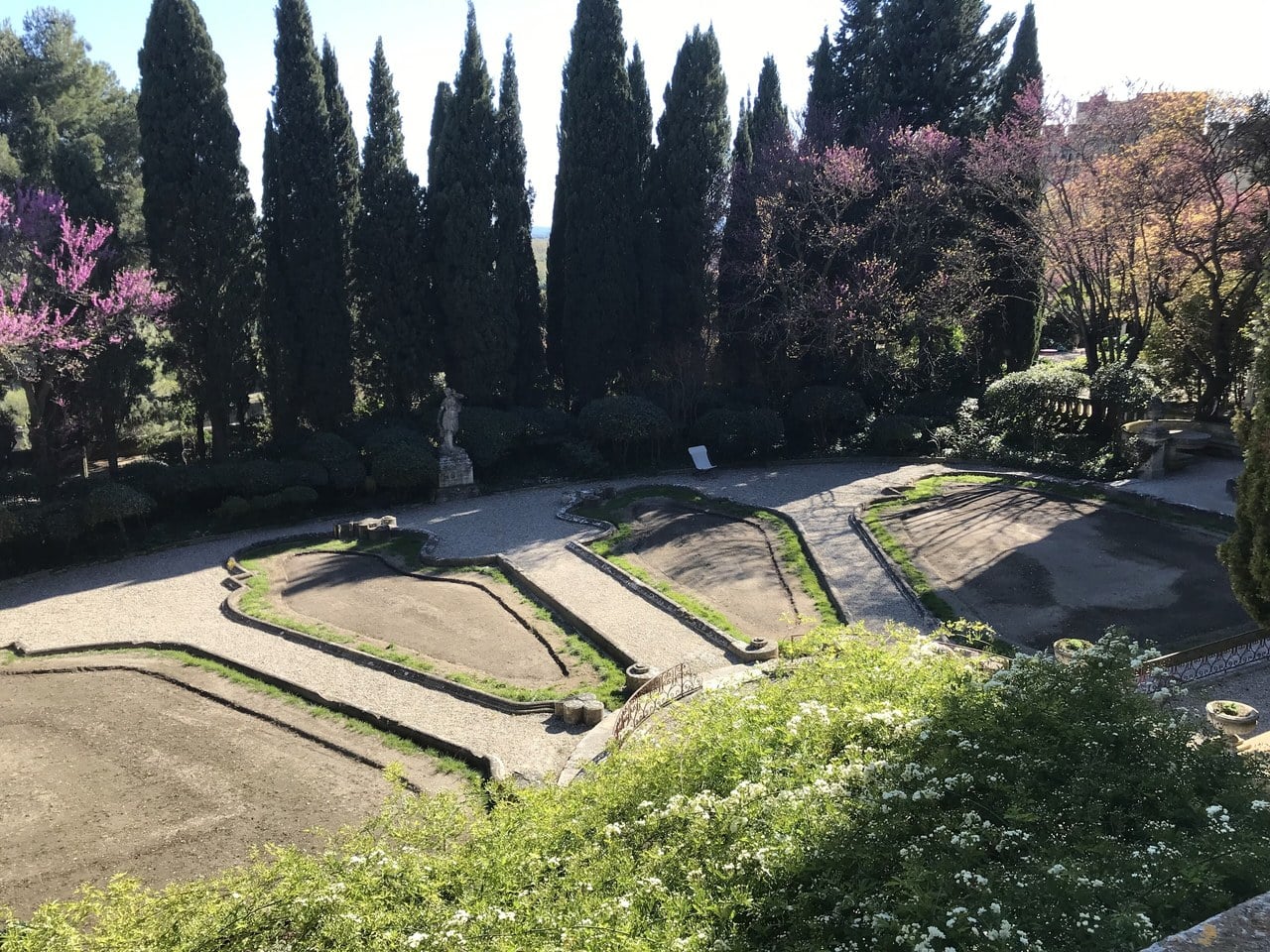
Within the ring of walls the hill is not a bare parade ground but a whole enclosed world. The royal Benedictine Abbey of Saint-André, which predated the fort and gave it its name, stands here with its abbatial palace and its celebrated terraced gardens, a sixteenth-century Italianate parterre among them, which hold the national Jardin Remarquable label and rank among the most beautiful gardens in France. Along the visit route sits the Romanesque chapel of Notre-Dame de Belvezet, with its medieval frescoes and stonemasons’ marks. The abbey and its gardens are in private hands and run separately from the fort, so a visitor passes from the Crown’s fortress into a privately managed monastic garden without ever leaving the walls.
Prison, hospital, and slow decline
The fort was a prison almost from the moment it was finished. During the Wars of Religion, Protestants were locked in the Tour des Masques, and in the seventeenth century, and again during the Second World War, prisoners were held in the upper rooms of the twin towers. Generations of captives scratched their names and figures into the stone, and that graffiti, layered across centuries, is one of the things visitors still come to read on the walls.
Fort Saint-André lost its reason for being in 1481, when Provence itself passed to the French crown. With the far bank now French, the frontier the fort had guarded simply dissolved, and the great walls watched over a border that no longer existed. The garrison lingered all the same. In the eighteenth century the army turned part of the site into an annex of the Invalides hospital in Paris, housing aging and wounded soldiers who tended the buildings in return for their keep. Troops remained until 1792, and only with the Revolution did the long military chapter finally close.
Visiting Fort Saint-André
Fort Saint-André is open to visitors year-round and is managed by the Centre des monuments nationaux. The ticket covers the twin towers, the rampart walk, and the chapel of Notre-Dame de Belvezet; the abbey and its gardens within the walls are run separately and charge their own admission. The last entry is 45 minutes before closing.
| October 1 – May 31 | Daily, 10:00–13:00 and 14:00–17:00 |
| June 1 – July 14 | Daily, 10:00–13:00 and 14:00–18:00 |
| July 15 – August 31 | Daily, 9:00–13:00 and 14:00–18:00 |
| September 1 – 30 | Daily, 10:00–13:00 and 14:00–18:00 |
| Closed | January 1, May 1, November 1, November 11, December 25 |
| Adult | €7 |
| Reduced (groups of 20+) | €5.50 |
| Under 18; EU citizens 18–25; jobseekers | Free |
| Combined Villeneuve five-monument pass | €20 |
| Free admission | First Sunday of January, February, March, November, and December |
Villeneuve-lès-Avignon sits just across the Rhône from Avignon, so most visitors base themselves in one town and cross to the other. You can compare places to stay around Villeneuve-lès-Avignon and Avignon or browse guided tours and activities in the Avignon area to build a day that pairs the fort with the papal city it was built to watch.
Some links on this page are affiliate links, which means StoneKeep Atlas may earn a small commission, at no extra cost to you, if you book through them.
More Views of Fort Saint-André
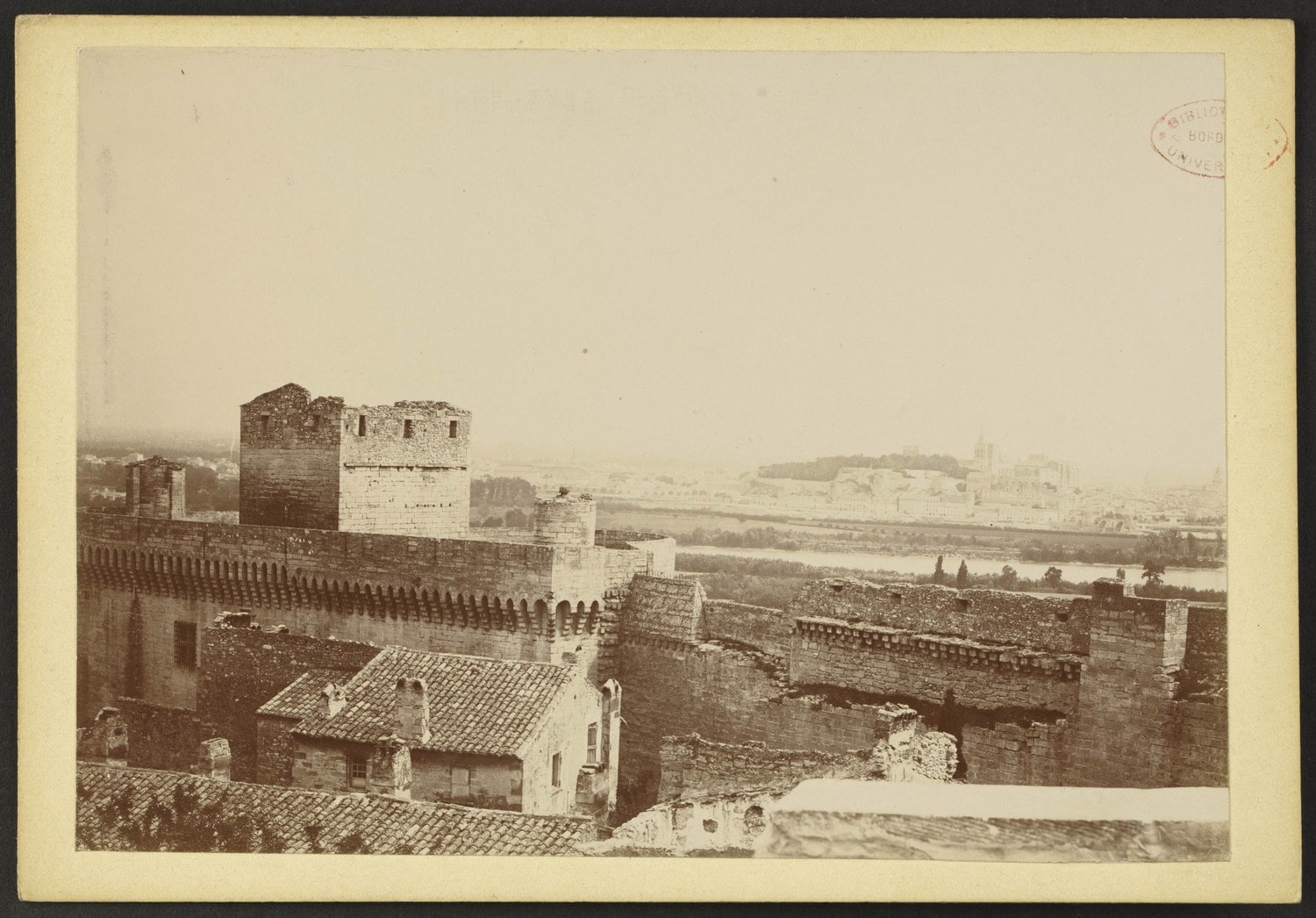
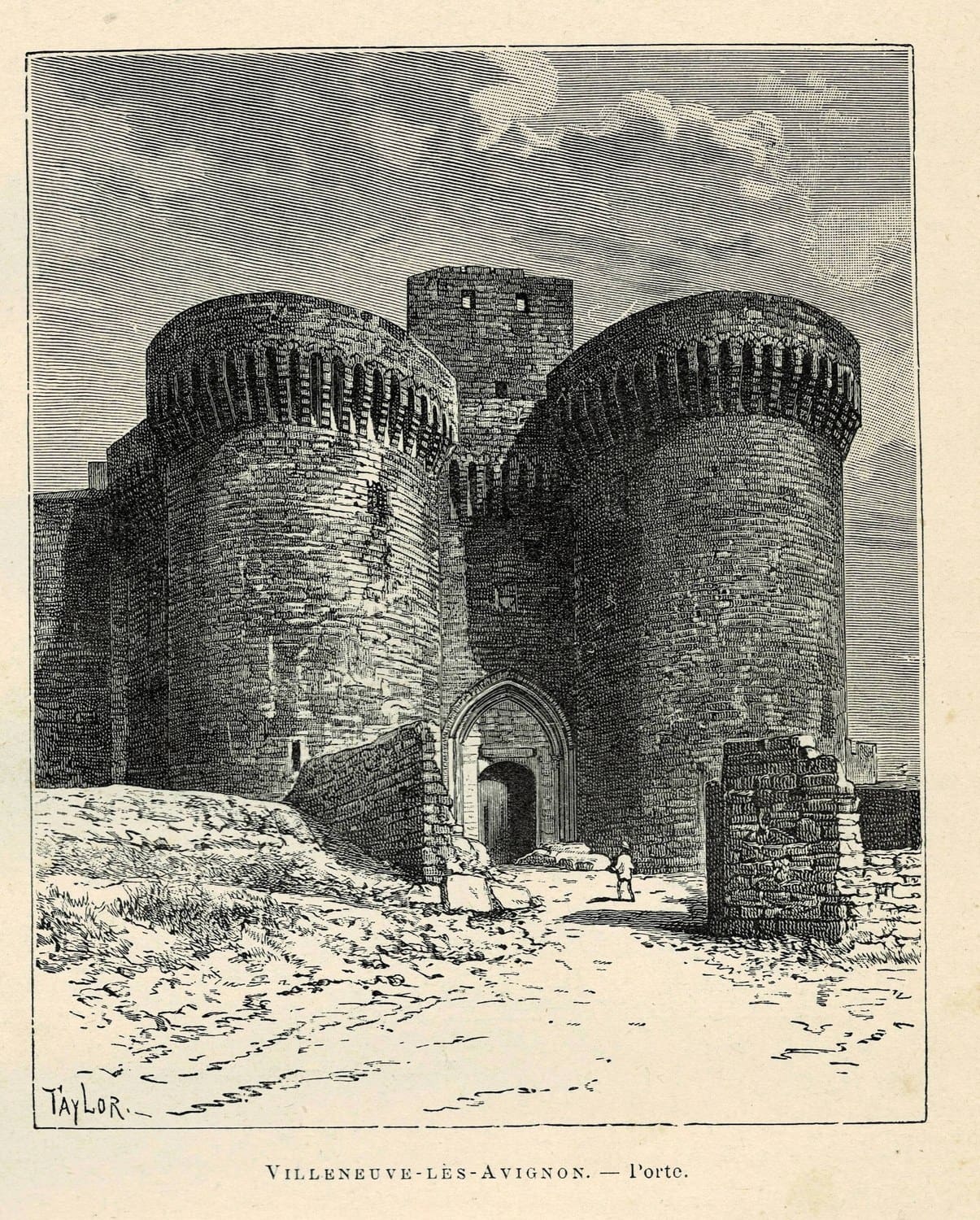
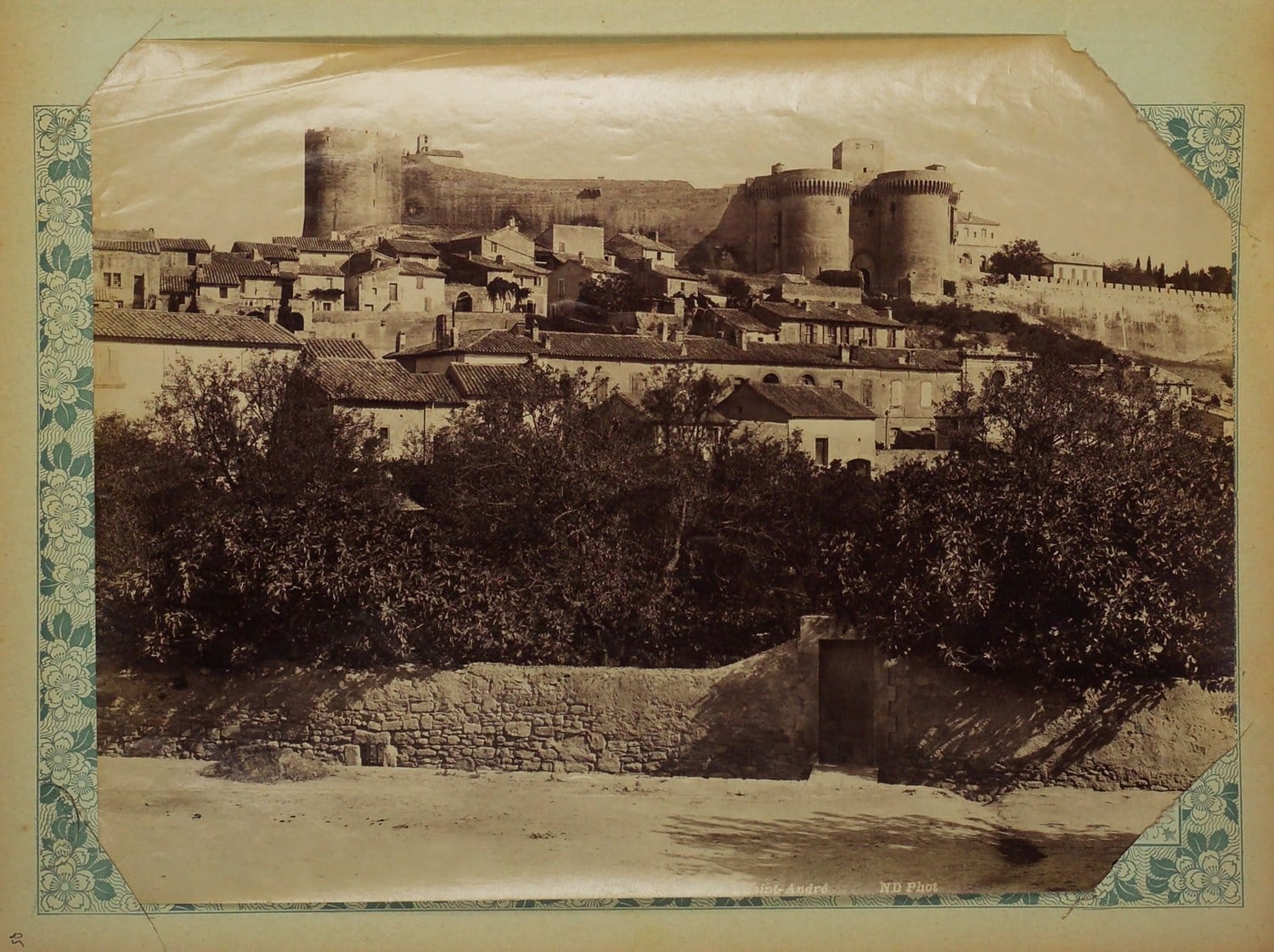
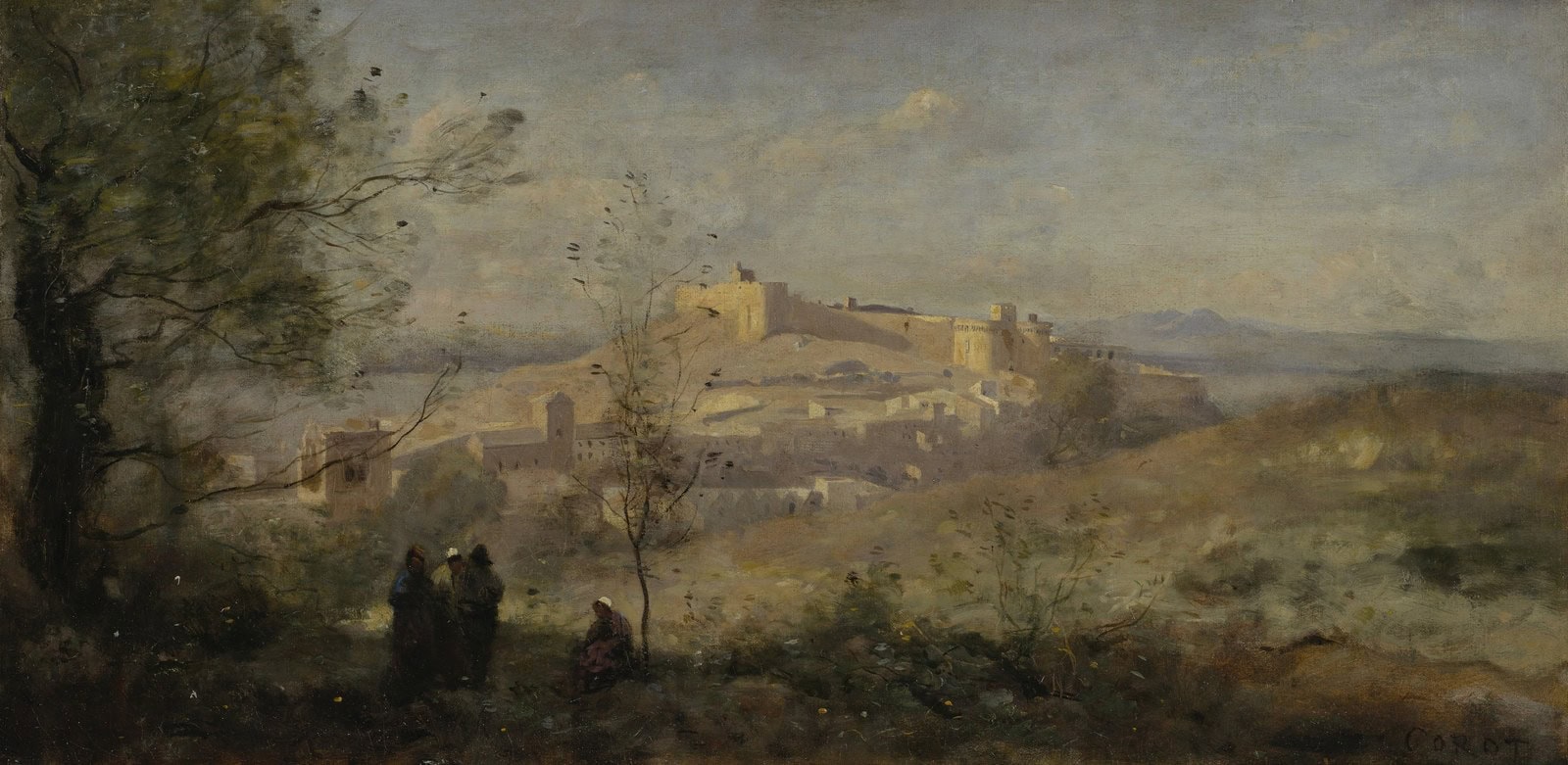
Beyond Fort Saint-André
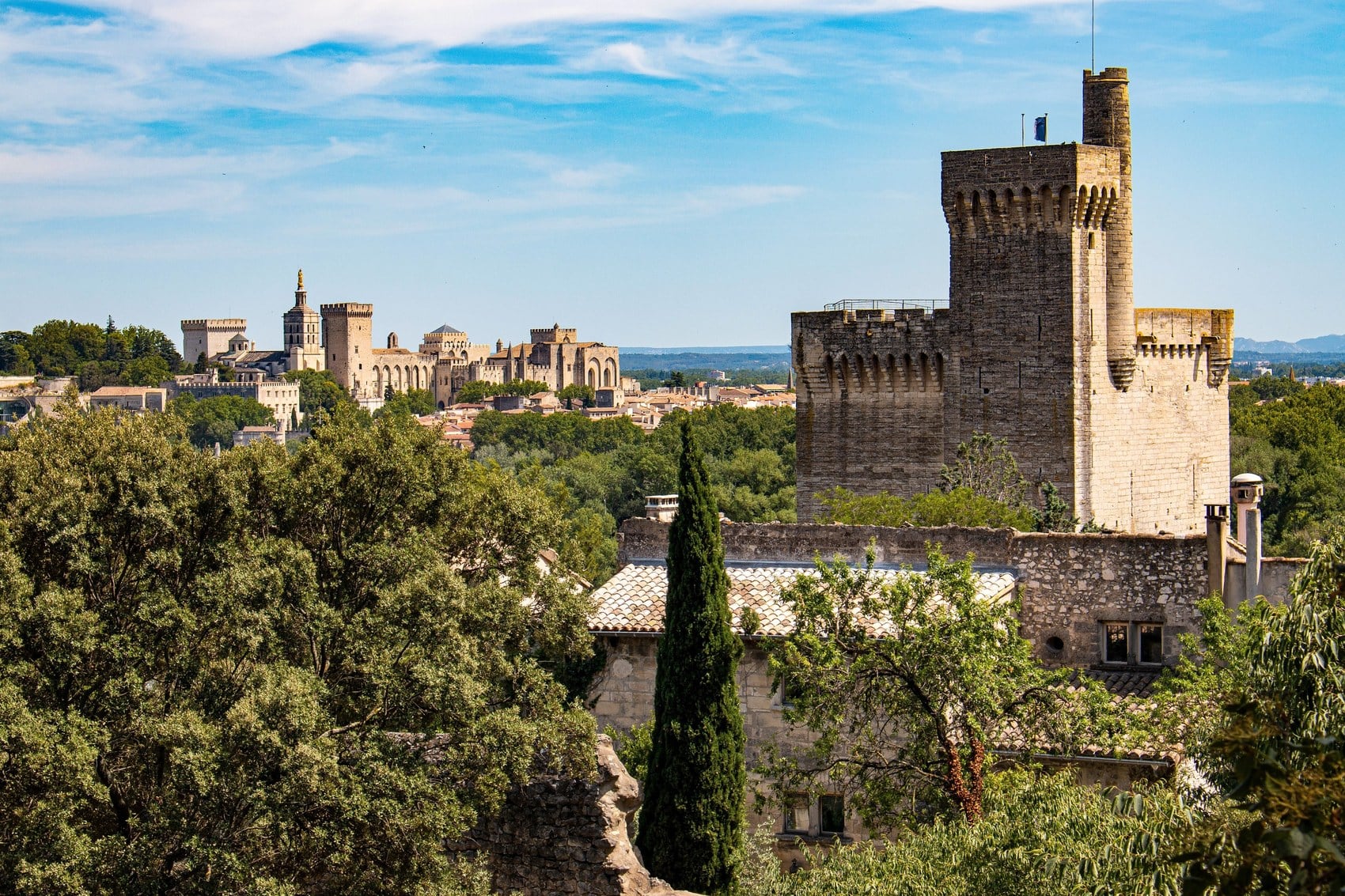
Fort Saint-André makes most sense alongside the monument it was built to face. Across the Rhône, the Palais des Papes was the fortress-palace of the very popes the king’s garrison watched, and reading the two together turns a river view into a standoff between Crown and Church. A little downstream, the Château de Tarascon tells a kindred story of royal and princely power on the Rhône, the Angevin river fortress that King René filled with courtly life on the Provençal bank. Both sit within an easy day of Villeneuve-lès-Avignon, and together they map the tangle of French, papal, and Angevin ambitions that made this stretch of the river one of the most contested in late medieval France.
Conclusion
Few fortresses wear their purpose as plainly as Fort Saint-André. Every meter of its wall was a message addressed across the water to Avignon, a reminder that the king of France stood at the papal city’s gate. The irony is that the building outlived the quarrel that built it: within a century of its completion the frontier had vanished, and the great enclosure settled into the quieter roles of prison, hospital, and finally monument. What remains is a rare thing, a complete royal fortress of the fourteenth century with a monastery and its gardens still alive inside the walls, and a rampart walk that frames the popes’ palace exactly as the king’s soldiers once saw it.
Principal Sources
- Base Mérimée, notice no. PA00103306, “Fort Saint-André,” Ministère de la Culture (Plateforme ouverte du patrimoine).
- Centre des monuments nationaux. “Fort Saint-André, Villeneuve-lès-Avignon.” Official monument and visitor information, 2026.
- Labande, Léon-Honoré. Archaeological studies of the abbey and fort of Saint-André at Villeneuve-lès-Avignon (early twentieth century).
- Girard, Joseph. Évocation du vieil Avignon. Paris: Éditions de Minuit (standard reference on Avignon and Villeneuve-lès-Avignon).
Image credits. Aerial view of the fort: Giles Laurent, CC BY-SA 4.0, via Wikimedia Commons; The châtelet from the air: Giles Laurent, CC BY-SA 4.0, via Wikimedia Commons; Rib-vaulted tower dome: Velvet, CC BY-SA 3.0, via Wikimedia Commons; Tower with the Palais des Papes beyond: MarcelDominic, Pixabay, via Pixabay; Twin towers in spring: Briolle, CC BY-SA 3.0, via Wikimedia Commons; South ramparts: Antimuonium, CC BY-SA 4.0, via Wikimedia Commons; Tour des Masques: Véronique PAGNIER, public domain, via Wikimedia Commons; Chapel of Notre-Dame de Belvezet: Velvet, CC BY-SA 3.0, via Wikimedia Commons; Vaulted tower hall: Velvet, CC BY-SA 3.0, via Wikimedia Commons; Garrison bread oven: Antimuonium, CC BY-SA 4.0, via Wikimedia Commons; Trebuchet reconstruction: Antimuonium, CC BY-SA 4.0, via Wikimedia Commons; Veuglaire reconstruction: Antimuonium, CC BY-SA 4.0, via Wikimedia Commons; Abbey Italian garden: Antimuonium, CC BY-SA 4.0, via Wikimedia Commons; Historic photograph: Jean-Auguste Brutails, public domain, via Wikimedia Commons; Wood-engraving, 1893: after Taylor, in P. Gourdault, La France pittoresque (1893), public domain, via Wikimedia Commons; Early photograph: Neurdein (ND), public domain, via Wikimedia Commons; Corot, 1870: Jean-Baptiste Camille Corot, public domain, via Wikimedia Commons. Freely licensed images are resized to fit; otherwise unaltered.