
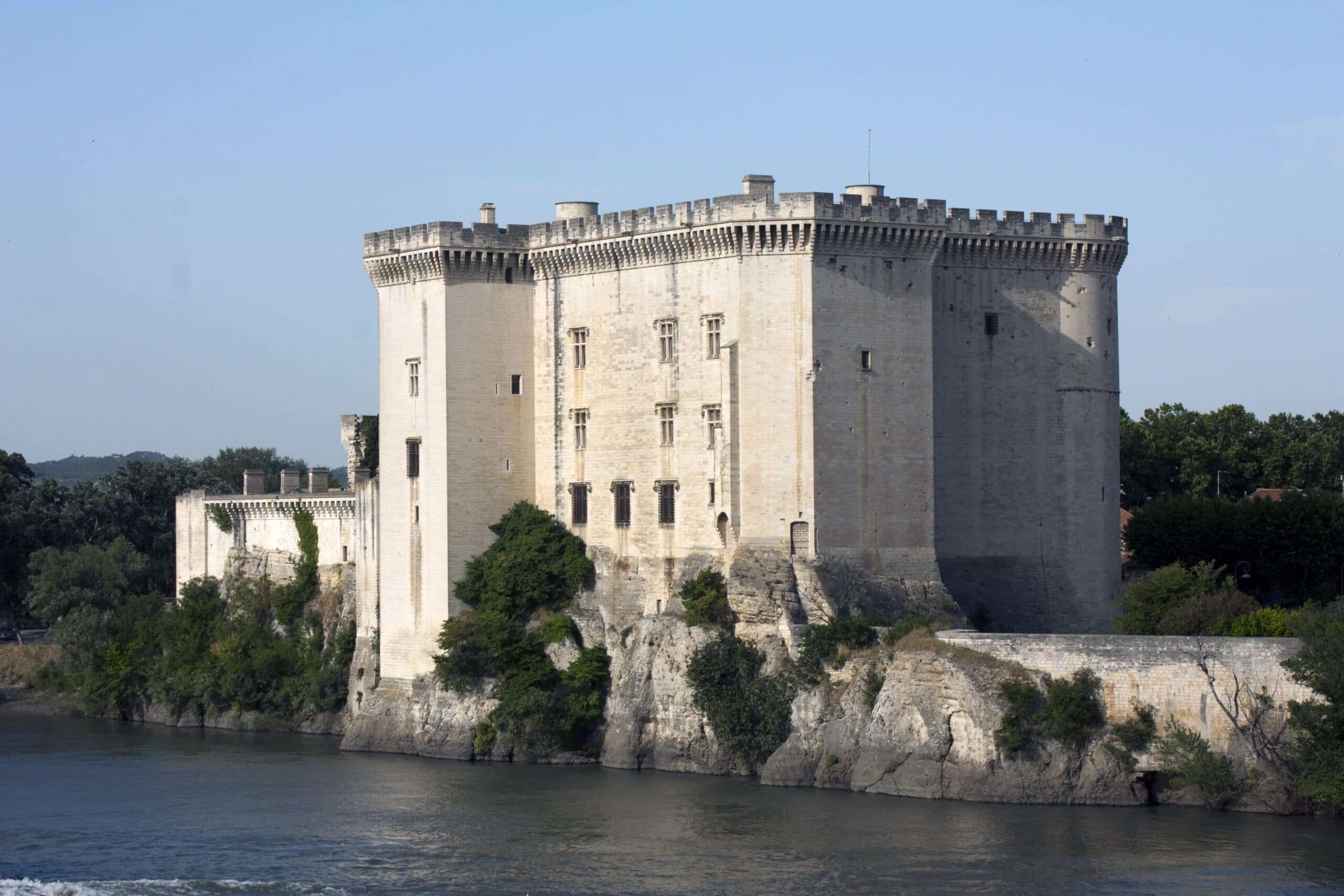
Château de Tarascon
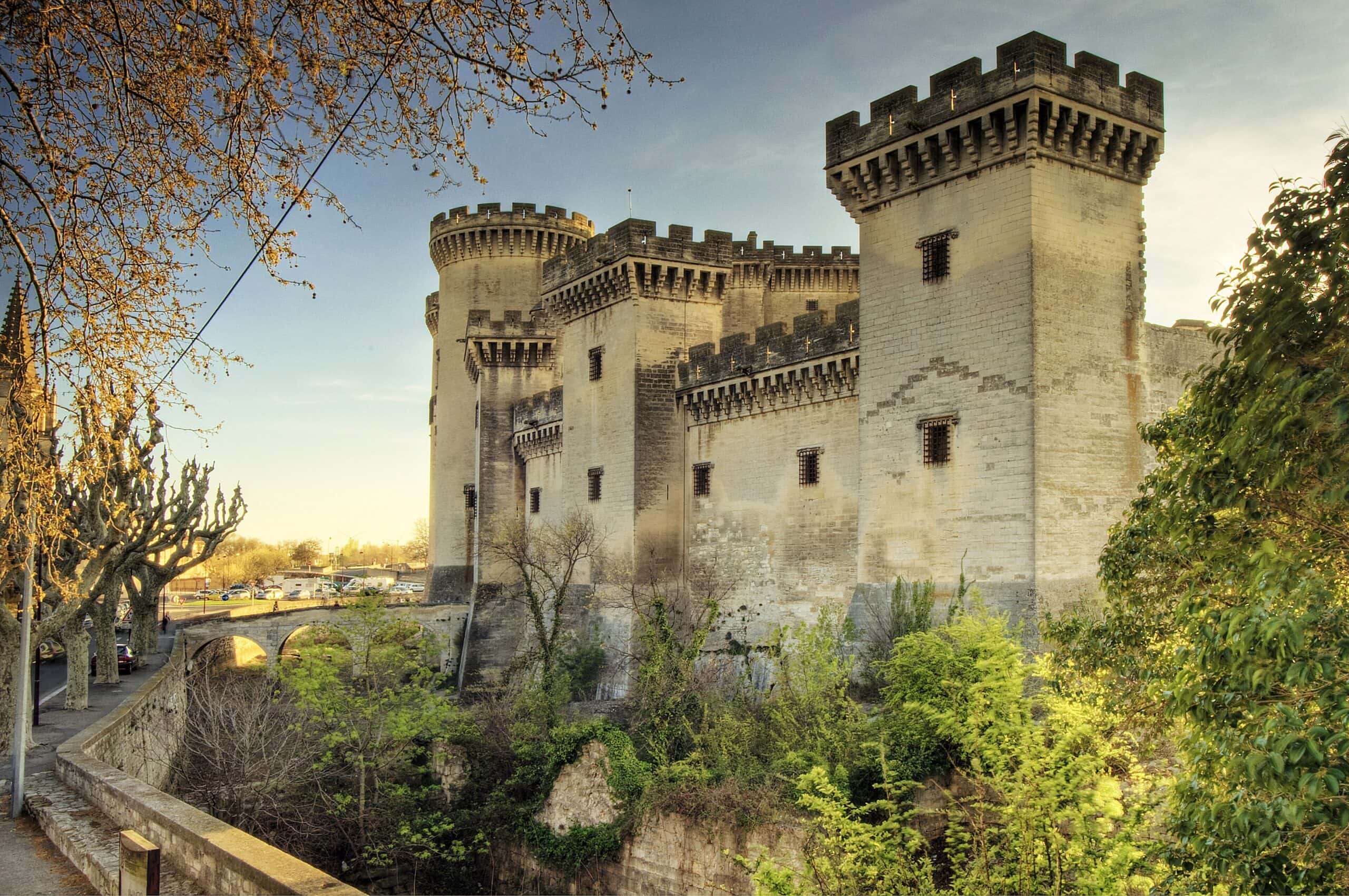
Château de Tarascon is the river fortress of Good King René, remarkably well preserved, a condition the town credits to sustained restoration and maintenance by the state’s monument architects. The Angevin princes who raised it on the left bank of the Rhône built both a stronghold and a residence, a working castle on the frontier of Provence facing the rival fortress of Beaucaire across the water. What kept it so intact was the long second life that followed: across five centuries the building was a place of detention, and the captives who passed through left the walls covered in carved graffiti that is now one of the castle’s great curiosities.
Quick Facts
| Location | Boulevard du Roi René, Tarascon, Bouches-du-Rhône, France |
| Region | Provence-Alpes-Côte d’Azur |
| Country | France |
| Built | 1400 to 1449 (Gothic; main structure completed under Louis II and Louis III by about 1435) |
| Principal builders | Louis II of Anjou, Louis III of Anjou, and King René of Anjou |
| Architect | Jean Robert, master of the king’s works |
| Type | Princely château and riverside fortress; later a prison |
| Condition | Well preserved |
| Listed | Monument historique, classified 1840 (Base Mérimée PA00081473) |
| Managed by | Ville de Tarascon (centre d’art René d’Anjou) |
| Coordinates | 43.8066° N, 4.6550° E |
| Open to visitors | Yes; owned and run by the town of Tarascon |
| Official site | chateau.tarascon.fr |
A castle for the King of Sicily
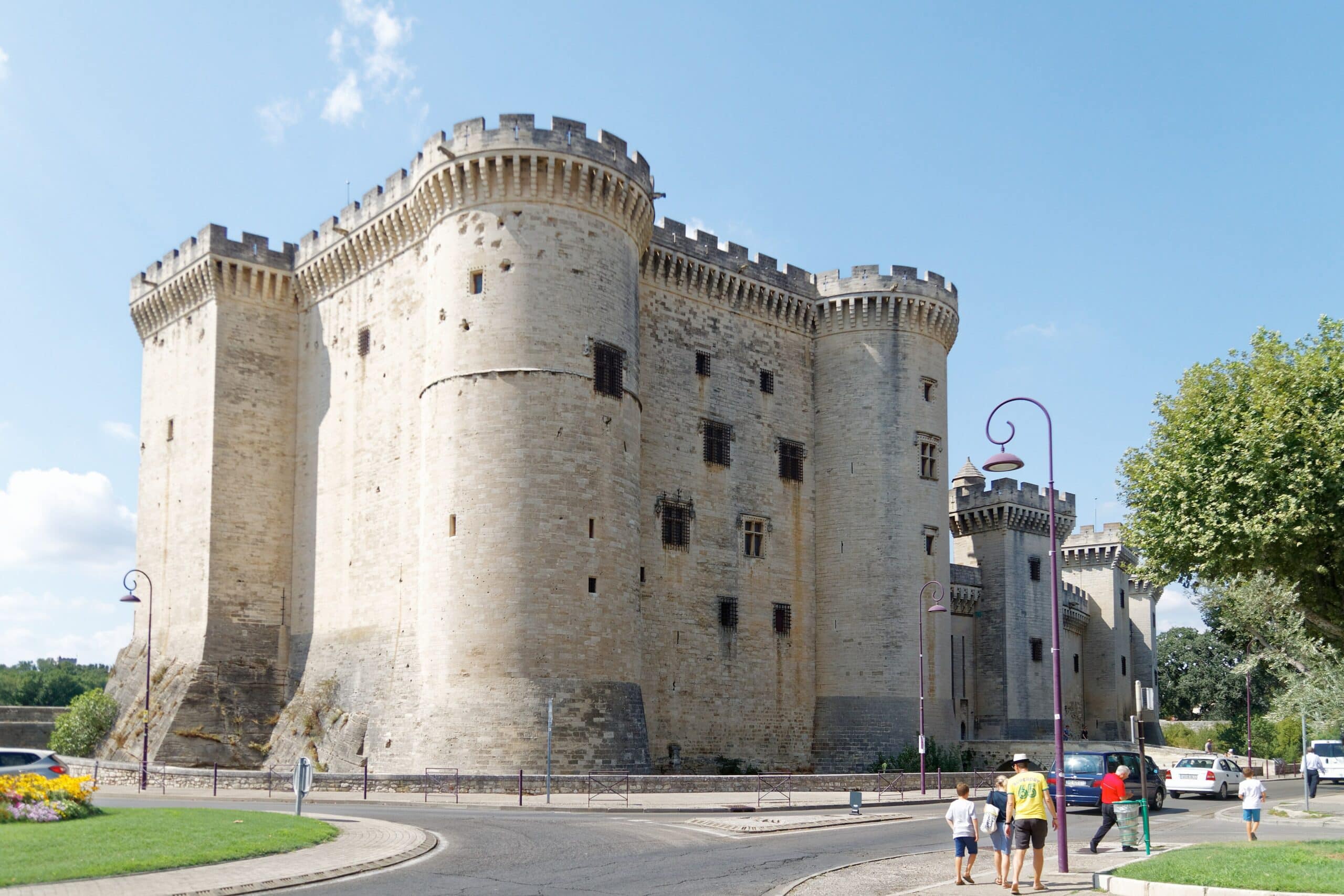
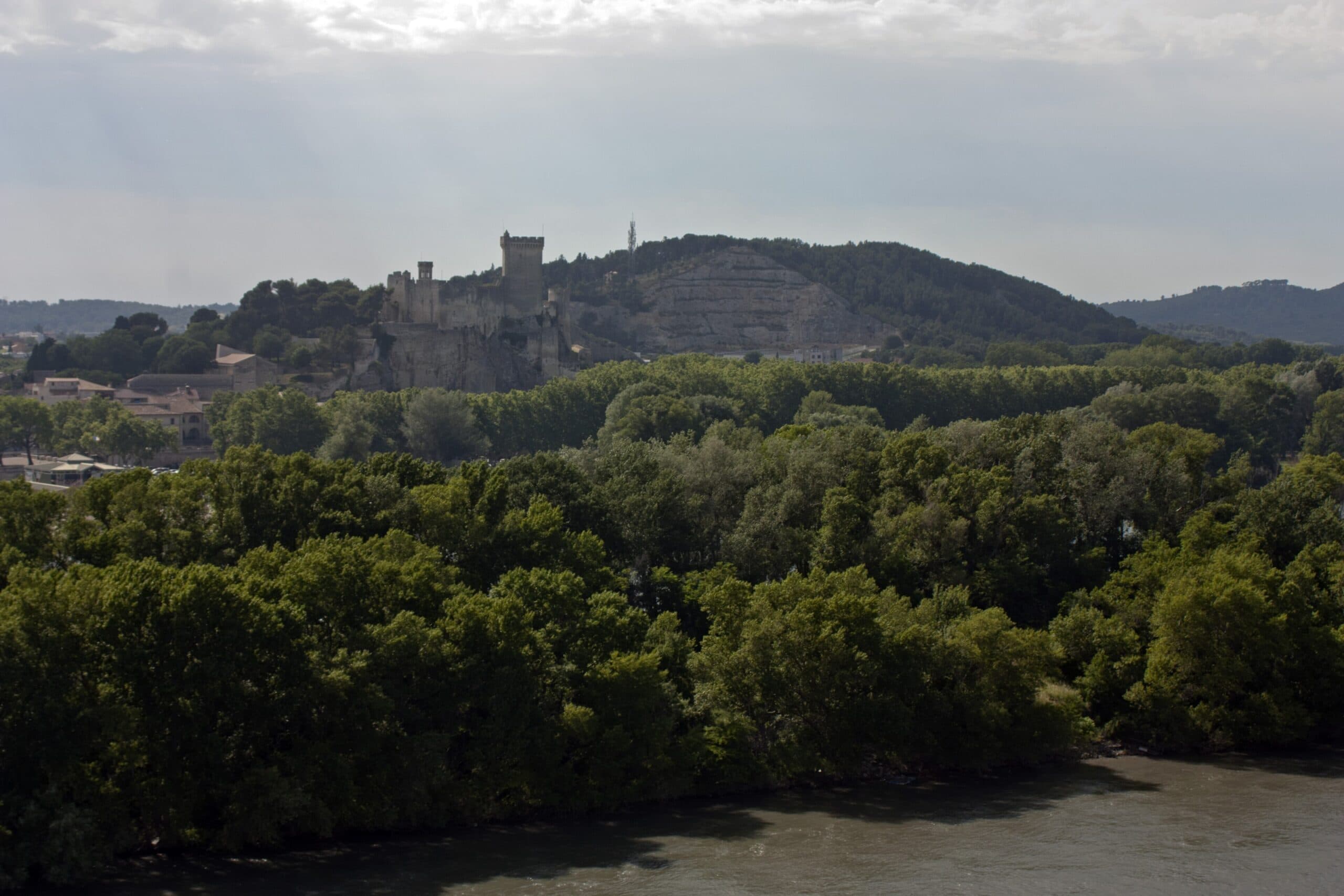
Château de Tarascon stands on a low limestone rock on the left bank of the Rhône, a stark gray block of curtain walls and towers that rises some 45 meters above the quay. For most of the Middle Ages this was a frontier. The river marked the edge of Provence, and directly across the water the rival fortress of Beaucaire guarded the lands of the French crown. The two castles still face each other across the Rhône, as they have for six centuries: Tarascon kept watch over Provence, Beaucaire over royal France.
This rock had been fortified long before the present castle. A Roman castrum once crowned it, and around the year 1000 Roubaud II of Provence raised a stone castle on the site. Charles of Anjou held and enlarged that earlier fortress in the thirteenth century. Its end came in 1399, when the routier bands of Raymond de Turenne, who had spent years ravaging Provence, destroyed the stronghold that guarded the Rhône crossing.
That destruction opened the way for the castle visitors see today. The House of Anjou, dukes of Anjou and counts of Provence, needed a secure base on their western border, and in 1400 they began to rebuild from the ground up. The family that commissioned it carried some of the grandest titles in Europe. They claimed the crowns of Naples, Sicily, and Jerusalem alongside their French and Provençal lands, and the fortress on the Rhône became the territorial anchor of those Mediterranean ambitions.
Good King René’s river fortress
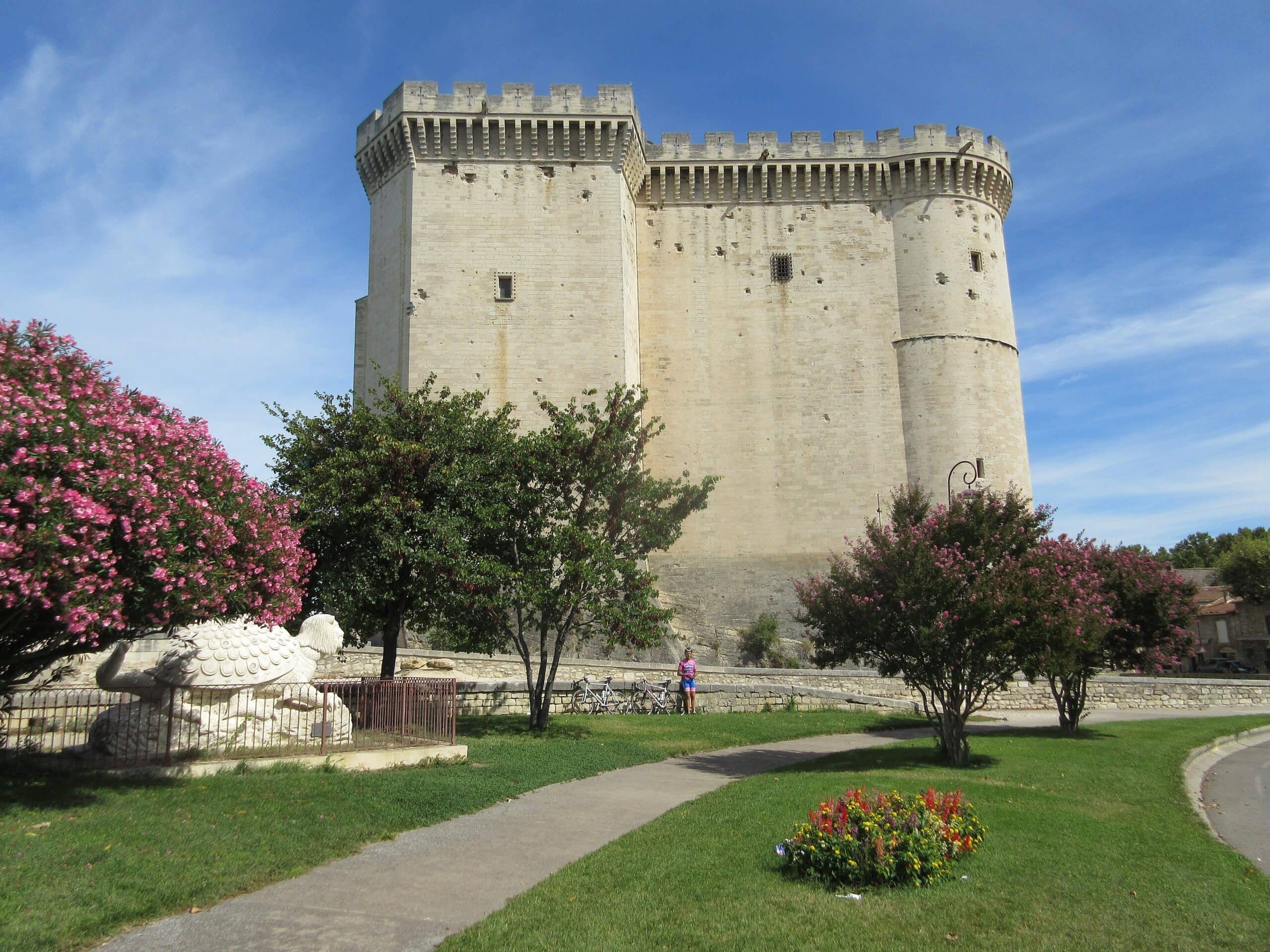
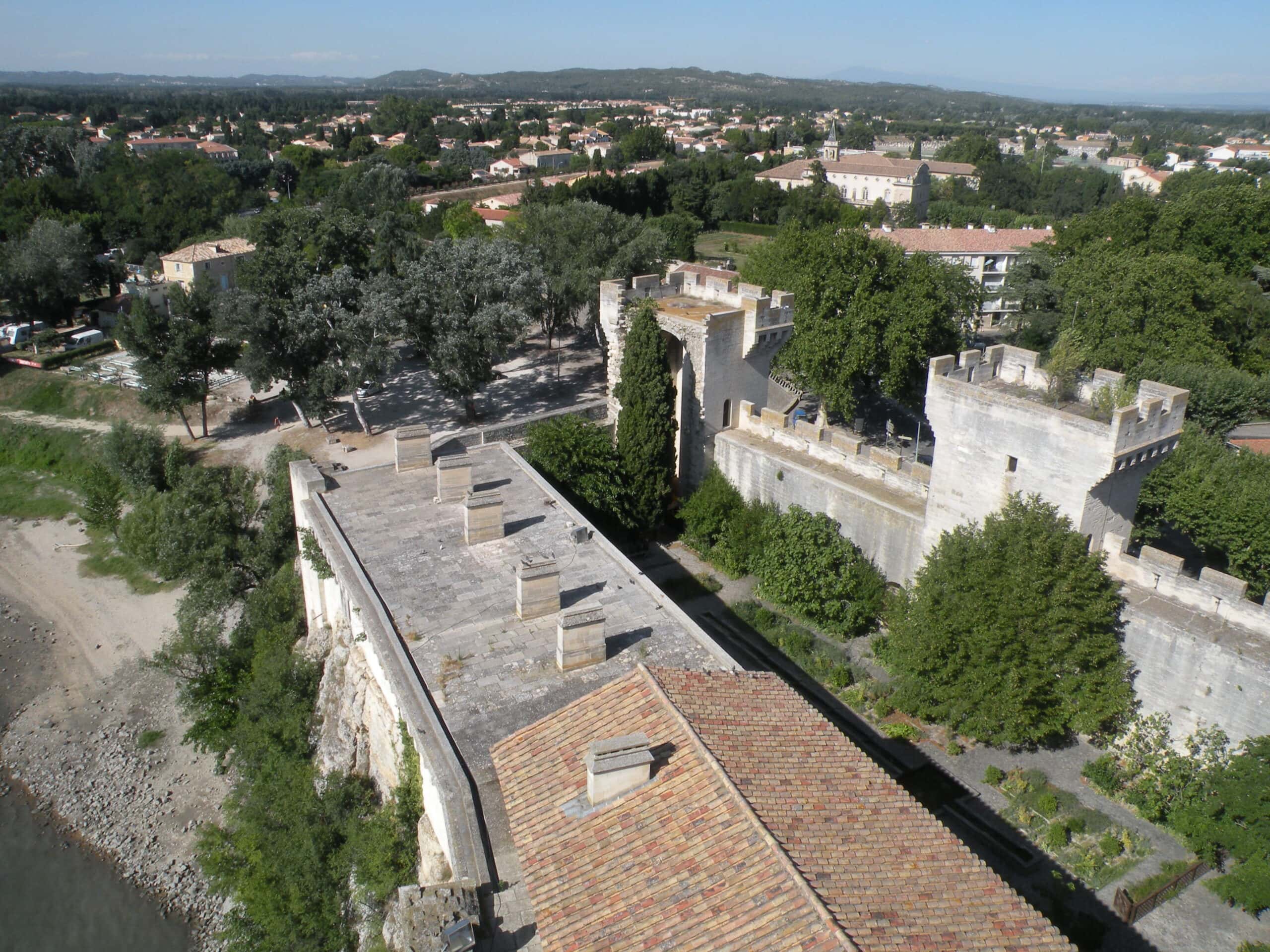
Construction began in 1400 under Louis II of Anjou, who raised the wing along the river first. His son Louis III added the town-side range in the years to about 1434, working to designs by Jean Robert, the master of the king’s works. The builders modeled the fortress on the Bastille Saint-Antoine in Paris, and they quarried its stone across the river at Beaucaire. By around 1435 the great shell stood complete: a walled rectangle of roughly 130 by 36 meters, with a lower court to the north and the seigneurial block to the south. The residence itself was ringed by walls close to four meters thick, with two round towers on the exposed town side and two square towers facing the Rhône.
The castle is remembered, though, for the man who finished it. René of Anjou, known to history as Good King René, inherited Provence in 1434 and made Tarascon his principal residence in the region. Between 1447 and 1449 he turned the soldiers’ fortress into something more livable, adding comfort and decoration without softening the defenses. He held court here, staged celebrations, and in 1474 founded the Order of the Knights of the Tarasque within these walls. From 1434 until his death on July 10, 1480, this was the seat from which a cultivated prince governed a land he loved, even as his distant kingdoms slipped away one by one.
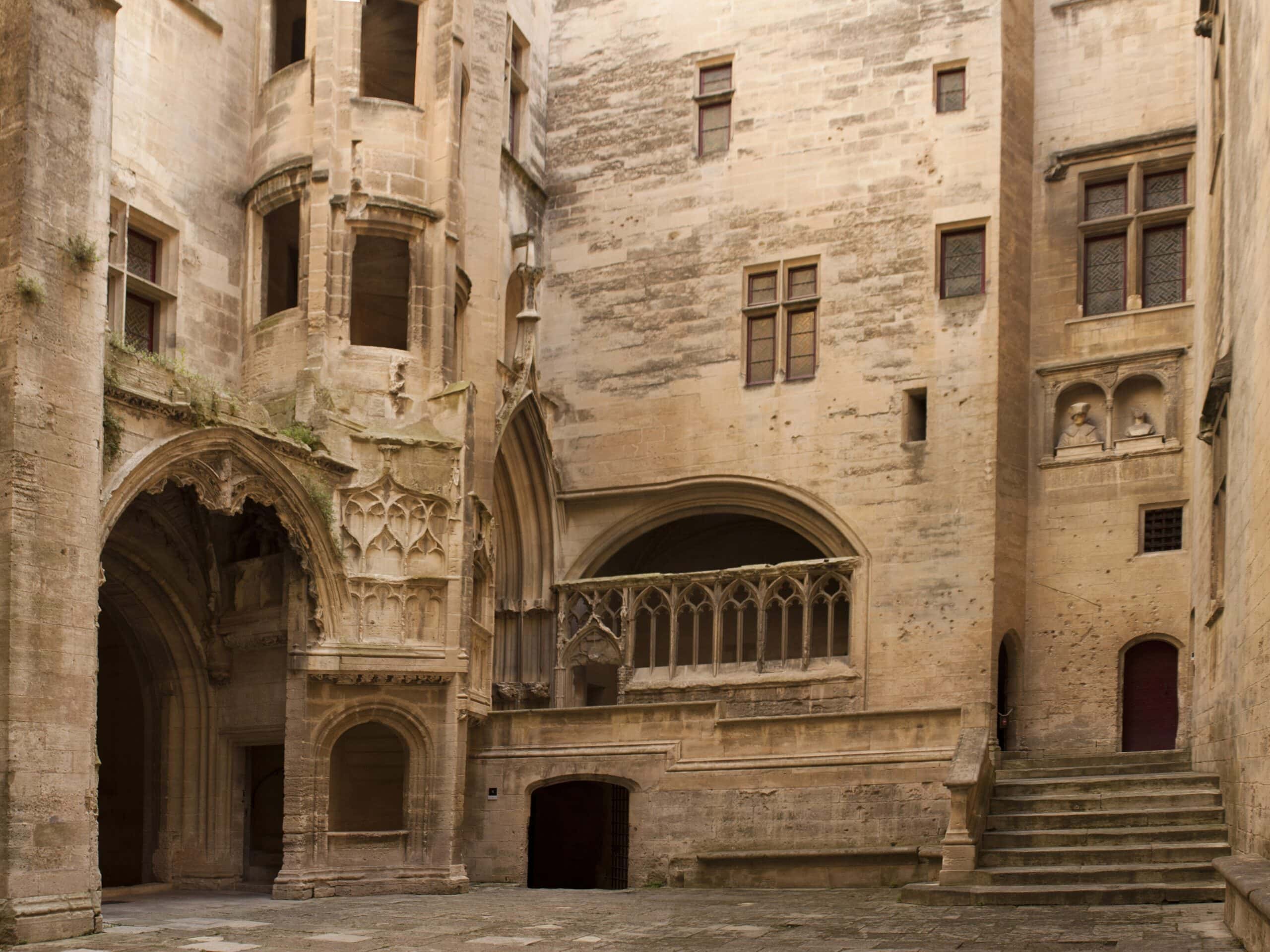
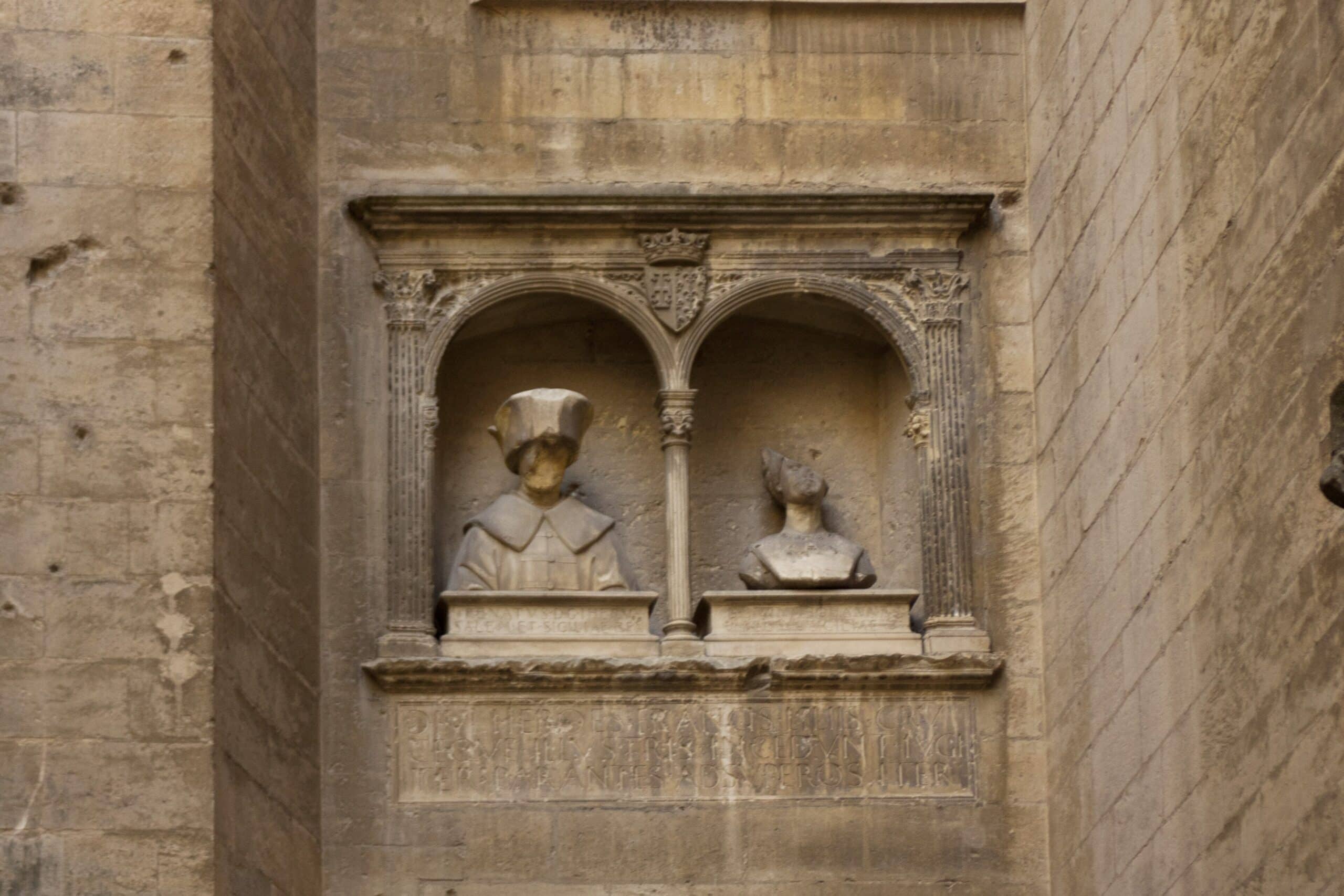
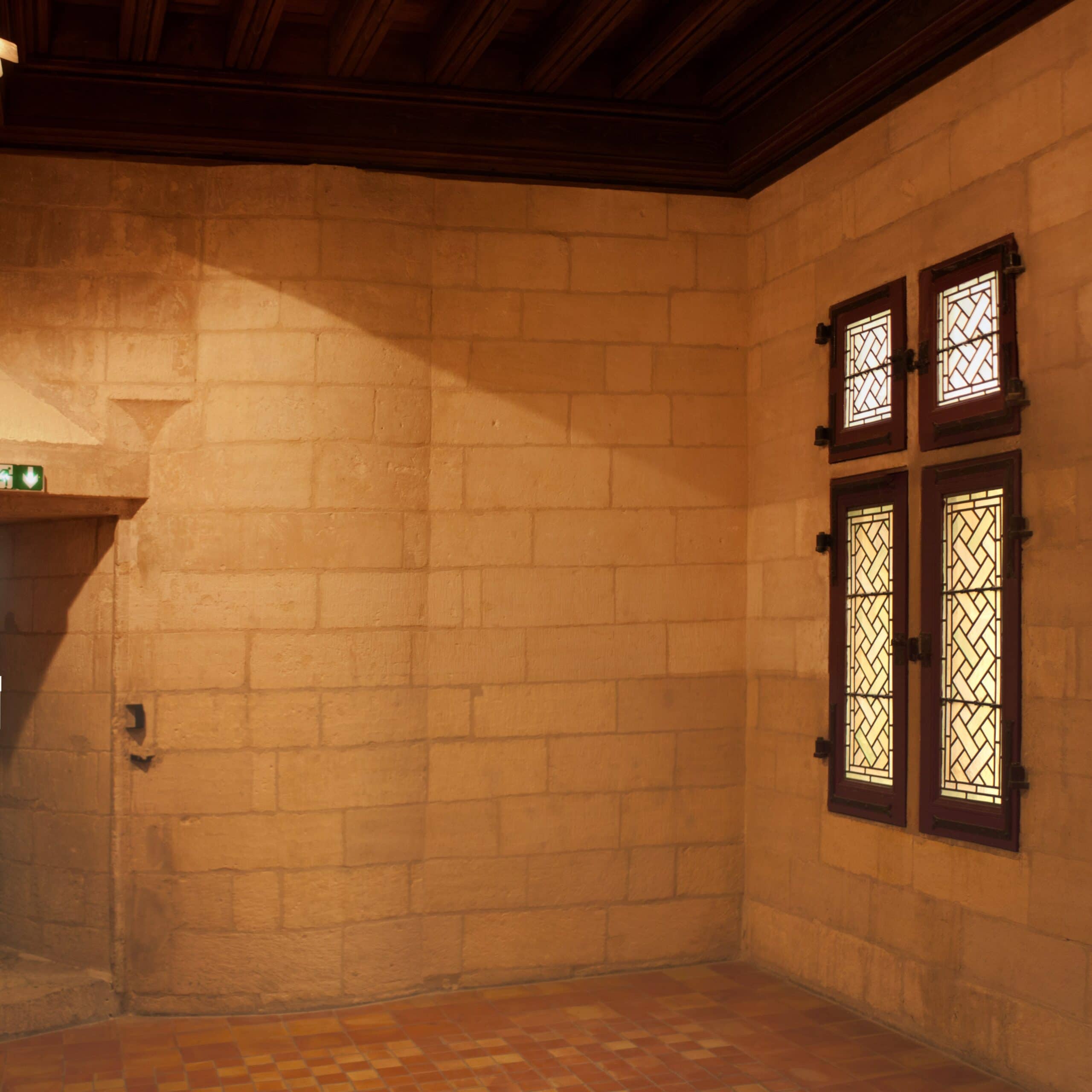
The paradox of the building is its two faces. Outside, it is all war: sheer walls, machicolations, and a near-vertical drop to the river. Inside, around an elegant courtyard of Gothic arches and ribbed vaults, the residence is a work of grace. Carved consoles spring into chimeras, eagles, and bats, the bestiary that René’s craftsmen loved. A staircase lit by nineteen windows climbs to three residential floors and the terrace above; the lower two carry painted timber ceilings, the top one stone vaults. On the south wall of the courtyard, a Renaissance niche, attributed to the sculptor Francesco Laurana, once held busts of René and his queen, Jeanne de Laval, before Revolutionary hands mutilated them. Two chapels sit one above the other, the lower for the household, the upper for the lord, a quiet summary of the whole castle: defense below, refinement above.
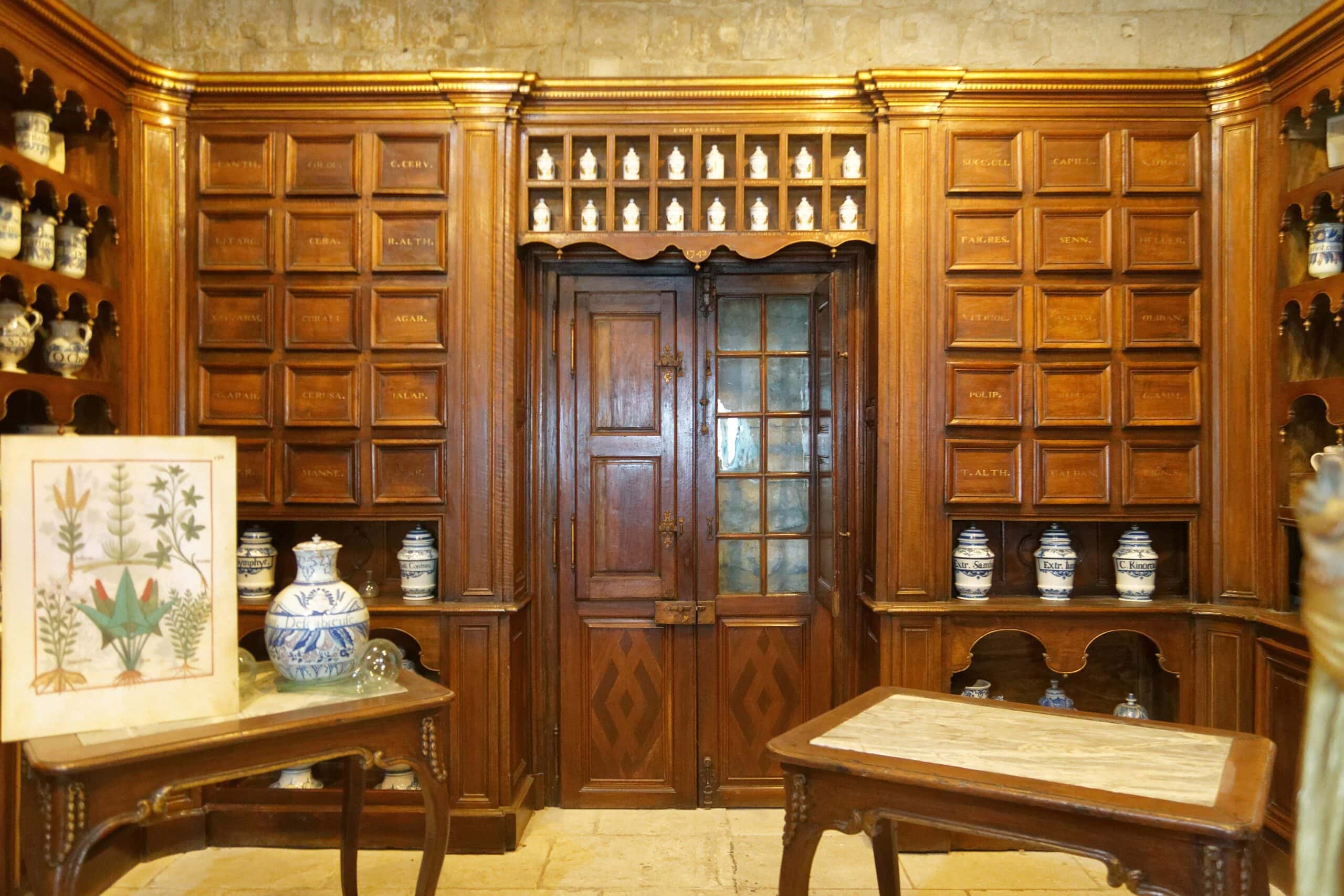
From the great terrace, where four staircases of roughly 150 steps deliver visitors to the summit, the view runs from the Rhône and the towers of Beaucaire opposite to the Alpilles and the Montagnette in the distance. In those same Alpilles, a short drive south, stands the ruined Château des Baux-de-Provence, the clifftop citadel whose walls a Tarascon mason, Pol Reboul, was hired to pull down in 1632. The lower court, built for servants and soldiers, today holds the apothecary collection of the town’s former hospital, a room of painted jars and ewers that has nothing to do with the Anjou and everything to do with the building’s long second life.
Four centuries as a prison
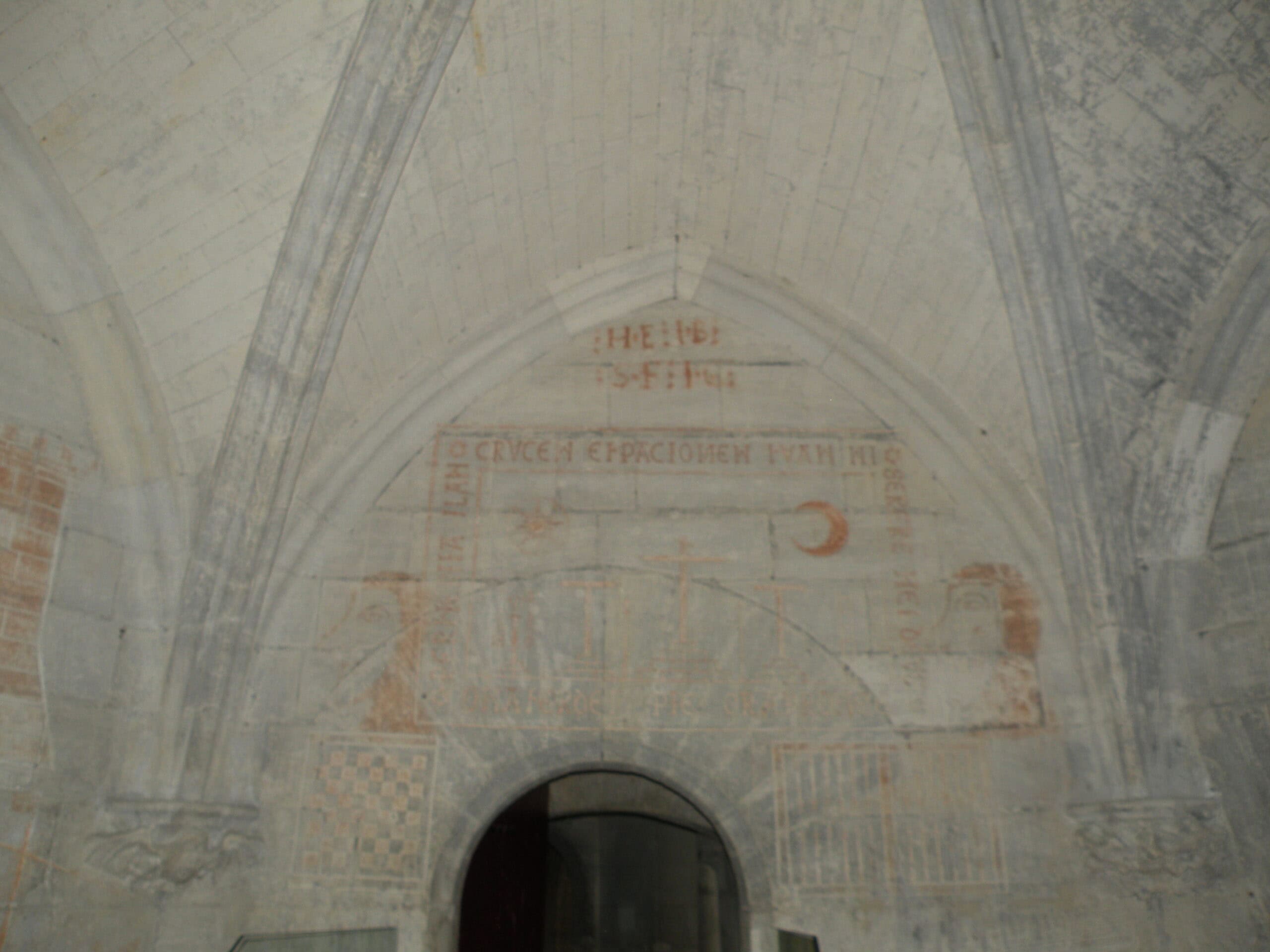
When René’s heir died in 1481, Provence passed to the French crown and the castle lost its reason to exist as a royal residence. It found a new use almost at once. The fortress had served as a place of detention from the start, and the oldest graffiti carved into its walls, a Catalan inscription dated 1480, was cut barely months after René’s death. From 1642 the prison function took over completely. In turn a state prison, a military jail, and a civil house of detention, the castle held captives until the court of Tarascon closed in 1926.
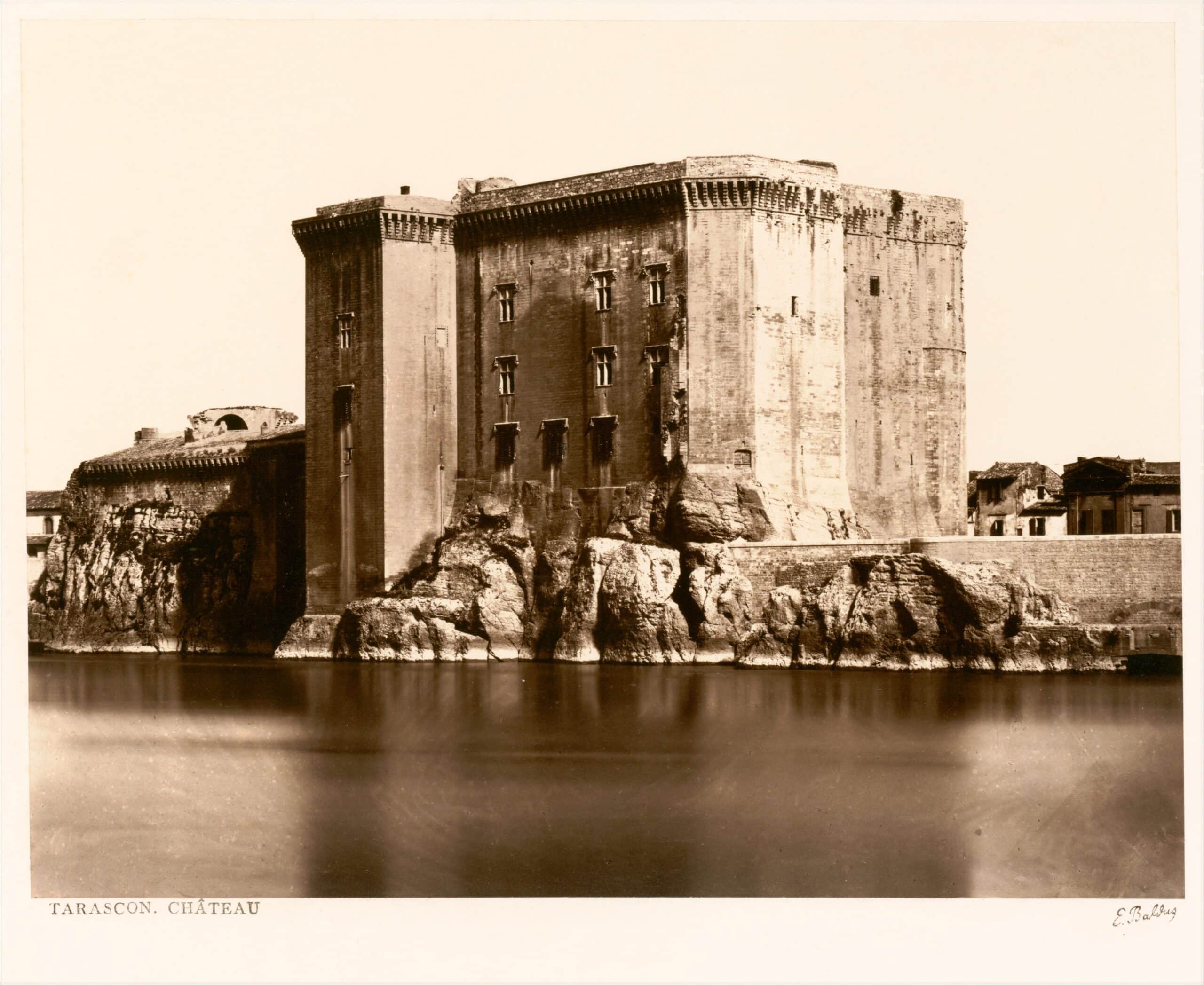
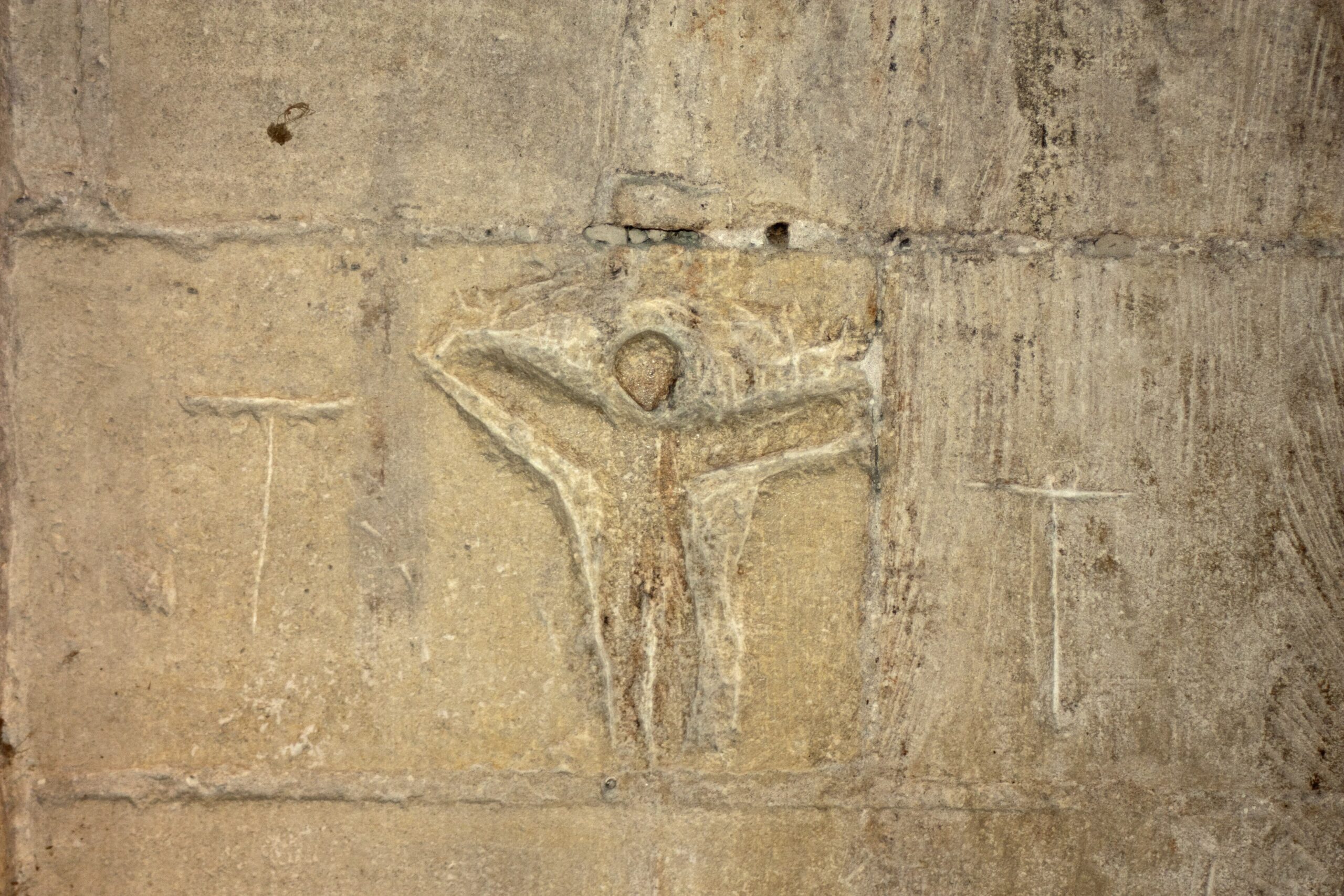
That long captivity is the reason the building survives so intact. A fortress kept in constant use, however grim, is a fortress that is maintained rather than quarried for stone or left to fall. And the prisoners left a record like almost no other. Hundreds of graffiti cover the walls, the work of generations of captives over five centuries. The most remarkable date from the wars of the eighteenth century, when sailors taken during the Seven Years’ War and the American War of Independence, men from England, Germany, Spain, Italy, the Netherlands, and Scandinavia, carved the ships they feared they would never see again. Galleys, brigantines, tartanes, xebecs, and schooners crowd the stone, an entire naval catalog worked with a knife by men with nothing but time.
Violence marked the prison years too, not only confinement. During the White Terror of 1795, the royalist backlash that followed Robespierre’s fall, men held at the château as former revolutionaries were massacred, some of them thrown from its towers into the Rhône below.
The castle was nearly lost in the end. After the prison closed, the State took the building in hand, and the architect Jules Formigé led a major restoration that stripped out the prison partitions and recovered the medieval volumes. On March 12, 1933, the monument opened to the public. Restorations continued through the middle of the twentieth century, and the result is what the Centre des monuments nationaux has called the best-preserved medieval fortress in France.
The Tarasque and Tartarin
Few castles carry as much story for their size, and at Tarascon the legends reach right into the rock. Local tradition placed the lair of the Tarasque, the amphibious dragon that terrorized both banks of the Rhône, beneath the foundations of the old fortress on this very spur. According to the legend, Saint Martha came up from the river, tamed the beast, and led it meekly into the town, where the townspeople killed it. The dragon gave the town its name, its emblem, and the festival the community still holds, and René’s Order of the Knights of the Tarasque tied the castle directly to the myth. A stone Tarasque stands near the entrance today.
Tarascon owes its second literary life to Alphonse Daudet, whose comic novel Tartarin de Tarascon and its sequels made the town a byword across France for cheerful Provençal bravado. Daudet’s braggart hero belongs to the streets rather than the keep, but the castle anchors the world he satirized, and the town now runs a Tartarin trail through its center. Inside the walls, the centre d’art René d’Anjou leans into all of it, setting contemporary works in dialogue with the medieval bestiary. One restored hall carries a 200-square-meter floor that the designer Christian Lacroix conceived as a giant tattoo, a deliberate echo of the prisoners who once scratched their stories into these same stones.
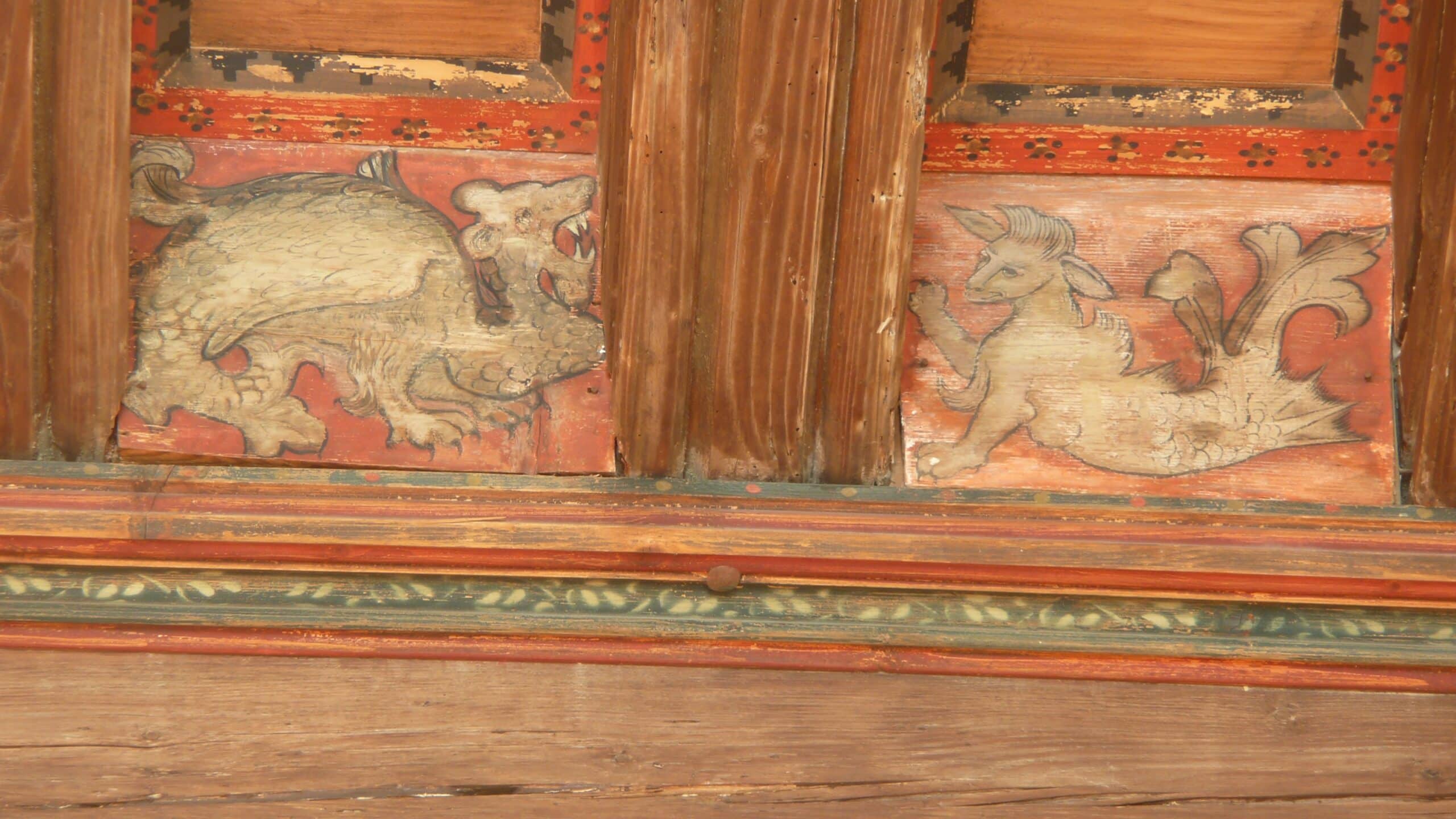
Visiting Château de Tarascon
The château sits on the Boulevard du Roi René at the edge of Tarascon’s old town, in the triangle between Avignon, Arles, and Nîmes, with Saint Martha’s Collegiate Church just steps away. Tarascon is well served by TER trains and sits a short drive off the A7 and A54, and a free 200-space parking lot waits at the foot of the walls. A visit runs through about 35 spaces, from the lower court and its garden and apothecary up through the princely apartments, the former cells, and the rooftop terrace, and it involves roughly 150 steps. One practical caution: the medieval building is not accessible to visitors with reduced mobility or hearing, though the staff offer adapted options for other needs.
The Ville de Tarascon runs the monument and sets the admission. Standard rates are as follows.
| Adult (25 and over) | €8 |
| Reduced (18 to 24) | €6.50 |
| Youth (10 to 17) | €3.50 |
| Child (under 10) | Free |
| Family (2 adults, 2 children) | €20 |
| Family (2 adults, 4 to 6 children) | €26.50 |
Opening hours follow the season. From January through March and again from October through December, the castle opens Tuesday to Sunday, 9:30 a.m. to 12:30 p.m. and 2:00 p.m. to 5:00 p.m., closed Mondays. In April it opens daily on the same hours, and from May through September it opens every day from 9:30 a.m. to 12:30 p.m. and 1:45 p.m. to 6:30 p.m. The monument closes on January 1, May 1, November 1 and 11, and December 25, and the last entry is 45 minutes before closing. Hours and prices can change, so it is worth checking the official site before a visit.
If you would rather fold the castle into a wider day in Provence, a range of guided tours and day trips across Avignon and the surrounding area can be booked through GetYourGuide, and if you are making a few days of it, you can compare places to stay in and around Tarascon on Booking.com.
Looking to stay overnight? Our guide to castle hotels in Provence lists the châteaux you can sleep in across the region, the nearest a short drive up the Rhône around Avignon.
Some links on this page are affiliate links, which means StoneKeep Atlas may earn a small commission, at no extra cost to you, if you book through them.
More Views of Château de Tarascon
Beyond Château de Tarascon
Tarascon belongs to a small but growing set of Provençal monuments in the StoneKeep Atlas. Twenty-three kilometers upriver stands the Palais des Papes in Avignon, the largest Gothic palace in the world and the seat of the medieval popes, a near neighbor from the same Angevin century. Beside the palace at Villeneuve-lès-Avignon, the royal Fort Saint-André guarded the French bank of the same river. Down the coast, the island Château d’If off Marseille is another near-intact stone fortress that spent its long second life as a prison. The dynastic thread runs west to the Château d’Angers, the great fortress of the House of Anjou and the ancestral seat of the same King René who finished Tarascon, and north to the royal Gothic keep of the Château de Vincennes, the closest French parallel to Tarascon’s residence-in-armor. Readers drawn to the castle’s legends will find kindred sites among the Castles in Literature.
Conclusion
Few buildings hold their whole history in their fabric the way Château de Tarascon does. The fortress the Anjou raised against the French crown, the residence René filled with courtly life, and the prison that held five centuries of captives are all still legible in the same building, and it is the grim prison chapter, oddly, that kept the rest standing. Today the castle anchors a town that made its dragon and its braggart into a brand, and a single visit takes in the whole arc: the war-like walls, the gracious courtyard, the carved cells, and the long view over the Rhône to Beaucaire.
Château de Tarascon is one of the four castles of Provence gathered on StoneKeep Atlas, with the Palais des Papes at Avignon, Château d’If, and the hilltop ruins of Les Baux.
Principal Sources
- Centre des monuments nationaux. Le Château de Tarascon. Éditions du patrimoine.
- Ministère de la Culture. Notice PA00081473, Base Mérimée. Plateforme ouverte du patrimoine.
- Provence-Alpes-Côte d’Azur Tourisme and Heart of Provence Tourism. Monument records for the Château de Tarascon.
- Ville de Tarascon. Château de Tarascon, official monument site. chateau.tarascon.fr (admission, hours, and visit route).
- Château de Tarascon and Tarascon. Wikipedia (history, build phases, and prison era).
Image credits. Hero: Daniel Villafruela, CC BY-SA 4.0, via Wikimedia Commons; the town-side front: Bjs, CC BY-SA 4.0, via Wikimedia Commons; the Gothic courtyard: Daniel Villafruela, CC BY-SA 4.0, via Wikimedia Commons; Baldus photograph: Édouard Baldus, CC0, via the Metropolitan Museum of Art; painted bestiary ceiling: Finoskov, CC BY-SA 4.0, via Wikimedia Commons; across the Rhône to Beaucaire: Daniel Villafruela, CC BY-SA 3.0, via Wikimedia Commons; town-side elevation: Rudolphous, CC BY-SA 4.0, via Wikimedia Commons; aerial view: Chatsam, CC BY-SA 3.0, via Wikimedia Commons; the Laurana busts niche: Daniel Villafruela, CC BY-SA 4.0, via Wikimedia Commons; a prisoner’s carving: Daniel Villafruela, CC BY-SA 3.0, via Wikimedia Commons; the hall of the galleys: Chatsam, CC BY-SA 3.0, via Wikimedia Commons; the king’s salon: Daniel Villafruela, CC BY-SA 3.0, via Wikimedia Commons; the apothecary collection: Bjs, CC BY-SA 4.0, via Wikimedia Commons; the fortress at golden hour: Wolfgang Staudt, CC BY 2.0, via Wikimedia Commons. Freely licensed images are resized to fit; otherwise unaltered.