
The Ladies of the Loire: The Women Who Built, Won, and Saved Chenonceau
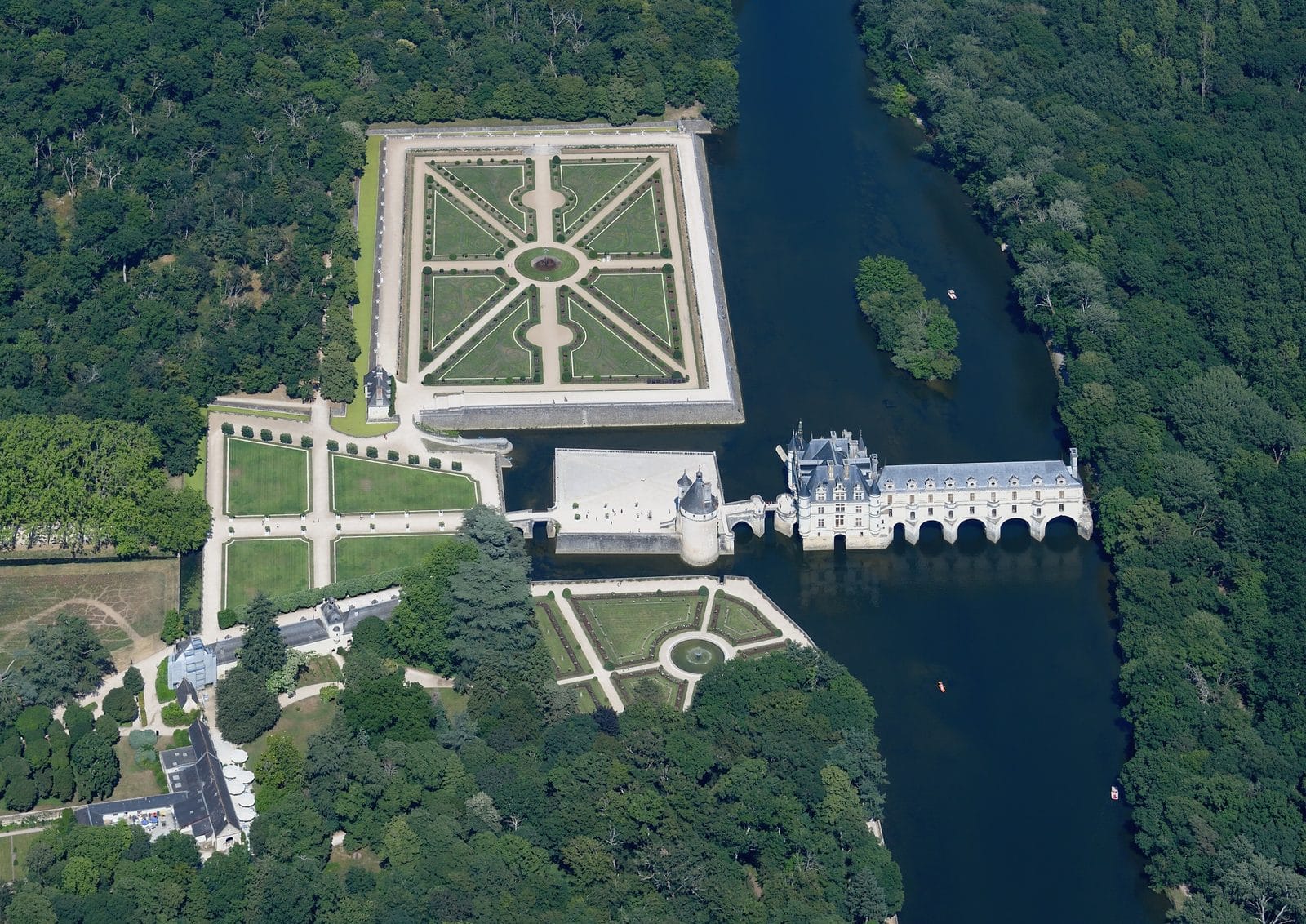
In the summer of 1559 two widows faced each other across the wreckage of a court. One was Catherine de’ Medici, queen of France for twelve years and invisible for most of them, now suddenly the power behind her young sons’ thrones. The other was Diane de Poitiers, the late king’s mistress, nineteen years his senior, who had run his household, written his letters, and held the jewel of the Loire Valley as a personal gift. Henri II was dead of a lance splinter taken at a tournament on the last day of June. Catherine had barred Diane from his sickroom while he called for her, and once he was gone she demanded the return of the crown jewels. Then she reached for the thing she wanted most: the Château de Chenonceau, the white house standing on piers in the river Cher. In 1560 Diane signed the deed of exchange, taking the Château de Chaumont in return, and one of the most famous property swaps in French history was complete.
That exchange is usually told as a duel of mistress and wife, and told that way it misses what makes Chenonceau singular. The French call it the Château des Dames, the ladies’ château, and the name is not a courtesy but a causal claim. Across five centuries, at every moment when the house faced ruin, whether royal bankruptcy, dynastic vendetta, revolution, or two world wars, a woman held it, and each one turned its defining feature, the bridge over the Cher, into the instrument of its survival. This is the story of six of them, the ladies of the Loire, and of the rival house above the Loire that one of them won as a consolation prize.
Katherine’s House (1513–1535)
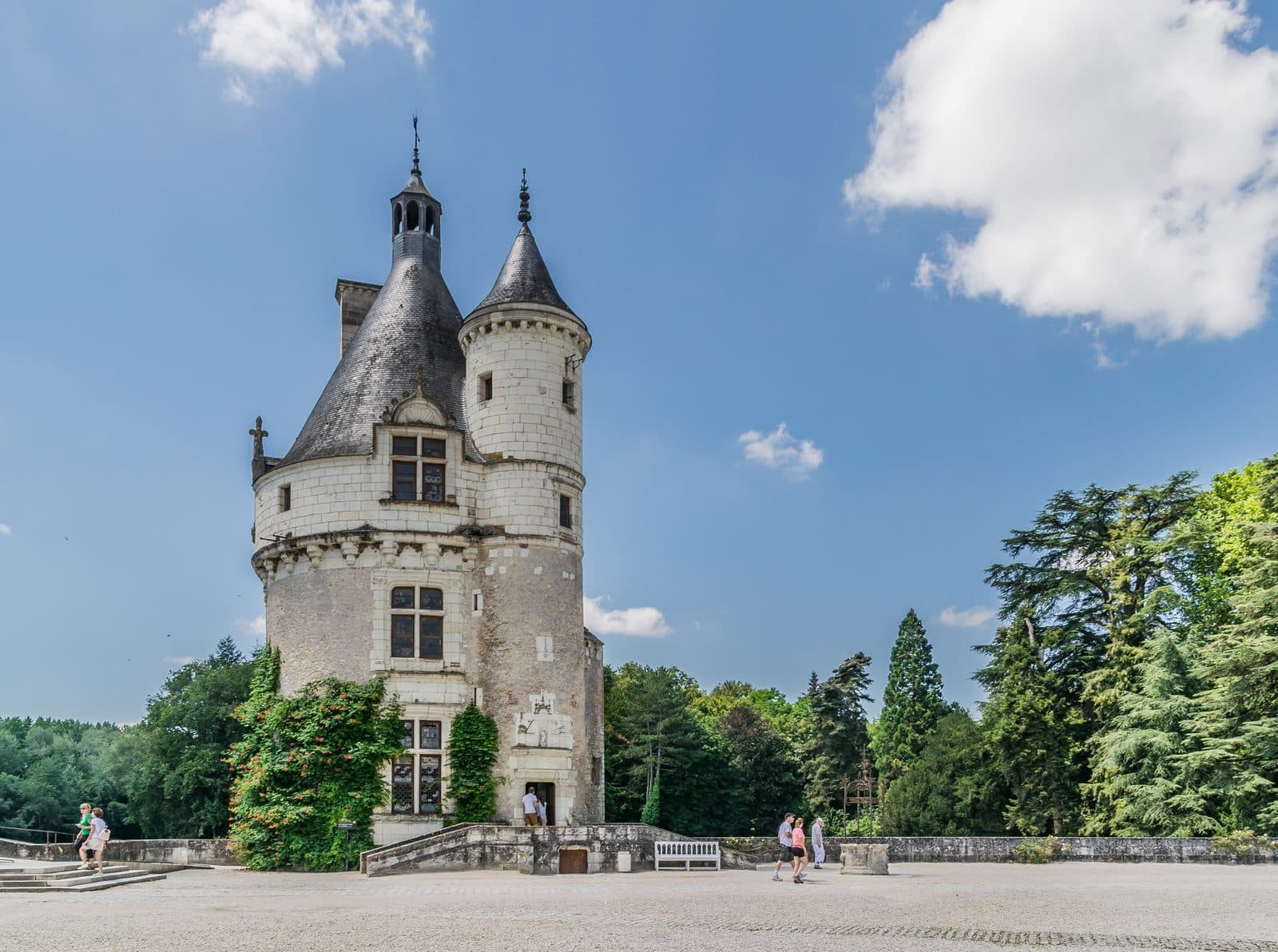
Chenonceau owes its existence to a man’s ambition and its character to a woman’s judgment. Thomas Bohier, a royal tax official with court connections, bought the estate in 1512, cleared away the medieval fortress that stood there, and kept only its round keep, the Tour des Marques. He then spent much of the following decade away at the king’s wars in Italy, which is how the construction of one of the most original buildings in France came to be supervised by his wife.
 CC BY-SA 4.0" srcset="https://stonekeepatlas.com/wp-content/uploads/2026/06/chateau-de-chenonceau-tour-des-marques.jpg 1600w, https://stonekeepatlas.com/wp-content/uploads/2026/06/chateau-de-chenonceau-tour-des-marques-300x224.jpg 300w, https://stonekeepatlas.com/wp-content/uploads/2026/06/chateau-de-chenonceau-tour-des-marques-1024x763.jpg 1024w, https://stonekeepatlas.com/wp-content/uploads/2026/06/chateau-de-chenonceau-tour-des-marques-768x572.jpg 768w, https://stonekeepatlas.com/wp-content/uploads/2026/06/chateau-de-chenonceau-tour-des-marques-1536x1144.jpg 1536w" sizes="auto, (max-width: 1600px) 100vw, 1600px" />
Katherine Briçonnet managed the masons, the money, and much of the design between 1513 and 1521. Her clearest signature is the staircase: a straight ceremonial flight climbing through a rib-vaulted vestibule, at a time when French builders still wrapped their stairs in defensive spirals. Light, symmetry, and that confident stair fixed the house’s character before any queen ever saw it. High on the walls the builders carved the linked initials T and B beside a K, with a motto that reads like a wager: “S’il vient à point, me souviendra” — if it is finished, I shall be remembered. Bohier died away on royal business within a few years of the completion, and Katherine followed in 1526. Neither lived to see how completely the wager would pay off, or at whose expense.
Debt did the rest. Bohier’s accounts with the Crown came up disastrously short, and in 1535 King Francis I took Chenonceau in settlement; the financier Gilles Berthelot had already lost the Château d’Azay-le-Rideau to the same reckoning. The house a woman had shaped now belonged to the king, which meant it could be given away.
The Favorite and the Fine Print (1547–1559)
When Henri II came to the throne in 1547, he did not grant Chenonceau to his wife. He gave it outright to Diane de Poitiers, his mistress and one of the steadiest political influences of his reign. The court read the gesture correctly, and the interlaced monogram of Henri and Diane soon appeared in the rooms, a public stamp on a private arrangement everyone understood.
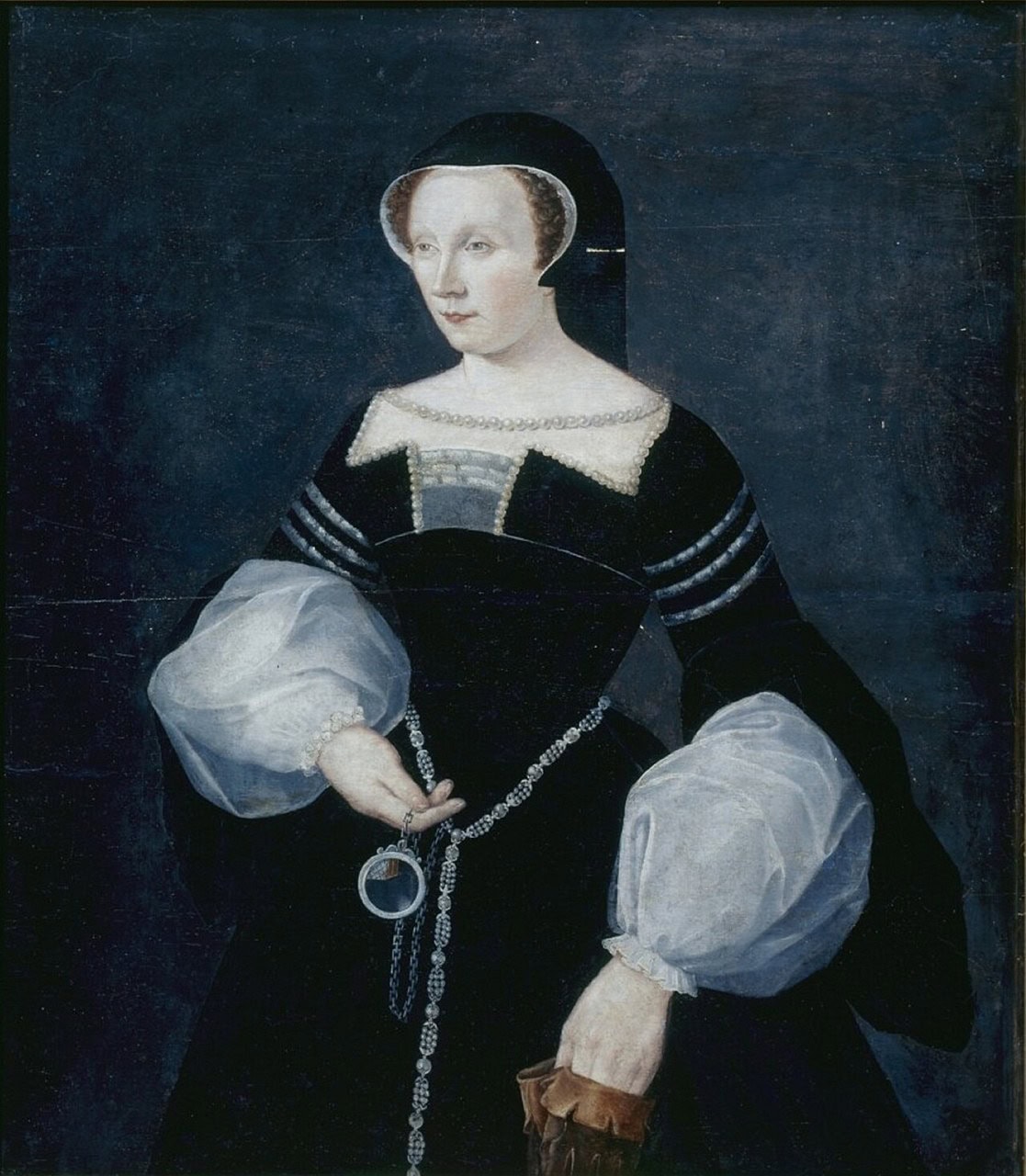
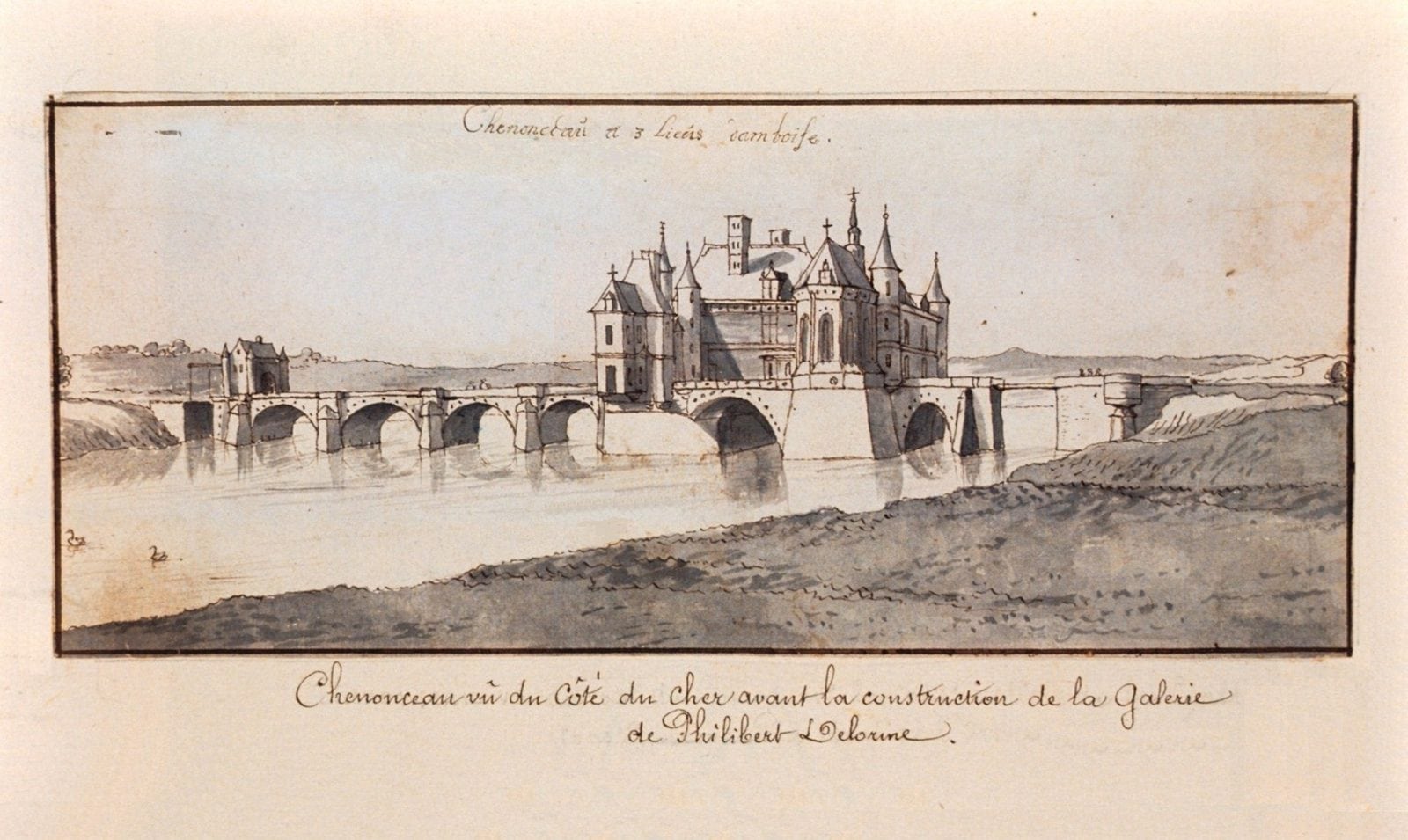
Diane behaved like no ornamental favorite. She understood how fragile her tenure was, since a royal gift could be unmade by the next reign, and she spent the 1550s armoring it. In 1555 she secured full legal title through a careful series of maneuvers that routed ownership back out of the Crown. The same year she commissioned the architect Philibert de l’Orme to throw a bridge across the Cher. Built in the late 1550s, it linked the house to the far bank and opened a possibility no one had yet acted on: building over open water. A mistress decorates; an owner invests. Diane planted her great parterre on raised terraces against the floods, ran the estate at a profit, and prepared, as far as paper allowed, for the day her protector died.
That day came faster than anyone expected. On June 30, 1559, Henri took a lance splinter through the visor at a tournament and died ten days later. Diane’s law now met Catherine’s power, and the contest was short.
The Queen’s Reckoning (1559–1560)
Catherine had been preparing for years. In 1550, while still the overshadowed consort, she had bought the Château de Chaumont, a bluff-top fortress-palace above the Loire. Whether she acquired it as a residence, an investment, or a piece pre-positioned on the board is her secret to keep; what matters is that it gave her exactly what she needed in 1559. She had something to offer.
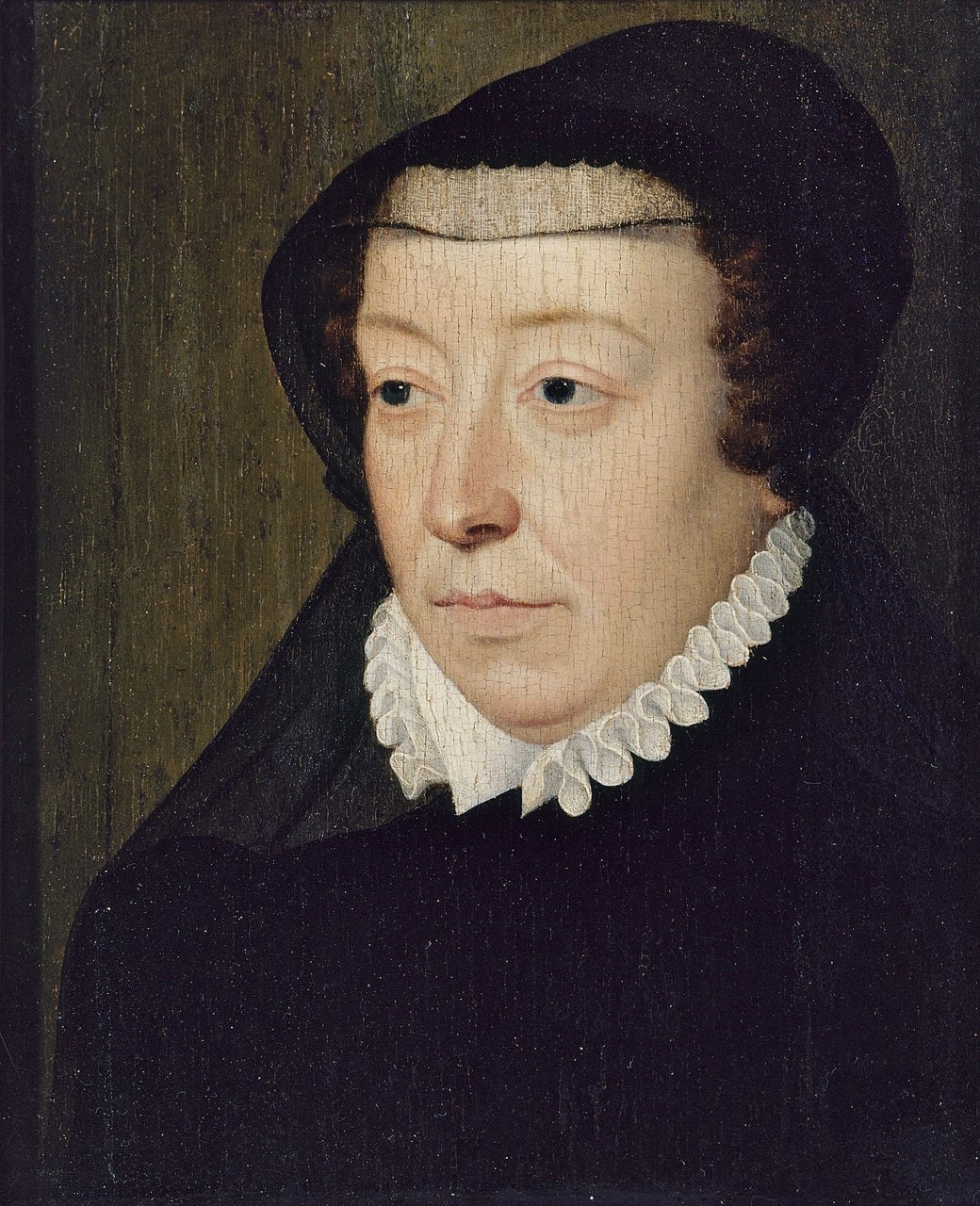
Leverage came from the law. Chenonceau, the argument ran, had been crown property all along, which made the gift to Diane voidable whatever the 1555 paperwork said. The argument did not need to be airtight; it needed only the weight of the king’s mother behind it. Within months of Henri’s death she pressed Diane to surrender Chenonceau and accept Chaumont in exchange; in 1560, Diane signed.
The terms reveal the politics. This was a humiliation, not a destruction. Chaumont and its attached lands made the substantially more profitable estate, and Diane faced no prosecution and no ruin, a gentler exit than royal favorites usually negotiated when their protectors died. She held Chaumont only briefly before withdrawing to her own château of Anet, where she managed her estates until her death on April 25, 1566. Catherine, for her part, had the house she had coveted for a decade, and a kingdom collapsing around it. The same year the exchange concluded, the Tumult of Amboise ended with Huguenot conspirators hanged from the balconies of the Château d’Amboise. Winning Chenonceau was the easy part of her widowhood.
The Gallery of State (1560–1589)
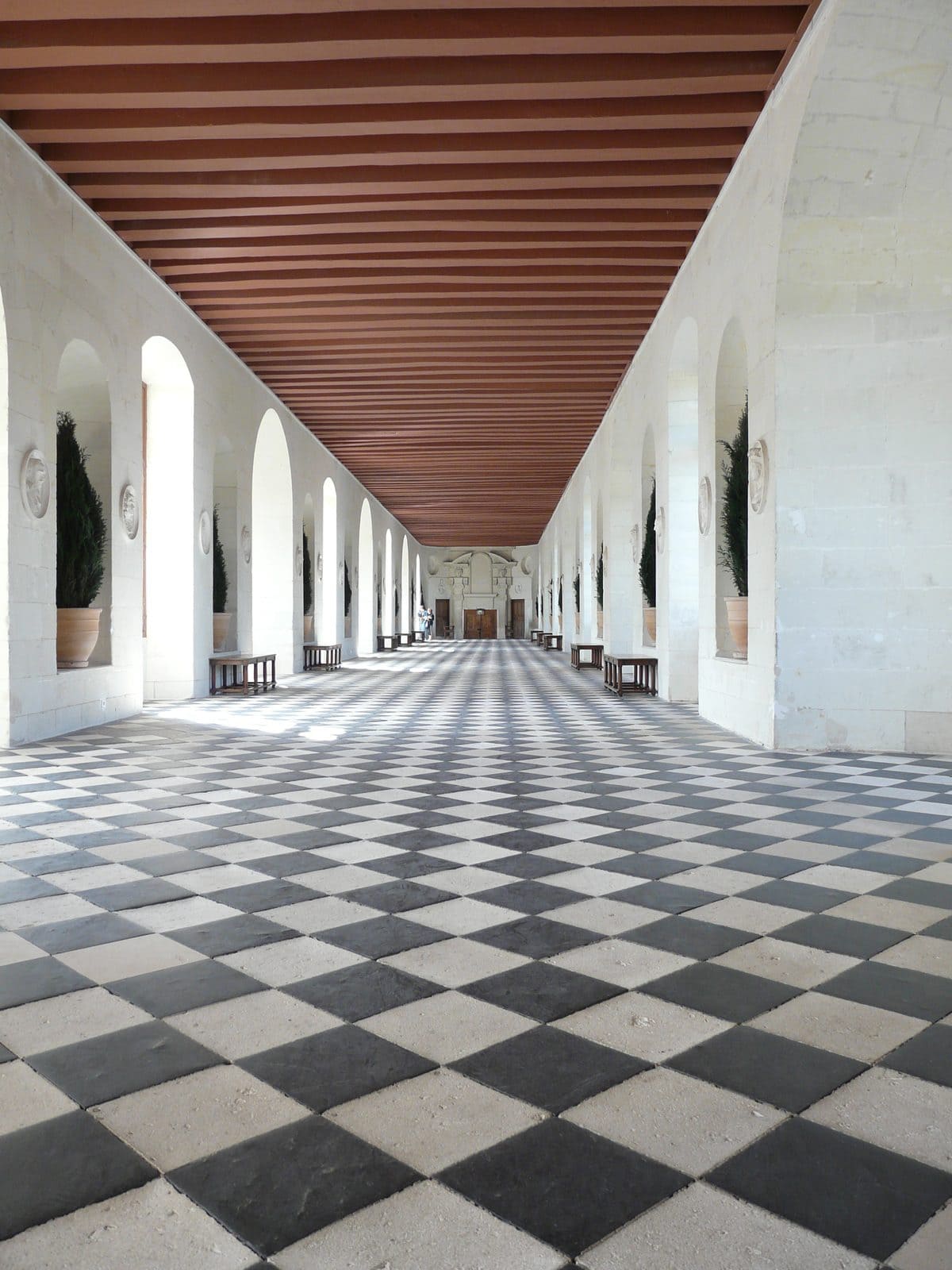
What Catherine did with her prize settled the rivalry permanently, and in stone. Working from plans associated with Philibert de l’Orme and executed by the architect Jean Bullant, she raised a two-story gallery along the full length of Diane’s bridge. Completed in 1576 and inaugurated the next year with entertainments for her son Henri III, it runs sixty meters across the river, lit by eighteen windows that throw the shifting light of the Cher onto a black-and-white checkerboard floor. Building it was architectural conquest. Diane had thrown the bridge; Catherine made it the most celebrated room on the river, and every photograph of the château floating on its arches has been, ever since, a picture of her answer to her rival.
 CC BY-SA 3.0" style="width:380px" srcset="https://stonekeepatlas.com/wp-content/uploads/2026/06/chateau-de-chenonceau-grande-galerie-interior.jpg 1200w, https://stonekeepatlas.com/wp-content/uploads/2026/06/chateau-de-chenonceau-grande-galerie-interior-225x300.jpg 225w, https://stonekeepatlas.com/wp-content/uploads/2026/06/chateau-de-chenonceau-grande-galerie-interior-768x1024.jpg 768w, https://stonekeepatlas.com/wp-content/uploads/2026/06/chateau-de-chenonceau-grande-galerie-interior-1152x1536.jpg 1152w" sizes="auto, (max-width: 1200px) 100vw, 1200px" />
The gallery anchored a court in miniature. Queen mother to three kings in turn, and formally regent for one of them, Catherine governed from Chenonceau’s rooms, laid out her own parterre beside the forecourt, smaller and nearer the house than Diane’s, and mounted festivals that included one of the earliest recorded fireworks displays in France. The spectacle was statecraft. With the Wars of Religion tearing the kingdom apart, the festivals were designed to overawe rivals and remind France who held the reins during her sons’ uncertain reigns.
She did not die at the ladies’ château but at the Château de Blois, on January 5, 1589, thirteen days after her son had the Duke of Guise cut down in the chamber above her apartments — the collapse, in one morning, of the balance she had spent three decades maintaining. Chenonceau she left to a daughter-in-law, and with it the strangest chapter in the house’s history.
The White Queen and the Black Room (1589–1601)
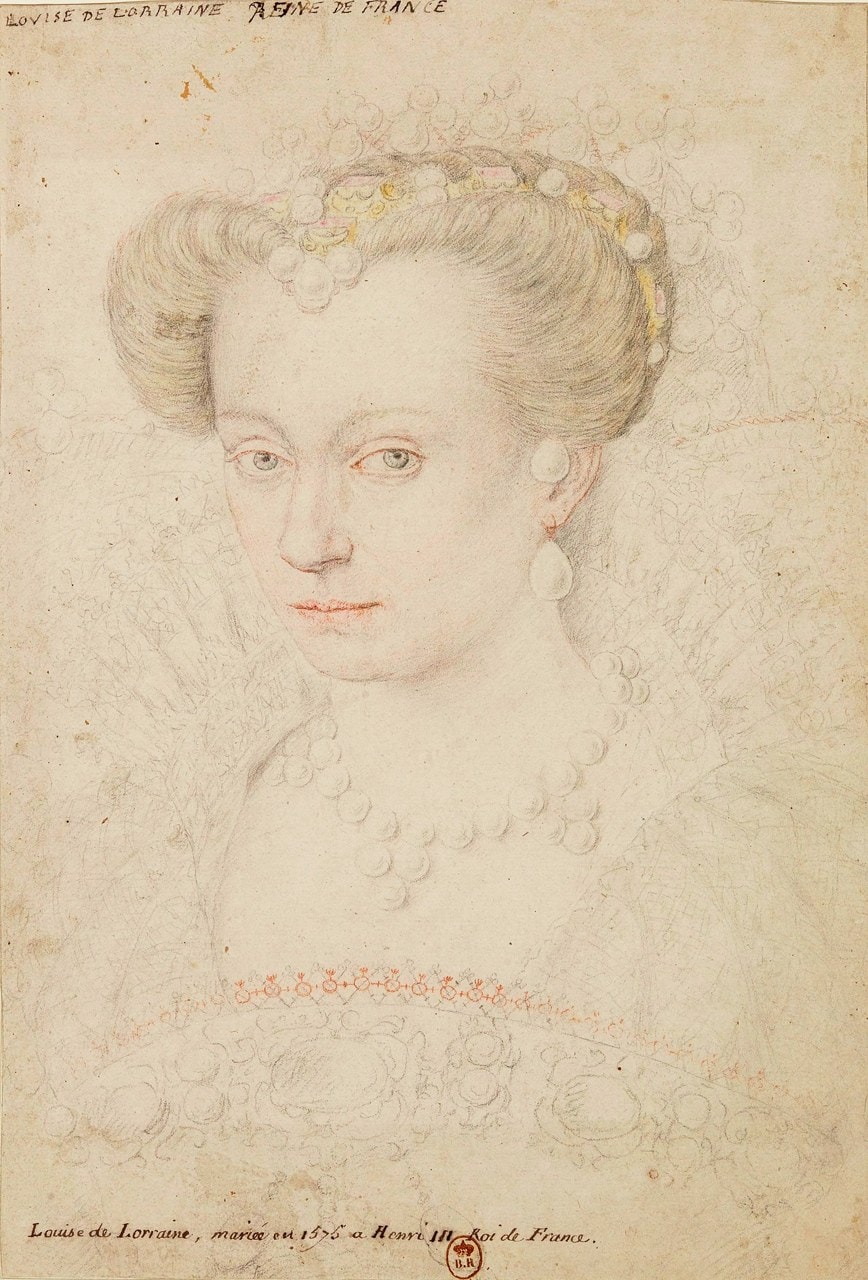
Louise de Lorraine, wife of Henri III, was at Chenonceau in 1589 when word arrived that her husband had been assassinated by a friar’s knife. She never set the mourning aside. Following the old custom by which queens of France mourned in white rather than black, she became known as the White Lady, and she had her chamber on the upper floor painted black and strewn with painted silver tears, crowns of thorns, and widow’s cords. For close to eleven years she lived at the château in prayer and seclusion; she died in January 1601.
It is tempting to read Louise as the passive figure among Chenonceau’s women, and the contrast with her predecessors is real. Yet stillness preserved the house as surely as ambition had built it. Her black chamber still stands among the most arresting rooms in the valley, and her tenure handed Catherine’s gallery and Briçonnet’s stair into the next century unaltered.
The Salonnière’s Bridge (1733–1799)
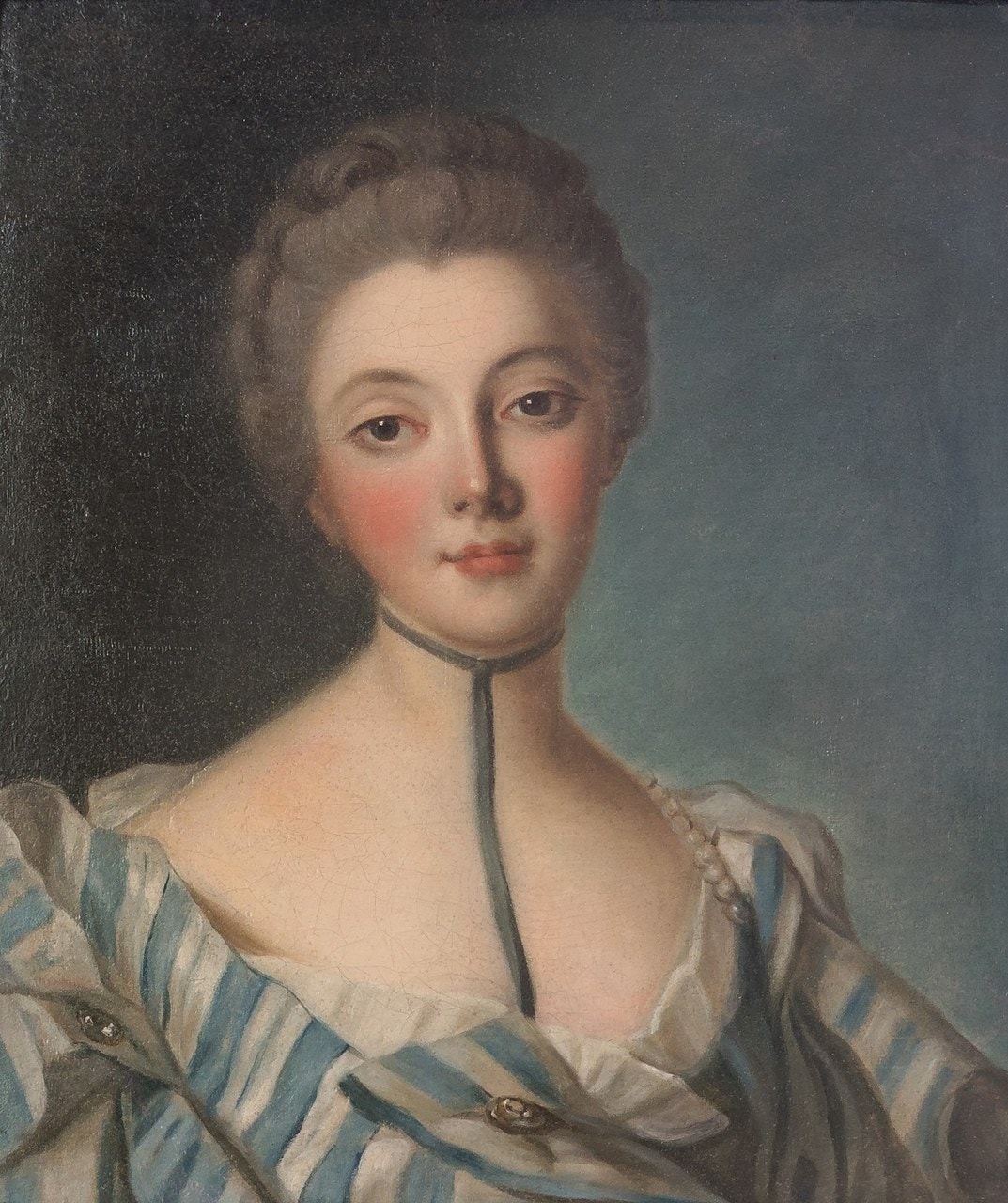
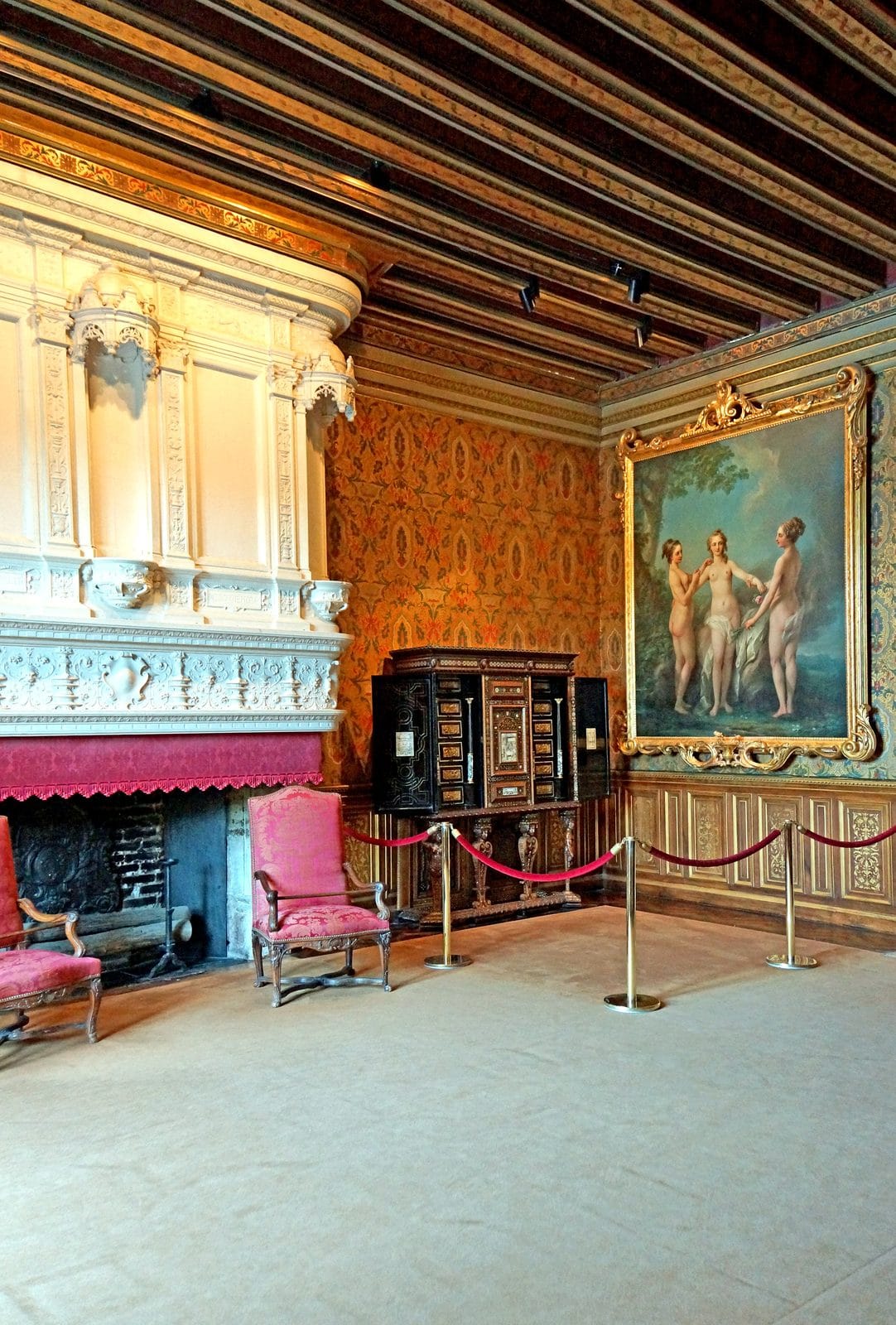
After a long quiet stretch under absentee owners, the château found its Enlightenment. In 1733 the financier Claude Dupin bought Chenonceau from the Duke of Bourbon, and his wife made the purchase historic. Louise Dupin, daughter of the banker Samuel Bernard, filled the house with the sharpest minds of the age. Voltaire and Montesquieu came through its doors; so did the young Jean-Jacques Rousseau, who served as her secretary through the 1740s, tutored her son, and later wrote that on the good living at Chenonceau he became, in his own words, “as fat as a monk.” Rousseau’s pen did more than answer letters. He drafted and researched for the ambitious project Louise never finished: a treatise on the rights and equality of women, assembled partly at Chenonceau itself, whose scattered manuscripts scholars are still piecing together.
 CC BY-SA 2.0" style="width:380px" srcset="https://stonekeepatlas.com/wp-content/uploads/2026/06/chateau-de-chenonceau-francois-i-drawing-room.jpg 1082w, https://stonekeepatlas.com/wp-content/uploads/2026/06/chateau-de-chenonceau-francois-i-drawing-room-203x300.jpg 203w, https://stonekeepatlas.com/wp-content/uploads/2026/06/chateau-de-chenonceau-francois-i-drawing-room-692x1024.jpg 692w, https://stonekeepatlas.com/wp-content/uploads/2026/06/chateau-de-chenonceau-francois-i-drawing-room-768x1136.jpg 768w, https://stonekeepatlas.com/wp-content/uploads/2026/06/chateau-de-chenonceau-francois-i-drawing-room-1039x1536.jpg 1039w" sizes="auto, (max-width: 1082px) 100vw, 1082px" />
Her standing saved the building. When the Revolution swept France and noble châteaux burned, Chenonceau came through largely untouched, partly because Louise was loved in the surrounding villages, and partly because of an argument of beautiful economy: the gallery, she pointed out, was the only bridge across the Cher for many miles, and a bridge is useful to everyone, whatever the politics of the moment. There is the whole thesis of this article in a single sentence, made by one of its subjects. Architecture became utility, and utility became survival. Louise Dupin died at her château in 1799, at ninety-three, having steered it through the most dangerous decade in French history.
The Matron of the Gallery (1913–1945)
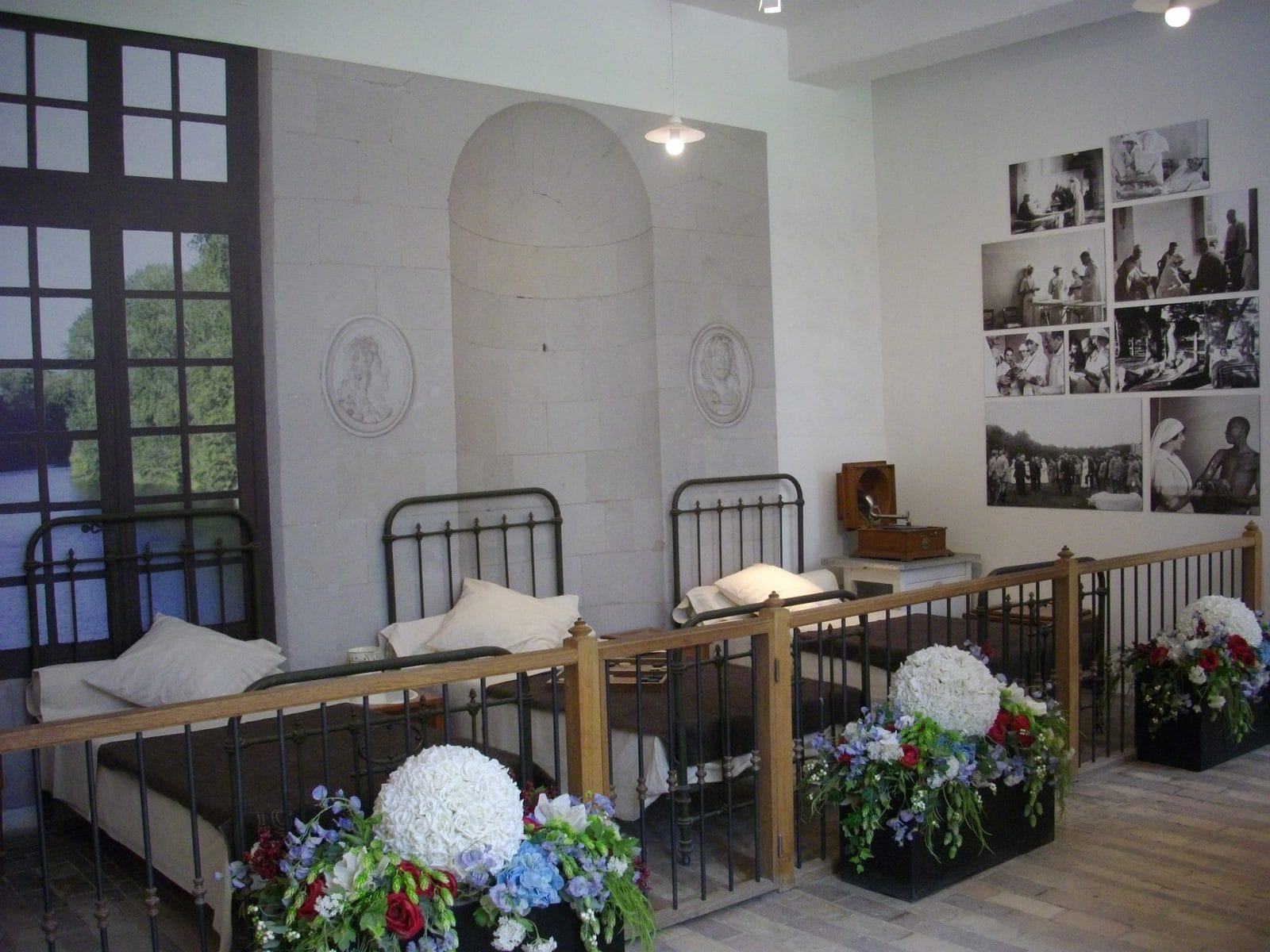
The nineteenth century brought another woman with a fortune — Marguerite Pelouze, who bought the château in 1864 and spent herself toward ruin restoring it — before the house found its final dynasty. In 1913 Henri Menier, of the chocolate-making family, bought Chenonceau, and the Meniers own it still. A year later the First World War broke out, and Gaston Menier turned Catherine’s gallery into a military hospital at the family’s own expense, installing some 120 beds in the two long rooms suspended over the Cher. His daughter-in-law Simone Menier ran it as matron. By the time the hospital closed at the end of 1918, the château’s own record counted 2,254 wounded treated in rooms built for court balls.
 CC BY-SA 4.0" srcset="https://stonekeepatlas.com/wp-content/uploads/2026/06/chateau-de-chenonceau-wwi-military-hospital.jpg 1600w, https://stonekeepatlas.com/wp-content/uploads/2026/06/chateau-de-chenonceau-wwi-military-hospital-300x225.jpg 300w, https://stonekeepatlas.com/wp-content/uploads/2026/06/chateau-de-chenonceau-wwi-military-hospital-1024x768.jpg 1024w, https://stonekeepatlas.com/wp-content/uploads/2026/06/chateau-de-chenonceau-wwi-military-hospital-768x576.jpg 768w, https://stonekeepatlas.com/wp-content/uploads/2026/06/chateau-de-chenonceau-wwi-military-hospital-1536x1152.jpg 1536w" sizes="auto, (max-width: 1600px) 100vw, 1600px" />
The Second World War asked more of her. After France fell in 1940, the demarcation line between the German-occupied north and the Vichy “free zone” ran down the middle of the Cher, and Chenonceau straddled it: the forecourt and main entrance lay in occupied France, while the gallery’s far door opened onto the free south bank. For more than two years, until the Germans seized the whole country in November 1942, that gallery served as a quiet crossing point between two Frances, with Simone Menier once again at the center of the house and the risk real on both sides of the door. Briçonnet’s house, Diane’s bridge, and Catherine’s gallery had become, in their fifth century, a ward and an escape route. No architect planned that. The women of the house, across four centuries, made it possible.
The Houses They Held
Four châteaux carry this story, and each holds a different piece of it. For the women who shaped the rest of the valley, from Agnès Sorel at Loches to Louise of Savoy the regent, see our companion history of the women who built the Loire.
The Château de Chenonceau is the protagonist and the proof. The Tour des Marques still stands from Bohier’s clearance, Briçonnet’s stair still climbs straight through its vaulted vestibule, and the two great parterres, Diane’s the larger and Catherine’s the nearer, still face each other across the house like the rivalry set in boxwood. The gallery over the Cher remains the defining image of the valley’s Renaissance.
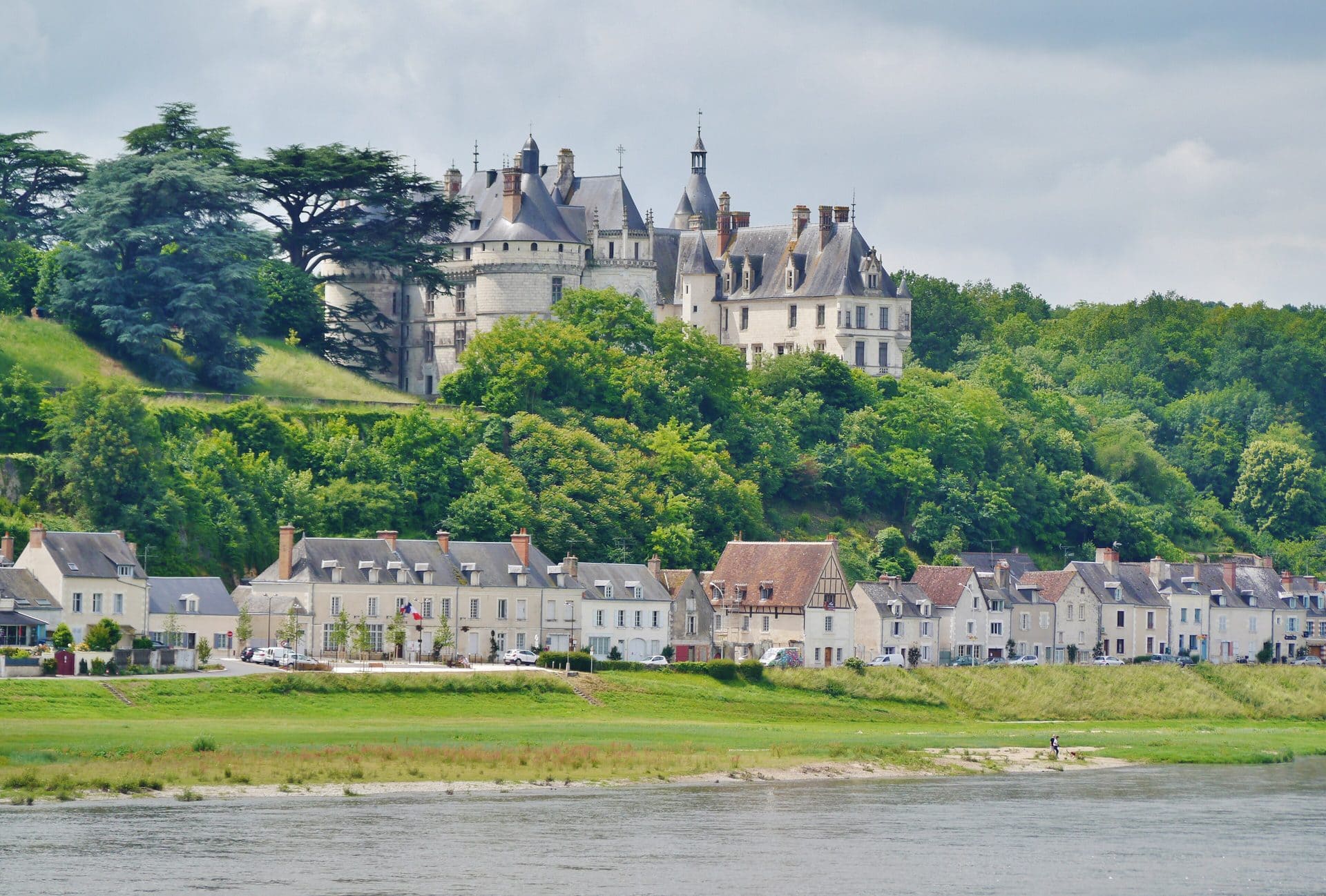
The Château de Chaumont-sur-Loire is the price of losing. Catherine bought it in 1550 as her quiet move on the board, and Diane held it only briefly after 1560. A tower room still bears the name of Cosimo Ruggieri, Catherine’s Italian astrologer, who legend says showed her the reigns of her sons in a mirror there — a story to be enjoyed rather than believed, since Ruggieri is not reliably documented at the French court until about 1571. Chaumont later found a great lady of its own in the sugar heiress Marie-Charlotte Say, who bought it in 1875 and remade it as a Belle Époque estate.
 CC BY-SA 4.0" srcset="https://stonekeepatlas.com/wp-content/uploads/2026/06/chateau-de-chaumont-sur-loire-above-the-loire.jpg 1920w, https://stonekeepatlas.com/wp-content/uploads/2026/06/chateau-de-chaumont-sur-loire-above-the-loire-300x203.jpg 300w, https://stonekeepatlas.com/wp-content/uploads/2026/06/chateau-de-chaumont-sur-loire-above-the-loire-1024x692.jpg 1024w, https://stonekeepatlas.com/wp-content/uploads/2026/06/chateau-de-chaumont-sur-loire-above-the-loire-768x519.jpg 768w, https://stonekeepatlas.com/wp-content/uploads/2026/06/chateau-de-chaumont-sur-loire-above-the-loire-1536x1038.jpg 1536w" sizes="auto, (max-width: 1920px) 100vw, 1920px" />
The Château de Blois is where Catherine held court and where she died. She kept apartments on the first floor of the François I wing, one floor below the chamber where the Duke of Guise was killed on December 23, 1588. She survived the murder by thirteen days, and the politics of the Catholic League denied her even a burial at Saint-Denis for more than twenty years.
The Château d’Amboise is the court these women maneuvered in. The Tumult of 1560 ended on its balconies in the first year of Catherine’s widowhood, and three years later she signed the Edict of Amboise there, buying the kingdom its first uneasy pause in the Wars of Religion.
Who Really Won the Exchange
Judged in 1560, Catherine won everything: the house, the precedent, the satisfaction. Judged across the centuries, the verdict is stranger. Chaumont, her consolation prize to Diane, settled into a quieter history and waited three hundred years for Marie-Charlotte Say to give it a second golden age. Chenonceau, the prize itself, kept attracting women of consequence as if the deed of exchange had set a pattern: a salonnière who sheltered the Enlightenment’s boldest question, a matron who ran a hospital in the gallery and then watched its far door open into free France. The exchange Catherine forced did not end the story of women holding Chenonceau. It guaranteed that the story would continue, because it confirmed the house as something worth fighting for with law, money, and nerve rather than armies.
The Château des Dames earned its name the hard way, one crisis at a time. To walk the gallery today is to cross the work of all of them at once: Briçonnet’s proportions, Diane’s piers underfoot, Catherine’s windows on either side, Louise Dupin’s only-bridge-for-miles, Simone Menier’s quiet door at the far end. The nine royal houses of the Loire hold many stories of kings. The best of them, on the evidence, belongs to the ladies of the Loire.
Seeing the Château des Dames Today
Chenonceau and Chaumont sit close enough together to pair in a single unhurried day, and seeing both is the surest way to weigh the exchange with your own eyes. Skip-the-line tickets and guided day tours of Chenonceau are on GetYourGuide, and Tours makes the most practical base for the central valley, with the full range of stays on Booking.com.
Some links on this page are affiliate links, which means StoneKeep Atlas may earn a small commission, at no extra cost to you, if you book through them.
Image credits. Hero, aerial view of Chenonceau: Carsten Steger, CC BY-SA 4.0, via Wikimedia Commons; the Tour des Marques: Krzysztof Golik, CC BY-SA 4.0, via Wikimedia Commons; Catherine de’ Medici’s grand gallery: Sébastien Hosy, CC BY-SA 3.0, via Wikimedia Commons; the salon of François I: Dennis G. Jarvis, CC BY-SA 2.0, via Wikimedia Commons; the First World War hospital: Fab5669, CC BY-SA 4.0, via Wikimedia Commons; the château above the Loire: Zairon, CC BY-SA 4.0, via Wikimedia Commons; Diane de Poitiers (after François Clouet), Catherine de’ Medici (workshop of François Clouet), Louise de Lorraine (Jean Rabel), Louise Dupin (Jean-Marc Nattier), and the 1570 engraving (Jacques Androuet du Cerceau): public domain. Freely licensed images are resized to fit; otherwise unaltered.
Principal Sources
- Centre des monuments nationaux and Ministère de la Culture (France), base Mérimée, notice PA00097654, monument historique listing for the Château de Chenonceau (acquisition by Bohier in 1512; completion in 1521; de l’Orme bridge commission of 1555).
- Château de Chenonceau, photographic archives presented via Google Arts & Culture, “Military Hospital” (the 1914–1918 hospital: 120 beds, Simone Menier as matron-in-charge, closure on December 31, 1918, 2,254 wounded treated).
- Knecht, R. J. Catherine de’ Medici. Longman, 1998.
- Marty, Frédéric. Louise Dupin: défendre l’égalité des sexes en 1750. Classiques Garnier, 2021.
Current visitor information for both châteaux is maintained by the operators, Domaine de Chenonceau (chenonceau.com) and Domaine de Chaumont-sur-Loire (domaine-chaumont.fr); the practical details above were checked in June 2026.