
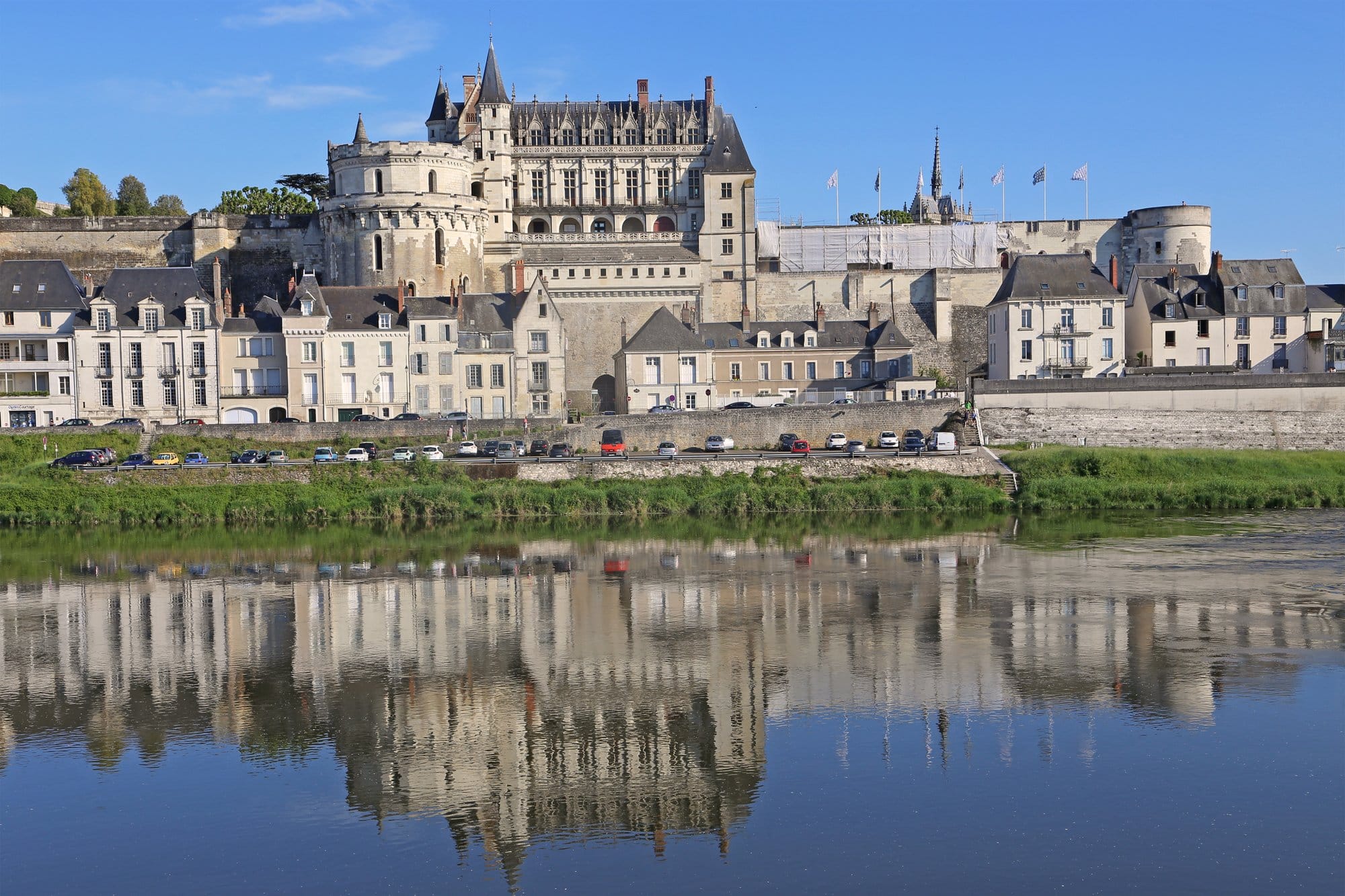
Château d’Amboise
Château d’Amboise rises on a limestone spur in the heart of the town of Amboise, in the Indre-et-Loire département, its terraces standing some forty meters above the Loire and the rooftops below. A royal stronghold since the crown seized it in 1434, the site was rebuilt by Charles VIII in the 1490s into the first great palace of the French Renaissance, then raised to the height of its glory under François I. For visitors today the draw is double: a fragment of a once-enormous royal residence, and the presumed tomb of Leonardo da Vinci, who spent his last years a few hundred meters away and was laid to rest within the château grounds.
This is where the Italian Renaissance crossed the Alps into France. Charles VIII came home from his Italian wars with artists, gardeners and a new visual language, and his successors grafted it onto the Gothic bones of a fortress that still looked, from the river, like a castle. The story that follows runs from medieval keep to royal cradle, through a notorious massacre, to the demolitions that left only a portion of the palace standing. It is a small site for so much history, and that compression is part of its appeal.
Quick Facts
| Location | Amboise, Indre-et-Loire, Loire Valley, France |
| Built | 1490s (rebuilt by Charles VIII on a medieval site) |
| Architectural style | Flamboyant Gothic and early French Renaissance |
| Type | Royal château |
| Principal builders | Charles VIII; later Louis XII and François I |
| Owner / operator | Fondation Saint-Louis (House of Orléans) |
| Condition | Well preserved (surviving portion) |
| UNESCO | Within “The Loire Valley between Sully-sur-Loire and Chalonnes” (inscribed 2000) |
| Monument historique | Classé 1840 (ref. PA00097503) |
| Notable feature | Presumed tomb of Leonardo da Vinci, Chapel of Saint-Hubert |
| Open to visitors | Yes, year-round (closed January 1 and December 25) |
| Official site | chateau-amboise.com |
From Medieval Fortress to Royal Residence
A fortified spur above Amboise had commanded this crossing of the Loire since antiquity, where the river bends east toward Tours. By the eleventh century it held the seat of the powerful house of Amboise, whose lords answered, often reluctantly, to the counts of Anjou and to the king. That semi-independence ended in 1434, when Charles VII confiscated the château from Louis d’Amboise after he was implicated in a plot against the royal favorite. Possession passed permanently to the crown, and a fortress on the Touraine frontier became a royal house. Whoever held the spur held the river road between the royal heartland and the wealthy towns of the Loire, and the monarchy had no intention of letting it slip back into private hands.
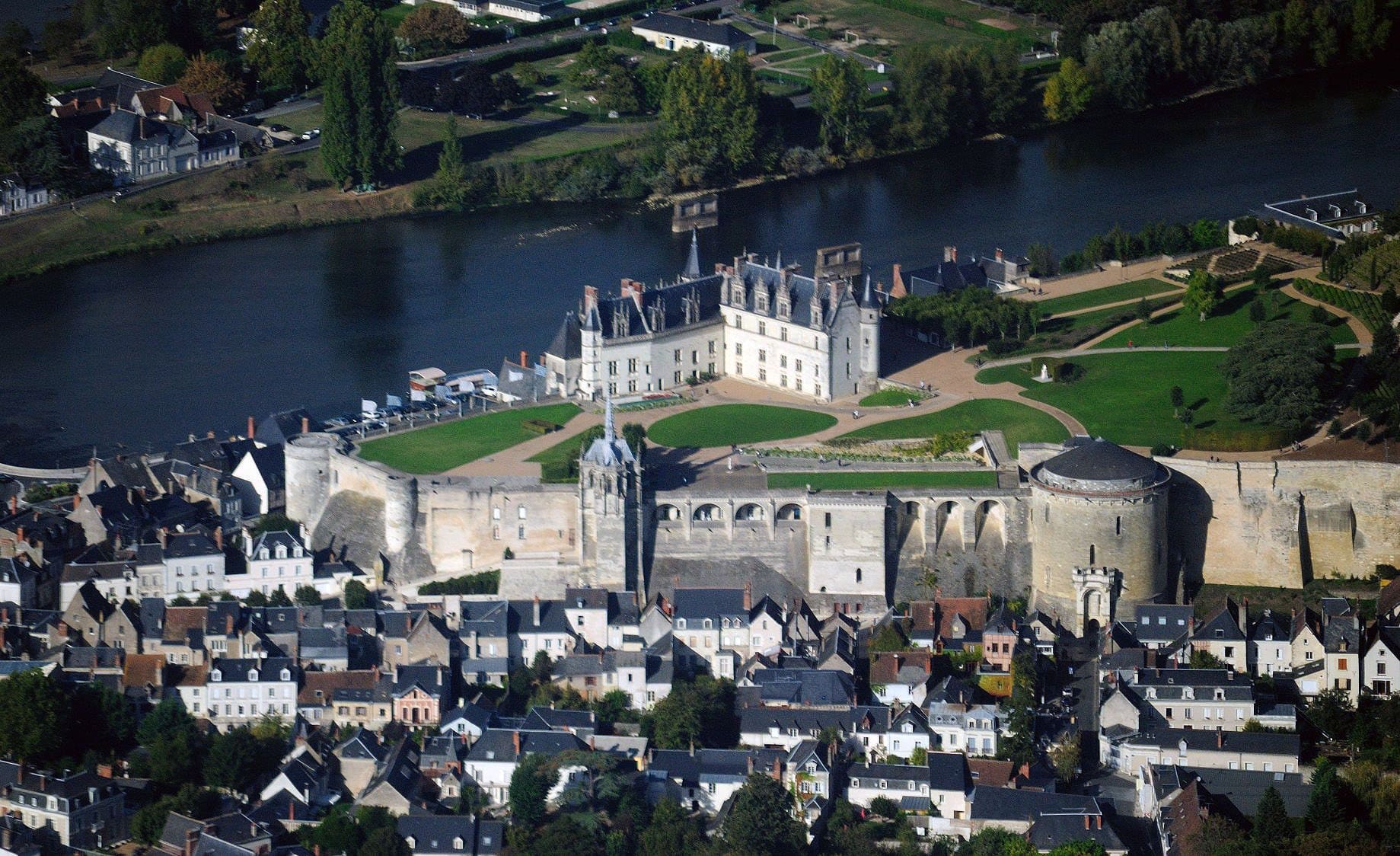
Louis XI made early use of it, installing his queen, Charlotte of Savoy, in the older buildings and ordering work on the defenses, including the riverside Tour Garçonnet begun around 1463. His son Charles VIII was born here on June 30, 1470 and grew up within these walls. When that boy became king in 1483, he inherited a residence that was still, in form and silhouette, a late-medieval castle: thick walls, a tight courtyard, a stronghold rather than a pleasure palace. What he would do to it over the next decade changed the course of French architecture.
Charles VIII and the Italian Graft
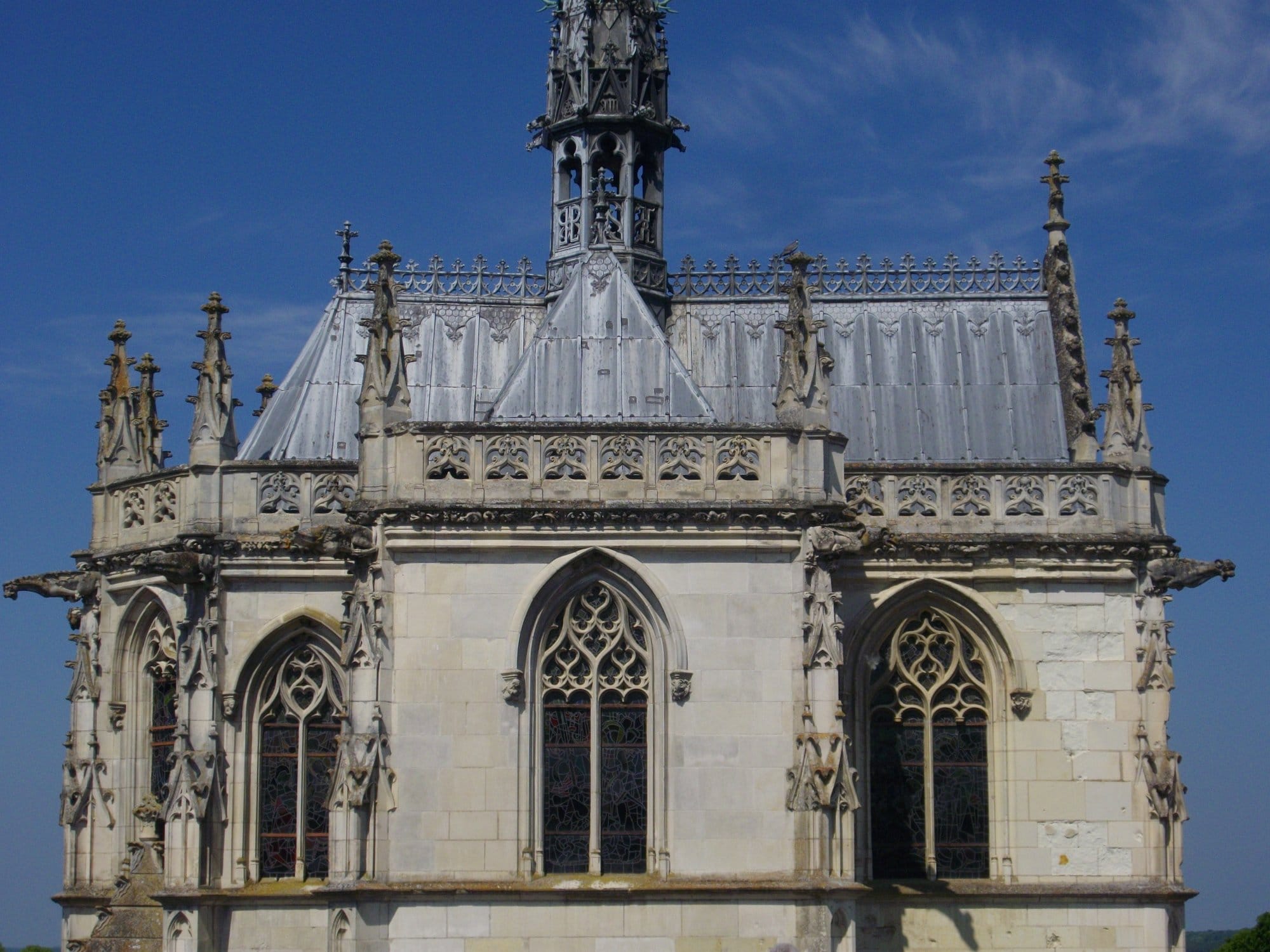
Building began in earnest around 1492 and would continue, on and off, for half a century. Charles VIII set out to transform the cramped fortress into a residence worthy of a Valois king, raising a new royal lodging along the Loire front and the flamboyant Chapel of Saint-Hubert on the rampart edge between 1491 and 1496. Masons worked in the soft local tuffeau, the creamy limestone of the Loire, and this first phase was thoroughly Gothic in its pointed arches and pinnacles.
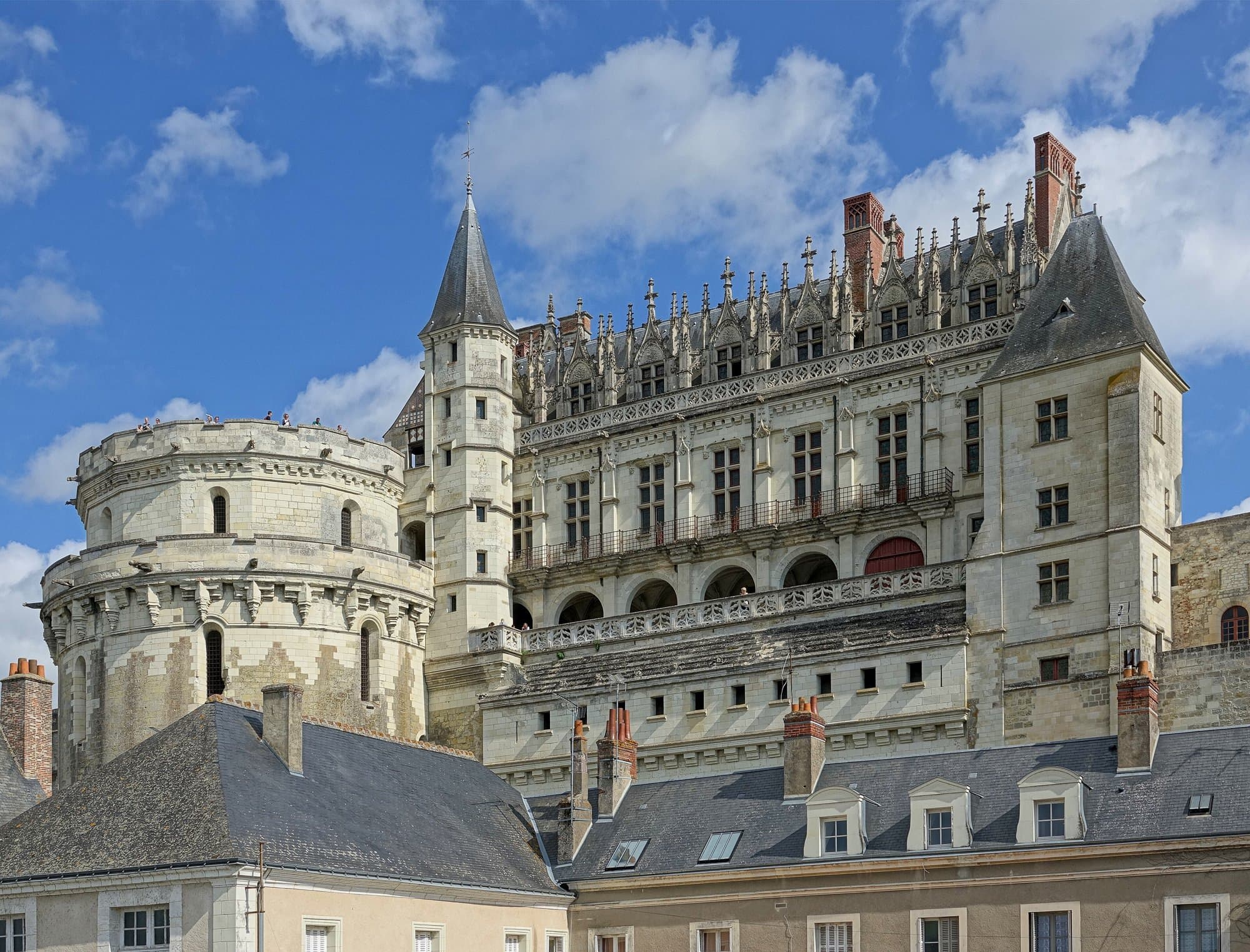
Then came Italy. In 1494 Charles led an army across the Alps to press a claim to the kingdom of Naples, and although the campaign collapsed within two years, what he saw there transformed his taste. He returned in 1495 with a retinue of Italian craftsmen, among them the architect-friar Fra Giocondo, the sculptor Domenico da Cortona, and the Neapolitan garden designer Pacello da Mercogliano, who laid out terraced gardens at Amboise in a manner no French court had seen. These were among the first Italian-style gardens north of the Alps, and the men who made them would shape French building for two generations. Amboise became the point of entry, the place where the new vocabulary was first tried on French stone before it traveled downriver. Contemporaries grasped what was under way: Amboise was, in effect, the first Italianate royal palace raised in France, even if its outer walls still wore the armor of a fortress. The new royal lodging rose quickly, its galleries opening toward the Loire, and the chapel was complete in time to serve the king as a private oratory.
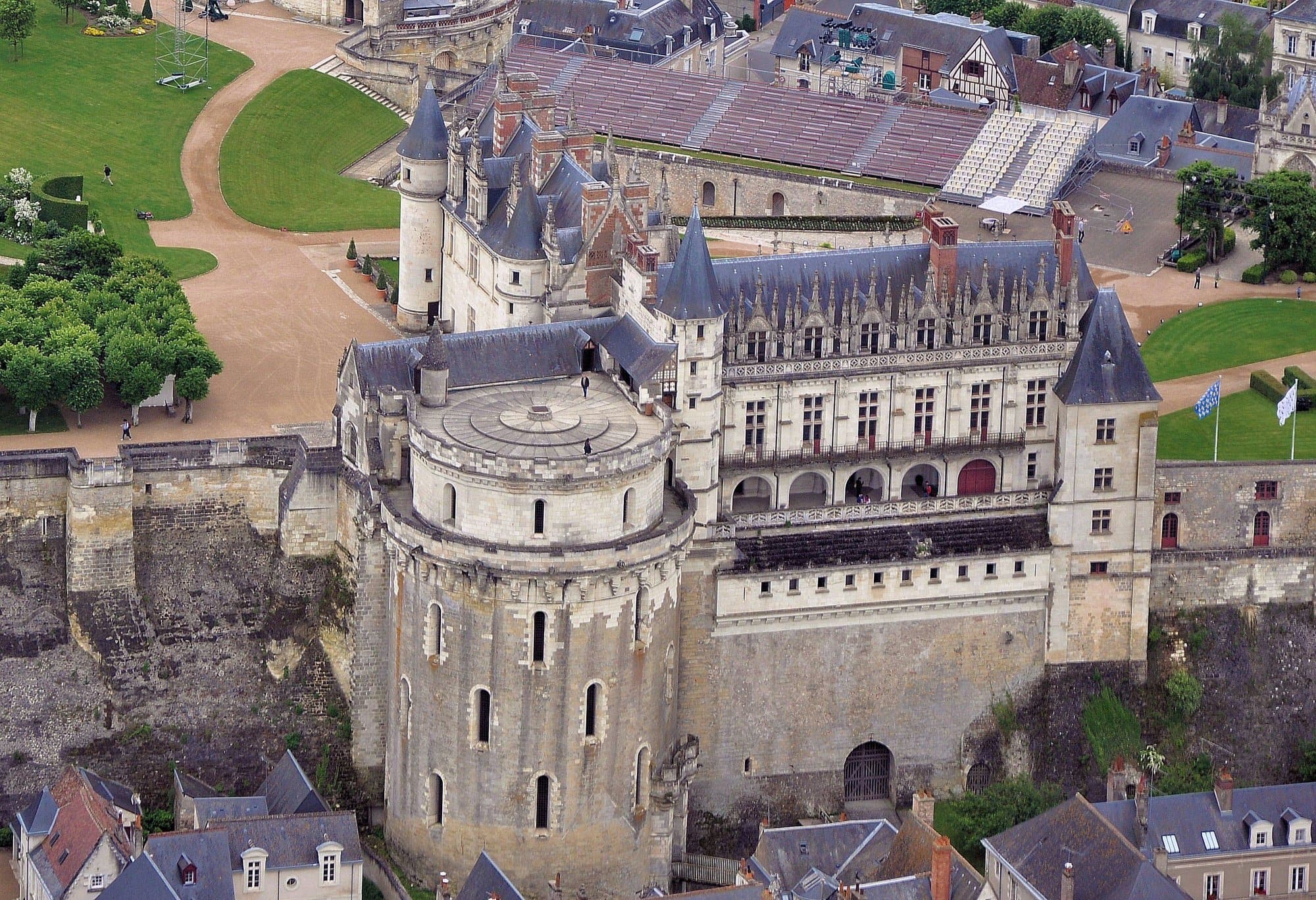
Access to the elevated terraces posed a practical problem, solved with characteristic boldness. Two great spiral towers, the Tour des Minimes overlooking the river and the Tour Heurtault to the north, enclosed gently sloping ramps wide enough for horsemen and loaded carts to ride straight up from the town to the château, climbing the full forty meters without a single step. The Minimes tower measures some twenty-one meters across, the Heurtault about twenty-four, and the engineering still impresses modern visitors who walk the curving incline of the Minimes.
Charles never saw the work finished. On April 7, 1498, hurrying through a low doorway in the Hacquelebac gallery on his way to watch a game of jeu de paume, the king struck his head against the stone lintel. He collapsed some hours later and died the same evening, still in his twenties. His death without a surviving heir ended the senior line of the house of Valois and passed the crown to his cousin Louis XII, who carried the building on in a wing that admitted Renaissance forms more openly than before.
The Cradle of François I
The château’s brightest years arrived with the next reign. François of Angoulême, who would become François I in 1515, was raised at Amboise under the care of his mother, Louise of Savoy, in a household that also schooled his clever sister Marguerite. When he took the throne, the young king lavished attention on the place that had formed him, heightening the Louis XII wing, adding Italianate dormers and ornament, and filling the courts with the festivals, tournaments and exotic menagerie for which his reign became famous.
Court life at Amboise in these years set a template for the French Renaissance monarchy. The king kept lions and other beasts below the walls, staged mock battles and tournaments in the courtyards, and gathered around him the poets and humanists who made his reign a byword for cultivation; his mother Louise of Savoy and his sister Marguerite, herself a gifted writer, formed the intellectual heart of the household. Italian musicians, dancers and engineers came and went, and the place hummed with the cross-Alpine traffic of ideas that defined the age.
Under François the court at Amboise reached its peak of brilliance. Ambassadors, scholars and artists passed through, and the Italian taste that Charles VIII had imported now hardened into royal policy. Within a few years the king would break ground on his own colossal hunting palace at Château de Chambord, the supreme statement of the Loire Renaissance, yet it was at Amboise that the style had first taken root. His hunger for Italian genius had already drawn to the Loire the most celebrated mind in Europe, and it is for that guest, more than for any king, that the château is best remembered today.
Leonardo da Vinci’s Last Years and Presumed Tomb
In 1516 François I invited Leonardo da Vinci to France and gave him the grand title of first painter, engineer and architect to the king. Leonardo, then sixty-four, crossed the Alps with a few pupils and three paintings, the Mona Lisa among them, and settled into the manor of Cloux, today called Le Clos Lucé, a royal house barely four hundred meters from the château. There he spent his final three years drawing, designing and advising, freed at last from the long search for patrons.
He painted little in France. His role was closer to that of a court intellectual and impresario: he drafted plans for an ideal royal town and palace at Romorantin, sketched hydraulic works to drain the marshes of the Sologne, designed flying machines and stage mechanisms, and organized the lavish entertainments the king adored. In June 1518 he organized the celebrated Fête du Paradis at Amboise, a spectacle of costumes, music and mechanical wonders that guests recalled for years afterward. A persistent local legend holds that an underground passage linked Clos Lucé to the château; the first meters of a tunnel do survive, but its purpose is undocumented, and the image of the old master slipping unseen to the king’s apartments belongs to folklore rather than to record.
Leonardo died at Clos Lucé on May 2, 1519. By his own wish he was buried within the château grounds, in the collegiate church of Saint-Florentin, a royal chapel that stood about a hundred meters from the surviving Chapel of Saint-Hubert and should not be confused with the parish church of the same name in the town below. There the matter might have rested, had history been kinder to the building.
It was not. Saint-Florentin fell into ruin after the Revolution and was demolished between 1806 and 1810, its stone carted off for repairs and its graves scattered. For more than half a century Leonardo’s resting place was effectively lost. Then in 1863 the writer Arsène Houssaye excavated the site and recovered a near-complete skeleton with an unusually large skull, alongside stone fragments bearing letters that seemed to spell out his name. On that slender evidence the bones were declared Leonardo’s, and in 1874 they were reinterred beneath a slab in the Chapel of Saint-Hubert, where a bronze medallion now marks the spot. An epitaph on the chapel wall recounts his final years as first painter to the king and the transfer of his bones to this place.
How much of Leonardo actually lies there is impossible to say. Other accounts describe the excavation turning up loose heaps of bones, as old chapels often did, and the identification rested on inference rather than proof. The tomb is best understood as a place of homage, the presumed grave of the man who carried the Renaissance to France, rather than a verified one, and the plaque above it says as much. Visitors still come from across the world to stand before it.
The Tumult of Amboise, 1560
Glory gave way to horror within two generations. After the accidental death of Henri II in 1559, the crown fell to the sickly fifteen-year-old François II, and real power to the Catholic House of Guise, whose harsh line against France’s growing Protestant minority bred deep resentment among the lesser nobility. Early in 1560 a band of Huguenot gentlemen met at Nantes under a Périgord lord named Jean du Barry, seigneur de La Renaudie, and hatched a plan to seize the young king, remove the Guise brothers, and force a change of policy.
The plot leaked. Warned while the court was at Blois, the Guise moved the king to Amboise, a far easier place to defend, and waited. When the conspirators converged on the town in scattered groups in mid-March, the royal troops were ready for them. On March 17, 1560 an assault on one of the château gates was thrown back, and what followed was less a battle than a slaughter. La Renaudie was hunted down and killed two days later, his body quartered and displayed at the town gates.
Reprisals were merciless and public. Prisoners were hanged from the château balconies and from the iron hooks meant for festival banners, decapitated in the courtyards, or sewn into sacks and thrown into the Loire. Estimates of the dead run from around twelve hundred to perhaps fifteen hundred, and the stench of corpses eventually drove the court itself out of the town. The bloodshed settled nothing. Three years later, in this same château, Catherine de’ Medici signed the Edict of Amboise of March 19, 1563, granting Protestants a limited right of worship and bringing the first War of Religion to an uneasy close. The killings at Amboise had done little but harden the divisions that would tear France apart for the next three decades.
Decline and Demolition
Amboise never recovered the favor it had once enjoyed. Valois kings and then Bourbons preferred other residences, and the great riverside palace slid slowly into secondary roles: a dower house, a garrison, and increasingly a prison. Richelieu had its outer defenses slighted under Louis XIII, and across the seventeenth century the château held a succession of state prisoners, among them the disgraced finance minister Nicolas Fouquet.
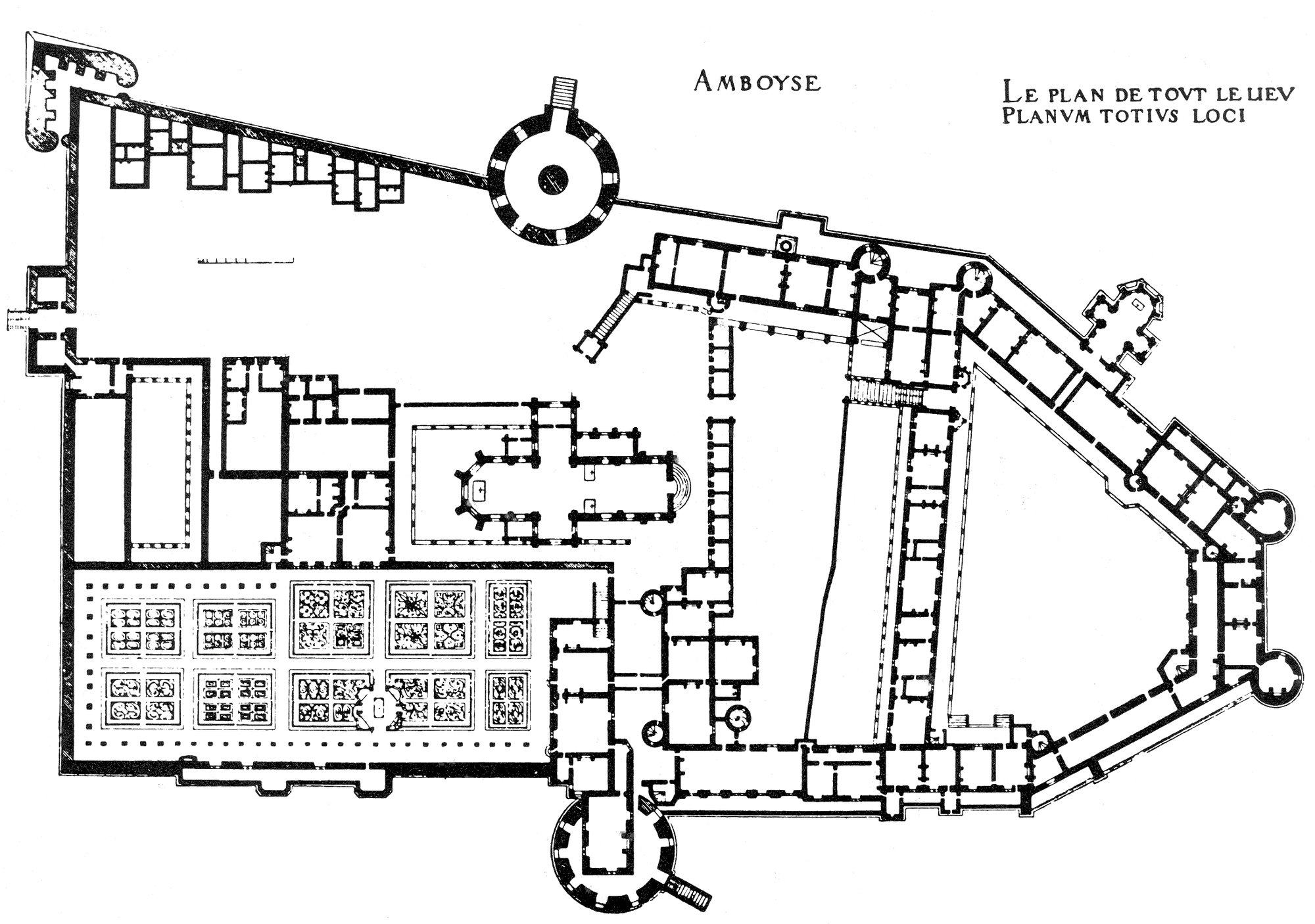
Its heaviest losses came after the Revolution. In 1803 the château was granted to the senator Roger Ducos, who found much of the vast, ageing complex ruinous and ordered wholesale demolition from 1806: the Saint-Florentin church, the canons’ lodgings and entire wings came down, their materials sold or reused. By the time the work stopped, the palace that had once spread across the whole plateau, with hundreds of rooms and galleries, had been reduced to a small share of its built extent. A recent survey by the château’s own historians suggests that roughly three quarters of the royal lodging raised under Charles VIII does still stand, but the wider complex around it is largely gone, so that what the visitor sees today is the salvaged core of something far larger.
Fortunes turned again under the House of Orléans, which acquired the property through the Penthièvre inheritance. Louis-Philippe, both before and during his reign as king, restored the surviving buildings; after his fall in 1848 the state seized the château and used it to detain the Algerian resistance leader Abd el-Kader, held there with his entourage from 1848 to 1852. Returned to the Orléans family in 1873, it has been cared for since 1974 by the Fondation Saint-Louis, which conserves it on the family’s behalf and keeps it open to the public. That a coherent royal house can still be visited at all, after two centuries of neglect and demolition, is itself a small triumph of restoration.
The Château Today: Architecture and What Survives
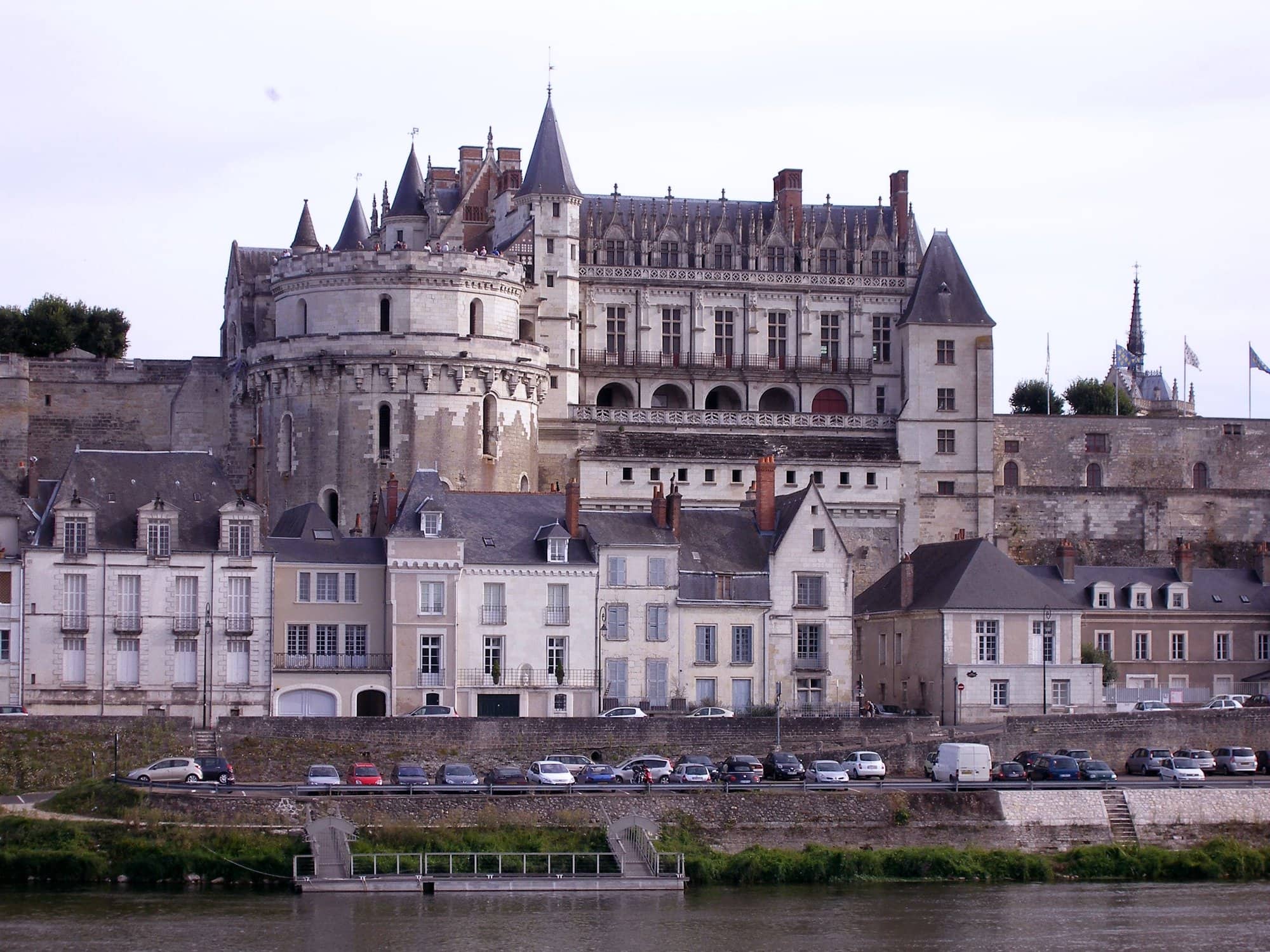
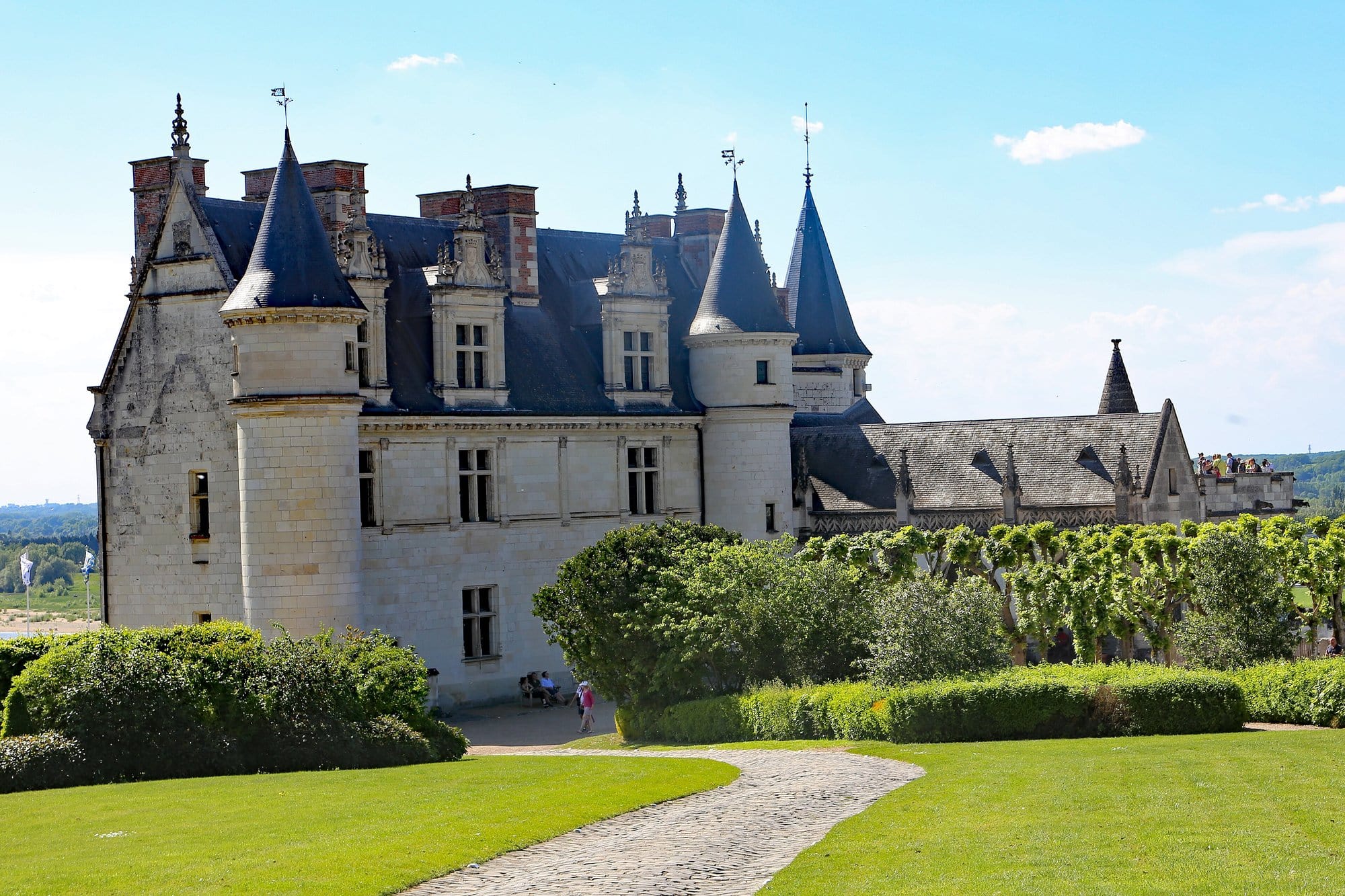
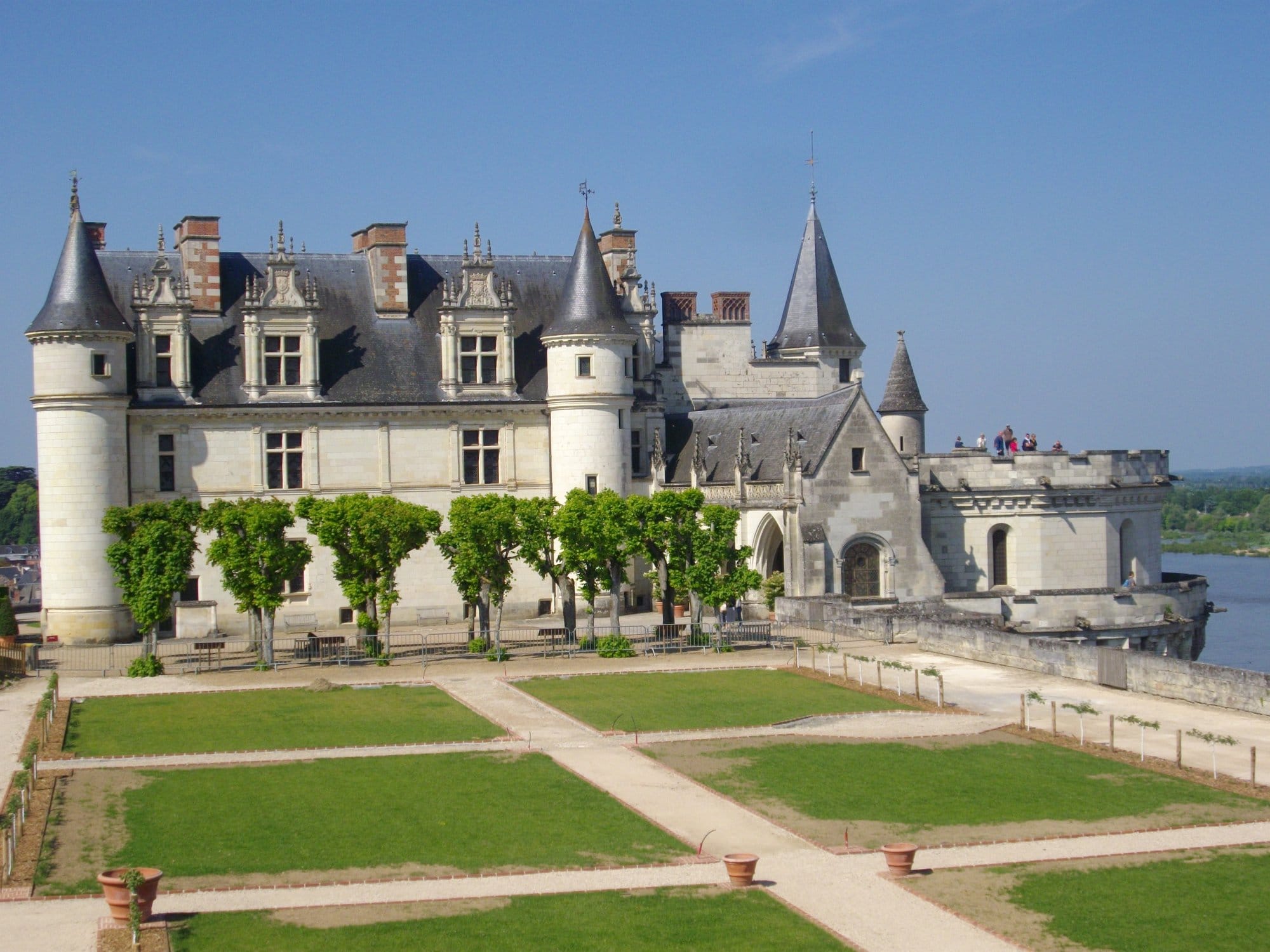
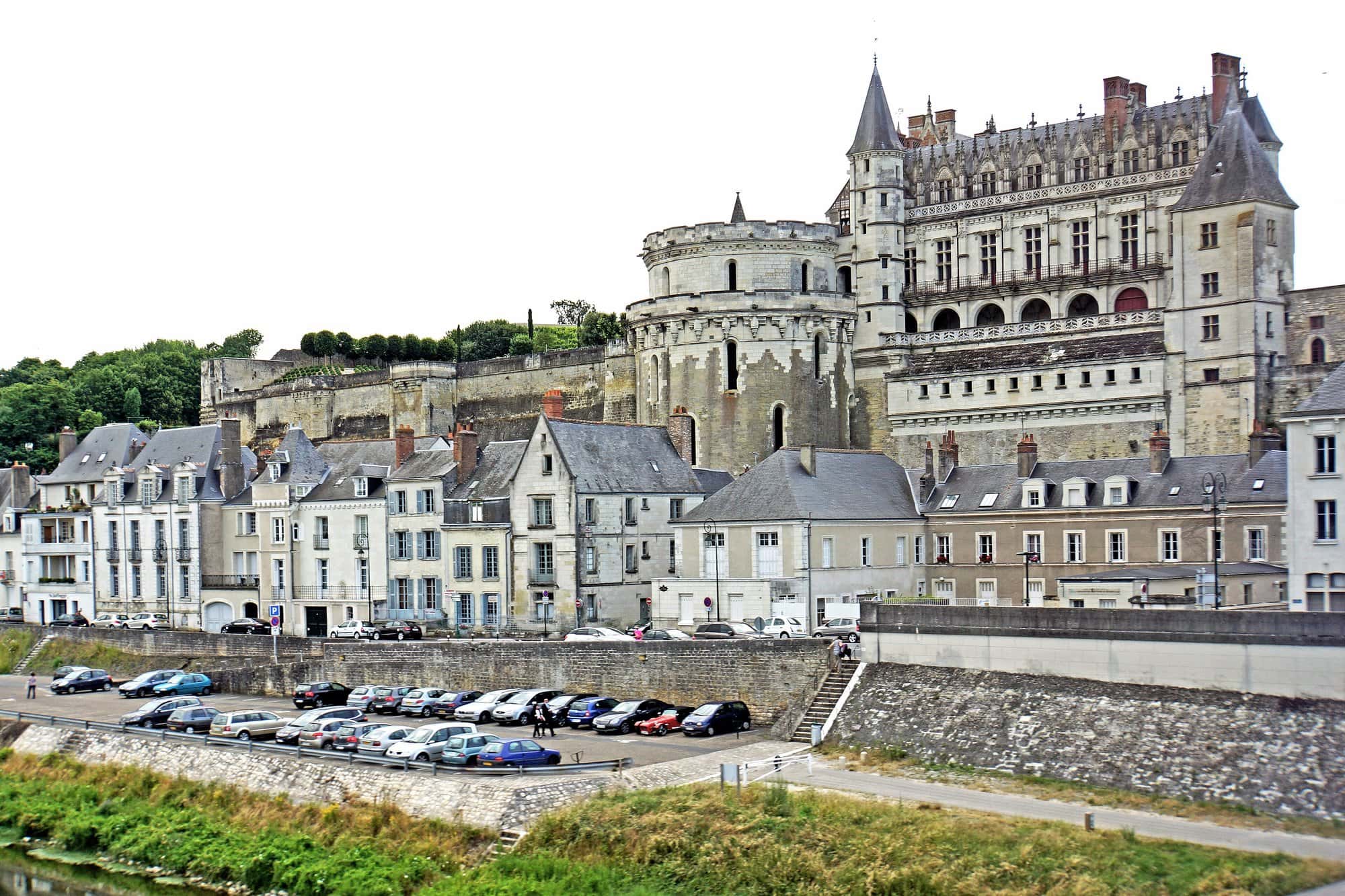
What remains is still imposing. From the river the château reads as a high white wall of building above a wooded scarp, crowned by steep slate roofs and the lace-like silhouette of the Chapel of Saint-Hubert. The chapel is the jewel of the site, a tiny flamboyant Gothic oratory built for Charles VIII, its doorway carved with the hunting vision of Saint Hubert and its interior sheltering the presumed tomb of Leonardo. Restored between 2021 and 2024, it sits at the edge of the rampart and seems to hang above the town. Inside, beneath delicate ribbed vaulting, a floor slab and a bronze medallion mark the presumed grave, while a carved frieze and stained glass fill the small, luminous space.
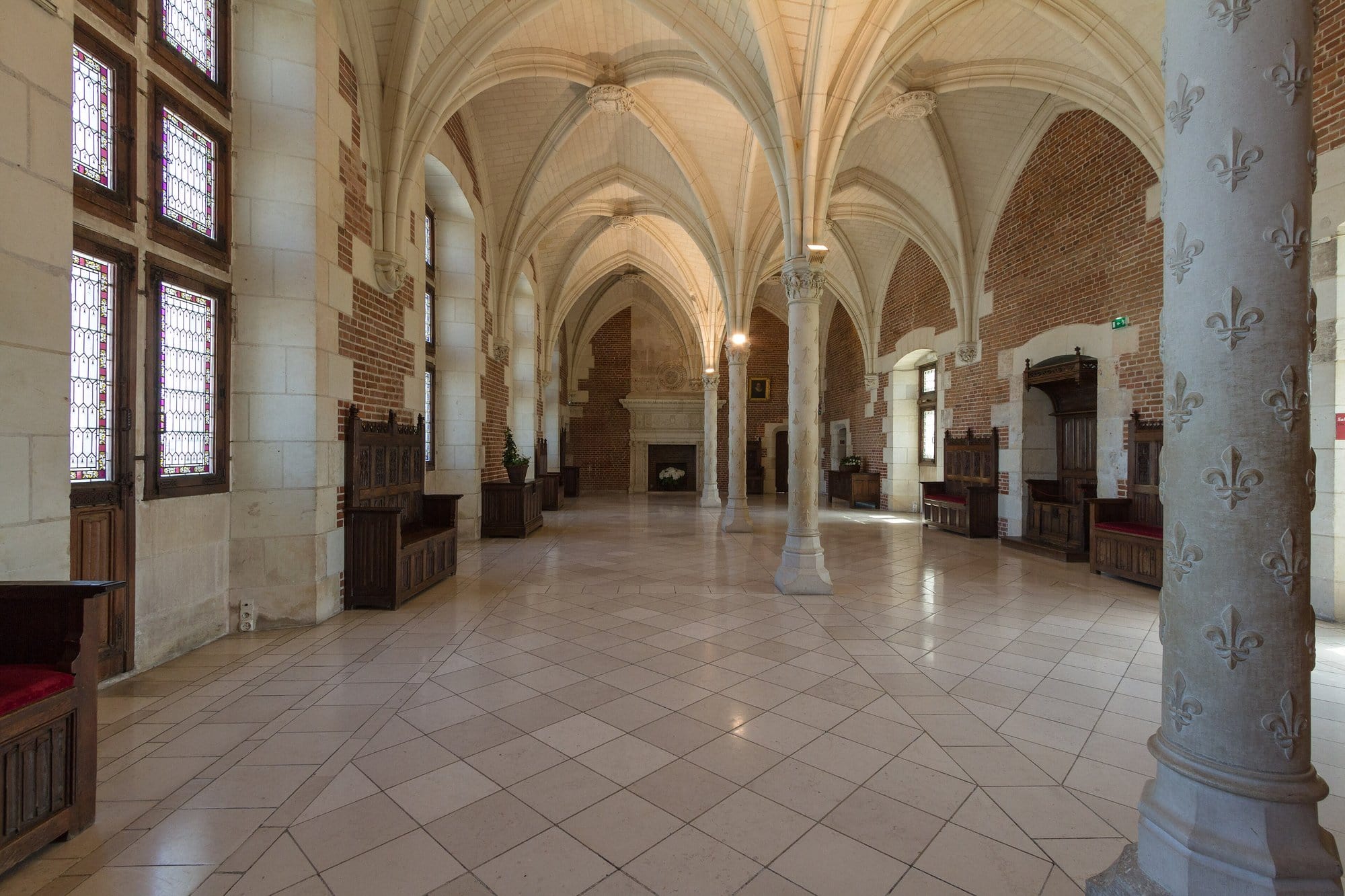
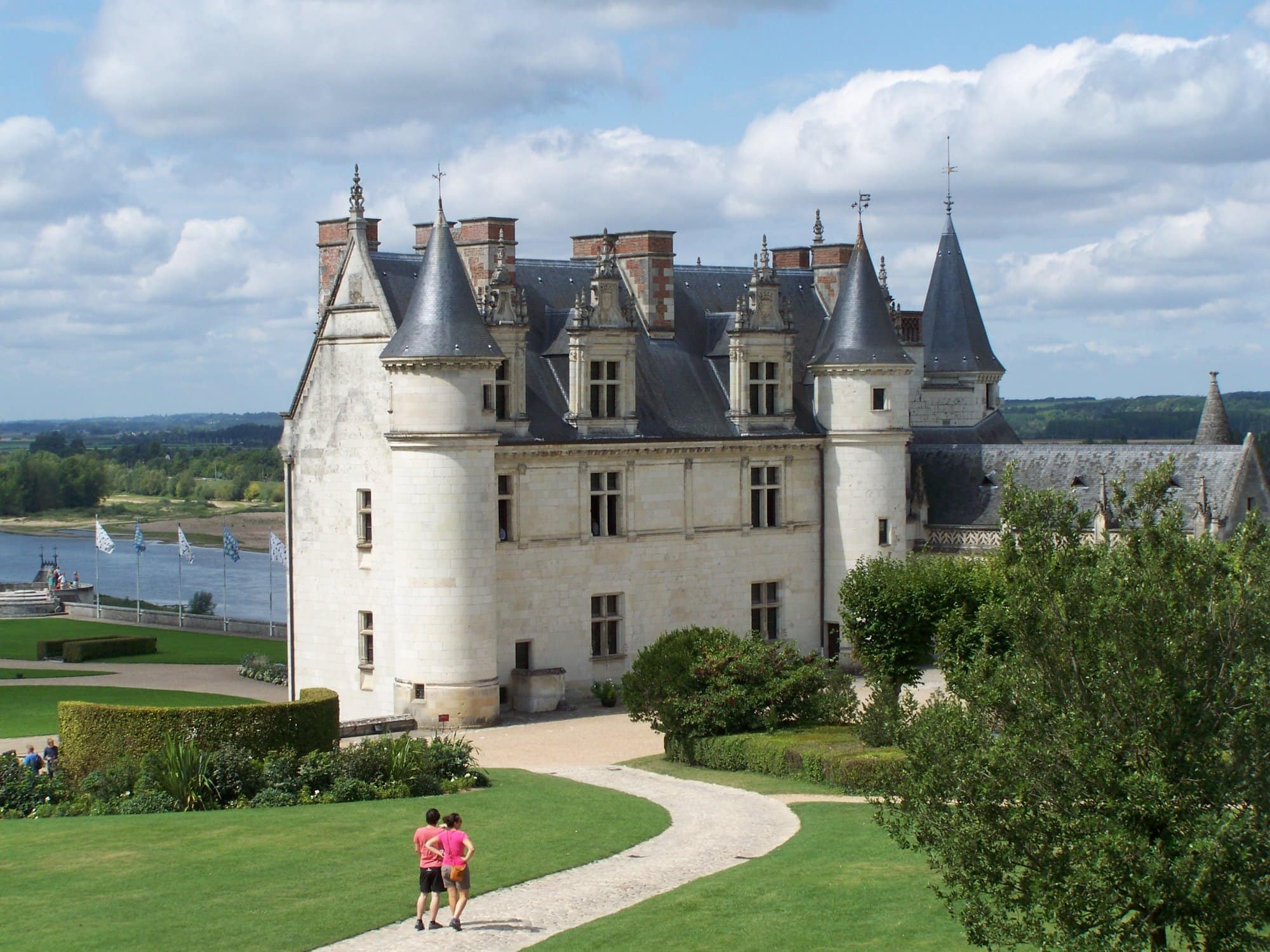
Its principal survivor is the Logis du Roi, the royal lodging along the Loire front, Gothic in its lower stories and reaching toward the Renaissance in its windows and dormers. Inside, the Salle du Conseil, or Council Chamber, runs much of the length of the ground floor, its vaulted ceiling carried on a central row of slender columns that divide the room into two aisles, the hall where the king once held audiences and the affairs of the realm were settled. Above it, the royal apartments hold a collection of Gothic and Renaissance furniture assembled over the past century, their windows framing the same stretch of river that Charles and François once knew.
Outside, the two cavalier towers remain the structural marvel of the site, their internal ramps still legible even where they are no longer open to the public. Terraced gardens, replanted across the twentieth and twenty-first centuries and reimagined most recently as a Mediterranean Jardin de Naples, recall Pacello’s lost Italian parterres and open the wide views over the Loire that the UNESCO listing was meant to protect. From the garden wall the whole valley spreads out, the river sliding past the town toward Tours, the very prospect that drew kings to this spur five centuries ago. Seen from the bridge below, the château and its chapel still dominate the little town much as they were built to do, a royal crown set on the rock above the river.
Visiting Château d’Amboise in 2026
The Royal Château of Amboise opens every day of the year except January 1 and December 25, with hours that lengthen through the high season: roughly 9am to 6pm or later from spring into early autumn, and shorter, sometimes split, hours in the depths of winter. A full visit takes about ninety minutes to two hours. Entry includes a HistoPad tablet, a free augmented-reality guide that rebuilds the vanished rooms on screen as you move through the site, offered in around a dozen languages. Entry tickets and local tours can also be booked in advance through GetYourGuide.
For the 2026 season the standard admission prices are as follows.
| Ticket | 2026 price |
| Adult | €17.30 |
| Student | €14.30 |
| Child (7 to 18) | €11.00 |
| Child (under 7) | Free |
| Pass Léonard de Vinci (Amboise + Clos Lucé + Chambord) | Combined ticket, saves up to about 20% |
Combined tickets offer the best value for anyone making a full day of it. The Pass Léonard de Vinci bundles Amboise with the nearby Clos Lucé and with Château de Chambord, saving up to about a fifth on the separate fares; reductions also apply for large families, jobseekers and holders of recent rail tickets. Amboise sits in the center of the town of the same name, an easy walk from the Amboise railway station, while the TGV station at Tours Saint-Pierre-des-Corps lies about twenty kilometers to the west. Prices and opening times are reviewed each year, so it is worth checking the official site before traveling, especially for the current access status of the Chapel of Saint-Hubert. Anyone staying overnight can compare hotels in and around Amboise.
Some links on this page are affiliate links, which means StoneKeep Atlas may earn a small commission, at no extra cost to you, if you book through them.
More Views of Château d’Amboise
A closer look at the spur, the chapel, the cavalier towers and the river views that give the site its character.
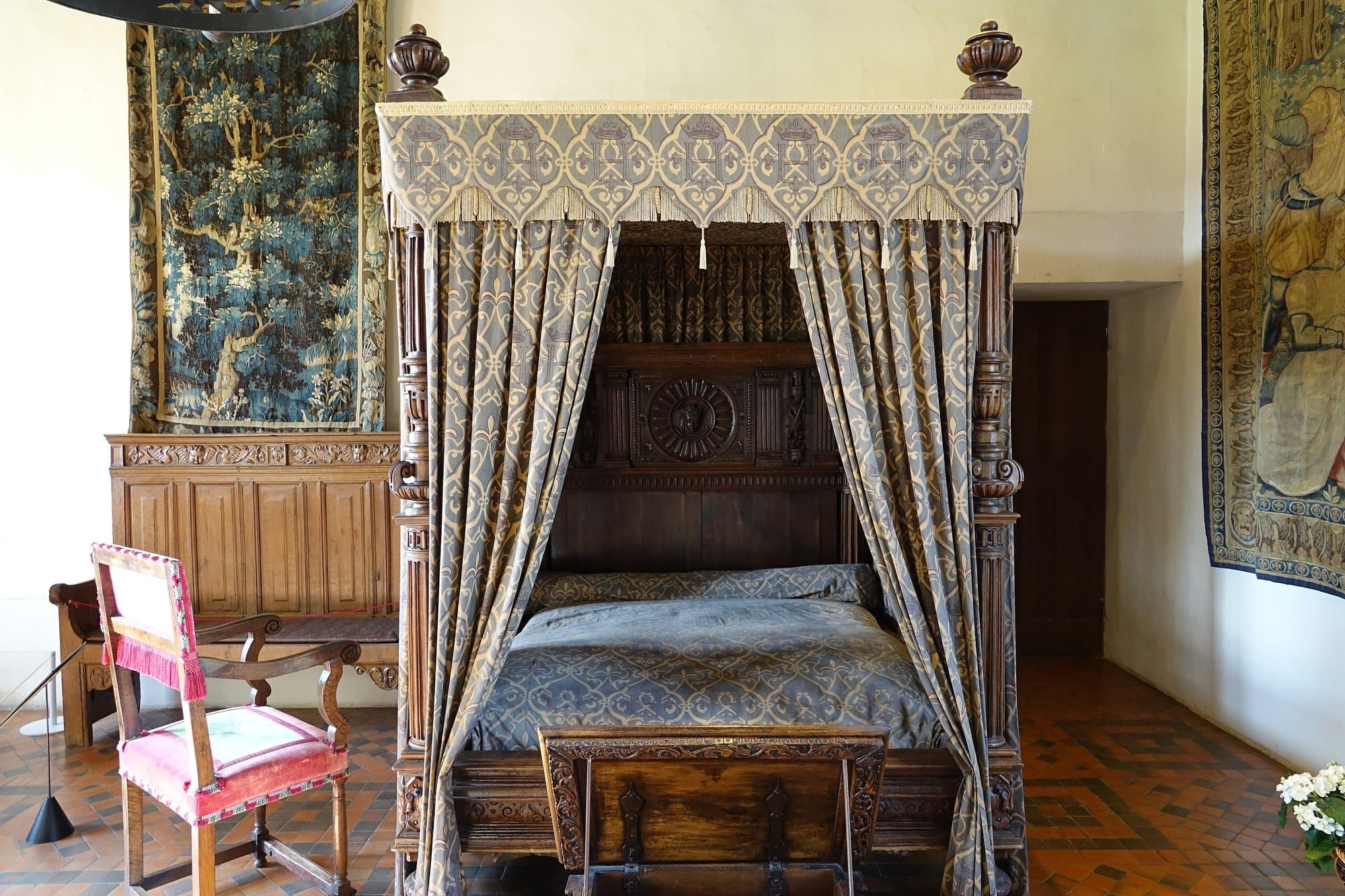
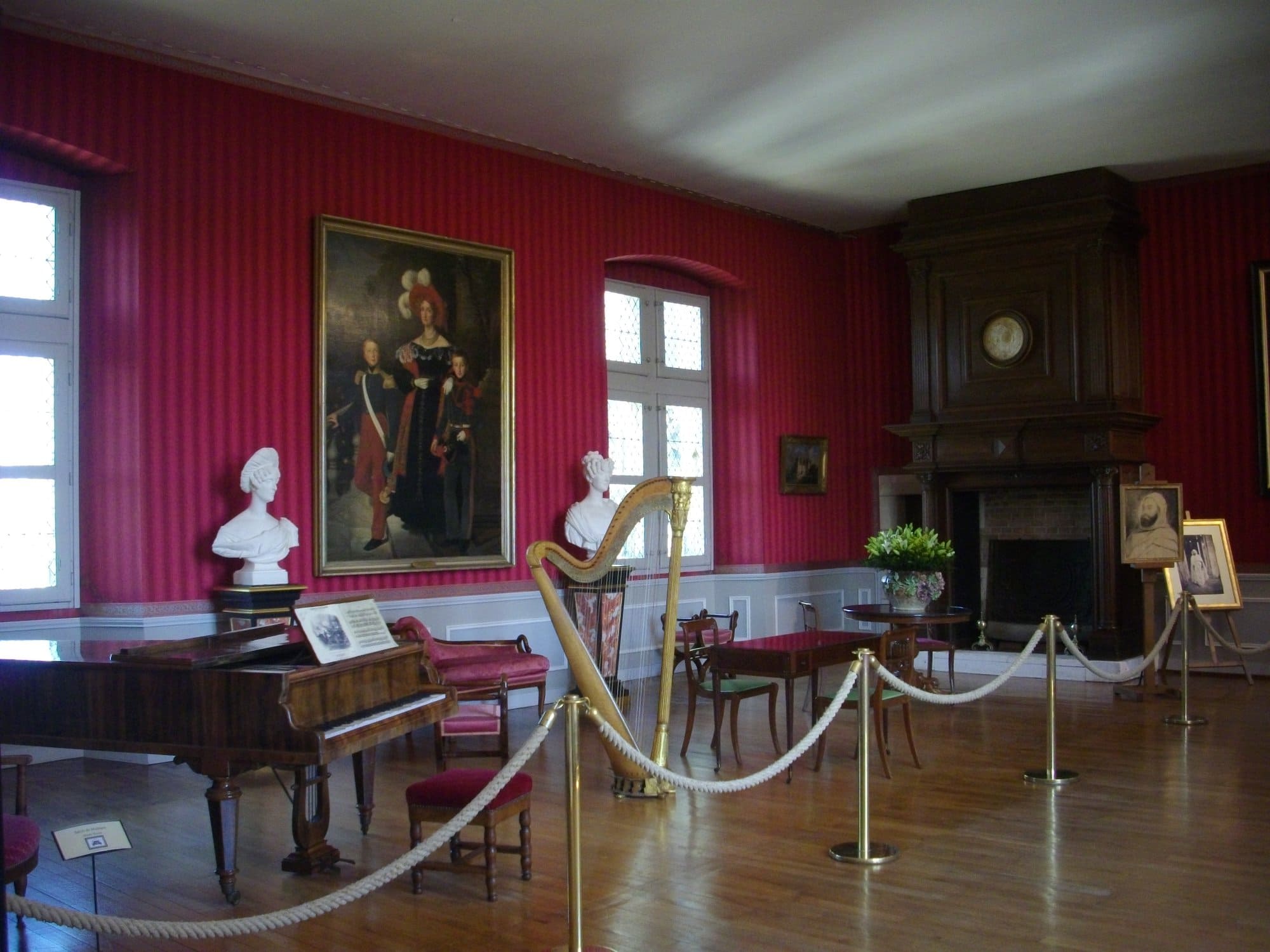
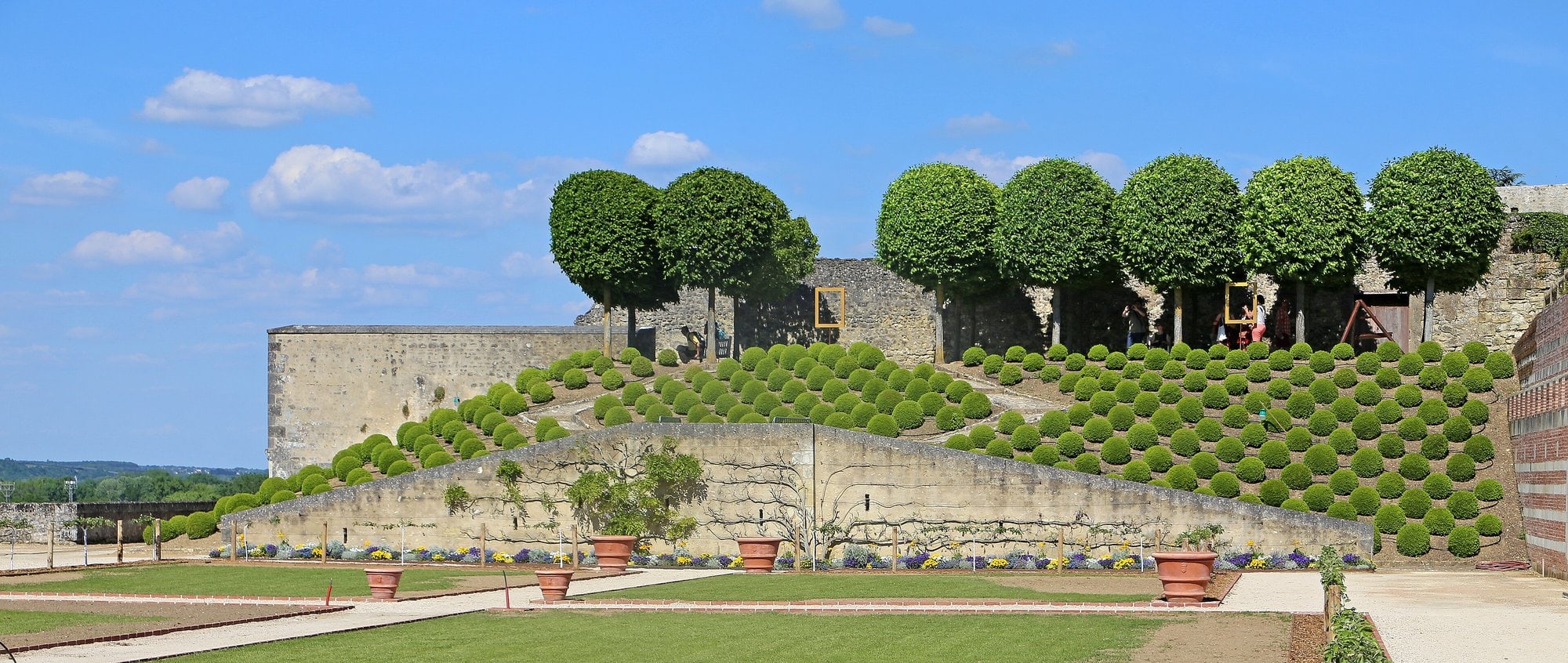
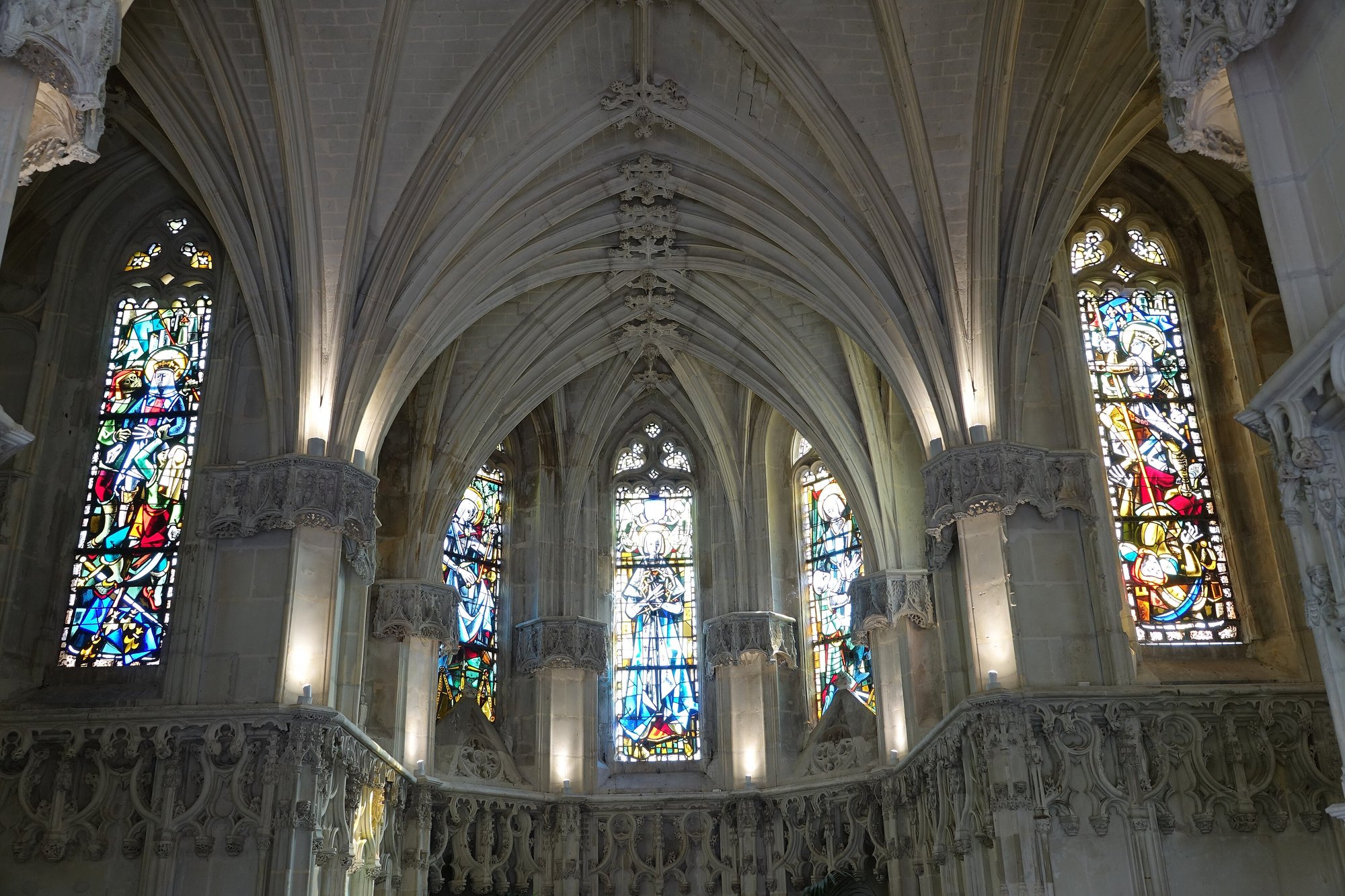
Beyond Amboise
Amboise is the eldest of the great Loire châteaux on StoneKeep Atlas, the place where the Renaissance arrived before it spread downriver. The queens and favorites who maneuvered through this court return in The Ladies of the Loire. For the palace that François I built to outshine it, see Château de Chambord, the vast hunting lodge whose double-spiral staircase and roofline of towers carried the Amboise experiment to its logical extreme. For a gentler counterpoint, Château de Chenonceau, the so-called château des dames arched across the river Cher, shows the same Renaissance language turned to elegance rather than grandeur. The d’Amboise family whose name this château carries also held and rebuilt the nearby Château de Chaumont-sur-Loire, the bluff-top seat that Catherine de’ Medici later forced from Diane de Poitiers. Together the three trace the arc of the French Renaissance château from cradle to climax to refinement, and a forthcoming guide to the châteaux of the Loire will set them in their wider company. Downriver near Tours, Château de Villandry applies that same Renaissance language to the most celebrated formal gardens in France, and the island-set Château d’Azay-le-Rideau, a financier’s jewel box on the Indre, distills it to a single perfect building. Deeper in the hunting country south of Blois, Cheverny tells the story’s other end: a private château still furnished and inhabited by its founding family. The full circuit, with all nine houses in one view, is laid out in our guide to the Châteaux of the Loire Valley.
For the harder, medieval prelude to this Renaissance polish, turn to the Château de Chinon, the great royal fortress where Charles VII held his wavering court and first received Joan of Arc, the Valois reign from which Amboise and its glittering successors eventually grew.
Conclusion
Few buildings carry as much French history in so small a compass. Château d’Amboise was a medieval fortress, the birthplace and favorite seat of kings, the doorway through which Italian art entered France, the deathbed of one monarch and the burial place of the age’s greatest genius, and the scene of one of the bloodiest episodes of the Wars of Religion. That so much of it survived the demolitions of the nineteenth century is something close to luck. What stands on the spur today is a fragment, but a fragment of one of the most consequential houses in the kingdom, and from its terraces the Loire still runs exactly as the kings saw it.
Where to stay nearby: several château hotels cluster around Amboise, from the 13th-century Château de Pray to the owner-run Château de Nazelles. See them in our guide to Castle Hotels in the Loire Valley.
Principal Sources
- Château du Clos Lucé. Official site.
- Château royal d’Amboise (Fondation Saint-Louis). Official site, for the history, the chapel and Leonardo’s tomb, and 2026 hours and tariffs. chateau-amboise.com.
- Encyclopædia Britannica.
- Ministère de la Culture. Base Mérimée / Plateforme Ouverte du Patrimoine, ref. PA00097503 (classé 1840).
- UNESCO World Heritage Centre. “The Loire Valley between Sully-sur-Loire and Chalonnes.” Property 933 (inscribed 2000).
- World History Encyclopedia.
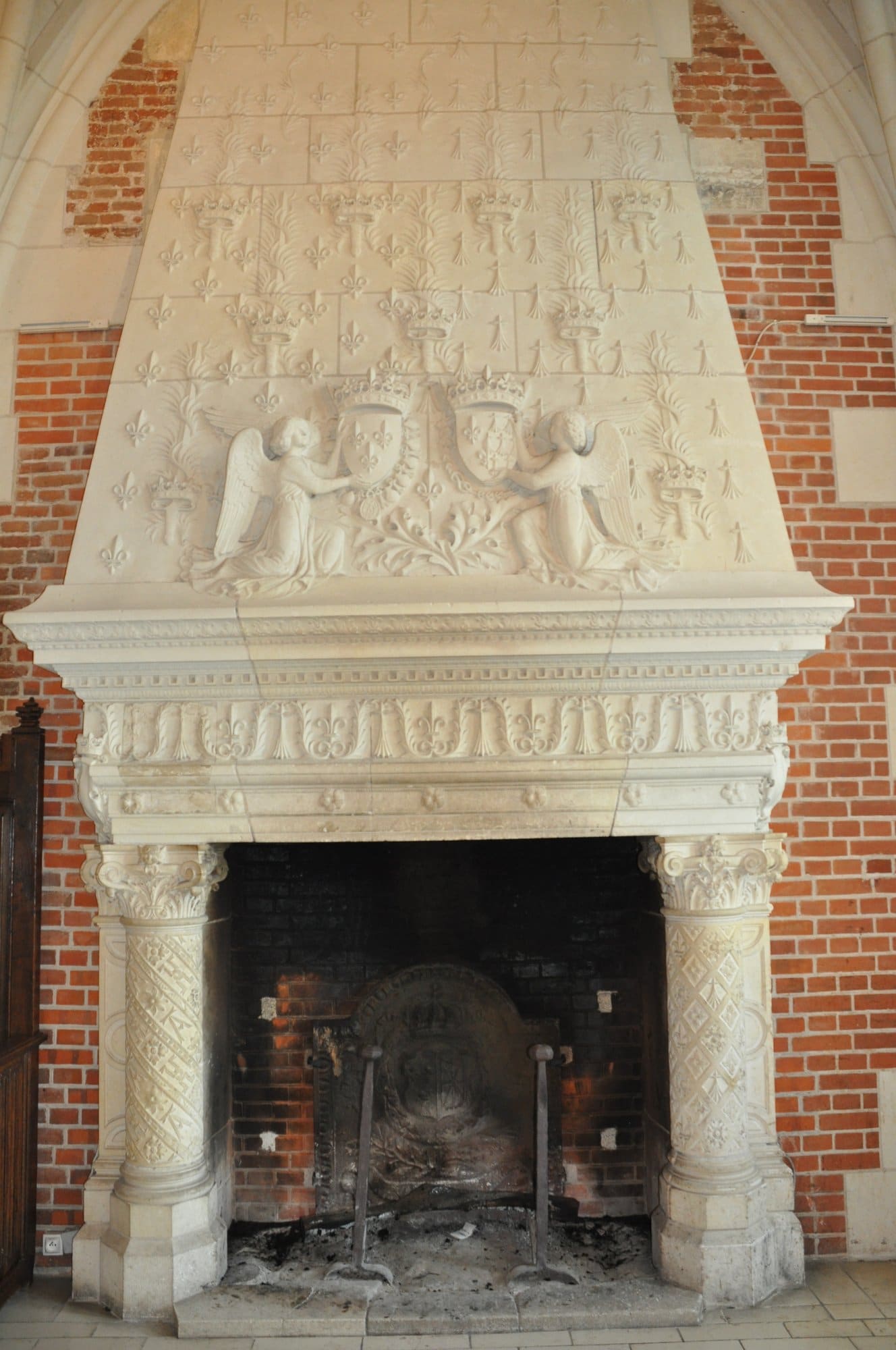
Image credits. The hero photograph of the château reflected in the Loire is by W. Bulach (CC BY-SA 4.0), who also took the views from the garden and of the park terraces. Other photographs are by Gzen92 (the Tour des Minimes, the chambre Henri II, and the chapel interior), Fab5669 (the Chapel of Saint-Hubert, the lodging and chapel terrace, and the music salon), Starus (the ramparts with François I’s salamander flags), Benh Lieu Song (the great vaulted hall), and Louis de Lauban (the chimneypiece of Louis XII and Anne de Bretagne, released CC0); all of these are CC BY-SA 4.0 except where noted. Further images are by Lieven Smits (the aerial view, CC BY-SA 3.0), Gpesenti (the river galleries, CC BY-SA 3.0), Xavier.gignac (the lodging from the garden, CC BY-SA 3.0) and Dennis G. Jarvis (the view across the Loire, CC BY-SA 2.0). The sixteenth-century ground plan by Jacques Androuet du Cerceau is in the public domain. All Creative Commons and Wikimedia images are used under their respective licenses. Freely licensed images are resized to fit; otherwise unaltered.