
Château d’Azay-le-Rideau
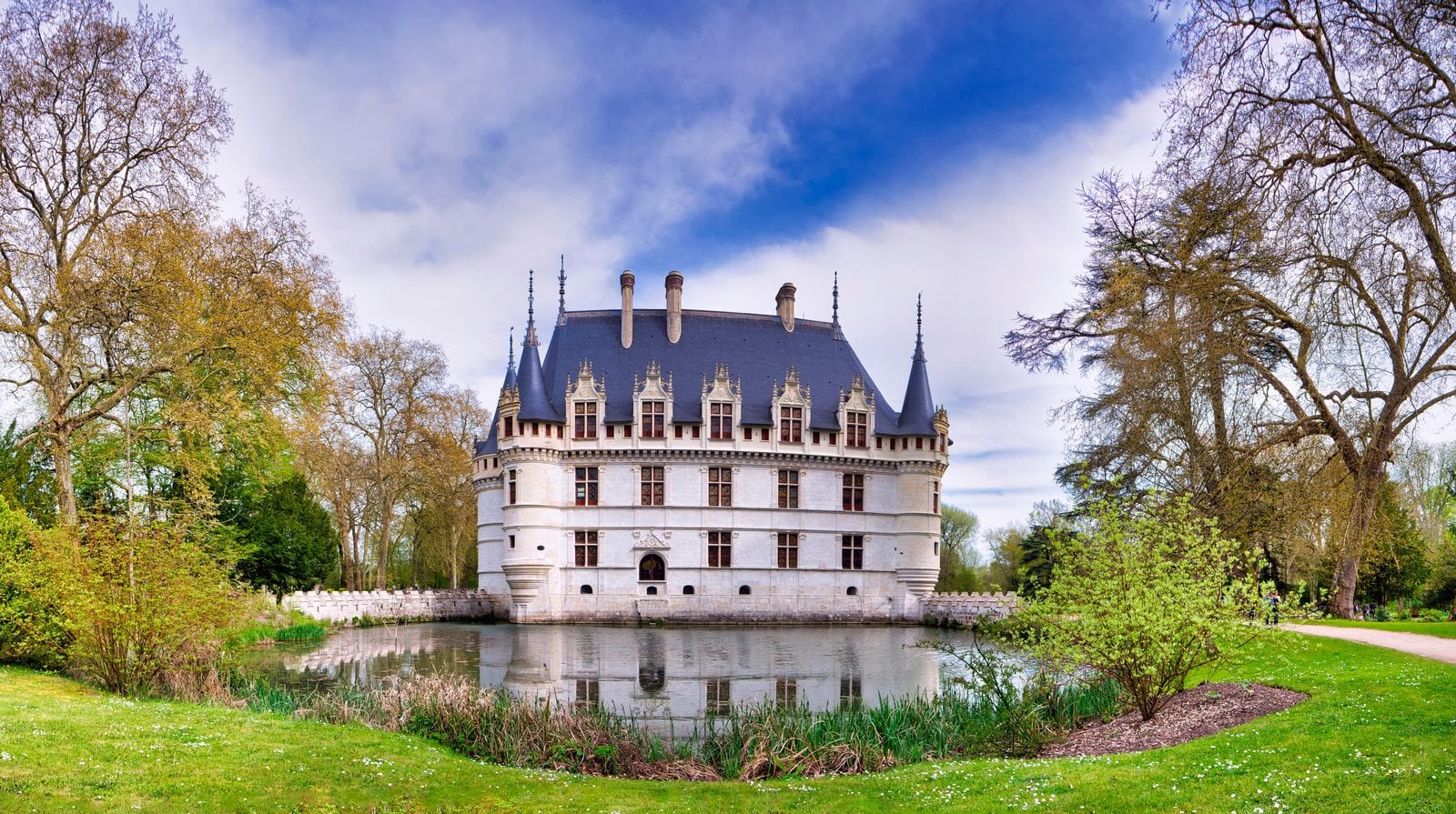
On a low island in the Indre, a few kilometers south of the Loire, stands the house that Honoré de Balzac called “a faceted diamond set by the Indre river, mounted on pillars covered with flowers.” Château d’Azay-le-Rideau is the smallest of the great Renaissance châteaux of the Loire Valley, and many would argue the most perfect. It is also among the few raised by a royal financier rather than for the crown itself. Gilles Berthelot, a financier in the service of François I, raised it between 1518 and the late 1520s, carved the king’s salamander above its staircase, and lost everything before the roof was finished. What the king confiscated, the nineteenth century completed and the French state preserved; the Centre des monuments nationaux presents it today, fresh from an eight-million-euro restoration. Few buildings of any size compress so much ambition, artistry, and ruin into so little stone.
Quick Facts
| Location | Azay-le-Rideau, Indre-et-Loire, Centre-Val de Loire, France |
| Coordinates | 47.2590 N, 0.4657 E |
| Built | 1518–c. 1527 (left unfinished); completed in its present silhouette in the 19th century |
| Architectural styles | Early French Renaissance; 19th-century Renaissance revival completions |
| Builders | Gilles Berthelot and Philippe Lesbahy; completed under the marquises de Biencourt |
| Condition | Well-preserved |
| Current use | Museum (Centre des monuments nationaux) |
| Heritage status | Monument historique (classified 1914); within the UNESCO Loire Valley World Heritage Site (2000) |
| Open to the public | Yes, year-round except January 1, May 1, and December 25 |
| Official website | azay-le-rideau.fr |
An Island in the Indre
Around 1119, a knight named Ridel d’Azay, in the service of Philip II Augustus, fortified the point where the Tours–Chinon road crossed the Indre. His name attached itself to the place: Azay-le-Ridel, in time Azay-le-Rideau. For three centuries the castle did the unglamorous work of a river crossing, until the Hundred Years’ War caught up with it in spectacular fashion.
In 1418, the fifteen-year-old Dauphin, the future Charles VII, passed through Azay while fleeing Burgundian-held Paris for the loyal Armagnac stronghold of Bourges. Burgundian soldiers garrisoning the castle shouted insults at him from the walls. His response defined the town for centuries: he stormed the place, had the captain and his 350 men executed, and burned castle and town together. Azay became Azay-le-Brûlé, “Azay the Burnt,” a name that stayed in use into the eighteenth century. This is the same Charles whom Joan of Arc would seek out at nearby Chinon eleven years later.
A century after the fire, the place was still called Azay the Burnt, and the ruined castle had never been properly rebuilt. What remained was the essential asset underneath: a seigneury on a navigable river, a day’s ride from Tours, in the heartland where the French court spent its seasons. The seigneury that Gilles Berthelot acquired between 1504 and 1510 therefore came with charred foundations and a memorable warning about offending kings. He does not appear to have heeded it.
The Financier’s Château
Berthelot belonged to a large bourgeois family of Tours, the city that supplied the French crown with its money men. Around 1500, royal finance was a family business run by a handful of interlocking Tours clans, the Berthelots, Ruzés, Briçonnets, and Beaunes, who lent to kings, married each other, and converted their profits into stone. Thomas Bohier, who raised Château de Chenonceau over the Cher in the same years, came from the same world and would meet a version of the same fate. A favorite of Louis XII, he rose through the offices of advisor, notary, and secretary to the king, became Master of the King’s Accounts in 1511 and later President of the Chamber of Accounts, and served as mayor of Tours in 1519. Royal finance made him rich, and in 1518 he began converting that wealth into architecture.
Building on a river island demanded engineering before art. According to the surviving building accounts, some 120 workers labored through the summer of 1518, digging foundations, driving timber piles into the riverbed, and draining the waterlogged ground, reportedly day and night. Parts of the château still stand on those piles today, which is why the house seems to rise directly from the water rather than from any visible bank. The walls above rose in local tuffeau, the soft, pale limestone of the Loire that cuts almost like wood and rewards a sculptor’s chisel; the same stone that made Azay’s carvings possible also made them fragile, a debt the twenty-first century would eventually have to repay.
Berthelot’s duties kept him away for long stretches, and the construction site fell to his wife, Philippe Lesbahy, who directed the works through his absences and, in the operator’s own words, brought the project to completion. Azay thus joins Chenonceau among the Loire houses shaped by a woman’s supervision, though Lesbahy would be repaid for her diligence more cruelly than any of her peers.
A Renaissance Masterpiece in Miniature
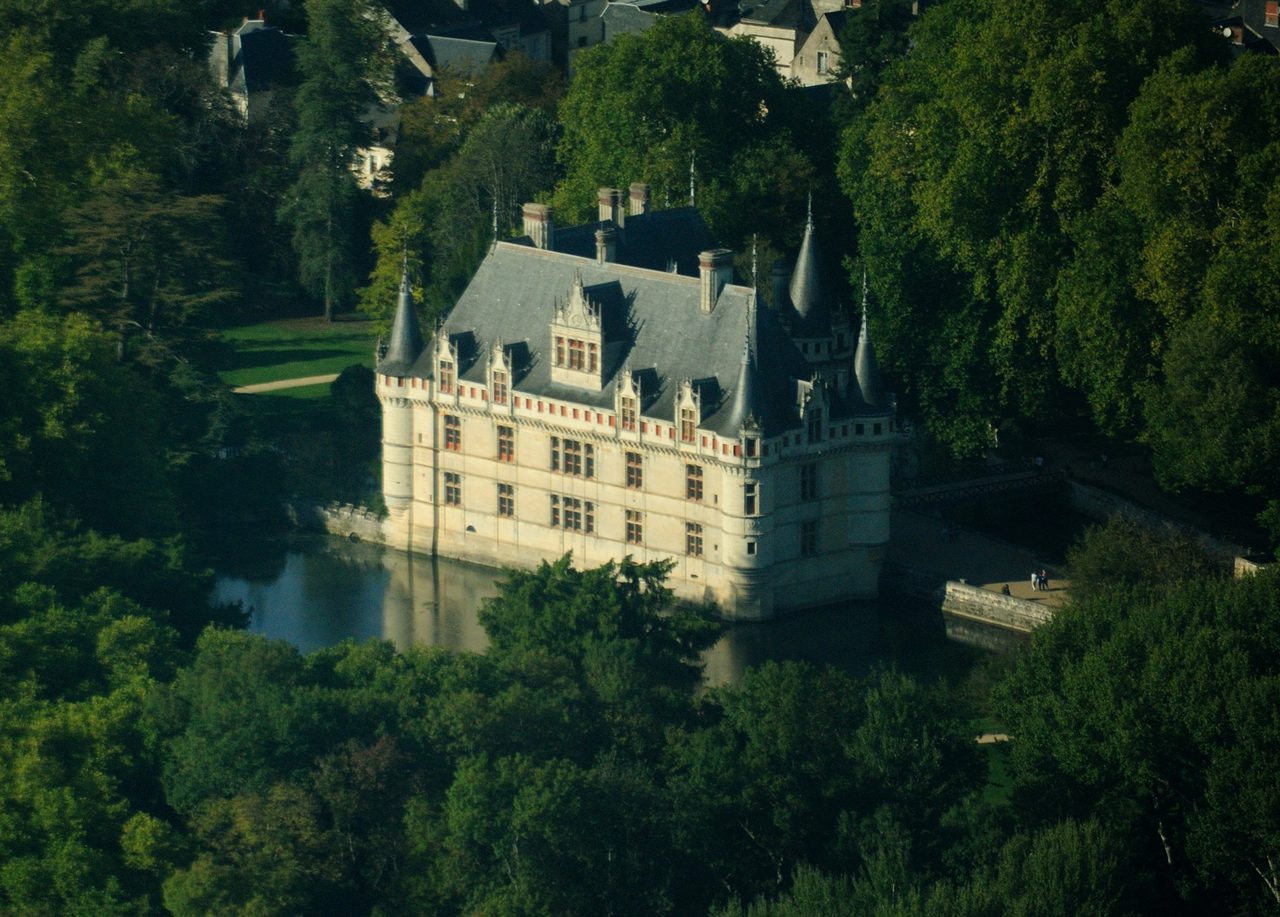
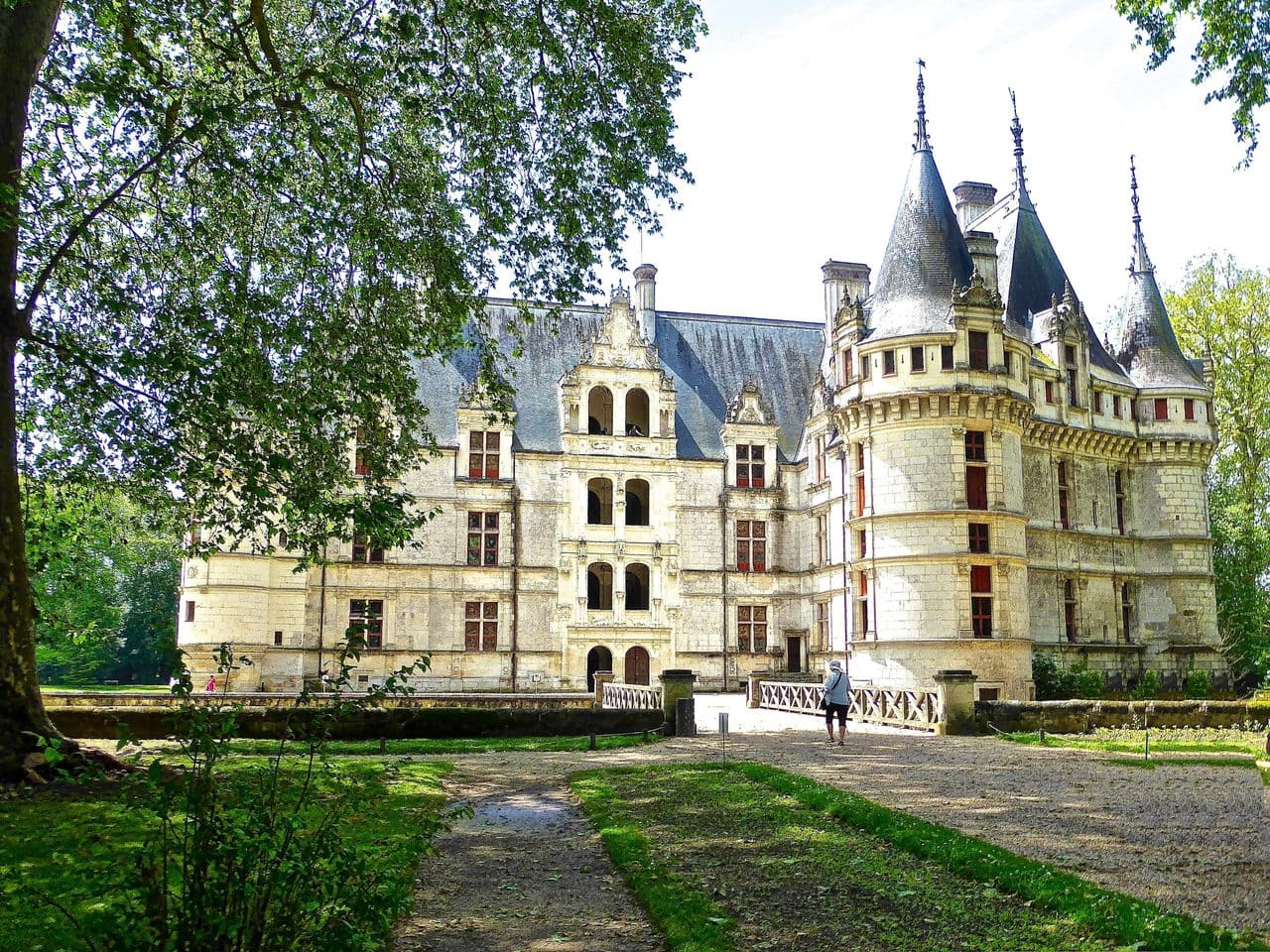
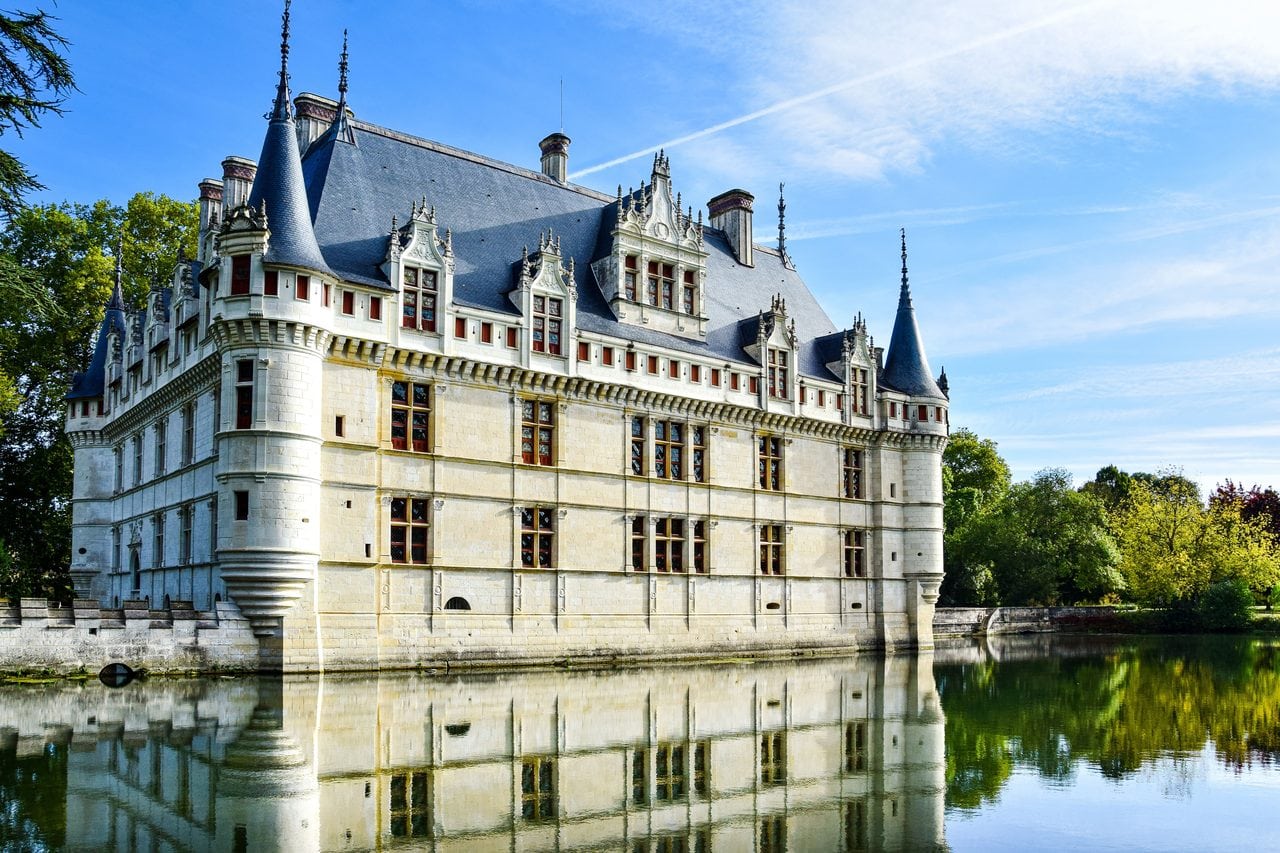
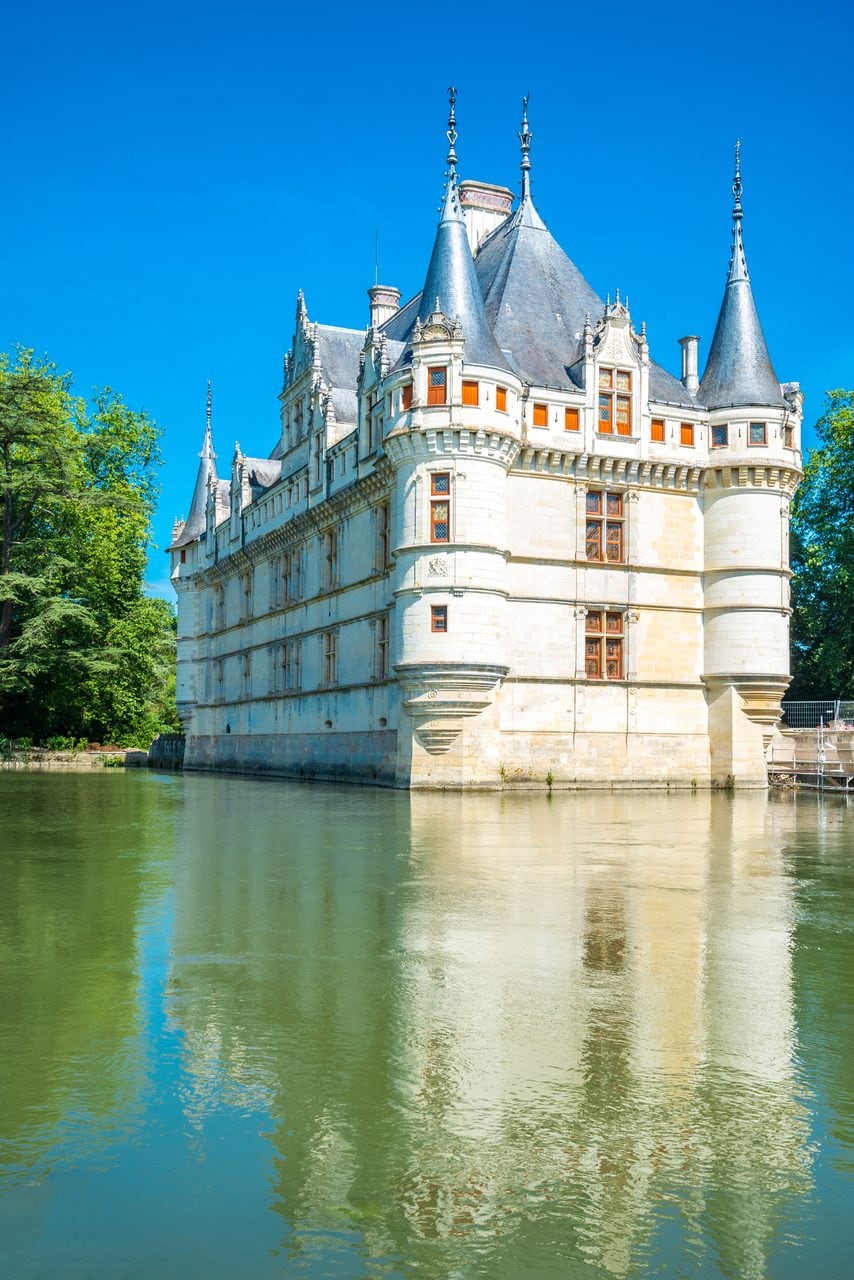
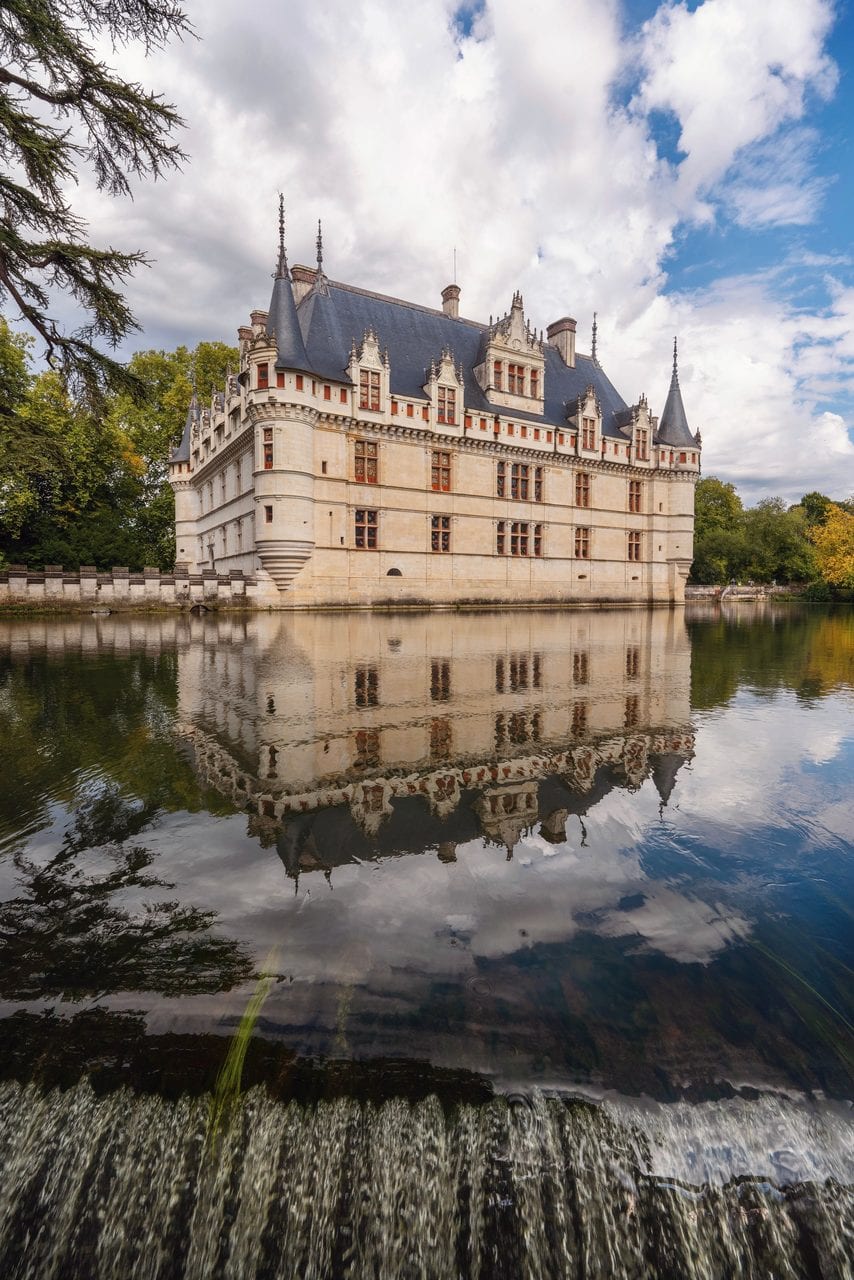
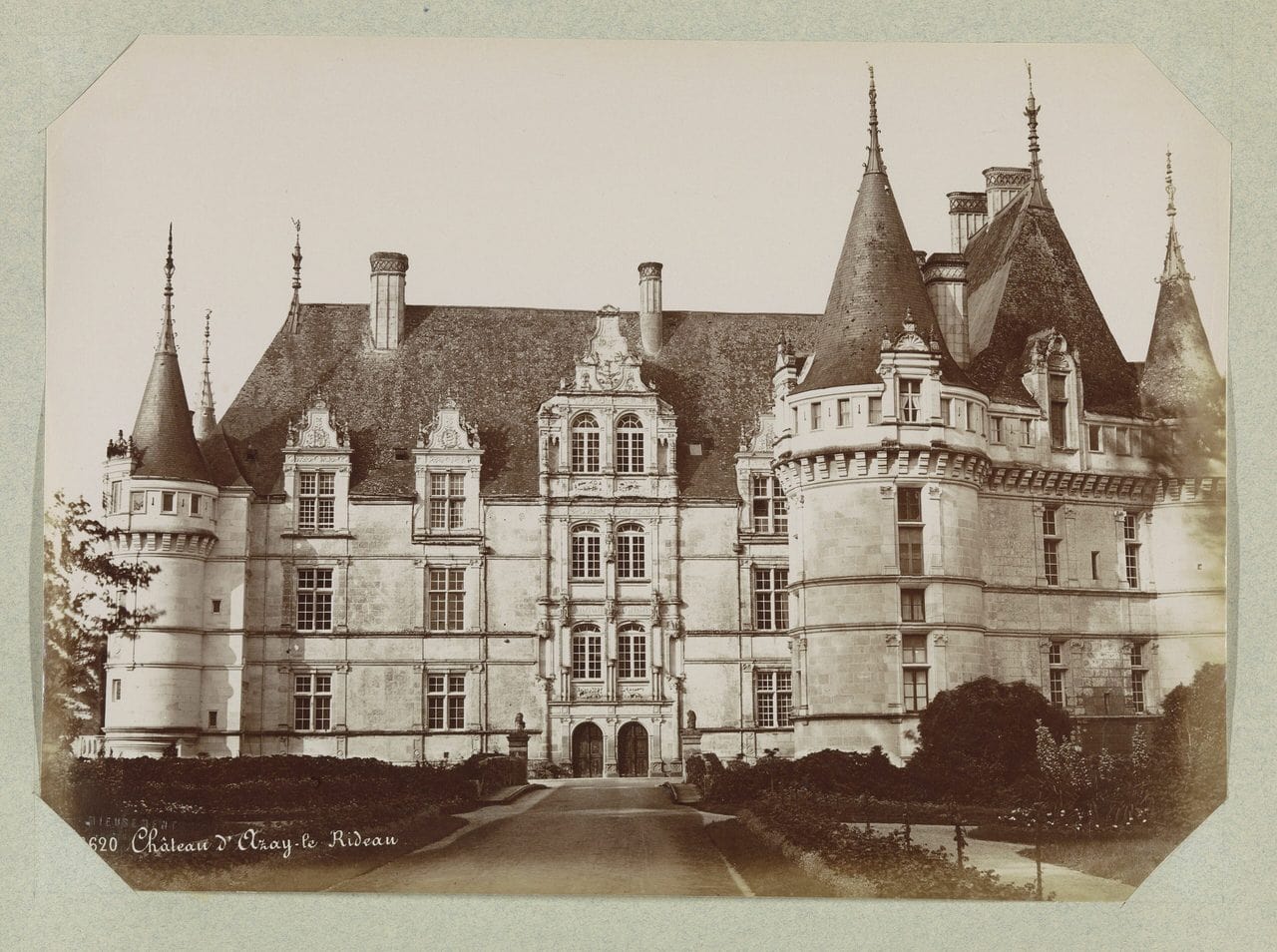
What the couple built reads from the south as a fairy-tale silhouette and from the north as a manifesto. From across the water, the south front shows exactly the double identity Berthelot wanted: a modern residence, with broad window bays stacked in vertical ranks and tall ornamented dormers breaking the roofline, wrapped in the trappings of an older world. Horizontal moldings rule the façades into a calm grid, pilasters frame the openings, and the steep slate roofs carry the eye upward in the French manner even as the ornament speaks Italian. Scholars Frédérique Lemerle and Yves Pauwels, cited by the Centre des monuments nationaux, argue that Azay was designed as a U-shaped residence: restore the wing that was never built, and the great staircase bay sits at the exact center of the composition. What survives is an L, an accidental shape preserved by catastrophe.
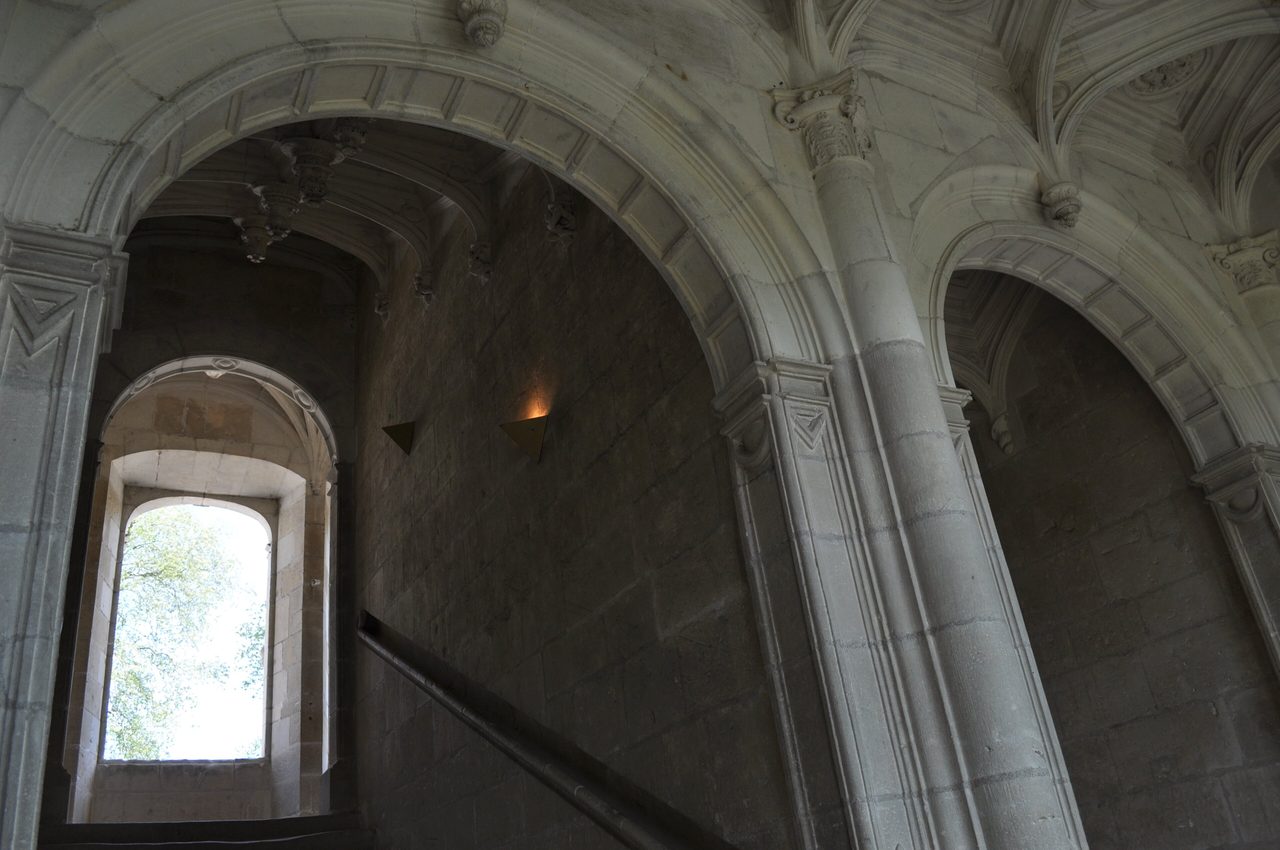
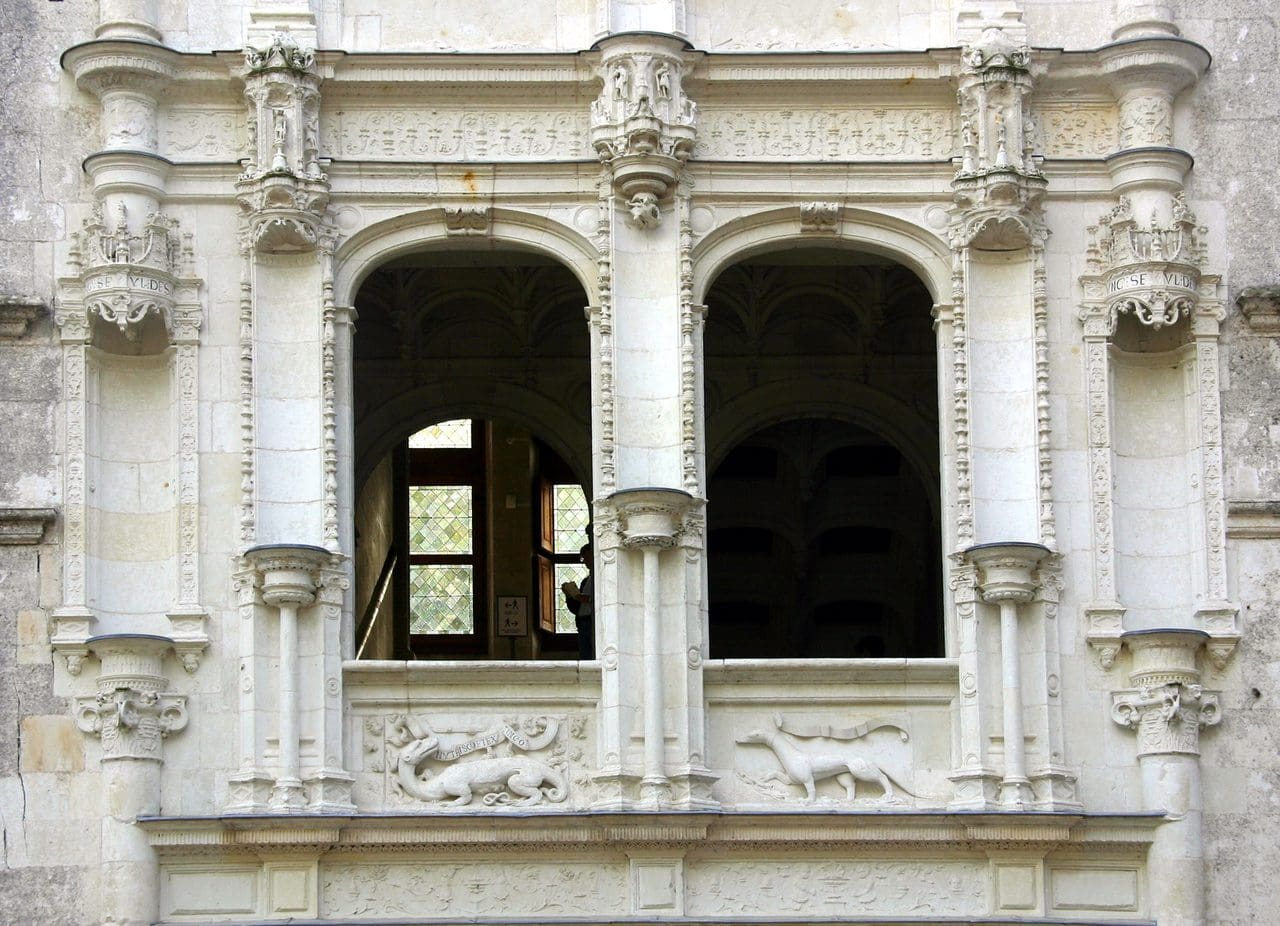
That staircase is the building’s revolution. French castles climbed by spiral; the most famous spiral of all winds up the façade of Château de Blois, barely a generation older. Azay’s staircase instead runs straight, flight over flight, through the center of the main block, a ramp-on-ramp design that had only just appeared in France. The Centre des monuments nationaux calls it one of the oldest of its kind preserved anywhere. Because the landings fall between the levels of the façade windows, the builders monumentalized the mismatch rather than hiding it, framing the stairs with twin loggias that let light pour through and let the household see and be seen.
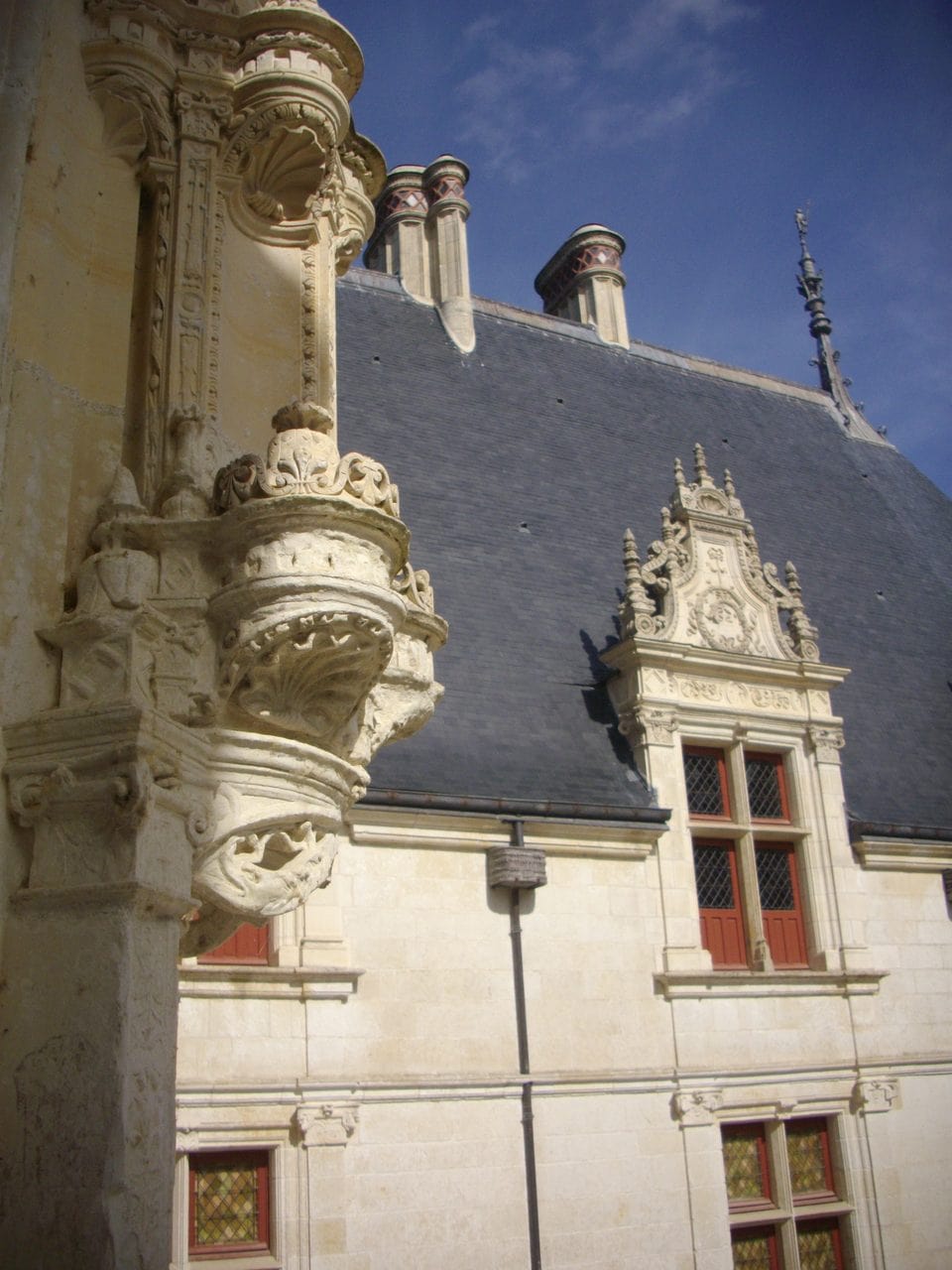
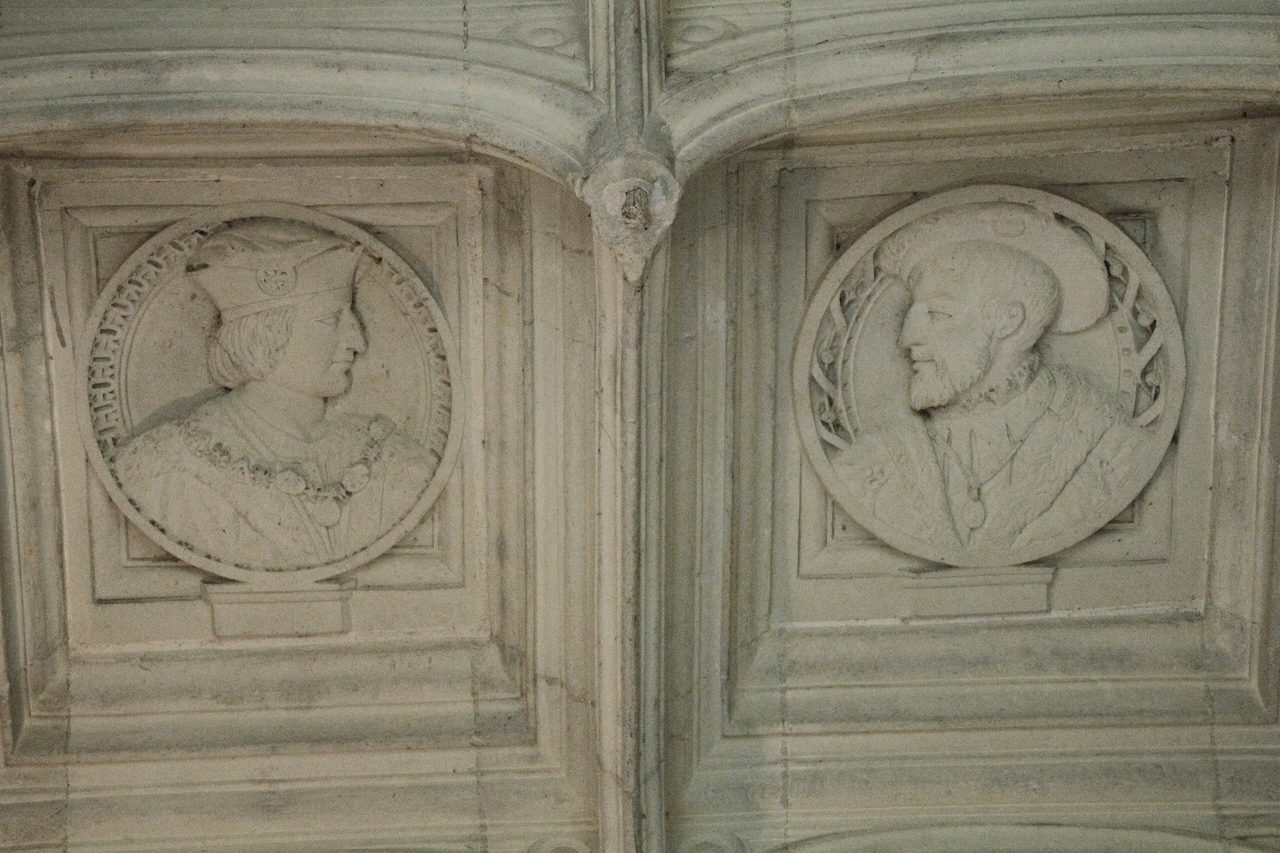
The sculpted decoration mixes French tradition with imported Italian fashion: pilasters, plant scrolls, putti, shells, and medallion portraits, all cut into tuffeau with embroidery-like finesse. Berthelot stamped the façades with loyalty and self-promotion in equal measure. The salamander of François I and the ermine of Queen Claude, with her motto “Un seul désir,” preside over the frontispiece; a carved figure of the king looks down from the great dormer; the initials G and P, for Gilles and Philippe, thread through the ornament alongside a figure of Berthelot himself. Even the machicolations and parapet walk crowning the walls are theater, defensive features with no military purpose, placing a financier’s house in the visual lineage of the fortresses of France.
The Semblançay Affair
The flattery did not save him. In 1525 François I lost the battle of Pavia and his own freedom; he returned from captivity in Madrid to empty coffers and ordered the accounts of his financiers investigated. The most powerful of them, Jacques de Beaune, baron de Semblançay, was Berthelot’s cousin by marriage, the husband of his first cousin Jeanne Ruzé. The two men belonged to the same tight clan of Tours money families that had funded the crown for two generations.
Semblançay’s trial became notorious. Arrested in January 1527 after more than a year of maneuvering against him, he faced proceedings that served the crown’s hunger for money and for blame; a court finding that same January established that the crown itself owed him 910,000 livres, yet the case continued, and on August 9, 1527 he was condemned for peculation. Three days later, on August 12, the man in his seventies was hanged at the gibbet of Montfaucon outside Paris, having waited at the foot of the gallows for a pardon that never came. Chroniclers remarked on the composure with which so powerful a figure met so squalid an end, and the poet Clément Marot fixed the scene in a famous epigram, observing that of the condemned man and his executioner-judge, it was Semblançay who held the firmer bearing. The purge reached other members of the clan in time: Raoul Hurault, builder of the first Renaissance house at Château de Cheverny, was Semblançay’s son-in-law and died ruined by the same reckoning.
Berthelot, accused but never tried, did not wait for his own gallows. Stripped of his offices, he fled to Metz, beyond the king’s reach. In June 1528 François I confiscated the unfinished château over the protests of Philippe Lesbahy, who fought to keep the house she had built. Berthelot died in exile at Cambrai in 1529. In 1535 the king gave Azay to Antoine Raffin, a captain of his guards who had fought beside him at Pavia. The wing that would have completed the U was never begun, and the masons’ scaffolding came down for good.
The Raffin Centuries
Raffin treated his prize as a trophy rather than a home; the house was genuinely occupied only from around 1547. Real life returned with his granddaughter Antoinette Raffin, a former lady-in-waiting to Marguerite de Valois, who settled at Azay in 1583 and set about bringing Berthelot’s interiors up to the taste of the late Valois court with her husband, the diplomat Guy de Saint-Gelais, seigneur de Lansac. Theirs was the last sustained campaign of embellishment the château would see for two centuries.
The château’s quiet centuries had their moments. In June 1619, Louis XIII broke a journey to see his exiled mother, Marie de’ Medici, at Blois and spent the night at Azay; by tradition, his son Louis XIV later slept in the same chamber. Antoinette’s daughter-in-law Françoise de Souvré, wife of Arthus de Raffin, went on to serve as governess to the young Louis XIV. The estate then passed by marriage through the Saint-Gelais de Lansac line and, from the mid-eighteenth century, the Vassé line, losing a piece of its past along the way: in 1704 the old east wing, the last substantial relic of the medieval castle, collapsed and was never replaced. By the late eighteenth century Azay was an heirloom in search of an heir who cared, changing hands among families who rarely lived there. Neglect, as so often in château country, doubled as preservation: no resident grandee meant no baroque remodeling, and Berthelot’s façades reached the age of restoration with their Renaissance carving essentially intact.
The Nineteenth-Century Remaking
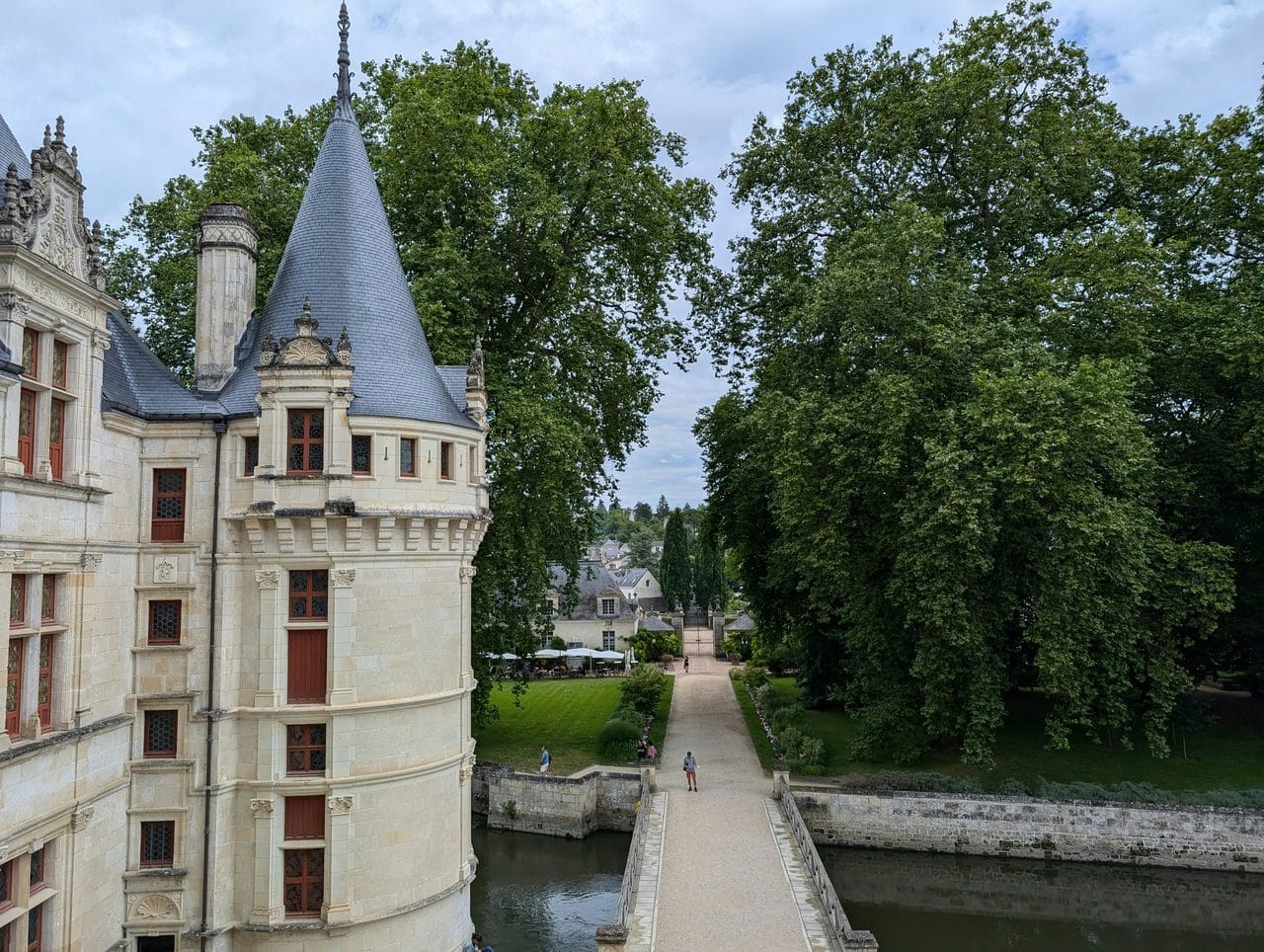
He arrived in 1791, in the improbable person of Charles de Biencourt, a field marshal who had sat as a deputy of the nobility in the Estates-General of 1789 and who bought the château on the eve of the Terror. His family kept it for over a century and, more than anyone since Berthelot, made it what visitors see. Four generations of Biencourts treated the château as both home and cause: they restored interiors room by room, laid out the romantic landscape park that wraps the island in green, and finished the building’s silhouette in the spirit, as they understood it, of the original. Theirs was the century that rediscovered the French Renaissance, and Azay became one of the places where that rediscovery was rehearsed. A Gothic “troubadour” turret and a small Chinese pavilion came and went with the fashions; in 1856 a corbelled corner tower replaced them and finally unified the château’s appearance. The operator states the point plainly: Azay must be read both as a sixteenth-century masterpiece and as a prime example of the nineteenth century’s taste for the Renaissance.
The most surprising of the Biencourt-era inventions is the one every camera now hunts: the water mirrors. Berthelot never saw his château reflected. Until the nineteenth century the river simply flowed past, and a wide terrace ran along the south façade. The mirrors were a romantic creation, and the southern reflection reached its present perfection only in 1950, when the terrace was removed and the river arm widened along the foundations.
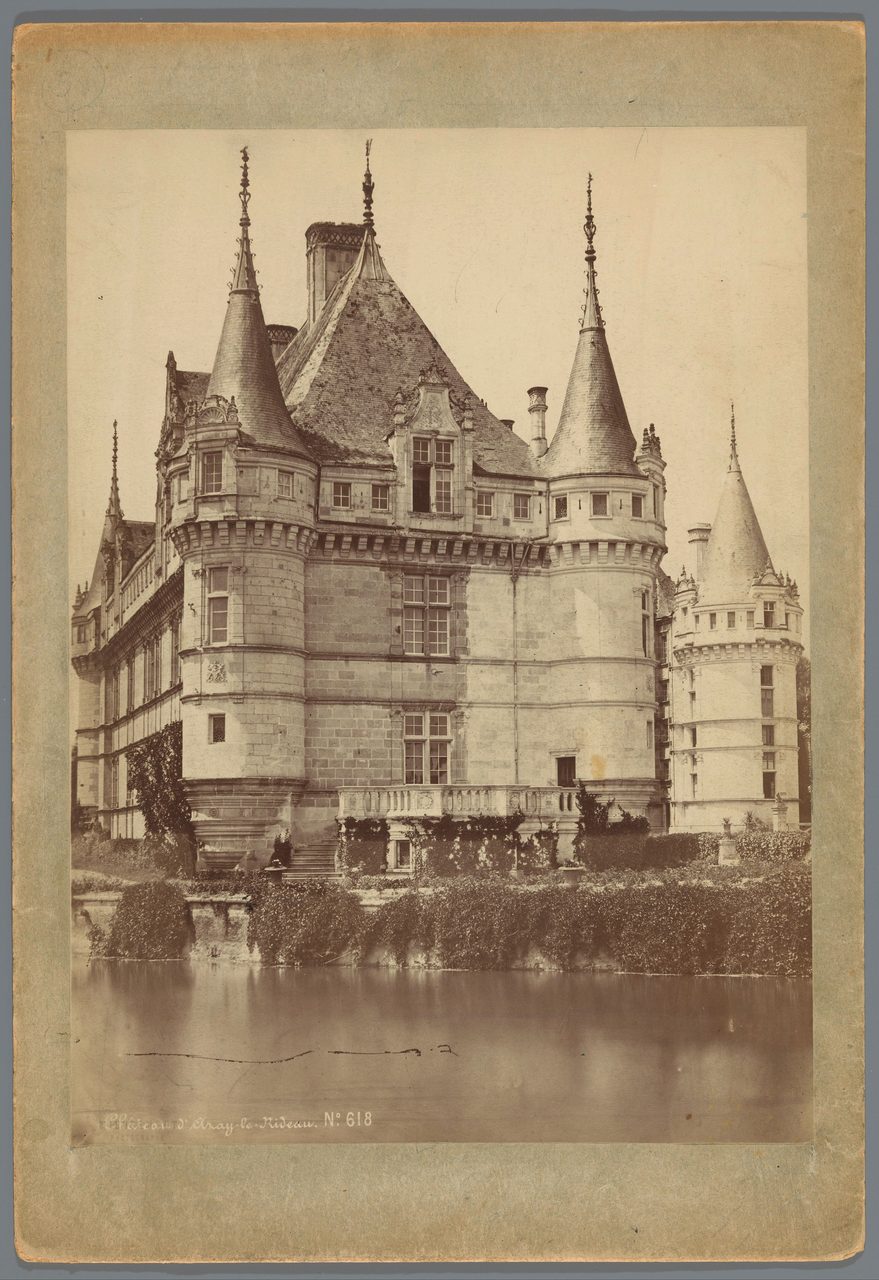
Their century also turned the château outward. At a time when most private houses stayed closed, the Biencourts opened their collection of more than 300 historical portraits to visitors, running Azay as something close to a public gallery of French history, and the literary world came too. Balzac, writing at the Château de Saché just up the Indre, set down his “faceted diamond” in Le Lys dans la vallée; Prosper Mérimée, inspector of historical monuments, counted among the château’s admirers. A harsher guest arrived in 1871, when Prince Frederick Charles of Prussia billeted himself at Azay during the Franco-Prussian War; the story goes that a chandelier crashed onto his dinner table and the prince briefly took it for an assassination attempt.
Emptied, Sold, Saved
Ruin ended the Biencourt century as surely as it had ended Berthelot’s. The last marquis, Charles-Marie-Christian de Biencourt, sold the château in 1899, and its furnishings, portraits and all, were dispersed; the estate soon passed to a Tours businessman, Achille Arteau. When the French state bought Azay on August 11, 1905, it bought an empty shell.
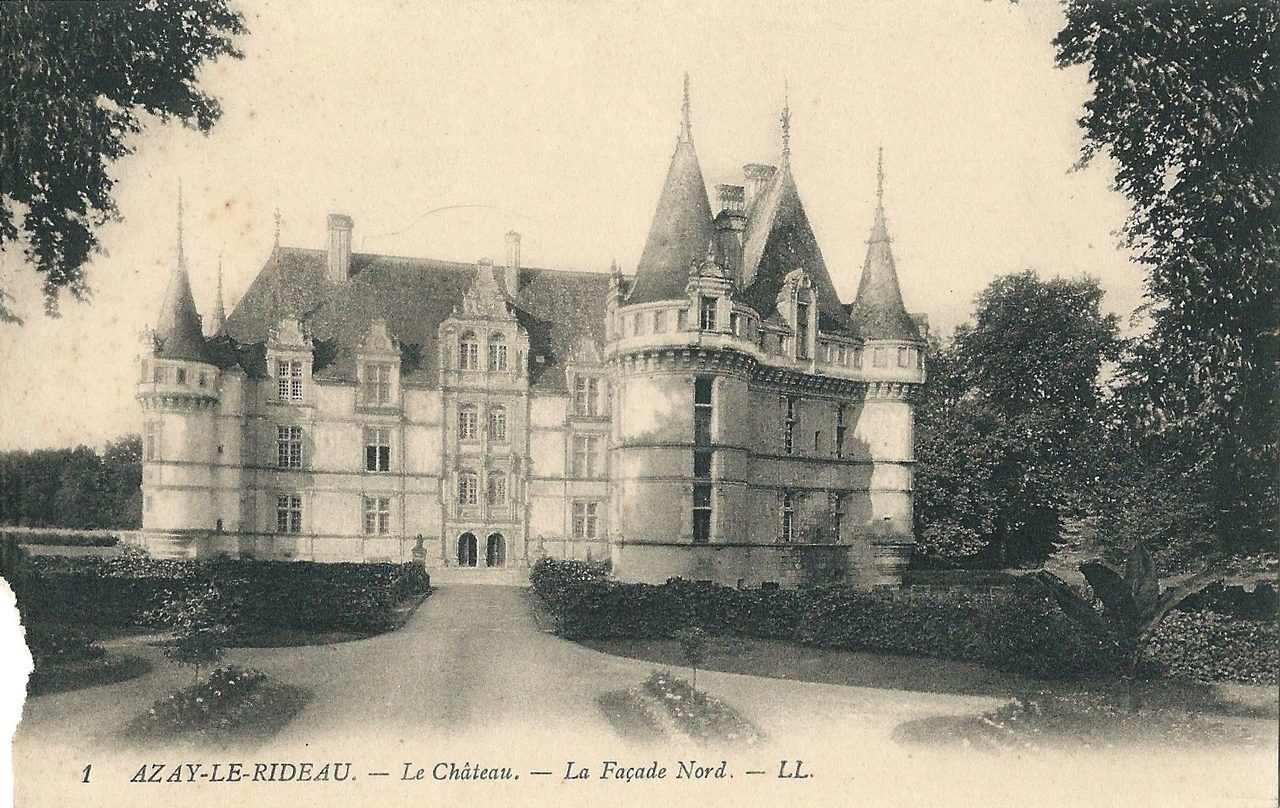
Official protection had followed its own crooked path. Azay was listed among the first monuments historiques in 1840, in the era when Prosper Mérimée’s inspectorate was drawing up France’s founding inventory of protected buildings. It was then declassified in 1888, after the demolition of the last medieval vestiges during works on the courtyard side, and only reclassified, this time for good, by the Journal officiel of April 18, 1914, nine years after the state already owned it. What the state had bought, in effect, was pure architecture: walls, staircase, and park, stripped of every object that had made them a home. That emptiness has shaped a century of curatorship, since everything shown inside today had to be reassembled or borrowed. The state put its purchase to work in odd ways at first, housing the Education Ministry within its walls in 1939 and 1940, before the château settled into its modern role as one of the flagship monuments in national care.
The Château Today
That care has rarely been more visible than now. After the landscape park was restored in 2014, the Centre des monuments nationaux ran a campaign from January 2015 to June 2017 covering the roof frames, all the slate, the upper masonry, the façades, the sculpture, and the woodwork. The entire roof was stripped and relaid. Its original semi-thick slate had come from the Anjou quarries, which closed for good in 2013, so Galician slate of matching character now covers the château, fixed nail by nail in the old manner. Conservators cleaned and consolidated the great lead ridge and finials, where traces survive of a painted decor of foliage, grotesques, and heraldry that once colored the top of the building. Eight million euros went into the monument and its park, and the château reopened on July 7, 2017 with its pale stone glowing.
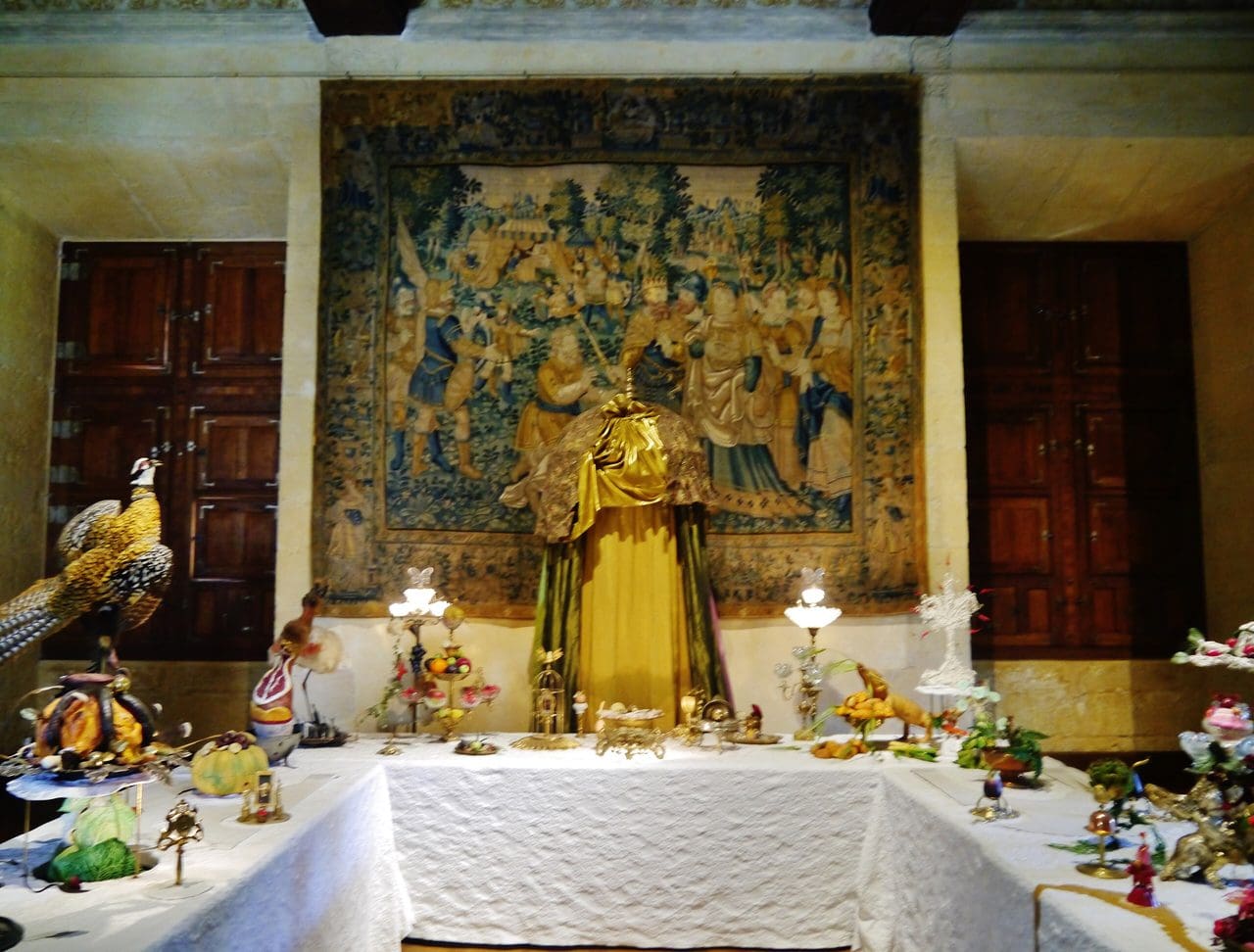
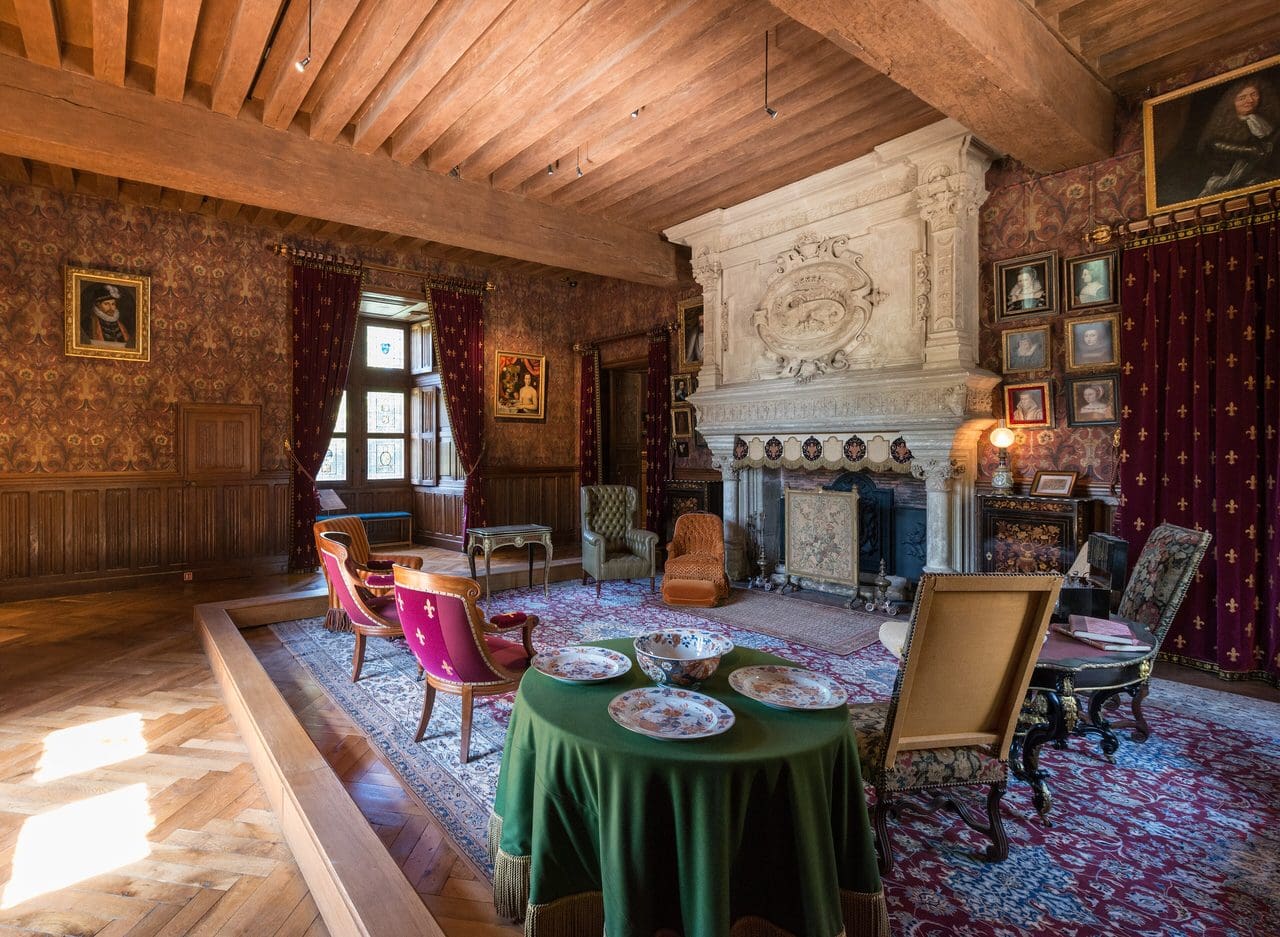
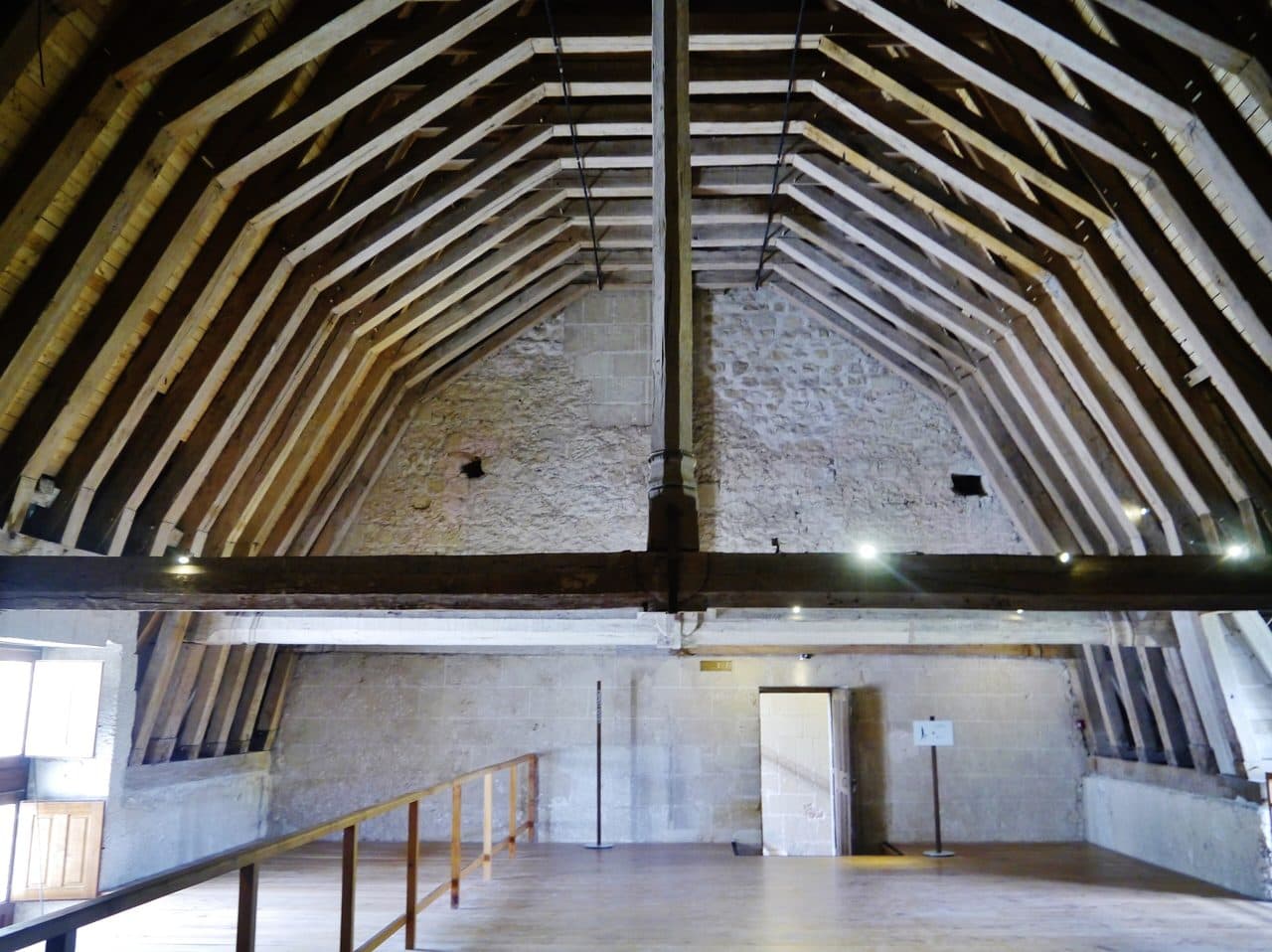
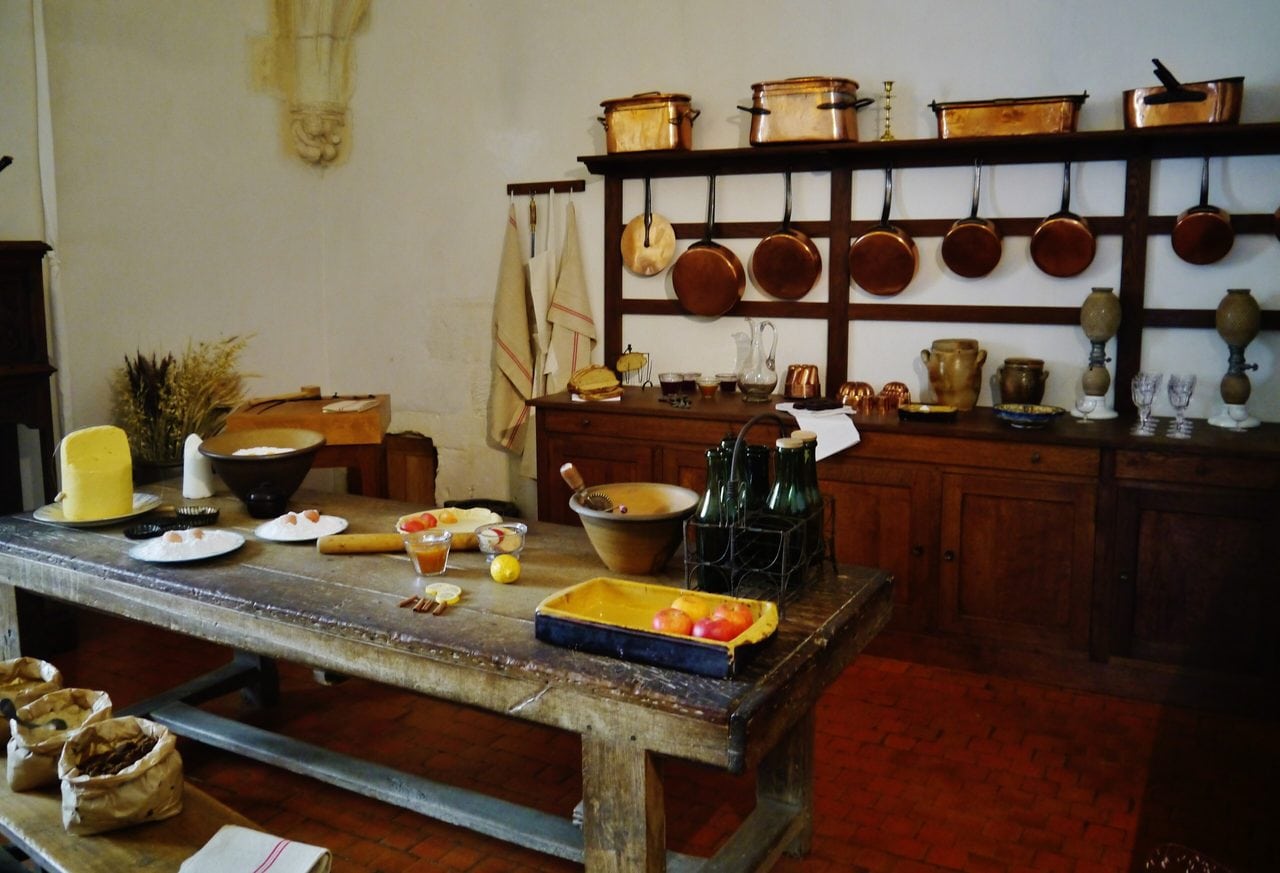
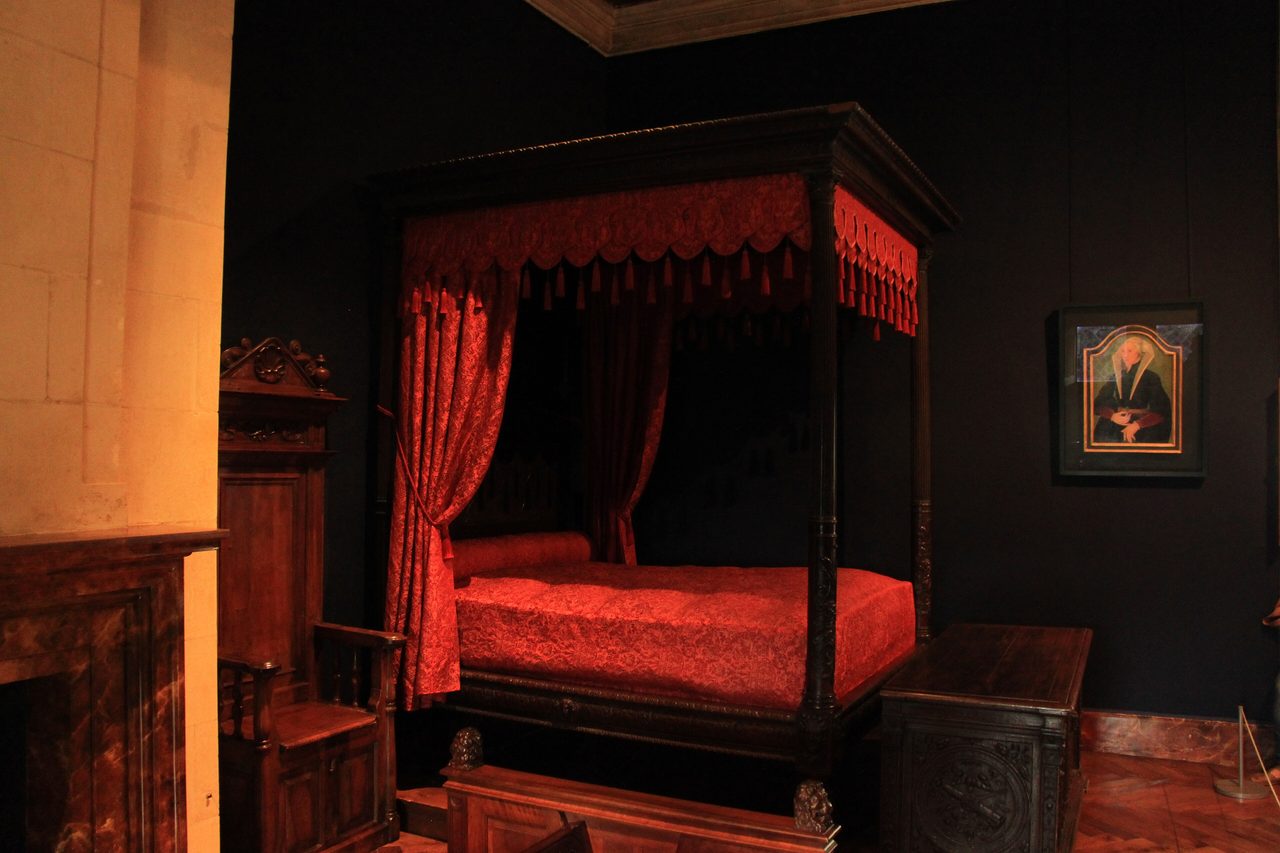
The restoration reset the visit as well. The ground floor, refurnished in partnership with the Mobilier national, recreates the nineteenth-century art de vivre of the Biencourts, centered on the Biencourt salon. Upstairs, the rooms evoke the Renaissance, including a chamber lined with plaited rush matting, a rare survival of sixteenth-century comfort. Under the roof, the original timber frame, saved by the new slates above it, can be visited like the hull of an upturned ship, and the Pressoir outbuilding introduces the estate’s history. Outside, the restored park and the two mirrors do the rest. A full circuit of the island takes perhaps twenty minutes and delivers the building from every angle, including the exact view Balzac described from the Saché road. As for the postcard reflection, it is younger than it looks, but no one standing on the south lawn at golden hour has ever minded.
Visiting Château d’Azay-le-Rideau in 2026
The château opens year-round except January 1, May 1, and December 25. From April through June and again in September, hours run 9:30 to 18:00; July and August extend to 19:00; from October 1 to March 31 the day runs 10:00 to 17:15. Last access is one hour before closing, and ninety minutes to two hours covers the château, attic, and a turn of the park comfortably. Entry tickets and local tours can also be booked in advance through GetYourGuide.
| Ticket (2026) | Price |
|---|---|
| Individual entry (October 1, 2025 to March 31, 2026) | €13 |
| Individual entry (April 1 to September 30, 2026) | €16 |
| Park only | €4 |
| Audioguide (five languages) | €3 |
| Twin ticket with the Château d’Angers | €20 low season / €24 (June 2 to September 30) |
Admission is free for under-18s, EU residents aged 18 to 25, jobseekers, and visitors with disabilities along with one companion, and for everyone on the first Sunday of the month from November through March. Rail travelers with SNCF tickets qualify for partner rates. Prices are reviewed annually; verify the current schedule on the operator site before traveling.
Crowds peak on summer afternoons, when the staircase narrows to single file; mornings at opening, late afternoons, and the long shoulder season from late September onward show the château at its calmest, and the low winter light flatters the south front across the water. Azay-le-Rideau sits 26 kilometers southwest of Tours, just off the A85 (exit 9), which makes it an easy half-day from the regional base and a natural pairing with Villandry, fifteen minutes away. The TER from Tours toward Chinon stops at Azay-le-Rideau station, a 2.1-kilometer walk from the gate at 19 rue Balzac, and the château is a stage on the Loire à Vélo cycling route, with Accueil Vélo services in town. The Le Lavoir tea room operates by the entrance from Easter to the end of September. Anyone staying overnight can compare hotels in and around Azay-le-Rideau.
Some links on this page are affiliate links, which means StoneKeep Atlas may earn a small commission, at no extra cost to you, if you book through them.
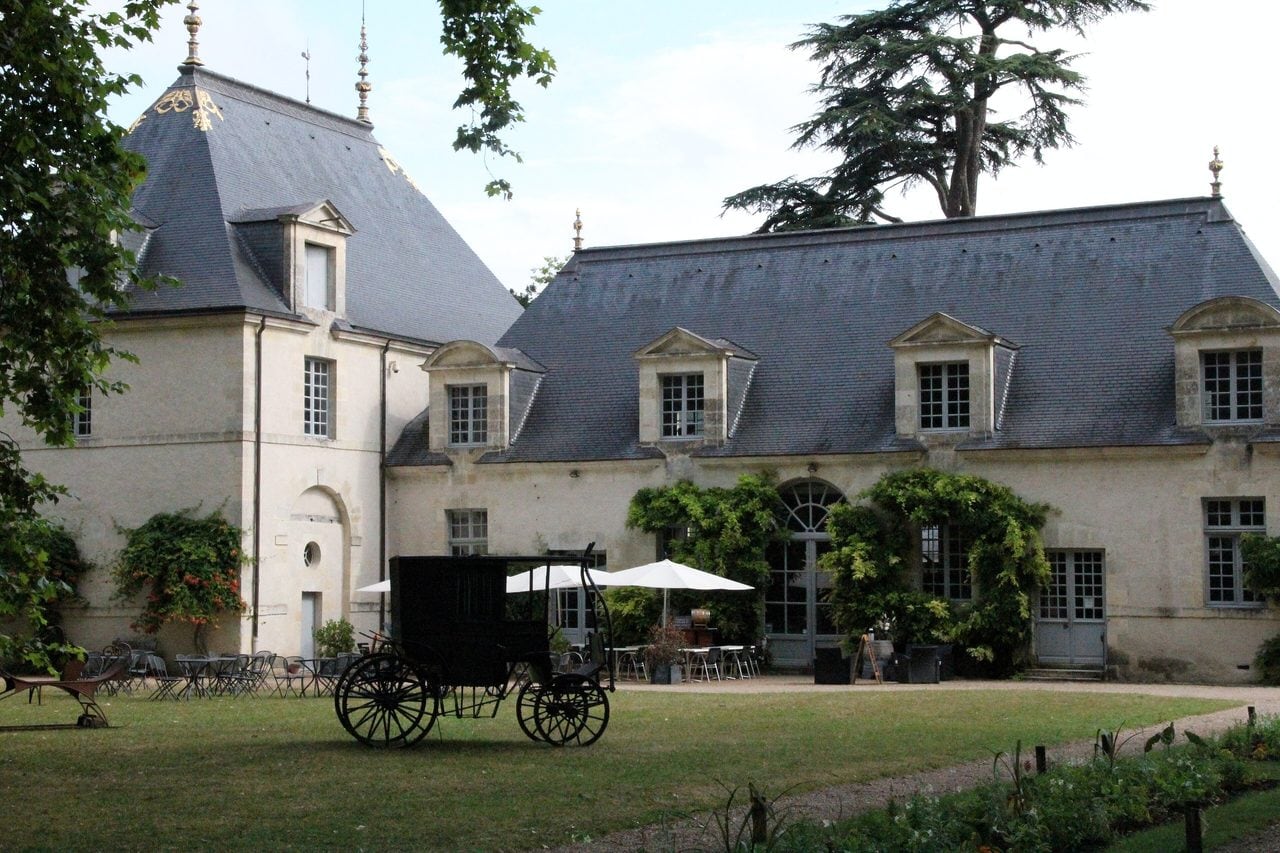
More Views of Château d’Azay-le-Rideau
The island setting rewards a slow circuit, and these views trace it from the water mirrors to the carved stone of the staircase.
Beyond Château d’Azay-le-Rideau
Azay is the miniature against which the giants of château country measure themselves. Château de Chambord shows what the same Renaissance ambition looks like at royal scale, while Château de Blois sets four centuries of French architecture around a single courtyard. Château de Chenonceau carries the water-borne elegance of Azay across an entire river, and Château de Chaumont-sur-Loire pairs its hilltop history with a celebrated garden festival. Château d’Amboise overlooks the river where the court of François I made its home, Château de Villandry perfects the Renaissance garden a short drive down the Cher, and Château de Cheverny shows where the Semblançay clan’s story led a century on. Together with Azay they make up the heart of any Loire itinerary. A short drive west, Château d’Ussé lifts its white towers above the Indre, the château whose silhouette gave Perrault’s Sleeping Beauty its castle. Our guide to the Châteaux of the Loire Valley places Azay within the full nine-château circuit. Downstream in Anjou, the white Château de Saumur guards the Loire, the ducal castle of the Très Riches Heures. West toward Saumur, the Château de Brézé hides a troglodyte fortress and the deepest dry moat in France below its logis. Downstream on the Loire, the Château de Langeais preserves a fifteenth-century fortress built in a single campaign for Louis XI, its drawbridge still in working order. East up the Indre in the Touraine, the Château de Loches guards a colossal eleventh-century keep and the royal lodge of Agnès Sorel and Anne of Brittany. Azay’s turreted reflection in the Indre also places it among the fairytale castles in France, the châteaux that seem lifted from a storybook. The woman who finished Azay, Philippa Lesbahy, features in our history of the women who built the Loire.
Conclusion
Azay-le-Rideau is the Loire’s great cautionary masterpiece. A self-made man built the most refined small château in France, decorated it with the emblems of a king, and watched that king take it; the woman who finished it pleaded in vain to keep it. Nearly five centuries later, the verdict of history has reversed the verdict of 1527. Semblançay’s gallows are forgotten ground in Paris, while Berthelot and Lesbahy’s diamond, polished by the Biencourts and restored by the state, draws the world to a small island in the Indre. Few monuments argue so elegantly that building beautifully is the last word.
Principal Sources
- Balzac, Honoré de. Le Lys dans la vallée. Werdet, 1836.
- Encyclopaedia Britannica. “Azay-le-Rideau.” britannica.com.
- Hamon, Philippe. “Semblançay, homme de finances et de Conseil (v. 1455–1527).” In Cédric Michon, ed. Les conseillers de François Ier. Presses universitaires de Rennes, 2011.
- Larousse. “Jacques de Beaune, baron de Semblançay.” larousse.fr.
- Latour, Marie. Le château d’Azay-le-Rideau. Éditions du patrimoine, 2008.
- Lemerle, Frédérique, and Yves Pauwels. L’architecture à la Renaissance. Flammarion, 1998.
- Ministère de la Culture. “Château (Azay-le-Rideau), notice PA00097546.” Base Mérimée. pop.culture.gouv.fr.
- Ministère de la Culture. “Patrimoine : la renaissance du château d’Azay-le-Rideau.” culture.gouv.fr. No longer published by the ministry; the restoration dates and the eight-million-euro figure it carried are read here at the Mobilier national and Centre des monuments nationaux press dossier below.
- Mobilier national and Centre des monuments nationaux. Château d’Azay-le-Rideau, press dossier, 2017. mobiliernational.culture.gouv.fr.
- UNESCO World Heritage Centre. “The Loire Valley between Sully-sur-Loire and Chalonnes.” whc.unesco.org.
- The Centre des monuments nationaux, operator of the château, maintains the official visitor and history pages at azay-le-rideau.fr, including its accounts of Gilles Berthelot, the architecture, the grand staircase, and current practical information, as well as the château’s AzayRenaissance and history exhibits on Google Arts & Culture; these were consulted throughout.
Image credits. Hero and gallery reflection: Adobe Stock (licensed). Aerial view: Lieven Smits, CC BY-SA 3.0. Towers on the water: memorycatcher, Pixabay. North façade: AXP Photography, Pexels. Staircase interior: Frédérique Voisin-Demery, CC BY 2.0. Salamander and ermine reliefs: Gerd Eichmann, CC BY-SA 4.0. Grande Salle, attic timber frame, and grande cuisine: Zairon, CC BY-SA 4.0. Biencourt salon: DXR, CC BY-SA 4.0. Nineteenth-century terrace photograph and garden view: Rijksmuseum, CC0. Postcard: public domain. Outbuildings: Thierry de Villepin, CC BY-SA 3.0. Gallery, in order: Adobe Stock (licensed); Carnet de Voyage d’Alex, Unsplash; Fab5669, CC BY-SA 4.0; Thierry de Villepin, CC BY-SA 3.0; Zairon, CC BY-SA 4.0; Cristian Bortes, CC BY 2.0; suju, Pexels; Rijksmuseum, CC0. Freely licensed images are resized to fit; otherwise unaltered.