
Château d’Ussé
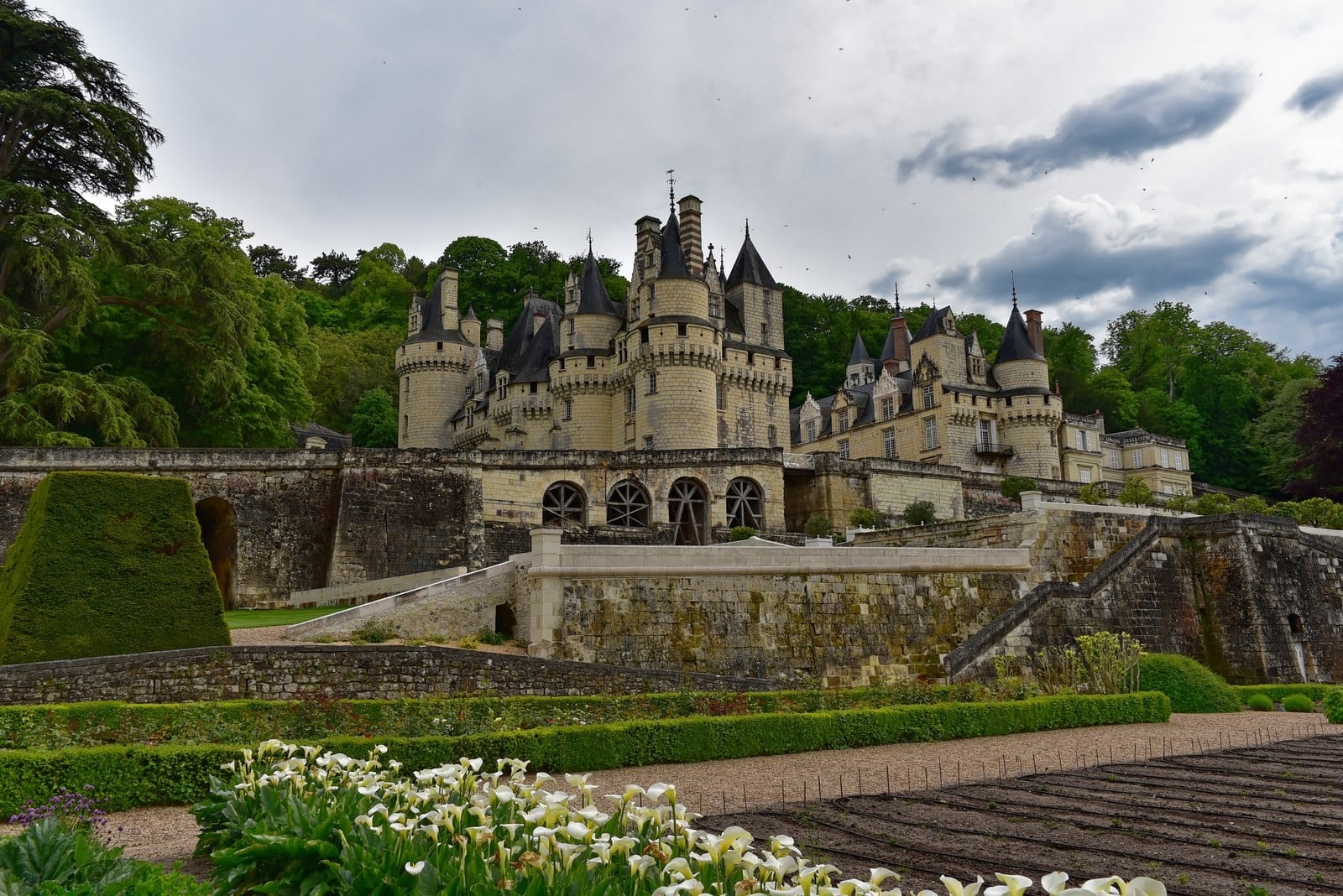
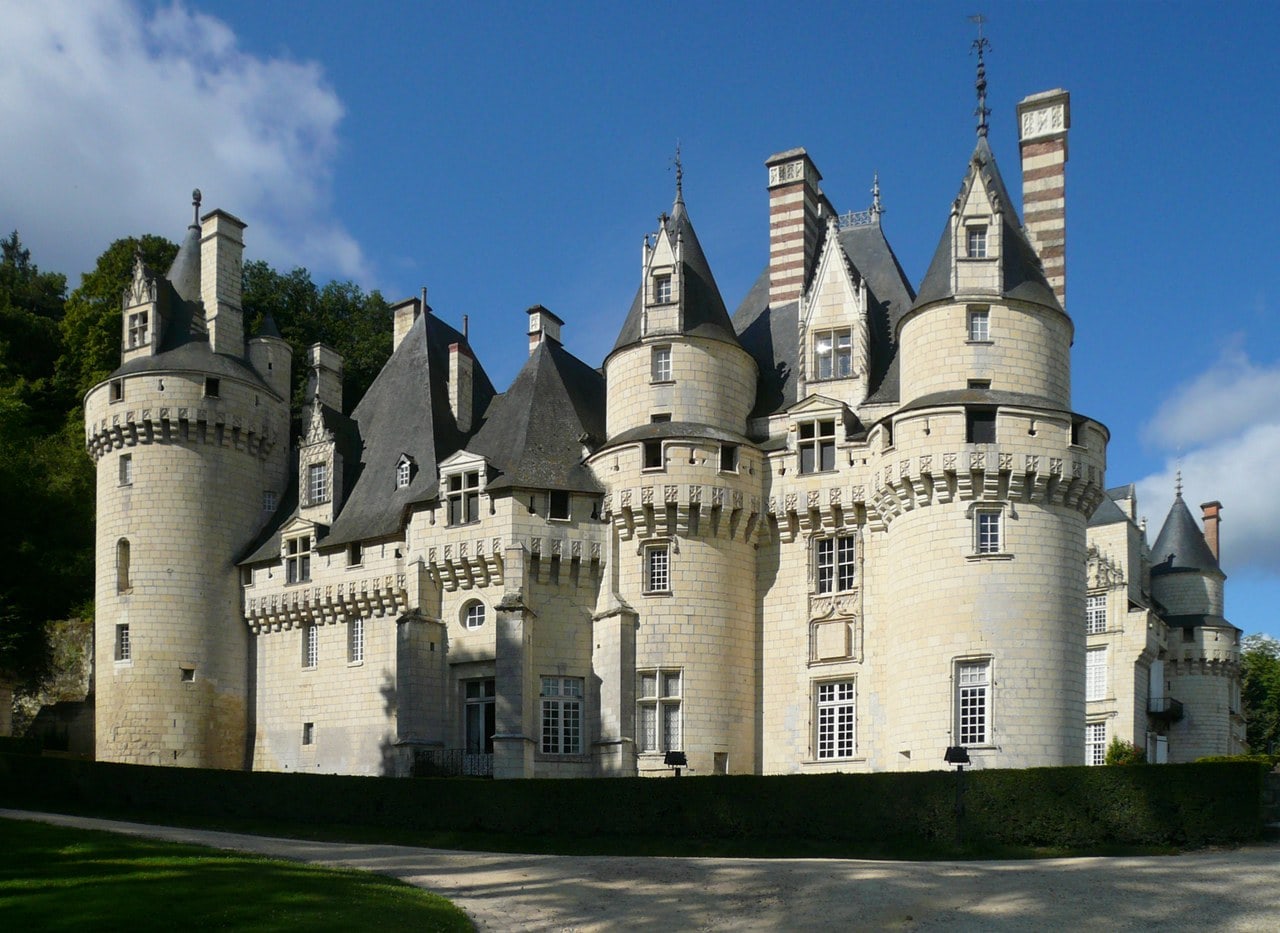
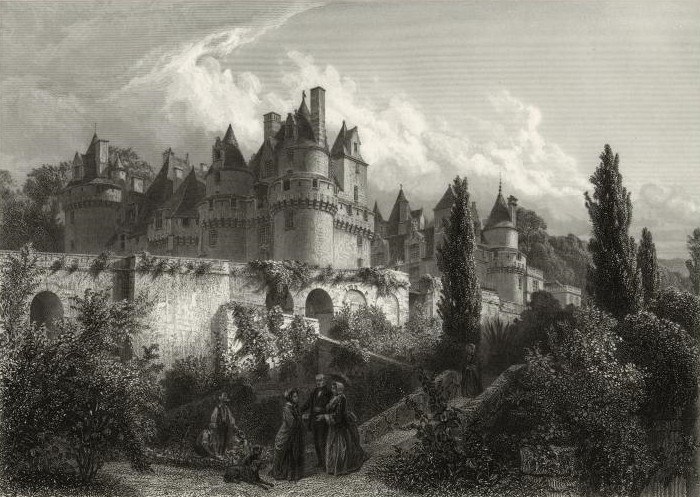
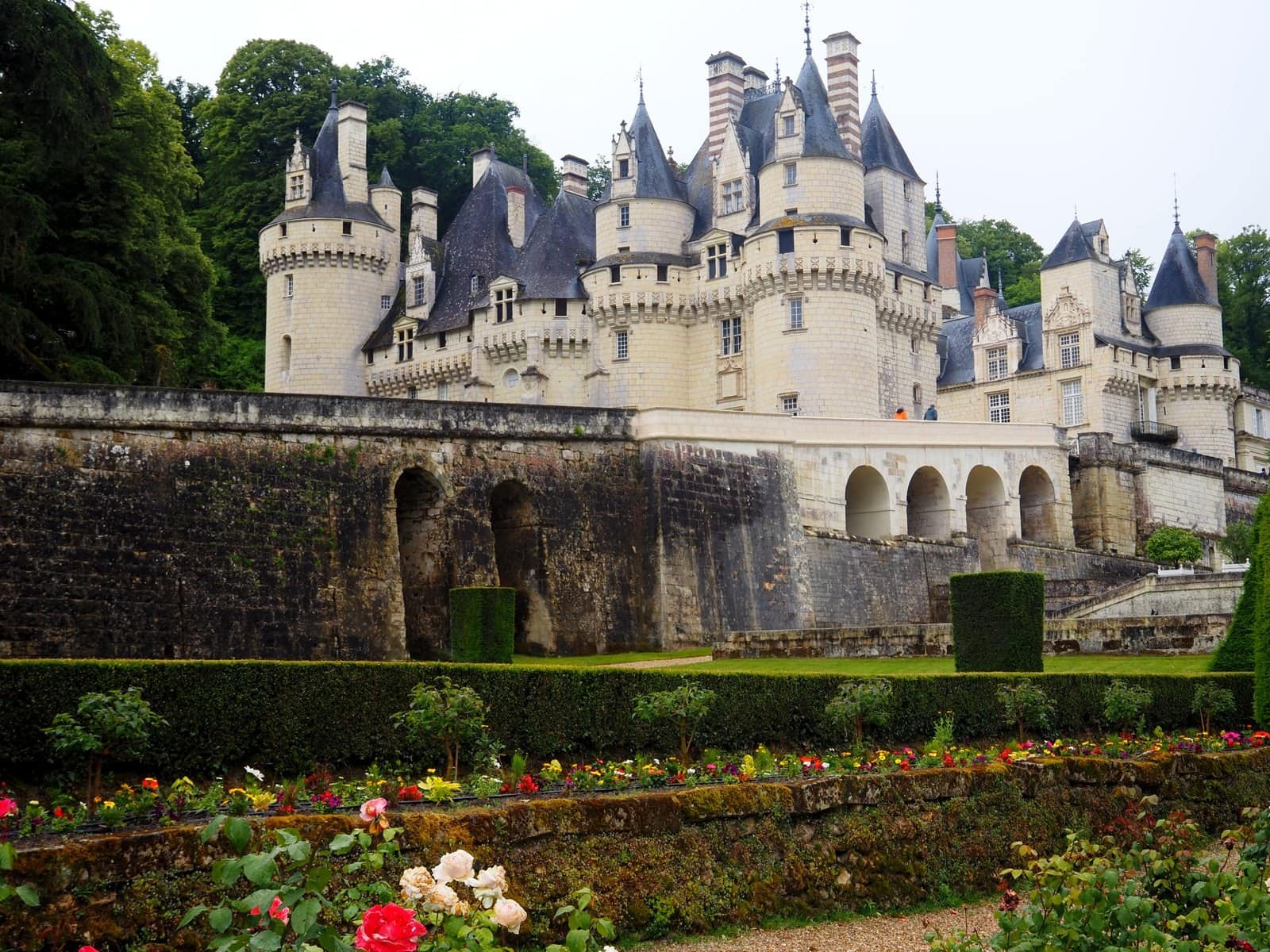
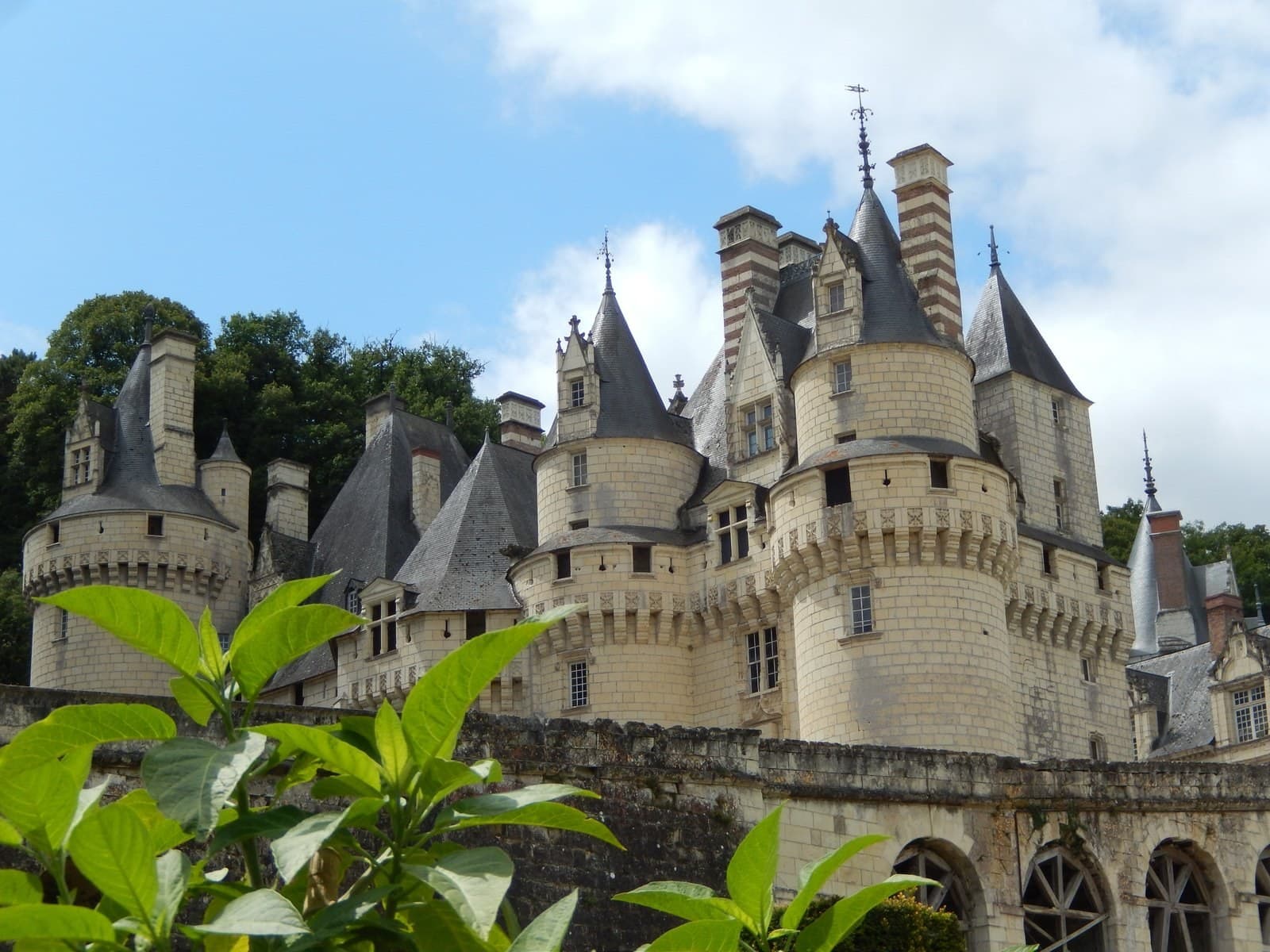
Château d’Ussé stands in white tuffeau stone above the Indre, at the point where the river valley meets the dark edge of the Chinon forest, its towers and dormers stacked in tiers up the hillside. The silhouette is the reason the place is famous. By long tradition it is the château that gave Charles Perrault the setting for La Belle au bois dormant, published in 1697, and the estate leans happily into that story today. Behind the fairy-tale profile, though, is a real Loire residence with six centuries of building history: a Renaissance collegiate chapel, garden terraces above the river, furnished apartments hung with silk and tapestry, and a family that has lived here since 1885. Ussé sits a short drive from Azay-le-Rideau and Chinon, and it is still privately owned and inhabited, which gives its rooms the feel of a house rather than a museum.
Quick Facts
| Location | Rigny-Ussé, Indre-et-Loire, Loire Valley, France |
| Built | 15th–17th centuries, on an earlier fortified site |
| Style | Late Gothic and first Tourangelle Renaissance |
| Chapel | Collegiate chapel, begun 1521, consecrated 1538 |
| Owner | Blacas d’Aulps family (private, inhabited) |
| Protection | Monument historique (inscribed 1927; classified 1931 and 1951) |
| Open | 14 February – 1 November |
| Admission | Adult €14.50; child 8–16 €7.50; under 8 free |
| Official website | chateaudusse.fr |
From fortress to château
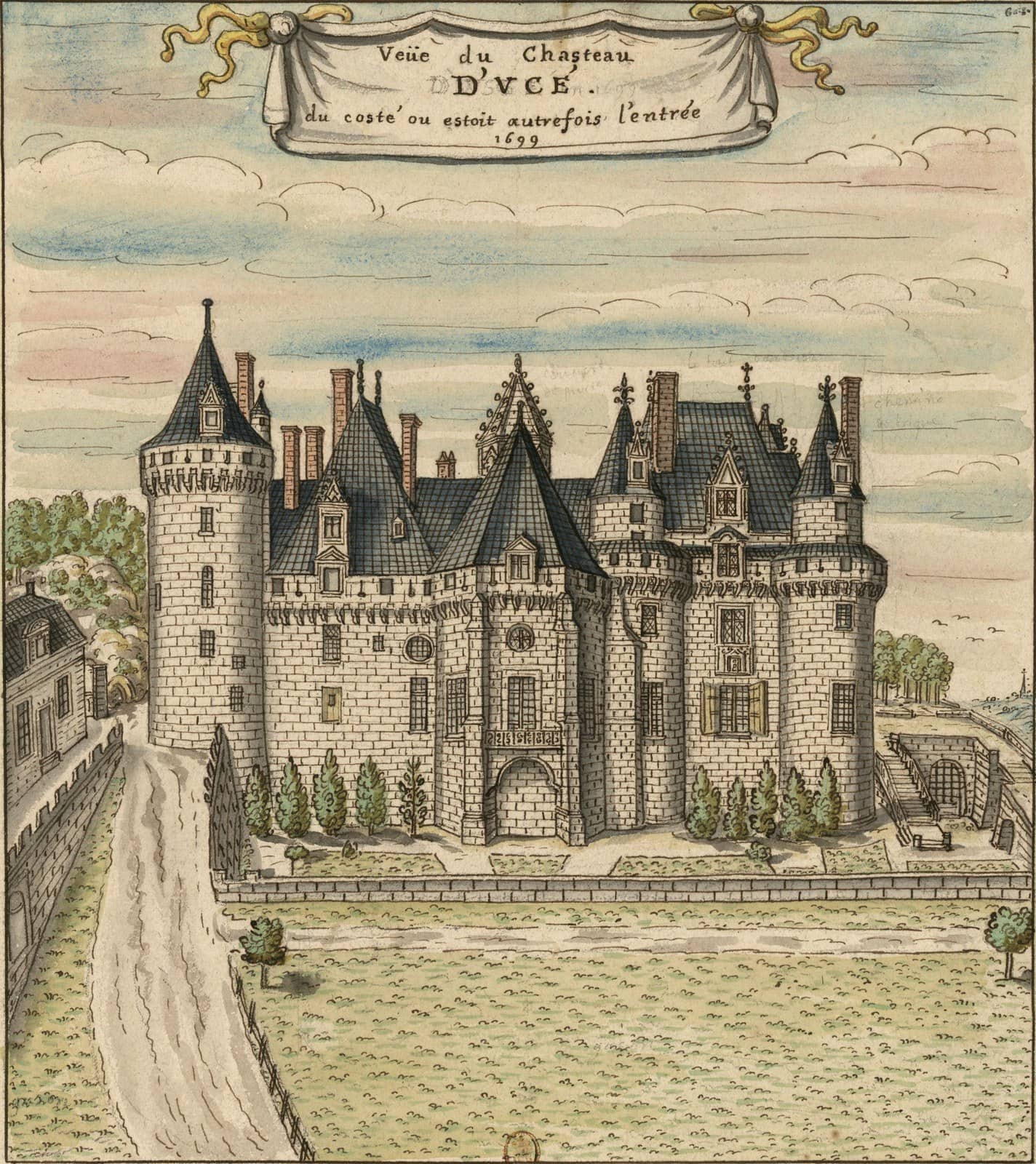
A stronghold has guarded this spur above the Indre for more than a thousand years. The lord Gelduin I is credited with the first fortification here around the year 1000, holding the crossing between Touraine and the country to the south. What survives today belongs to a later age. In the fifteenth century the site came to one of the great captains of the closing Hundred Years’ War, Jean V de Bueil, and it was his family that began turning the medieval fortress into the ranges we see now.
Bueil is worth pausing on, because his life runs through the founding drama of the age. His father and uncles were killed at Agincourt in 1415, when he was still a boy. He grew up to fight the English so relentlessly that he earned the nickname le Fléau des Anglais, the Scourge of the English. He rode with Joan of Arc through the campaign of 1429, at the relief of Orléans, the victory at Patay, and the march that carried Charles VII to his coronation at Reims. In 1450 the king made him Admiral of France. Late in life he wrote Le Jouvencel, a half-remembered, half-invented account of a young nobleman’s education in war, one of the finest soldier’s books of the French Middle Ages. A cylindrical keep at the southwestern corner of Ussé still carries the fifteenth-century work of his family’s rebuilding.
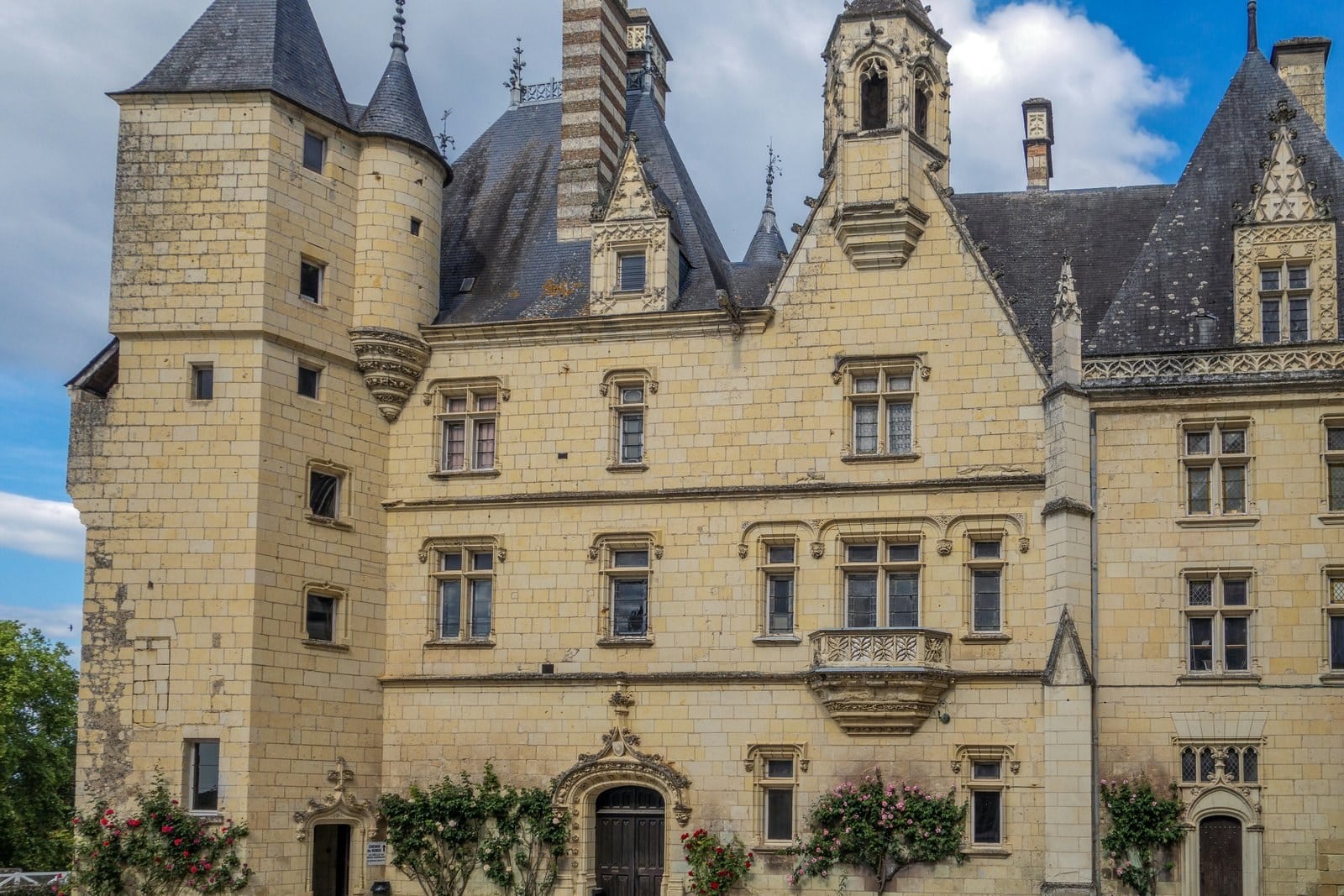
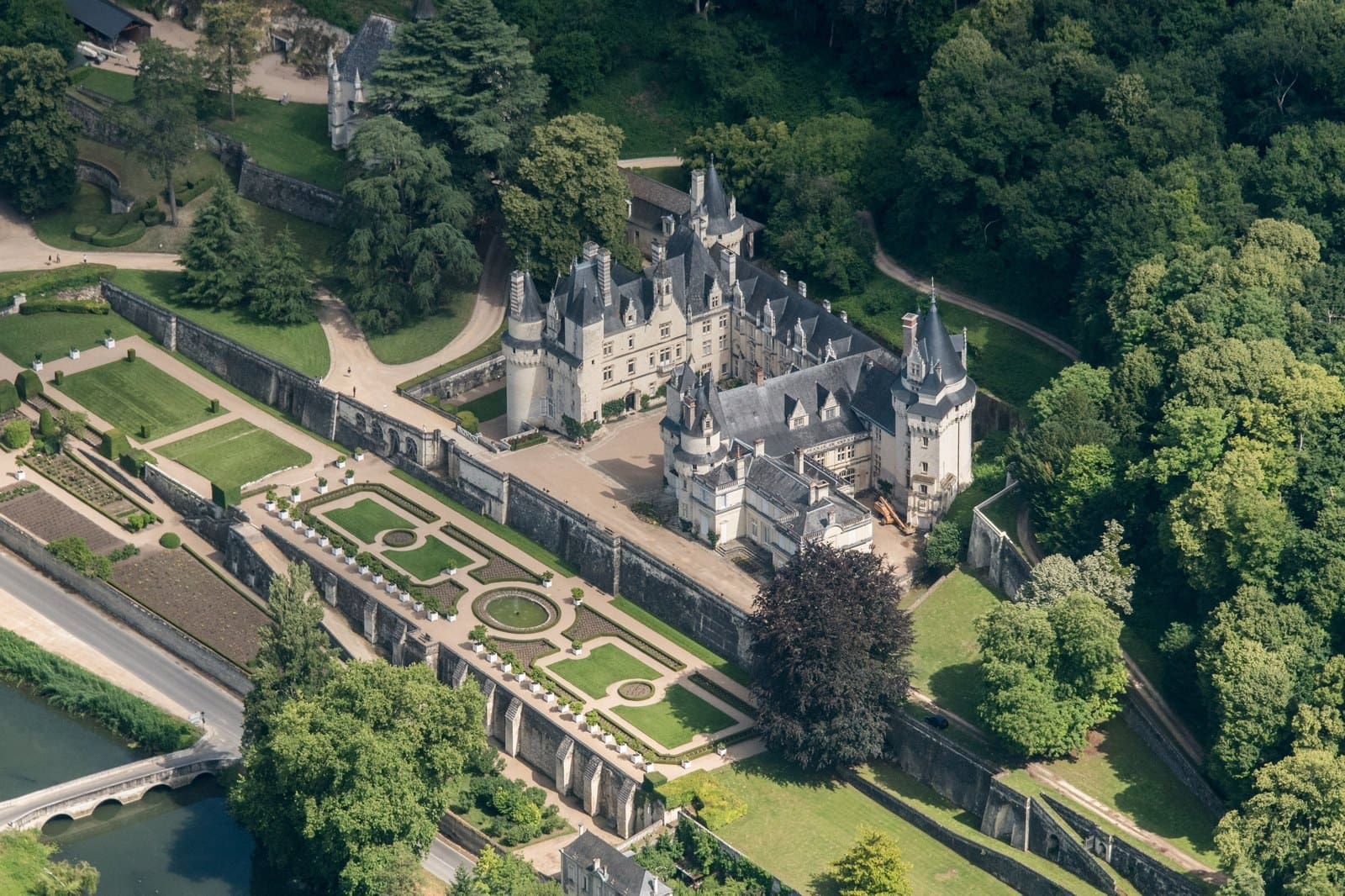
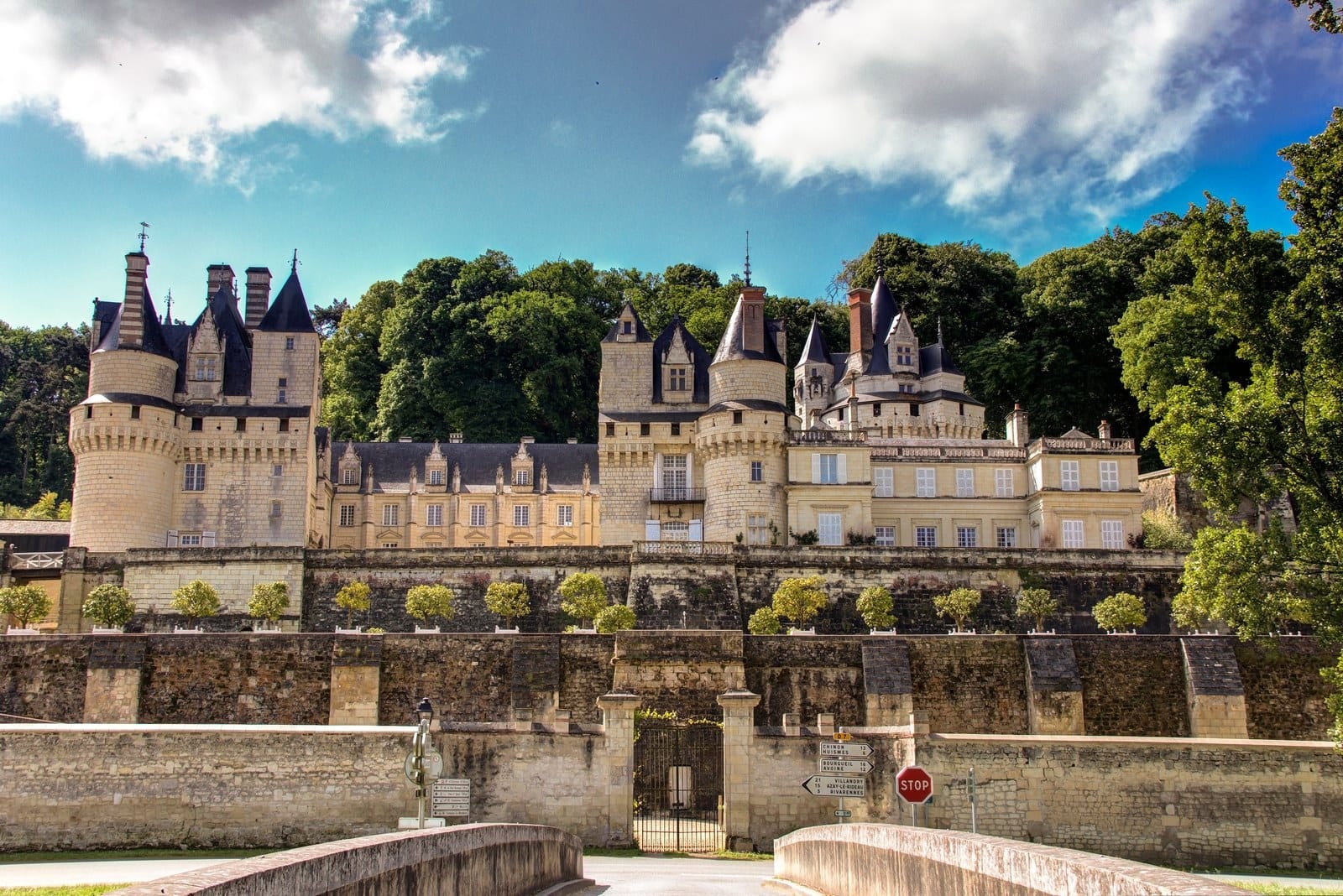
Money, as often, decided the next chapter. Weighed down by debt, the Bueil heirs sold Ussé to Jacques d’Espinay in the 1480s, and the d’Espinay family carried the rebuilding into the Renaissance. They kept the defensive shell, the towers and the machicolated walks that read as a castle from below, and filled the courtyard side with lighter, more comfortable lodgings. That doubleness is the charm of Ussé. Approached from the valley it looks like a fortress; seen from the garden terraces it looks like a country palace.
The collegiate chapel
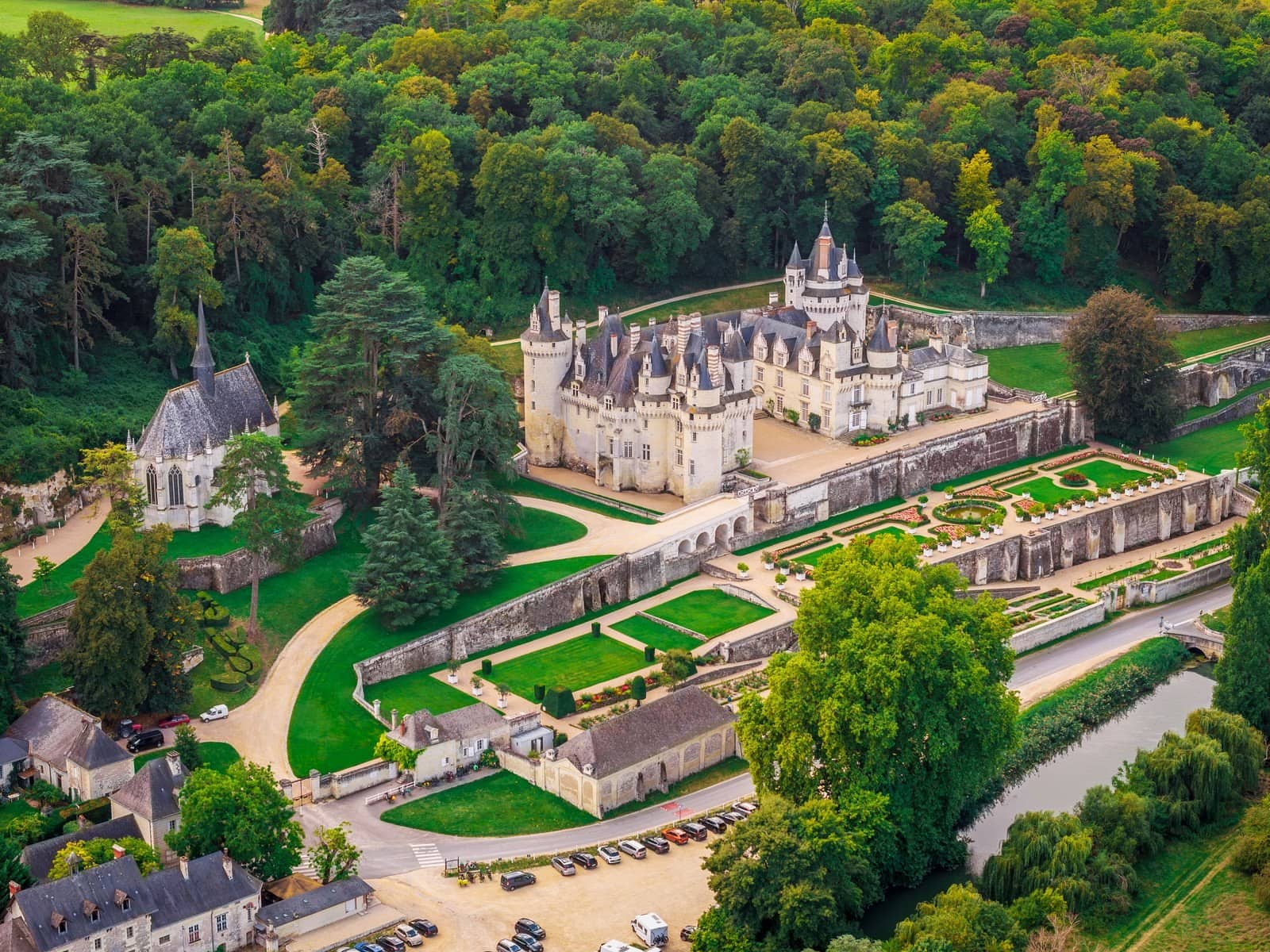
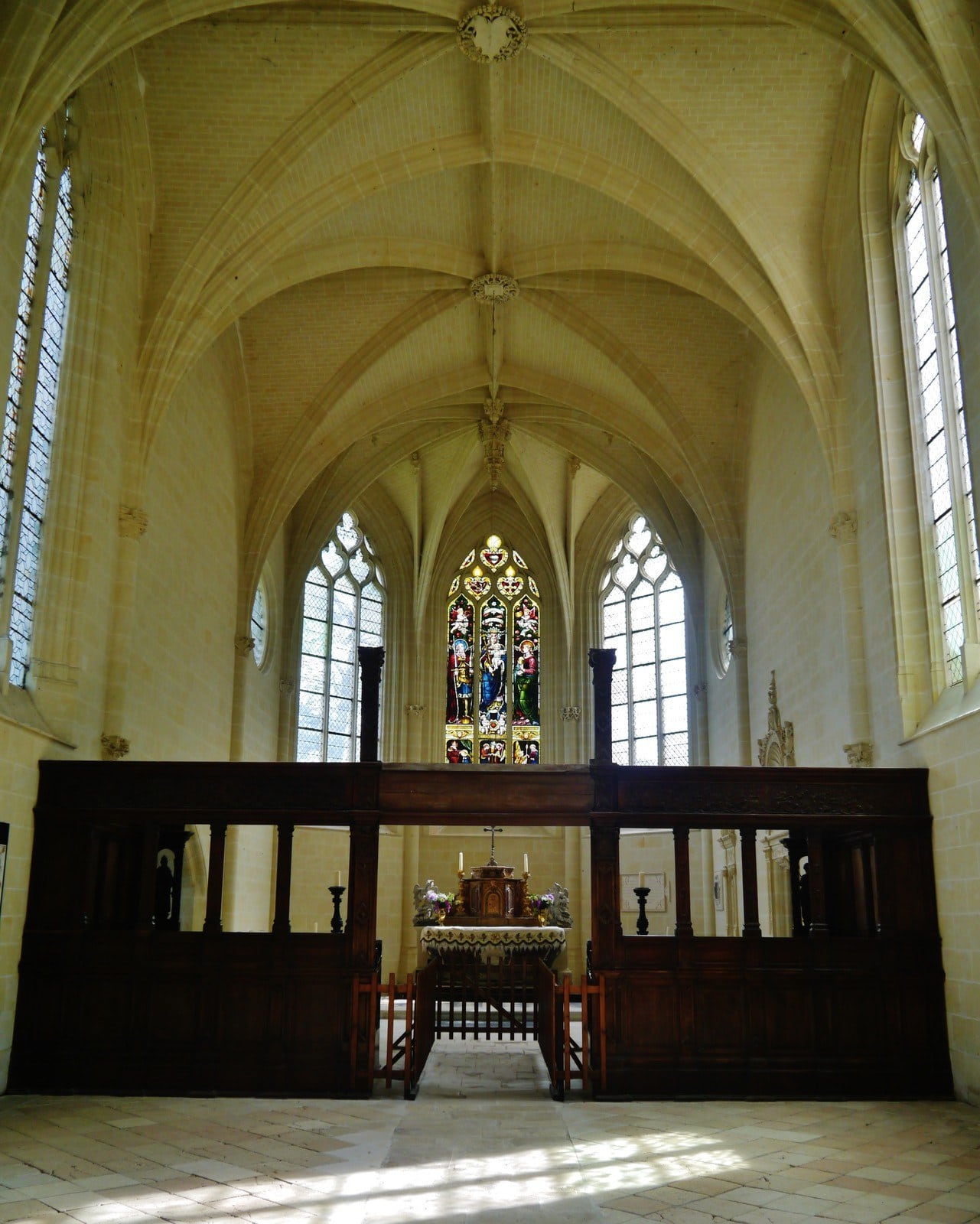
Set a little apart from the house, in the park, is the chapel that many visitors remember best. Charles d’Espinay and his wife, Lucrèce de Pons, raised it as a collegiate chapel, and their intertwined initials still run through its carving. Work began in 1521, and the building was consecrated in 1538. Its plan and structure are still Gothic, but the ornament belongs to the first flowering of the Renaissance in Touraine, and the doorway carries some of the finest early-Renaissance stonework in the valley, by tradition attributed to the sculptor Jean Goujon.
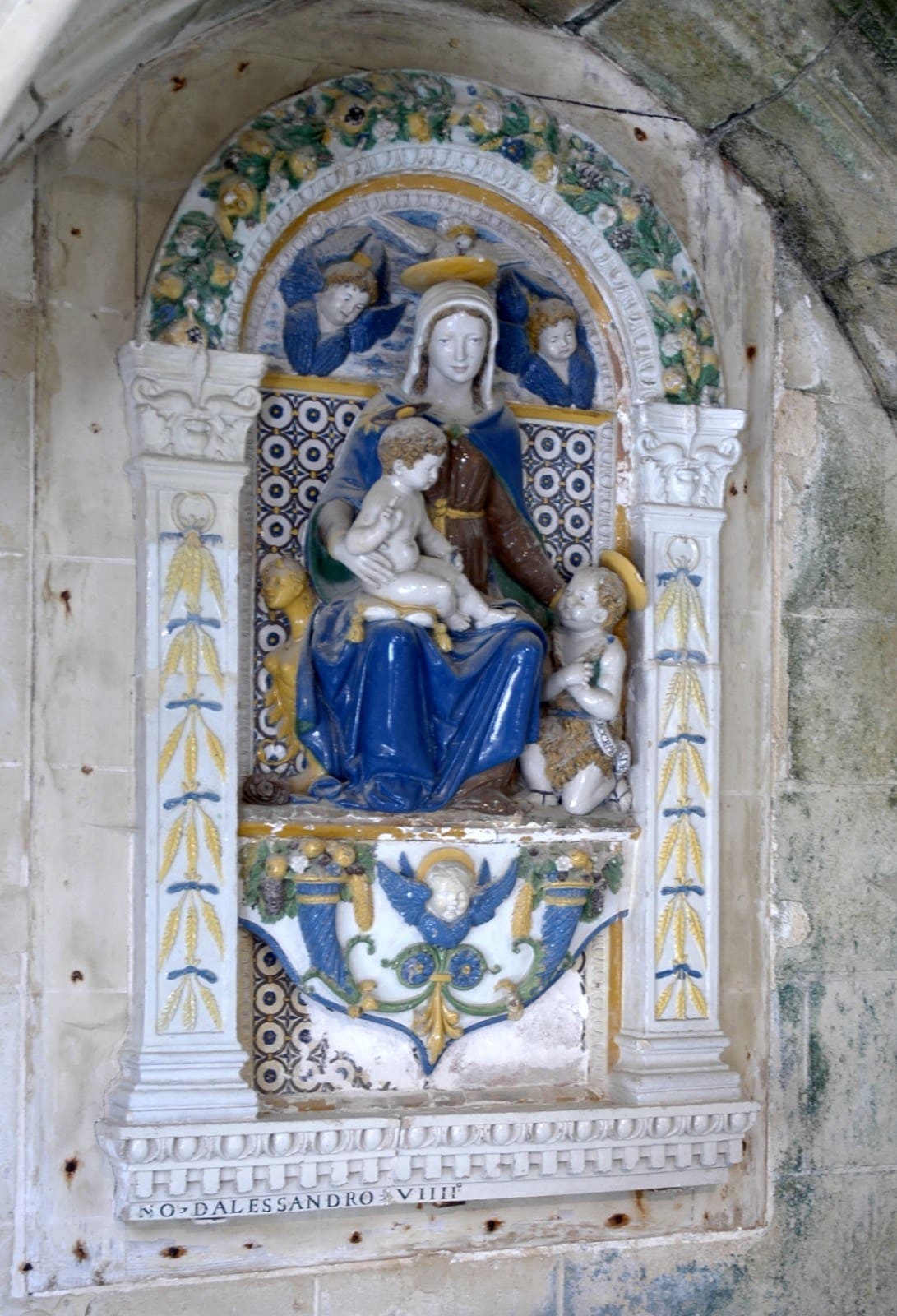
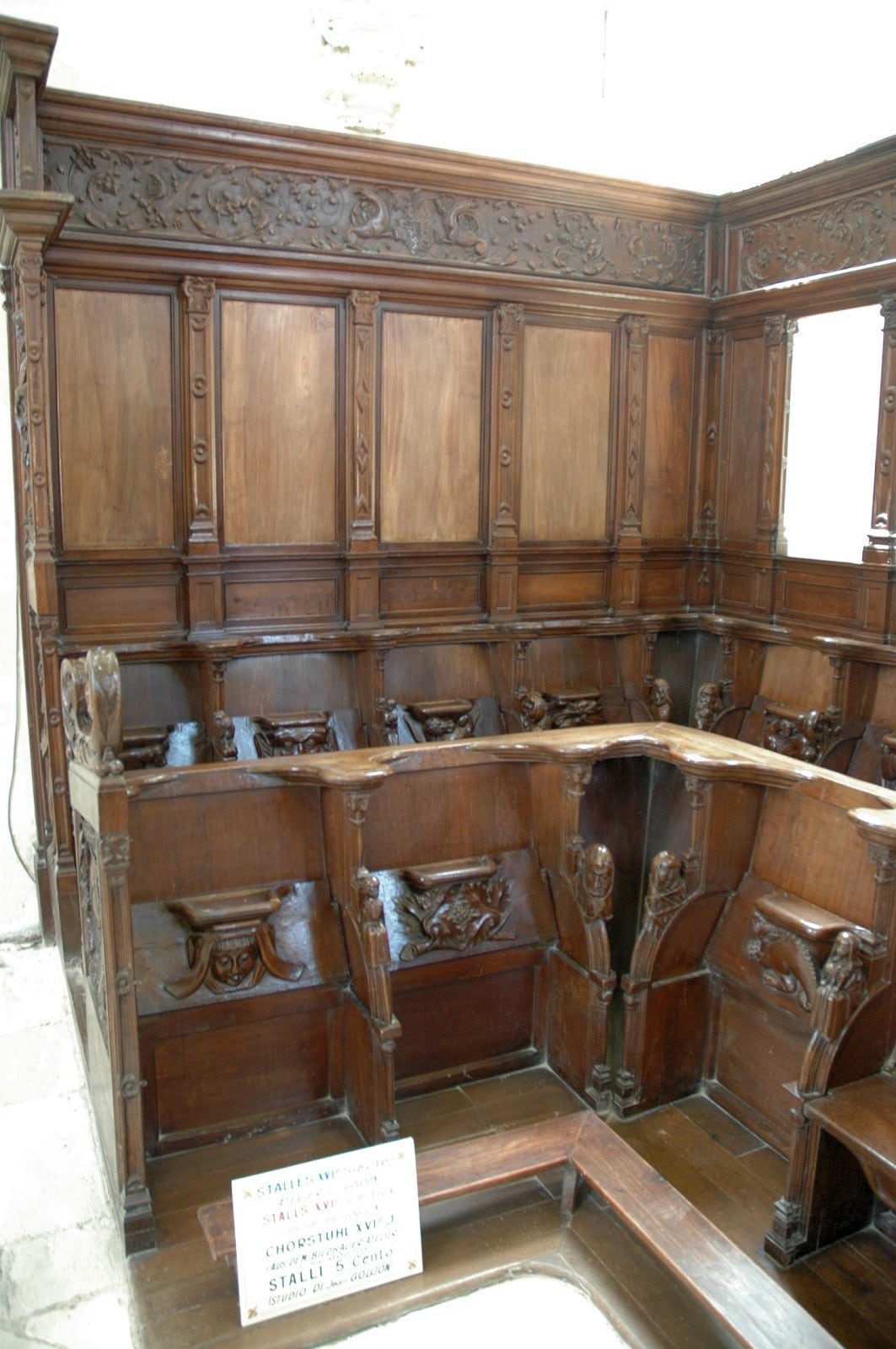
Inside are furnishings that reward a slow look. Above the entrance, a band of carved medallions holds busts of the twelve Apostles, and a statue of God the Father sits enthroned beneath a stone canopy. Its sixteenth-century choir stalls are Gothic in line, enriched with Italianate detail that shows the new taste creeping in. The chapel’s treasure is a glazed terracotta Virgin in blue and white, a piece from the della Robbia workshop of Florence whose technique had by then spread far beyond Tuscany. The heritage listing recognized all of this early, classifying the chapel as a monument historique in 1931, a decade before the wider protection of the château and its grounds.
A residence for the age of Louis XIV
The seventeenth century turned Ussé from a stronghold that could be lived in into a house built for pleasure. The estate came to the Valentinay family, and it was Louis Bernin de Valentinay, Controller-General of the King’s Household under Louis XIV, who gave the place its grandest cast. Valentinay married well. His wife was Jeanne-Françoise Le Prestre de Vauban, daughter of the great military engineer Sébastien Le Prestre de Vauban, and that marriage of 1691 is the thread behind Ussé’s most repeated stories.
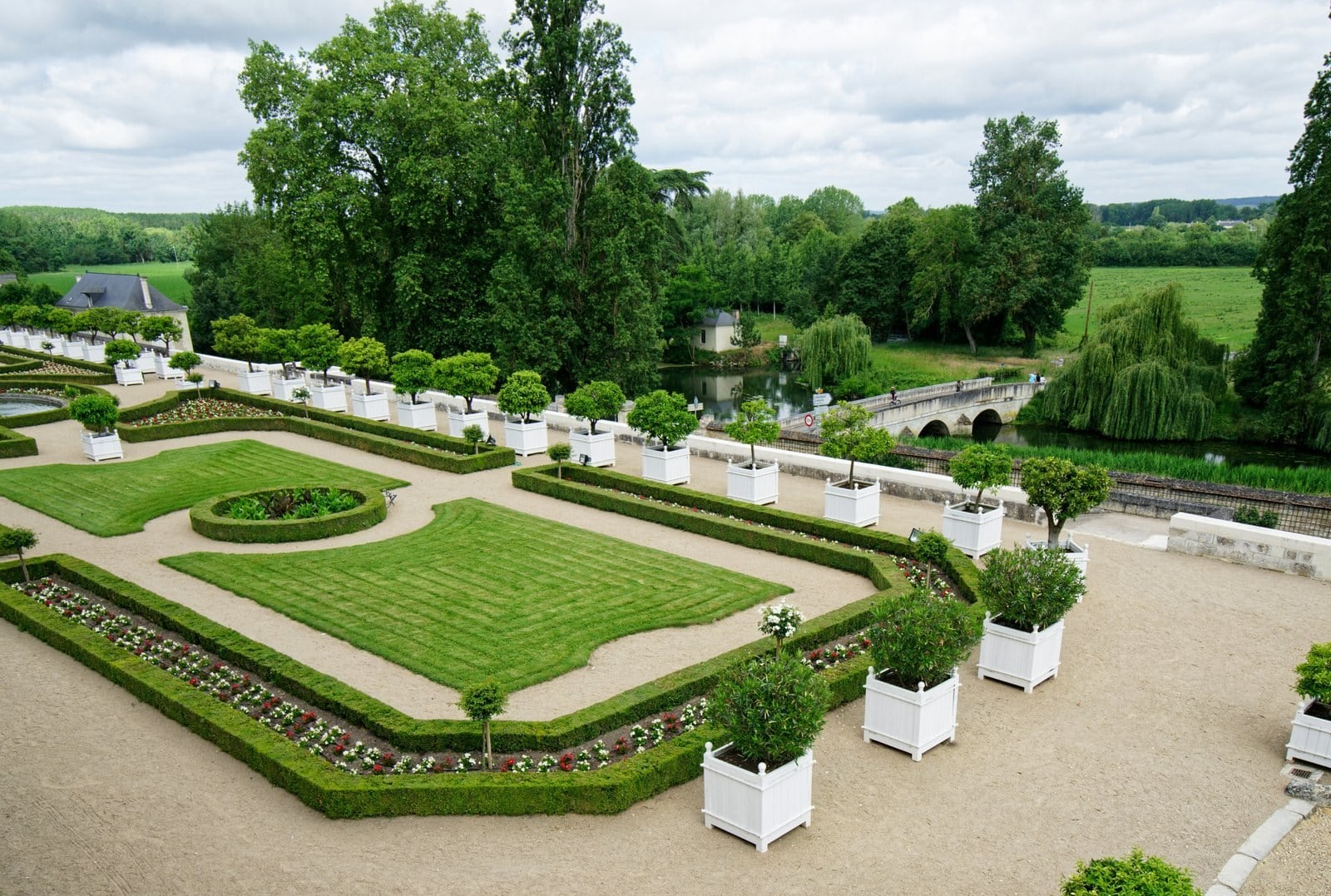
The garden terraces that step down toward the river are traditionally credited to Vauban himself, and the formal French garden below them is by tradition the work of André Le Nôtre. Neither attribution rests on a surviving document, and this guide gives them as the local tradition they are rather than as fact. What is not in doubt is the effect. The terraces open the house to the valley and frame the long view that every photograph of Ussé tries to catch.
Inside the château
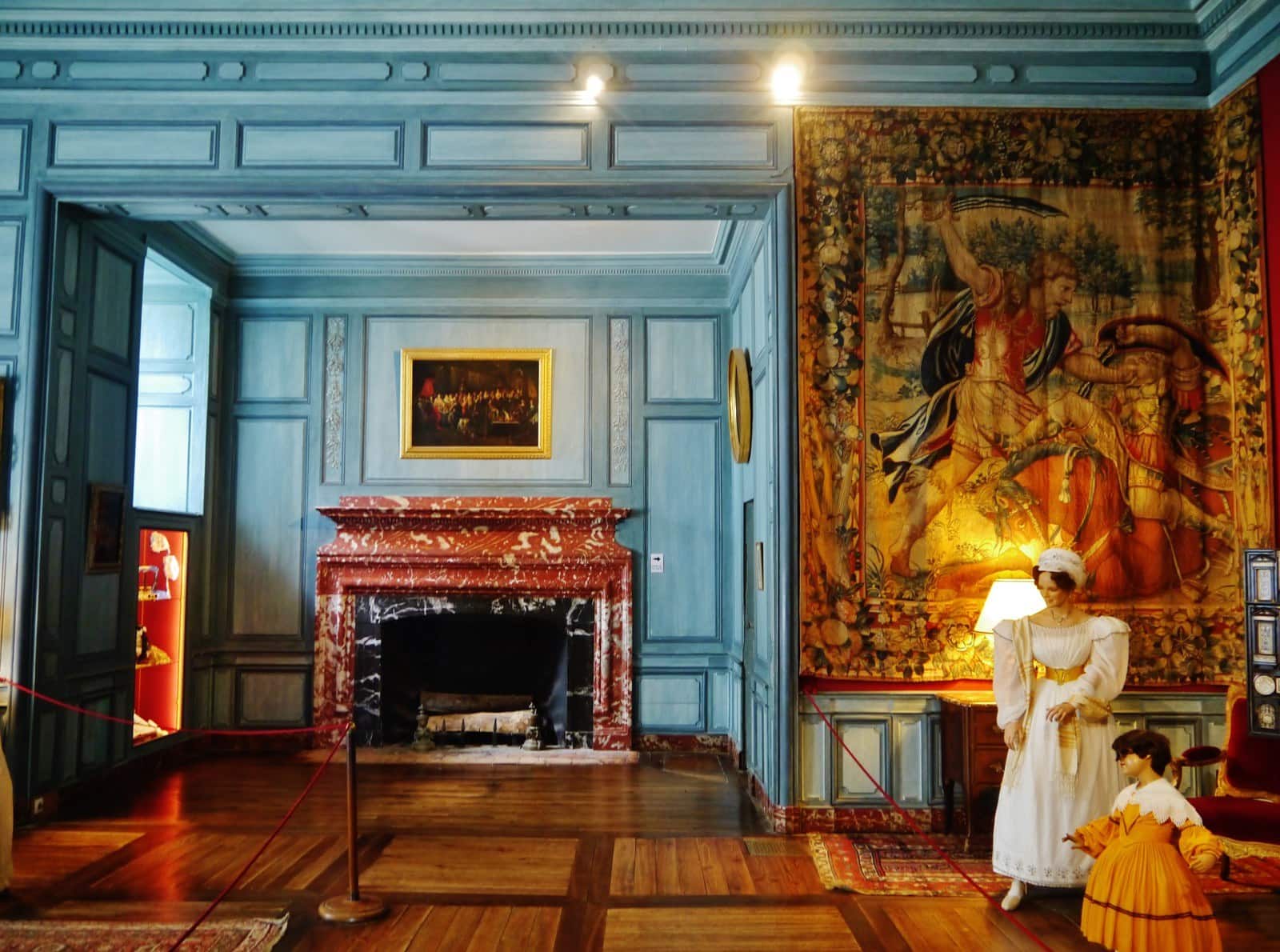
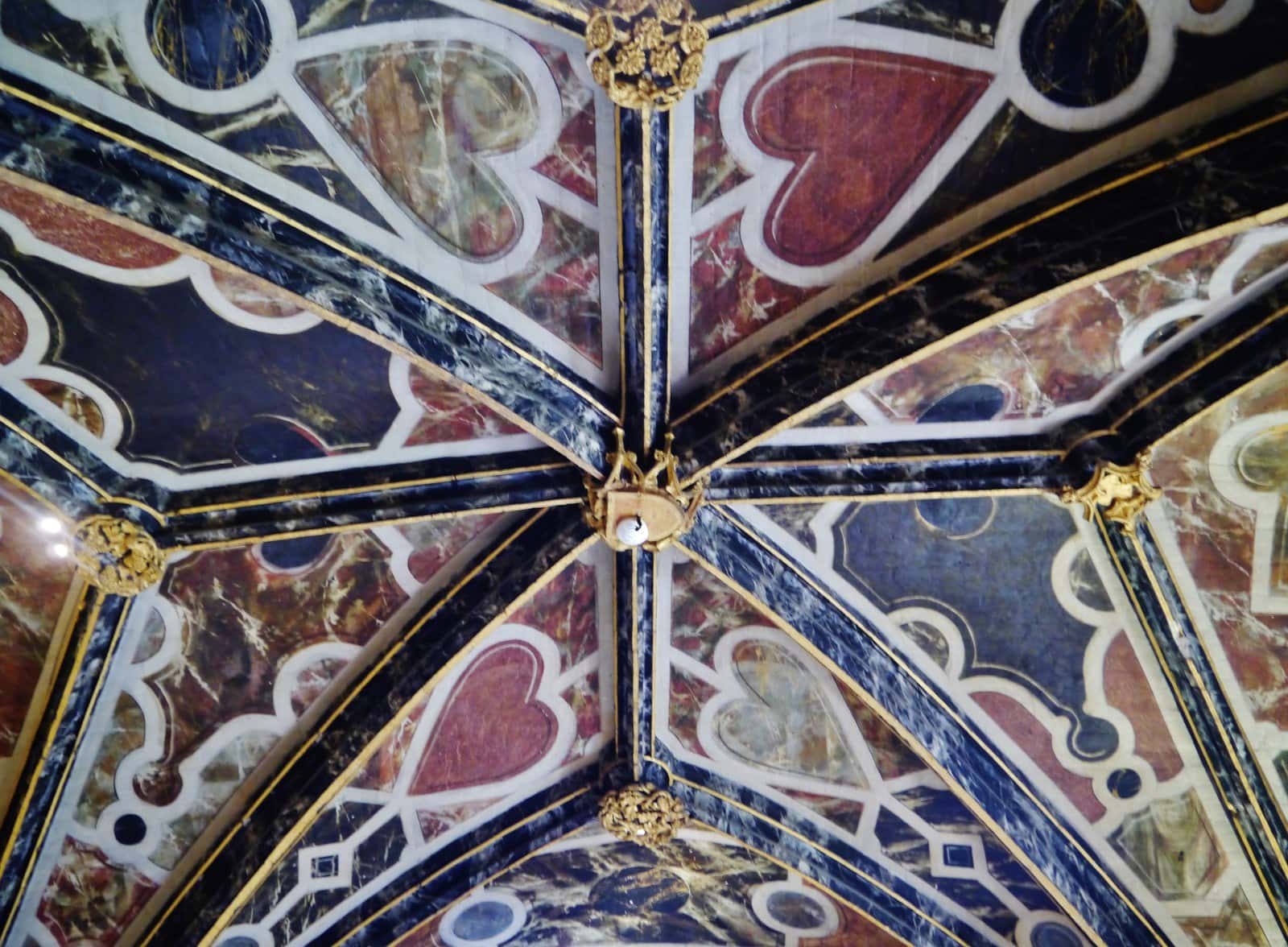
The interior is the part that surprises visitors who came only for the outline. A visit runs through a sequence of furnished rooms, each dressed as if the family had just stepped out. The Salle des Gardes, the old guardroom, keeps a seventeenth-century ceiling painted in trompe-l’oeil to imitate carved marble, hung about with arms and Oriental objects gathered in the nineteenth century. The Salon Vauban, on the ground floor, occupies what was once the medieval fort’s own chapel, remodeled into a drawing room for the Valentinay wedding; it holds a set of sixteenth-century tapestries telling the story of David and Goliath and an Italian cabinet inlaid with precious stones.
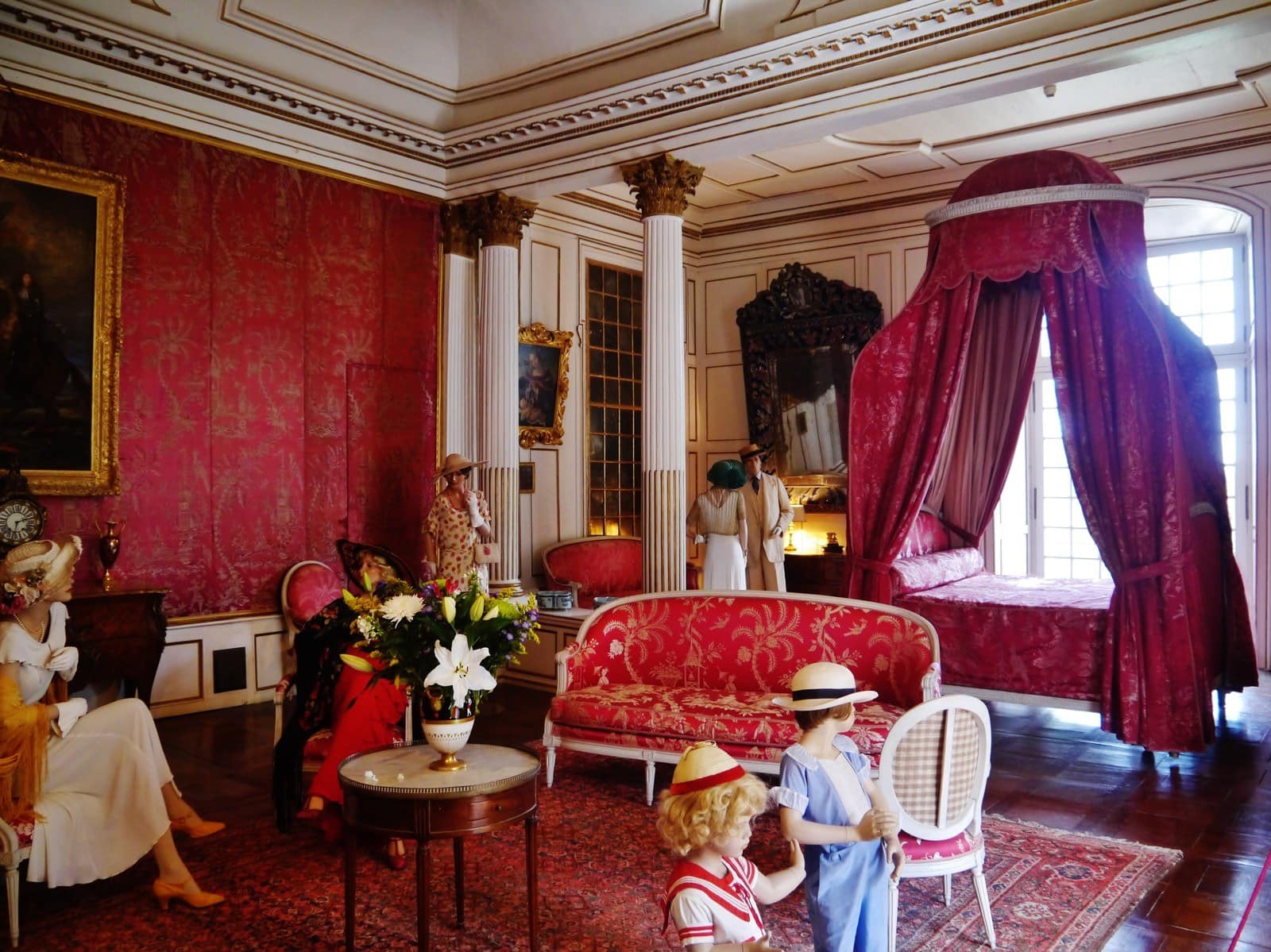
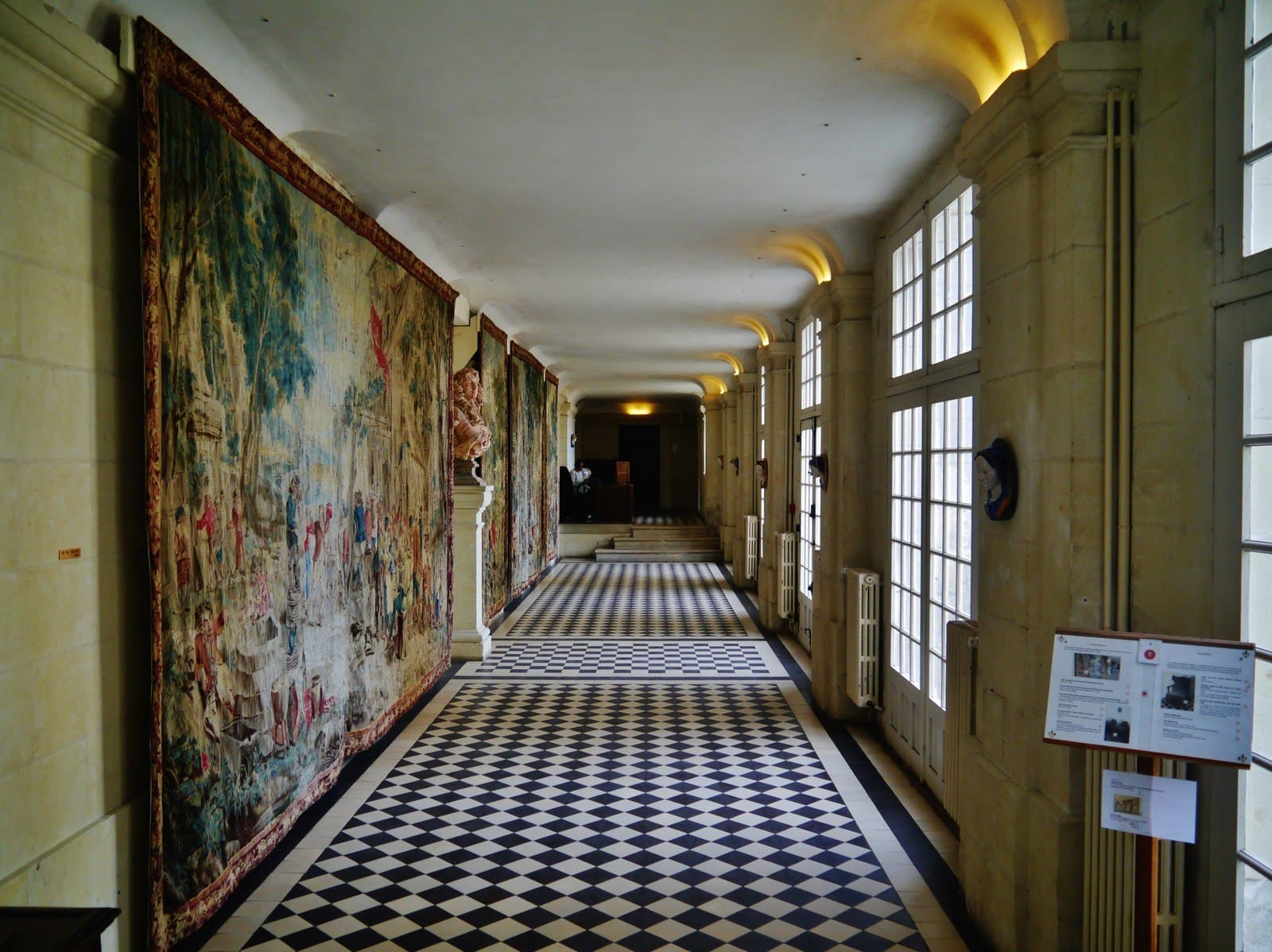
Upstairs, the Grande Galerie is hung with eighteenth-century Flemish tapestries woven after cartoons by David Teniers the Younger, their scenes drawn from everyday Flemish life. The showpiece is the Chambre du Roi, the King’s Chamber, kept ready in the Loire fashion against a royal visit that would have crowned the family’s standing. Its walls are dressed in eighteenth-century silks woven in the manufactories of nearby Tours, patterned with the Chinese-inspired motifs that were the height of fashion, and its furniture, down to the canopied bed, dates from around 1770. A monumental staircase, a vaulted old kitchen, and the cellars complete the circuit. In recent years the family has added a further draw: through the furnished rooms stand mannequins in period costume, staged around a theme that changes from one season to the next, so that the dress of a particular century or court seems to inhabit the house alongside its furniture.
The Rochejaquelein and Blacas centuries
Ussé kept changing under its later owners. In the nineteenth century the comtesse de la Rochejaquelein added neo-Gothic touches and a grand spiral stair, softening the old rooms to Romantic taste without erasing what came before. In 1885 she bequeathed the château to her great-nephew, and it has belonged to the Blacas d’Aulps family ever since. The current owner, Casimir de Blacas d’Aulps, seventh duc de Blacas, was born at Ussé in 1943, and the family still lives in the house. That continuity is part of what a visitor feels here. The furnished rooms, the coach houses, and the stables are those of a working estate that has simply never stopped being lived in.
Sleeping Beauty on the wall-walk
The tale is unavoidable, and Ussé does not try to avoid it. No document ties Charles Perrault to this particular château, and the connection is a tradition rather than a proven fact, but it is an old and pleasant one, and the estate has made it part of the visit. Along the covered wall-walk, a series of tableaux stages La Belle au bois dormant scene by scene, from the christening and the wicked fairy to the hundred-year sleep and the waking. For children the walk is the highlight of the day. For everyone else it is a reminder of how thoroughly this white castle above the Indre has shaped what a fairy-tale castle is supposed to look like.
Visiting Château d’Ussé
Ussé opens for the season from 14 February to 1 November. Hours run from 10 a.m., closing at 6 p.m. in the shoulder weeks and extending to 7 p.m. from 1 April to 20 September, with the last entry an hour before the gates close. Adult admission is €14.50, children aged 8 to 16 pay €7.50, and under-eights go free; check the official site before you travel, since seasonal hours and prices change. A visit takes in the furnished apartments and the trompe-l’oeil guardroom, the costumed rooms and the Grande Galerie, the cellars and the old kitchen, the stables with their carriages, the Renaissance chapel out in the park, and the wall-walk with its Sleeping Beauty scenes. Give yourself time for the terraces and the gardens, which hold the best views of the house.
Rigny-Ussé is easy to fold into a Loire itinerary. Azay-le-Rideau lies about ten kilometers east and the fortress of Chinon a similar distance to the southwest, so Ussé pairs naturally with either for a full day. If you would rather book a guided day around the western Loire châteaux, or stay within sight of the towers, both are simple to arrange in advance.
Guided Loire Valley château tours and skip-the-line options are available through GetYourGuide. For a night beside the castle, Le Clos d’Ussé, a small hotel about 300 meters from the gates, can be booked on Booking.com.
Some links on this page are affiliate links, which means StoneKeep Atlas may earn a small commission, at no extra cost to you, if you book through them.
More Views of Château d’Ussé
Beyond Château d’Ussé
Ussé is one of a tight cluster of Touraine châteaux that reward being seen together. A few kilometers east, Château d’Azay-le-Rideau sits on its island in the Indre, the purest early-Renaissance jewel of the valley. The great gardens of Château de Villandry lie a little farther on, and to the southwest the royal fortress of Château de Chinon guards the Vienne where Joan of Arc came to find the dauphin, the same campaign that made Ussé’s builder famous. For the wider picture, our guide to the Châteaux of the Loire Valley sets Ussé and its neighbors in the story of the whole region. Farther west, beyond Chinon, the white Château de Saumur rises above the meeting of the Loire and the Thouet, the ducal palace of the Très Riches Heures. Farther west, in the Saumurois, the Château de Brézé conceals an entire underground fortress and the deepest dry moat in France beneath its château. A little to the east, the Château de Langeais keeps its fifteenth-century fortress, its working drawbridge, and the hall where Brittany was joined to France. As the château that inspired Perrault’s Sleeping Beauty, Ussé also headlines our roundup of the fairytale castles in France.
Conclusion
Château d’Ussé earns its fame twice over. As a picture it is the white, many-towered castle that fairy tales borrow, terraced above a quiet river at the forest’s edge. As a place it is something richer: a fortress the Scourge of the English began, a Renaissance house the d’Espinay carried on, a residence the Valentinay polished for the age of Louis XIV, and a family home the Blacas keep alive today. The costumed rooms and the della Robbia chapel are the reason to slow down inside, and the terraces are the reason to linger outside. Ussé belongs to a Touraine worth exploring slowly, alongside Azay-le-Rideau, Villandry, and Chinon, each a short drive away and each telling its own part of the Loire’s long story.
Principal Sources
- Base Mérimée / Plateforme Ouverte du Patrimoine. “Château d’Ussé, PA00098034.” culture.gouv.fr.
- Château d’Ussé. “Son histoire” and “Informations pratiques.” chateaudusse.fr.
- Association des Châteaux de la Loire. “Château d’Ussé.” leschateauxdelaloire.org.
- Larousse. “Jean V de Bueil.” larousse.fr.
A note on sources: the della Robbia Virgin is given here as workshop production rather than by Luca della Robbia himself, who died decades before the chapel was built; the doorway and choir stalls are linked to Jean Goujon, and the garden to Le Nôtre and the terraces to Vauban, by longstanding local tradition rather than documentary proof, so this guide phrases all of these as such. The date of the d’Espinay purchase from the Bueil family is reported variously in the 1480s; a single year is avoided here. Opening hours and prices are current at the time of writing and go stale; confirm on the official site before visiting.
Image credits. Hero (west front): Uwalthie Pic Project / Adobe Stock; forecourt turrets: flo21, CC BY-SA 2.0, via Wikimedia Commons; estate and golden-hour aerials: Francois and allard1 / Adobe Stock; château from the bridge: feuerpferd1111 / Adobe Stock; rose garden: Margarita / Adobe Stock; Garden terraces and Indre bridge: Photo: Colin Watts via Unsplash; Courtyard front and covered wall-walk: Photo: Snap Wander via Unsplash; Tower and turret detail: Photo: jadorelyon via Pixabay; Salon Vauban, Chambre du Roi, Grande Galerie, Salle des Gardes vault, chapel interior: Zairon, CC BY-SA 4.0, via Wikimedia Commons; della Robbia Virgin and chapel choir stalls: MFSG, CC BY-SA 3.0, via Wikimedia Commons; Boudan 1699 view: Louis Boudan, Bibliothèque nationale de France, public domain; 1856 engraving after Karl Girardet: New York Public Library, public domain. Freely licensed images are resized to fit; otherwise unaltered.