
History of Castles
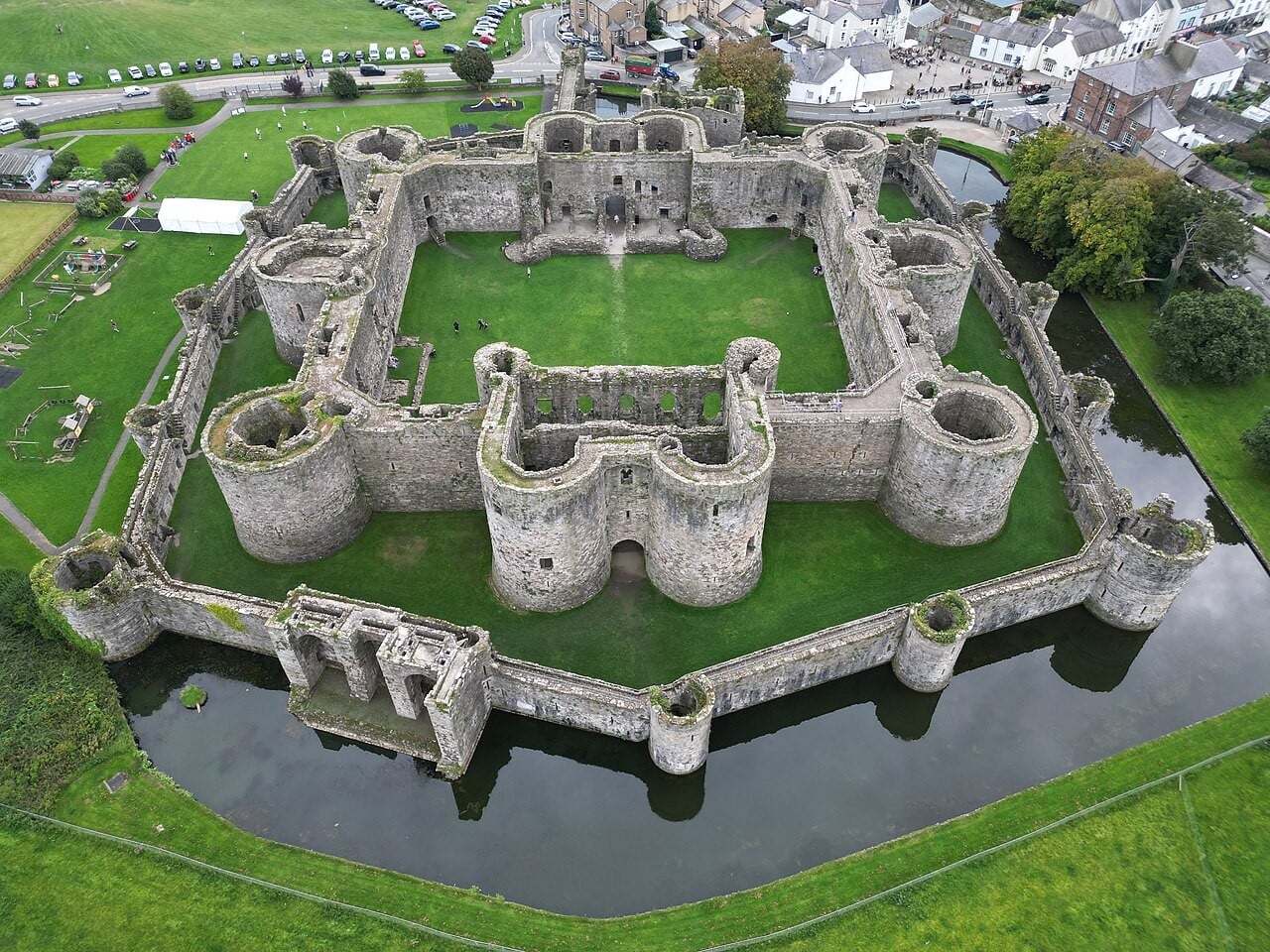
Any history of castles has to answer a question before it can start: what counts as one. That sounds like throat-clearing, and it is the opposite. Two national recording systems, working in different languages and with no contact between them, arrive at almost the same answer. The French state’s vocabulary for cataloguing architecture calls a château fort a demeure seigneuriale fortifiée, a fortified lordly residence. Historic England’s national thesaurus opens its castle entry “a fortress and dwelling.” Fortified, and somebody’s home.
Hold that test steady and the dates fall out of it. Let it slip, and you get the version of this story that circulates online, in which castles begin somewhere around 900 BC and end when gunpowder arrives. Neither of those is what the authorities say. One of them is a date for something else entirely, and the other is contradicted by the same heritage body that people cite for it.
In England, to put the answer up front, the age of the castle runs from 1066 and lasts about five centuries, and what stopped it was a state strong enough not to need private castles. The rest of this article is where each half of that comes from, and how differently the question is answered a few hundred miles away.
What follows is the chronology that test produces, with the countries kept separate, because the record is not the same in England, France and Germany, and the places where the record runs out are marked rather than filled in.
What a Castle Is, and Why the Answer Sets the Date
The two definitions are worth putting side by side, because their agreement is the load-bearing fact in this article and it was arrived at independently.
The Inventaire général du patrimoine culturel, the French state’s controlled vocabulary for describing catalogued buildings, defines a château fort as a demeure seigneuriale fortifiée and files it under military architecture. Historic England’s FISH thesaurus, the vocabulary its own recorders use, defines a castle as “a fortress and dwelling, usually medieval in origin, and often consisting of a keep, curtain wall and towers etc.” Note the “often.” It is the only one of these definitions that names physical parts, and it hedges them in the same breath.
Both systems then guard the boundary. The French vocabulary attaches a cataloguing instruction to three neighboring terms telling its own recorders not to confuse them, and defines the contrast term by the absence of the residence: a forteresse is a fortified building dont la fonction est strictement militaire. Strictly military, and therefore not a castle.
Scotland is a qualified third witness rather than a straightforward one. Historic Environment Scotland defines a castle as “a medieval fortified building or range of buildings, serving as a royal, or baronial, residence, or administrative centre.” That “or” matters. Being an administrative center is enough on its own to satisfy the Scottish definition, which the French and English ones would not allow.
We take the two-part test apart in much more detail in castle vs palace vs fortress, which compares how five national vocabularies file these buildings. Here it is only the starting gun.
What Came Before
England is full of fortified places older than any castle, and English Heritage, which cares for six of them, is careful about what it calls them. Its survey of castles opens by describing hillforts and Roman forts as “some of the defensive structures that came before.” It heads its 1066 section “The first castles.” It states plainly that “castles were something quite new in England.”
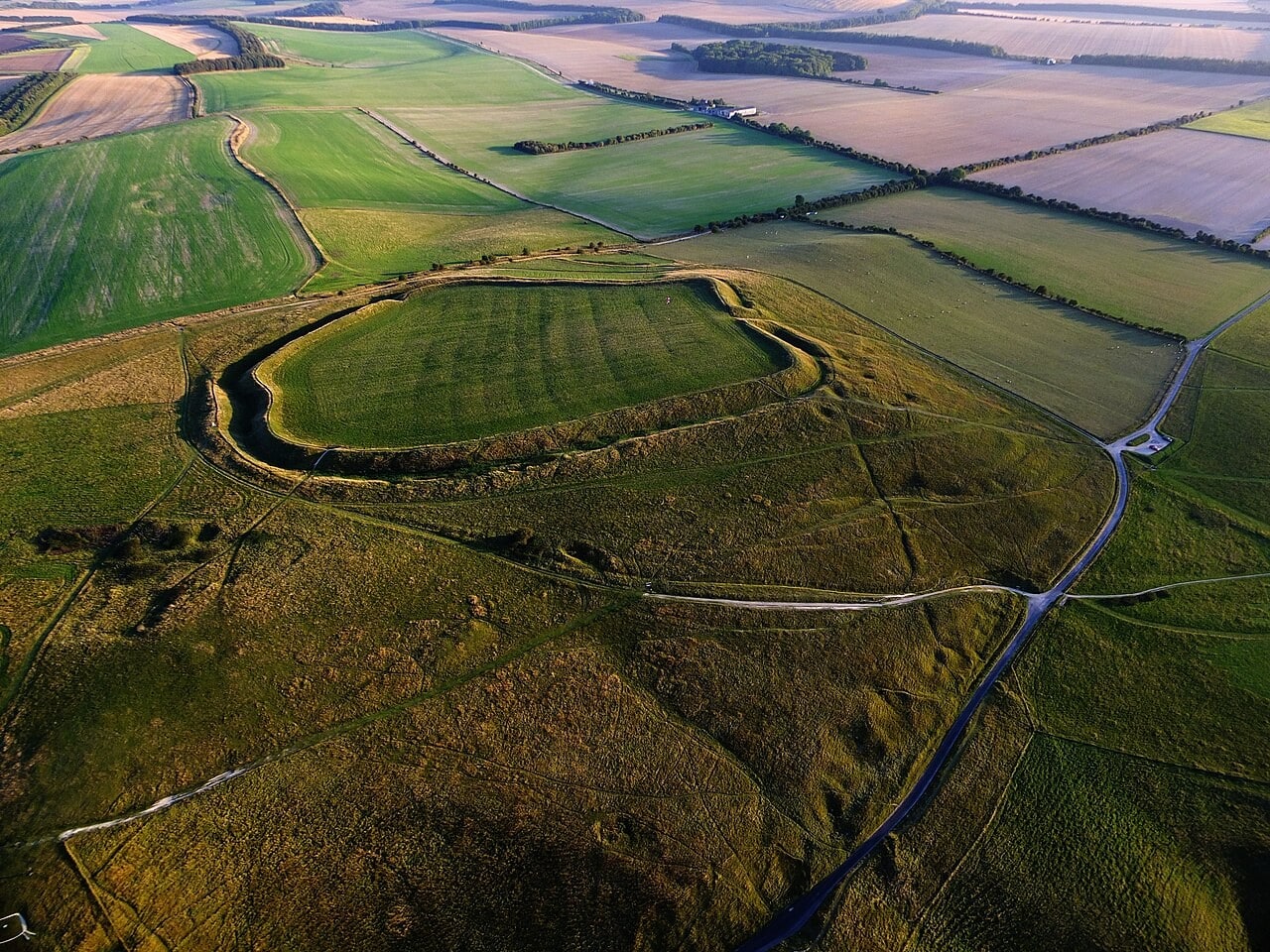
That is worth dwelling on, because it is the single most misread page on this subject. It is titled Castles Through Time, and it opens at 900 BC. Its own meta description separates the two spans in one sentence: castles developed “over nearly five centuries,” inside “the 3,000-year-long story of England’s defences, from prehistoric hillforts to a Cold War nuclear bunker.” Five centuries of castles; three thousand years of defenses. Read the headings without the framing and you get a nine-century error.
The hillforts themselves are older and stranger than the castle. There are over 1,200 in England. The earliest were probably built around 900 BC, many between 800 and 700 BC, usually with a single circuit of ramparts, and by around 400 BC some were being strengthened with multiple rings. Most had been abandoned by 100 BC, a thousand years before the first castle in the country.
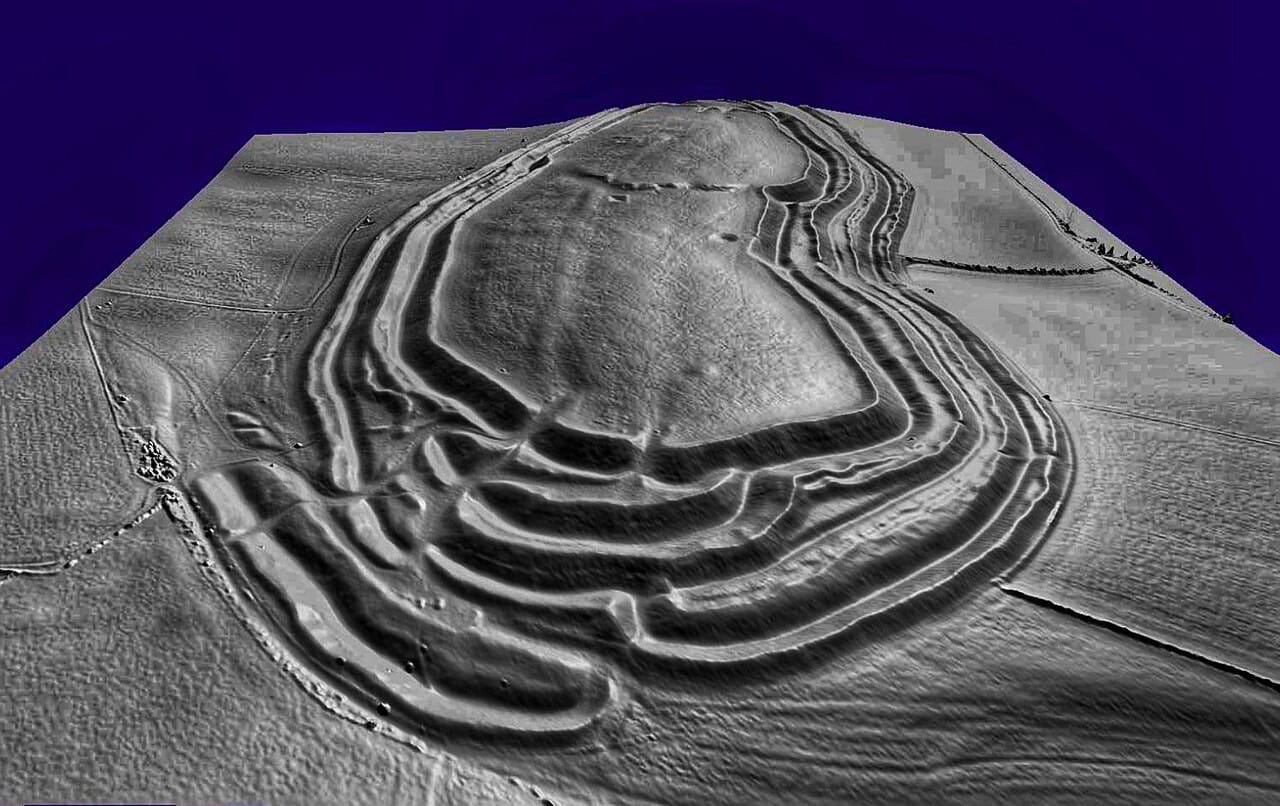
They were not proto-castles waiting for an idea. English Heritage says hillforts “had a wide range of uses, and defence was just one of them” — places to protect grain, cattle and treasure, and spaces for people to live, trade and celebrate. That is not the same as saying they were peaceful. The same authority points to a sling-stone hoard at Blackbury Camp and some twenty thousand pebbles piled near an entrance at Maiden Castle. Defence was one use among several, and the evidence for real violence is on the same page.
The French vocabulary makes the distinction structural rather than editorial. There, the hillfort is not a kind of castle at all: oppidum is defined as an agglomération protohistorique fortifiée and sits under ensemble militaire > fortification, three levels away from édifice fortifié > château fort. It is a kind of fortification, filed with fortifications. A castle is a kind of building, filed with buildings.
The Ninth and Tenth Centuries: Fortifying Becomes a Right
The earliest documentary ancestor in the material we hold is not a description of a castle. It is an order to pull some down.
In 864 Charles the Bald, king of West Francia, ruled that anyone who had built castella et firmitates et haias sine nostro verbo — castles, strongholds and hedge-works without his word — should have them demolished by the first of August, and told his counts to do it themselves if the builders would not. Three things about that sentence are the finding. The edict does not describe what was built. It does not call them castles in any sense we would recognize. And the harm it names is done to neighbors, not to the kingdom’s enemies.
At the same assembly the same king ordered fortifications built. The Annales Bertiniani record that he firmitates in Sequana, ne Nortmanni per idem fluvium possint ascendere, ibidem fieri iubet, ordered strongholds made on the Seine so that the Northmen could not come up the river. Same word, same king, same meeting, opposite instructions. What separates them is authorization, and that distinction turns out to run through the whole subject.
The standard account traces the castle’s origins to exactly this period: ninth- and tenth-century West Frankish fortification against the Vikings, in a kingdom whose central authority was breaking up. It is the account you will find in most summaries, and it is under challenge in the peer-reviewed literature. Simon MacLean, re-examining the Edict of Pitres in the Transactions of the Royal Historical Society in 2020, writes that “there are serious problems with this origin story.” We have read his abstract and not his argument, so that is as far as this article will take it. The framing is standard, and it is contested, and a reader should know both.
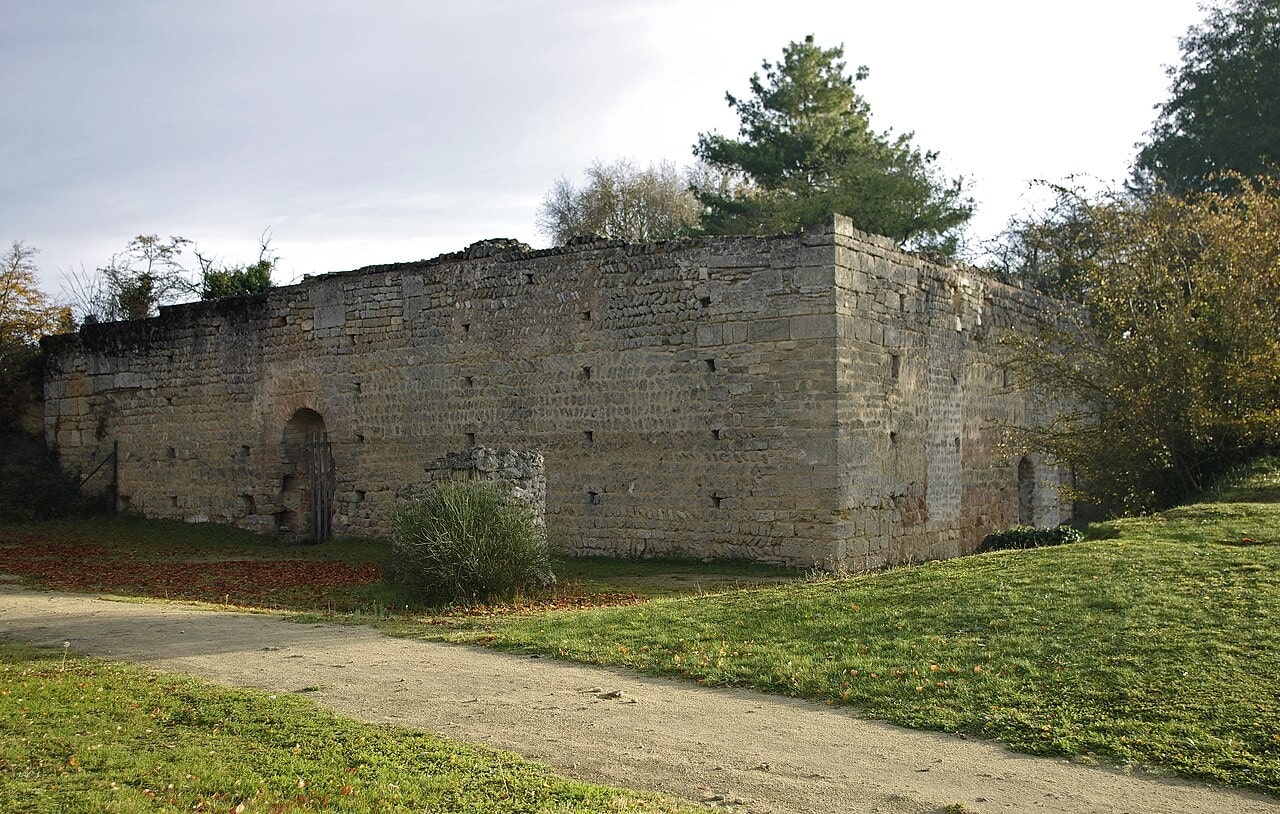
Further south the same century produced something the sources let us see more clearly. Pierre Toubert’s 1973 study of southern Latium and the Sabina gave the name incastellamento to the tenth-century reorganization of settlement around fortified sites. The castle, on that account, is not only a military event but a settlement event: people move, and where they live is restructured around the fortified point. It is a regional study, as its own reviewers insist, and one that explicitly excludes Roman Tuscia.
Whether the model travels is a live argument with named sides. Richard Hodges, generalizing from twelve years of excavation at San Vincenzo al Volturno, called it a pan-European phenomenon reaching the Eifel, Brittany, the Pennines, the Fens and Scania. Chris Wickham agreed that it is “the local aspect of a European phenomenon” while insisting the form depends on a shifting balance of power between lords and peasants. The most useful sentence in that exchange comes from Wickham, who is on the model’s side: Lazio, he writes, is “relatively marginal and relatively atypical, without many exact parallels elsewhere,” and the tight coupling between fortifying and settlement concentration era strettissimo nel Lazio, ma molto meno stretto altrove. Very tight in Lazio; much less tight elsewhere.
Twenty years after Toubert, reviewing the conference volume that took stock of the idea, Benoît Cursente judged that incastellamento had been plus souvent nuancé ou complété que véritablement contesté, more often qualified or added to than genuinely contested.
The Norman Century
England’s castle age begins with a date most of its neighbors do not have, and English Heritage gives it without hedging: the Norman victory of 1066 “marked the beginning of the age of the castle in England.” William, still Duke of Normandy, built a castle at Hastings before the battle. Over the next 150 years the Normans built around 1,000 of them in England and Wales.
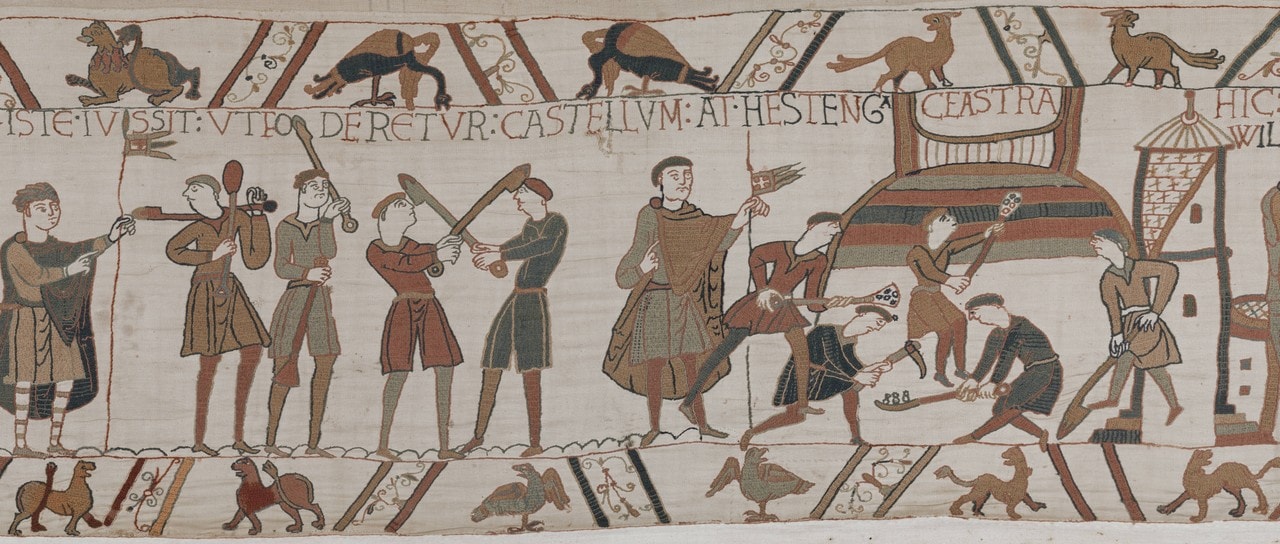
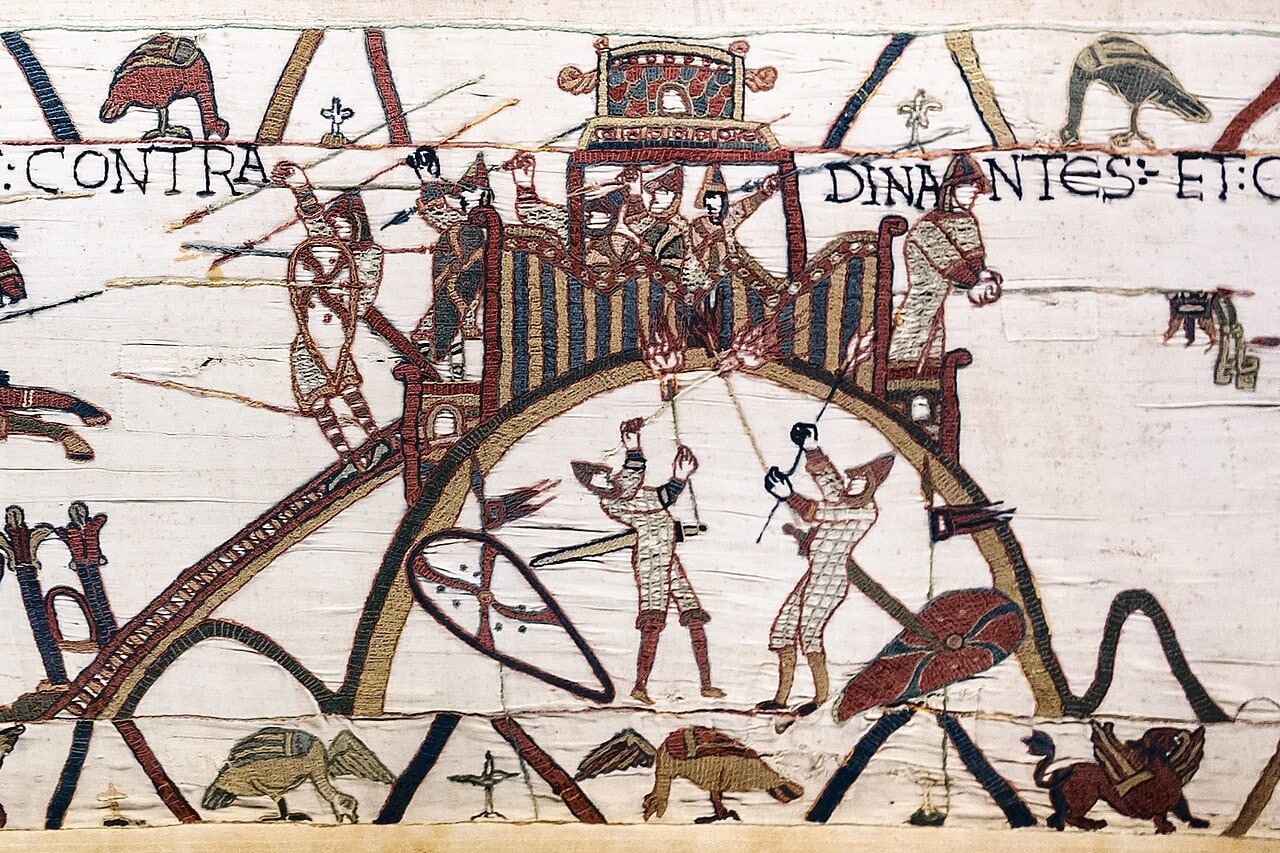
The Bayeux Tapestry supplies the verb, and it is more precise than any later summary. Its caption for what the Normans did at Hastings reads ISTE IUSSIT UT FODERETUR CASTELLUM AT HESTENGA CEASTRA. The operative word is foderetur: dug. Not built, not raised. Dug. And the line carries two fortification words at once, castellum for the thing being made and ceastra for the place it is being made at, which is the older English word for a fortified site. One line of eleventh-century embroidery holds the whole transition.
What was dug is a monument class in its own right in England. Historic England’s scheduling description calls motte and bailey castles “medieval fortifications introduced into Britain by the Normans,” which “acted as garrison forts during offensive military operations, as strongholds, and, in many cases, as aristocratic residences and as centres of local or royal administration.” The hedge sits precisely where it should: the military roles are stated flat, and it is the residential and administrative ones that get “in many cases.”
Numbers exist for England and they need reading carefully, because there are three different kinds of them. Historic England’s class descriptions record over 600 mottes and motte-and-bailey castles nationally, against only 200 ringworks, fewer than sixty of which have baileys, and only 104 tower keep castles. Those are recorded survivals on entries last amended between 1992 and 2001. English Heritage’s “around 1,000” is a construction estimate for a period. A count of what survives and an estimate of what was built are not the same measurement and must not be added together.
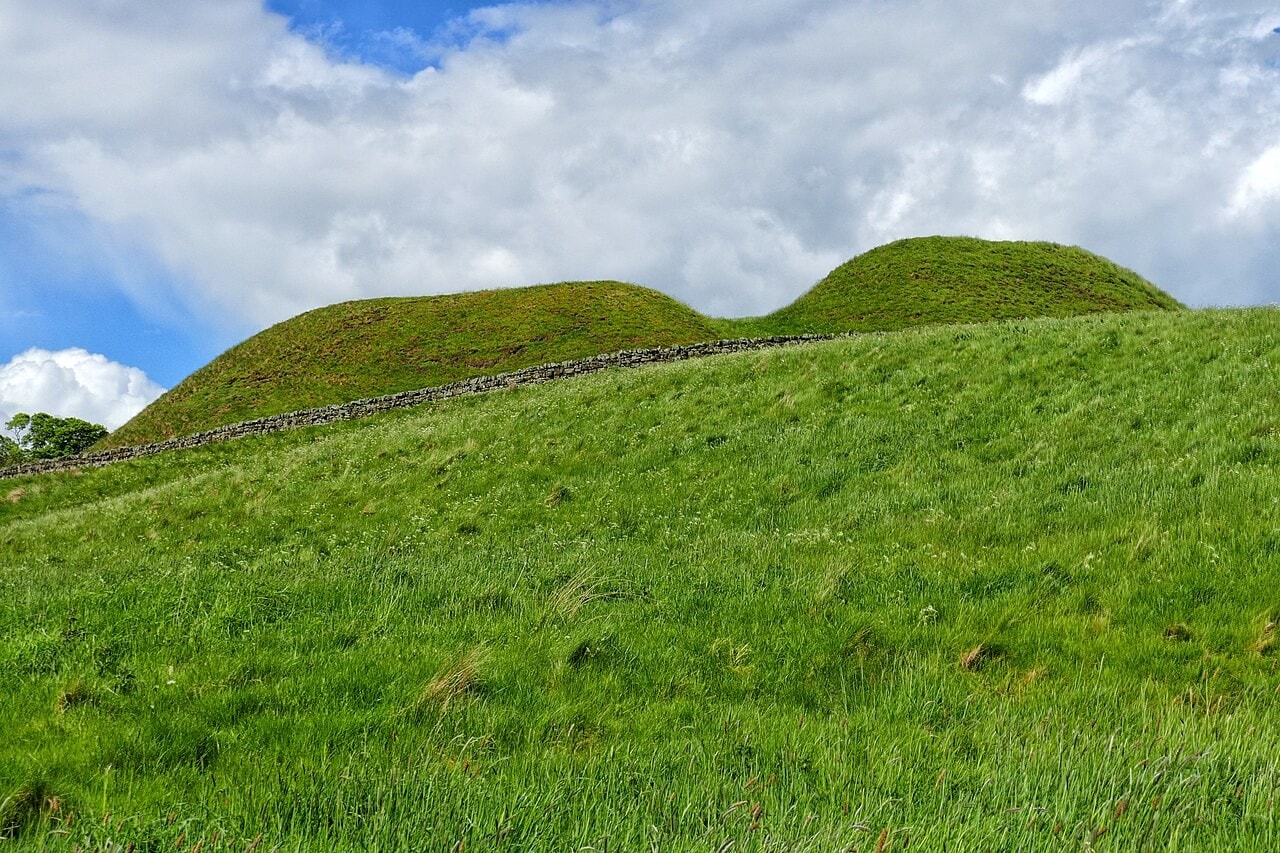
The tidy version of this story has the Normans arriving with an invention. Historic England’s own records complicate it twice. Its ringworks are dated “from the late Anglo-Saxon period to the later 12th century,” which puts that form’s start before the Conquest on the same page that calls the motte and bailey a Norman introduction. And excavation at Aldingham in Cumbria showed the sequence running the other way: an early twelfth-century ringwork infilled and heightened later in the century to make a motte, with a bailey added. Historic England calls it “a rare example, confirmed by excavation, of a motte and bailey castle which developed from an earlier ringwork.” The word “rare” is doing real work and is reproduced here for that reason. The castles the Normans left standing on their own side of the Channel are gathered in our regional guide to the castles in Normandy.
Stone
By the twelfth century, English Heritage says, those who could afford to were building stone keeps along the lines of the ones William raised at London and Colchester, and their walls “could be very thick – in places, the walls of the keep at Dover are six metres thick.”
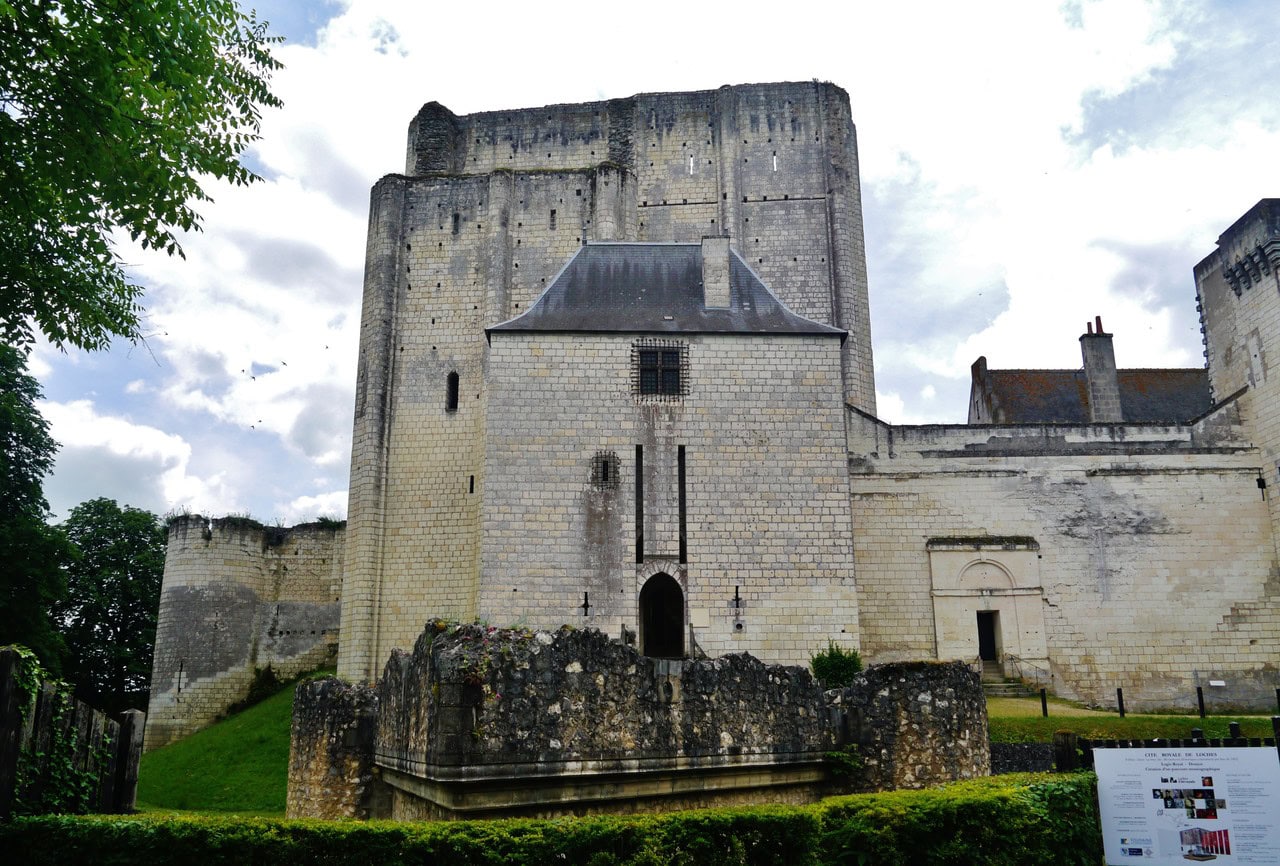
Historic England’s own dating of the form is more useful than the popular sequence, because it refuses to be a sequence. It dates tower keep castles “from immediately after the Norman Conquest to the mid-15th century, with a peak in the middle of the 12th century,” and adds that of the 104 it records, “a few were constructed on the sites of earlier earthwork castle types but most were new creations.” Most were new. The stone tower is not, on this evidence, a thing that earthwork castles turned into.
The moment masonry arrives is not the same everywhere, and what we can source is three regional findings rather than a trend. Riccardo Francovich, summing up his Tuscan excavations, put the pétrification of built structures at the hinge of the eleventh and twelfth centuries, well after the fortification moment in the same region. In Normandy, the historian Pierre Bouet counts barely five of the more than five hundred Norman fortifications contemporary with the first castle at Château de Falaise as built in stone, lime and sand. English Heritage puts England’s stone keeps “by the 12th century.” Three regions, three authorities, and no European trend to be drawn from them.
For the towers themselves, and for why round and square coexisted for centuries rather than succeeding one another, see castle keeps and castle towers.
The Enclosure
From the later twelfth century, English Heritage says, “the focus of castle-building shifted from keeps to outer defences – gatehouses and enclosure walls.” The interesting building is no longer the tower in the middle. It is the ring.
Dover, as developed in the thirteenth century, is “the earliest and foremost English example of a concentric fortress.” The word “English” is in the source and is kept here, because the sentence immediately before it in the same paragraph is an unscoped ranking claim we are not going to reproduce.
The most concentrated version of the form is a single king’s program in Wales, and the assessment that put it on the World Heritage List is unusually frank about what it was for. ICOMOS’s evaluation describes Edward I stationing garrisons to quell revolt, fostering castral towns settled by English incomers, and illustrating English power “in a more symbolic than strategic fashion.” In twenty years, it records, ten fortresses were built. The franchise charters, Conway’s dating from 1284, “provided for only one market, the one in the fortified town, thereby placing the region’s economic life under the dominion of its new masters.” A castle here is an instrument of settlement policy, and the document says so.
One caution about the same evaluation, because this article is partly about how sources get misread. Its statement that Beaumaris and Harlech were both “begun in 1283” is wrong, and Cadw contradicts it at operator tier: Beaumaris was the last of Edward’s Welsh strongholds, begun on a fresh site beside the Menai Strait after Conwy, Caernarfon and Harlech were already under way. We give the sequence rather than a replacement year, because no source we reached publishes one.
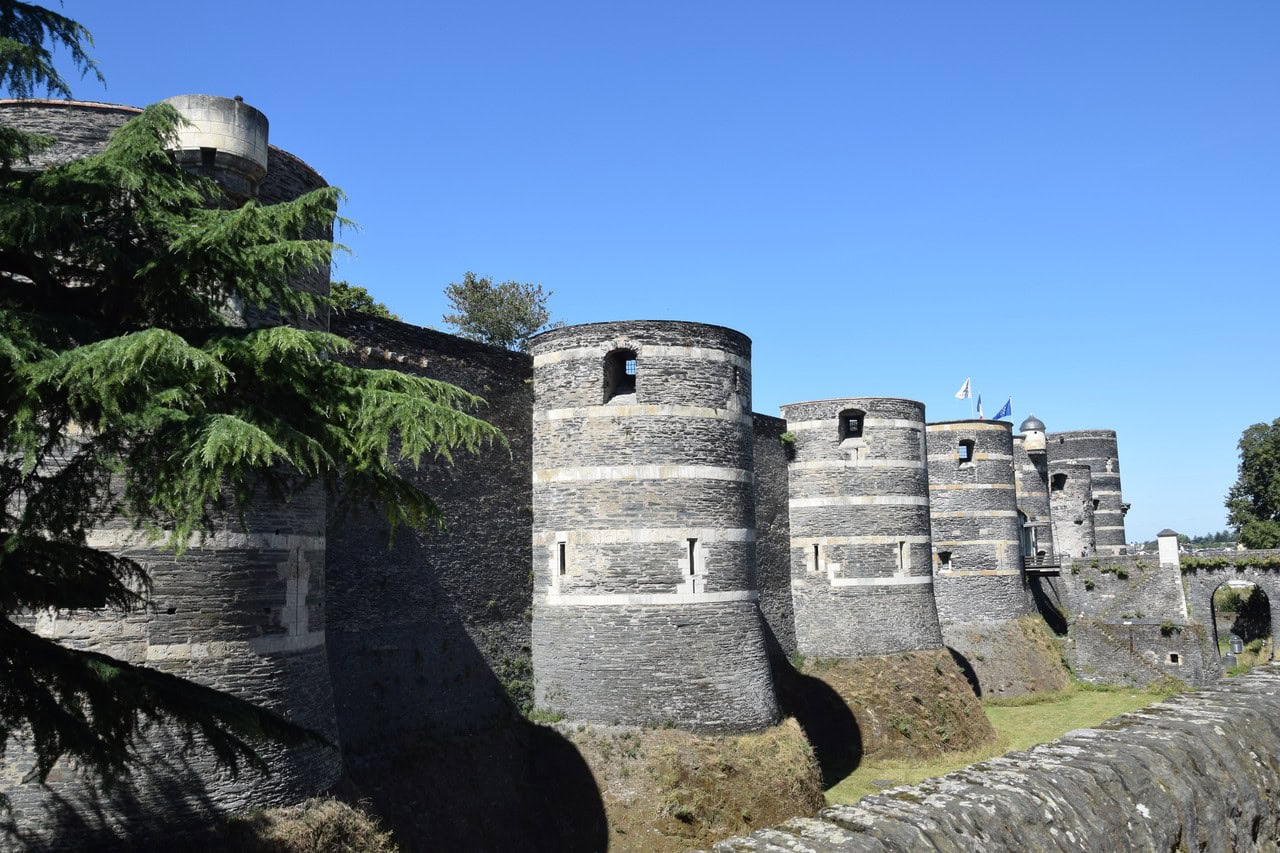
And at the two places where a thirteenth-century enclosure is most completely legible, the plan survives and the elevation does not, for opposite reasons, each stated by that site’s own authority. Cadw says Beaumaris’s building work “had petered out by the 1320s” and that “the south gatehouse and the six great towers in the inner ward never reached their intended height”; Cadw calls it “an unfinished masterpiece” and “the greatest castle never built.” At Château d'Angers most of the seventeen towers of the 1230s curtain were cut down for artillery at the end of the sixteenth century and the start of the seventeenth, and only the Tour du Moulin still stands close to its original height. One was never finished. The other was finished and then cut down. In neither case does a visitor stand under the elevation the plan implies.
What Actually Ended It
Here the article can only answer for one country, and it should say so before it starts. The four causes below are all stated by England’s national heritage body about England. No equivalent authority-tier statement for France or Germany was obtained for this article, so their endings are not given here. An article whose whole argument is that the definition does the work can afford to say where its evidence stops.
The popular answer is gunpowder, and English Heritage’s own account contradicts it twice.
Cannon were in use from the late fourteenth century, but were “at first unwieldy and hard to transport. So they were more useful for defending than attacking castles.” Berry Pomeroy and Kirby Muxloe were fitted with gunports for small fixed cannon. The first effect of artillery on the English castle was to arm it.
And when baronial castle-building did stop, the cause English Heritage names is political. “Under the strong centralised rule of the Tudors, baronial castle-building ceased.” Henry VIII then took the new artillery technology for a chain of coastal gun forts, “the first co-ordinated system of national defence since Roman times.” What ended the private castle was a state strong enough not to need private castles, and the same state building artillery fortifications of its own in the same decades.
A residential cause runs alongside it. Many castles, English Heritage says, “slipped into decline as their owners moved into country houses.” Comfort and fashion did work that cannon did not.
The clinching evidence against the tidy version comes from the English Civil War, 250 years after the guns arrived. Long-abandoned castles in England and Wales were readied for war and, “even against cannon which they were never designed to defend against many survived long sieges.” Many were then demolished on purpose, Kenilworth and Helmsley among them, their great towers broken open and their walls breached. These walls had not failed against artillery. They were slighted by people who had won.
The French vocabulary marks the same break in its own way, without dating it. Several of its fortification concepts carry an explicit period clause: château fort and forteresse are defined dans l’architecture médiévale, while bastion, casemate and redan are defined dans la fortification classique et moderne. That is a fact about how the vocabulary is organized, not a claim about when buildings stopped. The engineering of the answer to gunpowder is a subject of its own and not this one.
Ruin, Restoration, Monument
What most people picture when they picture a castle is, in a real number of cases, nineteenth-century work, and the man most responsible for that in France wrote down what he thought he was doing.
Eugène Viollet-le-Duc opens his article on RESTAURATION with a warning: Le mot et la chose sont modernes. Restaurer un édifice, ce n’est pas l’entretenir, le réparer ou le refaire, c’est le rétablir dans un état complet qui peut n’avoir jamais existé à un moment donné. Restoring a building is not maintaining it, repairing it or remaking it; it is re-establishing it in a complete state that may never have existed at any given moment. He dates the practice itself to the second quarter of his own century.
He also recorded the institutions, and he is a participant rather than a neutral witness. As Viollet-le-Duc himself set it down, Vitet was named inspecteur général des monuments historiques in 1830, reported to the minister in 1831, and presided over the commission des monuments historiques from 1835 to 1848, the inspectorate passing to Mérimée from 1835. The administrative record generally puts Mérimée’s appointment a year earlier. Read the rest of the chronology the same way: it is a participant’s recollection of the institution that employed him, not that institution’s record of itself.
The distinction he drew between two of his own cases is easy to get backwards. Vitet’s proposal for Coucy was a restoration on paper, une restauration pour laquelle il ne faudra ni pierres, ni ciment, mais seulement quelques feuilles de papier. Pierrefonds is the built case, realized non sur le papier mais en pierre, en bois et en fer. One was an argument. The other is a building you can walk into, and it is where a nineteenth-century reconstruction is most often mistaken for a medieval survival.
English Heritage gives the change of feeling one line: “In the 18th and 19th centuries, Romanticism appreciated the ruins for their history and beauty.” For England, our article on why English castles are in ruins takes the story further, from the slightings after the Civil War to a twentieth-century state that set out to repair what survived rather than restore what had gone.
Three Countries, Three Answers
Ask each national record the same question and you get three different kinds of answer, and the differences are about the records rather than about the buildings.
England counts. Historic England’s class descriptions publish national totals by monument class, which is why the numbers earlier in this article exist at all. What each national register actually publishes, and what its number counts, is set out in our survey of ten national registers. Germany does not have a total, and its own castle institute says so: bis heute ist nicht bekannt, wie viele Burgen es in Deutschland gegeben hat — to this day it is not known how many castles there have been in Germany — because such records as exist are held by the individual Bundesländer and split by conservation specialism, and es fehlt aber eine bundesweite Koordinierung, a nationwide coordination is lacking. The European Castle Institute built its database to begin assembling one. France, meanwhile, has no motte-and-bailey monument class at all: its vocabulary files the motte as a work and files the bailey elsewhere entirely, under domestic architecture.
That last difference is the sharpest, because the two vocabularies describe the same earthwork in almost the same words. The French Inventaire defines a motte as an éminence artificielle créée pour servir de base à une place forte, à un donjon et assurer son commandement sur la campagne — an artificial mound raised to carry a stronghold, a great tower on top of it, and to command the country around. Historic England defines it as “an artificial steep-sided earthen mound on, or in, which is set the principal tower of a castle.” Those are the same mound. The French then files it under ouvrage militaire > ouvrage fortifié, a work of fortification alongside the barred spur; the English files it under Castle, a monument class alongside the concentric castle. It cannot be a disagreement about the building. It is a disagreement about what the unit of record is, and neither system is correcting the other.
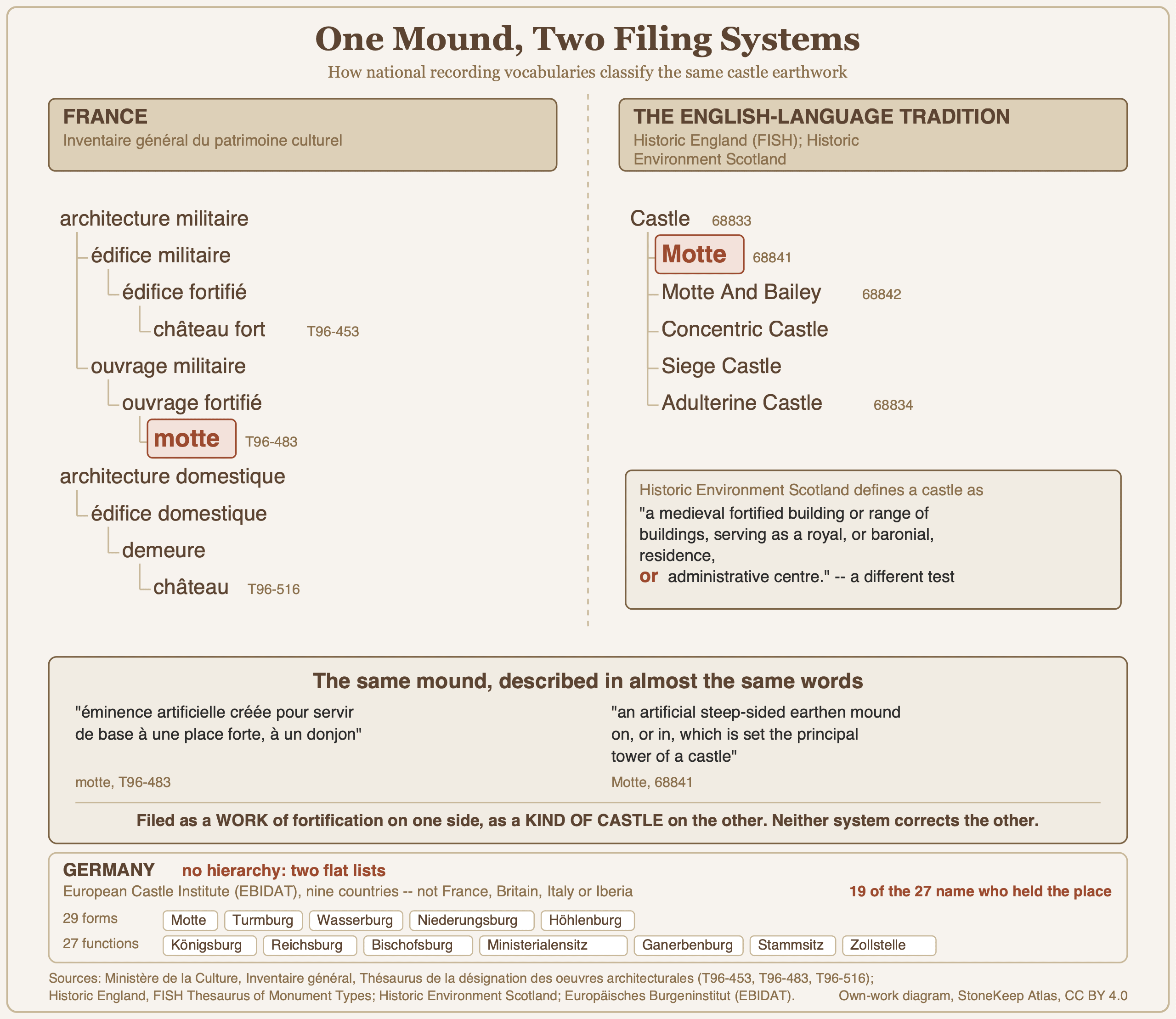
The English-language tradition is consistent with itself here. Historic England files the motte and the motte-and-bailey as kinds of castle, and Historic Environment Scotland does the same in its own wording.
None of these vocabularies applies its own test exhaustively, and that is the most useful thing about them. Historic England defines a castle as a fortress and dwelling, and then files the siege castle under it: a temporary work thrown up to house troops besieging somebody else’s castle, with no lord living in it at all. The German list does the same with its Belagerungsburg, its Gegenburg and its Fluchtburg, the refuge castle that belongs to a community rather than to a lord. The English head concept states a test and the terms filed under it break that test; the German list states no test at all and files the same kinds of thing anyway.
The German database differs again by not being a hierarchy at all. EBIDAT classifies on two flat axes, a list of forms and a list of functions, and nineteen of its twenty-seven function terms state who held the place or what right it carried: royal castle, imperial castle, bishop’s castle, ministerial’s seat, joint-heirs’ castle, ancestral seat, toll station. That coverage is nine countries and does not include France, Britain, Italy or Iberia.
The chronologies differ with the vocabularies. The earliest date bracket EBIDAT’s search vocabulary offers is the first half of the seventh century, with an open-ended Älter above it; English Heritage begins the English story in 1066. That is four centuries of daylight, and it is not a factual disagreement. It is two bodies indexing different material under different inclusion rules, and each is right about its own material.
One thing all three encode, by three different mechanisms. Historic England’s thesaurus carries a concept for the adulterine castle, “a castle erected without permission, ie. without a royal licence to crenellate.” The French vocabulary separates the maison forte from the château fort by the owner’s lack of les droits seigneuriaux permettant d’élever un château muni de défenses importantes. The German axis records tenure. An English licensing institution, a French question of seigneurial right, and a German question of who held the place are not one European system, and it would be wrong to merge them. What they share is that each treats the right to fortify as something worth recording about a building. What the German field actually contains, and why English has one word where German has a whole axis, is the subject of our guide to how castles are actually classified. The oldest document in this article is a king asserting exactly that in 864.
What the Argument Is Now About
Castle studies has spent a century arguing with itself about what these buildings were for, and the argument is worth knowing because it decides which facts get reported.
Charles Coulson argued that the subject took a wrong turn at the end of the nineteenth century by fixing on the narrowly military, and that castles are better understood as expressions of lordship and as the administrative centers of the estates they belonged to. His reviewer, Andy King, adds the qualification that travels with it: “Coulson perhaps slightly overstates his case; after all, there were some castles built primarily as military fortifications.”
The English licensing evidence is where the argument gets concrete. Coulson wrote in 1982 that with “few exceptions at times of turbulence, the king’s right as overlord to license was a right to grant, not to refuse, permission to crenellate,” that a licence “was prestigious and could be had for the asking,” and that “castellation was the architectural expression of noble rank.” Philip Davis, who compiled the English list, puts the older reading of licences as a curb on over-mighty lords bluntly: “there is no evidence, whatsoever, for this view.” On Davis’s own count, with his caveat about overlapping descriptions, licences were granted for 102 of the 573 sites in his list described as masonry castles, and for 9 of 456 pele towers. His conclusion is that “clearly most fortified buildings were built without the owner applying for a licence to crenellate.” A licence, on this reading, is a status object rather than a permission slip. Castle walls and battlements takes the licence itself further.
Where has it landed? After Colin Platt reasserted defense as the primary motivation in 2007, Oliver Creighton and Robert Liddiard replied that “continuing ‘defence vs symbolism’ debates are detrimental to the subject,” which needs a research agenda of its own rather than another round. That is the honest closing position, and it is a good note for a reader to leave on: the buildings were both things at once, and the interesting questions are downstream of admitting it.
You Can Visit
A word about what this section cannot do. The early chronology’s worked examples are English and Welsh, and we have a guide to none of them. The sites below are described rather than linked, and we have not substituted a French castle that merely resembles the English one it would be standing in for.
Where the hillfort argument is on the ground: Maiden Castle
Maiden Castle in Dorset is in English Heritage’s care, has no ticket office and is open in daylight. Its ramparts are, in the authority’s own words, “uneven and not suitable for wheelchairs.”
Where a motte and its bailey are both legible: Sycharth
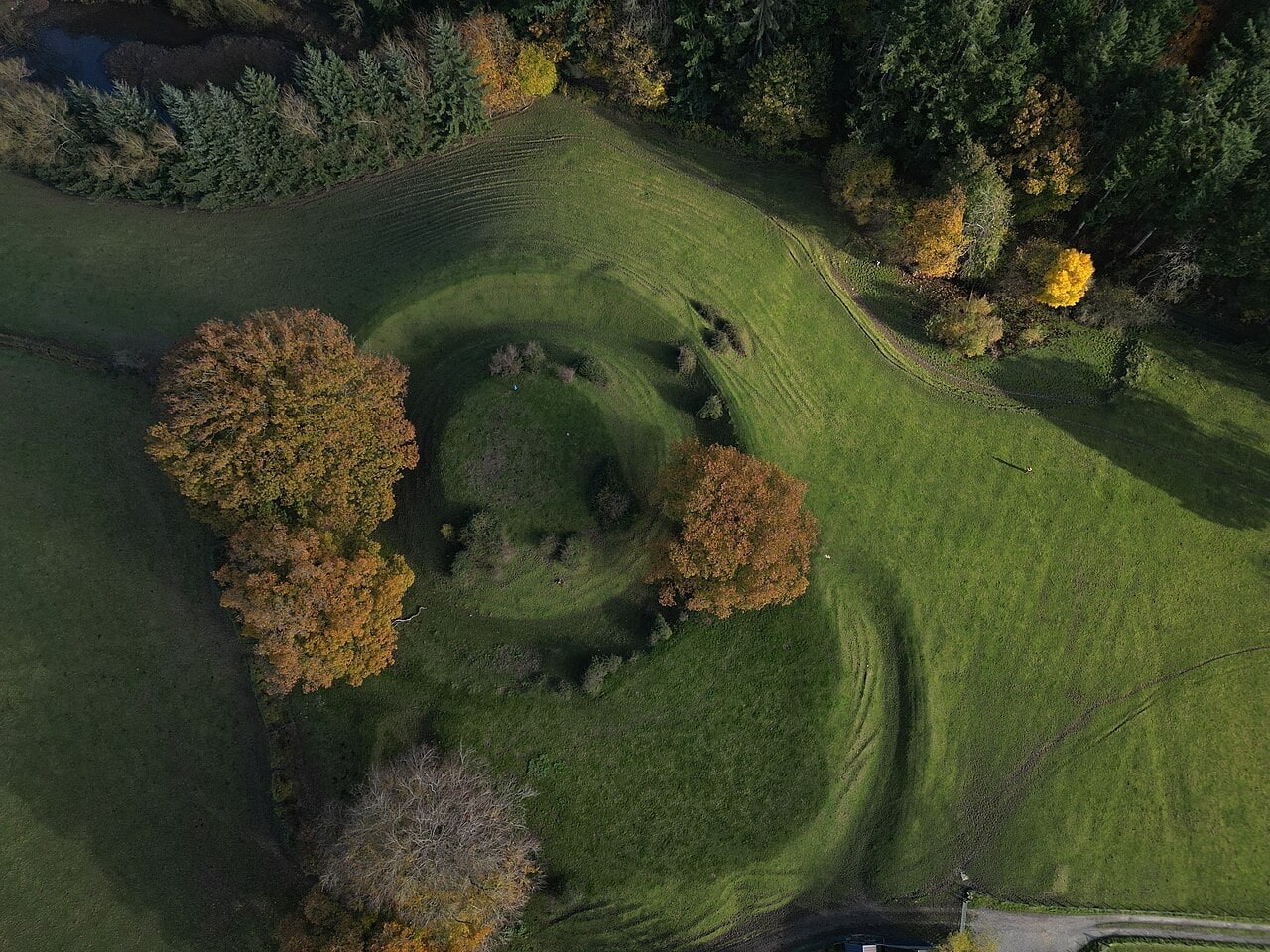
Sycharth in Powys has had permissive public access since 1999, with a small car park a hundred meters to the south. Coflein records a ditched motte 50 m across and 10.6 m high with a 26 m summit, and a crescentic bailey platform 64 m by 32 m. Its date is open: Coflein says the castle “may be as early as the twelfth century, but direct evidence is lacking.”
Where a concentric plan reads whole: Beaumaris
Beaumaris on Anglesey is in Cadw’s care and is ticketed. What reads on the ground there is the plan rather than the elevation: Cadw calls it “an unfinished masterpiece” and “the greatest castle never built”, and records that building work “had petered out by the 1320s”. Like the other sites in this section, it is not in our catalog.
Where the timber phase is reconstructed: Saint-Sylvain-d’Anjou
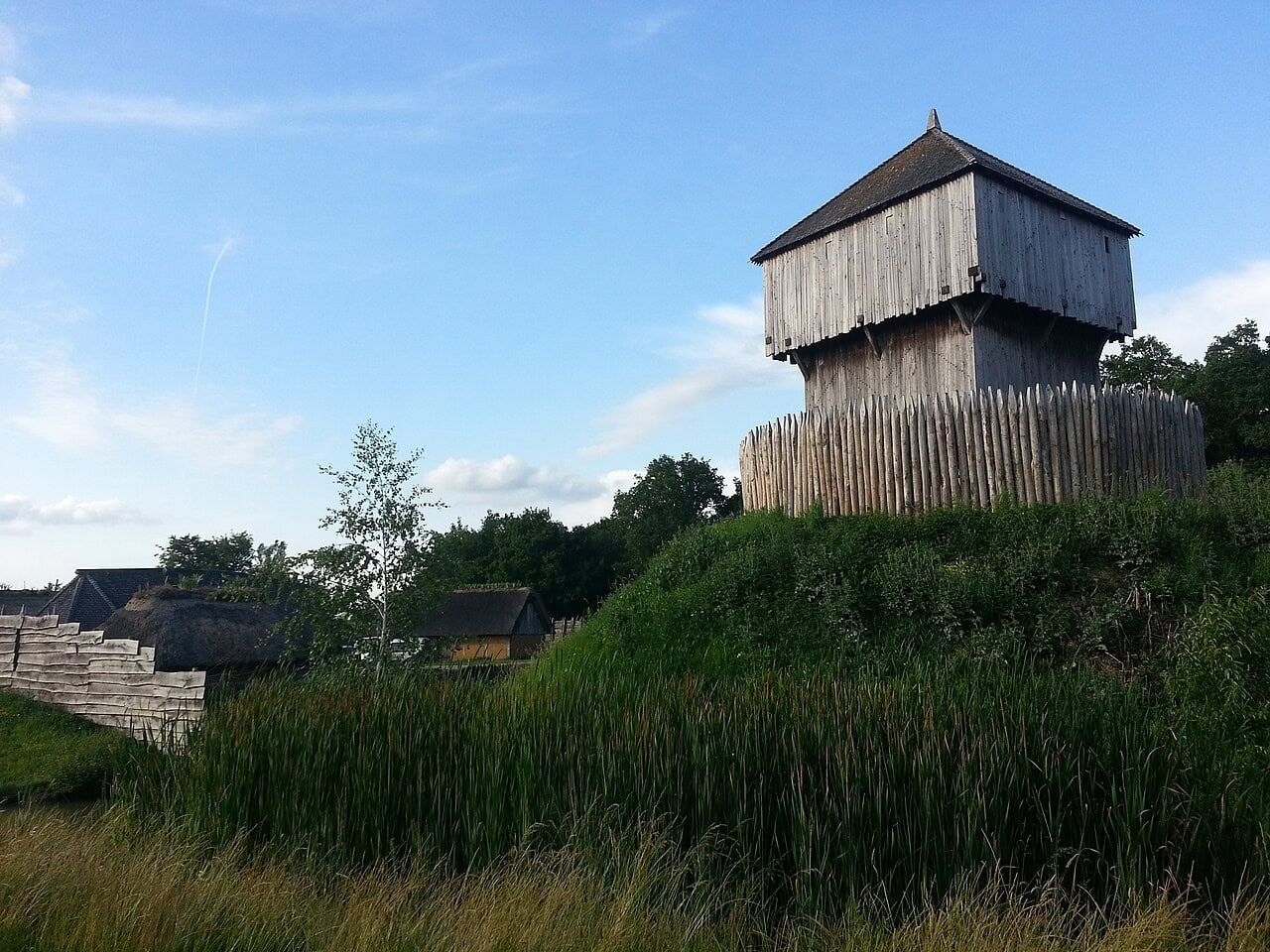
At Saint-Sylvain-d’Anjou, now part of the commune of Verrières-en-Anjou, a full-scale modern reconstruction of an eleventh- and twelfth-century château à motte stands in a public park: a motte carrying a donjon, the French word for the great tower, and a basse-cour holding a lord’s hall, a knights’ hall and farm buildings. It is a reconstruction, not a survival. It stands on the edge of Angers, whose castle is the last of the three guides below. It is a ticketed municipal site that opens seasonally rather than year-round, with the season’s dates published by the operator.
Where the tenth century is, and is not: Doué-la-Fontaine
Doué-la-Fontaine’s own commune says the building ne se visite qu’à titre exceptionnel — it can be visited only exceptionally — for reasons of safety and preservation, and adds that through the south door one can make out the remains of a fireplace. What stands is a roofless rectangular stone block. Excavation established the sequence there; it is not something a visitor sees.
What our own guides carry
Three stages of this chronology are in the catalog: Château de Langeais, the broken shell of a stone keep raised around the year 1000; Château de Loches, the roofless great tower of 1013 to 1035; and the 1230s enclosure of seventeen towers at Angers.
A fourth stage arrived when Normandy opened: the motte at Château de Gisors was raised in 1096-97 on the orders of William Rufus, son of William the Conqueror, at the point where the small river Epte divided the duchy from the lands of the king of France.
For the parts these buildings are made of, see parts of a medieval castle; for the vocabulary problem, how castle, palace and fortress differ; and for which building is oldest, which is a different question from this one, the oldest castle in the world.
Common Questions
Why were castles built?
To hold ground and to house the lord who held it, and the two purposes are inseparable in the definitions national recording bodies use. Historic England’s scheduling text for motte and bailey castles is unusually explicit: they acted “as garrison forts during offensive military operations, as strongholds, and, in many cases, as aristocratic residences and as centres of local or royal administration.” The military roles are stated flat; the residential and administrative ones carry a hedge.
When were castles built?
That depends on which national record you ask, and the gap is wider than most summaries admit. English Heritage begins England’s castle age at 1066 and closes baronial castle-building under the Tudors. The earliest date bracket the European Castle Institute’s database vocabulary offers is the first half of the seventh century. Neither body is wrong; they are indexing different material with different inclusion rules.
What is the difference between a castle and a hillfort?
Roughly a thousand years and a definition. Most English hillforts were abandoned by 100 BC, long before the first castle in the country, and they served a range of purposes of which defense was only one. The French state’s vocabulary makes the split structural: the hillfort is filed as a kind of fortification, while the castle is filed as a kind of building.
Why are castles no longer built?
In England, the cause the national heritage body names is political rather than technological: “under the strong centralised rule of the Tudors, baronial castle-building ceased.” A state strong enough to monopolize fortification does not license private ones. Henry VIII went on building artillery forts of his own in the same decades.
Why did we stop living in castles?
Comfort, in large part. English Heritage records that many castles “slipped into decline as their owners moved into country houses.” A building designed around a defensible perimeter is a poor template for a residence once the perimeter stops earning its keep.
Why do so many medieval-looking castles date from the nineteenth century?
Because restoration in that period was not repair. Viollet-le-Duc, who did more of it in France than anyone, defined the job as re-establishing a building “in a complete state that may never have existed at any given moment.” Pierrefonds is the case to know: realized, in his words, not on paper but in stone, wood and iron.
Principal Sources
- Cadw. “Beaumaris Castle.” cadw.gov.wales. The unfinished state, the petering out of work by the 1320s, and the sequence placing Beaumaris after Conwy, Caernarfon and Harlech.
- Coulson, Charles. “Hierarchism in Conventual Crenellation.” Medieval Archaeology 26 (1982), pp. 69-100. Quoted here from Davis 2007; the book Castles in Medieval Society (Oxford, 2003) is not held and is cited only through its reviewer.
- Creighton, Oliver, and Robert Liddiard. “Fighting Yesterday’s Battle: Beyond War or Status in Castle Studies.” Medieval Archaeology 52, no. 1 (2008), pp. 161-169. Abstract only.
- Cursente, Benoît. Review of Barceló and Toubert, L’incastellamento. Archéologie médiévale 29 (1999), pp. 396-397. The source for the Hodges, Wickham and Francovich positions as reported.
- Davis, Philip. “English Licences to Crenellate 1199-1567.” Castle Studies Group Journal 20 (2007). gatehouse-gazetteer.info. The 39 per cent figure for fortified manor houses is retracted by the author in his own footnote 7 and is not used here.
- English Heritage. “Castles Through Time.” english-heritage.org.uk. The source for the English chronology throughout, including the hillfort dating, the 1066 start, the Tudor end and the cannon-favored-the-defender point. The two-span framing quoted in the second section is in the page’s meta description rather than its body text.
- English Heritage. Helmsley Castle Teachers’ Kit (2025). english-heritage.org.uk. The source for the damage done to Helmsley after its surrender, its walls and gates opened and its east tower split in two.
- Europäisches Burgeninstitut. EBIDAT – Burgendatenbank. ebidat.de. The statement that no national total exists, and the two classification axes. Coverage is nine countries and does not include France, Britain, Italy or Iberia.
- Historic England. FISH Thesaurus of Monument Types, concepts 68833 Castle, 68834 Adulterine Castle and 68841 Motte. heritagedata.org, Open Government Licence v3.
- Historic England. Scheduled monument class descriptions for motte and bailey castles, ringworks and tower keep castles, read at National Heritage List entries 1019647, 1017768, 1013819 and 1011799. The recorded counts and the Aldingham ringwork-to-motte sequence.
- Historic England. “Helmsley Castle.” National Heritage List for England, entry 1009963. historicengland.org.uk. The source for Helmsley’s surrender to Parliament in November 1644 and its subsequent slighting.
- Historic Environment Scotland. Monument Type Thesaurus, concept 295 Castle. heritagedata.org. The disjunctive definition quoted in the first section.
- King, Andy. Review of Charles Coulson, Castles in Medieval Society. De Re Militari, March 2004. The source for Coulson’s thesis as summarized here, and for the qualification that travels with it.
- MacLean, Simon. “The Edict of Pitres, Carolingian Defence against the Vikings, and the Origins of the Medieval Castle.” Transactions of the Royal Historical Society 30 (2020), pp. 29-54. Abstract only; no conclusion is attributed to it here.
- Ministère de la Culture, Inventaire général. Thésaurus de la désignation des oeuvres architecturales et des espaces aménagés, concepts T96-447, T96-453, T96-454, T96-455, T96-483, T96-516 and T96-521. data.culture.fr.
- Monumenta Germaniae Historica. Capitularia regum Francorum II, ed. Boretius and Krause, no. 273, the Edict of Pitres, 864. The Latin quoted here was read at the edition itself.
- Toubert, Pierre. Les structures du Latium médiéval. BEFAR 221, 1973. Cited here through Delogù’s review in Cahiers de civilisation médiévale 20/77 (1977), pp. 77-83.
- UNESCO / ICOMOS. Advisory body evaluation, World Heritage List no. 374, Castles and Town Walls of King Edward in Gwynedd, 24 December 1985. whc.unesco.org. Its pairing of Beaumaris with Harlech as both begun in 1283 is contradicted by Cadw and by the document’s own next page.
- Viollet-le-Duc, Eugène. Dictionnaire raisonné de l’architecture française, t. 8, s.v. RESTAURATION. The definition of restoration, the dating of the practice, and the Vitet and Mérimée chronology.
- Wickham, Chris. “A che serve l’incastellamento?” In L’incastellamento, École française de Rome 241 (1998), pp. 31-41. First page only; nothing is attributed to the remainder.
Image credits. Hero, Beaumaris Castle from the air: Photo: Llywelyn2000, CC BY-SA 4.0. Source: Castell Beaumaris Castle, Ynys Mon (Anglesey), Wales 03, Wikimedia Commons; The motte castle at Dinan on the Bayeux Tapestry: Photo: Myrabella, public domain; Uffington Castle hillfort from the air: Photo: Dave Price, CC BY-SA 2.0; Maiden Castle as a lidar terrain model: Image: Dr John Wells, CC BY 4.0; The excavated block at Doué-la-Fontaine: Photo: Daniel Jolivet, CC BY 2.0; The castle-digging scene on the Bayeux Tapestry: Photo: Universite de Caen Normandie, CNRS and ENSICAEN, from the 2017 photographic campaign of the Fabrique de patrimoines en Normandie, public domain; The reconstructed timber castle at Saint-Sylvain-d’Anjou: Photo: Trizek, CC BY-SA 3.0; The earthworks at Elsdon: Photo: Worldfootage, CC BY-SA 4.0; The great tower of Loches: Photo: Zairon, CC BY-SA 4.0; The drum towers of Angers along the outer ditch: Photo: Chatsam, CC BY-SA 3.0; Sycharth, the motte and its bailey from the air: Photo: Llywelyn2000, CC BY-SA 4.0; The classification diagram: Own-work diagram, StoneKeep Atlas, CC BY 4.0. Freely licensed images are resized to fit; otherwise unaltered.