
Oldest Castle in the World
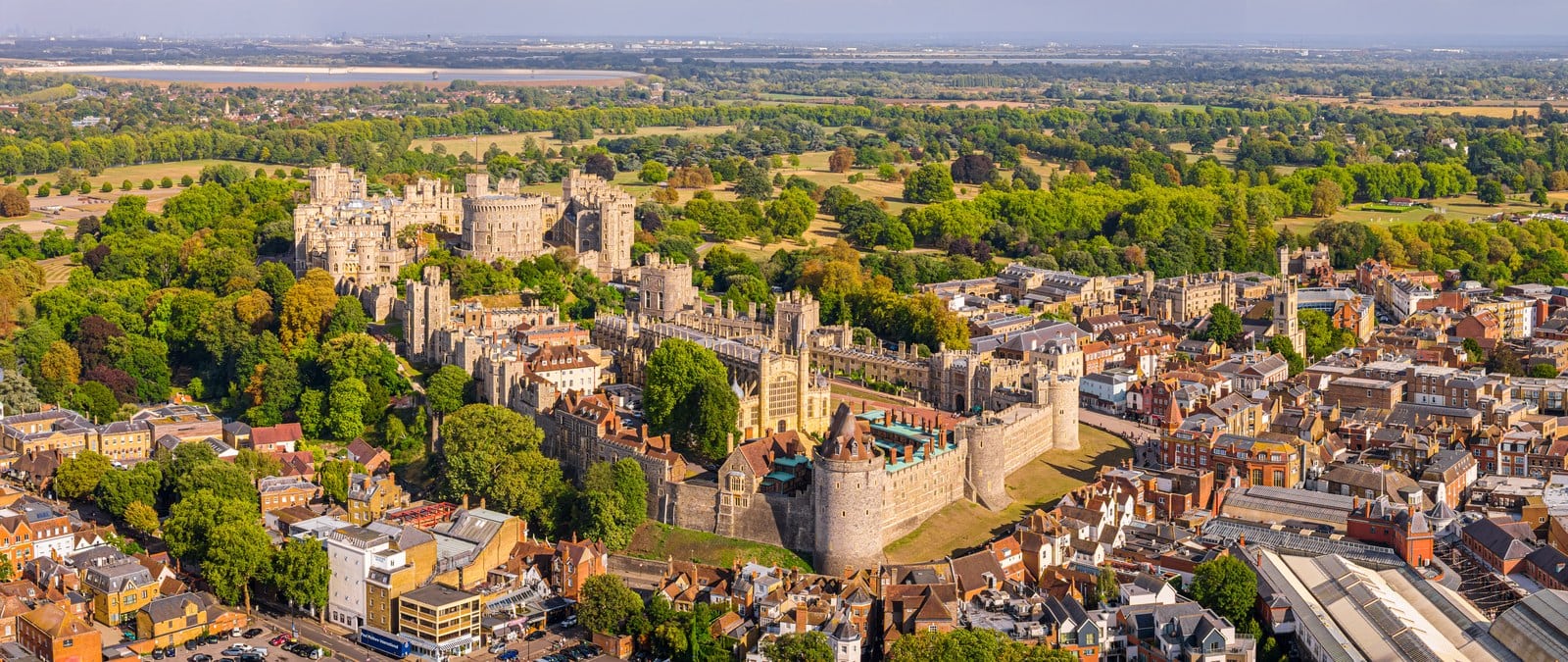
Ask which is the oldest castle in the world, and Historic England’s blog will tell you Windsor, the French state will point you to Doué-la-Fontaine for the oldest keep in France, and many popular summaries will tell you the Citadel of Aleppo. All three are answering different questions, and only the first two say which. Fabric that still stands, or fabric that survives only as excavated footings? A building raised as a castle, or a hill that has carried buildings since the Bronze Age? A date fixed by a laboratory, or a date fixed by a charter?
Change the criterion, and the winner changes with it. That is not a dodge. Each answer below is defensible, and each comes with the criterion stated so you can pick the one you meant. Four of the six are superlatives somebody has actually published, three of them by a national body and the fourth by the castle’s own owners. The fifth is hedged: the Aga Khan Trust for Culture will say only that Aleppo is one of the most ancient examples of military architecture in the Middle East. Nobody ranks the sixth at all, and that comparison is ours.
There is a second thing worth knowing before the table, and you will not find it on the other pages that answer this question. Almost every authoritative claim read for this article is scoped to one country, and the same scoping problem decides which country has the most castles. The French state awards its oldest keep de France. The Bibliothèque nationale awards its oldest square stone keep en France. Meersburg’s owners claim Germany; Inuyama’s claim Japan. Ask the heritage record for a world champion, and it mostly declines to name one, because it is not organized to answer that question.
The Oldest Castle in the World: Six Answers
| Criterion | The building | The date | How the date was established | The scope the authority claims |
|---|---|---|---|---|
| Oldest dated fabric | Doué-la-Fontaine, Maine-et-Loire, France | tenth century | stratified excavation | France, and specifically of a donjon — and it survives as remains, not as a standing building |
| Oldest still standing | Château de Langeais keep, Indre-et-Loire, France | around the year 1000 | standing-fabric analysis, plus documents | France, and only among square stone keeps that survive. Its operator will say only “one of” |
| Oldest occupied | Windsor Castle, Berkshire, England | begun in the 1070s; first stone buildings 1165 to 1179 | documents and occupation continuity | the world — Historic England’s blog says so, and it is the only such claim in this whole article, and the same institution’s legal record of the same building does not repeat it |
| Oldest inhabited, Germany | Burg Meersburg, Bodensee | first recorded 1211 | documentary, plus continuous residence | Germany, and the owners give their reason in the same breath: the family lives there year-round |
| Oldest fortified site | Citadel of Aleppo, Syria | UNESCO records evidence of occupation dating back to the tenth century BC; the standing walls are twelfth to fourteenth century AD | excavation and Bronze Age texts; UNESCO’s inscription does not say how its own figure was established | no world claim at all — the Aga Khan Trust for Culture says only “one of the most ancient” examples of military architecture “in the Middle East” |
| Oldest laboratory date | the Slavic rampart under Schwerin Castle, Mecklenburg | winter 941/942, rebuilt 963/965 | tree-ring dating, precise to a season | none — the authority dates the structure and ranks nothing. The ranking here is ours |
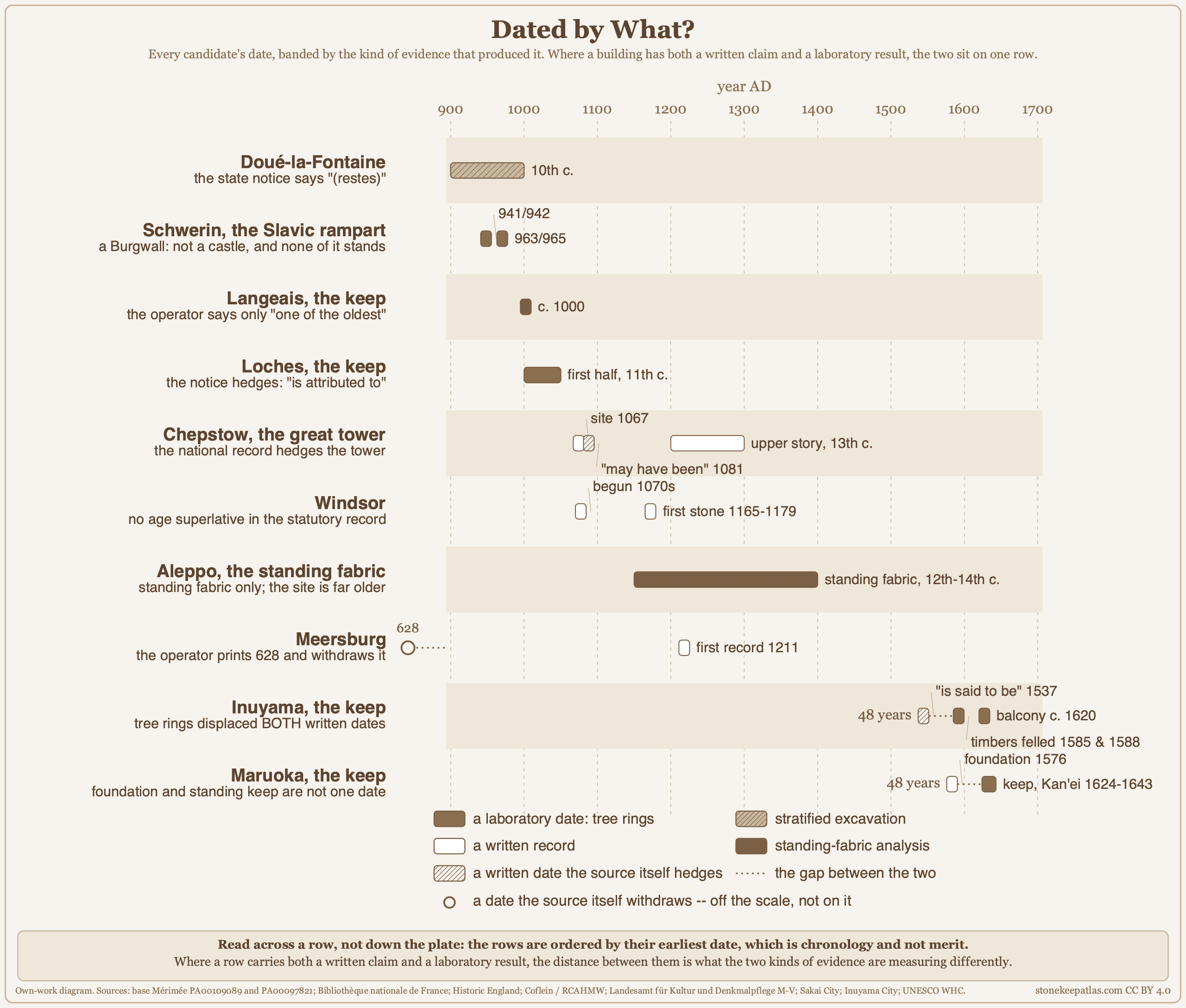
Two of those methods are worth a word. Stratified excavation dates a building from the layers of soil and debris that accumulated around it, so it can date walls that no longer stand. Standing-fabric analysis reads the masonry of the building itself, course by course, and can only date what is still there. Read the last column first, because it is the argument. Three of those six answers are scoped by the authority to a single country. One carries only a hedged claim, scoped to the Middle East, and one no age superlative at all. Exactly one says “in the world.”
Two things this table is not. It is not a ranking: the rows are answers to different questions, not places on a podium. And no row travels outside its own last column — the first two are claims about France, and they stay claims about France everywhere they appear below.
The Test a Building Has to Pass First
Before a building can be the oldest castle, something has to decide it is a castle. The vocabularies that heritage bodies actually use are stricter than the everyday sense, and they agree on a two-part test.
Historic England’s FISH Thesaurus defines a castle as “A fortress and dwelling, usually medieval in origin, and often consisting of a keep, curtain wall and towers etc.” Historic Environment Scotland’s definition runs “A medieval fortified building or range of buildings, serving as a royal, or baronial, residence, or administrative centre.” Both halves of that test carry weight. Fortification alone does not make a castle, or every Roman fort and every walled town would qualify. Residence alone does not either.
Castle vs palace vs fortress takes that test apart in detail, comparing how five national vocabularies file these buildings and where they part company. What matters here is the consequence. Apply the two-part test strictly, and the Citadel of Aleppo’s Bronze Age temple drops out of contention, because a temple on a hilltop is not a fortified residence. Apply it loosely, counting any fortified site with people living on it, and Aleppo wins comfortably. Neither reading is a mistake. They are different questions.
That is also why the popular answer to this question and the scholarly one diverge so far. They are not in conflict. They are counting different things.
The Oldest Castle Fabric in France
Two of the best-attested claims are French, and the French state and the French national library award them to two different buildings.
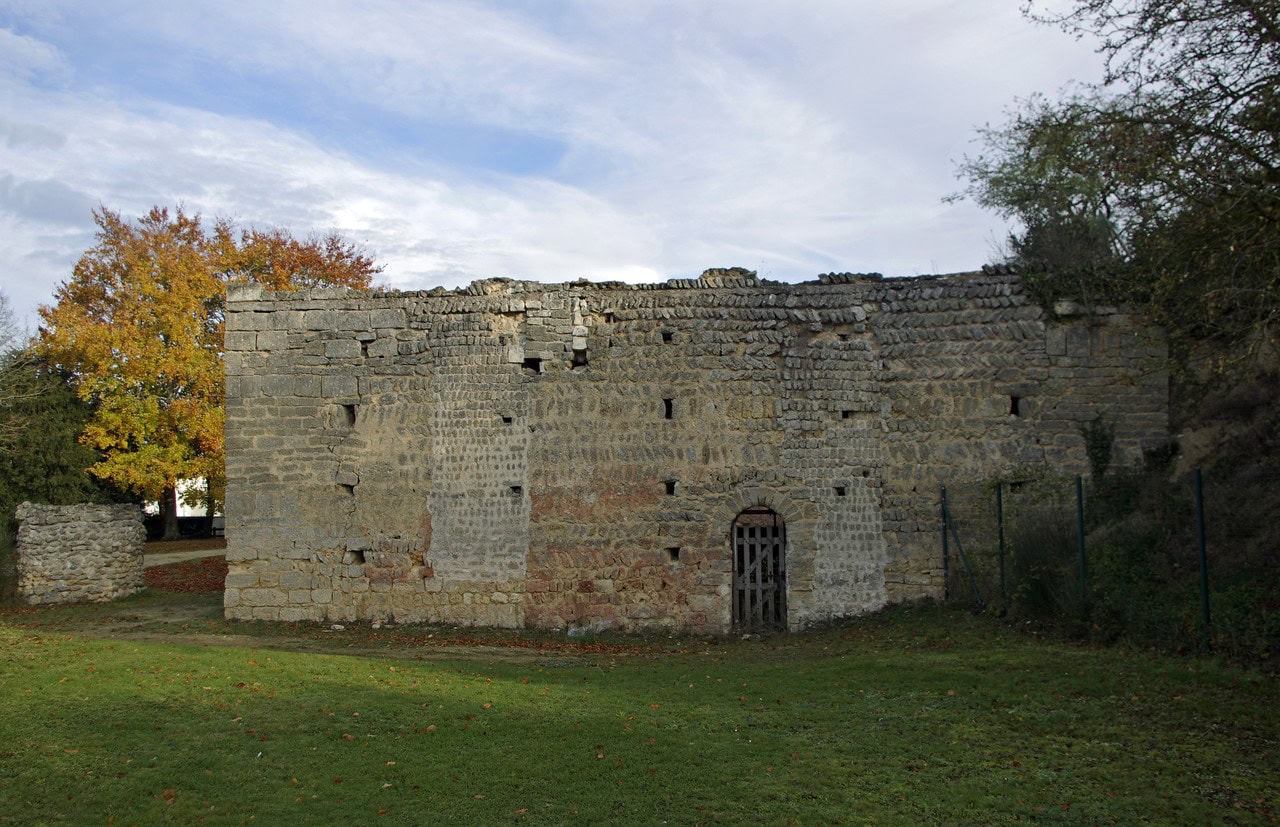
The French state’s statutory protection notice for Doué-la-Fontaine, in Maine-et-Loire, records in its historical description: “Le plus vieux donjon de France : 10e siècle” — the oldest keep in France, tenth century. That notice, PA00109089, protects what it calls “Motte féodale et donjon (restes)”, classes the site as an édifice fortifié, lists it as an archaeological site, and records construction campaigns in the ninth and tenth centuries and in the third quarter of the fifteenth, with works in 1468 and 1472.
Note the word restes. Remains. The building that carries the oldest date in France is not a building you can walk into; it is a set of excavated walls, and the notice says so in its own title.
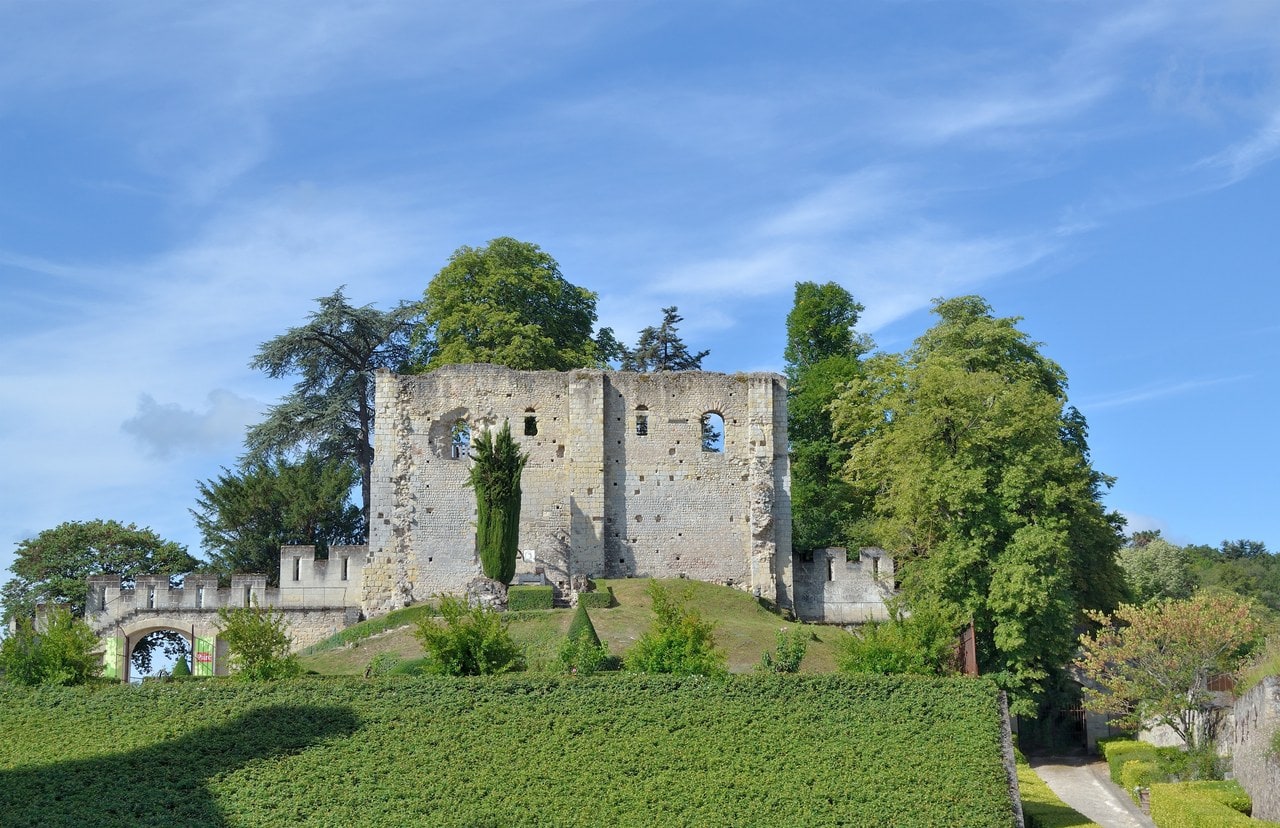
Meanwhile the Bibliothèque nationale de France, writing about the keep at Château de Langeais in Indre-et-Loire, calls it “le plus ancien donjon carré en pierre subsistant en France” — the oldest surviving square stone keep in France. Langeais’s own operator, the Institut de France, is more cautious about the keep that Charles VII spared in 1428, calling it “l’un des plus anciens donjons en pierre qui subsistent aujourd’hui”: one of the oldest stone keeps surviving today.
Two national institutions, two different oldest keeps in France. It looks like a contradiction, and it is not. The Ministry’s claim is about the oldest keep, and Doué’s survives as excavated remains. The Bibliothèque nationale’s claim is about the oldest square stone keep still standing. Each has hedged its superlative with a qualifier, and the qualifiers do not overlap. Neither institution mentions the other, so the reconciliation has to be done by the reader.
The archaeologists who recorded the Langeais keep stone by stone propose a date of about 1000, and say the dating does not allow definite attribution to Fulk Nerra, the count whose name is attached to it almost everywhere. They also read the building as designed more for comfort and convenience than for security, which is an awkward result for a structure whose fame rests on being an early castle.
Older Than the Castle: the Citadel of Aleppo
Ask the internet this question, and the Citadel of Aleppo is a standard answer, usually with a date in the third millennium BC attached. That date is real: the Aga Khan Trust for Culture dates human use of the hill from the early third millennium BC. It is not a date for a castle. UNESCO’s inscription for the same mound gives a different figure, evidence of occupation by civilizations dating back to the tenth century BC, and neither authority cites the other. They are not in conflict. The Aga Khan Trust is dating human use of the natural hill, from the Storm God temple excavated there after 1996, and UNESCO is dating evidence of occupation. Same mound, two questions, two thousand years apart.
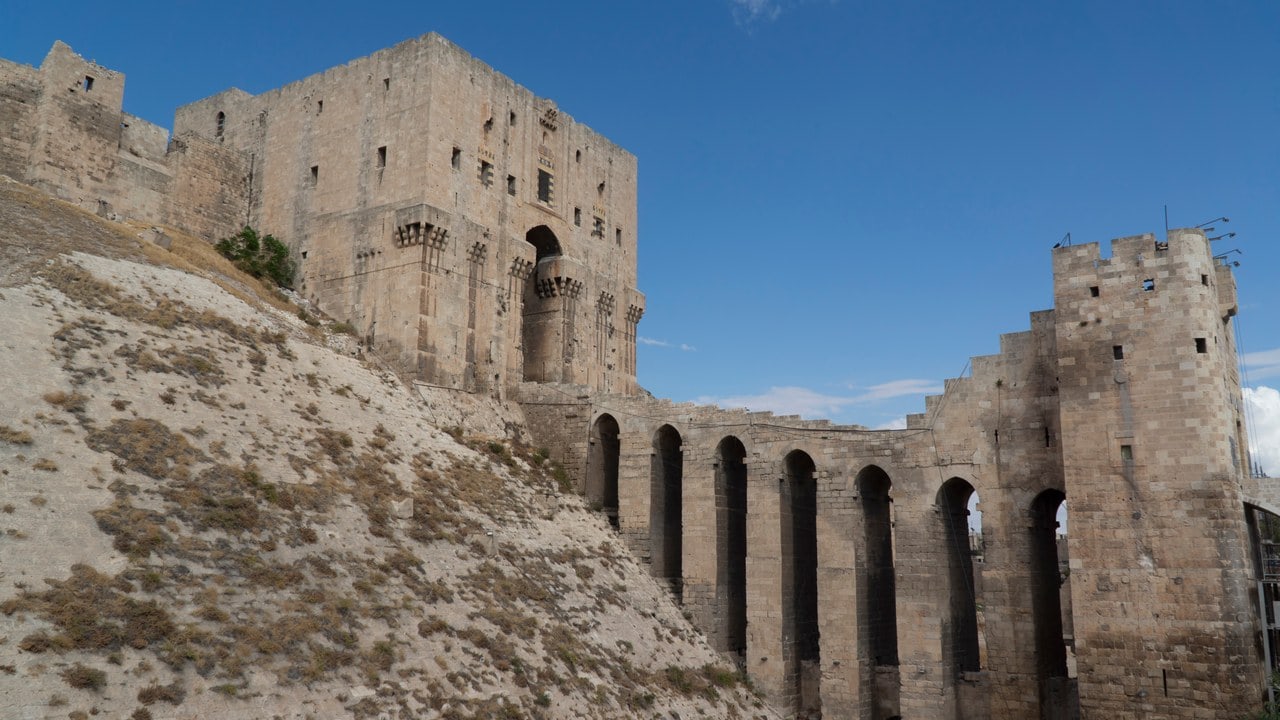
UNESCO’s own description separates the two in consecutive clauses. The citadel is “testament to Arab military might from the 12th to the 14th centuries”, “with evidence of past occupation by civilizations dating back to the 10th century B.C.” The walls a visitor sees are medieval Islamic work. What lies under them is very much older, and the two facts belong to different sentences.
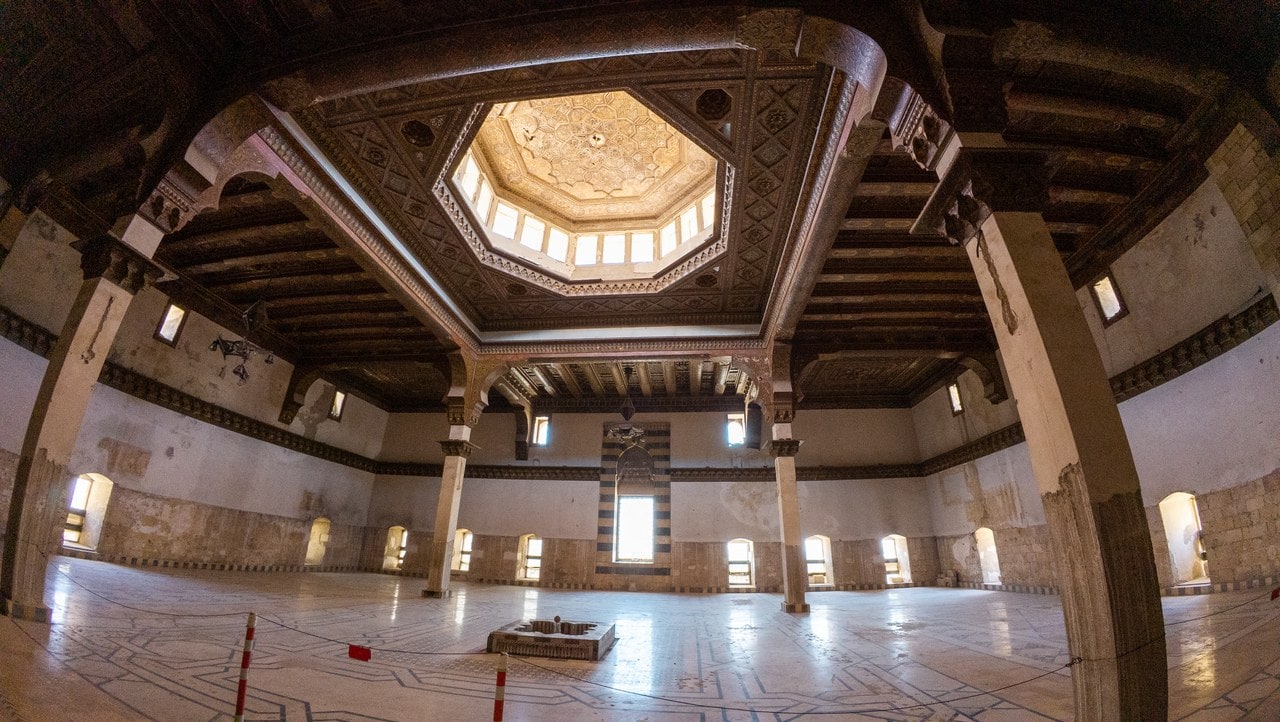
Mason and Gonnella, introducing a study of the citadel’s ceramics, relay the excavators’ dating of a temple of the weather-god Hadad to around 1700 BC and its restoration to around 1000 BC. As for a ruler actually living up there, the Hamdanid Sa’d al-Dawla, in the later tenth century AD, “is reported to be the first ruler to move his residence on the citadel.” Both the town and the citadel were heavily destroyed by the Mongols in 1260 and again by Timur’s troops in 1400, so much of what stands is Mamluk and Ottoman repair.
So Aleppo is the right answer to a question, and it is worth being precise about which one. It is not the oldest castle. It is one of the oldest fortified sites here, and the record supports evidence of occupation rather than an unbroken line: UNESCO dates that evidence to the tenth century BC, and the Aga Khan Trust for Culture, which carried out its restoration, calls it “one of the most remarkable examples of military architecture in the Middle East, and certainly one of the most ancient.”
There is also a slippage worth naming, because it is probably how this answer spread. Aleppo the city is routinely, and correctly, described as one of the world’s oldest continuously inhabited cities. That superlative belongs to the city. Transferred to the citadel, it turns a claim about human settlement into a claim about a castle, and the two are separated by about three thousand years.
The Ancient City of Aleppo has been on the List of World Heritage in Danger since 2013.
The Oldest Castle Still Lived In
This is the criterion on which a world claim does exist, and one institution has published two different answers about the same building.
Historic England writes, on its own blog, that “Windsor Castle is the largest castle in England. It also holds the distinction of being the oldest and largest occupied castle in the world.” English Heritage gives that title to Dover instead, at almost 32 acres inside the outer bailey curtain. Historic England’s own statutory list entry for the same building, NHLE 1117776, calls it “England’s largest castle and a royal palace, covering some 13 acres”, dates the first stone buildings to Henry II between 1165 and 1179, and does not use the word “oldest” at all.
Neither document is careless. They are written in different registers for different purposes, and the legal record is the more guarded of the two by design. But if you want to know why this question produces so many confident and incompatible answers, that pair is the whole explanation in one example: a single institution, a single building, two documents, and only one of them willing to reach past the national border.
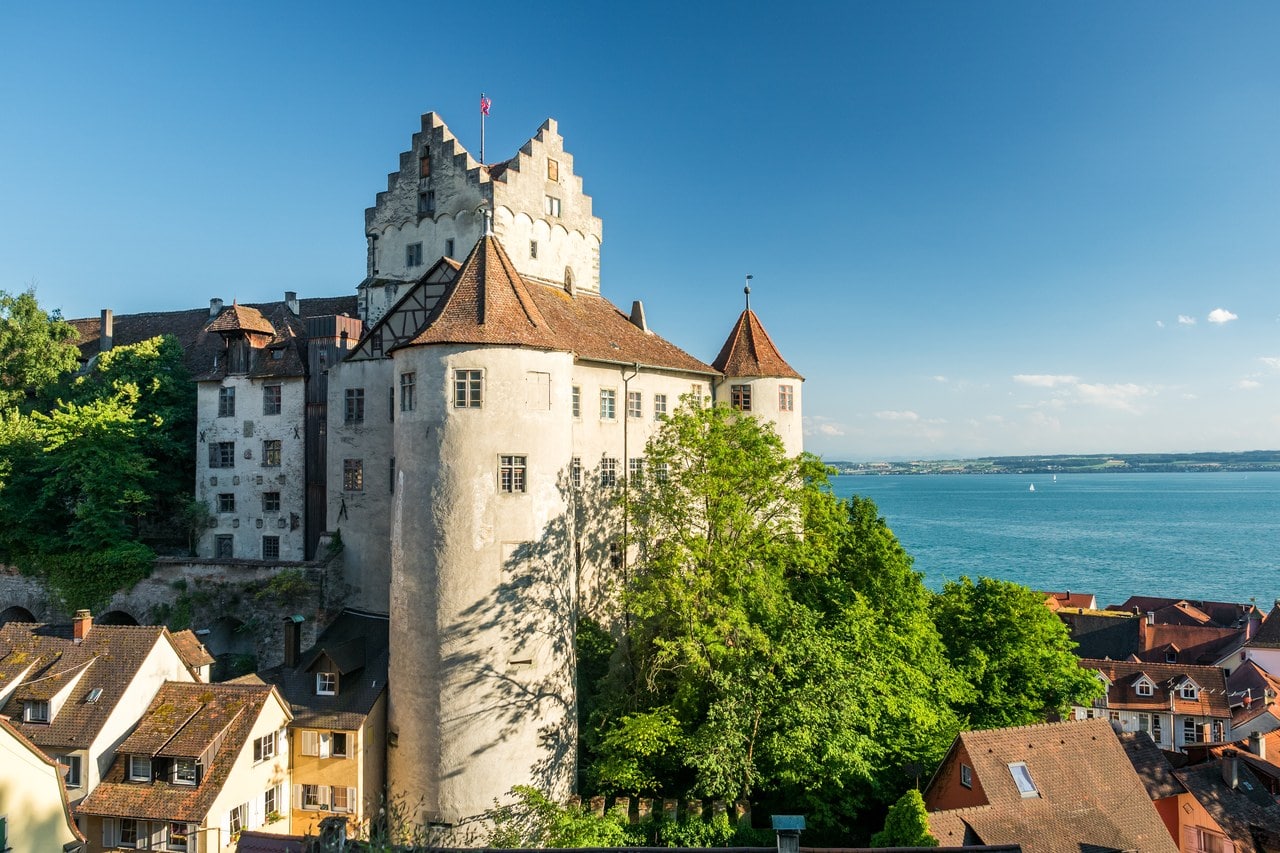
Germany’s counterpart claim shows the opposite reflex. Burg Meersburg’s owners call it the oldest inhabited castle in Germany, and they give their criterion in the same sentence: the family lives there all year round. The claim is scoped, and the reason it is scoped is printed beside it.
First Recorded Is Not First Built
Most of the dates in circulation for old castles are not construction dates. Each is the year a building first appears in a surviving document, which fixes only the point by which it already existed. A castle can stand for a century before anyone writes it down, and the document can outlive the building by a thousand years.
Burg Meersburg prints the trap on its own timeline and then disarms it. The founding date it gives is 628. Further down the same entry the operator withdraws it: the date is there “according to a legend”, and “no charters reach back to that period, and nothing of Dagobert’s protective structure survives today either.” The first documentary mention is 1211, and the operator cites the charter. A gap of 583 years, labeled by the people with the most to gain from the earlier number. Ghost stories carry the same gap and are dated the same way, which our reference on haunted castles does for nineteen buildings across four countries.
The famous date for the Langeais keep runs into a subtler version. Richer of Reims records that Fulk built and garrisoned a stronghold in Odo’s land “not far from the city of Tours”, and in the next chapter has Fulk offer to demolish it as a peace term. Richer does not name the place. The year 994 that follows this building everywhere is a marginal note by the edition’s editor, not a date Richer gives, and the identification with Langeais is an inference. The stone-by-stone survey, dating the fabric to about 1000, is the firmer evidence, and it is firmer precisely because it does not depend on matching a building to an unnamed oppidum in a chronicle.
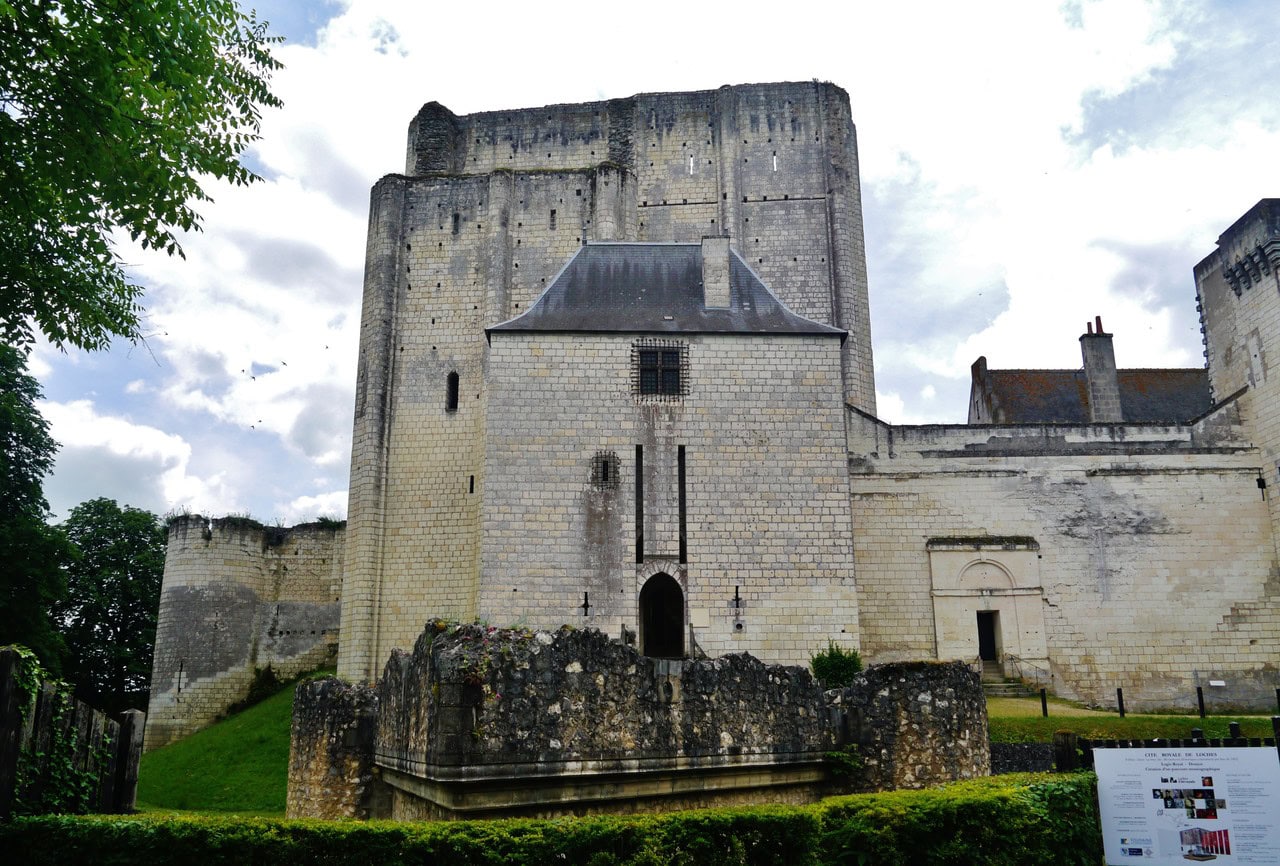
Statutory records are not immune either. The French protection notice for Château de Loches says Gregory of Tours mentions the castle as a fortress at the end of the fifth century. What Gregory writes, in Book X of the Histories, is that Bishop Eustochius founded churches in the villages of Brixis, Iciodoro, Lucas and Dolus. Loches is one of the villages. A bishop founding a church in a village has become, by the time it reaches a modern legal document, a fortress. The same notice puts the chateau and its enceinte in the first half of the eleventh century, and its dendrochronology attaches that date to something narrower: most of the fortress was built homogeneously within a few years, and the hoardings must have been put up in that half-century. It hedges the builder carefully too: construction “is attributed to” Fulk Nerra.
There is a larger version of this problem, and a 2024 peer-reviewed study puts it well. Modern historiography starts the castle’s story in the tenth century partly because Carolingian sources refer relatively infrequently to fortified structures in the Frankish heartlands. The study asks whether that scarcity reflects the cultural assumptions of the writers rather than an absence of buildings. It raises the question rather than settling it, and no building gets an earlier date out of it. But it is a useful warning that the conventional starting point of the whole story is partly a fact about what those writers thought worth recording.
What the Laboratory Says, and What It Overturns
Set the documents aside, ask what can be dated physically, and the picture sharpens. Tree-ring dating can fix a felling year, sometimes a season. It has produced the earliest laboratory date in this article, and it has also moved a building’s date by half a century.
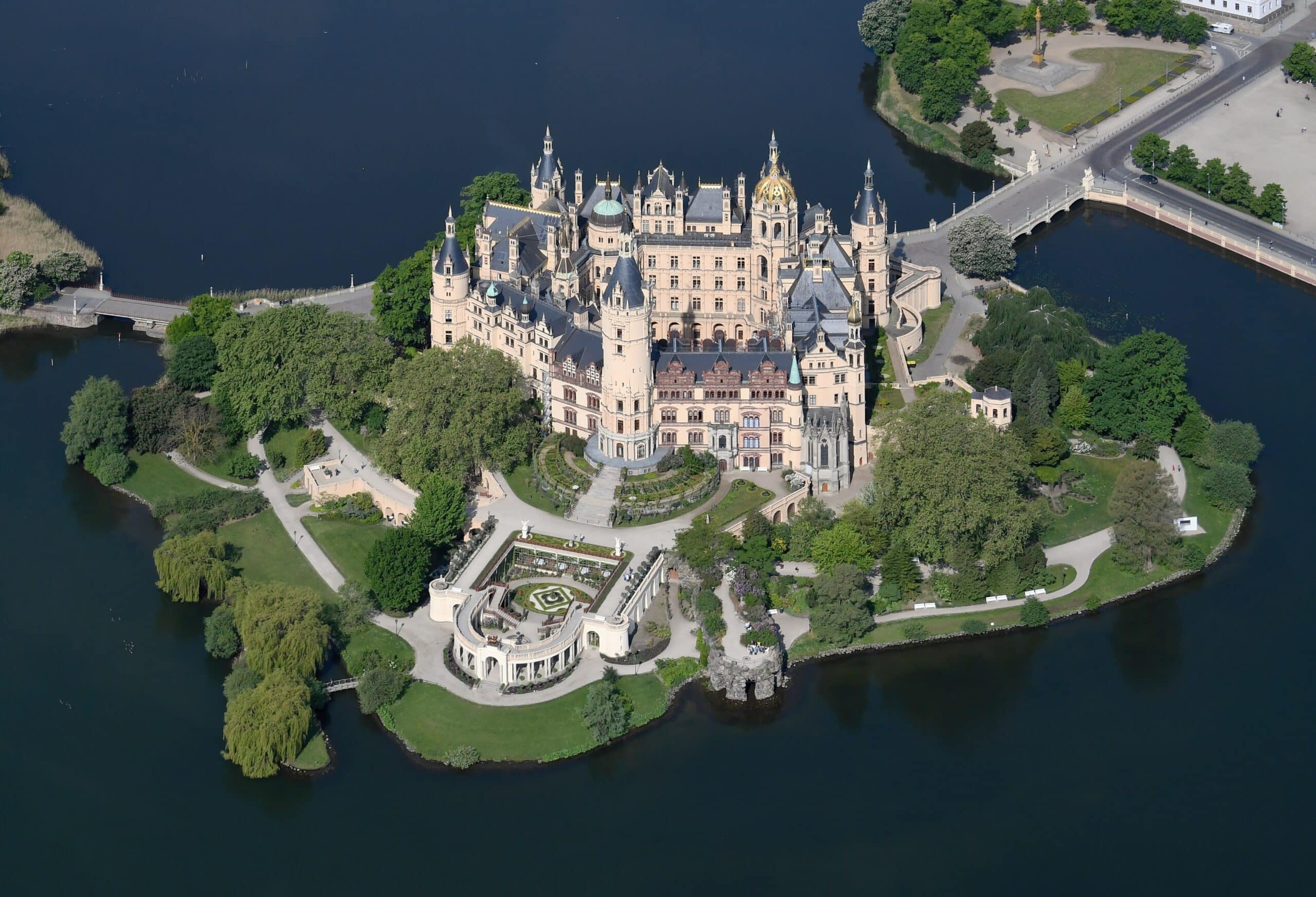
The earliest laboratory date here belongs to something that is not a castle and does not stand. Excavation under the courtyard of Schwerin Castle by the state archaeology service of Mecklenburg-Vorpommern dated the Slavic rampart there to the winter of 941/942 or shortly after, and a second, stronger rampart raised over the collapsed first one to 963/965 or shortly after. A Burgwall, a Slavic stronghold rampart, is not a castle under the two-part test above, and none of it is visible: the building above is the nineteenth-century rebuild. The authority dates it and claims nothing. Calling it the oldest anything is our arithmetic, not theirs.
The Oldest Castle in Japan, and What Tree Rings Did to It
Japan supplies the sharpest demonstration of the whole problem, because there the same technique confirmed one claim and destroyed another inside a single decade, and each city published the laboratory result that moved its own building’s date.
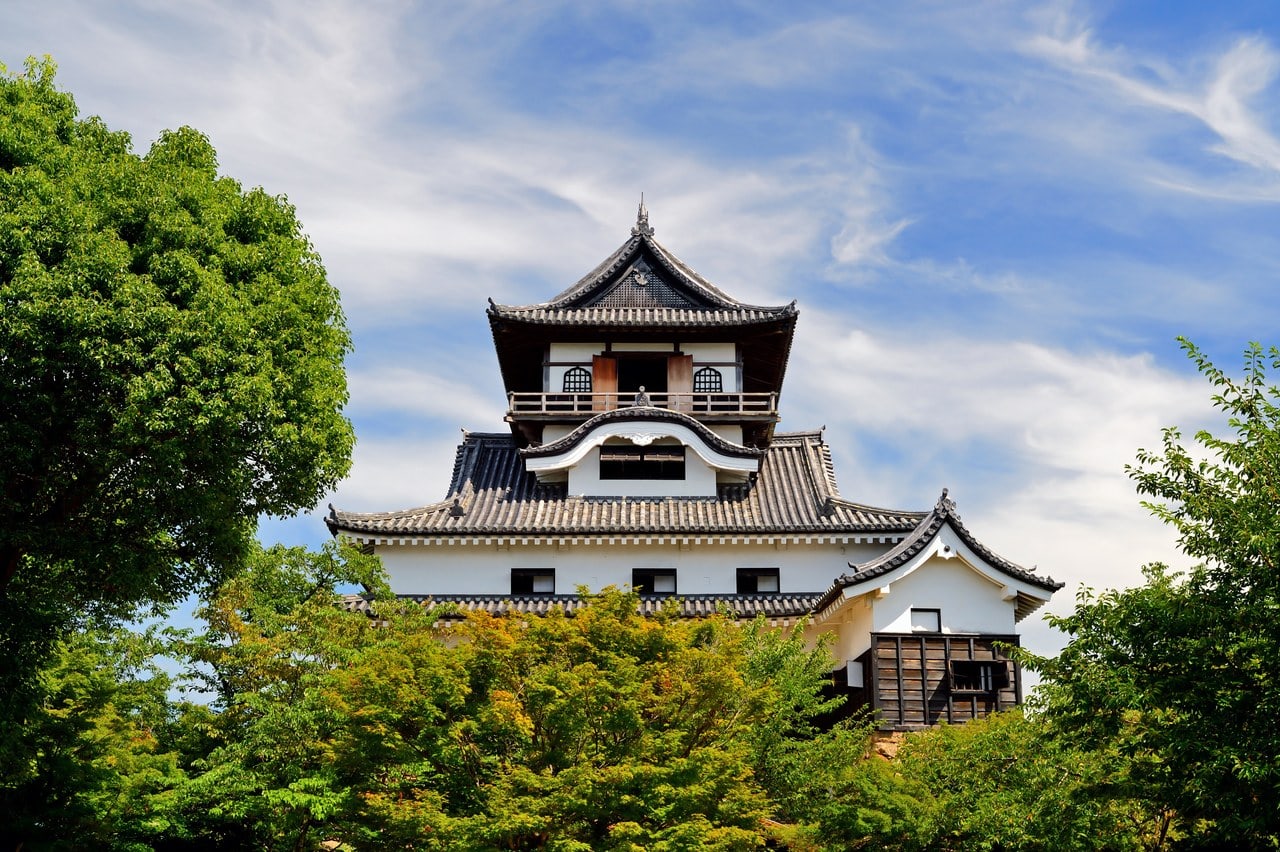
Sakai City dates the foundation of Maruoka Castle to 1576. A comprehensive academic investigation carried out for Sakai City from 2015 to 2018, using tree-ring dating, radiocarbon dating and oxygen-isotope-ratio tree-ring dating, established that the surviving keep dates instead from the Kan’ei era, 1624 to 1643. Both figures are published by the same municipality, in separate fields: the castle was founded when the city says it was, and the building now standing on the site is roughly half a century younger. The keep also collapsed completely, with its stone base, in the Fukui earthquake of 1948, and was rebuilt between 1951 and 1955. Sakai City’s investigation found that many of its pillars were in the building before the 1940 to 1942 repair. In the rebuilding after the earthquake those old pillars were used again, and their broken splices were mended with a loose-tenon technique the city calls yatoi-hozo. It is an Important Cultural Property rather than a National Treasure, and the city is campaigning for elevation. Its roof is the only stone-tiled one among Japan’s twelve surviving keeps, and about a fifth of its roughly 6,000 tiles are Shakudani stone from the foot of Mount Asuwa, each weighing between 20 and 60 kilograms. Sakai City’s investigation also recovered a 1942 repair report, which recorded part of an older shingle roof still surviving beneath the stone tiles; no surviving keep is shingled today. The 1942 surveyor added that whether that shingling was the original could not be established, and the city’s own pages now say the keep was shingled to begin with, so the hedge drops out somewhere between the report and the summary of it.
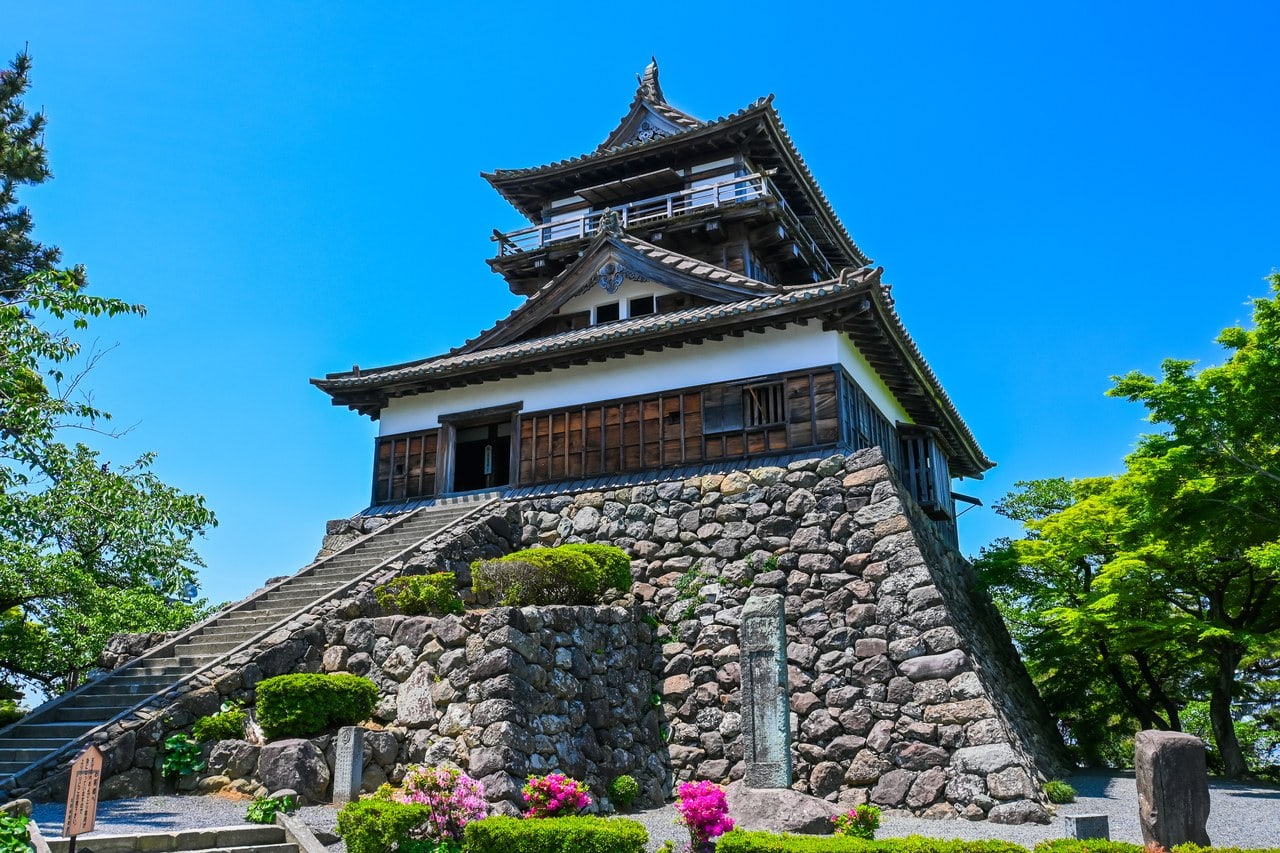
Inuyama went the other way. Its management office calls the keep “the oldest surviving one in Japan” while hedging the castle’s own foundation date, which “is said to have been” around 1537. Tree-ring dating of thirty-nine timbers from the keep, reported by Inuyama City in 2021, dated twenty-nine of them. The two members still carrying bark or wane gave felling years of 1585 for a first-floor pillar and 1588 for a fourth-floor beam, showing that floors one to four went up as a single campaign between about 1585 and 1590. That overturned an orthodoxy held since the 1965 dismantling repair, which had the keep beginning as a two-story building later heightened. The report says the study deliberately set aside the written sources previously relied on, because all of them are secondary and later than the mid-Edo period, and the two rival dates they supported, 1537 and 1601, went with them.
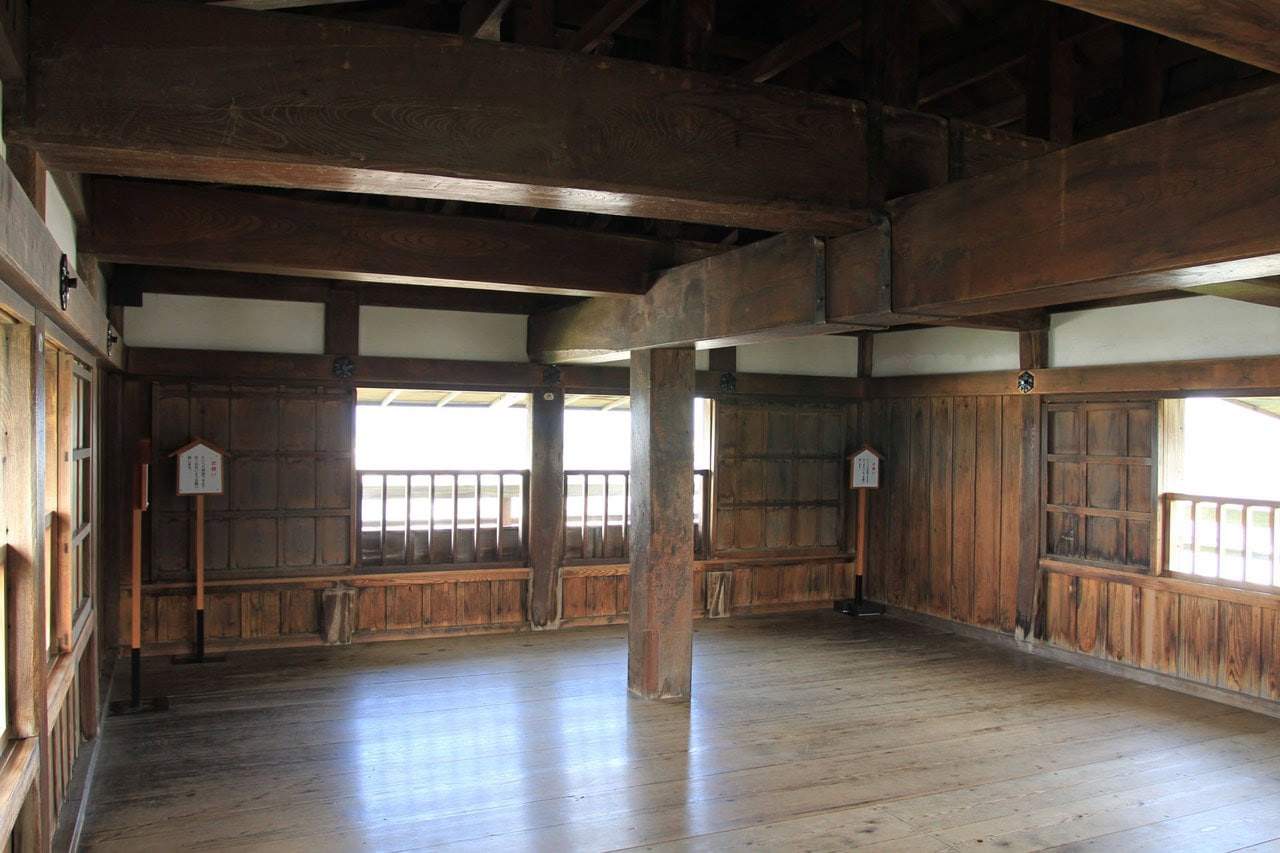
The same study confirmed a later phase as well as overturning an earlier reading: timber from the fourth-floor balcony brackets was felled around 1620, supporting the view that Naruse Masanari added the karahafu gables, remodeled the great roof and ran a balustrade around the building. A basement floor beam was felled in the Shōhō era, 1644 to 1647. Across Japan as a whole, only twelve castles retain a keep built in or before the Edo period: the twelve surviving keeps, 現存12天守.
The sequence did not stop with Inuyama. In November 2025 Matsumoto City published a summary report on the construction date of its own keep, prepared by the same two specialists behind the Inuyama report, on a survey carried out across the three financial years from 2022 to 2024. The survey was commissioned as groundwork for a World Heritage nomination dossier covering Japan’s early-modern castle keeps as a group. Forty-three timbers were selected across the keep and its four attached buildings and seventeen could be dated, three of the five buildings yielding no member suited to the method at all. Four of the keep’s original pillars gave a felling year of 1596, two on the first floor and two running from the third floor to the fourth. Matsumoto City concludes that the keep was built in 1596 or the year after, on a stone base begun around 1594, and that the fifth and sixth floors were rebuilt in 1627.
A third city had published a laboratory result that moved its own building’s date. In 2019 a newspaper had asked whether Matsumoto’s keep might be the oldest, on documentary grounds and with a question mark, in the same report that carried the Maruoka result. Two of the three buildings named in that story produced no datable timber at all in 2025. Matsumoto’s own report answers the question in the other direction, dating its keep eleven years later than Inuyama’s earliest felling. It cites the Inuyama keep by name as the representative example of the watchtower type, built between 1585 and 1590, which is the range Inuyama City’s laboratory work had established four years earlier.
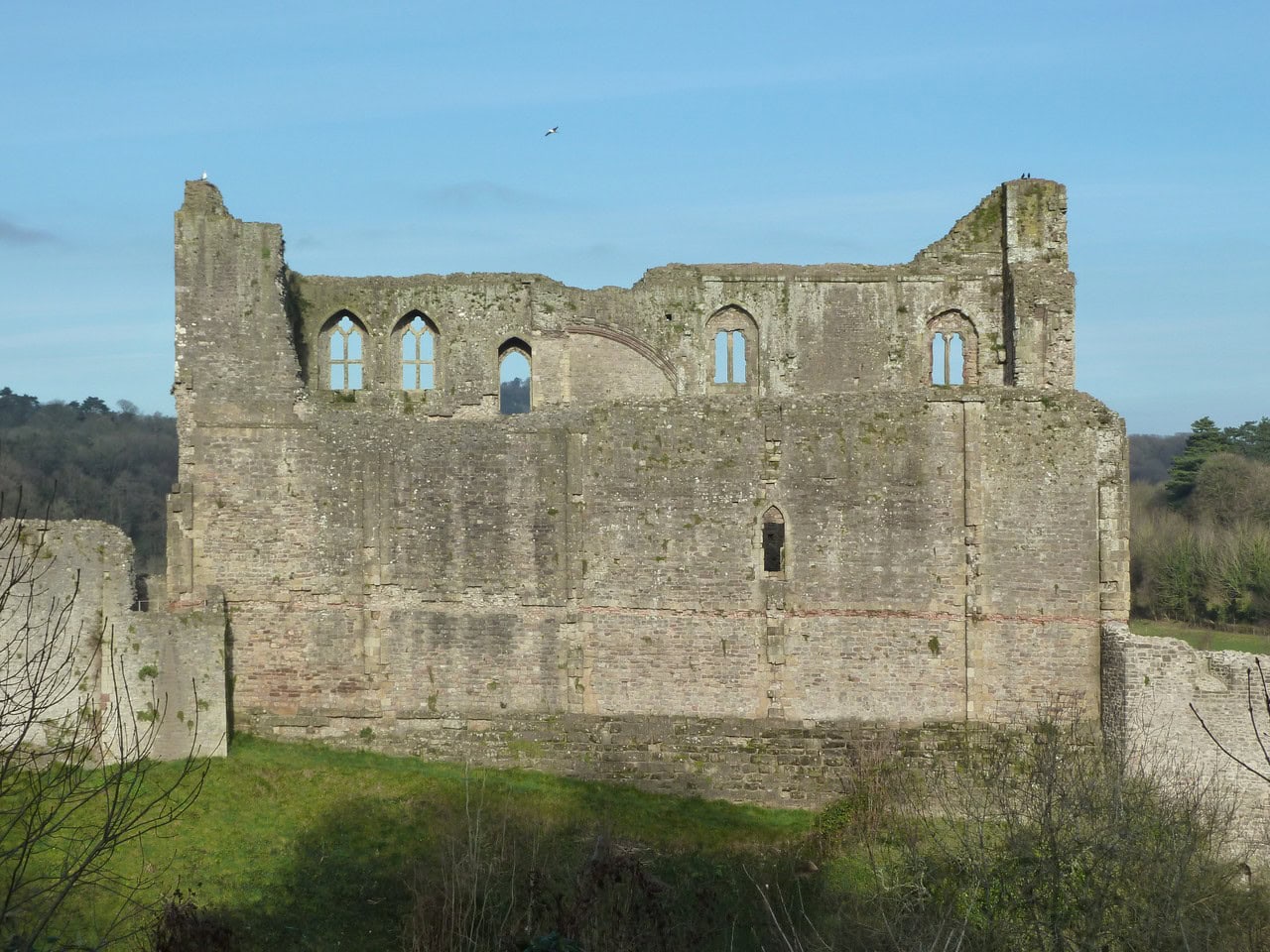
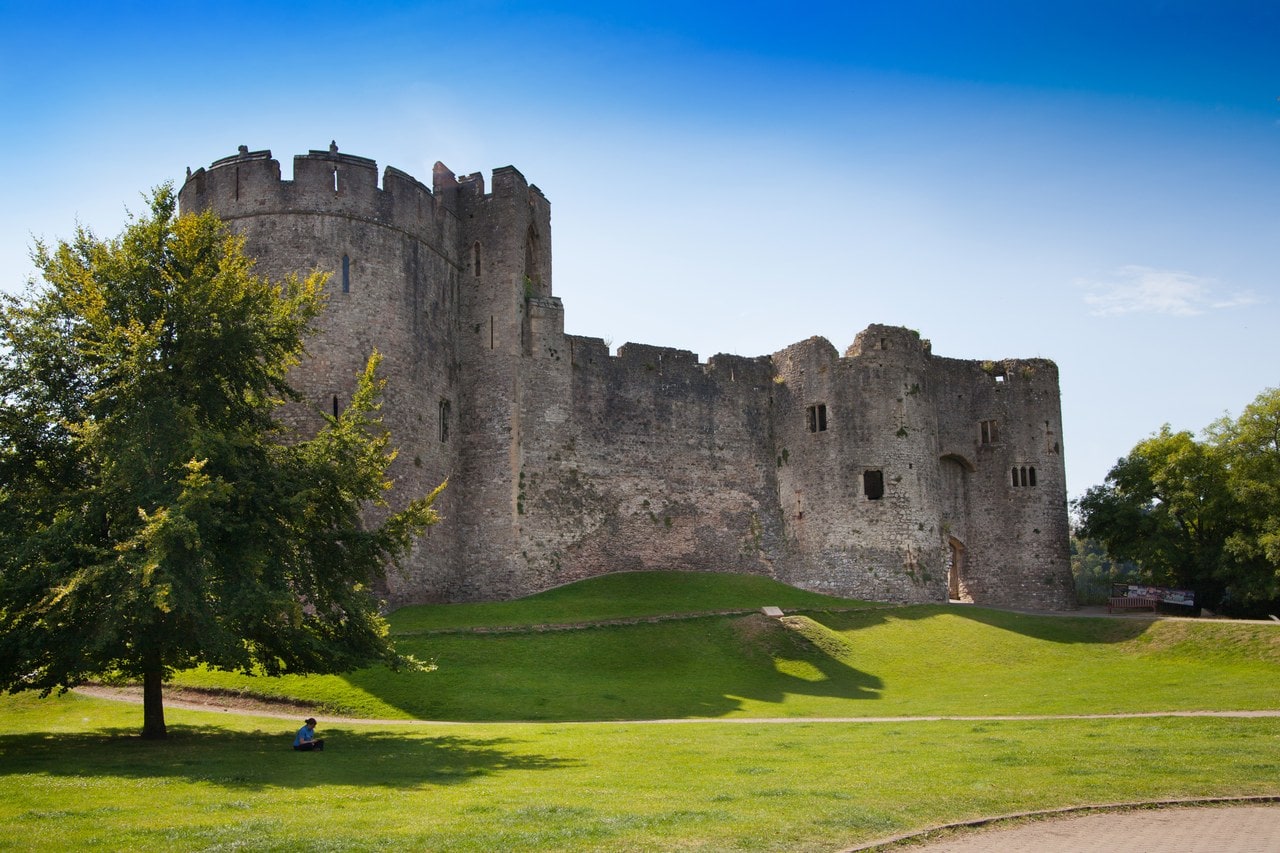
Chepstow shows what care looks like in a national record. The Royal Commission’s Coflein entry traces the castle’s origin to the early Norman period, when William fitzOsbern held jurisdiction over the area as Earl of Hereford from 1067, then hedges the building itself: the great tower “may have been commissioned by William I during his visit to South Wales in 1081.” Its upper story came later still, when Roger Bigod, fifth Earl of Norfolk, transformed Chepstow into a palatial stronghold in the thirteenth century. Two dates, two centuries apart, on one elevation, and only the earlier one is hedged.
All of this points at something the laboratory dates keep showing. At Chepstow the upper story is two centuries younger than the tower beneath it. At Inuyama it runs the other way: floors one to four went up as one campaign, and a basement floor beam was felled between 1644 and 1647, close to sixty years after the pillars above it. Roofs and upper stories are the most replaced parts of any castle tower, but which part of a building is oldest is a question each building answers for itself, and a date given for a whole structure usually belongs to part of it.
A Castle Timeline
Every date in this article rests on a different kind of evidence, and the differences are easier to see drawn than described. The chart below plots each candidate on one scale and colors each date by the method behind it. Where a building carries both a written claim and a laboratory result, the two sit on the same row and the distance between them is what the two kinds of evidence are measuring differently.
You Can Visit
The difference between old fabric and an old site is also a practical one, so the guides below are split the same way the table is. They cover the French and German entries, which are the ones this site has built guides for. Chepstow, Inuyama and Maruoka are not in our catalog yet, and Windsor Castle now has a full guide of its own, and the Citadel of Aleppo carries no visiting advice here at all.
Where you can see the early fabric
Langeais’s ruined keep stands separately in the grounds, behind the much later château, and it is what the Bibliothèque nationale’s superlative is about. The eleventh-century great tower at Loches survives to a height that still reads from the town below.
Doué-la-Fontaine, which carries the oldest keep date in France, is not one of those two. Its own commune states that for reasons of safety and preservation the site is opened only exceptionally.
Where the age is in the site, not in what stands
Several others in our catalog are worth a visit for the continuity of the site rather than for early fabric you can see. Château d’Angers, Château de Chinon and Château de Saumur all occupy sites in use from the tenth century or earlier, but what stands is later. Château de Puilaurens is described by its own operator as a thirteenth-century royal fortress despite a much earlier first mention, which is this article’s methodological point in a single building. Rochlitz and Schwerin are the German equivalents; at Schwerin the dated rampart is under the courtyard and invisible.
For how the parts of these buildings fit together, see parts of a medieval castle; for the great towers specifically, castle keeps.
Common Questions
What is the oldest castle in the world?
No single answer emerges from the heritage records consulted here, and that is a fact about the record rather than a gap in it. The French state’s own protection notice calls the keep at Doué-la-Fontaine the oldest in France, tenth century, and it survives as excavated remains. The Bibliothèque nationale de France calls the keep at Langeais the oldest surviving square stone keep in France, dated to around the year 1000. Historic England’s blog describes Windsor as the oldest occupied castle in the world. Aleppo’s citadel stands on a fortified site with evidence of occupation reaching back to the tenth century BC, though its surviving military architecture is principally medieval.
What is the oldest castle still standing today?
Among buildings rather than excavated remains, the strongest attested claim of this kind is the keep at Château de Langeais, which the Bibliothèque nationale de France calls the oldest surviving square stone keep in France. Langeais’s own operator puts it more cautiously still, as one of the oldest stone keeps surviving today. Both hedges matter: the claim covers France, and it covers square keeps.
When was the first ever castle built?
Conventionally the tenth century, in what is now France. But a 2024 peer-reviewed study points out that this starting date rests partly on how rarely Carolingian writers mention fortified structures in the Frankish heartlands, and asks whether that silence reflects the assumptions of the writers rather than an absence of buildings. The conventional answer is partly a fact about what Carolingian writers chose to record.
What is the oldest lived-in castle in the world?
Historic England writes that Windsor Castle holds the distinction of being the oldest and largest occupied castle in the world, and that it has served as a royal residence for over 900 years. The same organization’s statutory list entry for Windsor does not repeat the claim. Germany’s equivalent, Burg Meersburg, is called the oldest inhabited castle in Germany by its owners, who live there year-round.
What is the second oldest castle in the world?
None of the heritage authorities consulted for this article publishes a ranking, so there is no second place to report. The claims that exist are scoped to individual countries and to particular kinds of building, and they were made independently by institutions that do not reference each other. An ordered list of the world’s oldest castles is something the internet assembled, not something the record contains.
Who owns the oldest castle in the world?
It depends on which claim you follow, and for one of them the record does not say. Historic England’s list entry describes Windsor, the one claim here scoped to the world, as a royal palace. Langeais belongs to the Institut de France. Burg Meersburg is in private hands, and its owners live in it all year, which is the basis of their claim. The remains at Doué-la-Fontaine were classified as a historic monument in December 1973, but the protection record leaves the owner’s legal status blank, so it settles what the site is protected as and not who holds it.
Do any medieval castles still exist?
A great many, though what survives is usually partial. Historic England notes that Richmond Castle preserves more eleventh-century architecture than any other castle in England. The same pattern holds at every castle named in this article, and it is why a single foundation date rarely describes what you are looking at.
Principal Sources
- Aga Khan Trust for Culture. Syria: Citadel of Aleppo. Aga Khan Development Network, 2008.
- Bibliothèque nationale de France. “Langeais, premier donjon de pierre.” Passerelles.
- Burg Meersburg. “Timeline.”
- Château de Puilaurens. Official site.
- Commune de Doué-en-Anjou. “Sites patrimoniaux.”
- Gregory of Tours. Libri historiarum X, Book X, chapter 31. Edition: MGH, Scriptores rerum Merovingicarum 1,1.
- Historic England. FISH Thesaurus of Monument Types, concept 68833, Castle.
- Historic England. National Heritage List for England, entry 1117776, Windsor Castle.
- Historic England. “What Is the Oldest Castle in England?” Heritage Calling, November 14, 2024.
- Historic Environment Scotland. Thesaurus of Monument Types, concept 295, Castle.
- Institut de France. “Présentation.” Château de Langeais.
- Inuyama Castle Management Office. Official site.
- Inuyama City. Tree-ring dating report on the Inuyama Castle keep, 2021.
- Landesamt für Kultur und Denkmalpflege Mecklenburg-Vorpommern, Landesarchäologie. “Slawischer Burgwall unter dem Schweriner Schloss.”
- MacLean, Simon. “Frontiers and fortifications in the Carolingian imperial imagination.” In Carolingian Frontiers: Italy and Beyond, Reti Medievali E-Book 48, Firenze University Press, 2024, pp. 141-159.
- Maruoka Castle. “Highlights.” maruoka-castle.jp.
- Mason, Robert B., and Julia Gonnella. “The Petrology of Syrian Stonepaste Ceramics: the View from Aleppo.” Internet Archaeology 9, 2000.
- Matsumoto City. Summary report on the construction date of the Matsumoto Castle keep, November 6, 2025.
- Ministère de la Culture, base Mérimée. Notice PA00097821, Château de Loches.
- Ministère de la Culture, base Mérimée. Notice PA00109089, Doué-la-Fontaine.
- Richer of Reims. Historiarum libri IIII, IV.90-91. Monumenta Germaniae Historica.
- Royal Commission on the Ancient and Historical Monuments of Wales. Coflein, NPRN 95237, Chepstow Castle.
- Sakai City. Maruoka Castle keep: academic investigation, 2015-2018.
- UNESCO World Heritage Centre. Property 21, Ancient City of Aleppo.
Image credits. Hero: Photo: Alexey Fedorenko / Adobe Stock; Diagram: Own work, StoneKeep Atlas, CC BY 4.0; Inline photographs: each credited in its own caption, with its source file linked where the license requires it. Freely licensed images are resized to fit; otherwise unaltered.