
Haunted Castles
Every list of haunted castles you can find will tell you which buildings are haunted. Almost none will tell you how anybody knows. This one asks a narrower question and answers it for nineteen buildings across four countries: who wrote the ghost down, in what kind of document, and in what year. We do not adjudicate whether a castle is haunted, which is not a question a travel publication can settle. We report the record of the claim, and the record turns out to be much younger, much thinner and much more interesting than the stories built on it.
Three things fall out of asking it that way. A ghost story is almost never as old as it says it is, and the gap between the events a legend describes and the first text that records them runs to centuries in most of these cases. The famous version is frequently not the documented one: the best-attested apparition at the Tower of London is not Anne Boleyn, and the earliest datable water beast near Loch Ness is not in the loch. And where these buildings’ operators and heritage authorities write their own history, the ghost is almost never in it. It lives on a stories page, on an events listing, or in the document that rents the castle out for filming.
What “Haunted” Means in the Record
A ghost claim survives in writing or it does not survive at all. When it does, it lands in one of five document classes, and knowing which one you are holding tells you most of what you need about how old the claim is and how much weight it bears.
The antiquarian collection. A named compiler gathers stories from correspondents and prints them with attributions. John H. Ingram’s The Haunted Homes and Family Traditions of Great Britain is the workhorse for Britain, and its two series are the reason this article can date anything at all. He names his sources, footnotes his chain of custody, and covers some two hundred houses and castles. His First Series appeared in 1884 and the combined text by 1886, when Ingram collected both series. That makes 1886 the safe date for anything found in him.
The local chronicle or documented event. A dated record of something that actually happened, which a legend later attaches itself to. Janet Douglas, Lady Glamis, was burned on Castle Hill, Edinburgh, in 1537. That execution is documented. The identification of a later apparition with her is a separate claim with a separate, much later record.
The newspaper and periodical press. This class begins earlier than most people assume. A provincial newspaper, the Hereford Journal, carries a Tower of London apparition in 1789, sixty years before Notes and Queries began weekly publication in 1849 and a century before the Victorian psychical periodicals. The Society for Psychical Research was founded in 1882 and therefore cannot carry anything earlier, which is a useful floor: an account attributed to psychical research beside an 1860s date is misattributed by definition.
The Gothic novel and literary fiction. The Castle of Berry Pomeroy, a novel of jealousy and ghostly revenge, was first published in 1806. Thomas Hood’s “The Tower of Lahneck” appeared in the New Monthly Magazine in 1842. Both are fiction and both feed directly into what later gets told as tradition.
The modern operator’s own visitor material. A castle’s website, guidebook or ticketed event. This is the newest class and the one most readers actually encounter. Where a claim’s earliest datable record is an operator page from the 2020s, the honest thing is to say so.
The classes are not a hierarchy of truth. A newspaper of 1789 is not more reliable than a website of 2022; it is only older, and age is what this article measures.
How to Read a Castle Ghost Story
Every ghost claim has a chain with the same links, and the links break in predictable places.
At one end sits the event the legend describes, which usually has a date attached: a woman starved in a tower, a garrison massacred, a child walled up. At the other end sits the version you have heard, which is a tour, a listicle or a television segment. Between them sits the only part that can be checked, the earliest text anybody can point to, and the whole argument of this page is that the middle link is nearly always far closer to the modern end than to the ancient one. Our own castle documentaries work the same gap in film, taking the claim a castle is famous for and going to the primary record with it.
Four failure modes account for most of what goes wrong.
The date belongs to the event, not the record. A castle sells a fourteenth-century ghost, and the earliest document is Victorian. That is not a reason to disbelieve the story, but it is a different kind of claim from one with a dated record, and it should be labeled.
The motif migrates. A distinctive apparition is documented at one building and turns up later at another, better-visited one. The Radiant Boy is the cleanest example on this page, and the building he is documented at is not the building that sells him.
The name is later than the narrative. A story can be attested and the proper names in it can be much later additions, which means “the White Lady” and “the Blue Lady” may be modern labels on a genuinely older tale.
Fiction is mistaken for tradition, sometimes over the author’s objection. Thomas Hood printed a note saying his Lahneck story was his own invention, after a critic told him it was an old Rhine legend to be found in any guidebook. Twenty years later a version of it was running through the German press as fact.
The Castles and Their Records
What follows is ordered by the date of the earliest record, oldest first. That is a chronology, not a ranking, and nothing here says one castle is more haunted than another. The first entry is not about a castle at all, and where the line falls between a castle, a palace and a fortress is a question this page does not re-argue.
Before 704: a beast in the river Ness
The oldest datable text on this page is not about a castle at all, and it is not about the loch.
Adomnán, ninth abbot of Iona, wrote the Vita Sancti Columbae there at the end of the seventh century, before Adomnán’s death in 704. In Book II he tells how Columba, staying among the Picts, came on people burying a man who had been bitten by a creature in the water, sent his monk Lugne Mocumin swimming across, and turned the beast back with a command: “Noles ultra progredi, nec hominem tangas; retro citius revertere.” Go no further, touch not the man, go back with all speed.
The detail almost every retelling loses is in the Latin of the sentence before. Adomnán writes that Columba “necesse habuit fluvium transire Nesam”, that he was obliged to cross the river Ness, and that he came to its bank. Where the same work means the loch it says something else. So the oldest Loch Ness monster story is, in its own text, a river story, and it names neither the loch nor Urquhart Castle. We read it in Reeves’s edition by way of the Corpus of Electronic Texts at University College Cork.
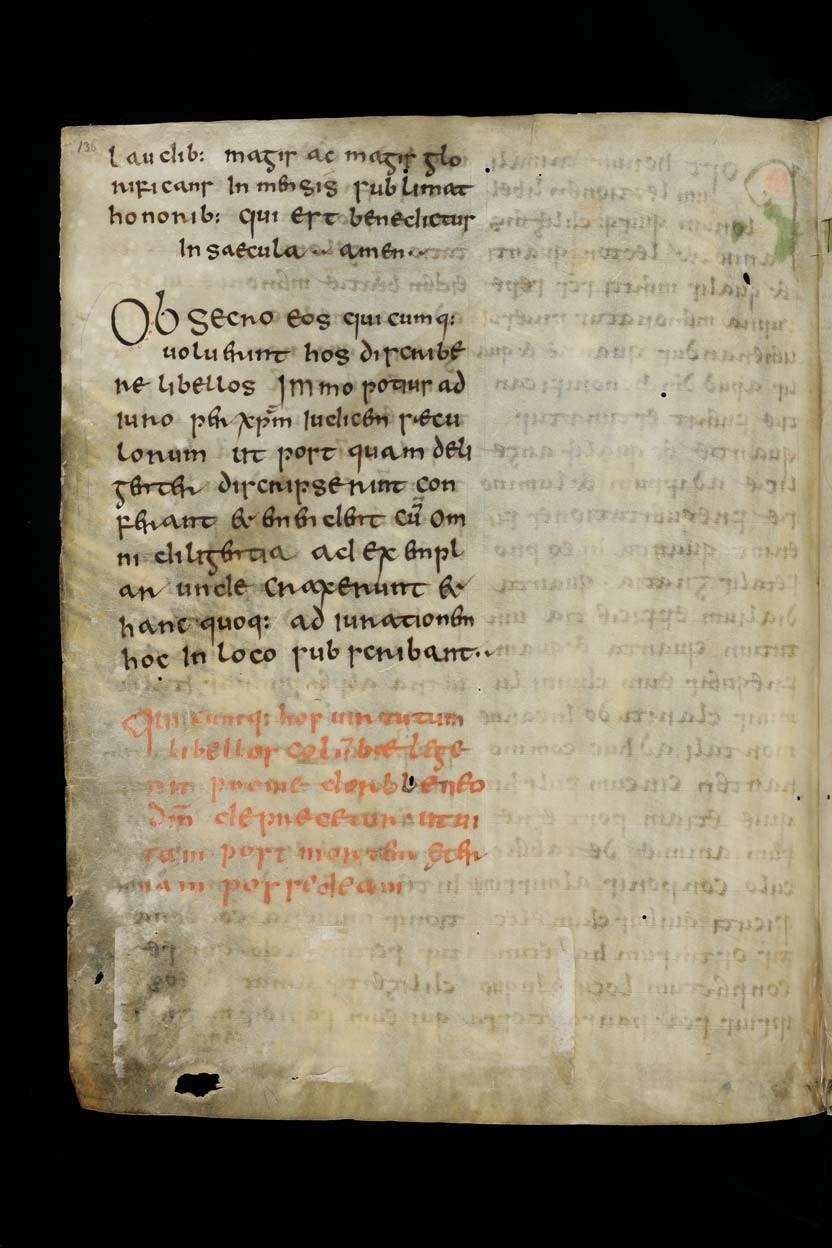
The chain here is unusually tight for an early medieval text. An episode placed around 580, a text by a named abbot who died in 704, and a surviving copy made by a named scribe, Dorbbene, who was at Iona in 713. Roughly 120 years from event to text.
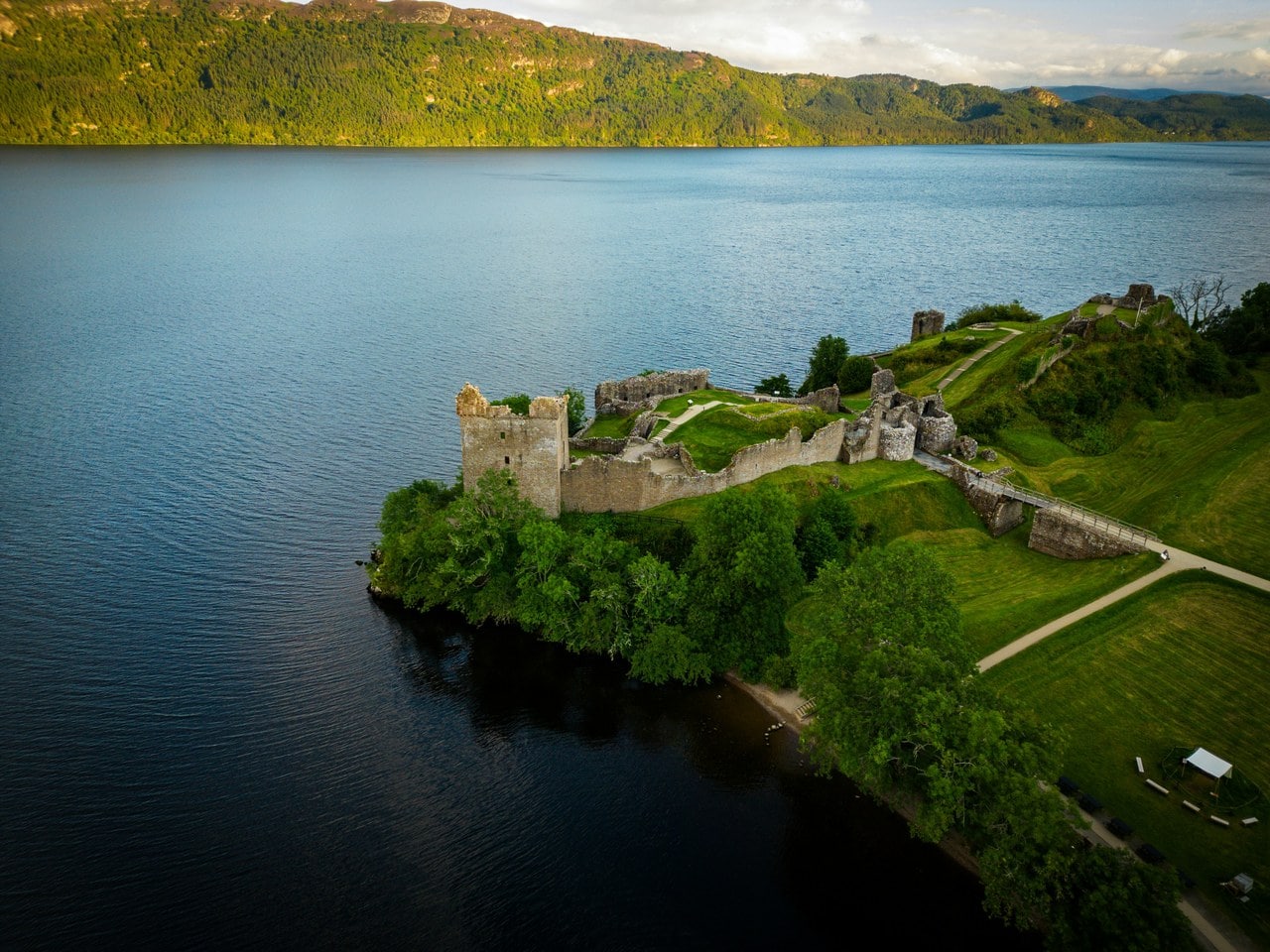
Historic Environment Scotland, which cares for Urquhart Castle, puts a question mark in its own heading and writes that Columba “may have visited” around AD 580, and that Adomnán “tells of the saint’s encounter with a monster in the loch.” The hedge is on the visit, which Adomnán asserts, and not on the water, which he does not. That drift from river to loch is one word wide, and here it is running through a national heritage body’s own page.
1587: one Latin sentence about two castles on the Rhine
Two ruins face each other above Kamp-Bornhofen with a wall between them, and they have been called the Hostile Brothers for centuries. The tale gives two brothers, a quarrel over a woman, a duel and a wall built in spite.
The earliest written trace is a single sentence by a Dutch traveler. Arnoldus Buchelius passed up the Rhine in the summer of 1587 and recorded the pair in his Iter Germanicum. That is the second-oldest datable text in this article and it predates every English attestation here.
What the 1587 sentence does not contain is a ghost. Neither does the standard modern collection: Wilhelm Ruland’s Legends of the Rhine of 1906 gives the brothers a duel, a suicide and two ruins, and no revenant anywhere. Heinrich Pröhle, writing in 1886, observed that the nickname came first and the legend grew up to explain it, which is the reverse of how these stories are normally told. Nor do the buildings support a tale of two lone brothers: Liebenstein is a Ganerbenburg, a castle held jointly by several branches of a family, with up to ten resident households recorded in the fourteenth century. Its keep’s dimensions are given differently by two authorities and we print neither.
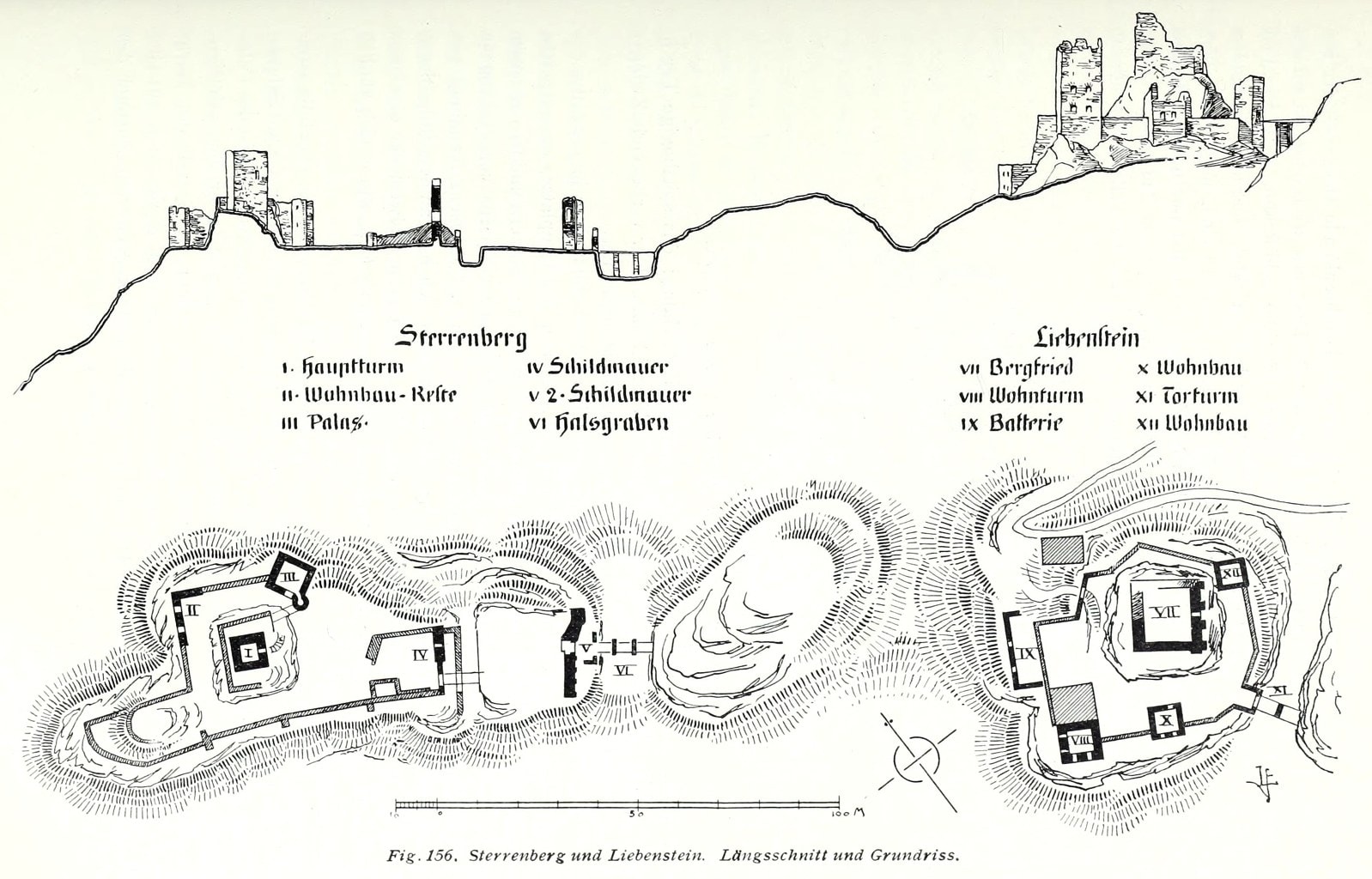
The state heritage authority agrees, and hedges three times in one sentence. Generaldirektion Kulturelles Erbe Rheinland-Pfalz asks visitors whether they have heard the Sage of the two hostile brothers and offers to tell them “wie viel Wahrheit und wie viel Dichtung” is in the story: how much truth and how much invention. The Institut für Geschichtliche Landeskunde is equally careful, saying only that the feud story “möglicherweise” derives from a documented territorial rivalry.
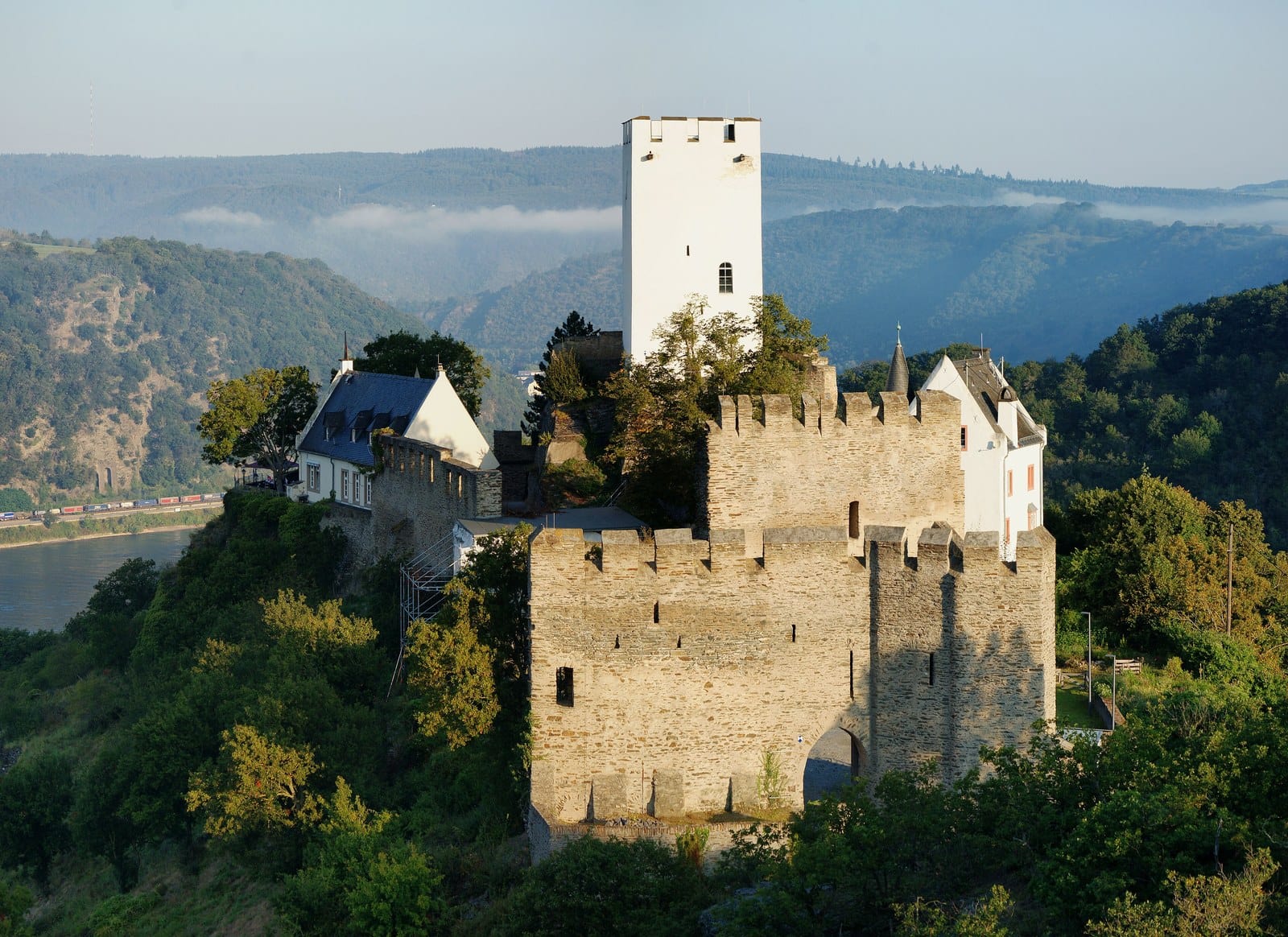
One fact about the building as it stands belongs here, because it changes what you are looking at. At Sterrenberg the square main tower, the white silhouette in every photograph of the pair, was raised in 1974 and given a battlement crown and a white render. The specialist database records that it was built up to its presumed height, not its original one, and the distinction is the authority’s own. The ruins were left as ruins right through the Romantic century and were given their medieval look by a West German state heritage administration inside living memory.
1602 and c. 1628: Windsor, where the famous ghost is in the wrong place
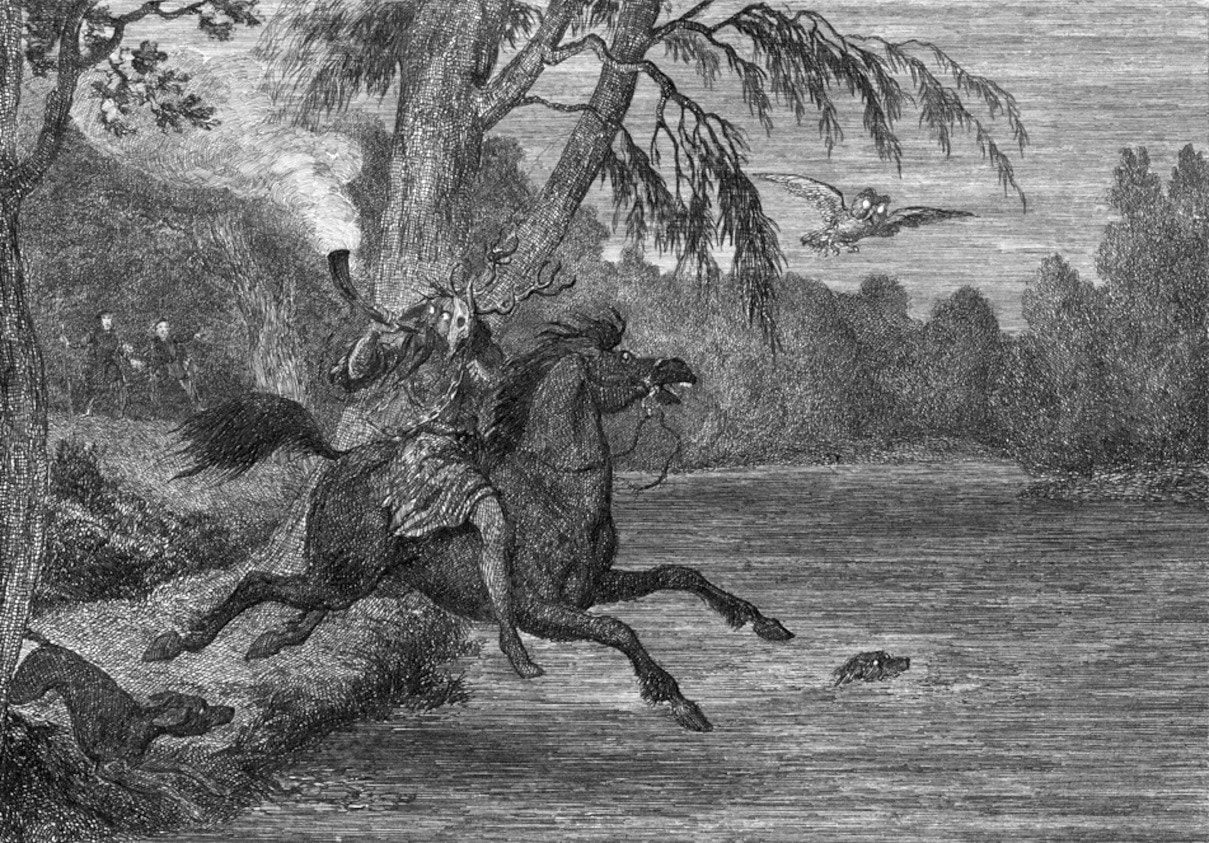
The best-known specter at Windsor is Herne the Hunter, and Herne is genuinely old. He appears in both substantive texts of The Merry Wives of Windsor. The Folio of 1623 has “an old tale” of “Herne the Hunter (sometime a keeper heere in Windsor Forrest)” walking at midnight round an oak. The Quarto of 1602 spells the name Horne, so a search for “Herne” in the Quarto returns a false zero; its line runs “Oft haue you heard since Horne the hunter dyed.”
Both texts present the story as already current rather than as their own invention. The Quarto has mothers using it to frighten small children; the Folio has “The superstitious idle-headed-Eld / Receiu’d, and did deliuer to our age” as truth. So the play is a witness that the legend preceded it, and it is the earliest witness anyone has.
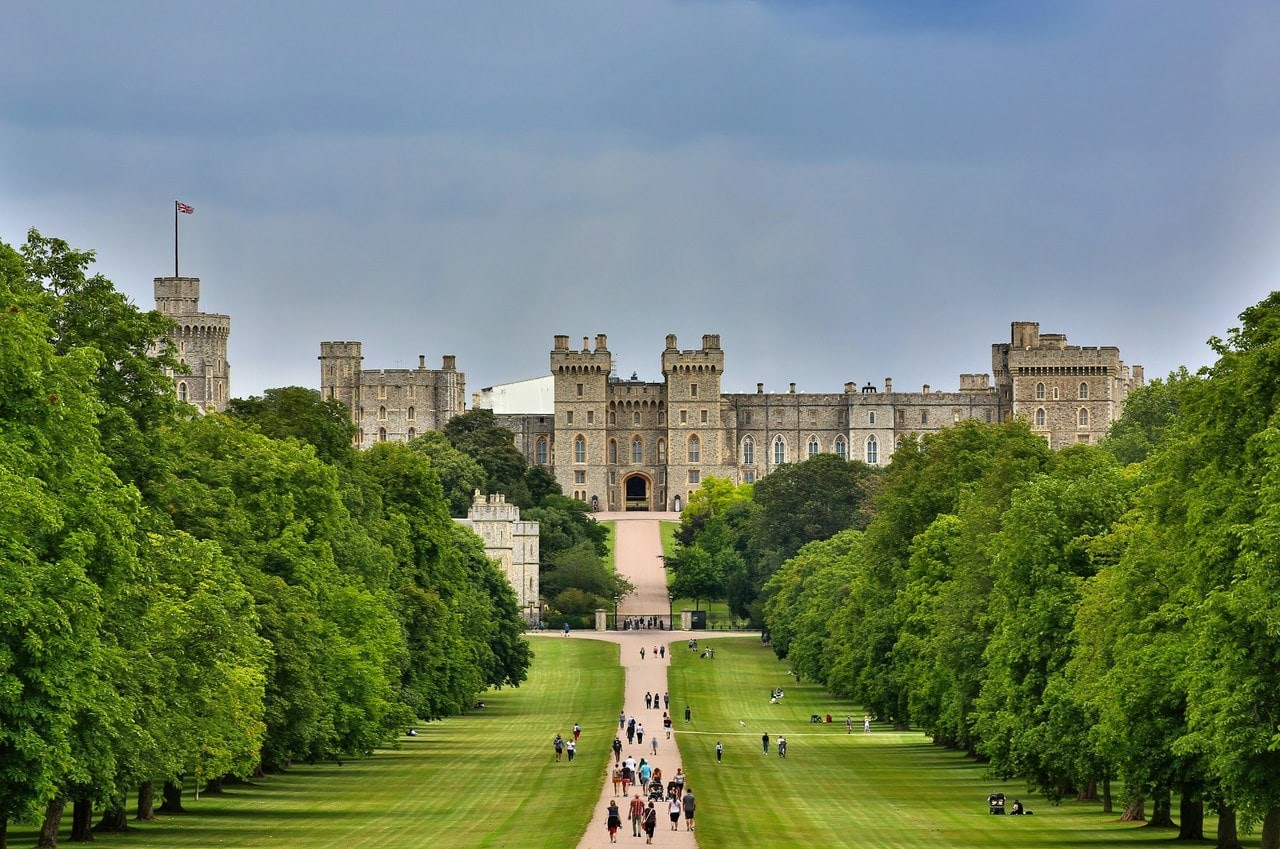
Herne belongs to Windsor Forest, not to Windsor Castle. He is a woodland figure attached to an oak, and the modern habit of stationing him in the castle is a relocation rather than a record.
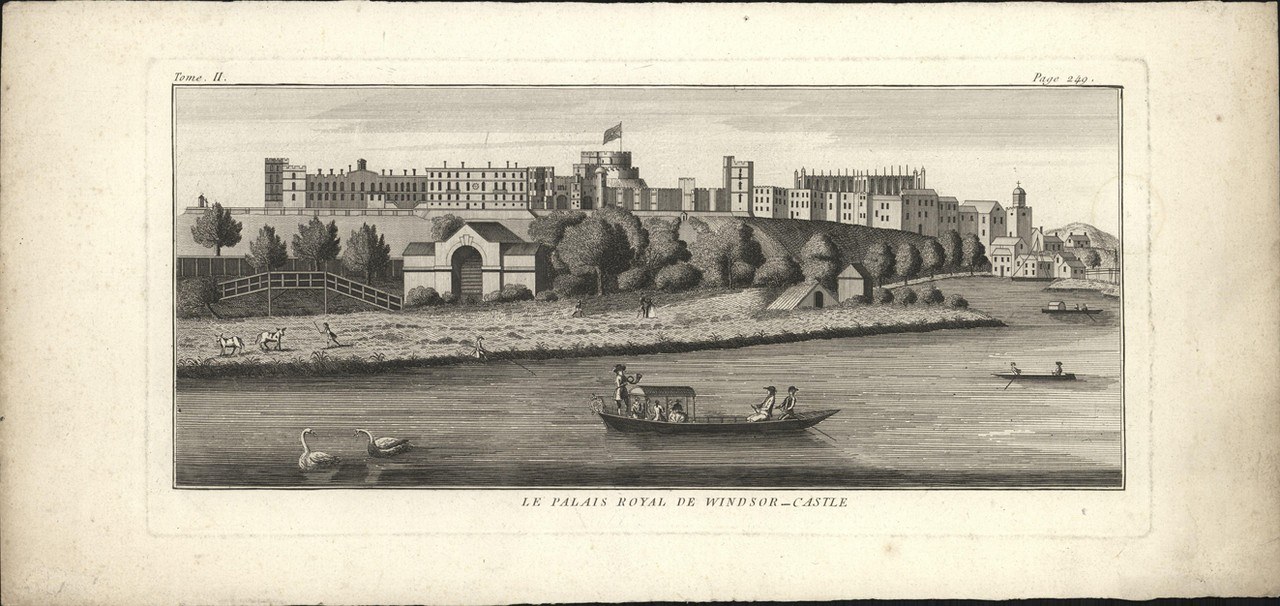
The earliest apparition datable to the castle itself is a different affair entirely. Edward Hyde, Earl of Clarendon, records in his History of the Rebellion that the ghost of Sir George Villiers appeared to an officer of the King’s Wardrobe inside Windsor Castle about six months before the Duke of Buckingham was assassinated, which places it around 1628. John Aubrey carries a version too. The trap here is the name: this Sir George Villiers is the father of the Duke, not the Duke himself, and modern retellings collapse the two routinely. Ingram, who reprints the account, notes that the surviving versions “are so various and varied” that the case has produced endless argument: a seventeenth-century apparition arriving with a nineteenth-century source criticism already attached.
The Royal Collection Trust’s own visitor pages do not mention him, or any other ghost. Because the Trust’s site refuses automated fetches, eight of them were read through the Internet Archive in snapshots running from January 2025 to August 2026: the landing page, the highlights, the things to see and do, the history through the centuries, Henry VIII, the fire, practical information and the Long Walk. Not one carries a ghost, a haunting or an apparition anywhere in its markup. Across everything the archive holds for the whole domain, no page has Herne in its address.
1789: the Tower of London, and it is not Anne Boleyn
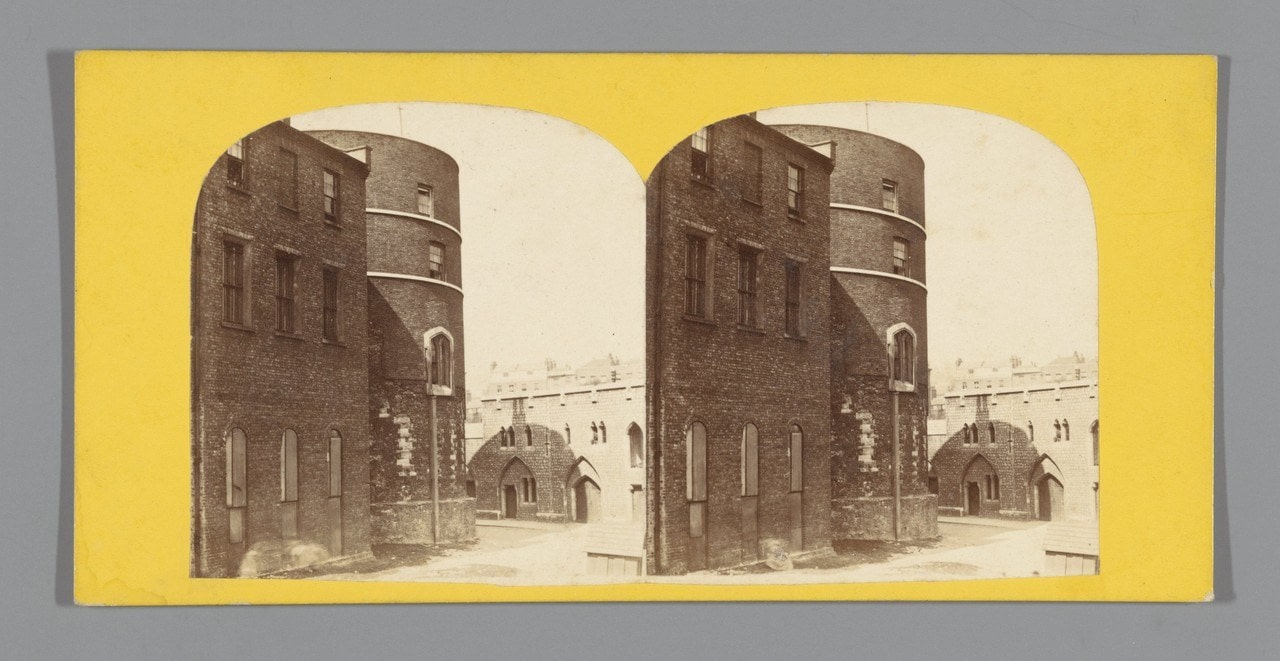
The Tower has the best-documented apparition chain in this article, and Historic Royal Palaces traced it themselves before we did. Dr Alden Gregory, Curator of Historic Buildings, published the trace in 2024 and worked backward through the sources: a Notes and Queries query of 25 August 1860, On Animal Magnetism of 1851 by William Gregory, and behind both a Hereford Journal notice of 1789. That notice reports that the Martin Tower had “long been disturbed with noises, and spectres in various fearful shapes.” Alden Gregory called the 1851 book the first record “as far as I could tell,” then found the 1789 notice behind it. The hedge is his, not ours. We have not opened the Hereford Journal ourselves; the trace is HRP’s and is cited as theirs.
The location explains itself once you know that the Crown Jewels were displayed in the Martin Tower between 1669 and 1843, which is why the Keeper lived there and why the stories cluster on that one building.
The best-known first-person account is by Edmund Lenthal Swifte, Keeper of the Crown Jewels from 1814 to 1852, published in Notes and Queries and reprinted by Ingram. Swifte describes sitting at supper in the Jewel House when a cylindrical figure “like a glass-tube” appeared, hovering between ceiling and table, its contents “white and pale azure, like to the gathering of a summer-cloud.” On the date the sources differ, and both are credible: HRP dates the apparition to January 1816, while Ingram’s transcription of Swifte’s own letter gives October 1817, supported by Swifte’s internal arithmetic when he writes that forty-three years have passed. We report both and average neither.
Swifte then does something that makes him a far better witness than his ghost does. In the same letter he records that some young lady-residents in the Tower were “suspected of making phantasmagorial experiments at their windows,” after which the Jewel House guard was doubled. A named witness supplying a mundane explanation inside his own ghost report is as good as this evidence gets.
So the Tower’s documented chain runs from 1789 to 2024, and what it carries is Swifte’s cylinder of light and the spectral bear that gives Historic Royal Palaces’ own account its title. Anne Boleyn is not in it. Ingram’s 1886 compilation returns exactly one mention of her name in the entire book, and it is Swifte describing his own sitting room. This is a statement about the best-documented attestation record and not about what visitors report seeing.
1830: a secret chamber at Glamis, and a monster that arrives 56 years later
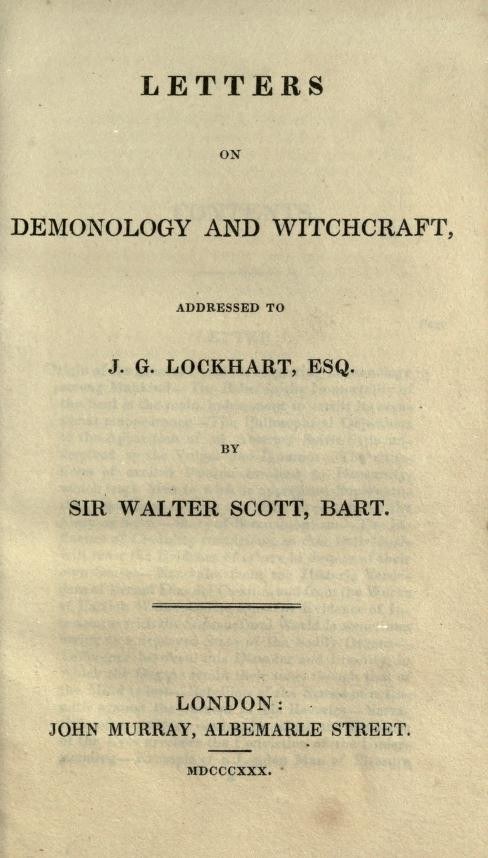
Sir Walter Scott stayed at Glamis around 1791 and wrote it up in Letters on Demonology and Witchcraft in 1830. He records a secret chamber whose entrance, “by the law or custom of the family, must only be known to three persons at once”: the Earl of Strathmore, his heir apparent, and one confidant.
Scott’s passage contains no monster, no prisoner and no deformed heir. That absence carries real weight, because it sits inside a first-hand account by a named author who was describing the tradition itself and who was famously willing to retail a good story.
Ingram then gives Glamis two chapters running to several thousand words, discusses the chamber at length, quotes Howitt and All the Year Round, and tells the Earl Beardie card-playing legend in full. The monster is there, and how it is there is the point. Ingram lists it among the “attempted hypotheses” people offered for what the chamber holds: that “at certain intervals a kind of vampire is born into the family of the Strathmore Lyons,” which is “scarcely possible to destroy” and so is “kept concealed till its term of life is run,” because “even monsters need nourishment.” He calls that suggestion wild, sets a rival theory about Lady Glamis’s familiar demon beside it, and dismisses the lot: “no probable solution of the mystery has yet been given.”
The monster reaches print in Notes and Queries, Tenth Series Volume X, on 26 September 1908, in a lead item signed “Outis,” where the heir is described as “so unpresentable that it is necessary to keep him out of sight.” Replies followed in the same volume.
Chamber in print 1830, with nothing in it. Monster in print by 1886, as a guess Ingram reports and refuses. Monster told straight in 1908, with a named informant and a deformed heir. Fifty-six years from the chamber to the creature, and another twenty-two before anyone told it as a story rather than a hypothesis. It is the single most persuasive datable sequence on this page, and what makes it persuasive is that the creature enters the record as an explanation somebody was reaching for.
Two hedges travel with it. The 1908 contributor says the story was told to him “some sixty years ago, when he was a boy,” which is a claim about oral memory reaching back to the 1840s and is the honest counterweight to our own finding. And the same correspondence reports that the family discourages the embroidered versions and is “in no way responsible for this long-lived myth,” which is a family denial on the record for well over a century.
August 1863: Idilia Dubb, and a chain with every link dated
Burg Lahneck carries a case documented in unusual depth, and detailed enough to be taken apart.
The story: a seventeen-year-old woman named Idilia Dubb climbed the tower of the ruined castle alone in 1851 while on a Rhine holiday with her family, to draw the view. The wooden stair collapsed behind her, nobody heard her, and she died of thirst over several days. Her remains and her diary were found years later.
Every link in the chain has a date, thanks to the archivist Klaus Graf, who worked the newspaper runs URL by URL.
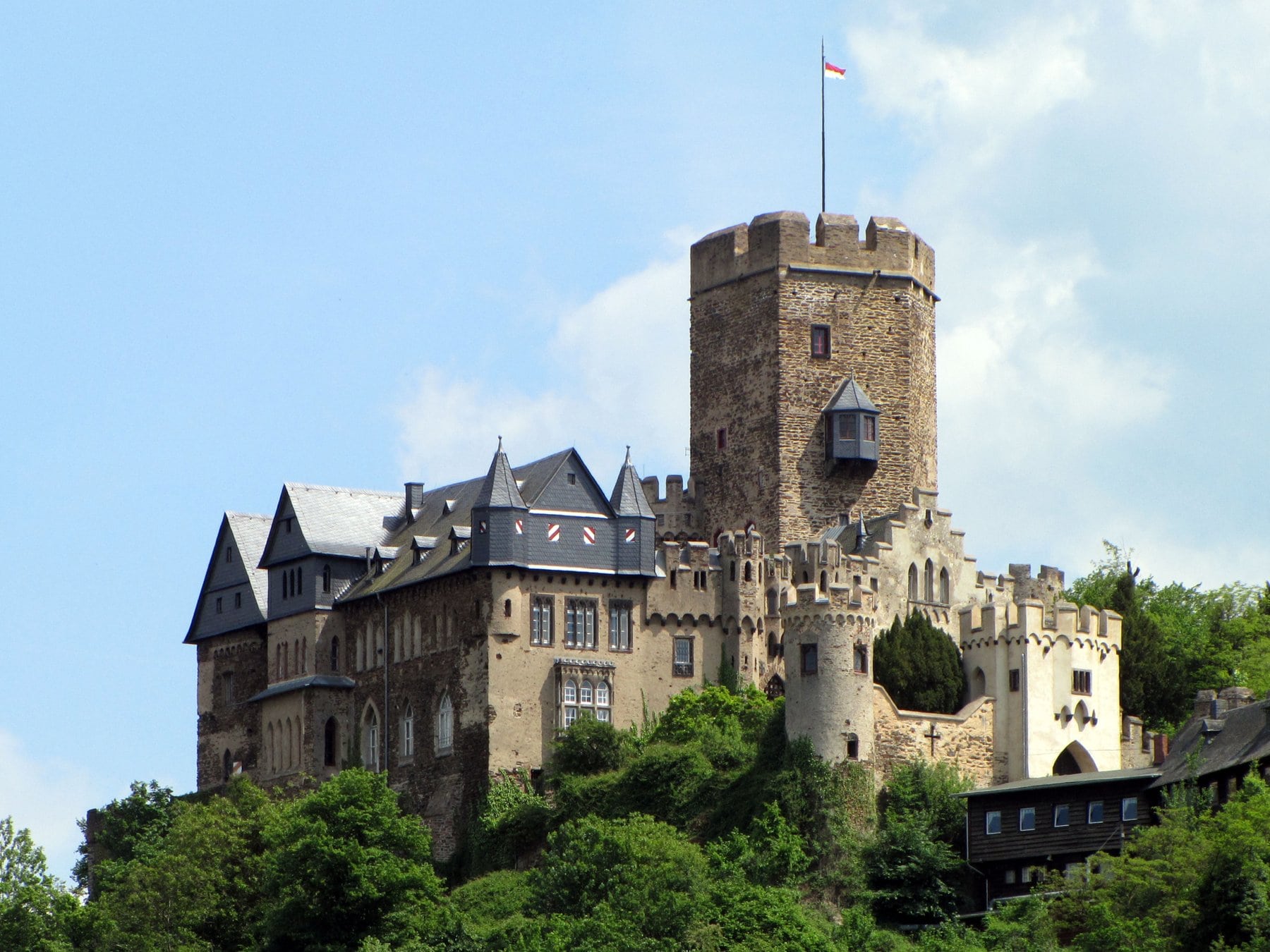
The earliest datable text is a feuilleton titled “Der Tod auf Burg Lahneck,” which ran in the Neues bayerisches Volksblatt at Stadtamhof from 26 August 1863. A separate printing followed in the Adenauer Kreis- und Wochenblatt that October. Both are twelve years after the death the story claims, both appear in general-interest entertainment papers about 400 km apart, and neither is a Rhineland local record. For that reason our own guide to the castle now describes the story as first published in August 1863.
In June and July 1864 a short version ran across at least eighteen German-language papers in three weeks, from the Duchy of Ratzeburg to South Tyrol, most of them crediting the Pfälzer Zeitung of Speyer. One editor doubted it in print at the time. The Münchner Allgemeine Zeitung appended a note: “Diese Unglücksgeschichte mag sich ereignet haben. Hoffentlich aber ist sie nur romantisch erfunden,” this unhappy story may have happened, but one hopes it is only romantically invented.
Graf’s finding on the archives is the model of how a negative should be stated. There is no archival record that could secure the story, he writes, and the alleged contemporary newspaper reports of the death could not be found either. He rests that on a published local source collection, on Peter Weller’s study, and on his own systematic sweep, and he says explicitly that the sweep is incomplete.
Behind the 1863 feuilleton stands a piece of fiction. Thomas Hood published “The Tower of Lahneck. A Romance” in 1842, at page 161 in the New Monthly Magazine volume for the first part of that year: two women climb the tower, are trapped at the top, and nobody hears them. Hood appended a note to it, and the note is the crux of the chain:
“Note. – This story – which some hardy critic affirmed was ‘an old Legend of the Rhine, to be found in any Guide-book’ – was suggested by the recital of two ladies, who attempted to ascend to the top of the Tower of Lahneck, but were deterred by the shaking of the stone stairs.”
A critic told Hood his story was an old Rhine legend. Hood printed a denial and named the anecdote it came from, which his Memorials say involved his own wife. That Hood’s romance is the model for the 1863 story is Graf’s own hypothesis, offered in the first person as a proposal, and it should be read as the argument it is rather than as a proven filiation.
One detail we decline to settle. Graf’s opening sentence reports that Idilia came from Edinburgh and attributes that to Wikipedia in the same clause; the castle’s operator writes of the englische Familie Dubb. Two sources, one of them tracing to an encyclopedia lead, so this article gives her no nationality.
Finally the “primary document.” A diary presented as hers appeared in Sweden in 2001, in German in 2002 and in English in 2010, marketed as authentic. Graf, a working archivist, has it assessed as a forgery: a modern young-adult book that continues the nineteenth-century fiction while purporting to be an edition. Following Peter Weller, he names Hans Hatwig as its author.
Claimed event 1851. First text August 1863. Fictional model 1842. Primary document 2001.
Burg Lahneck itself gives Idilia Dubb a whole page and publishes the death while claiming no haunting at all: no Geist, no Spuk, no Gespenst, no Sage on that page.
1886: Berry Pomeroy, where the story is older than the names
Devon’s Berry Pomeroy is sold with two apparitions: a White Lady said to be Margaret Pomeroy starved by a jealous sister, and a Blue Lady who bore her own father’s child. Ingram carries the second narrative in full and names his authority: Sir Walter Farquhar, the physician, called to attend the steward’s wife at the castle.
Across Ingram’s whole 1886 text, “Blue Lady” returns zero and “Margaret” returns zero. He uses “White Lady” eleven times and none of them is Berry Pomeroy. So the story is attested by 1886 and the names are not, in that corpus. That is a statement about one compilation rather than a claim that the names are modern.
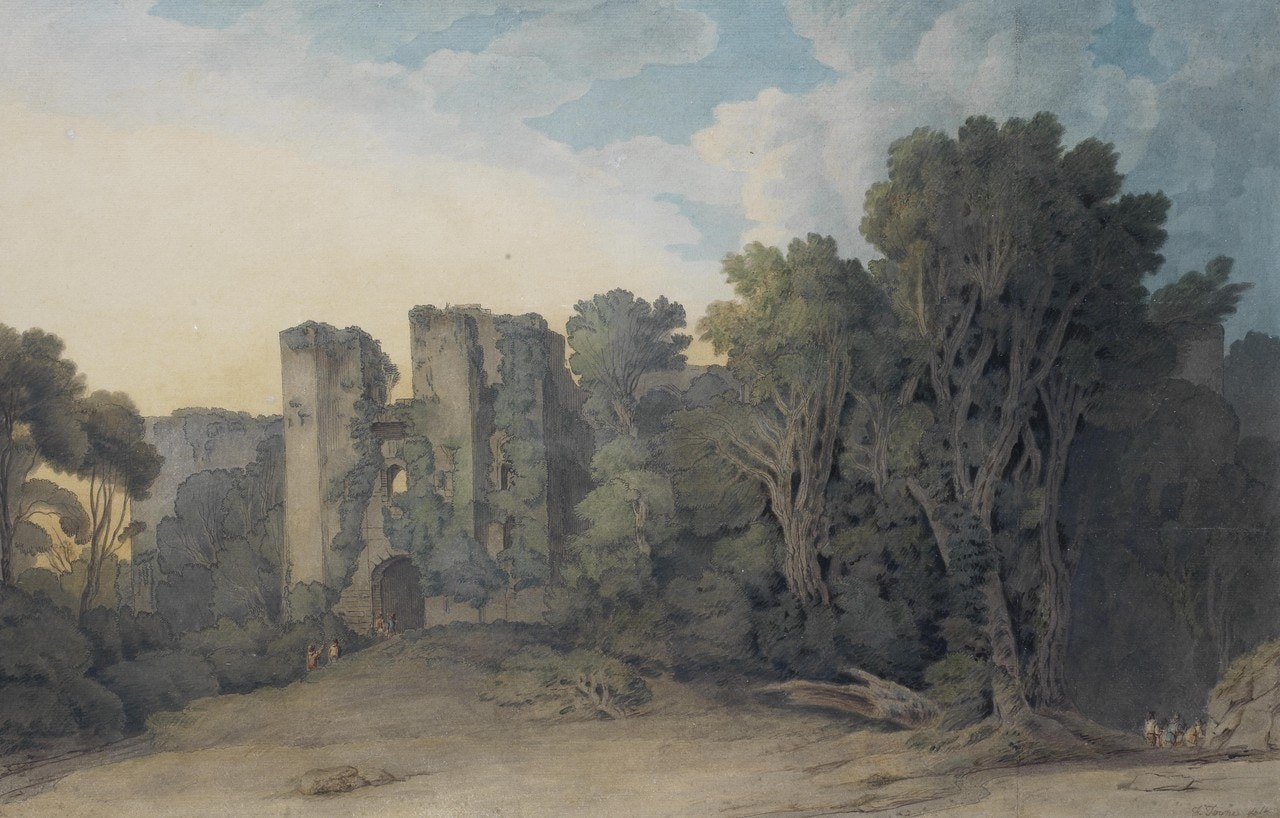
English Heritage’s own history page, written by Charles Kightly, is the most useful thing any heritage body says about any castle here:
“Imaginations were inflamed by novels like The Castle of Berry Pomeroy, a ‘Gothic’ tale of jealousy, multiple murder and ghostly revenge first published in 1806 … Even today, perhaps unfortunately, Berry Pomeroy is promoted as ‘the most haunted castle in Devon’.”
A national heritage body that attributes the reputation to picturesque tourism and Gothic fiction, and puts the superlative in quotation marks as somebody else’s marketing, is unusual. On the visit page, a different document, English Heritage writes that the ruins “inspired blood-curdling ghost stories” and adds five words: “Some people still believe them.”
English Heritage does not date the hauntings to 1806, and neither do we. What is dated is the novel.
25 July 2022: the operator publishes its own ghosts, as questions
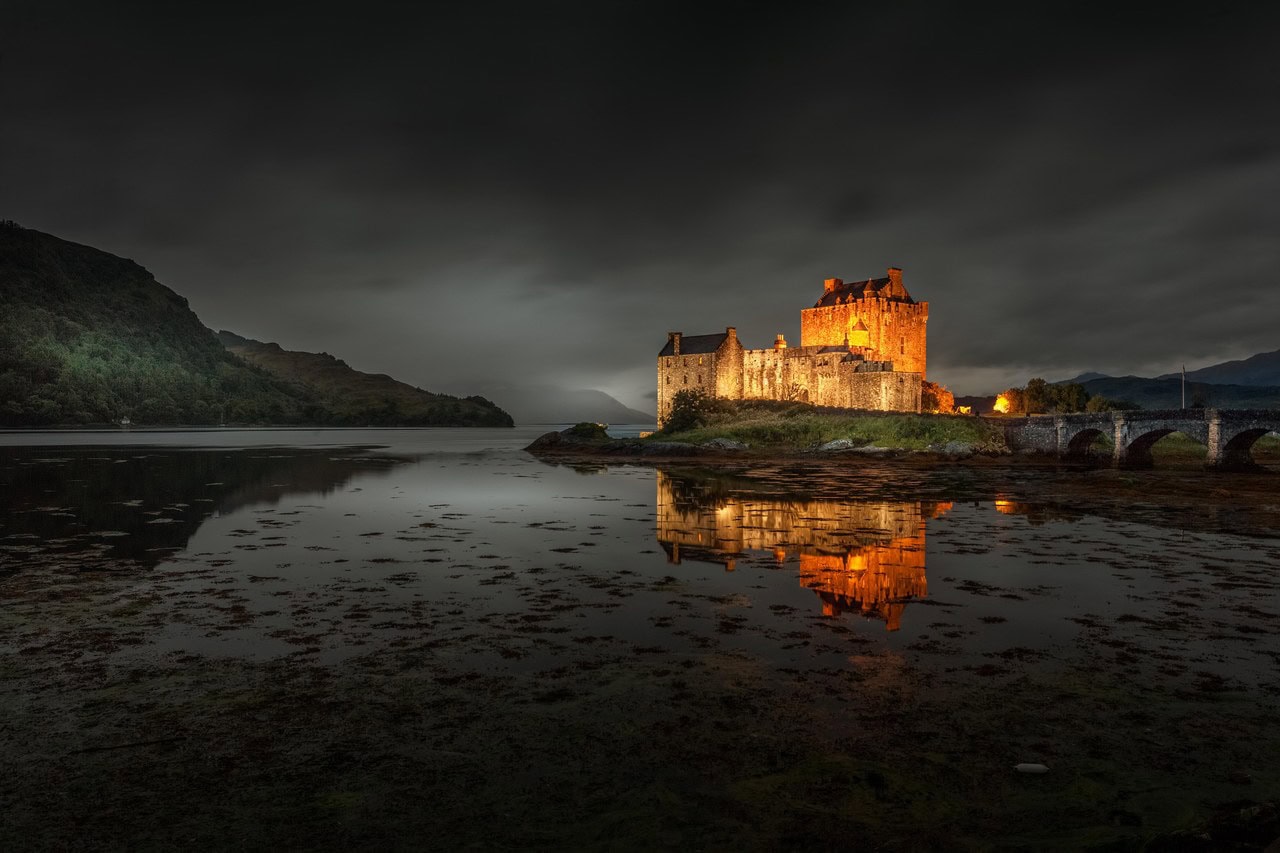
Eilean Donan is the clearest example of the fifth document class, and the operator handles it better than most.
The Conchra Charitable Trust runs a Stories section, and four of its items are supernatural claims about the castle or the Glenshiel road twenty kilometres east. Three are at the castle. “Carlos” is a Spanish soldier from the 1719 garrison whose footsteps staff hear after closing. Two ladies are associated with the bedrooms and one of them is seen and vanishes. Rumbling and gunshots are heard in the Billeting Room and the Great Hall.
Read the grammar. “Perhaps he was an unfortunate victim of the uprising.” “Perhaps they are wives or daughters of former Constables.” “Could this be residual energies from the last battle?” Every one is a question or an attribution, never an assertion, and the operator reports staff experience without ever stating that the castle is haunted.
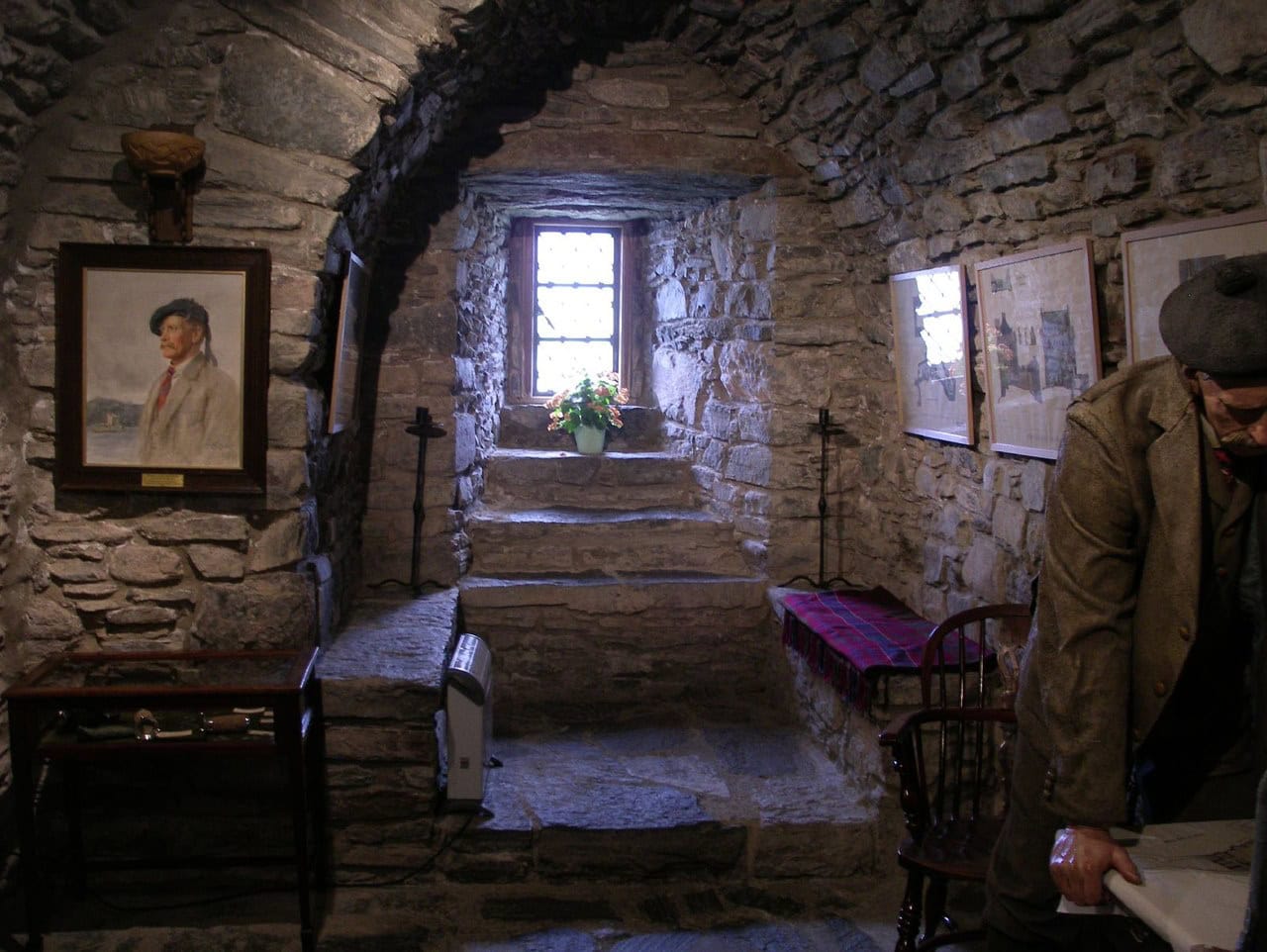
The dating has to be honest. Those claims attach to 1719 and to the Jacobite bombardment, and the earliest record we can date is the operator’s own page of 25 July 2022. No earlier printing was found, and none is claimed.
Two things are simultaneously true here. The Trust publishes four ghost items, and its own history page carries no ghost at all. A castle that keeps its ghosts in a Stories section and out of its history is making the distinction this page turns on.
One note about the building itself, since it invites the wrong assumption. What stands on the island is a free interpretation of 1912 to 1932 by George Mackie Watson, not a restoration. Historic Environment Scotland calls the 1912 gatehouse fanciful and the crenellation crude, and calls the seven-sided water cistern at the south-east angle original.
Undated: the White Lady of Puilaurens, refused by the body that presents her
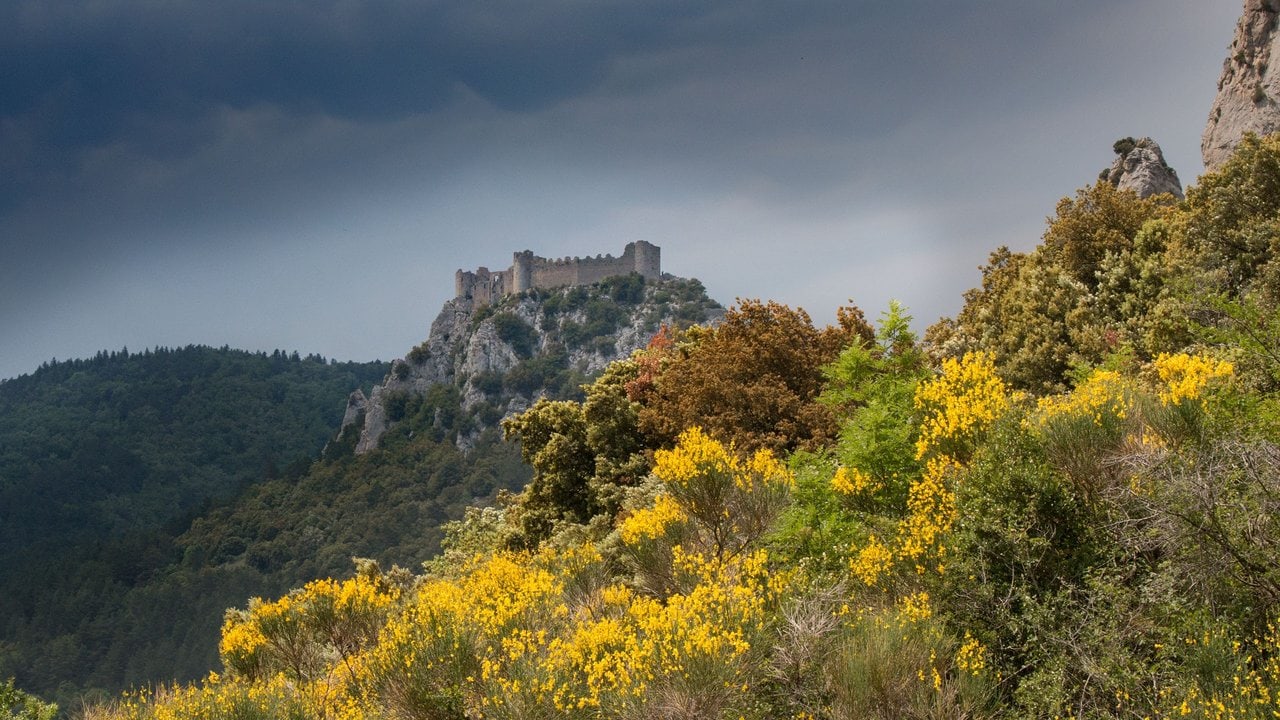
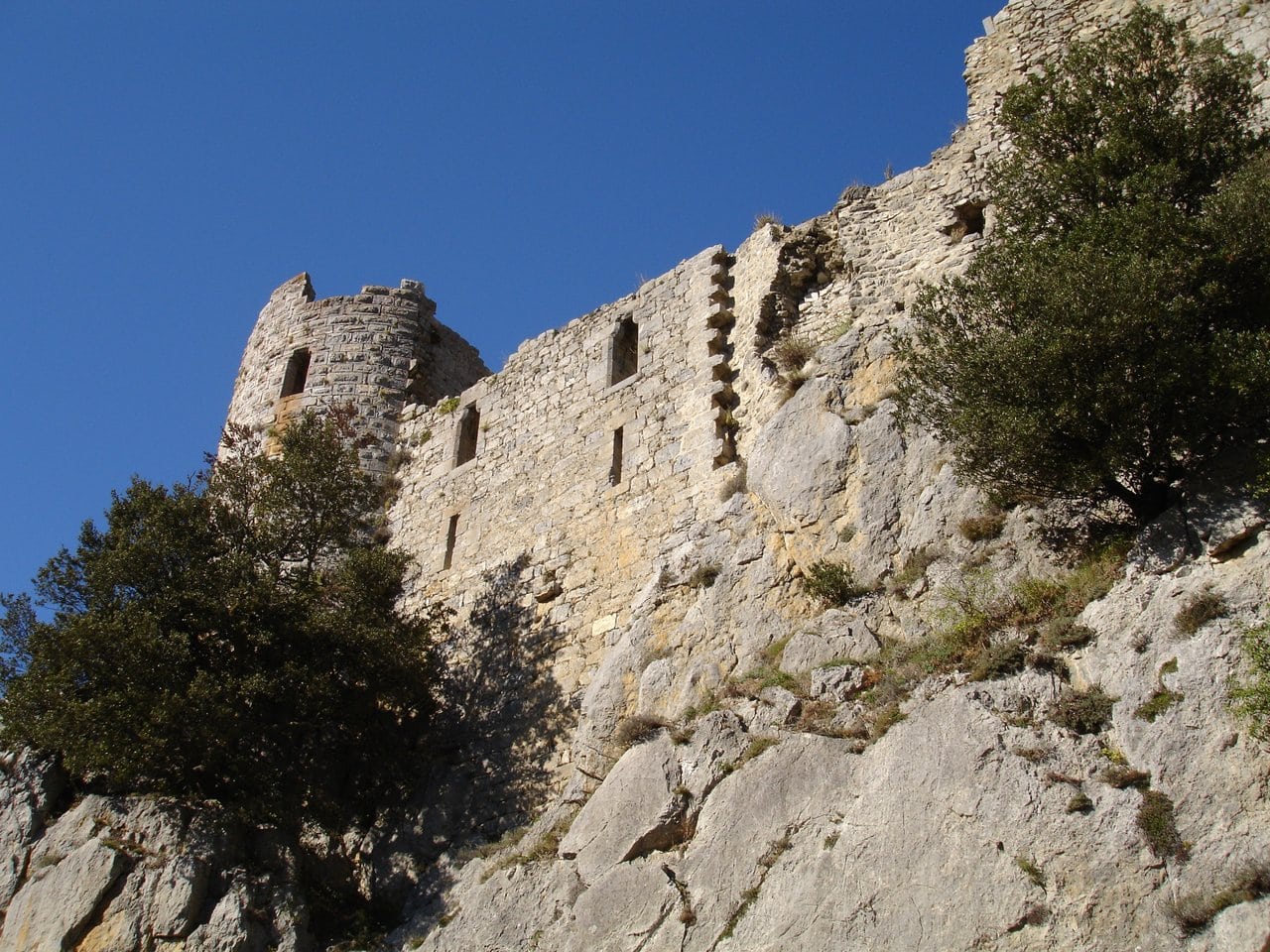
The westernmost tower of Château de Puilaurens is a circular tower of bossed masonry, known locally as the tower of the White Lady. The body that manages and presents the site handles the claim in three sentences that are a masterclass in this article’s method.
Forteresses Royales du Languedoc writes that the tower is named the tour de la Dame Blanche par la tradition locale, by local tradition. That is an attribution of the name, not a statement of who the tower is named for, and the distinction is the operator’s own. It then reports the legend in the conditional: on raconte that Blanche de Bourbon, “assassinée par son mari”, the king of Castile, would come to haunt the place on pale nights wrapped in white veils. French grammar marks the whole thing as unasserted, and the murder is the operator’s characterization rather than ours; Blanche’s death in Spanish captivity in 1361 is argued several ways in the modern literature.
Then comes the sentence:
“Nulle trace de fantôme en tout cas dans la pièce inférieure de la tour, voûtée sur croisée d’ogives, mais deux archères et un étonnant conduit porte-voix, creusé dans la paroi, qui permettait la communication avec le niveau supérieur.”
No trace of a ghost, at any rate, in the lower chamber, which has two arrow slits and a remarkable speaking-tube cut through the wall for talking to the level above. A managing authority declining the ghost and handing the reader a better fact instead.
The official Puilaurens site is the other half of the finding: across all thirty-nine pages of its sitemap, the castle’s own site does not mention it. Two bodies that speak for the site, one reporting the legend and refusing it, one silent.
No earliest attestation could be established for this one, and no date is given here. The White Lady is also a legend type rather than a Puilaurens original, with instances at Muncaster and in the Berry Pomeroy retellings, so no single White Lady is the White Lady.
Puilaurens is one of the eight components inscribed as the Royal Capetian Fortresses of Languedoc on 26 July 2026, the same group our Cathar Castles guide covers.
Where the Record Runs Out
The negatives earn this page, and each one below names the corpora it rests on. Saying that something is absent is a claim like any other, and an unscoped absence tells the reader to stop looking.
Chillingham’s blue boy, and the Radiant Boy who is documented at Corby
Chillingham markets itself hard. Its own ghost page says the castle “boasts some of the highest levels of paranormal activity in the country,” and in its footer calls it “one of the most haunted castles in England.” On the same page, the machine-readable metadata describes it as “Britain’s most haunted historic castle.” The superlative is not stable across the operator’s own page, and the instability is more informative than the superlative.
The signature story is a radiant or blue boy in the Pink Room, with bones of a child said to have been found walled up in the 1920s. Two checkable absences: the castle appears nowhere in Ingram’s 1886 national compilation, and the phrases “blue boy” and “radiant” return zero on Chillingham Castle’s own ghost page, against 161 uses of the word “ghost” on that same page. Those are two corpora, not the record, and nothing here says the story was invented.
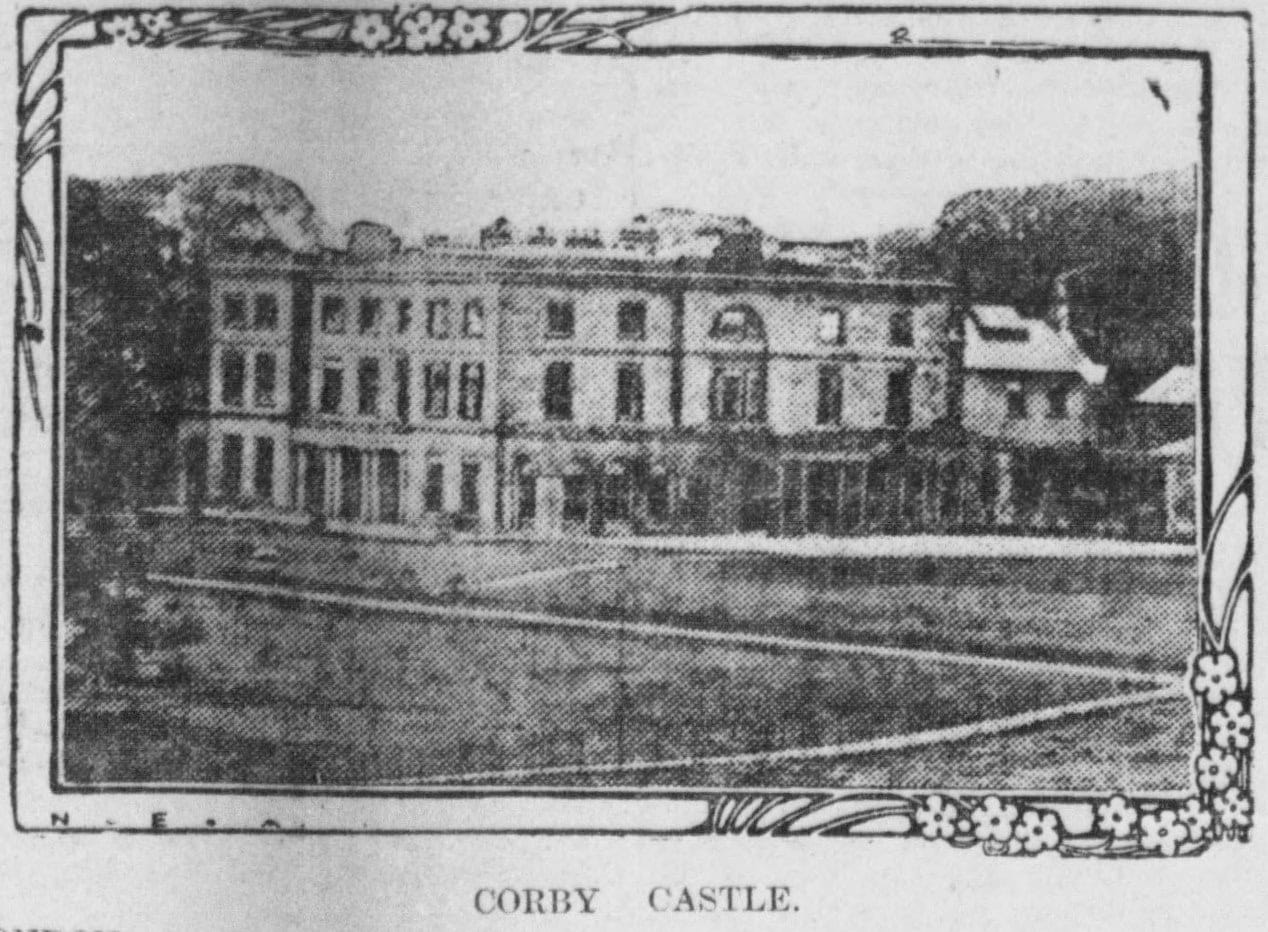
The motif itself is well documented, at a different castle. Ingram gives the Radiant Boy a chapter and places him at Corby Castle, Cumberland, from a manuscript account he dates precisely to “December 22nd, 1824,” with Catherine Crowe carrying it in 1848. A dated motif at one building and an undated version at a more heavily marketed one is the migration pattern this article’s method section describes.
Three Rhine legends with no ghost in them
Ruland’s 1906 collection is the standard English gathering of Rhine legends, and it is a fair test because he prints ghost stories when he has them. His table of contents includes “The Mother’s Ghost” at Fürstenberg and “The Roman Ghosts” at Bonn. He had the category and used it.
He does not use it for any of the three castles here that are commonly described as haunted.
At Schönburg the legend is the Sieben Jungfrauen, the seven maidens who mocked their suitors, sailed off and drowned, leaving seven pointed rocks in the river. That is a petrification story explaining a hazard, not a haunting: nothing walks and nothing returns. Whether those rocks still break the surface today is not something we could establish, and we assert nothing either way.
Sooneck has “The Blind Archer,” a revenge killing at a feast, with no phantom in it. The state authority’s own history page for the castle carries no Geist, no Spuk and no Gespenst, and runs a documentary chain from a first mention in 1271 to state ownership in 1918. The same authority describes the site on its Sooneck landing page as “Rheinromantik pur,” classifying its own monument as Rhine Romanticism, and separately markets a children’s ghost-stamp Geister-Pass across five of its monuments. A heritage body can hold both of those at once, and only one of them is a record.
The Hostile Brothers, as above, is a Sage that both the state authority and the regional board decline to call a haunting.
Glamis names its one ghost on the page that rents the building out
Glamis Castle’s own sitemap lists 130 URLs. Twenty of them are the pages a visitor reads before coming: the home page, the about section, the timeline, the estate history and the whole plan-your-visit tree. Read on 27 August 2026, not one of them publishes a ghost claim of any kind. The timeline gives Janet Douglas, Lady Glamis, a full entry: found guilty of treason on fabricated evidence and burned at the stake on Castle Hill, Edinburgh, on 17 July 1537. It attaches no apparition to her.
One page names a ghost. It is the location-hire listing for film and television production, which runs through the castle room by room and says of the chapel that “it is reputedly haunted by the ghost of the Grey Lady (Janet Douglas, 6th Lady Glamis).” The identification the history pages decline to make is made in the document written to let the building.
Glamis’s Halloween attraction says the rest out loud. The 2025 event page, still live and marked expired, announced that the event “draws its name from a strange series of supernatural happenings. It seems that some of Scotland’s most notorious ghosts have taken over Glamis Castle, weaving their famous tales into our own.” An operator stating in a sales paragraph that its ghost attraction is a compilation borrowed from other buildings is this article’s thesis, written by a marketing department. No named ghost appears anywhere on that page, and the attraction is described as an indoor tour with jump scares.
Frankenstein, where the state operator refutes the story the castle is known for
Burg Frankenstein is famous for one claim: that Mary Shelley visited the ruin on her 1814 Rhine journey and took her novel from it. Staatliche Schlösser und Gärten Hessen, the state body that runs the castle, publishes on the castle’s own page that historians today assign that story to the Reich der Fantasie, the realm of fantasy. No Spuk, no Gespenst and no mention of the alchemist Dippel on the same page.
The Halloween event has a documented and recent origin. After an American Forces Network broadcast recommended the ruin as the real home of the monster, the operator records the first Halloween spectacle at Frankenstein in 1976; the commercial promoter’s own site says “seit 1977.” Both are reported here and neither is preferred. The event has since moved off the castle entirely and has run at Burg Königstein since the mid-2020s, with the promoter’s own pages giving the move as 2024 on one page and 2025 on another.
Meanwhile the castle is a ruin under restoration to the end of 2028, its restaurant is closed, and the operator’s status wording is “Außengelände ist eingeschränkt zugänglich”, the outdoor site is accessible with restrictions. Neither open nor closed, and we do not flatten it either way.
Montségur, where the legend is attached to the wrong building
Montségur carries the heaviest supernatural freight of any castle here, and almost none of it is a haunting. Grail, treasure, solstice alignment and the rest belong to a different kind of claim, and most of it is downstream of Napoleon Peyrat’s Histoire des Albigeois of 1870 to 1872.
The nominating body settles the architecture in one sentence. The fortress you admire today, rebuilt on Louis IX’s orders from the middle of the thirteenth century, n’a jamais connu the good men and good women who took refuge on the summit. Inside, the courtyard is today vide de tout bâtiment, empty of all building. So the building the legend is about is not the building that is there, though an earlier castle stood on the site, the “Montségur I” the archaeologists posit, which left no written or archaeological trace at all.
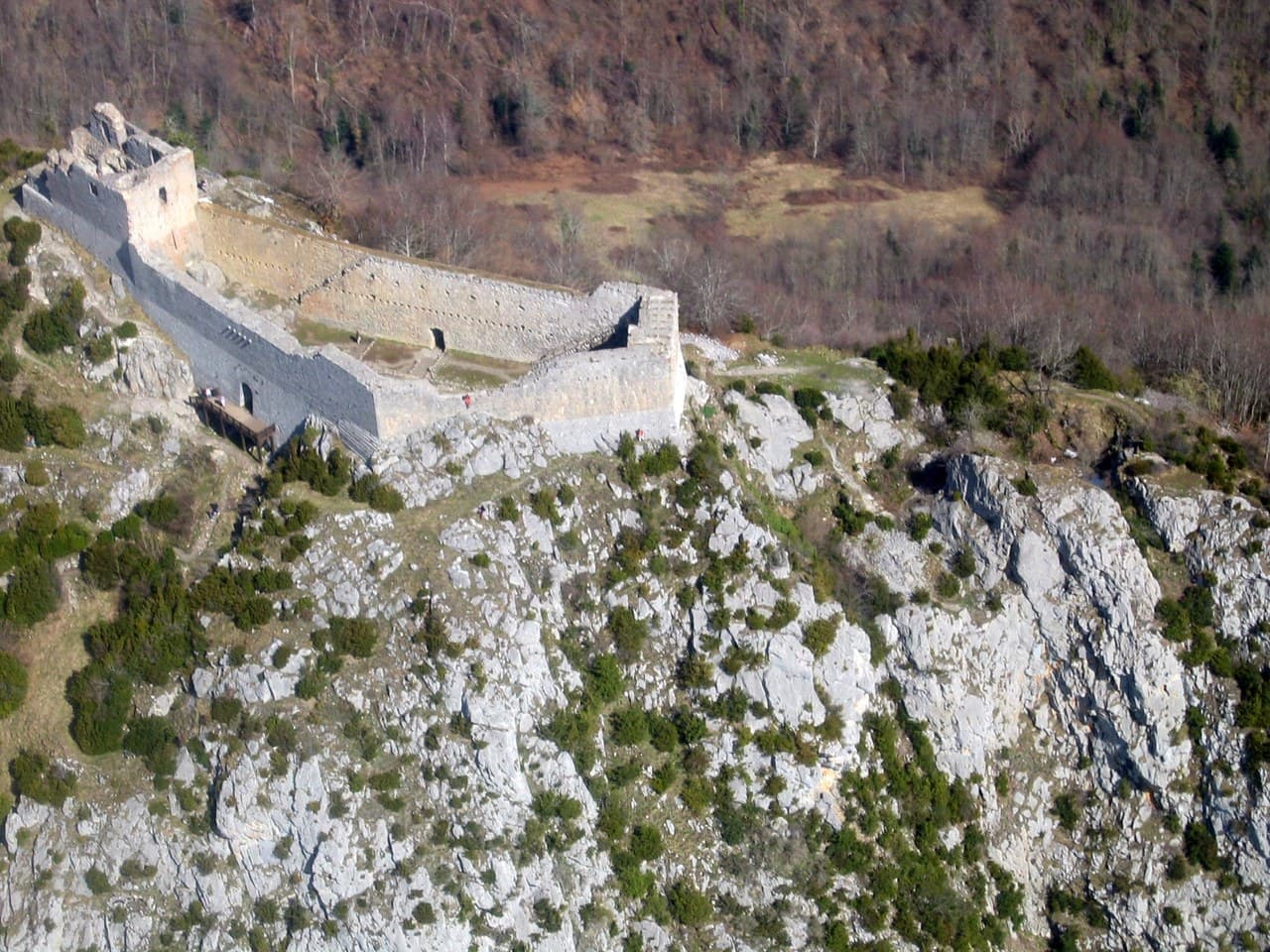
The Commune de Montségur publishes a documentary history and no legend at all, and names its evidence base in its first sentence: the elements known with certainty were established from historical documents, notably les archives de l’Inquisition, and from archaeological excavation. An operator that cites the Inquisition registers and stops there is the strongest positive example on this page.
The claims we could not find at all
Two entries are here because looking for something and not finding it is itself a result.
Château de Chantilly. The operator says nothing on the page where such a story would sit, and no ghost, legend or Halloween page appears anywhere in its sitemap. No specific claim could be identified, so none is reported.
Dover Castle. Absent from Ingram 1886, and absent from English Heritage’s own history of Dover Castle, where ghost, haunt, legend, apparition and supernatural all return zero. English Heritage plainly discusses hauntings when it has something to say, at length at Berry Pomeroy on an identically structured page, so the silence at Dover looks like a choice rather than a house style. That is still not a claim that Dover has no ghost tradition.
Muncaster, by contrast, has a claim and hedges it. The operator writes that the castle is “reputedly one of the most haunted buildings in the UK” and that Tom Fool lived there once and “some believe he still does.” Two hedges in two sentences, and they travel with the superlative wherever it goes. The claim that scientists cannot explain the occurrences names no institution and no publication, which is an argument from absence rather than a finding.
A dream that is not on the record either
Eilean Donan’s other story is that a local stonemason, Farquhar MacRae, dreamed the vanished castle’s layout and that the rebuilding followed it. It is a well-loved tradition and it appears on no operator or heritage page. The Trust’s own history names the man, spelling him Farquar Macrae, and attaches him to a twenty-year building program as Clerk of Works with no dream anywhere near it. Two separate routes across the operator’s own domain return nothing for dream, vision or ghost on the history page, and neither the page sitemap nor the stories sitemap carries a dream page at all. It makes a better story than what happened, and the plans that shaped the work were Watson’s.
The diary that was published in 2001
Of everything here, the Idilia Dubb diary is the clearest case of a modern document presented as an old one: a book of 2001, assessed as a forgery by a working archivist, and sold in English as a primary source.
Written Down When?
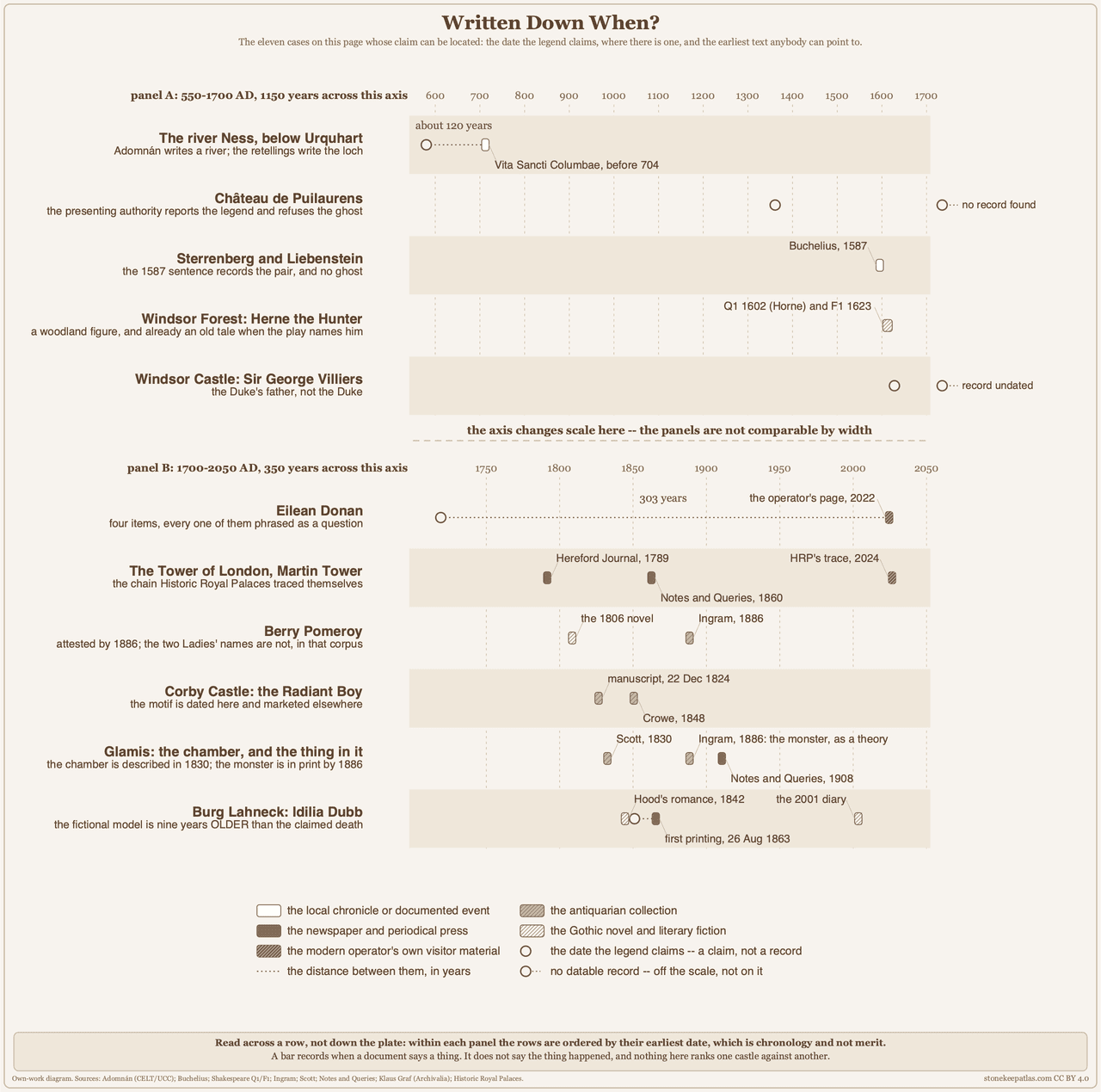
The same eleven cases as a table, with the document named where one could be identified. The eight castles under Where the Record Runs Out are absent from both the plate and the table because no datable record was found for them. A dash in the claimed-date column means the legend attaches to no date we hold.
| Castle | Date the legend claims | Earliest record | Document | Distance |
|---|---|---|---|---|
| The river Ness, below Urquhart | 580 | 704 | Adomnán of Iona, Vita Sancti Columbae, written before his death in 704 | about 120 years |
| Château de Puilaurens | 1361 | none established | – | – |
| Sterrenberg and Liebenstein | – | 1587 | Arnoldus Buchelius, Iter Germanicum, 1587: the pair, and no ghost | – |
| Windsor Forest: Herne the Hunter | – | 1602-1623 | The Merry Wives of Windsor, Quarto of 1602 (where the name is spelled Horne) and Folio of 1623 | – |
| Windsor Castle: Sir George Villiers | 1628 | not established | Clarendon, History of the Rebellion; year not established | – |
| Eilean Donan | 1719 | 2022 | Conchra Charitable Trust, Eilean Donan Castle Stories, 25 July 2022 | 303 years |
| The Tower of London, Martin Tower | – | 1789 | Hereford Journal, 1789 — the earliest link in the chain Historic Royal Palaces traced in 2024, through Notes and Queries (1860) and William Gregory’s On Animal Magnetism (1851) | – |
| Berry Pomeroy | – | 1886 | Ingram, The Haunted Homes and Family Traditions of Great Britain, 1886. The novel The Castle of Berry Pomeroy, 1806, is also plotted: the novel is dated, the haunting is not | – |
| Corby Castle: the Radiant Boy | – | 1824 | a manuscript account dated 22 December 1824, printed by Ingram, and carried again by Catherine Crowe in 1848 | – |
| Glamis: the chamber, and the thing in it | – | 1830 | Scott, Letters on Demonology and Witchcraft, 1830: the chamber, and no monster. Ingram gives it two chapters in 1886 and the monster IS there, listed among the hypotheses he reports and dismisses; it is told straight, with a deformed heir, in Notes and Queries on 26 September 1908 | – |
| Burg Lahneck: Idilia Dubb | 1851 | 1863 | Der Tod auf Burg Lahneck, Neues bayerisches Volksblatt, from 26 August 1863. Also plotted: Hood’s romance of 1842, nine years before the claimed death, and the diary published in 2001 and assessed as a forgery | 12 years |
You Can Visit
Almost every legend on this page is sold as a night experience, and almost every one of these sites shuts in the afternoon. That mismatch is the single most useful practical thing here.
Where there is no night access of any kind: Urquhart, Lahneck, Sterrenberg, Puilaurens, Berry Pomeroy, Dover, Frankenstein and Sooneck. Lahneck’s last guided tour of the day leaves in the mid-afternoon. Puilaurens sells ghost-themed family games in the autumn and they run in daylight, late morning to mid-afternoon. For these sites the honest planning note is that there is no night access to buy, at any price.
Where you can be there after dark, you are either a paying guest at a scheduled event or you are sleeping there. Chillingham, in Northumberland near Alnwick, runs named-date evening tours and overnight hunts, both with age limits: over 16 for the tours, over 18 for the hunts. Muncaster, at Ravenglass in Cumbria, runs an overnight sit. Schönburg and Liebenstein are working castle hotels. Eilean Donan is floodlit and can be seen after dark for nothing at all, from the causeway and the road.
What each place actually is matters as much as when it opens. Urquhart, Sterrenberg, Berry Pomeroy, Montségur and Frankenstein are ruins with no interior to enter. Sooneck and Eilean Donan have furnished interiors, the latter a twentieth-century interpretation. Lahneck and Glamis are guided tour only, with no free wandering. A legend’s room is not always a room you can stand in, and Puilaurens is the near-exception: the lower chamber of the tower local tradition names for the White Lady survives intact and rib-vaulted, with its two arrow slits and its speaking-tube still in the wall. The presenting authority describes that room in detail and says nothing about whether you can stand in it.
Seasons. Sooneck, Puilaurens and Lahneck all close for the winter. Montségur is the one genuine all-year site here, on reduced winter hours, with the operator’s own weather caveat rather than a season. Lahneck has not published a current season at the time of writing, and we have not rolled last year’s dates forward.
One rail closure runs through this whole season, and it reaches three of these castles. The right-bank Rhine line between Wiesbaden and Neuwied is shut from 10 July to 12 December 2026 for Deutsche Bahn’s corridor renovation, and the VIAS RB 10 is replaced by buses for the whole of it. That is the line for Lahnstein, below Lahneck, and for Kamp-Bornhofen, the stop for Sterrenberg and Liebenstein. Sooneck and Schönburg are on the left bank and are unaffected.
Two weather notes that belong to these buildings rather than to castles in general. Puilaurens publishes that en cas d’orage, in the event of a storm, the castle is liable to be closed to the public, which is what an exposed crag fortress has to do. Montségur’s operator warns of closure in very bad conditions and has had a multi-year consolidation program running since June 2026, with access to the keep stated as partial.
Accessibility, in the operator’s own words and unsoftened. Chillingham publishes that its ghost tours and hunts are “not for anyone who may struggle with their mobility, as there are lots of steep steps and uneven ground,” and asks anyone with additional needs to telephone before booking. Its named dates sell out.
Photography. Two rules here are specific to these two sites. Montségur bans drone overflight across the whole site under a municipal by-law, Arrêté municipal n°31-17 du 07/02/2018, with written application to the Mayor required for any reportage, and the operator gives the reason: a rare raptor pair has nested in the castle cliff for several years. Chillingham’s overnight ghost hunt runs from 22:00 to 02:00, indoors and out, and the operator’s own advice is that “it is very cold and dark so please bring a torch.”
Staying the night. Schönburg and Liebenstein operate as castle hotels inside the buildings themselves, and Chillingham and Muncaster both offer accommodation. Our guides to castle hotels in Germany and staying in a castle in Scotland cover how those work. Book direct with the castles; this page carries no booking links of any kind.
Common Questions
What is the most haunted castle?
Nobody is measuring anything, so there is no answer of that shape. What can be answered is which haunting has the oldest precisely dated record, and that is the Tower of London: Historic Royal Palaces traced its Martin Tower apparitions to a newspaper notice of 1789. An older one exists and cannot be dated: Clarendon puts a Windsor Castle apparition around 1628. Allowing non-castle sites, the oldest text here is Adomnán’s beast in the river Ness, before 704. None of that answers which castle is physically the oldest, a question about fabric.
Which castle is haunted by Anne Boleyn?
The Tower of London, in every modern retelling. The documented record is a different story: Ingram’s 1886 national compilation of British hauntings contains a Tower chapter and no Anne Boleyn apparition in it, and the apparition Victorian sources actually record at the Tower is a cylinder of light seen by the Keeper of the Crown Jewels. None of that says people do not report seeing her; it says her story does not appear in the standard nineteenth-century collection.
How old are castle ghost stories?
Usually far younger than the events they describe. On this page the gaps run from about 120 years for Adomnán up to several centuries, and in the sharpest case, the monster of Glamis, the creature reaches print 56 years after the secret chamber it supposedly occupies was first described. A castle can be genuinely medieval and its ghost genuinely Victorian.
What castle has the darkest history?
Documented violence and reported hauntings do not track each other, which is the surprise. Montségur saw more than two hundred people burned in 1244 and has no haunting attached to it in its operator’s material at all, while several castles with quiet histories sell nightly ghost tours. Dark history produces monuments and archives; ghost stories are produced by publishing.
Are any of these ghosts recorded before the Victorian period?
Four are. Adomnán’s water beast predates 704. Buchelius recorded the Hostile Brothers castles in 1587. Herne appears in the 1602 Quarto of The Merry Wives of Windsor, spelled Horne, and in the 1623 Folio, in both cases as a tale already old. The Villiers apparition at Windsor is placed around 1628 by Clarendon. Everything else here is 1789 or later.
Do the castles themselves say they are haunted?
Almost never, on the pages that carry their own history. Glamis publishes twenty visitor-facing pages with no ghost on any of them and names its one ghost on the listing that rents the building out for filming. Where a castle does market a ghost, as Chillingham and Muncaster do, it is marketed on a ghost page and not in a history, and the wording is careful when it is. Eilean Donan phrases its four ghost items, three of them at the castle, as questions; Muncaster says “reputedly”; English Heritage puts “the most haunted castle in Devon” in quotation marks and attributes it to other people.
Can you stay overnight in a haunted castle?
Yes, in several here, though not usually on the strength of the ghost. Schönburg and Liebenstein run as hotels inside the castle buildings on the Rhine, and Chillingham and Muncaster both offer rooms as well as ticketed overnight ghost events with strict age limits. Everywhere else on this page closes in the afternoon and offers no night access at all.
Principal Sources
- Adomnán of Iona. Vita Sancti Columbae, Latin text (Reeves’s edition), Corpus of Electronic Texts, University College Cork.
- Buchelius, Arnoldus. Iter Germanicum, 1587.
- Burg Lahneck. “Miss Idilia Dubb.” burg-lahneck.de.
- Chillingham Castle. “Ghosts.” chillingham-castle.com.
- Commune de Montségur. “Montségur et le catharisme.” montsegur.fr.
- Conchra Charitable Trust. “Carlos the Ghost,” Eilean Donan Castle Stories, 25 July 2022. eileandonancastle.com.
- English Heritage. Kightly, Charles. “History of Berry Pomeroy Castle.” english-heritage.org.uk.
- English Heritage. “Berry Pomeroy Castle.” Visit page. english-heritage.org.uk.
- English Heritage. “History of Dover Castle.” english-heritage.org.uk.
- Forteresses Royales du Languedoc. “Puilaurens.” forteressesroyalesdulanguedoc.fr.
- Generaldirektion Kulturelles Erbe Rheinland-Pfalz. “Burg Sterrenberg.” tor-zum-welterbe.de.
- Generaldirektion Kulturelles Erbe Rheinland-Pfalz. “Burg Sooneck: Geschichte.” tor-zum-welterbe.de.
- Glamis Castle. “History.” glamis-castle.co.uk.
- Glamis Castle. “Filming at Glamis.” glamis-castle.co.uk.
- Graf, Klaus. “Neue Quellen zur Schauer-Geschichte der Idilia Dubb auf Burg Lahneck.” Archivalia, 26 December 2014.
- Gregory, Alden. “The Jewel House Keeper’s Ghost: A Spectral Bear at the Tower of London.” Historic Royal Palaces, 31 October 2024.
- Historic Environment Scotland. “Urquhart Castle: History.” historicenvironment.scot.
- Historic Environment Scotland. Listed building record LB7209, Eilean Donan Castle. portal.historicenvironment.scot.
- Hood, Thomas. “The Tower of Lahneck. – A Romance,” in The Works of Thomas Hood, ed. by his son, pp. 274-283, Hood’s closing note at p. 283. First published in the New Monthly Magazine, vol. 64 (1842), p. 161.
- Ingram, John H. The Haunted Homes and Family Traditions of Great Britain. London, 1884 and 1886.
- Institut für Geschichtliche Landeskunde, Mainz. Burg Sterrenberg; Burg Liebenstein; Schönburg. regionalgeschichte.net.
- Muncaster Castle. “Ghost Sit.” muncaster.co.uk.
- Notes and Queries, Tenth Series Vol. X, no. 248, 26 September 1908, p. 241, and replies at pp. 311 and 396.
- Pröhle, Heinrich. On the Hostile Brothers nickname, 1886.
- Royal Collection Trust. Windsor Castle visitor pages, eight pages read via the Internet Archive, January 2025 to August 2026. rct.uk.
- Ruland, Wilhelm. Legends of the Rhine. Cologne: Hoursch & Bechstedt, 1906.
- Scott, Sir Walter. Letters on Demonology and Witchcraft. 1830, Letter VIII.
- Shakespeare, William. The Merry Wives of Windsor, Quarto of 1602. Internet Shakespeare Editions.
- Shakespeare, William. The Merry Wives of Windsor, Folio of 1623. Internet Shakespeare Editions.
- Staatliche Schlösser und Gärten Hessen. “Burg Frankenstein.” schloesser-hessen.de.
- Stansbury, Mark. “The Composition of Adomnán’s Vita Columbae.” Peritia 17-18 (2003-2004), 154-82.
- UNESCO World Heritage Centre. Royal Capetian Fortresses of Languedoc, inscribed 26 July 2026.
Image credits. Hero, Eilean Donan floodlit under a storm sky: Photo: lobostudiohamburg via Pixabay; Storm light over Chateau de Puilaurens: Photo: Jcb-caz-11, CC BY-SA 4.0; The Dorbbene colophon in the Schaffhausen Life of Columba: Photo: e-codices, CC BY 3.0; Urquhart Castle from the air on its Loch Ness promontory: Photo: Johnny Briggs via Unsplash; Luthmer’s section and ground plan of Sterrenberg and Liebenstein: Drawing: Ferdinand Luthmer, public domain; Sterrenberg’s white main tower above the older stonework: Photo: Xjvolker, CC BY-SA 4.0; The Long Walk closing on Windsor Castle: Photo: Simon Hurry via Unsplash; Cruikshank’s antlered Herne, published in the 1840s: Illustration: George Cruikshank, public domain; A nineteenth-century engraving of Windsor Castle above the Thames: Amsterdam Museum, public domain; A nineteenth-century stereograph of the Martin Tower: Photo: anonymous photographer, Rijksmuseum, CC0; The 1830 title page of Scott’s Letters on Demonology and Witchcraft: Public domain; The keep of Burg Lahneck above the restored range: Photo: Holger Weinandt, CC BY-SA 3.0 DE; Francis Towne’s watercolor of Berry Pomeroy: Watercolor: Francis Towne, public domain; A vaulted chamber inside Eilean Donan: Photo: Shadowgate, CC BY 2.0; The round tower named by tradition for the White Lady at Puilaurens: Photo: Guillaume Paumier, CC BY 2.5; Corby Castle in a printed view of about 1904: Public domain; The empty enceinte of Montsegur from the air: Photo: MDanis, CC BY-SA 3.0; Written Down When?, the timeline plate: Own-work diagram, StoneKeep Atlas, CC BY 4.0. Freely licensed images are resized to fit; otherwise unaltered.