
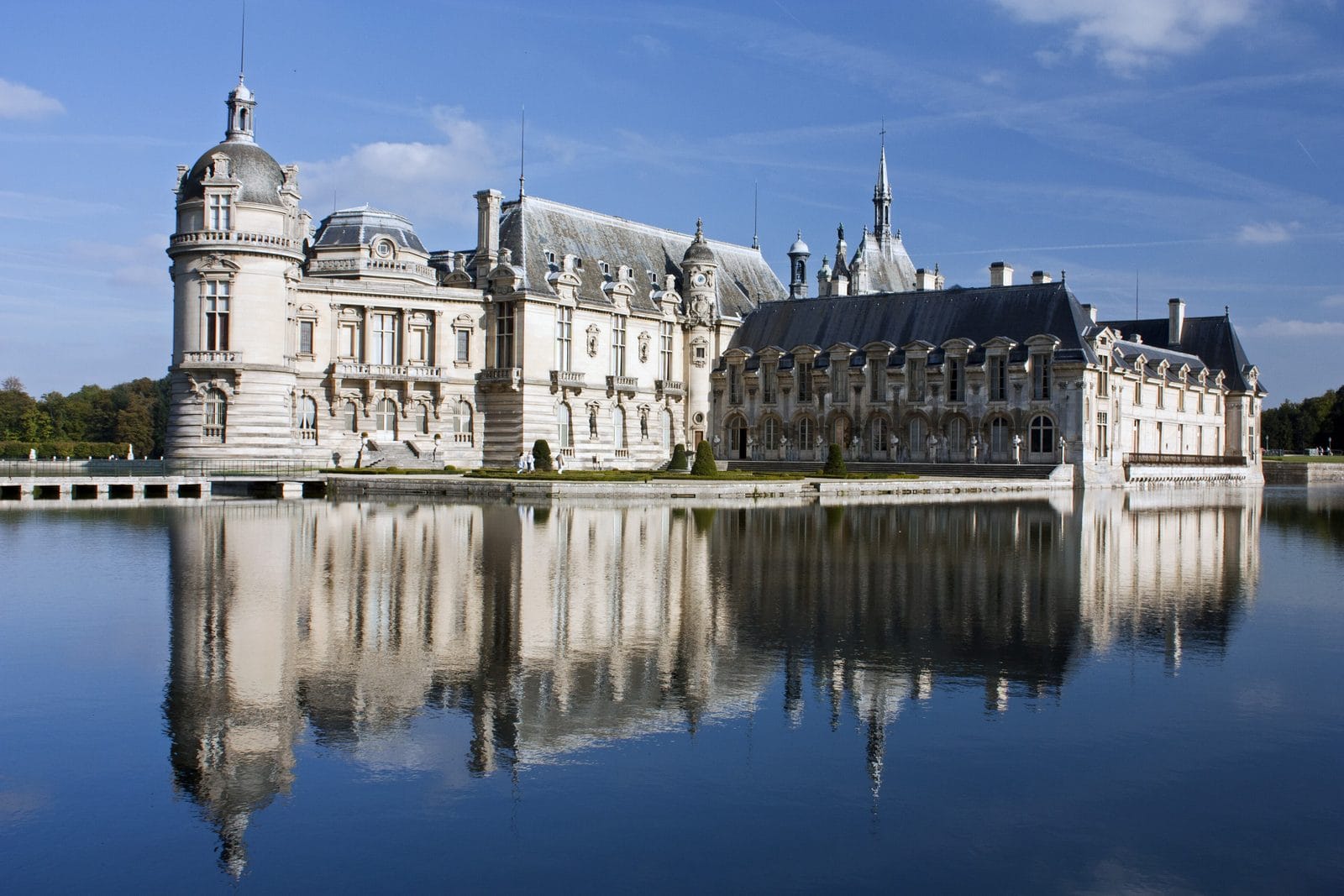
Château de Chantilly
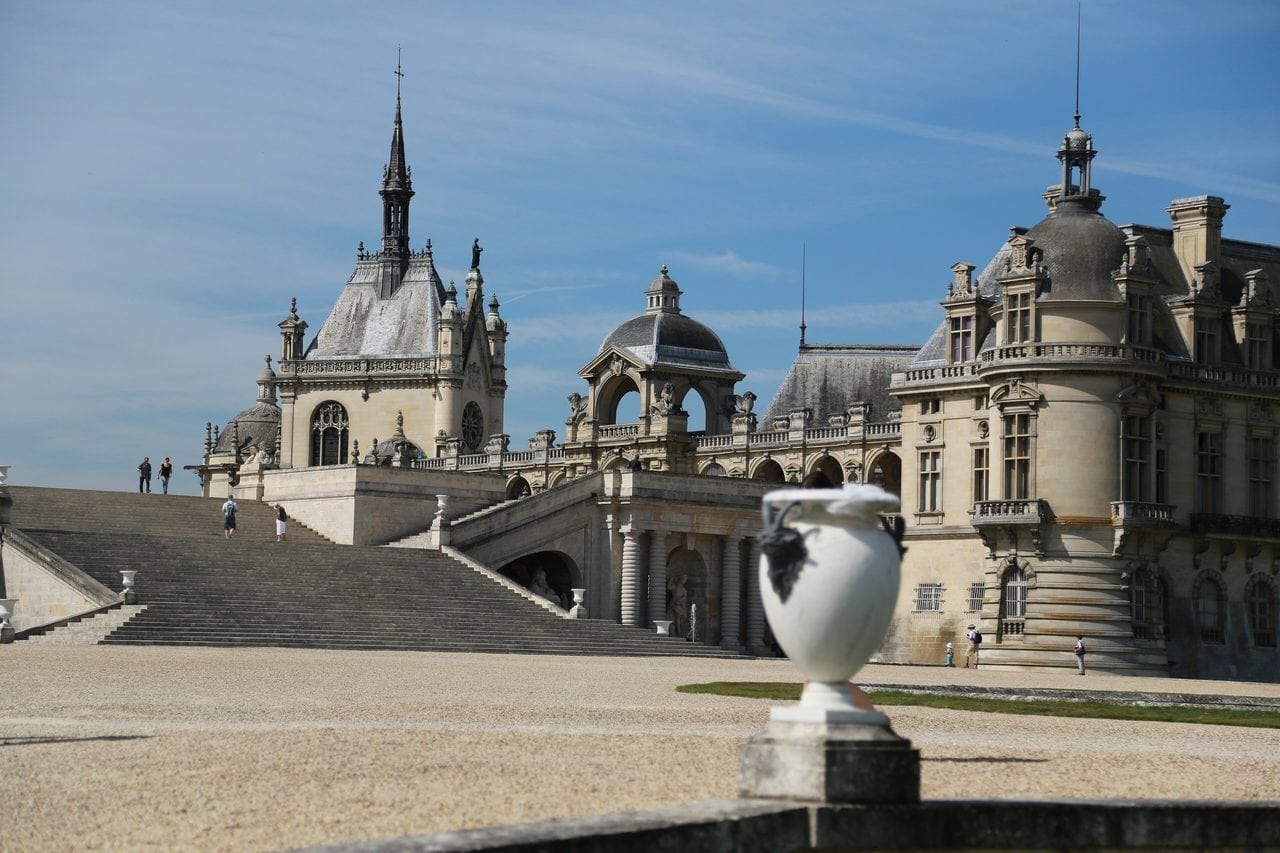
Few buildings in France photograph as well as the Château de Chantilly. Seen from across its still water at first light, the great château seems to float, towers and roofline doubled in a flawless mirror, every inch the Renaissance fairy tale. Yet the image misleads. Most of what rises above the water is not old at all: the imposing Grand Château went up between 1875 and 1885, a confident nineteenth-century reinvention. Genuinely ancient fabric hides in plain sight next door, in the modest Petit Château that Anne de Montmorency raised around 1560.
That gap between appearance and age is the key to Chantilly. Two stories run through the estate and rarely touch. One belongs to the gardens, where André Le Nôtre carved a water-garden he is said to have ranked among his own favorites. Another belongs to a museum that a nineteenth-century prince sealed against change, willing his palace and its art to the nation on the condition that nothing inside ever move. This is the park Le Nôtre loved best, and the museum its last prince froze in time.
Quick Facts
| Location | Chantilly, Oise, Hauts-de-France, France |
| Distance from Paris | About 40 km (25 mi) north |
| Built | Petit Château c. 1560; Grand Château rebuilt 1875–1885 |
| Architectural style | French Renaissance (Petit Château); 19th-century Renaissance Revival (Grand Château) |
| Built for / by | Anne de Montmorency; rebuilt by Honoré Daumet for the Duc d’Aumale |
| Current use | Museum (Musée Condé) |
| Owner | Institut de France (bequeathed 1886) |
| Condition | Well preserved |
| Open to public | Yes (closed Tuesdays) |
| Official website | chateaudechantilly.fr |
A fortress becomes a Renaissance retreat
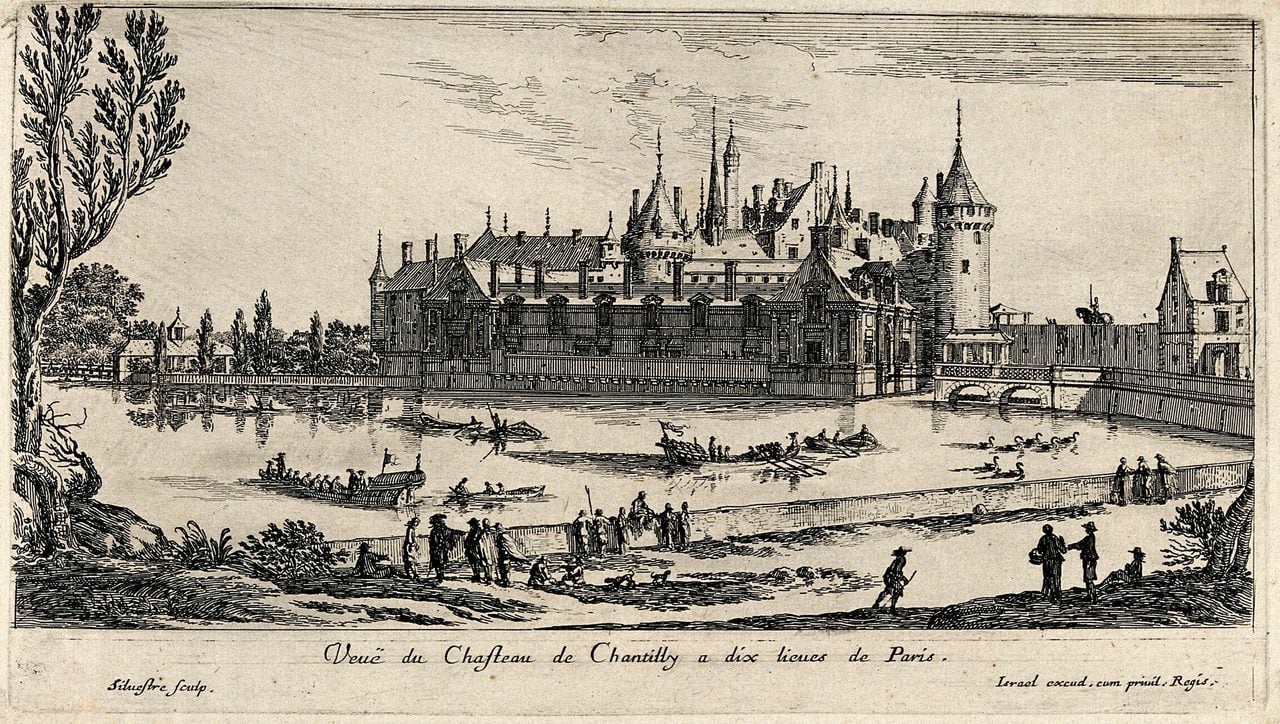
Chantilly began as a defensive site, a rock rising from the marshy valley of the Nonette, fortified since the Middle Ages to watch the road between Paris and Senlis. Water and high ground did the work of walls, and the spot held a stronghold for centuries before it held a palace. By the fourteenth century the Orgemont family, royal chancellors, had built a castle here; only the bases of its towers survive beneath the present buildings. In 1484 the estate passed by inheritance to the Montmorency, one of the great noble houses of France, and their long tenure transformed it.
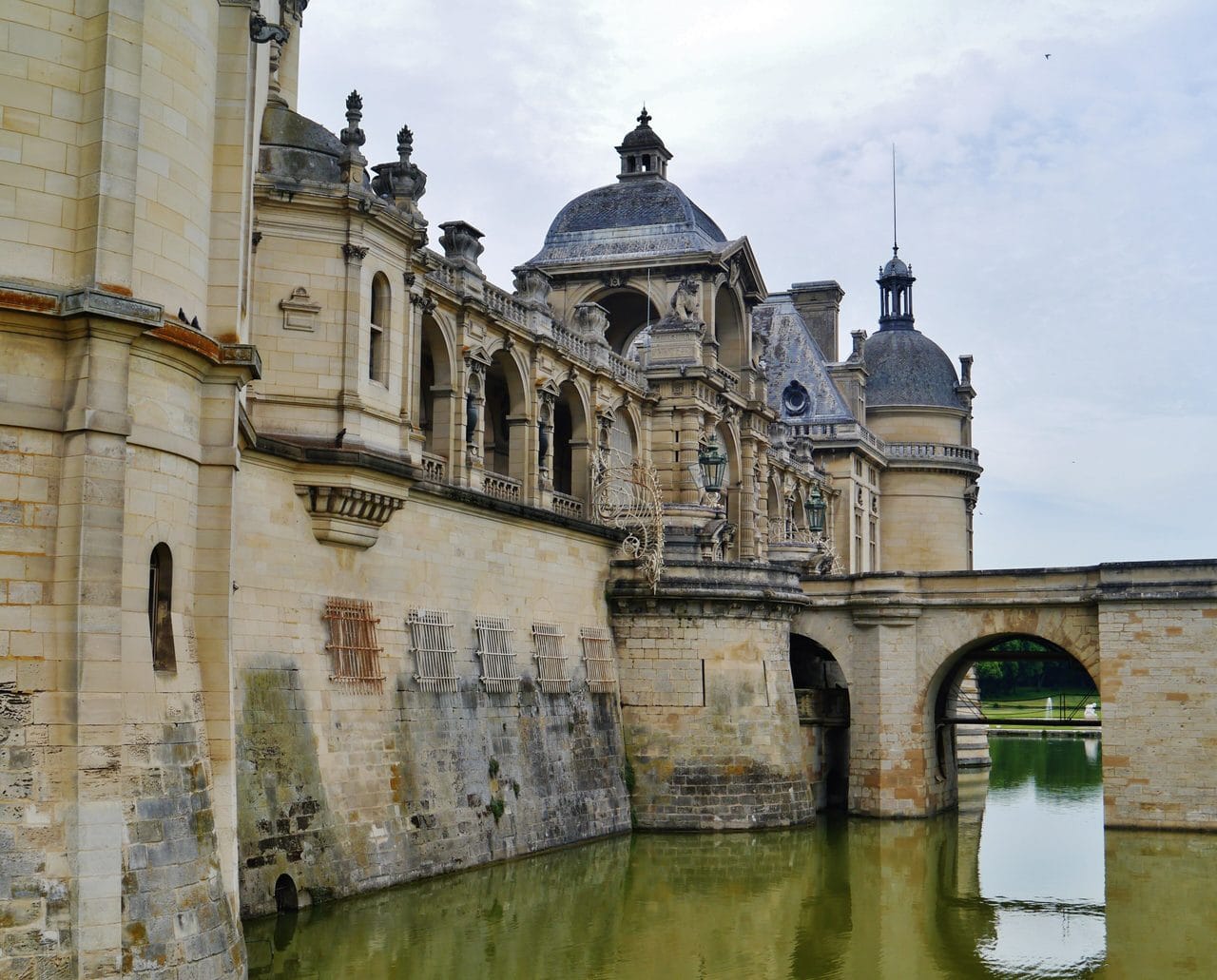 CC BY-SA 4.0" srcset="https://stonekeepatlas.com/wp-content/uploads/2026/06/chantilly-from-the-moat.jpg 1280w, https://stonekeepatlas.com/wp-content/uploads/2026/06/chantilly-from-the-moat-300x242.jpg 300w, https://stonekeepatlas.com/wp-content/uploads/2026/06/chantilly-from-the-moat-1024x825.jpg 1024w, https://stonekeepatlas.com/wp-content/uploads/2026/06/chantilly-from-the-moat-768x619.jpg 768w" sizes="auto, (max-width: 1280px) 100vw, 1280px" />
Anne de Montmorency (1493–1567) was the decisive figure: Constable of France, the kingdom’s highest military officer, and a companion-in-arms of François I. Having admired the palaces of Italy during the Italian Wars, he set about turning the old fortress into a residence worthy of his rank. He first had the main castle rebuilt between 1528 and 1531 by Pierre Chambiges, the grand logis that stood where the present Grand Château now rises. Around 1560 he commissioned the architect Jean Bullant to build, at the foot of the medieval keep, the elegant structure still called the Petit Château. Bullant also laid out the first gardens and the great terrace that would later anchor everything Le Nôtre did, and the Constable raised on it an equestrian statue of himself, seven chapels, and a kitchen garden. Of those early flourishes only the terrace and two chapels survive; revolutionaries melted the original statue down, and a nineteenth-century bronze now stands in its place.
Anne’s son Henri I carried the work forward through the rest of the century, building a small retreat in the upper park, the Maison de Sylvie, which sheltered the poet Théophile de Viau, condemned and in hiding, in the years before his death in Paris in 1626. Disgrace then ended the Montmorency line at Chantilly. The Constable’s grandson, Henri II de Montmorency, rebelled against Louis XIII and his minister Richelieu, and in 1632 he was beheaded at Toulouse, his lands confiscated by the crown. In 1643 Anne of Austria restored Chantilly to his sister Charlotte, wife of Henri II de Bourbon, Prince de Condé. With that marriage the estate passed to the House of Condé, where it would remain for nearly two centuries.
The Grand Condé and the garden Le Nôtre prized
Chantilly reached its first height under Louis II de Bourbon, the Grand Condé (1621–1686), the most celebrated general of his age and a cousin of Louis XIV. Condé had backed the losing side in the Fronde, the noble revolt against the crown, and forfeited the estate for it; he recovered Chantilly in 1659 after the Peace of the Pyrenees. Restored to favor, he turned his château into a rival of the royal court, drawing Molière, Racine, La Fontaine, Bossuet, and Madame de Sévigné into a brilliant whirl of theater and festivity that contemporaries measured against Versailles itself.
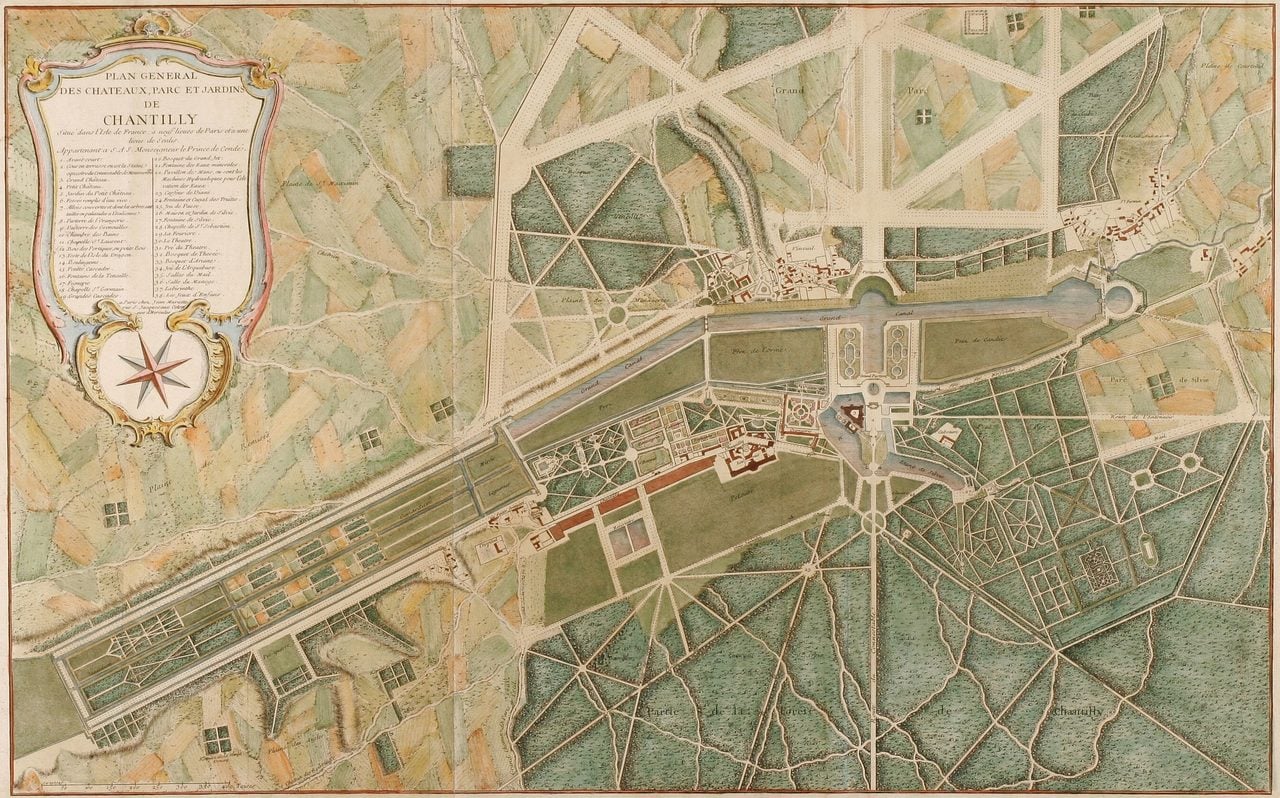
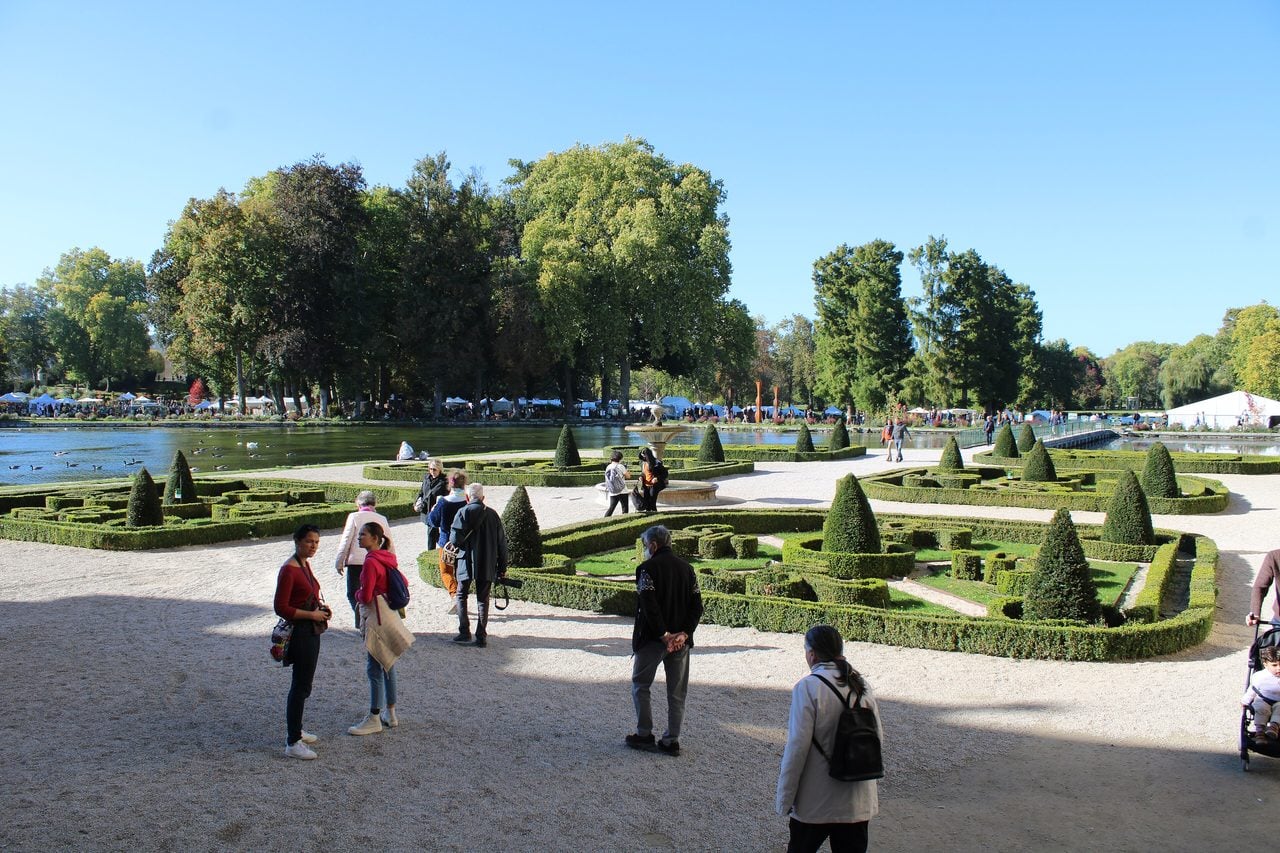
To remake the grounds, Condé hired André Le Nôtre, the gardener Louis XIV was even then setting loose on Versailles. Working between 1663 and 1688, Le Nôtre seized on the old Montmorency terrace and built his design around water rather than flowers. He cut a vast canal, the Grand Canal, roughly 2.5 kilometers (about 1.5 miles) long on an east-west axis, set broad reflecting basins below the terrace, and arranged the parterres as a calm geometry of light and water. From the high terrace the whole composition reads as a single mirror, the sky laid out at the visitor’s feet. The boldest stroke was to make water, not a building, the heart of the scheme: the main axis runs along the canal and the old terrace with its statue, leaving the château off to one side rather than commanding the center, an arrangement unlike the building-centered vistas of Versailles or Vaux-le-Vicomte. Many observers then and since have judged the result Le Nôtre’s masterpiece, finer even than Versailles; by several accounts the designer himself counted Chantilly among his favorite creations.
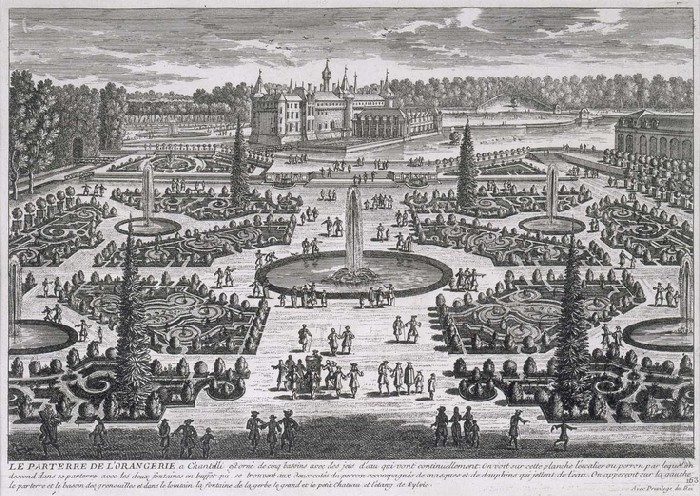
Later princes kept adding to the park. In the 1770s a later Prince de Condé built a rustic hamlet of thatched cottages with sumptuous interiors, a fashionable conceit that Marie-Antoinette would echo a decade later in her own Hameau at the Petit Trianon. An Anglo-Chinese garden of winding canals and an English landscape garden joined Le Nôtre’s formal axis, so that a single walk now crosses three centuries of changing taste.
One April night in 1671, the gardens witnessed a small tragedy that has outlived almost everyone present. François Vatel, the Grand Condé’s maître d’hôtel, had once managed the household of Nicolas Fouquet at Vaux-le-Vicomte. Charged with feeding Louis XIV and hundreds of guests across a three-day royal visit, and worn down by sleepless nights of preparation, Vatel convinced himself that the fish for a Friday banquet would not arrive in time. On the morning of April 24, 1671, fearing public disgrace, he ran himself through with his sword. The seafood, the story goes, was delivered minutes later. Madame de Sévigné set the whole affair down in a letter to her daughter, and it is from her pen that the legend of the perfectionist undone by a late delivery descends. Chantilly has no ghost story to set beside it: our reference on haunted castles searched the operator’s own pages and sitemap, found nothing of the kind, and reports the absence rather than inventing one.
A palace built for horses
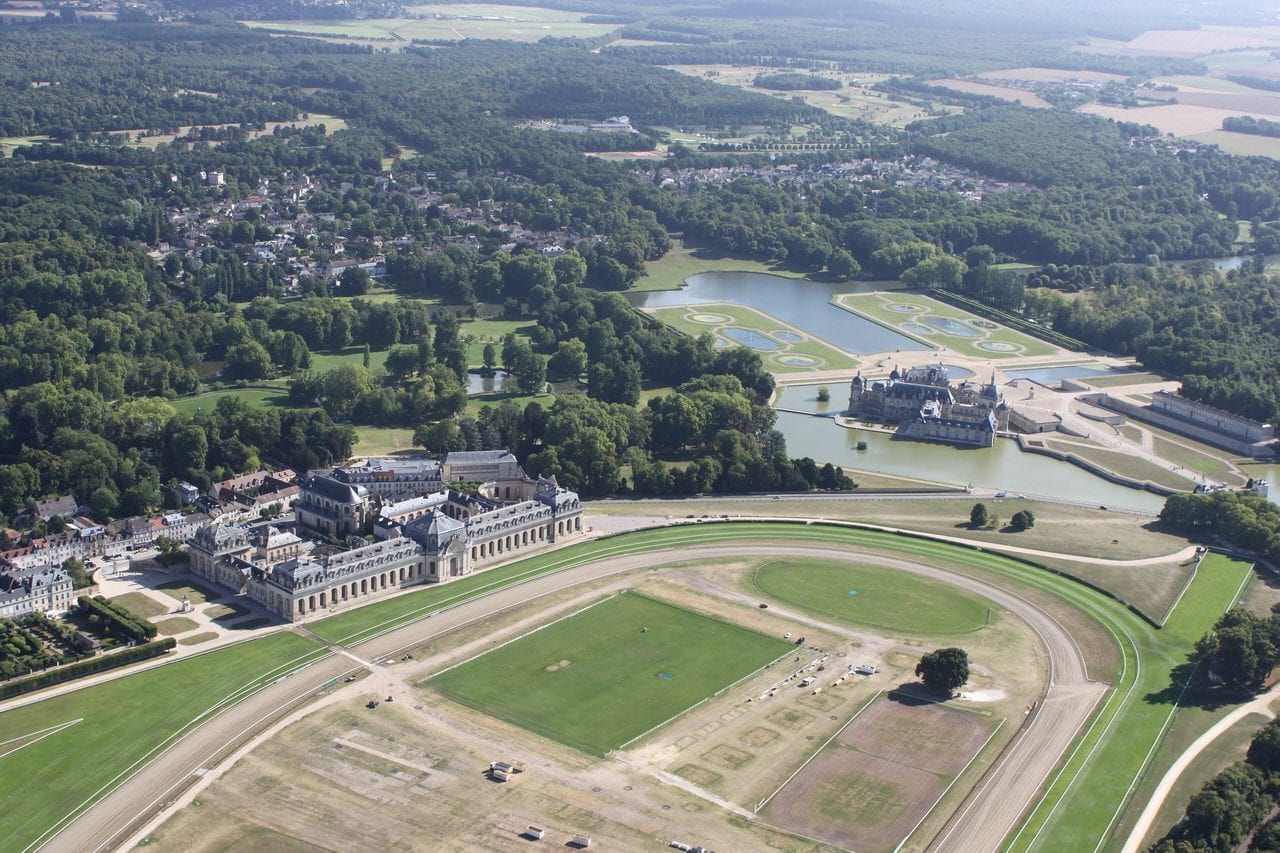
No prince expressed Chantilly’s grandeur more extravagantly than Louis Henri de Bourbon, a great-grandson of the Grand Condé. Between 1719 and 1735 he had the architect Jean Aubert raise the Grandes Écuries, the Great Stables, a palace for horses nearly 190 meters long and crowned by a dome about 28 meters high. Inside, room enough stood for some 240 horses and 500 hounds, and the prince entertained royalty at banquets staged beneath the central dome. A well-worn legend claims he built on such a scale because he believed he would be reincarnated as a horse. Whatever its truth, the stables rank among the most ambitious ever raised in Europe.
 CC BY-SA 4.0" srcset="https://stonekeepatlas.com/wp-content/uploads/2026/06/chantilly-aerial-stables-racecourse.jpg 1280w, https://stonekeepatlas.com/wp-content/uploads/2026/06/chantilly-aerial-stables-racecourse-300x200.jpg 300w, https://stonekeepatlas.com/wp-content/uploads/2026/06/chantilly-aerial-stables-racecourse-1024x682.jpg 1024w, https://stonekeepatlas.com/wp-content/uploads/2026/06/chantilly-aerial-stables-racecourse-768x512.jpg 768w" sizes="auto, (max-width: 1280px) 100vw, 1280px" />
The horse never left Chantilly. A racecourse opened below the château in the 1830s, and the town became one of the capitals of European racing, still home today to the Prix de Diane and a sprawling community of trainers and breeders. Since the 1980s the Grandes Écuries themselves have housed a living museum of the horse, with daily equestrian demonstrations under the same vaulted ceiling that once sheltered a prince’s stud.
Revolution, ruin, and an unlikely heir
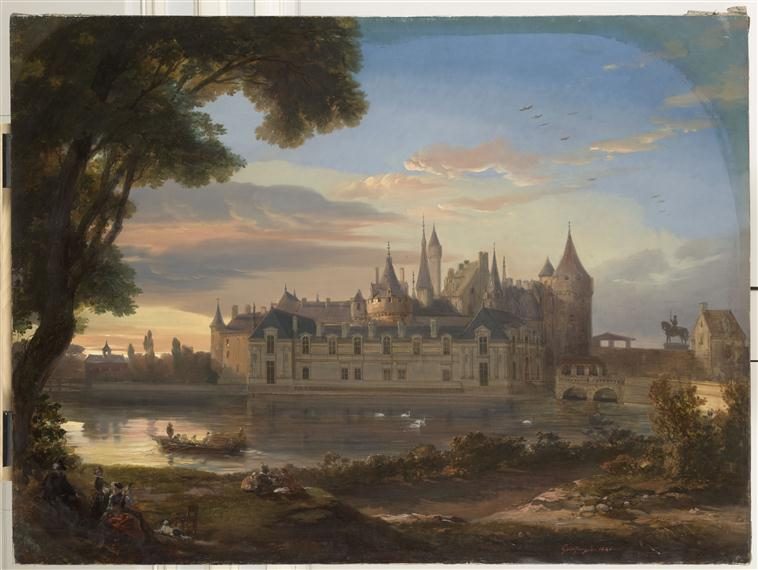
Revolution nearly erased all of it. The Grand Château was pulled down and its stone sold off, while the gardens, left untended, ran wild. Only the Petit Château and the Grandes Écuries came through more or less intact. When the last Prince de Condé died in 1830, the estate passed to his eight-year-old godson, Henri d’Orléans, Duke of Aumale, the fifth son of the reigning King Louis-Philippe. That bequest made a boy one of the largest landowners in France before he was old enough to grasp it.
Aumale rebuilds, and stops the clock
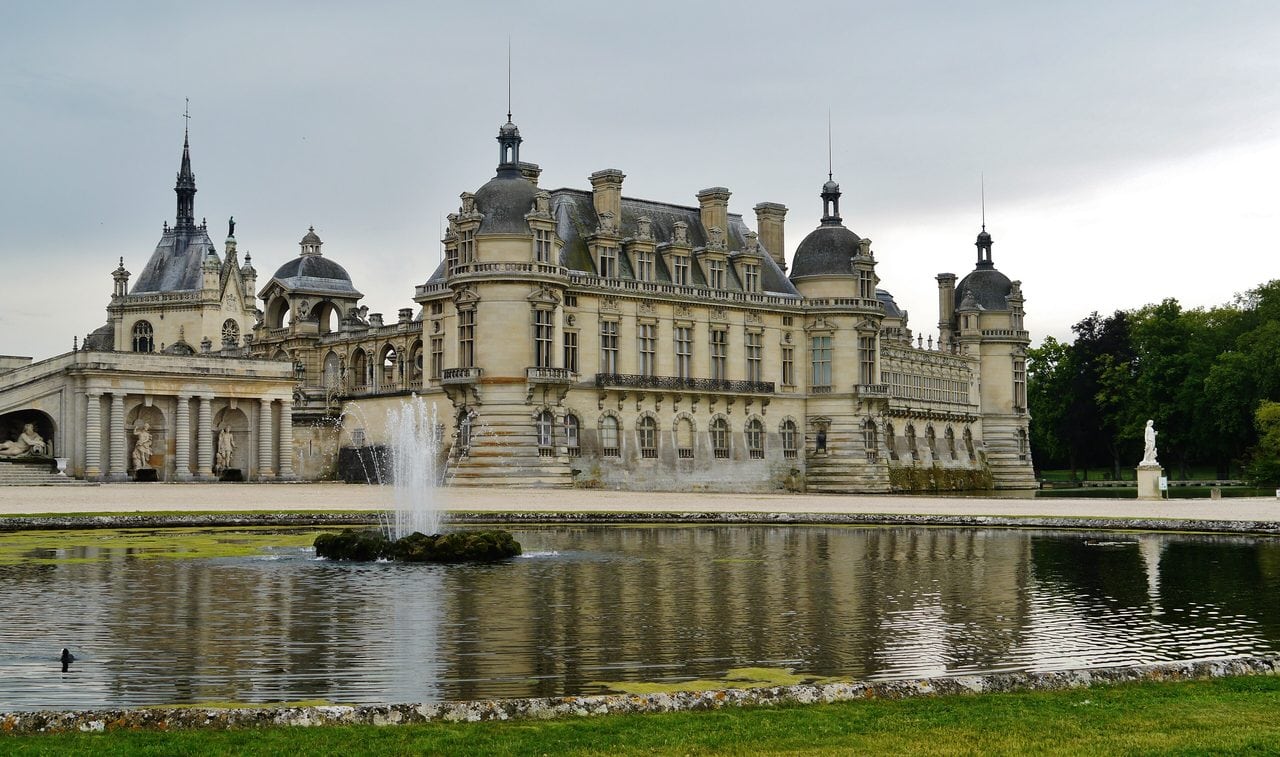
Aumale’s life turned on exile. A decorated general who had made his name in the French conquest of Algeria, and later a deputy for the Oise and a member of the Académie française, he was driven from France with the rest of the Orléans family when revolution toppled his father in 1848, and he spent the better part of two decades in England. There he poured a vast fortune into collecting: paintings, drawings, rare books, and manuscripts of the first rank, assembling in a foreign house one of the great private galleries of the century. Allowed home in 1871, he found Chantilly dilapidated and resolved to rebuild it as a setting for those treasures. Between 1875 and 1885 the architect Honoré Daumet raised a new Grand Château on the old foundations, a richly detailed exercise in Renaissance Revival that gives the modern Château de Chantilly its storybook profile.
 CC BY-SA 4.0" srcset="https://stonekeepatlas.com/wp-content/uploads/2026/06/chantilly-grand-chateau-rebuilt.jpg 1280w, https://stonekeepatlas.com/wp-content/uploads/2026/06/chantilly-grand-chateau-rebuilt-300x177.jpg 300w, https://stonekeepatlas.com/wp-content/uploads/2026/06/chantilly-grand-chateau-rebuilt-1024x606.jpg 1024w, https://stonekeepatlas.com/wp-content/uploads/2026/06/chantilly-grand-chateau-rebuilt-768x454.jpg 768w" sizes="auto, (max-width: 1280px) 100vw, 1280px" />
A single clause in Aumale’s will is the most remarkable thing about the place. He had lost his only sons young and had no direct heir, and he feared that a future republican government might exile him again and scatter his collection as his father’s had been scattered. To put it beyond reach, he bequeathed Chantilly and everything in it to the Institut de France in 1886, choosing a learned body over his own dynasty. His conditions were absolute: open the museum to the public after his death, never lend a single work, and never rearrange the galleries. The timing was pointed, announced just as the Republic moved once more to expel the Orléans princes. When Aumale died in Sicily on May 7, 1897, the estate passed to the Institut, and on April 17, 1898 the Musée Condé opened its doors.
Chantilly remains the property of the Institut de France, which administers it today through the Domaine de Chantilly – Fondation d’Aumale. From 2005, a foundation created and funded by the Aga Khan underwrote a sweeping restoration of the château, the park, and the stables, repairing damage that decades of damp and a failing water system had done. The estate now preserved runs to some 7,800 hectares, most of it forest.
Inside the Musée Condé
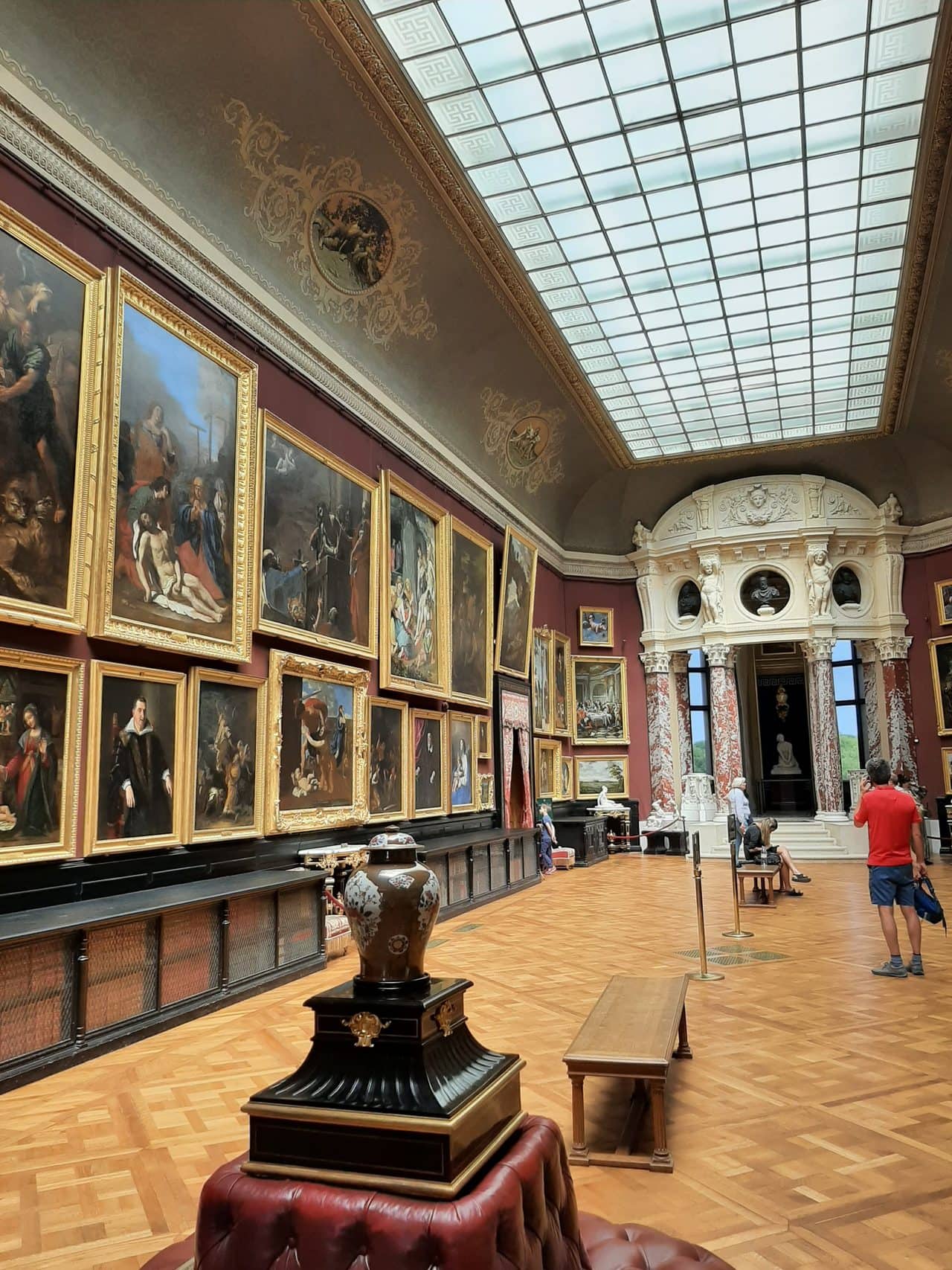
What Aumale gathered indoors still hangs as he arranged it, and that is the museum’s rare gift. In the painting gallery, inaugurated in 1882, he hung his pictures salon-style, crowded frame to frame by his own eye rather than by school or date. The galleries hold three works by Raphael, among them the jewel-like Three Graces and the Madonna of Loreto, beside Botticelli’s Autumn, Piero di Cosimo’s haunting portrait of a woman said to be Simonetta Vespucci, panels by Fra Angelico, and a deep run of French masters from the Clouets through Poussin, Watteau, Ingres, and Delacroix. Taken together, these rooms form the second collection of old master paintings in France after the Louvre, in the duke’s own nineteenth-century hang. Because the founder forbade all loans, the only way to see any of it is to come to Chantilly.
 CC BY 4.0" style="width:465px" srcset="https://stonekeepatlas.com/wp-content/uploads/2026/06/chantilly-musee-conde-painting-gallery.jpg 1280w, https://stonekeepatlas.com/wp-content/uploads/2026/06/chantilly-musee-conde-painting-gallery-225x300.jpg 225w, https://stonekeepatlas.com/wp-content/uploads/2026/06/chantilly-musee-conde-painting-gallery-768x1024.jpg 768w, https://stonekeepatlas.com/wp-content/uploads/2026/06/chantilly-musee-conde-painting-gallery-1152x1536.jpg 1152w" sizes="auto, (max-width: 1280px) 100vw, 1280px" />
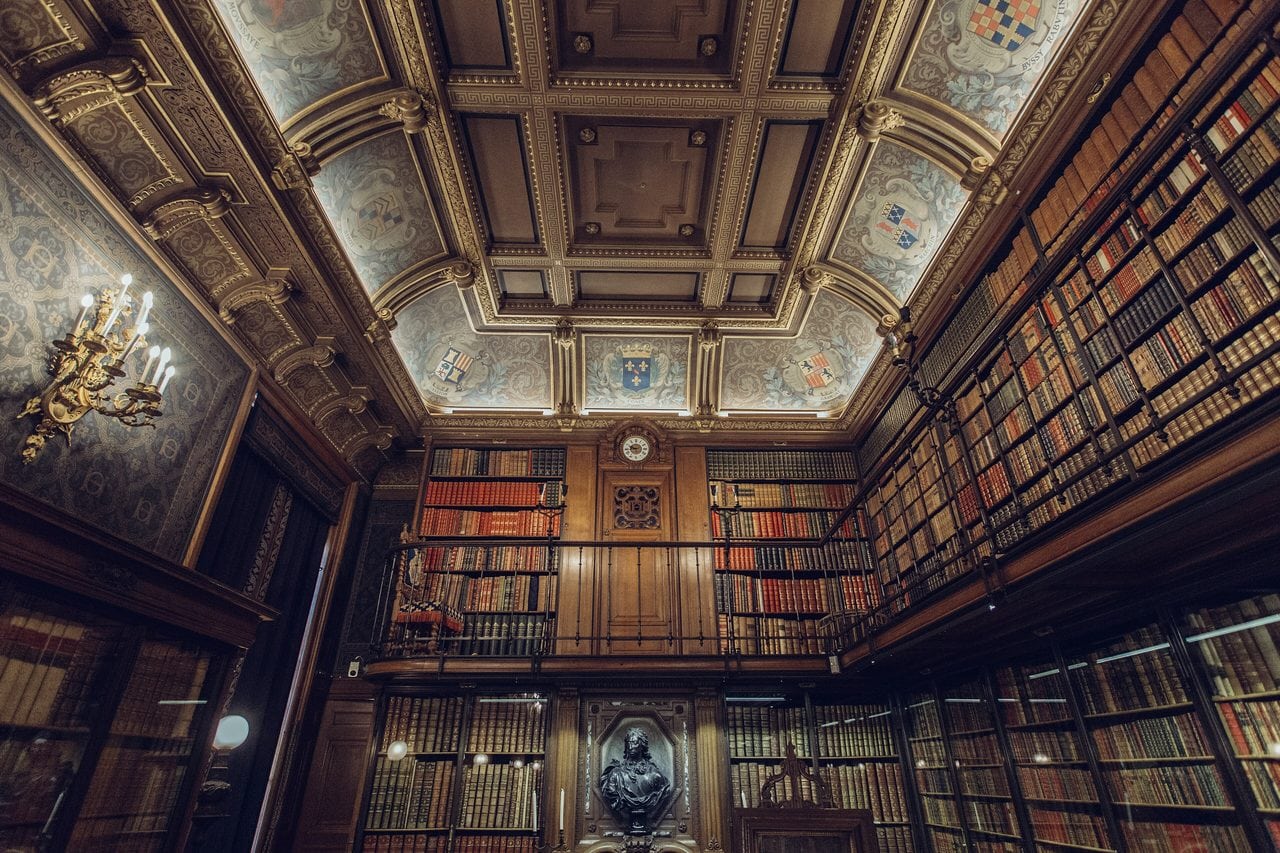
The library matches the gallery. In a domed reading room fitted out by Daumet, the Cabinet des Livres keeps around 1,500 manuscripts, two hundred of them illuminated, alongside many thousands of printed books that include some seven hundred incunabula. Its supreme treasure is the Très Riches Heures du Duc de Berry, the most famous illuminated manuscript in the world, begun by the Limbourg brothers around 1412 to 1416, left unfinished at their deaths, and completed only decades later, around 1485, by Jean Colombe. Aumale acquired it in 1856. Its calendar pages, with their golden castles and month-by-month scenes of peasant labor and noble leisure, are among the most reproduced images of the Middle Ages. So fragile and so precious is the original that it goes on public view only on rare occasions; visitors normally study a facsimile.
 CC0" srcset="https://stonekeepatlas.com/wp-content/uploads/2026/06/chantilly-cabinet-des-livres.jpg 1280w, https://stonekeepatlas.com/wp-content/uploads/2026/06/chantilly-cabinet-des-livres-300x200.jpg 300w, https://stonekeepatlas.com/wp-content/uploads/2026/06/chantilly-cabinet-des-livres-1024x682.jpg 1024w, https://stonekeepatlas.com/wp-content/uploads/2026/06/chantilly-cabinet-des-livres-768x512.jpg 768w" sizes="auto, (max-width: 1280px) 100vw, 1280px" />
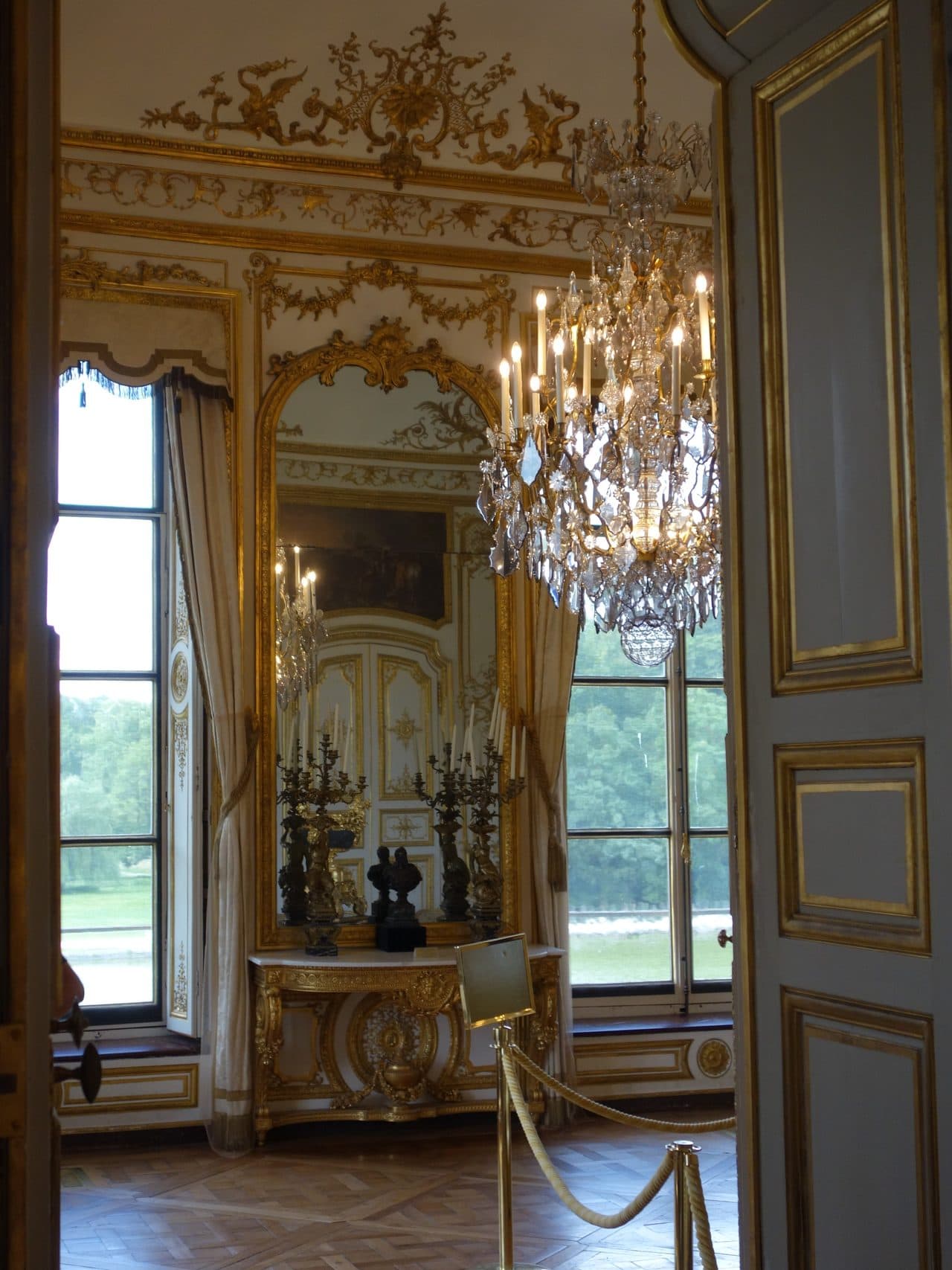
Beyond the art, the rooms themselves repay attention. The grand apartments of the Princes of Condé keep their eighteenth-century paneling and a celebrated chinoiserie ensemble, the Grande Singerie, where Christophe Huet’s painted monkeys ape the manners of the court. On the ground floor of the Petit Château, the private flats fitted out for the Duke and Duchess of Aumale in the 1840s count among the only completely preserved princely apartments of the July Monarchy in France. To walk these galleries is to see a nineteenth-century prince’s taste held exactly as he left it, a deliberate act of stopping time.
Visiting the Château de Chantilly
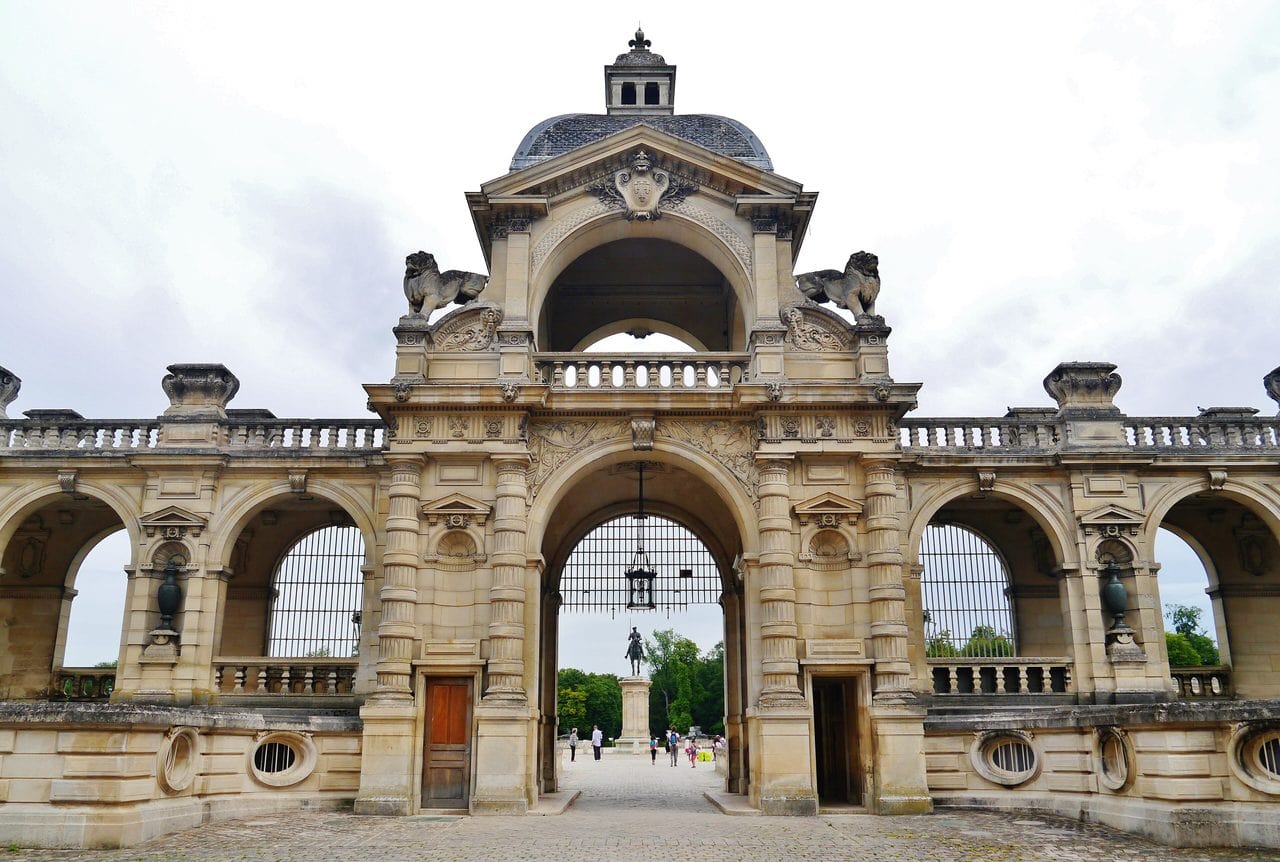
The Château de Chantilly sits about 40 kilometers (25 miles) north of Paris, in the Oise department of Hauts-de-France, and makes one of the easiest grand day trips from the capital, one of three great châteaux of the Oise within a day of Paris. Trains leave the Gare du Nord for Chantilly-Gouvieux in roughly 25 minutes by regional express, or about 45 by RER, after which a free shuttle or a twenty-minute walk reaches the gates. Drivers take the A1 and reach the estate in an hour or so.
 CC BY-SA 4.0" srcset="https://stonekeepatlas.com/wp-content/uploads/2026/06/chantilly-entrance-gateway.jpg 1280w, https://stonekeepatlas.com/wp-content/uploads/2026/06/chantilly-entrance-gateway-300x202.jpg 300w, https://stonekeepatlas.com/wp-content/uploads/2026/06/chantilly-entrance-gateway-1024x690.jpg 1024w, https://stonekeepatlas.com/wp-content/uploads/2026/06/chantilly-entrance-gateway-768x517.jpg 768w" sizes="auto, (max-width: 1280px) 100vw, 1280px" />
A single estate ticket covers the château and the Musée Condé, the gardens, and the Great Stables; as of 2026 it runs roughly €18 to €21 for adults depending on the ticket, with reduced rates for children and students and free entry for the youngest. A cheaper grounds-only ticket lets visitors wander the gardens alone, by foot, rented boat, or the little train that loops the park past Le Nôtre’s canal and the eighteenth-century hamlet. Daily opening holds every day except Tuesdays, with the château welcoming visitors from late morning into the late afternoon and a short closure in January. Photographers chasing that mirror-perfect reflection should arrive early, before the crowds and while the water lies still. Allow most of a day to take in the museum, the park, and the stables without hurrying, and longer still if the surrounding forest, one of the largest near Paris, tempts a walk.
Chantilly has lent its name to two things better known than the château itself. Crème Chantilly, the sweetened whipped cream, is popularly tied to Vatel and the estate, though the link owes more to romance than to record. Chantilly lace, the delicate black silk lace prized in the eighteenth and nineteenth centuries, carried the town’s name across Europe even though much of it was made elsewhere.
Entry tickets and guided tours can be booked in advance through GetYourGuide, and anyone staying overnight nearby can compare hotels in and around Chantilly.
Some links on this page are affiliate links, which means StoneKeep Atlas may earn a small commission, at no extra cost to you, if you book through them.
To sleep in a château near Chantilly rather than a town hotel, our guide to Castle Hotels Near Paris covers the options in the Chantilly forest and the wider Oise.
More Views of the Château de Chantilly
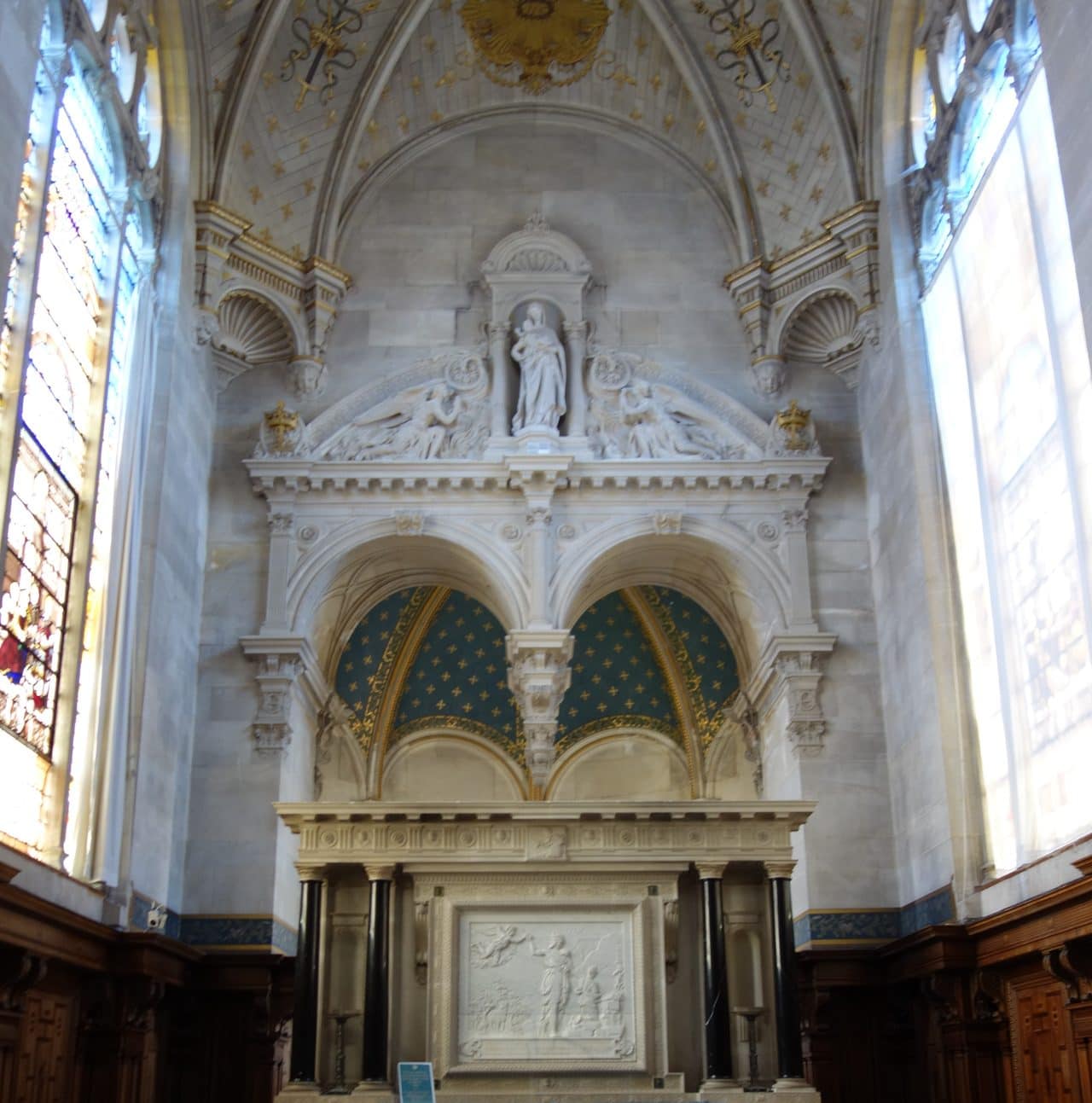
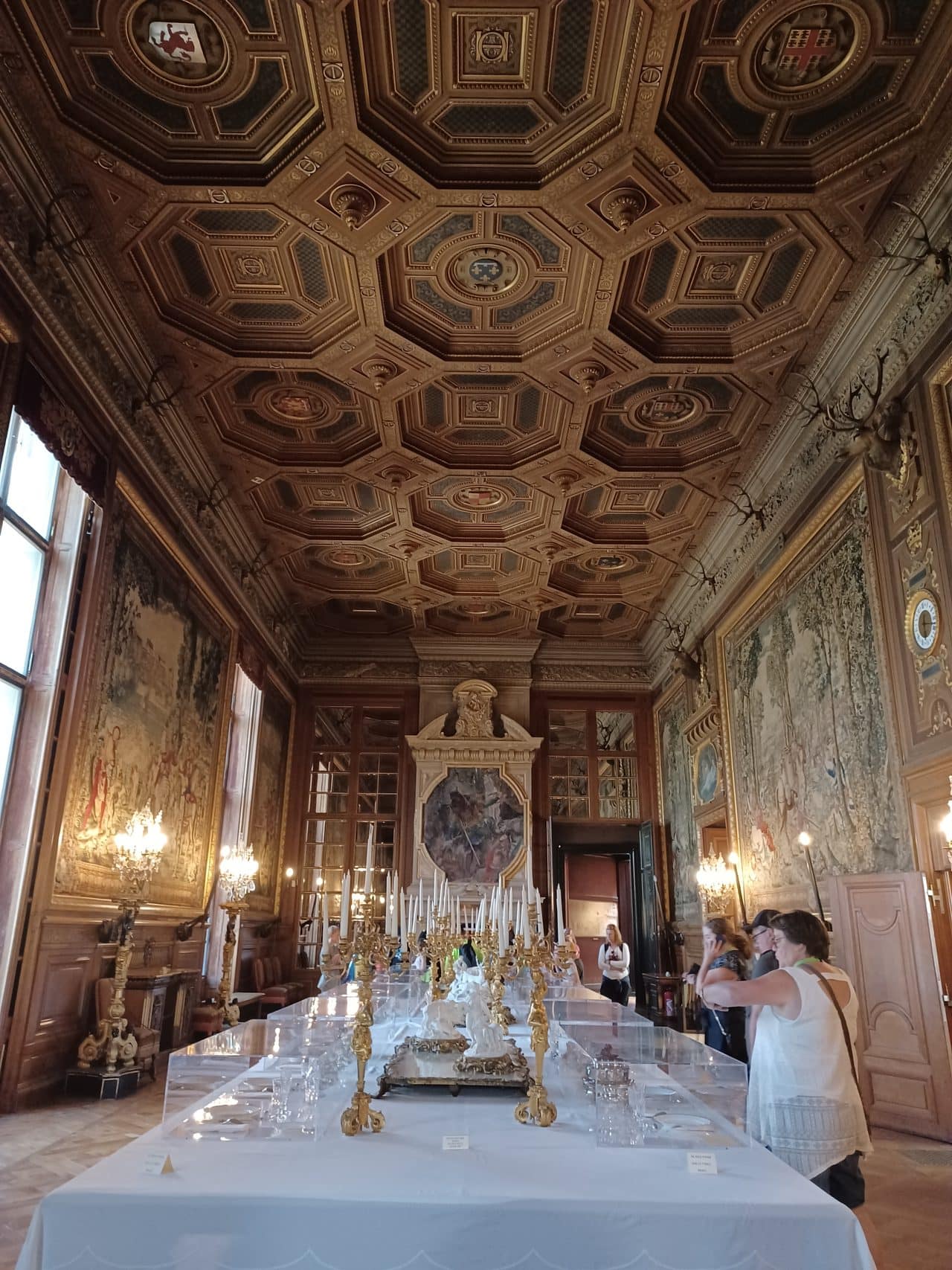
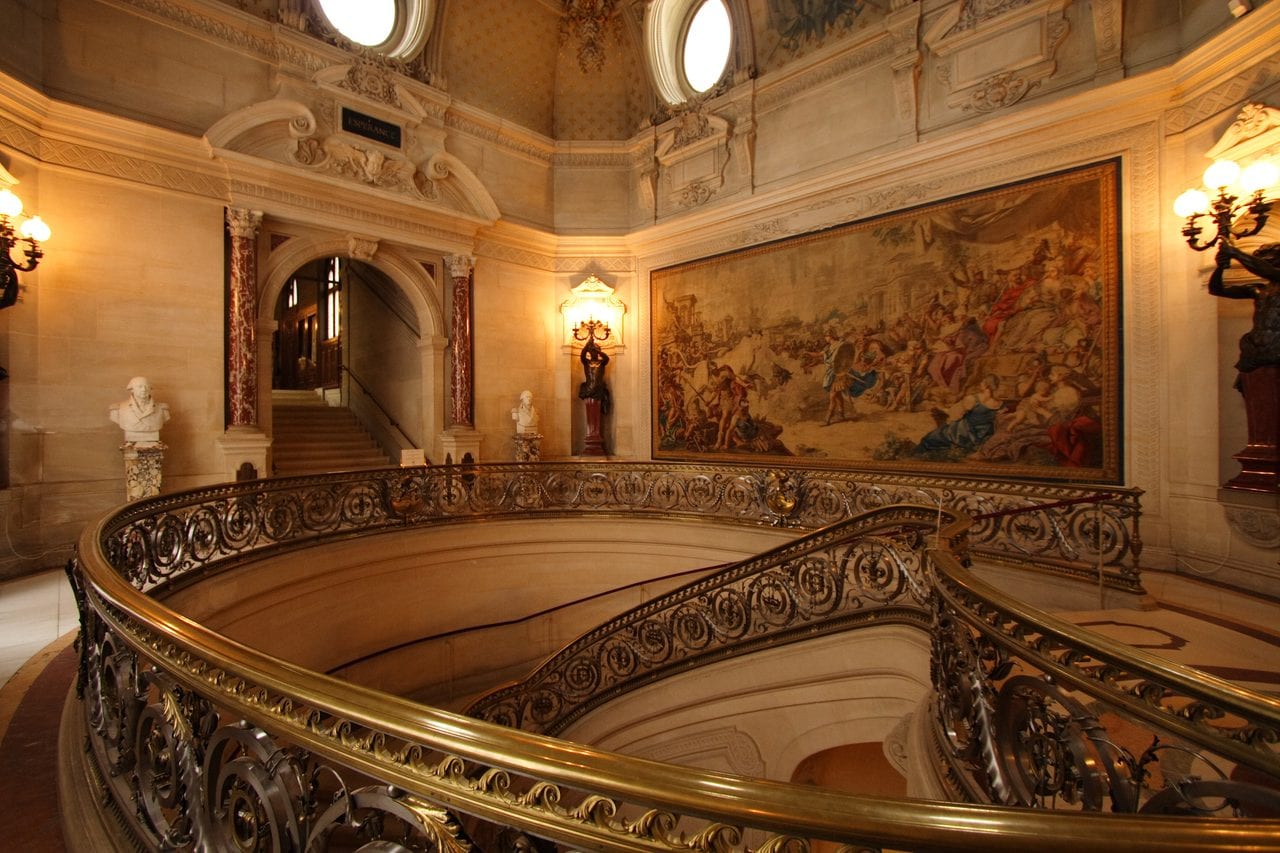
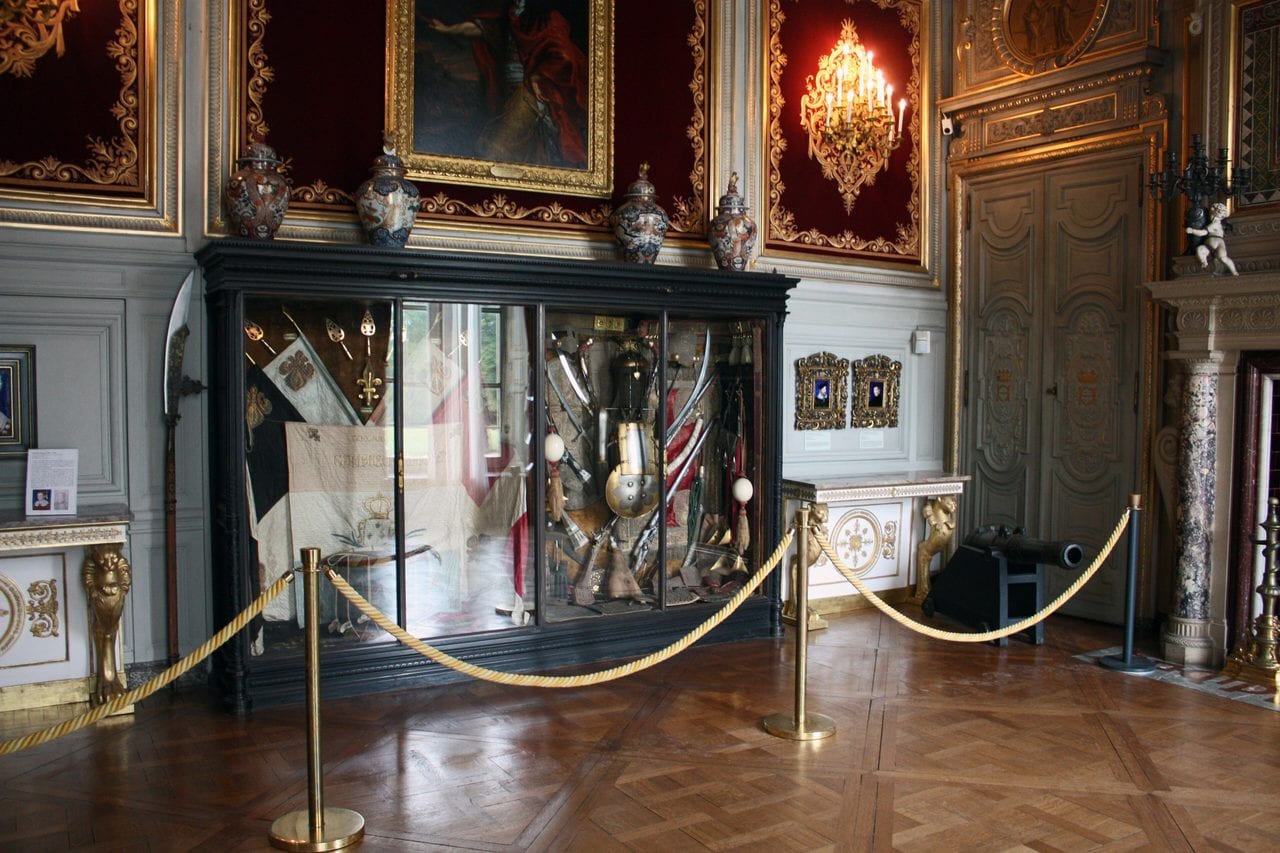
A closer look at the château and its reflection, the galleries of the Musée Condé, the Great Stables, and Le Nôtre’s water-gardens across the seasons.
Beyond the Château de Chantilly
Chantilly belongs to a wider story of French taste that runs well outside its own region. Its gardens share an author with the Palace of Versailles, where Le Nôtre worked the same magic with water and perspective on a royal scale. Its kitchens share a ghost with the Château de Vaux-le-Vicomte: François Vatel ran Fouquet’s household there before his fatal night at Chantilly, and Le Nôtre designed both estates. Set beside those two, Chantilly is the quieter member of the trio, less crowded than Versailles and, to many who make the trip, every bit as rewarding.
Closer to home, the same Oise countryside holds the Château de Pierrefonds, a medieval fortress that Eugène Viollet-le-Duc rebuilt for Napoleon III into a nineteenth-century dream, and the Château de Compiègne, the imperial palace from which that emperor ordered the work. They are different reinventions from Chantilly’s own, but kindred ones, and easy additions to a day in the Hauts-de-France. Rising from its own moat, Chantilly also belongs among the fairytale castles in France, the châteaux that look drawn from a storybook.
Conclusion
Chantilly rewards a second look. Its floating château is younger than it pretends, the work of a nineteenth-century prince rebuilding a vanished past, while the gardens beyond it are the real antiquity, laid out by the greatest landscape designer France produced. Bind those together with a museum sealed against change and a stable built like a palace, and the appeal of the Château de Chantilly comes clear. It is a place assembled by people determined that beauty, once made, should never be allowed to slip away.
Principal Sources
- Domaine de Chantilly. Official history of the estate, the Petit Château, the Le Nôtre gardens, the Grandes Écuries, and the Musée Condé collection.
- Institut de France. The Duc d’Aumale’s 1886 bequest of the estate.
- Ministère de la Culture. Heritage records for the Domaine de Chantilly.
- Musée Condé. Curatorial materials on the collection.
- Sévigné, Marie de Rabutin-Chantal, marquise de. Lettres, for the death of François Vatel.
The Petit Château’s attribution to Jean Bullant and the broader estate history also follow standard reference accounts of Chantilly.
Image credits. Hero, the château reflected in the lake: Daniel Villafruela, CC BY 3.0, via Wikimedia Commons; The château from the moat: Zairon, CC BY-SA 4.0, via Wikimedia Commons; The Orangerie parterre (engraving): Adam Pérelle, public domain, via Wikimedia Commons; The estate from the air: Pierre-Alain Bandinelli, CC BY-SA 4.0, via Wikimedia Commons; The pre-Revolution château (Godefroy painting): Condé Museum, public domain, via Wikimedia Commons; The rebuilt Grand Château: Zairon, CC BY-SA 4.0, via Wikimedia Commons; The Musée Condé painting gallery: Ismael zniber, CC BY 4.0, via Wikimedia Commons; The Cabinet des Livres: Gabriel Ghnassia, CC0, via Wikimedia Commons; The entrance gateway: Zairon, CC BY-SA 4.0, via Wikimedia Commons; The old château (Silvestre etching): see page for author, CC BY 4.0, via Wikimedia Commons; The 1730 plan: Jean Mariette, public domain, via Wikimedia Commons; The garden parterres: APictche, CC BY-SA 4.0, via Wikimedia Commons; The chapel monument: DiscoA340, CC BY-SA 4.0, via Wikimedia Commons; The Galerie des Cerfs: Thomas1313, CC BY-SA 4.0, via Wikimedia Commons; The grand staircase: ignis, CC BY-SA 3.0, via Wikimedia Commons; The Salle des Gardes: Daniel Villafruela, CC BY-SA 3.0, via Wikimedia Commons; A Condé apartment: DiscoA340, CC BY-SA 4.0, via Wikimedia Commons; The terrace approach: FabienV, CC BY-SA 3.0, via Wikimedia Commons. Freely licensed images are resized to fit; otherwise unaltered.