
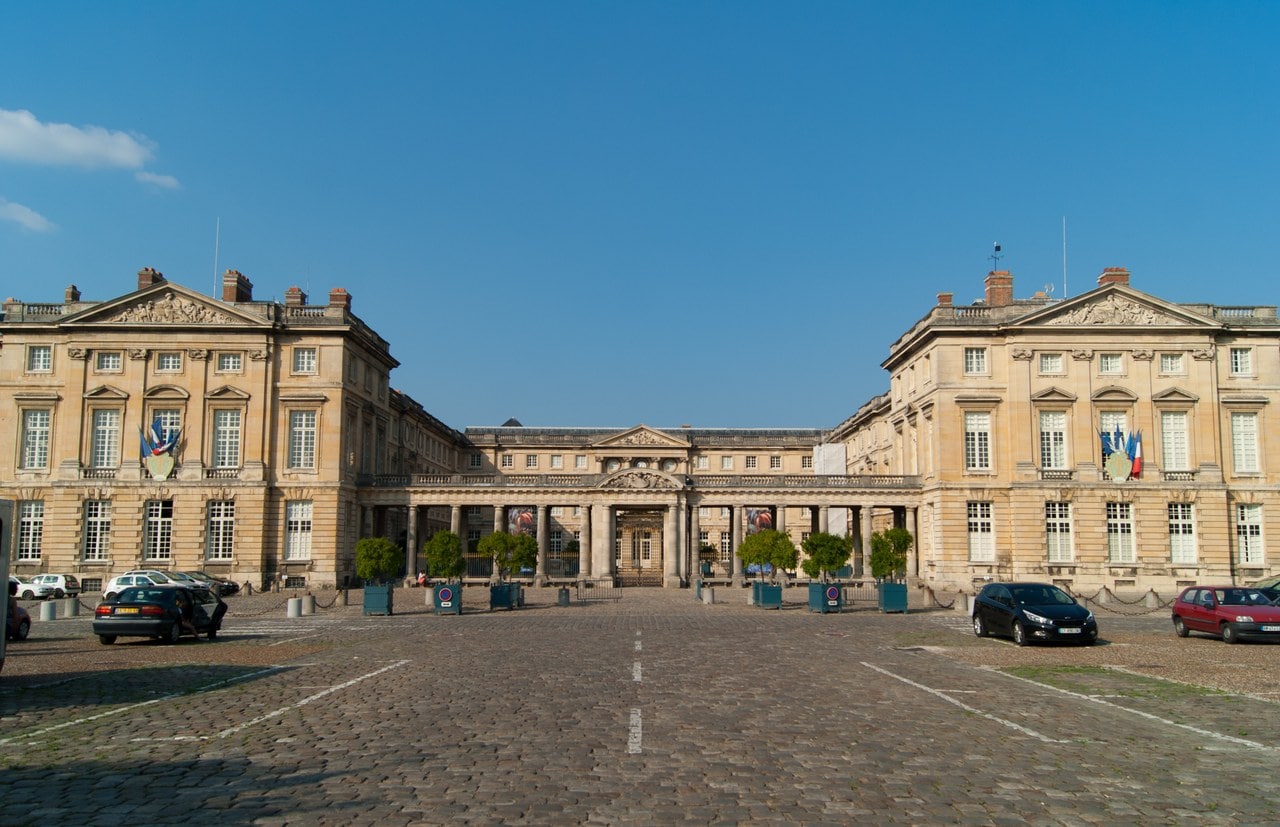
Château de Compiègne
The Château de Compiègne is one of France’s three great royal and imperial residences, a long neoclassical palace at the edge of the great forest of Compiègne, north of Paris. Begun for Louis XV to designs by Ange-Jacques Gabriel and finished under Louis XVI, it was remodeled a generation later for Napoleon I and became the favorite autumn residence of Napoleon III and his Second Empire court. Today the palace is a national museum, and this guide traces its history, its imperial apartments, and how to plan a visit.
Quick Facts
| Location | Compiègne, Oise, Hauts-de-France, France |
| Built | 1751–1788 |
| Architect | Ange-Jacques Gabriel, completed by Louis Le Dreux de La Châtre |
| Architectural style | Neoclassical |
| Commissioned by | Louis XV, completed under Louis XVI |
| Later remodeled for | Napoleon I and Napoleon III |
| Current use | National museum (historic apartments and three museums) |
| Owner | French State (Domaine national du château de Compiègne) |
| Open to public | Yes, daily except Tuesday |
| Official website | chateaudecompiegne.fr |
| UNESCO status | Not listed |
Most travelers in search of France’s royal residences make first for Versailles, and the more curious add Fontainebleau. Far fewer continue north to the third name in that company: a long neoclassical palace at the edge of a great forest, where two emperors felt more at home than anywhere else. Compiègne is the quietest of France’s three great royal and imperial residences, and in a sense the most revealing. A château built for a Bourbon king’s comfort became, within a single lifetime, the favorite stage of Napoleon I and then of Napoleon III. If Versailles is the house of the Sun King, Compiègne is the house of the Empire. And in the forest beyond its gates, the twentieth century would sign its name twice, in the same railway carriage, in the two armistices that closed its world wars.
A royal seat in the forest
Kings had favored this bend of the Oise for more than a thousand years before Gabriel drew a single line. Merovingian rulers kept a palace here; Clotaire I died at Compiègne in 561, coming back from a hunt in woods that still surround the town. Four successive royal palaces would rise on or near the site across the centuries. Around 1374 Charles V built a walled château inside the town, and a residence of medieval character stood there into the seventeenth century. By then Compiègne carried a particular distinction: with Versailles and Fontainebleau, it was one of the principal royal residences where the court and the king’s government settled for whole seasons, a center of court life and the exercise of power rather than a simple hunting lodge.
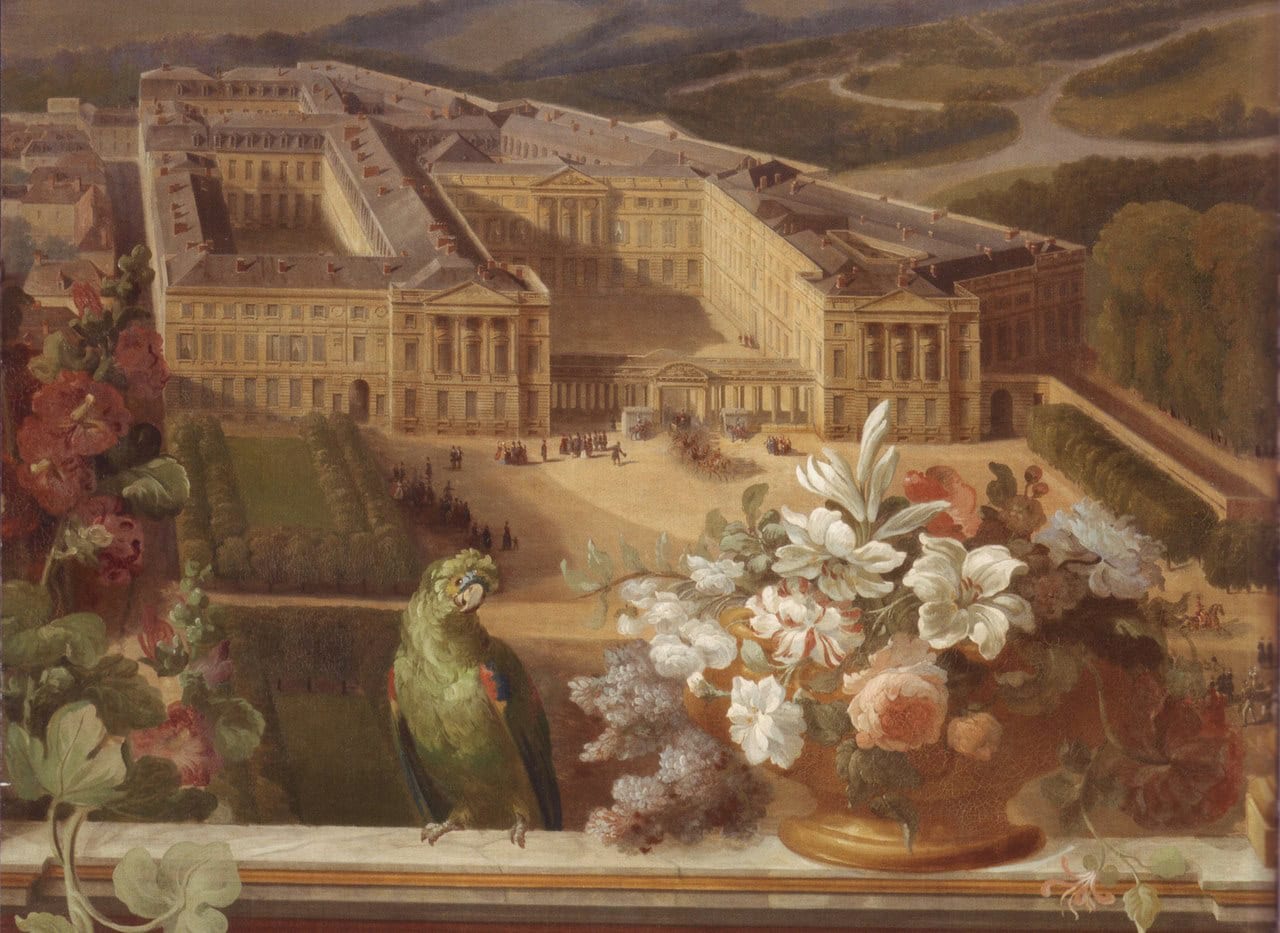
The town’s story runs deeper than its palaces. Charlemagne’s grandson Charles the Bald made Compiègne a royal seat in the ninth century, raising a palace and a great abbey here. And it was just outside the town, in a sortie against the Burgundians besieging it, that Joan of Arc was captured on May 23, 1430, then sold to the English and carried off to her trial at Rouen. Long before any king came here to hunt at his ease, Compiègne had earned its place in the national story.
Louis XV loved the place above all for its forest. He hunted here every season and came to prefer Compiègne to nearly any other residence, yet the old château struck him as cramped, dated, and unworthy of his name. In 1751 he resolved to replace it and handed the commission to his premier architect, Ange-Jacques Gabriel, the designer then reshaping the royal map of France from the Petit Trianon at Versailles to the Place Louis XV in Paris. Gabriel’s plans won the king’s approval that year, and the long rebuilding of Compiègne began.
Gabriel’s neoclassical palace
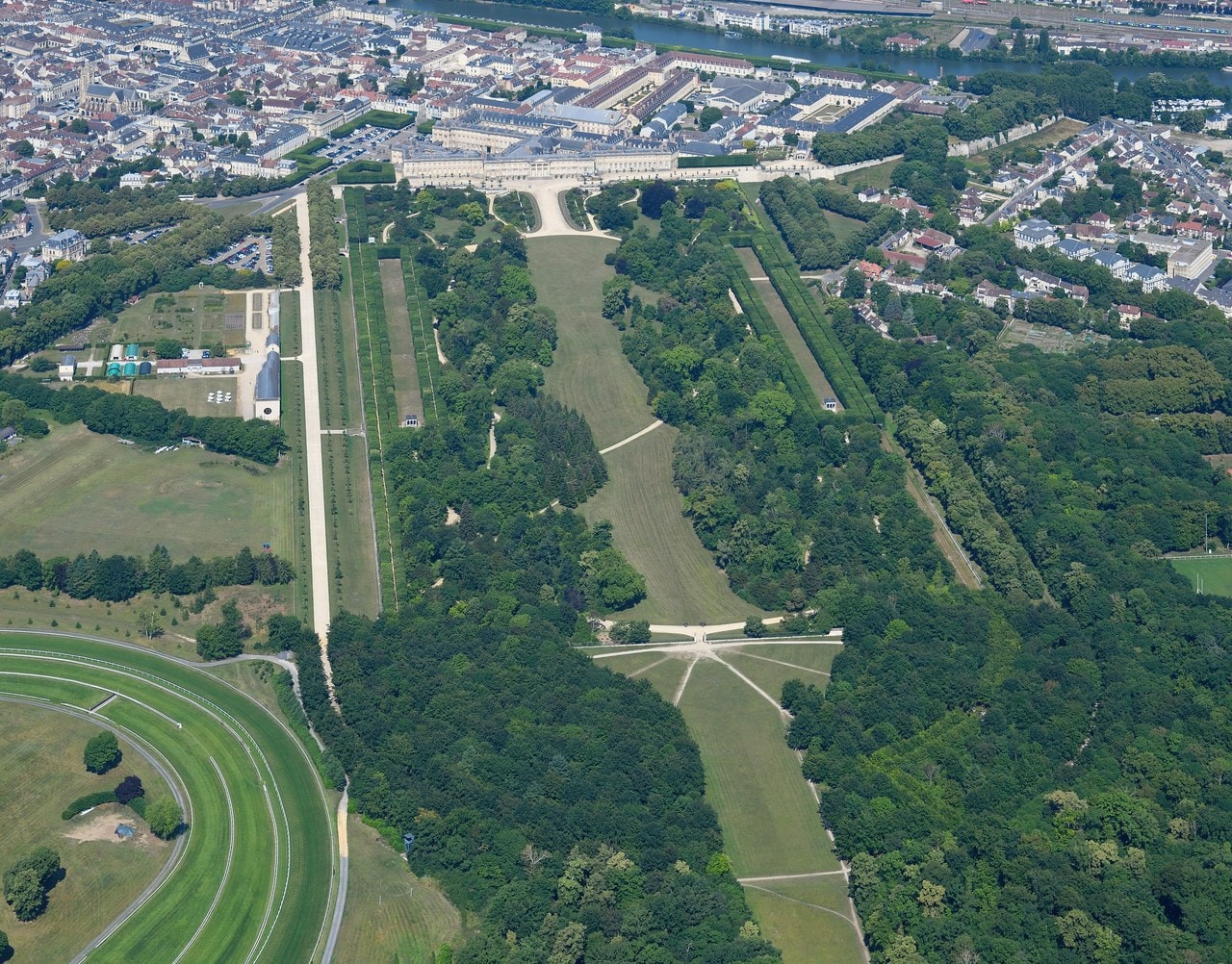
The site Gabriel inherited was an awkward one, boxed in by the town on one side and the rampart on the other. His solution gave the palace its unusual signature: a roughly triangular plan forced by the line of the old defenses, with the garden front set at an oblique angle to the great courtyard, so that the building seems to shift as you walk toward it. The style is the restrained, horizontal manner of Gabriel’s maturity, all long cornices and even rhythm, with little of the curved exuberance of the Baroque. The park front runs in a single calm sweep of pale stone, its windows marching in even ranks; on the town side a low colonnade screens the cour d’honneur from the square, a classical wall that still forms the palace’s public face. Compiègne is, by the reckoning of the monument itself, the largest neoclassical château in France.
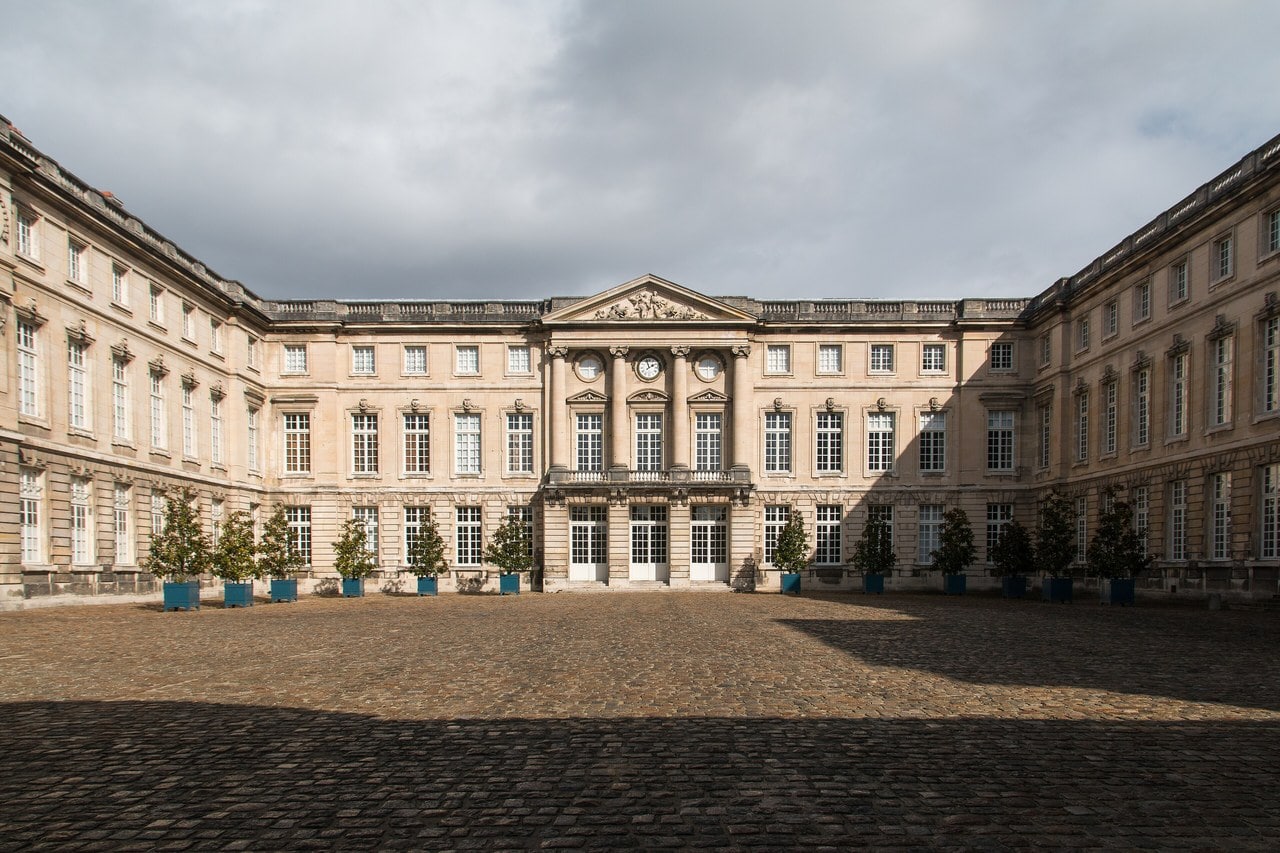
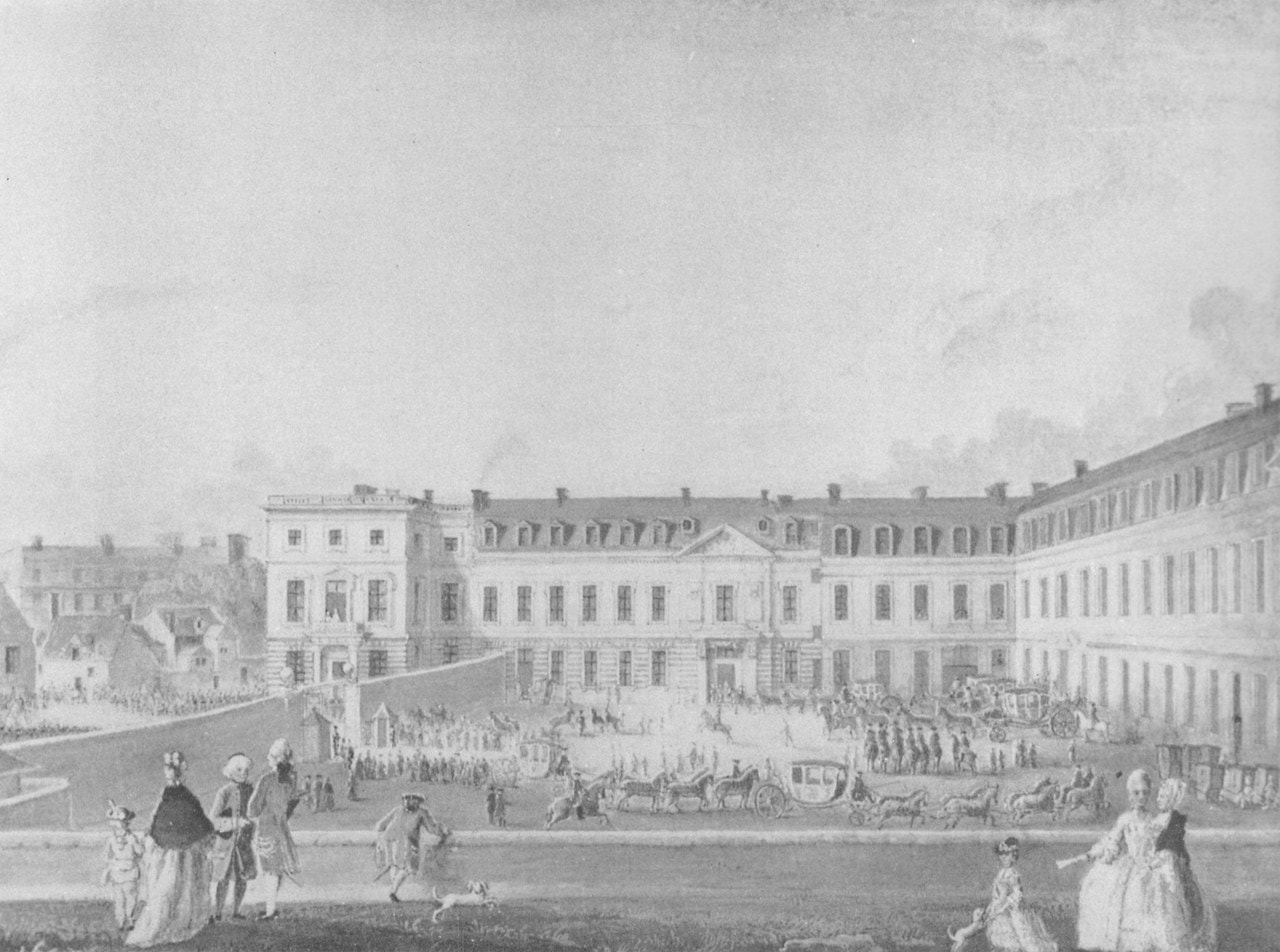
Gabriel directed the works until 1775. After his retirement his pupil and collaborator, Louis Le Dreux de La Châtre, carried the project forward for Louis XVI, completing the wing that overlooks the park, the colonnaded peristyle, and the guardroom, and bringing the palace substantially to completion by 1788. It had taken the better part of forty years and a great deal of money, and no French king would ever begin a palace on this scale again. In 1787 the Assembly of Notables singled out the spending at Compiègne as excessive, and within two years the monarchy that built it was gone. The kings barely lived in their finished palace. During the Revolution the furniture was sold off with that of the other royal houses, and from 1799 the empty shell was given over to a military school, then to the École des Arts et Métiers, which occupied it until 1806.
The palace of Napoleon
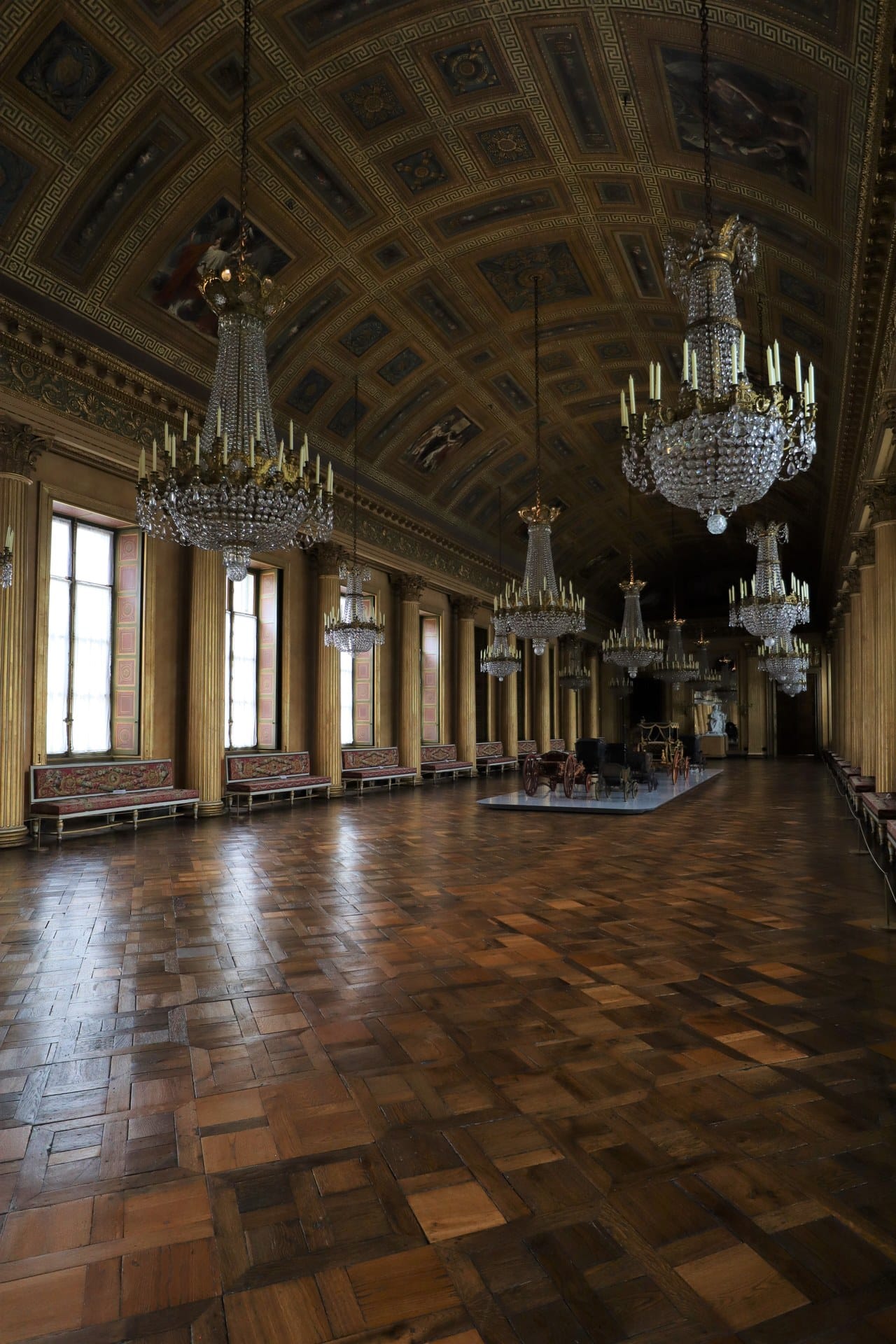
Compiègne became an imperial domain in 1804, and three years later Napoleon decided to make it his own. By a decree dated April 12, 1807, signed at Finckenstein in distant East Prussia, he ordered the gutted palace restored and made habitable. The architect Louis-Martin Berthault, who had created the park at Malmaison, took charge of the works, supported by Percier and Fontaine, the decorators Dubois and Redouté, the painter Girodet, and the cabinetmakers Jacob-Desmalter and Marcion. They reordered the rooms, added a ballroom some forty-five meters long, and clothed the interiors in the bronze, gilt, and rich silks of the First Empire. Auguste Luchet, who served briefly as the palace’s governor in 1848, liked to say that Compiègne speaks of Napoleon as Versailles speaks of Louis XIV, and the apartments bear him out.
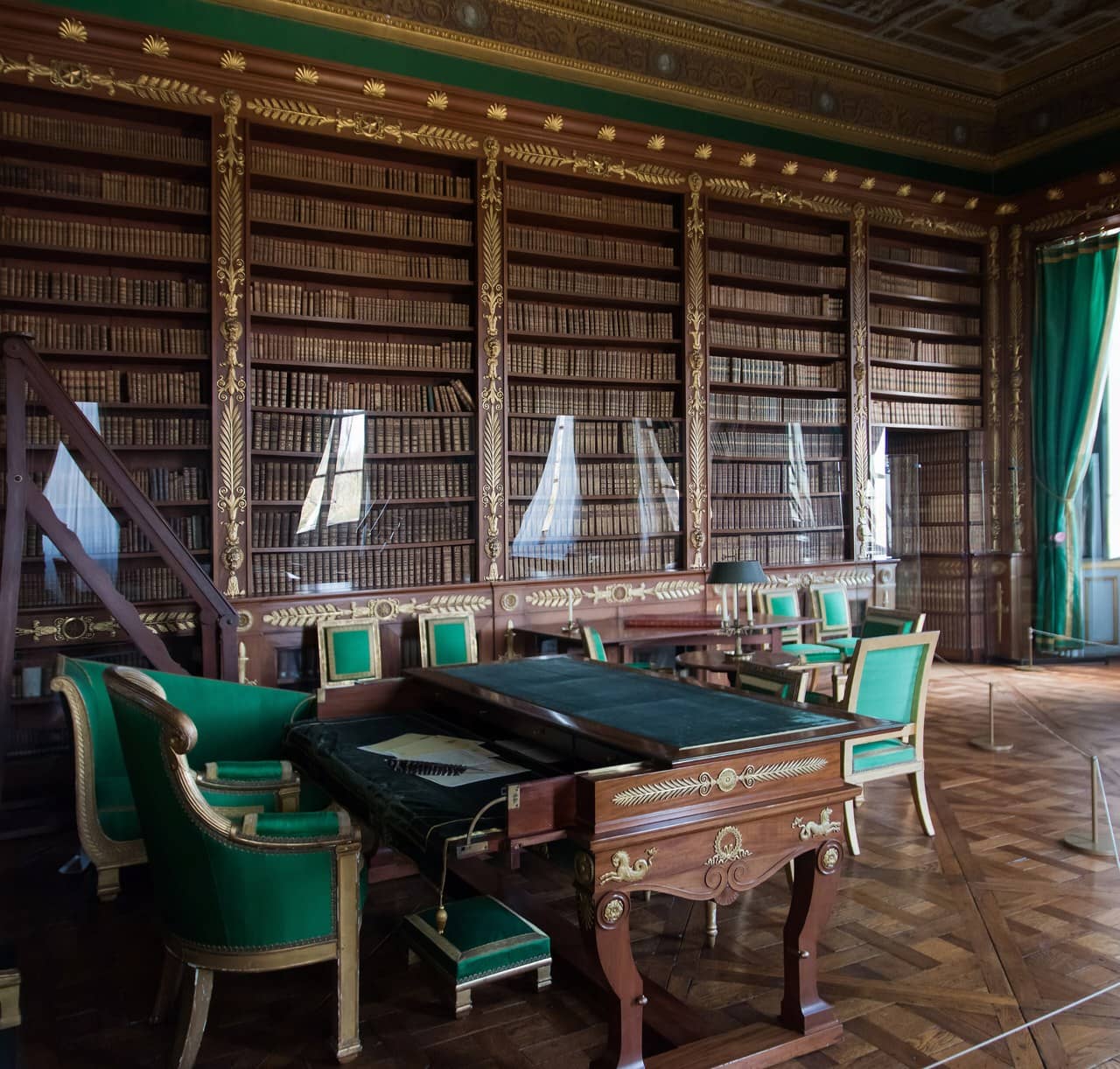
Few palaces in France preserve so complete a First Empire interior. The ballroom, the apartments of the emperor and empress, the library, and the long galleries survive much as Napoleon’s craftsmen left them, and they give Compiègne its character to this day.
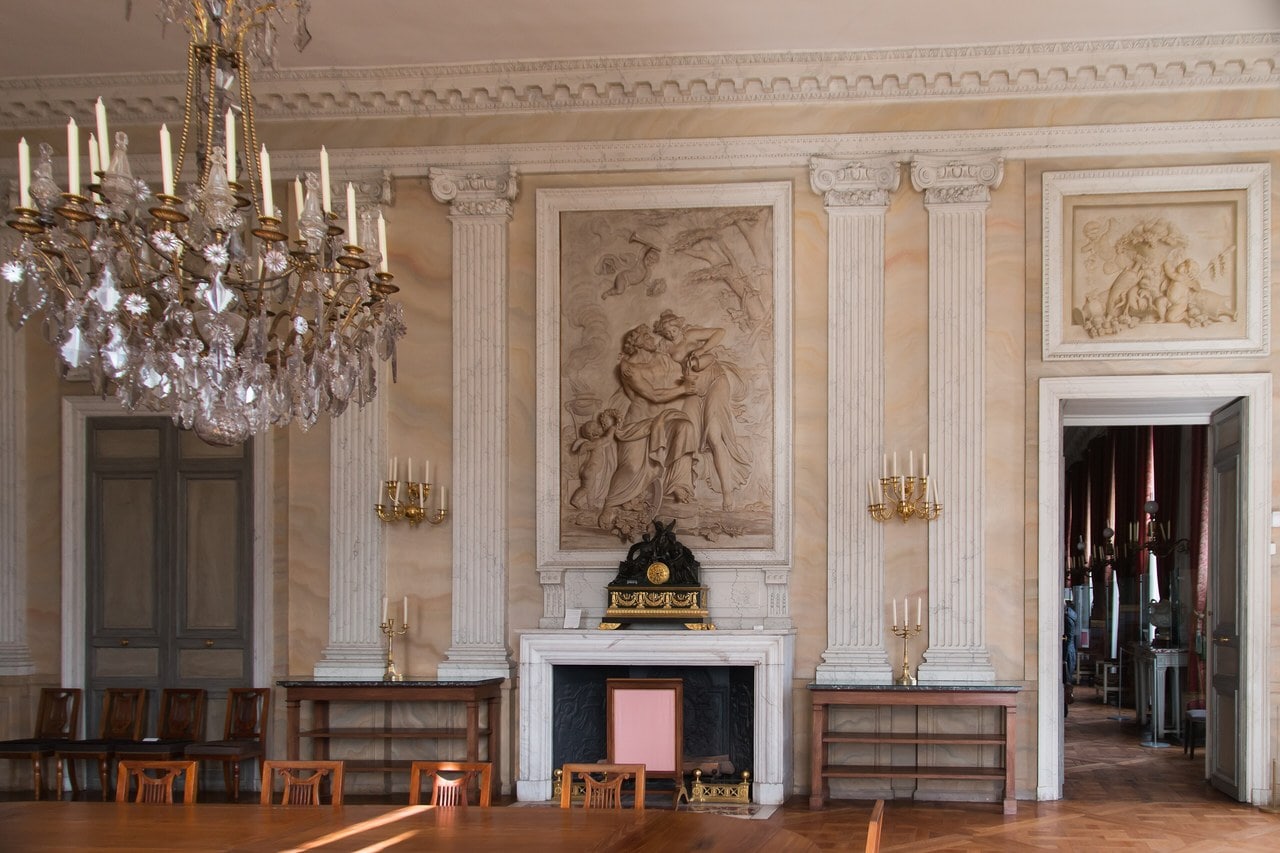
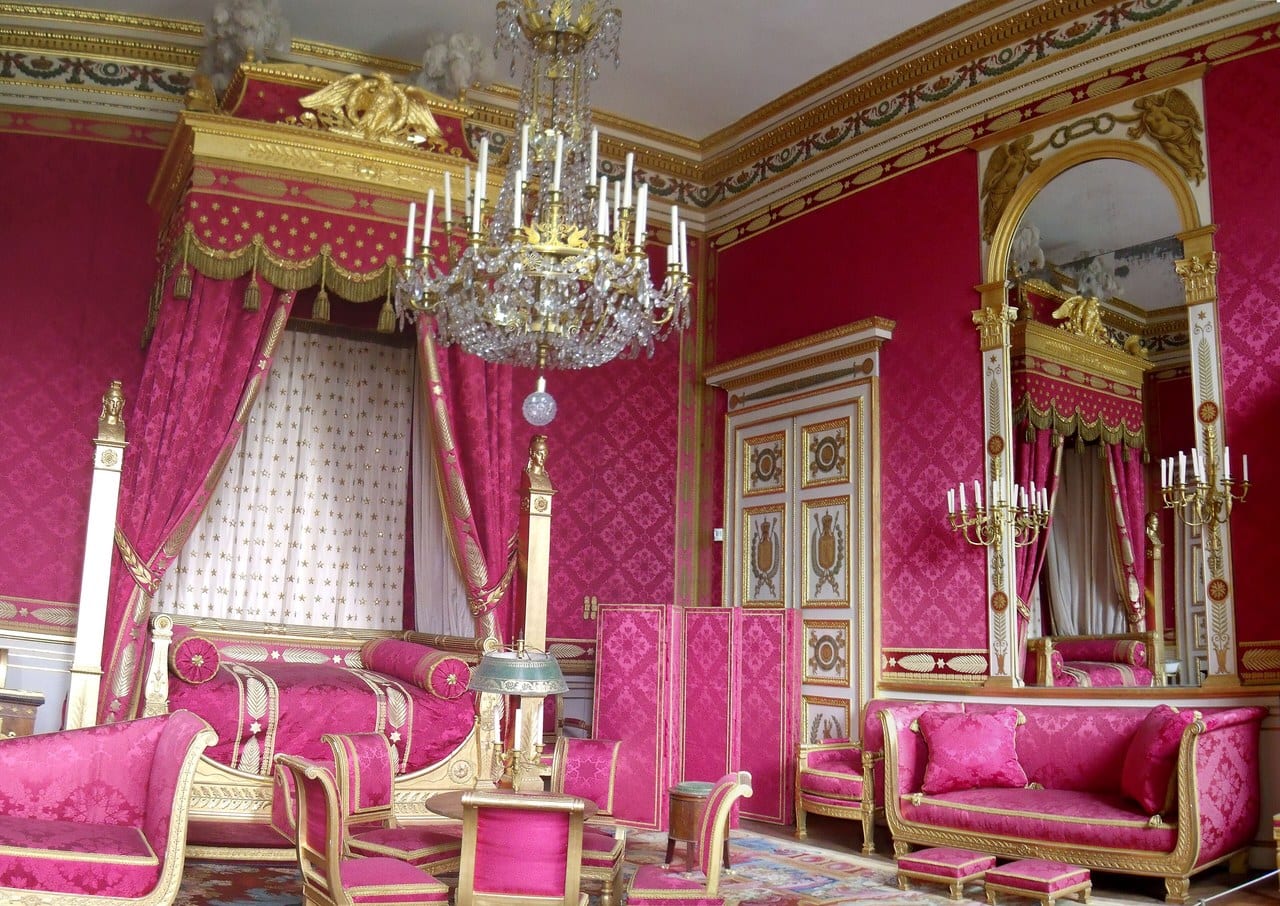
The emperor chose the moment of his second marriage to inaugurate the restored palace. In March 1810 he received his new bride, the Austrian archduchess Marie-Louise, at Compiègne, deliberately echoing the welcome given to Marie-Antoinette on almost the same spot forty years earlier. Their first meal together was taken in the empress’s apartment on March 27, 1810.
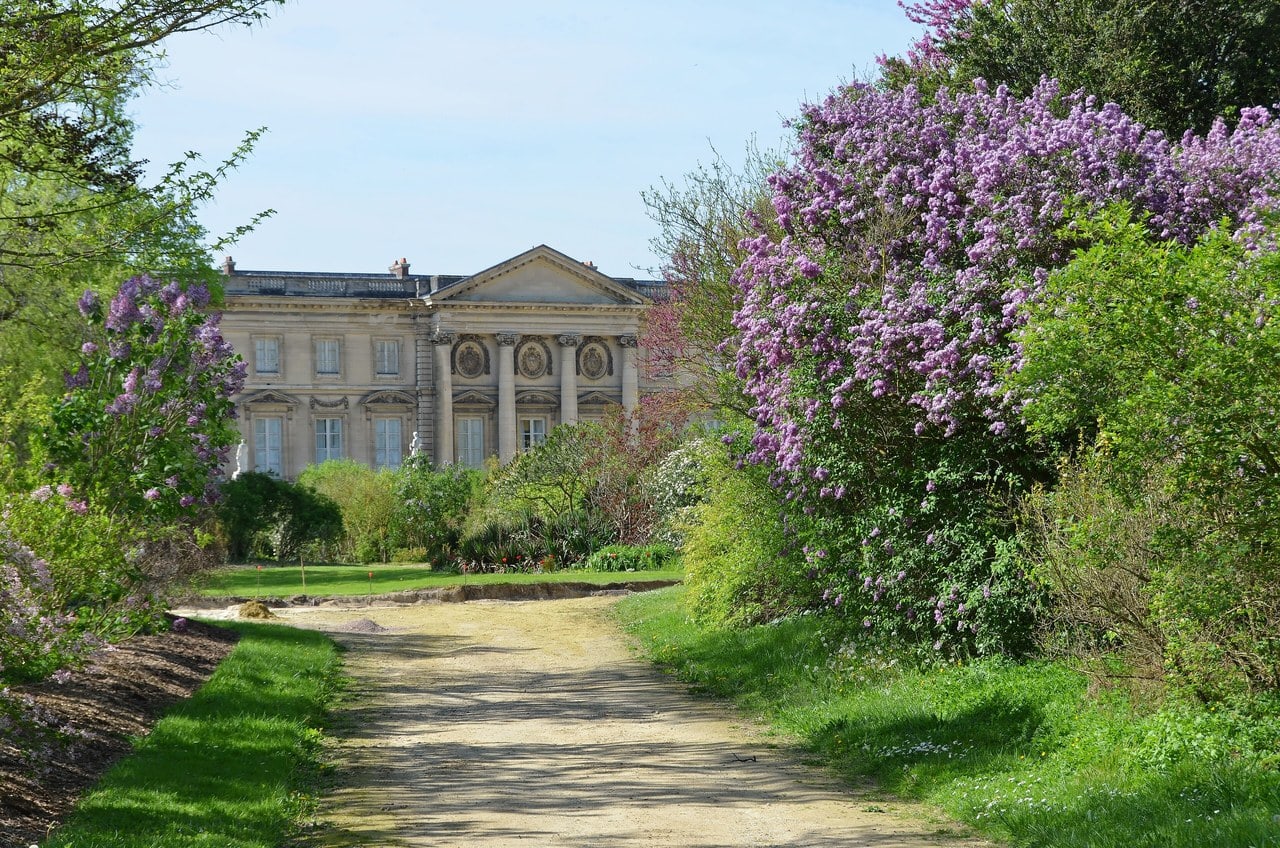
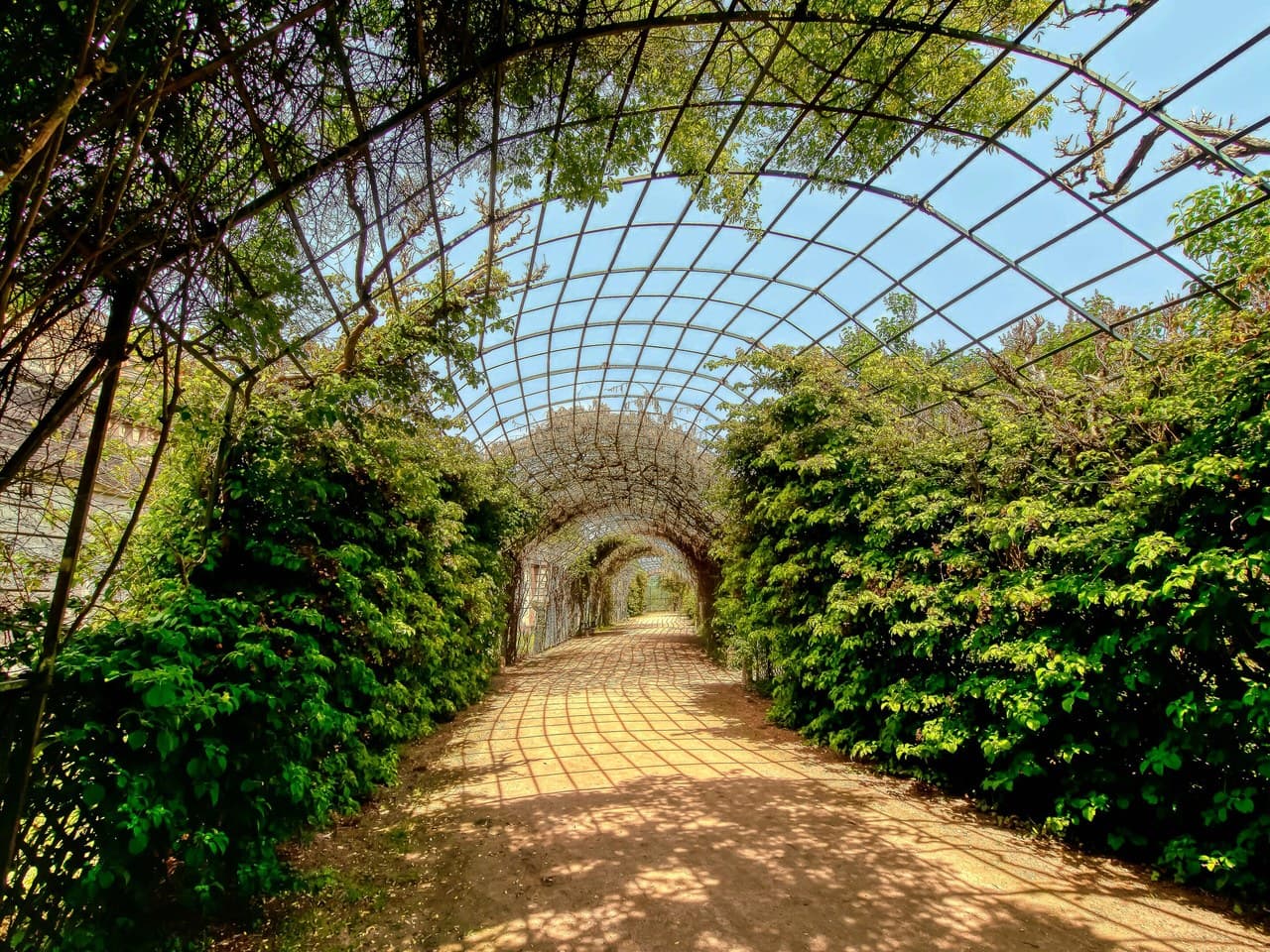
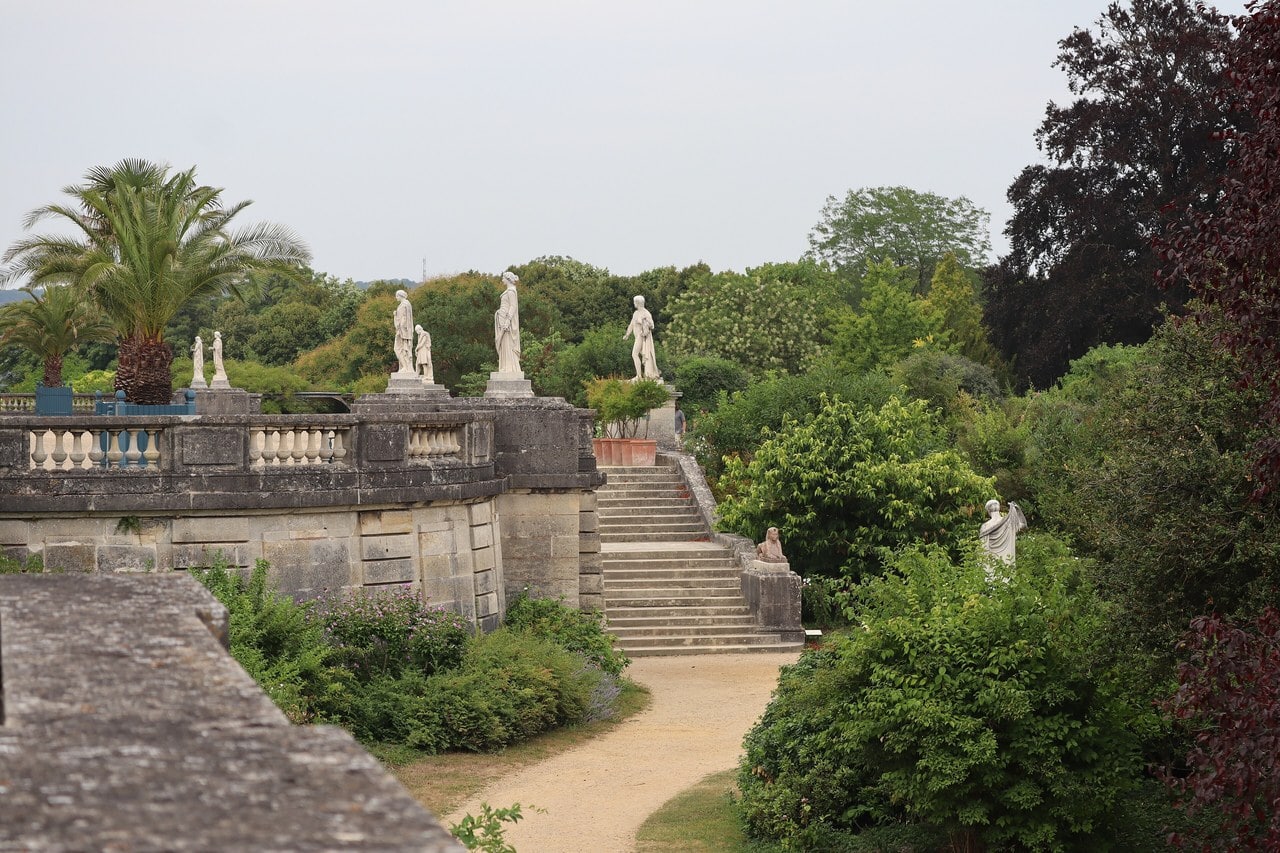
Outside, Berthault was remaking the grounds to match the new imperial taste. From 1811 he replanted the central garden as an English landscape that dissolved, without an apparent edge, into the forest beyond, an effect that still works on the eye today. His grandest stroke was the Allée des Beaux-Monts, an avenue roughly four kilometers long and sixty meters wide, cut through the forest under Napoleon I and not completed until 1823, its perspective meant to recall Schönbrunn for the homesick Austrian bride. A long vaulted walk of greenery, the so-called Berceau de l’Impératrice, ran some twelve hundred meters from the palace into the trees. The park still frames the same view: a broad lawn falling away from the terrace, the avenue climbing the far slope, and the forest closing the horizon.
The Second Empire’s favorite autumn
After the fall of the monarchy in 1848 Compiègne passed to the nation, and a new admirer arrived almost at once. Louis-Napoléon Bonaparte, the prince-president who would soon be Napoleon III, visited in 1849 and fell as hard for the place as his uncle had. Once on the throne he made Compiègne the setting for the most glittering social ritual of his reign. From 1856 the court gathered each autumn for the famous séries de Compiègne, the guests arriving in successive week-long groups, the “series” that gave the gatherings their name. Four such weeks filled October and November, each bringing about a hundred guests to the palace at a time.
The séries mixed the worlds of power, art, and money as no other entertainment of the age did. Invitations went out to writers, scientists, industrialists, and foreign sovereigns alike, for the gatherings were as much a stage for the regime as a pleasure, a place to court talent and impress visitors in a setting of studied ease. Prosper Mérimée was a fixture, and it was for the amusement of one of these gatherings that he composed his celebrated, fiendishly difficult dictation. Gustave Flaubert came, and Louis Pasteur, and the painter Eugène Delacroix; Giuseppe Verdi and Eugène Viollet-le-Duc moved through the same salons. Each week a special train carried the guests up from the Gare du Nord. Days were given over to hunting, to long walks in the forest, and to excursions that often ended at the nearby ruins of Pierrefonds. Evenings meant amateur theatricals in which the guests themselves performed, charades, dancing to the wheeze of a mechanical piano cranked by the young aides-de-camp, and a formal dinner served à la russe at which guests were expected nightly in evening dress. Not everyone was charmed. “One spends one’s time doing nothing while waiting to do something,” Mérimée grumbled, and boredom was as much a feature of the séries as splendor. The gatherings continued nearly every autumn until the empire itself fell, the last of them in 1869.
It was from Compiègne that one of the era’s most ambitious projects took shape. Riding out to the medieval shell of Pierrefonds a short distance through the forest, Napoleon III resolved to rebuild it, and entrusted the work to Viollet-le-Duc, whose reconstruction would become the most famous architectural dream of the Second Empire. Closer to home, the emperor expanded the palace with a new gallery and threw a covered passage across the street to a jewel-box court theater, the Théâtre Impérial, begun in 1867. The collapse of the regime at Sedan in 1870 caught it half-built, its walls standing but its decoration unfinished, and the theater would wait more than a century, until 1991, to open at last as a working opera house.
From palace to museums
The Second Empire ended at Compiègne as abruptly as it had flourished. With the imperial family in exile, the palace ceased to be a residence and slowly became a museum of the very world it had hosted. The Musée du Second Empire, created in 1953, gathered the paintings, furniture, and mementos of Napoleon III’s court, and beside it the Musée de l’Impératrice, devoted to Eugénie, grew from a collection given to the town in 1951. Earlier still, in 1927, the palace had gained an institution found in no other royal house: the Musée national de la Voiture et du Tourisme, established at the urging of the Touring Club de France. Its collection of roughly a hundred horse-drawn carriages and some thirty pioneering automobiles traces the history of travel from the age of the coach to the dawn of the motorcar. Among its treasures stand the ceremonial coach built for the Prince Imperial and La Jamais Contente, the bullet-shaped electric car that in 1899 became the first automobile to pass a hundred kilometers an hour.
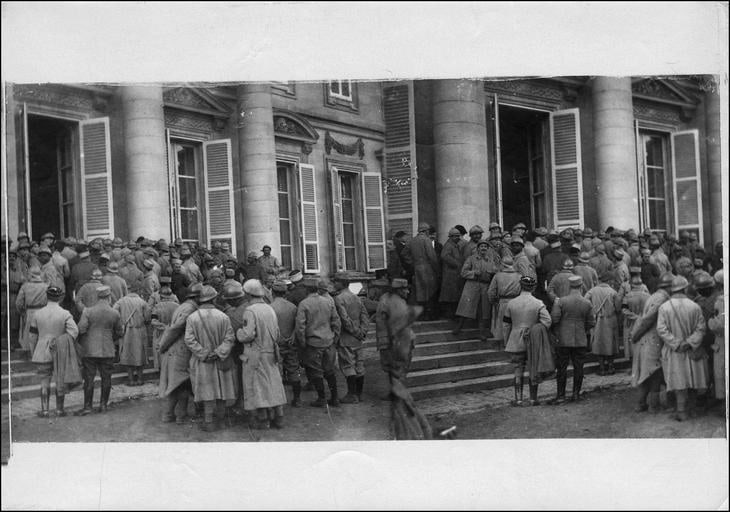
Even as a museum, the palace went on hosting history. In September 1901 Tsar Nicholas II and the Empress Alexandra made Compiègne the main halting place of a state visit to France, received in its forecourt not by an emperor but by the republic’s president, Émile Loubet. Within two decades that same forecourt filled with soldiers, for during the First World War the palace served for a time as a military headquarters.
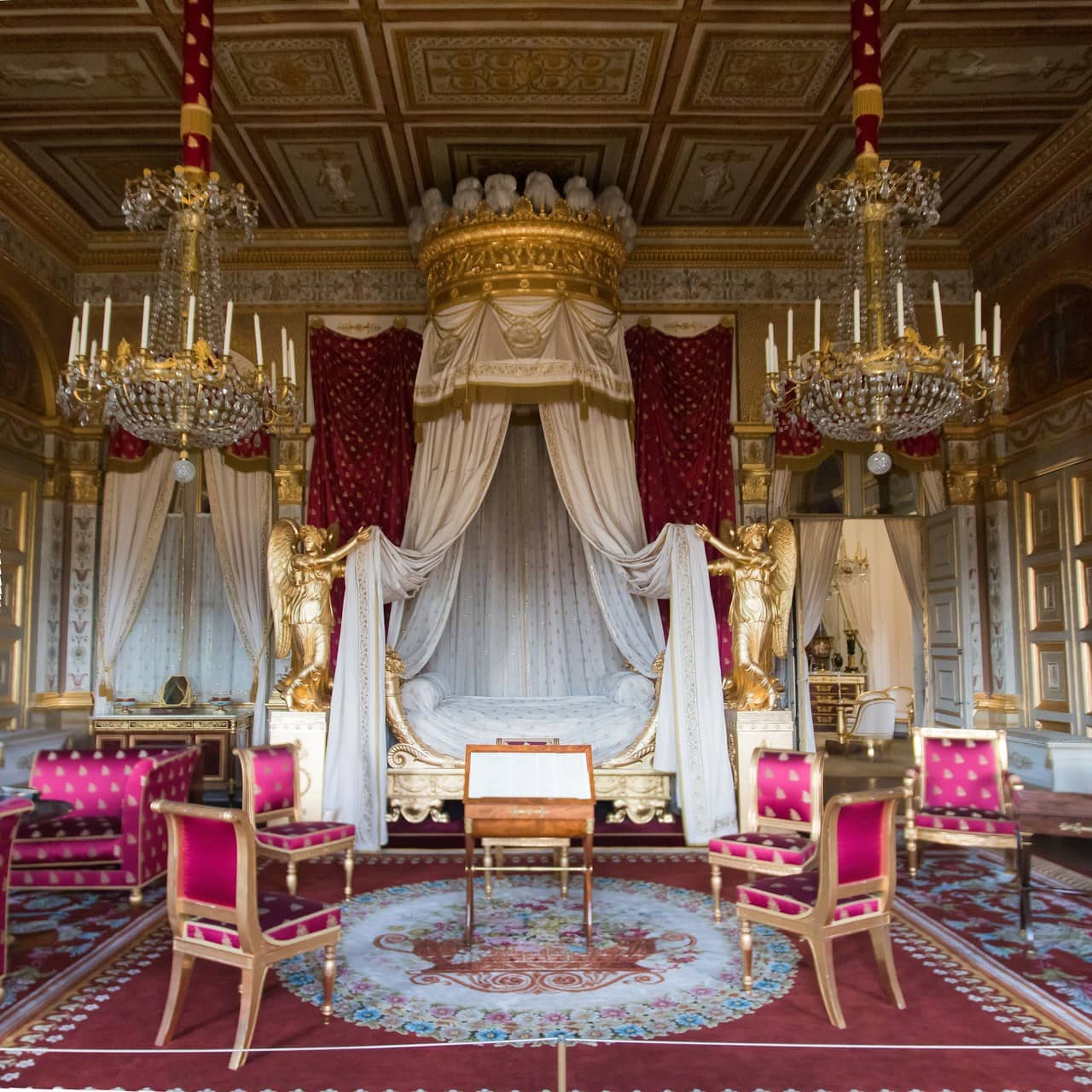
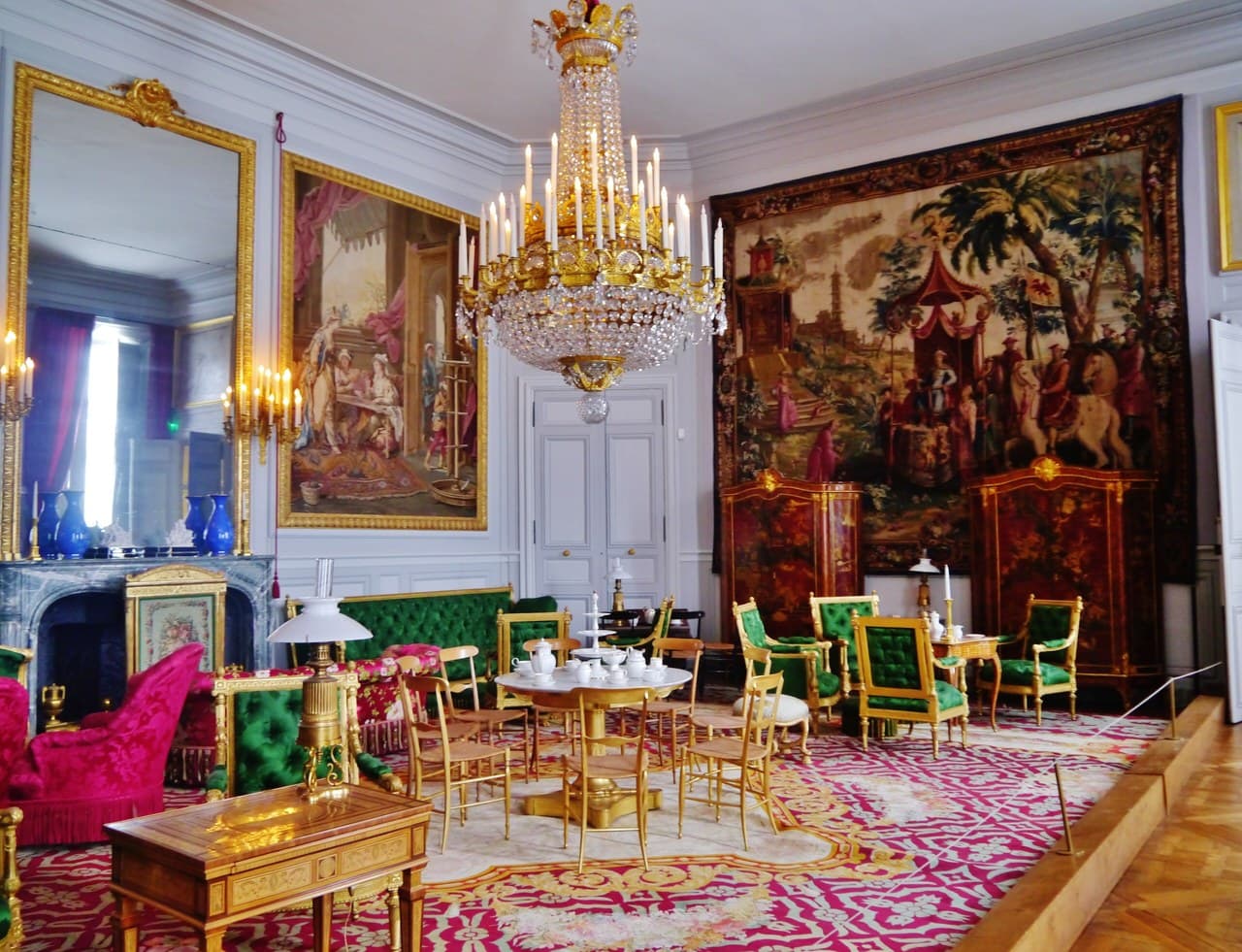
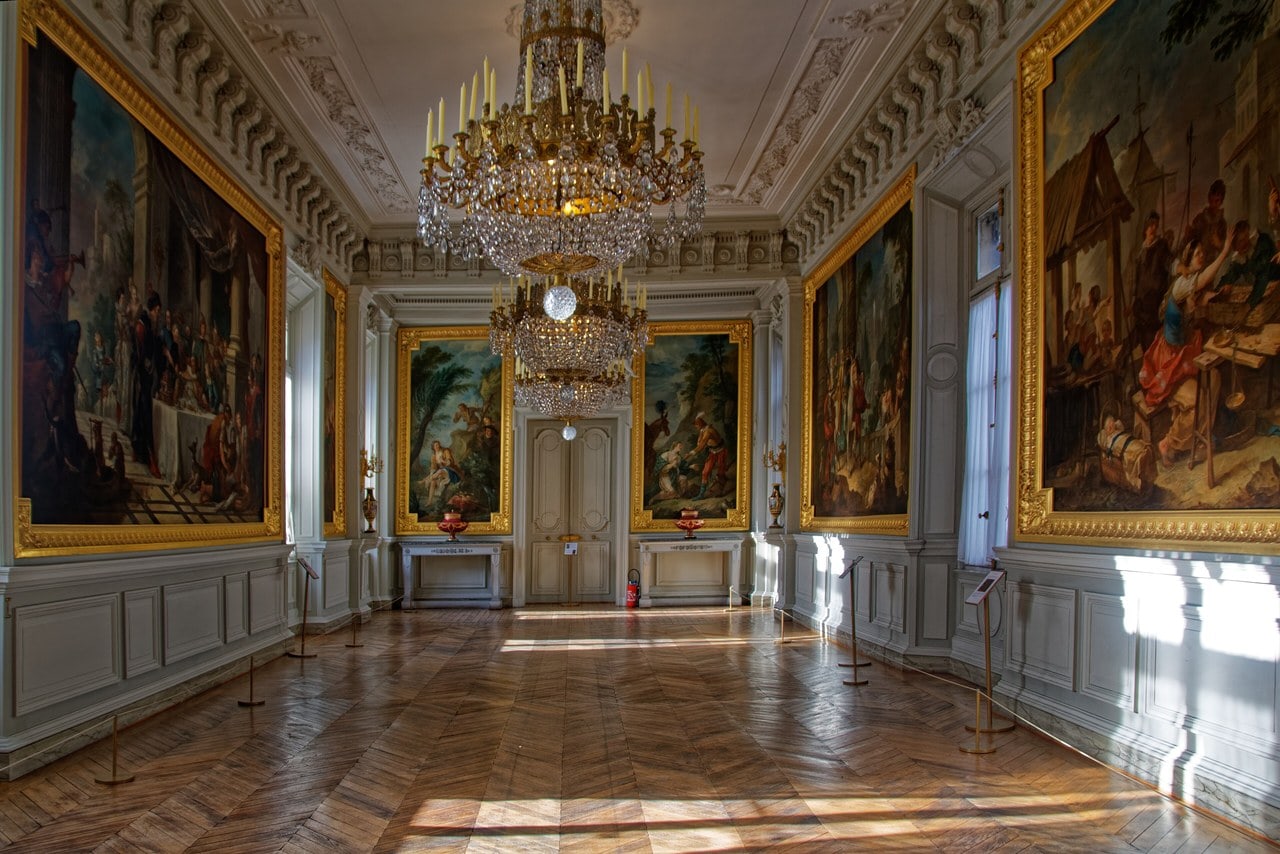
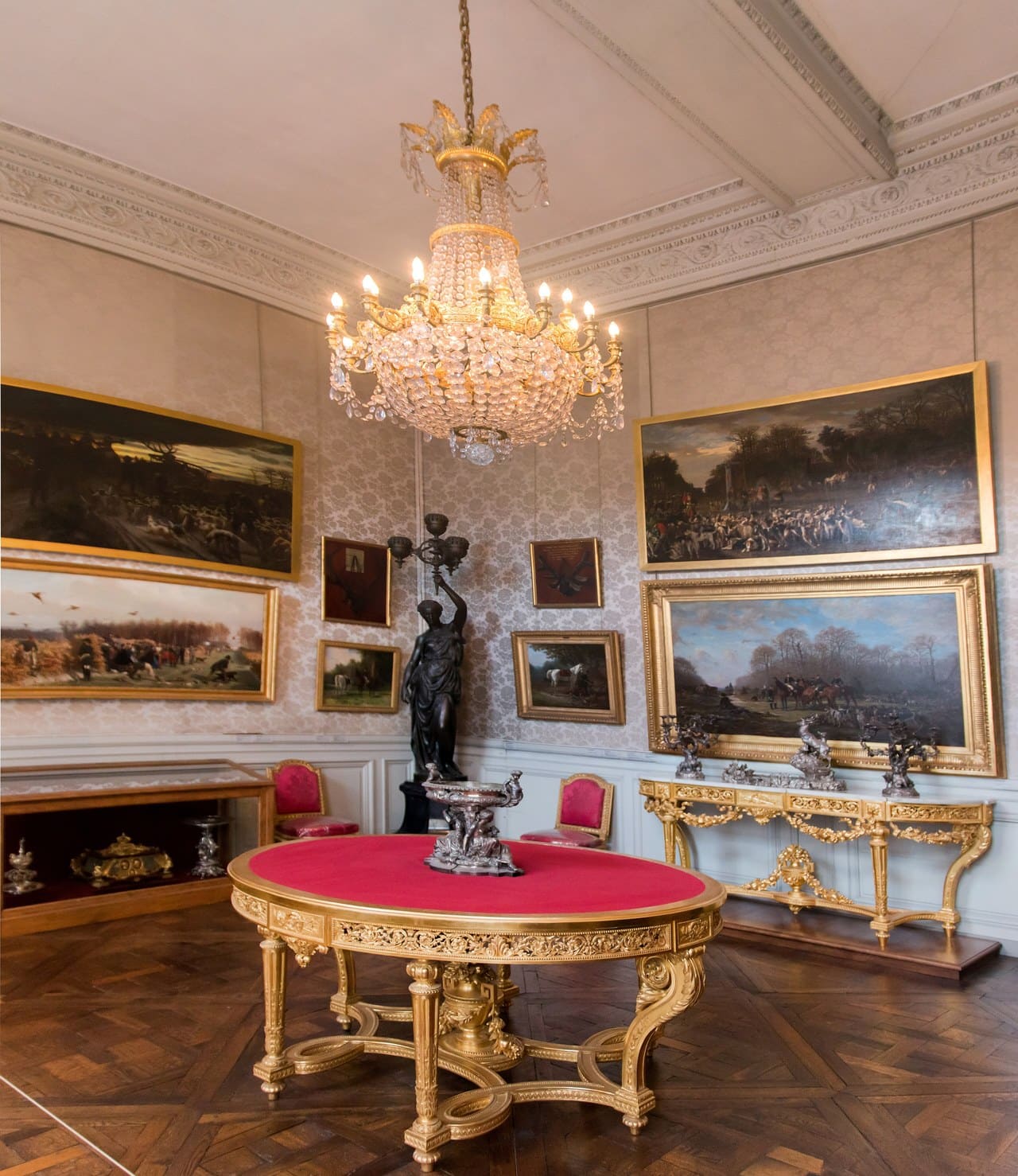
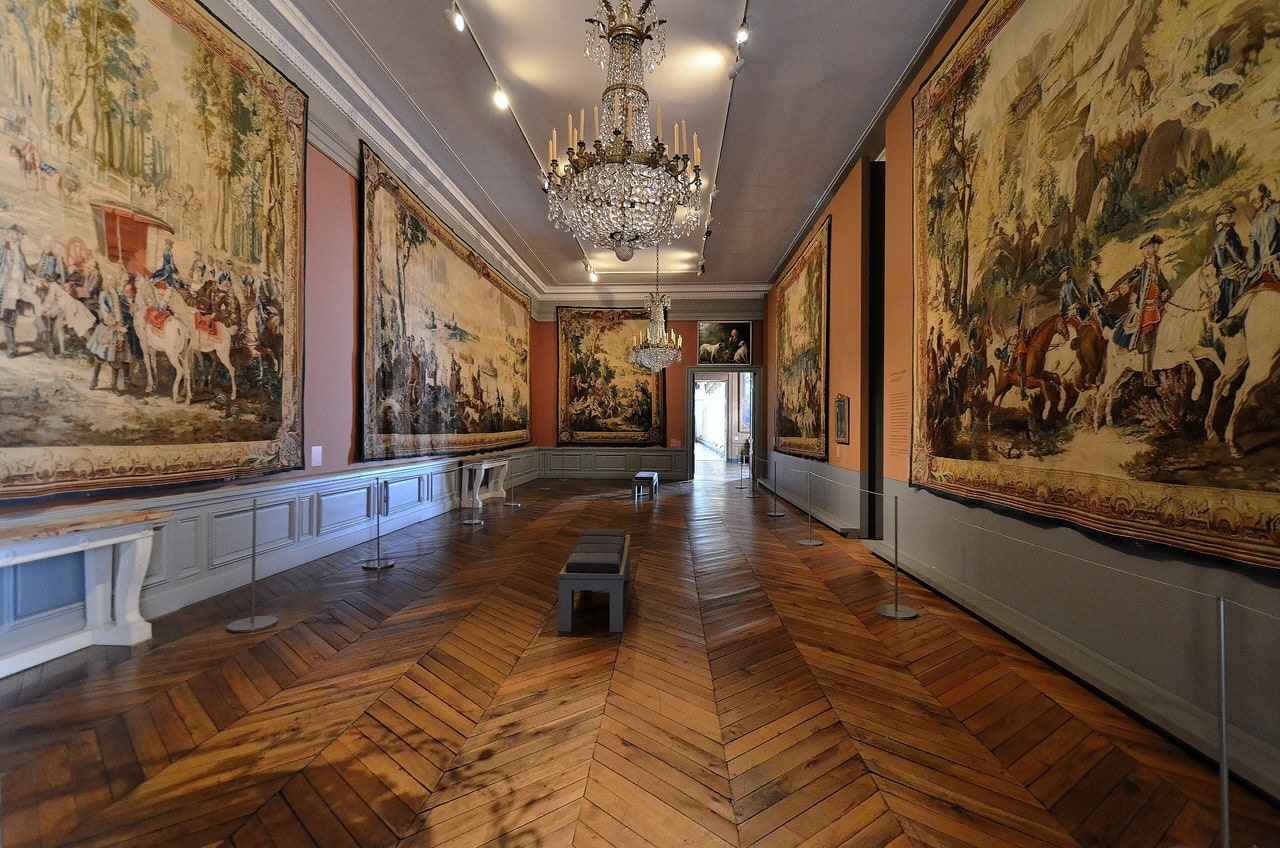
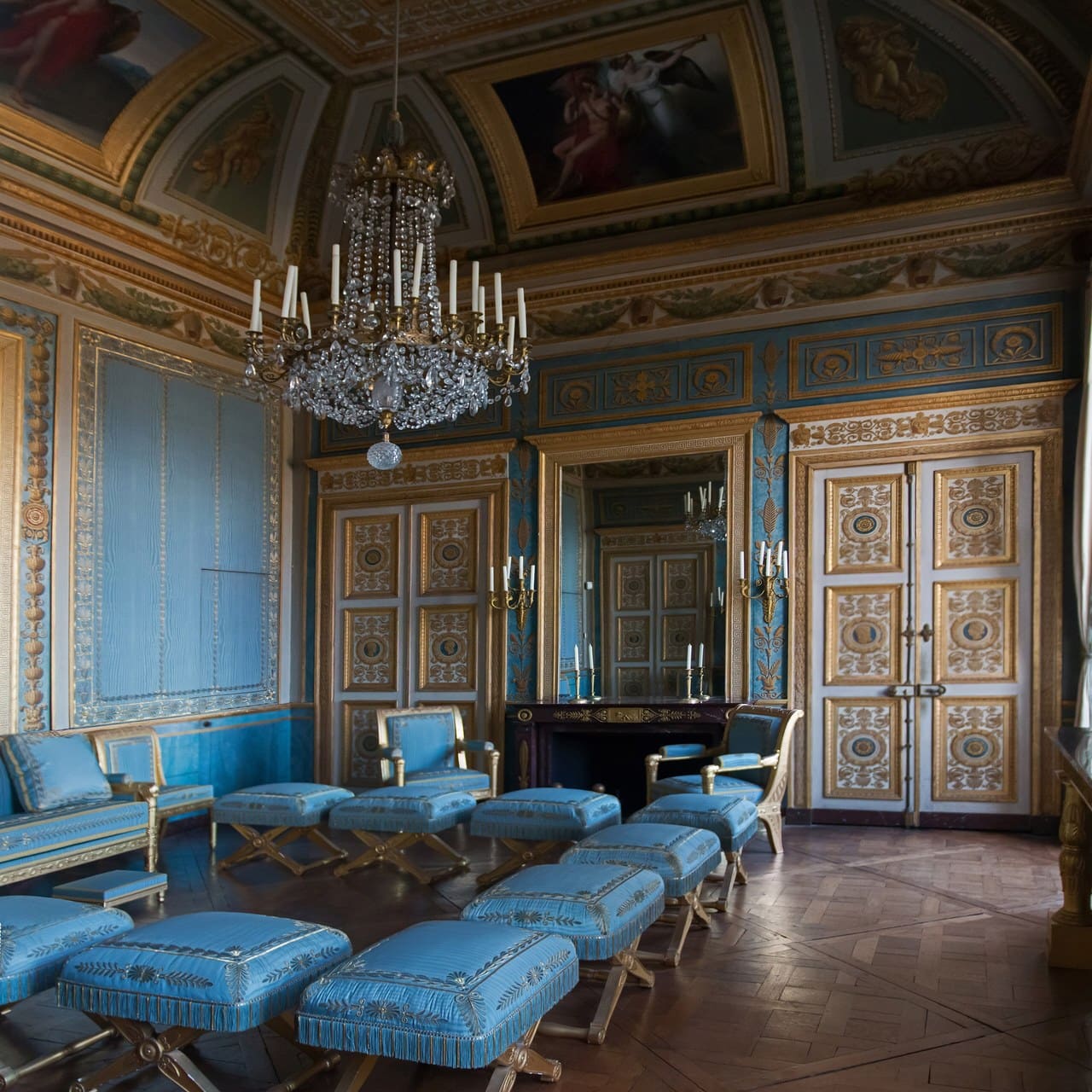
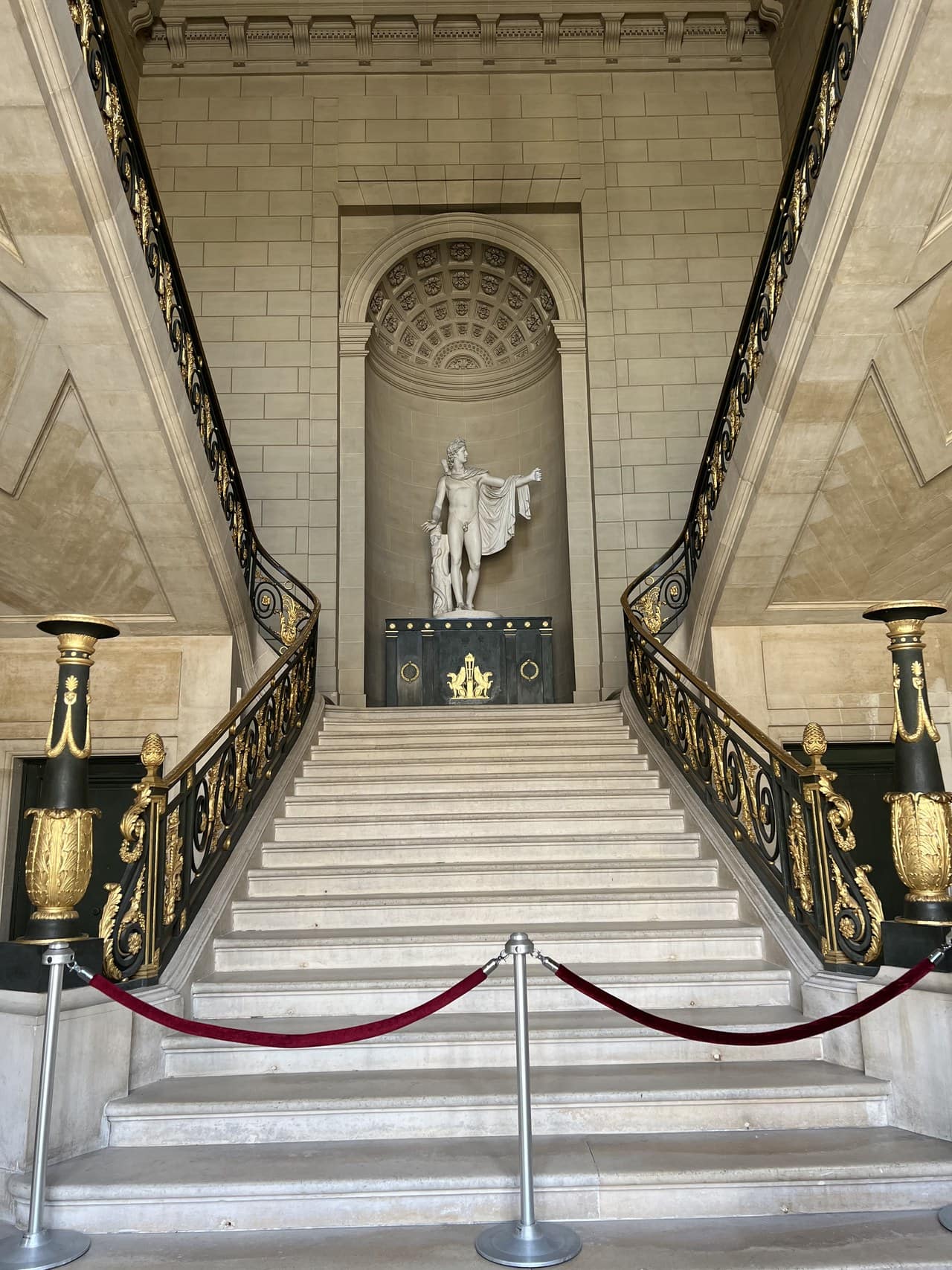
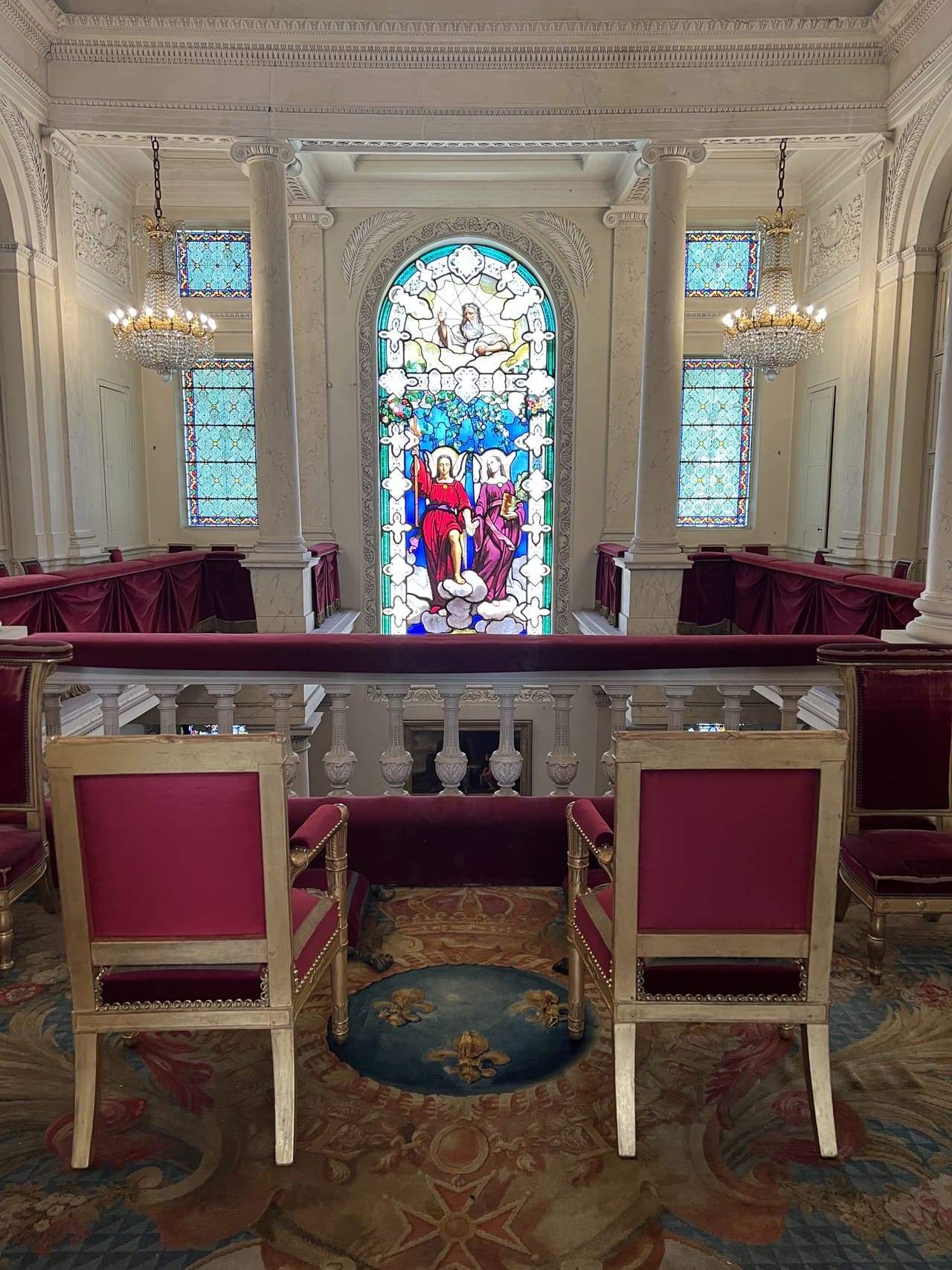
A single visit today moves through the whole sequence. From the cour d’honneur the great staircase climbs to the State Apartments, where the guardroom and antechambers open into the Galerie de Bal, its decorated ceiling running the length of the ballroom. Beyond lie the apartments of the emperor and empress, kept in their First and Second Empire decoration: the dining room in faux marble, the Emperor’s library, the blue salon, the Music Salon hung with chinoiserie, and the empress’s bedchamber under its crowned canopy. The Galerie des Chasses, lined with the hunting tapestries of Louis XV, recalls the forest that made the place. Around these rooms stand the three museums. The palace was classified a monument historique in 1994, its park labeled a “Jardin remarquable” a decade later, and in 2022 the whole estate was recognized as one of France’s national domains, set beside Malmaison, Saint-Cloud, and Versailles in the small company of places held to embody the history of the nation itself.
Visiting Château de Compiègne
Compiègne sits about eighty kilometers northeast of Paris, in the town of the same name at the edge of its forest. Trains from Paris Gare du Nord reach it in roughly forty-five minutes, and the palace stands a short walk of some seven hundred meters from the station, with a free city shuttle for those who prefer not to walk. Compiègne is one of three great châteaux of the Oise within a day of Paris, easily paired with nearby Pierrefonds. The château opens daily except Tuesday, and a single ticket covers the historic apartments together with the Musée du Second Empire, the Musée de l’Impératrice, and the Musée national de la Voiture. The park itself is open to walk without charge: allow time afterward for the terraces, the long sightline of the Allée des Beaux-Monts, and the path that leads on into the forest, which reward an unhurried hour. The town beyond rewards a wander too, from its Flamboyant town hall to the quiet streets the imperial court once filled each autumn. Admission and opening hours shift with the season and with the temporary exhibitions the palace hosts, so it is worth checking the official site before a visit.
Guided tours and skip-the-line tickets for Château de Compiègne and the wider Oise can be compared on GetYourGuide, and if you would rather stay a night near the palace and its forest, Booking.com lists hotels and guesthouses in and around Compiègne.
Some links on this page are affiliate links, which means StoneKeep Atlas may earn a small commission, at no extra cost to you, if you book through them.
More Views of Château de Compiègne
A closer look at the palace, its imperial apartments, and the park that melts into the forest of Compiègne.
Beyond Château de Compiègne
The forest that drew kings to Compiègne still stretches for roughly fourteen thousand hectares around the town, the third largest of France’s state forests, laced with the long straight rides and star-shaped crossings cut for the royal and imperial hunts. It holds one of the most resonant sites in modern French memory.
In a quiet clearing east of the town, near Rethondes, on November 11, 1918, the armistice that ended the First World War was signed in the railway carriage of Marshal Foch. The spot became a memorial. In June 1940, after the fall of France, Hitler had the same carriage brought out to that same clearing to receive the French surrender, a deliberate reversal of the humiliation of 1918. That carriage was then taken to Germany and destroyed in 1945; the one displayed in the glade today is a carriage of the same Wagons-Lits series, installed in 1950. The Clairière de l’Armistice lies a few kilometers east of the palace, a sober counterweight to its imperial splendor.
For more of the same region, the Château de Chantilly and the Château de Pierrefonds stand within easy reach in the Oise, the second of them the very castle Napoleon III commissioned from these rooms. Farther south, the imperial story continues at the two residences Compiègne is forever measured against: the Château de Fontainebleau, the other house Napoleon loved, and the Palace of Versailles, against which every French royal residence is judged.
Conclusion
Compiègne rarely tops a first-time itinerary, and that is part of its appeal. Without the crowds of Versailles or the medieval drama of Pierrefonds, it offers something rarer: a great palace caught at the exact hinge between a monarchy that built it and an empire that made it famous. Its rooms still hold the gilt of Napoleon’s court and the autumn glamour of Napoleon III’s, and its forest still keeps the memory of the century that followed. To walk its apartments and then its avenues is to read, in one place, the long French argument between kings, emperors, and the republic that outlasted them all.
Principal Sources
- Château de Compiègne, with the Réunion des musées nationaux, Grand Palais. Official site.
- Fondation Napoléon. napoleon.org, for the First Empire restoration and the reception of Marie-Louise.
- Mémorial de l’Armistice and Hauts-de-France regional heritage sources, for the Clairière de l’Armistice.
- Ministère de la Culture. Base Mérimée and Plateforme Ouverte du Patrimoine, for the monument’s protection and national-domain status.
- Société Historique de Compiègne. For the séries de Compiègne.
Image credits. The palace from the Place du Général de Gaulle: Guillaume Speurt, CC BY-SA 2.0, via Wikimedia Commons; The palace and park of Compiègne in 1842: Jean-Antoine-Siméon Fort, public domain, via Wikimedia Commons; The cour d’honneur: Daniel Villafruela, CC BY-SA 3.0, via Wikimedia Commons; The Emperor’s dining room: Daniel Villafruela, CC BY-SA 4.0, via Wikimedia Commons; Aerial view of the palace and park: Carsten Steger, CC BY-SA 4.0, via Wikimedia Commons; The Empress’s bedchamber: Daniel Villafruela, CC BY-SA 3.0, via Wikimedia Commons; The Music Salon: Zairon, CC BY-SA 4.0, via Wikimedia Commons; Soldiers at the palace during the First World War: Édouard Brissy, CC BY-SA 4.0, via Wikimedia Commons; The garden front in spring: Patrick from Compiègne, CC BY-SA 2.0, via Wikimedia Commons; The Galerie de Bal (ballroom): Jean de l’Auxois, CC BY-SA 4.0, via Wikimedia Commons; Bedchamber of Napoleon I: Thomas1313, CC BY-SA 3.0, via Wikimedia Commons; The Emperor’s library: Daniel Villafruela, CC BY-SA 3.0, via Wikimedia Commons; The Galerie Natoire: Daniel Villafruela, CC BY-SA 3.0, via Wikimedia Commons; The Salle des Chasses: Daniel Villafruela, CC BY-SA 3.0, via Wikimedia Commons; Hunting tapestries of Louis XV: Patrick from Compiègne, CC BY-SA 2.0, via Wikimedia Commons; The Salon bleu: Daniel Villafruela, CC BY-SA 3.0, via Wikimedia Commons; The grand staircase: Van Der Meulen Christofle, CC0, via Wikimedia Commons; The palace chapel: Van Der Meulen Christofle, CC0, via Wikimedia Commons; The Berceau de l’Impératrice: Rolf Kranz, CC BY-SA 4.0, via Wikimedia Commons; The park terrace and statues: Jean de l’Auxois, CC BY-SA 4.0, via Wikimedia Commons; The palace under the ancien régime: Henri-Désiré van Blarenberghe, public domain, via Wikimedia Commons. Freely licensed images are resized to fit; otherwise unaltered.