
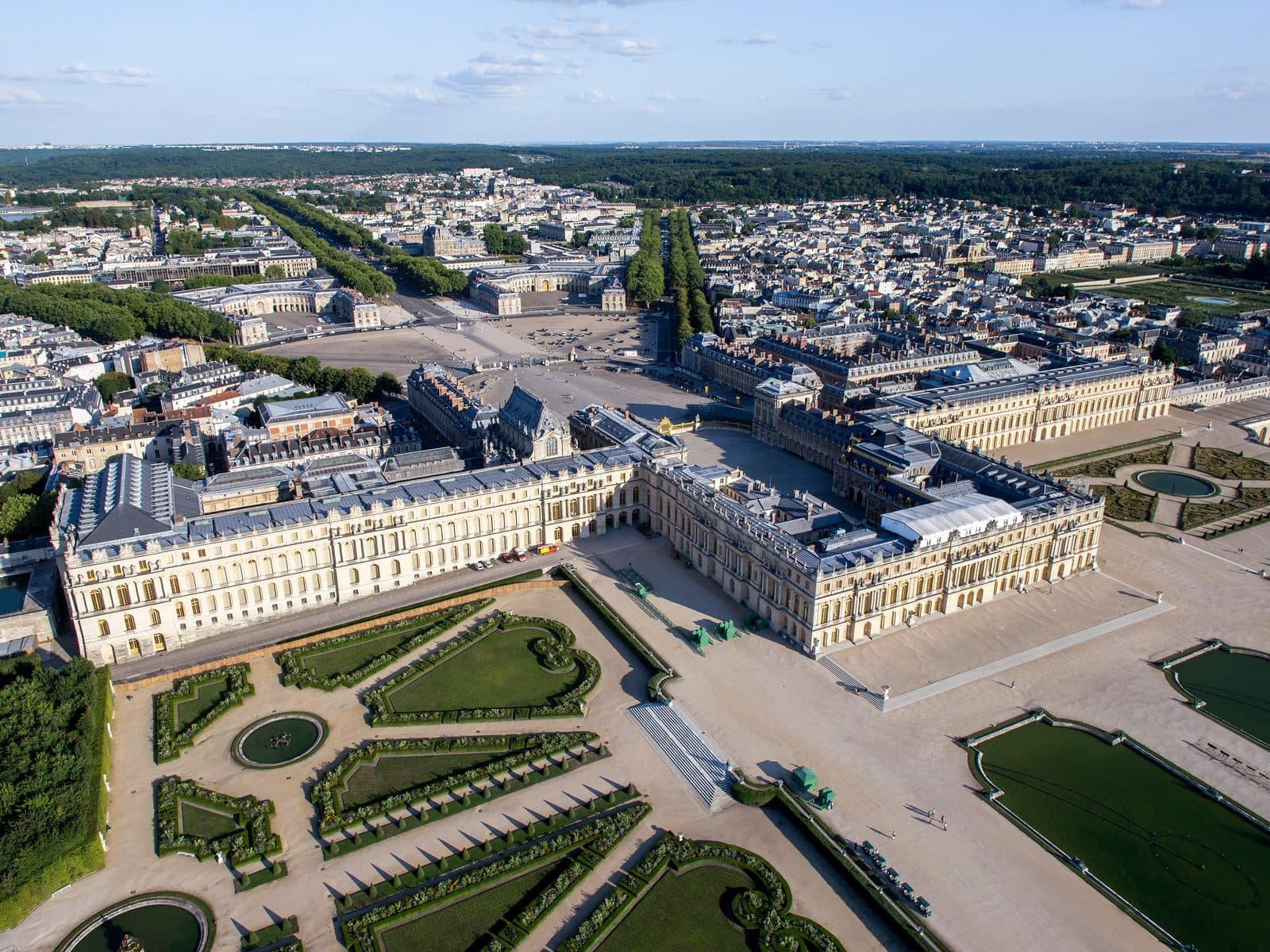
Palace of Versailles
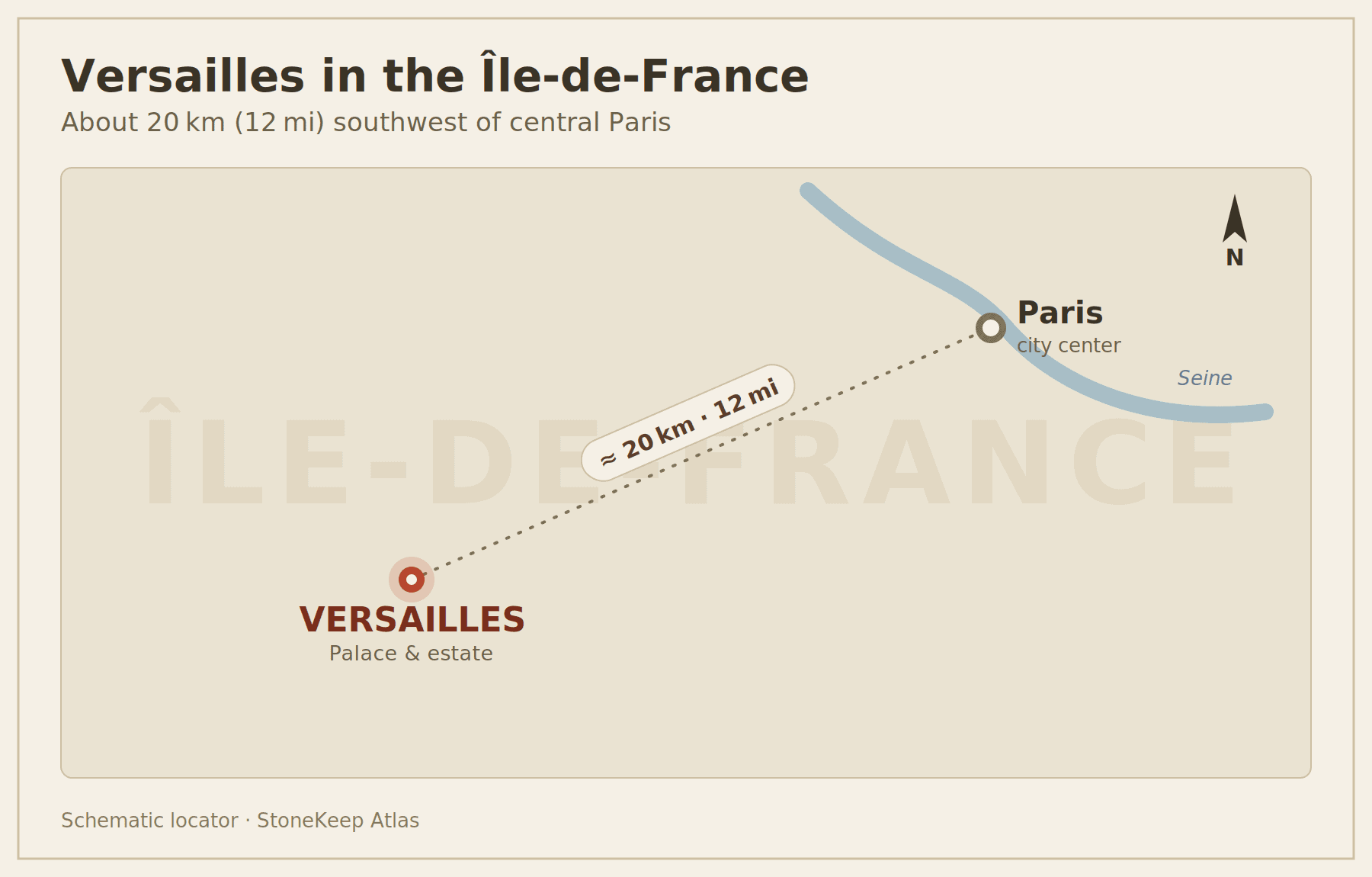
The Palace of Versailles began as a place to escape Paris and became the place Paris could not escape. About twenty kilometers southwest of the capital, on what was once marshy hunting country, Louis XIV built a palace of some 2,300 rooms across 63,154 square meters and made it the working center of a kingdom of some twenty million people. Everything about it was designed to be seen: the long garden axis, the gilded gates, the gallery lined with mirrors where the king walked in full view of his court. Versailles was never simply a house for a monarch. It was an argument about power, built in stone, water, and ceremony, and addressed to anyone who entered.
That argument outlived the men who made it. The same Hall of Mirrors that staged the daily theater of absolute monarchy later hosted the proclamation of the German Empire in 1871 and the signing of the treaty that ended the First World War in 1919. A palace built to glorify one king became, in turn, a revolutionary flashpoint, an abandoned shell, a museum to the whole French nation, and one of the most visited monuments on earth. This is the story of how a single building kept being handed a new script.
Quick Facts
| Location | Versailles, Yvelines, Île-de-France, France |
| Built | 1623 (hunting lodge); expanded from 1661 under Louis XIV; court installed 1682 |
| Style | French Baroque and Classicism |
| Key designers | Louis Le Vau and Jules Hardouin-Mansart (architecture); Charles Le Brun (interiors); André Le Nôtre (gardens) |
| Current use | National museum (Musée de l’Histoire de France) |
| UNESCO | World Heritage Site, 1979 (“Palace and Park of Versailles”) |
| Operator | Établissement public du château, du musée et du domaine national de Versailles |
| Visitors | About 8.4 million per year to the estate (2024–2025) |
| Coordinates | 48.8049° N, 2.1204° E |
| Official site | chateauversailles.fr |
From Hunting Lodge to the Seat of a Kingdom
In 1623, Louis XIII ordered a small hunting lodge built on a low rise above the marshes of Versailles, a day’s ride from Paris and pleasantly far from its politics. A decade later he replaced it with a modest brick-and-stone château, a private retreat with no grand ambitions. His son would think bigger.
Louis XIV had reason to distrust Paris. As a child he had fled the capital during the Fronde, the noble and parliamentary revolts of his minority, and he never forgot the sight of crowds turning on the crown. When he began transforming Versailles in 1661, the year he took personal control of the government, he was not just building a pleasure palace. He was building an alternative to Paris: a seat of power he could design from the ground up, on open ground he controlled completely.
Construction came in waves, carried out by the team Louis XIV had first seen at Vaux-le-Vicomte, the château of his disgraced finance minister. Louis Le Vau, the king’s chief architect, wrapped the old château in a new stone shell on the garden side, the so-called Envelope, preserving his father’s building inside a far grander one. André Le Nôtre laid out the gardens. Charles Le Brun directed the painters and decorators. After Le Vau’s death in 1670, François d’Orbay carried the work forward, and from the late 1670s a new chief architect, Jules Hardouin-Mansart, gave Versailles the scale it is known for today: the long north and south wings, the Royal Chapel, the stables, and the gallery that would become its signature.
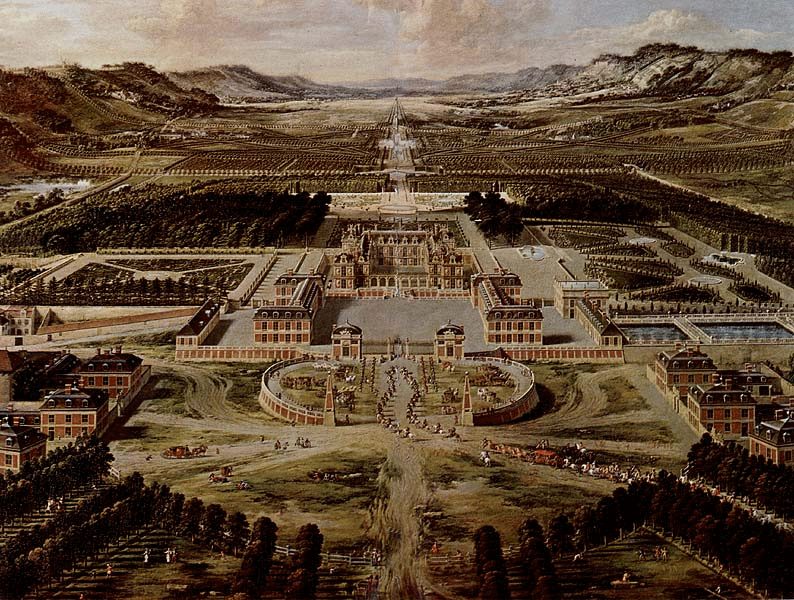
The decisive moment was political, not architectural. On May 6, 1682, Louis XIV formally installed the court and the machinery of government at Versailles. Paris remained the official capital, but the kingdom was now run from a building in the country, with the king at its physical and ceremonial center. Roughly twenty million subjects were governed from a palace that was, in places, still a construction site. Drawing the great nobles out of their regional power bases and into his orbit, where their standing depended on proximity to him, was the point. Versailles was the instrument.
Its expense became legendary, and the legend outran the facts. Versailles is still blamed for bankrupting France, yet the building accounts tell a smaller story: spending on the château rarely exceeded a few percent of annual royal expenditure, and in most years sat well below one percent. The ruinous wars of Louis XIV’s reign did far more damage to the treasury than his marble ever did. What Versailles consumed was less money than meaning.
The Hall of Mirrors and the Architecture of Absolutism
Walk the state rooms at Versailles and you are walking through an argument. The grand apartments were not private quarters but public stages, arranged so that the king’s daily life could be witnessed as a kind of liturgy. The salons of the King’s State Apartment were named for planets, with the Salon d’Apollon, the sun, at the symbolic heart. Louis XIV had taken the sun as his emblem, and the whole building bends toward that conceit: he was the fixed point around which the court, like the planets, revolved.
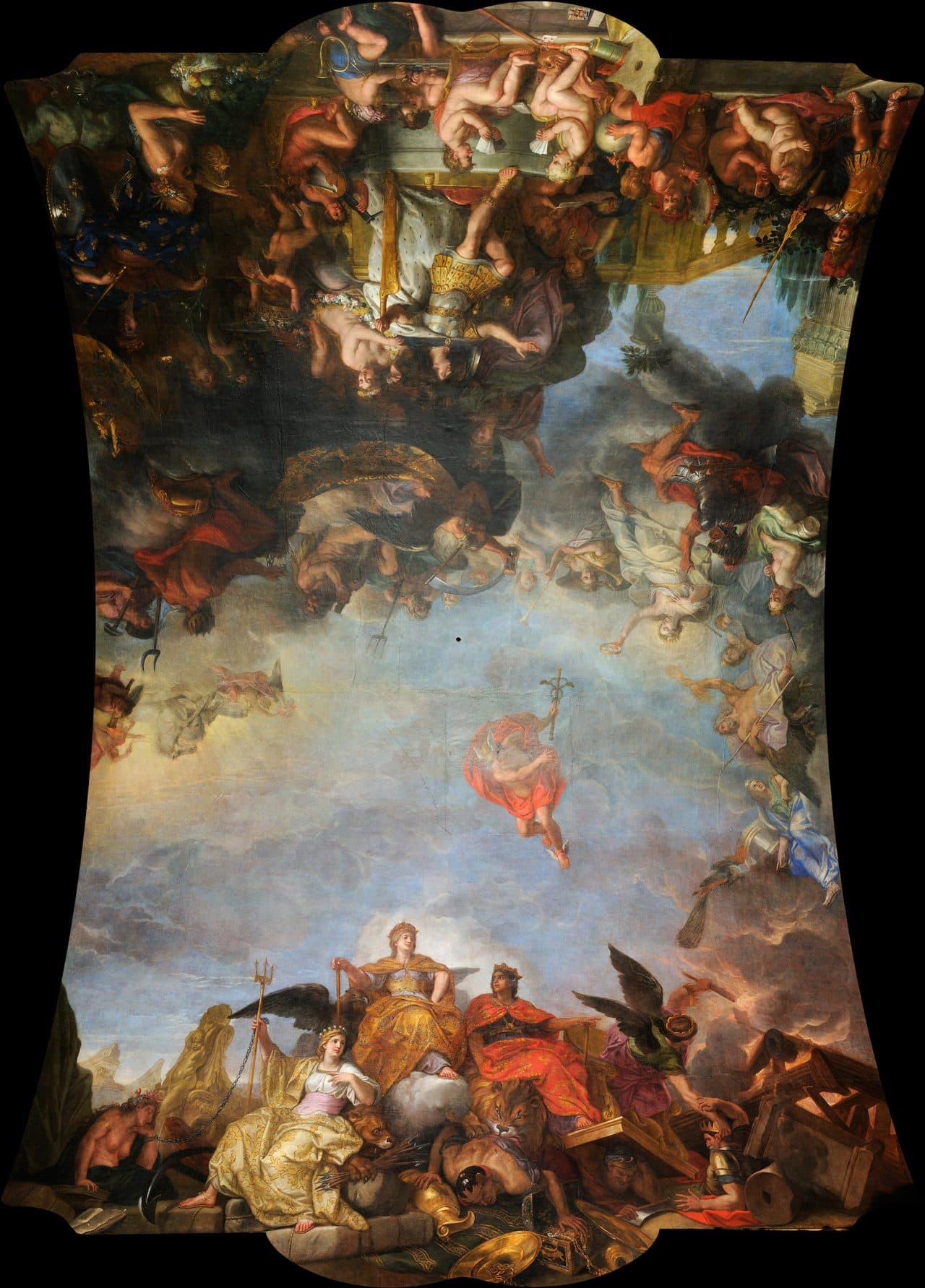
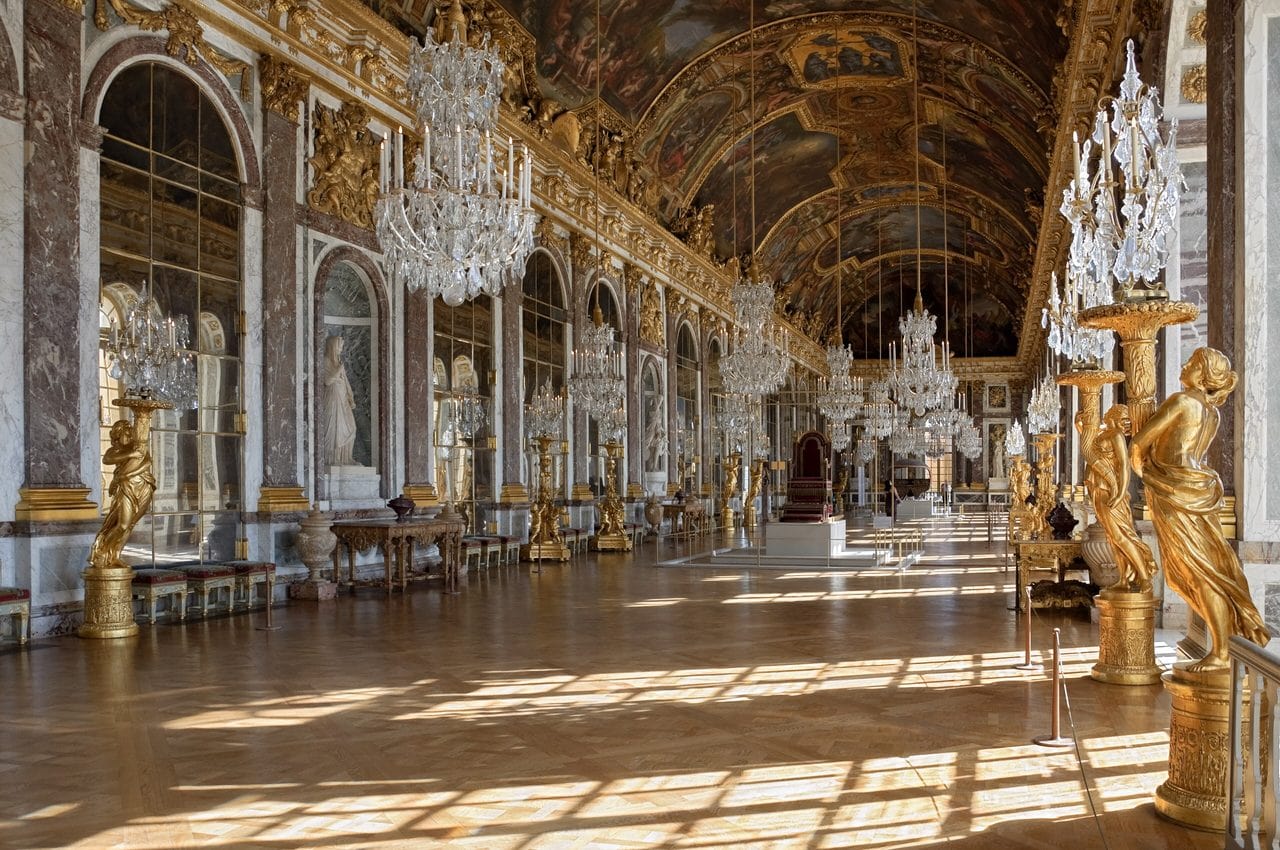
Nowhere is the idea expressed more clearly than in the Hall of Mirrors. Built between 1678 and 1684 to Hardouin-Mansart’s design, with ceiling paintings by Le Brun, the gallery runs about seventy-three meters along the garden front. Seventeen tall windows face seventeen arches lined with mirrors, 357 of them, so that the light of the gardens is thrown back into the room and multiplied. In an age when a single mirror was a luxury, a wall of them was an almost vulgar display of wealth, and a deliberate one. Le Brun’s thirty ceiling compositions narrate the triumphs of the reign, from Louis XIV taking power in 1661 to his victories in the field. The room flatters the king at every glance.
At each end of the gallery, the Salon de la Guerre and the Salon de la Paix, the War Room and the Peace Room, frame the reign as a movement from conquest to order. Beyond them lay the apartments where ambassadors were received, where the court gathered for evenings of cards and music, and where, from 1701, the King’s Bedchamber sat at the exact center of the palace on the rising-sun axis. The monarch’s waking and sleeping, the lever and the coucher, became ceremonies attended by ranks of courtiers competing for the honor of handing him his shirt. Access was the currency of the court, and the architecture metered it room by room.
The display had limits the king himself acknowledged. In 1689, to pay for war, Louis XIV had the solid-silver furniture of these very rooms melted down into coin. The throne, the tables, the great silver tubs all vanished into the mint. Even at Versailles, the theater of inexhaustible wealth ran on a real and exhaustible treasury.
Le Nôtre’s Gardens: Geometry as Statecraft
If the palace argued for the king’s authority over men, the gardens argued for his authority over nature. André Le Nôtre imposed on the rolling, swampy site a vast scheme of straight axes, clipped hedges, and geometric basins, all organized around a single perspective that runs west from the palace to the horizon. The Grand Canal, dug between 1668 and 1679, stretches some seventeen hundred meters and once carried a small fleet of gondolas and miniature warships. From the terrace, the king could survey a landscape bent entirely to one point of view: his own. The same gardener would soon lay out the water-garden of the Château de Chantilly, a design he is said to have counted among his own favorites.
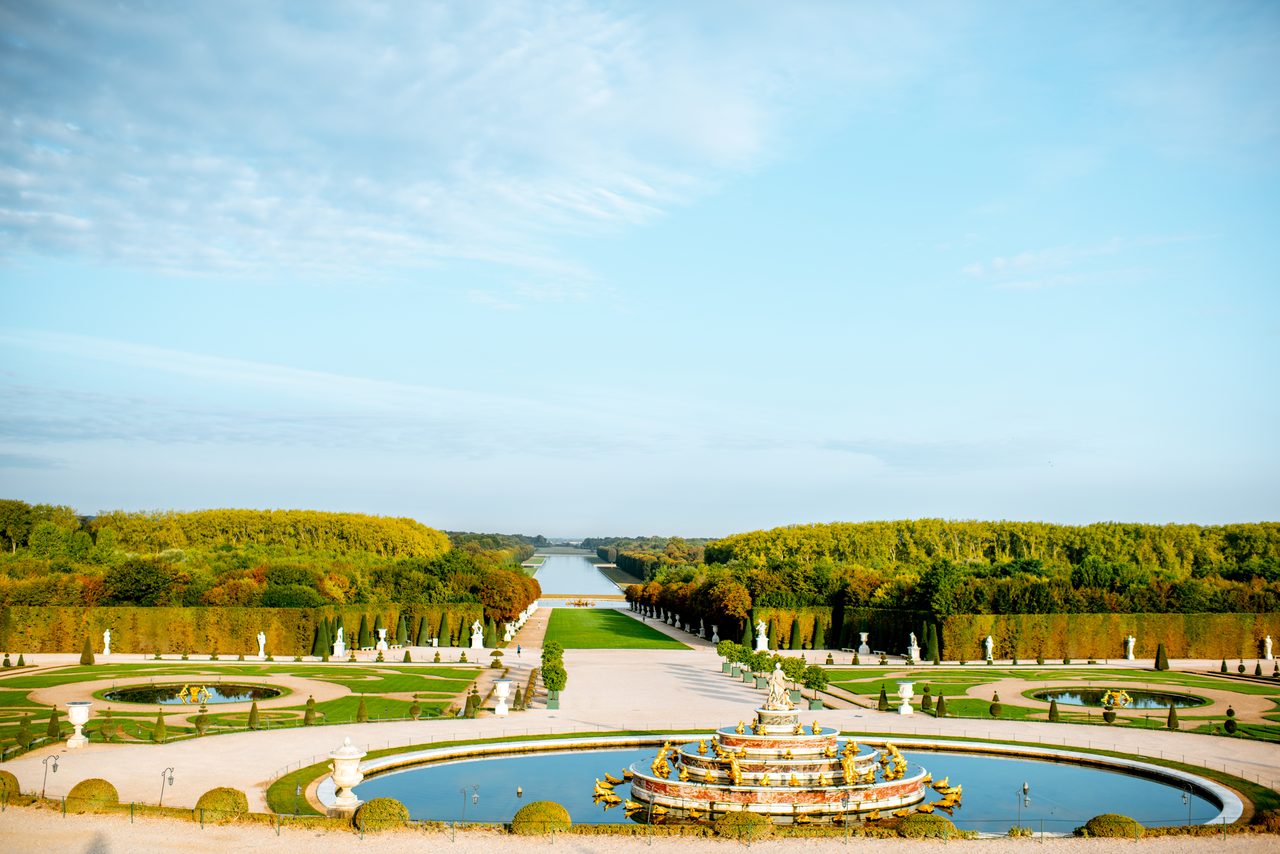
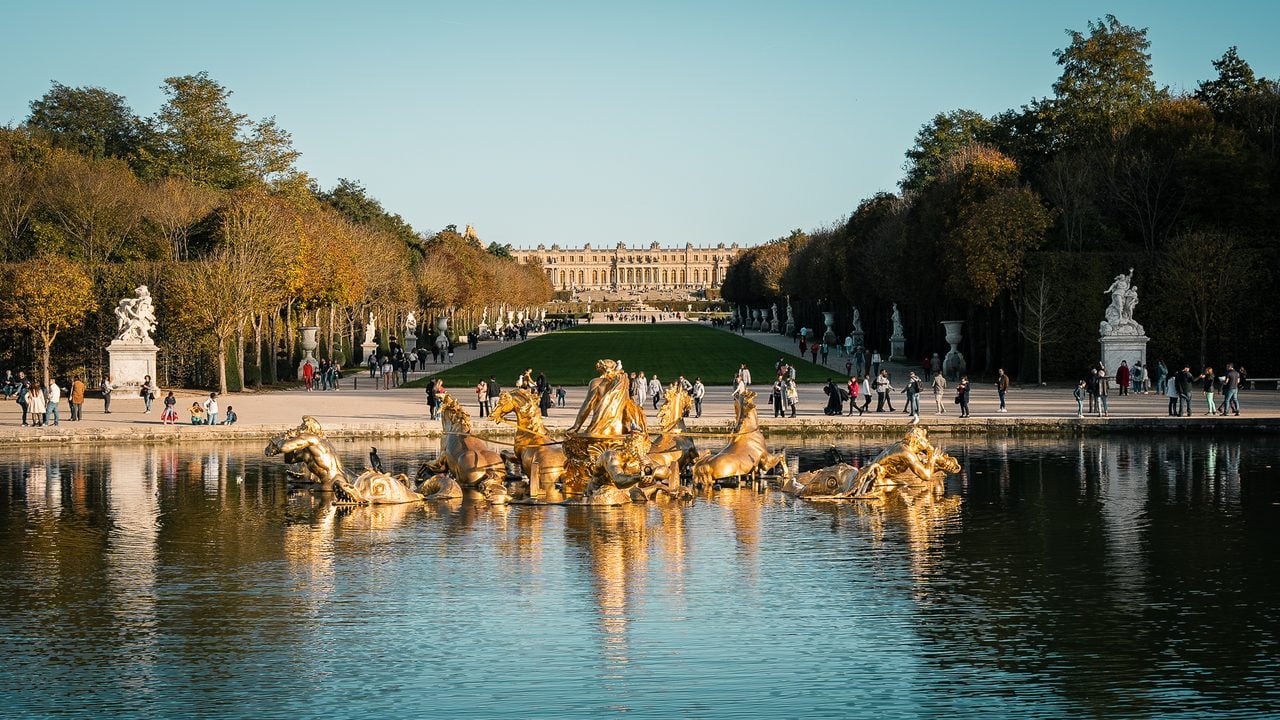
Its sculpture carried the same message. The Latona Fountain, with its marble group by the Marsy brothers after Ovid, shows the mother of Apollo calling down divine vengeance on peasants who mocked her, a pointed fable for a king who had faced down rebellion. Farther along the axis, the Apollo Fountain sends the sun god rising from the water in his chariot, gilded lead by Jean-Baptiste Tuby, beginning his daily course just as the king began his.
All of this demanded water, and water was the one thing Versailles did not have. The fountains could not run continuously; even at full display, gardeners signaled ahead so that each basin was switched on only as the king approached, then shut off behind him. To feed the system, engineers built the Machine de Marly on the Seine in the early 1680s, a colossal assembly of fourteen waterwheels and hundreds of pumps that lifted river water more than 150 meters up the hillside toward the gardens. It was one of the most ambitious machines of the age, and never quite enough. A scheme to divert the river Eure across miles of new canal and aqueduct was abandoned, after vast expense and many deaths among the soldier-laborers, when war intervened. The gardens of Versailles were a triumph of will over a site that resisted at every turn.
Life at Court: Etiquette as Government
Versailles is often described as a gilded cage, a place where Louis XIV lured the great nobles, dazzled them with luxury, and tamed them with etiquette until they forgot how to rebel. There is truth in the picture, but historians have learned to qualify it. The king had no police force or standing bureaucracy capable of dominating a kingdom of twenty million by force, and the court worked less as a prison than as a marketplace, where royal favor was exchanged for noble cooperation. Many of the most powerful families spent little time there at all. Power at Versailles flowed through negotiation as much as through command.
Still, the etiquette was real, and it was relentless. Rank determined who could sit, on what kind of seat, in whose presence; who could enter which room; who could hold the candlestick at the king’s bedtime. These rules look absurd from outside, and contemporaries sometimes found them absurd too, but they functioned as a working system of government. By making proximity to himself the supreme prize, the king turned ambition inward, toward the corridors of his palace and away from the provinces.
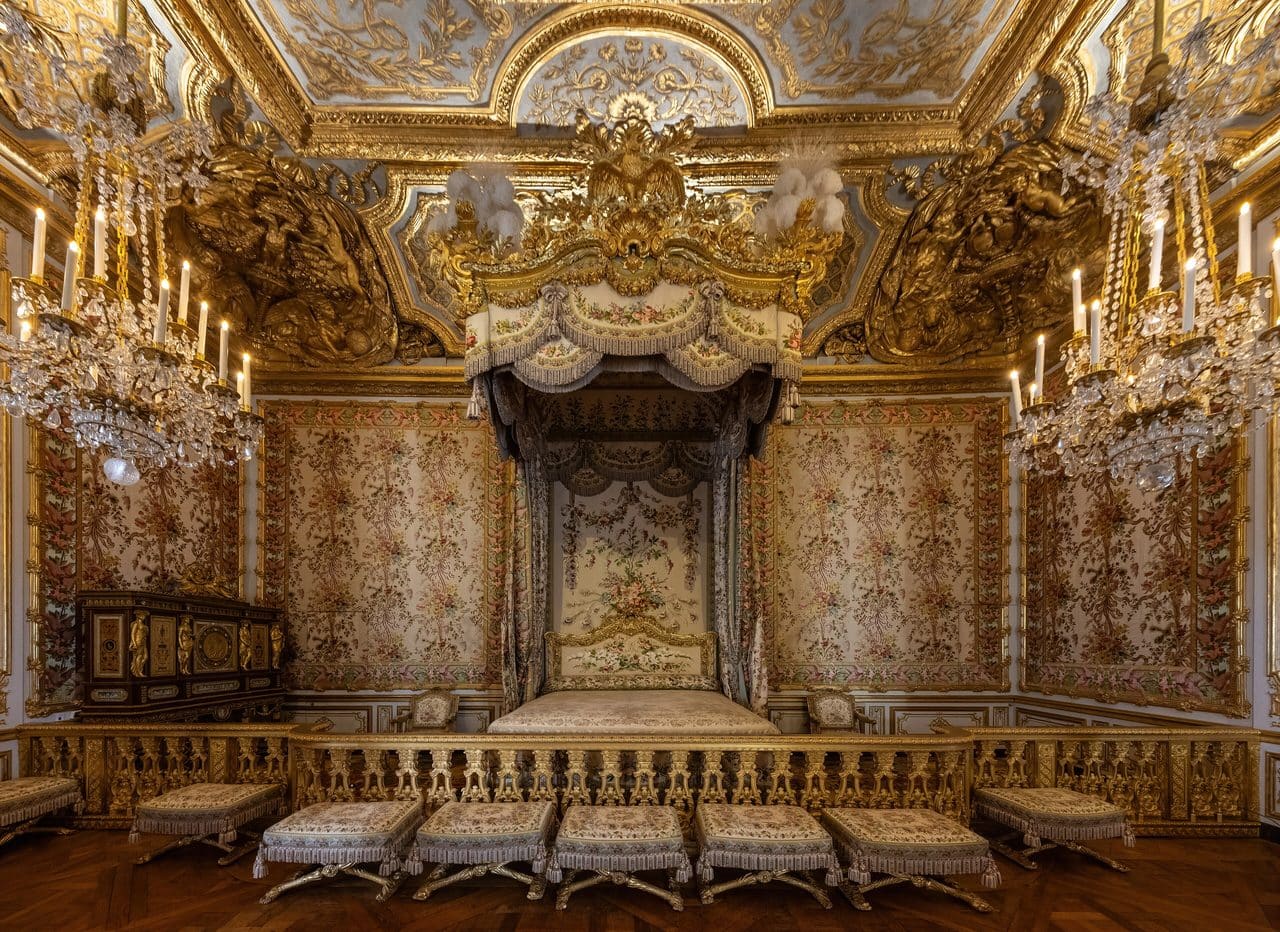
All that ceremony helps explain the buildings at the far end of the park, where the royal family went to be, by their standards, ordinary. Louis XIV built the marble Grand Trianon in 1687 as a retreat from his own court. Louis XV added the Petit Trianon, finished in the 1760s, which Louis XVI gave to his young queen, Marie-Antoinette, in 1774. There she built the Hameau, a mock farming village of thatched cottages completed in the 1780s, where she and her circle played at country life while real country life, a few days’ walk away, slid toward crisis.
Marie-Antoinette has long been saddled with the line “let them eat cake,” supposedly her reply on hearing that the people had no bread. She almost certainly never said it. The phrase appears in Rousseau’s writing while she was still a child in Austria, attributed to an unnamed princess, and was pinned to her only later by enemies who found her a convenient symbol. The story endures because it fits the legend of Versailles: a court so insulated by its own theater that it could no longer see the country beyond the gates.
October 1789: The March That Emptied the Palace
The reckoning came from Paris, and it came on foot. Through the summer of 1789 the Revolution had gathered force in the capital, yet the king and his court remained twenty kilometers away at Versailles, as insulated as ever. In early October, with bread scarce and prices high, that distance became intolerable. A lavish banquet for royal officers, at which the new revolutionary cockade was reportedly trampled, gave the rumor mills their spark. On October 5, thousands of Parisian women, many of them market traders, gathered at the Hôtel de Ville and set out through the rain to march on the palace, with the National Guard under Lafayette following behind.
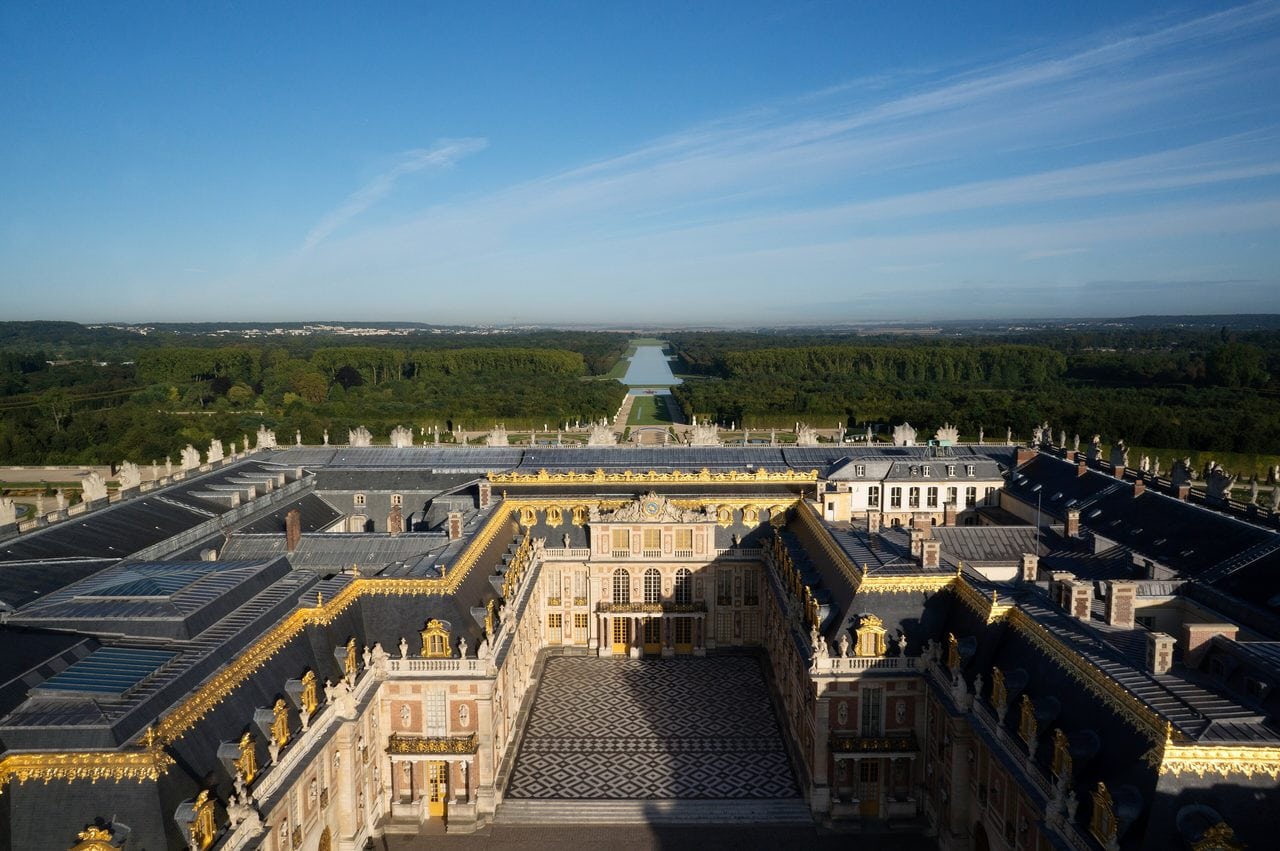
They reached Versailles soaked and furious, and would not leave without the king. Some forced their way into the building overnight; by the morning of October 6, the crowd packed the marble courtyard below the royal apartments. In one of the Revolution’s defining scenes, Marie-Antoinette stepped onto the balcony to face the people who had come for her, and for a moment the shouting stilled. It did not change the outcome. The king agreed to return to Paris, and by afternoon Louis XVI, the queen, and their children were on the road, escorted by the same crowd, with wagons of flour and the heads of two slain guards carried ahead of them. The marchers called the royal family the baker, the baker’s wife, and the baker’s boy, as if bringing the king to the city would itself fill the bread baskets.
It was the last day Versailles served as a royal residence. After more than a century at the center of French power, the palace stood suddenly empty of the court that had given it meaning. Louis XIV had built a machine to draw the kingdom toward the king; now the kingdom had come to Versailles in person, and carried the king away. The stage remained. Its leading actor would never return.
“All the Glories of France”: Museum, Empire, and Treaty
What followed was decline. The Revolution stripped Versailles of its furnishings, which were sold off in great auctions, and the building stood half-empty through the upheavals that came after. Napoleon used the Grand Trianon but left the main palace largely alone. For a while it was unclear whether the place would survive at all, or be pulled down as a relic of a discredited age.
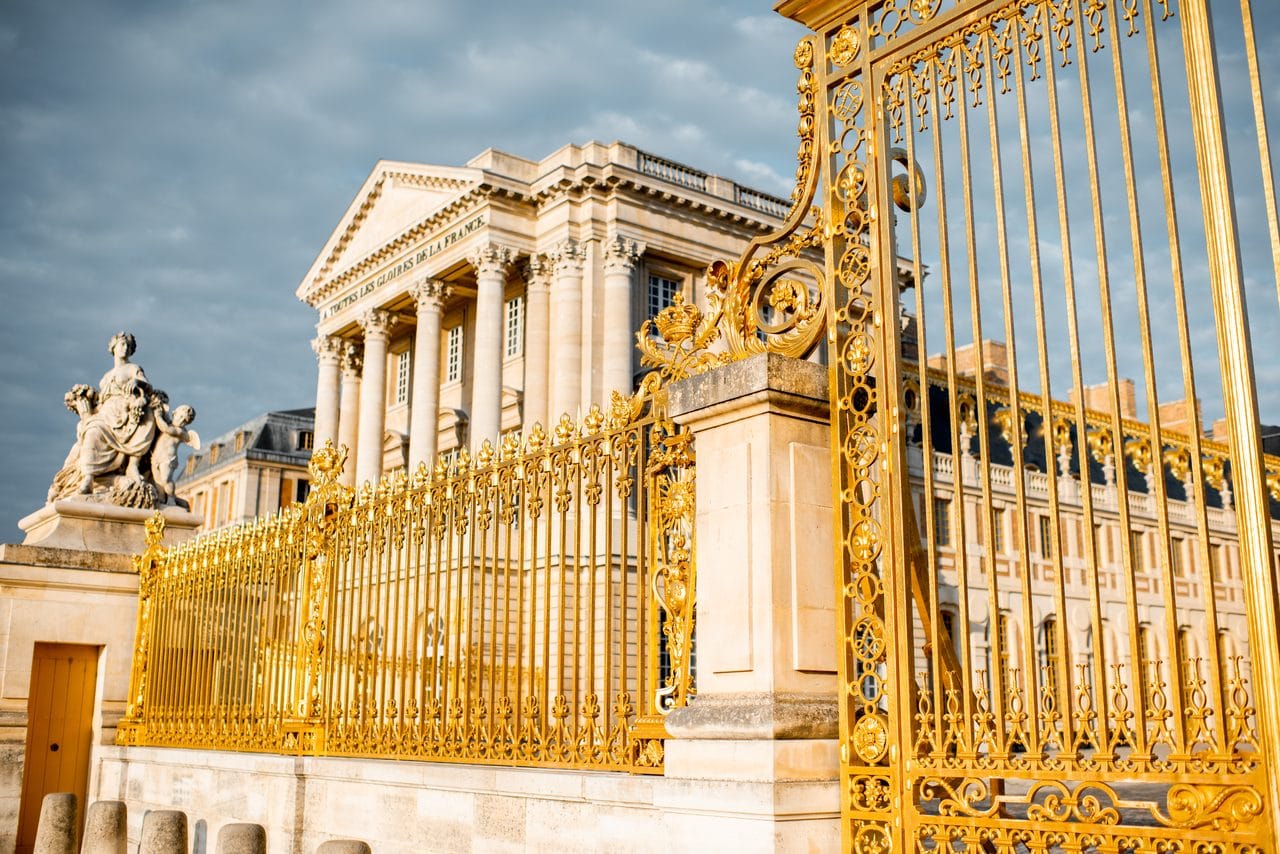
It was saved by reinvention. In the 1830s King Louis-Philippe, ruling as a constitutional monarch, converted the palace into a museum of French history and dedicated it, in an inscription still on its façades, “to all the glories of France.” Inaugurated in 1837, the new museum quietly changed what Versailles meant. It was no longer the house of one dynasty but a monument to the nation, a shift that let a building made by kings outlive the monarchy itself.
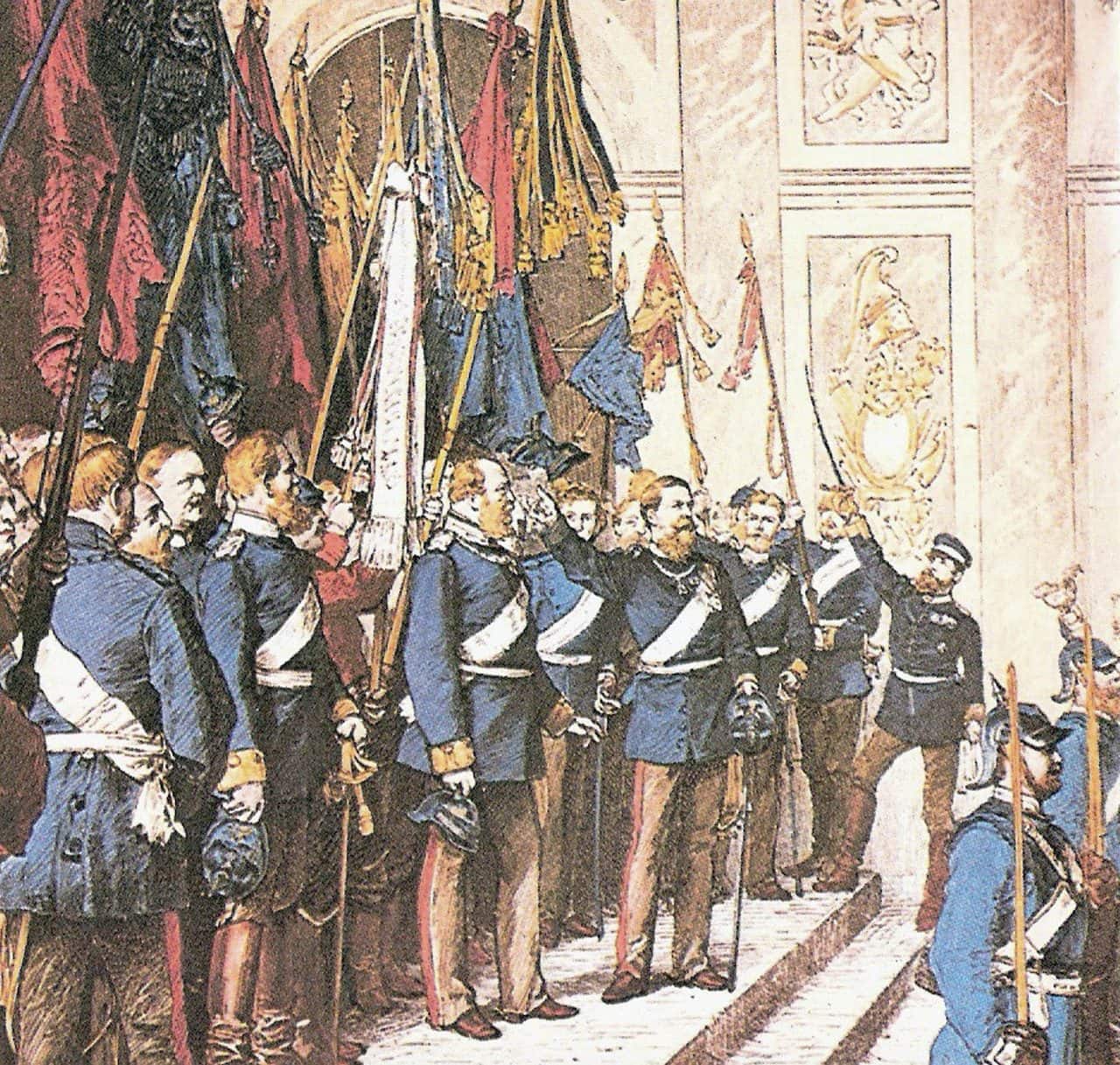
That national symbolism made Versailles irresistible to France’s enemies. On January 18, 1871, with Paris under Prussian siege, the victorious German states proclaimed their new empire in the Hall of Mirrors, and Wilhelm I of Prussia was hailed as German Emperor beneath a ceiling that celebrated Louis XIV’s old victories over German lands. The choice of room was a calculated humiliation, staged in the very place built to glorify French power. The painter Anton von Werner, present that day, recorded the scene in images that became famous across Germany.
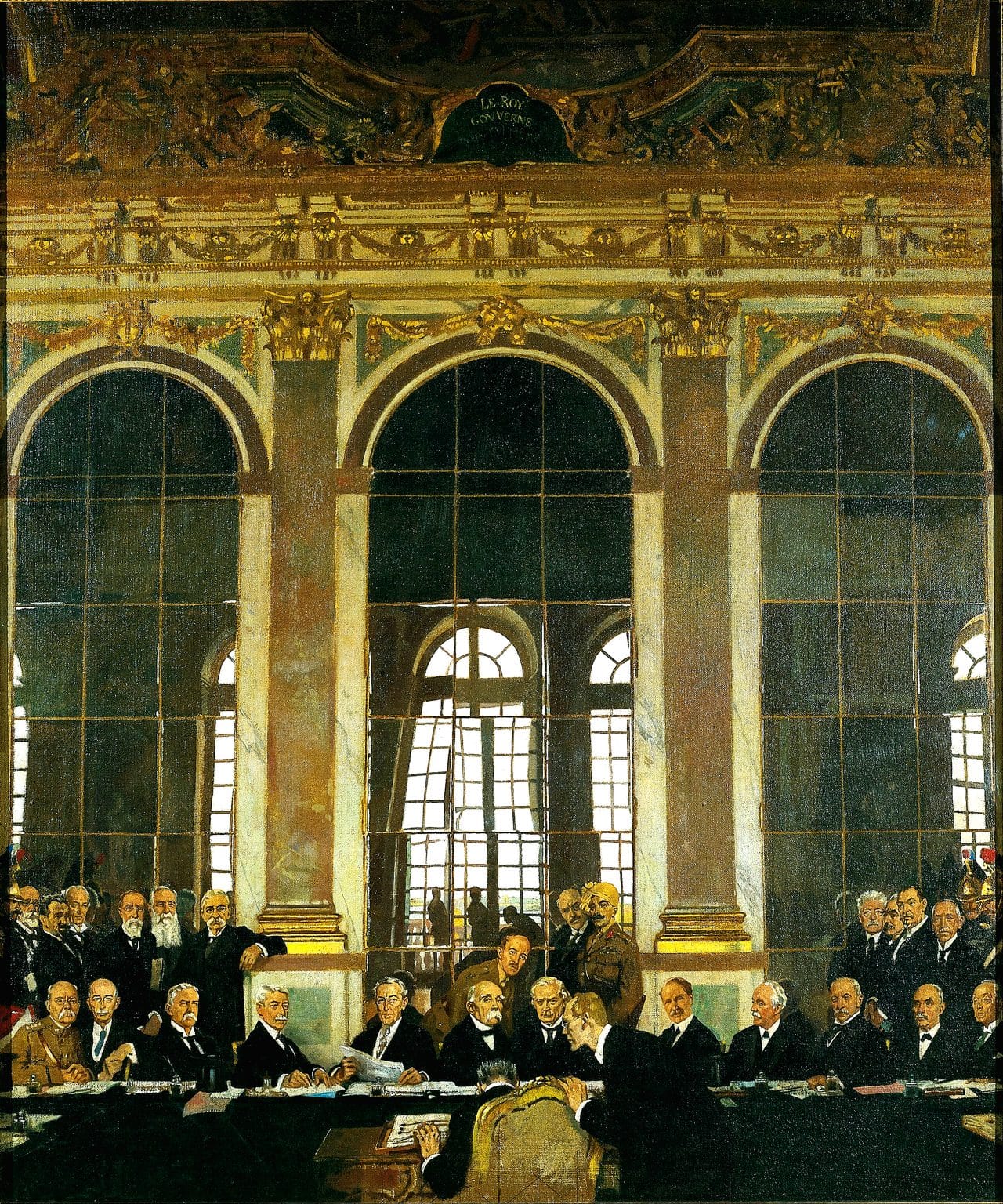
France answered in the same room. When the First World War ended in German defeat, the Allies summoned the new German republic to the Hall of Mirrors to sign the peace. The Treaty of Versailles, signed on June 28, 1919, was set deliberately where the German Empire had been declared forty-eight years earlier, closing the circle the Prussians had opened. The Irish artist William Orpen painted the signing, the diplomats dwarfed by the mirrored gallery around them.
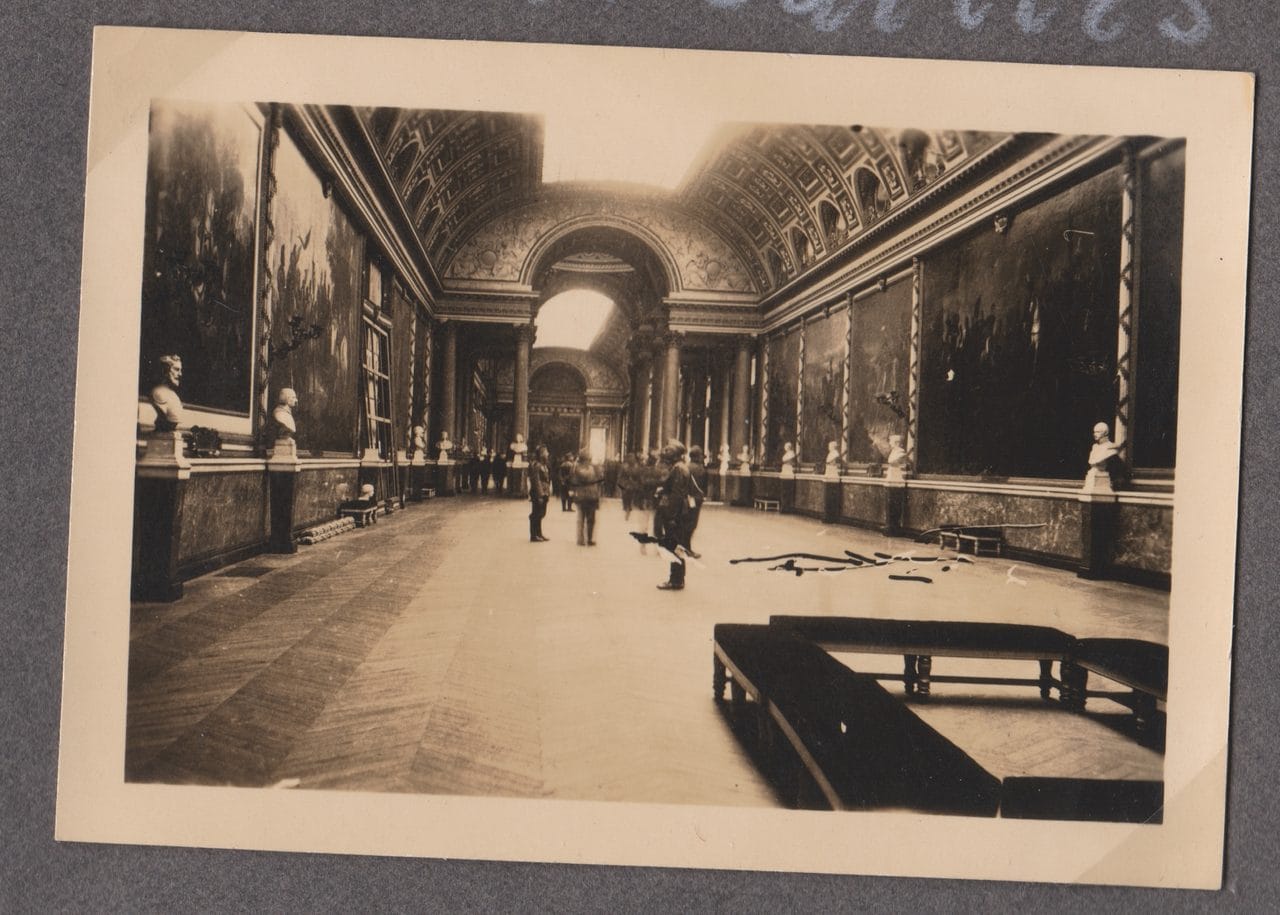
The building was claimed one more time within living memory. During the German occupation of France from 1940 to 1944, Versailles lay inside enemy-held territory, many of its movable treasures evacuated for safekeeping as at museums across the country. Occupying soldiers wandered its half-empty galleries as sightseers, among them the Galerie des Batailles, the very hall Louis-Philippe had filled with France’s military triumphs. When Allied forces reached the region in late August 1944, the palace returned to French hands, having served once again as a stage for a power that was not its own.
Through all of this, the palace faced a slower enemy: simple age and neglect. Between the wars the American philanthropist John D. Rockefeller Jr. gave millions to repair its roofs, gardens, and crumbling Trianons, an early case of the private patronage that still helps fund the estate. Major campaigns have continued since: the Hall of Mirrors was restored in the 2000s with corporate sponsorship and reopened in 2007, and work on the gardens, fountains, and chapel goes on. Today the estate is run as a national institution and a museum, financed by ticket sales, state subsidy, and private giving, much as it has been pieced back together over two centuries.
Visiting the Palace of Versailles
The Palace of Versailles is now one of the most visited monuments in the world, drawing roughly 8.4 million people a year to the estate. That popularity is the single most important thing to plan around. The palace interior runs on timed entry, and booking a slot online before you arrive is strongly advised; in summer, walk-up lines can stretch well past an hour. The palace is closed on Mondays, along with a handful of public holidays.
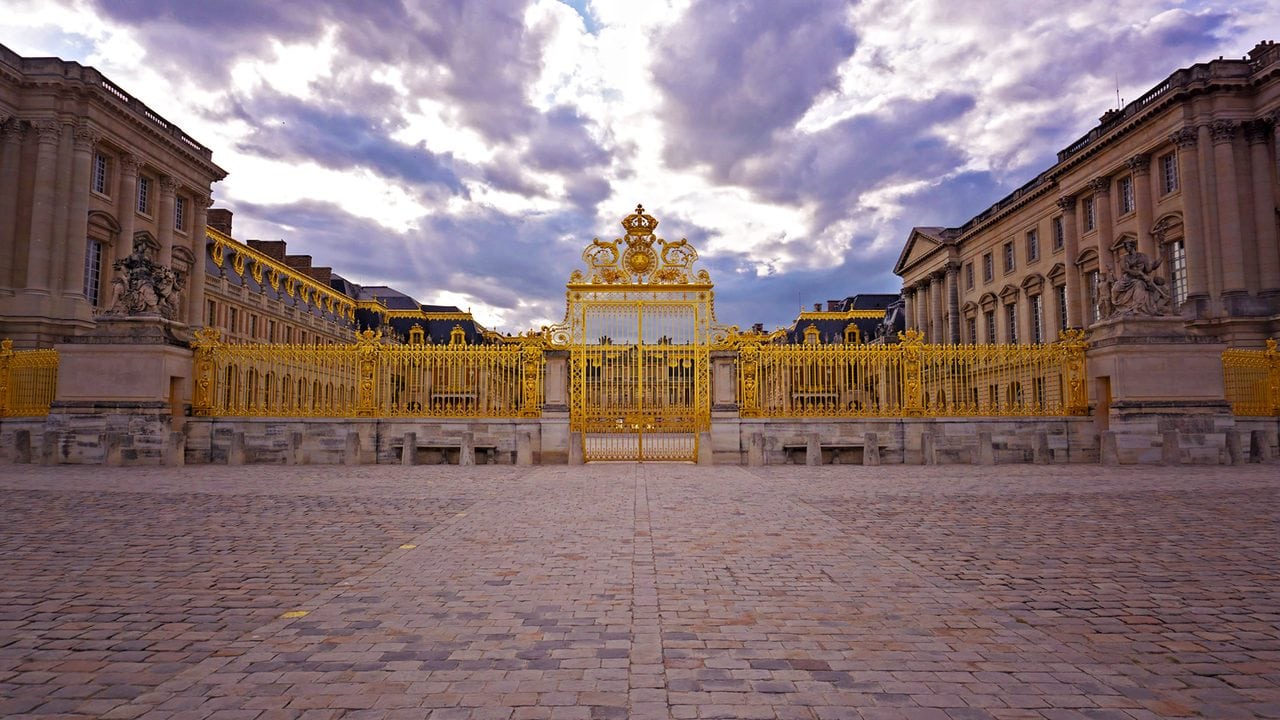
The estate is large and ticketed in layers. A Passport covers the whole domain, the palace, the Trianon estate, and the gardens, including the days when the musical fountain shows run. A separate, cheaper ticket covers only the Estate of Trianon, the Grand and Petit Trianon and Marie-Antoinette’s Hameau, which is also the quietest and most rewarding part of the park on a crowded day. In high season the gardens charge admission on fountain-show days; in winter they are generally free, though the fountains are off and the groves closed. An annual pass exists for repeat visitors.
A note on prices: ticket categories and fees change, and the official site is the only reliable source. As of mid-2026, the full-estate Passport sits in the mid-thirties of euros in high season, with reductions for EEA residents and free entry for under-eighteens and EU residents under twenty-six. Confirm the current figures, and book your slot, at chateauversailles.fr before you travel.
Getting there from Paris is easy. The RER C line runs to Versailles Château–Rive Gauche, the closest station, about a ten-minute walk from the gates. Trains from Gare Montparnasse reach Versailles-Chantiers, and trains from Gare Saint-Lazare reach Versailles Rive Droite, each a fifteen-to-twenty-minute walk away. Any of the three gets you there in well under an hour. For the lightest crowds, come on a weekday morning outside July and August, arrive near opening, and start with the gardens or the Trianon before the tour groups reach them.
If you would rather sleep in a château than rush back to the city, you can stay on the Versailles estate itself at Le Grand Contrôle, or in one of the châteaux nearby; our guide to Castle Hotels Near Paris ranks them.
To skip the worst of the lines, a wide range of guided tours and skip-the-line tickets for the Palace of Versailles can be booked in advance. If you would rather stay overnight and see the estate across two quieter days, compare hotels in the town of Versailles.
Some links on this page are affiliate links, which means StoneKeep Atlas may earn a small commission, at no extra cost to you, if you book through them.
More Views of the Palace of Versailles
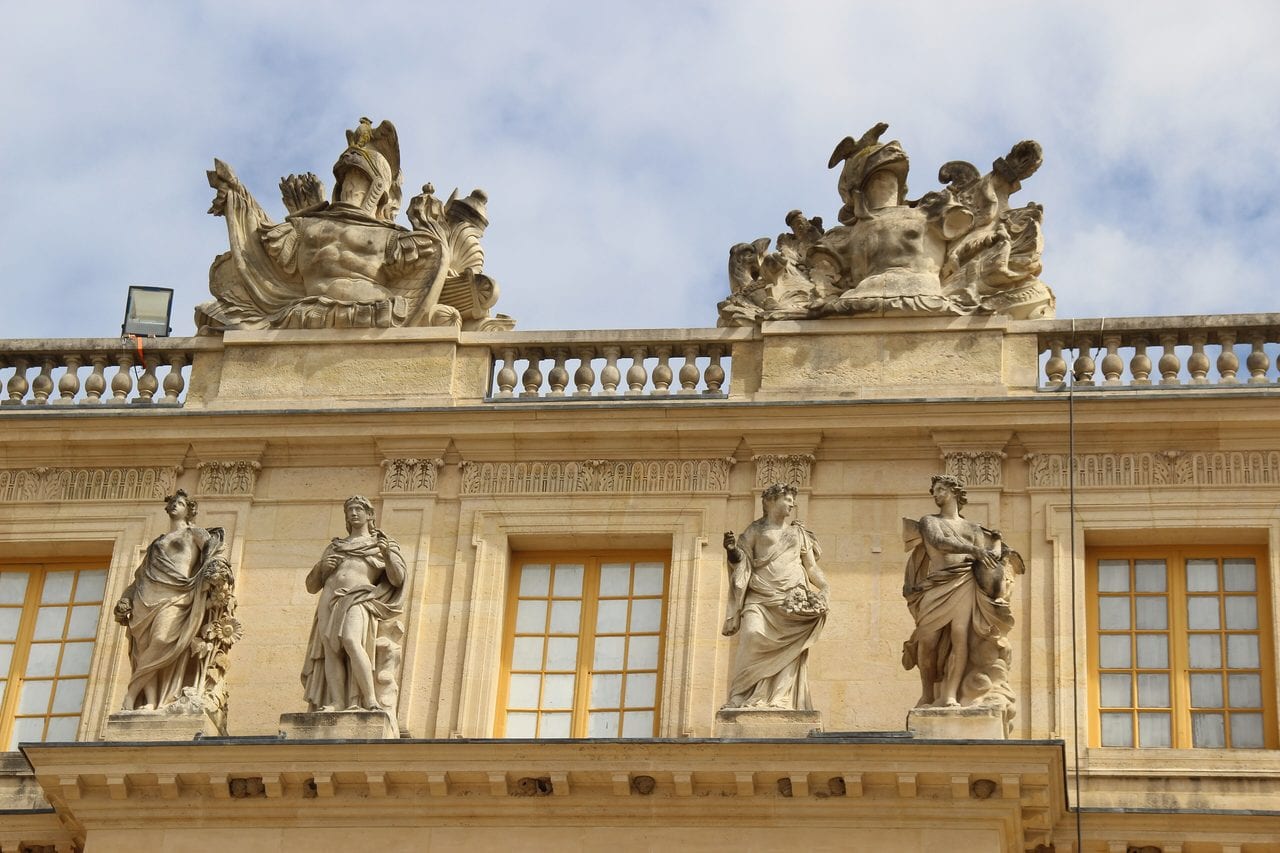
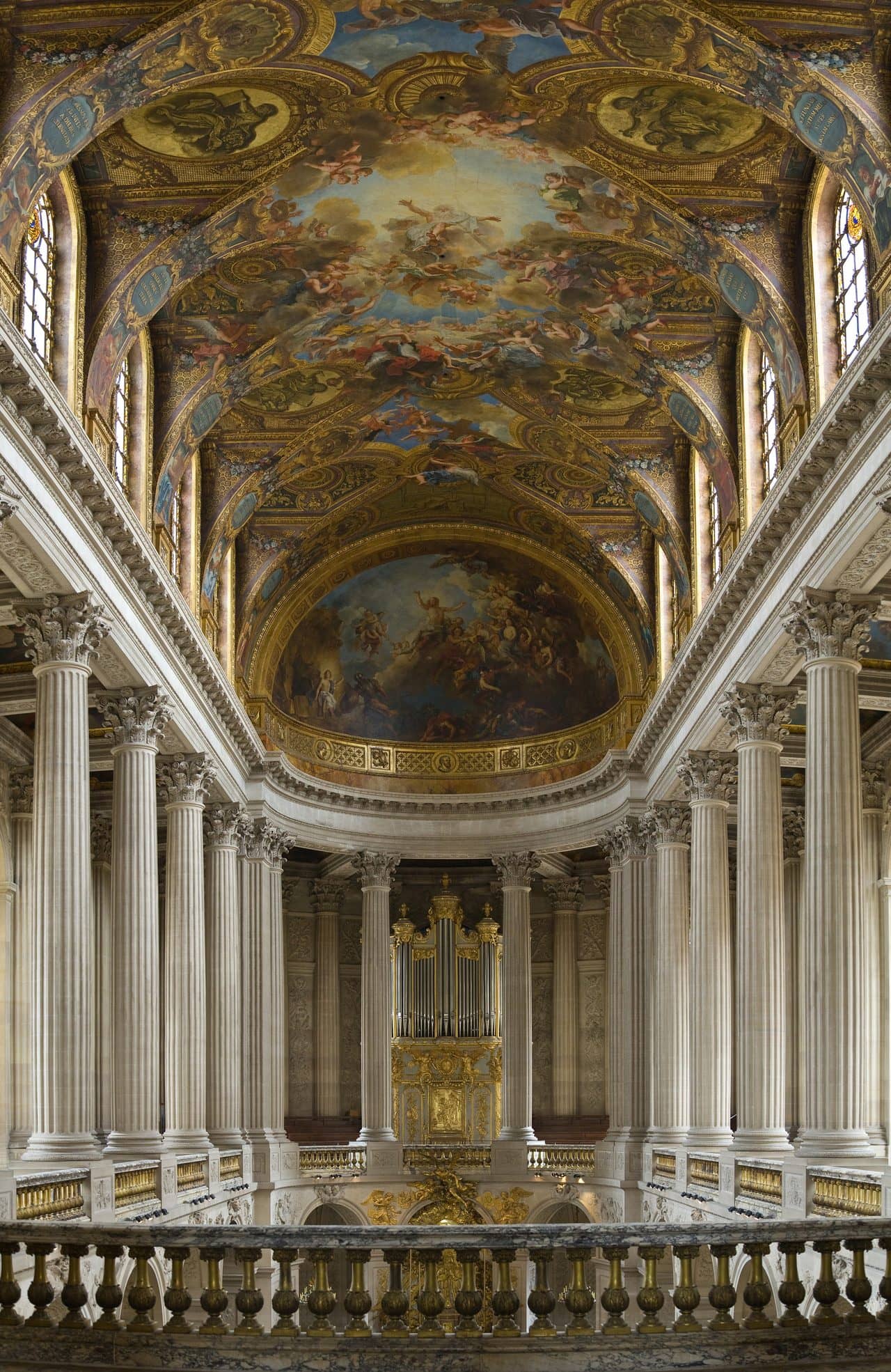
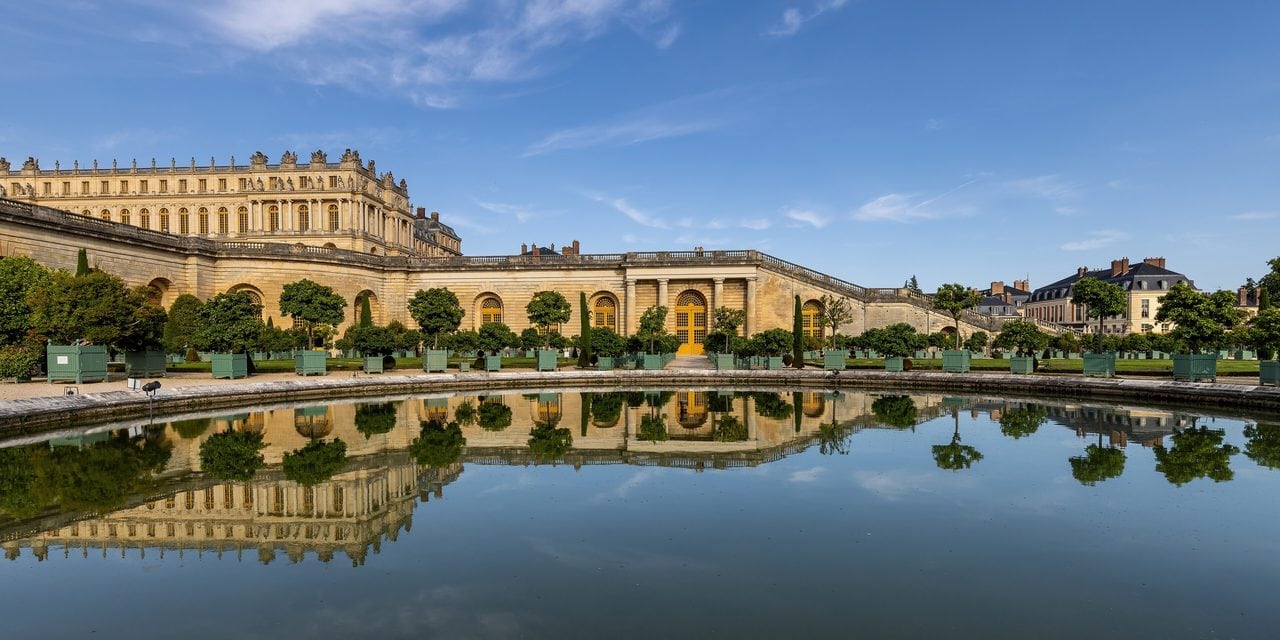
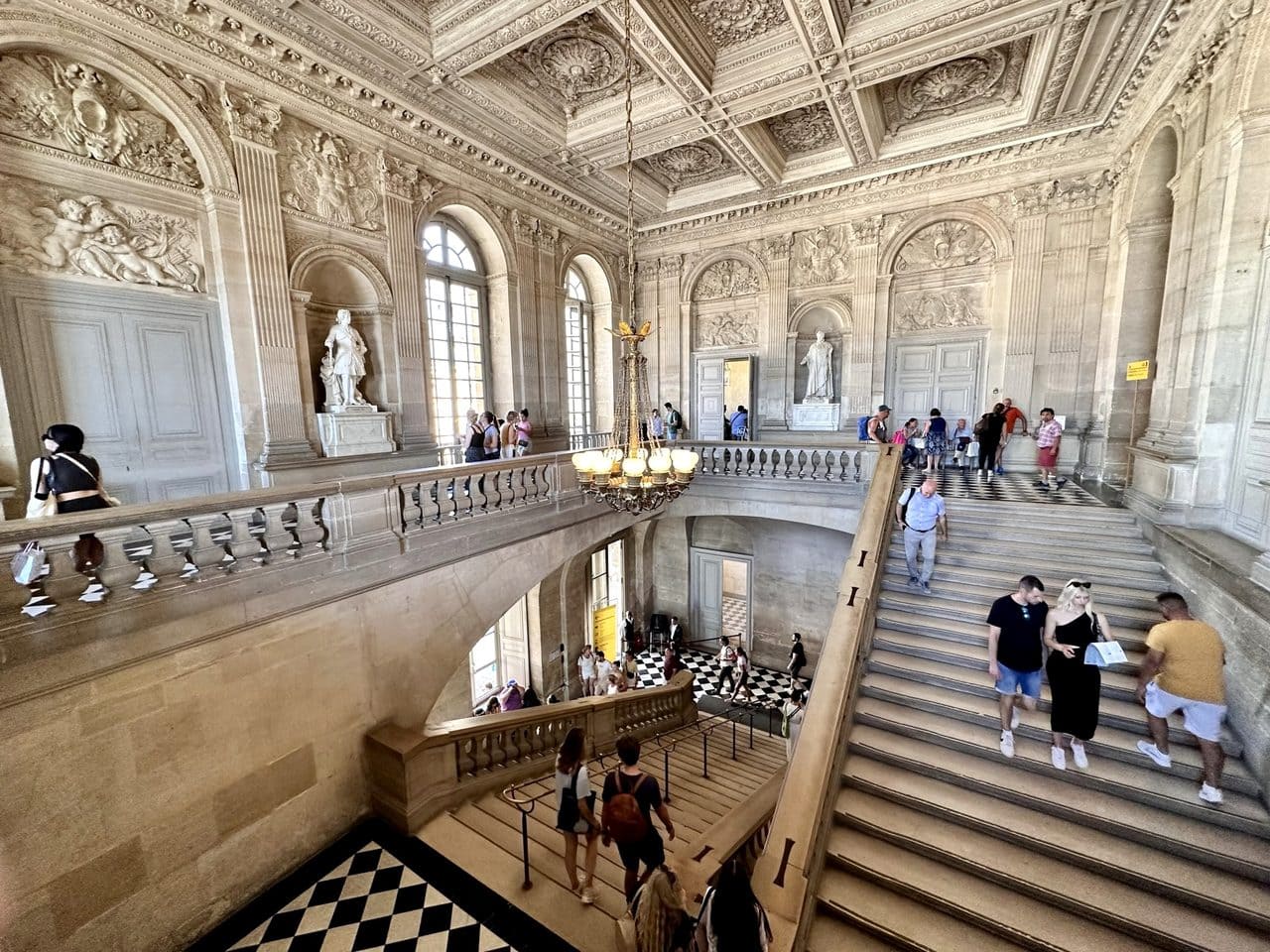
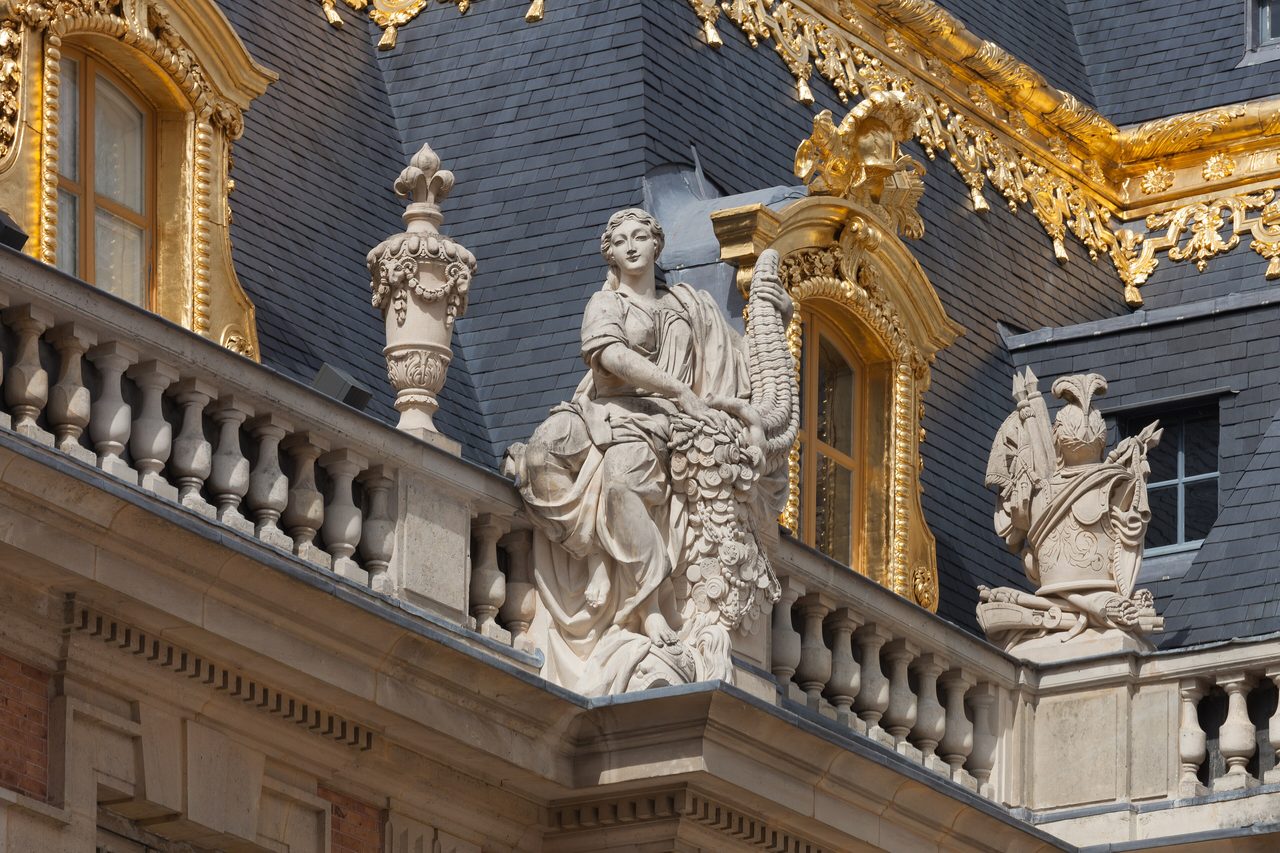
A closer look at the estate, from the Marble Court and the Royal Chapel to the fountains, the Orangery, and the gilded gates.
Beyond Versailles
No building in Europe was imitated more. For a century after Louis XIV, ambitious rulers measured their own palaces against Versailles, and several set out to rival it directly. In Bavaria, the “fairy-tale king” Ludwig II built Herrenchiemsee as a deliberate homage to Louis XIV, copying the Hall of Mirrors at even greater length. The Prussian kings answered with Sanssouci and Charlottenburg Palace, and the Wittelsbachs with Nymphenburg Palace and the Munich Residenz, each translating the French model into a local key. Readers drawn to the Baroque palace as an instrument of royal display will find that story continued across StoneKeep Atlas’s German entries, and traced as a theme in The Castles of King Ludwig II. Closer to home, the medieval Château de Vincennes is the fortress the Sun King abandoned for Versailles, the working seat of royal power that the palace replaced. How Louis XIV turned building itself into an instrument of power is the subject of our history, Versailles and the Architecture of Absolutism.
The French roots of Versailles are worth following too. Before Louis XIV concentrated the court in one place, French kings moved among the great châteaux of the Loire, and the Renaissance pleasure-houses of Chambord, Blois, and Chenonceau are the ancestors of the absolutism that Versailles perfected. Set beside them, Versailles reads not as a beginning but as a culmination, the moment the wandering royal household finally stopped moving and built itself a permanent stage. And in the same Île-de-France countryside stands the Château de Fontainebleau, the rambling house of centuries that every French sovereign inhabited before Versailles eclipsed it. The imperial story runs on at the Château de Compiègne, the neoclassical palace that Napoleon I and Napoleon III made their own. For the full ring of royal houses within a day of Paris, see our guide to the royal residences of the Île-de-France.
Conclusion
Versailles was conceived as an answer to a single question: how does one man hold a kingdom together by being seen? Louis XIV’s answer was to build a stage so magnificent that the whole apparatus of the state would arrange itself around him, and for a century it worked. What he could not foresee was how durable the stage would prove, and how many other hands would use it. The crowd of 1789 emptied it; a king-turned-museum-keeper saved it by giving it to the nation; a German emperor and then a vengeful peace borrowed its most famous room to announce the rise and fall of an empire. Each took the same building and wrote a new meaning onto it. That, more than the gold or the mirrors, is why the Palace of Versailles still matters. It is the rare monument that kept being handed a new role, and was grand enough to play them all.
Principal Sources
- Berger, Robert W. *A Royal Passion: Louis XIV as Patron of Architecture.* Cambridge University Press, 1994.
- Duindam, Jeroen. *Vienna and Versailles: The Courts of Europe’s Dynastic Rivals, 1550–1780.* Cambridge University Press, 2003.
- Elias, Norbert. *The Court Society.* Translated by Edmund Jephcott. Pantheon, 1983.
- Le Roy Ladurie, Emmanuel. *Saint-Simon ou le système de la cour.* Fayard, 1997.
- Newton, William R. *L’espace du roi: la Cour de France au château de Versailles, 1682–1789.* Fayard, 2000.
- Spawforth, Tony. *Versailles: A Biography of a Palace.* St. Martin’s Press, 2008.
- Verlet, Pierre. *Le Château de Versailles.* Fayard, 1985.
- Walton, Guy. *Louis XIV’s Versailles.* Viking, 1986.
- “Vindication of the Fronde? The Cost of Louis XIV’s Versailles Building Programme.” *French History* 21, no. 2 (2007): 205–230.
- Imperial War Museum. “The Signing of Peace in the Hall of Mirrors, Versailles, 28th June 1919.” iwm.org.uk.
- UNESCO World Heritage Centre. “Palace and Park of Versailles.” whc.unesco.org.
Visitor information, history, and estate details in this guide draw on the official pages of the Établissement public du château, du musée et du domaine national de Versailles, chateauversailles.fr, accessed June 2026.
Image credits. Aerial view of the palace and gardens: ToucanWings, CC BY-SA 3.0, via Wikimedia Commons; Pierre Patel’s 1668 view of Versailles: Pierre Patel, public domain, via Wikimedia Commons; Hall of Mirrors: Myrabella, CC BY-SA 3.0, via Wikimedia Commons; Charles Le Brun, “The King Governs by Himself” (1661): Charles Le Brun, public domain, via Wikimedia Commons; Queen’s Bedchamber: Basile Morin, CC BY-SA 4.0, via Wikimedia Commons; Anton von Werner’s proclamation of the German Empire: Anton von Werner, public domain, via Wikimedia Commons; William Orpen, “The Signing of Peace in the Hall of Mirrors” (1919): William Orpen, public domain, via Wikimedia Commons; German soldiers in the Galerie des Batailles during the occupation: Helmut Linder, CC BY-SA 4.0, via Wikimedia Commons; Locator map: StoneKeep Atlas; garden front: Gary Todd, CC0, via Wikimedia Commons; Marble Court and palace from the air: ToucanWings, CC BY-SA 3.0, via Wikimedia Commons; Royal Chapel: Diliff, CC BY-SA 3.0, via Wikimedia Commons; Apollo Fountain: Frédéric Picard 28, CC BY-SA 4.0, via Wikimedia Commons; Orangery: Basile Morin, CC BY-SA 4.0, via Wikimedia Commons; Princes’ Staircase: APK, CC BY-SA 4.0, via Wikimedia Commons; rooftop statuary: Lmbuga, CC BY-SA 4.0, via Wikimedia Commons. Freely licensed images are resized to fit; otherwise unaltered.