
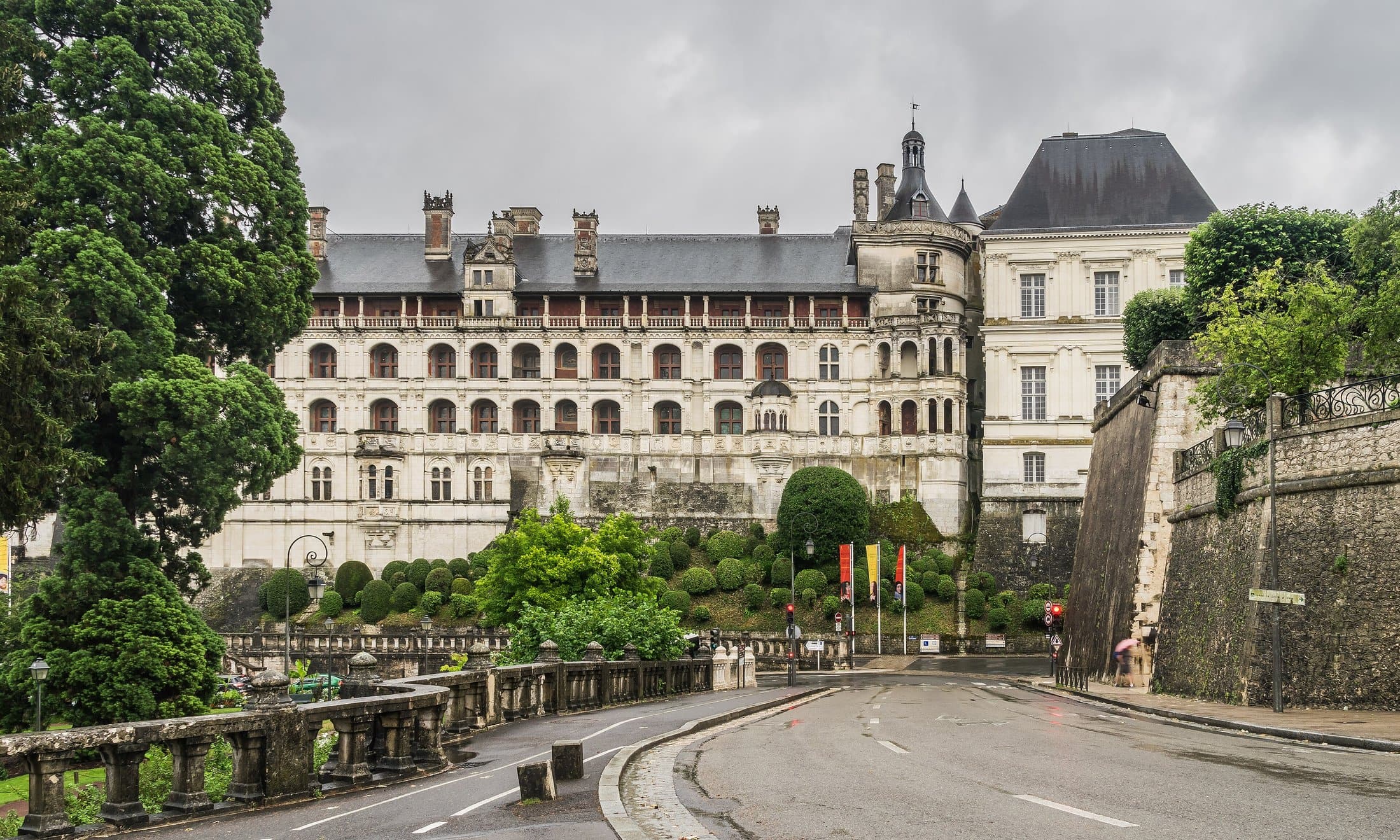
Château de Blois
Stand in the courtyard of the Château de Blois and turn slowly in a circle. In that single rotation you pass a Gothic hall raised by feudal counts in the early 1200s, a brick-and-stone wing built for Louis XII at the close of the Middle Ages, the Renaissance facade where François I hung his famous open spiral staircase, and a Classical palace front designed by François Mansart a century before Versailles. No other castle in France compresses four centuries of national architecture into one enclosed square, and no other Loire château hosted so much of the kingdom’s raw politics.
Seven kings and ten queens lived here. Joan of Arc passed through on her way to Orléans, the Estates-General convened twice in its great hall, and two days before Christmas 1588 the king’s guards cut down the most powerful man in France a few steps from the royal bed. Blois sits in the middle of its town, not apart from it, which makes the visit feel less like an excursion and more like walking into the engine room of French history.
Quick Facts
| Location | Blois, Loir-et-Cher, Centre-Val de Loire, France |
| Coordinates | 47.5855 N, 1.3310 E |
| Built | 13th to 17th centuries; principal wings 1498–1501, 1515–1524, and 1635–1638 |
| Architectural styles | Medieval Gothic, Flamboyant, French Renaissance, Classical |
| Builders | Counts of Blois; Louis XII; François I; Gaston d’Orléans (architect François Mansart) |
| Condition | Well-preserved |
| Current use | Museum, including the Musée des Beaux-Arts de Blois |
| Heritage status | Monument historique (1840 list); within the UNESCO Loire Valley World Heritage Site (2000) |
| Open to the public | Yes, year-round except January 1 and December 25 |
| Official website | chateaudeblois.fr |
Four Wings, Four Centuries: Reading the Courtyard
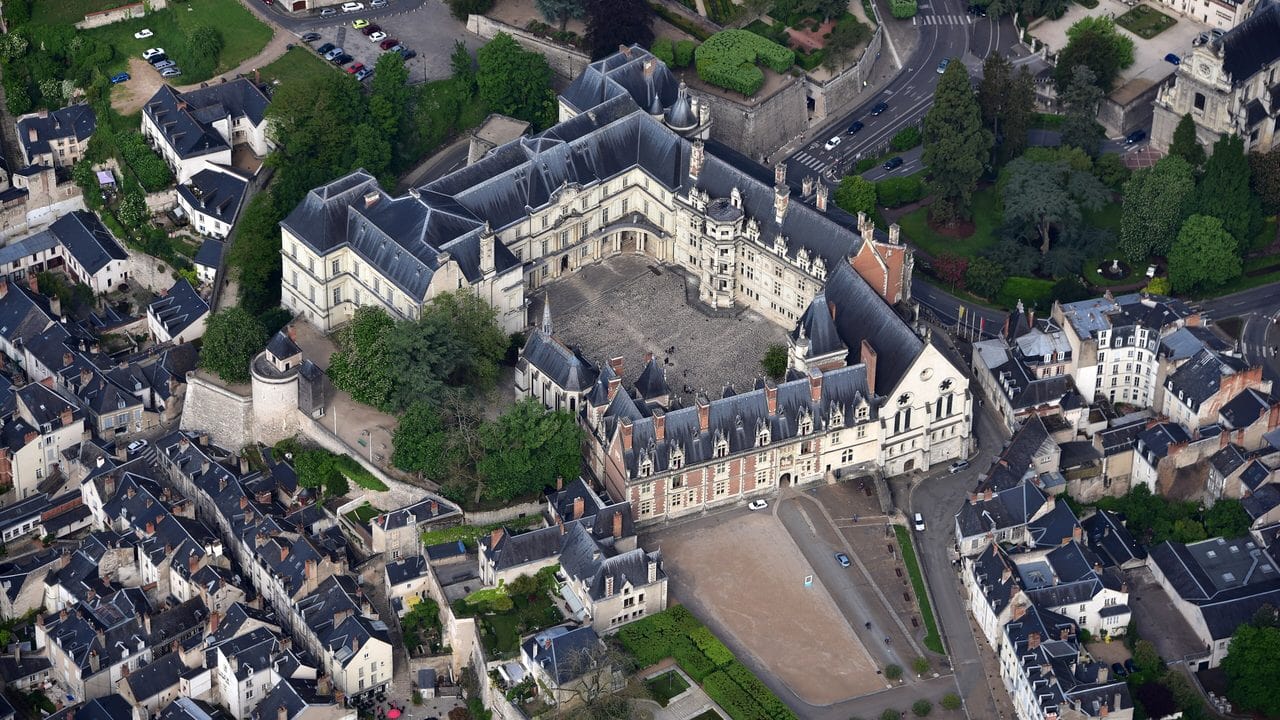
Most castles ask you to imagine their layers. Blois displays them side by side. Enter through the Louis XII gateway and the courtyard opens around you like an architecture textbook with the pages torn out and pinned to the walls.
On your right as you enter stands the oldest survivor: the Salle des États, a twin-aisled Gothic hall from the early 13th century that ranks among the largest civil Gothic rooms still standing in France. Behind you runs the Louis XII wing of about 1498 to 1501, late Gothic in its bones but already flirting with Italian ornament, its red brick laced with stone and crowned by an equestrian statue of the king. To your left rises the François I wing of 1515 to 1524, where the Renaissance arrives at full volume: carved salamanders, classical pilasters, and the octagonal staircase cage that became one of the most reproduced images in French architecture. Facing you across the courtyard, the Gaston d’Orléans wing of the 1630s answers everything else with cool Classical restraint, columns and pediments stacked in the correct ancient orders.
Medieval fragments thread through the whole ensemble for those who look: stretches of the 13th-century rampart, three old towers swallowed by the François I wing, the round Tour du Foix still standing guard at the southwest corner above the river. Each wing was meant to upstage its neighbors. None ever succeeded completely, and the standoff is the whole point. A walk across this one courtyard covers more stylistic ground than a week of driving between other châteaux.
From Feudal Stronghold to Court of Poets
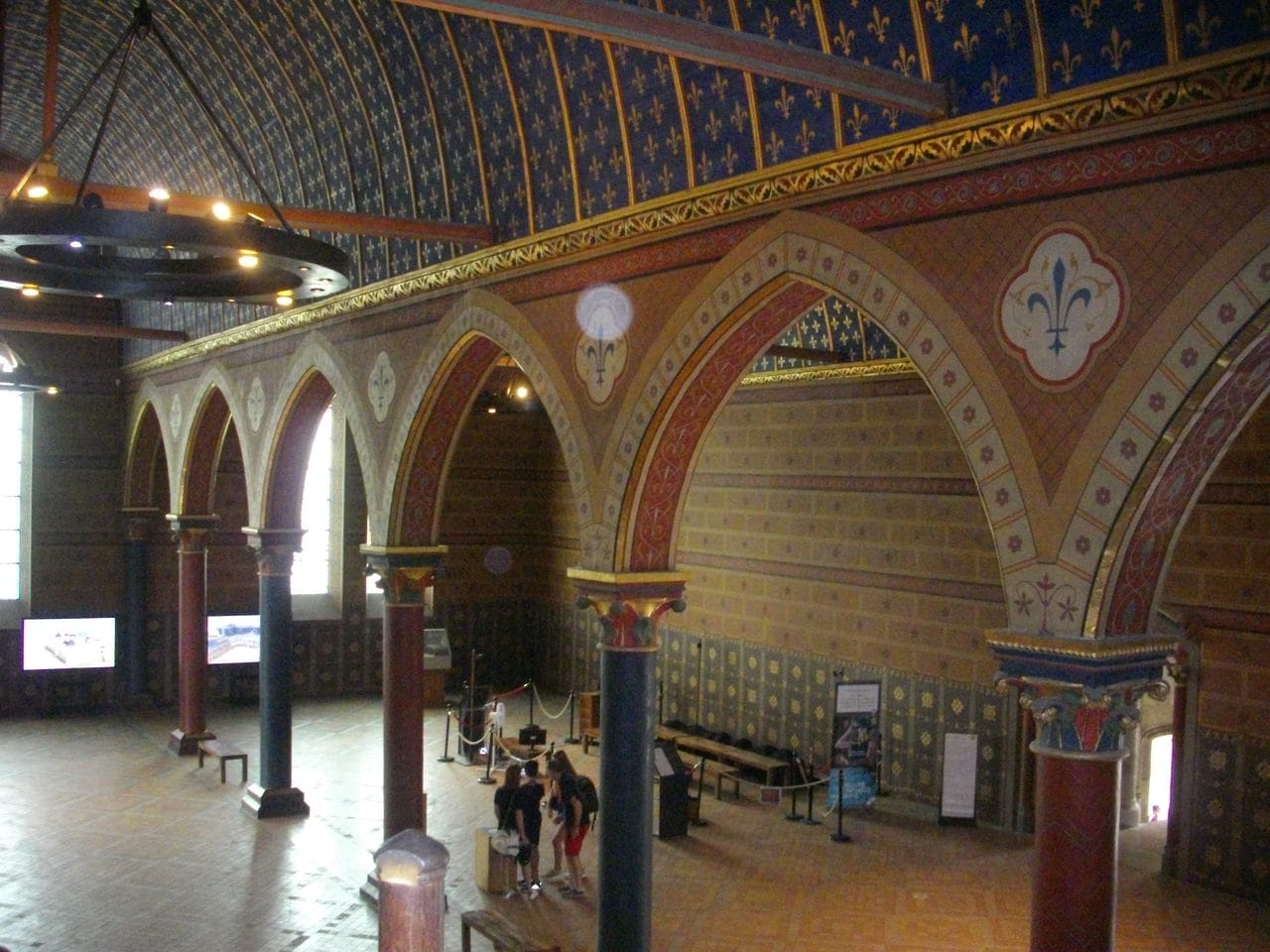
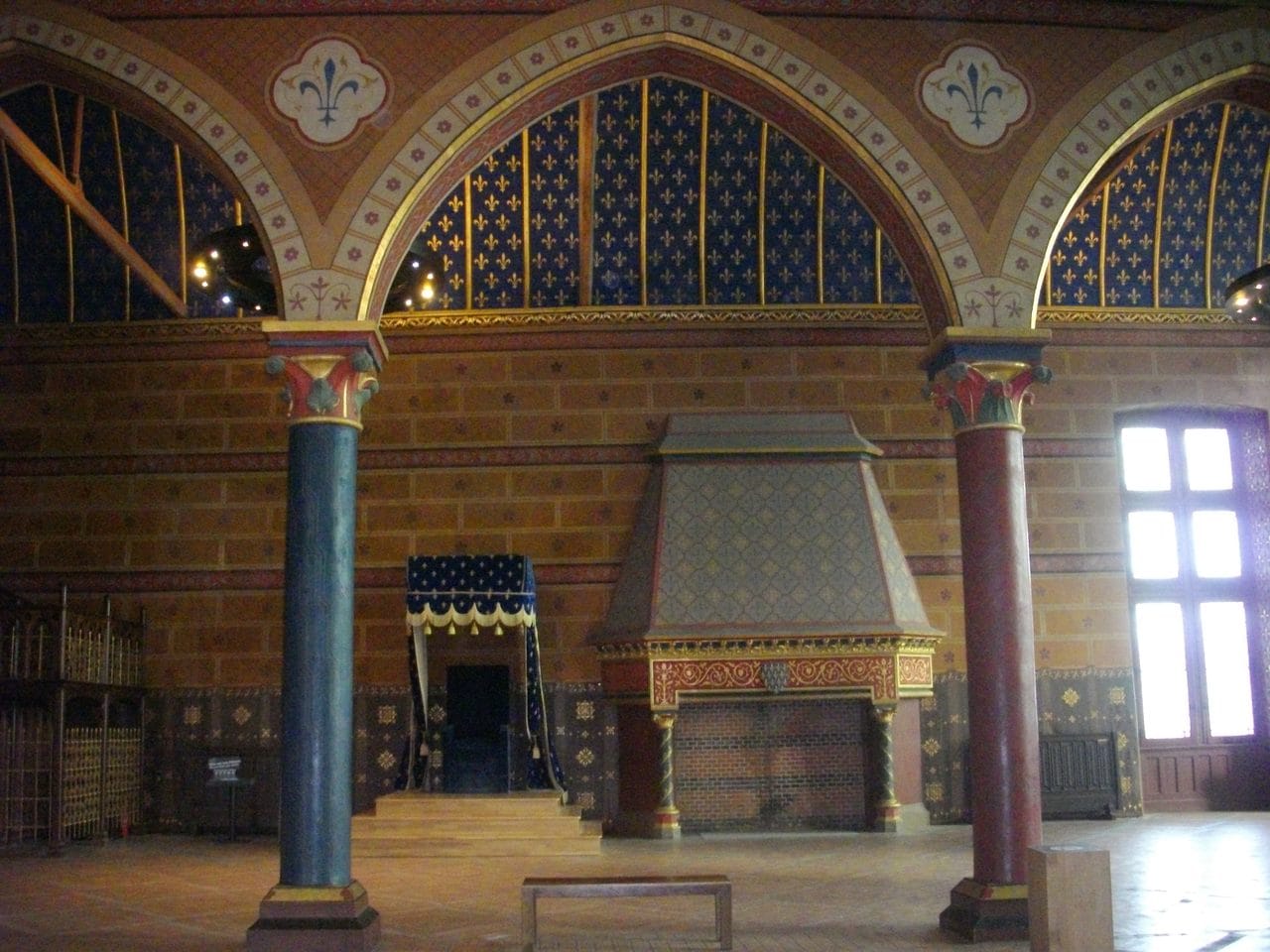
A fortress and a county palace crowned the headland above the Loire by the 9th century, when monks of Saint-Calais also founded a chapel here to shelter their relics from Viking raids. From about the year 1000 the counts of Blois, among the most powerful feudal lords in France, kept enlarging the complex. At their height the counts rivaled the Capetian kings themselves; a younger son of the comital house, Stephen, crossed the Channel in 1135 and took the English crown while his elder brother Theobald held the county. Their early 13th-century great hall survives as the Salle des États, a 540-square-meter space where two rows of painted columns divide twin barrel-vaulted aisles, and where the counts held court and dispensed justice for generations.
At the end of the 14th century the county passed by purchase to Louis I, Duke of Orléans, brother of King Charles VI and one of the wealthiest princes in the realm. His assassination in a Paris street in 1407 helped tip France into civil war, and his son Charles d’Orléans inherited a poisoned legacy: captured at Agincourt in 1415, he spent a quarter century as a prisoner in England, composing some of the finest French verse of the age while his lands waited. Released in 1440, he settled at Blois, rebuilt parts of the old fortress in brick and stone for comfort, not defense, and turned his court into a gathering place for poets. François Villon competed in the celebrated poetry contest Charles hosted here in the late 1450s, answering the duke’s set line about dying of thirst beside the fountain. In 1429, during the duke’s captivity, Joan of Arc had stopped at Blois to have her standard blessed before marching downriver to break the siege of Orléans.
In 1462 Charles’s son was born in the castle, a child of the duke’s old age. Thirty-six years later that child inherited the throne of France, and the fortunes of Blois changed overnight.
Louis XII: A Capital on the Loire
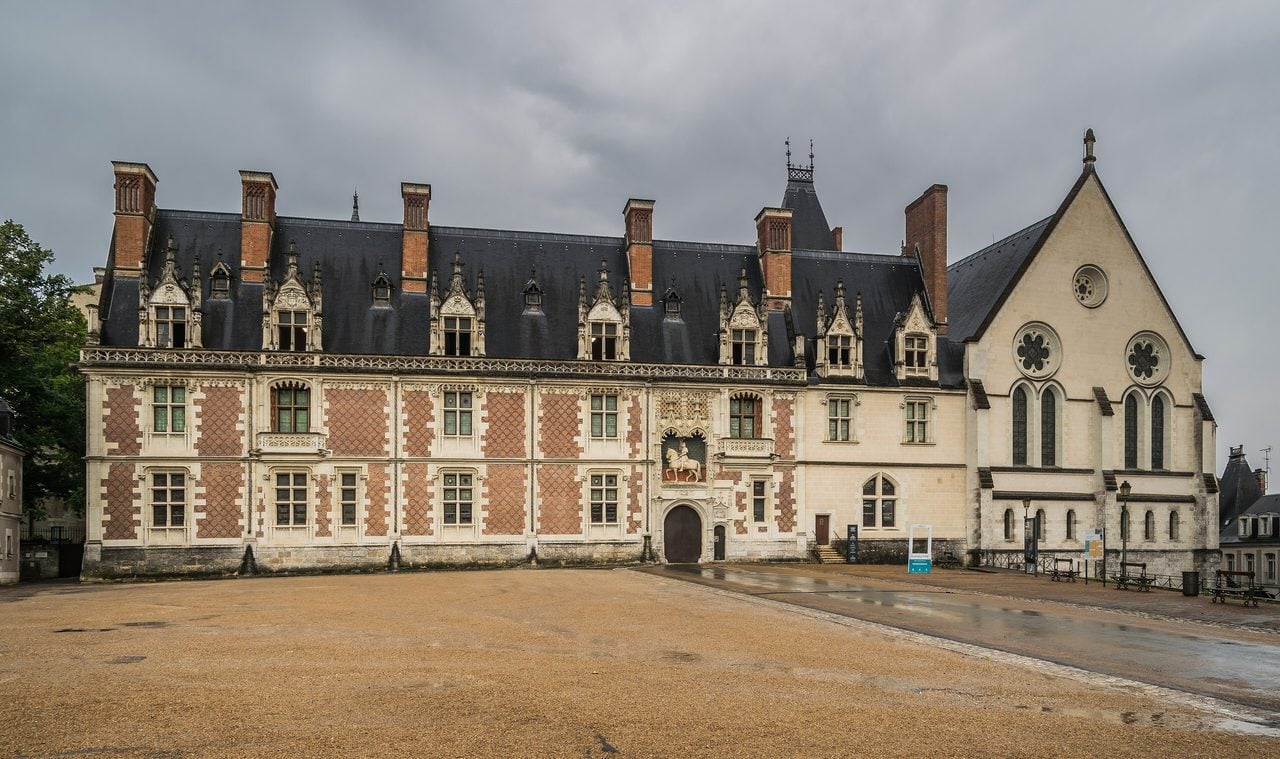
When Louis d’Orléans became King Louis XII in 1498, he did what no monarch had done before: he kept the court in his hometown. Blois became the favored seat of the French crown under Louis XII and remained so into the early reign of his successor, and the new king began converting his family’s feudal castle into an urban palace fit for receiving Europe. Work moved fast. Philip the Handsome, Archduke of Austria, was entertained in the new buildings as early as 1501, and ambassadors learned the road to the Loire.
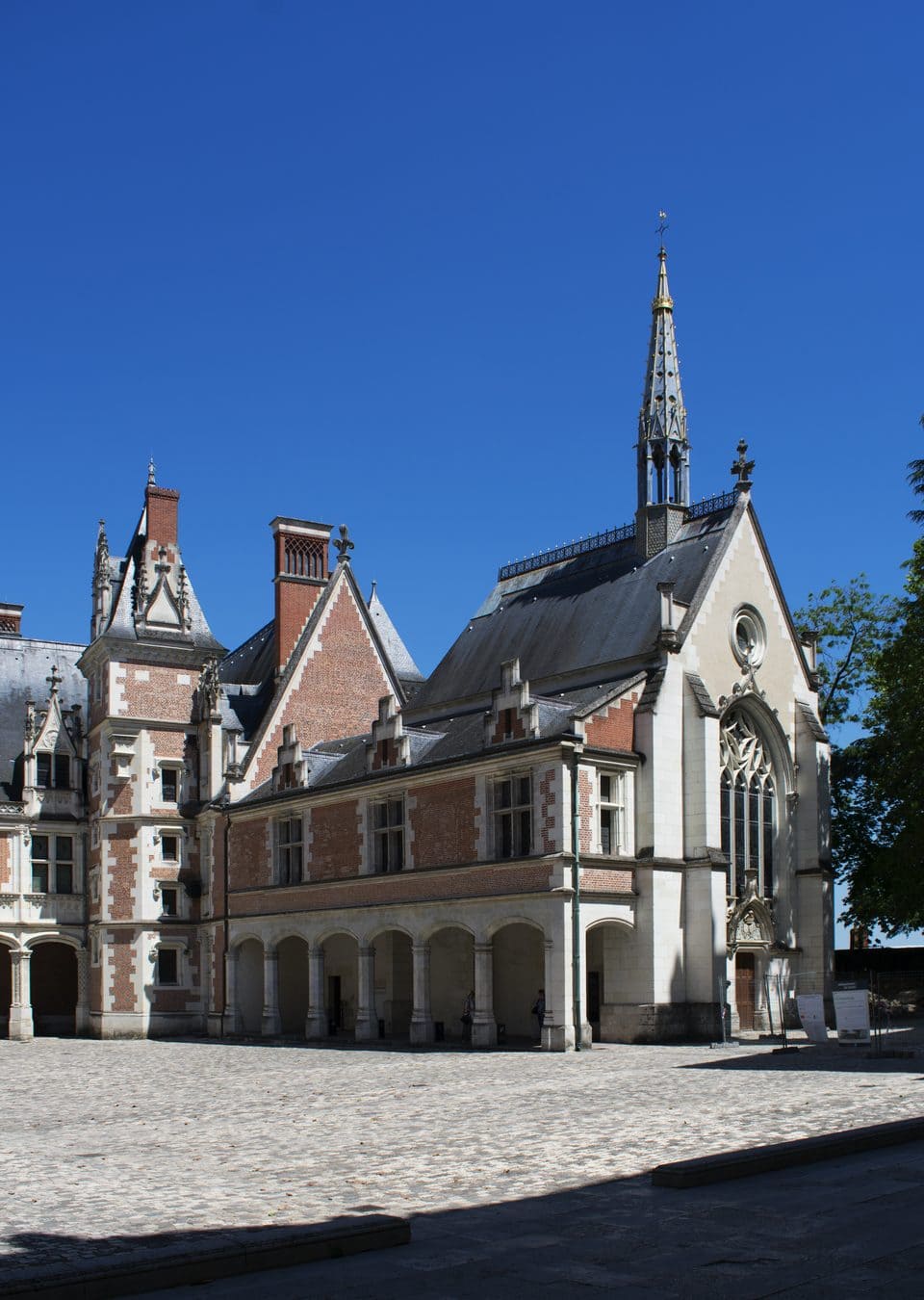
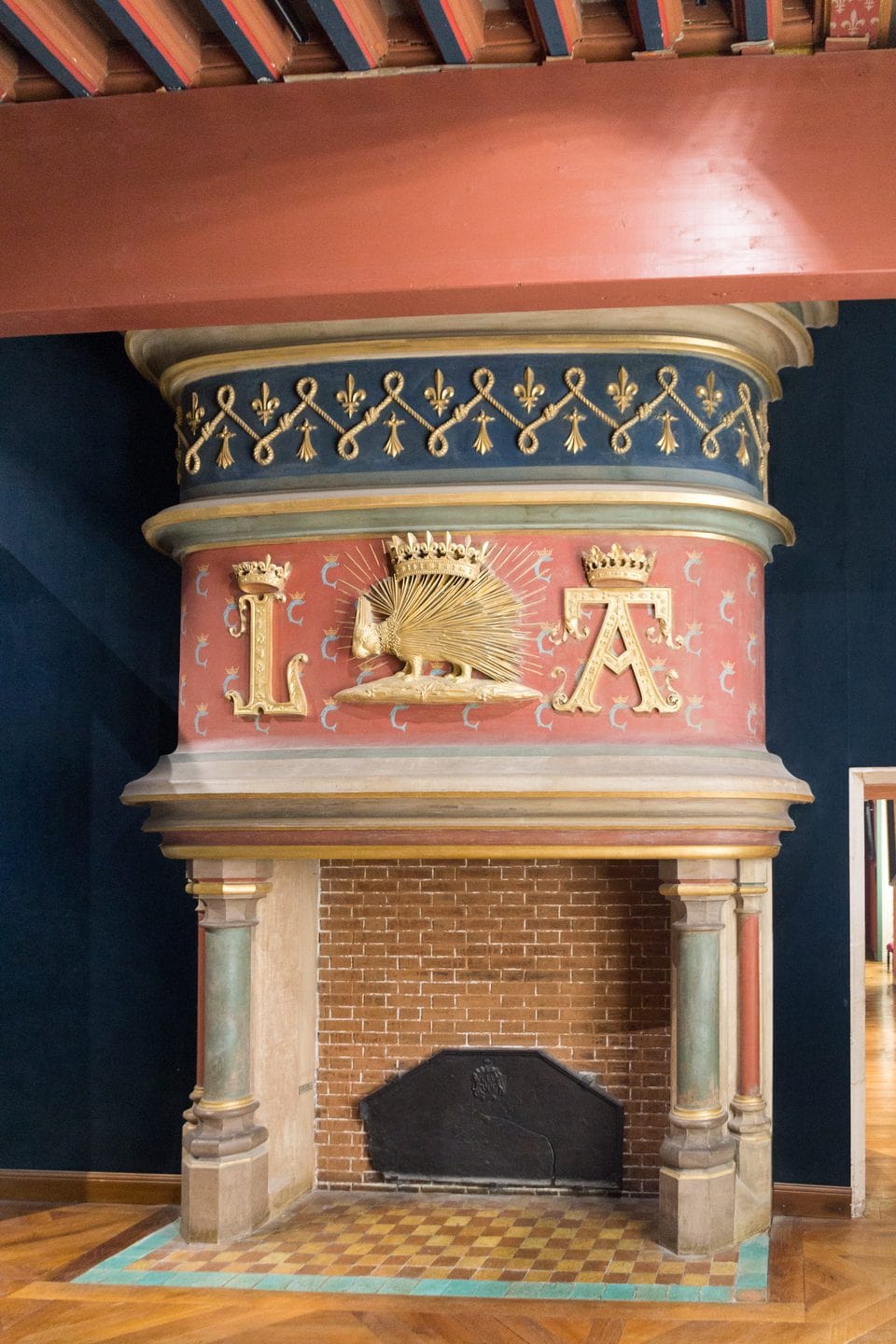
His wing still forms the entrance front of the château, and it remains one of the most recognizable facades in France. Red brick patterned with pale stone, an open arcade on the courtyard side, and pointed Gothic detail mark it as a late medieval building, yet candelabra ornament and Italianate arcades signal the new taste arriving from the king’s wars in Italy. Above the gate rides a statue of Louis on horseback, an 1858 copy of the original destroyed in the Revolution, set in a niche against a ground of golden fleurs-de-lis and framed by his emblem, the porcupine, with its bristling motto warning that the king strikes from near and far. Beside the wing he raised the Chapel of Saint-Calais, finished under his successor and lit today by postwar stained glass, and with his queen, Anne of Brittany, he laid out terraced Italian gardens that once stretched in stages across the ground now occupied by the town.
The result reads as a hinge between two worlds. France’s Middle Ages end on this facade, in mid-sentence, with the Renaissance already interrupting.
François I and the Open Staircase
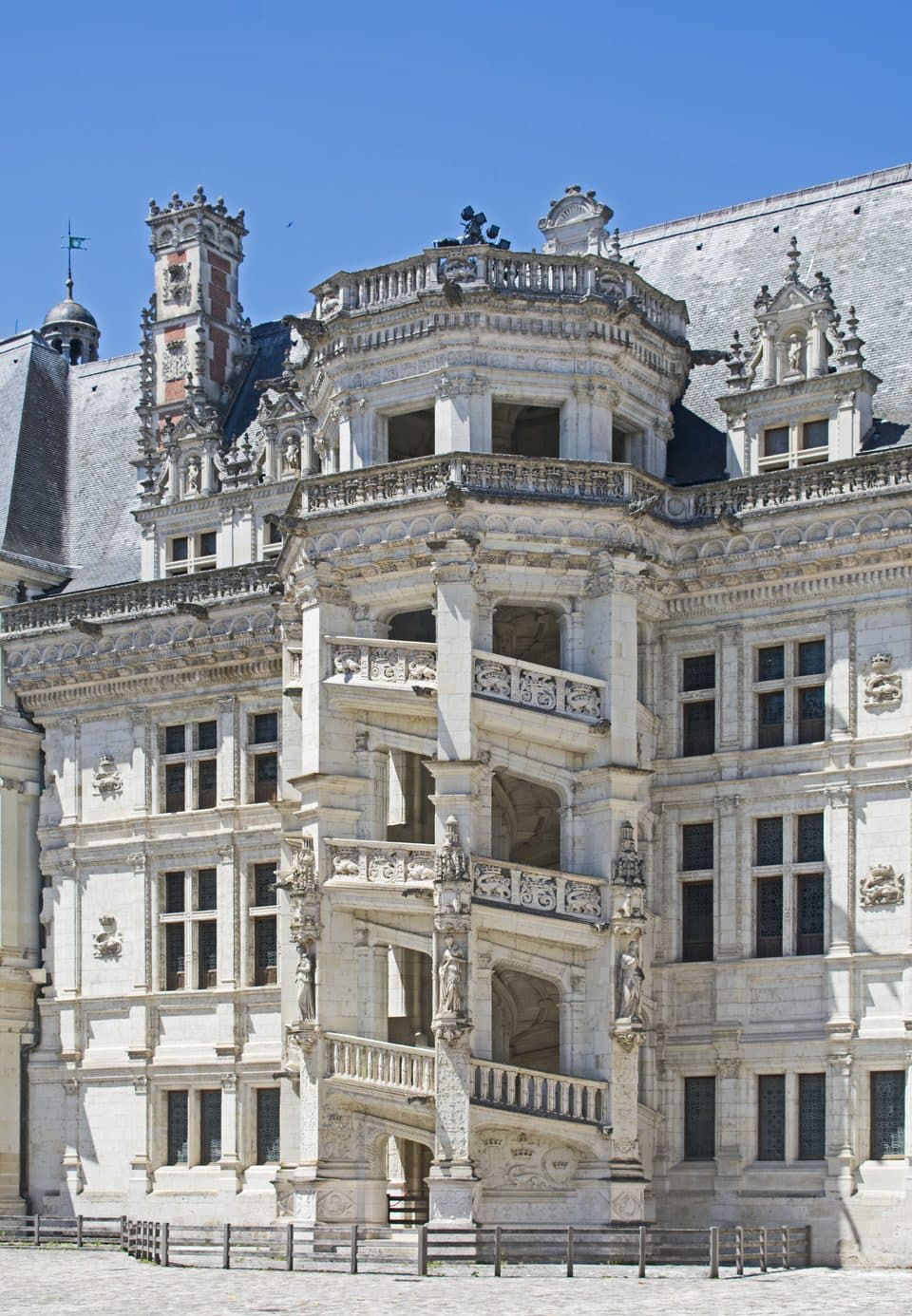
François I took the throne in 1515 and started building at Blois within months, the first architectural project of a reign that would redraw French taste. His queen, Claude de France, was Louis XII’s daughter and had grown up at Blois; she preferred it to Amboise, where François himself had been raised. Four construction campaigns followed in nine years, ending when Claude died in July 1524 at age 24, having given the king seven children and this wing.
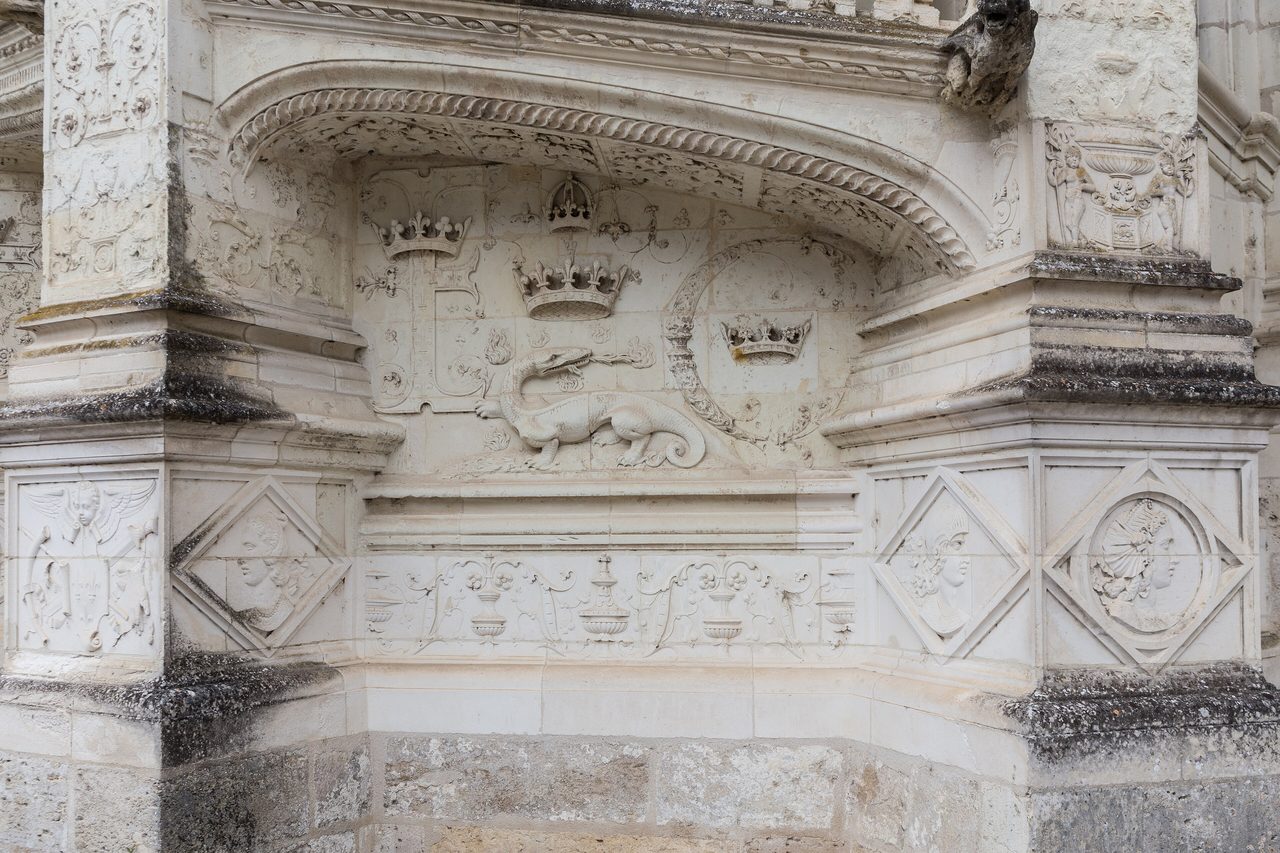
What those nine years produced changed French architecture. On the courtyard side, the wing’s centerpiece is the great spiral staircase, set in an octagonal openwork cage that projects from the facade like a carved lantern. Balconies wind up its three visible faces, sculpted with the king’s salamander and the intertwined initials of François and Claude, turning a structural necessity into a stage. Court ceremony exploited it from the start: the household could watch arrivals ascend, and the ascending could pause on each balcony to survey the court below. On the exterior, the Facade of the Loges borrows directly from Bramante’s galleries at the Vatican, opening two stories of niches and loggias toward the vanished royal gardens, the first sustained echo of papal Rome on a French wall.
François soon shifted his attention and his treasury a few miles east, where the lessons rehearsed at Blois were scaled up into the colossal forest showpiece of Chambord. The Blois staircase remains the more intimate masterpiece, close enough to touch and still in daily use by visitors five centuries on.
The Stage of the Wars of Religion
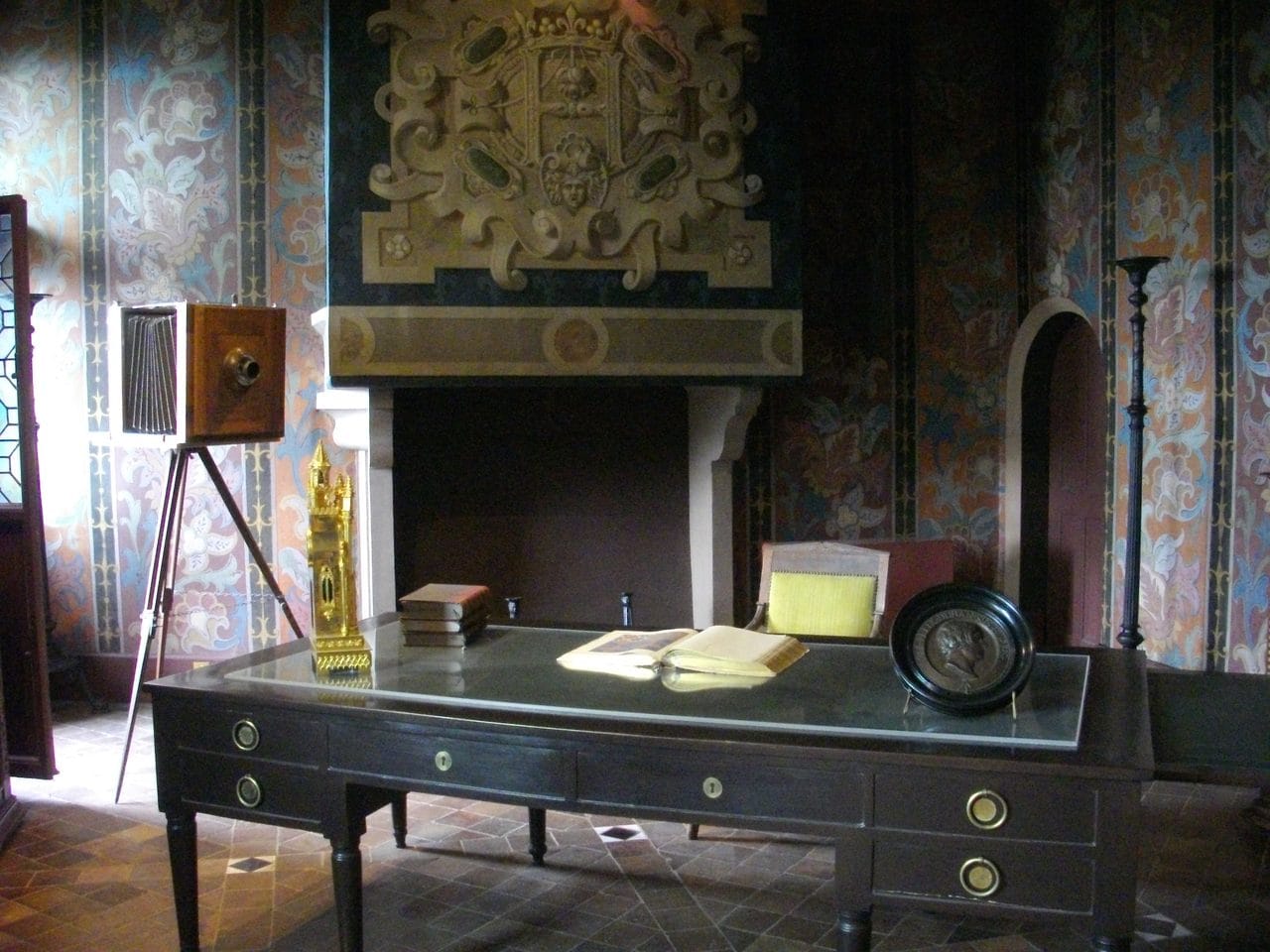
By the second half of the 16th century, France was tearing itself apart along religious lines, and Blois had become the Valois monarchy’s preferred refuge from an increasingly hostile Paris. Catherine de’ Medici, queen mother and the era’s defining political operator, kept apartments on the first floor of the François I wing. Her studiolo survives, its walls lined with 237 carved wooden panels, four of them concealing hidden cabinets opened by pedals in the baseboard. Alexandre Dumas later filled those cabinets with poison in his novels, and guides repeated the story for a century; the historical record suggests papers, jewels, and secrets of a more documentary kind. Her château dealings nearby were real enough: after Henri II’s death in 1559 she forced his mistress Diane de Poitiers to surrender Chenonceau in exchange for Chaumont, a swap that reshaped two of Blois’s neighbors in a single stroke.
Twice the kingdom’s Estates-General assembled in the old Gothic hall of the counts, in 1576 and again in 1588, as the crown sought money and legitimacy for its wars against the Protestant party and, increasingly, against the ultra-Catholic League that claimed to defend the faith better than the king did. At the first assembly the deputies pushed a reluctant Henri III toward renewed war against the Huguenots while declining to pay for it, a pattern of pressure without funding that would repeat twelve years later in harsher form. The 1588 assembly gathered under conditions close to humiliation for the king. Paris had risen against him that May, throwing up barricades and forcing him to flee his own capital. Henri, Duke of Guise, head of the League, hero of the Catholic crowd, and master of the deputies filling the hall, arrived at Blois as the most powerful man in France. The king arrived as a man running out of options, presiding over an assembly that refused him money while applauding his rival.
Blood in the King’s Chamber: December 1588
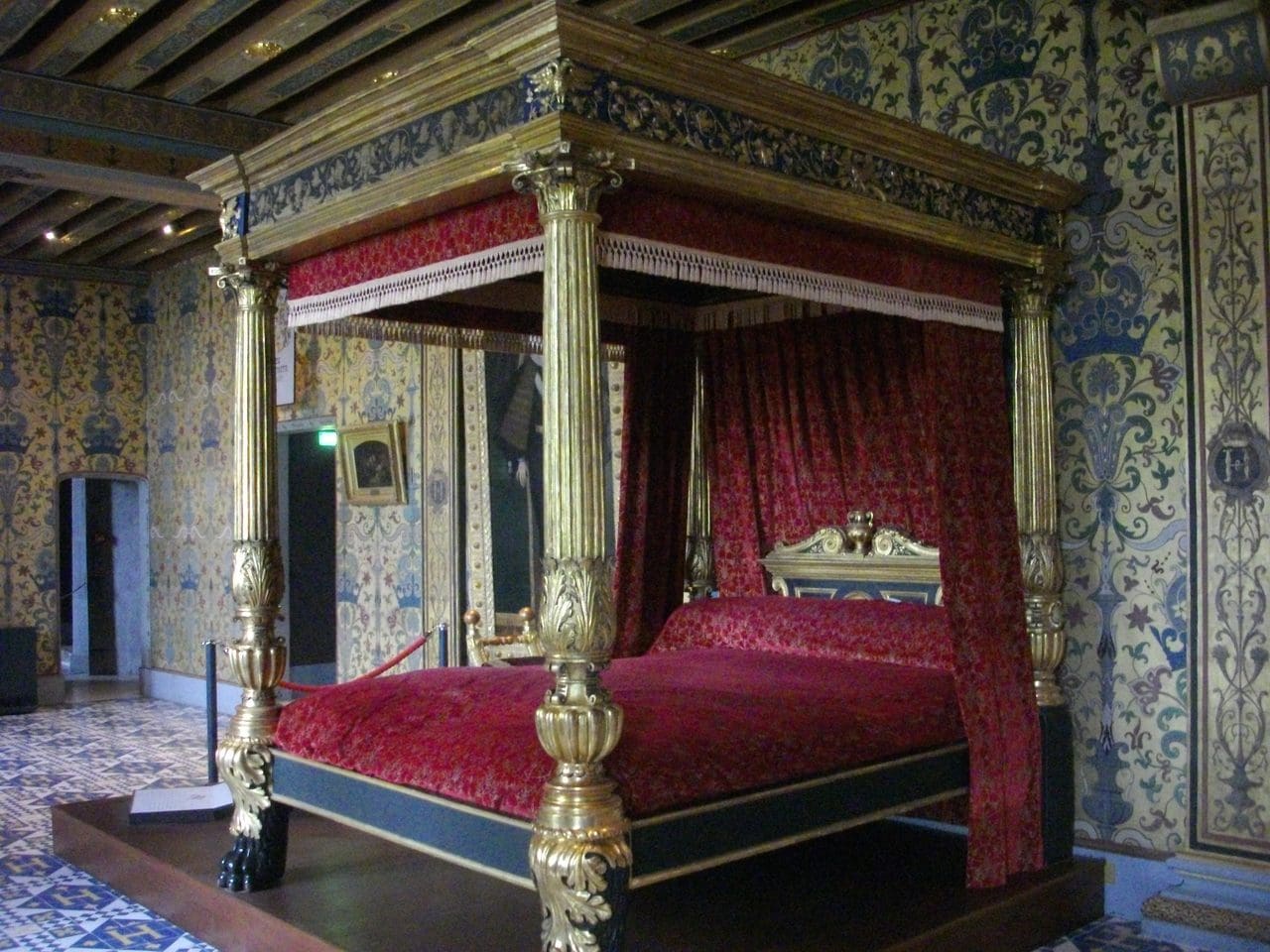
On the morning of December 23, 1588, Henri III summoned the Duke of Guise to his chamber on the second floor of the François I wing. Waiting along the route were the Forty-Five, the king’s Gascon bodyguard. As Guise entered, they fell on him with daggers. The duke, a celebrated soldier built like the warrior he was, dragged his attackers the length of the room before dying at the foot of the king’s bed. His brother, the Cardinal of Guise, was arrested on the spot and killed by guards in the castle the following day. Both bodies were burned and the ashes scattered, by some accounts into the Loire, denying the League the relics of martyrs.
Henri is said to have looked down at the corpse and remarked that the duke seemed even taller dead than alive, then gone downstairs to tell his mother. Catherine de’ Medici, ill in her apartments one floor below, understood immediately what her son had done to the fragile balance she had spent three decades maintaining; the League now had its martyr and the king had no shield left. She died in the château on January 5, 1589, thirteen days after the murder. With Paris in the hands of the crown’s enemies, she could not even be buried beside her husband at Saint-Denis; her body rested in a Blois church until 1610, when Diane de France finally arranged the transfer, twenty-two years after her death. Within eight months a League fanatic stabbed Henri III to death, ending the Valois dynasty after nearly three centuries. The chain of catastrophe that closed an era began in a bedroom at Blois, and the son et lumière still replays it on the courtyard walls every summer night.
Gaston d’Orléans and the Unfinished Palace
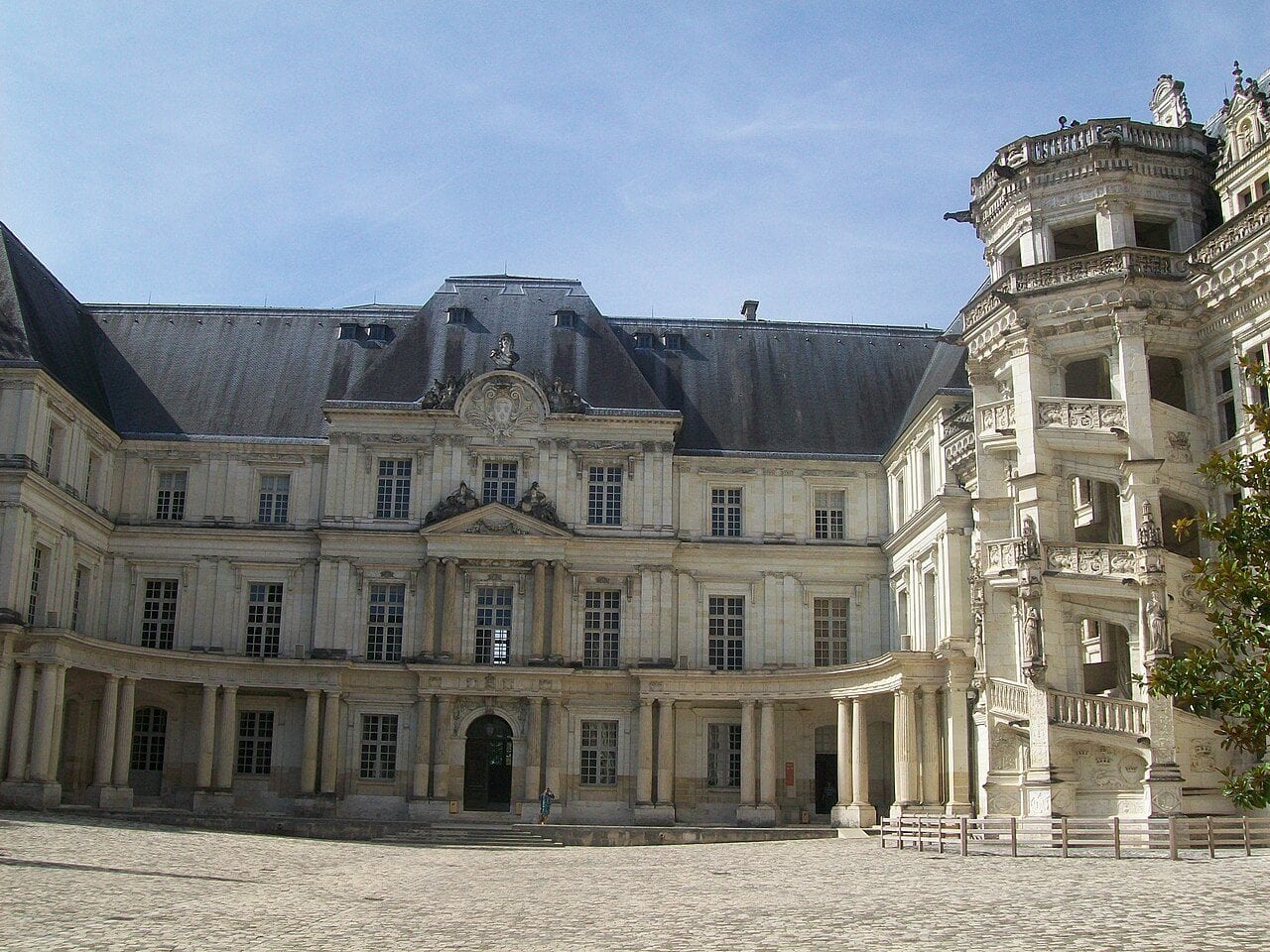
Blois spent the next decades as a gilded holding cell for inconvenient royalty. Louis XIII exiled his own mother, Marie de’ Medici, to the château in 1617 after seizing power from her regency. She endured it for two years, then escaped one February night in 1619, by the traditional account descending the steep terrace wall on a rope ladder, a stout queen mother in her forties scrambling down into legend and back into politics.
In 1626 the king handed Blois to his restless, perpetually scheming brother Gaston d’Orléans as a wedding gift, partly to keep him occupied far from court. In 1634 Gaston conceived the grandest scheme in the castle’s history: total demolition of everything the visitor now admires, replaced by a vast Classical palace. His architect was François Mansart, the most rigorous designer of the French 17th century. Mansart’s new block rose at the rear of the courtyard between 1635 and 1638, a composition of superimposed Doric, Ionic, and Corinthian orders crowned inside by a coffered cupola over the central vestibule, Classicism of a discipline that points straight toward Versailles a generation early.
Then, in 1638, Queen Anne of Austria gave birth to the future Louis XIV after twenty-three years of childless marriage. Gaston dropped from heir presumptive to royal afterthought, his funding evaporated, and the wrecking program stopped with only one wing built. Failure preserved the château: had a royal son arrived a few years later, the Gothic hall, the open staircase, and the Louis XII brick would all have vanished under Mansart’s drawings. Gaston lived out his last years at Blois in comfortable disgrace after one conspiracy too many, assembling botanical collections and a court of scholars until his death in 1660.
From Barracks to Monument
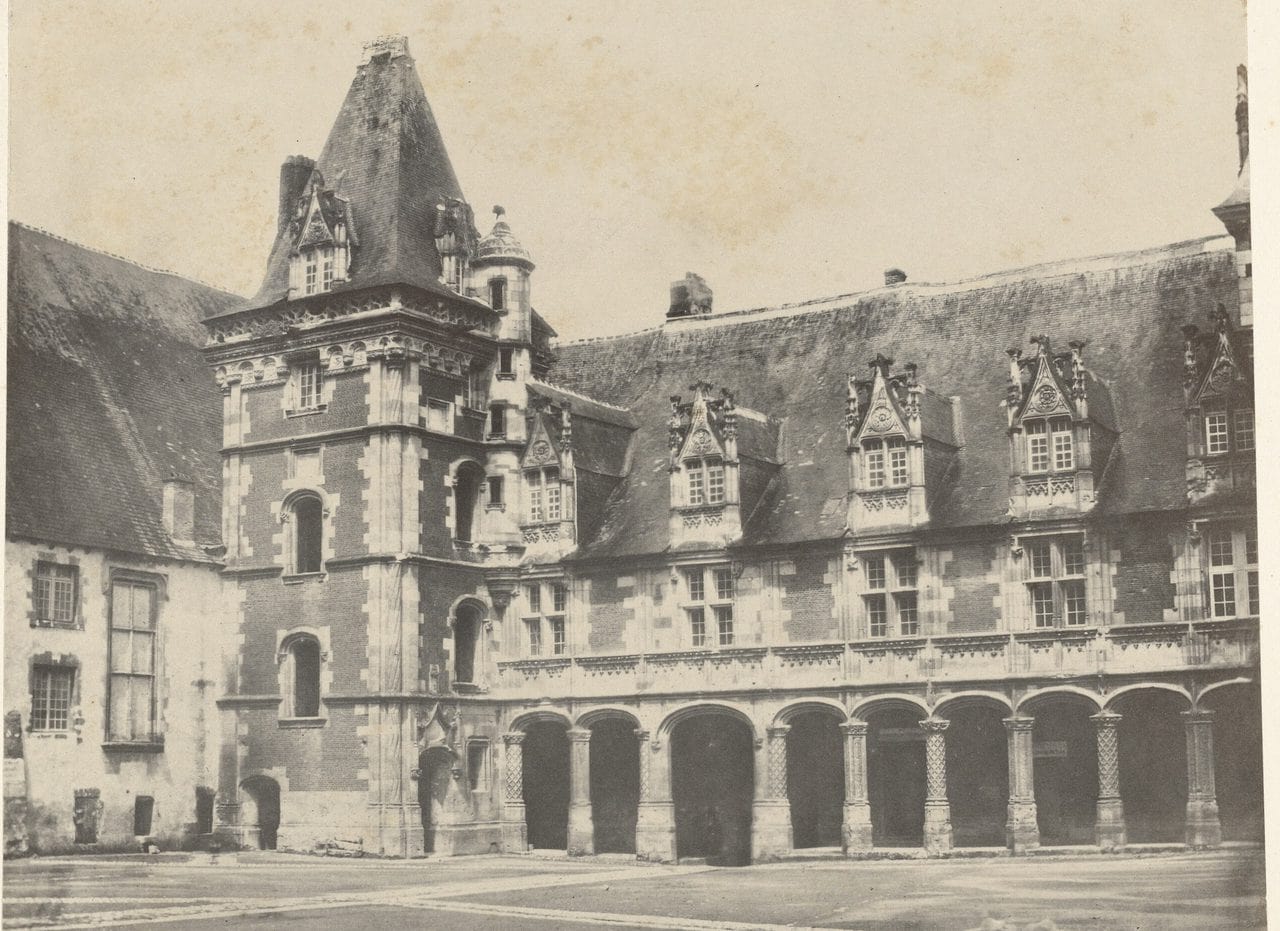
After Gaston died the court never returned. Louis XIV ignored Blois, the buildings decayed, and the Revolution stripped the interiors and scattered the furnishings. Demolition was discussed seriously enough that the army’s decision to use the château as a barracks counts as a rescue; soldiers at least kept roofs on the walls, even while military kitchens carved into the old Charles d’Orléans gallery. Napoleon ceded the complex to the city of Blois in 1810, and the town has owned it ever since. Even in its barracks years the place pulled visitors: Victor Hugo, Balzac, and Dumas all climbed the hill during the Restoration to see the staircase for themselves.
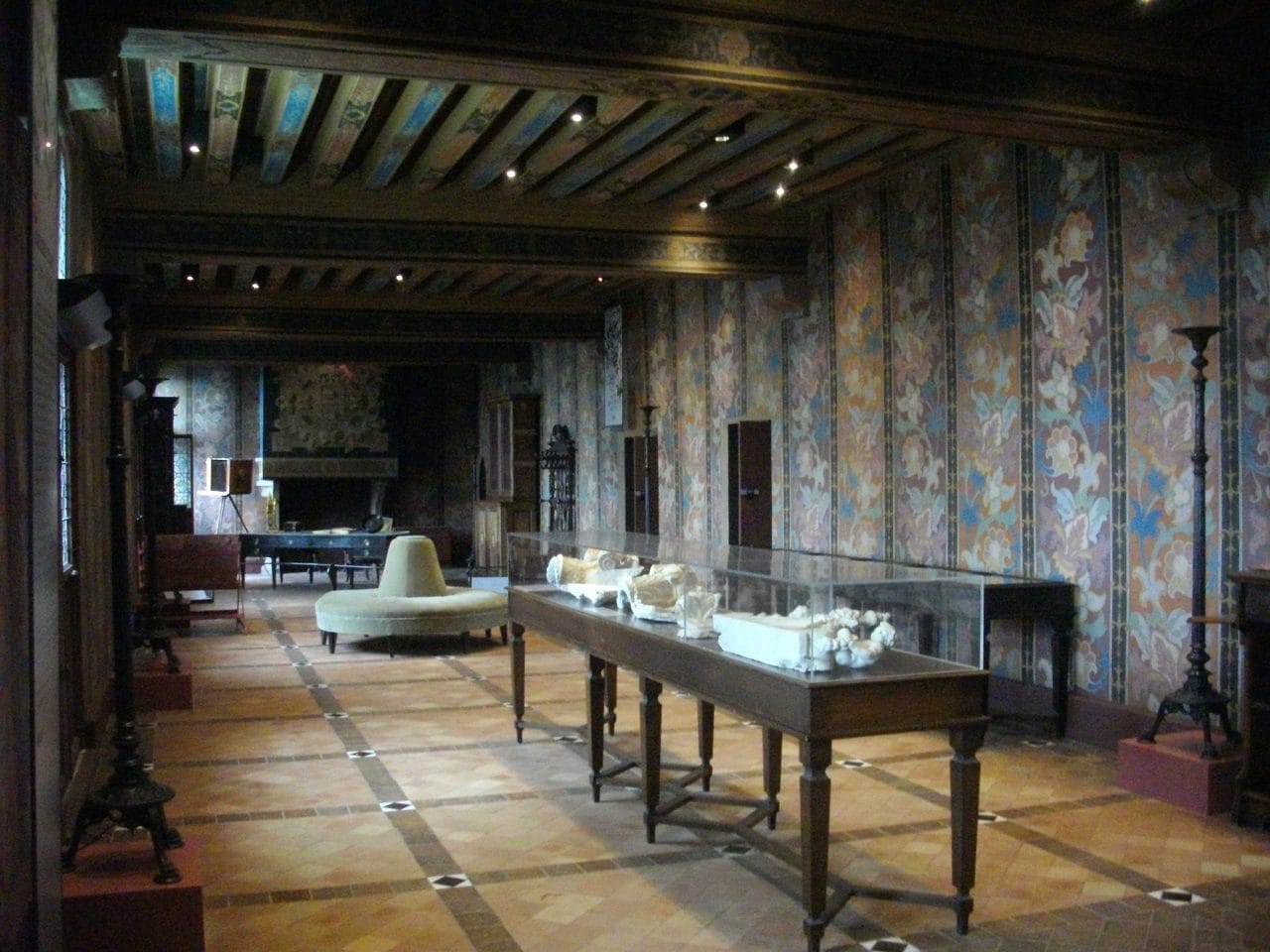
Salvation arrived with the birth of French heritage protection itself. Prosper Mérimée placed the château on the founding 1840 list of monuments historiques, among the first buildings in France to receive legal protection, and from the mid-1840s the architect Félix Duban led one of the earliest great state-funded restorations in the country. Duban repaired the wings through 1870 and repainted the interiors in saturated polychrome, gilded fleurs-de-lis on deep blues and reds, a 19th-century vision of the Renaissance that has itself become part of the monument’s history. His successors continued the campaign, and in 1850 the city opened its Musée des Beaux-Arts inside the château, where its paintings and sculpture now fill the Louis XII wing. German bombs wrecked much of the lower town in June 1940, though the château itself was largely spared; the Chapel of Saint-Calais lost its stained glass to shelling in 1944, and Max Ingrand’s luminous replacement windows arrived in 1957. Today the château anchors the UNESCO-listed Loire Valley cultural landscape recognized in 2000.
Visiting Château de Blois
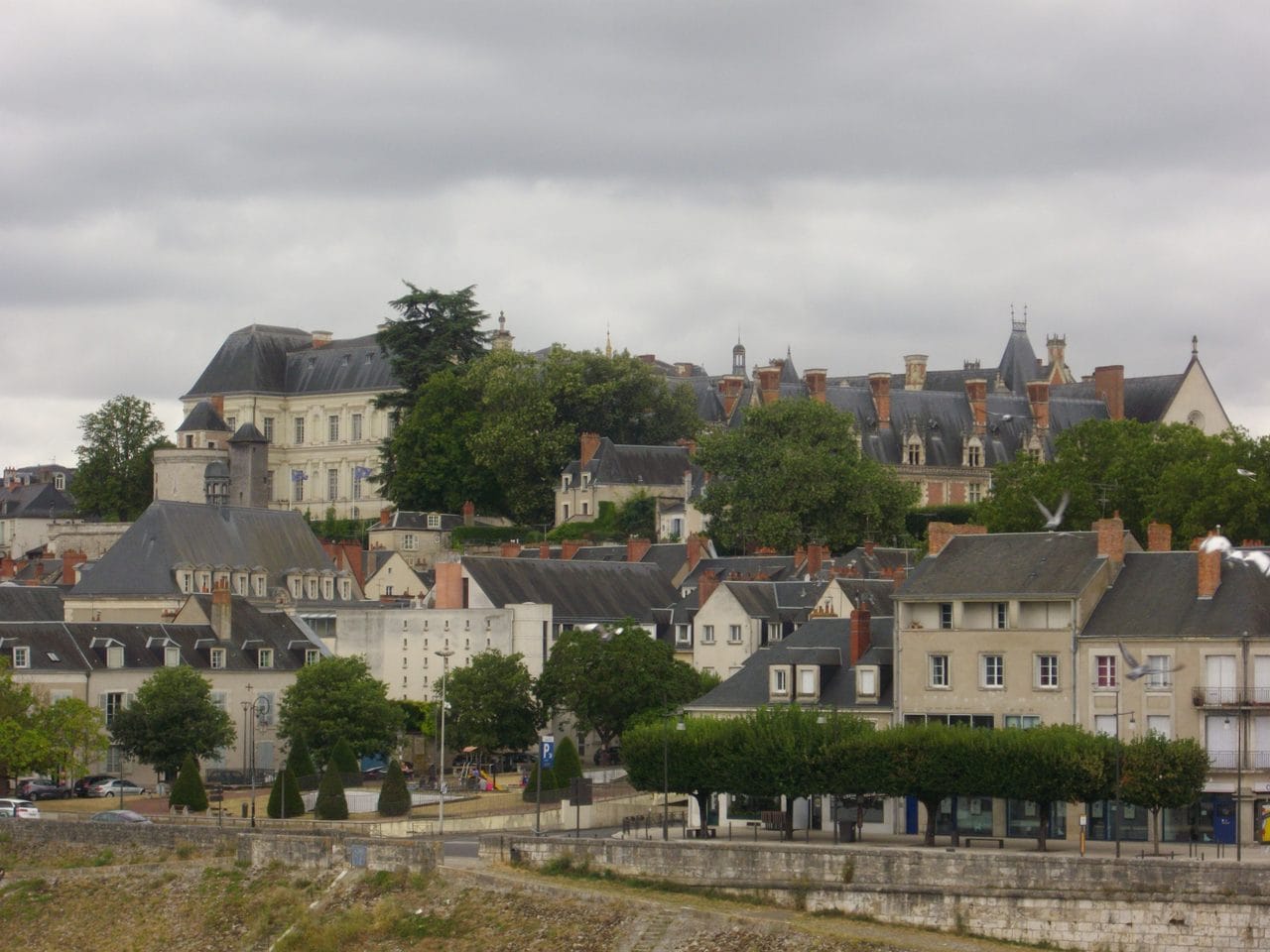
Blois rewards visitors with the easiest logistics of any major Loire château. It stands in the center of town, eight minutes on foot from the train station, with Paris under two hours away by rail, so it is one of the few great châteaux genuinely reachable without a car. Admission in 2026 costs 16 euros for adults and 8 euros for ages 6 to 17, with children under 6 free. Doors open year-round except January 1 and December 25, from 9:00 a.m. to 6:30 p.m. in the long season from April through September and on reduced hours through the winter months. A HistoPad tablet, included with admission, overlays augmented-reality reconstructions of the vanished interiors onto each room, and the royal apartments, the Salle des États, and the Fine Arts Museum are all covered by the single ticket. Combined tickets pairing the château with the evening show or the Maison de la Magie shave a few euros off the total and stay valid across separate days of the 2026 season. Entry tickets and a range of local tours can also be booked in advance through GetYourGuide.
Two extras deserve planning. The son et lumière, projected onto the courtyard facades on evenings from early April to late September and again during the late-October school holidays, replays the Guise assassination on the walls where it happened, with translation by audio headset. Anyone staying for the evening show will find hotels in Blois clustered within a short walk of the château. A separate guided “visite insolite” (7 euros over the entry fee, minimum age 8) climbs into attics, cellars, and wall passages closed to the standard route; book ahead, since groups are capped at eighteen. Drivers will find the château parking lot about 200 meters away on Avenue du Docteur Jean Laigret, and cyclists arrive in numbers: the castle carries the Loire à Vélo and Accueil Vélo labels, with dedicated bike parking at the entrance, making it a natural stage stop on the riverside cycling route. Across the square, the Maison de la Magie honors Jean-Eugène Robert-Houdin, the Blois-born conjurer whose name a young escape artist borrowed when he became Houdini, with mechanical dragons emerging every half hour from its windows.
Some links on this page are affiliate links, which means StoneKeep Atlas may earn a small commission, at no extra cost to you, if you book through them.
More Views of Château de Blois
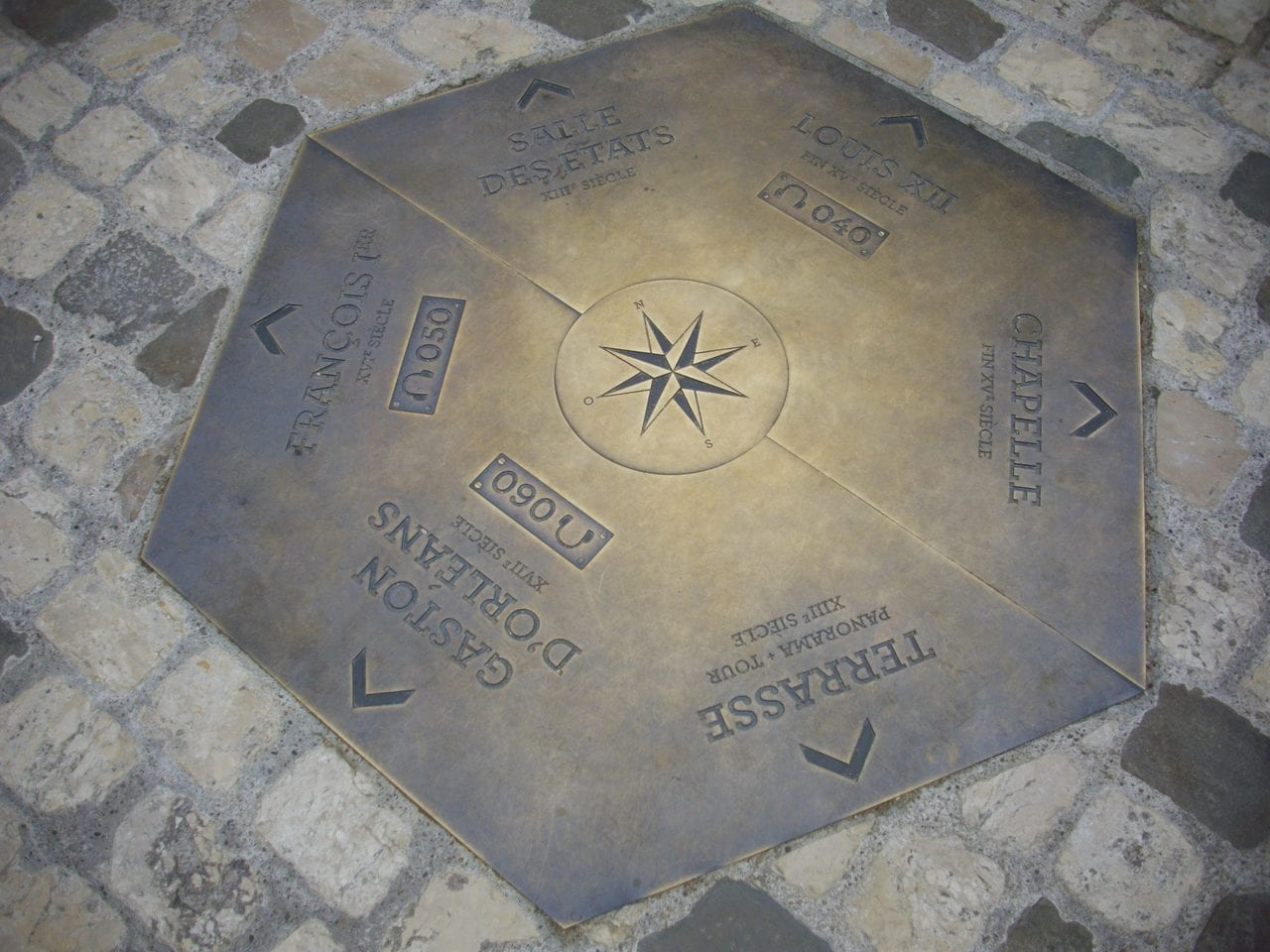
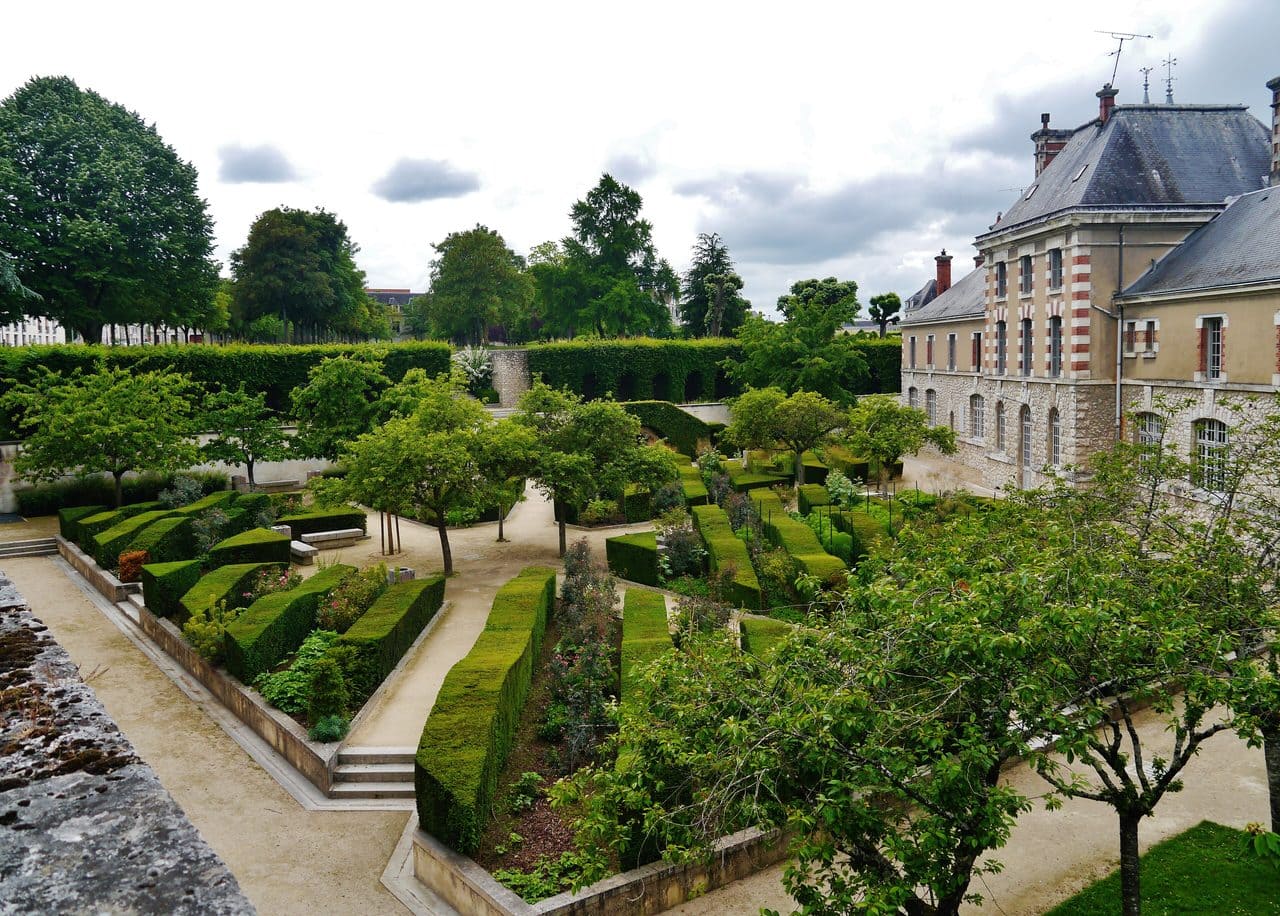
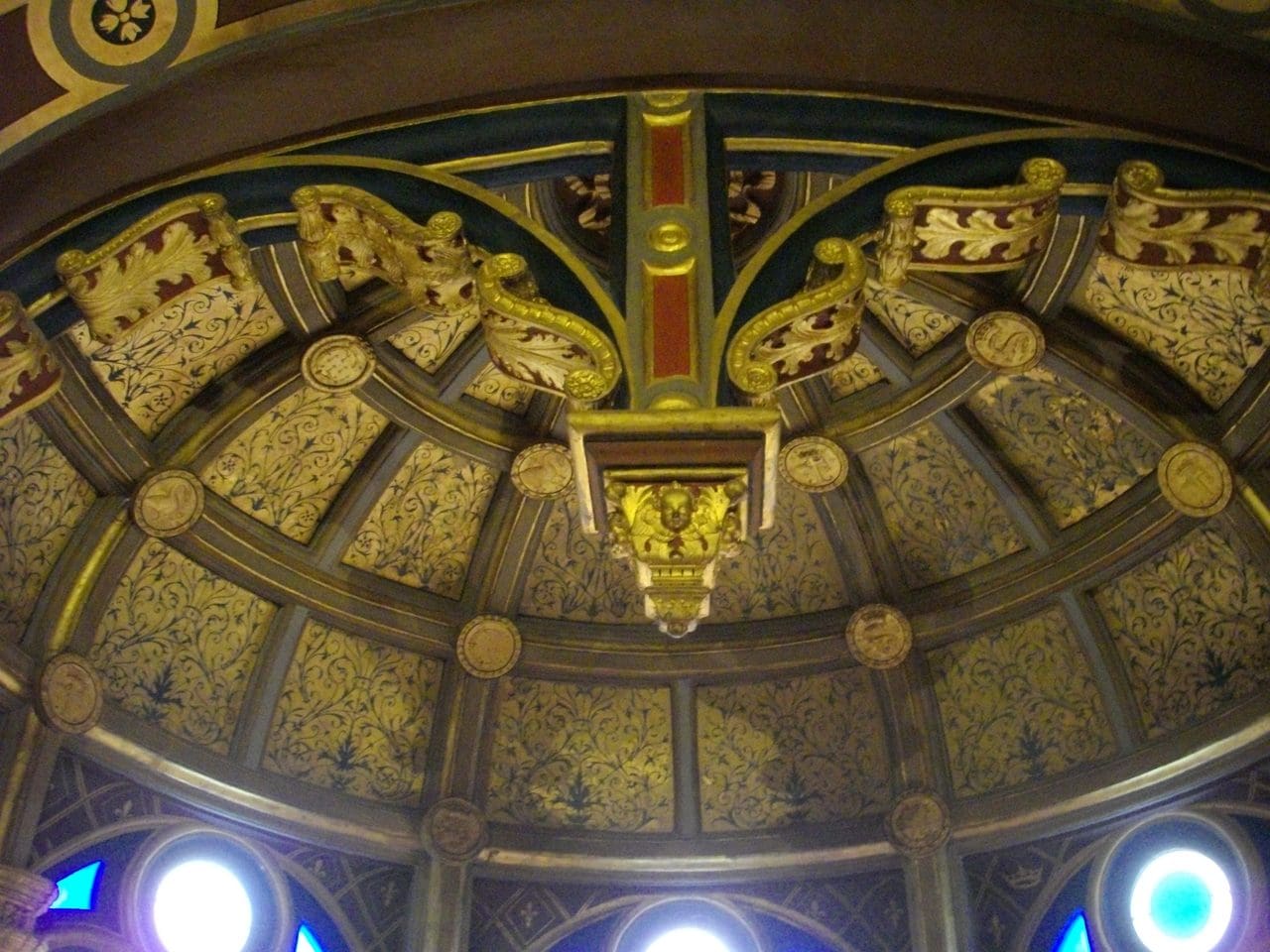
A closer look around the wings, from the bronze courtyard compass and the terraced gardens to the porcupine and salamander emblems, the chapel of Saint-Calais, and the rooms where the drama played out.
Beyond Blois: The Heart of Château Country
No château is better placed for exploring the rest of the Loire. Chambord, François I’s forest colossus, lies 16 kilometers east; Chaumont-sur-Loire and its garden festival sit 20 kilometers downstream; Amboise, with Leonardo da Vinci’s tomb, is 35 kilometers away; Chenonceau arches over the Cher 45 kilometers south, and the geometric gardens of Villandry reward the longer drive toward Tours. Beyond Tours, the island-set Château d’Azay-le-Rideau rises from the Indre. Cheverny, with its perfectly furnished classical interiors, waits 15 kilometers south. Blois works as both the introduction and the base: see the styles labeled side by side in its courtyard first, then recognize them at full scale across the valley. To see how all nine fit together, turn to the regional guide, Châteaux of the Loire Valley.
Conclusion
Every Loire château tells one story well. Chambord performs royal ambition, Chenonceau spans a river and the lives of remarkable women, Villandry gardens, Chaumont reinvents. Blois does something different: it explains. Four wings around one courtyard demonstrate how French building moved from fortress to palace to stage set, while the rooms above hold the kingdom’s sharpest political drama, from a poet-prince’s verses to daggers in the royal chamber and a dynasty’s last winter. Visit it first, and every other château in the valley becomes easier to read. Visit it last, and the whole valley clicks into place.
Principal Sources
- Babelon, Jean-Pierre. Châteaux de France au siècle de la Renaissance. Flammarion / Picard, 1989.
- Blois Chambord Val de Loire Tourist Office. “Blois Castle.” bloischambord.com.
- Château royal de Blois. Official site, including its pages on the four architectural styles, the restoration history, and visit preparation. chateaudeblois.fr (accessed June 2026).
- Knecht, R. J. Catherine de’ Medici. Longman, 1998.
- Ministère de la Culture. Plateforme Ouverte du Patrimoine, base Mérimée, notice PA00098337.
- UNESCO World Heritage Centre. “The Loire Valley between Sully-sur-Loire and Chalonnes.” Property 933 (2000).
Image credits. Hero: Krzysztof Golik, CC BY-SA 4.0. Aerial view: Wolkenkratzer, CC BY-SA 4.0. Salle des États, studiolo, king’s chamber, and town view: Fab5669, CC BY-SA 4.0. Louis XII wing: Krzysztof Golik, CC BY-SA 4.0. Spiral staircase: Ymblanter, CC BY-SA 4.0. Gaston d’Orléans wing: Elliesram13, CC BY-SA 3.0. Historical photograph: François Alphonse Fortier, CC0. Gallery, in order: Fab5669 (CC BY-SA 4.0); Zairon (CC BY-SA 4.0); Ymblanter (CC BY-SA 4.0); Fab5669 (CC BY-SA 4.0); Pymouss (CC BY-SA 4.0, two images); Fab5669 (CC BY-SA 4.0, two images). Images via Wikimedia Commons under the licenses noted; CC BY-SA images are reusable under the same terms.