
Château de Chaumont-sur-Loire
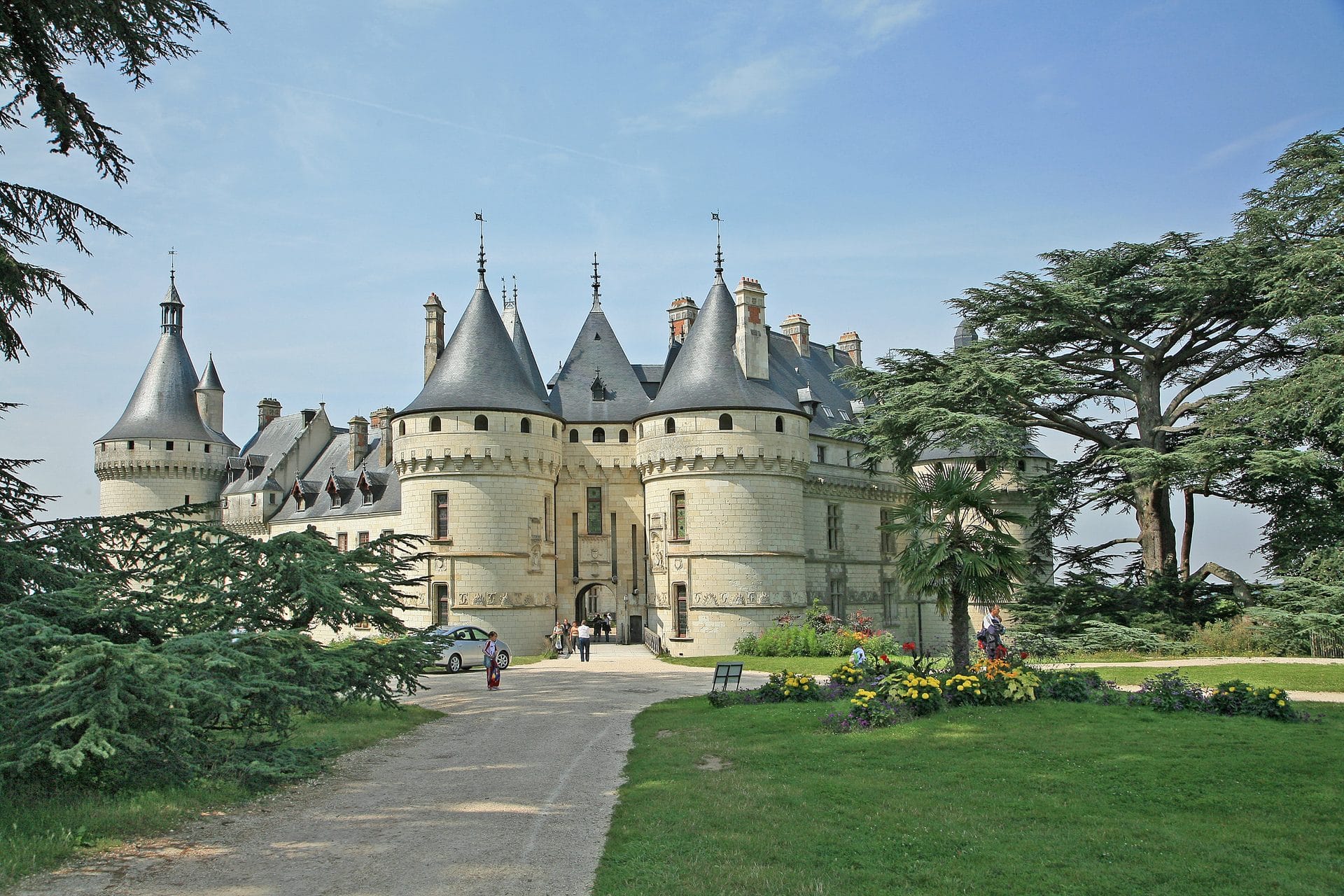
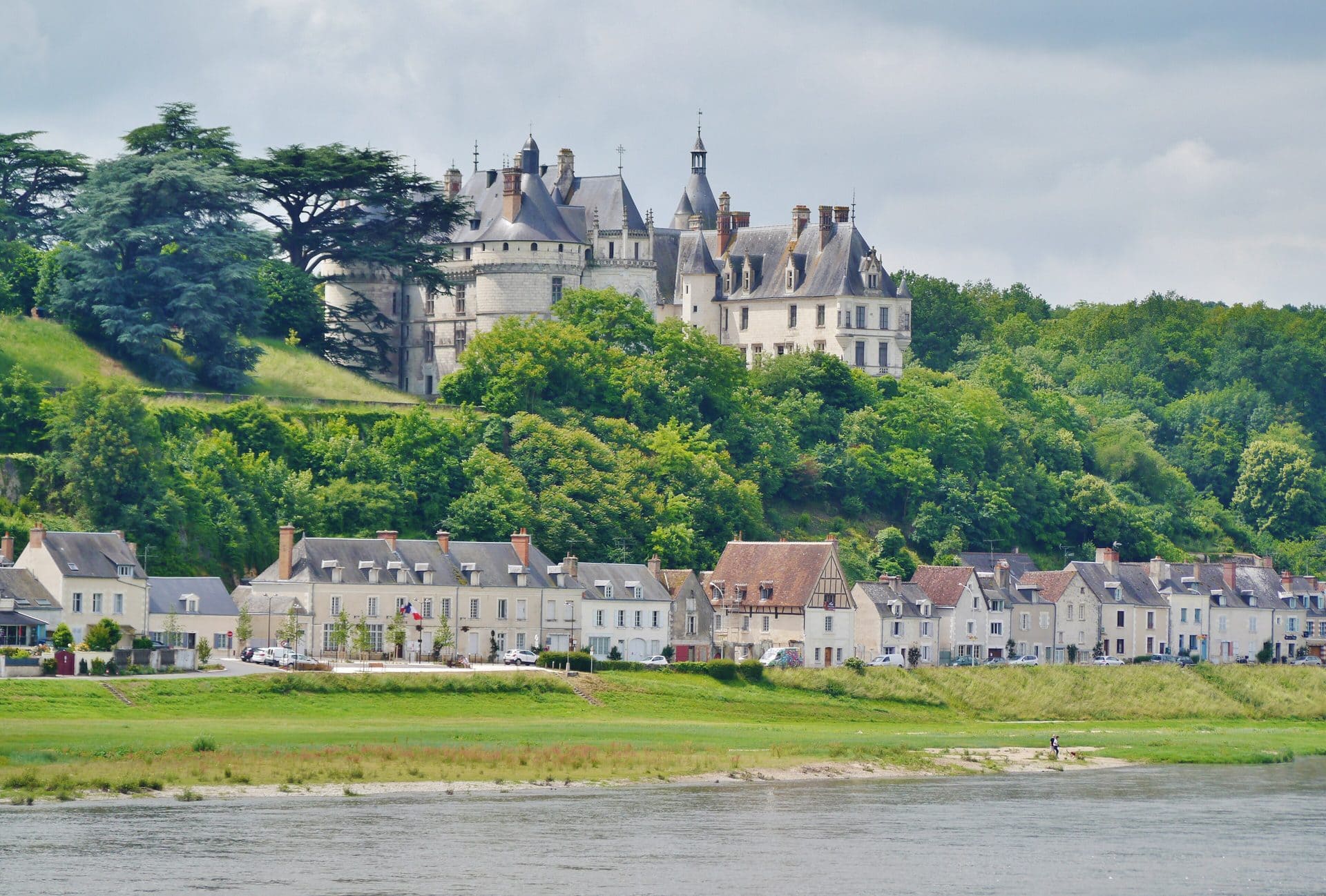
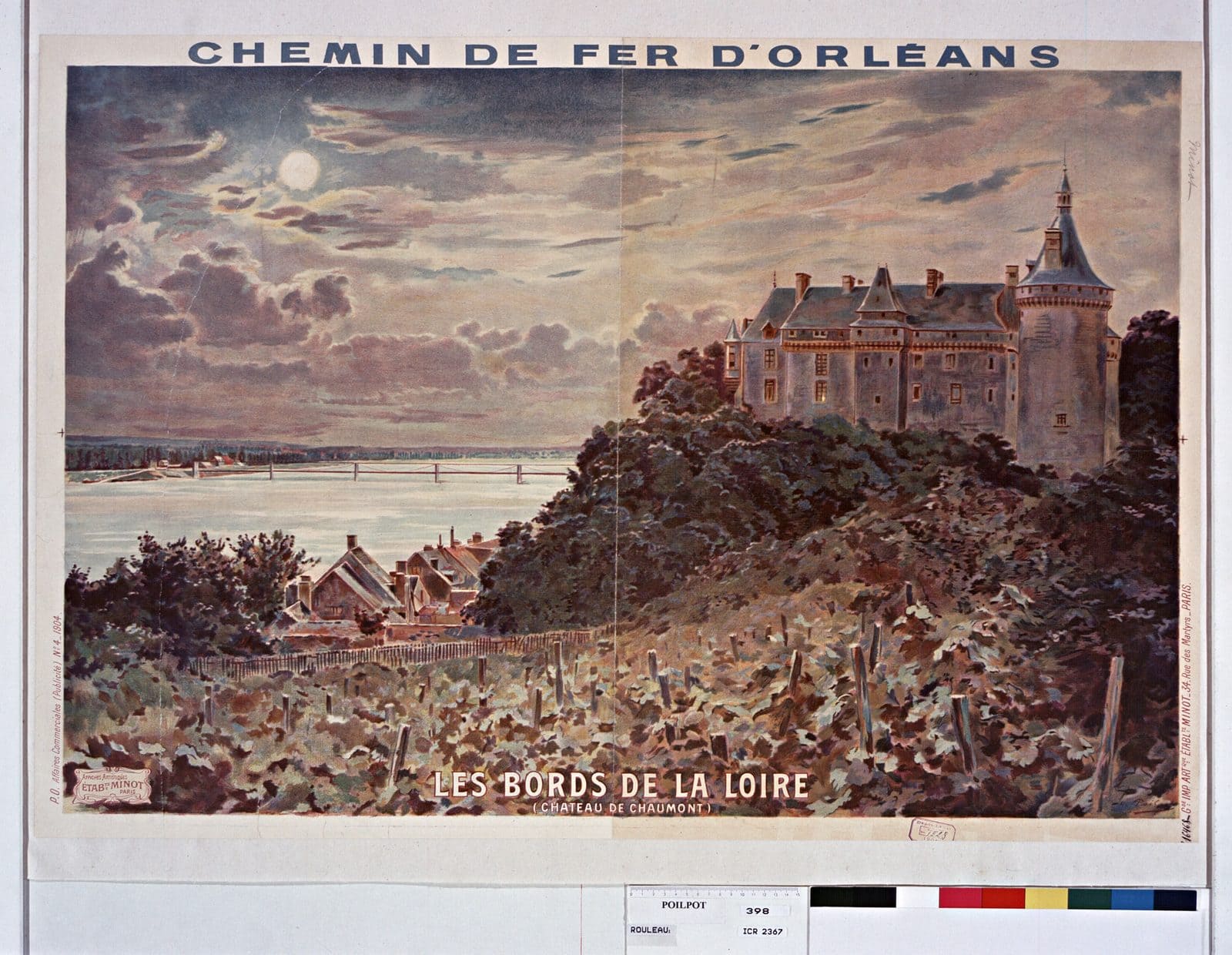
High on a wooded bluff above the south bank of the Loire, midway between Blois and Amboise, the Château de Chaumont-sur-Loire looks every inch the feudal stronghold: round towers, a working drawbridge, and pepper-pot roofs rising forty meters over the river. That martial silhouette is a little misleading. Few Loire châteaux have been remade as often, or by as varied a cast, as this one. A medieval count raised the first fort here around the year 1000; Louis XI burned it to the ground in 1465; Catherine de’ Medici schemed to own it; a sugar heiress turned it into a Belle Époque pleasure palace complete with an elephant. Today it draws hundreds of thousands of visitors a year, most of them for an event that did not exist before 1992. This is the château that keeps reinventing itself, and its latest life is the most surprising of all.
Quick Facts
| Location | Chaumont-sur-Loire, Loir-et-Cher, France |
| Built | Rebuilt c.1465–1510 (site fortified from c. AD 1000) |
| Architectural style | Late Gothic and early Renaissance |
| Type | Château |
| Rebuilt by | The d’Amboise family |
| Owner / operator | Région Centre-Val de Loire (since 2007) |
| Condition | Well preserved |
| UNESCO | Within “The Loire Valley between Sully-sur-Loire and Chalonnes” (inscribed 2000) |
| Monument historique | Classé 1840 (ref. PA00098410) |
| Notable feature | International Garden Festival; the Belle Époque stables |
| Open to visitors | Yes, year-round (closed January 1 and December 25) |
| Official site | domaine-chaumont.fr |
A Medieval Stronghold and the Wrath of Louis XI
Chaumont takes its name from chauve mont, the bald hill on which it stands, and its first stones were laid for a hard military purpose. Around the year 1000, Eudes I, Count of Blois, fortified the promontory to guard his territory against the aggressive counts of Anjou, chief among them Fulk Nerra. In 1054 the site passed by marriage into the d’Amboise family, who would hold it for roughly five centuries and give the château much of its character.
That long tenure nearly ended in disaster. Pierre I d’Amboise threw in his lot with the League of the Public Weal, the coalition of great nobles who rose against royal authority in 1465. Louis XI was not a forgiving king. As punishment he ordered Chaumont razed, and the medieval castle was burned and dismantled. The d’Amboise family was eventually restored to favor, and with it came the chance to rebuild from the ground up.
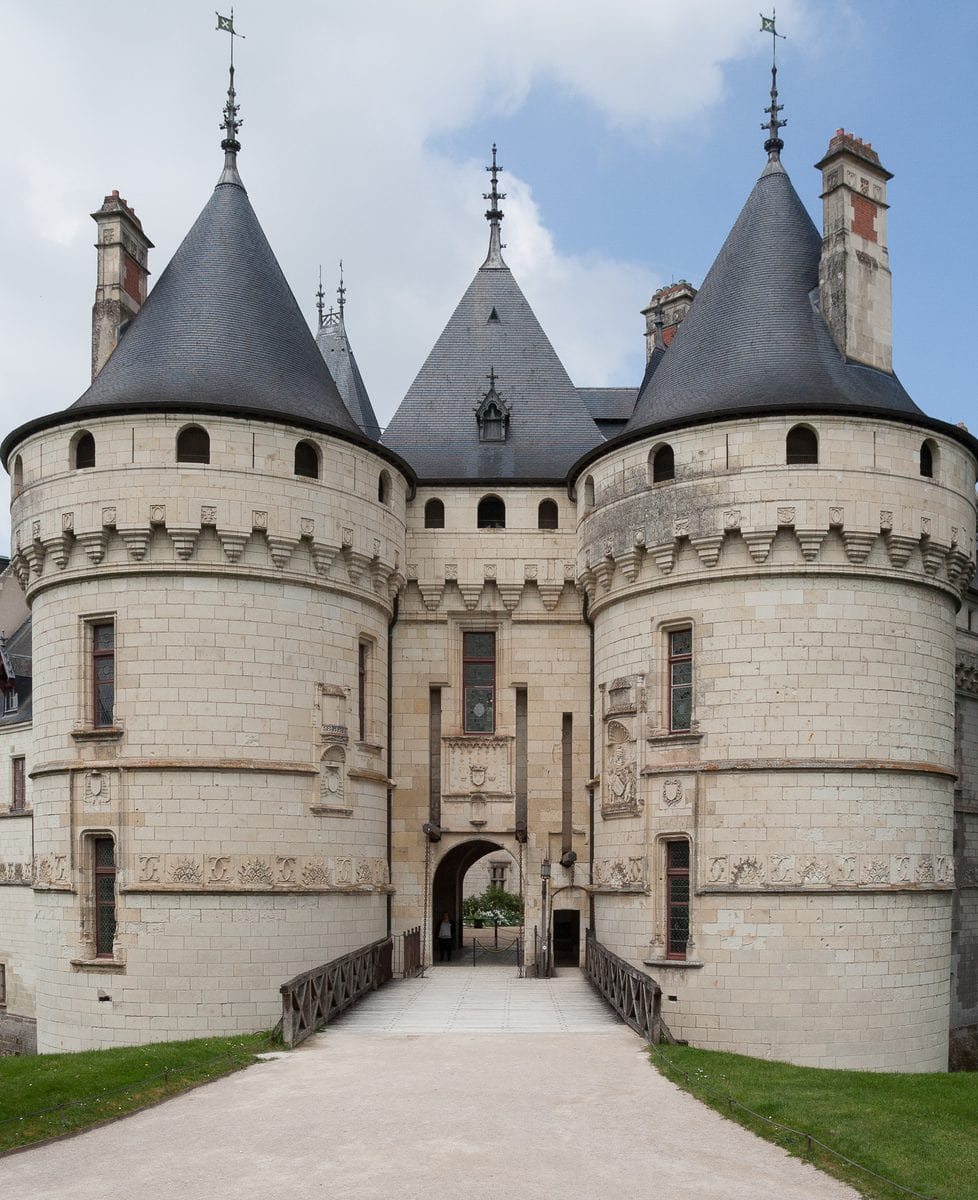
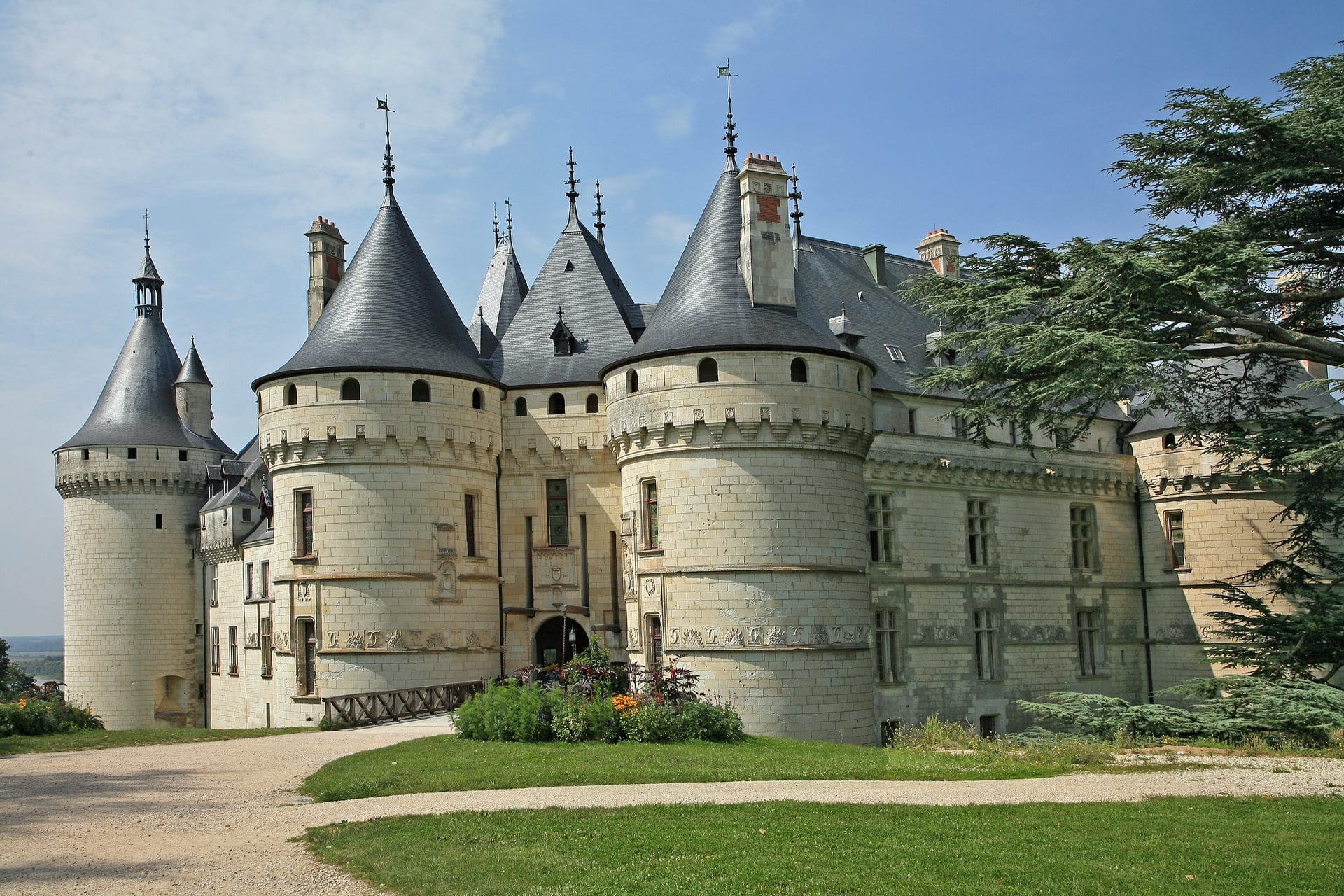
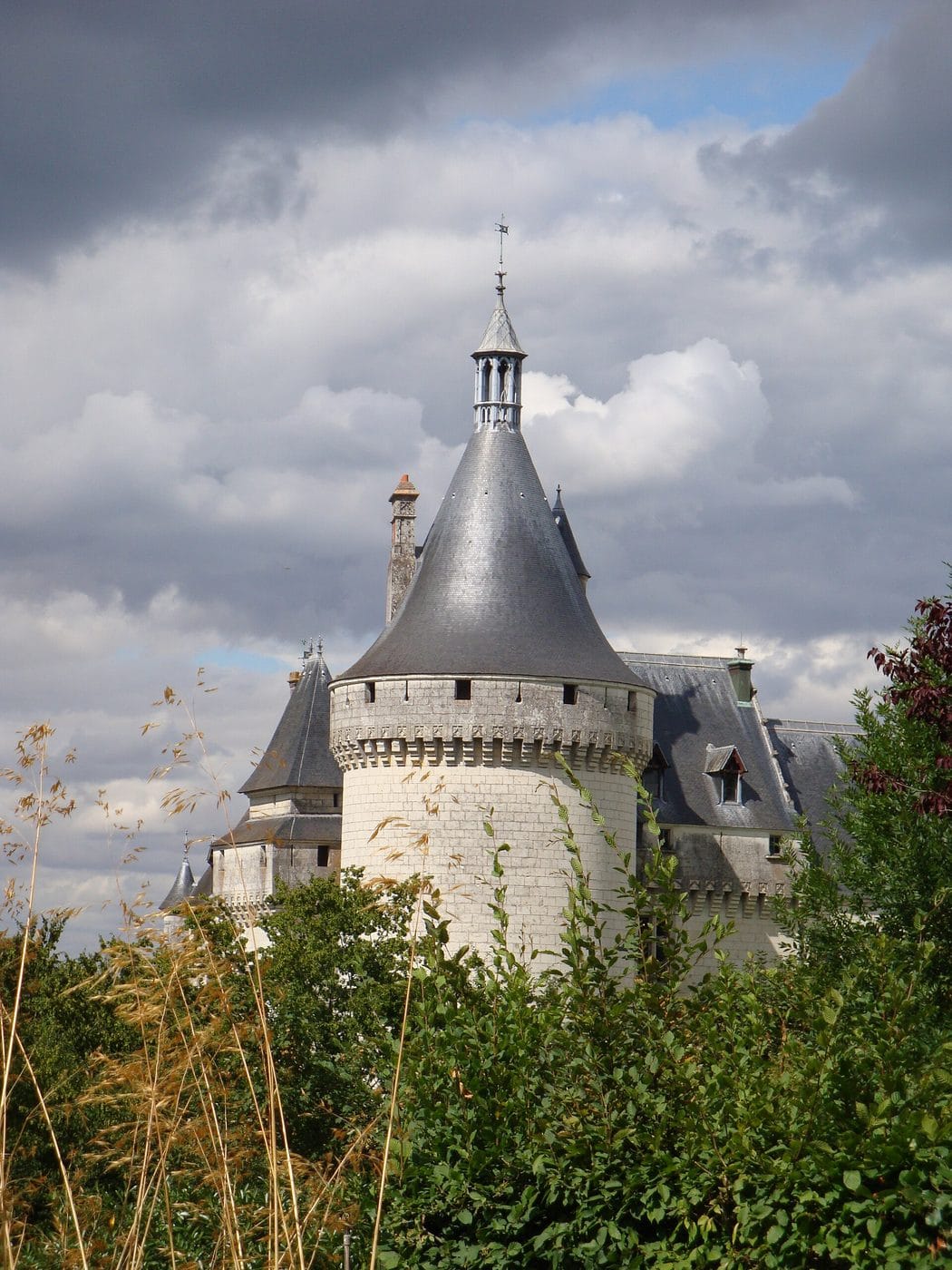
Reconstruction unfolded across two generations and nearly half a century. Pierre and his son Charles I began the work around 1469, raising the west wing and a north range that once faced the river. Charles II d’Amboise, aided by his powerful uncle Cardinal Georges d’Amboise, the chief minister of Louis XII, carried it on between 1498 and 1510. What emerged sat exactly on the seam between two ages: defensive towers and a drawbridge in the old style, softened by the carved decoration and finer windows of the incoming Renaissance. Two great cylindrical towers still flank the entrance, the Tour d’Amboise and the Tour Saint-Nicolas, their conical caps and machicolations carried over from castle-building, not from palace design. An eighteenth-century owner later removed the north wing, opening the courtyard and its terrace toward the Loire, which is why the château today greets the river with a view instead of a wall. Built of the pale tuffeau limestone of the region under steep slate roofs, the rebuilt château also gained a chapel, and its blend of stout towers and delicate carving marks the precise moment when the Loire was turning from a land of fortresses into a land of pleasure houses.
Catherine de’ Medici and the Forced Exchange
On March 31, 1550, Chaumont changed hands in a way that would tie it forever to the most formidable woman of the French Renaissance. Catherine de’ Medici, then queen consort to Henri II, bought the château for 120,000 livres. For a decade it was one property among her many. Then, in 1559, Henri died of a wound taken in a tournament, and Catherine became the power behind her young sons’ thrones.
Her first act of revenge was elegant, not violent. Henri had lavished the crown jewel of the Loire, the Château de Chenonceau, on his mistress Diane de Poitiers. Chenonceau was technically inalienable crown property, and Catherine used that fact as leverage. In 1560 she pressed Diane to give up Chenonceau and accept Chaumont in exchange. Diane signed.
It is tempting to read this as a humiliation, and tradition has always told it that way. The reality was more measured. Lands attached to Chaumont produced revenues close to three times those of Chenonceau, and Diane faced no prosecution or ruin, a far gentler fate than many royal favorites met when their protectors died. What she lost was the residence she loved and the prestige of the most beautiful house in France. By most accounts she cared little for her new property, stayed only briefly, and withdrew to her own château at Anet. Catherine, for her part, had the house she had coveted, though Chaumont was only ever one square on a much larger board. As queen mother and regent she governed France through three sons, and she seldom lived on the bald hill she had fought to acquire.
Chaumont also gathered a darker legend in these years. Catherine had a famous appetite for astrology, and the story goes that her Italian seer, Cosimo Ruggieri, showed her a vision in a mirror in one of the château’s towers: her sons’ faces, each turning as many times as the years each would reign. Some versions hand the prophecy to Nostradamus instead. The tale is folklore, dramatized by nineteenth-century writers such as Balzac, and the estate itself concedes that nothing proves it happened. Ruggieri is not even reliably documented at the French court until about 1571. It makes a fine story for the room still named after him, and it should be told as exactly that.
Madame de Staël’s Exile and the Quiet Centuries
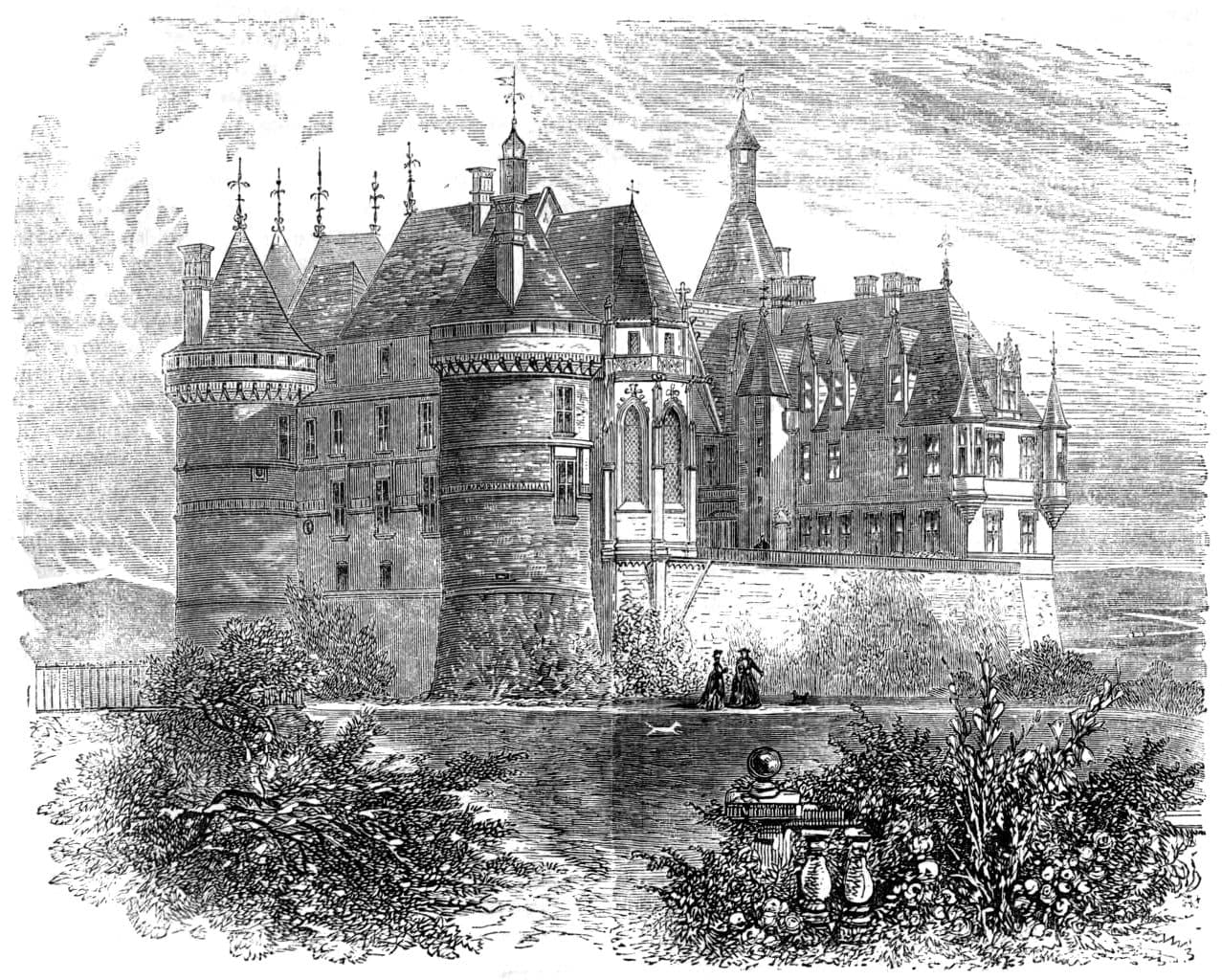
After the Renaissance drama, Chaumont settled into long stretches of private ownership and relative calm, passing through a succession of families who left fewer marks on the record. In the eighteenth century it belonged to the Le Ray family, and it was during the absence of its owner, James Le Ray, that the château hosted one of its most celebrated guests.
From April to August 1810, the writer Germaine de Staël lived at Chaumont in internal exile, banished from Paris by Napoleon, who found her independence of mind intolerable. She did not waste the time. While at the château she corrected the proofs of De l’Allemagne, the book on German culture that Napoleon would order pulped, and she reassembled around her the brilliant circle that had gathered at her Swiss home at Coppet. Her guests included Juliette Récamier, the political thinker Benjamin Constant, and the poet Adelbert von Chamisso. For one summer the bald hill above the Loire became, in effect, the most interesting salon in France, run by a woman the emperor had tried to silence. Her stay is a reminder that Chaumont’s importance has never depended on royalty alone.
The Belle Époque Reinvention: the de Broglie Years
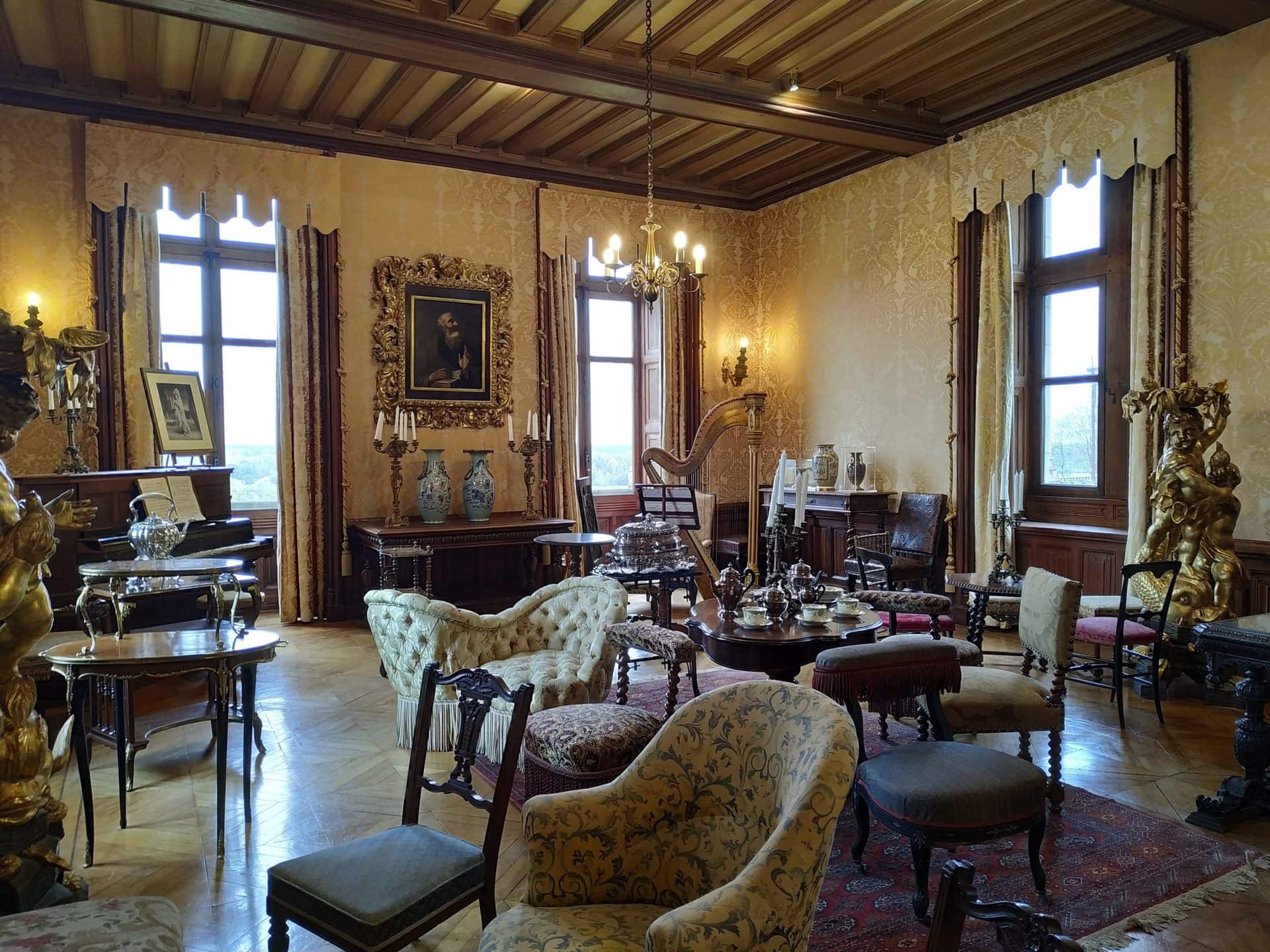
Chaumont’s most extravagant chapter began with money and a teenager. On March 17, 1875, Marie-Charlotte Say, heiress to one of France’s great sugar-refining fortunes, bought the château for 1,706,500 gold francs. She was seventeen years old. That June she married Prince Henri-Amédée de Broglie, and together they poured the Say fortune into turning a historic monument into a thoroughly modern country estate.
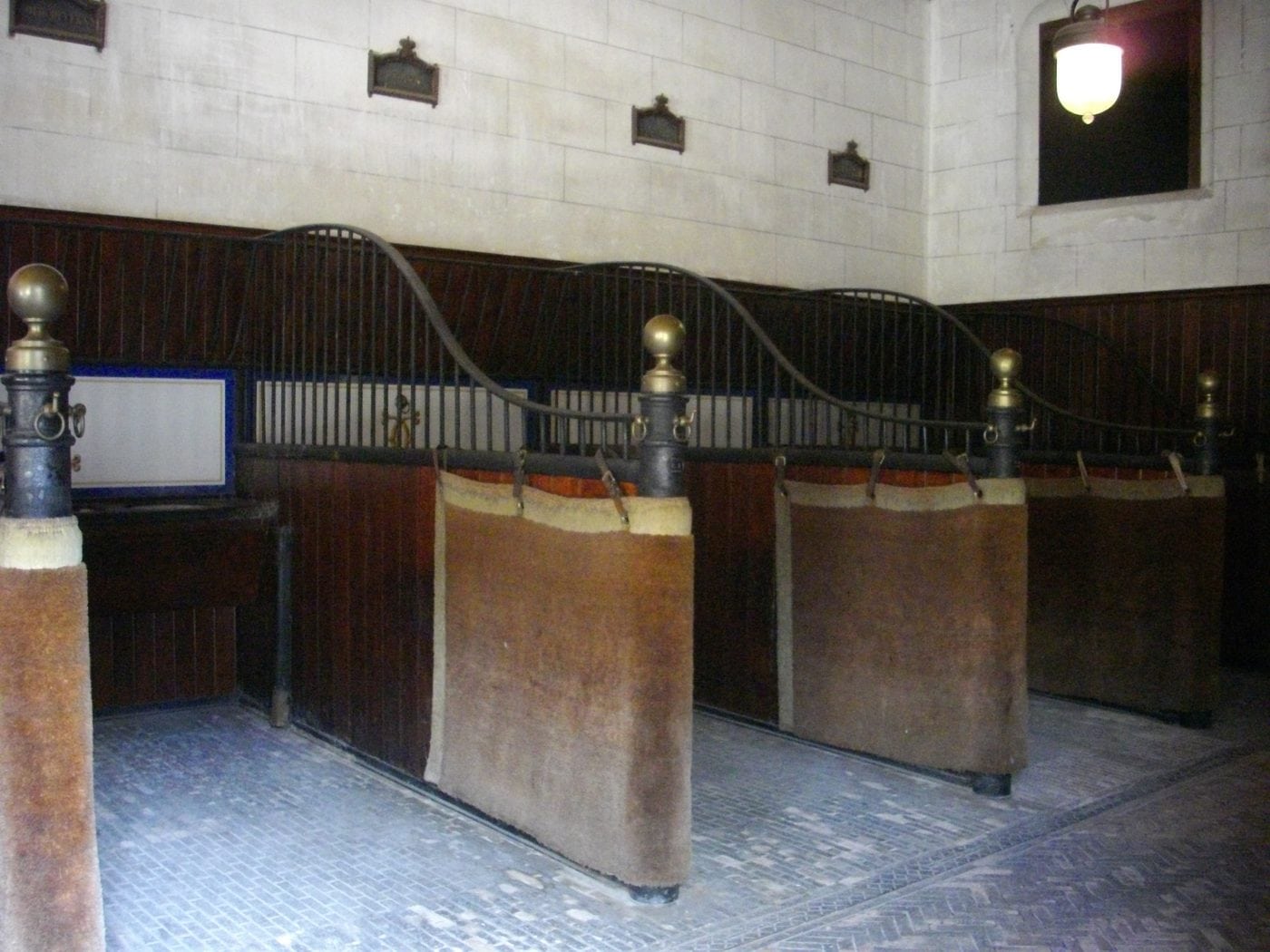
From 1880 the architect Paul-Ernest Sanson directed a sweeping restoration that fitted the old building with running water, central heating, and eventually electric light, while preserving its silhouette. His showpiece had already gone up in 1877: a vast stable block in brick and pale tuffeau limestone, widely judged the most luxurious and modern stables in Europe. In 1898 they received electric arc lamps of a kind then installed in only a handful of grand Parisian buildings, among them the Opéra Garnier and the Hôtel de Ville. Sanson also built a model farm, and between 1884 and 1888 the landscape designer Henri Duchêne laid out a sweeping English-style park. Creating it meant clearing houses near the château and moving the village church and cemetery down to the riverbank, an aristocratic gesture on a scale that says a good deal about the couple’s ambitions.
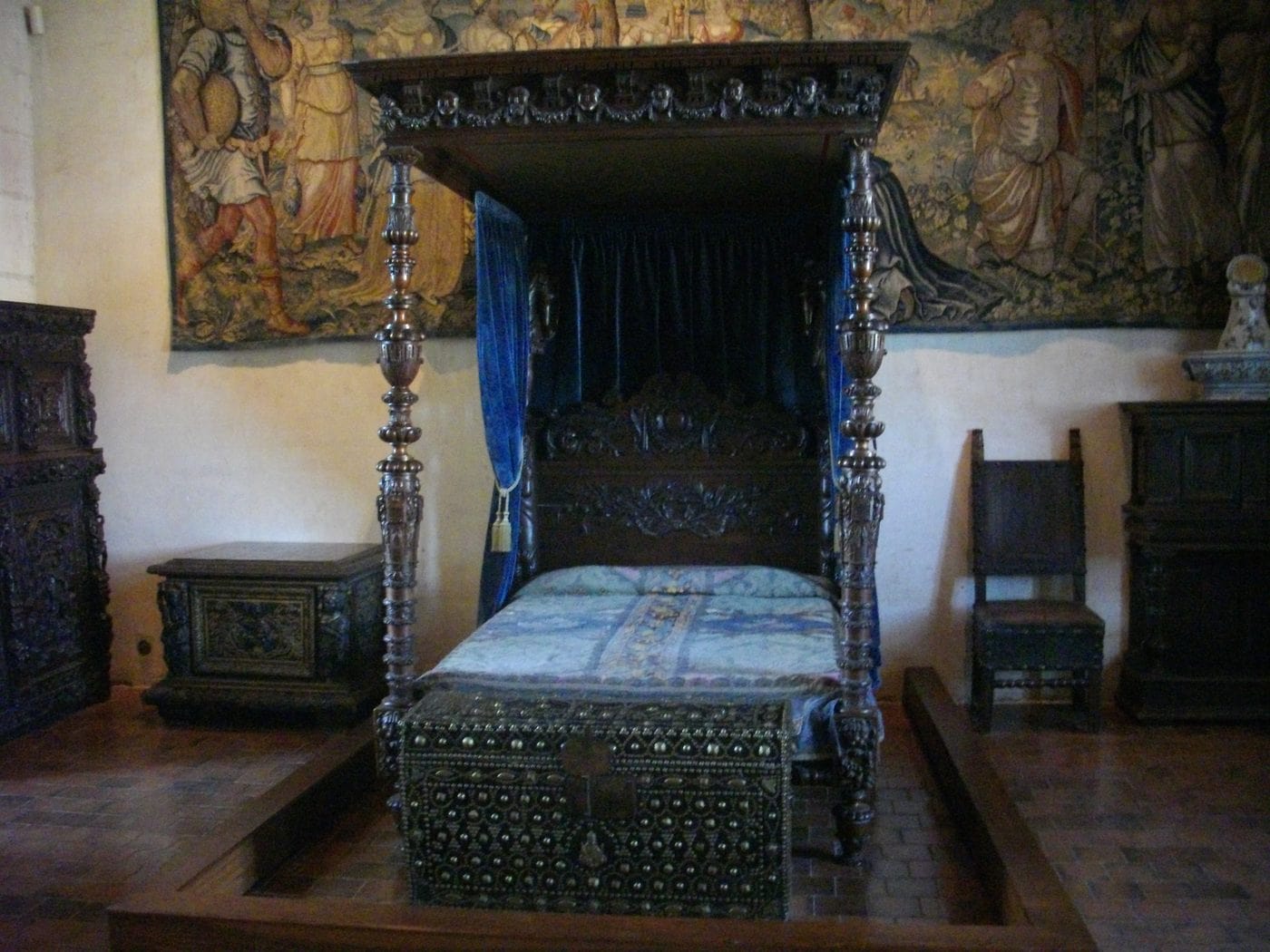
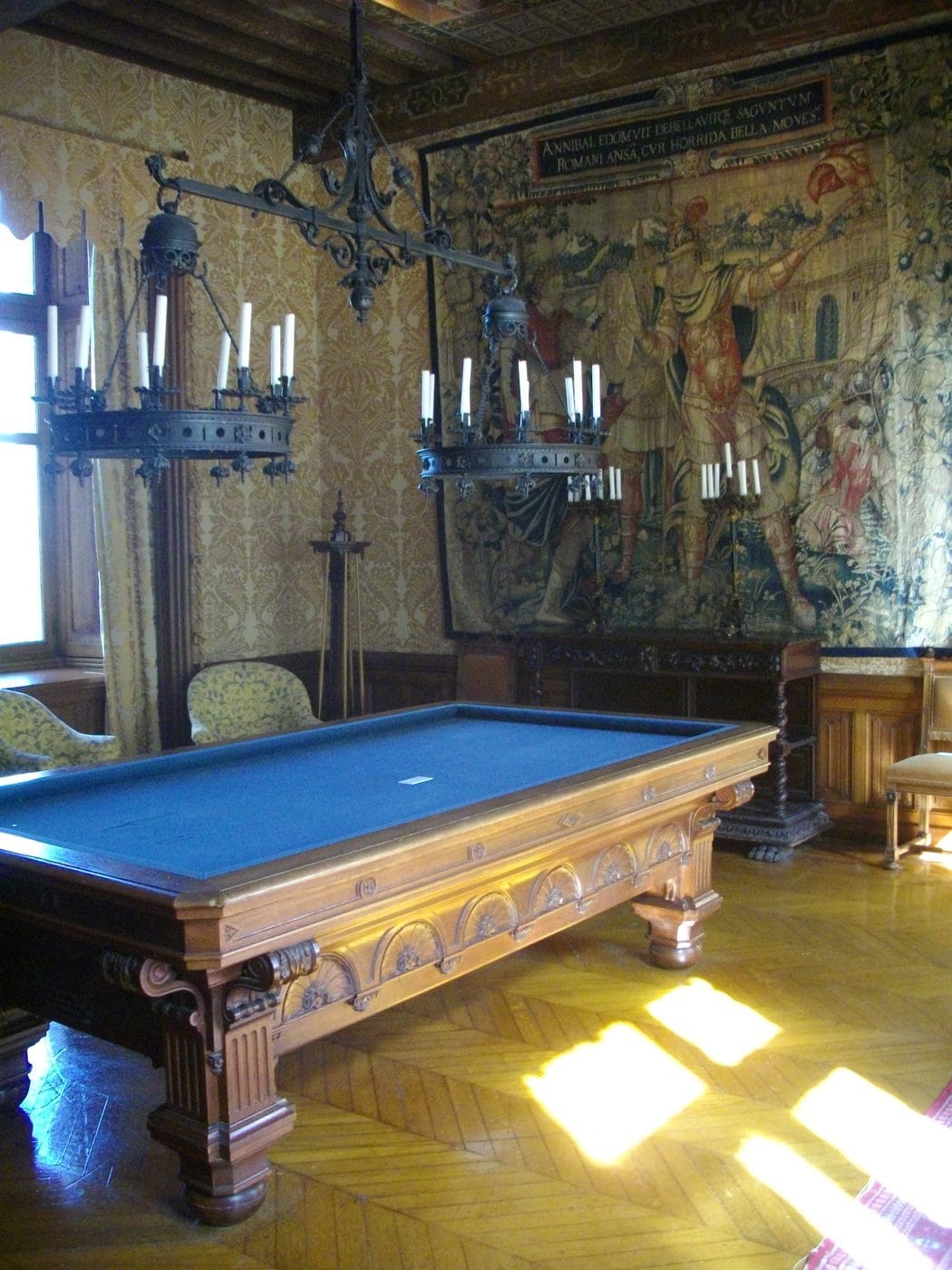
The princess had a taste for the spectacular. In October 1898 her friend the Maharaja of Kapurthala, Jagatjit Singh, sent her a young elephant named Miss Pundgi, shipped from Bombay to Marseille and then carried on to Chaumont by train. An elephant in the écuries was the kind of flourish the Belle Époque adored, and it remains one of the estate’s best-loved stories. Inside the château the couple created comfortable, opulent apartments hung with tapestries, the rooms most visitors still walk through today. They entertained on a grand scale, kept a celebrated stud, and ran the model farm as a working dairy that supplied the household, the kind of self-contained luxury the late nineteenth century prized. The fortune did not last forever. Marie-Charlotte later divorced de Broglie and remarried into the Orléans family, and mounting debts would eventually force the estate out of private hands, but the stables, the park, and the modernized interiors remain their clearest legacy.
From Private Estate to Public Domaine
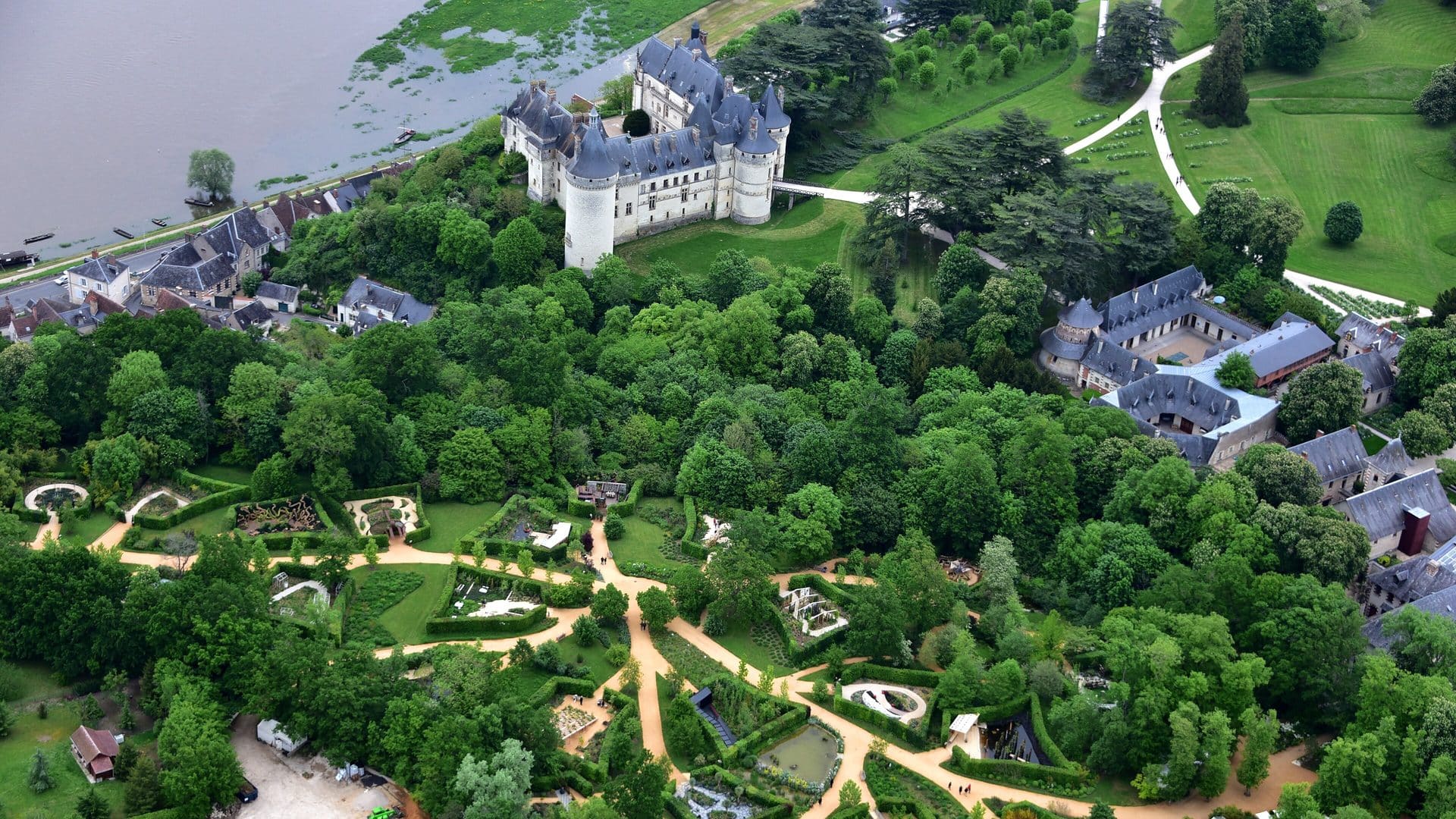
By the twentieth century the Say sugar fortune had drained away. Burdened with debt, the former princess sold Chaumont to the French State in 1938 for 1,800,000 francs, and the estate passed into the care of the national monuments service. For several decades it was a classic state-run historic house, visited and admired but largely static, one more stop on the well-worn château circuit.
Its transformation came with a change of stewardship. Under France’s decentralization laws, ownership transferred from the State to the Région Centre, now Centre-Val de Loire, with effect from February 1, 2007. The region created a dedicated public body to run it, the Domaine régional de Chaumont-sur-Loire, and appointed Chantal Colleu-Dumond as director. In 2008 the estate earned the national label of Centre Culturel de Rencontre, a designation reserved for heritage sites with a living artistic mission. That shift mattered enormously, because it gave Chaumont a purpose no other Loire château has: to be a working center for art and gardens instead of a preserved relic of the past. With the new status came a permanent staff, an annual budget for fresh commissions, and a calendar that now keeps the estate active across most of the year.
The International Garden Festival and the Art Program
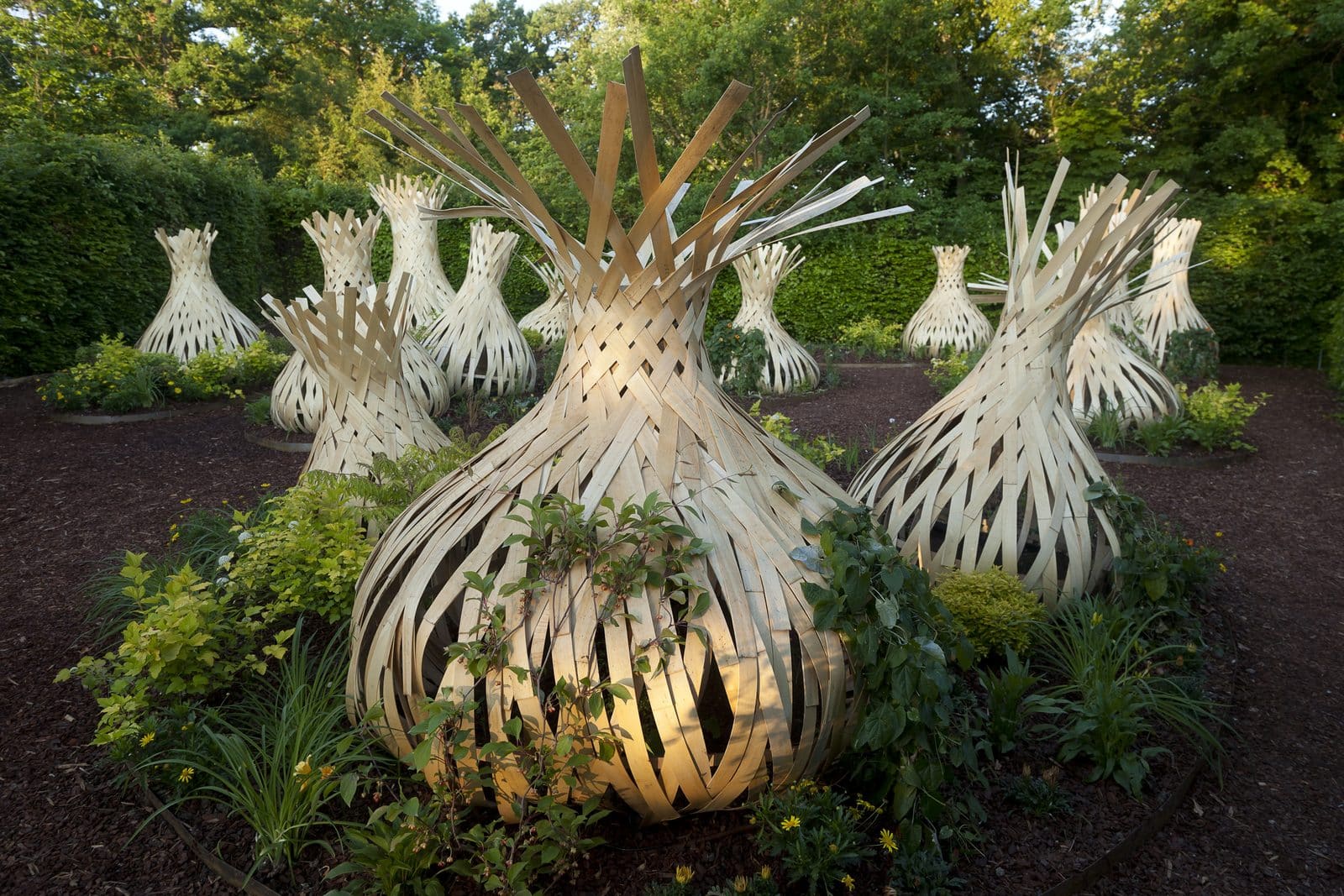
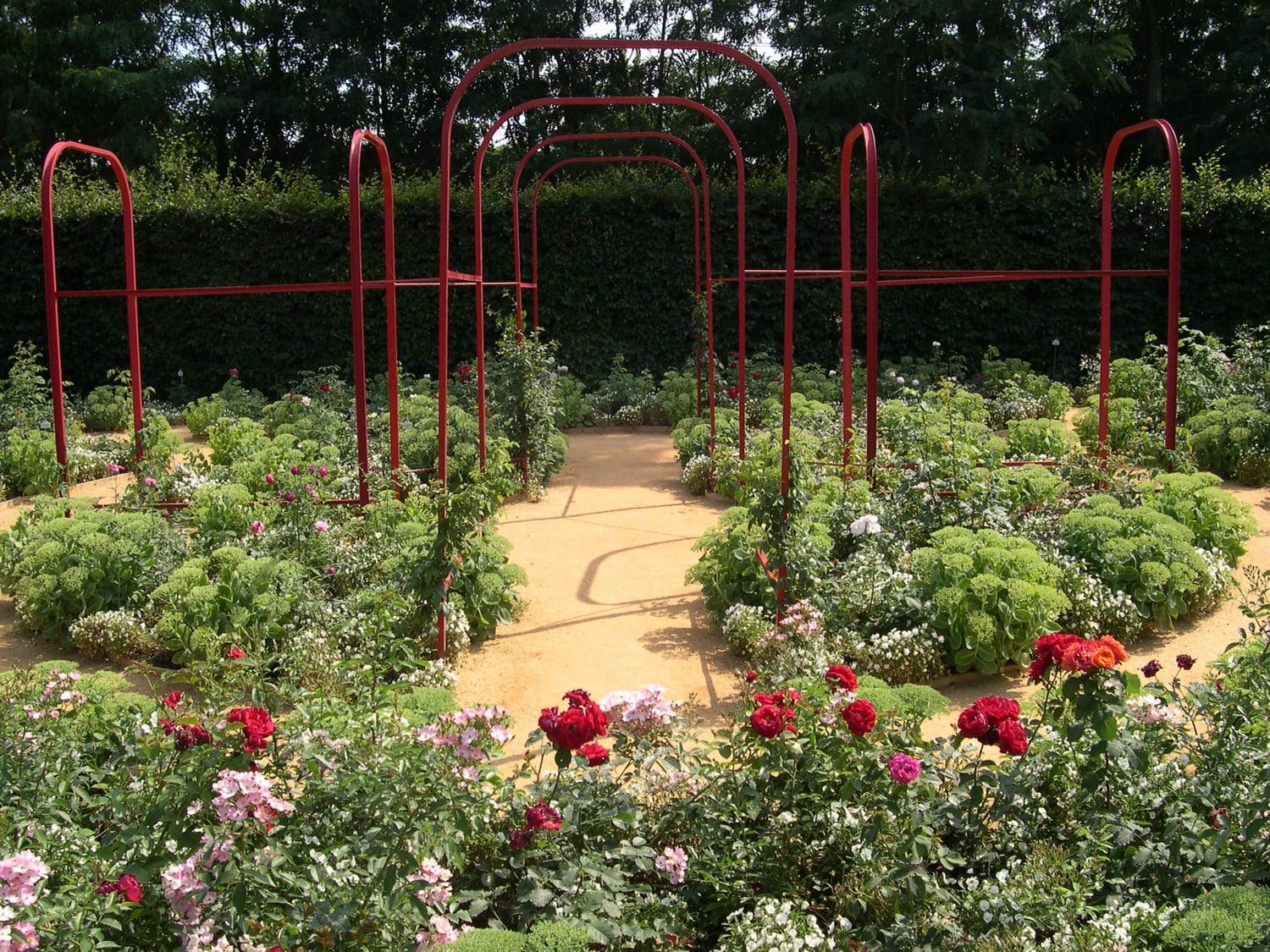
The reinvention that now defines Chaumont predates the regional takeover by years. In 1992 the landscape historian Jean-Paul Pigeat founded the Festival International des Jardins, the International Garden Festival, in the estate’s lower park. Each year designers from around the world are given identical plots and a shared theme, and they compete to build experimental gardens that run from spring into autumn. Over three decades the festival has become one of the most influential events in contemporary garden design anywhere, a testing ground where ideas about planting, ecology, and landscape first reach the public. Greenhouses on the estate raise much of the planting, and gardens first trialed on these plots have gone on to shape public spaces well beyond the Loire. Each edition gathers two dozen or more experimental gardens, judged by an international jury and open from spring deep into autumn, which has helped make Chaumont one of the most visited sites in the region. For 2026 the festival runs from April 22 to November 1 under the theme of gardens and cinema, the latest of more than thirty annual editions.
Since 2008 the estate has wrapped a second program around the gardens. Billing itself as a center for art and nature, Chaumont commissions fifteen new contemporary artists every year to make works for its grounds and its historic rooms, so the festival garden is only part of a larger seasonal display of installations, sculpture, and photography. A permanent contemporary garden area, the Prés du Goualoup, extends the experiment beyond the competition plots, and in the cooler months a photography season, Chaumont-Photo-sur-Loire, takes over the buildings. The combination is what fills the car parks. A visitor who comes for Renaissance towers stays for an experimental garden or a contemporary artwork tucked into a centuries-old room, and the friction between old and new is the whole point. No other château in the valley asks to be read as a place still being made.
The Château Today: Architecture and What Survives
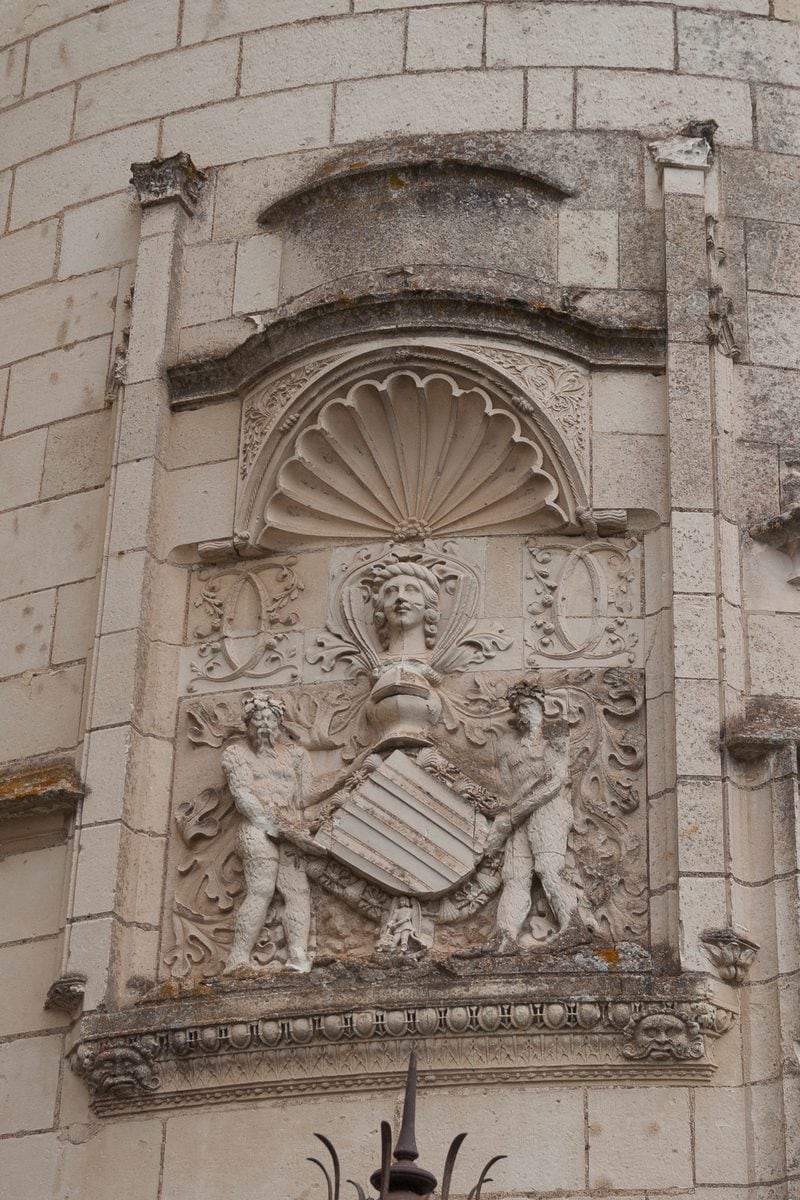
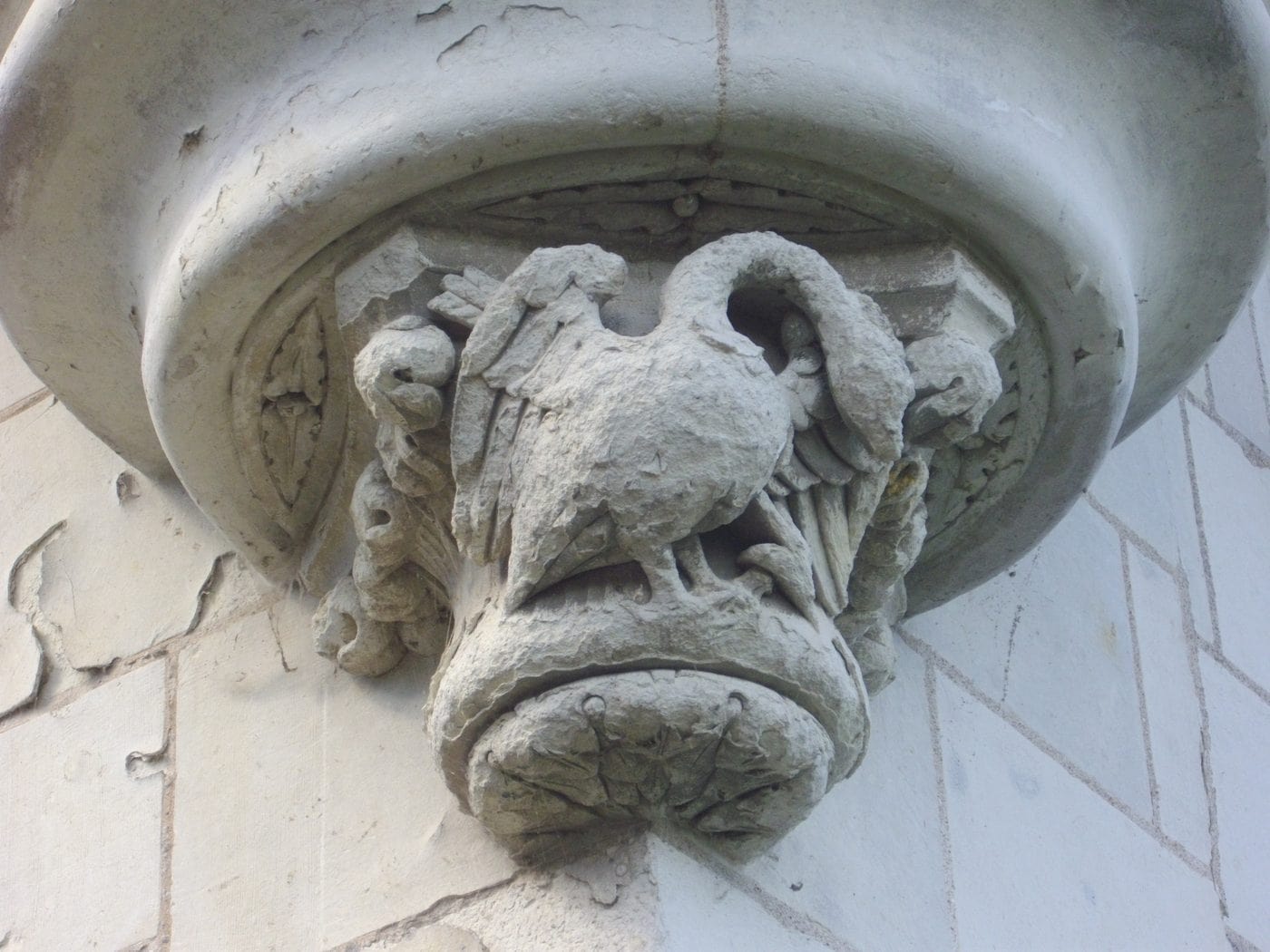
Approached on foot up the hill from the village, Chaumont still performs its medieval entrance. Visitors cross a drawbridge between the two massive round towers, their conical roofs and machicolations announcing a fortress. Step into the courtyard, though, and the mood changes. Carved stonework, the linked initials of Charles II d’Amboise and Cardinal Georges, and the interlaced C of Catherine de’ Medici turn defense into decoration, the unmistakable handwriting of the early Renaissance.
Because an eighteenth-century owner pulled down the wing that once closed the courtyard toward the river, the inner court now opens onto a terrace with a long view over the Loire, one of the finest river prospects of any château in the valley. From the parapet the river spreads out forty meters below, and on a clear day the eye follows it toward Amboise, a reminder of why a count once chose to fortify this exact spot. Indoors, the rooms reflect Chaumont’s layered history. Visitors pass through the medieval guard room, a council chamber, a library, and the apartments redecorated for the de Broglies, furnished in the comfortable opulence of the late nineteenth century. A room still bears the name of Ruggieri, keeping the astrologer legend alive for those who want it, and a small chapel completes the circuit. Throughout, tapestries and carved chimneypieces stand against bare stone, so that no single century is allowed to dominate.
Beyond the château itself lie the elements that make Chaumont an estate and not merely a single building. The grand stables of 1877 survive intact and can be visited, their stalls, harness room, and model dairy giving a vivid picture of how a wealthy household lived and moved; carriages still stand where horses once did. Surrounding everything is the Duchêne park, with its specimen trees and curving walks, and the festival grounds below, so that the historic monument, the gilded-age outbuildings, and the contemporary gardens read as chapters of one continuous story. A visit that takes in all three is less a tour of a building than a walk through nine centuries of changing taste.
That long pedigree is formally recognized. The château has been classified as a monument historique since the first national list of 1840, with later decrees extending the protection to the whole domaine, and its park carries the French label of jardin remarquable. Chaumont also lies within the Loire Valley World Heritage Site inscribed by UNESCO in 2000, the stretch of river and châteaux between Sully-sur-Loire and Chalonnes, so its preservation is now a matter of international as well as national concern.
Visiting Château de Chaumont-sur-Loire in 2026
Chaumont sits in the Loir-et-Cher département, on the left bank of the Loire about seventeen kilometers southwest of Blois and a similar distance from Amboise, which makes it an easy stop on any tour of the central Loire châteaux. Drivers reach it from the A10 motorway; those arriving by train use the station of Onzain-Chaumont-sur-Loire, on the opposite bank, around two kilometers away across the river bridge. The estate is open almost every day of the year, closing only on January 1 and December 25, with hours that lengthen through the warmer months: roughly 10:00 to 17:30 in deep winter, stretching to 10:00 to 20:00 in July and August. Last tickets are sold an hour before closing, and the walk up from the village ticket office to the château is short but steep. Entry tickets and local tours can also be booked in advance through GetYourGuide.
Admission depends on the season, because the headline attraction changes. During the high season, from April 22 to November 1, 2026, a single ticket covers the entire domaine, including the International Garden Festival, the contemporary art, the château, and the stables. In the low season the festival is closed, and a cheaper ticket admits visitors to the château, the historic park, and the outbuildings only. Anyone planning more than one visit, or wanting to see the gardens change across the year, should look at the annual pass. A full visit can absorb half a day or more, and families find plenty to hold children among the gardens and the écuries. Cafés and a restaurant operate on the grounds in season. The gardens are at their best from late spring through early autumn, while winter brings smaller crowds and the photography season indoors, so the ideal timing depends on whether you come chiefly for the history or for the planting. The figures below were published by the estate and read in June 2026; confirm them on the official site before you travel. Anyone staying overnight can compare hotels in and around Chaumont-sur-Loire.
Some links on this page are affiliate links, which means StoneKeep Atlas may earn a small commission, at no extra cost to you, if you book through them.
| High season (22 Apr to 1 Nov 2026), full domaine | Adult €21, reduced €13, child 6 to 11 €6, under 6 free |
| Two-day pass, full domaine | Adult €36, reduced €20, child €10 |
| Low season, château and park only | Adult €16, reduced €9, child 6 to 11 €4 |
| Annual Carte Pass | €55 (valid through 2026) |
More Views of Château de Chaumont-sur-Loire
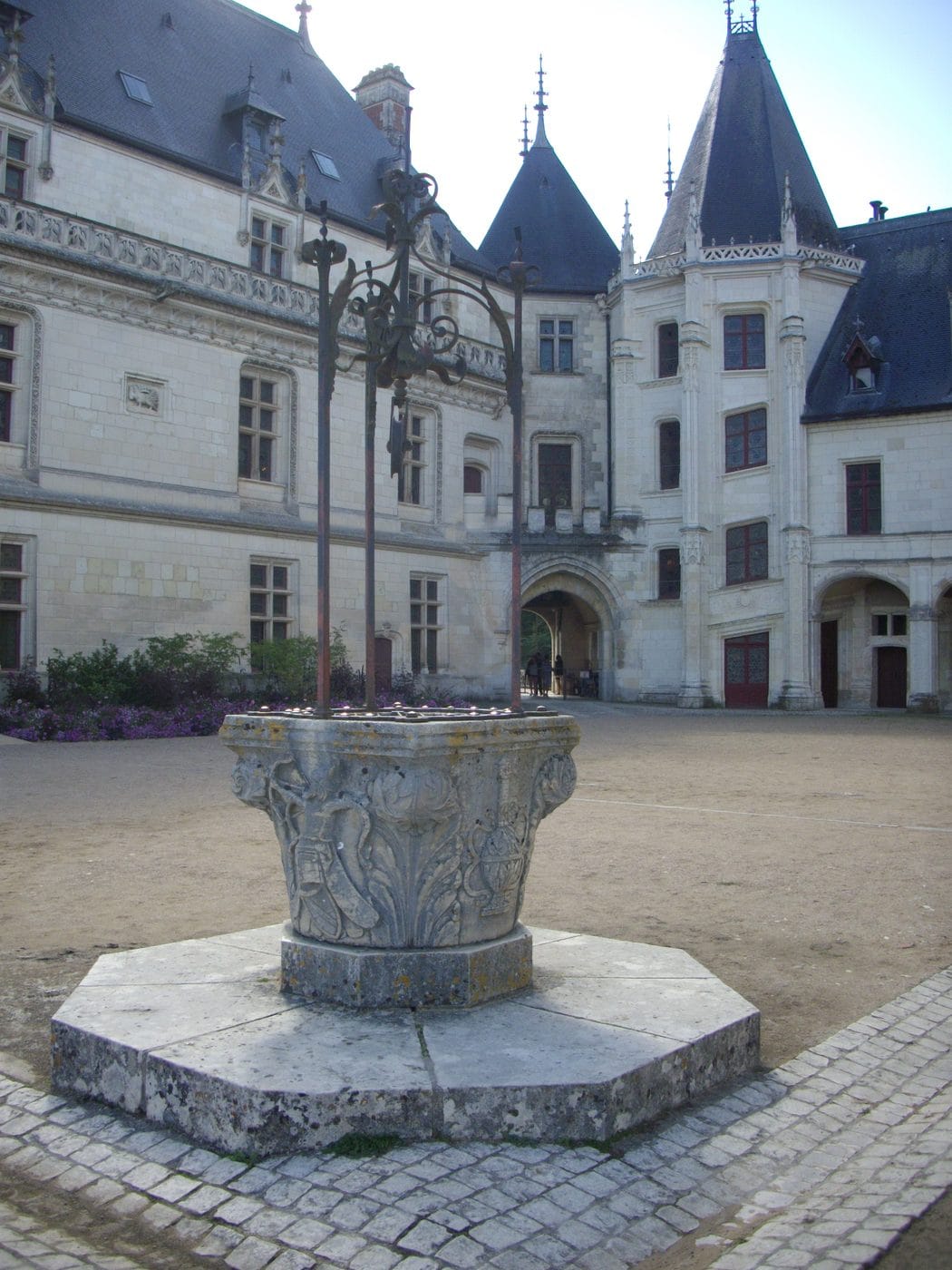
A closer look at the towers and courtyard, the Belle Époque stables and interiors, and the gardens that now define the estate, across the seasons.
Beyond Chaumont-sur-Loire
Chaumont rewards being seen alongside its Loire neighbors, because their stories interlock. Just downstream lies the Château de Chenonceau, the property Catherine de’ Medici forced Diane de Poitiers to surrender in the 1560 exchange, so the two châteaux are two halves of a single drama. That drama, and the women on both sides of it, is told in full in The Ladies of the Loire. A short distance further is the Château d’Amboise, the royal residence and the seat of the d’Amboise family whose name Chaumont still carries in its towers. Upriver stands the Château de Chambord, François I’s vast hunting palace, the grandest expression of the Renaissance ambition that touched all four houses. Downstream toward Tours, Château de Villandry completes the circle, the house whose re-created Renaissance gardens give the valley its most famous parterres, and its neighbor on the Indre, the Château d’Azay-le-Rideau, condenses the early Renaissance into a single island jewel box. Seen together, they trace how the Loire valley moved from fortress to palace to garden over five centuries. A half hour east, Cheverny pairs single-campaign Louis XIII symmetry with the most richly furnished interiors in the Loire. Our guide to the Châteaux of the Loire Valley gathers Chaumont with the eight other houses worth the journey. Its drawbridge and pepper-pot towers also earn Chaumont a place among the fairytale castles in France, the châteaux that look drawn from a storybook.
Conclusion
What sets Chaumont apart from its celebrated neighbors is not a single great room or a famous architect but its refusal to stand still. It has been a border fortress, a punished ruin, a Renaissance residence, a queen’s instrument of revenge, a writer’s place of exile, and a millionaire’s playground, and it now serves as one of the most imaginative gardens-and-art estates in Europe. Each owner left a layer, and the pleasure of a visit lies in reading them all at once: a drawbridge, a carved monogram, a stable fit for a prince, and an experimental garden planted last spring. Chaumont is proof that a historic monument need not be a museum of a single moment, and that a château can keep writing its own history.
Principal Sources
- Domaine de Chaumont-sur-Loire (Région Centre-Val de Loire). Official site, for the estate history, the International Garden Festival and art program, ownership, and 2026 hours and tariffs. domaine-chaumont.fr.
- Encyclopædia Britannica.
- Ministère de la Culture. Base Mérimée / Plateforme Ouverte du Patrimoine, ref. PA00098410 (classé 1840).
- UNESCO World Heritage Centre. “The Loire Valley between Sully-sur-Loire and Chalonnes.” Property 933 (inscribed 2000).
- World History Encyclopedia.
Image credits. The hero photograph of the entrance front and the view from the grounds are by W. Bulach (CC BY-SA 4.0). The bluff above the Loire is by Zairon, the entrance towers and the Renaissance carving by Pymouss, the grand salon by Tim Tim (VD fr), and the aerial view of the domaine by Wolkenkratzer (all CC BY-SA 4.0). The courtyard seen from above is by Cdesnoues (CC BY-SA 3.0). In the gallery, the tower against the sky is by Kévin Courtois (CC BY-SA 4.0); the courtyard well-head, a carved corbel, a château bedroom, the Belle Époque stables and the billiard room are by Fab5669 (CC BY-SA 4.0); and the festival roses are by GIRAUD Patrick (CC BY-SA 3.0). The photograph of a festival garden is by E. SANDER (Free Art License). The nineteenth-century engraving by Percival Skelton, engraved by Joseph Swain, and the 1904 Chemin de Fer d’Orléans poster by Théophile Poilpot are in the public domain. All Creative Commons and Wikimedia images are used under their respective licenses. Freely licensed images are resized to fit; otherwise unaltered.