
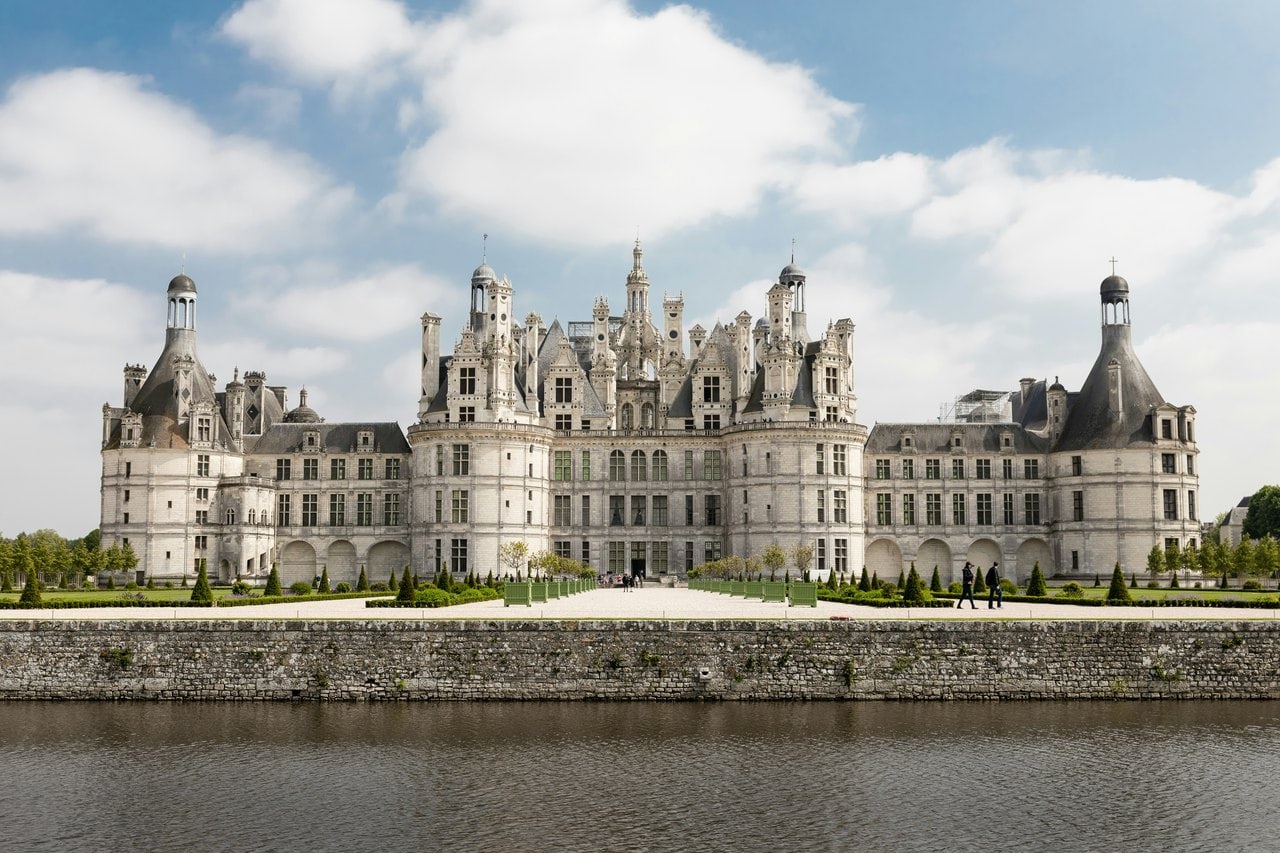
Château de Chambord
Château de Chambord rises from the flat woodland of the Sologne like an argument made in stone, a building raised less to be lived in than to be marveled at. Largest of the Loire châteaux, it was the work of a young king, François I, who launched its construction in 1519 and never saw it finished. What he set in motion became the boldest architectural statement of the French Renaissance: a royal hunting retreat scaled to the ambition of a monarch who meant to astonish all of Europe. Five centuries on, it still does. A silhouette of towers, chimneys, and slate turrets crowds its rooftop like a small town lifted into the sky, and at the building’s core climbs a double-helix staircase whose two intertwined flights never meet. This guide traces how Chambord came to be, why a king who barely stayed there poured a fortune into its walls, and how a fantasy that was scarcely inhabited survived revolution and war to become one of France’s most visited monuments.
Quick Facts
| Location | Chambord, Loir-et-Cher, Centre-Val de Loire, France |
| Type | Château (royal hunting residence) |
| Native designation | Château |
| Construction begun | 1519, under François I |
| Completed | Substantially finished under Louis XIV, 1680s |
| Design | Architect undocumented; wooden model attributed to Domenico da Cortona; built under master mason Pierre Nepveu |
| Architectural style | French Renaissance |
| Setting | Flat Sologne parkland beside the river Cosson |
| Enclosed estate | About 5,440 hectares, ringed by a 32-kilometer wall |
| Historic monument | Listed in 1840, on the first French register of historic monuments |
| UNESCO World Heritage | Inscribed individually in 1981; within the Loire Valley listing from 2000 (reference 933) |
| Owner | French State; managed as a public estate since 2005 |
| Open to visitors | Yes, year-round |
| Official site | chambord.org |
A Dream Born After Marignano
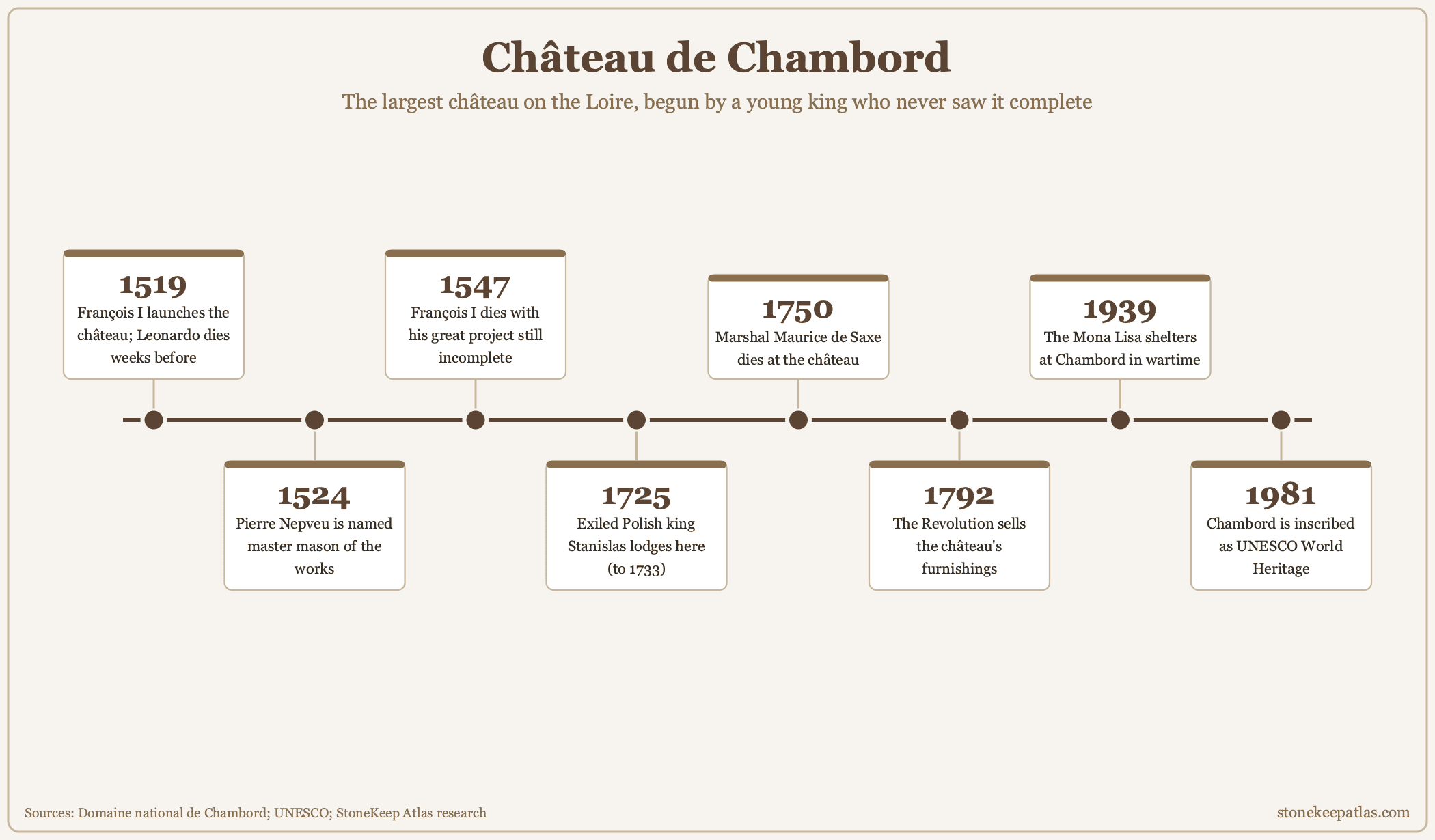
François I came to the throne in January 1515 and, eight months later, won a celebrated victory at Marignano in northern Italy. That campaign carried the young king deep into a peninsula then at the height of its Renaissance, and he returned with a taste for Italian art, Italian architects, and Italian grandeur. Chambord belongs to the years that followed. By a royal ordinance of September 6, 1519, François I ordered work to begin on a new château in the marshy hunting grounds of the Sologne, replacing an old fortress of the counts of Blois. His reign would be defined by a long contest with the Habsburg emperor Charles V, and Chambord can be read as part of that rivalry, a king asserting in architecture the magnificence he meant his crown to embody.
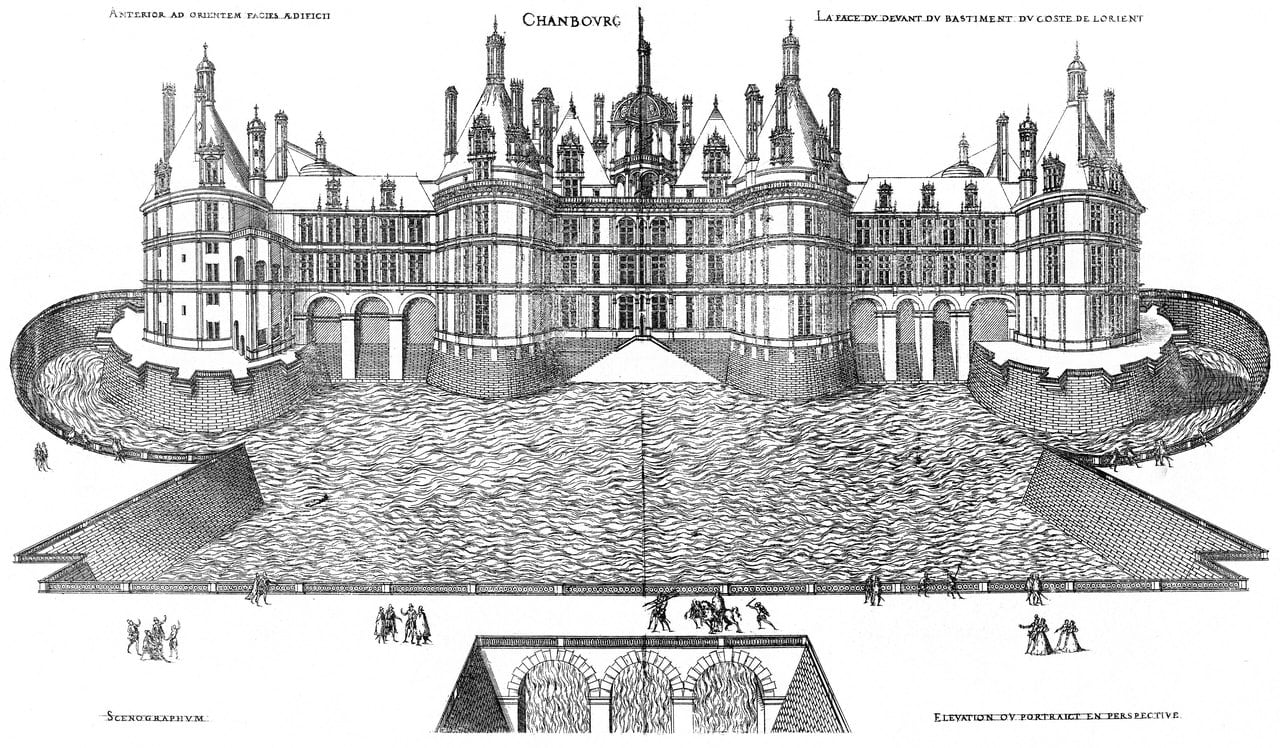
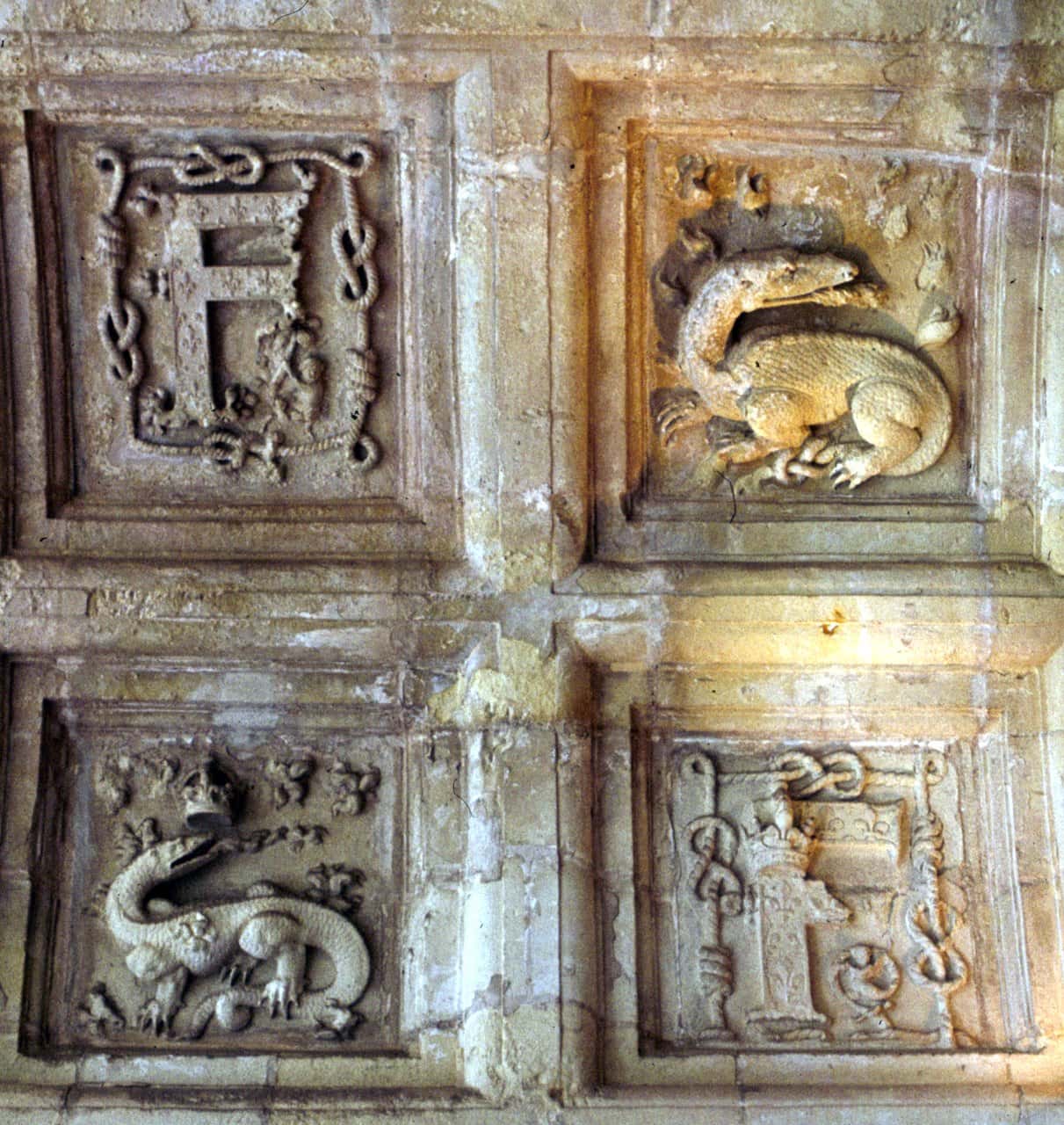
Nothing about the choice of site was practical. The ground was low, damp, and prone to fever, far from any town and ill-suited to a great house. That was the point. Chambord was never meant to govern a region or guard a frontier. It was meant to express a king, and François I wanted a building that owed nothing to medieval necessity and everything to his own imagination. Hunting gave the project its pretext; glory gave it its scale. Across the walls, ceilings, and capitals he scattered his personal emblems, the crowned salamander and the royal letter F, repeated hundreds of times so that no visitor could mistake whose vision they had entered. The salamander carried its own motto, Nutrisco et extinguo, “I nourish and I extinguish,” a device drawn from the old belief that the creature lived unharmed in fire and a fitting badge for a king who liked to imagine himself the master of fortune.
The Architecture of a Manifesto
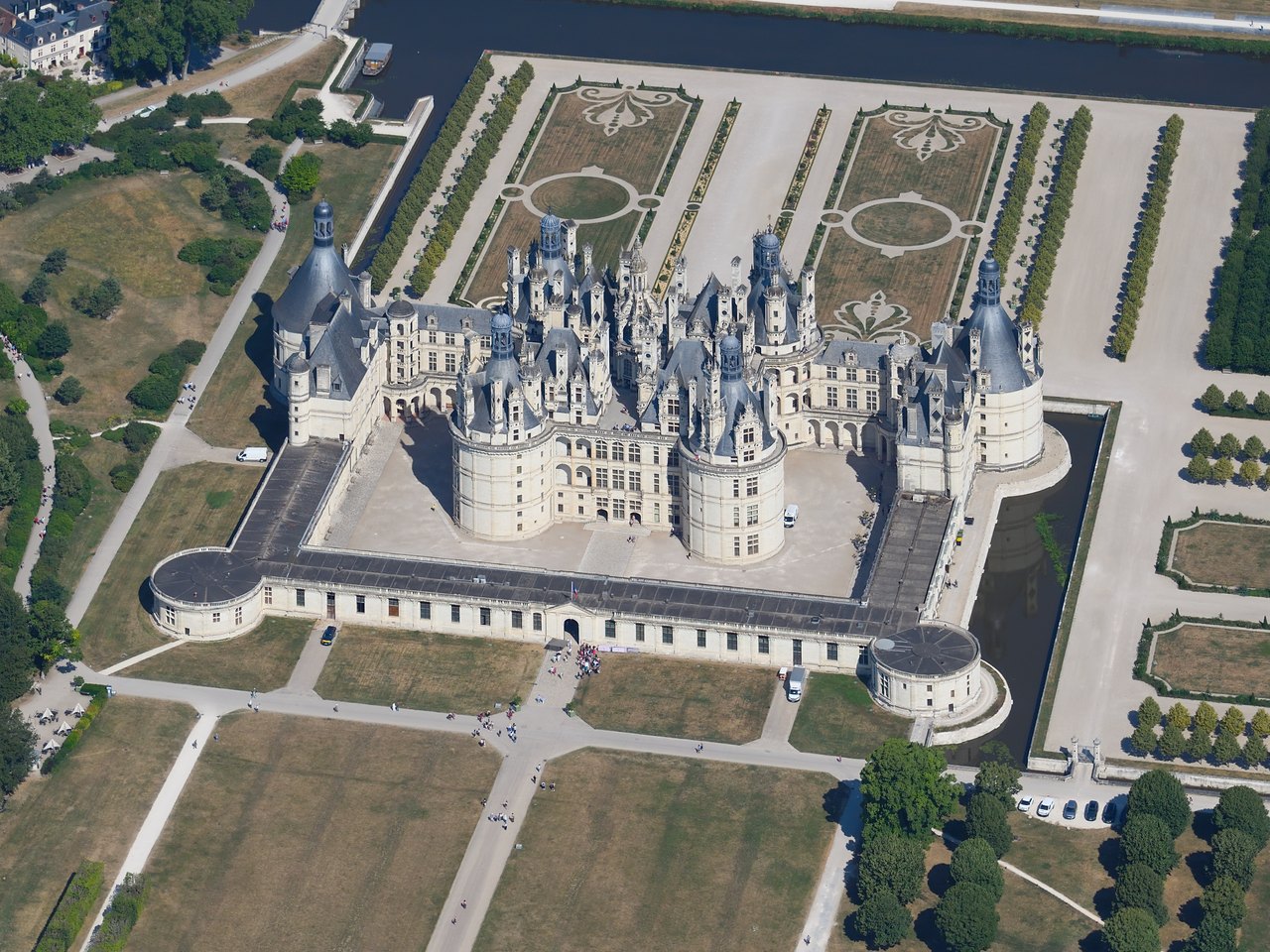
At the center of Chambord stands the donjon, a square keep flanked by four massive round towers. Its plan is a Greek cross: four great vaulted halls radiate from a central core, dividing each floor into four identical apartments set in its angles. This was a startling idea in early sixteenth-century France, a building organized around symmetry and geometry rather than the accreted defenses of a feudal castle. The model for it lay south of the Alps, in the centrally planned villas and churches of the Italian Renaissance, transplanted here to the banks of a sluggish French river.
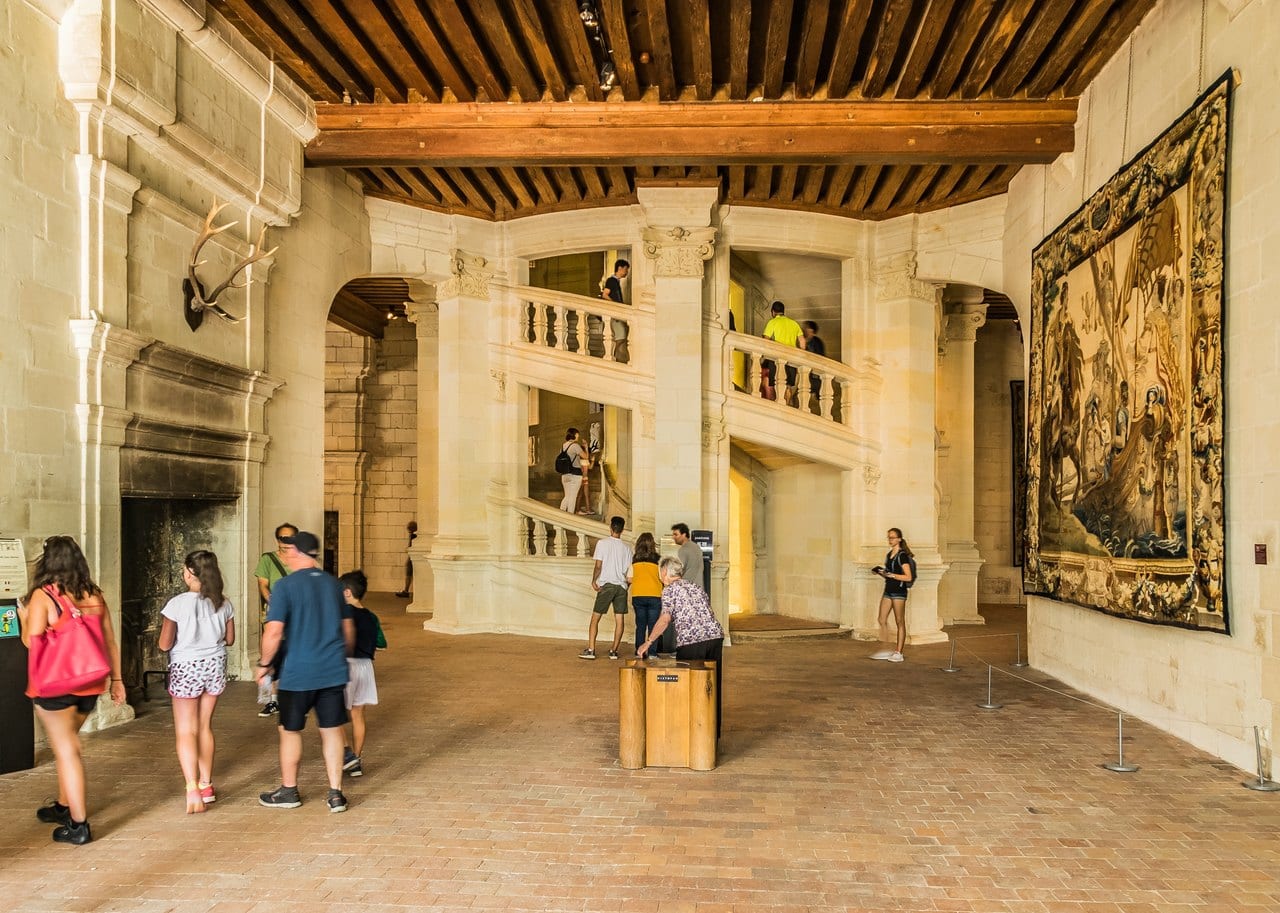
Rising through the heart of that cross is the feature every visitor remembers, the double-helix staircase. Two separate flights wind around a single hollow newel, so that a person climbing one spiral and a person descending the other can glimpse each other through the open core yet never meet on the steps. It is a piece of theater as much as engineering. By tradition the design is associated with Leonardo da Vinci, who had spent his last years nearby at Amboise as a guest of the king, and the château’s own custodians describe the staircase as one “inspired by” him. That attribution should be read with care. No document from the period names any architect of Chambord, and Leonardo died on May 2, 1519, months before construction began. His notebooks contain sketches of centralized plans and twin spiral stairs, which is why scholars allow that his thinking may have shaped the project. They do not, however, support the popular claim that he drew Chambord’s staircase himself.
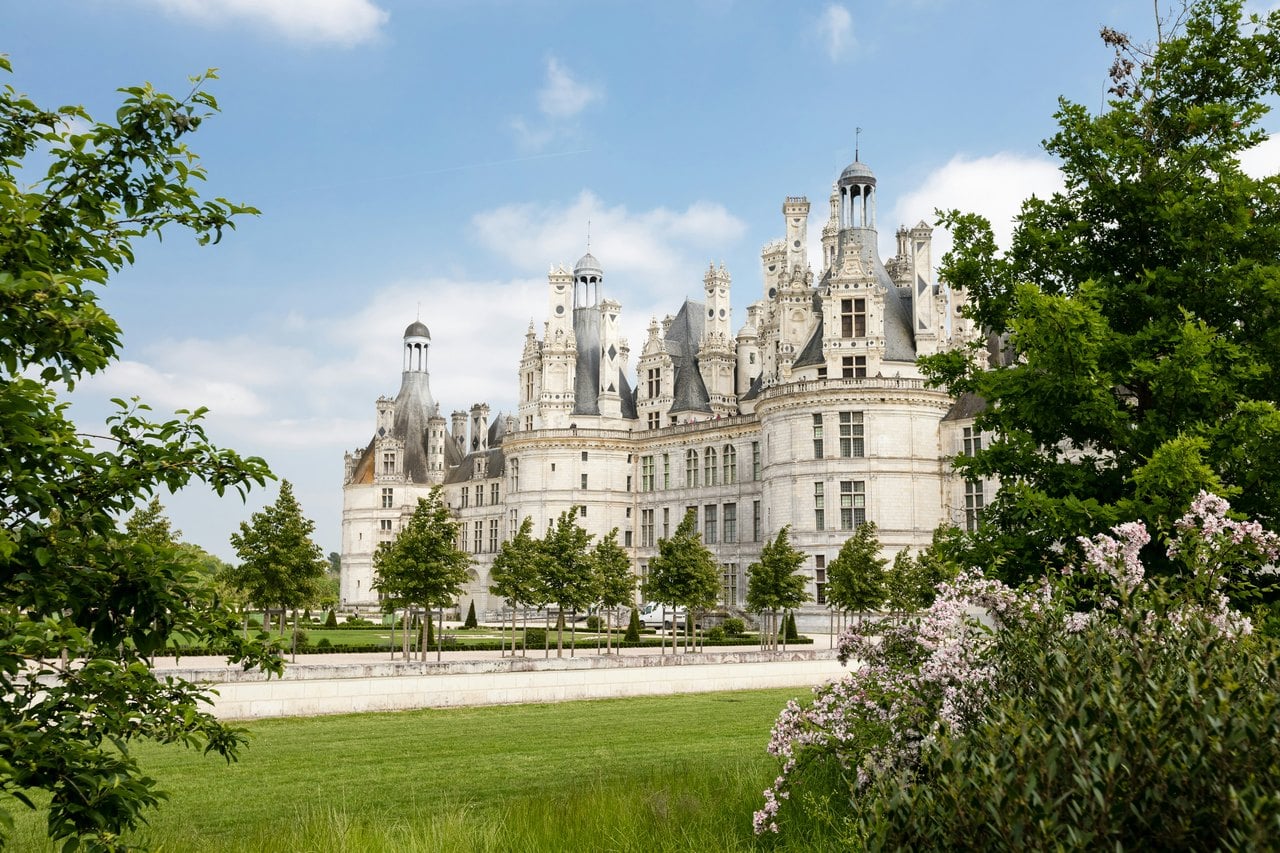
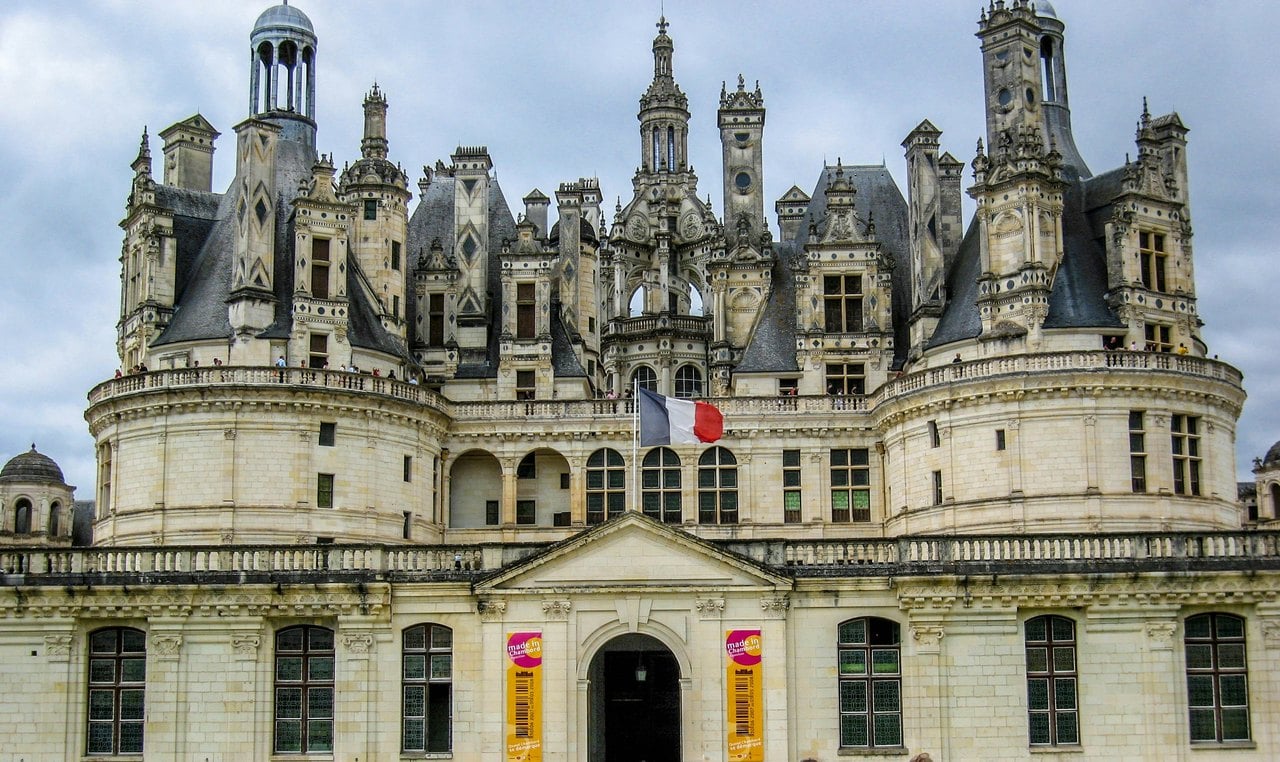
Above the apartments, the roof opens into the building’s most extravagant space, a terrace from which the court once watched hunts, tournaments, and pageants in the park below. Around it crowds a forest of dormers, chimneys, and turrets, encrusted with carved slate and stone, and capped by a tall lantern tower that lifts the silhouette to roughly fifty-six meters and ends in a fleur-de-lis. Here the French and Italian strands of the design pull most visibly together: medieval forms, the keep and the corner towers, reworked in the ordered, decorative language of the Renaissance. Built largely of tuffeau, the soft pale limestone of the Loire that hardens and brightens with exposure, the whole composition seems to glow against the green of the Sologne.
For all its scale, Chambord was never organized for daily living. The four apartments on each floor repeat the same plan around the central stair, an arrangement of striking symmetry but limited practical convenience, and the building has often been read less as a residence than as an idea made habitable. It is a centralized, almost theoretical composition, closer to the drawings of Italian theorists than to any French house that came before it. Its own custodians call it a kind of utopia, a work of art first and a dwelling second.
Builders of an Unfinished Vision
Who designed Chambord remains an open question, and an honest one. The royal building accounts were scattered or destroyed at the end of the eighteenth century, leaving no contemporary text that names a single architect. A wooden model of the keep, later drawn in the seventeenth century, is attributed to the Italian craftsman Domenico da Cortona, known as Boccador, and it shows an earlier version of the central stair as two straight parallel flights rather than the spiral that was eventually built. On the ground, a surviving account of 1524 names Pierre Nepveu, called Trinqueau, as the master mason charged with the work. Nepveu is documented; the conception of the whole is not.
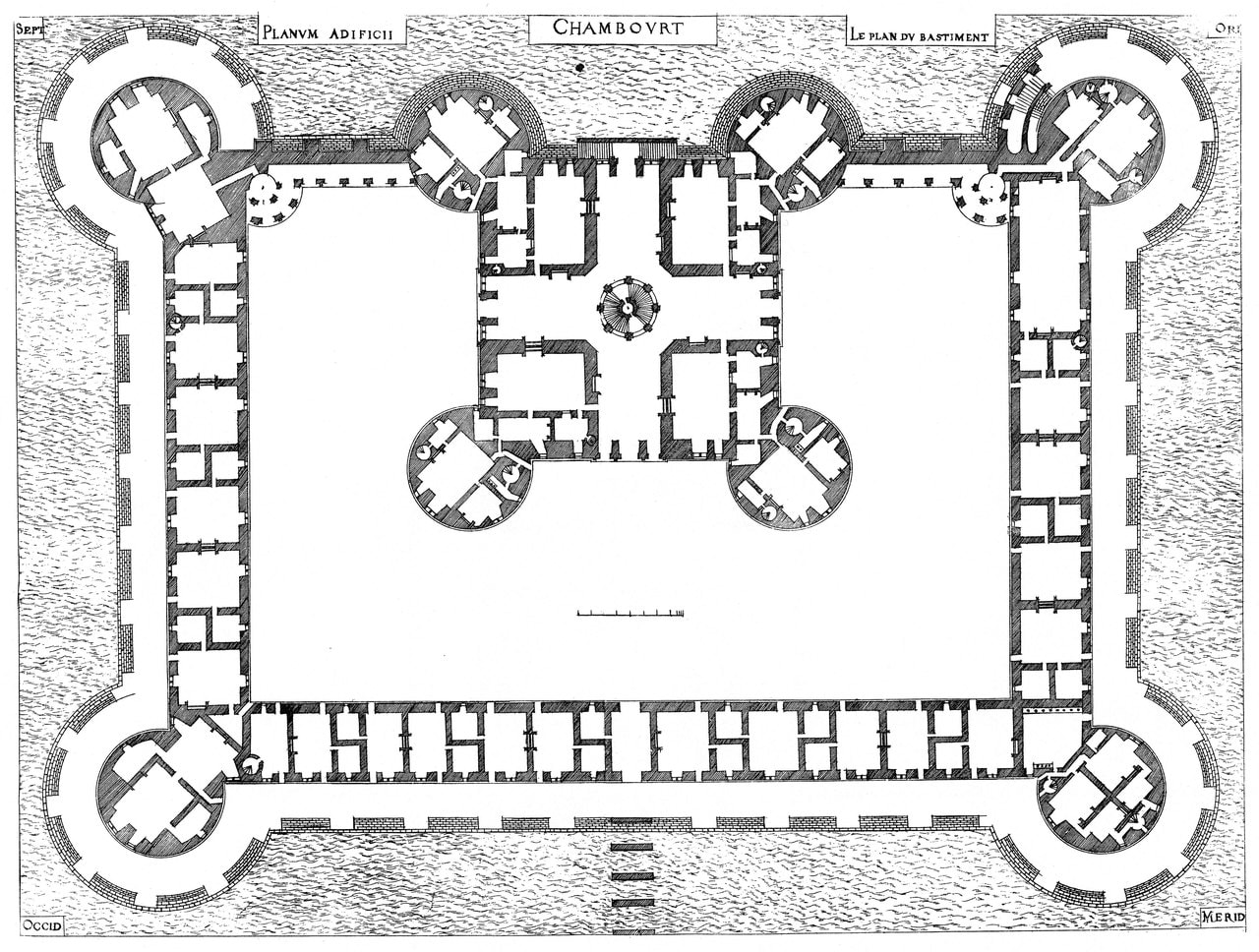
The site itself fought the builders at every turn. To raise so vast a structure on waterlogged marsh, the foundations had to be driven deep into the unstable ground, and the river Cosson was channeled to drain the surroundings. Progress was anything but steady. François I was captured at the battle of Pavia in 1525 and held prisoner in Madrid, and building at Chambord halted for several years while the kingdom scraped together his ransom. Work resumed once he was free, and by the late 1530s the keep and its terraces stood complete. Yet the king died in 1547 with his great project still unfinished. The chapel wing rose without a roof, several ranges were incomplete, and the vision waited more than a century for a monarch willing to bring it to a close.
A Court That Came and Went
For all the money it consumed, Chambord was barely used. François I is thought to have spent only a matter of weeks of his long reign within its walls; the estate’s own histories put the total at about fifty days across more than thirty years on the throne. When the king did come, his household came with him, and a royal court in this period traveled as a moving city. Furniture, tapestries, beds, and plate were loaded onto carts, carried from château to château, hung for the visit, then packed away again. Between royal stays the vast building stood cold and largely empty, a stage set waiting for its actors to return. The hunt was the building’s whole reason for being. The Sologne around it teemed with deer and boar, and François I, a devoted huntsman, had the château raised so that the chase could be watched and staged from its terraces and high windows.
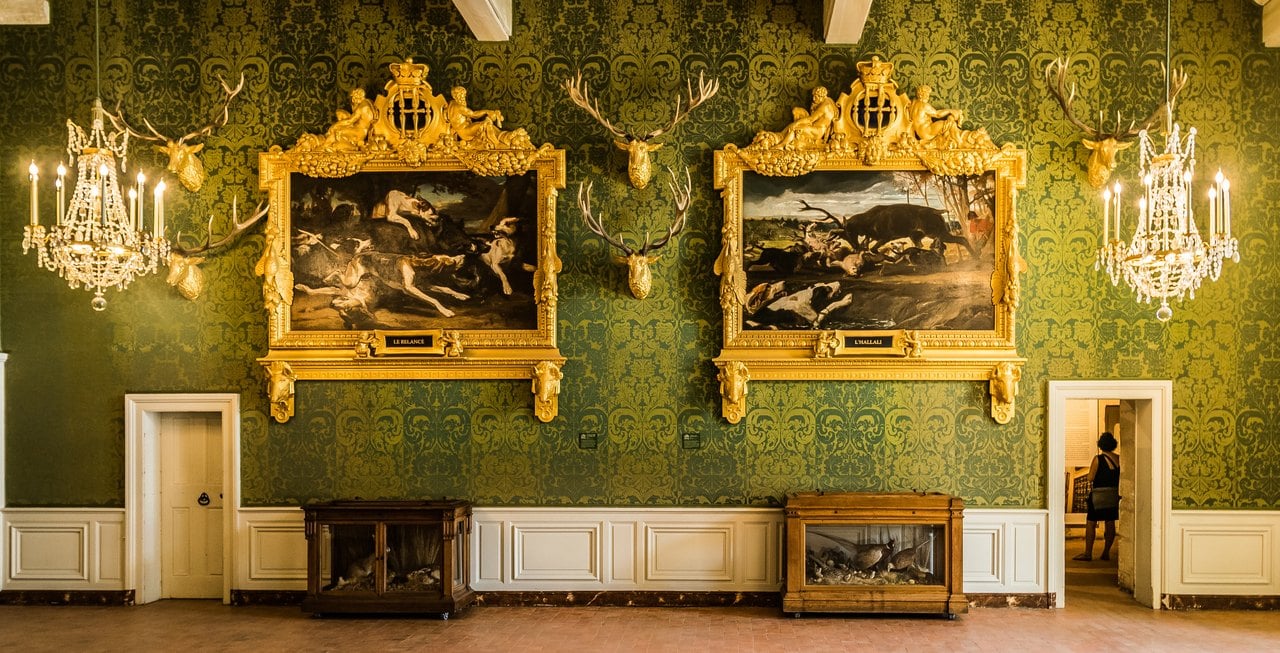
That emptiness fed the legends. Chambord is often said to contain a chimney for every day of the year, a tidy three hundred and sixty-five. The real figure is 282, a number the estate has gently corrected more than once. The room count is usually given as around 426 and the staircases at roughly seventy-seven, and the decoration is said to run to some eight hundred carved capitals. These totals are best treated as reference figures rather than precise inventories, but they convey the essential truth. This was a building of deliberate excess, designed to impress by sheer abundance, and its scale mattered more to its creator than any comfort it might ever provide.
After the King: Louis XIV, Molière, and Maurice de Saxe
Between François I and the Sun King the château passed through quieter hands. Gaston d’Orléans, the rebellious younger brother of Louis XIII, held Chambord from the 1620s and undertook the first serious repairs, fixing the limits of the great walled park that survive today.
Chambord found its grandest revival under Louis XIV. The Sun King visited several times between the 1660s and 1680s and finally brought the château to completion, employing the architect Jules Hardouin-Mansart to roof the long-open chapel and finish the surrounding ranges, and once more canalizing the sluggish Cosson to drain the grounds. Under his patronage the empty halls filled with court life. It was at Chambord, on October 6, 1669, that Molière’s comedy-ballet Monsieur de Pourceaugnac received its first performance, with music by Jean-Baptiste Lully; a year later, on October 14, 1670, the same partnership premiered Le Bourgeois gentilhomme in the same rooms, mocking social climbers before a king who delighted in the joke.
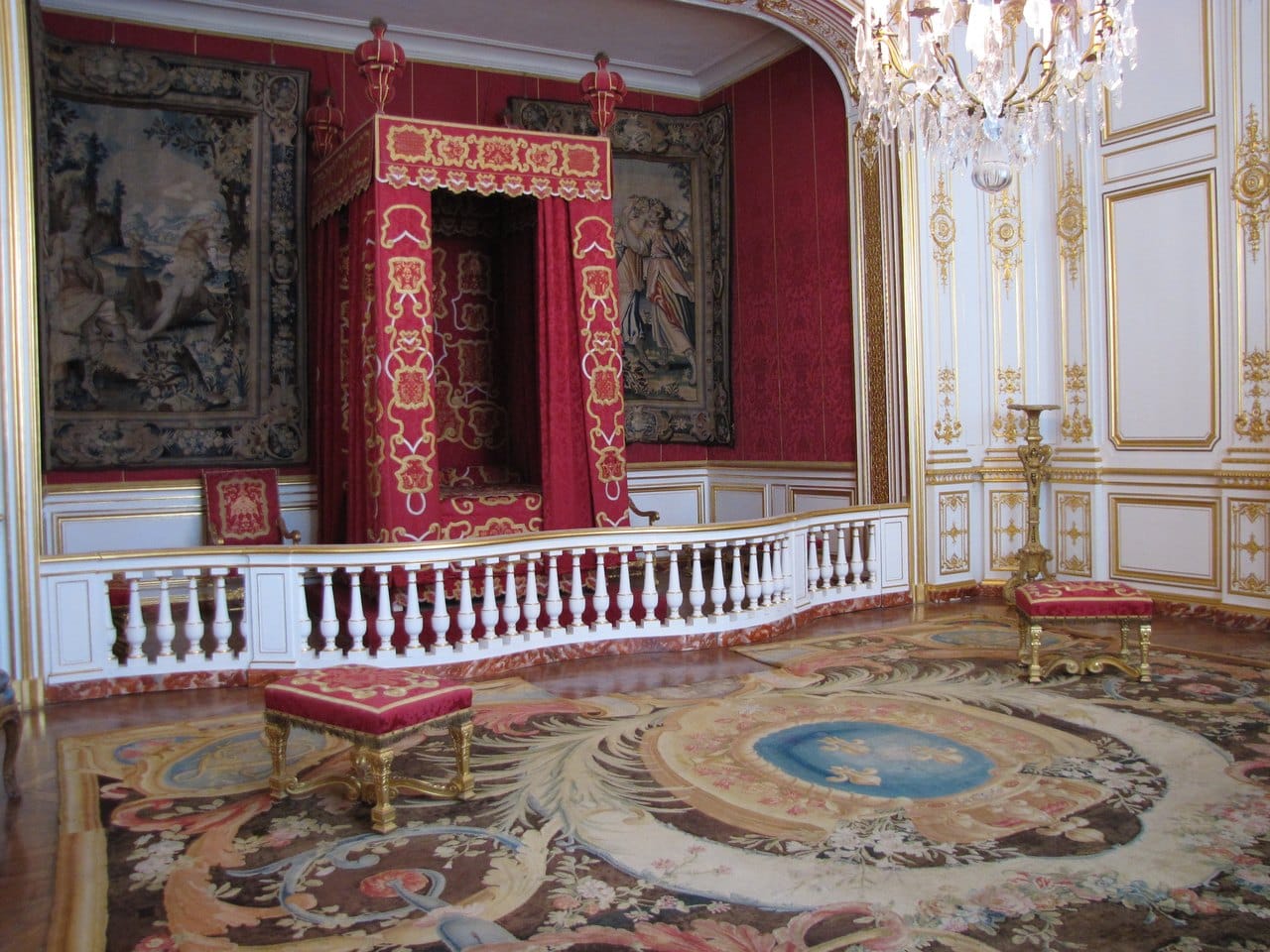
The eighteenth century brought two more notable residents. Stanislas Leszczyński, the deposed king of Poland and father-in-law of Louis XV, lodged at Chambord from 1725 to 1733 before settling into the duchy of Lorraine. Soon after, Louis XV granted the estate to Maurice de Saxe, the marshal who had won the great victory at Fontenoy in 1745. The sources differ on whether the grant came in 1745 or 1748 and on its exact legal form, but Saxe made the place his own with characteristic flamboyance, quartering his personal cavalry regiment in the surrounding park and drilling his horsemen across the open ground. His tenure was brief. The marshal died at Chambord on November 30, 1750; a persistent story has him falling in a duel, though the soberer accounts record a fever.
Revolution, Neglect, and the State
The French Revolution treated Chambord roughly but not fatally. Its furnishings were sold off in 1792 and the building was stripped of much that could be carried, yet the fabric survived where many noble houses did not. Napoleon handed the estate to one of his marshals, Louis-Alexandre Berthier, in 1809. Then, in 1821, a national public subscription bought Chambord as a gift for the infant Duke of Bordeaux, grandson of the future Charles X, who took from it the title Comte de Chambord.
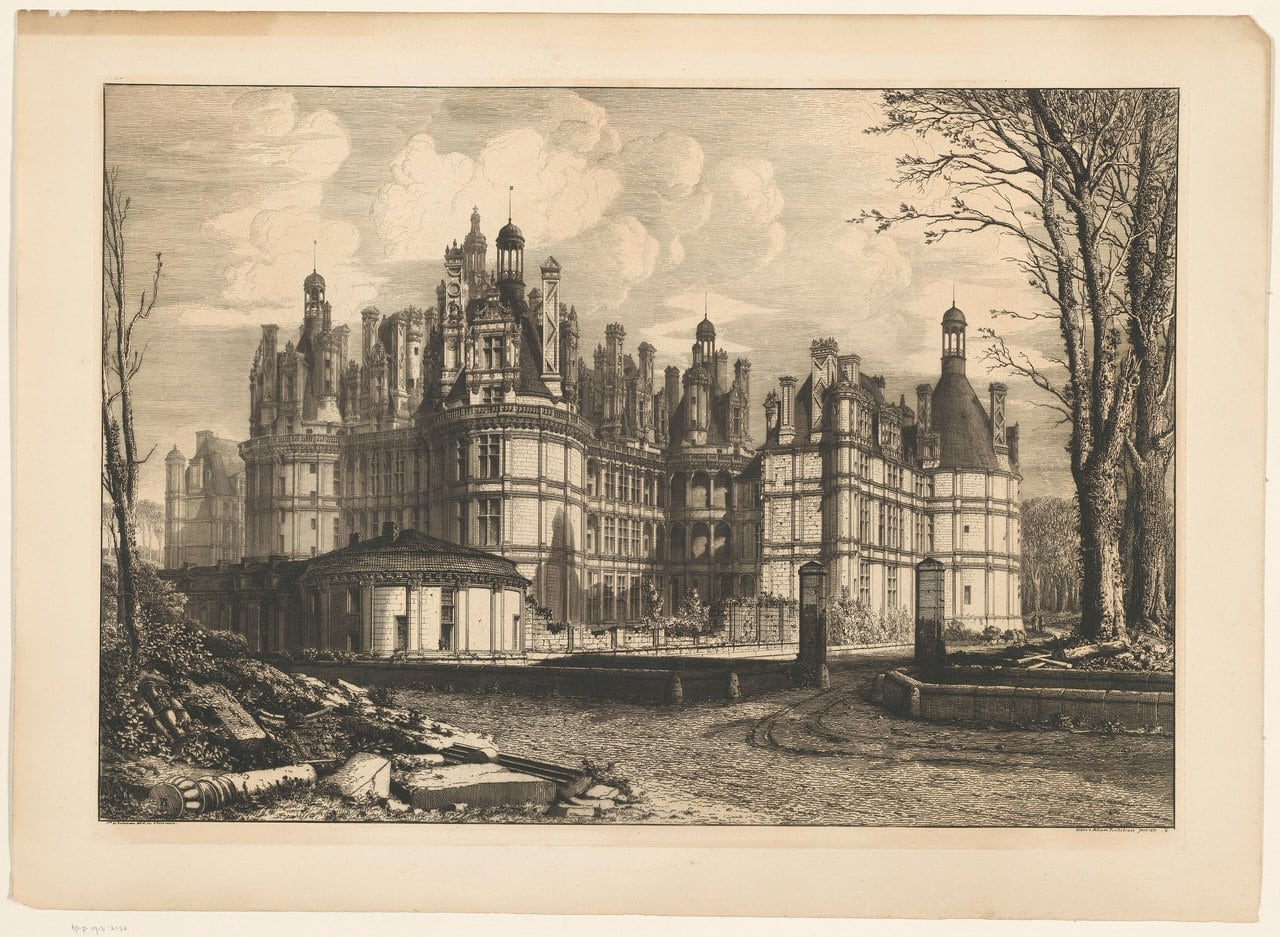
That prince, Henri d’Artois, became the last serious Bourbon claimant to the French throne. He set foot in his namesake château only briefly, in 1871, and is remembered less for living there than for the manifesto, issued in part from Chambord, in which his insistence on the white flag of the old monarchy helped sink his own restoration. After his death in 1883 the estate passed to relatives of the house of Bourbon-Parma. It was placed under state sequestration during the First World War, owing to the Austrian allegiance of its heirs, and the French State became the owner by 1930, beginning the long work of repair that an absentee century had made necessary.
A Wartime Ark and a Living Estate
Chambord’s strangest chapter came with the Second World War. As conflict loomed in 1938 and 1939, Jacques Jaujard, head of France’s national museums, organized a vast evacuation of the country’s art treasures into châteaux far from the cities and the expected bombing. The Louvre closed on August 25, 1939, and three days later the Mona Lisa left Paris bound for Chambord, traveling in a padded van among dozens of other masterpieces. The whole operation ran in near secrecy and at speed, with convoys moving by night to stay ahead of the advancing front. Over the following years the château became the largest of the eighty-three depots in the scheme. By June 1944 some four thousand cubic meters of crates filled its halls, holding works that included Delacroix’s Liberty Leading the People and the medieval tapestries of The Lady and the Unicorn. Curators and guards lived alongside the collections, monitoring damp and temperature in rooms built for kings. Leonardo’s most famous painting did not stay the whole war, moving on to other refuges further south, but for a time the empty palace of a Renaissance king served as an ark for the art of France.
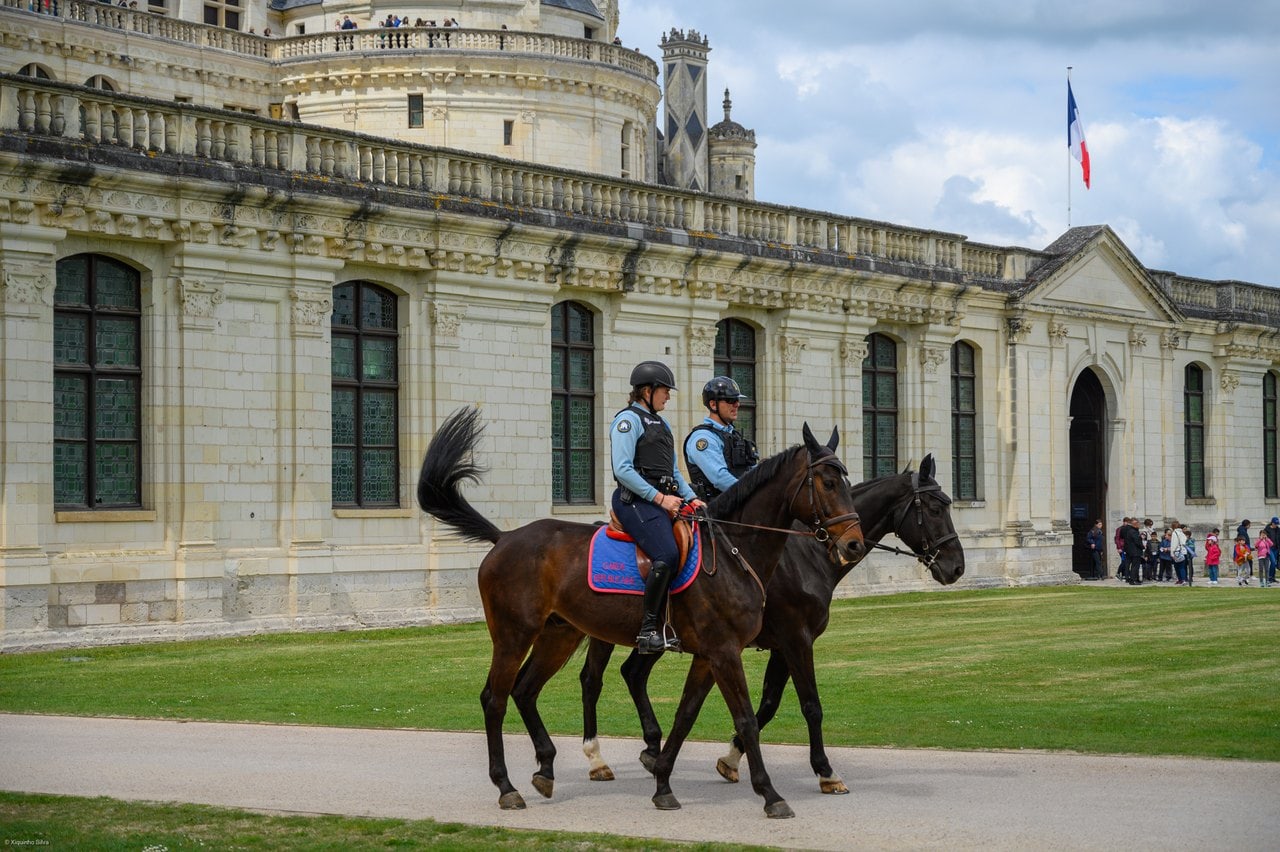
Peace returned the building to public life. Since 2005 it has been run as a national public estate, placed formally under the high protection of the President of the Republic, with responsibility shared among the ministries of culture, agriculture, and the environment. In 2017 its formal French gardens, lost over the centuries, were re-created from seventeenth- and eighteenth-century plans, restoring a band of clipped parterres and lawns along the north and east fronts. The wider domain, about 5,440 hectares ringed by a thirty-two-kilometer wall, remains the largest enclosed park in Europe, a working forest and game reserve as much as a tourist attraction. The estate now doubles as a site of ecological management and research, its woods a refuge for red deer, wild boar, and birds of prey as much as a backdrop for the château. Chambord’s heritage standing reflects this long importance. It was placed on France’s very first list of historic monuments in 1840, inscribed by UNESCO in its own right in 1981 under the criterion of unique artistic achievement, and then folded, in 2000, into the broader World Heritage landscape of the Loire Valley between Sully-sur-Loire and Chalonnes, recognized under criteria one, two, and four and carrying the reference number 933.
Visiting Château de Chambord
Chambord lies in the commune of the same name in Loir-et-Cher, about fifteen kilometers east of Blois, the nearest town and the natural gateway to a visit. Drivers reach it from Paris in roughly two hours by the A10 motorway, from Orléans in about an hour and ten minutes, and from Tours in about an hour and a half. By train, the line from Paris-Austerlitz to Blois-Chambord takes around an hour and twenty minutes, and a seasonal château shuttle connects the station to the estate. Anyone with time to spare can pair Chambord with Blois or Chenonceau in a single day out from the valley. Entry tickets and local tours can also be booked in advance through GetYourGuide.
The château opens every day except January 1 and December 25. In the low season, from early January to late March and again from late October into December, it admits visitors from 9 a.m. to 5 p.m.; in the high season, from late March to late October, hours extend to 6 p.m. During the quiet winter weeks the building closes on several Mondays, so off-season visitors should check the calendar before setting out. Last admission falls thirty minutes before closing, and the formal gardens close half an hour ahead of the building.
A new and openly experimental fare structure took effect on January 14, 2026, with two tiers. Residents and nationals of the European Economic Area pay 21 euros for the château and gardens, while other international visitors pay 31 euros; the reduced rates are 18.50 and 28.50 euros respectively. Admission is free for visitors under eighteen and for European nationals aged eighteen to twenty-five. Parking sits apart from admission and is paid on site, at around eight euros a day for a car. Because the operator describes the pricing as a trial, it is worth confirming the current rates on the official site before a visit.
Inside, the route leads up the double-helix staircase, through the royal apartments with their sculpted vaults and the museum collections, and out onto the great roof terrace, the finest vantage on the chimney-scape and the surrounding forest. A permanent exhibition recounts the wartime years when the building sheltered the nation’s art. Beyond the walls, the park rewards a longer stay. Visitors can explore it on foot, by bicycle, by rowing boat on the canals, or on a guided four-by-four tour of the game reserve, where red deer and wild boar still roam; in autumn the bellowing of rutting stags carries across the woods. An equestrian and raptor show plays through the warm months, and a music festival fills the grounds each July. Restaurants, a café, and a boutique cluster at the foot of the château for those making a day of it, and the quietest light falls early on a weekday morning or in the golden hour before closing. Anyone staying overnight can compare hotels in and around Chambord.
Some links on this page are affiliate links, which means StoneKeep Atlas may earn a small commission, at no extra cost to you, if you book through them.
More Views of Château de Chambord
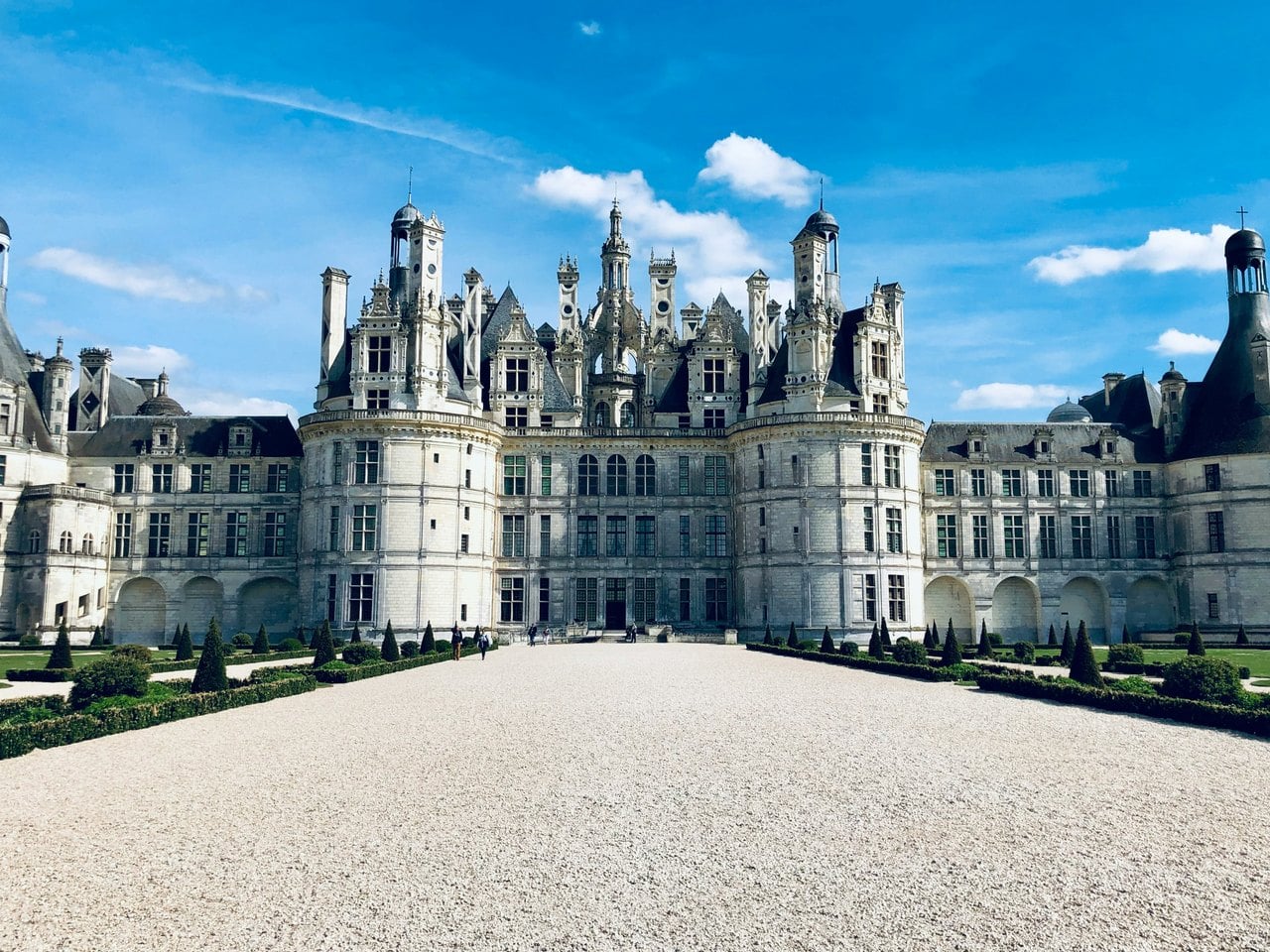
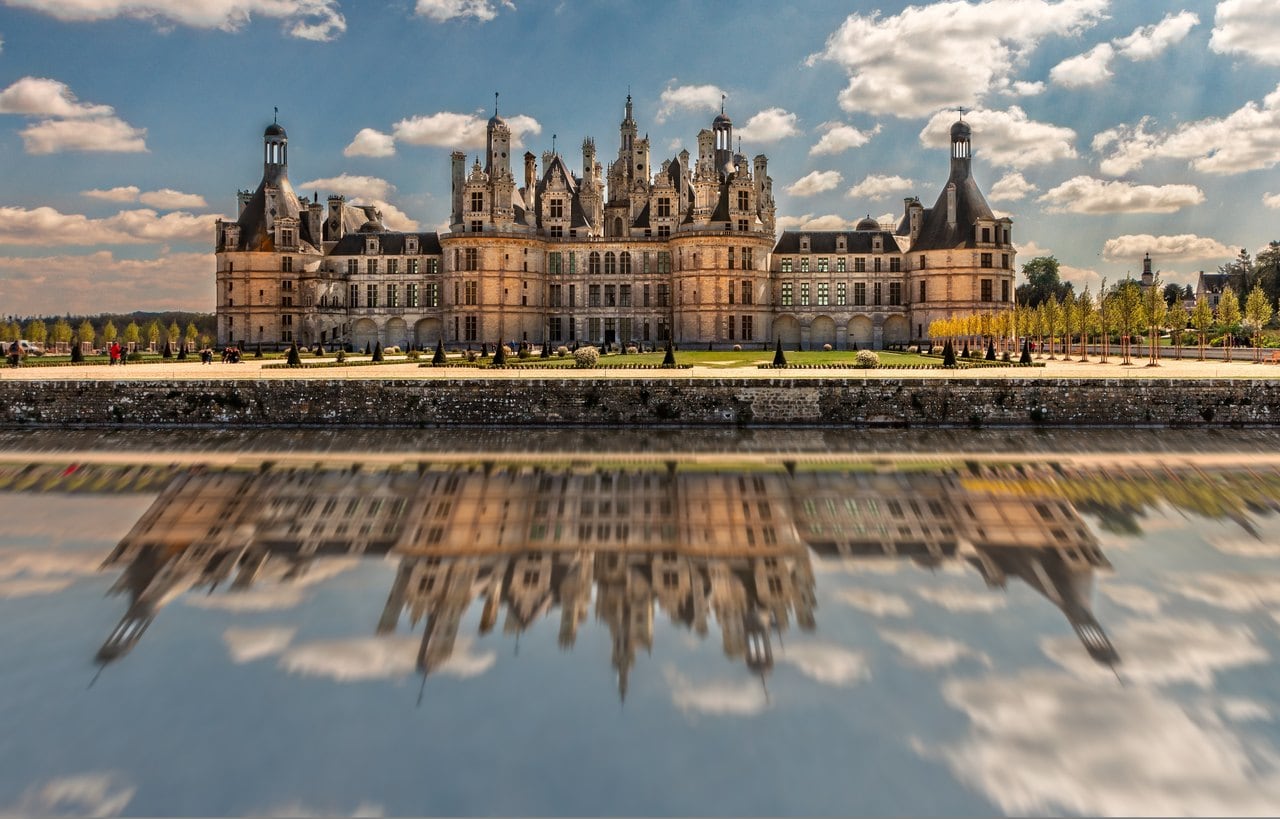
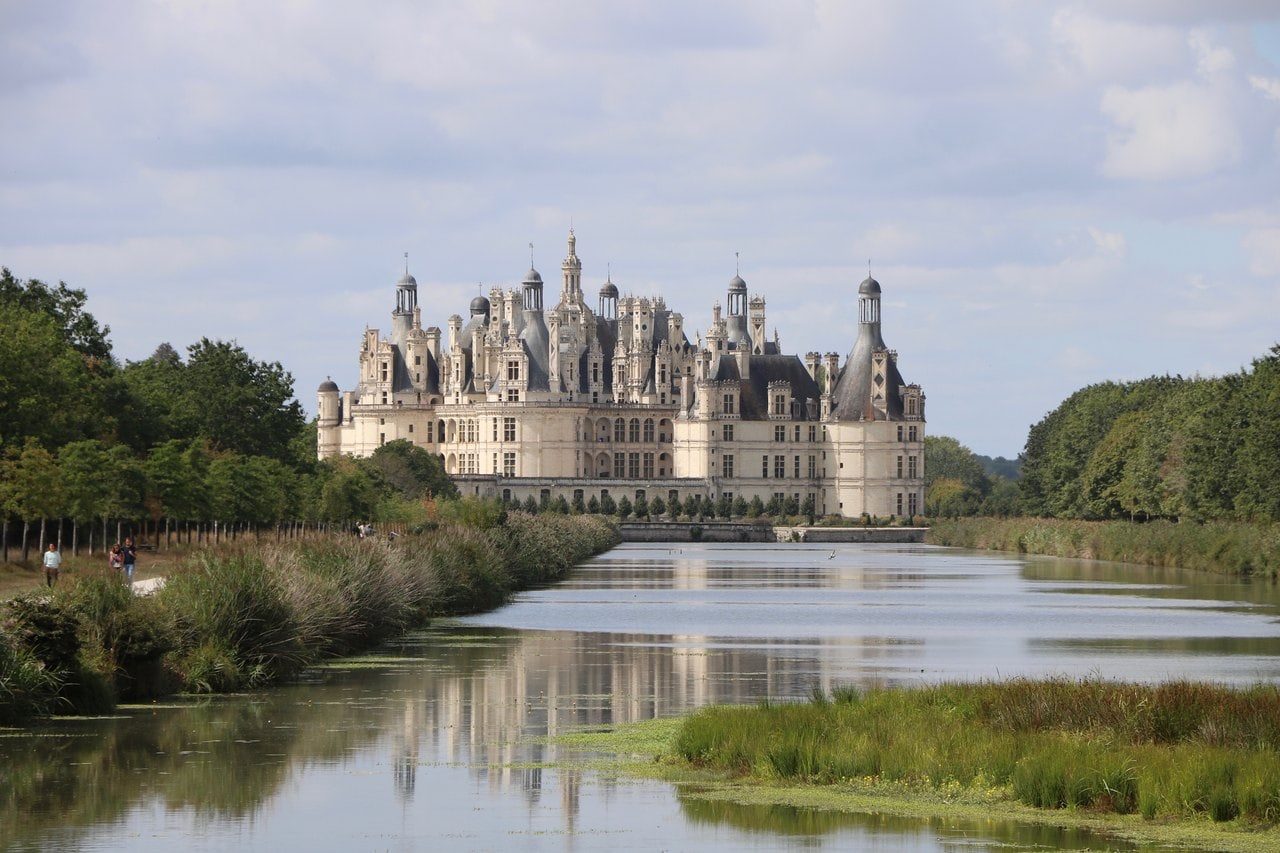
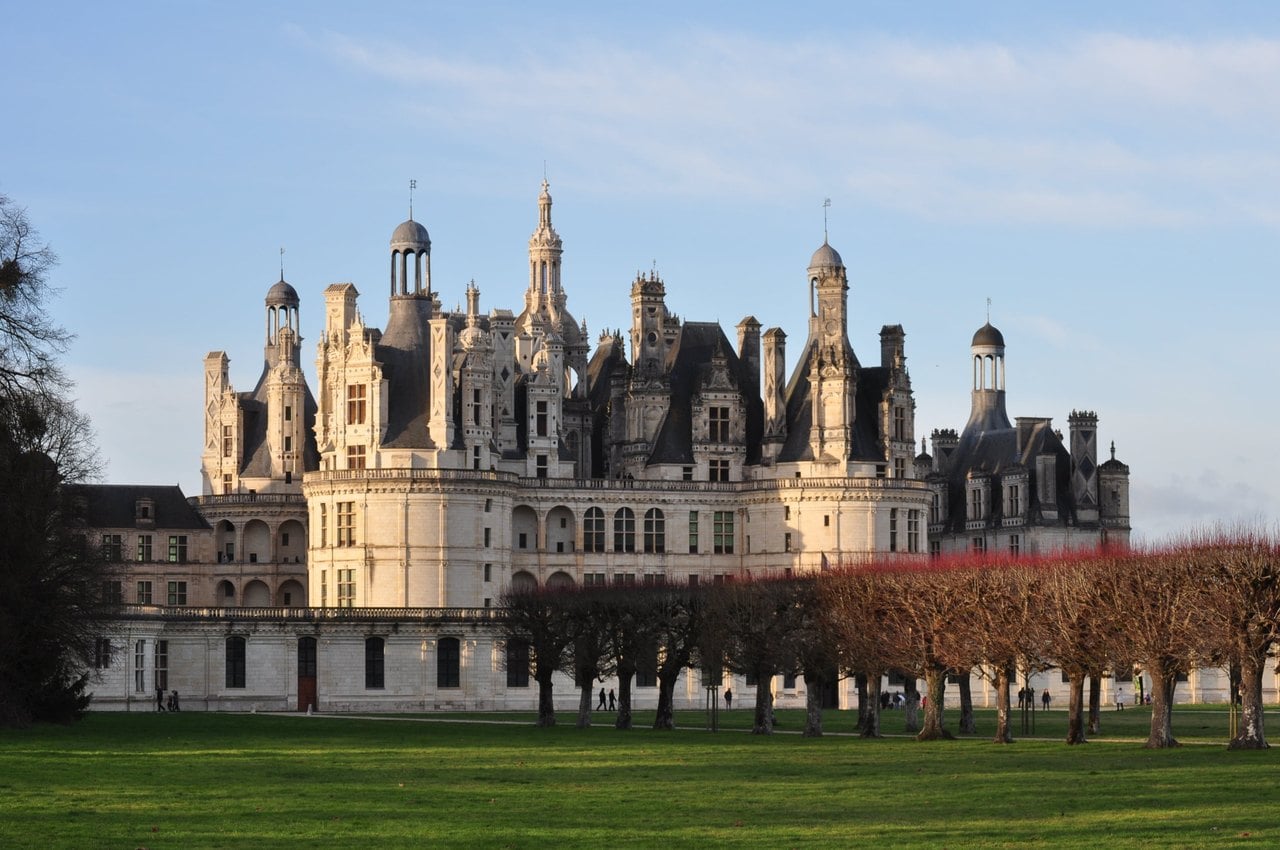
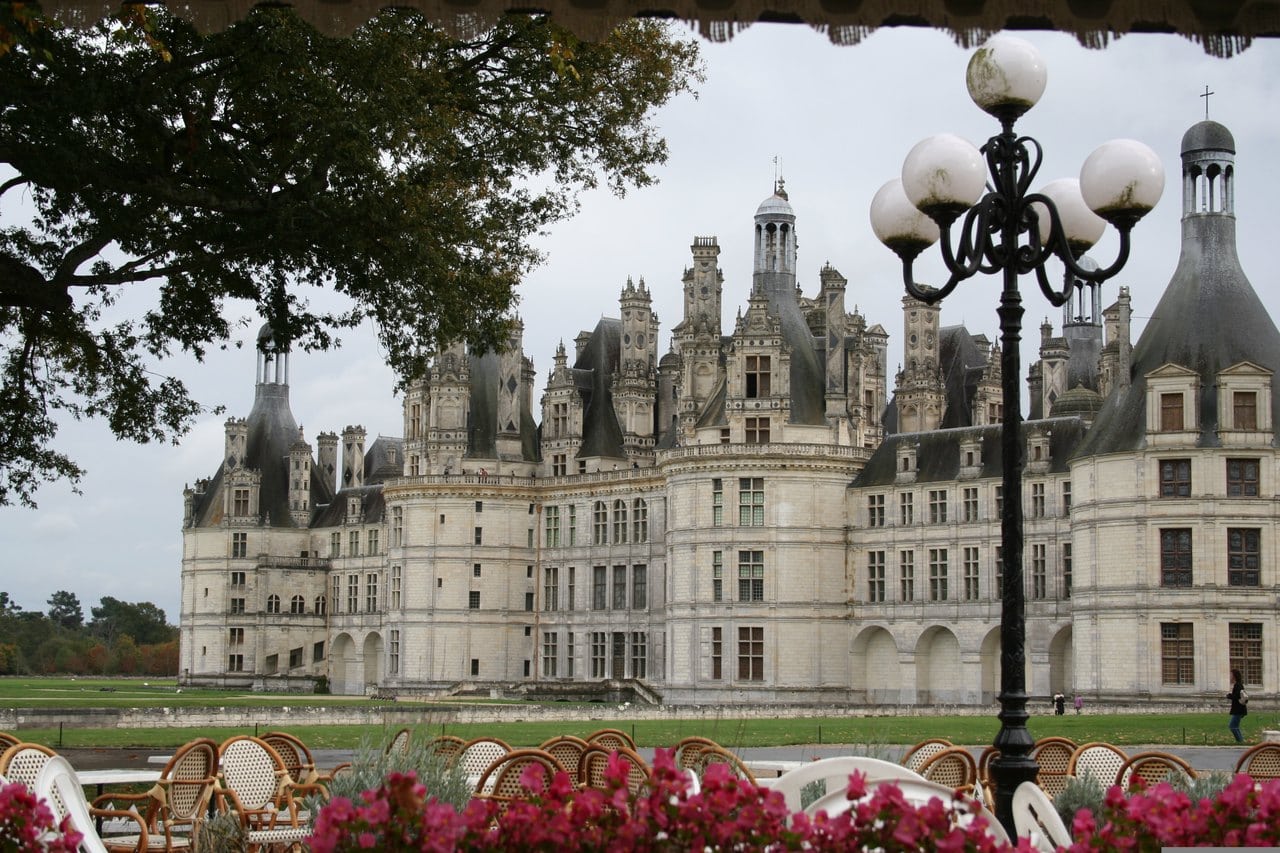
A closer look at Chambord across the seasons and from every angle: the rooftop forest of chimneys, the symmetrical façades, and the great keep mirrored in the waters of the park.
Beyond Chambord
Chambord is the grandest single statement of the Loire Renaissance, but it is one chapter in a much longer story written along the river. Within an easy drive lie Blois, with its royal château of four contrasting wings; Chenonceau, arched gracefully over the Cher; Chaumont-sur-Loire, perched on a bluff above the river and now famous for its garden festival; Amboise, where François I held court and where Leonardo spent his final years; Villandry, whose re-created Renaissance gardens are among the most famous in France; and the elegant moated retreat of Azay-le-Rideau. Read together, these houses trace the moment when the fortified castle of the Middle Ages gave way to the pleasure palace of the Renaissance, and Chambord marks the point where that ambition reached its most extravagant height. As StoneKeep Atlas extends its coverage south from Germany into France, the great châteaux of the Loire are the natural next ground to explore. South of Blois, Cheverny answers Chambord’s vast unfurnished halls with the most completely furnished interiors in the valley, kept by the family that built them. A century later, the royal court that still moved among houses like Chambord would settle for good at the Palace of Versailles. For the wider picture, our guide to the Châteaux of the Loire Valley sets Chambord beside its eight great neighbors. Chambord’s forest of towers and turrets also earns it a place among the fairytale castles in France, the châteaux that look straight out of a storybook.
Chambord has an episode of its own, and it is indexed with the whole series.
Common Questions
How do I get to Chambord?
Chambord lies in Loir-et-Cher, about fifteen kilometers east of Blois. Drivers reach it from Paris in roughly two hours by the A10 motorway, from Orleans in about an hour and ten minutes, and from Tours in about an hour and a half. By train, the line from Paris-Austerlitz to Blois-Chambord takes around an hour and twenty minutes, and a seasonal chateau shuttle connects the station to the estate.
When is Chambord open?
The chateau opens every day except 1 January and 25 December. In the low season it admits visitors from 9 a.m. to 5 p.m., and in the high season from late March to late October the hours extend to 6 p.m. During the quiet winter weeks it closes on several Mondays, so off-season visitors should check the calendar, and last admission falls thirty minutes before closing.
Can I combine Chambord with other châteaux?
Yes. Anyone with time to spare can pair Chambord with Blois or Chenonceau in a single day out from the valley, since all three sit within an easy drive of one another.
Conclusion
Few buildings wear their purpose as openly as Chambord. It was raised to impress rather than to shelter, and almost everything about it, from the impossible staircase to the rooftop town of chimneys, serves that single end. A king who spent only weeks within its walls left behind a structure that has outlasted his dynasty, the Revolution that nearly emptied it, and a world war it helped its country survive. The dream proved more durable than the dreamer, which may be the truest measure of the place.
Where to stay nearby: the Relais de Chambord sits inside the estate, about fifty metres from the château across the Cosson. See it in our guide to Castle Hotels in the Loire Valley.
Principal Sources
- Britannica, “Château de Chambord,” for corroboration of the design history and the attributions to Domenico da Cortona and Pierre Nepveu.
- Ministère de la Culture POP / Mérimée database, notice for the Domaine de Chambord (reference PA00098405), for the 1840 historic-monument listing and the protection history.
- Château de Versailles, performance records, for the première dates of Monsieur de Pourceaugnac and Le Bourgeois gentilhomme.
- Société Française d’Archéologie and the scholarship of Jean Guillaume, for the architectural analysis of the keep and the cautious treatment of the Leonardo attribution.
- UNESCO World Heritage Centre, “The Loire Valley between Sully-sur-Loire and Chalonnes” (reference 933), for the 1981 and 2000 inscriptions and their criteria.
- The Domaine national de Chambord (chambord.org) is the operator and the principal source throughout for the château’s history, architecture, estate figures, opening hours, and 2026 admission prices, with its history, architecture, and visiting pages consulted in June 2026.
Image credits. Hero and gallery photography by Dorian Mongel, Valentin, and Kathy Lipps (Unsplash); edmondlafoto, simgi, katiainfographiste, and alaingrand (Pixabay); and Carsten Steger (CC BY-SA 4.0). In-article images: the perspective elevation and plan engraved by Jacques Androuet du Cerceau (public domain); the double-helix staircase and hunting gallery by Krzysztof Golik (CC BY-SA 4.0); the carved vault panels by Gerd Eichmann (CC BY-SA 4.0); the state bedchamber by Shadowgate (CC BY 2.0); the nineteenth-century etching from the Rijksmuseum (CC0); and the Garde républicaine by xiquinhosilva (CC BY 2.0). All Creative Commons and Wikimedia images are used under their respective licenses. Freely licensed images are resized to fit; otherwise unaltered.