
Château de Vincennes
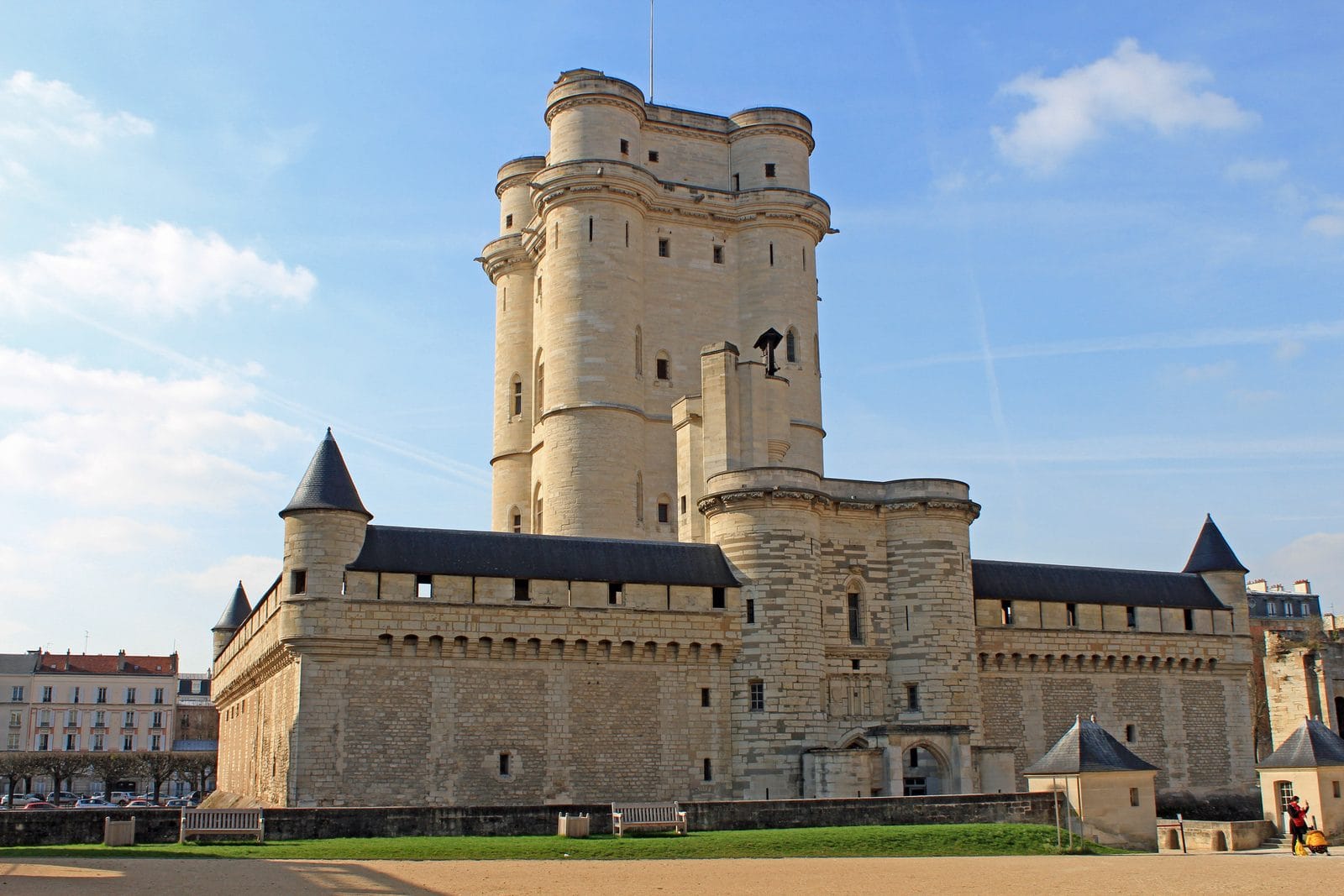
A few stops east of central Paris, at the end of the busiest Métro line in the city, a square tower climbs some 50 meters (about 165 feet) into the sky. It is the great donjon of the Château de Vincennes, the tallest surviving medieval keep in Europe, and it was built to be the most secure address in the kingdom. Charles V raised it in the 1360s as a fortified seat of government: a place to keep his treasure, his library, and, when Paris turned dangerous, himself. What makes Vincennes remarkable is not that it survived, but what it survived as. The same walls that housed a medieval king became, in turn, a royal sanctuary, a state prison, a porcelain works, a Napoleonic arsenal, and finally the archive of the French army. Power kept changing its costume at Vincennes. It never moved out.
Quick Facts
| Location | Vincennes, Val-de-Marne, Île-de-France, France |
| Built | Donjon built 1361–1369 (on foundations laid c. 1337), completed under Charles V |
| Architectural style | Gothic (donjon and chapel); 17th-century classical pavilions |
| Founder | Charles V (donjon and enceinte) |
| Donjon height | About 50 m (165 ft) — the tallest surviving medieval keep in Europe |
| Status | Monument historique; Domaine national |
| Current use | Museum; Service historique de la Défense |
| Management | French state, Centre des monuments nationaux |
| Getting there | Métro 1 / RER A (Château de Vincennes) |
| Admission (2026) | €13 full, €11.50 reduced; under-18 and EU 18–25 free |
| Hours | Daily 10:00–18:00 (21 May–22 Sep), 10:00–17:00 otherwise; closed 1 Jan, 1 May, 25 Dec |
| Official website | chateau-de-vincennes.fr |
A royal manor in the Bois de Vincennes
Long before the fortress, there was a forest. The Bois de Vincennes had been a royal hunting ground since at least 1178, when Louis VII established a manor among its oaks, an easy ride from the royal palace on the Île de la Cité. For the Capetian kings it was a retreat with the convenience of nearness: close enough to govern from, far enough to breathe. Philip Augustus enclosed the park and stocked it with game; his successors enlarged the lodge into something closer to a residence. It became a place where the dynasty’s whole life cycle played out: three kings of the doomed Capetian line died at the manor within twelve years, Louis X in 1316, Philip V in 1322, and Charles IV, the last of the direct line, in 1328.
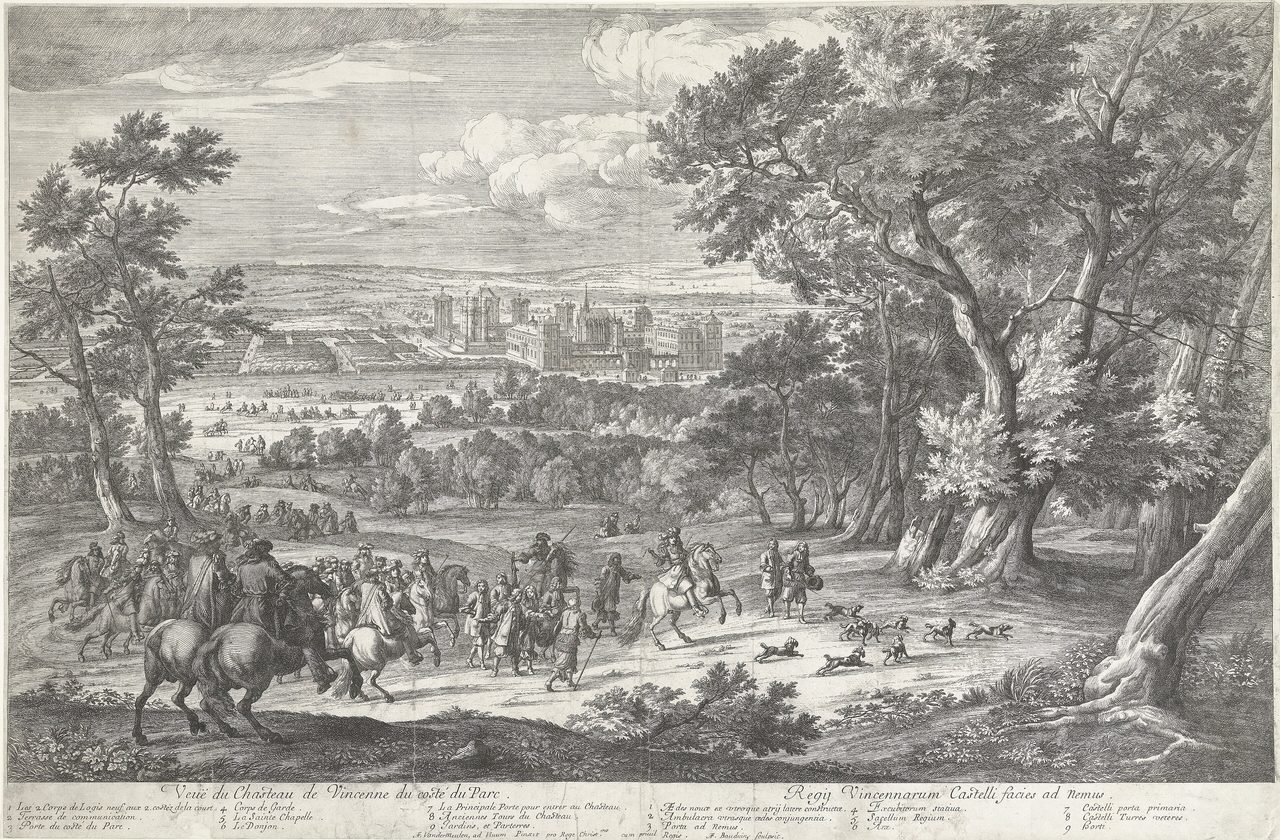
The most enduring image of medieval Vincennes belongs to Louis IX, the king the Church would canonize as Saint Louis. According to a tradition recorded by his companion Jean de Joinville, the king liked to sit beneath an oak in the wood at Vincennes and hear the petitions of ordinary subjects in person, dispensing justice without intermediaries. The oak is a tradition, not a documented fact, and no one can point to the tree. But the story stuck because it caught something true about the place: from the beginning, Vincennes was where French kings came to exercise power directly, away from the machinery of the capital. That instinct would soon be built in stone.
Charles V and the great donjon
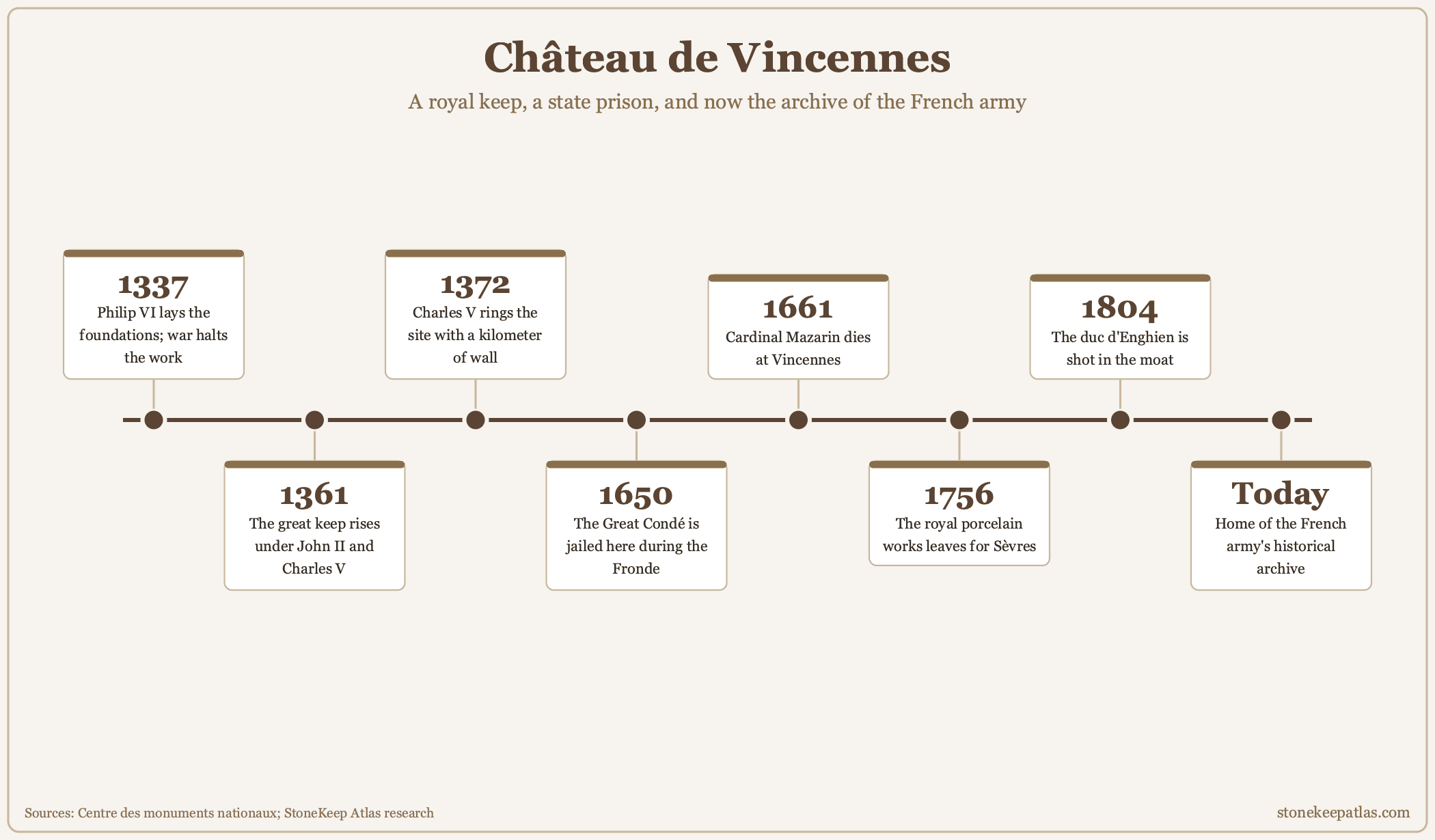
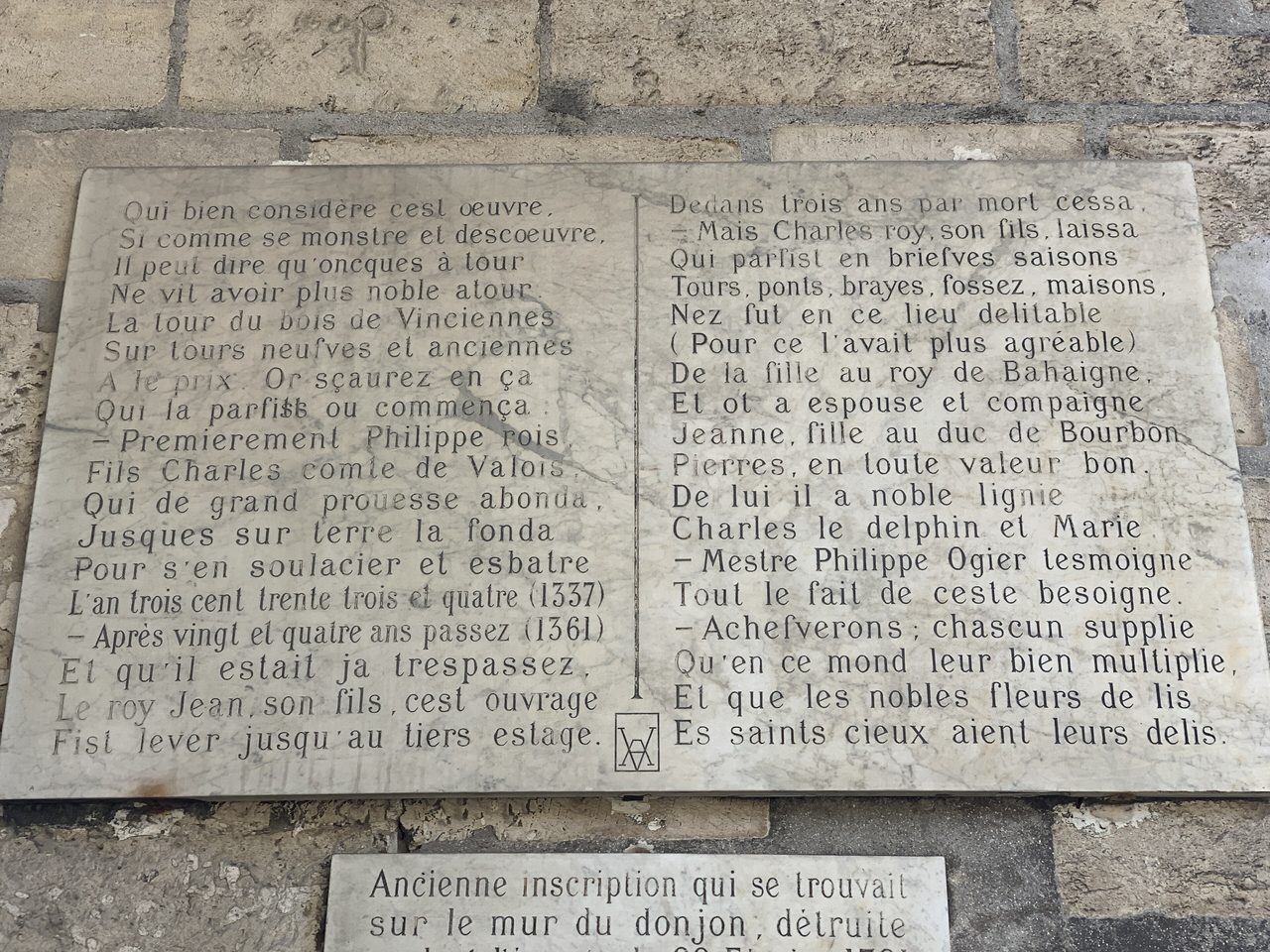
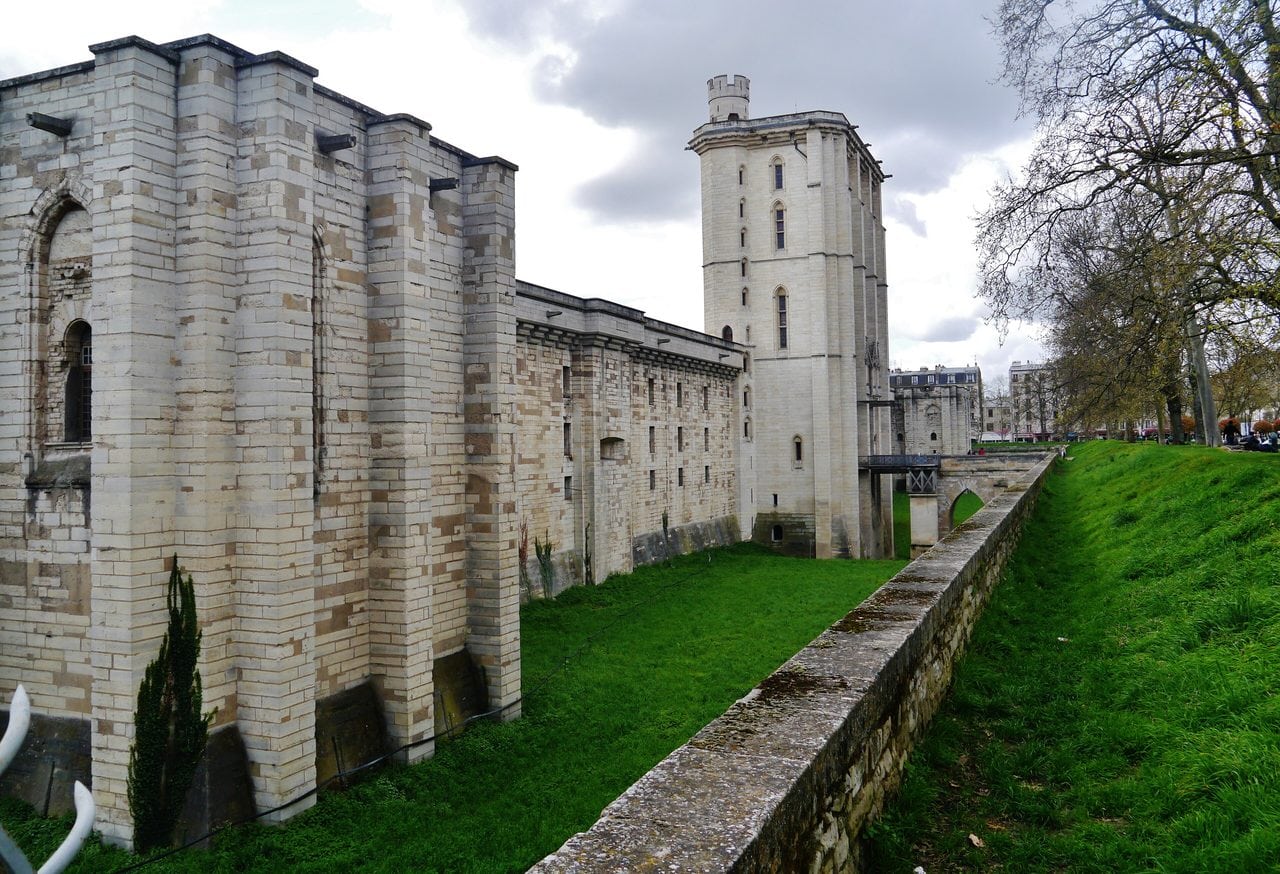
The tower that defines Vincennes had a long gestation. Philip VI laid its foundations around 1337, but the Hundred Years’ War soon halted the work. The great keep itself rose only from 1361, under John II and then his son Charles V, who moved into his apartments there in 1367 or 1368 while work went on around him. At roughly 50 meters above the courtyard floor (about 165 feet), rising through five stories beneath a rooftop terrace, the donjon is the tallest surviving medieval fortified keep in Europe, a record it still holds. Some accounts put it at 52 meters, measured from a lower base. It is a near-perfect square, about 16 meters on a side, with walls more than three meters thick at the base and a slender turret clasping each corner. Charles V’s masons laced the masonry with iron tie-bars to keep so much height from splitting under its own weight, an early feat of structural engineering hidden inside the walls. Inside, a spiral stair wound past vaulted chambers and the king’s study up to the royal apartments on the higher floors, a self-contained world stacked vertically behind walls no army of the day could breach.
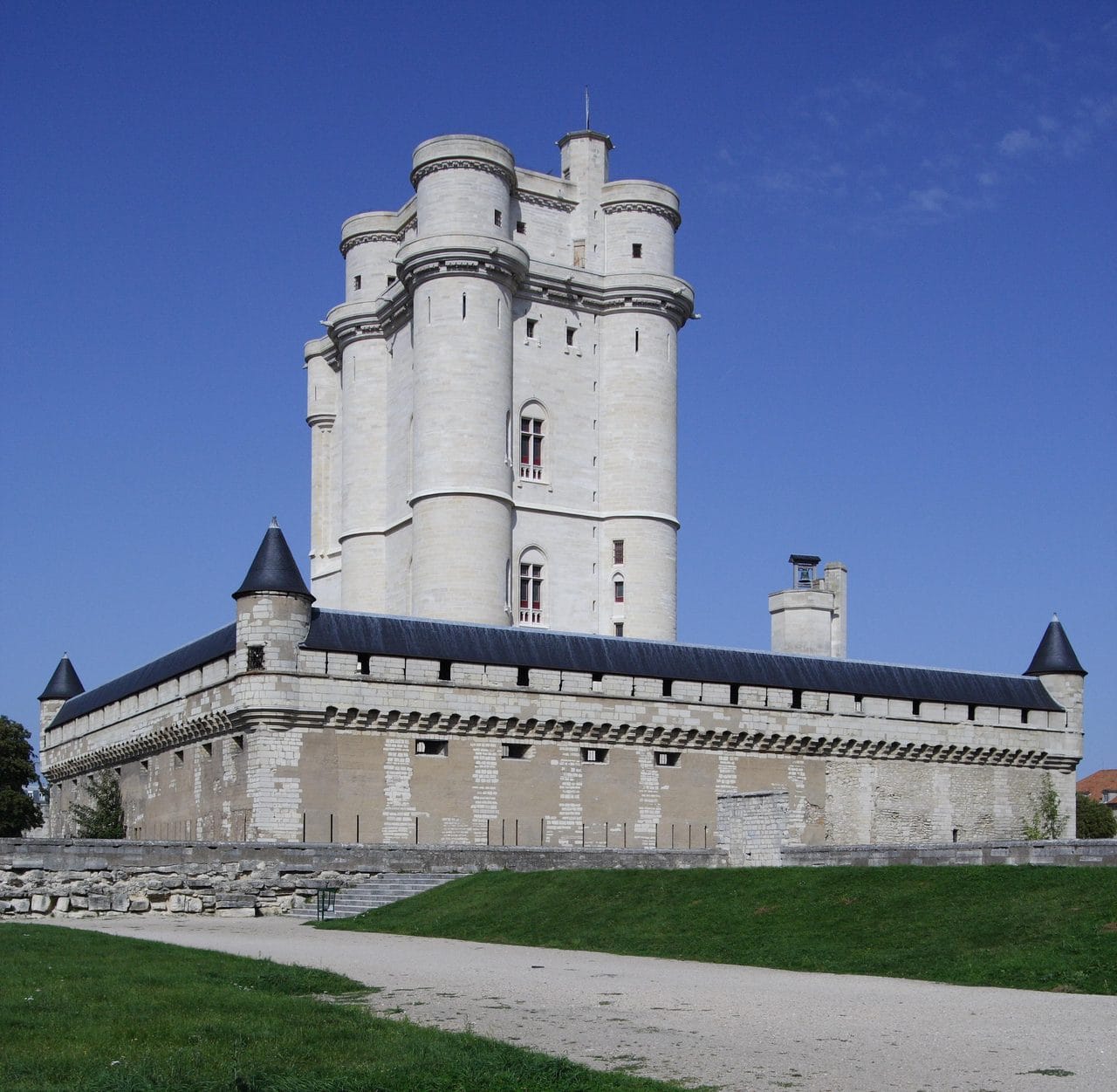
Charles V did not build the donjon as a last redoubt to retreat into during a siege. He built it to live and rule in. The upper floors held the king’s own apartments; one room served as his study and library, home to the royal manuscript collection that would help seed the future Bibliothèque nationale, alongside his treasure and works of art. Surrounded by its own walled enclosure, or chemise, and its own moat, the keep was a fortress within the fortress—the single most defensible address in France.
This was deliberate. Charles V, who had watched Paris erupt in revolt during his father’s captivity in England, wanted a fortified seat of government at the gates of the capital, a second center of the realm to set beside the old Palais de la Cité. The donjon was the heart of that vision: a working tower of state, equal parts citadel, treasury, and royal office. The kingdom would be governed, when it needed to be, from behind these walls.
The enceinte, the nine towers, and the Tour du Village
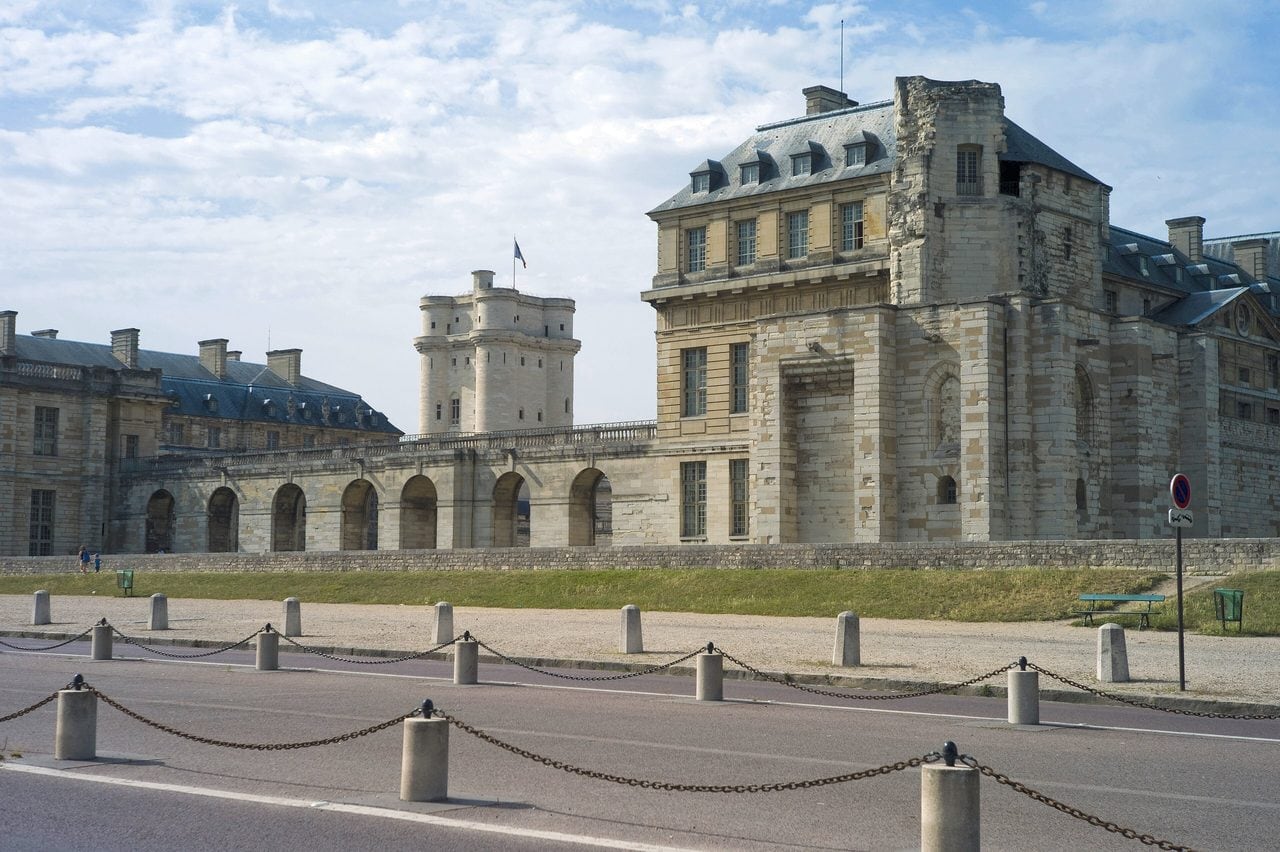
A tower, however tall, is not a capital. From 1372 Charles V threw a vast rectangular curtain wall around the donjon and the older royal buildings, more than a kilometer in circumference and completed by the 1380s. Nine towers studded the wall, and a single monumental gatehouse, the Tour du Village, controlled the entrance: a fortified châtelet that rose as a small keep in its own right, with rooms for the king’s secretaries set into its parapet. Within this enceinte Charles V intended a true palace quarter, courtyards and chapels and lodgings on a scale meant to rival anything in Europe.
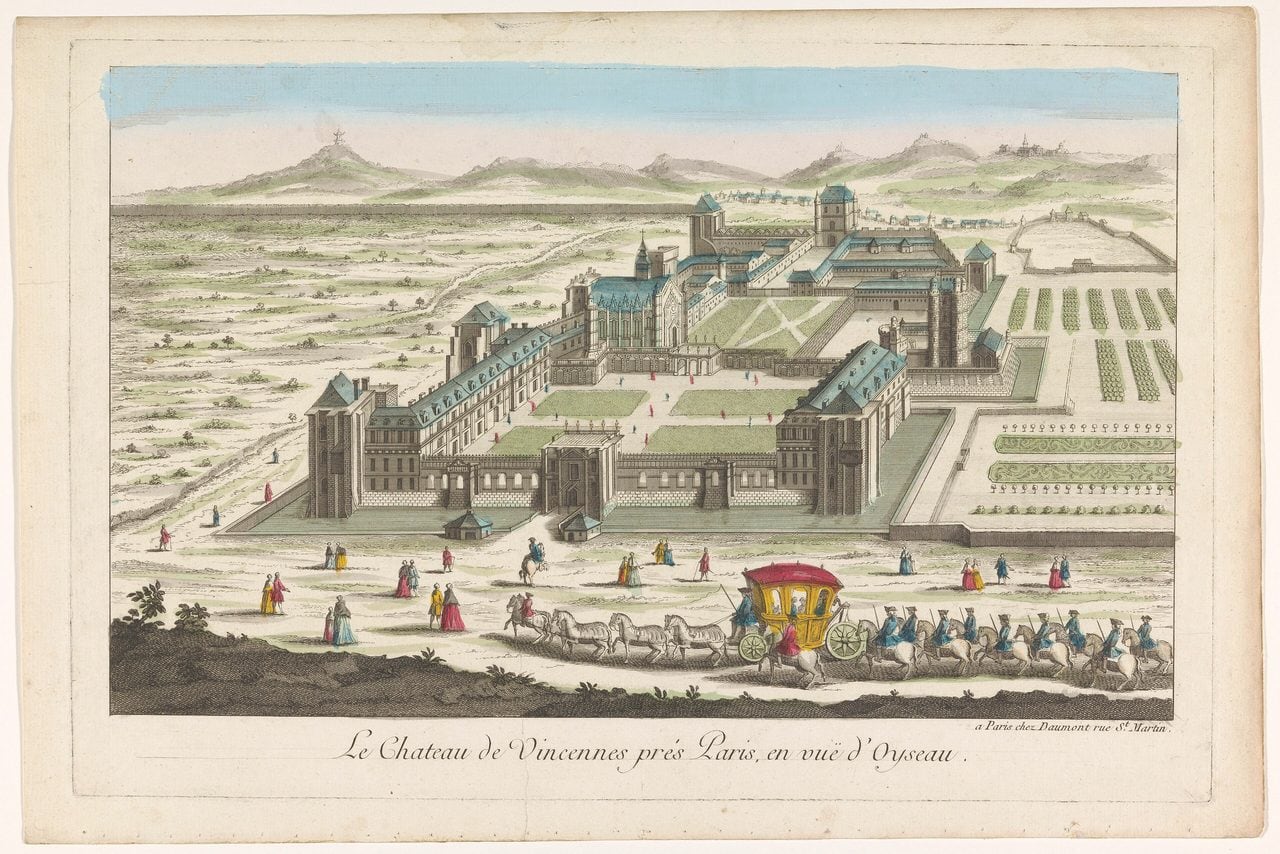
Much of that grand program was never finished, and the centuries were not kind to the walls. In the 19th century the army, which by then held the site, cut most of the nine towers down to the height of the curtain wall to mount artillery and clear fields of fire. Only the Tour du Village survives at close to its medieval height, which is why the gatehouse reads today as the most complete piece of Charles V’s fortifications. Even reduced, the enceinte is enormous. Vincennes remains the largest royal castle-fort still standing in France, a rectangle of medieval ambition whose full circuit, moat and all, you can still walk.
For a time this was less a castle than a capital in the making. The king’s council met behind its walls, the business of state was conducted in its halls, and Charles V governed the kingdom as much from Vincennes as from Paris itself. He had built himself a second seat of power, and he used it.
The Sainte-Chapelle de Vincennes
Charles V wanted his fortress to have a soul as well as a sword. In 1379 he founded a collegiate chapel within the walls, a Sainte-Chapelle modeled on the famous one Louis IX had built on the Île de la Cité to house relics of Christ’s Passion, and it joined a small family of royal Saintes-Chapelles built across France in the same tradition. Like its Parisian model, the Vincennes chapel was conceived as a jeweled reliquary in stone, though built on a single level rather than two.
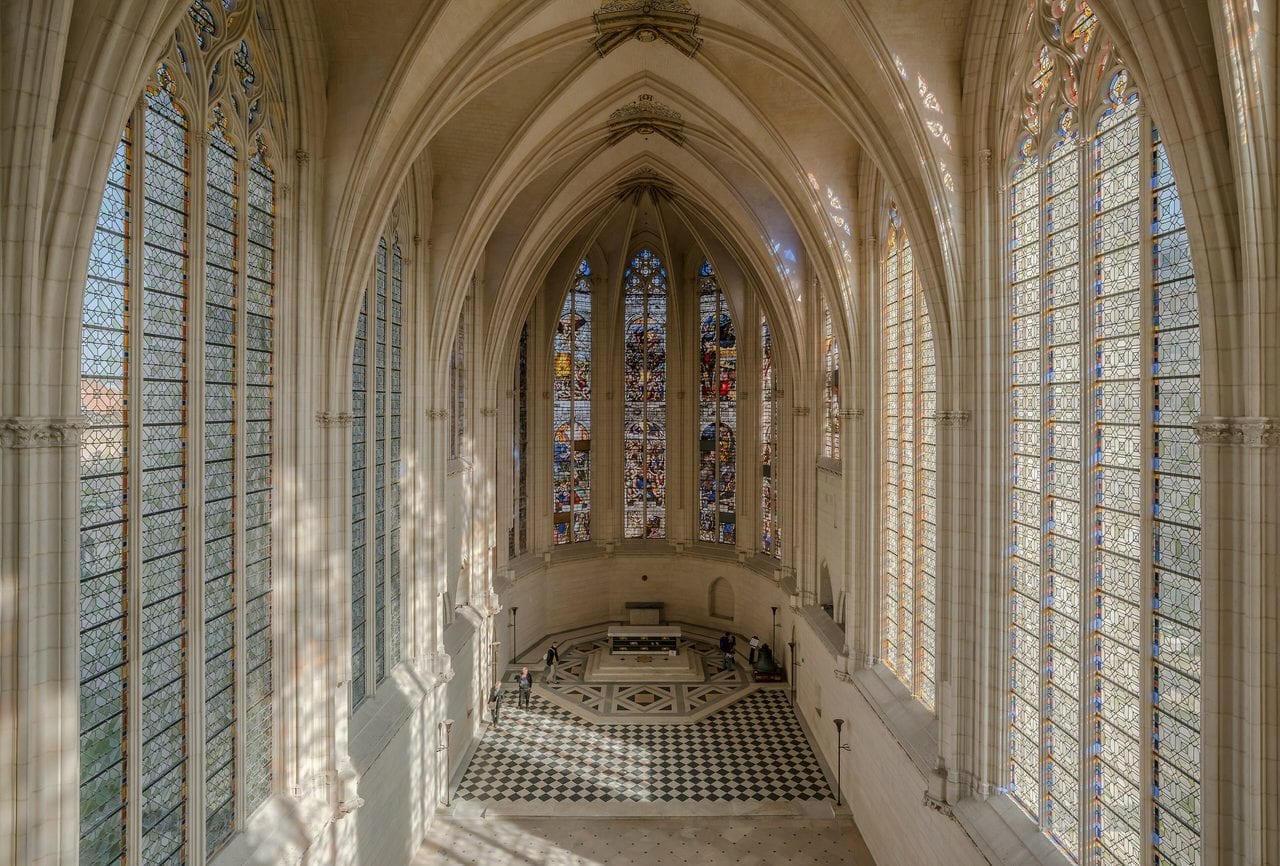
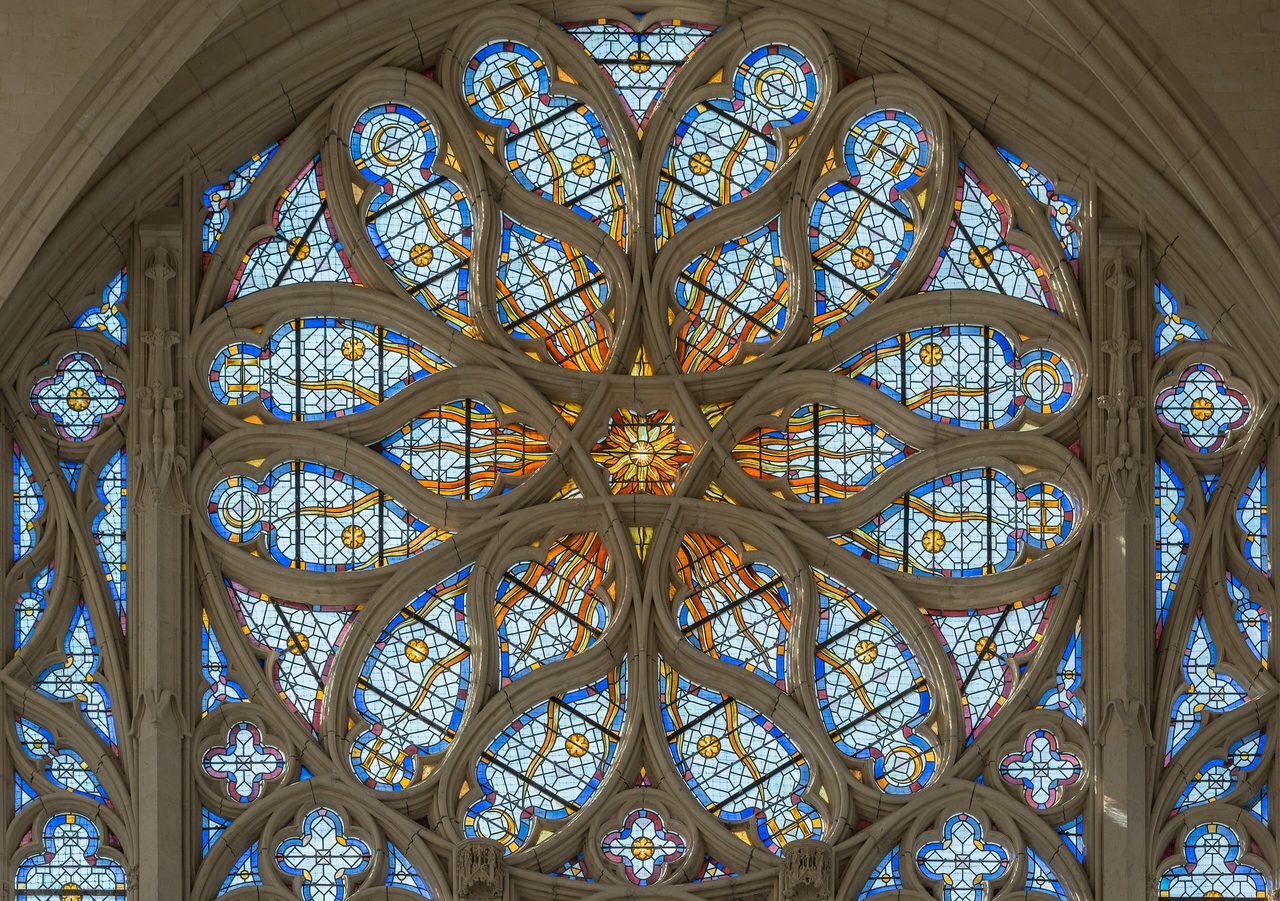
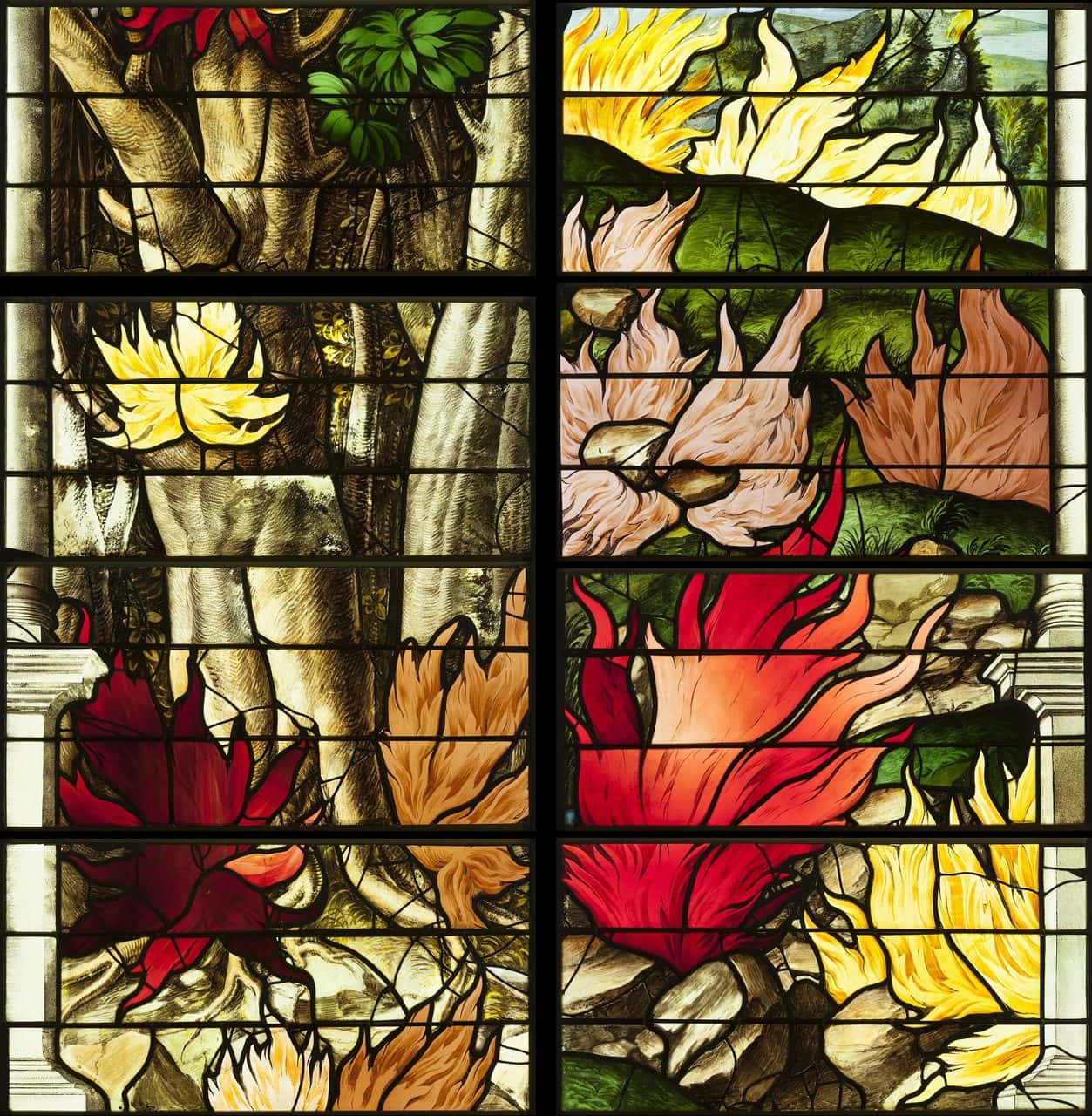
It took an extraordinarily long time to finish. Work crept forward through the upheavals of the 15th century and the Wars of Religion, and the chapel was not consecrated until 1552, under Henri II, more than 170 years after Charles V laid it out. The result is one of the finest examples of Flamboyant Gothic in the Paris region: a soaring single nave, deep buttresses, and a west front carved with the dense, flame-like ornament that gives the style its name. The glory of the interior is the stained glass of the choir, a vivid cycle of the Apocalypse of Saint John commissioned by Henri II and made between 1556 and 1559 by the master glazier Nicolas Beaurain. The chapel would later become a royal tomb of sorts: the remains of the duc d’Enghien, shot in the moat in 1804, were eventually brought to rest here. A fortress, a seat of government, and now a sanctuary, all inside one wall.
Sanctuary, Mazarin, and the classical pavilions
For three centuries Vincennes did exactly what Charles V designed it to do: it kept kings safe. When Henry V of England, master of northern France after Agincourt, fell ill on campaign, it was to Vincennes that he was carried, and here that he died on August 31, 1422, probably of dysentery, only weeks before he would have inherited the French crown. In times of trouble the French monarchy ran for the same walls. After Henri IV was assassinated in 1610, his young son the future Louis XIII was sheltered here; during the civil wars of the Fronde, the boy-king Louis XIV was brought to Vincennes to wait out the violence in Paris.
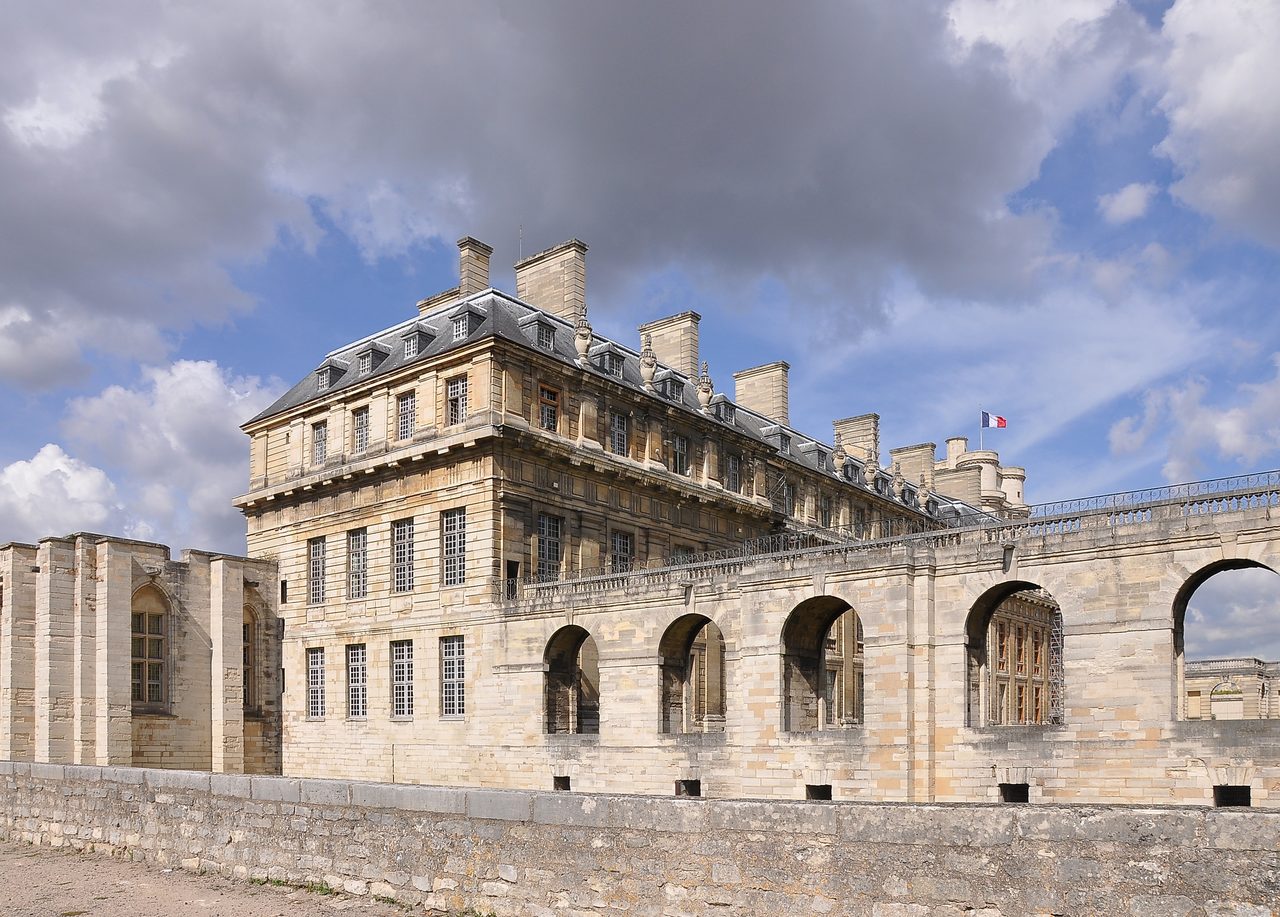
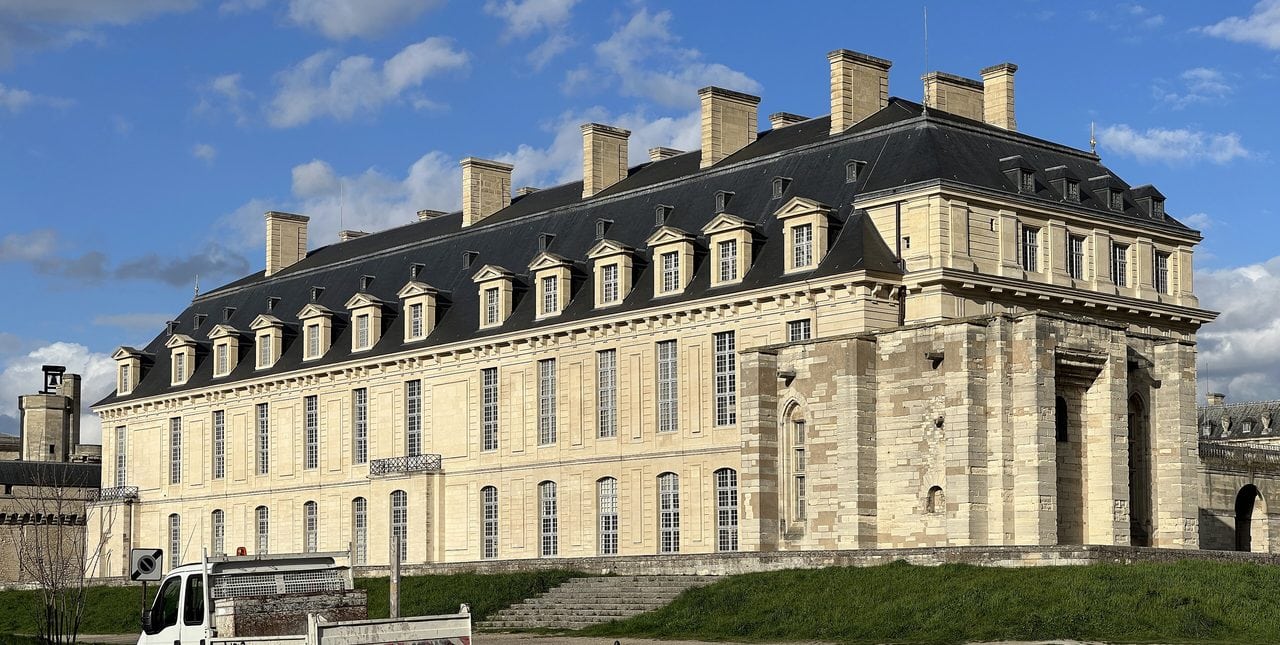
It was Louis XIV’s great minister, Cardinal Mazarin, who gave the old fortress a final golden age. Made governor of Vincennes in 1652, Mazarin commissioned the architect Louis Le Vau, who would soon design Vaux-le-Vicomte and a first Versailles, to build two elegant classical pavilions flanking the entrance court: the Pavillon du Roi and the Pavillon de la Reine, completed by 1661. For a few years the medieval citadel became a fashionable royal residence again, the young Sun King in residence with his court. Mazarin barely enjoyed it. He died at Vincennes on March 9, 1661, and his body lay in state in the Sainte-Chapelle. Within a generation the court’s center of gravity shifted west to the rising palace at Versailles, and by the 1680s Vincennes was a place the monarchy kept rather than lived in. The fortress had been outgrown, not abandoned. The French state would soon find new uses for it.
The fortress as state prison
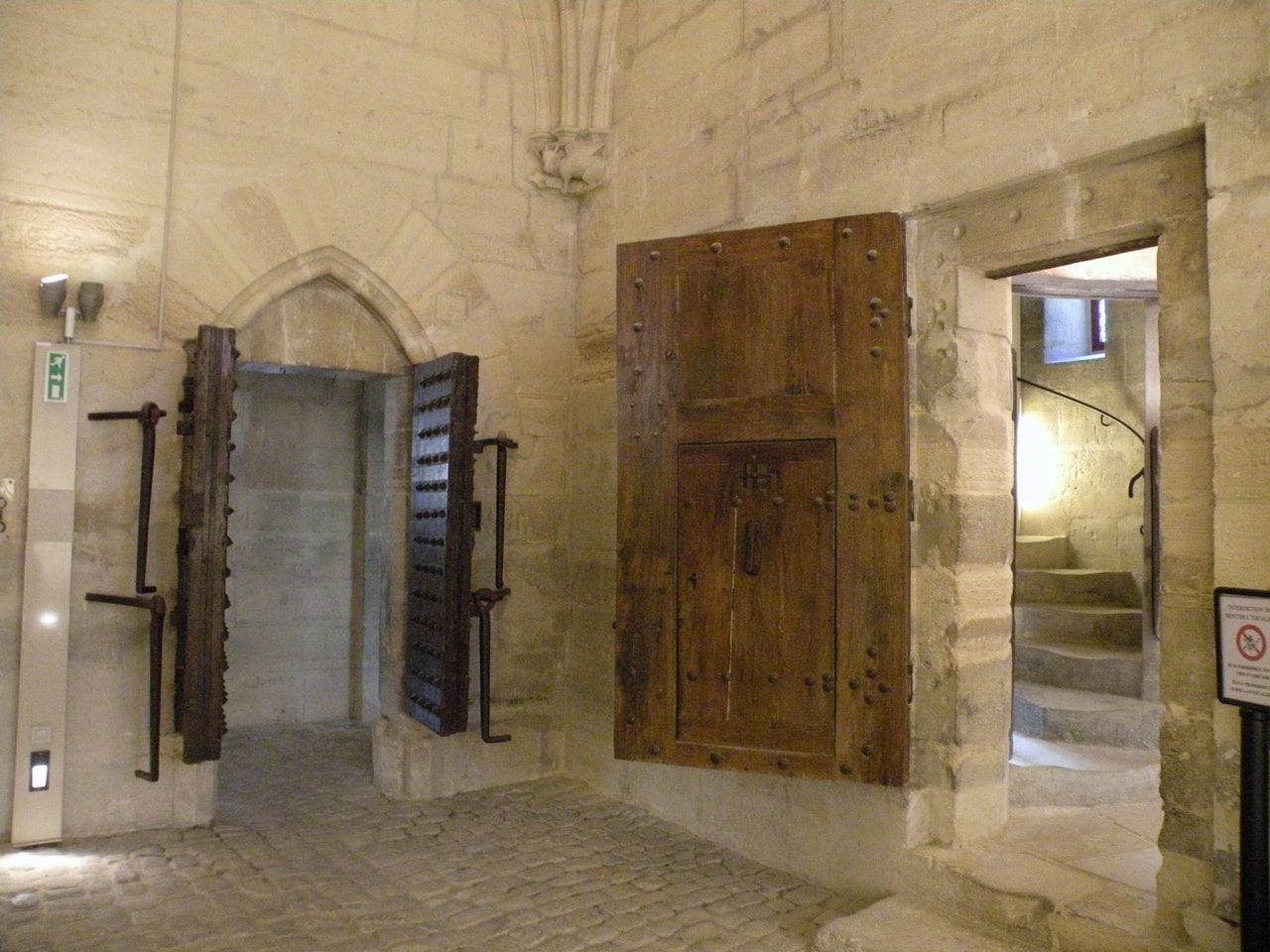
Even as kings stopped sleeping at Vincennes, the donjon found a grim second career. From the 15th century onward the great tower that Charles V had built to hold his treasure was used to hold prisoners of the crown, and over the next three hundred years it became one of the most feared addresses in France, a rival to the Bastille as a symbol of justice exercised in secret and without appeal.
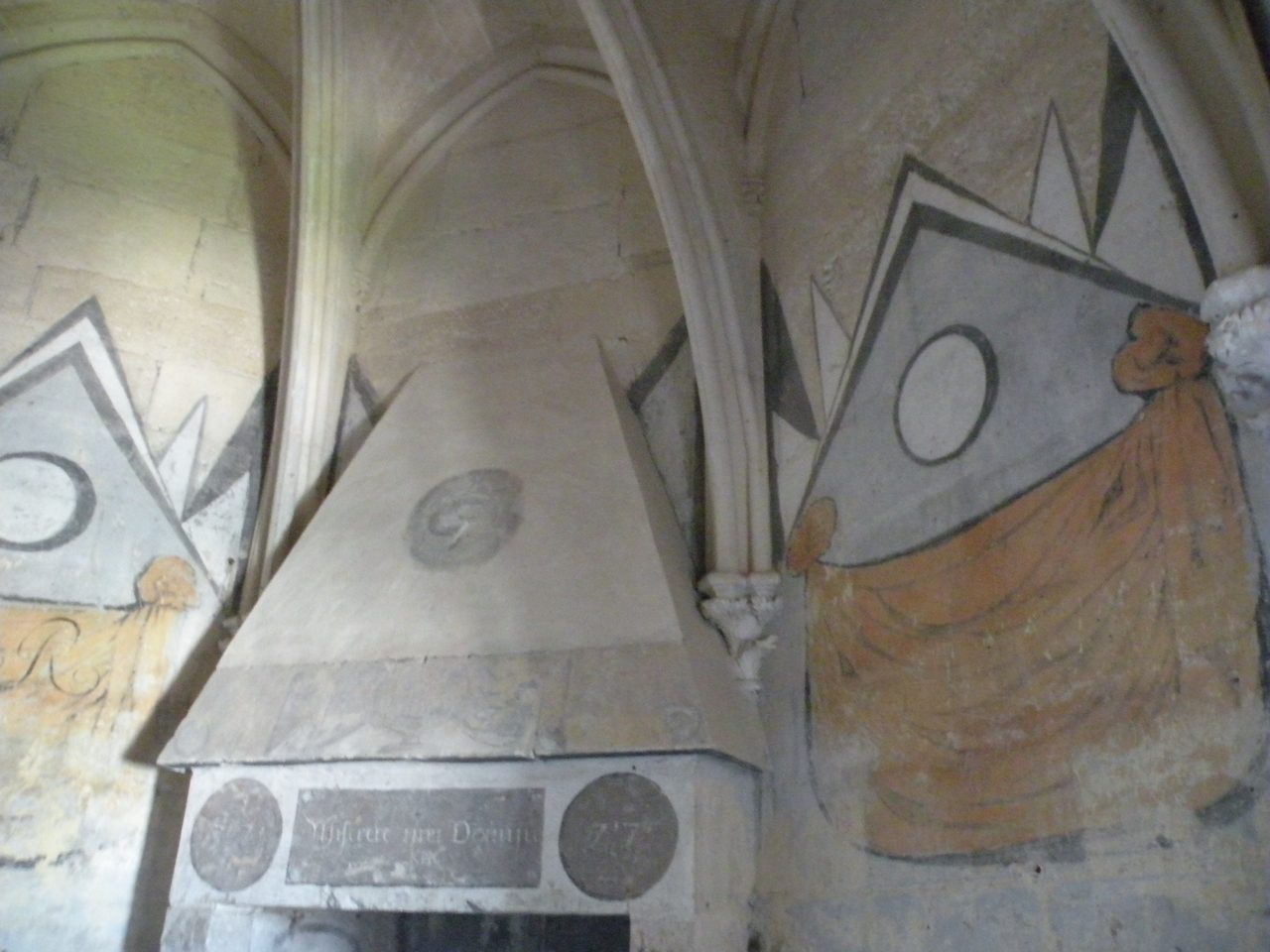
The roll of inmates reads like a history of French dissent and disgrace. The Great Condé, first prince of the blood, was locked up here in 1650 during the Fronde. Nicolas Fouquet, Louis XIV’s fallen finance minister, passed through the donjon in 1661 on his ruinous journey to a life sentence. The philosopher Denis Diderot was confined at Vincennes in 1749 for a book the authorities judged irreligious; it was on the summer road out to visit him in prison that Jean-Jacques Rousseau is said to have had the sudden flash of inspiration that launched his career as a writer. Later came the Comte de Mirabeau, a future voice of the Revolution, who was shut up here in the 1770s on a lettre de cachet his own father had obtained, and who used his confinement to write a blistering attack on the very system of sealed orders that held him. Mirabeau already knew the experience: a few years earlier his father had had him locked away on Château d’If, the island fortress off Marseille, under the same kind of sealed order. There was the Marquis de Sade too, who was moved from Vincennes to the Bastille only a few years before the mob tore that prison down. Many inmates left their mark literally, scratching names, dates, and laments into the stone of their cells, graffiti a visitor can still read today.
What made the prison so frightening was not its walls but its silence. A lettre de cachet, a sealed royal order, could put a man behind them indefinitely, with no charge and no trial. The donjon was absolute power made architecture: the same tower, serving the same state, that had once guarded the king’s gold now guarded his enemies.
Porcelain, arsenal, and the duc d’Enghien
The 18th century gave Vincennes its strangest tenant. In the 1740s a porcelain workshop set up inside the walls under royal protection, producing a fine French soft-paste to rival Meissen and Chantilly, all delicate flowers and figurines. The Vincennes manufactory outgrew the site within a decade and moved, in 1756, to a new home at Sèvres, where it became the most famous porcelain works in Europe. For a few years the medieval fortress of the Valois had been a luxury factory.
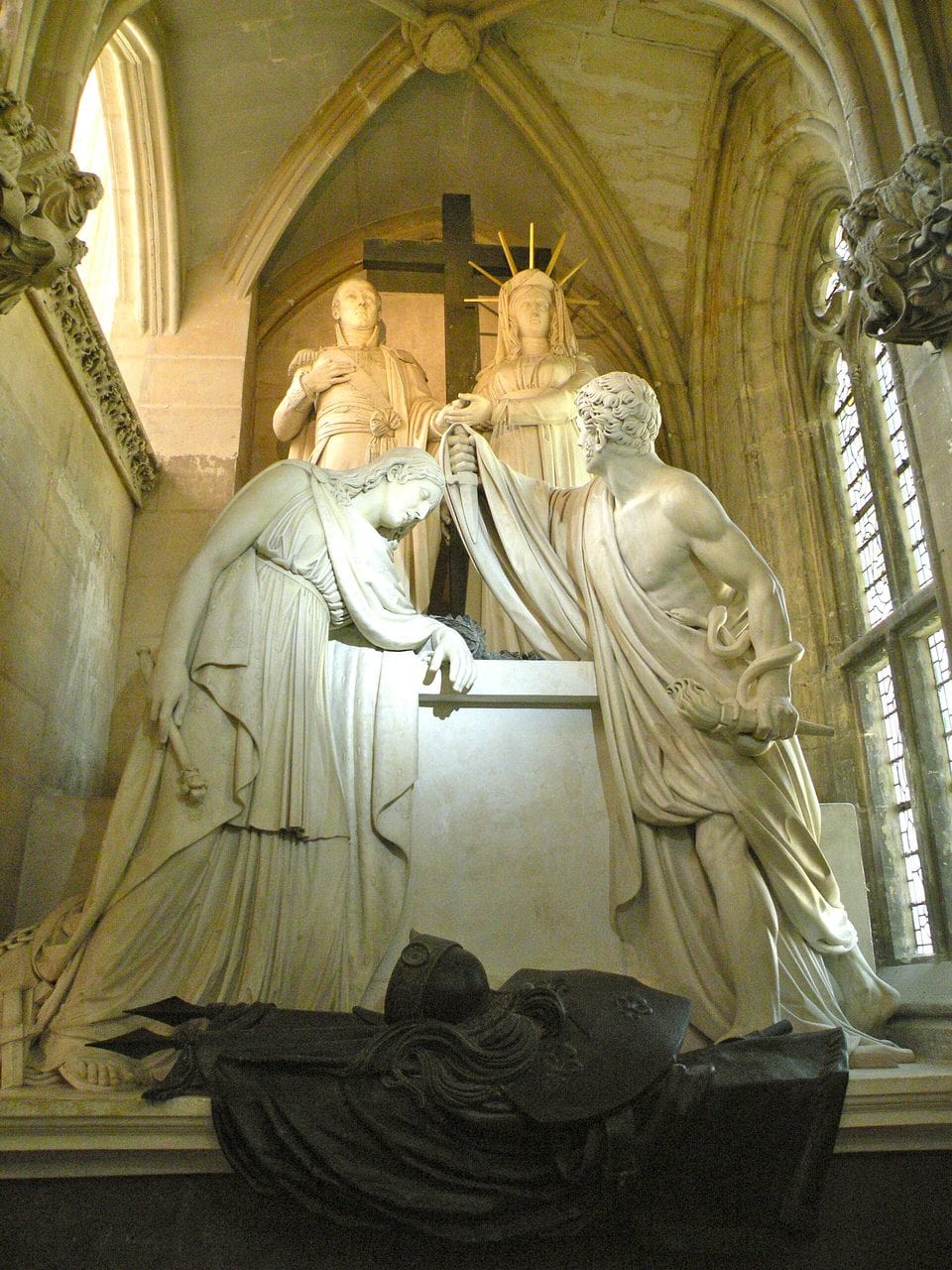
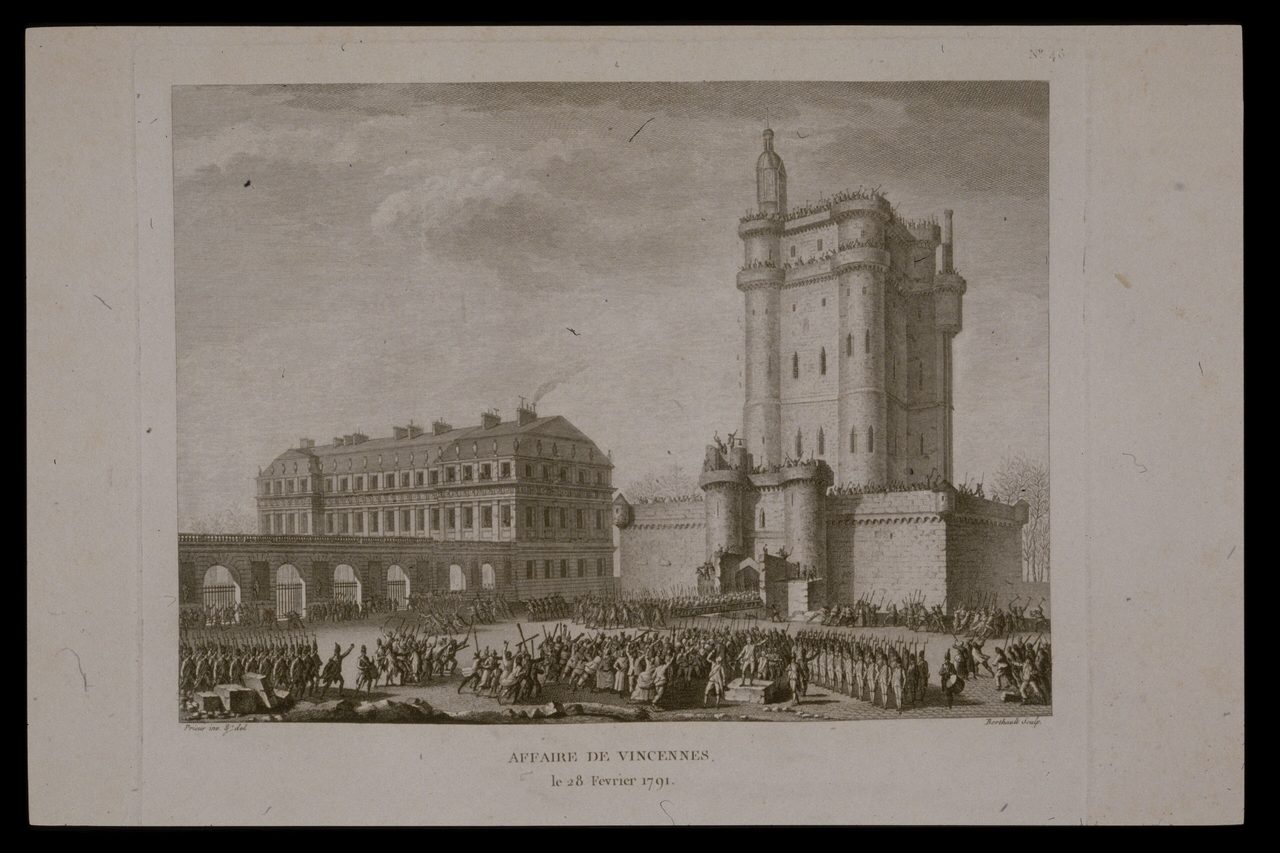
Then the Revolution and Napoleon turned it back into a weapon. Stripped of its royal romance, Vincennes became a military arsenal and barracks, its towers packed with gunpowder and its yards with troops. It was in this hard new guise that the fortress witnessed its most notorious hour. In March 1804, agents of Napoleon seized Louis Antoine de Bourbon, duc d’Enghien, a prince of the exiled royal house, from across the German border on a charge of plotting against the First Consul. Hurried to Vincennes and tried by a military commission in the dead of night, he was shot in the castle moat before dawn on March 21, 1804, beside a grave already dug, and later buried in the Sainte-Chapelle. The execution shocked the courts of Europe and stained Napoleon’s reputation for good. It gave rise to the famous epigram, most reliably credited to Boulay de la Meurthe though long attributed to Talleyrand, that the deed was worse than a crime: it was a blunder. The fortress that had once sheltered kings was now an instrument of the men who had replaced them, and it served them just as faithfully.
Fire, archive, and restoration: Vincennes today
By the 19th century Vincennes was a working fortress wrapped around a decaying monument, and opinion began to turn toward saving it. The Sainte-Chapelle was classified as a historic monument in 1853 and the donjon in 1913, and restorers in the spirit of the age set about repairing what the army had not pulled down. The 20th century then dealt the castle its last great wound. On August 24, 1944, the eve of the Liberation of Paris, the retreating German garrison set fires across the site and detonated stored munitions; the explosion gutted the Pavillon du Roi and the Pavillon de la Reine, leaving little more than fragments of Mazarin’s apartments and a staircase. In those same August days the departing garrison shot twenty-six hostages, most of them French policemen, in the same moats where the duc d’Enghien had been executed 140 years before. Much of what a visitor sees of the classical pavilions today is careful postwar reconstruction.
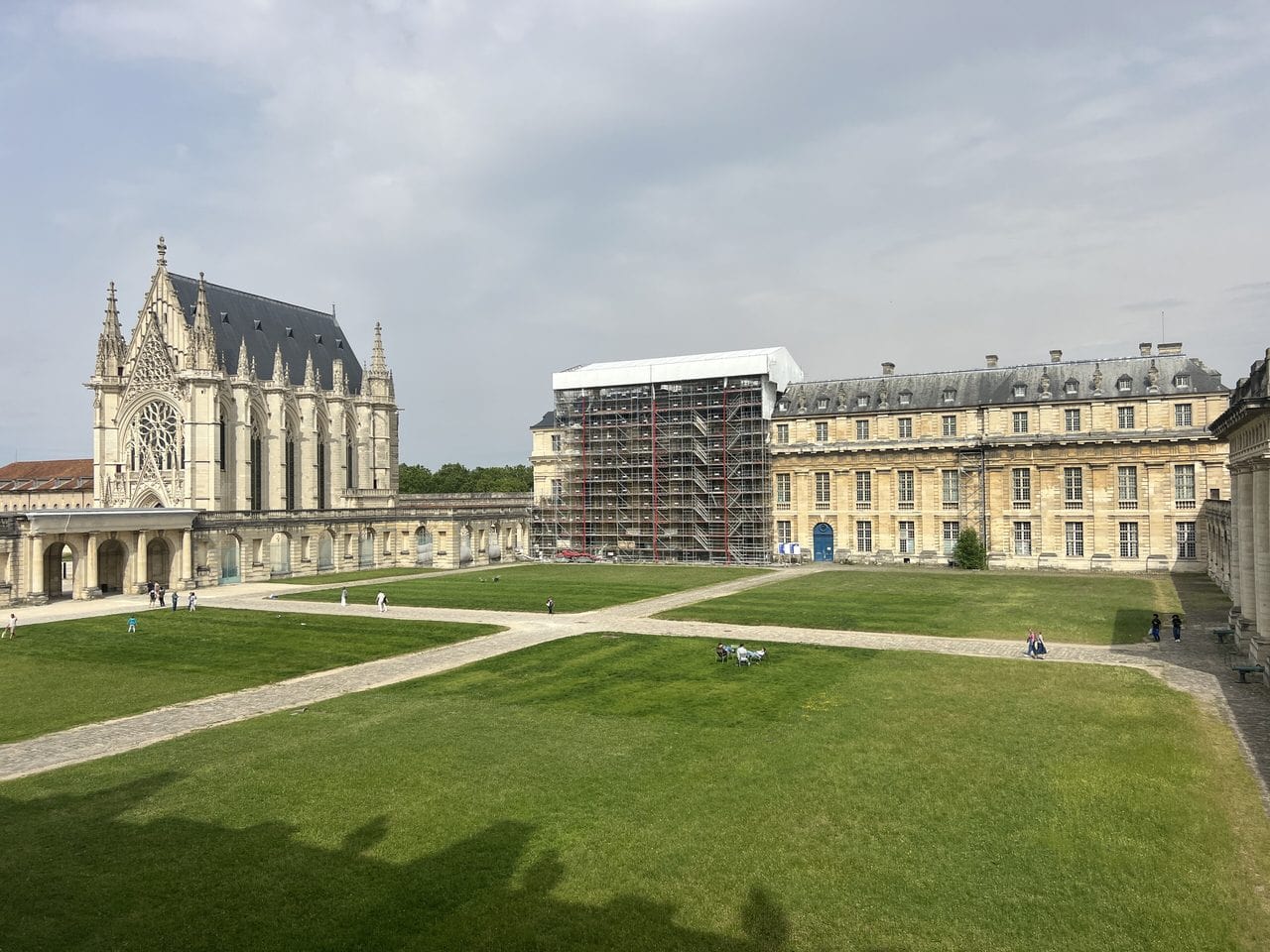
Out of that damage came the modern compromise that defines Vincennes now. The state never let go of the site, and to this day a large part of the château houses the Service historique de la Défense, the historical archive of the French armed forces and the institutional memory of the nation’s wars. The donjon, meanwhile, underwent a long and meticulous restoration and reopened to the public in 2007 after decades of work, its floors turned over to exhibitions. The same tower that Charles V filled with a king’s manuscripts now stands beside the building where France keeps the records of its army. The arc runs unbroken: treasure, prison, factory, arsenal, archive. The instrument changed hands again and again, but the state never moved out of Vincennes.
Visiting Château de Vincennes
Vincennes is one of the most rewarding and least crowded major monuments in the Paris region, and it is astonishingly easy to reach: it sits at the eastern terminus of Métro Line 1, with the RER A stopping nearby, a walk of about five minutes from the train to the gate. A single ticket admits you to the whole complex. The heart of the visit is the donjon, whose restored floors now hold exhibitions and whose summit gives a panorama across eastern Paris, and the Sainte-Chapelle, best seen in the morning when light pours through the Apocalypse windows. You can also walk the ramparts and the moat and tour the rebuilt royal pavilions. Admission includes a tablet-based augmented-reality tour that reconstructs the castle in its medieval prime. Allow ninety minutes to two and a half hours for a full visit. The grounds and the ground floor of the keep are accessible, but the upper floors are reached only by historic spiral stairs.
As of 2026, full admission is 13 euros, with free entry for visitors under 18, for European Union residents aged 18 to 25, and for disabled visitors; the Paris Museum Pass is accepted, and entry is free on the first Sunday of each month from November through March, as well as on the European Heritage Days weekend in September. The château is open daily, from 10 a.m. to 6 p.m. in high season (May 21 to September 22) and 10 a.m. to 5 p.m. the rest of the year, with the Sainte-Chapelle closing briefly over the lunch hour and the last tickets sold forty-five minutes before closing. It is closed on January 1, May 1, and December 25. Prices and hours can change, so confirm them on the official site before you travel. The Château de Vincennes also makes an easy half-day paired with the surrounding Bois de Vincennes, the Parc Floral, or the Paris Zoo, all a short walk away.
Planning a visit? You can book tickets and guided tours of the Château de Vincennes, or find a place to stay near the château in Vincennes. StoneKeep Atlas may earn a small commission from these links, at no extra cost to you.
Some links on this page are affiliate links, which means StoneKeep Atlas may earn a small commission, at no extra cost to you, if you book through them.
More Views of the Château de Vincennes
A few more views of the fortress, from the donjon and its gatehouse to the chapel glass and the dry moat.
Beyond Château de Vincennes
It is worth seeing Vincennes in the company of its grander Île-de-France neighbors, because the contrast is the point. A short journey to the southwest stands the Palace of Versailles, the theater where the Bourbon monarchy staged its own glory; to the southeast spreads the Château de Fontainebleau, the rambling house of centuries where one dynasty after another left its mark in stucco and paint. Both are palaces built to dazzle. Vincennes is the older, harder thing they grew out of and left behind—a fortress built to control rather than to impress, the working seat of medieval power that the Sun King abandoned for a pleasure palace in the west.
Common Questions
How do I get to Chateau de Vincennes?
It is astonishingly easy to reach: the castle sits at the eastern terminus of Metro Line 1, with the RER A stopping nearby, a walk of about five minutes from the train to the gate.
How much is admission?
As of 2026, full admission is 13 euros, with free entry for visitors under 18, for European Union residents aged 18 to 25, and for disabled visitors. The Paris Museum Pass is accepted, and entry is free on the first Sunday of each month from November through March, as well as on the European Heritage Days weekend in September.
What should I see, and how long does it take?
The heart of the visit is the donjon, whose restored floors hold exhibitions and whose summit gives a panorama across eastern Paris, and the Sainte-Chapelle, best seen in the morning when light pours through the Apocalypse windows. You can also walk the ramparts and the moat and tour the rebuilt royal pavilions, and a tablet-based augmented-reality tour is included. Allow ninety minutes to two and a half hours.
Is the castle accessible?
The grounds and the ground floor of the keep are accessible, but the upper floors are reached only by historic spiral stairs.
Conclusion
That is the throughline of the Château de Vincennes, and the reason it earns a visit as much as its famous cousins do. Versailles shows you how French kings wanted to be seen. Vincennes shows you how they actually held on. The tallest surviving medieval keep in Europe was raised to be a citadel, a treasury, and a seat of government, and across six centuries it served as prison, factory, arsenal, and archive without once falling out of the hands of the state. Of all the castles in this atlas, few tell the long story of power as plainly as this square gray tower at the edge of Paris, the fortress that outlived every regime that ever used it.
Principal Sources
- Centre des monuments nationaux (CMN), official site (chateau-de-vincennes.fr), consulted June 2026, for the donjon and Sainte-Chapelle chronologies, the history of the keep and enceinte, and current visitor information.
- Jean Chapelot, Le Château de Vincennes : une résidence royale au Moyen Âge and related archaeological studies, for the construction of the donjon under Charles V, its height and structure, and the medieval royal residence.
- Inrap (Institut national de recherches archéologiques préventives), excavation reports on the Vincennes site, for the medieval manor and the growth of the fortress.
- Service historique de la Défense (SHD), for the château’s role as the archive of the French armed forces and the events of August 1944.
- Plateforme ouverte du patrimoine (POP) and base Mérimée, French Ministry of Culture, for the monument historique classifications of the Sainte-Chapelle (1853) and the donjon (1913).
- Manufacture nationale de Sèvres, institutional history, for the Vincennes porcelain works and its move to Sèvres in 1756.
- Quote Investigator, on the epigram “worse than a crime, it was a blunder,” for its attribution to Boulay de la Meurthe rather than Talleyrand.
- Jean de Joinville, Life of Saint Louis, for the tradition of Louis IX dispensing justice beneath an oak at Vincennes.
Image credits. Donjon and enceinte (hero): Adobe Stock, licensed; royal hunt before Vincennes: Adriaen Frans Boudewyns, after Adam Frans van der Meulen, public domain, via Wikimedia Commons; the donjon and its chemise: ignis, CC BY-SA 3.0, via Wikimedia Commons; bird’s-eye view of the château: Rijksmuseum, CC0, via Wikimedia Commons; interior of the Sainte-Chapelle and the rose window: Daniel Vorndran / DXR, CC BY-SA 3.0, via Wikimedia Commons; a classical Le Vau pavilion: Moonik, CC BY-SA 3.0, via Wikimedia Commons; a donjon prison cell, the funerary monument of the duc d’Enghien, and a vaulted donjon interior: Chatsam, CC BY-SA 3.0, via Wikimedia Commons; restoration of the chapel and pavilion, the dedication plaque, and the Tour du Village gatehouse: Chabe01, CC BY-SA 4.0, via Wikimedia Commons; the entrance front and well: Alexandre Vialle, CC BY 2.0, via Wikimedia Commons; the dry moat: Zairon, CC BY-SA 4.0, via Wikimedia Commons; Apocalypse stained glass: Benjamin Gavaudo, public domain, via Wikimedia Commons; the 1791 assault on Vincennes: Berthault, after Jean-Louis Prieur, public domain, via Wikimedia Commons. Freely licensed images are resized to fit; otherwise unaltered.