
Dover Castle
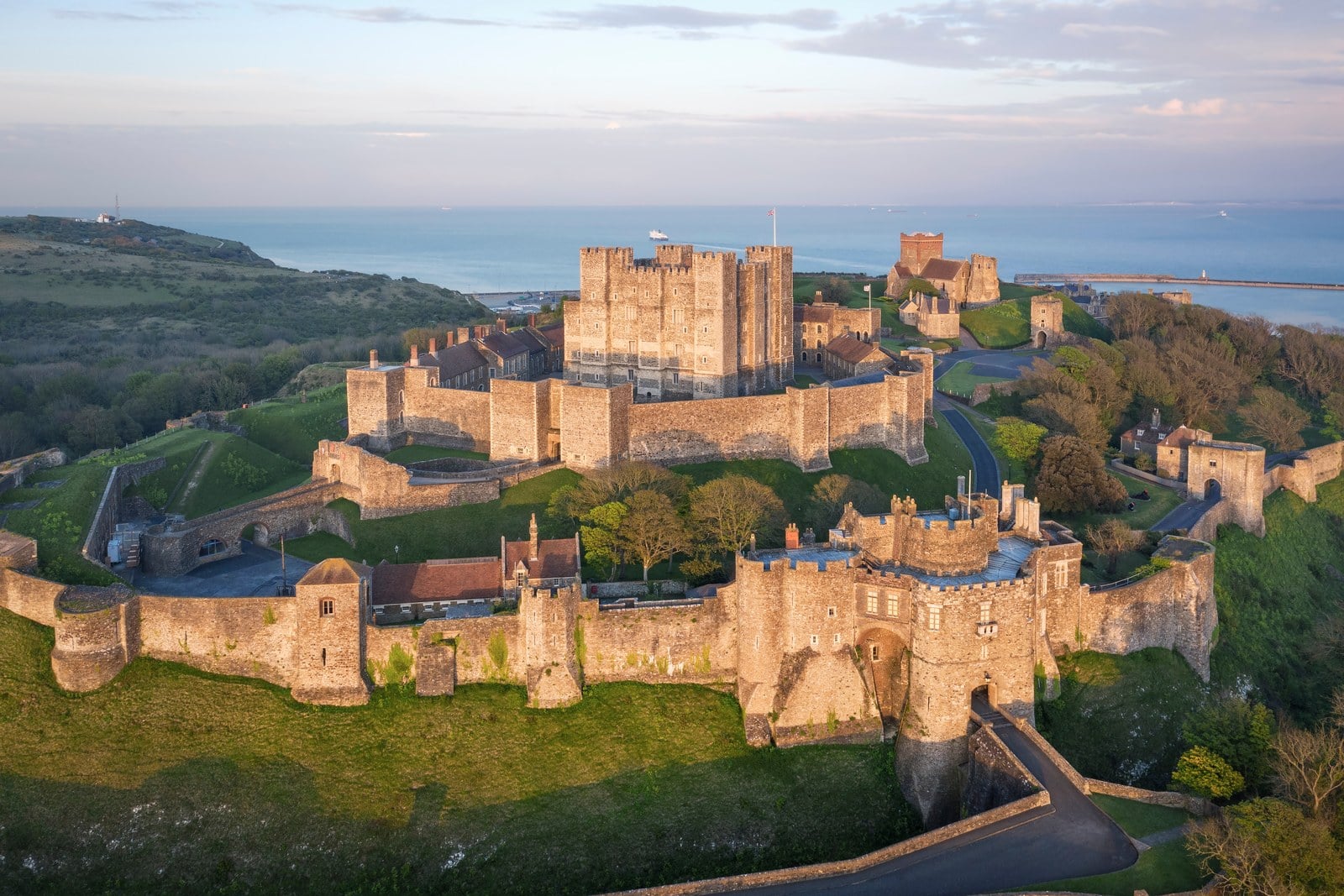
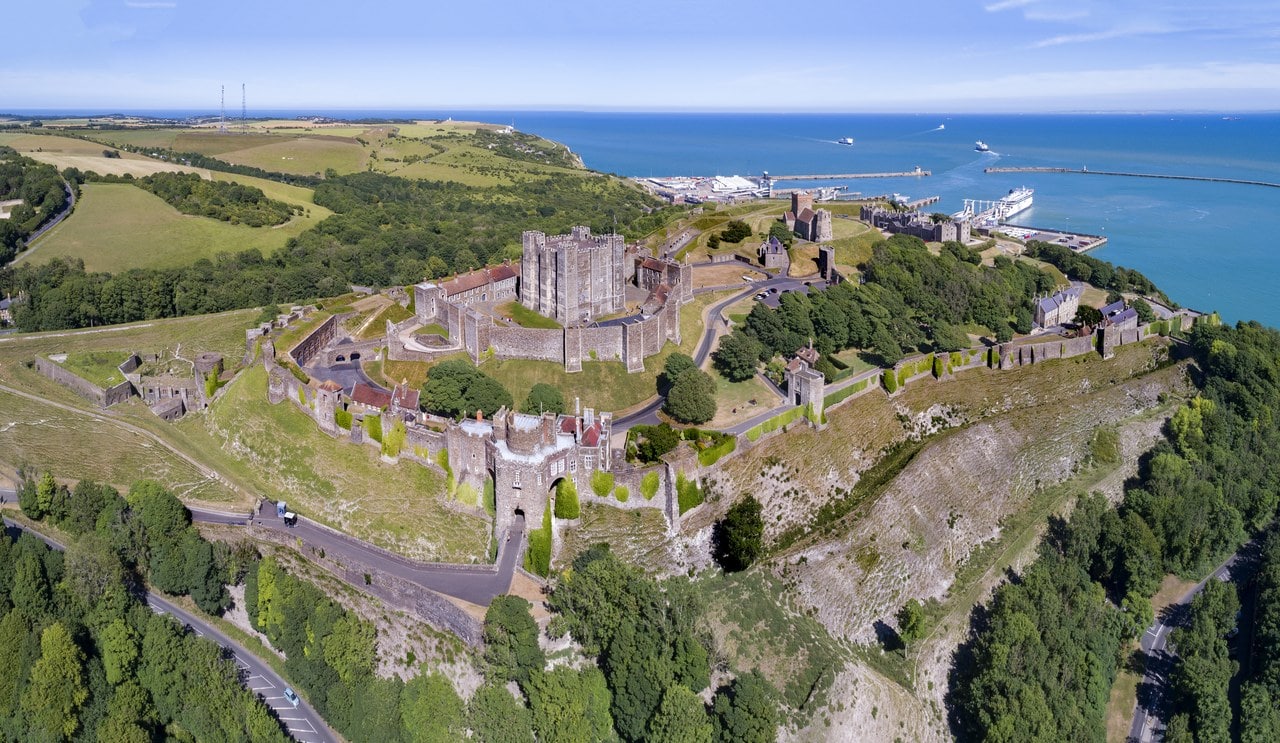
Dover Castle stands on a chalk promontory at the narrowest crossing of the English Channel, about 110 meters above sea level, and it was still being adapted for war within living memory. On one hill sit a presumed Iron Age enclosure, a Roman lighthouse, a late Anglo-Saxon church, Henry II’s Great Tower, a Georgian and Napoleonic artillery fortress, the tunnels from which the Dunkirk evacuation was directed, and a Cold War bunker fitted out for the government of a region after a nuclear attack. Several of those things sit inside one another, which is why the castle is harder to read than it looks.
English Heritage, which runs the visitor site, dates the castle a visitor meets today to Henry II’s decade of 1179 to 1189, with the Great Tower built between 1181 and 1188 on Historic England’s scheduling record. Almost nothing here, though, survives in the state its builders left it. Medieval towers were cut down to mount cannon, the medieval sally tunnels were re-lined for musketry, a Napoleonic barracks was partitioned into a wartime naval headquarters, and the furnished royal apartments in the Great Tower are a modern re-creation rather than a surviving interior. Knowing which is which is most of the work of a visit.
This guide separates the fabric by phase and says which of the tunnel systems a visitor can currently enter. That last point matters more than usual at the moment: the Operation Dynamo section of the Secret Wartime Tunnels is closed, and English Heritage’s own pages disagree with each other about it.
Quick Facts
| Location | Castle Hill Road, Dover, Kent CT16 1HU; 51.129671, 1.32117; about 110 meters above sea level (derived from Environment Agency LIDAR at the statutory grid reference) |
|---|---|
| Built | 1179-89 (Great Tower 1181-88); outer defenses completed in the 1220s; Roman lighthouse and Anglo-Saxon church earlier on the same hill |
| Built for | King Henry II (r. 1154-89), under his engineer Maurice |
| Architectural style | Romanesque great tower; medieval curtain with rectangular (Henry II) and D-shaped (John) flanking towers; Georgian and Napoleonic earth-backed artillery works; twentieth-century military |
| Castle type | Multi-period royal castle and artillery fortress on a presumed univallate Iron Age hillfort, with a Roman pharos, an Anglo-Saxon church, a tunnel system of the thirteenth to twentieth centuries, and a sixteenth-century gun battery at Moat’s Bulwark |
| Condition | Historic England records that “Despite later modifications, the medieval castle is unusual in surviving in such a complete state”, with the qualification that the curtain was cut down for cannon and the Great Tower’s royal rooms are a modern re-creation |
| Owner / managed by | The monument is in the care of the Secretary of State; the visitor site is managed by English Heritage, registered charity 1140351. Not the National Trust |
| Heritage designation | Scheduled monument NHLE 1019075 (19 October 1964, amended 14 December 1999); Grade I listed NHLE 1070326. Separately designated: the church 1070328 (Grade I), the pharos 1258537 (Grade I), the Officers’ New Barracks 1375601 (Grade II). Several visitor buildings are excluded from the scheduling |
| UNESCO status | Not a World Heritage Site |
| Nearest town & station | Dover; Dover Priory, which English Heritage gives as “a 1 mile walk uphill to the castle”, climbing roughly a hundred meters |
| Open to public | Yes, on a seasonal pattern: daily in the main season, weekends and school-holiday periods through the winter |
| Annual visitors | 261,653 visits in 2025 (Association of Leading Visitor Attractions) |
| Official website | english-heritage.org.uk/visit/places/dover-castle/ |
History
Dubris, the pharos and the church on the hill
Historic England’s scheduling record describes the medieval royal castle as having developed from its “presumed origins an Iron Age hillfort”, and the hedge is the register’s own. Richard Eales, whose 2020 paper is the most recent scholarly account of Dover’s twelfth century, writes that “it is almost impossible to say what was within the presumed Iron Age enclosure at Dover before Henry II’s builders set to work in about 1168”, and records that Martin Biddle, digging outside the inner bailey in the 1960s alongside Stuart Rigold, “could reach only tentative, though entirely plausible, conclusions about early earthworks”.
Roman Dover was Dubris, a base for the classis Britannica, the fleet patrolling the eastern Channel. English Heritage’s history page, bylined its own historian Paul Pattison, records that building on the fort stopped suddenly and then “began again around AD 130 and the fort was completed”, and that the Romans built the octagonal lighthouse on Castle Hill “around the same time”, with another on the Western Heights opposite. Note what that dates: AD 130 belongs to the fort, and the pharos only in relation to it.
Ask three authorities for the lighthouse’s own date and the answers span about 150 years. English Heritage’s curators, in the exhibit the operator publishes on Google Arts and Culture, put it “in the early second century AD” and hedge even that, saying the pharos was “probably built on Castle Hill around this time”. Historic England’s scheduling record dates the pair of Dover lighthouses more loosely, to “around the 1st century AD”. The separate Grade I listing of the pharos, a legacy record written in 1974 and never amended, gives AD 46 under Claudius, and its supporting claim that the Dover light guided the fleet round to Richborough is carried by none of the others. No single date can honestly be stated, so all three are given here.
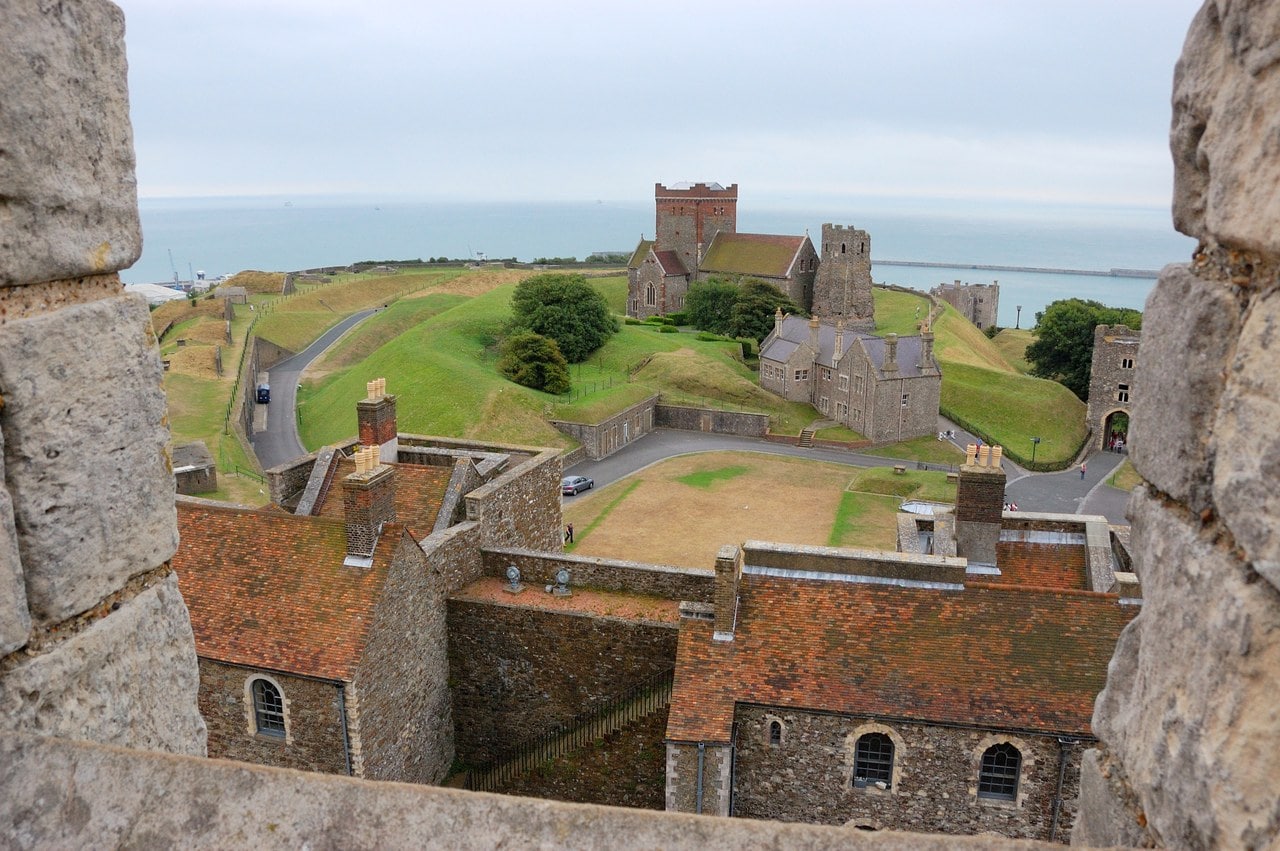
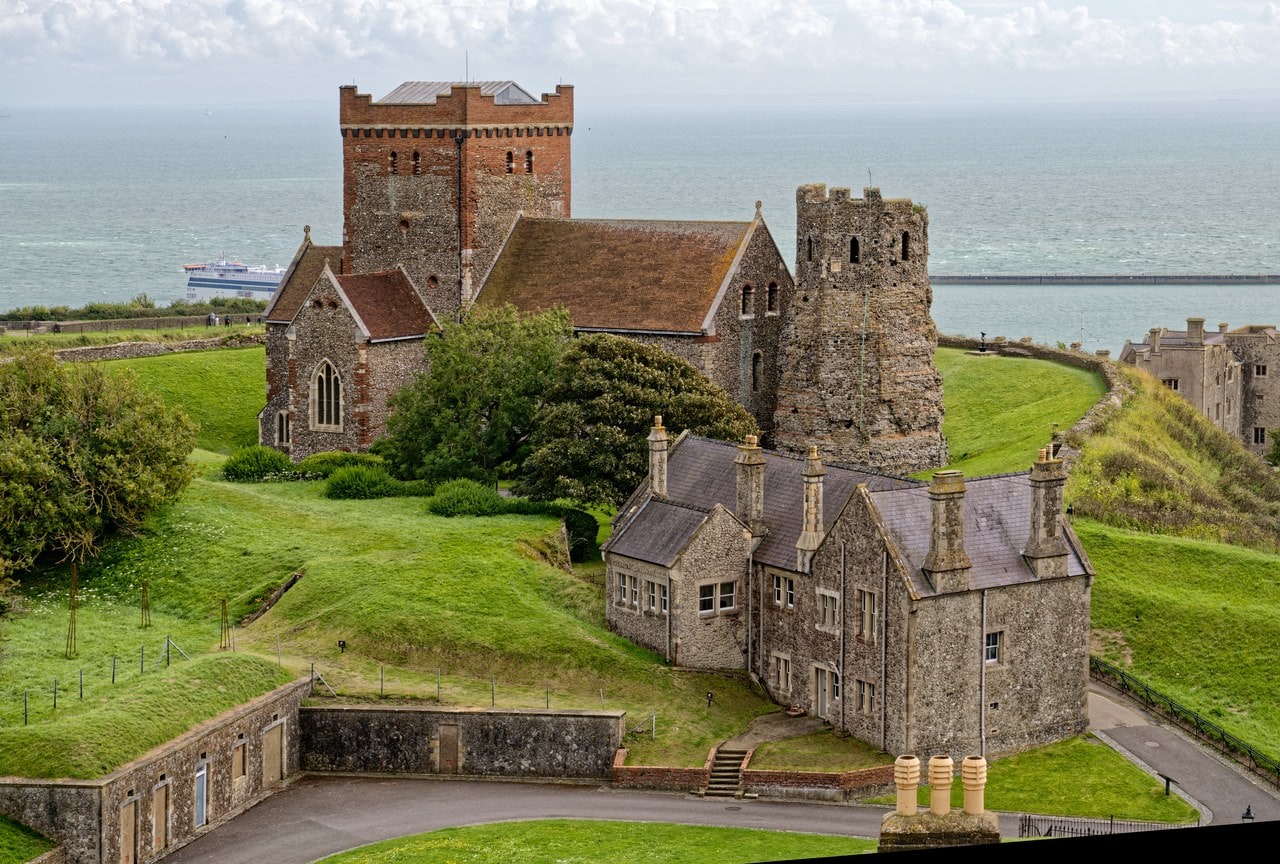
A church was raised beside the lighthouse around the year 1000, and English Heritage records that the pharos was “almost certainly incorporated into the design of the church as a bell tower”. Who paid for it is unknown. English Heritage names Godwin, earl of Wessex from about 1020 until his death in 1053 and father of King Harold, as one possibility, which would put the church at the latest end of the range Historic England allows it: the church’s Grade I listing gives “The latest possible date for the foundation of the church is C.1020AD” against English Heritage’s “around AD 1000”.
The Conqueror’s castle, and the most useful negative on the site
William the Conqueror came to Dover after Hastings and, on Historic England’s record, spent eight days adding to the defenses before leaving the place to Odo, Bishop of Bayeux, and Hugh de Montfort. Men of Kent in league with Count Eustace of Boulogne attacked in 1067, and “the assault was quickly repulsed by the garrison, despite the absence of Odo and de Montfort”.
English Heritage is explicit about the absence: “He established a fortification, possibly around the church, but there are no surviving remains. The castle was extended in the 12th century, although we know nothing of its appearance before the great rebuilding of the 1180s.” So “Norman castle” at Dover means Henry II rather than the Conquest. Dover also lacks the feature most people expect of a Conquest castle: our survey of a medieval castle’s parts notes that Dover comes closest to a complete example of the type and is still missing a motte. Compare Windsor Castle, sited a decade later, whose Round Tower stands on the Conqueror’s motte and was rebuilt in stone for Henry II.
Henry II, Maurice and the Great Tower
Eales gives Henry II two campaigns at Dover rather than one: a first of about 1168 to 1173 inside a wider Kentish program, and a second of 1179 to 1189. Historic England’s scheduling record dates the great tower to the second, between 1181 and 1188, and calls it “the most elaborate example in England”. English Heritage credits the work to “His engineer, Maurice”, and scopes that more carefully elsewhere: “Under the supervision of his engineer, Maurice, Henry’s masons built the great tower, the inner bailey’s curtain wall and possibly started on the outer bailey’s curtain wall.” Eales calls Maurice the “presumed designer”, so he appears here as Maurice the Engineer, who directed the royal works, and not as an architect.
Money is the best measure of how unusual the campaign was. Historic England records that “Pipe Rolls show that by the time of his death in 1189 Henry II had spent 6000 pounds rebuilding the castle, which constituted a huge expenditure”; Eales scopes almost the same sum to the second campaign alone, 1180 to 1188, “including the great tower”; English Heritage puts “over 6,000 pounds” between 1180 and 1189. Those are three scopes around one pile of money rather than a disagreement, and they nearly coincide because the first Dover campaign cost under 500 pounds, against 428 at Chilham and 132 at Rochester in the same program. Eales puts the great tower alone at more than 60 per cent of Henry’s total outlay on the site.
Why he spent it is open. English Heritage offers that “One important reason for this rebuilding may have been the new pilgrimage route to Thomas Becket’s shrine in Canterbury”; Eales treats the question as unsettled and writes that “a single agreed conclusion is unlikely”. The materials are better documented than the motive: flint, Folkestone greensand and Kentish ragstone for the walls, “stone imported from Caen in France” for the carved dressings, and timber from the king’s forests, “much of it coming from Essex”.
The two sieges, 1216 and 1217
Everything we know of the narrative rests on one anonymous witness and one excavation. English Heritage’s account of the sieges, also by Pattison, puts it plainly: “There is a surviving written account by an unknown eyewitness, known to scholars as the Anonymous of Bethune, which enables us to understand the basic sequence of the two sieges.” Francisque Michel printed it in 1840, and its Dover pages are the only narrative from inside the war. Archaeology supplies the rest: of the tower that came down, Historic England’s record says the collapse was “an occurrence confirmed by excavation”.
Rebel barons invited Louis of France, son of Philip II, to take the throne from King John. Louis was proclaimed king in London by the barons, though never crowned, and later reigned in France as Louis VIII. Popular accounts of Dover call him the Dauphin, a style for the French heir that postdates this war by roughly 130 years. He landed at Sandwich in May 1216 and came to Dover in July. English Heritage’s in-depth account of the great siege, written for the operator by Charles Kightly and published in 2016, puts the siege proper at “probably on 22 July 1216”; the operator’s own summary page instead dates the siege to May, which is when Louis landed.
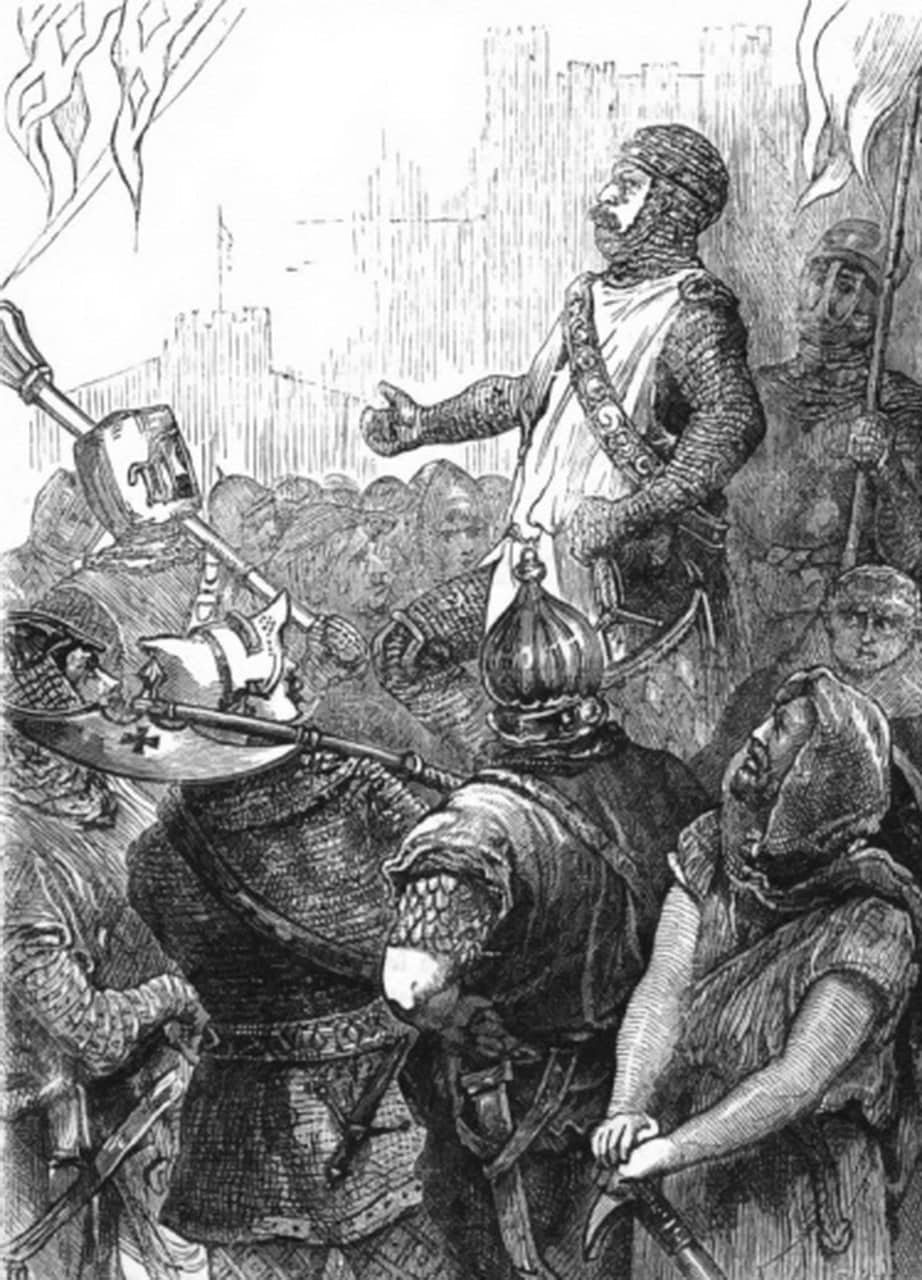
Dover was held for John by Hubert de Burgh, King John’s justiciar and constable of Dover, later Earl of Kent, with what Kightly’s account calls “a strong garrison of 140 knights and many more soldiers”. Louis attacked from the north, bombarding the barbican in front of the gate and undermining its rampart until it fell, then mining under the twin-towered stone gatehouse until one of the gate’s two towers came down. English Heritage’s summary page and Historic England’s record both name it the eastern tower, the register adding that the collapse is “confirmed by excavation”; our eyewitness says only that one of the two fell. Rubble made a ramp, the assault came up it into the outer bailey, and Hubert threw it back out, closing the breach with what Kightly describes as “a barrier of boulders, timber cross-beams and mighty oak posts”, which tracks the eyewitness’s timbers, cross-beams and palisade of oak almost phrase for phrase.
Kent did not stay quiet around the siege: William of Cassingham, the Kentish leader the French called Willikin of the Weald, harried the invaders in the field, and the King of Scots came into Louis’s camp to do homage for Lothian on a day the eyewitness does not name.
A truce was agreed on 14 October 1216. John died four days later, on 18 October, at Newark, and his nine-year-old son was crowned Henry III at Gloucester ten days after that, with William Marshal, Earl of Pembroke, governing as rector of the king and the kingdom. Hubert refused to surrender, and Louis came back on 12 May 1217, English Heritage’s sieges page recording him “battering the walls with siege engines that included a trebuchet”, which the same page calls “the first recorded instance of such an engine in England”. That is English Heritage’s claim rather than one this guide makes. English Heritage names the engine Malvoisin, glossing it “evil neighbour”; the eyewitness names no engine, and the more useful clause is the operator’s next one, that “It did little damage”.
That second siege lasted barely a fortnight. About ten days in, news reached Louis that his main army had been beaten at Lincoln, and he broke off. On 24 August 1217 his reinforcement fleet was destroyed a few miles off Dover; Roger of Wendover, as printed by Coxe, independently dates the sea fight to St Bartholomew’s day, though Wendover assigns the English fleet to other commanders and does not put Hubert in it. Peace was agreed on 11 September 1217 and is known as the Treaty of Lambeth, although the chronicle places the agreement near Staines.
The key of England, and what the phrase is worth
Dover’s nickname belongs to one man in one war. Hubert de Burgh called the castle the key of England, and the words reach us second-hand through the chronicler Matthew Paris a generation later rather than in any document of Hubert’s own. The Latin is a genitive, clavis Angliae, appearing five times across two of Matthew’s works, in three years and in two mouths; Matthew uses it once in his own voice and hedged, writing “illud enim castrum quasi clavis est Angliae”, that the castle is, as it were, the key of England.
Two details make the phrase more interesting than the branding does. First, the figure was not made for Dover: Wendover applies it to Damietta, “quae clavis est totius Aegypti”, and Matthew Paris applies it to La Rochelle, taking it from Wendover on his own editor’s note, so what Matthew adds at Dover is the application, not the metaphor. Second, the best of the five occurrences is not Hubert’s. In 1232, with Hubert dragged out of sanctuary, the smith called to put him in irons refused, saying of the man “qui nobis Doveram, clavem Angliae … conservavit”. The phrase was in circulation about Hubert within fifteen years, in somebody else’s mouth.
Eales allows the claim “in strictly military terms” for the civil war of 1216 and 1217, notes that Hubert “had every reason to maintain such a claim subsequently”, and warns that it “has been much quoted, not always in context, by the authors of guidebooks and textbooks alike”. His warning names the move exactly: handled uncritically, he writes, the phrase “leads back to Dover as ‘the key to England'” not only in “the special circumstances of 1216” but “throughout the middle ages and beyond, as a fact of geography”. English Heritage brands the castle the key to England, with a “to” where the Latin has an “of”; both forms are correct in their own place.
What the siege changed
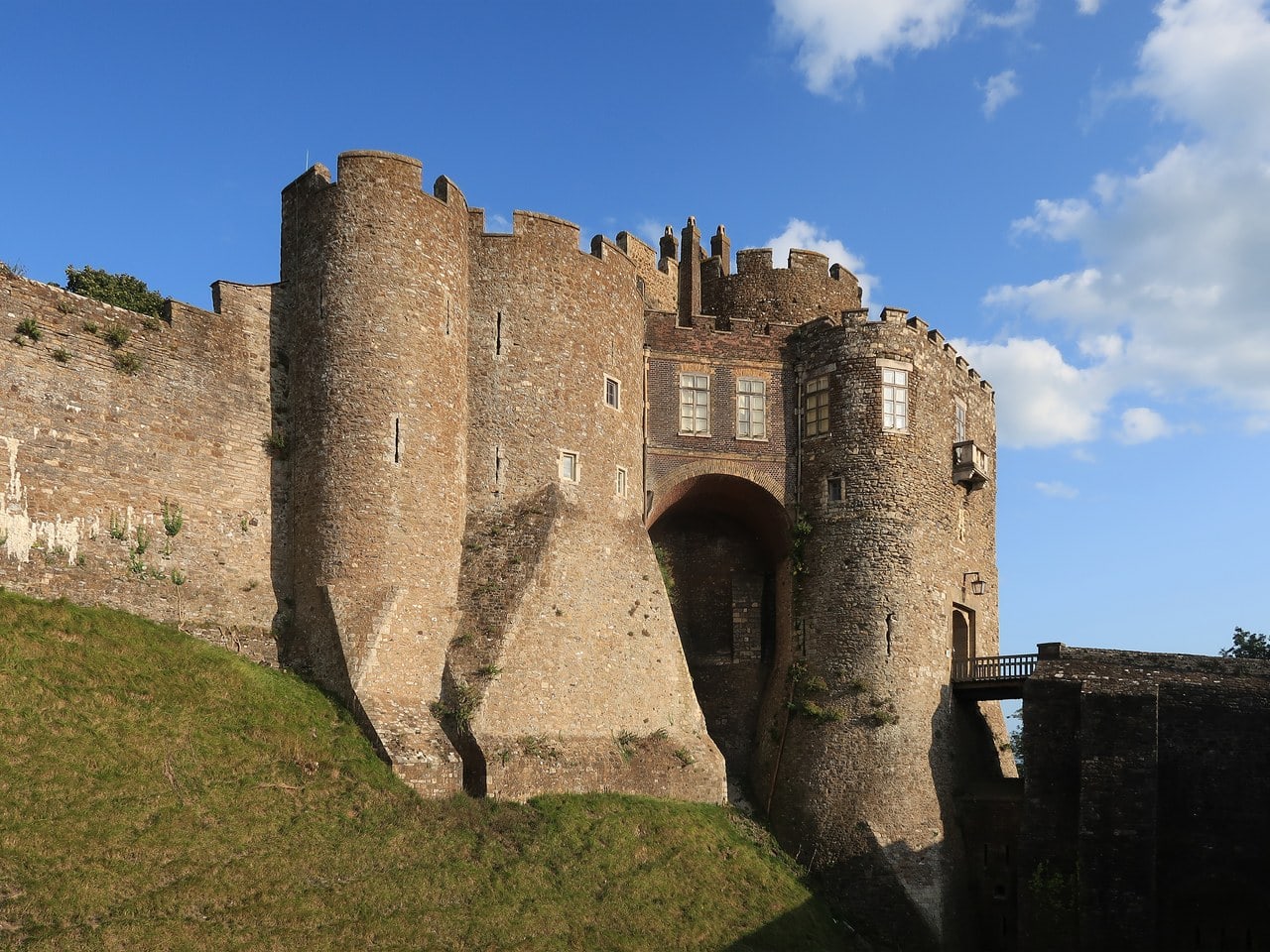
Losing a gate to a mine reshaped the castle permanently, and the bill beat the great tower’s. Historic England records 7,500 pounds spent on the defenses between 1217 and 1256, the first decade of it by the minority government rather than the king, Henry III being nine in 1217 and not of age until 1227. What the money bought was a redesign of the whole northern end: the vulnerable north gate blocked solid, Constable’s Gate built on the west as the new main entrance with Fitzwilliam Gate as a secondary one on the east, a great spur or outwork dug beyond the blocked gate, St John’s Tower built in the ditch, and all three linked by an underground passage that divides into three beneath the spur. A royal range went up along the inner bailey’s east wall, including Arthur’s Hall, finished in 1240, and Historic England’s verdict is that “By 1256 the medieval castle had achieved its maximum size and an appearance similar to that of today”. King John’s contribution sits in between: 1,000 pounds between 1205 and 1214 on the inner bailey’s domestic buildings, a wall around the church, and the outer curtain’s northern side. Our survey of the history of castles tracks that shift of emphasis from great tower to outer defenses across all three reigns.
In 1265, after Simon de Montfort and his eldest son were killed at Evesham, Eleanor de Montfort held Dover through a short siege ended by negotiation with the Lord Edward, son of Henry III, whom English Heritage names as her nephew. Under Edward IV the great tower was remodeled as an occasional residence.
Gunpowder, barracks, and the artillery rebuild
Artillery reached Dover before it reshaped it. Henry VIII’s Moat’s Bulwark, at the cliff foot, was “probably completed in around March 1539” and is the only survivor of three batteries built here in that campaign. From 1744 the inner bailey’s dilapidated buildings and the great tower were repaired for a much larger garrison, over 1,100 men by 1757 against up to 160 before, and the great tower became an ordnance store for gunpowder, shot and shell. The church fared worse than the guns, taking a temporary gunpowder magazine in 1779 while roofless.
Two engineers then removed most of the medieval elevation. Captain Desmaretz, in 1756 and 1757, “lowered the outer castle wall and towers on the north-east side” and put a massive earth rampart behind them to absorb artillery fire and carry cannon. Twiss, between 1793 and 1815, went further: along the west wall “many of the old medieval towers were lowered and provided with cannon, and the walls between had their old crenelations removed and replaced with firing steps for infantry”. His men also drove barracks into the chalk, Spur Casemates above ground in the northern interior between 1796 and 1798 and the Cliff Casemates 25 meters down at the southern end. That shift from masonry that resists to earth that absorbs is the subject of our piece on castles, palaces and fortresses, and Dover is one of the clearest places in England to stand inside it.
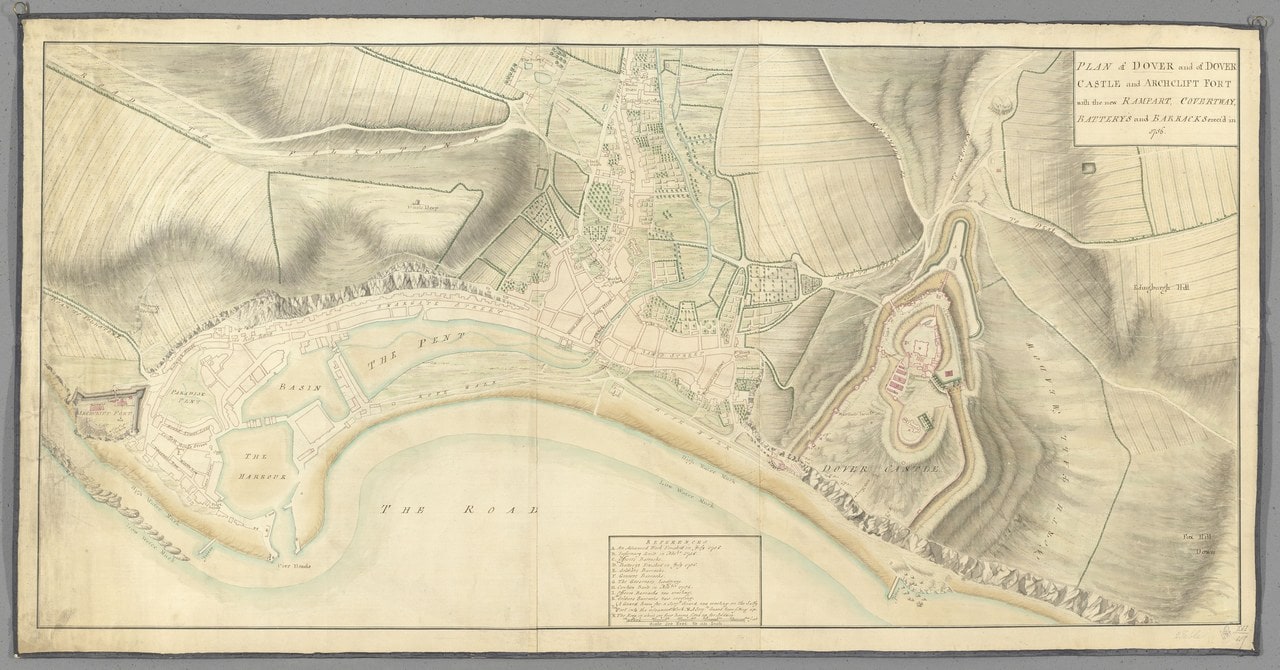
The Victorian garrison left the largest building on the site, and its authorship is divided. English Heritage credits the Officers’ New Barracks of 1856 to Anthony Salvin; the Grade II listing is more precise, giving “1856-58, exterior by A Salvin, architect, plan and interior by G Arnold RE, Clerk of the Works”, in a Tudor Gothic Revival style, and calling it one of the first large officers’ quarters built by a nationally known architect since the Napoleonic War. Its present state is in the listing too: “Officers’ quarters and mess, disused”, the interior “extensively altered late C20, with removal of dividing walls, floors and stairs”.
The Channel wars and the Cold War
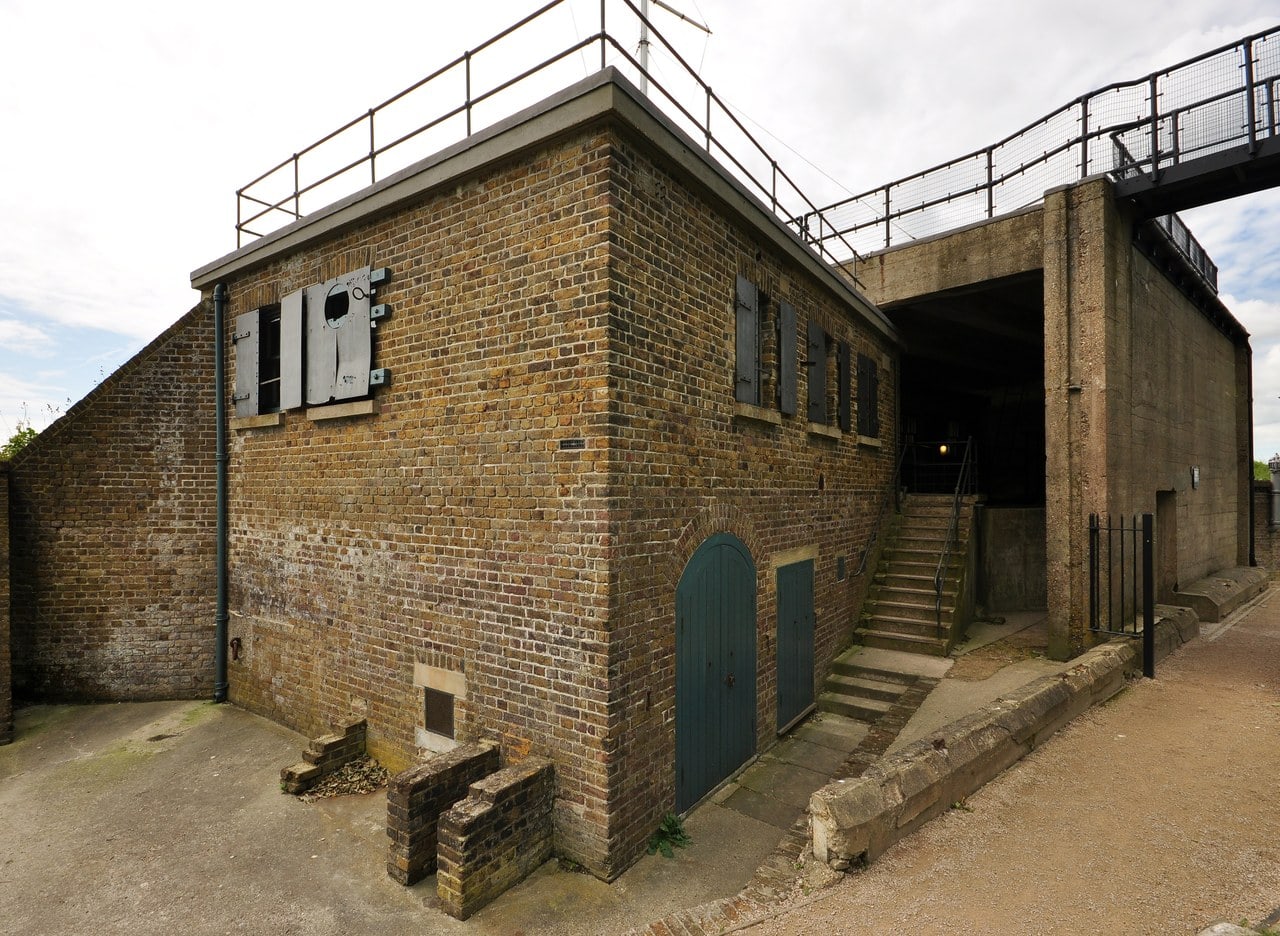
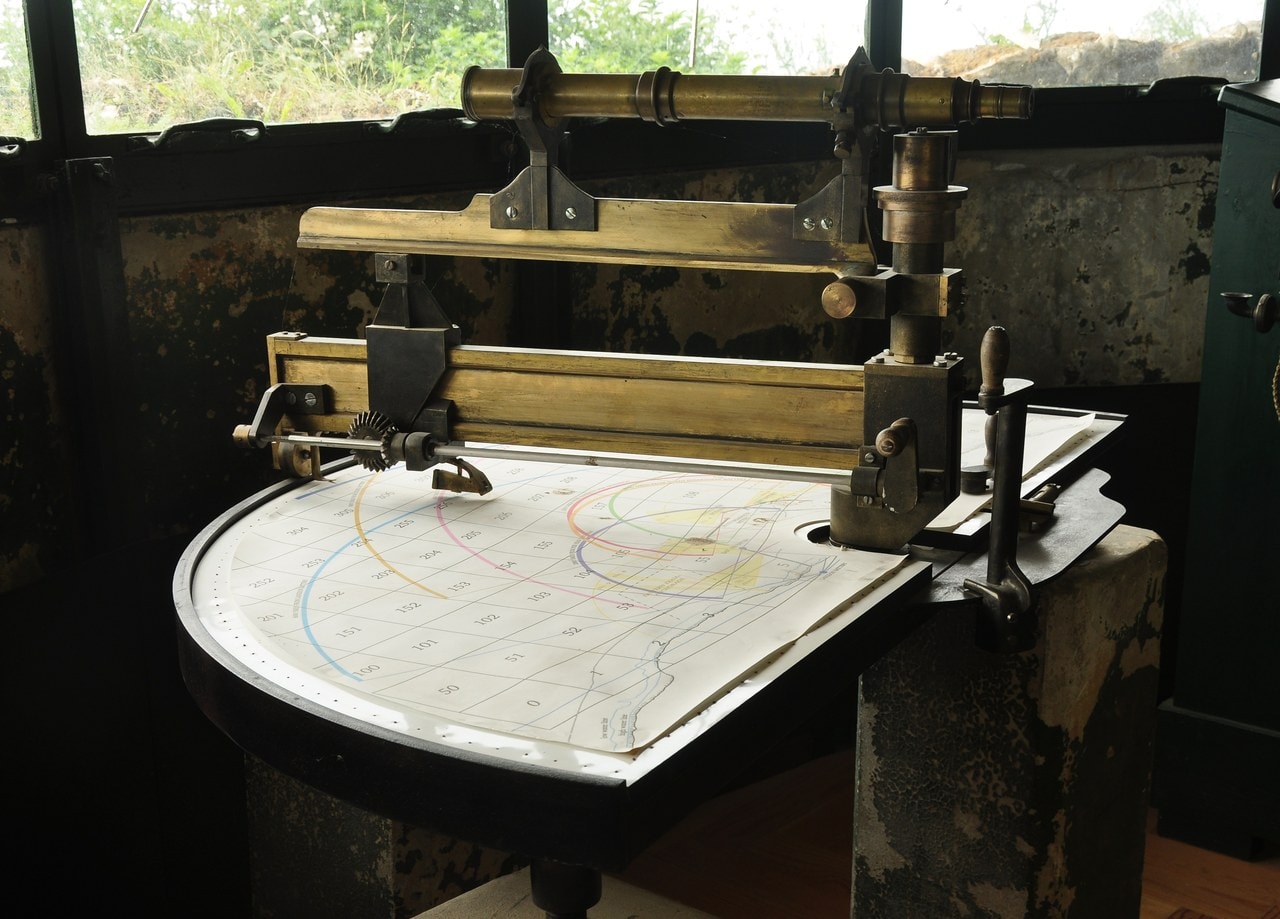
Coast defense turned the castle into an observation platform. Historic England records that “In 1905 the obsolete hospital battery above the southern cliff was converted to a fire command post by the Army”, and that in 1914 the Admiralty moved its Port War Signal Station into new quarters immediately above it, controlling traffic entering the new Admiralty Harbour below; both survive. English Heritage’s visitor pages label that post First World War while the register dates its conversion to 1905, nine years before the war began.
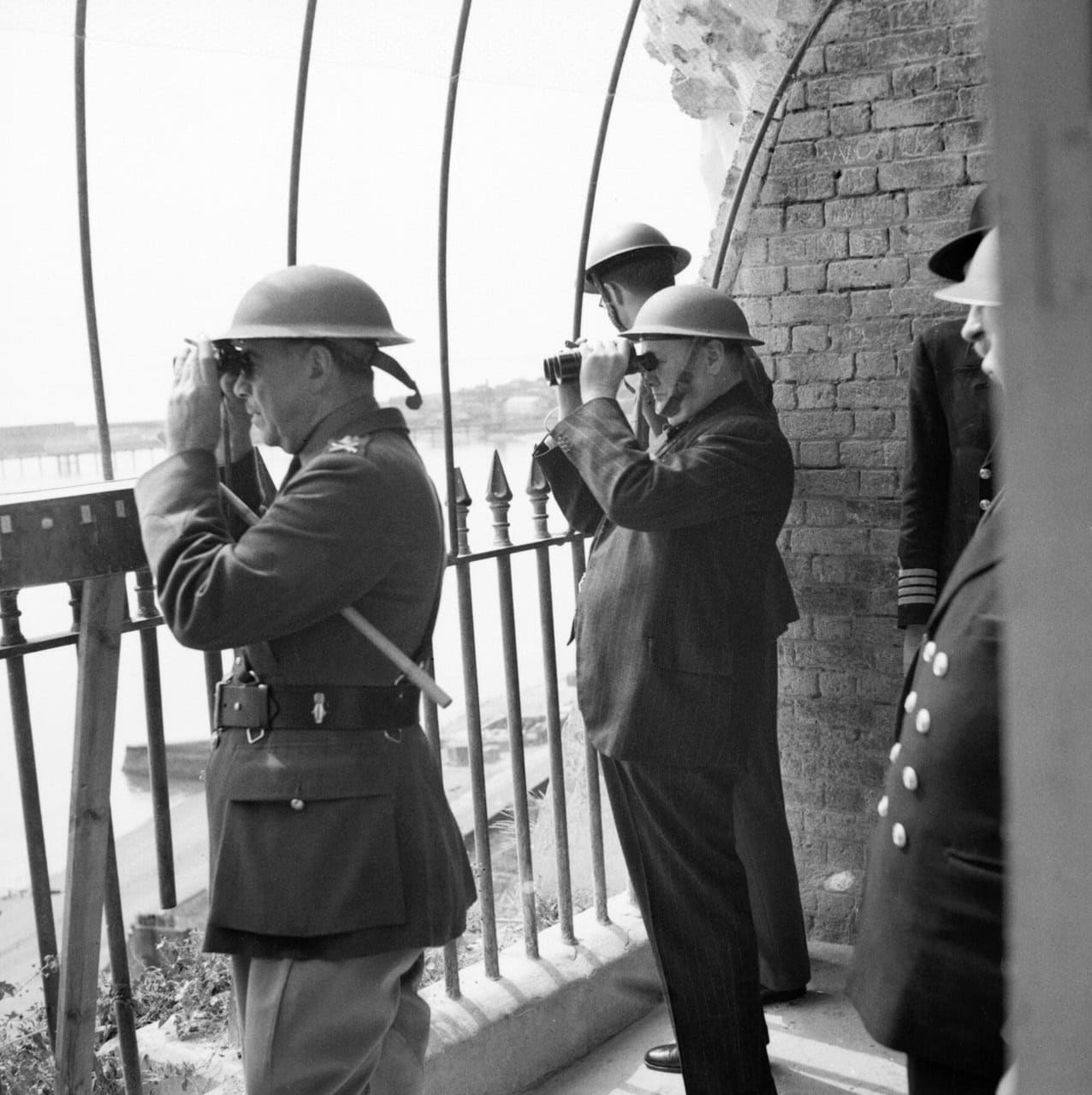
Everything else the twentieth century did here happened underground: a Napoleonic barracks turned naval headquarters, Operation Dynamo run from it in 1940 under Vice Admiral Ramsay; two new levels dug beneath it during the war, and a Cold War seat of government in the deepest of them. The air war did not leave the castle alone either. Its own Port War Signal Station was given a concrete protective roof in 1941, in Historic England’s words “following the threat of air attack”, and in 1938 and 1939 Dover Council cut civilian air raid shelters into the cliff below that by 1943 could hold a thousand people. No source read for this guide states whether the castle itself was struck. The Army left in 1958, apart from Constable’s Gate, which remained a senior officer’s residence until 2015.
Architecture
The Great Tower
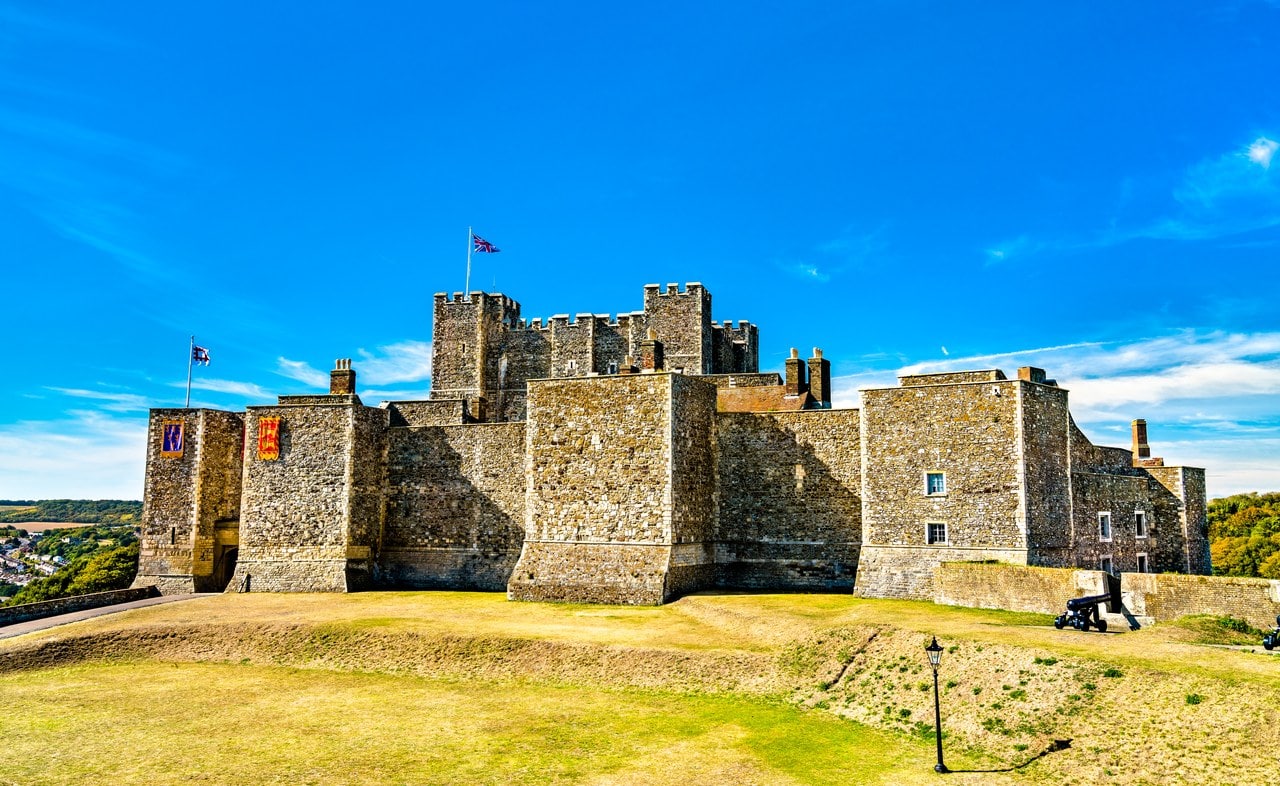
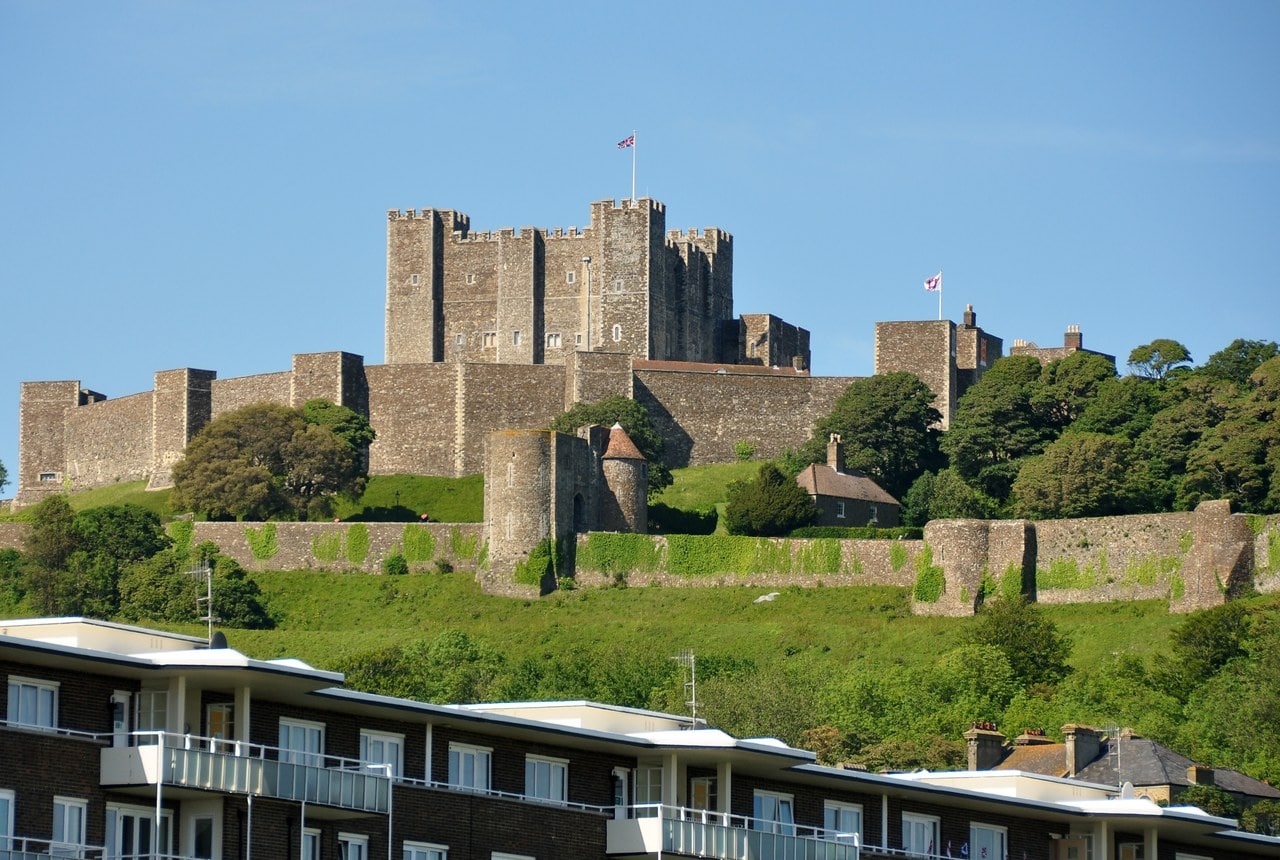
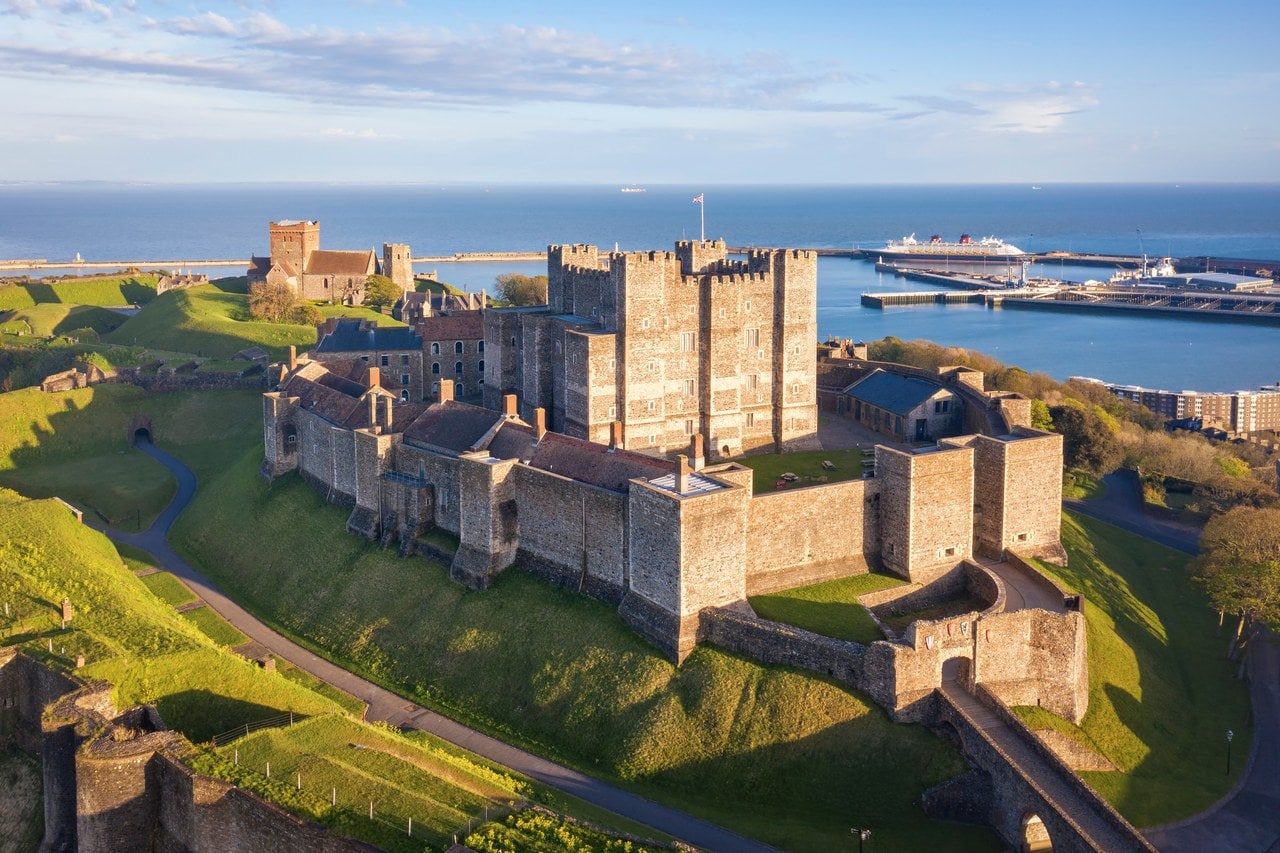
English Heritage calls Henry II’s centerpiece the Great Tower, and so do the signage and the shop name; “keep” is the conventional term for the building type and the word Historic England uses in its statutory text. Our glossary of a castle’s parts takes the operator’s vocabulary at Dover as its test case. The building is ragstone ashlar picked out with flint, with Caen stone dressings. Against Historic England’s “most elaborate example in England”, Eales attributes to R. Allen Brown, with a hedge of his own, the judgement that the Dover great tower “like a conventional battleship in the atomic age, was in fact obsolete almost as soon as it was built”. Those are one observation from two ends: the most elaborate building of its kind in England was also the last generation of it to matter.
Wall thickness is the number everyone wants, and its hedge is load-bearing. Writing about great towers in general, with Dover as its example, English Heritage says their “walls could be very thick – in places, the walls of the keep at Dover are six metres thick”. Statham’s 1899 survey measured four different walls at 21, 19, 18 and 17 feet, so that figure is the maximum of four thicknesses rather than a uniform figure, which is what “in places” is doing.
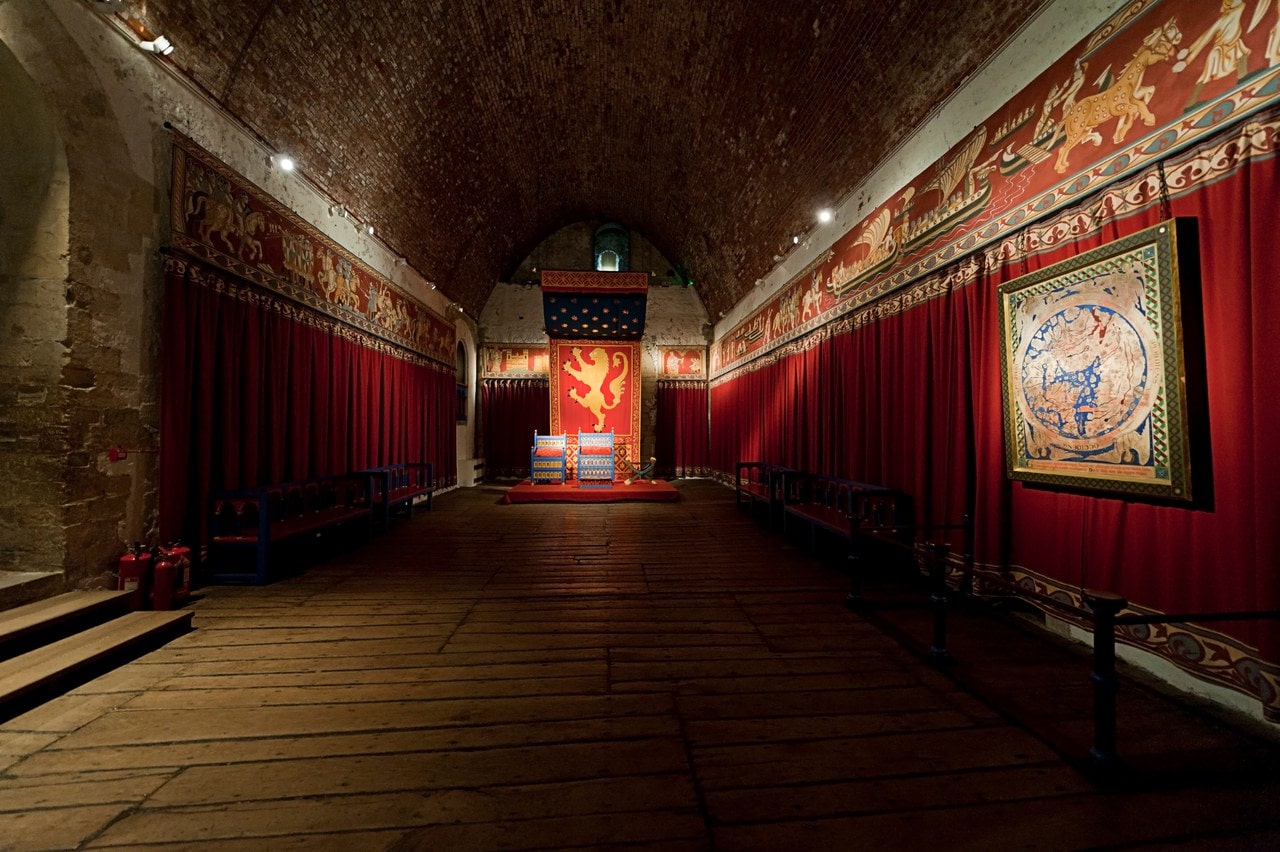
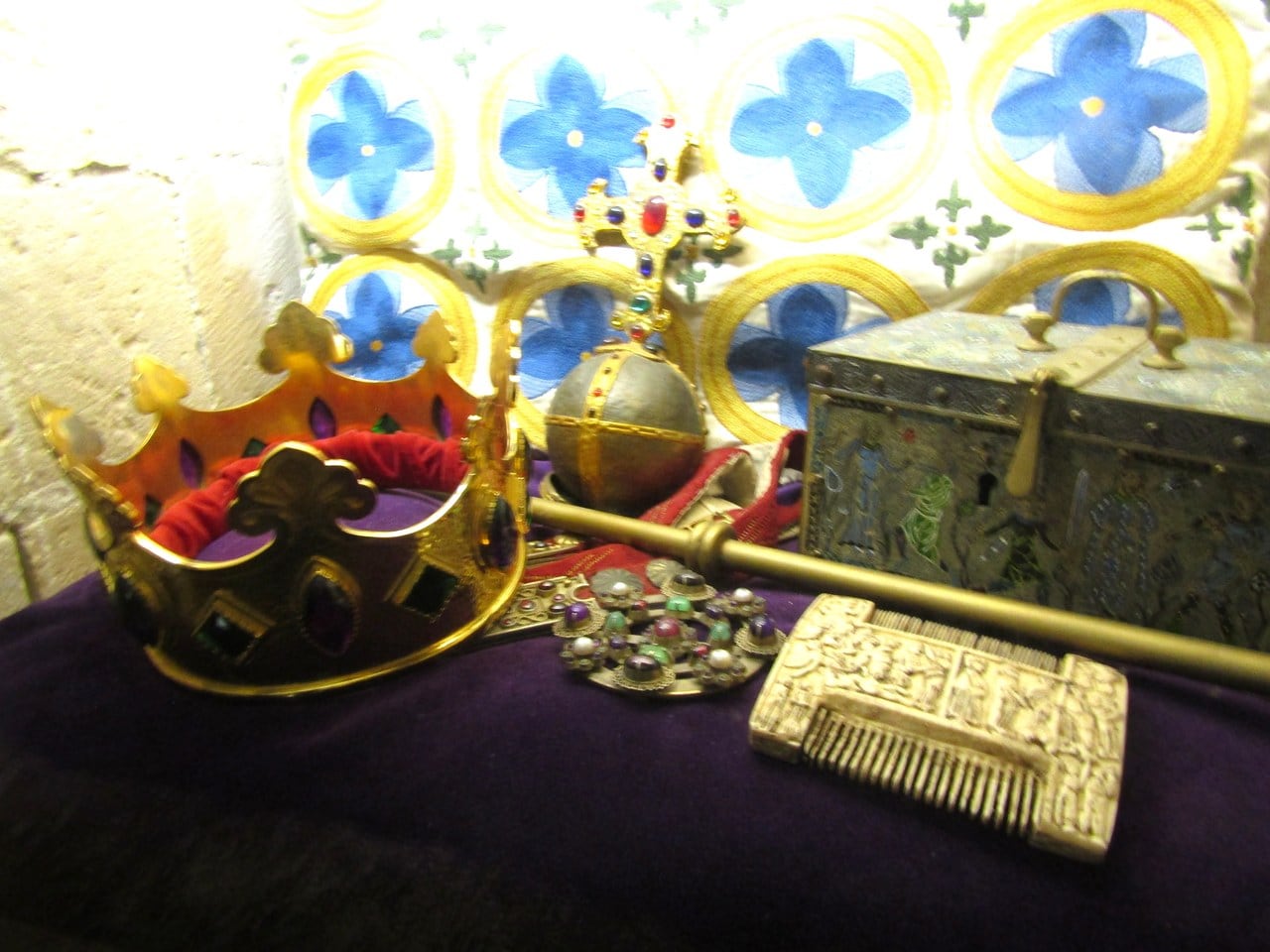
The rooms inside need saying plainly. Furnished royal apartments on the upper floors are a modern English Heritage re-creation and nothing in them is a medieval survival: the operator describes its own work as “over 500 intricate objects, offering a genuine re-creation of a regal medieval world”. It is research-led, resting on a survey program Eales dates to an English Heritage project initiated in 2009, though English Heritage’s public pages describe the result rather than the evidence. The same plainness is owed to the Dover Castle Under Siege exhibition, the recreated First World War fire command post, the reconstructed coast artillery operations room, the hologram characters and the digital reconstruction of the 1216 north gate: interpretation built from evidence, not a record of what stood.
Reading the curtain by its towers
Dover’s best fabric detail works from the ground and costs nothing. Historic England records that Henry II’s inner curtain and part of the eastern outer curtain carried “rectangular mural flanking towers which allowed the outer face of the walls to be defended by cross-fire and sections to be isolated if captured by escalade”, and that King John’s work on the northern outer curtain is “where the mural towers are ‘D’-shaped rather than the characteristically rectangular examples from Henry II’s reign”. So a stretch of outer wall can be dated by eye: rectangular towers are Henry II’s, D-shaped ones John’s. “Mural tower” is the register’s term here rather than the operator’s, and English Heritage’s own phased plan bands the two reigns as one color, so the two authorities are answering different questions. Of the inner curtain’s fourteen towers, the register notes two barbicans, “only the northern of which is visible today”.
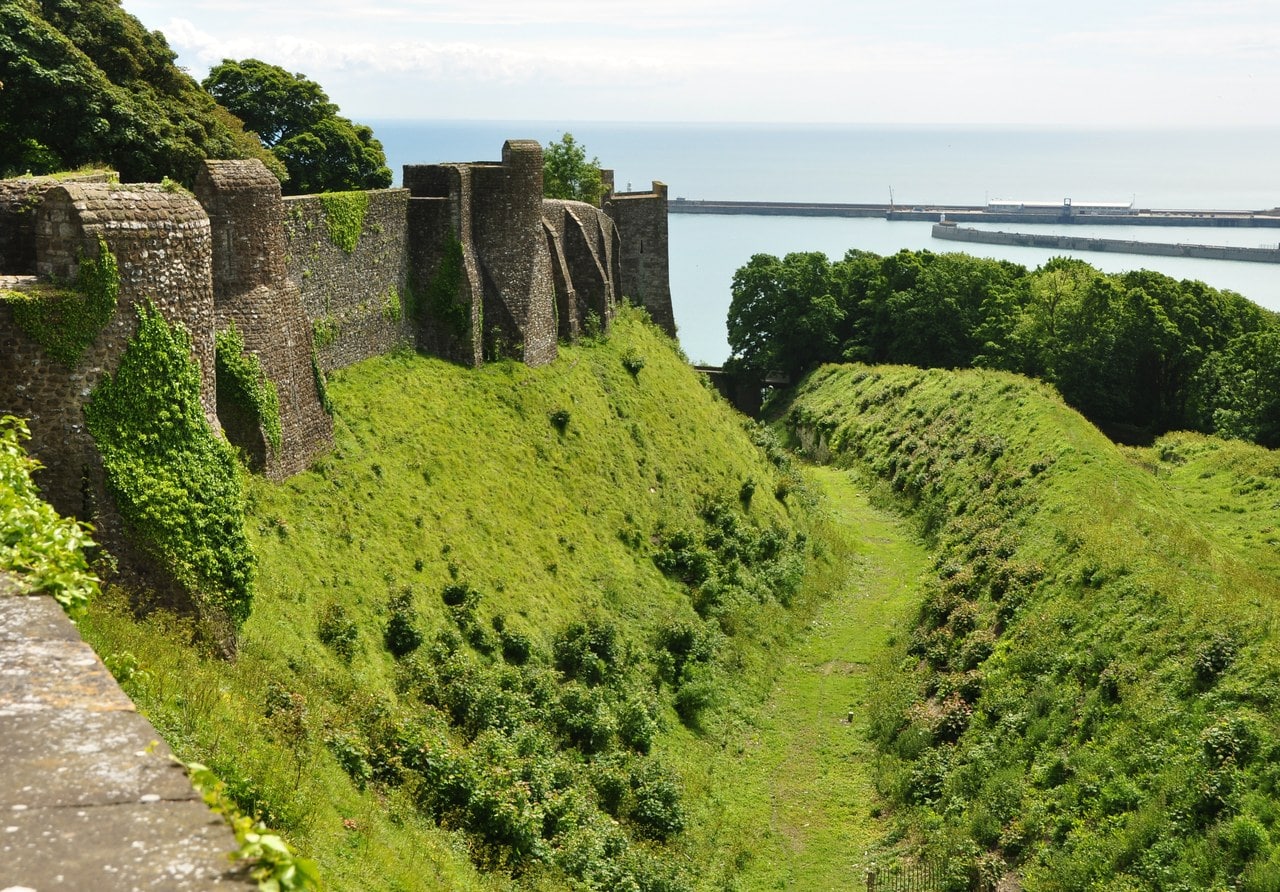
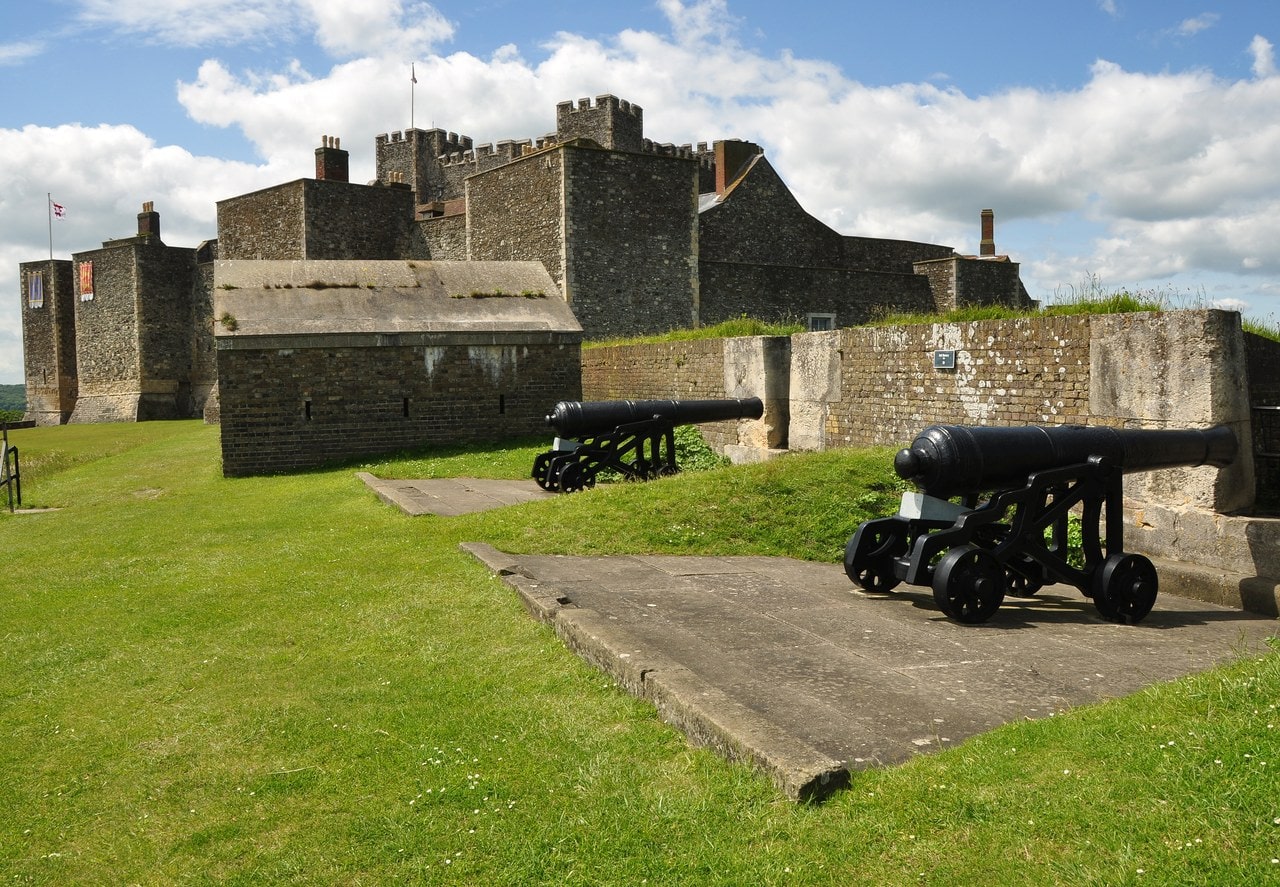
The ditches need one correction: Dover’s are dry, rock-cut and turfed rather than water-filled, Renn confirming in the scholarly literature that they are “dry at Dover, but wet at London”, and the only Moat here is Moat’s Bulwark, a personal name. The inner ditch is revetted with brick escarpments, Napoleonic work lining a medieval cut.
The concentric question, and the profile that qualifies it
Two authorities make a priority claim for Dover’s plan, at two tiers and in two different scopes. Historic England’s scheduling record says Dover “is believed to be the first castle in western Europe to have employed concentric lines of fortification”, and elsewhere in the same record says the outer bailey “pre-empted the concentric castles of the 13th century by almost half a century”, which places it before the type rather than in it. English Heritage, writing thematically, calls Dover “the earliest and foremost English example of a concentric fortress”, and puts the word concentric in scare quotes on its own page. Neither is the flat popular form, which drops three qualifications at once: western Europe rather than Europe, “is believed to be” rather than “is”, and lines of fortification rather than the castle type. The register’s sentence also sits at the end of three hedges in one paragraph about Henry II’s outer bailey, so the two authorities are dating different fabric. Our survey of castle types sets the concentric plan against the enclosure castle it grew out of.
The plan is concentric today; the elevation is not medieval, and the two facts travel together. Historic England gives the reason in the clause that turns a loss into an explanation: “Heavier artillery saw a switch from reliance on masonry for protection to earthen banks, which absorbed shock better.” So Dover’s medieval curtain survives almost everywhere in plan and almost nowhere at full height on the east and west, and a reader standing on the outer defenses is looking at a Georgian and Napoleonic artillery fortress built on a medieval outline.
Area belongs here rather than in a table, because each figure needs its boundary attached. Under its own heading “How big is Dover Castle?”, English Heritage writes: “In terms of area, Dover Castle is the largest castle in England. Its outer bailey curtain wall contains an area of almost 32 acres. If the castle’s ditch and its post-medieval outer defences are included, then the total area it covers is over 50 acres.” That is English Heritage’s claim in English Heritage’s words, and this guide neither adopts nor contests it. Historic England’s scheduling record gives no area at all; its single mention of an acreage is the Admiralty Harbour below the castle. So the comparison readers want is not two measurements of one thing, and it belongs in our ranked survey of the largest castles in the world, which sets the criteria out.
The Avranches Tower and the Spur
One tower carries the argument of this hill in miniature. The Avranches Tower appears on English Heritage’s phased plan and in no operator prose page and neither statutory record; it is the subject of a 1969 paper by D. F. Renn, which describes it in plan as “five sides of an octagon, the inner three being missing”, standing on the causeway between the inner and outer ditches, with two tiers of rectangular loops. Renn suggests, in his own hedged words, that it was “designed to defend as well as to block the original entrance”, and gives “The most probable dates” as between 1185 and 1190. His best sentence is about survival: the arrow slits were built for crossbowmen, and “their survival is a tribute to the skill of their designer in that they needed minimal alteration to the needs of musket and pistol in the eighteenth and nineteenth centuries”. Twelfth-century crossbow loops still serviceable for firearms six centuries later is the counterweight to the cut-down-and-ruined reading of Dover.
The earthwork at the north end has three layers and a Napoleonic name. A great spur or outwork was dug beyond the blocked north gate in the thirteenth century, with St John’s Tower built in the ditch; Desmaretz reformed the old barbican area in 1756 and 1757 into an infantry outwork English Heritage calls the “Advanced Work”; and Twiss then renamed the Advanced Work the Spur and reshaped it as a ravelin with a redan as its inner strongpoint, Historic England dating the brick redan to 1801 to 1803 and saying it “survives today”. So the name on the signage is five and a half centuries younger than the earthwork under a visitor’s feet. English Heritage’s own verdict is that Fort Burgoyne, built from 1865, was “a final acknowledgement of the weakness of the Spur”.
One word covers three places here, and merging them is the commonest error made about this site. Spur Casemates are bombproof barracks of 1796 to 1798, above ground, in the northern part of the interior, and English Heritage’s history page is decisive: “underground barracks in casemates at the southern end of the castle (the Cliff Casemates) and above ground at the Spur Casemates.” Cliff Casemates, or Casemate level, were excavated 25 meters down at the southern end. Spur Tunnels are a third place again.
The Roman pharos and St Mary in Castro, Dover Castle
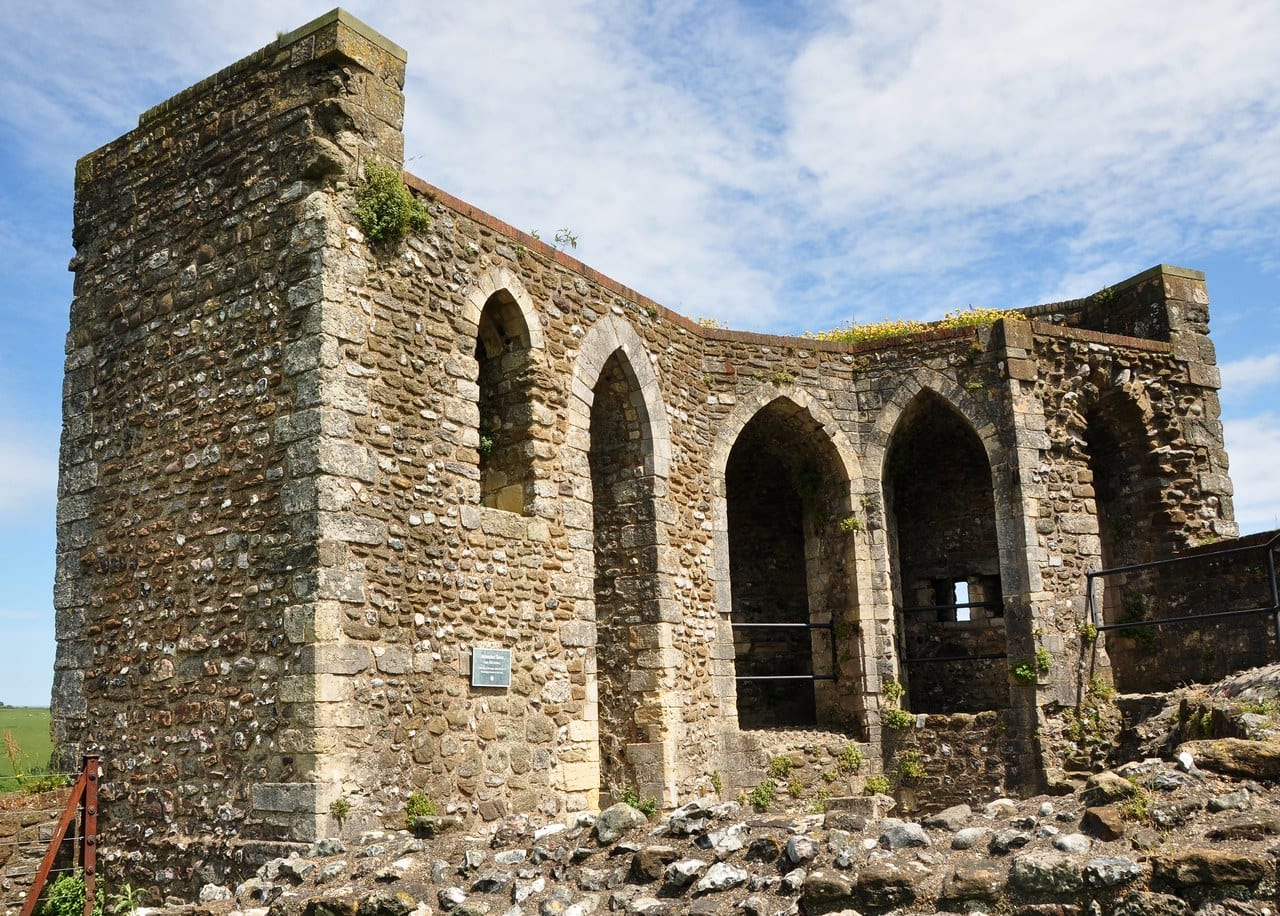
Roman fabric survives in the pharos to 12.5 meters of a tower now standing 15.8 meters, on English Heritage’s figures, with a medieval belfry above whose walling is “almost vertical” against “the sloping Roman walls”. Historic England’s scheduling record instead calls it “a stepped tower approximately 19m in height” and infers, hedged, an original height of around 24 meters. Both sets are recorded here and neither is averaged. Below the belfry the construction is legible and corroborated by both authorities: a Kentish ragstone plinth re-exposed by excavation in 1915; mortared flint rubble faced with tufa from the Dour valley and greenish sandstone in thick layers; and bands of orange-red brick at the base of each stage, which the register calls tile bonding courses. And English Heritage supplies the sentence a visitor most needs before looking up: “The external facing has been patched many times.”
The profile is a change of view rather than a contradiction. Historic England’s 1974 listing describes “originally vertical stepped walls rising in tiers set back each within the last, now almost smoothed”, while English Heritage reports that a recent survey of the building has made a smooth conical profile “more likely” than the stepped one Roman sculpture, coins and graffiti would suggest. Both agree that what stands today reads as smooth; they disagree about whether the steps were ever there, and the artist’s reconstruction English Heritage publishes is interpretation rather than record.
English Heritage publishes four separate superlatives about this building in four different scopes, and merging any two produces a claim nobody makes. What this guide quotes is the one that names its own comparison set: the Dover pharos is “one of only three lighthouses to survive from the whole of the former Roman empire”, and “The others are at Leptis Magna in Libya and La Coruna in Spain.” Naming a set is not ranking, and the age question belongs where the criteria are argued out, in our survey of the oldest castles in the world.
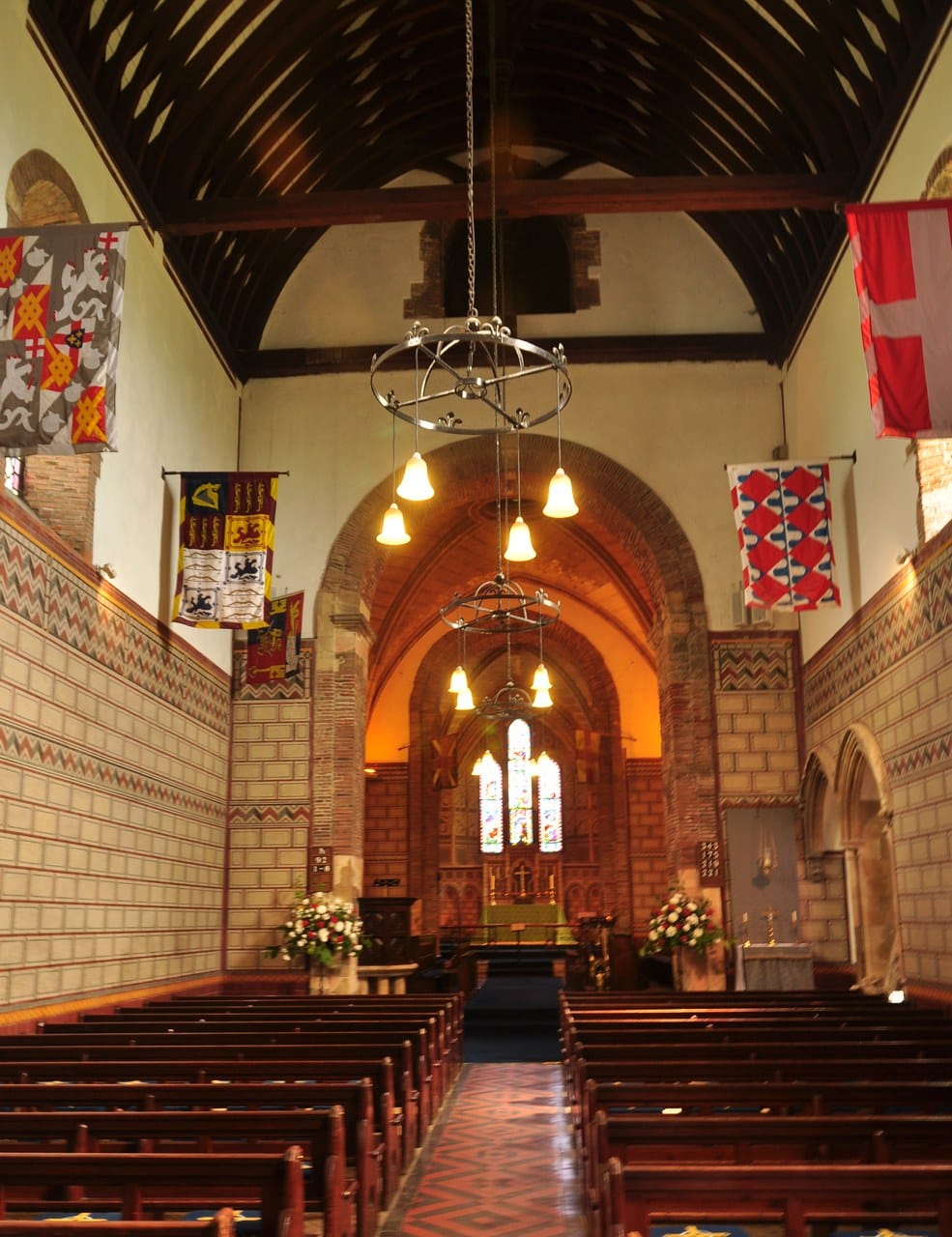
The church beside it is mostly nineteenth-century work, and “Victorian” is the correct period word here because Scott and Butterfield are British. Grade I listed in its own right as the Church of St Mary Sub-Castro and excluded from the castle’s scheduling, St Mary in Castro was roofless and used as a coal store in the eighteenth century before Sir Gilbert Scott restored it as a garrison church, dated 1862 by the listing and to “the 1860s” by English Heritage; mosaics by Butterfield followed in 1888. The listing is candid about how much is new, calling the roof and some ashlar dressings modern inside a Grade I entry.
The Tunnels
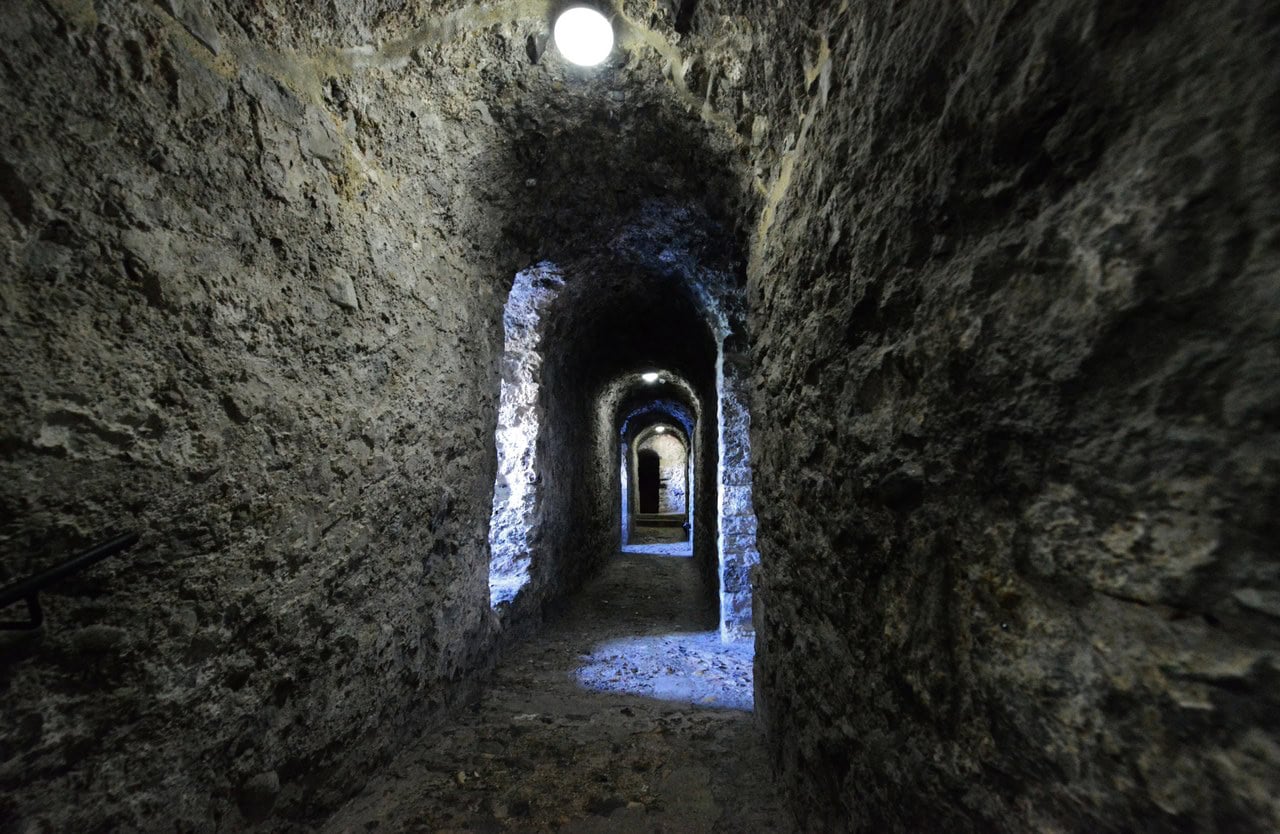
Dover has been tunneled again and again, from the thirteenth century to the twentieth. Counting the systems is the mistake almost everyone makes: Historic England’s scheduling record alone describes separate campaigns of medieval sally passages, sixteenth-century cliff tunnels approaching Moat’s Bulwark, late-eighteenth-century tunnels at the cliff foot, the Cliff Casemates of 1797 and 1798, an 1856 spiral stair, passages beneath the ditch “adapted in the 1860s to lead to musketry galleries”, and the wartime Annexe and Dumpy levels. What follows is not a total; it is what a visitor can walk through.
The medieval tunnels
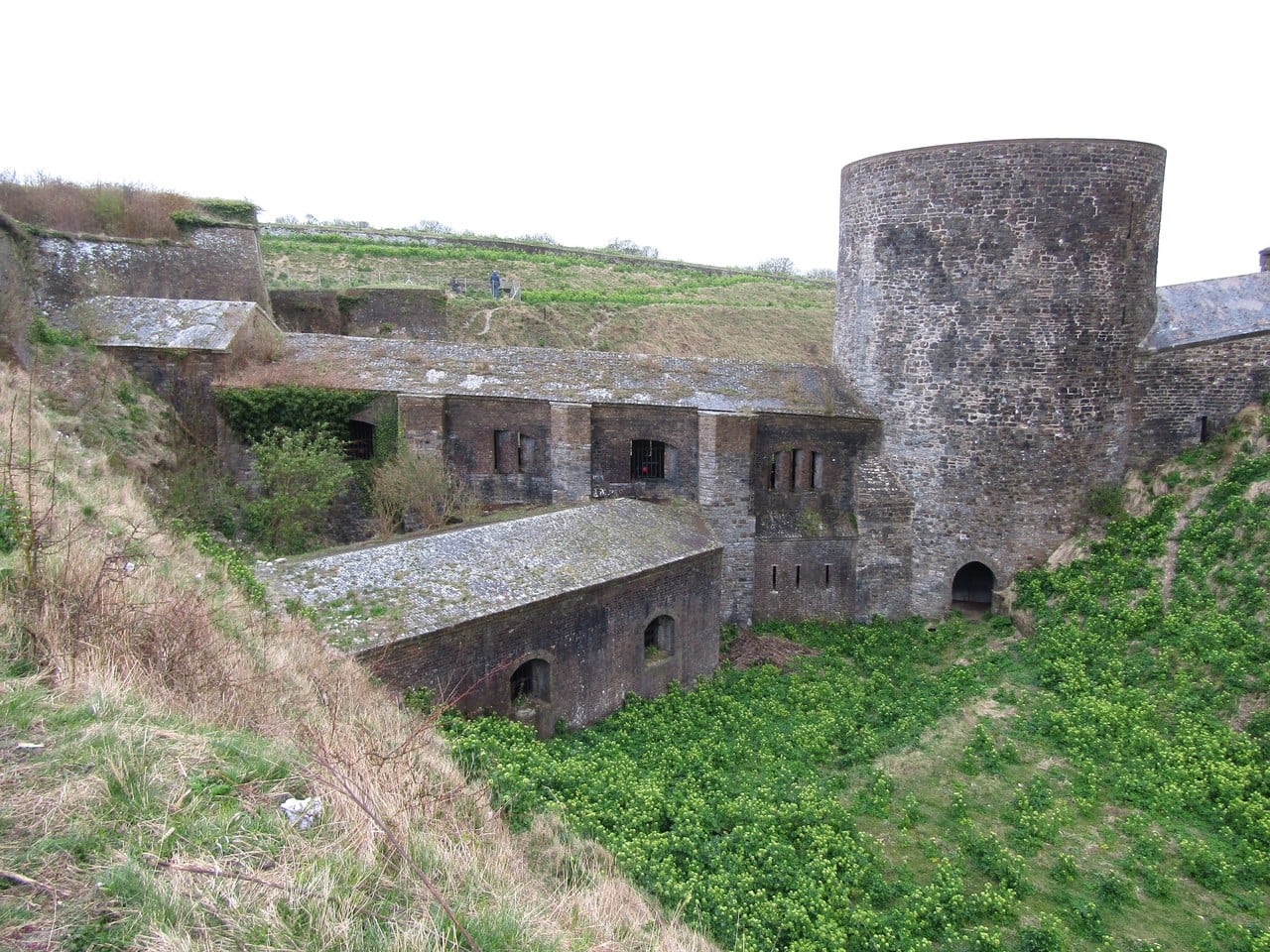
Passages a visitor calls medieval were dug because of the 1216 siege rather than during it. Louis’s miners brought the gate tower down, and no source read for this guide describes a countermine driven by the garrison. What survives underground is Henry III’s post-siege work of 1217 to about 1256, and English Heritage’s account is precise: “The builders remade the barbican and cut a tunnel under the outer wall to reach it, via the new St John’s Tower that dominated the outer ditch, and a covered passage across it. The passage continued as a tunnel under the Spur, where it divided into three, allowing defenders to defend the barbican.” Of these tunnels, English Heritage writes that “One of them cuts through a rough-hewn passage possibly mined during the great siege itself.” The word possibly travels with that sentence, and the source for it is the operator’s in-depth account by Charles Kightly rather than a survey report.
Then they were reworked twice. Historic England records the Spur remodeled between 1801 and 1803, and English Heritage records Twiss’s engineers modernizing the tunnel to allow a staged defense back across the inner ditch through St John’s Tower. So a visitor in the medieval tunnels is walking thirteenth-century rock cut about and relined in the Napoleonic wars, which is the most useful thing to know before going down.
The Napoleonic barracks in the cliff
Cliff Casemates were cut 25 meters down into the chalk at the southern end between 1797 and 1798, as barrack accommodation, and brick-lined by 1810 after chalk falls. Part of that complex is now the Tunnels Tea Room, and the Napoleonic tunnels around it can be entered without either guided tour, which English Heritage states outright and which is useful on a busy day. The Spur Tunnels are a separate, self-guided system reached by a narrow spiral staircase.
The Secret Wartime Tunnels
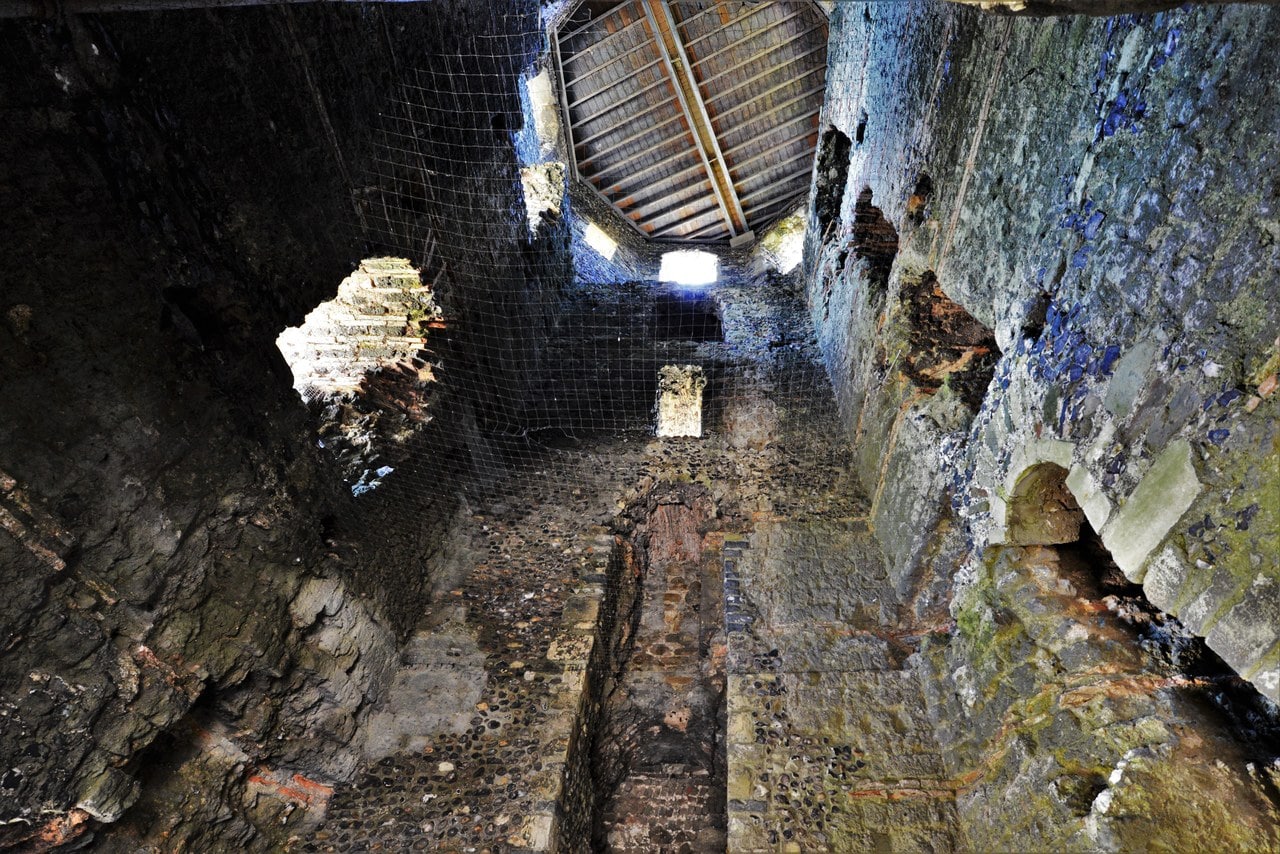
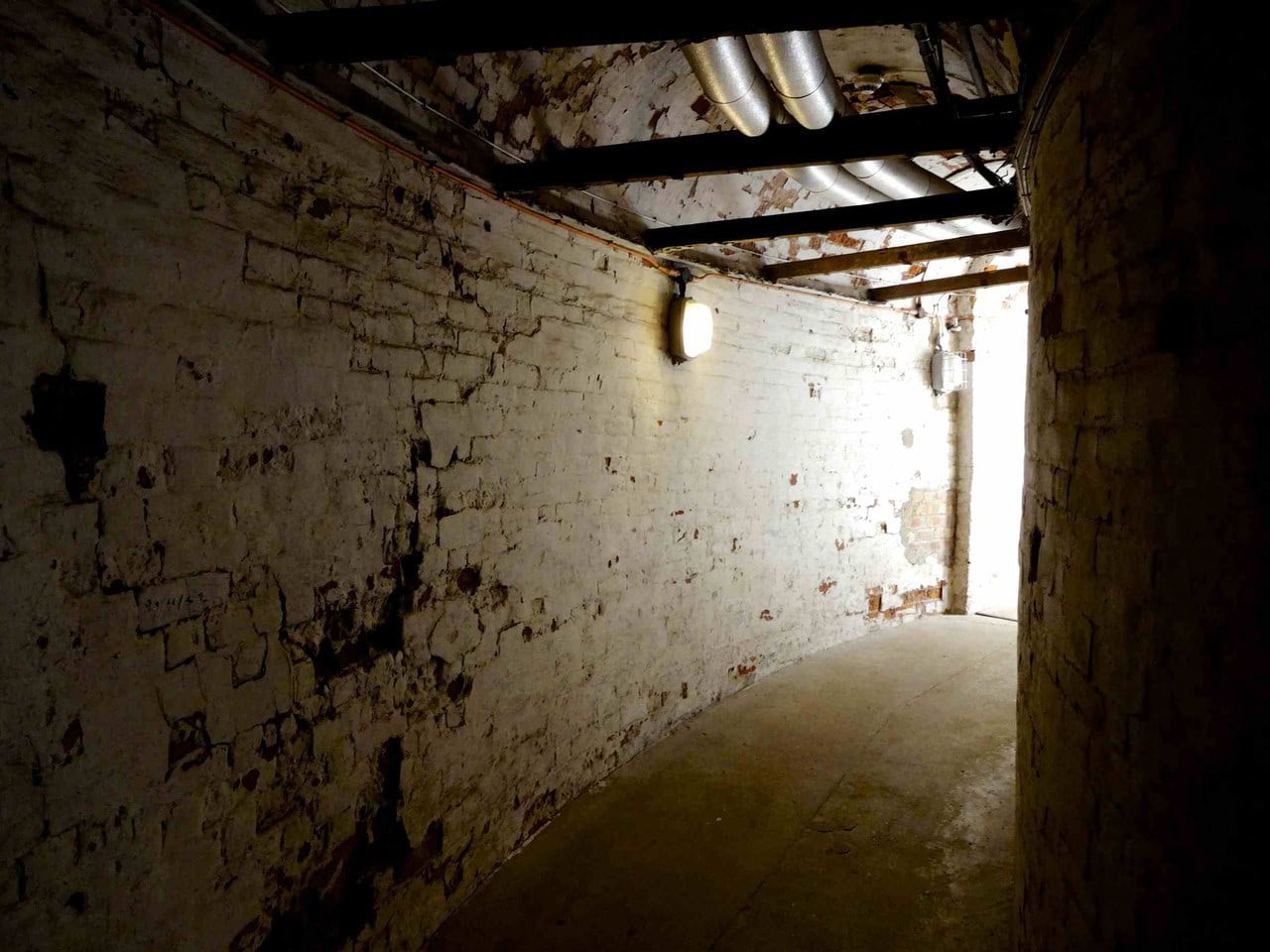
Casemate level was in use as a Fortress Headquarters from 1939, controlling naval vessels in the Straits of Dover and deploying coastal and anti-aircraft artillery, and it ran Operation Dynamo, the evacuation from Dunkirk between 26 May and 4 June 1940, under Vice Admiral Ramsay. English Heritage gives 338,226 troops rescued, “including 224,320 British”, so the larger figure is British and Allied together. The Kent Historic Environment Record supplies the sentence that should govern any description of the place: “Structurally the casemates were not altered at this time but were subdivided into smaller rooms to accommodate their new function.” The wartime headquarters is a Napoleonic barracks partitioned, not a purpose-built bunker. English Heritage also debunks the story most readers arrive with: the operation was not named for a dynamo in the tunnels, because “there’s no evidence for this. Dynamo was just a code word.”
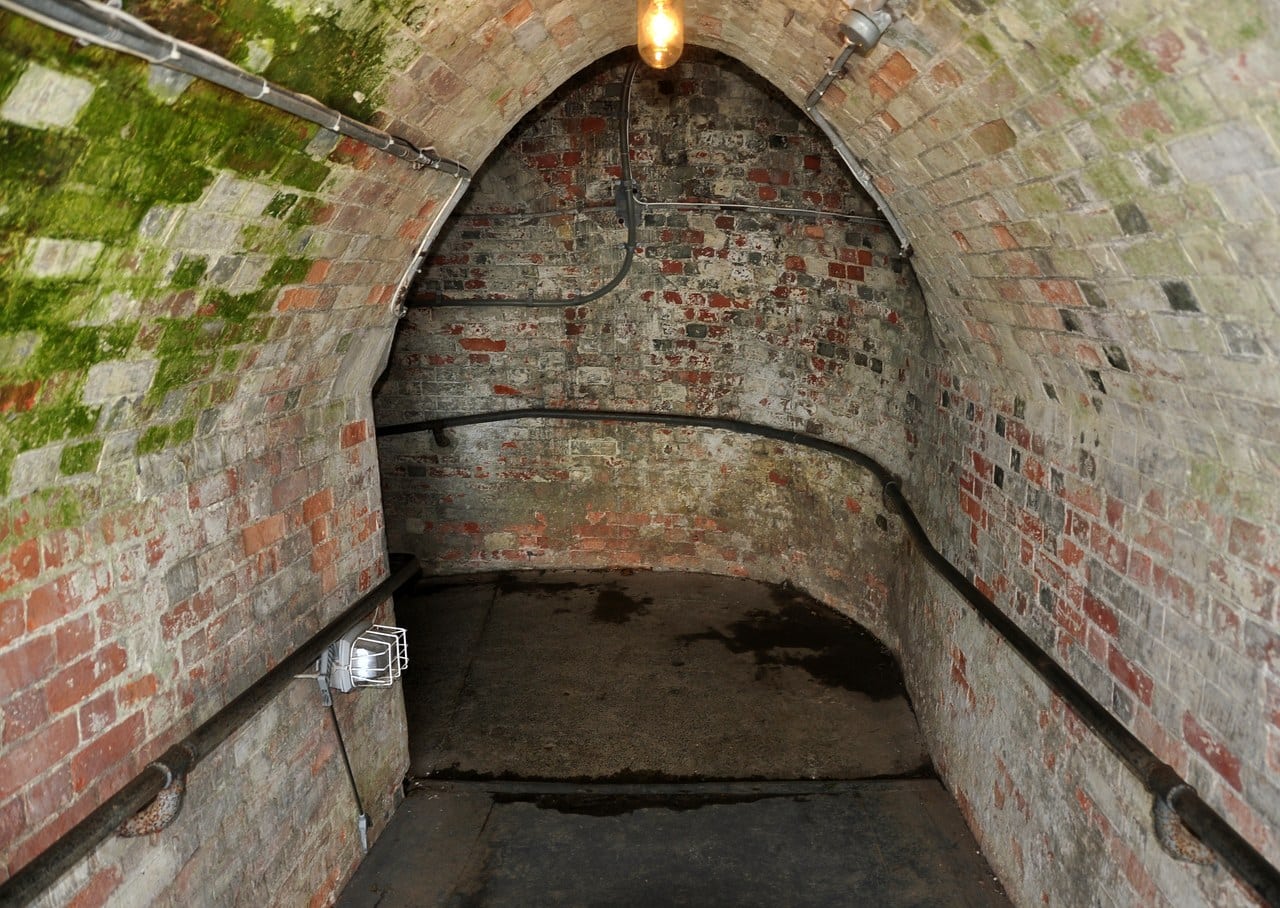
Two further levels were then dug. Annexe came in 1941 and 1942, as a medical dressing station and accommodation, below Casemate; Dumpy followed in 1942 and 1943 to house the Dover Combined Headquarters, beneath both. Historic England’s record compresses both into 1941 and 1942 and is the outlier; the phasing above is the Conservation Management Plan’s, corroborated by English Heritage’s own narrative. Dumpy is vaulted rooms cut into chalk, braced with bolted steel arches, and it held operations rooms for Army, Navy and RAF through every later use of the complex. In the early 1960s the government chose Dover Castle as one of twelve Regional Seats of Government, to be occupied in the event of nuclear war under a senior minister with military and civilian staff; Dumpy was its heart, Annexe became a dormitory, air filtration and a small radio studio went in, and a lift was inserted around 1965 to 1967. Both English Heritage and the Kent record put the closure in the early 1980s, and neither gives a year.
What the hill holds and you cannot see
One set of tunnels regularly turns up on visitor lists and should not. Esplanade level, close to street level at the cliff foot, is real, earlier than the wartime levels and substantially extended in the twentieth century, and its associated Chapel Cave “remains in private ownership” on the Kent Historic Environment Record. Esplanade appears in no English Heritage visitor material and cannot be visited.
Visiting Dover Castle
List the 2 castles on this map
- Dover Castle — Kent, England
- Windsor Castle — Berkshire, England
Getting there
Dover Priory is the station, and English Heritage gives the approach as “a 1 mile walk uphill to the castle”. Our own elevation work puts the climb at roughly a hundred meters, from a station near sea level to a plateau at about 110 meters above sea level; English Heritage says only “uphill” and gives no gradient. Dover Priory is a step-free station with lifts to every platform and all-hours staff assistance, so a wheelchair user can reach the platform but cannot walk the mile.
Buses need care, because the operator’s list and the registered timetable data do not match. English Heritage lists Stagecoach services 15, 15X, 80, 80A, 81 and 93, and says the 81 will bring you up from the station. Checked against the Department for Transport’s Bus Open Data Service and the national stop register, 15X does not appear in that operator’s registration at all, service 15 calls at no castle stop, and the 81 serves the castle from Dover Pencester Road in the town center, about 600 meters from the station entrance, so no single 81 journey links station and castle. The only service calling at the stop named Dover Castle Pedestrian Gate is line D, which English Heritage does not mention and which is the most frequent of them. A registration is not a promise about the day, and the network was recut in September 2026.
Parking is three separate stories. Cars park free on site, up to 200 of them, opening with the castle and for visitors only: English Heritage’s wording is that you will need an “admission ticket to park there”. Blue Badge holders have a free car park by the Great Tower, withdrawn on event days when drivers are directed elsewhere on site, which matters across the nine days of the autumn half-term program. Coaches are neither free nor close: coach parking is at the top of Castle Hill, “steep, Pay & Display”, a quarter of a mile downhill, with drop-off opposite Constable’s Gate.
Two Dover-specific notes. English Heritage publishes road alternatives for days when the port is congested: the M2 and A2 corridor, the A299 towards Ramsgate and then the A256, or for drivers on the M20 and A20 coming off at Alkham Valley or at Capel for the old Folkestone Road B2011. Arriving from a cruise or ferry, English Heritage’s own allowance for a shuttle bus between port and castle is half an hour each way; it names no operator, departure point or frequency, so treat it as a planning allowance and not as evidence of a service running on your day.
Admission
Everything in this table is perishable and was read from English Heritage’s own pricing endpoint on 12 September 2026. It lives here and nowhere else in this guide.
Price at Dover is a grid rather than a figure. It varies by channel, booked ahead or paid at the gate; by band, of which there are three; and by category, and every cell has a higher Gift Aid variant. A bare “adult 24.65 pounds” is true in one cell of six. The reader-facing band names and the data’s own names also run in opposite directions: English Heritage’s booking buttons read Standard, Saver and Super Saver, dearest to cheapest, while the underlying calendar calls the same three bands Peak, Standard and Off-Peak. The table uses the names a visitor meets at checkout.
| Ticket | Super Saver, advance | Saver, advance | Standard, advance | Super Saver, at the gate | Saver, at the gate | Standard, at the gate |
|---|---|---|---|---|---|---|
| Adult | 24.65 (27.20 with Gift Aid) | 27.03 (29.75) | 29.32 (32.30) | 29.00 (32.00) | 31.80 (35.00) | 34.50 (38.00) |
| Child, 5-17 | 12.32 (13.60) | 13.51 (14.87) | 14.62 (16.15) | 14.50 (16.00) | 15.90 (17.50) | 17.20 (19.00) |
| Concession | 22.35 (24.65) | 24.65 (27.20) | 27.03 (29.75) | 26.30 (29.00) | 29.00 (32.00) | 31.80 (35.00) |
| Family, 2 adults and up to 3 children | 61.79 (68.00) | 67.57 (74.37) | 73.35 (80.75) | 72.70 (80.00) | 79.50 (87.50) | 86.30 (95.00) |
| Family, 1 adult and up to 3 children | 37.06 (40.80) | 40.54 (44.62) | 44.03 (48.45) | 43.60 (48.00) | 47.70 (52.50) | 51.80 (57.00) |
| Members | free | free | free | free | free | free |
| Group discount | 10% off for organised groups of 15 or more paying visitors in one transaction, with free entry for one tour leader and one coach driver, neither counting towards the total | |||||
All figures in pounds sterling, checked 12 September 2026. The Gift Aid figure in brackets is the higher one and it is optional. English Heritage describes it as “a voluntary donation of 10%” on top of the ticket, which lets the charity reclaim tax “provided you have paid enough UK Income or Capital Gains Tax” — so it is a donation rather than a fee, and a visitor who pays no UK income or capital gains tax has no reason to choose it. Booking ahead saves what English Heritage describes as “up to 15%”, which is the operator’s own wording and the correct one, because the ratio is not flat across every band and category. Under-fives are free on a free infant ticket; concession means NUS students and those aged 65 and over, with proof on arrival; and a companion or helper goes free on an essential companion ticket. Arriving without a car changes the arithmetic. English Heritage offers 20% off for visitors coming by bus, train or bicycle, on production of a travel ticket or a bike or helmet — but “the offer is only available for tickets purchased at the site on the day of your visit”, so it applies to the gate column and not to an advance booking, and the discount runs in partnership with Good Journey. For a rail arrival that can undercut booking ahead, which is the opposite of the usual advice. There is no booking fee, paid tickets cannot be changed, transferred or refunded, and no bookings are taken by phone. Membership starts at 44 pounds, less than two adult tickets, and reciprocal arrangements exist with Cadw, Historic Scotland, the National Trust and several pass schemes.
What the ticket includes, and the closure that qualifies it. Admission covers the Great Tower, Dover Castle Under Siege and the medieval tunnels, the Spur Casemates and the Spur view, the Napoleonic tunnels and Tunnels Tea Room area without either guided tour, the pharos, St Mary in Castro, the regimental museum, the First World War fire command post and gun emplacement, and the play area and trail. It also covers both Secret Wartime Tunnels guided tours, and one of them is currently shut: the Operation Dynamo section is closed for essential maintenance, and no reopening date has been published on any English Heritage page.
English Heritage contradicts itself about this, and a reader should know it before booking. The closure appears six times across five English Heritage pages, including the access, facilities and things-to-do pages and a banner on the landing and pricing pages, while the Dover frequently-asked-questions page, last updated in March 2026 and fact-checked by a senior curator, still answers yes to whether the tunnels are open and names Operation Dynamo specifically; the pricing data separately states that admission includes the Secret Wartime Tunnels tour. The honest reading is that the ticket copy is true of the Underground Hospital tour, which is running, and not currently true of Operation Dynamo. English Heritage refunds automatically when it closes a site and publishes no refund or adjustment for a partial closure, so do not expect one.
Not included: the private guided tour of the Great Tower, which is for groups by inquiry, and coach parking. Event days may carry a supplement, though the one event English Heritage has published for the rest of this season is included in standard admission.
Opening is seasonal rather than a single set of hours: 10:00 to 17:00 daily to 25 October, with that last Sunday closing at 16:00; 10:00 to 16:00 daily for the week to 1 November; then from 2 November, weekends only, 10:00 to 16:00. Two weeks break that winter pattern and open daily, 28 December to 3 January and the February half-term week of 15 to 21 February, and from 22 February the castle opens Wednesday to Sunday. Last admission is an hour before closing. Read that pattern before booking a winter midweek trip, because in that season a midweek visit is not a shorter visit but no visit at all. Christmas week is the trap, and it is the opposite of a holiday opening: Christmas Eve, Christmas Day and Boxing Day are each named as closed, and the only open day in the week of 21 to 27 December 2026 is Sunday 27 December.
How long you need
English Heritage publishes two durations and they are better together than either alone: its frequently-asked-questions page recommends “a minimum of 3 – 4 hours”, and its group-visits page gives an average length of visit of “4 – 5 hours”. One is a floor and the other is what people actually do. Two structural rules turn that into a plan: admission is sold by timed slot, so arrive for the slot you booked, though you may stay as long as you like within opening hours; and last admission is one hour before closing. On a winter day closing at four, arriving at three leaves one hour for a site the operator says needs four.
Tours are the real constraint. Underground Hospital tours are guided-only, limited to 30 people, about twenty minutes long, included in admission and leaving regularly through the day, while the Great Tower is free-flow and self-guided, with costumed interpreters on selected days and hologram characters otherwise. English Heritage publishes no fixed tunnel-tour departure times and instead tells visitors to “ask site staff upon arrival for the best time to visit the tunnels on that specific day”, which is the honest answer to a question most planning guides invent a schedule for. Groups of eleven or more must call the site in advance, a different threshold from the group discount’s, and no independent guiding is allowed in the tour areas.
Best time to visit
Only a few of Dover’s seasonal facts are firmly sourced. The durable pattern is that winter opening is weekends and school-holiday periods rather than reduced daily hours. English Heritage prices its tickets to spread demand and says its off-peak tickets fall at “quieter times”; reading that policy against Dover’s own published calendar, the days it prices lowest are weekdays from mid-September through October and every open day from early November. That mapping is ours rather than a statement English Heritage makes about Dover’s crowds. The dearest of the three bands is applied to no day at all in the currently published window.
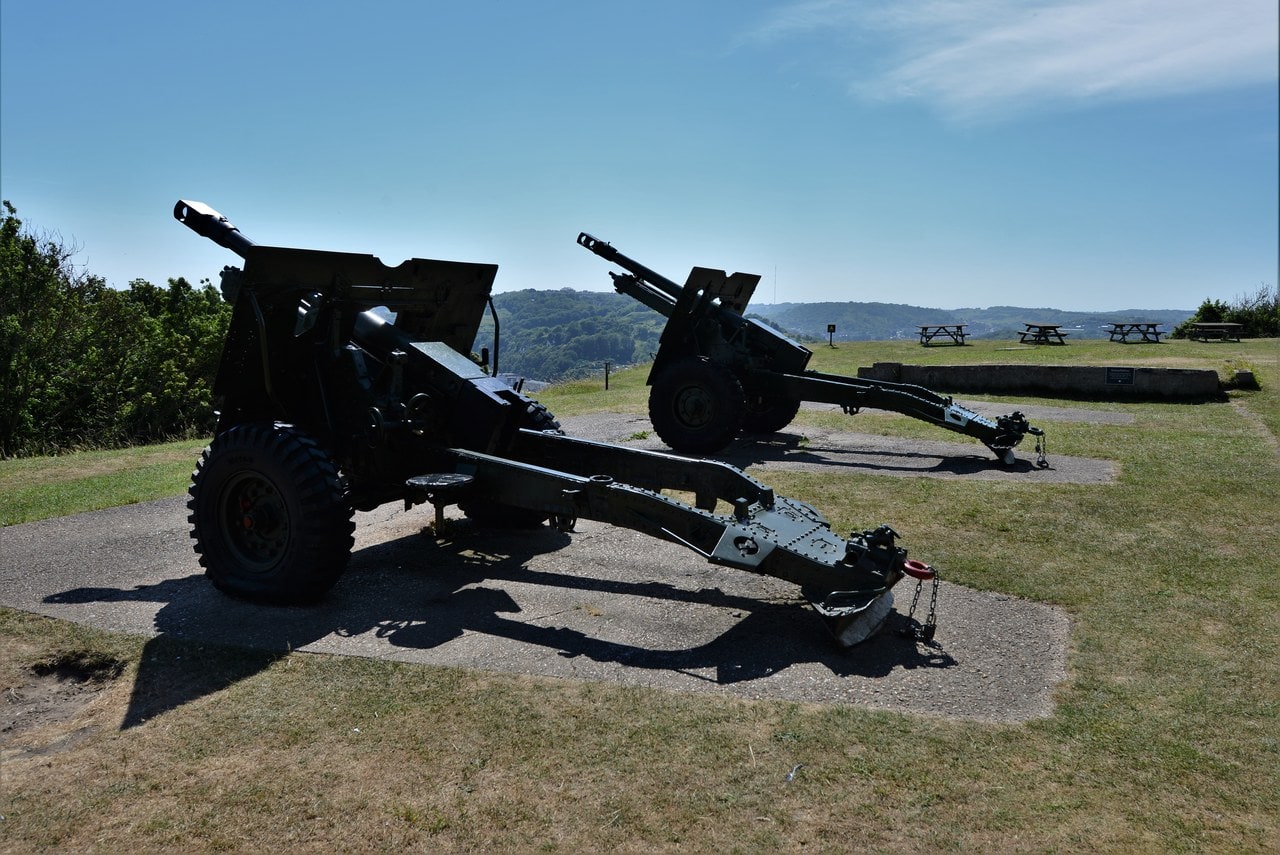
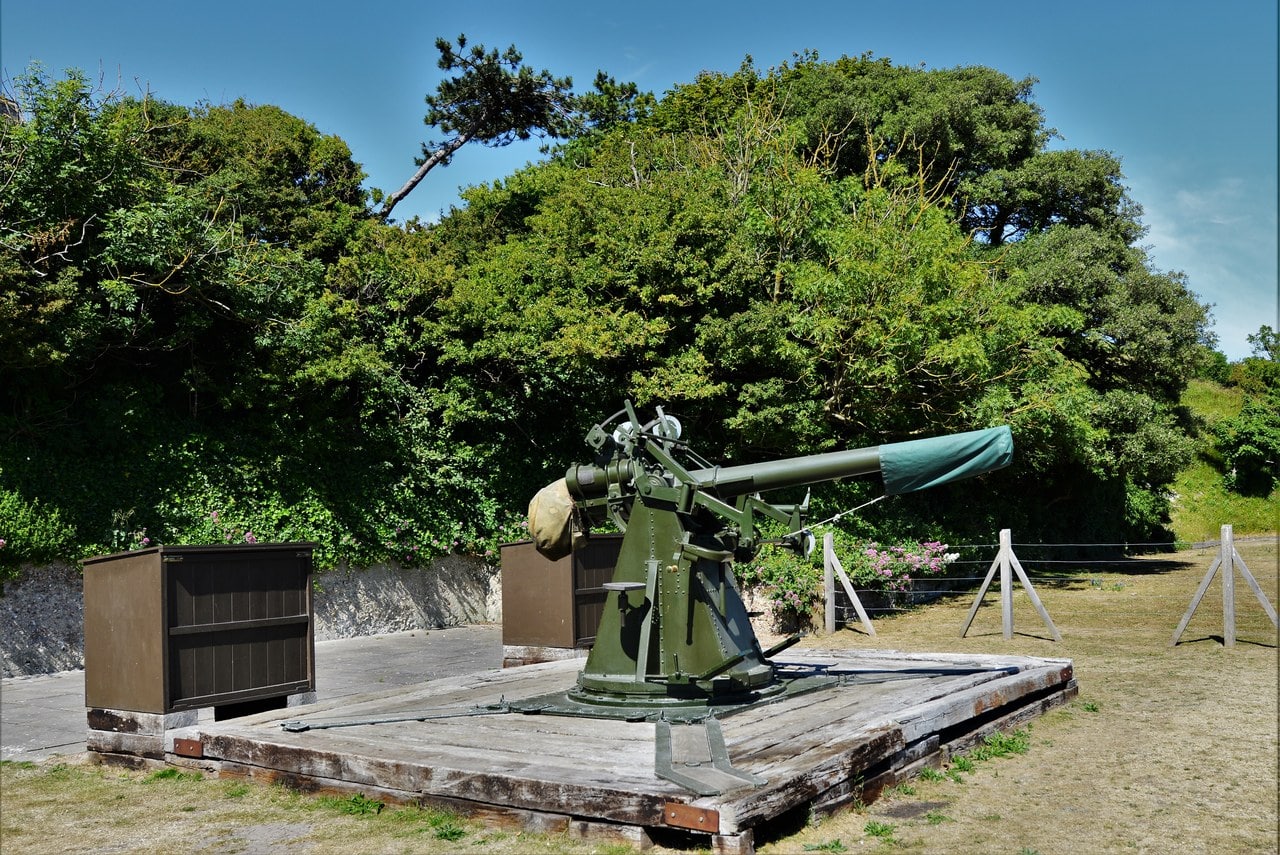
Two event patterns are firm enough to time a visit around. On Saturdays through the summer, volunteers fire the guns at the fire command post, and on selected days volunteers in uniform give firing demonstrations of the British 3-inch gun. And English Heritage’s published program for the rest of the 2026 and 2027 season contains exactly one event, a Halloween half-term program running from late October into the start of November, included in standard admission.
Photography
Four things here come from the operator and are specific to this site. Amateur photography is welcomed and English Heritage asks visitors to share pictures; commercial, corporate and professional photography and filming need permission arranged in advance with its filming team. Drone flying is prohibited, and the rule is wider than Dover: English Heritage “does not permit drone flying from or over sites in our care”, with narrow exceptions for contractors meeting Civil Aviation Authority criteria. Light is the practical problem indoors, and the operator’s access page names it under its own heading, “Areas Of Low Lighting”, specifying “Some darkened areas in the Great Tower, and also in the tunnels”. Three viewpoints are named by English Heritage itself: the previously inaccessible northern spur, step-free by a new pathway; the First World War fire command post, offered for “the best view of the White Cliffs of Dover” and reached “up steep steps”; and the top of the Great Tower, up steep flights of narrow steps. No tripod rule, flash rule or interior photography ban is published.
Accessibility
Step-free access covers much of the grounds, Arthur’s Hall, the Stone Hut, the regimental museum, the First World War gun emplacement, the Spur view, and the Spur Casemates, which hold the Dover Castle Under Siege and Georgian barracks exhibitions. In the Great Tower it is ground floor only, the upper floors being up steep flights of narrow steps, and there is “no lift access in the Medieval part of the castle”: lifts exist only in the Secret Tunnels. Spur Tunnels are reached only by a narrow spiral staircase, 18 steps to the first part and 26 more towards the end, with handrails; a virtual tour of them can be viewed in the Spur Casemates instead, and a virtual tour of the Great Tower plays in Arthur’s Hall, which is itself step-free.
One fact overrides the rest of this section at present. The Underground Hospital tour is running but is, in English Heritage’s words, “not accessible by wheelchair or mobility scooter”, and with the Operation Dynamo section closed there is currently no Secret Wartime Tunnels tour a wheelchair user can take. Two virtual tours and the step-free Spur view are the sourced alternatives; a lift on the Underground Hospital exit stair is not a step-free route in, and nothing published supports describing that tour as accessible.
English Heritage’s own one-line summary of conditions underground covers four hazards at once: “Please note the tunnels include stairs, enclosed spaces, steep slopes and uneven ground.” Wheelchairs and mobility scooters can be borrowed by email, an on-site mobility vehicle shares the paths, the pharos is reached over a gravel path, and entry to the church is by arrangement only. Sensory backpacks are free to borrow, and English Heritage records audio tours, large print and easy read material as not available. Toilets are in five locations, including a Changing Places toilet in the NAAFI.
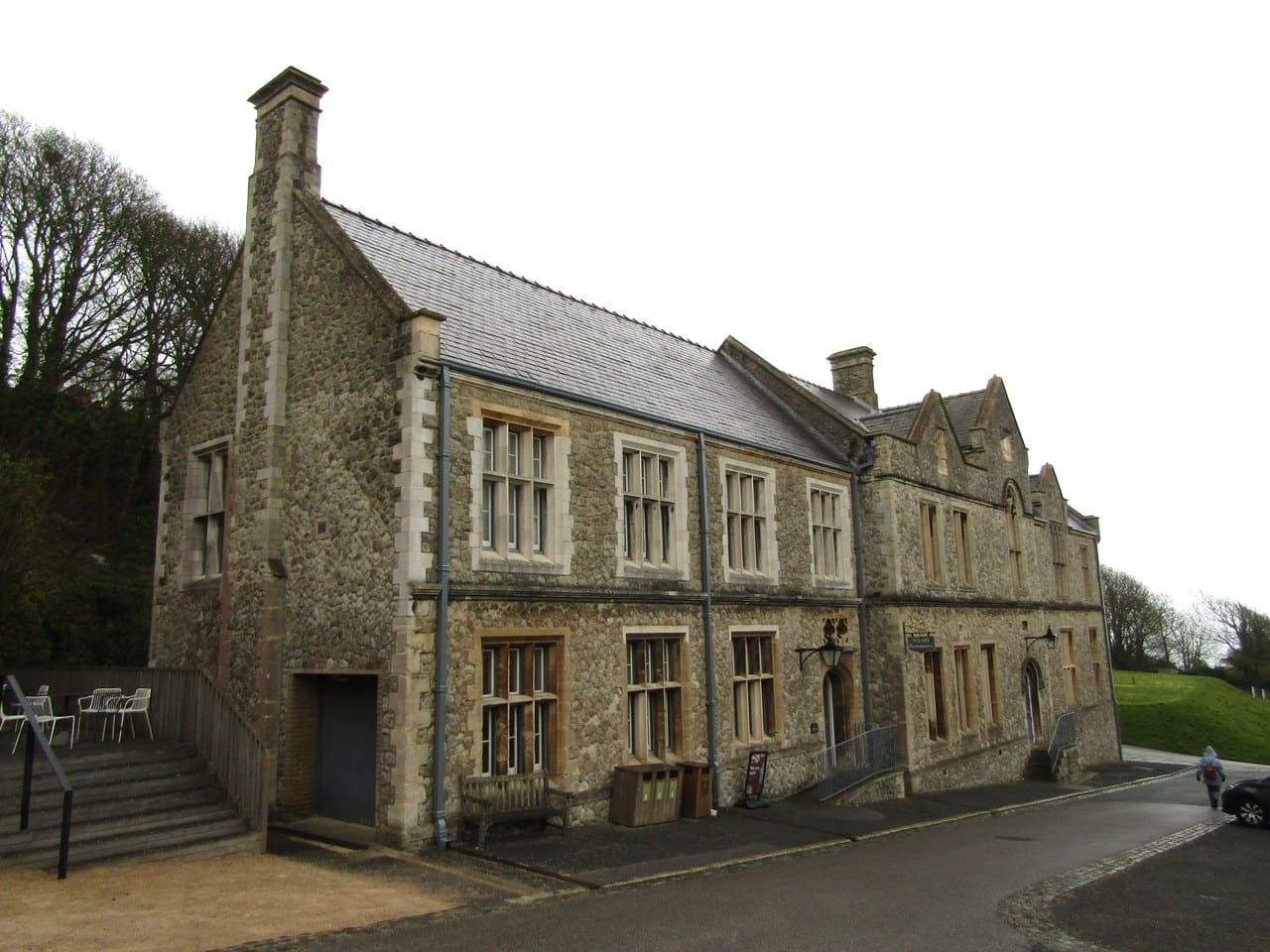
Two conditions are specific to this site. English Heritage warns that because of current national threat levels it may carry out additional security checks, including bag searches and hand-held body scans, and that visitors must agree to the process in order to visit. There are also no left luggage facilities, which matters if you arrive on foot from the station or the port. Food is in three places, one of them listed: the NAAFI restaurant occupies the 1868 Regimental Institute, which served as the soldiers’ canteen; the Tunnels Tea Room is built into the Napoleonic tunnel complex; and there is a coffee shop at the Great Tower. Dogs are welcome on short leads in the grounds, assistance dogs throughout.
Guided tours of the castle and its tunnels, and combined tickets with the White Cliffs and Canterbury, are bookable through GetYourGuide, which is worth a look mainly if you are coming from London for the day or off a ship with a fixed departure time, since the operator’s own timed-slot admission already covers entry. Rooms in the town are listed on Booking.com for anyone who would rather take the site over two half-days than one long one.
Some links on this page are affiliate links, which means StoneKeep Atlas may earn a small commission, at no extra cost to you, if you book through them.
More Views of Dover Castle
Common Questions
Four questions people ask about Dover are not answered below. Whether the castle is worth a visit is a judgement for the visitor, not for a guide to it; what is here, what a ticket covers and how long it takes are all above. Comparisons with other operators’ sites in Kent belong elsewhere. The haunted underground area is a question about stories rather than about fabric, and our survey of haunted castles takes them up: no early written version of Dover’s ghost traditions has been traced, the one institutional note about them cites nothing and dates nothing, and English Heritage publishes none of them. Every price question is answered in the Admission table above and nowhere else, because prices change. The durable half of that question is answerable here: there is no free-grounds option at Dover, the whole site including the church and the pharos sits inside the paid boundary, and the car park is for ticket holders.
Why is Dover Castle called the key to England?
Hubert de Burgh, who held the castle through both sieges of 1216 and 1217, called it the key of England, and the words survive only because the chronicler Matthew Paris reported them. Eales notes that Hubert “had every reason to maintain such a claim subsequently”, and that he was again spending heavily on Dover as its custodian in the 1220s, when repeating the phrase also burnished his own record. It describes one war, not a permanent fact of geography.
What are the tunnels at Dover Castle, and which of them can you visit?
Tunneling here runs from the thirteenth century to the twentieth, in more campaigns than any single figure captures. You can walk Henry III’s medieval passages and the Spur Tunnels, and the Underground Hospital tour takes you into the Second World War dressing station that English Heritage places on Annexe level. The Operation Dynamo tour is closed for essential maintenance with no reopening date; when it runs it takes 30 per tour at roughly fifteen to twenty minute intervals and lasts about fifty minutes. Other systems exist under the hill and are not open.
What was filmed at Dover Castle?
English Heritage lists five productions plus one it treats separately. Of Avengers: Age of Ultron (2015) it writes that the crew “took over several areas of Dover Castle, including the Secret Wartime Tunnels, seen in the opening sequence”, which is the only production for which it names a part of the castle. Hamlet (1990), The Other Boleyn Girl (2008) and Into the Woods (2014) are on its film list; Wolf Hall (2015) and King Lear (2018) are on its television list.
Who owns Dover Castle, and does anyone live there?
Historic England’s record says the monument is in the care of the Secretary of State, and English Heritage, a registered charity, cares for it and runs the visitor site. It is not National Trust property, and no source read for this guide states in its own words that any body owns it. Constable’s Gate was a residence for the castle constable and remained a senior officer’s residence until 2015; nobody is now named as living there, and English Heritage lets Peverell’s Tower and The Sergeant Major’s House as holiday accommodation.
Who built Dover Castle, and when?
Four answers, in sequence. Henry II’s masons worked in two campaigns, about 1168 to 1173 and again 1179 to 1189, with the Great Tower dated 1181 to 1188. King John continued the outer defenses and Henry III finished them, probably in the 1220s. Henry III’s government then outspent Henry II on the castle, 7,500 pounds against almost 6,000. Georgian and Napoleonic engineers rebuilt what the Angevins left.
Was Dover Castle ever attacked?
Repeatedly, and the outcome people expect is wrong. Dover held against Louis of France in 1216 and again in 1217, and against the men of Kent in 1067. In 1265 Eleanor de Montfort held it through a short siege ended by negotiation. But in 1642, during the English Civil War, English Heritage records that the castle was captured by Parliamentarian forces “who had managed the difficult task of climbing the cliffs and surprising the garrison”. It fell in one night, without a siege.
What survives of the Roman lighthouse at Dover Castle?
Roman fabric stands to 12.5 meters of a tower now 15.8 meters tall, with a medieval belfry on top whose walling is almost vertical against the sloping Roman work. English Heritage dates the belfry’s top stage to about 1426 to 1436, under Humphrey, Duke of Gloucester, and records masons paid to set up its five windows, brought from nearby Folkestone. In 1582 the tower was given a new roof so it could store gunpowder; three of its bells had been sold forty years earlier.
How long do you need at Dover Castle?
English Heritage recommends “a minimum of 3 – 4 hours” and its group page gives an average visit of “4 – 5 hours”. Two constraints bite. Time slots are limited and sold first-come, first-served, and last admission is an hour before closing. English Heritage’s own published one-hour itinerary is the Great Tower and the shop, with no tunnels in it at all, which tells you what a short visit costs you here.
Beyond Dover Castle
Dover’s natural companion in England is Windsor Castle, sited within a few years of it and still standing on the motte Dover never had. Readers following the themes rather than the geography have several routes out. Our ranked survey of the largest castles in the world sets out the criteria behind area claims and shows what changes when they change; the history of castles tracks the shift from great tower to outer defenses that Dover’s own sequence sets out phase by phase; and castle types traces the concentric plan back to the enclosure castle behind it. For the underground, our survey of haunted castles is where the stories are tested against evidence. Framlingham Castle, also English Heritage, is the counter-case in the same country: Historic England’s list entry there names no keep and no great tower at any date, and the curtain and its thirteen towers carry the defense.
Conclusion
Dover Castle is one hill, continuously adapted, and reading it in order is what makes it legible. A presumed Iron Age enclosure, a Roman lighthouse and an Anglo-Saxon church were already on the plateau when Henry II’s masons arrived; the Great Tower and its curtain went up in the 1180s; a mine brought down a gate tower in 1216 and the whole northern end was redesigned in reply; Georgian and Napoleonic engineers cut the medieval towers down to carry cannon and drove barracks into the chalk; and the same chalk then ran the Dunkirk evacuation and held a bunker for regional government into the 1980s. Almost nothing here survives untouched, and almost nothing here was ever abandoned. The one caution for a visit today is underground: check what is open before you book, because the operator’s own pages do not agree.
Principal Sources
- Association of Leading Visitor Attractions. “Visits made in 2025 to visitor attractions in membership with ALVA.” alva.org.uk.
- Department for Transport. Bus Open Data Service, timetable data set 18511. bus-data.dft.gov.uk.
- Department for Transport. National Public Transport Access Nodes (NaPTAN). data.gov.uk.
- Eales, Richard. “Dover Castle and Royal Power in Twelfth-Century Kent.” Archaeologia Cantiana 141 (2020). kentarchaeology.org.uk.
- English Heritage. Castles Through Time. english-heritage.org.uk.
- English Heritage. Dover Castle phased plan. PDF site plan. english-heritage.org.uk.
- English Heritage. Dover Castle: The Georgian Fortress. english-heritage.org.uk.
- English Heritage. Facts and FAQs about Dover Castle. Facts checked by Roy Porter, Senior Curator of Properties. english-heritage.org.uk.
- English Heritage. History of Dover Castle. By Paul Pattison. english-heritage.org.uk.
- English Heritage. Prices and opening times, Dover Castle, and the property pricing endpoint for property 185849. english-heritage.org.uk.
- English Heritage. The Great Siege of Dover Castle 1216. By Charles Kightly, published 20 July 2016. english-heritage.org.uk.
- English Heritage. The Roman Pharos at Dover Castle. Google Arts and Culture exhibit; contributors Kevin Booth and Rose Arkle. artsandculture.google.com.
- English Heritage. The Sieges of Dover. By Paul Pattison. english-heritage.org.uk.
- Environment Agency. LIDAR Composite Digital Terrain Model (DTM), 1 m resolution. environment.data.gov.uk.
- Historic England. Church of St Mary Sub-Castro, NHLE list entry 1070328. historicengland.org.uk.
- Historic England. Dover Castle, NHLE list entry 1070326. historicengland.org.uk.
- Historic England. Dover Castle, scheduled monument NHLE 1019075. historicengland.org.uk.
- Historic England. Officers Barracks and Attached Basement Area Walls and Rails, NHLE list entry 1375601. historicengland.org.uk.
- Historic England. The Roman Pharos, NHLE list entry 1258537. historicengland.org.uk.
- Kent County Council. Historic Environment Record, monument records MKE111635, MKE111706, MKE111707 and MKE112024. heritage.kent.gov.uk.
- Matthew Paris. Chronica Majora, ed. H. R. Luard, vol. III, and Historia Anglorum, ed. F. Madden, vol. II. Rolls Series. archive.org.
- Michel, Francisque, ed. Histoire des ducs de Normandie et des rois d’Angleterre. Societe de l’Histoire de France, 1840. archive.org.
- Renn, D. F. “The Avranches traverse at Dover castle.” Archaeologia Cantiana 84 (1969), 79-92. kentarchaeology.org.uk.
- Roger of Wendover. Chronica, sive Flores Historiarum, ed. H. O. Coxe, vol. IV. English Historical Society. archive.org.
- Statham, S. P. H. The History of the Castle, Town and Port of Dover. 1899. archive.org.
Image credits. Hero, Dover Castle from the air at sunset: Photo: Valerie2000 / Adobe Stock; The Great Tower above the inner bailey wall: Photo: Leonid Andronov / Adobe Stock; The church and the pharos from the Great Tower: Photo: joephoto / Adobe Stock; De Burgh and the garrison, as a Victorian engraver imagined it: Photo: from Cassell’s Illustrated History of England, public domain; A 1756 plan of Dover and its castle: Photo: British Library, no known copyright restrictions; Churchill at Dover Castle, 1940: Photo: Horton (Capt), War Office official photographer, public domain; The King’s Hall: Photo: ian howard / Adobe Stock; A mural passage in the Great Tower: Photo: HARTLEPOOLMARINA2014, CC BY-SA 4.0; The western ditch: Photo: Nilfanion, CC BY-SA 4.0; The Avranches Tower: Photo: Nilfanion, CC BY-SA 4.0; Inside the Roman pharos: Photo: Michael Garlick, CC BY-SA 2.0; Inside St Mary in Castro: Photo: Nilfanion, CC BY-SA 4.0; St John’s Tower: Photo: Colin Smith, CC BY-SA 2.0; A chamber in the wartime tunnels: Photo: Jennifer Morrow, CC BY 2.0; A tunnel in the underground hospital: Photo: Nilfanion, CC BY-SA 4.0; The NAAFI restaurant: Photo: Colin Smith, CC BY-SA 2.0; The castle headland from the air: Photo: Chensiyuan, CC BY-SA 4.0. Source: 1 dover castle aerial panorama 2017, Wikimedia Commons; The castle from the waterfront: Photo: Nilfanion, CC BY-SA 4.0. Source: Dover Castle from waterfront, Wikimedia Commons; The inner bailey at sunset: Photo: Valerie2000 / Adobe Stock; Constable’s Gate: Photo: Michael Coppins, CC BY-SA 4.0. Source: Dover Castle, Constable’s Gate, Wikimedia Commons; The Bell Battery: Photo: Nilfanion, CC BY-SA 4.0. Source: Dover Castle inner bailey and Bell Battery, Wikimedia Commons; The pharos and St Mary in Castro: Photo: Tilman2007, CC BY-SA 4.0. Source: Dover Castle, Church of St Mary Subcastro Roman Pharos Dover 1070328, 1258537 20230813 0062, Wikimedia Commons; The Four Gun Battery: Photo: Michael Garlick, CC BY-SA 2.0. Source: Dover Castle, Four Gun Battery with two guns on display 1 - geograph.org.uk - 5824256, Wikimedia Commons; The 3-inch anti-aircraft gun: Photo: Michael Garlick, CC BY-SA 2.0. Source: Dover Castle, Original 3 inch, 20cwt dedicated anti aircraft gun - geograph.org.uk - 5824246, Wikimedia Commons; The Admiralty Look-Out: Photo: Nilfanion, CC BY-SA 4.0. Source: Admiralty Look-Out, Dover Castle, Wikimedia Commons; A depression position finder: Photo: Nilfanion, CC BY-SA 4.0. Source: Depression position finder, Dover Castle, Wikimedia Commons; Replica regalia in the Great Tower: Photo: Colin Smith, CC BY-SA 2.0. Source: Dover Castle - Replica Regalia - geograph.org.uk - 8294387, Wikimedia Commons; Daniell’s view from the castle, 1823: Photo: William Daniell, public domain. Source: William Daniell 1824 Dover Castle, Wikimedia Commons. Freely licensed images are resized to fit; otherwise unaltered.