
Château de Saumur
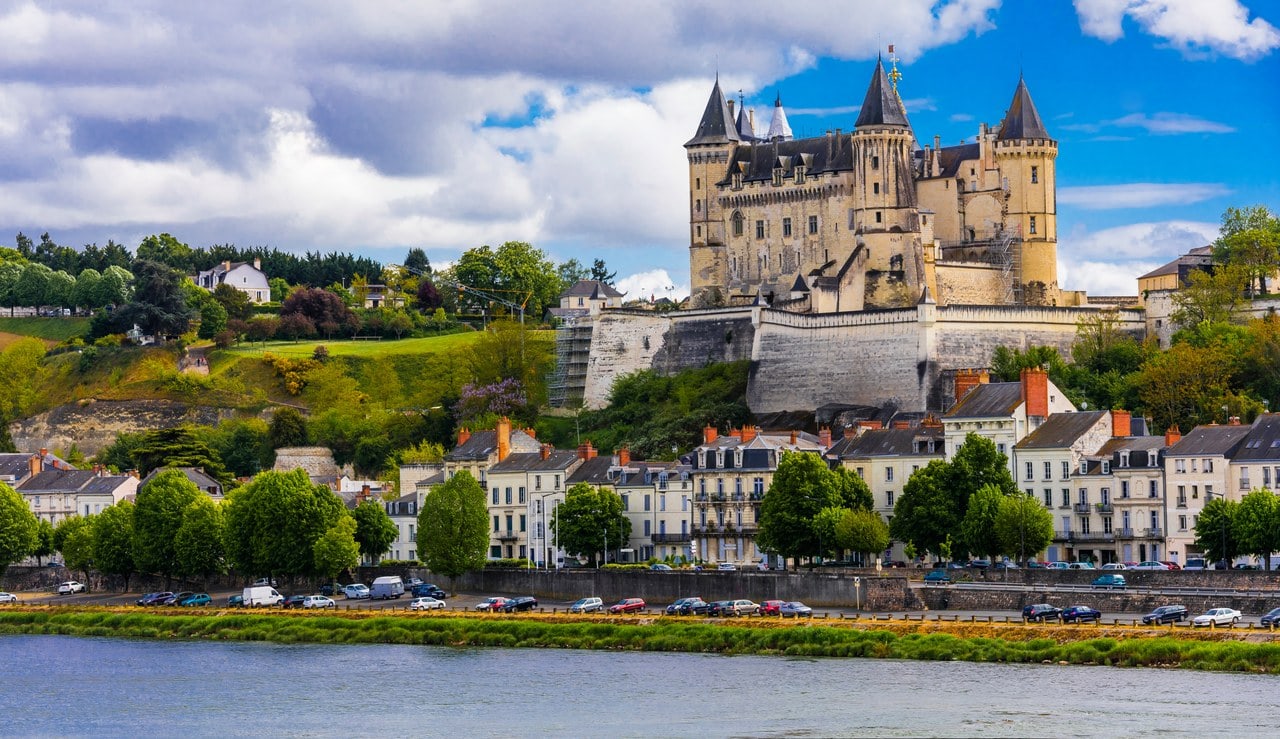
Château de Saumur stands in pale tuffeau stone on a promontory above the meeting of the Loire and the Thouet, and it is the most famous castle in France that most travelers have already seen without knowing it. Turn to the September page of the Très Riches Heures du Duc de Berry, the most celebrated illuminated manuscript of the Middle Ages, and there it is behind the grape harvest: a white castle bristling with towers, weathervanes, and gilded finials, the storybook silhouette of ducal Anjou at its height. The building on the hill today is quieter than its portrait. Three wings survive where four once closed a court, the fantastical roofline is long gone, and the rooms now hold two museums rather than a prince’s household. What remains is still one of the Loire’s essential stops, filling the stretch of river between Angers and Chinon, and its story runs from the counts of Anjou through a Huguenot academy to the arms depots of Napoleon.
Quick Facts
| Location | Saumur, Maine-et-Loire, Pays de la Loire, France |
| Built | 10th-century origins; keep early 12th c.; rebuilt as a palace by Louis I of Anjou, 14th c. |
| Setting | Promontory over the confluence of the Loire and the Thouet |
| Style | Late-medieval Angevin residence, octagonal corner towers |
| Owner | Town of Saumur (since 1906) |
| Today | Museum of decorative arts and the Musée du Cheval (horse museum) |
| Protection | Monument historique (listed 1862; classé 1964) |
| Official website | chateau-saumur.fr |
The White Château of the Très Riches Heures
A fortified stronghold has held this promontory since the tenth century, when it guarded the river crossing for the counts of Anjou and, later, their Plantagenet heirs. By the early thirteenth century it had passed to the French crown and become a royal fortress, a square of thick curtain walls anchored by round towers. Its transformation into the castle of the manuscripts came in the second half of the fourteenth century, under Louis I, Duke of Anjou. From 1367 he replaced the old round towers with the octagonal ones that still define the building, and he turned a frontier fortress into a princely residence of galleries, sculpted balconies, and a great spiral stair.
That rebuilding gave Saumur the profile the painters recorded. The September leaf of the Très Riches Heures sets the white castle of Saumur behind a line of vintagers cutting grapes below its walls. The manuscript was made for Jean, Duke of Berry, begun by the Limbourg brothers between 1412 and 1416 and left unfinished at their deaths, then completed decades later by Jean Colombe in the 1480s; it survives today at the Musée Condé in Chantilly. No page in it has done more for a single building’s fame. Generations of visitors climb to the château expecting the towers of the miniature, with their pennants and pinnacles rising like a crown.
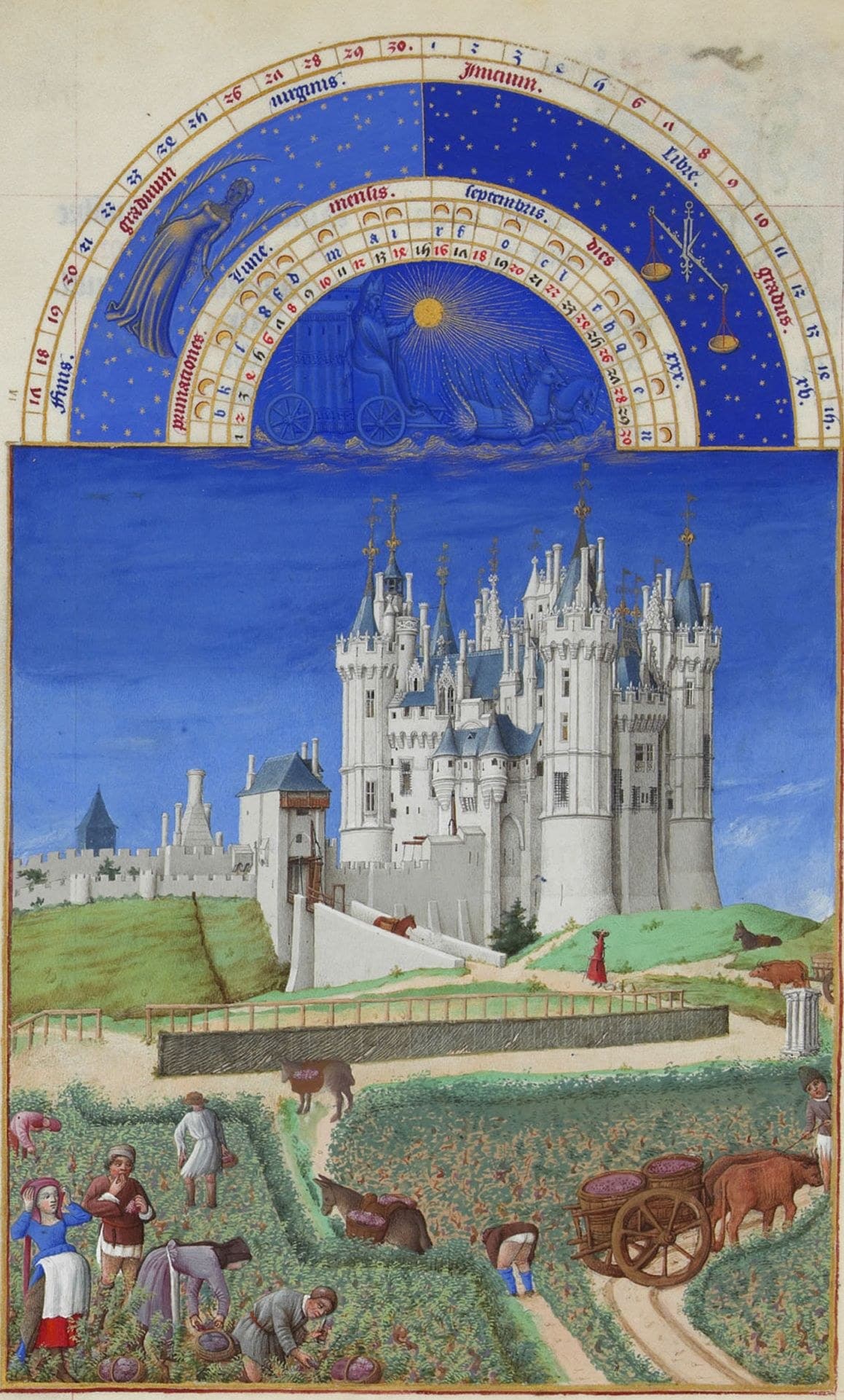
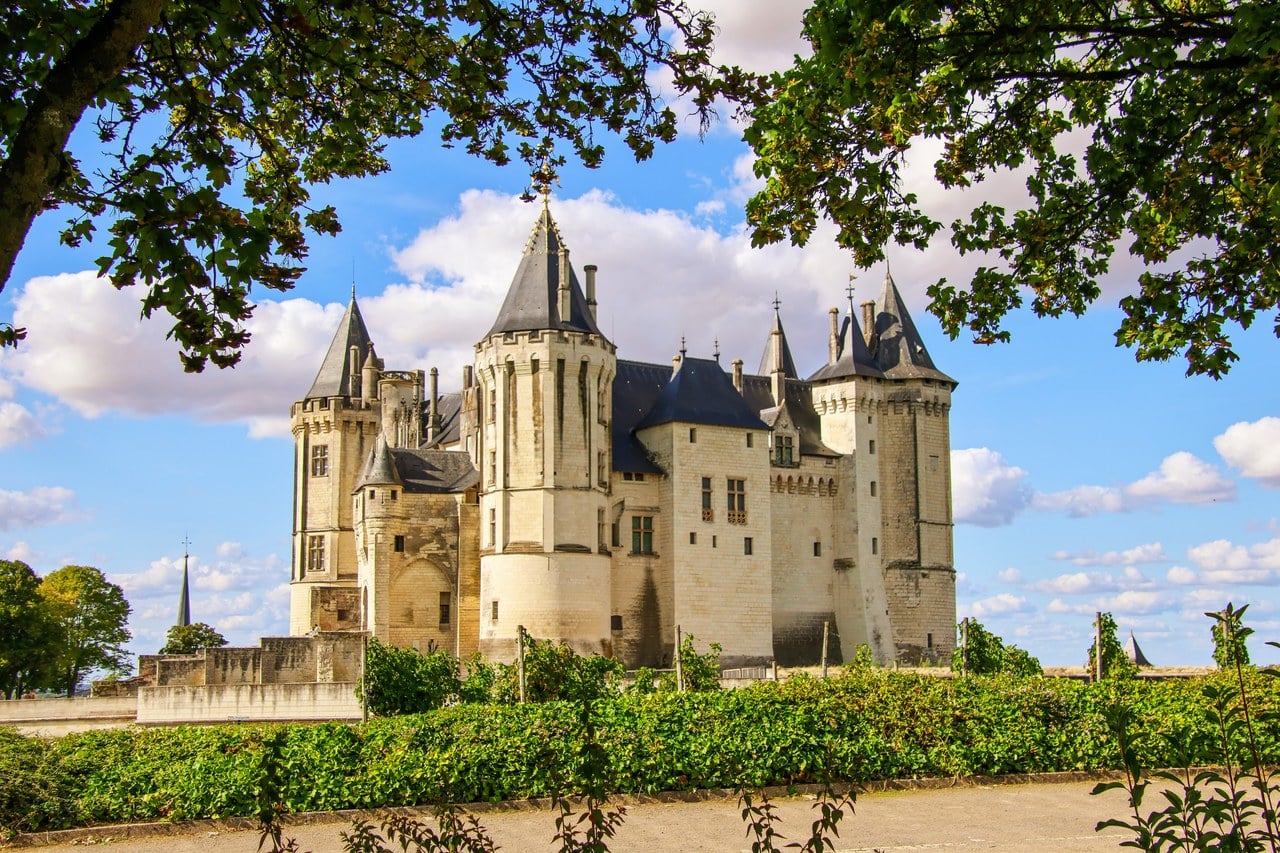
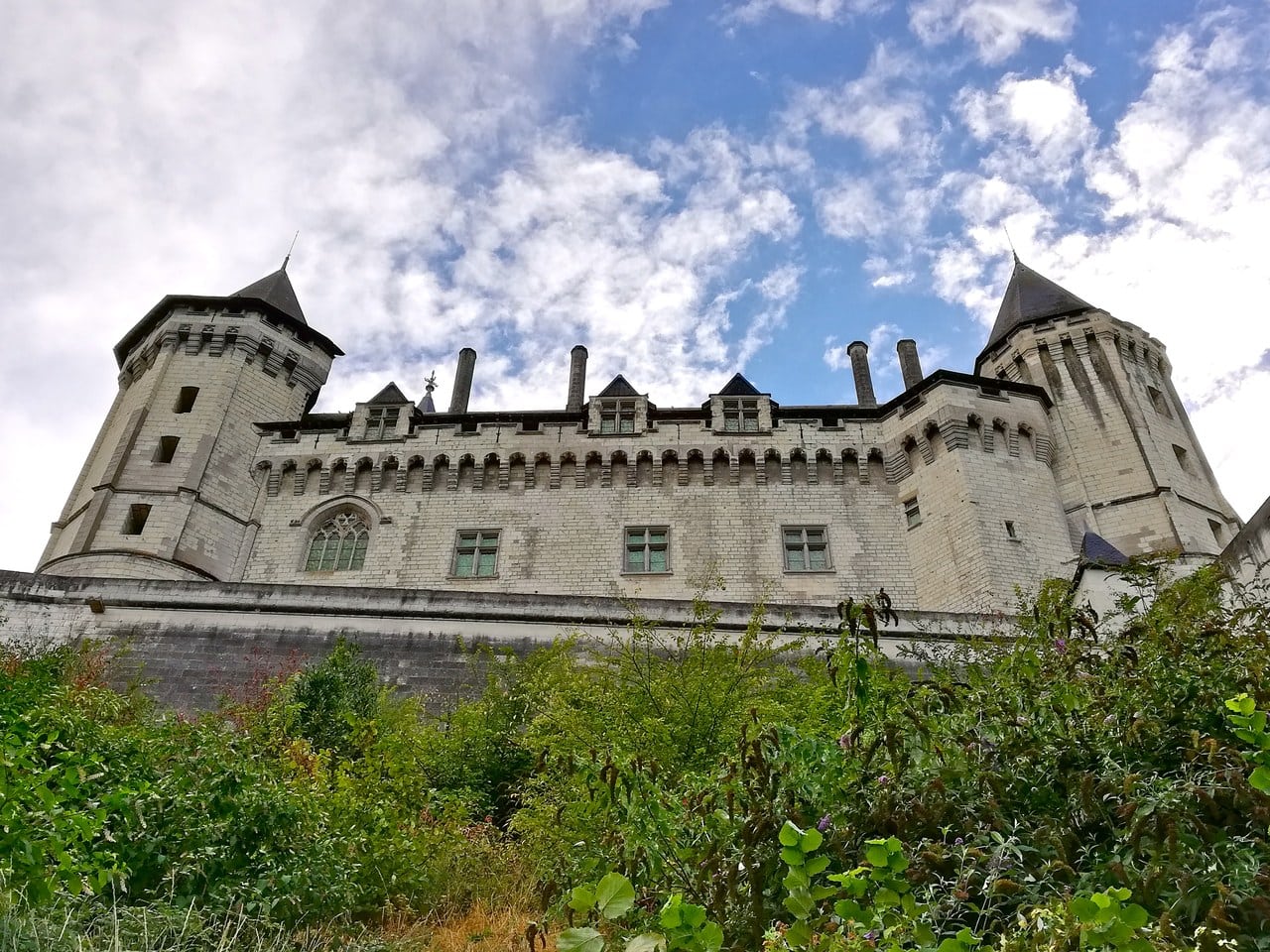
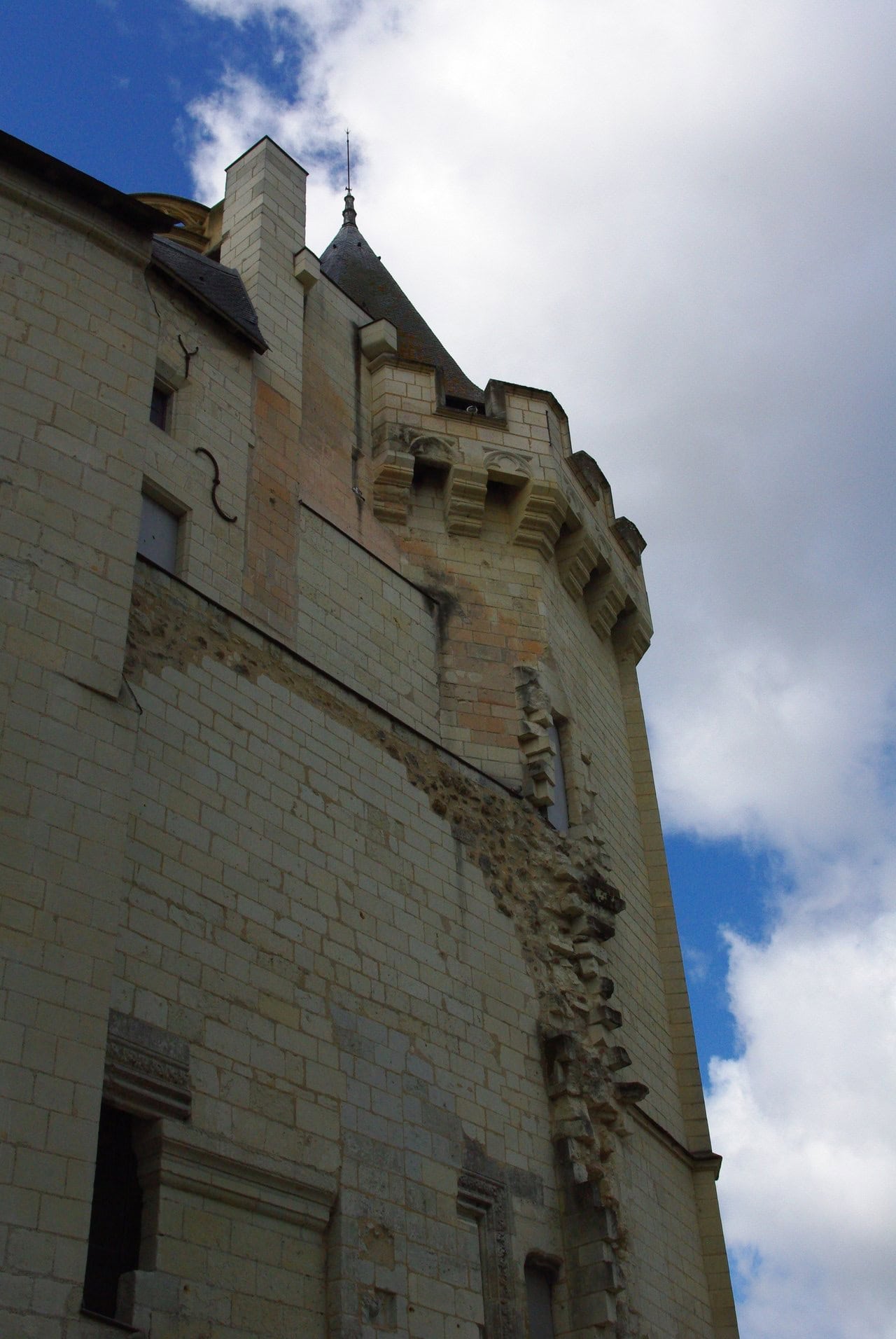
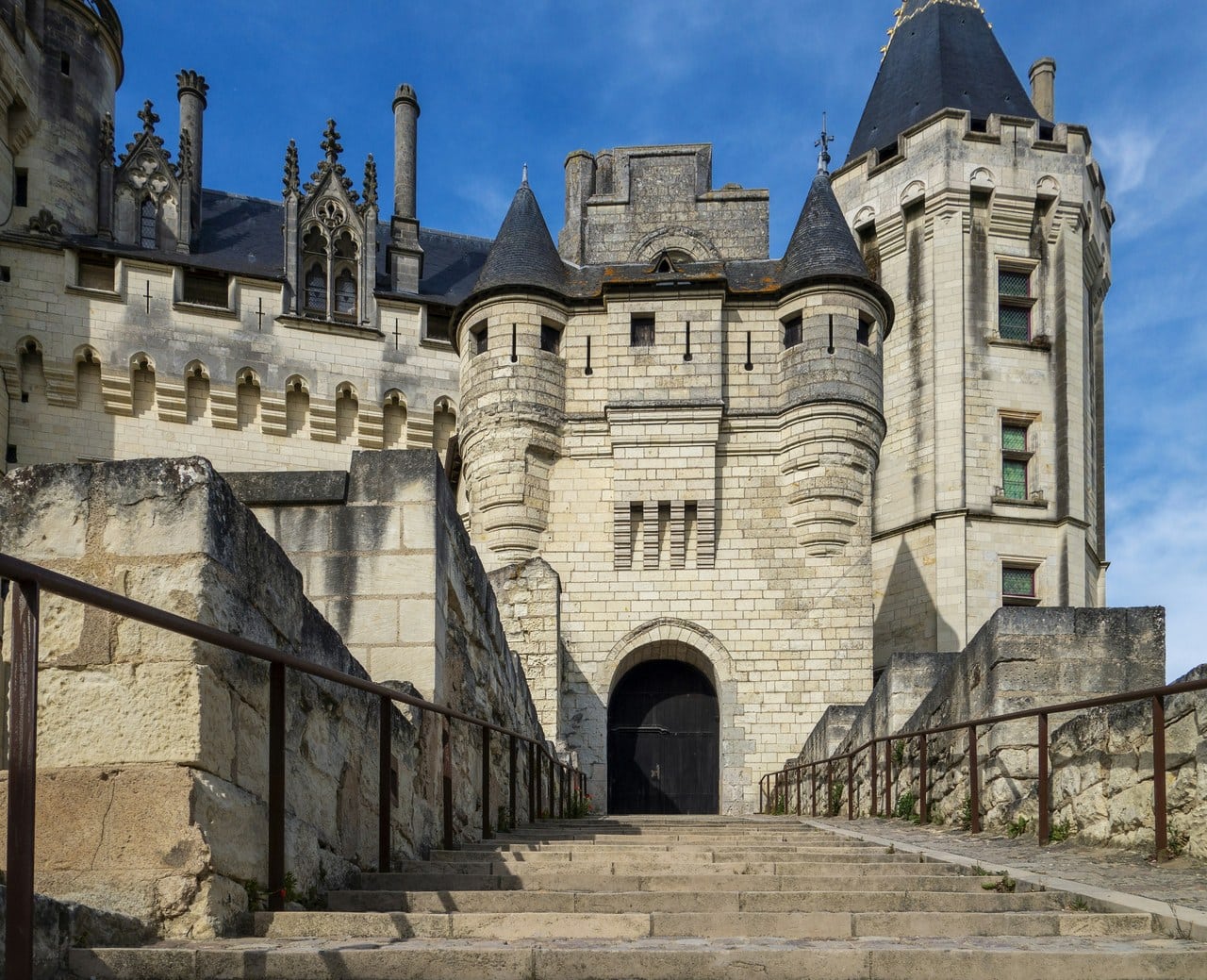
They meet a plainer castle, and the difference is worth understanding. Much of the elaborate Gothic superstructure in the painting was reduced over the centuries, and one whole range of the building is gone. What stands is the tuffeau shell of the Angevin palace, its octagonal corner towers under pointed roofs, handsome and severe against the sky rather than lacy. The miniature is a portrait of Saumur as it was meant to be seen around 1400, not a photograph of the castle you visit now.
King René and the Age of Tournaments
Saumur reached its cultural peak under the last Duke of Anjou, René of Anjou, the prince remembered in France as le bon roi René. René held the crowns of Naples, Sicily, and Jerusalem in title if not always in fact, wrote poetry and treatises, and made his Angevin castles the setting for a deliberately theatrical chivalry. In 1446 he staged one of the great festivals of the age at Saumur, the Pas de la Joyeuse Garde, a tournament of costumed jousts that ran for weeks and drew the high nobility of France. A later manuscript preserves the only full account of it in nearly four thousand verses, describing the arms and the pageantry knight by knight.
René’s Saumur was a place of manuscripts as much as of arms. He kept a court of painters, poets, and copyists, designed his own emblems and devices, and wrote courtly allegories in which castles very like this one served as stages for love and chivalric virtue. That world of illuminated pageantry is exactly the one the Très Riches Heures preserves, and it helps explain how a working fortress on the Loire came to be remembered as a storybook palace. Under René the château was less a stronghold than a backdrop, a white stage set above the river for the theater of Angevin court life.
René lived at Saumur on and off until his death in 1480, after which the duchy of Anjou was absorbed into the royal domain and the château became a residence for the king’s governors. Its days as a princely capital were over, but the castle that René left behind was still, in effect, the building of the Très Riches Heures, its Angevin form largely intact above a town grown prosperous on river trade and the wine of the surrounding hills.
A Huguenot Stronghold
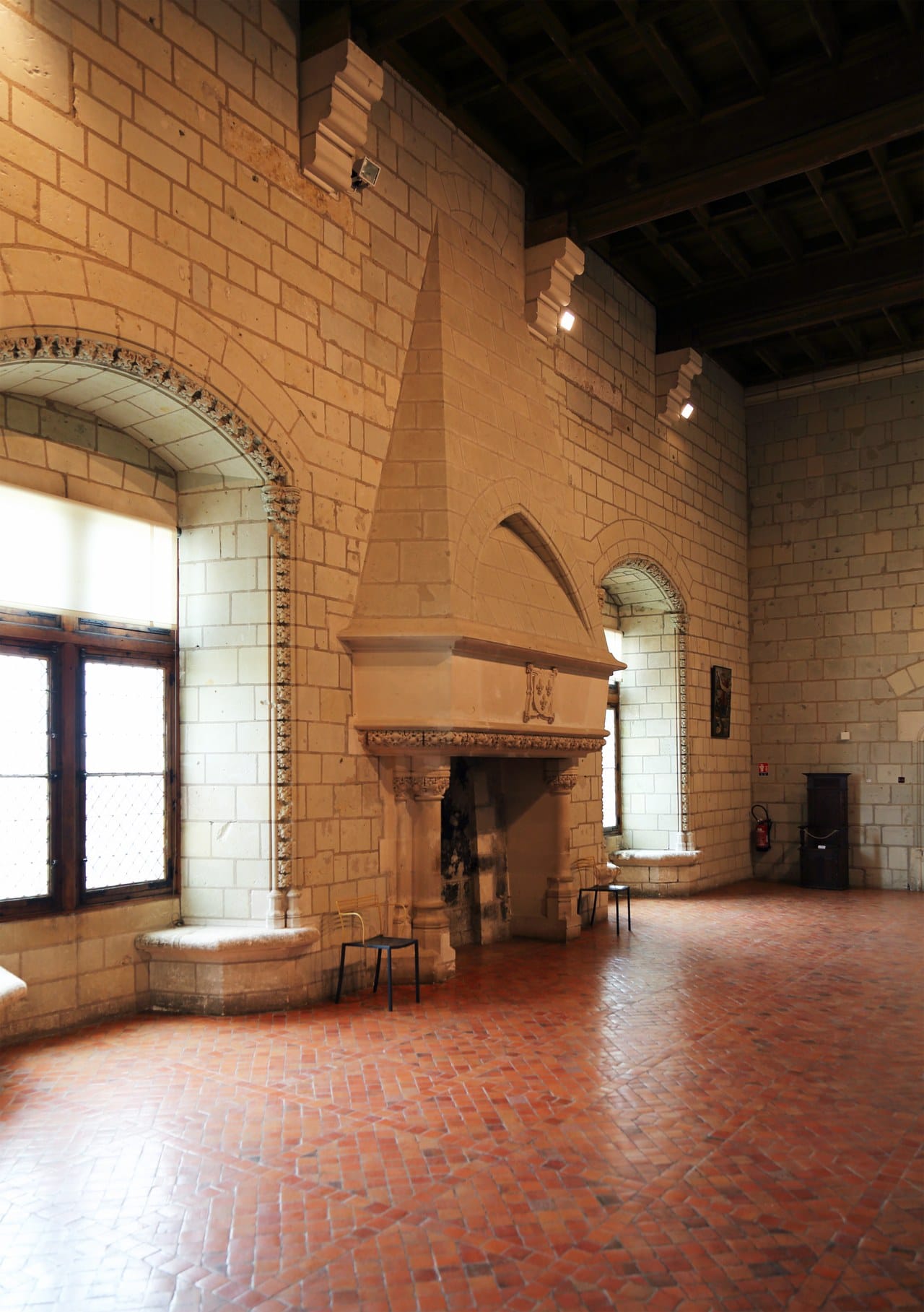
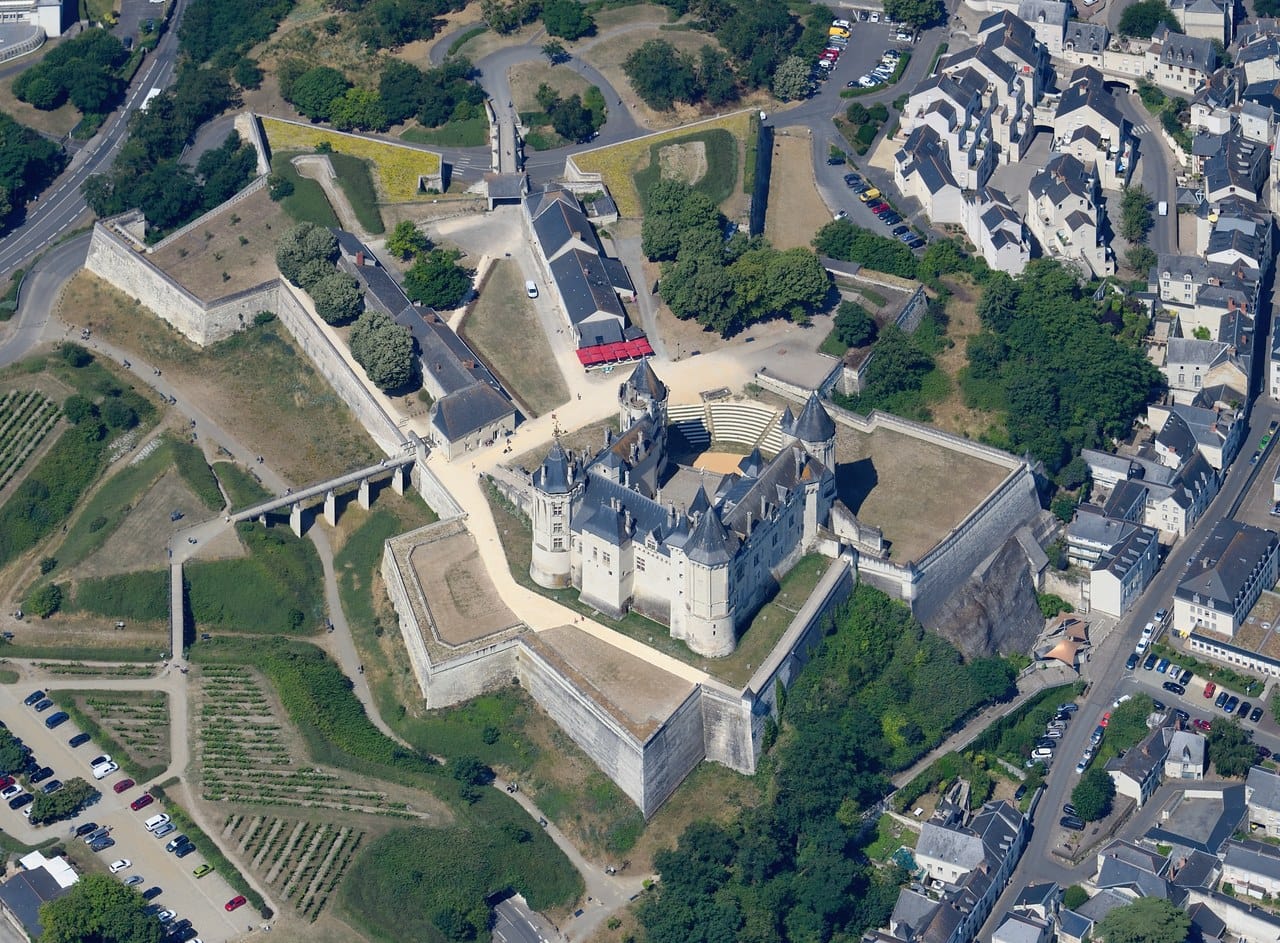
The next chapter belongs to the Wars of Religion, and it made Saumur one of the strongholds of French Protestantism. In 1589 Philippe Duplessis-Mornay became governor of the town, which had just been granted to the Protestant party as a place de sûreté, a fortified safe haven guaranteed by treaty. Duplessis-Mornay was among the most formidable Huguenot statesmen of his generation, a diplomat and theologian close to Henri of Navarre, and he set about making Saumur defensible for a long war. From 1590 he girdled the medieval castle with a broad outer rampart of angled bastions, an up-to-date earthwork against artillery that still rings the older building today.
His deeper mark on the town was intellectual. Duplessis-Mornay founded the Protestant Academy of Saumur, whose charter dates to 1599, and under his patronage it grew into one of the leading Reformed universities in Europe. Its theology faculty gave its name to a distinctive current of seventeenth-century Protestant thought, Amyraldism, after the theologian Moïse Amyraut, a moderate Calvinism that softened the harder edges of predestination and drew students from across the Protestant world. That golden age ended with the Crown’s turn against its Protestant subjects. The Academy was suppressed by decree in January 1685, months before Louis XIV formally revoked the Edict of Nantes that October, and Saumur’s Huguenot community scattered into exile. That brilliance had a human face: Anne Le Fèvre, daughter of the academy’s professor of Greek and raised in Saumur, grew up to become the first woman to translate Homer into French, and in 1685 she and her husband chose conversion to stay in France while others of the town took the road abroad.
Prison, Arsenal, and Rescue
Stripped of its academy and its governor’s prestige, the château settled into two centuries of hard utility. Through the seventeenth and eighteenth centuries it served as a prison, first for political detainees and then for prisoners of war, and after Duplessis-Mornay’s fall from favor in 1621 parts of it were turned over to a garrison. It was as a state prison that the castle survived the age of demolitions at all: Napoleon kept it in that role from 1810, and in 1814 it passed to the War Ministry as an arms and munitions depot. Soldiers held the building until 1889, by which time the Angevin palace of the manuscripts had spent longer as a barracks than as a home.
Rescue came from the town itself. Saumur bought the château in 1906, restored it, and opened it to the public as a municipal museum in 1912, a role it has kept ever since. The most dramatic episode of its modern life came on 22 April 2001, when the western section of the north rampart, its tuffeau weakened by erosion and heavy rain, collapsed down the slope and damaged houses below. The repair that followed, carried out between 2004 and 2007, was among the largest ever undertaken on a French historic monument, reinforcing the foundations and rebuilding the fallen wall behind a concealed concrete core faced in matching stone.
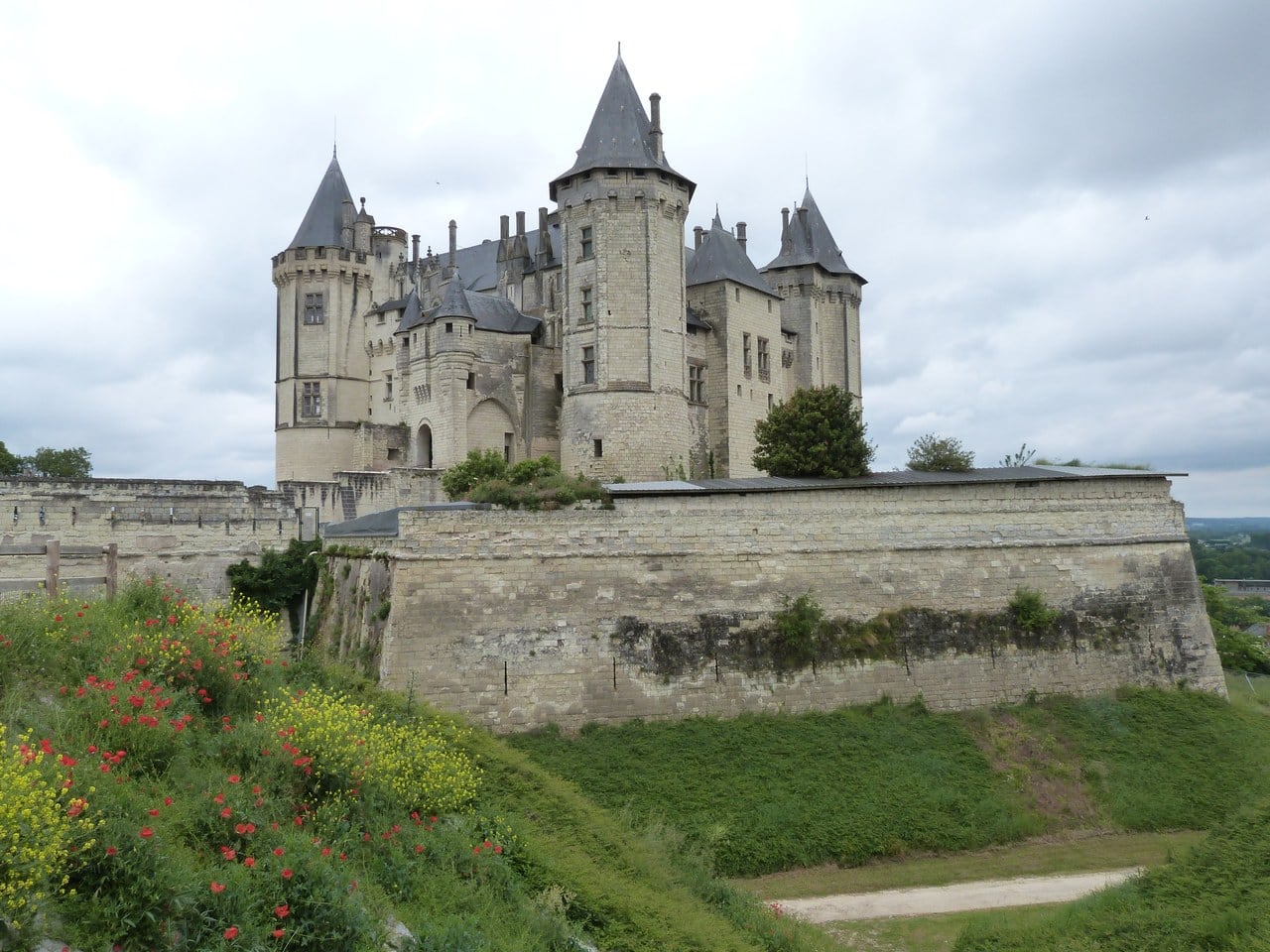
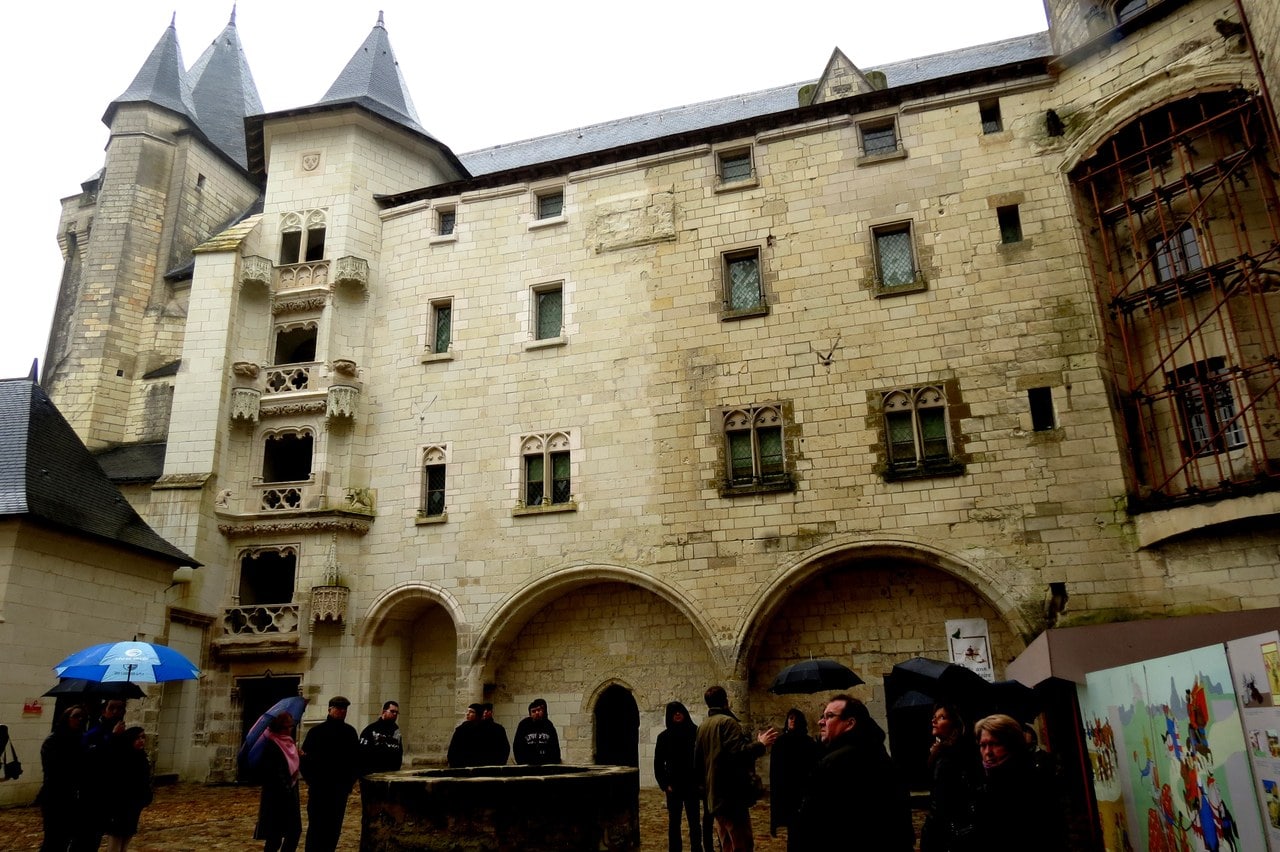
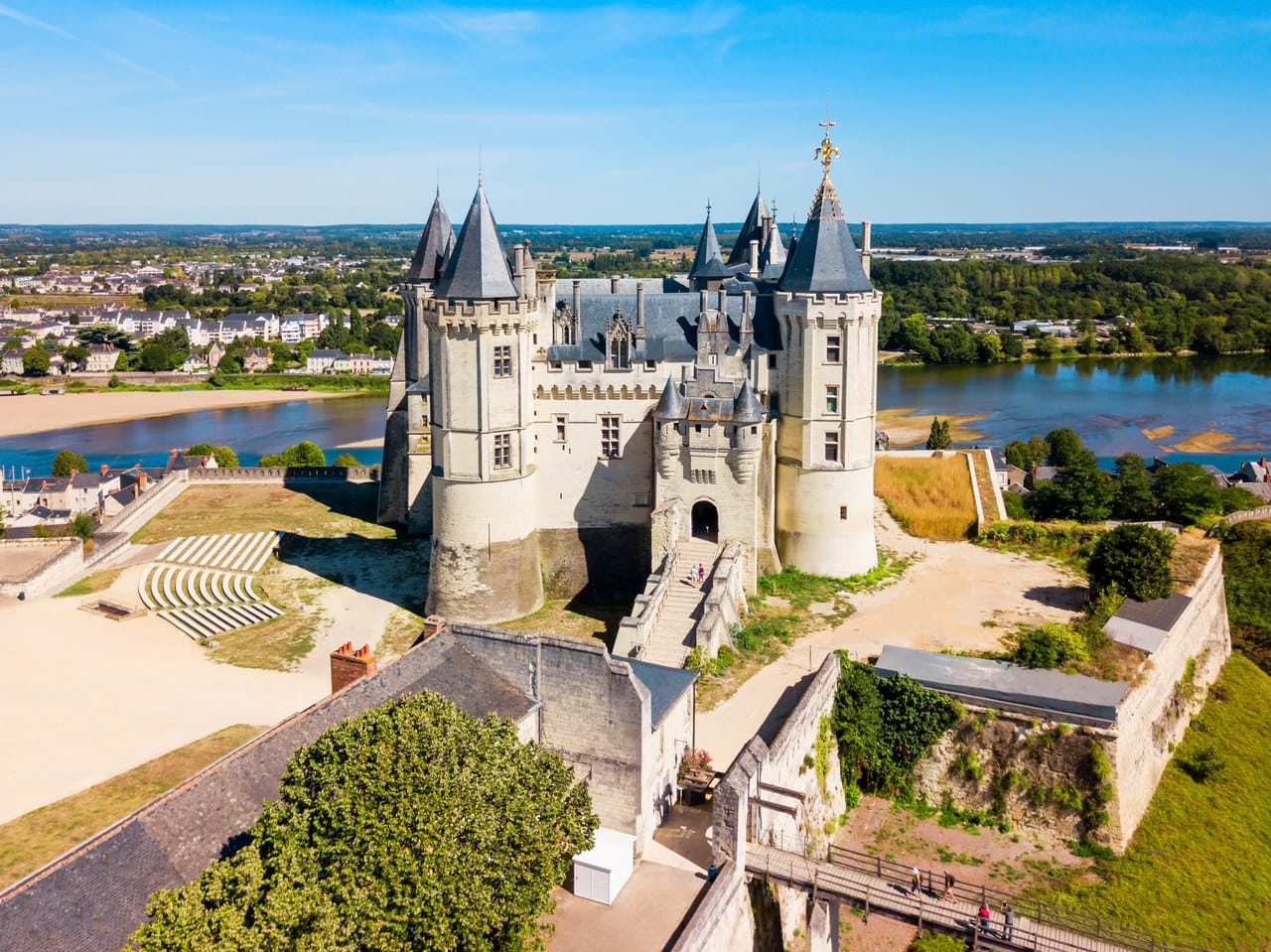
The castle you walk through today is therefore a survivor twice over, and its very shape records what it has lost. Where four wings once enclosed the courtyard, only three remain: the western range, which held the gallery of honor with its open view over the Loire, fell in the early seventeenth century and was never rebuilt, leaving the court open toward the river. The result is an irregular, three-sided castle rather than the sealed white box of the painting, and the missing wing is part of the reason the building on the hill looks so much sterner than its portrait.
The Castle of the Horse
Saumur has been a horse town for centuries, home to France’s national riding school and the black-clad riders of the Cadre Noir, and the château’s collections lean into that identity. The riding school and its famous écuyers are a separate institution across the town, at Saint-Hilaire-Saint-Florent, and should not be confused with the castle; but on the second floor of the château the Musée du Cheval gathers a rich collection on the history of horsemanship, arranged around three inventions that changed riding forever, the bit, the horseshoe, and the stirrup, alongside harness, saddlery, and the tools of the farrier and the veterinarian. Its second-floor display, “Games and Jousts on Horseback,” draws on a horse collection of some seven thousand objects, fitting for a town that is one of the capitals of French horsemanship.
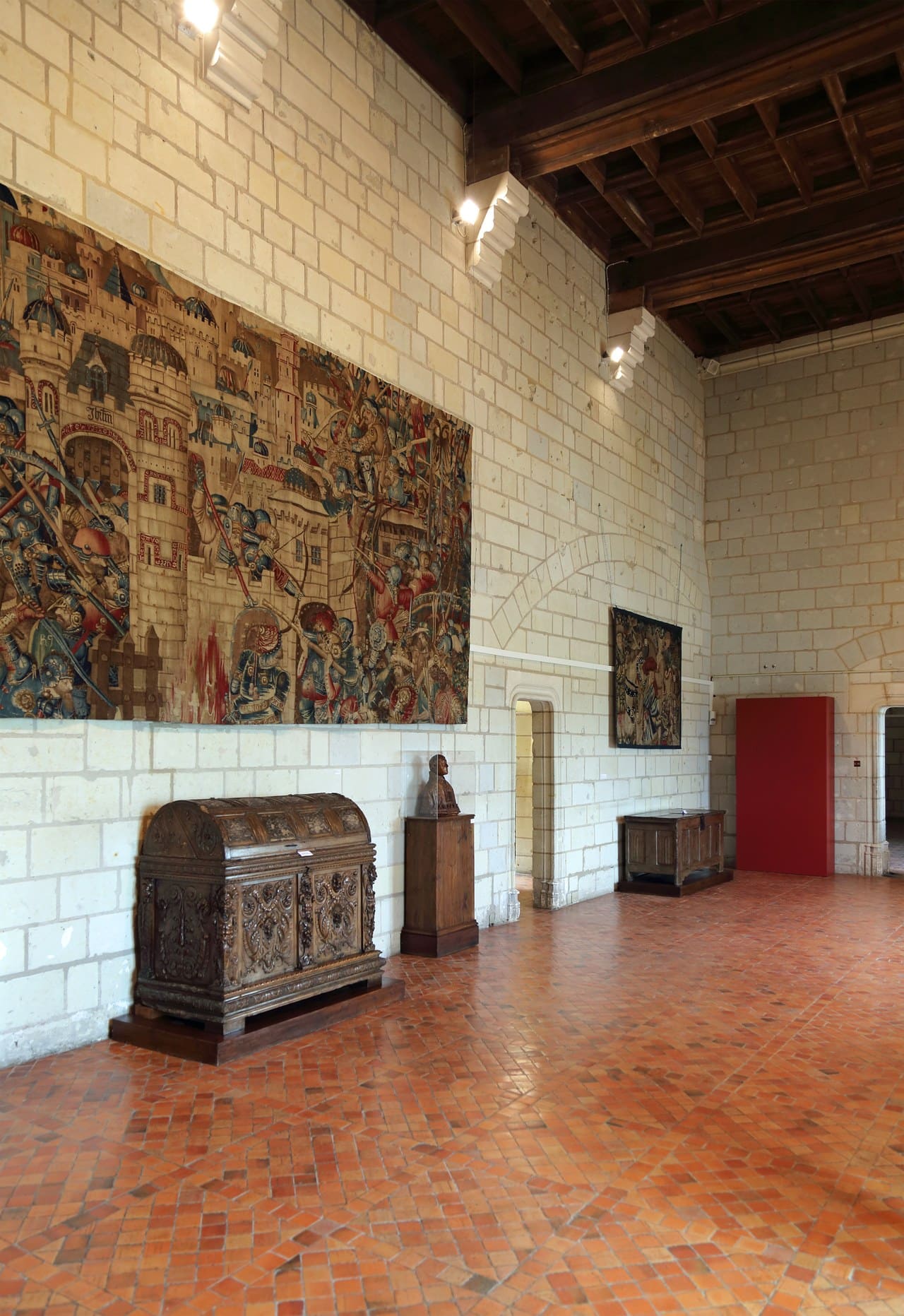
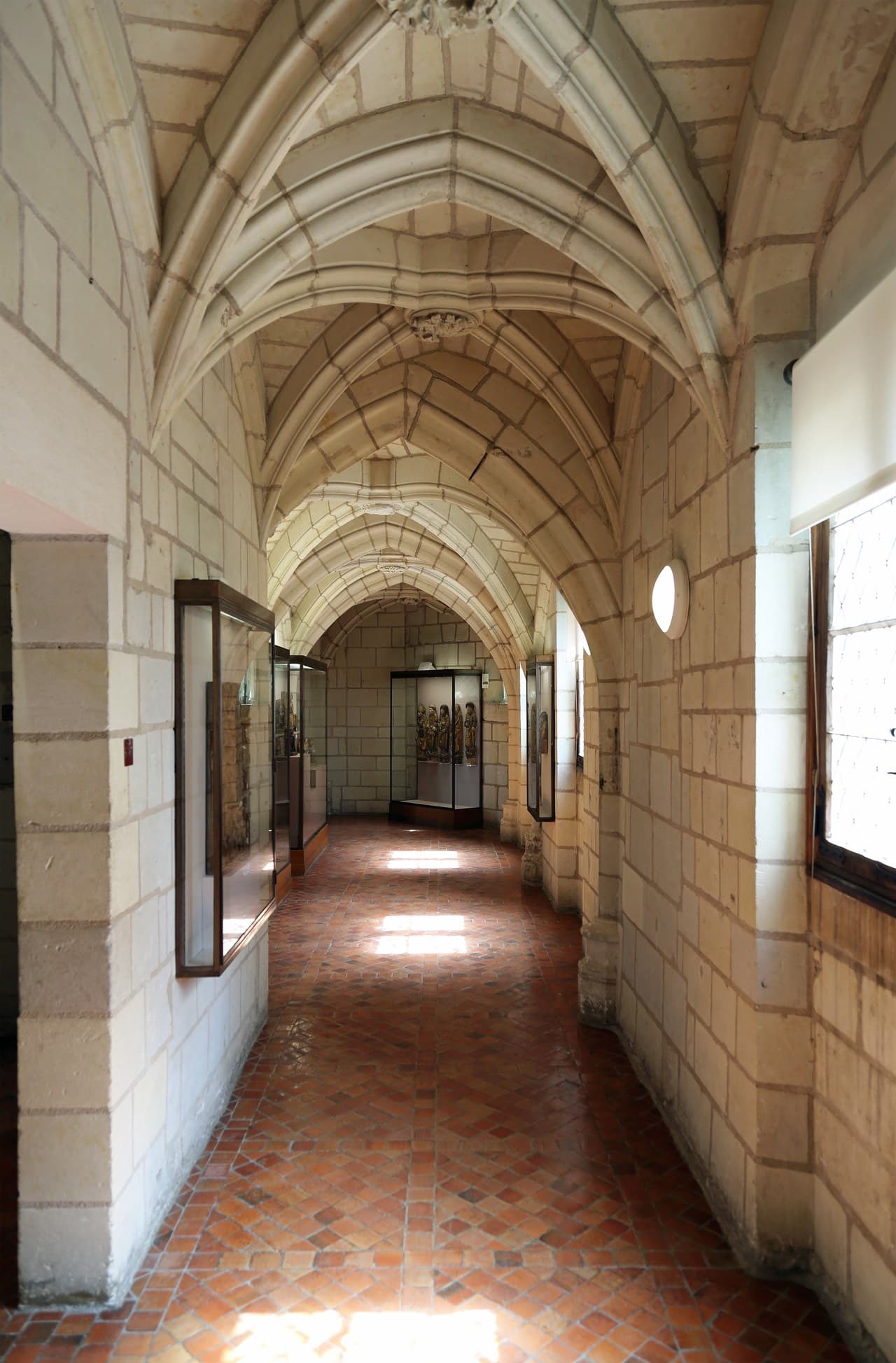
The floor below holds the older municipal museum, a museum of decorative arts built up around the 1919 bequest of Count Charles Lair, a self-taught collector whose gift of more than eight thousand objects brought over a thousand ceramics and made this one of the finest earthenware collections in France. Its rooms show that faience alongside furniture, enamels, and a set of tapestries woven between the fifteenth and eighteenth centuries, most of them classified as historic monuments in their own right. Together the two museums make the visit as much about what the château contains as about the building itself, and both carry the Musée de France label that marks a collection of national importance.

Visiting Château de Saumur
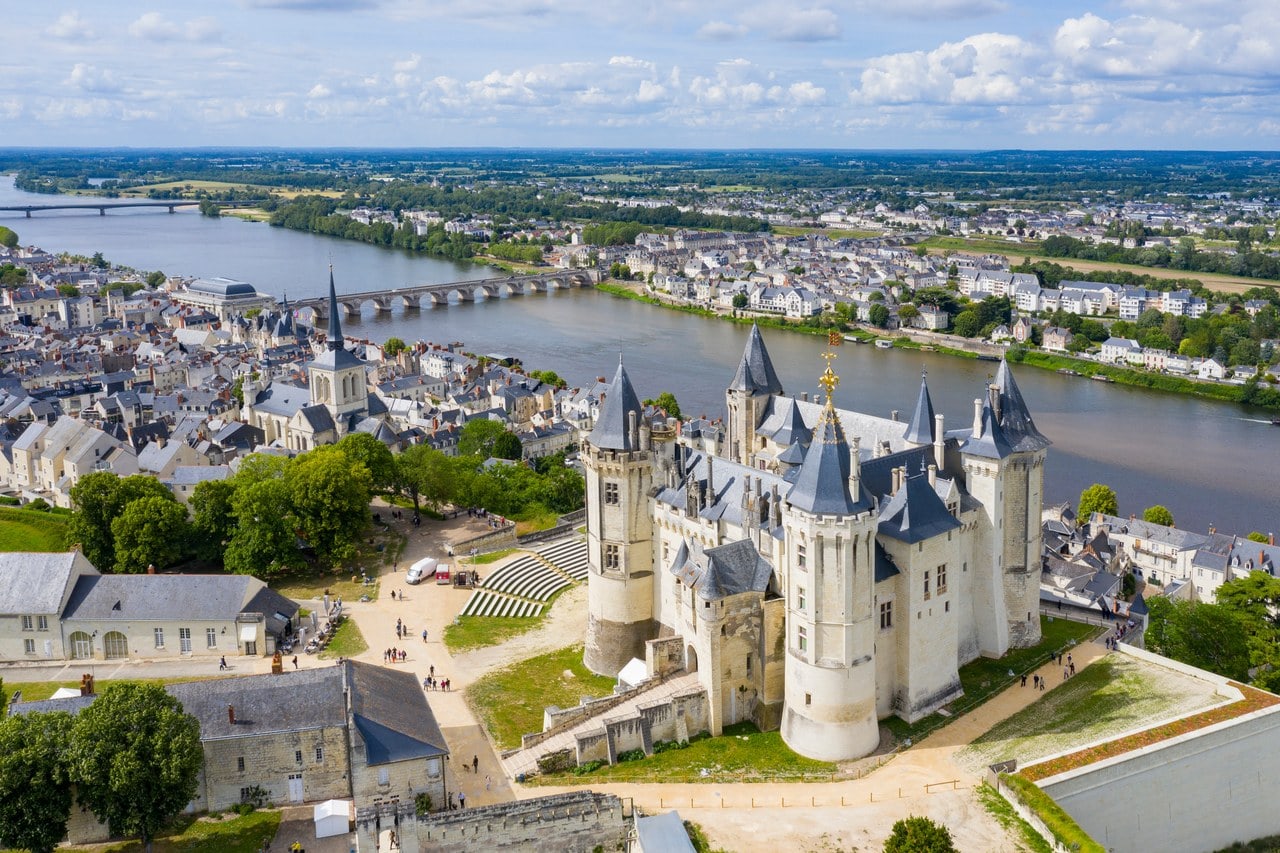
The château sits at the top of the old town, and the walk up earns its reward slowly: the lane climbs between tuffeau houses, the octagonal towers rise a course at a time above the rooftops, and the whole white mass opens out only at the crest. From the terrace and the belvedere you get the view the counts of Anjou built to command: the slate roofs of Saumur falling away below, the Loire threading past the long arches of its bridge to a wooded island midstream, and the vineyards of the far bank running to the horizon. That panorama alone rewards the climb, before a single museum room is seen.
Inside, a visit runs about an hour and a half through both museums and the historic rooms; leave time for the terrace and the outer ramparts, where the scale of Duplessis-Mornay’s bastions is easiest to read. Full admission is 9.50 euros, with a reduced rate of 7 euros and free entry for children under seven. Opening hours follow the season: daily from 10 to 7 in July and August, Tuesday to Sunday from 10 to 6 in spring and early autumn, and shorter split hours in winter, with the castle closed on Mondays outside high summer. High summer brings the longest days and the open belvedere, while September carries its own reward, the grape harvest coming to the vineyards below in the very month the manuscript painted. Getting here without a car is easy: Saumur sits on the Loire railway between Angers, about twenty-five minutes to the west, and Tours, about forty minutes to the east, and bus line A runs from the station up to the Château stop. Drivers park free at the large Esplanade Hubert Landais car park beside the castle. Hours and prices shift with the season, so check the official website before you go.
The town below the castle is worth the time it takes to wander it. Saumur is built almost entirely of the same pale tuffeau limestone as the château, quarried from the hills along the river, and the old cellars cut into that soft stone now age the region’s wines. Saumur is one of the Loire’s great sparkling-wine towns, home to the fines bulles of Crémant de Loire and Saumur Brut, while the red Saumur-Champigny is poured across the terraces of the market square; a short way out of town at Saint-Hilaire-Saint-Florent, historic houses run tastings and tours through long candle-lit tuffeau galleries, among them Ackerman, which first made sparkling Saumur in 1811, and Bouvet-Ladubay, whose cellars run for eight kilometers under the hillside. A visit that pairs the castle on its rock with an afternoon among the vineyards and cellars below shows why this stretch of the Loire drew princes in the first place.
Saumur makes an easy base for the western Loire, and many visitors pair the château with a wine tasting in the tuffeau cellars or a river cruise on the Loire. Guided day tours and skip-the-line tickets for Saumur and the surrounding châteaux can be booked in advance through GetYourGuide, and for an overnight stay the town and the nearby vineyards offer everything from riverside hotels to château guesthouses, bookable through Booking.com.
Some links on this page are affiliate links, which means StoneKeep Atlas may earn a small commission, at no extra cost to you, if you book through them.
More Views of Château de Saumur
Beyond Château de Saumur
Saumur anchors the western end of the Loire’s great chain of châteaux. Downstream toward the sea stands the fortress of Château d’Angers, the Anjou capital whose black-and-white ramparts once held the Apocalypse Tapestry; upstream lies the royal fortress of Château de Chinon, where Joan of Arc found the future Charles VII. The gentler pleasure-châteaux of the central valley are an easy day away, among them the moated Château d’Azay-le-Rideau, the garden showpiece of Château de Villandry, and the storybook Château d’Ussé at the edge of the Chinon forest. For the wider region, see our guide to the châteaux of the Loire Valley. And just ten kilometers south, the Château de Brézé hides the deepest dry moat in France, and a whole troglodyte fortress, beneath its Renaissance château. Upriver in the Touraine stands the fifteenth-century royal fortress of the Château de Langeais, its drawbridge still lowered each morning.
Conclusion
Château de Saumur rewards the traveler who knows what to look for. It is not the crowned white castle of the Très Riches Heures, and half the pleasure of a visit lies in reading the distance between the painting and the building: the lost western wing, the reduced roofline, the great artillery rampart that a Huguenot statesman threw around an Angevin palace. In that gap is the whole history of the place, a ducal residence that became a Protestant university, a royal prison, an imperial arsenal, and at last a town’s museum of art and of the horse. Few castles in France carry so many lives so visibly, and few give back so much from a single hilltop above the Loire. Saumur belongs on any tour of the western valley, in the company of Angers and Chinon, and holds its own among the great châteaux of the Loire Valley as the river’s most painted silhouette.
Principal Sources
- Château de Saumur (operator). History, Practical Information, and museum pages. chateau-saumur.fr.
- Ministère de la Culture. Château de Saumur, base Mérimée PA00109307. pop.culture.gouv.fr.
- Musée Condé, Chantilly. Les Très Riches Heures du duc de Berry, MS 65.
- “Saumur, Huguenot Academy.” Religion Past and Present. Brill.
- Ville de Saumur. Le Château and Ville du cheval. ville-saumur.fr.
Background beyond the cited pages draws on general scholarship on the Angevin rebuilding of Saumur and on the Très Riches Heures. Opening hours and admission prices change with the seasons; confirm current details on the operator’s website before visiting.
Image credits. The château above the town and the Loire: Freesurf / Adobe Stock; The three surviving wings, tree-framed: Pascal / Adobe Stock; The September miniature of the Très Riches Heures: Musée Condé, Chantilly (MS 65), public domain; The château and its town from the air: s4svisuals / Adobe Stock; A great-hall fireplace interior: Marc Ryckaert, CC BY-SA 4.0, via Wikimedia Commons; The bastioned tuffeau rampart: Therese Gaige, CC BY-SA 3.0, via Wikimedia Commons; An 18th-century portrait in the château museum: Musée-Château de Saumur, public domain; Octagonal towers from below: Ab2804, CC BY-SA 4.0, via Wikimedia Commons; Octagonal corner tower detail: Clement Bucco-Lechat, CC BY-SA 3.0, via Wikimedia Commons; The château from the east: Carsten Steger, CC BY-SA 4.0, via Wikimedia Commons; The cour d’honneur: xorge, CC BY-SA 2.0, via Wikimedia Commons; A museum tapestry room: Marc Ryckaert, CC BY-SA 4.0, via Wikimedia Commons; A vaulted museum gallery: Marc Ryckaert, CC BY-SA 4.0, via Wikimedia Commons; The château gatehouse and steps: Snap Wander via Unsplash; The entrance and court from the air: saiko3p / Adobe Stock. Freely licensed images are resized to fit; otherwise unaltered.