
Château des Baux-de-Provence
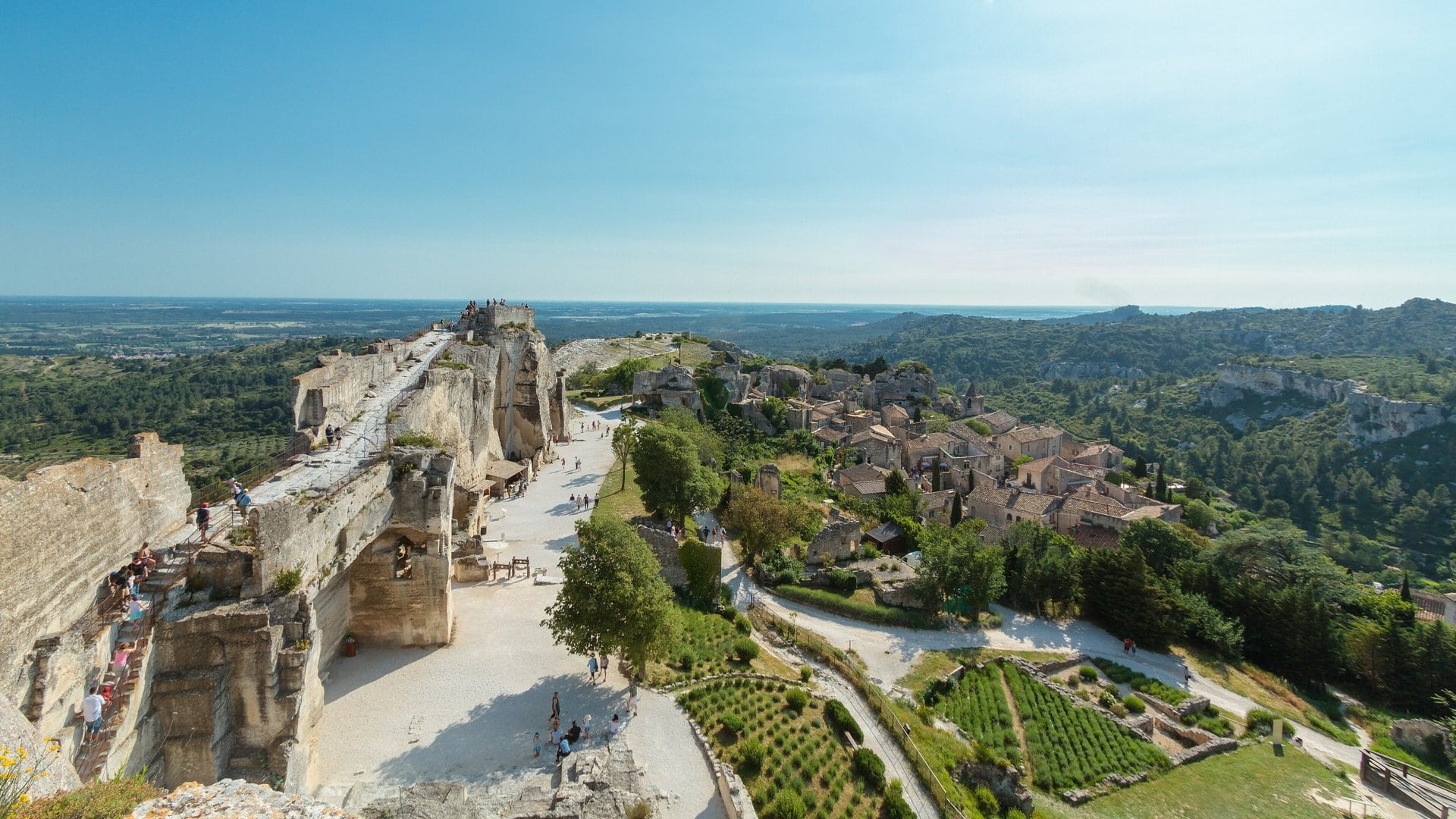
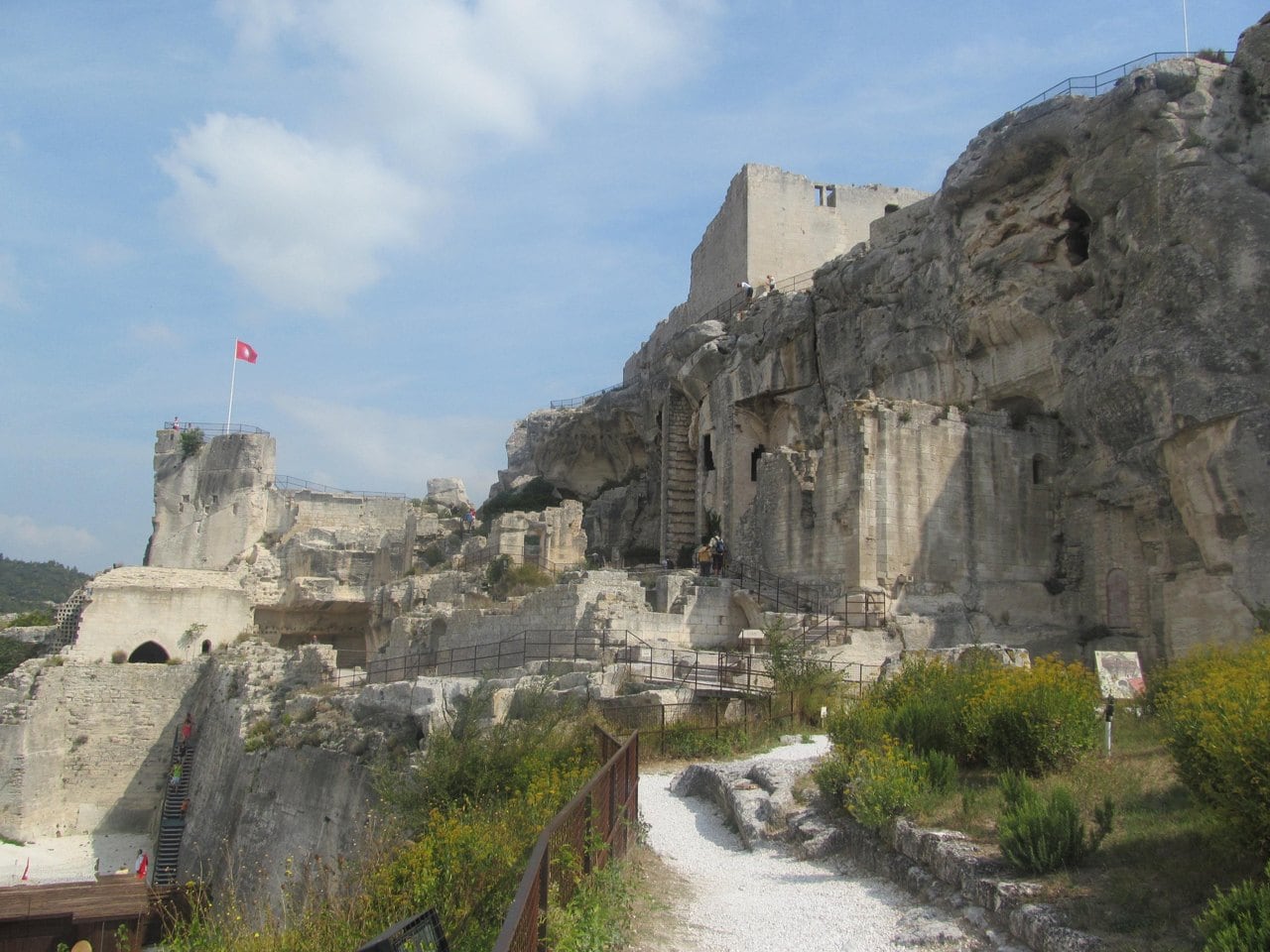
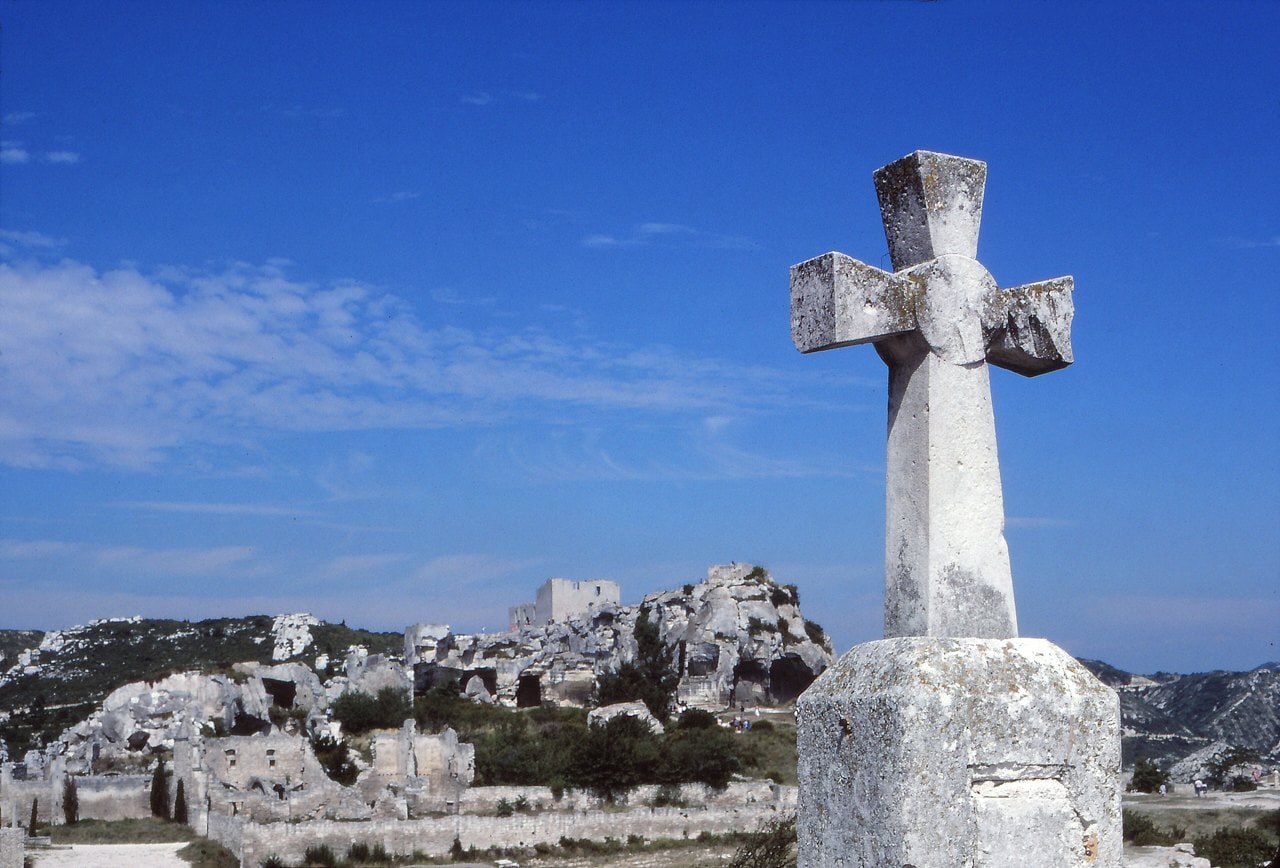
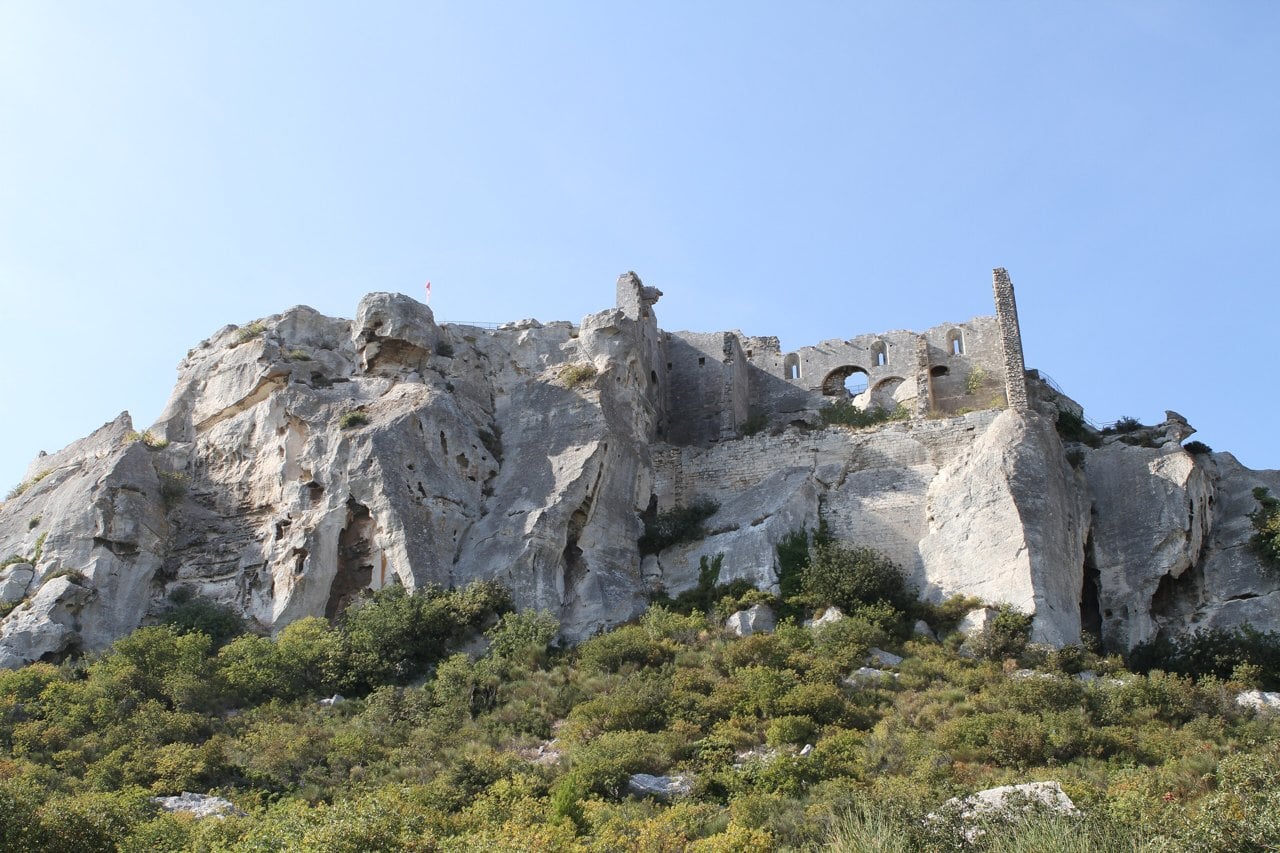
The Château des Baux-de-Provence crowns a bare limestone spur in the heart of the Alpilles, its ruined ramparts built directly on and into the limestone. For five centuries this was the eyrie of the lords of Baux, whose family legend traced its descent to Balthazar, one of the Three Magi. In the end Cardinal Richelieu had the place pulled down. What survives is an open-air ruin spread across the summit of the rock, high above the village.
Today the Château des Baux-de-Provence is run as a ticketed heritage site, complete with a full-scale trebuchet that still hurls stones across the plateau. Yet the worn stone underfoot tells a longer story: of a dynasty that once ruled scores of Provençal towns, defied the counts of Provence and the popes at Avignon, and gave its name, centuries later, to the ore that helped build the modern world.
Quick Facts
| Location | Les Baux-de-Provence, Bouches-du-Rhône (Provence-Alpes-Côte d’Azur) |
| Built | Largely rebuilt from about 1200 (a castrum is recorded in the 10th century) |
| Condition | Ruined |
| Type | Fortress and seigneurial citadel |
| Best-preserved element | The rectangular 13th-century keep |
| Operator | Destination Les Baux-de-Provence (EPIC); Culturespaces until November 1, 2023 |
| Heritage designation | Monument historique, partially classé (1875 list; order of June 9, 1904); Base Mérimée PA00081208 |
| Native designation | Château |
| Official site | chateau-baux-provence.com |
The Rock of Les Baux
The rock of Les Baux is a natural fortress. It stands on the southern flank of the Alpilles, a low limestone range between Arles and Saint-Rémy-de-Provence, on a spur that falls away in cliffs on three sides and commands the plain for miles around. The Provençal word “bau,” meaning a rocky escarpment, gave the place and its lords their name. People had grasped the site’s value long before any castle rose here: the spur served as a refuge as far back as the Neolithic and as a stronghold in the Iron Age.
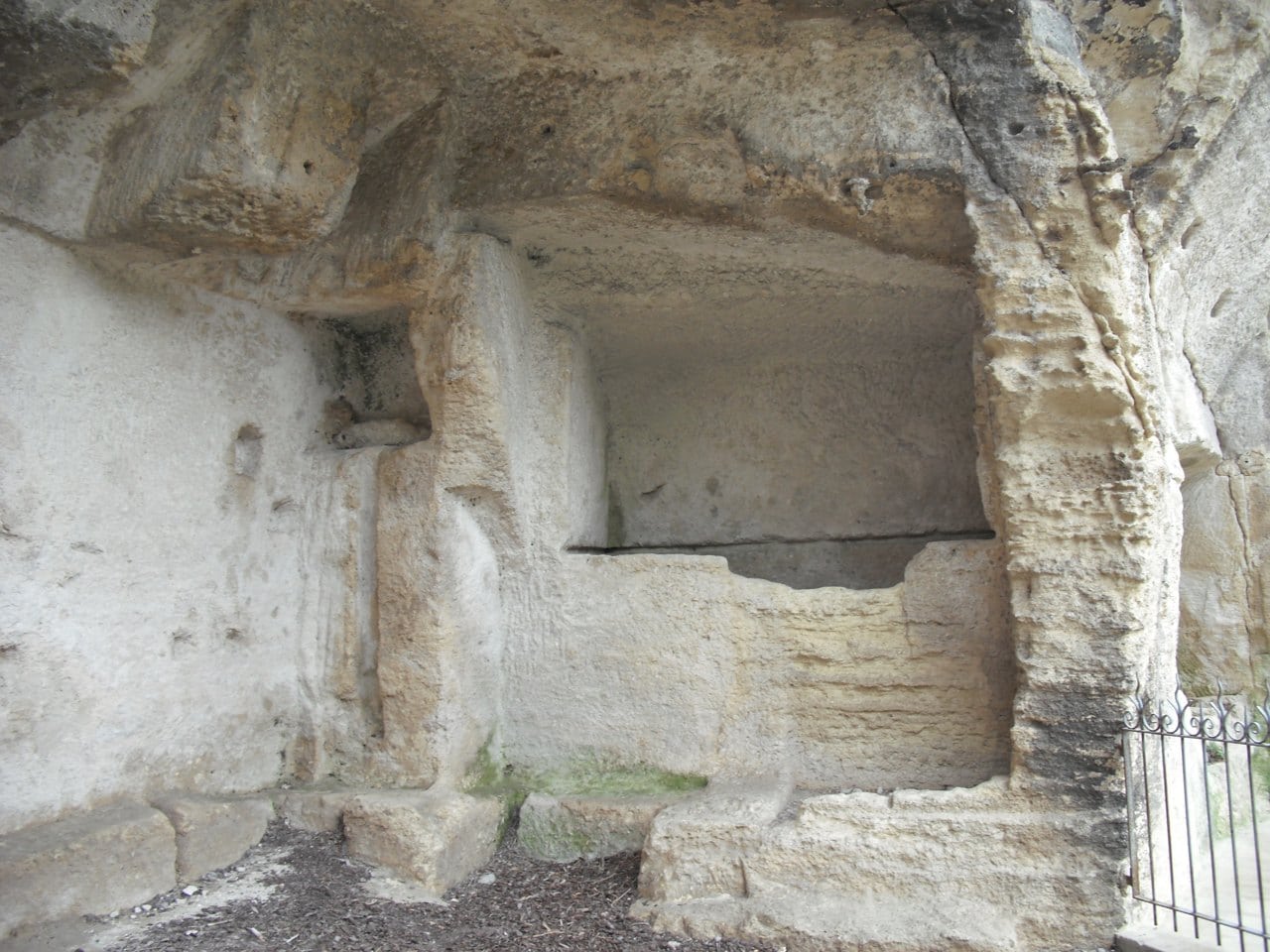
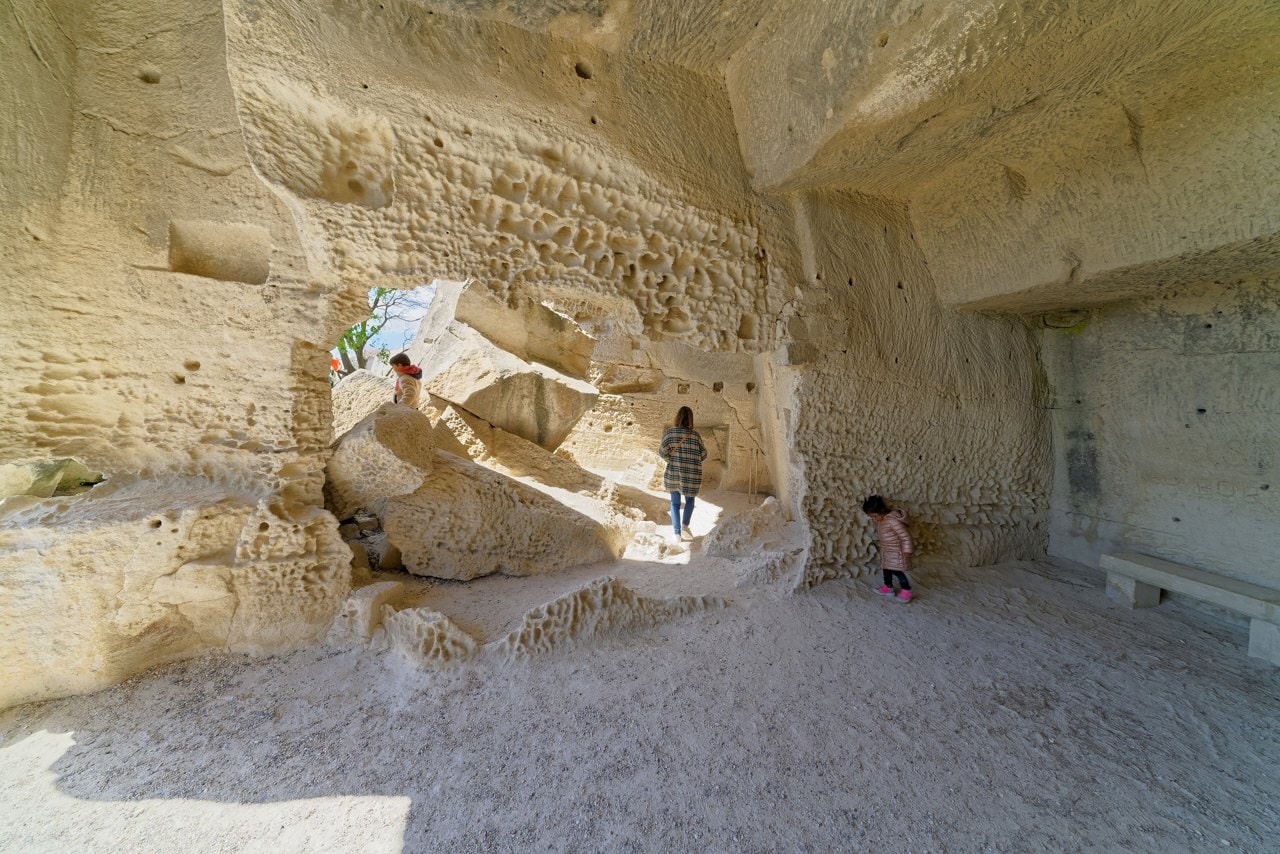
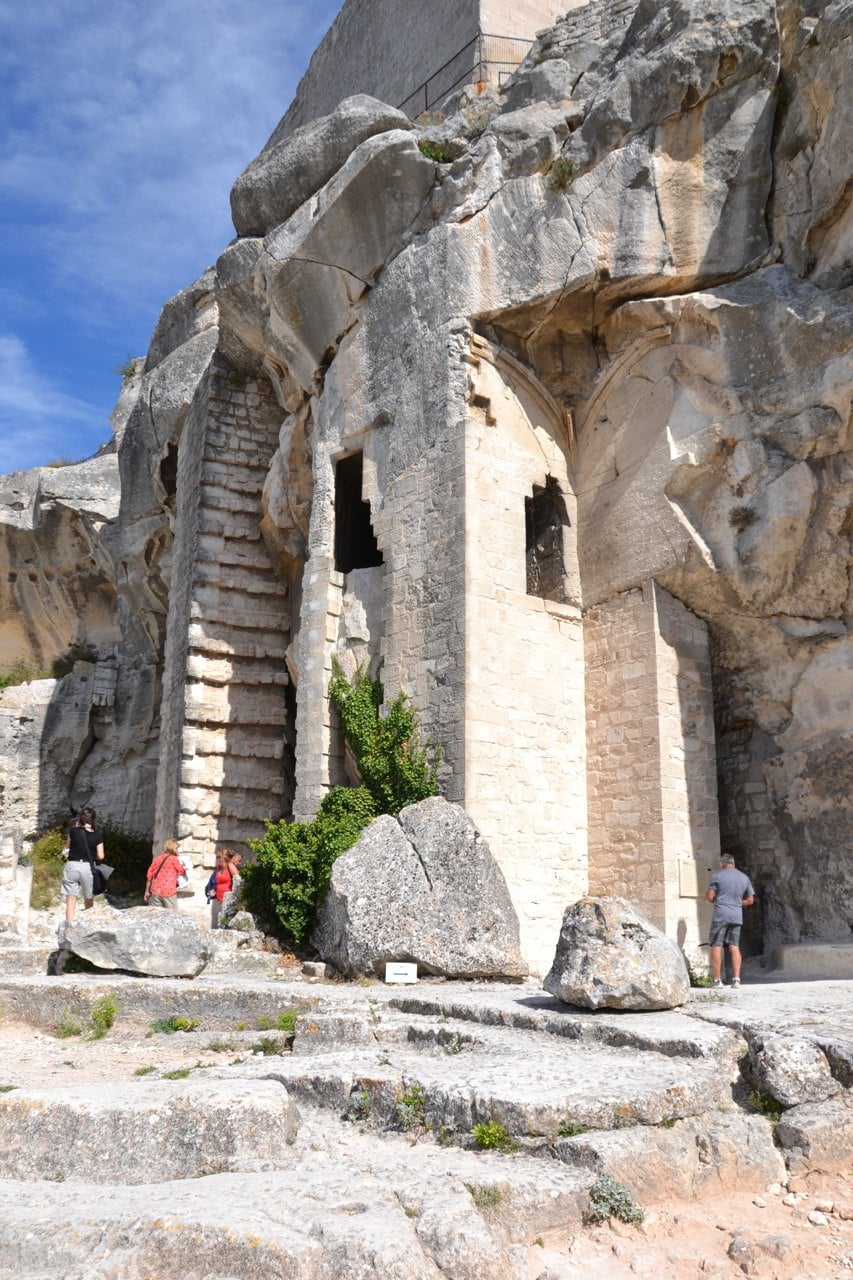
Medieval builders worked with the rock rather than merely on it. Whole sections of wall, along with cisterns, halls, and dwellings, were carved directly out of the limestone, so that the fortress is as much quarried as constructed. Writers have long reached for the same two images to describe the result: an eagle’s nest, and a vast “ship of stone” run aground on the heights. The ruined site covers more than five hectares across three levels, and from its highest point the panorama sweeps over olive groves and garrigue to the Camargue, with Mont Sainte-Victoire and, on the clearest days, the Mediterranean on the horizon.
The Lords of Baux
The house of Baux was one of the great families of medieval Provence. From their rock they controlled, at the height of their power, seventy-nine towns and fiefs scattered across the region, the so-called Baussenque lands. They were also among the proudest lineages in the south, and they cultivated a striking origin myth: that they descended from Balthazar, one of the Three Kings who followed the star to Bethlehem. The claim was written into their heraldry as a sixteen-pointed silver star and into their motto, “Au hasard Balthazar,” and it lent a certain glamour to a family whose real business was war and ambition.
That ambition brought conflict. In the mid-twelfth century the lords of Baux pressed a claim to the county of Provence itself against the counts of Barcelona, unleashing the Baussenque Wars, three short conflicts fought between the mid-1140s and 1162. They lost, but they endured, and their court became known for its troubadours and its chivalric polish. The family’s turbulence outlasted its independence. In the late fourteenth century Raymond de Turenne, uncle of the last heiress, waged a private war across Provence so ruinous that in 1393 the Estates put a price of ten thousand gold florins on his head, and royal, papal, and civic troops laid siege to the rock itself.
Building the Citadel
Official documents mention a castrum at Les Baux from around 960, according to the château’s visitor plan, and the operator’s own timeline places the earliest texts naming the Balcium Castrum in the tenth century. The castle as it stands was largely rebuilt in the building campaigns of the lords Hugues III and Barral I, which the operator’s timeline sets under the year 1200, when the original fortifications gave way to a keep set on the natural rock. Its best-preserved element is the rectangular keep of the thirteenth century, set at the crown of the spur. To raise it, the lords had the rock on the valley side cut away to a height of some twenty meters, so that the cliff itself formed the first line of defense, and the finished tower stood roughly thirty-five meters by twelve. Around it survive the remains of the Sarrasine and Paravelle towers and the tour des Bannes; the Sarrasine, perched on its own outcrop, sealed the southern approach and served as the “guardian of the castle.” Nearby stands the shell of a Romanesque castle chapel, the chapelle castrale, where the family worshipped.
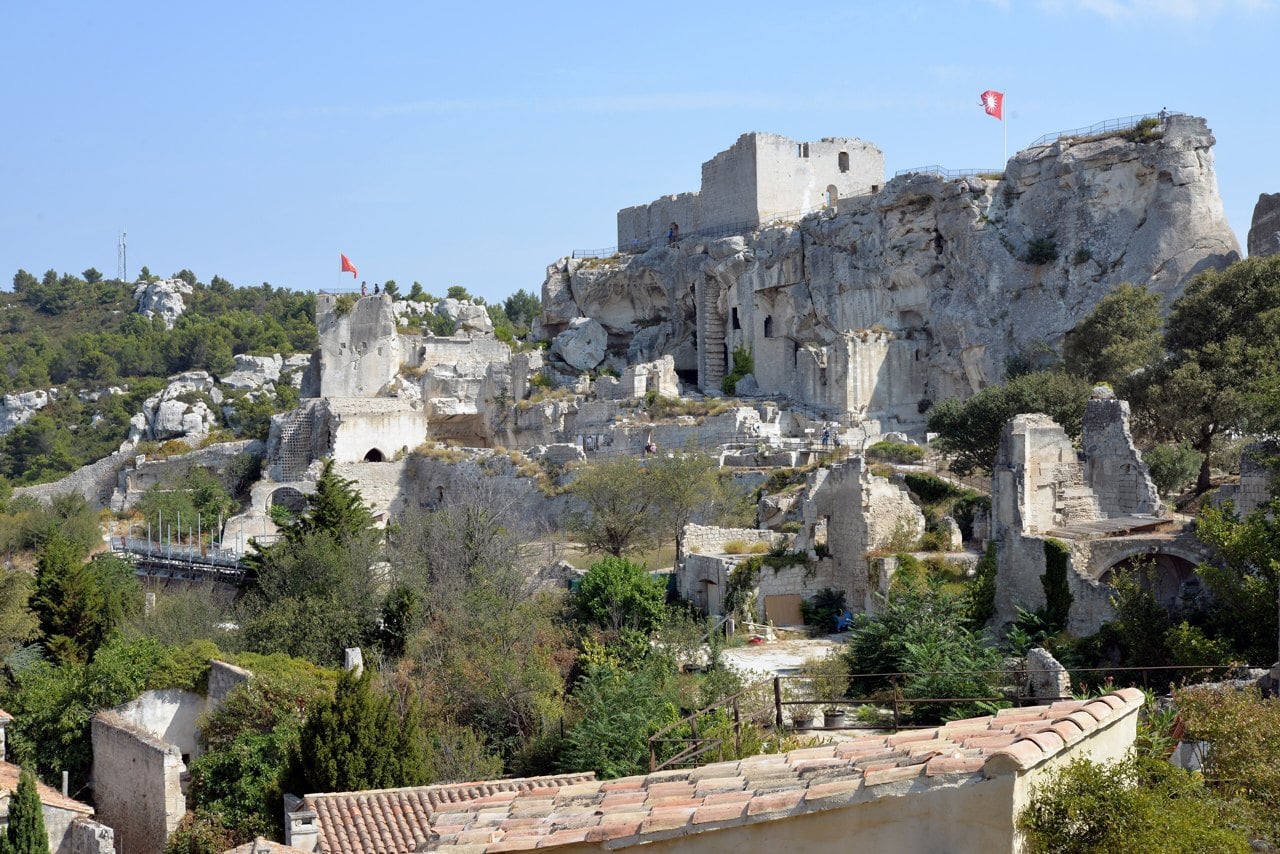
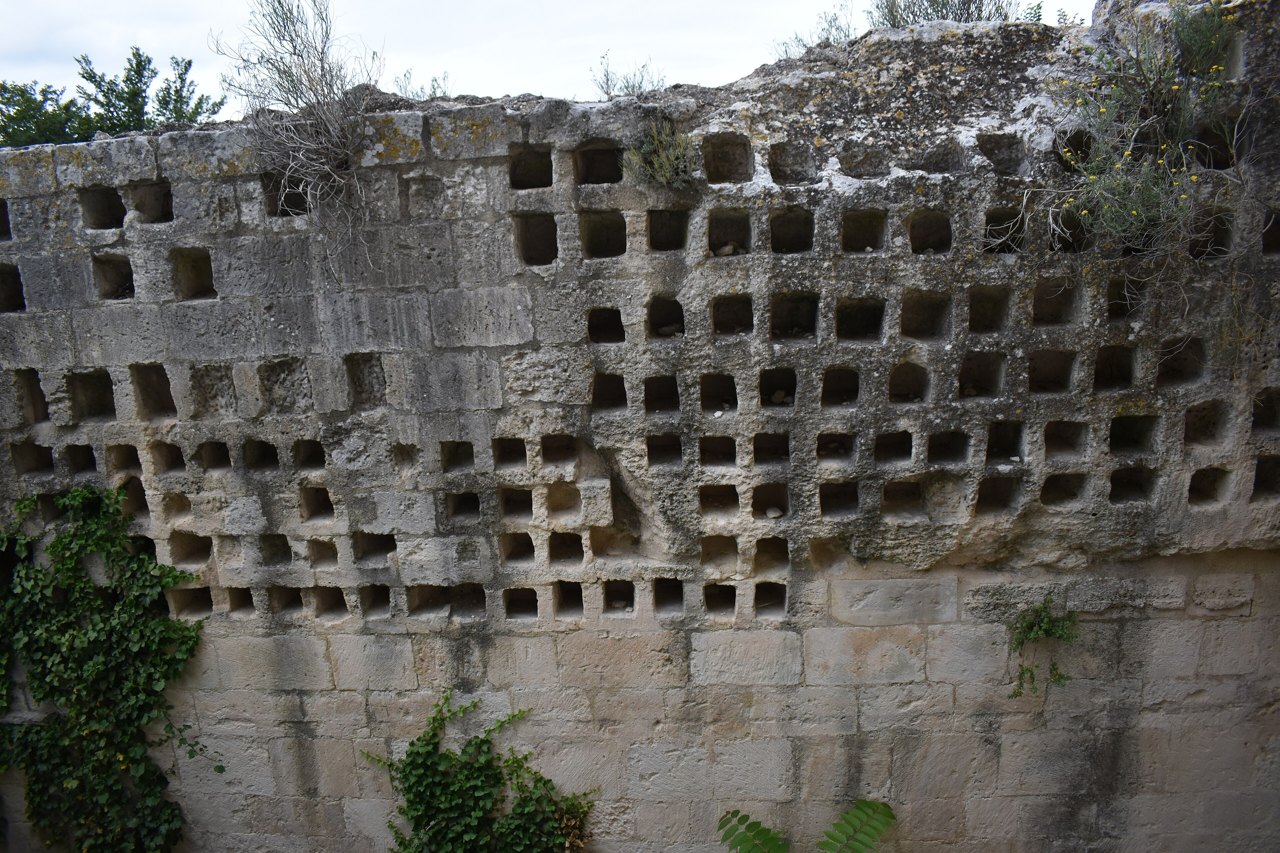
Below the keep, the rock is honeycombed with the practical fabric of a self-sufficient fortress-town: troglodyte halls and store-rooms cut into the stone, a great cistern, an oven house, a dovecote, and the lower courtyards where craftsmen and peasants once lived and worked. A little apart stand the Renaissance remains of the Quiqueran hospital, built in the sixteenth century and one of the rare surviving examples of hospital architecture from that period in Provence. Taken together, the ruins map out the castle and the community that lived around it on the rock.
Ruin and Dismantlement
The senior line of Baux ended in 1426, when Alix, the last heiress of the house, died and willed the lands to Guillermo d’Andria. Sieges and wars followed; the seigneurie eventually reached René of Anjou, and when his nephew Charles III du Maine died in December 1481 Les Baux passed with Provence to the crown of France, formally united with it in 1486. Les Baux kept its strategic weight for a while longer; in 1528 the castle was placed under the constable de Montmorency, and during the Wars of Religion, between 1562 and 1598, it changed hands and suffered fresh damage as a center of Provençal Protestantism.
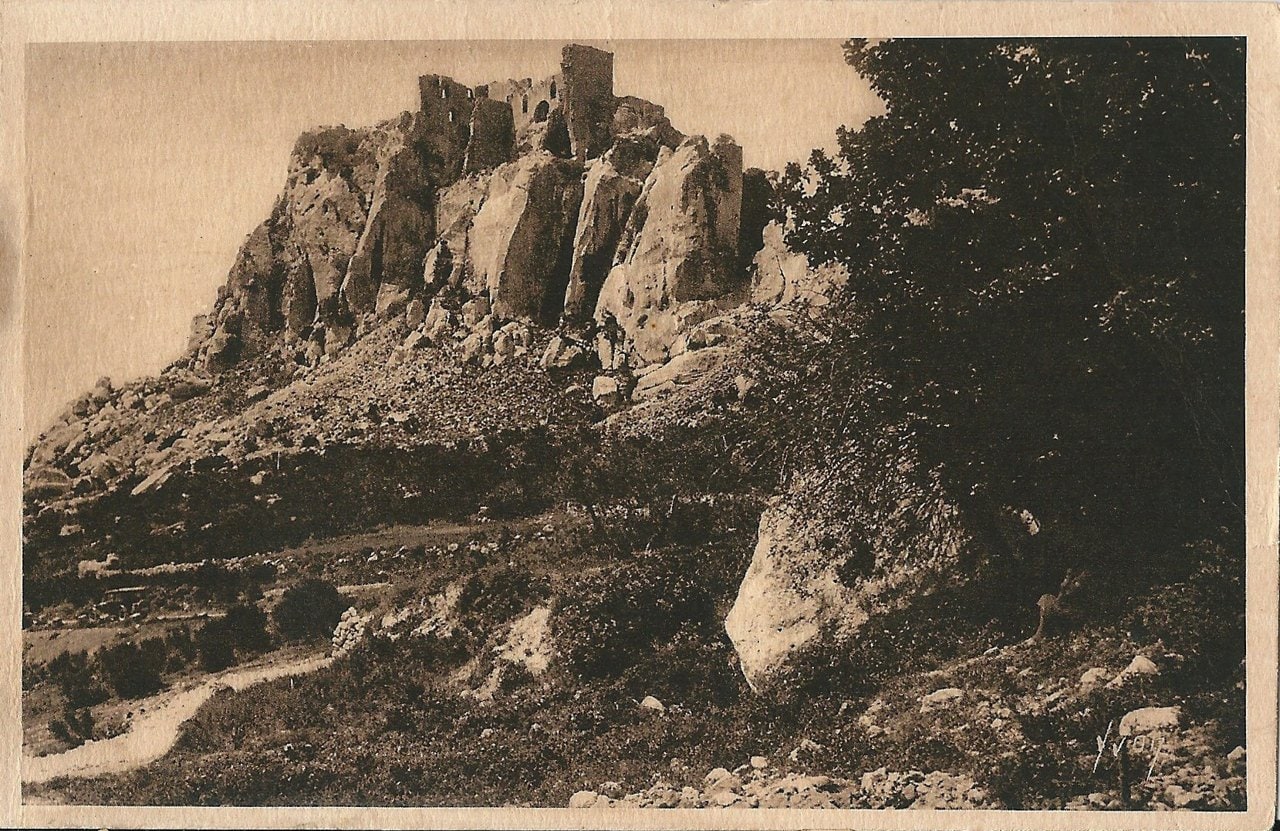
Its end came in the reign of Louis XIII. Les Baux was drawn into the revolt of the king’s brother, Gaston d’Orléans, and royal forces marched on the rock. After a defense said to have lasted twenty-seven days the gates were opened. Richelieu had already ordered the destruction of the rebel stronghold, and the operator adds that the people of Les Baux, weary of war and pillaging, themselves asked for the ramparts to come down. Demolition was contracted early in 1632 for 5,200 livres to Pol Reboul, a master mason from nearby Tarascon, who set to work with gunpowder because the huge masses of masonry defied the pick. When the walls were down, the cisterns and wells were filled in to make the site useless to any future rebel. Les Baux sank into the silence of a “dead town.”
An Afterlife in Ruins
The rock’s fortunes turned twice more. In 1642 Louis XIII raised the fief to a marquisate and granted it to Honoré II Grimaldi, in thanks for driving a Spanish garrison out of Monaco. Ever since, the marquisate of Les Baux has belonged to the Grimaldi princes of Monaco, and its courtesy title, Marquis des Baux, passes today to the heir to the Monegasque throne, Prince Jacques. Then, in 1821, the mineralogist Pierre Berthier analyzed a red ore from the hills nearby, sent to him as iron ore, and found it was hydrated alumina mixed with iron oxide; he published it as the hydrated alumina of Les Baux. The name came later, printed as beauxite by 1847 and as bauxite by 1861, and the raw material of the aluminum age carries the name of Les Baux around the world.
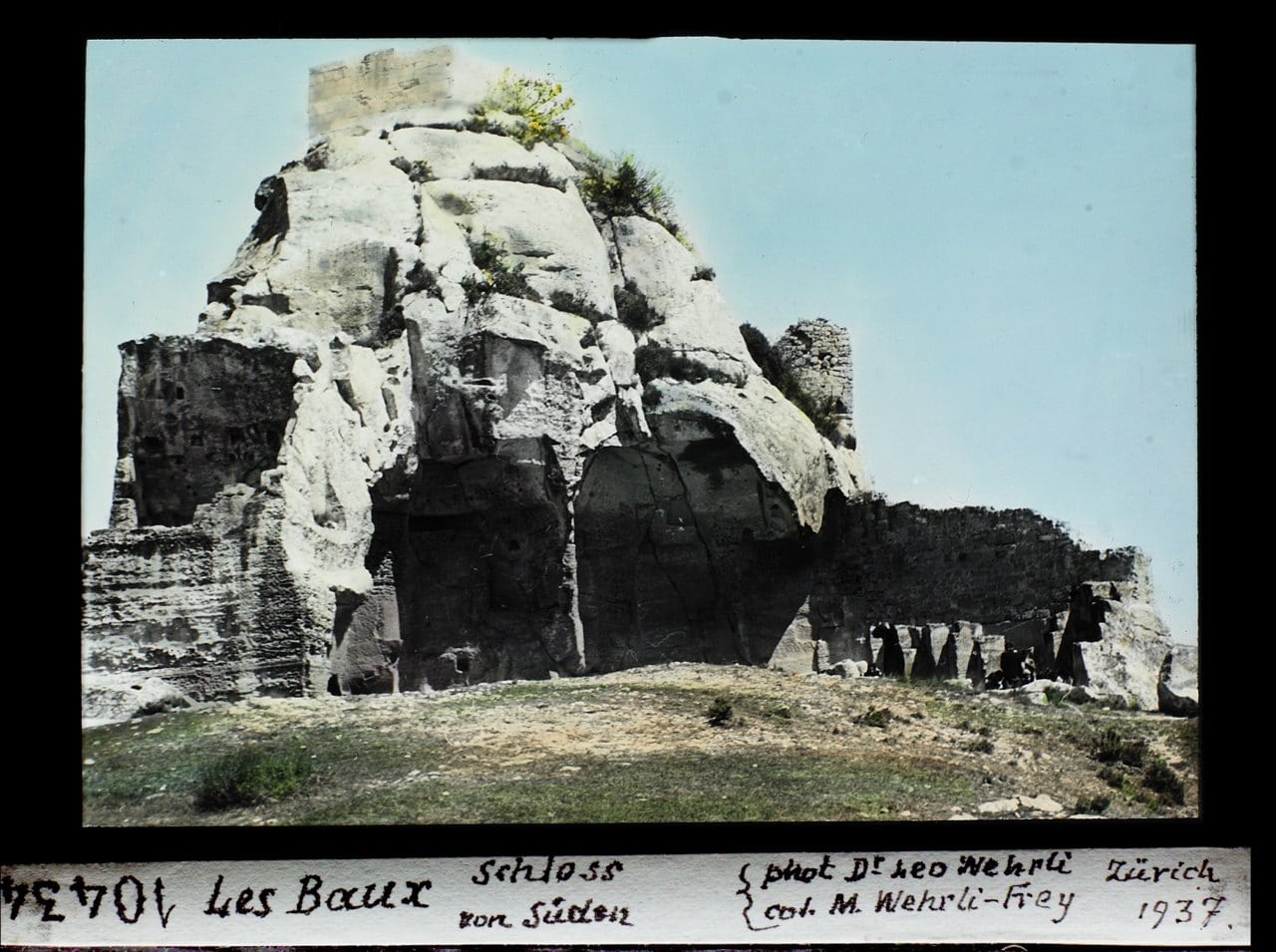
The ruin was classed among France’s historic monuments by an early list of 1875 and confirmed by an order of 1904, and the village below joined the roll of the most beautiful villages in France in 1998. Culturespaces ran the château for the commune until the administrative court of appeal at Marseille ended its contract with effect from November 1, 2023; it is now run by Destination Les Baux-de-Provence, a public establishment (EPIC) based in the village, which sells its tickets and publishes its website. Today the château crowns a village that the operator says two million visitors come to each year, and it shares a Provençal itinerary with the Palais des Papes at Avignon and the island fortress of the Château d’If off Marseille.
The Trebuchet on the Rock
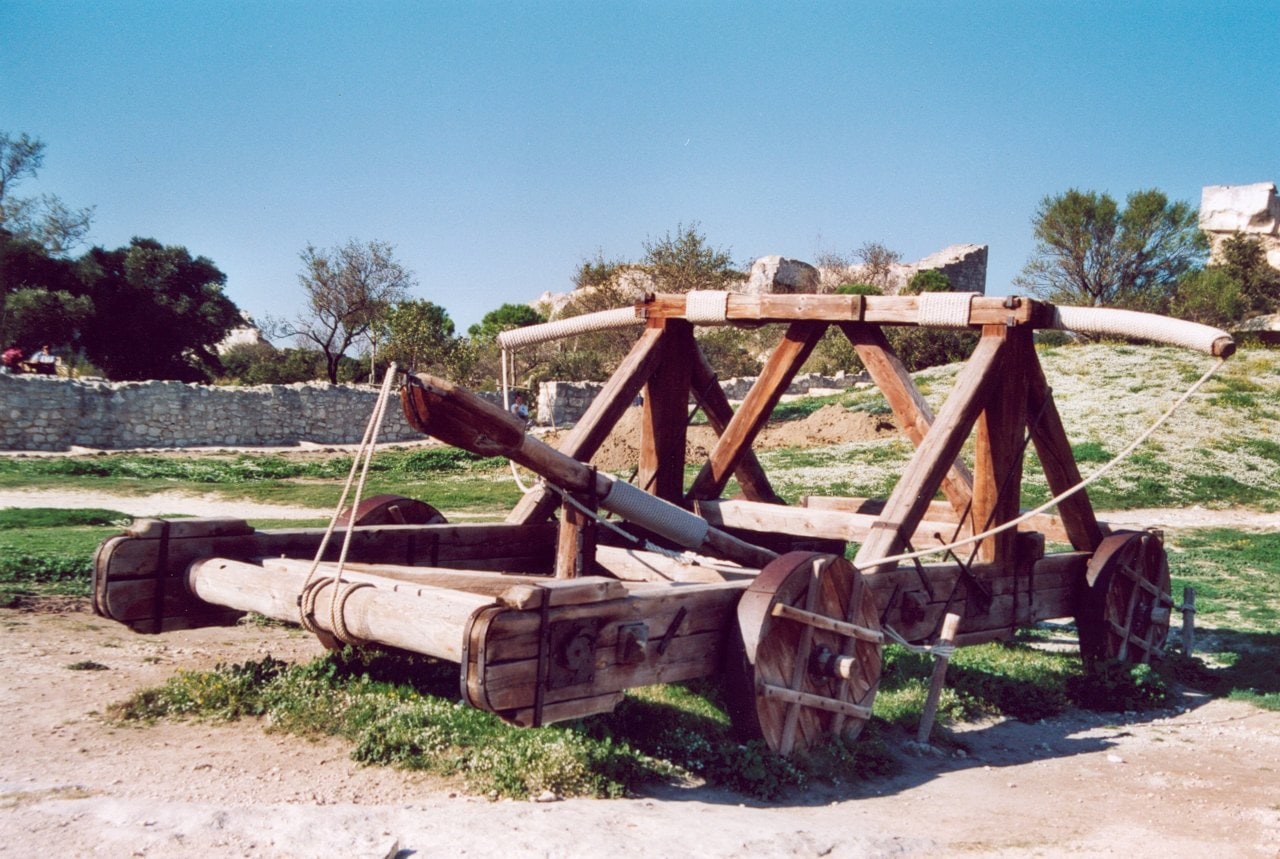
Among the ruins, on the plateau, stands one modern arrival: a full-scale medieval trebuchet, seventeen meters tall by the operator’s figure and weighing some seven tonnes. It is a faithful reconstruction, a twin of the great engine at Castelnaud, built to designs pieced together from medieval sources by the specialist Renaud Beffeyte and installed in 2007. Worked by a counterweight rather than muscle, it could sling stone balls of fifty to a hundred kilos some two hundred meters, and it took a crew of sixty to arm and aim. Two more engines arrived with it, a battering ram and a ballista, by the operator’s account, and in season the site runs daily firing demonstrations with real projectiles.
Visiting the Château des Baux-de-Provence
The Château des Baux-de-Provence is open every day of the year except December 25, with hours that lengthen through the season and last admission an hour before closing. Seniors from 65, students and visitors aged 18 to 25 pay reduced rates, children under seven enter free, and a combined pass adds the nearby Carrières des Lumières light show in its former quarry; current prices and hours are in the table below. There is no audio guide: Alix des Baux, the château’s AI assistant, accompanies the visit through QR codes placed along the route, and the reconstructed siege engines stand on the plateau. It makes an easy half-day, best paired with a wander through the pedestrian lanes of the village below. Allow ninety minutes for the château itself, more if you linger over the panorama.
Admission
| Château des Baux-de-Provence | Current prices and hours |
|---|---|
| Single ticket, adult | €10 |
| Senior (65 and over) | €9 |
| Reduced (students, ages 18 to 25, job seekers) | €8 |
| Child aged 7 to 17 | €7 |
| Child under 7 | Free |
| Family (2 adults, 2 children aged 7 to 17) | €27 |
| Pass Baux-de-Provence (château and Carrières des Lumières), adult | €21 |
| Pass, senior / reduced / ages 7 to 17 | €19.50 / €17.50 / €16 |
| Pass, family | €58 |
| Hours, January, February, November and December | 10:00-17:00 |
| Hours, March and October | 9:30-18:00 |
| Hours, April, May, June and September | 9:00-19:00 |
| Hours, July and August | 9:00-19:30 |
| Last entry | One hour before closing |
| Closed | December 25 |
Entry tickets are sold by the château itself, online and at the entrance; for a wider day in the Alpilles, you can book guided Alpilles day tours through our partner.
Some links on this page are affiliate links, which means StoneKeep Atlas may earn a small commission, at no extra cost to you, if you book through them.
Staying overnight in the Alpilles? Our guide to castle hotels in Provence covers the château-hotels within reach, from the Rhône vineyards to the coast.
More Views of Château des Baux-de-Provence
Common Questions
How long does it take to visit the Château des Baux-de-Provence?
Allow about an hour to an hour and a half for a self-guided visit, the château’s own estimate for a site spread over five hectares. A ticket booked online is for a date, not a time: no entry slot is imposed, so you can arrive at any hour that day within opening hours. Several picnic tables on the site make it easy to stretch the visit over lunch.
Where do you park for the Château des Baux-de-Provence?
Les Baux is a pedestrian village, and its municipal car parks charge a fee; from the entrance to the village, the château is about a five-minute walk. Installing the PayByPhone or Presto Park app beforehand lets you pay and extend your parking from your phone, and electric-vehicle chargers are at the Col de la Vayède and Carrières car parks. That walk follows cobbled lanes with slopes sometimes steeper than 6 percent, and the château calls a stroller visit very difficult, advising a baby carrier.
Can you bring a dog to the Château des Baux-de-Provence?
Yes. Dogs are welcome both in the château and in the village of Les Baux as long as they stay on a leash. That changes at the Carrières des Lumières, the light-show quarry a short walk away: the château’s own access page warns that animals are not admitted there. Bring only what you are happy to carry, too, since neither the château nor the village offers a left-luggage service, even for small bags.
Can you buy tickets for the Château des Baux-de-Provence at the entrance?
Yes. Tickets are sold on site, even on dates that show as fully booked online, and holiday vouchers (chèques-vacances) are accepted, under conditions, only for a purchase made there. A ticket bought online can be shown on a smartphone rather than printed. No undated tickets are sold, so there are no open-date gift vouchers, and a ticket cannot be exchanged, changed or refunded. Only if the site itself cancels the visit, for a reason other than force majeure, are you offered another date, where possible, or a refund.
How do you get to the Château des Baux-de-Provence without a car?
Take the bus. Zou! line 707, the regional coach between Avignon, Saint-Rémy-de-Provence and Arles, calls at Les Baux in summer; outside July and August its service there has changed from one year’s timetable to the next, so check the current one before you travel. Some coaches carry bike racks, and the carrier asks cyclists to call at least 36 hours ahead. For rail, the château’s site points visitors to Arles, Tarascon or Saint-Martin-de-Crau, or to the TGV stations at Avignon, Nîmes Pont du Gard and Aix-en-Provence.
Can you visit the Château des Baux-de-Provence and the Carrières des Lumières on the same day?
Yes, and easily. The Carrières des Lumières, the former quarry that now hosts immersive light shows, is about a ten-minute walk from the village, so if you have parked near Les Baux you can go on foot. A combined ticket, the Pass Baux-de-Provence, covers both the château and the Carrières, and the château’s access page allows about an hour for the Carrières alone, on top of your time at the château.
Beyond Château des Baux-de-Provence
The Château des Baux belongs to a compact group of Provençal strongholds in the StoneKeep Atlas. A short drive north, the Palais des Papes in Avignon is, in its operator’s words, the largest Gothic palace in the world and was the seat of the medieval popes, and across the river at Villeneuve-lès-Avignon the royal Fort Saint-André guarded the frontier of the French kingdom. Downstream, the fortress-town of Château de Tarascon holds the Rhône where Provence meets Languedoc, while off Marseille the island Château d’If spent its long second life as a prison. All of them sit alongside Les Baux in the Castles of Provence guide.
Conclusion
The Château des Baux-de-Provence was stripped of its roofs and battlements by royal command, and it still dominates its rock and its village. Its history runs from the castrum recorded in the tenth century, through the lords who claimed a Magus for an ancestor and the mason from Tarascon contracted in 1632 to pull their walls down, to the ore Pierre Berthier analyzed in 1821, which carries the village’s name as bauxite. What a visitor walks today is the thirteenth-century keep, the towers and the rock-cut halls, open to the sky on the summit of the Alpilles.
The Château des Baux is one of the four castles of Provence surveyed on StoneKeep Atlas, alongside Château d’If, the Palais des Papes, and Château de Tarascon.
Principal Sources
- Benoit, Fernand. Les Baux. Paris, 1928.
- Berthier, Pierre. “Analyse de l’alumine hydratée des Beaux, département des Bouches-du-Rhône.” Annales des mines, 1st series, 6, 1821, pp. 531-534.
- Cour administrative d’appel de Marseille. “Communiqué de presse : Carrières de Lumières et château des Baux-de-Provence.” November 28, 2022.
- Destination Les Baux-de-Provence. Château des Baux-de-Provence, official site: “History of the Château”, “Venir au château”, “FAQ”, “Mentions légales” and the château plan (PDF, 2026). chateau-baux-provence.com.
- Destination Les Baux-de-Provence. Official visitor information for the Château des Baux-de-Provence. chateau-baux-provence.com; lesbauxdeprovence.com.
- Dufrénoy, Armand. Traité de minéralogie. Vol. 3. Carilian-Goeury et Dalmont, Paris, 1847, index entry “Beauxite”.
- Maufras, Odile. “Le castrum des Baux de Provence : histoire d’un site fortifié médiéval.” Provence historique, 40, fasc. 159, 1990.
- Ministère de la Culture. Base Mérimée, notice PA00081208, Château (ruines).
- Noblemaire, Gustave. Histoire de la Maison des Baux. Paris, 1913.
- Principauté de Monaco. Journal de Monaco no. 8203, December 12, 2014, p. 2877: Ordonnance Souveraine n° 5.105 du 11 décembre 2014 conférant le titre de Marquis des Baux à S.A.S. le Prince Héréditaire Jacques. journaldemonaco.gouv.mc.
- Région Sud. Zou!, “707 Arles – Saint-Rémy-de-Provence – Avignon” (from February 11, 2026) and “707 ÉTÉ Arles – Saint-Rémy-de-Provence – Avignon” (from July 4, 2026) timetables, zou.maregionsud.fr.
- Sainte-Claire Deville, Henri. “De la présence du vanadium dans un minerai alumineux du midi de la France.” Annales de chimie et de physique, 3rd series, 61, 1861.
Image credits. Citadel from the south-west: PierreSelim, CC BY-SA 4.0; rock-cut troglodyte walls: Malost, CC BY-SA 3.0; the keep on its rock: Calips, CC BY-SA 3.0; reconstructed siege engines: Calips, CC BY-SA; the château in 1937: Leo Wehrli, CC BY-SA 4.0, via ETH-Bibliothek Zürich; the ruined heights today: Holger Uwe Schmitt, CC BY-SA 4.0; dovecote: Tylwyth Eldar, CC BY-SA 4.0; surviving tower: Gortyna, CC BY-SA 3.0; rock-cut dwellings: Jean-Pol Grandmont, CC BY 4.0; lower courtyard: Marianne Casamance, CC BY-SA 3.0; the château above the village: Georges Seguin (Okki), CC BY-SA 3.0; early-20th-century postcard: unknown author, public domain — all via Wikimedia Commons except where noted. Freely licensed images are resized to fit; any other change, such as a crop, is named in the credit.