
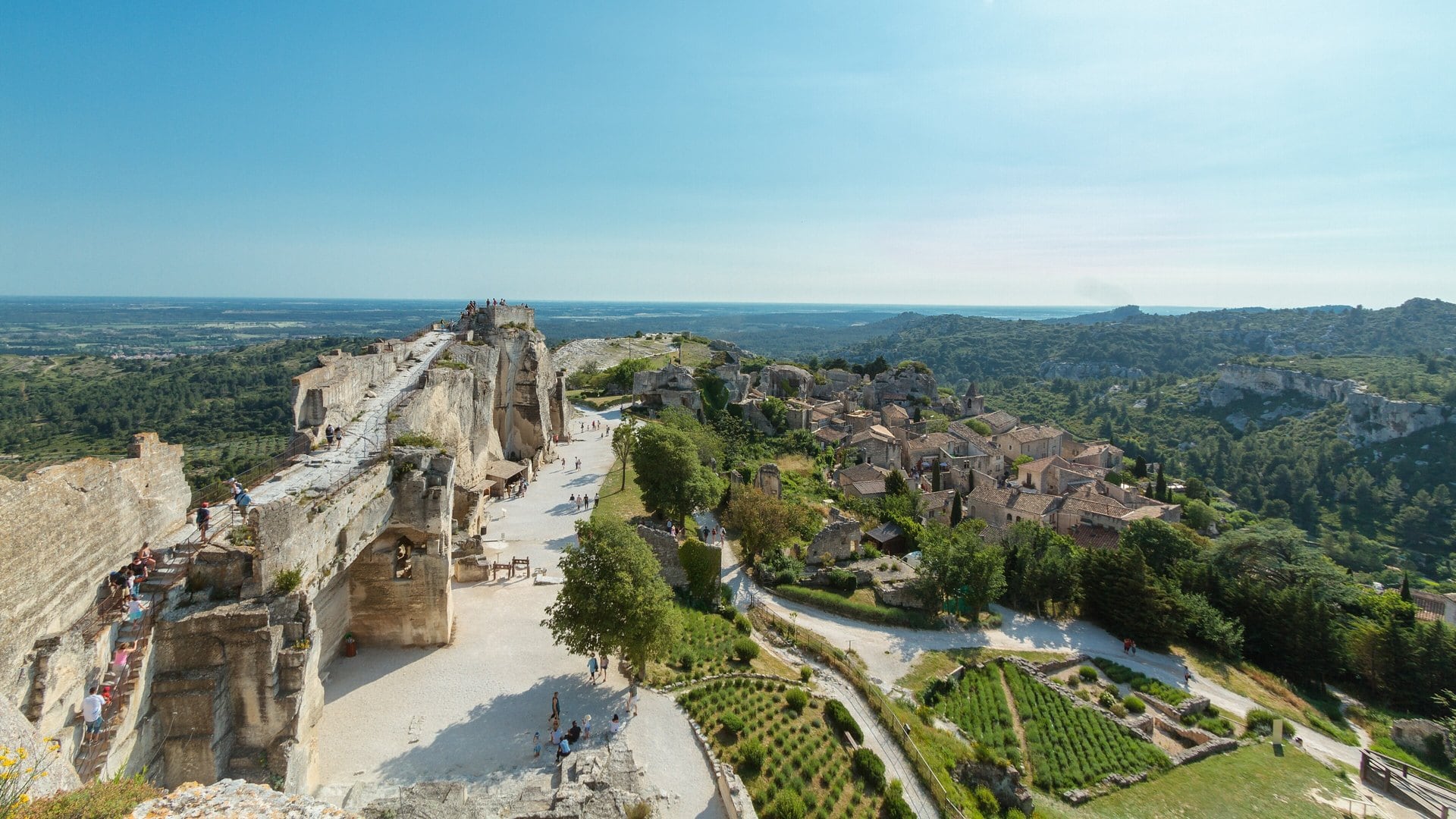
Château des Baux-de-Provence
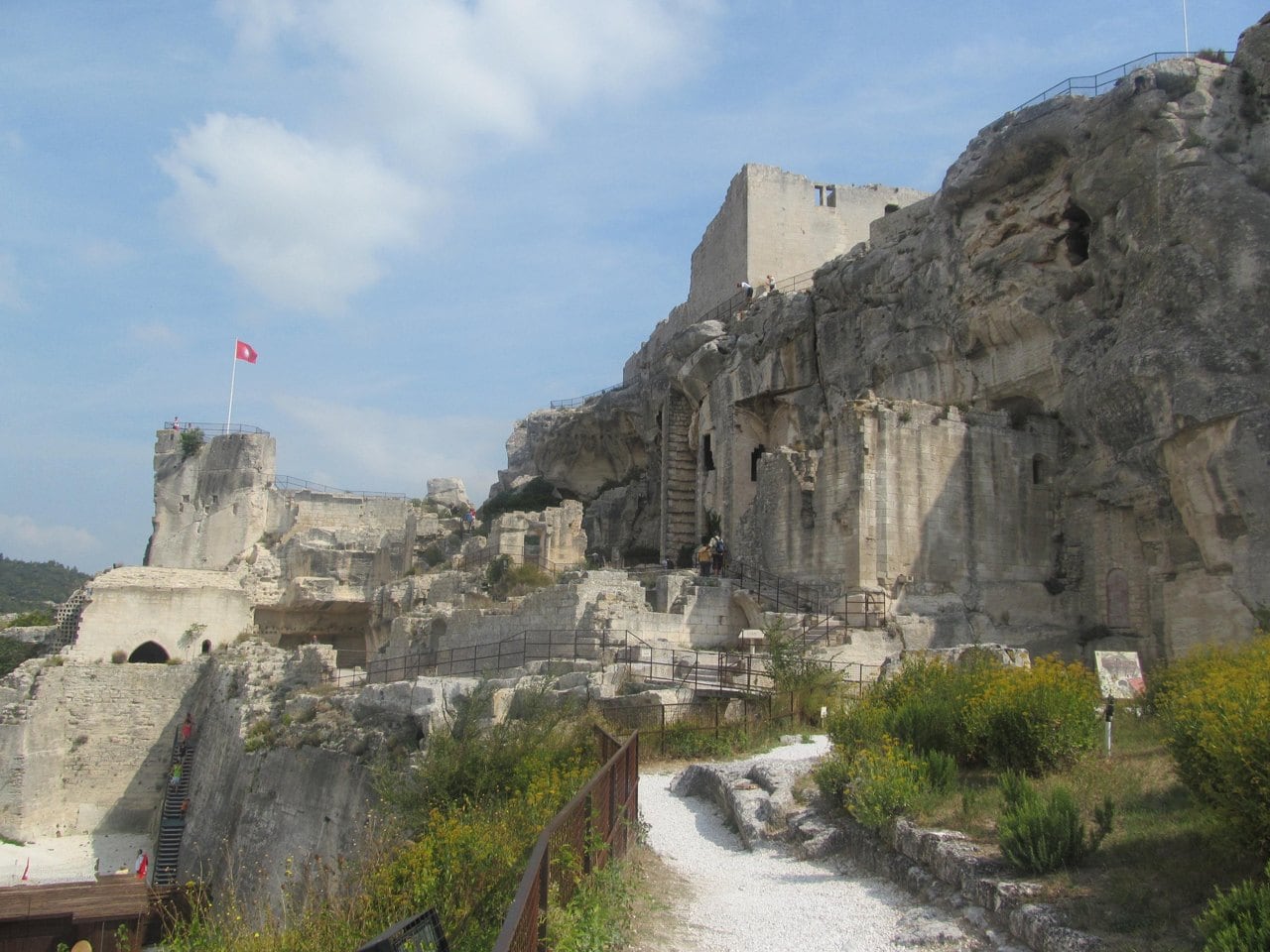
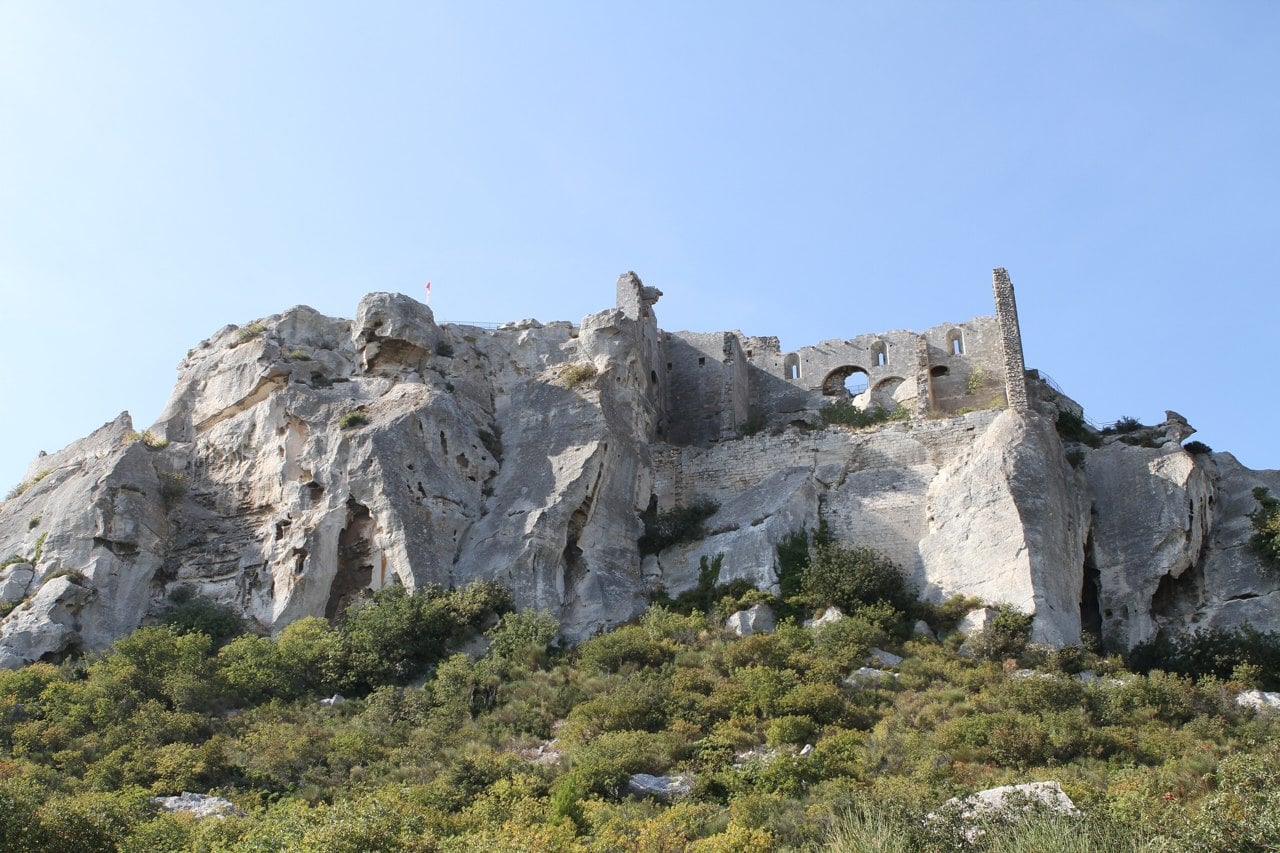
The Château des Baux-de-Provence crowns a bare limestone spur in the heart of the Alpilles, its ruined ramparts rising so seamlessly from the rock that fortress and cliff seem cut from a single mass. For five centuries this was the eyrie of the lords of Baux, a family so proud it claimed descent from one of the Three Magi and so troublesome that Cardinal Richelieu finally had the place pulled down. What survives is a magnificent open-air ruin spread across the summit of the rock, high above one of the most beautiful villages in France.
Today the Château des Baux-de-Provence is run as a ticketed heritage site, complete with a full-scale trebuchet that still hurls stones across the plateau. Yet the worn stone underfoot tells a longer story: of a dynasty that once ruled scores of Provençal towns, defied the counts of Provence and the popes at Avignon, and gave its name, centuries later, to the ore that helped build the modern world.
Quick Facts
| Location | Les Baux-de-Provence, Bouches-du-Rhône (Provence-Alpes-Côte d’Azur) |
| Built | 11th–13th centuries (a castrum is recorded in 975) |
| Condition | Ruined |
| Type | Fortress and seigneurial citadel |
| Best-preserved element | The rectangular 13th-century keep |
| Operator | Culturespaces |
| Heritage status | Monument historique (listed 1875; decree of June 9, 1904) |
| Native designation | Château |
| Official site | chateau-baux-provence.com |
A Ship of Stone in the Alpilles
The rock of Les Baux is a natural fortress. It stands on the southern flank of the Alpilles, a low limestone range between Arles and Saint-Rémy-de-Provence, on a spur that falls away in cliffs on three sides and commands the plain for miles around. The Provençal word “bau,” meaning a rocky escarpment, gave the place and its lords their name. People had grasped the site’s value long before any castle rose here: the spur served as a refuge as far back as the Neolithic and as a stronghold in the Iron Age.
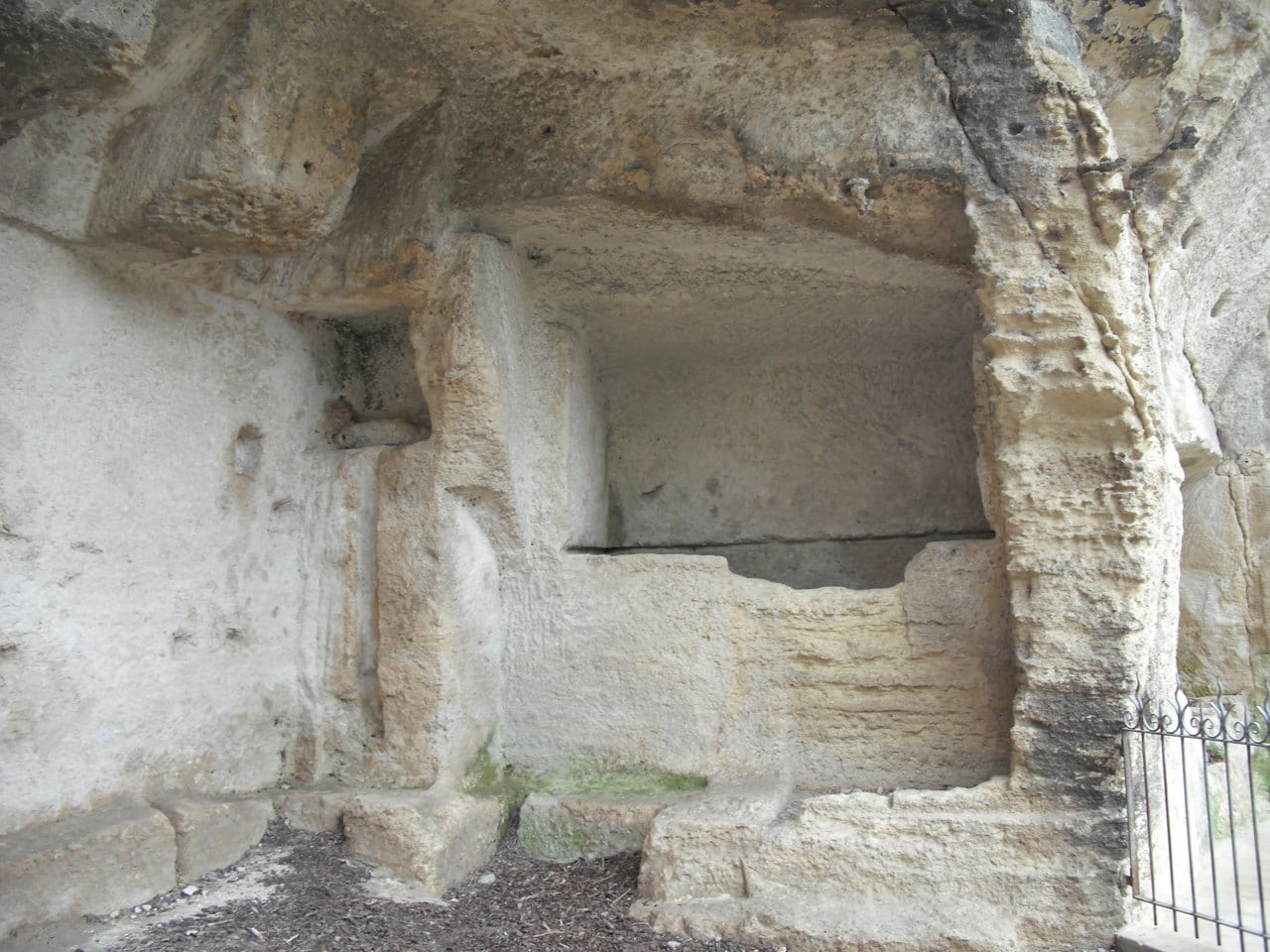
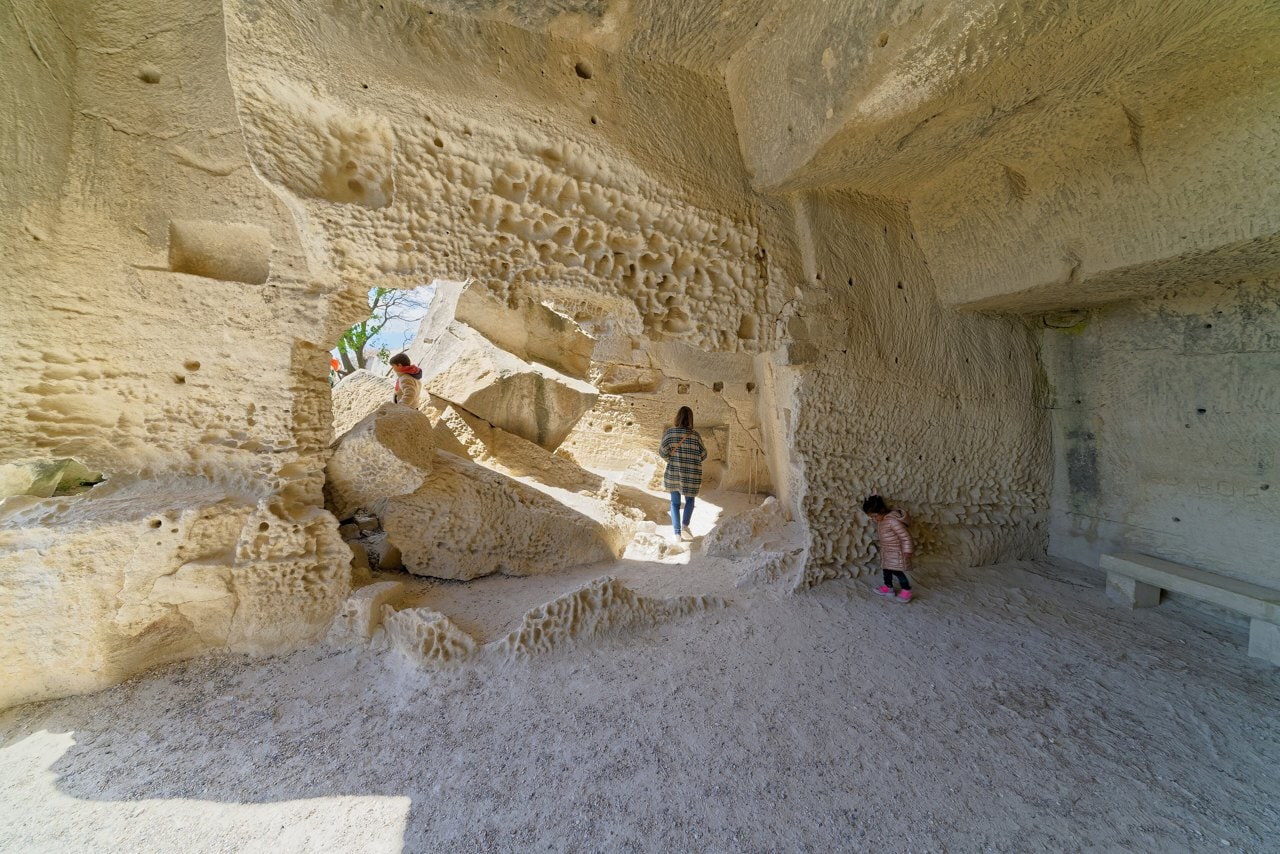
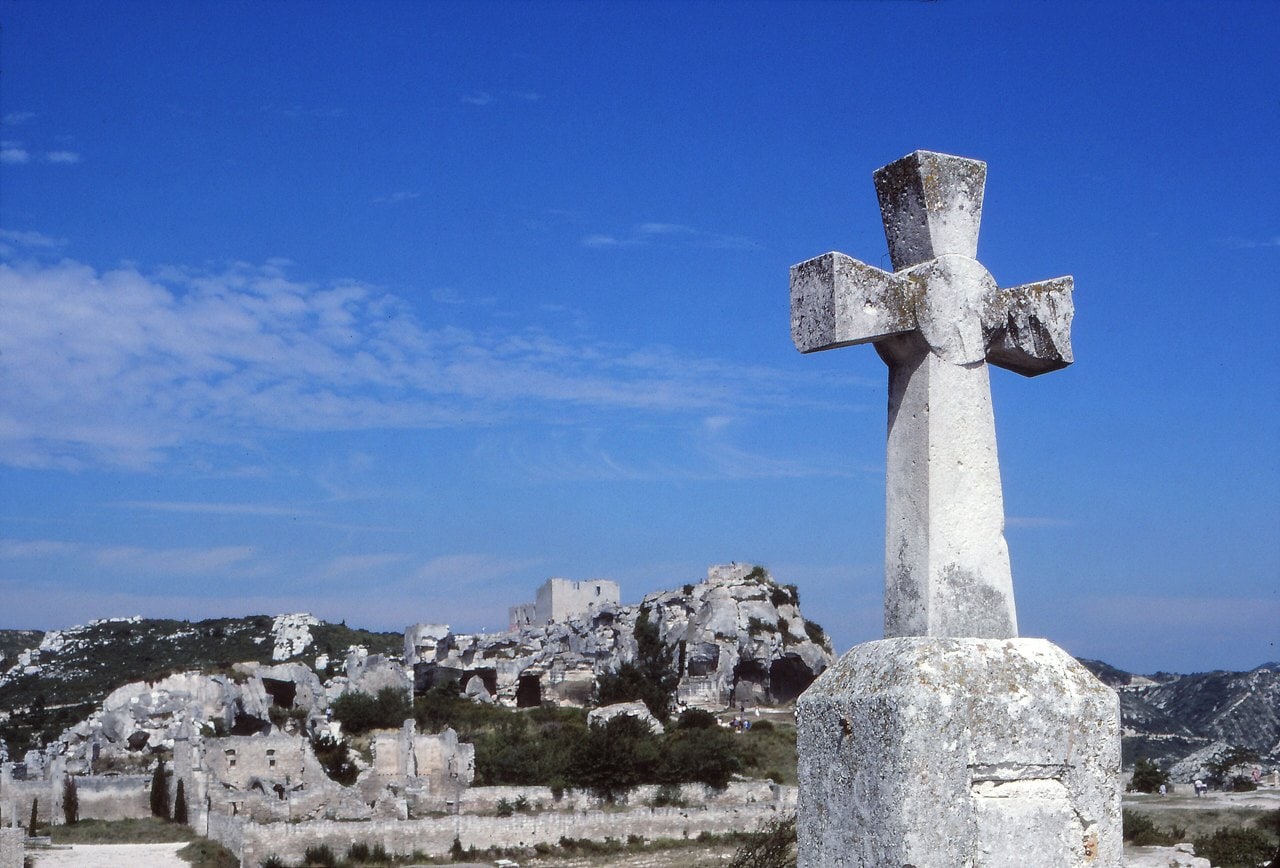
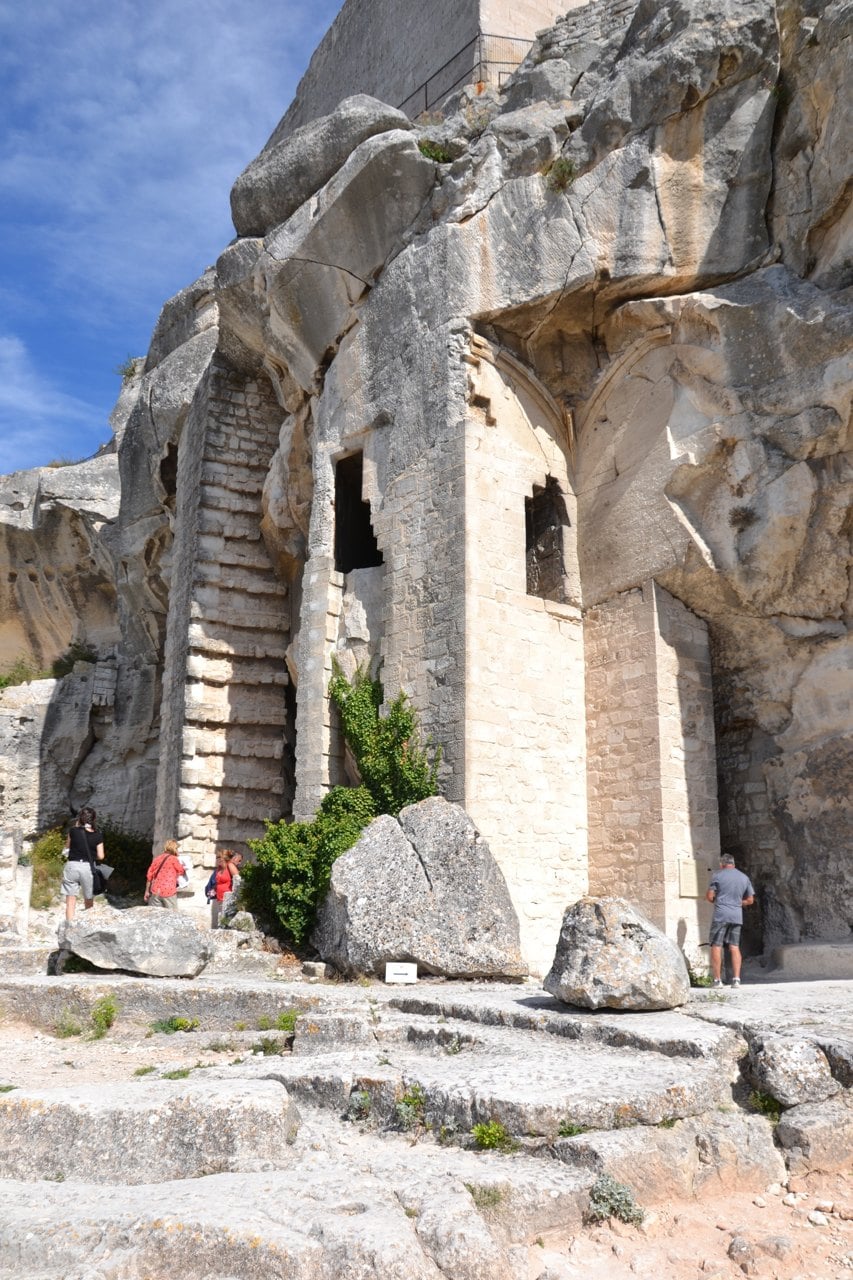
Medieval builders worked with the rock rather than merely on it. Whole sections of wall, along with cisterns, halls, and dwellings, were carved directly out of the limestone, so that the fortress is as much quarried as constructed. Writers have long reached for the same two images to describe the result: an eagle’s nest, and a vast “ship of stone” run aground on the heights. The ruined site covers more than five hectares across three levels, and from its highest point the panorama sweeps over olive groves and garrigue to the Camargue, with Mont Sainte-Victoire and, on the clearest days, the Mediterranean on the horizon.
The Lords of Baux
The house of Baux was one of the great families of medieval Provence. From their rock they controlled, at the height of their power, seventy-nine towns and fiefs scattered across the region, the so-called Baussenque lands. They were also among the proudest lineages in the south, and they cultivated a striking origin myth: that they descended from Balthazar, one of the Three Kings who followed the star to Bethlehem. The claim was written into their heraldry as a sixteen-pointed silver star and into their motto, “Au hasard Balthazar,” and it lent a certain glamour to a family whose real business was war and ambition.
That ambition brought conflict. In the mid-twelfth century the lords of Baux pressed a claim to the county of Provence itself against the counts of Barcelona, unleashing the drawn-out Baussenque Wars, fought intermittently between 1145 and 1162. They lost, but they endured, and their court became known for its troubadours and its chivalric polish. The family’s turbulence outlasted its independence. In the late fourteenth century Raymond de Turenne, uncle of the last heiress, waged a private war across Provence so ruinous that in 1393 the Estates put a price of ten thousand gold florins on his head, and royal, papal, and civic troops laid siege to the rock itself.
Building the Citadel
A castrum at Les Baux is first recorded in 975, which makes the site one of the oldest feudal strongholds in Europe. The castle proper took shape across the eleventh, twelfth, and thirteenth centuries, growing by stages as the family’s fortunes rose. Its best-preserved element is the rectangular keep of the thirteenth century, set at the crown of the spur. To raise it, the lords had the rock on the valley side cut away to a height of some twenty meters, so that the cliff itself formed the first line of defense, and the finished tower stood roughly thirty-five meters by twelve. Around it survive the remains of the Sarrasine and Paravelle towers and the tour des Bannes; the Sarrasine, perched on its own outcrop, sealed the southern approach and served as the “guardian of the castle.” Nearby stands the shell of a Romanesque castle chapel, the chapelle castrale, where the family worshipped.
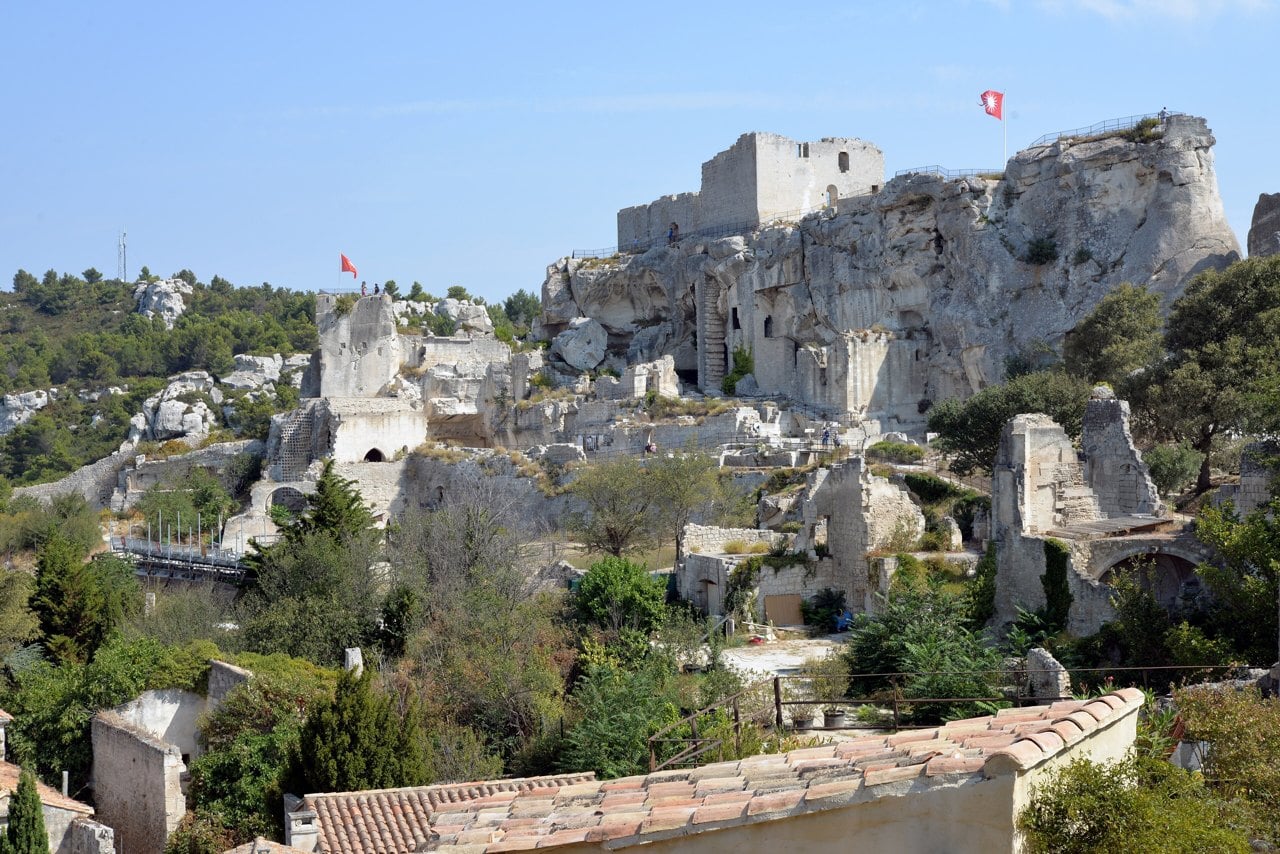
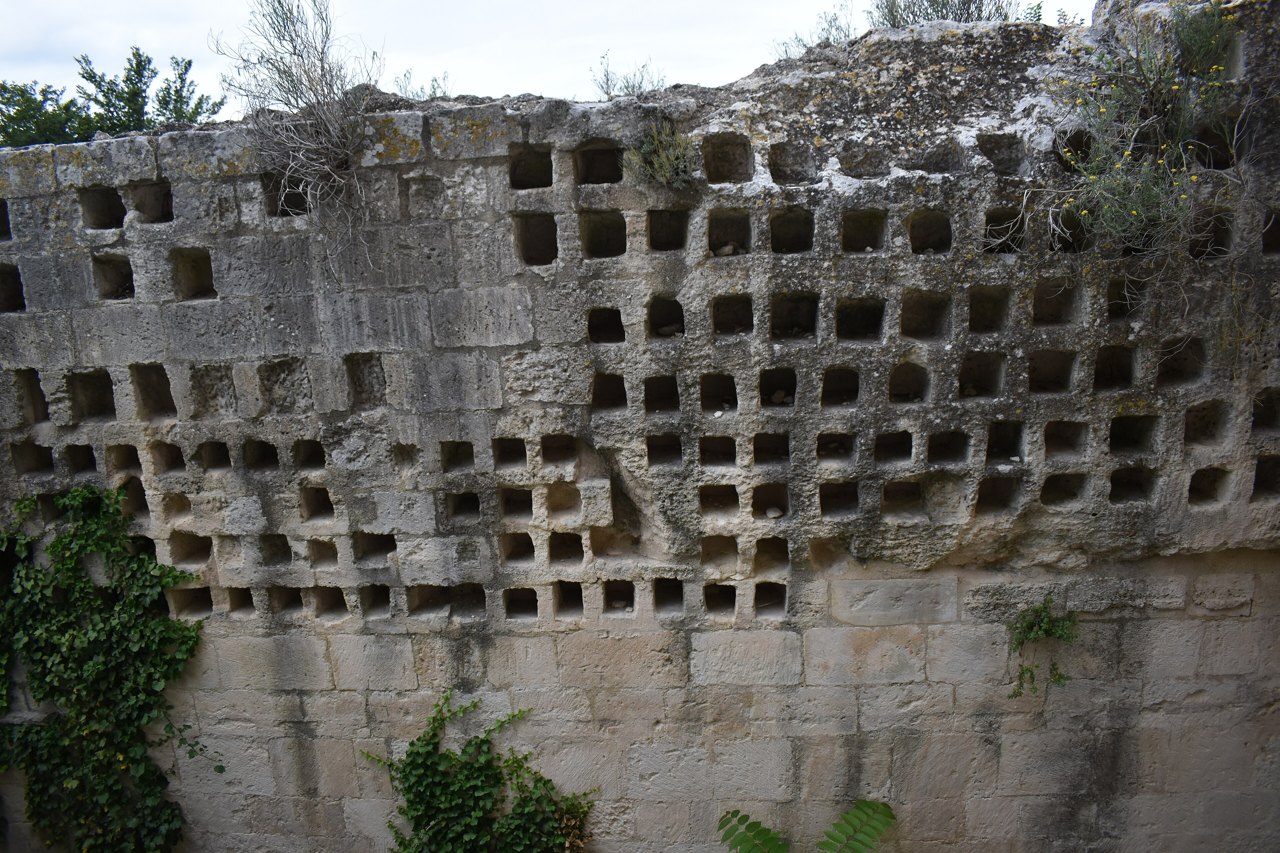
Below the keep, the rock is honeycombed with the practical fabric of a self-sufficient fortress-town: troglodyte halls and store-rooms cut into the stone, a great cistern, an oven house, a dovecote, and the lower courtyards where craftsmen and peasants once lived and worked. A little apart stand the Renaissance remains of the Quiqueran hospital, built in the sixteenth century and one of the rare surviving examples of hospital architecture from that period in Provence. Taken together, the ruins map out not just a castle but an entire community perched between sky and rock.
Ruin and Dismantlement
The senior line of Baux ended in 1426, when Alix, the last heiress of the house, died and willed the lands to Guillermo d’Andria. Sieges and wars followed; the seigneurie eventually reached René of Anjou, and when his nephew Charles III du Maine died in December 1481 Les Baux passed with Provence to the crown of France, formally united with it in 1486. Les Baux kept its strategic weight for a while longer; in 1528 the castle was placed under the constable de Montmorency, and during the Wars of Religion, between 1562 and 1598, it changed hands and suffered fresh damage as a center of Provençal Protestantism.
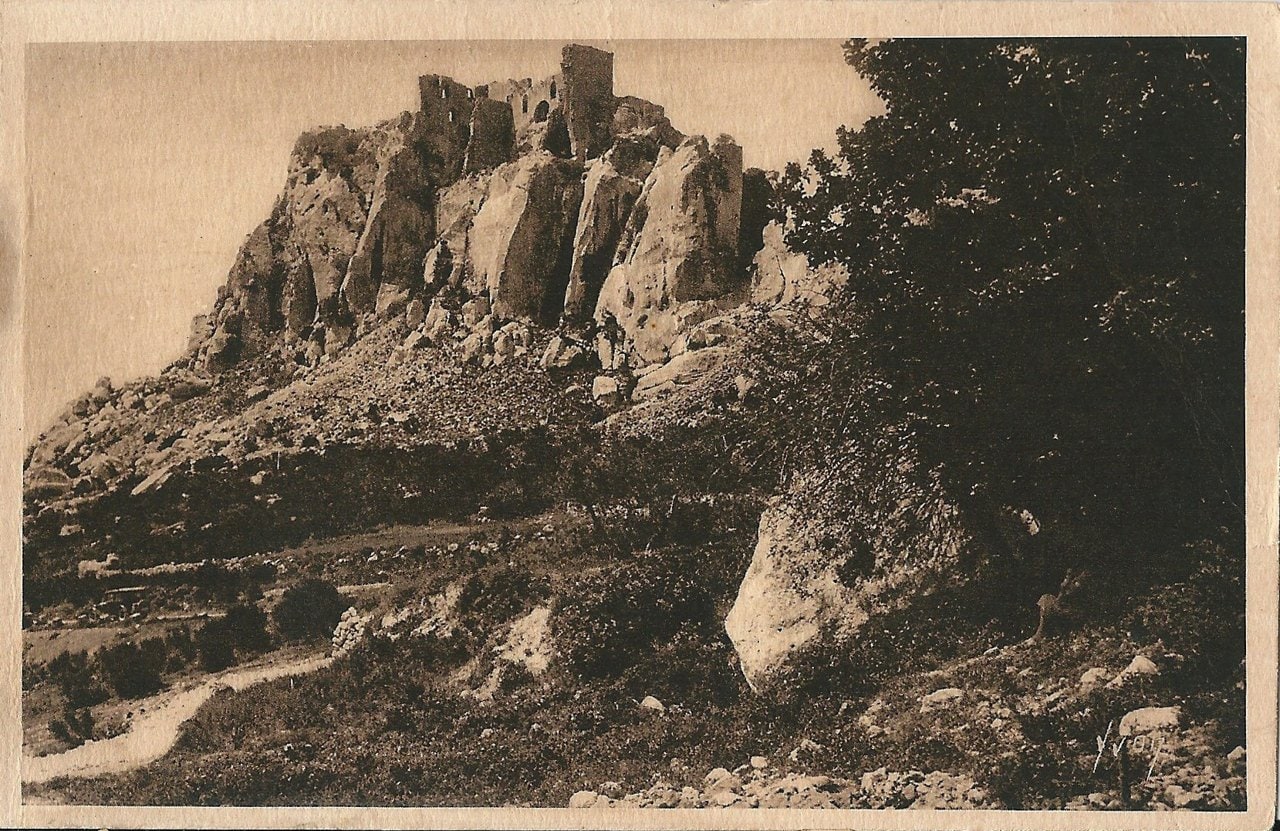
Its end came in the reign of Louis XIII. Les Baux was drawn into the revolt of the king’s brother, Gaston d’Orléans, and royal forces marched on the rock. After a defense said to have lasted twenty-seven days the gates were opened, and Richelieu, weary of so obstinate a stronghold, ordered the castle and ramparts razed. Demolition was contracted early in 1632 for 5,200 livres to Pol Reboul, a master mason from nearby Tarascon, who set to work with gunpowder because the huge masses of masonry defied the pick. When the walls were down, the cisterns and wells were filled in to make the site useless to any future rebel. Les Baux sank into the silence of a “dead town.”
An Afterlife in Ruins
The rock’s fortunes turned twice more. In 1642 Louis XIII raised the fief to a marquisate and granted it to Honoré II Grimaldi, in thanks for driving a Spanish garrison out of Monaco. Ever since, the marquisate of Les Baux has belonged to the Grimaldi princes of Monaco, and its courtesy title, Marquis des Baux, passes today to the heir to the Monegasque throne, Prince Jacques. Then, in 1821, the mineralogist Pierre Berthier analyzed a red ore from the hills nearby, sent to him as iron ore, and found it was hydrated alumina mixed with iron oxide; he published it as the hydrated alumina of Les Baux. The name came later, printed as beauxite by 1847 and as bauxite by 1861, and the raw material of the aluminum age carries the name of Les Baux around the world.
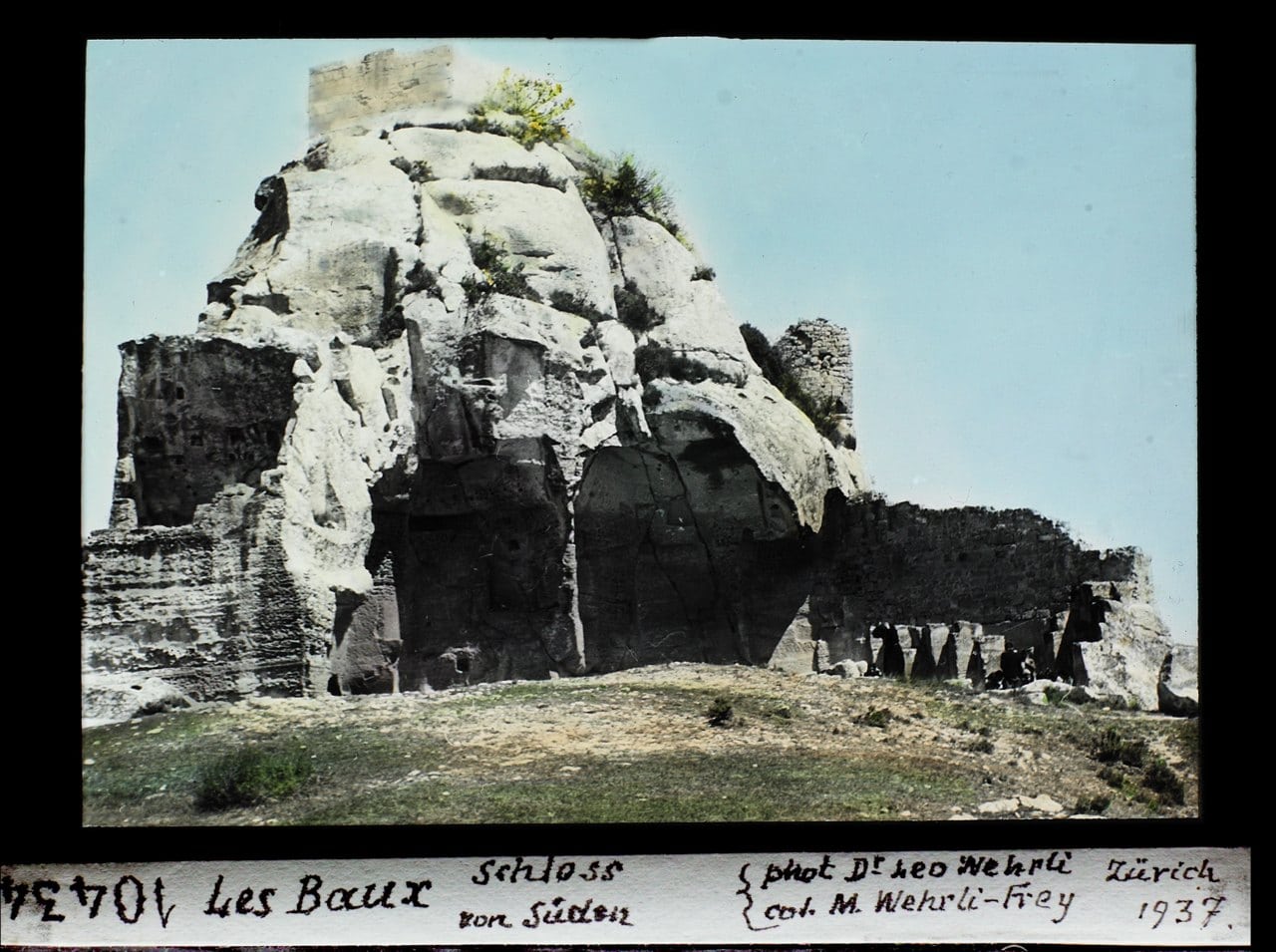
The ruin was classed among France’s historic monuments by an early list of 1875 and confirmed by decree in 1904, and the village below joined the roll of the most beautiful villages in France in 1998. Managed today by the operator Culturespaces, the château draws well over a million visitors a year, and ranks among the most visited monuments in Provence, alongside the Palais des Papes at Avignon and the island fortress of the Château d’If off Marseille.
The Trebuchet on the Rock
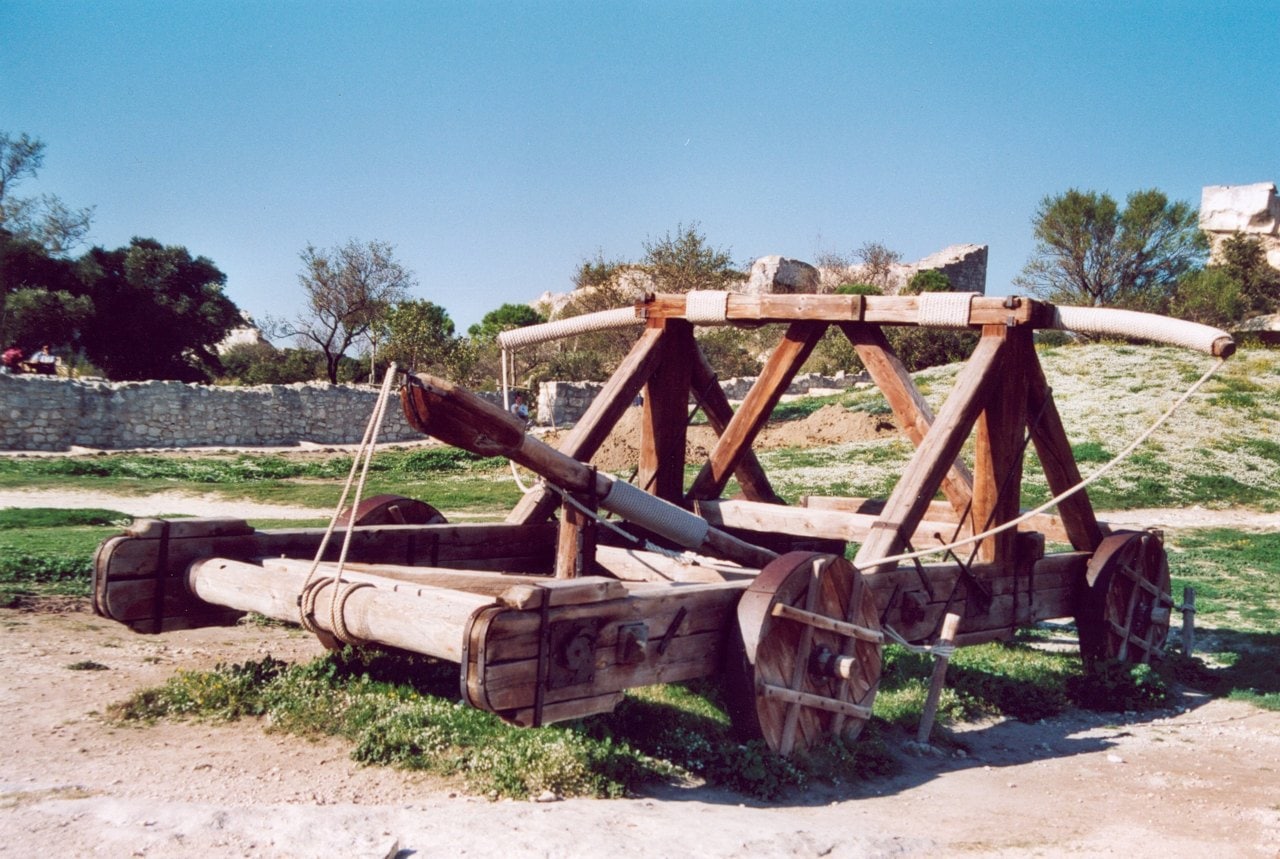
Among the ruins, one modern arrival stops every visitor: a full-scale medieval trebuchet, sixteen meters tall and weighing some seven tonnes, standing ready on the plateau. It is a faithful reconstruction, a twin of the great engine at Castelnaud, built to designs pieced together from medieval sources by the specialist Renaud Beffeyte and installed in the mid-2000s. Worked by a counterweight rather than muscle, it could sling stone balls of fifty to a hundred kilos some two hundred meters, and it took a crew of sixty to arm and aim. Alongside it stand smaller siege machines, the bricole and the couillard, and in season the site runs daily firing demonstrations with real projectiles, a vivid reminder of what the walls of a place like this were built to withstand.
Visiting the Château des Baux-de-Provence
The Château des Baux-de-Provence is open every day of the year, with hours that lengthen through the season: roughly ten to five in the depths of winter, and nine to half past seven at the height of summer, with last admission an hour before closing. A standard adult ticket to the château costs around ten euros, with reduced rates for seniors, students, and young visitors, and free entry for children under seven; a combined pass adds the nearby Carrières des Lumières light show in its former quarry. A free audio guide, a 3D film, and the siege-engine demonstrations make it an easy half-day, best paired with a wander through the pedestrian lanes of the village below. Allow ninety minutes for the château itself, more if you linger over the panorama.
For up-to-date opening times, ticket prices, and guided visits, you can book entry and Alpilles day tours through our partner.
Some links on this page are affiliate links, which means StoneKeep Atlas may earn a small commission, at no extra cost to you, if you book through them.
Staying overnight in the Alpilles? Our guide to castle hotels in Provence covers the château-hotels within reach, from the Rhône vineyards to the coast.
More Views of Château des Baux-de-Provence
Beyond Château des Baux-de-Provence
The Château des Baux belongs to a compact group of Provençal strongholds in the StoneKeep Atlas. A short drive north, the Palais des Papes in Avignon is the largest Gothic palace in the world and the seat of the medieval popes, and across the river at Villeneuve-lès-Avignon the royal Fort Saint-André guarded the frontier of the French kingdom. Downstream, the fortress-town of Château de Tarascon holds the Rhône where Provence meets Languedoc, while off Marseille the island Château d’If spent its long second life as a prison. All of them sit alongside Les Baux in the Castles of Provence guide.
Conclusion
The Château des Baux-de-Provence is a ruin that has lost none of its authority. Stripped of its roofs and battlements by royal command, it still dominates its rock and its village, and the honesty of its bare stone says more about medieval power than many an intact castle can. In the lords who claimed a Magus for an ancestor, in the mason from Tarascon who pulled their walls down, and in the ore that quietly took the village’s name, the site gathers up the whole long arc of Provençal history. It holds that story open to the sky, on the summit of the Alpilles.
The Château des Baux is one of the four castles of Provence surveyed on StoneKeep Atlas, alongside Château d’If, the Palais des Papes, and Château de Tarascon.
Principal Sources
- Armand Dufrénoy, Traité de minéralogie, vol. 3, Paris, Carilian-Goeury et Dalmont, 1847 (index entry “Beauxite”).
- Base Mérimée, notice PA00081208, “Château (ruines),” Plateforme ouverte du patrimoine, French Ministry of Culture.
- Culturespaces / Château des Baux-de-Provence, official visitor information (chateau-baux-provence.com; lesbauxdeprovence.com), consulted 2026.
- Fernand Benoit, Les Baux, Paris, 1928.
- Gustave Noblemaire, Histoire de la Maison des Baux, Paris, 1913.
- Henri Sainte-Claire Deville, “De la présence du vanadium dans un minerai alumineux du midi de la France,” Annales de chimie et de physique, 3rd series, 61, 1861.
- Odile Maufras, “Le castrum des Baux de Provence : histoire d’un site fortifié médiéval,” Provence historique, 40, fasc. 159, 1990.
- Pierre Berthier, “Analyse de l’alumine hydratée des Beaux, département des Bouches-du-Rhône”, Annales des mines, 1st series, 6, 1821, pp. 531-534.
Image credits. Citadel from the south-west: PierreSelim, CC BY-SA 4.0; rock-cut troglodyte walls: Malost, CC BY-SA 3.0; the keep on its rock: Calips, CC BY-SA 3.0; reconstructed siege engines: Calips, CC BY-SA; the château in 1937: Leo Wehrli, CC BY-SA 4.0, via ETH-Bibliothek Zürich; the ruined heights today: Holger Uwe Schmitt, CC BY-SA 4.0; dovecote: Tylwyth Eldar, CC BY-SA 4.0; surviving tower: Gortyna, CC BY-SA 3.0; rock-cut dwellings: Jean-Pol Grandmont, CC BY 4.0; lower courtyard: Marianne Casamance, CC BY-SA 3.0; the château above the village: Georges Seguin (Okki), CC BY-SA 3.0; early-20th-century postcard: unknown author, public domain — all via Wikimedia Commons except where noted. Freely licensed images are resized to fit; otherwise unaltered.