
Royal Residences of Île-de-France: Four Seats of Power Near Paris
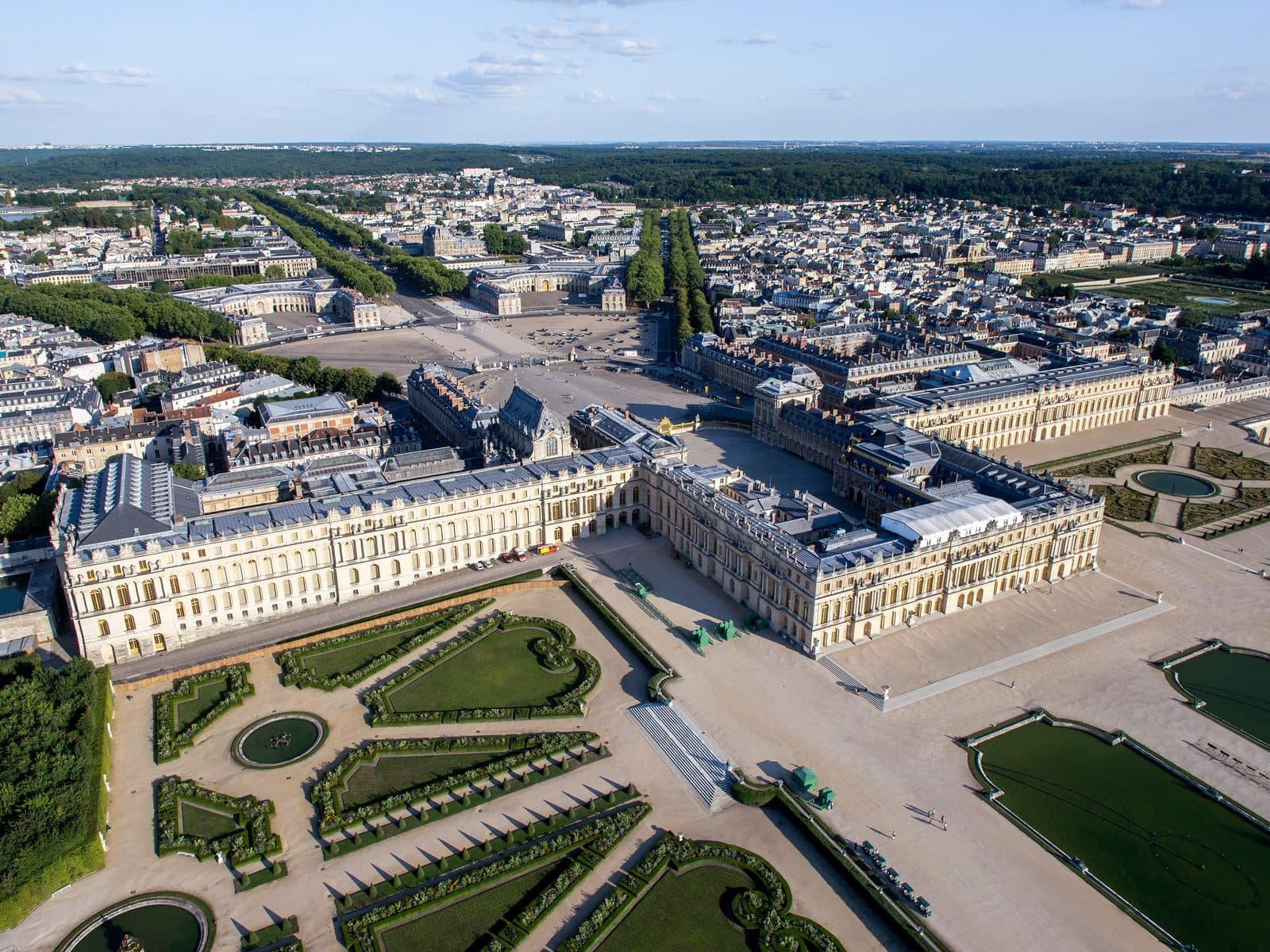
Within a short train ride of central Paris stand the four great royal residences of Île-de-France, seats of power that, between them, trace the whole arc of how French monarchs, and then a French emperor, chose to live and to rule. One is a medieval fortress raised to guard a treasury and a throne. One is a private château so perfect it landed its owner in prison and handed the king a blueprint. One is the palace that swallowed an entire court. One is the country seat that, by its own count, every French sovereign kept, the one Napoleon loved enough to call the house of the centuries.
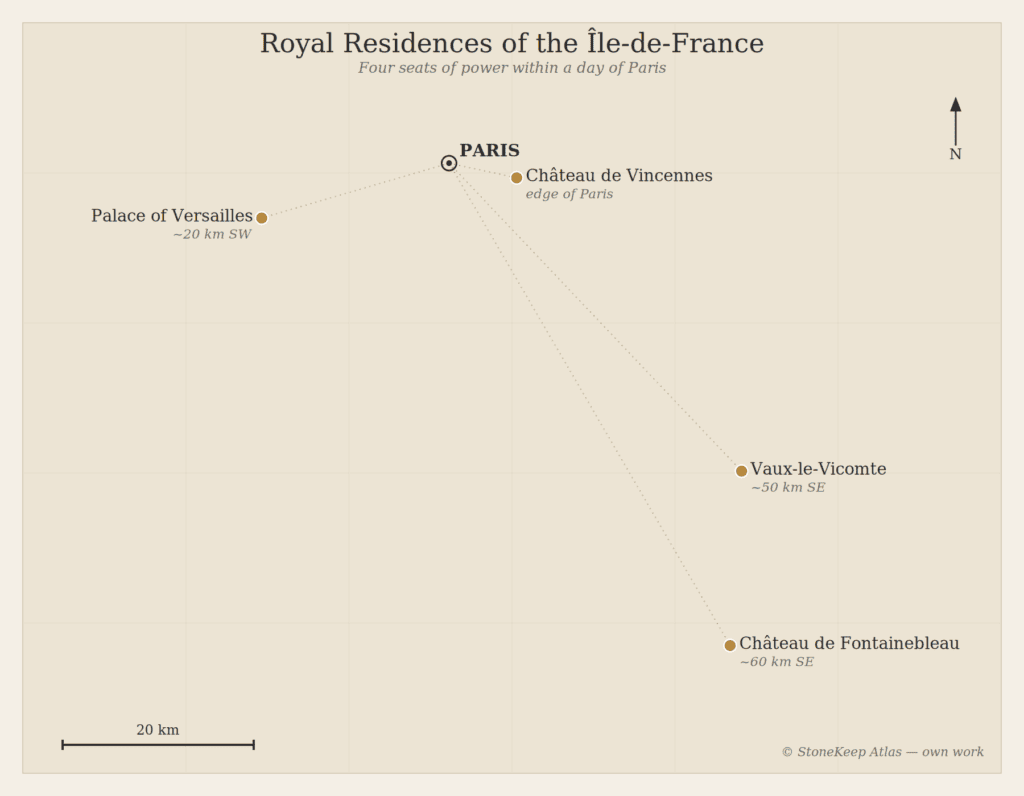
This guide gathers them, the four great seats of royal and imperial power in the historic province that rings the capital. We read them not by founding date but by their place in a single story: the fortress that came before the palaces, the château that provoked them, the palace that perfected the idea, and the residence that outlasted them all. Each has its own full StoneKeep Atlas guide. This page is the thread that connects the four, and a practical plan for seeing them from Paris.
The Royal Residences of Île-de-France at a Glance
| Residence | What it is | Origin | From Paris | UNESCO |
|---|---|---|---|---|
| Château de Vincennes | Medieval royal fortress | Donjon completed 1369 | Eastern edge of the city (Métro 1) | No |
| Vaux-le-Vicomte | Private classical château | 1658–1661 | ~50 km southeast (near Melun) | No |
| Palace of Versailles | Royal palace and seat of government | Lodge 1623; palace from 1661 | ~20 km southwest | Yes (1979) |
| Château de Fontainebleau | Royal and imperial residence | Royal site from 1137; rebuilt from 1528 | ~60 km southeast | Yes (1981) |
Château de Vincennes: the Capetian Fortress
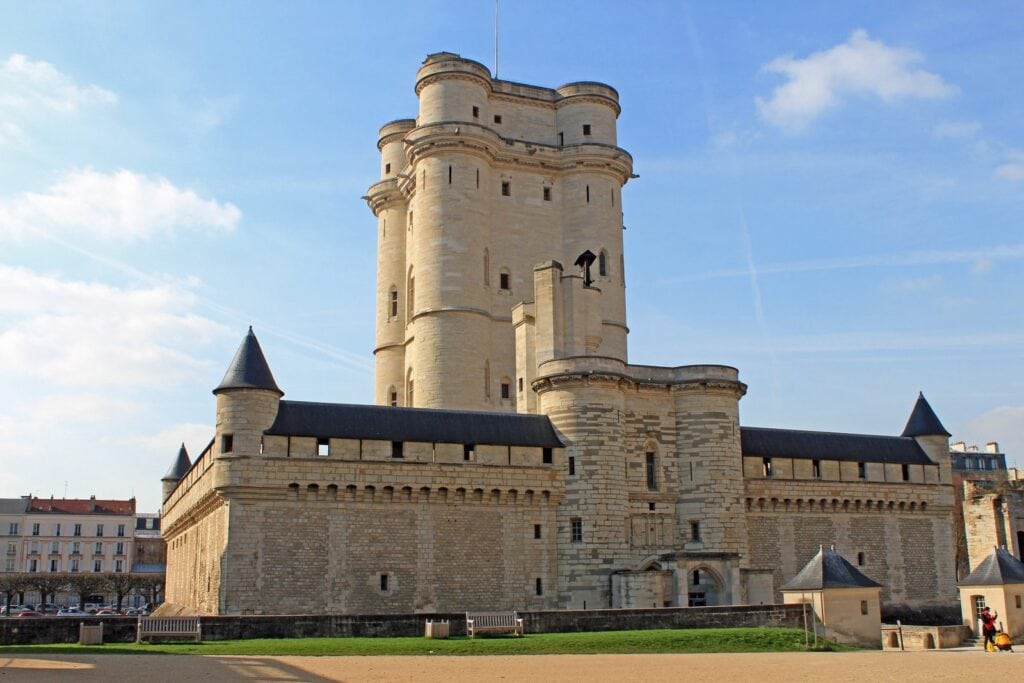
A square gray tower climbs about 50 meters (165 feet) into the sky at the eastern edge of Paris, at the end of the busiest Métro line in the city. It is the great donjon of the Château de Vincennes, what the Centre des monuments nationaux calls the tallest surviving medieval keep in Europe, completed in 1369 under Charles V. Begun while the Hundred Years’ War ground on, it was built to be the most secure address in the kingdom: a fortified seat of government, a treasury, and a royal residence wrapped inside one rectangular enceinte. In 1379 Charles V founded a Sainte-Chapelle within the walls, modeled on the famous shrine Louis IX had raised on the Île de la Cité.
Vincennes is the medieval ancestor of everything else in this guide, and its later history is a lesson in how the French state reused what it owned. As the court drifted west toward Versailles in the 1680s, the old fortress found grim second careers. The fortress served as a state prison for three centuries, holding the Great Condé, Diderot, Mirabeau, the Marquis de Sade, and the fallen finance minister Nicolas Fouquet, whose own château opens the next chapter of this story. Cardinal Mazarin gave the site a final flourish by hiring the architect Louis Le Vau, soon to design Vaux-le-Vicomte and a first Versailles, to raise two elegant classical pavilions flanking the entrance court, completed by 1661.
Treasure, prison, factory, arsenal, archive: the instrument kept changing hands, but the state never moved out. Of all four houses, Vincennes tells the long story of power most plainly. Read the full account in our guide to the Château de Vincennes.
Vaux-le-Vicomte: the Château That Sparked Versailles
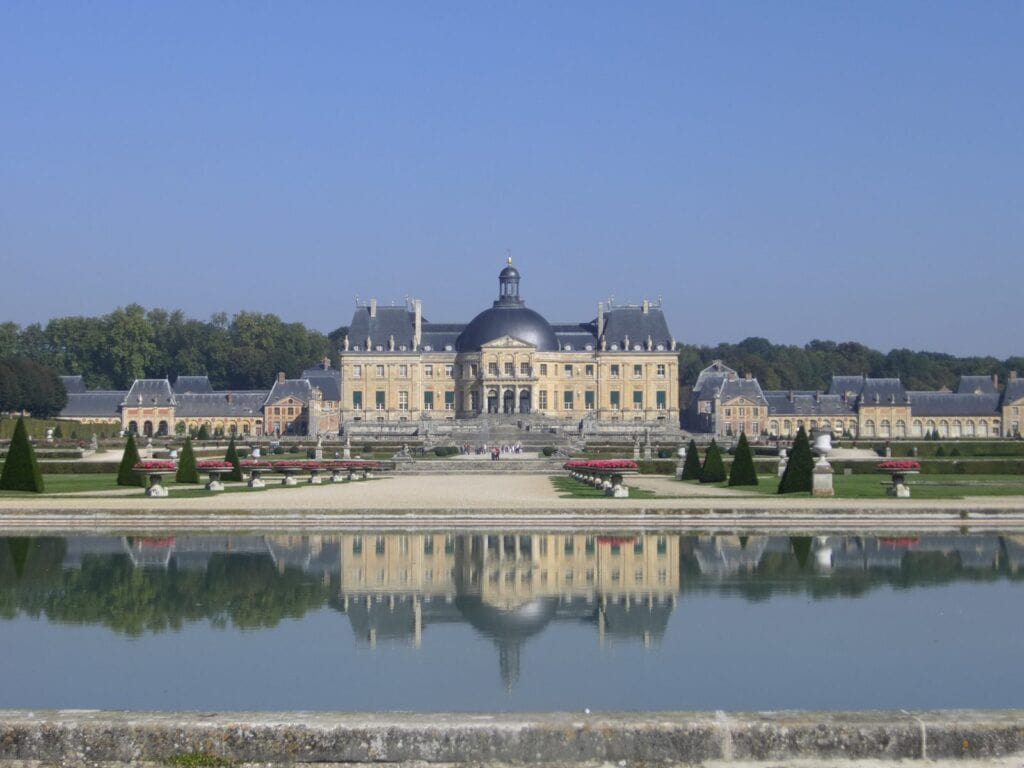
In the open country near Maincy, about 50 kilometers southeast of Paris, Nicolas Fouquet built the most beautiful house in France and lost everything because of it. As Louis XIV’s superintendent of finances, Fouquet had the money and the eye, and between 1658 and 1661 he assembled a team that would change French taste: Louis Le Vau as architect, Charles Le Brun for the interiors, and André Le Nôtre for the gardens. Together they produced the first complete statement of French classicism, a single design in which house, decoration, and landscape spoke one language.
On August 17, 1661, Fouquet threw a fête so dazzling it sealed his fate. The young king, already warned that his minister’s fortune came from looting the treasury, took the splendor as proof. Within weeks Fouquet was under arrest, seized at Nantes on September 5 and bound for a prison cell he would never leave. The deeper irony is that Louis XIV did not destroy what he had seen. He copied it. He carried off the three men who had built Vaux and set them to work on a far larger canvas at Versailles, where the lesson of the smaller house was repeated at a scale designed to leave no rival standing.
Vaux is therefore two things at once: the prototype that built Versailles, and the masterpiece that ruined its maker. Rescued from neglect and lovingly restored, it remains privately owned and stands today almost exactly as Fouquet meant it to be seen. Many visitors who see both come away preferring its sharper, smaller perfection. Our full guide covers the fête, the trial, and the gardens in detail: Château de Vaux-le-Vicomte.
Palace of Versailles: the Sun King’s Apogee
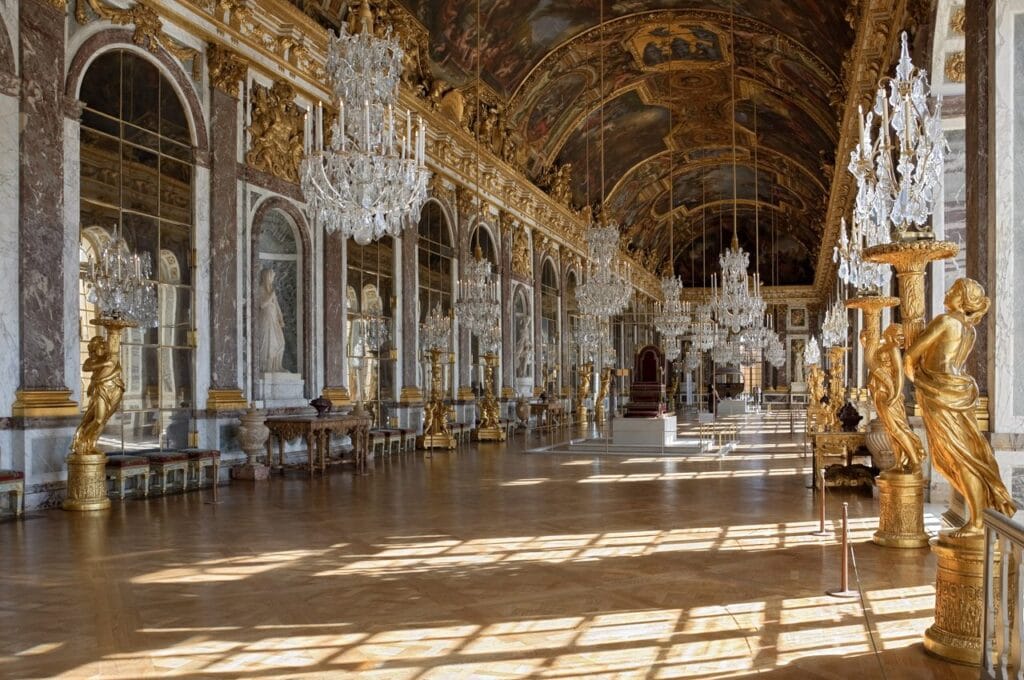
About 20 kilometers southwest of Paris, on what was once marshy hunting country, Louis XIV built the most extravagant royal residence in Europe and turned it into the working center of a kingdom. Versailles began modestly, as a hunting lodge raised for Louis XIII in 1623. From 1661 the Sun King wrapped that small château in stone and gold, using the very team he had admired at Vaux: Le Vau and, after Le Vau’s death, Jules Hardouin-Mansart on the architecture, Le Brun on the interiors, and Le Nôtre on the gardens. The result was less a house than a stage for absolute monarchy.
The decisive moment was political rather than architectural. On May 6, 1682, Louis XIV formally installed the court and the machinery of government at Versailles. Paris remained the official capital, yet the kingdom was now run from a palace 20 kilometers away, where thousands of nobles competed for the king’s glance and the entire apparatus of the state revolved around his daily routine. That distance was a tool of control, and for a century it worked. In October 1789, with bread scarce and prices high in the capital, the same distance became intolerable, and a march of Parisian women forced the royal family back to the city it had tried to escape.
Versailles is the apogee of the idea first tested at Vaux: power housed on a scale meant to overawe all of Europe. Inscribed by UNESCO in 1979, it now draws roughly 8.4 million visitors a year. Plan your visit with our complete guide to the Palace of Versailles.
Château de Fontainebleau: the House of the Centuries
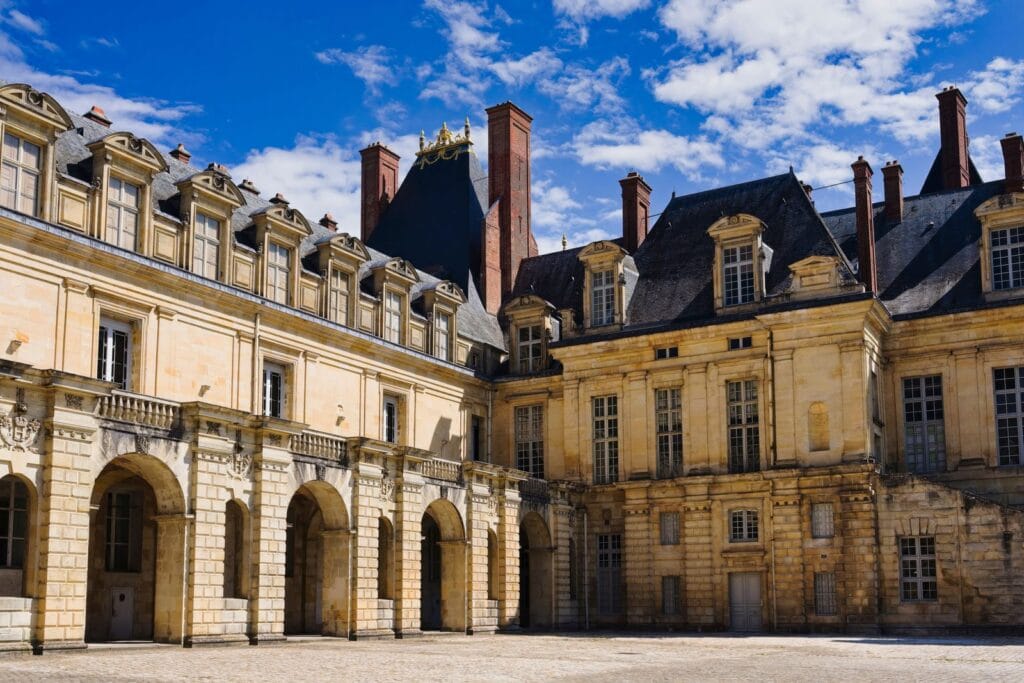
About 60 kilometers southeast of Paris, at the edge of a forest French kings hunted for eight centuries, stands the royal house that, by the château’s own count, every French sovereign from the twelfth century to the nineteenth lived in. Where Versailles was the singular vision of one reign, Fontainebleau is a building made of layers. Its earliest record dates to 1137; from 1528 François I rebuilt it as a French Renaissance palace, importing Italian artists who created a new courtly style. Henri IV, Louis XIII, and their successors each added rather than replaced, so that a medieval keep, a Renaissance gallery, and a Bourbon staircase share a single set of walls.
The house found its second great patron in Napoleon, who brought it back to life because an old palace lent his new empire the legitimacy of older dynasties. He had it refurnished from 1804 and installed a Throne Room in 1808, the only throne room of the Napoleonic era still standing in its original place. The same palace witnessed the empire’s collapse. On April 20, 1814, days after the Treaty of Fontainebleau sent him into exile on Elba, Napoleon descended the horseshoe staircase into the courtyard and bid farewell to his Old Guard, a scene that renamed the space the Cour des Adieux. Recalling the palace from Saint Helena, he called it the true home of kings, the house of the centuries.
A final residential chapter belonged to Napoleon III and the Empress Eugénie, who made Fontainebleau a favorite Second Empire retreat. Inscribed by UNESCO in 1981, it holds more centuries inside one set of walls than any other French palace. Our full account follows every layer: Château de Fontainebleau.
Beyond the Four
These four are the great seats of royal and imperial power near Paris, but the Île-de-France holds many more royal houses. Saint-Germain-en-Laye, the court’s home before Versailles and the birthplace of Louis XIV, sits a short ride west of the city. Rambouillet, long a presidential retreat, lies deeper in the southwest. Maisons-Laffitte shows François Mansart at his most refined, Écouen guards the national Renaissance museum north of Paris, and Sceaux preserves a great Le Nôtre park on the southern edge of the suburbs. Any one of them could anchor a future StoneKeep Atlas guide.
A short distance to the north, just across the provincial border in the Oise, three more great residences sit within the same day-trip radius from Paris: Chantilly, Pierrefonds, and Compiègne. They form their own group, gathered in the StoneKeep Atlas guide to the châteaux of the Oise.
Planning a Visit Near Paris
Each of the four rewards anywhere from a half day to a full one, and the practical question is usually how to group them. Vincennes is the easy one: a short ride on Métro Line 1 or the RER A puts you at the gate, and the donjon, the Sainte-Chapelle, and the ramparts fit comfortably into a morning. Versailles is the opposite, a full day in itself; the RER C runs there directly, and arriving early lets you reach the gardens and the Trianon estate before the largest crowds.
Vaux-le-Vicomte and Fontainebleau share the same southeastern axis, which makes them natural to pair. Fontainebleau is reached by the Transilien R line from the Gare de Lyon to Fontainebleau-Avon in about 40 minutes, then a short bus to the gate; Vaux is reached by train to Melun and a shuttle or taxi out to the estate, roughly six kilometers on. A traveler with a car can see both in a single southeastern day, since the two estates lie only a short drive apart.
A workable four-residence plan over three days runs like this: a half day at Vincennes paired with central Paris; a full day at Versailles; and a third day southeast for Fontainebleau and Vaux, best done by car. Tickets and guided day trips covering Versailles, Fontainebleau, and the wider Île-de-France are easy to book in advance, which spares you the longest lines at the busiest gates. You can compare Île-de-France day tours and skip-the-line château tickets on GetYourGuide, and find a Paris base near the stations on Booking.com.
Some links in this section are affiliate links: if you book through them, StoneKeep Atlas may earn a small commission at no extra cost to you.
If you would rather sleep near these palaces than commute back to the city each evening, our guide to Castle Hotels Near Paris ranks the châteaux around the capital where you can actually book a room.
One Province, Four Answers
Put the four together and they answer the same question four ways: how should power house itself within reach of Paris? Vincennes answers with a fortress, a square tower built to hold a treasury and a throne against any siege. Vaux answers with perfection on a private scale, the prototype so fine it cost its maker his freedom. Versailles answers with overwhelming size, an entire court and government pulled into orbit around one man. Fontainebleau answers with endurance, a house that simply kept being lived in, layer upon layer, until it could call itself the home of the centuries. Seen from the capital, they are not four monuments so much as one long argument about what a royal residence is for, told across six centuries and a single province.
Principal Sources
Centre des monuments nationaux, official sites for the Château de Vincennes (chateau-de-vincennes.fr) and other state monuments, consulted June 2026, for the Vincennes donjon and Sainte-Chapelle chronologies. Établissement public du château, du musée et du domaine national de Versailles (chateauversailles.fr) for the building campaigns, the installation of the court in 1682, and current visitor figures. Château de Fontainebleau, official site (chateaudefontainebleau.fr), and the Fondation Napoléon (napoleon.org) for the Napoleonic chronology and the farewell of April 20, 1814. Vaux-le-Vicomte, official site (vaux-le-vicomte.com), for Fouquet’s building campaign and the restoration. The four individual StoneKeep Atlas guides linked above carry the full citations for each house.
Image credits. Aerial view of the Palace of Versailles (hero): ToucanWings, CC BY-SA 3.0, via Wikimedia Commons; Île-de-France locator map: StoneKeep Atlas (own work); the donjon and enceinte of Vincennes: Adobe Stock, licensed; the garden front of Vaux-le-Vicomte: Theo ratler, CC BY-SA 3.0, via Wikimedia Commons; the Hall of Mirrors at Versailles: Myrabella, CC BY-SA 3.0, via Wikimedia Commons; the main facade of Fontainebleau: Eric Prouzet, via Pexels.