
Château d’If
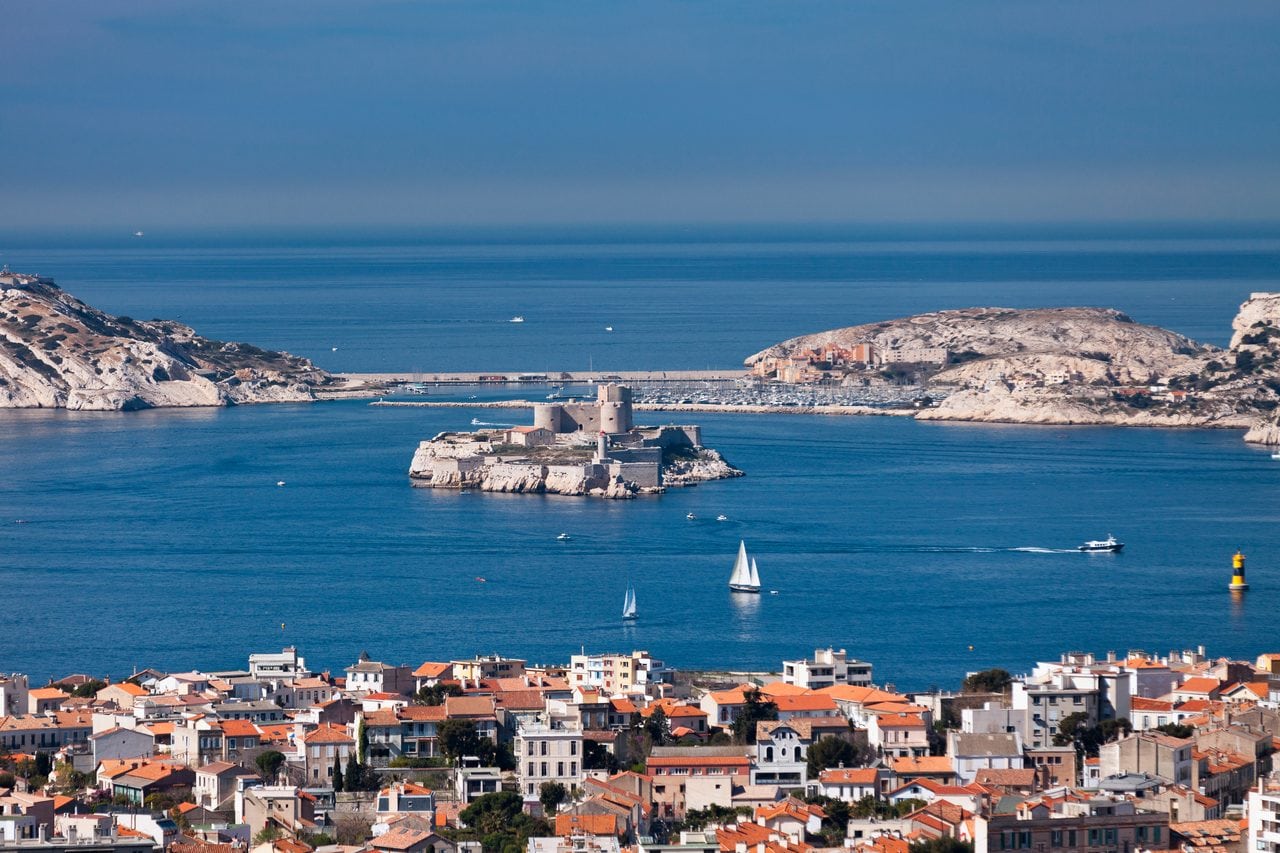
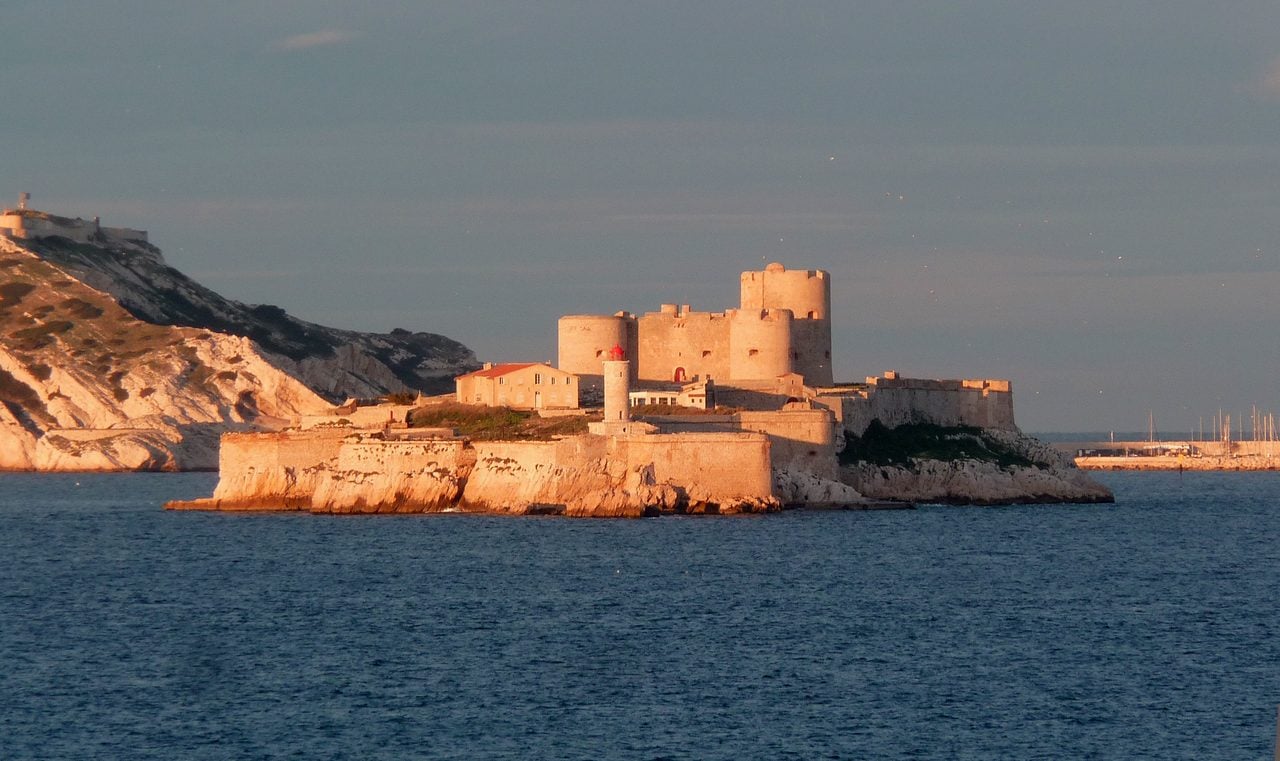
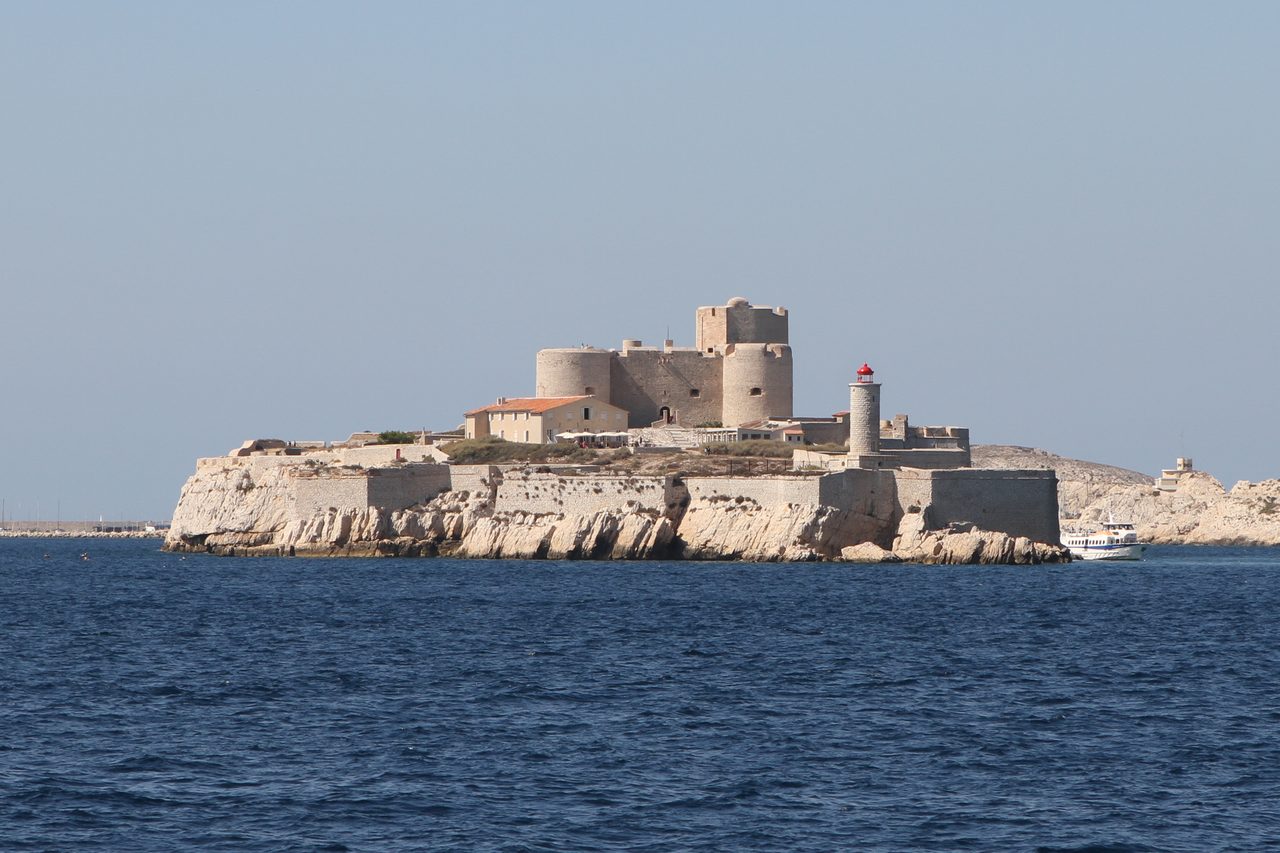
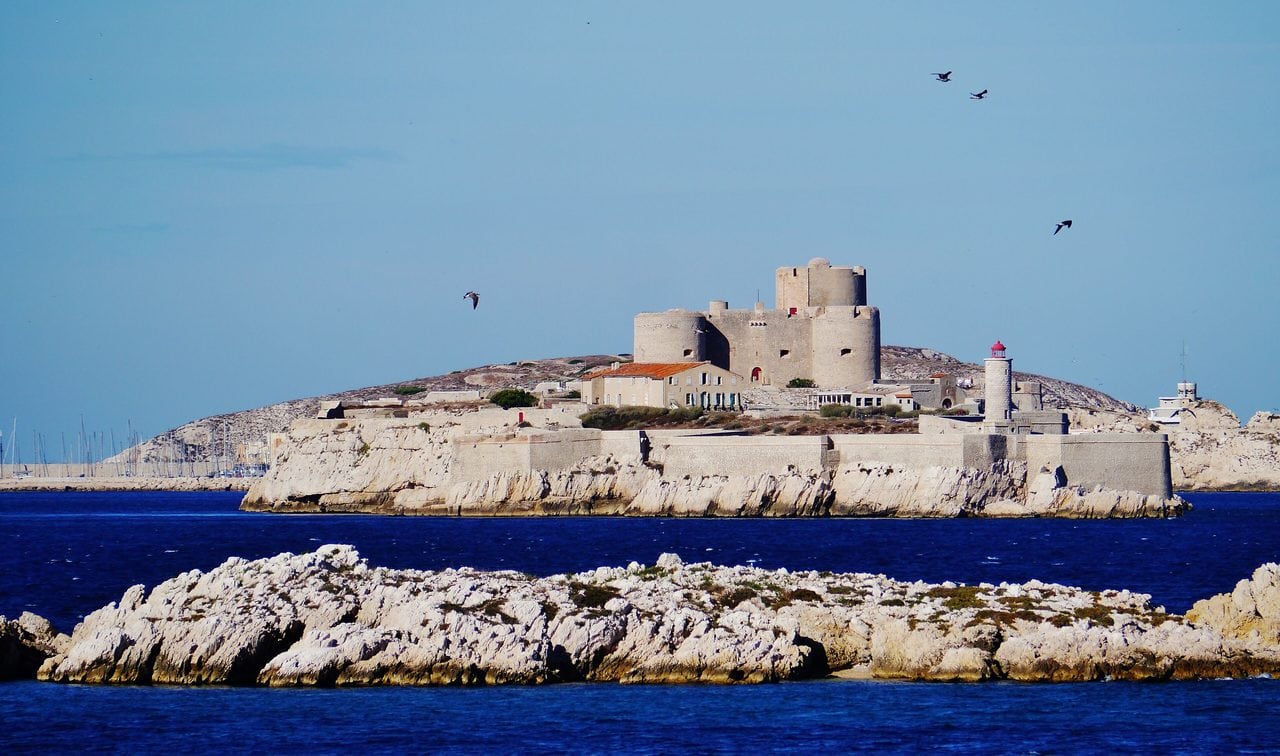
Château d’If rises from a bare limestone rock in the bay of Marseille, close enough that people on the waterfront can pick out its pale walls, far enough that the water around it once made escape a fantasy. King François I decided to fortify the island in 1516, and the fort was finished in 1531 to guard France’s greatest Mediterranean port; for four centuries its work was deterrence. What carried its name around the world was not artillery but fiction: Alexandre Dumas chose this fortress as the prison of Edmond Dantès in The Count of Monte Cristo, and visitors have been crossing the water ever since to stand in the cell of a man who never lived.
Quick Facts
| Location | Île d’If, Marseille, Bouches-du-Rhône, France |
| Region | Provence-Alpes-Côte d’Azur |
| Built | 1520s, completed July 1531 |
| Commissioned by | King François I |
| Type | Coastal fortress; later a state prison |
| Condition | Well preserved |
| Listed | Monument historique (1926) |
| Managed by | Centre des monuments nationaux |
| Coordinates | 43.2798° N, 5.3251° E |
| Open to visitors | Yes, by boat from the Vieux-Port |
| Official site | chateau-if.fr |
A fort the city did not want
Marseille had run its own affairs for centuries when, in 1481, the last of the Anjou line left Provence to the French crown. With the stroke of an inheritance the kings of France gained the busiest port on their Mediterranean coast, and the Marseillais gained a sovereign they had never asked for. The friction surfaced quickly.
 CC BY 4.0" srcset="https://stonekeepatlas.com/wp-content/uploads/2026/06/chateau-d-if-from-the-sea.jpg 1280w, https://stonekeepatlas.com/wp-content/uploads/2026/06/chateau-d-if-from-the-sea-300x225.jpg 300w, https://stonekeepatlas.com/wp-content/uploads/2026/06/chateau-d-if-from-the-sea-1024x768.jpg 1024w, https://stonekeepatlas.com/wp-content/uploads/2026/06/chateau-d-if-from-the-sea-768x576.jpg 768w" sizes="auto, (max-width: 1280px) 100vw, 1280px" />
A rhinoceros, of all things, drew the king’s eye to the island. King Manuel of Portugal was shipping the animal to Pope Leo X as a gift, and when the vessel put in at Marseille the beast was set down on the little island of If to wait. Crowds rowed out to gawp at it, and François I was among them: fresh from his victory at Marignano the autumn before, the king crossed to the rock on January 24, 1516 to see the creature, and left having noticed something else: this flat island, about a mile offshore, sat squarely across the sea approach to the harbor. The decision to fortify the island was taken there and then; what accelerated the work was a fright. In 1524 an imperial army under the renegade Constable de Bourbon laid siege to Marseille, and although the city held, the scare laid bare how little stood between the harbor and the open sea. François I now wanted the fort to do three things at once, to fend off a naval attack, to shelter the royal fleet, and to watch over a city the crown did not yet trust.
That last purpose was not lost on the townspeople, and they were in no hurry to help. A royal stronghold staring back at their own quays looked less like protection than like a sentinel, so they dragged the work out and gave the place a sour nickname, la Malvoisine, the bad neighbor. Building crept through the 1520s and finished in July 1531. Records disagree on exactly when the first stone was laid, offering everything from 1524 to 1529, but the completion date is firm, and so was the message the finished fort sent back across the water.
The fortress that never fired a shot
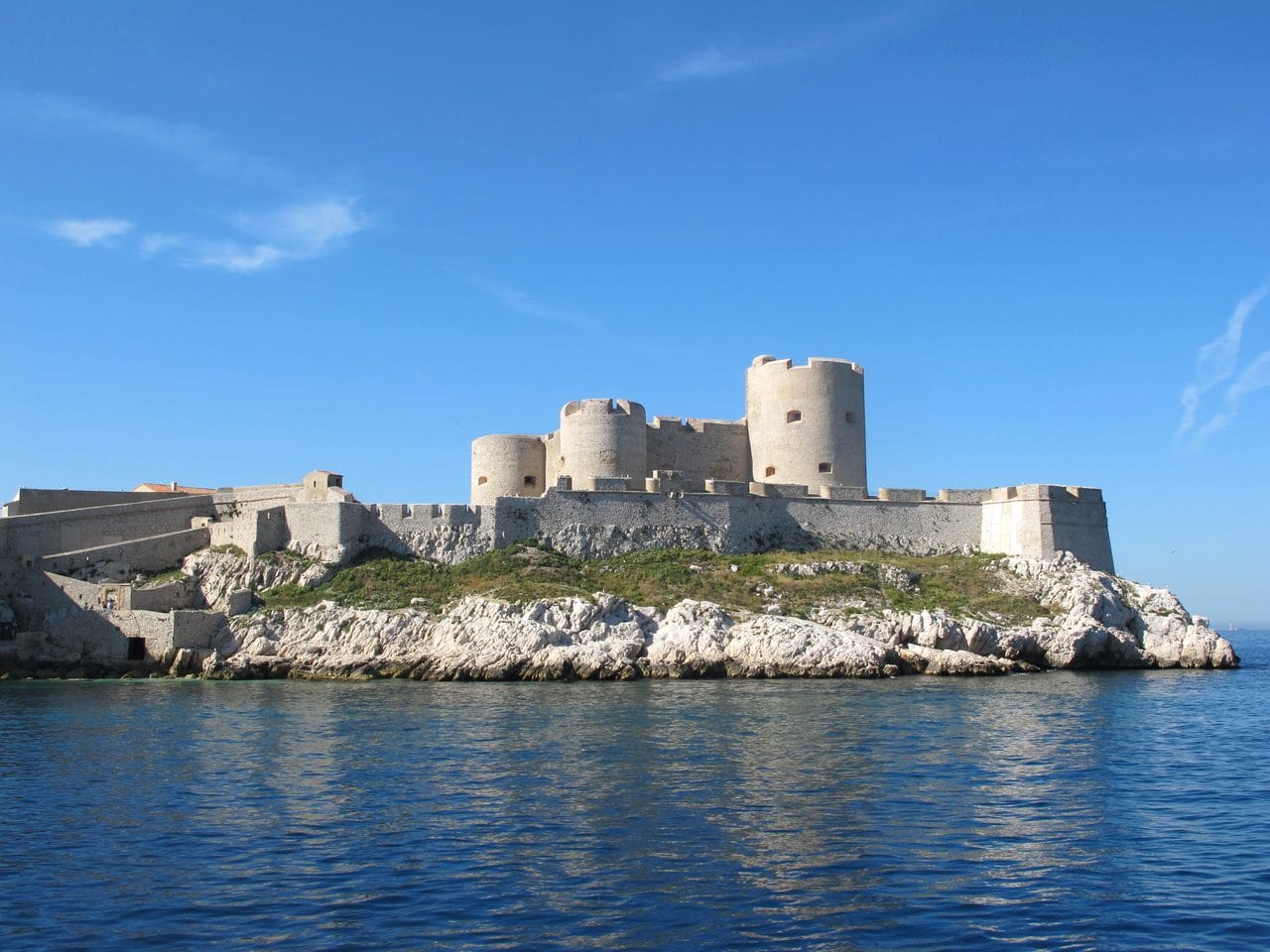
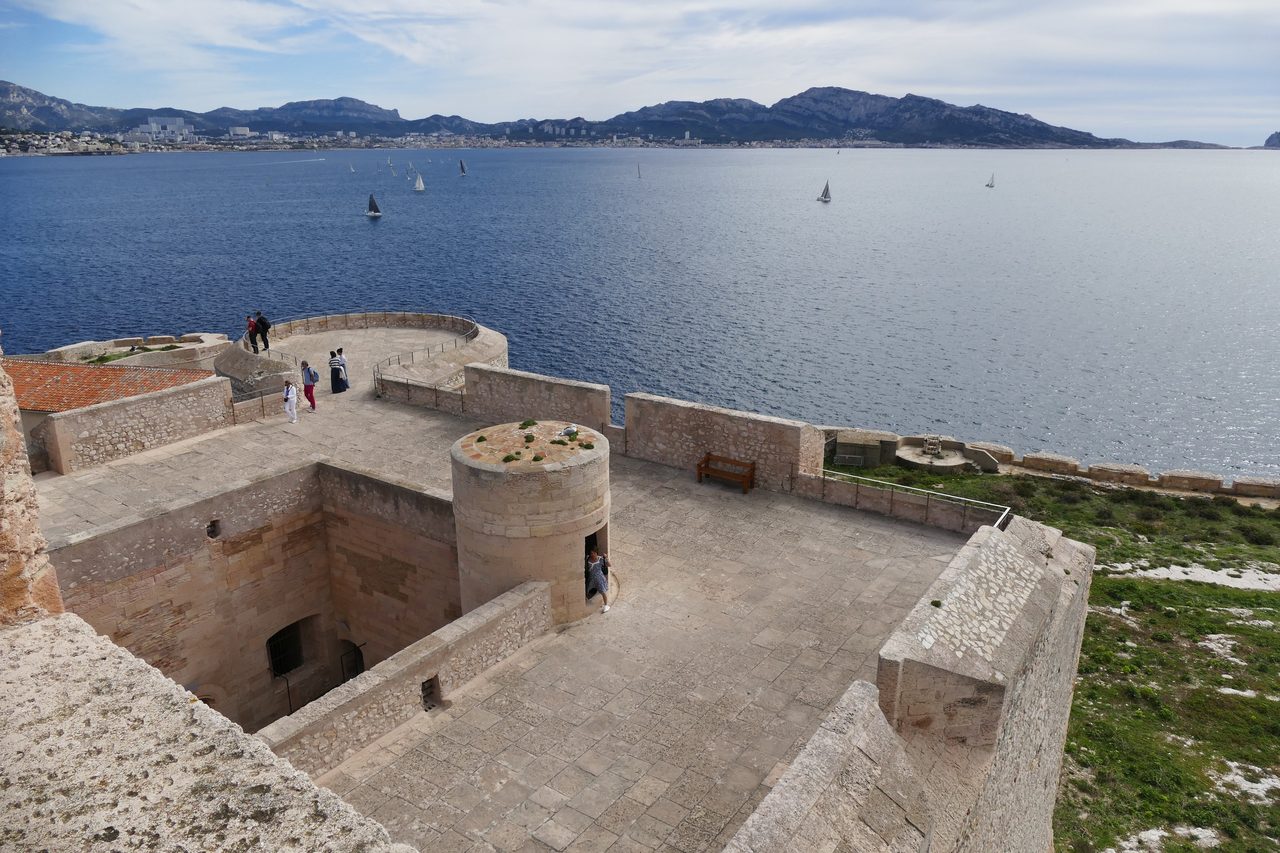
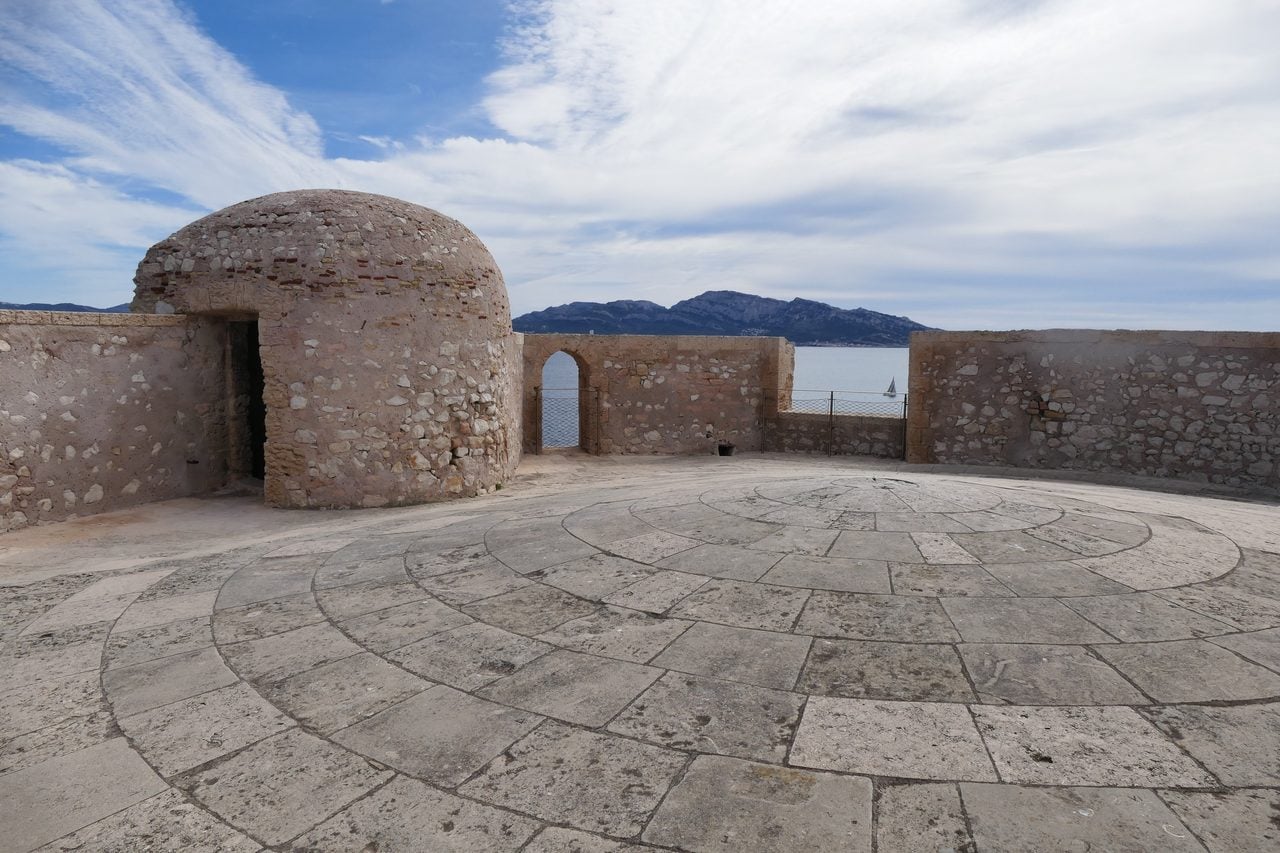
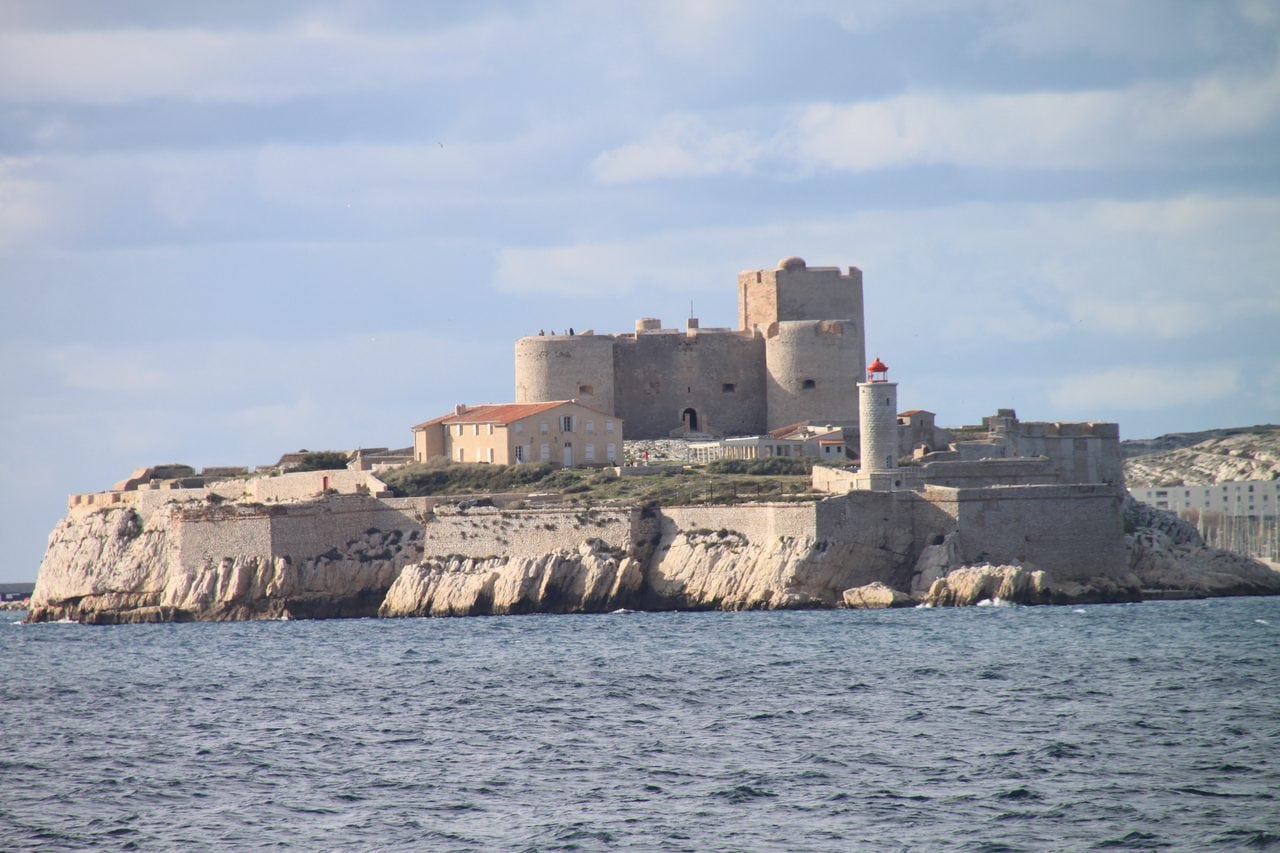
What rose on the rock was a square, three-story keep roughly twenty-eight meters on each side, flanked by three towers and pierced with embrasures for cannon. Around it the whole island was given over to defense, its cliffs crowned with high ramparts and gun platforms that fall away straight to the water. Its form was deliberately old-fashioned, a medieval silhouette of keep, moat, and drawbridge, designed to mount heavy artillery and to take in reinforcements by sea. Contemporaries admired it as the finest window the Kingdom of France had opened onto the northern Mediterranean, and from the city it certainly looked formidable. Whether it actually was formidable is another question, and one the fort was never quite forced to answer.
 CC BY-SA 4.0" srcset="https://stonekeepatlas.com/wp-content/uploads/2026/06/chateau-d-if-ramparts-bay-view.jpg 1280w, https://stonekeepatlas.com/wp-content/uploads/2026/06/chateau-d-if-ramparts-bay-view-300x200.jpg 300w, https://stonekeepatlas.com/wp-content/uploads/2026/06/chateau-d-if-ramparts-bay-view-1024x682.jpg 1024w, https://stonekeepatlas.com/wp-content/uploads/2026/06/chateau-d-if-ramparts-bay-view-768x512.jpg 768w" sizes="auto, (max-width: 1280px) 100vw, 1280px" />
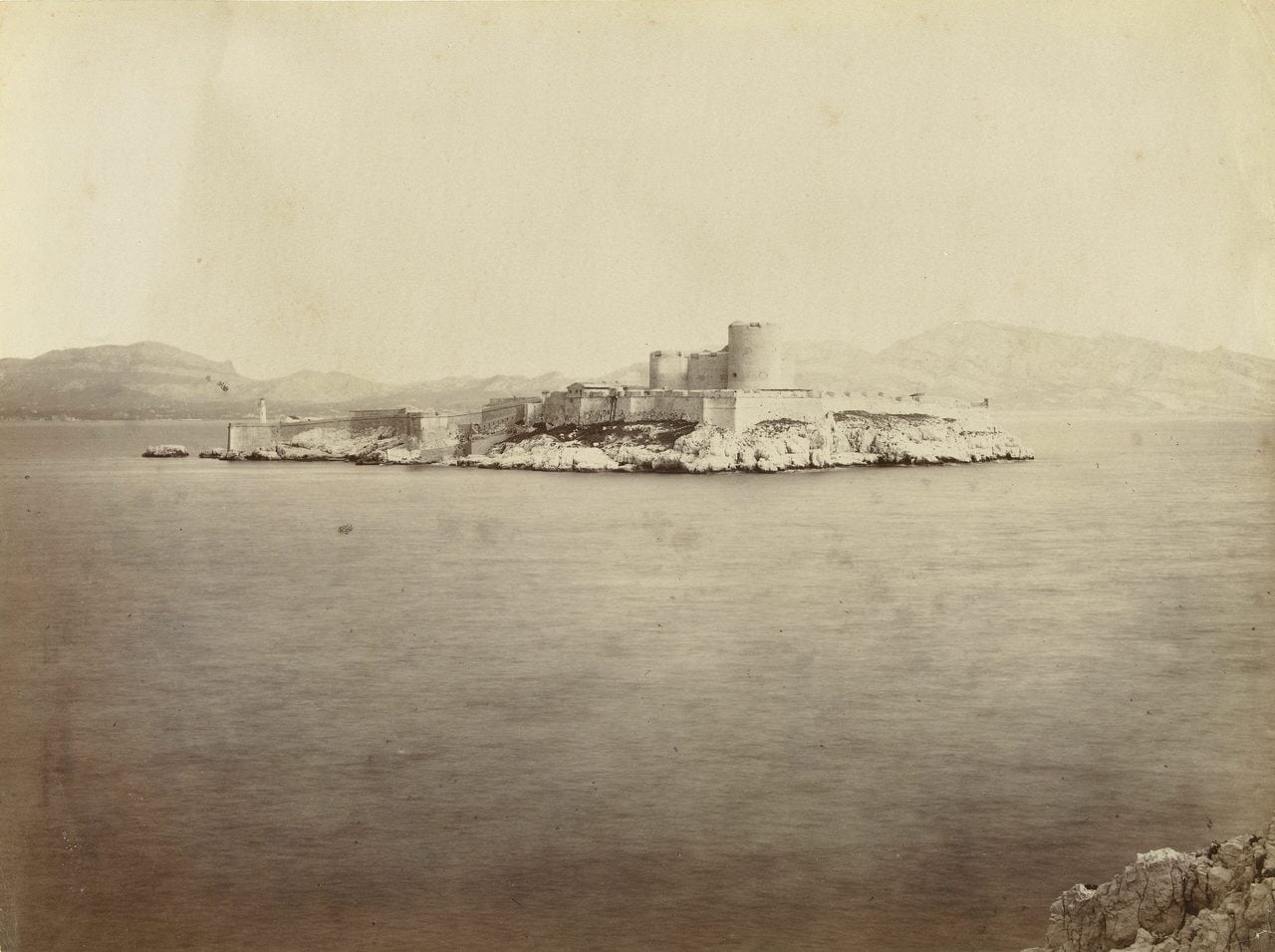
A single brush with a real enemy came in 1536, when Charles V, Holy Roman Emperor and king of Spain, swept into Provence and threatened Marseille. If did the one thing it had been built to do, which was to sit there and deter. No assault on the island ever came; the imperial campaign stalled and drew off, and the fortress went back to watching an empty horizon. Later experts were unkind about how much of that was the building’s doing. When the great military engineer Vauban inspected the place in 1701, he found the walls hastily raised and carelessly finished, the work of masons who had cut corners on a rock that hid the evidence. France’s guardian of Marseille spent its whole military career as a bluff, and for two centuries the bluff held.
Marseille’s Alcatraz
A fortress with no war to fight is a fortress with empty rooms, and the crown soon found a use for them. Two Marseille fishermen, locked up in November 1540, were the first of the prisoners, and over the next three and a half centuries the island filled with the people France wished to put beyond reach. Its currents and cold water did the work that high walls do elsewhere. No prisoner is known to have escaped the island and lived to tell of it.
 CC BY-SA 4.0" style="width:413px" srcset="https://stonekeepatlas.com/wp-content/uploads/2026/06/chateau-d-if-courtyard-well.jpg 853w, https://stonekeepatlas.com/wp-content/uploads/2026/06/chateau-d-if-courtyard-well-200x300.jpg 200w, https://stonekeepatlas.com/wp-content/uploads/2026/06/chateau-d-if-courtyard-well-682x1024.jpg 682w, https://stonekeepatlas.com/wp-content/uploads/2026/06/chateau-d-if-courtyard-well-768x1152.jpg 768w" sizes="auto, (max-width: 853px) 100vw, 853px" />
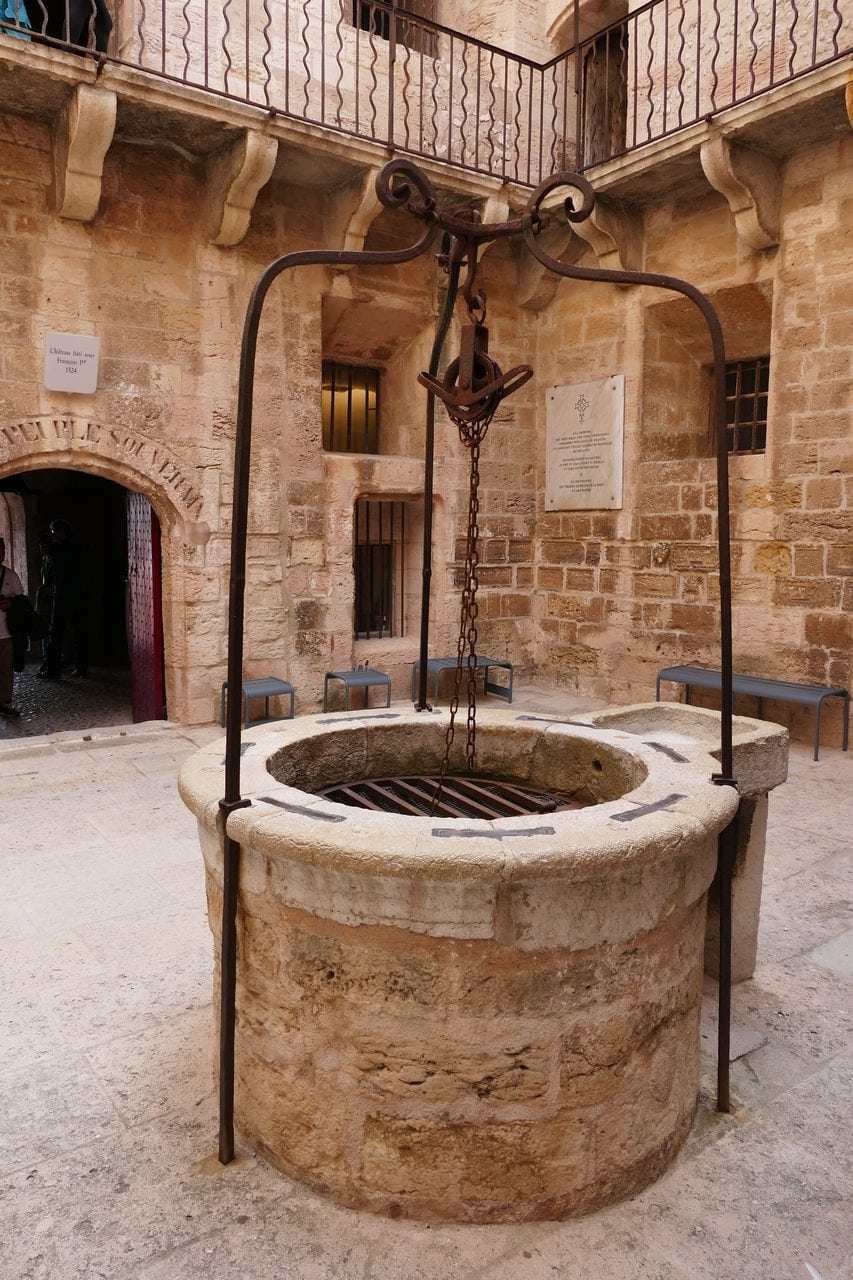
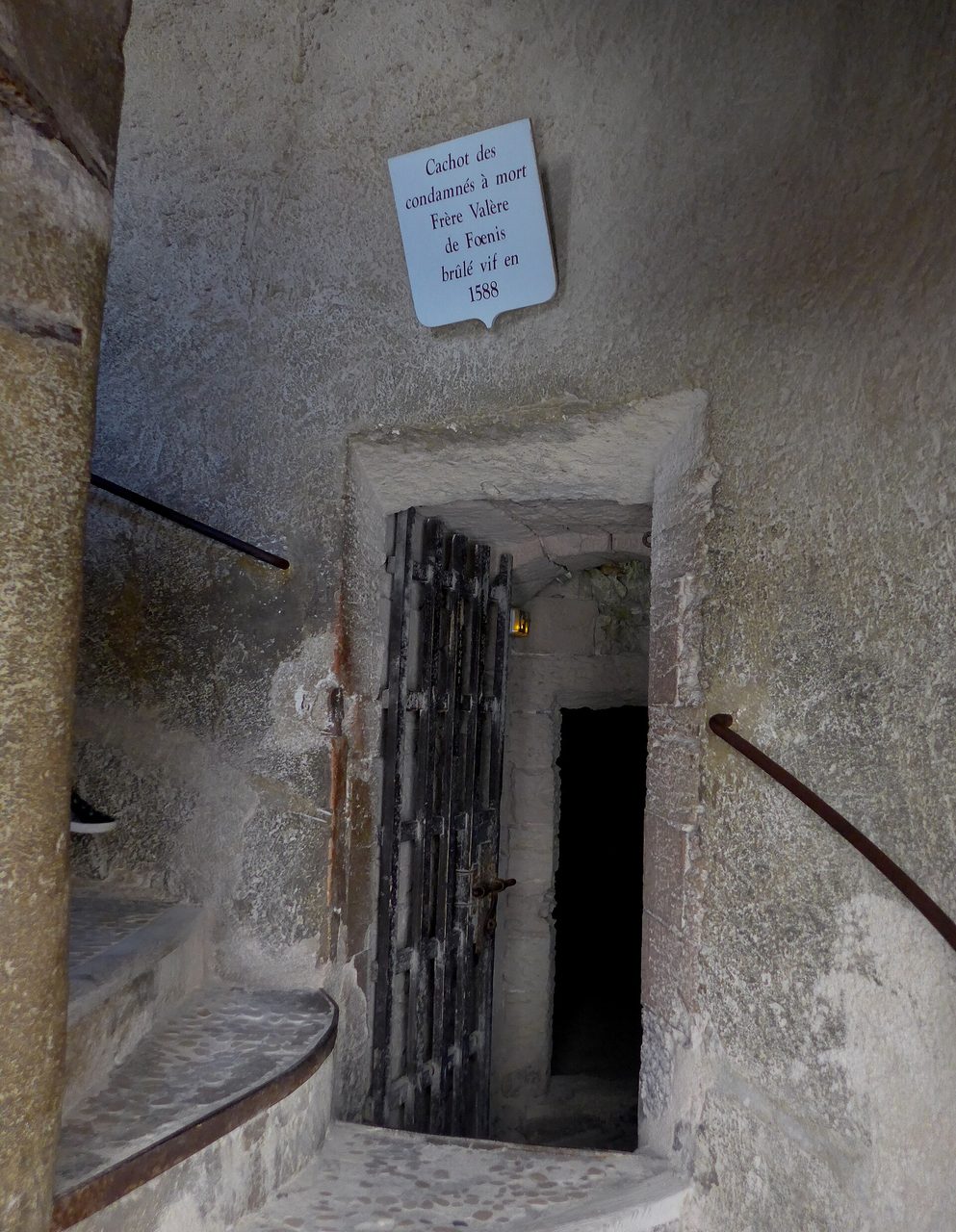
Conditions inside depended entirely on rank and money. Down in the windowless dungeons cut low into the rock, the poorest inmates were packed together in damp and darkness where a man’s life expectancy was reckoned in weeks. When they died, as so many did, their bodies were wrapped and given to the sea below the walls. Up on the first floor, in former officers’ lodgings known as the pistoles, anyone with means could rent a cell with a window, a fireplace, and a view of the open sea, and buy himself a tolerable confinement. One building held both extremes at once, and a prisoner’s fate turned less on his crime than on his purse.
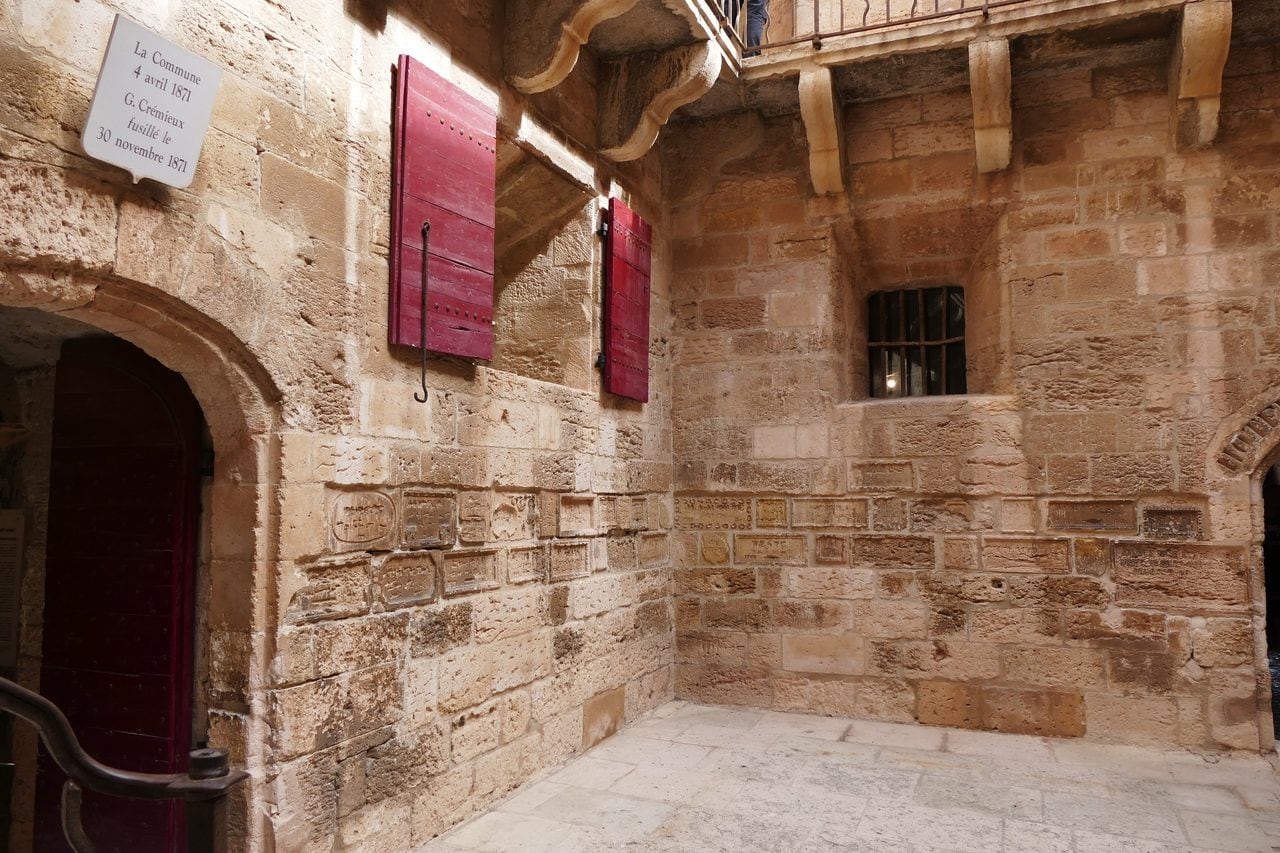
The roll of inmates reads like a walk through French history. One of the earliest of note was the Chevalier Anselme, jailed in 1580 for plotting against the monarchy, an opening entry in a register that would only grow more crowded. Around 3,500 Huguenot galley-slaves passed through after Louis XIV revoked the Edict of Nantes in 1685, held in transit before being chained to the oars at Marseille. The Comte de Mirabeau, the future thunderer of the Revolution, was shut up here in 1774 at his own father’s request, charged with nothing graver than a scandalous private life; even on the island he managed to seduce the canteen woman, the only female resident of the fort. The radical Auguste Blanqui served time within the walls. So did Jean-Baptiste Chataud, the ship’s captain blamed for carrying the plague that killed tens of thousands in Marseille in 1720. After the Marseille Commune of 1871 was crushed, its leader Gaston Crémieux was held here before his execution. Stranger than any living captive was a dead one: the embalmed body of General Kléber, assassinated in Cairo in 1800, lay on the island for some eighteen years on Napoleon’s order, the First Consul fearing that a grave on French soil would turn the republican general into a martyr.
 CC BY-SA 4.0" srcset="https://stonekeepatlas.com/wp-content/uploads/2026/06/chateau-d-if-cremieux-cell.jpg 1280w, https://stonekeepatlas.com/wp-content/uploads/2026/06/chateau-d-if-cremieux-cell-300x200.jpg 300w, https://stonekeepatlas.com/wp-content/uploads/2026/06/chateau-d-if-cremieux-cell-1024x682.jpg 1024w, https://stonekeepatlas.com/wp-content/uploads/2026/06/chateau-d-if-cremieux-cell-768x512.jpg 768w" sizes="auto, (max-width: 1280px) 100vw, 1280px" />
The myths it has to disown
Fame of this kind attracts legends, and the Château d’If has spent a long time politely correcting them. A sign on the wall still notes that one cell is “said to be” the prison of the Man in the Iron Mask. It was nothing of the sort. That famous masked captive was held at Pignerol, then on the island of Sainte-Marguerite, and finally in the Bastille, and he never set foot on If. The Marquis de Sade suffers the same false association, fixed in the island’s popular biography despite the plain fact that, for all his real spells behind bars, this was never one of them. None of it is necessary, since the true record is dramatic enough on its own, but the embellishments keep arriving anyway. Perhaps that is simply what happens to a lonely fortress on a rock that everyone can see and few can reach.
 CC0" srcset="https://stonekeepatlas.com/wp-content/uploads/2026/06/chateau-d-if-19th-century-photograph.jpg 1280w, https://stonekeepatlas.com/wp-content/uploads/2026/06/chateau-d-if-19th-century-photograph-300x224.jpg 300w, https://stonekeepatlas.com/wp-content/uploads/2026/06/chateau-d-if-19th-century-photograph-1024x765.jpg 1024w, https://stonekeepatlas.com/wp-content/uploads/2026/06/chateau-d-if-19th-century-photograph-768x574.jpg 768w" sizes="auto, (max-width: 1280px) 100vw, 1280px" />
Literature’s most famous prison
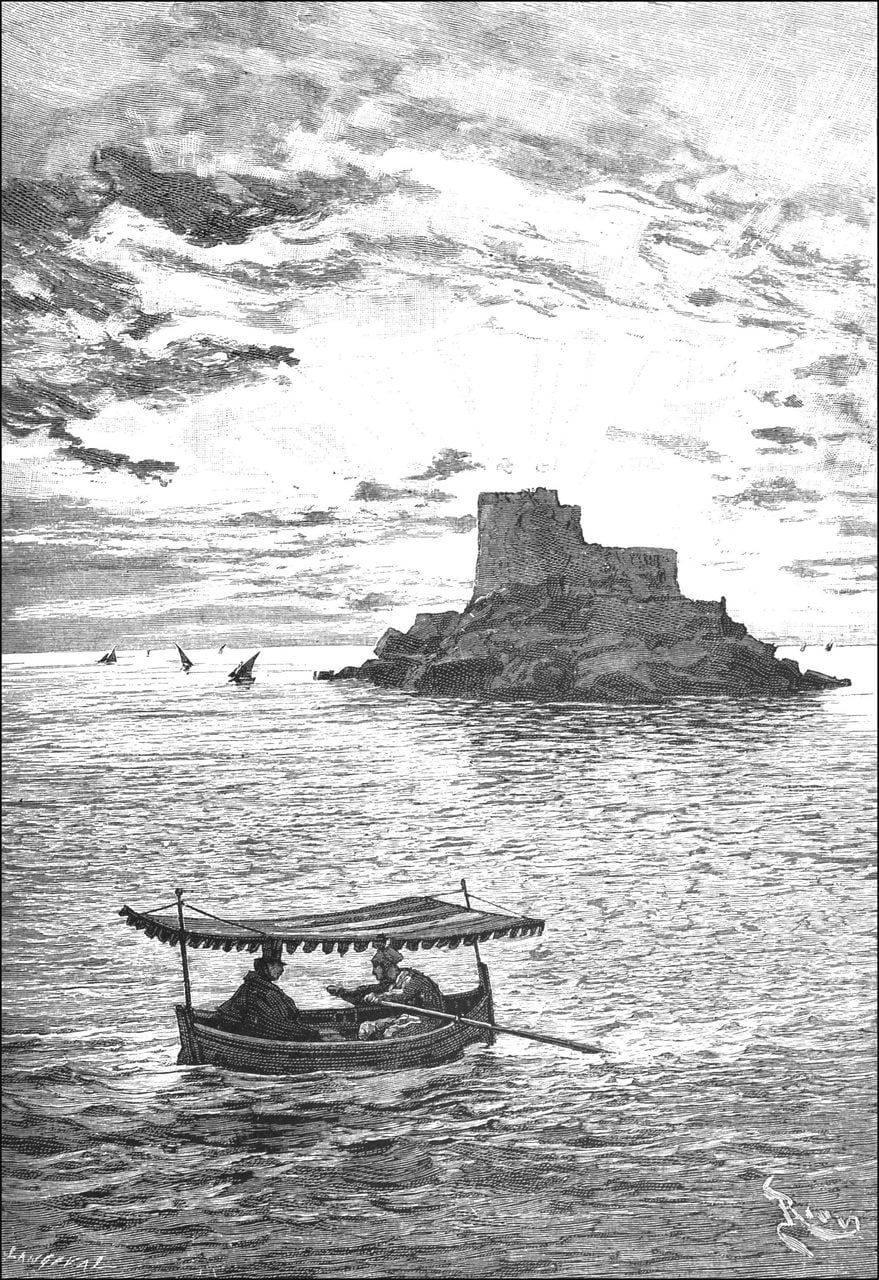
The one prisoner everyone now comes to see was never alive at all. When Alexandre Dumas serialized The Count of Monte Cristo between 1844 and 1846, he sent his wronged hero Edmond Dantès to rot in the Château d’If, gave him the learned Abbé Faria for a neighbor in the next cell, and engineered the most celebrated escape in fiction, with Dantès sewn into the dead abbé’s burial sack and flung from the ramparts into the sea. Faria himself had a faint root in reality, loosely inspired by a Portuguese priest of the same name, but Dantès was pure invention, and the novel made his prison a household word on every continent that read French.
 CC0" style="width:465px" srcset="https://stonekeepatlas.com/wp-content/uploads/2026/06/chateau-d-if-edmond-dantes-cell.jpg 960w, https://stonekeepatlas.com/wp-content/uploads/2026/06/chateau-d-if-edmond-dantes-cell-225x300.jpg 225w, https://stonekeepatlas.com/wp-content/uploads/2026/06/chateau-d-if-edmond-dantes-cell-768x1024.jpg 768w" sizes="auto, (max-width: 960px) 100vw, 960px" />
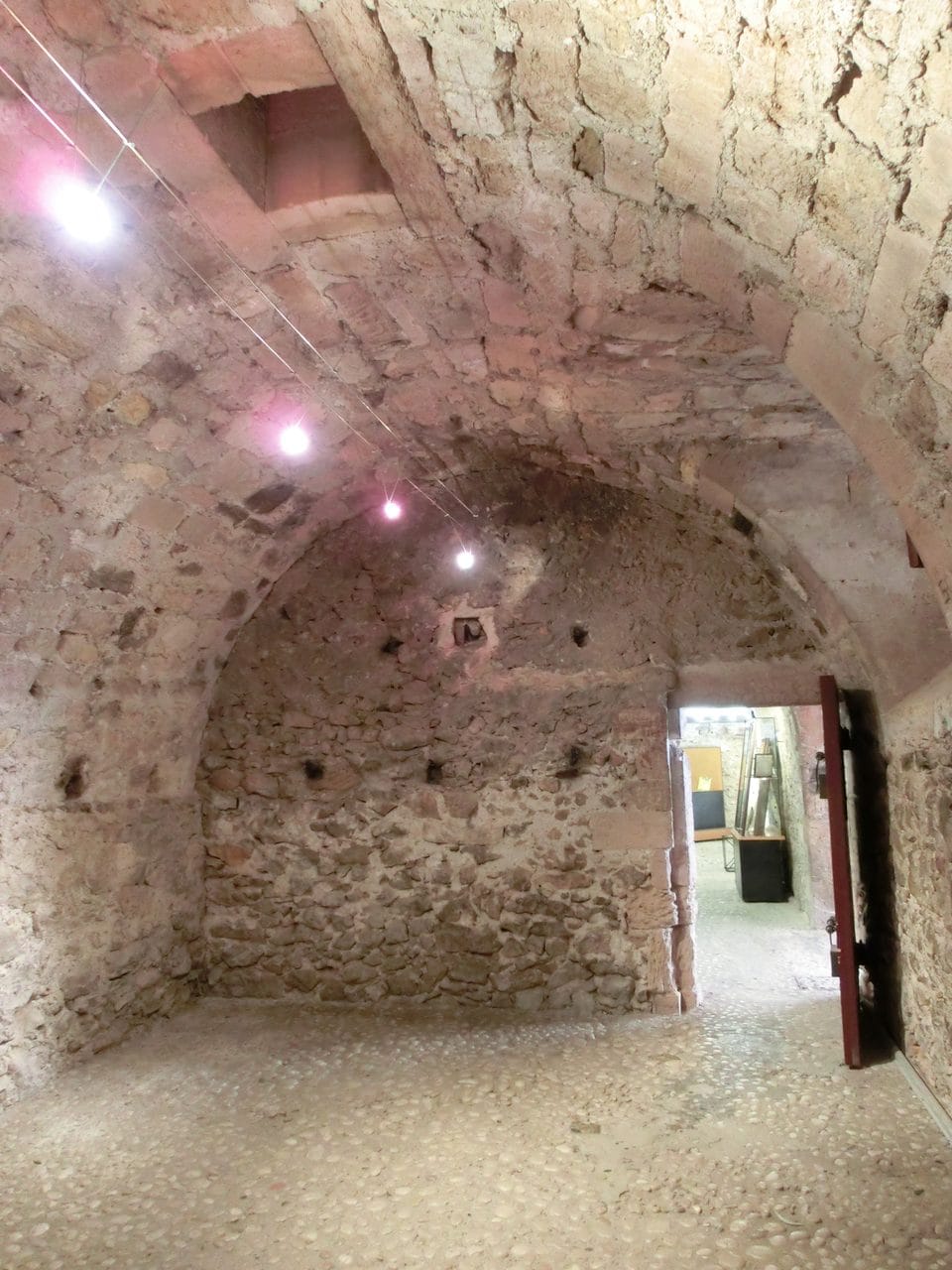
What the fortress does with that fame is the genuine curiosity of the place. It now stages a Dantès dungeon and a Faria cell, complete and labeled, for two characters who never existed, inside a building that once held thousands who did. The rooms are a tourist’s fiction layered on the novelist’s, for nothing ties an invented prisoner to any real cell; the fort simply chose two and gave them famous names. A real prison curates fictional inmates, and visitors line up for them, peering into a cramped cell to find the spot where a character was buried alive on the page and pressing hands to the stone Dantès never touched. This pilgrimage began almost as soon as the novel did. Unofficial sightseers were rowing out within a few years of publication; Mark Twain among them, who in 1867 was led through cells not yet open to the public and shown the supposed lair of the Iron Mask, an episode he set down in The Innocents Abroad. The prison eventually closed, and by 1890 a regular boat service was carrying tourists out to the rock.
Officialdom caught up with the crowds in time. Classified a historic monument on July 7, 1926, the island passed in 1994 from the Ministry of Defense to the Ministry of Culture, which placed it under the Centre des monuments nationaux, its manager today. Since 2012 the whole island has also lain within the Calanques National Park, and recent campaigns have restored the ramparts and the old gun-ports. Through all of it the literary draw has only grown.
Numbers still rise and fall with the story’s fortunes on screen. When a lavish French adaptation of The Count of Monte Cristo starring Pierre Niney drew more than nine million admissions after its release in the summer of 2024, the château felt it at once, with visits up by more than forty percent over the autumn holidays and a yearly total of 116,775, a high mark against its usual figure of roughly a hundred thousand. Staff found visitors wandering the corridors talking about the film and asking to see where it was shot. The cell and the escape across the terrace were filmed on the island itself, in October 2023, though much of the picture’s Marseille was built elsewhere, with a stand-in harbor in Malta. They had come on the trail of Dumas rather than the camera, and they left having toured a real fort wrapped in a story.
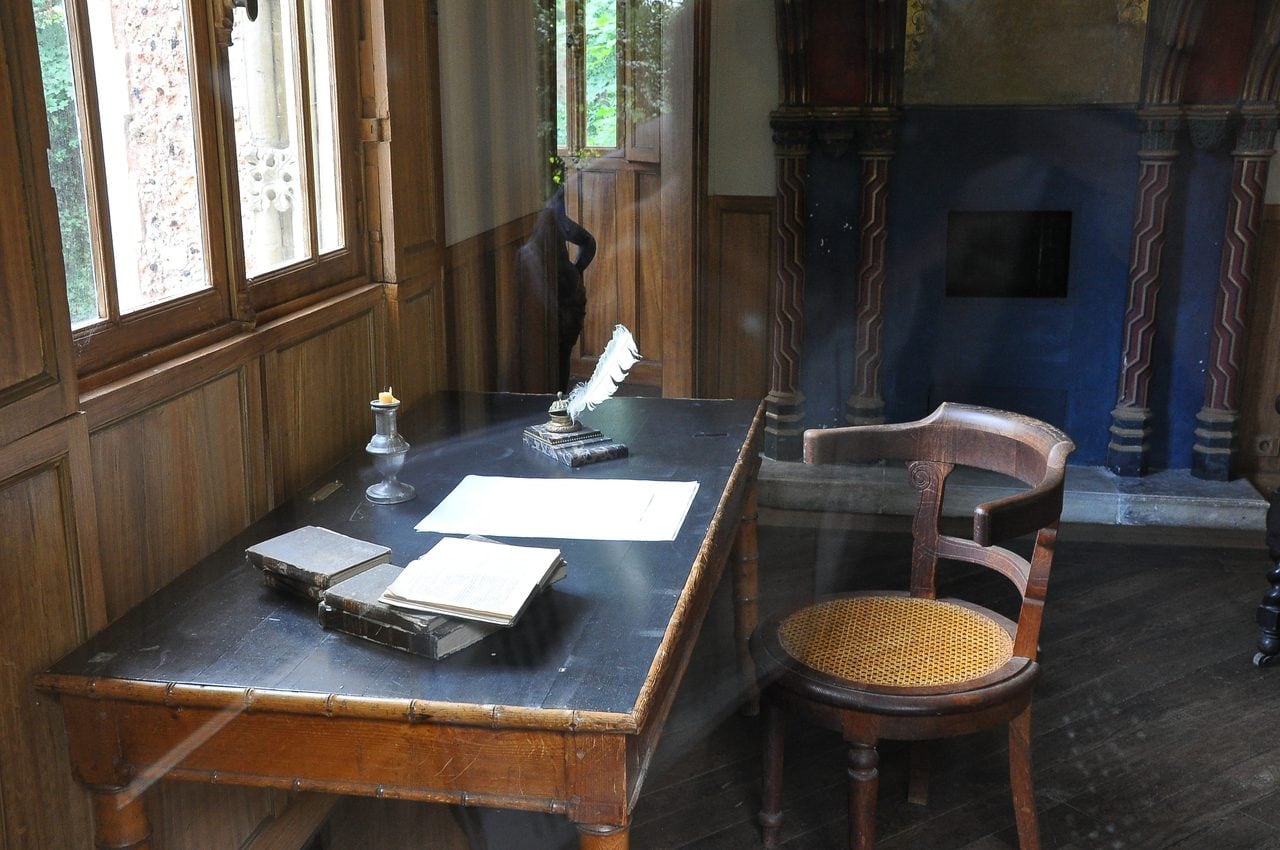 CC BY-SA 3.0" srcset="https://stonekeepatlas.com/wp-content/uploads/2026/06/dumas-port-marly-chateau-d-if-study.jpg 1280w, https://stonekeepatlas.com/wp-content/uploads/2026/06/dumas-port-marly-chateau-d-if-study-300x199.jpg 300w, https://stonekeepatlas.com/wp-content/uploads/2026/06/dumas-port-marly-chateau-d-if-study-1024x680.jpg 1024w, https://stonekeepatlas.com/wp-content/uploads/2026/06/dumas-port-marly-chateau-d-if-study-768x510.jpg 768w" sizes="auto, (max-width: 1280px) 100vw, 1280px" />
Visiting Château d’If
Boats are the only way out to the island, leaving from the Vieux-Port at the foot of the Canebière. Two companies make the short crossing of about twenty minutes: Frioul If Express runs year round, while Calanques If operates from February to November and can sell the château ticket together with the passage. Weather has the final say. In a hard Mistral or rough swell the boats do not sail and the monument stays shut, so it pays to check the conditions before setting out.
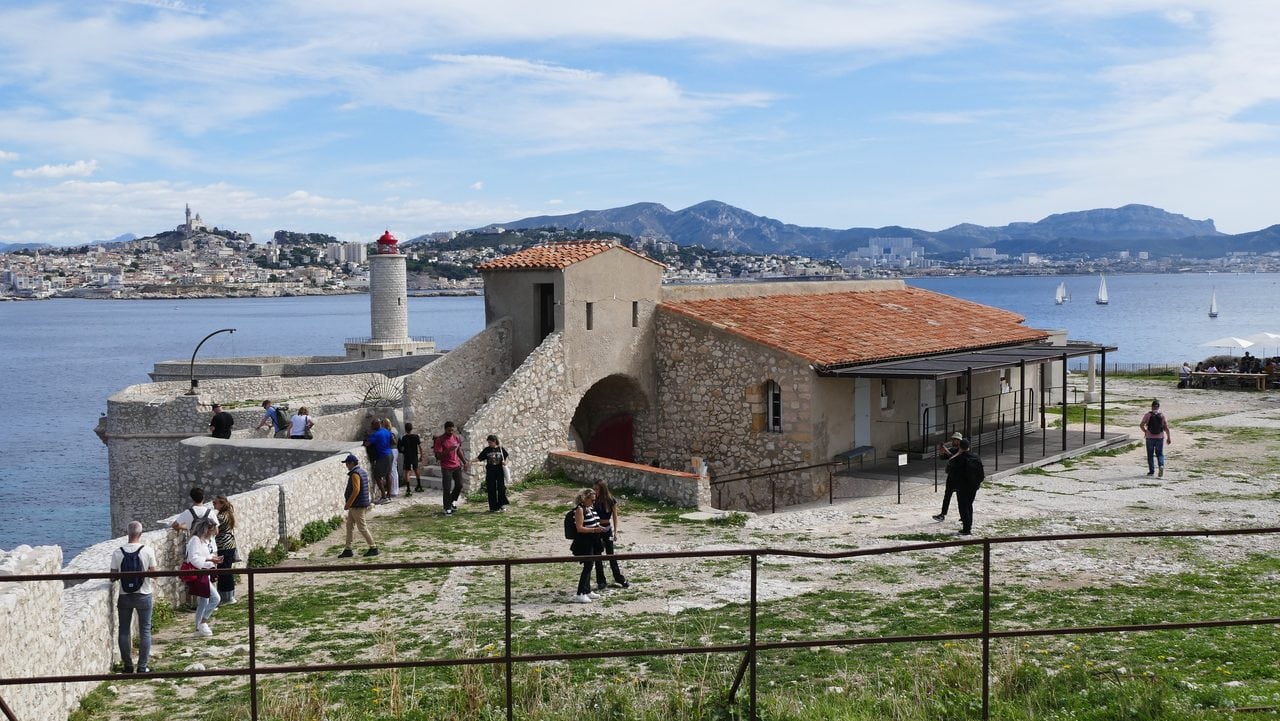 CC BY-SA 4.0" srcset="https://stonekeepatlas.com/wp-content/uploads/2026/06/chateau-d-if-visiting-today.jpg 1280w, https://stonekeepatlas.com/wp-content/uploads/2026/06/chateau-d-if-visiting-today-300x169.jpg 300w, https://stonekeepatlas.com/wp-content/uploads/2026/06/chateau-d-if-visiting-today-1024x577.jpg 1024w, https://stonekeepatlas.com/wp-content/uploads/2026/06/chateau-d-if-visiting-today-768x433.jpg 768w" sizes="auto, (max-width: 1280px) 100vw, 1280px" />
Admission to the monument is 7 euros, with free entry for visitors under eighteen, for European Union nationals and residents aged eighteen to twenty-five, and for everyone on the first Sunday of each month from November through March. Note that the crossing is paid separately to the boat operator. Opening runs daily from 10 a.m. to 6 p.m. between April and September, and from 10 a.m. to 5:15 p.m. for the rest of the year, when the fort closes on Mondays; last admission falls an hour before closing, and the site shuts on January 1, May 1, and December 25. Plan on an hour to ninety minutes ashore. Footing is uneven and the steps are many, with little shade and no shop for supplies, so sensible shoes and a bottle of water go a long way in summer. Two permanent exhibitions, one on Dumas and his novel and one on the graffiti left in the stone by prisoners and visitors alike, round out a visit.
If is the closest to the city of the four islands that make up the Frioul archipelago, a cluster of sun-bleached limestone rocks set in clear water just off the coast. To make a full day of it, the same boats that serve the château also call at the larger islands of Pomègues and Ratonneau, with their quiet coves and walking paths, and many travelers pair the two.
Booking a guided Marseille boat tour or a Monte Cristo themed excursion ahead of time is the simplest way to fold the island into a wider trip and to be sure of a place on a crowded summer sailing, and it is worth lining up a place to stay near the Vieux-Port within easy reach of the harbor.
Some links on this page are affiliate links, which means StoneKeep Atlas may earn a small commission, at no extra cost to you, if you book through them.
More Views of Château d’If
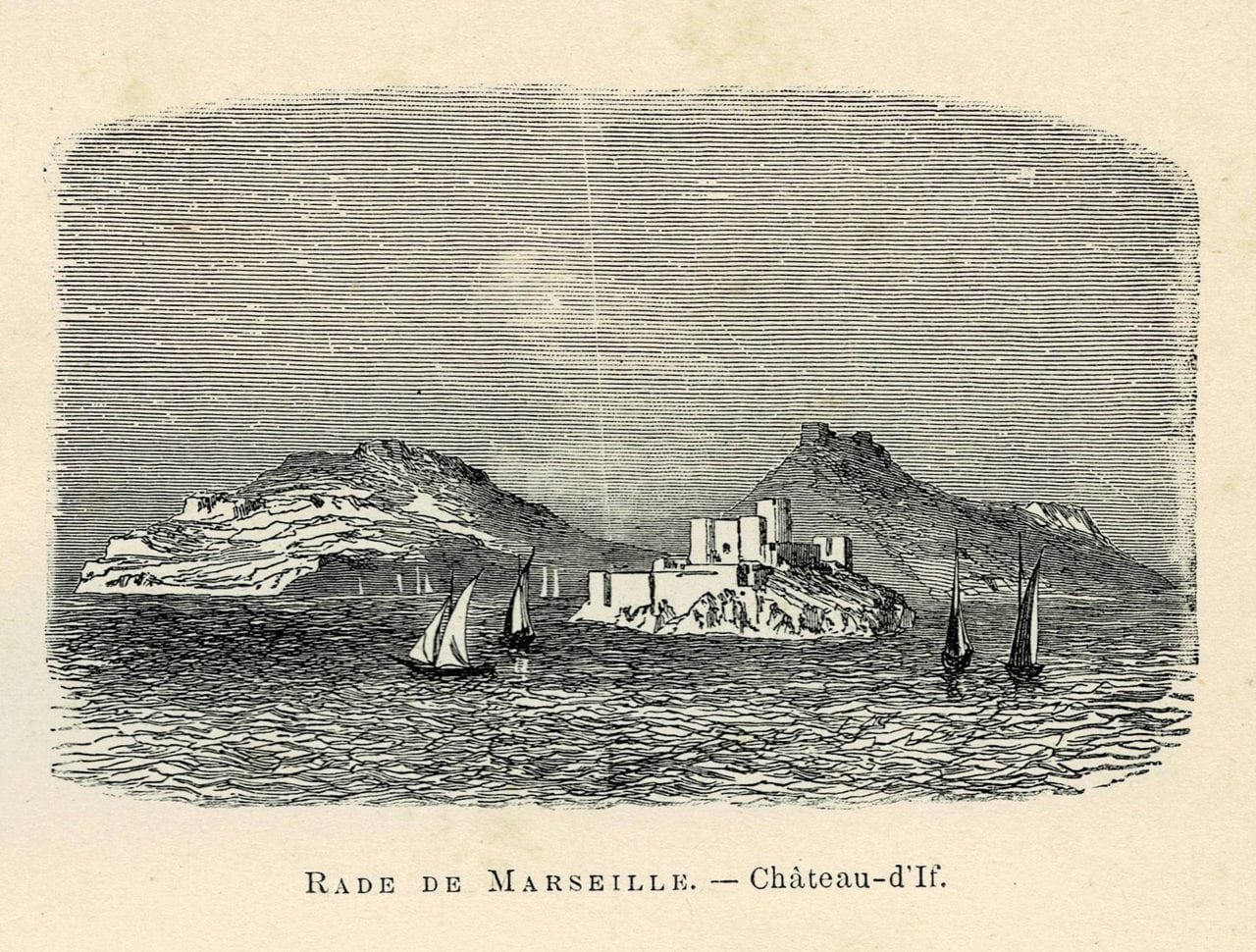
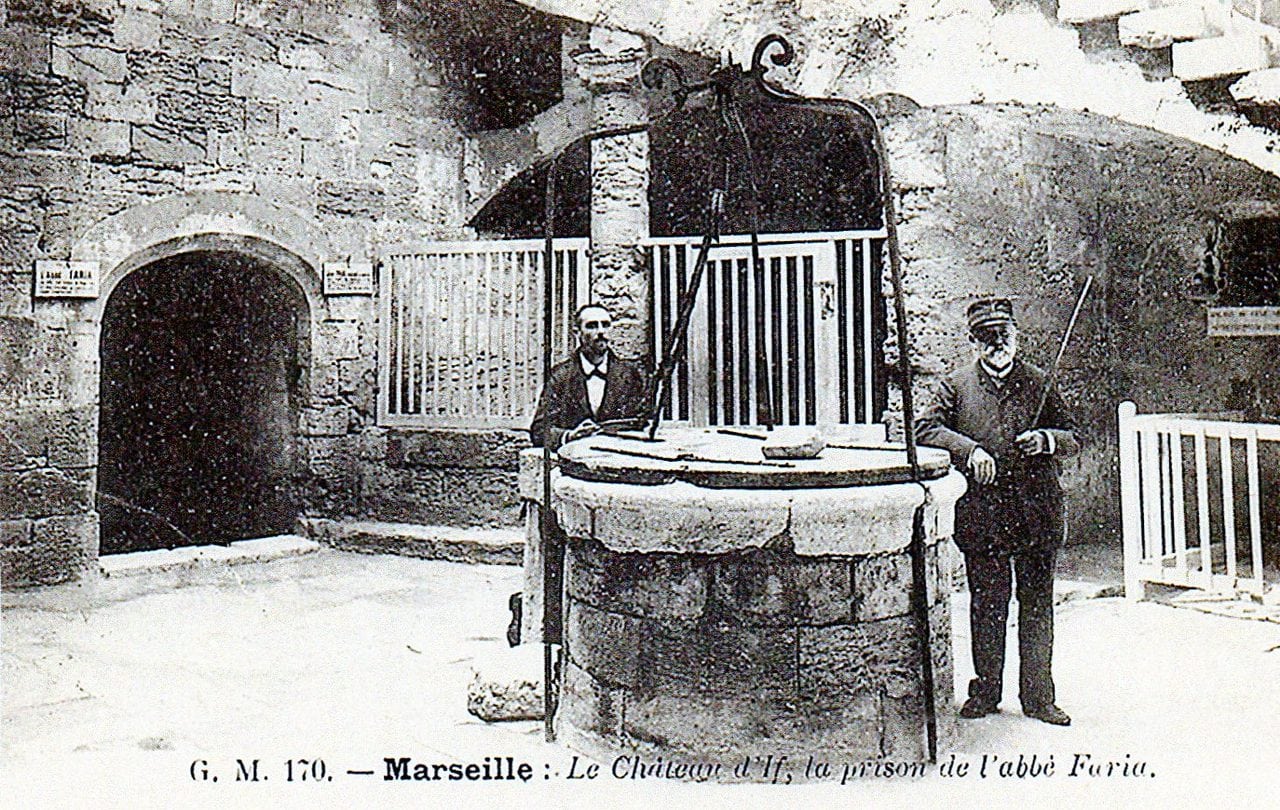
Beyond Château d’If
If is not the only French castle whose later life as a prison eclipsed the role it was built for. The royal keep of Château de Vincennes outside Paris became a state prison that held the Marquis de Sade, whom legend wrongly places on If, and the young Mirabeau, who really was confined on the island in 1774 before his Paris years. For a castle that, like If, owes its fame chiefly to a book, Frankenstein Castle in Germany lent little more than its name to a story that outgrew the place entirely. Inland from Marseille, up the Rhône at Avignon, the Palais des Papes is the other great Provençal monument in this collection, a papal fortress that shares If’s double life as both stronghold and stage. Closer at hand on the Rhône, the riverside Château de Tarascon tells a similar story, a near-intact Angevin fortress that spent four centuries as a prison and lent its town to Daudet’s Tartarin.
We have made a short film about the island fortress, which is indexed with our castle films.
Conclusion
Château d’If owes its fame to events that never took place on it. François I imposed the fortress on a reluctant Marseille, yet it never fired a shot in anger, and Edmond Dantès, the prisoner whose name fills the morning boats, never existed at all. Its real history is quieter and grimmer: Huguenots shipped to the galleys, the young Mirabeau, Gaston Crémieux awaiting execution, and the embalmed body of a general Napoleon would not let become a shrine. Today the rock carries both stories at once, the drab garrison duty and the bright fiction, and most visitors still cross the water for the legend the stone itself never lived. On the mainland, another Provençal stronghold trades on legend of its own: the ruined Château des Baux-de-Provence, eyrie of lords who claimed one of the Three Magi for an ancestor.
Château d’If is one of the four castles of Provence gathered on StoneKeep Atlas, alongside the Palais des Papes at Avignon, Château de Tarascon, and the ruined citadel of Les Baux.
Principal Sources
- Centre des monuments nationaux. Château d’If, official monument site. chateau-if.fr (admission, hours, and visit route).
- Dumas, Alexandre. The Count of Monte Cristo. 1844–1846 (the novel that carried the island’s name around the world).
- Marseille Tourisme. Monument record for the Château d’If, marseille-tourisme.com.
- Ministère de la Culture. Notice PA00081333, Base Mérimée. Plateforme ouverte du patrimoine.
- Château d’If. Wikipedia (construction, prisoners, and demilitarization).
Image credits. Hero: via Adobe Stock; the fort from the sea: Acediscovery, CC BY 4.0, via Wikimedia Commons; the bay from the ramparts: Peter Potrowl, CC BY-SA 4.0, via Wikimedia Commons; the courtyard well: Peter Potrowl, CC BY-SA 4.0, via Wikimedia Commons; Gaston Crémieux’s cell: Peter Potrowl, CC BY-SA 4.0, via Wikimedia Commons; a nineteenth-century photograph: Rijksmuseum, CC0, via Wikimedia Commons; the staged Edmond Dantès cell: Ask Nine, CC0, via Wikimedia Commons; an illustrated Monte Cristo engraving: public domain, via Wikimedia Commons; Dumas’s folly at Le Port-Marly: Moonik, CC BY-SA 3.0, via Wikimedia Commons; the island today: Peter Potrowl, CC BY-SA 4.0, via Wikimedia Commons; the château in 1893: unknown author, public domain, via Wikimedia Commons; the 1927 Abbé Faria postcard: Collections passion de Pierre Cournet, public domain, via Wikimedia Commons; the fort in early morning light: Vlad Mandyev, CC BY-SA 4.0, via Wikimedia Commons; a cell door with prisoners’ graffiti: Celeda, CC BY-SA 4.0, via Wikimedia Commons; the rooftop terrace: Peter Potrowl, CC BY-SA 4.0, via Wikimedia Commons; the island from the bay: Georges Seguin (Okki), CC BY-SA 3.0, via Wikimedia Commons; from the Marseille corniche: Zairon, CC BY-SA 4.0, via Wikimedia Commons; the fort in the Frioul archipelago: Jeanne Menjoulet, CC BY 2.0, via Wikimedia Commons. Freely licensed images are resized to fit; otherwise unaltered.