
Château de Montségur
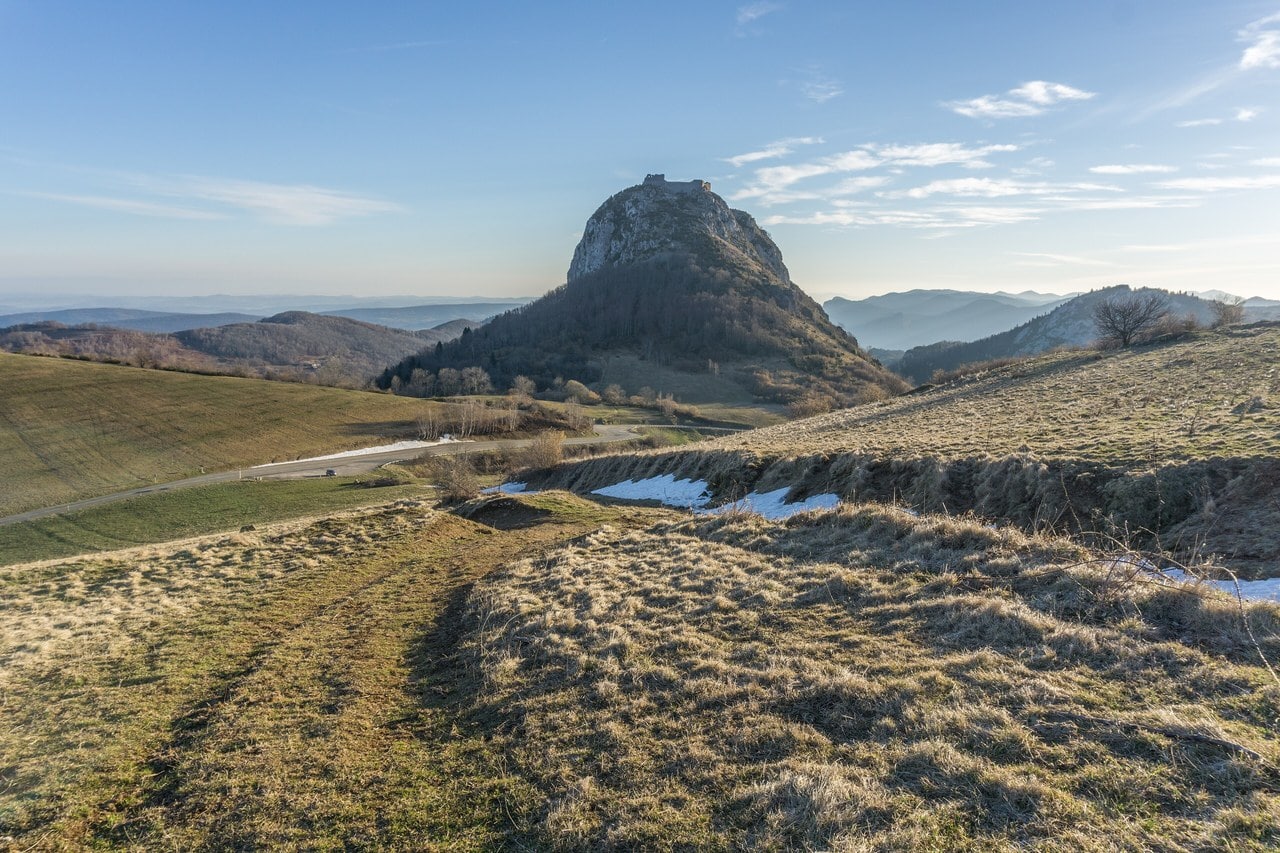
Château de Montségur crowns a limestone tooth of rock in the Ariège Pyrenees, a fortress so bound to a single day in 1244 that its stones have come to stand for an entire lost faith. On March 16 of that year, after a siege of roughly ten months, about 220 Cathar Perfects walked down from the summit and were burned in a palisade at the foot of the mountain. That event is remembered as the effective end of Cathar resistance in the south, and it made the name Montségur a byword for last stands.
Yet the ruin visitors climb to today is not, in the strict sense, the Cathar castle. What survives on the pog is the royal fortress the French crown raised on the same summit after the surrender, reshaped again over later centuries. Understanding Montségur means holding those two structures apart: the vanished refuge of the burned, and the enduring fortress of the victors that took its place.
Quick Facts
| Location | Montségur, Ariège (09), Occitanie, France |
| Type | Ruined royal fortress on a rock summit (pog) |
| Elevation | 1,207 m above sea level, the highest of the eight inscribed fortresses |
| Built / rebuilt | Cathar refuge rebuilt c. 1204; standing fortress rebuilt for the French crown after 1244, remodeled into the 16th and 17th centuries |
| Famous for | The 1243–44 siege and the burning of about 220 Cathar Perfects on March 16, 1244 |
| Condition | Partially ruined; open to visitors by a steep footpath |
| Protection | Monument historique since 1862 (Base Mérimée PA00093892); component of the Royal Capetian Fortresses of Languedoc, inscribed 26 July 2026 |
| Coordinates | 42.8757° N, 1.8324° E |
| Official site | montsegur.fr |
A refuge on the “safe mountain”
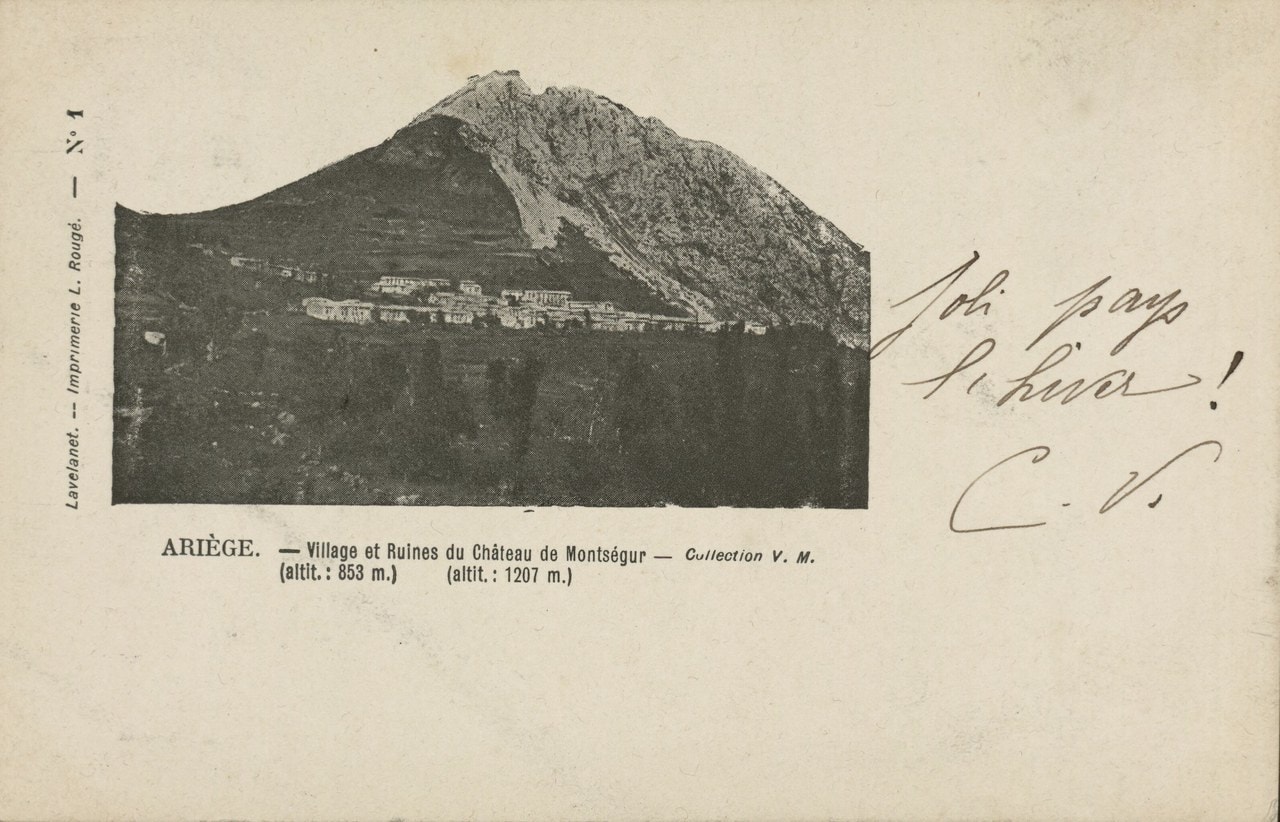
The name reads as its own promise. Mons securus, the safe mountain, describes a summit that rises sheer on almost every side, reachable only by a single exposed approach. A castle had stood here in the early Middle Ages and had fallen into ruin by the turn of the thirteenth century.
Around 1204 the local lord Raymond de Péreille rebuilt the stronghold, and under his protection it became something unusual: an open seat for the Cathar church. Catharism, the dualist faith that flourished across Languedoc, drew a sharp line between ordinary believers and the bons hommes and bonnes femmes, the Perfects, who had received the consolamentum and lived under strict renunciation. Montségur sheltered a standing community of them alongside a garrison, and houses were terraced into the rock below the keep. By the late 1230s the site functioned as the effective head of a proscribed religion, its deacons and bishop moving openly where elsewhere they were hunted. That was a provocation the crusading Church could not indefinitely ignore.
The choice to make Montségur the headquarters of the Cathar church was deliberate. Around 1232 the aging Cathar bishop Guilhabert de Castres is said to have asked Raymond de Péreille to hold the pog as a refuge for the faith, and in the years that followed it drew Perfects, sympathetic knights, and ordinary families into a community that may have numbered several hundred at its height. They farmed the terraces, stored provisions against a siege that everyone could see coming, and kept the rhythms of a church the rest of Languedoc could no longer practice in the open.
Avignonet and the road to the siege
The spark came in May 1242. A party of inquisitors led by William Arnaud was lodged at Avignonet, and on the night of May 28 a band of knights rode out from Montségur under Pierre-Roger de Mirepoix, the castle’s military commander, and killed them. The attack was reprisal: the tribunal had been condemning Cathar sympathizers across the Lauragais, and Mirepoix’s men caught the inquisitors as they slept. News of the killings spread quickly, and for a moment it was celebrated across the county as a blow struck for the Occitan cause. It also handed the crown the pretext it needed. The murder of the inquisitors struck directly at the machinery of the Church’s war on heresy, and it hardened a resolve that had been gathering for years. Montségur would be reduced.
The siege of 1243–1244
The royal army came in 1243 under Hugues des Arcis, seneschal of Carcassonne, with Pierre Amiel, archbishop of Narbonne, lending the campaign its spiritual authority. Against a garrison and a sheltering community numbering only a few hundred, the besiegers eventually gathered a far larger force, yet the mountain did most of the defenders’ work for them. The single track up the pog could be held by a handful of men, and a direct assault on the summit bordered on suicidal. For months the siege was really a blockade: the attackers camped on the slopes while sympathizers slipped supplies and even reinforcements through the lines.
The deadlock broke in the depths of winter. A party of mountaineers, remembered in the sources as Gascons or Basques who knew such terrain, scaled the eastern crest by night and seized a forward position, the Roc de la Tour, at the far end of the ridge. From that foothold the besiegers hauled up a trebuchet and began to bombard the fortress from ground the defenders could no longer contest. Once the eastern barbican fell, the end was only a question of time.
Through the long blockade the defenders held out in hope of relief that never came. Count Raymond VII of Toulouse, the last great lord of the region, was maneuvering between the French crown and the Church, and no army marched to break the siege. Inside the walls the Cathar bishop Bertrand Marty tended the community and, by the accounts gathered afterward, prepared it for the worst. When the trebuchet on the Roc de la Tour began its steady work, the garrison answered with an engine of its own for a time, but it could not dislodge the machine above them, and the circle of attackers slowly tightened.
The surrender and the fire
Terms were opened around the start of March 1244. The garrison and the ordinary believers would be spared, even pardoned, if they submitted to the Church; the Perfects would be spared only if they abjured their faith. A truce of about two weeks followed, and it produced the detail that has haunted the story ever since. Rather than recant, the Perfects held firm, and in those final days more than a dozen of the besieged who had not been Perfects, soldiers and family members among them, asked to receive the consolamentum themselves, knowing the sacrament committed them to the fire.
When the truce expired, roughly 220 in all refused to abjure, the Perfects together with those last converts. That detail, preserved in later Inquisition depositions, is much of why Montségur is remembered less as a military defeat than as a collective act of faith.
On March 16, 1244 they were led down the mountain and burned together in a great enclosed pyre at the foot of the pog, a place remembered in Occitan as the prat dels cremats, the field of the burned. The exact number is not certain; medieval accounts and later reckonings place it between about 200 and 225. What is not in doubt is the scale, or the fact that it happened not inside the walls but on the meadow below, where a memorial stele raised in 1960 now marks the ground.
Treasure, Grail, and modern myth
Two legends cling to Montségur, and they need separating from the record. The first has some documentary footing: Inquisition testimony records that shortly before the surrender a few men were lowered down the cliff face carrying the community’s “treasure,” most plausibly its money and hidden texts rather than anything golden. What they carried, and where it went, is genuinely unknown. Grail, treasure and solstice alignment belong to a different kind of claim, and our reference on haunted castles traces most of that freight downstream to a single nineteenth-century history.
The second legend has none. The idea that Montségur guarded the Holy Grail is a twentieth-century invention, popularized by the German writer Otto Rahn in the 1930s and later entangled with the occult interests of the Nazi Ahnenerbe. The often-repeated claim that the fortress is aligned so that sunlight pierces its openings at the summer solstice is likewise a modern reading, attached to a building the Cathars never saw, since the standing walls are the later royal fortress. The historical Esclarmonde de Foix, a noblewoman of the Cathar-sympathizing comital family, has been draped in similar romance; the legendary “Esclarmonde of Montségur” owes more to nineteenth-century imagination than to the sources. These stories are part of the site’s cultural afterlife. This guide keeps them on that side of the line.
What survives today: the royal fortress
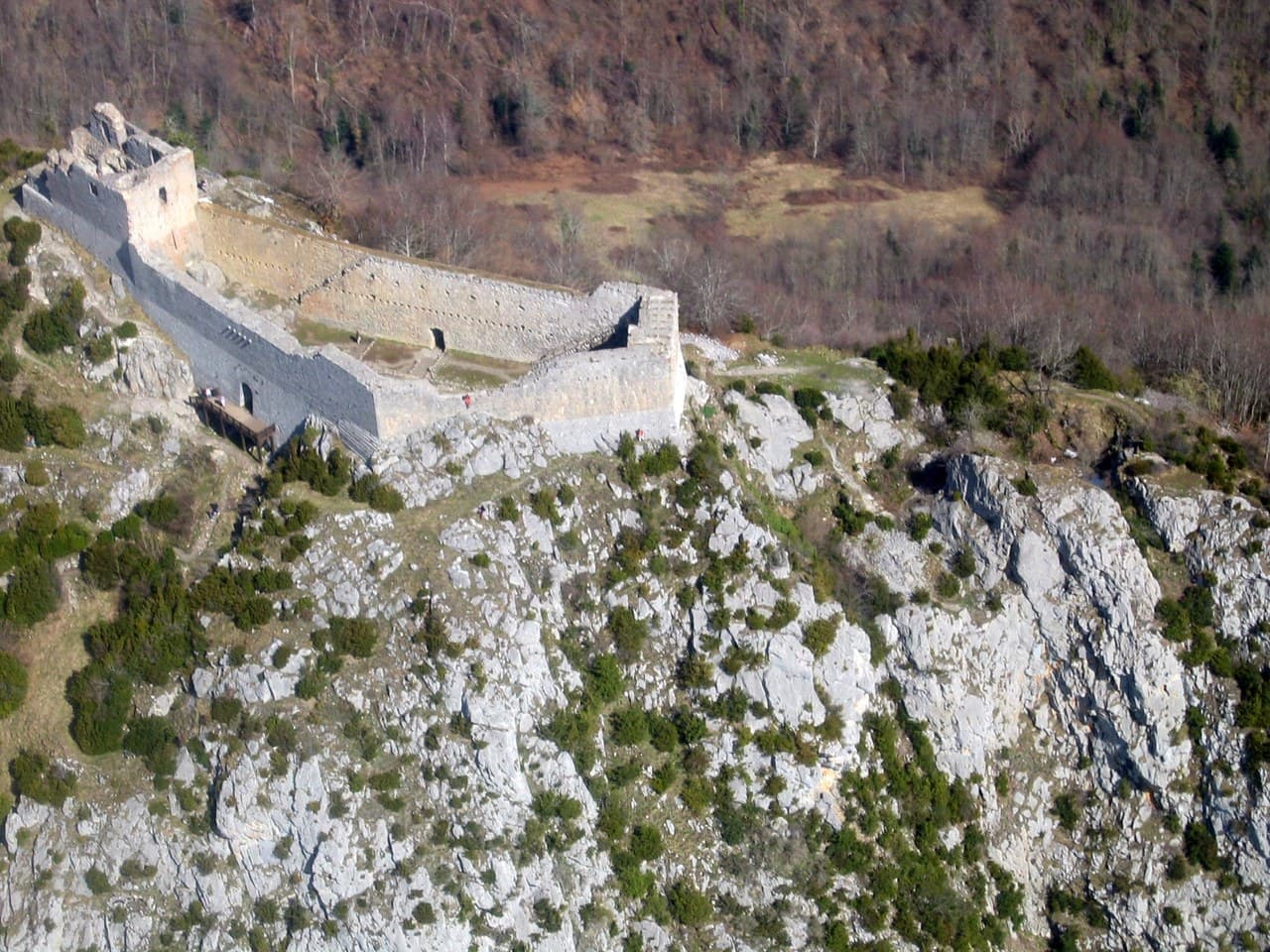
Here the present-state distinction matters most. After 1244 the crown kept the summit as a military post and rebuilt it to its own design, and later garrisons reworked it again into the sixteenth and seventeenth centuries. The Cathar-era village and its castle were dismantled, so almost nothing a visitor sees belonged to the community that was burned.
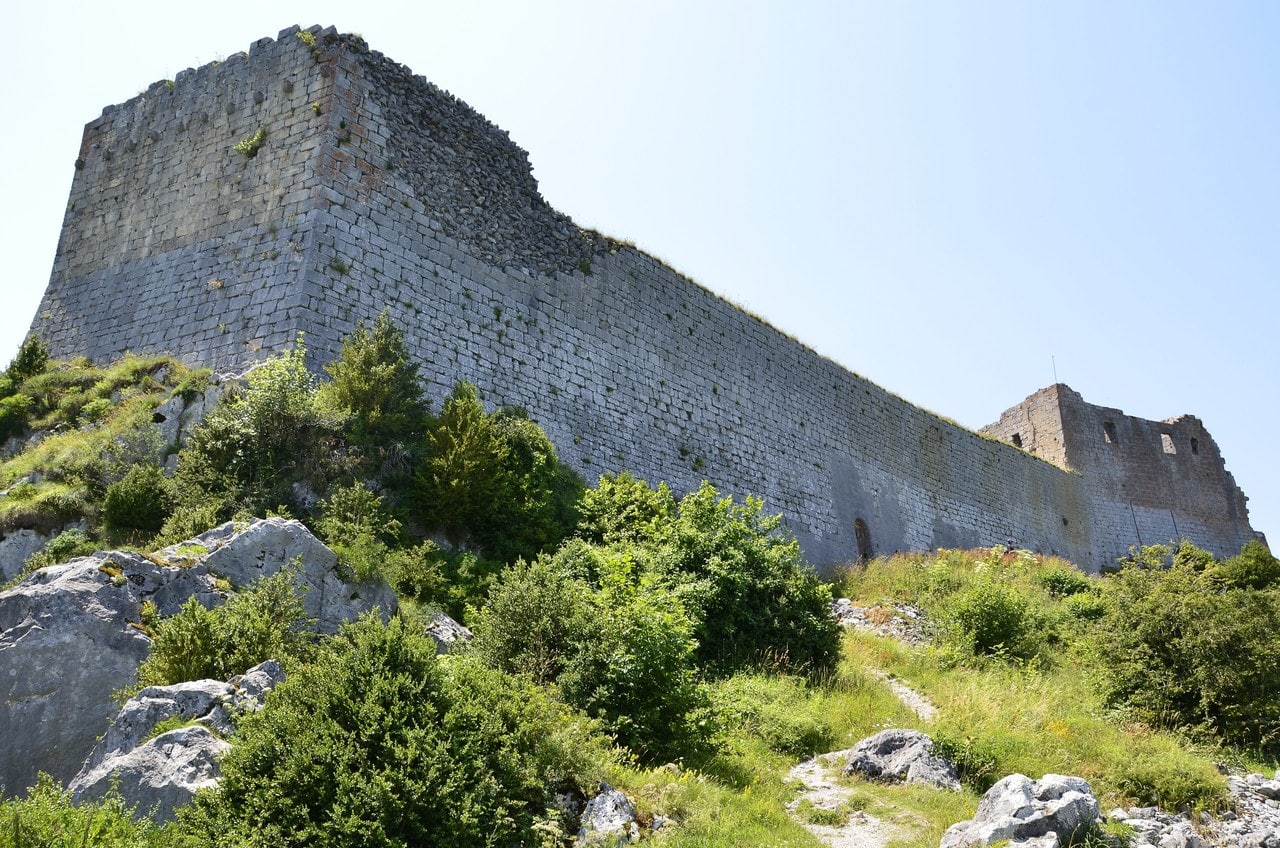
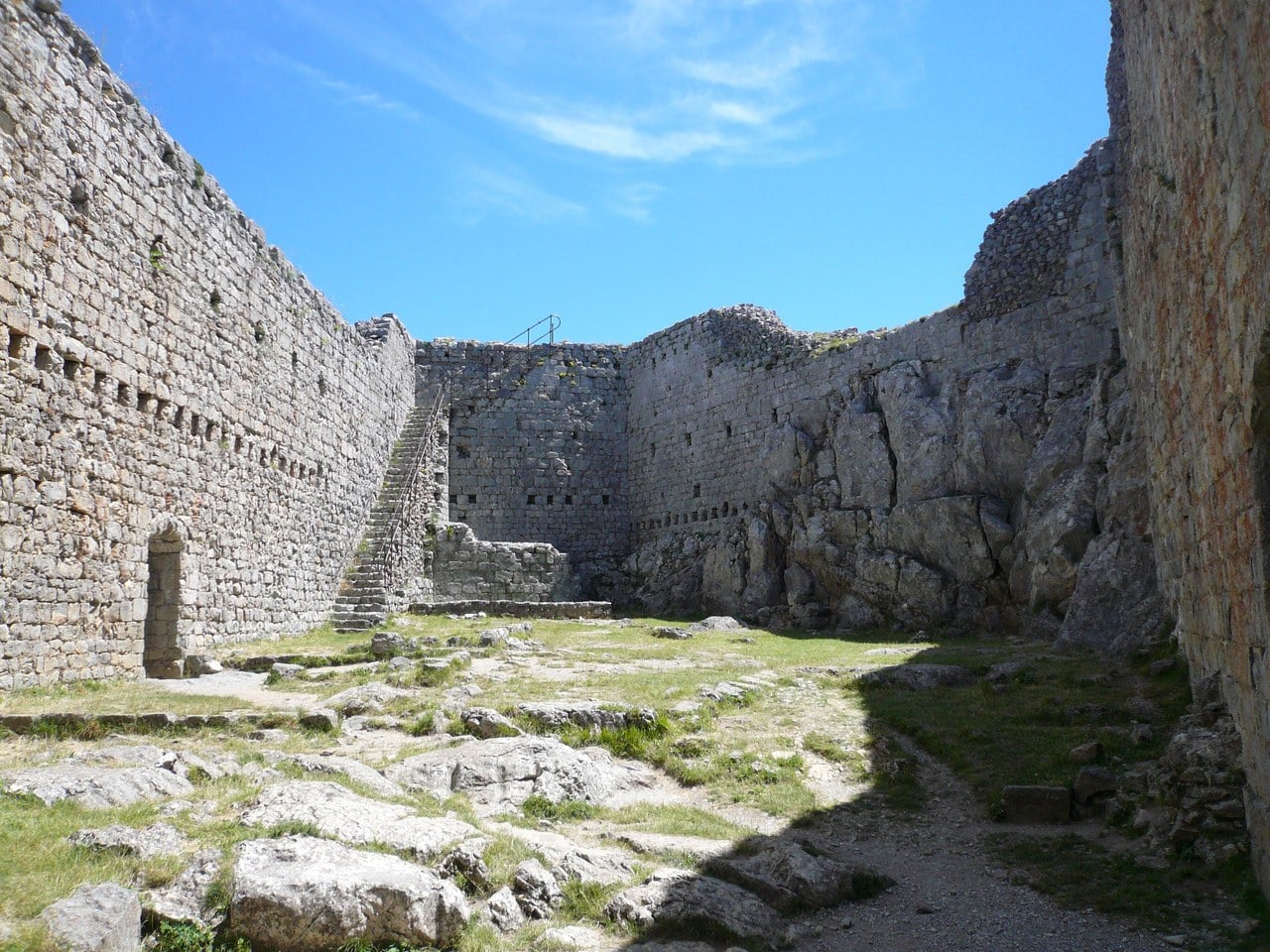
What stands now is a compact fortress of pale local stone: a roughly pentagonal curtain wall following the crown of the rock, a rectangular keep, and a rock-cut cistern, the whole shaped as much by the summit’s contours as by any plan. It is austere, nearly windowless, and quietly dramatic against the drop on every side. The site has been classified as a Monument historique since 1862 (Base Mérimée PA00093892) and is one of the eight strongholds that UNESCO inscribed on 26 July 2026 as the Royal Capetian Fortresses of Languedoc, better known as the Forteresses royales du Languedoc, entered under criteria (ii) and (iv). Of the eight, Montségur sits highest, its walls riding a ridge at 1,207 meters.
For centuries after the crusade the fortress served as a modest royal garrison watching the mountain frontier, and only slowly slid into the ruin it is today. Much of what is now understood about the site comes from twentieth-century excavation, above all the long campaigns of the local research group GRAME, which traced the outlines of the vanished village across the terraces and recovered the everyday objects now shown in the valley museum. Those digs also fed the modern argument over the fortress’s orientation; where enthusiasts read a deliberate solar alignment, archaeologists have generally seen the ordinary logic of building on a narrow summit.
Visiting Château de Montségur
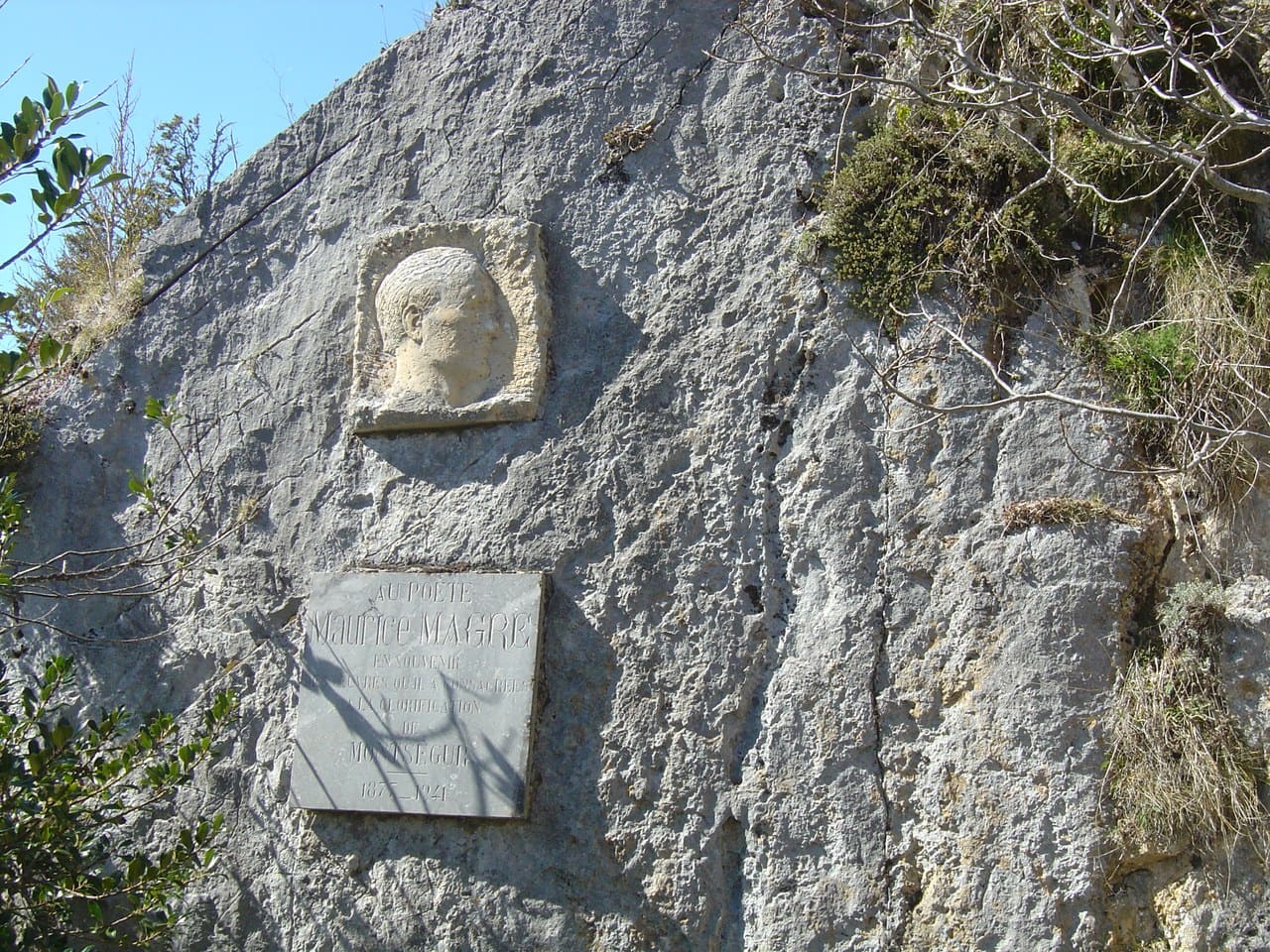
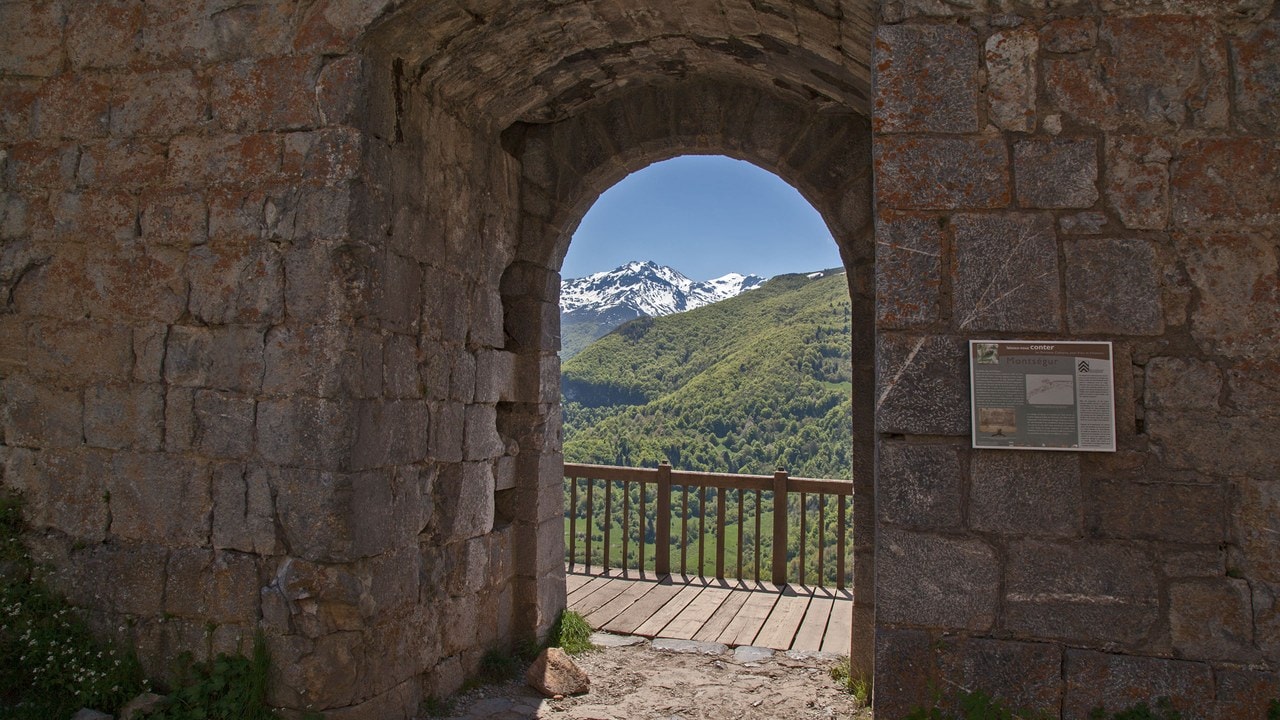
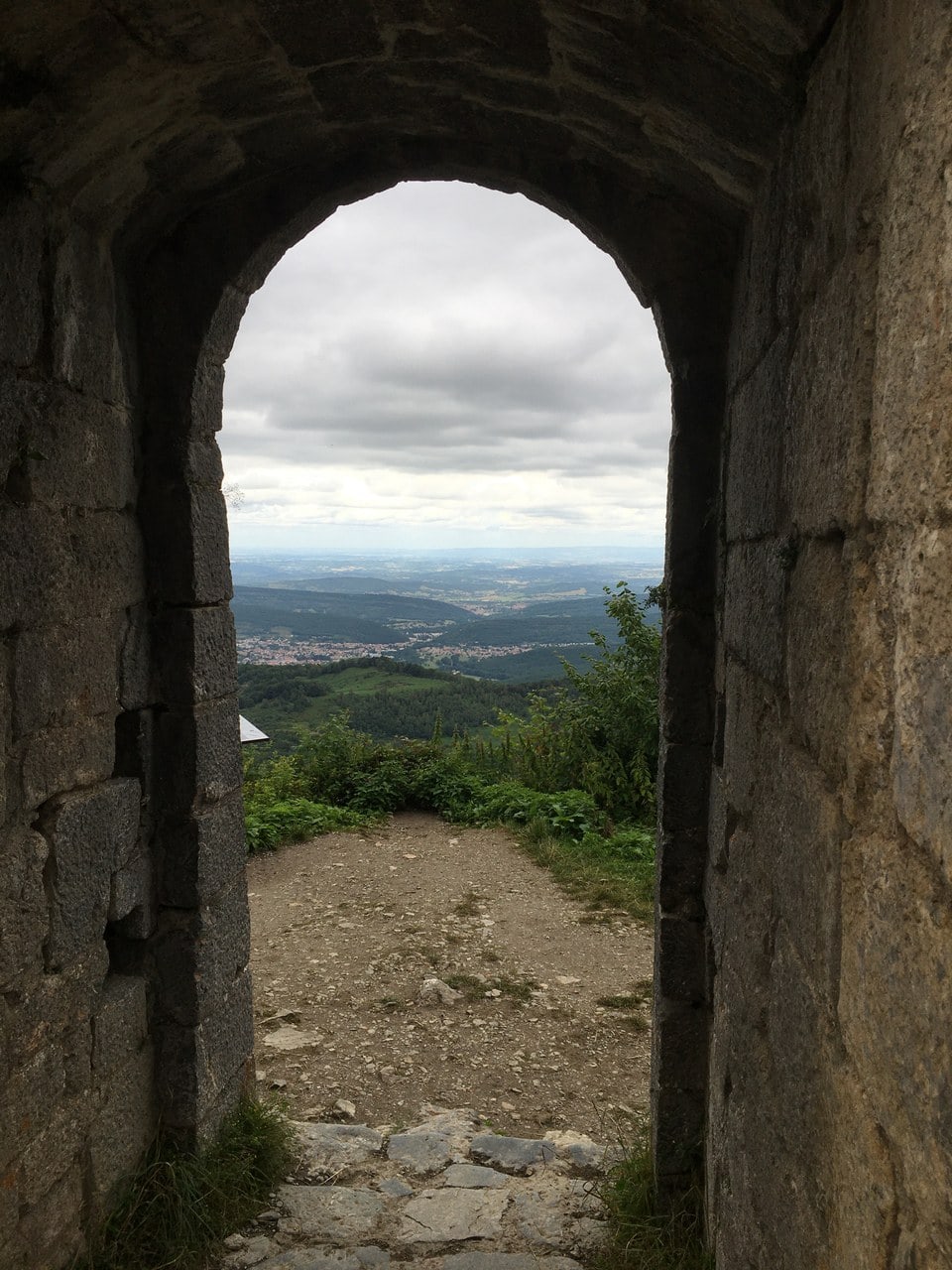
The fortress is reached on foot, and the climb is the experience. From the parking area below, a steep, stony path switchbacks up the pog, climbing about 170 meters above the road over roughly thirty minutes; sturdy shoes and water are not optional, and the exposed summit is no place to be caught in a storm. The reward is a full circuit of the walls and one of the great views of the Pyrenees, ridge behind ridge to the south. In the village at the foot of the mountain, a small archaeological museum displays finds recovered from the site during twentieth-century excavations, everyday objects that put human texture back into a place otherwise defined by its ending.
A single ticket covers both the castle and the archaeological museum in the village below, and current hours and admission are best checked on the official Montségur site before setting out, since the castle opens seasonally with reduced access in deep winter. Montségur is most easily reached by car, roughly 45 minutes from Foix, about an hour and a quarter from Carcassonne, and around an hour and a half from Toulouse.
If you would rather fold the fortress into a wider day in Cathar country, guided tours and day trips to the region’s castles can be booked through GetYourGuide, and if you are making a few days of it, you can compare places to stay near Montségur on Booking.com.
Some links on this page are affiliate links, which means StoneKeep Atlas may earn a small commission, at no extra cost to you, if you book through them.
More Views of Château de Montségur
Beyond Château de Montségur
Montségur is the martyrdom site of the Cathar story, and it sits within a wider cluster of that history in the StoneKeep Atlas. To the west, the Château de Foix was the mountain seat of the counts who long sheltered the faith. The great walled city of Carcassonne was the crusade’s epicenter and the base from which the royal reconquest of the south was run, while the cliff-top Château de Peyrepertuse, Château de Quéribus, and Château de Puilaurens sheltered Cathar fugitives before the crown rebuilt them into its mountain frontier. Those three cliff-top fortresses, with Carcassonne and Montségur, belong to the same UNESCO serial property, told from a different angle in Royal Fortresses of Languedoc. Readers following the heresy across the region will find the wider set gathered under Cathar Castles.
For how this martyrdom fits the wider crusade, see our guide to the Cathar Castles of Languedoc.
Common Questions
How do I get to Montségur, and how hard is the climb?
The fortress is reached on foot, and the climb is the experience. From the parking area below, a steep, stony path switchbacks up the pog, climbing about 170 meters above the road over roughly thirty minutes. Sturdy shoes and water are not optional, and the exposed summit is no place to be caught in a storm.
How do I reach Montségur by car?
Montségur is most easily reached by car, roughly 45 minutes from Foix, about an hour and a quarter from Carcassonne, and around an hour and a half from Toulouse.
Is there one ticket for the castle and the museum?
Yes. A single ticket covers both the castle and the small archaeological museum in the village below, which displays everyday objects recovered from the site during twentieth-century excavations. Current hours and admission are best checked on the official Montségur site, since the castle opens seasonally with reduced access in deep winter.
What is there to see at the top?
The reward is a full circuit of the walls and one of the great views of the Pyrenees, ridge behind ridge to the south.
Conclusion
Montségur endures because it holds two things at once. It is a ruin with a real and terrible history, the last open stronghold of a faith the Albigensian Crusade set out to erase, and it is a screen onto which later centuries have projected treasure, grails, and mysteries the medieval site never contained. The honest version is more than enough. A community chose the fire over recantation on a March morning in 1244, and the fortress that now crowns the pog is the monument the winning side built over their memory. Standing on those walls, with the field of the burned small and green far below, the distance between what happened and what is remembered is the whole point of the climb.
Principal Sources
- Barber, Malcolm. The Cathars: Dualist Heretics in Languedoc in the High Middle Ages. Pearson/Longman.
- Roquebert, Michel. L’Épopée cathare (volumes on the 1243–44 siege). Privat.
- Brenon, Anne. Le Vrai Visage du catharisme and related works.
- Base Mérimée / Plateforme Ouverte du Patrimoine, Ministère de la Culture: notice PA00093892, Château de Montségur.
- Forteresses royales du Languedoc, inscribed 26 July 2026; nomination dossier “Système de forteresses de la sénéchaussée de Carcassonne”.
- Musée archéologique de Montségur; Ariège Pyrénées and Pyrénées Cathares tourism offices.
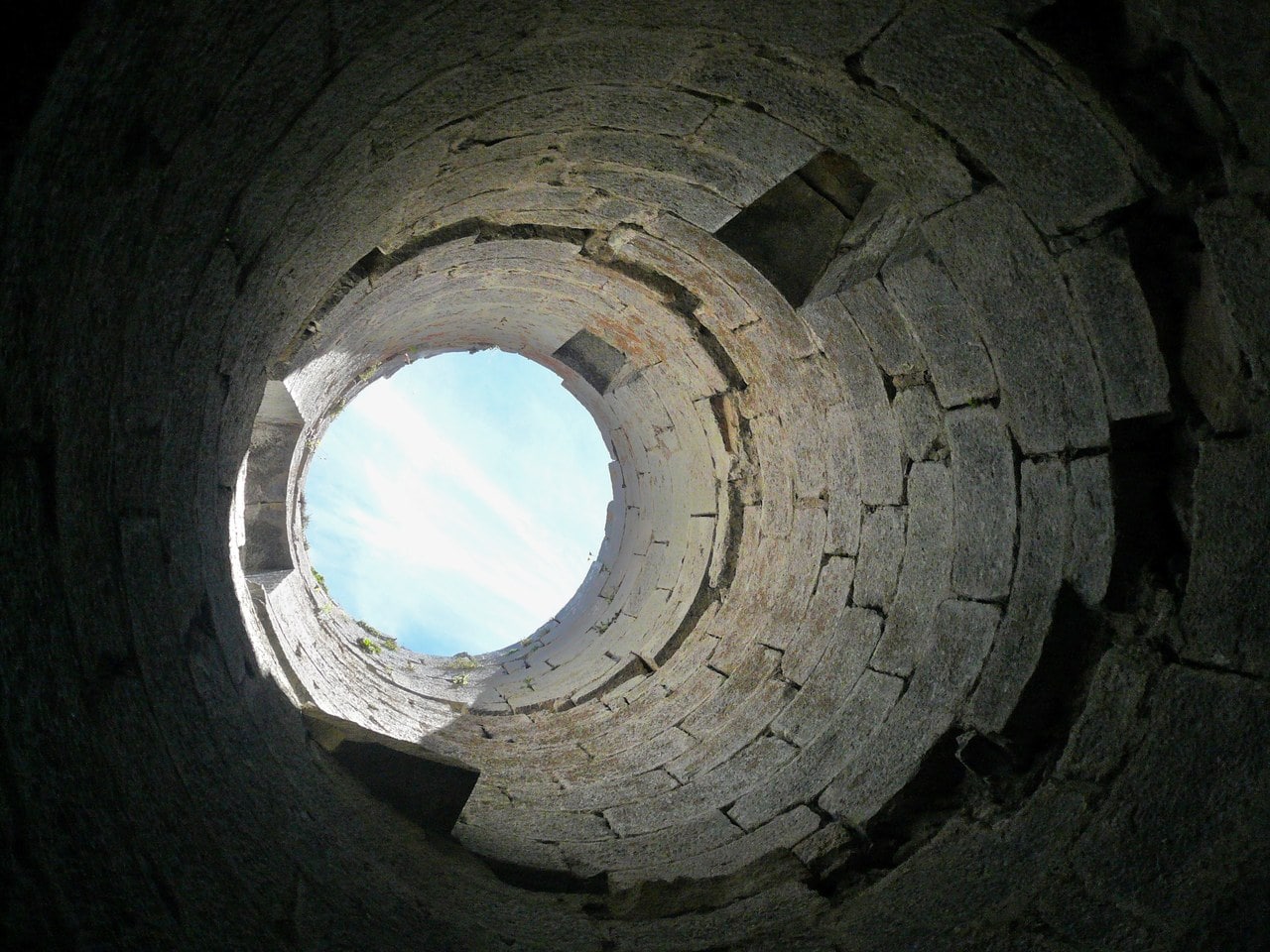
Image credits. The fortress on the summit of its pog: Michal Klajban, CC BY-SA 4.0, via Wikimedia Commons; the curtain wall on the crown of the rock: Aloïs LIEN, CC BY-SA 4.0, via Wikimedia Commons; the roofless interior enceinte: Yann Gwilhoù, CC BY-SA 4.0, via Wikimedia Commons; the Maurice Magre memorial on the ascent: Anthospace, CC BY-SA 4.0, via Wikimedia Commons; the elongated enceinte seen from above: MDanis, CC BY-SA 3.0, via Wikimedia Commons; an early-twentieth-century view of the village below the pog: Bibliothèque nationale de France, public domain, via Wikimedia Commons; a gateway framing the Pyrenean skyline: Jcb-caz-11, CC BY-SA 4.0, via Wikimedia Commons; a window in the fortress wall: Carnage 2000, CC BY-SA 4.0, via Wikimedia Commons; looking up inside a round tower: Yann Gwilhoù, CC BY-SA 4.0, via Wikimedia Commons. Freely licensed images are resized to fit; otherwise unaltered.