
Château de Termes
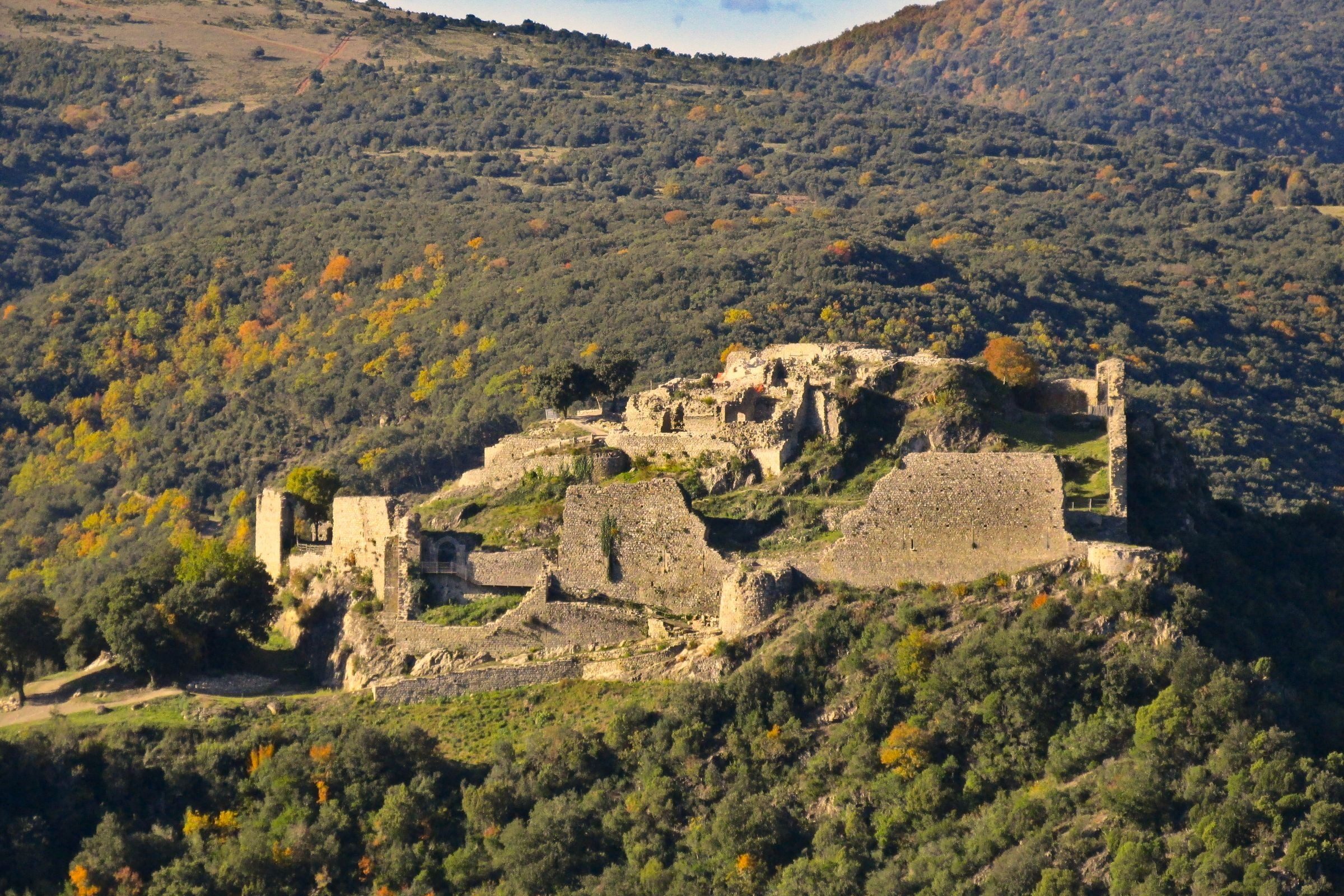
The Château de Termes is a ruined fortress in the Corbières hills of the Aude, and it guards a quiet paradox. Its fame rests on the Cathar heresy and one of the longest sieges of the Albigensian Crusade, yet almost everything a visitor climbs to today is the work of the French crown that won that war. The castle Raymond de Termes defended in 1210 is largely gone. The tall curtain walls, the postern above the gorge, and the chapel with its famous cross-shaped window belong to the royal frontier fortress raised in the decades after his defeat. Termes is a Cathar castle in memory and a king’s castle in stone, and the honest tension between the two is what makes the climb worth taking.
| Location | Termes, Aude, Occitanie, France |
| Type | Medieval hilltop castle (ruined) |
| Built | Seigneurial castle of the 10th to 12th centuries; rebuilt as a royal fortress in the 13th century |
| Key event | Four-month siege by Simon de Montfort, 1210 |
| Condition | Ruined; consolidated |
| Owner / operator | Commune of Termes |
| Open to public | Yes, March to mid-November |
| Admission | €6 adult (2025) |
| Heritage | Monument historique (classified 1989); component of the Royal Capetian Fortresses of Languedoc, inscribed 2026 |
| Coordinates | 43.0024° N, 2.5567° E |
| Official site | chateau-termes.com |
A Corbières Seigneury and the Cathar Faith
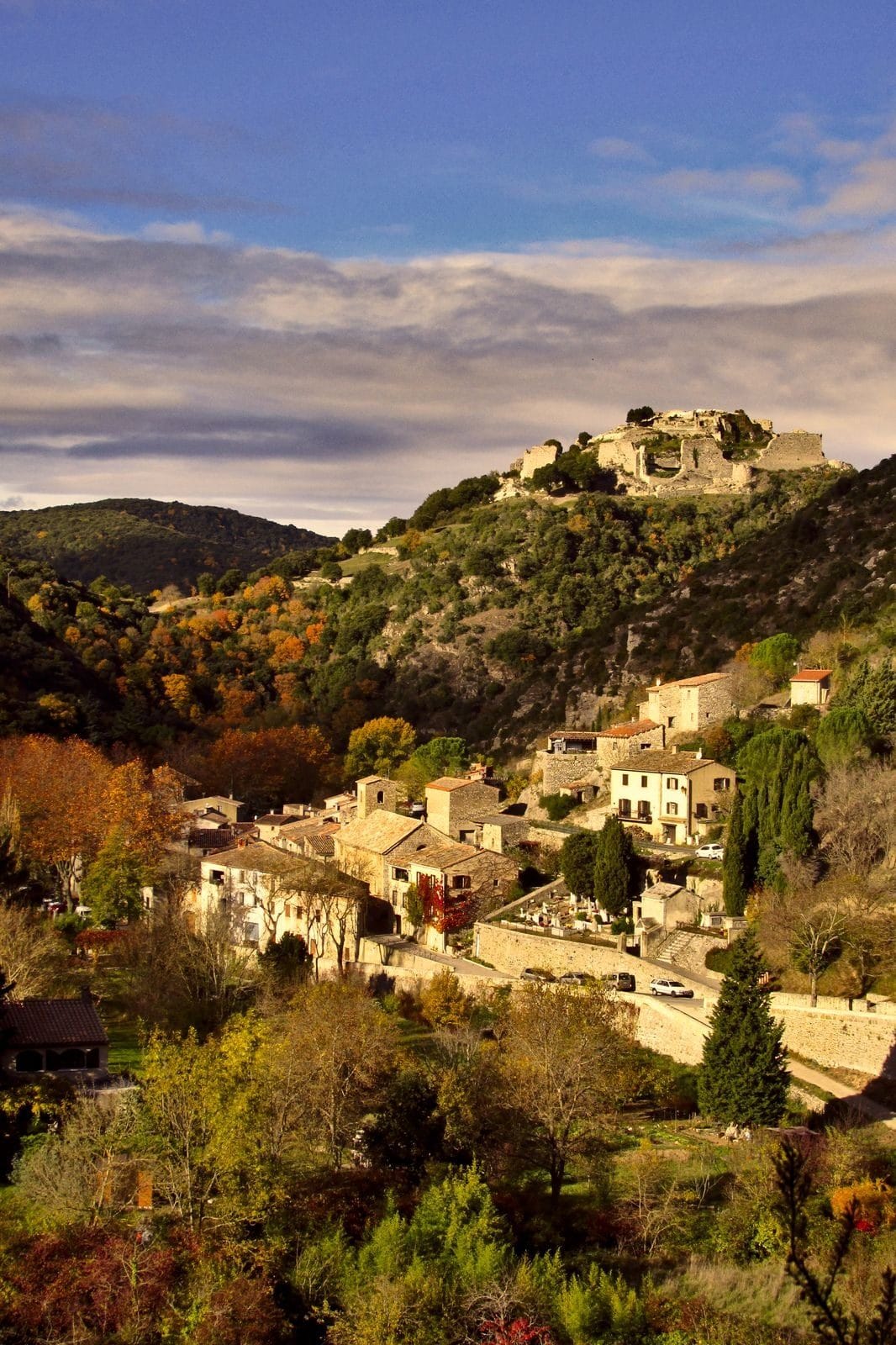
Long before the crusade, Termes was the seat of a substantial lordship. From a rocky promontory nearly 460 meters above sea level, high over the gorge of the Sou, the lords of Termes ruled the Termenès, a wild limestone upland of some sixty villages that reached east toward the silver mines of the Montagne de Tauch. The site was already ancient. A castle here enters the written record in the late eleventh century, and the castrum de Termenès appears by name in 1110. By the twelfth century a fortified village with two lower quarters climbed the gentler southern slope beneath the keep. This was no simple watchtower but the capital of a small mountain state.
By the late twelfth century the family had embraced the Cathar faith that was spreading rapidly through Languedoc. Catharism was a dualist Christian movement that rejected the material world, the sacraments, and the authority of the Roman Church, and in the independent Corbières it found ready protection among nobles like the Termes lords. Raymond de Termes, the man who would face Simon de Montfort, was a believer himself, and his family gave the movement one of its leaders: Benoît de Termes, who rose to become a Cathar deacon and then bishop of the Razès, one of the faith’s organized dioceses. To be a Cathar lord around 1200 carried little risk. Within a decade it would be a death sentence.
The faith the Termes lords protected had its own clergy. Cathar perfects, known in the vernacular as bons hommes and bonnes femmes, the good men and good women, lived austere lives of poverty and preaching and administered the movement’s central rite, the consolamentum. They moved openly through the villages of the Termenès under noble protection, and it was this quiet, tolerated network, as much as any castle, that the crusade set out to destroy.
That reckoning arrived with the Albigensian Crusade, launched in 1209 after Pope Innocent III called for the heresy in the south to be rooted out by the sword. The sack of Béziers and the surrender of Carcassonne in the summer of 1209 shattered the power of the Trencavel viscounts and left the smaller Corbières castles dangerously exposed. Termes, high, remote, and well supplied, looked as though it might endure where greater places had fallen. In the late summer of 1210, Simon de Montfort came to test that hope.
The Siege of 1210
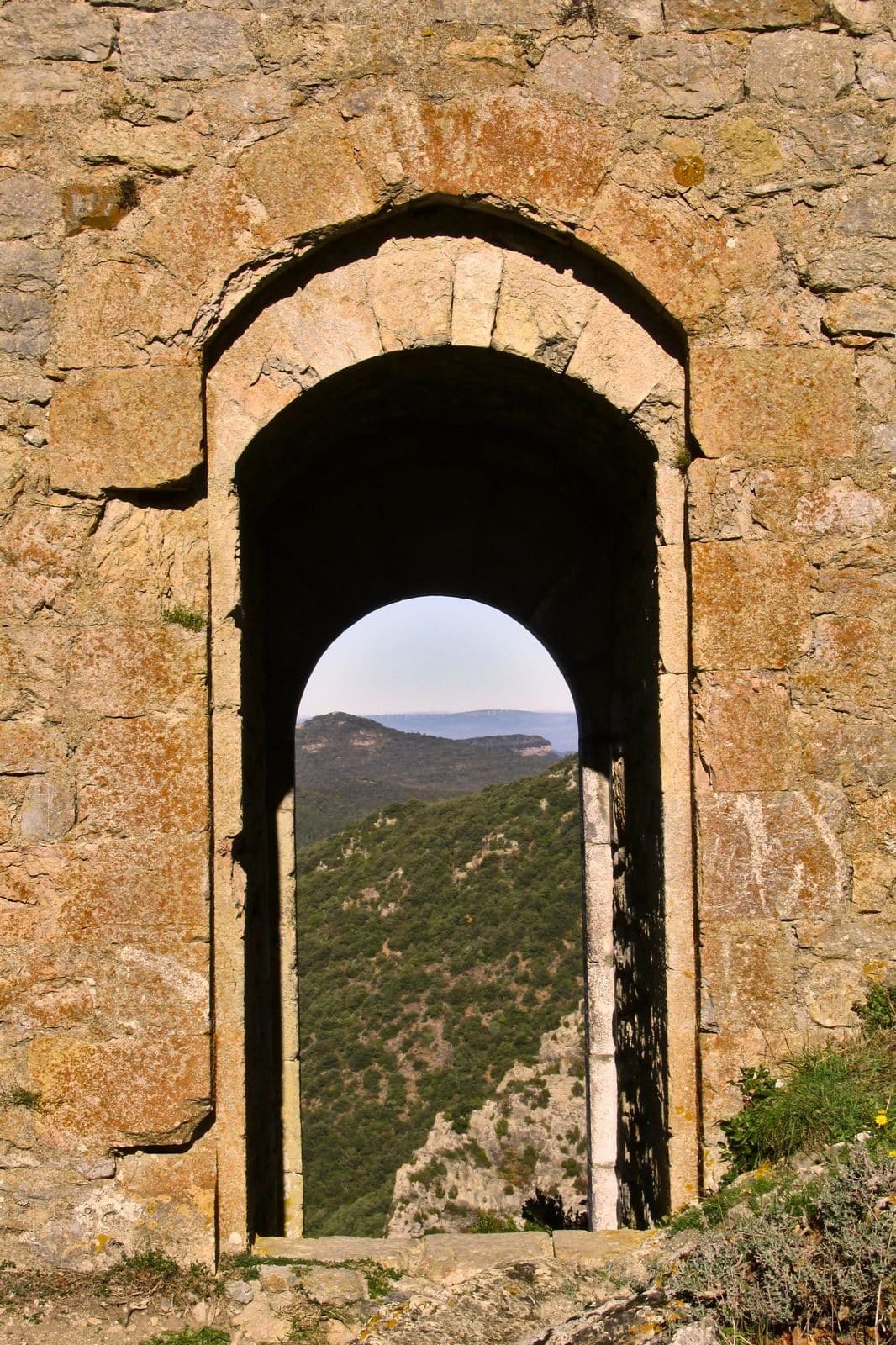
The siege of Termes lasted roughly four months, from August into November 1210, and it earned a reputation as the hardest fight of the crusade’s opening years. Montfort’s army confronted a fortress that seemed made for defiance: sheer ravines on three sides, wall above wall from the fortified village to the keep, and a garrison stocked for a long defense. The crusaders dragged siege engines up the difficult ground and pounded the walls week after week, all the while wrestling with the terrain, the autumn weather, and their own unreliable numbers, since many knights served only the forty days their crusading vows required before heading home.
The length alone made Termes notorious. Where many towns and castles had opened their gates after a few days, Termes tied down the crusade’s main army for an entire campaigning season, and its resistance became a byword for defiance in the chronicles written soon afterward. Montfort could not simply move on. To leave Termes unbeaten would have signaled that the mountains could not be held.
What almost saved Termes, and then destroyed it, was water. The summer had been exceptionally dry, and as autumn wore on the cisterns inside the castle ran low and then ran dry. With nothing left to drink, Raymond de Termes opened negotiations and agreed to give up the castle. Then, as the crusaders advanced to take possession, they were driven back by a storm of arrows from walls they thought were beaten. A heavy downpour overnight had refilled the cisterns, and the defenders, suddenly resupplied, had reconsidered their surrender.
The reprieve proved a curse. The standing water was foul, and dysentery tore through the crowded fortress. Weakened by disease and ground down by relentless bombardment, the garrison saw that the end had come. Rather than wait to be overrun, the defenders tried to steal out through the crusader lines in the dark. The escape was discovered and failed, and Termes fell in late November 1210.
Raymond de Termes was seized and taken to Carcassonne, the very stronghold whose loss the year before had opened the Corbières to invasion. He never came out. He died in its prison a few years later, around 1213, and his lordship passed to the northern French. His son Olivier, then young, became a faidit, a disinherited noble with every reason to loathe the conquerors. That grievance would one day resolve in an unexpected direction.
The fall of Termes sent a message through the Corbières. If the strongest castle in the Termenès could be broken, none of the mountain lords was safe, and over the following years one stronghold after another submitted or was taken. For the crusaders, Termes proved that patience and siege engines could overcome even the most forbidding terrain. For the south, it marked the moment when the war reached the high country that had seemed beyond any army’s grasp.
The King’s Fortress and the Victors’ Stones
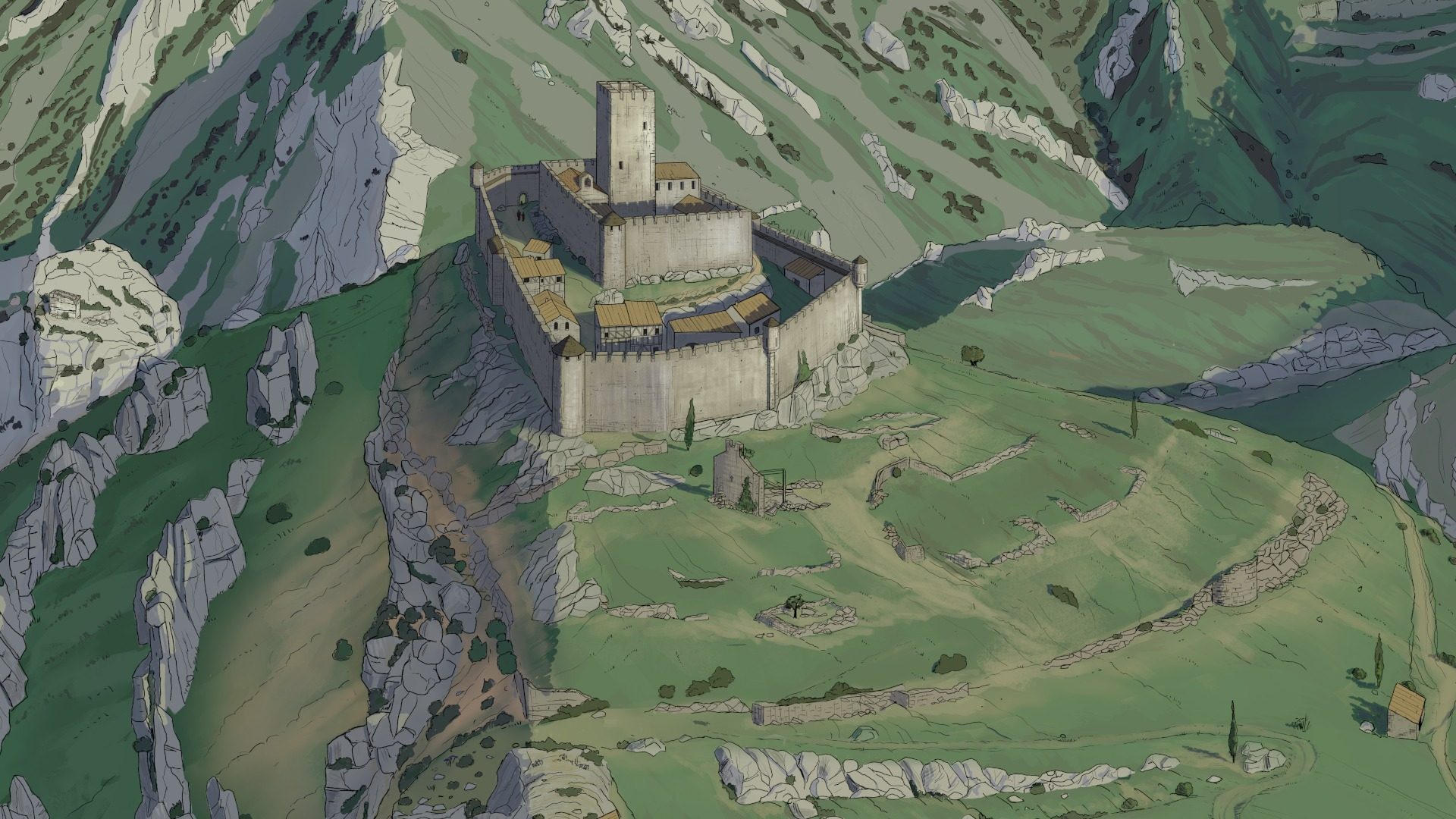
The castle that took shape at Termes after 1210 was a different building for a different age. When the Treaty of Paris ended the crusade in 1229 and drew Languedoc into the kingdom of France, Termes became a royal fortress on a tense southern frontier facing the Crown of Aragon. The king’s engineers rebuilt it as a piece of hard military architecture. They raised the great outer curtain walls with their posterns, corner buttresses, and towers, thirteenth-century work that forms most of what stands today. The older inner ring belongs to the seigneurial castle, work of the tenth to twelfth centuries, and enclosed the cistern, the chapel, and the keep, though the keep is now reduced to a footprint. Its foundations, buried under four meters of rubble, were only rediscovered by archaeologists in 2015.
This is the honest core of Termes. The site’s own guides say it plainly: the classified monument you visit today mostly preserves the form its later occupants gave it. The impregnable Cathar castle of the tourist brochures was, in large part, torn down and rebuilt by the people who defeated the Cathars. Termes took its place in the chain later marketed as the Five Sons of Carcassonne, the royal frontier fortresses of Aguilar, Peyrepertuse, Puilaurens, Quéribus, and Termes. The phrase is a modern invention rather than a medieval title, but it names a real defensive system that held the mountains until the Treaty of Corbeil settled the border with Aragon in 1258.
A visitor with an eye for defense can still read the royal design in the stone. The outer wall is set with three towers and stiffened at the angles by paired buttresses, and one tower keeps the rough bossage masonry favored by the king’s builders. A postern in the lower wall opens straight onto the void of the gorge, a sally point and escape route in one.
The frontier gives the Termes family its final and strangest chapter. Raymond’s dispossessed son, Olivier de Termes, spent his youth in armed resistance against the crown, then made his peace, took the cross, and became a trusted captain of King Louis IX in the Holy Land. In 1255 he took part in the reduction of Quéribus, the last fortress still holding out for the Cathar cause, helping to close the very resistance his father had begun. Olivier died at Acre in 1274, a royal crusader far from the heretic hills where his name was made.
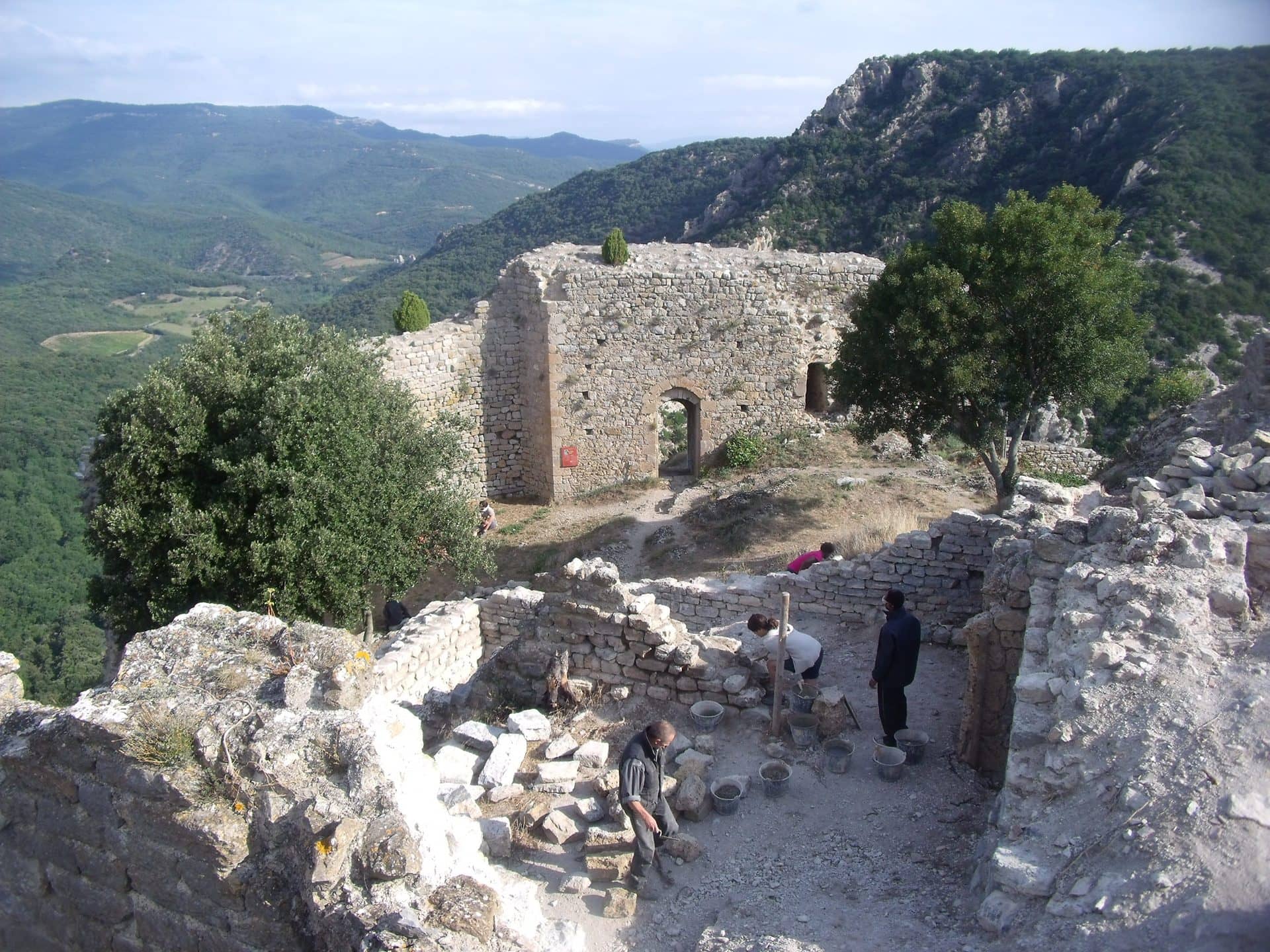
Termes served the kings until its purpose faded, and its end had nothing to do with heresy at all. In 1652 the captain in charge sold the place to the Spanish. French troops retook it, and on royal orders a contractor from Limoux spent 1653 and 1654 blowing the walls apart with gunpowder. The fortress that had withstood the crusade was destroyed four centuries later over treason and money, then left to the weather for three hundred years. Rescue came late. The commune bought the ruins in 1988 and won their classification as a historic monument the next year, and since then decades of excavation and patient consolidation, much of it by volunteers, have pulled the walls back from collapse and made the site a centerpiece of the Aude’s Pays Cathare heritage program. Today Termes is one of eight fortresses inscribed on the UNESCO World Heritage List on 26 July 2026, as components of the “Forteresses royales du Languedoc,” officially the Royal Capetian Fortresses of Languedoc.
Visiting Château de Termes
A visit to Termes begins in the village, where the reception center holds the ticket desk, a permanent exhibition on the 1210 siege, and a short introductory film. From there it is a walk of about fifteen minutes up a broad track and footpath to the castle itself, a climb steep enough to earn the panorama waiting at the top. The reward is a wide view over the Termenet gorge and the Corbières, and a set of ruins that repay slow exploration.
The approach itself sets the tone. The road into Termes winds for miles through the empty garrigue of the Hautes-Corbières before the village and its crag come into view, a reminder of how isolated this frontier once was. In the village, the medieval church of Notre-Dame rewards a look inside when it is open. Waymarked trails, including a stretch of the GR 36 long-distance path, thread the surrounding gorges for walkers who want more than the castle climb.
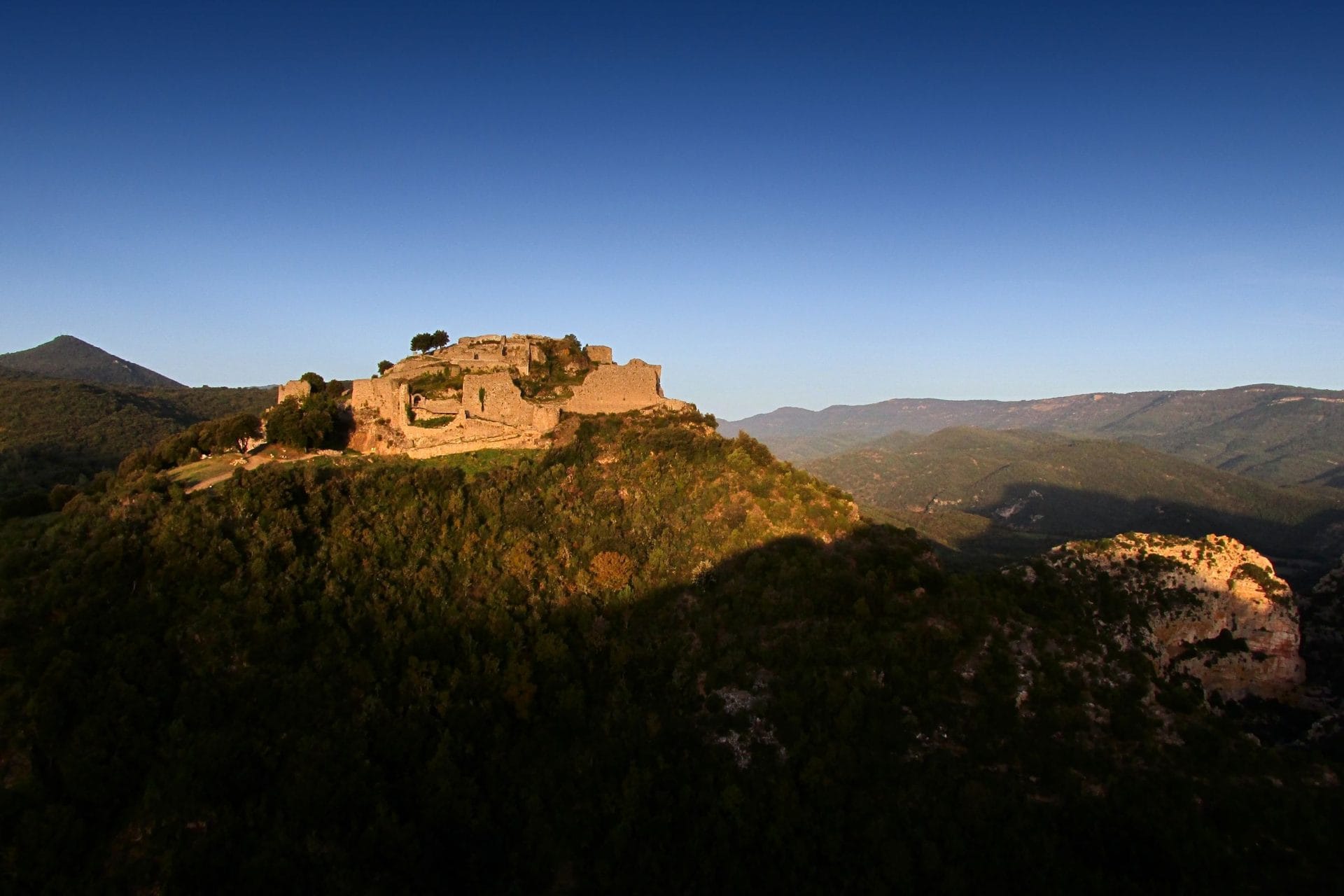
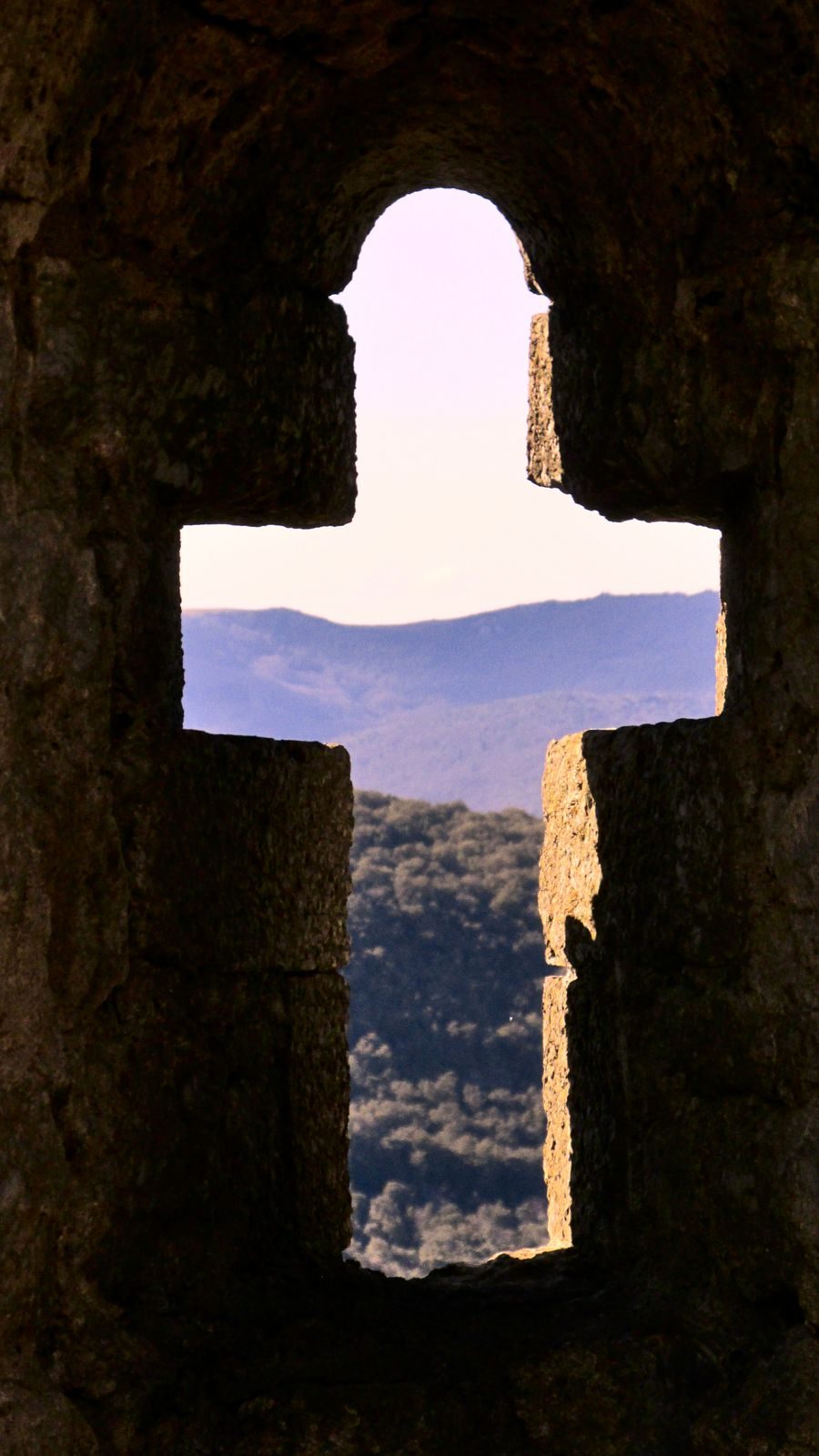
The outer enclosure is the best preserved. Its curtain walls still stand to much of their height, and a postern opens directly over the ravine, a genuine vertigo point where parents are advised to keep hold of small children. The inner enclosure holds the excavated footprint of the destroyed keep and, above all, the chapel. Step inside and you find two Romanesque openings, one of them a cross-shaped window that has become the emblem of Termes, reproduced on everything from guidebooks to the site’s own signs.
The reception is open from March to mid-November, daily from April through October and on weekends and holidays in the shoulder weeks. Adult admission was €6 in 2025, with reduced rates for young adults and children and free entry for the youngest. Allow an hour to ninety minutes on the site itself, more if you linger over the views. Serious castle-baggers can buy a combined pass covering Termes, the nearby château of Villerouge-Termenès, and the abbey of Lagrasse, all within a short drive. There is no shop or café at the castle, so carry water, especially in summer, and wear real shoes for the climb. Termes sits deep in the Corbières, and a car is close to essential. Carcassonne, the natural base for exploring Cathar country, is about an hour away by road.
Carcassonne makes the most convenient base for reaching Termes and the other Corbières fortresses, and you can compare hotels and guesthouses there on Booking.com. If you would rather not drive the steep mountain roads yourself, GetYourGuide lists guided Cathar castle day trips from Carcassonne that string several of these sites together in a single outing.
Some links on this page are affiliate links, which means StoneKeep Atlas may earn a small commission, at no extra cost to you, if you book through them.
More Views of Château de Termes
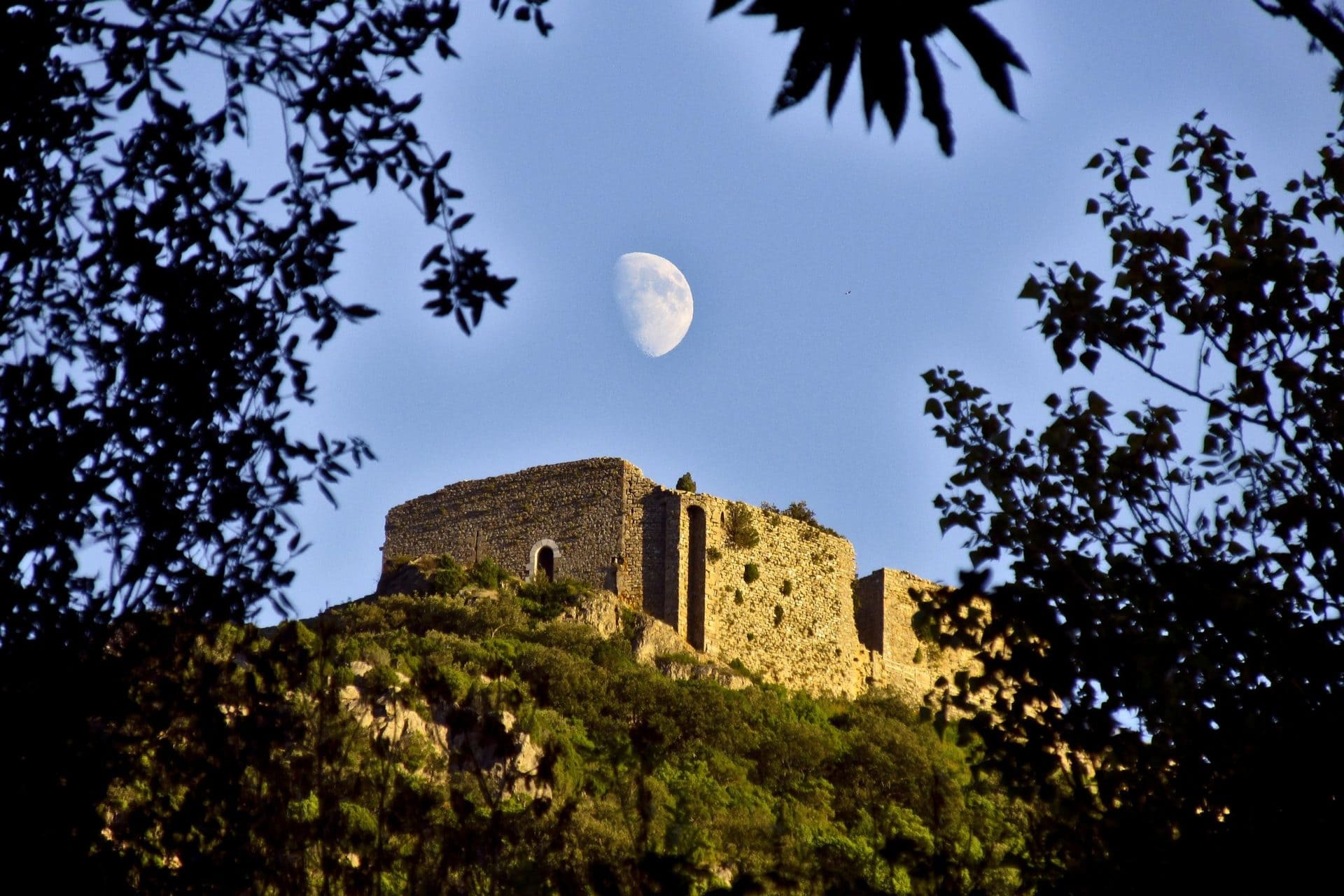
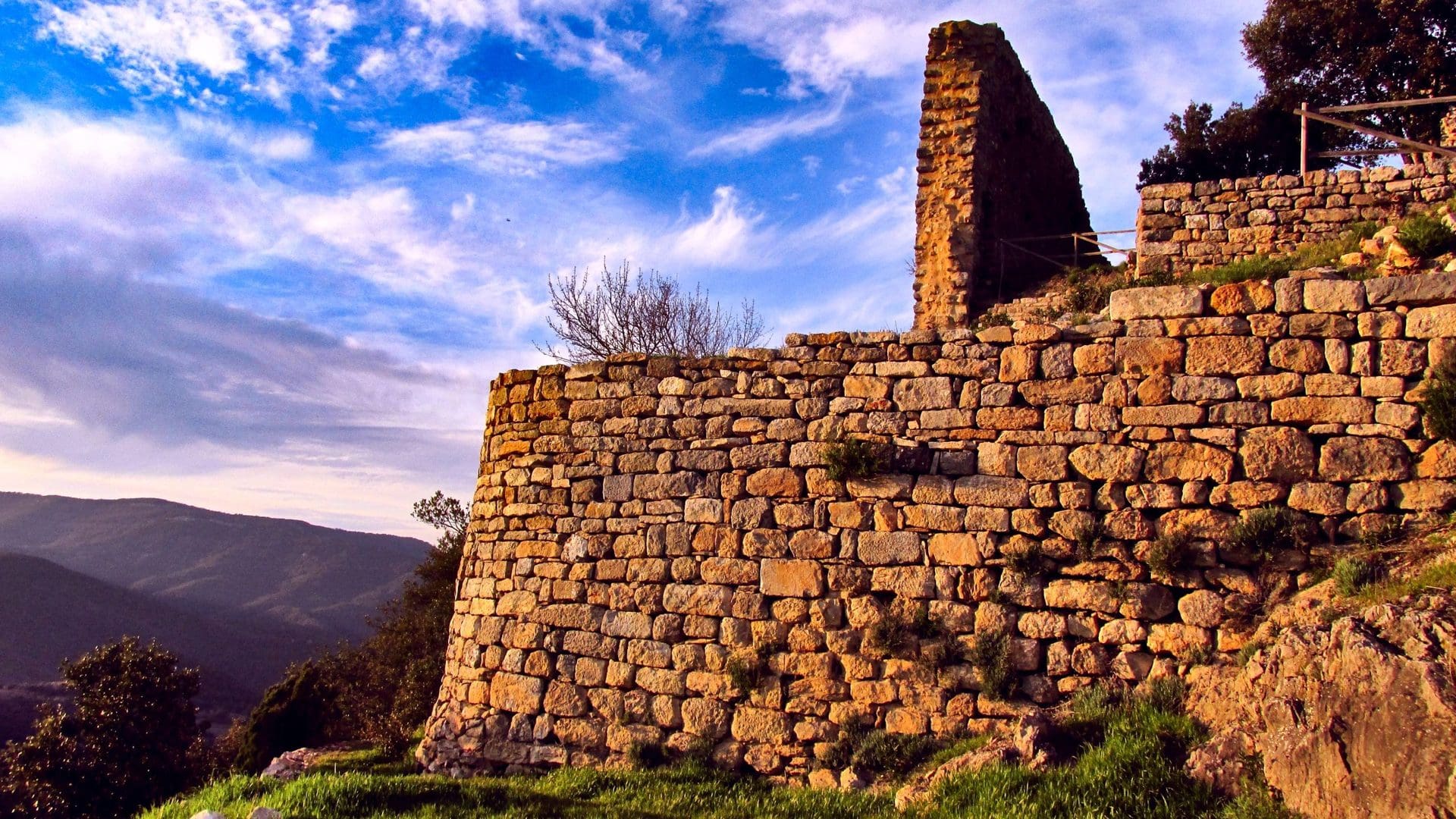
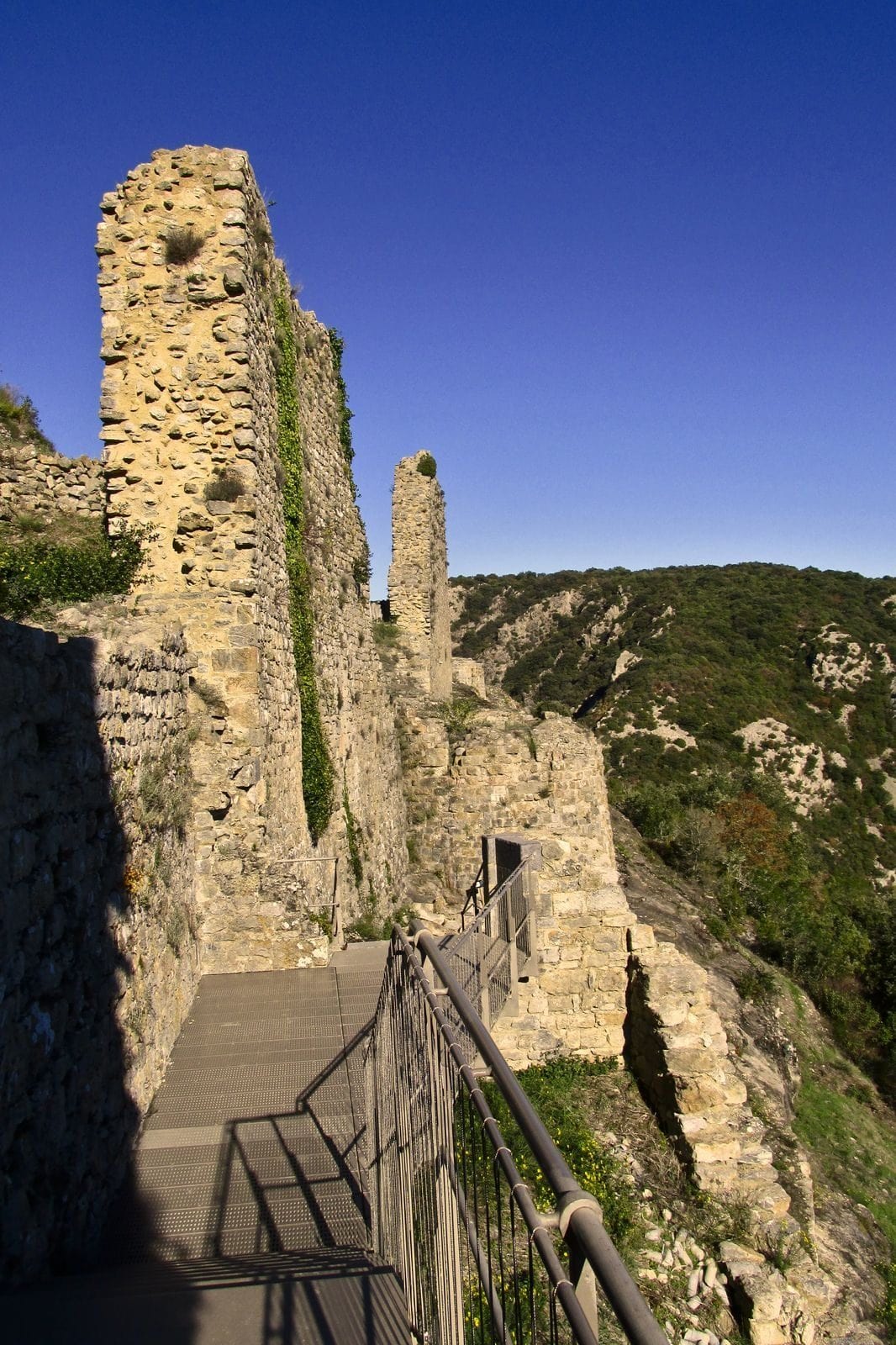
Beyond Château de Termes
Termes is one node in a dense cluster of Cathar and royal fortresses. Its nearest kin are the other Five Sons of Carcassonne: Peyrepertuse and Quéribus on their vertiginous ridges to the south, and Puilaurens guarding the old Aragonese frontier. Northwest stand the four castles of Lastours, where Cabaret submitted soon after Termes fell, and the great walled Cité of Carcassonne that anchored the whole system. To place Termes in its two contexts, see our guide to the Cathar castles as a human story of faith and war, and our guide to the royal fortresses of Languedoc as a military frontier. Both draw on the same landscape from opposite angles.
Conclusion
Château de Termes rewards visitors who want their history with its edges intact. It is a place of real drama, where a four-month siege turned on a rainstorm and a bout of dysentery, and where a father’s defiance and a son’s reconciliation trace the whole span of the Cathar tragedy. It is also a place that quietly corrects its own legend: the Cathar castle you climb to is mostly the fortress of the kings who ended Catharism, destroyed at last not by faith but by frontier politics. Come for the legend of the Cathar stronghold, and leave with something better, a true story of thirst and rainstorms, of a father who defied a king and a son who served one, carved into stones that have outlasted every side in the quarrel.
Principal Sources
- Base Mérimée, notice PA00102907, Plateforme ouverte du patrimoine, French Ministry of Culture.
- Château de Termes official site (chateau-termes.com) and the commune of Termes (termes.fr).
- Forteresses royales du Languedoc, UNESCO serial property (inscribed 2026) and site.
- Pierre des Vaux-de-Cernay, Hystoria Albigensis (contemporary account of the 1210 siege).
- Michel Roquebert, L’Épopée cathare (standard modern history of the Albigensian Crusade).
- Fondation du patrimoine, Château de Termes project page.
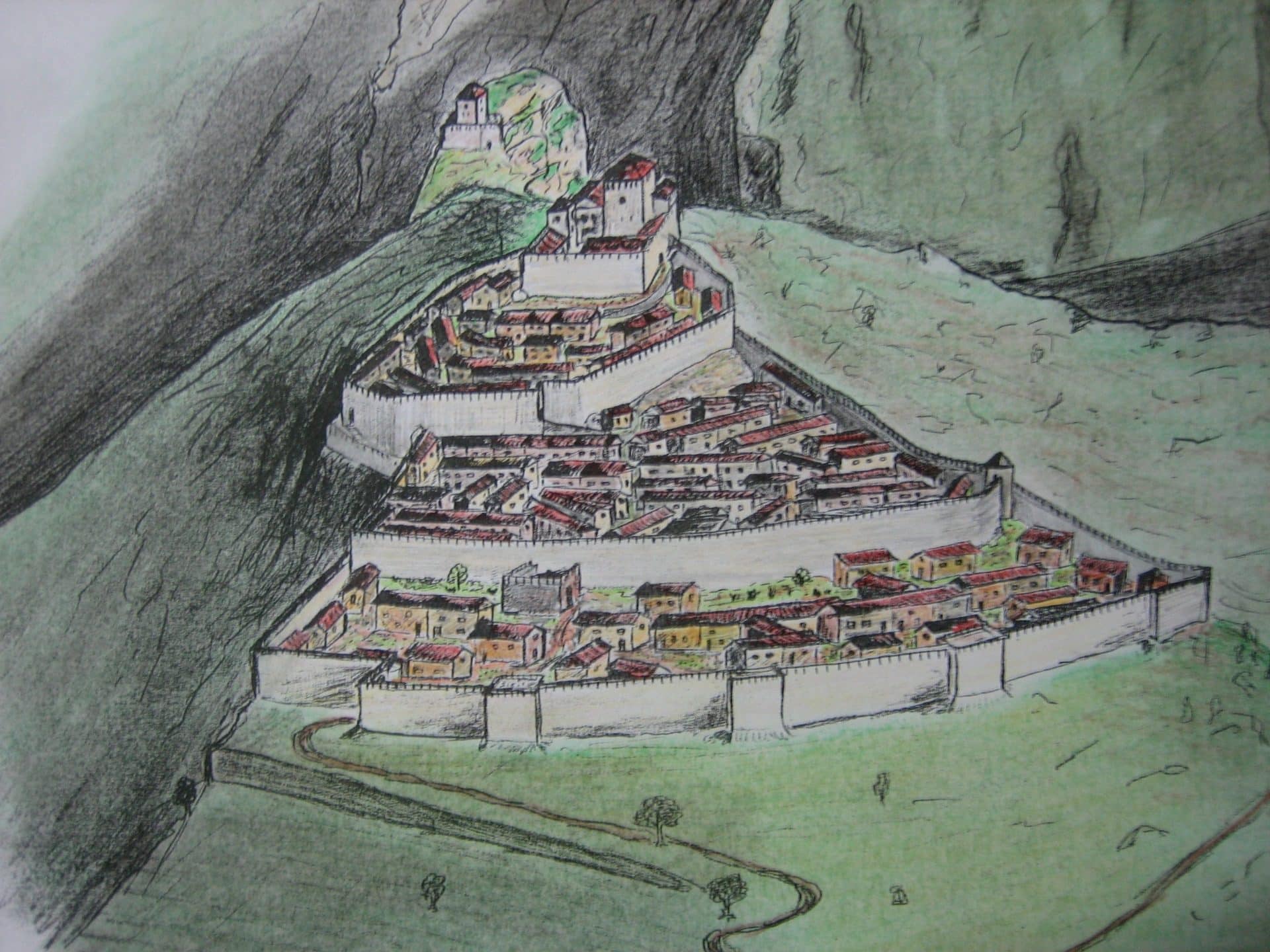
Image credits. The castle on its ridge from the GR 36, the spur above the gorges du Termenet, the north postern, the cross-shaped chapel window, the site above the village, the 2011 restoration work, the moon over the ruins, the south-west angle, and the walled entrance: OlivierDeTermes, CC BY-SA 4.0 and CC BY-SA 3.0, via Wikimedia Commons; the reconstruction of the royal fortress about 1300: Alexandre Avara, CC BY-SA 4.0, via Wikimedia Commons; the reconstruction of the site about 1210: M. Hannes Ceulemans, CC BY-SA 3.0, via Wikimedia Commons. Freely licensed images are resized to fit; otherwise unaltered.