
Châteaux de Lastours
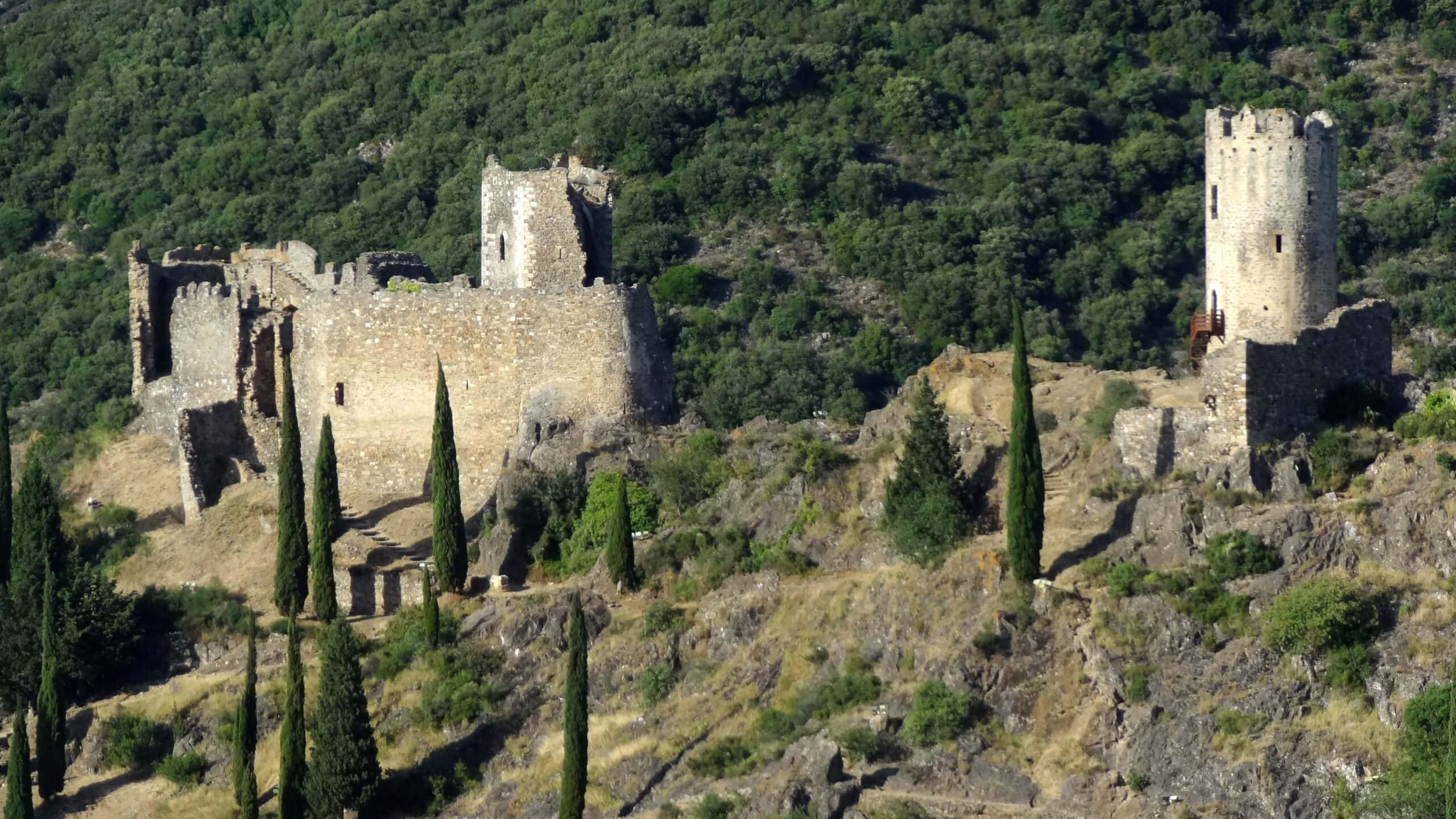
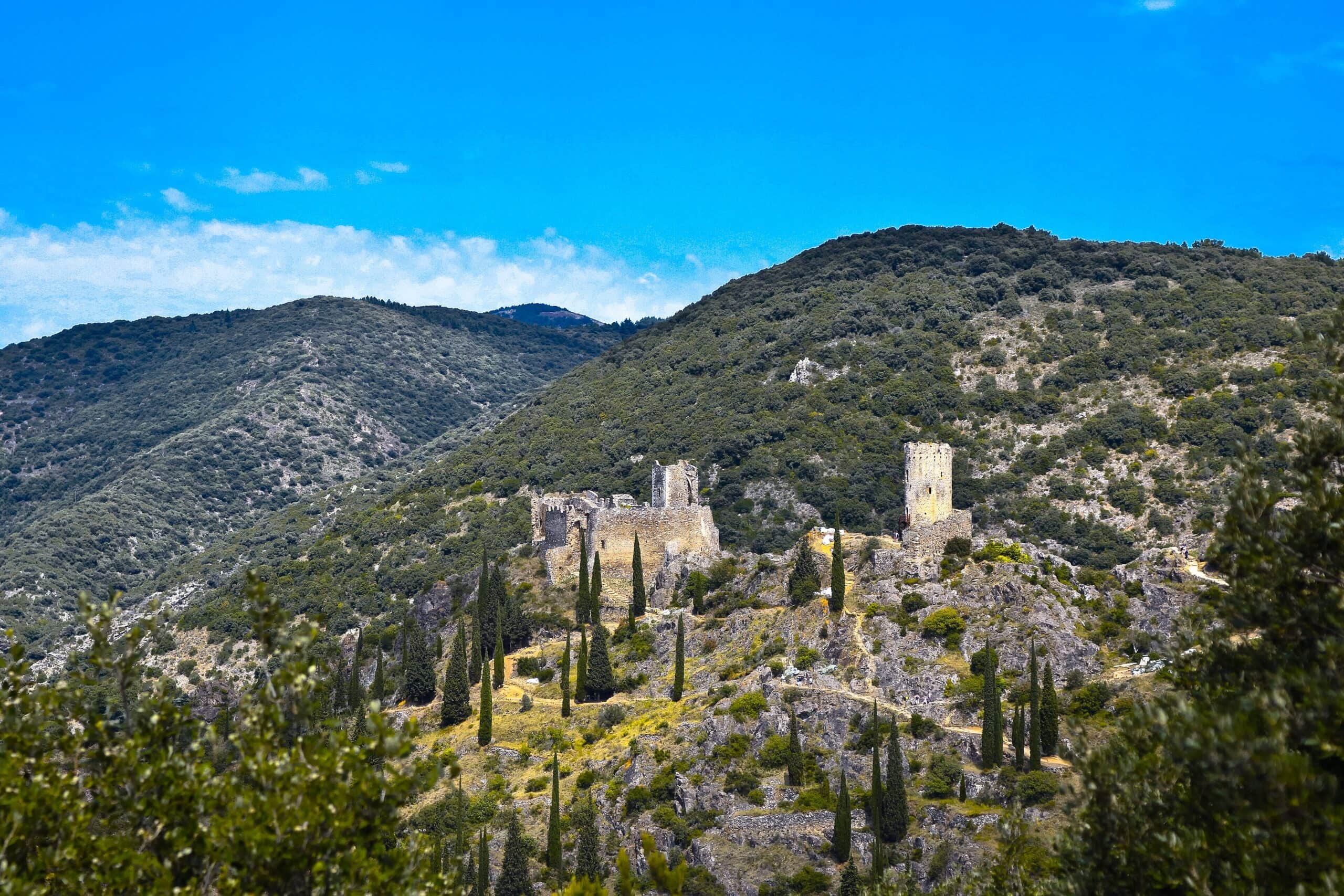
The Châteaux de Lastours are not one castle but four, strung along a single knife-edge of rock in the Montagne Noire, a short drive north of Carcassonne. Cabaret, Tour Régine, Surdespine and Quertinheux stand almost in a line above the deep ravines of the Orbiel and the Grésillou, and from the viewpoint on the hillside opposite they read as a single fortified crest that seems to grow straight out of the stone. It is one of the most photographed sights in the Aude, and one of the most misread.
The castles are famous as Cathar strongholds, and that reputation is earned: the Cathar chapter here is deep and well documented. Yet the towers a visitor climbs today are largely a royal reconstruction of the later thirteenth century, raised after the French crown crushed the local lords and pulled down their earlier fortress and its village. Holding those two truths together, the genuine Cathar history and the royal masonry that replaced it, is the whole art of reading Lastours. This guide sets out what is documented, what is reconstruction, and what belongs to legend, so that the four castles make sense when you stand among them.
Quick Facts
| Location | Lastours, Aude, Occitanie, France (Montagne Noire) |
| Type | Four ruined castles on a single rock ridge |
| Built | Three castles from the 11th century; rebuilt for the French crown after 1229, when the Tour Régine was added |
| Original builders | The lords of Cabaret (early castles); Louis IX of France (royal reconstruction) |
| Elevation | Rock crest between 260 and 285 m above sea level, roughly 100 m above the village |
| Condition | Consolidated ruins, open to visitors |
| Protection | Monument historique (classified 1905, ref. PA00102727); Grand Site Occitanie |
| UNESCO | Component of the Royal Capetian Fortresses of Languedoc, inscribed 2026 |
| Getting there | About 16–20 km (a 20-minute drive) north of Carcassonne |
| Official site | lastourisme.fr |
A lordship built on iron
People have lived on this spur for a very long time. Excavation has traced occupation back to the Bronze Age, and one cave on the site gave up the burial of a child adorned with amber beads, a small sign of how old and how connected this crossroads in the mountains really is. The medieval story begins in the eleventh century, when the lords of Cabaret, first recorded in 1067, raised a tower on the highest point of the ridge. Two more castles, Surdespine and Quertinheux, followed. Their wealth came from the mountain itself: the Cabardès around Lastours was rich in iron ore, and the mines paid for the towers and for the fortified villages, the castra, that clustered beneath them. The largest of these was the castrum of Cabaret, a small town of houses, forges and cisterns packed onto the slope above the river.
By the late twelfth century the lordship of Cabaret was one of the strongest in the region, and its lords answered to the Trencavel viscounts of Carcassonne. This was a wealthy, confident frontier country, closely tied to the courts of the south, and it was into this world that the Cathar faith spread.
Cabaret and the Cathar cause
Catharism, a dualist Christian movement that the medieval Church condemned as heresy, took root strongly at Cabaret. The castra below the castles sheltered the households of Cathar “Perfects,” the movement’s ascetic clergy, and Cabaret grew important enough that Cathar bishops lodged there; for a time it held the seat of the Cathar bishop of the Carcassès. This is what sets Lastours apart from most of the so-called Cathar castles of the Aude. Many were simply fortresses that a Cathar-sympathizing lord happened to hold, or refuges people fled to in the crisis. Cabaret was a working center of the faith, not just a wall behind which it sheltered.
The lord through the crisis years was Pierre-Roger de Cabaret, a vassal and ally of the young viscount Raymond-Roger Trencavel. He was not himself a Perfect, but he understood exactly what the northern crusade meant for the south, and he chose to resist it. When Carcassonne fell to Simon de Montfort in 1209 and Trencavel died a prisoner soon after, Pierre-Roger did not submit. He turned Cabaret into a base of open resistance in the heart of the conquered land.
The War of Cabaret
The episode that made Cabaret notorious came in 1209, when Pierre-Roger’s men captured the crusader knight Bouchard de Marly and held him prisoner in the castle for well over a year. Furious, Simon de Montfort turned to terror. He took prisoners from the captured village of Bram, had them blinded and mutilated, and sent them stumbling toward Lastours led by a single man left with one eye, a living warning of what awaited the defenders. The ploy failed. The castles held, and the chronicler Pierre des Vaux-de-Cernay, no friend of the southern lords, recorded the episode in detail.
Cabaret submitted only after the supposedly impregnable fortress of Termes fell late in 1210, when Pierre-Roger negotiated terms that included handing back Bouchard de Marly. Even then the story was not finished. The lords of Cabaret recovered their lands in 1223, and the castle again became a rallying point and again the seat of a Cathar bishop. A royal army under Humbert de Beaujeu besieged it in 1227, and in 1229, the year the Treaty of Paris ended the crusade as a formal war, Cabaret capitulated for the last time. The castles and their villages were plundered.
A royal reconstruction
What happened next is the key to understanding the site. The crown did not simply garrison the old Cathar castles; it pulled them down. The primitive castles and the castrum of Cabaret were dismantled, the population was moved off the ridge, and over the following decades the fortress was rebuilt from the rock up as an instrument of royal power. Louis IX and his successors adapted the three surviving castles to the newest methods of siege warfare and added a fourth, the Tour Régine, a compact royal tower whose name, from the Latin for queen, announced whose fortress this now was. It was built in the manner of the towers of the Château Comtal at Carcassonne, the visual signature of the king’s architects.
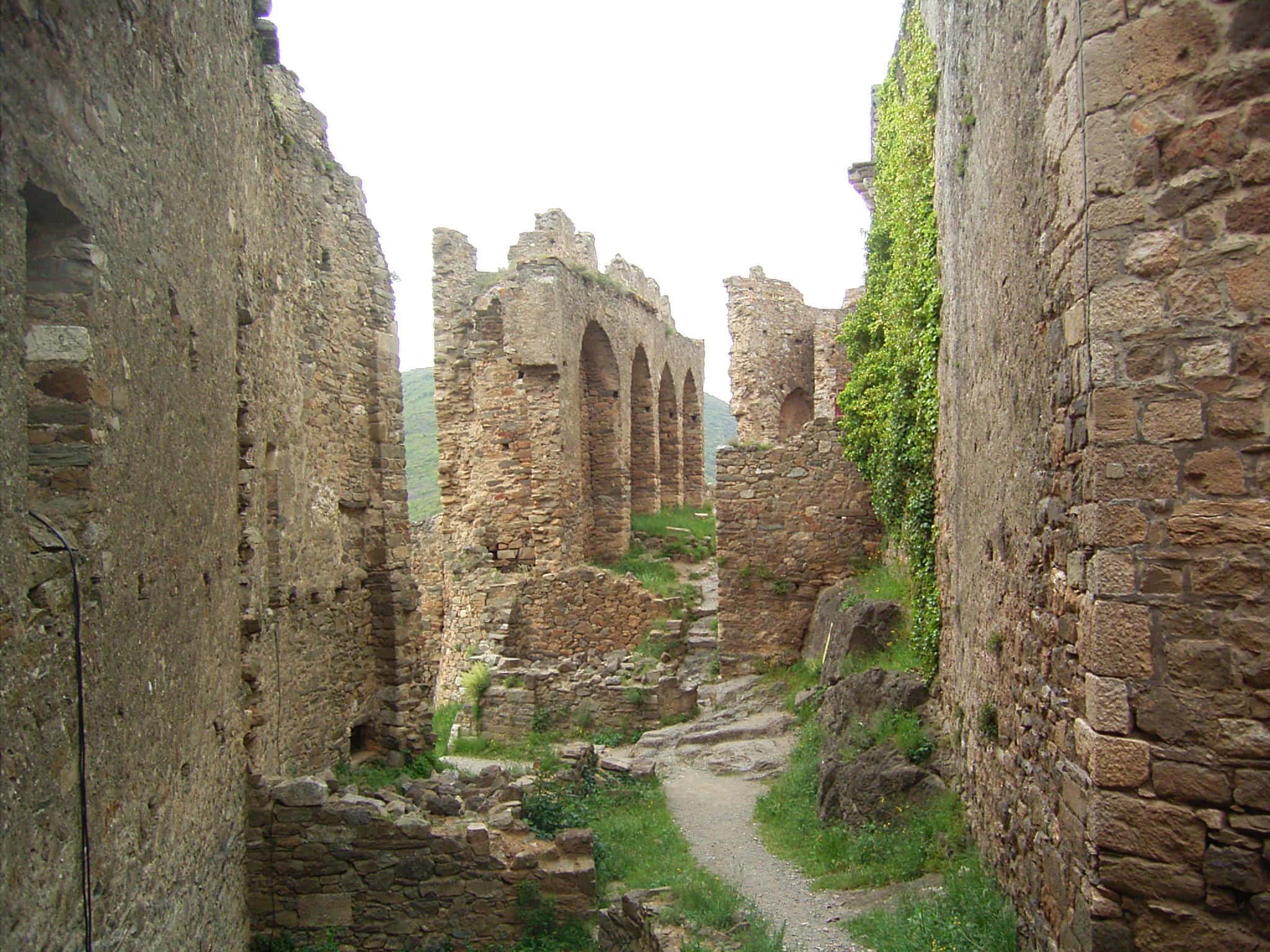
This is why present-state honesty matters at Lastours. The walls, the round tower, the barbican and the wall-walks a visitor follows today are, for the most part, this royal-phase construction of the middle and later thirteenth century, not the fabric Pierre-Roger de Cabaret defended. The Cathar castrum survives as archaeology, not as standing architecture. The four rebuilt castles became the administrative and military heart of the châtellenie of Cabardès, governing six surrounding communities, and Lastours settled into a long career as a royal frontier post.
There is a geographic quirk worth noting. Of the seven mountain châteaux later grouped with Carcassonne, Lastours is the only one that sits behind the city, to the north in the Montagne Noire, rather than facing south toward the frontier with Aragon. It was the rear bolt of the system, the lock guarding the routes down from the mountains, and unlike the southern sentinels it was never itself stormed by an Aragonese army. In the sixteenth century Protestants held the castles, and were dislodged by the maréchal de Joyeuse in 1591; after the Revolution the site was abandoned for good.
Reading the four castles today
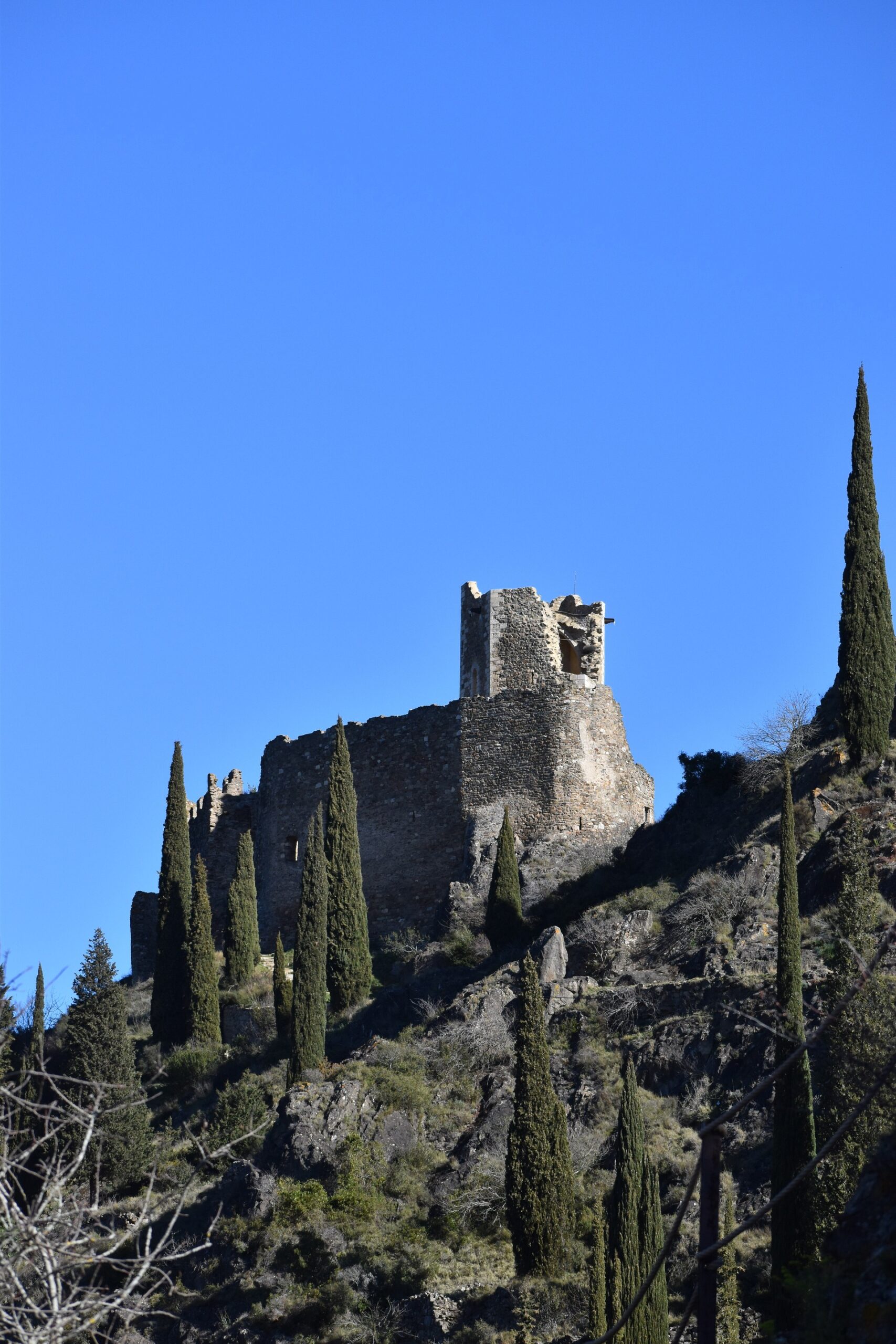
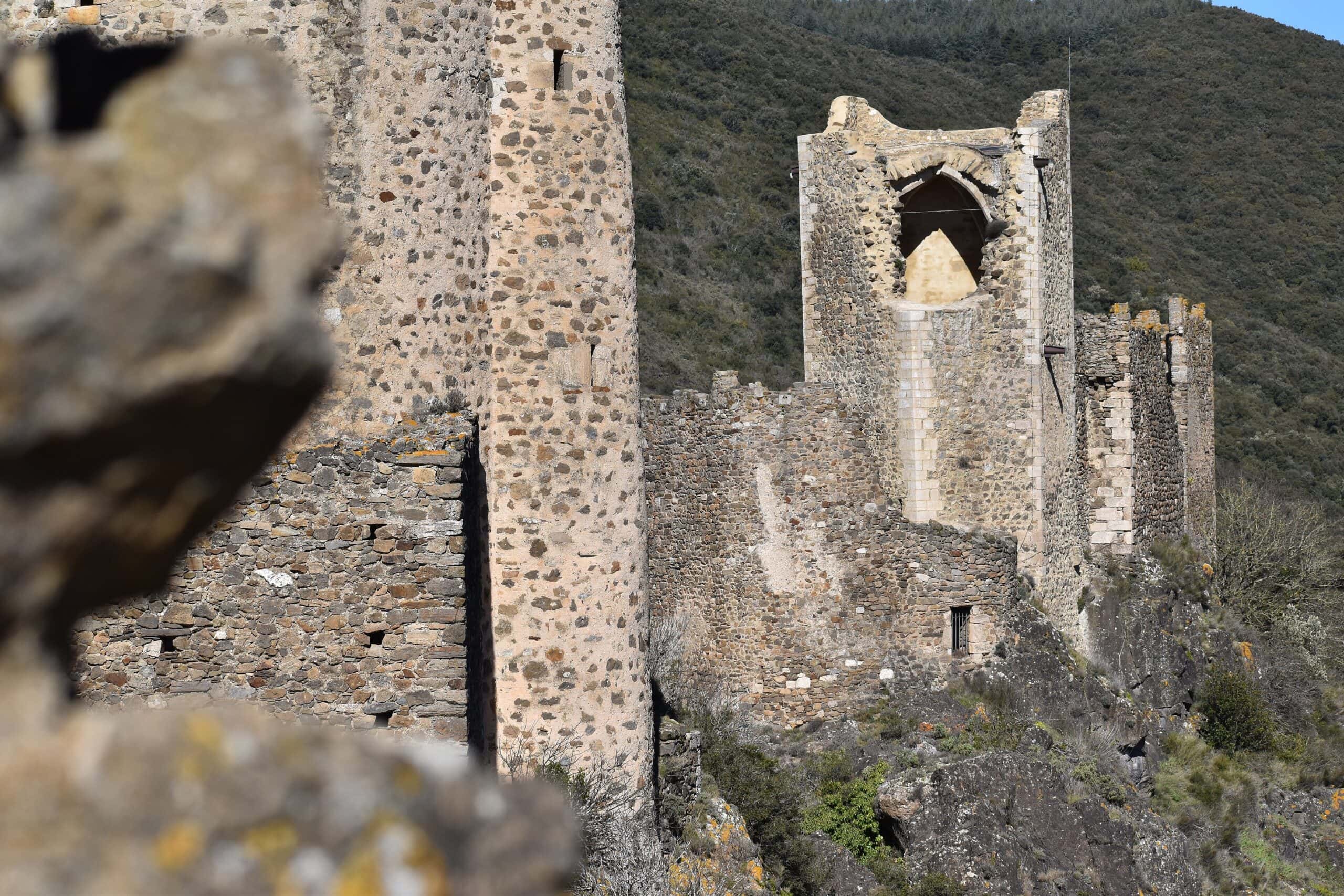
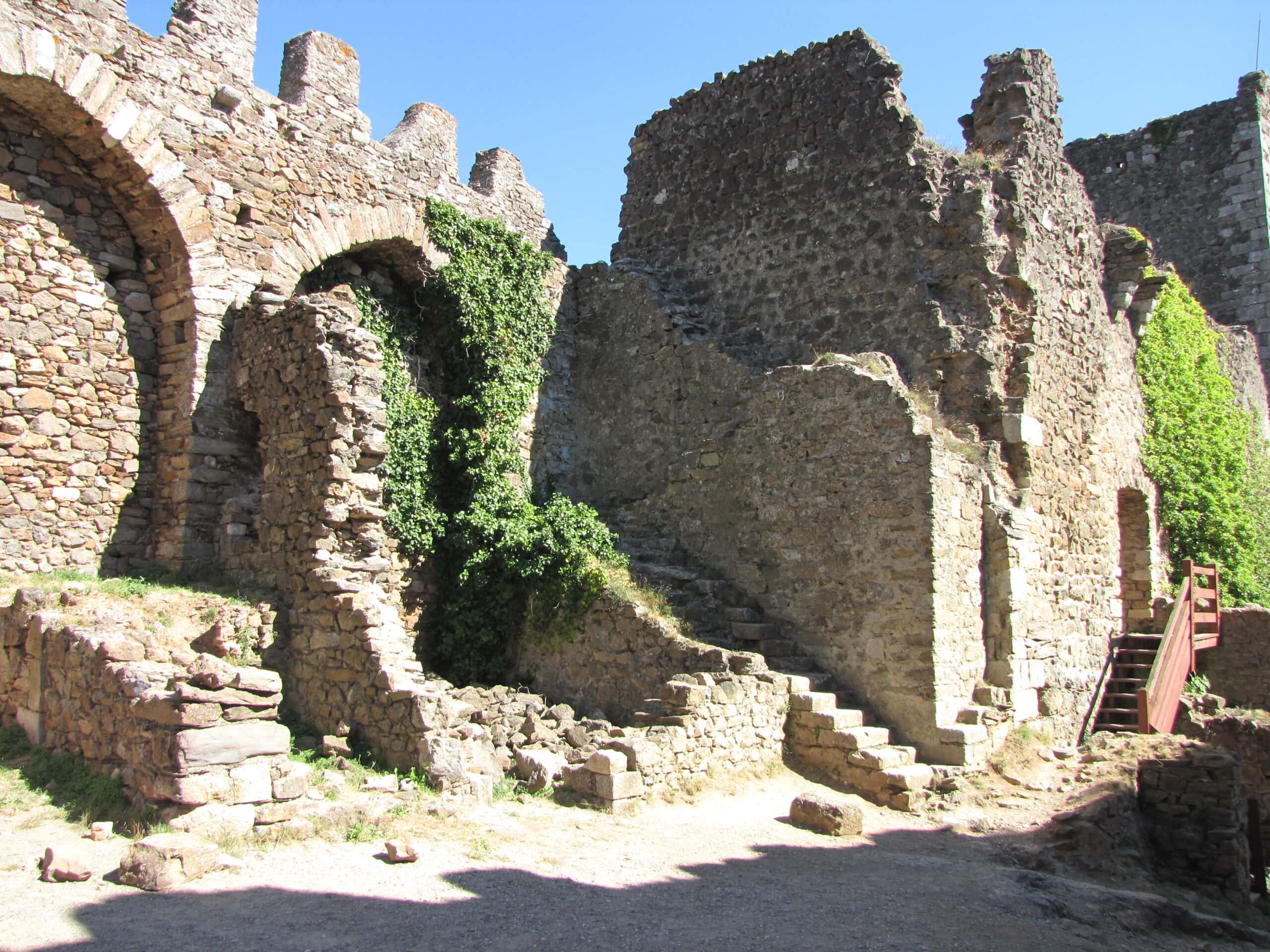
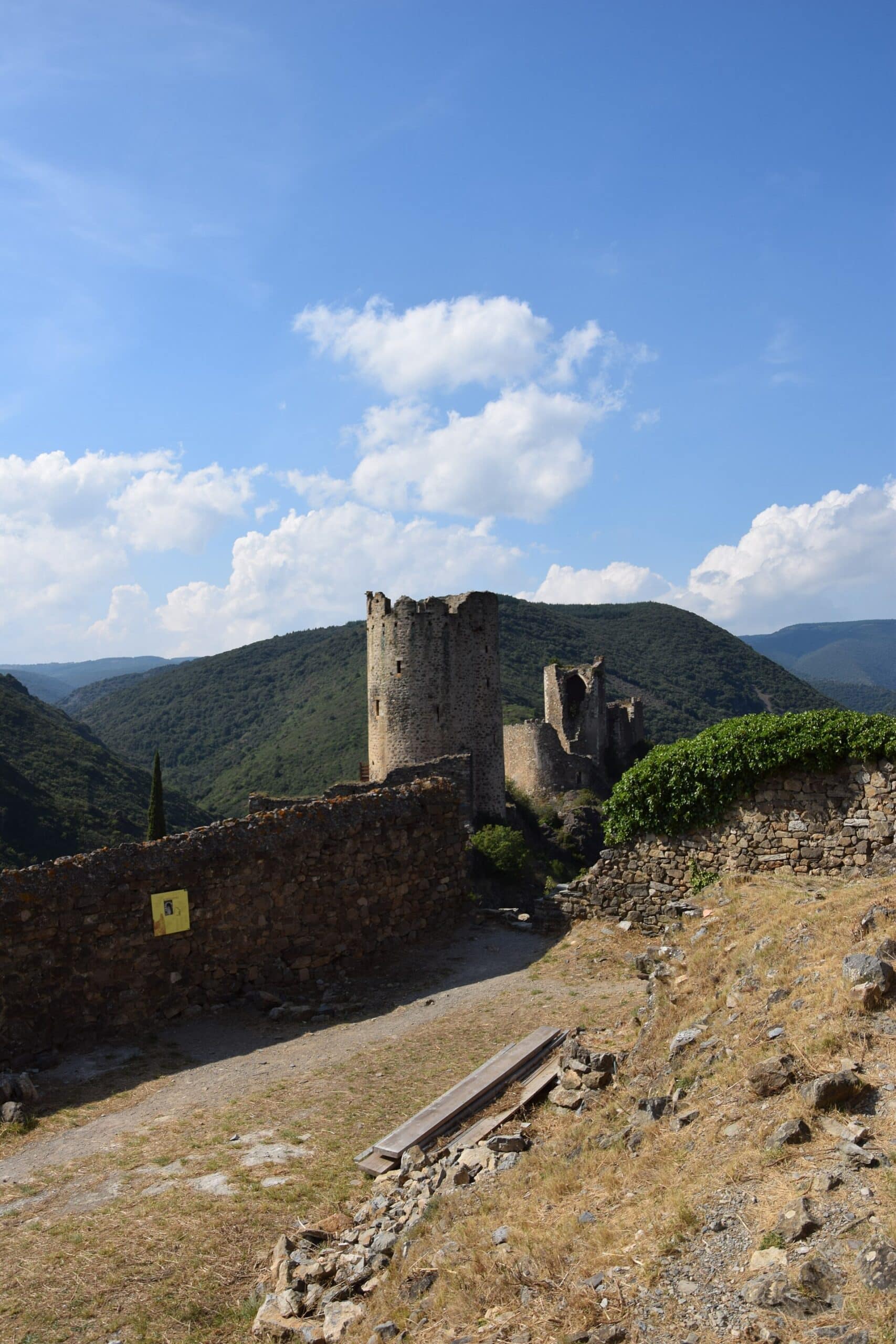
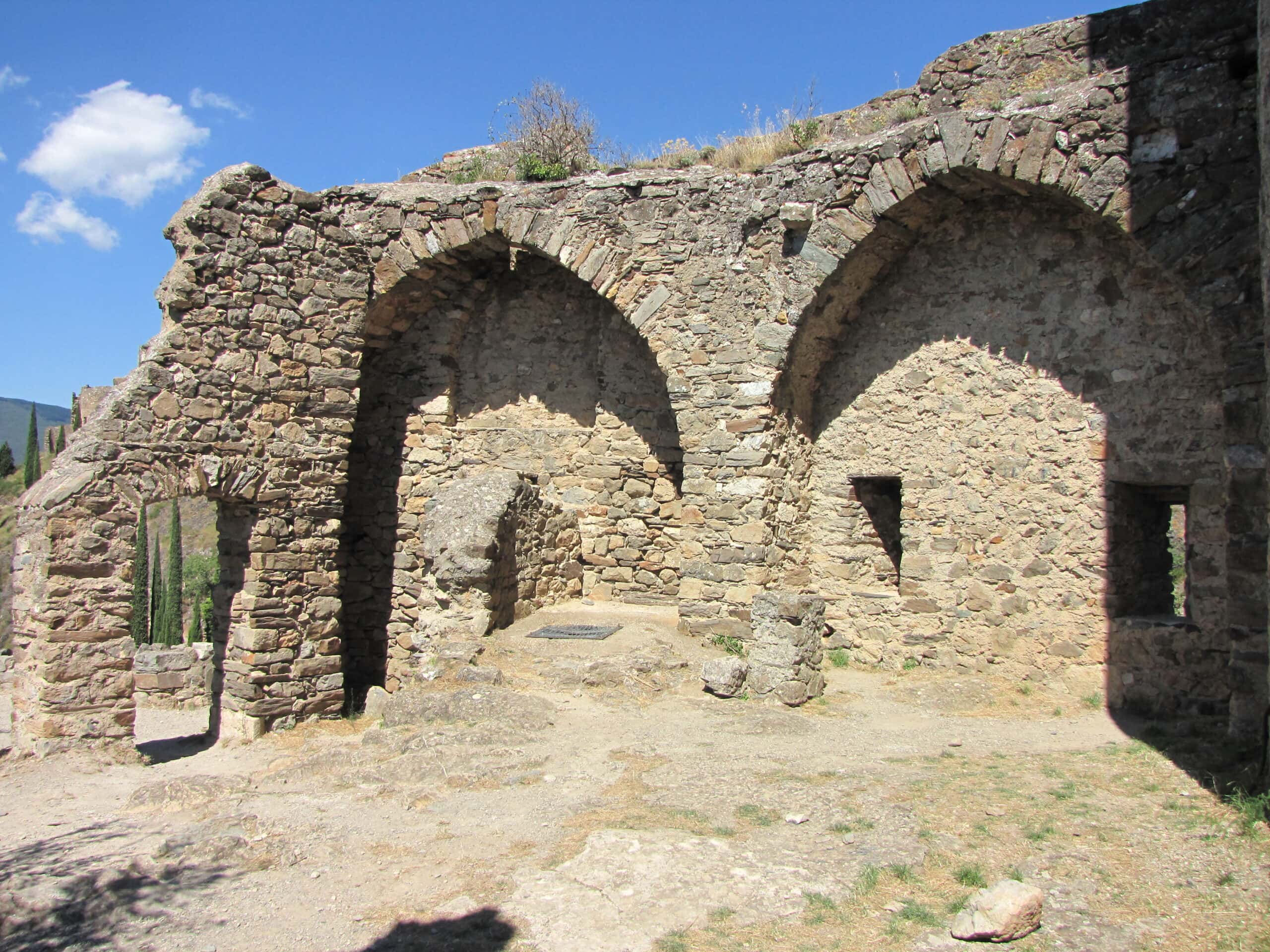
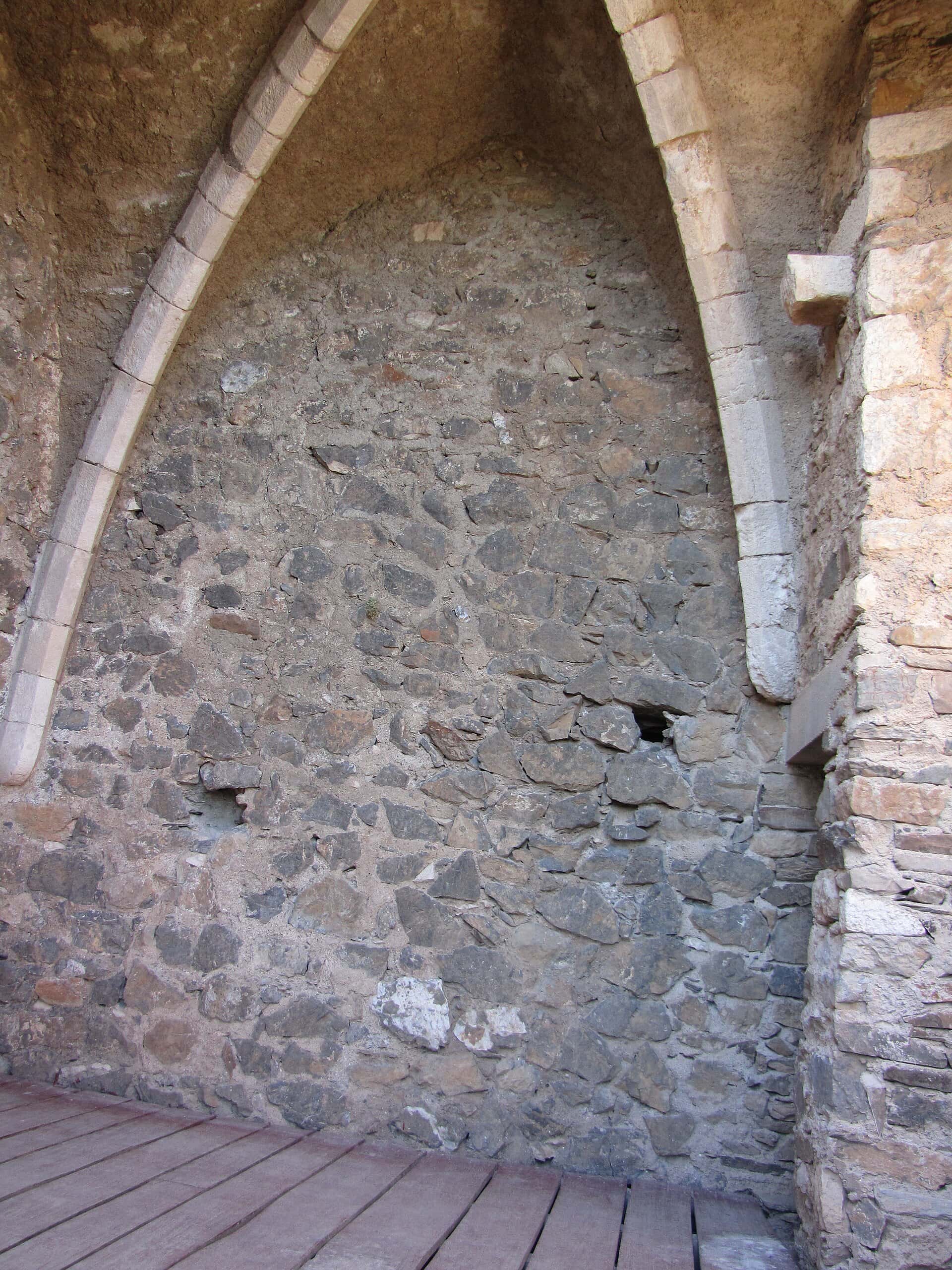
Seen from the Belvédère, the four fall into a clear pattern. Cabaret, the oldest and largest, anchors the group: a true citadel with a barbican, a north tower, a polygonal keep at its south end and ranges of living quarters behind ramparts and a wall-walk. It is the most complete of the four and the one that best repays a climb. Tour Régine, the smallest, stands just along the crest; it is the royal newcomer, the tower added after the conquest, and climbing it gives the clearest sense of the whole ridge. Surdespine, next in line, is the most ruined, marked chiefly by a square tower with little else still standing. Quertinheux sits slightly apart, on its own rock pinnacle, and probably served as a lookout guarding the approach; it is usually the first castle reached on the modern trail.
Myth, archaeology and afterlife
Lastours attracts legend, and some of it should be set gently to one side. The romantic idea that the troubadours of Cabaret’s court sang a coded, secretly Cathar poetry, or that the site guards a hidden mystical secret, belongs to the nineteenth and twentieth centuries, not to the Middle Ages; it is the same esoteric layer that gathered around Montségur. Pierre-Roger did keep a lively court, and troubadours passed through it, but that is courtly culture, not concealed heresy. The tales of a secret tunnel bored through the rock are folklore too.
The documented afterlife is quieter and, in its way, more interesting. The rediscovery of Lastours owes most to the archaeologist Marie-Élise Gardel, whose team spent more than three decades excavating the castrum of Cabaret and the slopes below, recovering the everyday world of the medieval villagers: the houses hurriedly abandoned during the crusade and the objects left behind in them. That work underpins the exhibition in the village today, housed in a former textile mill on the valley floor, and it is the reason Lastours can tell its story with unusual precision. The castles have been classified as a monument historique since 1905, with the protection extended in 2023 and 2024 to cover the whole castral ensemble and the buried village. Since 2018 they have carried the Grand Site Occitanie label, and in January 2025 France submitted them, together with Carcassonne and six other fortresses, as part of the “Forteresses royales du Languedoc” candidacy for UNESCO World Heritage status. On 26 July 2026 the World Heritage Committee inscribed all eight, under the official name Royal Capetian Fortresses of Languedoc.
Visiting the Châteaux de Lastours
The site is run by the commune, and every visit starts in the village of Lastours, at the reception housed in that former textile mill. There is a small but genuinely good exhibition here, the fruit of those decades of excavation, before the trail even begins. From the reception a well-made footpath climbs the ridge; reaching all four castles and returning takes around two hours, and it is a real walk, steep and rocky in places and the equivalent of climbing many flights of stairs. Good shoes, water and a sun hat are not optional in summer, when there is little shade. Two of the four towers, Cabaret and the Tour Régine, can be climbed, and two “Pays cathare” apps add audio, images and even augmented reality for those who want them.
Do not miss the Belvédère, the viewpoint on the hillside opposite, about two kilometers from the village, which gives the classic photograph of all four castles at once; entry to it is included in the castle ticket. The site is open through most of the year and normally closes for January, so check current hours before setting out; the 2026 adult admission is around 9 €. One practical warning that saves a wasted drive: set your navigation for the village of Lastours in the Aude, not for the Corbières wine estate called Château de Lastours or the unrelated Lastours in the Limousin, all of which share the name.
Lastours makes an easy half-day trip from Carcassonne, only about twenty minutes away, and it pairs naturally with the Cathar-country fortresses further south. For a base within reach of the site you can search places to stay near Carcassonne on Booking.com and build a two- or three-castle day around the region. For guided options, GetYourGuide lists Cathar castle day trips from Carcassonne that take in several sites at once.
Some links on this page are affiliate links, which means StoneKeep Atlas may earn a small commission, at no extra cost to you, if you book through them.
More Views of the Châteaux de Lastours
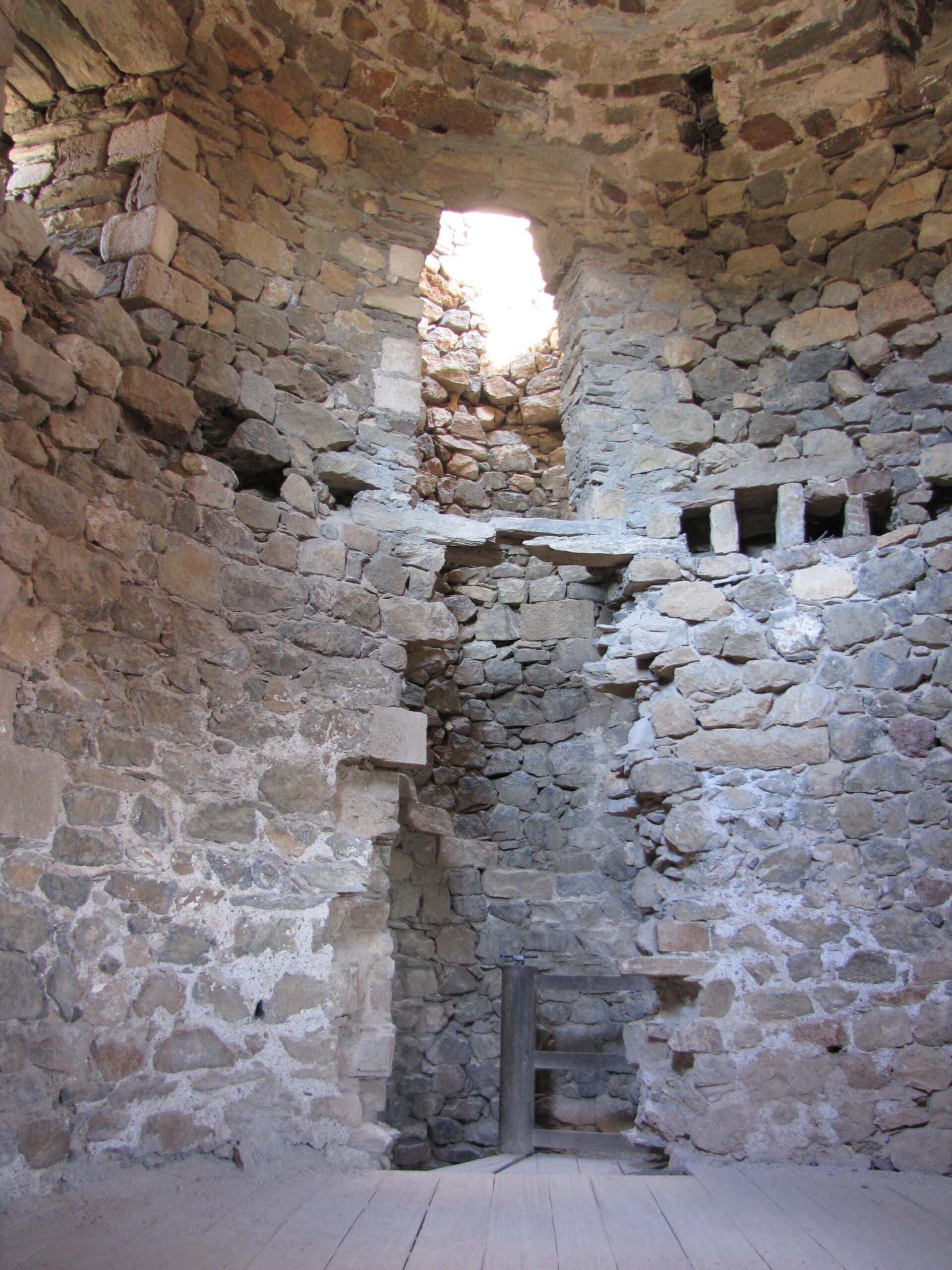
A few more views of the ridge, its towers and their interiors.
Beyond the Châteaux de Lastours
If Lastours whets your appetite for the fortresses of the south, its closest companion is the Château de Puilaurens, another of the inscribed royal fortresses, guarding the Fenouillèdes on its wooded crag; the two make a natural pair across the Cathar country. Deeper into the Corbières stand Peyrepertuse and Quéribus, the great cliff-top sentinels, while Montségur, over in the Ariège, holds the tragic heart of the Cathar story. All of them, with Carcassonne itself, belong to the Royal Fortresses of Languedoc, and you can explore more of the region through our guide to the Cathar castles.
For the faith that made Cabaret matter, see our guide to the Cathar Castles of Languedoc.
Conclusion
The Châteaux de Lastours reward a visitor who comes knowing what to look for. The four towers on the ridge are royal work, the crown’s answer to a rebellious frontier, raised on the bones of a fortress it had destroyed. But beneath them, in the excavated castrum and in the record of Pierre-Roger de Cabaret’s long defiance, lies one of the most genuine Cathar chapters in all of the Aude. Stand at the Belvédère with both stories in mind, and the ridge stops being merely a beautiful ruin and becomes what it truly is: a place where a way of life was defended, defeated and then written over in stone.
Principal Sources
- Base Mérimée / Plateforme ouverte du patrimoine, Ministère de la Culture: “Ruines des quatre châteaux,” ref. PA00102727.
- Les 4 Châteaux de Lastours, official site (lastourisme.fr), commune of Lastours.
- Département de l’Aude and the Association Mission Patrimoine Mondial: “Forteresses royales du Languedoc” UNESCO serial property, inscribed 2026.
- Marie-Élise Gardel, published excavations of the castrum of Cabaret and the Lastours site.
- Pierre des Vaux-de-Cernay and standard histories of the Albigensian Crusade for the events of 1209–1229.
- Aude Tourisme and Tourisme en Montagne Noire visitor information.
Image credits. the ensemble on its ridge: Vincent Zimmermann, CC BY-SA 3.0, via Wikimedia Commons; the Tour Régine and Cabaret: Meria z Geoian, CC BY-SA 3.0, via Wikimedia Commons; the interior of Cabaret: Pethrus, CC BY-SA 3.0, via Wikimedia Commons; the citadel of Cabaret: Tylwyth Eldar, CC BY-SA 4.0, via Wikimedia Commons; Surdespine and the gallery views: Tylwyth Eldar (CC BY-SA 4.0), Mathieu MD and Tournasol7 (CC BY-SA 3.0), via Wikimedia Commons. Freely licensed images are resized to fit; otherwise unaltered.