
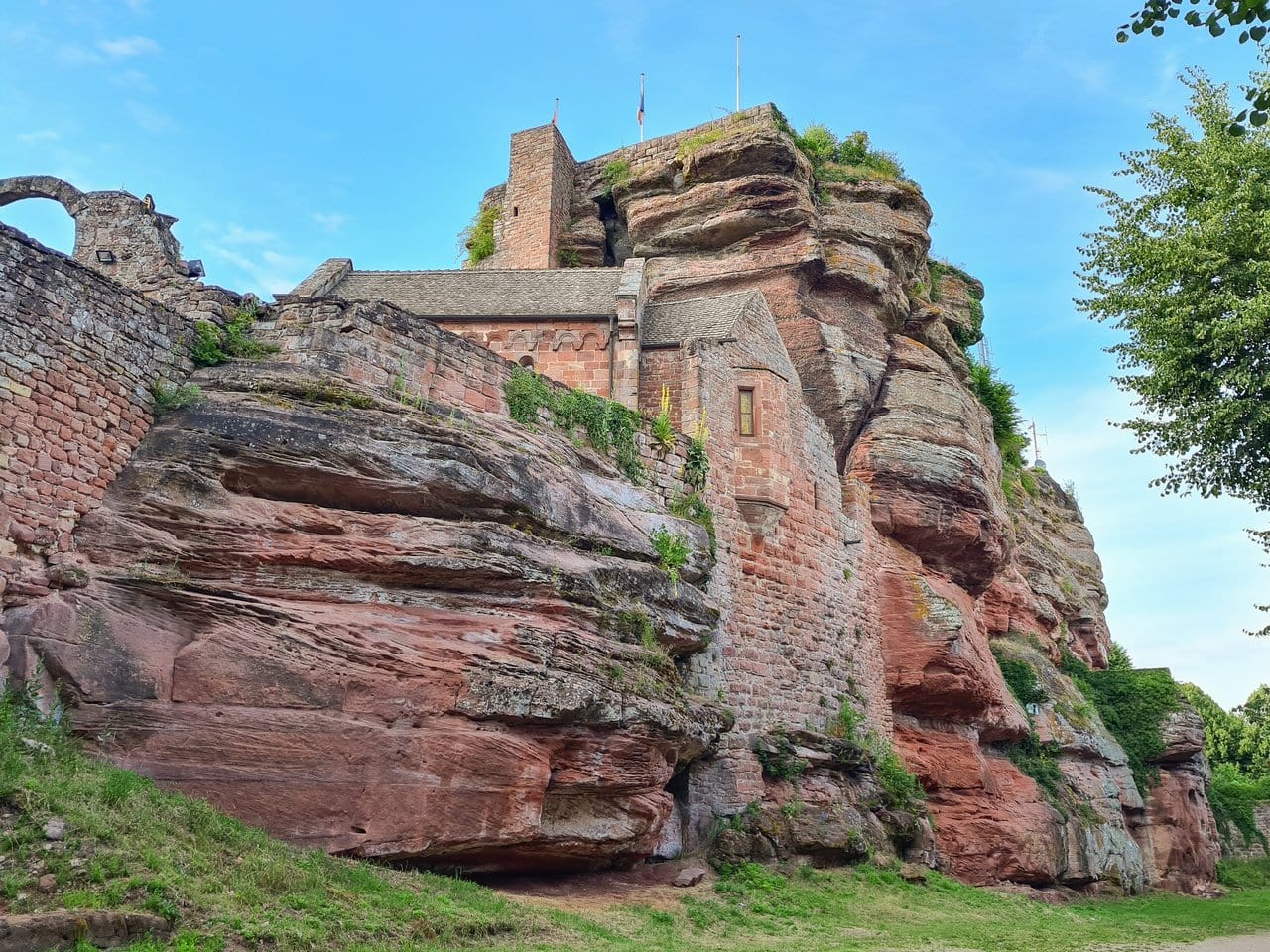
Château du Haut-Barr
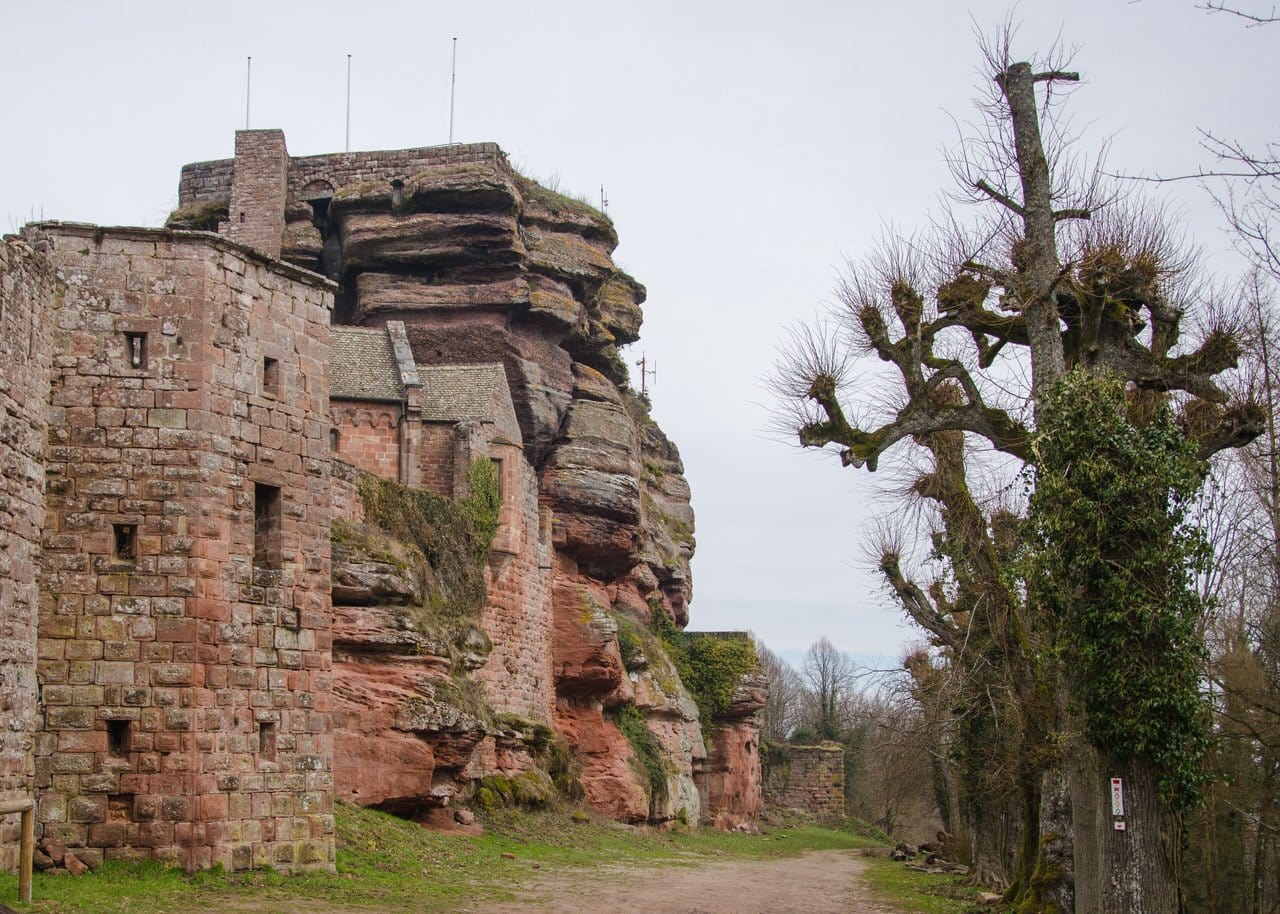
High above Saverne, on three great fists of pink sandstone, the Château du Haut-Barr watches half a province at once. The bishops of Strasbourg raised it here in the early 1100s for precisely that reason: from this narrow rock bar, about 450 meters above sea level, a garrison could see the Alsace plain to the east, the Zorn valley to the west, and every traveler working through the pass between Lorraine and the Rhine. Medieval Alsace gave the castle a nickname that has never worn off. They called it Oculus Alsatiae, the Eye of Alsace.
What survives today is a ruin, but a ruin unlike its neighbors. The tall towers are gone, dismantled stone by stone in 1649 and 1650. What remains is stranger and in some ways better: a complete Romanesque chapel, a Renaissance gateway still carrying its builder’s boast, staircases cut through living rock, and a footbridge over a void that locals insist the devil built. This is the third of our Alsace castle guides, and the most episcopal of them all.
Quick Facts
| Location | Saverne, Bas-Rhin, Alsace, France |
| Type | Episcopal rock castle (château fort) |
| Built | First mentioned 1112; rebuilt 1583–1586 |
| Rock | Pink Vosges sandstone bar, about 250 m long |
| Elevation | About 450 m above sea level |
| Condition | Ruin with intact Romanesque chapel |
| Protection | Monument Historique (classified 1874) |
| Owner | City of Saverne (since 1970) |
| Official site | tourisme-saverne.fr |
The eye of Alsace
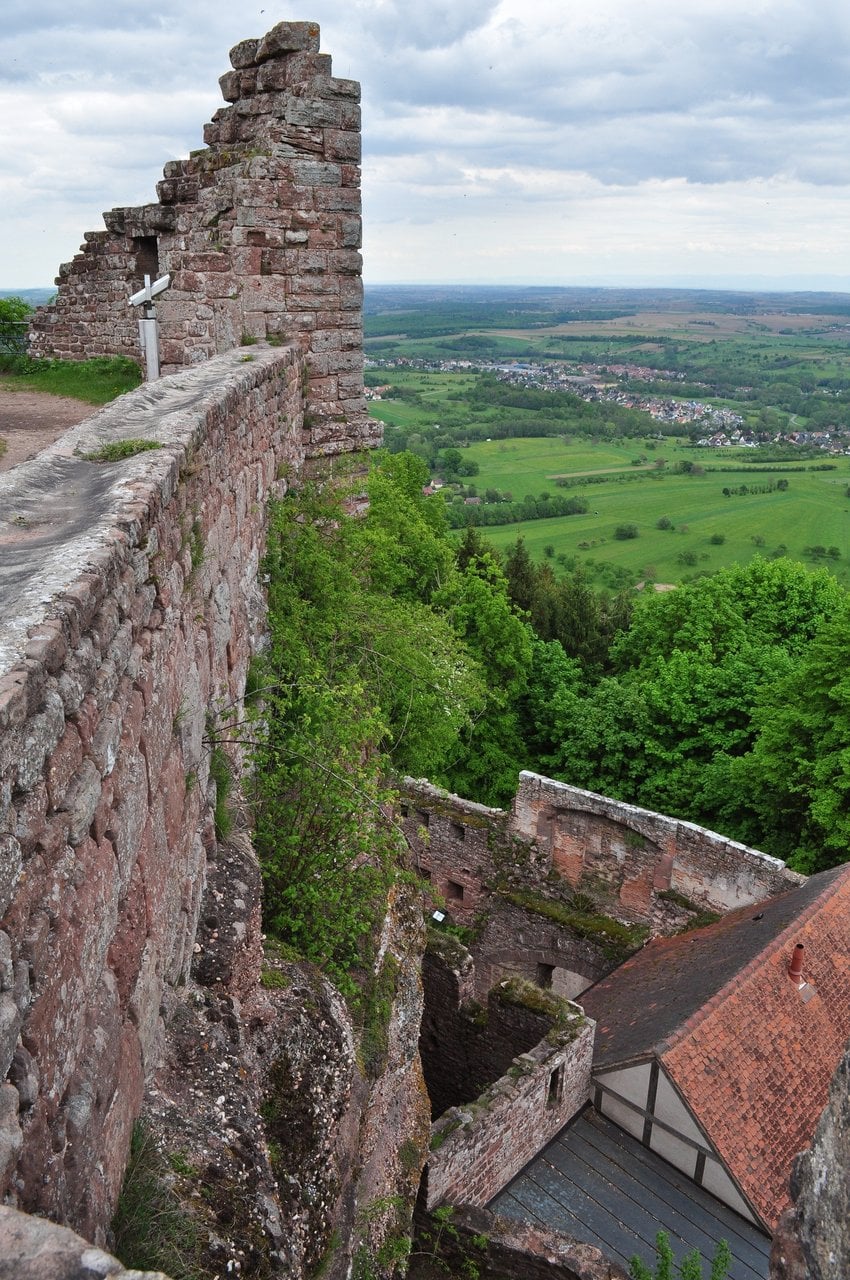
Geography explains almost everything about the Haut-Barr. The castle occupies a sandstone bar roughly 250 meters long, the northern tip of a spur running out from the Brotschberg, with the Alsace plain spread below one flank and the Zorn valley below the other. Whoever held this rock controlled the view over one of the easiest crossings of the Vosges, the corridor where the Zorn and the col de Saverne funnel traffic between the Lorraine plateau and the Rhine.
The medieval world understood the value of the spot with total clarity, and it crowded in. On the same ridge, just to the south, stand the ruins of the Grand Geroldseck and the Petit Geroldseck; across the valley rises the Greifenstein. Four castles within walking distance of one another is a density that only a great frontier road can explain. The ridge is also the southern gateway of the Northern Vosges, whose regional nature park counts the castle among its landmarks; the same sandstone that carved the Haut-Barr’s rocks runs north through the forest all the way to Fleckenstein and the border.
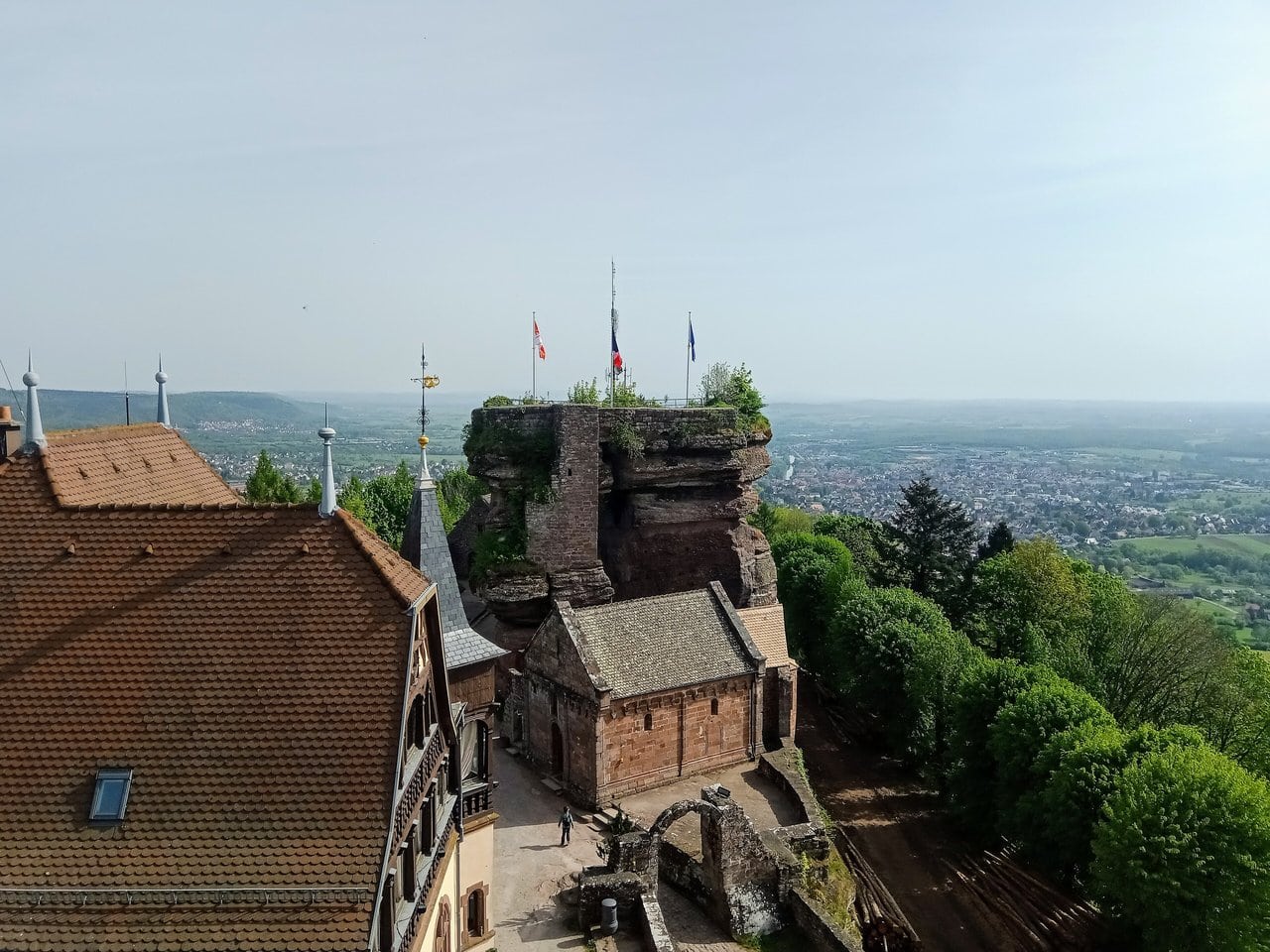
The rock itself tells its own story. The lower beds are a fine-grained sandstone; the upper courses are a rougher conglomerate studded with white quartz pebbles, which weathered into the bulging, layered shelves that make the three summit rocks look stacked rather than carved. On top of them, the panorama does the rest. On a clear day, the tourism office promises, you can follow the plain past Saverne to the Vosges and the Black Forest, and pick out the spire of Strasbourg Cathedral itself. The Eye of Alsace has kept its eyesight. The name is medieval: Latin documents call the castle Oculus Alsatiae, and by tradition the nickname has clung to it since the Council of Constance in 1415.
The bishops’ fortress
The castle enters written history in 1112 as Borre, a stronghold of Bishop Cunon of Strasbourg. The name probably comes from an old word for height, and it shifted over the centuries from Borre to Bar and Barr; the form Hohenbarr, “high Barr,” appears only at the end of the sixteenth century, and German speakers still call the ruin Hohbarr.
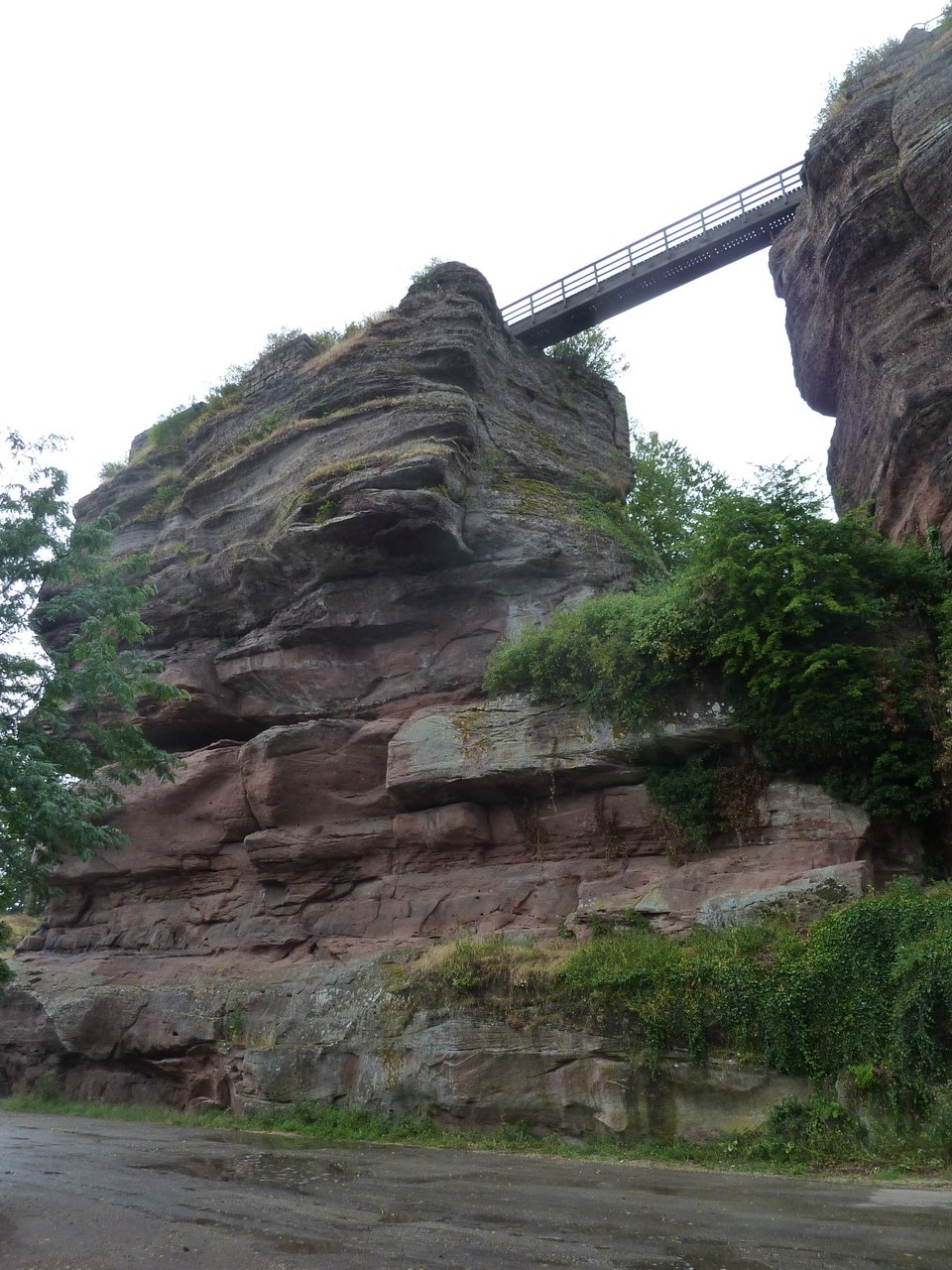
For the prince-bishops of Strasbourg, this was not one castle among many. It was the strong room of their territory, the fortress that watched their roads. In 1168 the bishop bought the southernmost of the three rocks, the Markfels, from the abbey of Marmoutier, closing the last gap in his position. Bridging the void between the rocks proved harder than buying them, and here the legend begins. The story goes that the span kept defeating its builders until the devil offered to finish it overnight, in exchange for the soul of the first to cross. The bishop’s men agreed, and at dawn sent a dog trotting over the planks. The crossing has been the Pont du Diable, the Devil’s Bridge, ever since. Today a modern footbridge makes the same leap, and it remains the most heart-quickening ten steps of the visit.
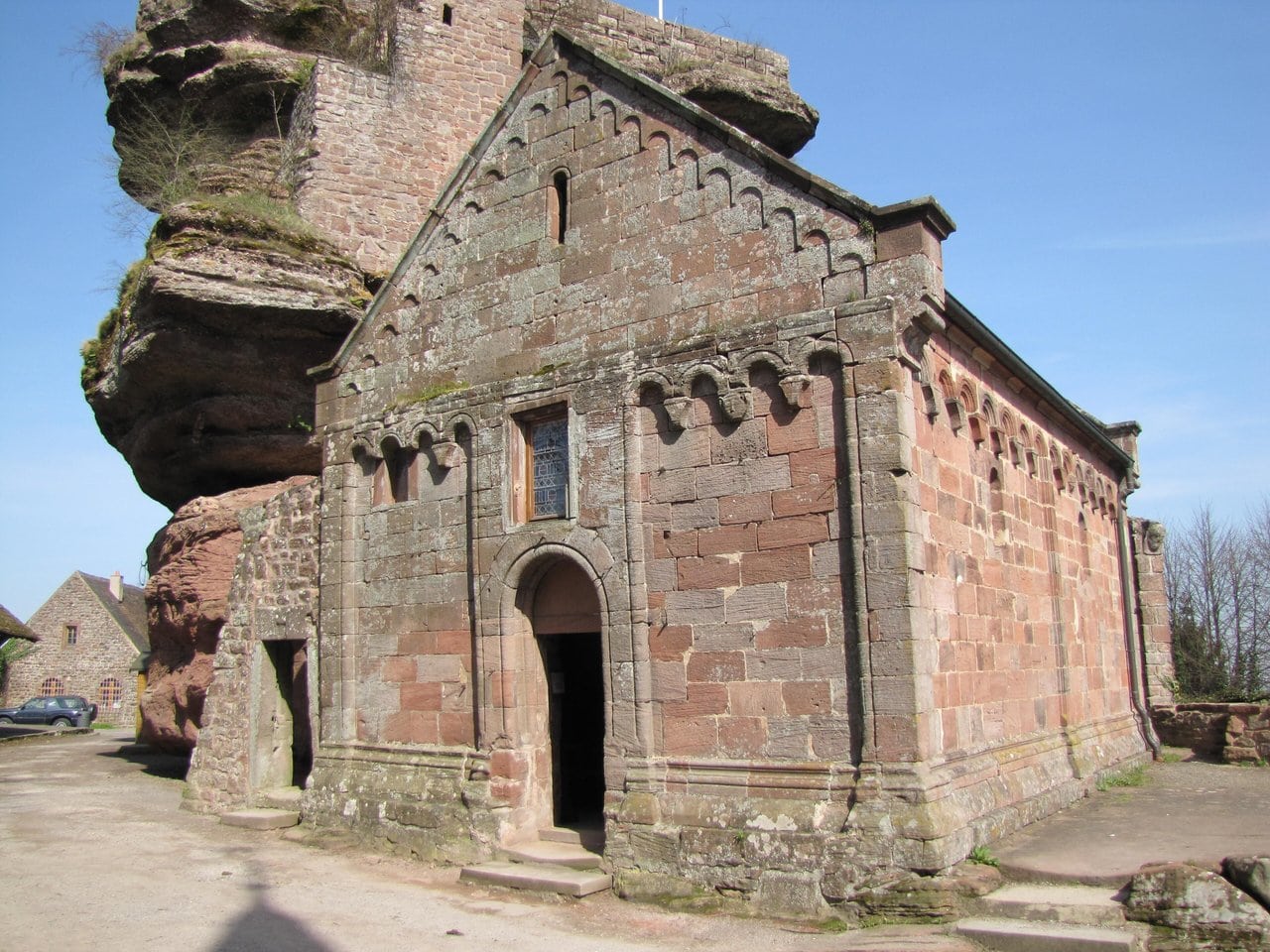
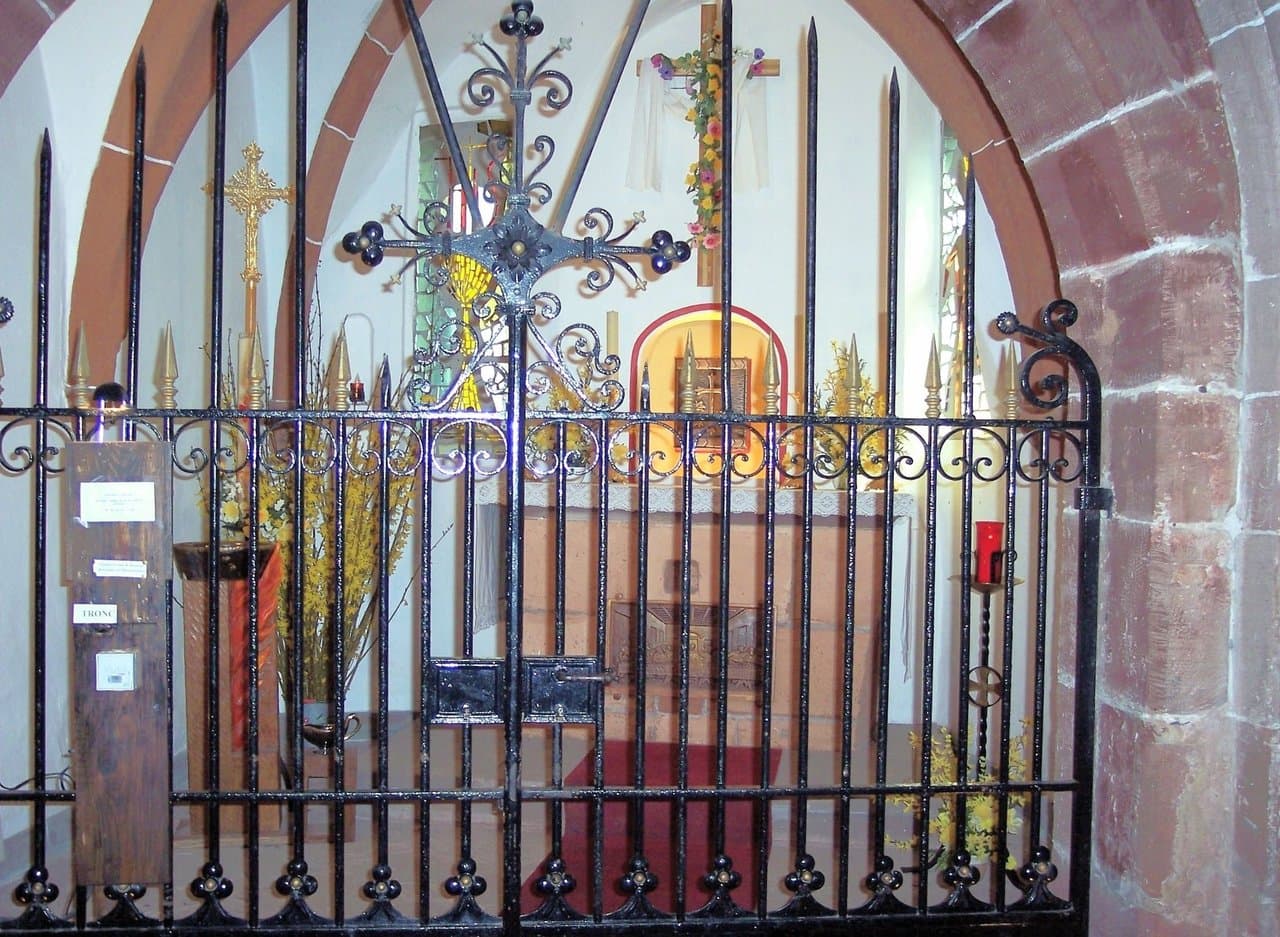
The twelfth-century castle survives in fragments that reward a slow eye: the polygonal residence whose upper floor served as the bishops’ apartment, and above all the chapel of Saint-Nicolas, a complete Romanesque building with blind arcading along its walls, its choir remodeled in the fourteenth century, probably under Bishop Jean de Lichtenberg.
In 1394 two castellans formally pledged to Bishop Guillaume de Diest to defend and maintain the fortress. It was Diest who then gave the Haut-Barr its most extraordinary scene. Pressed by debts, he pawned part of the castle to the Duke of Lorraine in 1413. His own cathedral chapter and the city of Strasbourg, out of patience with a bishop mortgaging the see’s great fortress, had him arrested. It took the Council of Constance to untangle the affair; the council condemned the rebels and freed the bishop. A castle so important that imprisoning a bishop over it seemed reasonable: that is what the Haut-Barr was to medieval Alsace.
The castle’s defensive record held to the end of the Middle Ages. In 1525, when the Peasants’ War swept Alsace and castles burned across the province, the rebels tried to seize the Haut-Barr as well. They failed. Four centuries after Bishop Cunon, the rock was still doing its work.
Manderscheid’s Renaissance stronghold
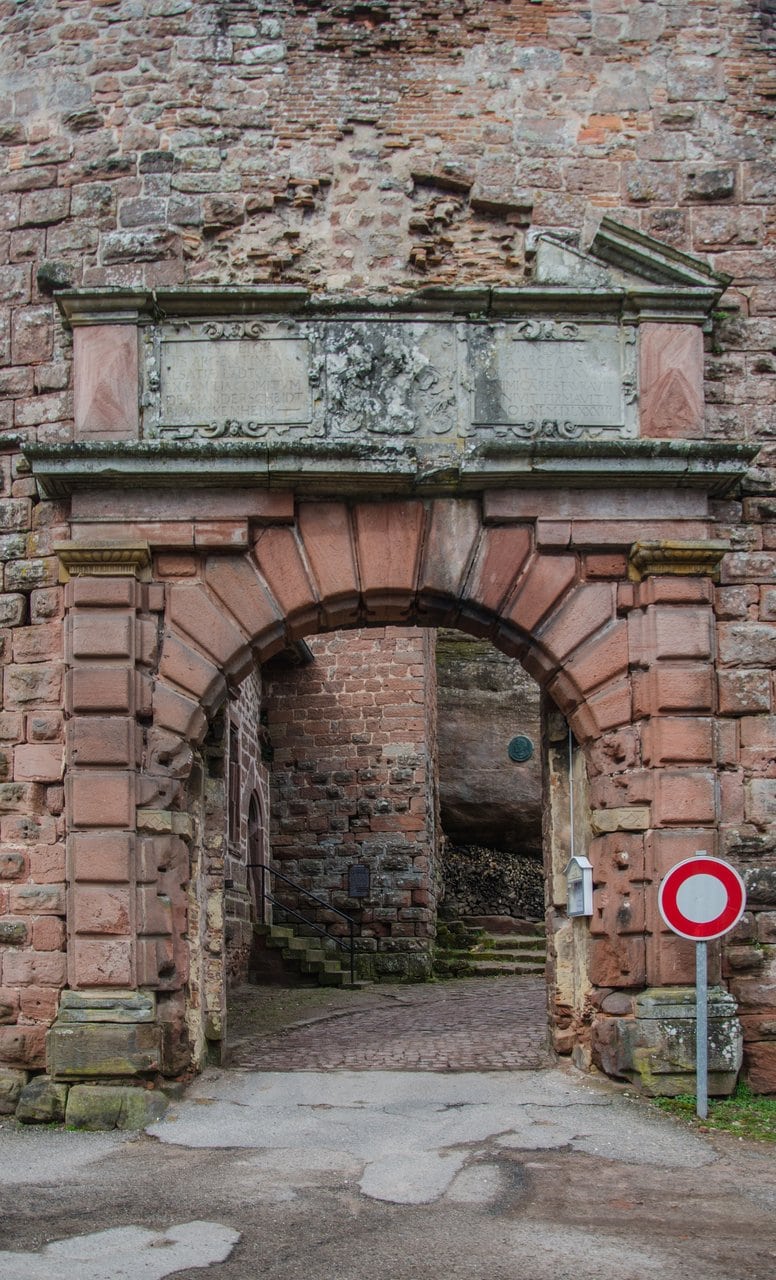
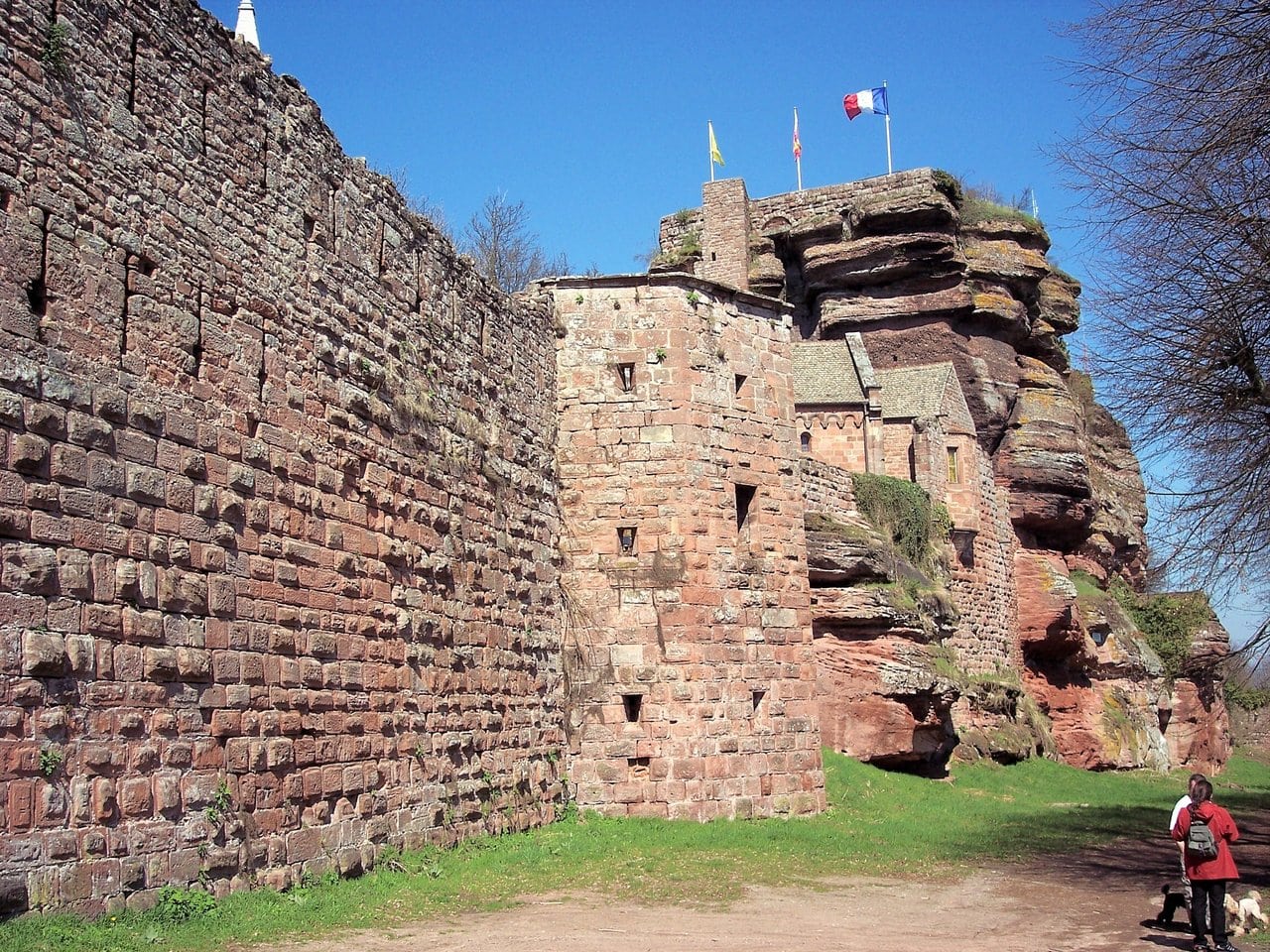
The Reformation turned Strasbourg Protestant and confirmed its Catholic bishops in Saverne, their seat since the early fifteenth century, which made the fortress on the rock above town more valuable than ever. Bishop Jean de Manderscheid, who held the see from 1569 to 1592, rebuilt the aging castle for the age of artillery. Between 1583 and 1586 his masons raised a new residence and an attached tower bastion, strengthened the enceinte with flanking works, and cut a monumental Renaissance portal into the walls. The gate still stands, and it still talks. Its Latin inscription names Manderscheid of the counts of Manderscheid-Blankenheim, landgrave of Alsace, and declares that he restored, fortified, and strengthened the castle, in the year of our Lord 1583. Look closely at his bossed masonry anywhere on the site and you will find masons’ marks scratched into the stone.
Manderscheid also left the castle its best story after the devil. On May 27, 1586, he founded a confraternity at the Haut-Barr, remembered as the Confrérie de la Corne, the Brotherhood of the Horn. Its emblem survives in the records: a great aurochs horn mounted in silver, documented in a castle inventory of 1603. Around that very real horn grew the tale of a drinking brotherhood whose initiates had to drain it, some four liters of Alsatian wine, in a single pull, and of a bishop who wanted his castle known as the capitol of the free drinkers of his diocese. Historians suspect the brotherhood owes more to legend than the horn does; the horn was real, and the stories poured in afterward. It is hard to think of a better parable for how castles acquire their myths.
Dismantling, telegraph, and the rock today
After Manderscheid’s death in 1592, the money for upkeep thinned and the castle he had modernized began, slowly, to decay. The Thirty Years’ War finished its importance, and the peace finished its walls. In the war’s aftermath, as Alsace passed piece by piece into the French kingdom, the demolition crews arrived, and their work is unusually well dated: from November 19, 1649 to October 1650 they brought down the tall defenses of the Haut-Barr. The chapel was spared and repaired in 1668, and the site went back to the bishopric of Strasbourg, its only resident a tenant farmer among the broken walls.
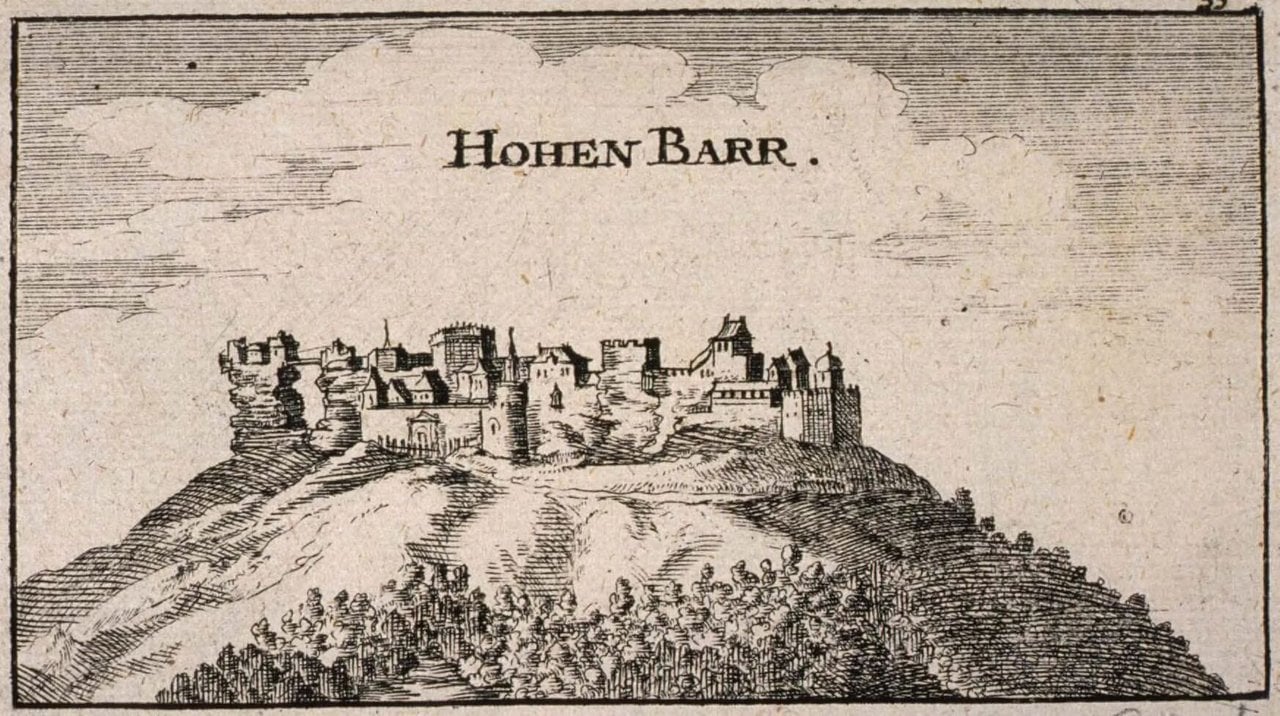
Soldiers returned during the War of the Spanish Succession; during the War of the Austrian Succession, French engineers weighed refortifying the old rock and carried out part of the plan. A military post lingered on the site until 1772; after that the castle was leased out again and drifted toward abandonment, its barracks decaying through the last years of the old regime.
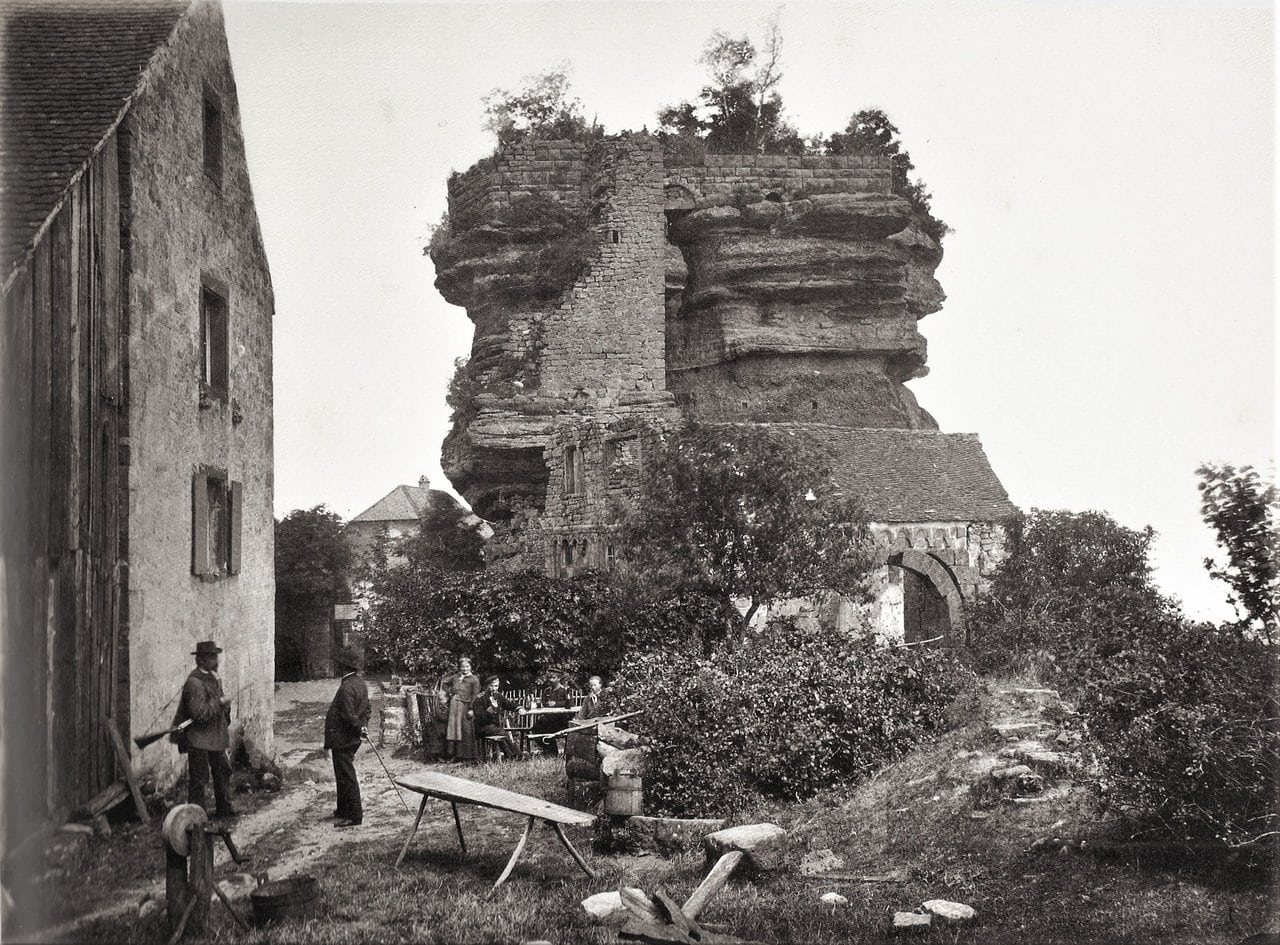
The nineteenth century rediscovered it, as it rediscovered every ruin with a view. Adolphe Braun photographed the shattered walls in the 1850s; engravings and albumen prints carried the Hohbarr into parlors on both sides of the Rhine; and visitors were already picnicking under the chapel when Georg Maria Eckert set up his camera around 1870. The ruin was classified as a Monument Historique on October 1, 1874; Alsace was German then, but the annexation had kept the French protection rules in force, and the listing survived the province’s return to France.
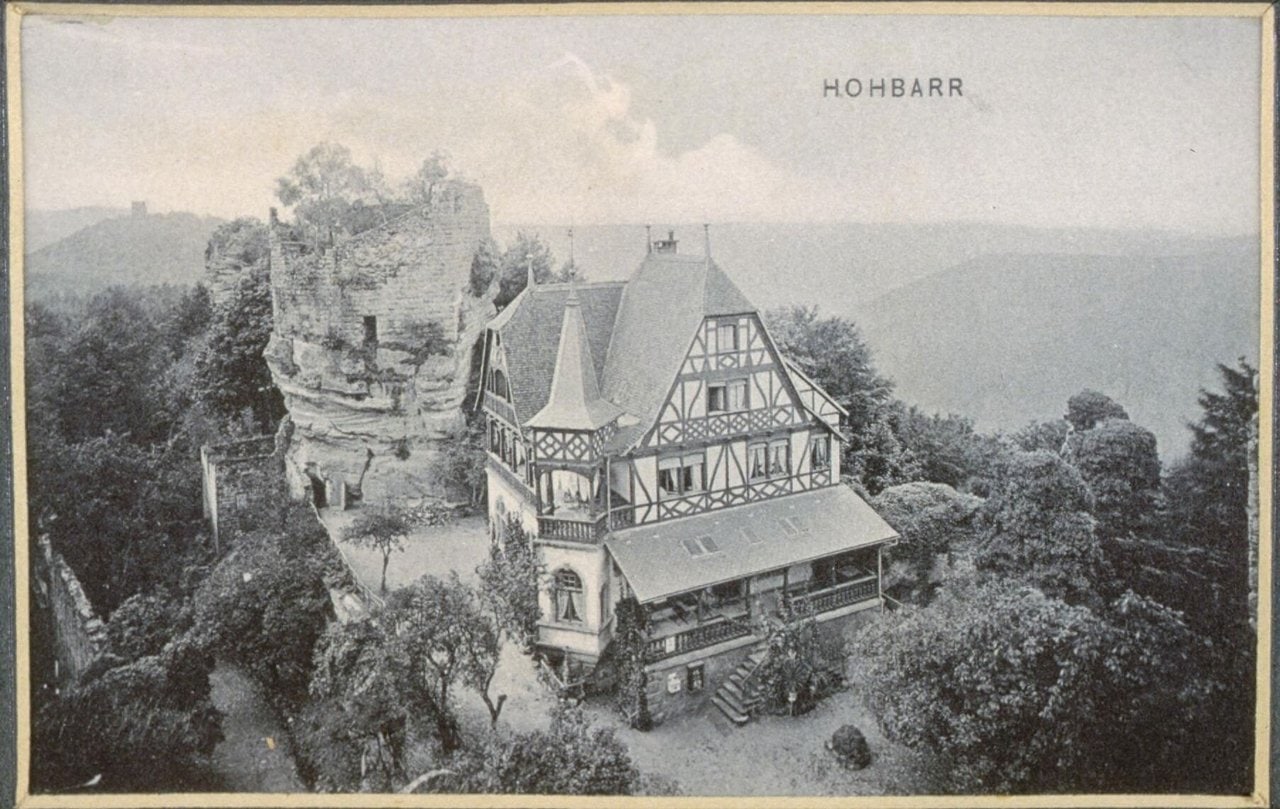
In 1901 the city of Saverne built a restaurant inside the walls, a timber-framed inn that still serves visitors today under a perfect name: Là-Haut, “Up There.” On August 20, 1970, the city became the castle’s owner outright, and since 2012 a local association, Castrum Borra, has worked to bring new energy and expertise to the site.
One more machine deserves its place in the story. In 1798 an optical telegraph relay of the Chappe system went up on the castle rock itself, one link in the Paris to Strasbourg line that could flash a message across France in minutes. The station soon proved too hard to reach and moved a few hundred meters south along the ridge in the early nineteenth century, onto the neighboring commune of Haegen; the tower that stands there today is a 1968 reconstruction, with a small museum that keeps the memory of Napoleon’s fastest network. It is a separate monument from the castle, but no visit feels complete without it: two watchers on one ridge, seven centuries apart, both built to move information faster than anyone below. During the Second World War the German army used the rock once more, as an observation post; the eye kept being useful long after the bishops were gone.
Visiting Château du Haut-Barr
The Haut-Barr is that rare thing, a great castle that costs nothing. The site is freely accessible year-round, and dogs are welcome. From Saverne, leaving the Place des Dragons by the rue du Général Leclerc, the D171 climbs about 2.5 kilometers to a car park below the walls; on foot, marked trails from town reach the castle in roughly an hour and a half to two hours of steady climbing through the forest. Parking is free as well; arrive early on fine weekends, because Saverne knows what it has.
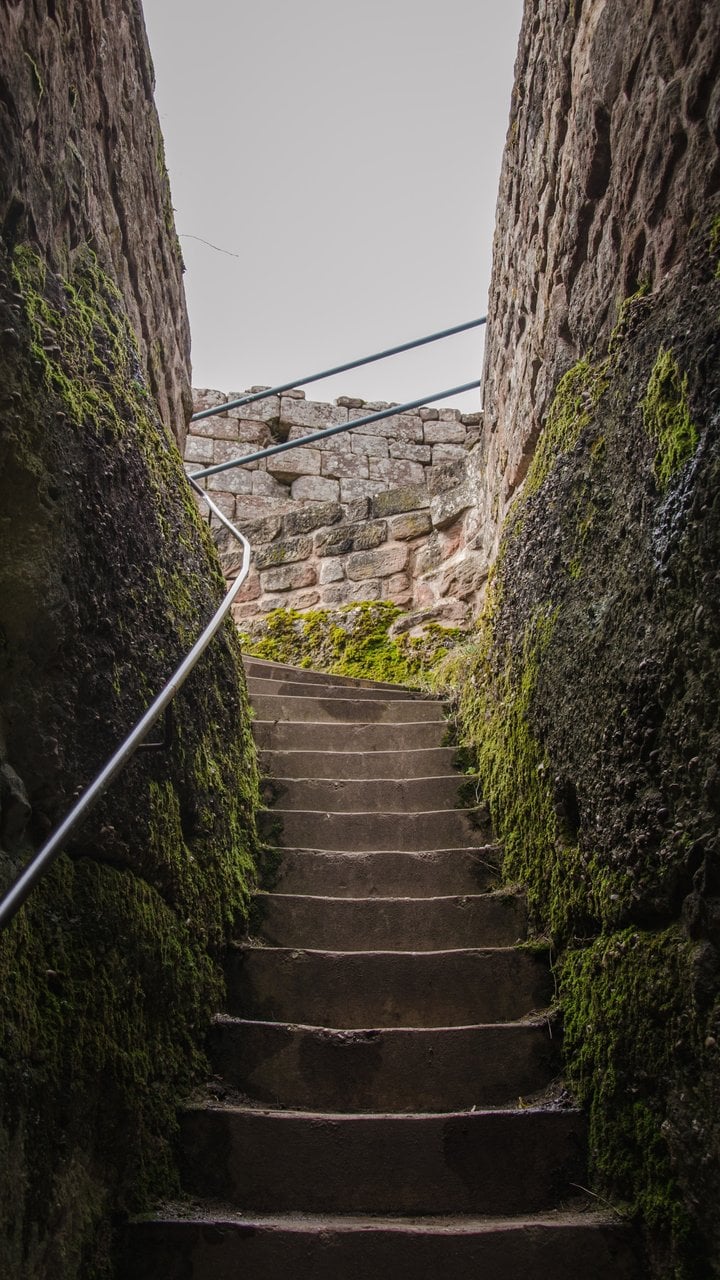
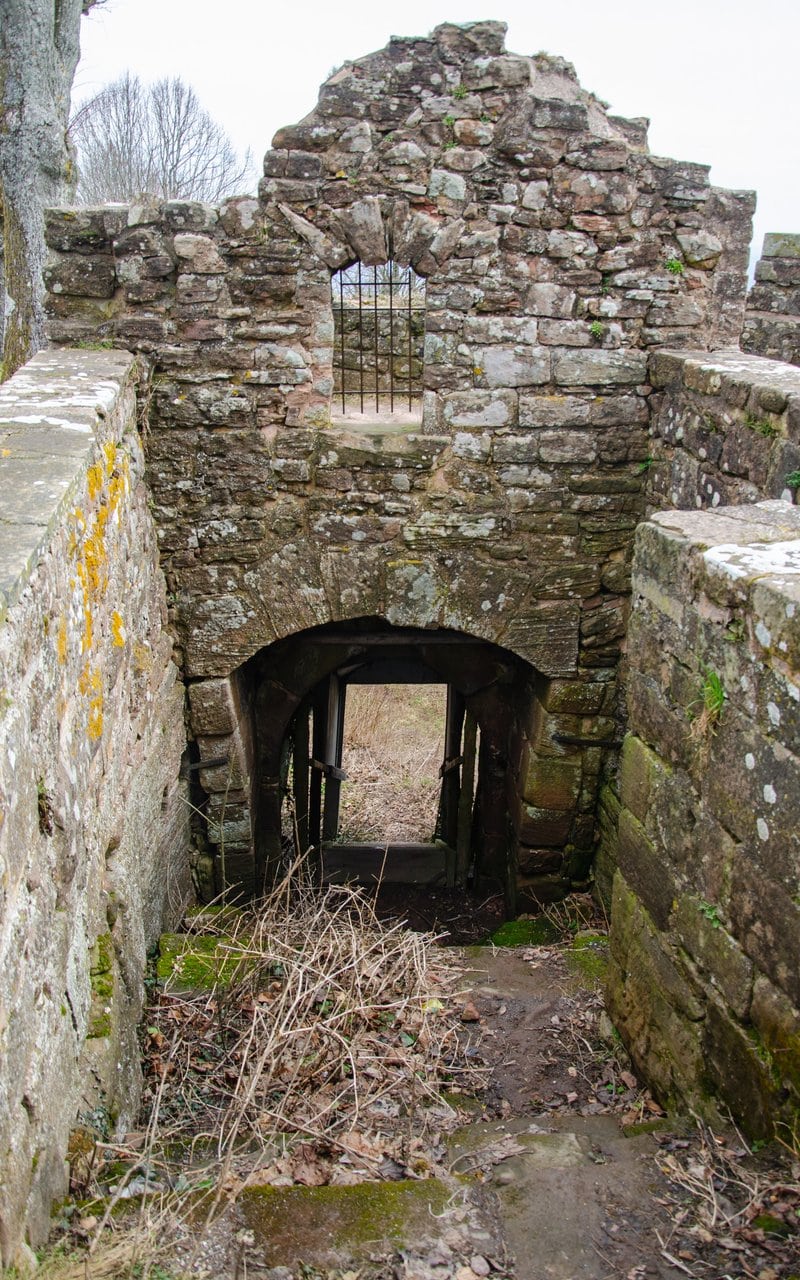
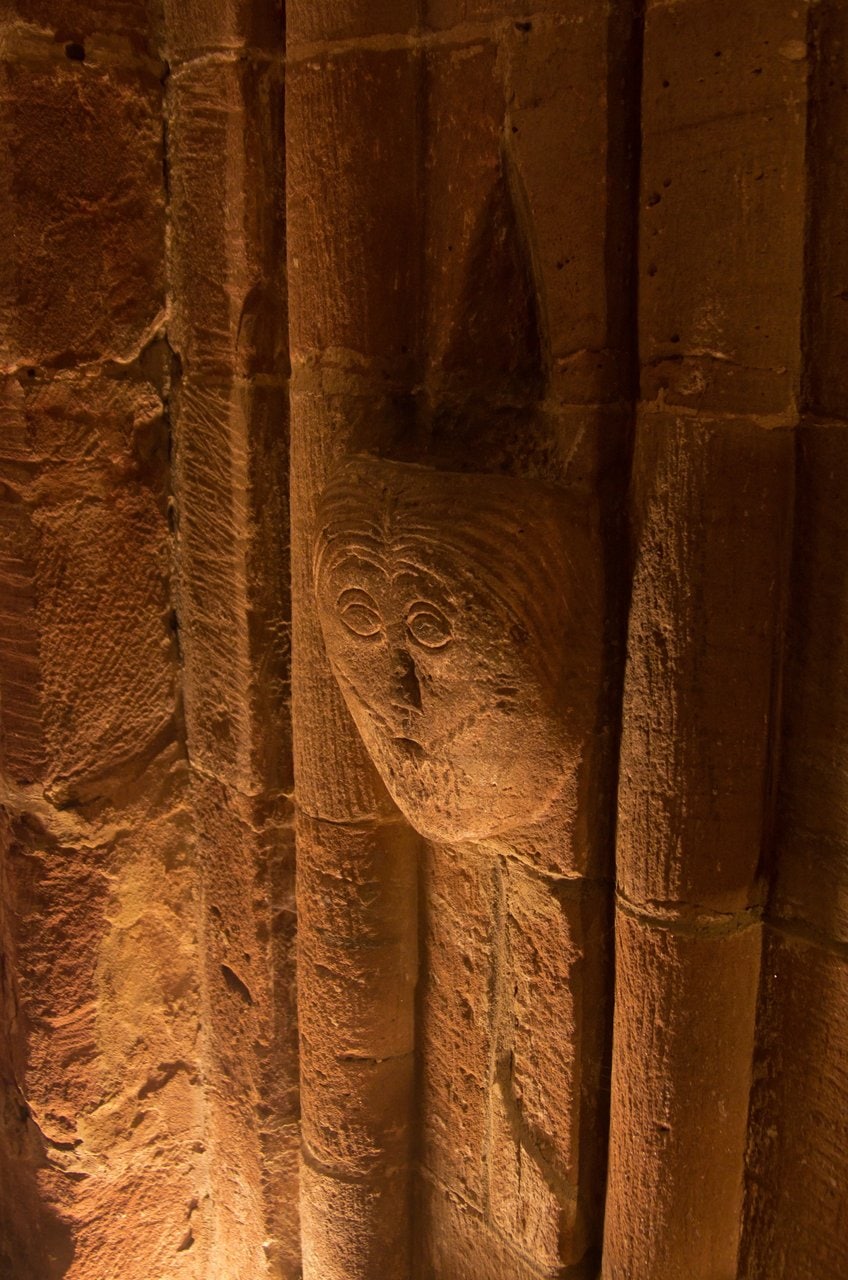
The circuit inside rewards patience. You enter through the north gate, pass under Manderscheid’s Renaissance portal with its 1583 inscription, and come out beside the chapel of Saint-Nicolas. Step inside: the holy-water stoup carved with a bearded head has been watching visitors since the Middle Ages. On the central rock above, the shell of the bishops’ residence still shows a pair of elegant twinned windows in its facade, the kind of domestic Romanesque detail that rarely survives on a military site. From there, stairways (some built, some cut straight through the sandstone) lead up the three rocks. Cross the Devil’s Bridge to the southern summit, then work back along the wall walks for the panorama that named the castle. Watch your footing throughout; this is an honest ruin, not a groomed monument, and the rock platforms are high.
The restaurant Là-Haut, inside the walls since 1901, handles lunch with a terrace view most castles cannot match, and a picnic area serves those who bring their own. The Chappe telegraph tower and its museum stand a short walk from the gate; the museum keeps seasonal hours, so check locally before building your visit around it. Committed walkers can continue south along the ridge to the ruins of the Grand and Petit Geroldseck, turning one castle into three.
The castle is free, so spend your budget where it counts. Booking.com lists Saverne’s hotels and guesthouses, a relaxed base at the foot of the pass, and GetYourGuide carries tours and experiences around Saverne and day trips from Strasbourg that put the northern Vosges within easy reach.
Some links on this page are affiliate links, which means StoneKeep Atlas may earn a small commission, at no extra cost to you, if you book through them.
Questions before you go: Office de Tourisme du Pays de Saverne: 4 rue Poincaré, 67700 Saverne, +33 (0)3 88 91 80 47, tourisme-saverne.fr.
More Views of Château du Haut-Barr
Beyond Château du Haut-Barr
Alsace keeps answering the same question differently. The Château du Hohlandsbourg shows what a Habsburg artillery hilltop looks like consolidated for visitors; the Château de Fleckenstein is a baronial rock castle carved half into its own cliff; the Château du Haut-Kœnigsbourg is the region’s great rebuilt whole, a medieval castle resurrected entire. The Haut-Barr completes the set as the prince-bishops’ seat of power, the castle that existed to watch everything the others defended. Together they make a four-part answer to what an Alsace castle is. The bishops’ reach ran further south as well: after the Dabo succession war ended in 1230, their winnings included the Three Castles of Eguisheim, the triple fortress above the Wine Route. All five are gathered in our guide to the castles of Alsace.
Common Questions
How much does it cost to visit the Haut-Barr?
The Haut-Barr is that rare thing, a great castle that costs nothing. The site is freely accessible year-round, parking is free, and dogs are welcome.
How do I get to Château du Haut-Barr?
From Saverne, the D171 climbs about 2.5 kilometers to a car park below the walls; on foot, marked trails from town reach the castle in roughly an hour and a half to two hours of steady climbing through the forest. Arrive early on fine weekends, because Saverne knows what it has.
What is there to see inside?
You enter through the north gate, pass under Manderscheid’s Renaissance portal with its 1583 inscription, and come out beside the chapel of Saint-Nicolas, whose holy-water stoup is carved with a bearded head. The shell of the bishops’ residence still shows a pair of elegant twinned Romanesque windows, and stairways, some cut straight through the sandstone, lead up the three rocks.
Conclusion
The towers of the Haut-Barr fell to demolition crews with ledgers, not to any siege, and what they left behind has aged into something singular: a chapel that never stopped being a chapel, a gate that still announces its builder, three rocks joined by a bridge with a devil in its name, and the same view that made bishops covet this bar of sandstone in 1112. Castles are usually about keeping people out. The Eye of Alsace was always about seeing them coming, and on a clear day above Saverne, it still does its job.
Principal Sources
- Base Mérimée, notice PA00084952, Château du Hohbarr (Ministère de la Culture)
- Office de Tourisme du Pays de Saverne, tourisme-saverne.fr
- Châteaux Forts d’Alsace, association inventory, Château du Haut-Barr
- Société d’histoire et d’archéologie de Saverne et environs, Le château du Haut-Barr (Pays d’Alsace), with the Bulletin Monumental review (1982)
- Nicolas Mengus, Châteaux forts au Moyen Âge (Éditions Ouest-France, 2021)
- Dominique Toursel-Harster, Jean-Pierre Beck, Guy Bronner, Dictionnaire des monuments historiques d’Alsace (La Nuée Bleue, 1995)
- Alsace Terre de Châteaux, Haut-Barr Castle
Image credits. Hero: Tehkni, CC BY-SA 4.0, via Wikimedia Commons; View over Saverne: Rémih, CC BY-SA 4.0, via Wikimedia Commons; Devil’s Bridge: Geak, public domain, via Wikimedia Commons; Chapel of Saint-Nicolas: © Ralph Hammann – Wikimedia Commons, CC BY-SA 4.0; Manderscheid portal, rock stair, north gate: Zéphyrios, CC0, via Wikimedia Commons; 1752 engraving and 1909 postcard: Bibliothèque nationale de France, public domain, via Wikimedia Commons; Visitors around 1870: Georg Maria Eckert, public domain, via Wikimedia Commons; Southeast wall and chapel interior: Espirat, CC BY-SA 4.0, via Wikimedia Commons; Carved head: Antoine Taveneaux, CC BY-SA 3.0, via Wikimedia Commons; Castle foot: Valentin F.R., CC0, via Wikimedia Commons; Rampart panorama: Pernmith, CC BY 2.0, via Wikimedia Commons. Freely licensed images are resized to fit; otherwise unaltered.