
Château du Hohlandsbourg
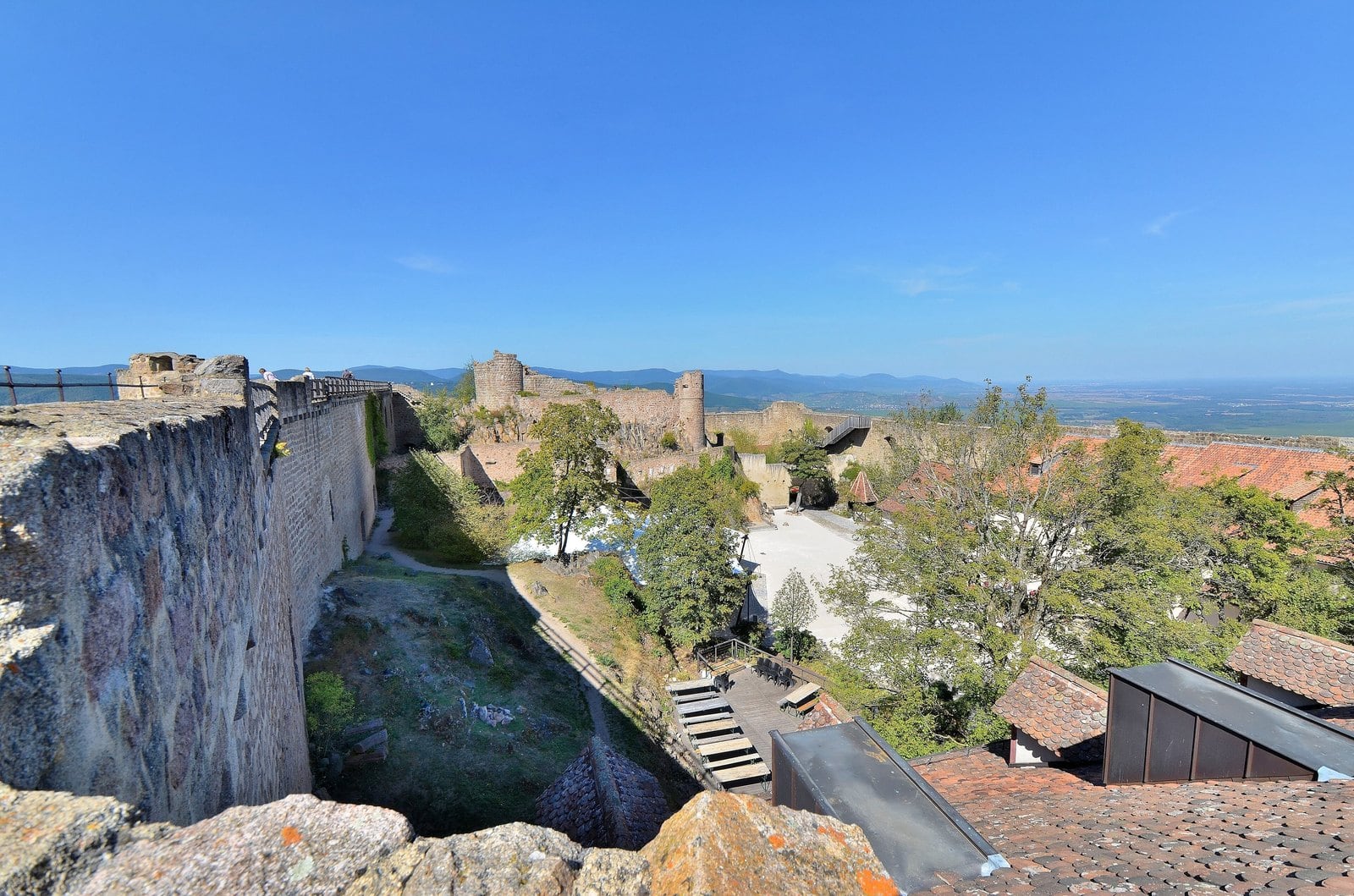
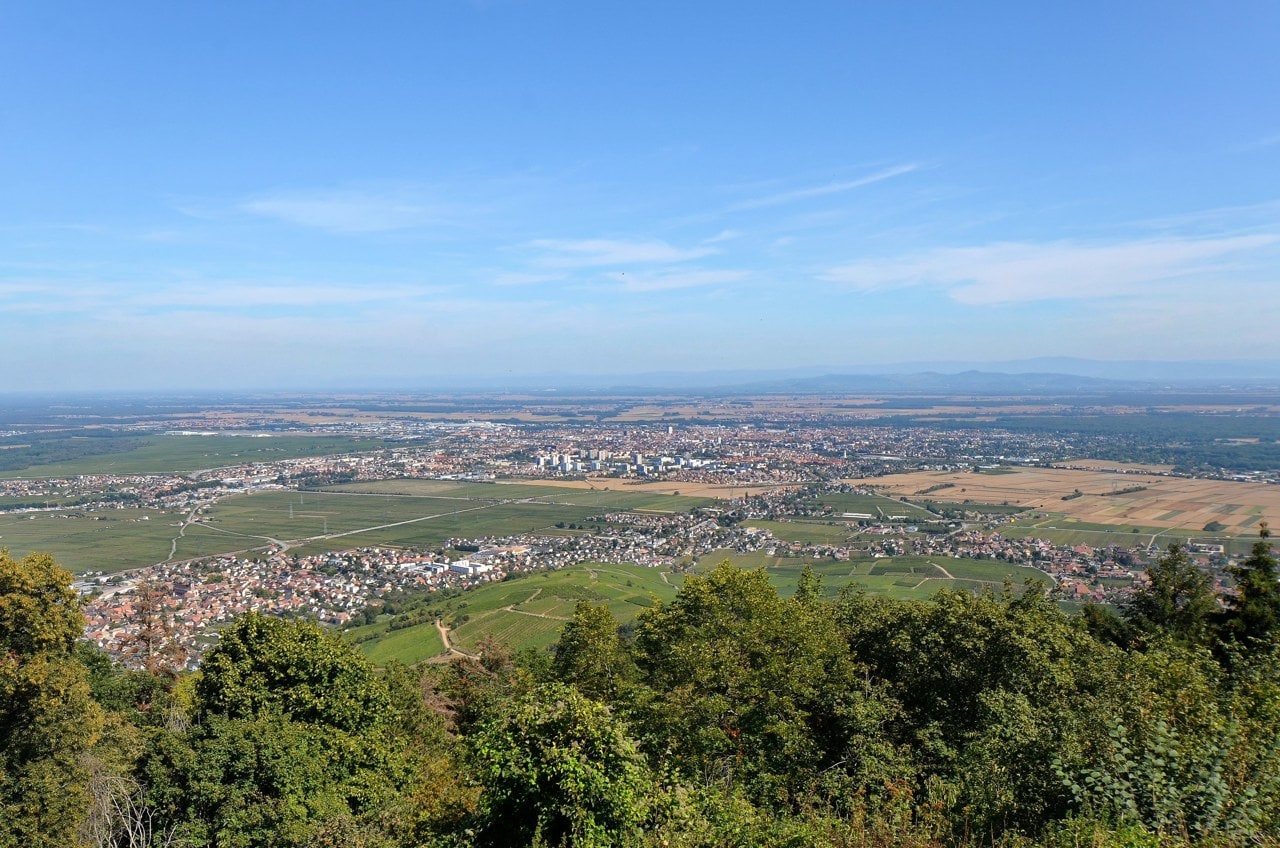
The Château du Hohlandsbourg rises on a flat granite summit above Wintzenheim, a short drive west of Colmar in the Haut-Rhin. At 620 meters above sea level it commands one of the widest views in Alsace: the vineyard plain unrolling toward the Rhine, the city of Colmar close below, the Munster valley cutting back into the Vosges, and on clear days the dark line of the Black Forest across the river. That panorama is the reason the Habsburgs built here in the first place, and it remains the single best argument for making the climb today.
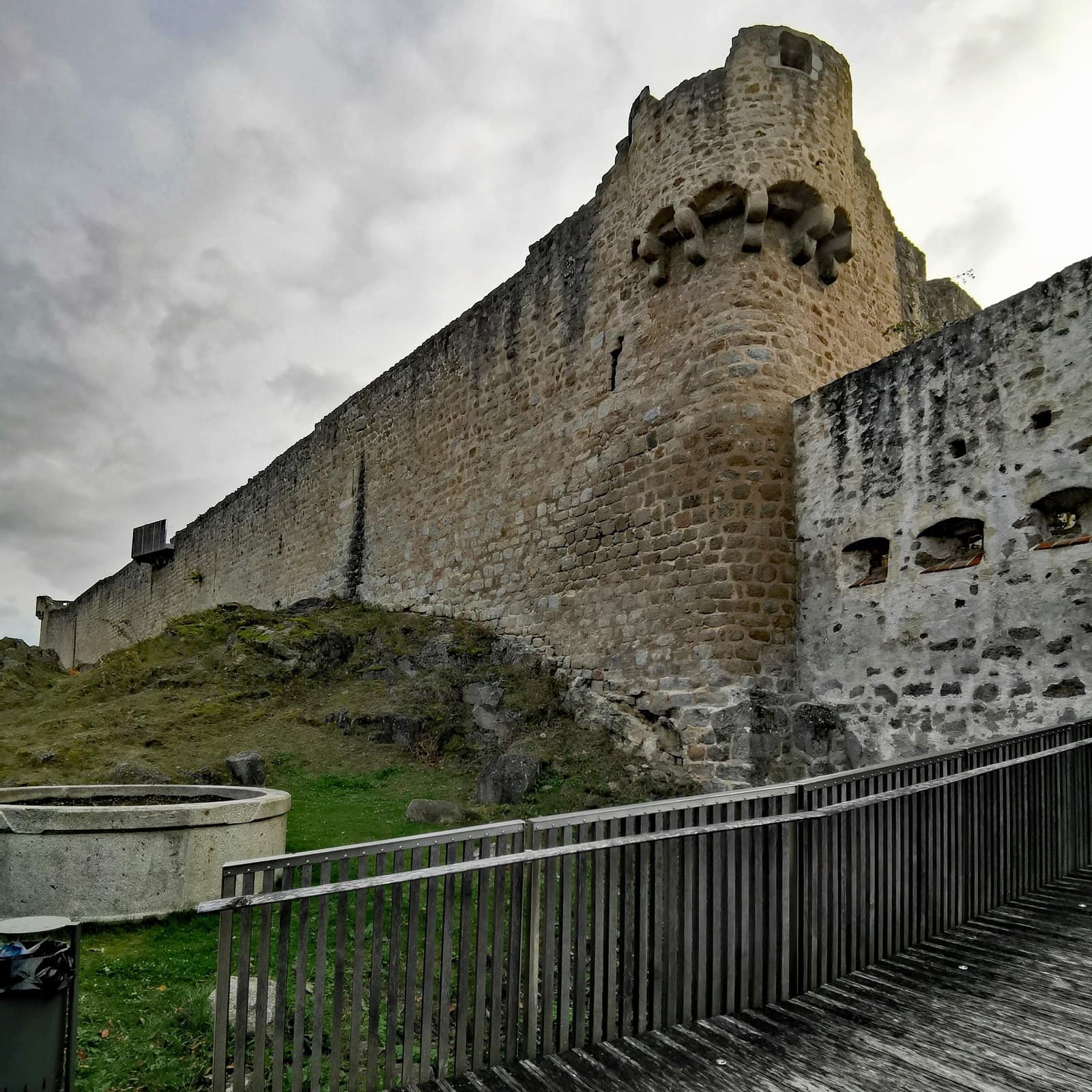
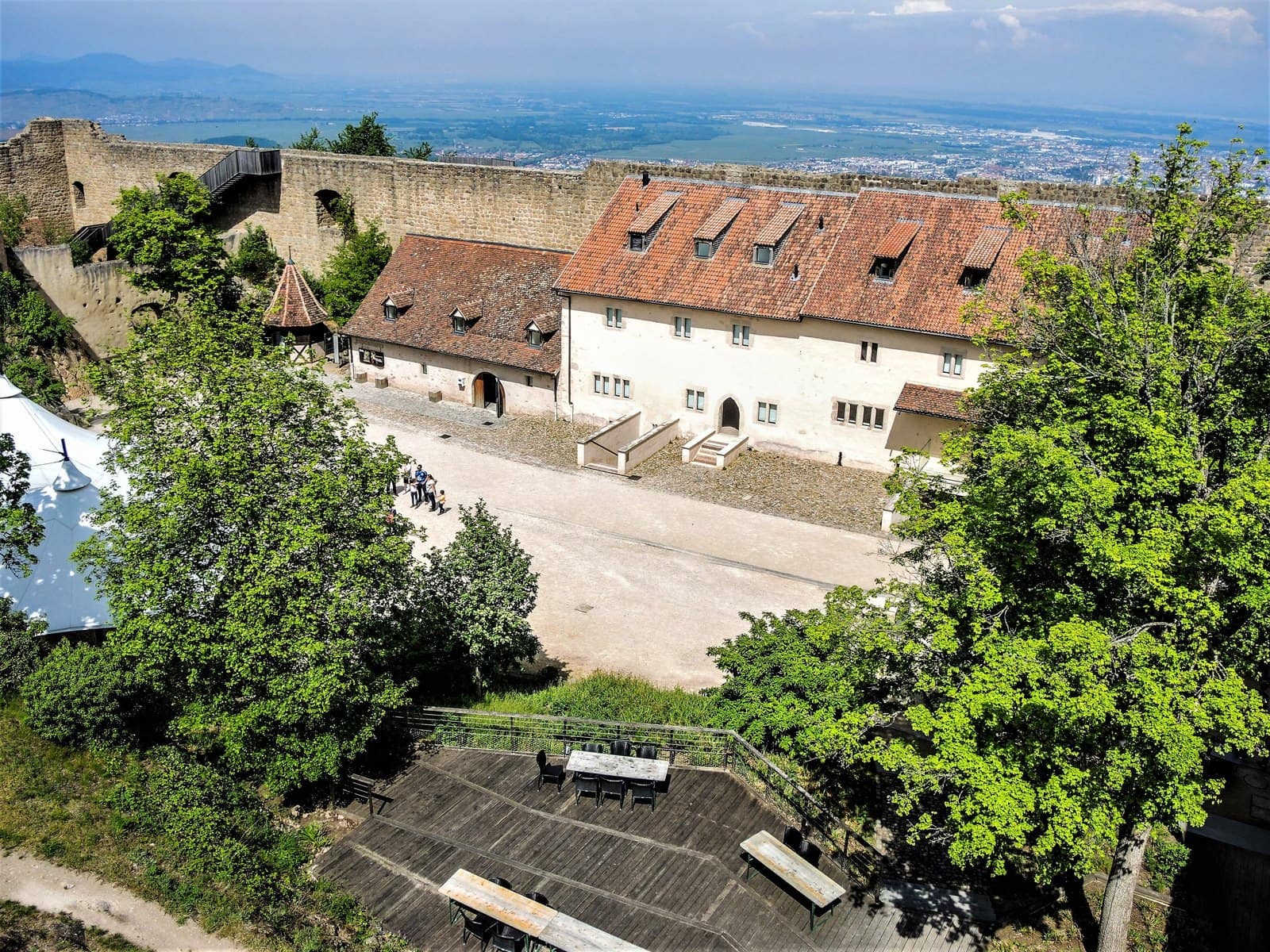
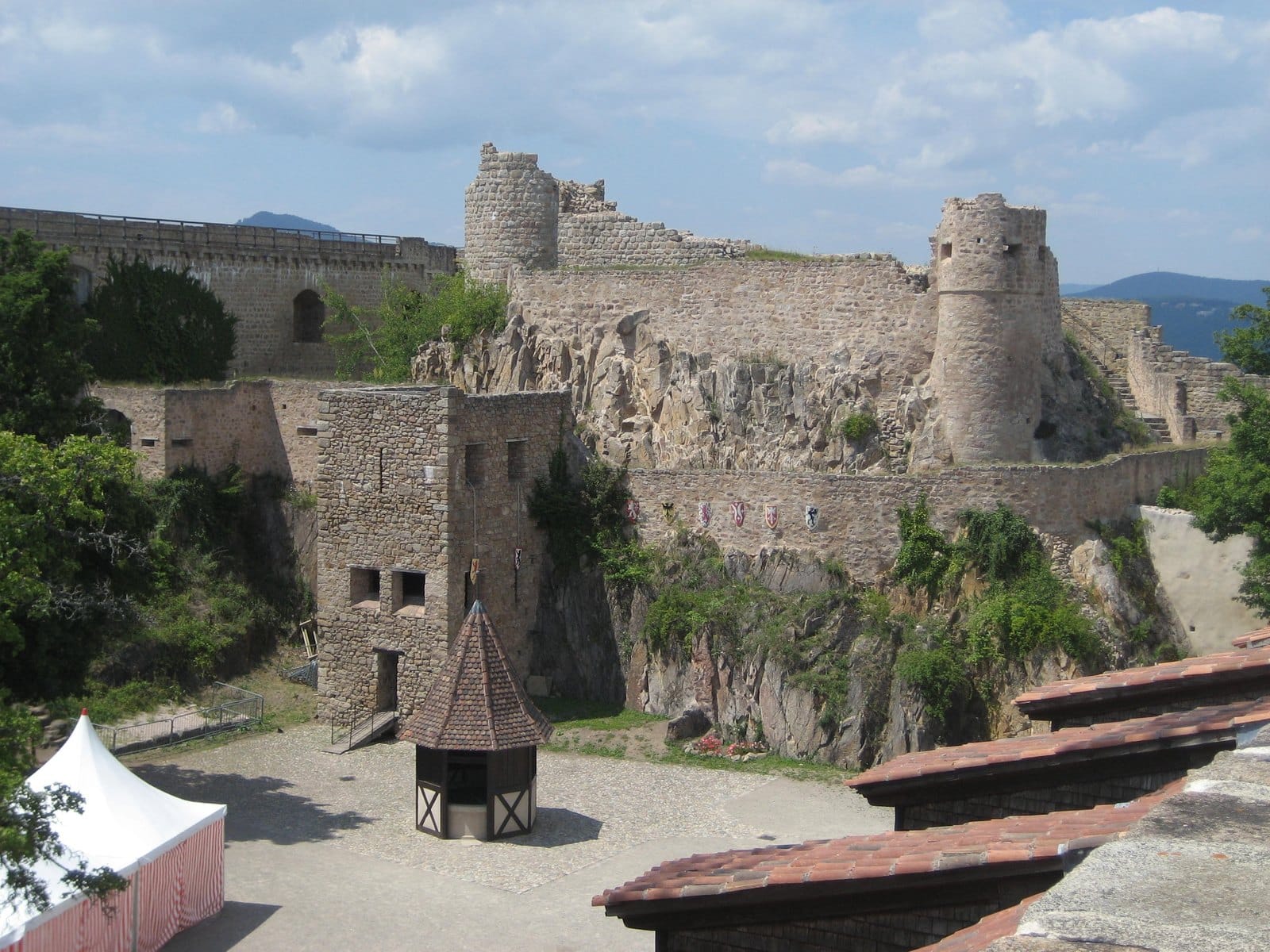
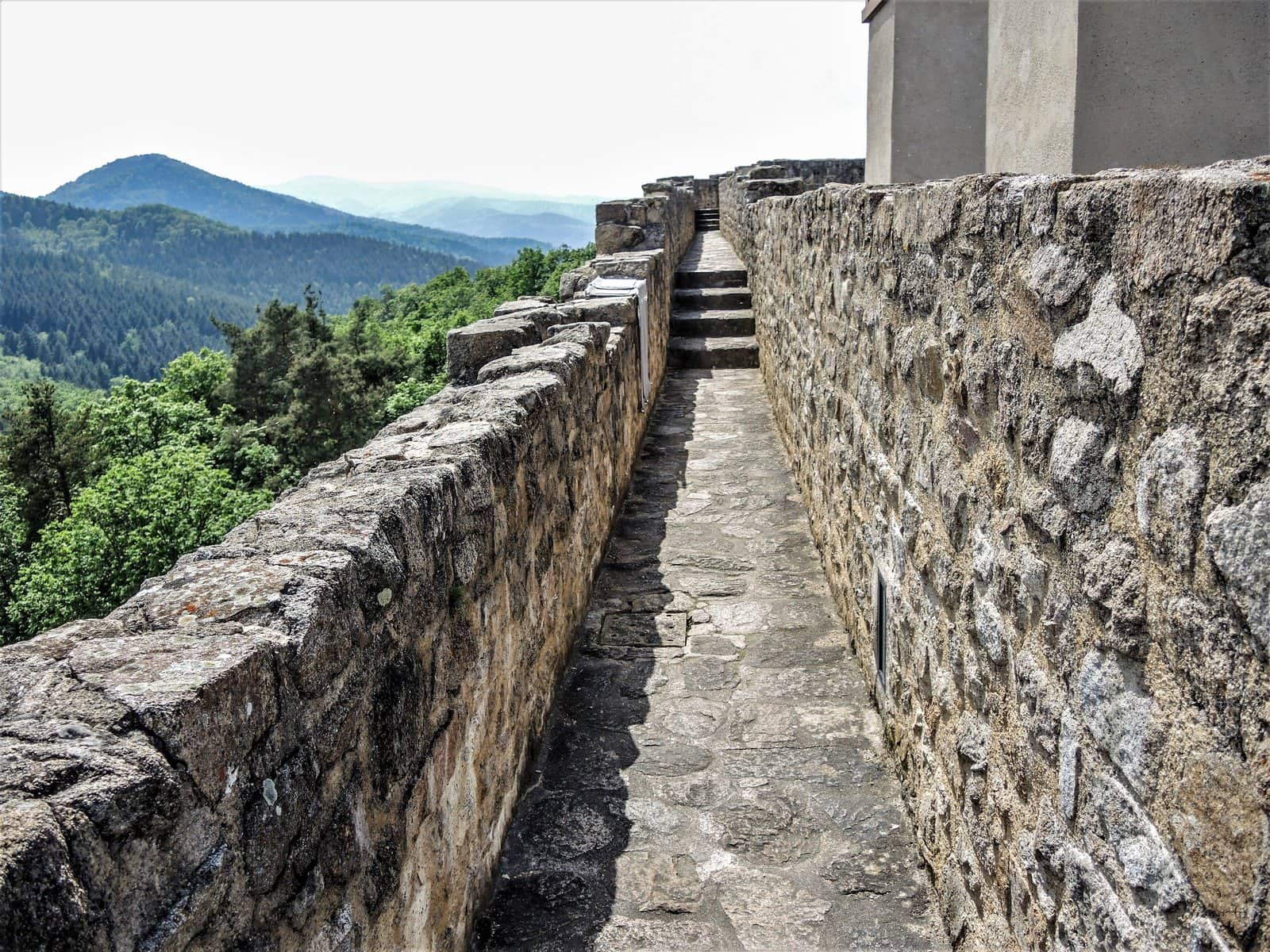
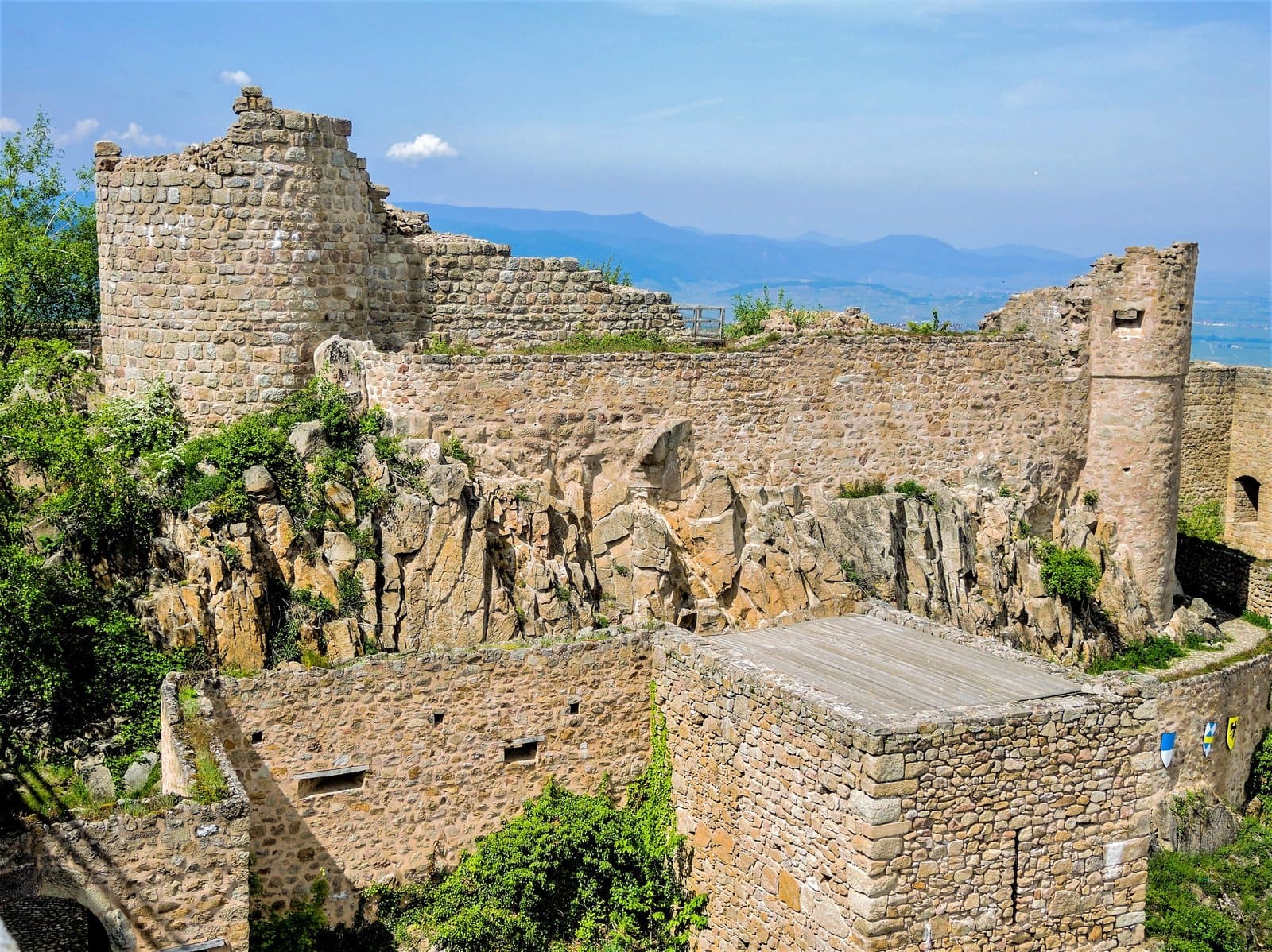
What waits at the top is not a storybook castle with furnished halls but a large, consolidated ruin that has been carefully brought back to life. The high curtain walls are original, pierced by arrow-slits from the 1290s; the living quarters behind them are modern reconstructions raised on medieval footings; and a covered walkway added during the restoration lets you circle the whole enclosure for the full sweep of the view. It is a fortress that has been ruined, blown up, forgotten, and then rescued, from a Habsburg watchtower to a public cultural site.
Where Haut-Kœnigsbourg was rebuilt as a Romantic vision of the Middle Ages, Hohlandsbourg was consolidated as an honest ruin, and the contrast between the two is one of the more instructive things a traveler can learn on this stretch of the Vosges.
Quick Facts
| Location | Wintzenheim, near Colmar, Haut-Rhin, Alsace, France |
| Coordinates | 48.06° N, 7.269° E (620 m above sea level) |
| Built | From 1279 (the Monument Historique record dates it to 1278) |
| Founder | Siegfried de Gundolsheim, provost of Colmar, with the authorization of King Rudolf of Habsburg |
| Type | Hilltop garrison fortress |
| Condition | Consolidated ruin with reconstructed living quarters |
| Destroyed | 1637, during the Thirty Years’ War |
| Heritage designation | Classé monument historique, list of 1840 (Base Mérimée PA00085738) |
| Managed by | Collectivité européenne d’Alsace |
| Season | Roughly early April to early November |
| Official site | chateau-hohlandsbourg.com |
A Habsburg watchtower over Colmar
People had recognized the value of this hilltop long before the first stone castle appeared. The flat summit, unusually well supplied with water from a spring the Alsatians called the Lisenbrunnen, was already occupied in the Final Bronze Age, more than two thousand years before the Habsburgs arrived. It is a natural stronghold: steep on most sides, broad enough on top to hold a garrison, and set exactly where a watcher can see everything that moves across the plain.
Construction of the fortress began in 1279. The operator dates the start of work to 3 February that year, though the official heritage record gives the founding as 1278, and the two dates sit side by side in the sources without resolving. The builder was Siegfried de Gundolsheim, provost of Colmar, who started the work with the king’s authorization. This was the age of Rudolf of Habsburg, elected King of the Romans in 1273, and Hohlandsbourg was one of the instruments by which the family tightened its grip on Upper Alsace. Its purpose was blunt: to watch over the free imperial city of Colmar, which lay just below and did not always do as it was told, and to guard the western edge of the Habsburg lands known as Further Austria.
Within two years the castle changed hands. In 1281 the provost who had built it, Siegfried de Gundolsheim, was deposed, and in December the grand bailiff of Alsace, Otton d’Ochsenstein, who had charge of the royal towns, led a force of Colmar burghers against it. They took it on 6 December, pillaged it and partly destroyed it, and Siegfried was dispossessed in favor of the Habsburgs. The damage did not end the fortress: after 1281 the Habsburgs completed and enlarged the works, and the episode set the tone for a building whose whole reason for existing was to keep a restless city in view. Its capture in December 1281 is one of the sieges set side by side in our account of how medieval castles fell.
That tension was the making of Hohlandsbourg. Colmar was a free imperial city, answerable in principle to the emperor alone and jealous of its liberties, while the Habsburgs were the rising territorial power determined to bind Upper Alsace into their patrimony. A fortified garrison on the heights, visible from the city gates and impossible to ignore, was a standing reminder of who held the surrounding country. The castle never had to fight a great siege to do its work; simply by existing where it did, it shaped the balance of power on the plain below.
The early castle followed a roughly rectangular plan about 100 meters long and 65 meters wide. A higher northern section, the upper castle known as the Oberschloss, carried a residential keep of which little now survives, while a broad courtyard opened to the south. Along the curtain walls run the numerous arrow-slits of the late thirteenth century, and these are among the most authentic medieval features a visitor sees today.
From Ribeaupierre to Schwendi
For a fortress built to project Habsburg power, Hohlandsbourg spent much of its life in other hands. After the troubles of the 1280s it passed to the Ensisheim family and was later held in fief by the powerful Ribeaupierre, the lords the Germans called Rappoltstein. By 1410 it had come to the Counts of Lupfen, who held it through the fifteenth and early sixteenth centuries and enlarged the living quarters to suit a noble household rather than a bare garrison.
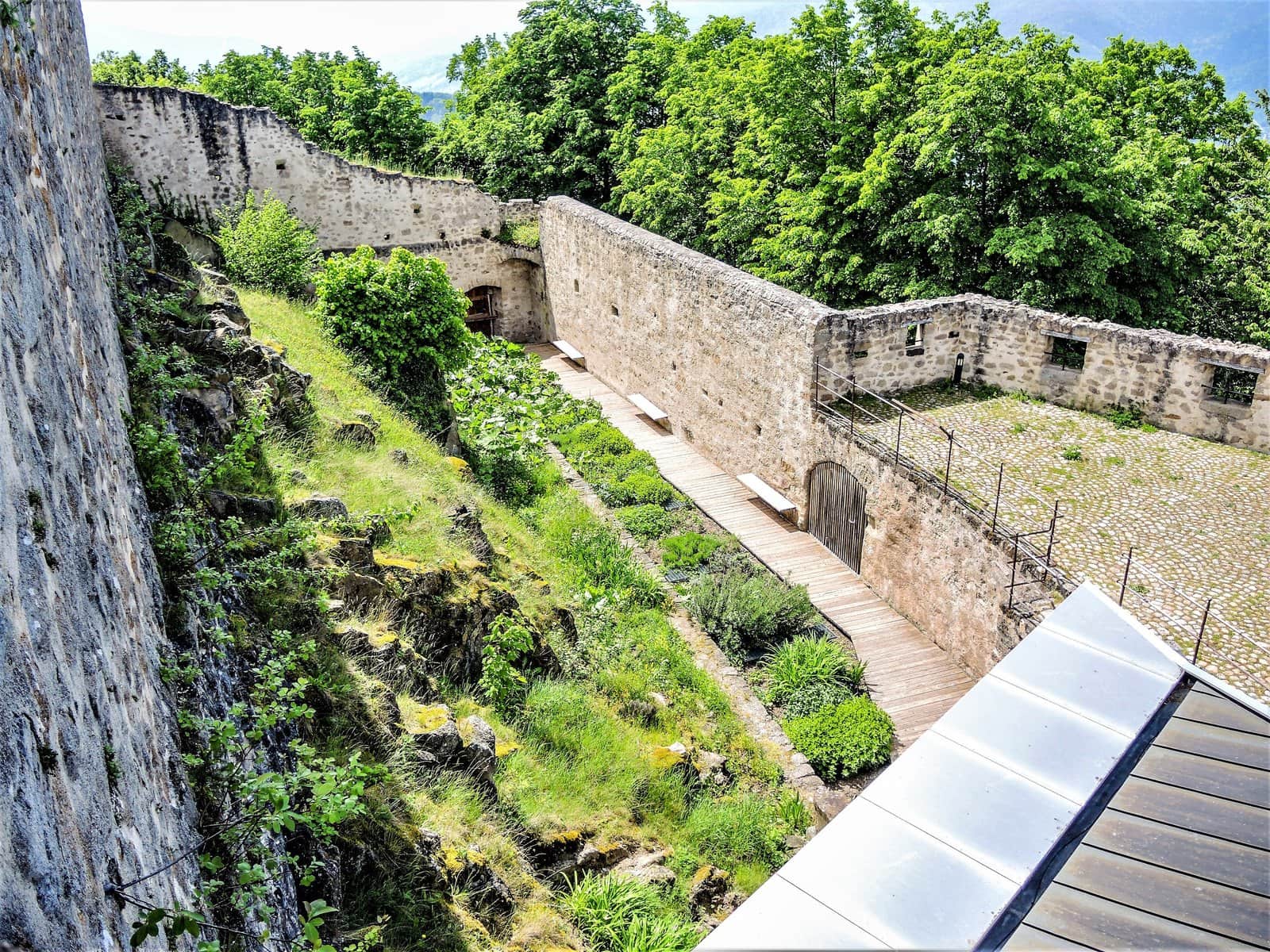
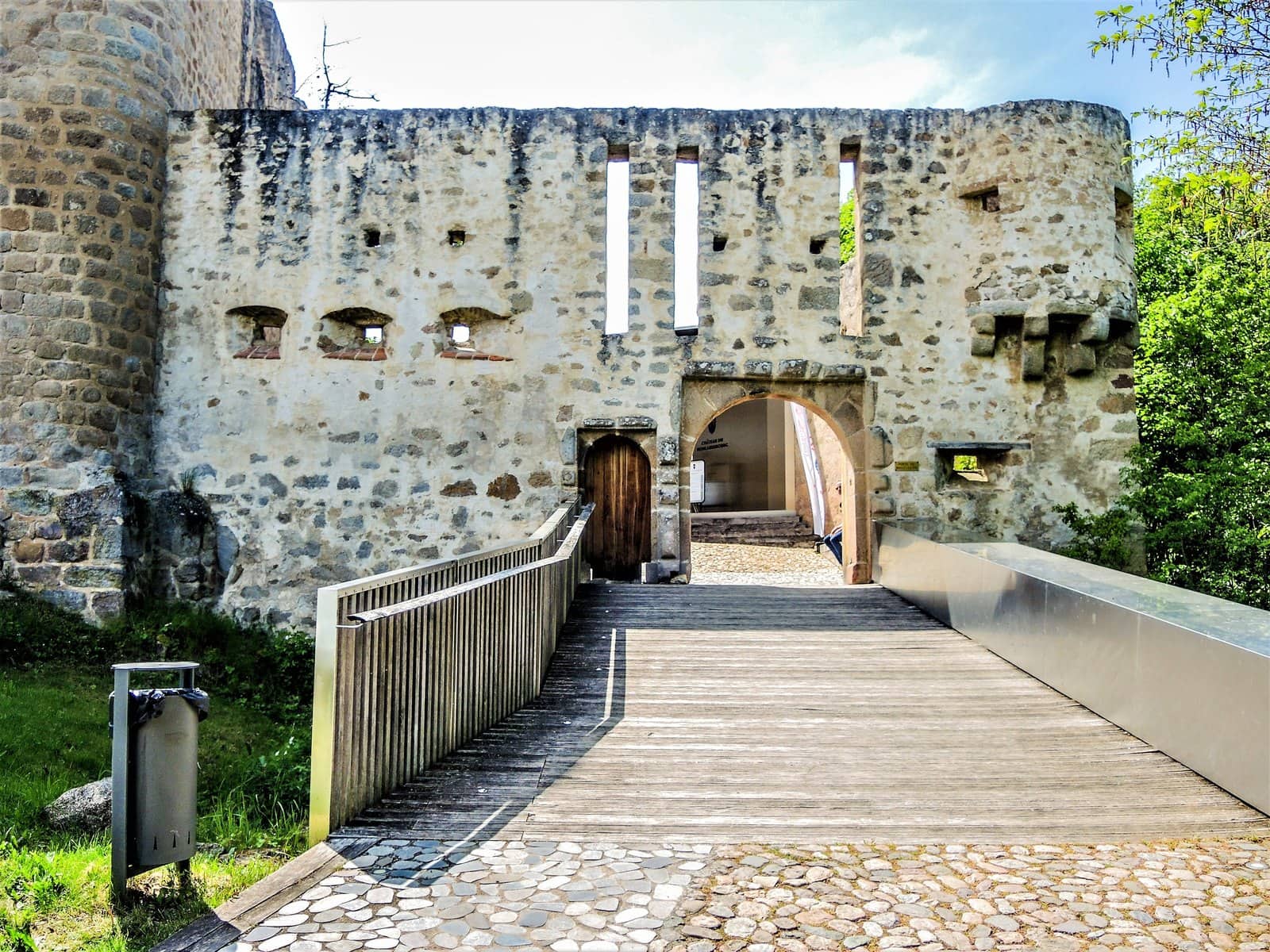
The figure who left the deepest mark, however, was Lazarus von Schwendi, known in French as Lazare de Schwendi. He was a soldier, administrator, and diplomat who rose to the rank of imperial general and led campaigns for the Habsburgs on the empire’s eastern front, including hard fighting against the Ottomans in Hungary. It is that Hungarian service, real enough in itself, that later attached the vineyard legend to his name. Schwendi acquired the fortress in 1562, though a few sources place the purchase a year later. He arrived at a moment when castle design was being rewritten by gunpowder, and he rebuilt Hohlandsbourg accordingly. Where the medieval castle had relied on height and arrow-slits, Schwendi adapted it for artillery: he raised a massive entrance bastion on the north side, still fitted with its gate and reached across a drawbridge, and he modernized the living quarters, or logis, along the eastern and southern walls. His bastion was, by most accounts, more a display of confidence than a serious piece of military engineering, but it changed the silhouette of the castle for good.
Schwendi is also the source of Hohlandsbourg’s most repeated story. By tradition, he is said to have brought Tokay vines back from a military campaign in Hungary and introduced them to the Alsatian vineyard below. It is a charming tale, and Alsace did long grow a grape it called Tokay, but the connection to Schwendi is legend rather than documented history, and it belongs in that category no matter how often it is retold at the foot of the hill.
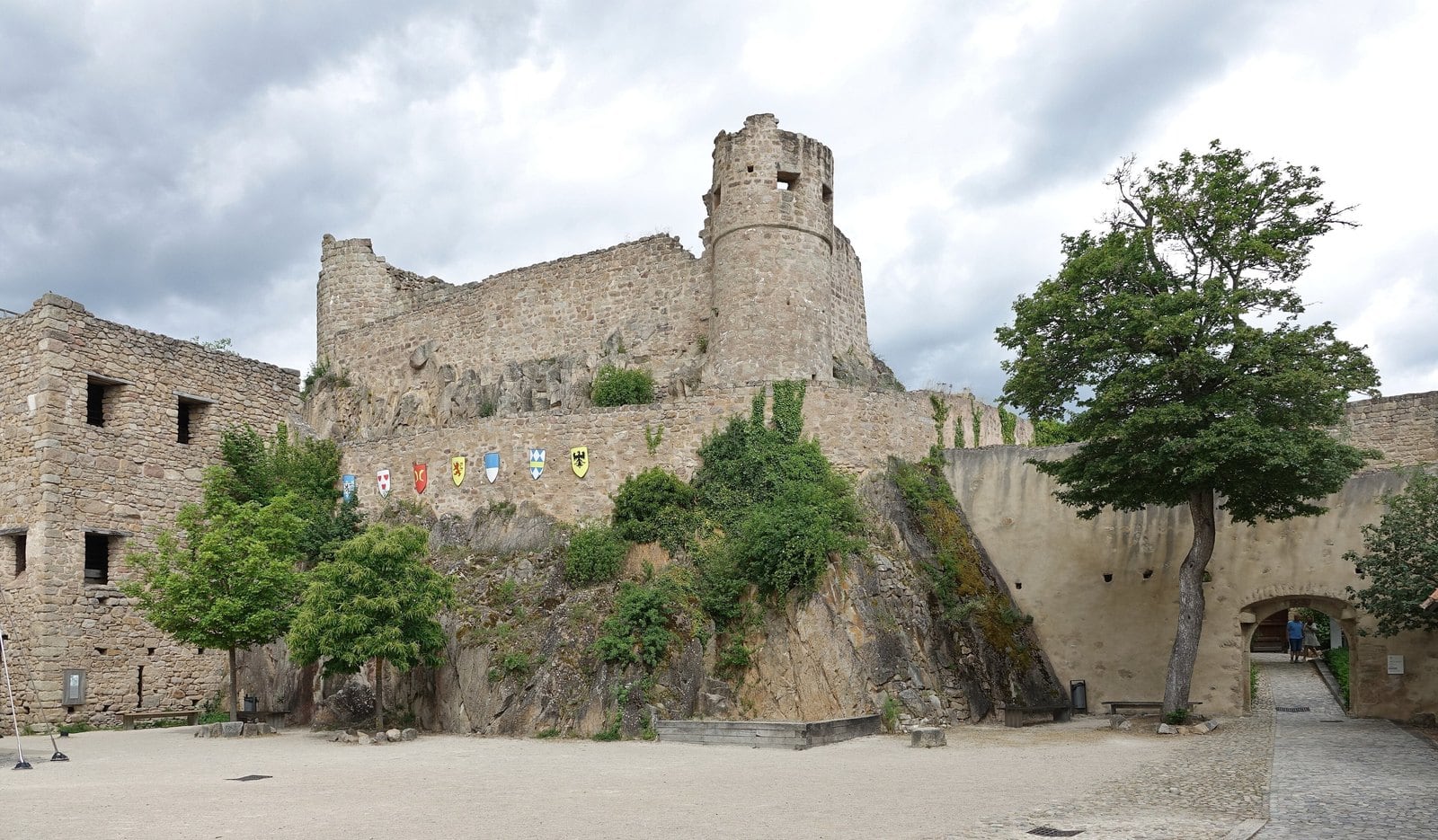
Much of this history can still be read on the ground. Arriving from the parking area, you reach the castle through Schwendi’s north bastion, passing the gate and the point where a drawbridge once spanned the ditch, so the first thing a visitor meets is the sixteenth-century artillery front rather than the medieval core. Inside, the plan opens out clearly: the lower court to the south, broad and now used for events, and the higher northern ground where the medieval keep once stood. Along the walls, the narrow arrow-slits of the thirteenth century and the wider openings adapted for guns sit within a few paces of each other, a compressed lesson in how three centuries of warfare reshaped a single set of stones.
Ruin and rescue
The fortress met its end in the wider catastrophe of the Thirty Years’ War. In 1633 Swedish forces bombarded Hohlandsbourg, and a few years later the war’s shifting fortunes sealed its fate. With Alsace passing into French control, a French garrison blew up the upper castle in 1637 to deny it to any returning imperial army. Some accounts loosely date the destruction to the peace of 1648, but the demolition itself belongs to 1637. From that point the castle was a ruin, and it stayed one for well over two centuries, its stone quarried away and its walls left to the weather.
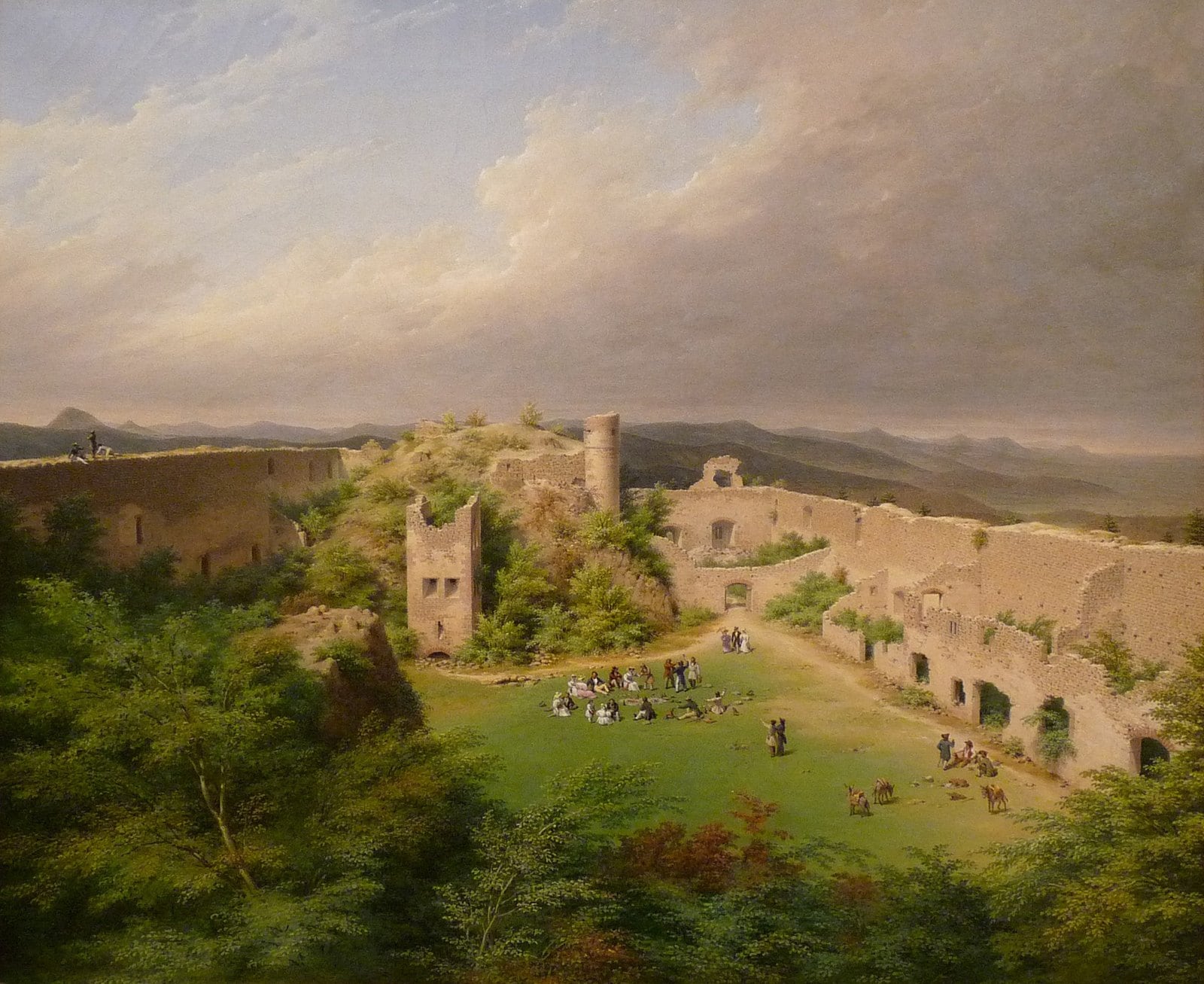
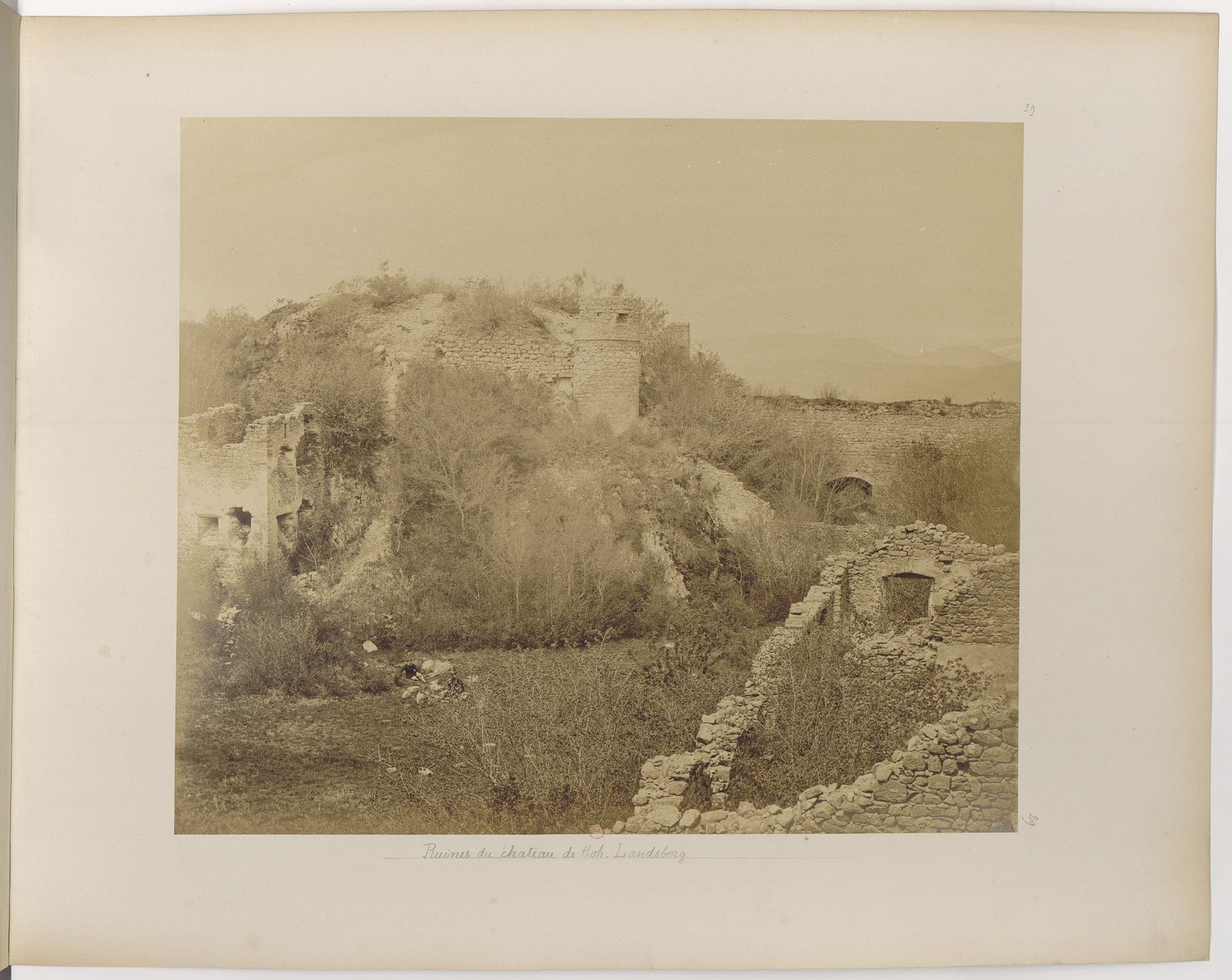
Recognition came slowly. In 1840 the ruin was classified as a Monument Historique, an early entry on France’s protected-monument rolls, yet the classification did little to halt the decay. Nineteenth-century travelers knew Hohlandsbourg as a picturesque wreck: Henri Lebert painted its overgrown courtyard in 1833, and around 1859 Adolphe Braun photographed the same crumbling walls, images that record just how far the fortress had fallen before anyone tried to save it. Real intervention waited until the mid-1980s, when the public authorities stepped in. A major restoration program was launched around 1985, and in 1987 a dedicated body, the Syndicat Mixte pour l’Aménagement du château du Hohlandsbourg, was created to run it, bringing together the Alsace region, the Haut-Rhin department, and the surrounding communes. The main campaign of works ran through roughly 2000, and archaeological excavations followed between 2008 and 2013.
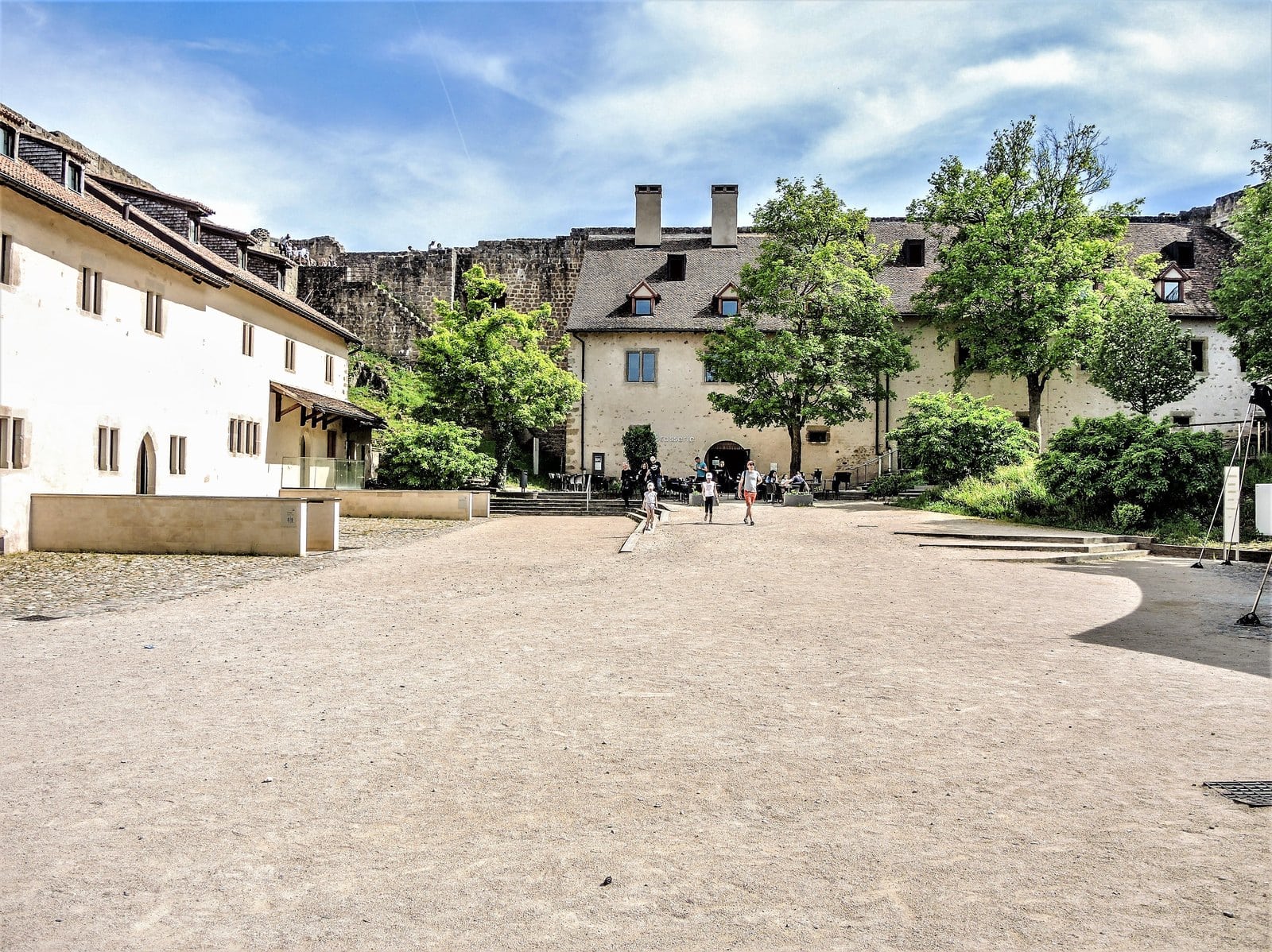
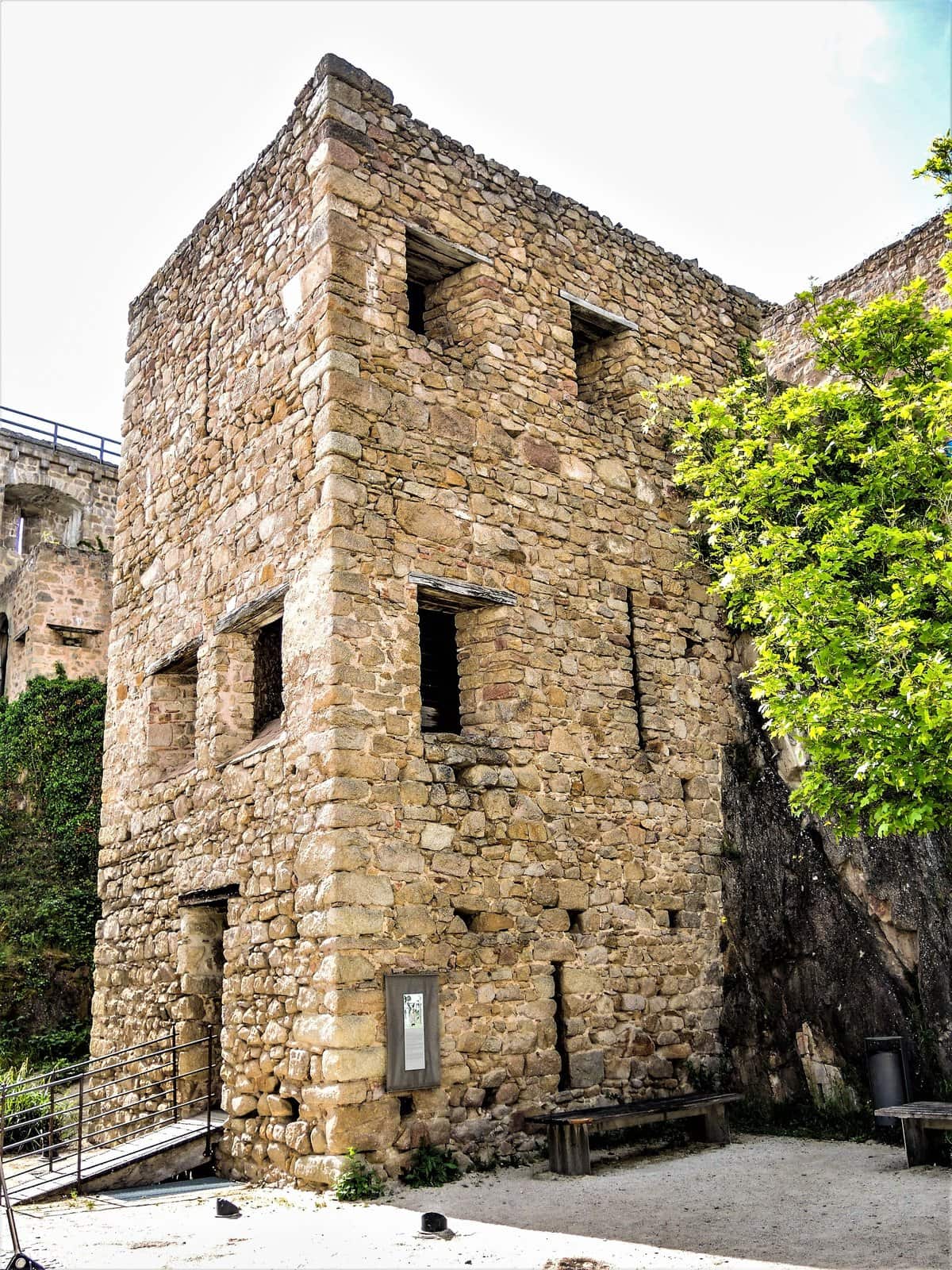
This is where honesty about the present state matters. What the restoration produced is a consolidated ruin fitted out for visitors, not a resurrected medieval castle. The great curtain walls and the arrow-slits are genuinely old. The Schwendi and Lupfen living quarters that give the courtyard its enclosed feel, by contrast, are modern restitutions built on the original foundations, and the covered rampart-walk that carries you around the walls for the panorama is a contemporary addition. For this work the site uses the word restitution rather than restoration, and the choice is deliberate: it signals reconstructed volumes raised to make the ruin legible and usable, not a claim that the original interiors survived. Hohlandsbourg is in that sense the considered opposite of Haut-Kœnigsbourg’s total reconstruction. There the twentieth century chose to imagine a fortress whole; here it chose to stabilize a ruin and let the gaps show. That contrast is the reason to see the two castles on the same Alsace itinerary.
Governance has moved on as well. The Syndicat Mixte was dissolved at the end of 2022, and since the first of January 2023 the castle has been managed directly by the Collectivité européenne d’Alsace, the authority that now runs Alsatian departmental affairs.
Visiting Château du Hohlandsbourg today
The castle works today as a cultural and events venue rather than a museum of furnished rooms, and it is best approached in that spirit. The former dwelling and kitchen hold an exhibition space, with a permanent display on daily life in the medieval and Renaissance castle, drawing on objects recovered in the excavations, alongside a temporary exhibition that changes each year. Its real star, though, is the covered walkway around the enclosure, which delivers an uninterrupted 360-degree view over the plain of Alsace, the Vosges, and the Black Forest beyond. From late spring the large courtyard becomes a stage for concerts, medieval-themed festivals, and family workshops, and the site also hosts weddings and runs a seasonal brasserie. Its promoters describe it as the largest surviving Habsburg monument in Upper Alsace, a claim worth noting as their framing rather than an independently settled fact.
The castle opens for a season that runs from early spring to the start of November and closes over the winter. Admission costs more on days with a program of activities, with reduced and family rates, free entry for children under six, and free admission for holders of the Pass Alsace; the current figures and the winter closure are in the table below. The ticket desk takes cash in euros only, bank cards other than American Express, holiday and culture vouchers, and French bank checks with proof of identity. Because the opening calendar and the event program shift from year to year, it is worth confirming current dates, prices, and any special weekends on the official site, chateau-hohlandsbourg.com, before setting out. The address is the route des Cinq Châteaux at 68920 Wintzenheim; drivers usually approach through Wintzenheim from the north or Husseren-les-Châteaux from the south, and parking sits below the walls, leaving a short uphill walk through the forest to the gate.
Admission
| Ticket | Price (standard day; day with activities) |
|---|---|
| Adult | €7; €10 |
| Young people aged 6 to 17 | €4.50; €8 |
| Reduced rate (see the operator’s conditions) | €4.50; €8 |
| Family, children aged 6 to 17 (up to 4 people, at most 2 adults) | €20; €32 |
| Additional person on a family ticket (up to 2) | €4.50; €8 |
| Children under 6 | Free |
| Winter closure | November 2, 2026 to April 2, 2027 |
| Hours from April 3, 2027 | Not yet published; see the official website |
| Last admission | 30 minutes before closing |
Where to stay
Colmar makes the natural base for the visit, an easy drive down the hill and a fine town in its own right. You can compare places to stay in and around Colmar or browse guided tours and activities in the Colmar area to build the castle into a wider Alsace itinerary.
Some links on this page are affiliate links, which means StoneKeep Atlas may earn a small commission, at no extra cost to you, if you book through them.
Common Questions
How long does a visit to the Château du Hohlandsbourg take?
Plan on about an hour for an ordinary visit, which is the castle’s own average and the length it gives for the self-guided circuit. On days with a program of activities the average stretches to around three and a half hours. When a guide is free, individual visitors can join a guided tour at no extra charge, but it cannot be booked and keeps no fixed time, since it depends on how busy the site is. Tours in English or German are run only for groups that reserve ahead.
Can you reach the Château du Hohlandsbourg without a car?
Yes, with a walk at the end. Trains on the Colmar to Metzeral line stop at Saint-Gilles, listed in timetables as Saint-Gilles Lycée Haut-Rhin, and from there the castle says hiking paths cover about 5 kilometers to the gate. Walkers starting in Eguisheim can follow hiking trails instead, which the castle reckons at about three hours.
Is the Château du Hohlandsbourg accessible with a wheelchair or a stroller?
Mostly, except on the ramparts. Lifts serve the indoor spaces and the outdoor areas are accessible, but the rampart walk is not accessible by wheelchair and can be hard for visitors with limited mobility or who tire easily, so reception lends a touchscreen tablet free on request to show it. Strollers are not allowed on the ramparts and can be left at reception, and with many steps on the circuit the castle advises a baby carrier. Parking for disabled visitors is on the esplanade in front of the castle.
Can you bring a dog or a picnic to the Château du Hohlandsbourg?
Yes to both, within limits. Small and medium-sized dogs are accepted on a leash and are welcome in the outdoor spaces, though not in the exhibition rooms. There is no designated picnic area inside the walls, but there are several places where a packed lunch is fine, and staff on site will point them out.
What events are held at the Château du Hohlandsbourg?
Summer shows are staged under the open-sided awning in the courtyard, a covered 300-square-meter open-air theater, so they go ahead in rain but are called off if there is a thunderstorm. A Halloween program, booked in advance, has run around the end of October in recent seasons. Children aged five to twelve can celebrate a birthday with a guided visit, a shield-and-heraldry workshop and a treasure hunt, all led by an activity leader. Receptions and medieval banquets are arranged on request.
How far is the Pflixbourg from the Château du Hohlandsbourg?
About a kilometer and a half as the crow flies, going by the coordinates France’s national heritage database gives for the two monuments. The same database records the Pflixbourg as a ruin since 1450 and shows it registered as a historic monument in 1968, whereas the Hohlandsbourg was classified, the higher grade of protection, as early as 1840.
What is the Route des Cinq Châteaux?
It is the forest road that serves the Hohlandsbourg: a 10-kilometer route around the Stauffen summit between Wintzenheim and Husseren-les-Châteaux, a village the castle calls the highest point of the Alsace Wine Route. Drivers and cyclists use it to reach the castle, the Pflixbourg tower and the Three Castles of Eguisheim, and several circuits along it take in the views over the Alsace plain. By prefectoral order the road is closed every year from November 15 to March 15.
What happened to the Château du Hohlandsbourg in the Thirty Years’ War?
Swedish troops took it in May 1633, and that July soldiers from Colmar carried off part of its artillery, including the bastion’s three large cannons, which Emperor Maximilian II had given Schwendi: the Hare, the Wildcat and Nobody’s Friend. In August 1634 about twenty imperial infantrymen slipped in while the castle’s bailiff was at market in Munster and looted it. In December 1637, with an imperial army threatening Colmar, the French had it burned and the upper castle brought down with gunpowder.
Beyond Château du Hohlandsbourg
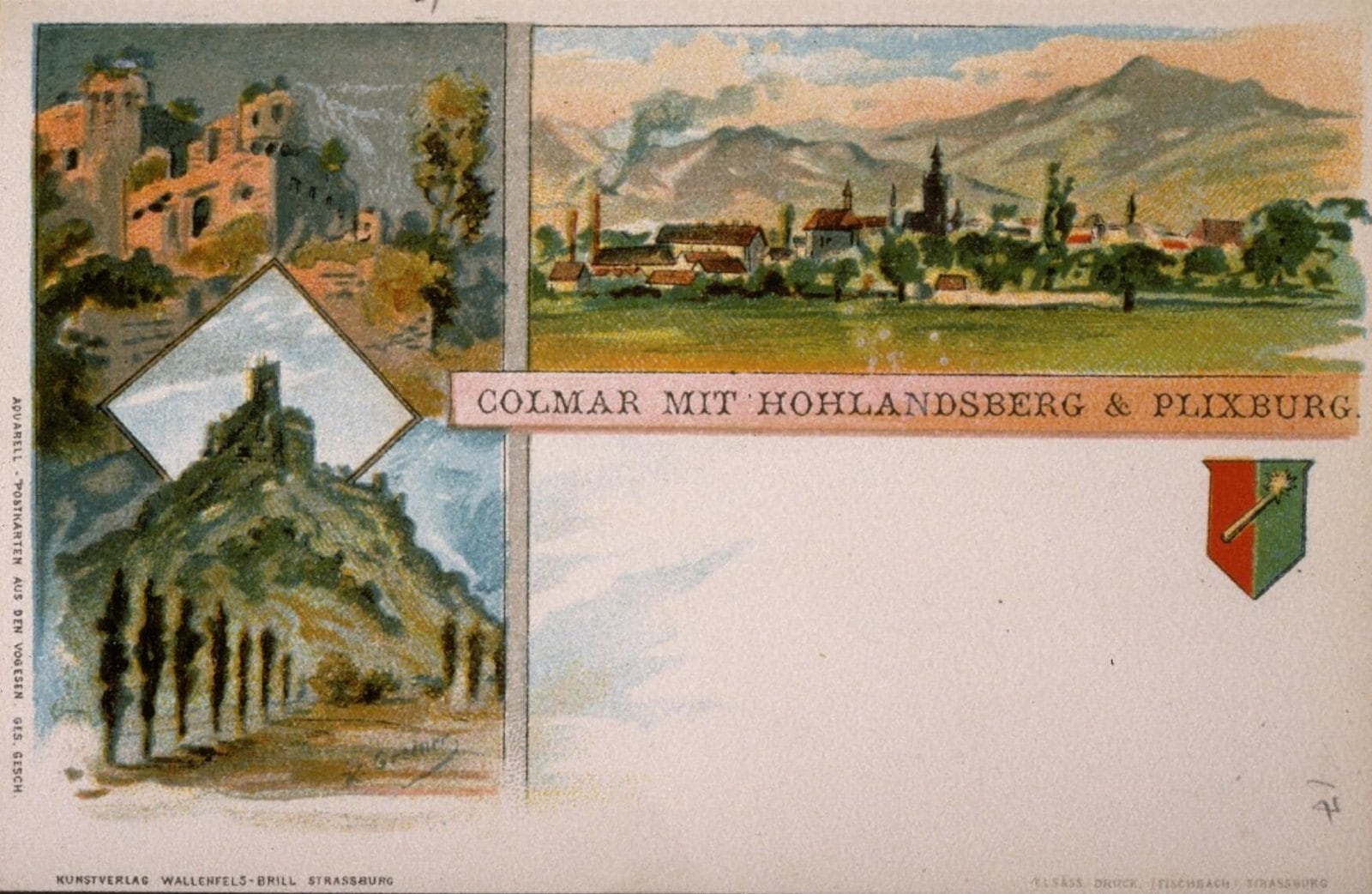
Hohlandsbourg does not stand alone. It is the northern anchor of the Route des Cinq Châteaux, a wooded ridge road that links five medieval castles between Wintzenheim and Husseren-les-Châteaux. Just south stands the smaller Château de Pflixbourg, another Habsburg-era watch-post, and at the eastern end of the ridge the Three Castles of Eguisheim, Dagsbourg, Wahlenbourg and Weckmund, raise their three rival keeps above the wine village of Eguisheim, the strange family fortress silenced by the fire of 1466. Walking the route ties all five together in a single day and shows how thickly the medieval lords fortified this edge of the Vosges. Above Saverne, the Château du Haut-Barr, the Eye of Alsace, shows what the prince-bishops of Strasbourg built to watch the same plain from the north.
The essential companion visit, though, is the Château du Haut-Kœnigsbourg, a short way north above Orschwiller. The two make a deliberate pair. Haut-Kœnigsbourg was rebuilt whole as a German imperial statement, a complete and furnished vision of a medieval fortress (Wilhelm II entrusted the work to Bodo Ebhardt in 1900 and the building campaign ran 1901-1908); Hohlandsbourg was consolidated as an honest ruin. Seeing both in a single trip is the clearest lesson Alsace offers in how differently the twentieth century chose to treat its castles, and why. Colmar and the surrounding vineyard, with Eguisheim among the prettiest villages in France, round out an itinerary that has few equals in the region. Farther north, in the forested Vosges du Nord, the semi-troglodytic Château de Fleckenstein is a third kind of Alsace castle again, carved into the rock rather than raised on top of it. All five, from the Eguisheim towers to Fleckenstein, are gathered in our guide to the castles of Alsace.
More views of the Château du Hohlandsbourg
Conclusion
The Château du Hohlandsbourg rewards the traveler who arrives knowing what it is. Its curtain walls are medieval, stripped by war and time, and its living quarters are modern restitutions on the old foundations; the whole was stabilized and reopened to visitors. Its arrow-slit walls carry the memory of a Habsburg garrison watching Colmar; its bastion recalls a Renaissance soldier adapting to the age of gunpowder; and its reconstructed halls and covered walkway are the frank work of modern hands making a ruin legible again. Paired with Haut-Kœnigsbourg and set on the Route des Cinq Châteaux, it earns its place as the first great fortress of Alsace on any serious castle traveler’s map.
Principal Sources
- Château du Hohlandsbourg. Official site: history and visitor pages, including “FAQ.” chateau-hohlandsbourg.com.
- Collectivité européenne d’Alsace. Deliberation on the dissolution of the Syndicat mixte d’aménagement du château du Hohlandsbourg and direct management from January 1, 2023. alsace.eu.
- Ministère de la Culture. “Château de Hohlandsberg ou Hohlandsbourg.” Base Mérimée, notice PA00085738. pop.culture.gouv.fr.
- Ministère de la Culture. “Ruines du château de Pflixbourg.” Base Mérimée, notice PA00085739. pop.culture.gouv.fr.
- [Mossmann, Xavier.] Bulletin de la Société pour la conservation des monuments historiques d’Alsace, 2e série, t. 1 (1863). archive.org.
- SNCF Open Data. “Horaires SNCF” timetable feeds (GTFS), Colmar – Metzeral line, Saint-Gilles Lycée Haut-Rhin stop. ressources.data.sncf.com.
Image credits. The curtain walls and round tower of the Château du Hohlandsbourg from the rampart: Patrick from Compiègne, CC BY-SA 2.0, via Wikimedia Commons; Round tower and curtain walls of the Château du Hohlandsbourg: PaulT (Gunther Tschuch), CC BY-SA 4.0, via Wikimedia Commons; North artillery bastion of the Château du Hohlandsbourg: Espirat, CC BY-SA 4.0, via Wikimedia Commons; Henri Lebert 1833 painting of the ruined Château du Hohlandsbourg: Gzen92, CC BY-SA 4.0, via Wikimedia Commons; Adolphe Braun photograph of the ruined Château du Hohlandsbourg: Adolphe Braun, public domain, via Wikimedia Commons; Restored logis and courtyard of the Château du Hohlandsbourg: Espirat, CC BY-SA 4.0, via Wikimedia Commons; Period postcard of Colmar with the Hohlandsbourg and Pflixbourg castles: K. Greiner, public domain, via Wikimedia Commons; View over the plain of Alsace toward Colmar from the Château du Hohlandsbourg: Patrick from Compiègne, CC BY-SA 2.0, via Wikimedia Commons; Restituted logis along the eastern curtain of the Château du Hohlandsbourg: Espirat, CC BY-SA 4.0, via Wikimedia Commons; The inner courtyard of the Château du Hohlandsbourg with its round tower and heraldic shields: Rolle, CC BY-SA 3.0, via Wikimedia Commons; Rampart walk of the Château du Hohlandsbourg with view toward the Vosges: Espirat, CC BY-SA 4.0, via Wikimedia Commons; Oberschloss and cistern tower of the Château du Hohlandsbourg: Espirat, CC BY-SA 4.0, via Wikimedia Commons; Site of the drawbridge and first gate of the Château du Hohlandsbourg: Espirat, CC BY-SA 4.0, via Wikimedia Commons; Cistern tower of the Château du Hohlandsbourg: Espirat, CC BY-SA 4.0, via Wikimedia Commons; Inner courtyard of the Château du Hohlandsbourg from the walls: Gzen92, CC BY-SA 4.0, via Wikimedia Commons. Freely licensed images are resized to fit; any other change, such as a crop, is named in the credit.