
Château de Fleckenstein
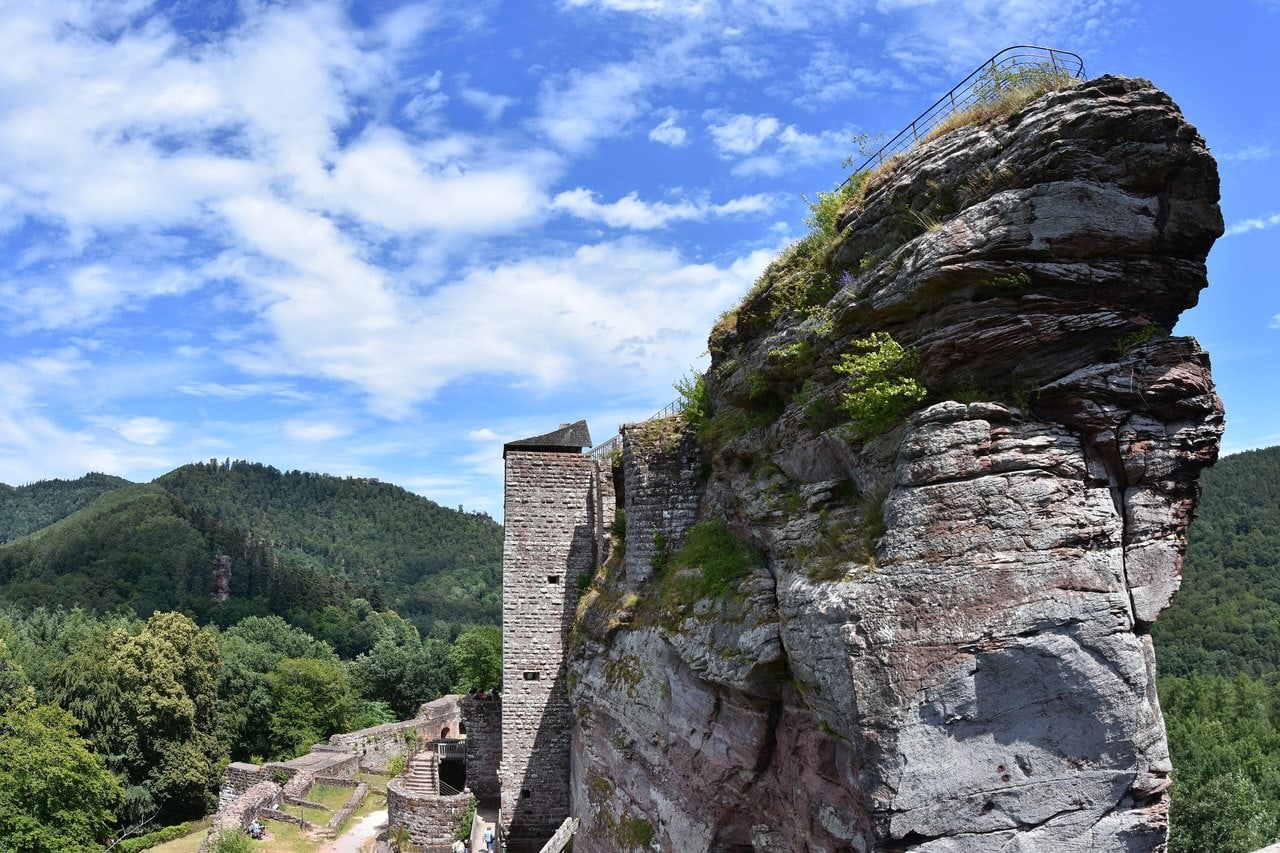
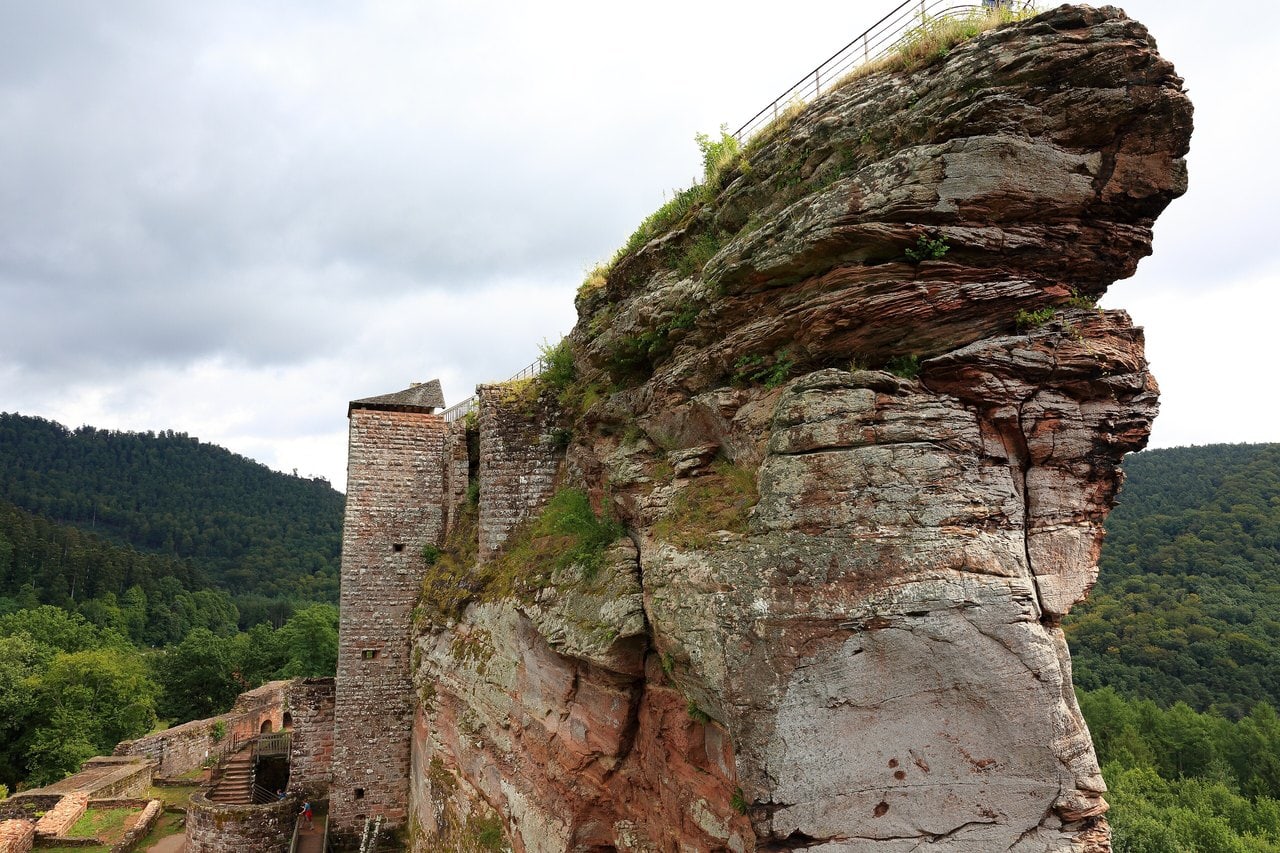
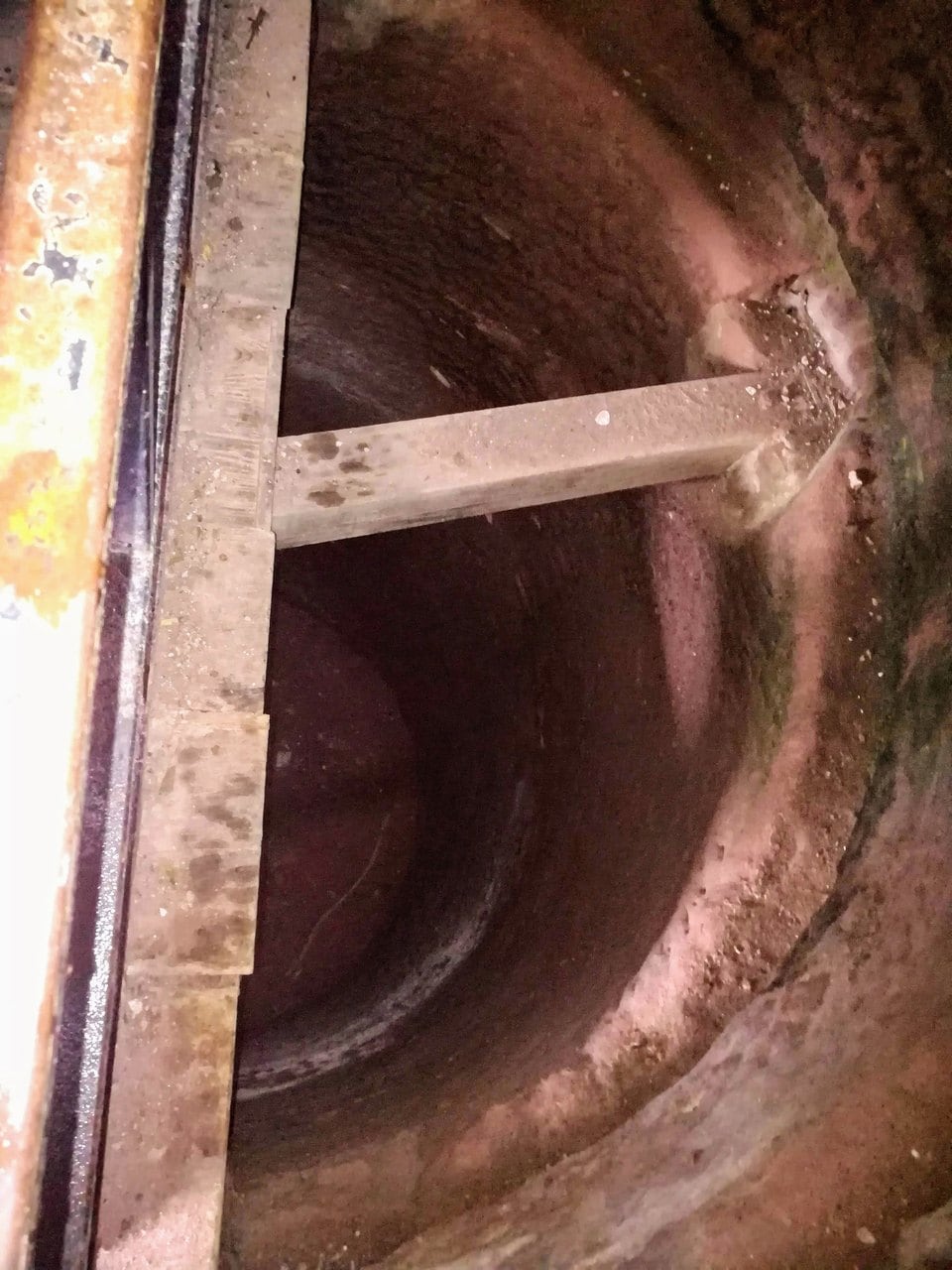
The Château de Fleckenstein does not sit on its ridge so much as grow out of it. On the far northern edge of Alsace, where the Vosges forest runs up against the German border, a bar of pink sandstone rises from the trees like the prow of a stranded ship, and the castle is carved into it: staircases, chambers, cisterns, and a well cut straight down through the living rock. Builders raised walls and towers on top, but the heart of the place was excavated rather than constructed, and that is what makes Fleckenstein one of the most striking castle ruins in France.
For roughly six centuries this was the seat of the barons of Fleckenstein, among the most powerful families of Lower Alsace. Louis XIV’s soldiers put an end to it late in the 17th century, and the fortress has stood as a ruin ever since, consolidated but never rebuilt. Fleckenstein drew about 61,000 visitors in 2023, on the regional tourism agency’s figures, and they come to a rock that is far stranger, and far older, than anything the masons added to it.
Quick Facts
| Location | Lembach, Bas-Rhin, Alsace, France |
| Type | Semi-troglodytic rock castle (château fort) |
| Built | 12th century; family first documented 1174 |
| Rock | Pink Vosges sandstone, about 100 m long |
| Elevation | About 338 m above sea level |
| Condition | Consolidated ruin |
| Protection | Monument Historique (classified 1898) |
| Owner | Commune of Lembach; intercommunal management |
| Official site | fleckenstein.fr |
A ship of stone on the Vosges frontier
Fleckenstein stands in the commune of Lembach, in the Bas-Rhin, deep inside the Parc naturel régional des Vosges du Nord and only about 200 meters from the German frontier. The setting is part of the story. This is a transboundary UNESCO biosphere reserve, the Vosges du Nord joined to the German Pfälzerwald, one of the largest stretches of forest in western Europe, and the castle looks out over the valley of the Sauer toward a horizon of wooded ridges on both sides of the border.
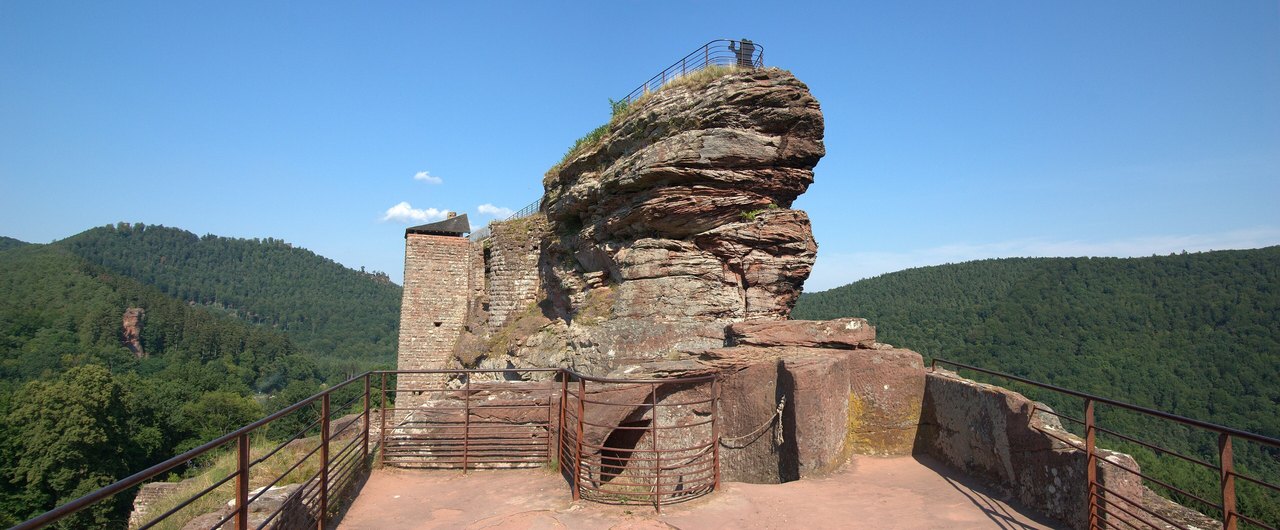
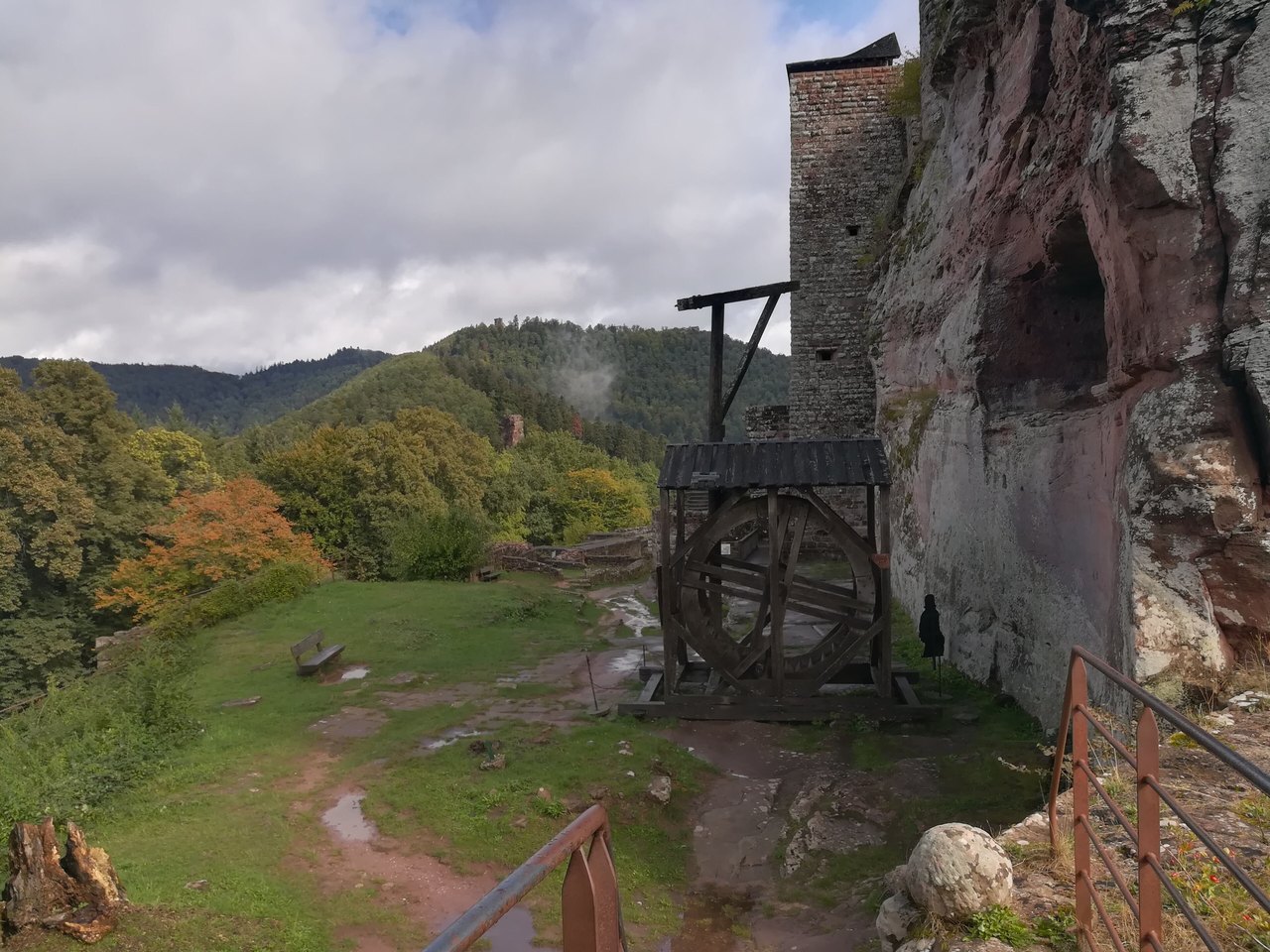
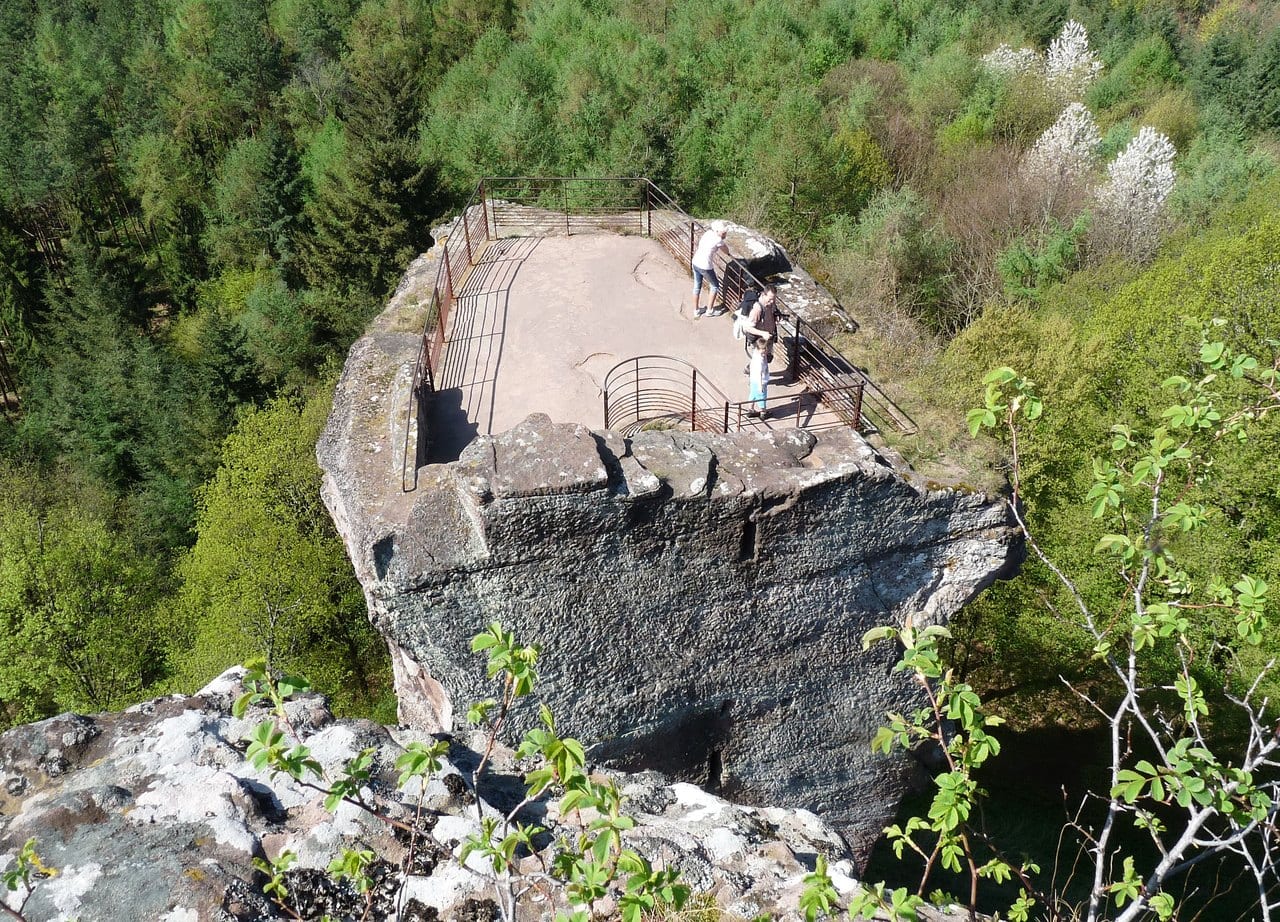
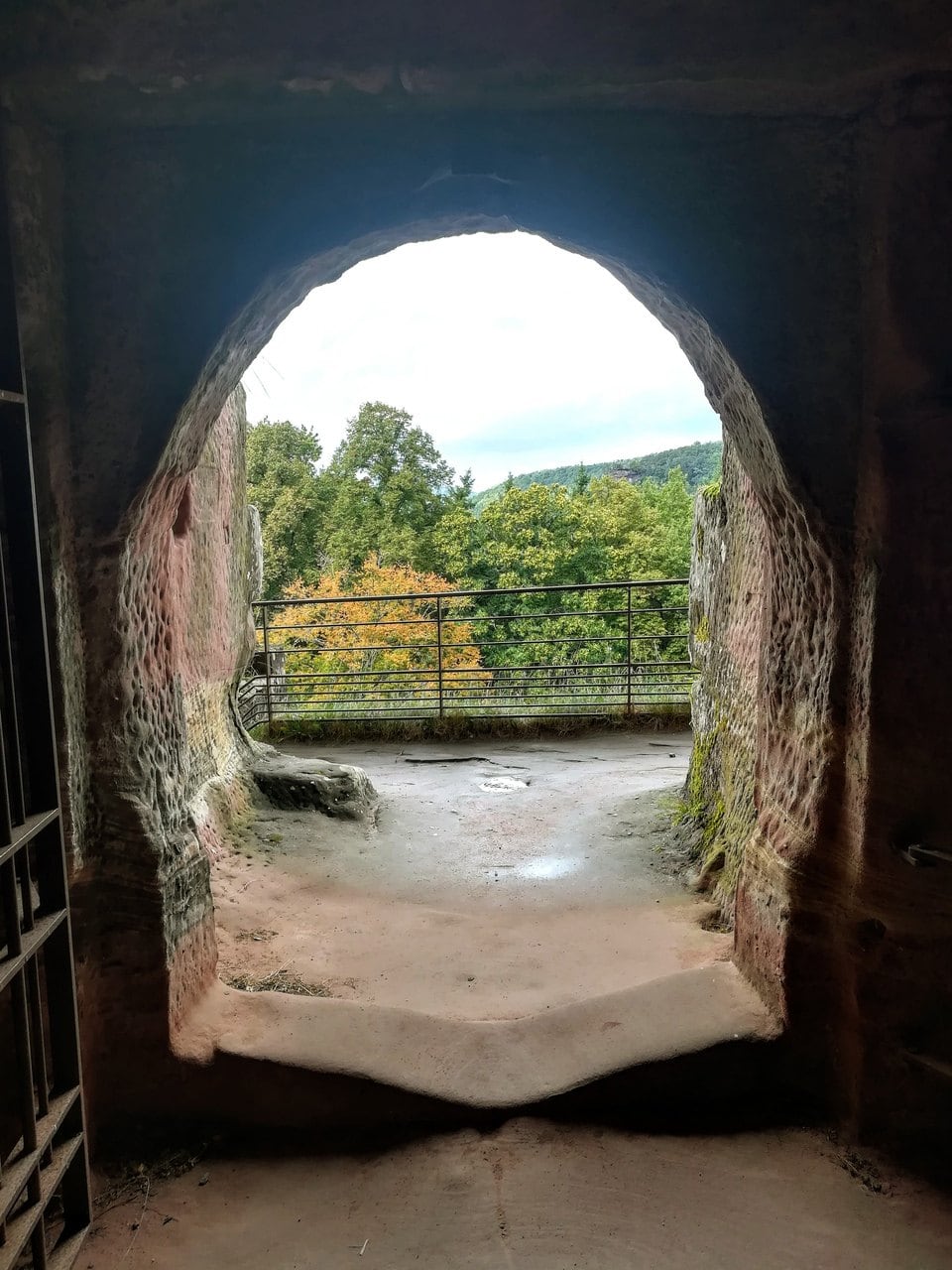
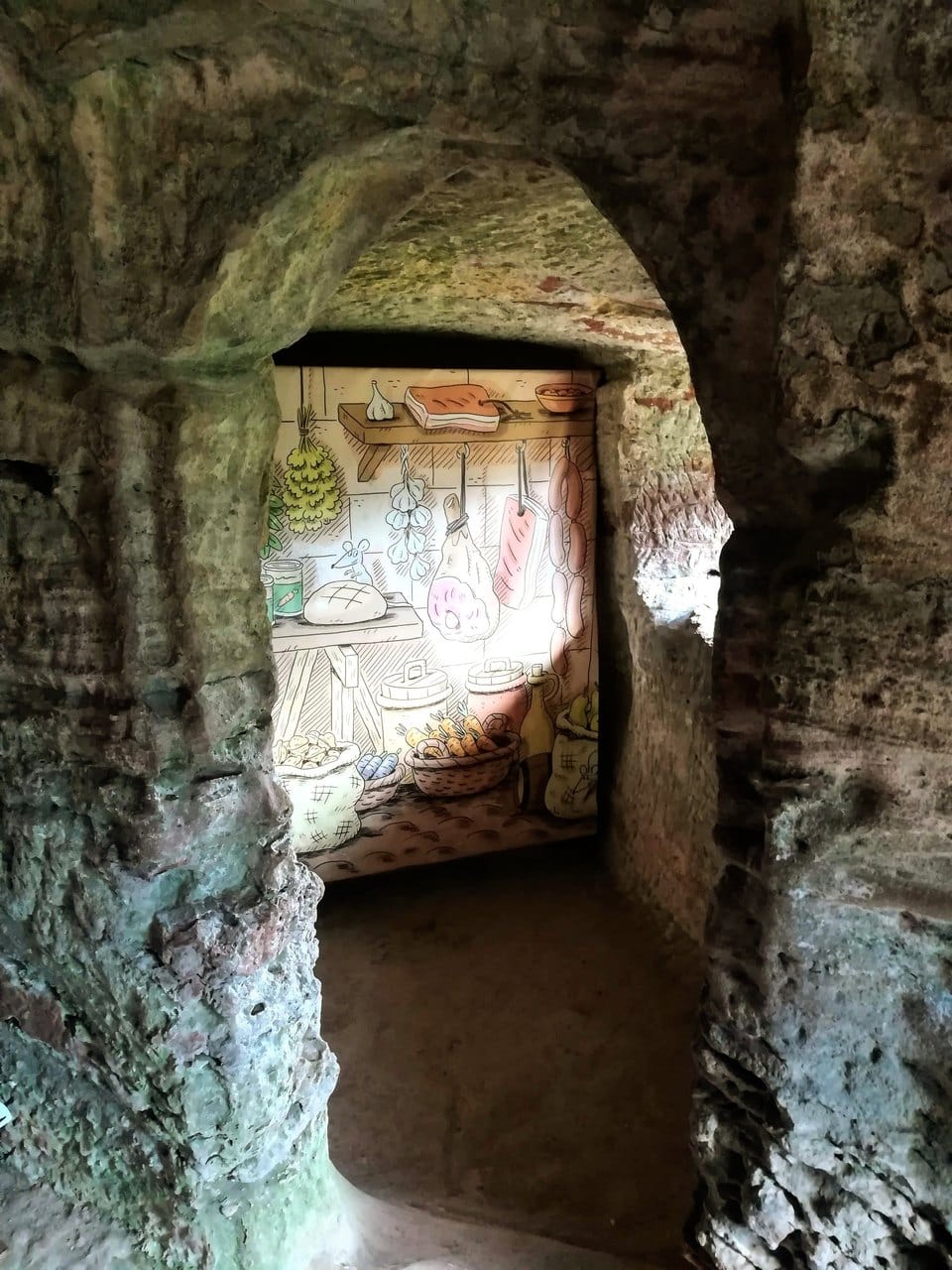
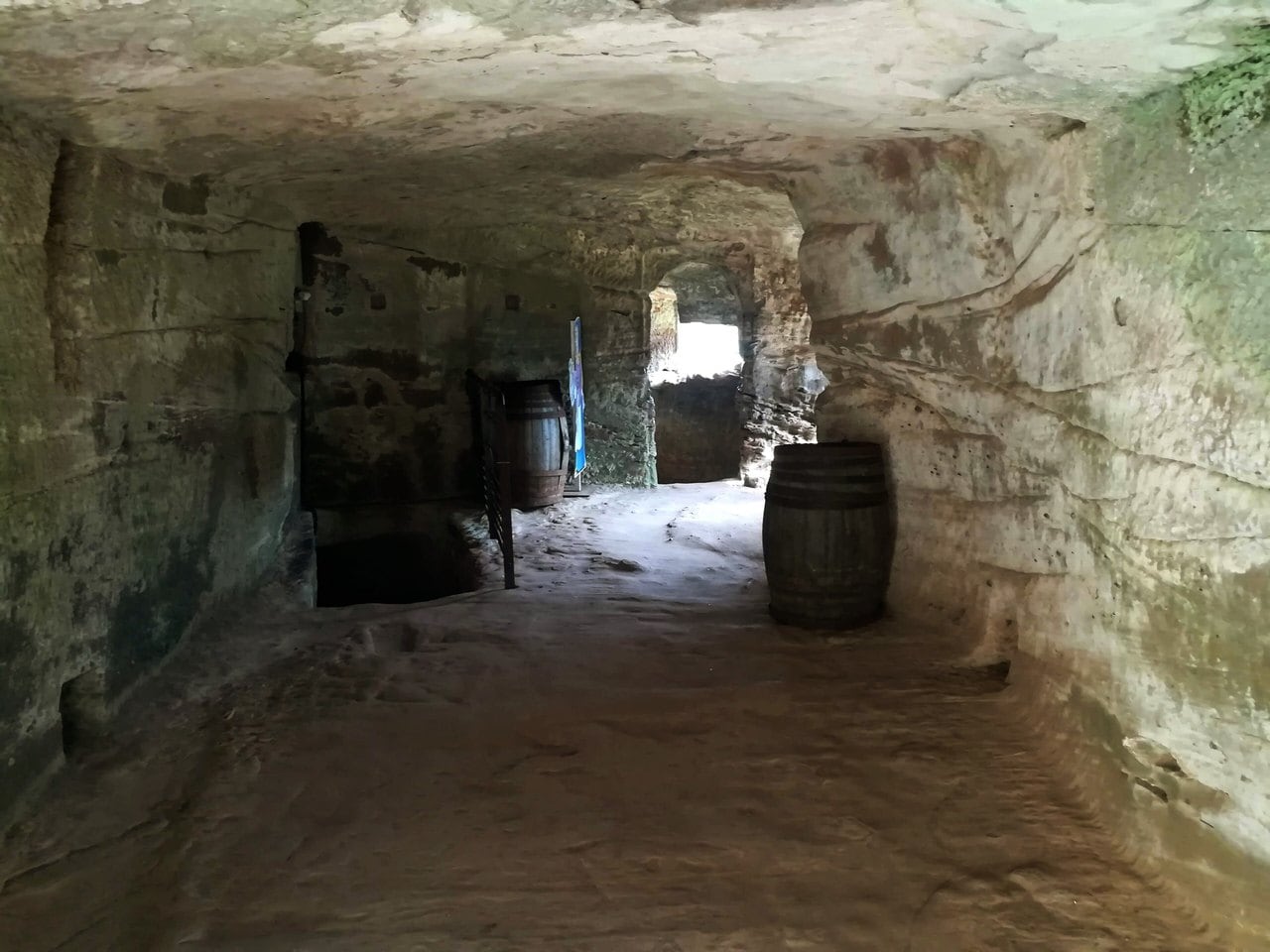
The rock itself is the monument. It is a spur of pink Vosges sandstone, laid down more than 200 million years ago, running roughly 100 meters east to west and only 10 to 15 meters wide, its sides dropping in near-vertical faces. Medieval builders treated it as both foundation and quarry. They cut a spiral stair into a smaller rock detached to the west, threaded a covered passage between wall and stone halfway up the south face, and hollowed the interior into a warren of rock-cut rooms, galleries, and stairways, some roofed, some open to the sky. An ingenious system gathered rainwater into a filtration cistern, and a treadwheel hoist lifted water and supplies to the upper floors. The result is what the French call a château semi-troglodytique, a castle half carved from the earth.
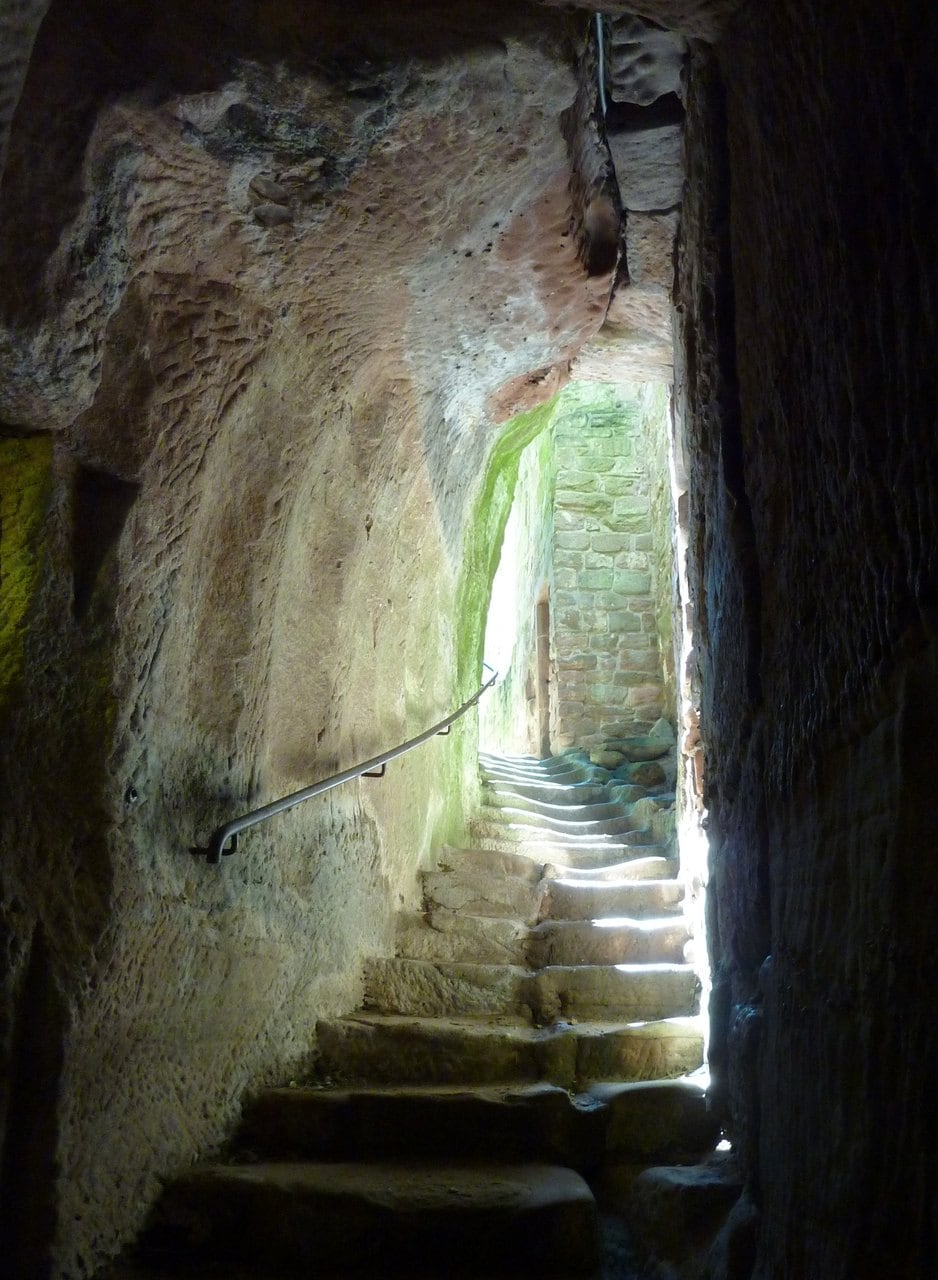
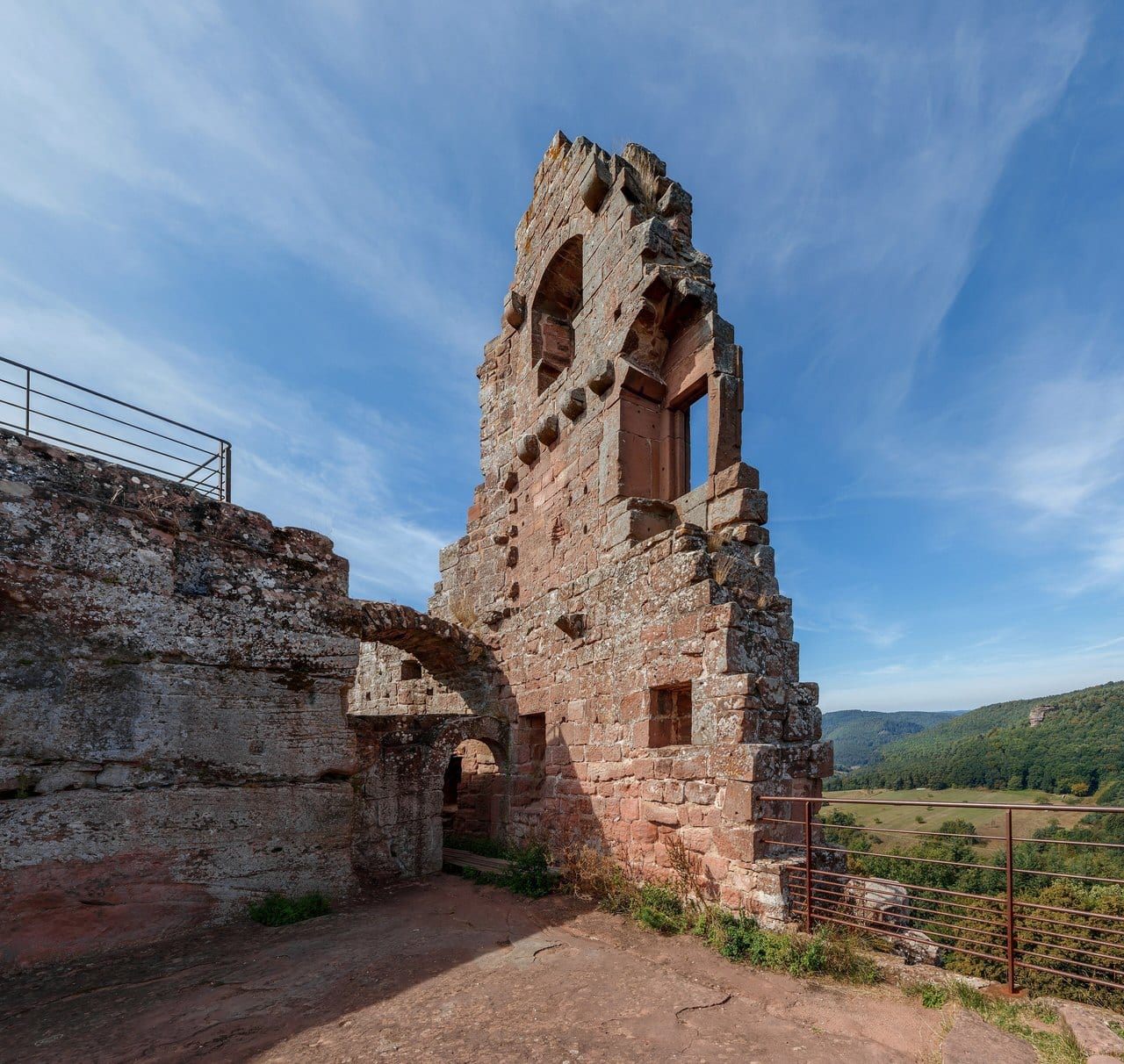
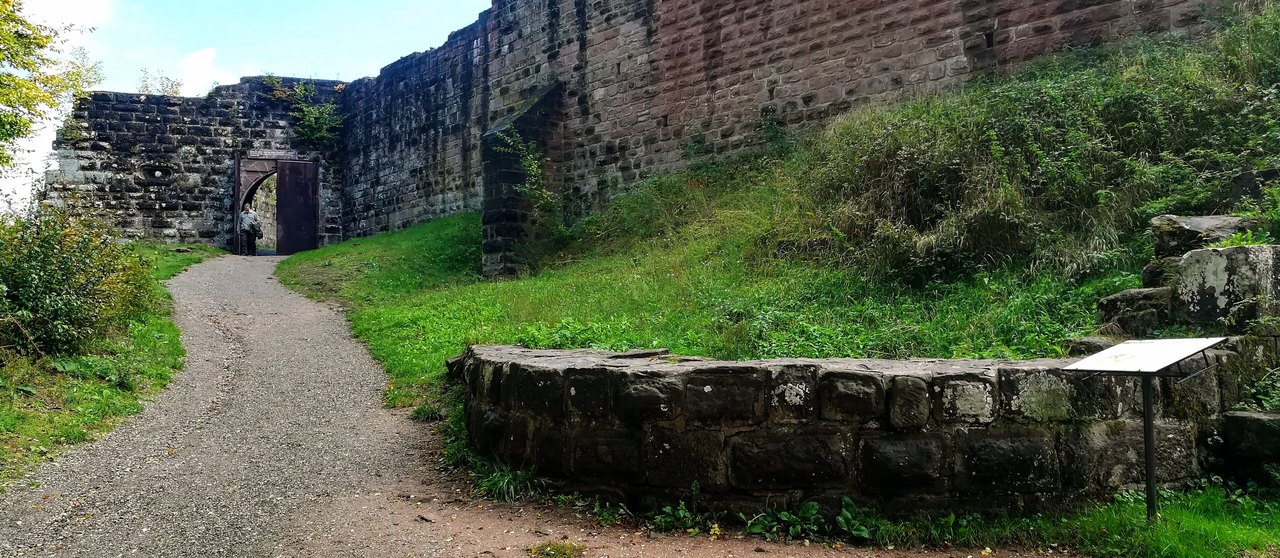
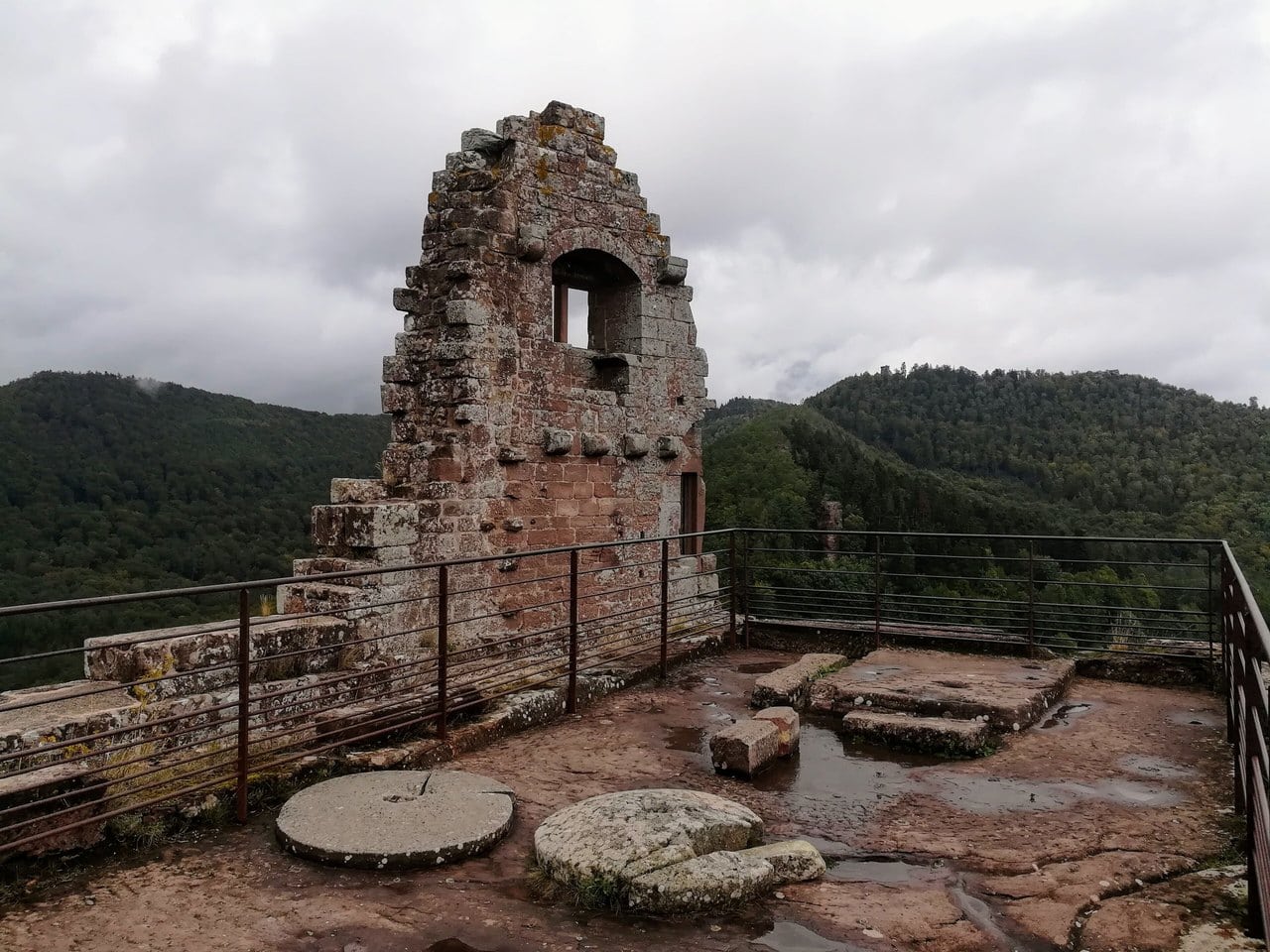
Above the rock-cut core, the surviving masonry records centuries of building. On the north side, where the approach runs, restored curtain walls and barrel-vaulted gates lead through a lower courtyard past the footings of the outbuildings. The south face carries two half-round flanking towers pierced for cannon, one of them with a postern. To the west, a smaller rock artificially split from the main spur holds a spiral stair cut into the stone and, at its top, the trace of a vanished building; a curtain wall and a low outer rampart tie it back to the great rock below. A square stair tower, its door carved with the arms of Friedrich von Fleckenstein and his wife Catherine von Cronberg, still shows the springing of its original steps. One low chamber, the round-arched entrance of the earliest castle, was turned into a bathroom in the 16th century and now serves as a small museum. On the summit platform stand fragments of the great hall with its seated window niches, the footprint of a square keep, cellars, a prison, and a room known as the archive chamber, its door bearing the family escutcheons. Little of it is whole. All of it is legible, which is exactly why it was protected.
The barons of Fleckenstein
The castle takes its name from the family, and the family rose in the service of emperors. The rock sat on the road between two centers of imperial power, Haguenau and Kaiserslautern, and from the early Middle Ages its keepers were ministeriales, unfree imperial knights charged with watching the Sauer valley on the crown’s behalf. Some records place a Gottfried von Fleckenstein in a donation as early as 1129; the first secure mention comes in 1174, when he is documented at the court of the Hohenstaufen emperor Frederick Barbarossa. A long tradition credits Barbarossa with granting the family the castle outright, and an older story dates the fortress to a Hohenstaufen foundation of 1114; modern historians treat both as unproven. What is clear is the essential picture: the Fleckenstein were the emperor’s men on a frontier rock, and they used the position to climb.
Climb they did. Through the 13th century the family took charge of the imperial castles of the region and the provostship of Haguenau, and as the Hohenstaufen dynasty collapsed into the leaderless decades of the Great Interregnum, they helped themselves. Wolfram von Fleckenstein declared the imperial fief his own allodial property, seized neighboring strongholds, and pushed into the lands of the Bishop of Speyer, whom he went so far as to imprison in the castle. It was a step too far. When Rudolf of Habsburg took the throne and set about restoring imperial order, he sided with the bishop and marched on the family around 1276. The Fleckenstein were beaten, losing the Loewenstein and their allodial claim, and the rock reverted to an ordinary imperial fief. (Sources give the siege as 1274, 1276, or 1278, and disagree on whether the castle attacked was Fleckenstein itself or another of the family’s holdings.)
Chastened but not broken, the Fleckenstein grew into one of the most powerful houses of Lower Alsace, raised to the rank of barons by imperial privilege in 1467. The 15th and 16th centuries were their high-water mark, and the castle was rebuilt to match. Between 1541 and 1570 it was thoroughly modernized and divided between the two surviving branches of the family, an arrangement that documents of the period describe in detail; a watercolor made after a tapestry of 1562 preserves its appearance. The dated inscriptions still visible on the lower gates, 1407 on the inner door and 1429 on the outer (readings of the worn stones vary), mark earlier phases of this long remaking. So admired was the finished fortress that the Strasbourg engineer Daniel Specklin, one of the most influential fortification theorists of his age, could hold Fleckenstein up around 1589 as something close to an ideal castle.
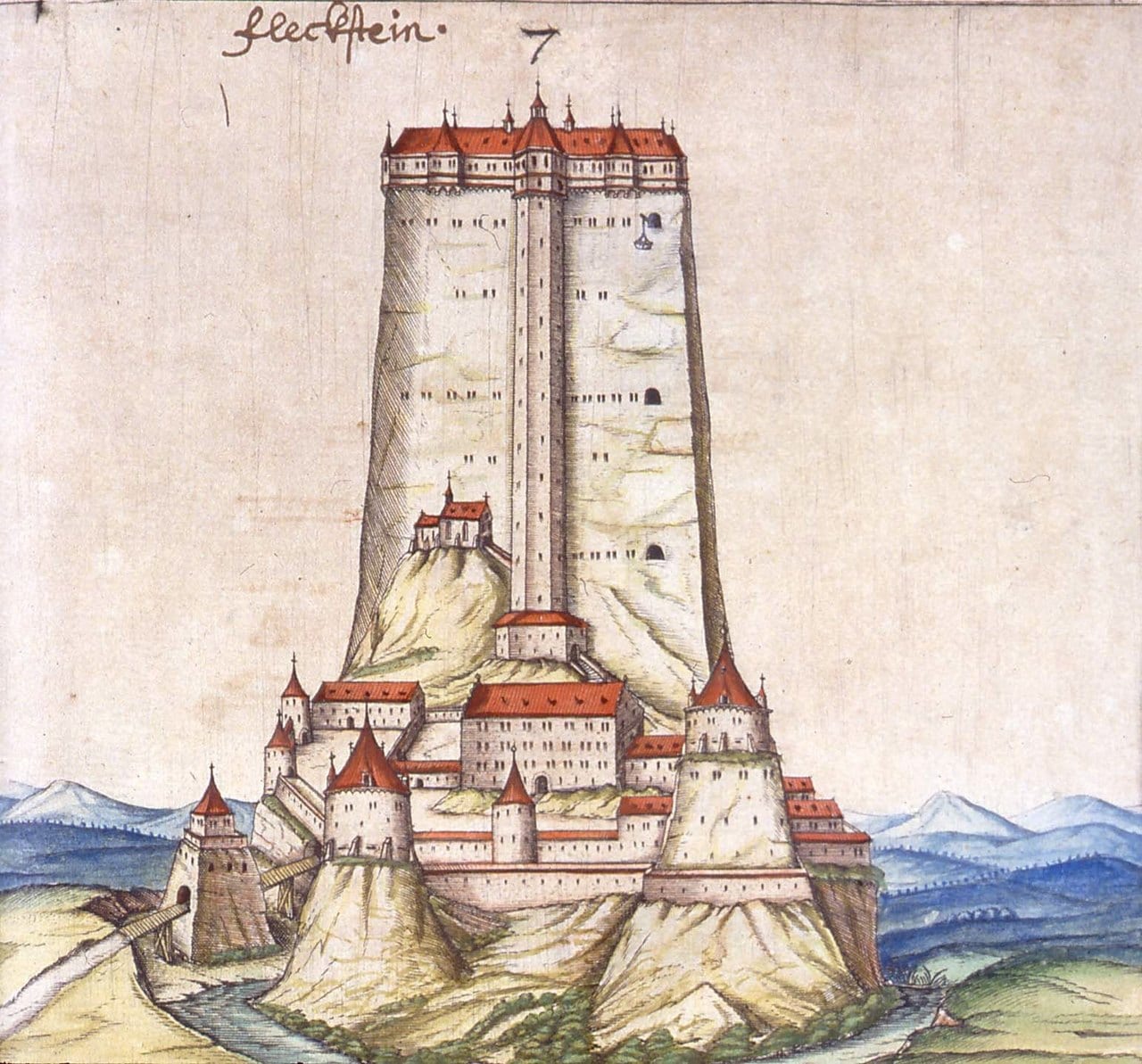
Reputation, in the end, outlasted usefulness. As artillery advanced and comfort beckoned, the family found the cramped rock outdated and drifted away to easier residences in the plain, leaving the great ship of stone increasingly to its garrison and its caretakers. It was a fortress admired more than it was needed, and that made its final fall almost bloodless.
Taken without a fight
Fleckenstein had been built to watch a frontier. Set among a chain of ridge-top castles strung along the northern Vosges, a defensive line first knit together in the age of the Hohenstaufen emperors, it helped control the road between Bitche and Wissembourg and the routes linking Alsace to Lorraine, guarding the approaches to the imperial town of Haguenau. For four centuries its position, high on a near-unclimbable rock, gave it a name for impregnability.
That name went untested. When Louis XIV’s armies pressed into Alsace in the wars of the later 17th century, the castle was taken without a fight, and then it was blown apart with gunpowder and never rebuilt. Exactly when, and by whose hand, is one of Fleckenstein’s small historical puzzles. The French national heritage register dates the demolition to 1689 and lays it at the door of General Mélac, the commander whose name is bound up with the burning of the neighboring Palatinate during the Nine Years’ War. The castle’s own historians and the German record, by contrast, place the destruction in 1680, carried out on General Montclar’s orders during Louis XIV’s earlier campaign to dismantle the strongholds of a newly annexed Alsace, and note that French soldiers under the Marquis de Vaubrun had already occupied and pillaged the rock in 1674. The dates differ by nearly a decade; the outcome does not. A fortress that had stood for four hundred years was slighted in an afternoon of powder, and the barons’ ideal castle became a shell.
Ruin, rescue, and the rock today
The family did not long survive its castle. The last branch of the Fleckenstein died out in 1720, and the lordship passed by inheritance and sale through a succession of owners: the Vitzthum d’Egersberg, then J.-L. Apffel in 1807, and General Harty, baron de Pierrebourg, in 1812. Through it all the ruin sat abandoned above the Sauer, quietly returning to the forest.
The 19th century rediscovered it. Romantic taste turned the overgrown shell into a picturesque “sleeping beauty,” and in the 1890s the German district administrator at Wissembourg, then part of the Reichsland of Alsace-Lorraine, paid out of his own pocket for the first works to secure it. On his initiative the ruins were classified as a historic monument on December 6, 1898, a protection France confirmed on February 16, 1930, after Alsace returned to the country. Repairs had already begun in a piecemeal way after 1870 and again around 1908, but the decisive campaign came later. Clearance work in 1958 opened the whole site to visitors under the local syndicat d’initiative, and between 1992 and 1997 archaeologists excavated the summit platform, uncovering the filtration cisterns, a kitchen, and the base of the keep. In 1998 the surrounding forest, some 270 hectares, was bought up and the ruin itself passed to the commune of Lembach. A program of consolidation followed: the square tower’s stair was rebuilt, new guardrails were added, the south wall was stabilized, and in 2011 and 2012 the great breach in the northwest curtain was finally closed and the summit walls made safe.
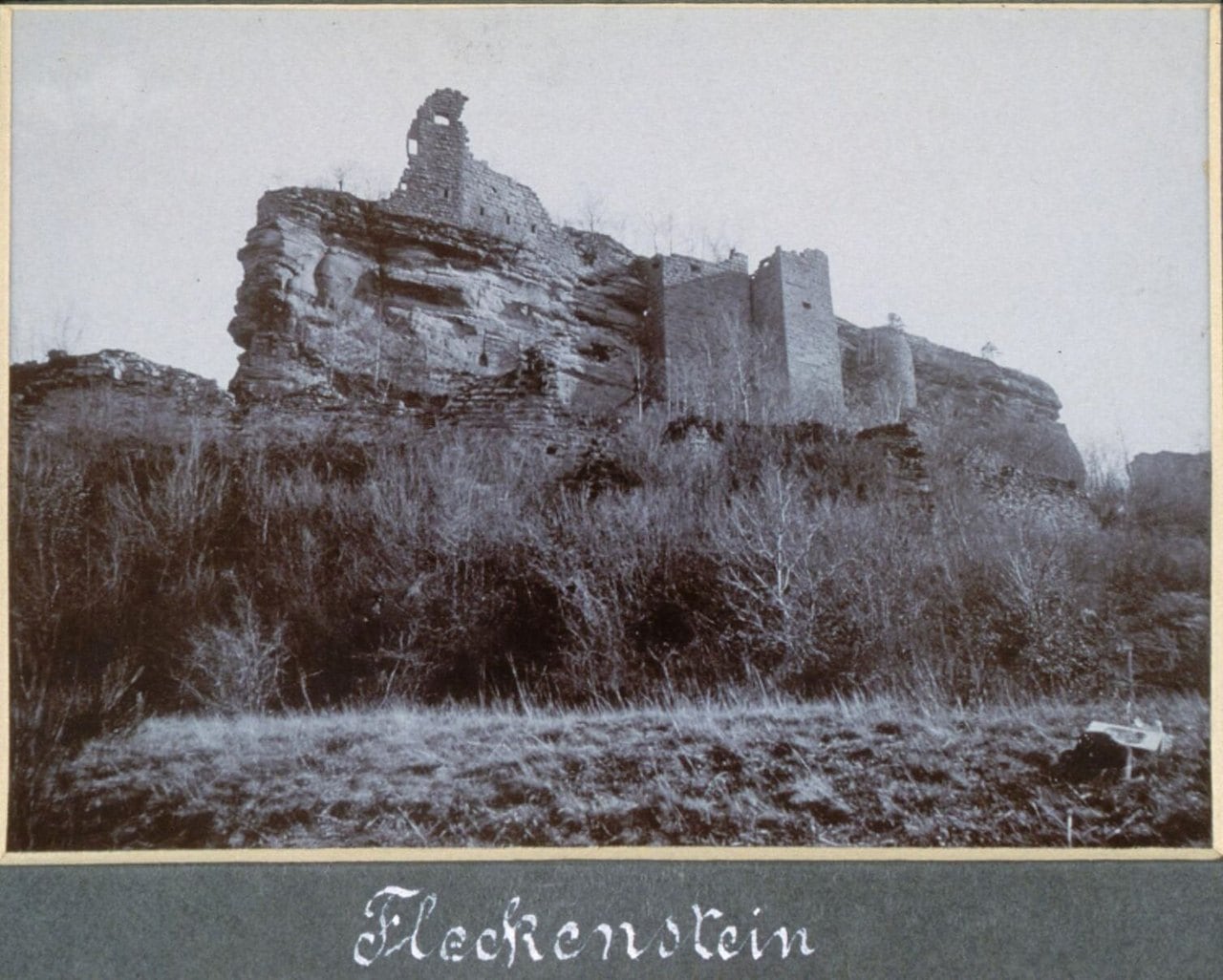
What survives today should be seen for what it is: a consolidated ruin, not a restored castle. The stair inside the square tower is modern concrete, the curtain walls have been patched and capped, and much of the medieval fabric is gone. But the essential Fleckenstein, the part that was cut rather than built, is remarkably intact. The troglodyte staircases, the well tower, the cisterns, and the chambers in the rock survive in good repair, and from the platform where the keep once stood, the view over the forests of the Vosges and the Palatinate is very close to what the barons knew.
Visiting Château de Fleckenstein
The castle lies about 7 kilometers north of Lembach, reached by a run of small forest roads (the D3, then the D925 and D525) that end at a large free woodland car park, a ten-minute walk from the reception. The old farm at the foot of the rock has been rehabilitated into a ticket office, shop, and the Café des 4 Châteaux, named for the ring of ruins nearby. Mobile coverage on site is poor to nonexistent, so it is worth buying tickets and downloading what you need before you arrive.
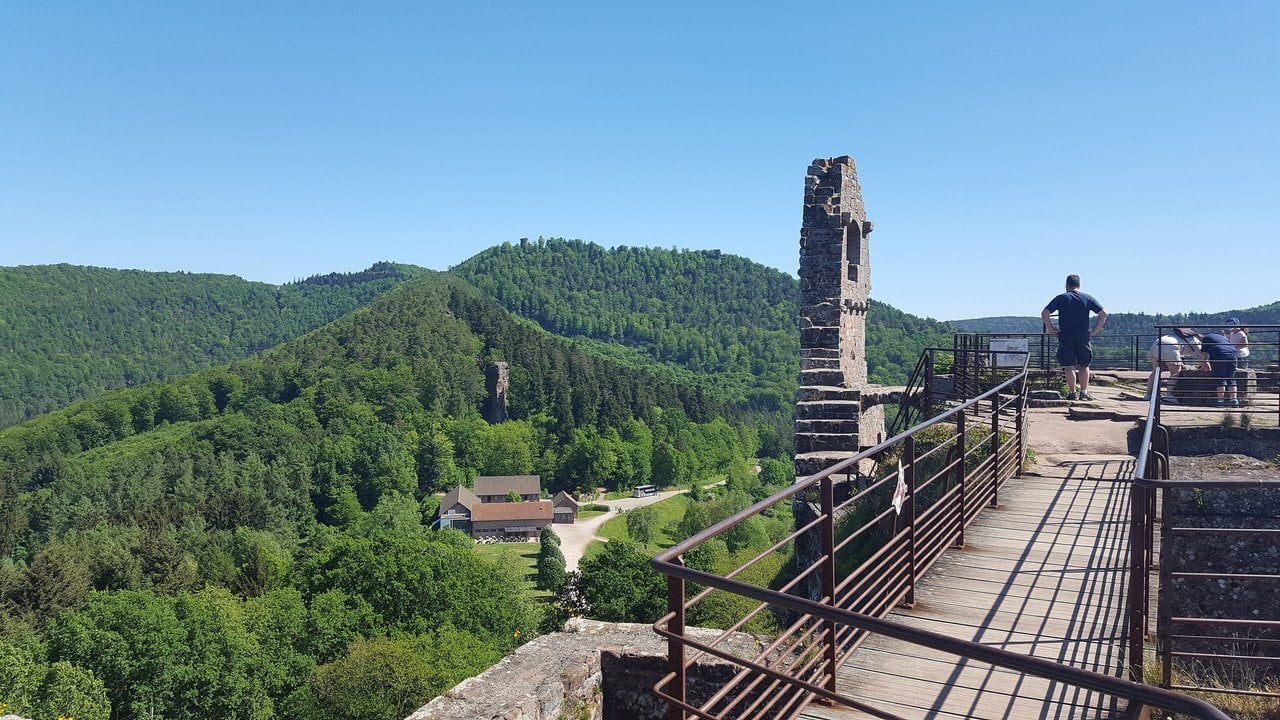
A straightforward self-guided visit takes about an hour and is the reason most people come. A visit sheet is handed out at the ticket office, and the reception building holds a small interpretive space, the galerie des ancêtres, where reconstructions overlay the castle’s past on its present and lay out the sprawling family saga. From the lower courtyard the route then climbs into the heart of the rock, up the troglodyte stairs and through the carved chambers to the summit platform, where the well, the surviving walls, and the panorama reward the climb. Families can trade the history for a game: Le Château des Défis, the “castle of challenges,” turns the visit into a two-and-a-half to three-hour medieval adventure of puzzles and climbing, available in French, German, and English, with a younger children’s play area, P’tit Fleck, near the reception (closed for renovation as of mid-2026). Dogs on a lead are welcome across most of the site, and in season a bus links the castle to Wissembourg for anyone arriving without a car.
For 2026 the castle is open daily from late March through November 1, with core hours of 10:00 to 18:00 in high summer and slightly shorter hours in spring and fall, plus limited Sunday openings in the depths of winter; it closes for the season from November 2 to December 25. Self-guided admission runs about 6 euros for adults and 4 euros for children aged 4 to 17, with under-fours free; the family Château des Défis trail is priced separately at around 11 euros for adults, 9 for youth, and 37 for a family pass. Prices and hours change from year to year, so confirm current details on the official site before you set out.
If you are building a trip around the visit, it helps to sort a base and any guided experiences ahead of time, as this corner of Alsace is rural and books up in season. Entry tickets and the family adventures can be booked ahead through GetYourGuide, and anyone staying overnight can compare hotels in and around Lembach.
Some links on this page are affiliate links, which means StoneKeep Atlas may earn a small commission, at no extra cost to you, if you book through them.
More Views of Château de Fleckenstein
Beyond Château de Fleckenstein
Fleckenstein is the anchor of a whole cluster of border ruins, and the best way to understand it is to see it in company. From the foot of the rock the “circuit of the four castles” links it on foot to three more strongholds: Hohenbourg and Löwenstein, just to the northeast, and Wegelnburg, which lies across the line in the German Palatinate and counts as the highest castle in that region. They are only the beginning. Something like twenty ruined castles are scattered through these frontier hills, many perched on sandstone needles of their own, among them Froensbourg and Wasigenstein close by and Schoeneck and the Windstein pair a little farther west; the Route des Châteaux threads a good number of them together for anyone with time to wander. Even the family’s later manor survives in Lembach itself: the Schloessel, an early-18th-century house probably raised for the marriage of the last baron’s daughter into the Vitzthum d’Egersberg, the family that inherited the Fleckenstein name. Above Saverne, the Château du Haut-Barr adds the prince-bishops’ answer to the same landscape: three linked rocks, a Devil’s Bridge, and the panorama medieval Alsace called its eye. Far to the south, the Three Castles of Eguisheim offer a sibling silhouette: three keeps on one ridge, burned in a single day in 1466.
Farther south, the two great set-pieces of the Alsace castle route make an instructive contrast with Fleckenstein’s carved rock. The Château du Hohlandsbourg spreads its Habsburg enceinte across an open hilltop above Colmar, an artillery-age fortress rather than a rock warren, while the rebuilt Château du Haut-Kœnigsbourg shows what a great Vosges castle looked like whole. Between the three, and the wider forest of the Parc naturel régional des Vosges du Nord, a single visit to Fleckenstein opens onto one of the richest concentrations of castles in France. Our guide to the castles of Alsace gathers all five.
Common Questions
How do I get to Château de Fleckenstein?
The castle lies about 7 kilometers north of Lembach, reached by a run of small forest roads (the D3, then the D925 and D525) that end at a large free woodland car park, a ten-minute walk from the reception.
How long does a visit take, and is it guided?
A straightforward self-guided visit takes about an hour. A visit sheet is handed out at the ticket office, and the reception building holds a small interpretive space, the galerie des ancetres; from the lower courtyard the route then climbs into the heart of the rock, up troglodyte stairs and through carved chambers to the summit platform.
Is there anything I should do before I arrive?
Yes. Mobile coverage on site is poor to nonexistent, so it is worth buying tickets and downloading anything you need before you arrive. The old farm at the foot of the rock holds the ticket office, a shop, and the Cafe des 4 Chateaux, named for the ring of ruins nearby.
What makes Fleckenstein unusual?
It is a rock castle set on a long sandstone ridge on the old Vosges frontier, a ship of stone whose visitor route climbs through troglodyte stairs and chambers cut directly into the rock to the summit platform.
Conclusion
Most castles are things people built. Fleckenstein is, above all, a rock that people moved into, and nine centuries of ambition, warfare, and neglect have left the rock more or less as it always was while the works on top have come and gone. That is the paradox worth holding onto here: the parts the barons were proudest of are the ones that fell, and the humble carved stairs and cisterns are what endure. Standing on the summit platform, with the forests of two countries running to the horizon, it is easy to see why Daniel Specklin thought this the ideal castle, and easy to forgive the family for believing it could never be taken.
Principal Sources
- Base Mérimée / Plateforme ouverte du patrimoine, notice PA00084774: French Ministry of Culture, classement and architectural description
- Inventaire général du patrimoine culturel, Région Grand Est, notice IA67008585
- Château fort de Fleckenstein, official site: history, chronology, and visitor information
- Thomas Biller et al., Le château de Fleckenstein, Schnell & Steiner, 2003
- Nicolas Mengus, Châteaux forts au Moyen Âge, Éditions Ouest-France, 2021
- Thomas Biller and the Université de Lorraine studies on the castles of the northern Vosges (foundation and 13th-century siege)
- Parc naturel régional des Vosges du Nord
Image credits. Hero and rock, MErnst01, CC BY-SA 4.0; rock panorama, Ambroise1415, CC BY-SA 3.0; rock-cut staircase, Geak, copyrighted free use; c. 1589 view after Daniel Specklin, public domain; cliff view, Mag4music, CC BY-SA 3.0; late-19th-century photograph, Bibliothèque nationale de France, public domain; platform view, Gwen Berson, CC0; treadwheel hoist, entrance gates, great-hall portal, pantry, rock-cut corridor, well and palace remains, Nemracc, CC BY-SA 4.0; tower fragment, H. Zell, CC BY-SA 3.0; the little rock, Ji-Elle, CC BY-SA 3.0. All via Wikimedia Commons except the BnF image (Gallica). Freely licensed images are resized to fit; otherwise unaltered.