
Castles of Thuringia: A Visitor’s Guide
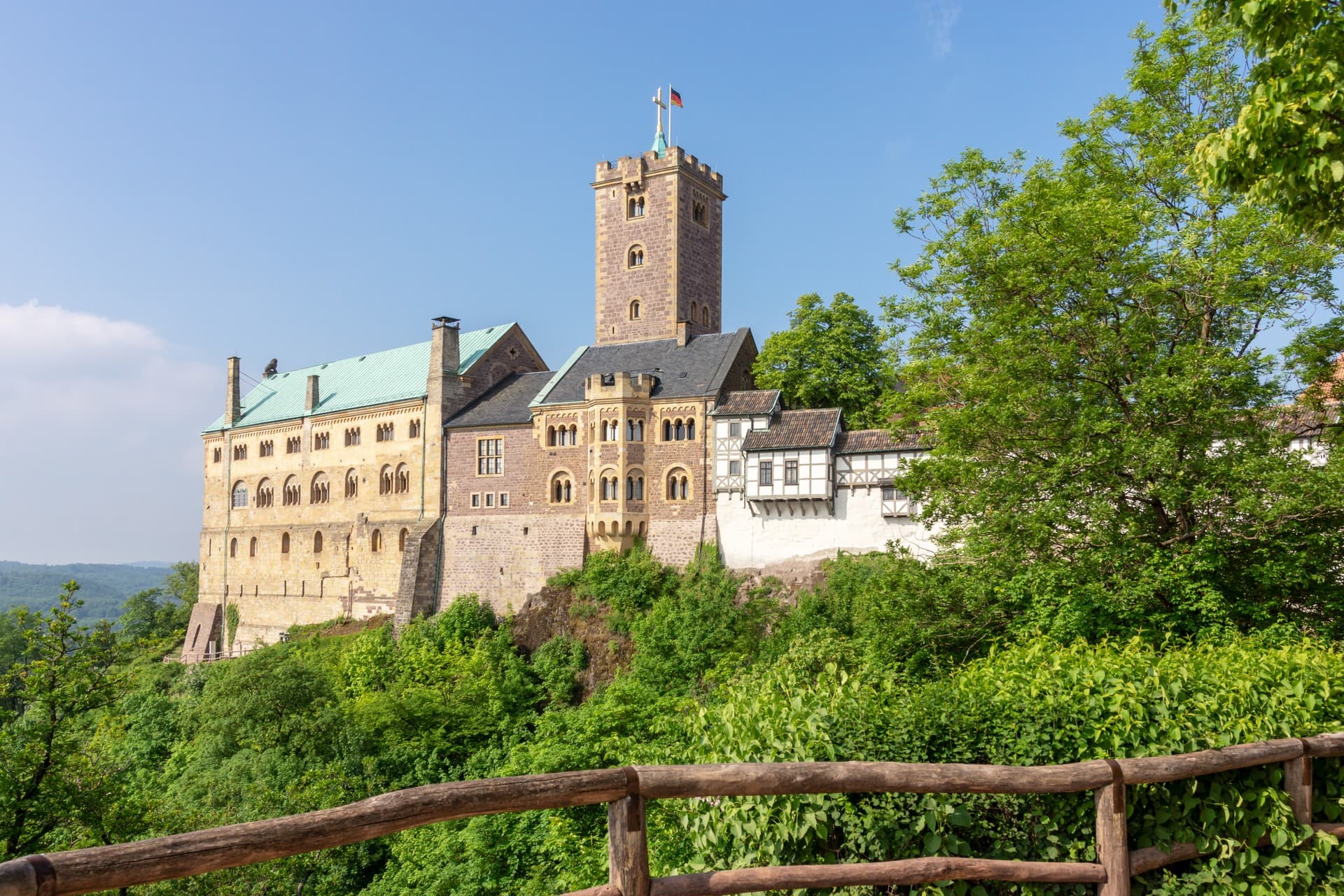
The castles of Thuringia are remembered as much for their second lives as for their first. Thuringia, the region that likes to call itself the green heart of Germany, is unusually dense with hilltop strongholds and ducal residences, and it owes that density to centuries of division. After the House of Wettin split in 1485, the elder Ernestine branch kept Thuringia, and over the generations it went on subdividing the land into a patchwork of small duchies, each with its own court, its own seat, and its own appetite for building. What sets the great Thuringian castles apart, though, is less how they began than what they became. A medieval spur-castle turned into the shrine of German national memory; a Renaissance fortress reopened as a museum about castles; a Baroque residence kept one of the world’s oldest working theater stages turning; and an eight-hundred-year-old hilltop became a stage for porcelain.
This guide gathers four of them, set across the full width of the state, from Eisenach in the west to the Saale valley in the east. Three are older than Wettin rule and were drawn into it over time; only Friedenstein at Gotha was an Ernestine creation from the ground up. Read side by side, they show how the castles of Thuringia kept finding new purposes long after the people who raised them were gone.
A map of the four
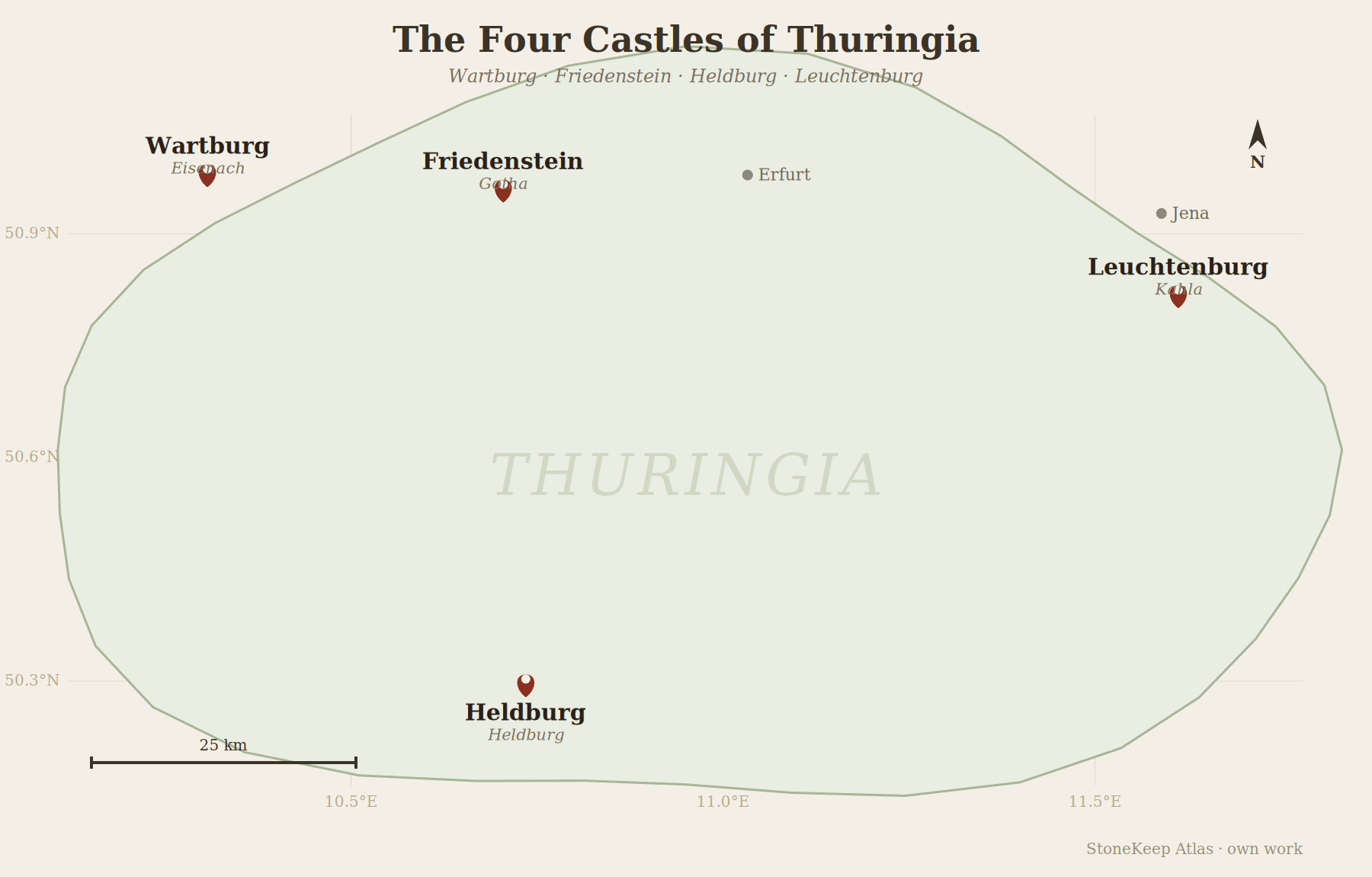
Wartburg stands above Eisenach in the far west, and Friedenstein dominates Gotha in the central lowlands. Down in the deep south, where Thuringia meets Franconia, the Veste Heldburg keeps watch; to the east, the Leuchtenburg rises over the Saale valley near Kahla. No one of them is much more than two hours by road from the next, which makes the set a workable two- or three-day circuit rather than four separate trips. Thuringia is also among the most heavily wooded of the German states, which is part of where the green-heart nickname comes from.
The scatter of seats is a legacy of the Ernestine duchies. When the Treaty of Leipzig divided the Wettin lands in 1485, the Ernestine line took Thuringia along with the Saxon electoral title. It lost the electorate in 1547, after the Schmalkaldic War, and spent the centuries that followed parceling its territory among heirs, producing duchies such as Saxe-Gotha, Saxe-Coburg, and Saxe-Hildburghausen. Each miniature capital wanted a residence and a fortress to match its dignity, and several of the buildings on this map were begun or rebuilt in that world of small courts.
Wartburg Castle: the shrine of German memory
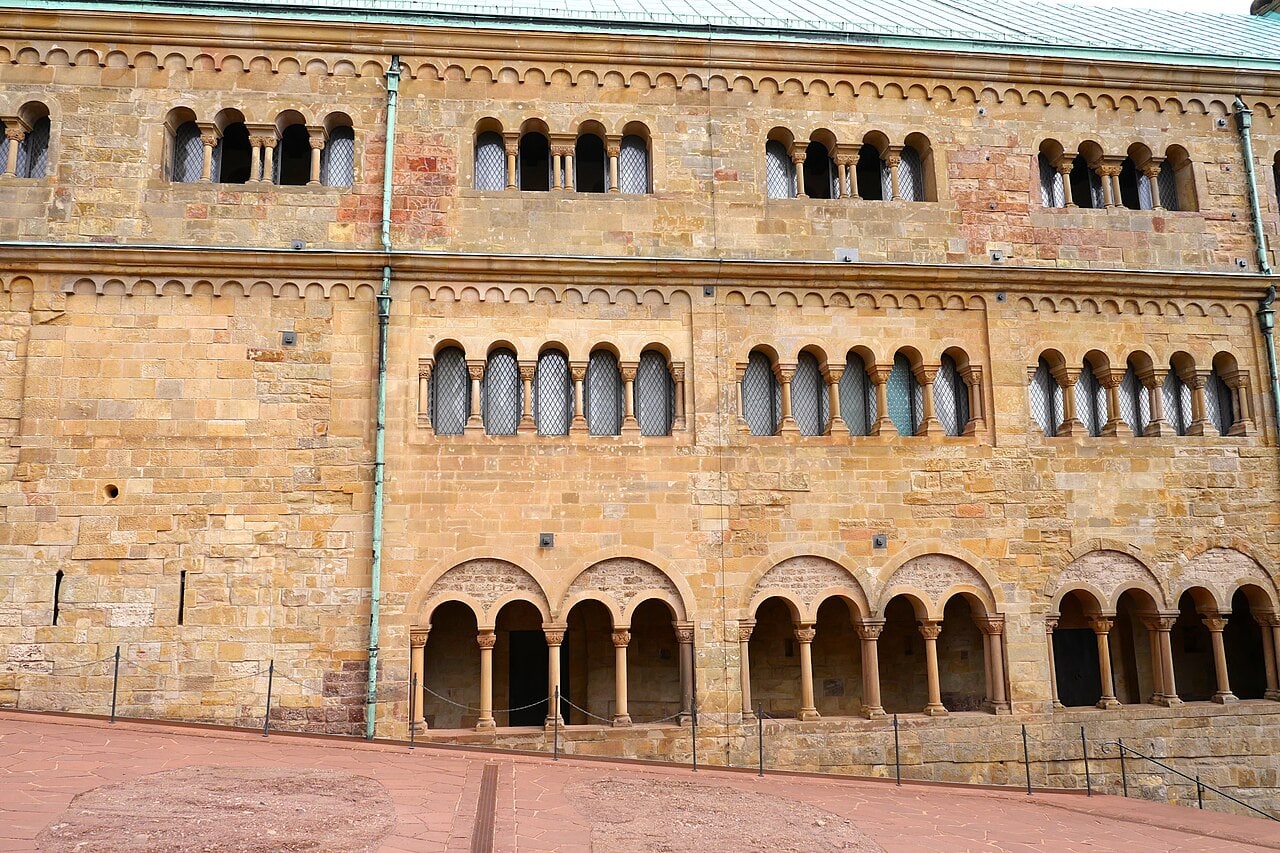
Of all the castles of Thuringia, the Wartburg carries the heaviest symbolic weight. It crowns a sandstone ridge above Eisenach and was founded, by legend, in 1067 by Ludwig the Springer; its first secure documentary mention comes only in 1080, in Bruno of Merseburg’s chronicle of the Saxon war. Under the Ludowingian landgraves it grew into a center of courtly culture. Landgrave Ludwig II “the Iron” raised the Romanesque Palas around 1157, today one of the best-preserved late-Romanesque secular buildings north of the Alps, and his successor Hermann I drew poets to his court, seeding the legend of the Sängerkrieg, the singers’ contest that Richard Wagner later folded into Tannhäuser. Saint Elisabeth of Thuringia lived on the rock from about 1211 until 1228; the much-loved tale of roses tumbling from her cloak belongs to the hagiography that gathered around her after her death.
Its global fame, though, rests on a single guest. Sheltering from the imperial ban under the alias Junker Jörg, Martin Luther hid here from May 1521 to March 1522 and translated the New Testament into German in roughly eleven weeks, a feat that helped shape a standard written German. In 1817 the Wartburgfest, when student fraternities massed on the heights, recast the castle as a symbol of national unity, and a thoroughgoing reconstruction begun in 1838 under Grand Duke Carl Alexander and the architect Hugo von Ritgen gave it the romantic silhouette visitors photograph today. UNESCO inscribed the Wartburg in 1999. Its Reformation chapter is told in full in our history of the Reformation and the castle, and its nineteenth-century remaking belongs to the wider Romantic revival of German castles.
Heldburg Fortress: a museum about castles
Ninety minutes to the south, almost on the Bavarian border, the Veste Heldburg rises on a steep phonolite cone above the small town of Heldburg. Its commanding perch earned it a medieval nickname, the Fränkische Leuchte, the Franconian Beacon, set against the Fränkische Krone of the Veste Coburg in sight to the south; in times of danger the two answered each other with fire signals. The fortress passed to the Wettins in 1374, and its finest feature belongs to the Ernestine century that followed. The Französischer Bau, or French Building, went up from 1560 under the court architect Nikolaus Gromann for Duke Johann Friedrich II, and its carved oriels were a deliberate Renaissance flourish, an assertion of dignity by a line that had just lost its electoral crown.
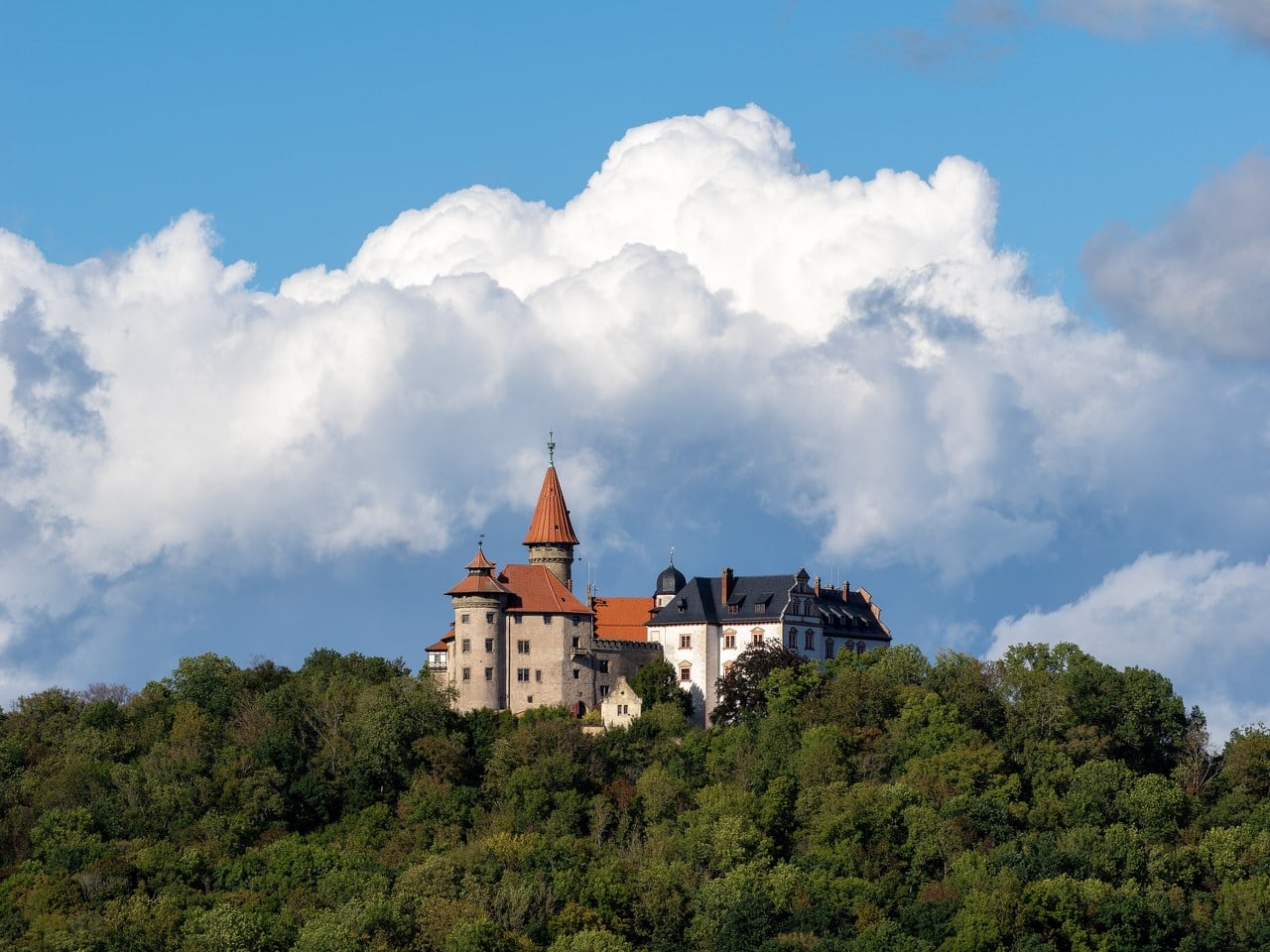
A fire in April 1982 gutted the French Building, and any real rescue had to wait for reunification. In 1994 the Free State of Thuringia took ownership of the fortress and placed it under the Stiftung Thüringer Schlösser und Gärten. Heldburg’s second life arrived in 2016, when the restored rooms reopened as the Deutsches Burgenmuseum, the German Castle Museum, founded by a partnership that brings together the Germanisches Nationalmuseum, the Deutsches Historisches Museum, and the Thuringian palaces foundation. A castle had become a museum about castles. Heldburg is, fittingly, the only Thuringian stop on the international Burgenstraße, the Castle Road that runs from the Rhineland to Prague.
Friedenstein Palace: the residence built for peace
Friedenstein, on a low hill above Gotha, is the one castle in this group with no medieval past at all. Duke Ernst I “the Pious” of Saxe-Gotha built it between 1643 and 1654 on the cleared site of the old Grimmenstein fortress, and he named it for the thing he wanted most: the foundation stone was laid in the closing years of the Thirty Years’ War, and the motto carved over the door declares that peace nourishes while discord consumes. It is often described as the largest early-Baroque palace complex in Germany, a four-winged block that, never razed and never greatly enlarged, kept its seventeenth- and eighteenth-century interiors nearly intact.
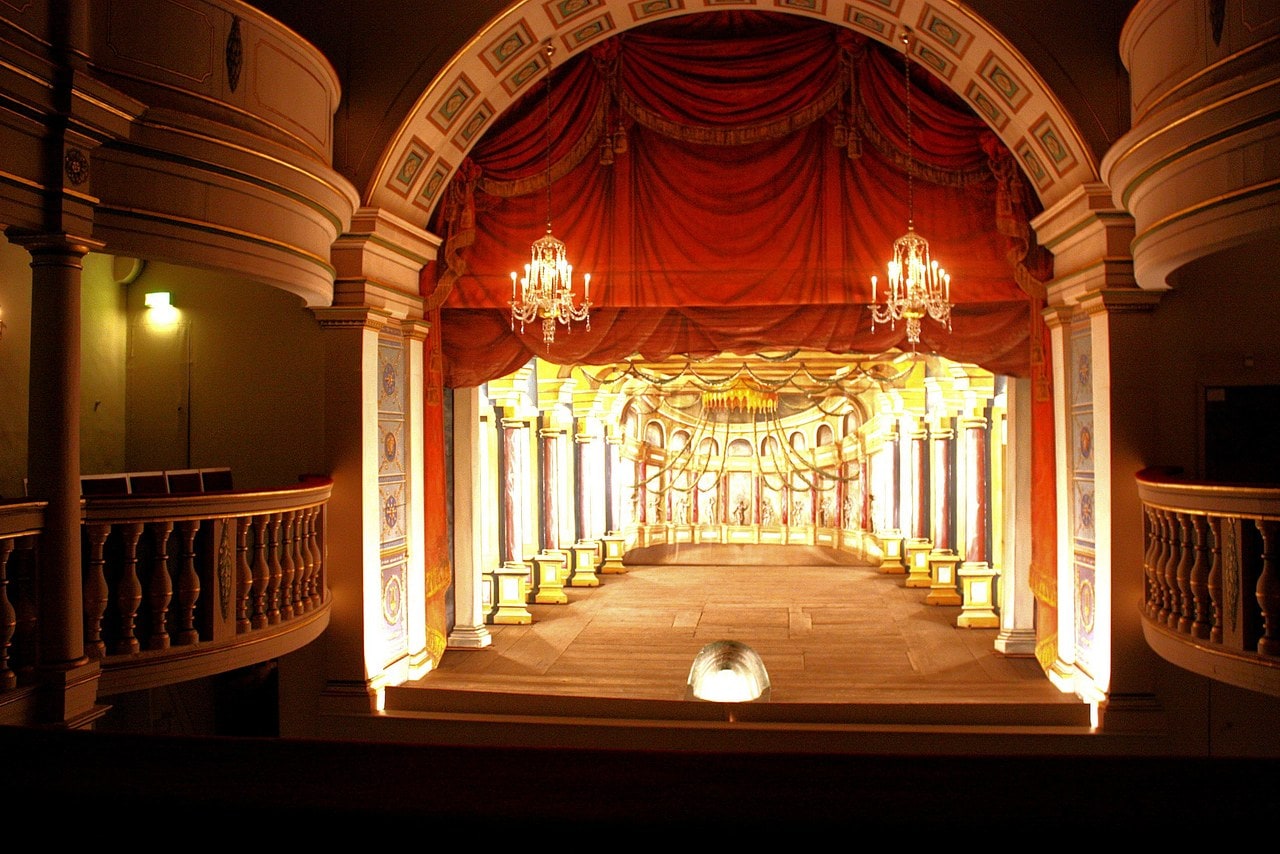
Two of those interiors are remarkable in their own right. The Ekhof-Theater, built into the west tower between 1681 and 1683 and later named for the actor Conrad Ekhof, still holds its original wooden stage machinery, which the palace describes as the oldest of its kind working anywhere in the world; a dozen hands can change a whole scene in seconds, hauling on the same ropes and drums their predecessors did. The ducal collections, assembled by a dynasty of bookish princes, also survive almost whole, among them the Forschungsbibliothek Gotha with its thousands of manuscripts and a celebrated panel painting of about 1480, the Gothaer Liebespaar, that the museum fondly calls the Mona Lisa of Thuringia. Today the building is maintained by the Stiftung Thüringer Schlösser und Gärten and its collections by the Stiftung Schloss Friedenstein Gotha.
Leuchtenburg Castle: the porcelain reinvention
The Leuchtenburg has watched over the Saale valley near Kahla since it was first recorded in 1221 as the seat of the lords of Lobdeburg, and locals have long called it the Queen of the Saale Valley. In 1392 the Wettins took it by force and confirmed the seizure in a settlement of 1396, after which it served them as an administrative center; the garrison drove its well down to about eighty meters, among the deepest in Thuringia. Its hardest centuries came afterward. From the early eighteenth century the hilltop held a combined workhouse, poorhouse, and asylum that processed more than five thousand inmates before 1871, then a hotel, and from 1921 the first youth hostel in Thuringia.
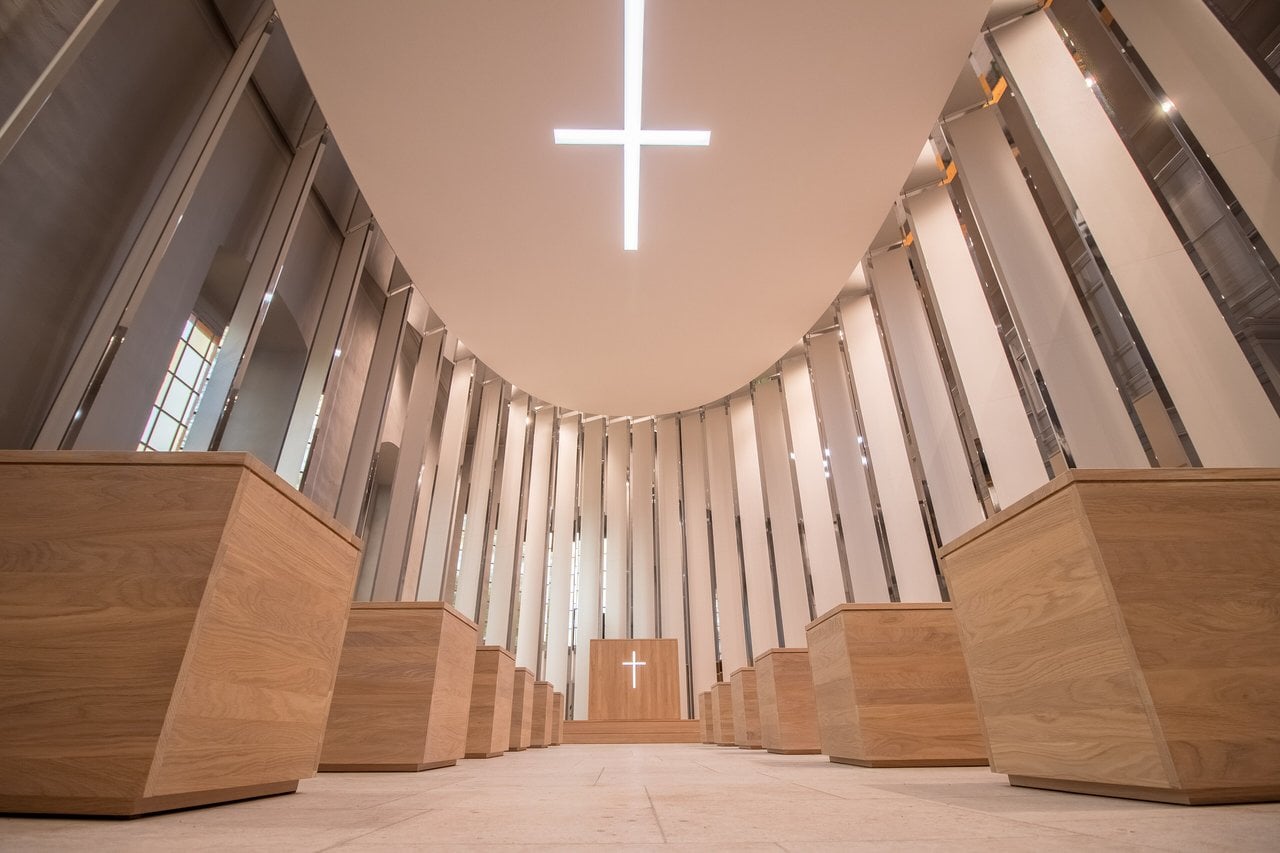
Its second life is the boldest of the four. In 2007 the Stiftung Leuchtenburg, driven by the entrepreneur Sven-Erik Hitzer, rescued the castle from auction and recast it as a showcase for the porcelain that made Thuringia’s name. The Porzellanwelten, or Porcelain Worlds, opened in two stages in 2014 and 2015, joined by a porcelain church and the Steg der Wünsche, a skywalk that juts from the castle wall over open air, from which visitors fling inscribed porcelain plates into the valley for luck. At its heart stands ARURA, a roughly eight-meter tower of cast porcelain that the foundation bills as the largest vase in the world. The gamble paid off in attendance: a quiet provincial ruin turned into one of Thuringia’s most visited attractions.
The four at a glance
| Castle | Town | Type | Origins | Known for |
|---|---|---|---|---|
| Wartburg Castle | Eisenach | Castle (Burg) | 11th–12th century | Luther’s Bible, UNESCO World Heritage |
| Heldburg Fortress | Heldburg | Fortress (Festung) | 13th–16th century | German Castle Museum |
| Friedenstein Palace | Gotha | Palace (Schloss) | 1643–1654 | Ekhof-Theater, ducal collections |
| Leuchtenburg Castle | Seitenroda / Kahla | Castle (Burg) | from 1221 | Porcelain Worlds, skywalk |
Visiting the castles of Thuringia
This group rewards a base near the middle of the state. Erfurt and Gotha put Friedenstein on the doorstep and the Wartburg within about an hour by train or car. Heldburg, down in the far south, is the geographic outlier and pairs naturally with a swing into Franconia and the Veste Coburg. The Leuchtenburg sits between Jena and the A9 motorway and folds easily into a day in the Saale valley. All four open year-round with seasonal hours, each runs its own ticketing, and the two museum castles, Heldburg and Friedenstein, reward a half-day apiece rather than a quick look. Eisenach, Gotha, and Kahla all sit on Thuringia’s main rail lines, so three of the four can be reached without a car; Heldburg, deep in the countryside, is the exception. Anyone staying overnight can compare hotels in and around Erfurt.
Some links on this page are affiliate links, which means StoneKeep Atlas may earn a small commission, at no extra cost to you, if you book through them.
Beyond Thuringia
These four do not stand alone. To the east, the Albertine Wettins built their own line of strongholds and pleasure palaces, gathered in our guide to the castles of Saxony. To the south and west lies the denser castle country of the prince-bishops and margraves, surveyed in the castles of Franconia, the very region the Veste Heldburg looks across. A broader overview of Germany’s castle regions is in preparation.
Why Thuringia’s castles belong together
What ties these four together is less a single dynasty than a shared habit of reinvention. Wartburg became a national shrine, Heldburg a museum of its own kind, Friedenstein a treasure-house with a working stage, and the Leuchtenburg a temple of porcelain. The small Ernestine courts that once carved up Thuringia left it with more castles than a region its size would otherwise hold, and the centuries since handed those castles the chance to mean something new. Taken together, the castles of Thuringia teach a quiet lesson in how old stone stays alive: not by being frozen and preserved, but by being put back to work.
Principal Sources
- Deutsches Burgenmuseum, Veste Heldburg. Museum and history pages.
- Forschungsbibliothek Gotha, Universität Erfurt. Collections and manuscripts.
- Stiftung Leuchtenburg. Castle history and Porzellanwelten press material.
- Stiftung Schloss Friedenstein Gotha. Palace, Ekhof-Theater, and collection pages.
- Stiftung Thüringer Schlösser und Gärten. Site descriptions for Heldburg and Friedenstein.
- UNESCO World Heritage Centre. “Wartburg Castle,” inscription and criteria (1999).
- Wartburg-Stiftung Eisenach. Castle history and World Heritage pages.
- The four castle administrations and the Stiftung Thüringer Schlösser und Gärten maintain the sites discussed here; dates, names, and figures were checked against their published material and against the corresponding entries in this atlas.
Image credits. Hero (Wartburg Castle above Eisenach): via Adobe Stock. Map of the four castles: StoneKeep Atlas (own work). Wartburg Palas: Vera Belka, CC BY-SA 4.0. Heldburg Fortress: Reinhold Möller (Ermell), CC BY-SA 4.0. Ekhof-Theater, Friedenstein: Dguendel, CC BY 3.0. Porcelain church, Leuchtenburg: Alexander Schlotter, CC BY-SA 4.0. All Wikimedia Commons images used under their stated licenses. Freely licensed images are resized to fit; otherwise unaltered.