
Kriebstein Castle
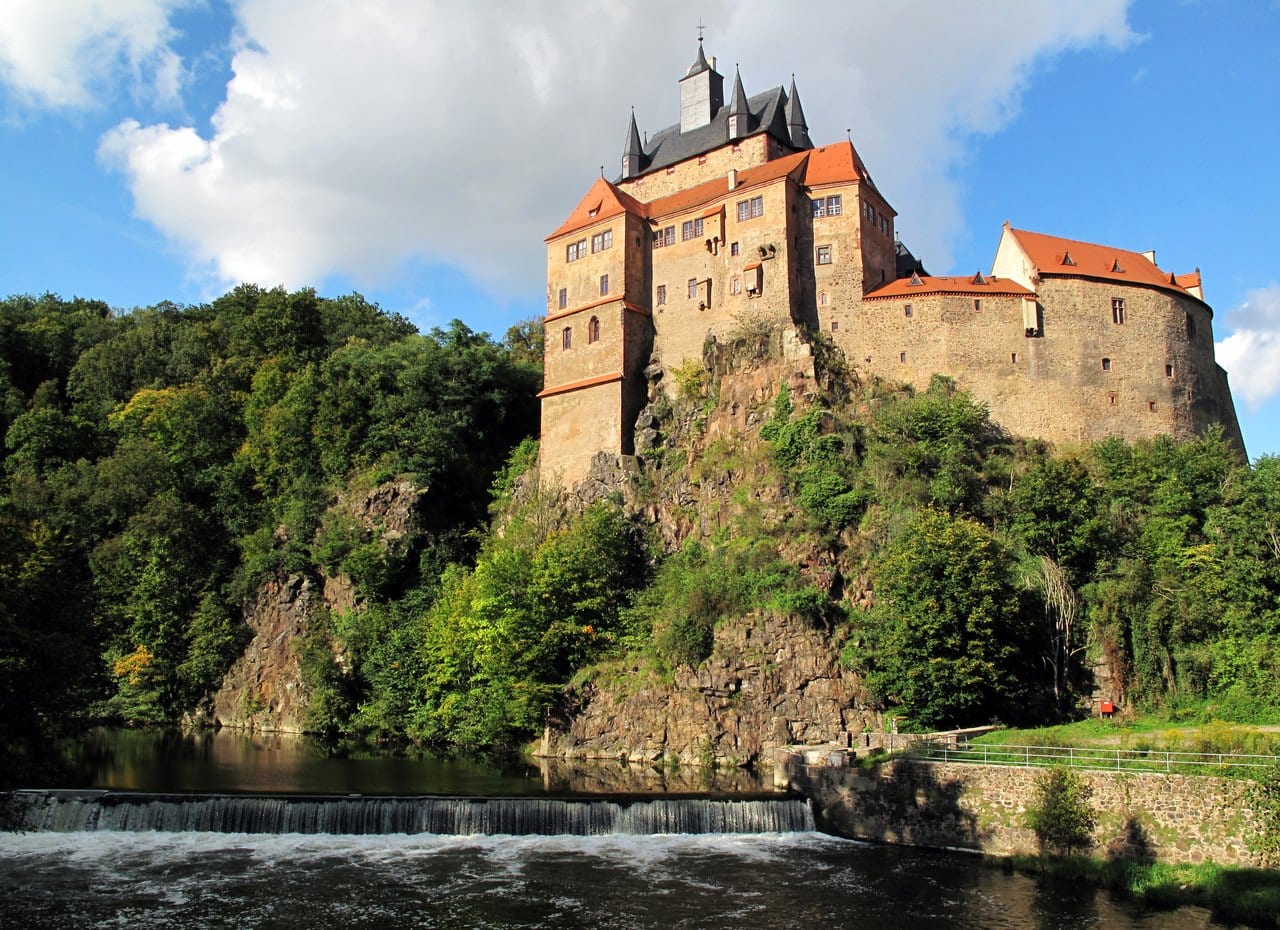
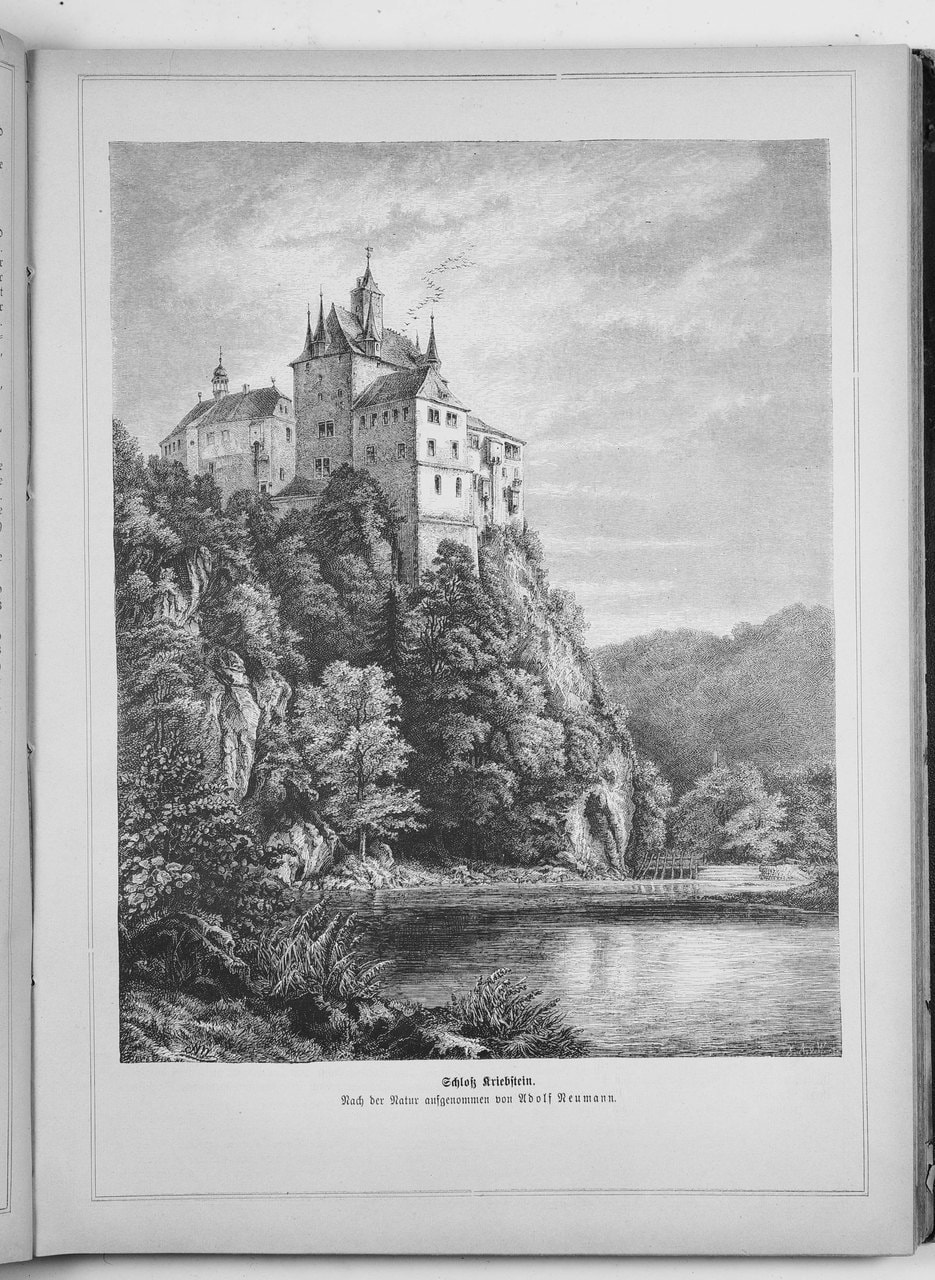
Kriebstein Castle rises on a fist of gneiss above a tight bend of the Zschopau river in central Saxony, a single tall silhouette of steep roofs and oriel turrets that looks less like a building than like something the rock decided to grow. It is, by the measure most visitors apply, the picture a child draws when asked to draw a castle: a soaring tower, a huddle of gabled wings, a wall that drops straight into the trees. Saxony has grander houses. It has the electoral splendor of Moritzburg Castle, the mountaintop bulk of Königstein Fortress, and the Baroque riverside theater of Pillnitz Castle. What it has in only one place is a late-medieval knight’s castle that was never reduced to a ruin, never rebuilt out of recognition, and never stopped being lived in. That is the case this guide makes for Kriebstein Castle: not the biggest or the most famous Saxon seat, but the most complete medieval one, a working fourteenth-century residence that survived almost whole into the age of the museum.
Quick Facts
| Location | Kriebsteiner Straße 7, 09648 Kriebstein, Saxony, Germany |
| Built | Begun about 1384; residential tower roofed about 1399; core complete by 1407 |
| Founder | Dietrich von Beerwalde |
| Rebuilt | From 1471 under Hugold von Schleinitz, by the master builder Arnold von Westfalen; refitted in neo-Gothic style 1866–1868 |
| Style | Late Gothic, with a nineteenth-century neo-Gothic overlay |
| Type | Spur castle (Spornburg), a combined tower-and-ring castle on an oval plan |
| River | Zschopau |
| Famous for | The 45-meter residential tower and the painted Kriebstein Room; reputed “most beautiful knight’s castle in Saxony” |
| Current use | Museum |
| Operator | Staatliche Schlösser, Burgen und Gärten Sachsen (Schlösserland Sachsen) |
| Opening (2026) | 1 Apr–1 Nov: Tue–Fri 10:00–17:00, Sat/Sun/holidays 10:00–18:00, Mon closed; last admission 30 min before closing |
| Admission (2026) | €8 adult / €7 reduced / €1 child (6–16) |
| Website | burg-kriebstein.eu |
A castle on a knife of rock
Geography did the first half of the builder’s work. The Zschopau loops around a narrow spur of rock, leaving high water on three sides and only a single neck of approach on the fourth. Medieval castle-builders prized exactly this kind of ground, and the people who held the land here used it twice. An earlier fortification, a timber tower on an earthwork mound known locally as “der Waal,” stood in the nearby village of Beerwalde until fire ended it; when the lords of Beerwalde wanted a stronger seat, they moved to the spur above the river.
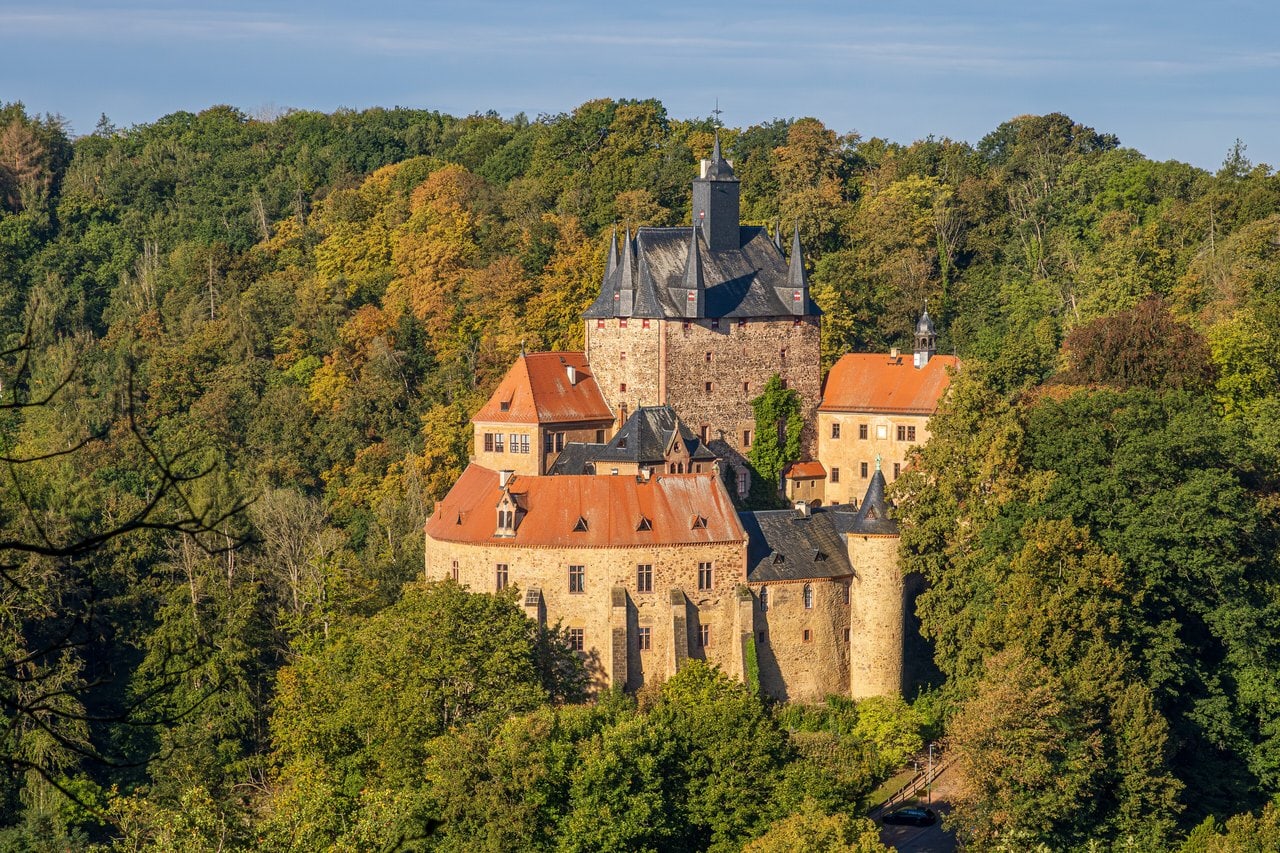
Kriebstein Castle’s written history begins on a precise note. In 1384 Dietrich von Beerwalde recorded his intention to build “den krywenstein,” the place on which, as the charter puts it, his father had already sat. That document, preserved in the state archive in Dresden, is the castle’s birth certificate, and it makes Kriebstein one of the better-dated medieval castles in Saxony. Dendrochronology has since confirmed the timeline from the timber itself: the roof beams of the great residential tower were felled around 1399, which places the tower’s construction firmly in the last two decades of the fourteenth century and quietly retired older theories of a much earlier, Romanesque origin.
What is striking about the early castle is how much of it went up at once. Most medieval castles are patchworks, accreted over generations as money and danger allowed. Kriebstein’s core, by contrast, reads as something close to a single design: the tower, the chapel, the ring wall, and the gatehouse all belong to one ambitious campaign that was substantially finished by the time Dietrich was re-enfeoffed with the castle in 1407. He died the following year, and the lordship passed to his widow and then to his daughter as a dower property, beginning a chain of ownership that would prove unusually long.
One early episode has clung to the castle ever since, though it belongs to legend rather than to the archive. The story, set at carnival in 1415, tells of a knight who seized Kriebstein and of the besieging margrave who granted the trapped women safe passage out, on the condition that each could carry away only what she held most dear. The women, so the tale goes, carried their husbands out on their backs. A painting inside the castle keeps the legend alive, and the castle itself presents it frankly as a Sage, a folk tradition rather than a documented event. It is worth telling for what it reveals about how Kriebstein has been remembered, which is as a place of romance long before the romantics arrived.
A medieval skyscraper
Everything at Kriebstein answers to the tower. The residential tower, or Wohnturm, stands on a base of roughly 22 by 12 meters and climbs about 45 meters to the weather vane, a vertical emphasis so pronounced that the castle’s own custodians have taken to calling it a medieval skyscraper. The count of floors inside is genuinely slippery, and sources give anywhere from five to seven stories depending on whether cellars and roof levels are included; what matters to a visitor is that the tower was not a refuge of last resort in the usual medieval sense but a stacked vertical household, with living rooms, service rooms, and storage piled one above another behind walls about two meters thick. Late-Gothic oriel turrets and a slender ridge turret break the roofline and give the tower its fairy-tale outline. By one local count the castle once carried eleven projecting latrine bays, of which nine survive, a small detail that says a good deal about how seriously its builders took the comfort of a tall, permanently occupied house.
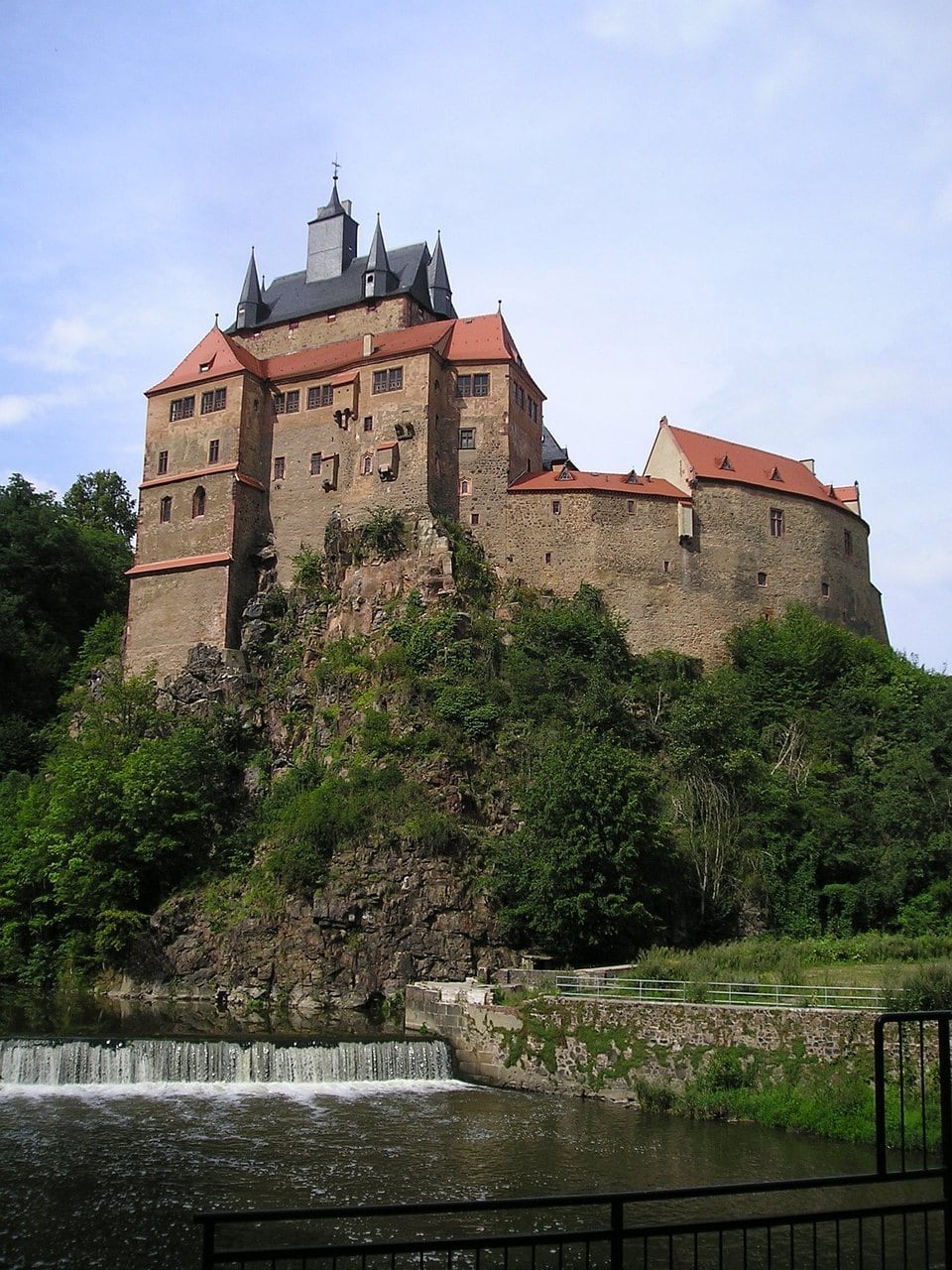
Its finest secret is a single room. On an upper floor sits the Kriebstein Room, a planked chamber of about three by four and a half meters whose walls and ceiling are covered in painting from the first third of the fifteenth century. Foliage scrolls run across the boards, and figural scenes, including a Saint Christopher with pilgrims, animate the surfaces. It is the kind of intimate, fully painted interior that almost never survives from the period, and its survival was a near thing. In 1902 the family that then owned the castle gave the three painted plank walls to a Dresden museum; they came through the Second World War intact and were finally returned to Kriebstein in 1996, restoring to the tower the one room that most completely conveys what late-medieval domestic luxury looked like.
Arnold von Westfalen and the second building age
The castle visitors walk through today is not only Dietrich von Beerwalde’s. A second great building campaign reshaped it in the late fifteenth century, and it carries one of the most important names in Saxon architecture. In 1465 Hugold von Schleinitz, a high official at the Wettin court, acquired Kriebstein, and around 1471 he engaged Arnold von Westfalen to expand it. Arnold was the Saxon state master builder, and at almost exactly this moment he was beginning the building that would make his reputation: the Albrechtsburg at Meissen, often described as the first true German Schloss, a palace conceived for residence rather than defense.
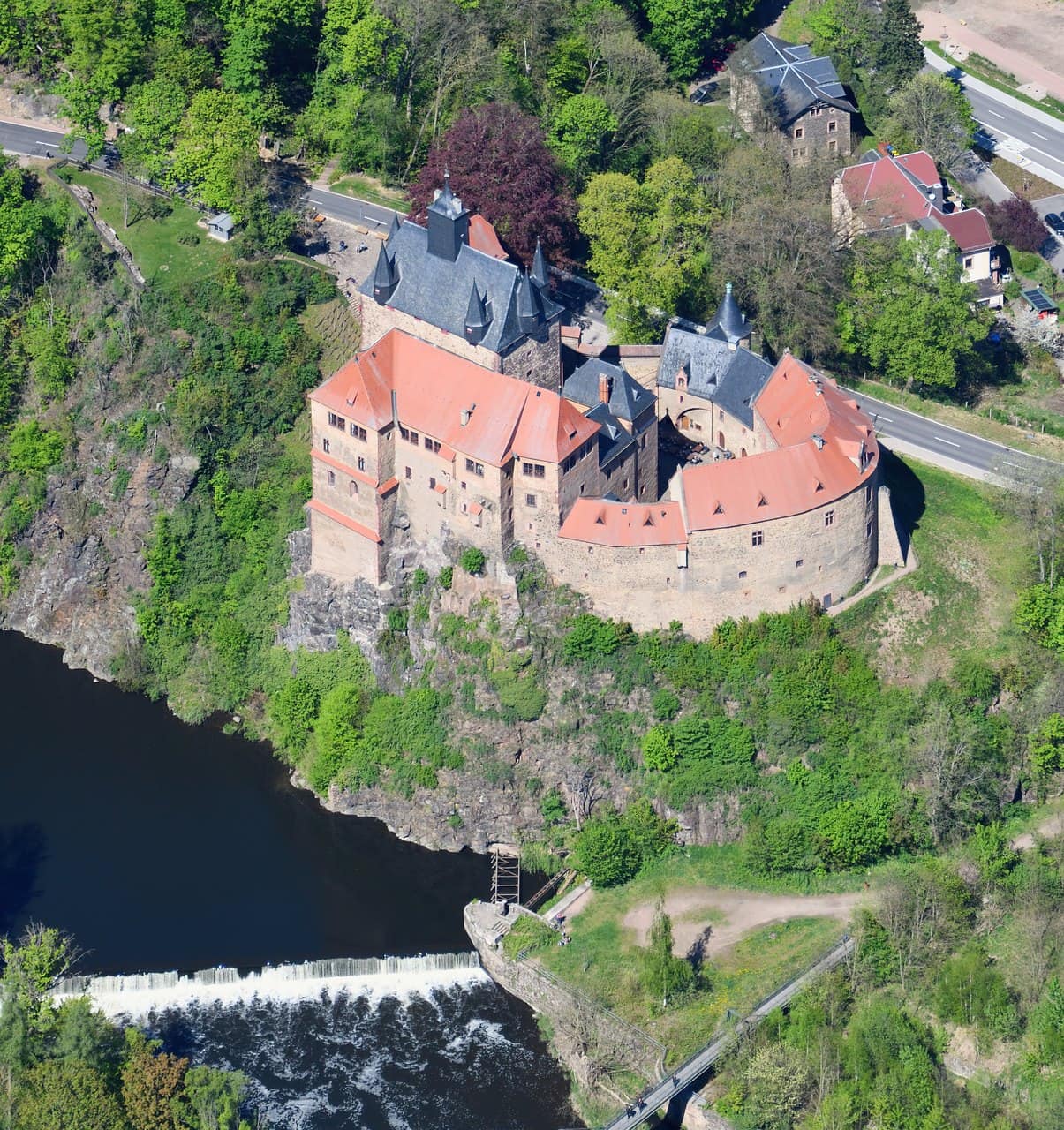
At Kriebstein, Arnold worked at a smaller scale and to a different brief, but with the same intelligence. He added an economic wing with a new hall and a well house, raised a rear range, and brought the castle to the footprint it still holds. The result is one of the more illuminating pairings in Saxon architecture, and one this site is glad to be able to draw. The same hand that gave the Wettin princes their innovative palace on the Elbe also tuned a knight’s castle on the Zschopau, and the two buildings, set side by side, map the distance between a princely residence and a noble one in the same generation. Within Arnold’s wing lies the castle well, a deep shaft sunk through the rock to reach water far below, rediscovered during floorworks in the twentieth century and now one of the features visitors remember most.
Defense at Kriebstein worked by position more than by mass. A single bridge, once a drawbridge whose chain holes still survive in the stonework, carries the only approach across a neck ditch more than ten meters wide and into the tower-like gatehouse. On the north flank, the lone direction open to attack, a roofed wall-walk and a round tower guard the ring. Unusually for a castle of its date, Kriebstein has no separate outer bailey: the kitchens, the well, and the service buildings all stand inside the inner ring, so the household could be fed and watered without ever stepping beyond the walls. That compactness is one reason so little of the medieval plan was ever lost, since there was no sprawling forecourt to be cleared away by later owners chasing comfort or fashion.
The chapel and its painted heaven
If the Kriebstein Room is the castle’s domestic treasure, the chapel is its spiritual one. Built into the early-fifteenth-century core, the chapel preserves a near-complete program of wall painting from around 1410, executed in the soft, flowing manner art historians call the weicher Stil. The emphasis is Marian: a Coronation and a Death of the Virgin, an Adoration, and a large radiant Madonna ringed by light. Over the altar hangs a Crucifixion, and a vivid scene of the damned being herded toward Hell supplies the medieval counterweight to all that heaven. Among the figures kneels the castle’s founder, Dietrich von Beerwalde, written into the program as patron.
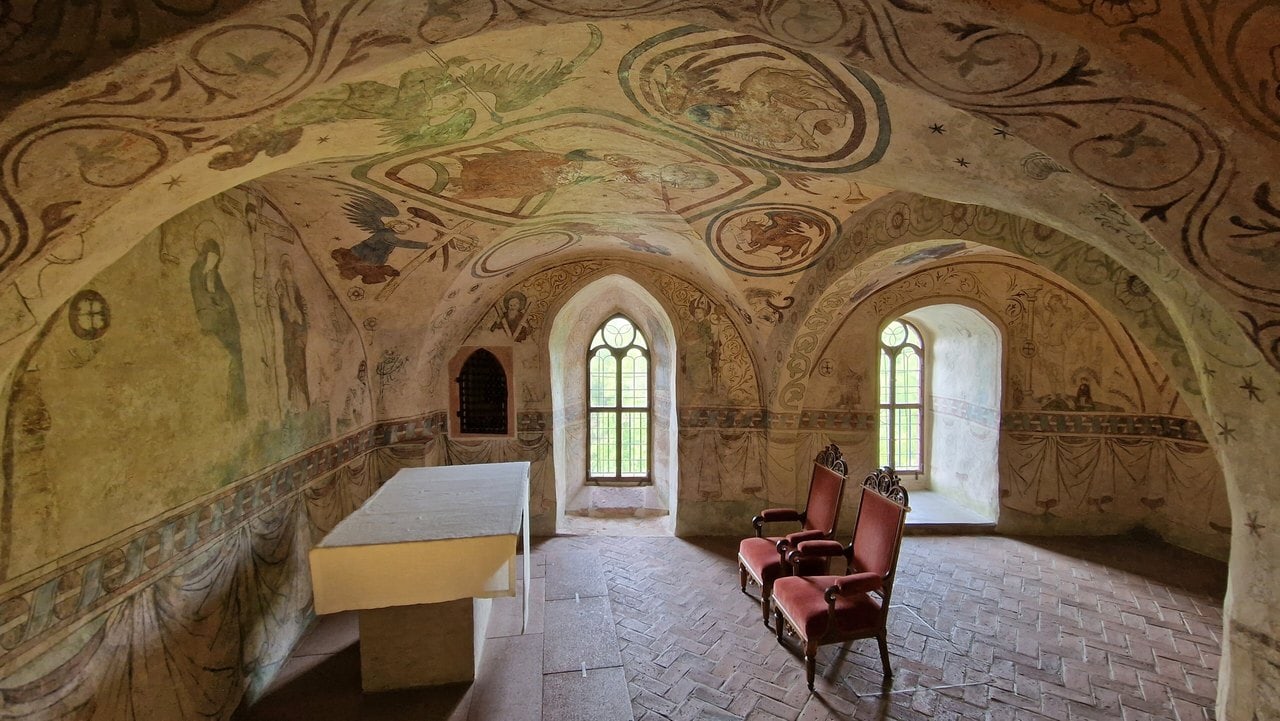
The frescoes were lost for a long time and then found by accident, surfacing during structural work in 1933 and then conserved in a careful campaign at the close of the twentieth century with support from national heritage funding. The castle’s custodians describe the chapel as one of the most distinguished and best-preserved late-medieval painted interiors in the German lands, and while that is the kind of claim a proud institution naturally makes, it is not an idle one. Complete medieval fresco cycles in their original setting are rare, and to find one inside a castle that also keeps its painted living room is rarer still.
Thirty owners, a neo-Gothic refit, and a hidden treasure
Few castles can match Kriebstein’s roll call of owners. By some counts the lordship changed hands more than thirty times across six centuries, passing through the Schleinitz, Carlowitz, Schönberg, Milkau, and Pflugk families among others, each leaving small marks: a raised story here, an inscription on a weather vane there. Seventeenth-century Schönberg owners added upper floors to the tower’s annexes and the gatehouse and tied the river-side wings together under a continuous upper story, softening the medieval austerity without erasing it.
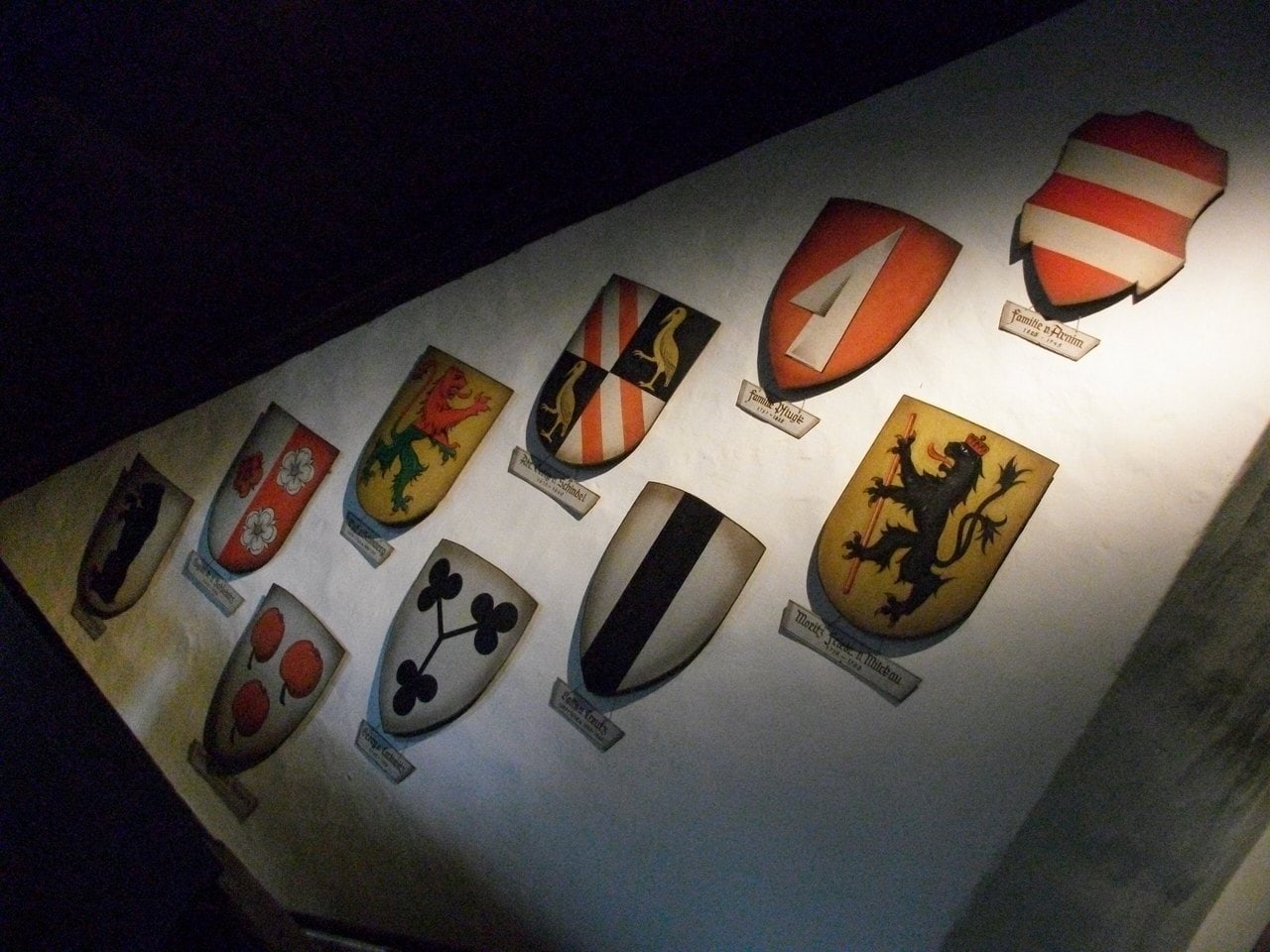
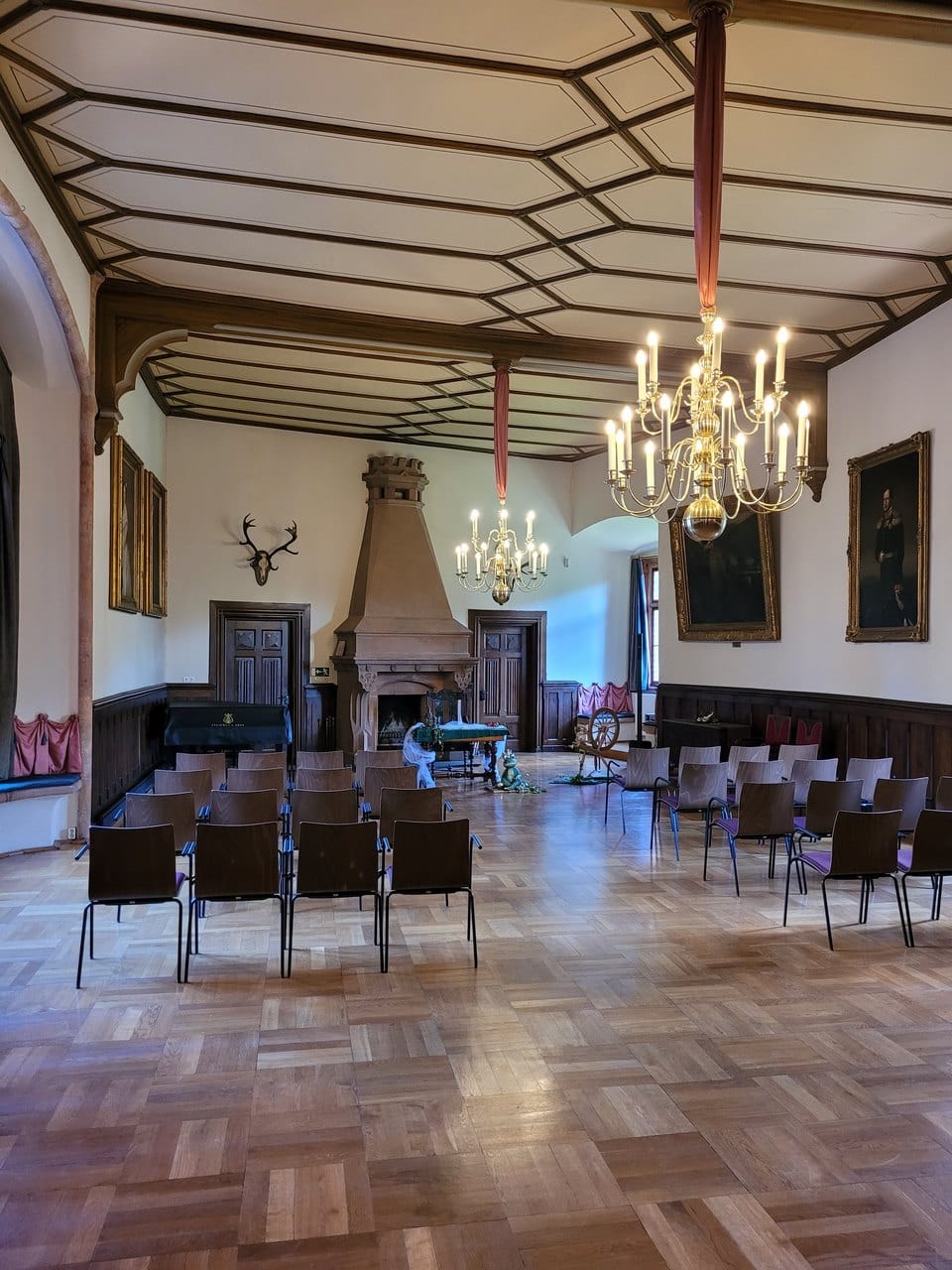
The most consequential modern owners arrived in 1825, when the von Arnim family bought Kriebstein and held it until 1945. They are responsible for two things that shape the castle a visitor meets today. First, between 1866 and 1868 they had the Dresden court architect Carl Moritz Haenel refit the castle in the neo-Gothic taste, a campaign that belongs squarely to the wider nineteenth-century romantic revival of German castles and that gave Kriebstein its Great Hall and much of its present interior character. Second, around 1930 the family opened the castle to the public and paid for serious restoration out of their own pocket, and it was this period of devoted private stewardship that fixed Kriebstein’s reputation as “the most beautiful knight’s castle in Saxony.” The phrase is a popular and promotional one rather than a verdict of scholarship, and it is best read as a measure of affection, but it has stuck for nearly a century.
Kriebstein’s strangest modern chapter unfolded inside its walls. During the closing months of the Second World War, art and valuables were brought to Kriebstein for safekeeping, including possessions of Count Heinrich von Lehndorff-Steinort, a member of the resistance executed after the July 1944 plot against Hitler. Part of the deposit was walled up in a disused chimney in the tower and forgotten. In 1986 the castle’s director, Bernd Wippert, rediscovered the hidden cache, and the find entered local legend as the “Kriebstein treasure.” Its later history is a study in how Germany has reckoned with displaced property. Under a 2010 agreement the operator’s records account for 556 objects, of which 423 were eventually returned to the Lehndorff heirs while 133 remained with the castle, where some are still on display. In 1993 ownership of Kriebstein itself passed to the Free State of Saxony, which has run it through the state palaces administration ever since.
Kriebstein on screen
A castle this photogenic was never going to escape the cameras, and Kriebstein has built a quiet second career as a film location. Its most famous appearance is also its least expected: in Wes Anderson’s The Grand Budapest Hotel, the exterior of the Checkpoint 19 prison, down whose walls the inmates make their escape, is Kriebstein, while the interior prison scenes were shot elsewhere, at Schloss Osterstein in Zwickau. The film went on to win four Academy Awards, which makes Kriebstein, improbably, an Oscar-winning backdrop.
Closer to home, the castle has been a natural choice for the historical drama and fairy-tale films that German public television produces with such care. It stood in for a royal court in the 2009 television Schneewittchen, a production that should not be confused with the beloved 1961 East German studio film of the same name, which never came near the place. It appeared in the period drama Die Gräfin in 2009 and in the fairy-tale film Der süße Brei in 2018. The castle’s own filmography lists a longer roster of fairy-tale and series productions beyond these, and the broader point holds either way: when German filmmakers need a knight’s castle that already looks the part, Kriebstein is on the short list.
Visiting Kriebstein Castle in 2026
Kriebstein operates as a museum through the warmer half of the year. The 2026 season runs from April 1 to November 1, with the castle open Tuesday to Friday from 10:00 to 17:00 and on Saturdays, Sundays, and public holidays from 10:00 to 18:00. It is closed on Mondays except when a Monday is itself a holiday, and the last admission is half an hour before closing. The castle then keeps a winter pause from November 2, 2026 until early February 2027, opening for occasional special dates and the Saxon winter school holidays. Entry tickets and local tours can also be booked in advance through GetYourGuide.
Admission in 2026 is €8 for adults, €7 reduced, and €1 for children aged six to sixteen, with groups of fifteen or more paying €7 per person and school classes €1 per pupil. Holders of the schlösserlandKARTE and the Saxon family pass enter free on ordinary days, though free entry does not apply on special-event days such as the summer “Burg der Märchen” or the Easter weekend. A combined ticket pairs Kriebstein with the nearby Mildenstein Castle for €14, or €12 reduced, and stays valid for three days. For visitors who want more than a tour, the castle runs a booked escape game, “Der Schatz des Einäugigen,” from €30 for two players within the open season.
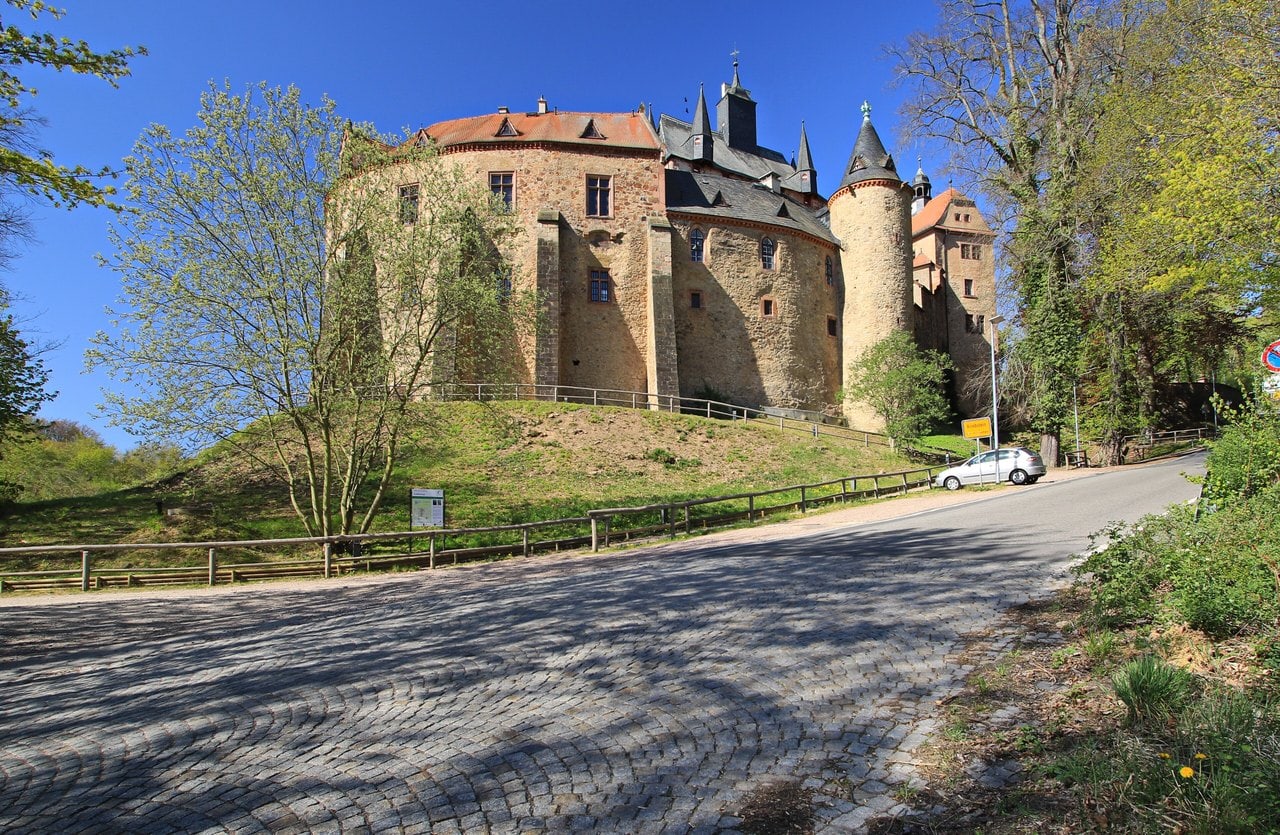
Getting up to the gate is part of the experience. The access road, the Burgberg, is widely described as the steepest public road in Saxony, climbing at a gradient of around twenty-four percent, and it was rebuilt in 2023 and 2024 without ever closing the castle to visitors. Kriebstein also works as an event venue: the medieval chapel hosts small church weddings, and the neo-Gothic Great Hall, complete with fireplace and a grand piano, is used for civil ceremonies and celebrations. Below the castle, the Talsperre Kriebstein reservoir adds boat trips and lakeside walks to a day on the spur. Anyone staying overnight can compare hotels in and around Mittweida.
Some links on this page are affiliate links, which means StoneKeep Atlas may earn a small commission, at no extra cost to you, if you book through them.
Beyond Kriebstein
Kriebstein is best understood in the company of the other Saxon seats this site covers, because together they lay out the full range of what “castle” can mean in one region. The closest relative is Albrechtsburg Castle at Meissen, the work of the same master builder in the same years, and the most instructive single comparison: a princely palace and a noble castle from one hand and one decade. For sheer defensive scale, Königstein Fortress on its table mountain is the opposite pole, a stronghold where Kriebstein is a home. For the pleasures of a later age, Moritzburg Castle and Pillnitz Castle show what the Saxon court built once comfort and display had replaced the spur and the ditch. And for the nearest cousin outside Saxony, the Wartburg in Thuringia offers the same idea of a medieval residence carried unbroken into modern memory, a reminder that the impulse to keep a knight’s castle alive runs through the same currents as the Reformation and the romantic rediscovery of the German past.
Conclusion
Kriebstein earns its place in this atlas not by competing with the grand Saxon palaces but by preserving something they cannot. It is a complete medieval residence, founded on a documented date, dated again by its own timber, expanded by the architect of the first German palace, painted inside in two rooms that almost never survive together, and lived in continuously until the day it became a museum. The marketing phrase about the most beautiful knight’s castle in Saxony is, in the end, beside the point. The better claim is plainer and stronger: on its knife of rock above the Zschopau, Kriebstein Castle is the most intact medieval castle Saxony has, and one of the most rewarding to visit in all of eastern Germany.
Principal Sources
- Dehio, Georg. Handbuch der Deutschen Kunstdenkmäler: Sachsen II. Deutscher Kunstverlag, 1998.
- Gurlitt, Cornelius. Beschreibende Darstellung der älteren Bau- und Kunstdenkmäler des Königreichs Sachsen, Heft 25. 1903.
- Petersen, Peter, and Bernd Wippert. Burg Kriebstein: Ein Architekturführer. Leipzig, 2004.
- Wippert, Bernd, and Gabriele Wippert. Burg Kriebstein. Edition Leipzig, 2013.
- Deutsche Stiftung Denkmalschutz. ‘Burg Kriebstein.’ denkmalschutz.de
- Staatliche Schlösser, Burgen und Gärten Sachsen. ‘Burg Kriebstein.’ burg-kriebstein.eu
Image credits. Banner, Kriebstein Castle above the Zschopau weir, C. Cossa, CC BY-SA 3.0. Across the valley in autumn, Code, CC BY 4.0. Residential tower, Maja Dumat, CC BY 2.0. Aerial view from the south, Carsten Steger, CC BY-SA 4.0. Chapel frescoes, Rigorius, CC BY-SA 4.0. Wall of family coats of arms, Aagnverglaser, CC BY-SA 4.0. Neo-Gothic Great Hall, Keulenberger, CC BY-SA 4.0. Wood engraving from Die Gartenlaube (1877) after Adolf Neumann, public domain. Burgberg approach, Kora27, CC BY-SA 4.0. Creative Commons images via Wikimedia Commons, reusable under the stated licenses. Freely licensed images are resized to fit; otherwise unaltered.