
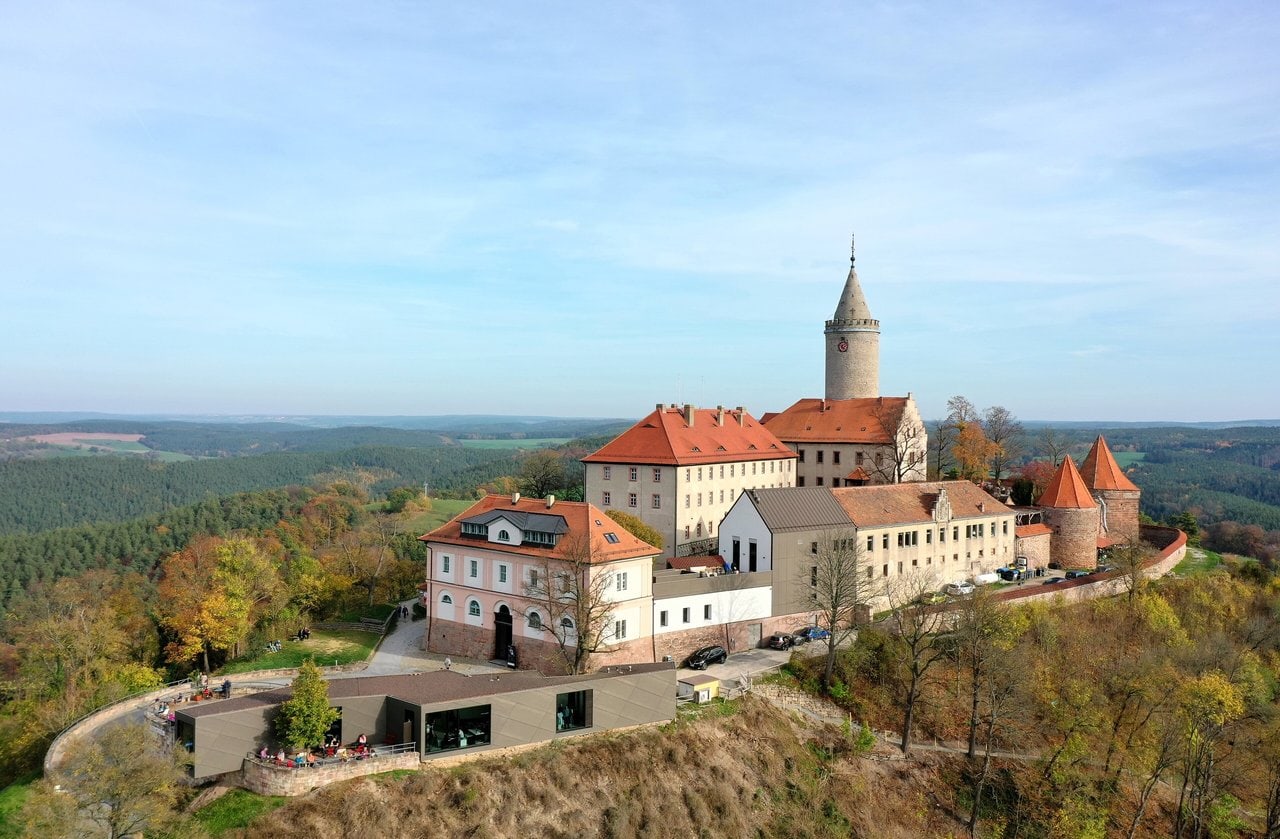
Leuchtenburg Castle
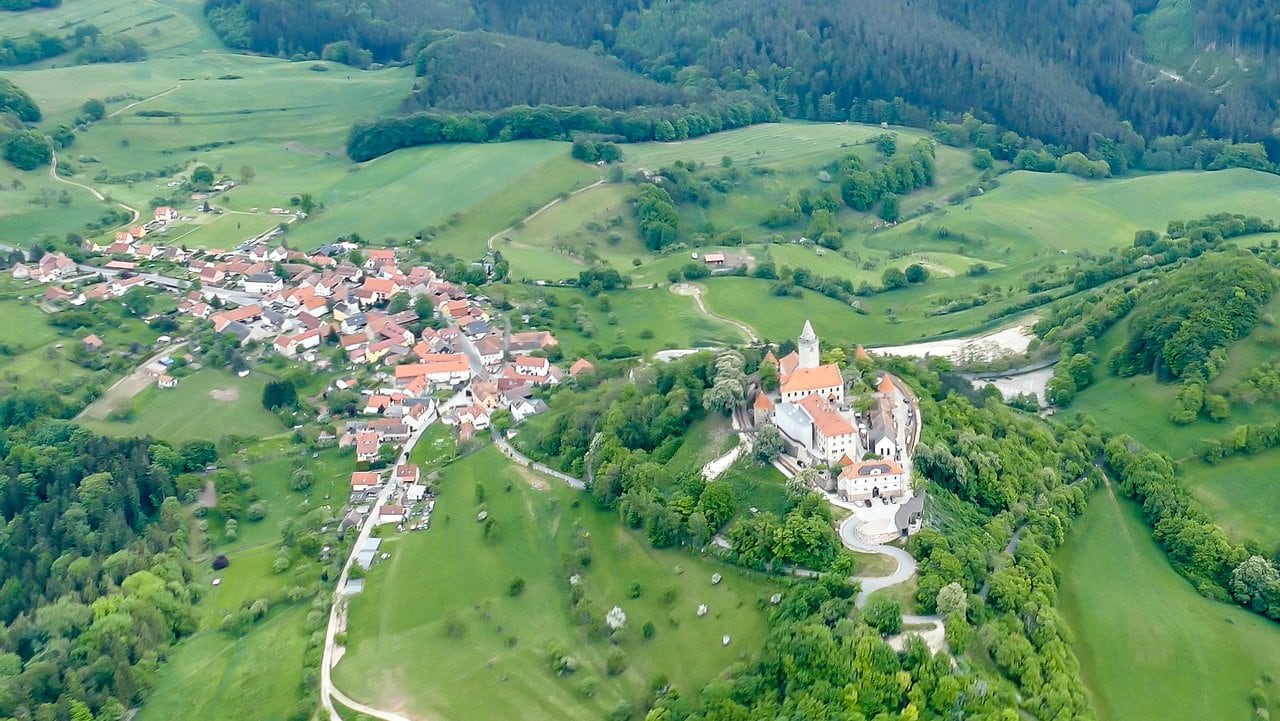
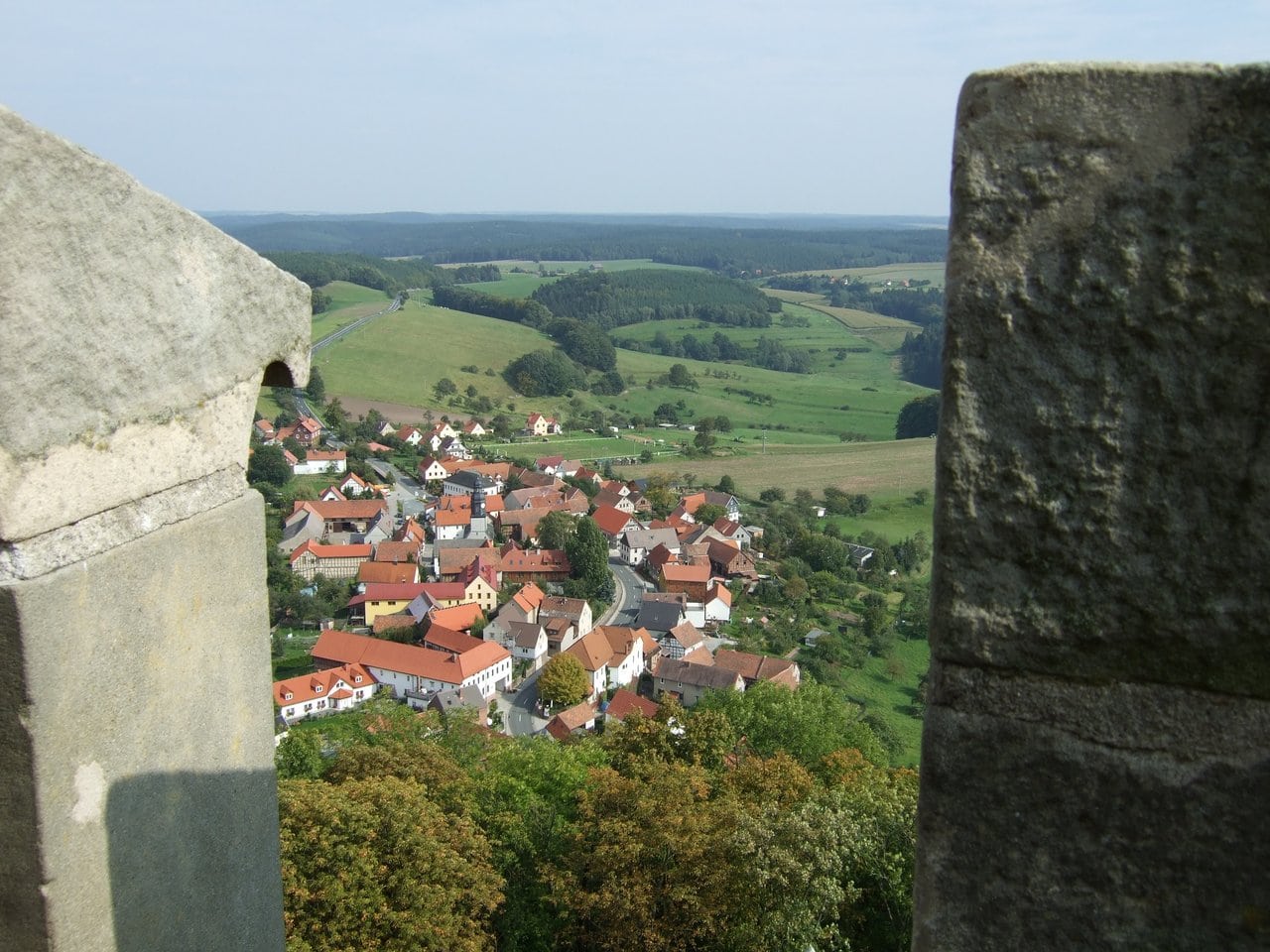
High above the Saale valley, on a pale cone of rock that rises clear of the surrounding woods, stands Leuchtenburg Castle. Leuchtenburg Castle has watched over the Thuringian town of Kahla since the early thirteenth century, when it was first recorded in 1221 as the seat of the lords of Lobdeburg, and the long ridge of its walls is visible for miles in every direction. Locals call it the Queen of the Saale Valley, and from its keep the view runs from the Harz in the north to the dark line of the Thuringian Forest in the south.
What makes the castle remarkable is not its age but its restlessness. In eight centuries it has been a noble residence, a princely administrative office, a workhouse and asylum that held more than five thousand inmates, a tourist hotel, the first youth hostel in Thuringia, and, since 2014, one of the strangest museums in Germany: a porcelain wonderland with the world’s largest porcelain vase, its smallest teapot, a church lined in porcelain, and a narrow skywalk from which visitors fling inscribed plates into the valley below. The castle survives so completely because no century ever let it stand empty.
Quick Facts
| Name | Leuchtenburg Castle (Burg Leuchtenburg) |
| Location | Seitenroda, near Kahla, Thuringia, Germany |
| First recorded | 1221, as the seat of the lords of Lobdeburg |
| Type | Hilltop castle (Burg) |
| Elevation | About 395 meters above sea level |
| Keep | Round Bergfried, roughly 30 meters tall; 151 steps to the viewing platform |
| Owner / operator | Free State of Thuringia / Stiftung Leuchtenburg |
| Current use | Museum (Porzellanwelten Leuchtenburg, opened 2014) |
| Highlights | ARURA, the world’s largest porcelain vase; the porcelain church; the Steg der Wünsche skywalk |
| Condition | Well preserved |
| Coordinates | 50.8041° N, 11.6118° E |
| Official site | leuchtenburg.de |
Queen of the Saale Valley
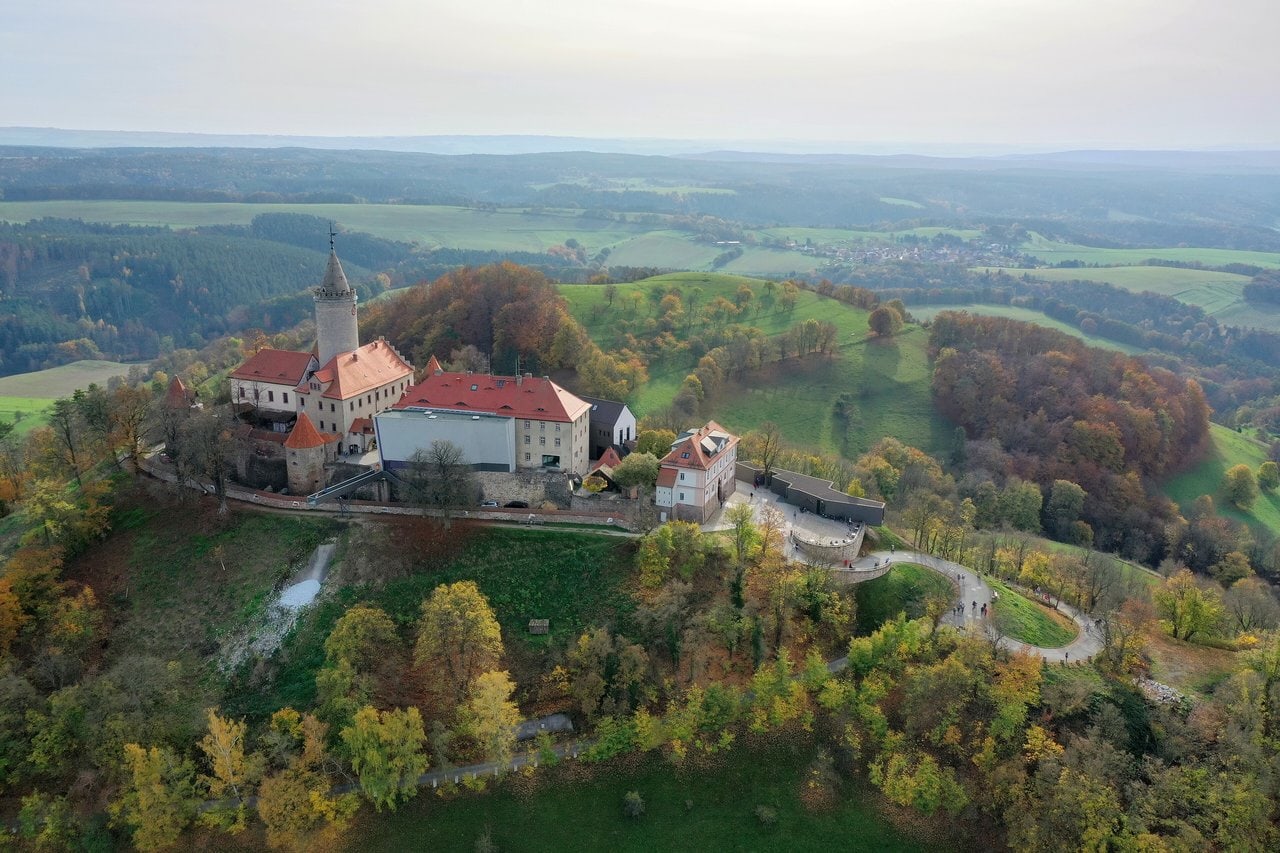
A burg is a fortress on a height, and Leuchtenburg is a textbook case. It sits on an isolated, lightly wooded knoll, a Bergkegel reaching about 395 meters above sea level, and that bare bright summit gave the castle its name: the leuchtende Berg, the shining hill. The position is a commanding one. Roads and river traffic along the middle Saale passed within sight of the walls, and whoever held the hill controlled a stretch of the valley between Jena and the Orla country. On a clear day the panorama still reaches from the Harz mountains to the Thuringian Forest, which is why generations of travelers have called the place the Queen of the Saale Valley.
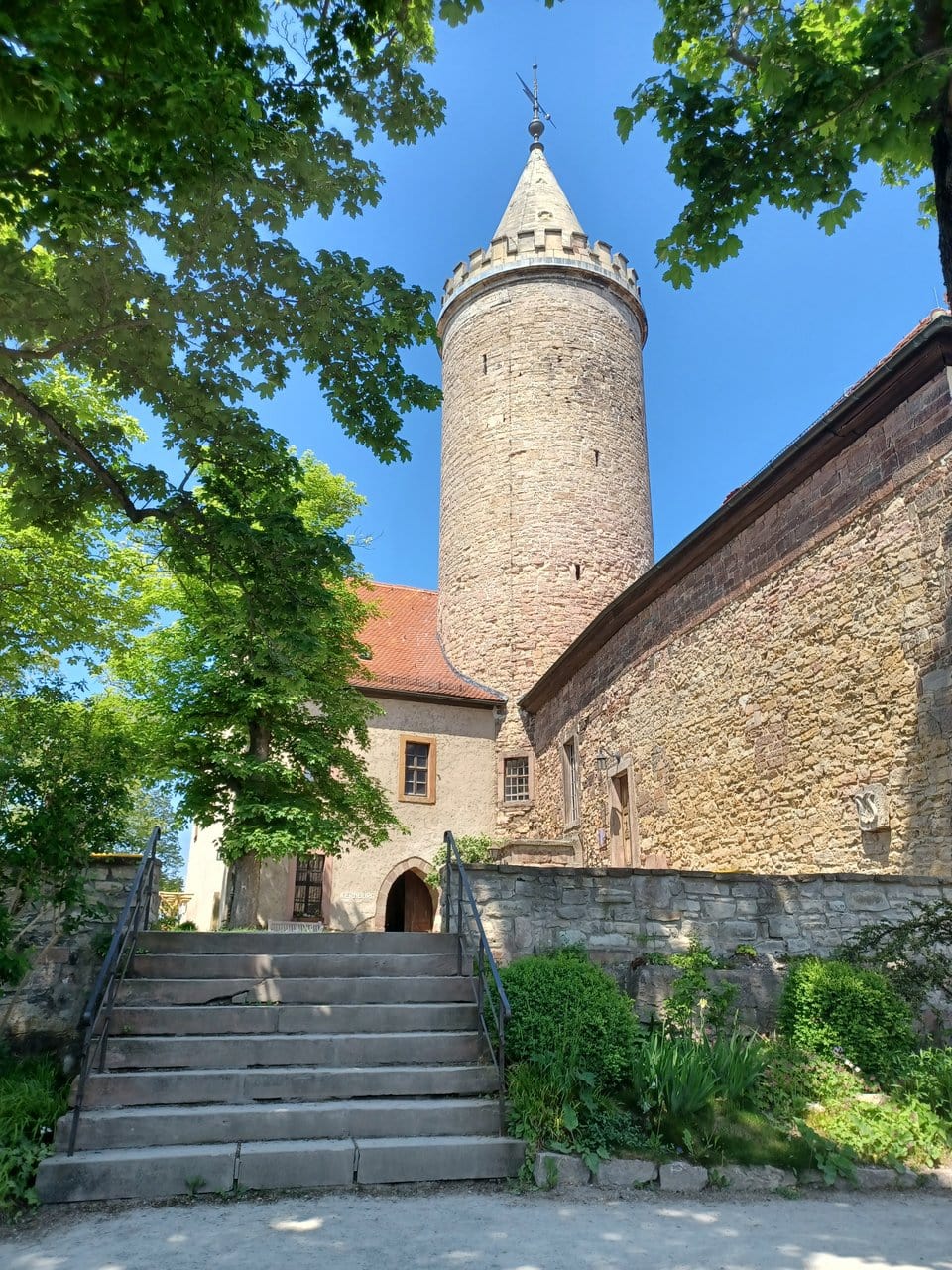
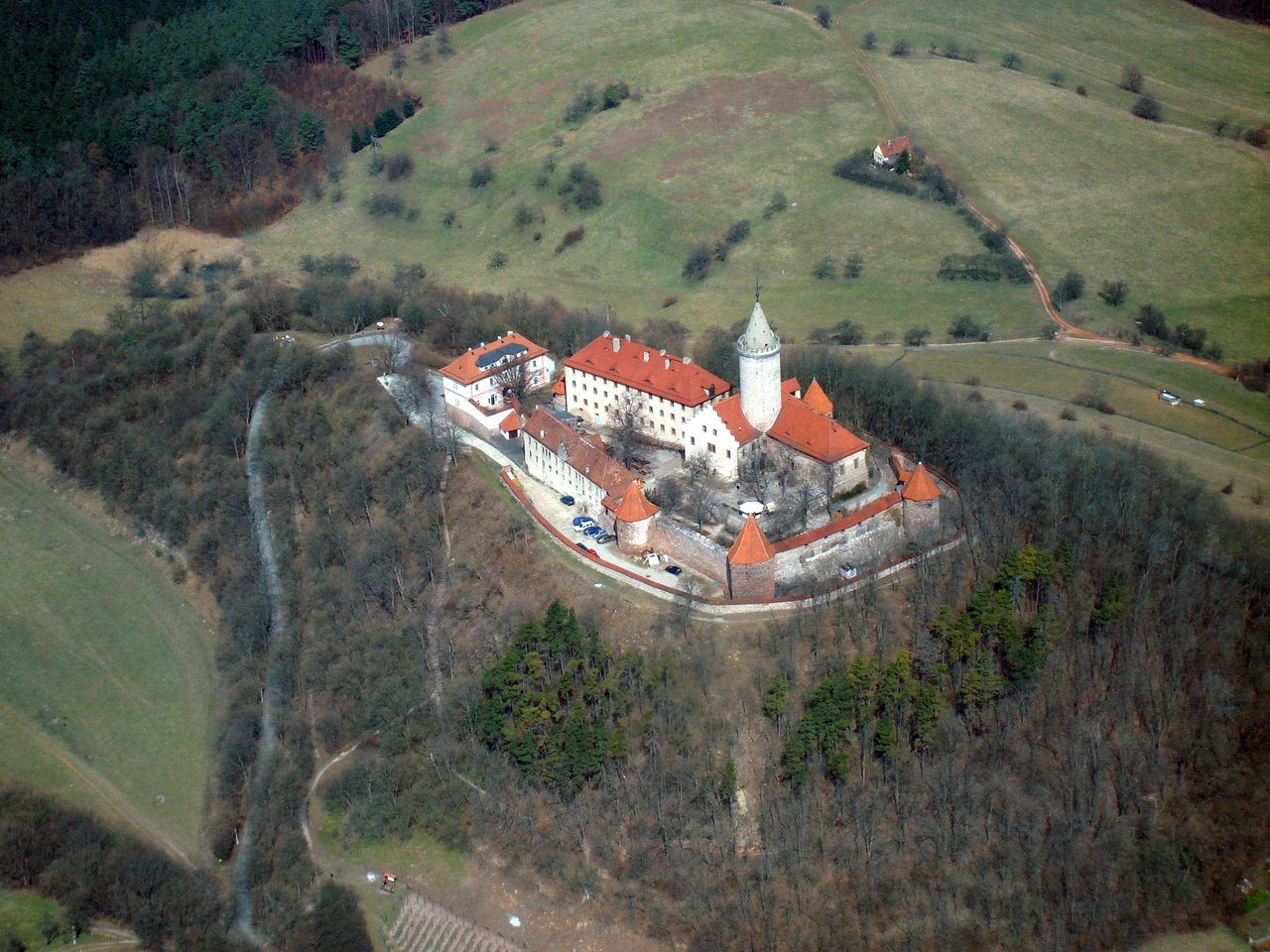
First written mention comes in 1221, when the castle appears as the ancestral seat of the Lobdeburg-Leuchtenburg line, a noble family of Franconian origin, from the country of the Nördlinger Ries. The Lobdeburgs were energetic castle-builders who planted several strongholds along the Saale, among them the Lobdeburg near Jena and Burgau, and by the 1220s the senior branch had adopted the name of this hill and made it their principal residence. Of those earliest buildings only the great round keep survives. The Bergfried, a stone tower roughly thirty meters tall and more than eight meters across, still dominates the courtyard and has become the emblem of the whole site. Its pointed cap and crenellated gallery date from an 1886 restoration, and 151 steps lead to a viewing platform with the full sweep of the valley; the castle-history exhibition now fills the rooms below. Around the keep the medieval ensemble grew into an inner castle and a gatehouse ringed by curtain walls. From this perch the Lobdeburgs governed a scatter of villages and tolls along the Saale, and the family name itself migrated to the hill, so that the lords of Lobdeburg became the lords of Leuchtenburg. Every part of the castle was later raised, burned, rebuilt, and repurposed, which is exactly why so little of the first stronghold beyond the keep remains.
From the Lobdeburgs to the Wettins
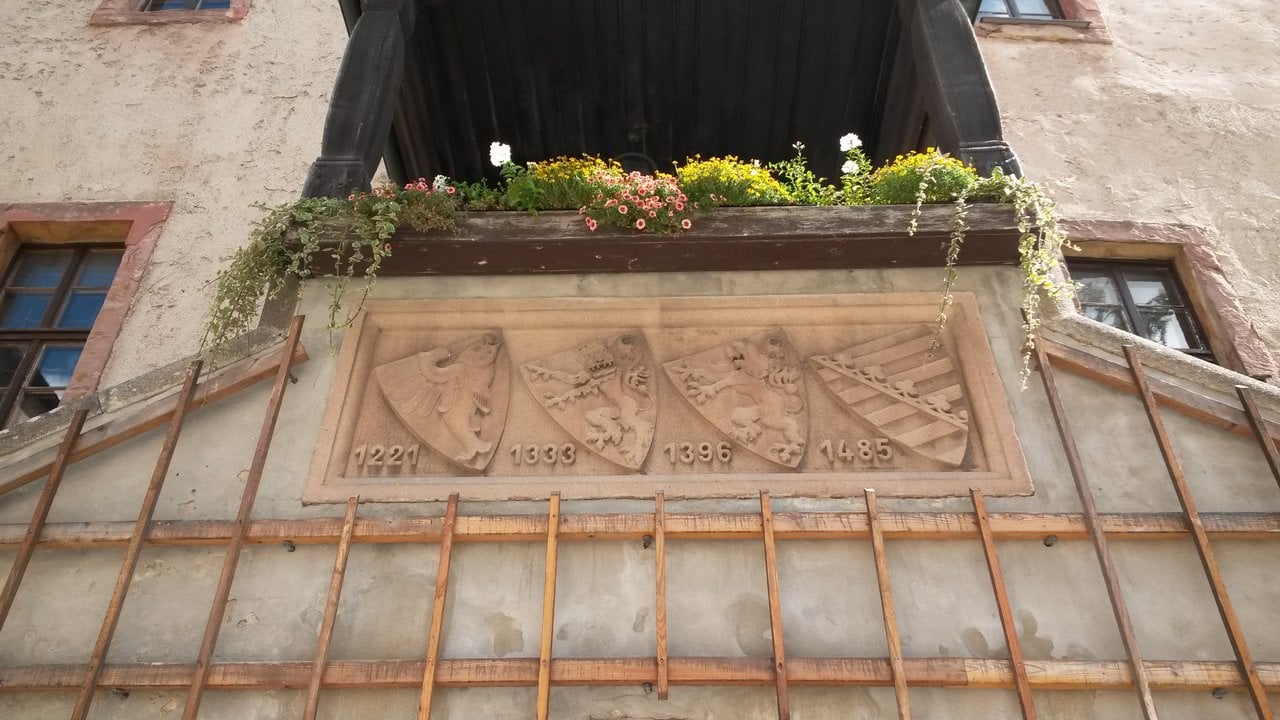
Lordship at Leuchtenburg changed hands through debt rather than conquest. Costly inheritance disputes drained the Lobdeburgs through the early fourteenth century, and in 1313 they were forced to pledge the castle to the counts of Schwarzburg. Twenty years later, in 1333, they sold it outright, together with the towns of Kahla and Stadtroda, to settle their accounts. The Schwarzburgs fared little better. After the Thuringian counts’ feud weakened that house, the Wettins took the castle by force in 1392, and a settlement four years later, the Treaty of Leipzig of 1396, compelled the Schwarzburgs to sell Leuchtenburg to them for good.
Under the Wettins the hill settled into a long, quiet career as a government office. From 1396 it became the seat of the Amt Leuchtenburg, the district administration for roughly twenty surrounding villages, a role it would keep for three centuries. War touched it only lightly. A siege in 1452 forced Duke Wilhelm to retake the castle from a rebellious vassal and laid bare its defensive weaknesses, which prompted the building around 1460 of four three-story wall towers and an inner ring of fortification; one of them, the Schleierturm, still carries the name of a prisoner once held there. During the Schmalkaldic War of 1547 the Saxon elector sent his wife and children up to the castle for safety. A few years later, in 1553, the garrison drove the castle well down to about eighty meters, said to be among the deepest in Thuringia, so that the hilltop could hold out without water hauled from below. The main building burned in 1658 and was rebuilt by 1670 as the residence of the castle administrator, and later of the man who would run the prison.
The House of Misery
Leuchtenburg’s grimmest chapter opened in the early eighteenth century. In 1705 the Amt administration moved down to Kahla, leaving the buildings without a purpose, and the dukes of the Ernestine line found a new one. From 1724, the year a fresh partition placed the castle under Saxe-Gotha-Altenburg, Leuchtenburg became a combined Zuchthaus, Armenhaus, and Irrenhaus: a workhouse and penitentiary, a poorhouse, and an asylum, all on a single isolated hill. For nearly a century and a half it served to confine those whom the state preferred to keep out of sight. A tower had already been pressed into use as a gaol as early as 1612, so the turn to confinement was less a break than a hardening of what the hill had quietly become.
The numbers are stark. Between 1724 and 1871, the records list 5,193 people registered as inmates of the house, many of them repeat offenders who cycled in and out over the decades. They laboured for their keep, and one of their daily tasks was hauling water up from the deep well that the garrison had cut two centuries before, a punishing routine on a hill with no spring of its own. Vagrants, petty offenders, the destitute, and the mentally ill were held together with little distinction, in conditions that the castle’s own exhibition today does not soften. Such houses were a fixture of the age, half prison and half charity, meant to correct idleness through forced work; on the Leuchtenburg the logic was sharpened by the isolation of the hill, which made escape difficult and oversight cheap. In 1871 the inmates were transferred to a new institution at Zeitz, and the long carceral era came to an end. The dark stretch left a deep mark on the place and on its later self-image. Sie war Zuchthaus und Irrenanstalt, the foundation says plainly of its own home, and the modern museum treats the prison years as openly as it treats the medieval lords.
Hotel, Hostel, and the First Museum
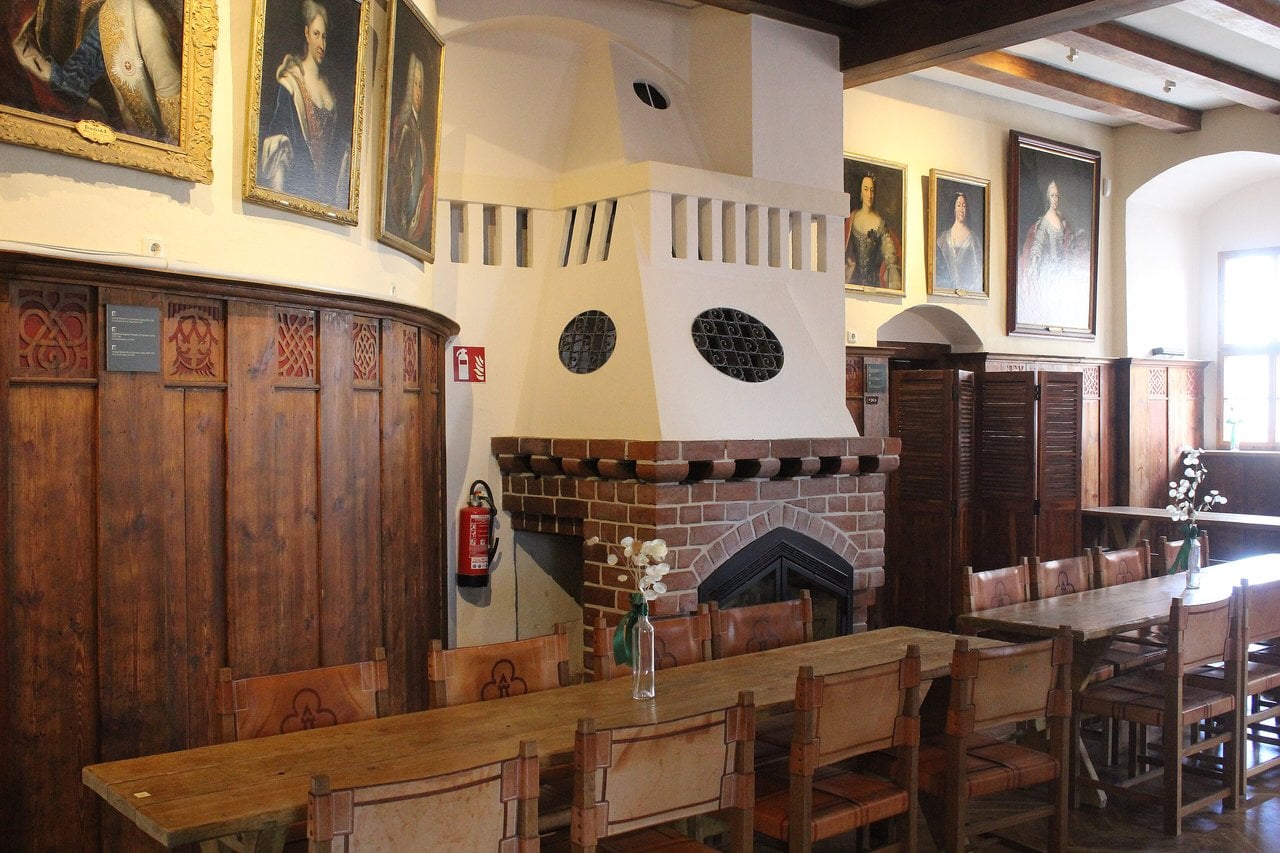
Almost as soon as the prison closed, the castle reinvented itself as a destination. By 1873 a hotel with a tavern had opened in the old buildings, trading on the panorama and the romance of the ruins, and it served guests until 1951. Visitors of that era dined in a knights’ hall, the Rittersaal, whose elaborate Jugendstil panelling was installed in 1912. No medieval knight ever ate there, yet the room gave the hotel its atmosphere, and it now displays the ancestral portraits of the dukes of Saxe-Altenburg, the Ernestine branch that had held the castle since 1826.
Two further uses overlapped with the hotel. A regional museum opened in the gatehouse in 1906, gathering the collections of the local history society, and in 1921 the castle took in the first youth hostel in Thuringia. Through the 1920s and 1930s Leuchtenburg grew into an important gathering place for the German youth movement, its courtyards filling each summer with hikers, ramblers, and singing clubs drawn by the cheap beds and the immense view. For the Wandervogel generation, footloose and romantic, a ruined hilltop castle with a hostel inside it was close to an ideal address. The hostel tradition carried the buildings through much of the twentieth century, even as they aged slowly toward the restoration they would eventually need. After the Second World War the castle passed with the surrounding estates into public hands, and after reunification it belonged to the Free State of Thuringia, which maintained it without ever settling on what it should be.
The Leuchtenburg Foundation and the Porcelain Turn
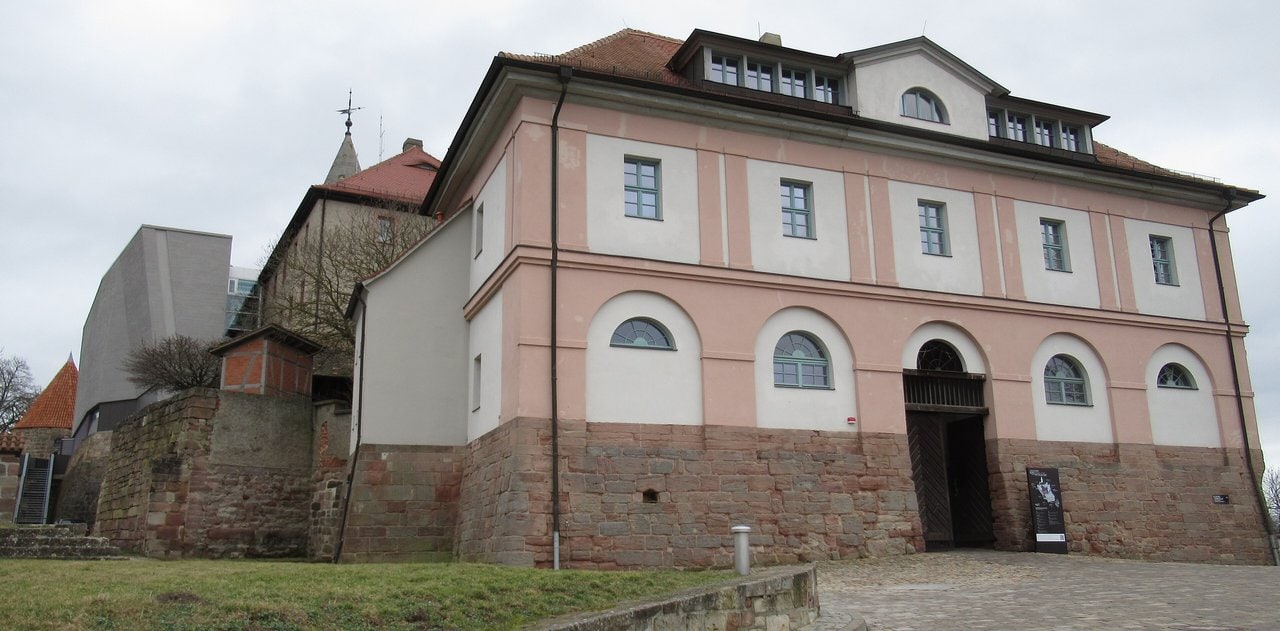
In 2007 the state put the castle up for auction. A new body, the Stiftung Leuchtenburg, was created to buy and run it, and from that point the story takes its sharpest turn. Three years later the entrepreneur Sven-Erik Hitzer, since dubbed the father of the Thuringian porcelain revival, resolved to make the castle the showpiece of the region’s great craft tradition. Kahla and the surrounding towns had produced porcelain for more than two centuries, and Hitzer wanted a stage worthy of what Germans call das weisse Gold, the white gold. His bet was that a spectacular setting could pull visitors off the autobahn and out into a region that the guidebooks tend to skip. He set out, in his own words, to build anything but a boring exhibition of flowery coffee pots in dusty cases, and he folded the project into the wider Thuringian Porcelain Road, a touring route of working factories that he set about modernising.
Construction of the new display began on March 28, 2011. Funded by roughly eight million euros in regional development money and the foundation’s own resources, and designed with the agencies TRIAD, KOCMOC.NET, and Nau2, the project converted an eighteenth-century lodging house, the same building that had served as the youth hostel, into a sequence of staged galleries, and bolted a glass-and-steel annex onto the curtain wall. Porzellanwelten Leuchtenburg opened in two stages, on April 3, 2014 and March 20, 2015, and quickly gathered awards, among them the Thuringian Tourism Prize and an international Chinese Tourists Welcome Award. On the first opening day Hitzer also founded the Day of Thuringian Porcelain, a yearly festival that anchors the castle in the life of the region’s manufactories.
White Gold: The Porzellanwelten
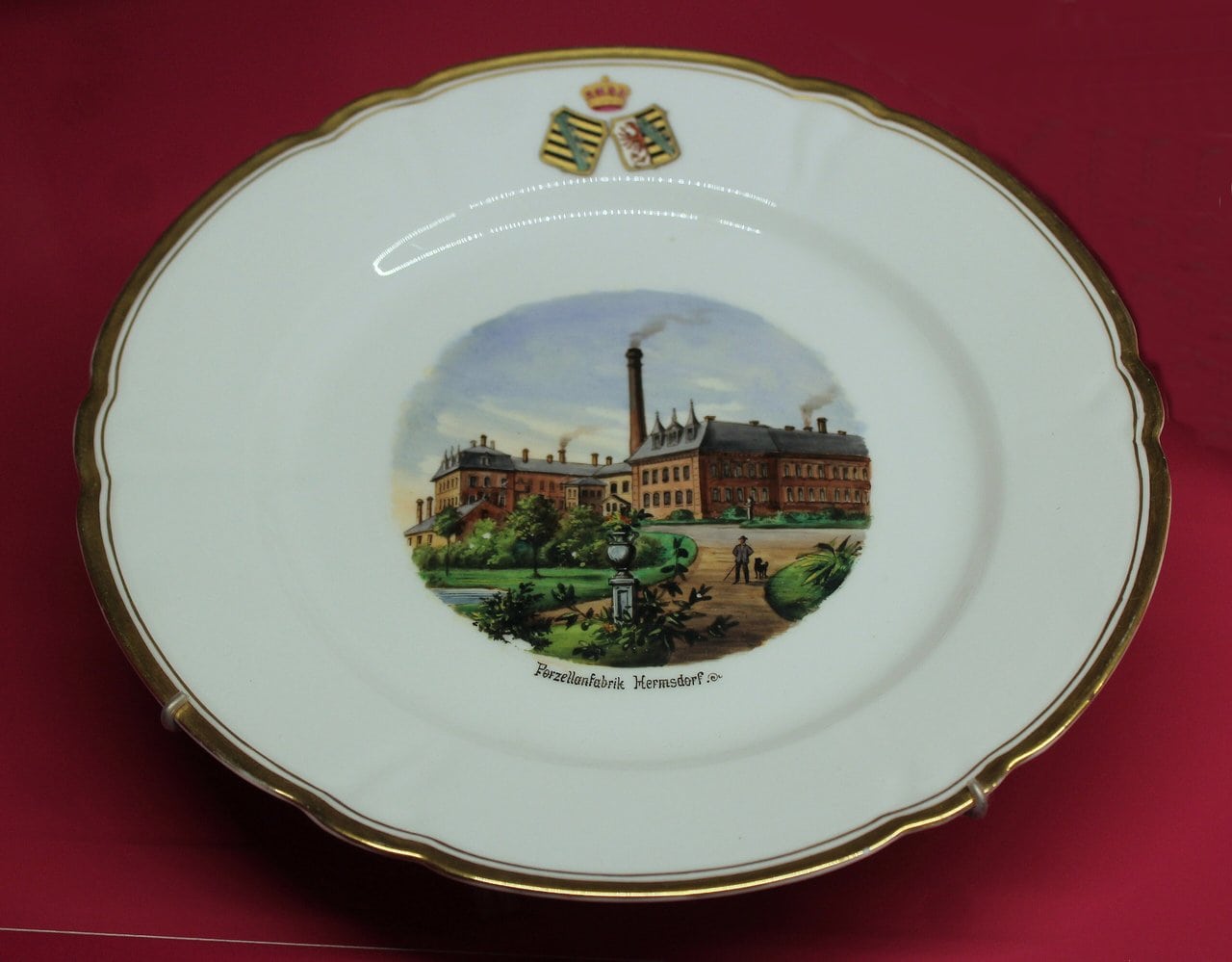
Porcelain in Thuringia is no museum curiosity but a living industry, and the Leuchtenburg was built to tell its story. The region has worked the white gold for more than two and a half centuries, ever since the secret of true hard-paste porcelain spread from Saxony, and Kahla at the foot of the hill remains a working porcelain town with a factory and outlet shop of its own. The exhibition unfolds across seven themed worlds in about three thousand square meters, and it sets out to be anything but a dusty cabinet of teacups. Visitors enter through the gaping mouth of an oversized dragon into a section called Mythos Burg, which tells the castle’s own turbulent history before the galleries turn to porcelain itself, from its origins in imperial China to the high-performance ceramics of the twenty-first century.
Two records anchor the display. The first is ARURA, billed as the largest porcelain vase in the world: a cobalt-and-gold tower roughly eight meters high, built by the artist Alim Pasht-Han with the Reichenbach manufactory from 360 cast porcelain honeycomb cells, hand-painted and gilded, assembled into a self-supporting structure modeled on the stem of a horsetail plant. No earlier attempt had managed porcelain on so monumental a scale. Its opposite is the world’s smallest teapot, a piece measuring just three by three by four millimetres, set against the giant vase to dramatise the range of the material. Between these poles the rooms move through history, technique, and design, leading the visitor from the kaolin pits and kilns of early manufacture to the engineered ceramics of modern industry. An upper floor carries a changing exhibition on contemporary porcelain design. The staging is deliberately theatrical, full of light, shadow, and surprise, and it has drawn both praise and grumbling: international juries have honored the result, while some traditionalists feel the modern spectacle sits awkwardly inside a medieval shell. Whatever the verdict, the gamble paid off in attendance, turning a quiet provincial castle into one of Thuringia’s most visited attractions, and the whole site now carries the national Reisen für Alle mark for barrier-free access.
The Porcelain Church and the Skywalk of Wishes
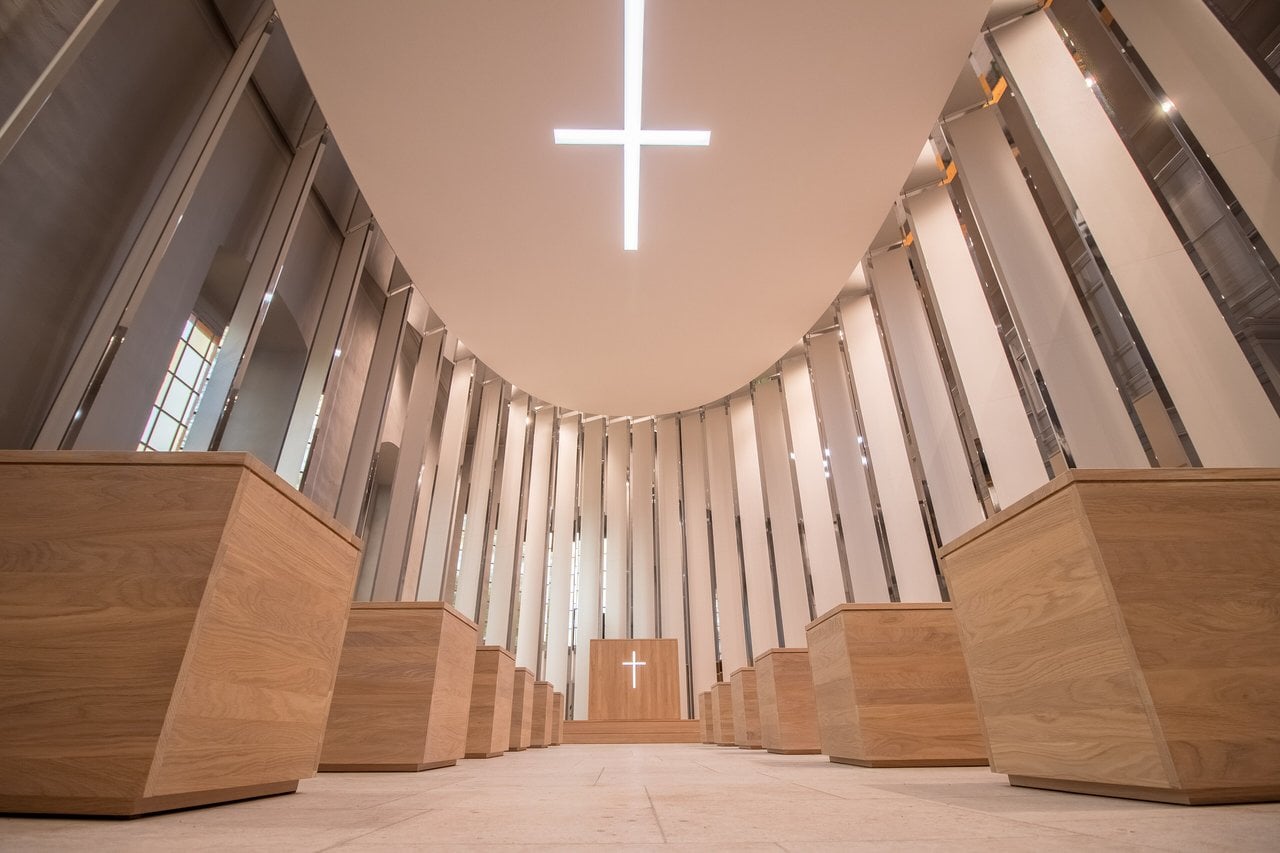
Two installations push the concept furthest. A castle chapel, whose origins reach back to the thirteenth century and which had spent years as an exhibition room, was renovated and re-consecrated as the world’s first porcelain church on October 8, 2016. The architect Michael J. Brown, of the studio NAU2 and a former associate of Daniel Libeskind, hung a curtain of thirty room-high lamellae across the nave in deliberate echo of a Gothic cathedral, dividing the small space into a central aisle and two side aisles. Each panel is a sheet of technical porcelain about 5.53 meters tall and three millimetres thin, weighing close to ninety kilograms, made by the Spanish firm Levantina and mirrored on the back so that the room seems to dissolve and re-form as worshippers move and the light shifts across it. Conceived with Hitzer, the work won a citation at the 2018 Thuringian State Prize for Architecture and an Iconic Award. The chapel had returned to worship quietly a few years earlier, with a fresh organ installed in 2013, before the porcelain curtain transformed it; the church, which also holds the world’s first porcelain baptismal font, still hosts ecumenical services and recitals.
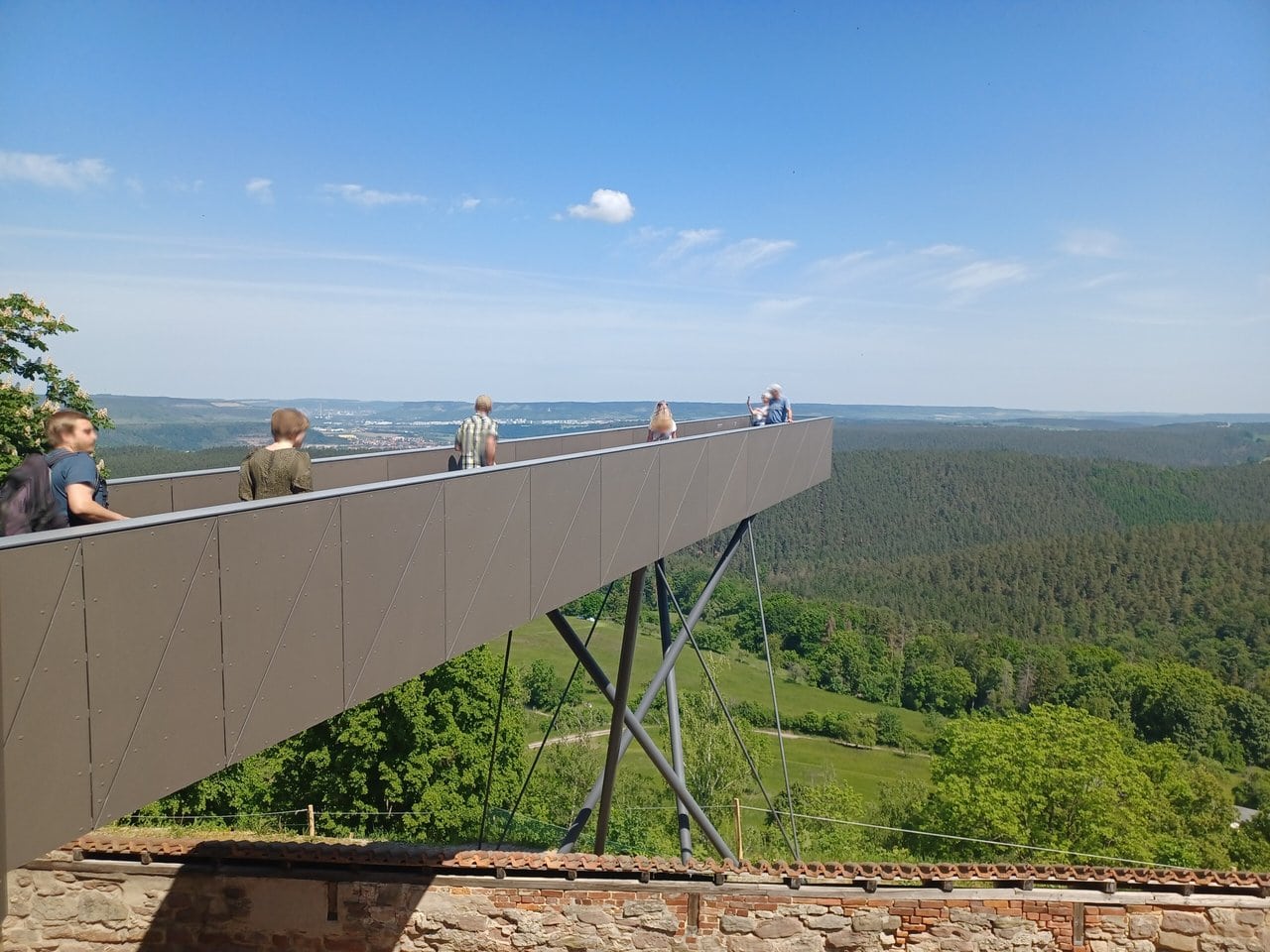
Most photographed of all, though, is the Steg der Wünsche, the Skywalk of Wishes. From the new annex a narrow platform about twenty meters long juts straight out from the castle wall over the open drop to the valley. Each visitor receives a porcelain plate at the Archive of Wishes, writes a wish on it, carries it to the end of the cantilever, and throws it into the void below, where, the foundation promises, the shards bring luck. The gesture is calculated kitsch, and yet it lands. A castle that once confined the unwanted now invites strangers to stand on its edge and let something go, and the broken porcelain accumulating in the valley is its own quiet kind of monument. The ritual has proved oddly durable, repeated by hundreds of thousands of visitors, and it gives the whole experience a hook that a conventional museum could never match. Critics of the modern annex have a fair point about its frankness against the old stone, but few visitors leave the skywalk without a story to tell.
Visiting Leuchtenburg Castle
Leuchtenburg sits above the village of Seitenroda, a short drive from Kahla and about half an hour from Jena. The easiest approach is by car, with paid and free car parks below the hill and a choice of a gentle paved road or a steeper flight of steps up to the visitor center; a 146-meter inclined lift, under construction to make Leuchtenburg one of Germany’s first barrier-free hilltop castles, is set to carry visitors up the final slope. By public transport, trains reach Kahla station, from which it is a brief taxi ride or an hour’s walk up marked trails that also take in the Dohlenstein viewpoint, an ascent of more than two hundred meters that pays the walker back in views. One ticket covers the whole ten-thousand-square-meter site: the medieval castle, all the exhibitions, the porcelain church, and a plate to break on the skywalk. Guided tours, an audio guide, and themed experiences run through the year, dogs are welcome on a lead, and the Burgschänke tavern serves Thuringian cooking with a valley view. On the Advent weekends a Christmas Market of Wishes fills the courtyard, and the calendar carries knights’ dinners, concerts, and sunrise breakfasts besides. Allowing two to three hours does the site justice, and arriving early or staying for the late-afternoon light rewards anyone who has come for the view as much as the porcelain. Entry tickets and local tours can also be booked in advance through GetYourGuide.
The castle opens daily, from 9 a.m. to 6 p.m. in summer (April to October) and from 10 a.m. to 5 p.m. in winter (November to March), with last admission half an hour before closing and an early close at 2 p.m. on December 24. Current ticket prices are set out below.
| Ticket | Price (2026) |
|---|---|
| Adult | €16.90 |
| Senior (65+) | €15.90 |
| Reduced (students, etc.) | €12.90 |
| Child (6–16) | €9.00 |
| Child under 6 | Free |
| Family (2 adults + children) | €42 |
| Single-parent family | €25 |
| Group, per adult (from 20) | €14 |
| Late entry, summer (after 4 p.m.) | €12 |
| Annual pass (adult) | €30 |
Children under six and birthday children up to sixteen enter free, and a reduced late-entry rate applies after 4 p.m. in summer. Annual passes, family cards, and discounted regional cards are also sold. The prices above were current in 2026 and can differ during special events such as the Christmas market, so confirm the latest rates on the operator’s website before traveling. Anyone staying overnight can compare hotels in and around Jena.
Some links on this page are affiliate links, which means StoneKeep Atlas may earn a small commission, at no extra cost to you, if you book through them.
More Views of Leuchtenburg Castle
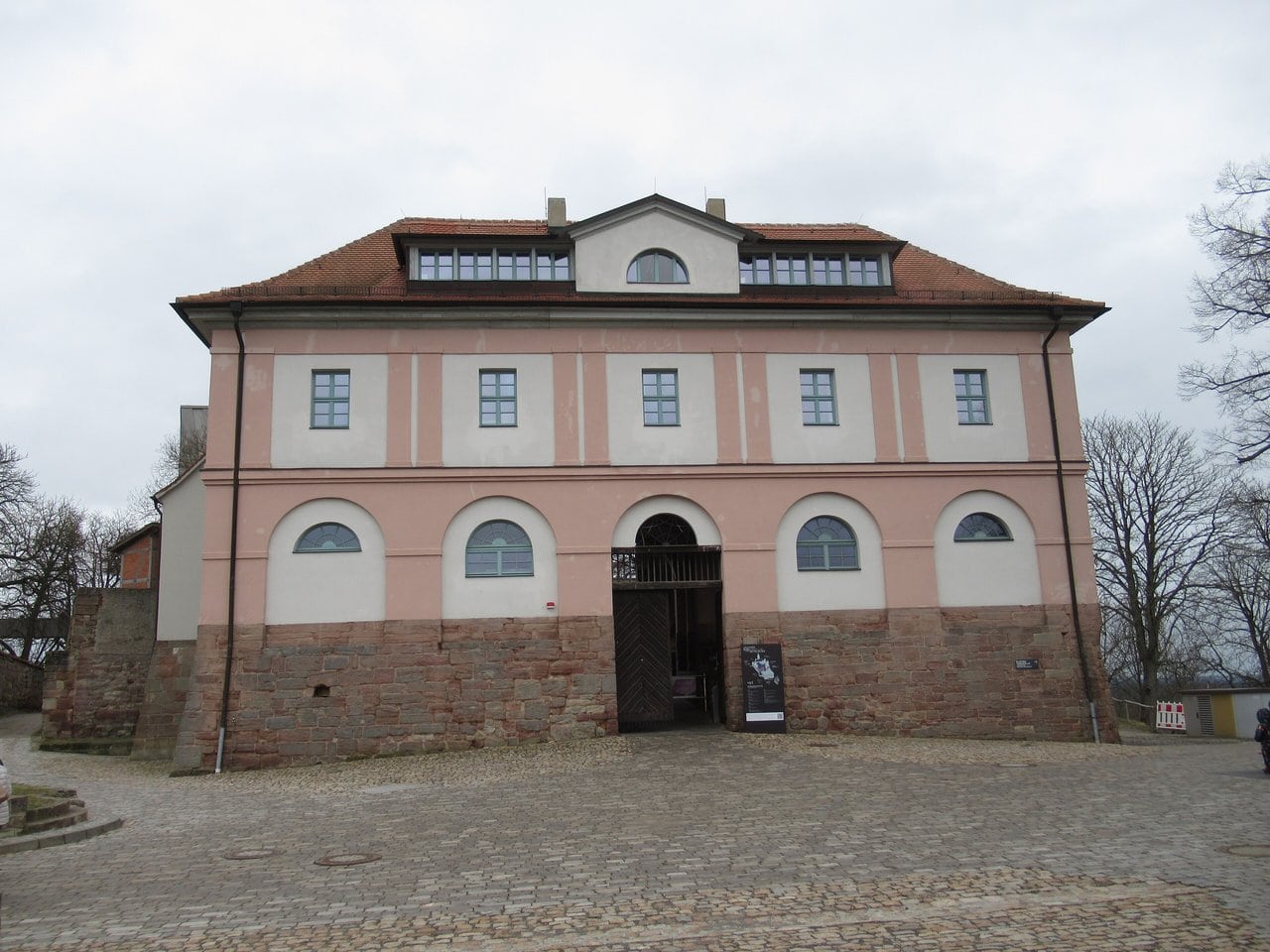
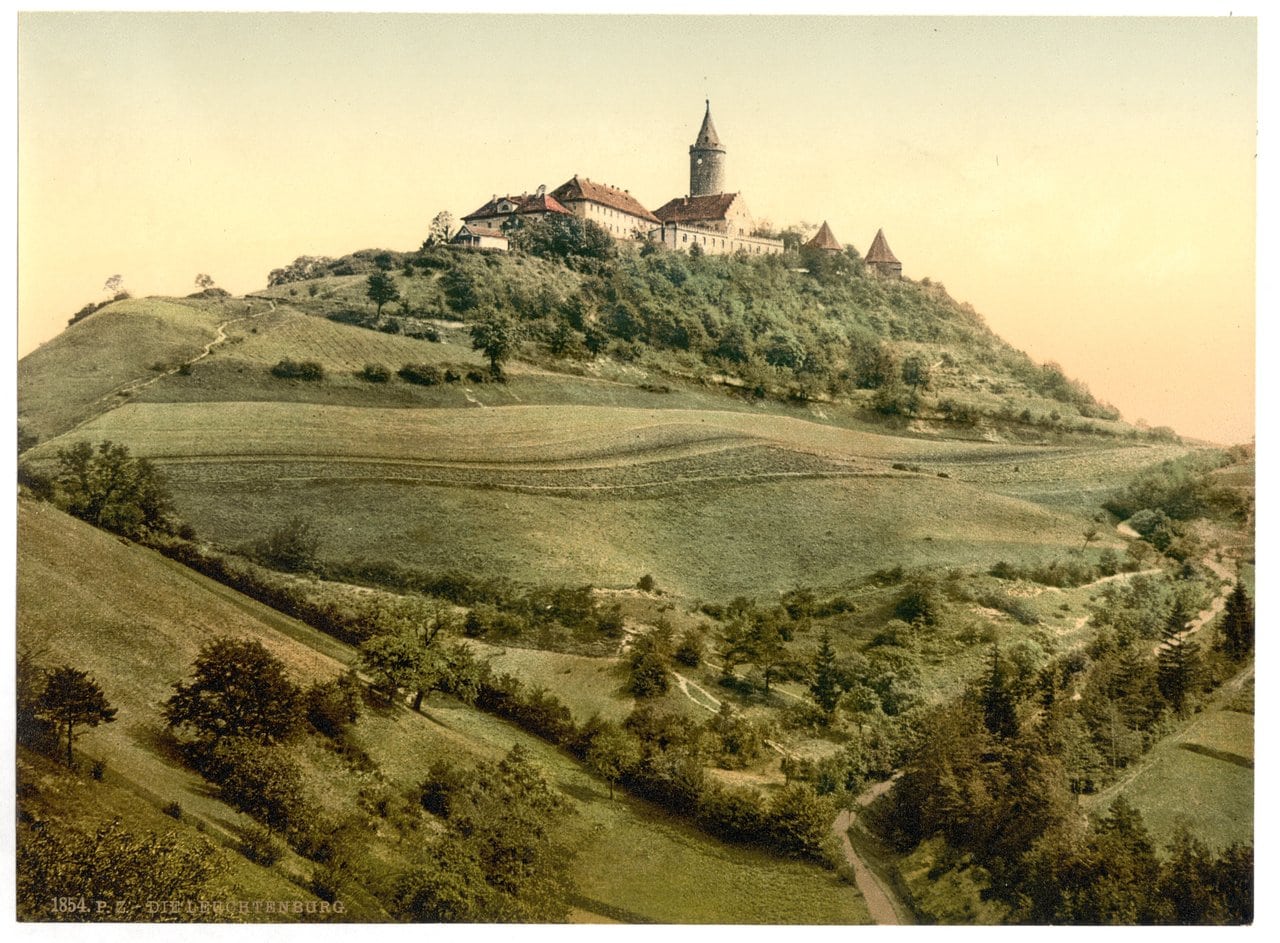
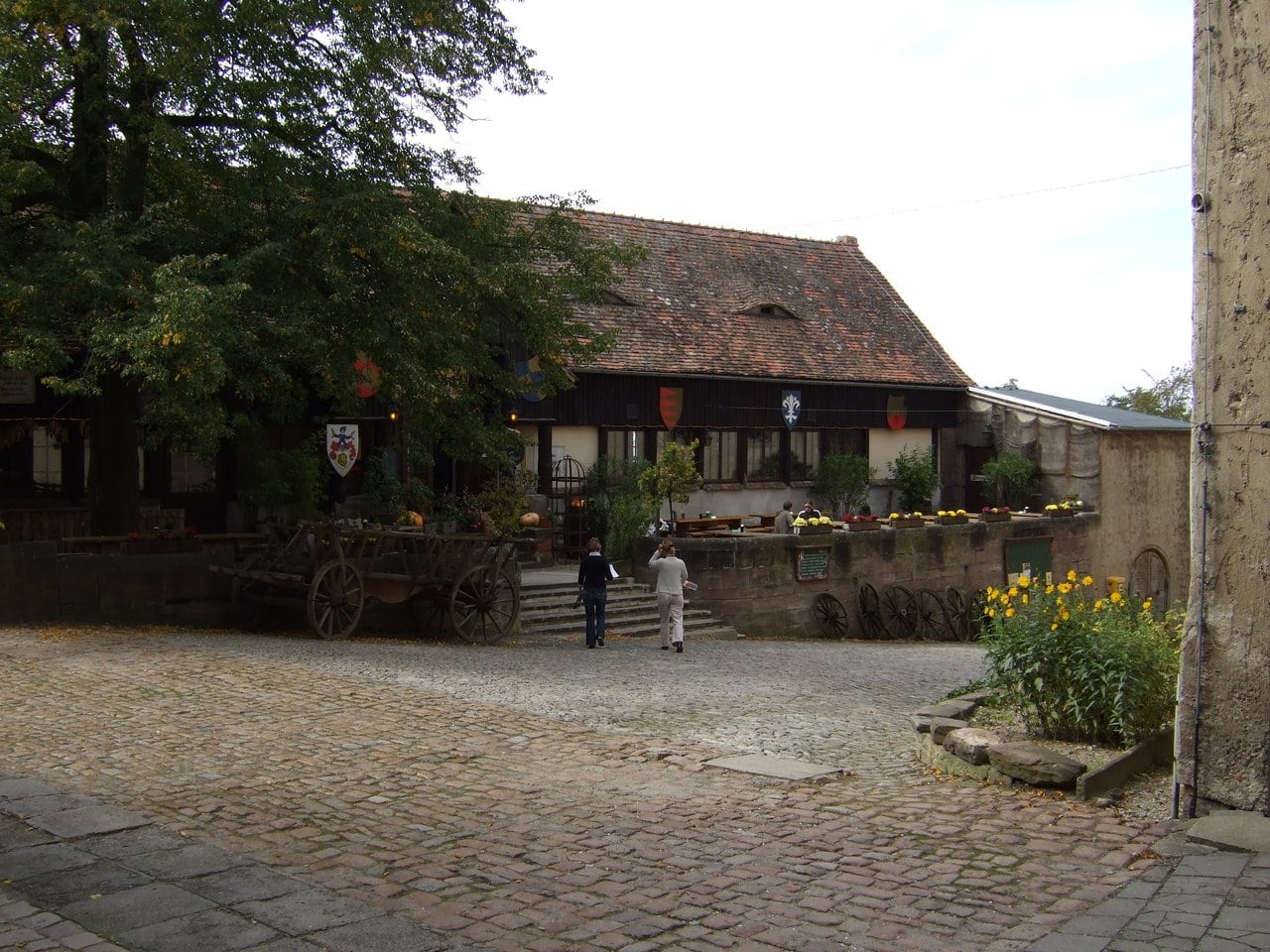
A closer look at the keep, the towers and walls, the skywalk, and the valley the castle commands, in views across the seasons and across the centuries.
Beyond Leuchtenburg Castle
Leuchtenburg is the fourth Thuringian castle in this atlas, and it makes most sense alongside its neighbors. Closest in spirit is the great Wartburg Castle above Eisenach, the most famous fortress in the state and a UNESCO site whose survival, like Leuchtenburg’s, owes more to continuous use than to luck. To the south, near the Bavarian border, the Heldburg Fortress crowns its own basalt cone and now houses the German Castle Museum, while at Gotha the vast Friedenstein Palace shows what the same Ernestine dukes built when they wanted a residence rather than a stronghold. Our guide to the castles of Thuringia draws these sites together.
The porcelain theme reaches beyond Thuringia as well. The story of European porcelain begins one region east, in Saxony, where the Albrechtsburg above Meissen housed the first manufactory of true hard-paste porcelain in 1710; the white gold celebrated on the Leuchtenburg was a Saxon invention before it became a Thuringian industry. Readers drawn to the Lobdeburgs’ Franconian origins, or to the castles of the Thuringian and Franconian borderland, will find more in the guides to the castles of Saxony and the castles of Franconia.
Conclusion
Few German castles wear their changes as openly as this one. Leuchtenburg has been a lordly seat, a bureaucrat’s office, a house of confinement, a holiday hotel, a hostel, and a porcelain stage, and it has kept the scars and souvenirs of each. A thirteenth-century keep still stands over a courtyard where visitors now smash crockery for luck, and that contrast is the whole point. Visitors come now for the vase and the skywalk, and they leave having stood inside eight hundred years of Thuringian history. The Queen of the Saale Valley endures not because she was spared history but because she kept finding new work to do.
Principal Sources
- Stiftung Leuchtenburg. “Geschichte” and “Porzellanwelten Leuchtenburg.” leuchtenburg.de.
- Köhler, Michael. Thüringer Burgen und befestigte vor- und frühgeschichtliche Wohnplätze. Jenzig-Verlag, Jena, 2001.
- Dehio, Georg. Handbuch der Deutschen Kunstdenkmäler: Thüringen. Deutscher Kunstverlag, Munich.
- Bund Deutscher Architekten Thüringen. Citation for the Porzellankirche (NAU2 / Michael J. Brown), Thüringer Staatspreis für Architektur 2018. bda-thueringen.de.
- museum-digital Thüringen. Catalog entries for the Leuchtenburg collections. thue.museum-digital.de.
- Thüringer Allgemeine and Ostthüringer Zeitung. Reporting on the Porzellanwelten and the inclined-lift construction (2011–2025). thueringer-allgemeine.de; otz.de.
Visitor information was verified against the operator’s website, leuchtenburg.de, in June 2026; prices and opening hours are reviewed seasonally and should be confirmed before travel.
Image credits. Banner, aerial view of Leuchtenburg Castle, Thuringius, CC0. The Bergfried keep, Enyavar, CC BY-SA 4.0. Carved relief of the ownership dates, Daniel Mietchen, CC0. The Festsaal portrait gallery, Dguendel, CC BY 3.0. The Logierhaus, Giorno2, CC BY 4.0. Hermsdorf porcelain plate, Dguendel, CC BY 3.0. The porcelain church interior, Alexander Schlotter, CC BY-SA 4.0. Gallery: aerial from the north, Thuringius, CC0; castle above Seitenroda, NoRud, CC BY-SA 4.0; walls and towers, Dr. Thomas Köhler, public domain; view from the keep, Sebastian Wallroth, public domain; the Steg der Wünsche skywalk, Enyavar, CC BY-SA 4.0; the Torhaus gatehouse, Giorno2, CC BY 4.0; photochrom of about 1900, public domain; the Burgschänke courtyard, Sebastian Wallroth, public domain. Creative Commons and public-domain images via Wikimedia Commons, reusable under the stated licenses. Freely licensed images are resized to fit; otherwise unaltered.