
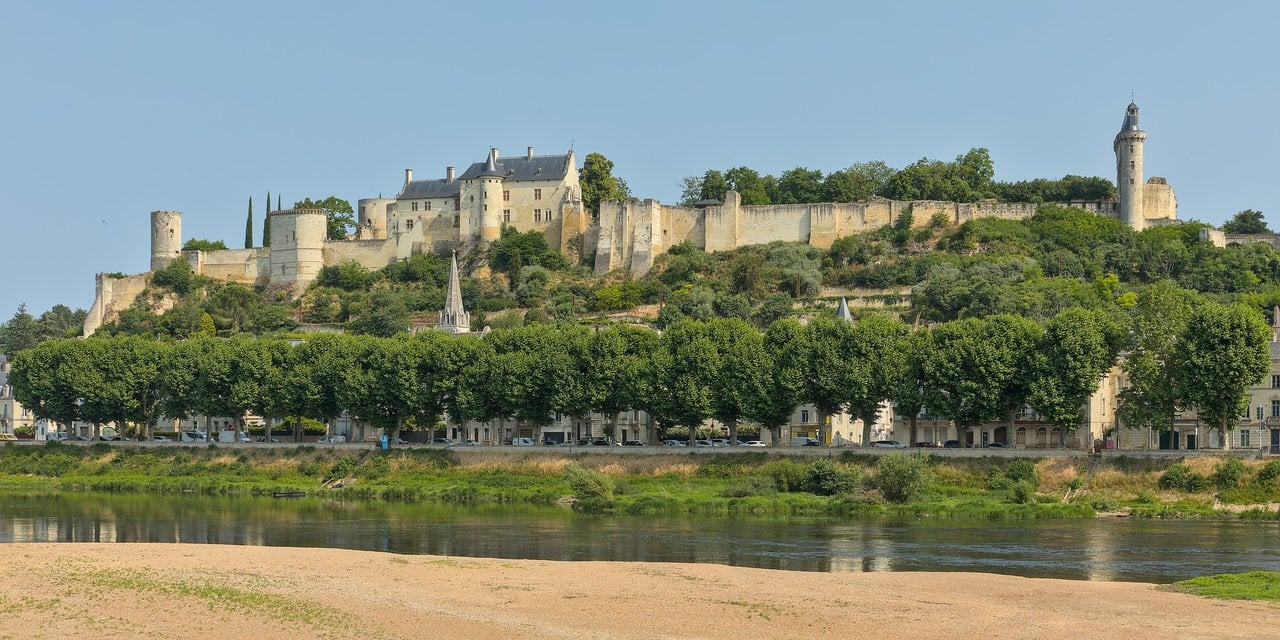
Château de Chinon
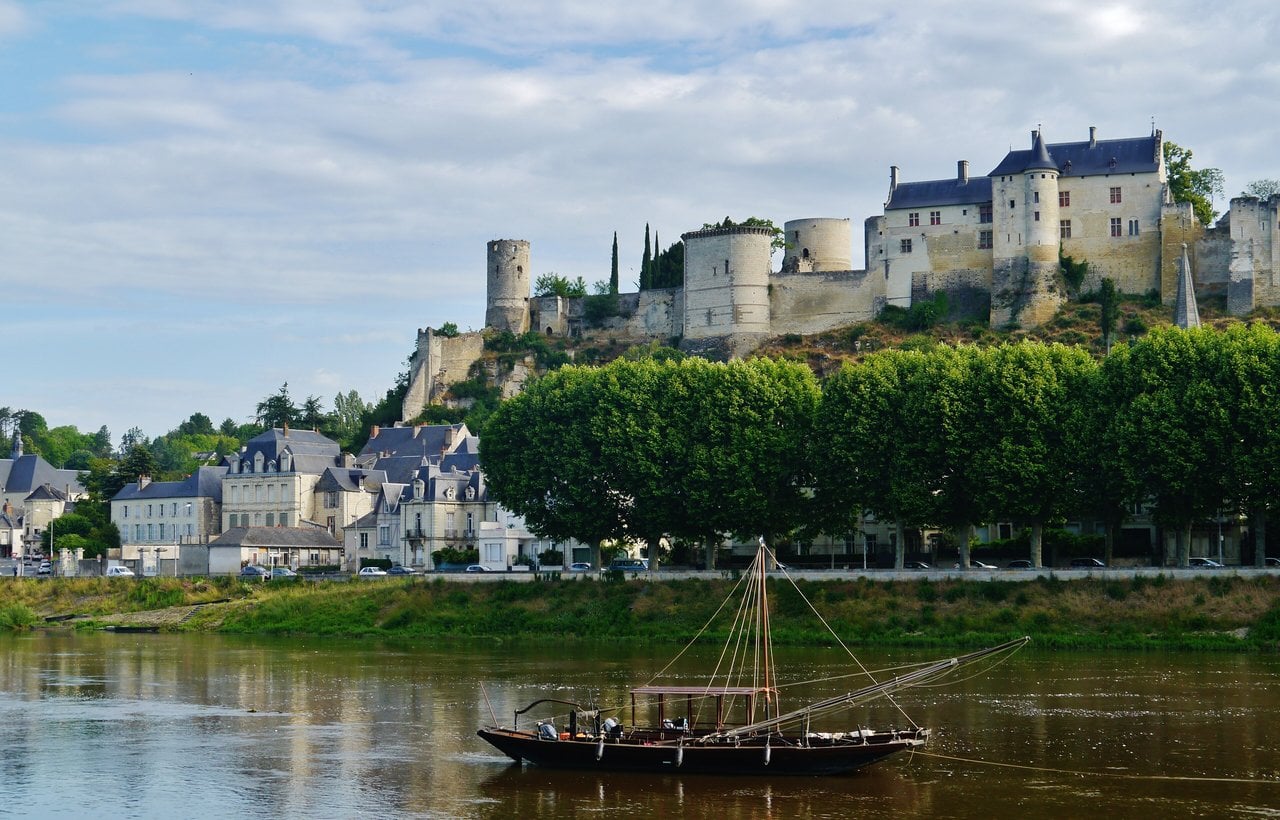
The Château de Chinon is not one castle but three, strung along a narrow tuffeau spur that stands 80 to 95 meters above sea level, high above the River Vienne in Indre-et-Loire. Its operator prefers the older, truer name: the Forteresse Royale de Chinon, the Royal Fortress. Where the Renaissance châteaux downstream were built for pleasure and display, this place was built for power, and for most of its long life that power was contested. Counts, kings, and a doomed military order all held the rock, and several of them lost more than a castle here.
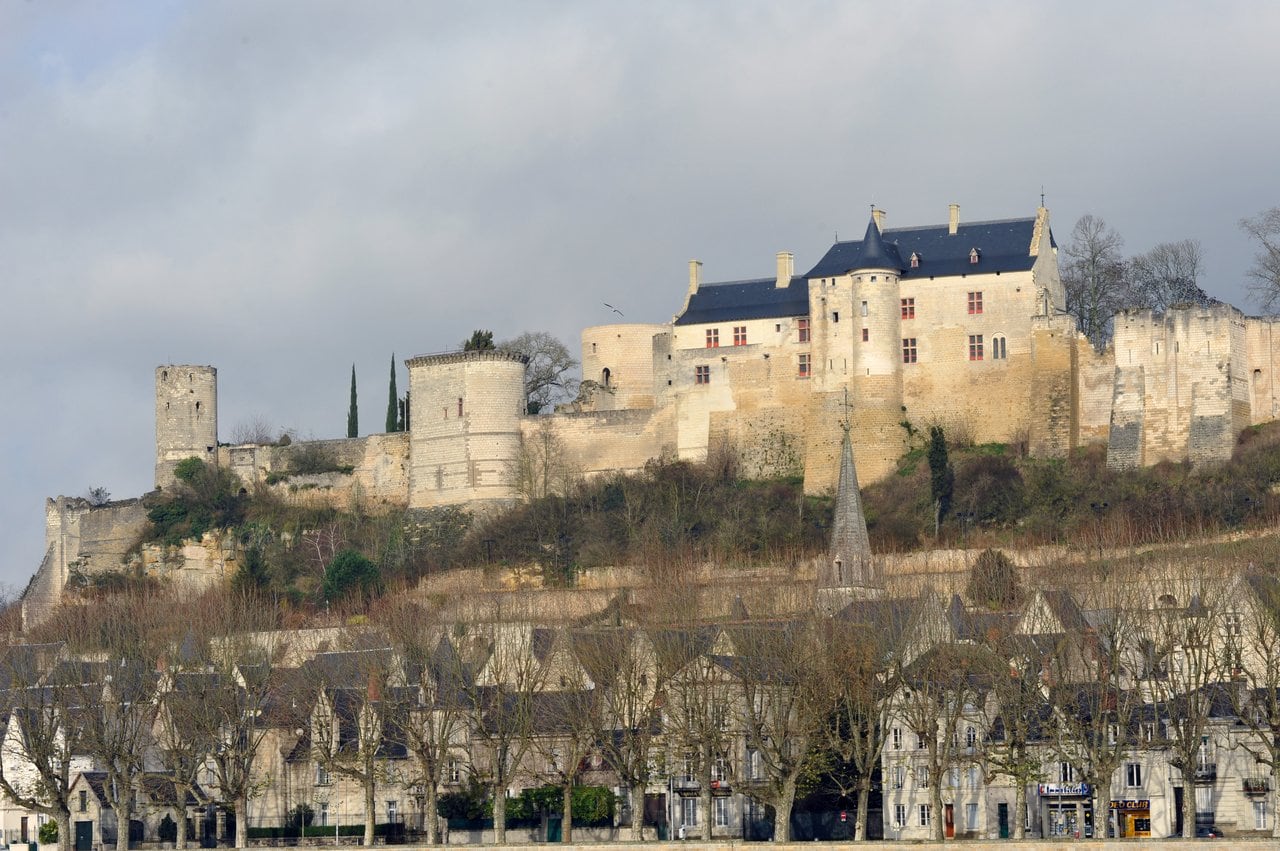
Three medieval enclosures still divide the ridge from west to east, separated by dry moats once crossed by drawbridges: the Fort du Coudray at the point, the Château du Milieu at the center, and the Fort Saint-Georges guarding the eastern approach. Within those walls the history of medieval France turned on its hinge more than once. An English king died at Chinon. A French king seized it and ended an empire. A peasant girl from Lorraine walked into its great hall and helped turn a war. This is the fortress where the crown changed hands.
Quick Facts
| Location | Chinon, Indre-et-Loire, Centre-Val de Loire, France |
| Built | 10th–15th centuries (first stone tower 954; major work under Henry II and Charles VII) |
| Builders | Counts of Blois, then the Counts of Anjou (Plantagenets); later the Capetian and Valois crown |
| Type | Medieval royal fortress of three enclosures |
| Setting | Tuffeau spur above the Vienne, roughly 400 meters long |
| Condition | Partially ruined; royal lodgings restored |
| Listed | Monument Historique, 1840 (Base Mérimée PA00097661) |
| UNESCO | Within “The Loire Valley between Sully-sur-Loire and Chalonnes” (inscribed 2000) |
| Owner / operator | Département d’Indre-et-Loire |
| Open to visitors | Daily except January 1 and December 25 |
| Official site | forteressechinon.fr |
A Spur Above the Vienne: Three Castles in One
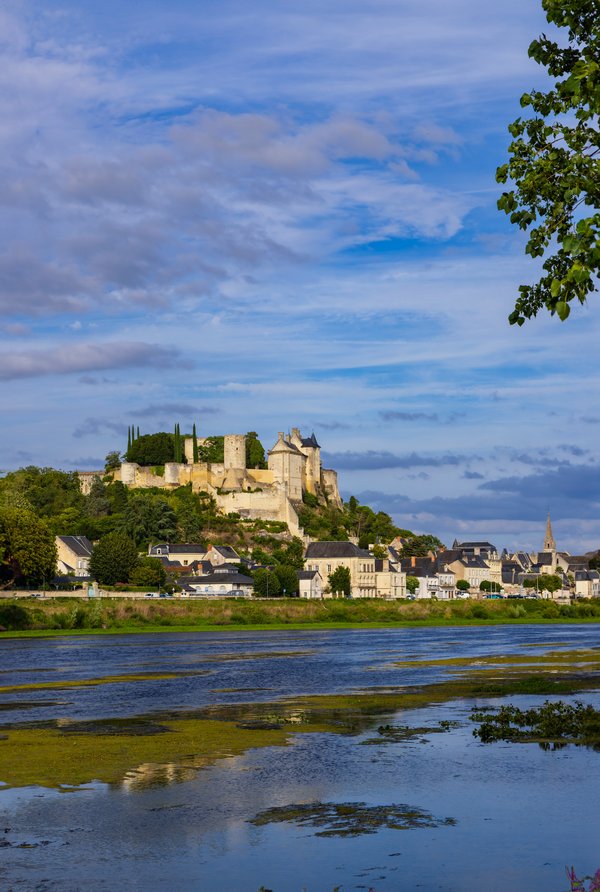
Chinon sits where the Vienne, the Loire’s great southern tributary, slips past a long limestone ridge about fifteen kilometers above its confluence with the larger river. Whoever held the ridge controlled the crossing and the road from Tours toward Loudun, which is reason enough to fortify a place. People did so for a very long time. Archaeologists have found a Gallic warrior’s grave on the site and the remains of a late-Roman castrum, its rampart about 1.9 meters thick, that withstood a siege in 463. Occupation here runs back some three thousand years.
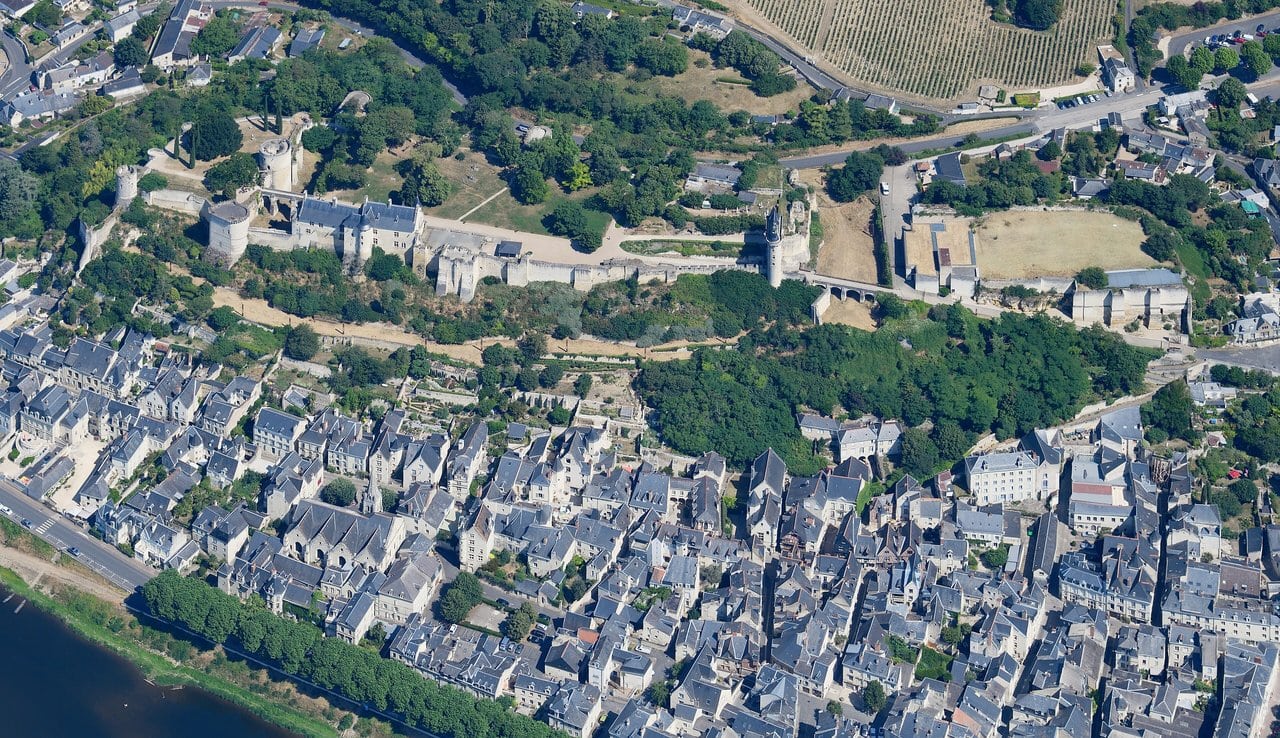
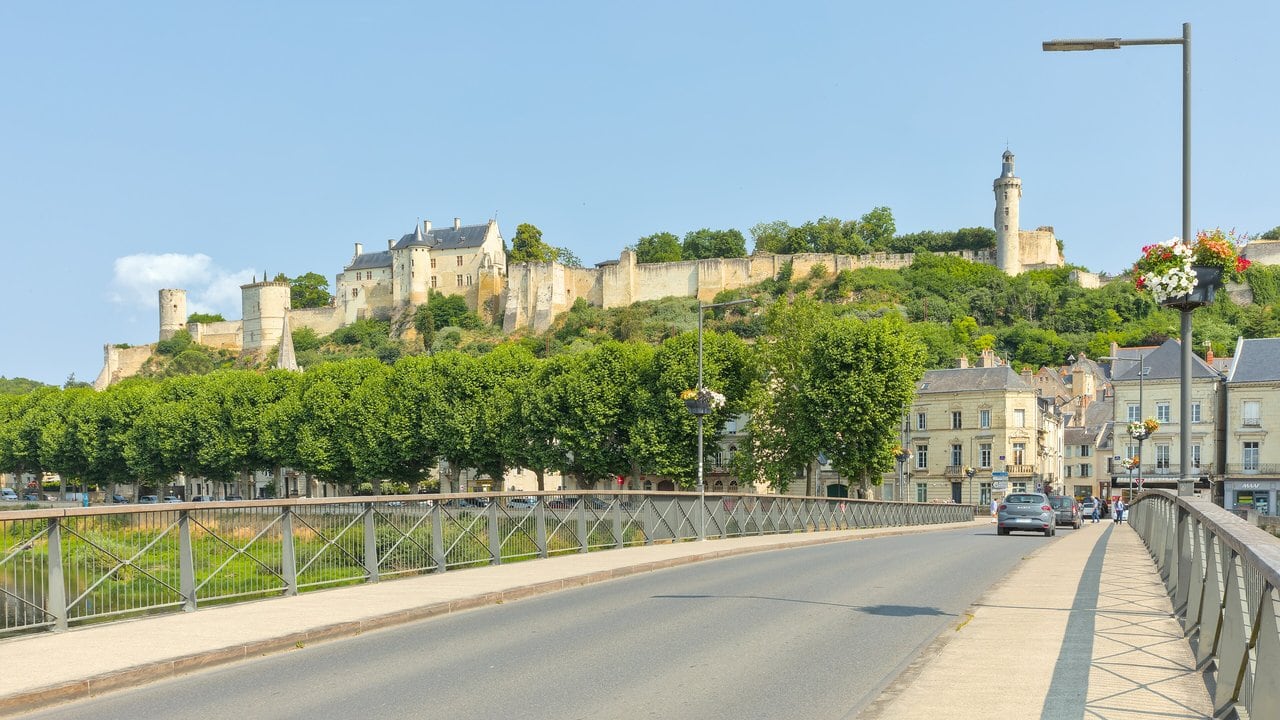
What grew on those foundations was never a single building. The kings who held it spoke of their “three castles,” and the town still carries three castles on its coat of arms. Running from west to east, a series of rock-cut dry ditches bars the spur into three independent enclosures, each with its own circuit of walls. At the western point stands the Fort du Coudray, crowned by the cylindrical Coudray Tower. In the middle lies the Château du Milieu, the residential heart, which holds the gate-tower now called the Tour de l’Horloge, the restored royal lodgings, and the roofless shell of the great hall. Easternmost, the Fort Saint-Georges shielded the main approach; its modern reception building now holds the ticket office and shop.
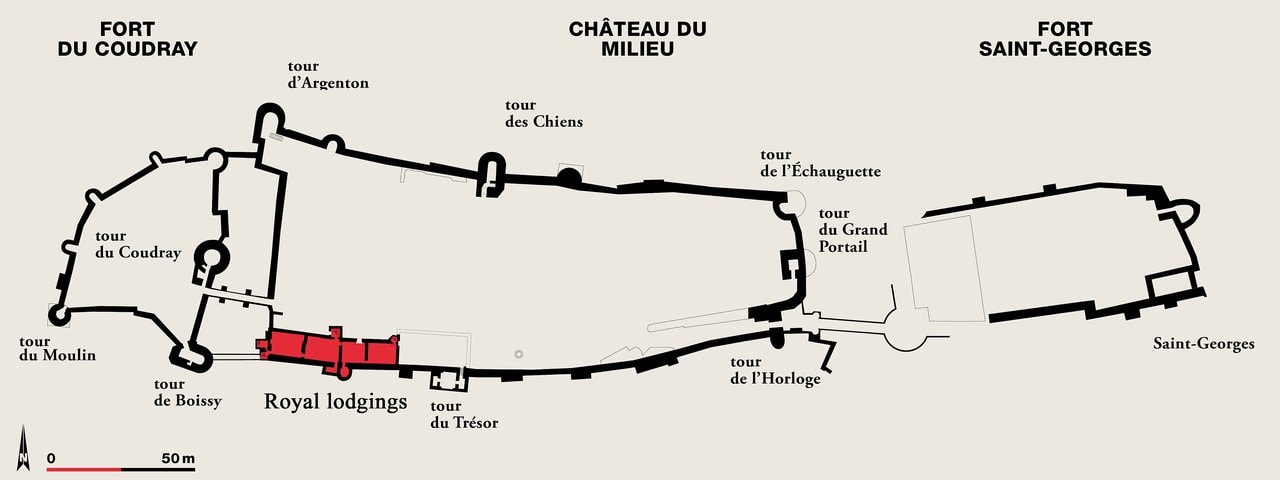
A walk along the ridge is a walk through four centuries of military engineering. The towers come in every medieval form: solid and hollow rounds, bases splayed into the Angevin batter that deflected sappers and missiles, arrow-slits cut clean through the full thickness of the wall. Builders worked almost everywhere in tuffeau, the soft blond limestone of the Touraine that carves like cheese and weathers like chalk, which is why the fortress reads as warm and pale rather than grim. Several towers still carry their old working names — the Tour du Moulin, the Tour de Boissy, the Tour d’Argenton, the Tour du Trésor — each a chapter in the castle’s growth.
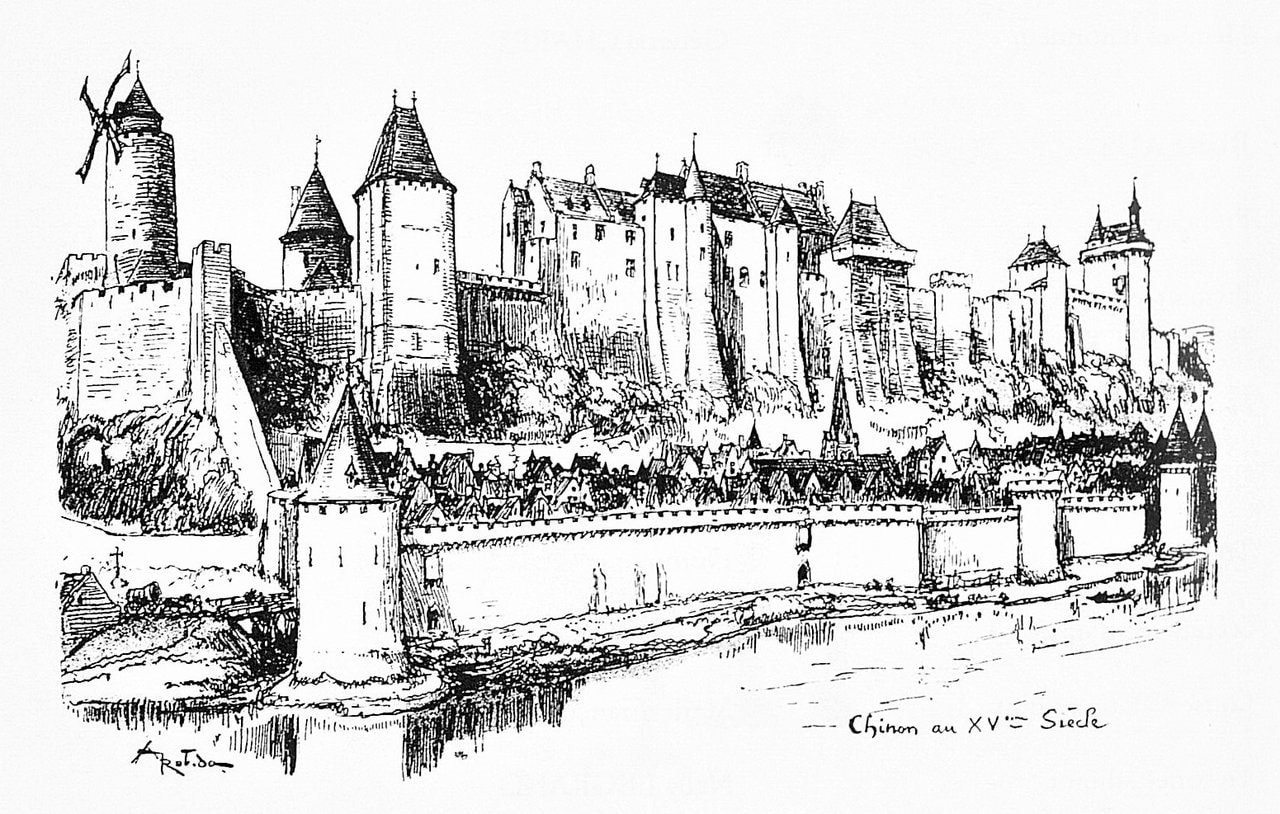
The tallest of them, the Tour de l’Horloge, doubles as the gateway into the Château du Milieu. A tall, oddly flattened gate-tower whose lower stages go back to about 1200 and whose upper levels were raised in the fourteenth century, it still carries one of the oldest bells in the Touraine, the Marie-Javelle, cast in 1399, in a lantern at its summit. Beneath the courts, cisterns and rock-cut passages once let the garrison hold out through a siege. End to end the complex runs to roughly four hundred meters, which makes Chinon one of the largest castle sites in the Loire and one of very few that stayed, in spirit, a true fortress rather than a palace.
From Blois to Anjou: The Making of a Stronghold
Long before any count put his name to it, the rock mattered. A Gallo-Roman town spread along the riverbank below, and on the height the late-Roman castrum gave way to a Merovingian and then a Carolingian stronghold. For part of the tenth century, with Viking raiders pressing up the river valleys, the royal mint of Tours was moved to Chinon for safekeeping. A comital castle, a lord’s hall and a tower behind their own wall, took shape at the eastern end of what is now the Château du Milieu, with a working bailey of granaries and workshops to the west.
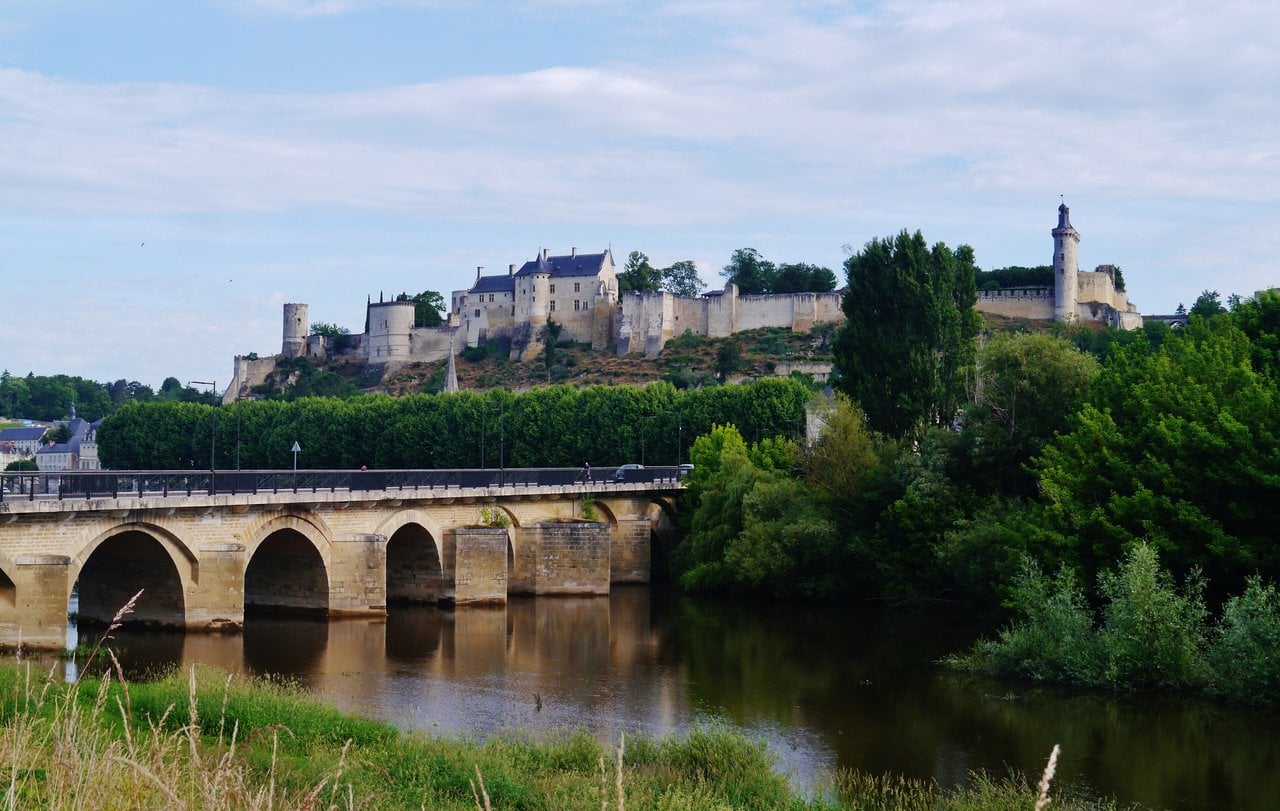
Named lordship begins with the Counts of Blois. Theobald I, called “the Trickster,” raised a stone tower here in 954 and ringed it with its own enclosure, work concentrated on the eastern point, in the angle of the old Roman enceinte. For a century the rock was a prize fought over between the rival houses of Blois and Anjou.
Anjou won. In 1044 the Angevin counts seized the Touraine, and Chinon passed to Geoffrey Martel. His successor Fulk IV likely completed the enlarged enceinte around the turn of the twelfth century, levying taxes for the purpose between 1087 and 1105. By the time Fulk died in 1109, Anjou had become one of the great powers of western France, pressed between the king of France, the duke of Aquitaine, and the duke of Normandy. Fulk’s grandson, Geoffrey the Fair, took the nickname Plantagenet that his line would carry all the way to the throne of England. From this spur the Angevin supremacy spread, and it would hold until 1205.
The Plantagenet Citadel and the Death of Henry II
Geoffrey’s son became Henry II of England in 1154, two years after his marriage to Eleanor of Aquitaine joined her vast duchy to his Angevin and Norman lands. The result was a sprawling cross-Channel dominion that historians later named the Angevin Empire, and Chinon sat close to its center of gravity. Henry favored the fortress, strengthened it, and held court here amid one of the most cultured circles in twelfth-century Europe. His most ambitious work was the Fort Saint-Georges and a palace within it, a structure unknown to historians until excavations between 2003 and 2010 uncovered its footprint, now preserved beneath a garden. Palaces of this date rarely survive in any form, which makes the discovery a significant one.
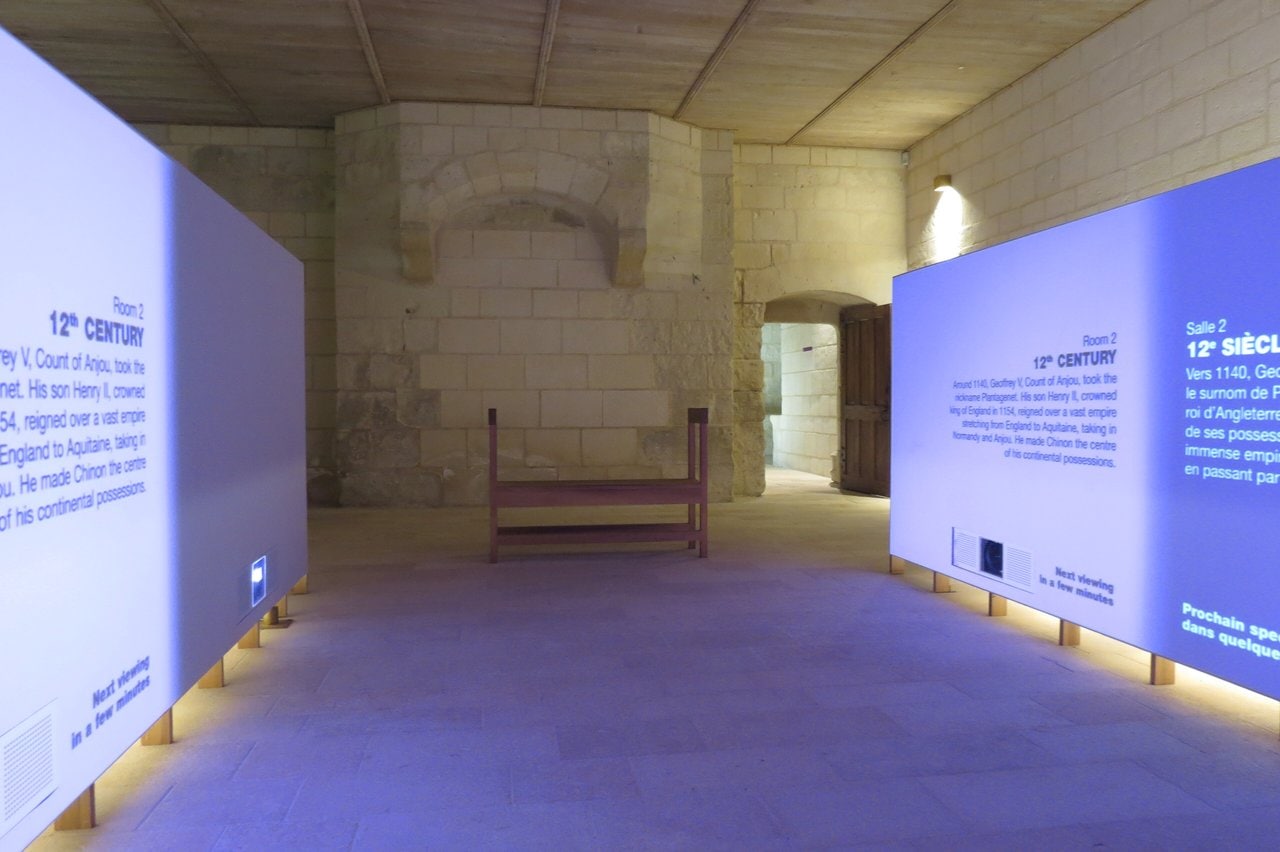
Henry’s reign ended at Chinon, and it ended badly. Ground down by the revolt of his own sons, abandoned and ill, fleeing both the advance of the French king Philip II Augustus and the rebellion of his heir Richard, the old king died inside the fortress on July 6, 1189. By one chronicler’s account his attendants stripped the corpse and left it almost unattended before it was carried the short distance to Fontevraud Abbey, where his painted tomb effigy still rests beside Eleanor’s. The brilliant Plantagenet court that had gathered on this ridge in his lifetime never found its footing here again.
1205: Philippe Auguste Takes the Impregnable Fortress
The reckoning came under Henry’s youngest son, John, who took the English crown after Richard’s death in 1199. John grasped Chinon’s importance and prepared it for war, and the lower stages of the Tour de l’Horloge, the tall gate-tower of the Château du Milieu, are usually dated to his reign, around 1200. Even so, it was not enough. Philip Augustus, exploiting a feudal quarrel, marched against John’s continental lands in 1204 and laid his armies before the fortress.
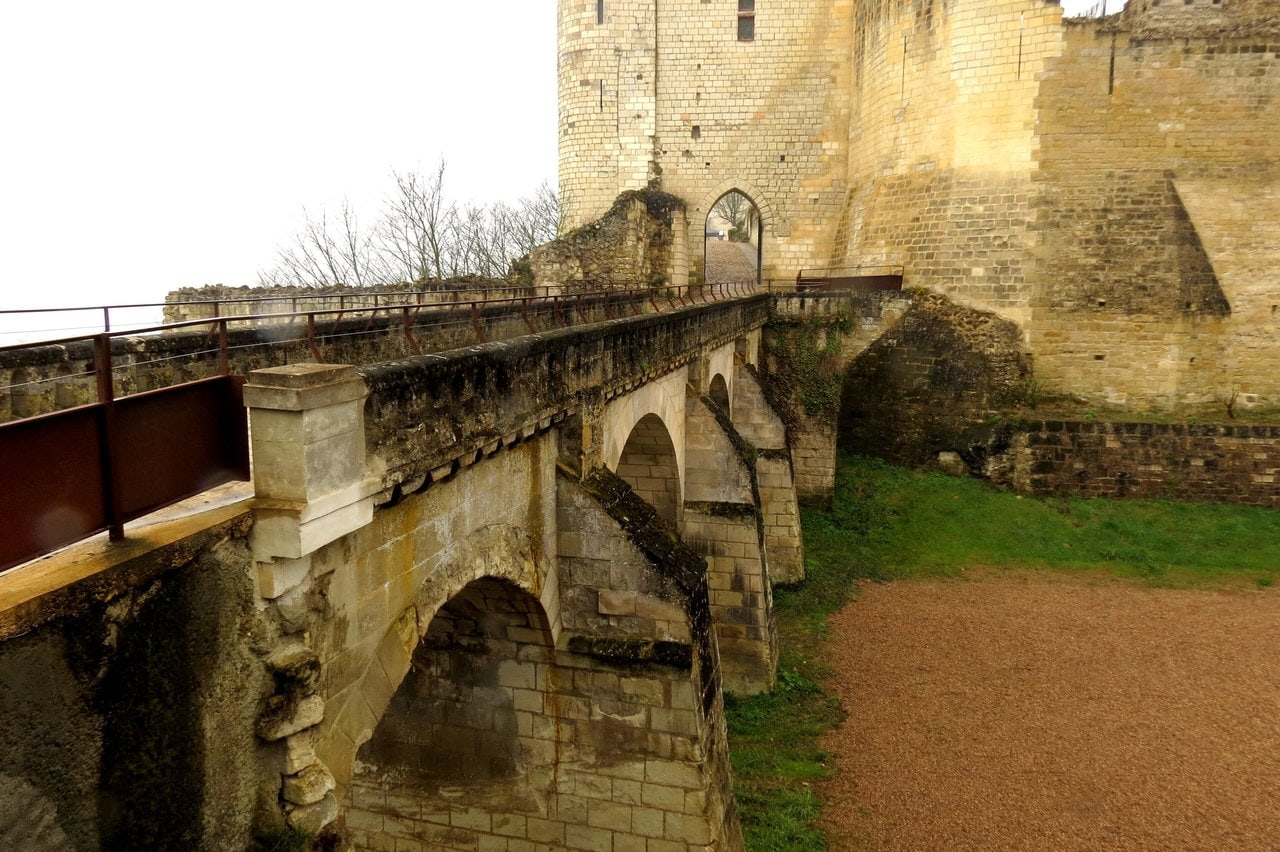
Chinon held for months before it broke. On June 23, 1205, the supposedly impregnable rock fell to the French crown, and the loss reshaped European politics: with Chinon and Normandy gone, the Angevin “empire” on the Continent effectively collapsed, and the kings of France absorbed the heart of the Plantagenet inheritance. Philip moved at once to make the place unmistakably his. He raised the powerful Coudray donjon that still dominates the western point, and stiffened the ramparts with new circular flanking towers pierced for archers on three levels. A royal French fortress now, Chinon would shelter the crown again within the century, and house one of its most notorious prisoners.
The Templars in the Coudray Tower
In 1307 King Philip IV, the Fair, moved against the Knights Templar, the wealthy military order to which he was heavily in debt, arresting its members across France on charges of heresy. The following summer five of the order’s highest officers, the Grand Master Jacques de Molay among them, were held at Chinon rather than sent straight on to the pope at Poitiers. Their prison was the Coudray Tower, where they sat from June to August 1308.
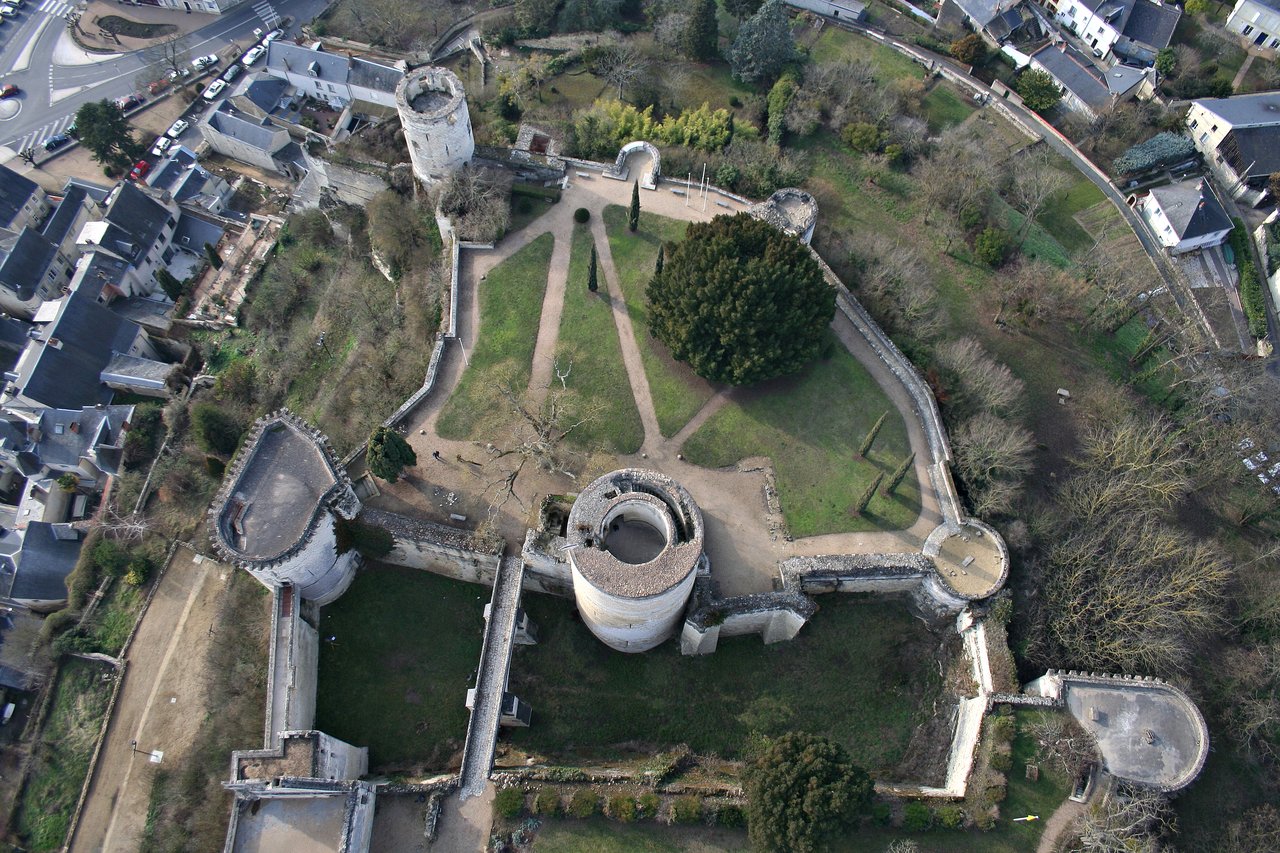
Their most concrete trace is documentary. Between August 17 and 20, 1308, three cardinals sent by Pope Clement V came to the fortress and heard the prisoners. The record they made, the Chinon Parchment, lay misfiled in the Vatican archives until a historian rediscovered it in 2001; it shows that the commissioners, hearing the leaders recant confessions extracted under torture, absolved de Molay and the order’s leadership of the charge of heresy. That absolution changed nothing on the ground. The order was suppressed in 1312, and de Molay was burned in Paris in 1314.
A second trace is more romantic and far less certain: the wall graffiti in the Coudray Tower, the crosses, shields, and stylized figures that visitors are shown today. Tradition attributes these carvings to the captive Templars, and the story is almost too good to question, yet the attribution is not securely documented, and several of the markings on display are reproductions standing in for fragile originals.
Joan of Arc and the Two Audiences of 1429
Chinon’s most famous hour belongs to Joan of Arc, and the popular version of it is largely legend. In the familiar telling, Joan strides into a crowded hall, picks the disguised dauphin out from among his courtiers, and reveals a divine sign that wins him to her cause in a single stroke. The fortress’s own historians are blunt that this scene compresses two separate meetings into one miracle.
Joan reached Chinon in late February 1429, with the Valois cause near collapse and Charles VII still uncrowned and unsure of himself. Her first audience came on February 25, two days after she arrived, a small and private reception in the king’s apartments, after which she was lodged, fittingly, in the same Coudray Tower that had held the Templars. Charles then sent her south to Poitiers so that his theologians and advisers could test her sincerity. Only on her return, in an audience held sometime between March 27 and April 5, did the encounter take on the public, ceremonial weight that legend later assigned to the first meeting. From Chinon she rode on to break the English siege of Orléans and to see Charles crowned king at Reims, the turning point of the Hundred Years’ War.
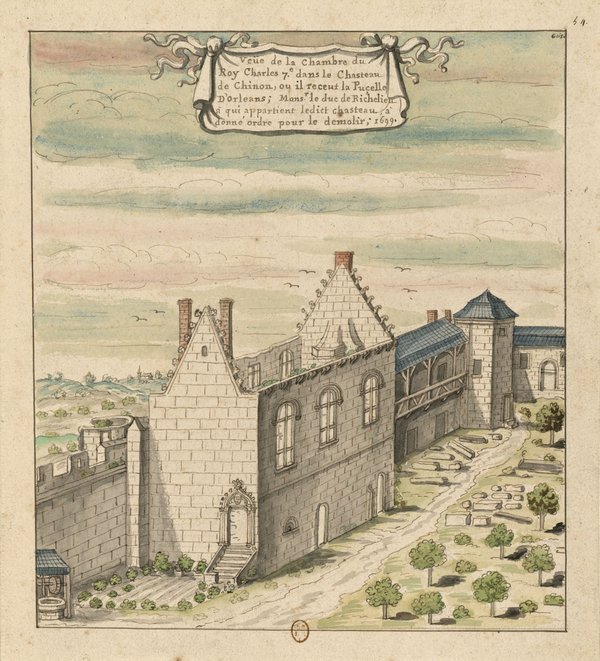
That Chinon is remembered for a scene which may never have unfolded quite as told says something about the grip of the story. The recognition became a fixture of French national memory, painted and repainted through the nineteenth century, and the fortress leans into it now with a museum of images of the Maid in the restored royal lodgings. The hall where the drama is traditionally set survives today only as a ruin, a fragment of wall and a great fireplace standing open to the sky in the Château du Milieu. After the fifteenth century the court drifted toward more comfortable houses, and the fortress began the long slide that nearly destroyed it.
Ruin, Rescue, and Restoration
By the seventeenth century Chinon had lost its strategic purpose, and inventories of the period describe a site sliding into decay. Its grounds were laid out as a public promenade in 1824, danger and all. Classified as a Monument Historique in 1840, the ruins were nonetheless judged so unsafe that in 1854 the town petitioned to have them pulled down. Prosper Mérimée, the writer and inspector-general of historic monuments, intervened decisively to save the site and set its restoration in motion, and the Département d’Indre-et-Loire, which acquired the fortress, remains its owner today.
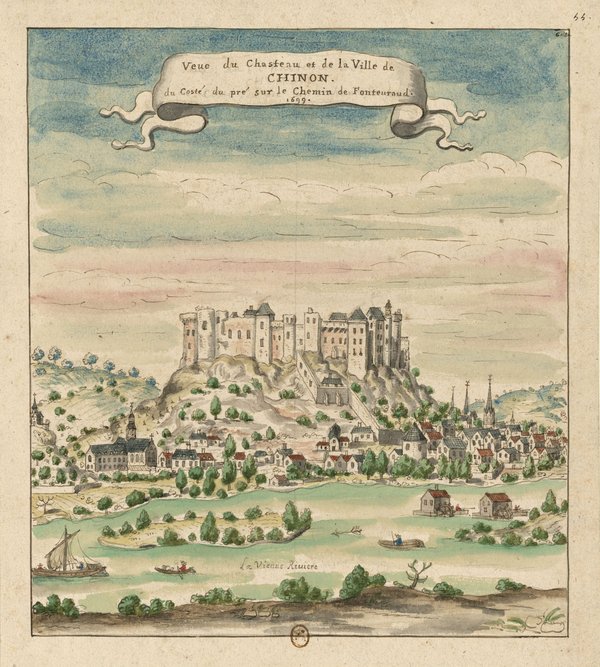
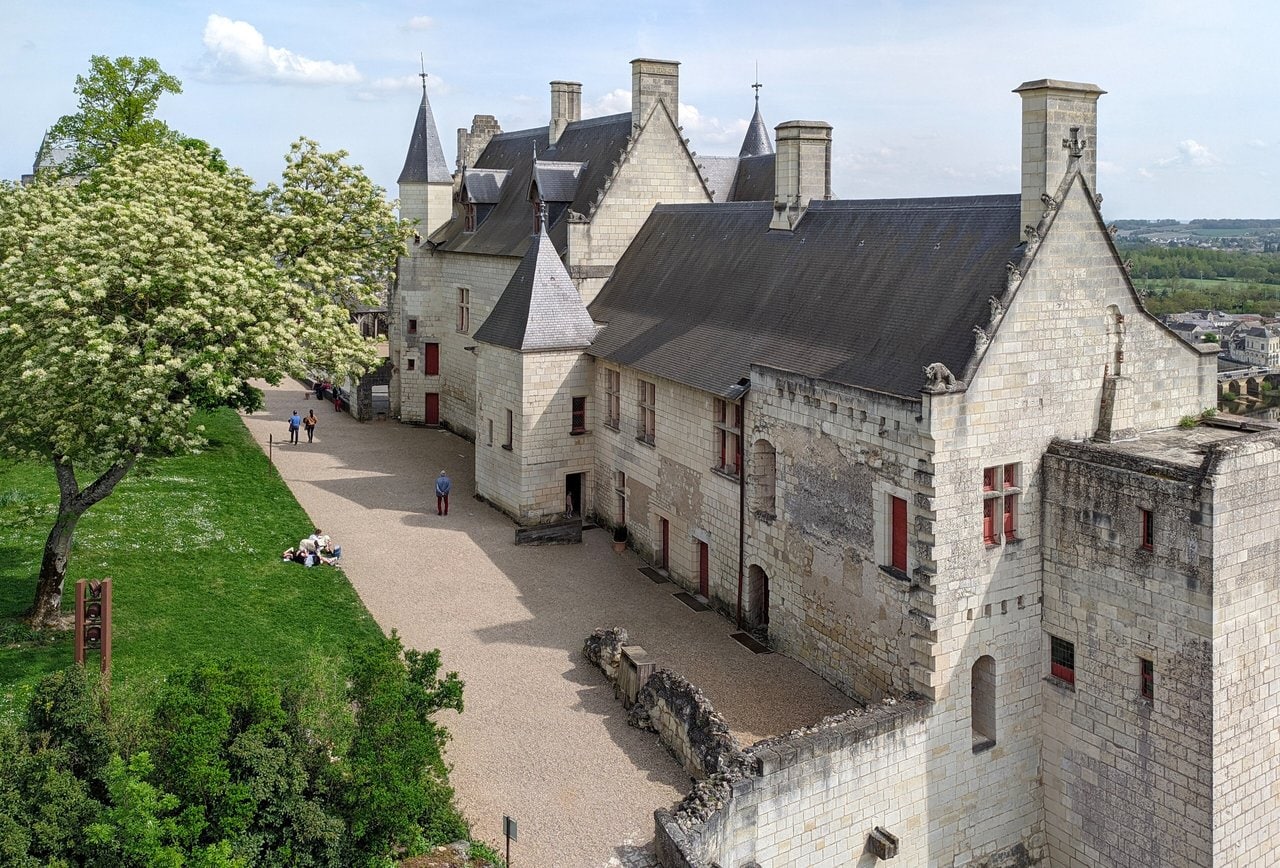
The most thorough campaign in the castle’s modern life ran from the early 2000s to 2010. Archaeologists excavated the spur as never before and rewrote parts of its story, while builders restored the ramparts and the south wing of the Logis Royaux and raised a new building for the ticket office and shop. The monument that emerged wears its repairs honestly: original lower walls beneath modern roofs and floors, exhibitions inside the rebuilt halls, and an interpretation that leans on digital reconstruction rather than fake medievalism.
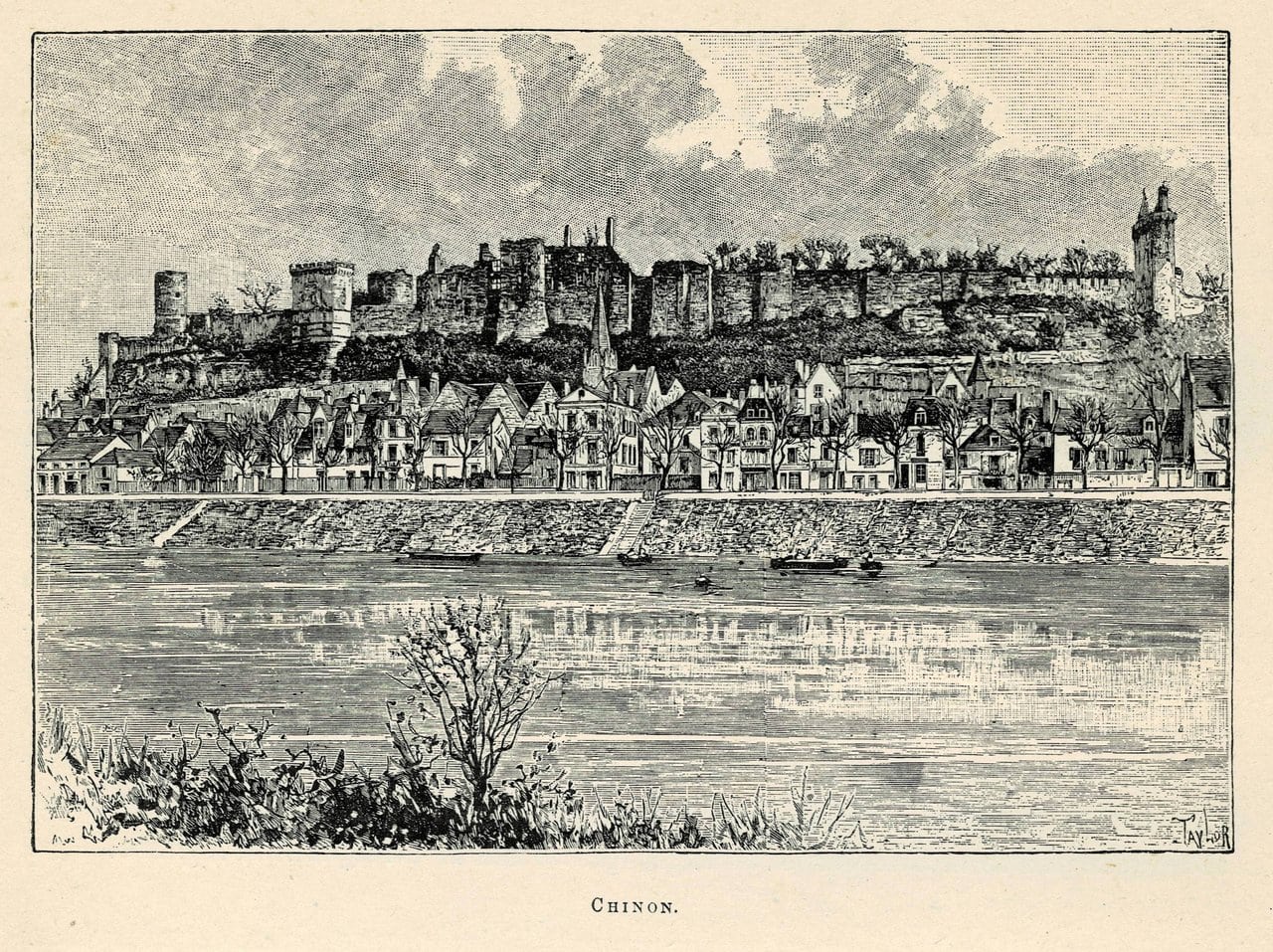
Visiting the Château de Chinon
Chinon stands directly above the old town, and the climb is part of the experience, though a free panoramic lift near the town’s media library spares those who would rather not walk up. Inside the eastern Fort Saint-Georges you will find the ticket office and shop; from there the route passes under the Tour de l’Horloge into the Château du Milieu and out to the Fort du Coudray at the point. Allow about two hours, much of it outdoors on uneven stone, and wear shoes you can walk in.
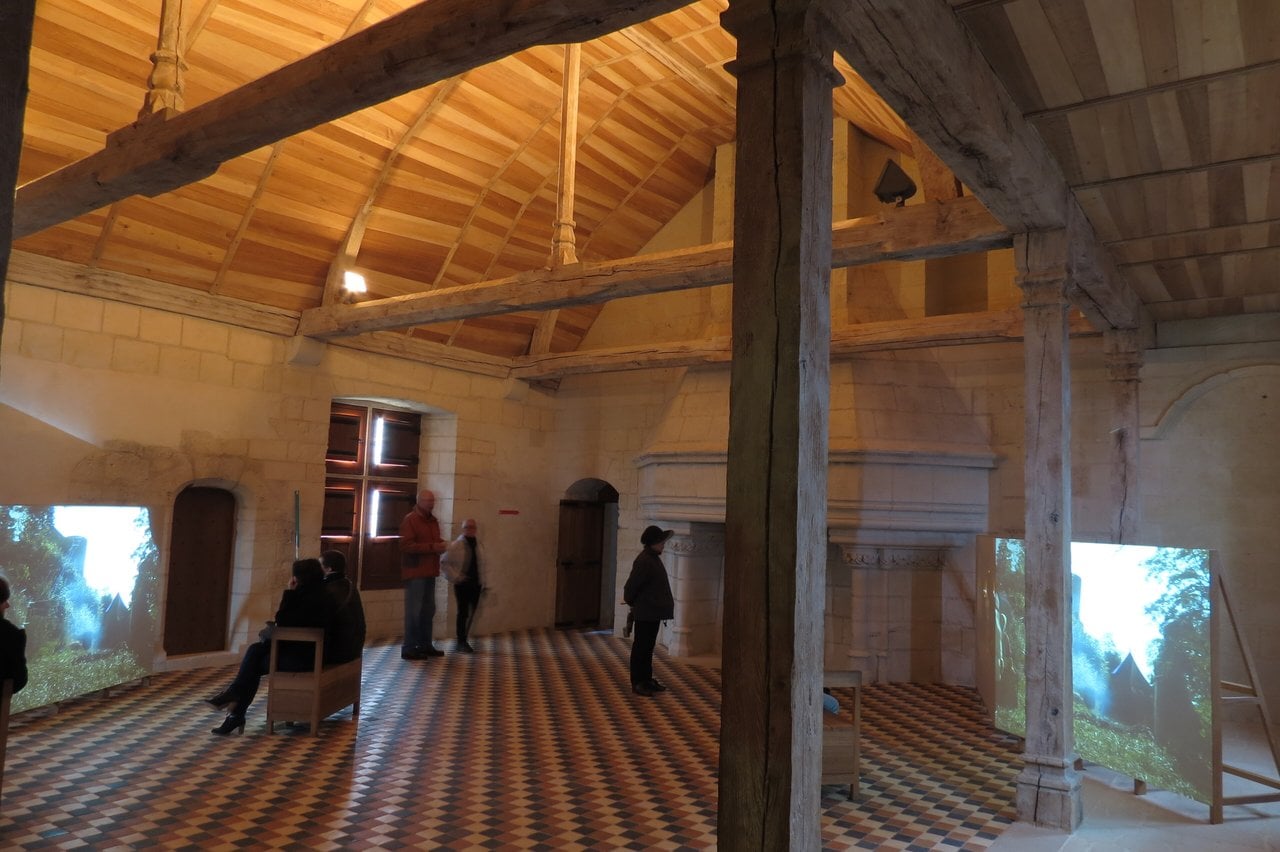
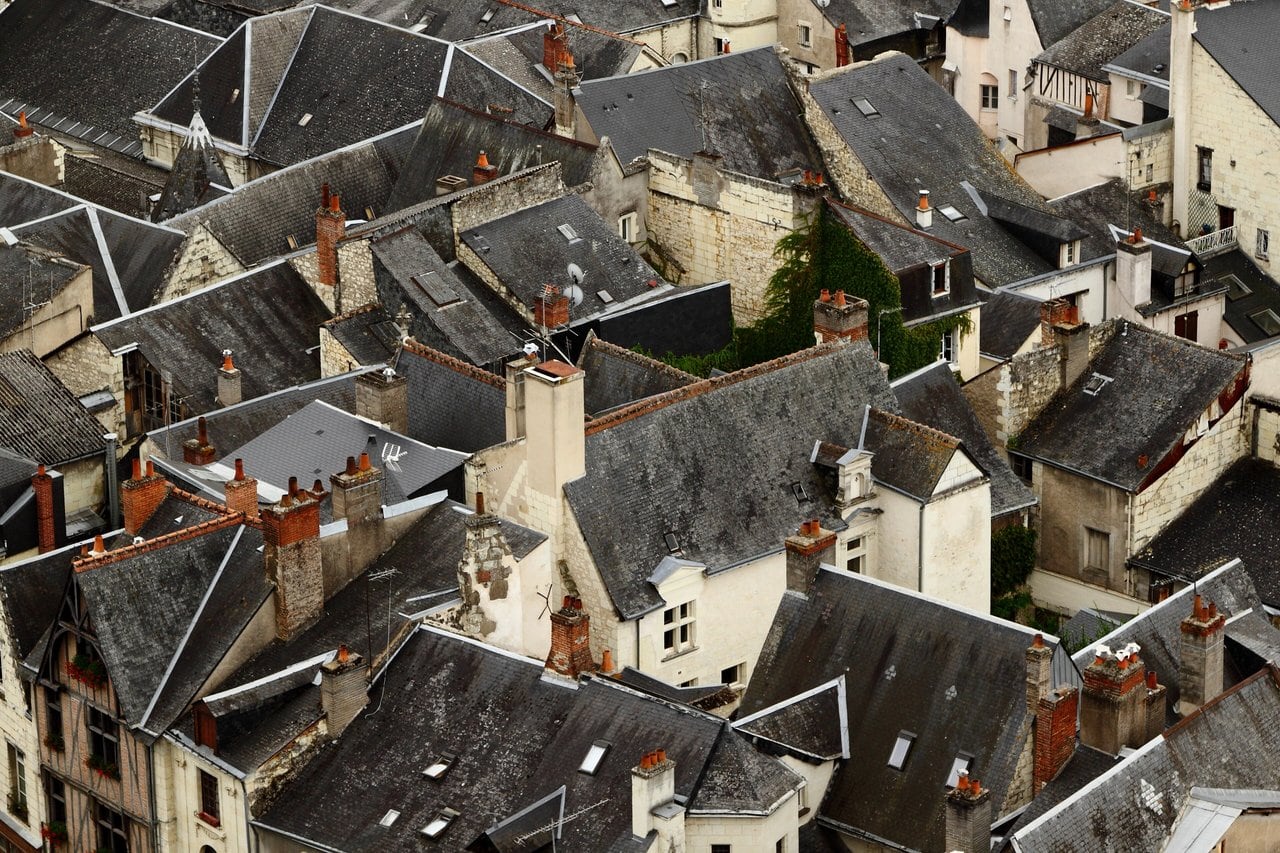
The restored Logis Royaux carry the main exhibitions, with scale models, archaeological finds, and the Joan of Arc collections. A standard visit includes the HistoPad, a tablet that rebuilds vanished rooms in augmented reality as you stand in them, and the site layers on guided tours, children’s trails, and live-action escape games during school holidays. In the open ground between the walls stand one-third-scale replicas of a trebuchet and a smaller bricole, the swing-arm engines that once hurled stones at walls like these. Best of all are the rampart walks, which open a long sweep over the slate roofs of Chinon, the Vienne, and the vineyards that produce the town’s well-known Cabernet Franc. Reaching Chinon is easy enough: it lies under an hour by car or train west of Tours, which in turn sits a little over an hour from Paris by TGV.
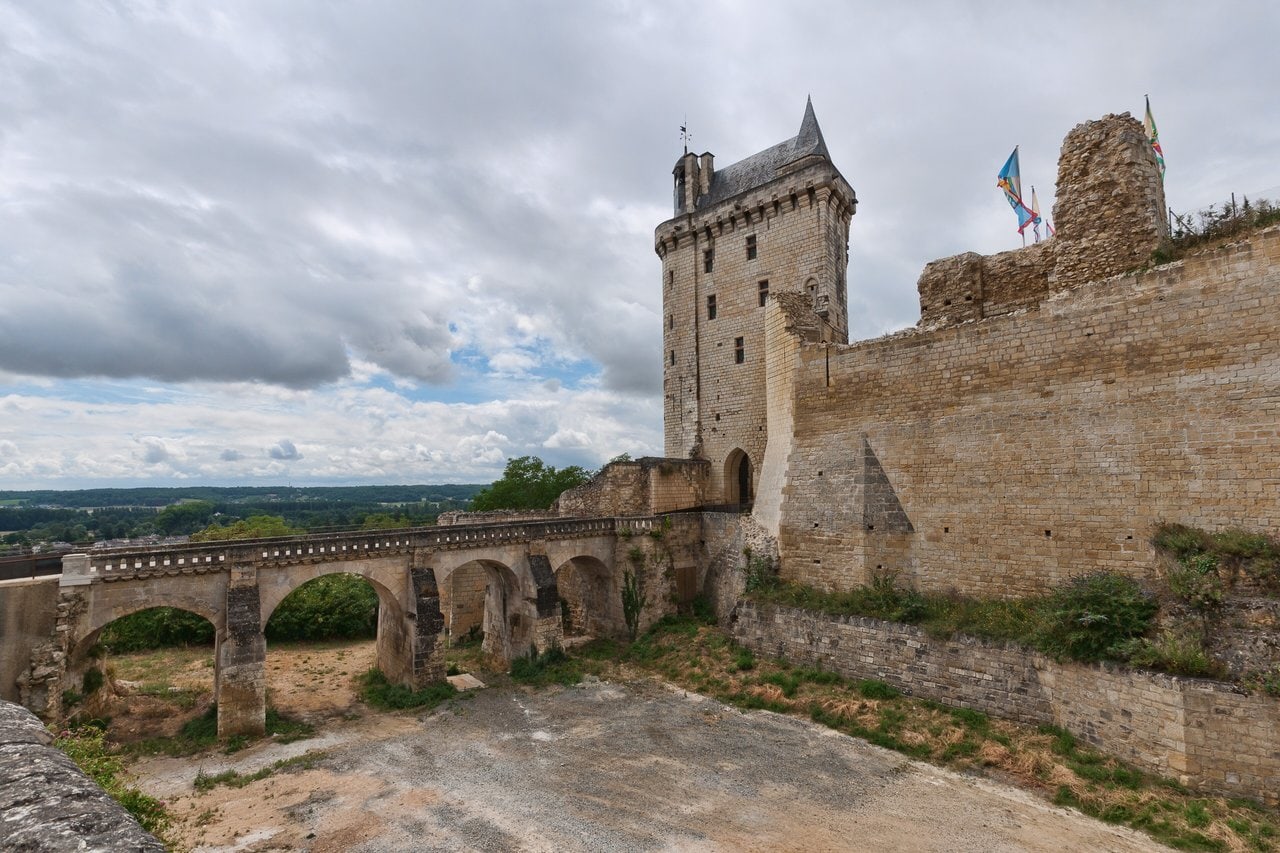
The Château de Chinon opens every day of the year except January 1 and December 25. Hours run 10:00 to 17:00 in January, February, November, and December; 9:30 to 18:00 from March through June and again in September and October; and 9:30 to 19:00 in July and August, with the ticket office closing thirty minutes before the site. Standard adult admission is around 12.50 euros, with reduced rates near 10.50 euros for those aged seven to eighteen, students, visitors with disabilities and a companion, and large families; children under seven enter free, though a ticket is still needed.
To plan a stay near the fortress, you can compare hotels and guesthouses in Chinon. To book ahead, you can also browse guided tours and tickets around Chinon before you arrive.
Some links on this page are affiliate links, which means StoneKeep Atlas may earn a small commission, at no extra cost to you, if you book through them.
More Views of Chinon
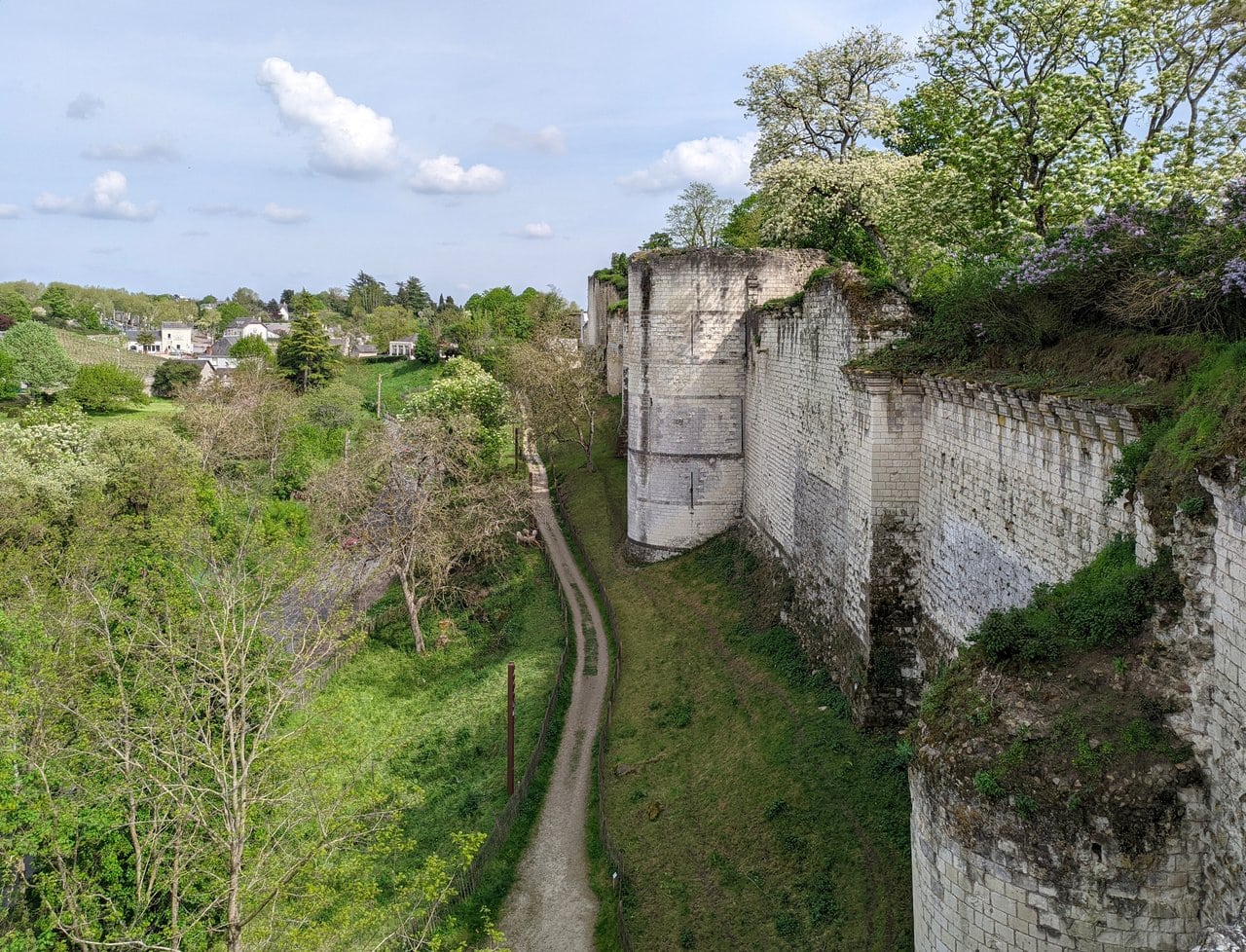
A closer look at the fortress and its setting above the Vienne, from the ramparts and towers to the river crossing below.
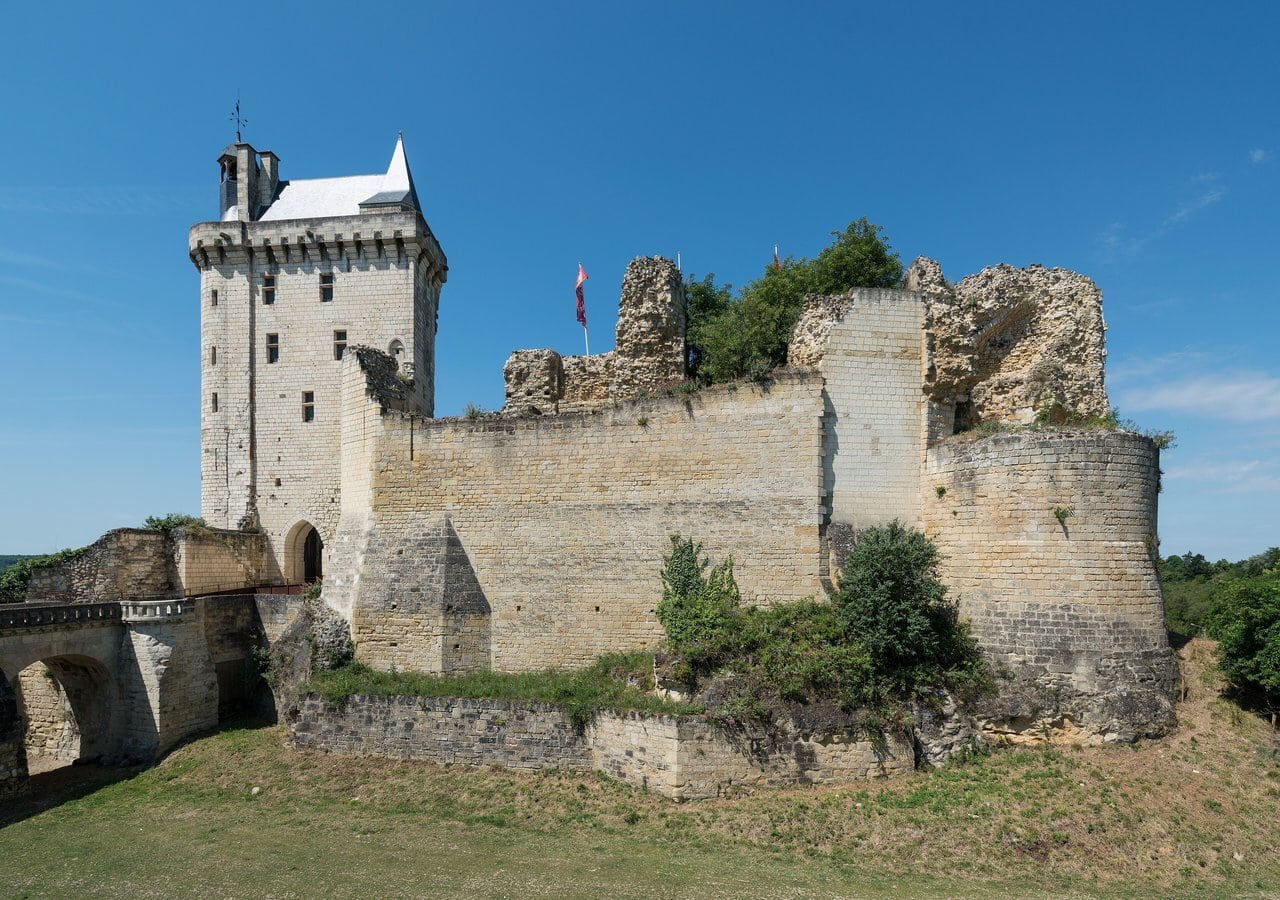
Beyond the Château de Chinon
Chinon rewards a traveler who wants the Loire’s harder, older story rather than its Renaissance finery, and the contrast is exactly the point. Most of the great houses upstream were built for show, often on the bones of earlier strongholds; this fortress never made that transition, and its rough, half-ruined walls feel closer to the medieval reality that the painted châteaux smoothed away. Among the châteaux of the Loire Valley it is the one that stayed a fortress. For the same medieval, military story at the western edge of Anjou, its companion is the Château d’Angers, the Capetian fortress on the Maine that guards the Apocalypse Tapestry. Closer to hand, Château d’Ussé stands a short drive north on the Indre, the white château that Jean V de Bueil’s family raised as they turned a stronghold into a residence. Downstream toward Angers, the ducal Château de Saumur keeps its own white silhouette above the Loire, the castle of the Très Riches Heures. Not far to the west, the Château de Brézé carries the same defensive instinct underground, into a troglodyte fortress ringed by the deepest dry moat in France. Upstream in the Touraine, the Château de Langeais holds the fifteenth-century royal fortress where Anne of Brittany was married to Charles VIII. In the same Touraine, the Château de Loches guards Fulk Nerra’s colossal keep and the Logis Royal where Joan of Arc, fresh from Chinon, pressed Charles VII on toward his coronation at Reims. The duchy that pressed on Anjou from the north has its own roster here: our regional guide to the castles in Normandy.
The threads are easy to follow on the ground. A short drive away, Fontevraud Abbey holds the tombs of Henry II and Eleanor of Aquitaine, the natural next stop for anyone moved by the Plantagenet story. Eastward, the royal Château d’Amboise carries the Valois line forward from Charles VII to the kings who later made the Loire their pleasure-ground. Chinon’s own town, with its half-timbered streets and the nearby birthplace of the writer Rabelais, deserves an unhurried hour once you come down from the rock.
Chinon is covered by one of our documentaries, which you will find among our filmed guides.
Conclusion
More than a single monument, the Château de Chinon is a record of who held power in this corner of France, written in stone across a thousand years. Counts of Blois and Anjou, an English king who died here, a French king who took it and broke an empire, a Grand Master awaiting his trial, and a young woman who set a wavering dauphin on the road to his crown: each of them left a mark on the spur, and the fortress kept them all. Stripped of its roofs and its court, Chinon ended up telling a plainer and in some ways a truer story than its glamorous neighbors, the story of the Loire in the centuries when the river was a frontier and a castle was still meant to be held.
Where to stay nearby: the 15th-century Château de Marçay, now a hotel, stands about ten minutes south of Chinon. See it in our guide to Castle Hotels in the Loire Valley.
Principal Sources
- Forteresse Royale de Chinon (Département d’Indre-et-Loire). “Discover the fortress: its history, its architecture, its collections.” forteressechinon.fr.
- Ministère de la Culture. “Château (notice PA00097661).” Base Mérimée, pop.culture.gouv.fr.
- Mission Val de Loire. “The Loire Valley, a World Heritage Site.” valdeloire.org.
- UNESCO World Heritage Centre. “The Loire Valley between Sully-sur-Loire and Chalonnes (ref. 933).” whc.unesco.org.
Visitor information, opening hours, and admission prices are drawn from the official Forteresse Royale de Chinon website and were correct at the time of writing; confirm current details before traveling.
Image credits. Hero panorama and the view of the river bridge: Benjamin Smith, CC BY-SA 4.0. River view above the Vienne: Adobe Stock (licensed). Plan of the three castles: Agnès Dahan; derivative work Nev1, FAL. Aerial view from the south: Carsten Steger, CC BY-SA 4.0. The view of the bridge and ridge and a view along the ramparts: Zairon, CC BY-SA 4.0. The twelfth-century history room, the bridge over the dry moat, and the restored royal interior: xorge, CC BY-SA 2.0. The royal lodgings and the curtain walls: JackyM59, CC BY-SA 4.0. Aerial view of the Fort du Coudray: Mercutio37, CC BY-SA 3.0. The Tour de l’Horloge: Jean-Christophe Benoist, CC BY 3.0. View from the east: DXR, CC BY-SA 4.0. View from the Vienne: Franck Badaire, CC BY-SA 3.0. Elevated view over the ramparts: Martin Falbisoner, CC BY-SA 3.0. The fifteenth-century reconstruction: Albert Robida, public domain. The 1699 drawings of the king’s chamber and of the château and town: Louis Boudan, public domain. The 1893 engraving of the ruins: La France pittoresque (1893), public domain. Freely licensed images are resized to fit; otherwise unaltered.