
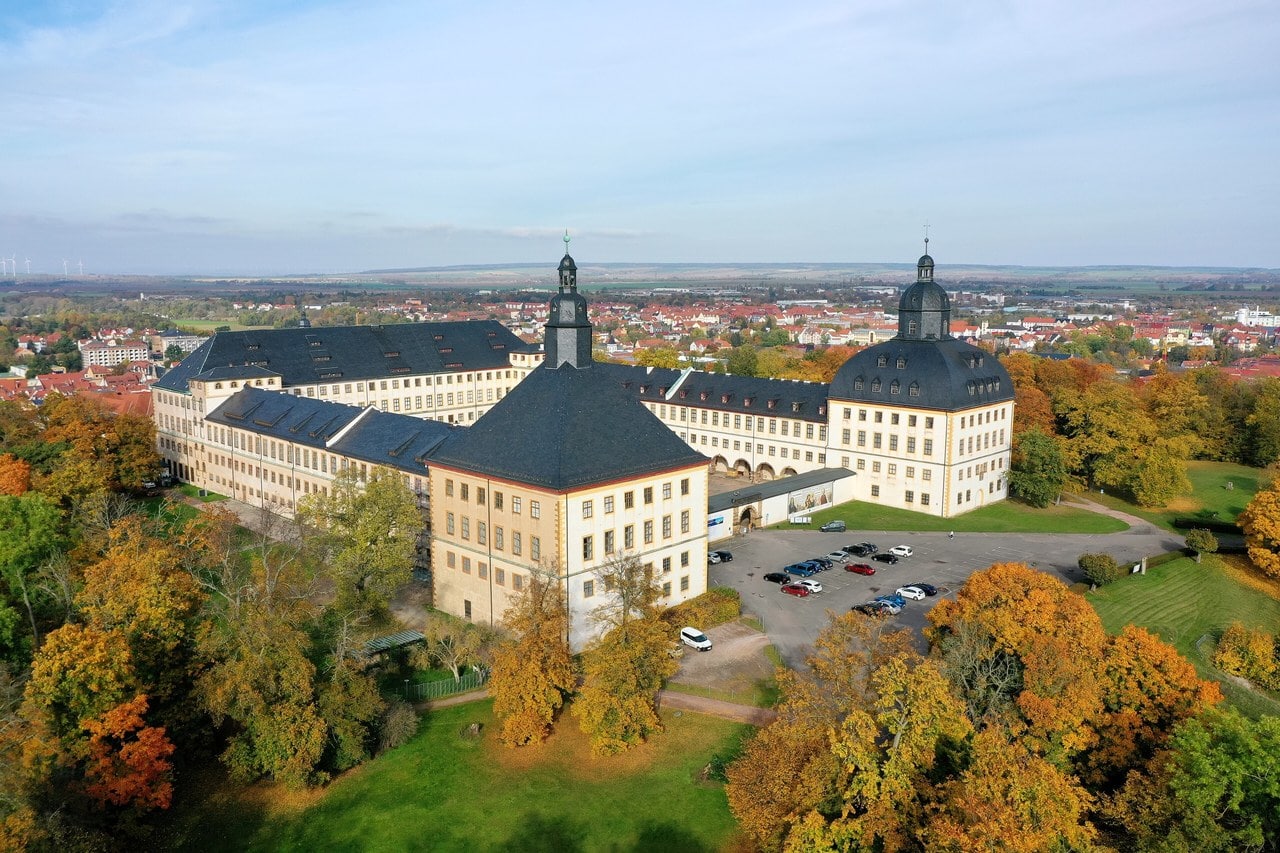
Friedenstein Palace
On a low hill above the Thuringian town of Gotha stands Friedenstein Palace, a vast pale block of stone that announces its purpose in its name. Friedenstein Palace, the “rock of peace,” was raised from 1643 by Duke Ernst I of Saxe-Gotha while the Thirty Years’ War still burned across Germany, and it remains one of the largest early-Baroque palace complexes the country ever built. Unlike most German residences of its age, it was never stormed, never burned, never reduced to a romantic ruin. Its rooms, its court chapel, and the founding collections of its dukes survive in place, layer upon layer, from the seventeenth century to the nineteenth.
That continuity is the key to Friedenstein. This is not a castle of sieges but a palace of government, learning, and display, built by a duke remembered as “the Pious” to be the engine of a model Lutheran state. Within its walls sit a working Baroque theater, a celebrated art collection, a dynasty that married into the British crown, and the memory of the most spectacular art heist in East German history.
Quick Facts
| Name | Friedenstein Palace (Schloss Friedenstein) |
| Location | Gotha, Thuringia, Germany |
| Built | From 1643; core complete by 1654, full complex c. 1656 |
| Builder | Duke Ernst I of Saxe-Gotha (“Ernst the Pious”) |
| Architect | Caspar Vogel (design); Andreas Rudolph (master builder) |
| Style | Early Baroque |
| Type | Palace (Schloss); four-wing complex |
| Built on | Site of the razed Grimmenstein fortress (demolished 1567) |
| Highlights | Ekhof-Theater; Herzogliches Museum; the Gothaer Liebespaar; Schlosskirche |
| Owner / operator | Stiftung Thüringer Schlösser und Gärten / Friedenstein Stiftung Gotha |
| Status | Never destroyed; museum complex (“Friedenstein Universum”) |
| Coordinates | 50.9458° N, 10.7044° E |
| Official site | stiftung-friedenstein.de |
A Rock of Peace: Ernst the Pious and the Founding
When the Duchy of Saxe-Gotha was carved out of the Ernestine lands in 1640, its new ruler inherited a territory scarred by two decades of war. Duke Ernst I (1601 to 1675) belonged to the House of Wettin, and he set about building a state almost from scratch. His answer to the ruin around him was to build, in the most literal sense. In 1643 he laid the foundation stone of a new residence on the Schlossberg, the hill where the fortress of Grimmenstein had stood until imperial troops razed it in 1567.
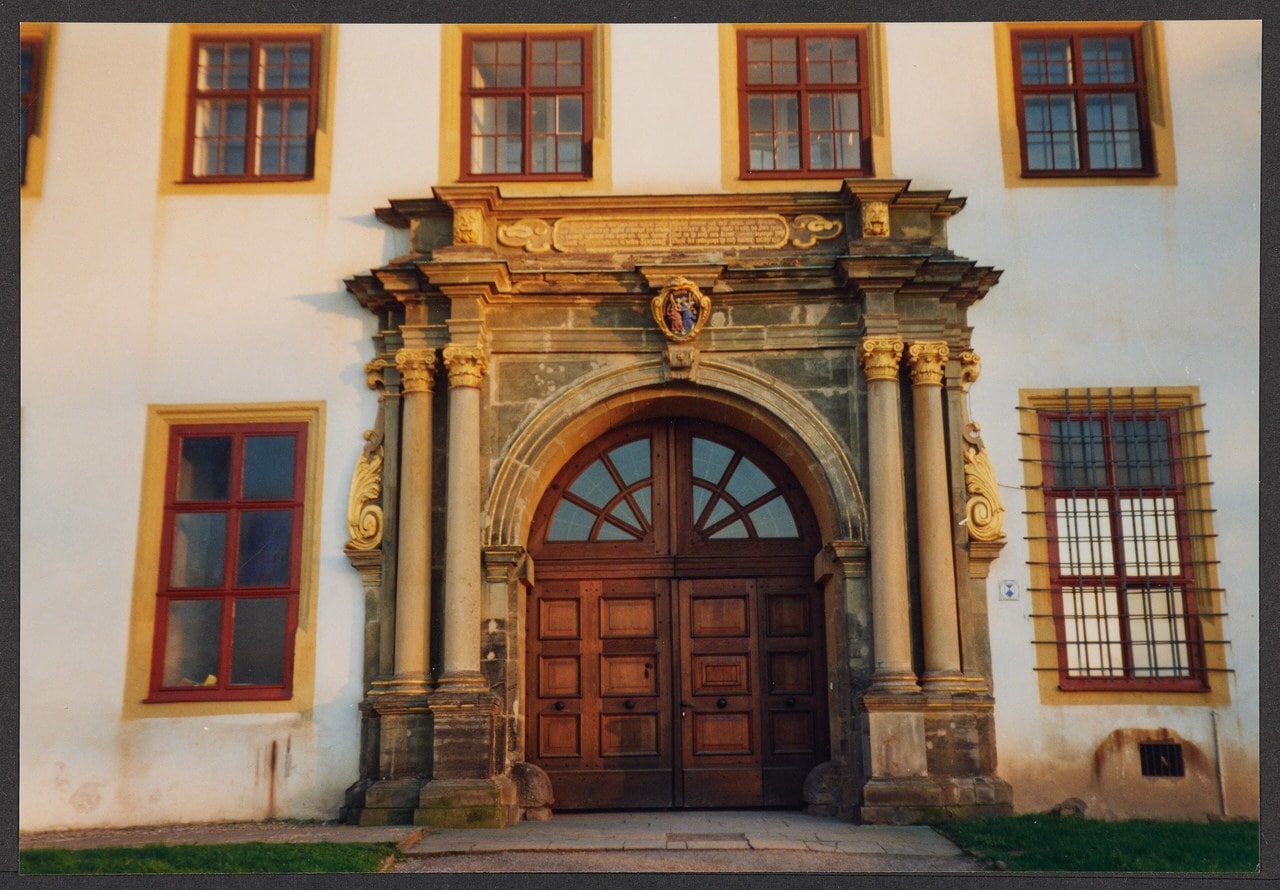
Ernst gave the building a name freighted with meaning. He called it Friedenstein, the stone of peace, a deliberate vow set in masonry while the war still raged. After the Peace of Westphalia ended the conflict in 1648, he had a carved keystone placed above the north portal in 1650, showing Pax and Justitia, Peace and Justice, embracing in a kiss. The motto around them reads Friede ernehret, Unfriede verzehret: peace nourishes, strife consumes. Visitors still pass beneath this Friedenskuss today.
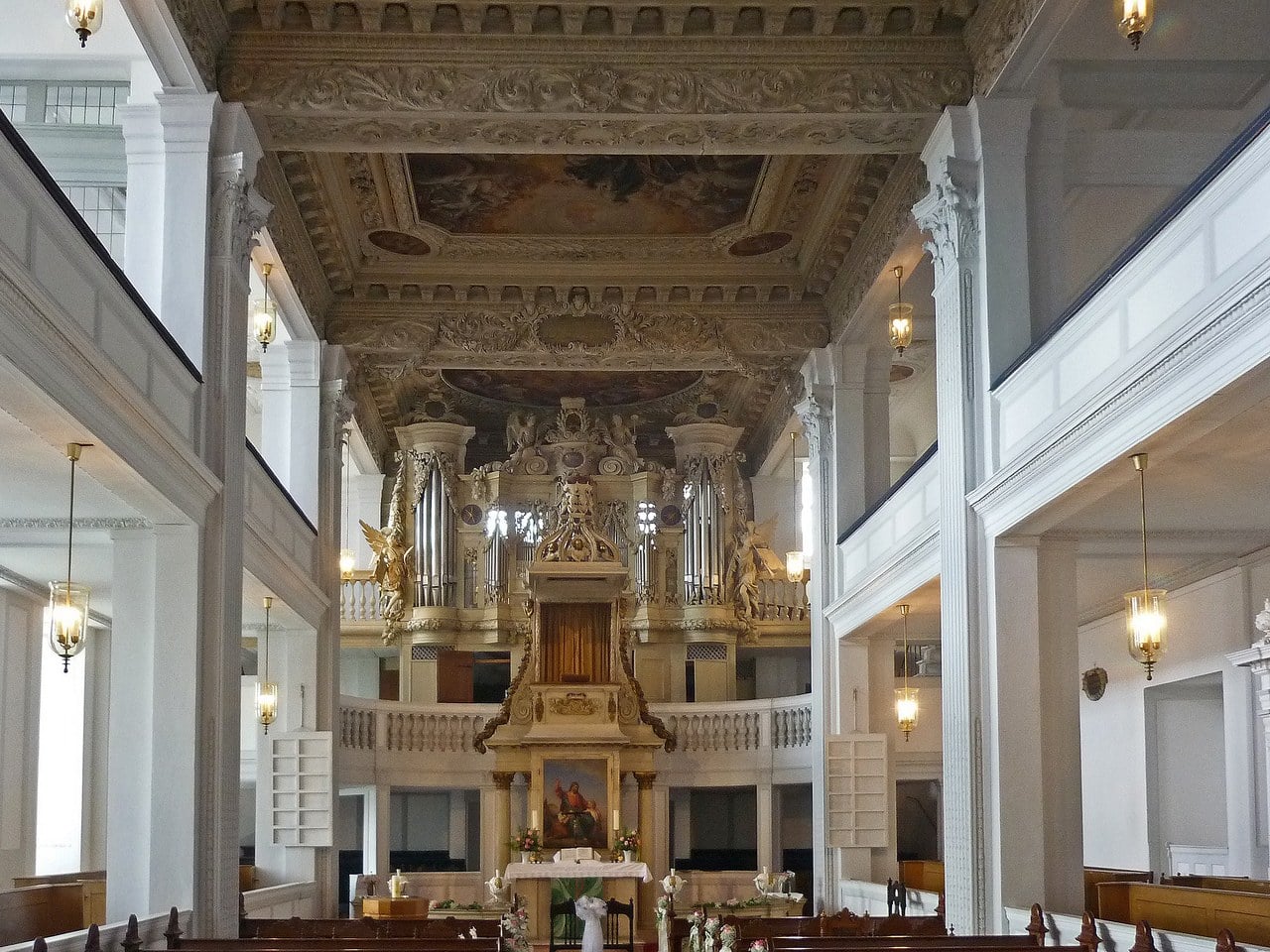
The duke earned his epithet honestly. Ernst the Pious governed his small duchy with a reforming zeal that became a byword across Germany. He overhauled its churches and schools, expanded poor relief, codified its laws, and regulated the conduct of his subjects down to their clothing. A treatise written for him on the well-ordered “princely state” turned Saxe-Gotha into a model that other rulers studied. His Lutheranism was not incidental to any of it. The same faith that had sheltered Martin Luther at the nearby Wartburg a century before now shaped a whole Reformation state, and its court chapel, consecrated in 1646 while builders still worked elsewhere on the site, sits at the heart of the main wing as a Lutheran sermon hall woven into the fabric of government.
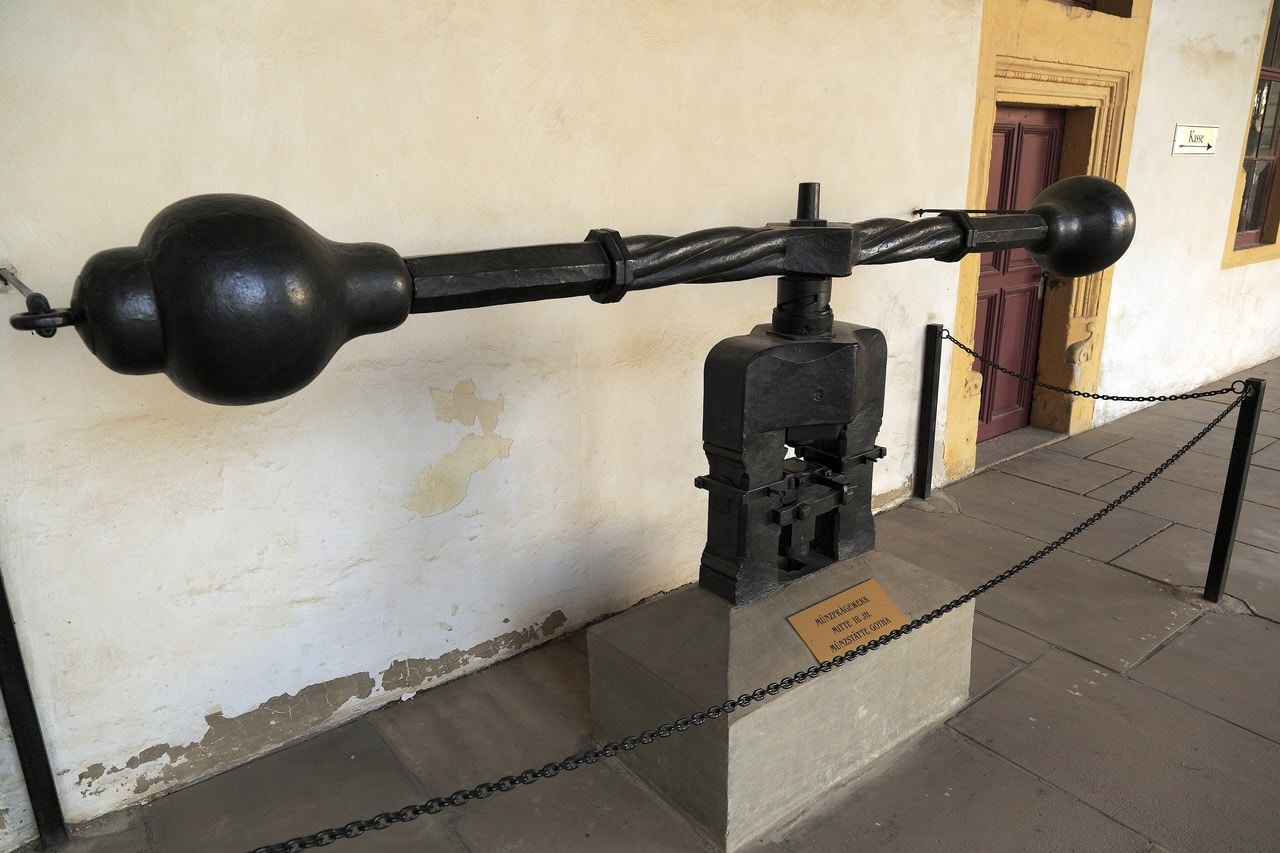
Friedenstein went up in stages. The ducal family moved into the north wing by 1646, the core stood complete around 1654, and the whole complex was largely finished by the mid-1650s, with fitting-out continuing for another decade. Caspar Vogel drew the plans; the master builder Andreas Rudolph carried them out. Ernst meant the palace to hold everything a sovereign state required, so under one enormous roof he gathered apartments and audience halls, the chapel, an armory, a mint, stables, and the ducal archives. The scale that resulted was not vanity. It was administration made visible.
The Largest Early-Baroque Palace in Germany
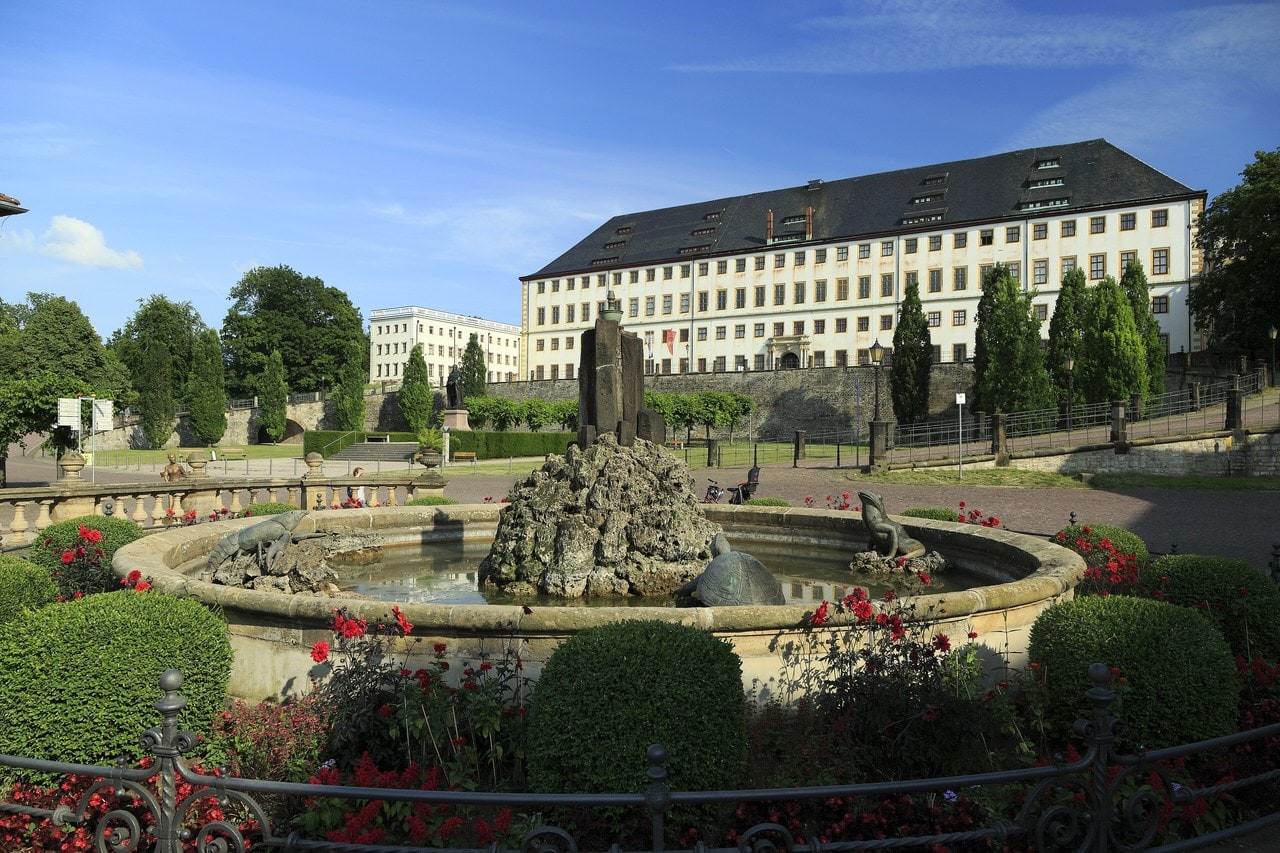
Seen from the town below, Friedenstein reads as a single immense facade, austere and almost military in its plainness. Behind that face sits a four-wing complex set around a courtyard, though the south side is closed only by a low wall, which is why some descriptions call it three-winged. Its tall four-story north wing, the corps de logis, faces the town and holds the ducal apartments and the court chapel. Two lower side wings of three stories run back from it, and a stout tower anchors each outer corner. The town front alone runs to roughly a hundred meters, with the side wings reaching back farther still, an envelope deliberately oversized so that a single building could shelter a court, a government, a chapel, and an arsenal at once.
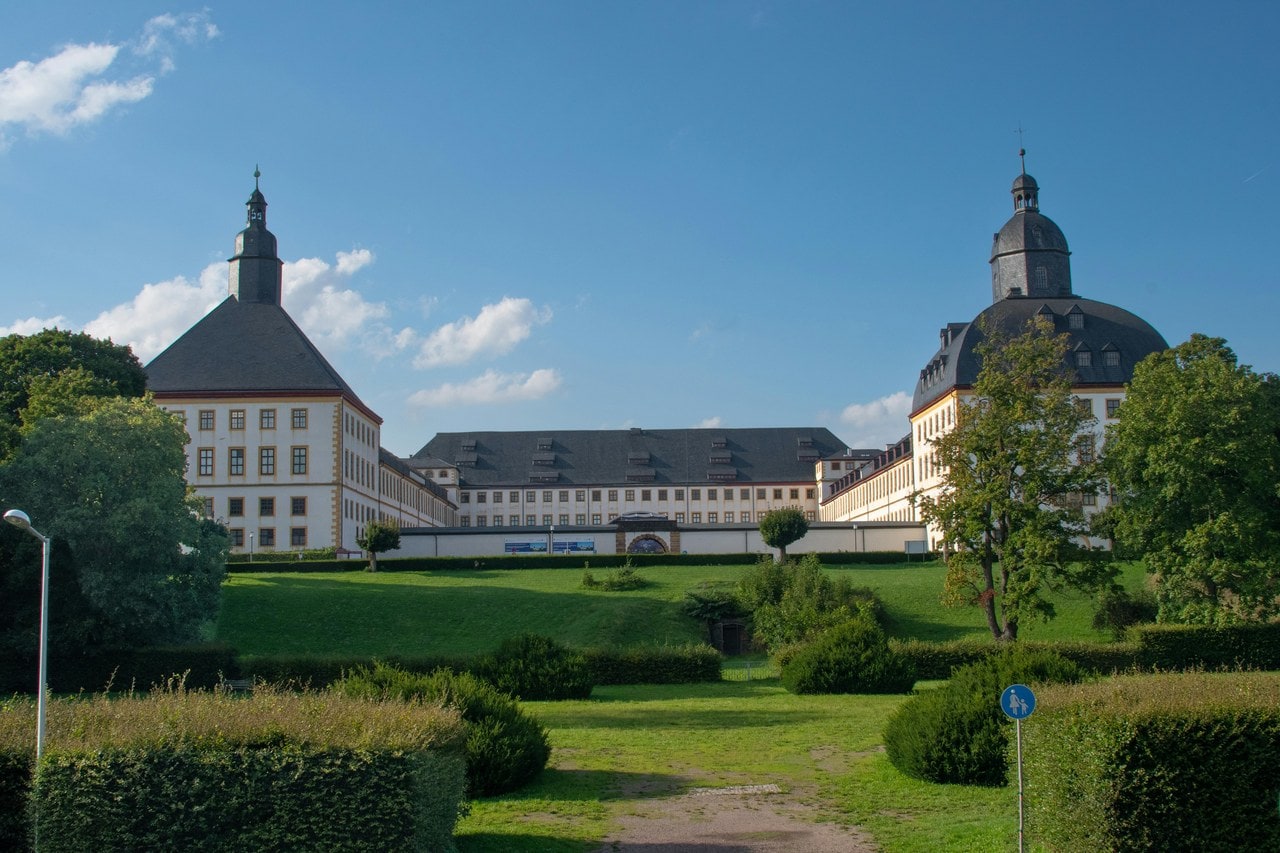
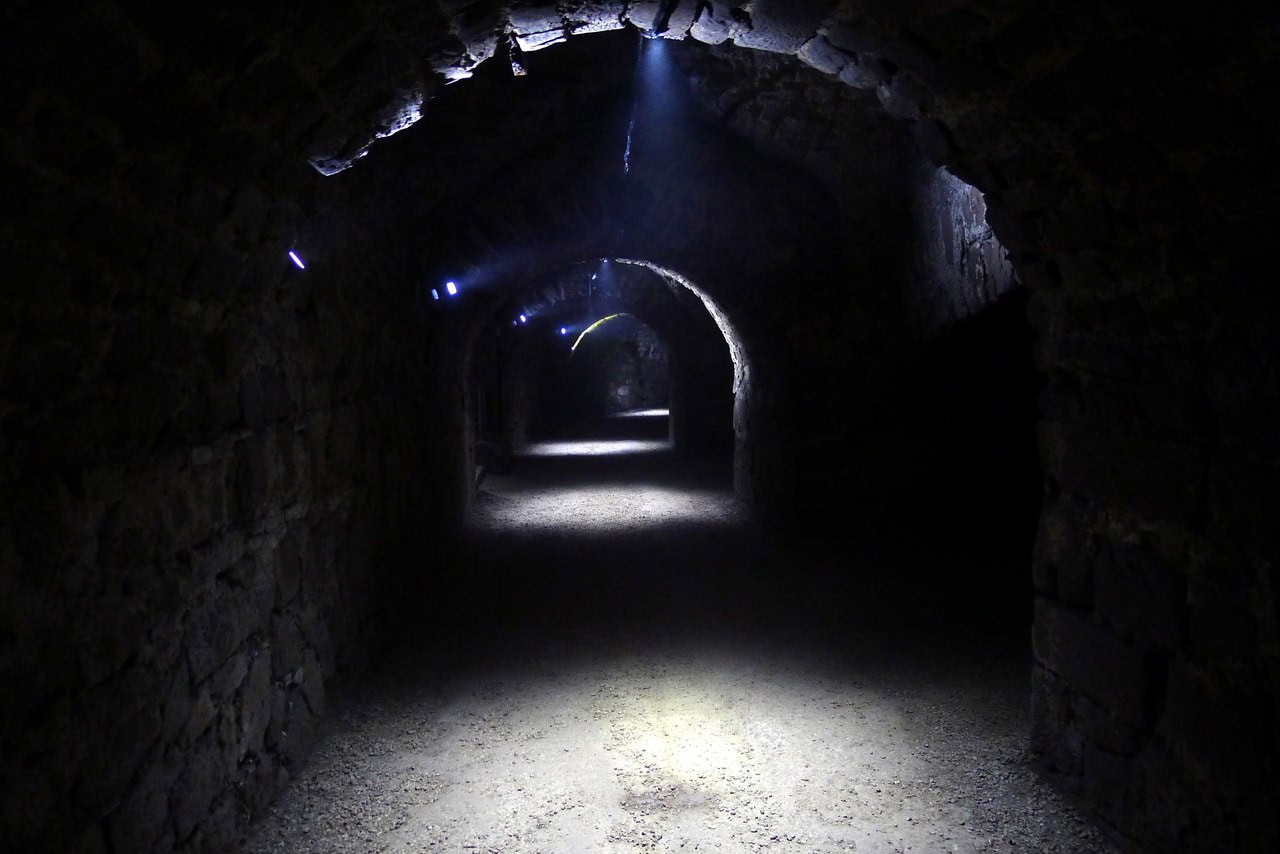
Those two towers carry much of the building’s character. The east tower and the west tower break the long horizontal of the roofline, and it is the west tower that hides the palace’s strangest treasure, a Baroque theater preserved almost intact. Around the residence Ernst and his successors raised Baroque fortifications between 1654 and 1672, ringing the palace of peace with bastions. Those defenses were later levelled to make room for gardens, though the casemates still run beneath the lawns.
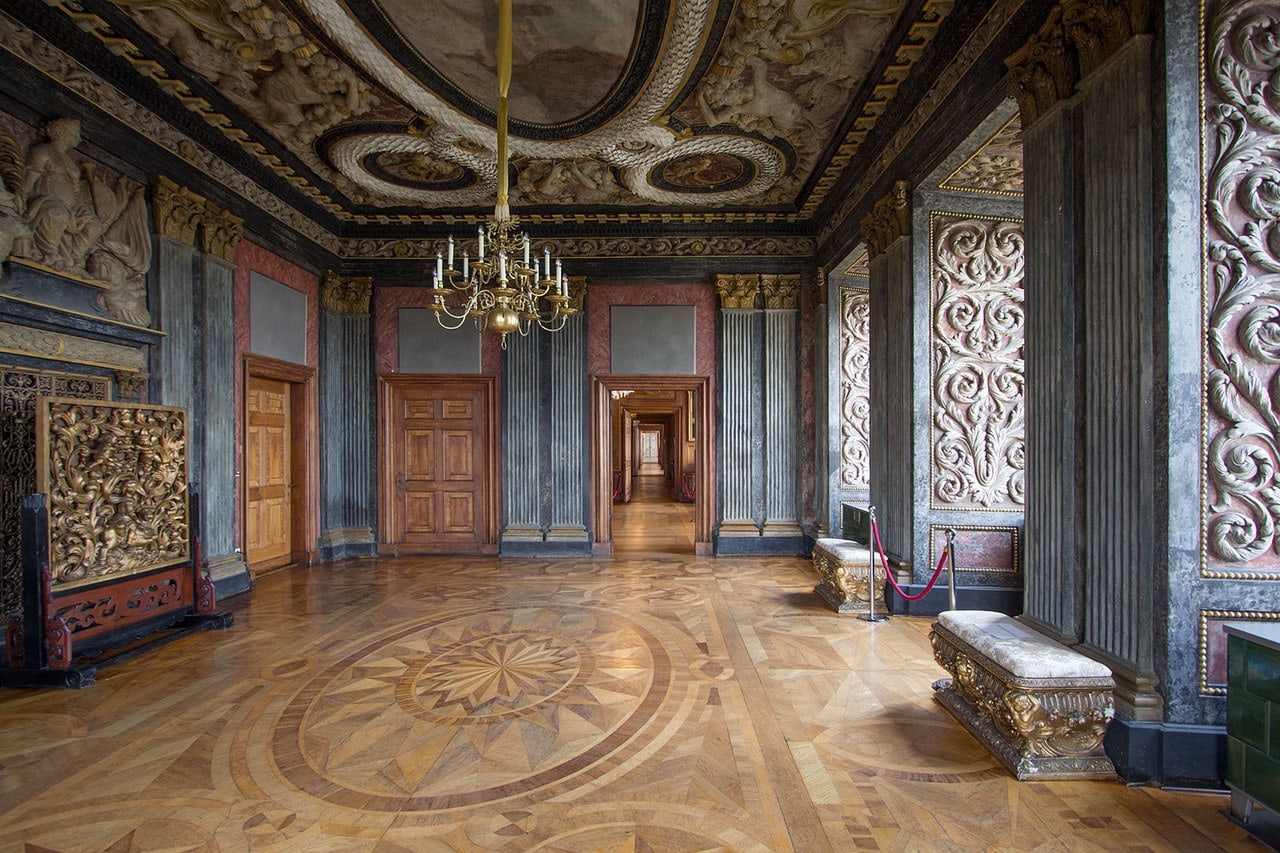
What sets Friedenstein apart from almost every comparable German residence is simple: nothing ever destroyed it. No army stormed it, no great fire gutted it, no later duke pulled it down to build something more fashionable. The palace was designed so large from the outset that few major changes were ever needed, and the original structure survives to this day. As a result the interiors form a continuous record of taste rather than a single frozen moment. Early-Baroque state rooms in the north wing give way to lighter Rococo and early-Neoclassical apartments in the west wing, and Historicist rooms of the nineteenth century survive alongside them. Few palaces anywhere let a visitor walk through two centuries of changing fashion with so little lost in between.
Scholars rank Friedenstein among the most significant German palace projects of the seventeenth century, and the operator describes it as the largest preserved early-Baroque palace complex in Germany. That claim carries an unusual twist. It is the only major early-Baroque palace in the country whose construction began during the Thirty Years’ War itself, a building raised in open defiance of the chaos around it.
The Ekhof-Theater
Climb the west tower and the plain palace gives up its secret. Inside sits the Ekhof-Theater, the oldest baroque theater in the world to keep its original working stage machinery. Duke Friedrich I of Saxe-Gotha-Altenburg, a son of Ernst the Pious, had a court theater fitted into the tower’s former ballroom in several phases between 1681 and 1687, with the surviving machinery dating to about 1683. Its first opera, Die geraubte Proserpina, reached the stage in 1683.
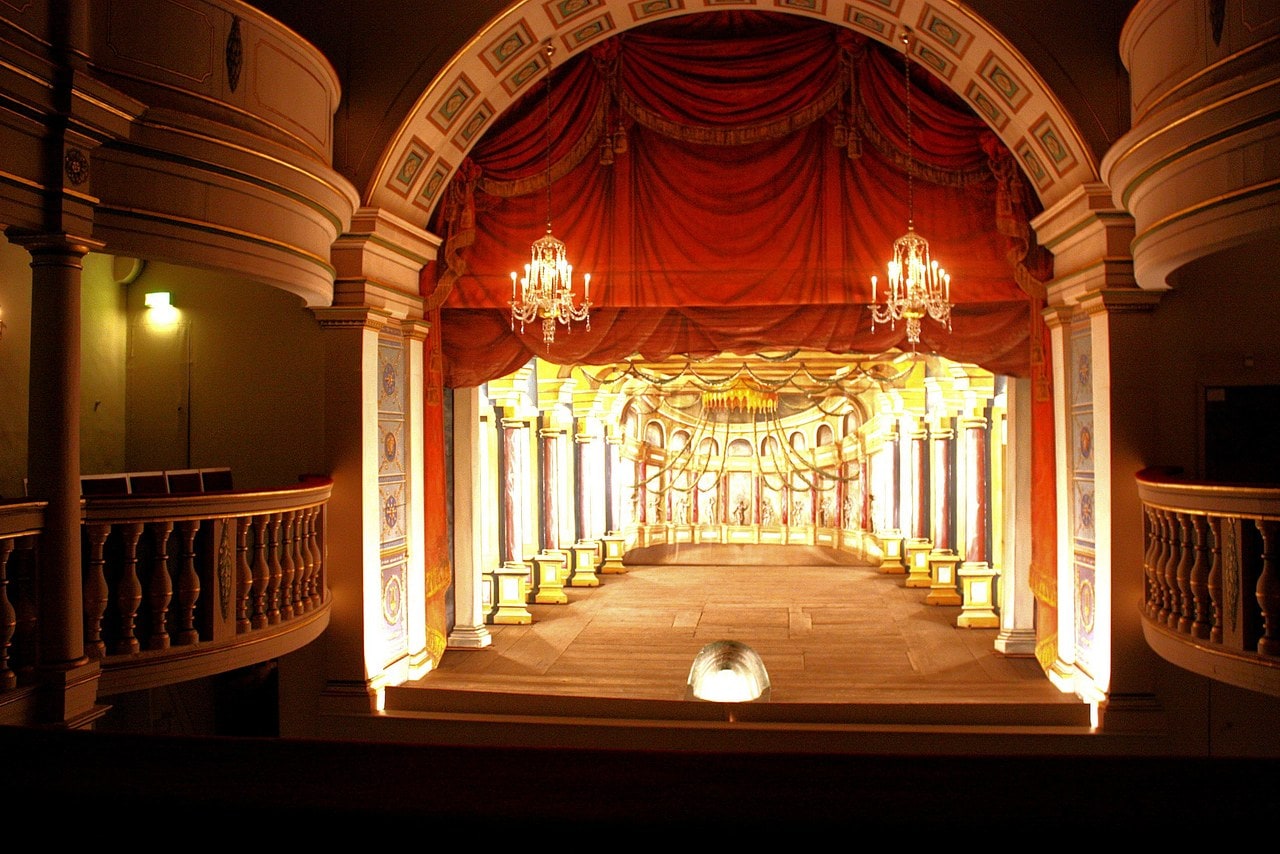
The wonder of the place lies behind the proscenium. A system of wooden chariots, poles, ropes, and rollers lets stagehands change an entire painted scene within seconds, in full view of the audience and with the curtain open. This kind of rapid-change machinery followed the model that the Italian designer Giacomo Torelli had pioneered around 1640, though Torelli himself, who died in 1678, had no hand in the Gotha installation. Trap doors, a thunder run, and a wind machine completed the illusion. Worked entirely by muscle, the apparatus still functions, and for two months each summer the Ekhof-Festival brings it back to life with operas and plays staged as closely as possible to their original manner. Between twelve and fifteen stagehands work the ropes and rolling shafts to shift each scene, much as their predecessors did three centuries ago.
Gotha’s greater claim on theater history came a century after the machinery was built. In 1775 Duke Ernst II founded here the first standing court theater in Germany, an ensemble of salaried actors employed year-round rather than a touring troupe paid by the night. Its reforms were remarkable for their day: fixed performance days, regular wages, subscriptions, tickets sold to ordinary citizens, state support, and even a pension fund. Directing this company was Conrad Ekhof (1720 to 1778), the actor revered as the father of German stagecraft, who had arrived in Gotha the year before and gave the theater the name it carries today. Court composer Georg Anton Benda worked alongside him and, with Ariadne auf Naxos, effectively invented the German melodrama. Among the young performers trained in Ekhof’s circle was August Wilhelm Iffland, later one of the most celebrated names on the German stage, while Goethe and Voltaire numbered among the court’s distinguished guests.
The theater fell quiet after Ekhof’s death and slept through much of the nineteenth century. It reopened, carefully restored, in 1968 under the name Ekhof-Theater, and its machinery survives where almost every comparable Baroque apparatus has long since rotted away.
Thuringia would stage a second landmark of theater history far later, and entirely apart from Gotha. In the late nineteenth century Georg II of Saxe-Meiningen, the “Theater Duke,” turned his Meiningen court company into a model for European directing and rebuilt the nearby Heldburg Fortress as his summer retreat. The two stories never touched. Together, though, they give one small region an unusual double claim on the history of the German stage.
A Court of the Muses: The Ducal Collections
Ernst the Pious was a collector as well as a builder. From the founding of his duchy around 1640 he gathered a Kunst- und Wunderkammer, a chamber of art and curiosities that mixed paintings and sculpture with coins, scientific instruments, naturalia, and objects sent from across the world. That cabinet is the seed from which the modern Friedenstein Universum grew. Today the foundation that runs the palace holds more than a million objects across some eighty historically grown collections, an unusually intact survival of a princely encyclopedia of the world. That ambition outlived the dynasty. The Ernestine and Albertine branches of the Wettins both competed in such collecting across Saxony and Thuringia, yet few of their cabinets reached the modern age as complete as Gotha’s. The duke’s chamber grew, over the generations, into a library, a coin cabinet, a natural-history room, a print collection, and a picture gallery, the gathered organs of a single curious court.
By the nineteenth century the collections had outgrown the palace. In 1863 Duke Ernst II of Saxe-Coburg and Gotha commissioned a separate museum in the park to the south, on the condition that the public be admitted free. Built between 1864 and 1879 in a stately Neo-Renaissance style, the Herzogliches Museum is the one part of the Gotha museum landscape that stands outside the palace walls. After a thorough renovation costing some nine million euros, it reopened in October 2013 with around three thousand square meters of galleries.
Its most famous resident is a small panel from about 1480 known as the Gothaer Liebespaar, the Gotha Lovers. Attributed to the anonymous Master of the Housebook, it shows a man and a woman gazing at one another inside a single frame, and art historians regard it as the first large-format secular double portrait in German painting, a worldly subject rather than a religious one. Scholars have identified the couple, with some confidence, as Count Philipp the Younger of Hanau-Münzenberg and his lower-born companion Margarethe Weißkircher, an unequal match dressed in the language of courtly love. The museum is fond of calling the painting the Mona Lisa of Thuringia.
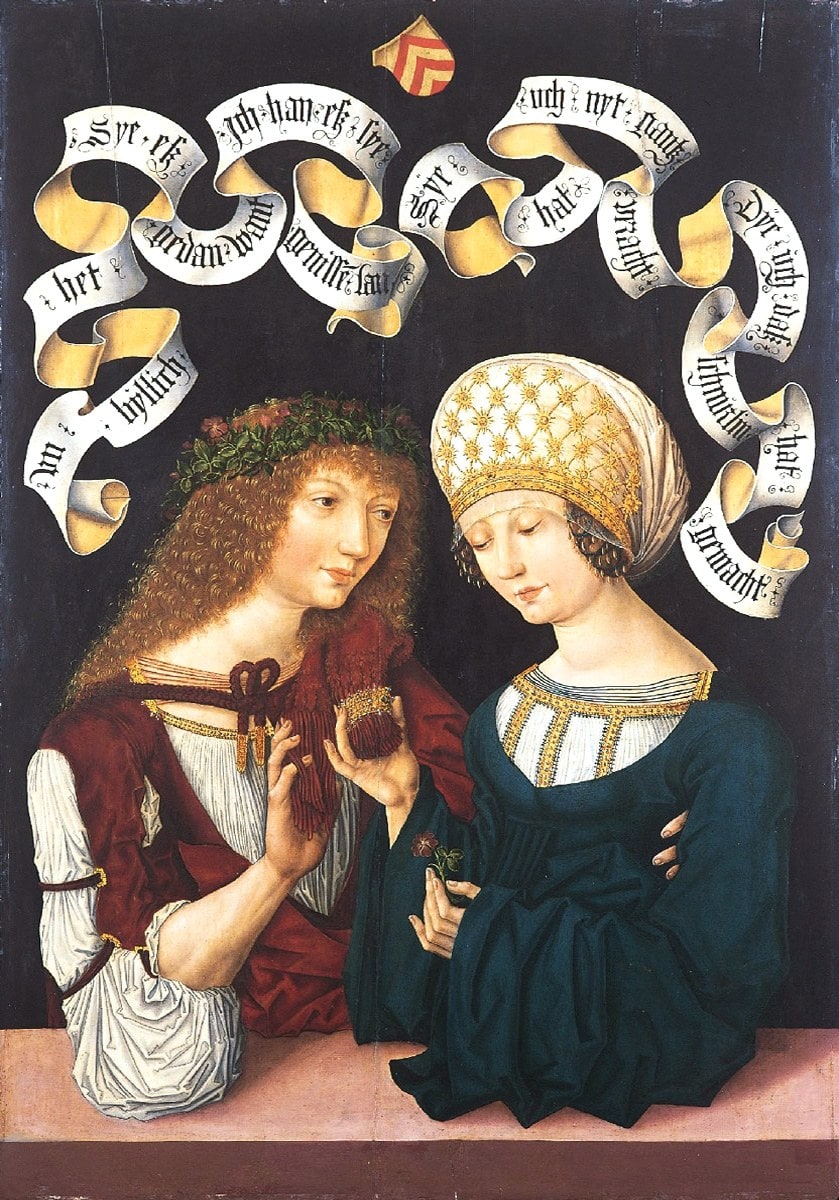
The Liebespaar keeps distinguished company. Its galleries hold paintings by Lucas Cranach the Elder, the great portraitist of the Reformation, along with works by Peter Paul Rubens, Jan van Goyen, and Caspar David Friedrich, and the boxwood Adam and Eve carved by Conrad Meit around 1515. Gotha owns the largest collection of works by the French Neoclassical sculptor Jean-Antoine Houdon anywhere outside France, beside one of Europe’s oldest Egyptian collections, East Asian lacquerwork and porcelain, Italian maiolica, and Meissen and Böttger ware. The palace also houses the Forschungsbibliothek Gotha, a research library of national importance whose manuscripts and early printed books draw scholars from far beyond Thuringia.
From Saxe-Gotha to Saxe-Coburg and Gotha
For more than two and a half centuries Friedenstein was the seat of a ruling house. From 1640 it served as residence and seat of government for the dukes of Saxe-Gotha, then Saxe-Gotha-Altenburg after 1672, and that role continued until 1894. Its dukes belonged to the Ernestine line of the House of Wettin, the same dynasty whose Saxon cousins built Albrechtsburg and shaped the castles of Saxony to the east.
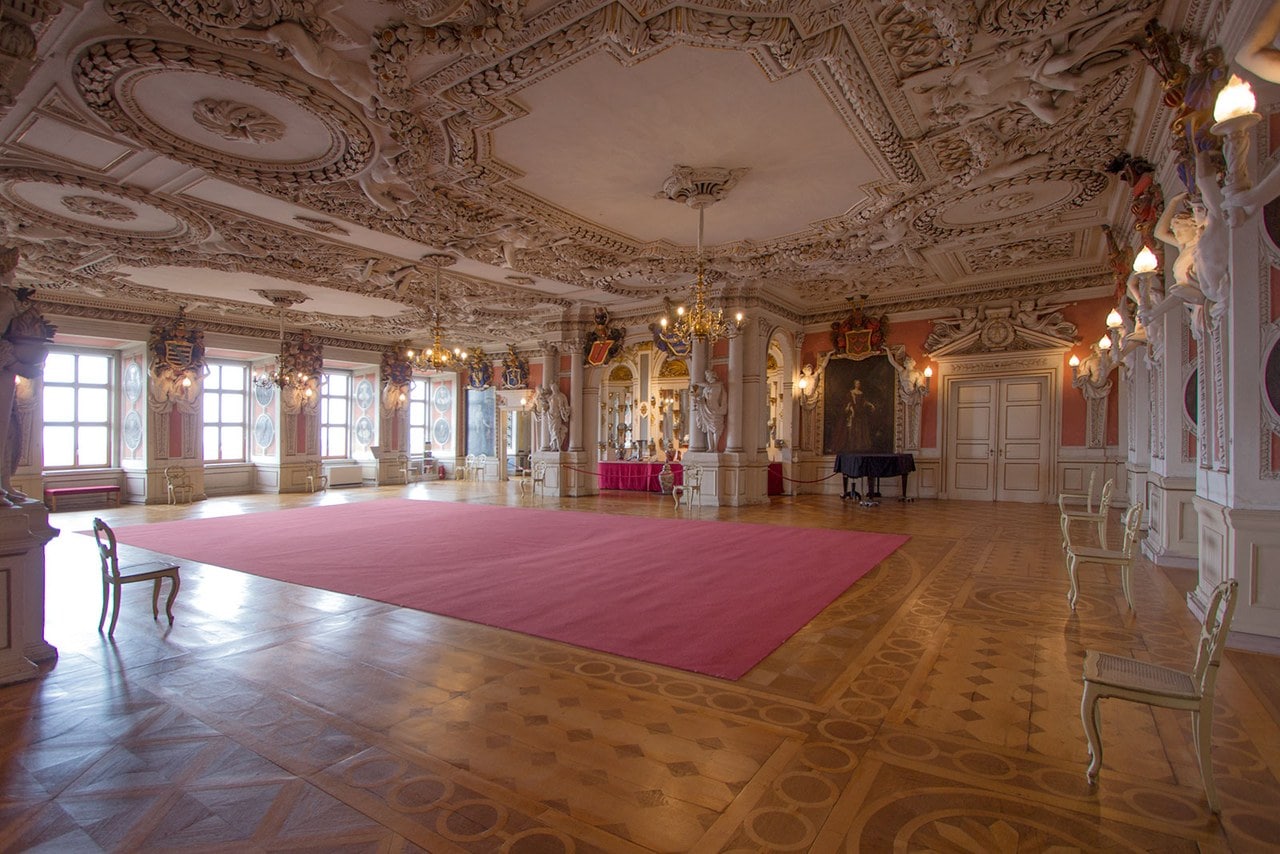
A reshuffling of the Ernestine duchies in 1826 folded Gotha into the new duchy of Saxe-Coburg and Gotha, ruled from both Coburg in Franconia and Gotha in Thuringia. That small German house then reached an improbable height. Through Prince Albert, consort of Queen Victoria, the Saxe-Coburg and Gotha name entered the British royal family and, in time, most of the courts of Europe.
That dynastic thread ran straight back to Friedenstein. The duchy’s last two reigning dukes were also British princes. Alfred, Queen Victoria’s second son and Duke of Edinburgh, ruled in Gotha from 1893 to 1900. His successor Charles Edward, a grandson of Victoria born Duke of Albany, held his British titles until they were stripped in 1919 for fighting on the German side in the First World War. Friedenstein saw the family’s private grief as well as its splendor. In January 1899, during the celebrations of his parents’ silver wedding at the palace, Alfred’s only son shot himself and died of the wound weeks later. The duchy itself ended with the German revolution of 1918, though the family kept apartments in the palace until 1945.
The Gotha Robbery
Friedenstein’s survival through war and revolution makes its single great loss all the sharper. On the night of December 14, 1979, in what remains the largest art theft in the history of East Germany, intruders scaled the palace wall, climbing roughly ten meters with spurs and a lightning rod, and broke through a window into the castle museum. They left with five Old Master paintings and vanished. A newly installed alarm had not yet been switched on.
What they took was extraordinary. It included a portrait by Frans Hals of a man in a broad-brimmed hat, a Saint Catherine by Hans Holbein the Elder from around 1510, a landscape from the workshop of Jan Brueghel the Elder, a copy after Anthony van Dyck’s Self-Portrait with a Sunflower, and a battered portrait of an old man then linked to Ferdinand Bol. East German police questioned more than a thousand people and found nothing. Somehow the works slipped across the most heavily guarded border in the world and disappeared for forty years.
Their return reads like fiction. In 2018 the mayor of Gotha, Knut Kreuch, began receiving anonymous calls and photographs offering the works for a large sum. Rather than refuse, he arranged for the paintings to be brought to the Rathgen research laboratory of the Berlin state museums, where conservators confirmed their authenticity by matching the fine cracks in the varnish to photographs taken before 1979. No forger could fake the cracks along those exact lines. Officials announced the recovery on December 6, 2019, and the five paintings went on show at Friedenstein until January 26, 2020. No ransom was paid beyond the costs of lawyers and transport. Careful with figures, the foundation puts the insurance value of the group at around four million euros and has rejected the inflated sums quoted in the press.
There is a tantalizing coda. Research on the damaged old man has suggested it may be an early Rembrandt rather than a work by his pupil Bol, a question scholars have yet to settle and that the museum is studying ahead of a Rembrandt exhibition planned for 2027. All five returned to public view in the exhibition Back in Gotha! The Lost Masterpieces, which ran until August 2022. The thieves themselves have never been identified.
Visiting Friedenstein Palace Today
Friedenstein today operates as the Friedenstein Universum, a single museum complex spread across the palace and its park. Inside the castle sit four museums, the Schlossmuseum in the state apartments, the Historisches Museum, the Museum der Natur, and the Ekhof-Theater in the west tower; the Herzogliches Museum stands across the park, and the Forschungsbibliothek occupies its own quarters in the building. A visitor with a full day can move from Baroque staterooms to Egyptian mummies to a working seventeenth-century stage without leaving the hill. Entry tickets and local tours can also be booked in advance through GetYourGuide.
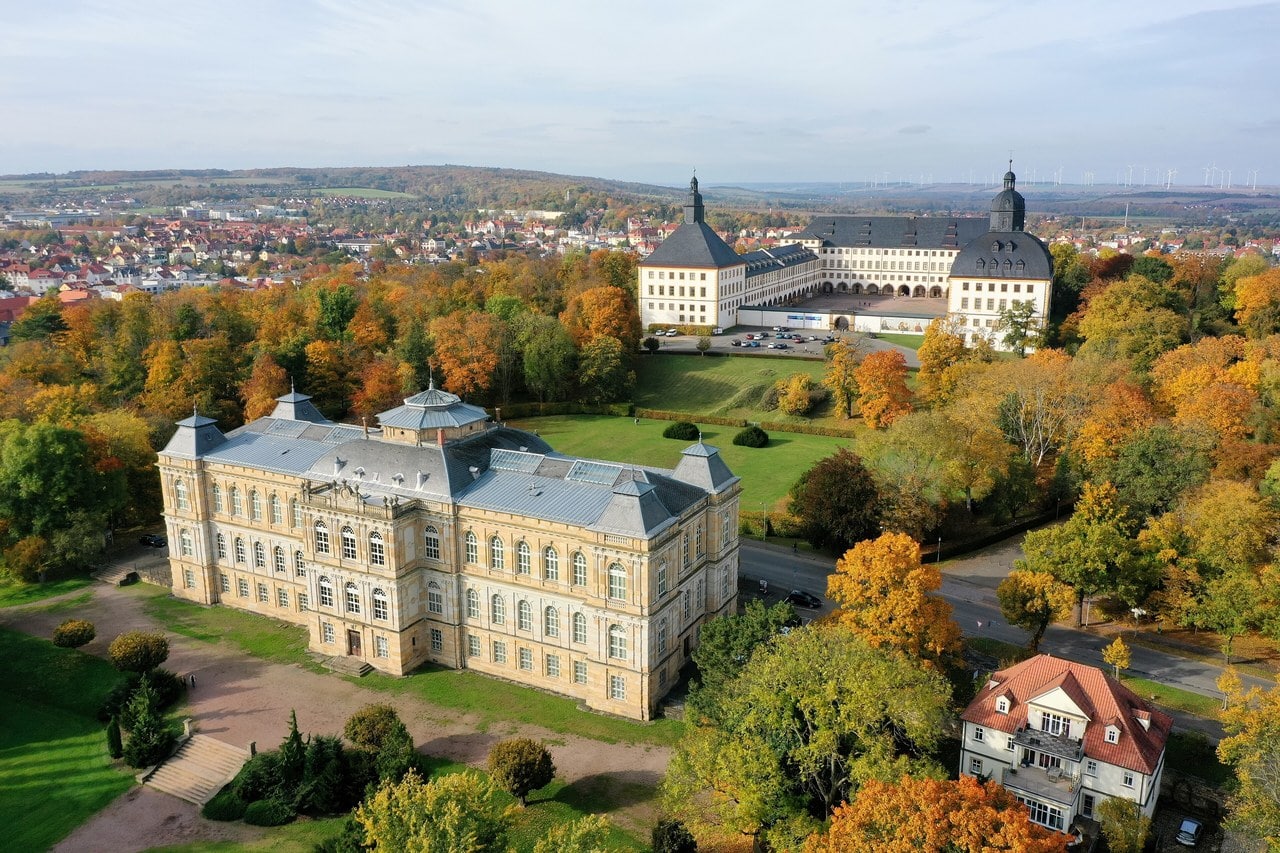
The museums open Tuesday through Sunday and close on Mondays, though they admit visitors on public holidays. From April through October hours run 10:00 to 17:00, and from November through March they close an hour earlier at 16:00. They also shut on 24 and December 31. The surrounding Schlosspark, with its Orangerie garden and its English landscape garden, stays open year-round at no charge, and it ranks among the earliest gardens laid out in the English manner on the European continent.
Tickets are sold at desks in the palace and at the Herzogliches Museum. A combination ticket covering both the castle and the Ducal Museum is the best value for a thorough visit, while single tickets suit travelers short on time.
| Ticket | Adult | Concession | Group (21+) |
|---|---|---|---|
| Combination (Castle + Ducal Museum) | €16 | €8 | €12 |
| Single “Friedenstein” (castle museums + Ekhof-Theater) | €12 | €6 | €9 |
| Single “Ducal Museum” | €8 | €4 | €6 |
| Single “Ekhof-Theater” | €6 | €3 | €4 |
| Annual Pass | €35 | €30 | — |
Children and young people enter free. Prices and age limits are reviewed at the start of each season in April, so it is worth confirming the current rates on the operator’s website before a visit. Friedenstein sits at Schlossplatz 1 in Gotha, an easy walk uphill from the old town and the railway station, with parking near the Herzogliches Museum. Anyone staying overnight can compare hotels in and around Gotha.
Some links on this page are affiliate links, which means StoneKeep Atlas may earn a small commission, at no extra cost to you, if you book through them.
More Views of Friedenstein Palace
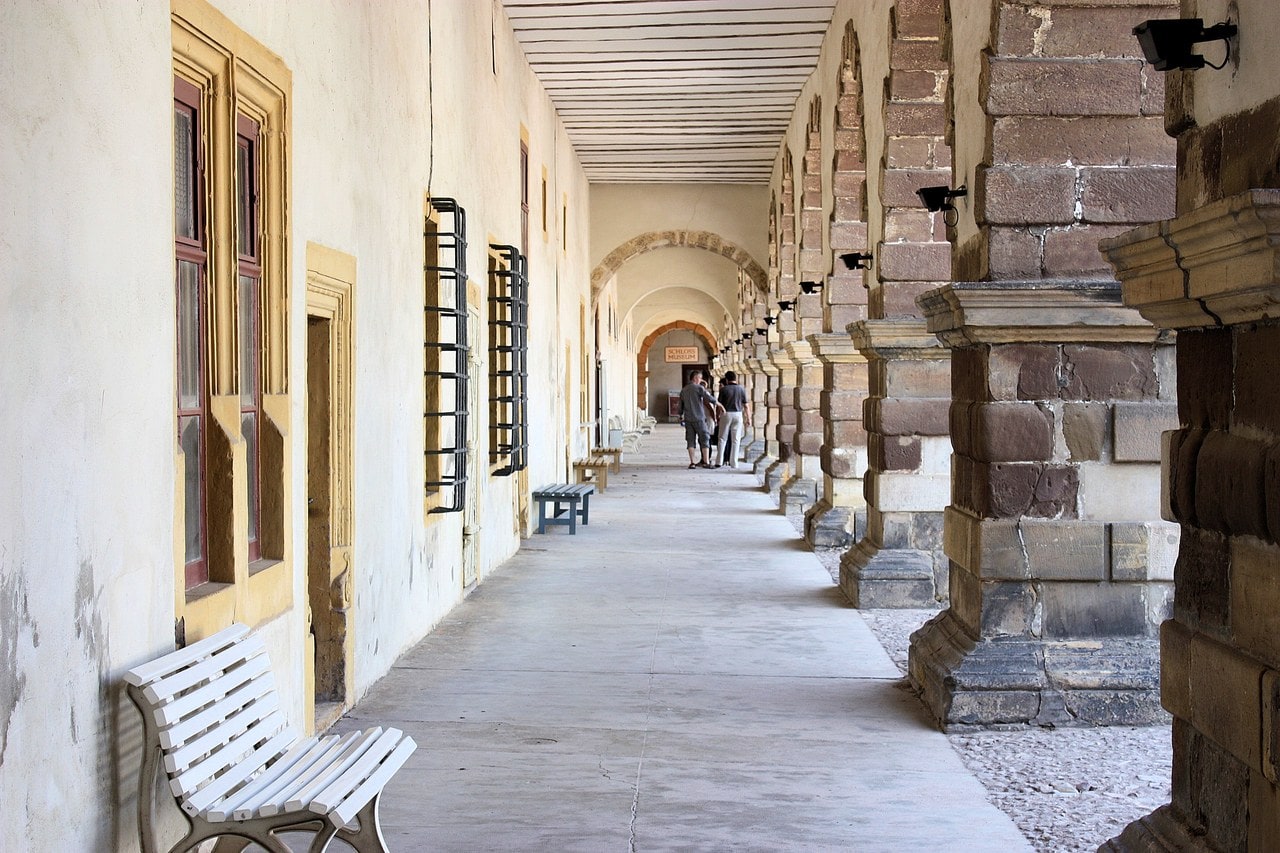
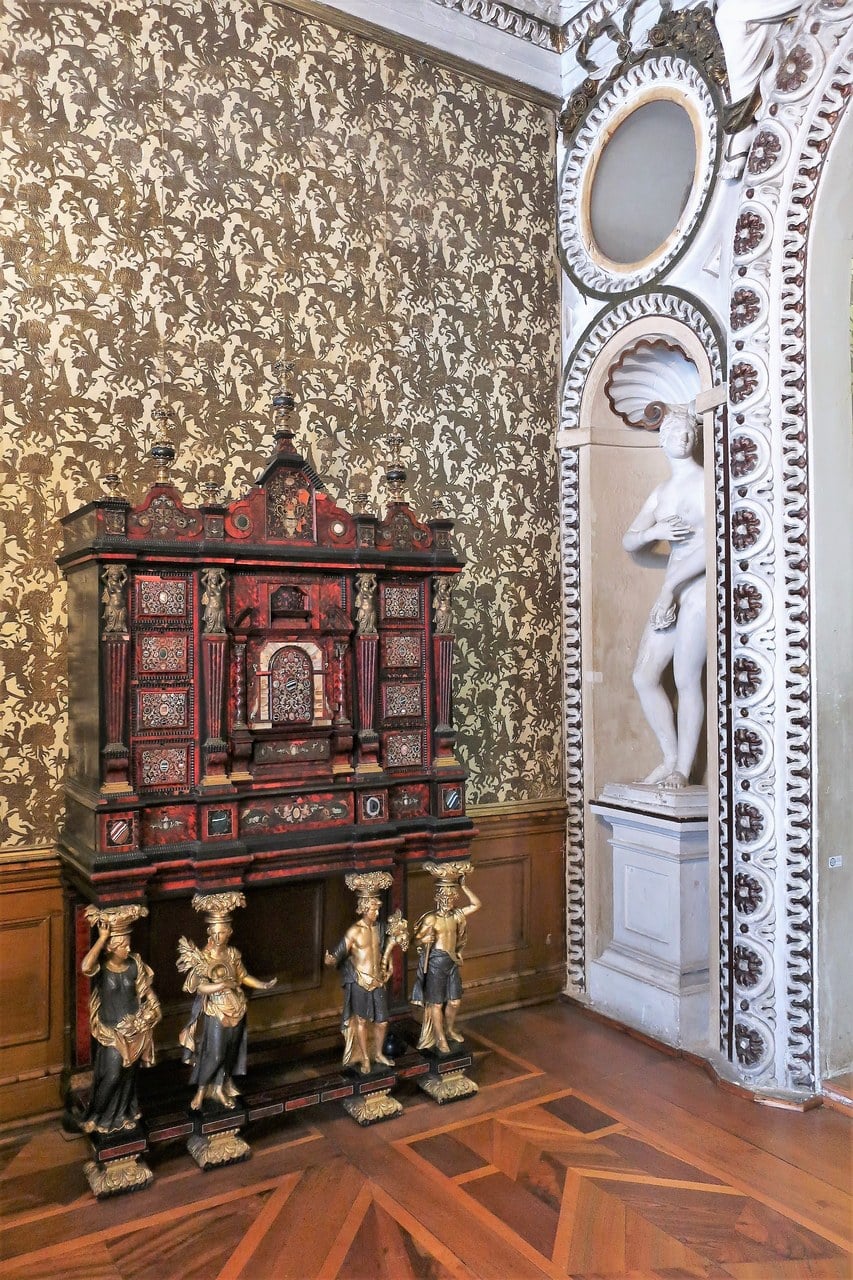
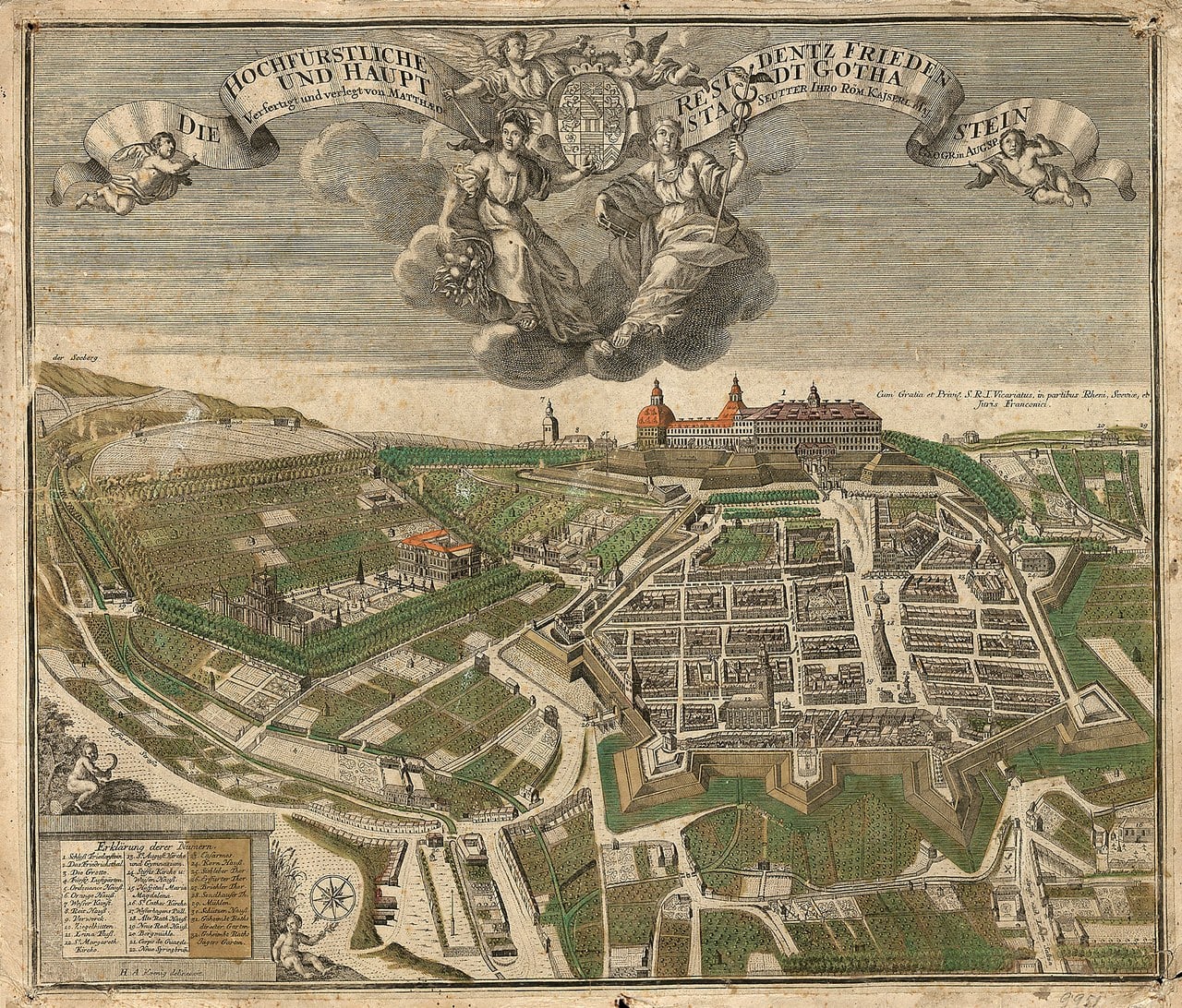
From the arcaded courtyard and the court chapel to the ducal art cabinet, the old Gotha mint, and the casemates that still run beneath the lawns, these views round out a palace too large to capture in a single frame.
Beyond Friedenstein: Castles Near Gotha
Gotha makes a natural base for exploring the wider region. Less than an hour to the southwest, above Eisenach, rises the Wartburg, the medieval fortress where Martin Luther translated the New Testament and where the German Reformation found a refuge. The two sites bookend Thuringia’s religious history, the Wartburg as the cradle of Luther’s translation and Friedenstein as the showpiece of a duke who built a model Lutheran state.
To the south, near the Bavarian border, stand the Saxe-Meiningen and Saxe-Coburg seats: Heldburg Fortress, the hilltop “Märchenschloss” remade by Georg II, and Coburg Fortress, one of the largest fortified complexes in Germany and another stronghold of the Ernestine Wettins. Travelers drawn to that dynastic thread can follow it west into the castles of Franconia, the princely seats just over the old Thuringian frontier.
Together these places trace one family’s long story across two regions, from medieval keep to Baroque residence to nineteenth-century fantasy. Our guide to the castles of Thuringia gathers these sites into a single regional picture.
Conclusion
Friedenstein Palace endures because it was built to last and because history, for once, let it. Raised as a vow of peace amid a ruinous war, it became the working heart of a small, ambitious state and a treasure house that survived the centuries almost whole. Its plain outer walls still hide a Baroque stage that moves at the pull of a rope, a panel of medieval lovers that has outlived the names of its sitters, and the recovered ghosts of a Cold War heist. Few German palaces offer so much under one roof, and fewer still can claim never to have fallen. To climb the Schlossberg at Gotha is to step into a rare thing in German history, a great house of the seventeenth century that time forgot to destroy.
Principal Sources
- Deutsche Stiftung Denkmalschutz. “Schloss Friedenstein, Gotha.” denkmalschutz.de.
- European Route of Historic Theatres (Perspectiv). “Ekhof Theatre, Gotha.” theatre-architecture.eu.
- Friedenstein Stiftung Gotha. “Schloss Friedenstein,” “Ekhof Theatre,” “Ducal Museum,” and “Ticket Information.” stiftung-friedenstein.de.
- museum-digital Thüringen. “Das Gothaer Liebespaar (um 1480/1485).” thue.museum-digital.de.
- Smithsonian Magazine. “Five Old Master Paintings Recovered 40 Years After German Heist” (2020) and “A Painting Stolen in East Germany’s Biggest Art Heist May Be a Rembrandt” (2021). smithsonianmag.com.
- Stiftung Thüringer Schlösser und Gärten. “Schloss Friedenstein mit Herzoglichem Park.” thueringerschloesser.de.
- The Art Newspaper. “Painting recovered 40 years after its theft in East Germany may be an unknown Rembrandt” (2021). theartnewspaper.com.
Visitor information was verified against the operator’s website, stiftung-friedenstein.de, in June 2026; prices and opening hours are reviewed seasonally and should be confirmed before travel.
Image credits. Banner, aerial view of Friedenstein Palace, Thuringius, CC0. North portal, Georg Sommer, CC BY 4.0. Town front and towers, lichtblick800, via Pexels. The Ekhof-Theater stage, Dguendel, CC BY 3.0. The Gothaer Liebespaar, Master of the Housebook, public domain. The Festsaal, Stefan C. Hoja, CC BY-SA 4.0. Herzogliches Museum, Thuringius, CC0. Gallery: courtyard arcades, Dguendel, CC BY 3.0; court chapel, SchiDD, CC BY-SA 4.0; audience chamber, Stefan C. Hoja, CC BY-SA 4.0; ducal art cabinet, Bärwinkel, Klaus, CC BY-SA 4.0; Gotha mint coin press, Falk2, CC BY-SA 4.0; casemates, Angel-marie, CC BY-SA 4.0; Wasserkunst fountain, Falk2, CC BY-SA 4.0; bird’s-eye view of the residence, H. A. Koenig, public domain. Creative Commons and public-domain images via Wikimedia Commons, reusable under the stated licenses; the Pexels image is used under the Pexels license. Freely licensed images are resized to fit; otherwise unaltered.