
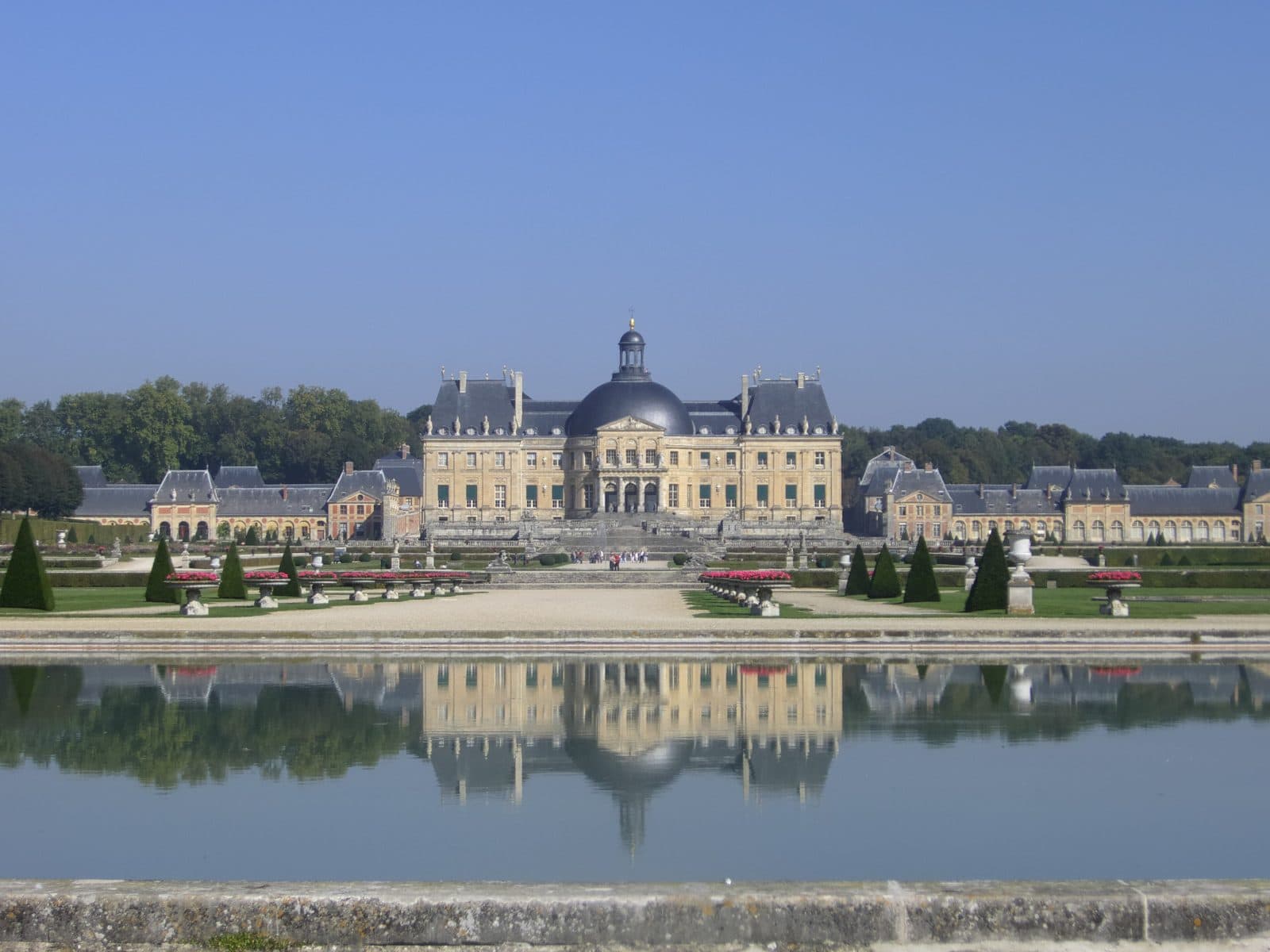
Château de Vaux-le-Vicomte
On the warm evening of August 17, 1661, a finance minister threw the most dazzling party France had ever seen. The host was Nicolas Fouquet, superintendent of finances to the young Louis XIV, and the setting was his new château at Vaux-le-Vicomte, an hour southeast of Paris. He had built the place to flatter his king. Three weeks later, on the king’s own birthday, Fouquet was arrested at Nantes and bound for a prison cell he would never leave.
The deeper irony is that the king did not destroy what Fouquet had made. He absorbed it. The architect, the painter, and the garden designer who created Vaux-le-Vicomte all went on to work at Versailles, and two of the three already held office under the crown while they were building here. The Château de Vaux-le-Vicomte is therefore two things at once: the first complete statement of French classical architecture, and the house whose owner ended his life a state prisoner.
Quick Facts
| Location | Maincy, Seine-et-Marne, Île-de-France, France |
| Built | 1658–1661 |
| Patron | Nicolas Fouquet, superintendent of finances |
| Architect | Louis Le Vau |
| Interior decoration | Charles Le Brun |
| Gardens | André Le Nôtre |
| Style | French classicism (the “Louis XIV style”) |
| Ownership | de Vogüé family (privately owned) |
| Protected status | Monument historique |
| Open to visitors | Yes; daytime visits and summer candlelit evenings |
| Official website | vaux-le-vicomte.com |
The man who would dazzle a king
Nicolas Fouquet bought the small estate of Vaux in 1641, when he was a twenty-six-year-old magistrate in the Parlement of Paris with a quick mind, a taste for the arts, and a fortune still to make. That fortune came soon enough. By 1653, in the unsettled years after the civil wars of the Fronde, Fouquet had risen to superintendent of finances, the official who raised and managed the money of the French crown. It suited his talents and his appetites. He helped restore the state’s shattered credit, and he grew immensely rich doing it, lending his own funds to the treasury and blurring the line between the king’s money and his own in a way that was common in his day but would prove fatal in his case.
Fouquet was also the most generous patron of his generation. Writers, painters, and architects gathered around him, among them the poet Jean de La Fontaine and the brilliant letter-writer Madame de Sévigné. His personal emblem was a climbing squirrel, fouquet being an old word for the animal in his family’s native Anjou, and beneath it ran the motto Quo non ascendam, “to what heights will I not climb?” It was a question he never thought to answer with restraint. He fortified the island of Belle-Île off the Breton coast and assembled clients and friends across the kingdom, the sort of private power that an insecure young king would later read as a threat.
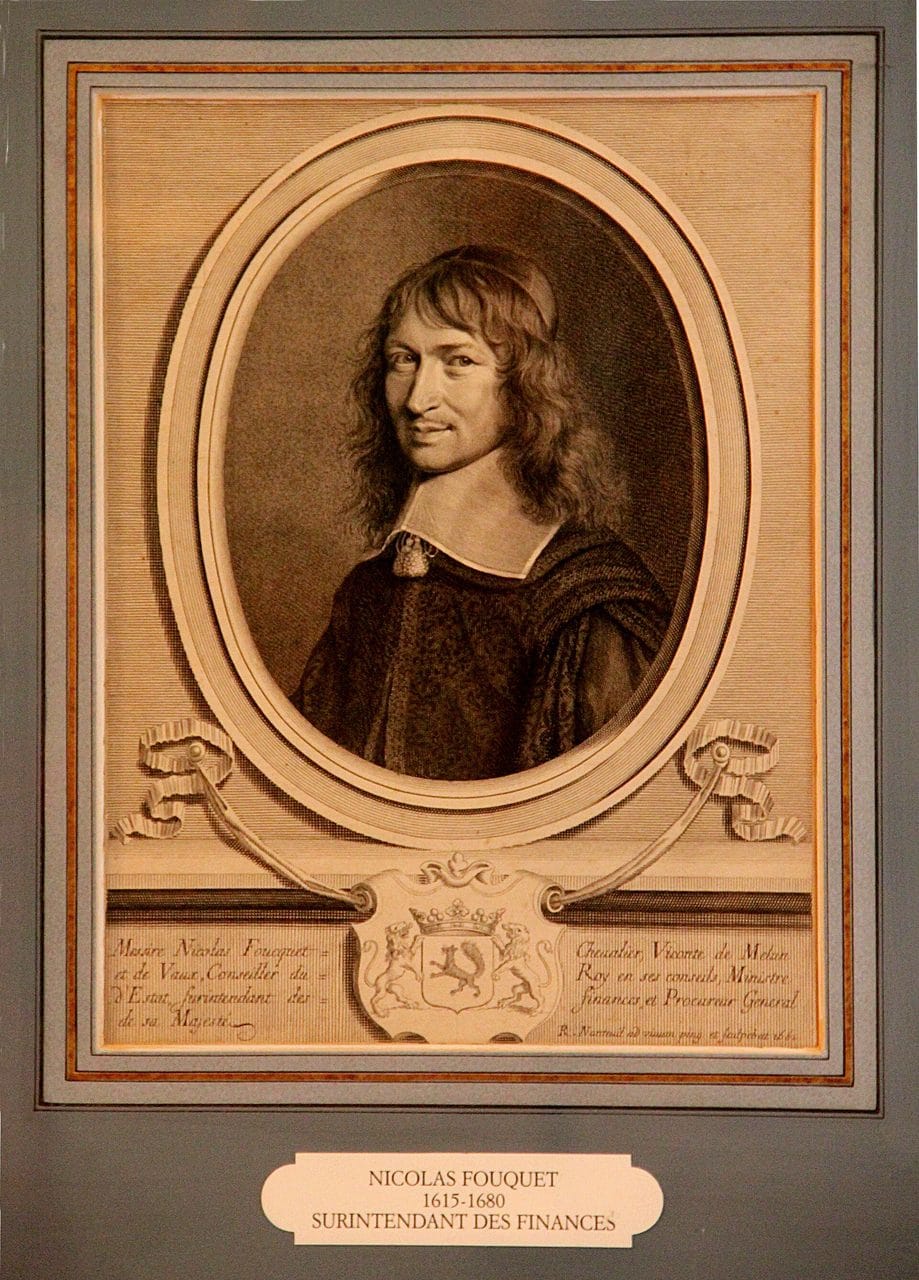
That confidence found its grandest outlet at Vaux. Rather than enlarge the old manor, Fouquet decided to sweep it away and build something without precedent in France: a country house in which the architecture, the interiors, and the gardens would be conceived together as a single unified work. To clear the ground for so vast a scheme, he reportedly bought up and demolished three small villages, then employed the displaced inhabitants on the estate. Contemporary accounts, fond of round numbers, spoke of eighteen thousand workers and a cost of sixteen million livres. The figures are almost certainly inflated, but the ambition behind them was real, and the result would change the course of European taste.
The dream team and the birth of a style
Fouquet’s genius lay less in building than in choosing. To realize his vision he gathered three men, each at the start of his powers, and set them to work together for the first time. The architect was Louis Le Vau, already busy with town houses for wealthy Parisians and by then the king’s own first architect. Charles Le Brun, painter and decorator, took the interiors, directing a small army of craftsmen and even setting up a tapestry workshop nearby to supply the house. The gardens went to André Le Nôtre, a designer with a rare command of mathematics, optics, and scale.
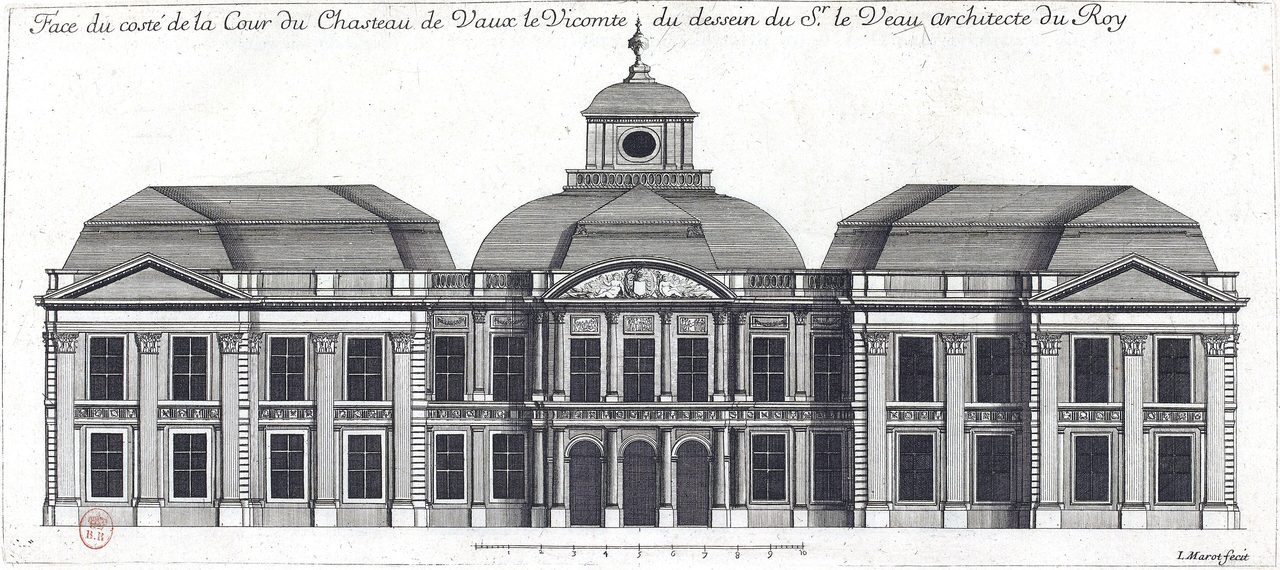
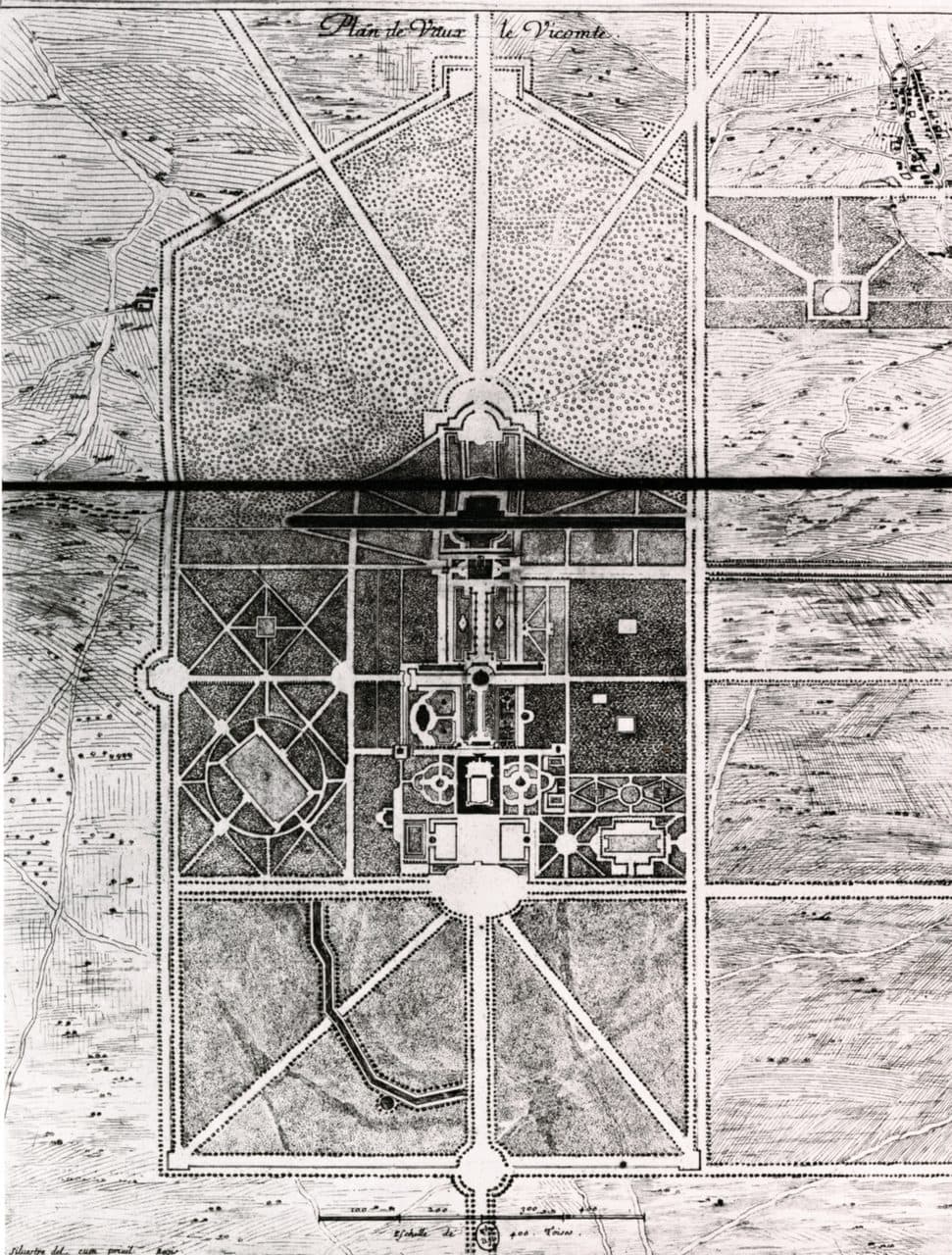
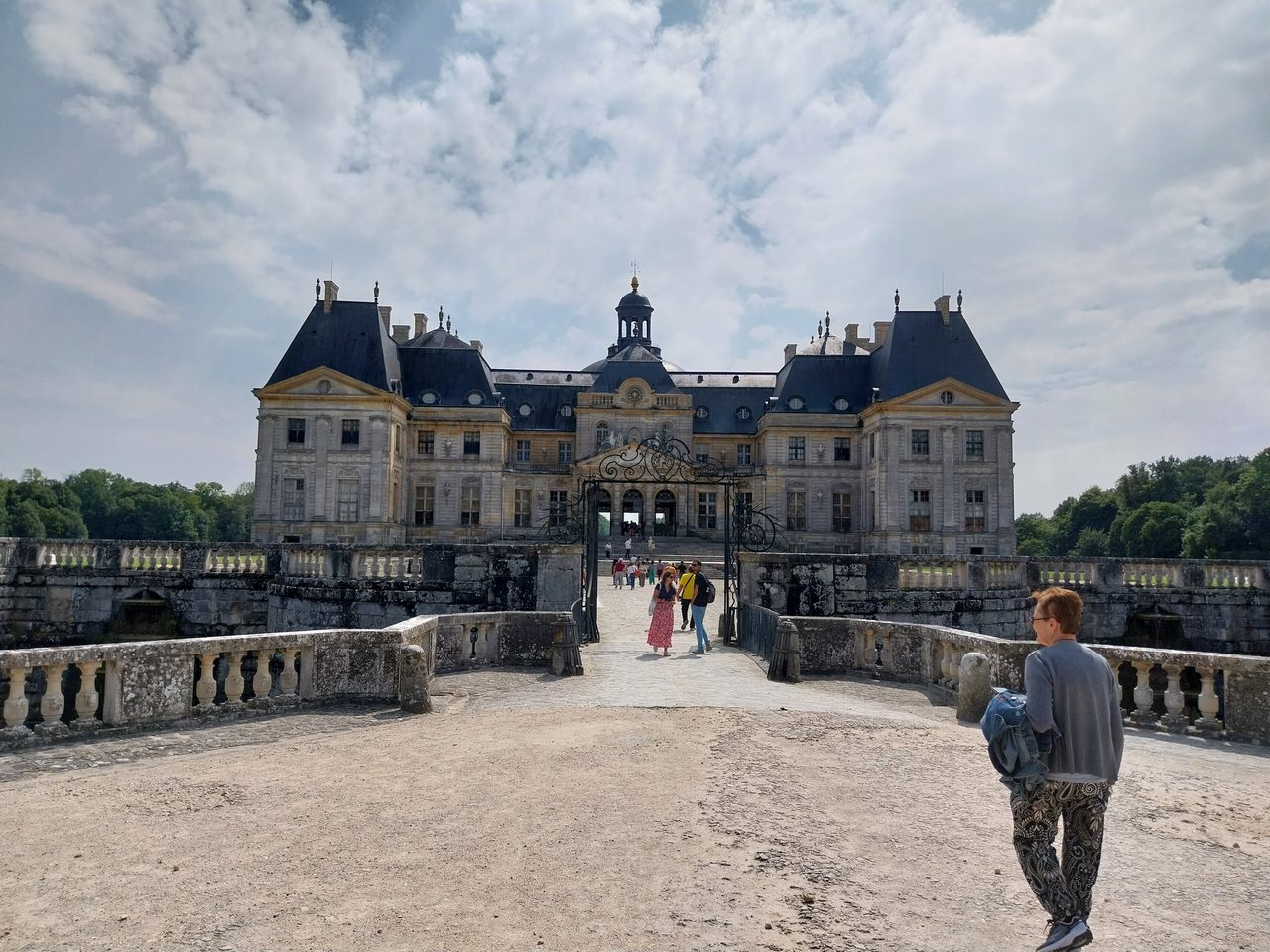
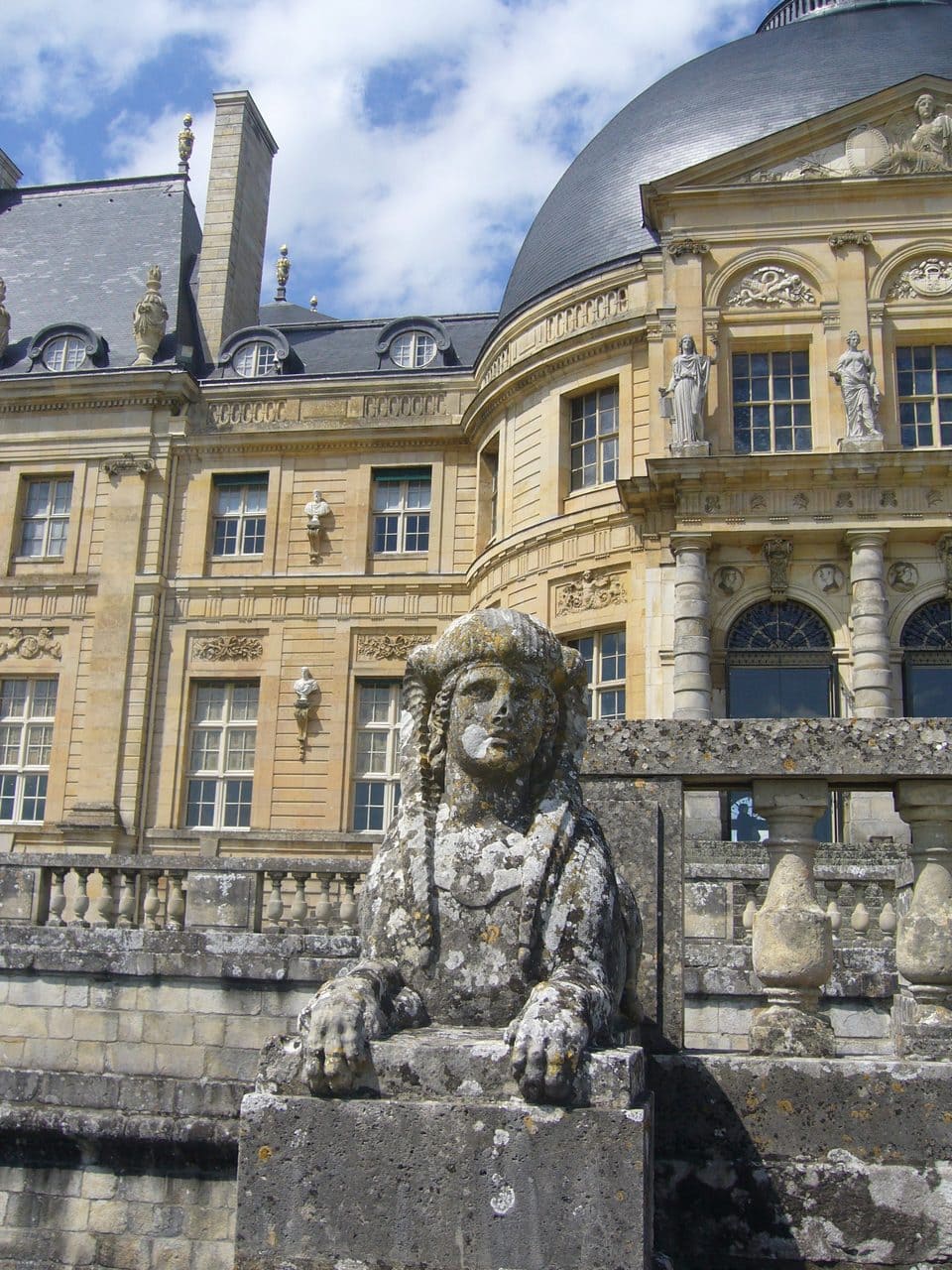
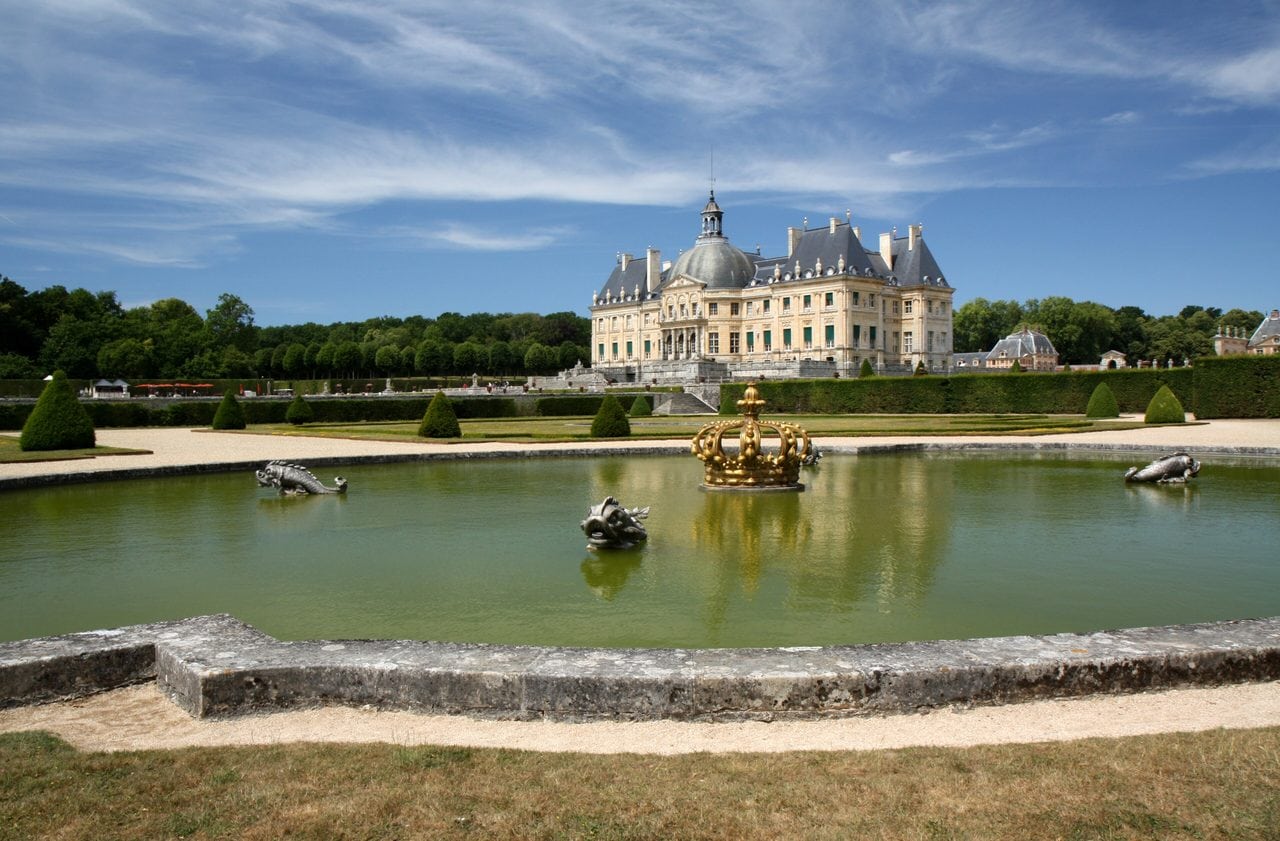
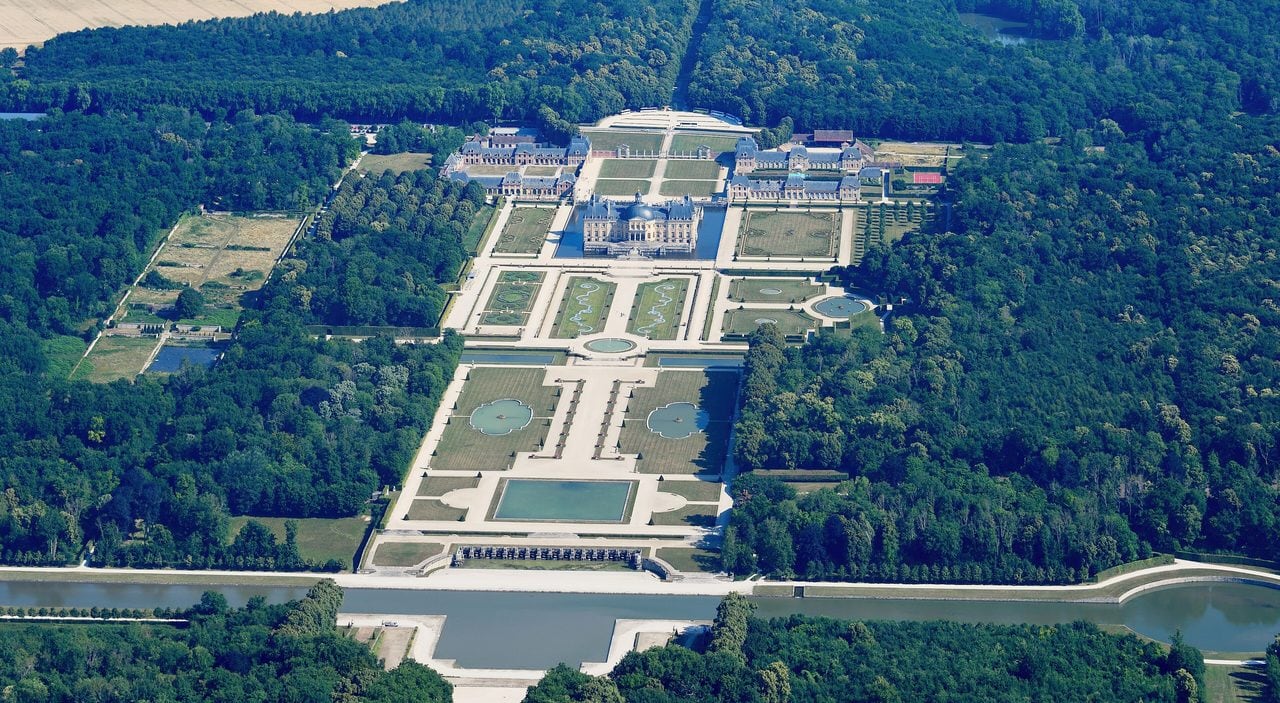
It was the first time these three had collaborated on a single large project, and their partnership marked the beginning of what would be called the Louis XIV style: the disciplined, symmetrical, grandly ordered manner that defined French classicism for a century. Their château, raised between 1658 and 1661, is its founding monument. Built of pale stone and ringed by a wide ornamental moat that is purely for show, it stands at the head of a long axis that runs north to south for roughly a kilometer and a half, its facades balanced to either side with almost perfect symmetry. Brick-and-stone service wings frame the forecourt, and a tall oval dome crowns the center of the house.
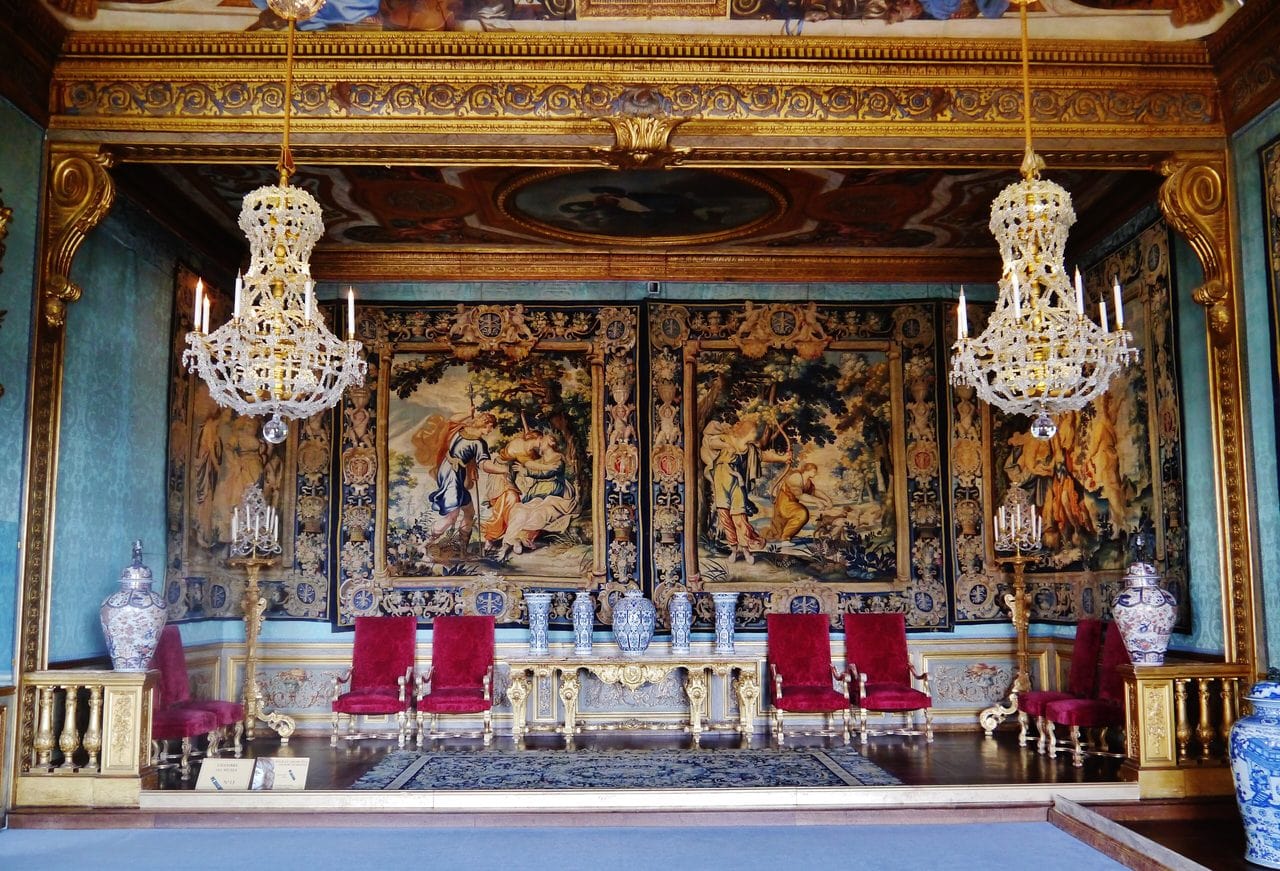
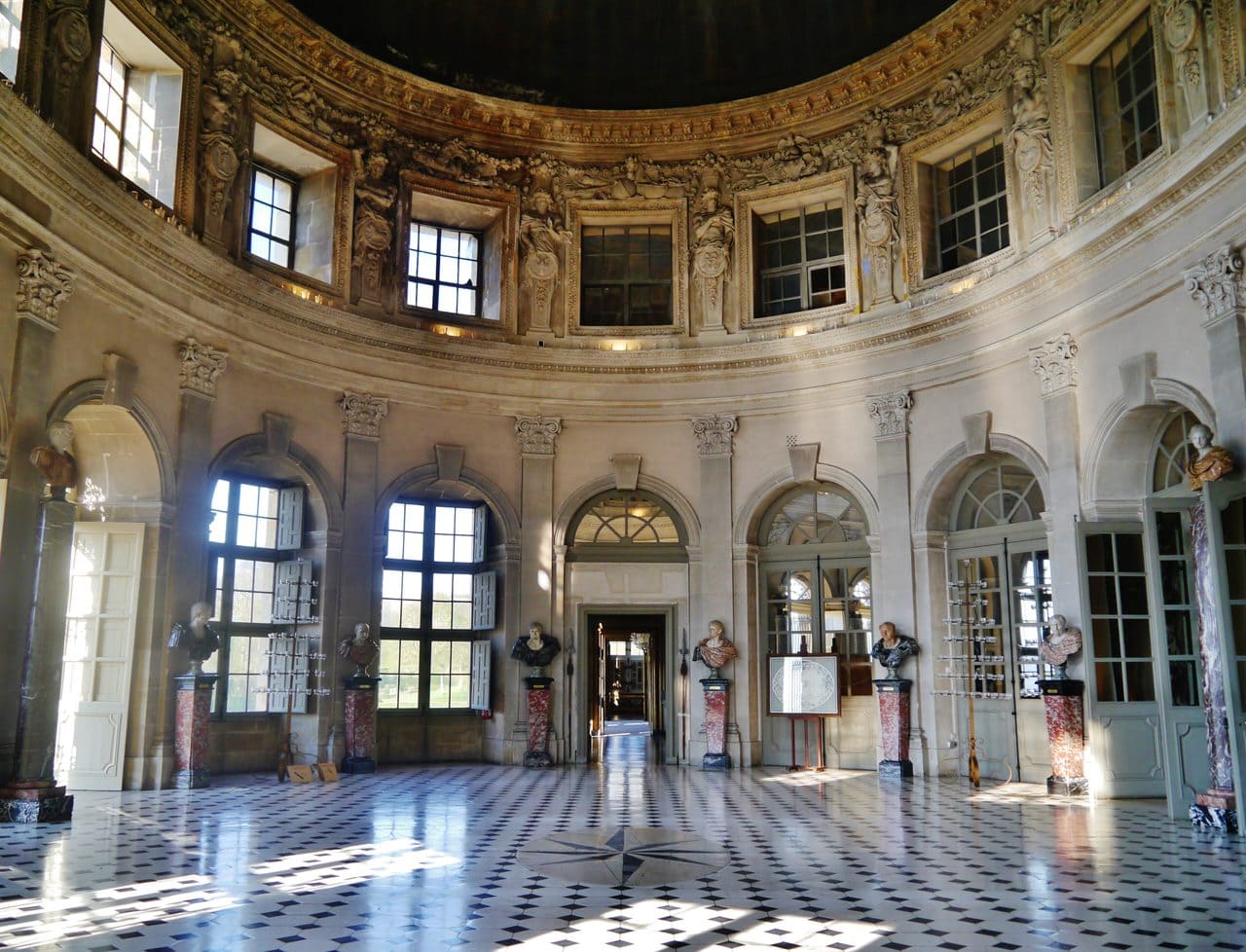
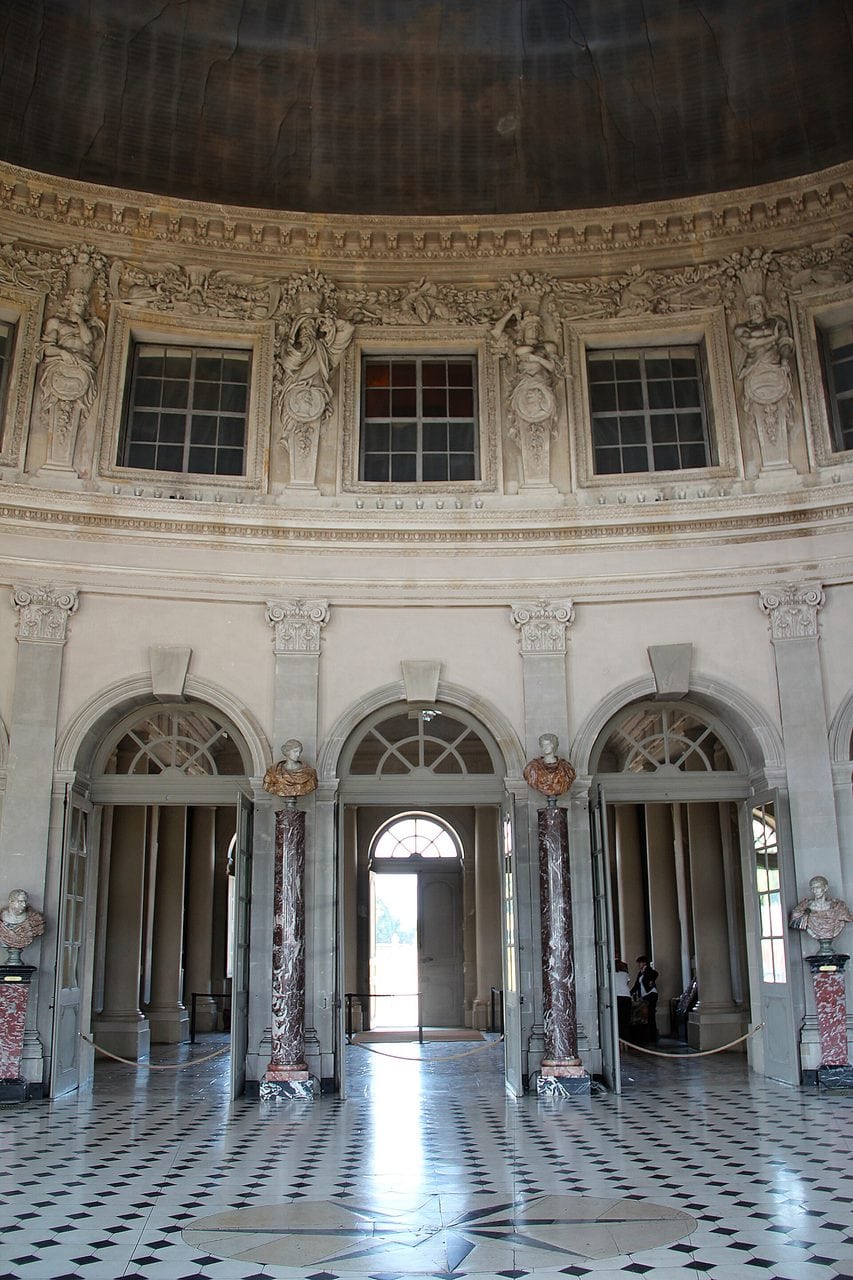
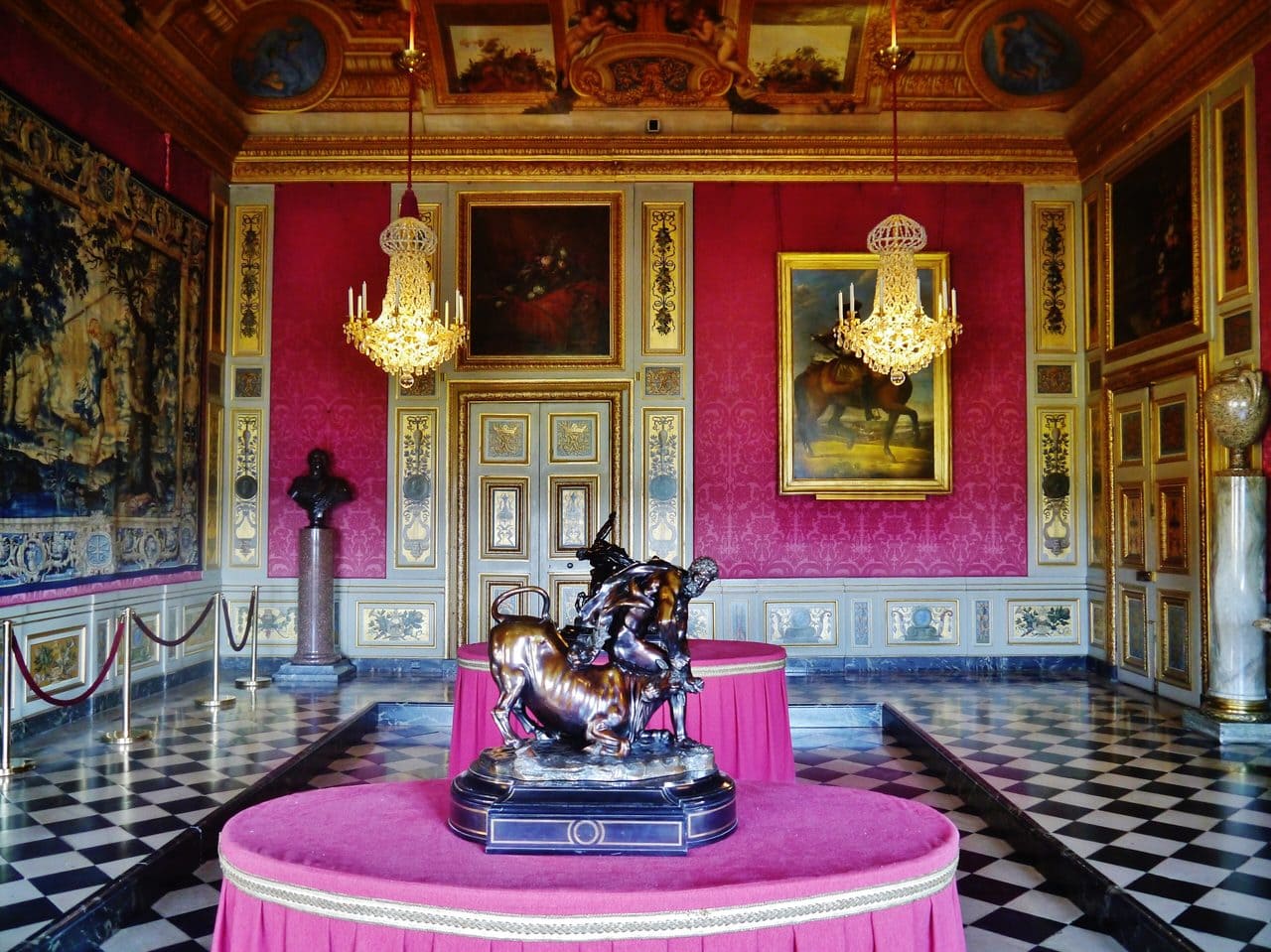
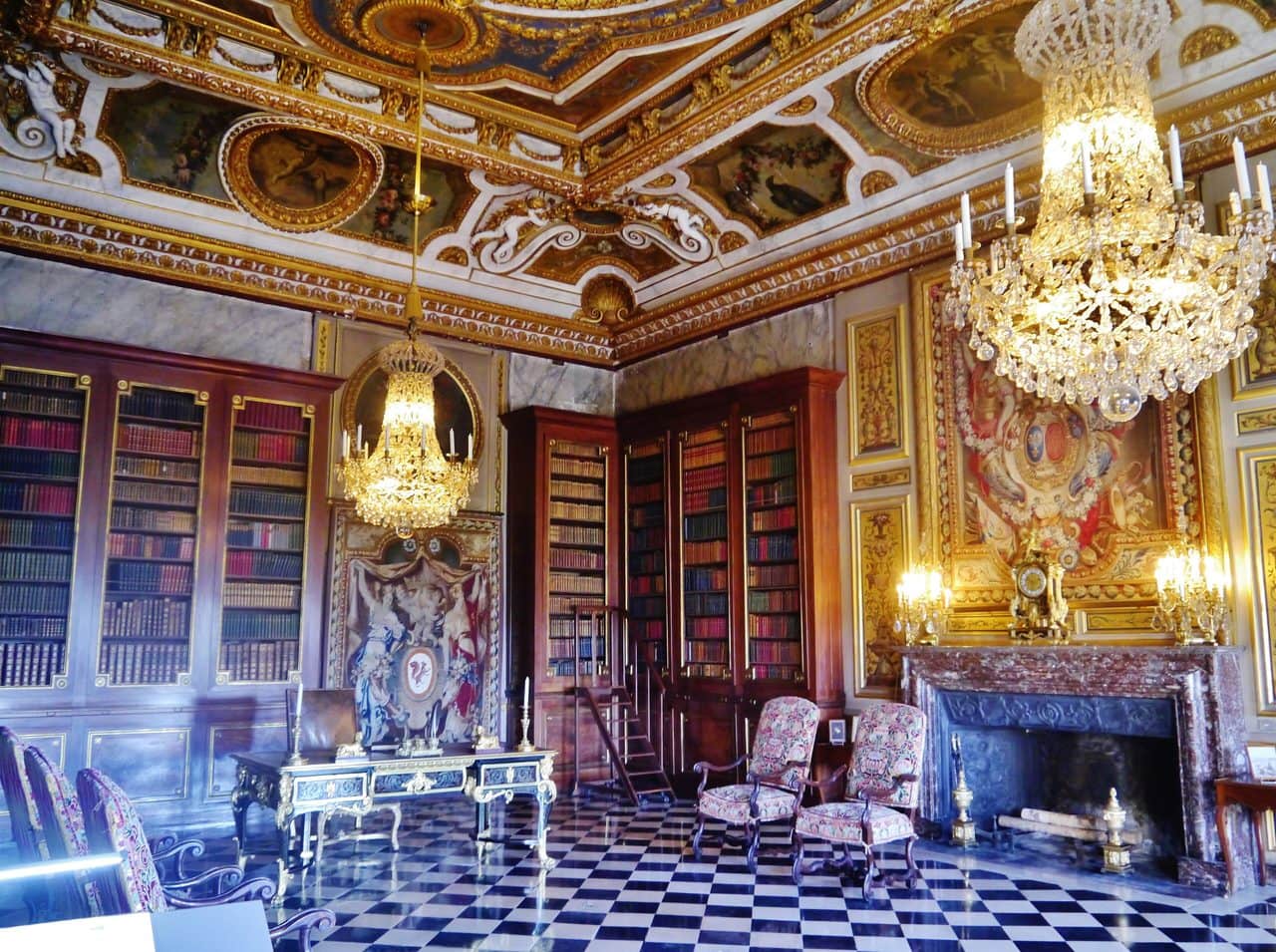
Inside, the plan is as logical as the elevation. Beneath the dome sits the great oval salon, conceived as an open loggia that divides the house into two halves and opens straight onto the gardens. The eastern rooms were laid out for the king, who traveled often and expected a suite in any great house he might visit; the western rooms were Fouquet’s own. Le Brun filled the principal apartments with painted ceilings, gilded paneling, and allegory, among them the Salon of Hercules and the Chambre des Muses, whose decoration still survives. The grandest scheme of all was never finished: Le Brun had begun a ceiling for the central salon glorifying the sun, the very image the king would later claim as his own at Versailles, when the arrest brought everything to a halt. The salon’s dome remains bare to this day, a blank where Fouquet’s triumph was meant to be painted.
The garden that bends the eye
If the château announced a new style, the garden perfected it. Le Nôtre treated the long slope behind the house not as a passive setting but as an instrument, tuned to a single viewer standing at the top of the rear staircase. From that one designed vantage point, the whole composition reads as a seamless march of embroidered flower beds, mirror-still basins, and lawns descending toward the horizon. Walk down into it, and the illusion comes apart in the most beautiful way.
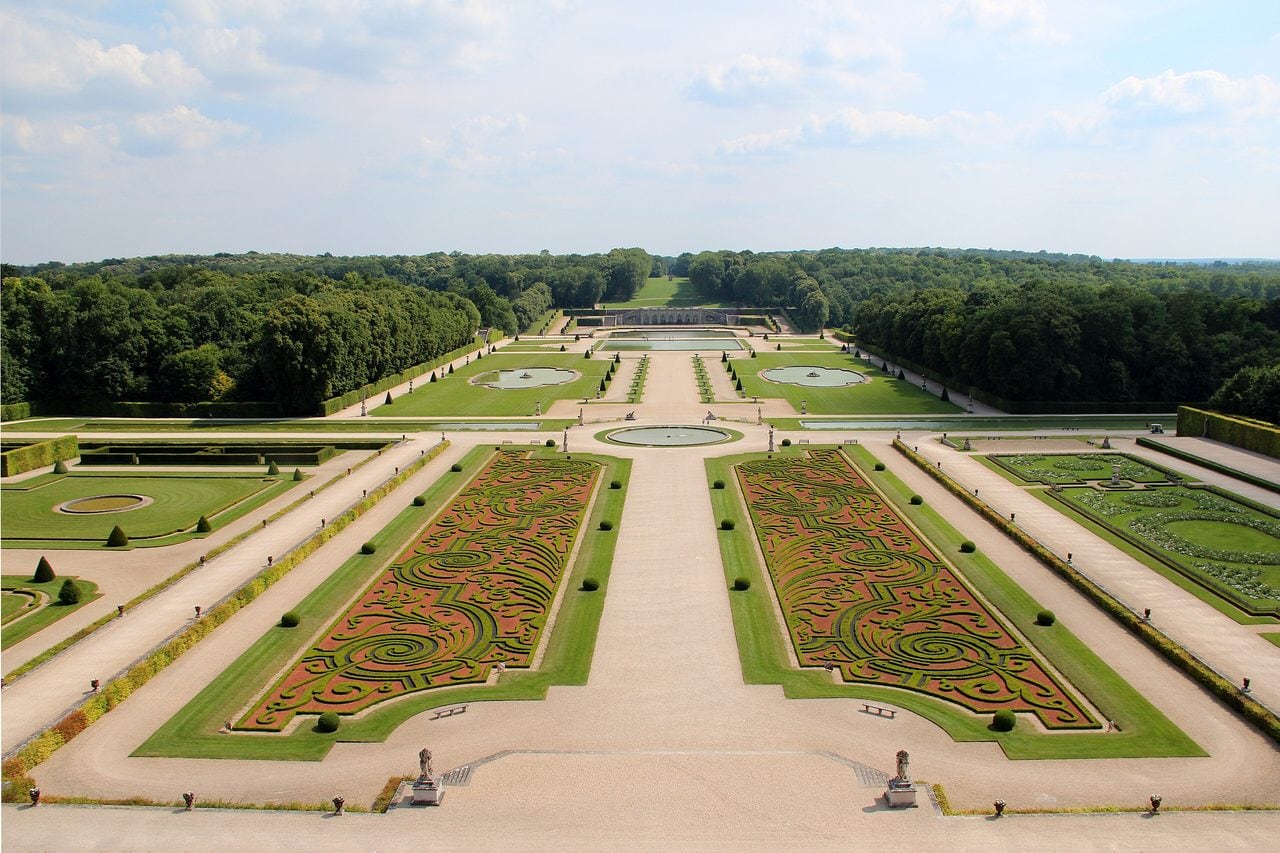
Le Nôtre achieved this with a device that scholars call anamorphosis abscondita, or hidden distortion. The reflecting pools are cut narrower at the near end and wider at the far end, so the eye, expecting parallel sides, reads them as closer than they are. Square basins are built slightly out of true, and the ground is shaped with subtle counter-slopes that flatten the descent into one continuous picture. The decoration follows the same logic: near the house, intricate scrollwork parterres invite a close, downward gaze, while farther off the detail dissolves into plain grass meant to be read at a distance.
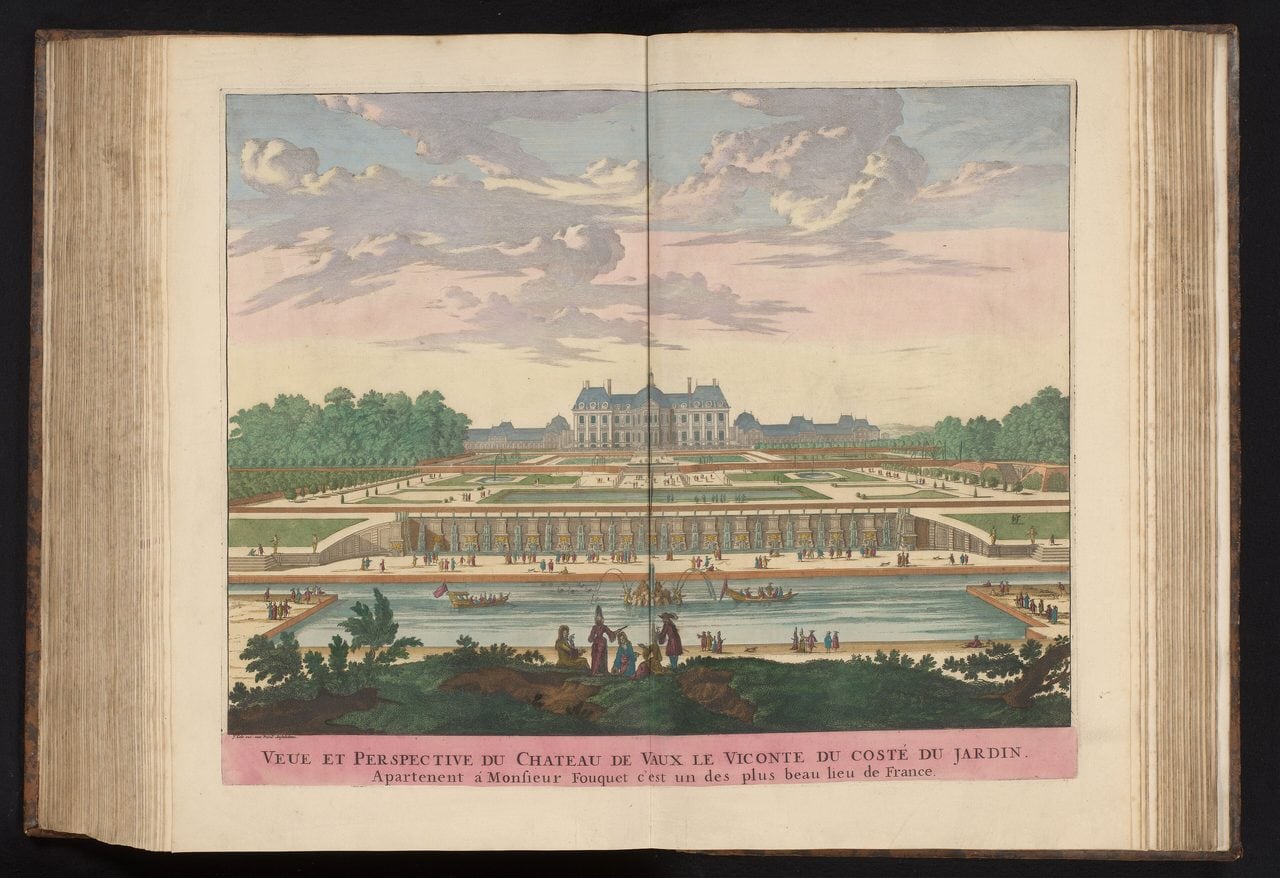
Greatest of all the sleights of hand is the water. The Grand Canal that crosses the garden lies in a hidden dip, completely invisible from the terrace, so that a sheet of water nearly a kilometer long appears only when the visitor has walked far enough to discover it. Below it, grottoes set with river-god figures seem to stand just behind the canal, when in fact a wide gulf of ground separates them. The far end of the vista closes on a colossal gilded copy of the Farnese Hercules, set there during the nineteenth-century restoration, drawing the eye to the very limit of the estate. The effect has been studied by garden historians and even modeled with geometry; it remains the clearest demonstration that the French formal garden was an art of perspective and not merely of planting. On certain days the basins still come alive with their old fountain displays, the closest a modern visitor can come to the garden Fouquet showed his king.
The fête of August 17, 1661
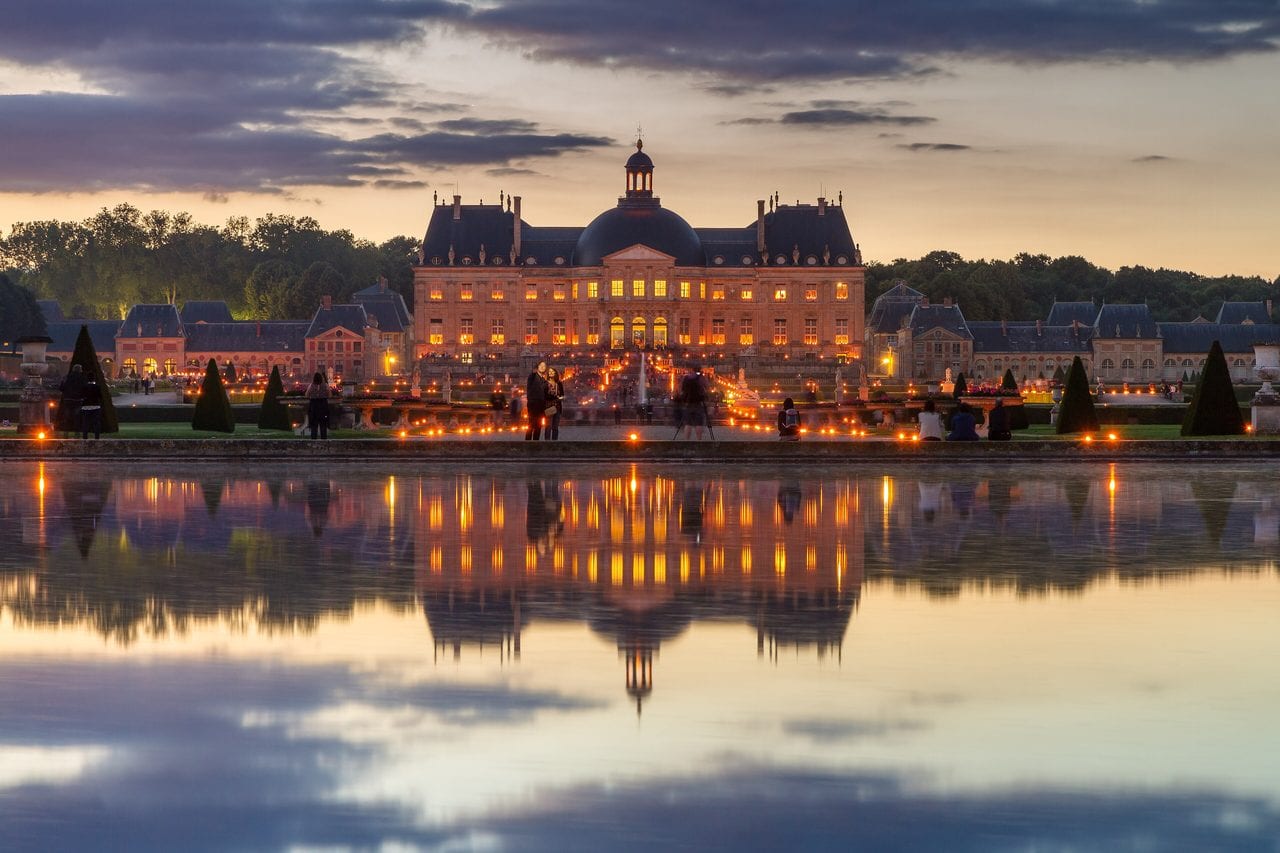
Vaux-le-Vicomte was finished in 1661, and Fouquet chose to unveil it with a single overwhelming evening in honor of the king. On August 17, Louis XIV arrived at about six in the evening, having driven over from the royal palace of Fontainebleau with his mother, Anne of Austria, and a crowd of some six hundred courtiers. Le Brun himself guided the royal party through the interiors. Then came the feast, arranged by Fouquet’s celebrated steward, François Vatel, who served it as an ambigu, a lavish buffet in which every dish, savory and sweet alike, appeared at once on a service of silver-gilt finer than the king’s own.
Equally new was the entertainment. In the illuminated gardens, the company watched the première of Les Fâcheux, a comedy-ballet written by Molière in a matter of days, its music and dances by Pierre Beauchamp. It was the first work of its kind, a fusion of theater, dance, and music that the king would later make his own. Between the acts, performers slipped out of the greenery to hand jewels to the ladies, and a lottery was held in which, by careful arrangement, every ticket was a winner. The poet Jean de La Fontaine, a friend and pensioner of Fouquet, was among the guests, and a spectacular fireworks display closed the night above the canals and grottoes. The writer Paul Morand later distilled the evening into a single line: at six in the evening Fouquet was the king of France, and by two in the morning he was nothing at all.
The fall of Fouquet
By the end of the night, the young king had seen enough. Louis XIV was twenty-two, and only months earlier the death of Cardinal Mazarin had left him determined to rule without a chief minister. The splendor of Vaux did not flatter him; it alarmed him, for it suggested that a servant had grown richer and more magnificent than his master. Fouquet’s rival Jean-Baptiste Colbert, whose own emblem was a grass snake to set against the squirrel, had been whispering for months that the superintendent’s fortune came from looting the treasury, and the fête seemed to prove the point. The king reportedly wished to arrest his host that very night and was talked out of it by his mother.
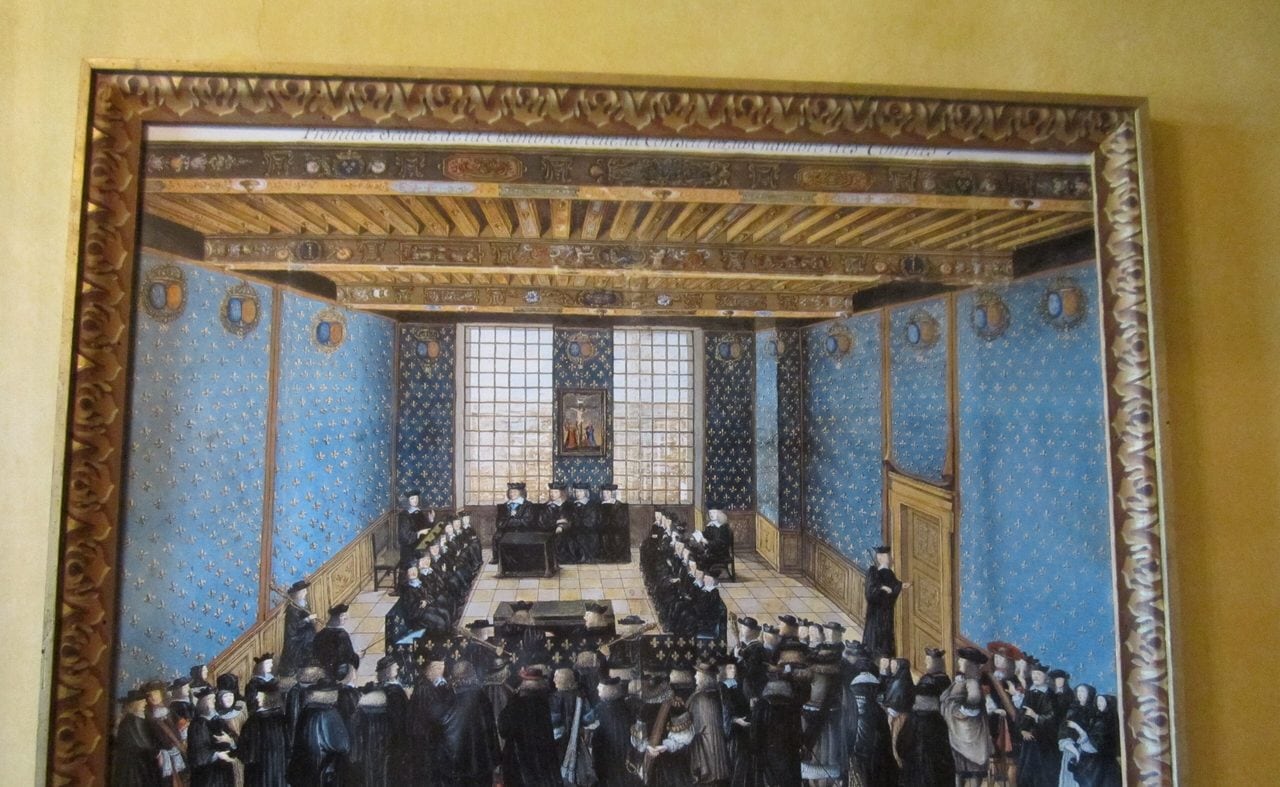
Instead he waited. On September 5, 1661, his own birthday, Louis XIV had Fouquet arrested at Nantes by d’Artagnan, then a sub-lieutenant of the king’s musketeers and the real officer behind the later legend. The trial that followed dragged on for three years and became the affair of the century. Fouquet defended himself so ably, and won so much public sympathy, that in December 1664 his judges chose banishment over death by a vote of thirteen to nine; the magistrate who argued for that lighter sentence, Olivier Lefèvre d’Ormesson, saw his own career destroyed for it. Louis XIV refused to accept the verdict and used his royal prerogative to make the sentence harsher rather than gentler, in what is often described as the only time a French king overruled his court to deepen a punishment. Fouquet was condemned to prison for life. He was shut away in the fortress of Pignerol, in the Alps on the edge of Savoy, where one of his fellow prisoners would later feed the enduring legend of the Man in the Iron Mask. There Fouquet died on March 23, 1680, after nearly two decades of confinement.
His steward met an end almost as theatrical. François Vatel went on to serve the Prince de Condé, and ten years after the fête, charged with feeding the king again at Chantilly and fearing that the fish for the banquet would not arrive in time, he ran himself through with his own sword. The story, preserved in Madame de Sévigné’s letters, made Vatel a byword for the perils of perfection.
Louis, meanwhile, did not let the beauty of Vaux go to waste. He confiscated its tapestries, statues, and orange trees, and he took the three men who had built it and turned them loose on a far larger canvas. Le Vau, Le Brun, and Le Nôtre went on to create the Palace of Versailles, where the ideas first tested at Vaux were repeated on a scale meant to leave no rival standing. Versailles is the more famous house. Vaux is the original, and many who visit both come away preferring the smaller, sharper perfection of the place that came first.
From ruin to rescue: Sommier and the de Vogüé
After Fouquet’s fall the estate was placed under seizure, stripped of its finest contents, which were carted off to the royal collections. His widow, Marie-Madeleine de Castille, fought for years to recover it and eventually succeeded, but the family never regained its old standing. Over the following century Vaux passed in 1705 to the maréchal de Villars and in 1764 to the ducs de Praslin, owners who could not always afford so demanding a property, and by the late nineteenth century the château stood empty and Le Nôtre’s gardens had run wild.
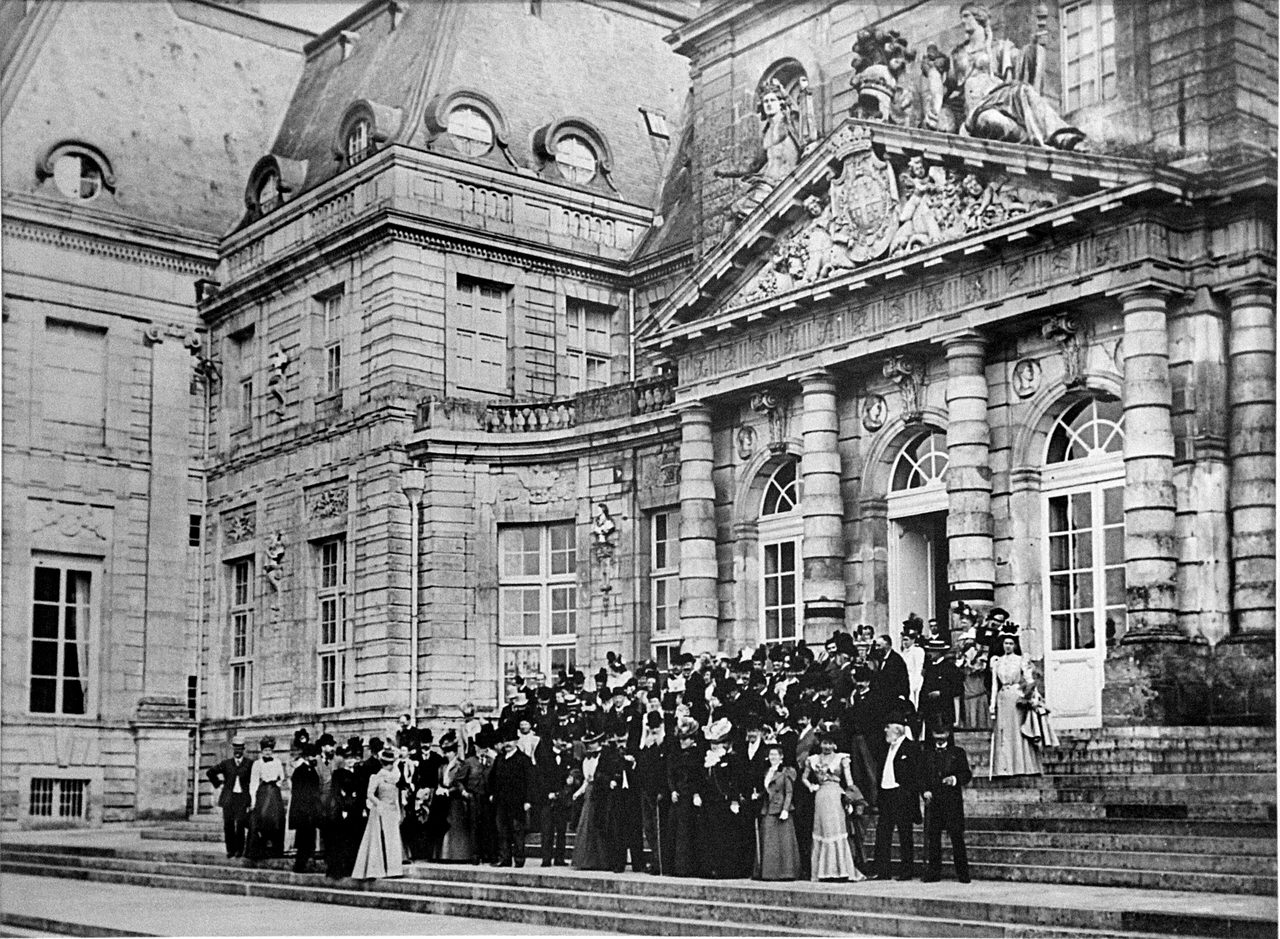
Its rescue came in 1875, when the abandoned estate was sold at auction to Alfred Sommier, a wealthy sugar industrialist and serious collector who is said to have been the only bidder. Sommier poured a fortune into a faithful restoration, working with the architect Gabriel-Hippolyte Destailleur and the landscape designer Élie Lainé to bring back both the building and the gardens; by his death in 1908 the work was largely done. His son Edme Sommier carried it on, even lending the outbuildings as a military hospital during the First World War. In 1968 Alfred Sommier’s great-grandson, Patrice de Vogüé, opened Vaux-le-Vicomte to the public and founded an association to fund its upkeep. Today it is the largest privately owned château in France, a monument historique still in family hands, run by Patrice de Vogüé’s three sons, Alexandre, Jean-Charles, and Ascanio. The rooms are furnished as though their owner had only just stepped out, which is to say as though Fouquet might yet return to finish his interrupted dream.
Visiting the Château de Vaux-le-Vicomte
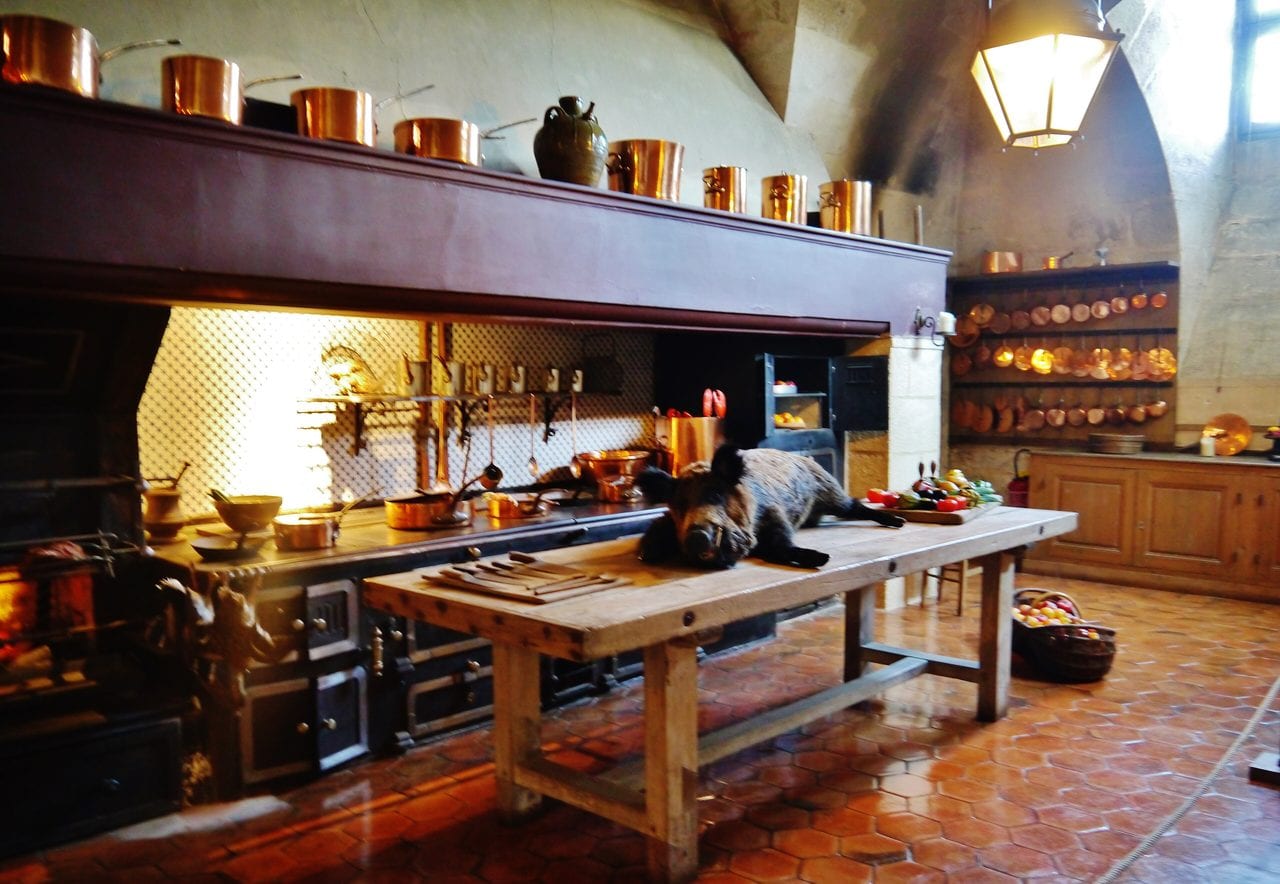
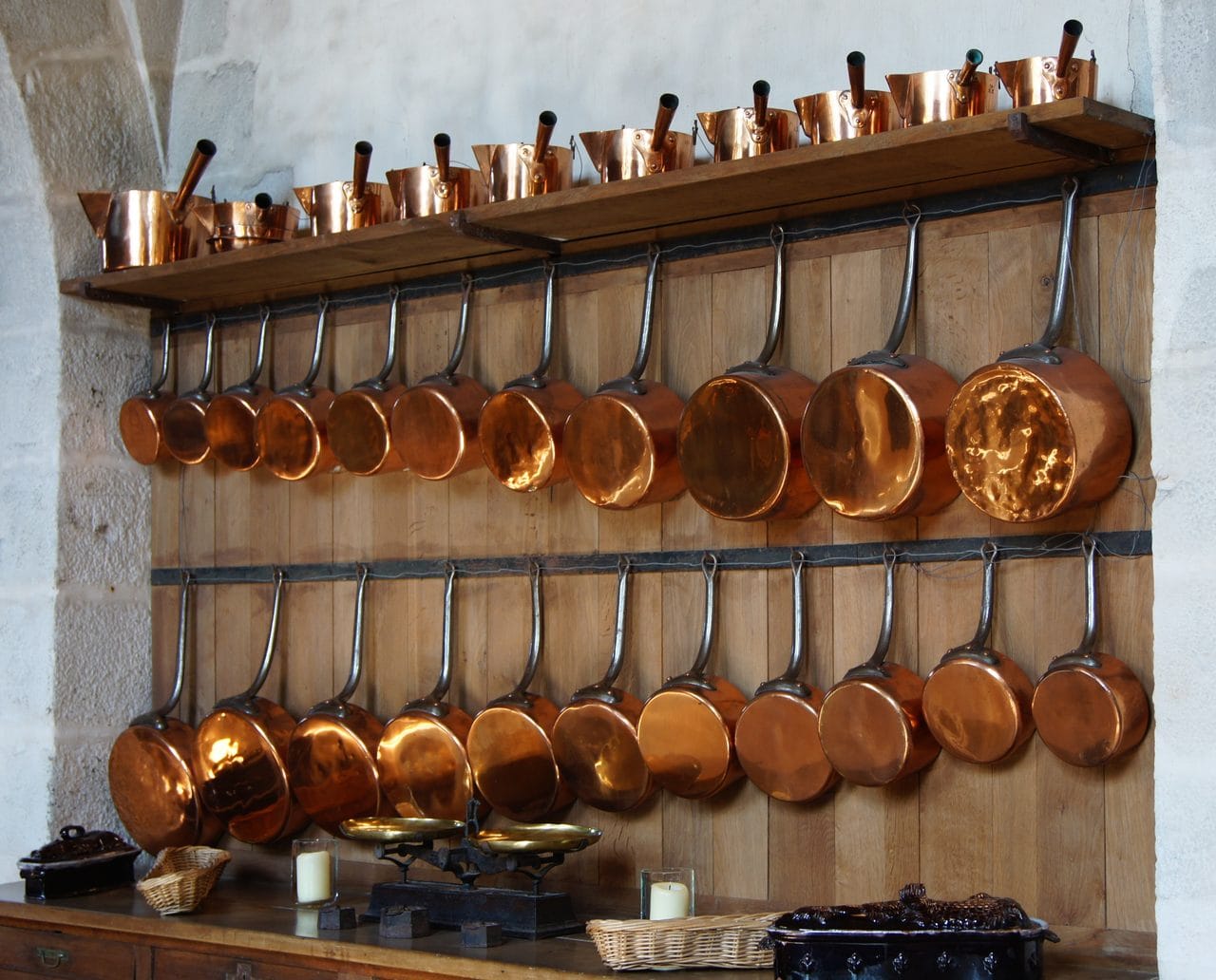
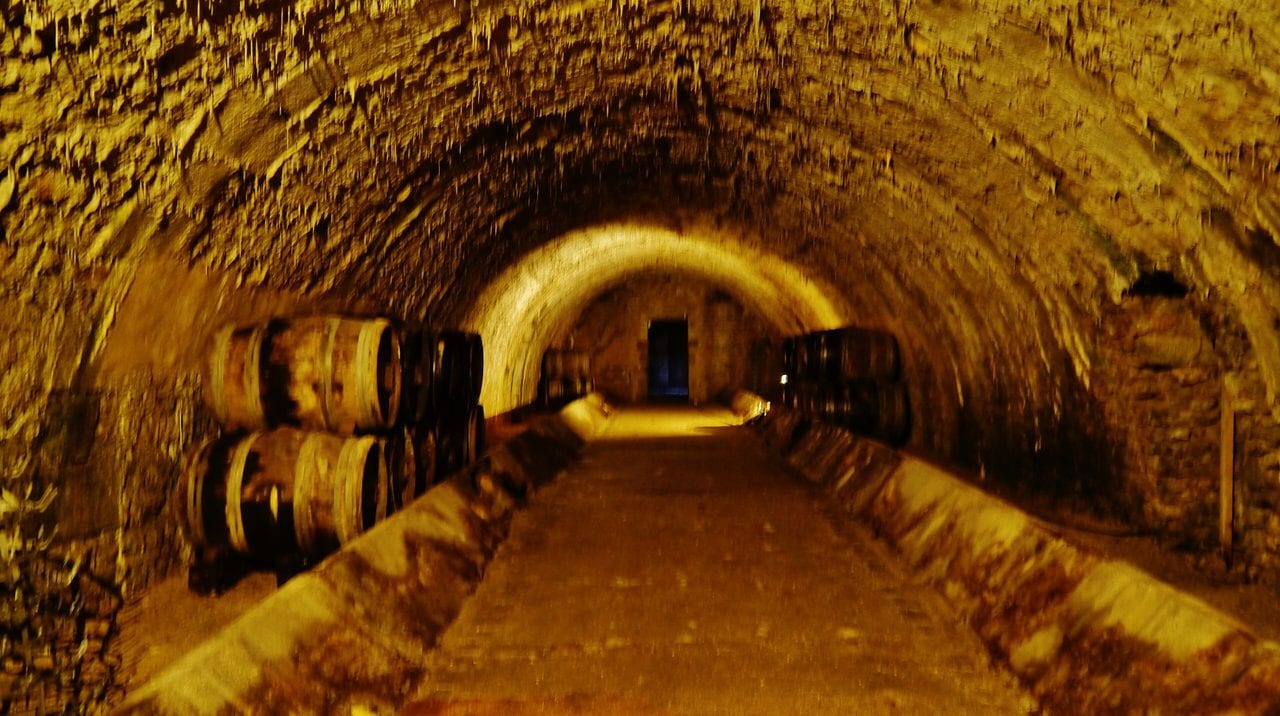
The arrival sets the tone: you cross the wide moat into the cour d’honneur, where the entrance front rises ahead behind its wrought-iron gates and the great dome shows above the roofline. Vaux-le-Vicomte lies near the village of Maincy, about six kilometers from Melun and roughly fifty kilometers southeast of Paris, which makes it an easy day trip from the capital. Drivers take the A6 or A4 out of Paris and turn onto the A5, with free parking at the gates; without a car, the simplest route is the direct Line R train from Gare de Lyon to Melun, about half an hour, then the daily Chateaubus shuttle from outside the station or a short taxi ride to the estate. A standard ticket covers both the château and the gardens, and the place rewards a half-day at an unhurried pace: the painted state apartments and the vaulted kitchens below, then the long walk down into Le Nôtre’s garden to watch the perspective unfold, ideally as far as the Grand Canal and the Hercules at its end.
Most atmospheric of all is to see the place by candlelight. On Saturday evenings from the middle of May to late September the château holds its Soirées aux Chandelles, lighting some two thousand candles through the rooms and along the garden walks, the basins running with their old fountain displays and the evening usually capped by fireworks, in a deliberate echo of Fouquet’s lost fête. The estate is otherwise open daily from mid-March to the start of November, with further openings for the Christmas season; a self-service restaurant named Le Relais de l’Ecureuil, for the squirrel of Fouquet’s arms, and a gift shop sit among the outbuildings. A standard daytime ticket to the château and gardens runs about eighteen euros for adults, with reduced and gardens-only rates available. For an overnight, the nearest beds are in Melun, six kilometers off and on the same Line R, though pairing Vaux with a night in Fontainebleau, twenty kilometers south at the historic Aigle Noir on the palace square, retraces the route Louis XIV himself drove to the fête. Opening hours, ticket prices, and the candlelit calendar all shift with the season, so it is worth confirming the current details on the official site, vaux-le-vicomte.com, before setting out.
Entry tickets and guided tours can be booked in advance through GetYourGuide, and anyone staying overnight nearby can compare hotels near Vaux-le-Vicomte.
Some links on this page are affiliate links, which means StoneKeep Atlas may earn a small commission, at no extra cost to you, if you book through them.
More Views of the Château de Vaux-le-Vicomte
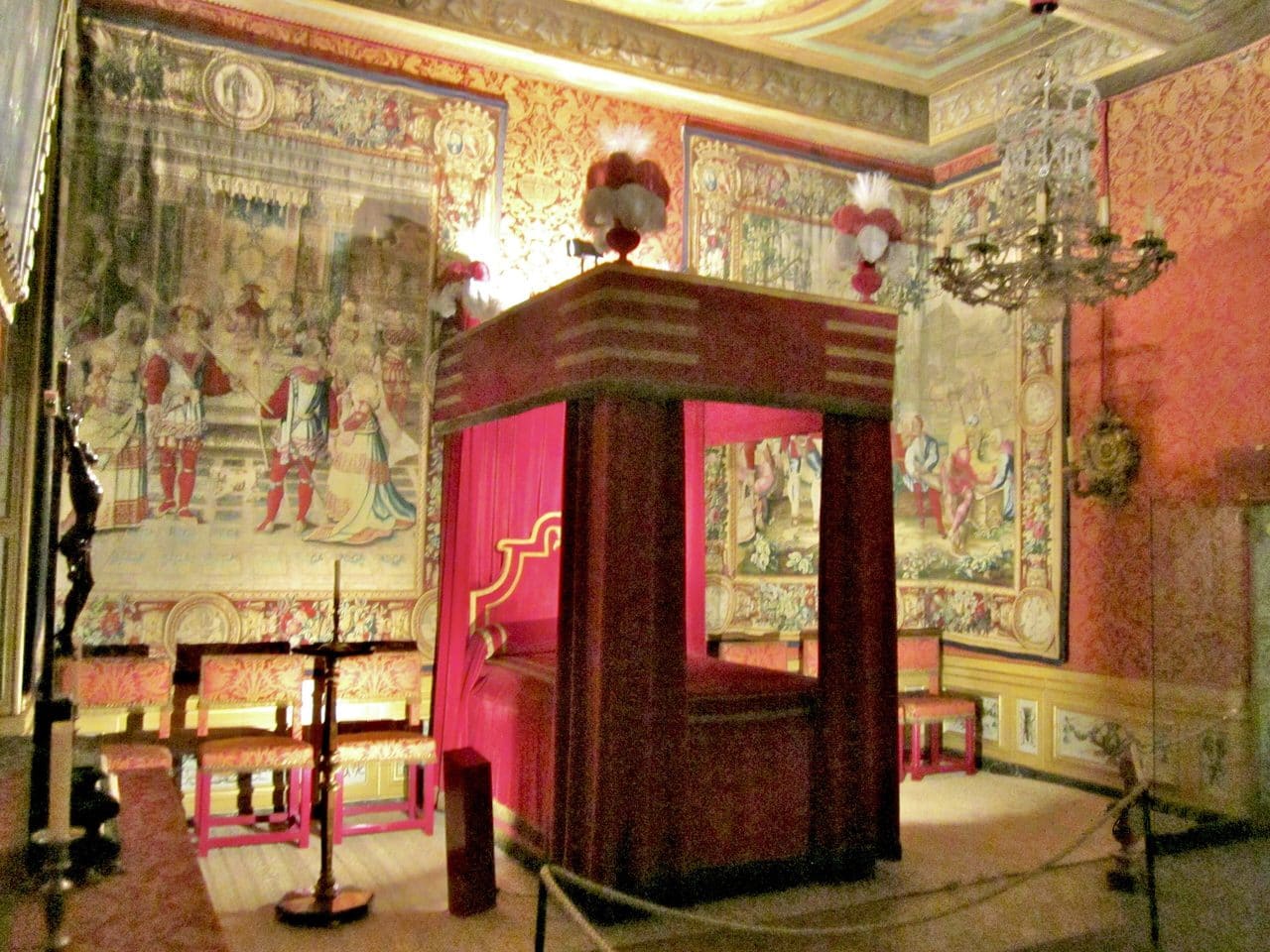
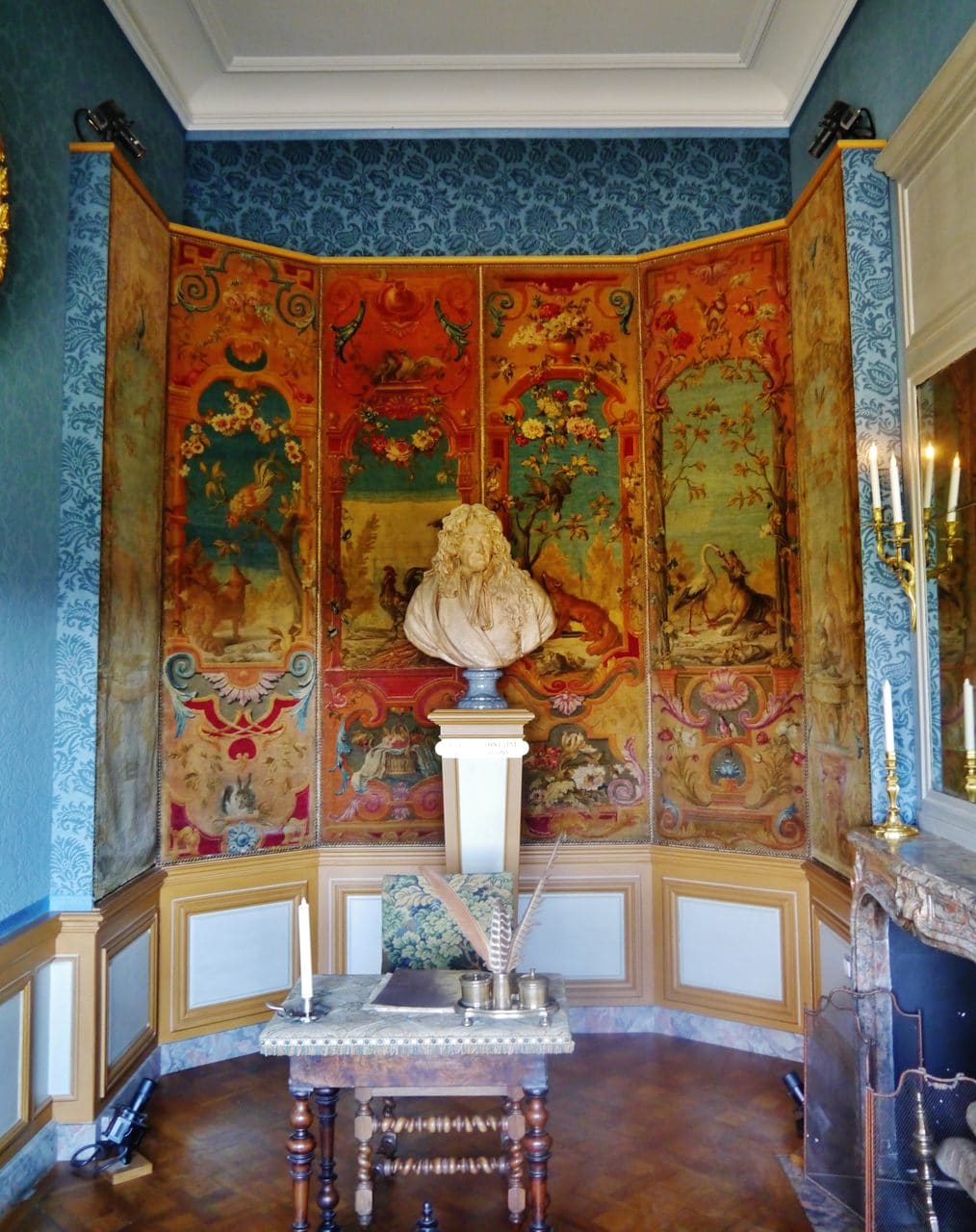
A closer look at the entrance front and the dome, the state apartments and Le Brun’s painted rooms, the kitchens and cellars below, and the gardens that bend the eye.
Beyond the Château de Vaux-le-Vicomte
Vaux belongs to a tight circle of great houses ringing Paris, and its story runs straight through them. Its most direct heir is the Palace of Versailles, where Le Vau, Le Brun, and Le Nôtre repeated the lesson of Vaux at a scale designed to overawe all of Europe. That scaling-up of magnificence into a machine of state is the theme of our history, Versailles and the Architecture of Absolutism. To the east, the medieval royal fortress of the Château de Vincennes connects to Vaux twice over: Le Vau had just built its classical royal pavilions for Cardinal Mazarin, and the disgraced Fouquet was among the famous prisoners held within its walls before his final transfer south. And it was from the older royal residence of the Château de Fontainebleau, where the court was staying that August, that Louis XIV set out for the fête of August 1661. Together the four trace the arc of French royal taste from the medieval keep to the classical palace.
Vaux-le-Vicomte has its own episode, listed in the documentary collection.
Conclusion
Vaux-le-Vicomte is one of those rare places where a single building tells a whole national story. In a handful of years it gathered the talents that would define French art for a century and fixed the template of the classical château and garden. Fouquet lost the house, his office, and his liberty within months of finishing it, yet the thing he made survived him, was rescued from ruin, and stands today very much as he meant it to be seen. Versailles may be grander, but it was Vaux that came first and showed the way. To stand at the top of its garden stair and watch the perspective stretch toward the horizon is to see the precise moment when French taste discovered what it wanted to be.
Principal Sources
- “Anamorphosis abscondita at Vaux-le-Vicomte.” Peer-reviewed analysis published in the Journal of Cultural Heritage.
- Château de Vaux-le-Vicomte. Official site, for the history and visitor information. vaux-le-vicomte.com.
- Encyclopædia Britannica. “Vaux-le-Vicomte.”
- La Fontaine, Jean de, and Madame de Sévigné. Contemporary accounts of the fête and of Vatel’s death.
- Ministère de la Culture. Base Mérimée, for the monument historique classification.
- Morand, Paul. Fouquet ou le Soleil offusqué. Gallimard, 1961, the source of the celebrated epigram on the night of the fête, often misattributed to Voltaire.
- Pitts, Vincent J. Embezzlement and High Treason in Louis XIV’s France: The Trial of Nicolas Fouquet, for the arrest and trial.
- Weiss, Allen S. Mirrors of Infinity: The French Formal Garden and Seventeenth-Century Metaphysics. Princeton Architectural Press, on Le Nôtre’s optics.
Image credits. Garden front (banner): Theo ratler, CC BY-SA 3.0; portrait of Nicolas Fouquet: Robert Nanteuil, public domain; court-side elevation: Jean Marot, public domain; Grand Salon, Chambre des Muses, Antichambre d’Hercule, library, Cabinet de Madame Fouquet, kitchens and cellars: Zairon, CC BY-SA 4.0; parterres de broderie and Grand Salon loggia: Jean-Pol Grandmont, CC BY 4.0; site plan: Israel Silvestre, public domain; 17th-century garden view: Rijksmuseum, CC0; candlelit evening: Benh LIEU SONG, CC BY-SA 4.0; Chambre de Justice: Chatsam, CC BY-SA 4.0; gathering on the steps: unknown author, public domain; Chambre de Nicolas Fouquet: Chatsam, CC BY-SA 3.0; entrance across the moat: Francesco Falconetti, CC BY 4.0; garden sphinx: Maxime Homme, CC0; crown fountain: Olga Khomitsevich, CC BY 2.0; copper pans: Jebulon, public domain; aerial view: Carsten Steger, CC BY-SA 4.0. All via Wikimedia Commons. Freely licensed images are resized to fit; otherwise unaltered.