
Château de Pierrefonds
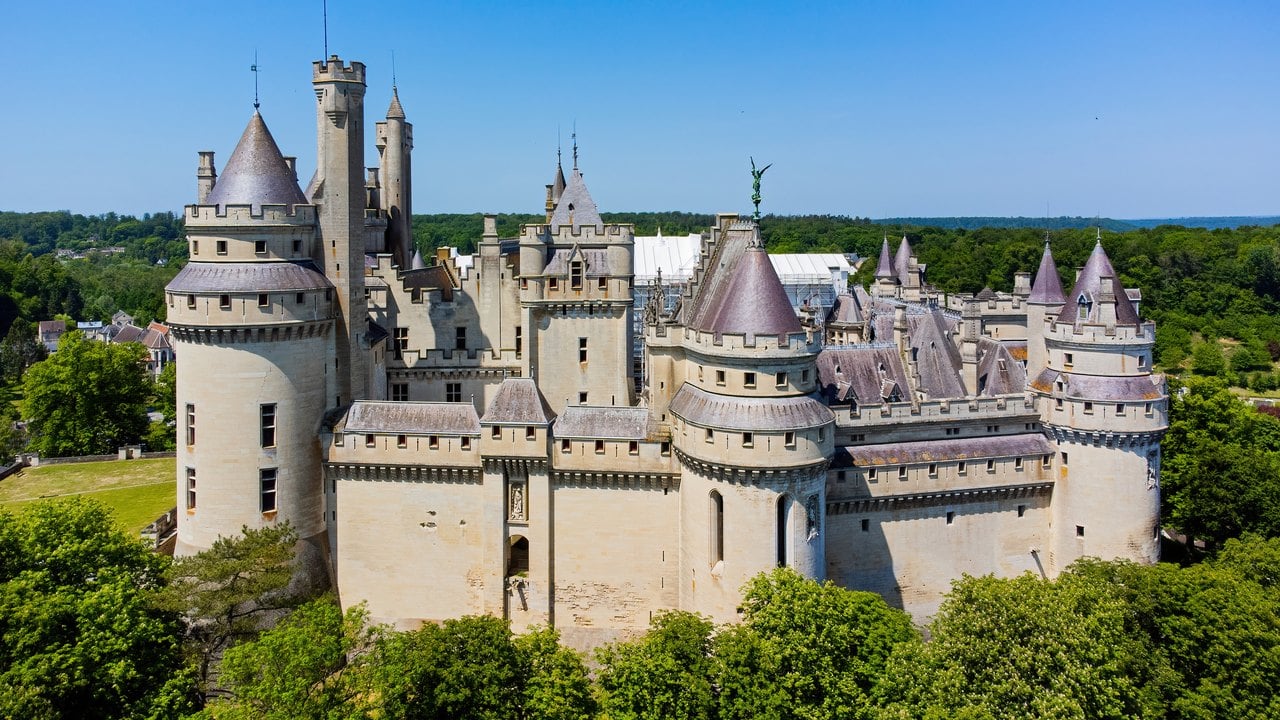
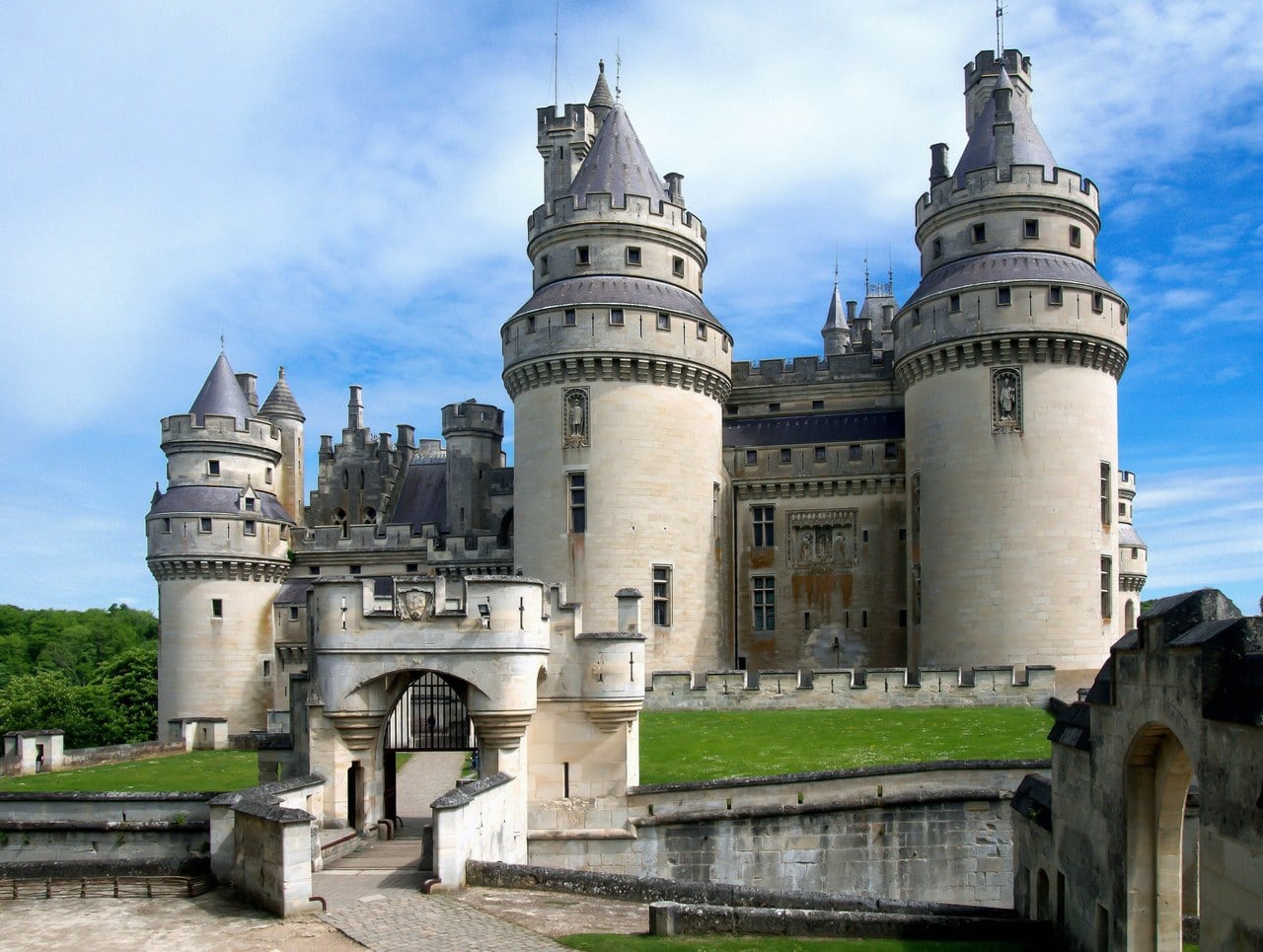
Rising above its village at the edge of the Compiègne Forest, the Château de Pierrefonds looks like the most complete medieval fortress in France: eight colossal towers, a double curtain wall bristling with machicolations, a drawbridge over a rock-cut ditch. It is also, in a sense, the least medieval. The castle you walk today is barely more than a century and a half old, the work of Eugène Viollet-le-Duc, who rebuilt a genuine late-medieval ruin for Napoleon III into something its original builders would not have recognized. Outside, he reconstructed the war architecture of around 1400 with an archaeologist’s care. Inside, he invented: polychrome halls, a chapel out of a dream, and a fireplace crowned by warrior heroines wearing the face of an empress. Pierrefonds is the medieval fortress the nineteenth century finished dreaming, and the story of how a stronghold became a ruin and then a fantasy is one of the strangest in French architecture.
Quick Facts
| Location | Pierrefonds, Oise, Hauts-de-France, France |
| Distance from Paris | About 80 km (50 mi) northeast |
| Built | Medieval castle c. 1396–1407; rebuilt 1857–1885 |
| Architectural style | Late-medieval military fortress; 19th-century reconstruction |
| Built for / by | Louis I, Duke of Orléans; reconstructed by Eugène Viollet-le-Duc for Napoleon III |
| Current use | Monument (Centre des monuments nationaux) |
| Owner | French State |
| Condition | Restored |
| Open to public | Yes (closed 1 Jan, 1 May, 25 Dec) |
| Official website | chateau-pierrefonds.fr |
A fortress for a duke
Pierrefonds belongs to the most dangerous decade of the late French Middle Ages. In 1392 King Charles VI granted the county of Valois, with Pierrefonds among its lands, to his younger brother Louis I, Duke of Orléans, as an apanage; the county itself was raised to a duchy in 1406. Louis was ambitious, cultivated, and locked in a deepening rivalry with the house of Burgundy, first his uncle Philip the Bold and then his cousin John the Fearless, for control of a kingdom whose king slid in and out of madness. Across the 1390s and into the next decade he assembled a ring of fortresses across the lands north and east of Paris, Coucy and La Ferté-Milon among them, with Pierrefonds as the showpiece, set astride the roads that ran toward Flanders and Burgundy. The castle went up quickly, in little more than a decade, on the rock where an eleventh-century stronghold had stood before it. Its design is usually attributed to Raymond du Temple, the royal master mason who raised the great keep at Vincennes, with the building work on site directed by Jean le Noir.
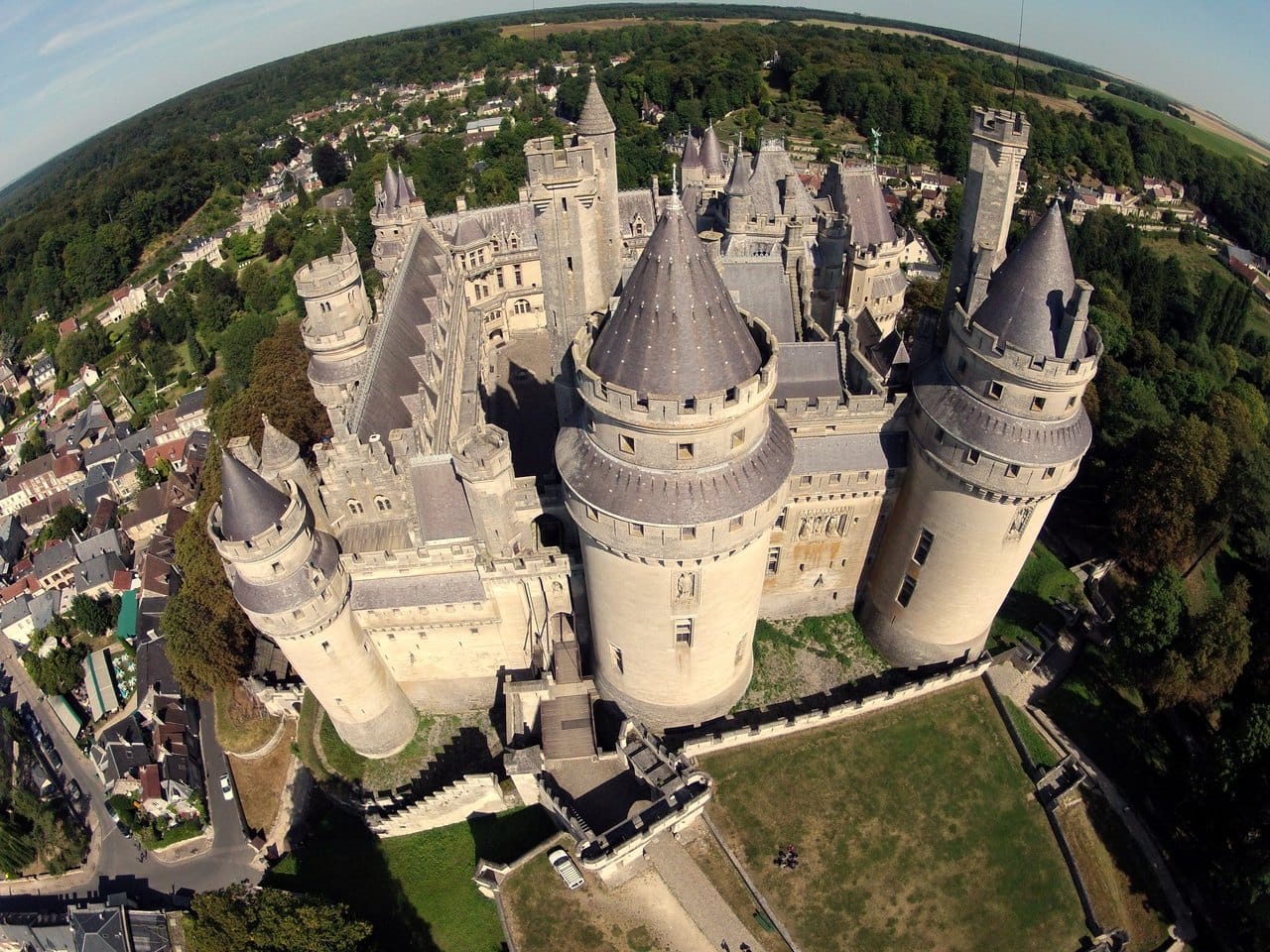
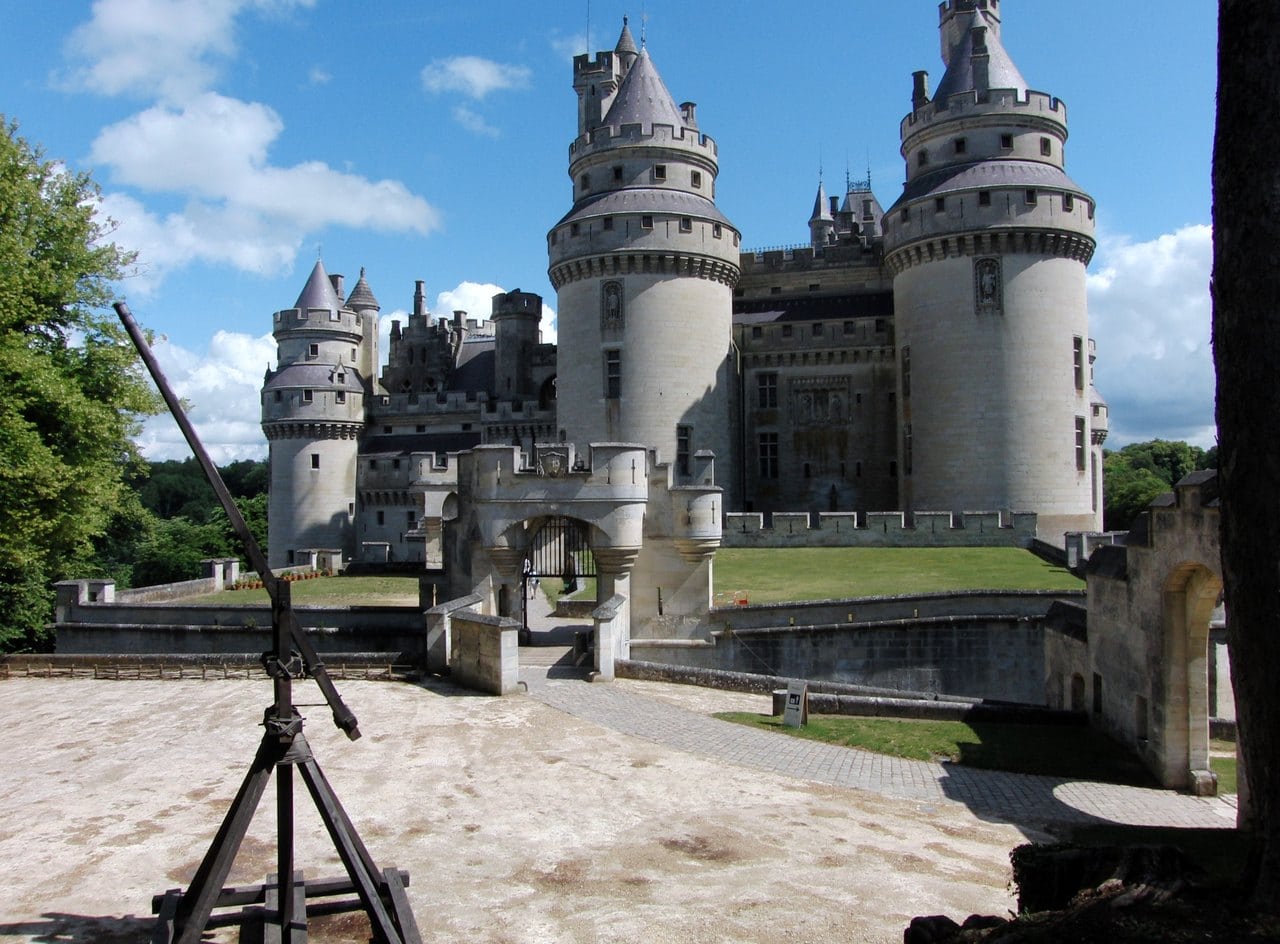
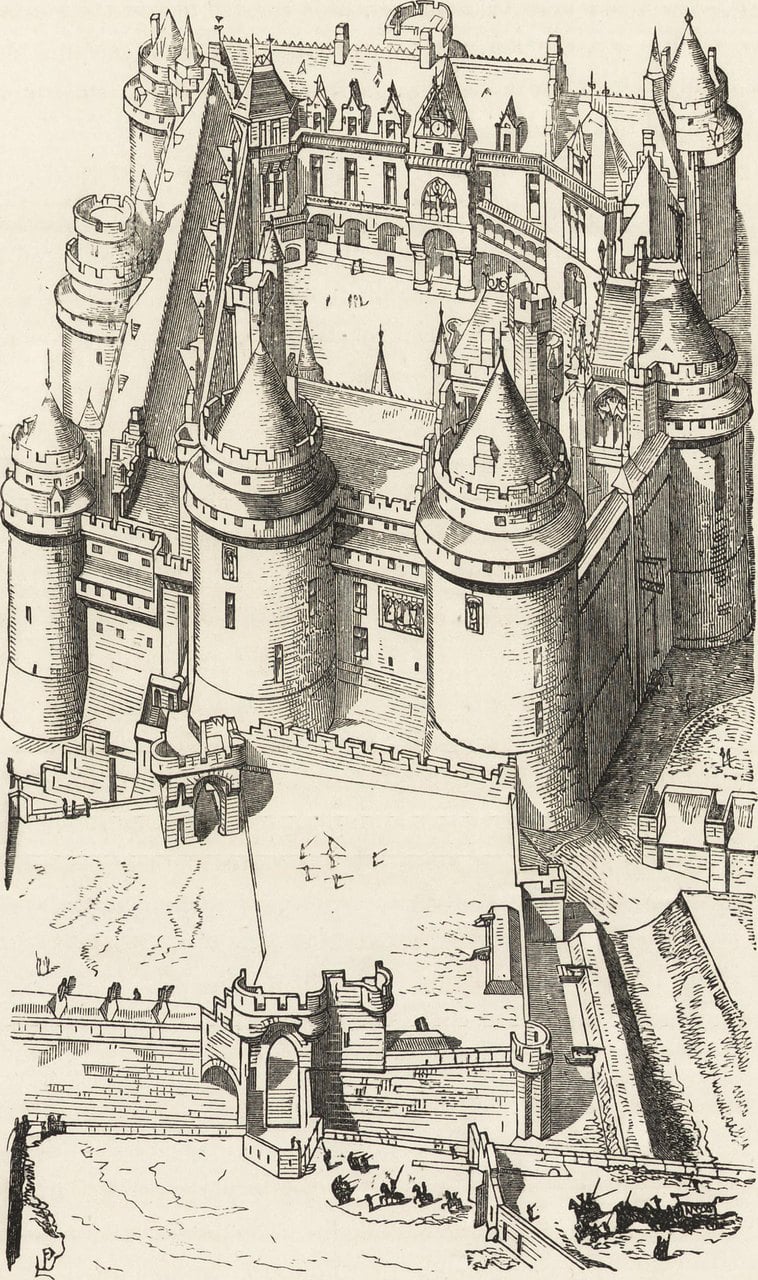
What rose was a fortress of the newest type: an irregular quadrilateral wrapped in a double line of defense, an inner wall standing over an outer one so that two tiers of archers could fire at once, a continuous covered wall-walk, and a residential keep folded into the main range rather than standing apart. Eight massive round towers studded the circuit, and the gatehouse was guarded by a barbican, a drawbridge, and a ditch cut into the living rock.
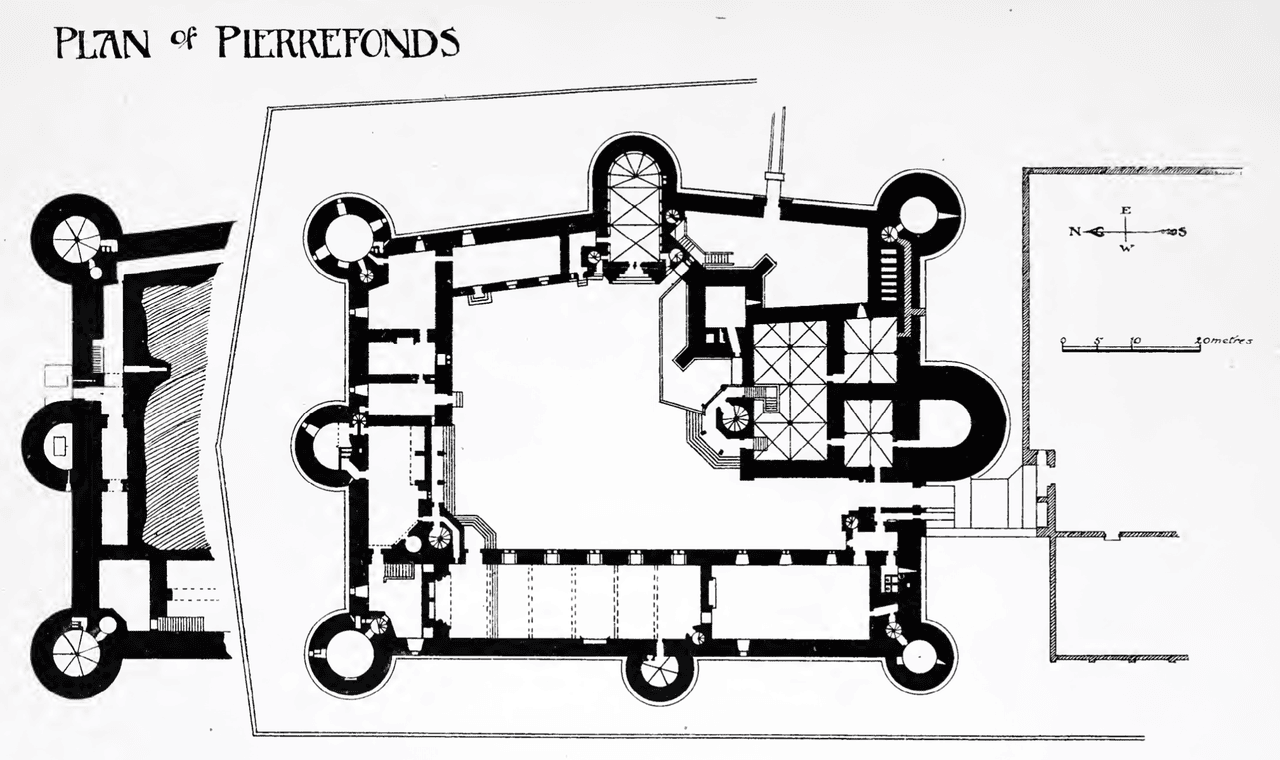
The towers were named for the Nine Worthies, the roll of heroes whose virtues a great lord was meant to embody: Caesar, Charlemagne, Arthur, Alexander, Godfrey of Bouillon, Joshua, Hector, and Judas Maccabeus. The two that faced the open plateau, the towers of Caesar and Charlemagne, were the mightiest, their walls as much as four and a half meters thick and built to shrug off the cannon that were beginning to decide sieges. So the castle announced its owner’s pretensions in stone before a single soldier appeared on the walls. Of the medieval statues only the figure of Hector survives; the rest are Viollet-le-Duc’s nineteenth-century replacements, and the ninth Worthy, King David, was given no tower at all, honored instead inside the chapel.
Louis never settled into it. In November 1407 he was murdered in a Paris street by men in the pay of John the Fearless, an assassination that lit the Armagnac–Burgundian civil war and helped drag France toward its lowest point in the Hundred Years’ War. The castle was all but finished the year its builder died.
A demolition that didn’t finish
For two centuries Pierrefonds passed through the turbulence of French history, attached to the crown, fought over more than once during the Wars of Religion, and finally caught in the noble revolts of Louis XIII’s early reign. By 1617 it belonged to François-Annibal d’Estrées, brother of Gabrielle d’Estrées, who had thrown in with the “party of the discontented” led by Henri II, Prince of Condé. Cardinal Richelieu, then secretary of state for war, sent troops to take it and ordered it slighted so it could never again shelter a rebel.
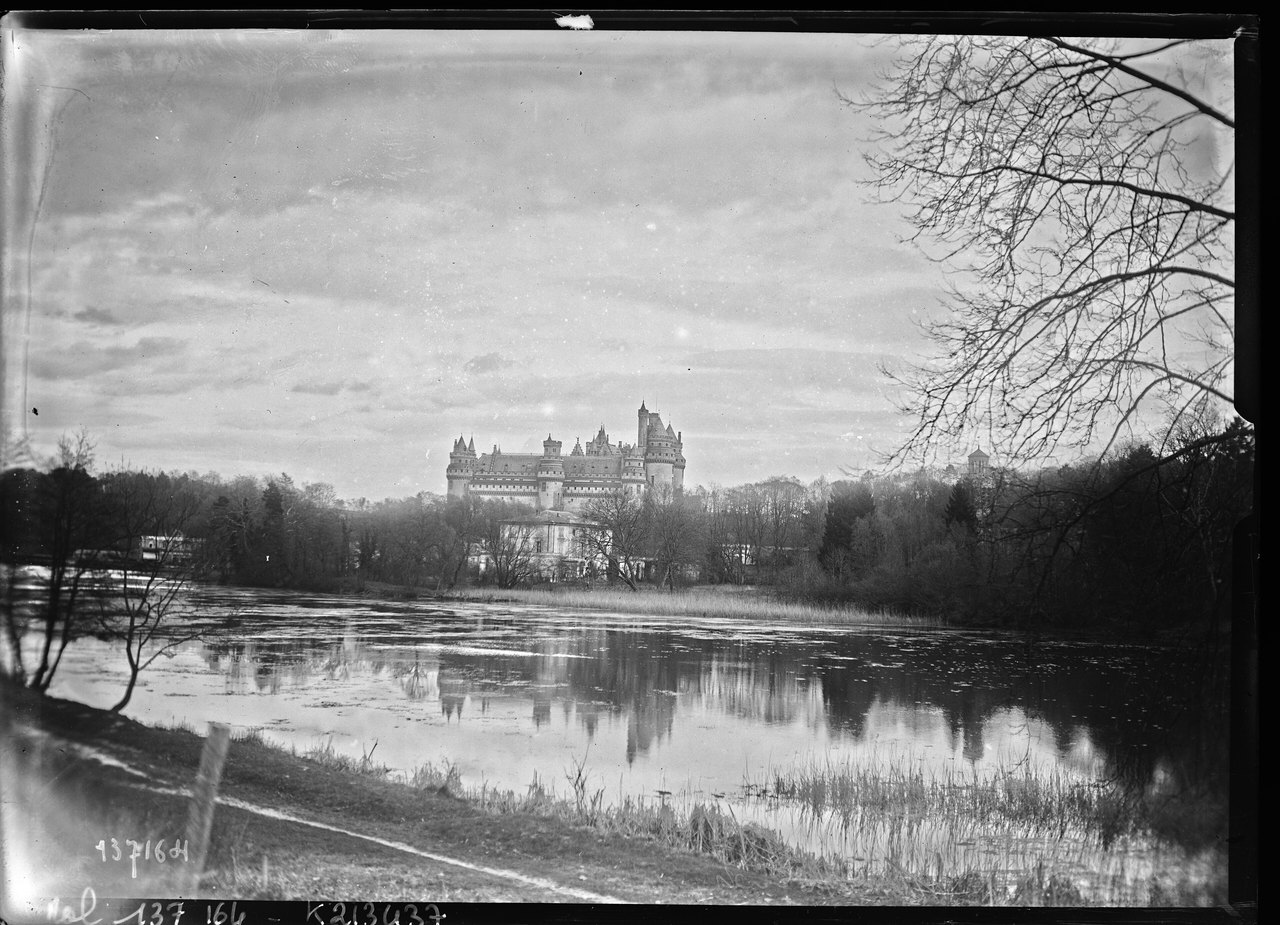
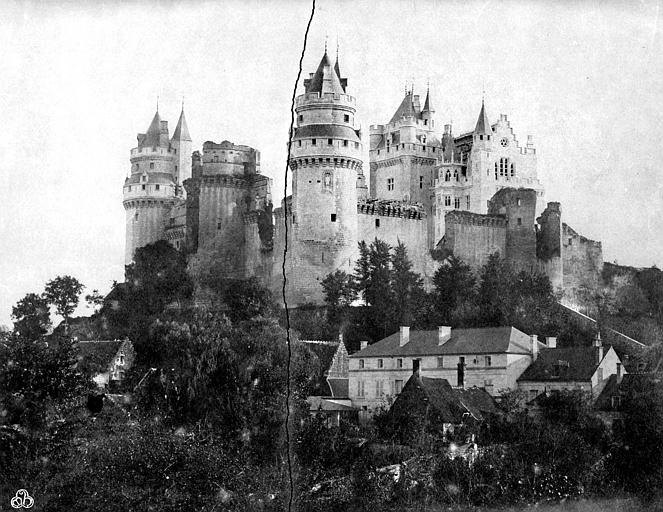
The wreckers did their work, but not all of it. They burned the roofs and floors, breached the towers, and razed the outer defenses. The sheer mass of the place defeated them: it was simply too big to pull down by hand, and the demolition was abandoned half-done. That accident of scale is why Pierrefonds survived at all. A castle reduced to neat rubble disappears into other people’s walls; a castle left as a gutted giant becomes a landmark. For more than two hundred years it stood open to the sky, its broken towers a silhouette above the forest.
The romantic ruin
Sold off as national property during the Revolution in 1798, the ruin was bought for Napoleon I in 1813 for a mere 2,700 francs. He did nothing with it. Its rediscovery came from a change in taste rather than a change of owner. As Romanticism spread through the 1820s and 1830s, the Middle Ages stopped looking barbarous and started looking heroic, and a vast, brooding medieval shell at the edge of a royal forest was exactly the kind of place the age fell in love with. In 1832 King Louis-Philippe held a banquet in the ruins to mark the marriage of his daughter Louise to Léopold, first king of the Belgians. Painters came too: Corot returned to the broken towers again and again between 1834 and 1866. The state recognized what it had, and Pierrefonds was classed a monument historique on the landmark list of 1862.
By then it had already caught the eye of the man who would change everything. As prince-president, the future Napoleon III visited the ruins on 15 July 1850, close to the imperial residence at Compiègne. He was a serious amateur of archaeology, and the place lodged in his imagination.
Viollet-le-Duc’s reinvention
In 1857, now emperor, Napoleon III asked Eugène Viollet-le-Duc to take Pierrefonds in hand, on the advice of the writer Prosper Mérimée, inspector-general of historic monuments. Viollet-le-Duc was the most influential restorer of his century, the man already at work on Notre-Dame de Paris, the Sainte-Chapelle, and the walls of Carcassonne, and the author of a vast dictionary of medieval architecture that taught France how to look at its own Middle Ages. He was also the most controversial, because of a conviction he stated plainly: to restore a building was not to repair it but to return it to a complete state that might never have existed at any single moment in its history. At Pierrefonds he had the rarest thing a restorer can be given, a nearly blank canvas and an emperor’s budget, and he used it to build the Middle Ages he believed in.
The first campaign, from 1858, was modest: stabilize the ruin, partly rebuild the keep and the great towers, and keep the picturesque shell as scenery. Around 1861 the emperor’s ambition swelled, and the project changed character entirely. Pierrefonds was now to become a working imperial residence, a place to receive the court and indulge the era’s appetite for the Middle Ages, and the whole castle would be raised again from the ground. The works would swallow more than five million gold francs before they stopped, the great majority drawn from the emperor’s own purse rather than the public treasury.
 CC0" style="width:437px" srcset="https://stonekeepatlas.com/wp-content/uploads/2026/06/pierrefonds-entrance-historic.jpg 902w, https://stonekeepatlas.com/wp-content/uploads/2026/06/pierrefonds-entrance-historic-211x300.jpg 211w, https://stonekeepatlas.com/wp-content/uploads/2026/06/pierrefonds-entrance-historic-722x1024.jpg 722w, https://stonekeepatlas.com/wp-content/uploads/2026/06/pierrefonds-entrance-historic-768x1090.jpg 768w" sizes="auto, (max-width: 902px) 100vw, 902px" />
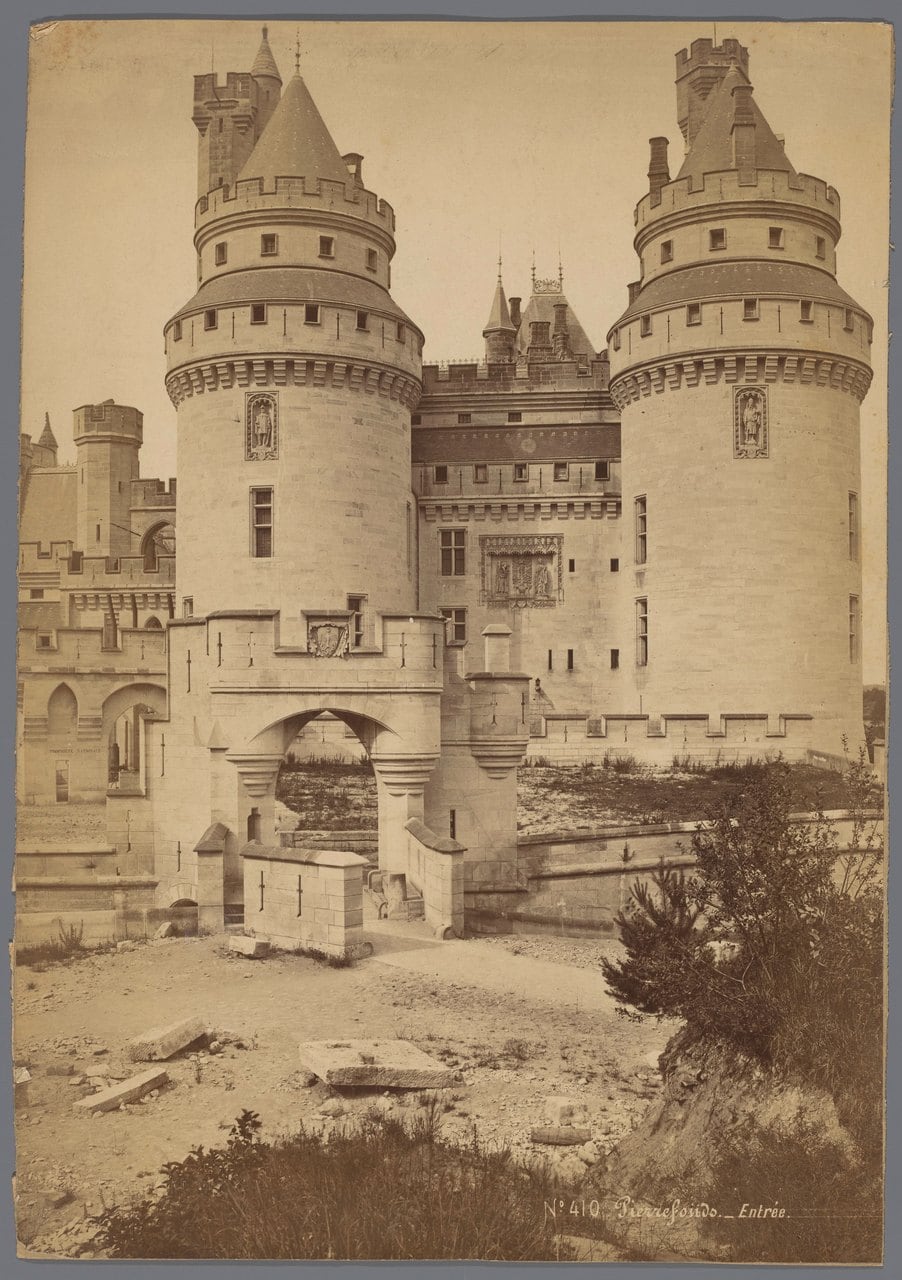
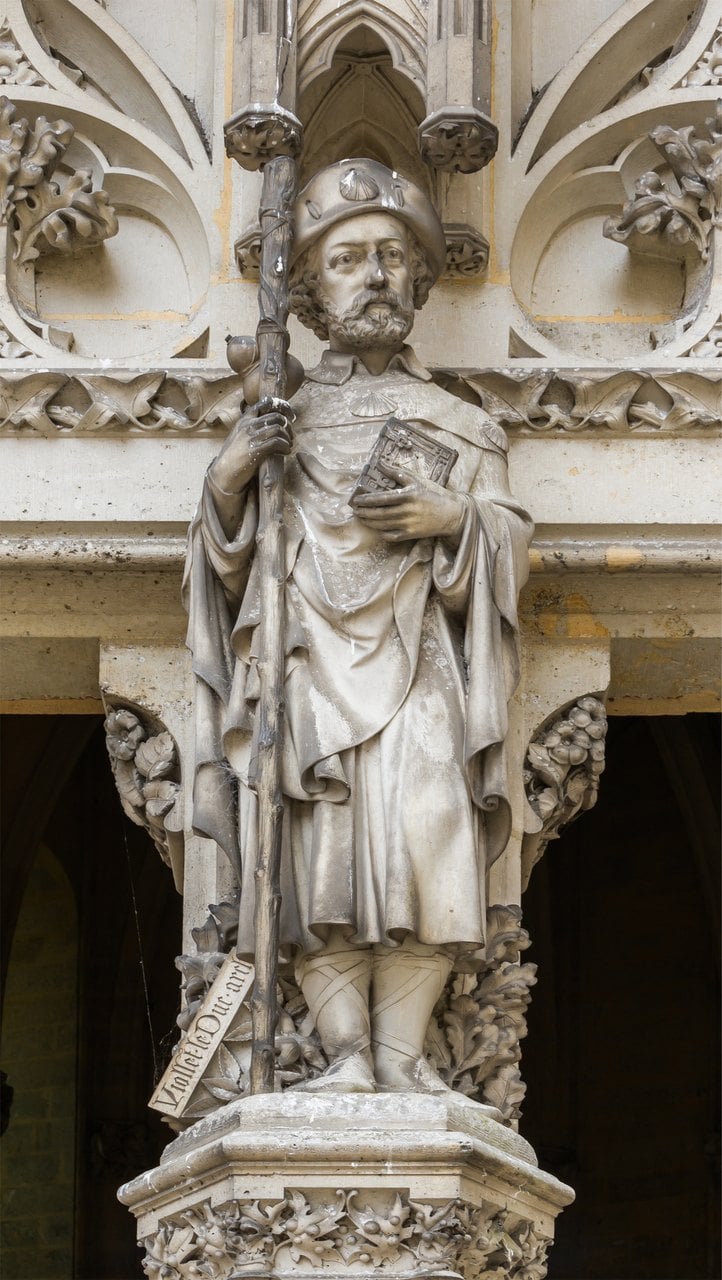
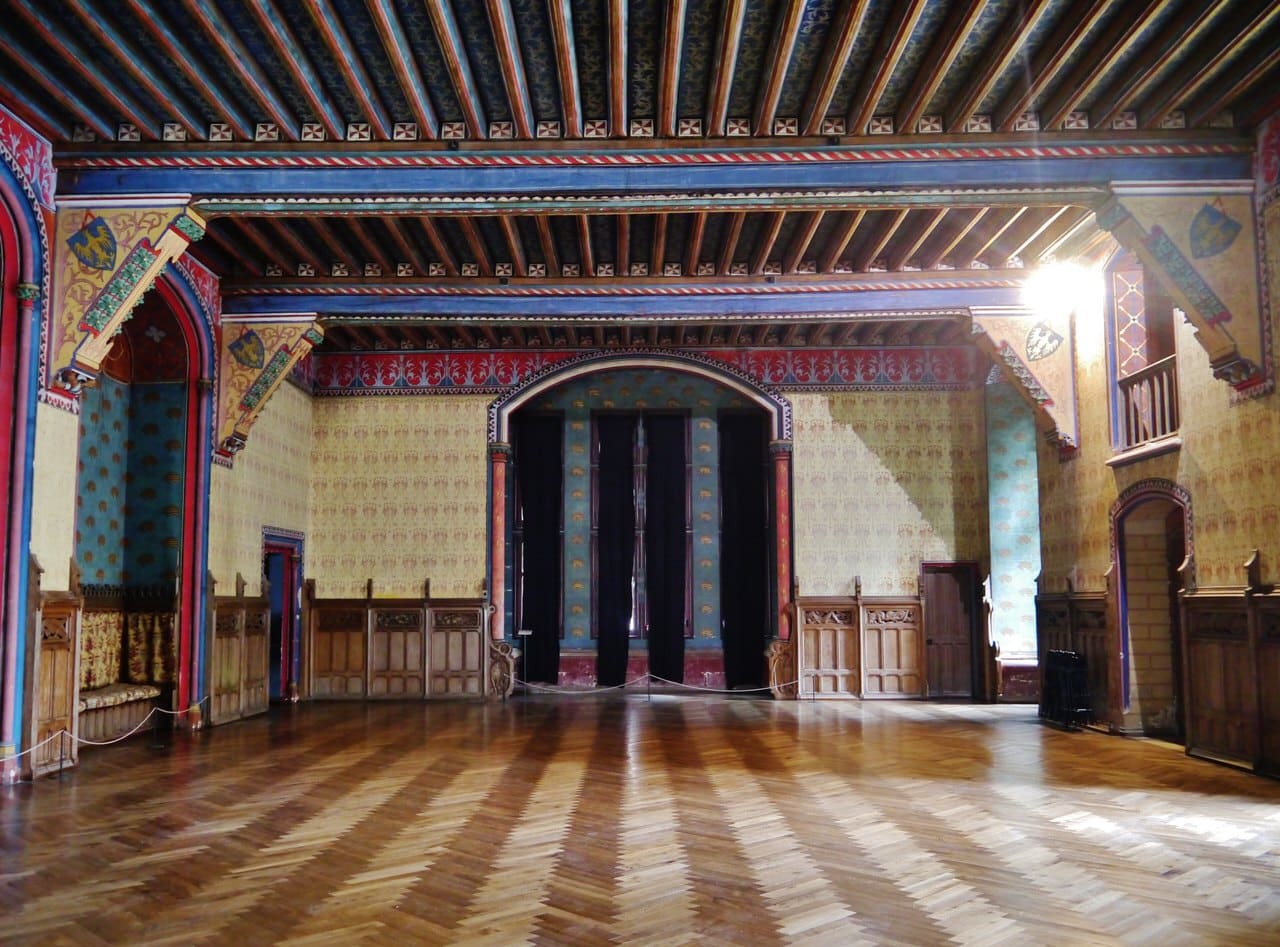
Here the building splits in two. On the outside, Viollet-le-Duc worked like the archaeologist he was, reconstructing the defensive system of a fortress of around 1400 with a fidelity that still teaches military architecture today. On the inside, he let his imagination off the leash. The apartments, halls, and chapel are inventions, glowing with polychrome paint, heraldic beasts, the imperial eagle, and the Valois porcupine, owing as much to the nineteenth century as to the fourteenth. Behind the medieval skin he hid a modern skeleton of iron roof framing and metal ties that no fourteenth-century mason could have raised, so that the most convincing medieval castle in France is, in its bones, a building of the industrial age. He even signed his work: on the chapel front he carved himself as a pilgrim of Saint James, set forever to watch over his creation.
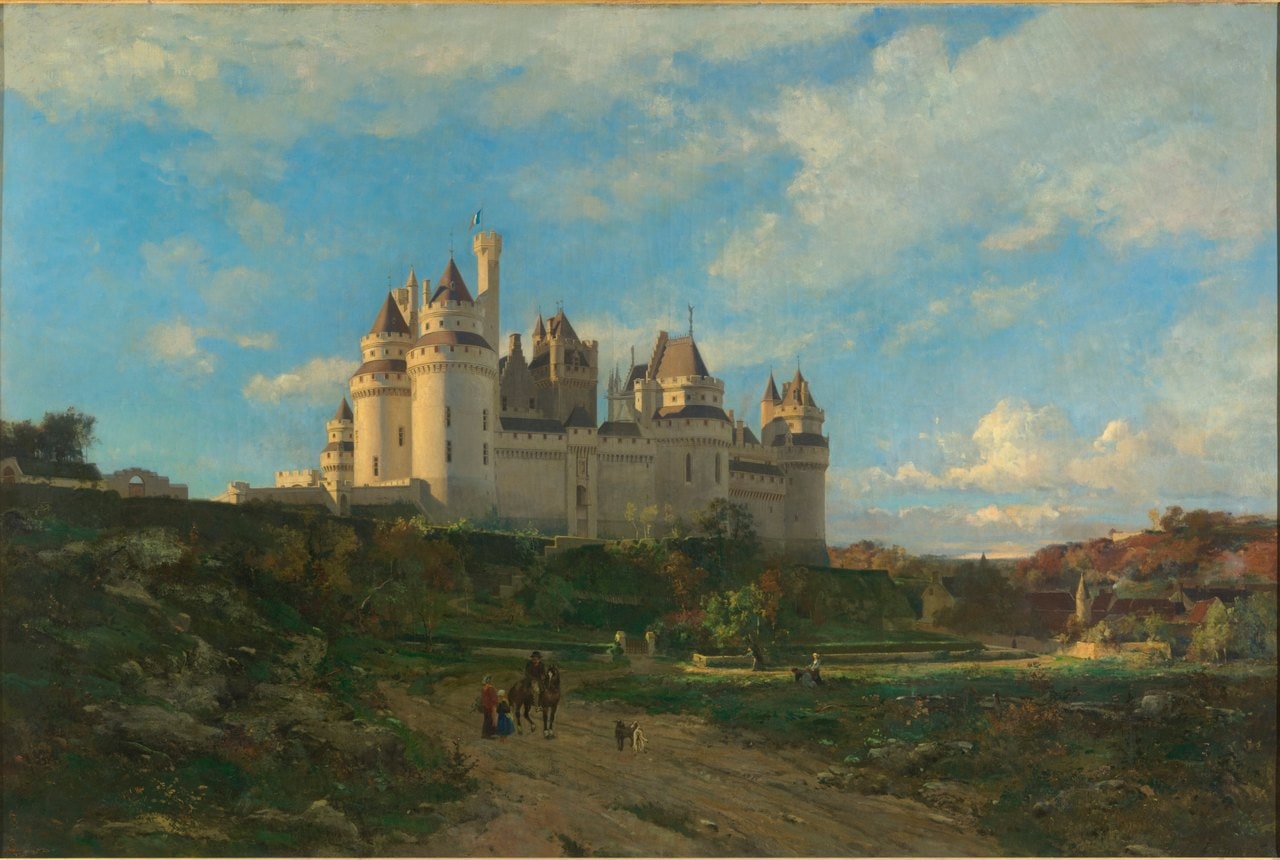
He did not live to see it abandoned. Viollet-le-Duc died in 1879, and the work passed to his son-in-law Maurice Ouradou and then to Juste Lisch. With the Second Empire gone and the money with it, construction halted in 1885, and much of the decoration was never finished. The unfinished rooms are part of the spell: Pierrefonds is a dream caught mid-sentence.
Inside the dream
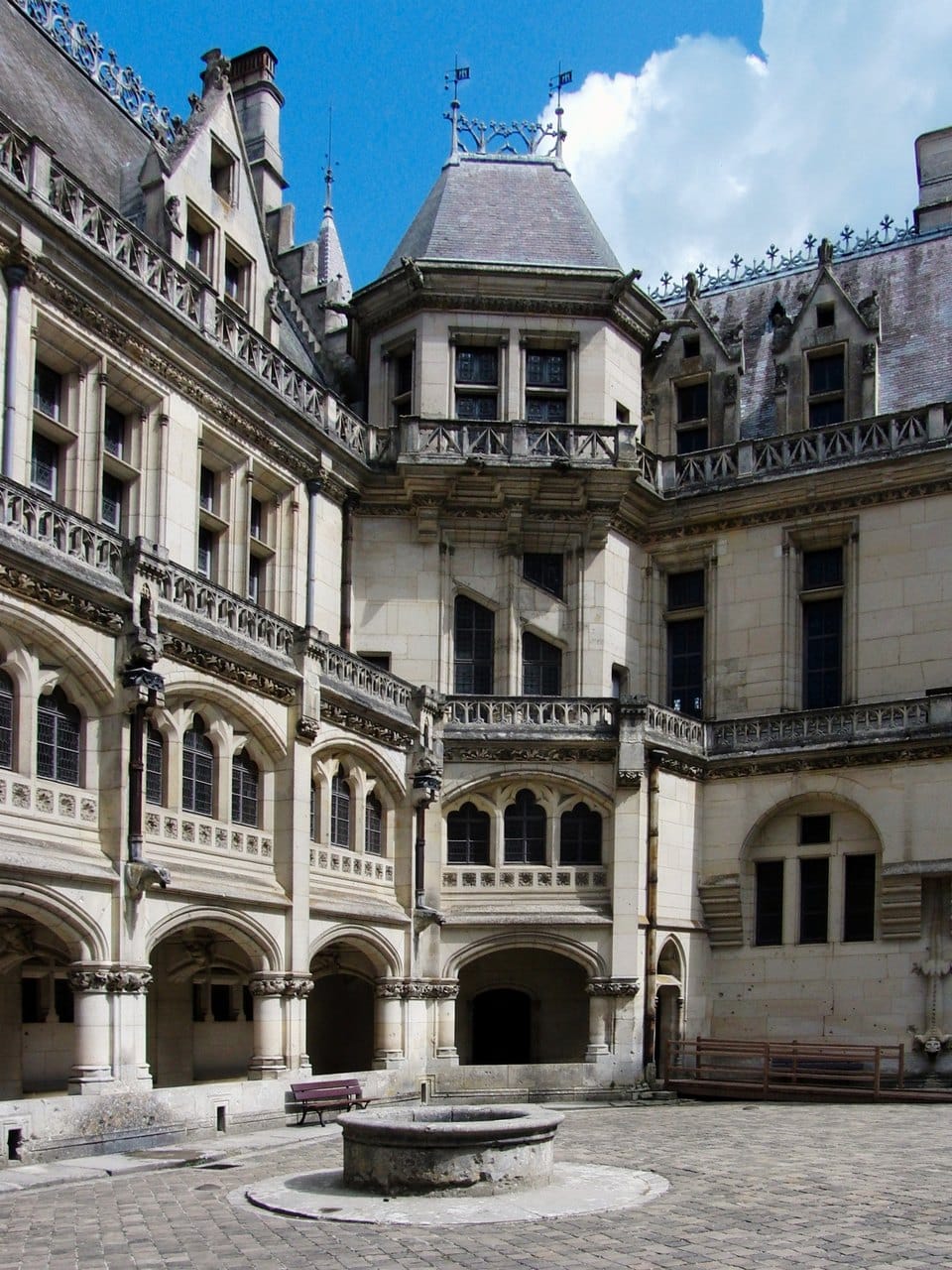
Cross the drawbridge and the severity of the exterior gives way to the cour d’honneur, a courtyard of some 700 square meters where a bronze Louis d’Orléans rides for ever, cast by Emmanuel Frémiet, and stone chimeras crouch along the staircase. Romanesque, late-Gothic, and Renaissance motifs sit side by side here, a late-medieval style already gesturing toward the Renaissance. The keep, backed against the main range as a medieval lord’s quarters would have been, holds the imperial apartments, and the bedrooms of Napoleon III and Eugénie occupy the Julius Caesar tower.
 CC BY-SA 3.0" srcset="https://stonekeepatlas.com/wp-content/uploads/2026/06/pierrefonds-salle-des-preuses.jpg 1280w, https://stonekeepatlas.com/wp-content/uploads/2026/06/pierrefonds-salle-des-preuses-300x200.jpg 300w, https://stonekeepatlas.com/wp-content/uploads/2026/06/pierrefonds-salle-des-preuses-1024x682.jpg 1024w, https://stonekeepatlas.com/wp-content/uploads/2026/06/pierrefonds-salle-des-preuses-768x512.jpg 768w" sizes="auto, (max-width: 1280px) 100vw, 1280px" />
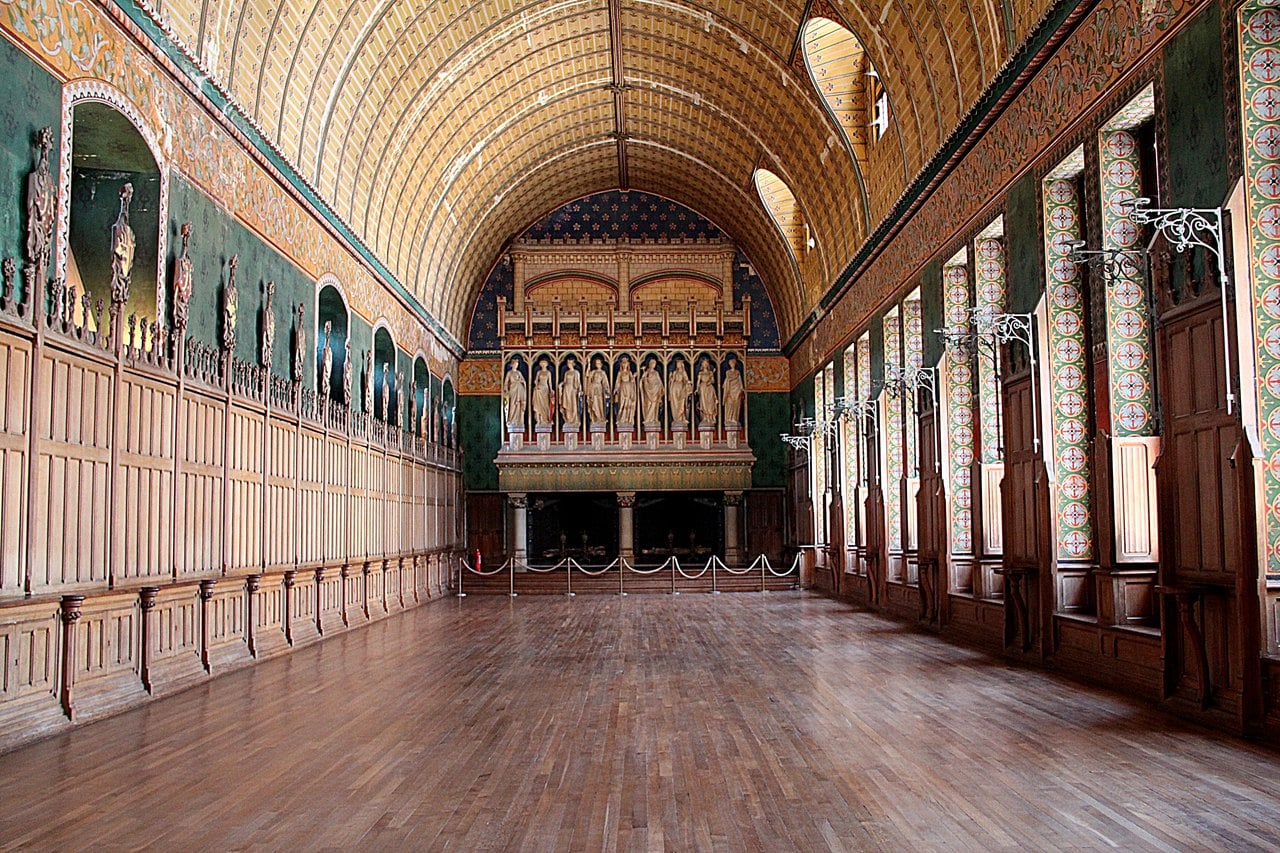
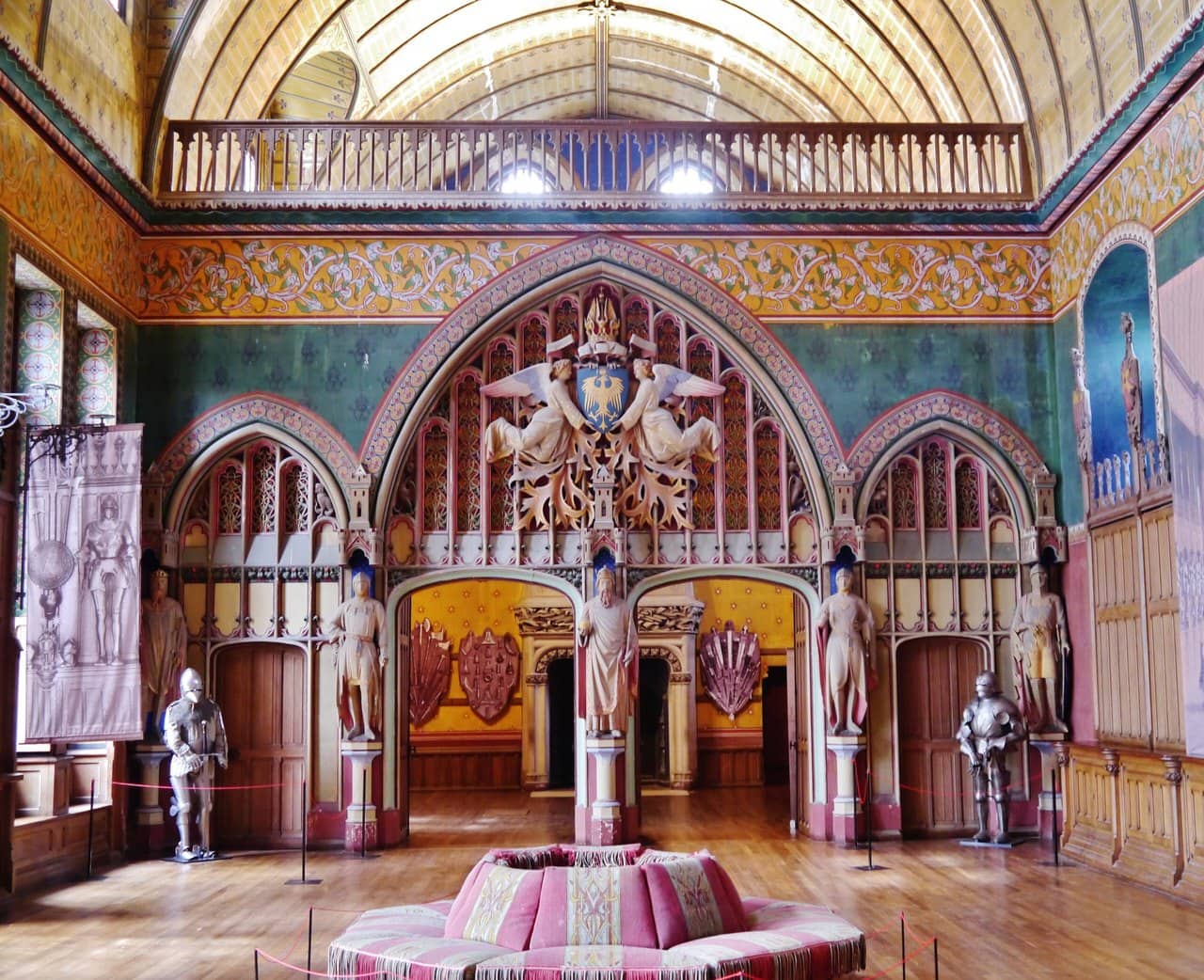
The masterpiece is the Salle des Preuses, the Hall of the Heroines. About 52 meters long, some nine and a half wide, and twelve high, roofed by a barrel vault like an upturned ship’s hull, it was conceived as a ballroom and a showcase in one. At its far end stands a monumental double fireplace crowned by nine carved warrior maidens, the female counterparts of the Nine Worthies. Their leader, Semiramis, was given the features of Empress Eugénie, and her eight companions those of Eugénie’s ladies-in-waiting, so that the imperial court took its place among the heroines of antiquity. One alone wears no crown, the empress’s own reader, who stands bareheaded among the queens because she was not of noble birth. At the hall’s opposite end Charlemagne and his paladins answer the heroines across the room. Viollet-le-Duc drew the whole theme from a lost fireplace at Coucy, another castle of Louis d’Orléans, by way of a Renaissance drawing.
 CC BY-SA 4.0" style="width:459px" srcset="https://stonekeepatlas.com/wp-content/uploads/2026/06/pierrefonds-chapel.jpg 949w, https://stonekeepatlas.com/wp-content/uploads/2026/06/pierrefonds-chapel-222x300.jpg 222w, https://stonekeepatlas.com/wp-content/uploads/2026/06/pierrefonds-chapel-759x1024.jpg 759w, https://stonekeepatlas.com/wp-content/uploads/2026/06/pierrefonds-chapel-768x1036.jpg 768w" sizes="auto, (max-width: 949px) 100vw, 949px" />
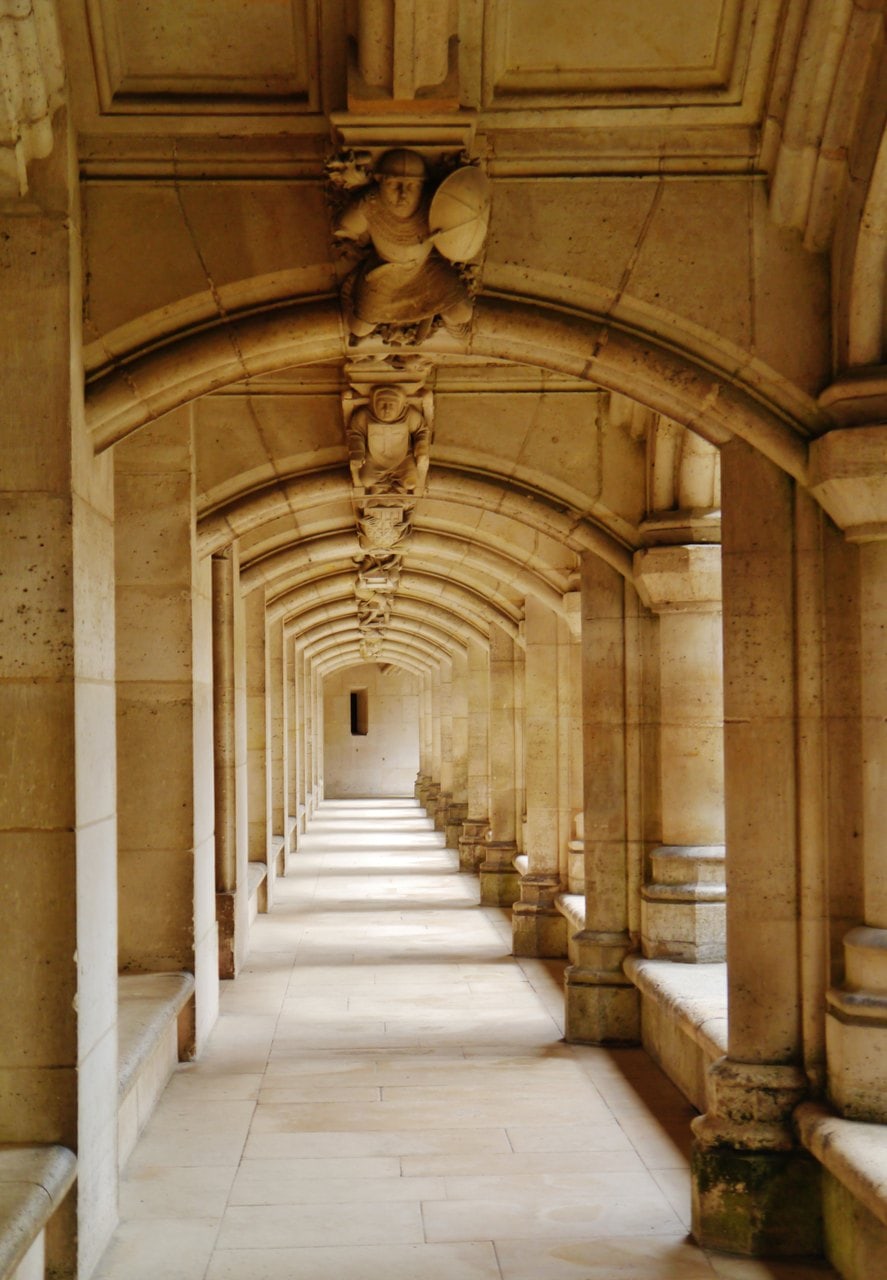
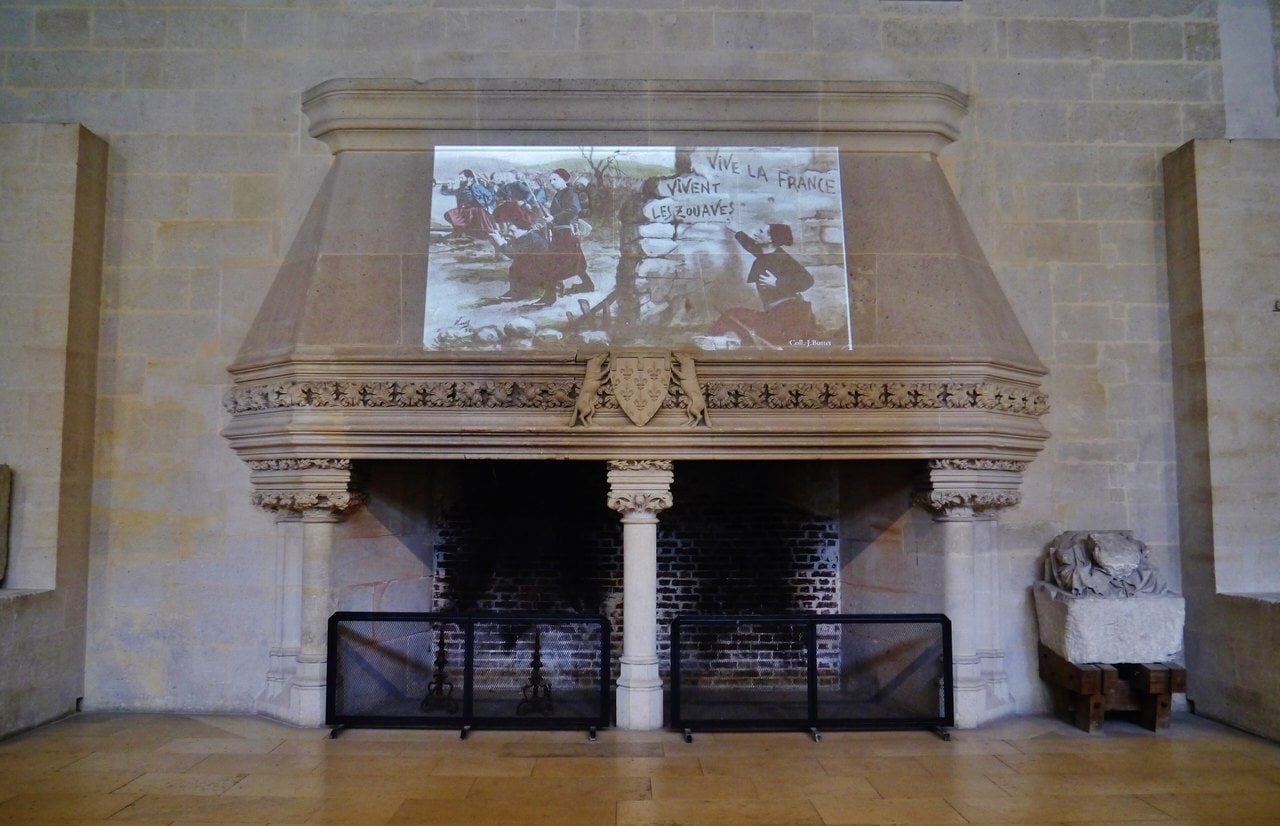
Beyond the great hall the rooms unfold one into the next, each a stage set in paint and carved oak. The Salle des Gardes keeps its soldierly plainness around a vast hooded fireplace; the reception rooms blaze with stenciled ceilings, painted beasts, and bands of heraldry; a long vaulted gallery runs the inner face of the courtyard, its corbels carved as watching knights. The decoration was meant to look medieval and to feel imperial at the same time, and where the money ran out the bare stone simply shows through, a reminder that all of it is scenery built in living memory.
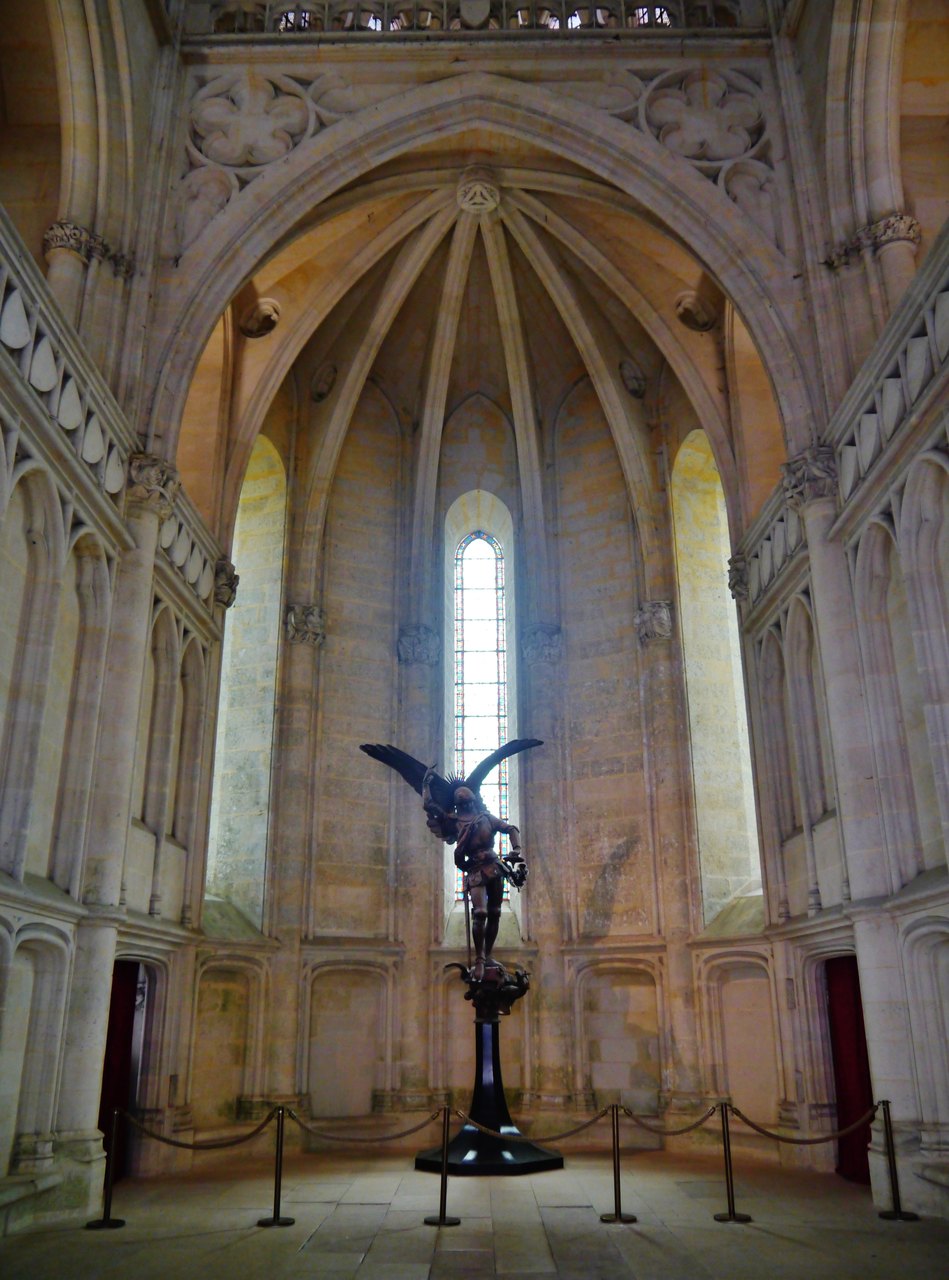
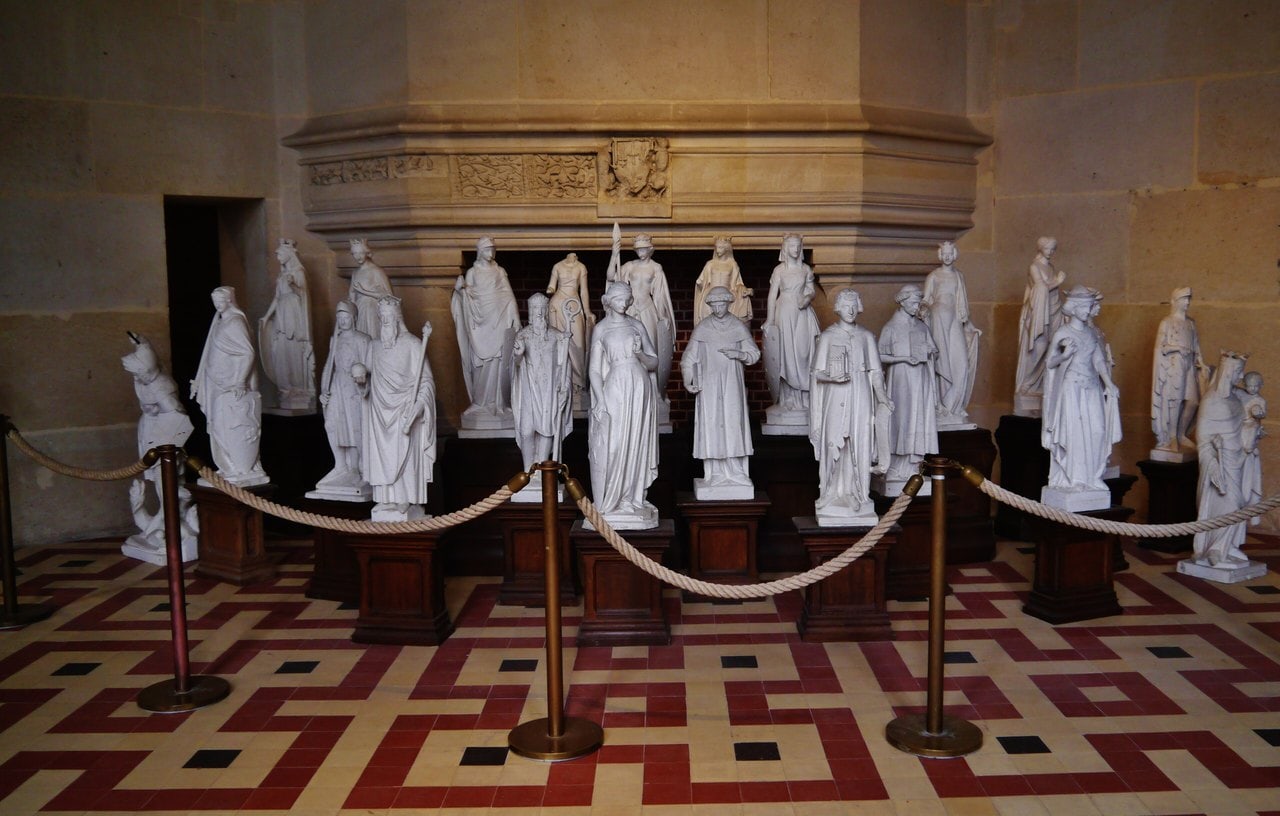
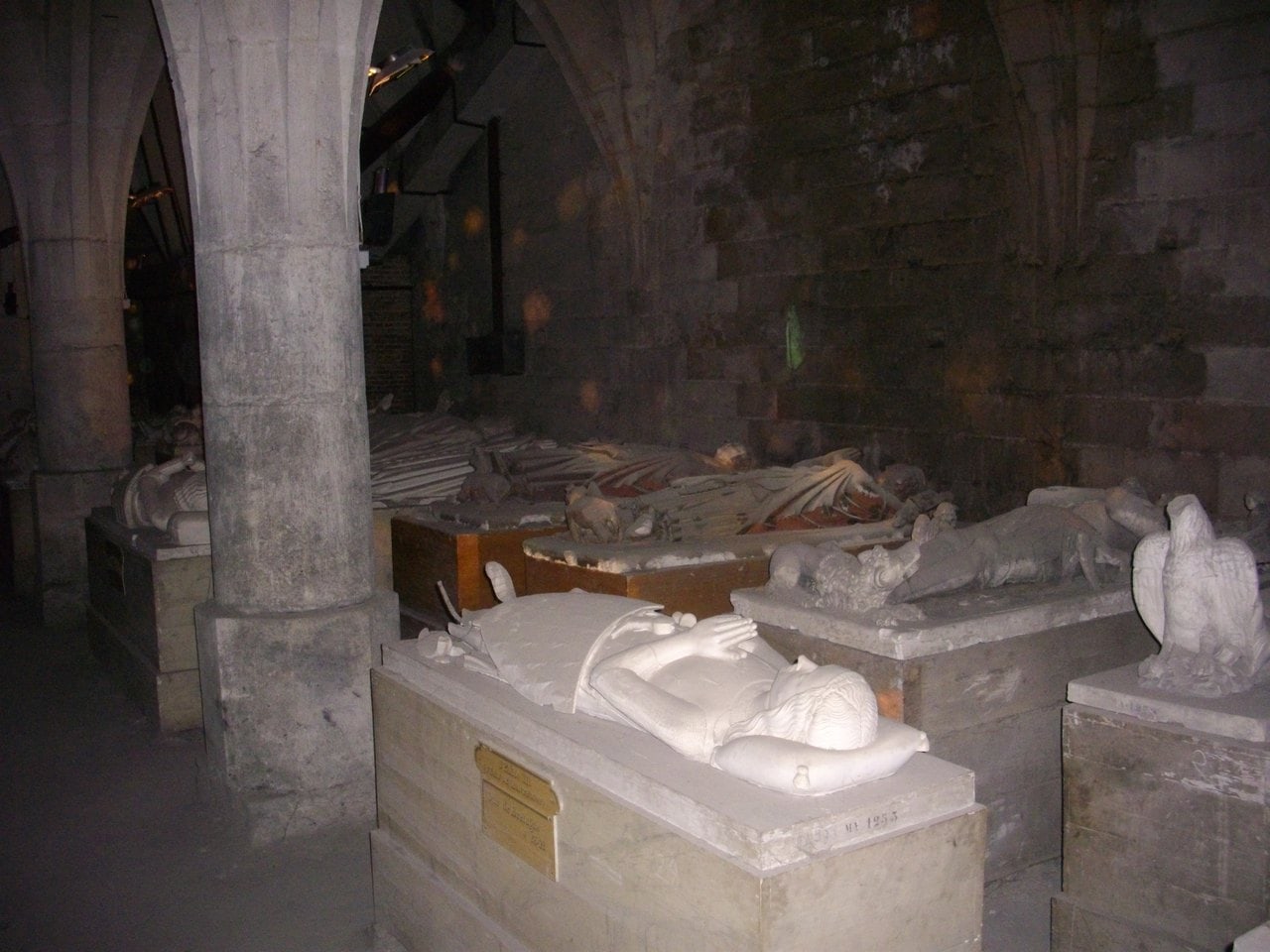
Completed in 1867, the great hall opened as a museum during that year’s Exposition Universelle, displaying Napoleon III’s personal collection of arms and armor. When the empire fell in 1870 and Prussian armies advanced, the collection was crated, eighty-five cases of it, and sent to safety; it remains in the Musée de l’Armée at the Invalides to this day, which is why the castle now stands gloriously empty of its original treasure. Down in the cellars waits a stranger company still, the Bal des Gisants, a crowd of plaster casts taken from the royal tomb effigies of Saint-Denis. Nearby, set into the Judas Maccabeus tower, the chapel claims a small distinction of its own: it is said to be the only church in France with a gallery raised above the choir.
 CC0" style="width:350px" srcset="https://stonekeepatlas.com/wp-content/uploads/2026/06/pierrefonds-vld-self-portrait.jpg 722w, https://stonekeepatlas.com/wp-content/uploads/2026/06/pierrefonds-vld-self-portrait-169x300.jpg 169w, https://stonekeepatlas.com/wp-content/uploads/2026/06/pierrefonds-vld-self-portrait-578x1024.jpg 578w" sizes="auto, (max-width: 722px) 100vw, 722px" />
Visiting Château de Pierrefonds
Pierrefonds lies about 80 kilometers northeast of Paris and some fifteen kilometers east of Compiègne, its companion among the châteaux of the Oise; the easiest approach is the train to Compiègne followed by the local bus 657 or a taxi across the forest, or roughly an hour and a quarter by car from the capital. The Centre des monuments nationaux runs the site and opens it daily except 1 January, 1 May, and 25 December, with hours of 10:00 to 5:30 in the cooler months and 9:30 to 6:00 in summer; last entry is an hour before closing, and the park closes a little earlier still. A single full-price ticket is 9 euros and covers the whole monument and its grounds; admission is free for visitors under eighteen and for EU nationals aged eighteen to twenty-five, and free days fall on the first Sunday of several winter months and during the September heritage days.
 CC BY-SA 4.0" srcset="https://stonekeepatlas.com/wp-content/uploads/2026/06/pierrefonds-main-entrance.jpg 1280w, https://stonekeepatlas.com/wp-content/uploads/2026/06/pierrefonds-main-entrance-300x226.jpg 300w, https://stonekeepatlas.com/wp-content/uploads/2026/06/pierrefonds-main-entrance-1024x772.jpg 1024w, https://stonekeepatlas.com/wp-content/uploads/2026/06/pierrefonds-main-entrance-768x579.jpg 768w" sizes="auto, (max-width: 1280px) 100vw, 1280px" />
One current note worth checking before you go: the Salle des Preuses, the castle’s flagship room, is closed for the second phase of a major restoration, while the Empress’s Apartments reopened to visitors in May 2026. The first phase, finished in 2024 after nearly three years of work, was the first thorough campaign on that wing of the fortress in more than a century. For the latest on hours, prices, and which rooms are open, the official site is the place to look.
Entry tickets and guided tours can be booked in advance through GetYourGuide, and anyone staying overnight nearby can compare hotels near Pierrefonds.
Some links on this page are affiliate links, which means StoneKeep Atlas may earn a small commission, at no extra cost to you, if you book through them.
Louis d’Orléans, who built Pierrefonds, also held the Château de Fère an hour to the east, now a hotel; it and the other château stays near the capital are ranked in our guide to Castle Hotels Near Paris.
More Views of Château de Pierrefonds
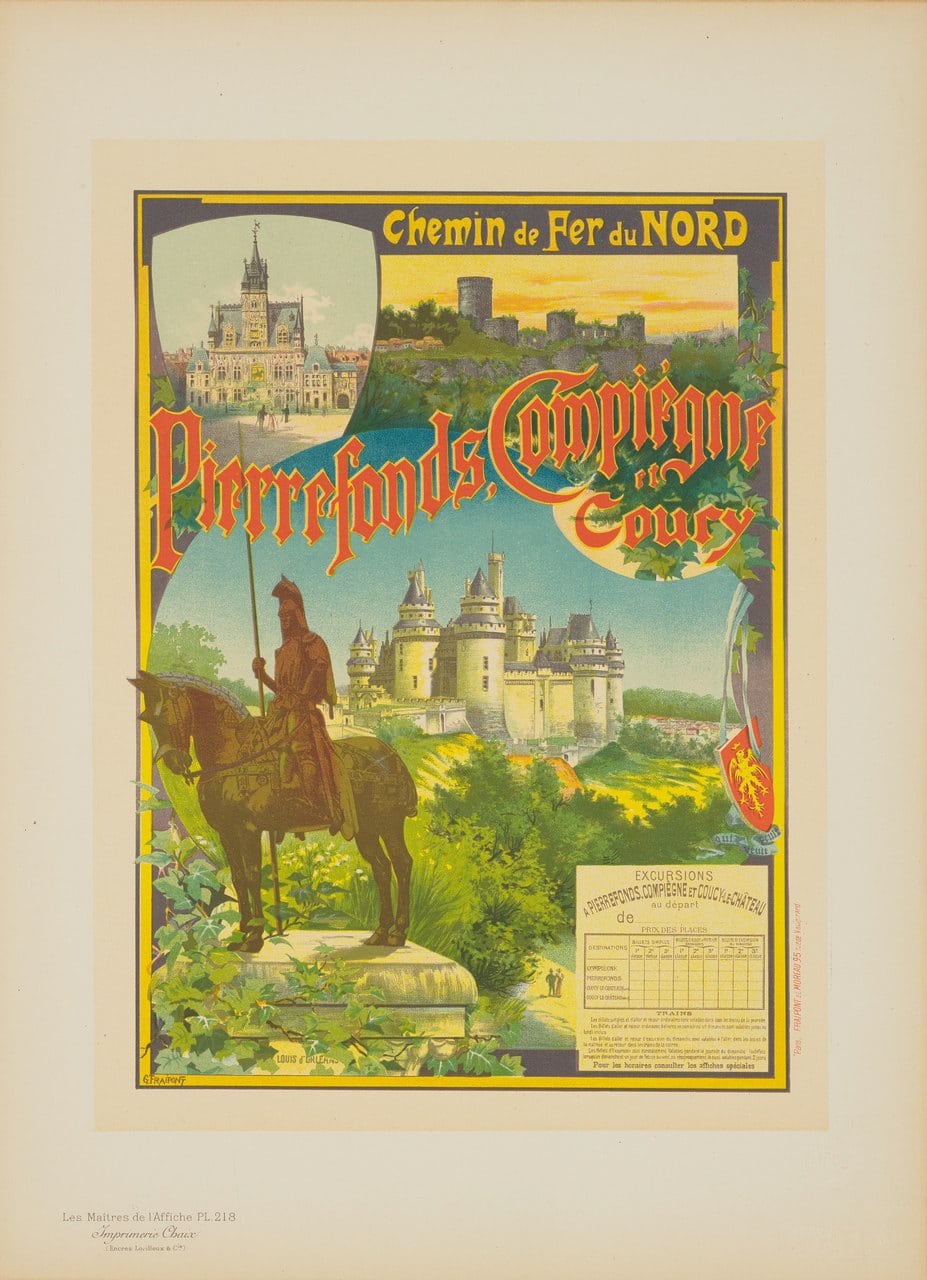
From the air, from the cour d’honneur, and through the painted rooms Viollet-le-Duc invented, here is the castle in more detail, along with a few of the historical views that show it rising from its ruin.
Beyond Château de Pierrefonds
If Pierrefonds captures you, three castles make natural next stops. Nearest of all is the Château de Compiègne, just across the same forest, the imperial palace from which Napoleon III ordered this very reconstruction. An hour away in the same Oise countryside, the Château de Chantilly tells a parallel story: another older estate reinvented in the nineteenth century, this time as a Renaissance-revival palace and a museum frozen by its last prince. Further afield, in the Bavarian Alps, Neuschwanstein is the purest expression of the same Romantic impulse, King Ludwig II’s fairy-tale vision of a Middle Ages that never quite was, kin to Viollet-le-Duc’s. Closer to Pierrefonds in spirit is Drachenburg, a historicist castle of the same restless century above the Rhine.
And for Viollet-le-Duc’s other great fortress, the one most often set beside Pierrefonds, there is Carcassonne Castle in the south, the walled Cité whose towers he capped with the same pointed slate roofs. Where Pierrefonds was rebuilt almost from nothing, Carcassonne was consolidated from a genuine medieval survivor, and together the two mark the range of his work, from outright reconstruction to careful repair. A generation later, across the border in Alsace, the Château du Haut-Kœnigsbourg was rebuilt for Wilhelm II in much the same spirit, and contemporaries noticed how closely the German worksite echoed Pierrefonds.
For a glimpse of the real late-medieval fortress behind the dream, the great keep at Vincennes, raised by Louis d’Orléans’s father Charles V, shows the kind of royal stronghold Pierrefonds was built to rival. And it is no surprise that filmmakers keep returning: Pierrefonds has stood in for Camelot in a British television series and supplied the backdrop for swashbucklers and period dramas on screen, the camera drawn to the very quality that makes it remarkable, a Middle Ages more vivid than the original. That same quality lands Pierrefonds among the fairytale castles in France, the châteaux whose silhouettes belong in a storybook.
Conclusion
Pierrefonds asks an awkward, fascinating question: is a building less authentic for being a reconstruction, when the reconstruction is itself a masterpiece? Viollet-le-Duc did not preserve a medieval castle; he completed an idea of one, and in doing so created a monument to the nineteenth century’s longing for the Middle Ages as much as to the Middle Ages themselves. The duke who built it died before he could live in it; the emperor who rebuilt it fell before it was finished. What remains is the dream both men chased, standing whole above the forest, more perfect than any fortress that ever had to survive a siege.
Principal Sources
- Centre des monuments nationaux. Manages the château and publishes its history and visitor information. chateau-pierrefonds.fr.
- EHNE (Encyclopédie d’histoire numérique de l’Europe). Entry on Viollet-le-Duc.
- Fondation Napoléon. napoleon.org, for the Salle des Preuses and the imperial arms collection.
- Leniaud, Jean-Michel. Monograph on Viollet-le-Duc and Pierrefonds. Éditions du Patrimoine, 1994.
- Ministère de la Culture. Base Mérimée, notice PA00114803, establishing the protected status and the 2021 national-domain decree.
- Timbert, Arnaud. Study of Viollet-le-Duc and Pierrefonds. Presses universitaires du Septentrion, 2017.
Construction dates that vary across sources are given as ranges, and the medieval architect is treated as attributed rather than certain.
Image credits. Hero, the castle from the air: Adobe Stock; The plan: after Viollet-le-Duc, public domain, via Wikimedia Commons; The castle reflected in the lake: Agence Rol, public domain, via Wikimedia Commons; The new gatehouse (historic photograph): Rijksmuseum, CC0, via Wikimedia Commons; The finished castle (Lansyer painting): Emmanuel Lansyer, public domain, via Wikimedia Commons; The Salle des Preuses: Jean-Pol Grandmont, CC BY-SA 3.0, via Wikimedia Commons; The chapel: Zairon, CC BY-SA 4.0, via Wikimedia Commons; Viollet-le-Duc as Saint James: Jebulon, CC0, via Wikimedia Commons; The main entrance: Rolf Kranz, CC BY-SA 4.0, via Wikimedia Commons; The castle from the air (gallery): ToucanWings, CC BY-SA 3.0, via Wikimedia Commons; The barbican and footbridge: Pierre André Leclercq, CC BY-SA 3.0, via Wikimedia Commons; The cour d’honneur: Pierre André Leclercq, CC BY-SA 4.0, via Wikimedia Commons; The gallery walk: Zairon, CC BY-SA 4.0, via Wikimedia Commons; The Salle des Gardes fireplace: Zairon, CC BY-SA 4.0, via Wikimedia Commons; The Salon de Réception: Zairon, CC BY-SA 4.0, via Wikimedia Commons; The room of plaster casts: Zairon, CC BY-SA 4.0, via Wikimedia Commons; The Bal des Gisants: Fab5669, CC BY-SA 4.0, via Wikimedia Commons; The Salle des Preuses eagle arms: Zairon, CC BY-SA 4.0, via Wikimedia Commons; Pierrefonds as restored by Viollet-le-Duc (engraving): Internet Archive Book Images, no restrictions, via Wikimedia Commons; The castle from the north-west (Mieusement): Médéric Mieusement, CC BY-SA 4.0, via Wikimedia Commons; The Chemin de Fer du Nord poster (designed by G. Fraipont): Thomas Thibaut, public domain, via Wikimedia Commons. Freely licensed images are resized to fit; otherwise unaltered.