
Châteaux of the Oise: Three Great Houses Within a Day of Paris
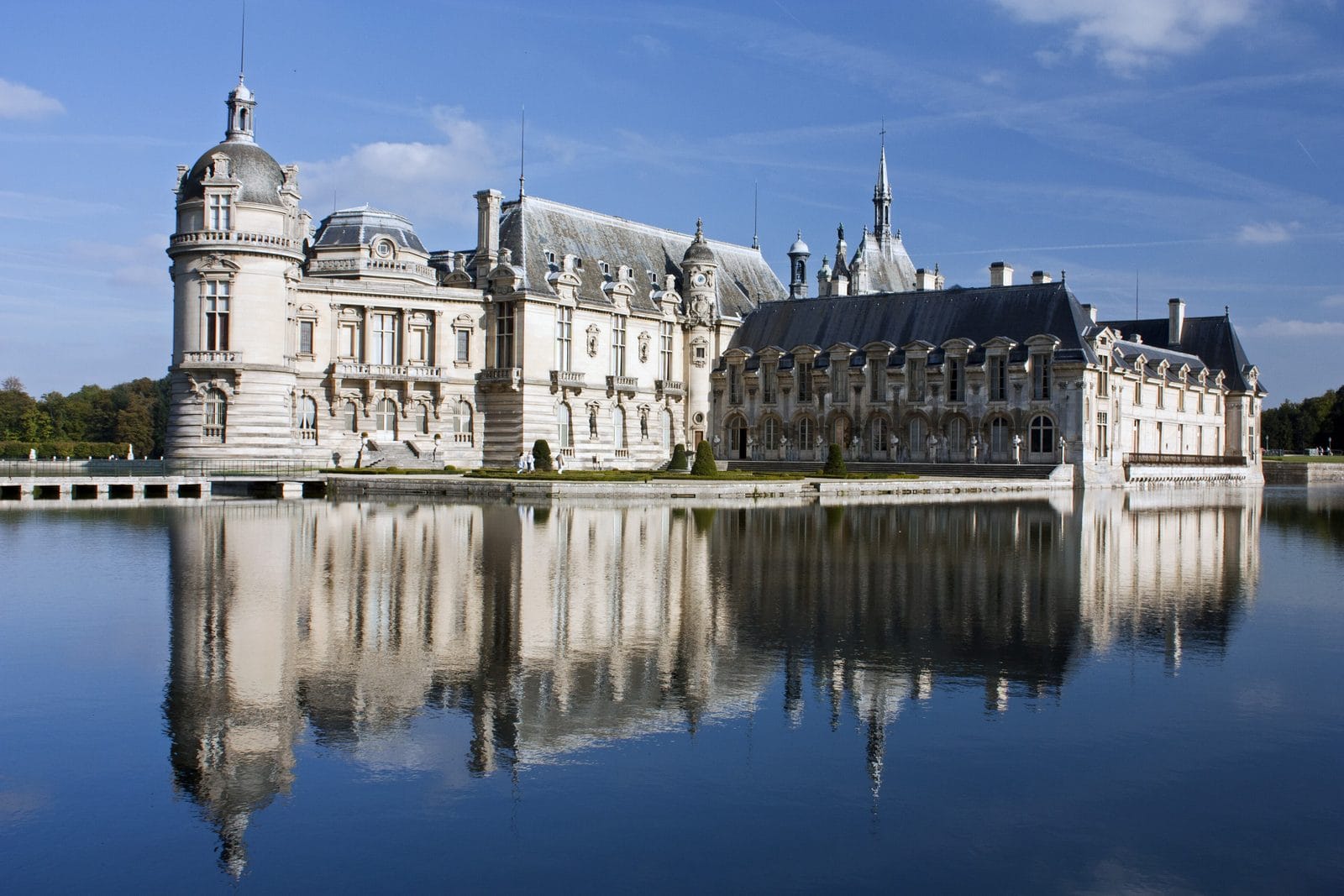
The châteaux of the Oise are the grand country houses a Paris traveler can see in a single day, just over the old provincial border north of the capital, and three of them rank among the finest in France. Each answers the same question in a different way, the question of what a great house is for: Chantilly, the princely palace built around a collector’s art; Pierrefonds, a medieval fortress dreamed back into being by the nineteenth century; and Compiègne, the working residence of France’s last imperial court.
This guide gathers the three, all in the Oise department of Hauts-de-France and all within reach of the Gare du Nord, and reads them not by founding date but by the kind of house each became. One was assembled by a prince to hold a collection. One was rebuilt as a romance. One served an emperor as his autumn court. Every château has its own full StoneKeep Atlas guide; what follows is the thread that connects them.
The Châteaux of the Oise at a Glance
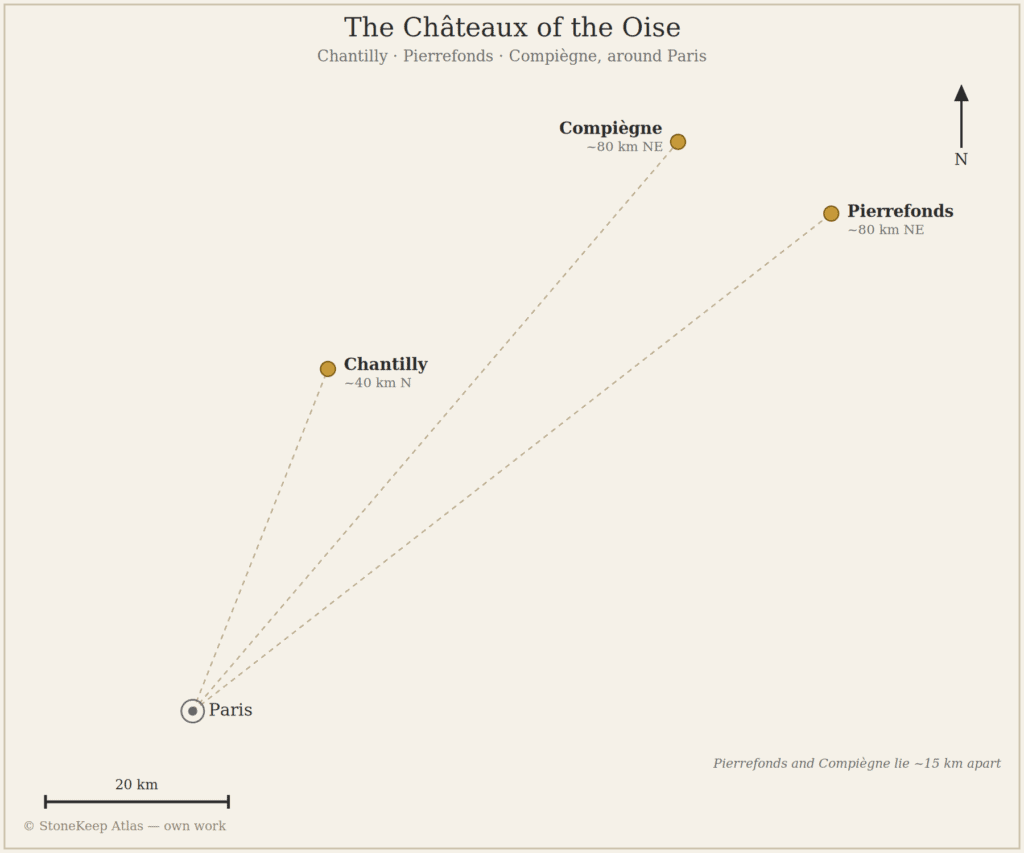
| Residence | What it is | Origin | From Paris | UNESCO |
|---|---|---|---|---|
| Château de Chantilly | Princely palace & art collection | Petit Château c.1560; Grand Château from 1875 | ~40 km north (≈25 min by train) | No |
| Château de Pierrefonds | Romantic medieval reconstruction | Medieval c.1396–1407; rebuilt 1857–1885 | ~80 km northeast | No |
| Château de Compiègne | Royal palace & Second Empire residence | Bourbon palace 1751–1788; imperial 19th c. | ~80 km northeast (≈45 min by train) | No |
All three lie north and northeast of Paris, and two of them sit close enough together that they can be seen in the same day.
Château de Chantilly: the Collector’s Palace
Of the three, Chantilly is the easiest to reach and the hardest to exhaust. The estate belonged for centuries to the Montmorency family and then to the Condés, the senior cadet branch of the house of Bourbon, before passing in the nineteenth century to Henri d’Orléans, duc d’Aumale, the fifth son of King Louis-Philippe. Most of what rises above the water today is his work: the Grand Château was rebuilt from 1875, to designs by the architect Honoré Daumet, a Renaissance-revival reconstruction on the old foundations, after the original was pulled down and its stone sold during the Revolution. The smaller wing beside it, the Petit Château of about 1560, is the genuine survivor.
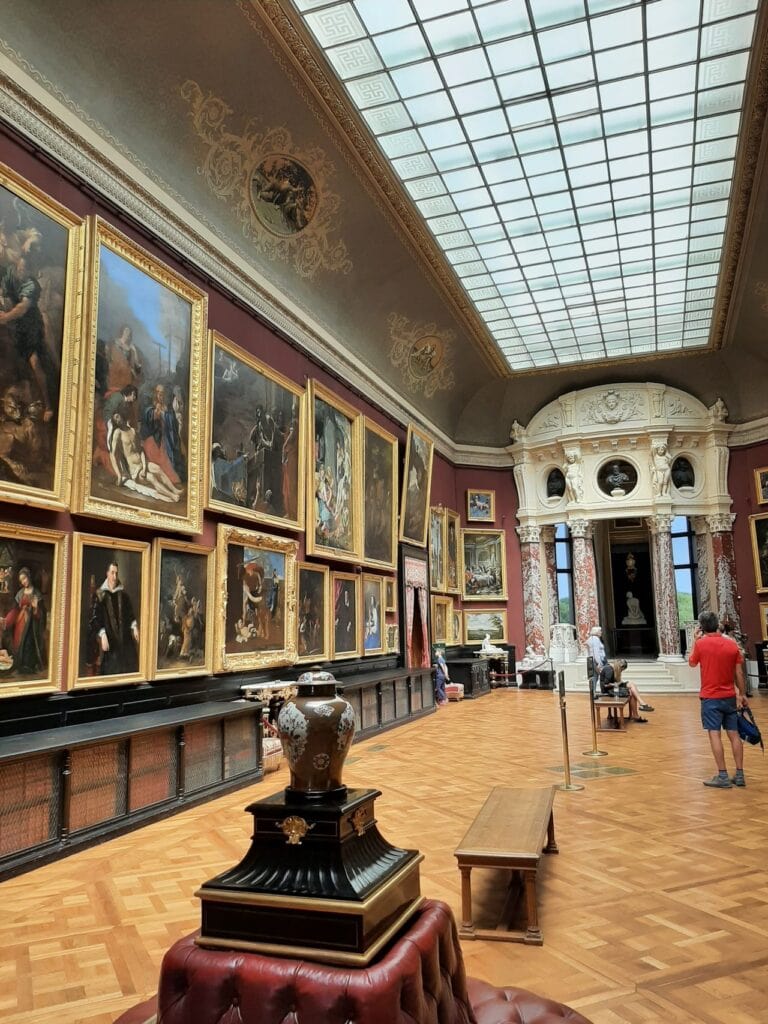
Aumale was the great collector of his age, and he built the new château to house what he had gathered. The result, which he named the Musée Condé in tribute to the princes before him, is often called the finest collection of old-master paintings in France after the Louvre, with works by Raphael, Poussin, Watteau, and Ingres hung frame to frame in the arrangement he chose. His will forbids the pictures ever to be moved or lent, so the only way to see them is to come to Chantilly. The galleried library holds around fifteen hundred manuscripts, two hundred of them illuminated, among them the celebrated Très Riches Heures du Duc de Berry. Outside, the Grandes Écuries, a palace built for horses, face the racecourse, and the gardens beyond are the real antiquity: a water-garden laid out by André Le Nôtre for the Grand Condé. From 2005, a foundation funded by the Aga Khan underwrote a sweeping restoration of the château, park, and stables, undoing decades of damp and a failing water system.
Read the full story in the Château de Chantilly guide.
Château de Pierrefonds: the Medieval Dream Rebuilt
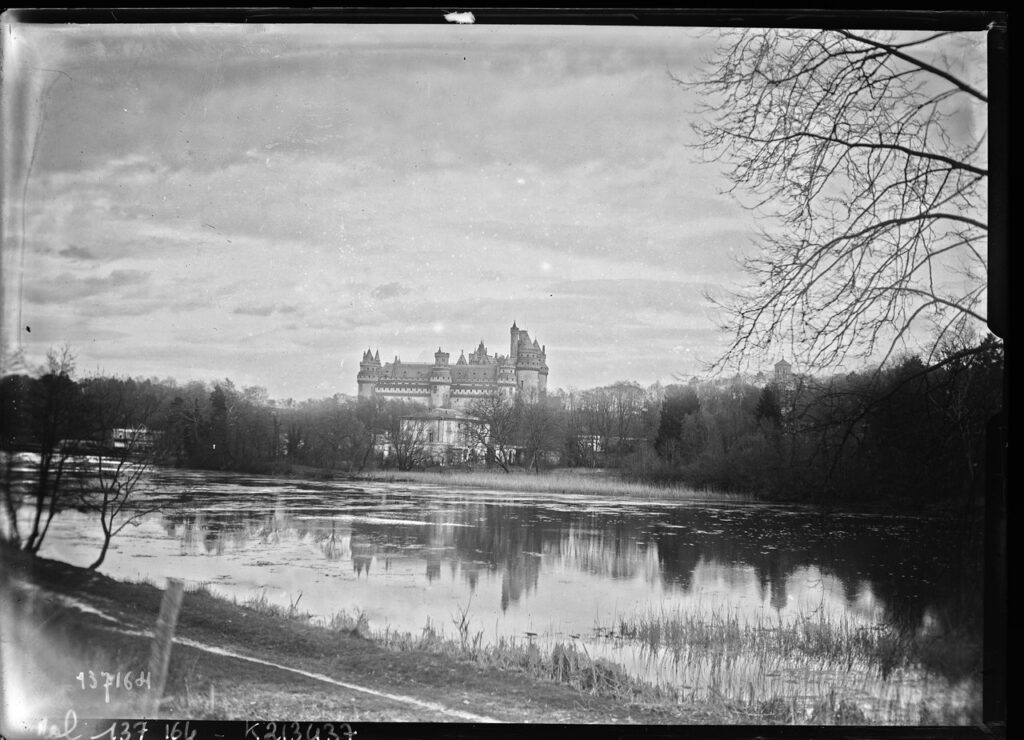
Northeast of the capital, on a rock above its village, Pierrefonds looks like the perfect medieval castle, and in a sense it is: a perfect nineteenth-century idea of one. Louis d’Orléans, brother of King Charles VI, raised the original fortress between about 1396 and 1407, a tight quadrilateral ringed by eight great towers. After his murder it passed through the wars of the following century, was besieged on Richelieu’s orders in 1617, and was deliberately slighted, left a romantic ruin that drew painters and poets for two hundred years.
It was Napoleon III who decided to rebuild it. From 1857 he set Eugène Viollet-le-Duc, the century’s great medievalist, to the task, and what the architect produced was less a restoration than an argument: a vision of how the Middle Ages ought to have looked, complete with a hidden iron frame, painted halls, and the soaring Salle des Preuses with its gallery of warrior heroines. The emperor meant it for an imperial residence, and Viollet-le-Duc carved his own likeness into the chapel front as a pilgrim of Saint James. Work stopped in 1885, after both the architect and the Second Empire were gone, and much of the decoration was never finished. The result is the most purely theatrical of the three châteaux, a building that is honest about being a dream.
Read the full story in the Château de Pierrefonds guide.
Château de Compiègne: the Last Imperial Court
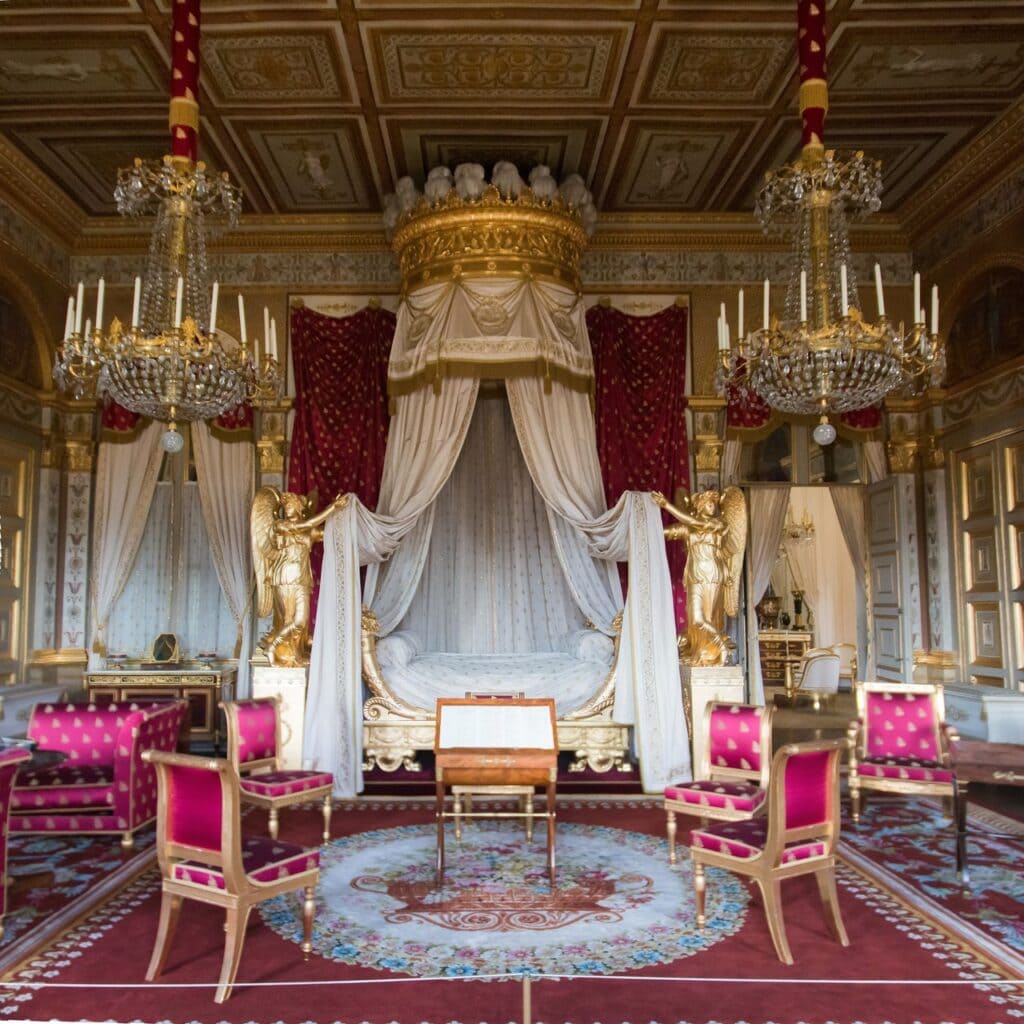
A short way north of Pierrefonds, at the edge of its great forest, Compiègne is the one true palace of the three. Kings had hunted here since the Middle Ages, but the building that stands today is a neoclassical palace begun in 1751 for Louis XV by Ange-Jacques Gabriel, the architect of the Place de la Concorde, and finished after his retirement by Louis Le Dreux de La Châtre. Napoleon I had its interiors fitted out in the Empire style, and it is those imperial rooms, rather than the royal shell, that give Compiègne its character.
Its great age came under Napoleon III. Each autumn the emperor and the Empress Eugénie filled the palace for the séries de Compiègne, week-long house parties that gathered the writers, scientists, and artists of the day; Flaubert, Pasteur, Delacroix, and Viollet-le-Duc all moved through the same salons. Two museums now occupy the wings: the Musée du Second Empire, which preserves the world of that court, and the Musée national de la Voiture, a collection of carriages and early automobiles that includes La Jamais Contente, the first car to pass a hundred kilometers an hour. The park behind the palace is an English landscape garden by Louis-Martin Berthault, not a formal one by Le Nôtre, and a few kilometers east lies the clearing where the armistices of 1918 and 1940 were signed.
When the empire fell in 1870 the palace stopped being a residence and slowly became a museum of the very world it had hosted. The Musée du Second Empire, created in 1953, gathered the paintings, furniture, and mementos of that court, while the carriage museum filled the wings with the history of how people travelled. Even as a museum it kept hosting history: in 1901 Tsar Nicholas II was received in its forecourt by the president of the Republic, and during the First World War the same courtyard filled with soldiers when the palace served as a military headquarters.
Read the full story in the Château de Compiègne guide.
Beyond the Three
These three are the great houses of the Oise, but the wider Hauts-de-France holds others worth a detour. The medieval town of Senlis, a few minutes from Chantilly, keeps the ruins of a royal castle and one of the earliest Gothic cathedrals in France. Further east, in the Aisne, the colossal keep of Coucy, about fifty-four meters tall and the largest in medieval Europe, stood until German troops dynamited it in March 1917; Louis d’Orléans had held Coucy, and its lost great fireplace gave Viollet-le-Duc the very model for the Salle des Preuses at Pierrefonds.
Just across the provincial border to the south lies the other half of the day-trip country around Paris. The four royal and imperial residences of the Île-de-France, Versailles and Fontainebleau among them, make the natural companion to this group and have their own StoneKeep Atlas guide. Farther southwest, the châteaux of the Loire Valley gather the royal houses of the Renaissance into a third great French group. Farther south again, the castles of Provence, from the papal palace at Avignon to the island fortress of If, make a fourth. And in the east, the castles of Alsace, from the Eguisheim keeps to the rebuilt Haut-Kœnigsbourg, make a fifth.
Planning a Visit
Chantilly is the simplest of the three to reach: trains from the Gare du Nord run to Chantilly-Gouvieux in about twenty-five minutes, after which a short shuttle or a twenty-minute walk brings you to the gates. Compiègne sits on another line from the Gare du Nord, roughly forty-five minutes away, with the palace a seven-hundred-meter walk from the station. Pierrefonds is the one that takes planning: it has no station of its own, so the usual approach is the train to Compiègne and then the local bus or a taxi across the forest, or about an hour and a quarter by car from Paris.
Because Pierrefonds and Compiègne sit only fifteen kilometers apart, the two make a natural pair for a single day, best done with a car or by combining the train with the bus. Chantilly, closer to Paris and on its own line, works well as a separate trip. All three open year-round, but each keeps its own hours and closing days, so it is worth checking current times before you travel.
Guided day trips and skip-the-line tickets covering Chantilly, Compiègne, and the wider region are easy to book in advance, which spares you the longest waits at the busiest gates. You can compare day tours and château tickets on GetYourGuide, and find a base near the stations on Booking.com.
Some links on this page are affiliate links, which means StoneKeep Atlas may earn a small commission, at no extra cost to you, if you book through them.
Several genuine château hotels cluster around Chantilly and the Oise, from a Louis XVI château in the forest to a family’s moated home. Our guide to Castle Hotels Near Paris covers where you can actually sleep near these palaces.
Three Châteaux, Three Answers
Set side by side, the three châteaux of the Oise read almost as an argument about what a great house is for. Chantilly says it is a frame for a collection, a place built to keep beautiful things in the order their owner chose. Pierrefonds says it is a stage, a vision of the past raised for its own sake by people who knew it was a vision. Compiègne says it is a working court, rooms made to be lived in by a sovereign and filled, in their last season of glory, with the most interesting company in France. All three were finished or transformed within the same long nineteenth century, by a prince, an architect, and an emperor who each wanted to recover a vanished kind of grandeur. A day from Paris, you can read all three in turn. And when you are ready for the rest of the country, the national guide to the Châteaux of France maps every castle region on one page.
Principal Sources
- Centre des monuments nationaux. For the Château de Pierrefonds.
- Domaine de Chantilly and the Institut de France. Official histories of the estate.
- Réunion des musées nationaux. For the Musée national du château de Compiègne.
This guide also draws on the three full StoneKeep Atlas guides to which it links.
Image credits. Château de Chantilly reflected in its lake (hero): Daniel Villafruela, CC BY 3.0, via Wikimedia Commons; Châteaux of the Oise locator map: StoneKeep Atlas (own work); the painting gallery of the Musée Condé: Ismael zniber, CC BY 4.0, via Wikimedia Commons; Pierrefonds mirrored in its lake: Agence Rol, public domain, via Wikimedia Commons; the Empress’s bedchamber at Compiègne: Daniel Villafruela, CC BY-SA 3.0, via Wikimedia Commons. Freely licensed images are resized to fit; otherwise unaltered.