
Charlottenburg Palace
Charlottenburg Palace is the largest surviving palace in Berlin and the only royal residence in the city that still recalls the age of the Hohenzollerns. It began modestly, as a summer villa for a clever and music-loving electress named Sophie Charlotte, and grew, crown by crown and reign by reign, into the grandest seat the dynasty ever held in its capital. Seven generations of Brandenburg electors, Prussian kings, and German emperors left their mark on its rooms and gardens, from sober Baroque to gilded Rococo to cool neoclassical calm.
Then, in a single night in 1943, it burned. That Charlottenburg stands today, refurnished and open to visitors, is a second story laid over the first: a story of loss, argument, and a decades-long act of repair that says as much about postwar Germany as the palace itself says about Prussia.
Quick Facts
| Name | Charlottenburg Palace |
| German name | Schloss Charlottenburg |
| Location | Charlottenburg-Wilmersdorf, Berlin, Germany |
| Built | Begun 1695; expanded through the 18th and 19th centuries |
| Architectural style | Baroque and Rococo |
| Patrons | House of Hohenzollern: Sophie Charlotte, King Friedrich I, Frederick the Great |
| Principal architects | Johann Arnold Nering, Martin Grünberg, Eosander von Göthe, Knobelsdorff |
| Operator | Stiftung Preußische Schlösser und Gärten Berlin-Brandenburg (SPSG) |
| Current use | Museum and gardens |
| Open to public | Yes; the palace gardens are free |
| UNESCO status | Not inscribed |
| Official site | spsg.de |
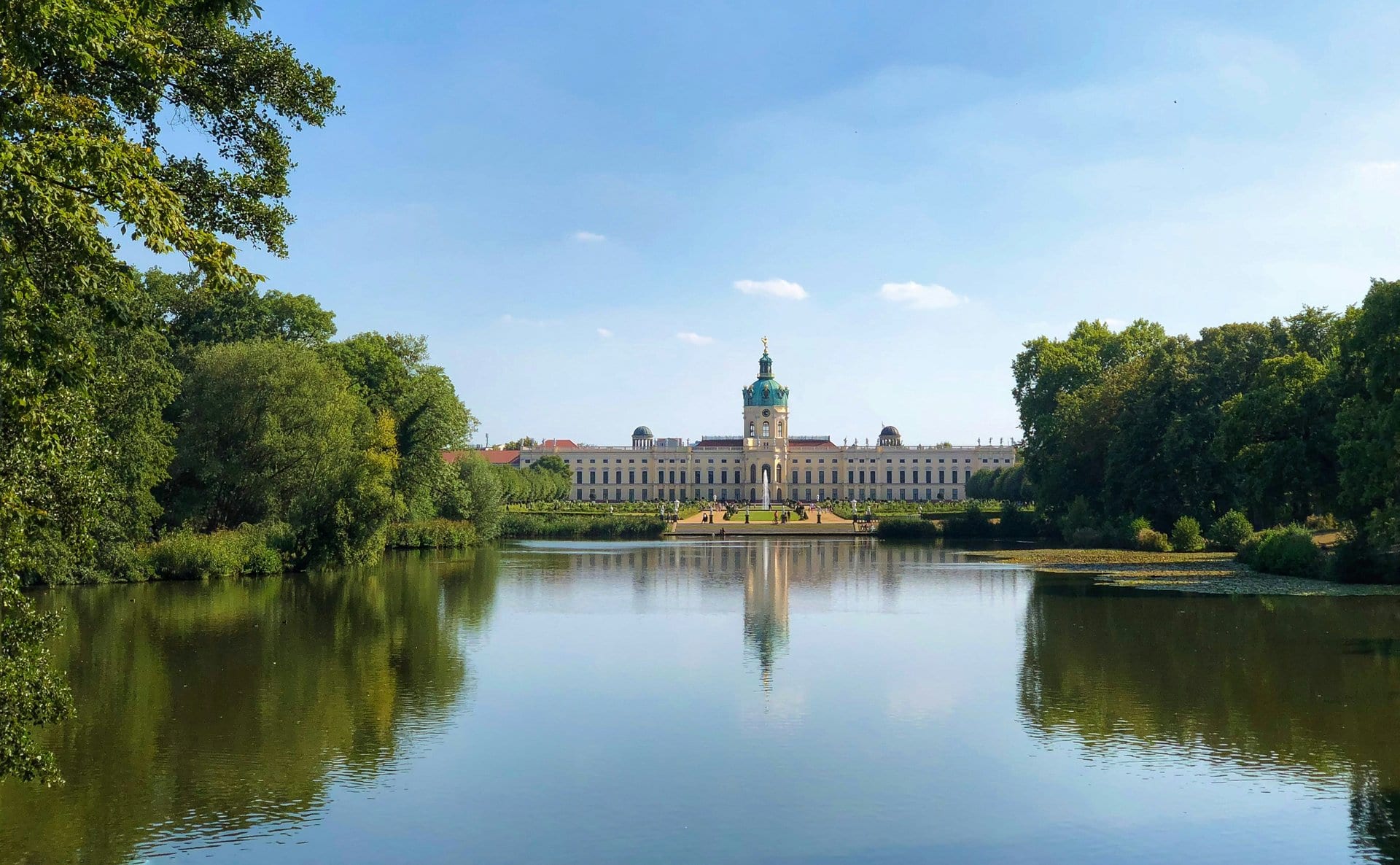
Schloss Charlottenburg sits a little west of Berlin’s center, its long Baroque front facing a formal courtyard on one side and a green expanse of garden running down toward the Spree on the other. It is run by the Stiftung Preußische Schlösser und Gärten Berlin-Brandenburg, the foundation that cares for the former royal estates of Berlin and Brandenburg, and it works equally well as a half-day museum visit or as a free afternoon’s wander through one of the city’s loveliest parks.
Lietzenburg: a villa for the philosopher queen
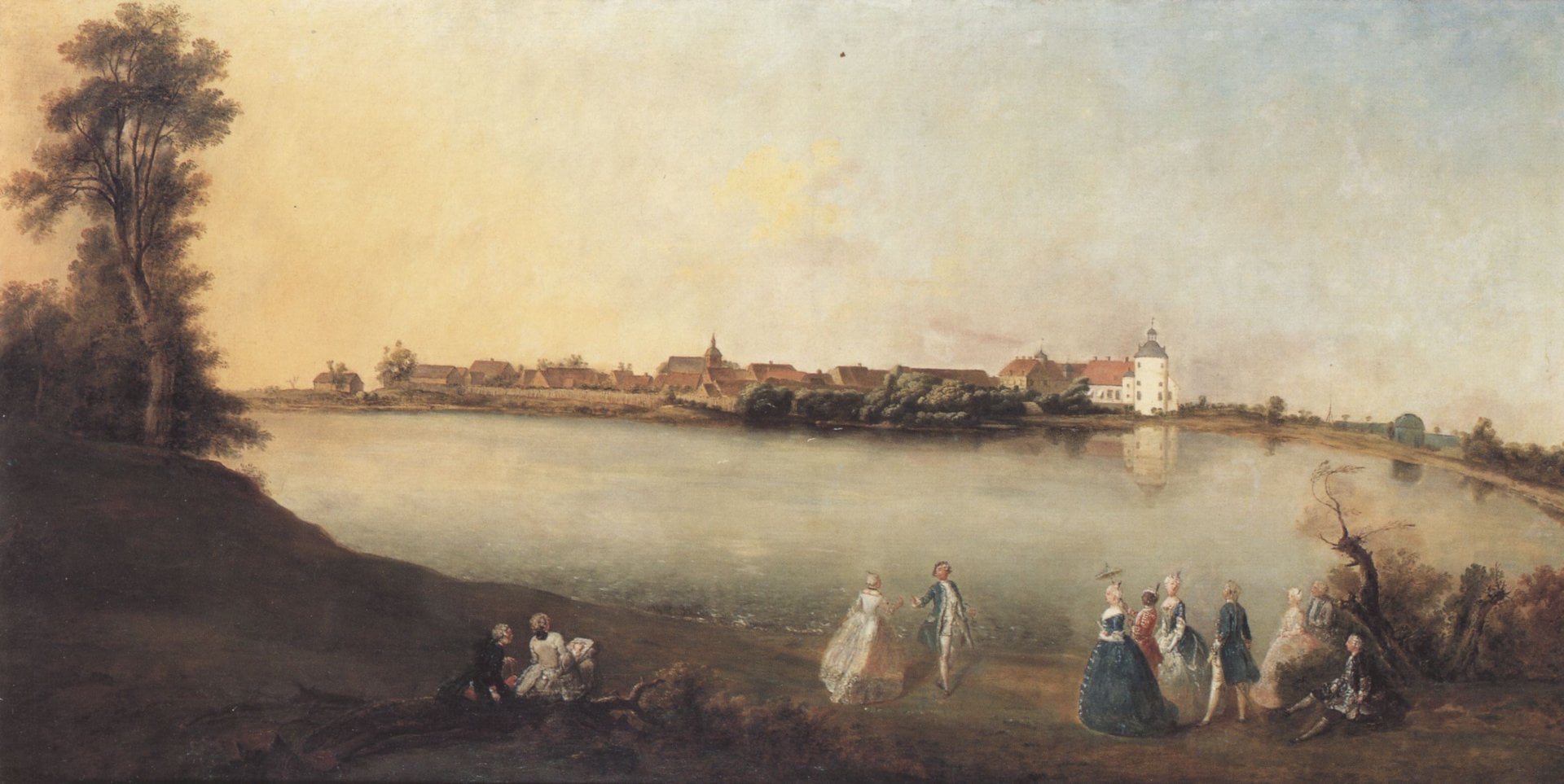
The palace owes its existence to a gift. In the 1690s the Elector Friedrich III of Brandenburg gave his wife, Sophie Charlotte, an estate at the village of Lietzow, then open countryside a short ride west of Berlin. There she could keep her own household away from the formal court, and in 1695 she commissioned a summer villa from the architect Johann Arnold Nering. Nering died that same year, with only the central block under way, and the work passed to Martin Grünberg, who added the flanking wings. The house was inaugurated in 1699 under the name Lietzenburg.
Sophie Charlotte was one of the most cultivated figures of her age. Born a princess of Hanover in 1668, she was the younger sister of George Louis, the future King George I of Great Britain, and she had grown up in a court that prized learning and the arts. At Lietzenburg she gathered what contemporaries called her Musenhof, a court of the muses, drawing poets, musicians, and scholars into her circle. Chief among them was the philosopher Gottfried Wilhelm Leibniz, whose long conversations with the queen helped shape his great work on optimism and divine justice. She sang Italian opera, played the harpsichord, and lent her weight to the founding of the Prussian academy of sciences. Her husband, it was said, could visit only when she invited him.
This villa suited her perfectly. It was large enough to entertain and small enough to feel private, set in fresh gardens that were being laid out in the newest French style, and far enough from Berlin to escape the stiffness of the electoral court. Here she could read, argue philosophy, and make music without ceremony. The estate became known almost as a state of mind, a place where ideas mattered more than rank, and visitors spoke of Lietzenburg as a rival to any court in northern Europe for the quality of its conversation.
She did not live to see the villa become a palace. Sophie Charlotte died in 1705, aged just 36, while visiting her family in Hanover. Grief and ambition then combined in a single gesture: her widower renamed the house and the growing settlement around it Charlottenburg, in her memory, and granted the little town its charter the same year. The philosopher queen had given her name to what would become the most magnificent palace in Berlin, though she had known it only as a country house in the making.
The crown of 1701 and the rise of a royal palace
Everything about Charlottenburg changed because of a coronation. On January 18, 1701, in Königsberg, Friedrich III crowned himself King Friedrich I “in Prussia.” The careful wording mattered: Brandenburg lay inside the Holy Roman Empire, where no new kingdoms were permitted, so the new king took his title from the Duchy of Prussia, which lay outside the Empire and which he held in full sovereignty. A modest summer villa would no longer do for a man who had just made himself a king.
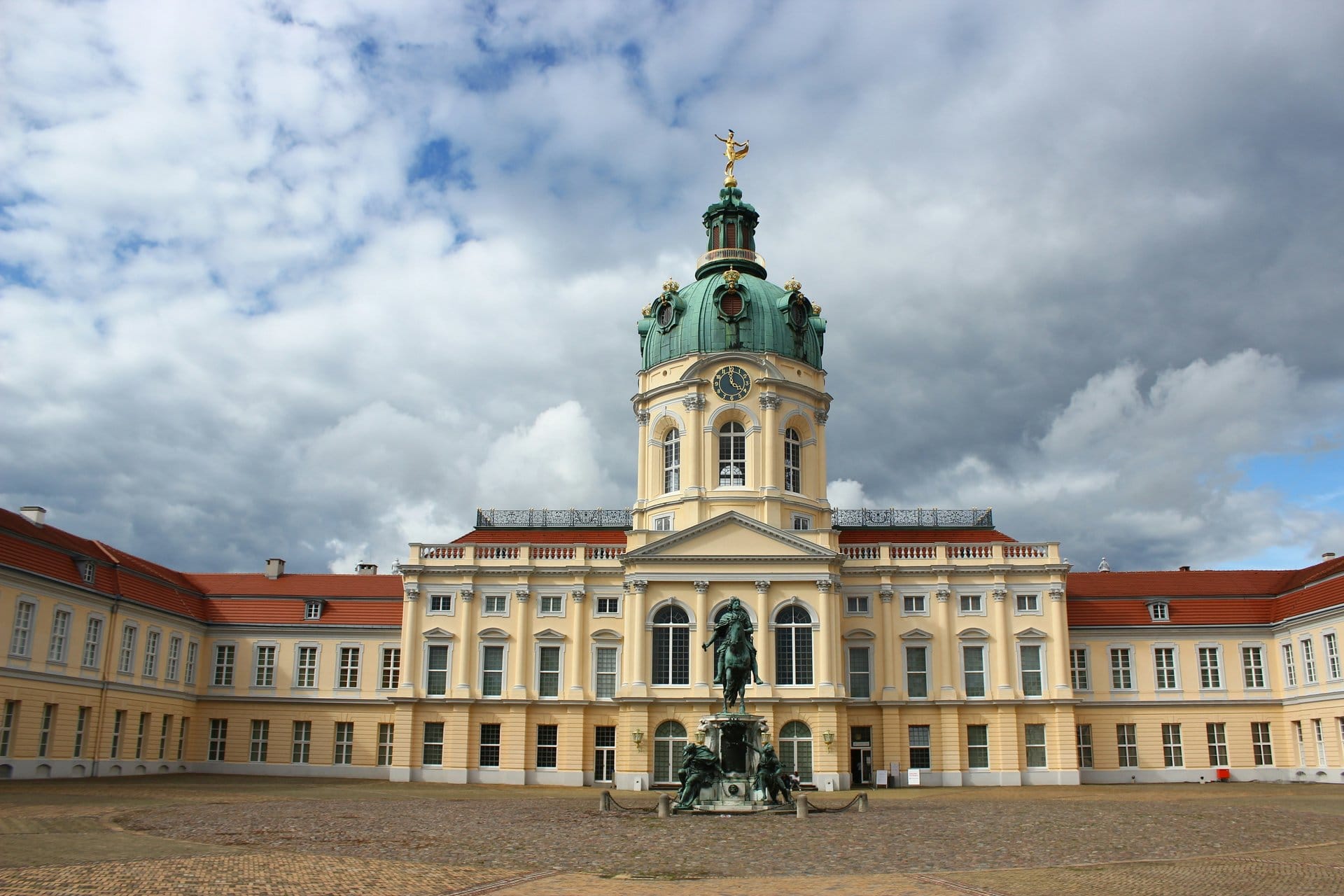
The task of enlarging Lietzenburg fell to Johann Friedrich Eosander von Göthe, a Swedish-trained court architect who reshaped the house into a palace fit for a crown. Eosander extended the wings forward to enclose a grand courtyard, the cour d’honneur, and crowned the central block with a tall domed tower topped by a gilded figure of Fortune that turned with the wind. The dome originally held a carillon of bells. To the west he began a long Orangery for overwintering the citrus trees that were the height of princely fashion. The garden, laid out from 1697 by Siméon Godeau in the French Baroque manner of André Le Nôtre, was among the earliest of its kind in Germany, a green geometry of parterres and avenues stretching back from the palace front.
That work outlived its patron. When King Friedrich I died in 1713, the palace was still unfinished, and his frugal, soldier-minded son, Friedrich Wilhelm I, had little interest in completing it. Charlottenburg fell quiet for a generation, a splendid half-finished monument to a king’s vanity, waiting for an heir who would care for beauty again.
Frederick the Great and the New Wing
That heir was Frederick the Great. When Friedrich II came to the throne in 1740, one of his first building projects was Charlottenburg. He commissioned his favorite architect, Georg Wenzeslaus von Knobelsdorff, to add a long new range to the east of the Old Palace, and in doing so gave Berlin one of the finest Rococo interiors in Europe.
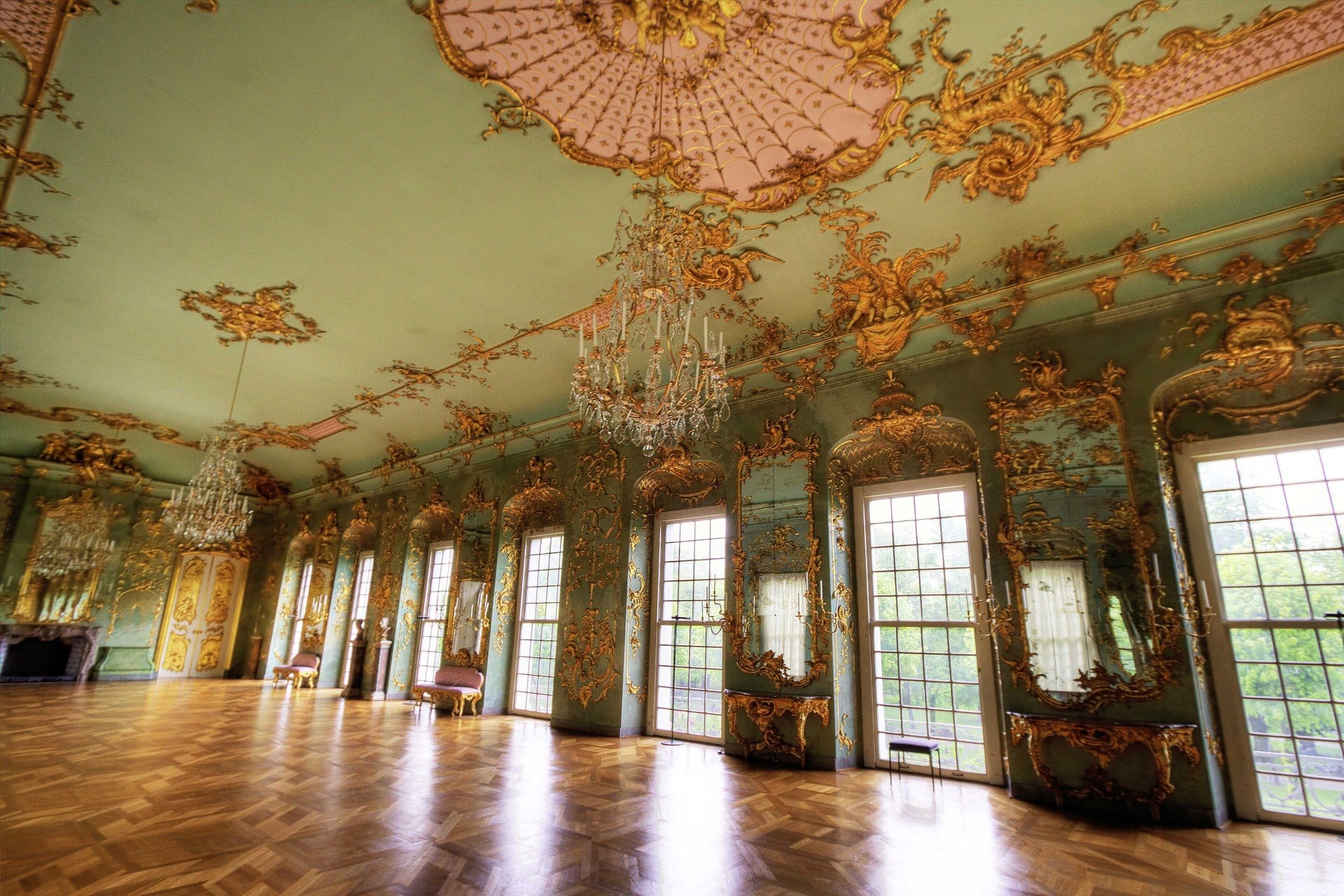
The New Wing, the Neuer Flügel, was Frederick’s first independent residence as king, and it shows a young ruler determined to surround himself with elegance. Its structure rose quickly through the early 1740s, and its great rooms followed over the next several years. The White Hall served as the throne room and banqueting hall; the Golden Gallery, finished in 1747, remains one of the most dazzling Rococo creations anywhere, a long room of green stucco marble laced with gilded ornament drawn from nature, the work of Knobelsdorff with the sculptor Johann August Nahl. This was the style later called Frederician Rococo, a blend of French taste and Prussian discipline. Behind the state rooms, Frederick installed two private apartments and hung one of the largest collections of eighteenth-century French painting outside France, including masterpieces by Antoine Watteau.
Frederick’s devotion to Charlottenburg did not last. From 1745 he was building Sanssouci, his vineyard retreat at Potsdam, and his heart moved there. Sanssouci was small, personal, and unburdened by the duties of a state residence, everything a young king wanted for himself, and Charlottenburg by comparison began to feel like a place of obligation rather than pleasure. It became a palace he passed through rather than lived in. Yet the New Wing he left behind remained the brilliant Rococo core of the complex, and later kings would return to it again and again, making it the part of Charlottenburg most lived in across the next century.
A garden of memory: Belvedere, Mausoleum, and New Pavilion
The Hohenzollerns who came after Frederick treated the Charlottenburg garden as a place to build private retreats and to remember their dead. The result is a park dotted with small, perfect buildings, each a chapter in the dynasty’s later history.
Near the Spree stands the Belvedere, a graceful domed teahouse built in 1788 for King Friedrich Wilhelm II by Carl Gotthard Langhans, the architect then at work on the Brandenburg Gate. Today it holds a collection of Berlin porcelain from the royal manufactory, the KPM. That same king added a palace theater, also by Langhans, just west of the main building.
The garden’s most moving structure is the Mausoleum. When the beloved Queen Luise died in 1810 at the age of 34, her husband, Friedrich Wilhelm III, ordered a tomb in the form of an ancient Doric temple, working from his own sketches with the architect Heinrich Gentz and with Karl Friedrich Schinkel advising. Inside lies Christian Daniel Rauch’s marble effigy of the queen, carved between 1811 and 1814, showing her asleep rather than dead, a masterpiece of German sculpture. The Mausoleum was later enlarged to receive the king himself, and again toward the end of the century to hold the tombs of the first German emperor, Wilhelm I, and his consort Augusta. The marble figures in the temple are memorials; the coffins themselves rest in a crypt below.
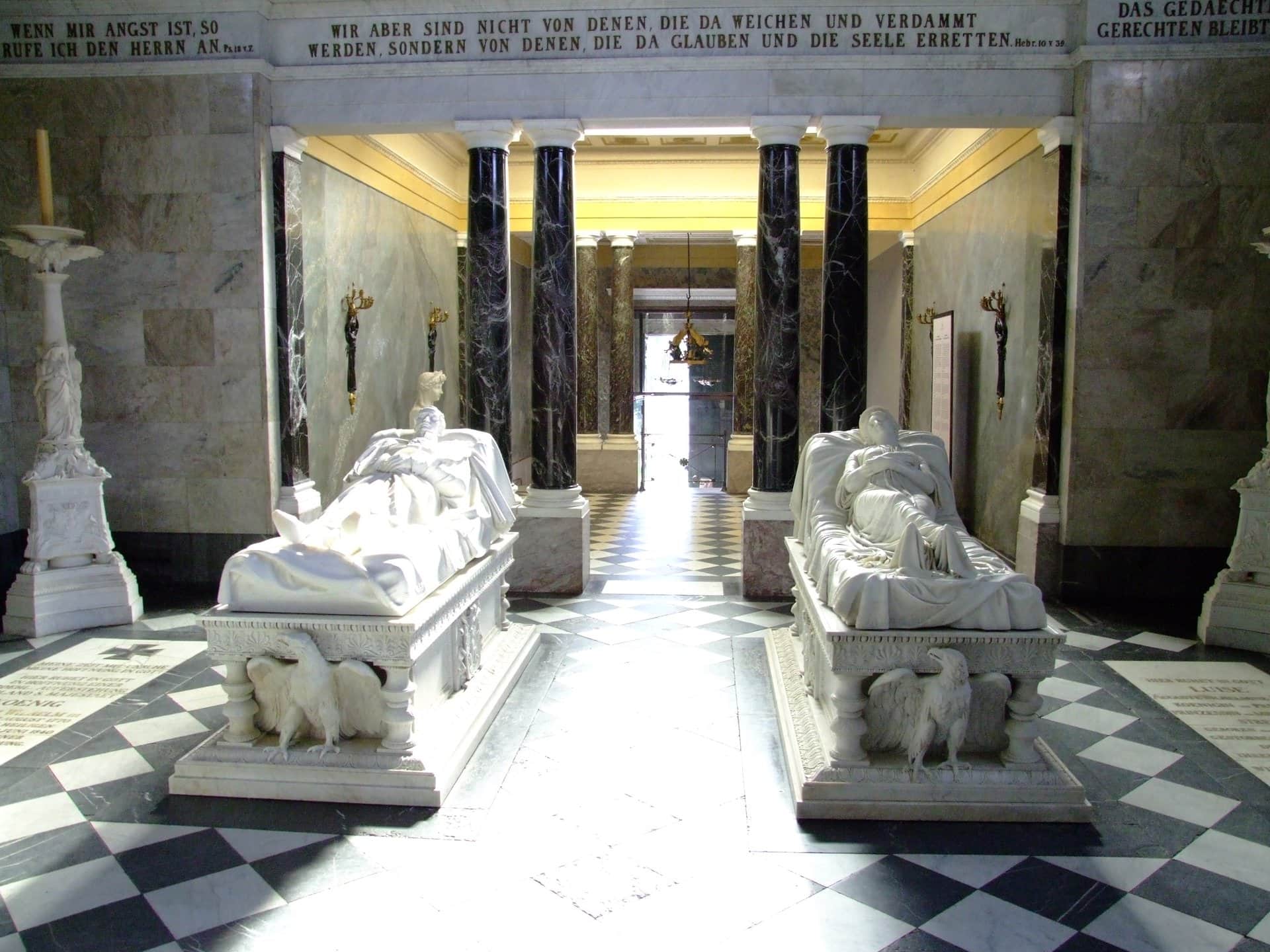
To the east of the palace, Schinkel built the New Pavilion in 1824 and 1825, a cool Italianate villa with a wraparound iron balcony, modeled on a house the king had admired during a stay in Naples. It now displays paintings and sculpture of Schinkel’s own romantic era, including works by Caspar David Friedrich. Over the eighteenth and nineteenth centuries much of the formal Baroque garden was softened into an English landscape park, so that today’s visitor walks through three centuries of changing taste in a single afternoon.
Inside the palace: interiors and collections today
A visit to Charlottenburg falls naturally into two halves, the Old Palace and the New Wing, each with its own ticket and its own character.
The Old Palace, the Altes Schloss, preserves the Baroque world of the first king and his queen. Its showpiece is the Porcelain Cabinet, a small room lined floor to ceiling with thousands of pieces of Chinese and Japanese porcelain set against mirrors and gilding, a dizzying display of the era’s craze for the exotic. Nearby are the palace chapel, the bedchamber of Friedrich I, and the parade apartments of the royal couple. On the upper floor the visitor finds what survives of the Prussian crown regalia and the royal silver, including the permanent display known as the Silver Vault, and an introduction to the dynasty itself in an exhibition on the Prussian royal house.
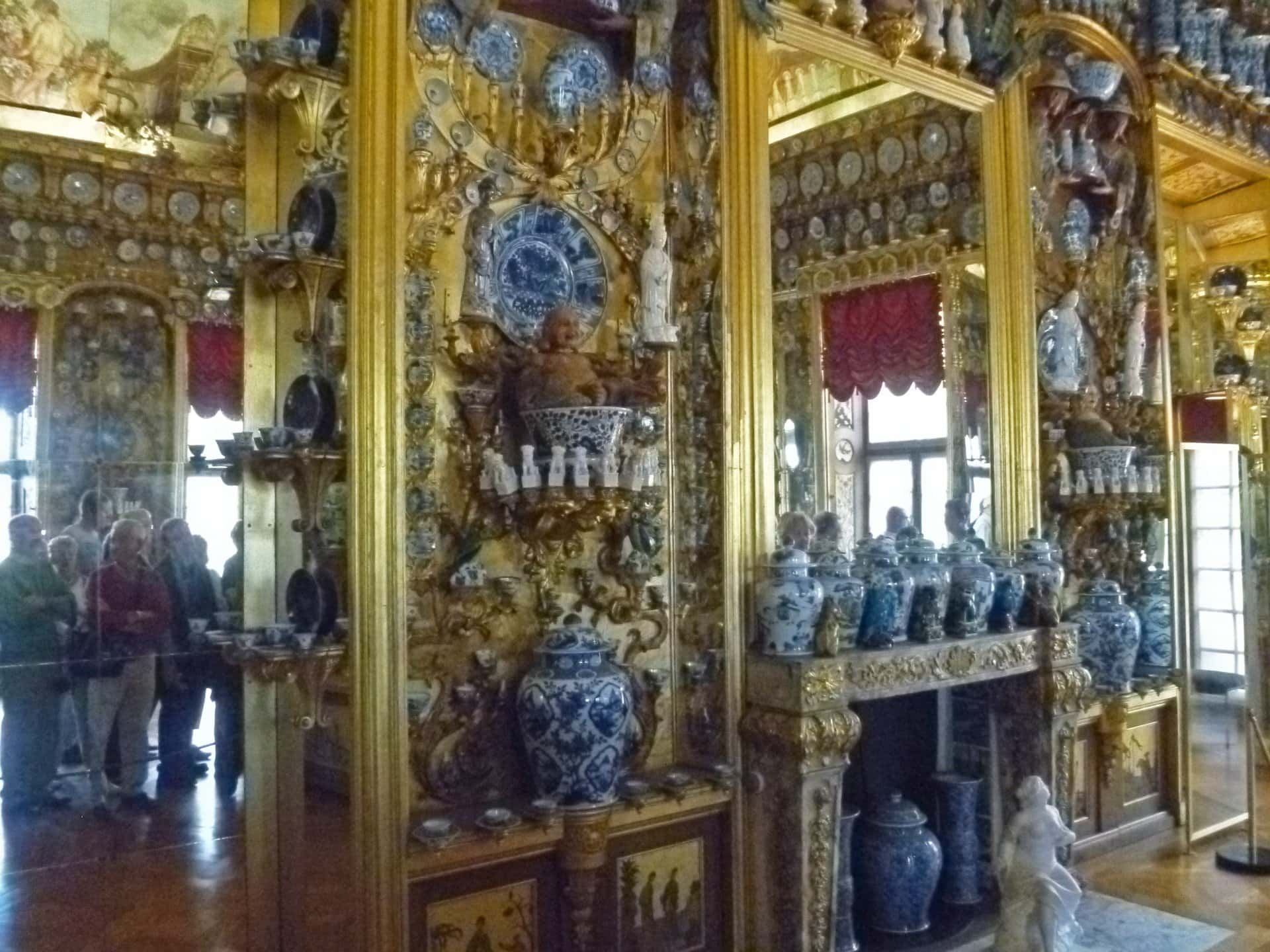
The New Wing offers the gilded Rococo of Frederick the Great: the White Hall, the Golden Gallery, the king’s apartments, and the French paintings he loved. Later rooms show how Friedrich Wilhelm II and then Friedrich Wilhelm III and Queen Luise made the wing their own, with Luise occupying chambers for which Schinkel designed an elegant bedroom in 1810.
Charlottenburg is also where the foundation has begun to confront the darker side of its splendor. On the Old Palace staircase, Augustin Terwesten’s 1694 ceiling paintings of the four continents present the world as the age of empire imagined it. In the courtyard, the bronze equestrian statue of the Great Elector recalls a ruler whose Brandenburg-African Company founded a slave-trading colony, Großfriedrichsburg, on the coast of present-day Ghana. The SPSG now addresses this colonial history openly, through research, audio tours, and exhibitions, and a short visit can take it in alongside the gold.
War and resurrection
In November 1943 a British air raid set Charlottenburg alight, and the fire gutted the palace. The dome collapsed, the state rooms burned, and Baroque ceilings that had taken years to paint were lost in hours. By the end of the war the building was a roofless shell.
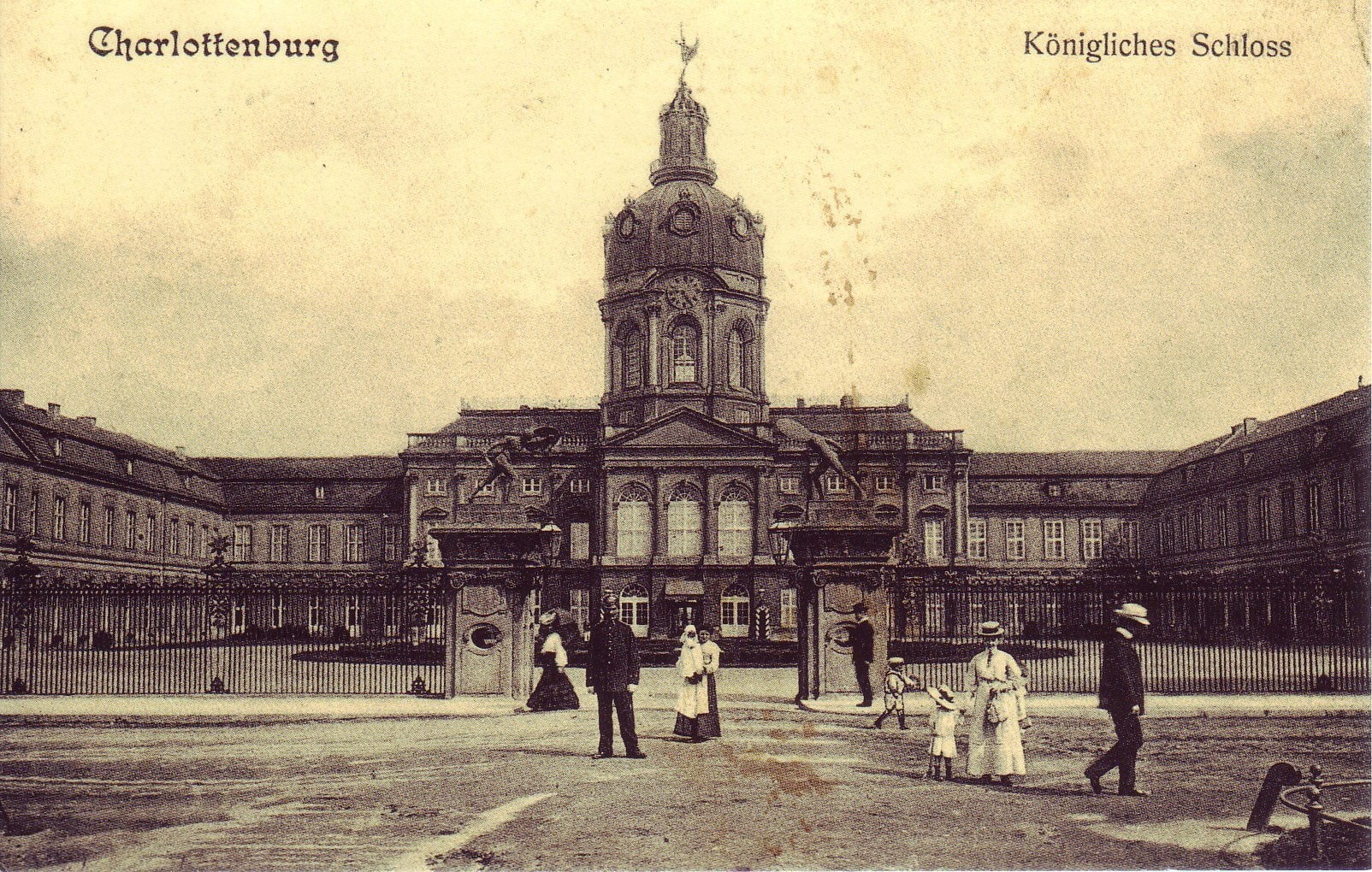
What happened next was not inevitable. After 1945 there was serious talk of pulling the ruin down, and the case for demolition grew louder in 1950, when the East German authorities dynamited the badly damaged Berlin City Palace, the Stadtschloss, in the city’s center. If the dynasty’s main seat could be erased, why spare its summer residence in the west? That answer came largely from one person. The art historian Margarete Kühn, born in 1902 and the first director of the West Berlin palaces administration, argued tirelessly that Charlottenburg must be saved. She won. The Old Palace was reroofed in the early 1950s, the cupola rebuilt by 1956, and federal funds secured to finance a reconstruction that would stretch across decades. Kühn led the work until her retirement in 1969 and lived to see most of it done, dying in 1995.
The rebuilding raised a question that still divides preservationists. Where the original Baroque ceilings were beyond recovery, the foundation chose not to fake them but to commission new work. The painter Hann Trier filled several lost ceilings, including the White Hall, with bold modern compositions, so that a visitor today looks up in a Rococo room to find a twentieth-century painting overhead. To some this is an honest scar; to others a jarring break. This debate is not merely aesthetic. It asks what a reconstructed palace is for: whether it should pretend the war never happened and return the rooms to a seamless Baroque dream, or whether it should let the loss show, marking the line between what survived and what is frankly new. Charlottenburg chose the second path more openly than most German palaces, and the choice still draws argument from historians and visitors alike.
Either way it makes Charlottenburg a rare thing, a royal palace that wears its own destruction and recovery on its surface, and a building whose history did not stop in 1918. The reconstruction ran on long after Kühn, carried forward by her successors into the late twentieth century, so that the palace a visitor sees today is the product of three building eras at once: the original Hohenzollern centuries, the wartime ruin, and the long postwar repair.
Visiting Charlottenburg Palace in 2026
Charlottenburg lies at Spandauer Damm 10 to 22 in the Charlottenburg district, easily reached by bus or by U-Bahn to Sophie-Charlotte-Platz or Richard-Wagner-Platz. It rewards both the quick visitor and the lingering one. Entry tickets and local tours can also be booked in advance through GetYourGuide.
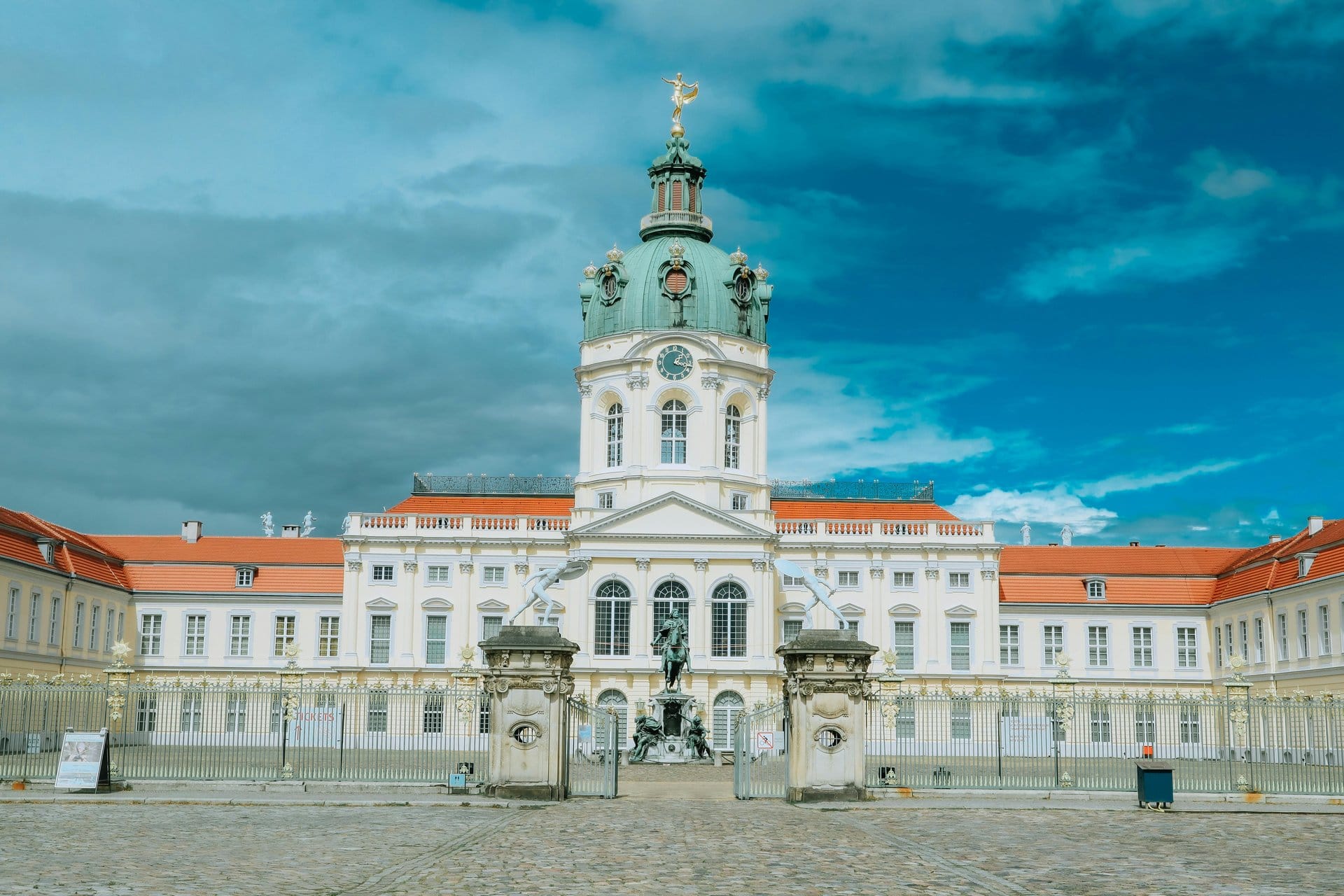
The Old Palace and the New Wing are ticketed separately, each at 12 euros, with a reduced rate of 8 euros. Visitors who want to see everything in the garden should buy the charlottenburg+ day ticket, which covers the Old Palace, the New Wing, and the garden buildings on a single day for 19 euros, reduced to 14, with a family ticket at 45 euros. The Schlossgarten itself is free and open daily from morning until dusk, so a stroll through the park, past the carp pond and out to the Belvedere, costs nothing at all.
The main palace is open year round from Tuesday to Sunday and closed on Mondays, with longer afternoon hours from April to October and slightly shorter ones in winter. Last admission is half an hour before closing. The garden buildings, the Belvedere, the Mausoleum, and the New Pavilion, open only in the warmer months, so a visit between roughly April and October sees the complex at its fullest. Because prices and seasonal hours can change, it is always worth checking the SPSG website before you go. As a sense of scale, the palace museum drew close to 262,000 paying visitors in 2023, which counts admissions to the buildings and not the far larger crowds who simply walk the free gardens.
Beyond Charlottenburg
Charlottenburg makes most sense seen alongside the rest of the Hohenzollern story. The dynasty’s ancestral cradle lies far to the south, at the dramatic hilltop seat of Hohenzollern Castle in Swabia, the family’s symbolic home long before they ruled in Berlin. Charlottenburg shows what those same Hohenzollerns built once they had won a crown, and the contrast between mountain fortress and city palace is the contrast between a dynasty’s origins and its ambitions. The palace also belongs to a wider circle of Prussian royal castles, the residences and restorations through which the Hohenzollerns expressed their idea of kingship. Nearer the capital, the same dynasty made Potsdam its summer seat, where Frederick the Great followed Sanssouci with the far grander Neues Palais; together with Charlottenburg, these form the core of the royal palaces of Berlin and Brandenburg.
There is a second comparison worth making, this time across Germany. Charlottenburg’s path, from a queen’s summer villa to a sprawling royal palace, runs strikingly parallel to the Bavarian story of the Wittelsbachs, who kept their formal seat at the Munich Residenz in the city while building lighter pleasure palaces beyond it: Nymphenburg Palace, the summer villa that swelled into a residence of its own, and Schleissheim Palace, Bavaria’s grand Baroque attempt at a Versailles. Set side by side, the two dynasties were doing the same thing in different capitals: turning leisure houses into statements of power. Charlottenburg is Berlin’s answer to that ambition, and the one royal palace in the city where the whole arc, from electors to emperors to ruin and back, can still be walked from end to end. Both dynasties were ultimately answering one model, set out in our essay on Versailles and the architecture of absolutism.
Conclusion
Charlottenburg Palace is a building that refuses to be only one thing. It is the trace of a brilliant queen and the trophy of a new king; it is Frederick the Great’s gilded Rococo and Schinkel’s quiet neoclassical temples; it is a Baroque garden and an English park; it is a monument to Prussian splendor and, in Hann Trier’s modern ceilings, a monument to the price that splendor paid. To stand in the cour d’honneur, with the Great Elector riding in bronze before the rebuilt dome, is to stand inside three centuries of Berlin history at once. No other place in the city tells the Hohenzollern story so fully, or so honestly.
Principal Sources
- Stiftung Preußische Schlösser und Gärten Berlin-Brandenburg (SPSG), object and press pages for Charlottenburg Palace, the New Wing, the gardens, the Belvedere, the Mausoleum, and the New Pavilion, spsg.de.
- Encyclopædia Britannica, “Charlottenburg” and “Sophia Charlotte,” britannica.com.
- visitBerlin, Charlottenburg Palace and Berlin attractions pages and visitor statistics, visitberlin.de.
- UNESCO World Heritage Centre, “Palaces and Parks of Potsdam and Berlin” (Ref. 532), whc.unesco.org.
- Deutsche Biographie / Deutsche Digitale Bibliothek, biographical record for Margarete Kühn, deutsche-biographie.de.
Charlottenburg Palace is operated by the Stiftung Preußische Schlösser und Gärten Berlin-Brandenburg; admission prices, opening hours, and seasonal access for the garden buildings were drawn from SPSG visitor information current at the time of writing and should be confirmed at spsg.de before a visit.
Image credits. Featured image, the garden front and dome reflected in the carp pond: photo by Dmitry Makeev, Unsplash. The Lietzenburg villa: Georg Wenzeslaus von Knobelsdorff, public domain, via Wikimedia Commons. The cour d’honneur and Great Elector statue: photo by Lasma Artmane, Unsplash. The Golden Gallery: photo by Carmelo Bayarcal, CC BY-SA 3.0, via Wikimedia Commons. The Mausoleum: photo by Klaus Kannen, CC BY-SA 4.0, via Wikimedia Commons. The Porcelain Cabinet: photo by JoJan, CC BY 3.0, via Wikimedia Commons. The palace around 1900: postcard scan, public domain, via Wikimedia Commons. The entrance gate: photo by Pham Ngoc Anh, Pexels. Anyone staying overnight can compare hotels in and around Berlin. Freely licensed images are resized to fit; otherwise unaltered.
Some links on this page are affiliate links, which means StoneKeep Atlas may earn a small commission, at no extra cost to you, if you book through them.