
The Castle as Refuge: Sieges That Defined Germany
A castle is a promise. Long before it was a status symbol or a romantic ruin, it was a bargain a lord made with the people who sheltered inside it: come behind these walls, and you will outlast an enemy you could never beat in the open field. For most of a thousand years that promise held. The history of German castle sieges is the history of that promise being tested season after season, kept far more often than it was broken, and then, when gunpowder finally caught up with stone, broken so thoroughly that the ruins became the country’s most familiar landscape. This is the story of how a refuge was made, defended, and at last undone.
It is best read as a single argument running across regions and centuries rather than a tour of separate sites. A feud in a Mosel valley, a Swedish storming party at Würzburg, a French demolition crew on the Rhine, and an escape-proof rock in Saxony are all chapters of the same question: could the walls keep their word? Some could. Some could not. The difference, more than any battle, is what shaped the castles we visit today.
It helps to remember what a siege meant in practice. The picture most people carry, of a single dramatic assault with ladders against the wall and a breach carried at the point of the sword, describes the rarest and most expensive way to take a castle. The ordinary way was slower and grimmer. An attacker ringed the place, cut its supply lines, and waited while hunger and disease did the work that steel could not. A garrison that could not be relieved usually surrendered long before it was overrun. Time, not courage, decided most sieges, which is why the strongholds that mattered most were the ones an enemy could not afford to sit in front of for a whole season. A storming, when it came, was the exception that made a reputation.
The Feud and the Counter-Castle
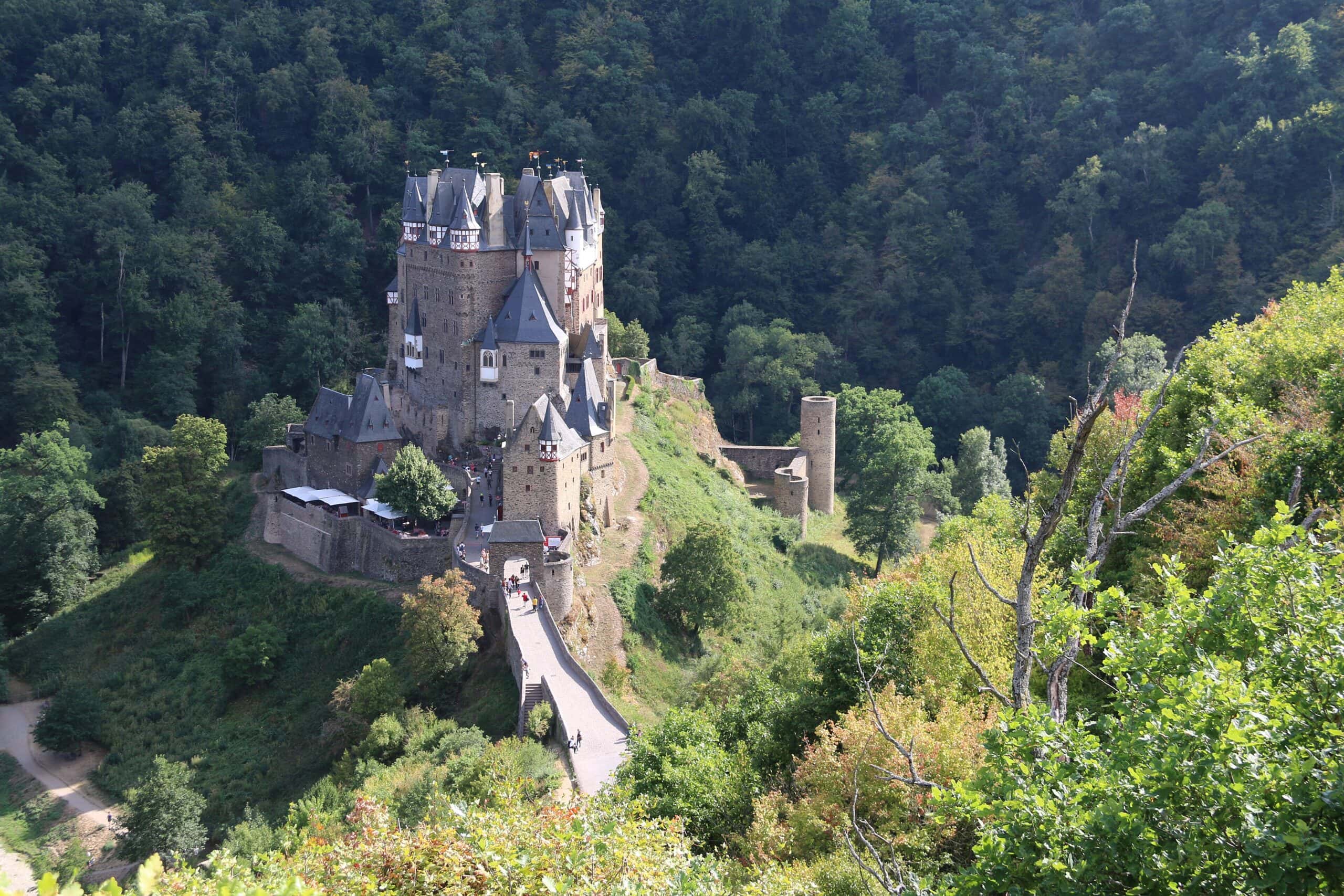
Start in the early 14th century, with one of the clearest demonstrations of how hard a good castle was to take. The lords of Burg Eltz were free imperial knights who answered to no one in particular, and that independence put them on a collision course with Balduin of Luxemburg, the Archbishop-Elector of Trier, who was busy pulling the knights of his region under his own authority. When persuasion failed, Balduin did what a besieger did when an assault looked too costly. He built a castle of his own.
On the ridge above Eltz, within bowshot of its walls, he raised a siege-castle the chronicles call Trutzeltz, a fortress whose only purpose was to break another fortress. From that perch, between roughly 1331 and 1336, his men bombarded Eltz with stone-throwing engines and with some of the earliest gunpowder firearms recorded north of the Alps, the arrow-firing guns whose iron bolts archaeologists later dug out of the castle’s masonry. None of it forced the gate. The lords of Eltz sued for terms in 1333 and accepted a settlement in 1336 that cost them their full independence and required them to pull down part of their outer defenses. Their castle itself was neither stormed nor destroyed. Burg Eltz has never been taken by force in its entire history, and it still belongs to the family that built it, after more than 850 years and some 34 generations under the same name. The feud taught the lesson the rest of this story keeps confirming: against a well-sited castle, a besieger’s strongest weapon was rarely the assault. It was time.
 CC BY-SA 4.0, via Wikimedia Commons" srcset="https://stonekeepatlas.com/wp-content/uploads/2026/04/eltz-castle-guide-trail-vantage-with-trutzeltz_WC-scaled.jpg 2560w, https://stonekeepatlas.com/wp-content/uploads/2026/04/eltz-castle-guide-trail-vantage-with-trutzeltz_WC-300x200.jpg 300w, https://stonekeepatlas.com/wp-content/uploads/2026/04/eltz-castle-guide-trail-vantage-with-trutzeltz_WC-1024x683.jpg 1024w, https://stonekeepatlas.com/wp-content/uploads/2026/04/eltz-castle-guide-trail-vantage-with-trutzeltz_WC-768x512.jpg 768w, https://stonekeepatlas.com/wp-content/uploads/2026/04/eltz-castle-guide-trail-vantage-with-trutzeltz_WC-1536x1024.jpg 1536w, https://stonekeepatlas.com/wp-content/uploads/2026/04/eltz-castle-guide-trail-vantage-with-trutzeltz_WC-2048x1365.jpg 2048w" sizes="auto, (max-width: 2560px) 100vw, 2560px" />
That is why so much of a medieval castle was really a machine for outlasting a blockade. The deep well or rock-cut cistern mattered more than any tower, because water ran out before walls did. Storerooms held grain, salt meat, and wine against a siege measured in months, and a garrison that managed its supplies could watch an army grow sick and hungry in the valley below. Eltz, tucked into a loop of its little river yet high on its rock, was built for exactly that patience. Balduin understood it perfectly, which is why he never tried to carry the walls and chose instead to wear them down from a fortress of his own.
When Gunpowder Changed the Walls
What eventually overturned that arithmetic was artillery. By the late 15th century, cannon could pound through the tall, comparatively thin curtain walls that had made hilltop castles safe, and the whole logic of medieval defense started to fail. The Italian answer, the angle-bastioned fortress later known as the trace italienne, reached the German lands across the 16th and 17th centuries and changed what a stronghold looked like: low, immensely thick ramparts packed with earth to absorb shot, projecting bastions angled so defenders could sweep the ground in front of every wall, and rings of ditches and outworks to keep the attacker’s guns at a distance. Historians still argue about how revolutionary the change was, and whether the new fortifications alone reshaped European warfare or merely accompanied a dozen other shifts. The direction of travel, though, is written into the castles themselves.
No site shows the violent version of that transition more plainly than the Plassenburg above Kulmbach. During the Second Margrave War, a coalition of the margrave’s many enemies, the bishops of Würzburg and Bamberg, the city of Nuremberg, Saxony and Hesse among them, turned on the lands of Albrecht Alcibiades of Brandenburg-Kulmbach. They stormed and burned the residence town of Kulmbach in November 1553, then settled in to starve out the fortress above it, which surrendered in June 1554. The old castle was deliberately slighted, its defenses broken so it could not serve again. Yet the Plassenburg did not stay a ruin. Margrave Georg Friedrich rebuilt it as a Renaissance fortress, and his master mason Caspar Vischer gave it the arcaded courtyard, the Schöner Hof, that visitors come to see today. Destruction and reconstruction in a single generation: that became the rhythm of the gunpowder age.
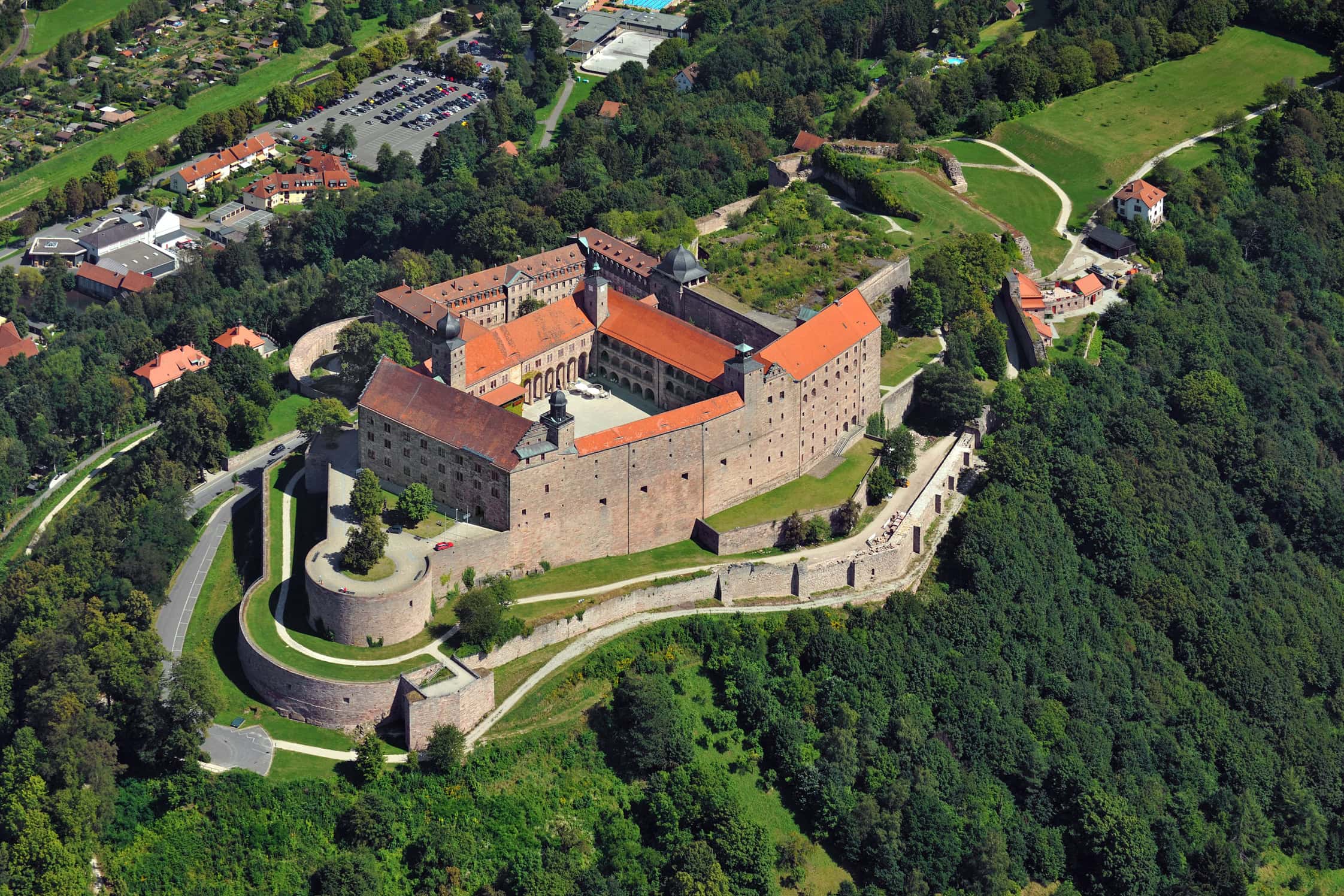
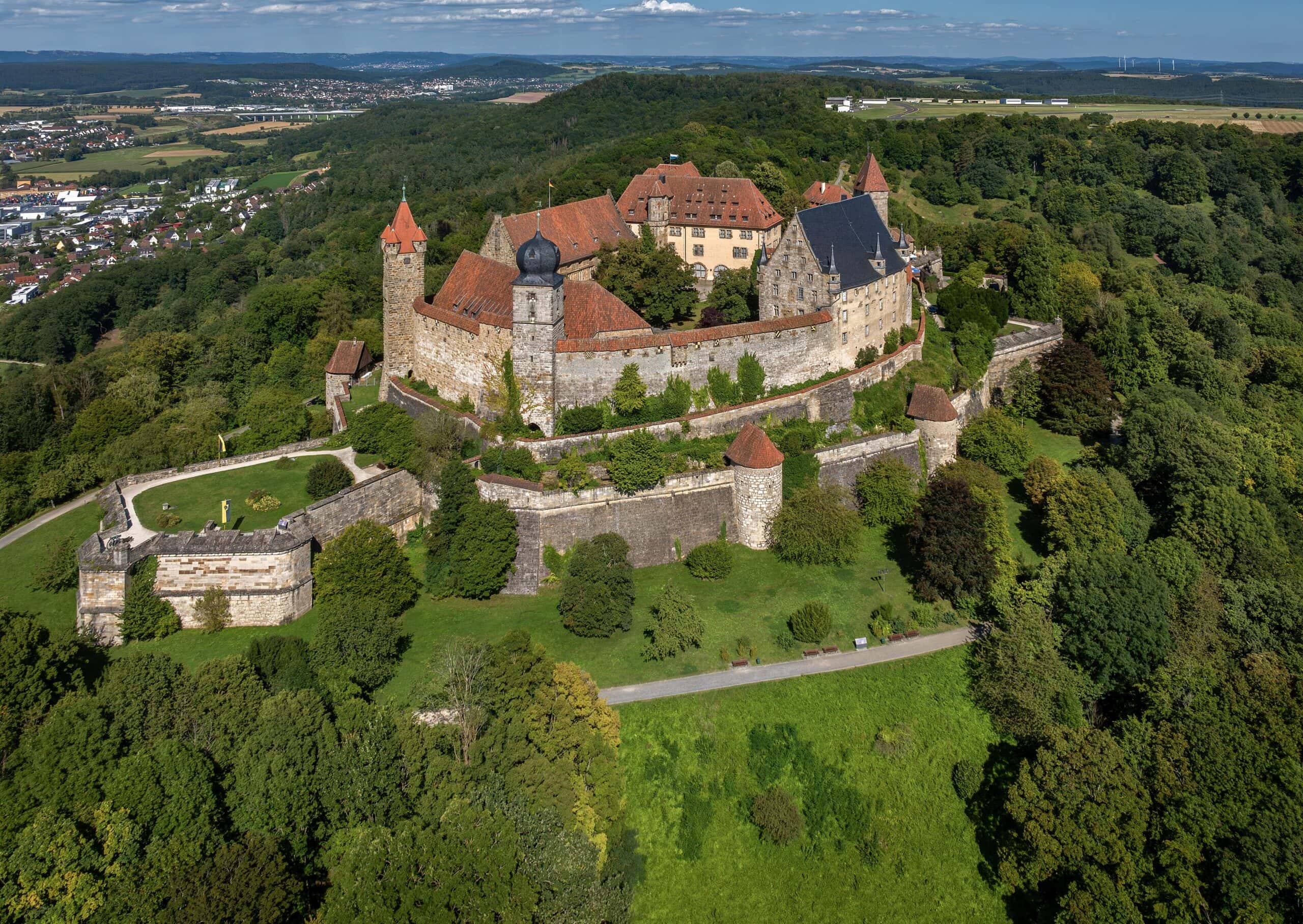
Across Franconia the same instinct took hold without the fire. Würzburg’s Marienberg and Coburg’s mountain fortress were wrapped in earthwork bastions; the imperial city of Nuremberg ringed its core with them in the 1530s and 1540s; and one fortress on the Rhine would eventually carry the idea further than any of them. These were not new castles so much as old ones learning to survive a new kind of fire.
The bastion did more than thicken a wall. It changed the whole tempo of a siege. Against a low, angled, earth-backed fortress, an attacker could no longer pound a breach and rush it; he had to dig his way forward through zigzag trenches, build gun platforms under fire, and reduce one outwork at a time, a slow and costly science later perfected by engineers like Vauban. The result was a strange inversion. Walls grew harder to storm just as armies grew large enough to surround a place completely, so the decisive weapon swung back toward the oldest one of all. The besieger who could not carry a modern fortress by assault could still strangle it. Hunger, not the breach, would settle the great fortress sieges of the next two centuries.
None of this came cheap. A bastioned fortress was a vast public works project, swallowing money, labor, and whole hillsides of earth and stone, and the princes who built them did so knowing the alternative was a ruin. Würzburg’s prince-bishops spent decades and fortunes girdling the Marienberg after 1631; the Saxon electors poured the same effort into their rock above the Elbe. A medieval lord had needed a good hill and a deep well. His early-modern successor needed surveyors, engineers, and a treasury, because the price of keeping the old promise had climbed far beyond anything the feud-era knights of Eltz could have pictured. The castle as refuge survived into the gunpowder age, but only by becoming something larger, costlier, and far less personal.
The Great Testing
The Thirty Years’ War, from 1618 to 1648, was the great audit of German fortification, and two Franconian fortresses returned opposite verdicts within a single year. Both had been modernized. Both sat on commanding hills. Only one of them held.
That war made fortresses matter as never before. Armies of the period lived off the land and could not stay in the field through winter, so whoever held the strong places held the region: the magazines that fed a campaign, the river crossings that moved it, and the walled towns where troops wintered until spring. A single fortress astride the Main or the Danube could decide whether an army advanced or starved. Commanders on both sides learned to treat the great hill castles as the keys to whole provinces, to be seized, garrisoned, and kept at almost any cost. It was against that background that the Marienberg and the Veste Coburg were tested, and their opposite fates carried weight far beyond their own walls.
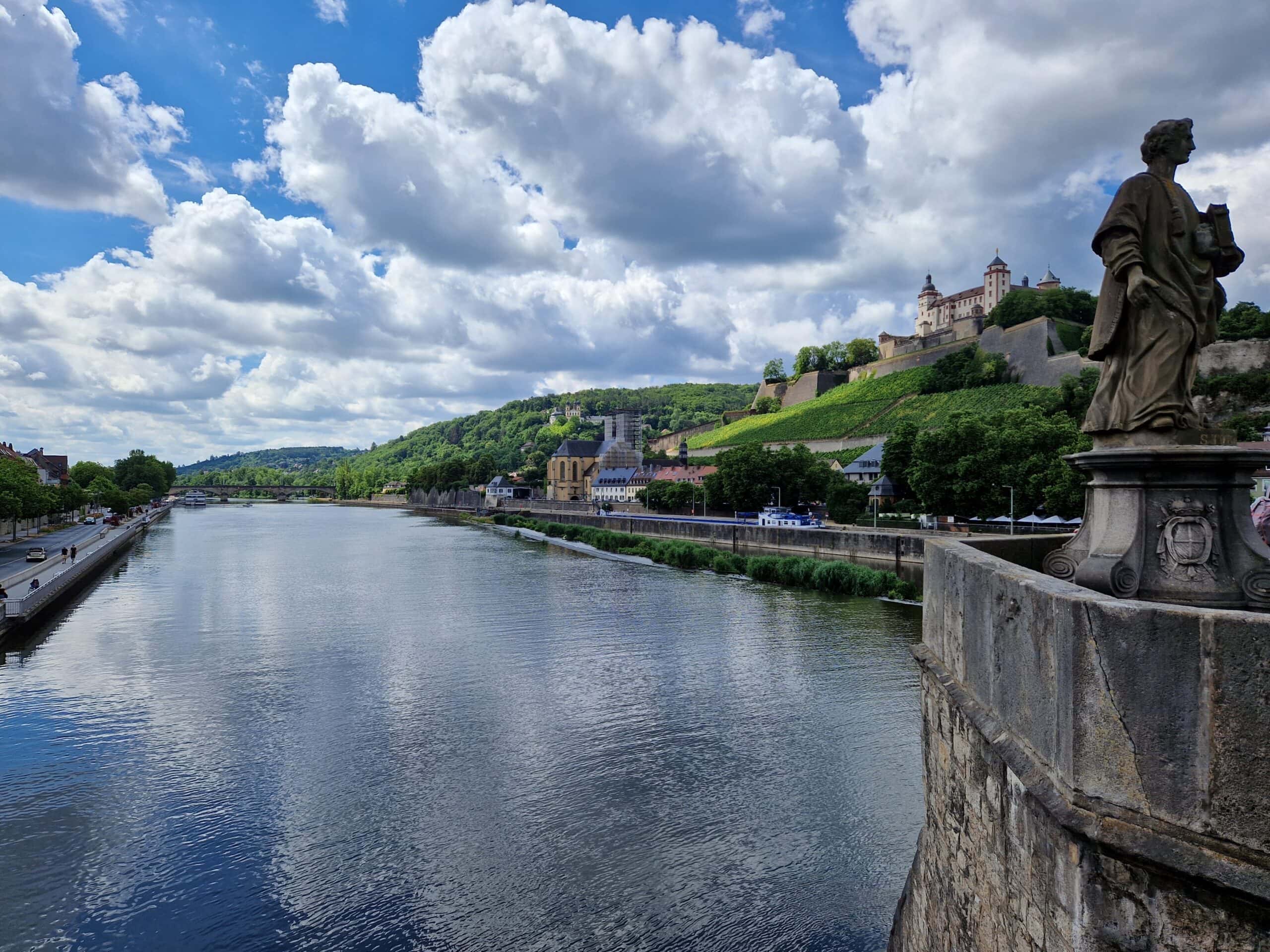
At Würzburg, the Marienberg Fortress had already proved itself once, shrugging off a peasant army during the rising of 1525. In October 1631 it faced a far more dangerous enemy. Gustavus Adolphus of Sweden, fresh from his crushing victory at Breitenfeld, brought his army to the Main. The town of Würzburg fell on the fifth of October, but the prince-bishop’s fortress on the height held out, and so the Swedes stormed it. On the eighth of October 1631 they took the Marienberg by direct assault, a genuinely rare feat against a fortified hill, and then stripped it of its treasures, shipping the bishops’ celebrated library off to Uppsala. They would hold the place until 1635. Würzburg’s response after the war was telling: the prince-bishops ringed the captured fortress in a vast new belt of bastions, as if to make sure no one ever climbed those slopes again.
 CC BY-SA 4.0, via Wikimedia Commons" srcset="https://stonekeepatlas.com/wp-content/uploads/2026/05/marienberg-fortress-hero-from-alte-mainbruecke-scaled.jpg 2560w, https://stonekeepatlas.com/wp-content/uploads/2026/05/marienberg-fortress-hero-from-alte-mainbruecke-300x225.jpg 300w, https://stonekeepatlas.com/wp-content/uploads/2026/05/marienberg-fortress-hero-from-alte-mainbruecke-1024x768.jpg 1024w, https://stonekeepatlas.com/wp-content/uploads/2026/05/marienberg-fortress-hero-from-alte-mainbruecke-768x576.jpg 768w, https://stonekeepatlas.com/wp-content/uploads/2026/05/marienberg-fortress-hero-from-alte-mainbruecke-1536x1152.jpg 1536w, https://stonekeepatlas.com/wp-content/uploads/2026/05/marienberg-fortress-hero-from-alte-mainbruecke-2048x1536.jpg 2048w" sizes="auto, (max-width: 2560px) 100vw, 2560px" />
Sixty miles to the north, the Veste Coburg gave the other answer. In 1632 an Imperial army under Albrecht von Wallenstein, the most feared commander of the age, laid siege to the fortress for seven days. Its garrison, led by Georg Christoph von Taupadel, did not break, and Wallenstein moved on without it. Coburg would change hands only in 1635, and never by storm in that earlier campaign. The Veste Coburg and the Marienberg stood barely a long day’s ride apart, both rebuilt for the gunpowder century, and the war treated them as differently as it could: one stormed and plundered, one holding firm against the era’s greatest general.
 CC BY-SA 4.0, via Wikimedia Commons" srcset="https://stonekeepatlas.com/wp-content/uploads/2026/05/veste-coburg-aerial-hero-scaled.jpg 2560w, https://stonekeepatlas.com/wp-content/uploads/2026/05/veste-coburg-aerial-hero-300x213.jpg 300w, https://stonekeepatlas.com/wp-content/uploads/2026/05/veste-coburg-aerial-hero-1024x726.jpg 1024w, https://stonekeepatlas.com/wp-content/uploads/2026/05/veste-coburg-aerial-hero-768x545.jpg 768w, https://stonekeepatlas.com/wp-content/uploads/2026/05/veste-coburg-aerial-hero-1536x1090.jpg 1536w, https://stonekeepatlas.com/wp-content/uploads/2026/05/veste-coburg-aerial-hero-2048x1453.jpg 2048w" sizes="auto, (max-width: 2560px) 100vw, 2560px" />
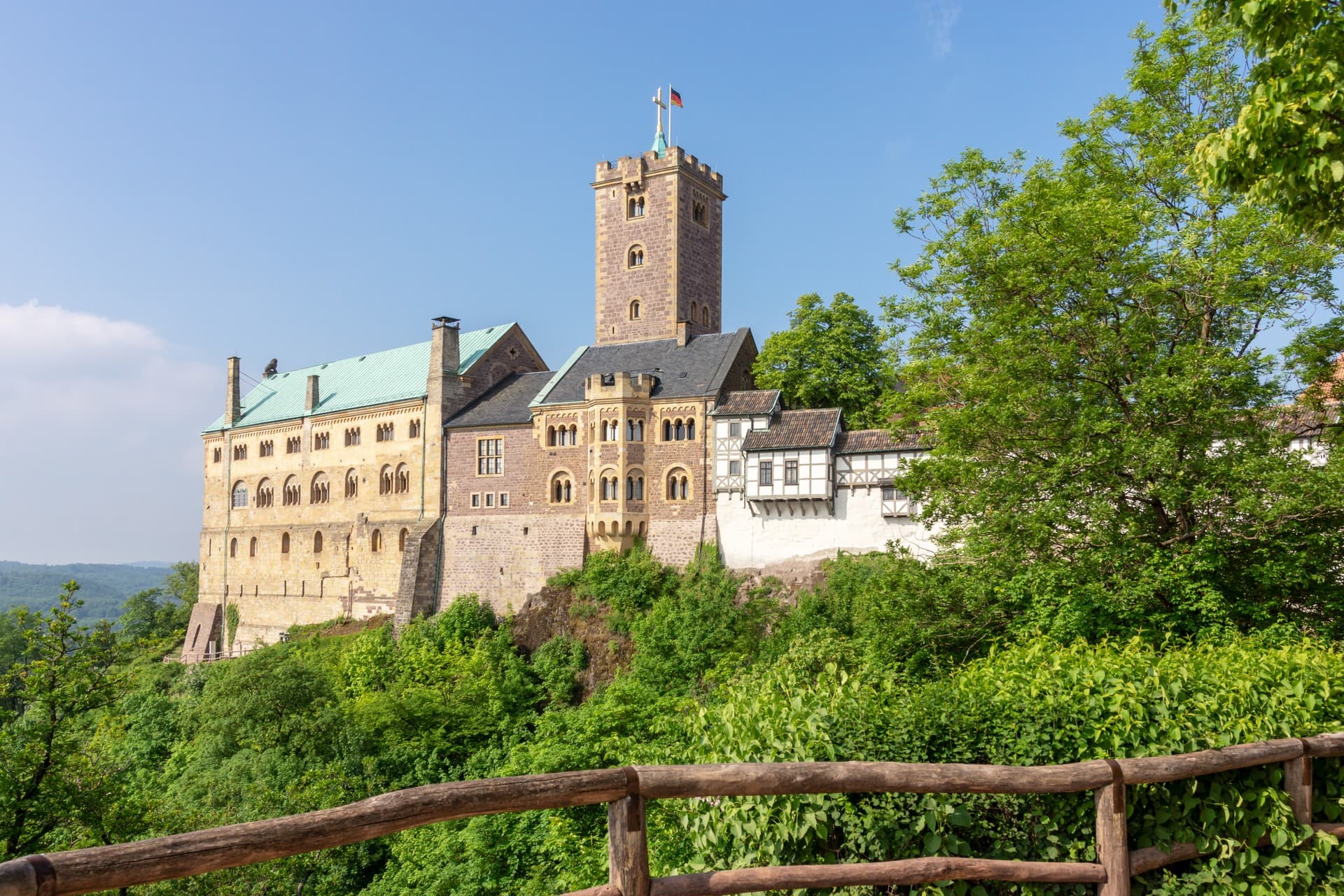
Not every castle’s war was a siege at all. A decade before the armies marched, the Wartburg above Eisenach had played the oldest role in the repertoire. After the Diet of Worms in 1521 left Martin Luther an outlaw, his protector Frederick the Wise had him spirited away to the Wartburg, where for roughly ten months he lived in disguise as the knight “Junker Jörg” and translated the New Testament into German. That confessional drama, and the way castles became pieces on the religious chessboard of the age, is told in its own right in our history of the Reformation and the castle. It belongs in this story too, because it shows the fortress doing its first and simplest job, keeping one man alive when the open country would not, even as the cannon were already changing everything around it.
Burn the Palatinate
The most systematic destruction of German castles came not from the long German war but from a French king. During the Nine Years’ War, Louis XIV’s armies swept the Rhineland in 1688, and his war minister, Louvois, settled on a deliberate policy of devastation, an order to burn the Palatinate so it could never again serve as a springboard for the emperor’s troops. Within a single season some twenty towns and far more villages and castles were given to the torch, among them Mannheim, Speyer, Worms, and Oppenheim, in one of the most calculated campaigns of destruction the region had ever seen. Town after town went up across the spring of 1689. Castle after castle was mined and toppled. The Rhine that earlier centuries had filled with toll castles, a story we trace in our history of the river as contested territory, now became a corridor of smoke.
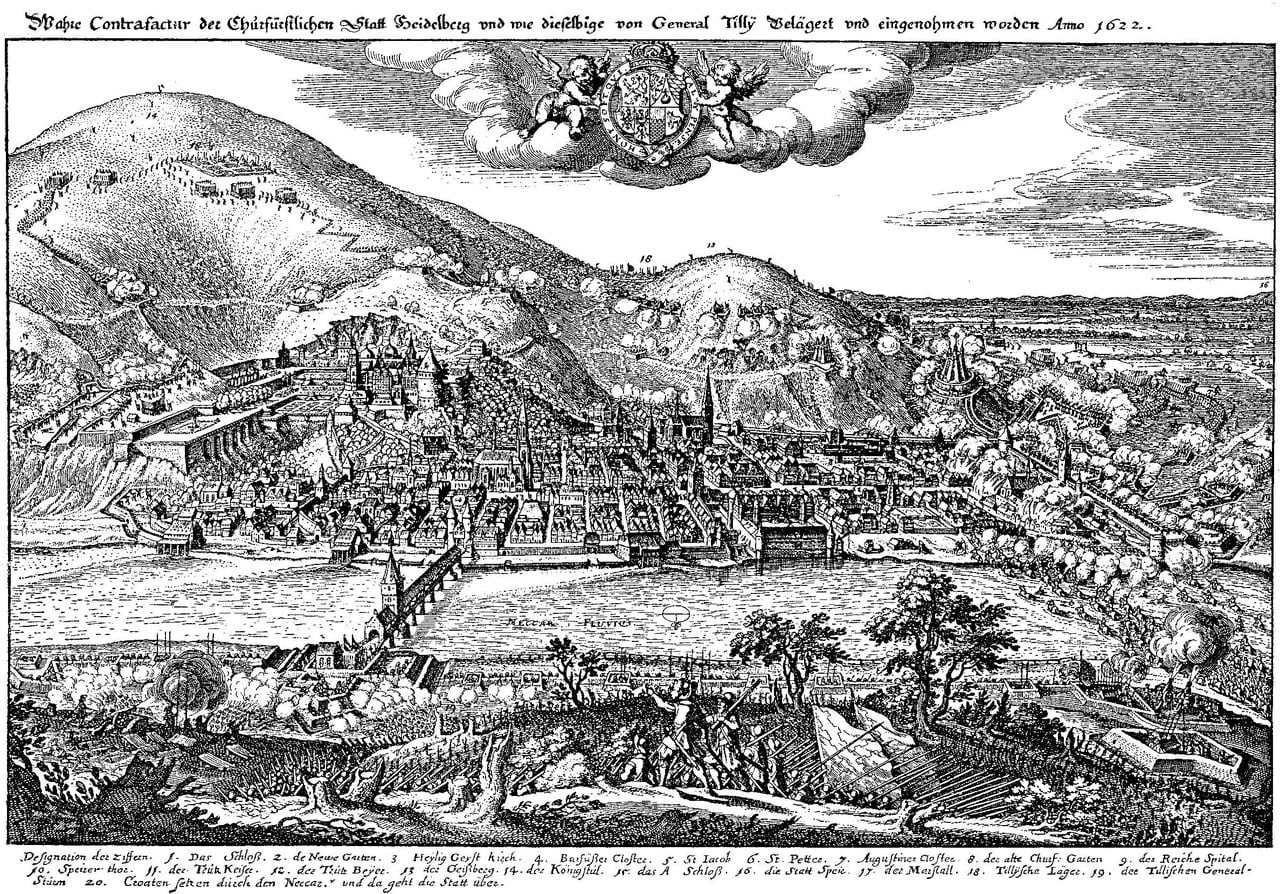
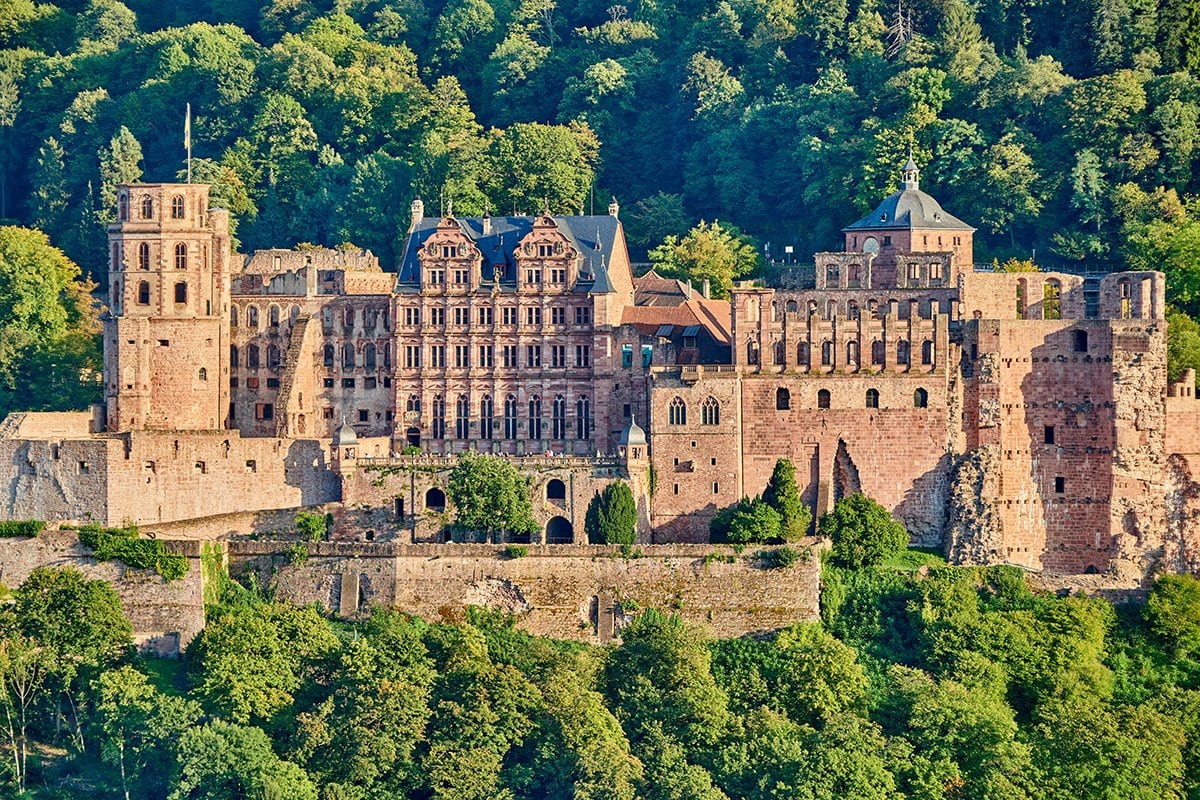
No ruin carries the memory more visibly than Heidelberg Castle. Its troubles had begun earlier, in 1622, when the Catholic League general Tilly took the town and the castle and sent the priceless Bibliotheca Palatina over the Alps to the Vatican as war booty. The deeper wounds came from the French. In 1689 their troops set the castle ablaze and blew the front clean off its great round tower, and when they returned in 1693 they finished the work with mines. A last indignity arrived from the sky: in 1764 two lightning strikes burned the partly repaired buildings, ending every plan to make the castle livable again and leaving the vast red sandstone shell that has drawn travelers ever since.
On the Mosel the Reichsburg Cochem met the plainer version of the same fate. French troops occupied the castle and, in May 1689, undermined and blew it up. It lay broken for nearly two centuries until a Berlin businessman, Louis Ravené, bought the ruins in 1868 and rebuilt them in the neo-Gothic taste of his own century, which is the silhouette that crowns the town today.
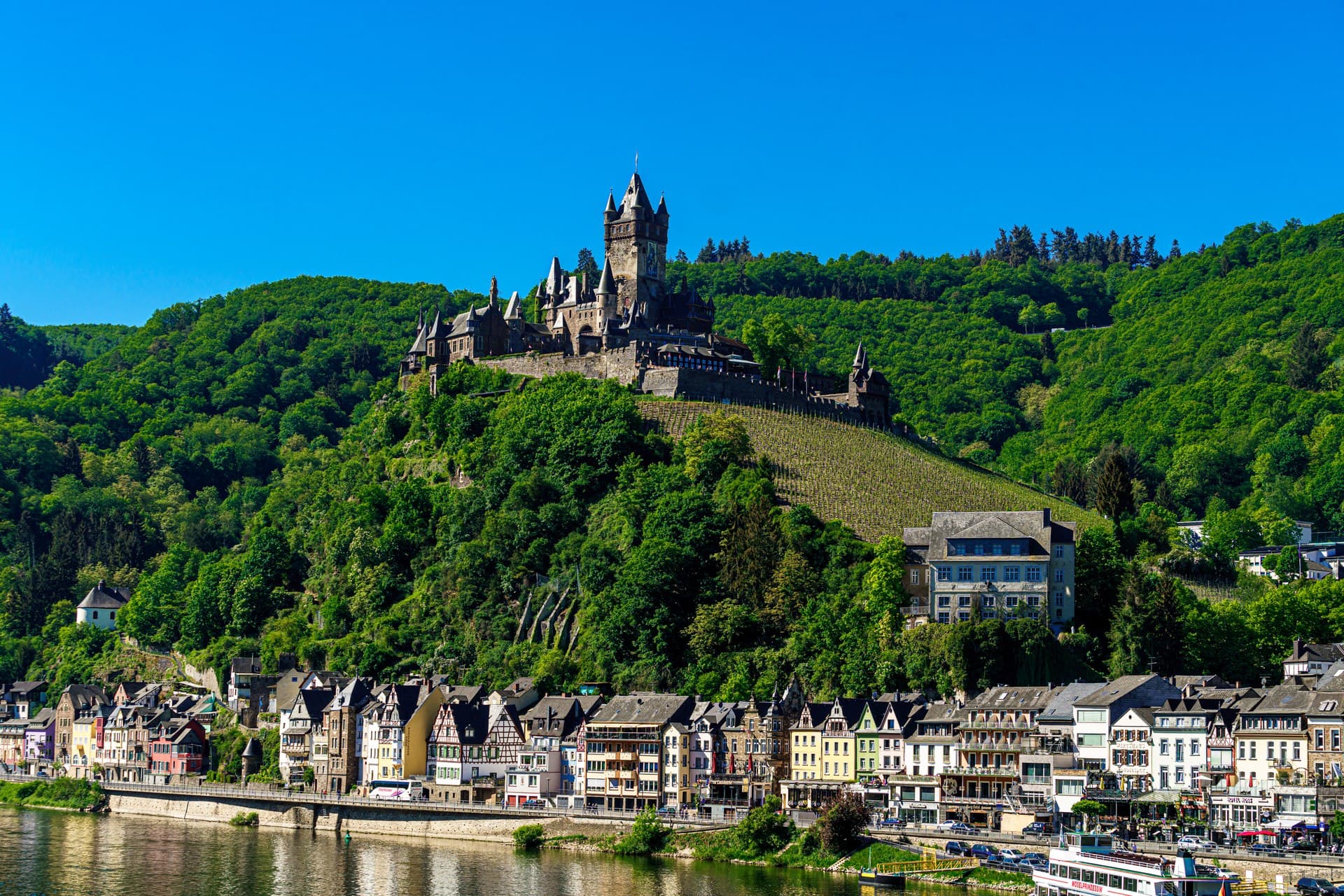
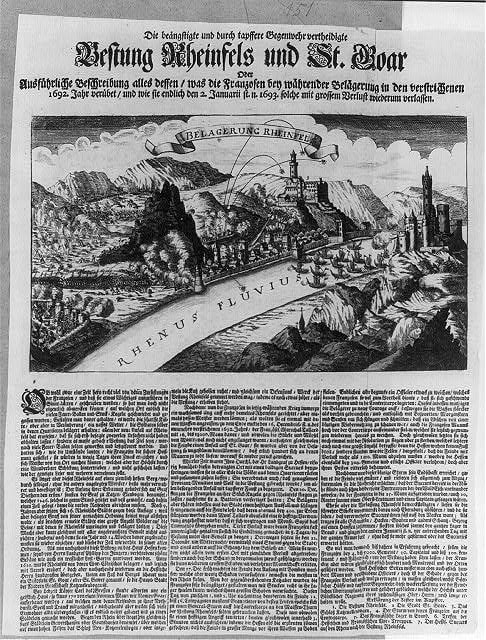
One fortress on the river refused the pattern, and its defiance is the hinge of the whole chapter. In December 1692 the French turned on Rheinfels Castle above St. Goar, the strongest stronghold on the Middle Rhine. The numbers reported by contemporaries were lopsided, an army said to be around 28,000 strong against a garrison of roughly 3,000. Their commander, Tallard, was wounded early and handed off the siege, and for about two weeks the French battered the walls. The defenders, led for Hesse-Kassel by General von Görtz, held, and at the turn of the new year the French gave up and withdrew. Rheinfels was the only fortress on the left bank of the Rhine that Louis XIV’s armies failed to take. Its end, when it came, was quiet and almost bureaucratic: French Revolutionary troops occupied the abandoned castle without a fight in 1794, and in 1797 they blew it up. A castle that had beaten an army by force was lost a century later without one. That contrast is the lesson of the age in miniature.
The Fortress That Could Not Be Taken
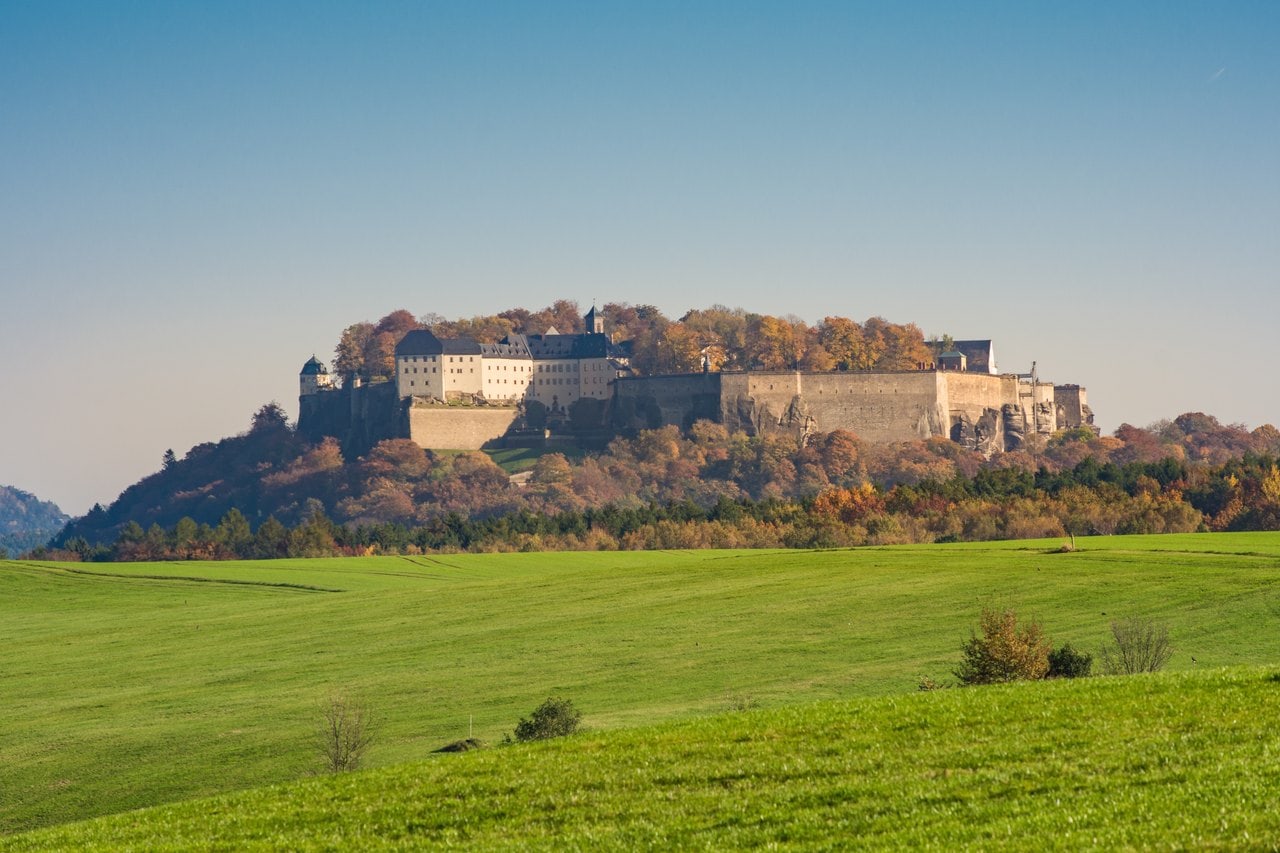
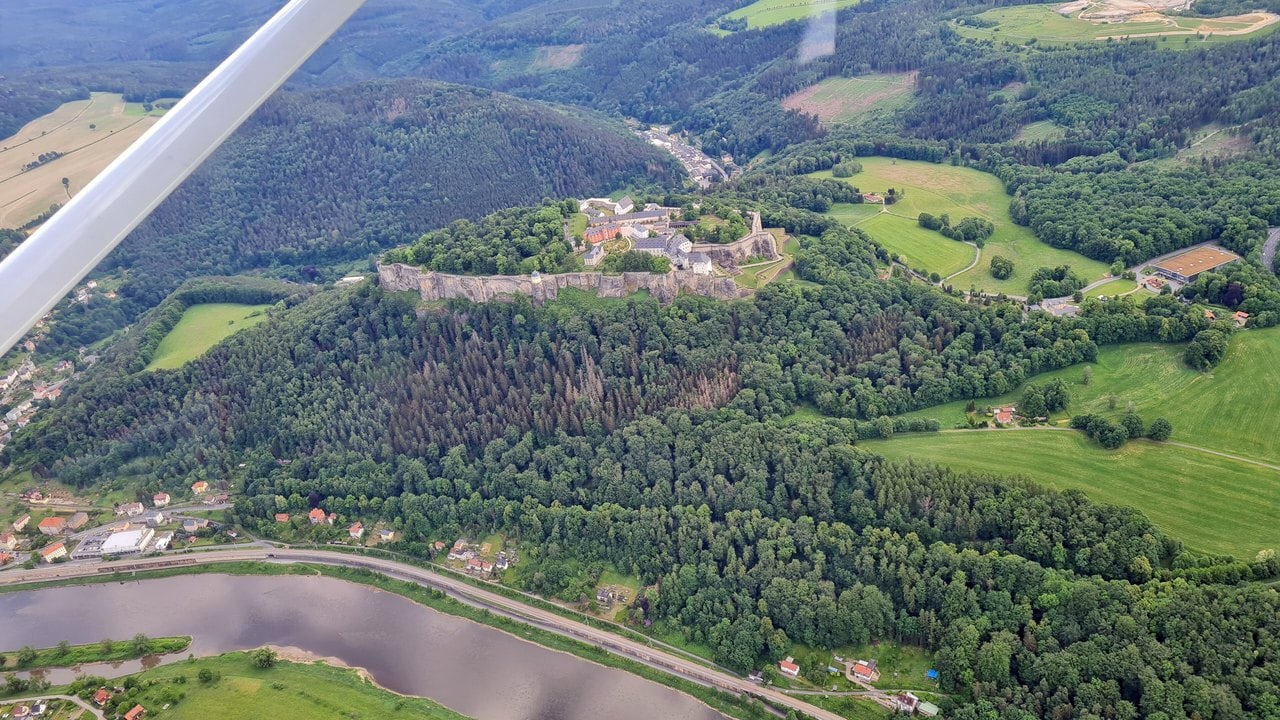
By the 18th century the bastioned state fortress had largely won its argument with the besieger, and two strongholds stand for what victory looked like. In Saxony, the Königstein Fortress rose on a sheer sandstone table above the Elbe, and across its entire history it was never taken by force. The Saxon electors used it precisely as the first castle-builders had used their hilltops: as a strongroom for the state treasury, a refuge for the court in wartime, and a prison for people the state preferred to forget. Even in the 20th century the rock held its reputation, guarding prisoners and the evacuated art of Dresden, and the one man famous for getting past its defenses, the French general Henri Giraud in 1942, did it by climbing down a rope, not by breaking in.
 CC BY 4.0, via Wikimedia Commons" srcset="https://stonekeepatlas.com/wp-content/uploads/2026/06/koenigstein-fortress-aerial.jpg 1280w, https://stonekeepatlas.com/wp-content/uploads/2026/06/koenigstein-fortress-aerial-300x169.jpg 300w, https://stonekeepatlas.com/wp-content/uploads/2026/06/koenigstein-fortress-aerial-1024x576.jpg 1024w, https://stonekeepatlas.com/wp-content/uploads/2026/06/koenigstein-fortress-aerial-768x432.jpg 768w" sizes="auto, (max-width: 1280px) 100vw, 1280px" />
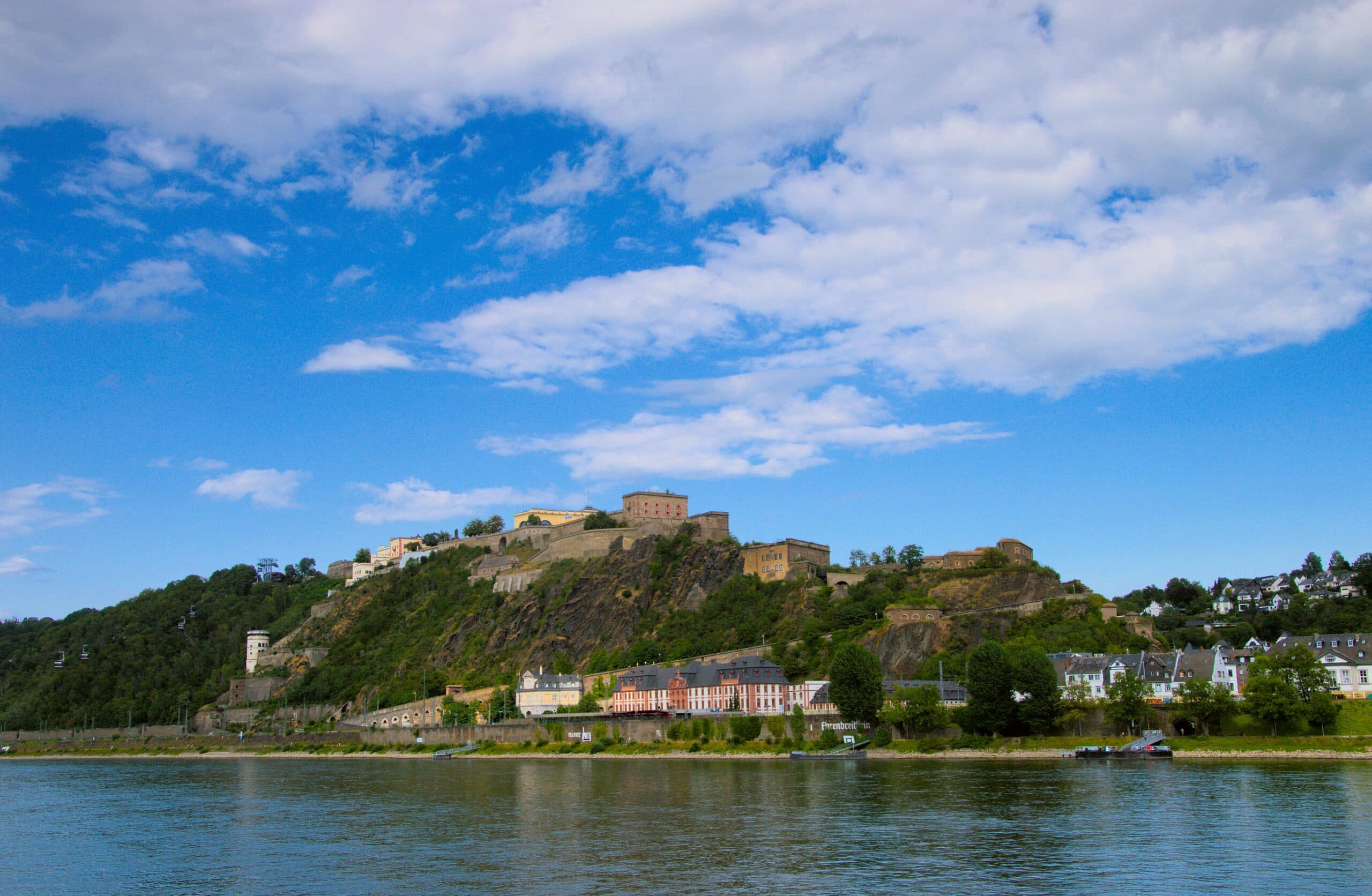
On the Rhine, the Ehrenbreitstein Fortress above Koblenz shows the other half of the lesson. French Revolutionary armies could not storm it either. They besieged it three times without success and took it in 1799 only by sealing it off and starving the garrison into surrender. Then they destroyed what they could not capture, blowing up the old fortress in 1801. Prussia rebuilt it on a colossal scale between 1817 and 1828 as the heart of a fortified Koblenz, and in that final form no enemy ever put it to the test. The era of the storming party that had carried the Marienberg was finished. The future belonged to the blockade, the siege line, and the engineer.
What the two fortresses share is the survival of an old idea inside a new shell. Königstein and Ehrenbreitstein did exactly what Eltz and the Marksburg had done centuries before, sheltering people and treasure behind walls an enemy could not quickly break. Their technology had changed past recognition. Their bargain had not. A stronghold still earned its keep by making an attacker pay in time, and time, in the end, was the one price most armies could not meet.
What the Stones Remember
Most German castles that survive as ruins were not left to crumble in peace. They were slighted, blown apart at the end of a war so that they could never again shelter an enemy, which is why a ruin so often marks a defeat more than mere neglect. That makes the few that came through whole worth pausing over, because each one is the exception that explains the rule.
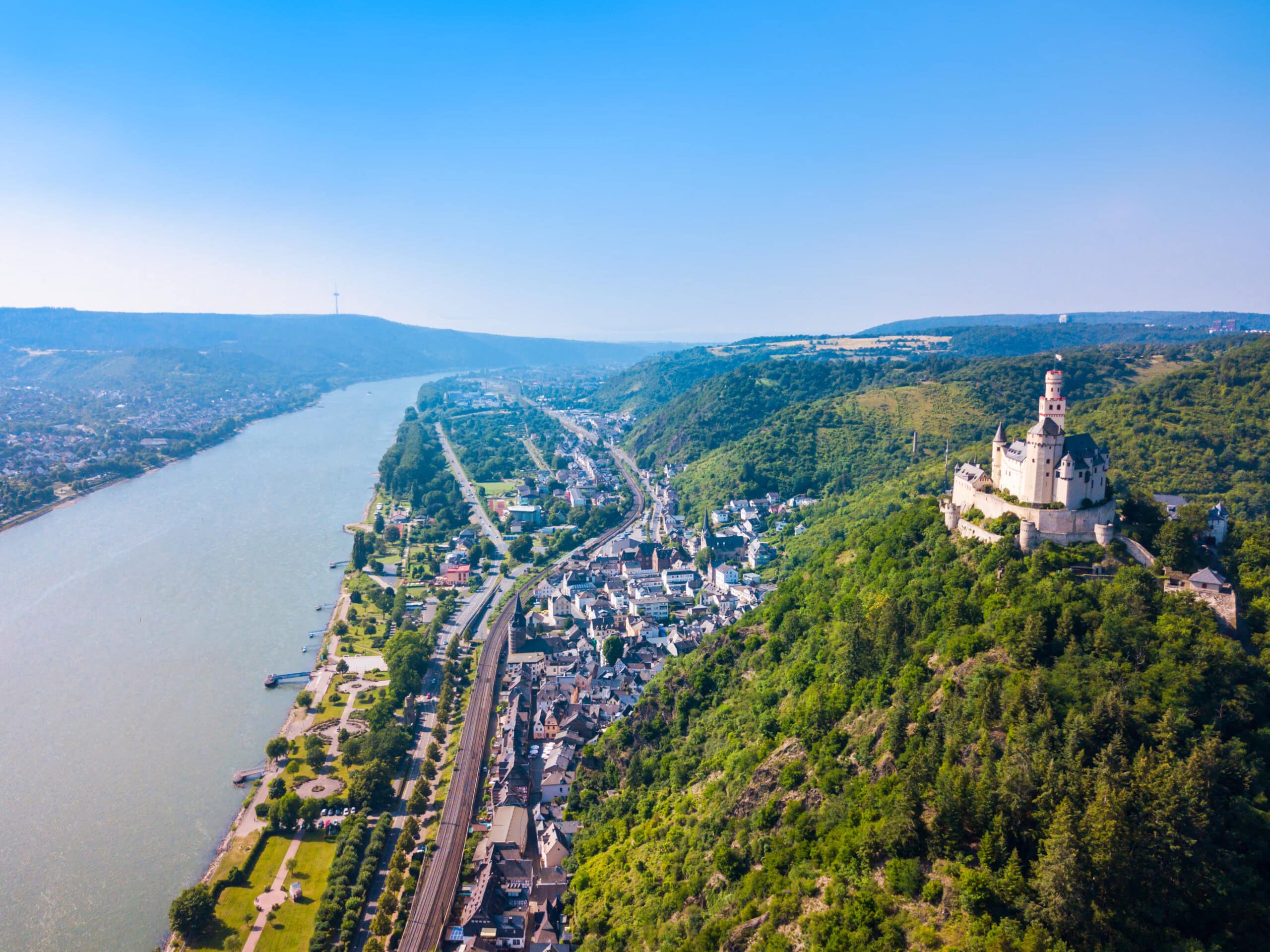
The Marksburg above Braubach is the most striking of them, the only hill castle on the Middle Rhine never to have been destroyed. Of the dozens of castles strung along the gorge between Koblenz and Bingen, it alone kept its full medieval form while its neighbors crumbled into picturesque shells, and the German Castles Association has kept its headquarters inside it since the 1930s. Even the Marksburg was not untouched: American shellfire struck it in 1945, and the damage was carefully repaired. “Never destroyed” was always a narrower claim than “never harmed.”
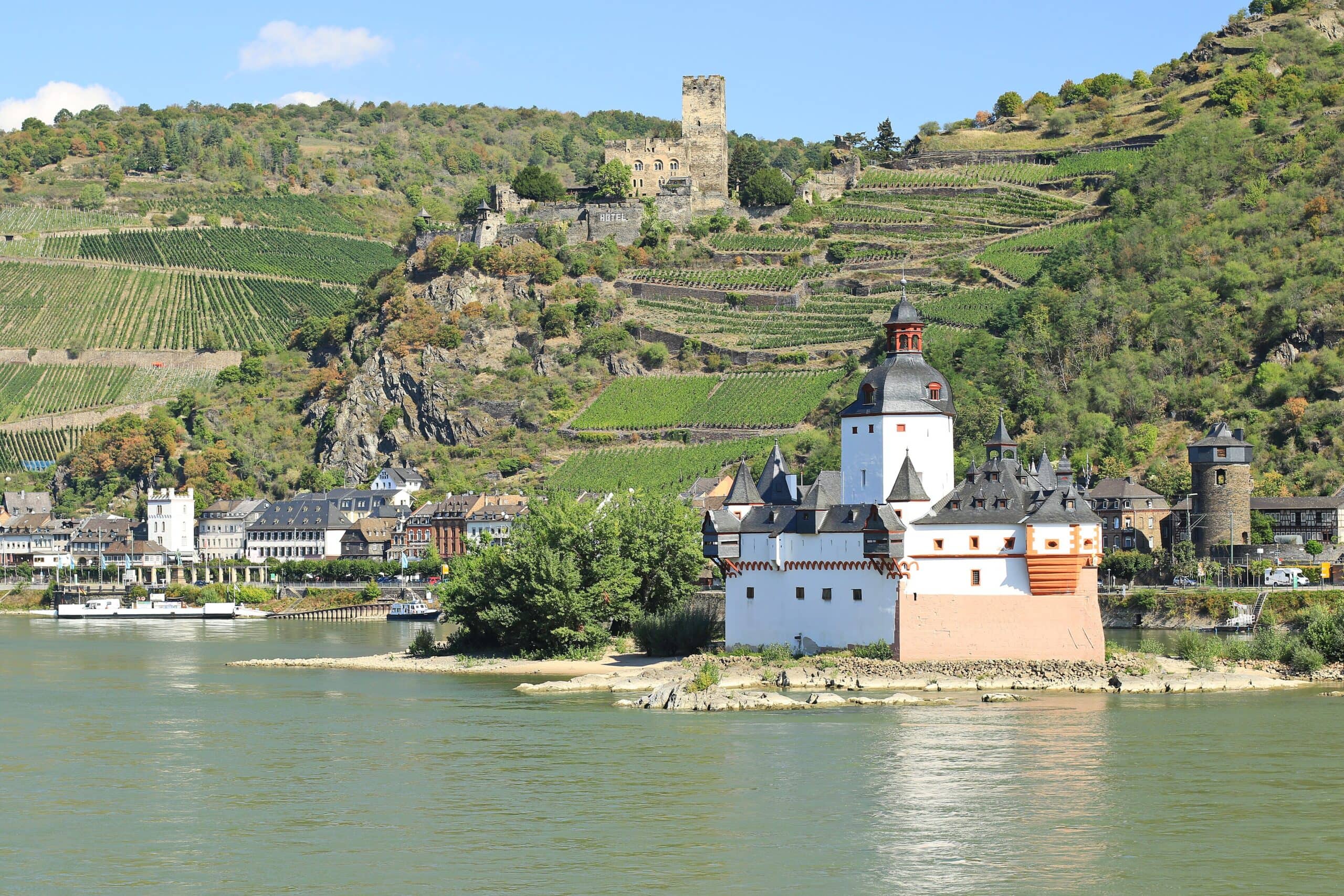
Out in the current at Kaub stands the strangest survivor, the Pfalzgrafenstein, a stone ship of a toll castle moored on an island in the Rhine, one of the stations whose imperial tax machine we map in our account of the Rhine toll castles. In six centuries it was never conquered and never pulled down, though it changed hands by occupation more than once, a reminder that “never taken” and “never entered” are not the same sentence. And Burg Eltz, where this story began, still stands in its hidden valley after more than 850 years, never stormed and never destroyed, still lived in by the family whose ancestors held out against the archbishop of Trier.
 CC BY-SA 4.0, via Wikimedia Commons" srcset="https://stonekeepatlas.com/wp-content/uploads/2026/05/pfalzgrafenstein-castle-island-gutenfels-kaub-scaled.jpg 2560w, https://stonekeepatlas.com/wp-content/uploads/2026/05/pfalzgrafenstein-castle-island-gutenfels-kaub-300x200.jpg 300w, https://stonekeepatlas.com/wp-content/uploads/2026/05/pfalzgrafenstein-castle-island-gutenfels-kaub-1024x683.jpg 1024w, https://stonekeepatlas.com/wp-content/uploads/2026/05/pfalzgrafenstein-castle-island-gutenfels-kaub-768x512.jpg 768w, https://stonekeepatlas.com/wp-content/uploads/2026/05/pfalzgrafenstein-castle-island-gutenfels-kaub-1536x1024.jpg 1536w, https://stonekeepatlas.com/wp-content/uploads/2026/05/pfalzgrafenstein-castle-island-gutenfels-kaub-2048x1365.jpg 2048w" sizes="auto, (max-width: 2560px) 100vw, 2560px" />
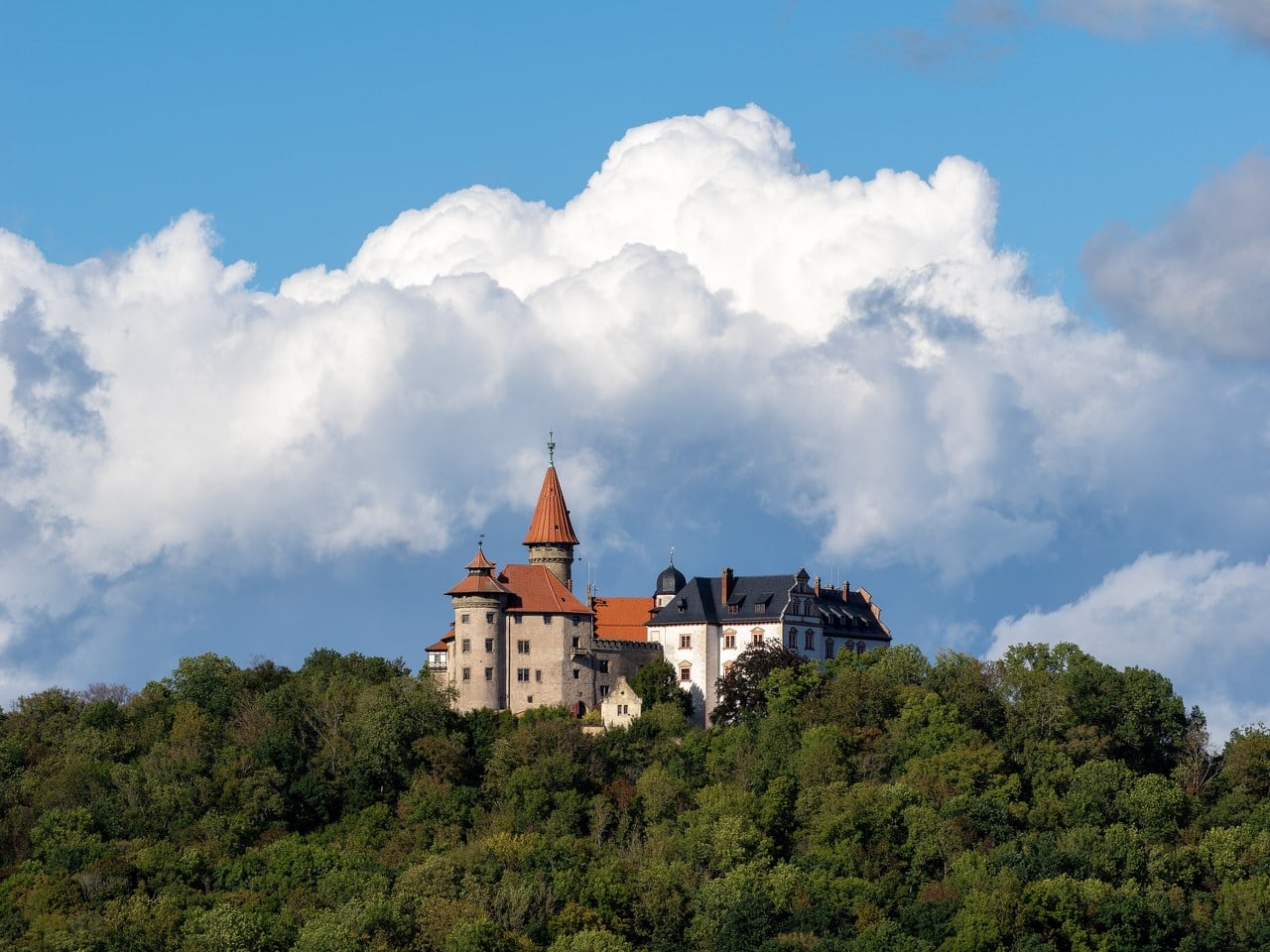
There is a fitting place to end. On a basalt cone in southern Thuringia, the Veste Heldburg looks every inch the fortress, but its real distinction lies in what it has become. After a fire gutted its Renaissance wing in 1982 and a long restoration brought the building back, it reopened in 2016 as the Deutsches Burgenmuseum, the German Castle Museum. A structure that once offered refuge now guards the memory of refuge itself, the towers and ditches and gunpowder that decided who lived behind stone and who did not. Every castle in this account is a paragraph of that long argument. Some kept the promise, some could not, and a handful, against every probability, were never even asked to surrender.
 CC BY-SA 4.0, via Wikimedia Commons" srcset="https://stonekeepatlas.com/wp-content/uploads/2026/06/heldburg-fortress-cone.jpg 1280w, https://stonekeepatlas.com/wp-content/uploads/2026/06/heldburg-fortress-cone-300x225.jpg 300w, https://stonekeepatlas.com/wp-content/uploads/2026/06/heldburg-fortress-cone-1024x768.jpg 1024w, https://stonekeepatlas.com/wp-content/uploads/2026/06/heldburg-fortress-cone-768x576.jpg 768w" sizes="auto, (max-width: 1280px) 100vw, 1280px" />
Principal Sources
- Bayerische Schlösserverwaltung (Bavarian Palace Administration). Object histories of the Marienberg Fortress, Würzburg, and the Imperial Castle of Nuremberg.
- Burg Eltz (Gräflich Eltz’sche Kastellanei). History of the castle and the Eltz family.
- Deutsche Burgenvereinigung e.V. The Marksburg.
- Generaldirektion Kulturelles Erbe Rheinland-Pfalz and the Landesmuseum Koblenz. Ehrenbreitstein Fortress.
- Kunstsammlungen der Veste Coburg. From castle to fortress: the building history of the Veste Coburg.
- Parker, Geoffrey. The Military Revolution: Military Innovation and the Rise of the West, 1500 to 1800, with the critical responses that frame the trace italienne debate.
- Reichsburg Cochem GmbH. The history of the castle and its 19th-century reconstruction.
- Schlösserland Sachsen and Festung Königstein gGmbH. History of the Königstein Fortress.
- Staatliche Schlösser und Gärten Baden-Württemberg. Heidelberg Castle and the Nine Years’ War.
- Stiftung Thüringer Schlösser und Gärten. The Veste Heldburg and the Deutsches Burgenmuseum.
- Wartburg-Stiftung Eisenach. Luther’s stay at the Wartburg.
- The featured castles are cared for by these bodies: the Bavarian Palace Administration (Marienberg, Veste Coburg, Plassenburg, Nuremberg), Staatliche Schlösser und Gärten Baden-Württemberg (Heidelberg), the Generaldirektion Kulturelles Erbe Rheinland-Pfalz (Ehrenbreitstein and Rheinfels), Festung Königstein gGmbH within Schlösserland Sachsen (Königstein), the Stiftung Thüringer Schlösser und Gärten (Heldburg), the Wartburg-Stiftung (Wartburg), the Deutsche Burgenvereinigung (Marksburg), and the private foundations and families that maintain Burg Eltz, the Pfalzgrafenstein, and the Reichsburg Cochem.
Image credits. Hero (Königstein Fortress): seaq68, via Pixabay. Eltz Castle: FrDr, CC BY-SA 4.0, via Wikimedia Commons. Plassenburg Fortress: © Bayerische Schlösserverwaltung, photo by Hajo Dietz. Marienberg Fortress: Strubbl, CC BY-SA 4.0, via Wikimedia Commons. Veste Coburg: Reinhold Möller (Ermell), CC BY-SA 4.0, via Wikimedia Commons. Wartburg Castle: via Adobe Stock. The 1622 storm of Heidelberg: Matthäus Merian, public domain, via Wikimedia Commons. Heidelberg Castle: via Envato Elements. Reichsburg Cochem: via Adobe Stock. The 1692 siege of Rheinfels: Library of Congress, public domain, via Wikimedia Commons. Königstein Fortress (aerial): Derbrauni, CC BY 4.0, via Wikimedia Commons. Ehrenbreitstein Fortress: Dominik Kristen, via Pexels. Marksburg Castle: via Adobe Stock. Pfalzgrafenstein Castle: Kora27, CC BY-SA 4.0, via Wikimedia Commons. Veste Heldburg: Reinhold Möller (Ermell), CC BY-SA 4.0, via Wikimedia Commons. Freely licensed images are resized to fit; otherwise unaltered.