
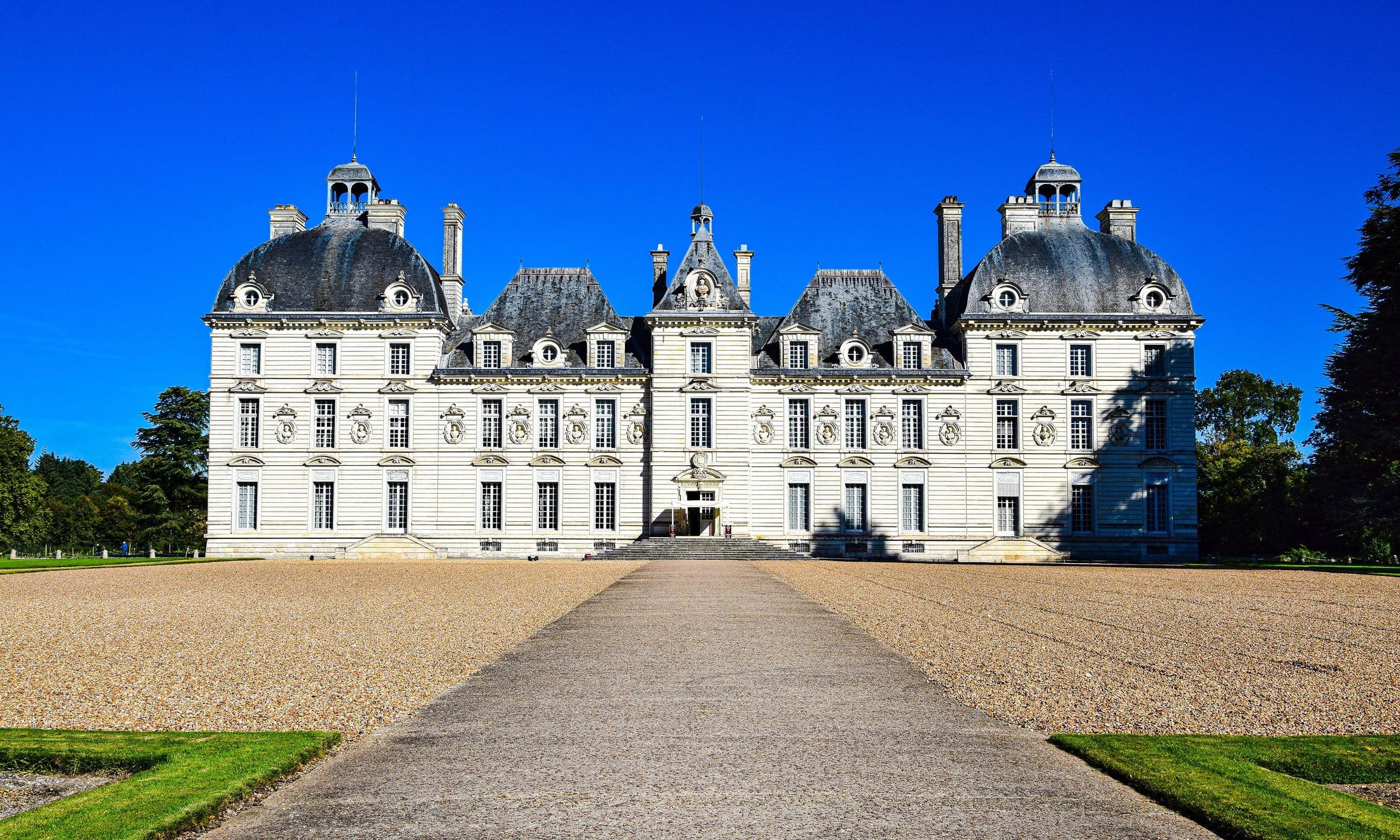
Château de Cheverny
Château de Cheverny stands at the end of a long lawn in the Sologne, the wooded hunting country south of the Loire, about 15 kilometers from Blois. Its white, rigorously symmetrical facade rose in a single building campaign in the 1620s and has scarcely changed since. Architecture alone, though, is not what sets Cheverny apart from its Loire siblings. People still live here. A family that first bought land on this spot in 1392 occupies one wing today, and that continuity explains the interiors: while revolution and auction emptied the royal châteaux of the valley, Cheverny kept its furniture, its tapestries, and its painted ceilings in place.
Visitors have shared the house with its owners since 1922, when Cheverny became, by its own account, the first private château in France to open its doors to the public. Around 350,000 people a year now come for those furnished rooms, for the hundred hounds in the kennel, for more than half a million spring tulips, and for the silhouette Hergé borrowed when he drew Marlinspike Hall. This guide follows six centuries of the Hurault family, the house they raised in one breath, and everything needed to plan a 2026 visit.
Quick Facts
| Location | Cheverny, Loir-et-Cher, Centre-Val de Loire, France |
| Coordinates | 47.5003 N, 1.4581 E |
| Built | 1620s, in a single campaign; the Mérimée heritage notice dates the building 1625–1629 |
| Architectural style | Louis XIII classicism |
| Builders | Henri Hurault, Count of Cheverny, and Marguerite Gaillard de la Morinière; master builder Jacques Bougier |
| Condition | Well-preserved and fully furnished |
| Current use | Private residence, open to visitors |
| Heritage status | Monument historique, fully classified in 2010; just outside the inscribed Val de Loire World Heritage perimeter |
| Open to the public | Yes, 365 days a year |
| Official website | chateau-cheverny.fr |
The Huraults of Blois (1392–1624)
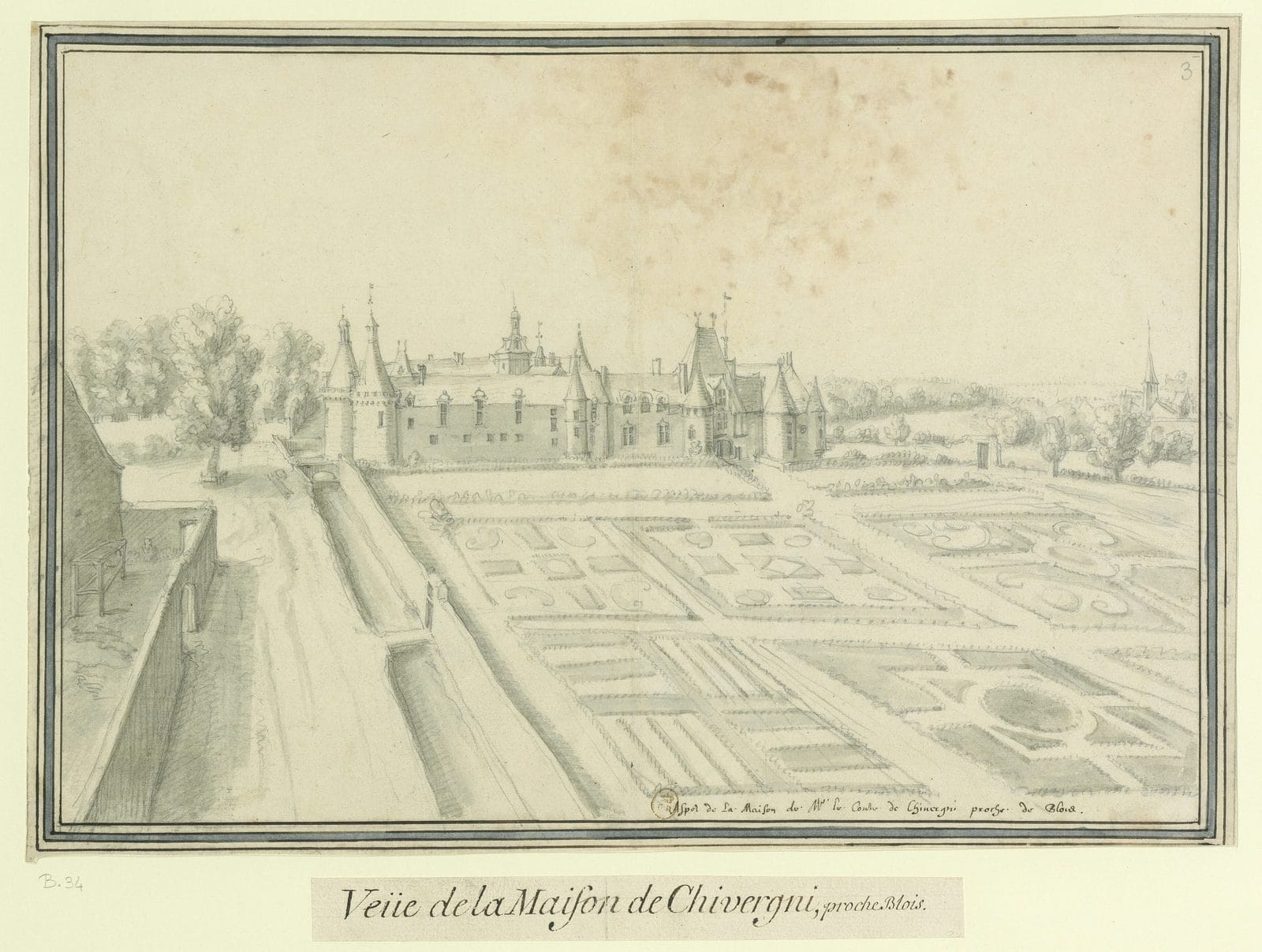
Cheverny’s story begins not with a king but with a family of Blois financiers. Ennobled in 1349, and presented by the estate as the oldest French family raised by letters patent, the Huraults belonged to the noblesse de robe, the class that climbed through offices and account books rather than tournaments, and they served the crown as treasurers, secretaries, and magistrates for generations. In 1392 one of them, Jean Hurault, bought a modest property at Cheverny from a certain Robert le Mareschau: a house, a wine press, and a vineyard. More than six centuries later the name still holds, though not, as this article will show, without one long interruption.
In 1490 Jacques Hurault, a finance official under Louis XII and governor of Blois, acquired the seigneurie of la Grange and Cheverny, and around 1510 his son Raoul replaced the farmstead with a fortified manor. Raoul’s fortunes turned with those of his father-in-law, the royal financier Semblançay, who was hanged in 1527 in the purge that also drove Gilles Berthelot from his unfinished Château d’Azay-le-Rideau; Raoul himself died at the siege of Naples the following year, and his widow, Marie de Beaune, was eventually forced to sell.
Enter the most glamorous interruption in the family’s tenure. In 1551 Diane de Poitiers, the all-powerful favorite of Henri II, acquired Cheverny. After the king’s death, when Catherine de’ Medici forced her to surrender Chenonceau in exchange for Chaumont, Diane used Cheverny as a base while work proceeded on her new château above the Loire. Her tenure lasted 13 years. On February 25, 1564, the brothers Jacques and Philippe Hurault recovered the estate by proving a procedural defect in the earlier sale, a lawyer’s victory entirely in character for a dynasty of the robe.
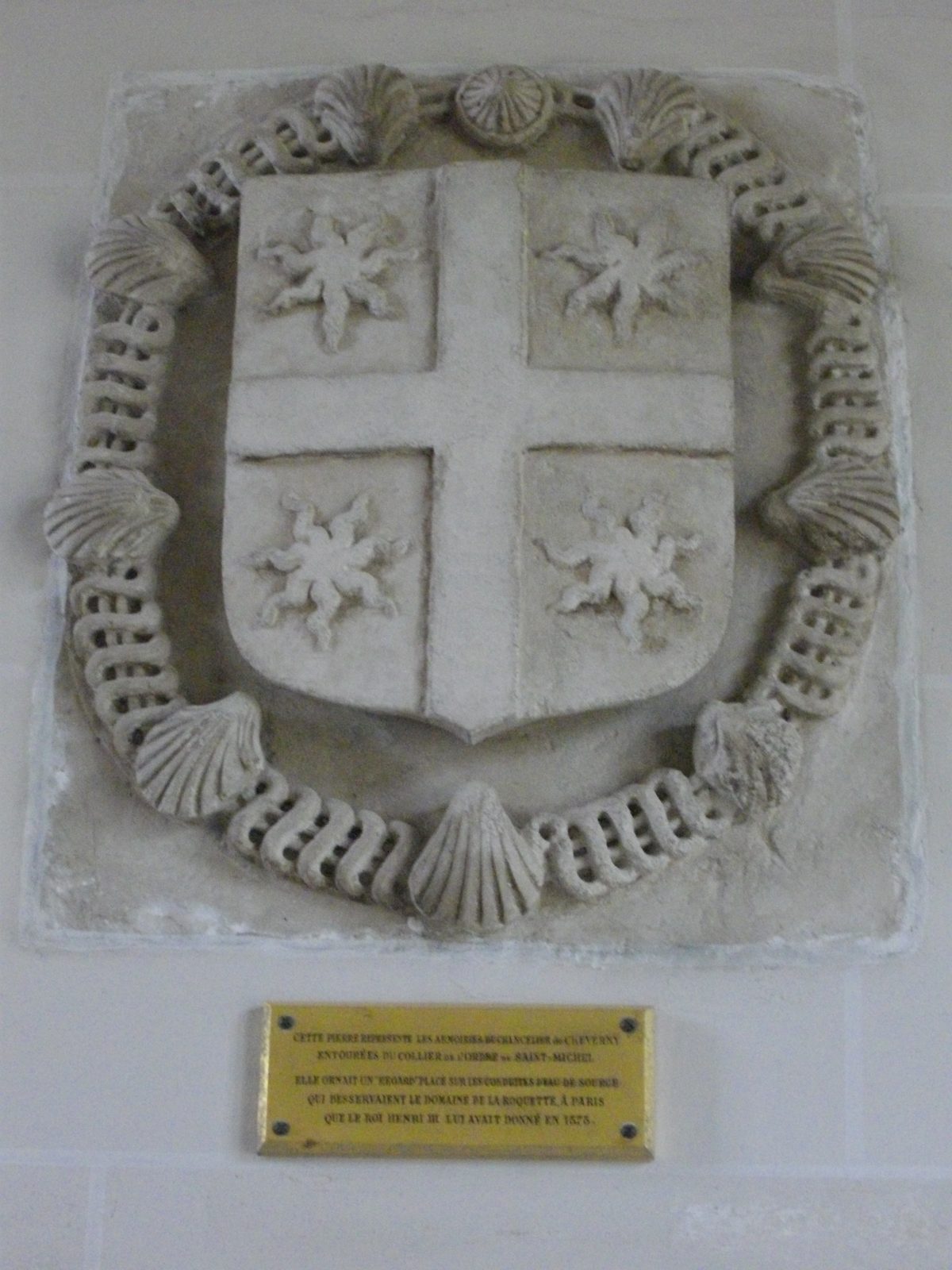
Philippe Hurault (1528–1599) carried the family to its peak. Keeper of the seals from 1578, he served as chancellor of France under Henri III and again under Henri IV, and his lands were raised to a viscounty in 1577 and a county in 1582. His son Henri inherited the title and, in 1602, supplied the château’s darkest story. Tradition, carried by the estate itself, holds that Henri IV made a cuckold’s gesture behind the young count’s head at court. Hurault rode through the night to Cheverny, surprised a page leaping from his wife’s window, killed him with his sword, and offered his wife, Françoise Chabot, a choice between poison and the blade. She drank the poison and died within the hour. Henri IV confined the count to his estates, an exile that gave him land, time, and, after his remarriage to Marguerite Gaillard de la Morinière, a reason to build. No court record anchors every detail; the tale belongs to memoir literature rather than the archives, and it deserves the caution owed to any story polished by four centuries of retelling.
One Campaign, One Style (1624–1650)
Work on the new château began in 1624, by the estate’s account; the Monument historique notice dates the standing building to 1625–1629. Either way, Cheverny went up in a single campaign, under a single design, in a single style, which makes it nearly unique among the major Loire châteaux. Blois compresses four centuries of French architecture into one courtyard; Cheverny answers with one consistent breath of Louis XIII classicism. Attribution rests on Jacques Bougier, a master builder known as Boyer de Blois, whom the heritage notice credits with the design.
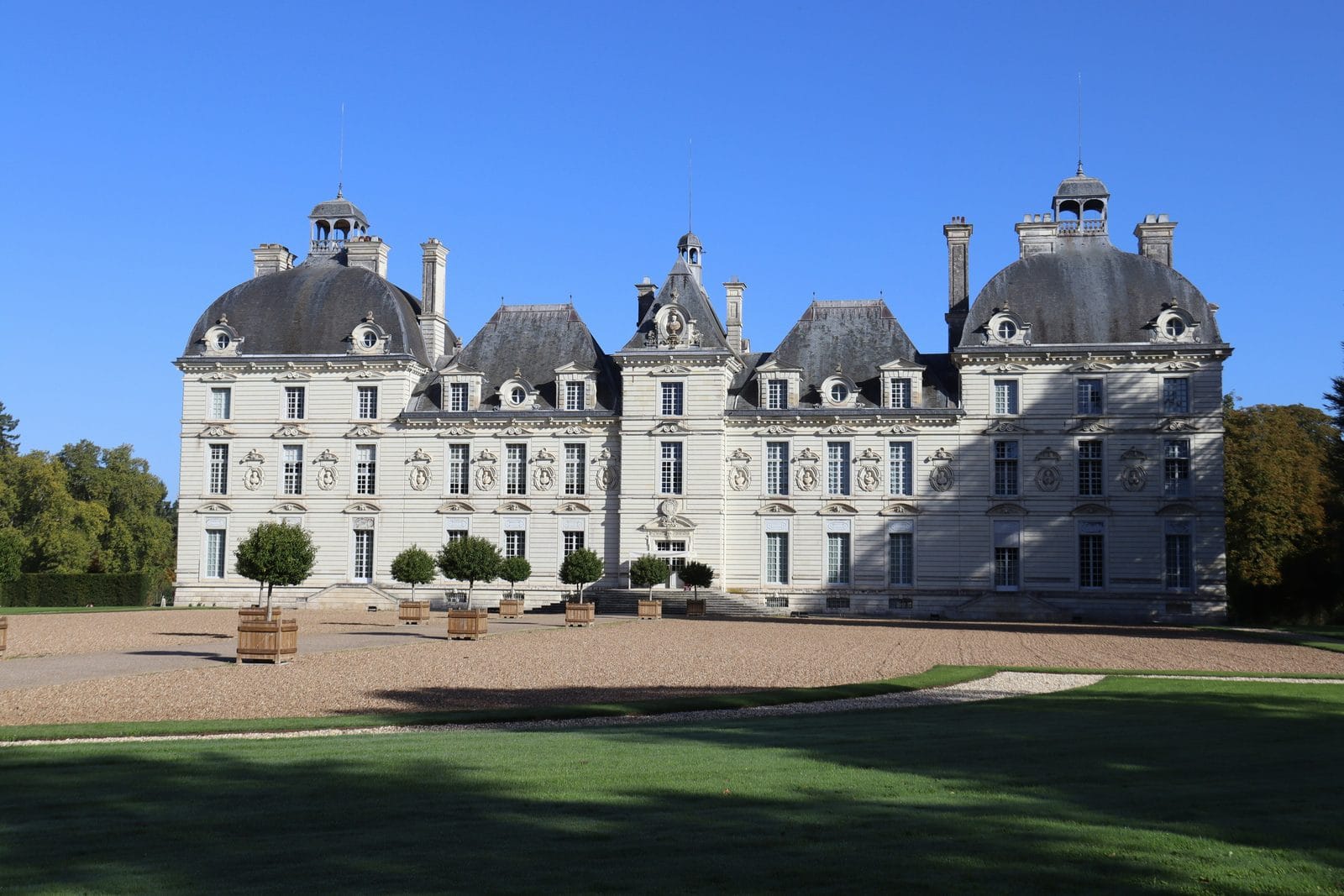
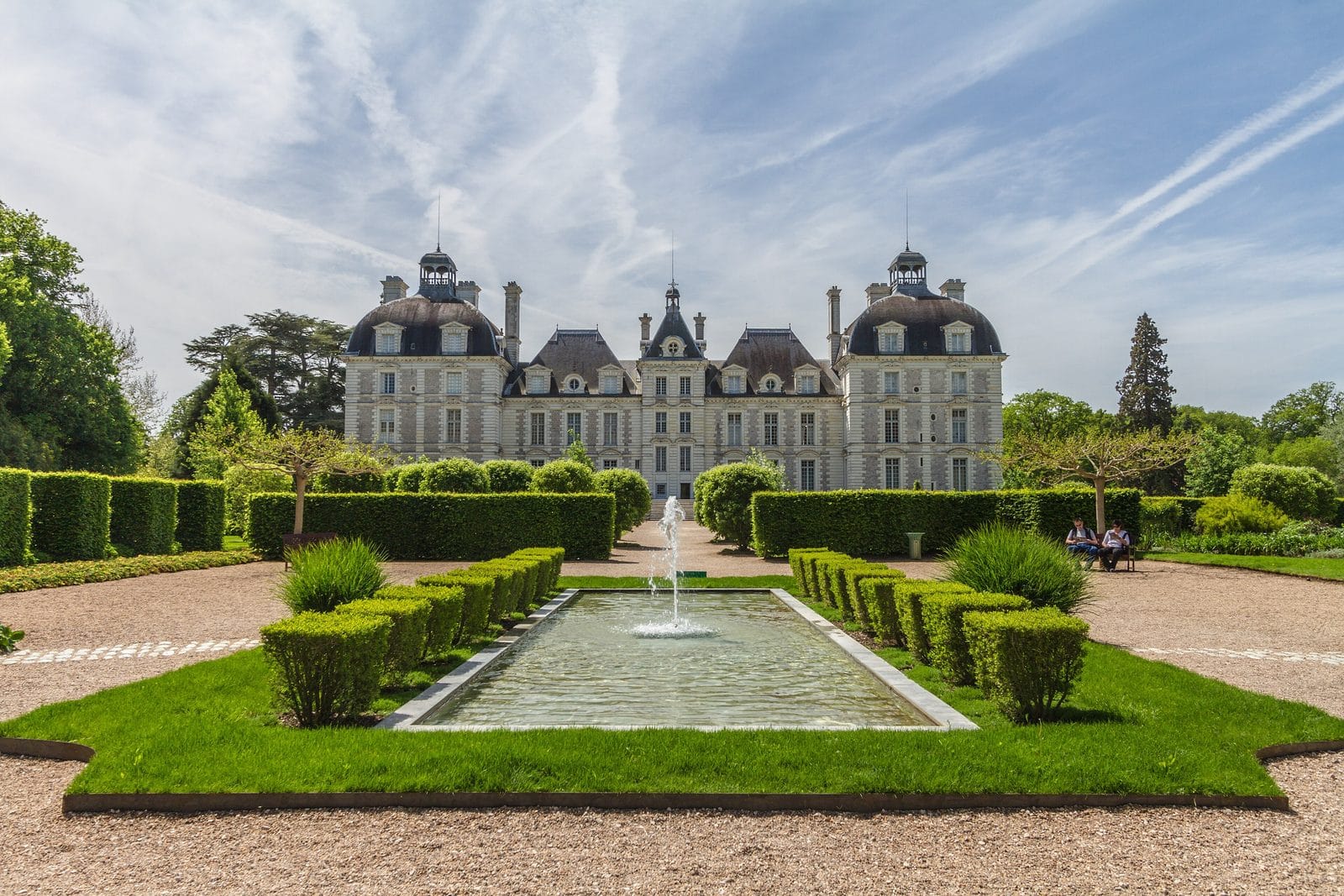
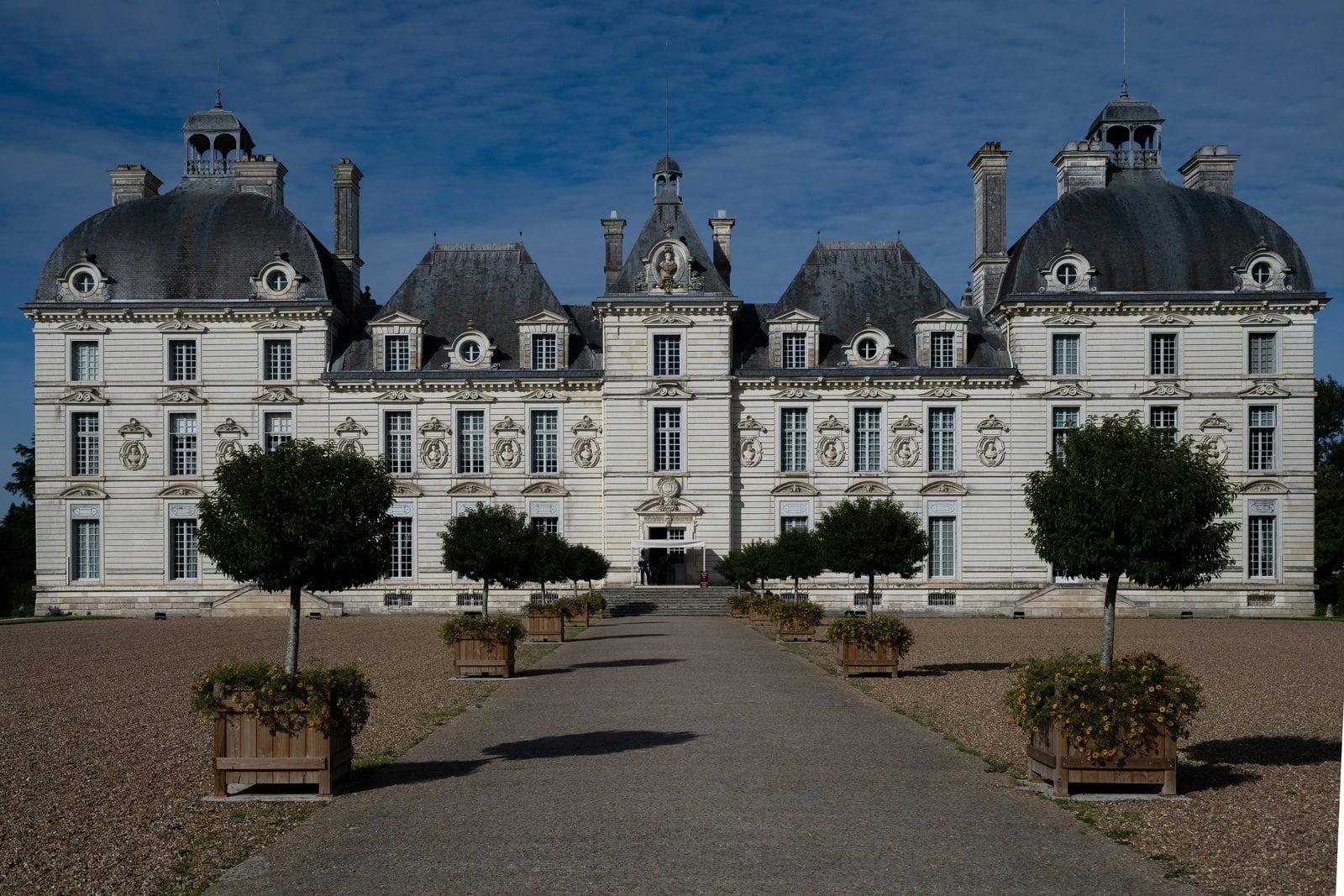
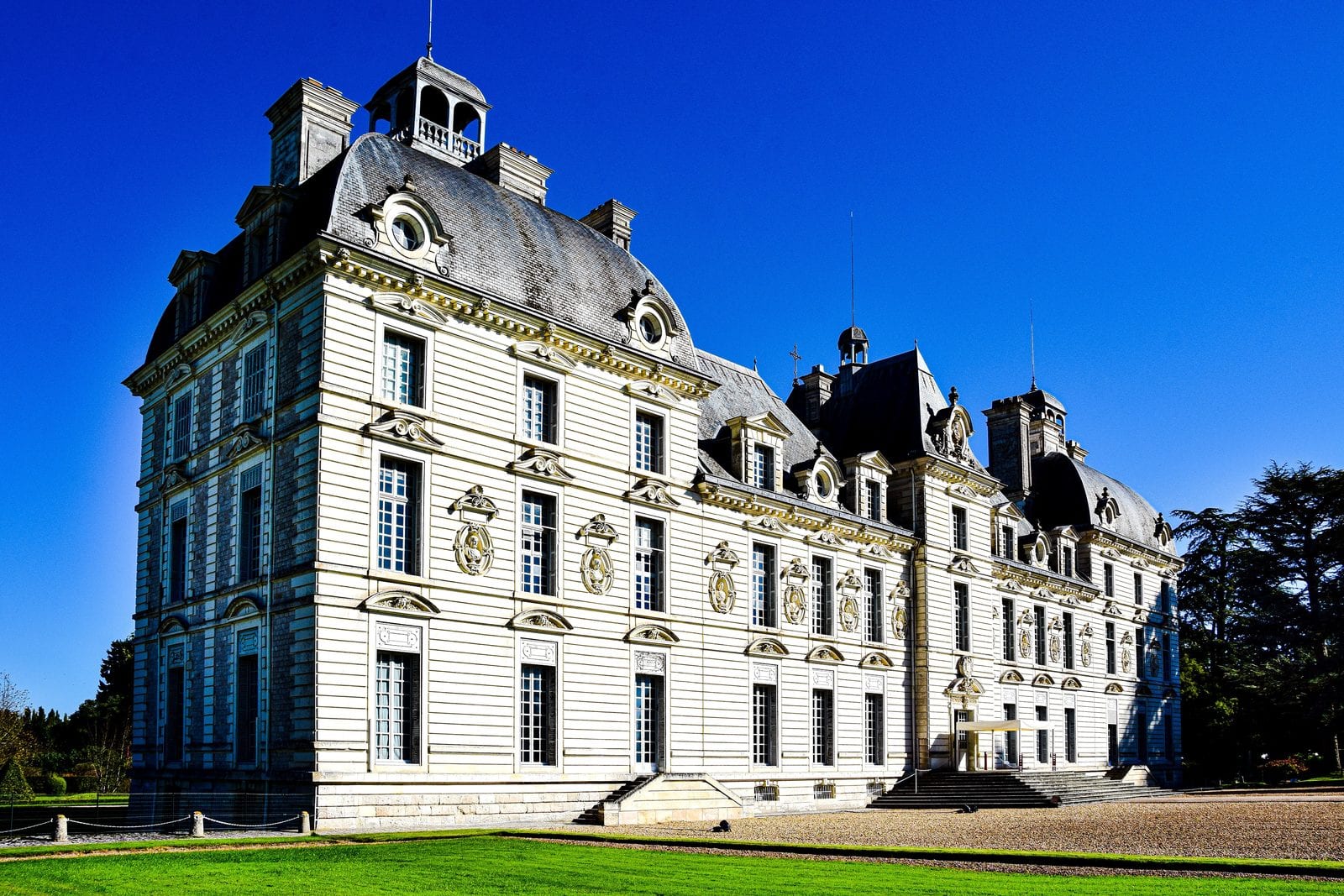
Of Raoul’s fortified manor only fragments survive in the outbuildings; the new house ignored its footprint entirely and faced its long axis to the lawn. Bougier built in pierre de Bourré, a tuffeau quarried in the Cher valley with the convenient habit of whitening and hardening as it ages, which is why the facade still reads as freshly washed. Composition does the rest. A central block runs between two massive square pavilions capped with bell-shaped domes and lanterns; a file of Roman emperors’ busts marches across the south front; and no defensive gesture appears anywhere, no moat, no tower, no machicolation, because none was wanted. France’s official heritage record describes the result as a compromise between the Renaissance style and the style of Louis XIV, and the building is often read as a preview of the classicism that would triumph at Versailles half a century later. Inside, the same logic governs the stone staircase: a straight ceremonial flight rising under a carved barrel vault, the sober counterpoint to the spiral showpieces of Blois and Chambord.
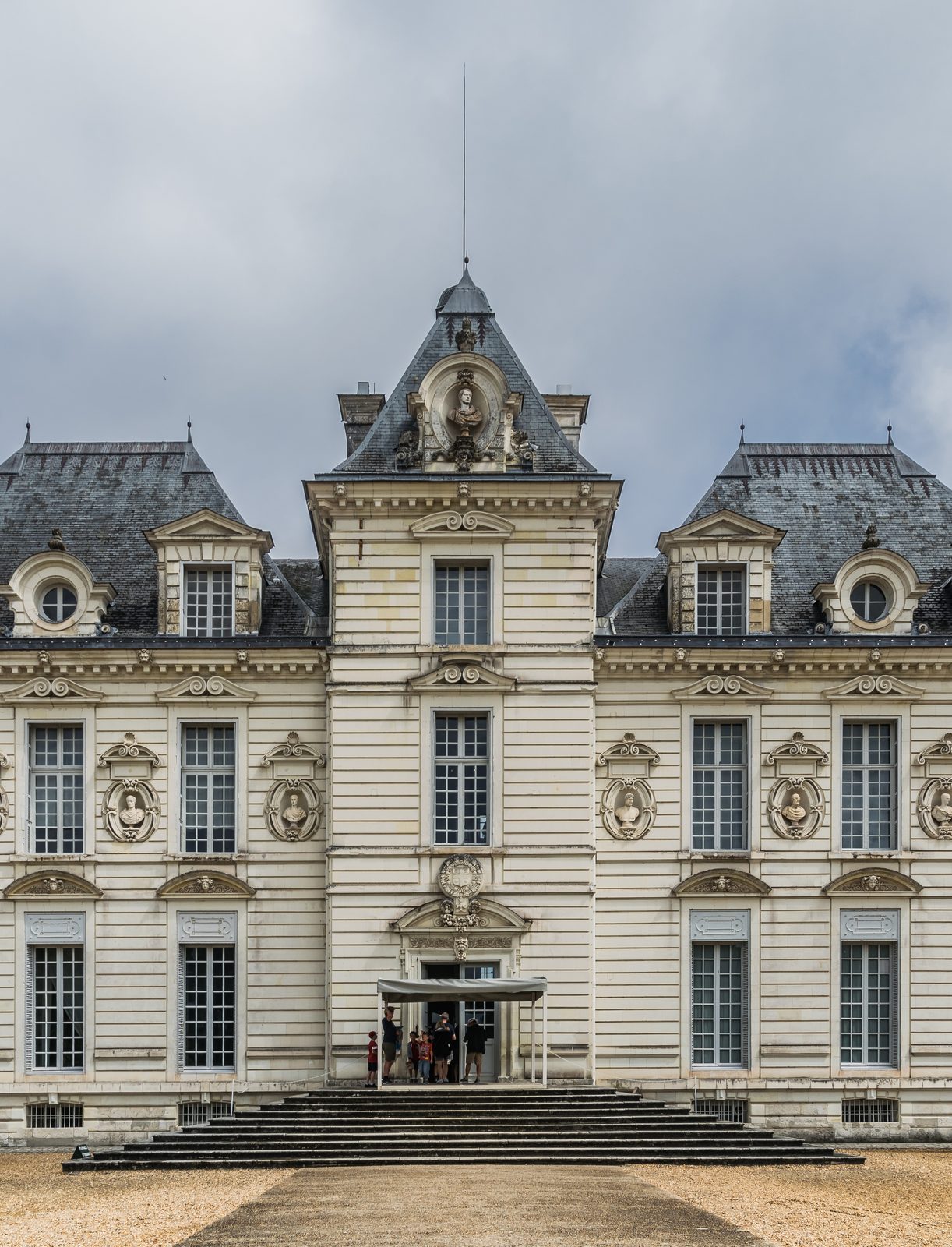
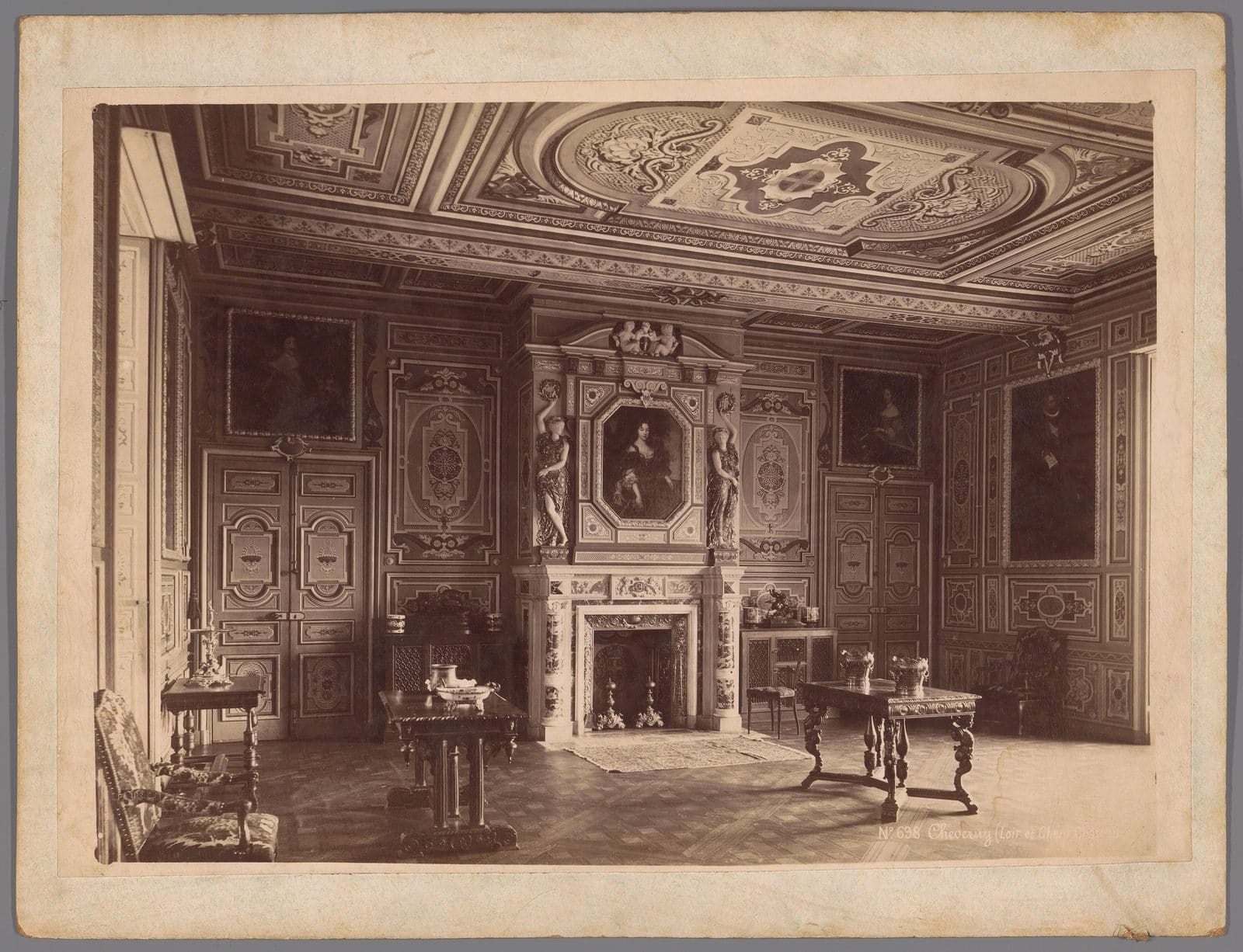
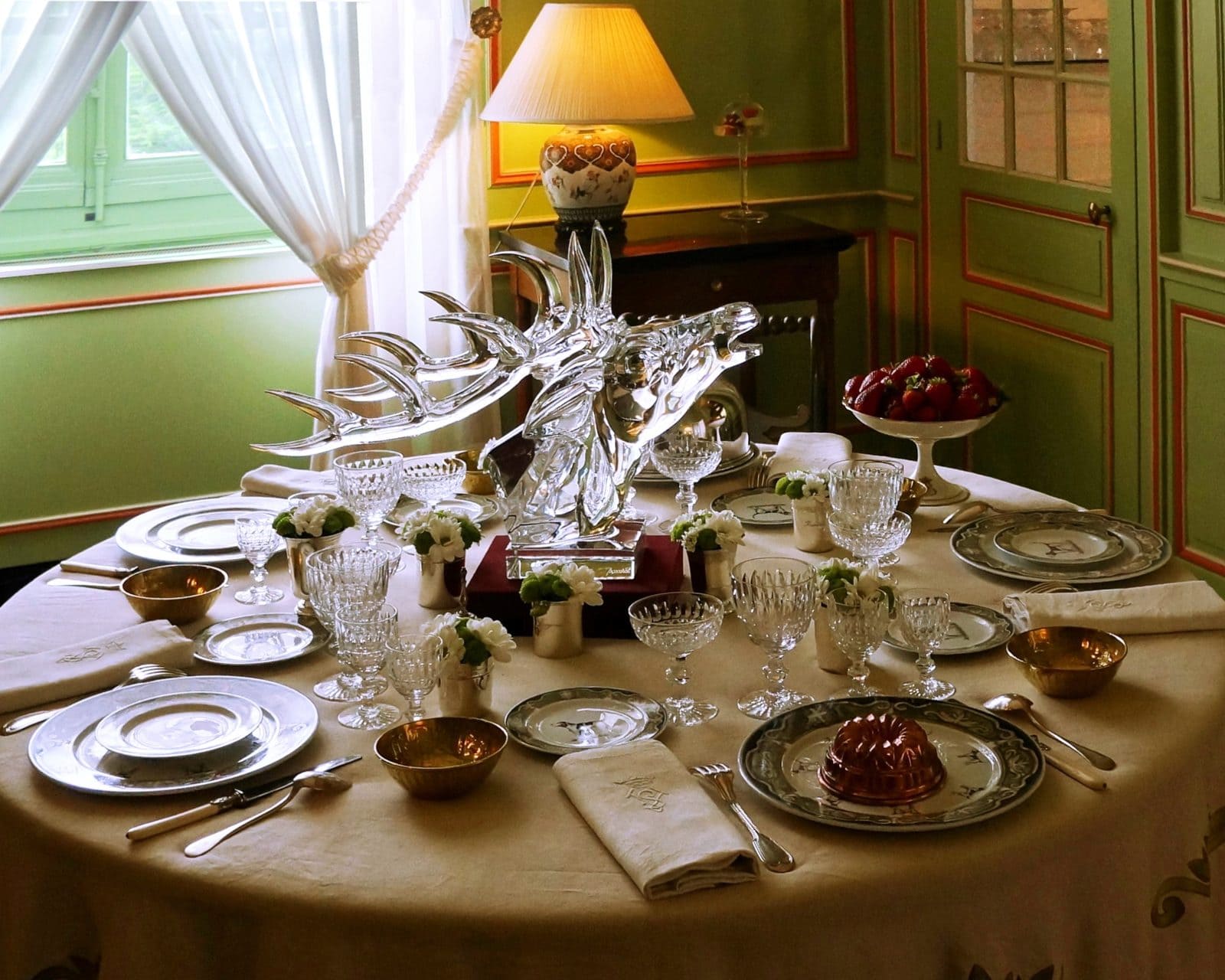
Decoration fell to Jean Mosnier (1600–1656), a Blois painter trained in Italy with support from Marie de’ Medici. Over roughly two decades he covered Cheverny’s ceilings and paneling with mythologies: Perseus and Andromeda overhead in the King’s Chamber, 30 scenes from the Greek romance of Theagenes and Chariclea on its walls, a Death of Adonis in the Salle d’Armes, and 34 small panels of Don Quixote’s misadventures in the dining room, painted within a generation of the novel itself. Completion of the interiors fell to the builders’ daughter, Élisabeth Hurault, marquise de Montglas, around 1650; literary France remembers her as the lover whom the writer Bussy-Rabutin immortalized, none too kindly, in his scandalous Histoire amoureuse des Gaules. The Grande Mademoiselle, cousin of Louis XIV, called the finished house an enchanted palace, and the phrase has clung to it since.
Inside the Lived-In Château
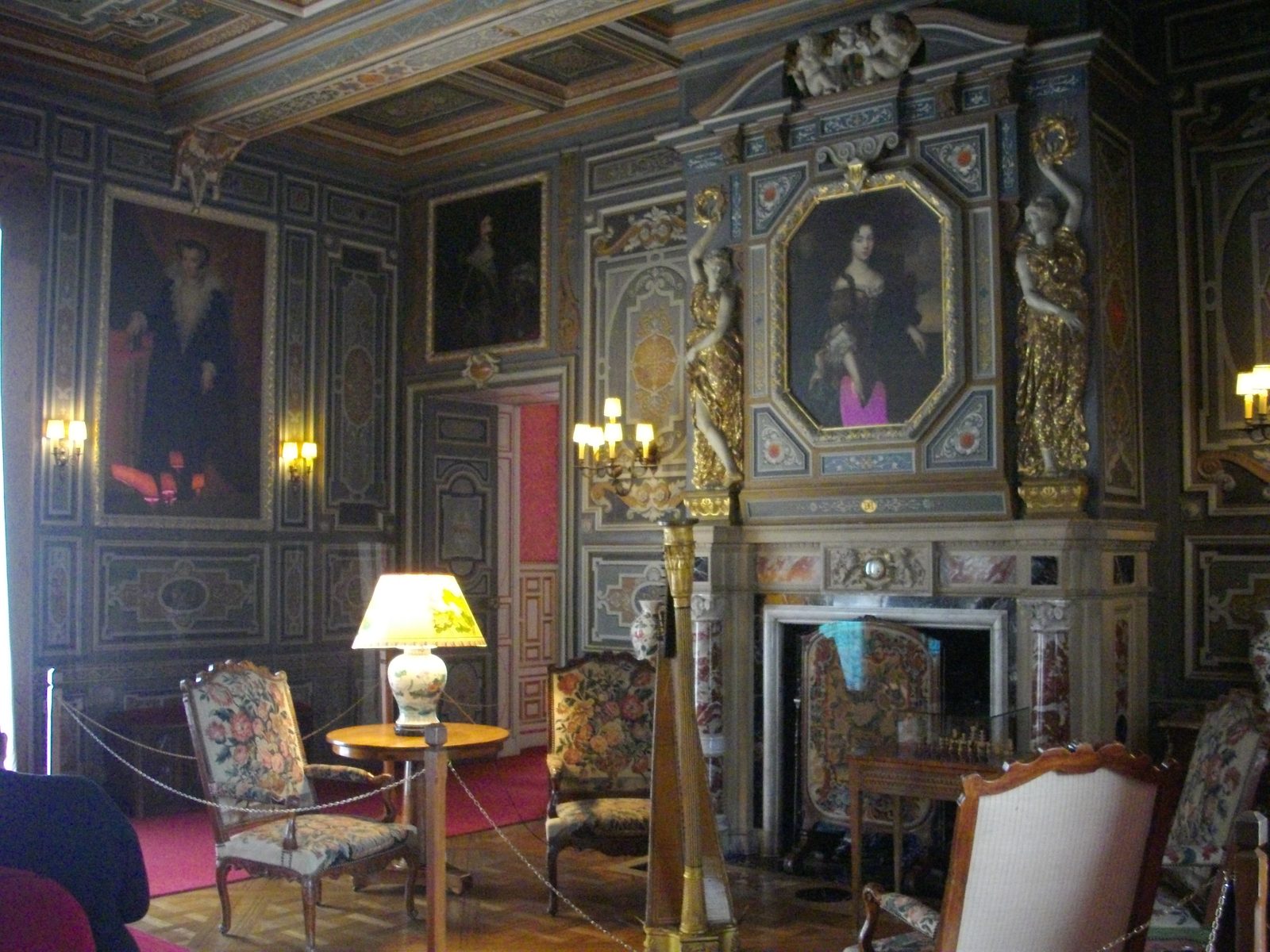
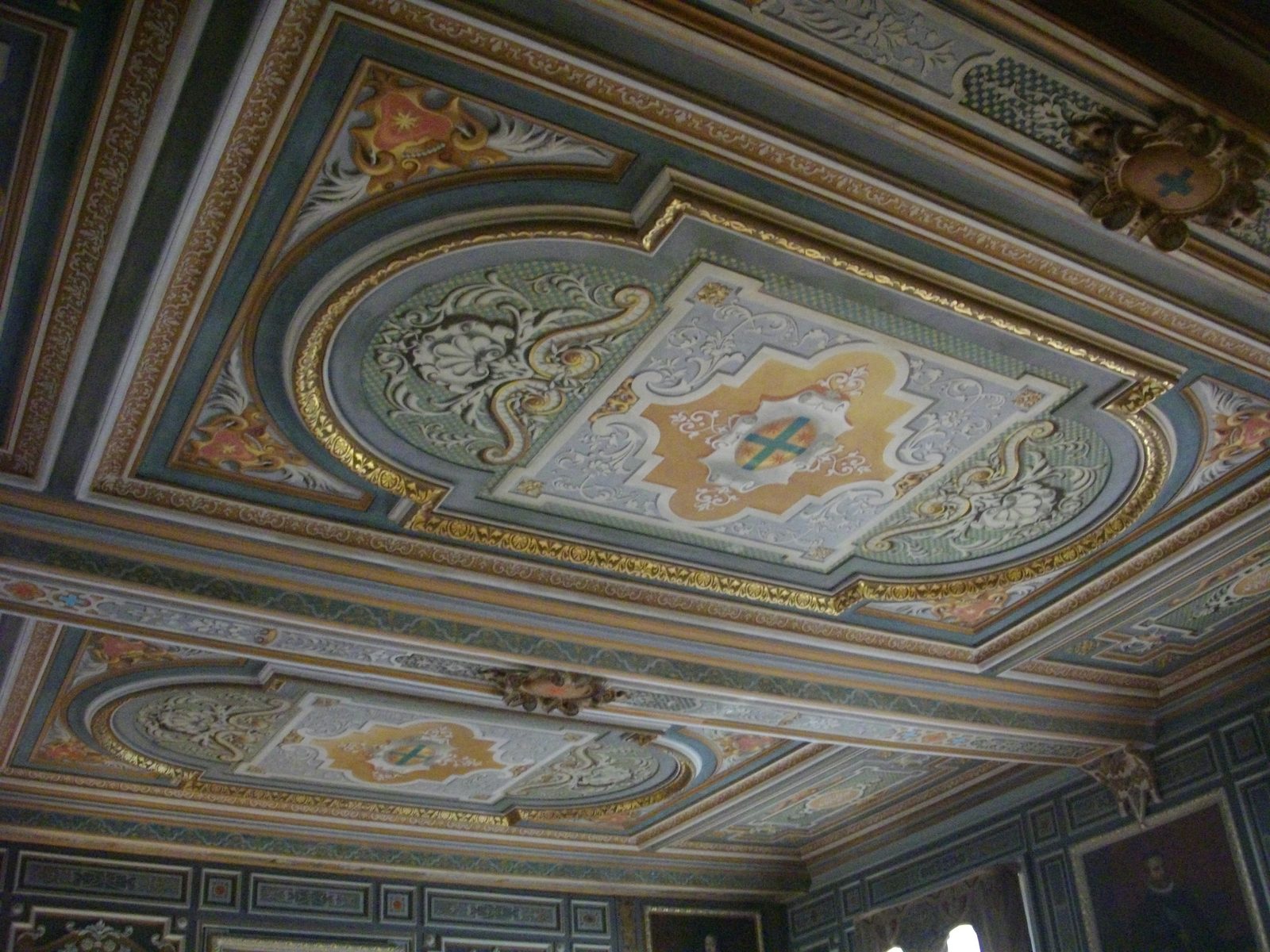
Seventeen rooms are on show today, up from the six that opened in 1922, and the furniture is the point. Cheverny’s interiors are routinely called the richest in the Loire Valley, a qualified superlative that survives contact with the rooms themselves. Most of the 17th-century decorative program remains in place, supplemented rather than replaced by later campaigns; the polychrome ceilings of the dining room and grand salon owe their present brilliance to a 19th-century restoration, and the honest answer to “is it all original?” is “remarkably much of it, with thoughtful additions.”
The Salle d’Armes, the largest room in the house, sets the tone: a collection of arms and armor arranged below Mosnier’s Death of Adonis, a 17th-century Gobelins tapestry of the Abduction of Helen on the wall, Régence armchairs along the edges, and a travel trunk in Cordoba leather that belonged to Henri IV.
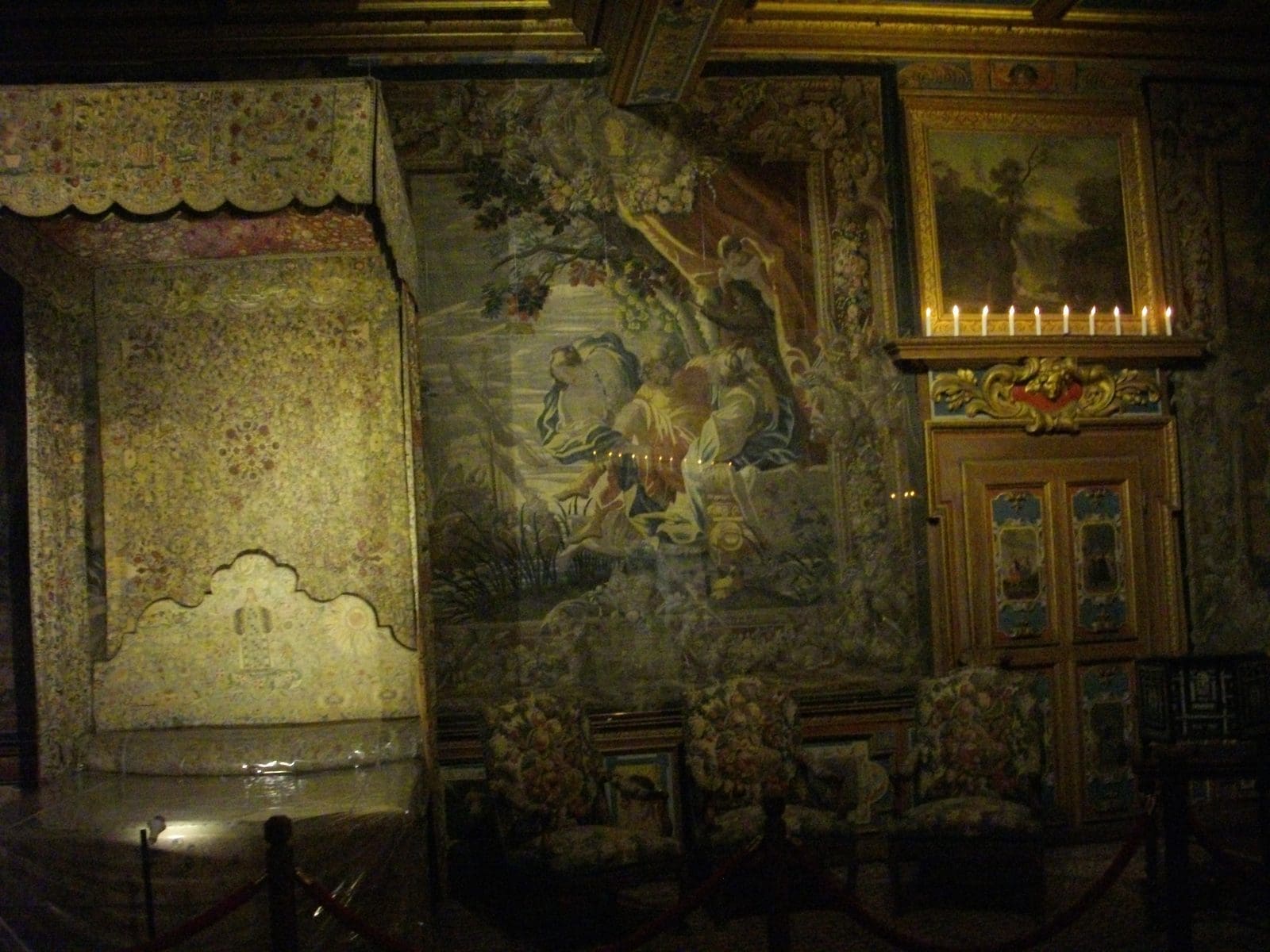
Next door, the King’s Chamber concentrates the château’s best objects in a single room. Henri IV remains the only French king to have slept at Cheverny, in the earlier house, and the chamber keeps a canopied bed in his honor beneath Mosnier’s Perseus ceiling, wrapped in a cycle of Paris-workshop tapestries woven around 1640, after cartoons by Simon Vouet, on the Labors of Ulysses. Below the painted ceiling, Mosnier’s 30 panels of Theagenes and Chariclea turn the walls into a Greek romance told frame by frame, and the room repays slow looking better than any other in the valley’s private houses.
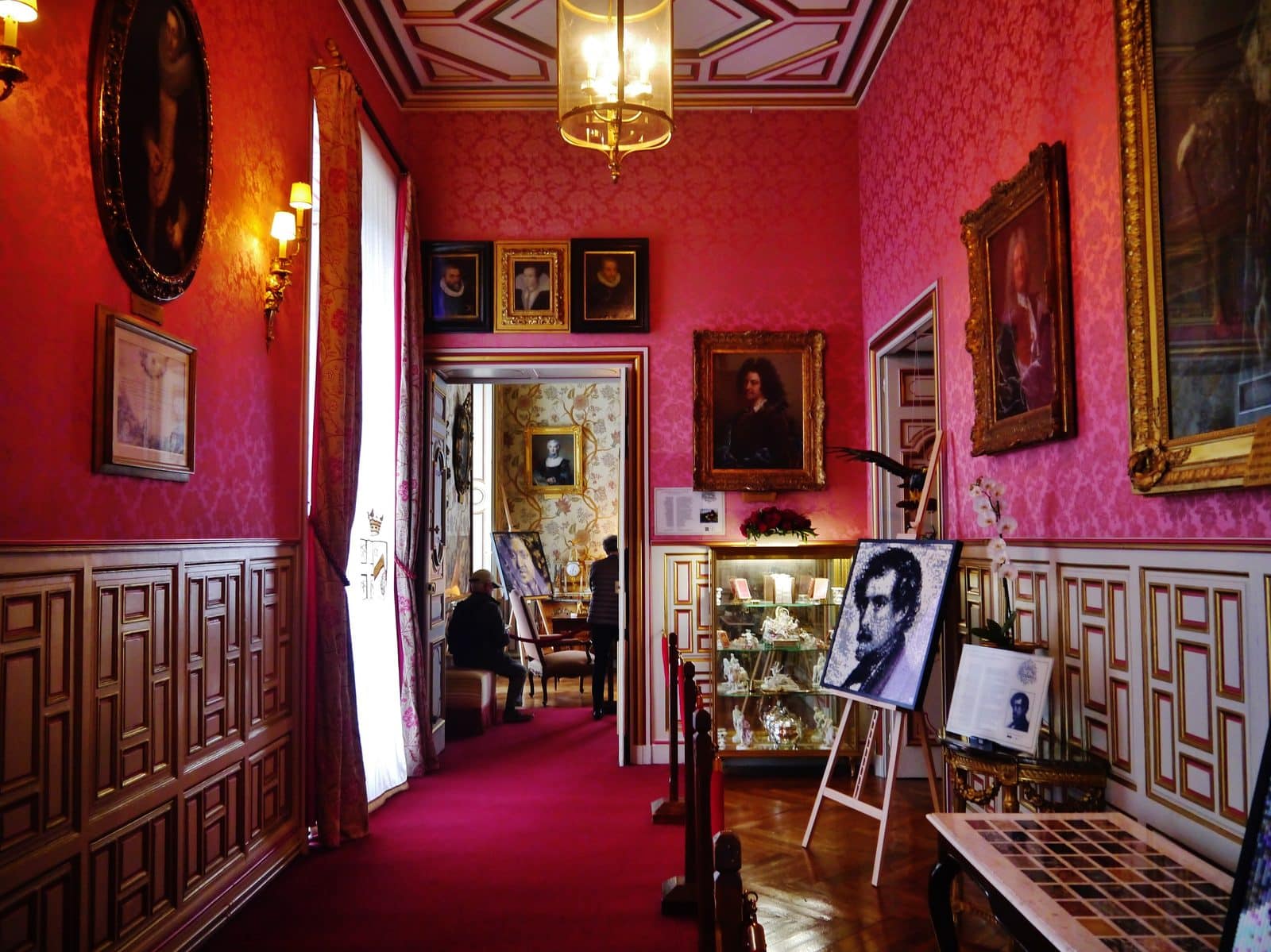
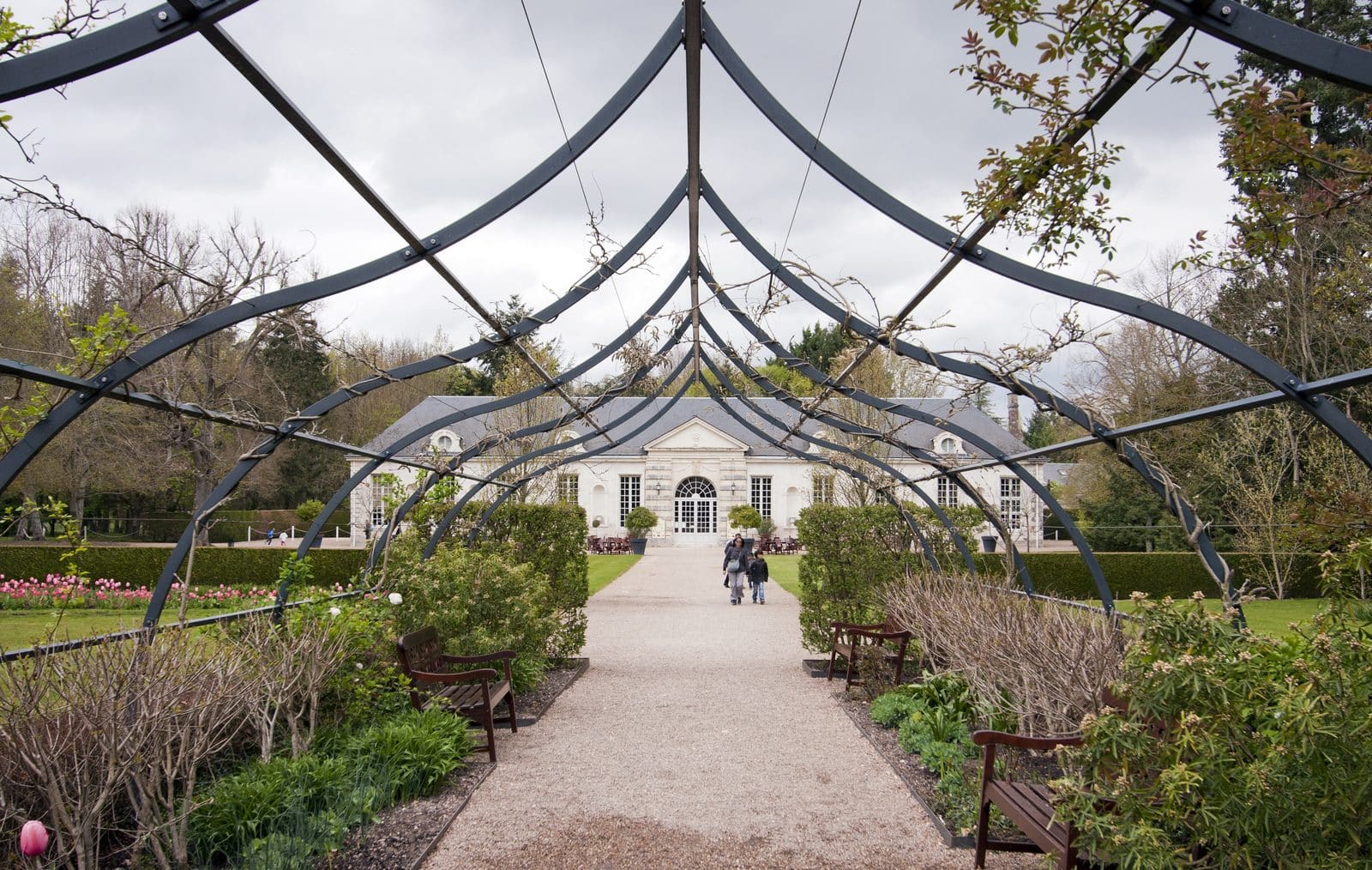
From there the route runs through the dining room with its Don Quixote panels, the grand salon hung with family portraits, and the first-floor private apartments, added to the visit in 1985, where fresh flowers and family photographs make the quiet argument that this is a working home rather than a museum set. A small chapel, shown since 2014, completes the upper circuit. Downstairs in the outbuildings, the trophy room traditionally displays some 2,000 antlers beneath a contemporary stained-glass hunt scene by Jacques Loire of Chartres, a reminder of what the surrounding forest has always been for. One wing stays firmly closed: the Marquis and Marquise de Vibraye, Charles-Antoine and Constance, live there with their family, on the far side of doors that visitors walk past every day.
Lost and Regained (1755–1922)
For all the talk of continuity, the Huraults did lose Cheverny once. Financial trouble forced a sale in 1755, and after a brief tenure by the comte d’Harcourt the estate passed in 1764 to Jean-Nicolas Dufort, a courtier whom Louis XV created comte Dufort de Cheverny by letters patent that same year. Dufort proved a gift to historians: his memoirs record court ceremony, theater evenings, and provincial society on the eve of the Revolution with rare candor, and historians of the ancien régime still mine them. He protected the château through the revolutionary decade, was imprisoned during the Terror, and died ruined in 1802, but the house came through those years intact, which is more than most of its royal neighbors can say of their furnishings.
Redemption came in 1825, when Anne-Victor-Denis Hurault, marquis de Vibraye, bought the estate back after roughly 70 years outside the family. That gap is why this article speaks of six centuries of association rather than unbroken ownership; the estate’s own telling acknowledges the absence, and the claim becomes more remarkable, not less, for being honest. The 19th century then gave Cheverny its green frame. Paul de Vibraye planted the great avenues of cedars, redwoods, and limes between 1820 and 1860, and moonlighted as a paleontologist of some note: in 1864 he unearthed the figurine now known as the Vénus impudique, an aside the château’s guides enjoy. Official France took its time catching up: placed on the inaugural monuments list of 1840, Cheverny was struck off in 1888, listed again in 1926 and 2008, and finally classified in full in 2010, château, orangerie, and the park’s north-south perspective together. By then the family had long since made the decisive modern move on its own. In 1922 Philippe de Vibraye opened six rooms to paying visitors, a step the estate presents as the first such opening of any private château in France.
War Crates and Comic Panels
September 1939 drew Cheverny into the largest art evacuation ever attempted. As the Louvre’s director Jacques Jaujard emptied the national museums ahead of the war, the château became one of the depots fed from the great hub at Chambord, receiving roughly 870 crates of antiquities and objets d’art: holdings from the Louvre’s Greek, Roman, and Oriental antiquities departments, joined by material from the Musée Camondo, the national archaeology museum at Saint-Germain-en-Laye, and the Musée de Cluny, along with 10 tapestries. Hans Haug, curator of the Strasbourg museums, ran the depot from 1941 to 1944, and the last crates left in April 1946. One celebrated object never arrived: the stele bearing the Code of Hammurabi was assigned to Cheverny and rerouted to Valençay when it proved too large for the doors. As for the persistent local legend that the Mona Lisa hid in the orangerie, the painting’s documented wartime route ran through Chambord, Louvigny, Loc-Dieu, Montauban, and Montal, and never touched Cheverny. The estate itself set the record straight with a commemorative exhibition on the Liberation in 2019; the true story needs no embellishment.
A gentler 20th-century fame arrived through a Belgian cartoonist. Hergé, drawing The Secret of the Unicorn in 1942, modeled Marlinspike Hall, the ancestral Moulinsart of Captain Haddock, on Cheverny with its two outer pavilions removed; the album appeared in 1943, and Hergé confirmed the debt in a letter of 1975. Since June 2001 the estate has embraced the connection with Les Secrets de Moulinsart, a 700-square-meter permanent exhibition mounted with the Hergé Foundation in the outbuildings, where children who have never heard of Louis XIII classicism recognize the facade instantly. Meanwhile the real house kept opening up: the park in 1994 under the current owners, the chapel in 2014, and a visit that has grown from six rooms to 17 across a single century.
Hounds, Tulips, and Vines: The Working Estate
Cheverny sits in the Sologne, not on the Loire, and the distinction matters. The inscribed Val de Loire World Heritage corridor follows the river between Sully-sur-Loire and Chalonnes, and Cheverny lies just outside it, in the flat country of ponds and oak forest that French kings treated as a hunting ground for centuries. Hunting here is not heritage decoration; it still happens.
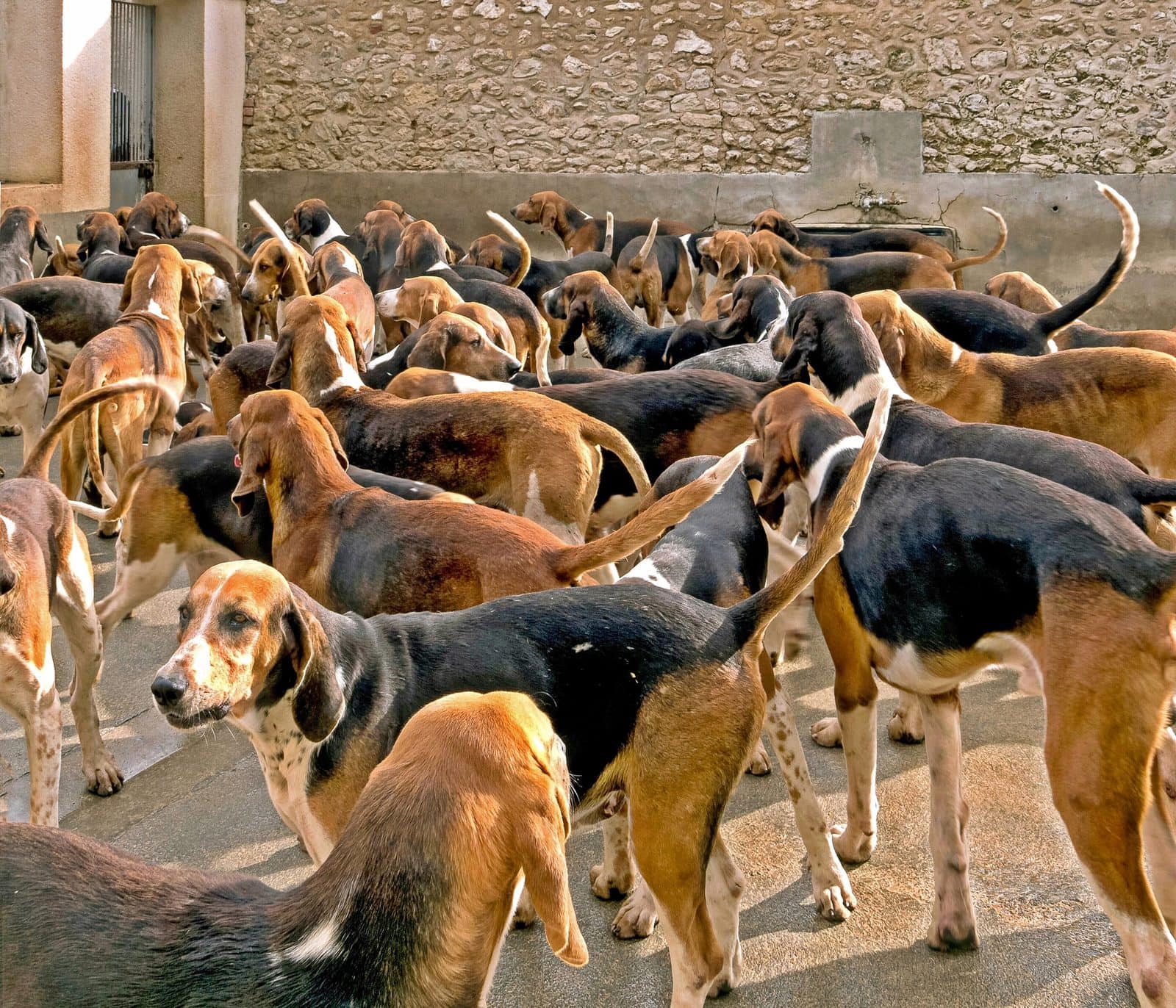
The kennel, built in 1850 and restored in 2012, houses about a hundred Grands Anglo-Français Tricolores, a hound bred from the English Foxhound and the French Poitevin, a type so closely associated with this kennel that its standard was fixed only in 1978. Their feeding, la soupe des chiens, is a daily piece of theater, usually staged at 11:30 and suspended on winter hunt days. The hunt itself, the Équipage de Cheverny, has ridden since 1850 and counts among the oldest in France; it pursues deer exclusively, two or three outings a week from October through March, across the estate’s forest and the neighboring 4,000-hectare Forêt de Boulogne, taking around 25 stags a season under the departmental hunting plan. Readers should know that the tradition is contested in France, defended as living heritage and opposed as anachronism, and that Cheverny stands squarely inside the debate.
Gardens supply the gentler spectacle. Six themed gardens have been created since 2006: a combined kitchen and cutting garden and the Apprentices’ Garden in 2006, a laurel labyrinth in 2009, the tulip ribbon first planted for spring 2014, the Garden of Love in 2019 with six bronzes by the Swedish sculptor Gudmar Olovson, and the orchard “sweet garden” of 2020 with 370 trees and shrubs. Spring is the headline act: more than half a million tulip bulbs now flower in two ribbons, each some 250 meters long and 12 meters wide, and since 2022 the estate has carried a registered cultivar of its own, the “Château de Cheverny” tulip. None of this attempts the architectural formality of Villandry, the valley’s benchmark for gardens; Cheverny plants for color and movement instead. Around it all runs an English-style park of roughly 100 hectares, explored by boat and electric car from April to mid-November.
Vineyards close the circle. Two appellations surround the estate, AOC Cheverny and AOC Cour-Cheverny, and the second, recognized in 1993, is reserved to a single grape: Romorantin, which François I imported from Burgundy in 1519, planting 80,000 vines near the town where his mother Louise de Savoie was staying. It grows almost nowhere else on earth, and tasting a glass within sight of the château is one of the quieter pleasures of the Loire.
Visiting Château de Cheverny in 2026
Cheverny opens 365 days a year, including December 25, January 1, and May 1, a schedule few major monuments anywhere attempt. From April 1 to September 30 the gates open at 9:15 and close at 18:00, extended to 18:30 in July and August; from October through March, hours run 10:00 to 17:00. Last entry to the château is 30 minutes after the ticket office closes, the house is heated in winter, and parking is free. Tickets are sold on site only, with no advance reservation, and a guided tour can be added for €5. Anyone returning often, and the tulip weeks tempt repeat visits, can take the Privilège card, a year of unlimited access to the château, gardens, and Tintin exhibition. Entry tickets and local tours can also be booked in advance through GetYourGuide.
| Ticket (2026) | Adult | Reduced |
|---|---|---|
| Château and gardens | €15.50 | €11.50 (under 7 free) |
| Château, gardens, and Tintin exhibition | €20.50 | €16.00 |
| Château, gardens, and park tour by boat and electric car (April to November 11) | €21.00 | €16.50 (under 7 €4) |
| All-inclusive | €26.00 | €21.00 (under 7 €4) |
| Privilège annual card | €63.00 | €40.00 |
Reduced rates apply to children aged 7 to 14, students under 25, jobseekers, and large families; visitors with disabilities enter free on the base ticket. Prices are reviewed annually; verify the current schedule on the operator site before traveling.
Plan around 1.5 to 2 hours for the château and gardens alone, a half day if the Tintin exhibition and the park circuit by boat and electric car join the program, and aim for 11:30 if the kennel feeding is on the list. Reaching Cheverny without a car takes a little planning: trains from Paris-Austerlitz and Tours serve Blois-Chambord station, about 15 kilometers north, and from there the seasonal Navette Châteaux shuttle (April to November) links the station with Cheverny, Chambord, and Beauregard, while the year-round Rémi line 4 bus covers the same gap on weekdays. Drivers from Paris should allow about two hours. Winter deserves a word in Cheverny’s favor: the rooms are heated, the crowds thin out, and a furnished house reads best in low light with nowhere else to be. Anyone staying overnight can compare hotels in and around Cheverny.
Some links on this page are affiliate links, which means StoneKeep Atlas may earn a small commission, at no extra cost to you, if you book through them.
More Views of Château de Cheverny
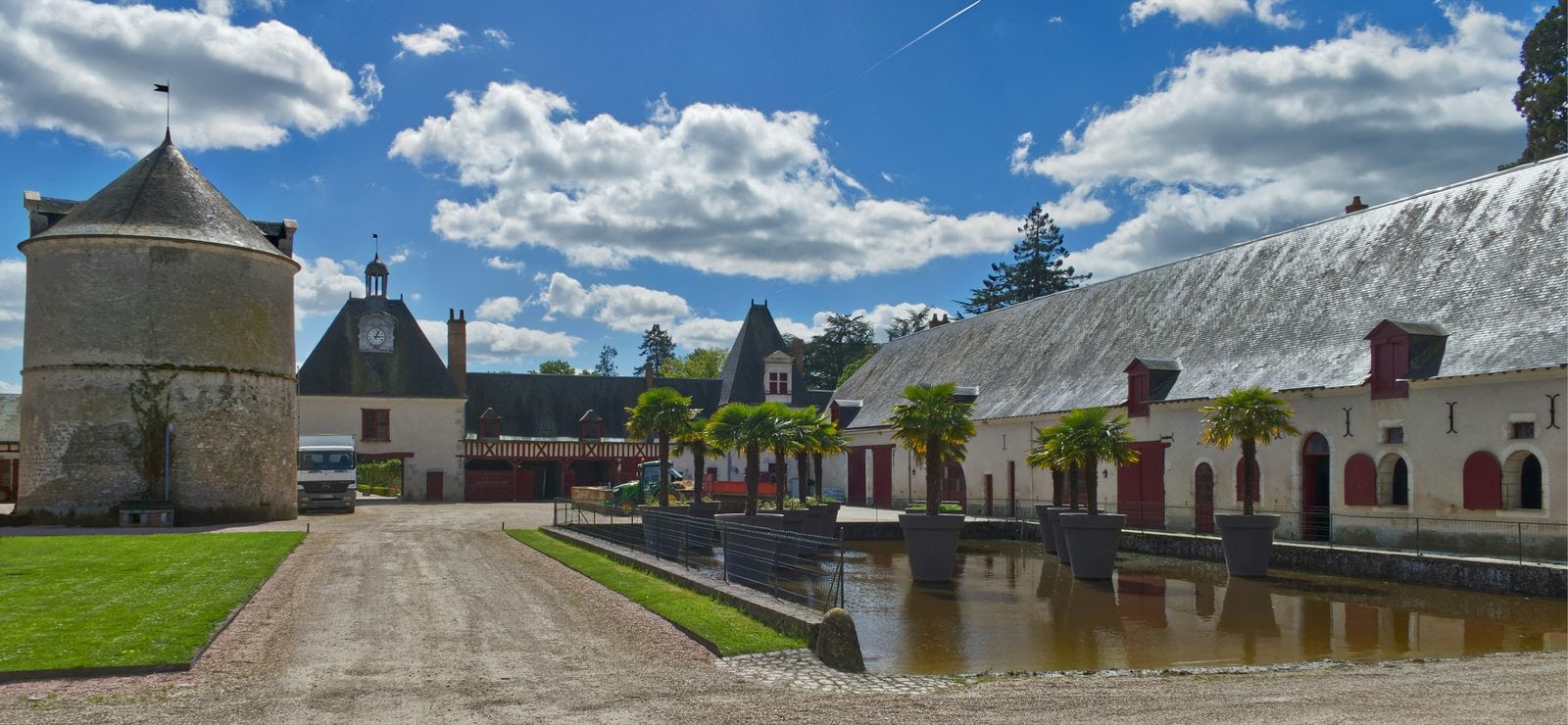
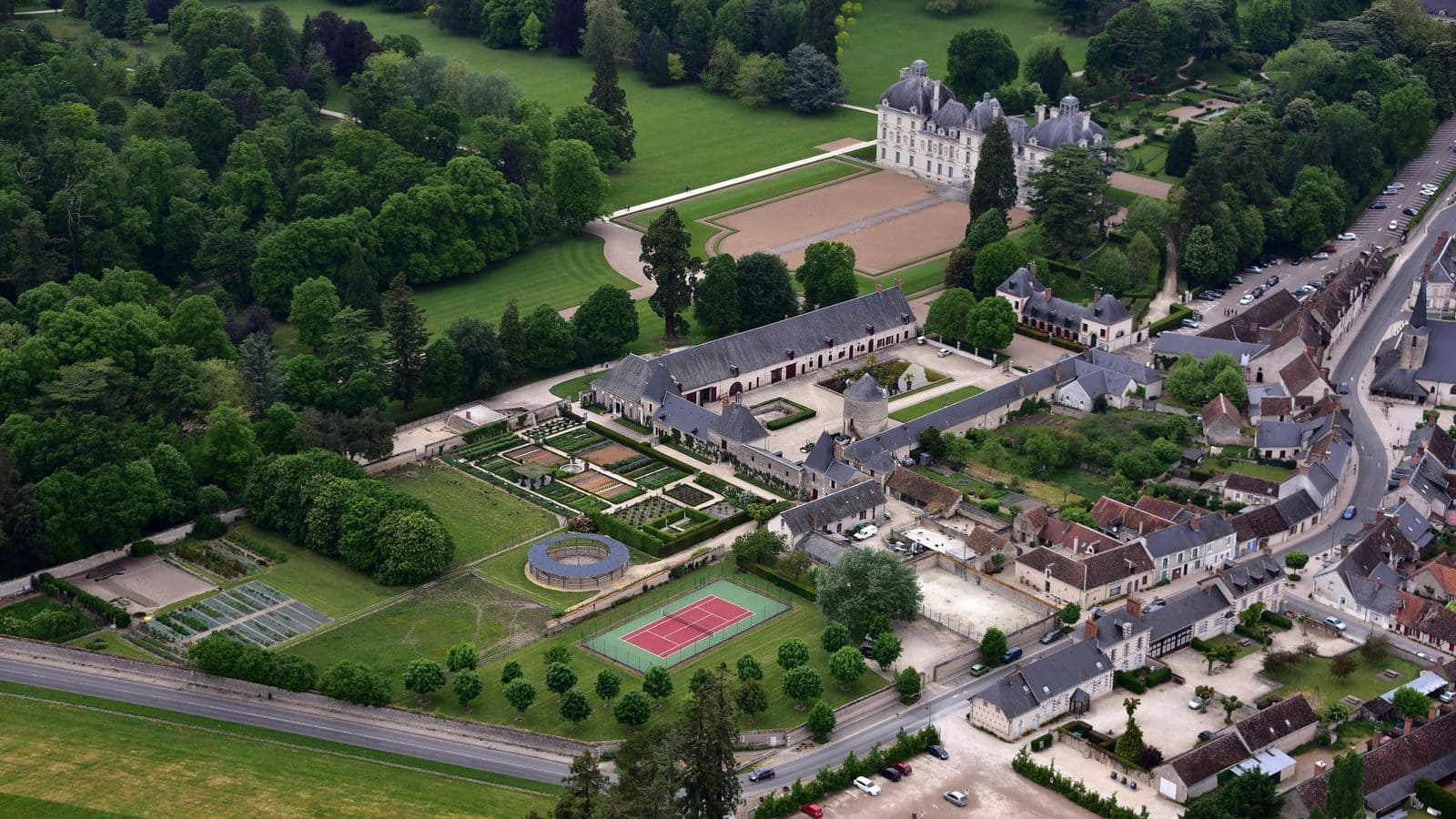
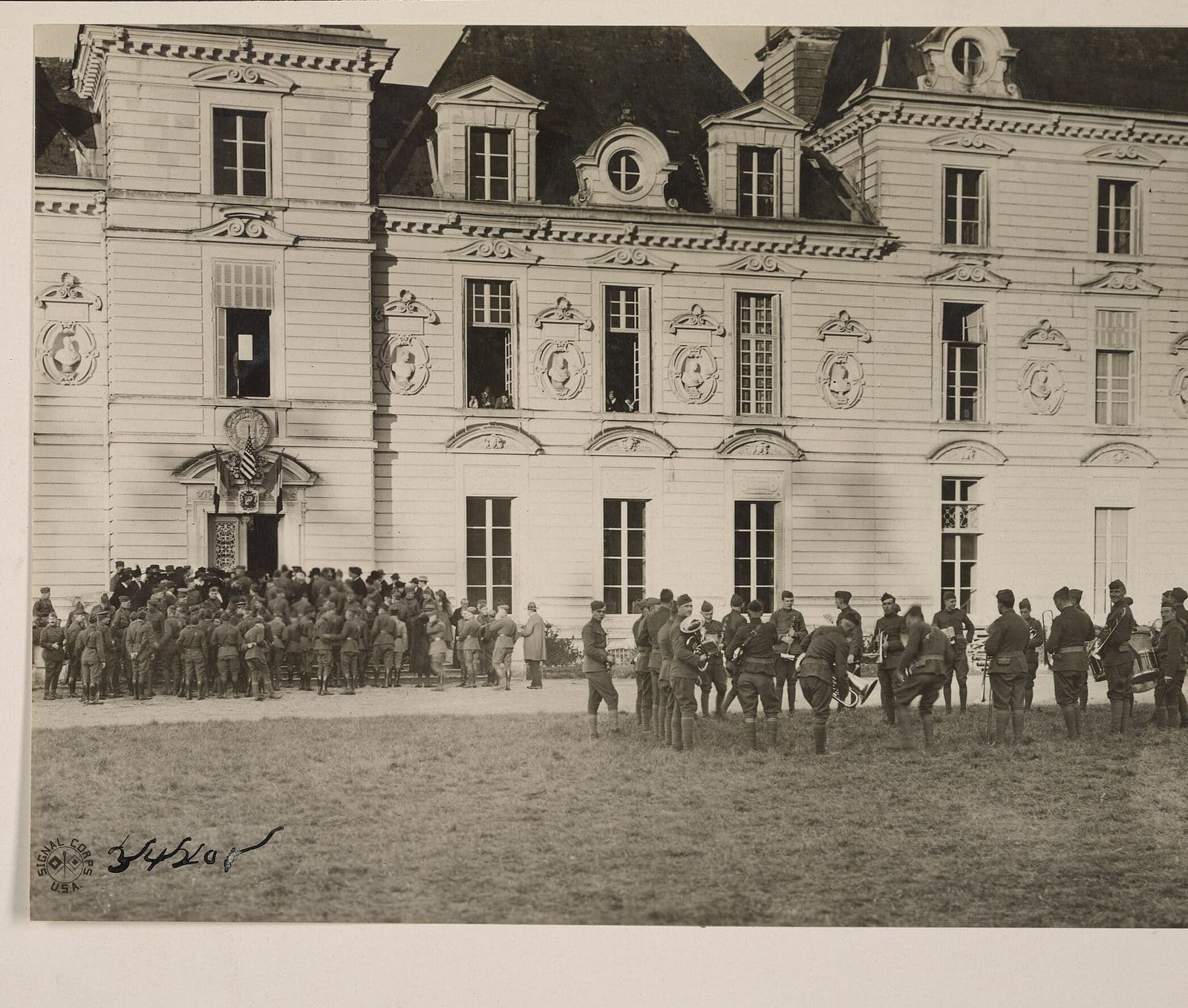
A further set of views, from the tulip ribbons of April to the dome lanterns against a winter sky, rounds out the portrait.
Beyond Château de Cheverny
Cheverny works best in deliberate contrast with its neighbors. Fifteen kilometers north, Blois shows four royal architectures stacked around one courtyard where Cheverny shows one; Chambord, a half hour away across the Sologne, is the Renaissance at its most theatrical and least domestic. For the other end of the valley’s register, Amboise holds the tombs and terraces of the early French Renaissance, Chaumont stages contemporary art and garden festivals above the river, Chenonceau arches over the Cher, and Villandry answers Cheverny’s tulips with parterres of clipped box. Pairing Cheverny with Blois makes the single most instructive day in the region: the anthology in the morning, the single sentence in the afternoon. A dedicated guide to the Châteaux of the Loire Valley is the natural next step for anyone plotting a full circuit.
Conclusion
Six centuries after Jean Hurault bought a house, a press, and a vineyard, his family’s name is still on the door, and that fact organizes everything a visitor sees: the furniture that never left, the hounds that still hunt, the wing that stays closed because someone is home. Cheverny is the Loire’s standing argument that the surest way to preserve a château is to keep living in it. See Blois first for the full sweep of styles, save Chambord for spectacle, and come to Cheverny to watch a 400-year-old house go about its work.
Where to stay nearby: Les Sources de Cheverny, a five-star spa estate a short drive from the château, is one of several Loire château hotels in our guide to Castle Hotels in the Loire Valley.
Principal Sources
- Blois Chambord Val de Loire Tourist Office. “Château de Cheverny.” bloischambord.com.
- Chanel, Gerri. Saving Mona Lisa: The Battle to Protect the Louvre and Its Treasures During World War II. Heliopa Press, 2014.
- Château de Cheverny. Official site, including its history, château, gardens, and 2026 prices and opening hours pages. chateau-cheverny.fr (accessed June 2026).
- France 3 Centre-Val de Loire. Reporting on Loire Valley châteaux visitor numbers.
- Jardins de France. “La rivière de tulipes de Cheverny.”
- Larousse. “Philippe Hurault, comte de Cheverny.”
- Ministère de la Culture. Plateforme Ouverte du Patrimoine, base Mérimée, notice PA00098413.
- UNESCO World Heritage Centre. “The Loire Valley between Sully-sur-Loire and Chalonnes.” Property 933 (2000), with the record of the 2017 minor boundary modification.
Image credits. Hero and oblique view: AXP Photography, Pexels. Hurault arms, King’s Chamber, grand salon fireplace, and painted ceiling: Fab5669, CC BY-SA 4.0. Old château drawing: Étienne Martellange, public domain. South facade: Shalev Cohen, Unsplash. Emperor busts: Krzysztof Golik, CC BY-SA 4.0. Salle d’Armes: Zairon, CC BY-SA 4.0. Grand Salon photograph: Rijksmuseum, CC0. Orangerie: Telemaque MySon, CC BY-SA 3.0. Hounds: Rolf Kranz, CC BY-SA 4.0. North facade: Benh Lieu Song, CC BY-SA 4.0. Gallery, in order: Soham Banerjee, Unsplash; AXP Photography, Pexels; Pierre André Leclercq, CC BY-SA 4.0; Fab5669, CC BY-SA 4.0 (two views); Pascal Bernardon, Unsplash; Wolkenkratzer, CC BY-SA 4.0; U.S. National Archives, public domain. Freely licensed images are resized to fit; otherwise unaltered.