
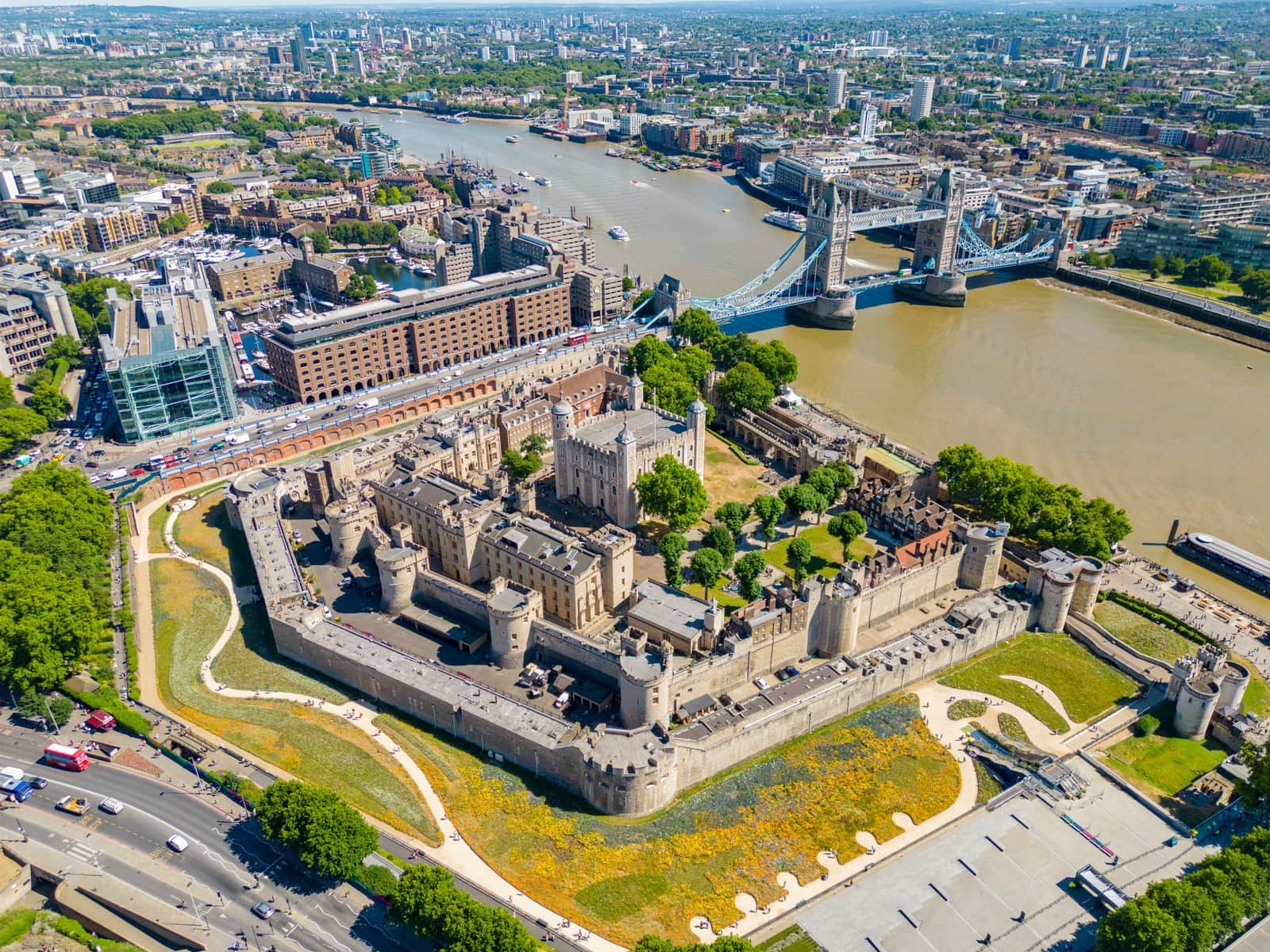
Tower of London
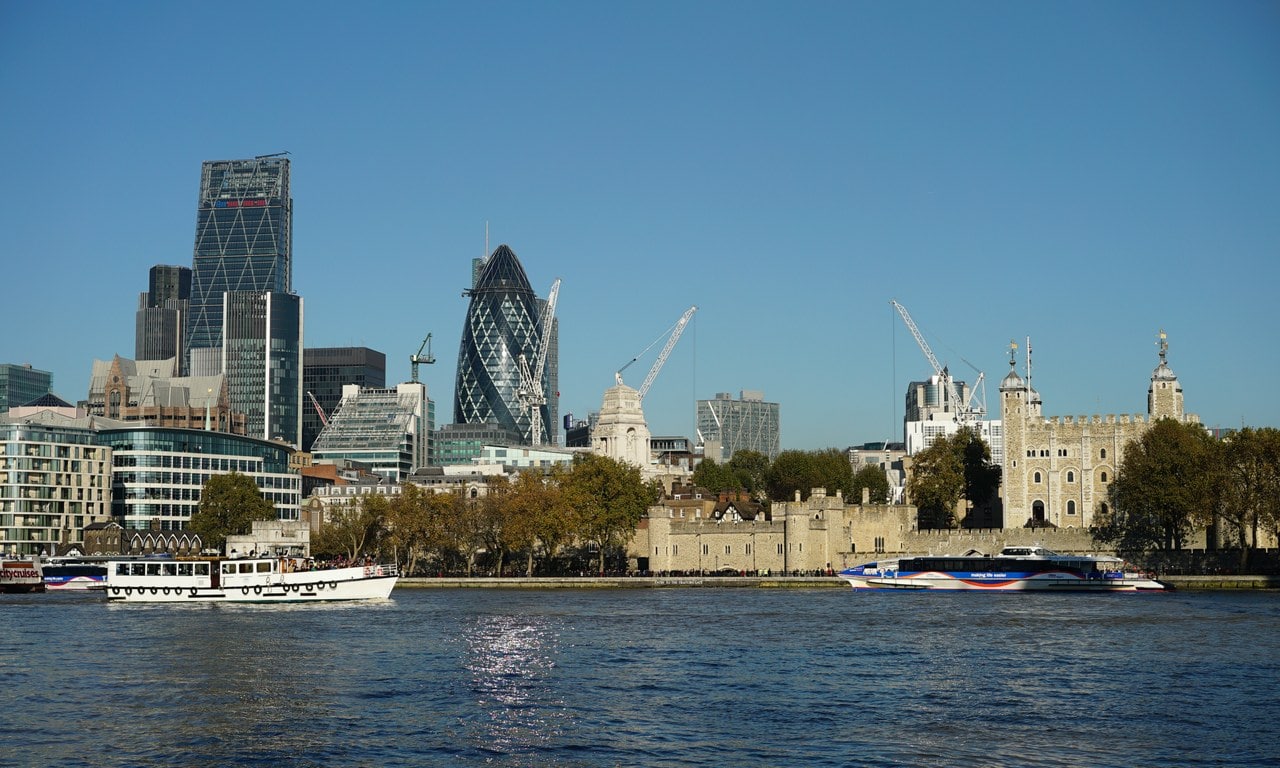
The Tower of London started as William the Conqueror’s castle for controlling London, and its great stone keep, the White Tower, was begun in the 1070s and completed about 1100. What grew around that keep was never only a fortress. Historic England’s scheduling record puts it plainly: “The Tower of London functioned as an armoury, arsenal and store, a mint, a prison and a military fortress for times of emergency.” Kings ringed the keep with two lines of walls and a moat, lived in a palace beside it, struck coins, stored records and kept wild animals inside the walls, and from the 1660s housed the Crown Jewels there.
Its official name is still HM Royal Palace and Fortress of the Tower of London. Historic Royal Palaces (HRP), the independent charity that manages it for the Crown, describes it as an “unoccupied royal palace.” UNESCO, which inscribed it as a World Heritage Site in 1988, states that “The Tower is no longer in use as a fortress, but its fabric still clearly tells the story of the use and function of the monument over the centuries.” Title and function have come apart, and each authority is describing a different one. No monarch lives here, but a garrison of soldiers does, alongside the Yeoman Warders, their families and the Resident Governor. Each night the gates are still locked in the Ceremony of the Keys.
As for the Tower’s other reputation, for dungeons and torture, HRP traces it largely to the site’s growing popularity as a tourist attraction in the 19th century, when Victorian crowds, “entranced by the gothic tales and exaggerated accounts of torture and suffering,” flocked to the fortress for the thrill of its supposed dungeons. Torture was used here, HRP says, but for a relatively short period in the 16th and 17th centuries, and “Only a small number of cases of physical torture at the Tower were recorded.” The prison and the executions were real. So was everything else the Tower was for, though UNESCO notes that its part in the growth of the state’s institutions, among them its records and its coinage, is “no longer evident in the physical fabric” and lives on in documents, tradition and the collections on display.
Quick Facts
| Location | North bank of the Thames at the eastern edge of the City of London, in the London Borough of Tower Hamlets, England |
|---|---|
| Built | White Tower begun in the 1070s and completed about 1100; curtain walls, towers and moat late 12th to 14th century; extensively restored in the 19th century |
| Built for | William I and William II; enlarged for Henry III and Edward I |
| Architectural style | Anglo-Norman Romanesque great tower; medieval curtain walls and towers; 19th-century Gothic Revival restoration |
| Castle type | Tower keep castle, developed from about the 13th century into a concentric castle |
| Condition | Standing, roofed and in use; much restored or rebuilt in the 19th century; moat dry since the 1840s |
| Owner / managed by | The Crown (owned by HM The King in right of Crown); managed by Historic Royal Palaces, set up by the government in 1989 and an independent charity since 1998 |
| Official name | HM Royal Palace and Fortress of the Tower of London |
| UNESCO status | World Heritage Site, inscribed 1988, criteria (ii) and (iv) |
| Heritage status | Scheduled monument (NHLE 1002061); the White Tower is listed Grade I (NHLE 1260258) |
| Nearest town & station | Central London; Tower Hill Underground station (District and Circle lines), about five minutes’ walk; Tower Gateway (DLR) and Tower Pier are also close |
| Open to public | Yes, all year except 24, 25 and 26 December, 1 January and a couple of days in early January |
| Official website | Historic Royal Palaces: Tower of London |
History
The Conqueror’s Fortress and the White Tower
Historic England dates the Tower’s beginning to the months after the Conquest: “After the Norman Conquest in 1066, William the Conqueror ordered the building of a castle in the south-east corner of the city as a means to control London.” It was one of the castles the Normans raised to hold England after the Conquest, and one of three London fortifications built just after it, according to Historic Royal Palaces’ management plan for the World Heritage Site. That first castle was of earth and timber, and the plan is frank that “The details of William’s initial fortification are unknown …” Its extent is thought to correspond broadly with what is now the Inmost Ward.
The stone tower that replaced it was begun in the 1070s and finished about 1100, for William I and his son William II. Historic England’s two records differ on one man’s part in it. The scheduling record says the keep was “constructed under the supervision of Gundulf, Bishop of Rochester,” while the listing for the White Tower says only that it was “probably to designs of Gundulf …” Gundulf became Bishop of Rochester in 1077. He is recorded as overseeing the work, and the design is credited to him only as a probability. HRP adds that masons came from Normandy with stone from Caen, while most of the labor was English. Recent research, the management plan notes, suggests that the keep’s layout is ultimately derived from Ivry-la-Bataille in Normandy, and geological and archaeological evidence “indicates that there was a substantial pause and a change in the masonry of the building during construction.”
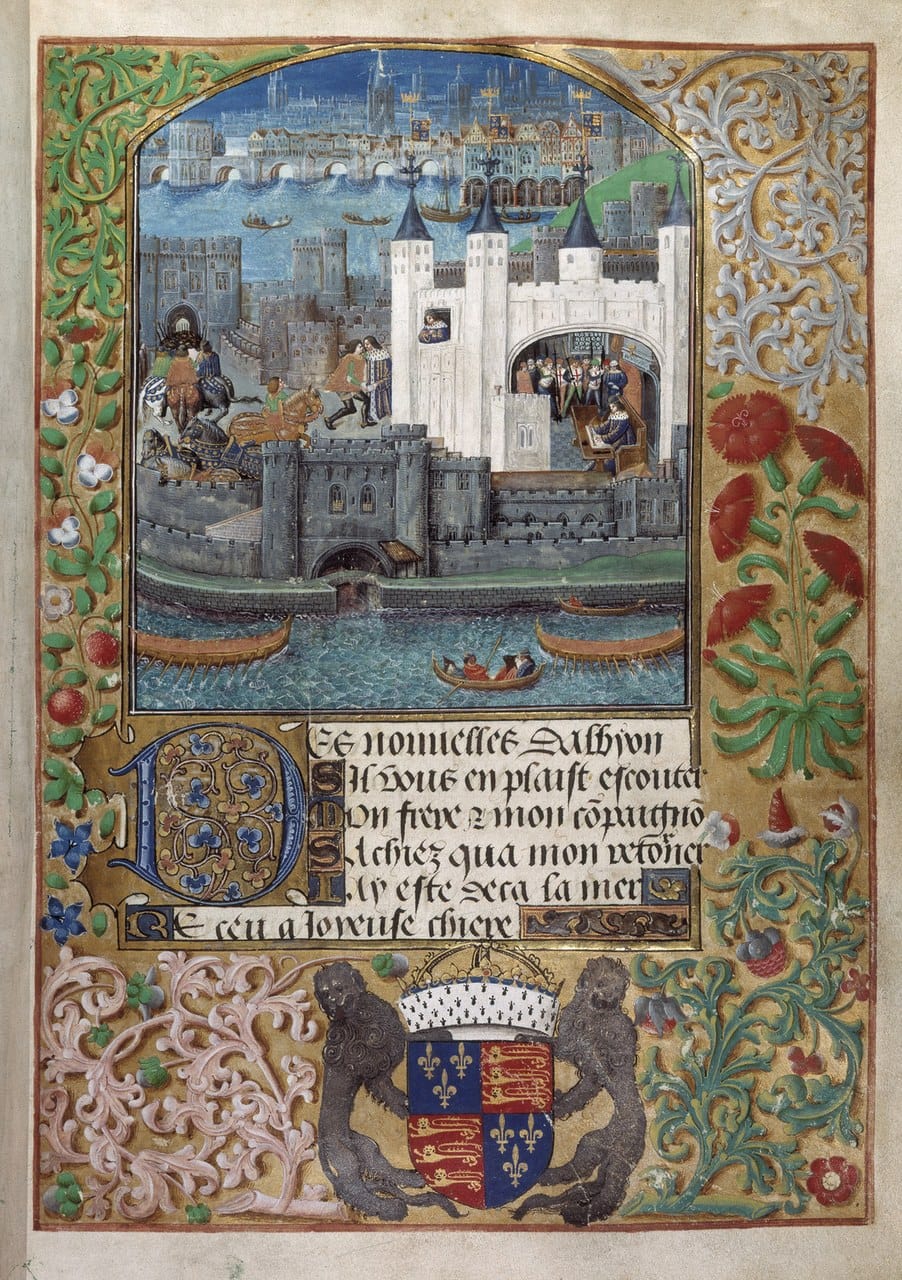
The keep’s name came later. In 1240, HRP says, Henry III had the great keep painted white, “making it the White Tower,” and the management plan calls it the first recorded instance of the whitewashing. The keep also held the man HRP names as both the Tower’s first prisoner and the first to escape: Ranulf Flambard, Bishop of Durham, who in 1101 climbed out of one of the White Tower’s windows on a rope smuggled in to him.
Henry III, Edward I and the Concentric Castle
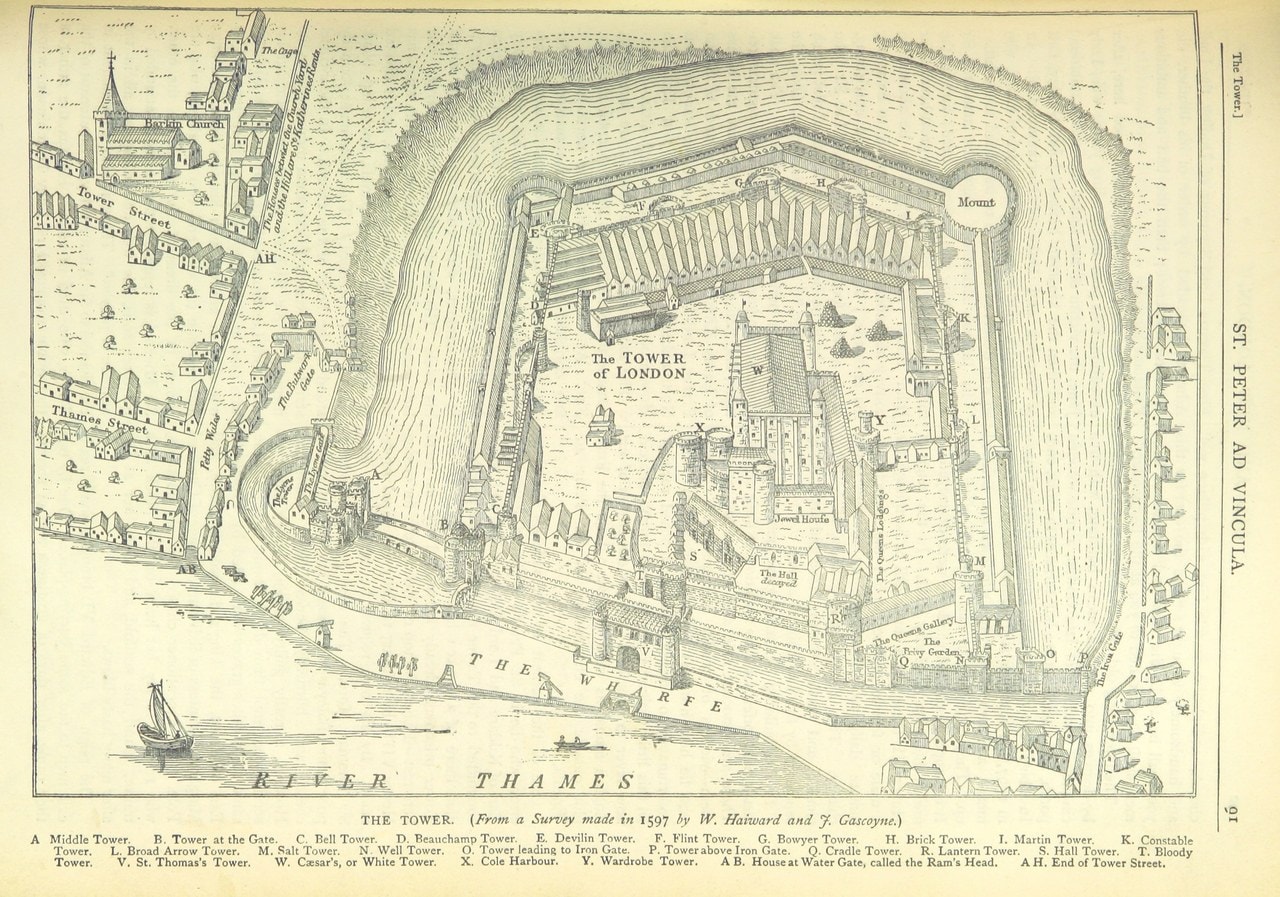
Walls came next, over the two centuries after the keep. The oldest stretch of the inner curtain dates from about 1170, and the Bell Tower is also of the late 12th century. Those defenses were tested in 1191, when the King’s brother John attacked the Tower, then held by Richard I’s chief minister, William Longchamp, Bishop of Ely. The management plan records the outcome: “The defences held, but Longchamp was forced to surrender for lack of supplies.” Of the inner curtain, Historic England records that “a large amount of the structure, including eight of the towers, was reconstructed for Henry III and Edward I as an outer curtain in the 13th century.” The same record calls it Henry III’s outer curtain: it was the outermost line until Edward I built another beyond it.
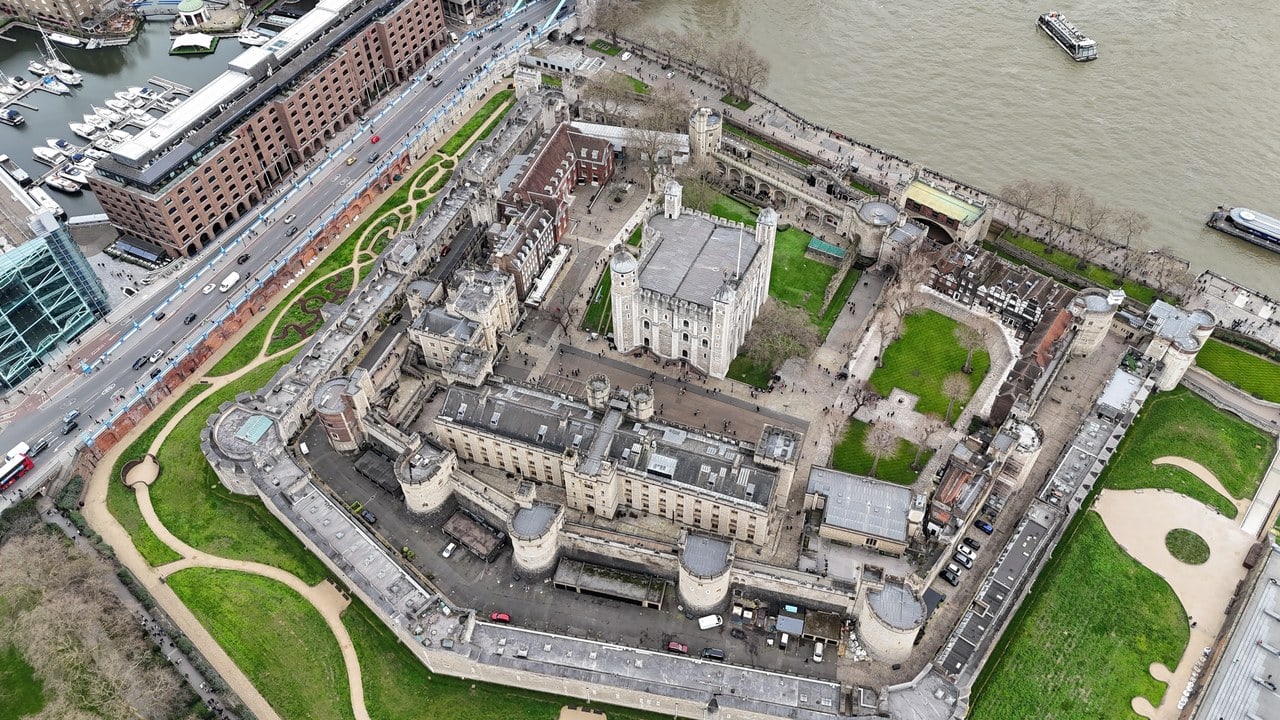
Henry III rebuilt on a far larger scale. Between the 1220s and the 1240s his works pushed the castle north and east beyond the line of the Roman wall, bringing the church of St Peter ad Vincula inside the castle, and work began on a moat. Edward I then turned the Tower into a concentric castle, with one ring of defenses inside another. Between 1275 and 1285 he added the outer curtain, a new moat, the Middle and Byward gatehouses, a barbican called the Lion Tower, and from 1275 St Thomas’s Tower over a water gate. Historic England puts the cost at £21,000, “more than all his Welsh castles except Caernarvon.” Edward III raised the outer curtain in the 1330s and added the Cradle Tower between 1348 and 1355, and the vault of the Bloody Tower’s gate passage dates from 1360 to 1362.
Walls on this scale were still only as strong as the people keeping them. In 1381, during the Peasants’ Revolt, rebels ran in through the Tower’s open gates, HRP says, and the management plan records that they met “no resistance.”
Palace, Mint, Armory and Menagerie
For much of the Middle Ages the Tower was also a royal residence. “Although long since vanished,” HRP writes, “there was once a splendid royal palace to the south of the White Tower.” The last of its ranges were destroyed by fires in 1774 and 1788 and then demolished, long after the kings had stopped using them; in the management plan’s words, it was during the reign of James I, from 1603 to 1625, that “the Tower saw its last use as a royal residence …”
Money was made here for more than five centuries. By about 1279, The Royal Mint says, the mint “had moved to more secure quarters within the Tower of London,” though it adds that it is not clear whether those first quarters were in the area the Mint later occupied. From then until its move to Tower Hill between 1810 and 1812, the Mint struck most of the realm’s coins inside the walls. Isaac Newton served it as Warden from 1696 and as Master from 1699. Nothing of a medieval mint building stands: the former Mint buildings inside the west outer wall date from the late 18th century, and some were rebuilt after bomb damage in the Second World War.
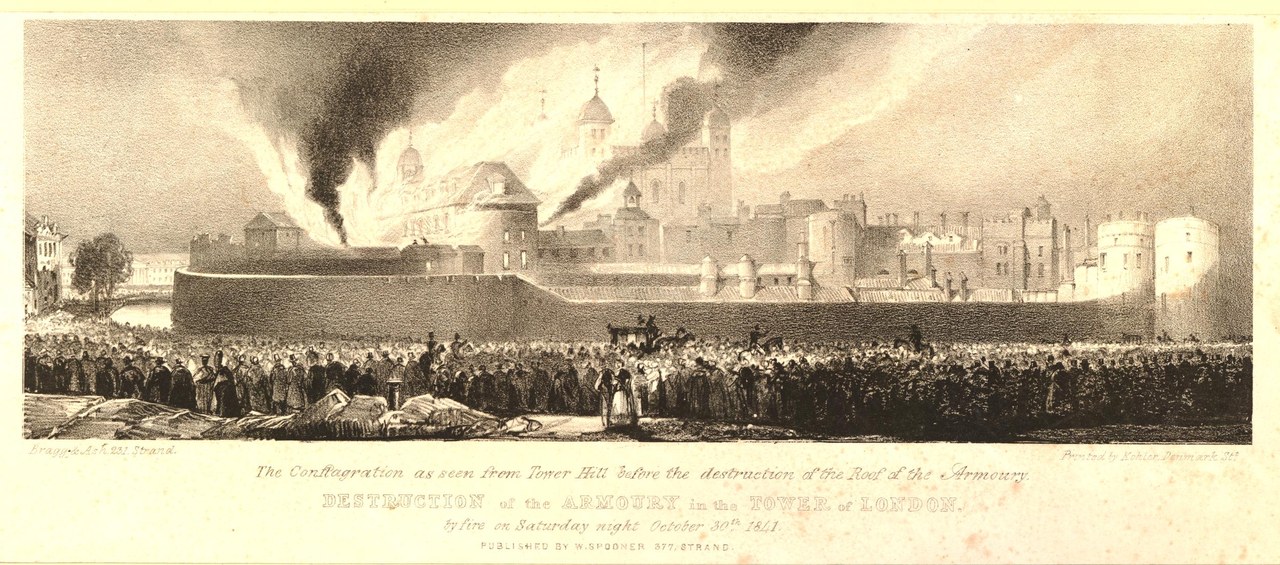
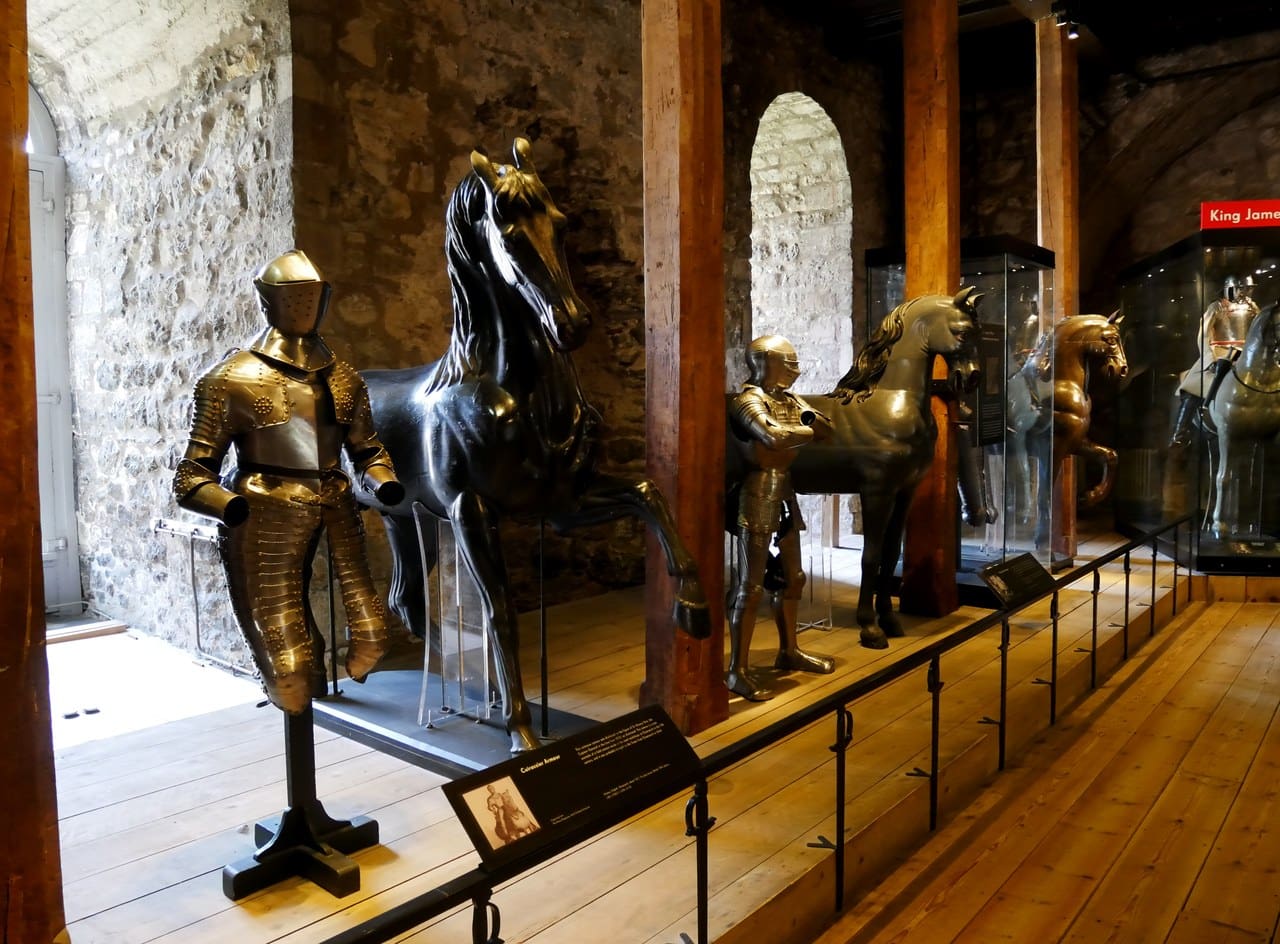
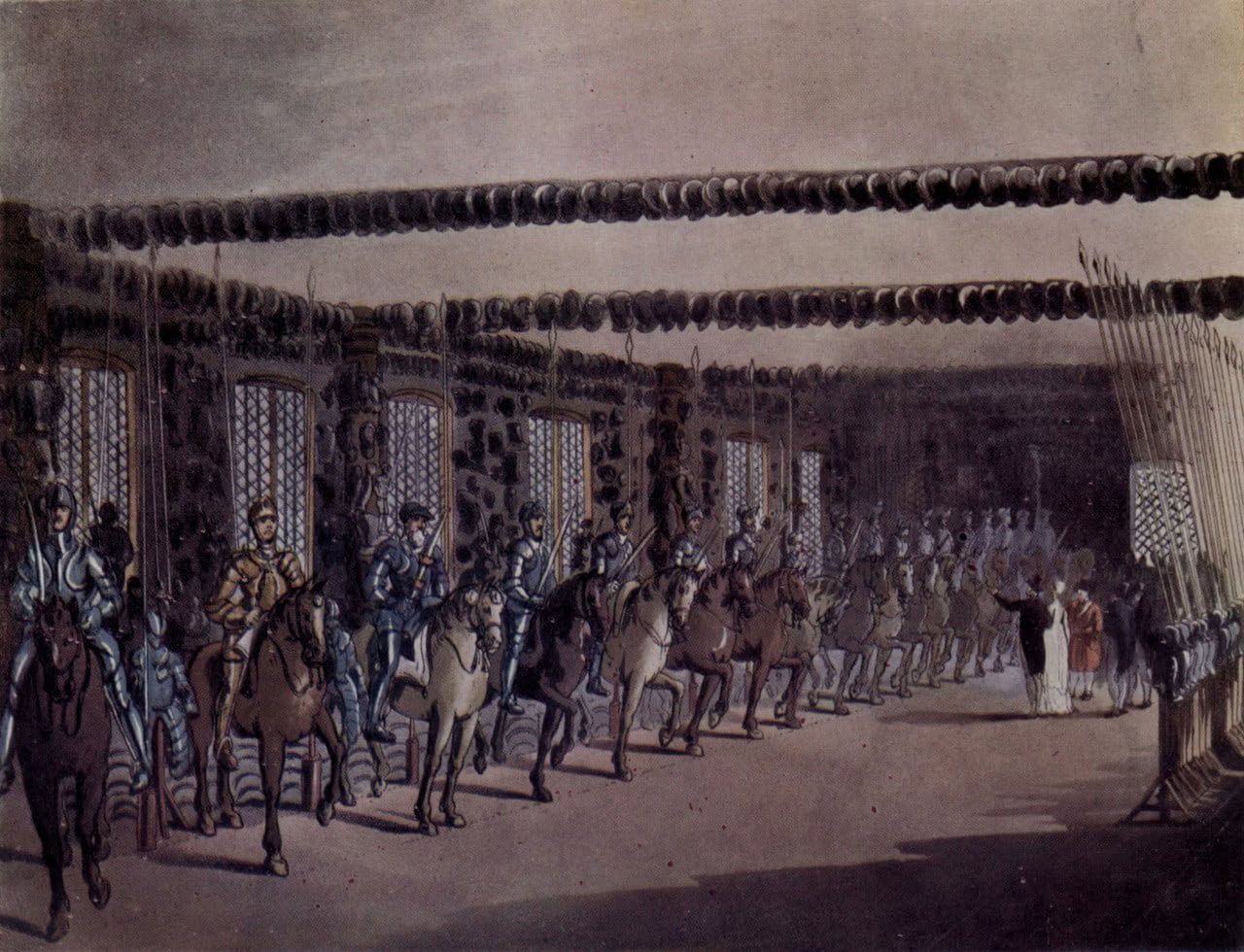
The Tower was an arsenal as well, and its armor became a spectacle. According to the Royal Armouries, which traces its own history here, the Line of Kings, a display of mounted figures in armor, “was first recorded in the Tower in an inventory dated October 1660, and it is possible that the display was assembled to mark Charles II’s visit …”. On 30 October 1841 fire destroyed the Grand Storehouse. From the late 13th century, UNESCO notes, the Tower was also “a major repository for official documents, and precious goods owned by the Crown.” The record office stayed until the 1850s.
The Tower kept animals, too. Historic England says the royal menagerie was “probably begun under King John” and lasted until 1835. In HRP’s account, Henry III was given “a magnificent white bear, presumably a polar bear,” by the King of Norway in 1252, and the King of France sent an elephant in 1255; Edward I later gave the animals a permanent home at the western entrance, which became known as the Lion Tower. HRP records how it ended: many of the animals were moved to the Zoological Gardens in Regent’s Park, today’s London Zoo, and by October 1835 the rest had been sold to zoos or traveling circuses.
Prison and Executions
“The Tower of London wasn’t built as a prison,” HRP says, “but hundreds of people were incarcerated here.” By the Tudor period, it adds, the Tower “had secured a reputation as the foremost state prison in the country …” Walter Raleigh was held in the Bloody Tower, then known as the Garden Tower. Guy Fawkes was kept in the Lieutenant’s lodgings, the timber-framed house on Tower Green now called the King’s House. Anne Askew is, in HRP’s words, the only woman reputedly tortured at the Tower in the 16th century. In March 1554 the future Elizabeth I was sent to the Tower as a prisoner, arriving on 18 March, Palm Sunday. She bought a day’s grace: The National Archives explains that she wrote her “Tide Letter” at noon on 17 March deliberately slowly, so that the tide that let boats pass under London Bridge “had turned, sparing her from the Tower for an extra day.” HRP dates her arrival to 17 March, the day of the letter, and records that for lack of evidence she was released into house arrest on 19 May, the anniversary of her mother Anne Boleyn’s execution.
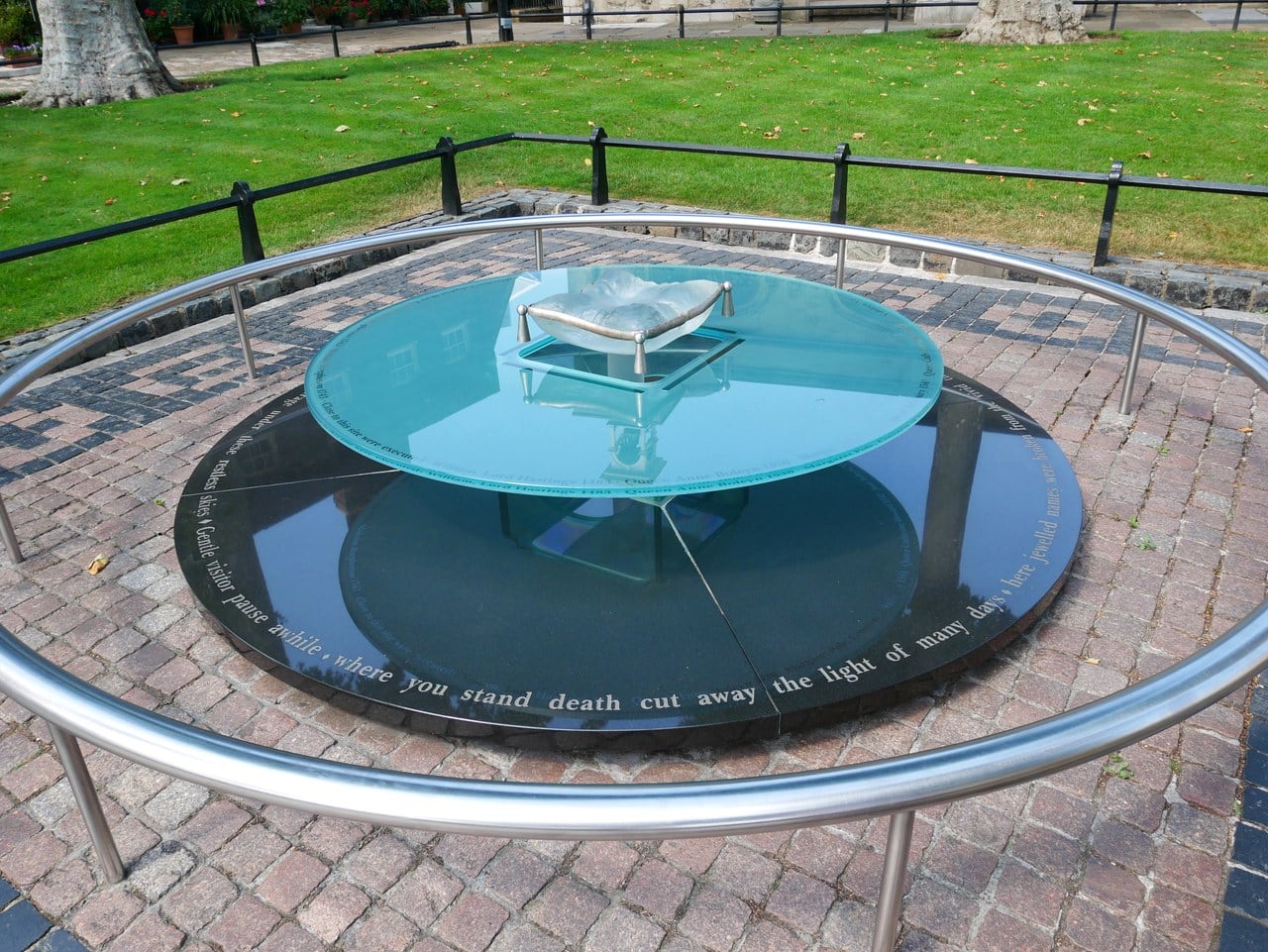
Execution inside the walls was, HRP explains, a privilege, bound up with rank or with the fear of popular support for the condemned. Its page on Tower Green is precise about the numbers: “On or near this spot ten people have been executed. Seven by beheading and three by firing squad.” So ten people were executed on or near Tower Green, seven beheaded and three shot. Among the ten were three women who had been queen: two of Henry VIII’s wives, Anne Boleyn (executed on 19 May 1536) and Catherine Howard; and Lady Jane Grey. Jane’s husband, Guildford Dudley, was executed on Tower Hill on 12 February 1554, and Jane was executed inside the walls. A glass memorial by the artist Brian Catling now stands on Tower Green, but HRP notes that other accounts place the scaffold on the parade ground, so the exact site is uncertain.
The last executions at the Tower belong to the two World Wars. Eleven spies were shot there between 1914 and 1916, most of them in the miniature rifle range, beginning with Carl Lody on 6 November 1914. Josef Jakobs, shot on 15 August 1941, was the last person to be executed by firing squad at the Tower.
During the Wars of the Roses, HRP says, Henry VI was murdered at the Tower in 1471, supposedly while at prayer in the king’s private chapel in the Wakefield Tower. The Tower’s most famous mystery has no verdict. Edward V and his younger brother Richard, Duke of York, disappeared there in 1483, and on the question of who was responsible, HRP’s answer is that “The debate goes on.” Even the find-spot of the bones unearthed in 1674 is disputed. Westminster Abbey, where they now lie, records that “In 1674 some bones of children were found under a staircase in the White Tower in the Tower of London and assumed to be those of the two boys.” The Tower of London curator Charles Farris notes that a plaque in the White Tower places the find under a staircase inside the keep, but that “the exact location of the discovery is still debated. Most experts suggest they were discovered outside the White Tower.” The bones were reburied in Westminster Abbey, in an urn inscribed 1678. An examination of the bones in 1933 found the remains of two children, possibly aged about 10 and 12. Thomas More wrote his account of the princes’ fate about 1513 to 1518, long before he became Lord Chancellor.
The Tower Opens to Visitors
Visitors are not new here. In the 19th century the Tower became a tourist attraction, and Historic England records that “By 1916, much of the castle was open to the public …” UNESCO inscribed it as a World Heritage Site in 1988. The next year the government set up Historic Royal Palaces to run it, and in 1998 HRP became an independent charity. Ownership stays with the Crown, and HRP’s annual report sets out the arrangement: “These palaces are owned by HM The King in right of Crown,” and HRP is contracted by the Secretary of State to manage them.
Unlike the many English castles that ended up as ruins, the Tower stayed standing, roofed and in use, and it is still changing. HRP’s Tomorrow’s Tower program is planned in phases over the coming years, with more than £20 million already donated and pledged toward it.
Architecture
The White Tower and St John’s Chapel
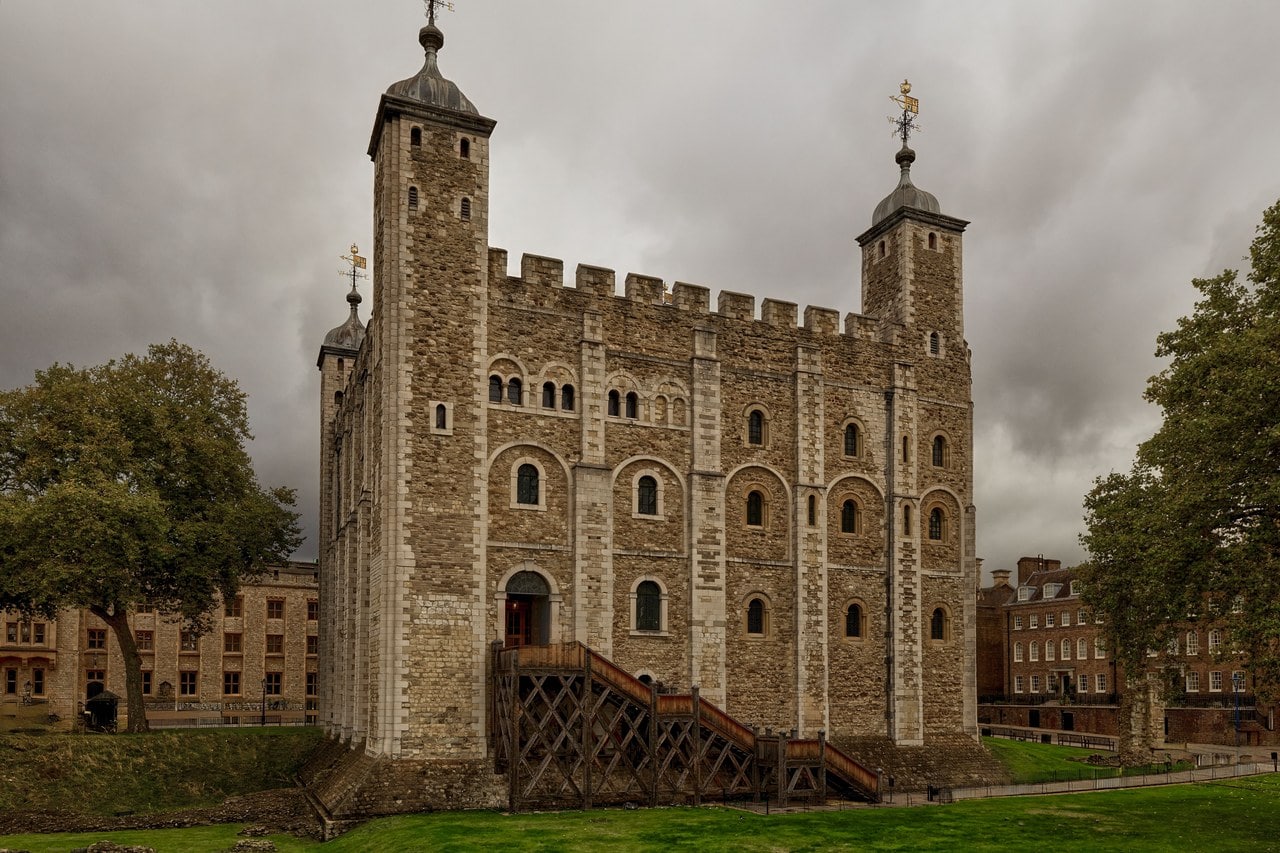
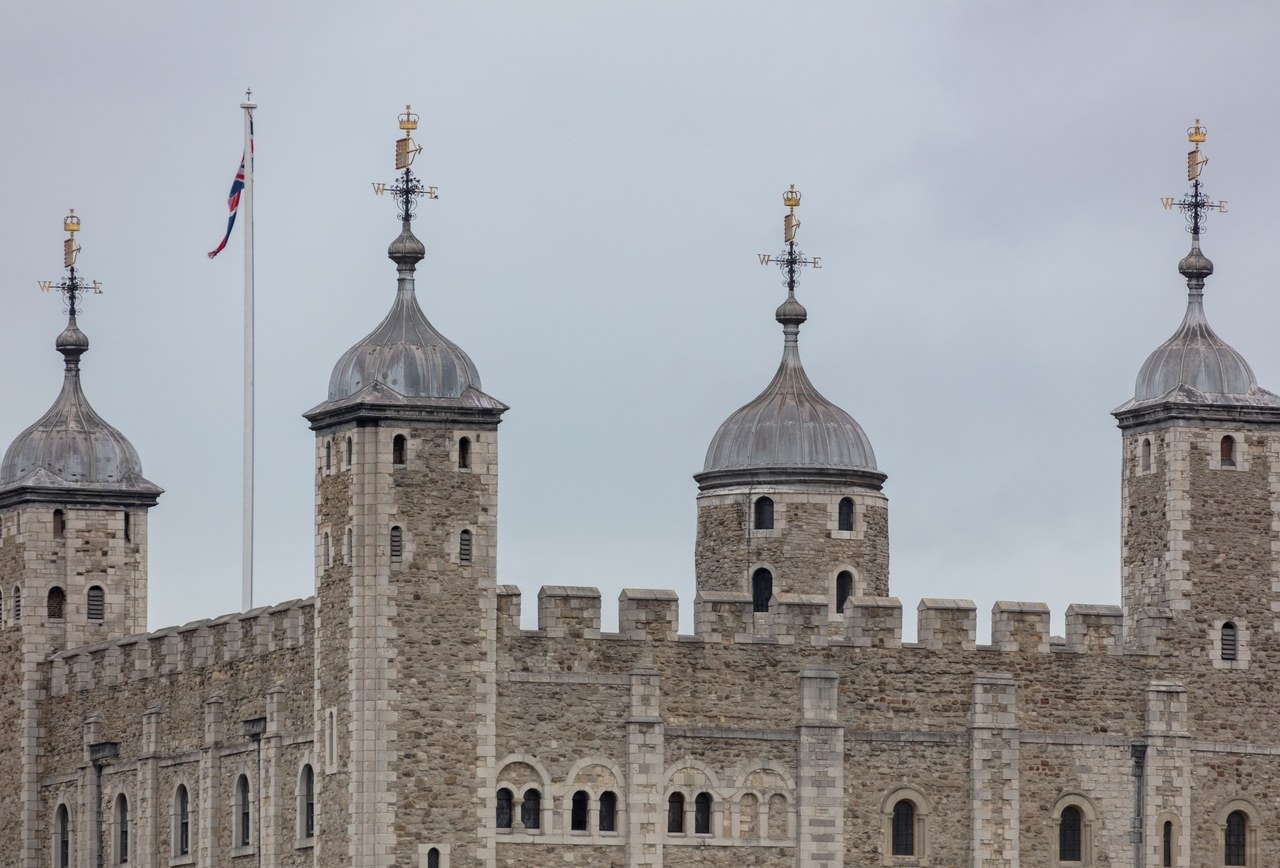
The White Tower measures 36 meters by 32.5 meters. It is rectangular, with a rounded projection at its southeast corner, where the chapel’s apse bulges out, and a cylindrical stair turret at the northeast. Historic England calls the keep Anglo-Norman in style, with flat pilaster buttresses defining each bay, round-headed windows and a crenellated parapet. It was built to look taller than it was inside; in the management plan’s words, “its architectural fourth storey was a screen hiding the roof.” Behind walls that suggest four floors there were originally three levels, counting the basement, and the top floor was only inserted about 1490, when the roofs were replaced; the tree-ring report on the White Tower, published by English Heritage in 2007, found that “The main roofs were found to have been replaced in AD 1490, when the second floor was inserted.” Its walls are ragstone rubble. The pale dressed stone you see on the corners and openings is mostly Portland stone, which replaced the original Caen stone from 1636-37, although Caen ashlar survives in the stump of the Wardrobe Tower.
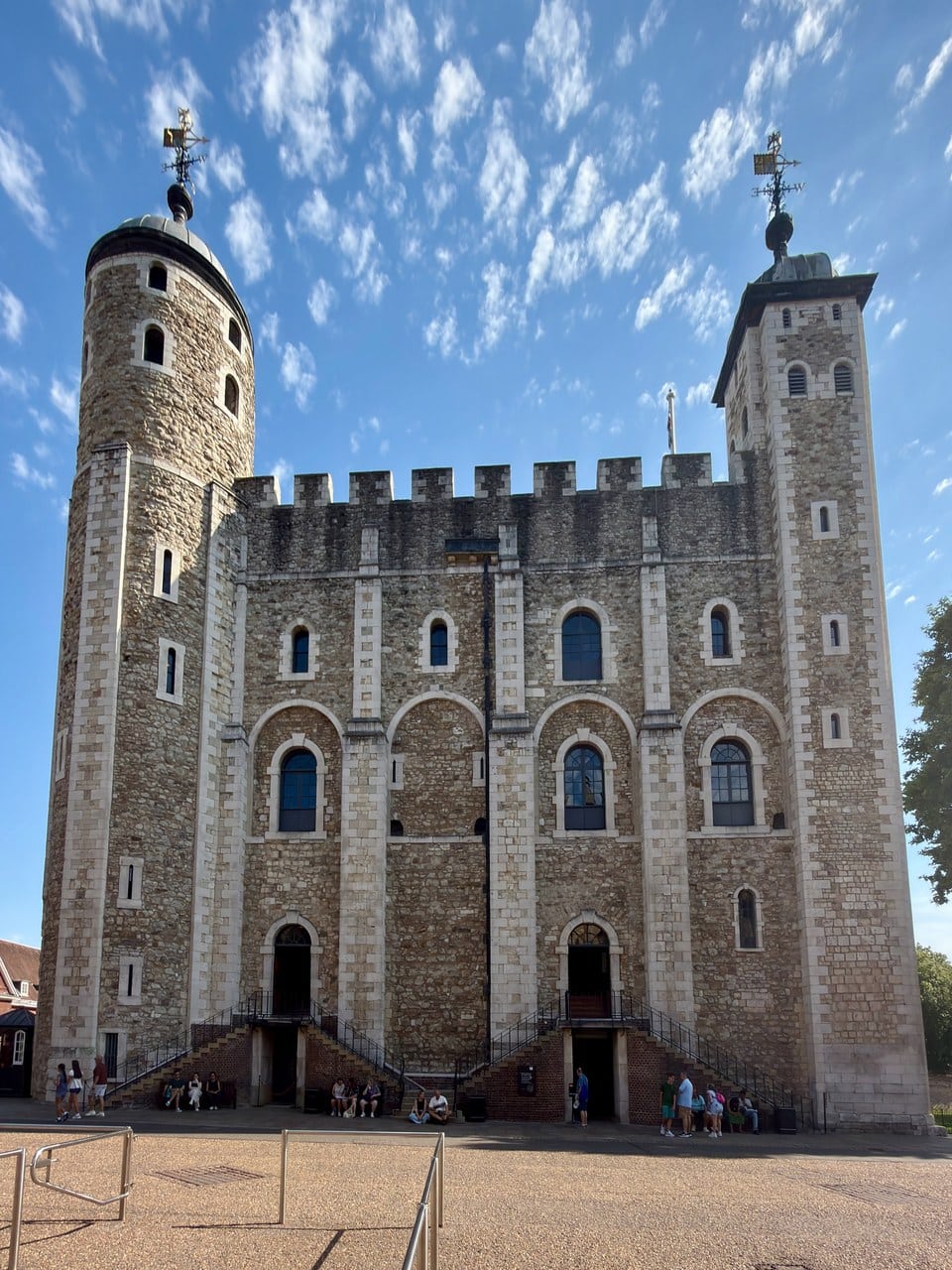
Much of what reads as Norman is later. Historic England’s listing records late-11th-century round-arched lights, the entrance in the west bay, fireplaces, garderobes and a well, but most of the windows are late 19th century, some with early 19th-century sashes in early 18th-century surrounds. Historic England’s listing does not date the cupolas on the turrets, and the brick vaults of the basement date from about 1730. As for the timber stair that climbs to the first-floor entrance, it is a modern oak reconstruction. For how this building fits among English keeps, see the great tower as a building type.
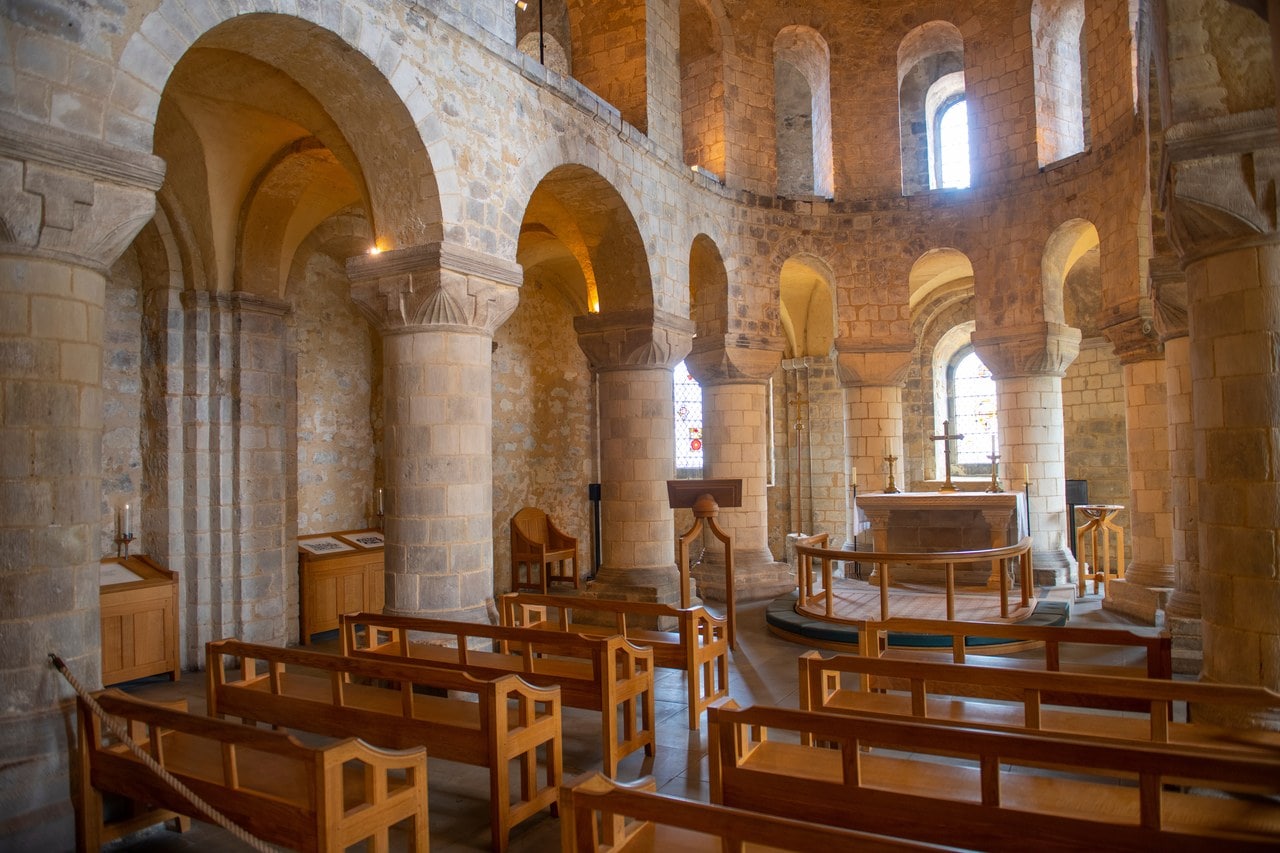
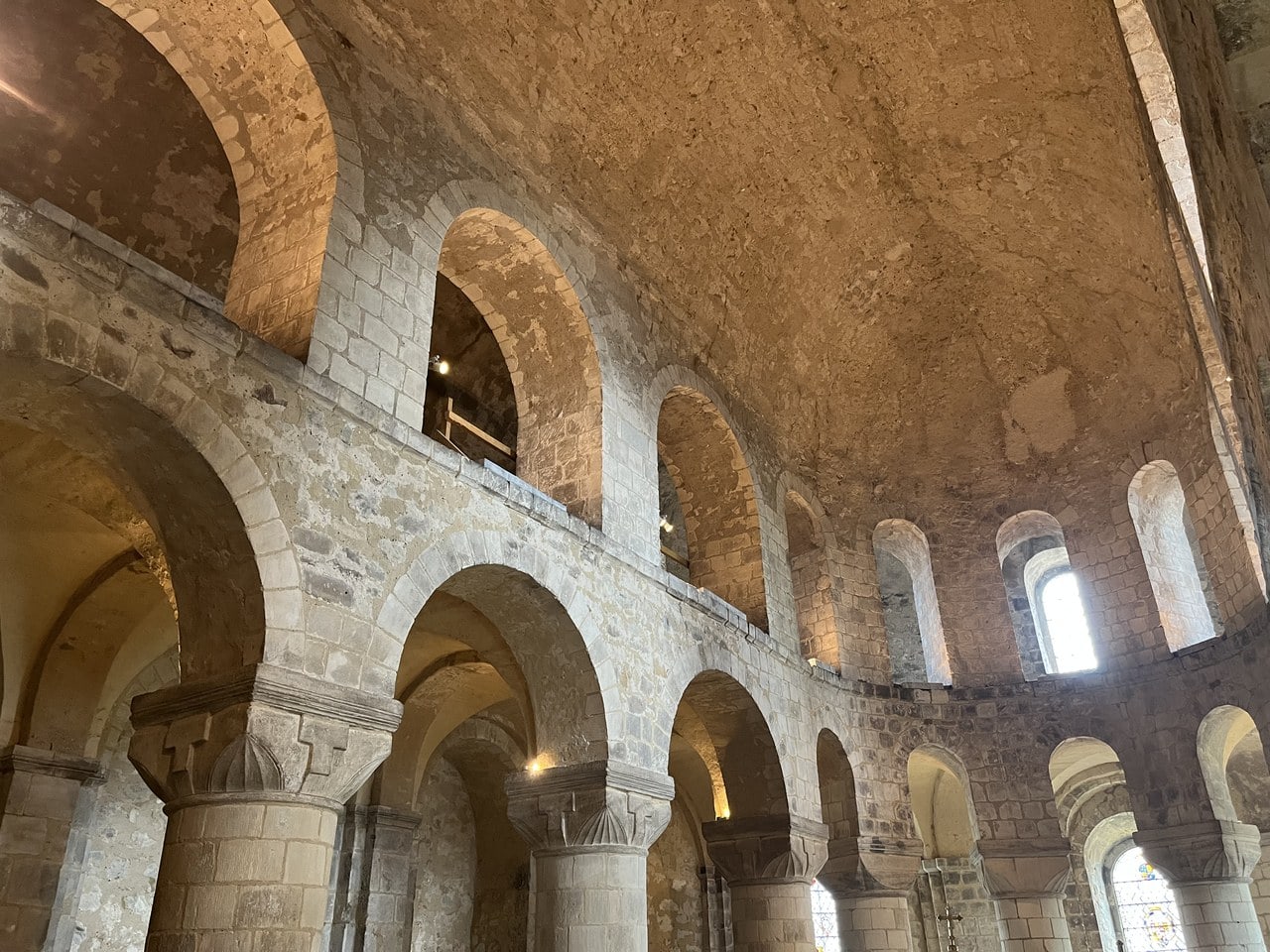
Inside, the White Tower houses the Royal Armouries’ Line of Kings, armored figures on carved horses. It also holds St John’s Chapel, an aisled chapel with an apse and an ambulatory, carved capitals, and a two-story barrel-vaulted nave. The stone and the vault are 11th-century; the windows are Victorian, inserted by Anthony Salvin in 1864-66.
Curtain Walls and Towers
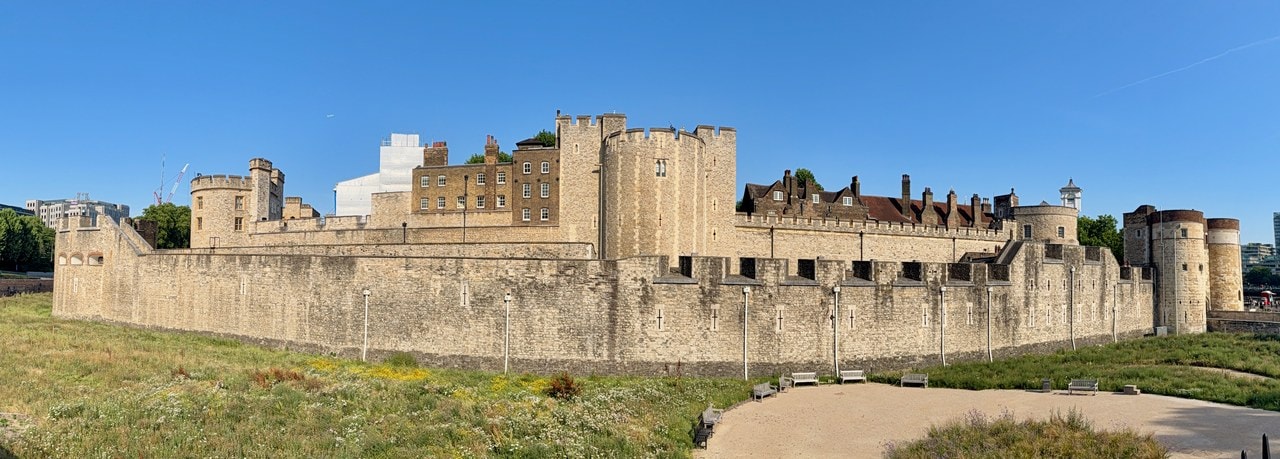
The principle of the Tower’s defenses is easiest to understand in Historic England’s description of the outer wall: “This line of defences is lower than the Inner Curtain Wall, allowing free fire over it from inside the castle.” Defenders on the higher inner wall could shoot over the lower outer one. On the inner curtain stand thirteen towers, largely of D-shaped plan, and the outer line is punctuated by eight more. At the Salt Tower, a round corner tower, the plan is three-quarter cylindrical rather than D-shaped.
Some towers are not what they seem. The Lanthorn Tower on the inner curtain was rebuilt in 1883 by John Taylor of the Office of Works, and Historic England describes it as “totally rebuilt in the 19th century …”. The Bell Tower’s white timber bell turret is late 17th-century. Of the Wardrobe Tower only a stump remains, the Coldharbour Gate survives only as foundations, and the Lion Tower, Edward I’s barbican, is buried.
The Moat
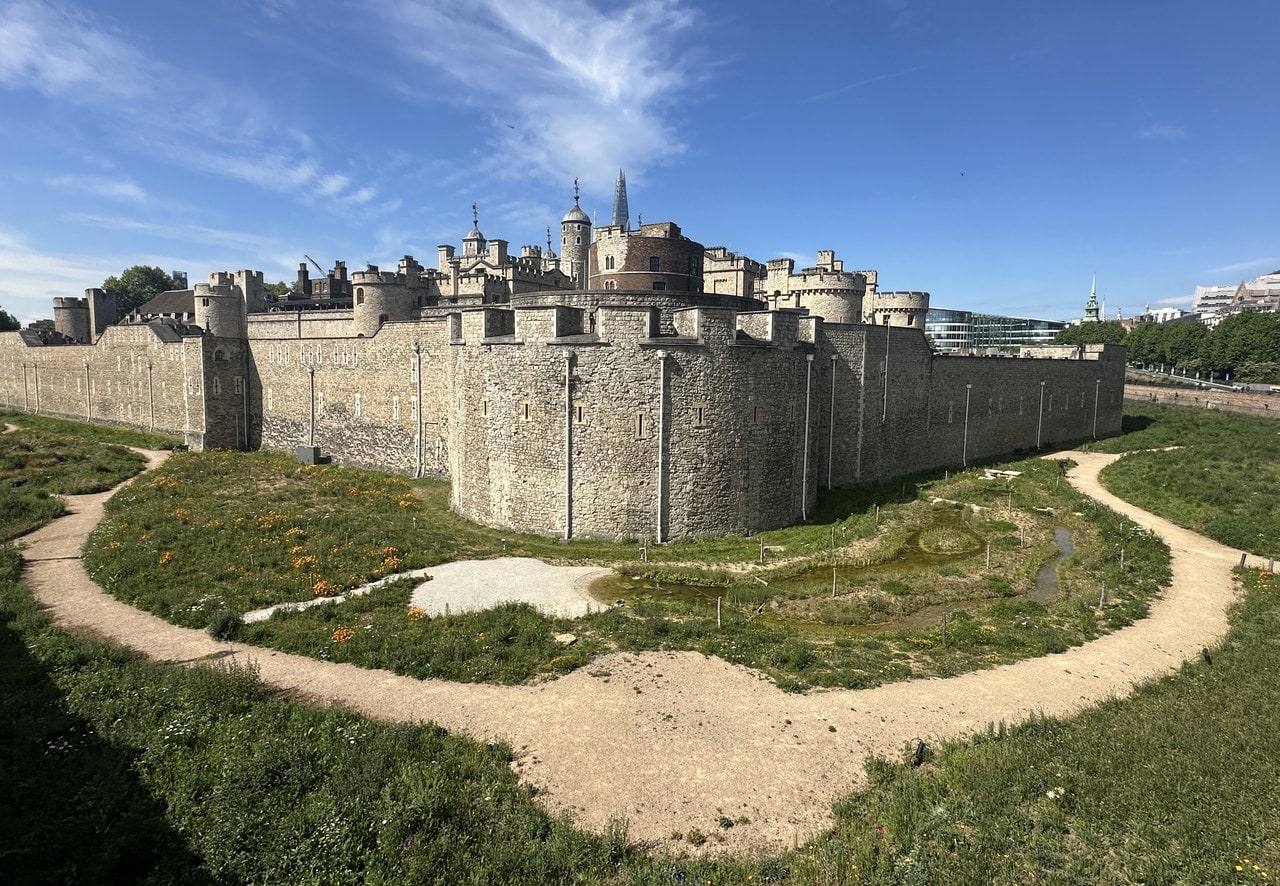
Edward I’s moat, at least 50 meters wide, was dug under the supervision of the Flemish Master Walter and was complete by 1281. Drained and back-filled in 1843-45, it is now a dry, grassed ditch, about 34 meters wide on the west side and 26 meters on the north. Our guide to moats explains how a castle moat was dug and fed, and what usually ended a water defense.
The Gatehouses and Traitors’ Gate
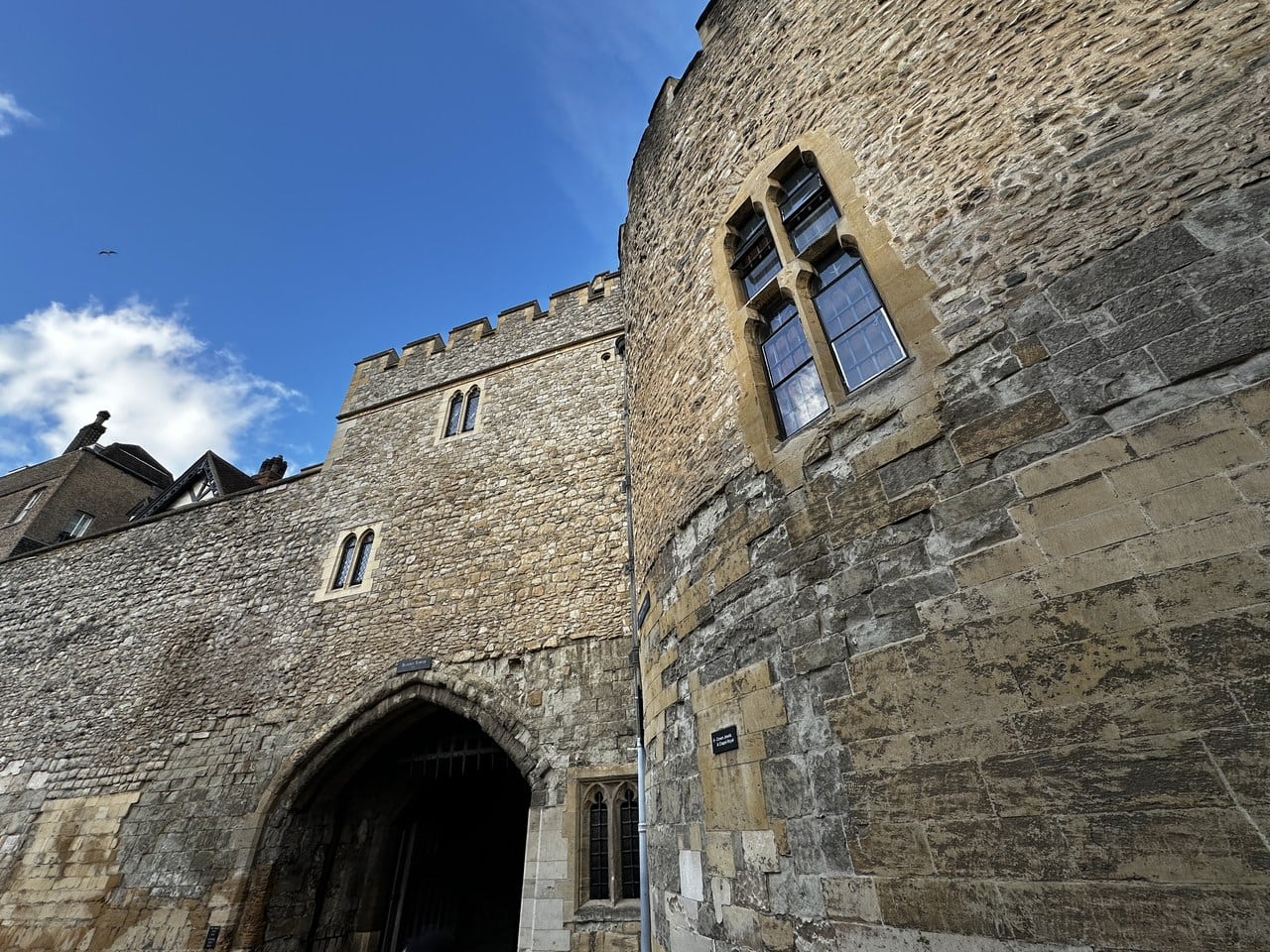
Visitors enter from the west, through the Middle Tower and then the Byward Tower, the two gatehouses Edward I built. What you see of the first is misleading. The Middle Tower dates from 1275-81, but its upper floors were rebuilt and its walls refaced in Portland stone in 1717-19, and the arms of George I sit above its entrance arch: an 18th-century face on a 1270s gate. In the Byward Tower is a wall painting of the Crucifixion from about 1400. Portcullis machinery in the Byward and Bloody Towers is 16th-century, not medieval. For the mechanics, see our guide to how a gatehouse and its portcullis worked.
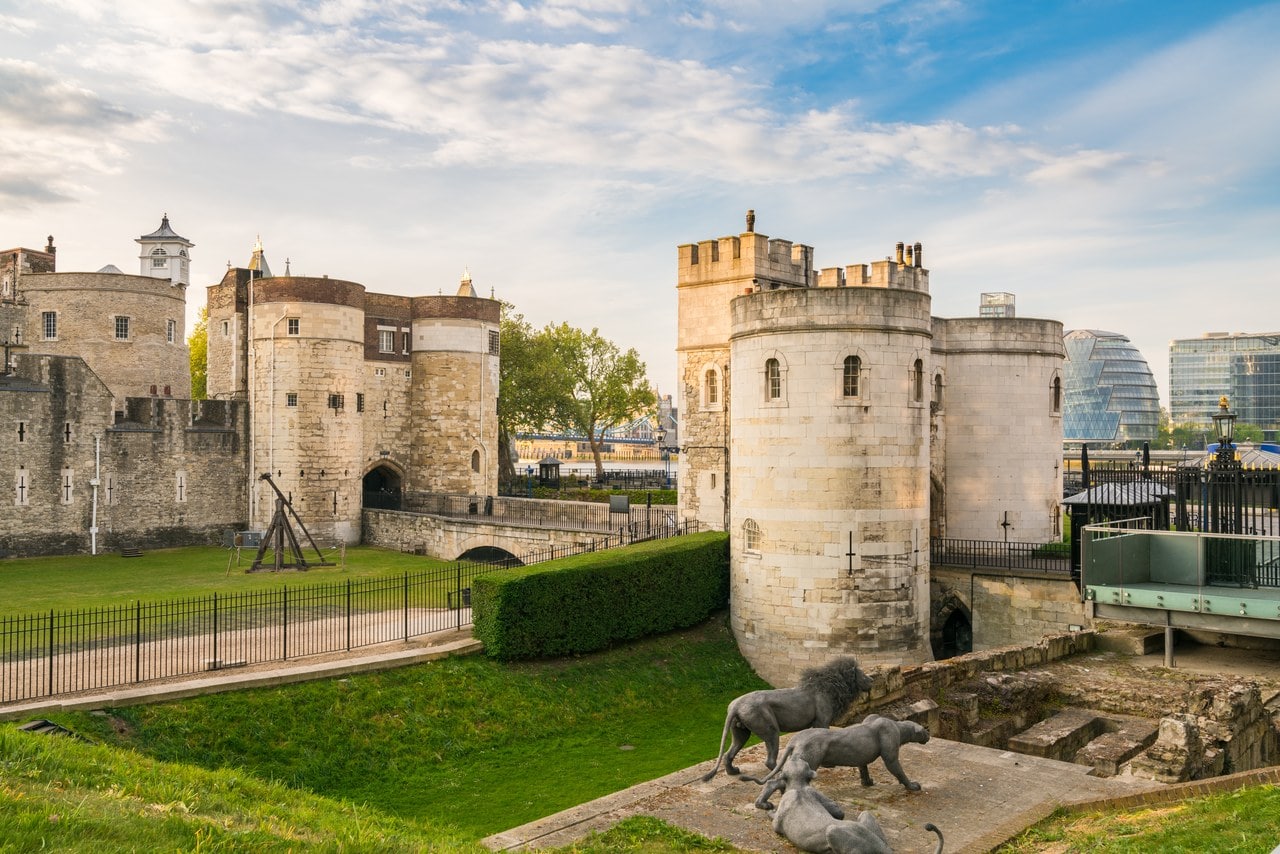
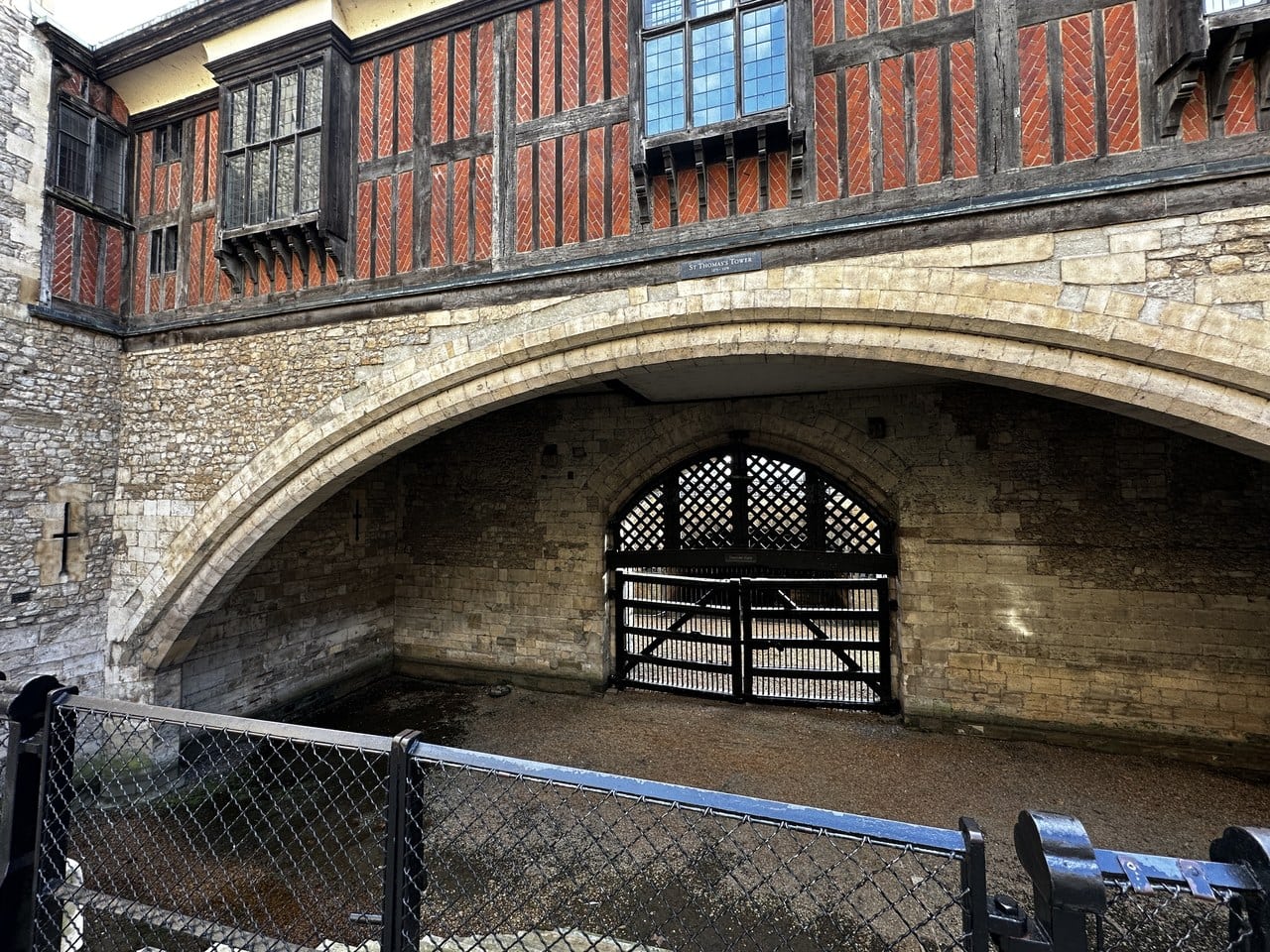
On the river side, St Thomas’s Tower stands over the water gate now known as Traitors’ Gate. The Bloody Tower, which Walter Raleigh knew as the Garden Tower, is a gateway through the inner curtain, and its passage keeps the vault built for Edward III.
The Medieval Palace, the King’s House and the Chapel Royal
The Wakefield Tower, built in 1220-40, held Henry III’s privy chamber and oratory. Its walls and fittings are 13th-century, but its vault is 19th-century, its ground-floor ceiling is a mid-20th-century reconstruction, and its windows are late 19th-century. The rooms HRP presents as the Medieval Palace are recreations, refurbished in spring 2025, and the throne in them is, in HRP’s own caption, “a replica throne of King Edward I.”
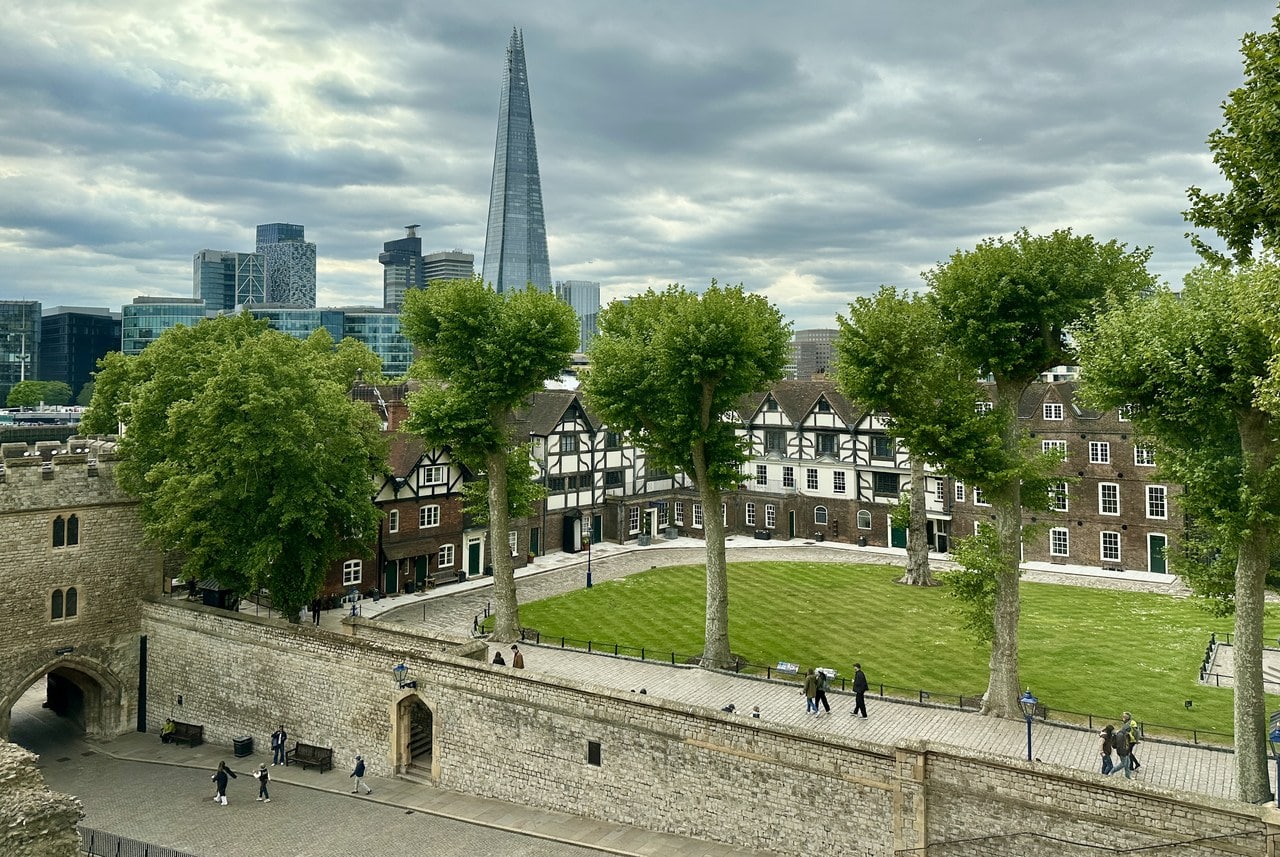
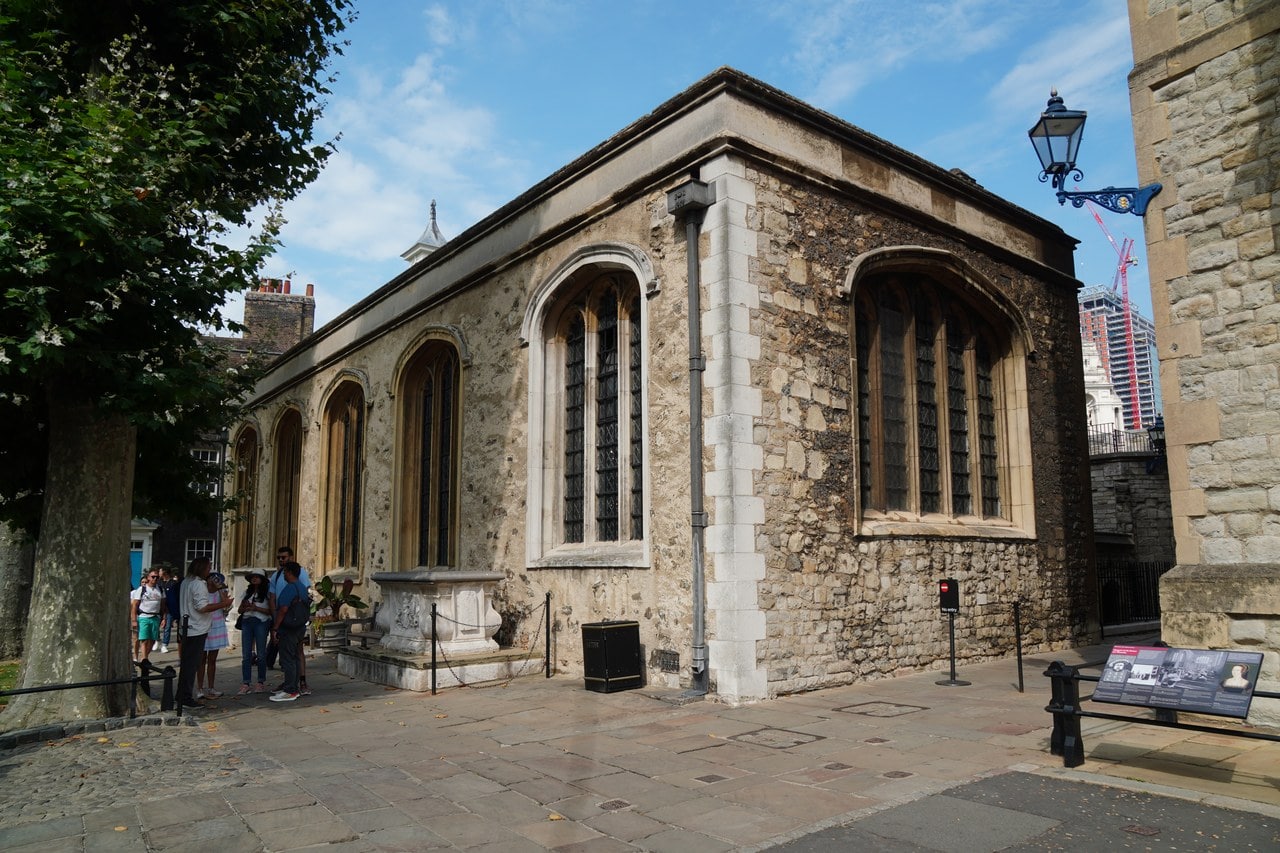
Beside Tower Green stands the King’s House, a timber-framed, L-shaped house of about 1540 that Historic England describes as “originally the Lieutenant’s lodgings …” Nearby, the Chapel Royal of St Peter ad Vincula was rebuilt in 1519-20 after a fire in 1512, in ragstone and flint with dressings of Reigate stone. It is still, in HRP’s words, “an active parish church for the present-day Tower community.”
What the Victorians Rebuilt
A good deal of the Tower’s medieval look is Victorian. Historic England puts the word “restore” in quotation marks when it describes the 19th-century work of the architect Anthony Salvin and, after him, John Taylor of the Office of Works, and UNESCO calls Salvin’s work a campaign to “re-medievalise” the fortress. Salvin’s hand runs from the Beauchamp Tower in the 1850s to the chapel windows of the 1860s; Taylor’s is the Lanthorn Tower of 1883. Both authorities keep their quotation marks for a reason. On the walls, the stone of different centuries sits side by side, and what looks most medieval is not always the oldest.
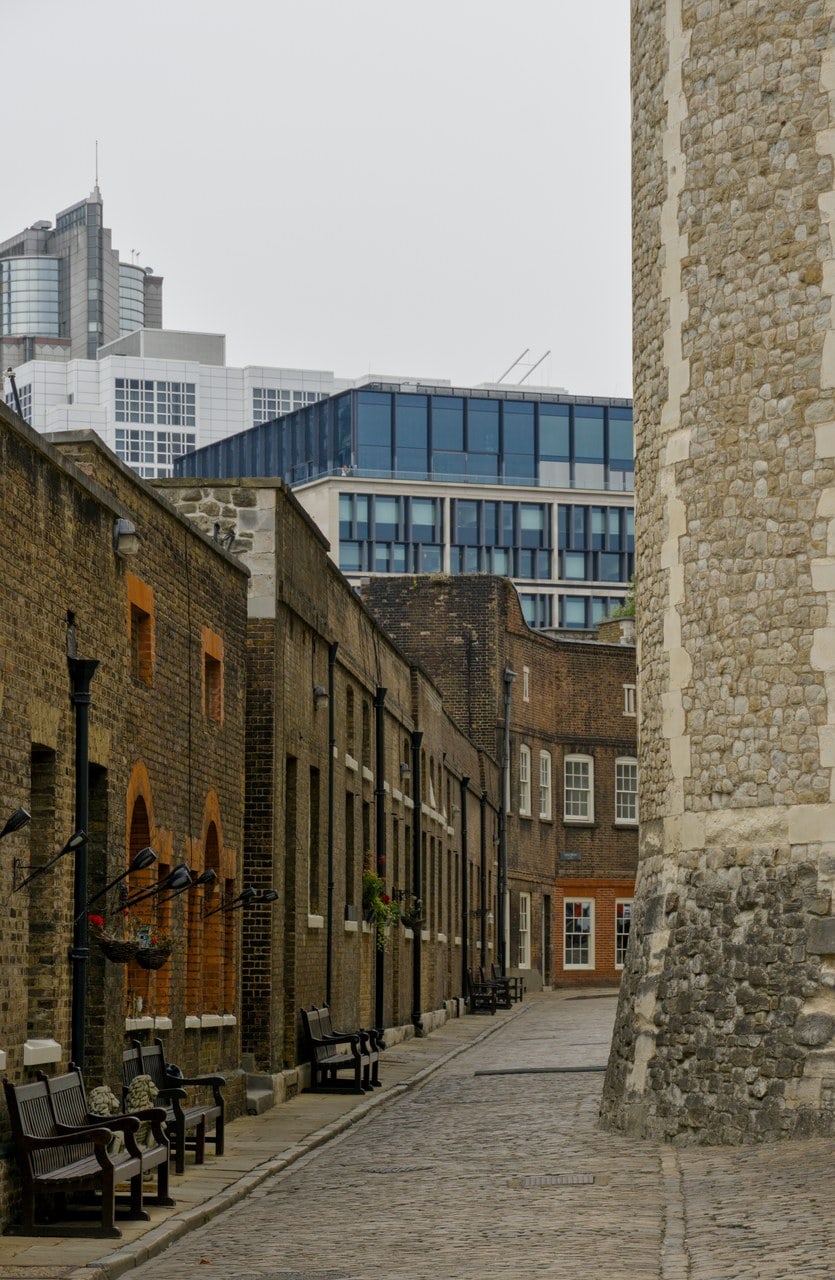
The Jewel House and the Crown Jewels
The Crown Jewels have not always lived at the Tower. Until 1649 the coronation regalia were kept at Westminster Abbey. That year, after the execution of Charles I, they were brought to the Tower and destroyed; HRP says the stones were sold and the gold frames “melted down in the Tower Mint and turned into coins stamped ‘Commonwealth of England’.” Only one object, the Coronation Spoon, survives from the medieval regalia, HRP says, because Clement Kynnersley, a former official of Charles I’s royal wardrobe, bought it and returned it to Charles II after the Restoration. The rest were remade for Charles II, and the jewels have been at the Tower since the 1660s; HRP gives the year as 1661. Inside the fortress, the jewels have moved around ever since. From the late 1660s they were kept in the Martin Tower. There, on the morning of 9 May 1671, Thomas Blood, better known as Colonel Blood, tried to steal them; in HRP’s account he and his accomplices “fooled Talbot Edwards, the aging Jewel House Keeper …”. All of them were captured, yet after an audience with Charles II, HRP says, Blood “was not only pardoned for all his previous crimes but was given a grant of Irish lands worth £500 each year.” In the Georgian period, an HRP blog records, visitors were even invited to reach through the iron grille and handle the regalia.
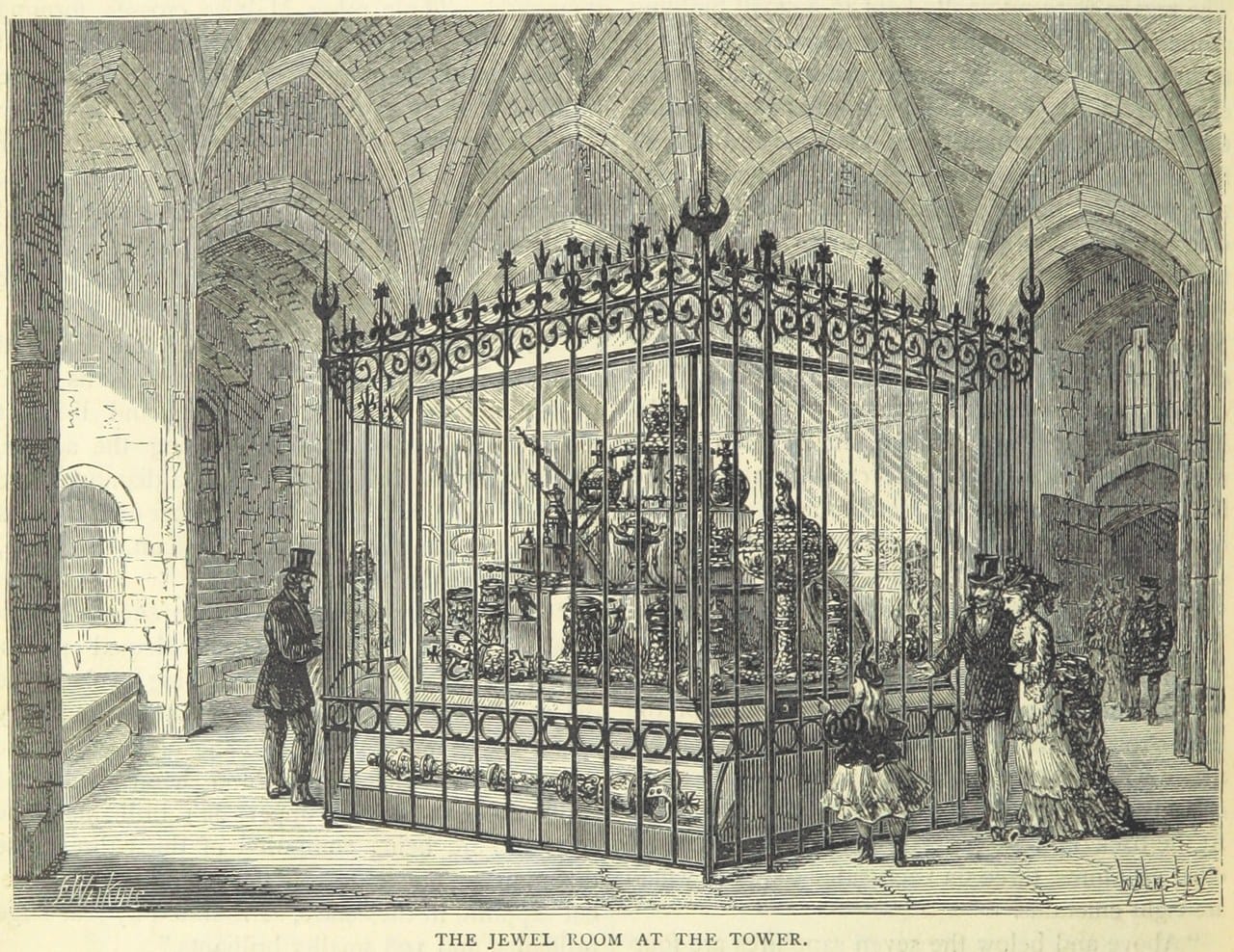
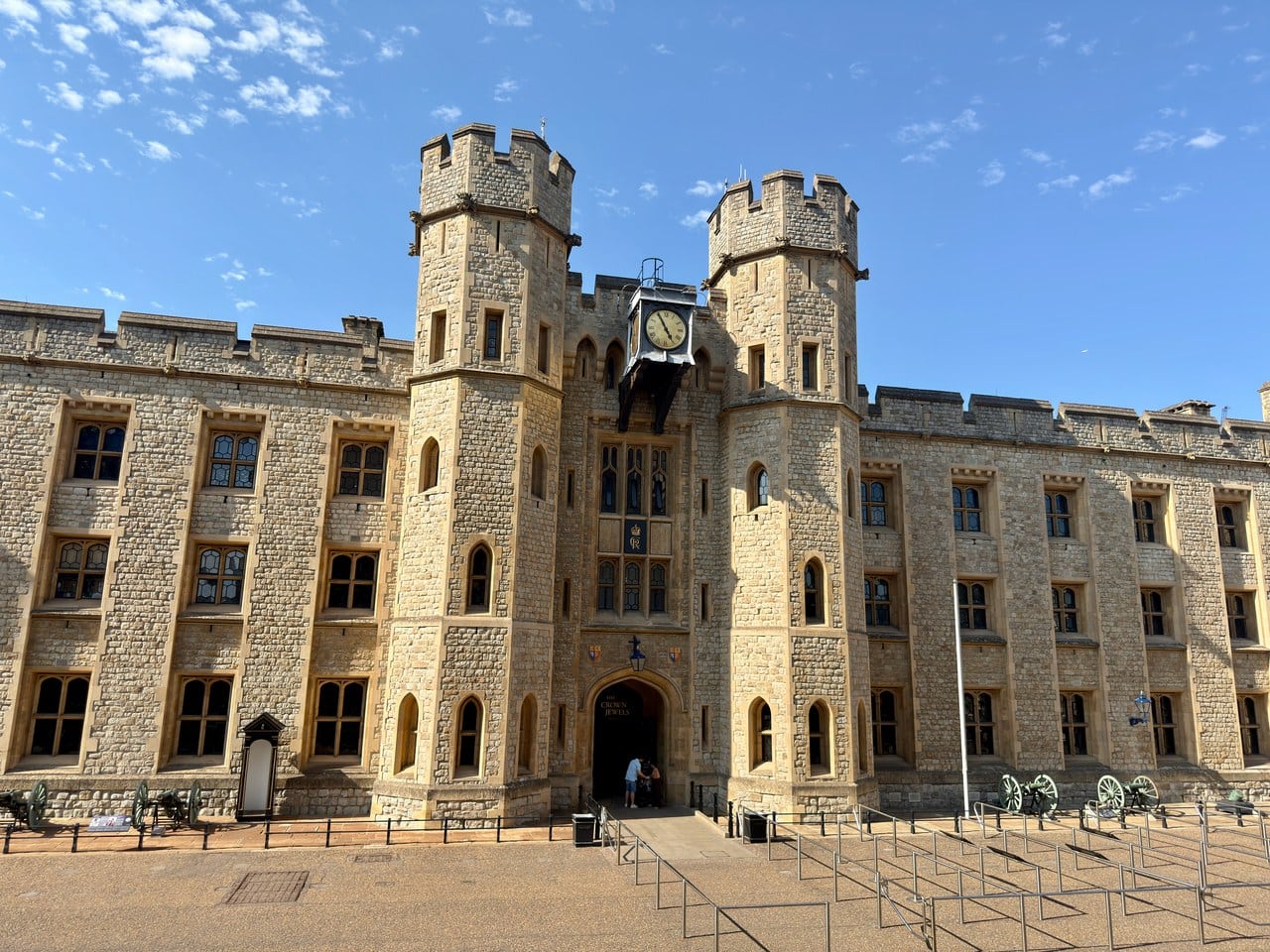
The jewels were rescued from the fire of 1841 and given a new Jewel House in the early 1840s. From about 1870 they were shown in the Wakefield Tower, and in the late 1960s they moved into the basement of the Waterloo Block. They have been on its ground floor since 1994, and the present display opened in May 2023.
Their home today is no medieval treasury. Built in 1845, the Waterloo Block is a castellated Gothic Revival barracks for about a thousand soldiers, and it is listed Grade II. The jewels themselves belong to the King in right of the Crown, and HRP displays and cares for them. They are under armed guard, with sentries posted outside, and they are still a working collection, used in national ceremonies; “in use” signs mark any piece that is away. HRP asks visitors to allow about an hour, and photography is not allowed inside the Jewel House. The route has level access: a moving walkway carries you past the regalia, staff will stop it on request, and a platform lift at its end reaches a raised viewing platform, though not with a mobility scooter.
The Tower Today: Warders, Ravens and the Ceremony of the Keys
Residents and Garrison
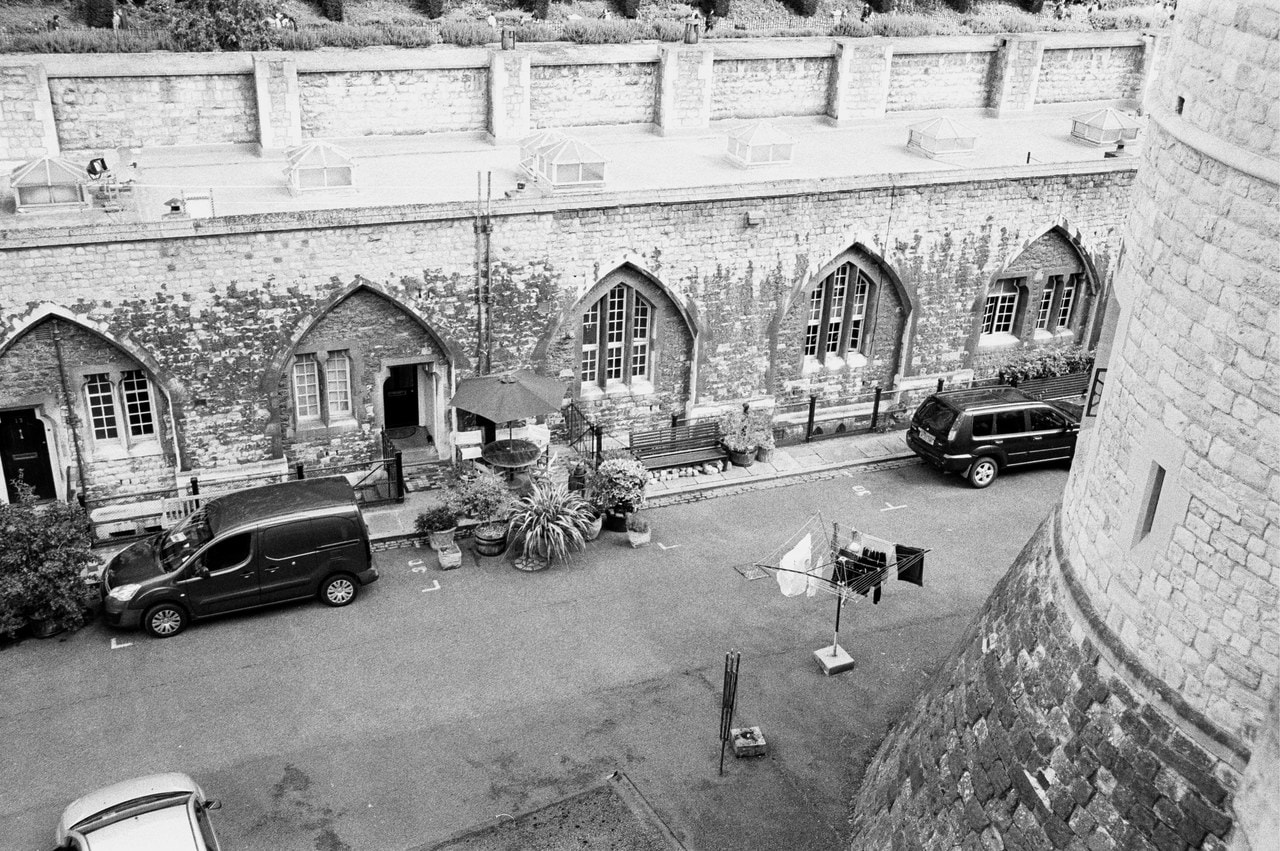
The Tower is lived in. In HRP’s words, it is “still home to the Yeomen Warders and their families, the Resident Governor, and a garrison of soldiers.” A doctor and a chaplain serve the community, and the Chapel Royal is its parish church. Soldiers of the Foot Guards regiments on public duties mount guard here, with sentries at the Jewel House and the King’s House, and the guard takes part in three daily ceremonies: the Ceremonial Opening, the Ceremony of the Word and the Ceremony of the Keys.
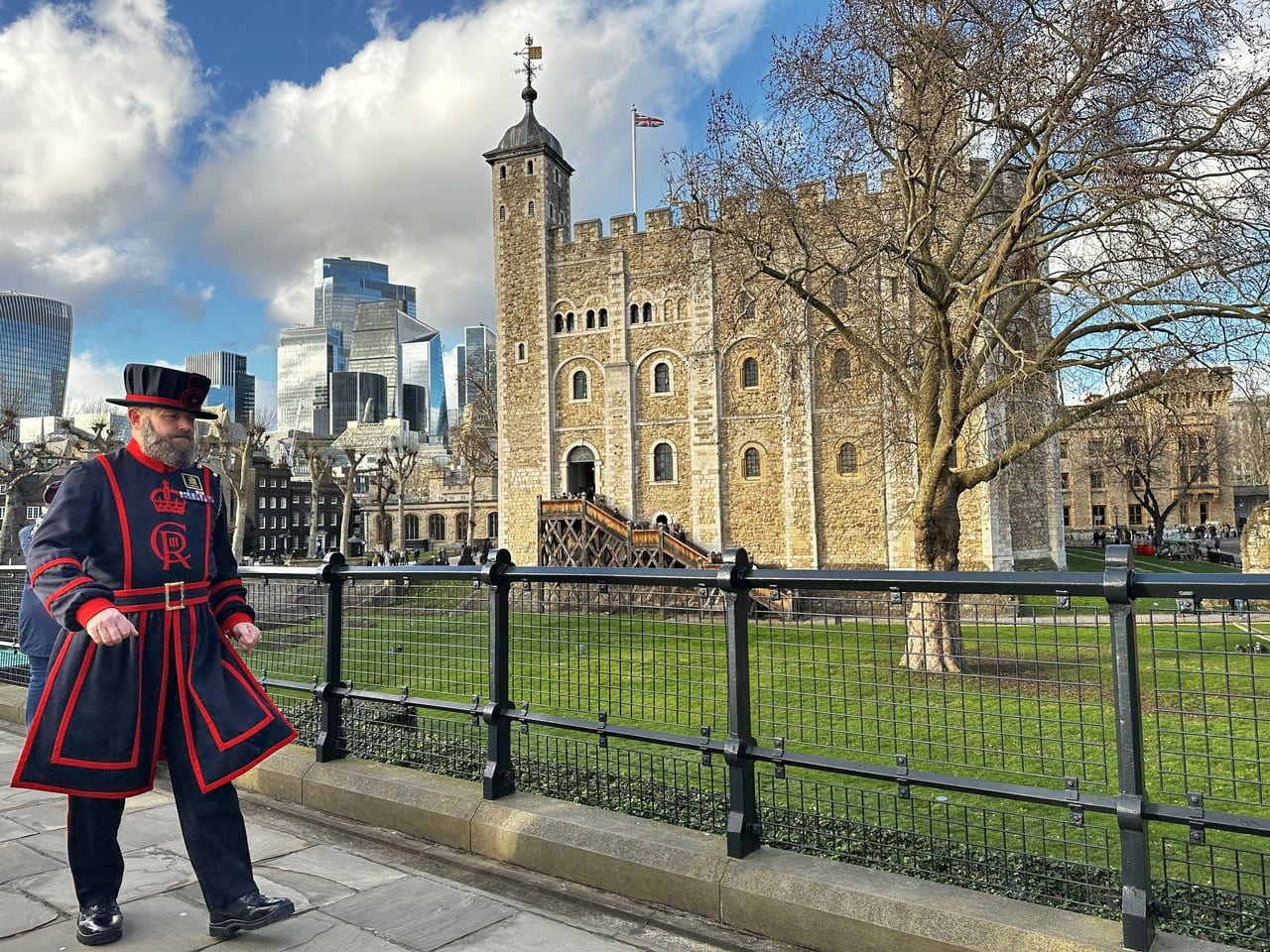
The Yeoman Warders
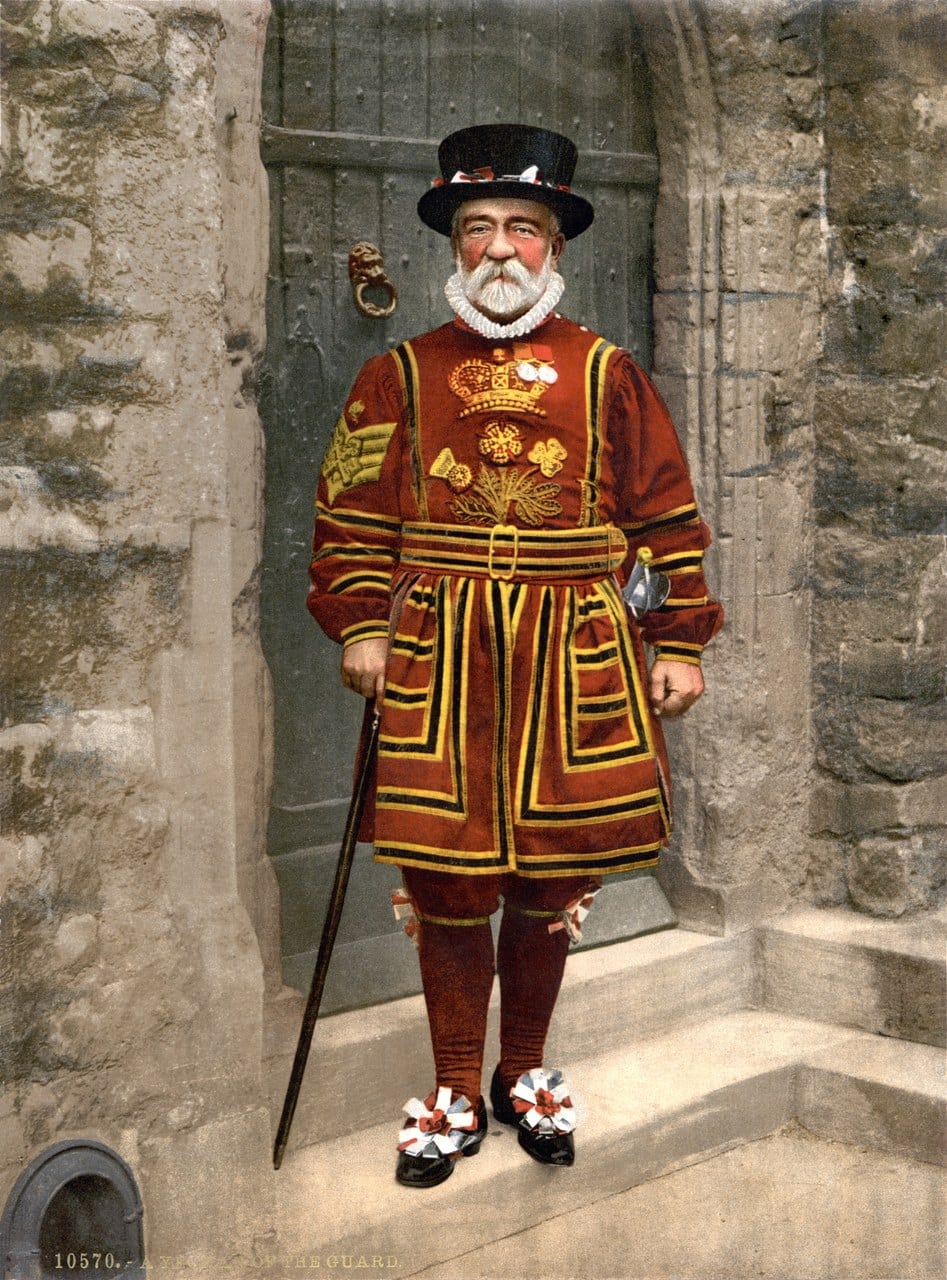
The Yeoman Warders have guarded the Tower since the Tudor period, HRP says, and were originally part of the Yeomen of the Guard. Today they are men and women drawn from the armed forces, and each must have served at least 22 years and hold the Long Service and Good Conduct Medal. Their oath is said to date back to 1337. Visitors know them better by their nickname, the Beefeaters. The job has not always been a matter of merit: HRP records that the Duke of Wellington, Constable of the Tower from 1826, abolished the sale of Warder posts, which had changed hands for 250 guineas.
The Ceremony of the Keys
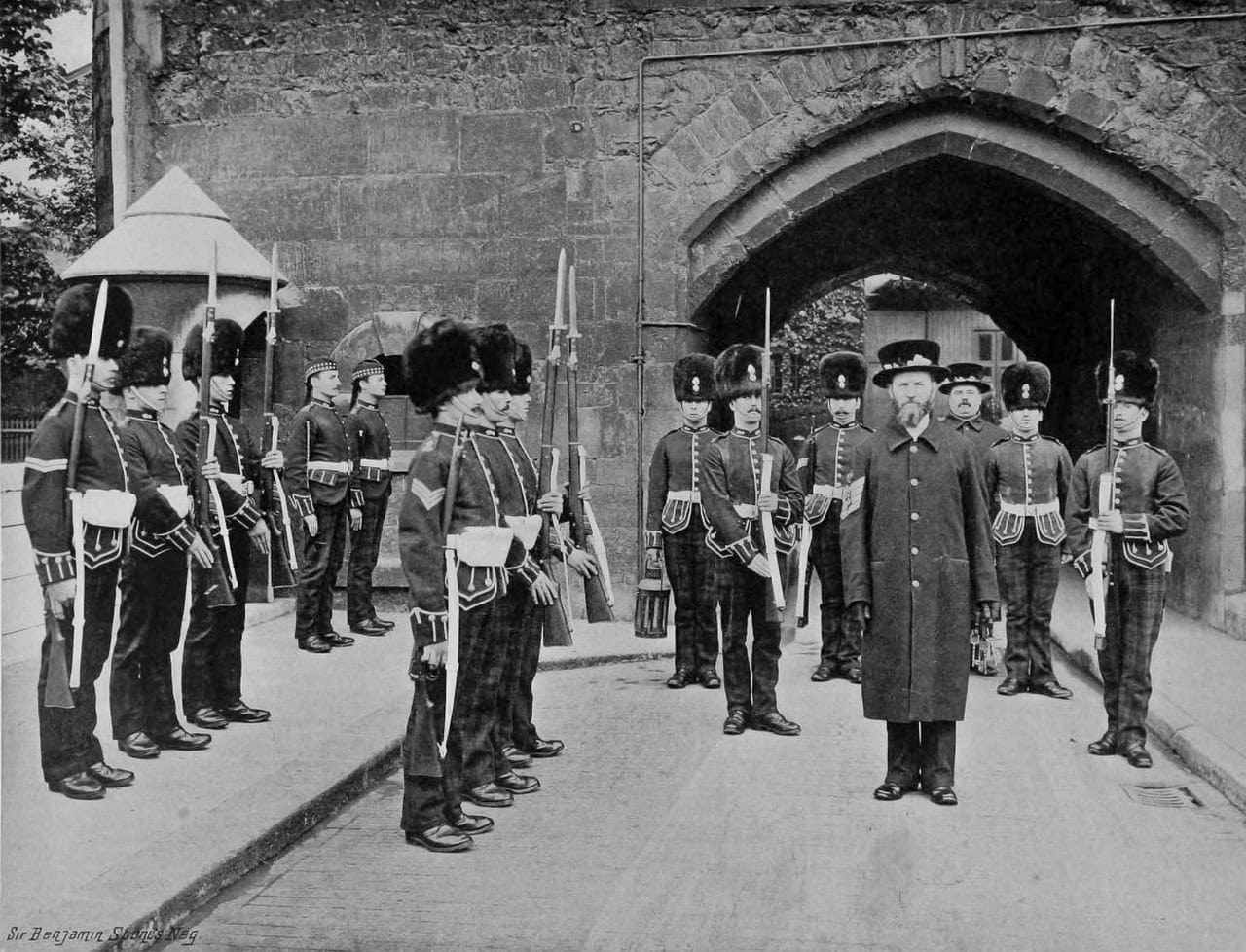
Each night, shortly before 10pm, the Chief Yeoman Warder sets out with a candle lantern and a military escort to lock the Tower’s gates. A sentry challenges the party, and HRP’s own description sets the scene: “Footsteps echo in the darkness. The sentry cries out, ‘Halt, who comes there?’ The Yeoman Warder replies, ‘The keys.’ ‘Whose keys?’ ‘King Charles’ keys.’ ‘Pass then, all’s well.’” Then comes “Amen” as the clock strikes ten, and the Last Post.
HRP traces the nightly locking to Edward III, who arrived at the Tower unannounced one night in 1340 and had its constable arrested for dereliction of duty. The French Chronicle of London, which records the episode, names him as Sir Nicholas de la Beche. HRP also credits Wellington, as Constable, with fixing the ceremony at 10pm, and calls it one of the oldest surviving enactments of its kind. It has not run without a break: on 29 December 1940, during the Blitz, it was called off, an exception HRP itself records.
Anyone can attend, but not casually. Tickets are sold separately, online only, released a month ahead, and they sell out. HRP does not accept bookings from groups, schools or tour operators; the named ticket holder must attend, latecomers are refused, and visitors are escorted in and out. Ticket holders meet at the West Gate, the Tower’s main entrance, and there are no toilets or refreshments during the ceremony. Photography is not allowed at any point of the ceremony.
The Ravens
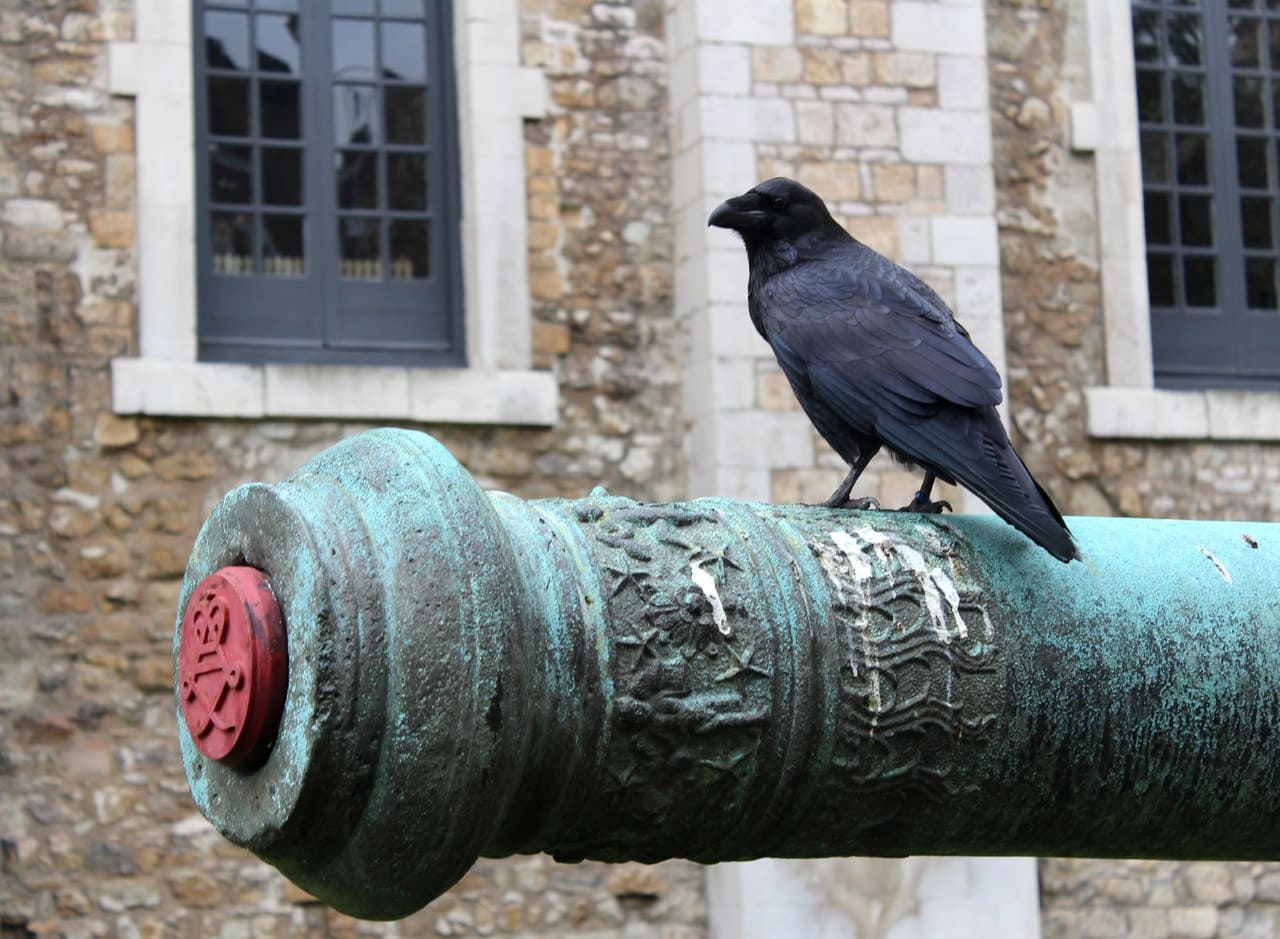
The ravens’ paper trail is shorter than their fame suggests. HRP presents their legend as legend: “It is said that the kingdom and the Tower of London will fall if the … resident ravens ever leave the fortress.” It is just as careful about the story usually attached to it: “Charles II is thought to have been the first to insist that the ravens of the Tower be protected after he was warned that the crown and the Tower itself would fall if they left.”
The documents tell a later story. Boria Sax, in a peer-reviewed study published in 2007, reported that “There are, however, no allusions to the Tower Ravens before the end of the nineteenth century,” while noting that his list “is probably not complete …” The earliest dated image he found is a drawing by John O’Connor in an 1883 supplement on the Tower in Pictorial World, and the earliest known printed mention, according to the Tower’s historian Geoffrey Parnell, is a piece by Edith Hawthorne in the RSPCA journal The Animal World in 1895. So historians have found no record of ravens at the Tower before the 1880s. Sax dates the legend itself only to 1944. HRP has accepted a late origin before: a spokeswoman told The Guardian in 2004 that “it is quite appropriate that the ravens should be a Victorian legend.”
Guards, Gun Salutes and the Constable’s Dues
Other customs carry on around the Tower. Royal salutes are fired from the Wharf: 62 guns for royal occasions such as the King’s birthday and 41 at the State Opening of Parliament. HRP counts a salute on Whit Sunday 1533, for the coronation of Anne Boleyn, among the first recorded. When a Royal Navy ship moors at the Wharf, its captain presents the Constable with a barrel of wine, the Constable’s Dues, a custom HRP traces to a grant of 1381. Every three years, on Ascension Day, local children and officials walk the streets around the Tower and beat the boundary stones of the Tower Liberty with willow wands.
Visiting the Tower of London
List the 6 castles on this map
- Tower of London — London, England
- Windsor Castle — Berkshire, England
- Dover Castle — Kent, England
- Framlingham Castle — Suffolk, England
- Bodiam Castle — East Sussex, England
- Kenilworth Castle — Warwickshire, England
Getting there
The Tower stands on the north bank of the Thames at the eastern edge of the City of London. Tower Hill, on the District and Circle lines, is the nearest Underground station, about five minutes’ walk away, and Tower Gateway on the DLR is also close. London Bridge and Fenchurch Street stations are 10 to 15 minutes away on foot. Tower Pier, served by river boats from piers including Westminster and the London Eye, is beside the entrance; it is a different pier from Tower Bridge Quay, where HRP’s own River Tour departs.
Driving is a poor idea. There is no on-site parking, the area around Tower Hill is vehicle-free, and the Tower is inside London’s Congestion Charge zone. HRP points drivers to the Tower Hill Coach and Car Park on Lower Thames Street, and coaches and taxis can drop off on the same street, a two-minute walk from the Tower.
Visitors enter on the west side, through the Middle Tower, after a bag check. There is no left luggage, and suitcases, large bags and rolling luggage are not allowed in, so come without them.
Admission
| Ticket or period | Price or hours |
|---|---|
| Adult (18-64) | £37.00 |
| Young person (16-17) | £18.50 |
| Child (5-15, must be with an adult) | £18.50 |
| Under 5 | Free, no ticket needed |
| Senior (65 and over), full-time student, disabled visitor | £29.50 |
| Carer or companion of a disabled visitor | Free |
| Universal Credit and other named benefits (booked online) | £1.00 |
| Tower Hamlets residents (on the day, at the ticket office, with proof of address) | £1.00 |
| Ceremony of the Keys (separate evening ticket, online only) | Pay what you choose, £10 to £50 (suggested £30) |
| Opening hours | |
| Summer 2026 | Tuesday to Saturday, 9am to 5:30pm; Sunday and Monday usually 10am to 5:30pm; last entry 4:30pm |
| Winter 2025-26 | Tuesday to Saturday, 9am to 4:30pm; Sunday and Monday usually 10am to 4:30pm; last timeslot 3pm |
| Closed | 24, 25 and 26 December and 1 January, plus a couple of days in early January that vary from year to year |
Prices and hours checked 26 September 2026 on Historic Royal Palaces’ booking system and website. At checkout HRP adds an optional donation of about 10%; the prices shown are without it. Tickets are non-refundable, and each is valid for one entry, with no re-entry. Book online in advance at busy times, or buy on the day at the ticket office. Check the opening calendar before traveling, especially in early January.
How long you need
HRP’s ticket pages recommend at least three hours, and its FAQ adds that the time depends on queues and that a detailed visit could fill the day; its opening-times page recommends allowing up to two or three hours. The Crown Jewels alone take about an hour, and because each ticket is good for one entry only, you cannot step out for lunch and come back. There is a café inside the walls, the New Armouries Café, with benches outside the White Tower opposite it.
HRP’s own itinerary is arranged by time rather than as a set route. For about 90 minutes it suggests the Crown Jewels, the White Tower and the ravens; up to two hours adds a Yeoman Warder tour, the Medieval Palace with the South Battlements, Tower Green and the Scaffold Site, and the Chapel Royal; up to three hours adds the Bloody Tower, the Imprisonment at the Tower and Torture at the Tower exhibitions, and the East and North Battlements; and four hours or more adds the Tower’s Mint, the Fusilier Museum and the Royal Beasts exhibition.
One ticket covers the Crown Jewels, the White Tower with the Line of Kings and St John’s Chapel, the Medieval Palace, the wall walks, Tower Green, the Bloody Tower and the public outside areas. The Yeoman Warder tours are included too. They cannot be booked, they are given in English only, and they start near the main entrance at the Bell Tower; the route includes a flight of 21 steps and cobbles, and tours may be canceled in bad weather or when crowds are large. HRP warns that parts of the Tower the tour covers may seem frightening to young children. An audio guide in several languages is sold separately. Buggies and pushchairs are not allowed in the White Tower, and there are buggy parks at its entrance, under the wooden stairs, and at the Middle Drawbridge. If children get lost, HRP’s advice is to tell them to find a Yeoman Warder.
Best time to visit
The Tower is busiest from Easter to October and in school holidays, HRP says. Its hours are shorter in winter, with the last admission in mid-afternoon, and it opens daily except on 24, 25 and 26 December and 1 January, with a couple of further closed days in early January. On weekends and event days a ticket carries a half-hour arrival window; on other days you can arrive any time before last entry.
Gun-salute days change the visit. The Wharf is cleared beforehand, the waiting area can become crowded, and one Yeoman Warder tour is canceled. Conservation work and the Tomorrow’s Tower program can also close or restrict spaces, so check HRP’s list of route closures before you go. Standard tickets carry no fast-track entry, every visitor goes through a bag check, and HRP says to expect some queuing on most days. HRP does sell a separate Opening Ceremony ticket that lets visitors in early, to watch the ceremony and skip the admission queue.
Photography
Photography is not allowed in the Jewel House, and HRP bars it at every point of the Ceremony of the Keys. Flash photography is banned, and HRP warns that light is low for conservation reasons in the Jewel House, on the Battlements, in the Bloody Tower and in the Torture at the Tower exhibition. Tripods, monopods, gimbals and selfie sticks may not be used without arrangements made with HRP in advance. Commercial shoots are by request only. Other rooms may carry their own signs, so watch for them. For the river front without a ticket, the Wharf outside the paid line is open to everyone.
Accessibility
HRP is candid: the Tower, it says, “is a historic building with difficult stairs and passageways,” spiral staircases among them, “and wheelchair access is limited.” There are many steps, cobbles on some surfaces and paths, and some low doorways. There is no lift or ramp to the Battlements, the Bloody Tower or the Imprisonment at the Tower exhibition. A lift in the White Tower serves the basement shop, and only one wheelchair user is allowed in the basement at a time.
The Jewel House has level access, with its moving walkway and a platform lift to the raised viewing area. At the Chapel Royal of St Peter ad Vincula there is a platform lift, operated by the Yeoman Warder on duty. A carer or companion of a disabled visitor enters free, wheelchairs can be borrowed free on a first-come basis, and visitors with a hidden disability can collect a wristband at the ticket office or the entrance. Assistance dogs are welcome; emotional support animals are not admitted. For visitors who use British Sign Language, a BSL digital guide is included in admission, and the Jewel House has Braille displays and tactile images of the Crown Jewels. The main toilet block, with accessible toilets and baby changing, is in the Brick Tower behind the Jewel House, and there is a Changing Places toilet in the New Armouries. At Tower Hill station, lifts run between the street and the platforms.
HRP sells its own admission tickets online and at the Tower, and the Ceremony of the Keys only through its own website. If you are planning a wider trip in London, the Tower of London on GetYourGuide shows what that platform currently offers for the Tower.
Some links on this page are affiliate links, which means StoneKeep Atlas may earn a small commission, at no extra cost to you, if you book through them.
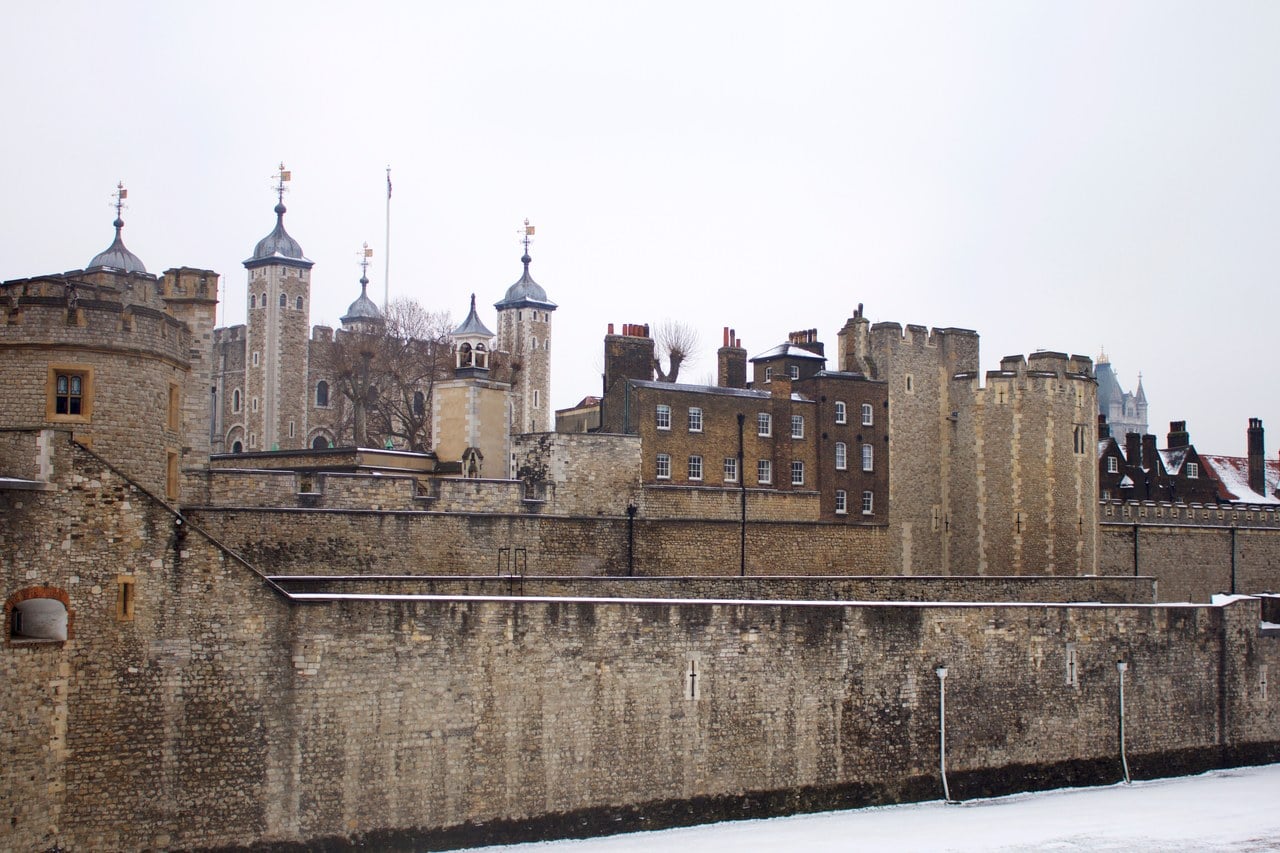
More Views of the Tower of London
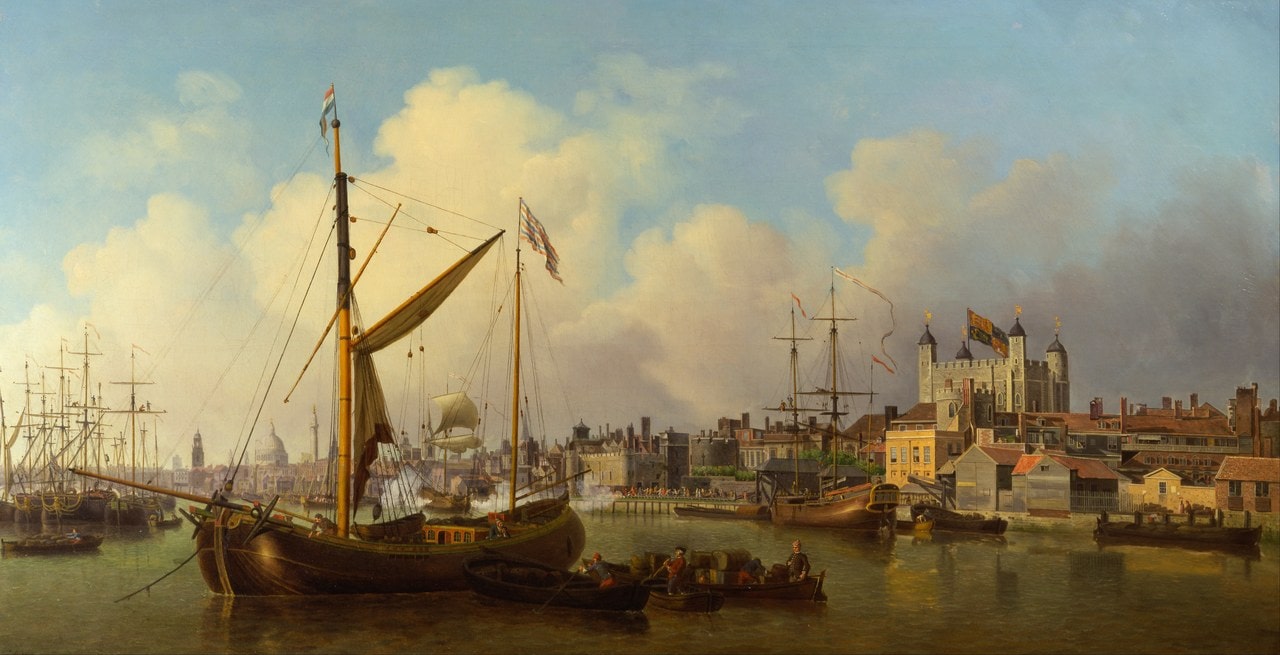
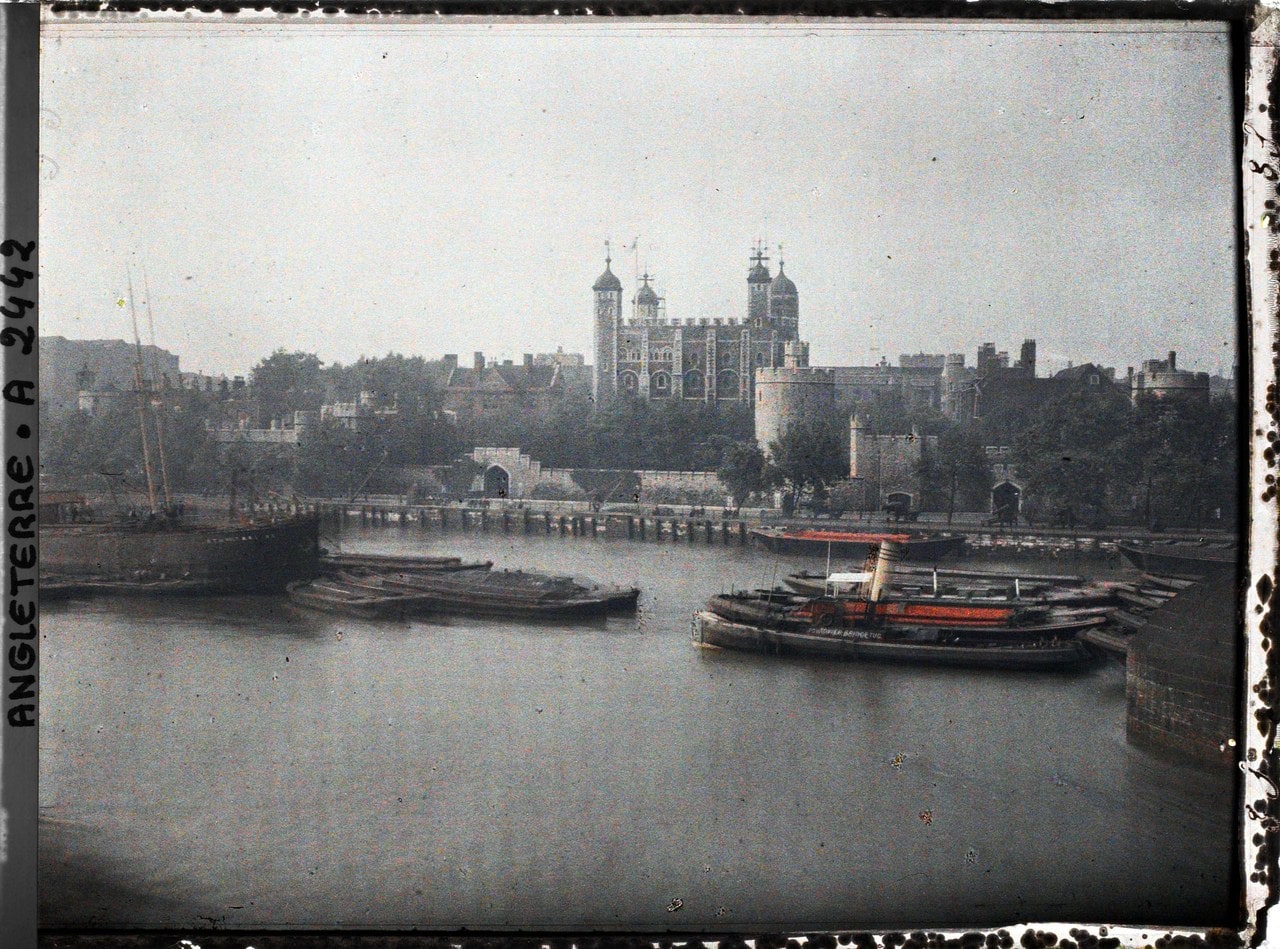
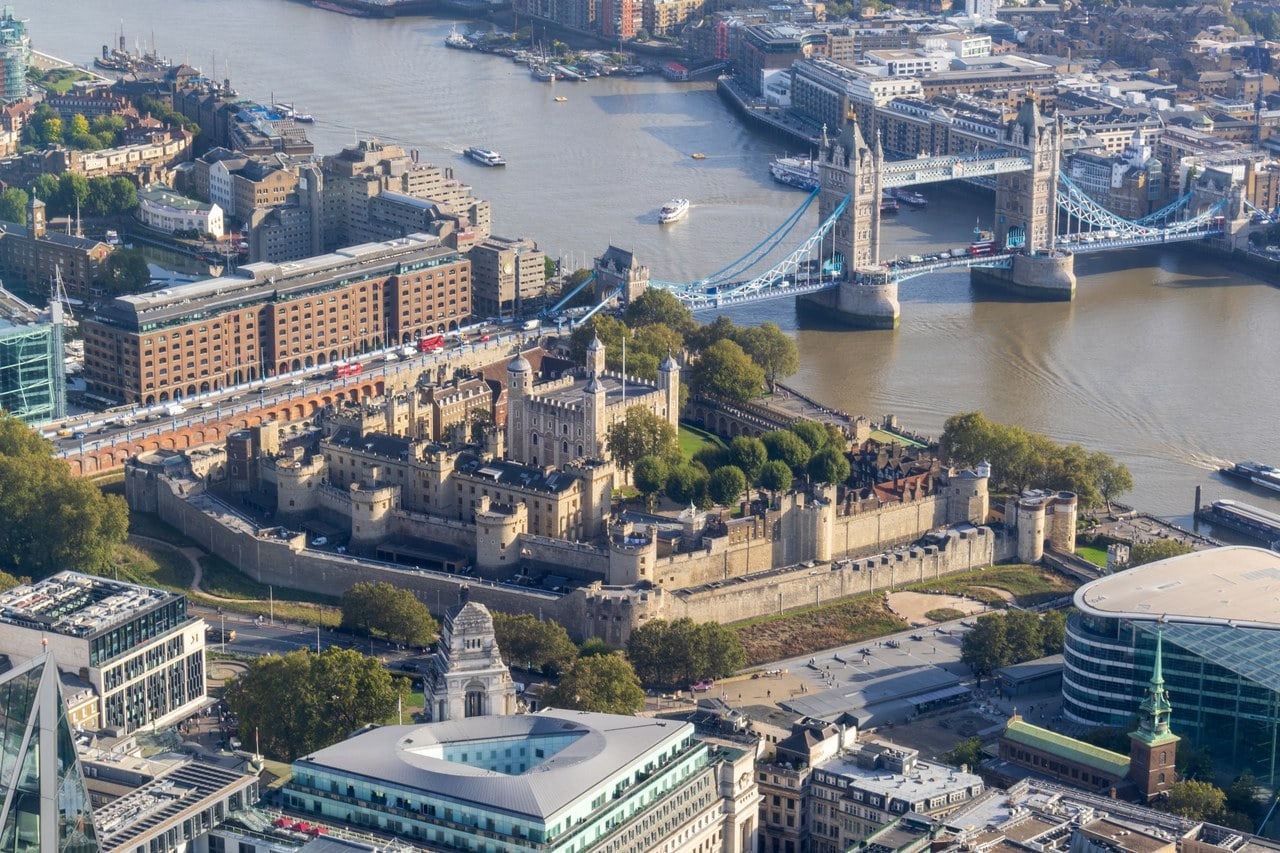
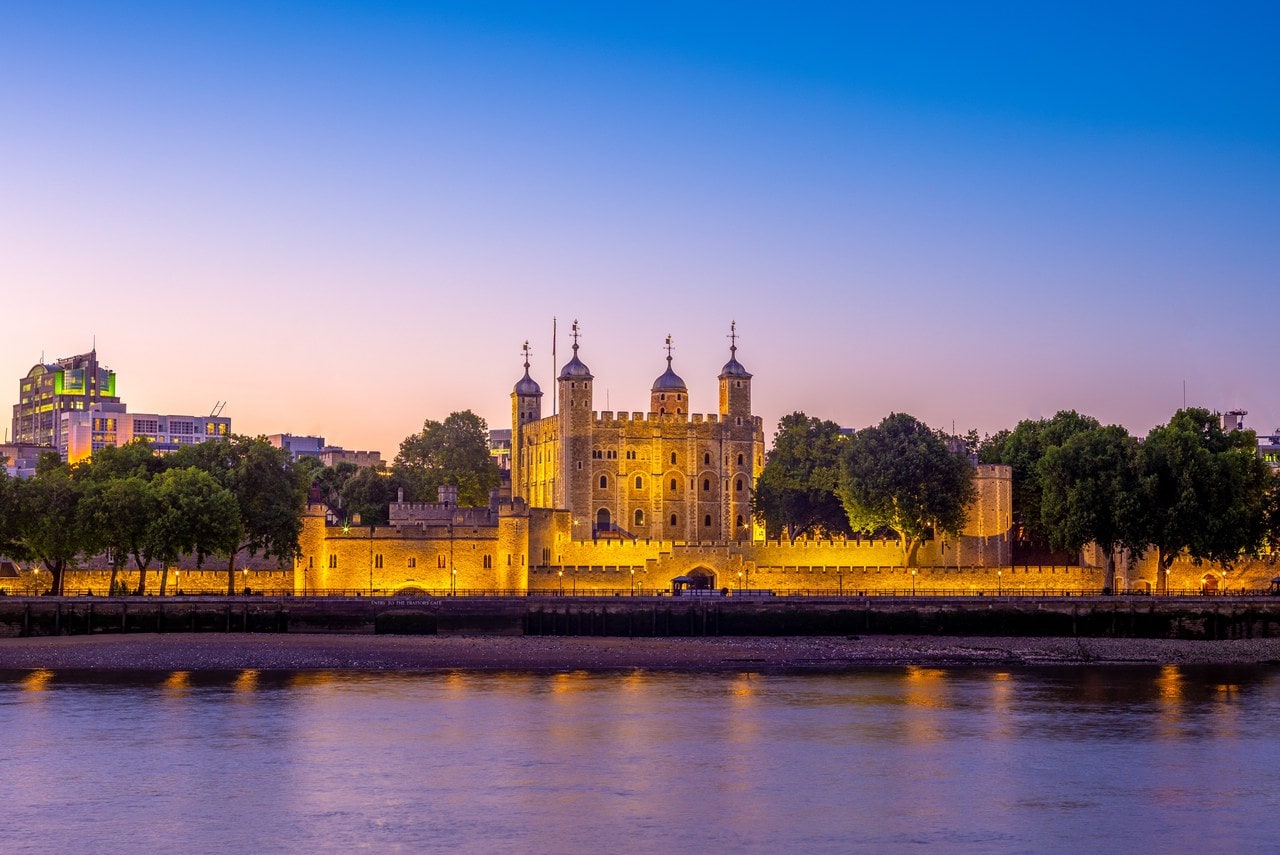
Common Questions
How many people were executed at the Tower of London?
The answer depends on where you count. HRP’s page on the Tower Hill memorial says that “very few people were executed inside the Tower of London, on Tower Green,” and that “Fifteen men convicted of desertion or espionage were also executed within the Tower’s walls.” Outside the walls, on Tower Hill, historians estimate that around 125 people were executed, and the memorial there names 29 of those who died on the site. These figures are not one total, and HRP counts Tower Green’s ten executions and the First World War spies on other pages.
Is Anne Boleyn buried at the Tower of London?
Yes. Anne Boleyn is buried in the Chapel Royal of St Peter ad Vincula, inside the Tower. When the chapel was restored in 1876-77, the remains found in the chancel, among them what HRP calls the “supposed remains” of Anne, were reburied beneath a marble pavement naming those thought to lie there. Where the queens actually lie in the chapel, HRP says, “remains a mystery.” Even Doyne Bell’s 1877 book on the chapel promises in its title “an Account of the Discovery of the Supposed Remains of Queen Anne Boleyn.”
Is the Tower of London a castle?
Yes, in Historic England’s classification: its record says the Tower was “initially built as a tower keep castle but later developed, from about the 13th century, into an enclosure castle,” and HRP itself calls it “this iconic castle.” Its name adds two more words for it. The official style is HM Royal Palace and Fortress, while UNESCO says it is no longer in use as a fortress, so the name and the present use point different ways. Our guide to where a castle ends and a palace or fortress begins sets out the definitions.
Who lives in the Tower of London?
Behind the walls live the Yeoman Warders with their families, a garrison and the Resident Governor, and a doctor and a chaplain look after the community. When the gates are locked and the visitors have gone, HRP says, the Tower “embraces a thriving community within its walls,” and “there is even a pub!” The monarch does not live here. The Resident Governor is the King’s representative at the Tower, and at the end of the Ceremony of the Keys each night, the Chief Yeoman Warder takes the keys back to the King’s House and hands them to the Resident Governor.
Why do the Tower of London’s ravens not fly away?
Because they are managed so that they stay. HRP explains that “The Ravenmaster occasionally trims some of the ravens’ primary and secondary flight feathers to encourage them to stay at the Tower,” and it stresses that all the Tower ravens are able to fly. The Ravenmaster, one of the Yeoman Warders, feeds them twice a day on a diet of mice, chicks, rats and raw meat. Visitors are asked not to feed them.
When was the Tower of London built?
The White Tower was begun in the 1070s for William the Conqueror, and Historic England says it was completed by about 1100. Tree-ring dates from timbers built into its walls, published by English Heritage in 2007, show two campaigns: the first finished before about 1083-90, and the second used timber felled after 1101, which the report itself says “presents a slight problem” for the traditional completion date. The year 1066 often attached to it is the year of the Conquest; the first castle here was of earth and timber, and the curtain walls, towers and moat followed from the late 12th to the 14th century.
Can you visit the Tower of London for free?
Only in part: the paid areas need a ticket, but some of the site can be seen without one. The riverside Wharf, outside the ticket line, is open daily, and the Tower Hill Execution Memorial in Trinity Square Gardens, opposite the Tower, needs no Tower ticket. The Sunday services in the Tower’s chapels are free to attend, but the Chapels Royal point out that “free entry to attend a service does not entitle you to visit the rest of the Tower.”
Why are the Yeoman Warders called Beefeaters?
HRP offers its explanation as a likelihood rather than a fact: “It is thought their nickname is derived from their position in the Royal Bodyguard, which permitted them to eat as much beef as they wanted from the king’s table.” It is a nickname only. Their title is Yeoman Warder, and the name visitors use is the one HRP itself treats as informal.
Beyond the Tower of London
Our other English castle guides each show a different fate. Windsor Castle is the royal castle that was never abandoned and is still lived in, while no monarch has lived at the Tower since the reign of James I. Dover Castle keeps the great tower Henry II raised in the 1180s, and Kenilworth Castle grew around a great tower probably built in the 1120s and was slighted after the Civil War. Framlingham Castle in Suffolk lost its halls to the terms of a bequest, and Bodiam Castle in Sussex still stands in its moat. Our country guide to castles in England reads those castles by what survives at each. For the wider story, the history of castles follows the building type from its origins, and our guide to how castle moats worked sets wet moats beside dry ones like the Tower’s. The Tower’s ghost stories, and how far back their record goes, are told in our guide to haunted castles.
Conclusion
The Tower of London is easiest to understand as a set of layers. At its core is a Norman keep, begun in the 1070s and dressed now in later stone, with a chapel whose vault is original and whose windows are Victorian. Around it are the rings of wall that Henry III and Edward I built, a moat that has been dry since the 1840s, a Jewel House in a Victorian barracks, and towers that the 19th century restored or rebuilt. Most of the palace that kings once lived in has gone, and no monarch lives here now, yet the Tower keeps its title as a royal palace and fortress, its garrison and its community. Walk it knowing which layer you are looking at, and the dungeon legend gives way to something stranger: a castle that UNESCO says is no longer in use as a fortress, still garrisoned and still locked every night.
Principal Sources
- Bell, Doyne C. Notices of the Historic Persons Buried in the Chapel of St. Peter ad Vincula, in the Tower of London. With an Account of the Discovery of the Supposed Remains of Queen Anne Boleyn. John Murray, 1877. openlibrary.org
- British History Online. “The French Chronicle of London: Edward III,” trans. H. T. Riley. british-history.ac.uk
- Historic England. “Concentric Castle.” FISH Thesaurus of Monument Types, concept 68837. heritagedata.org
- Historic England. National Heritage List for England, entry 1002061: “Tower of London.” Scheduled monument. historicengland.org.uk
- Historic England. National Heritage List for England, entry 1065766: “The Middle Tower, with Causeway to Byward Tower …” Listed building. historicengland.org.uk
- Historic England. National Heritage List for England, entry 1242026: “Outer curtain wall with casements and mural towers.” Listed building. historicengland.org.uk
- Historic England. National Heritage List for England, entry 1242062 (the inner curtain wall with its mural towers, the New Armouries and the houses on Tower Green). Listed building. historicengland.org.uk
- Historic England. National Heritage List for England, entry 1260258: “The White Tower.” Listed building, Grade I. historicengland.org.uk
- Historic Royal Palaces. “About us.” hrp.org.uk
- Historic Royal Palaces. “Accessibility,” Tower of London. hrp.org.uk
- Historic Royal Palaces. “Anne Boleyn.” hrp.org.uk
- Historic Royal Palaces. “Ceremony of the Keys” (visit). hrp.org.uk
- Historic Royal Palaces. “Chapel Royal of St. Peter ad Vincula.” hrp.org.uk
- Historic Royal Palaces. “Charles II and the discovery of the Princes in the Tower in 1674” (blog). hrp.org.uk
- Historic Royal Palaces. “FAQs,” Tower of London. hrp.org.uk
- Historic Royal Palaces. “Getting here,” Tower of London. hrp.org.uk
- Historic Royal Palaces. “Guards at the Tower of London.” hrp.org.uk
- Historic Royal Palaces. “Jewels on display: a short history of the Jewel House at the Tower of London” (blog). hrp.org.uk
- Historic Royal Palaces. “Medieval Palace.” hrp.org.uk
- Historic Royal Palaces. “Opening and closing times,” Tower of London. hrp.org.uk
- Historic Royal Palaces. “See the Crown Jewels.” hrp.org.uk
- Historic Royal Palaces. “The Ceremony of the Keys” (history and stories). hrp.org.uk
- Historic Royal Palaces. “The Constable’s Dues.” hrp.org.uk
- Historic Royal Palaces. “The Crown Jewels” (history and stories). hrp.org.uk
- Historic Royal Palaces. “The Princes in the Tower.” hrp.org.uk
- Historic Royal Palaces. “The Ravens.” hrp.org.uk
- Historic Royal Palaces. “The Story of the Tower of London.” hrp.org.uk
- Historic Royal Palaces. “The Tower of London and the First World War.” hrp.org.uk
- Historic Royal Palaces. “The Tower of London and the Second World War.” hrp.org.uk
- Historic Royal Palaces. “The Tower of London Menagerie.” hrp.org.uk
- Historic Royal Palaces. “The Tower’s Mint.” hrp.org.uk
- Historic Royal Palaces. “Tickets and prices,” Tower of London. hrp.org.uk
- Historic Royal Palaces. “Tomorrow’s Tower.” hrp.org.uk
- Historic Royal Palaces. “Tower facilities.” hrp.org.uk
- Historic Royal Palaces. “Tower Green and Scaffold site.” hrp.org.uk
- Historic Royal Palaces. “Tower Hill Execution Memorial.” hrp.org.uk
- Historic Royal Palaces. “Tower of London itinerary.” hrp.org.uk
- Historic Royal Palaces. “Tower of London prison.” hrp.org.uk
- Historic Royal Palaces. “Tower of London River Tour.” hrp.org.uk
- Historic Royal Palaces. Tower of London World Heritage Site Management Plan, 2016 (PDF). hrp.org.uk
- Historic Royal Palaces. Trustees’ Report and Financial Statements 2024-25 (PDF). gov.uk
- Historic Royal Palaces. “What’s included in your ticket,” Tower of London. hrp.org.uk
- Historic Royal Palaces. “Yeoman Warder tours.” hrp.org.uk
- Historic Royal Palaces. “Yeoman Warders at the Tower of London.” hrp.org.uk
- Historic Royal Palaces, on Google Arts & Culture. “A History of Jewels at the Tower of London.” artsandculture.google.com
- Hunt, William. “Gundulf.” Dictionary of National Biography, vol. 23, 1890. wikisource.org
- Kennedy, Maev. “Tower’s raven mythology may be a Victorian flight of fantasy.” The Guardian, 15 November 2004. theguardian.com
- Miles, Daniel. The Tree-Ring Dating of the White Tower, HM Tower of London. English Heritage Research Department Report Series 35/2007. historicengland.org.uk
- Royal Armouries. “History of the Tower Armouries.” royalarmouries.org
- Royal Mint Museum. “Era of change.” royalmintmuseum.org.uk
- Royal Mint Museum. “Isaac Newton, Warden and Master of the Royal Mint 1696-1727.” royalmintmuseum.org.uk
- Sax, Boria. “How Ravens Came to the Tower of London.” Society and Animals 15 (2007): 269-283. doi.org
- The Chapels Royal, HM Tower of London. “Getting into the Tower for services.” thechapelsroyalhmtoweroflondon.org.uk
- The National Archives. “Elizabeth I: monarchy, part one” (source 2: the Tide Letter). nationalarchives.gov.uk
- The Royal Mint. “The Royal Mint at the Tower of London.” royalmint.com
- Transport for London. “Tower Hill Underground station.” tfl.gov.uk
- UNESCO World Heritage Centre. “Tower of London” (488). whc.unesco.org
- Westminster Abbey. “Edward V & Richard Duke of York.” westminster-abbey.org
Image credits. Hero, the Tower from the air, with Tower Bridge beyond: Photo: Felix Mizioznikov / Adobe Stock; the White Tower and its entrance stair: Photo: wirestock / Envato Elements; the Tower in the Charles of Orleans manuscript, c.1500: Public domain; the 1597 Haiward and Gascoyne survey: Public domain; the armory fire of 30 October 1841: Public domain; the Bloody Tower’s gateway: Photo: Matt Brown, CC BY 4.0; the Tower beside the City’s modern towers: Photo: Peter Trimming, CC BY-SA 2.0; the White Tower’s north front: Photo: Oleg Yunakov, CC BY-SA 4.0; St John’s Chapel: Photo: Wangkun Jia / Adobe Stock; the Line of Kings in the White Tower: Photo: Ethan Doyle White, CC BY-SA 4.0; the concentric plan from above: Photo: Air Video UK / Adobe Stock; the west walls across the moat: Photo: Oleg Yunakov, CC BY-SA 4.0; the Middle and Byward Towers: Photo: Pawel Pajor / Adobe Stock; Traitors’ Gate under St Thomas’s Tower: Photo: Matt Brown, CC BY 4.0; Tower Green and the King’s House: Photo: APK, CC BY 4.0; the Chapel Royal of St Peter ad Vincula: Photo: David, CC BY 2.0; Mint Street: Photo: Polibil, CC BY-SA 4.0; the Victorian Jewel Room, from Old and New London: Public domain; the Waterloo Block and the Jewel House entrance: Photo: Oleg Yunakov, CC BY-SA 4.0; homes along Mint Street: Photo: Bastian Greshake Tzovaras, CC BY-SA 2.0; a Yeoman Warder beside the White Tower: Photo: Matt Brown, CC BY 4.0; the Ceremony of the Keys, c.1900: Public domain; a raven on a bronze gun: Photo: Martinvl, CC BY-SA 3.0; the Tower across the Thames: Photo: DiscoverTexas.com / Adobe Stock; the White Tower’s four turrets: Photo: Diego Delso, CC BY-SA 4.0. Source: La Torre, Londres, Inglaterra, 2022-11-26, DD 144, Wikimedia Commons; St John’s Chapel, the gallery and vault: Photo: Ankermast, CC BY 4.0. Source: St John’s Chapel at the Tower of London, Wikimedia Commons; the moat at Brass Mount: Photo: APK, CC BY 4.0. Source: Brass Mount - Tower of London, Wikimedia Commons; the memorial on Tower Green: Photo: Ethan Doyle White, CC BY-SA 4.0. Source: Execution Memorial, Tower Green (01), Wikimedia Commons; a carved name and bell in the Beauchamp Tower: Photo: APK, CC BY 4.0. Source: Carving in Beauchamp Tower, Tower of London, Wikimedia Commons; the Horse Armoury in The Microcosm of London: Public domain. Source: Microcosm of London Plate 086 - Horse Armoury, Tower, Wikimedia Commons; a Yeoman Warder in state dress, 1890s photochrom: Public domain. Source: Detroit Publishing Co. - A Yeoman of the Guard (N.B. actually a Yeoman Warder), full restoration, Wikimedia Commons; Hollar’s etching of the Tower, seventeenth century: Public domain. Source: Tower of London MET DP823173, Wikimedia Commons; Samuel Scott’s The Thames and the Tower of London, 1771: Public domain. Source: Samuel Scott - The Thames and the Tower of London Supposedly on the King’s Birthday - Google Art Project, Wikimedia Commons; the Tower from the Thames in a 1913 autochrome: Public domain (CC0). Source: La Tour de Londres - A2442, Wikimedia Commons; the Tower and Tower Bridge from Horizon 22: Photo: The wub, CC BY-SA 4.0. Source: Tower of London and Tower Bridge from Horizon 22 (2), Wikimedia Commons; the Tower floodlit after dusk: Photo: Richie Chan / Adobe Stock; the Tower in snow: Photo: reinasmyth / Envato Elements. Freely licensed images are resized to fit; otherwise unaltered.