
Château de Loches
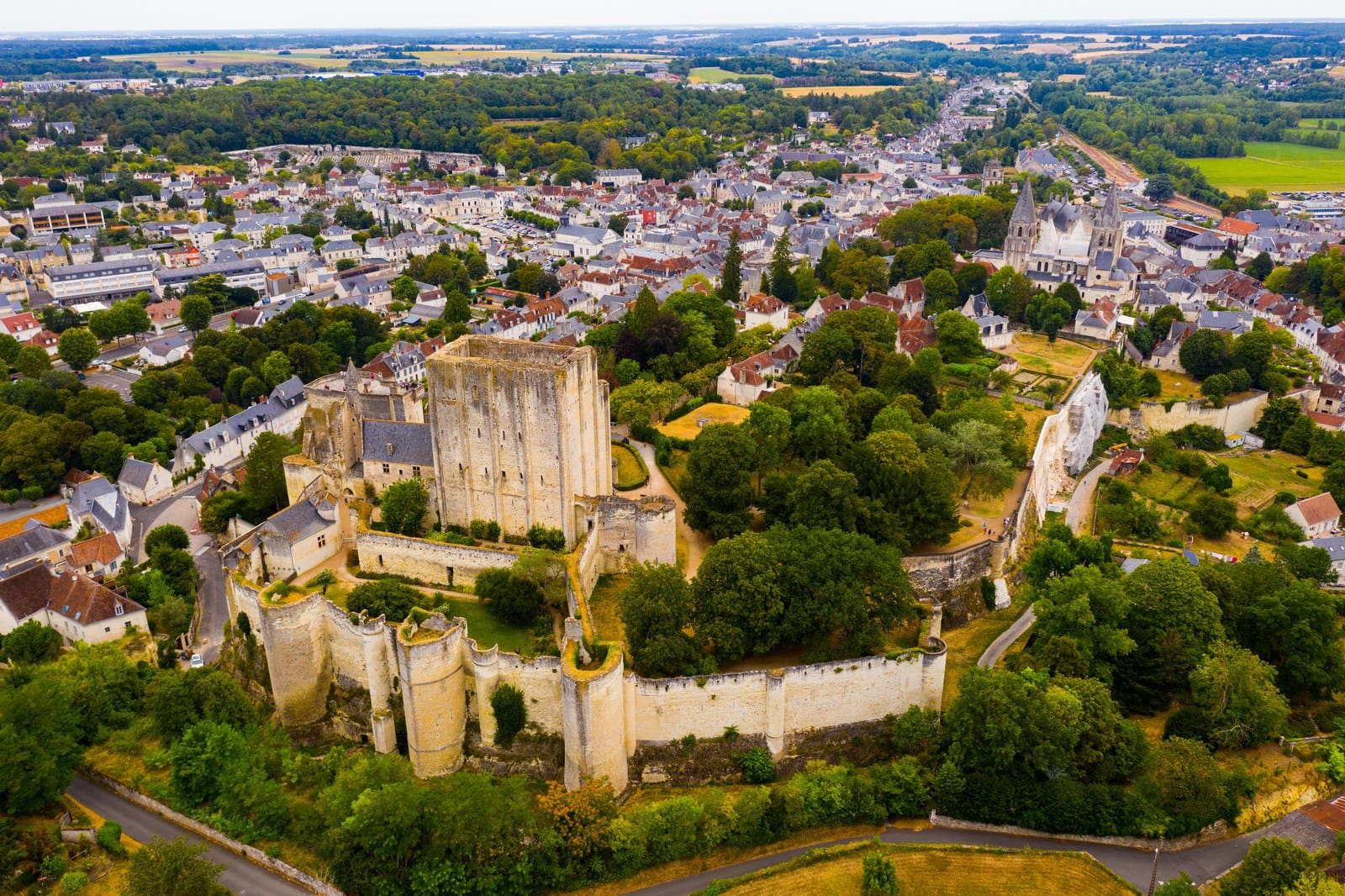
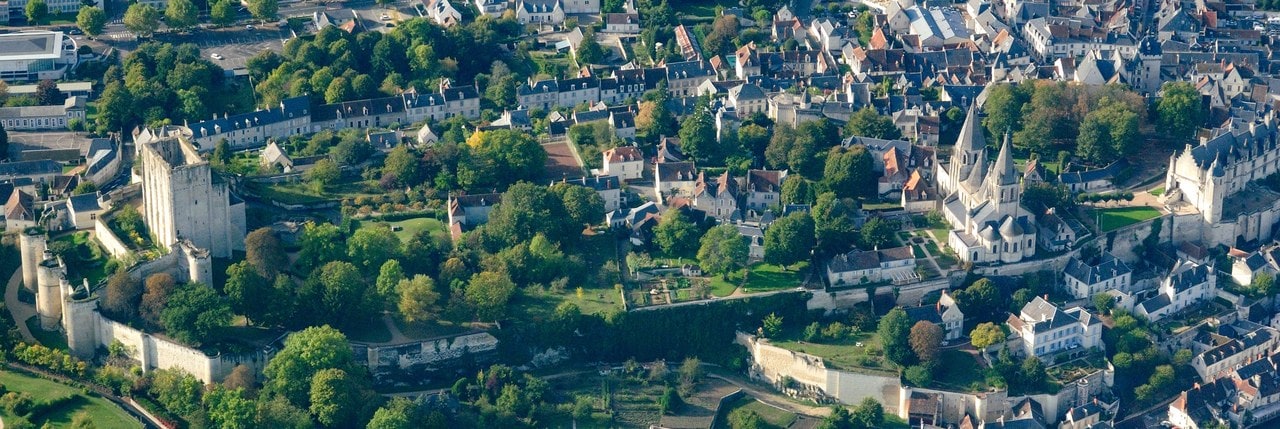
Château de Loches is really two fortresses sharing one long rock above the river Indre, and that doubling is the whole story of the place. At the south end of the walled spur stands a gaunt stone keep, built between 1013 and 1035 by Fulk Nerra. Some three hundred meters north, on the point of the same outcrop, sits the Logis Royal, a comfortable royal lodge where Joan of Arc knelt before a hesitant king and told him to go be crowned. Between the two rise the twin stone pyramids of a collegiate church found almost nowhere else in France. The French call the whole enclosure the Cité Royale de Loches, the Royal City, and for once the grand name is earned: this hilltop held the medieval state’s power, its faith, and its prisoners, all inside a single ring of walls.
The result is a site that rewards a slow visit. Most Loire châteaux offer one great house and its gardens; Loches gives you a Romanesque war-tower, a late-Gothic palace, a rare church, and a genuine state prison, stacked along a rampart walk with the Touraine countryside falling away on every side. It is also, refreshingly, not on the coach-tour conveyor belt that runs through Chambord and Chenonceau, so the crowds are thinner and the history sits closer to the surface.
Quick Facts
| Location | Loches, Indre-et-Loire (Touraine), Loire Valley, France |
| Built | Keep 1013-1035 (Fulk Nerra); Logis Royal late 14th to early 16th century |
| Architectural style | Romanesque keep; flamboyant Gothic royal lodge |
| Founder | Foulques III Nerra (Fulk Nerra), Count of Anjou |
| Owner / operator | Departement de Touraine (Conseil departemental d’Indre-et-Loire) |
| Protection | Monument Historique (keep classe 1862; Logis Royal 1889) |
| Open | Daily except 1 January and 25 December; from 9:30, closing 17:00 to 19:00 by season |
| Admission | Adult €12.50 / reduced €10.50 / under-7 free (2025) |
| Official website | citeroyaleloches.fr |
The Keep of Fulk Nerra
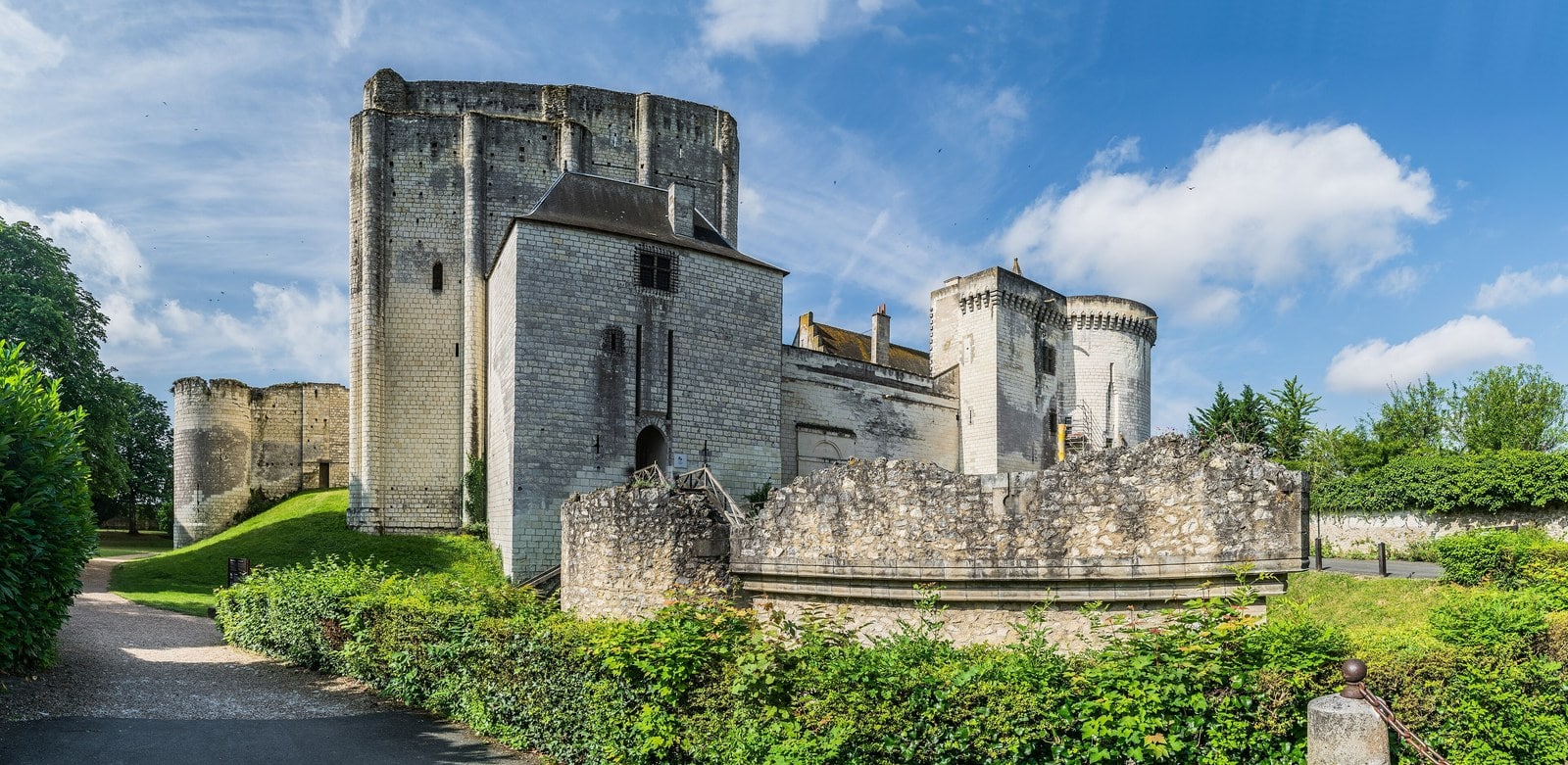
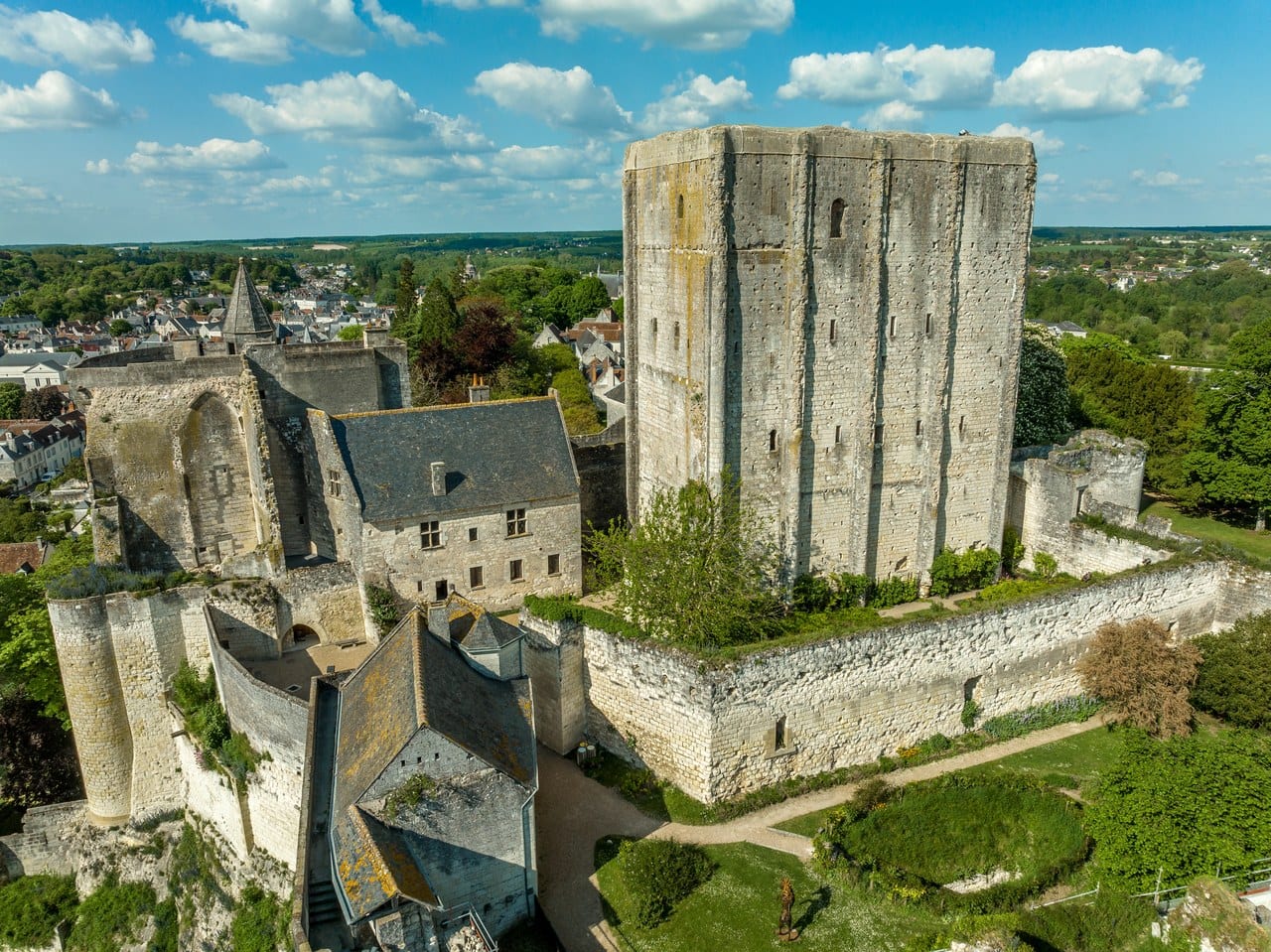
The donjon is the reason Loches matters to anyone who studies castles. It went up under Foulques III Nerra, the Count of Anjou whose long reign (he died in 1040) was one endless campaign of conquest and church-founding across the Loire. For a century scholars guessed the tower dated to around 1100. Then dendrochronology, the dating of timber by its growth rings, was run on beam remains inside the walls, and the analyst Christian Dormoy pushed the construction back to roughly 1013 to 1035. That single result aged the keep by some seventy years, two full generations, and set it squarely in Fulk Nerra’s own lifetime. Loches is now a reference point for the whole early history of the stone keep, the yardstick other towers of its generation are measured against.
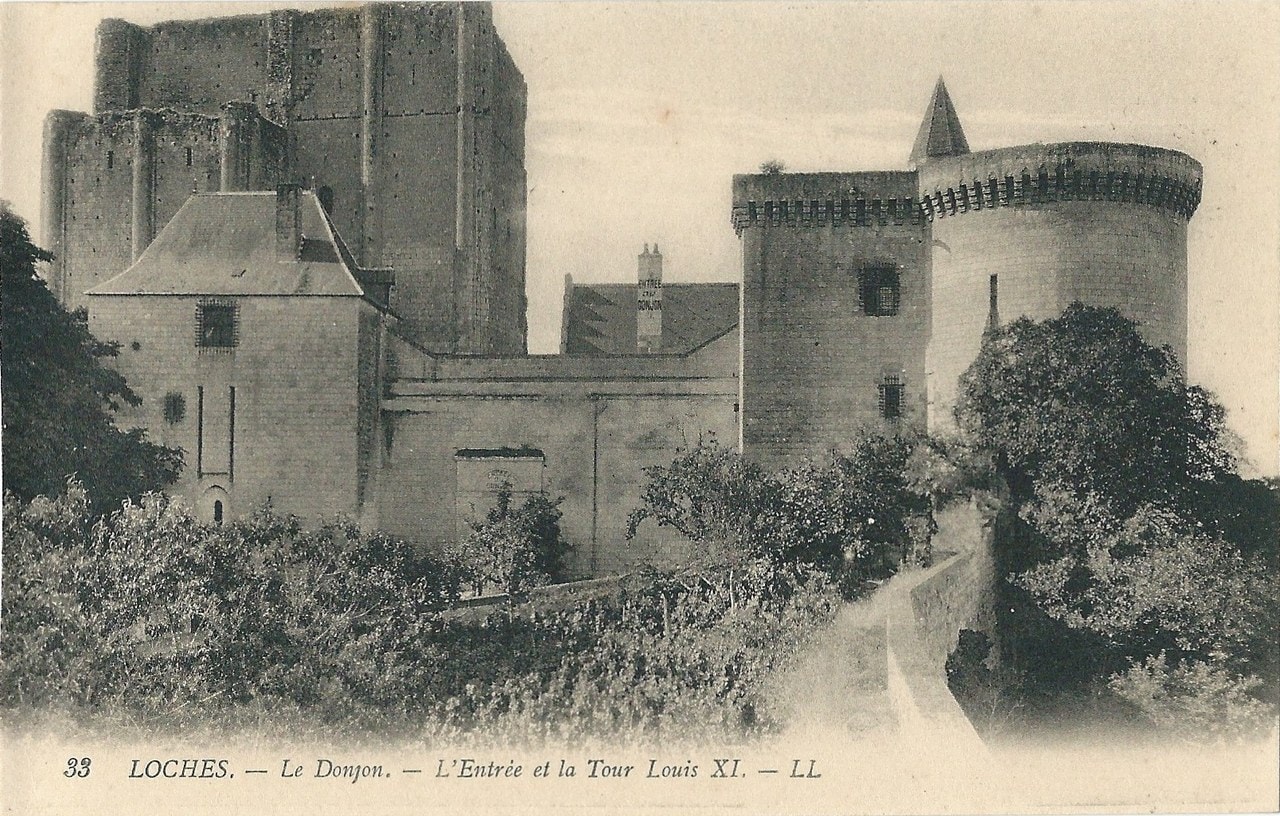
Stand at its foot and the ambition is plain. The tour maîtresse climbs about thirty-seven meters, a rectangular cliff of pale tuffeau stiffened by half-round buttress shafts set on flat pilaster backings, its walls thick enough to swallow stairs and chambers. Fulk built it not as a home but as a statement in stone, one link in a chain of keeps (Montbazon, Montrichard, Langeais, Montrésor) thrown up to hem in his great rival, Odo of Blois. Whoever held Loches held the road into Touraine.
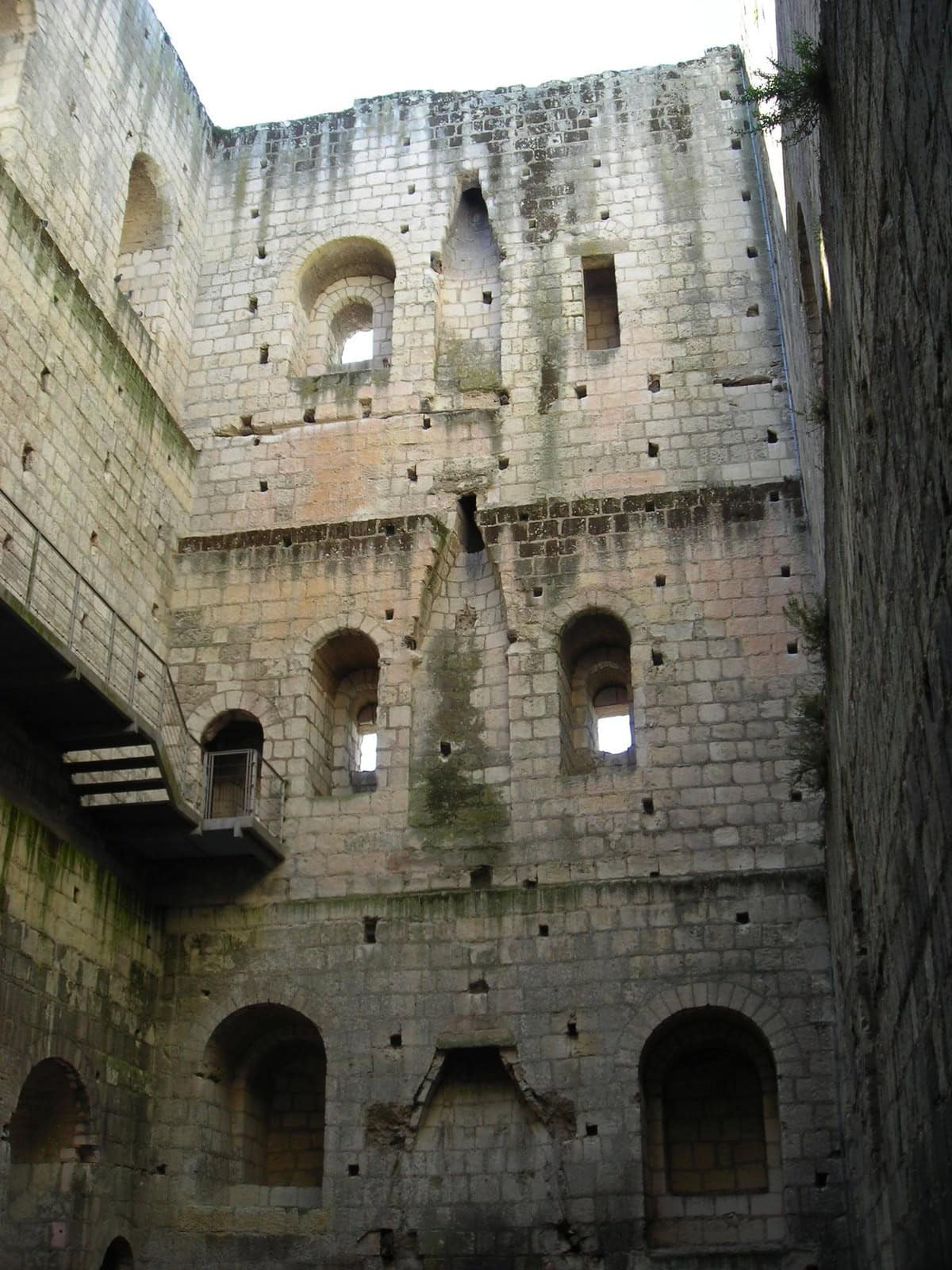
Step inside and the tower is a hollow shell, open to the sky. Floors, roof, and fighting platforms are long gone, so the interior is a single soaring void, its lost storeys legible only as rows of fireplaces and window embrasures climbing the bare walls. It is oddly moving: the engineering laid open like an anatomical drawing, nine hundred years of weather pouring straight through the middle of the eleventh century.
A Prison of the Crown
The keep never really stopped being a place of confinement, and under Louis XI in the fifteenth century that became its official job. Two towers were grafted onto the south flank (the round tower long called the Tour Louis XI and, below it, the semi-underground Martelet), and the whole group was turned into a royal state prison for enemies too dangerous to leave at large. The list of inmates reads like a roll of the era’s losers: Jean II, Duke of Alençon, condemned for treason; the chronicler Philippe de Commynes, who had backed the wrong faction; Jean de Poitiers, father of Diane de Poitiers. Local legend adds Cardinal La Balue, said to have hung for years in an iron cage of his own devising, the notorious fillettes, though the cages you see today are reconstructions and the tale is more folklore than record.
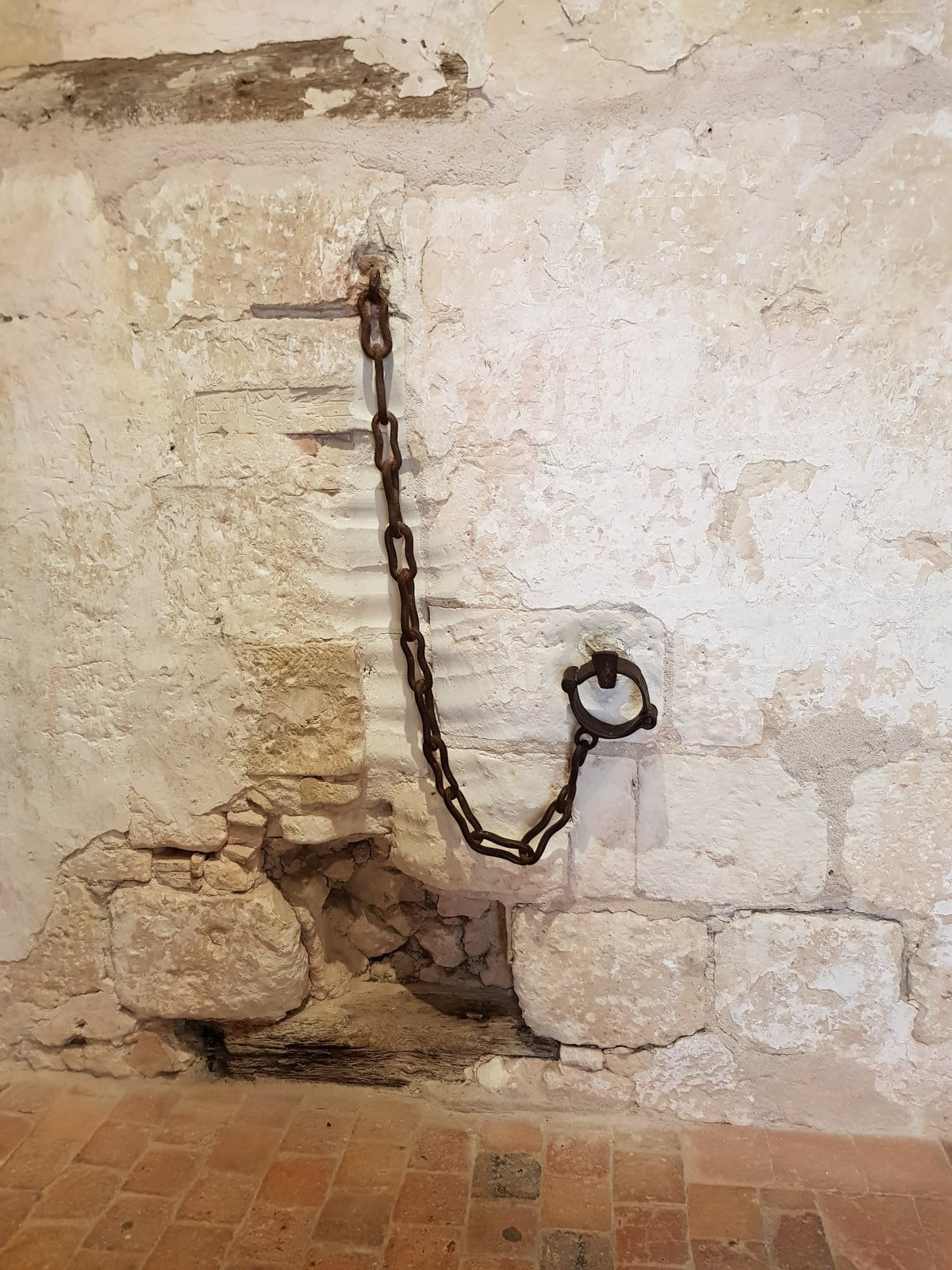
One prisoner left more than a name. Ludovico Sforza, Duke of Milan, known as il Moro, the patron who had kept Leonardo da Vinci at his court, was captured when the French took Novara in 1500 and handed to Louis XII, who claimed his duchy. After a spell in other holds he spent his last four years, from 1504, in a dungeon of the Martelet, and he died there on 27 May 1508 without ever seeing Milan again. His conditions were not those of a common felon; he had a fireplace, his own latrine, and escorted walks. And he decorated his cell. Painted and carved directly onto the walls are a devotional altar-cross flanked by the instruments of the Passion, bands of color and device, and a rueful motto that can still be half-read, celui qui n’est pas content (“he who is not content”). A duke who once commissioned Leonardo, reduced to painting his own dungeon to pass the years. In 2024 archaeologists announced that bones recovered at Loches were probably his, though decay and the lack of any descendant to test against leave the identification short of certain.
The Logis Royal and Joan of Arc
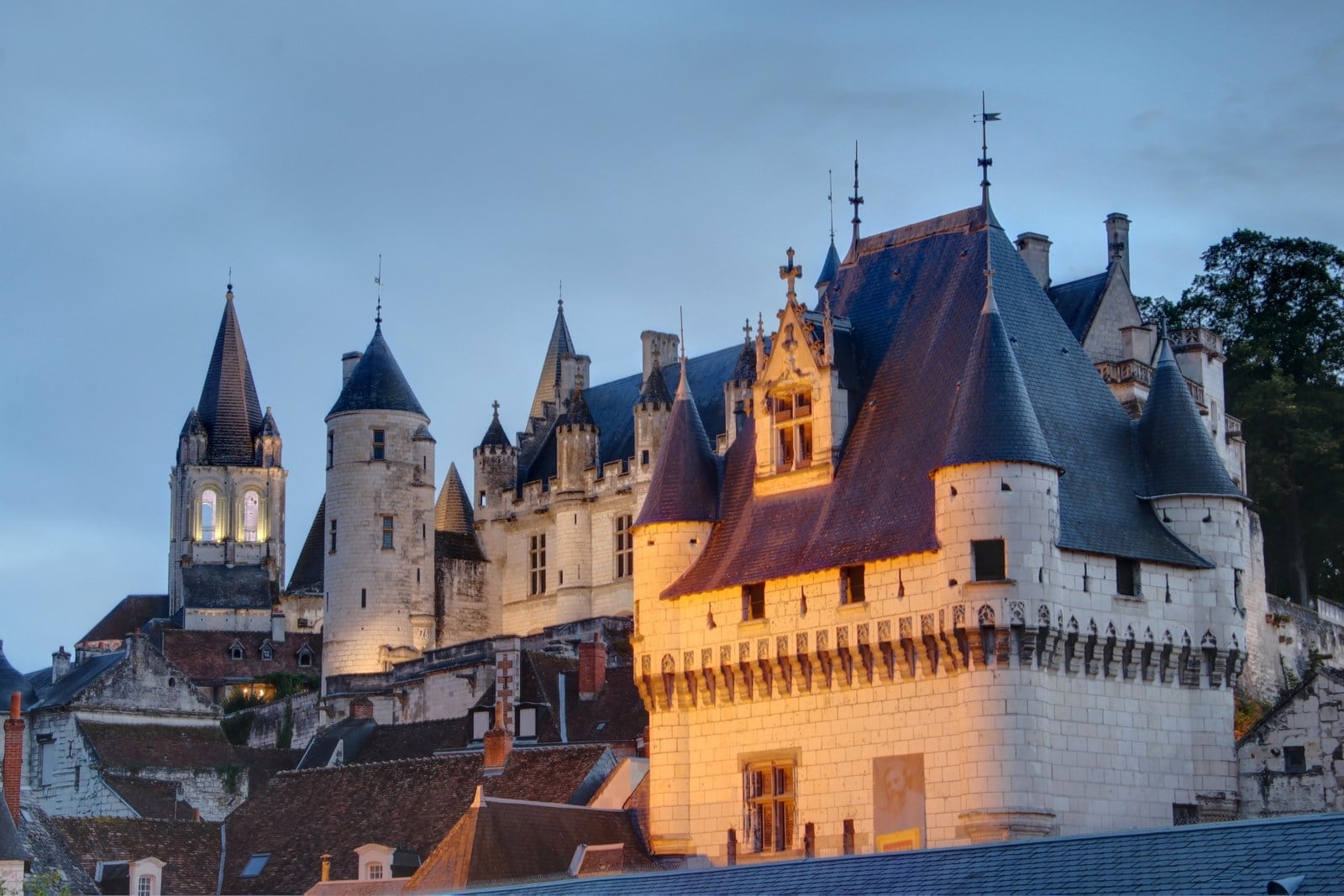
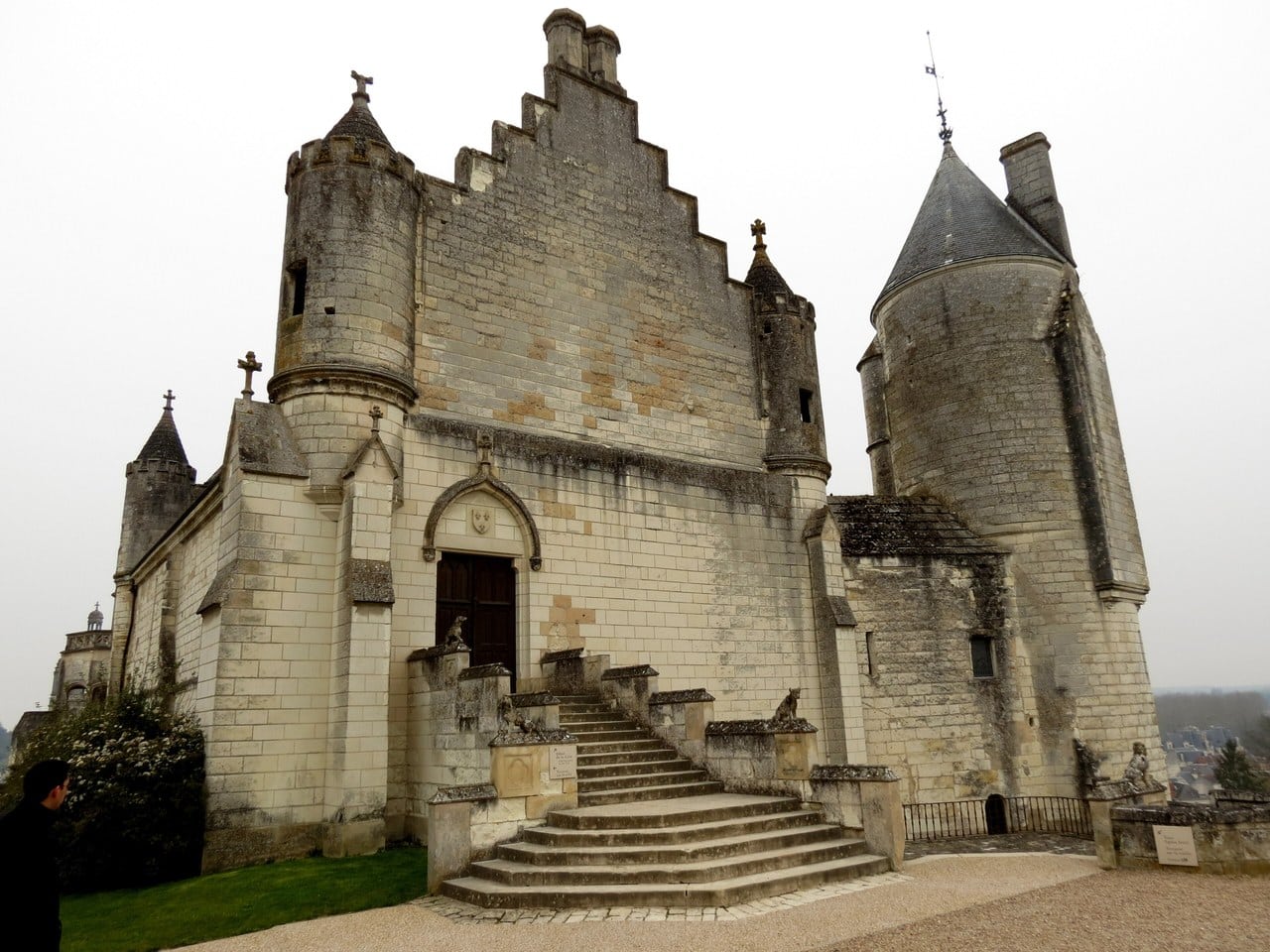
Walk the ramparts north and the mood changes completely. The Logis Royal is no fortress but a long, window-filled residence begun for the Dukes of Anjou at the end of the fourteenth century and extended, in flamboyant Gothic, into the sixteenth. This was the private, comfortable end of the Cité Royale, the wing where the Valois court actually lived. Charles VII came often from 1418 and made Loches the second pillar of his cause after Chinon, in the desperate years when half of France answered to England and he was mocked as the “King of Bourges.”
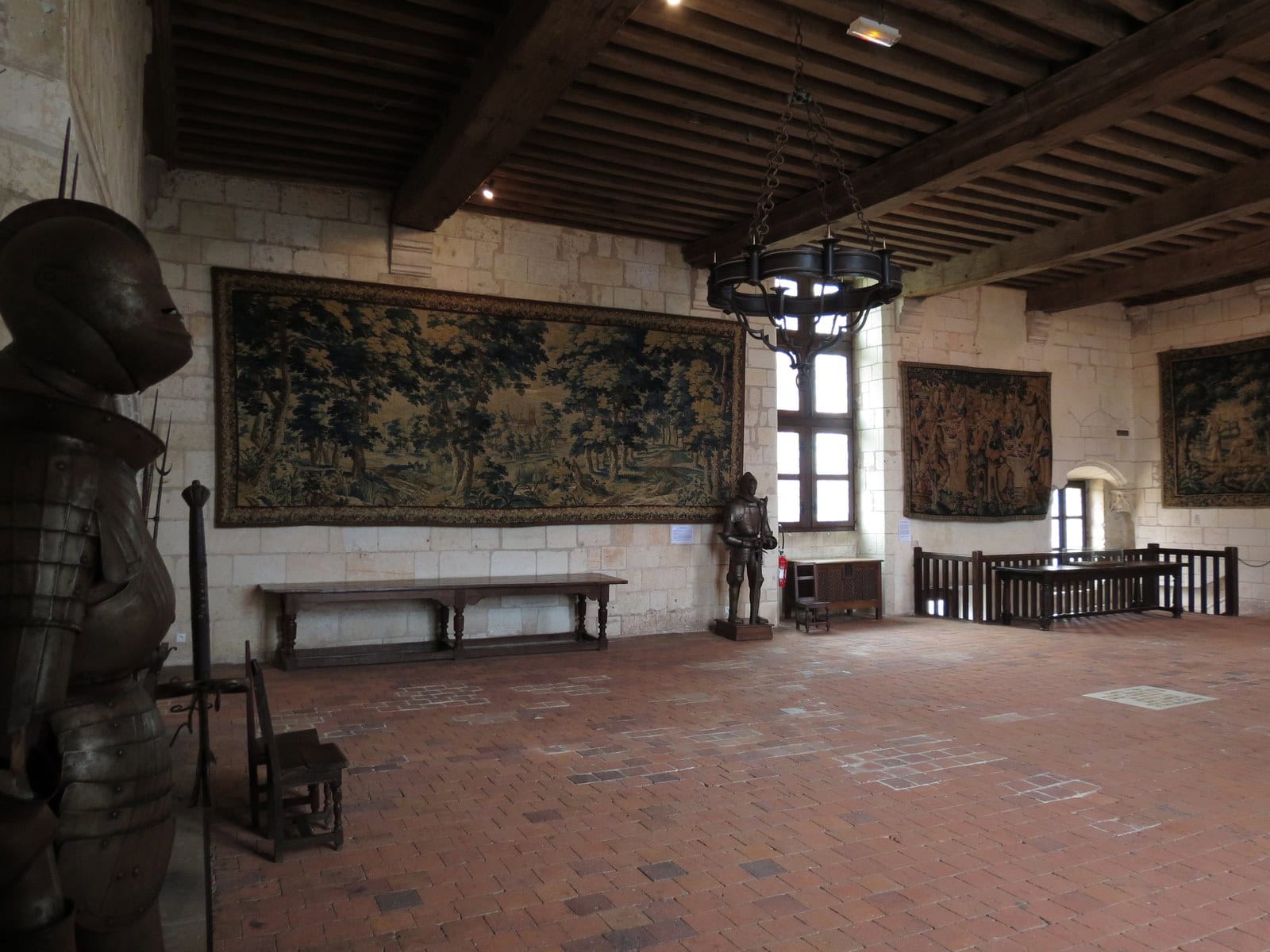
It was into this lodge, in the late spring of 1429 and within weeks of the relief of Orléans, that Joan of Arc came looking for her wavering king. The victory at Orléans had cracked the English grip on the Loire, and Joan wanted Charles to press the advantage where it mattered most: at Reims, the coronation city, where a French king became truly king. By tradition she found him still hesitating, knelt, and urged him to take the road and at last be crowned. He went. On 17 July 1429 Charles VII was anointed in Reims cathedral, with Joan standing beside him, and the war’s momentum turned. The room where she pressed her case is gone in its furnishings, but the walls that heard it still stand.
Agnès Sorel, the Lady of Beauty
Charles VII did not come to Loches only for its walls. He came for Agnès Sorel, and she is the figure visitors most often remember. Born around 1422, Agnès became the king’s mistress in the 1440s and, in doing so, invented a role: the maîtresse-en-titre, the officially acknowledged royal favorite, a fixture of the French court for the next three centuries. Charles gave her the château of Beauté-sur-Marne, and with it the title everyone used, the Dame de Beauté, the Lady of Beauty, the pun fully intended. She set fashions, wore the diamonds a king could buy, and sat for the painter Jean Fouquet, it is thought, as a startlingly bare-breasted Virgin.
She did not reach thirty. In February 1450, pregnant with a fourth daughter and traveling in Normandy, Agnès died suddenly at Le Mesnil-sous-Jumièges, officially of a “flux of the belly.” When her remains were examined in 2005 they held startling levels of mercury; whether that means poison or some botched medieval remedy has never been settled, and the mystery has kept her death a subject of debate for five centuries and counting.
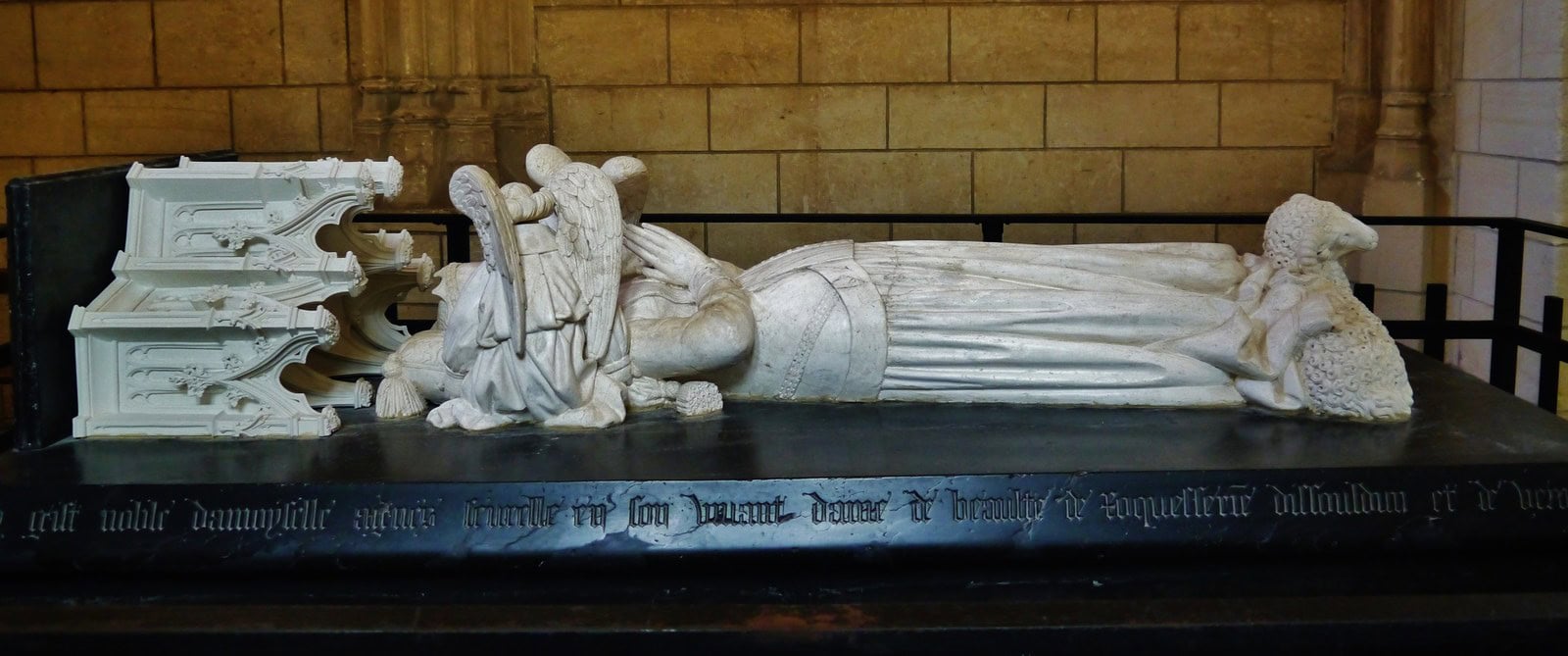
Her tomb is one of the loveliest things at Loches. A fifteenth-century recumbent effigy, its sculptor still debated, shows her serene in white marble, hands joined in prayer, her head cradled by two angels and two small lambs curled at her feet, a play on Agnès, from the Latin for lamb. Charles VII had her buried in the choir of the collegiate church of Saint-Ours, and there she stayed for three centuries until Revolutionary soldiers, taking her for a saint, smashed the monument. It was patched, shuffled for two hundred years between the château and a tower, and finally returned to Saint-Ours in 2005, where the effigy rests today.
Anne of Brittany’s Oratory
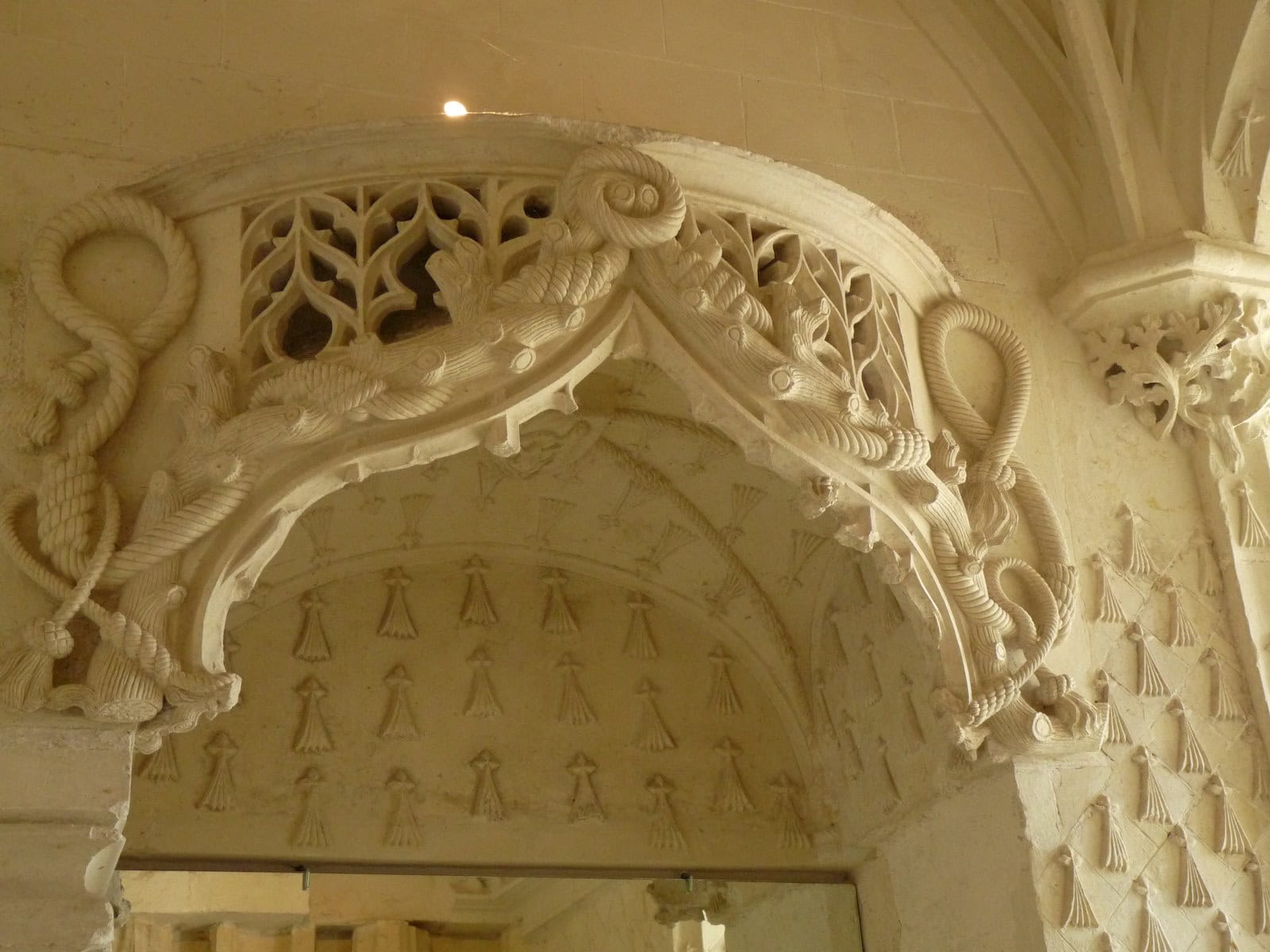
The last great name at Loches belongs to Anne of Brittany, twice Queen of France as the wife of Charles VIII and then Louis XII, and the duchess who brought Brittany into the French crown. Tucked into the newer wing of the Logis Royal is her oratoire, a private oratory no bigger than a small room and the jewel of the whole lodge. Every surface is worked in delicate flamboyant Gothic, and the carving repeats her personal badges: the ermine tails of Brittany scattered like heraldic snowfall, and the knotted cordelière, the Franciscan cord she adopted as her emblem, running in looped stone ribbons around the walls. It is a room built to be alone in, and it still feels that way.
The Collégiale Saint-Ours
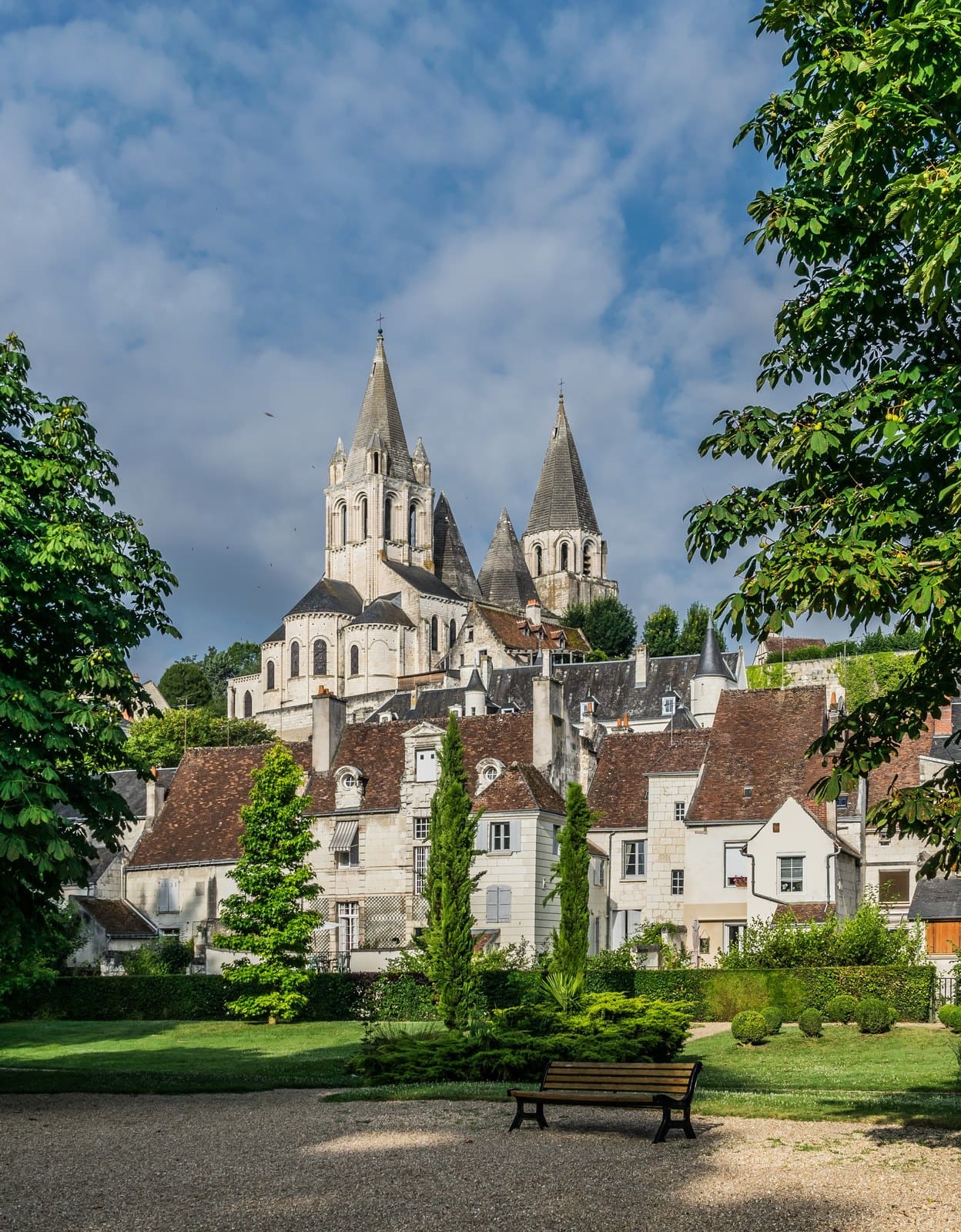
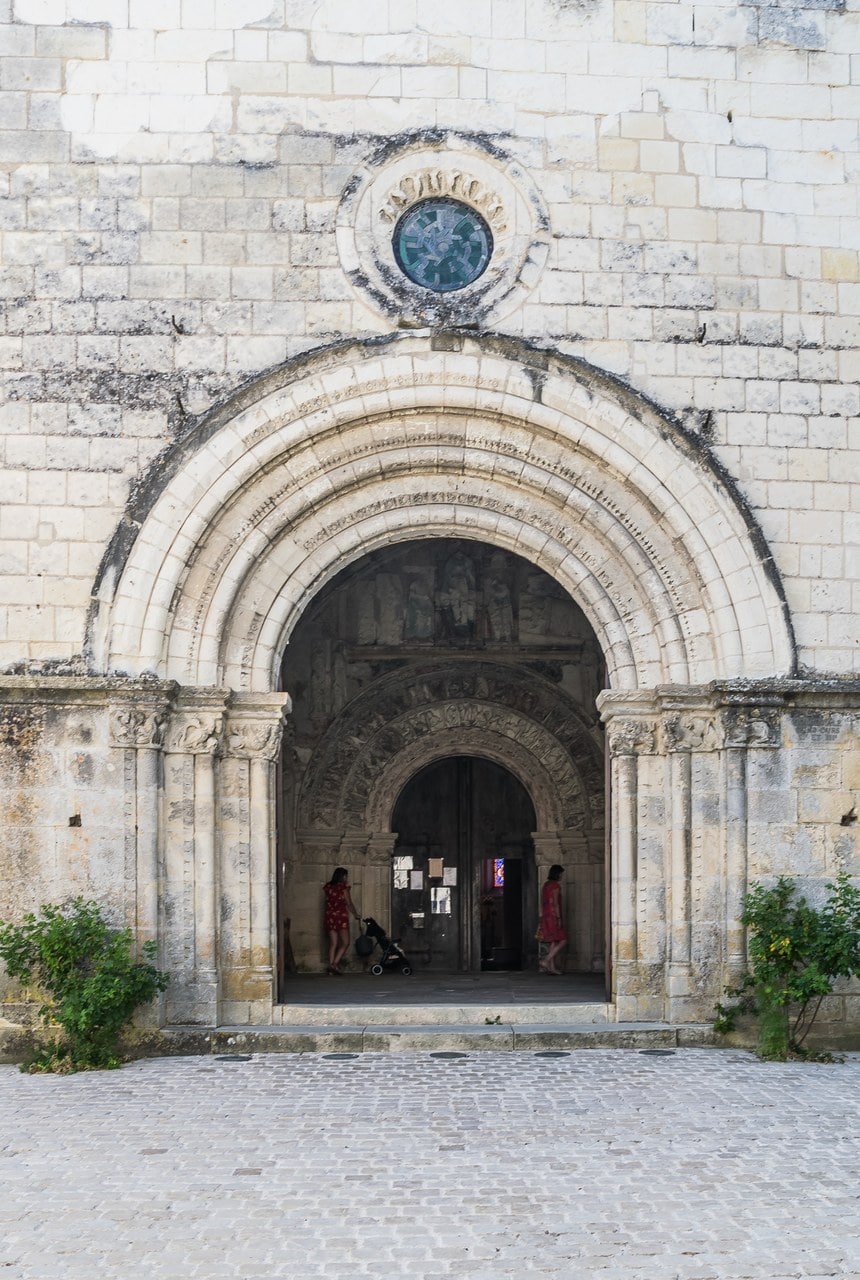
Between keep and lodge stands the church, and it is stranger than it first looks. The Collégiale Saint-Ours is Romanesque, twelfth-century in its present form, with a boldly carved polychrome west portal from the 1150s. What sets it apart is the roof of its nave. Where a normal church would raise a barrel vault or a timber ceiling, Saint-Ours is covered by two tall hollow octagonal pyramids of stone, which the locals call the dubes, a solution to roofing a nave found essentially nowhere else in France. Seen from the rampart walk they look less like a church than like two great stone tents pitched on the ridge, and they are the silhouette that fixes Loches in the memory.
Visiting Château de Loches
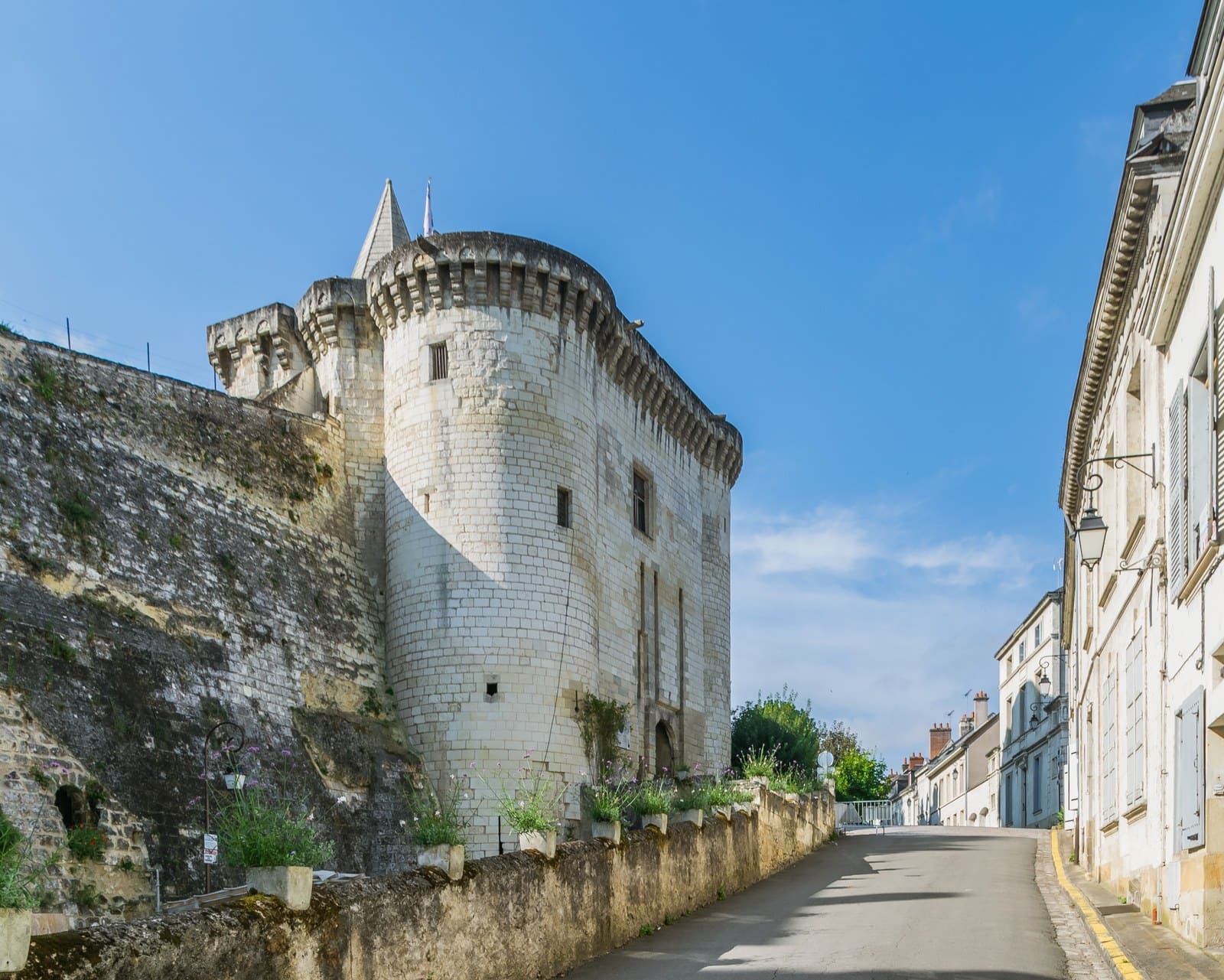
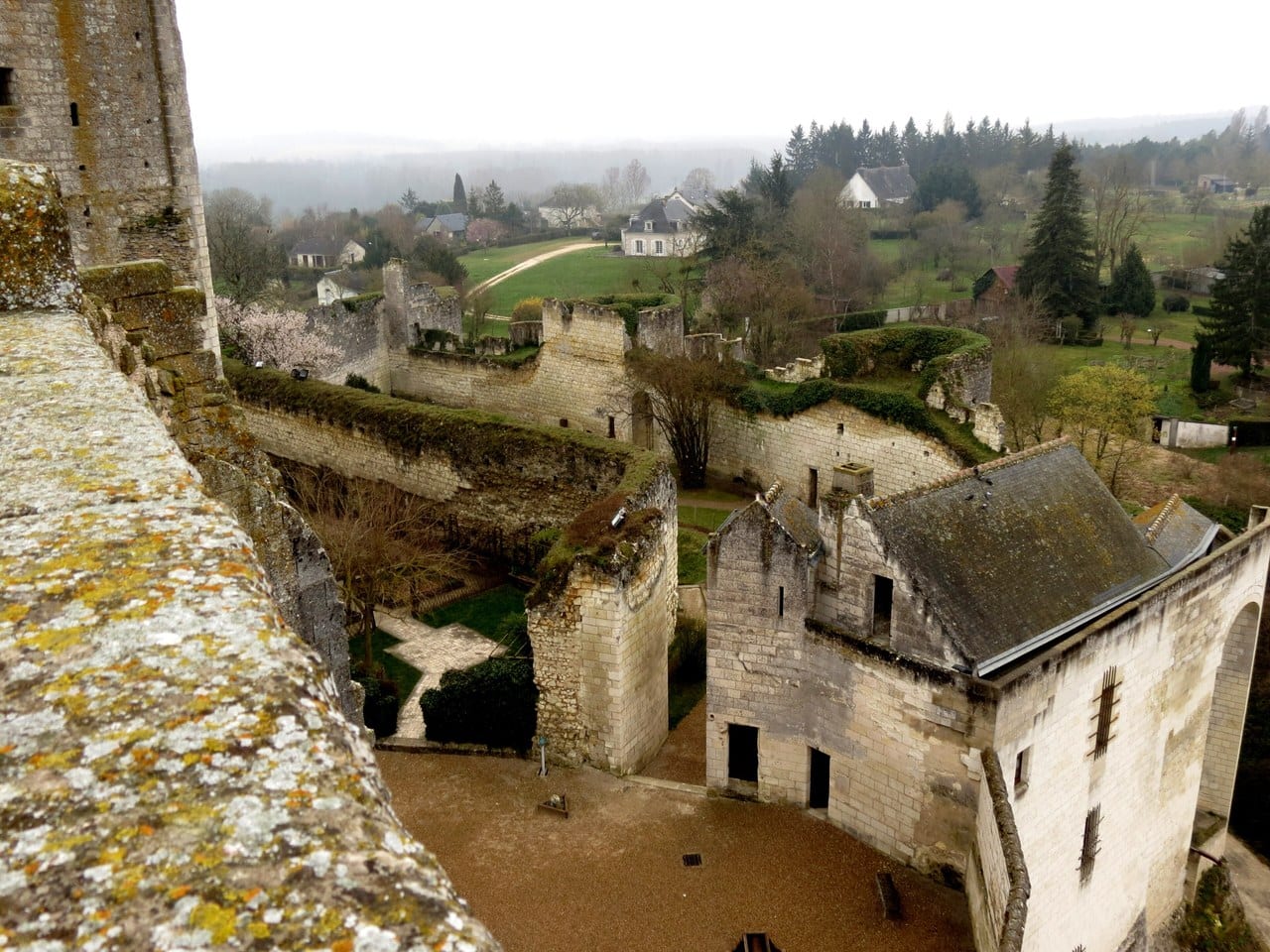
The Cité Royale is open every day of the year bar 1 January and 25 December, from 9:30 in the morning, with closing shifting through the seasons: 5 p.m. in the depths of winter, 6 in spring and autumn, 7 across the long summer, and the last tickets sold half an hour before the gates. A single ticket covers the two monuments that matter, the keep with its prison towers at the south end and the Logis Royal at the north, and it pays to allow a good half-day to do both without rushing; the walk between them along the ramparts is part of the pleasure. Steel stairways thread the hollow keep, so despite its lost floors you can still climb to the top for a wide view over the Indre valley. The Collégiale Saint-Ours between the two monuments, where Agnès Sorel’s tomb rests, is a working church and free to enter. In 2025 adult admission runs €12.50, with a reduced €10.50 for young visitors, students, and groups, and free entry for children under seven. Prices and hours do drift, so confirm them on the official site before you set out.
Getting there is easiest by car (Loches is about an hour from Tours on the D943), with free parking at the Fossés-Saint-Ours lot in the town below, though its spaces fill early. The regional TER from Tours reaches Loches in about fifty minutes, leaving a ten-minute walk up to the gates. The town itself, still partly wrapped in its medieval defenses, deserves an hour of its own once you leave the château, and its Saturday market is one of the best in Touraine.
To skip the ticket queue at the gate you can book timed entry to the Cité Royale de Loches online in advance through GetYourGuide, and for a room within a short walk of the gates, the Best Western Premier Hôtel de la Cité Royale sits just below the walls in the old town.
Some links on this page are affiliate links, which means StoneKeep Atlas may earn a small commission, at no extra cost to you, if you book through them.
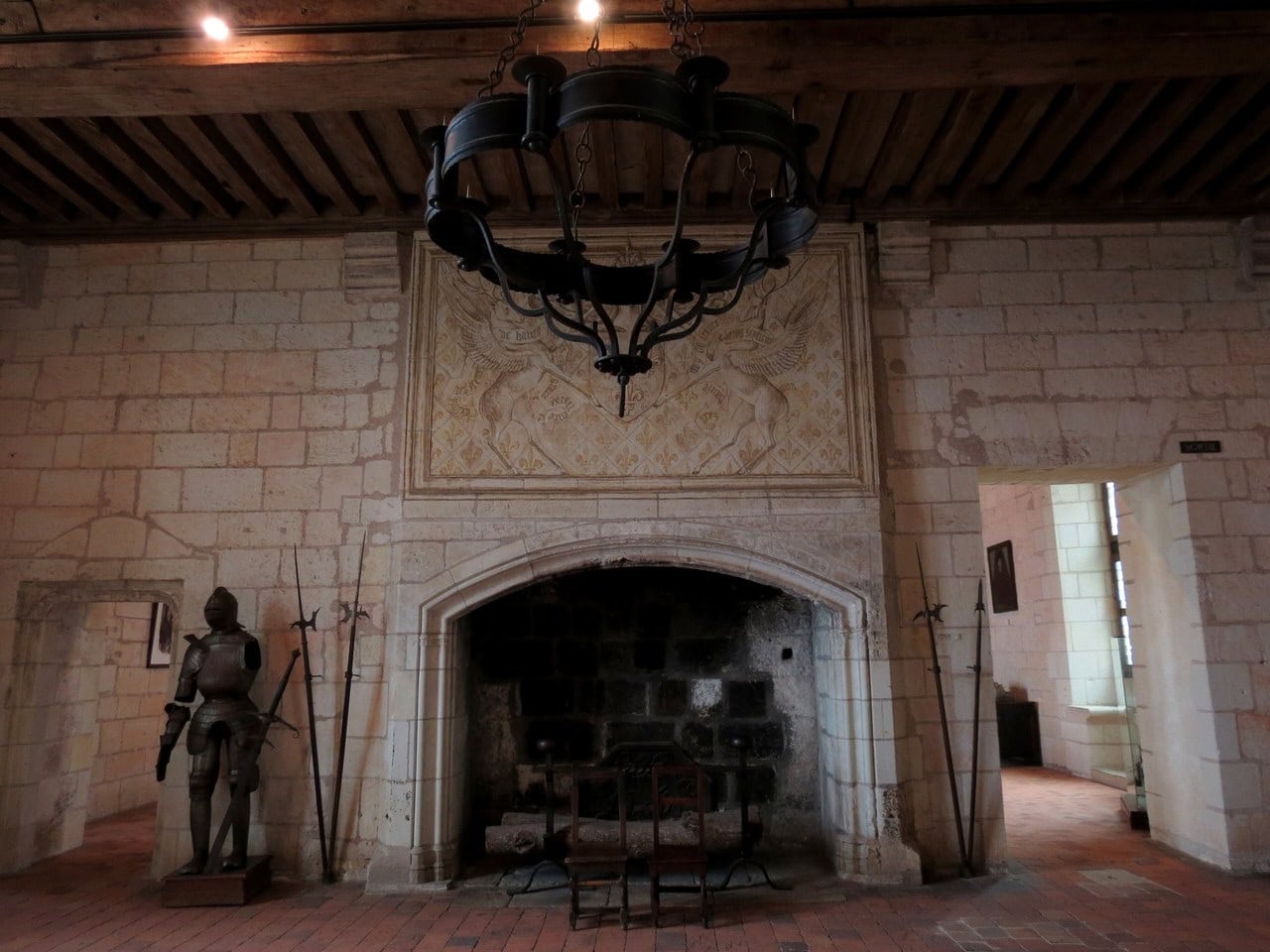
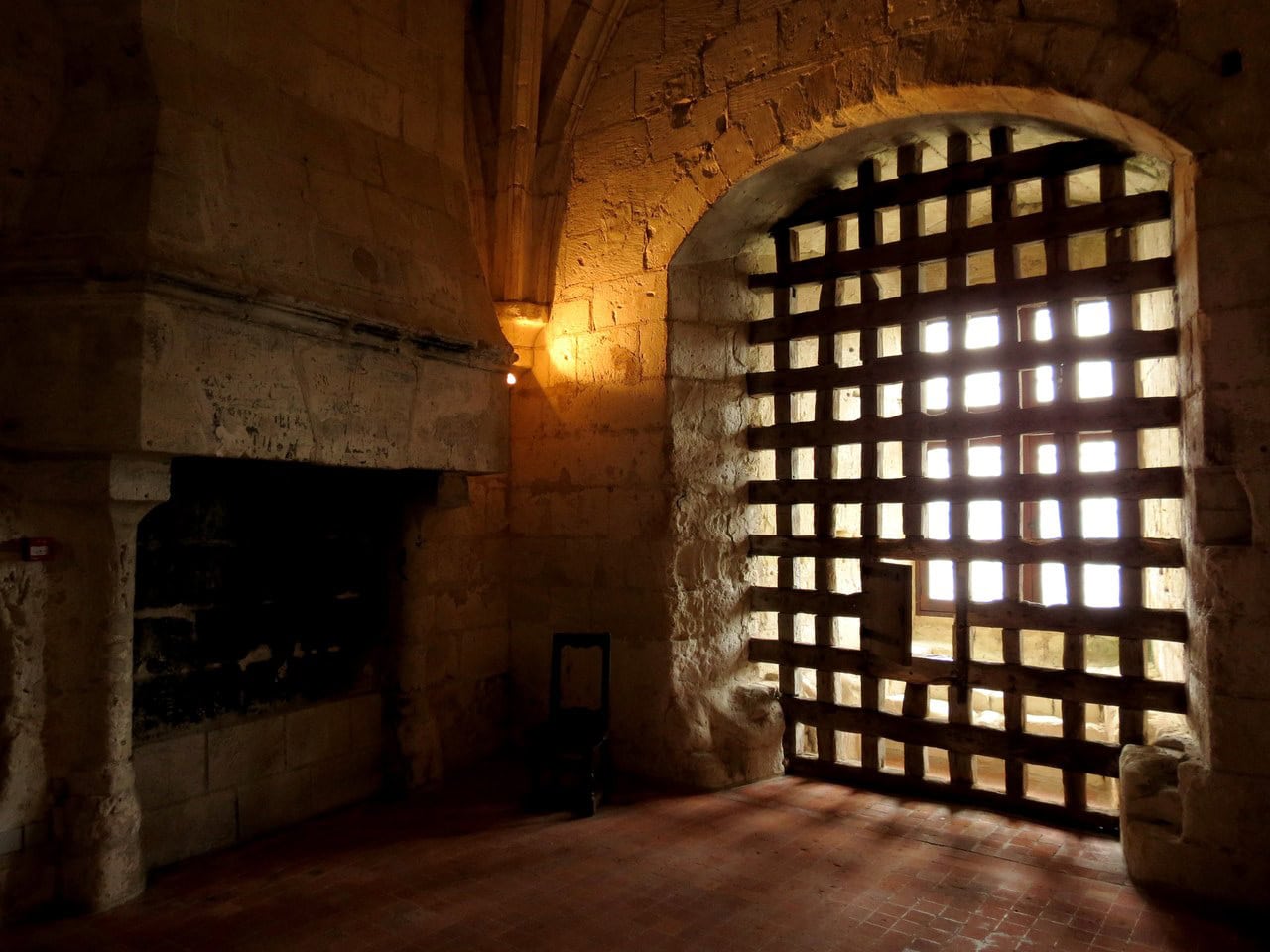
More Views of Château de Loches
Beyond Château de Loches
Loches sits in the richest concentration of châteaux in France, and its neighbors make natural next stops. Closest in spirit is Château de Chinon, the other great royal fortress of Touraine and the very place Joan of Arc first found Charles VII before she chased him on to Loches and Reims. For the deepest architectural echo, Château de Langeais guards a keep built by the same Fulk Nerra, the twin whose timbers helped date the Loches tower. West along the Indre lie the Renaissance pleasures of Château d’Azay-le-Rideau and the reconstructed gardens of Château de Villandry, an easy pairing for a second day. All four belong to the wider story told in our guide to the Châteaux of the Loire Valley. Agnès Sorel’s tomb here also opens our history of the women who built the Loire.
Conclusion
Few castles let you read the Middle Ages as plainly as Loches. In the space of a single walled ridge you pass from Fulk Nerra’s raw eleventh-century war-tower, through the prison cells where a Duke of Milan painted his own despair, to the flamboyant oratory of a queen and the tomb of the woman who invented the role of royal favorite. Nothing here has been prettified into a single period; the keep is a ruin, the lodge is a palace, and the church wears its bizarre stone pyramids without apology. That honesty is exactly why Loches lingers. It is not the prettiest of the Loire châteaux, but it may be the one where the past feels closest, and among the royal houses of Touraine (Chinon, Langeais, Azay, and Villandry) it is the one that most repays the reader who wants to understand, and not merely admire.
Principal Sources
- Base Mérimée (notice PA00097821) and Base Palissy (notice PM37000286, tomb of Agnès Sorel). Ministère de la Culture.
- Cité Royale de Loches (Département de Touraine). Official site: donjon and Logis Royal histories; Foulques Nerra, Jeanne d’Arc, Agnès Sorel, and Ludovico Sforza pages; opening hours and admission. citeroyaleloches.fr.
- Dormoy, Christian. “L’expertise dendrochronologique du donjon de Loches.” Archéologie médiévale 27 (1997).
- Mesqui, Jean. “La tour maîtresse du donjon de Loches.” Bulletin Monumental 154 (1996), 156 (1998).
- UNESCO World Heritage Centre. “The Loire Valley between Sully-sur-Loire and Chalonnes.” Inscribed 2000.
This guide also draws on standard scholarship of Angevin castle-building and the Valois court beyond the works cited above. Prices and opening hours are current to 2025 and go stale, so confirm them on the operator’s site before you travel.
Image credits. The aerial view of the Cité Royale on its spur: JackF / Adobe Stock; the Logis Royal at golden hour: Lotharingia / Adobe Stock; the keep from the air: tamas / Adobe Stock; The keep and the Tour Louis XI, the Collégiale Saint-Ours and its dubes, the Porte Royale, and the Romanesque west portal: Krzysztof Golik, CC BY-SA 4.0, via Wikimedia Commons; Inside the roofless keep: ManuD, CC BY-SA 3.0, via Wikimedia Commons; A cell in the fortress prison: Lomita, CC BY-SA 4.0, via Wikimedia Commons; The great hall, the courtyard front of the Logis Royal, a painted fireplace, a portcullis chamber, and the view from the keep: xorge, CC BY-SA 2.0, via Wikimedia Commons; Agnès Sorel’s tomb effigy in the Collégiale Saint-Ours: Zairon, CC BY-SA 4.0, via Wikimedia Commons; Anne of Brittany’s oratory: GO69, CC BY 4.0, via Wikimedia Commons; The Cité Royale from the south: Lieven Smits, CC BY-SA 3.0, via Wikimedia Commons; The keep and the Tour Louis XI in an early postcard: Léon et Lévy, public domain. Freely licensed images are resized to fit; otherwise unaltered.