
Why Are English Castles in Ruins?
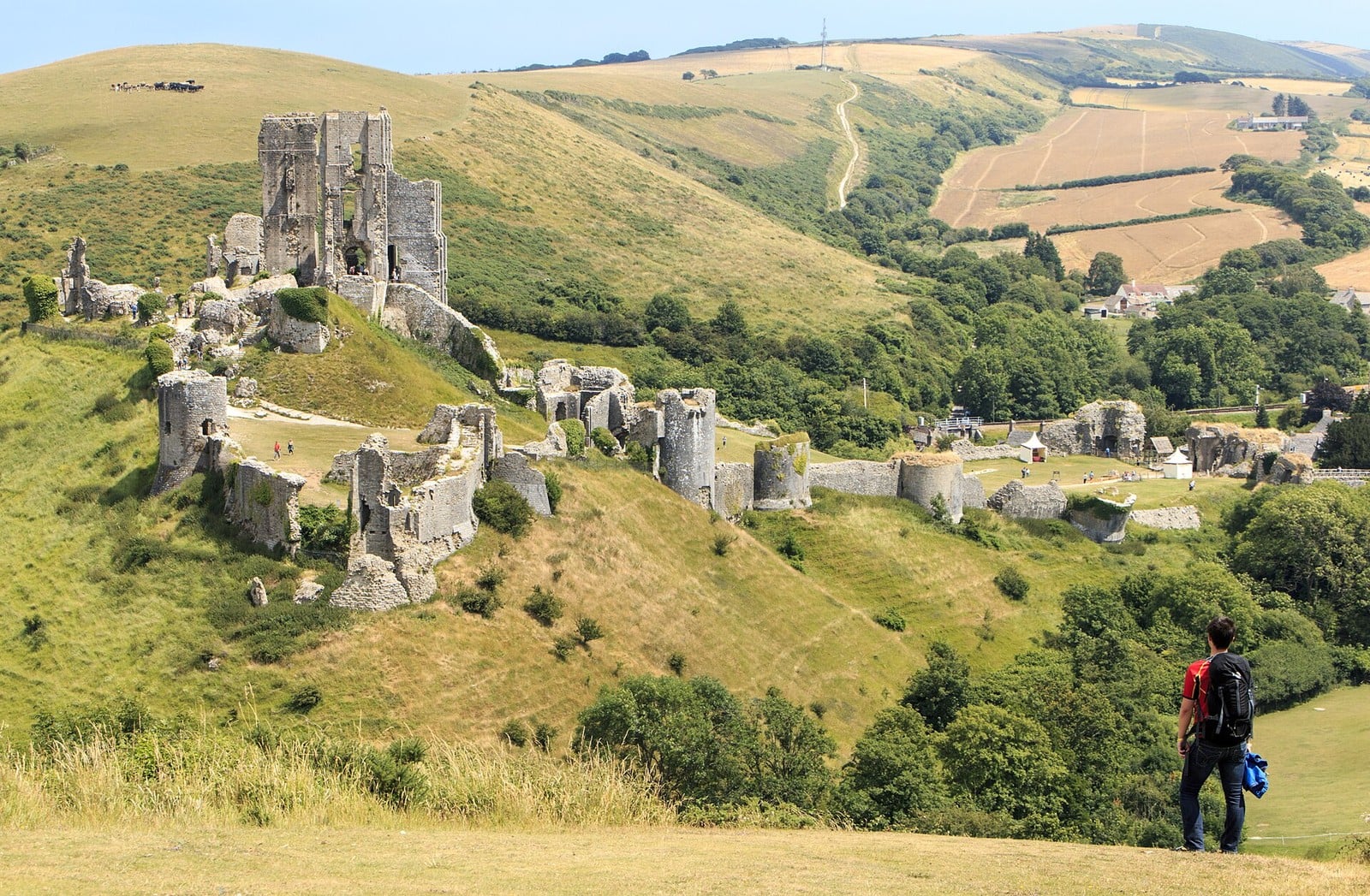
Why are English castles in ruins? England’s castles did not become ruins at a single blow. Many were already decaying by the 1530s, and some had already been stripped of lead and stone. After the English Civil War many were slighted, part-demolished so that they could not be held again, and at some sites pulled down almost entirely, though an order was not always carried out. Others were quarried, farmed or put to new uses. Many of the ruins a visitor walks today were kept as ruins on purpose, first by owners who valued them as scenery and then, in the twentieth century, by a state that set out to repair what survived rather than restore what had gone. Where a use continued, as at Windsor and at Dover, the buildings were repaired and altered instead.
The popular answer is shorter: it blames Cromwell. The records tell a longer one: an antiquary’s notebooks from the reign of Henry VIII, the orders of the House of Commons and the Council of State, the salvage of lead and stone, and the policy the Office of Works followed in the twentieth century, which Sebastian Fry’s history of the national collection, written for English Heritage, calls repair as found.
Decay Before the Civil War: What Leland Saw
Castle-building was ending before any of this began. Historic England’s introduction to stone castles says the castellated form seems to have gone largely out of fashion by the sixteenth century, while adding in the same sentence that “many castles continued in use, mainly as residences, for many centuries.” Our account of the longer story of how castle-building ended explains why the building stopped; this section follows what happened to the buildings themselves.
The chief witness is John Leland, the antiquary who toured England in the 1530s and early 1540s and wrote down what he found. His notebooks, printed as The Itinerary of John Leland in or about the Years 1535-1543, describe castle after castle in decay, although one man’s notes cannot say what share of England’s castles were in that state. At Totnes he wrote: “The castelle waul and the stronge dungeon be maintainid. The logginges of the castelle be clene in ruine.” In Leland’s usage the “dungeon” is the inner stronghold, so at Totnes the walls and the stronghold were kept up while the lodgings inside had fallen.
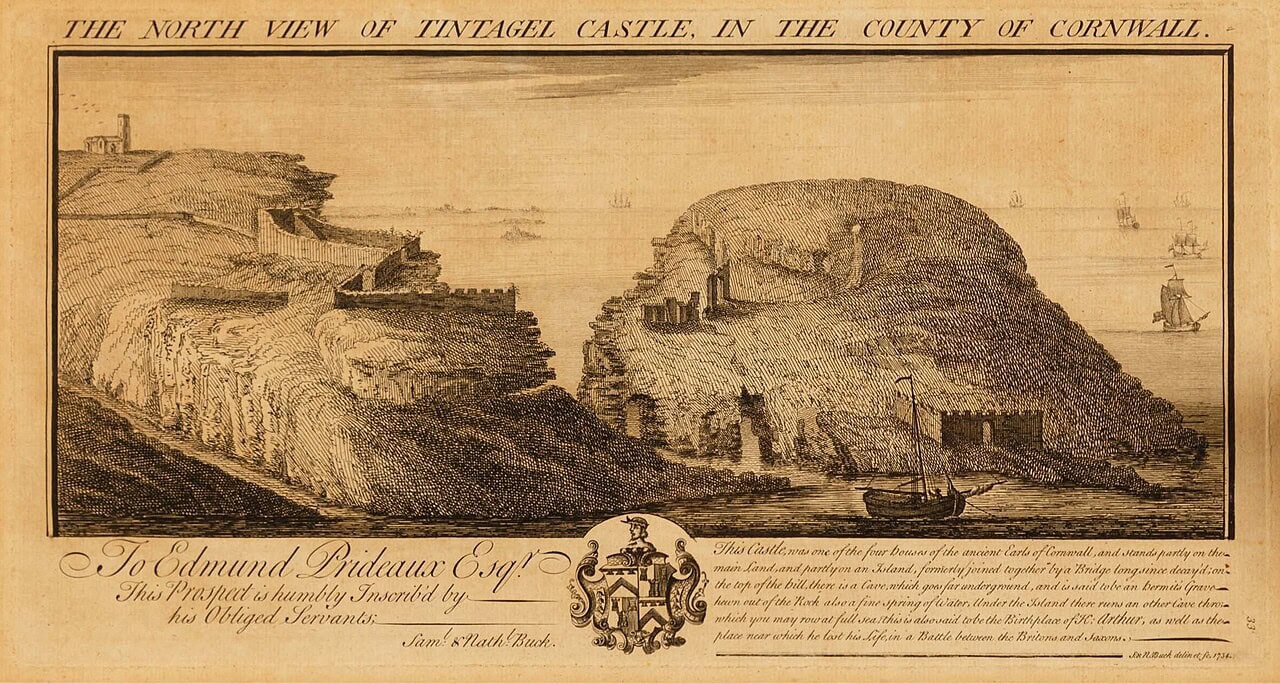
Elsewhere the decline had gone further. At Tintagel, “Shepe now fede within the dungeun.” Malton had “no habitation yn it, but a mene house for a farmer.” Stripping had begun too. At Devizes, stone had been carried off, “full unprofitably” in Leland’s view, to build Master Bainton’s house at Bromeham, barely three miles away. At Belvoir, Leland recorded, Lord Hastings had stripped the lead from the roofs and carried much of it to Ashby de la Zouch, after which the roof timbers rotted, until the Earl of Rutland rebuilt the castle. Decay was not universal, and he said so: Wressle, he thought, “semith as newly made.”
Other records point the same way. English Heritage records that King John’s chamber block at Scarborough “was in ruins by 1538,” though the castle, “dilapidated” as it was, still mattered in times of crisis. In Westmorland, now part of Cumbria, Pendragon had lain abandoned, it says, since the reign of Edward III, and Brough since a devastating fire in 1521 left nothing but the bare walls standing. And in 1514 the Crown granted the stones of the castle at Old Sarum to Thomas Compton, with the right to carry the materials away.
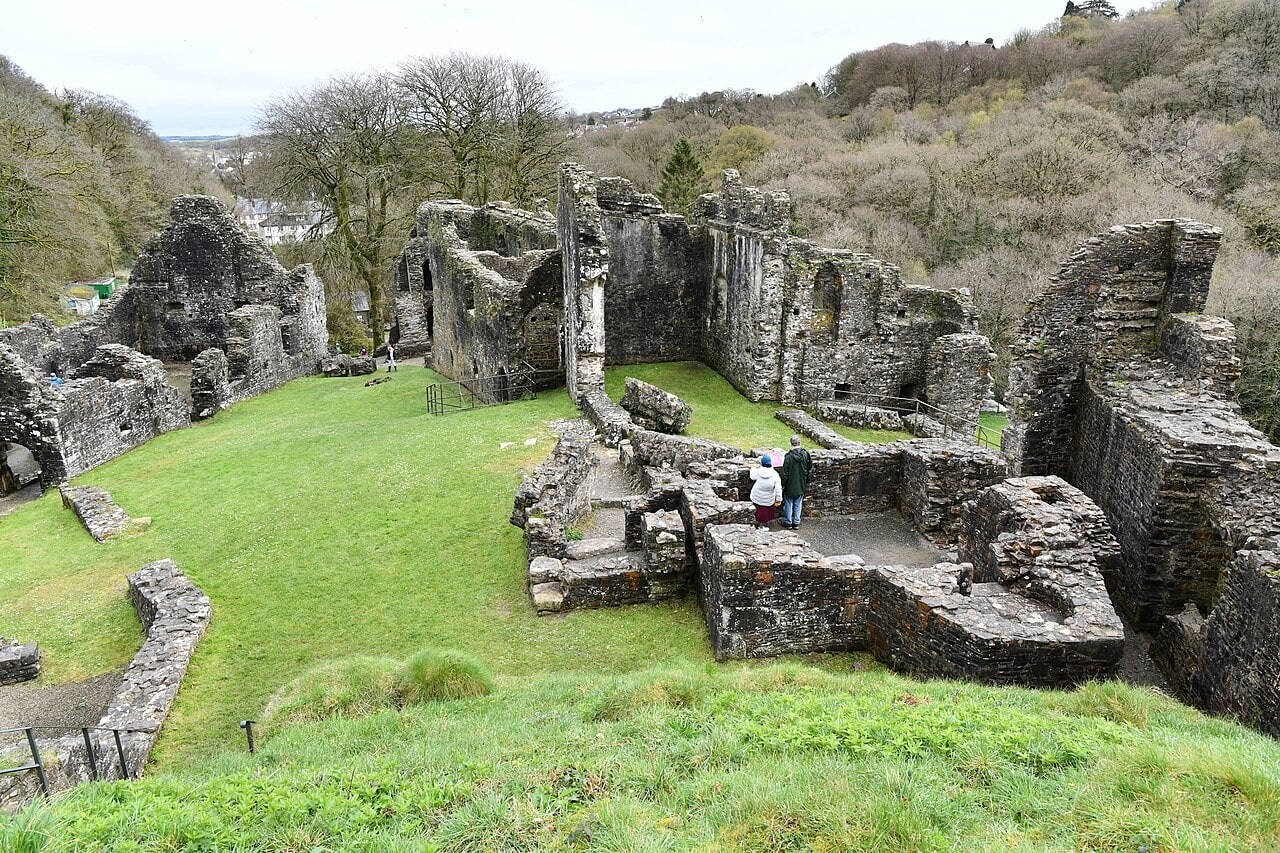
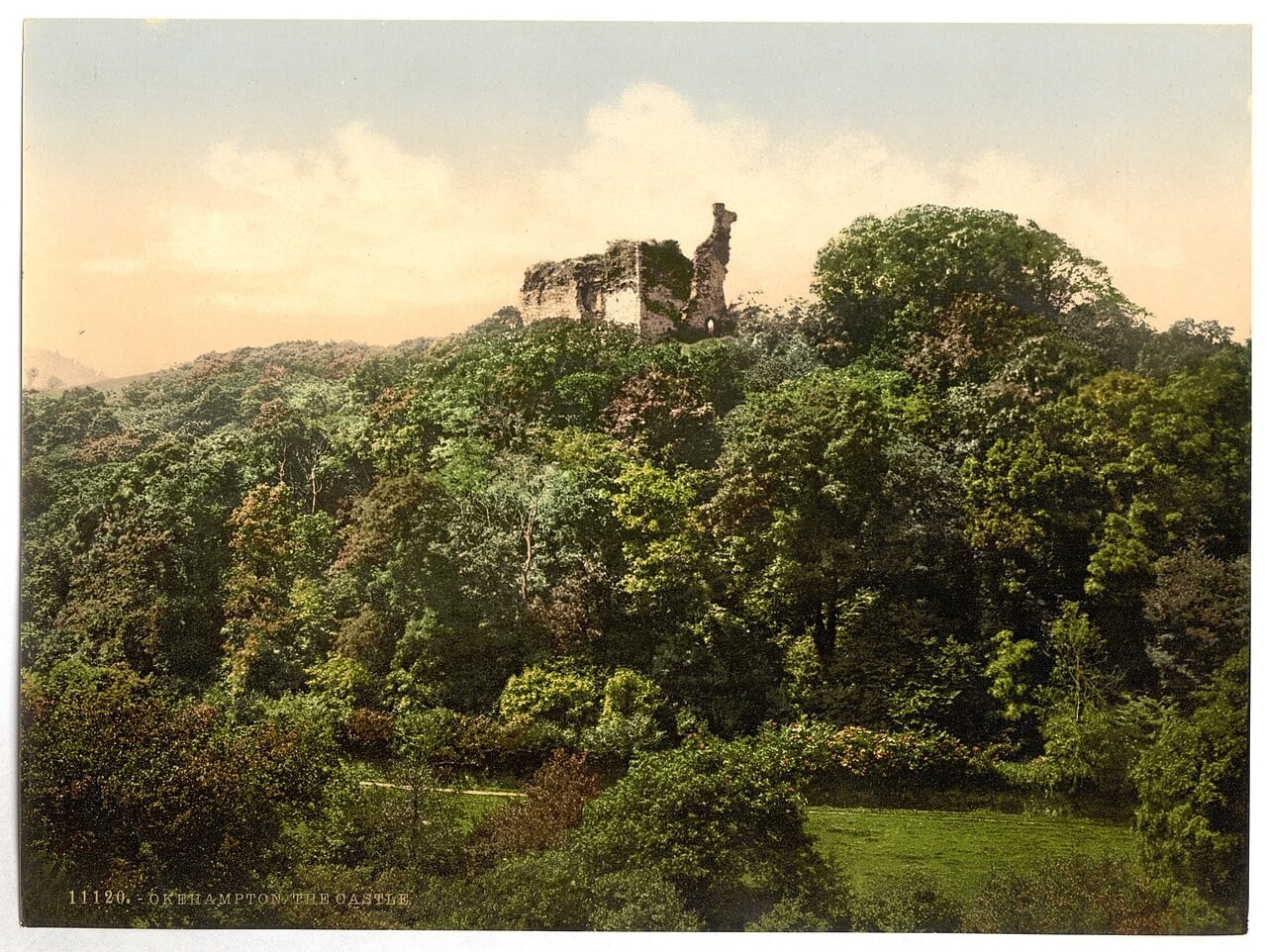
Okehampton, in Devon, shows the pattern in one place. English Heritage links the stripping to Peter Carew, to whom Henry VIII leased and then granted the castle’s hunting park in 1544, though Carew did not own the castle itself: “it was probably Carew who began stripping it of materials of value, perhaps to pay his large debts …” “With their roofs stripped of lead,” the same history goes on, “the castle buildings must have quickly deteriorated.” Okehampton, it adds, “unlike many medieval castles,” was not pressed into use in the Civil Wars of the 1640s. Whatever ruined it, the war did not.
The Civil War: Besieged, Slighted, or Left Alone
Then came the Civil War, fought in the 1640s between King Charles I and Parliament, and it did real damage. Surviving castles could be refortified or pressed into use in the fighting, and afterwards many were slighted, deliberately part-demolished, in a process Historic England calls poorly understood. Its introduction adds a caution that governs everything a visitor sees: “It can be very difficult to distinguish between primary slighting (traditionally identified as the partial demolition of parts of castles to render them incapable of defence), secondary damage and later decay and collapse, especially where the evidence for these processes has been summarily cleared away, but the surviving ruins form some of our most evocative and impressive monuments.”
Lila Rakoczy’s 2007 doctoral thesis at the University of York, noting that no definition of slighting was universally recognized, proposed one: “the non-siege, intentional damage during times of war of high status buildings, their surrounding landscape or works, and/or their contents and features.” By that definition, damage done in a siege is not slighting at all. That distinction changes the story at several of the broken towers a visitor meets in England. Rakoczy identifies four methods of slighting: undermining, gunpowder, fire and picking, her term for destroying by hand.
Siege damage is not slighting
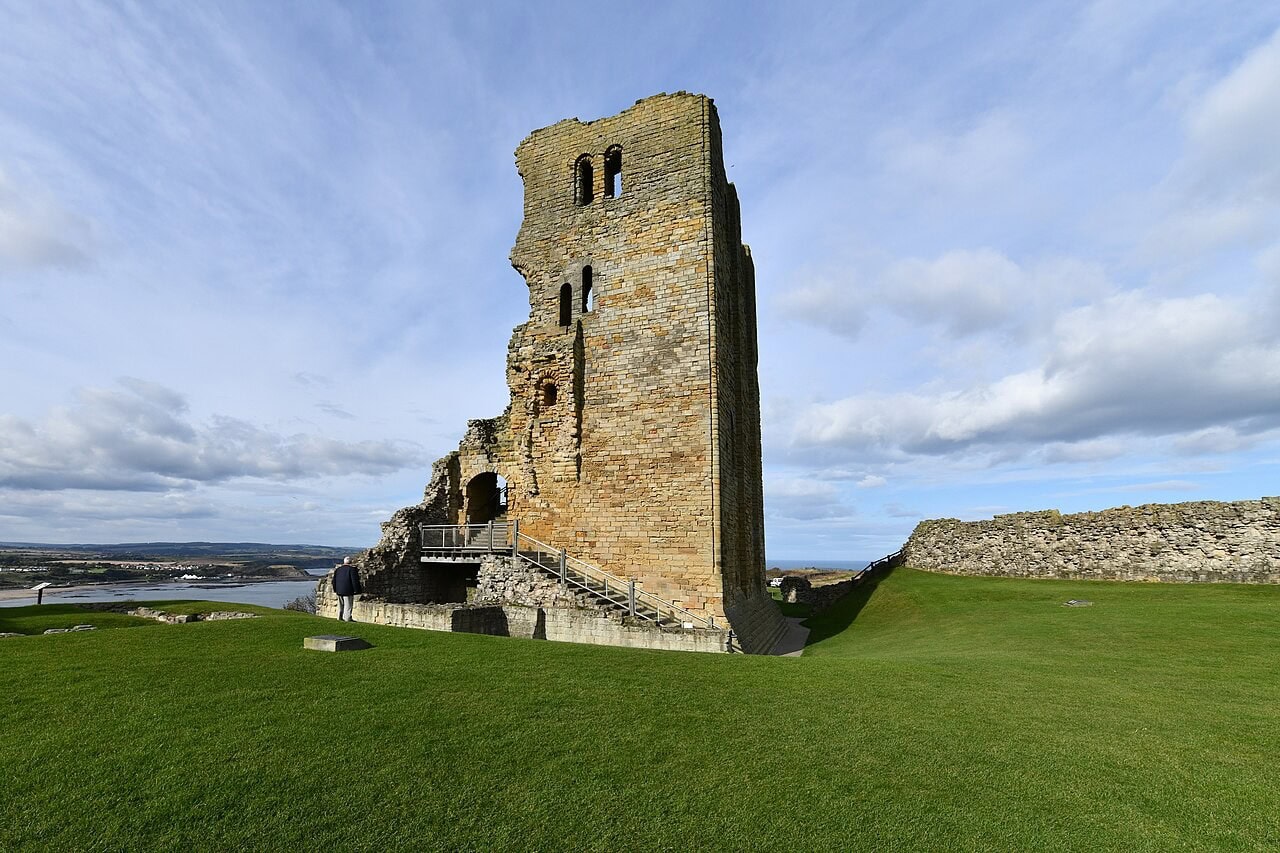
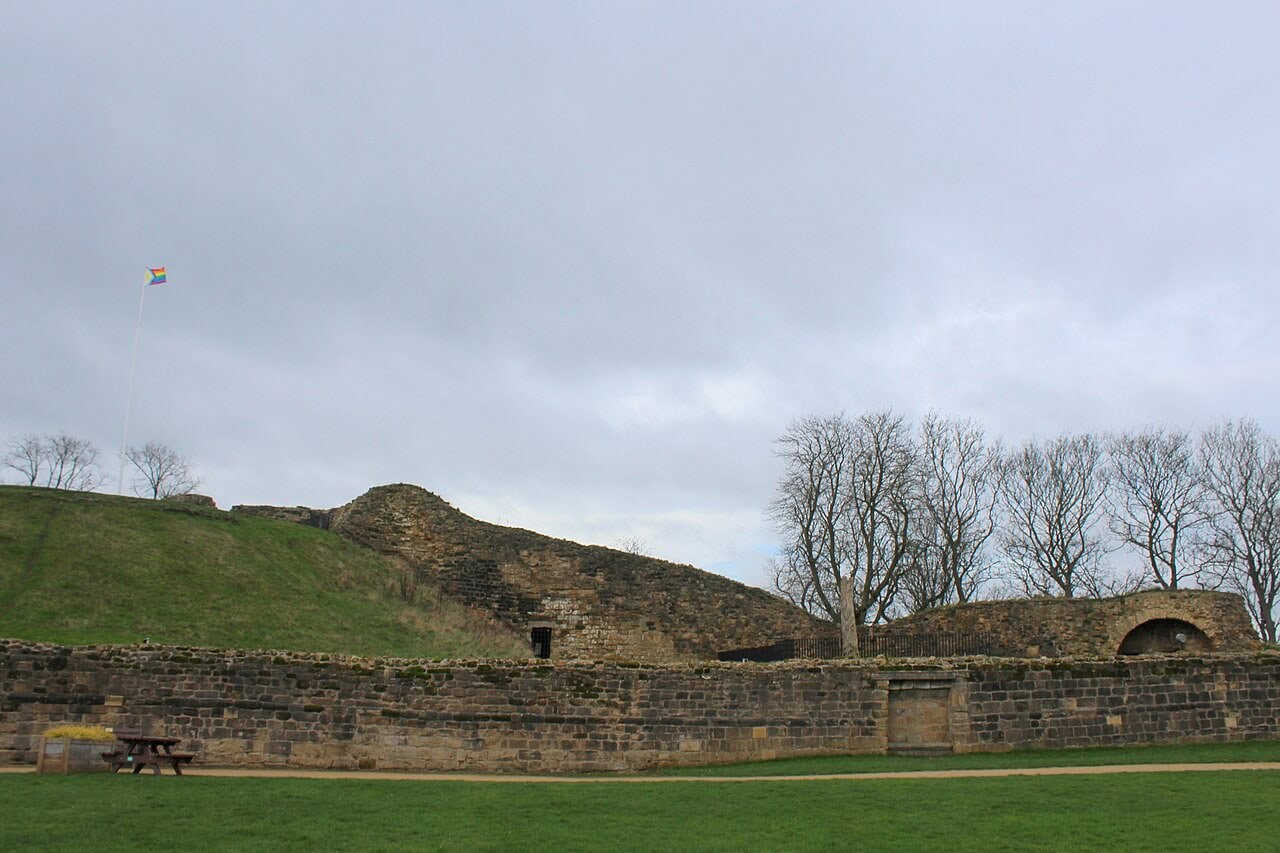
Scarborough is the clearest case. Its great tower was split by bombardment in the siege of 1645. In English Heritage’s words, “The bombardment was so intense that the massive walls of the great tower sheared and half the building collapsed.” Scarborough’s Royalist governor, Sir Hugh Cholmley, wrote that the side which was battered fell, “the other standing firme being supported by an arch of stone that went through the midst,” and Rakoczy traces the manner of the collapse to a stairwell and two latrines built into the west wall, which made that wall, above basement level, the weakest of the tower’s four. The castle was besieged again in 1648, after its Parliamentary garrison declared for the King. Orders to slight the castle followed; English Heritage records that the town’s opposition preserved it, while Historic England’s scheduling record says the castle was slighted by order of Parliament, though that record also says the west face of the keep had already been destroyed by cannon. Whichever record is right about the later order, the half-tower that stands today is the work of the 1645 siege.
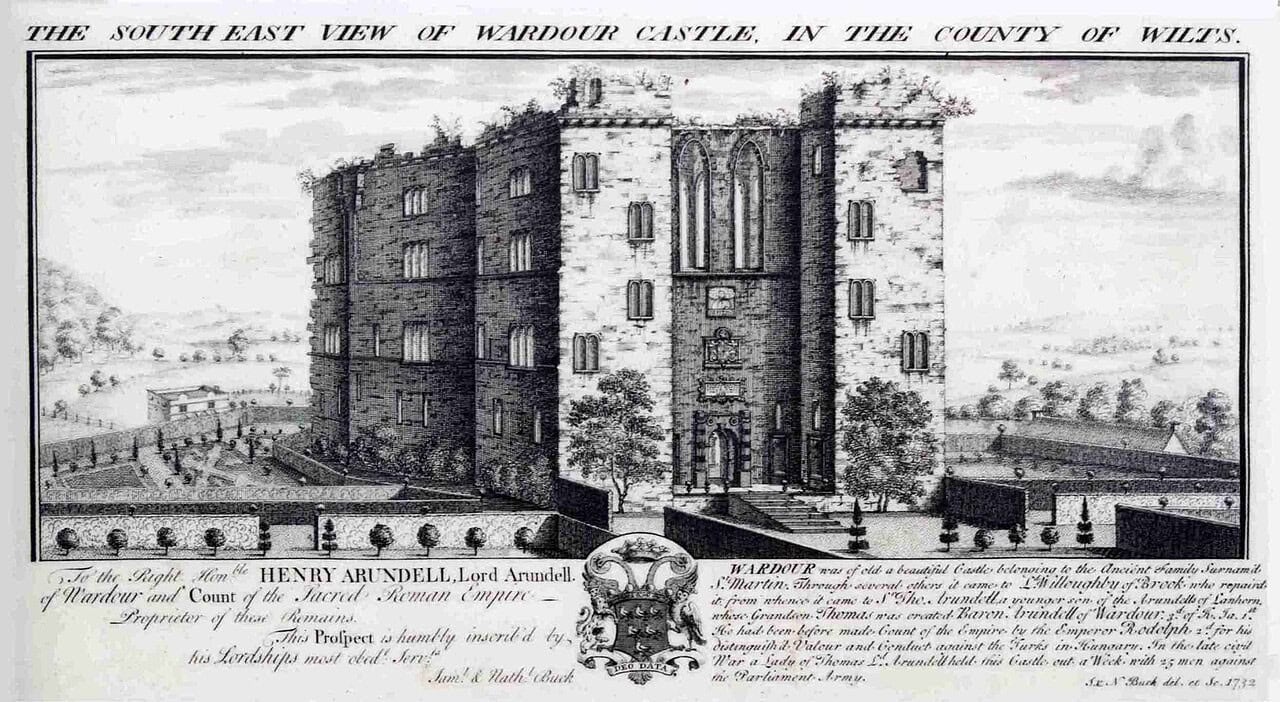
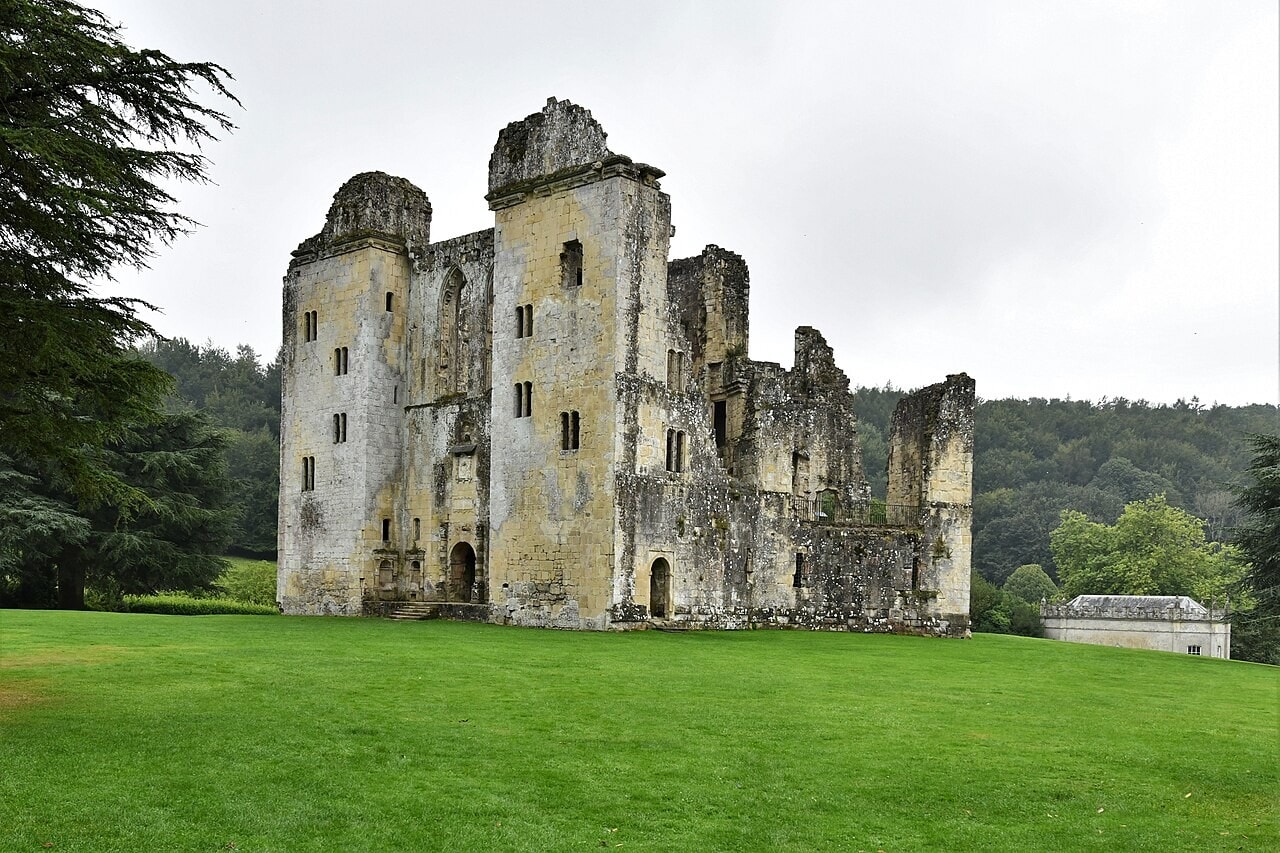
Old Wardour, in Wiltshire, was broken by its own side. In March 1644 Henry, 3rd Lord Arundell, a Royalist, blew up one side of his own castle with a mine while retaking it from a Parliamentarian garrison led by Edmund Ludlow. English Heritage adds that the ruined castle was later confiscated, and that Henry Arundell recovered his estates in 1660, when the monarchy was restored.
Who gave the orders
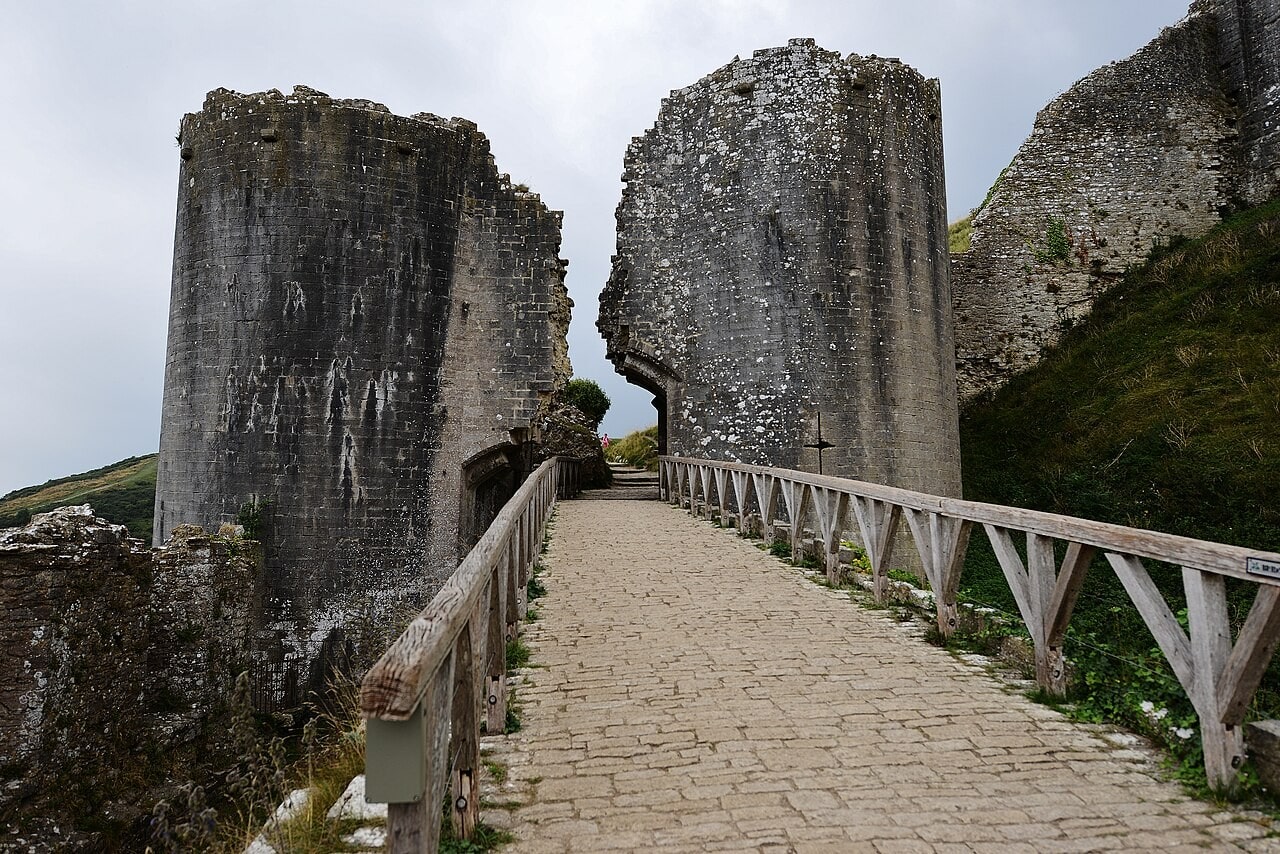
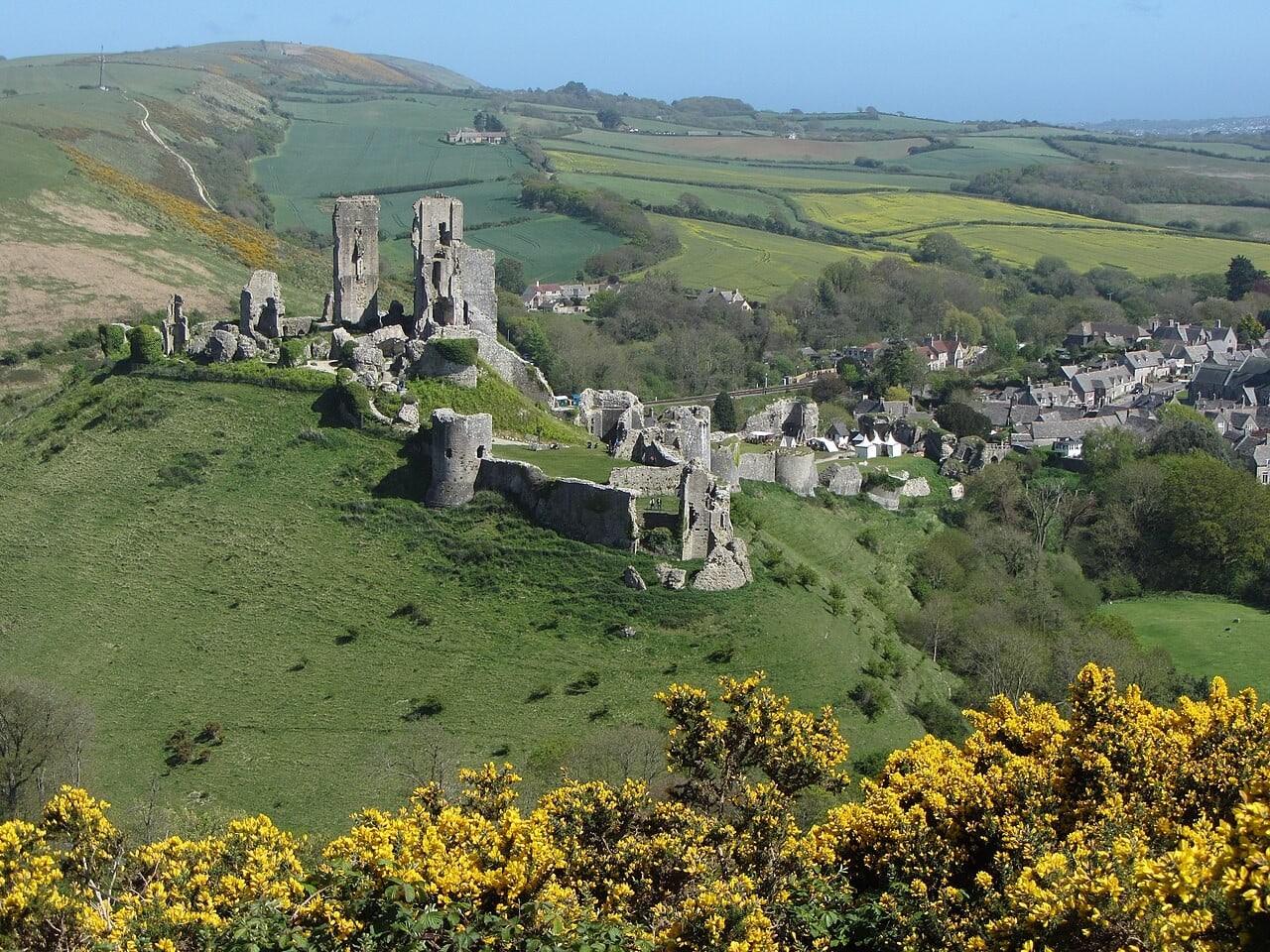
The popular story blames Cromwell, but the surviving orders for the castles that follow name other bodies. Corfe Castle, in Dorset, held for the King by Lady Bankes from 1643, had just fallen, “by treachery,” in the words of the Royal Commission’s inventory. On 5 March 1646 the House of Commons resolved that Corfe be forthwith demolished. On 27 March 1649 it read a petition from the town of Pontefract and resolved that the castle be demolished. The committee it charged with the work was to see the castle “totally demolished, and levelled to the Ground,” to sell only as much of the materials as would pay for the demolition, and to give materials worth £1,000 to the town towards repairing its church. On the same day it asked the Council of State to consider demolishing Bolsover and Clitheroe castles and “all such other Inland Castles” as it thought fit. Wakefield Museums and Castles, which runs the castle today, puts it plainly: “Unlike some might think, it wasn’t the Civil Wars themselves that saw the destruction of the castle.” At Pontefract it was the town that wanted the castle gone, the reverse of Scarborough: its people had endured three long sieges with many casualties, and, in the museum service’s words, “Local people saw the castle as the reason.”
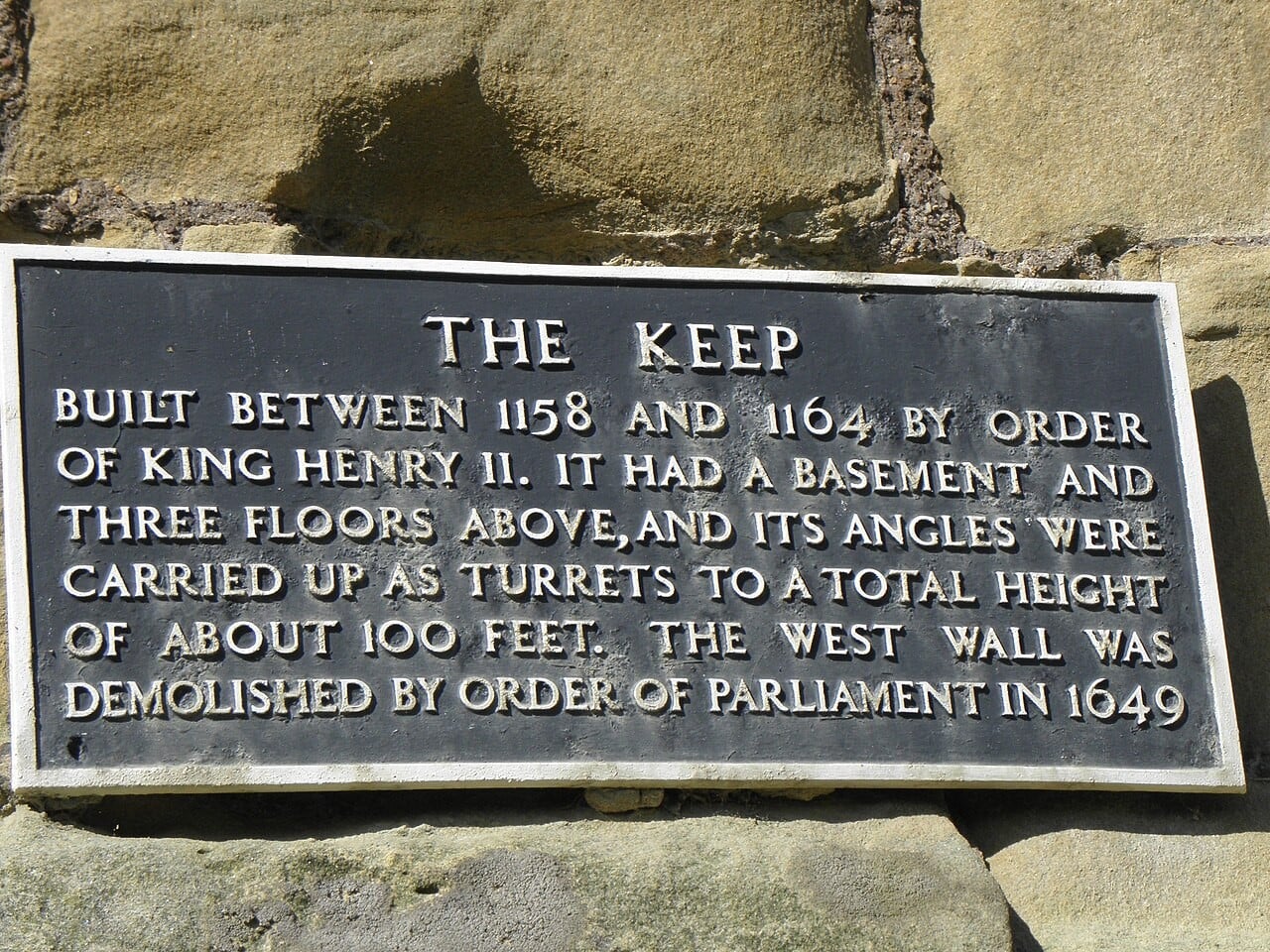
After Charles I was executed in 1649, the Council of State, which Parliament appointed that February with Oliver Cromwell among its members, issued its own orders. The calendar of its papers summarizes the reasoning in a letter of 12 October 1649 to the Governor of Boston, in Lincolnshire: “… Parliament has appointed that such places shall be made untenable, to prevent future danger and the charge of garrisoning.” At Kenilworth, in July 1649, the Council ordered the castle made untenable “with as little spoil to the dwelling-house of it as may be,” and asked for the great tower called Caesar’s Tower, the castle’s keep, to be taken down, and also the outward wall. English Heritage records that in the event the north wall of the keep was destroyed and the outer curtain breached. There the order was larger than the work.
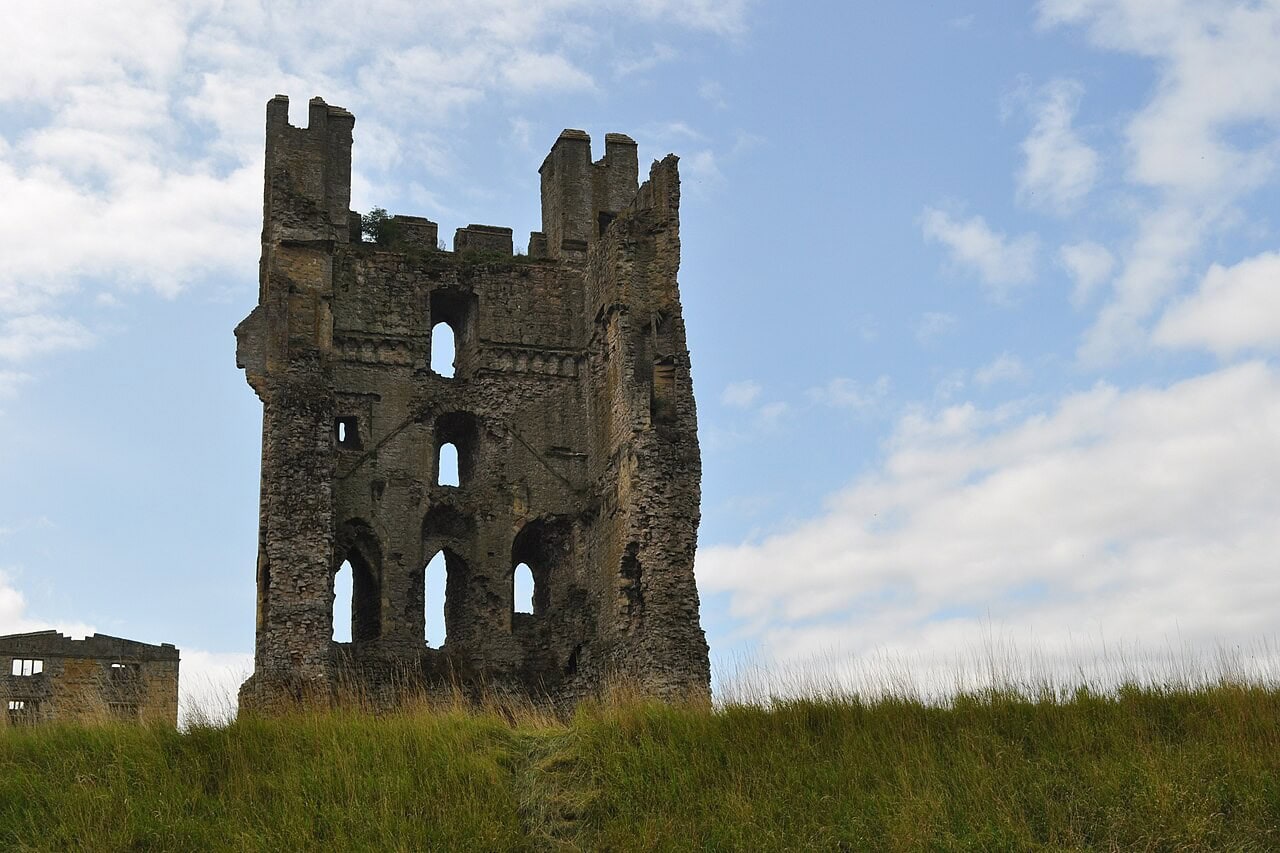
Some demolitions were written into a surrender rather than ordered afterwards. Helmsley was surrendered in November 1644, and the surrender terms required that it be absolutely demolished. Its east tower was split and its walls breached, while the Elizabethan house in the west range was spared.
The orders that survive for Corfe, Pontefract, Kenilworth and Tattershall were made in the name of the House of Commons or the Council of State; Oliver Cromwell is not named as the author of any of them. Mary Anne Everett Green, who edited the Council’s papers for publication in 1875, saw where the story came from: “This forcible pulling down of strongholds will account for the perpetually recurring local traditions of castles destroyed by Cromwell. Many of them were victims, not to the civil war, but to the policy which succeeded it.” Her list of the castles ordered to be dismantled in the volume she edited includes Belvoir and Wressle, two of the castles Leland had described, as well as Scarborough, Kenilworth and Tattershall. What the tradition compresses is the chain of authority, not the damage.
Orders that were not carried out
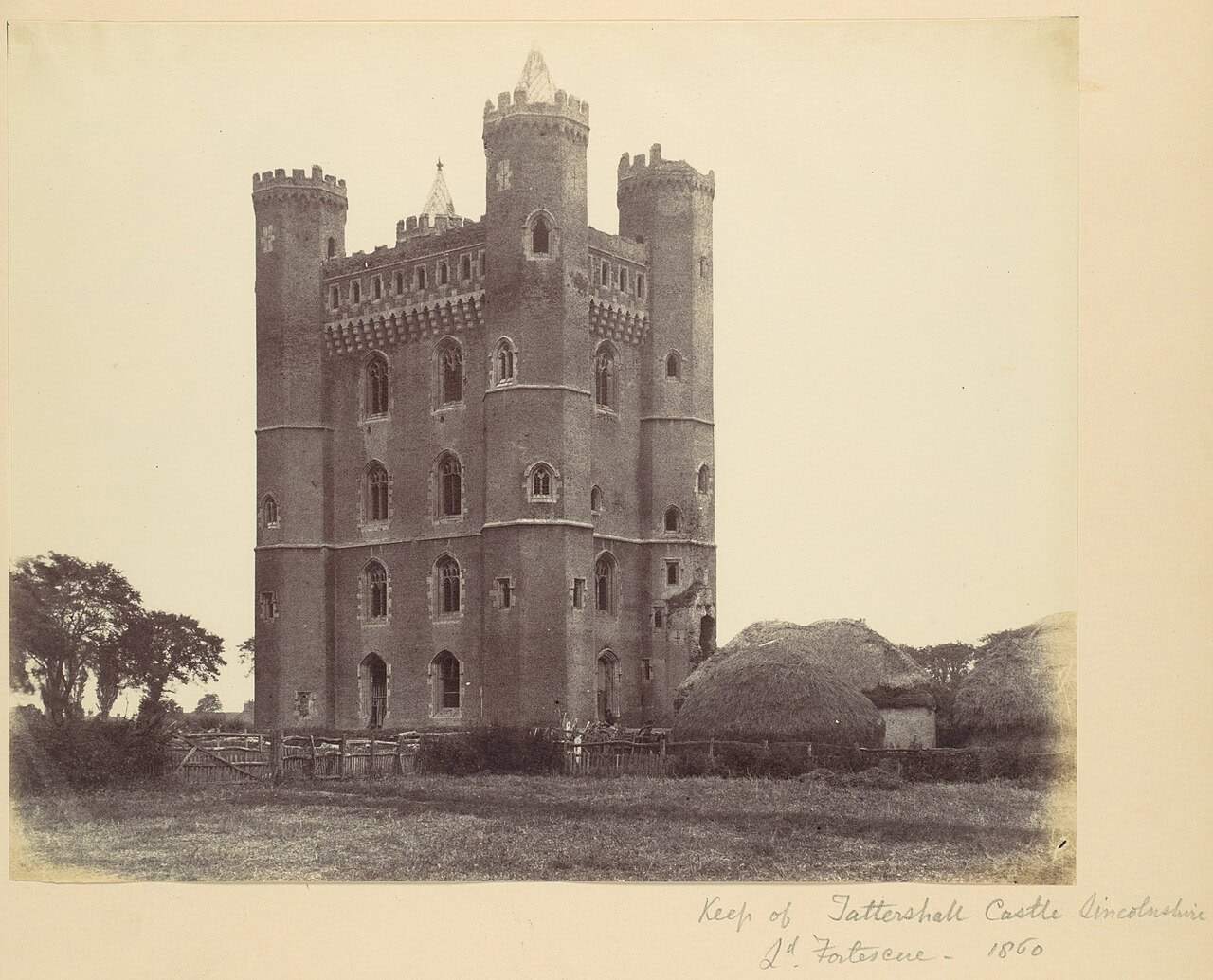
An order was not a demolition. At Tattershall, in Lincolnshire, a different Cromwell, Ralph, Lord Cromwell, Treasurer of England from 1433, built the brick great tower. The Council of State ordered the whole keep at Tattershall demolished in 1649 and repeated the order through the year. It refused a request from the Earl of Lincoln to leave the keep standing with its floors and roof taken out and only the walls left, answering that “… we desire that the whole keep may be demolished forthwith,” and in October it was still noting that “… as yet nothing has been done therein …” Lord Cromwell’s great tower still stands at Tattershall.
Cases the sources still dispute
At Bodiam, both statutory entries blame the English Civil War. The scheduled monument entry says: “The domestic buildings which ranged around the central courtyard were largely dismantled during the Civil War in the 1640s, by which time the castle had ceased to be used as a residence.” The National Trust, which cares for Bodiam, now says that “no such instruction survives” for a slighting. “Instead, its internal buildings appear to have been gradually dismantled as stone and timber were removed for reuse.” Both readings stand on the record.
Tattershall’s survival is disputed too. The National Trust’s history says that “It is believed the Earl of Lincoln agreed to the destruction of structures like the curtain wall and mural towers in order to spare the Great Tower,” while the Council’s letters record it refusing the Earl’s request. Historians also disagree about when a policy of slighting took shape, and Rakoczy dates it differently from earlier scholarship, so the safest dates are the orders’ own.
Stripped for Lead and Stone, Reused as Farms and Prisons
Once a castle had lost its purpose, its fabric had a price. Writing of Pontefract, Rakoczy found that “By far, lead was the single most profitable material to be retrieved from the castle.” Stone, timber and lead, she argues, were “largely symbiotic,” so anything that upset the balance between them could weaken the structure of the whole building. Where good facing stone was robbed for other buildings, it left the rough rubble core of a wall open to the weather.
Named cases show how varied the aftermath was. At Knaresborough, Historic England’s record says, most of the usable stone went into buildings in the town after the demolition, particularly in the eighteenth century. Tattershall, the National Trust says, was abandoned after 1693, and in its long decline a dovecote went into the southwest turret while cattle were kept on the ground floor of the Great Tower. At Framlingham a will set the terms. Its owner, Sir Robert Hitcham, English Heritage records, “left instructions for the castle buildings to be demolished and a workhouse built,” and the first poor families were at work in the Red House, inside the curtain walls, by the mid-seventeenth century.
Other castles were not emptied but taken over. Historic England notes that in some cases a single use could effectively take over a castle site, as the prisons did at Lincoln and Lancaster and the court complex did at York. Lancaster Castle, its operator says, was a fully functioning HM Prison until 2011.
Ruins as Scenery: the Owners Who Kept Them
The destruction itself made castles interesting. Historic England writes that castles “became the subject of historical enquiry almost from the moment they were abandoned, and the scale of their destruction in the mid-17th century prompted further interest and research.” From the late eighteenth century, it adds, a growing interest in medieval architecture and its revival prompted further study, and historical novelists, Sir Walter Scott in particular, widened interest in castles considerably. Artists came for the ruins. Samuel and Nathaniel Buck drew Okehampton in 1734, and eighty years later, English Heritage records, JMW Turner sketched the castle on his tour of England and later painted it.
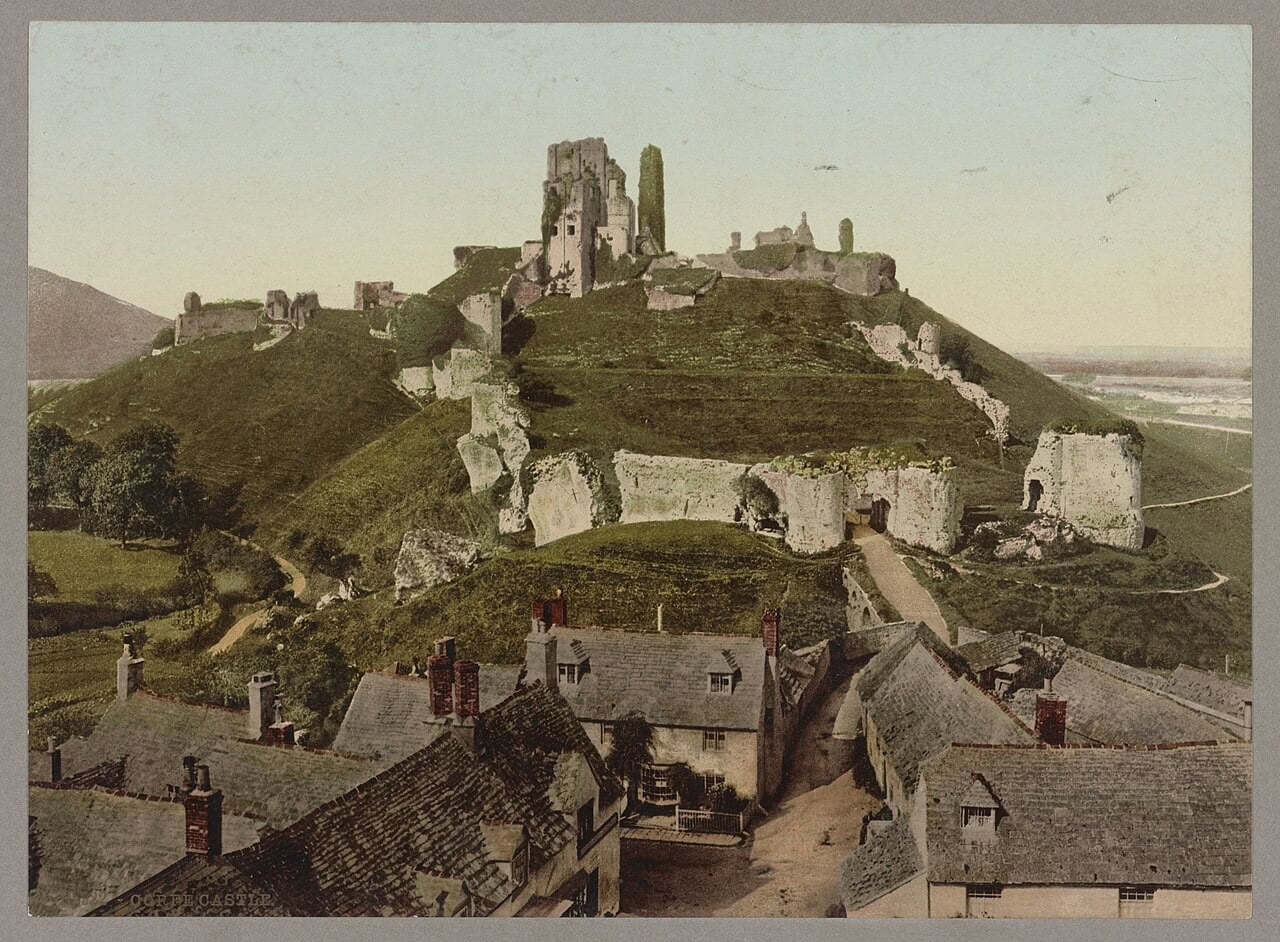
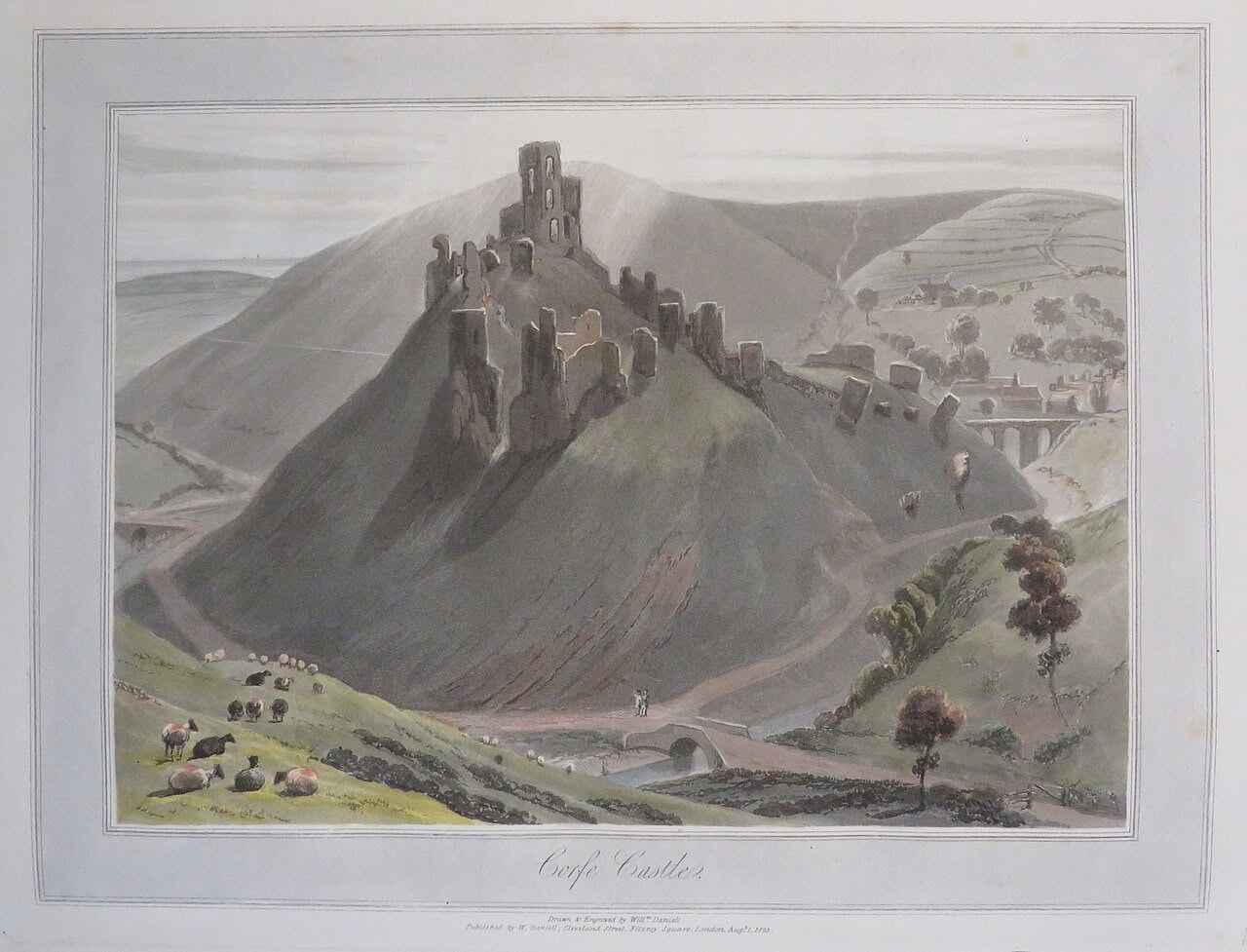
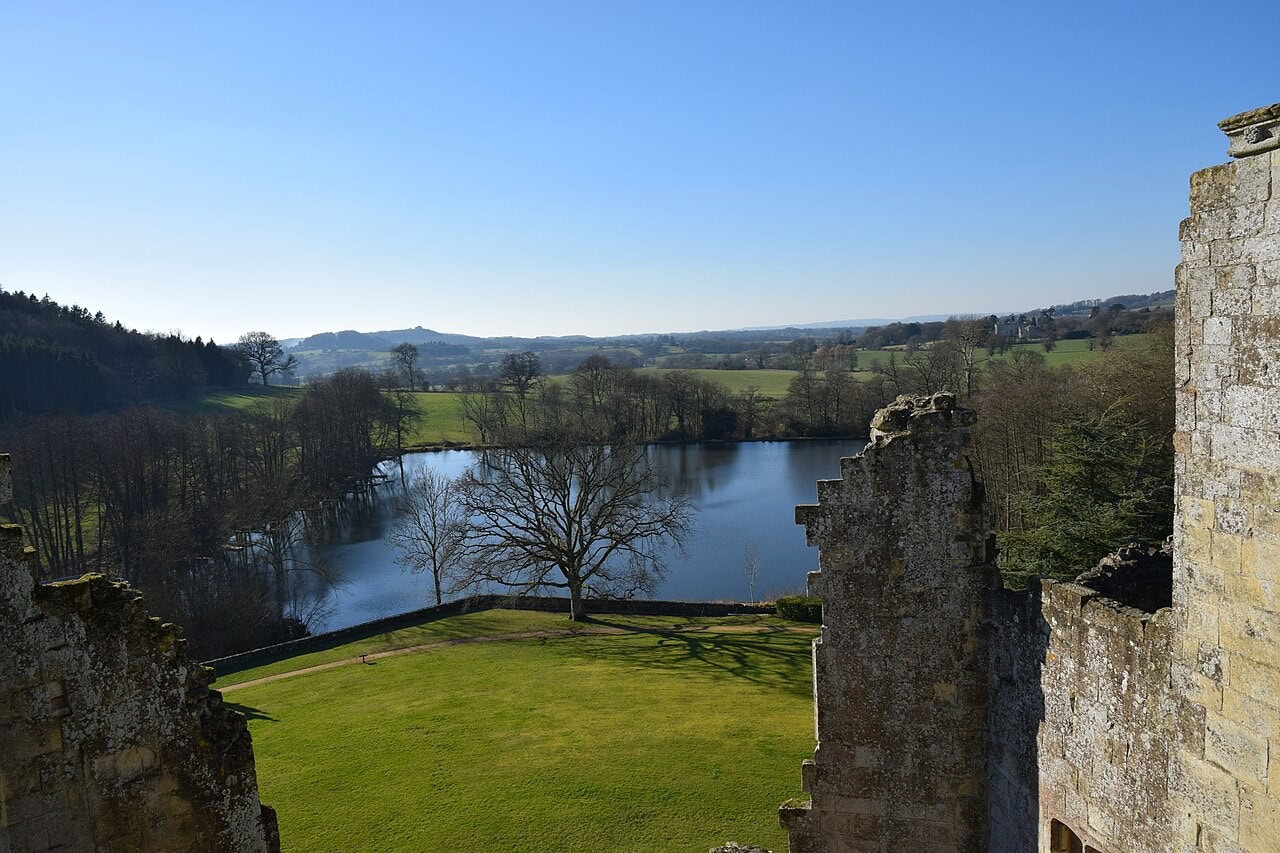
Owners began to keep ruins for the way they looked. At Corfe, Historic England’s scheduling record says, the castle was “retained by the Bankes Estate as a romantic ruin …” After the siege the Arundells did not rebuild Old Wardour; Henry Arundell, English Heritage says, “built a smaller house” instead, and in 1764 the family commissioned a park for their new house “featuring woods, a lake and a picturesque ruin – the old castle,” laid out by Richard Woods. English Heritage calls Helmsley “a Georgian romantic ruin,” left by the Duncombe family for their new house at Duncombe Park.
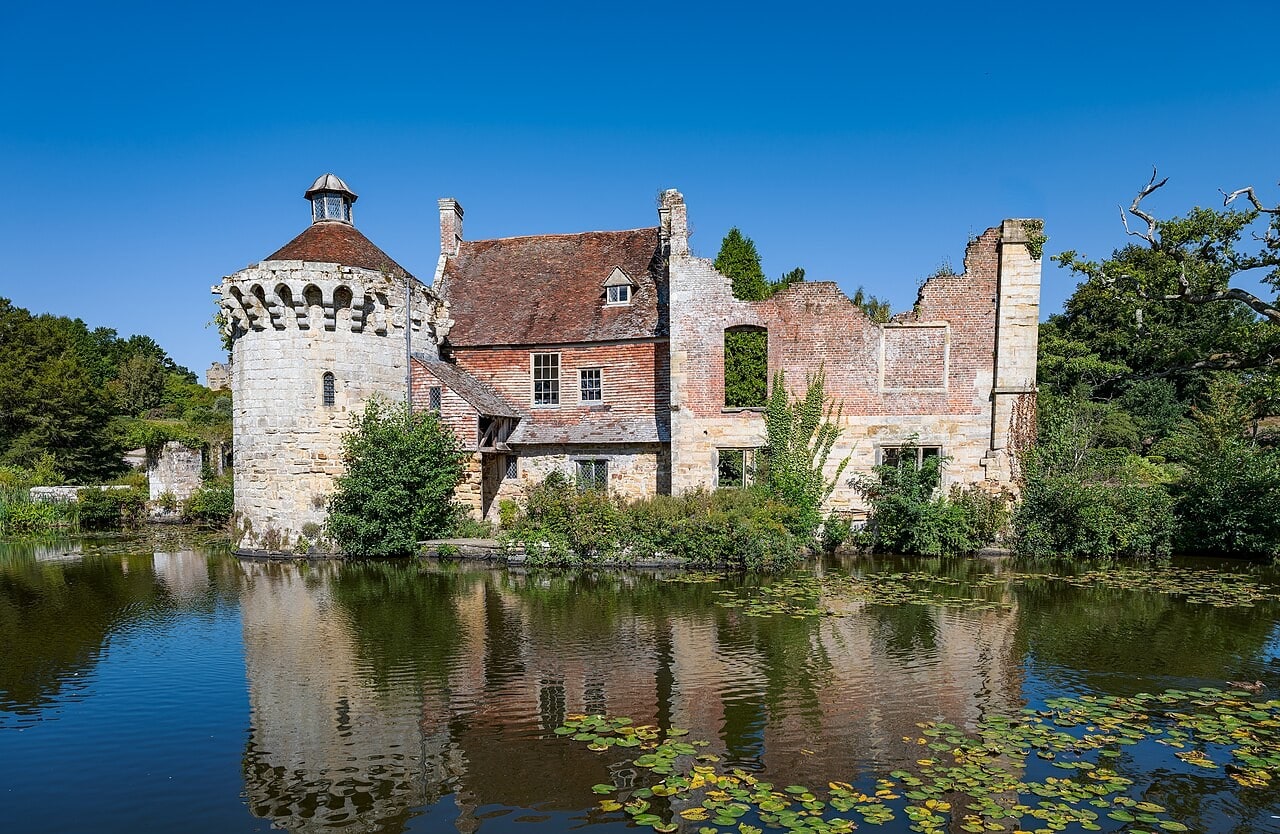
At Scotney, in Kent, its nineteenth-century owner, Edward Hussey, went further. When the estate was remade in the Picturesque style between 1837 and 1843, the National Trust records, “The Old Castle was deliberately partially ruined, with the partial ruins becoming a focal point in the landscape design.” The taste for ruins prized the broken outline itself.
Guardianship: Repair, Not Restoration
The Ancient Monuments Acts, 1882 to 1913
The state came to castles late. The Ancient Monuments Protection Act 1882 received royal assent on 18 August 1882. As its memorandum explained, it applied to “prehistoric remains, dolmens, ancient forts, and similar monuments,” and “more recent historic and ecclesiastical ruins, such as castles, abbeys or churches” were excluded. Its schedule still named Old Sarum, the site whose castle stones the Crown had granted away in 1514. According to Sebastian Fry’s history of the national collection, the Ancient Monuments Protection Act 1900 brought historic buildings into protection for the first time.
For the ruins now in state care, the law that set the terms is the Ancient Monuments Consolidation and Amendment Act 1913, enacted on 15 August 1913. It let an owner place a monument in the guardianship of the state by deed while keeping the title, it gave the state Preservation Orders, and it set up a published list of monuments whose owners had to give a month’s notice before works. It also barred the state from becoming guardian of a building occupied as a dwelling by anyone other than a caretaker or the caretaker’s family.
Tattershall is where the castles and the law meet. By 1911 its fireplaces had been removed and sold; Lord Curzon bought the castle that year, recovered the fireplaces and returned them in the summer of 1912. When the Government’s Ancient Monuments Consolidation and Amendment Bill had its second reading in the Lords in April 1912, Lord Curzon cited Tattershall. Speaking for the Government, Lord Crewe conceded that even under the Bill, an owner who had “chosen to fit up a bedroom” in the building “and occasionally visited it” could still have sold off its mantelpieces or the building itself piecemeal. Fry counts Tattershall among the purchases by American millionaires that “also prompted” new legislation. The National Trust, which received the castle under Curzon’s will in 1925, says: “The site’s dramatic rescue influenced early heritage protection, notably the 1913 Ancient Monuments Consolidation and Amendment Act.”
How the Office of Works Treated a Ruin
Between 1913 and 1931, Fry writes, “Most new guardianship sites were medieval castles and abbeys.” In 1912 the First Commissioner of Works, Earl Beauchamp, had set out what the Office of Works would do with them: “… to avoid, as far as possible, anything which can be considered in the nature of restoration … and to perpetuate their existence in the form in which they have come down to us.” Fry cautions that practice was less tidy than the policy.
He sums up the policy in three words: “The philosophy was ‘repair as found’, which had long been expounded by the SPAB and others, particularly in response to aggressive church restorations of the 19th century.” In 1877 the Society for the Protection of Ancient Buildings issued a manifesto, written by William Morris, Philip Webb and other founder members, asking those in charge of old buildings “… to put Protection in the place of Restoration …” The government policy was older still: Fry, citing Saunders’s 1983 history of the ancient monuments legislation, notes that it “can be traced back to at least the 1840s.” Charles Peers, who led the Office of Works’ Ancient Monuments Branch after 1913, put it in 1931 as “repair and not restoration is the essence of the matter.”
Peers also drew the line between a ruin and a building in use. In 1914 he said: “There is a great distinction between buildings which are still occupied and buildings which are ruins. Buildings which are in use are still adding to their history; they are alive. Buildings which are in ruin are dead; their history is ended.” A ruin, he said, was to be preserved “by every means in your power …”
Preserving a ruin meant editing it. Consolidation, Fry records, meant clearing vegetation, repositioning loose stonework, repairing and strengthening masonry, and grouting, repointing and capping walls. It also meant “the merciless removal of later additions, usually anything post-medieval in date,” which at Portchester took away a bandstand. At Scarborough a damaged medieval hall had been altered in brick in the eighteenth century, and in Fry’s words the decision “was taken to remove the later work and demolish the remains of the hall down to ground floor height so as to reveal the plan of the medieval building.” The work went beyond the walls. Moats and dry ditches, Fry writes, were recreated “with gusto,” using unskilled labor from unemployment relief programs, and Helmsley and Pickering were among the castles whose dry ditches came back.
From the Office of Works to English Heritage
The department’s name changed over the century. Framlingham came into state care in 1913, Scarborough and Goodrich in 1920, Pickering in 1926 and Old Wardour in 1936, all of them under the Office of Works, which kept that name until 1940. After two wartime names came the Ministry of Works from 1943, the Ministry of Public Building and Works from 1962 and the Department of the Environment from 1970. English Heritage began work as a statutory commission in 1984, and since 1 April 2015 English Heritage has been a charity.
Okehampton passed through almost every stage. By the early twentieth century its ruins were “largely obscured by ivy and trees,” English Heritage says. A local businessman, Sydney Simmons, bought the site in 1911 and paid for the ivy to be cleared and the walls stabilized, and in 1917 he gave it to a new local trust. That trust gave the castle to the Ministry of Public Building and Works in 1967, and English Heritage has cared for it since 1984.
English Heritage’s own guidance of 2008, Conservation Principles, set out when a ruin should stay a ruin, with slighted castles among its examples: “If a building or structure was ruined or its character fundamentally changed as a consequence of an important historical event, its subsequent state will contribute to its significance: castles slighted in the Civil War, or monastic houses unroofed at the Dissolution, provide examples.” Attempts to restore “those exceptional places that have survived as ruins,” it said, would deny “their strong visual and emotional evidence of important historic events,” though “their restoration or adaptive re-use may be justified if the alternative is loss.” Decay was another matter: “neglect and decay, abandonment, including the removal of roofs, crude adaptation for transient uses, accidental fires and similar circumstances are not normally historically-significant events,” and restoring what they had damaged would not fail its test.
Practice has also changed at some sites. At Corfe, which the National Trust cares for, some of the vegetation on the wall tops is deliberate. “We use soft capping, a technique using vegetation to protect exposed wall tops,” the Trust says, and while it removes the ivy and valerian that take root in the damaged walls, it keeps the ivy that helps protect the castle. The consolidation Fry describes began with clearing vegetation.
Where a Use Continued
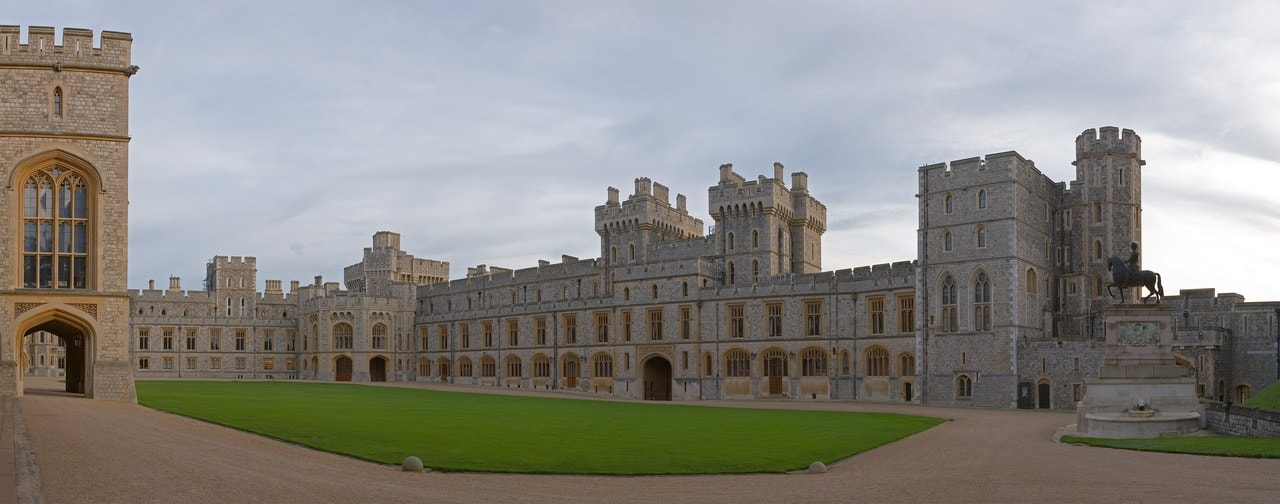
Peers’s living buildings are the castles that did not become ruins. Windsor Castle, the Victoria County History records, was occupied without resistance by Parliamentary troops under Colonel Venn on 28 October 1642, and an attack by Prince Rupert in November 1642 failed. The Royal Household says: “Over a period of nearly 1,000 years Windsor Castle has been inhabited continuously, and altered and refurbished by successive monarchs.” It also says the castle “remains a working palace today.”
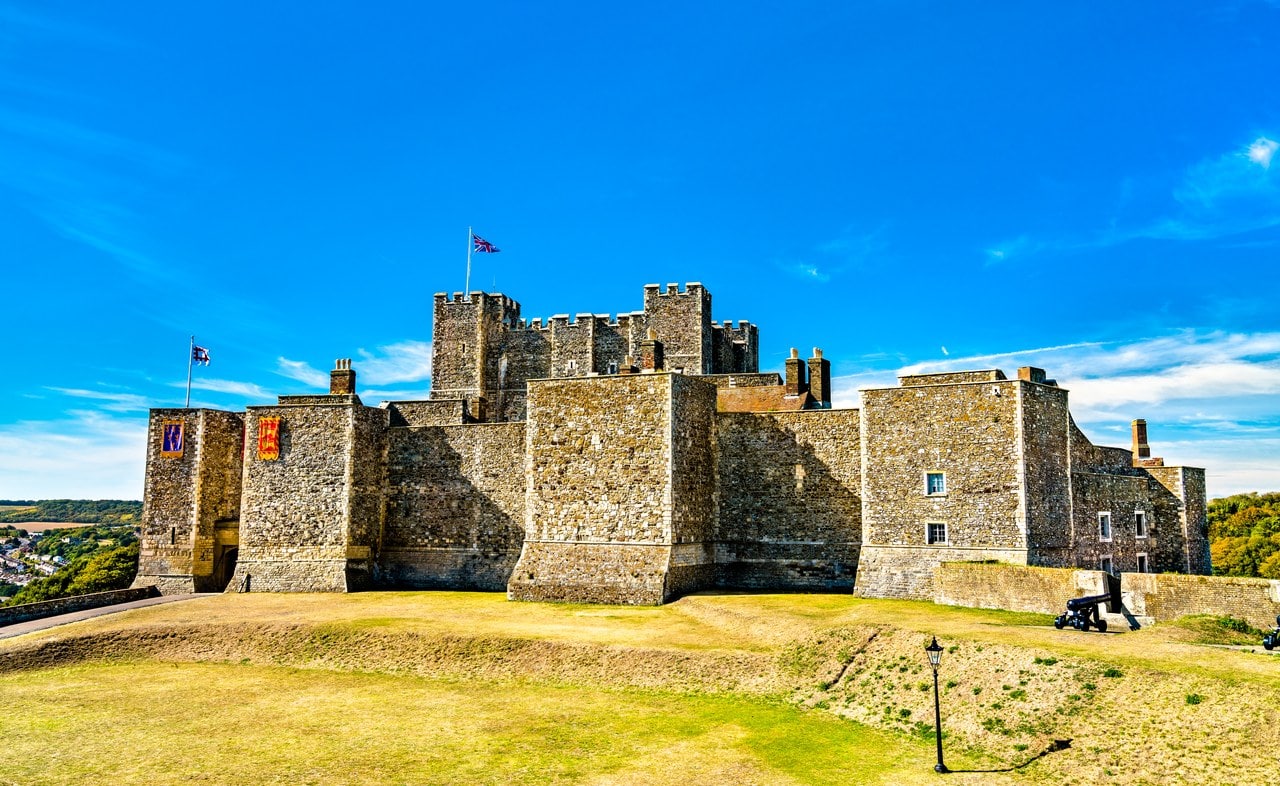
Dover Castle was not always kept in repair. English Heritage says Dover was neglected after 1625, its great tower a prison for French and Spanish prisoners in 1688-97 and 1701-14, until, from the 1740s, works to its decaying buildings created a barracks in the inner bailey and the great tower. In the 1790s military engineers altered the medieval defenses, “most dramatically where the entire eastern outer wall was cut down and backed by an earth rampart for cannon.” The Army left in 1958, apart from Constable’s Gate, which stayed a senior officer’s residence until 2015.
Knaresborough shows use deciding what survived within a single demolition. Historic England’s record says the castle was thoroughly demolished in 1648 on Parliament’s instructions: nearly the whole circuit of the curtain wall and every building inside it went, except the courthouse and part of the King’s Tower, which “survived, as they were required to serve as a courthouse and prison respectively.” Repair could also follow a slighting or a long abandonment. At Skipton, slighted in 1648 or 1649, Lady Anne Clifford largely rebuilt the castle between 1657 and 1659. English Heritage says she found the Clifford castles “ruined or in poor condition,” Pendragon and Brough among them, and that she repaired every one of them.
Reading a Ruin When You Visit
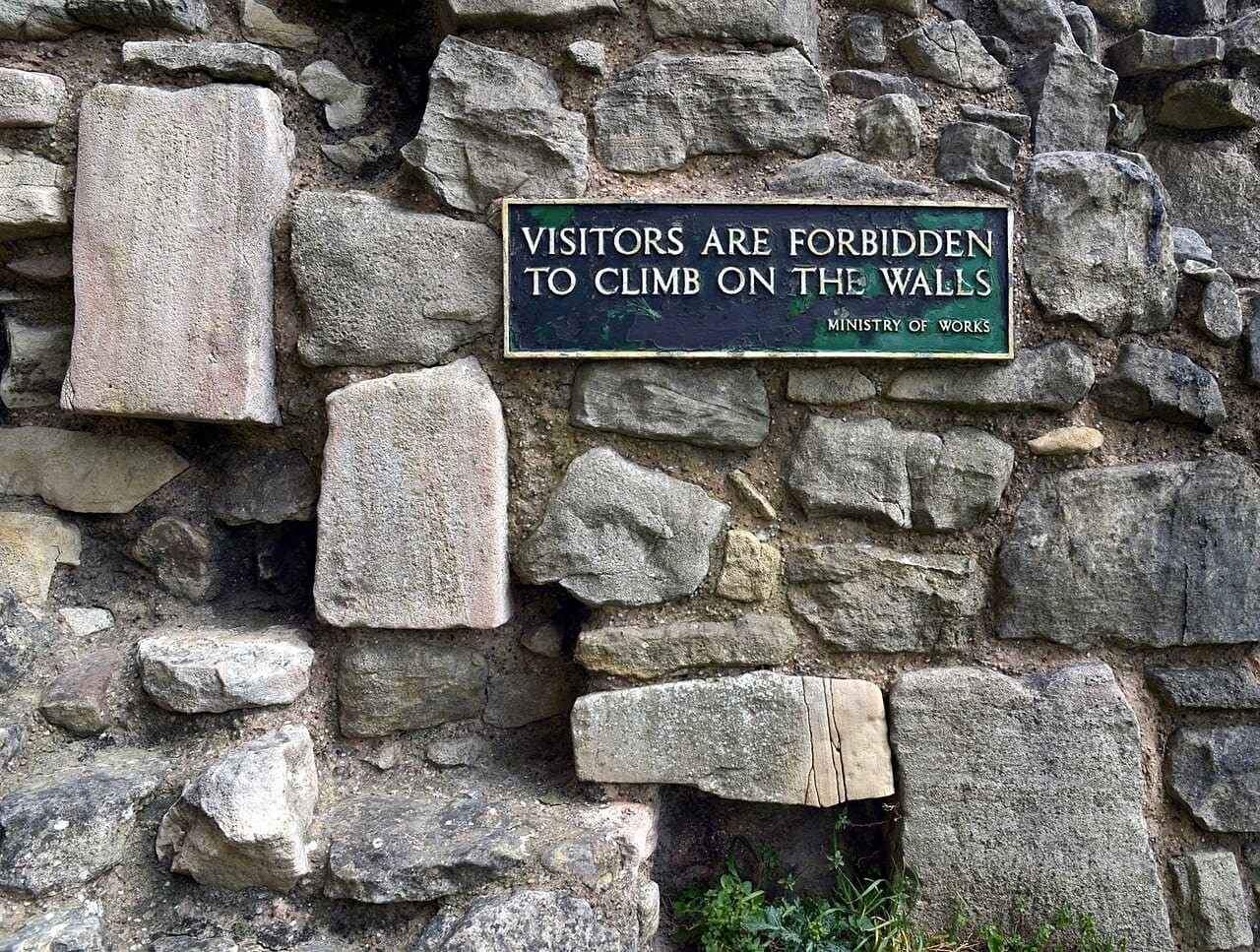
Who looks after a ruin decides how you get in. Many of the places English Heritage looks after are held, in the words of the charity’s annual report, “… in the guardianship of the Secretary of State for Culture, Media and Sport with the freehold being retained by the owner.” A monument in state guardianship carries a public right of access under the Ancient Monuments and Archaeological Areas Act 1979, with the guardian setting the times and able to close it for safety or to protect the monument. Scheduling on its own gives none: Historic England states that “The inclusion of a monument in the Schedule does not give members of the general public any rights of access.” Some English Heritage places are free to enter. Who runs each of the castles we cover is set out in our guide to England’s castles by region and operator.
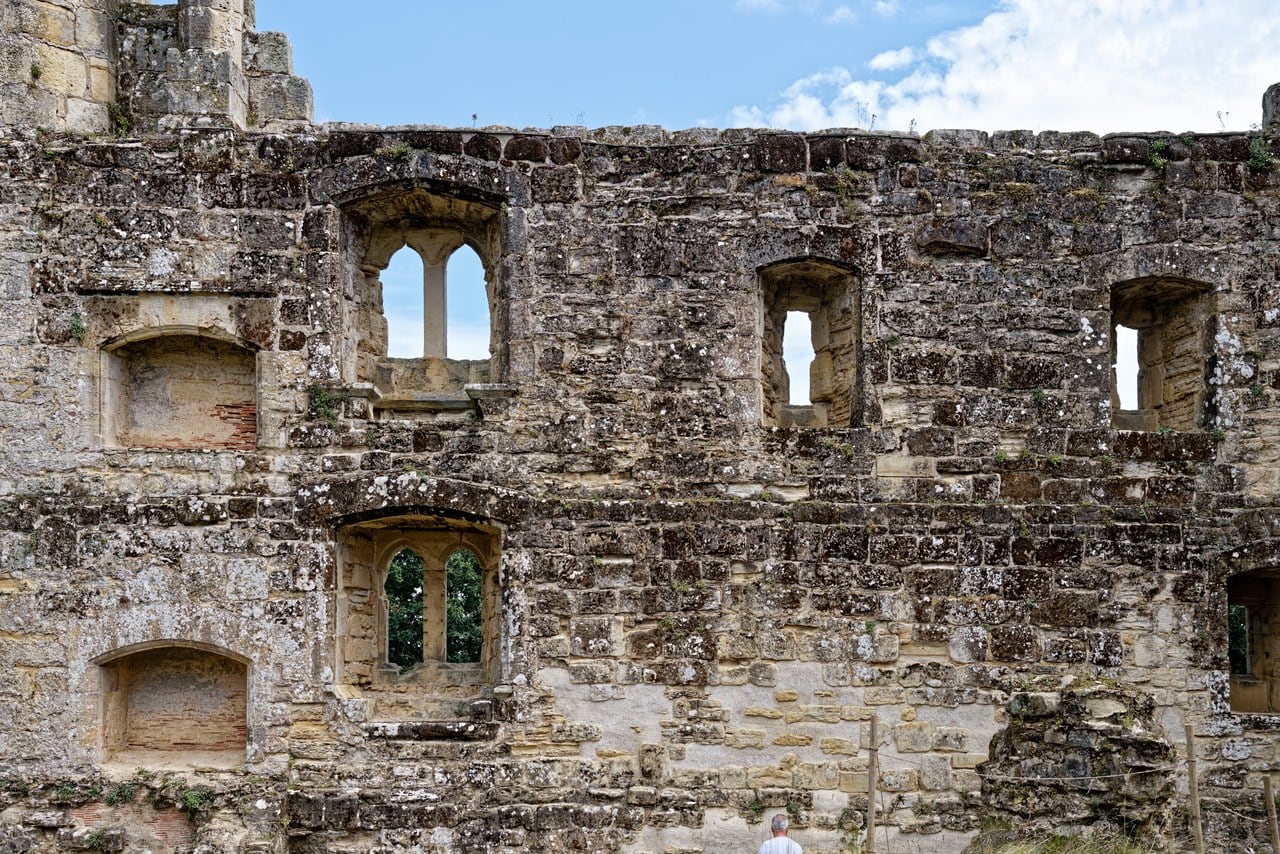
Do not expect to tell a slighting from decay by eye. Rakoczy’s study of undermined castles found that “Thinner walls and voids such as windows, stairwells, and fireplaces were shown to dictate where buildings cracked, collapsed, or leaned, as well as the severity of the damage,” and she warns that “structures that appear undermined or deliberately destroyed might in fact have fallen to ruin through natural or other causes.” A better guide is the site’s written history: the operator’s pages at Old Wardour and Pontefract say which force did what, and Kenilworth’s says what was destroyed after the 1649 order, though at Scarborough, Tattershall and Bodiam the records disagree. At Bodiam Castle the National Trust points visitors to the surviving windows and fireplaces, which offer clues to where each floor once was.
Most of the stages in this story can still be seen on the ground. Okehampton, in Devon, was probably stripped before the war and left alone by it. Scarborough, on the North Yorkshire coast, keeps the half-tower the 1645 siege left, and Old Wardour, in Wiltshire, the damage its own side’s mine did. Pontefract, in West Yorkshire, shows a demolition order carried out, and Tattershall, in Lincolnshire, a great tower that outlived its order. Helmsley, in North Yorkshire, was broken under its surrender terms and later had its dry ditches recreated. Corfe, in Dorset, was ordered demolished and then kept as a romantic ruin, and Scotney, in Kent, was partly ruined on purpose. At Knaresborough, also in North Yorkshire, the courthouse still stands amid the wreck. English Heritage cares for Okehampton, Scarborough, Old Wardour and Helmsley, the National Trust for Corfe, Tattershall and Scotney, and Wakefield Museums and Castles for Pontefract.
Look at the setting as well as the walls. Mown lawns, cleared wall faces and exposed ground plans are, in Fry’s account, the presentation the Office of Works gave its monuments after 1913, and he writes: “Peers and his Principal Architect, Sir Frank Baines, determined the presentation of these monuments; a legacy that can still be seen today.”
More Views of Ruin and Survival in England
Common Questions
Why were so many English castles left to decay instead of being repaired?
Upkeep cost money, and two owners on record said so. Offering Framlingham to the Office of Works in 1912, Pembroke College, its owner, admitted the castle was an expense “rather than an advantage, except as a matter of historical sentiment,” since the income of the estate that came with it could not be spent on the building. At Okehampton, the local trust that took the ruins in 1917 was, English Heritage says, “struggling to meet the costs of maintaining a ruined castle” by the 1960s.
Did Cromwell destroy England’s castles?
The surviving orders for Corfe, Pontefract, Kenilworth and Tattershall do not name him as their author, though he belonged to both bodies that made them: the Commons, as MP for Cambridge, and from February 1649 the Council of State. Lila Rakoczy’s 2007 study concluded that “most of the castles ‘Cromwell knocked around a bit’ appear to have actually been destroyed by a motley collection of regional and local bureaucrats and petty officers.” Following Thompson’s earlier research, she says demolition orders were generally carried out by Deputy Lieutenants or county committees.
Were all English castles slighted in the Civil War?
No, and the pattern is argued over. In a 1987 study, as Rakoczy reports it, Thompson argued that slighting was “the rule rather than the exception” in Yorkshire and the Midlands but that evidence of it is not common in East Anglia, Kent, Devon, Cornwall, Cumbria and Northumberland. He also held that inland castles were slighted while most coastal ones were spared. Rakoczy called that view “fairly dogmatic,” though he allowed exceptions, and said it “fails to provide any firm criteria for what sites contemporaries realistically considered to be ‘coastal’.”
Why is Corfe Castle in ruins?
Its ruin was ordered and then worked on for centuries. The castle was mined and blown up, the Royal Commission records, though Rakoczy argues that “gunpowder was not the strongest cause of destruction at site level,” and that building weaknesses, the slope and later collapse mattered more; part of the Butavant Tower fell in 1866. The National Trust says the ruins were looted for building materials in the late 17th and 18th centuries, while the Bankes family built a new house at Kingston Lacy.
Are any of England’s castles still lived in?
Yes, though the law treats them differently from ruins. Alnwick Castle in Northumberland is privately owned: “Alnwick Castle is not National Trust or English Heritage,” its operator says, and the Percy family, hereditary Dukes of Northumberland, have held it since 1309, with the Duke and Duchess living there for part of the year. Under the Ancient Monuments and Archaeological Areas Act 1979, a building someone lives in, other than a caretaker or a member of the caretaker’s family, cannot be added to the Schedule of monuments.
Can you buy a ruined English castle and restore it?
Scheduling does not stop a monument changing hands, since Historic England’s guide for owners says the freehold is unaffected. Restoring one is another matter. Works to a scheduled monument, repairs included, need Scheduled Monument Consent under the 1979 Act, and consent cannot be given after the work is done. The same guide adds a balancing line: “In the great majority of cases, Scheduled Monument Consent applications are successful.”
Were castles ruined in the Dissolution of the Monasteries?
Not by the Dissolution itself, which closed religious houses. English Heritage puts it briefly: Henry VIII “forcibly suppressed all monasteries between 1536 and 1540.” A castle was a lord’s house and stronghold rather than a religious community, so it was not dissolved. Castles in the same decades were losing lead and stone by other routes, as Leland’s notebooks record.
Beyond the Ruins
For the buildings themselves, our guide to the parts of a medieval castle explains what each surviving wall, tower and room was for, and our history of where castles came from, and why building them stopped sets out the longer arc. Kenilworth, Bodiam, Framlingham, Windsor and Dover each have a full guide that follows this story onto the ground: the 1649 order at Kenilworth, the workhouse inside Framlingham’s walls, the dispute over Bodiam’s dismantling, and the long use of Windsor and Dover. Our guide to castles in England sets out the castles we cover by what survives at each and who runs it.
Conclusion
England’s ruins were made by many hands over several centuries: by people who let roofs fail and stripped the lead, by the House of Commons and the Council of State, by siege guns and a Royalist’s mine, by a town that petitioned for its castle’s demolition, by builders who carried the stone away, by owners who kept ruins as scenery, and by a twentieth-century state that set out to repair what survived rather than restore it. Many of the buildings that escaped were ones somebody still needed, or needed again: a palace at Windsor, a barracks at Dover, a courthouse and a prison amid the wreck of Knaresborough. What a visitor walks through is the sum of those decisions. They meet in one place at Okehampton, probably stripped before the war, passed over by it, hidden under ivy, cleared by a private buyer and finally handed to the state.
Principal Sources
- Alnwick Castle. “FAQs.” alnwickcastle.com. Private ownership by the Percy family since 1309; the Duke and Duchess in residence part of the year.
- Ancient Monuments and Archaeological Areas Act 1979 (c. 46). legislation.gov.uk. The Schedule and its dwelling exclusion, Scheduled Monument Consent, and the public right of access to guardianship monuments.
- Ancient Monuments Consolidation and Amendment Act 1913 (3 & 4 Geo. 5 c. 32), as enacted. legislation.gov.uk. Guardianship by deed, Preservation Orders, the published list, and the exclusion of occupied dwellings.
- Ancient Monuments Protection Act 1882, as enacted (scan). media.unesco.org. The monuments named in the Act’s schedule, Old Sarum among them.
- English Heritage. Conservation Principles, Policies and Guidance. 2008, paras. 133 and 135. historicengland.org.uk. Slighted castles’ ruined state as part of their significance, with its stated limit, and neglect and decay treated differently.
- English Heritage. “Helmsley Castle.” english-heritage.org.uk. Helmsley as a Georgian romantic ruin.
- English Heritage. Helmsley Castle Teachers’ Kit. 2025. english-heritage.org.uk. The 1644 surrender terms and the splitting of the east tower.
- English Heritage. “History of Dover Castle.” english-heritage.org.uk. Neglect after 1625, the prisoners of 1688-1714, the 1740s barracks, and the eastern outer wall cut down for cannon in the 1790s.
- English Heritage. “History of Framlingham Castle.” english-heritage.org.uk. The bequest that ordered the castle buildings demolished and a workhouse built.
- English Heritage. “History of Kenilworth Castle.” english-heritage.org.uk. The north wall of the keep destroyed and the outer curtain breached.
- English Heritage. “History of Okehampton Castle.” english-heritage.org.uk. Stripping probably begun by Sir Peter Carew after 1544, no Civil War use, the Bucks and Turner, Simmons, the trust and its costs, and the transfer of 1967.
- English Heritage. “History of Old Sarum.” english-heritage.org.uk. The 1514 grant of the castle’s stones.
- English Heritage. “History of Old Wardour Castle.” english-heritage.org.uk. The 1644 mine, the smaller house, and the picturesque ruin of 1764.
- English Heritage. “History of Scarborough Castle.” english-heritage.org.uk. The chamber block in ruins by 1538, the 1645 bombardment, and the town’s opposition to the slighting.
- English Heritage. “Lady Anne Clifford.” english-heritage.org.uk. Pendragon and Brough before the war, and the repair of all five Clifford castles.
- English Heritage. “Tudors: Religion.” english-heritage.org.uk. Henry VIII’s suppression of the monasteries, 1536-40.
- English Heritage Trust. Annual Report and Accounts 2023/24. english-heritage.org.uk. Guardianship with the freehold retained by the owner; the charity from 1 April 2015.
- Fry, Sebastian. A History of the National Heritage Collection, Volume One: 1882-1900, Lt. General Augustus Pitt-Rivers and the First Ancient Monuments Act. Research Report Series 45-2014. English Heritage, 2014. historicengland.org.uk. The 1882 Act and its memorandum.
- Fry, Sebastian. A History of the National Heritage Collection, Volume Two: 1900-1913, The Offices of War, Woods and Works. Research Report Series 46-2014. English Heritage, 2014. historicengland.org.uk. The 1900 Act and historic buildings.
- Fry, Sebastian. A History of the National Heritage Collection, Volume Four: 1913-1931, The Ancient Monuments Branch under Peers and Baines. Research Report Series 48-2014. English Heritage, 2014. historicengland.org.uk. Beauchamp’s 1912 policy, “repair as found”, Peers in 1914 and 1931, consolidation, Scarborough’s hall, recreated ditches, Framlingham in 1913 and Tattershall in 1911.
- Green, Mary Anne Everett, ed. Calendar of State Papers, Domestic Series, 1649-1650. London, 1875. archive.org. The Council of State’s orders for Kenilworth and Tattershall, the Boston letter, and the preface on the Cromwell tradition.
- Historic England. “Historic England and the English Heritage Trust.” historicengland.org.uk. The Historic Buildings and Monuments Commission for England, established in 1984 and known as English Heritage until 1 April 2015.
- Historic England. National Heritage List for England, entries 1009963 (Helmsley), 1011374 (Scarborough), 1011487 (Corfe), 1013554 and 1044134 (Bodiam), 1020586 (Knaresborough). historicengland.org.uk. The statutory record for each case.
- Historic England. Scheduled Monuments: A Guide for Owners and Occupiers. historicengland.org.uk. No public right of access, the freehold unaffected, and consent for works.
- Historic England. Stone Castles: Introductions to Heritage Assets. 2018. historicengland.org.uk. Castles out of fashion but still in use, the slightings and their caution, prisons and courts, and the late-eighteenth-century revival.
- History of Parliament Trust. “Cromwell, Oliver (1599-1658).” In The History of Parliament: the House of Commons 1604-1629, ed. Andrew Thrush and John P. Ferris. 2010. historyofparliamentonline.org. Cromwell as MP for Cambridge in the Long Parliament and a member of the Council of State from 1649.
- House of Commons. Journal of the House of Commons, vol. 4 (5 March 1646) and vol. 6 (27 March 1649). british-history.ac.uk. The Corfe and Pontefract orders and the referral of the inland castles.
- House of Lords. Hansard, HL Deb 30 April 1912, vol. 11. api.parliament.uk. The Lords debate on the Bill, Curzon on Tattershall and Crewe on the dwelling gap.
- Lancaster Castle. “History and Heritage.” lancastercastle.com. An HM Prison until 2011.
- Leland, John. The Itinerary of John Leland in or about the Years 1535-1543, ed. Lucy Toulmin Smith. London, 1907-10. Vol. 1 and vol. 5, archive.org. Decay and stripping at English castles before the war.
- National Trust. “Caring for Corfe Castle.” nationaltrust.org.uk. Soft capping and retained ivy.
- National Trust. “Exploring Bodiam Castle.” nationaltrust.org.uk. The windows and fireplaces that mark the lost floors.
- National Trust. “History of Bodiam Castle.” nationaltrust.org.uk. The Trust’s current reading of Bodiam’s dismantling.
- National Trust. “The history of Corfe Castle.” nationaltrust.org.uk. Looting for materials and the move to Kingston Lacy.
- National Trust. “The history of Scotney Castle.” nationaltrust.org.uk. The Old Castle deliberately partially ruined, 1837-43.
- National Trust. “The history of Tattershall Castle.” nationaltrust.org.uk. The long decline, the 1911 rescue, and the Trust’s view of its influence on the 1913 Act.
- Rakoczy, Lila. “Archaeology of Destruction: A Reinterpretation of Castle Slightings in the English Civil War.” PhD thesis, University of York, 2007. etheses.whiterose.ac.uk. The definition of slighting, the officials who carried it out, gunpowder at Corfe, weak points, and the salvage of lead and stone.
- Royal Commission on Historical Monuments (England). “Corfe Castle.” In An Inventory of the Historical Monuments in the County of Dorset, vol. 2. 1970. british-history.ac.uk. The mining and explosion of Corfe, and the undermined southwest gatehouse tower.
- Royal Household. “Windsor Castle.” royal.uk. Windsor inhabited, altered and still a working palace.
- Society for the Protection of Ancient Buildings. “The SPAB Manifesto.” spab.org.uk. The manifesto of 1877 and its call for protection in place of restoration.
- The National Archives. “Records of the successive Works departments, and the Ancient Monuments Boards and Inspectorate” (WORK). discovery.nationalarchives.gov.uk. The names of the state’s works department from 1851.
- Victoria County History. A History of the County of Berkshire, vol. 3, pp. 5-29. british-history.ac.uk. Windsor occupied without resistance in October 1642 and Prince Rupert’s failed attack.
- Wakefield Museums and Castles. “The demolition of Pontefract Castle.” museumsandcastles.wakefield.gov.uk. The demolition after the war rather than during it.
Image credits. Hero, the ruins of Corfe Castle spread over their hill: Photo: Barry Skeates, CC BY 2.0. Source: Corfe castle 01 (14722092583), Wikimedia Commons; Corfe above its village, a late nineteenth-century photochrom: Photochrom, public domain, via the Library of Congress. Source: Corfe Castle LCCN96513047, Wikimedia Commons; Corfe Castle, William Daniell’s aquatint: William Daniell, public domain. Source: William Daniell 1824 Corfe Castle, Wikimedia Commons; the Bucks’ North View of Tintagel Castle, 1734: Samuel and Nathaniel Buck, public domain. Source: Buck Tintagel Castle, Wikimedia Commons; the Bucks’ South East View of Wardour Castle, 1732: Samuel and Nathaniel Buck, public domain. Source: Wardour Castle engraving 1732, Wikimedia Commons; Okehampton in the 1890s, its keep above the trees: Photochrom, public domain, via the Library of Congress. Source: The castle, Okehampton, England-LCCN2002708020, Wikimedia Commons; Old Wardour Castle, the northern aspect: Photo: Michael Garlick, CC BY-SA 2.0. Source: Old Wardour Castle, Northern aspect - geograph.org.uk - 6977797, Wikimedia Commons; the view from Old Wardour over its grounds: Photo: hugh llewelyn, CC BY-SA 2.0. Source: Old Wardour Castle - 25652483387, Wikimedia Commons; Helmsley’s east tower, broken open on one side: Photo: Stevekeiretsu, CC BY-SA 4.0. Source: Helmsley Castle keep, Wikimedia Commons; Corfe from West Hill: Photo: Gareth James, CC BY-SA 2.0. Source: Corfe Castle, seen from West Hill - geograph.org.uk - 4471265, Wikimedia Commons. Freely licensed images are resized to fit; otherwise unaltered.