
Château de Langeais
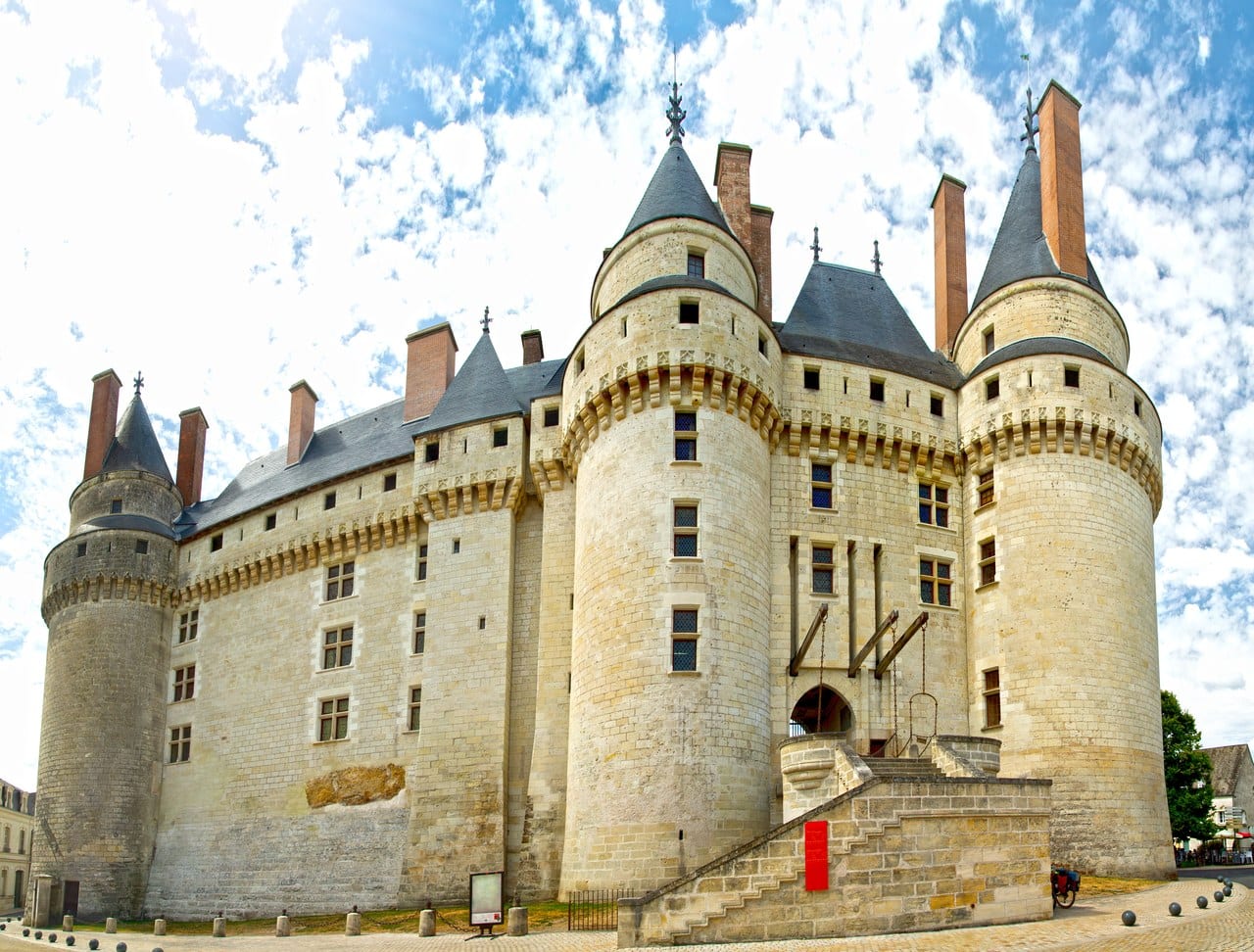
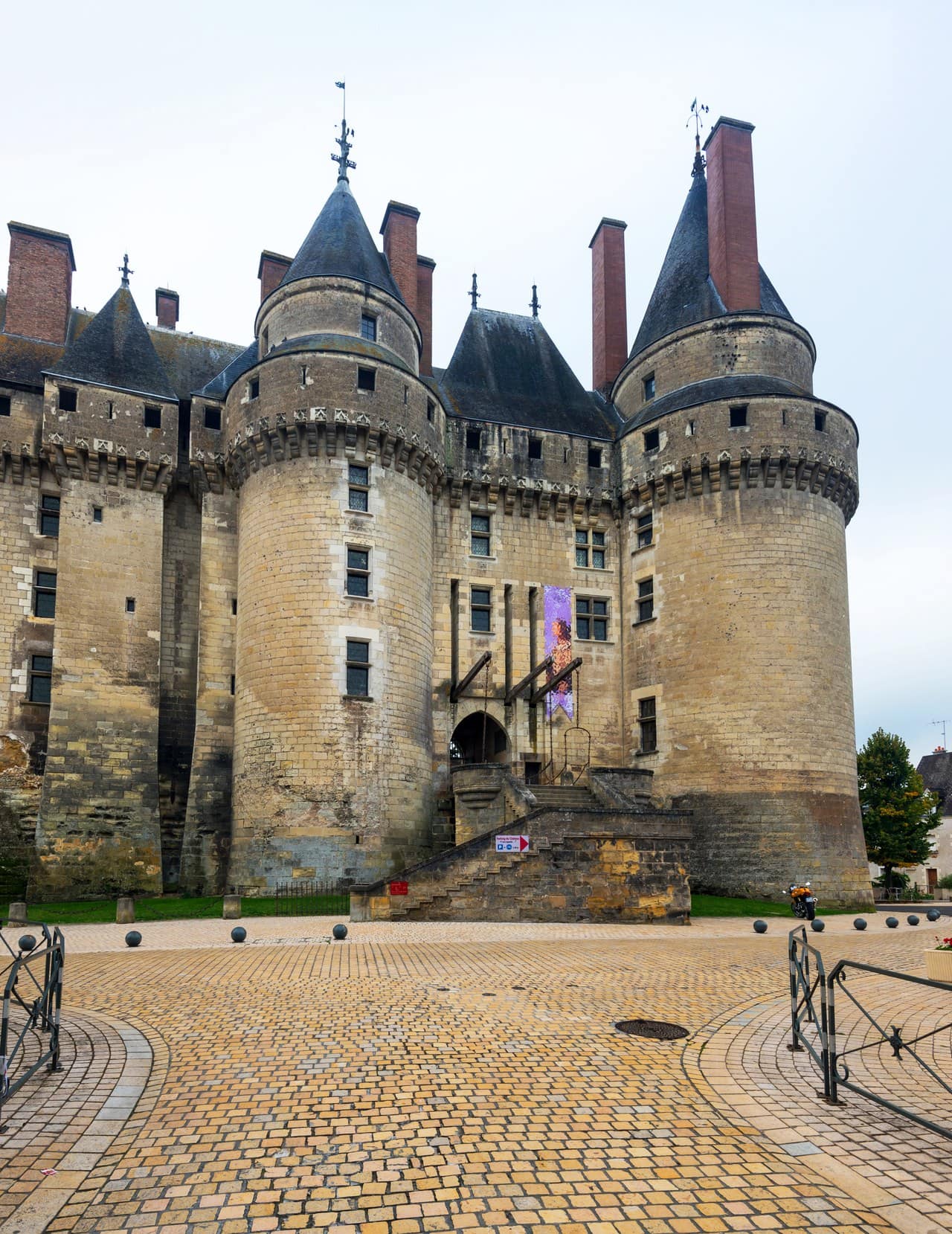
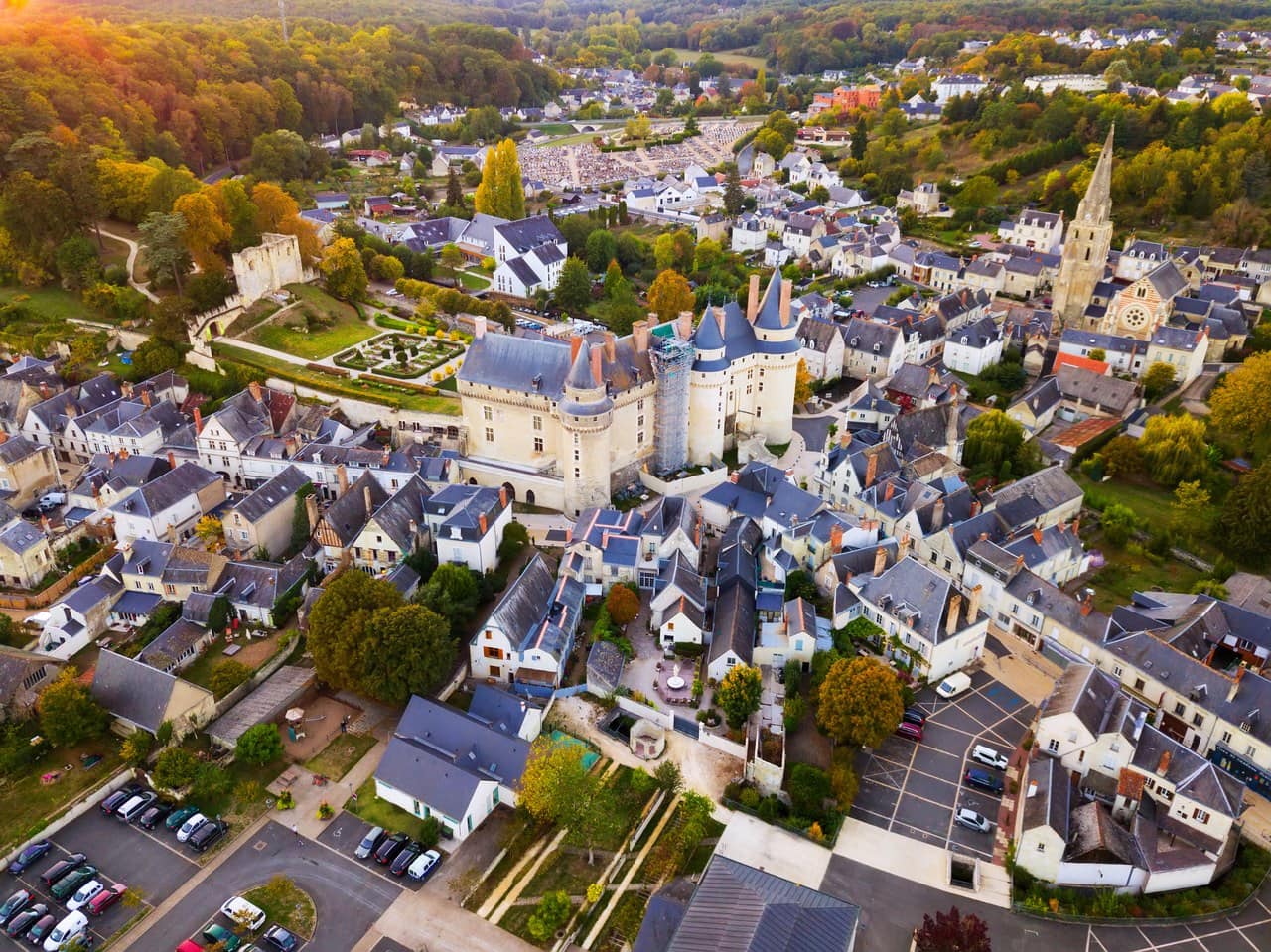
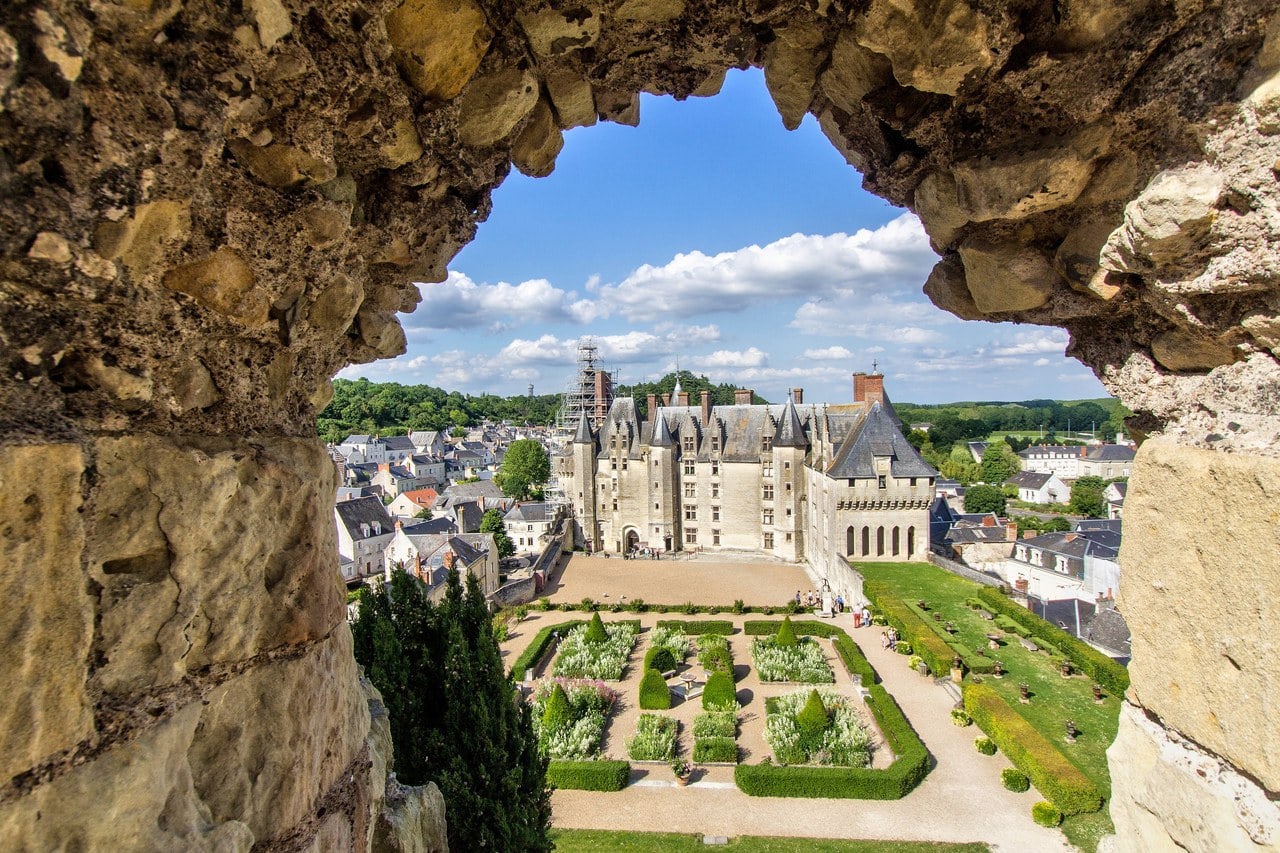
Château de Langeais rises straight out of the main street of its small Loire town, a cliff of pale stone and round towers with a working drawbridge still slung across the gate. From the street it is pure fortress: blank walls, a machicolated parapet running unbroken along the top, and towers built to be looked up at rather than into. Cross the bridge into the courtyard, though, and the building turns its other face to you, a graceful residence of tall mullioned windows and carved dormers, the kind of house a fifteenth-century king meant to be comfortable in. Behind it, in a wooded park, stands a third and far older thing: the broken shell of a stone keep raised around the year one thousand, which the Bibliothèque nationale de France calls the oldest surviving square stone keep in France. Few castles in France pack three eras so tightly, and fewer still keep their great late-medieval house so nearly as it was first built.
Quick Facts
| Location | Langeais, Indre-et-Loire (37), Centre-Val de Loire, France |
| Setting | Above the town at the opening of the Roumer valley onto the Loire, about 25 km west of Tours |
| Built | A ruined stone keep from around the year 1000 (Fulk Nerra); the present château from 1465, for Louis XI |
| Signature | One of the last working chain drawbridges in France, and some fifteen furnished medieval rooms |
| Famous for | The 1491 marriage of Charles VIII and Anne of Brittany, which sealed Brittany’s union with France |
| Restored by | Jacques Siegfried, 1886 onward; bequeathed to the Institut de France in 1904 |
| Today | Owned by the Institut de France and open to visitors; château and park |
| Protection | Monument historique (classé 1922; park around the keep, 1942) |
| Official website | chateau-de-langeais.com |
A Fortress Built in a Single Campaign
Most great Loire châteaux grew by accretion, a wing here and a stair there across two or three centuries. Langeais is the rare one built almost all at once. In 1465, early in his reign, Louis XI ordered a new castle raised on the height above the town, and the work was pushed through in a single short campaign under two of the king’s most trusted men: Jean Bourré, his adviser and treasurer, and Jean Briçonnet, then mayor of Tours. Because it went up so fast and was little altered afterward, the building reads today as one coherent statement of what a royal stronghold looked like on the eve of the Renaissance.
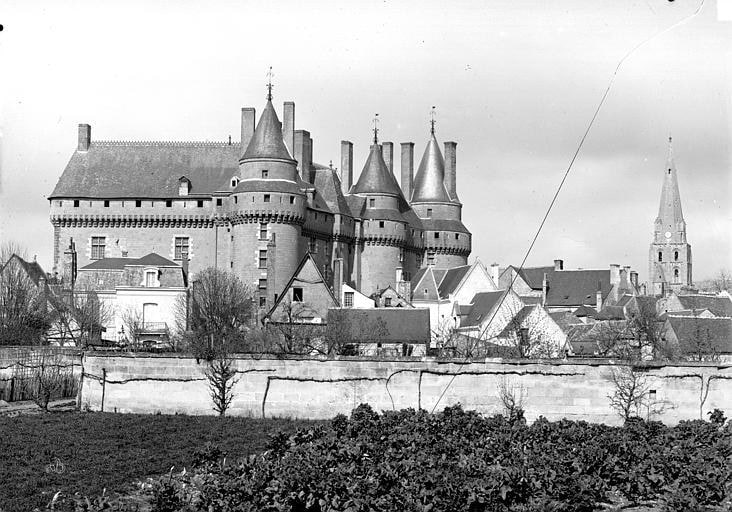
That statement has two halves, and the castle wears them on its two faces. Toward the town the château is a fortress in earnest: three great round towers under conical roofs, walls left bare of ornament, and a covered wall-walk carried the whole way round on continuous stone machicolations, from which defenders could drop fire on anyone at the gate or in the street below. Louis XI had reason to build in earnest. His long quarrel with Brittany and the danger of the great feudal princes were live concerns in the 1460s, and Langeais sat astride the road that ran west toward the independent duchy, a place worth holding and worth watching. This is a castle designed first to be defended and only second to be admired.
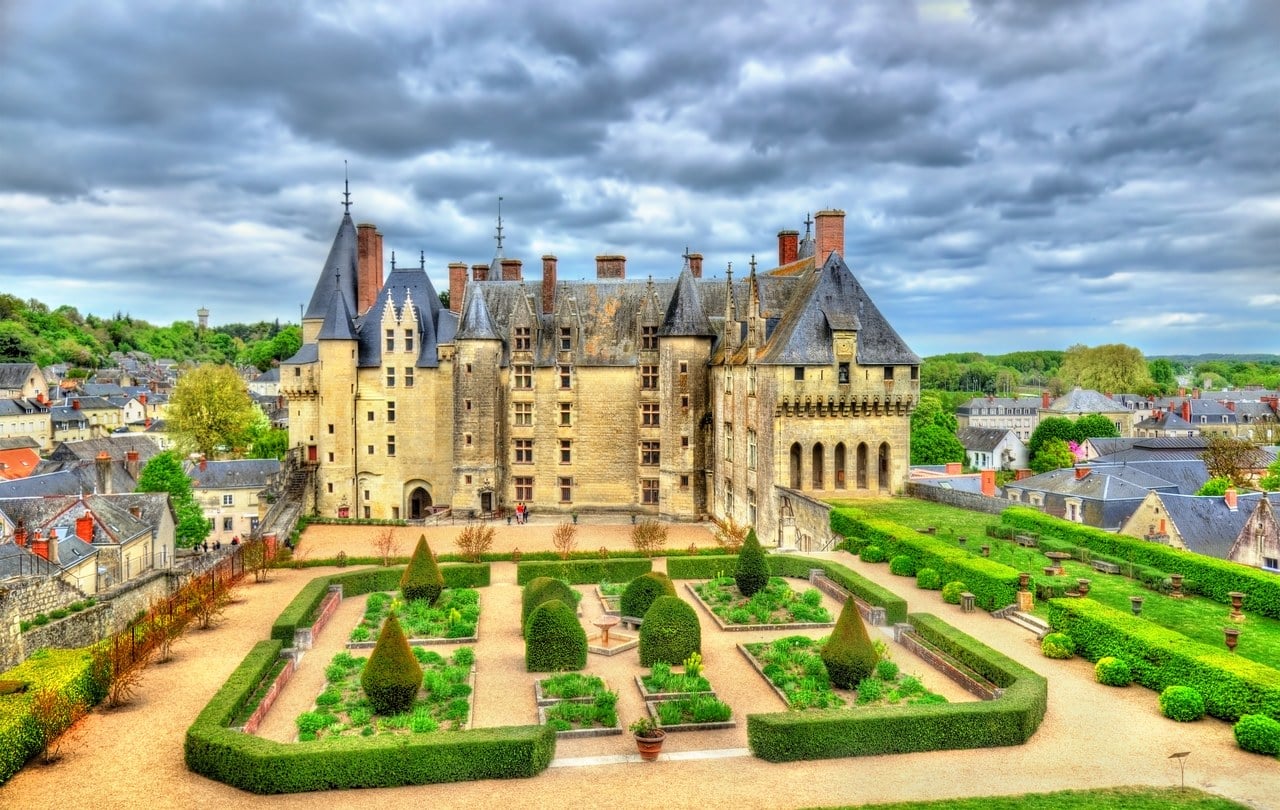
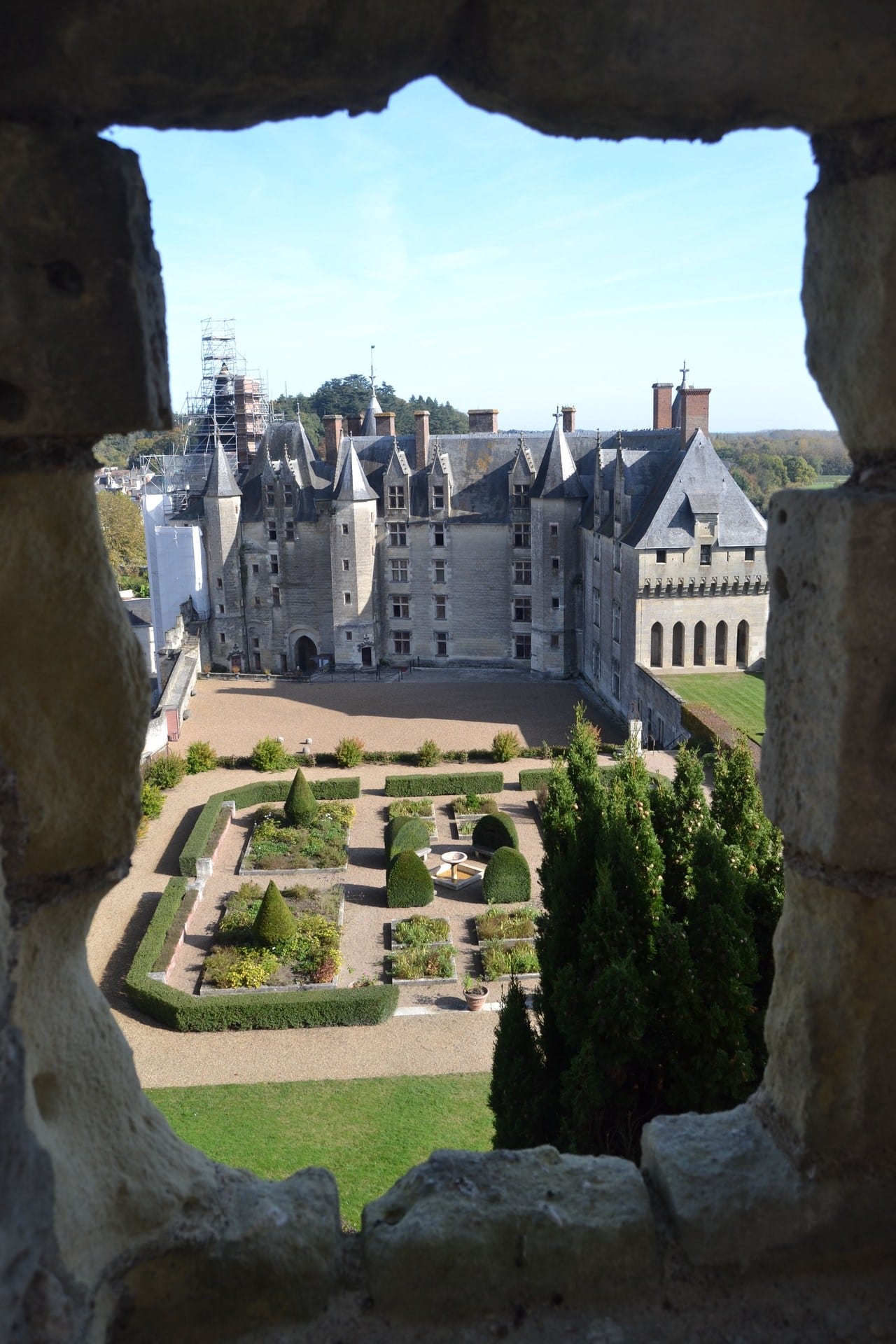
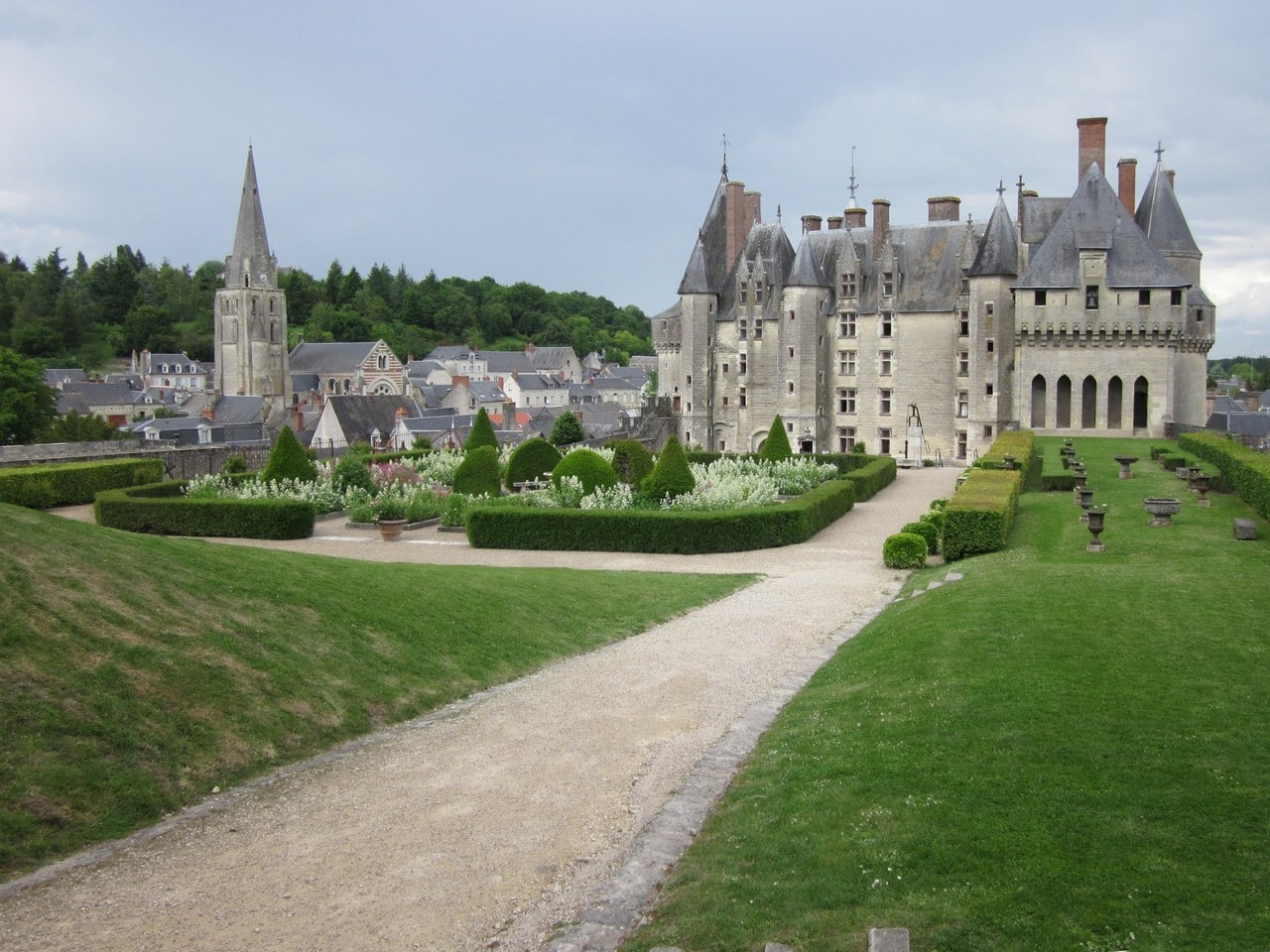
Step through the gate, and the same walls turn courtly. Around the inner courtyard the range opens into a residence of tall mullioned windows, carved dormers rising into the roofline, and slender polygonal stair-turrets, the whole crowned by a forest of chimneys. Because Langeais was raised in one operation and scarcely touched afterward, its silhouette escaped the later fashions that recut so many of its neighbors, and the roofline a visitor sees today, high pitched and busy with dormers, is essentially the one Louis XI’s masons left. Few French castles let you read the exact moment when the medieval fortress began, reluctantly, to become the Renaissance country house, and Langeais holds that moment in a single building.
Fulk Nerra’s Keep: One of Europe’s Oldest
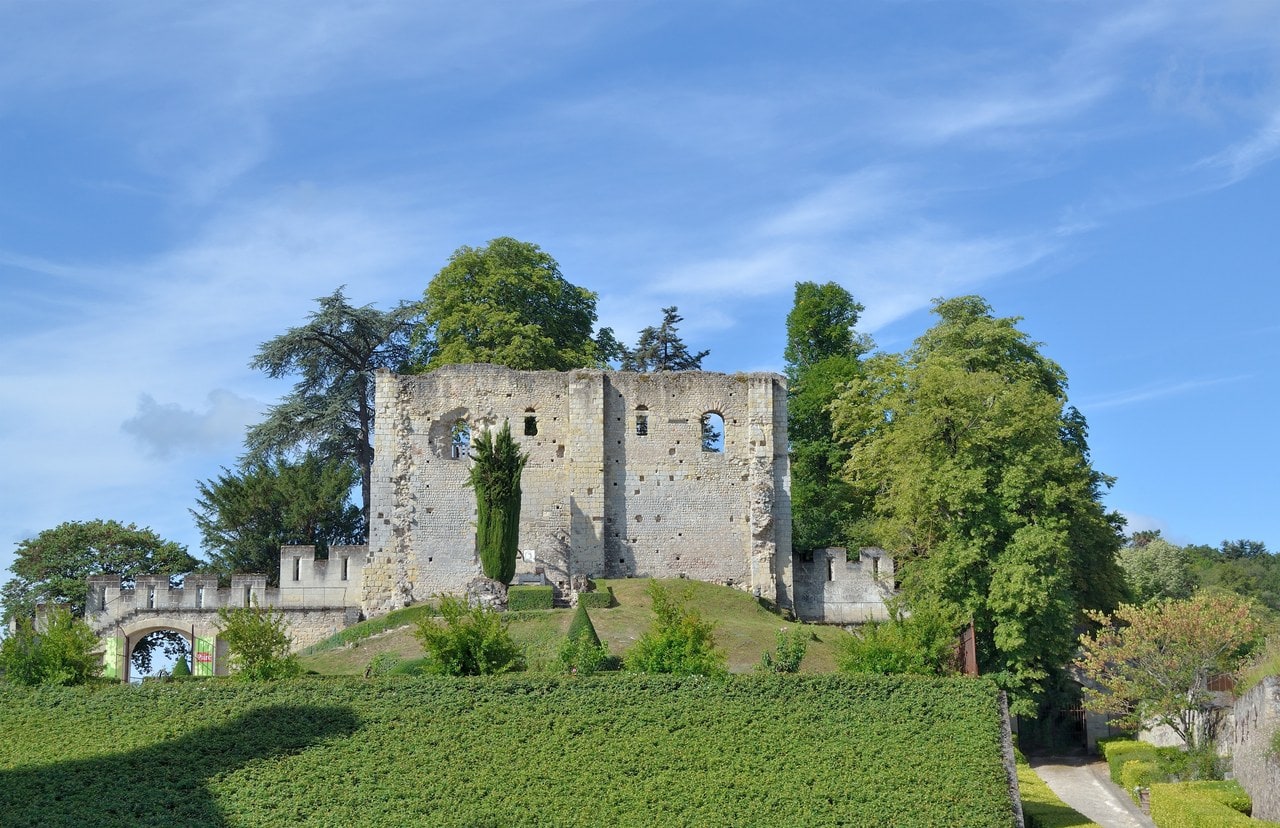
The oldest thing at Langeais is also the most broken. Standing apart in the park behind the château is a tall fragment of masonry, roofless and open to the sky, all that survives of a stone keep raised at the turn of the eleventh century by Foulques Nerra, the count of Anjou whom his own age nicknamed the Black Falcon. Its walls, close to a meter and a half thick, still climb many meters out of the grass. Tradition dates the tower to the 990s, in the years after Fulk seized Langeais and beat off a counter-attack by the count of Blois; some scholars, dating it by its masonry against the dendrochronology of Fulk’s near-identical keep at Loches, would place it a little into the eleventh century. Either way it belongs to the very first generation of stone great-towers in the West.
That is what makes the ruin matter out of all proportion to its size. The Bibliothèque nationale calls it the oldest surviving square stone keep in France, and it stands near the head of the whole European line of stone donjons that would dominate castle-building for the next three hundred years. In an age when most lords still defended themselves behind timber and earth on a raised mound, Fulk Nerra chose stone, and that choice was a weapon. A stone tower did not burn, could not be quickly stormed, and announced across the countryside that its builder meant to stay. Fulk was among the most restless castle-builders of his century, planting strongholds across Anjou and Touraine as he pushed his frontier eastward, and he set his stone towers, Langeais and Loches among them, as a ring to hem in his great rival the count of Blois. Control of Langeais then swung back and forth for two generations before passing, in 1044, to the Plantagenet counts of Anjou along with the rest of Touraine, the family that would go on to wear the crown of England.
To walk from the furnished fifteenth-century château to this raw shell a hundred meters away is to step back five centuries in as many minutes, from the comfortable dusk of the late Middle Ages to their violent dawn. The two structures were never meant to be seen together, yet the accident of survival puts them side by side, and the contrast is the most instructive thing at Langeais. One tower begins the story of the stone castle in France; one château shows what that story had become by the time it was nearly over.
The Wedding That Won Brittany
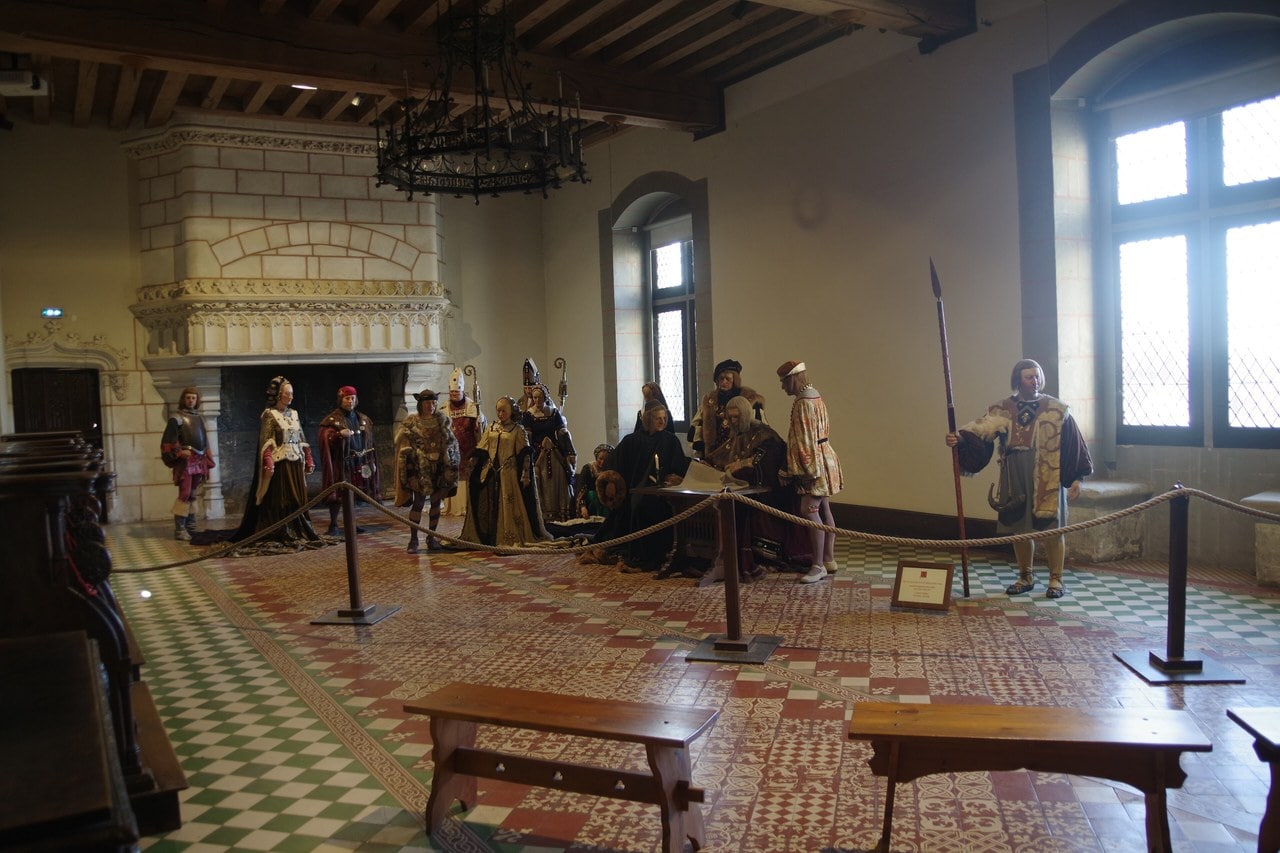
At dawn on 6 December 1491, in one of the great halls of the new château, King Charles VIII of France married Anne, the young duchess of Brittany, before a small gathering. The match was as much treaty as romance. Brittany was still an independent duchy, the last great fief outside the French crown, and its duchess had been fought over by half the princes of Europe. Bringing Anne into a French royal marriage began the process that drew Brittany into France, a union carried forward when she married Charles’s successor Louis XII in 1499 and made permanent by the act of 1532. The room where it started is at Langeais, and the castle marks it with a life-size waxwork tableau of the wedding party, staged in the hall much as contemporaries described it.
Anne of Brittany was fourteen and already, on paper, married to someone else. To keep her duchy out of French hands she had been wed by proxy to Maximilian of Austria the year before, a union France refused to recognize and moved swiftly to undo by force and diplomacy together. The contract signed at Langeais was hard-headed about the stakes: it provided that whichever spouse outlived the other would keep Brittany, and that if Charles died without an heir Anne would marry his successor, a clause that reached forward and shaped the next reign. This was a wedding meant to bind a country, and the parties knew it.
It is worth pausing, too, on why the ceremony happened at Langeais at all. The castle sat on the strategic road toward Brittany, it was crown property and freshly built, and it was strong, which mattered for a marriage that several powerful parties would have stopped if they could. The fortress Louis XI had raised as a bolt against the duchy became, within a single generation, the room where the duchy was locked to the kingdom. Little in the plain furnished hall announces the weight of what was settled in it, and that understatement is part of its quiet power.
 CC BY 4.0, via Wikimedia Commons." class="wp-image-5060" title="The great hall, where a costumed tableau reconstructs the 1491 wedding of Charles VIII and Anne of Brittany. Photo: AlSepPhoenix, CC BY 4.0, via Wikimedia Commons." srcset="https://stonekeepatlas.com/wp-content/uploads/2026/07/chateau-de-langeais-wedding-hall.jpg 1280w, https://stonekeepatlas.com/wp-content/uploads/2026/07/chateau-de-langeais-wedding-hall-300x200.jpg 300w, https://stonekeepatlas.com/wp-content/uploads/2026/07/chateau-de-langeais-wedding-hall-1024x682.jpg 1024w, https://stonekeepatlas.com/wp-content/uploads/2026/07/chateau-de-langeais-wedding-hall-768x512.jpg 768w" sizes="auto, (max-width: 1280px) 100vw, 1280px" />
Inside the Furnished Château
For most of its life after the Renaissance, Langeais slipped quietly out of history, passing through private hands and, by the nineteenth century, drifting toward neglect. Its rescue was the work of one man. In 1886 Jacques Siegfried, a banker from an Alsatian textile family who had made his fortune in cotton, bought the château and gave the next twenty years of his life to putting it back as a great house of the late Middle Ages would have looked. He belonged to a generation that had fallen in love with the medieval past, but where a restorer like Viollet-le-Duc rebuilt fabric, Siegfried furnished it. He left the fifteenth-century building largely as he found it and poured his energy instead into what went inside, hunting down period tapestries, furniture, chests, and objects across France and beyond, and arranging them through some fifteen rooms until the château read as a lived-in seigneurial residence rather than an empty monument. In 1904 he gave the whole of it, building and collection together, to the Institut de France, which owns and runs it still.
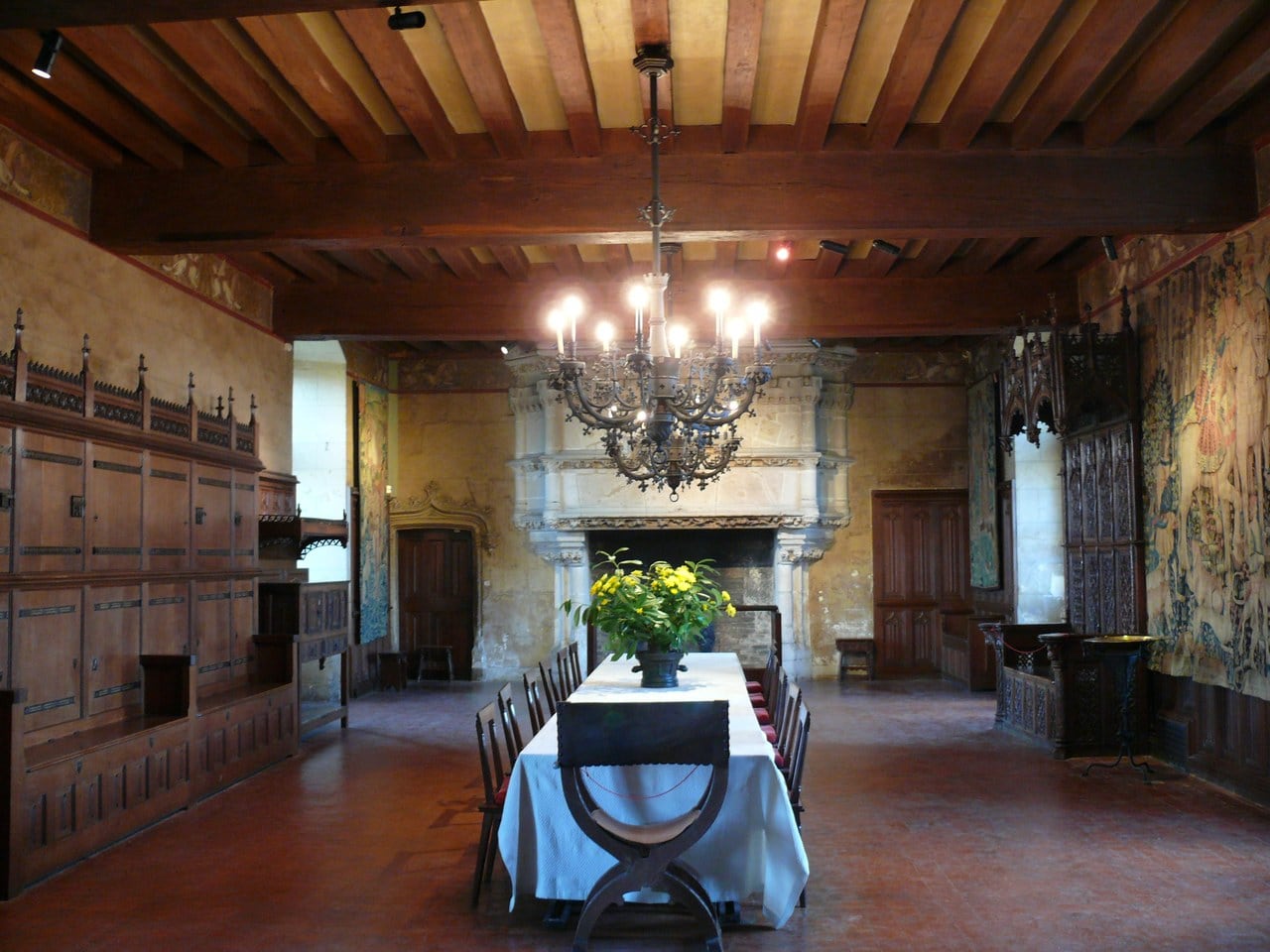
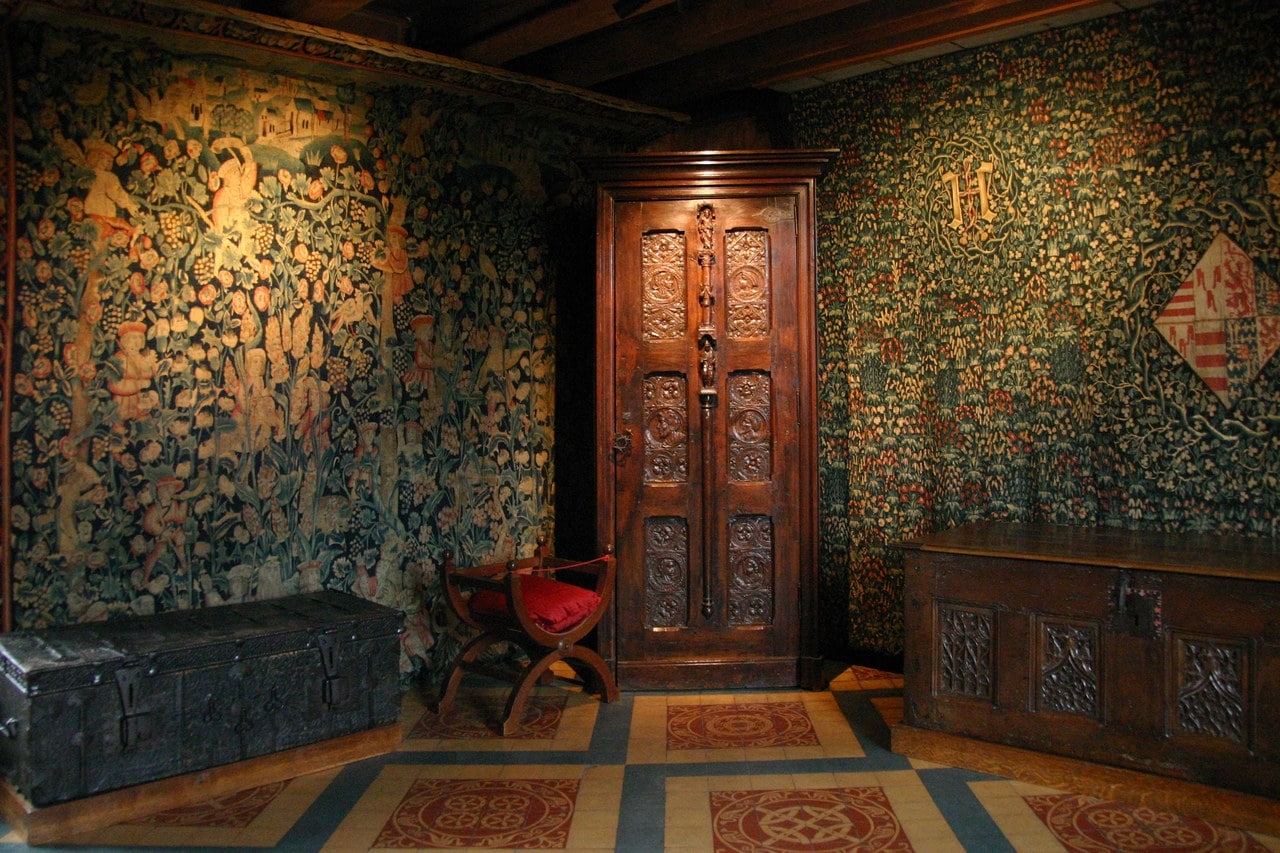
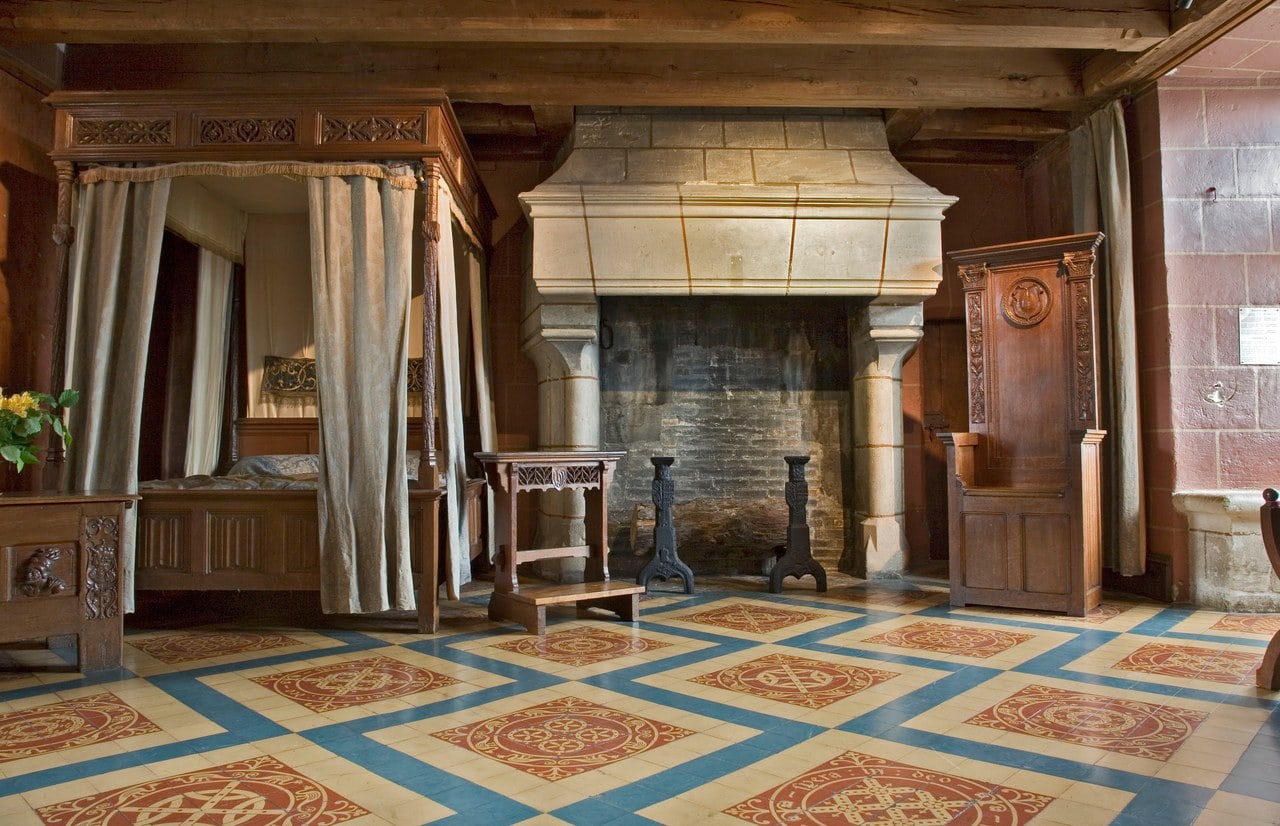
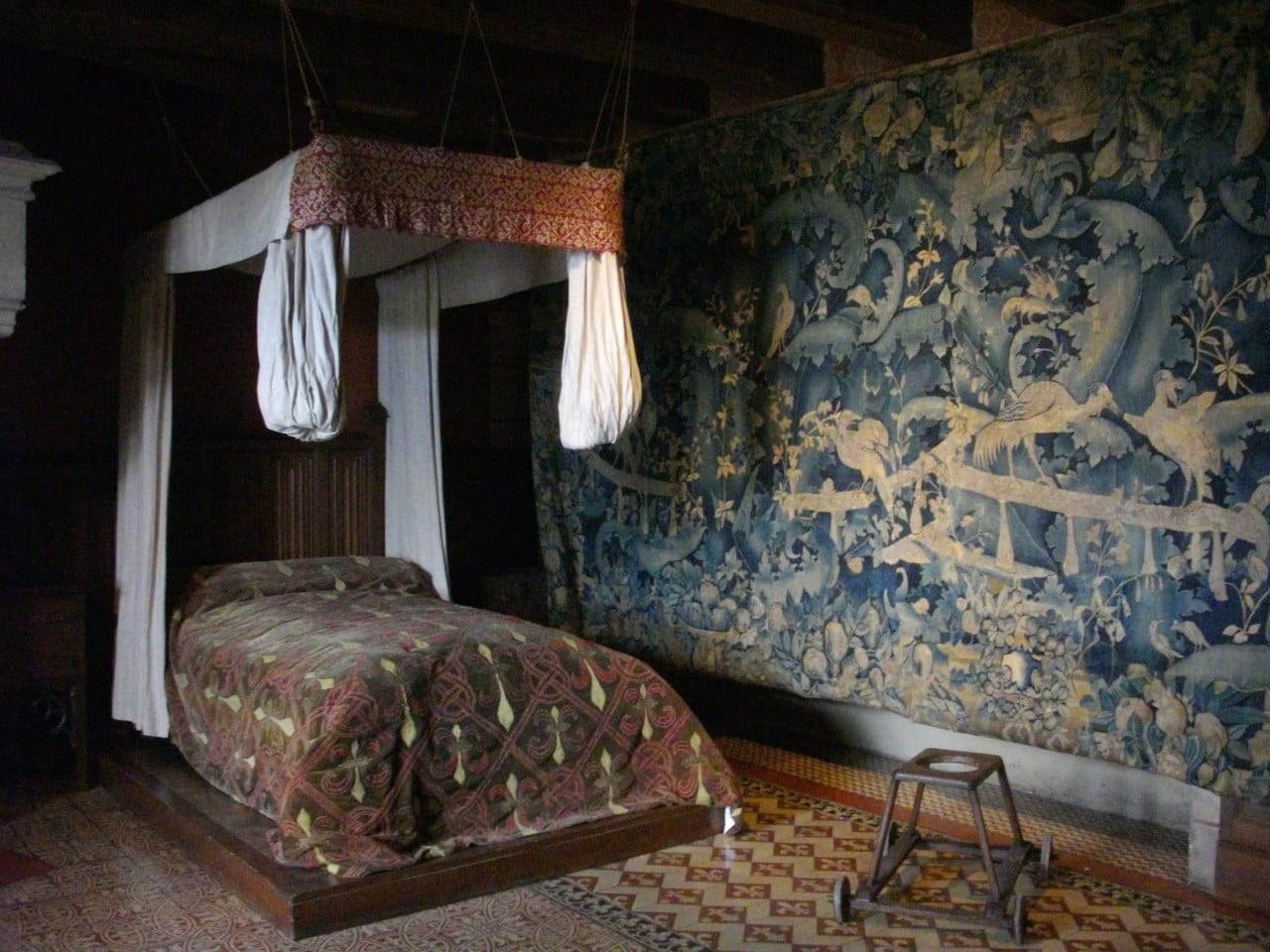
What that gift preserved is the reason a visit to Langeais feels different from a visit to a bare château shell. Room after room is hung with mille-fleurs and Flemish tapestries, their worlds of flowers, beasts, and courtly figures covering the walls the way the period liked them covered, for warmth as much as for show. A visitor’s route opens in the Salon des Mille Fleurs, whose walls carry three sixteenth-century mille-fleurs tapestries, their grounds strewn with the flowers and small animals that give the type its name. Beneath them run tiled floors; around them stand carved chests, canopied beds, dressers, and long tables, lit through the deep window embrasures of the courtyard front. Great fireplaces carry sculpted overmantels, and a monumental staircase climbs through the logis to the upper rooms. Above and behind it all a visitor can still pace the covered wall-walk along the parapet, ducking under its timber roof past the machicolation openings, and look down on the town exactly as a fifteenth-century sentry did. Siegfried’s aim was never a museum of isolated treasures but a house that looked as though its lord had just stepped out, and the effect he built has held for more than a century.
 CC BY-SA 3.0, via Wikimedia Commons." class="wp-image-5061" title="The banquet hall, hung with tapestry beneath a monumental carved chimneypiece. Photo: Claude villetaneuse, CC BY-SA 3.0, via Wikimedia Commons." srcset="https://stonekeepatlas.com/wp-content/uploads/2026/07/chateau-de-langeais-banquet-hall.jpg 1280w, https://stonekeepatlas.com/wp-content/uploads/2026/07/chateau-de-langeais-banquet-hall-300x225.jpg 300w, https://stonekeepatlas.com/wp-content/uploads/2026/07/chateau-de-langeais-banquet-hall-1024x768.jpg 1024w, https://stonekeepatlas.com/wp-content/uploads/2026/07/chateau-de-langeais-banquet-hall-768x576.jpg 768w" sizes="auto, (max-width: 1280px) 100vw, 1280px" />
Visiting Château de Langeais
Langeais is one of the easiest of the great Loire châteaux to reach, which is part of its appeal for a day out. It stands in the middle of its town about 25 km west of Tours, and the railway station is a few minutes’ walk from the gate, roughly twenty minutes by train from the center of Tours on the line toward Saumur. Drivers come off the A85 and park free on rue Foulques Nerra, a short walk from the gate. That in-town setting is itself unusual among the Loire châteaux, most of which sit apart in their parks, and it means a visit can be paired with lunch in the streets below the walls. The drawbridge, one of the last working chain drawbridges in France, is lowered each morning to let visitors in, and crossing it on foot is the proper way to arrive.
Inside, the route takes in the furnished rooms and the wedding hall, then climbs to the covered wall-walk for its long views over the town roofs and the Loire beyond. Behind the château the park climbs the slope to the ruined keep, and set among its cedars is a large wooden treehouse, reached by a walkway, that gives children a castle of their own and gives everyone a fine framed view back at the towers. A visit takes a comfortable couple of hours, longer with the park and the wall-walk. Admission for an adult runs about €12 to €13 depending on the season, with reductions for children, and the château opens year-round but on a seasonal rhythm, longest in summer when it stays open into the early evening and fills with costumed animations for families, and shortest in deep winter when January narrows to weekends, so it is worth checking the official website before setting out.
The town of Langeais sits squarely among the châteaux of the western Touraine, which makes it an easy anchor for a longer itinerary. Guided visits, tastings, and day tours of the surrounding Loire châteaux can be booked through GetYourGuide for travelers who would rather not drive between sites.
Some links on this page are affiliate links, which means StoneKeep Atlas may earn a small commission, at no extra cost to you, if you book through them.
More Views of Château de Langeais
Beyond Château de Langeais
Langeais sits at the heart of the western Touraine, within an easy drive of the finest châteaux on this stretch of the river. Nearest of all is the moated jewel of Château d’Azay-le-Rideau, begun a generation later in the full flower of the Renaissance, and just beyond it the celebrated gardens of Château de Villandry. The fairy-tale towers of Château d’Ussé rise a short way downriver, and the royal fortress of Château de Chinon guards the Vienne to the south. Further down the Loire toward Anjou stand the white château of Château de Saumur and the strange underground fortress of Château de Brézé. Upstream in the Touraine, the Château de Loches guards the giant keep Fulk Nerra raised in the same generation as the Langeais tower, above the Logis Royal where Joan of Arc urged Charles VII toward Reims. For the wider picture, our guide to the châteaux of the Loire Valley sets these houses in a single journey along the river. Anne of Brittany’s 1491 wedding here also begins our history of the women who built the Loire.
Conclusion
Langeais is a castle that rewards attention to what is unusual about it. Other Loire châteaux are larger, or set more beautifully, or richer in famous names, but few tell their story so plainly in stone. Here a single fifteenth-century fortress survives almost as its builders left it, still fronted by a drawbridge that works, still furnished as a great medieval house, and still holding the hall where a royal wedding folded an independent duchy into France. Behind it, the broken keep of the Black Falcon carries the eye back to the very beginning of stone castles in Europe. Taken together, the ruin, the fortress, and the furnished rooms make Langeais a short course in five centuries of French castle-building, walkable in an afternoon and unusually honest about how each age lived. It is one of the most rewarding stops on the western Loire, and among the easiest to reach.
Principal Sources
- Bibliothèque nationale de France. Langeais, premier donjon de pierre. Passerelles. passerelles.essentiels.bnf.fr.
- BnF Gallica. Contrat de mariage de Charles VIII et d’Anne de Bretagne (Langeais, 6 December 1491). gallica.bnf.fr.
- Château de Langeais. Official site (history, presentation, practical information). chateau-de-langeais.com.
- Institut de France. Château de Langeais. institutdefrance.fr.
- Ministère de la Culture. Château, notice Mérimée PA00097795 (classé MH 1922; park 1942). pop.culture.gouv.fr.
- Le donjon de Langeais et son environnement. Étude historique et archéologique. Bulletin Monumental 156 (1998). persee.fr.
A note on sources: prices and opening hours are seasonal and go stale, so confirm them on the official site before a visit. The construction and dating of the keep draw on the Persée archaeological study alongside the Bibliothèque nationale, with the traditional 990s date and the later dendrochronological reading both noted, and the 1491 wedding is sourced to the original Gallica marriage contract rather than the erroneous Mérimée notice.
Image credits. Town front, drawbridge, courtyard, keep, aerial and interior views: Flaviu Boerescu, Viacheslav Lopatin, Leonid Andronov, graphlight, JackF, Vincent Courceleaud, JONATHAN and arnaud via Adobe Stock; The château and its gardens from the park: Guy Dugas via Pixabay; The great hall set for the 1491 wedding: AlSepPhoenix, CC BY 4.0, via Wikimedia Commons; The banquet hall: Claude villetaneuse, CC BY-SA 3.0, via Wikimedia Commons; A verdure tapestry room: Gerd Eichmann, CC BY-SA 4.0, via Wikimedia Commons; A canopied bed against a mille-fleurs tapestry: Fab5669, CC BY-SA 4.0, via Wikimedia Commons; A nineteenth-century view of the towers: Séraphin-Médéric Mieusement, Médiathèque de l’architecture et du patrimoine, public domain. Freely licensed images are resized to fit; otherwise unaltered.