
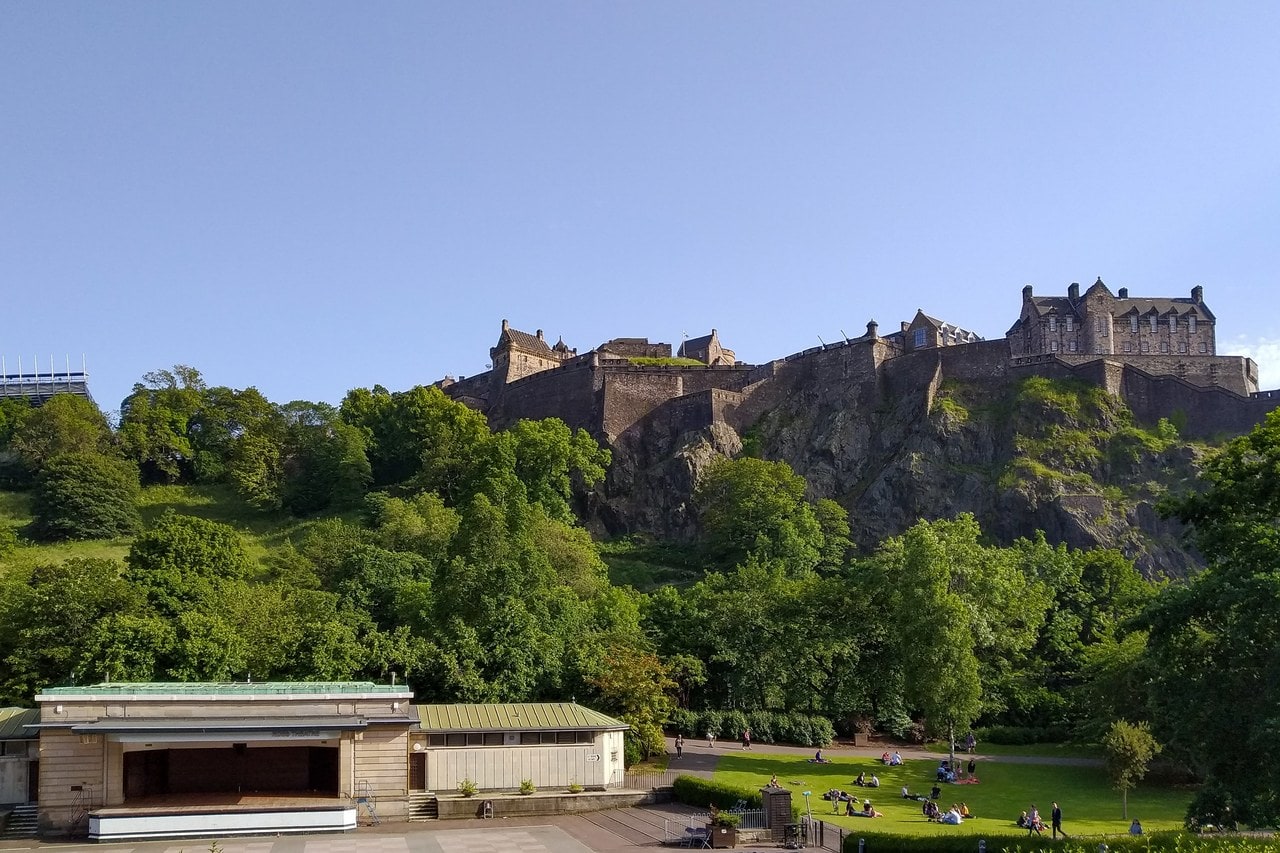
Edinburgh Castle
Edinburgh Castle sits on a black volcanic crag above Scotland’s capital, and almost no visitor sees it for the first time without stopping. It has been a royal residence, a prison, an army barracks, and the strongroom of a nation’s crown jewels, sometimes all at once. Nearly two million people came through its gate in 2024, more than to any other paid attraction in Scotland, and they climbed a road that armies spent six and a half centuries trying and mostly failing to take. What waits at the top is not one castle but the layered evidence of many: a twelfth-century chapel, a Renaissance great hall, gun batteries raised over the rubble of a medieval tower, and a garrison that has never fully stood down.
Quick Facts
| Location | Castle Rock, Old Town, Edinburgh |
| Region | Lothian |
| Built | 12th century onward (oldest building c. 1130) |
| Type | Royal castle and fortress |
| Owner / operator | Historic Environment Scotland (active army garrison) |
| Native name | Caisteal Dhun Eideann (Scottish Gaelic) |
| Designation | Scheduled Monument (HES ref. SM90130) |
| Visitors | 1,981,152 (2024) |
| Official website | Historic Environment Scotland |
Location and Setting
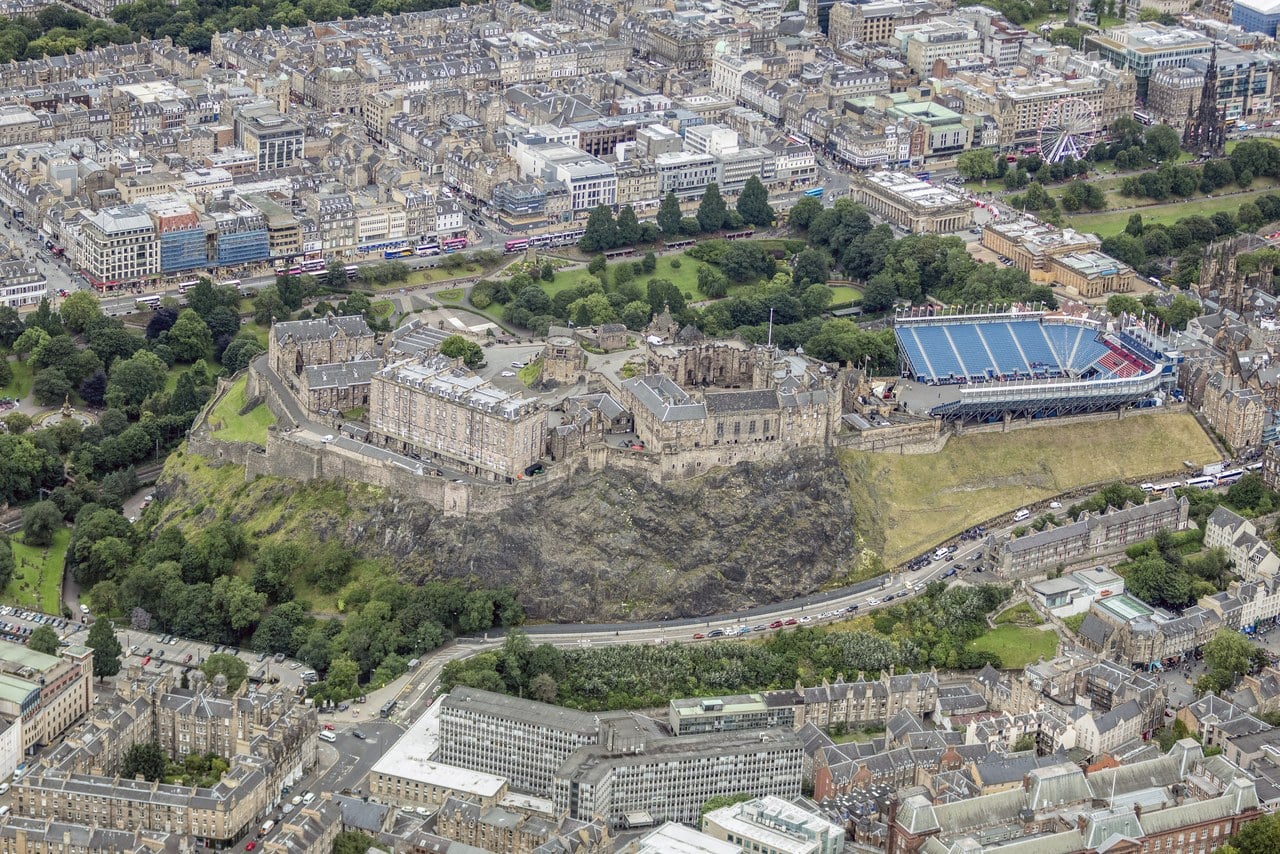
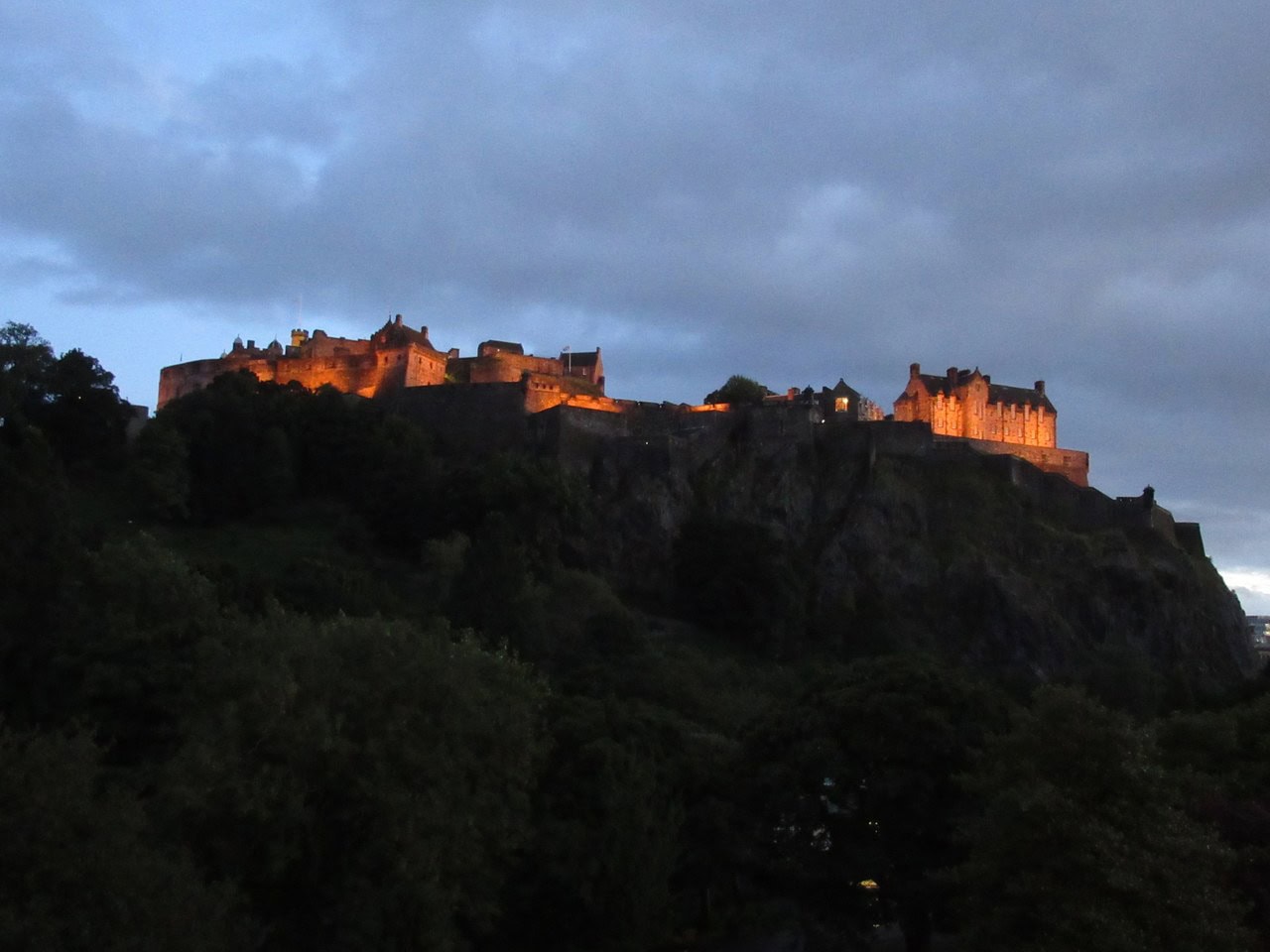
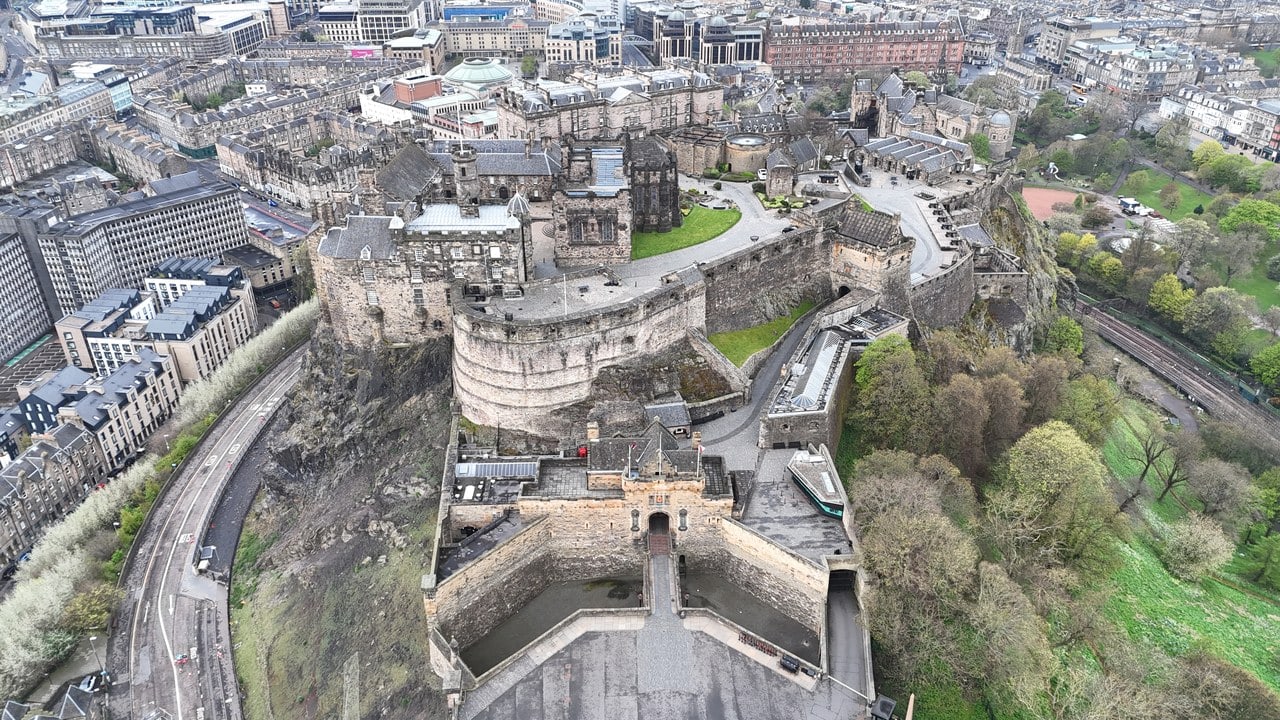
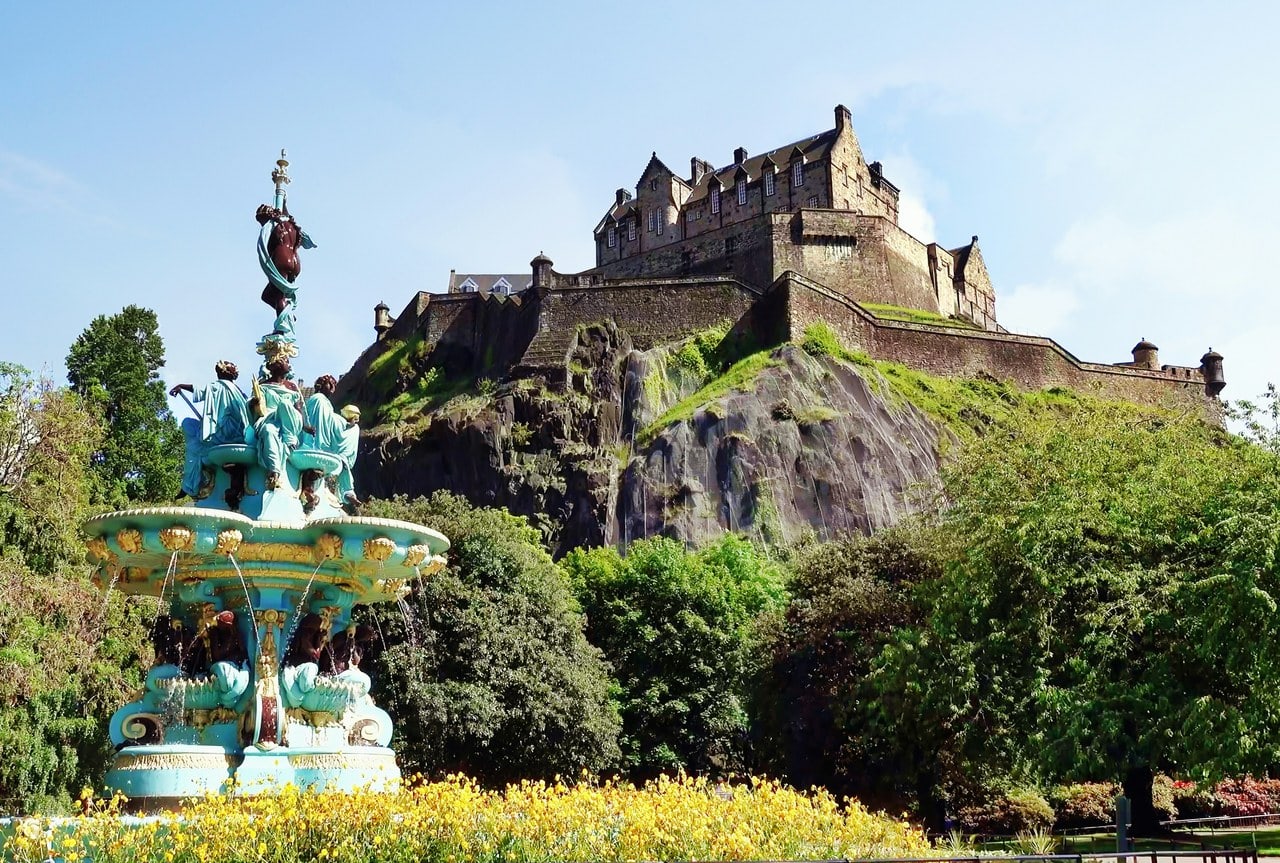
Castle Rock is the plug of an extinct volcano, worn down over roughly 340 million years and then dragged into its distinctive shape by ice. Glaciers moving east met the hard dolerite, split around it, and scoured softer stone away behind, leaving a steep crag with a long tail running down to the east. That tail is now the Royal Mile, the spine of the Old Town, and the castle holds the high western end. The rock rises to roughly 130 meters above sea level, and on three sides its cliffs stand as much as 80 meters above the surrounding streets. Only the eastern approach climbs at a walkable grade, which is why every serious assault in the castle’s history funneled toward the same narrow ground. That height still earns its reward at the ramparts, where the view runs out over the rooftops of the Old Town and the city spread below.
Geology decided the strategy. A defender on the summit could see the Firth of Forth to the north and the approaches from every side, while an attacker had one realistic line of advance and a long climb under fire to use it. Builders worked with what the rock gave them, setting walls at the cliff edge and concentrating gates, towers, and gun positions along the vulnerable east. To understand why Edinburgh Castle looks the way it does, start with the stone it stands on.
A Fortress Through the Centuries
People have lived on this rock since at least the late Bronze Age, but its recorded life as a royal stronghold begins in the Middle Ages, and its history from that point is largely a history of siege. Research by the archaeologist David Caldwell traced the castle’s sieges from 1093 to 1745, the last year an enemy force threatened it, and counted sixteen in the period to 1544 alone, a figure he calls almost certainly an underestimate. That tally gives Edinburgh a strong claim to being the most besieged place in Britain. The castle changed hands again and again, and each capture and recapture left a mark on the fabric that survives.
One turning point came in 1314. A Scottish raiding party under Thomas Randolph scaled the north cliff by night, retook the castle from its English garrison, and then, on Robert the Bruce’s orders, deliberately slighted it so that the English could never again hold a strong fortress here. Almost every building was pulled down. Only one structure was spared, and it still stands today, which is why the castle’s oldest survivor predates most of what surrounds it by centuries.
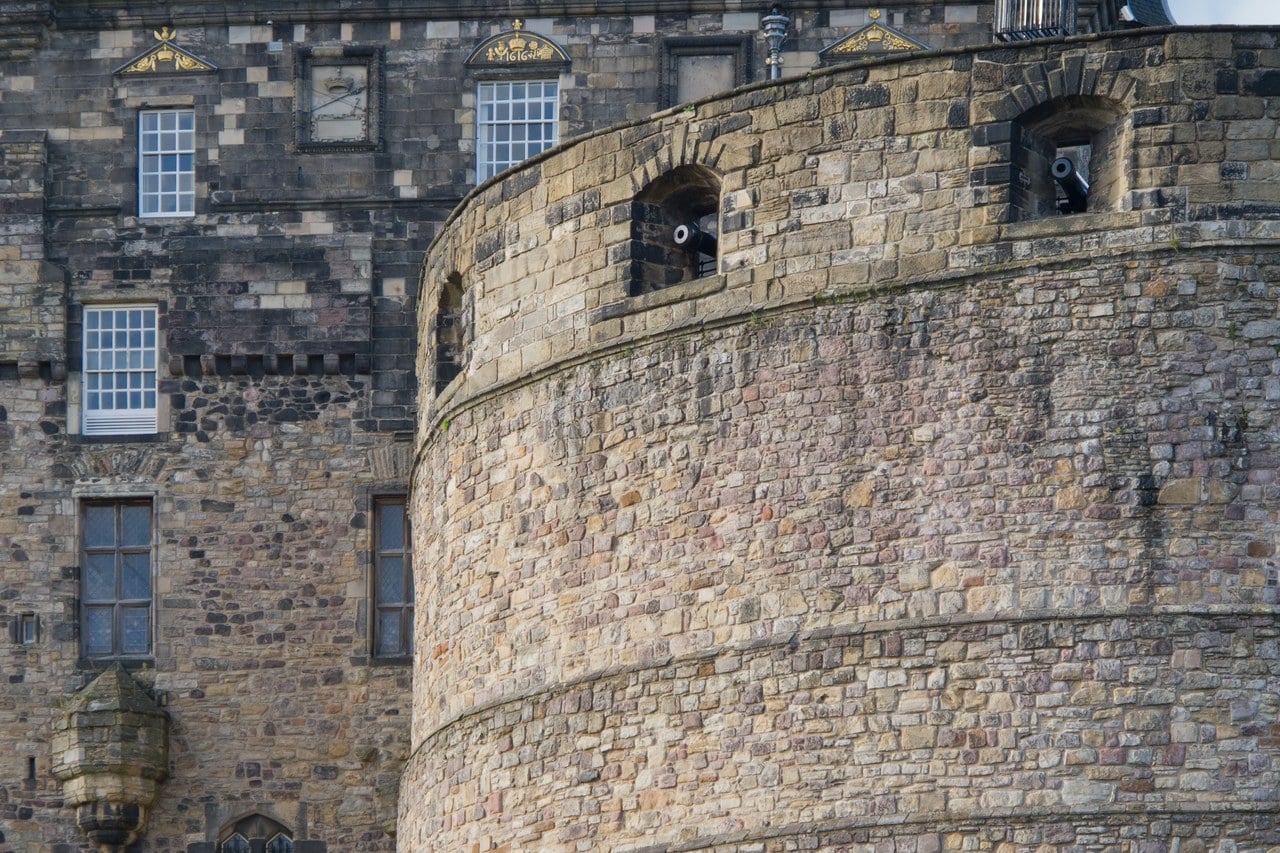
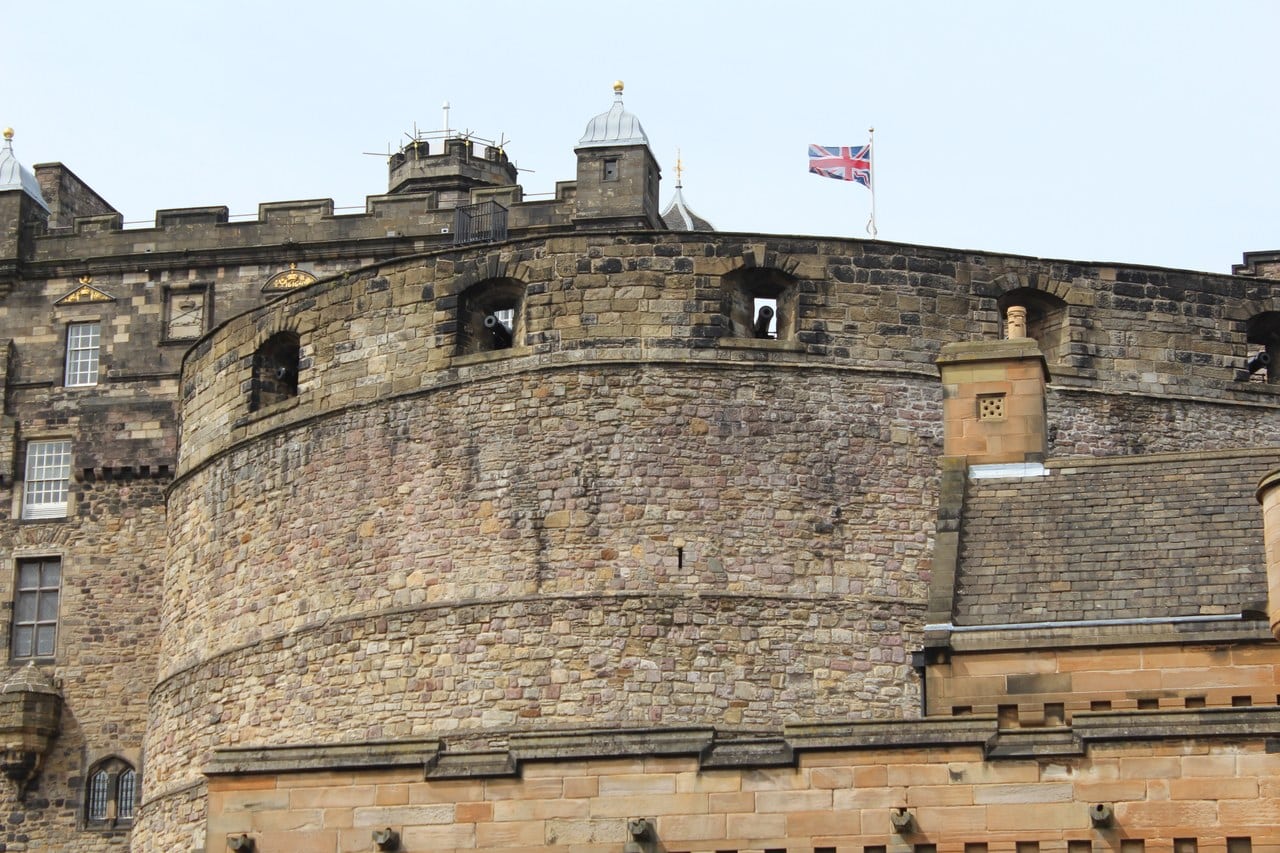
The rock did not stay bare for long. David’s Tower, a tall L-plan tower house, was begun in 1367-68 under King David II and still unfinished when he died in 1371. For two hundred years it was the castle’s dominant building and royal lodging, until it was wrecked in the event that shaped the castle’s present silhouette. During the Lang Siege of 1571 to 1573, fought in the civil war that followed Mary, Queen of Scots’ abdication, artillery pounded the eastern defenses and brought David’s Tower down. In the aftermath the tower’s ruins were buried inside a massive new gun emplacement, the Half Moon Battery, whose curved wall of gunloops has faced the town ever since. The medieval tower is still in there, encased in the later stonework, a castle inside a castle.
Later centuries added the machinery of a modern garrison rather than a medieval one. Cromwell’s army took the castle in 1650. New barracks went up through the eighteenth century as the fortress became a permanent military base and, for a time, a prison for captured sailors and soldiers from Britain’s wars. The defenses along the western and northern sides took their present form in this period, bristling with the artillery of a garrison town rather than the walls of a royal keep.
The Royal Palace, the Great Hall, and the Honours
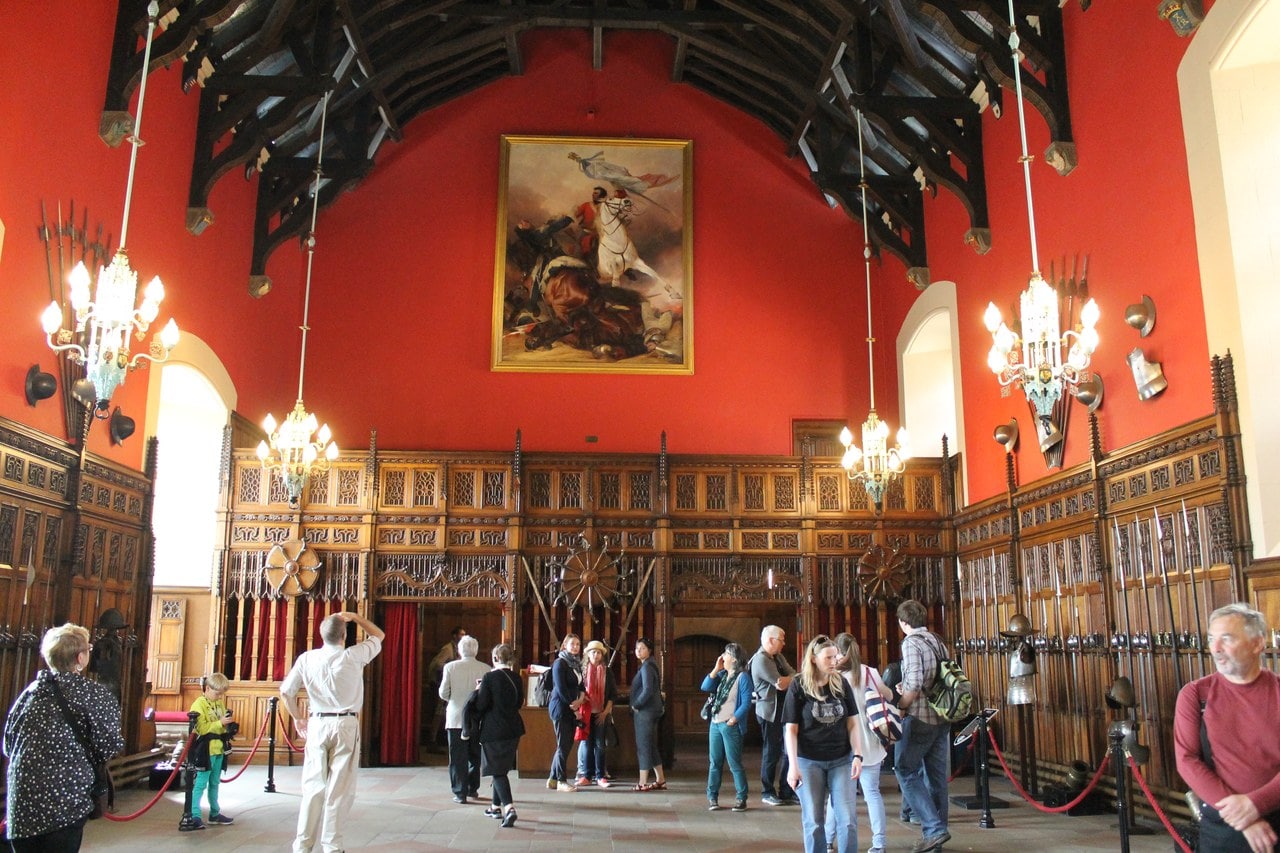
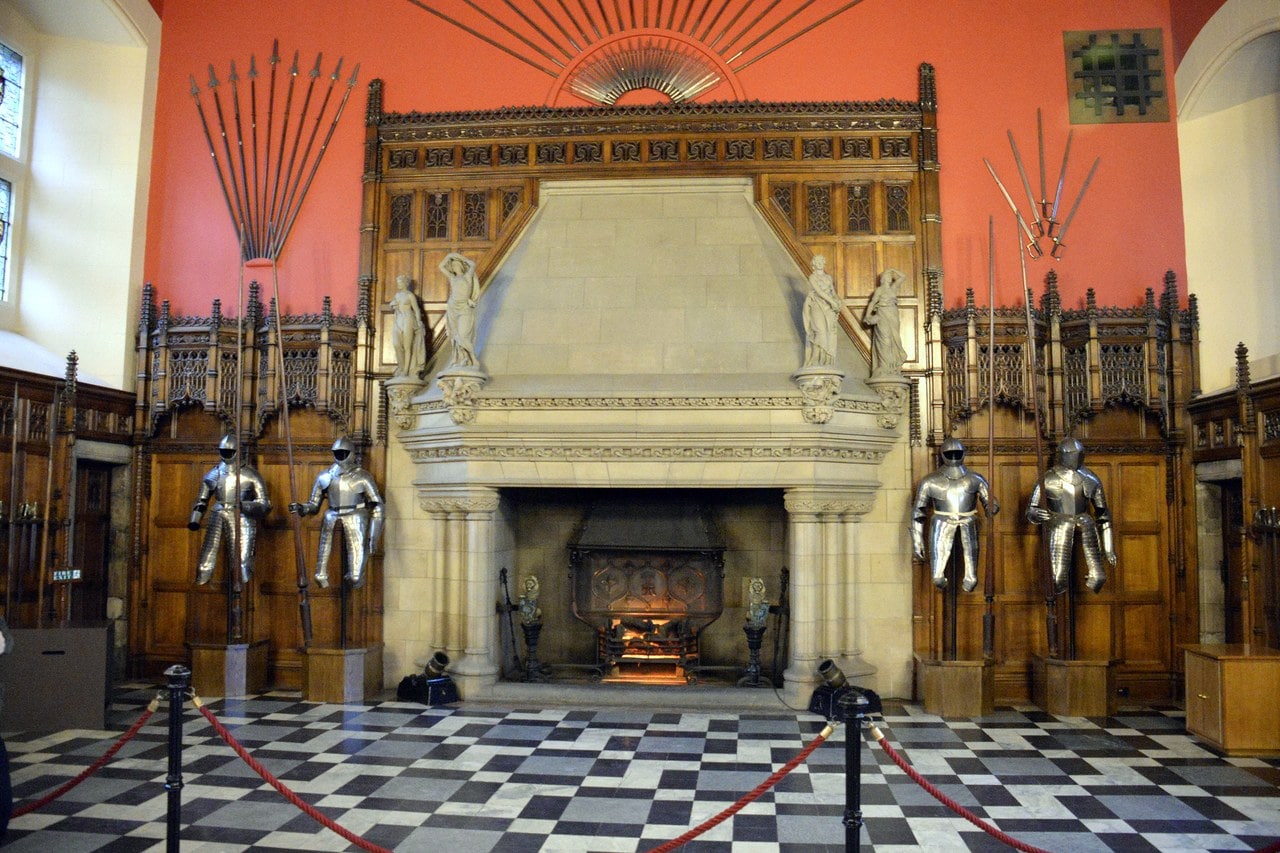
For all its military weight, Edinburgh Castle was also a working royal residence, and its finest rooms sit around Crown Square at the summit. James IV completed the Great Hall in 1511, two years before he fell at Flodden, and its hammerbeam roof is one of the best medieval timber roofs to survive in Britain. Carved stone corbels carry Renaissance detail, including the thistle, and though Cromwell’s troops later used the hall as a barracks and it was heavily restored in the nineteenth century, the roof itself is original. Nearby, in a small chamber in the royal lodgings, Mary, Queen of Scots gave birth in 1566 to the son who would become James VI of Scotland and James I of England.
The castle’s greatest treasures are the Honours of Scotland, kept in the Crown Room. Together the Crown, Sceptre, and Sword of State are the oldest surviving crown jewels in Britain. A papal gift brought the Sceptre to James IV in 1494 and the Sword of State in 1507, while the Crown was remade for James V and first worn in 1540. During the wars of the mid-seventeenth century the Honours were smuggled out and hidden to keep them from Cromwell, and after the union of the parliaments in 1707 they were locked away and half forgotten until Sir Walter Scott led a search that rediscovered them in a sealed chest in 1818. The Crown Room reopened in April 2026 after a redisplay, and the Honours are on view there now.
For nearly thirty years the Honours shared that room with the Stone of Destiny, the ancient block of sandstone on which Scottish kings were once enthroned. That is no longer the case. After centuries beneath the Coronation Chair in Westminster Abbey, the Stone was returned to Scotland and displayed at Edinburgh Castle from 1996. In March 2024 it moved again, this time to the new Perth Museum, where it is now on free display near Scone, the site of its medieval use. Visitors to Edinburgh Castle will find the Honours, but they will not find the Stone; it is worth knowing before you go.
St Margaret’s Chapel
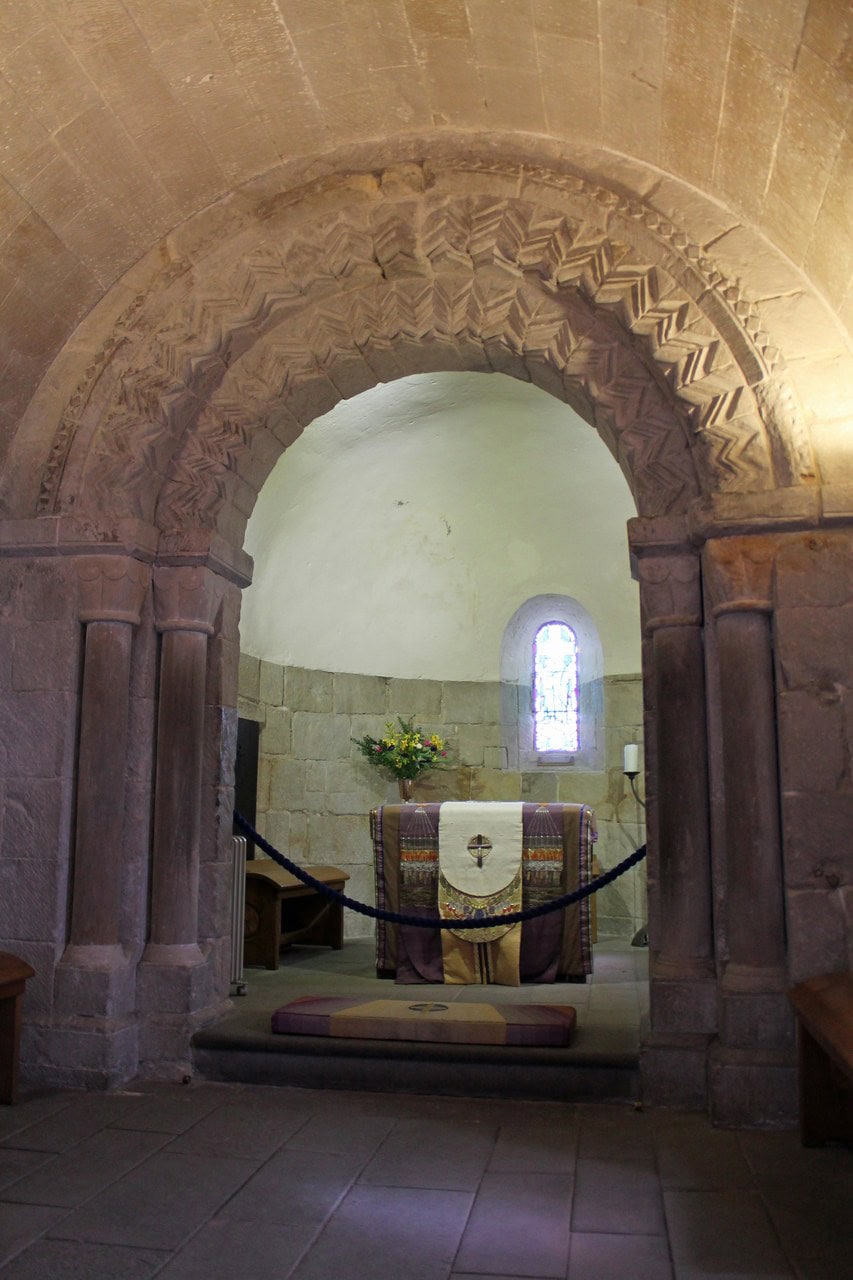
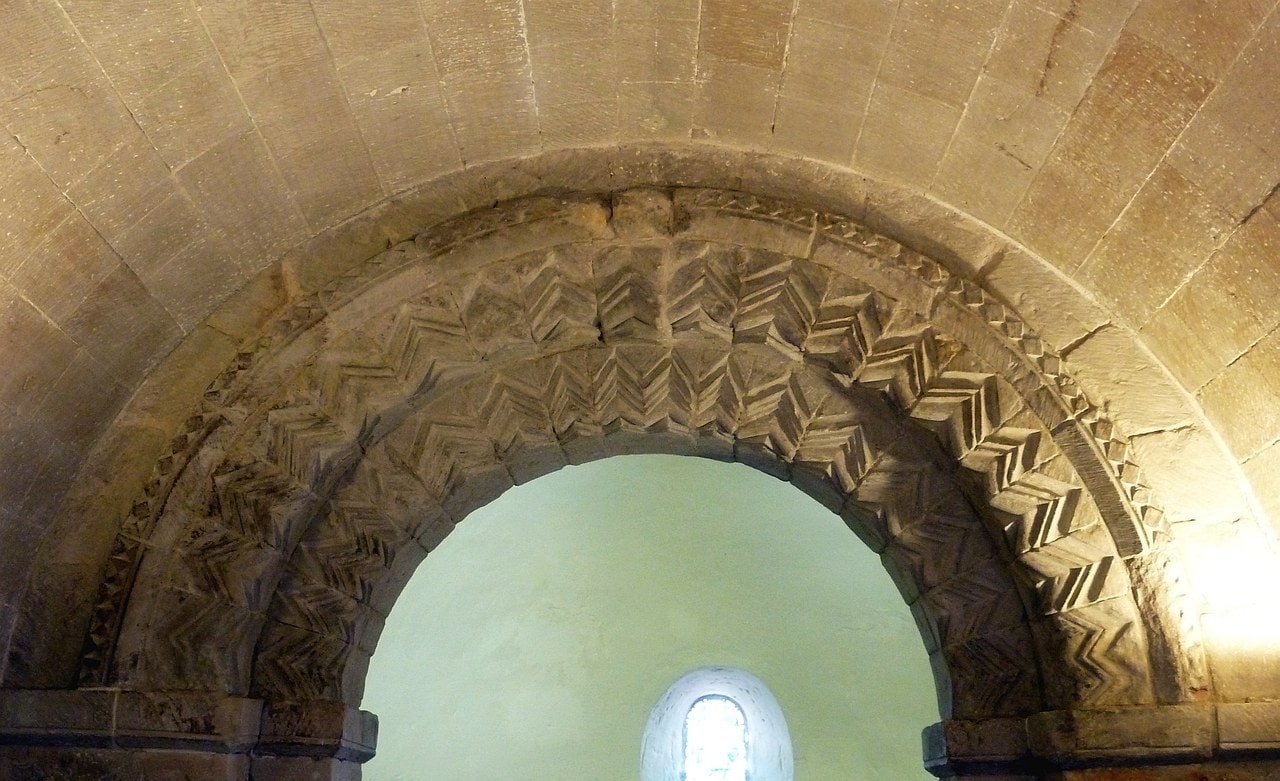
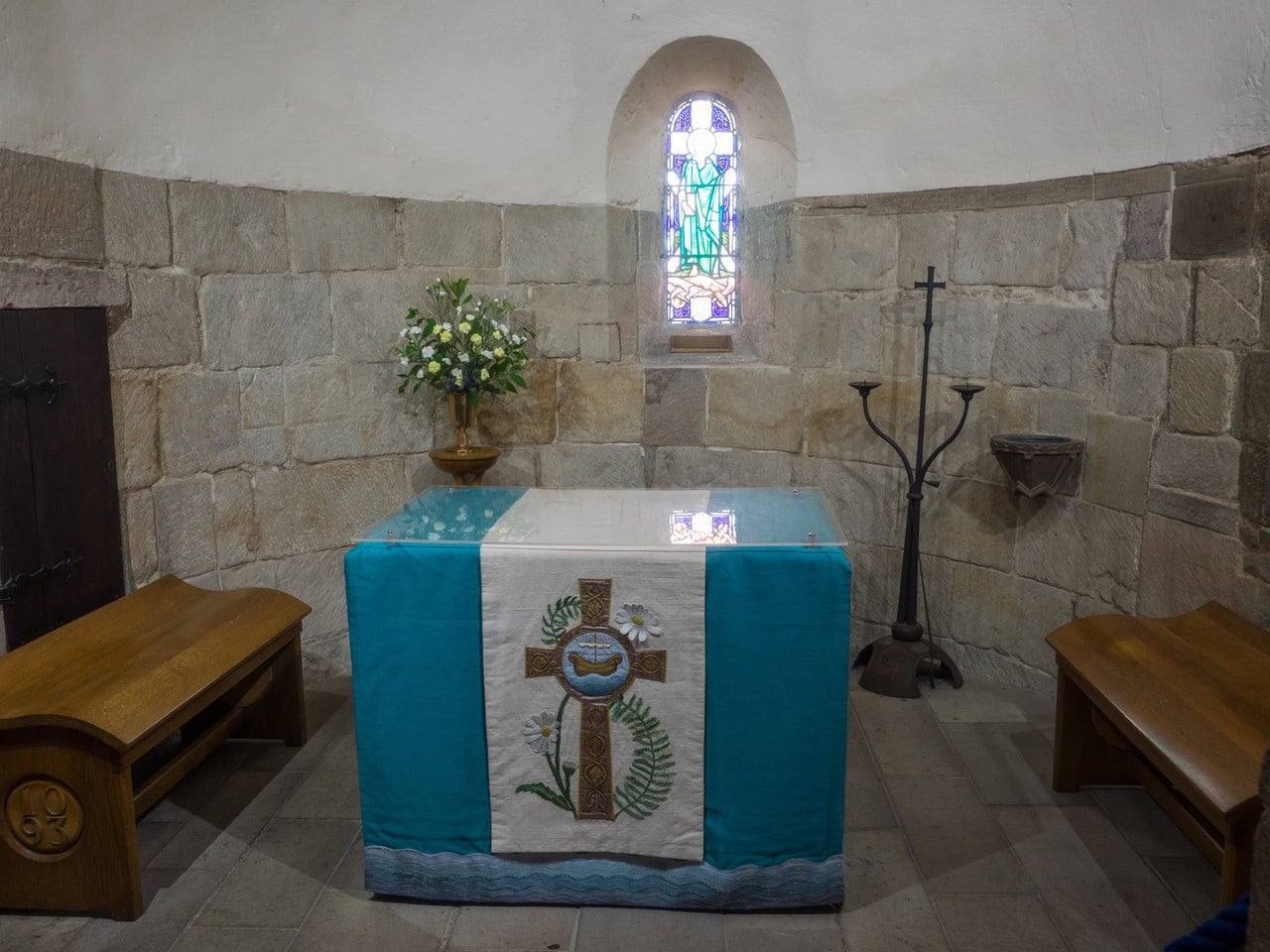
The building Robert the Bruce’s men left standing in 1314 is St Margaret’s Chapel, the oldest surviving building not just in the castle but in all of Edinburgh. It was raised around 1130 by King David I in memory of his mother, Margaret, the devout queen who was later canonized. The chapel is small and plain from the outside, a simple rectangle of stone, but inside a carved Romanesque arch divides the nave from a rounded apse, and the room has the stillness of something that has outlasted everything around it. Kings and queens worshiped here; the chapel survived the slighting, the sieges, and the barracks years, and it remains a consecrated space.
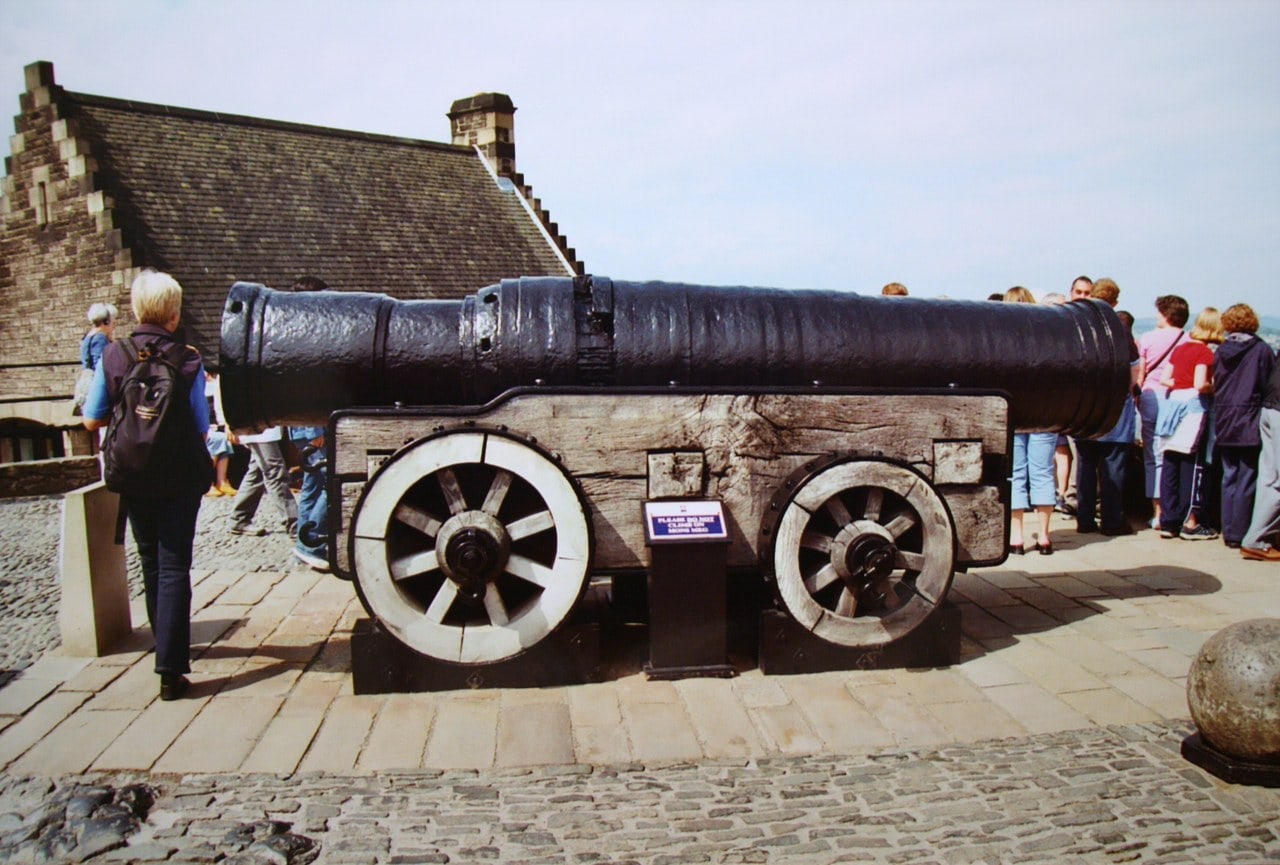
Just outside the chapel stands Mons Meg, a giant medieval bombard and one of the castle’s most popular sights. This six-ton siege gun was forged in the town of Mons, in what is now Belgium, and given to King James II in 1457 by Philip the Good, Duke of Burgundy; it still carries the name of the place that made it. In its prime it could hurl a 150-kilogram gunstone as far as two miles, and it was dragged to sieges at Roxburgh and beyond; in 1558 it was fired in celebration of the wedding of Mary, Queen of Scots. Its barrel burst in 1681, and after decades in the Tower of London the great gun came home in 1829.
The One O’Clock Gun and the Garrison Today
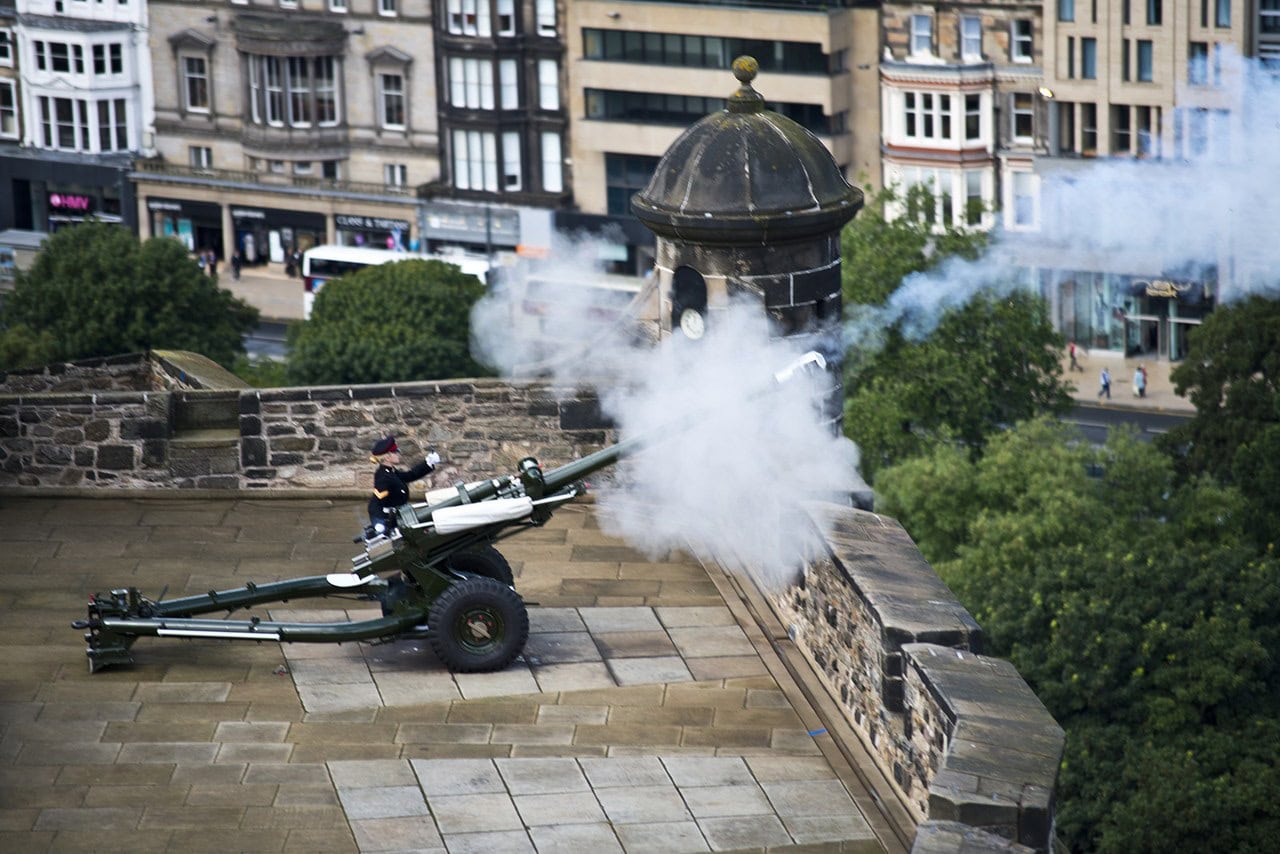
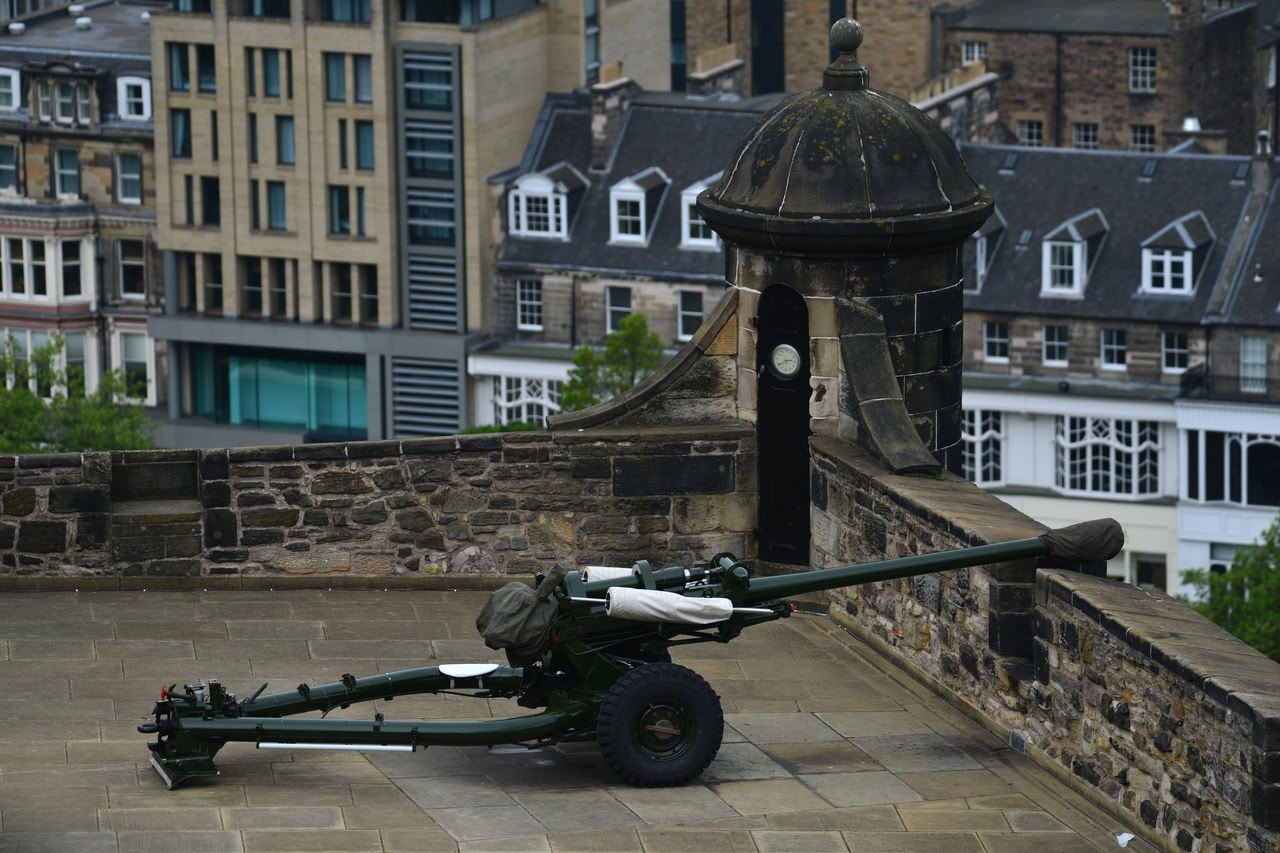
Every day at one o’clock, with three exceptions, a gun fires from the castle and the report rolls out across the city. The One O’Clock Gun has sounded since 1861, when it was set up as a time signal so that ships in the Firth of Forth could set their chronometers, working in concert with a falling time ball on Calton Hill. It fires every day except Sundays, Good Friday, and Christmas Day. The original cannon has given way to a modern field gun, now fired from the Mills Mount Battery, but the ritual is unbroken and remains one of the castle’s fixed points.
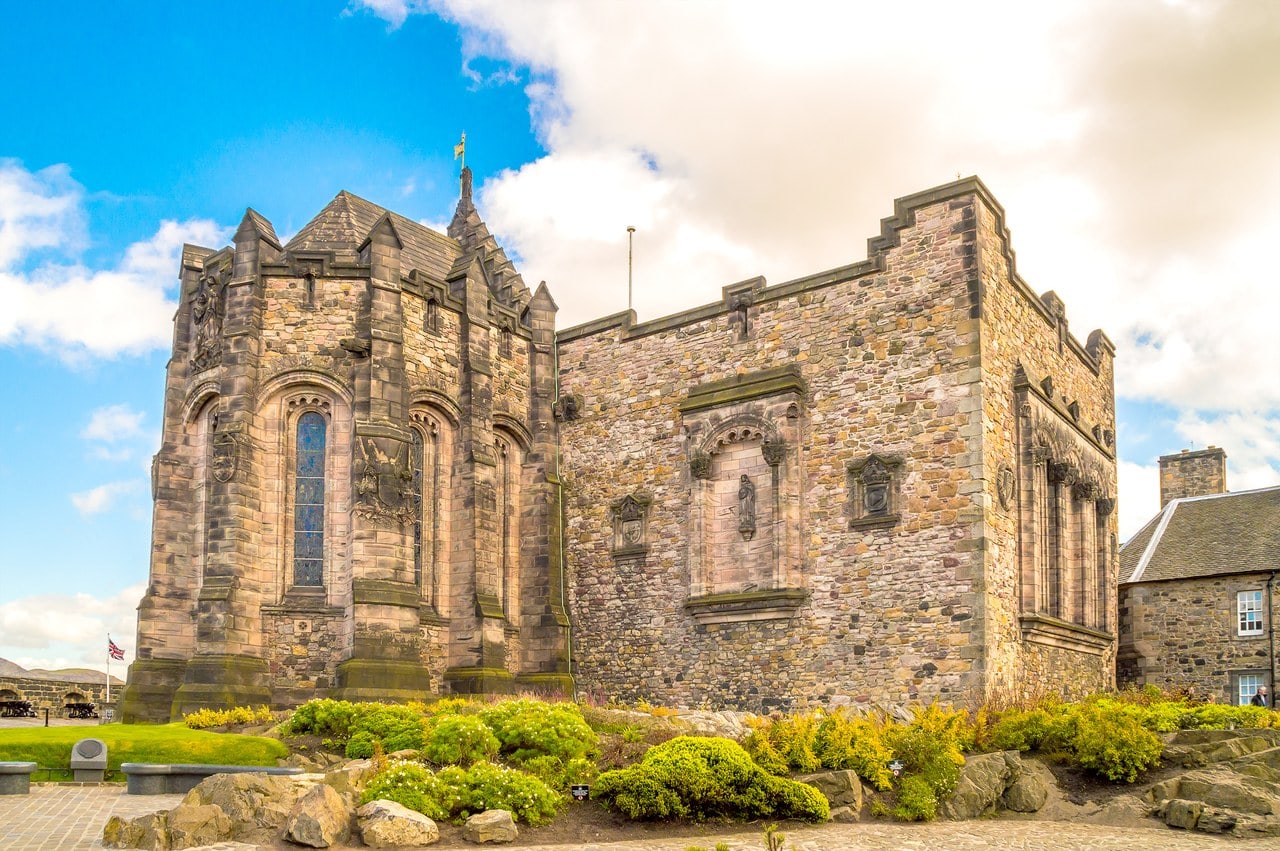
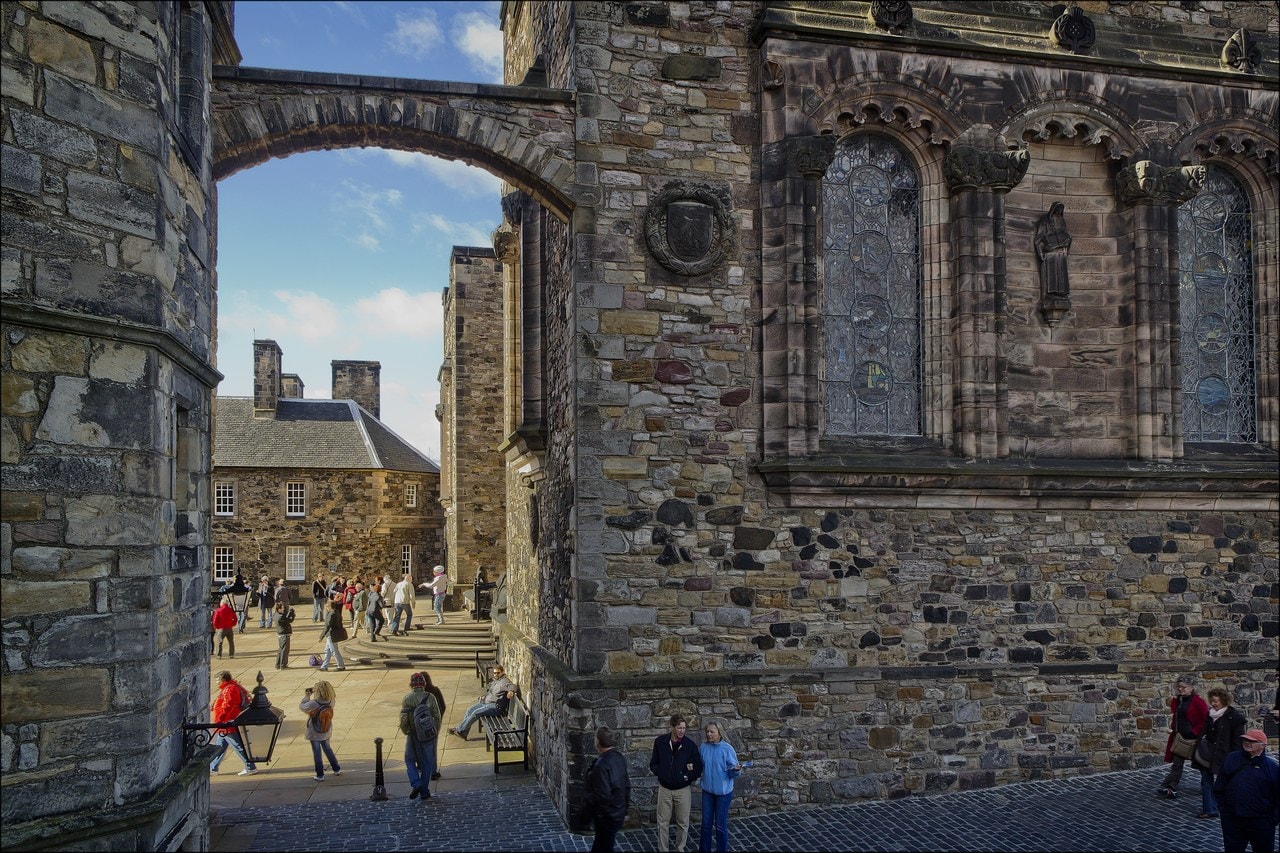
That daily gun is a reminder that Edinburgh Castle is not only a museum. It is still an active British Army establishment, with a military presence that has never lapsed. It serves as the regimental headquarters of the Royal Regiment of Scotland and houses regimental museums, while Historic Environment Scotland runs the visitor site. Two national institutions of memory stand within the walls: the Scottish National War Memorial, opened in 1927 in a former barracks block, and the National War Museum, run by National Museums Scotland. A visitor moving through the castle crosses freely between a heritage attraction and a working garrison, often without noticing where one ends and the other begins.
Visiting Edinburgh Castle
List the 8 castles on this map
- Edinburgh Castle — City of Edinburgh, Scotland
- Eilean Donan Castle — Highland, Scotland
- Stirling Castle — Stirling, Scotland
- Urquhart Castle — Highland, Scotland
- Doune Castle — Stirling, Scotland
- Dunnottar Castle — Aberdeenshire, Scotland
- Kilchurn Castle — Argyll and Bute, Scotland
- Dunrobin Castle — Highland, Scotland
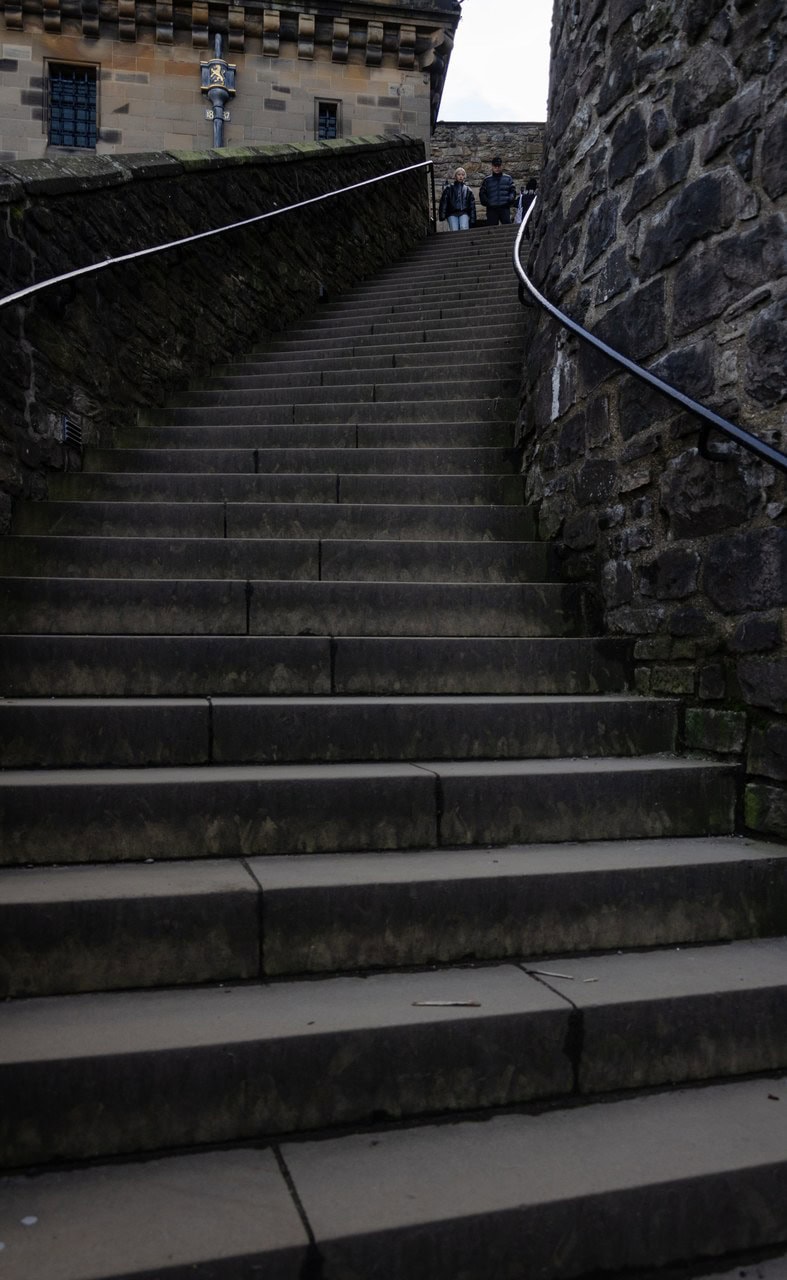
Edinburgh Castle is open every day except Christmas Day and Boxing Day, and it sits at the top of the Royal Mile, a short uphill walk from Princes Street and the main railway station at Waverley. It is a steep site with cobbles and stairs, though a courtesy vehicle helps visitors with limited mobility reach the upper wards. There is no visitor parking on the rock itself, so most people arrive on foot, or by tram and bus from the airport to Princes Street and then up through the Old Town. Plan on two to three hours to see the Honours, the Great Hall, St Margaret’s Chapel, the war memorial, and the views, and try to arrive early: this is the busiest paid attraction in Scotland, and tickets for the most popular slots sell out.
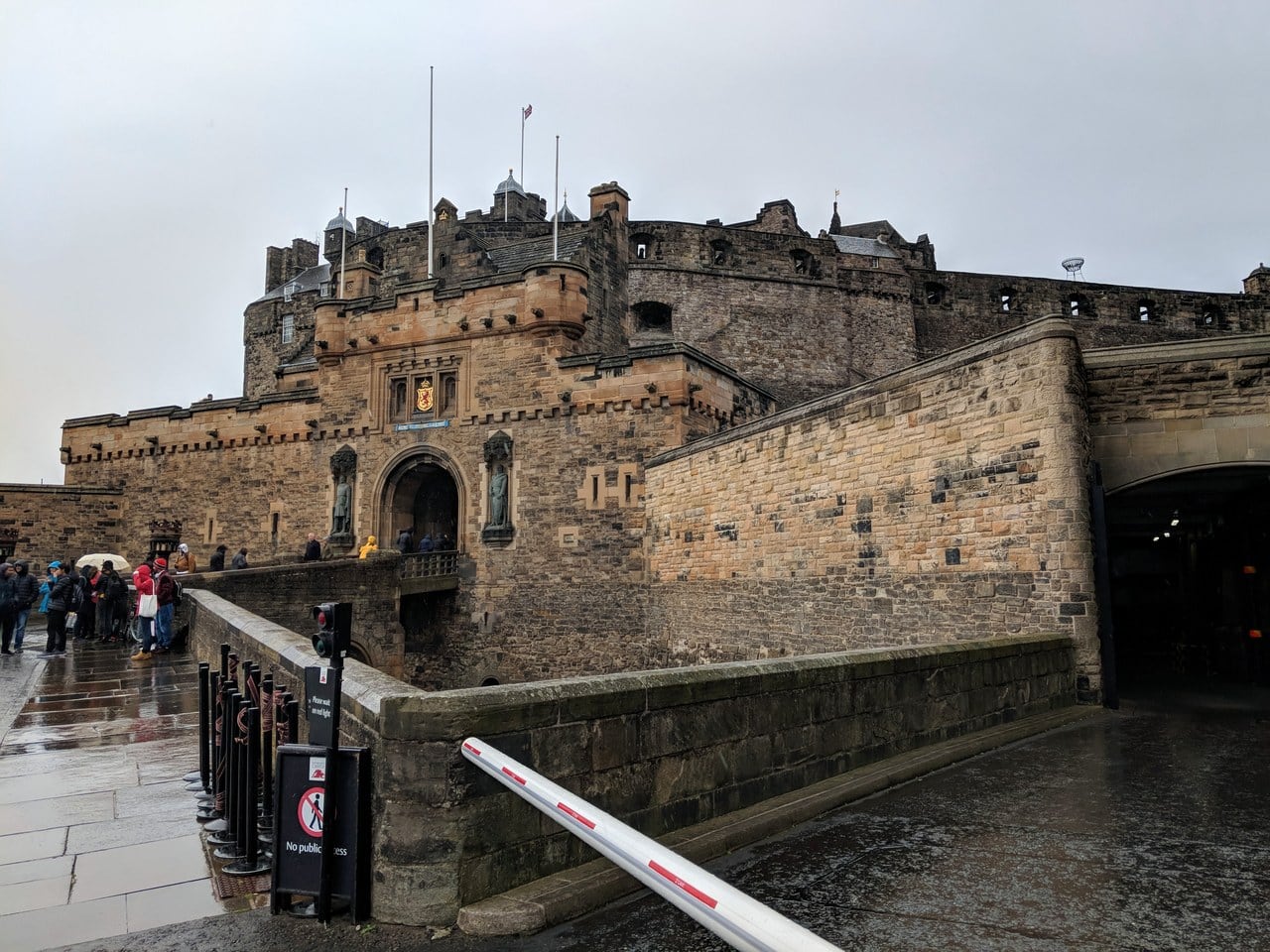
Timing matters more here than at most castles. Through August the city fills for the Edinburgh festivals, and the Royal Edinburgh Military Tattoo builds its grandstands across the Esplanade, the castle’s own forecourt, so the approach is at its most crowded even as the spectacle peaks; late spring and early autumn bring longer daylight and thinner queues. Adult admission runs around £21 booked online in 2026, a little more at the gate. Because demand is high and prices and hours shift with the season, the surest approach is to book a timed ticket online in advance through Historic Environment Scotland rather than turning up and hoping. If you would rather have the history brought to life, a guided walking tour of the castle and the Old Town is an easy way to add context, and skip-the-line options can save an hour on a busy day.
Timed-entry tickets and guided castle-and-Old-Town tours are bookable in advance through GetYourGuide, which lists skip-the-line and small-group options for Edinburgh Castle. To turn the visit into a longer Scottish break you can also sleep in a castle of your own: Booking.com has rooms at Dalhousie Castle, a turreted country-house hotel about twenty minutes south of the city.
Some links on this page are affiliate links, which means StoneKeep Atlas may earn a small commission, at no extra cost to you, if you book through them.
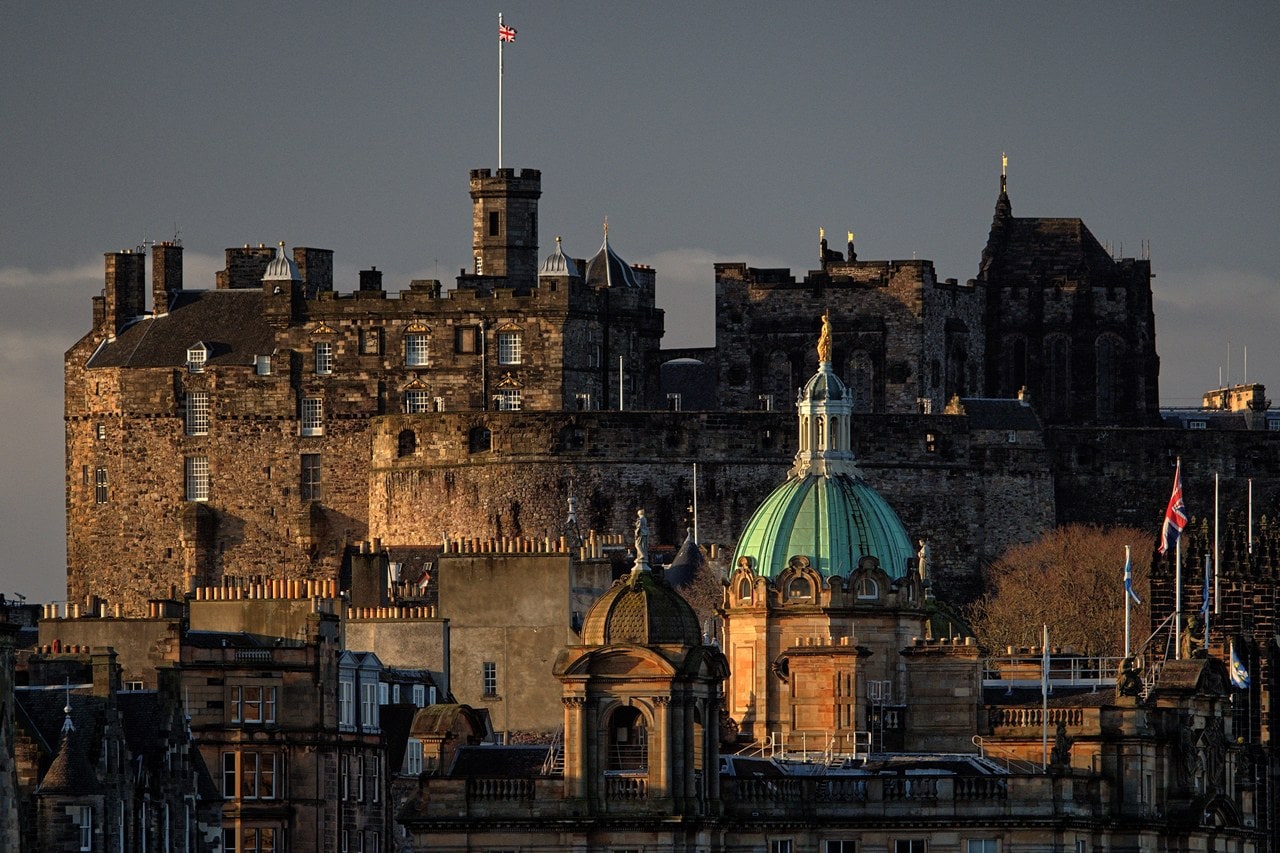
More Views of Edinburgh Castle
Beyond Edinburgh Castle
Edinburgh Castle is the first of Scotland’s great fortresses in our growing guide to the country, and its natural counterpart is Eilean Donan Castle, the island stronghold in the western Highlands where three sea lochs meet: as remote and rebuilt as Edinburgh is urban and unbroken. Closer in spirit is Stirling Castle, the other great royal fortress-crag, which shared with Edinburgh the making of Scotland’s kings. More of Scotland’s castles are joining the collection, among them Urquhart Castle, the great ruined stronghold on Loch Ness, Doune Castle, the near-intact medieval seat of the Duke of Albany near Stirling, and Dunnottar Castle, the cliff-top ruin near Stonehaven that once hid the Honours of Scotland from Cromwell. For now, the castle rewards a slow approach on foot up the Royal Mile, which gives you the whole of the Old Town on the way to the gate. If the visit tempts you to stay over, our guide to staying in a castle in Scotland gathers ten castle hotels from the Borders to the Highlands. Argyll offers a very different proposition in Kilchurn Castle, a roofless Campbell tower house at the head of Loch Awe that is not a ticketed site at all: its exterior is free to walk around all year, and its interior is closed for conservation. These Scottish castles are gathered in our guide to the castles of Scotland.
Conclusion
Edinburgh Castle earns its fame twice over: once as a spectacle, the black rock and its ramparts over a capital city, and once as a record. Read closely, its stones hold a chapel that outlasted a demolition, a royal hall from the eve of Flodden, a medieval tower entombed in a gun battery, and the crown jewels of a nation that hid them to keep them. It is besieged no longer, but it has not gone quiet: a gun still fires at one, a regiment still keeps its headquarters here, and close to two million visitors a year still make the climb. Few castles anywhere carry so many centuries so visibly, and fewer still are so plainly alive.
Principal Sources
- Caldwell, David H. “Edinburgh Castle Under Siege,” a review in three parts covering 1093-1544, 1559-1573 and 1639-1745. Journal of the Sydney Society for Scottish History, vols. 16, 17 and 18 (2016, 2018 and 2019).
- Edinburgh Castle (operator, Historic Environment Scotland). Highlights: the Great Hall, St Margaret’s Chapel, the Honours of Scotland, the One o’clock Gun, the Half Moon Battery, the Scottish National War Memorial. edinburghcastle.scot.
- Edinburgh Geological Society. “Castle Rock.” edinburghgeolsoc.org.
- Historic Environment Scotland. “Edinburgh Castle” and “History of Edinburgh Castle.” historicenvironment.scot.
- Historic Environment Scotland. Scheduled Monument record SM90130 (designation portal).
- Perth Museum. “The Stone of Destiny.” perthmuseum.co.uk.
Prices and opening hours change seasonally; check the official site before you travel.
Image credits. Hero, the castle above Princes Street Gardens: Matti Blume, CC BY-SA 4.0, via Wikimedia Commons; the gatehouse and the Bruce and Wallace statues: Daniel Kraft, CC BY-SA 3.0, via Wikimedia Commons; the gatehouse from the Esplanade: Enchufla Con Clave, CC BY-SA 4.0, via Wikimedia Commons; the Great Hall hammerbeam roof: Connie Ma, CC BY-SA 2.0, via Wikimedia Commons; the Great Hall interior: Osama Shukir Muhammed Amin, CC BY-SA 4.0, via Wikimedia Commons; St Margaret’s Chapel arch: Sarah Stierch, CC BY 2.0, via Wikimedia Commons; the chapel arch detail: Rob Farrow, CC BY-SA 2.0, via Wikimedia Commons; the One O’Clock Gun firing: Steve Collis, CC BY 2.0, via Wikimedia Commons; the One O’Clock Gun on Mills Mount: August Schwerdfeger, CC BY 4.0, via Wikimedia Commons; the Half Moon Battery: Carlos Delgado, CC BY-SA 3.0, via Wikimedia Commons; the Half Moon Battery (alternate): Chabe01, CC BY-SA 4.0, via Wikimedia Commons; Mons Meg: Gary Todd, public domain, via Wikimedia Commons; aerial view of the castle: Godot13, CC BY-SA 4.0, via Wikimedia Commons; aerial top-down view: 瑞丽江的河水, CC BY-SA 4.0, via Wikimedia Commons; Crown Square: dun_deagh, CC BY-SA 2.0, via Wikimedia Commons; the Lang Stairs: Peulle, CC BY 4.0, via Wikimedia Commons; the castle floodlit at dusk: Alex Liivet, public domain, via Wikimedia Commons; the Scottish National War Memorial: t0m15 / Adobe Stock; inside St Margaret’s Chapel: Melastmohican / Adobe Stock; the Ross Fountain below the castle: E Mens via Unsplash; the castle at golden hour over the Old Town: emphyrio via Pixabay. Freely licensed images are resized to fit; otherwise unaltered.