
Stirling Castle
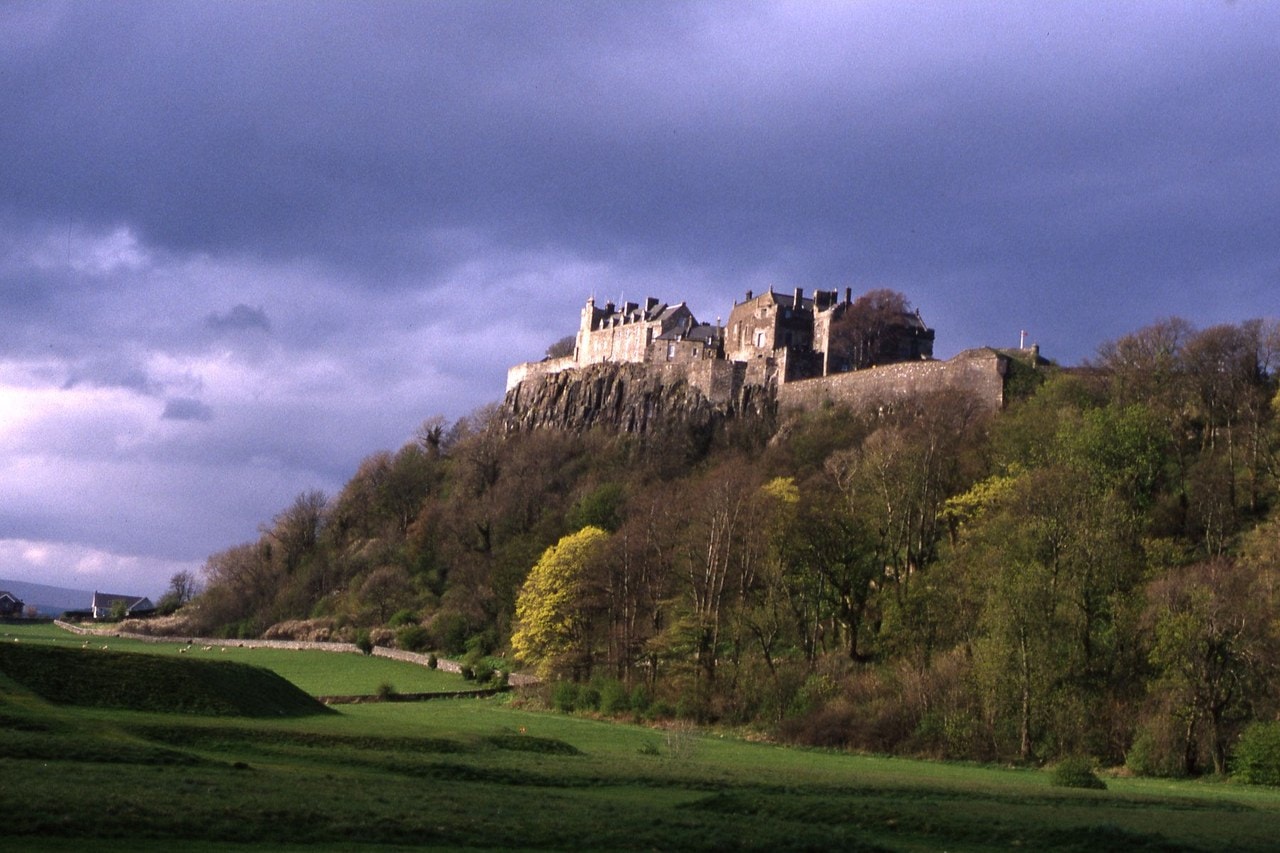
Stirling Castle stands on a black crag above the River Forth, at the point where the Highlands meet the Lowlands and Scotland narrows to a waist. For much of the nation’s history, whoever held Stirling held the road north, and so the castle was fought over more fiercely than almost any place in the country. It was also, when the fighting paused, one of the grandest royal homes the Stewart kings ever built: a Renaissance palace, a great banqueting hall, and a chapel raised for a royal christening. Today it is all of that at once, and something rarer besides, a castle where the boldest modern restorations in Britain let you walk into the sixteenth century as its kings meant it to look.
Quick Facts
| Location | Castle Hill, Stirling, central Scotland |
| Region | Stirling |
| Elevation | about 128 meters above sea level, on a volcanic crag |
| Built | medieval fortress with a sixteenth-century Renaissance palace |
| Type | Royal castle and palace |
| Owner / operator | Historic Environment Scotland |
| Native name | Caisteal Shruighlea (Scottish Gaelic) |
| Designation | Scheduled Monument (HES ref. SM90291) |
| Coordinates | 56.1237 N, 3.9485 W |
| Visitors | 594,938 in 2024 (Scotland’s second most-visited paid attraction) |
| Official website | stirlingcastle.scot |
The Key to Scotland
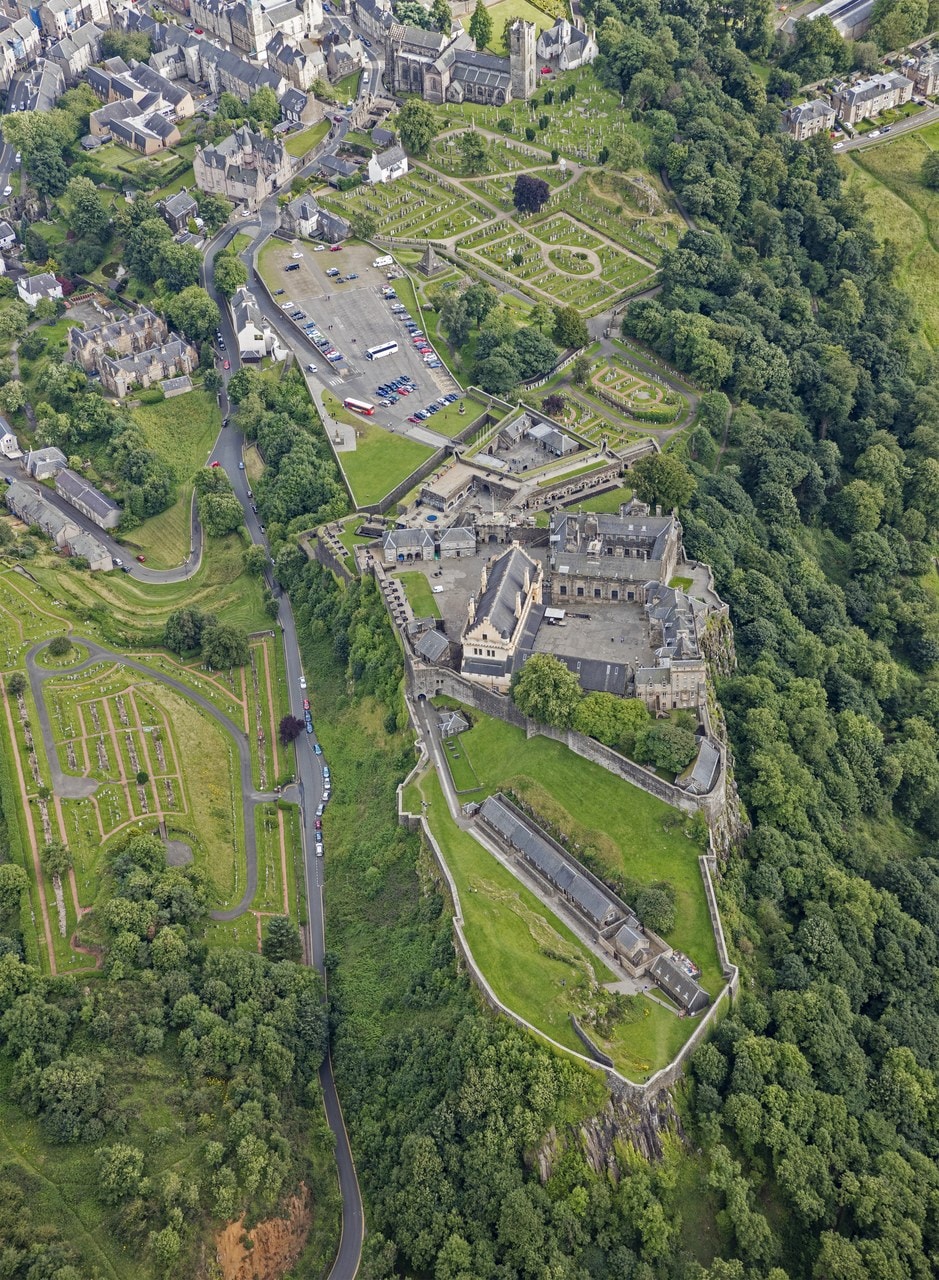
Like Edinburgh’s rock, Castle Hill at Stirling is the stump of an old volcano, a crag of hard dolerite rising about 128 meters above the sea with sheer faces on three sides and a single easier approach. What made it matter, though, was the river at its foot. Stirling sat at the lowest bridging point of the Forth, the gateway between the fertile Lowlands to the south and the mountains to the north, and an army moving between the two had little choice but to pass beneath the castle walls. Hold the crag and you held the crossing; hold the crossing and you held the middle of Scotland. That single fact shaped everything that happened here.
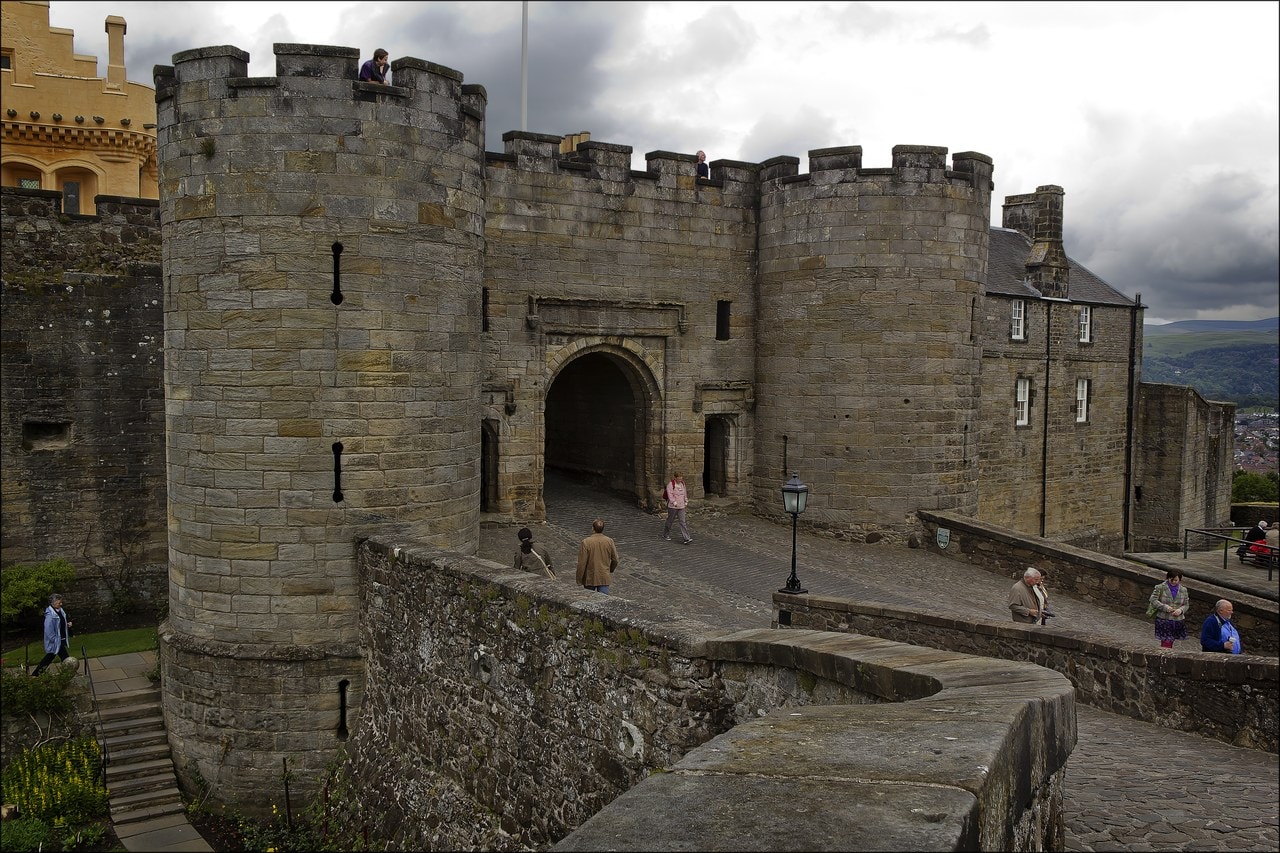
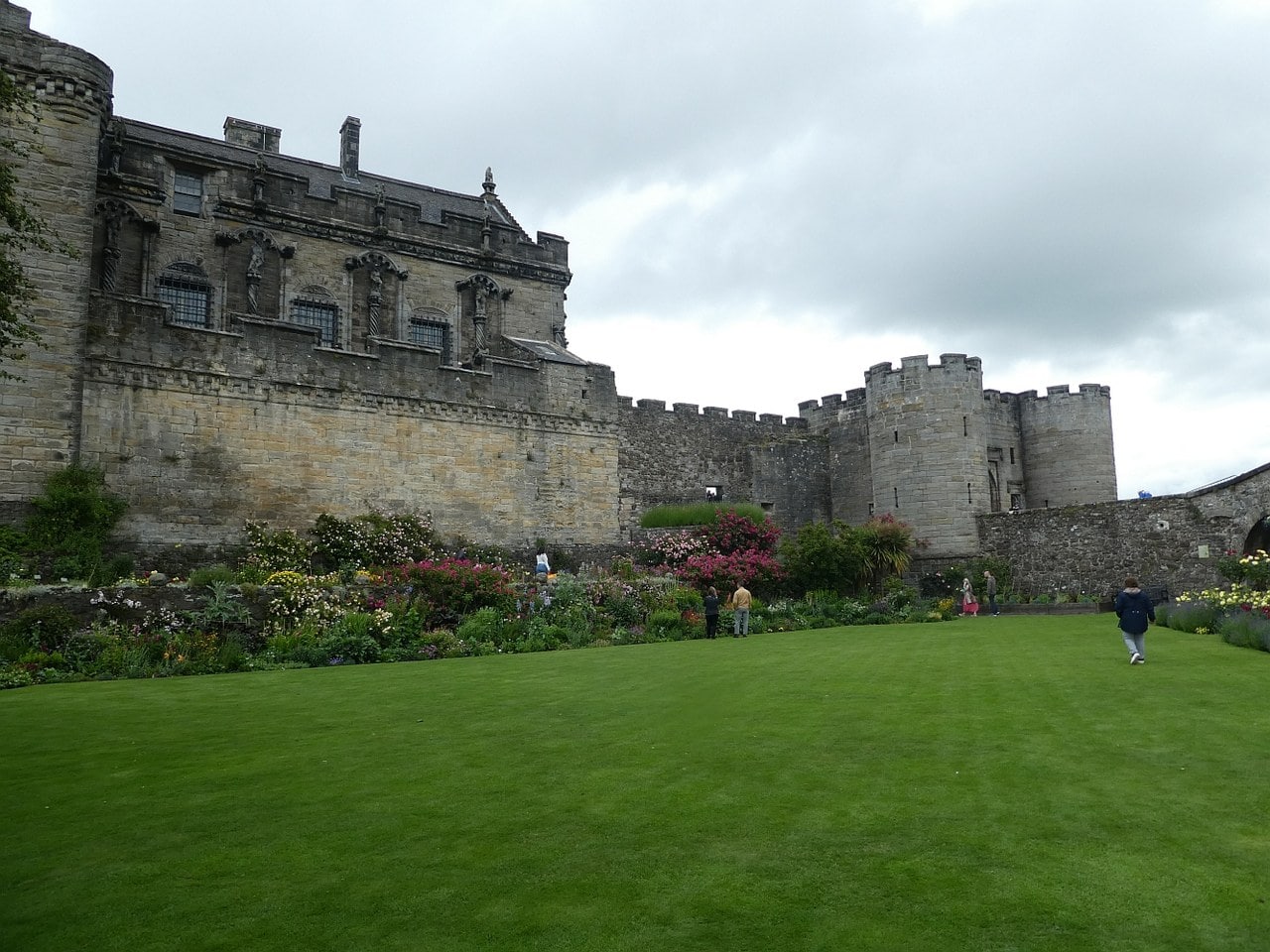
The castle you see today grew on that platform over five centuries, but its shape still answers the rock. The defenses face the vulnerable approach; the royal buildings cluster on the high summit, safe behind them, looking out over a view that runs from the Ochil hills to the distant Highland peaks. Stirling was built to be a stronghold first and a palace second, and it never stopped being both.
Wars of Independence
No castle was more central to Scotland’s long war of independence from England. In 1297 a Scots army under William Wallace and Andrew Moray destroyed an English force at Stirling Bridge, in the meadows below the castle, and the fight for the crag itself went on for years afterward. It is worth being precise here: the great battles were fought near Stirling, not inside it. The bridge lay in the carse below, and Bannockburn, in 1314, was contested a couple of miles to the south. But the castle was always the prize those battles were fought for.
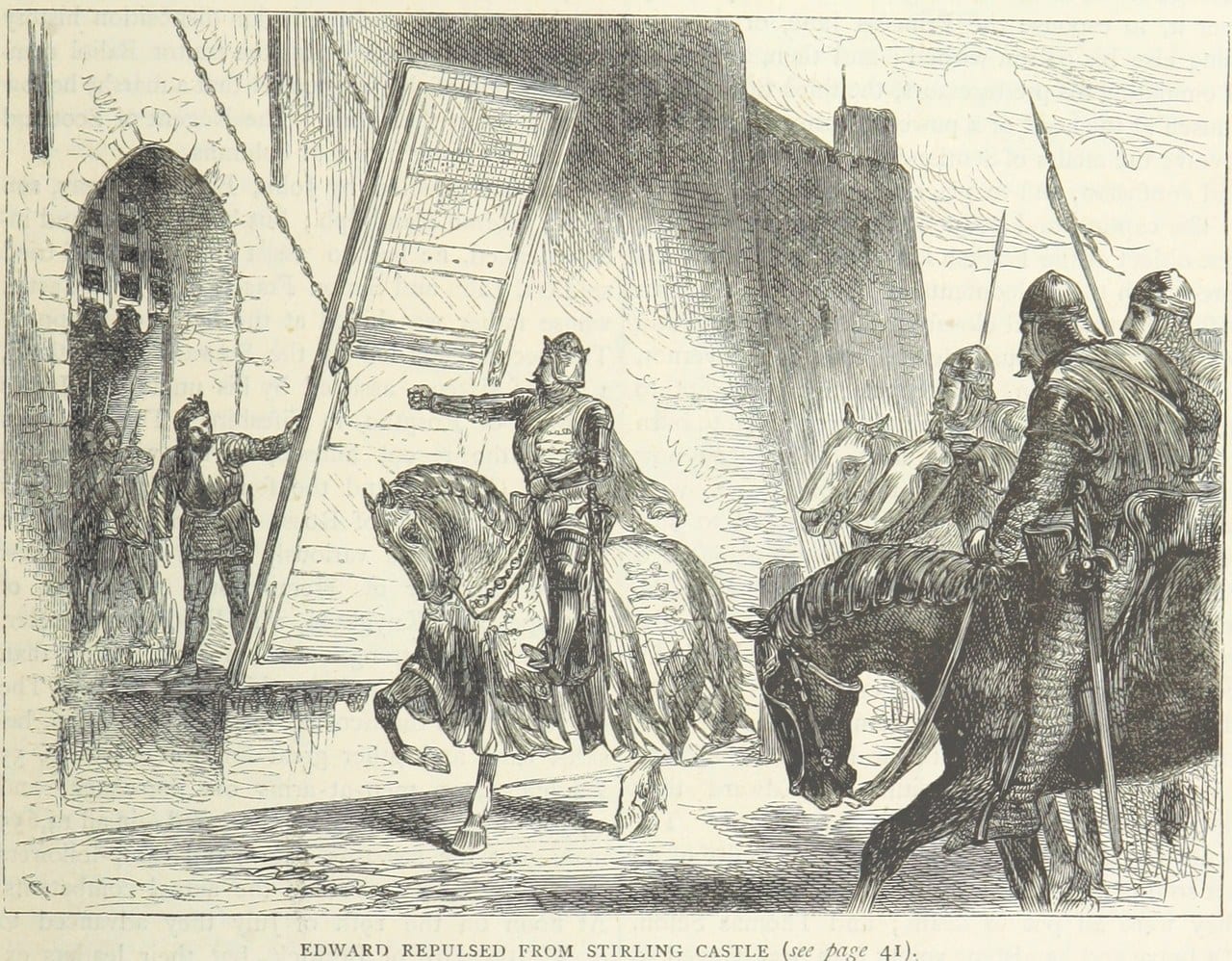
Its worst ordeal came in 1304, when Edward I of England laid siege to the garrison holding out under Sir William Oliphant. The English king brought up siege engines for months and, famously, ordered the building of a trebuchet so enormous it was given its own name, the War Wolf. The story goes that when the defenders at last offered to surrender, Edward refused to accept it until his great machine had been fired at least once, so that he could see it work. Ten years later the tables turned. After the Scots victory at Bannockburn in 1314, the English garrison surrendered the castle to Robert the Bruce, who, true to the grim logic of the war, had much of it pulled down so that it could never again shelter an enemy. What stands today rose in the centuries after that.
A Renaissance Court
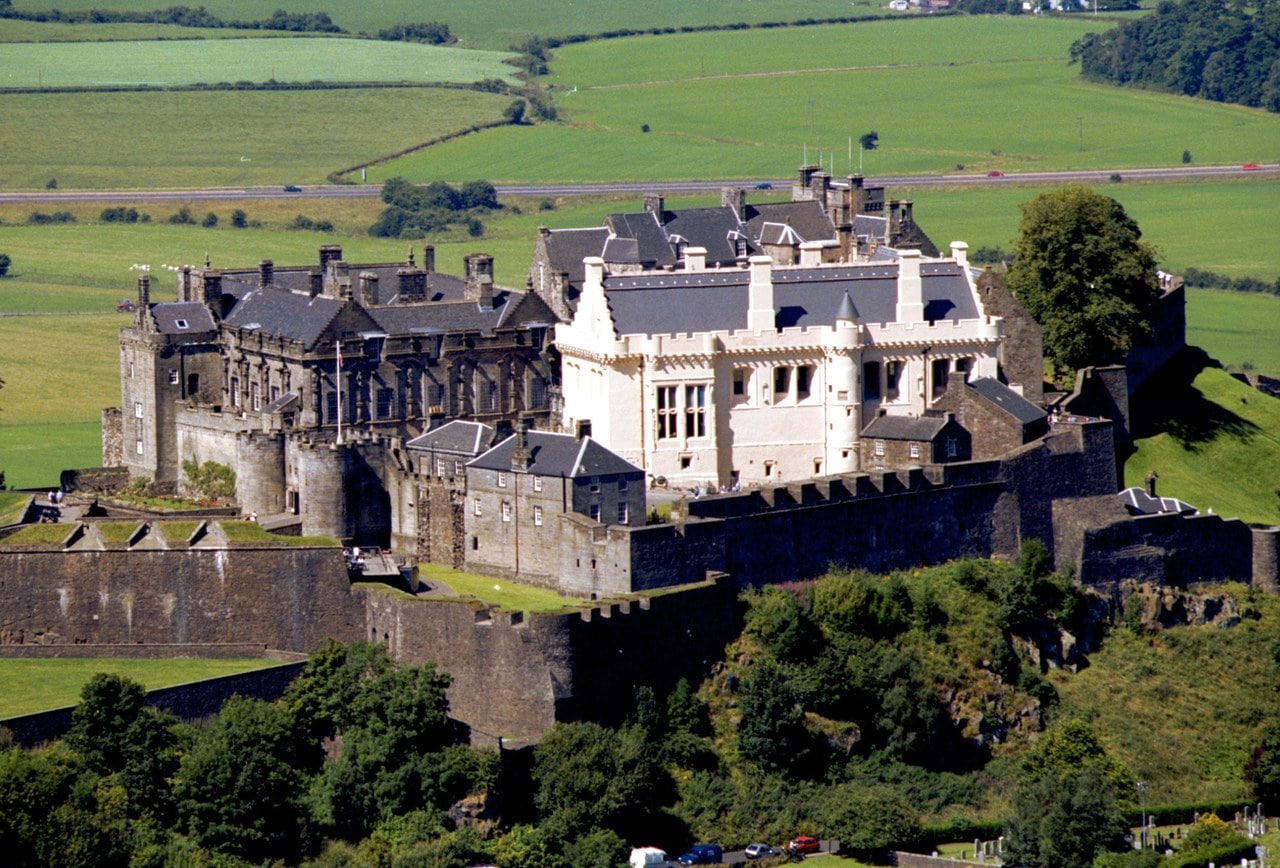
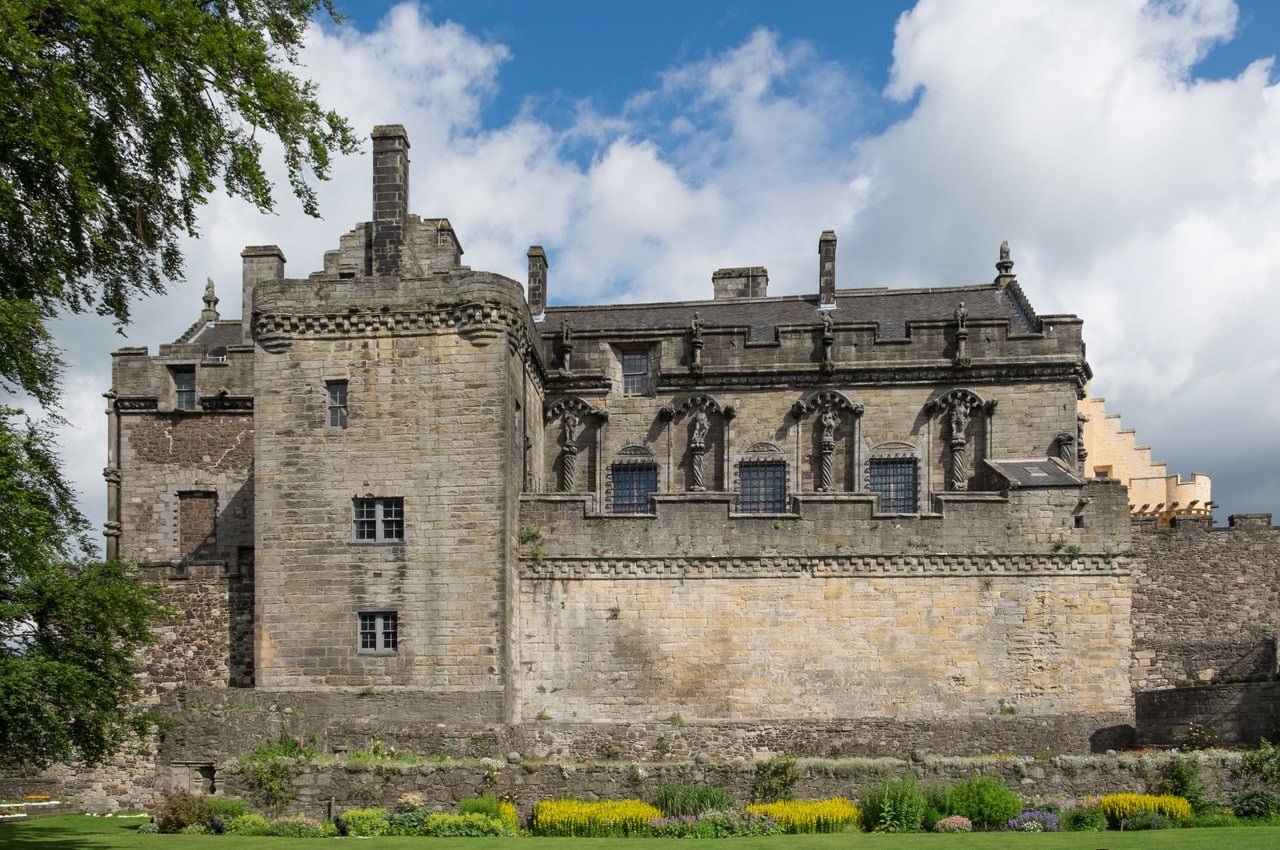
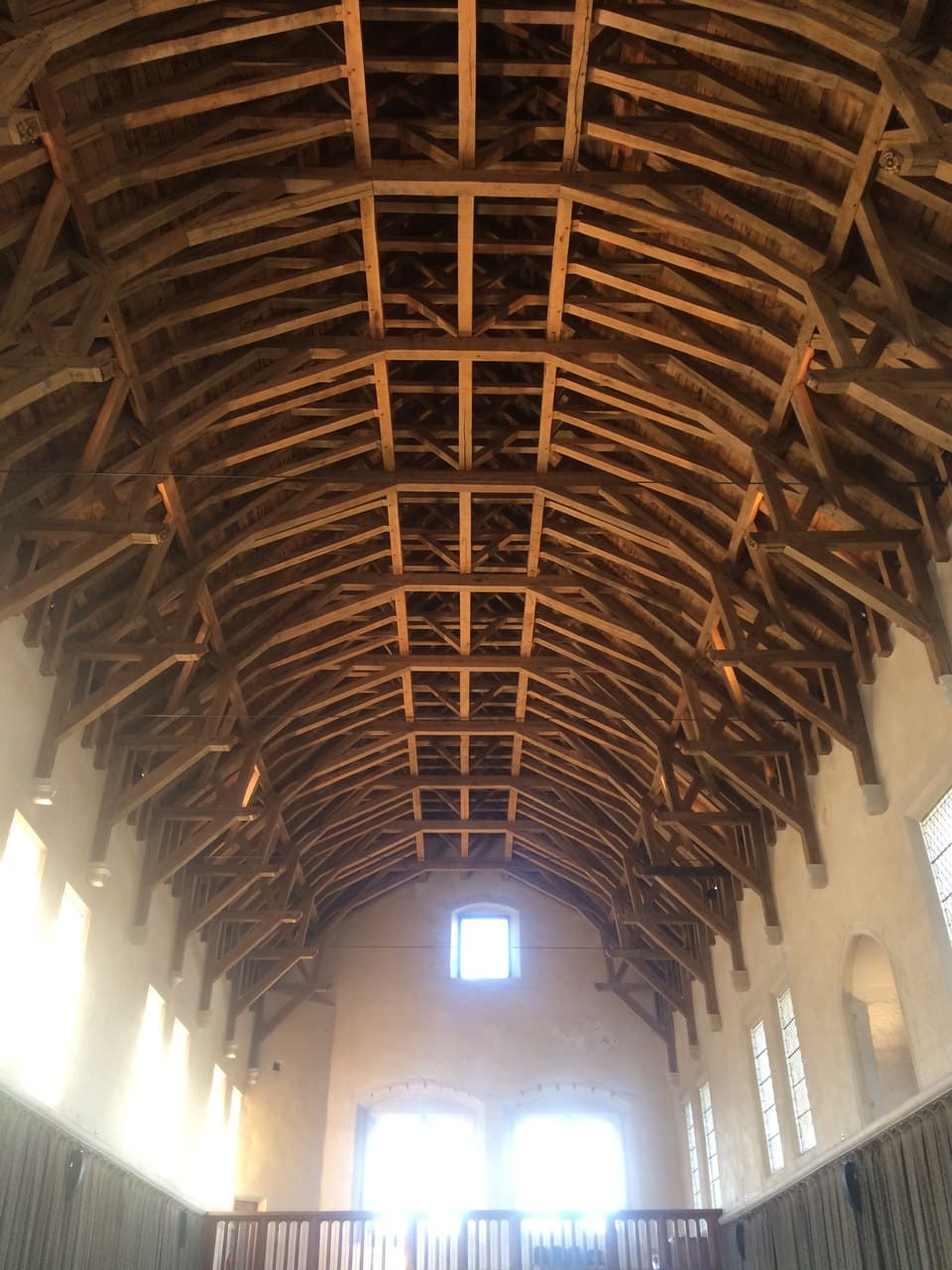
Peace, when it came, turned Stirling from a fortress into a court, and the Stewart kings made it one of the most magnificent in Britain. James IV began the transformation around 1503 with the Great Hall, the largest medieval banqueting hall ever built in Scotland, its hammerbeam roof spanning the room without a single interior pillar. His son James V went further. In the years around 1539 to 1542 he raised the Royal Palace, a lavish set of royal lodgings whose outer walls are carved with statues and grotesques in the newest European fashion; it is often called one of the first true Renaissance buildings in the British Isles. James V had married two French brides in turn, and the palace he built at Stirling wears its French and classical learning openly, a piece of continental swagger set down on a Scottish crag.
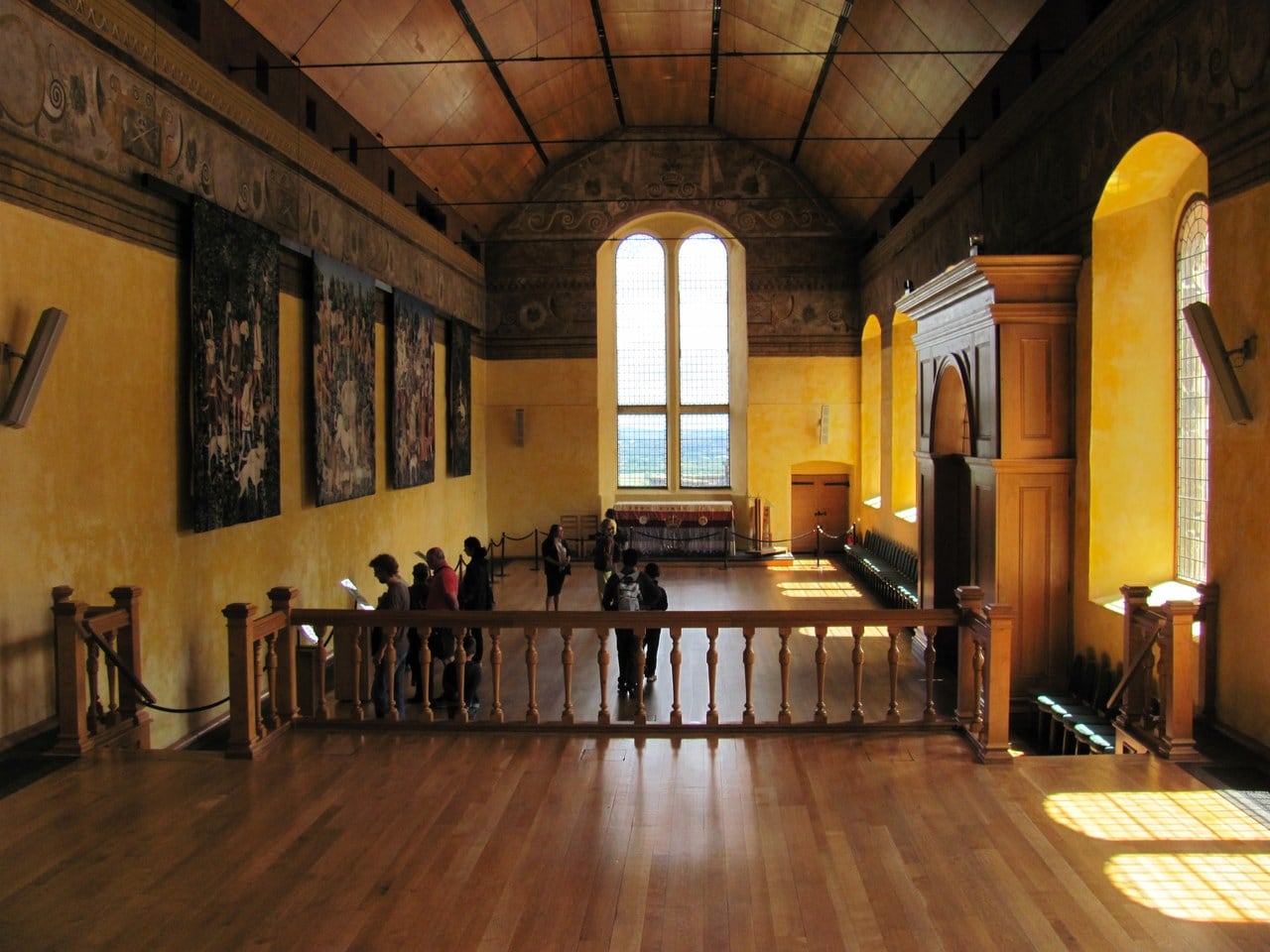
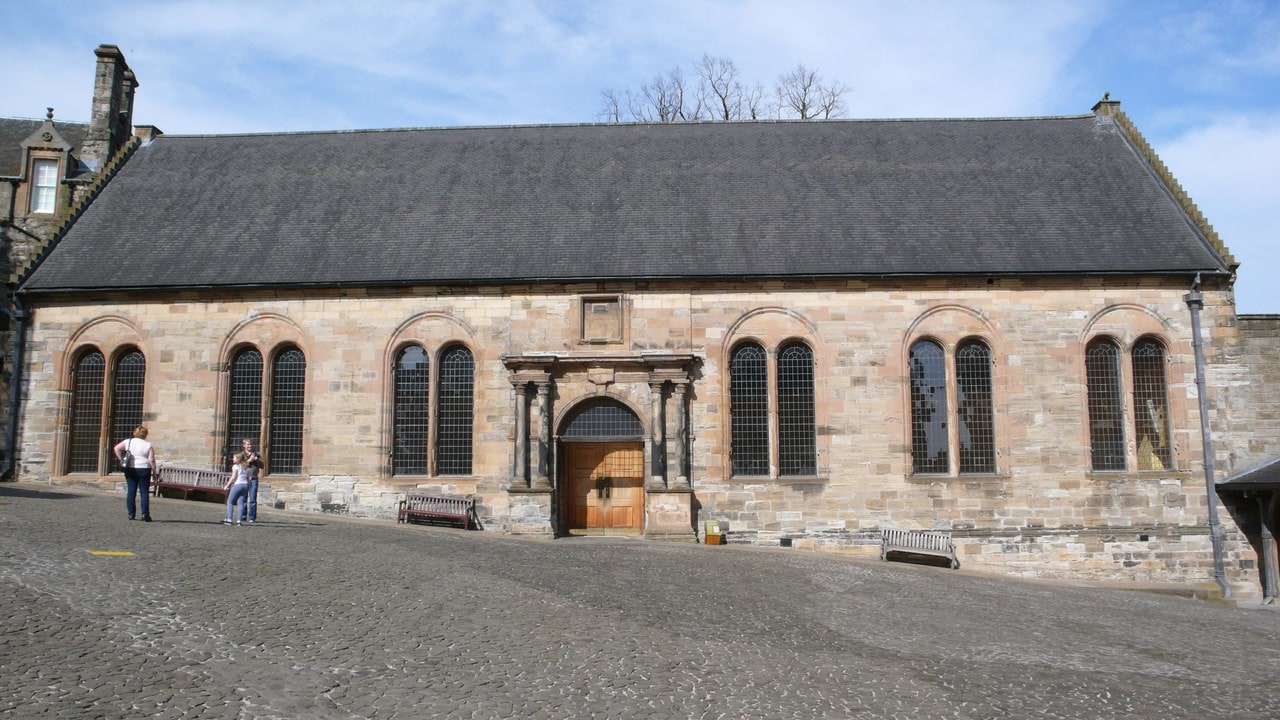
The castle was a stage for the dynasty’s great moments as much as its architecture. Mary, Queen of Scots was crowned at Stirling in 1543, a baby of nine months carried through the ceremony in the castle’s chapel. Her own son, the future James VI, was baptized here too, and for that christening, in 1594, James rebuilt the Chapel Royal from the ground up for his heir Prince Henry, throwing up a new church in a matter of months. The banquet that followed in the Great Hall was one of the most lavish the Scottish court ever staged. Its centerpiece was an eighteen-foot model ship, rigged and laden with the riches of the sea, from which figures of Neptune and his company performed while seafood was served from a great glass among its decks; the foreign ambassadors present, one chronicler wrote, marveled at the ship. For a few generations Stirling was where the Scottish crown was made, married, and mourned.
The Palace and the Great Hall Today
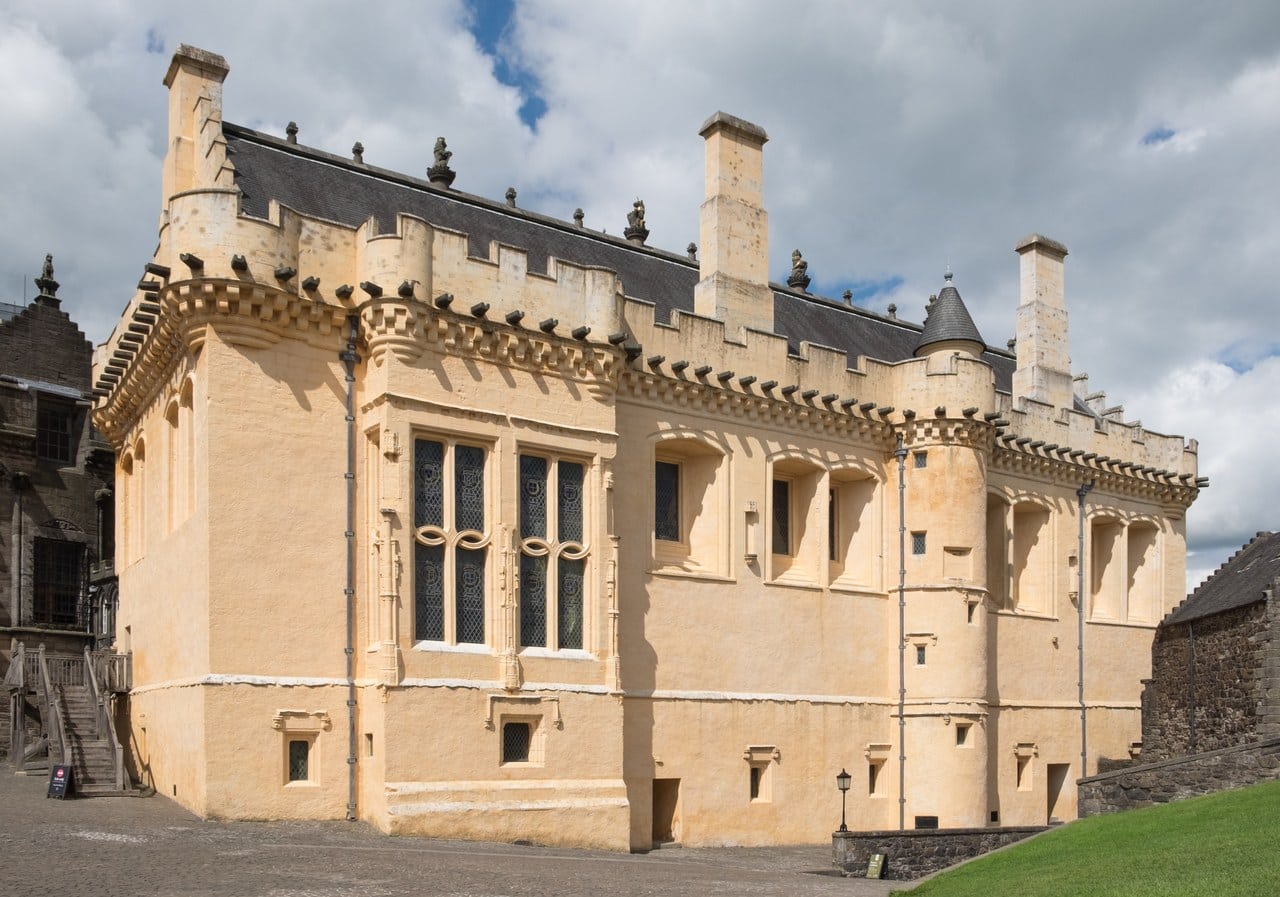
Here Stirling does something few castles dare. Rather than leave its royal rooms as bare stone, Historic Environment Scotland has restored them to blaze as they once did, and the results are startling. The Great Hall, used for centuries as a barracks and long since stripped, was restored through the 1990s and reopened in 1999 with its outside walls coated in a vivid golden limewash, a yellow ochre “royal gold.” It looks, at first, impossibly bright, until you learn that the color is not a guess: conservators found traces of the original sixteenth-century limewash on the old stone and simply put it back. This is how the kings wanted their hall to be seen, glowing above the town.
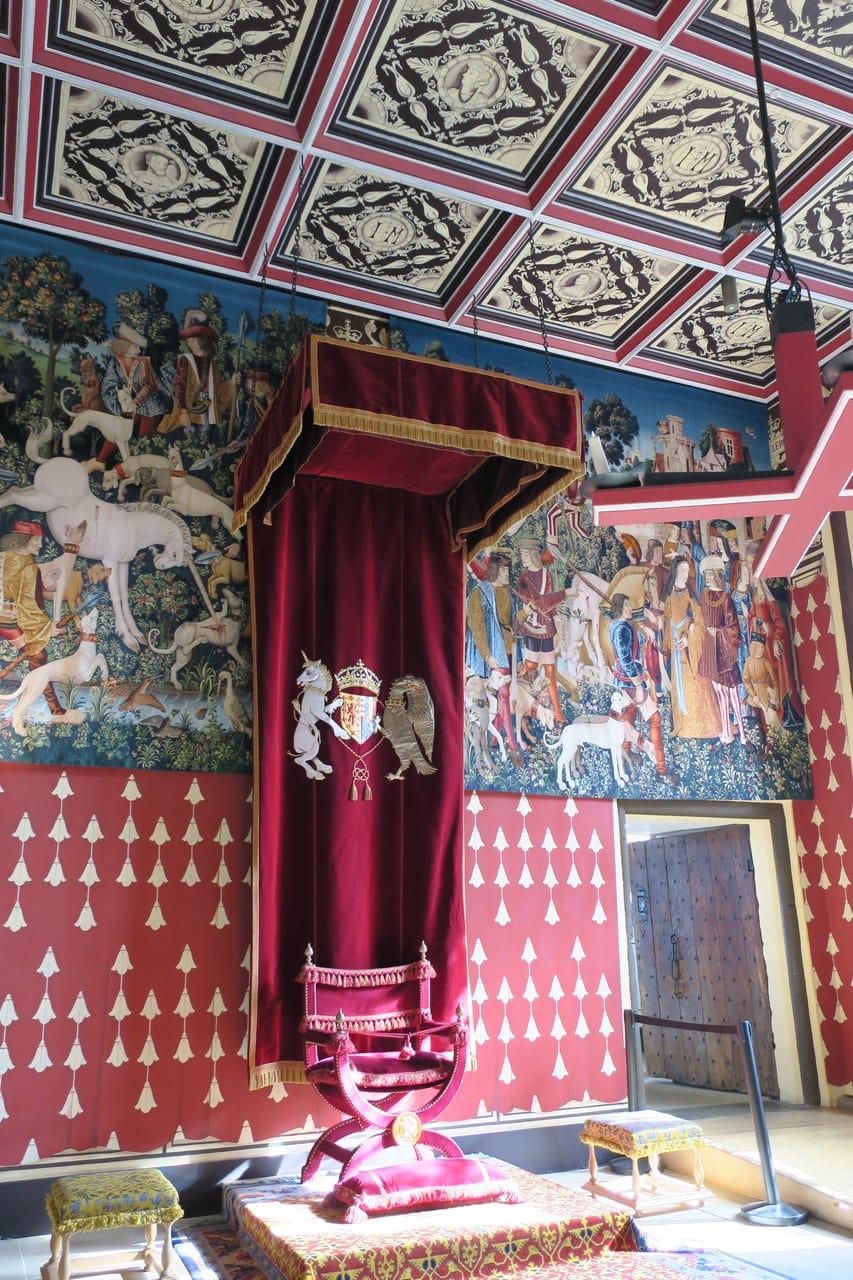
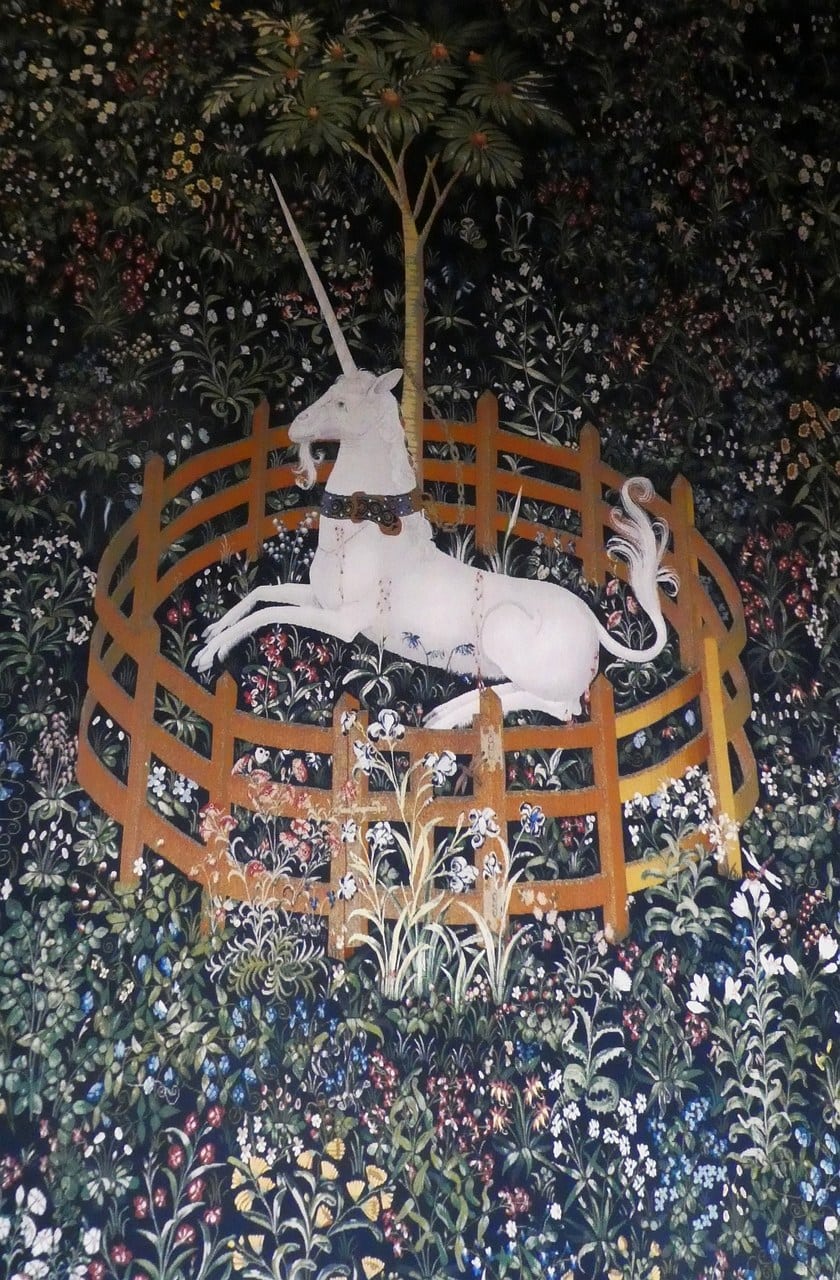
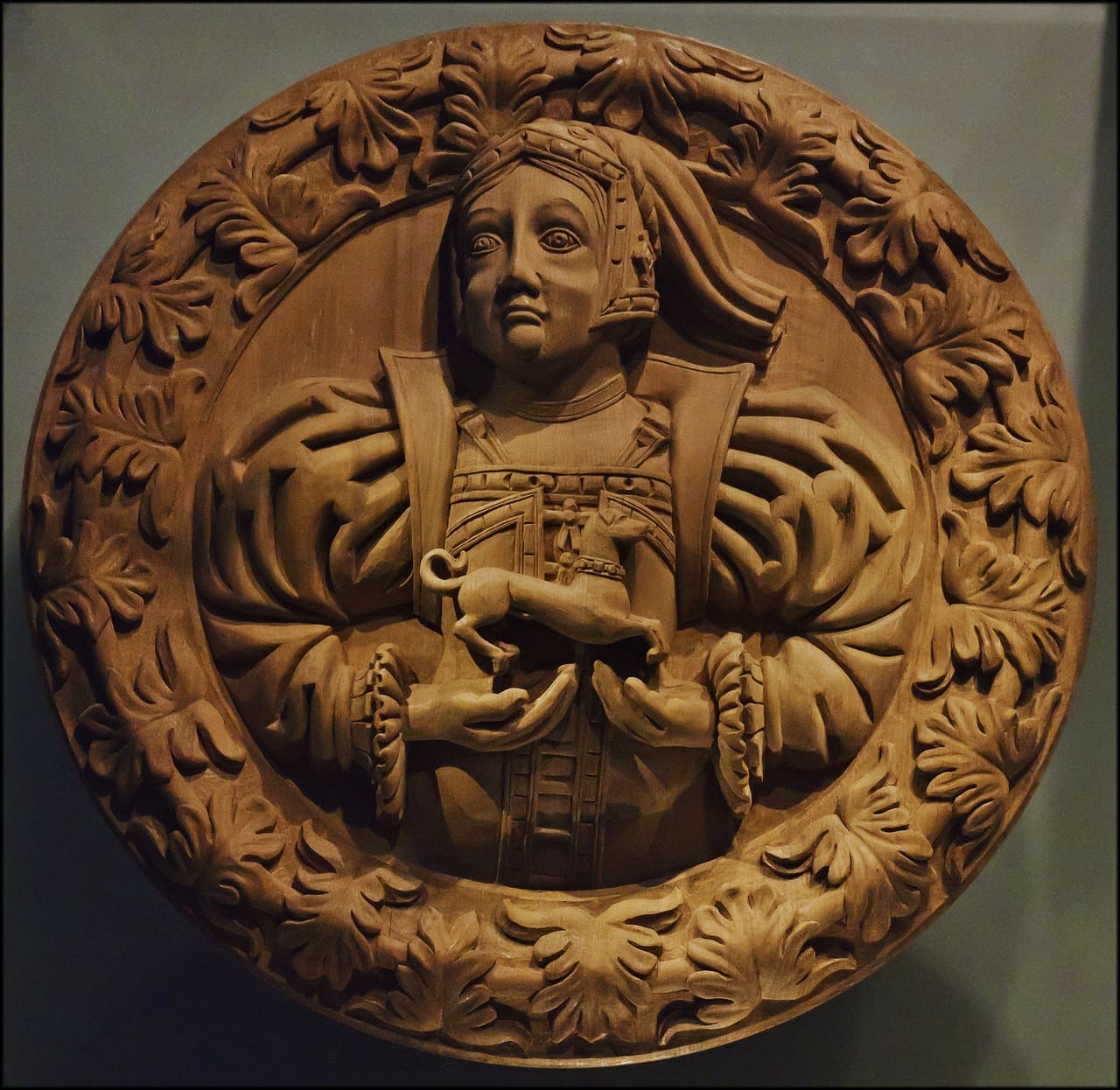
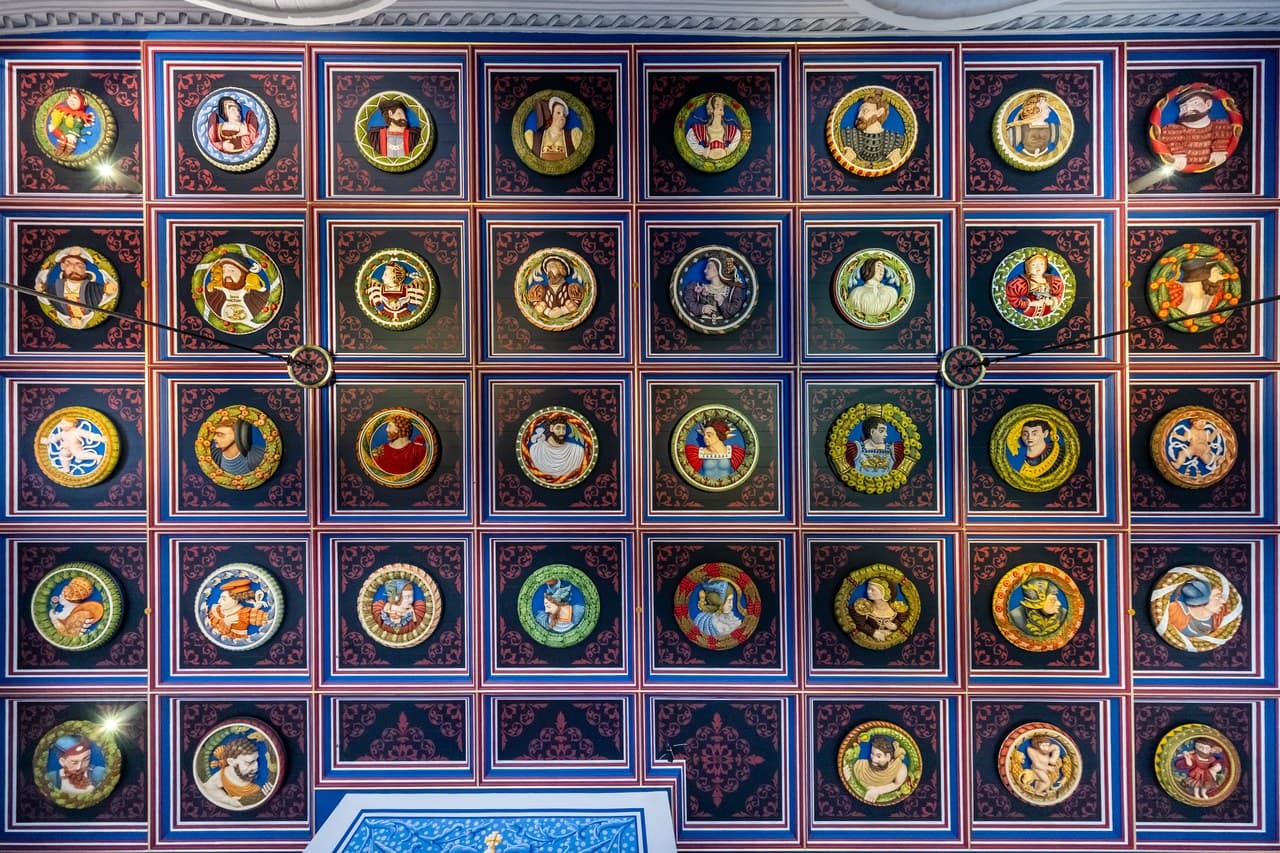
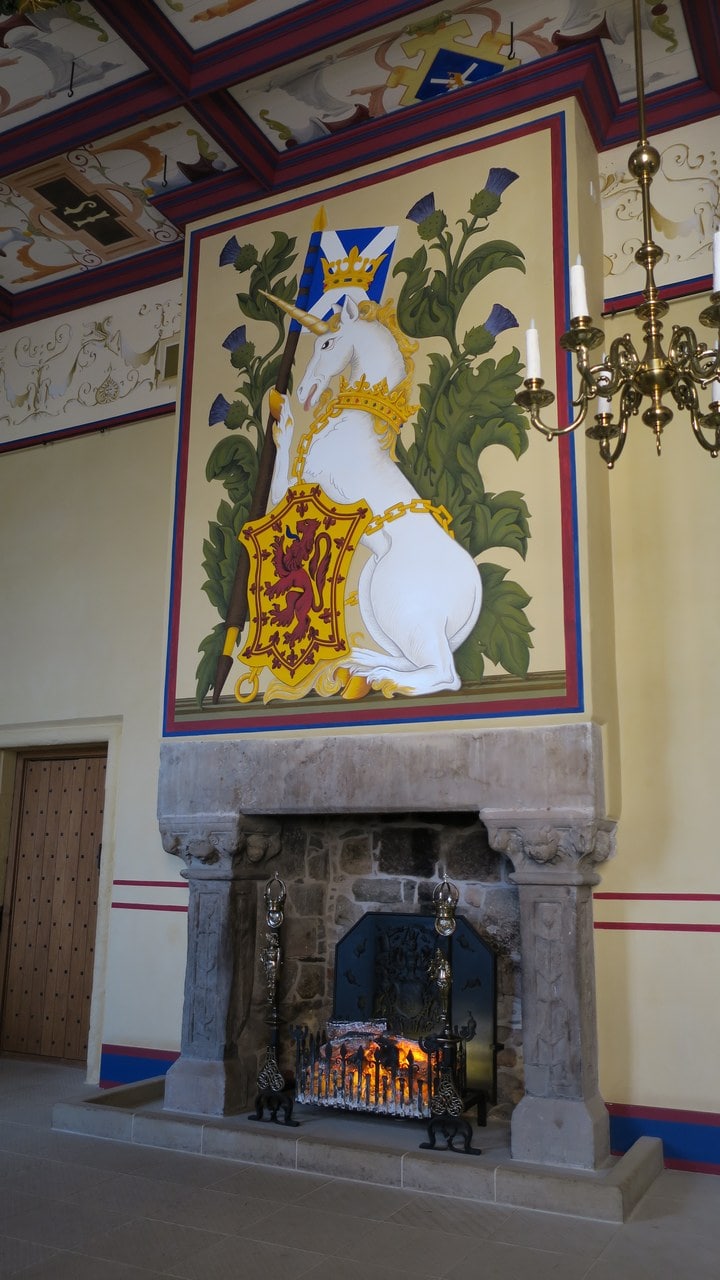
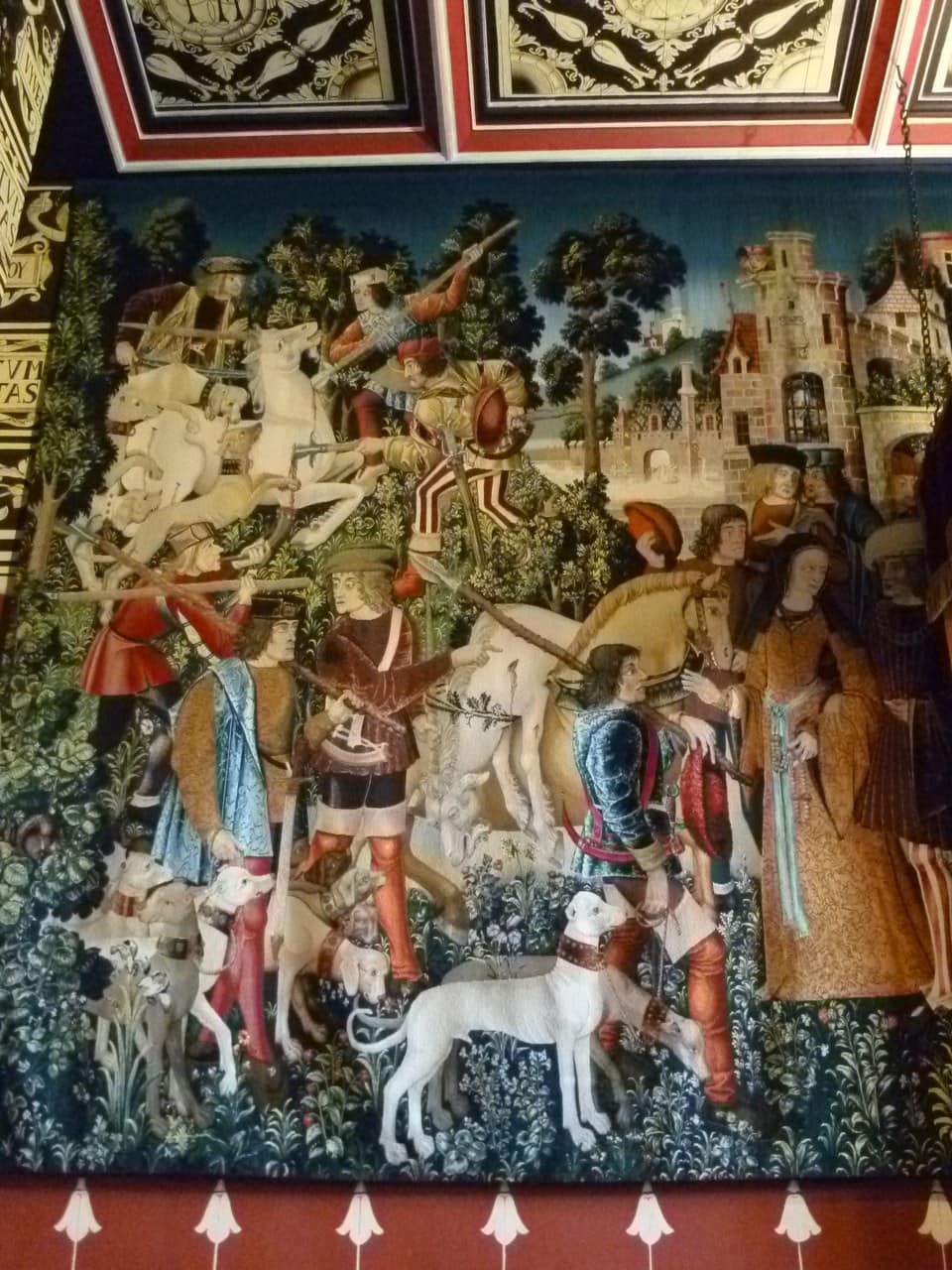
The Royal Palace went further still. After a project of roughly a decade and some twelve million pounds, its interiors reopened in 2011 re-created as they might have looked in the 1540s: rich textiles, painted ceilings, and bright color where a visitor expects gray. Overhead in one chamber hang replicas of the Stirling Heads, the carved oak medallions of kings, queens, and courtiers that once studded the palace ceiling; those originals had a hard history. In 1777 one of the heavy roundels fell and injured a soldier below, and the rest were taken down and scattered, until a Stirling artist, Jane Ferrier, tracked down what remained and published drawings of them in 1817 that revived their fame. More than thirty battered survivors are now displayed close up in the Stirling Heads Gallery upstairs. Nearby hang the castle’s tapestries, a set of seven telling the medieval story of the Hunt of the Unicorn. They are not medieval: they are a painstaking modern recreation of a famous set in New York, hand-woven over more than a decade by the weavers of West Dean, part of the work done in a studio at the castle where visitors could watch the threads go in. None of it is original to the room, and the guide books say so plainly, but the effect is the nearest thing in Britain to stepping into a living Renaissance palace.
The Garrison and the Regiment
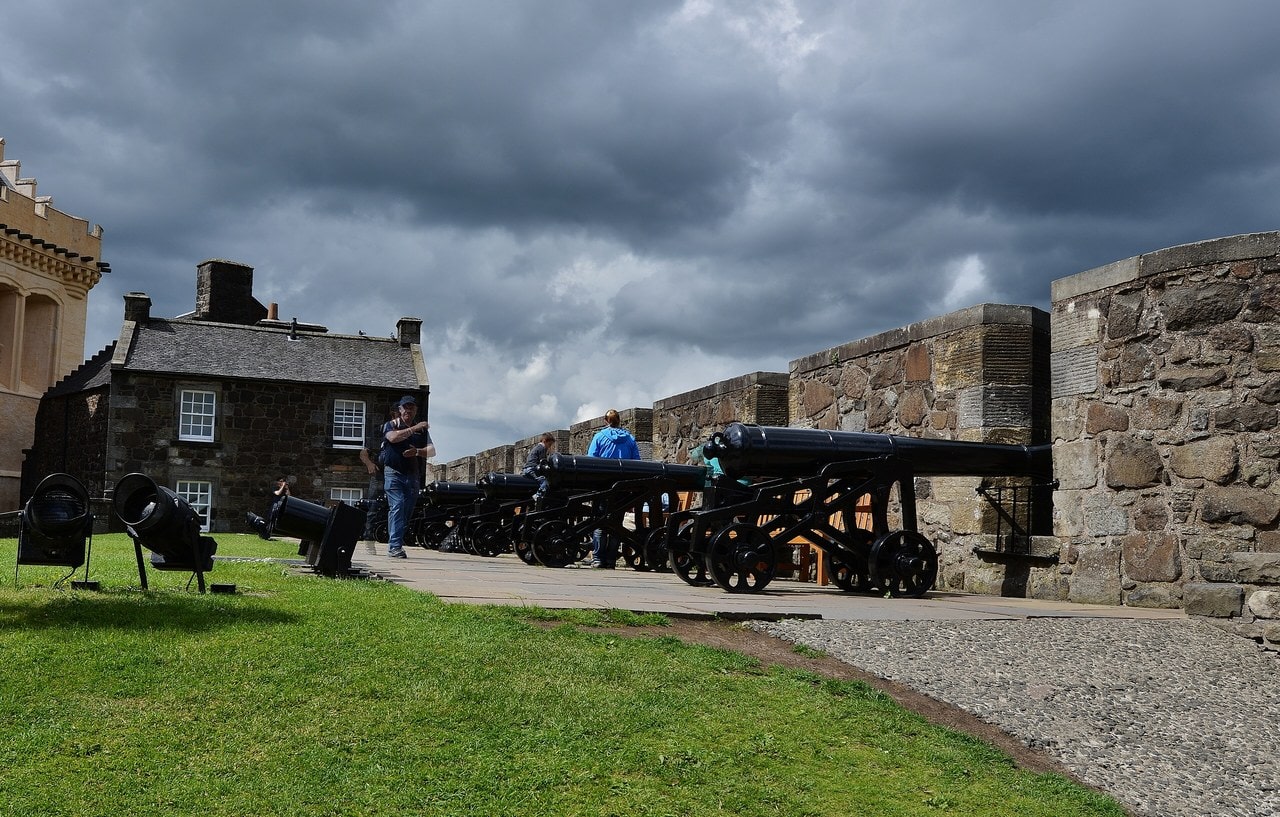
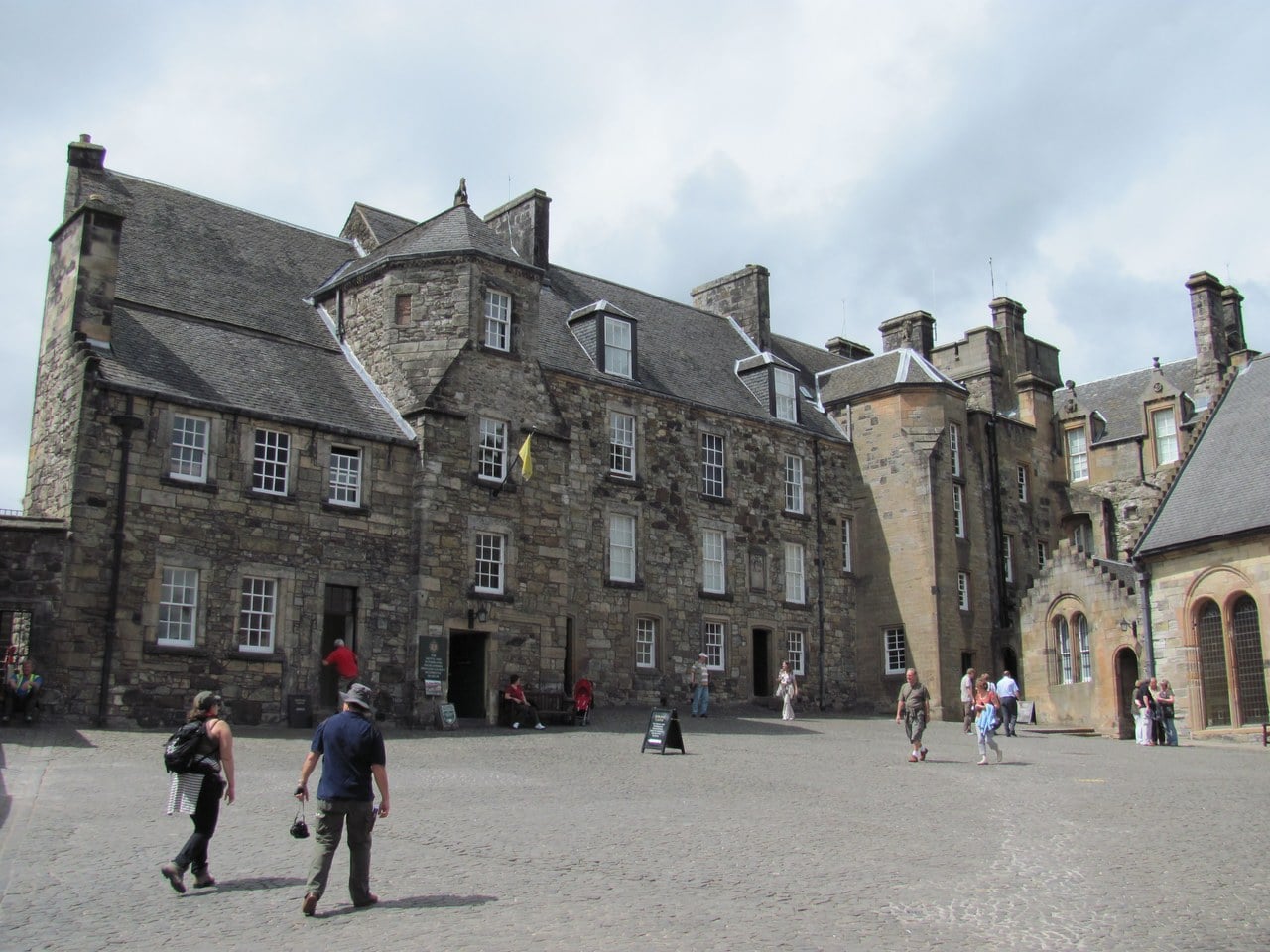
Stirling never entirely stopped being a soldiers’ castle. Long after the court moved south with the crowns of 1603 and 1707, the fortress served as an army barracks, and that military life is still present on the rock. The King’s Old Building, put up for James IV in the 1490s, now holds the museum of the Argyll and Sutherland Highlanders, the local regiment whose story runs alongside the castle’s own. It is a reminder that Stirling’s history did not end with its kings.
Visiting Stirling Castle
List the 8 castles on this map
- Stirling Castle — Stirling, Scotland
- Edinburgh Castle — City of Edinburgh, Scotland
- Eilean Donan Castle — Highland, Scotland
- Urquhart Castle — Highland, Scotland
- Doune Castle — Stirling, Scotland
- Dunnottar Castle — Aberdeenshire, Scotland
- Kilchurn Castle — Argyll and Bute, Scotland
- Dunrobin Castle — Highland, Scotland
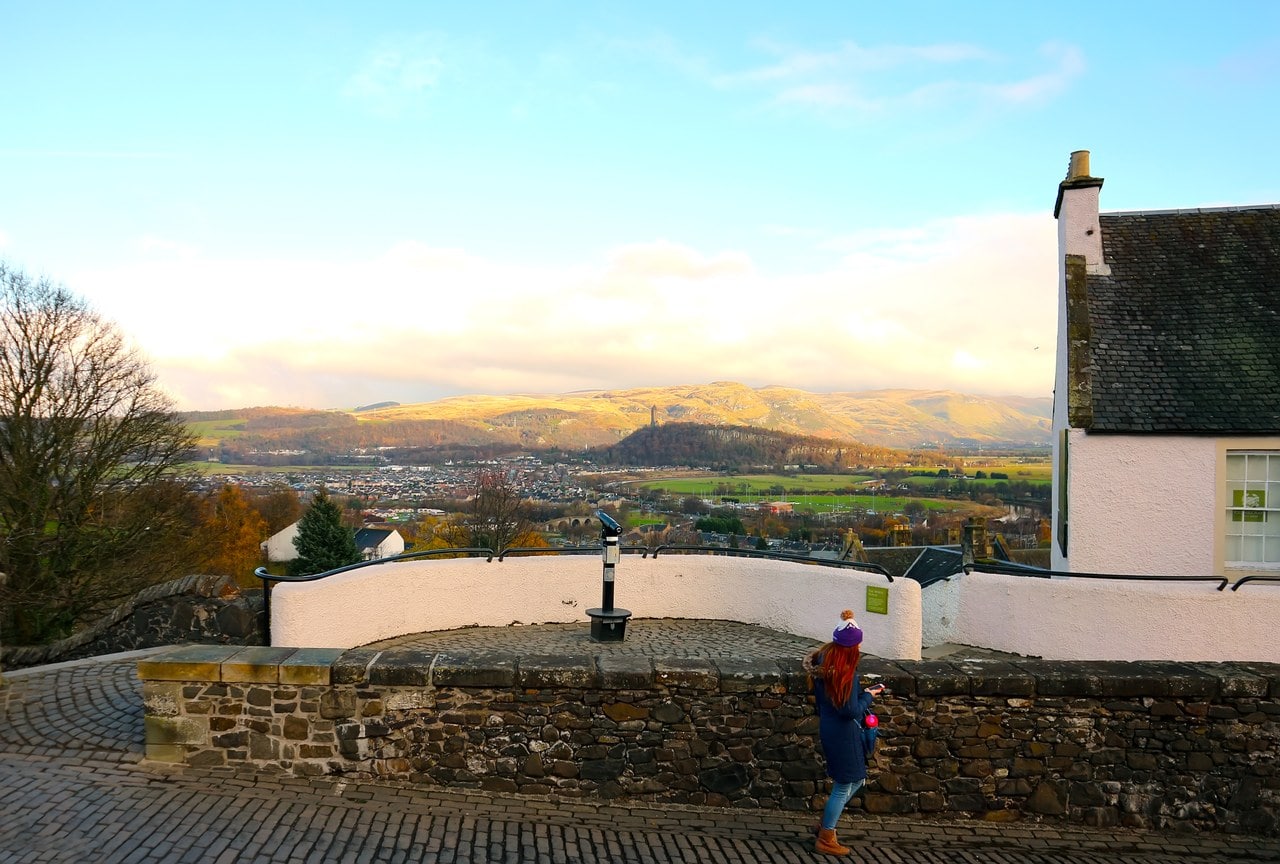
Stirling Castle crowns the old town, an easy uphill walk from the center and from Stirling’s railway station, which sits on the main line between Glasgow and the north and puts the castle within about an hour of either Glasgow or Edinburgh by train. Allow a good half-day: the site is large, and between the Great Hall, the Royal Palace, the Chapel Royal, the Stirling Heads Gallery, the tapestries, and the ramparts there is more to see than at most castles. The views alone repay the climb, reaching on a clear day to the Wallace Monument on its own crag across the valley and to the Highland hills beyond.
The castle is run by Historic Environment Scotland and opens every day of the year, closing earlier in winter, with last entry around 4 p.m. from October to March and an hour later in summer. Adult admission runs about £18.50 booked online in 2026, and booking ahead is expected; Historic Environment Scotland also discounts visitors who arrive car-free by bus, train, or bike, which suits Stirling’s walkable center. Prices change seasonally, so check the official site before you go. If you would rather have the castle’s tangled history drawn out for you, a guided tour of Stirling and its old town is an easy way to add depth to the visit.
Historic Environment Scotland sells admission on the day and online through the official site. To add context to a self-guided walk around the rock, you can book a guided Stirling tour on GetYourGuide, and if you want to stay within sight of the crag you can compare Stirling hotels and guesthouses on Booking.com before you travel.
Some links on this page are affiliate links, which means StoneKeep Atlas may earn a small commission, at no extra cost to you, if you book through them.
More Views of Stirling Castle
Beyond Stirling Castle
Stirling and Edinburgh Castle are the twin poles of royal Scotland, the two great fortress-crags that between them held the kingdom, and they reward being seen together. For a wholly different kind of Scottish castle, Eilean Donan in the western Highlands trades Stirling’s Renaissance court for an island reconstruction and a postcard view, and the Loch Ness ruin of Urquhart Castle is a stronghold fought over for a thousand years and then wrecked by its own departing garrison. Nearer still, Doune Castle stands just a few miles up the road, the great gatehouse tower of a Stewart duke and one of Scotland’s most complete medieval castles. On the Aberdeenshire coast, Dunnottar Castle makes the darker counterpart, a cliff-top ruin that once guarded the Honours of Scotland. They sit together in our growing guide to the castles of Scotland. To turn a castle tour into a castle stay, see our guide to staying in a castle in Scotland, which rounds up ten castle hotels across the country. Stirling’s own Argyll connection is the museum of the Argyll and Sutherland Highlanders in the King’s Old Building, and Argyll’s castle in this collection is Kilchurn Castle, a roofless Campbell tower house at the head of Loch Awe whose three round towers belong to a reconstruction begun in 1690. These Scottish castles are gathered in our guide to the castles of Scotland.
Conclusion
Stirling repays the visitor twice over. It is the fortress that decided Scotland’s wars, the crag whose crossing was worth armies, and standing on its ramparts you can still read why: the river, the road, the mountains beyond. And it is the palace where the Stewart kings kept their most magnificent court, restored now with a boldness that lets you see it as they did, in gold and color rather than weathered stone. Few castles carry so much of a nation’s story in one place, and fewer still are willing to show it to you so vividly. Between the sieges and the Renaissance, Stirling is Scotland in miniature.
Principal Sources
- Historic Environment Scotland. “Stirling Castle” and “History of Stirling Castle.” historicenvironment.scot.
- Historic Environment Scotland. Scheduled Monument record SM90291.
- Stirling Castle (operator, Historic Environment Scotland). stirlingcastle.scot.
- Historic Environment Scotland blog. “The War Wolf at Stirling Castle,” “On the trail of the Unicorn,” and “Jane Ferrier and the Stirling Heads.”
- West Dean. “Recreating 15th-century textile art: the final handwoven tapestry unveiled at Stirling Castle.”
Admission prices and opening hours change with the season; check the official site before you travel.
Image credits. Castle from the King’s Knot: Colin Park, CC BY-SA 2.0, via Wikimedia Commons; the Forework gatehouse: dun_deagh, CC BY-SA 2.0, via Wikimedia Commons; aerial of the citadel: John McPake, CC BY 2.0, via Wikimedia Commons; view to the Wallace Monument: Andraszy, CC BY-SA 4.0, via Wikimedia Commons; Royal Palace facade: DeFacto, CC BY-SA 4.0, via Wikimedia Commons; Great Hall exterior: DeFacto, CC BY-SA 4.0, via Wikimedia Commons; palace chair of estate: Aceman87, CC BY-SA 4.0, via Wikimedia Commons; Unicorn in Captivity tapestry: Rob Farrow, CC BY-SA 2.0, via Wikimedia Commons; Great Hall hammerbeam roof: Ellievking1, CC BY-SA 4.0, via Wikimedia Commons; a Stirling Head: dun_deagh, CC BY-SA 2.0, via Wikimedia Commons; Chapel Royal interior: Janfrie1988, public domain, via Wikimedia Commons; re-created heads ceiling: Kenneth C. Zirkel, CC0, via Wikimedia Commons; top-down aerial: Godot13, CC BY-SA 4.0, via Wikimedia Commons; Chapel Royal exterior: Uriah Welcome, CC BY 2.0, via Wikimedia Commons; Queen Anne Garden: Rob Farrow, CC BY-SA 2.0, via Wikimedia Commons; King’s Old Building: Janfrie1988, public domain, via Wikimedia Commons; palace fireplace chamber: Aceman87, CC BY-SA 4.0, via Wikimedia Commons; Hunt of the Unicorn tapestry: Kim Traynor, CC BY-SA 3.0, via Wikimedia Commons; Great Kitchens re-creation: M J Richardson, CC BY-SA 2.0, via Wikimedia Commons; Grand Battery cannon: Michael Garlick, CC BY-SA 2.0, via Wikimedia Commons; Edward repulsed from Stirling Castle (1873 engraving): James Grant, British Library, public domain; tunnel beneath the Mint: Rob Farrow, CC BY-SA 2.0, via Wikimedia Commons. Freely licensed images are resized to fit; otherwise unaltered.