
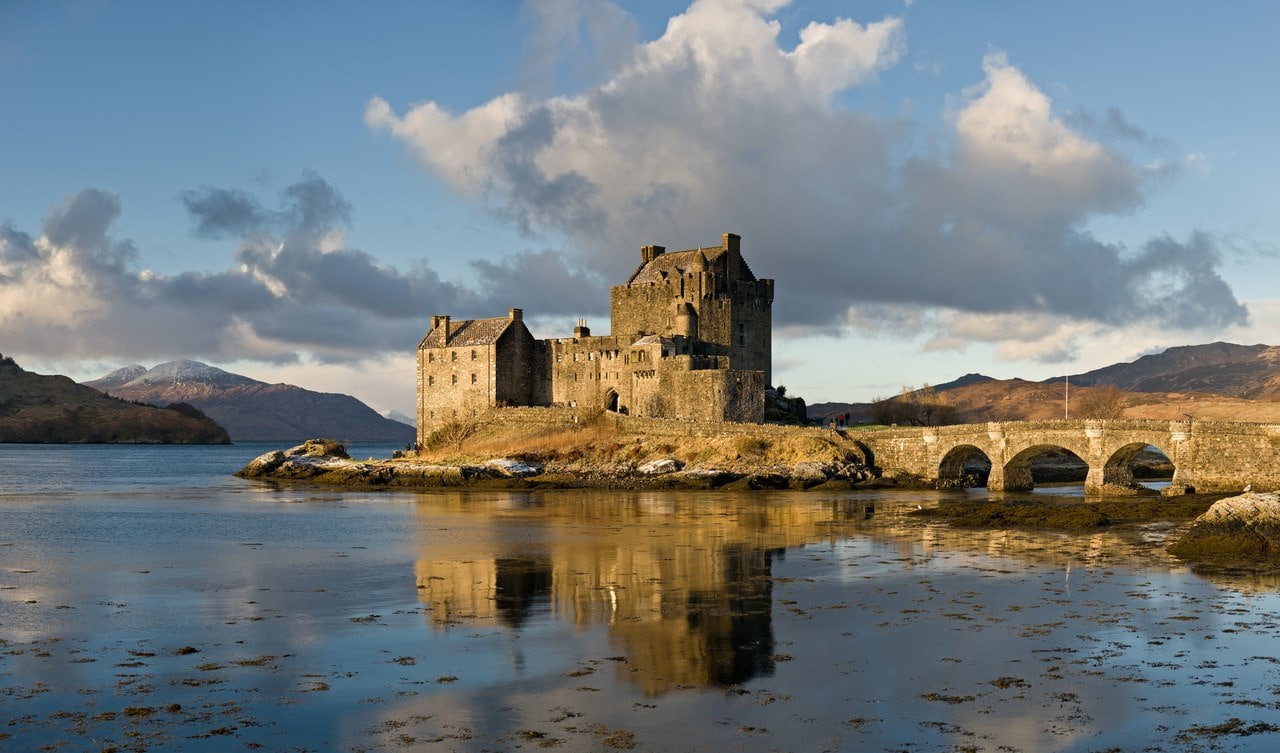
Eilean Donan Castle
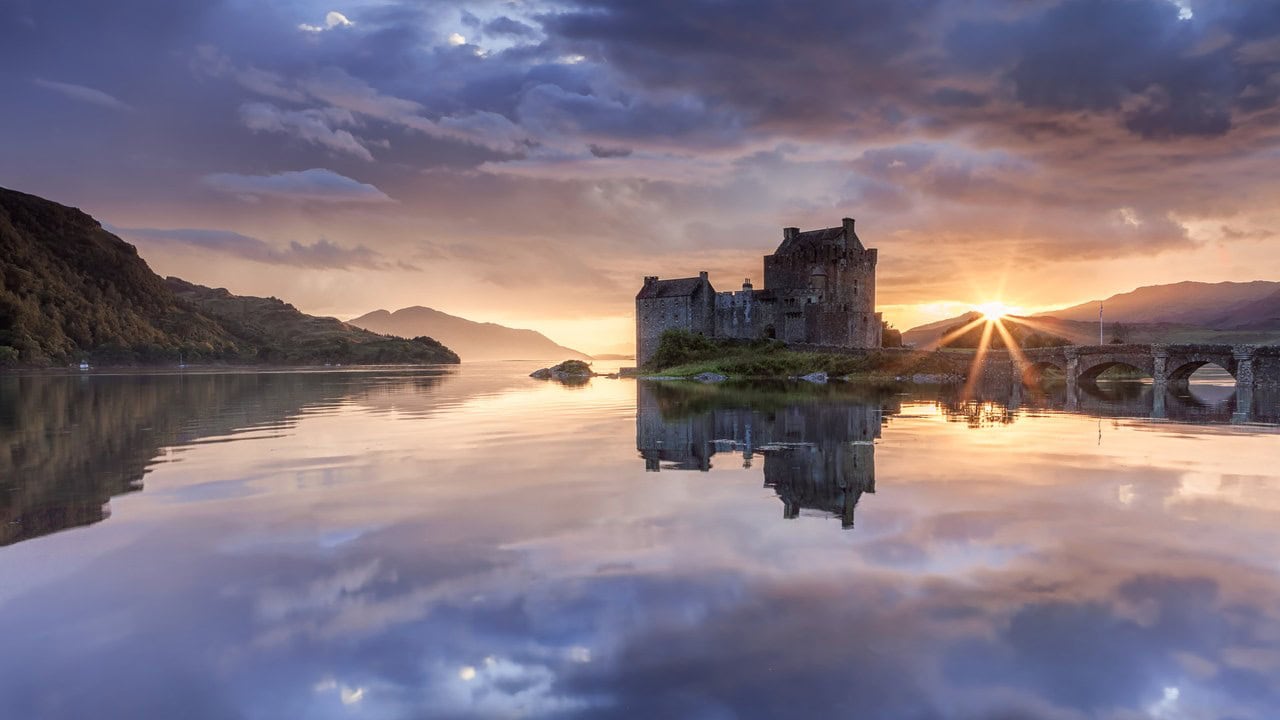
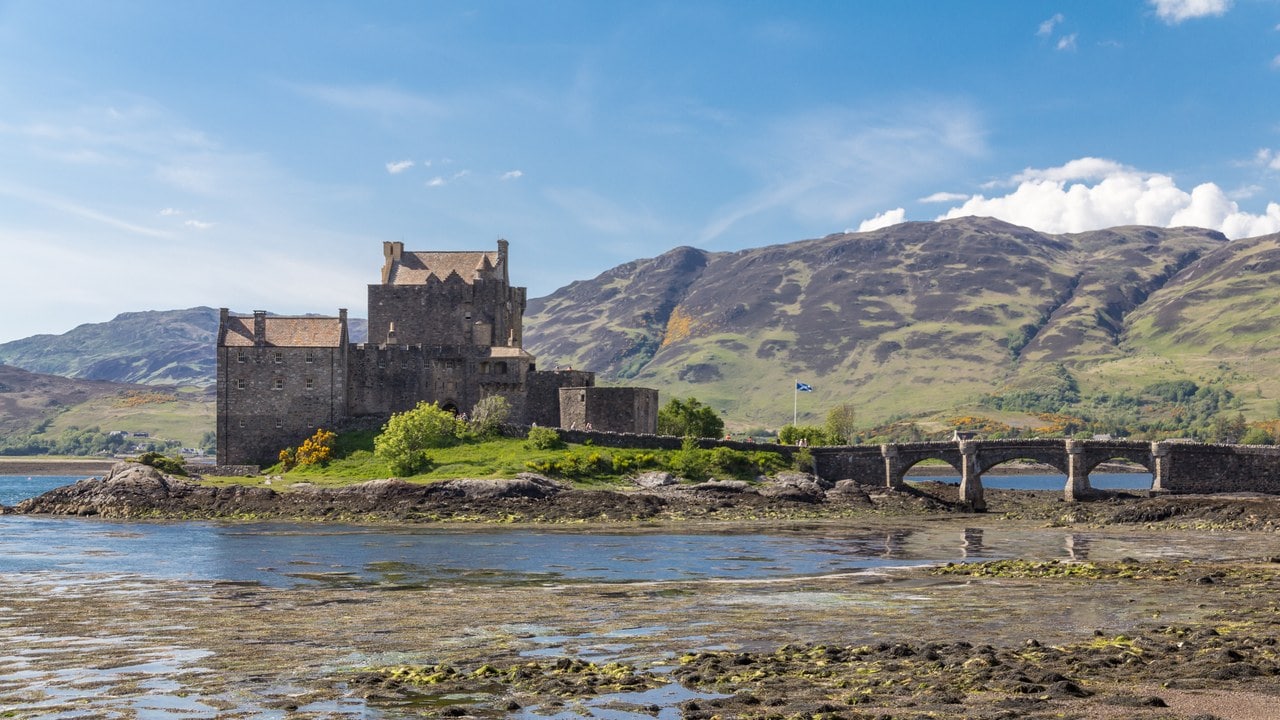
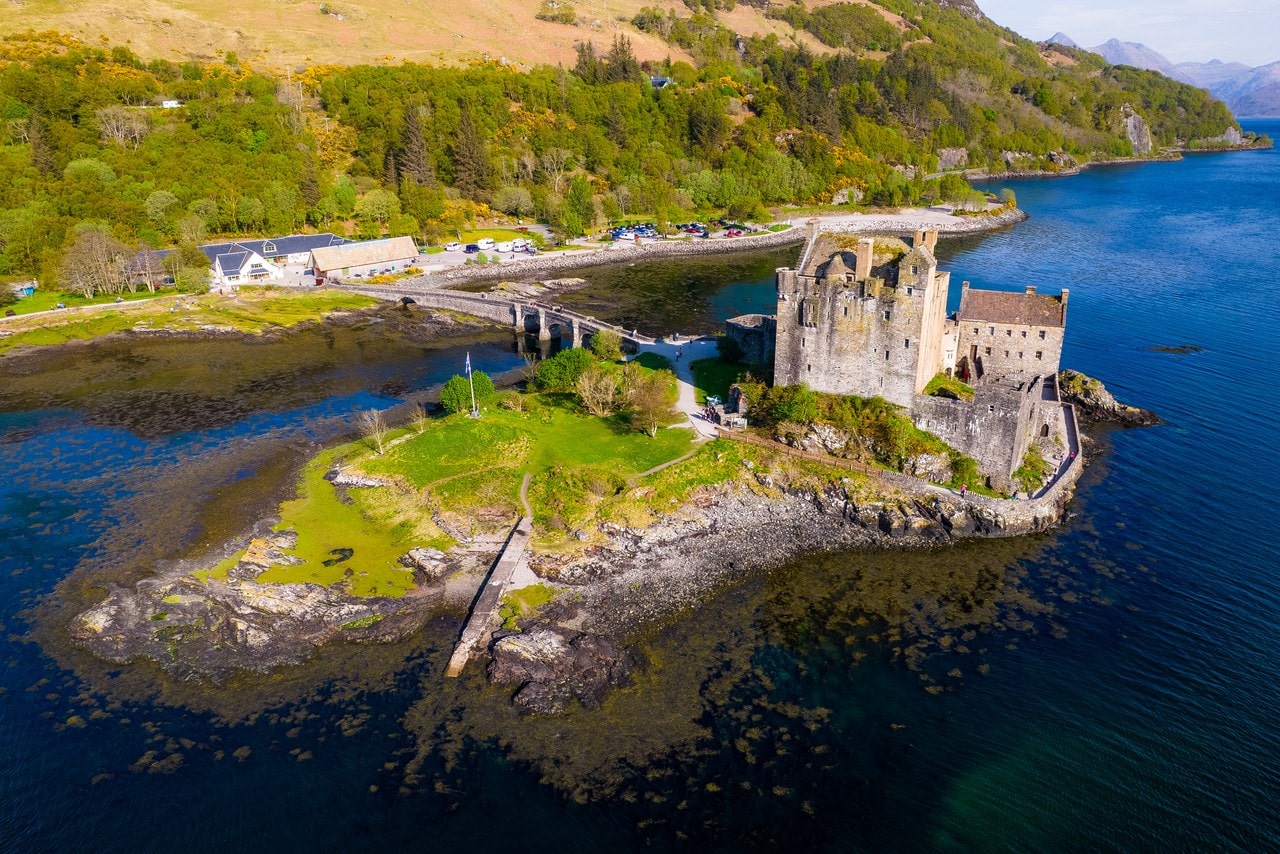
Eilean Donan Castle stands on a small tidal island where three sea lochs meet in the western Highlands, joined to the shore by an arched stone bridge that has become one of Scotland’s most recognizable views. It looks every inch the ancient Highland stronghold, and in a sense it is one: a castle has guarded this island since the Middle Ages. Yet almost everything a visitor sees today was built in the twentieth century. The medieval fortress was blown apart in 1719 and lay a ruin for two hundred years, until one family rebuilt it stone by stone. That double story, a real medieval past and a loving modern reconstruction, is what makes Eilean Donan worth understanding rather than just photographing.
Quick Facts
| Location | an island at the meeting of Loch Duich, Loch Long, and Loch Alsh, near Dornie, Kyle of Lochalsh |
| Region | Highland |
| Built | medieval origins; the present castle rebuilt 1912 to 1932 |
| Type | Island castle |
| Owner / operator | the Conchra Charitable Trust |
| Native name | Eilean Donnain (Scottish Gaelic), “island of Donnan” |
| Designation | Category A listed building (HES ref. LB7209) |
| Coordinates | 57.2740 N, 5.5161 W |
| Official website | Eilean Donan Castle |
An Island Where Three Lochs Meet
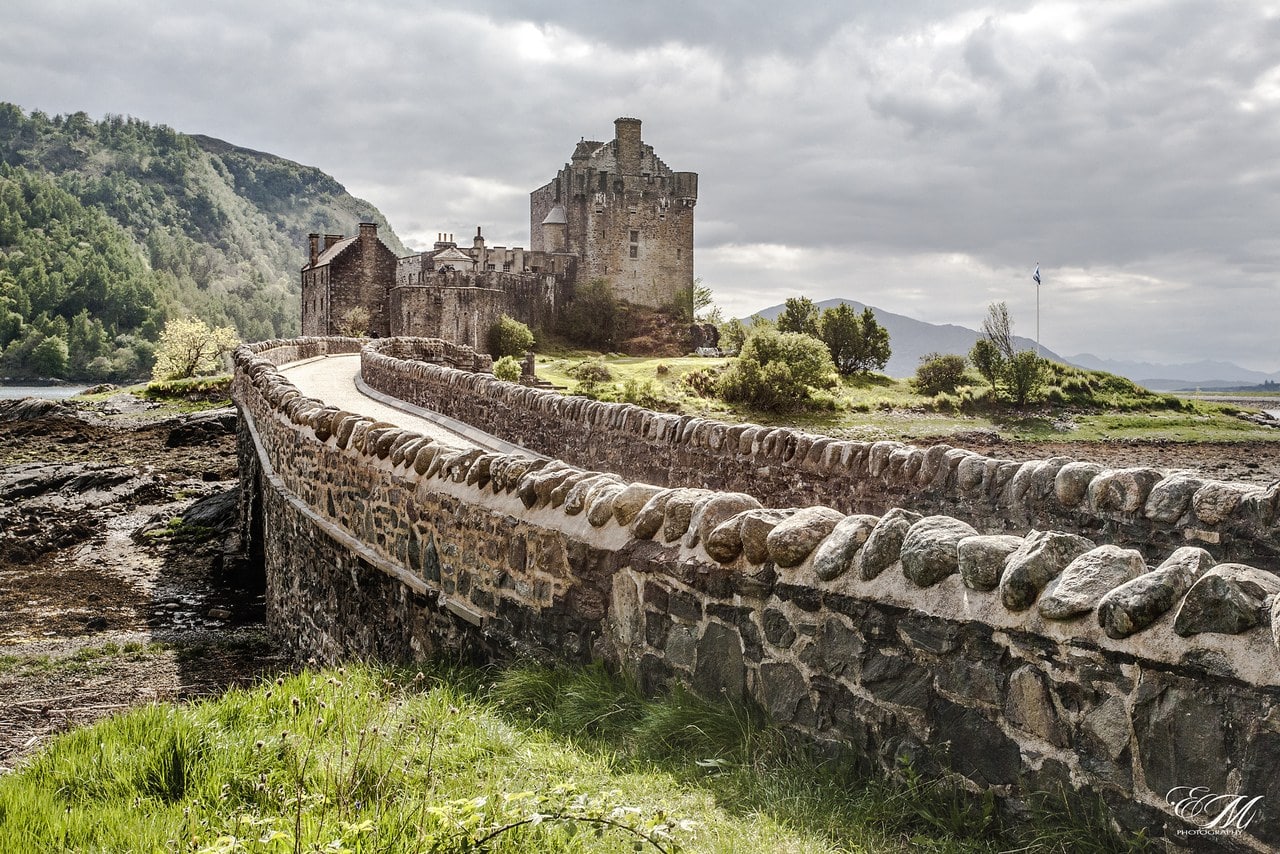
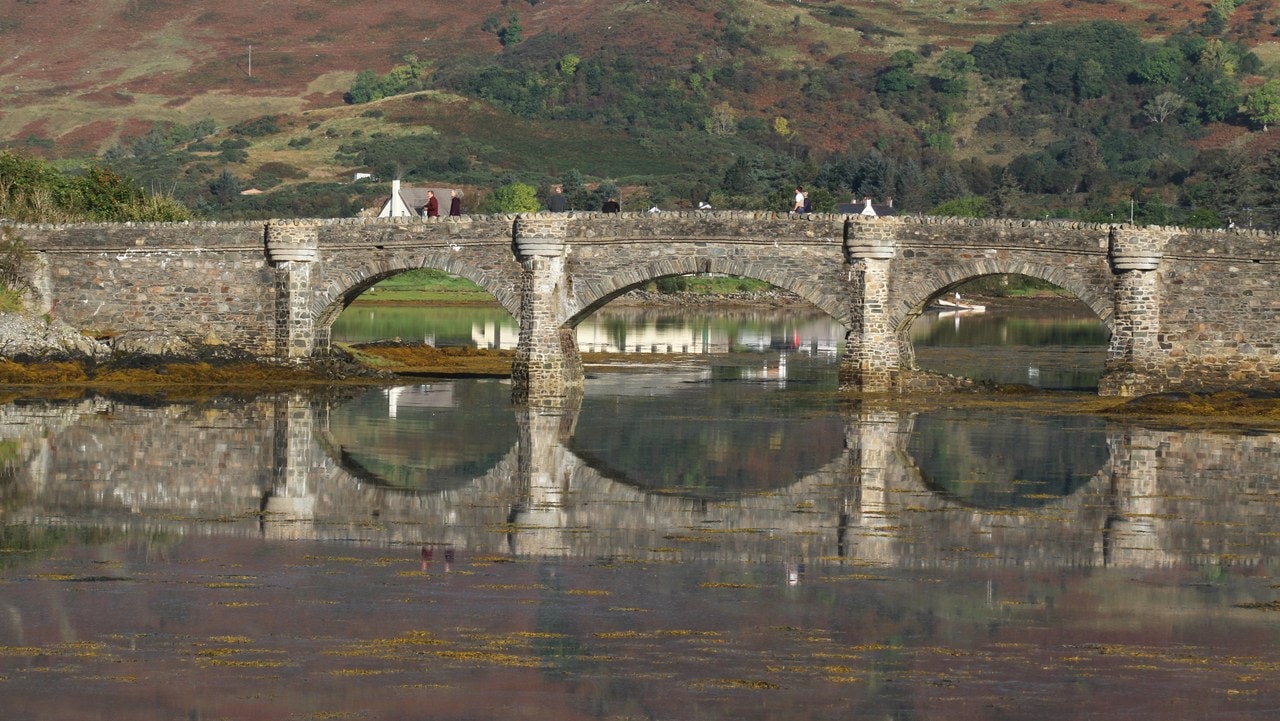
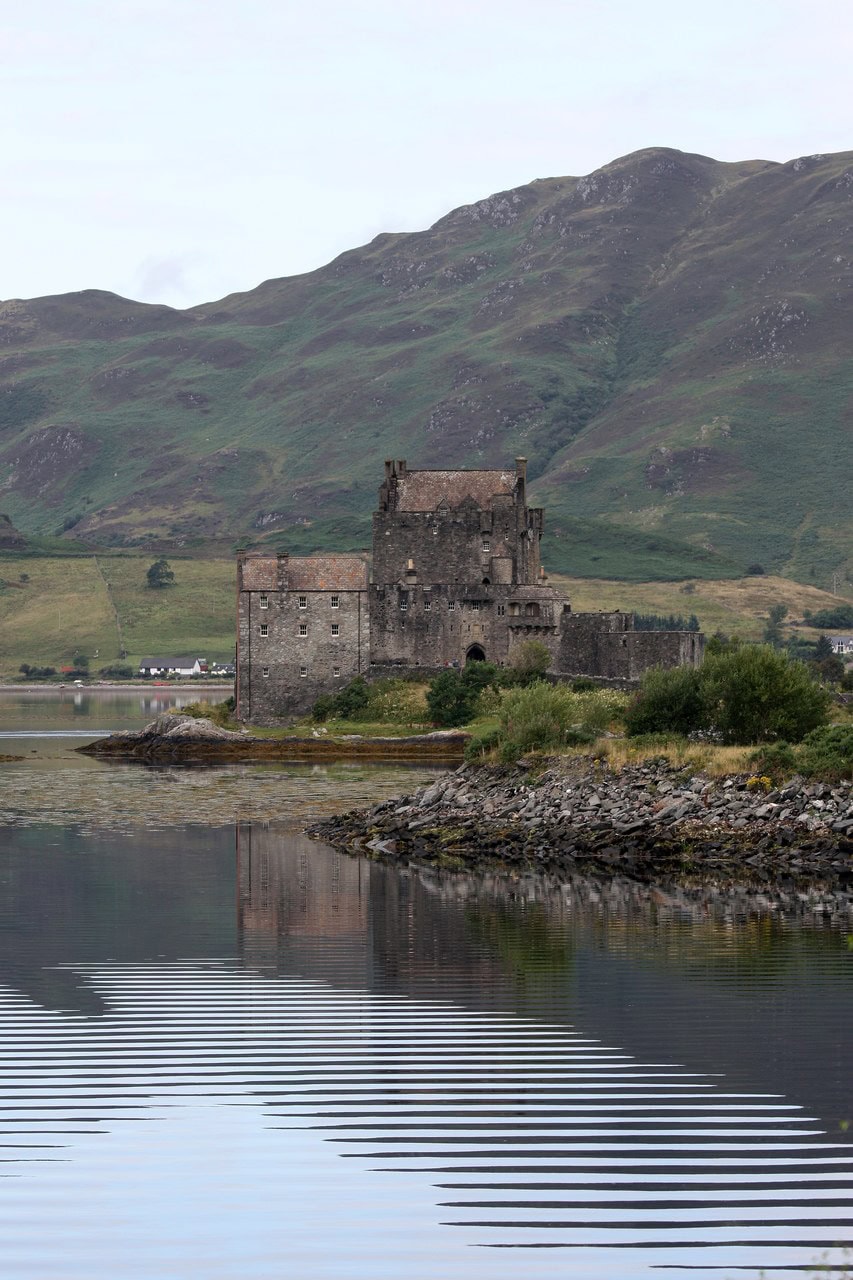
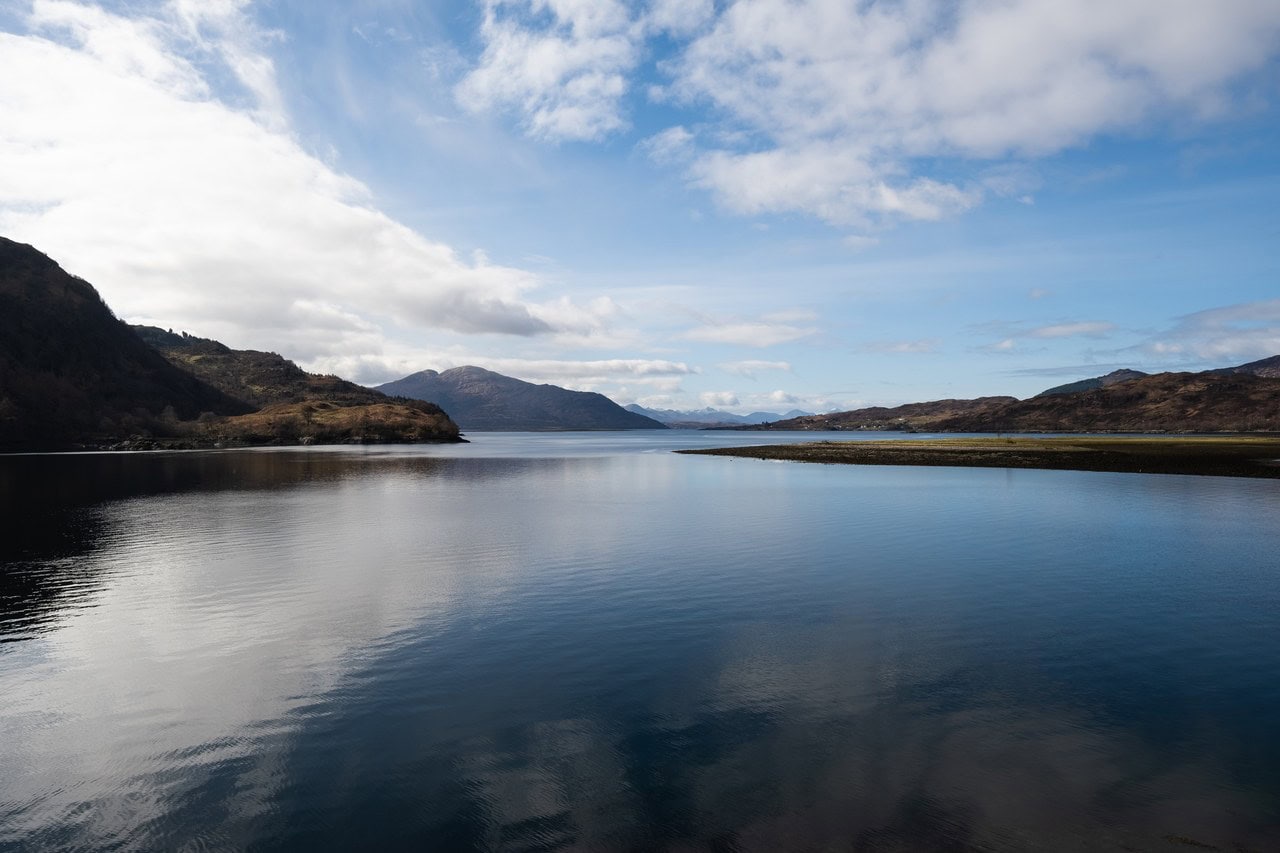
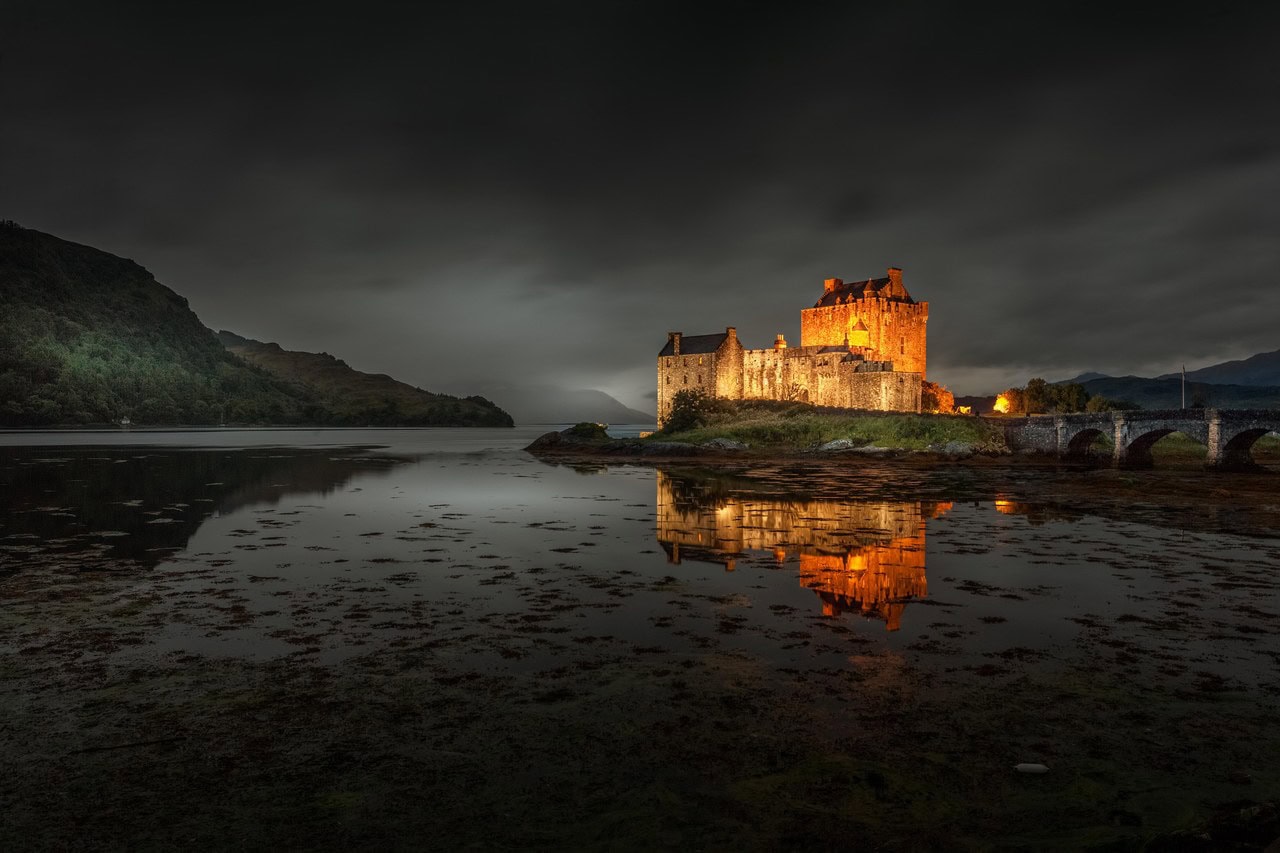
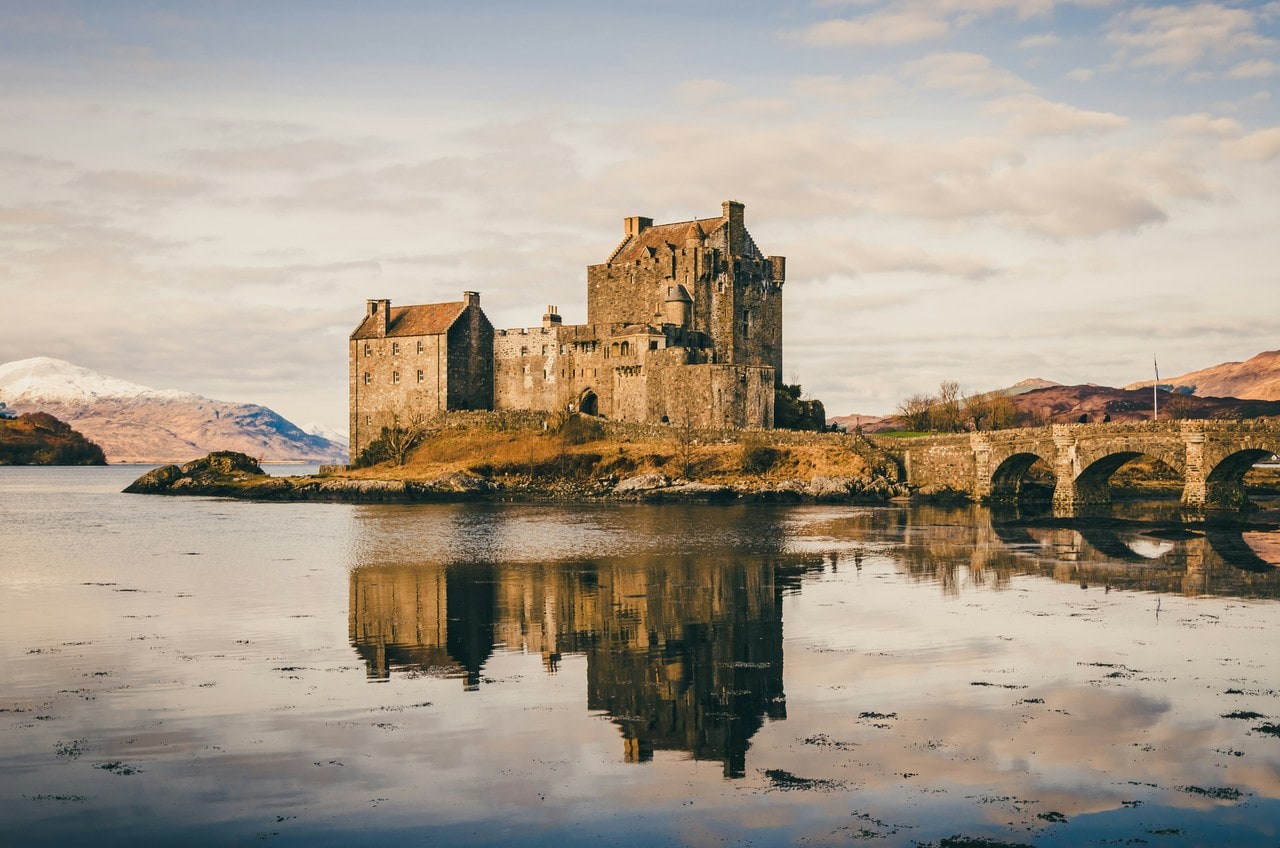
The setting is half the reason Eilean Donan is so often called the most beautiful, and most photographed, castle in Scotland. The island sits at the head of Loch Alsh, at the point where it divides into Loch Duich and Loch Long, with mountains rising on every side and the sea road to Skye passing close by. Its name honors Donnan of Eigg, a seventh-century saint who, tradition holds, kept a cell on the island long before any castle rose there. For centuries the only way across was by boat or over the tidal flats at low water; the graceful three-arched footbridge that carries visitors today was added only during the twentieth-century rebuild.
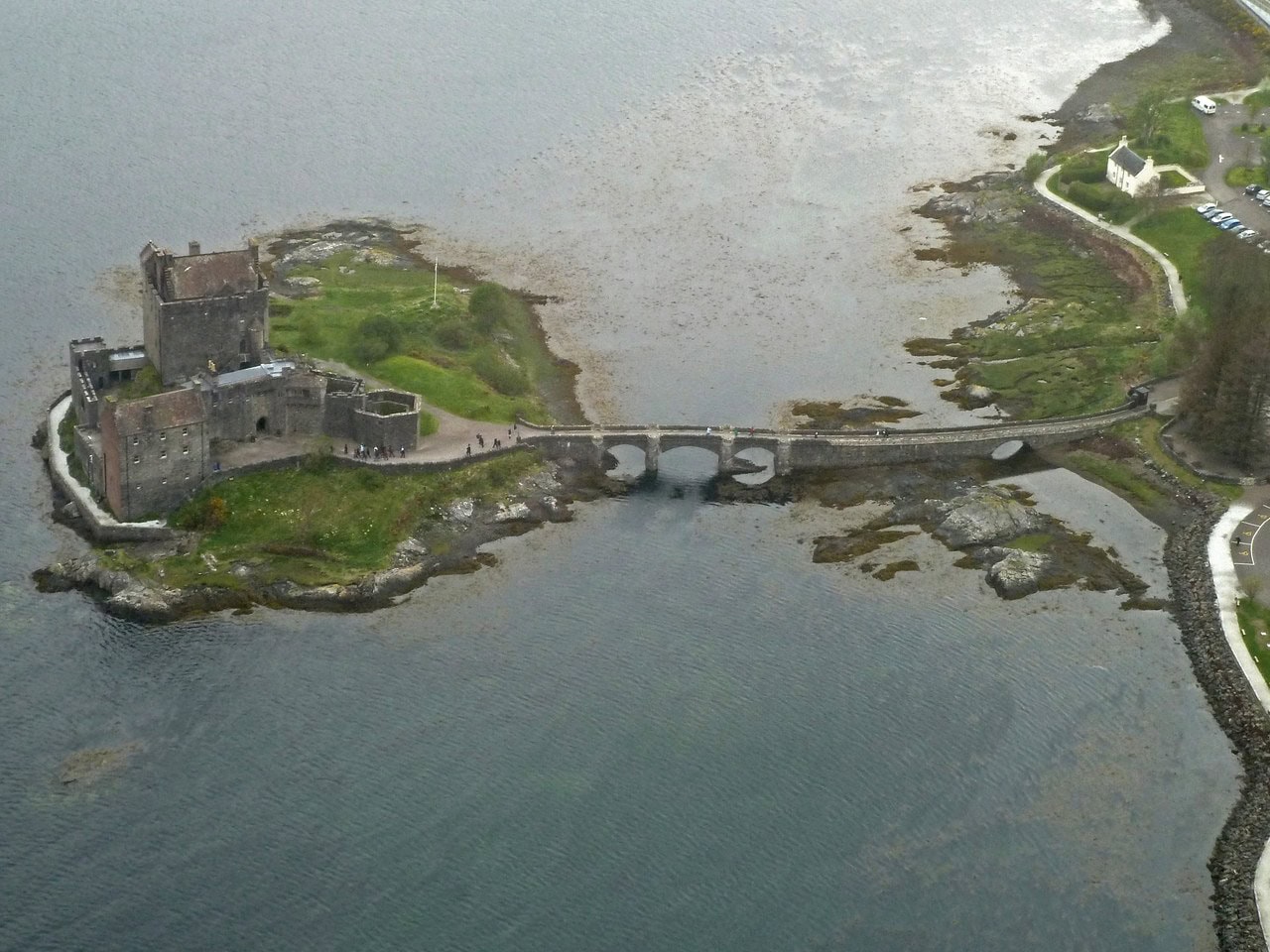
That position explains the castle. Whoever held Eilean Donan watched over a crossroads of Highland sea routes, and the island’s rock gave a natural platform that a curtain wall could turn into a fortress. Setting and strategy are inseparable here, and the view that draws the camera is the same view that once drew the garrison.
A Medieval Stronghold
A castle has stood on the island since the Middle Ages, though exactly when the first one rose is unsettled. Tradition places a stronghold here in the early thirteenth century, in the reign of Alexander II, but the earliest remains that archaeologists have been able to date point to the fourteenth century instead. The castle is best understood, then, as a medieval foundation whose precise birth date is a genuine open question rather than a settled fact.
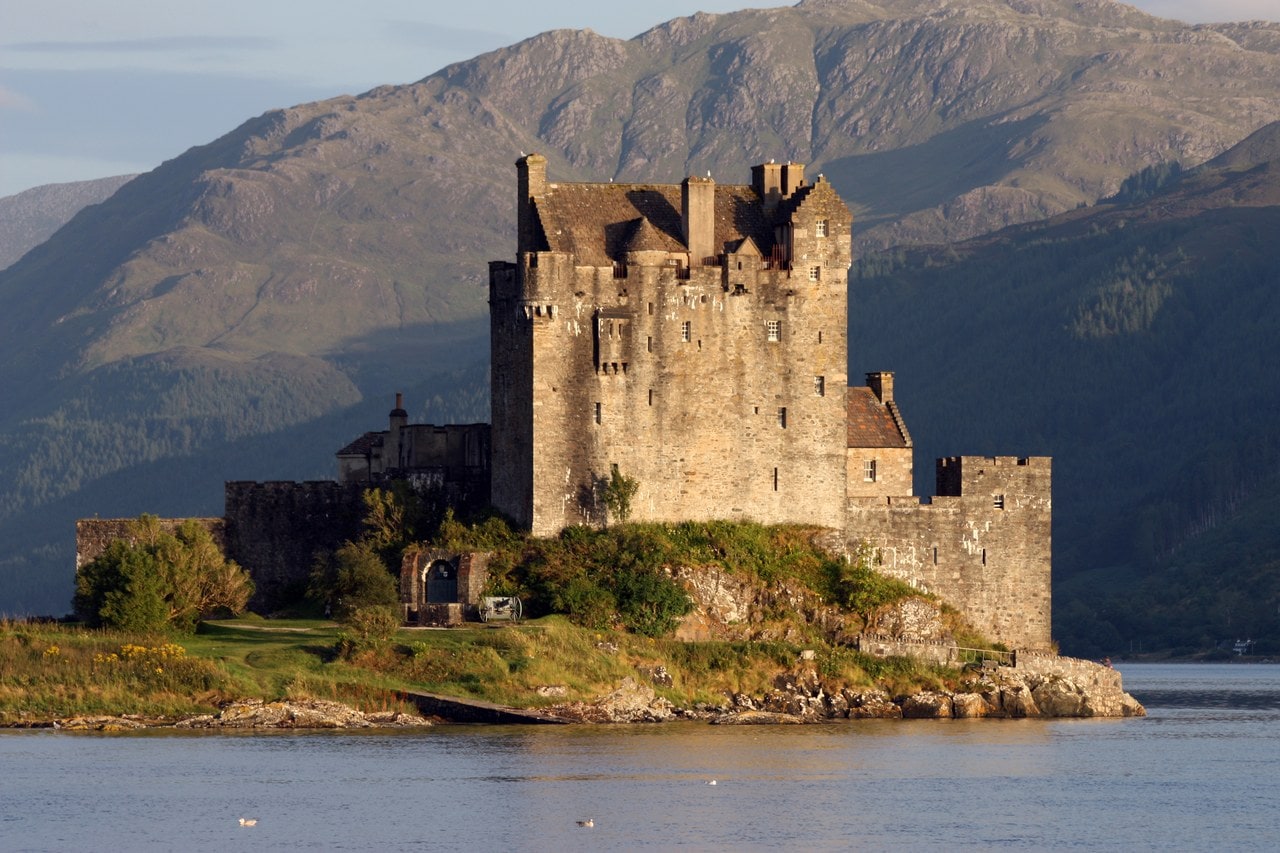
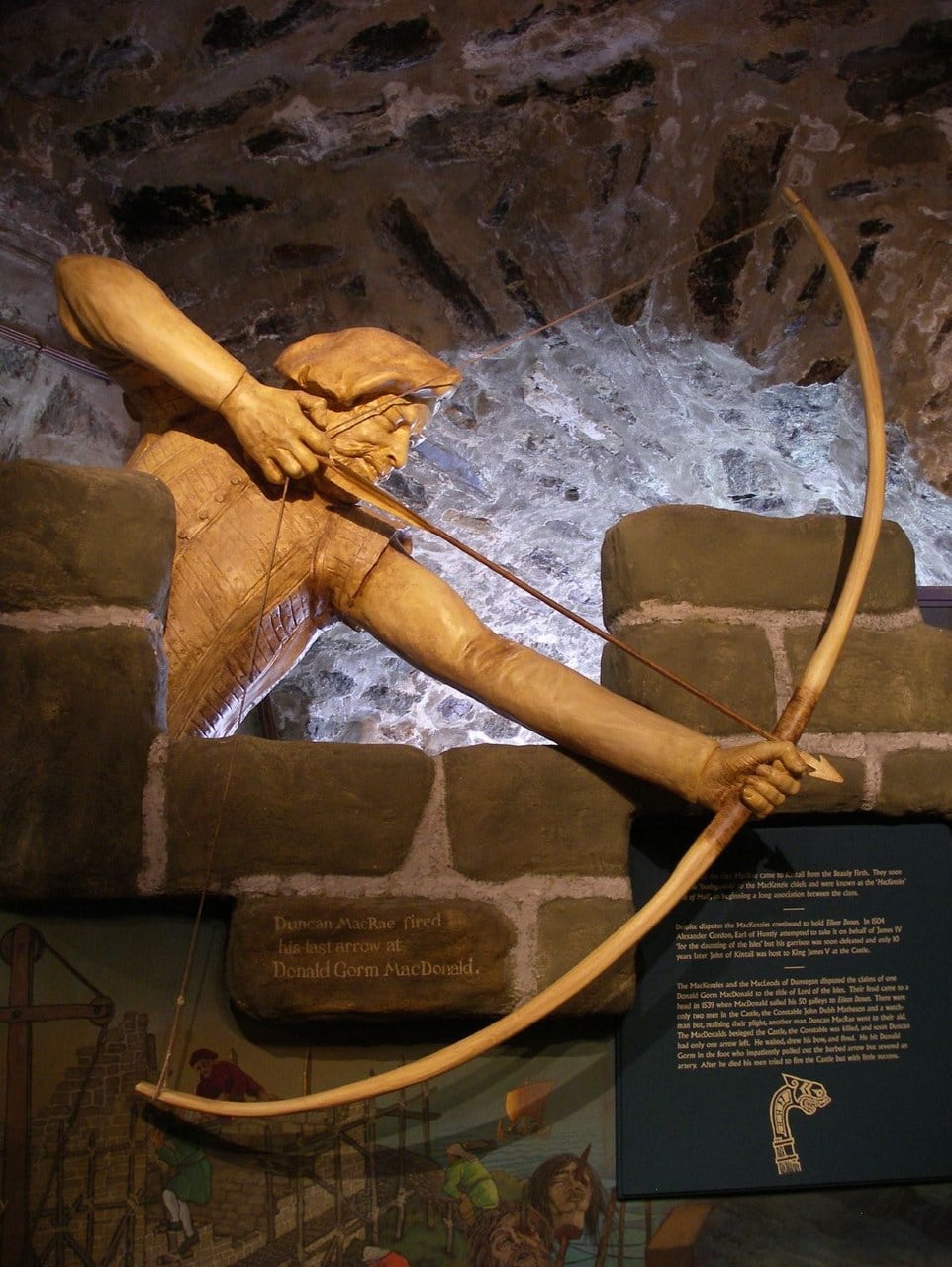
What is clear is who held it. Eilean Donan was a stronghold of the Mackenzies of Kintail, one of the great kindreds of the western Highlands. From 1511 the neighboring Clan MacRae served as the castle’s hereditary constables, its keepers and defenders rather than its owners, and the MacRae connection to Eilean Donan has lasted, in a sense, into the present day. The castle saw its share of Highland violence, and its most famous episode came in 1539, when Donald Gorm MacDonald of Sleat, pressing a claim in the region, attacked Eilean Donan while it was thinly held. Clan tradition tells that a MacRae, Duncan, defending the walls, loosed a last arrow at the MacDonald chief and struck him down, breaking the siege at the cost of the castle’s other defenders. That kind of close-run fight built the MacRaes’ name as Eilean Donan’s fighting keepers, but the event that truly defined the castle was still to come.
1719: The Castle Destroyed
In the spring of 1719 Eilean Donan was caught up in a little-remembered Jacobite rising backed by Spain. A garrison of around forty Spanish soldiers was stationed in the castle, holding it as a store for powder and shot while a larger Spanish force gathered on the mainland. In May three Royal Navy frigates, recorded in their own logs as the Worcester, the Flamborough, and the Enterprise, sailed into Loch Alsh and turned their guns on the island. The bombardment battered the walls into submission over three days.
What the cannon began, the sailors finished. Having taken the castle, they found its magazine and used the captured powder against the building itself: the ships’ logs record 343 barrels of gunpowder stored inside, and the sailors used part of it to blow the walls apart, an explosion that reduced Eilean Donan to a broken shell. For the next two centuries that is all it was, a heap of tumbled stone on an island, painted and sketched by travelers as a picturesque Highland ruin.
A Twentieth-Century Resurrection
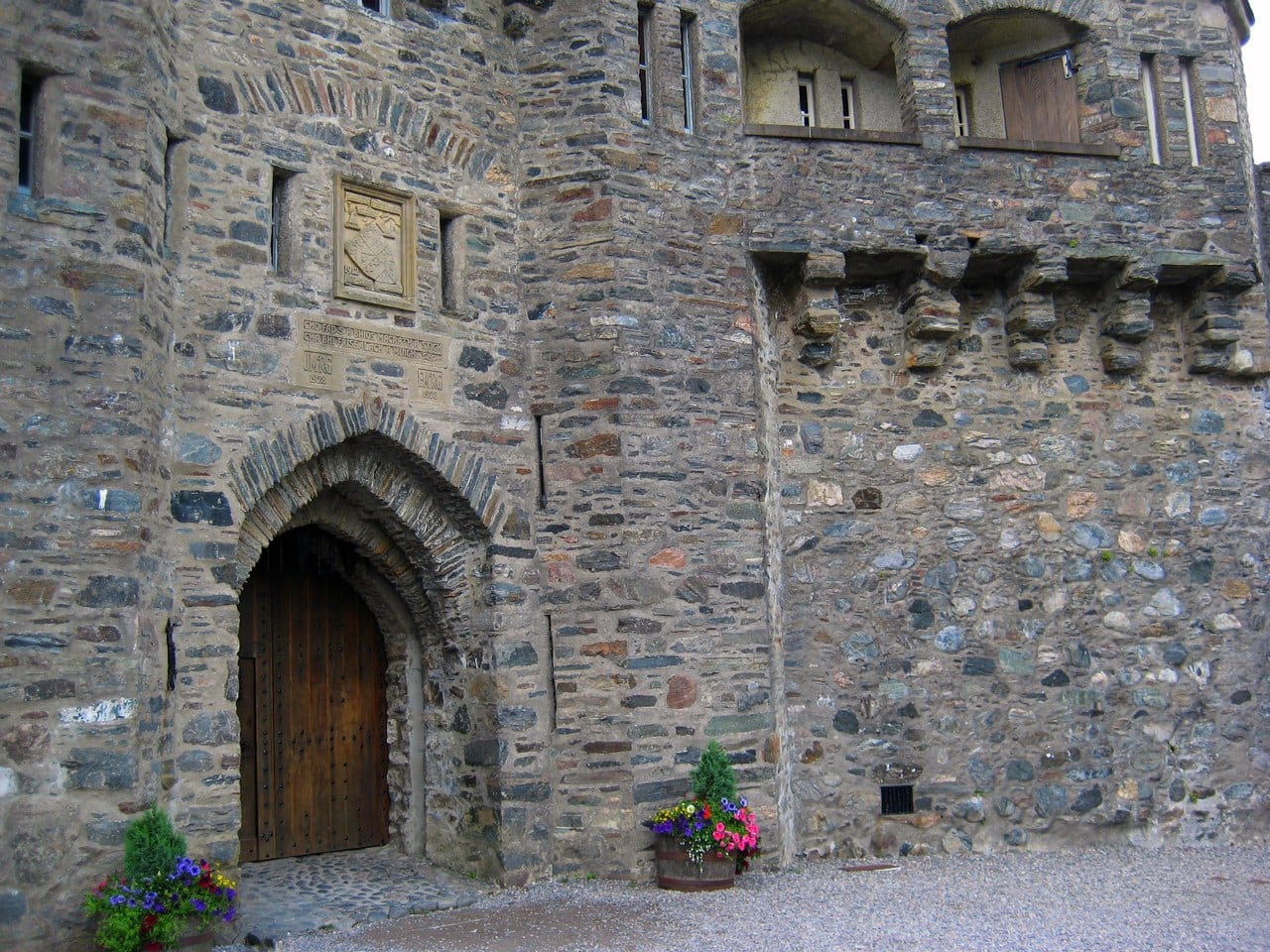
The castle owes its second life to Lieutenant Colonel John MacRae-Gilstrap, who bought the island in 1911 and gave the next twenty years to raising Eilean Donan from its rubble. The work ran from 1912 to 1932 and rebuilt the castle almost from the ground up on its surviving footings. Its design was drawn by the Edinburgh architect George Mackie Watson, who worked from the old ground plan and what remained of the keep and enclosing walls. A well-loved local tradition tells that a stonemason named Farquhar MacRae dreamed the vanished castle’s layout and guided the rebuilding from his vision; it is a good story, but the plans that actually shaped the work were Watson’s. The rebuilding carried a private grief as well as a family’s pride. Set into the foundation of the castle is a Clan MacRae war memorial, a bronze roll of honor to the clansmen who fell in the First World War, its plaque headed ‘Clan MacRae Roll of Honour 1914-18’ and inscribed with lines from John McCrae’s ‘In Flanders Fields,’ flanked by a pair of captured field guns. MacRae-Gilstrap raised his castle in the years around that war, and the memorial makes plain that Eilean Donan was rebuilt not only as a monument to a lost fortress but as one to a lost generation.
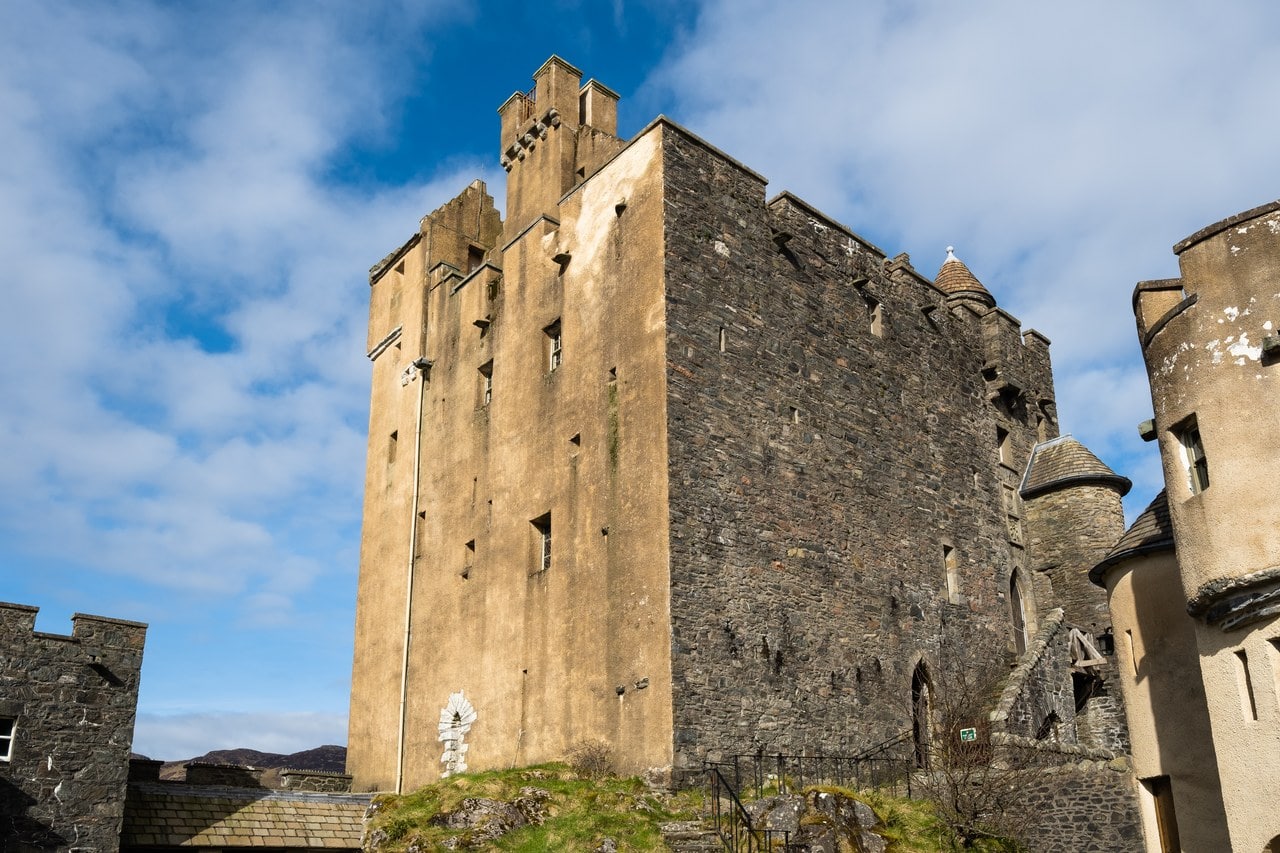
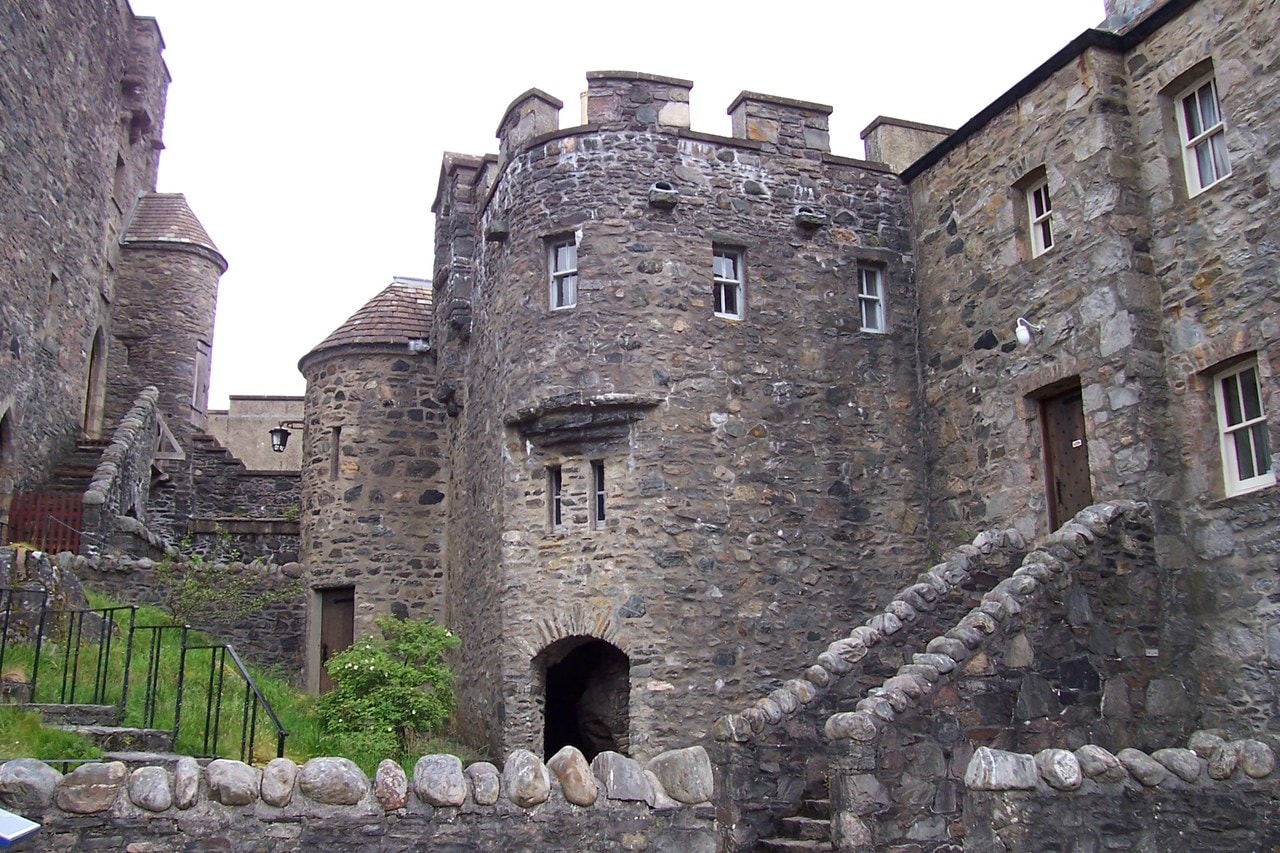
This is the fact to hold onto when you visit. Eilean Donan as it stands is not a medieval survival but an early-twentieth-century re-creation, a castle rebuilt in the spirit and much of the form of the one that was lost, with only fragments of genuine medieval fabric in its lower courses. That takes nothing away from it. The rebuild was careful and heartfelt, and the result is a coherent, convincing Highland castle that has become a place of pilgrimage for the worldwide Clan MacRae and a fixed point on every tour of the western Highlands. Knowing it is a reconstruction simply lets you see it honestly, as both an old story and a modern act of devotion.
Eilean Donan on Screen
Few castles have worked harder in front of a camera. Eilean Donan’s silhouette on its island has carried films and television for decades, from Bonnie Prince Charlie in 1948 to The Master of Ballantrae, and it reached a global audience as a setting in the 1986 fantasy Highlander. In 1999 it appeared in the James Bond film The World Is Not Enough, dressed as the Scottish headquarters of MI6. That on-screen fame feeds the crowds on the bridge, and it is part of why a castle so remote is so widely known; the picture arrives long before the visitor does.
Visiting Eilean Donan Castle
List the 8 castles on this map
- Eilean Donan Castle — Highland, Scotland
- Edinburgh Castle — City of Edinburgh, Scotland
- Stirling Castle — Stirling, Scotland
- Urquhart Castle — Highland, Scotland
- Doune Castle — Stirling, Scotland
- Dunnottar Castle — Aberdeenshire, Scotland
- Kilchurn Castle — Argyll and Bute, Scotland
- Dunrobin Castle — Highland, Scotland
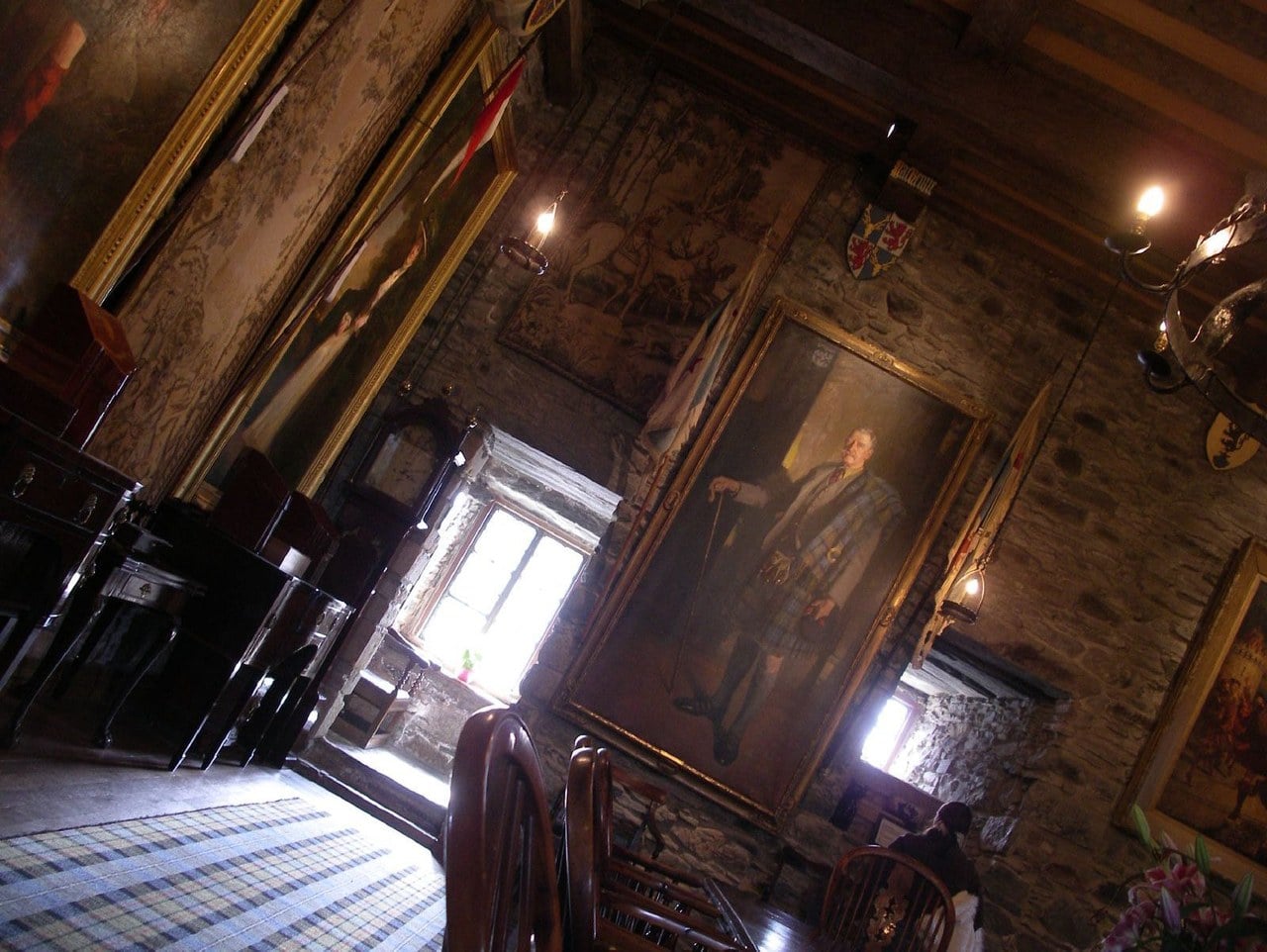
Eilean Donan sits beside the A87 near the village of Dornie, about eight miles east of Kyle of Lochalsh and the bridge to Skye, which makes it an easy and almost unavoidable stop on the road west. Without a car, buses between Inverness and Skye stop at Dornie a few minutes’ walk away, and the scenic Kyle railway line reaches Kyle of Lochalsh nearby. The castle is run by the Conchra Charitable Trust, with a visitor center, shop, and cafe on the shore, and the island itself is reached on foot across the arched bridge. Crossing it is part of the pleasure: three low arches carry you over the tidal narrows, the loch opening on either side and the keep growing ahead. Inside, the rebuilt rooms repay the walk, above all the Banqueting Hall, hung with Clan MacRae portraits, tapestries, and heraldry beneath an exposed timber ceiling, while the ramparts give the wide view along Loch Duich that fills the postcards. The castle is open from February to the end of the year and busiest from June to August; adult admission is around £13 in 2026, and tickets are sold only at the castle on the day, with no advance online booking, so arrive with time in hand when the car park fills on a summer afternoon.
Because the castle is remote and most visitors arrive as part of a wider Highlands or Skye trip, one of the easiest ways to see it with context is on a guided day tour that includes it, several of which run from Inverness or Skye and fold in the glens and lochs along the way.
For a guided visit, GetYourGuide lists Highland and Isle of Skye day tours that stop at Eilean Donan, an easy way to reach the castle without your own car and to see the glens on the way. If you would rather stay nearby and explore at your own pace, Booking.com covers guesthouses and hotels around Kyle of Lochalsh and Dornie, within a few minutes of the bridge.
Some links on this page are affiliate links, which means StoneKeep Atlas may earn a small commission, at no extra cost to you, if you book through them.
More Views of Eilean Donan Castle
Beyond Eilean Donan Castle
Eilean Donan and Scotland’s capital fortress make a natural pair of opposites: the remote island re-creation in the western Highlands and the great besieged rock in the heart of the city. If you are building a Scottish castle itinerary, the guides to Edinburgh Castle and Stirling Castle, the two great royal fortress-crags, are the companion pieces. Nearer to hand, fellow Highland ruin Urquhart Castle guards Loch Ness within an easy drive to the east, and more of Scotland’s strongholds are joining the collection, among them Doune Castle, one of Scotland’s most complete medieval castles and the seat of the Duke of Albany near Stirling, and Dunrobin Castle on the Sutherland coast, a Baronial mansion built around a medieval tower. And for a night inside the history, our guide to staying in a castle in Scotland covers ten castle hotels from the Highlands to the Borders. Kilchurn Castle in Argyll stands on a knoll that a 2018 survey concluded would have been an island when the castle was in use, and it was consolidated rather than rebuilt: a roofless ruin at the head of Loch Awe, its interior closed for conservation and its exterior free to walk around all year. These Scottish castles are gathered in our guide to the castles of Scotland. Eilean Donan also appears in our reference on haunted castles, where the operator’s own Stories page of 25 July 2022 is the earliest record we could date for claims attached to the 1719 garrison.
Conclusion
Eilean Donan rewards a second look. The postcard is real, but the more interesting castle is the one behind it: a medieval Mackenzie stronghold whose keepers were the MacRaes, a fortress blown into the loch by three navy frigates in 1719, and a ruin that lay untouched for two hundred years until one soldier decided to build it back. What crosses the bridge to see it today is a twentieth-century work standing faithfully on medieval ground. That honesty is the castle’s real romance, and it is a better story than “ancient and untouched” ever was.
Principal Sources
- Eilean Donan Castle (operator, Conchra Charitable Trust). “History,” “Timeline,” and “Filming.” eileandonancastle.com.
- Historic Environment Scotland. Listed Building record LB7209 (Eilean Donan Castle, Category A).
- Scottish Archaeological Research Framework (SCARF). Highland case study: Eilean Donan Castle.
- Captains’ logs of HMS Worcester and HMS Flamborough, 10 May 1719 (Admiralty records) for the 1719 bombardment, garrison, and gunpowder detail.
A note on sources: admission prices and opening times change seasonally, so confirm them on the official site before you travel.
Image credits. Hero, winter sun over Loch Duich: Diliff, CC BY-SA 3.0, via Wikimedia Commons; footbridge to the gatehouse: Rodaxx, CC BY-SA 4.0, via Wikimedia Commons; aerial of the island: Richard Dorrell, CC BY-SA 2.0, via Wikimedia Commons; evening reflection on Loch Duich: Eusebius, CC BY 3.0, via Wikimedia Commons; the rebuilt keep: Christian David, CC BY-SA 4.0, via Wikimedia Commons; an interior chamber: Shadowgate, CC BY 2.0, via Wikimedia Commons; the castle at dusk: Syxaxis Photography, CC BY-SA 4.0, via Wikimedia Commons; the Banqueting Hall: Shadowgate, CC BY 2.0, via Wikimedia Commons; the courtyard: Adam Cuerden, public domain, via Wikimedia Commons; the main doorway: Cayetano, CC BY-SA 2.0, via Wikimedia Commons; the bridge arches: Tony Hisgett, CC BY 2.0, via Wikimedia Commons; wide setting above Loch Duich: JoachimKohler-HB, CC BY-SA 4.0, via Wikimedia Commons; ripples before the island: Eusebius, CC BY 3.0, via Wikimedia Commons; the view along Loch Duich: Christian David, CC BY-SA 4.0, via Wikimedia Commons; the storm-lit castle reflected in Loch Duich: lobostudiohamburg via Pixabay; snow-dusted peaks above a golden Loch Duich: Sourav Bhaduri via Unsplash; an aerial of the island and its arched bridge: George Mitropoulos / Adobe Stock; a museum archer tableau and a carved longship figurehead: Shadowgate, CC BY 2.0. Freely licensed images are resized to fit; otherwise unaltered.