
Urquhart Castle
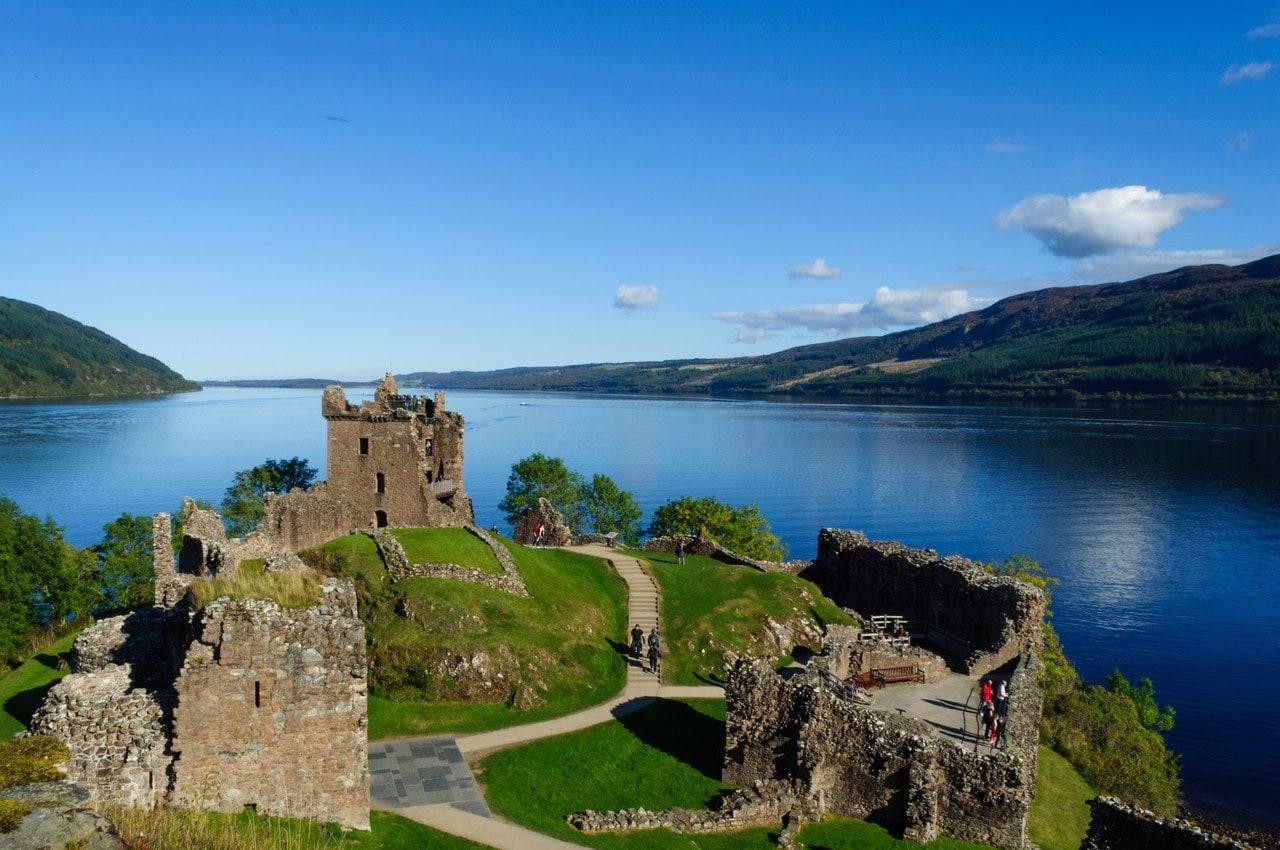
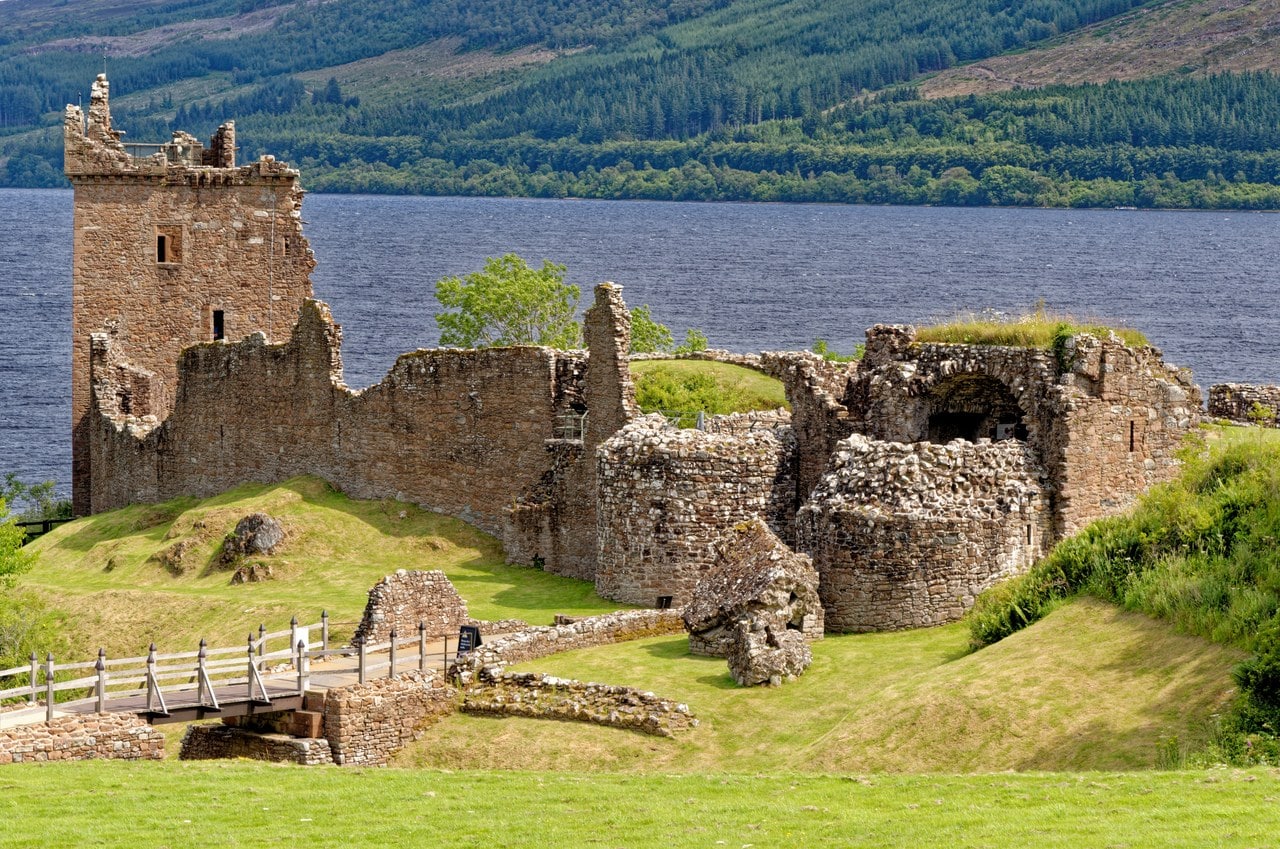
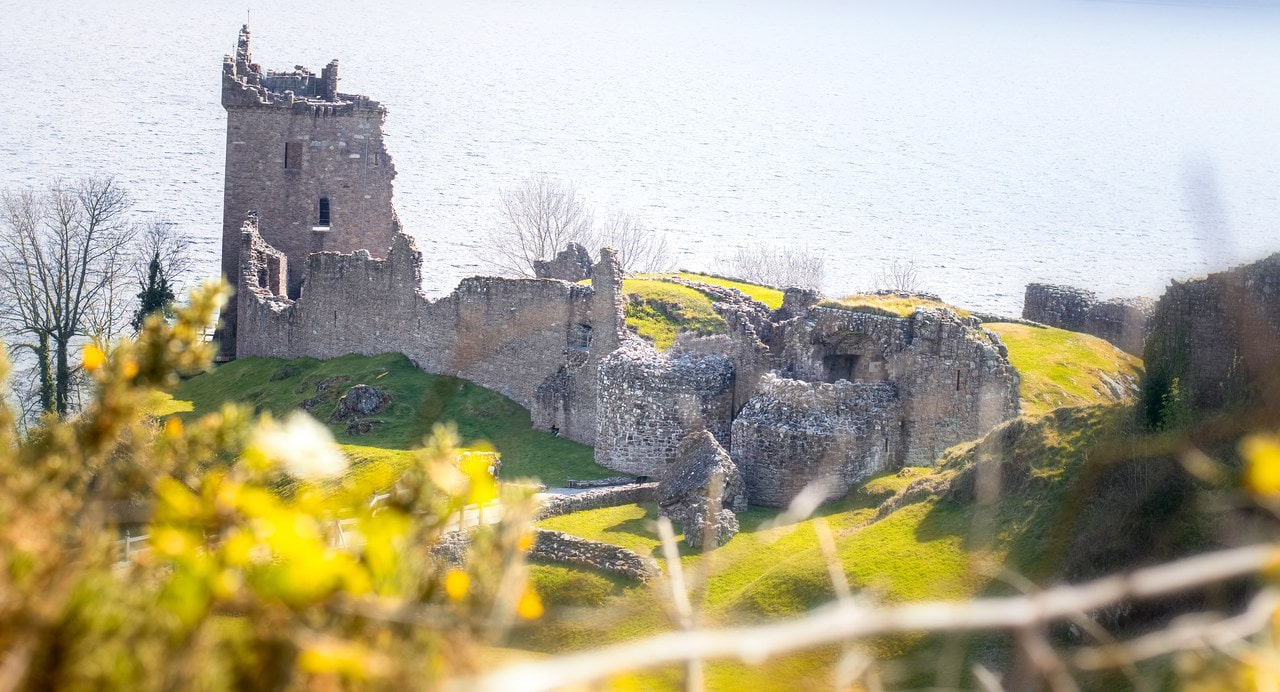
Urquhart Castle stands in ruin on a rocky promontory above Loch Ness, its broken tower framed against one of the most famous stretches of water in the world. It is a wreck by design. When a government garrison marched out in 1692, the story goes, they blew the place up so that no Jacobite army could ever hold it again, and a violent storm finished part of the job a generation later. What remains is a roofless shell of stone and rubble, the five-storey Grant Tower still rising over the water, footings of a great hall and chapel spread across the grass, and a gatehouse cracked open to the sky. More than four hundred thousand people come every year to walk through it, which makes this fragment of a castle the third most-visited in Scotland, behind only Edinburgh and Stirling. They come for the loch and the legend as much as the stones. What they find is one of the great castle sites of the Highlands, fought over for a thousand years.
Quick Facts
| Location | A promontory on Loch Ness, by Drumnadrochit, about 15 miles southwest of Inverness, Highland |
| Built | 13th century; the Grant Tower largely 16th century |
| Condition | Ruin, managed visitor attraction |
| Owner / manager | Historic Environment Scotland |
| Admission (2026) | Adult from £14 online; timed advance booking required |
| Official website | Historic Environment Scotland |
A stronghold above Loch Ness
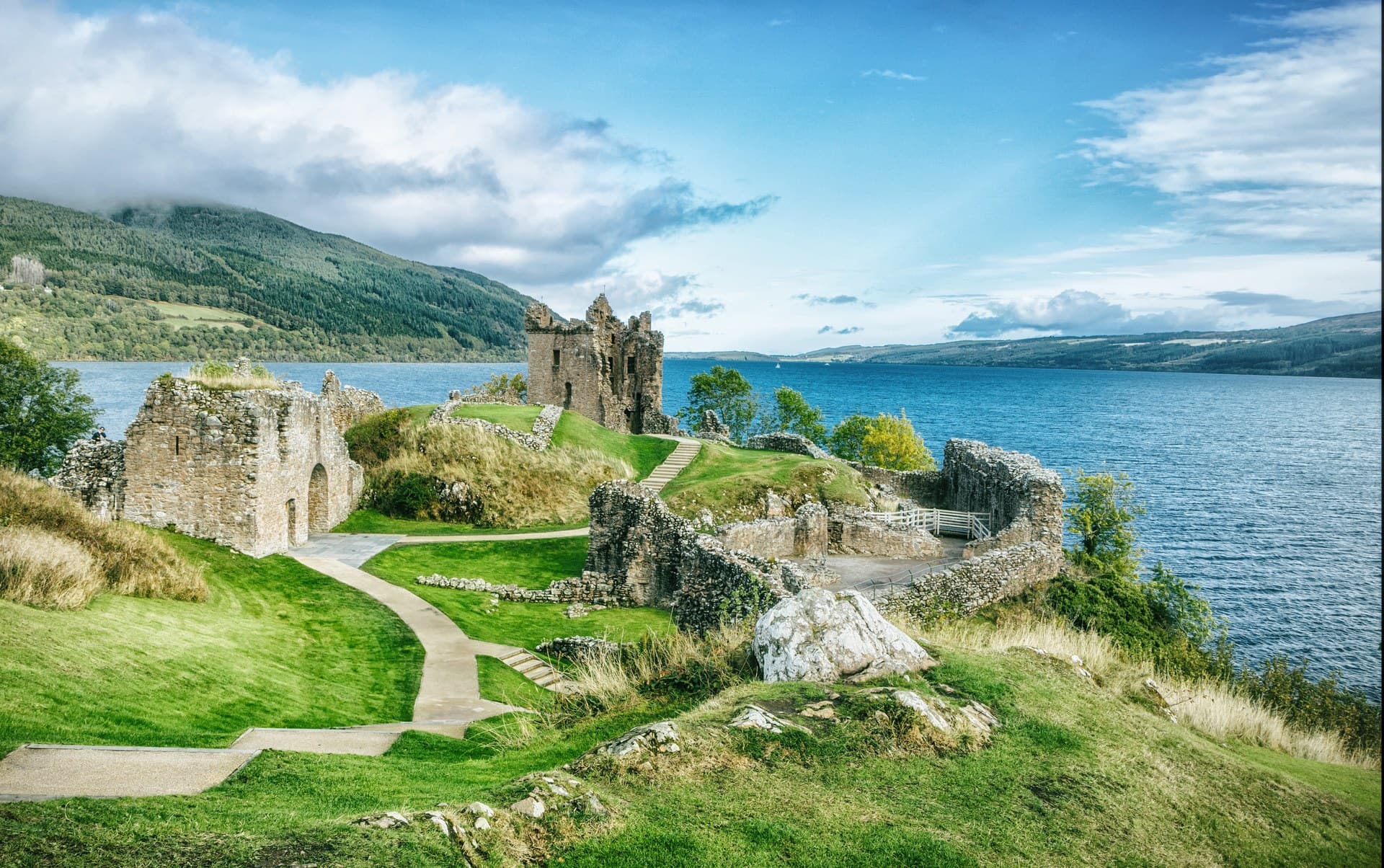
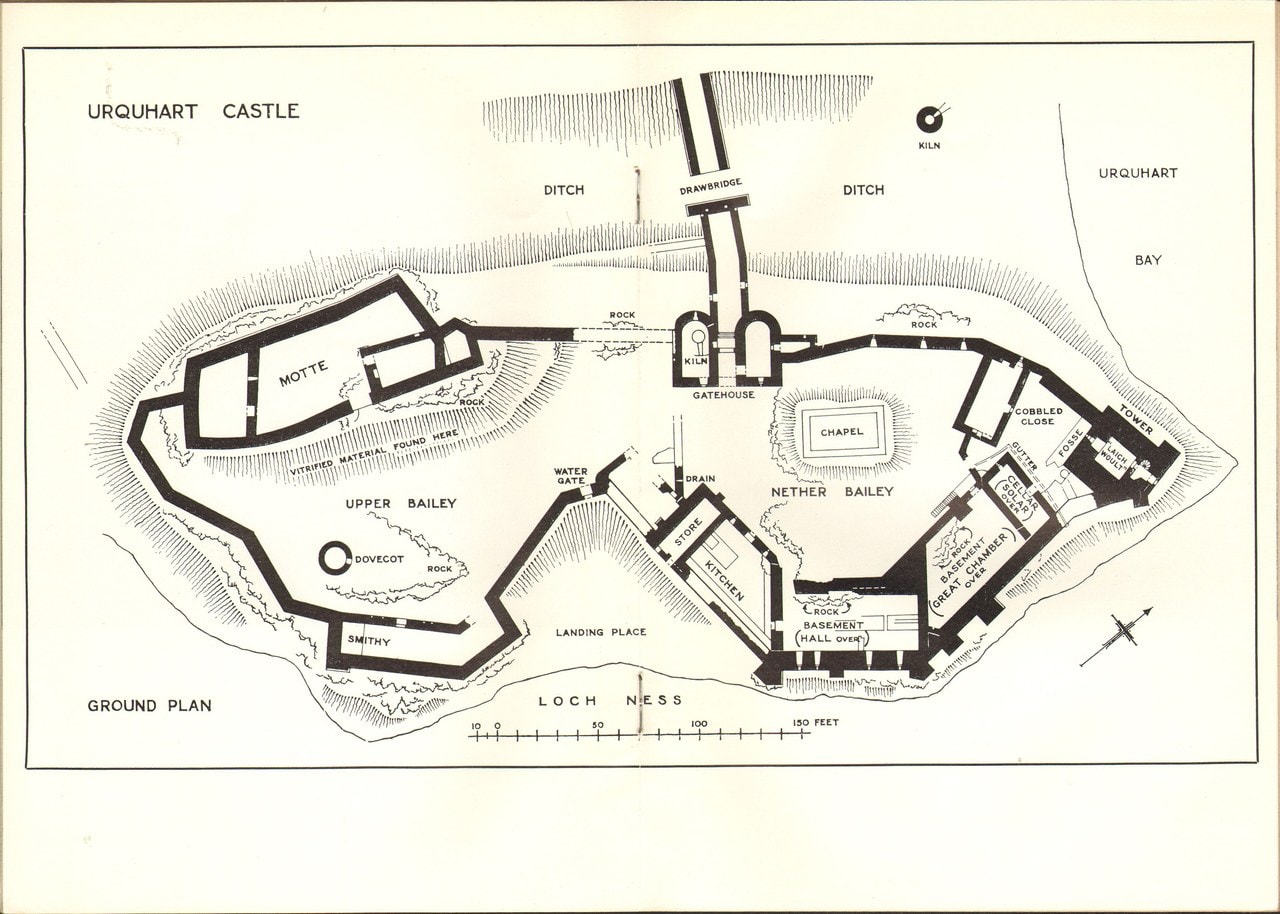
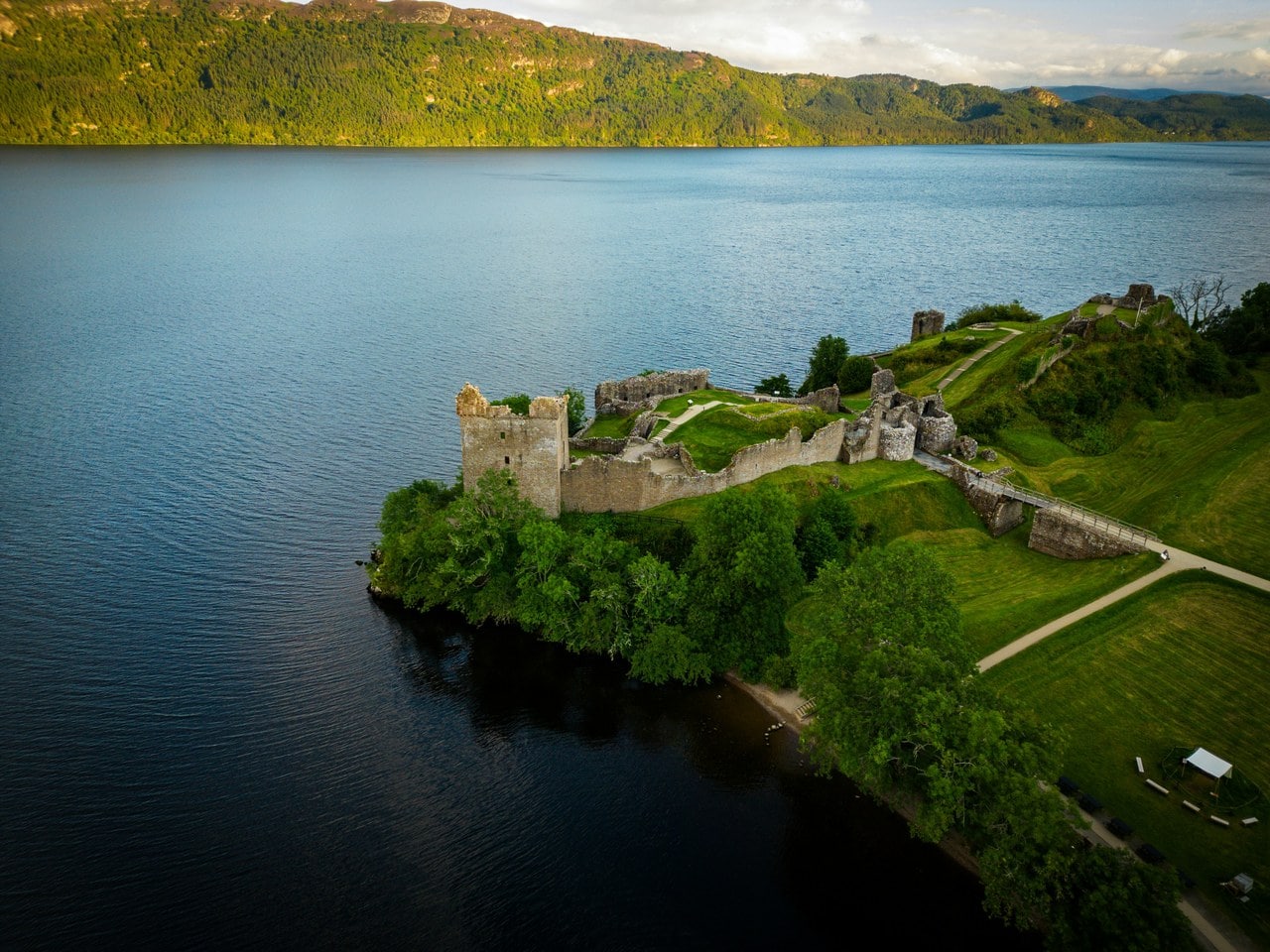
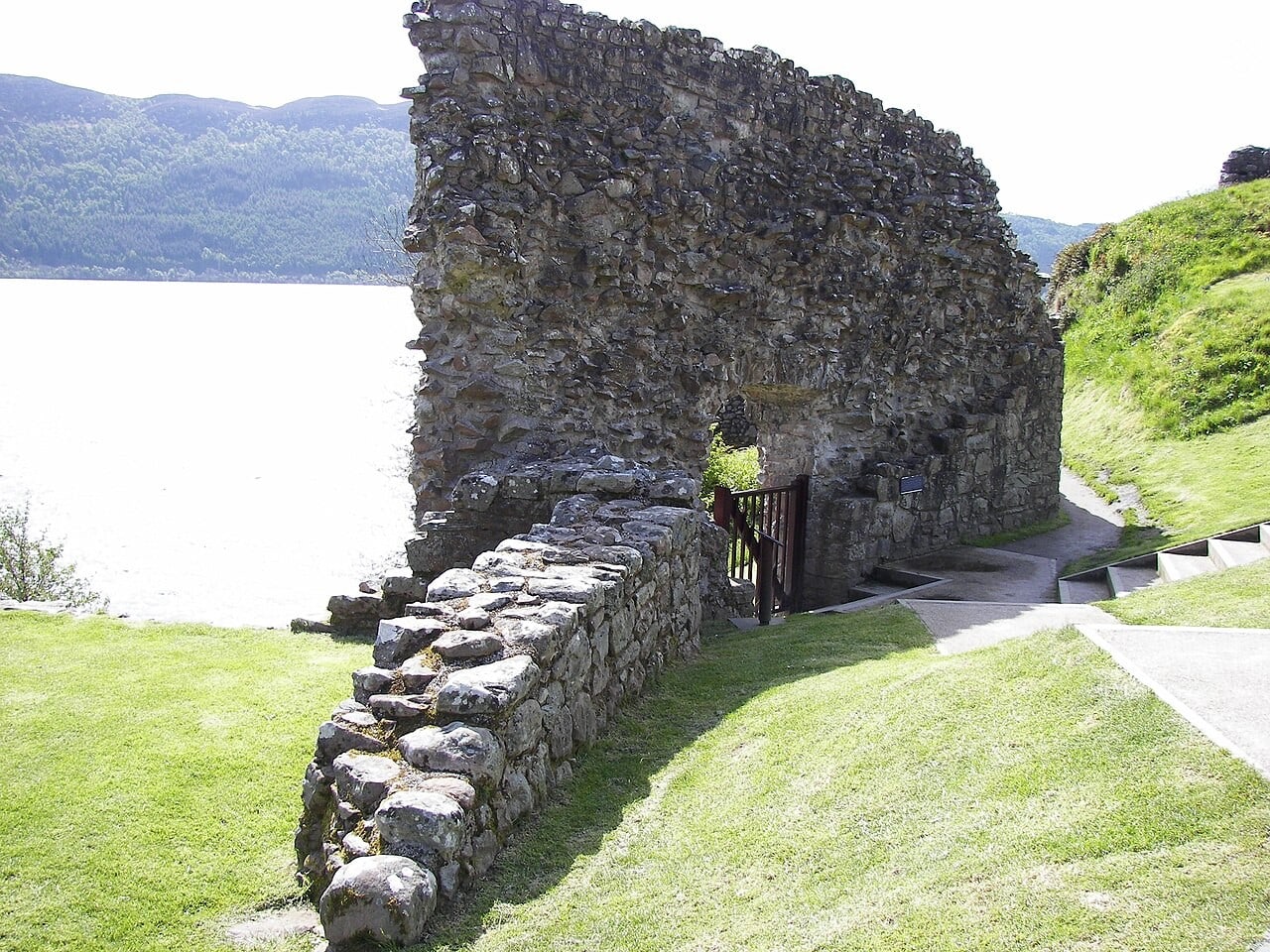
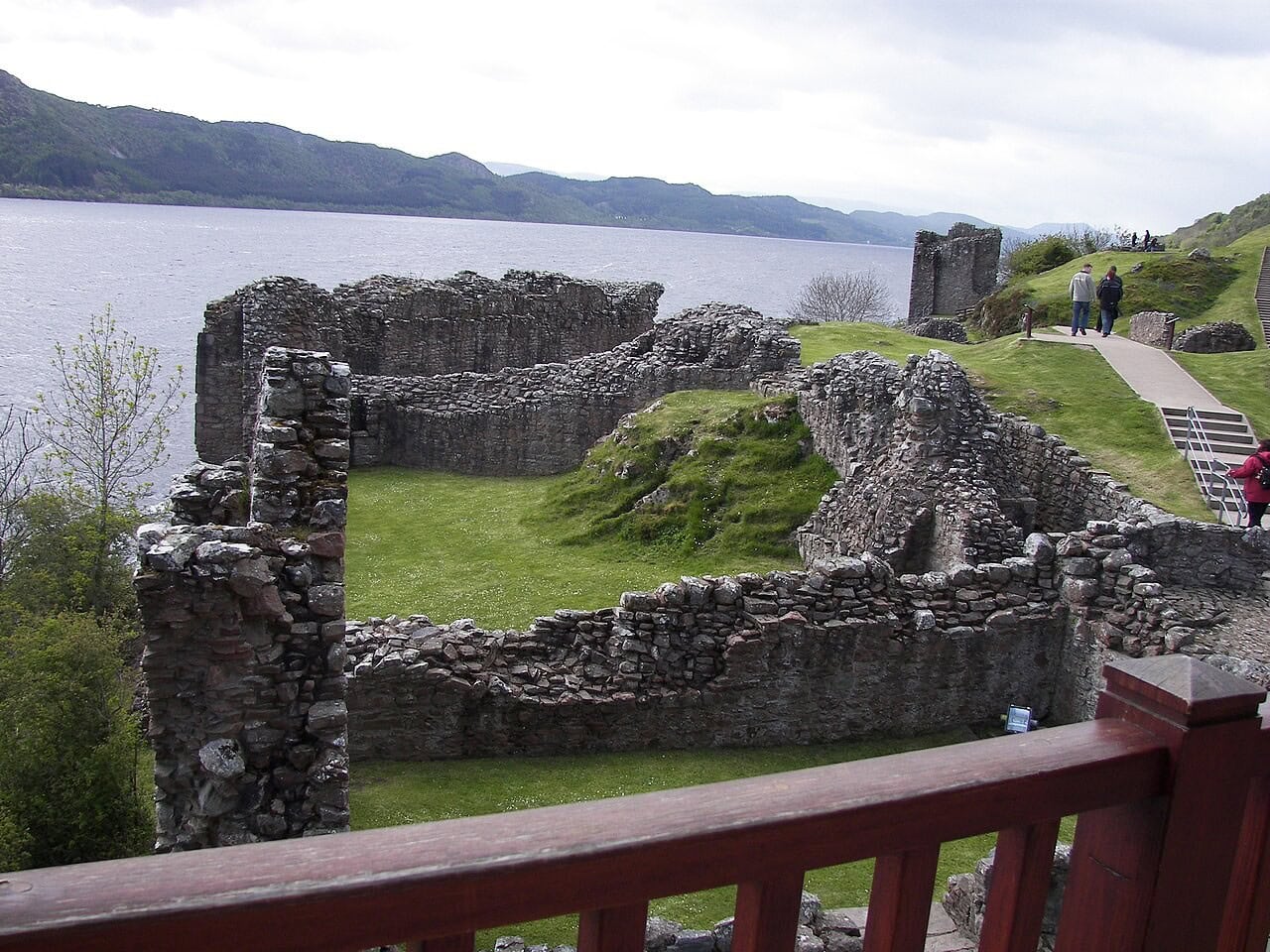
The setting made the castle. Loch Ness fills the Great Glen, the deep geological fault that slices Scotland from coast to coast, and for centuries the loch was the road. Whoever held a strongpoint on its shore controlled movement through the heart of the Highlands. Urquhart sits on a low promontory called Strone, thrust out into the water where a side glen meets the loch, with an open outlook up and down the Great Glen in both directions. A ditch cut across the neck of the promontory turned it into an island of rock, crossed by a causeway and a drawbridge. A water gate at the loch’s edge let boats bring in supplies when the landward approach was blocked.
People recognized the value of this ground long before the stone castle. A fragment of a Pictish brooch from the late 700s or early 800s, found on the site, hints at a high-status Pictish presence here. Tradition reaches back further still. According to Adomnan’s Life of St Columba, written around AD 700, the saint traveled up Loch Ness in about 580 on his way to the court of Bridei, king of the northern Picts, and was called aside to baptize an elderly Pictish nobleman named Emchath at a place called Airdchartdan, the early form of Urquhart. Whether Emchath’s hall stood on this exact promontory is beyond proving, but Historic Environment Scotland tells the story as the site’s oldest human memory.
That same journey produced the story that later became the loch’s most famous legend. Adomnan records that Columba came upon local people burying a man killed by a beast in the water, sent one of his monks swimming across to draw the creature out, and, when it surged up to attack, commanded it back into the depths. It is the earliest written account of a monster in the Ness, told fourteen centuries before anyone thought to sell a ticket over it. One detail is worth holding on to, because almost every retelling loses it: Adomnan sets the encounter in the River Ness, not the loch. His Latin has Columba obliged to cross the river Nesa and coming to its bank, and where he means the loch he says something different, the long lake of the river Nesa. The oldest Loch Ness monster story is not, in its own text, about Loch Ness. Our reference on how castle ghost stories get dated follows that one-word drift from river to loch through a national heritage body’s own page, and runs the same test on eighteen other buildings.
Castle of the Wars of Independence
A stone castle rose on the promontory in the thirteenth century, its earliest defenses raised on the higher ground at the southern end. It steps into recorded history in 1296, when Edward I of England seized it during the invasion that began the Wars of Scottish Independence. For the next several decades Urquhart changed hands again and again as English and Scots fought up and down the Great Glen, its garrison installed and dislodged as the wider war turned. The single sharpest image of its loyalty comes from 1332. In the bleak years after the death of Robert the Bruce, with much of Scotland once more under English pressure, Urquhart was, in Historic Environment Scotland’s words, the only Highland castle to hold out against the English. A remote fortress on a Highland loch had become a fixed point of Scottish resistance.
Peace with England did not bring quiet. For the next two hundred years the great threat came from within Scotland, from the MacDonald Lords of the Isles, the semi-independent sea-kings of the west who pressed their claim to the earldom of Ross straight through the Great Glen. They seized Urquhart repeatedly and stripped its lands. Their last raid, in 1545, was the most destructive of all. The Islesmen carried off an enormous hoard, including three great boats and twenty guns, leaving the castle battered and its estate wrecked. By then Urquhart had been fought over for two and a half centuries, and it was beginning to show.
The Grants and the Grant Tower
The family whose name the castle now carries arrived by royal gift. In 1509 James IV granted the barony of Urquhart to the Grants, along with instructions to restore the castle and put its estate back in order. Over the following century the Grants rebuilt the northern end of the promontory around a tall tower house, and that tower is what dominates the ruin today.
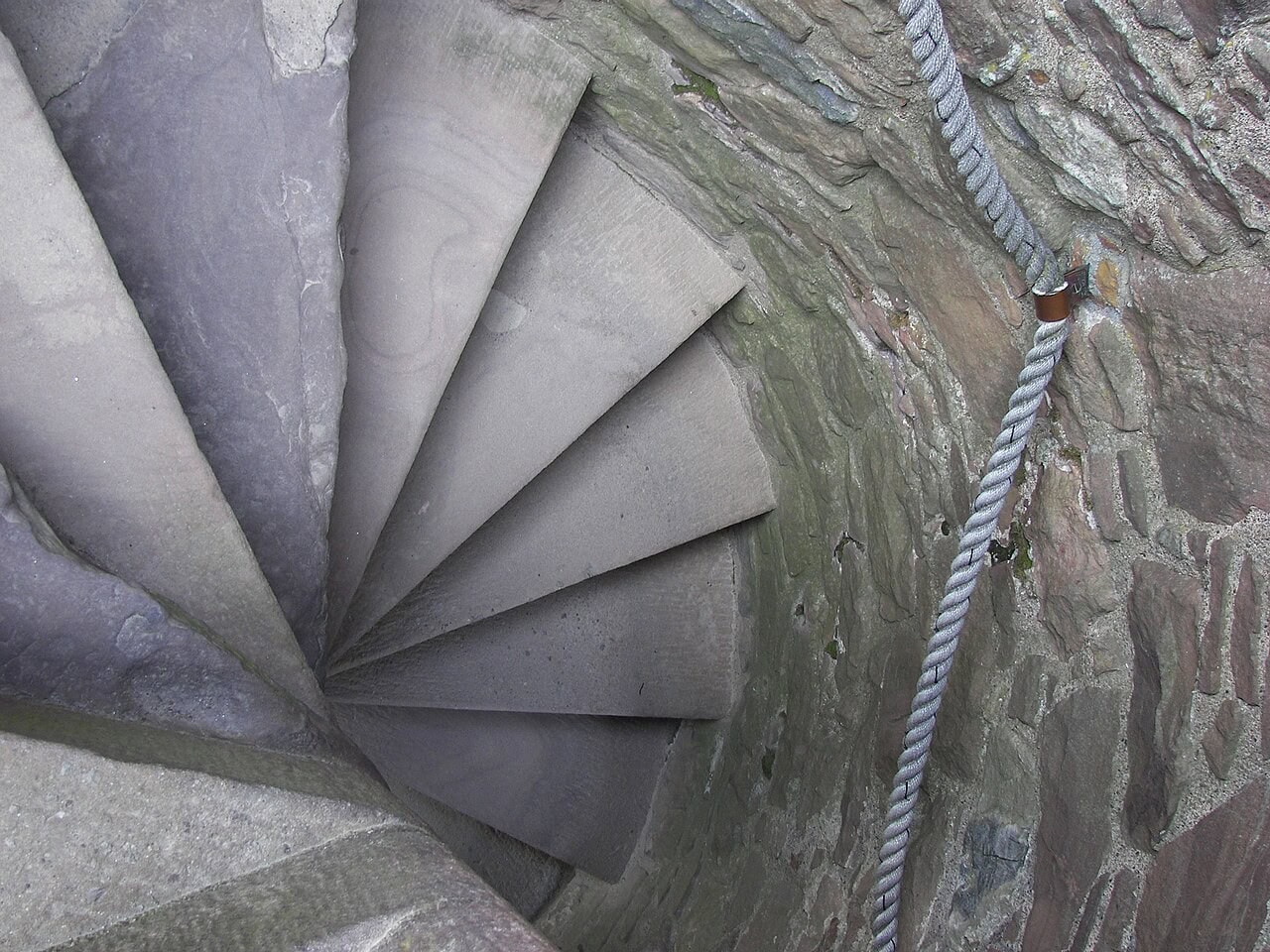
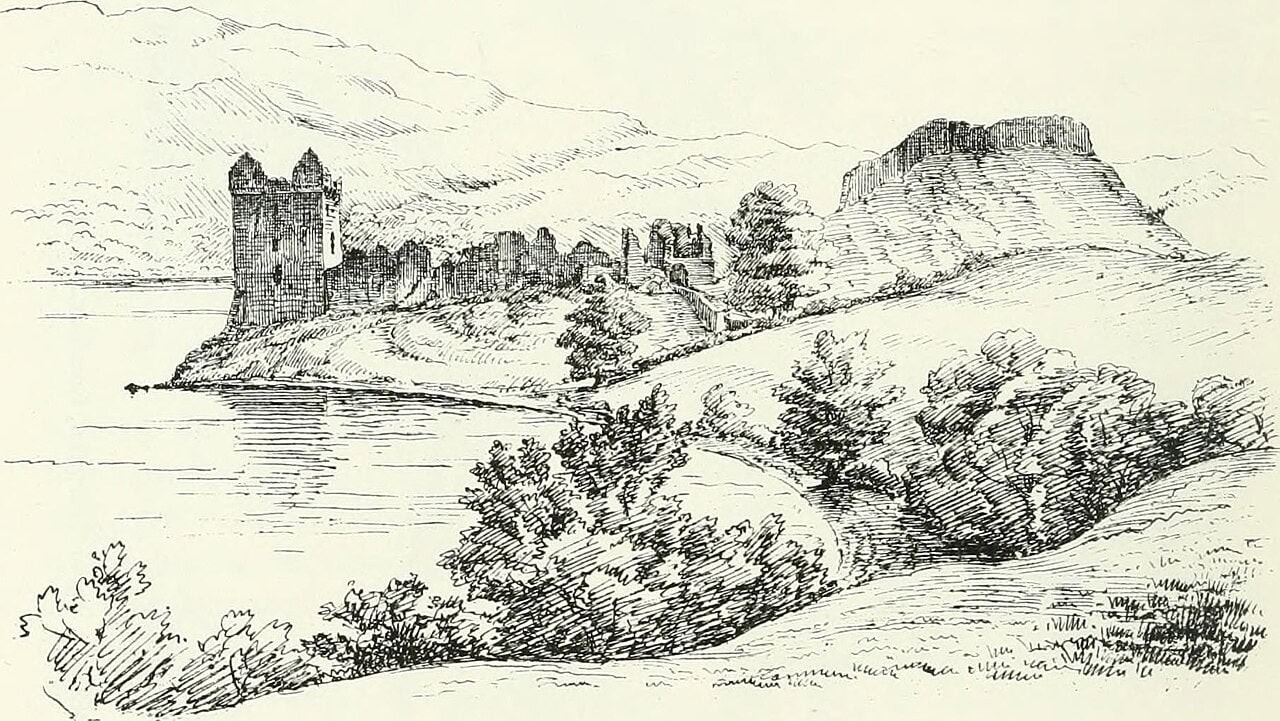
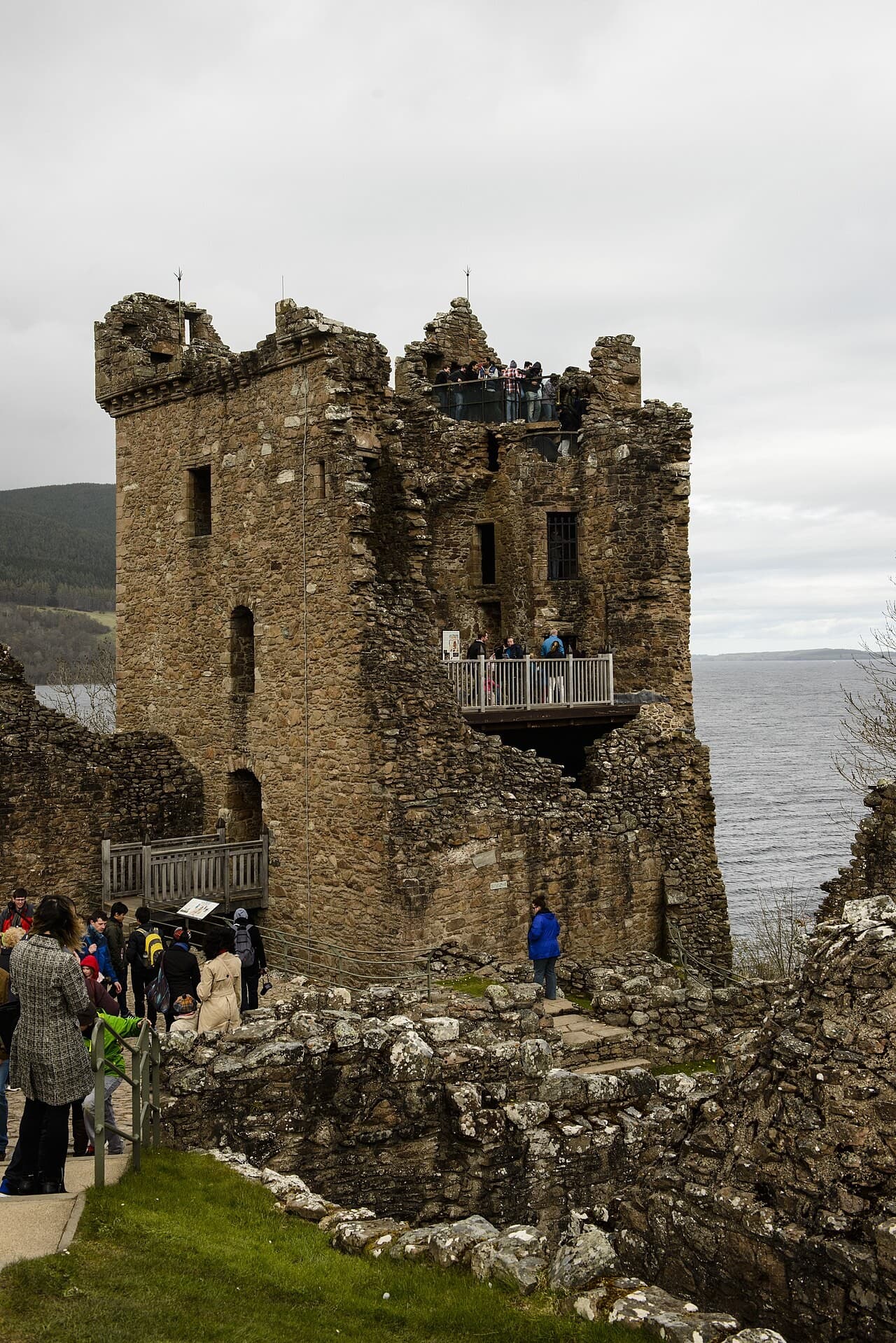
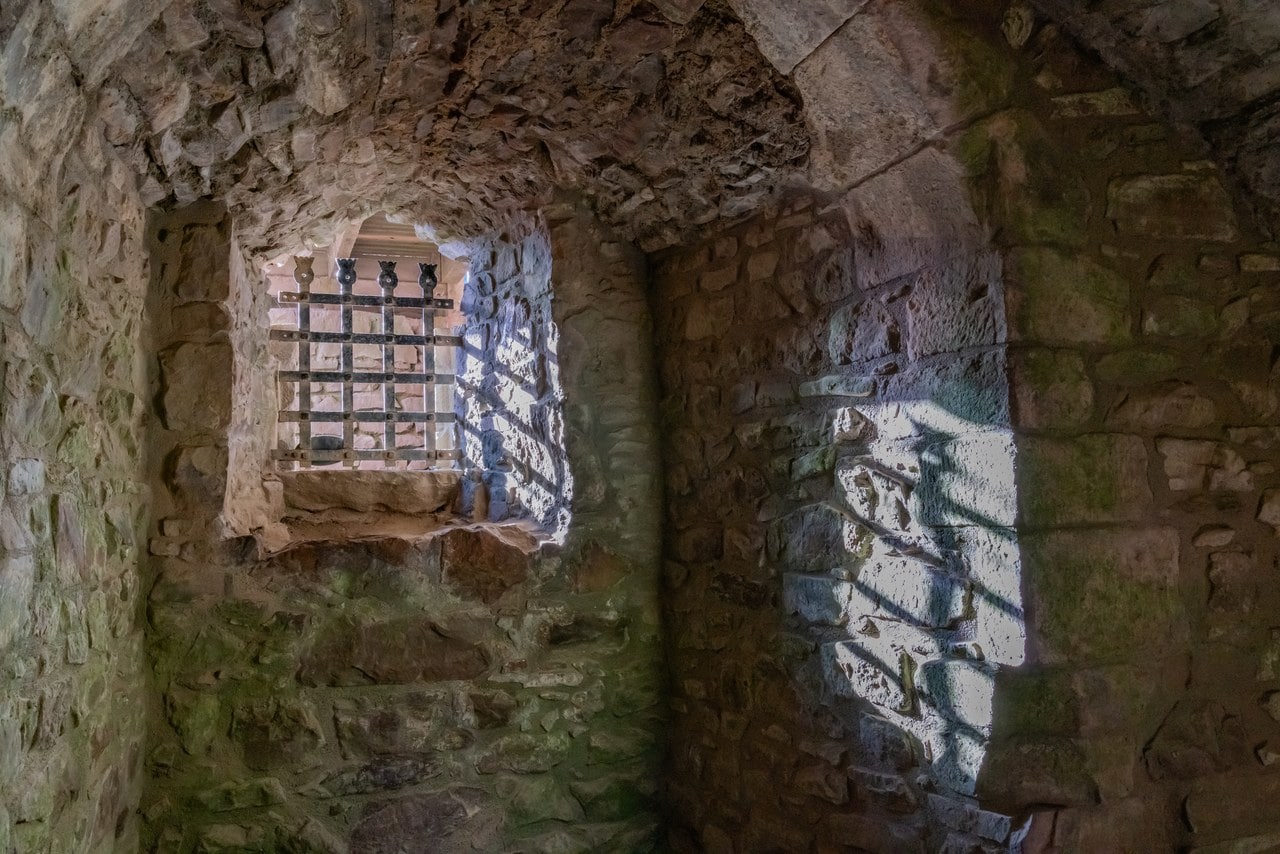
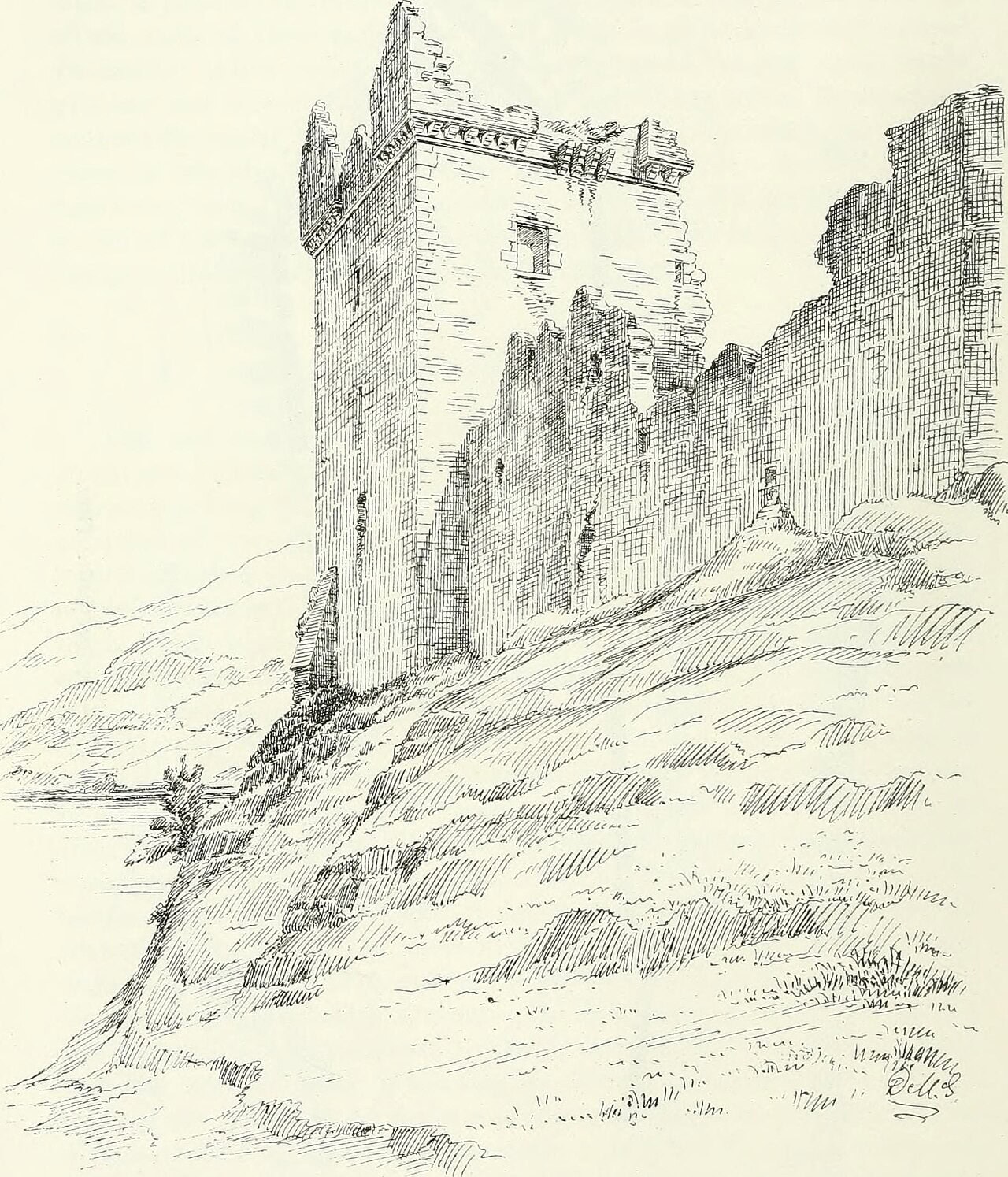
The Grant Tower rises five storeys at the seaward point of the castle, a self-contained keep that could be shut off and defended on its own if the rest of the walls were lost. It remains by far the best-preserved part of Urquhart, its vaulted cellars standing up to the original wallhead and gable, a narrow spiral stair still climbing through the floors to the wall-walk. From the top the whole plan of the castle opens out below and the loch runs away south toward the mountains. The tower as it stands is largely sixteenth-century Grant work, raised on the defenses of earlier lords, and it gives the ruin the vertical drama that fills every photograph taken from the water.
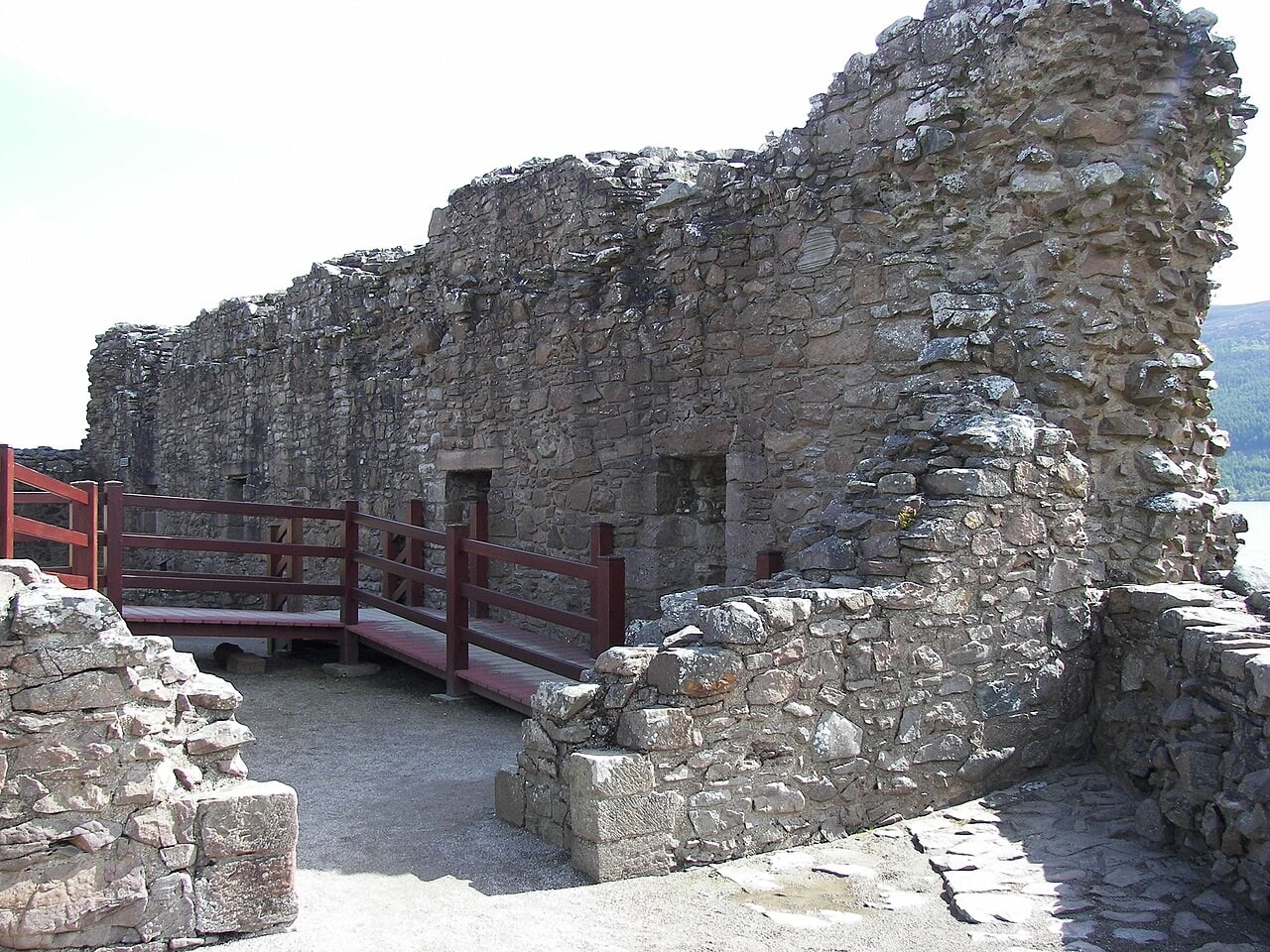
Below and around it the shape of a working castle is still legible in the grass. The long range along the loch held the kitchens and the great hall, where the lords of Urquhart once staged their banquets. Foundations near the centre mark a chapel. At the south end, on the highest ground, lie the oldest earthworks of all, the mound where the first castle began. It reads now as a plan drawn in low walls and footings, but every line of it once had a roof, a floor, and a purpose.
A ruin by design: the slighting of 1692
Most ruined castles were killed slowly, by neglect and the weather. Urquhart was, by the usual account, killed on purpose. When James VII was deposed in the revolution of 1688, the castle was held for the new government against the Jacobites who wanted the old king back. It saw out the fighting as a garrison post. Then, when the last soldiers finally marched away in 1692, they are said to have destroyed it behind them, blowing up the gatehouse so that the castle could never again be used as a stronghold against the crown.
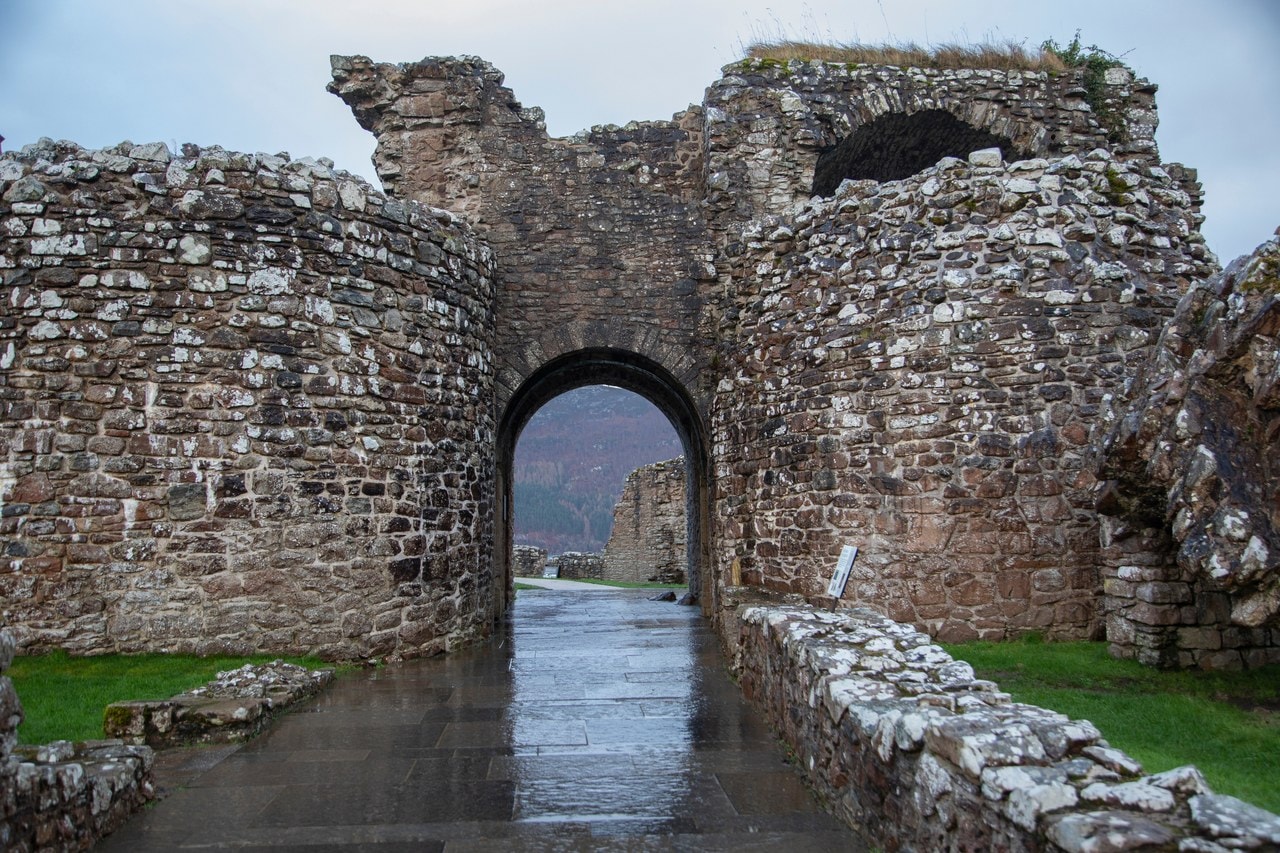
It is worth being honest about the evidence. Historic Environment Scotland, which cares for the site, notes on its own pages that the deliberate explosion is debated: no scorched or blast-cracked stone survives to prove that gunpowder brought the gatehouse down, and the collapse may owe as much to abandonment and later robbing as to a single dramatic blast. What is certain is that the castle was left broken and undefended, and that people afterward carted off its dressed stone for their own building. Nature then took a hand. In 1715 a violent storm tore down part of the Grant Tower, dropping a whole face of it into the ruin you still see, the wall sheared clean away to leave the cellars open like a cutaway drawing. Between the garrison, the quarrymen, and the storm, Urquhart was finished as a castle within a single generation.
The monster, the trebuchet, and the modern castle
Urquhart spent the next two and a half centuries as a picturesque wreck, drawn by antiquarians and climbed by the curious, before it passed into state care and became one of Scotland’s flagship heritage sites. Historic Environment Scotland now runs it, and the modern visit is built around the ruin rather than over it. A visitor centre, opened in 2002, is set into the hillside above the castle with its car park on the roof, so that the approach reveals the loch and the tower all at once. Inside are a cafe, a shop, an exhibition built around the Urquhart Ewer, a fifteenth-century bronze jug found on the site in 1921 and once used for washing the hands before a meal, and a short film whose ending is locally famous, drawing back a curtain to show the real castle through a wide window.
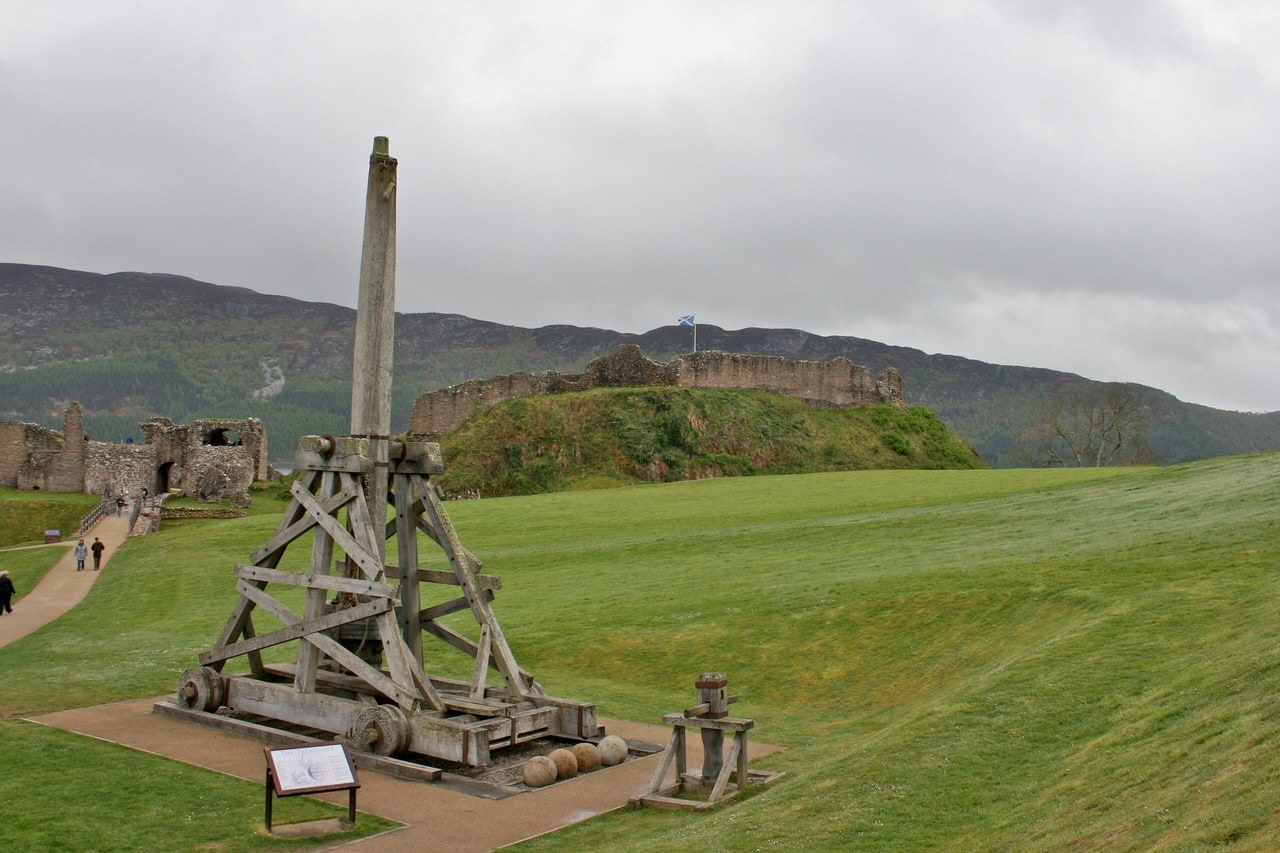
On the lawn between the centre and the ruin stands the castle’s most photographed modern arrival, a full-size working trebuchet. It is a reconstruction of a thirteenth-century counterweight siege engine, one of a pair built on the site in 1998 for a television documentary and left as a display, its great throwing arm a reminder of exactly how a medieval garrison expected to be attacked. It delights children and gives the grown-ups a sense of scale that no information panel can.
And then there is the loch itself, and its monster. Urquhart Castle overlooks one of the deepest, most watched stretches of Loch Ness, and a good share of the crowd arrives already half-hoping to see something break the surface. Historic Environment Scotland leans into the oldest version of the tale, Columba’s sixth-century water beast, rather than the modern cryptid, which lets the site enjoy the legend without pretending to settle it. Historic Environment Scotland keeps a smaller store of folklore too, including a local tale of two boxes hidden somewhere among the ruins, one said to hold treasure and the other the plague, left for the unwary to choose between. The honest draw is the view. Standing in the Grant Tower with the Great Glen stretching away, it is easy to understand why people fought over this rock for a thousand years, and why more than four hundred thousand of them come back every year to stand where the garrisons stood.
Visiting Urquhart Castle
List the 8 castles on this map
- Urquhart Castle — Highland, Scotland
- Edinburgh Castle — City of Edinburgh, Scotland
- Stirling Castle — Stirling, Scotland
- Eilean Donan Castle — Highland, Scotland
- Doune Castle — Stirling, Scotland
- Dunnottar Castle — Aberdeenshire, Scotland
- Kilchurn Castle — Argyll and Bute, Scotland
- Dunrobin Castle — Highland, Scotland
Urquhart Castle sits on the A82 about two miles southeast of Drumnadrochit and fifteen miles southwest of Inverness, which is the natural base for a visit. It is open every day, from 9.30 in the morning, with the last entry an hour before closing; closing time slides with the season, as late as 8.15 in high summer and as early as 4.30 in the depths of winter. Historic Environment Scotland now runs the castle on timed tickets, and in 2026 an adult ticket is around £14 booked online, a little more at the gate. Because parking on the roof is limited and summer slots sell out well ahead, booking a specific arrival time online is close to essential in the busy months, and it also gives the keenest price. Members of Historic Environment Scotland go free. If you would rather leave the car behind, Scottish Citylink’s 919 coach between Inverness and Fort William stops at the castle car park, about half an hour from Inverness. Allow a good hour and a half: the ground is uneven, the Grant Tower stair is steep and narrow, and the walk down from the visitor centre and back is a climb in itself. Spring and autumn, and the first hour after opening, are the quietest times to come, and the low sun of a clear evening is what lights the loch in the photographs.
One of the most rewarding ways to arrive is not by road at all. Loch Ness cruise boats sail from Inverness and from the pier near the castle, and seeing Urquhart the way its enemies did, rising off the water with the tower above the trees, is worth the fare on its own. You can book Loch Ness cruises and guided Urquhart Castle tours from Inverness through GetYourGuide. If you would rather make a night of the Highlands and explore Loch Ness at your own pace, there is plenty of accommodation in nearby Inverness, which you can browse on Booking.com.
Some links on this page are affiliate links, which means StoneKeep Atlas may earn a small commission, at no extra cost to you, if you book through them.
More Views of Urquhart Castle
Beyond Urquhart Castle
Urquhart makes an easy pairing with Scotland’s other great strongholds. An hour or so west, on its own tidal island where three sea lochs meet, Eilean Donan Castle offers the Highlands’ most photographed silhouette and a very different story, a shattered Jacobite ruin rebuilt whole in the twentieth century. For the royal power that Urquhart’s garrisons answered to, turn to the great castle rock of Edinburgh Castle, the most besieged fortress in Britain, and to Stirling Castle, the Renaissance palace that guarded the road to the Highlands. Further north, Dunrobin Castle is the opposite case, a house still lived in whose fourteenth-century tower is entirely encased by a mansion of the 1840s. Nearby Doune Castle completes the picture, the near-intact medieval stronghold of the Duke of Albany, Scotland’s uncrowned king. Further east, Dunnottar Castle broods on its Aberdeenshire sea-cliff, the ruin that sheltered the Honours of Scotland through a Cromwellian siege. And if Urquhart leaves you wanting to sleep behind castle walls rather than merely visit them, our guide to where to stay in a castle in Scotland rounds up the country’s finest castle hotels, from Highland baronial piles to Borders towers. In Argyll, Kilchurn Castle is the free counterpart to a timed ticket, a roofless Campbell tower house at the head of Loch Awe with nothing to book: its exterior is open all year and its interior is closed for conservation. These Scottish castles are gathered in our guide to the castles of Scotland.
Conclusion
Urquhart Castle is a ruin that earns its fame twice over, once for where it stands and once for what it survived. For a thousand years this promontory on Loch Ness was worth fighting for, from the Picts and the sieges of the Wars of Independence to the raids of the Lords of the Isles and the last government garrison that wrecked it on the way out the door. The storm of 1715 did the rest. What was left is not a lesser castle but a more honest one, a cross-section of Highland power opened to the sky above the most famous loch in the world. Walk up into the Grant Tower, look south down the Great Glen, and the whole long argument over this rock suddenly makes sense.
Urquhart is one of four Scottish castles in our growing collection, alongside island-set Eilean Donan and the royal fortresses of Edinburgh and Stirling, with more of the country’s strongholds to come.
Principal Sources
- Adomnan of Iona. Life of St Columba. c. AD 700 (the Emchath baptism by Loch Ness, and the water beast in the River Ness). Latin and English texts at CELT, University College Cork.
- Association of Leading Visitor Attractions. Annual visitor figures, Urquhart Castle. alva.org.uk.
- Historic Environment Scotland. “Urquhart Castle: History and Stories.” historicenvironment.scot.
- Historic Environment Scotland. “Urquhart Castle: Plan Your Visit.” historicenvironment.scot.
- Historic Environment Scotland Blog. “Witches, Gunpowder and a Water Beast: The Tales Behind Urquhart Castle.” 2026.
- Undiscovered Scotland. “Urquhart Castle.” undiscoveredscotland.co.uk.
The castle is also recorded in the national archaeological record, Trove (formerly Canmore) site 12547. Admission prices and opening hours change from season to season; check the official Historic Environment Scotland site before traveling.
Image credits. Photography by MG Photography, Paulo Pampolin, Gail Johnson, adfoto, Zita Stankova and Jakob via Adobe Stock; Johnny Briggs via Unsplash; and Wknight94 (CC BY-SA 3.0), Son of Groucho (CC BY 2.0) and Mike Peel (CC BY-SA 4.0) via Wikimedia Commons. Historic images: the castle ground plan by W. Douglas Simpson and the late-nineteenth-century engravings by MacGibbon and Ross, both public domain. Freely licensed images are resized to fit; otherwise unaltered.