
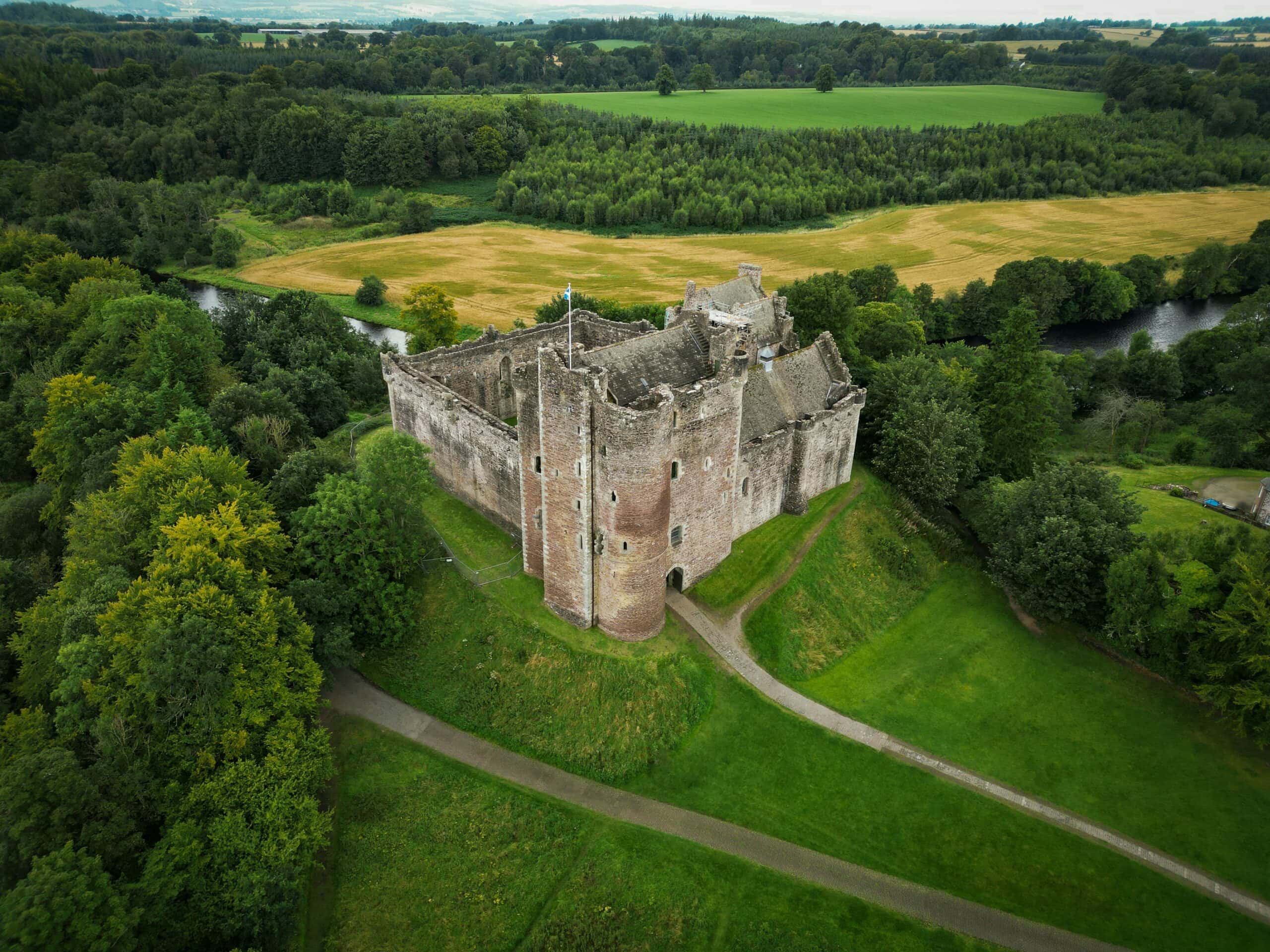
Doune Castle
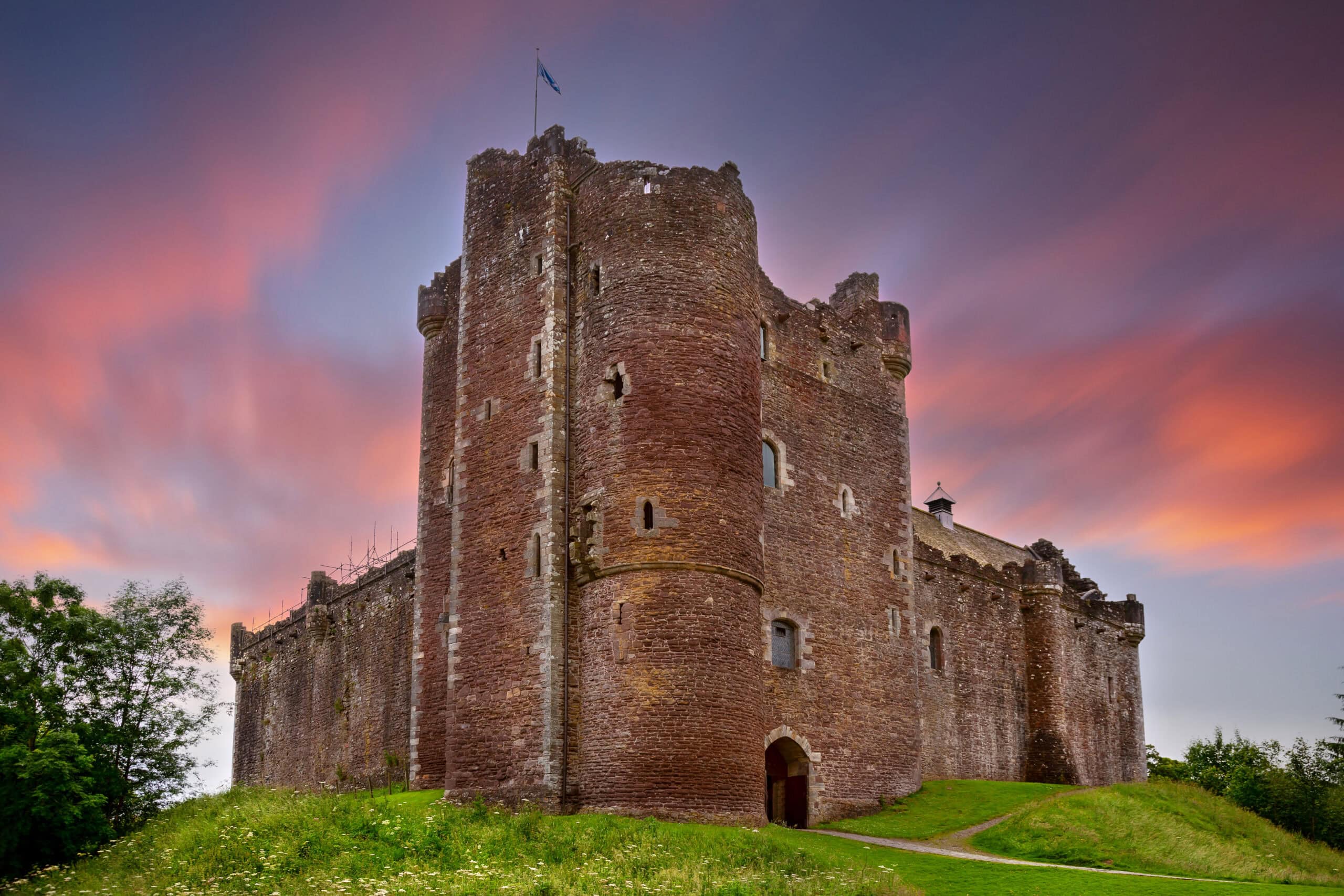
Doune Castle stands almost exactly as its builder left it: a compact, formidable courtyard stronghold on a bend of the River Teith, and one of the most complete medieval castles anywhere in Scotland. It was raised around 1400 for Robert Stewart, Duke of Albany, the man who governed the kingdom for a generation, and it has changed remarkably little in the six centuries since. That preservation is exactly why film crews keep coming back. Millions of viewers have walked its courtyard without knowing it: as Monty Python’s Camelot, as Winterfell in the original Game of Thrones pilot, and as Castle Leoch in Outlander. Behind the cameras, though, is something rarer than a film set. Doune is a great late-medieval household you can still read room by room.
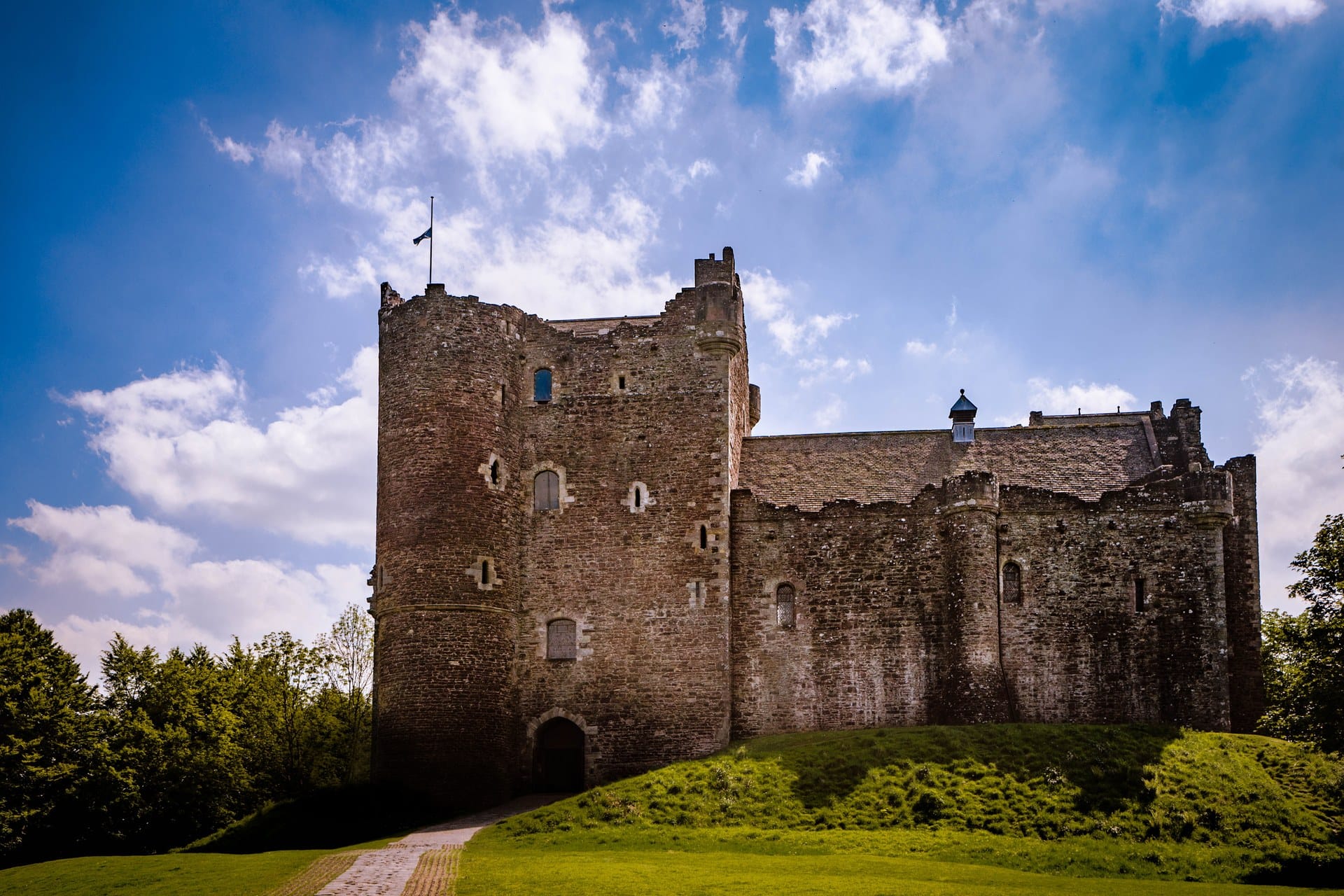
Quick Facts
| Location | Doune, Stirling, Scotland |
| Built | around 1400 (at least partly built by 1381) for Robert Stewart, 1st Duke of Albany |
| Style | courtyard castle with a combined gatehouse tower-house |
| Owner / manager | Historic Environment Scotland |
| Nearest station | Dunblane (about 4.5 miles); no. 59 bus from Stirling |
| Admission (2026) | about GBP 10 to GBP 11 adult (less online); check the official site |
| Official website | Historic Environment Scotland: Doune Castle |
A Regent’s Stronghold
Robert Stewart came to Doune through marriage. In 1361 he wed Margaret Graham, Countess of Menteith, and with her hand took the lordship and its castle. He was the younger brother of Robert III and, from 1386 until his death in 1420, Governor of Scotland, for long stretches its effective ruler. When the boy who would become James I was captured by the English in 1406, Albany governed as both Governor and Guardian, a king in all but crown. A contemporary chronicler, Abbot Walter Bower of Inchcolm, remembered him as a “big spender,” and Doune is where that spending shows. In an age when authority rested on visible magnificence, the duke built himself a seat that announced power at a single glance.
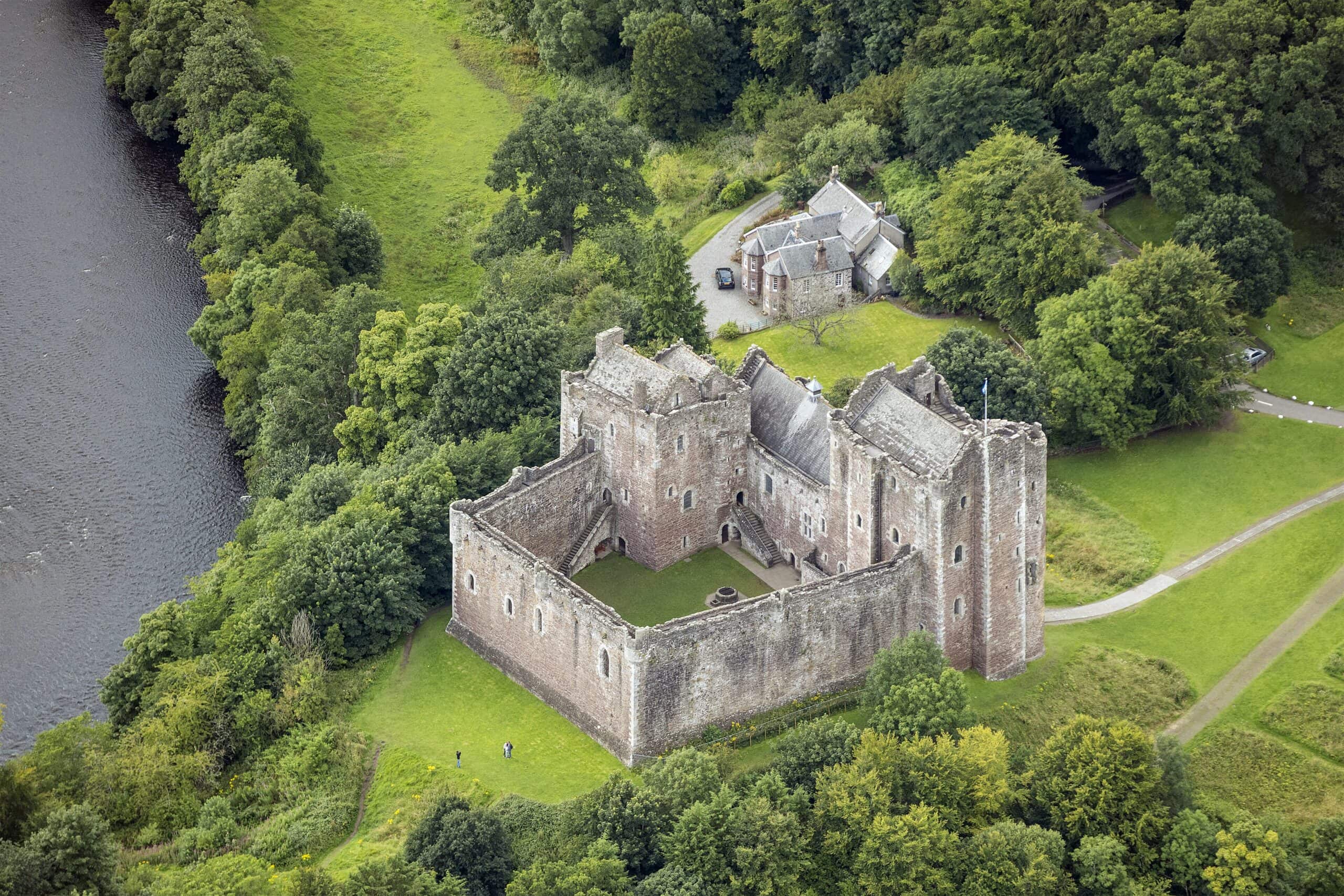
The Gatehouse and the Great Hall
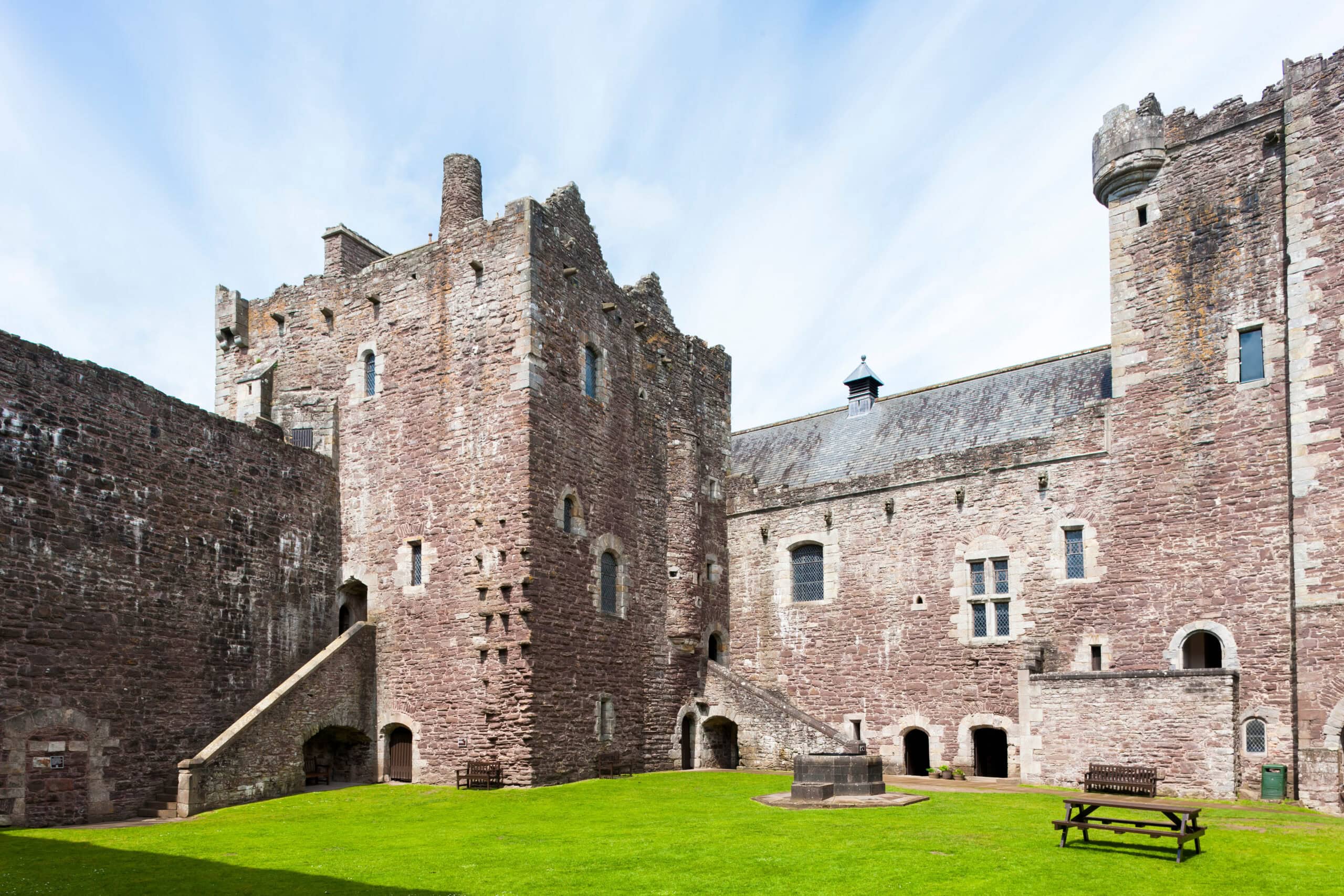
What sets Doune apart is that it was planned and built in a single campaign, and built quickly. Most Scottish castles are palimpsests, reworked by every century that owned them; Doune belongs almost wholly to one, the remarkably creative span of Scottish building between about 1375 and 1425. Albany intended a full quadrangle, with ranges enclosing the courtyard on every side. He never finished it. Only the north and north-west buildings rose; along the south wall, projecting bonding stones and a row of pointed windows still wait for walls that were never raised. The duke died with his great house incomplete, and no one after him took up the plan.
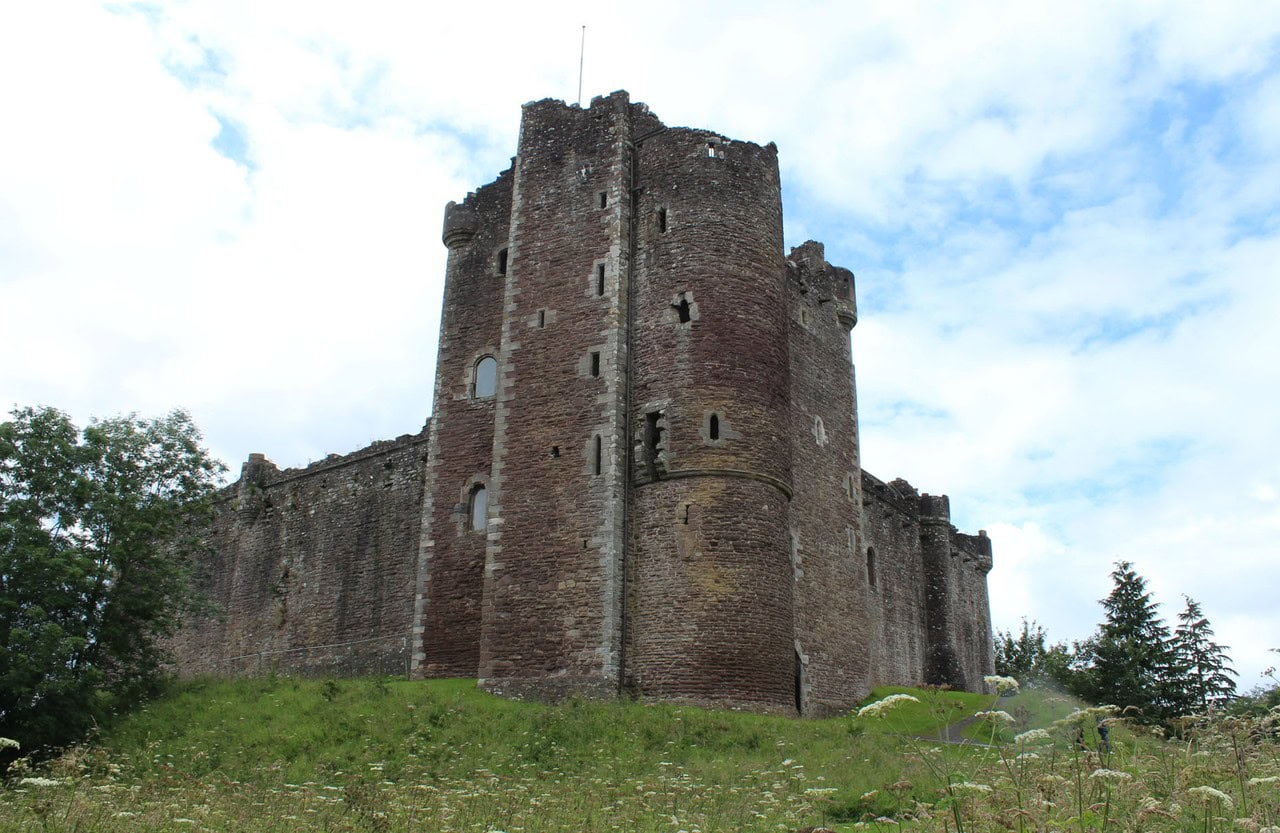
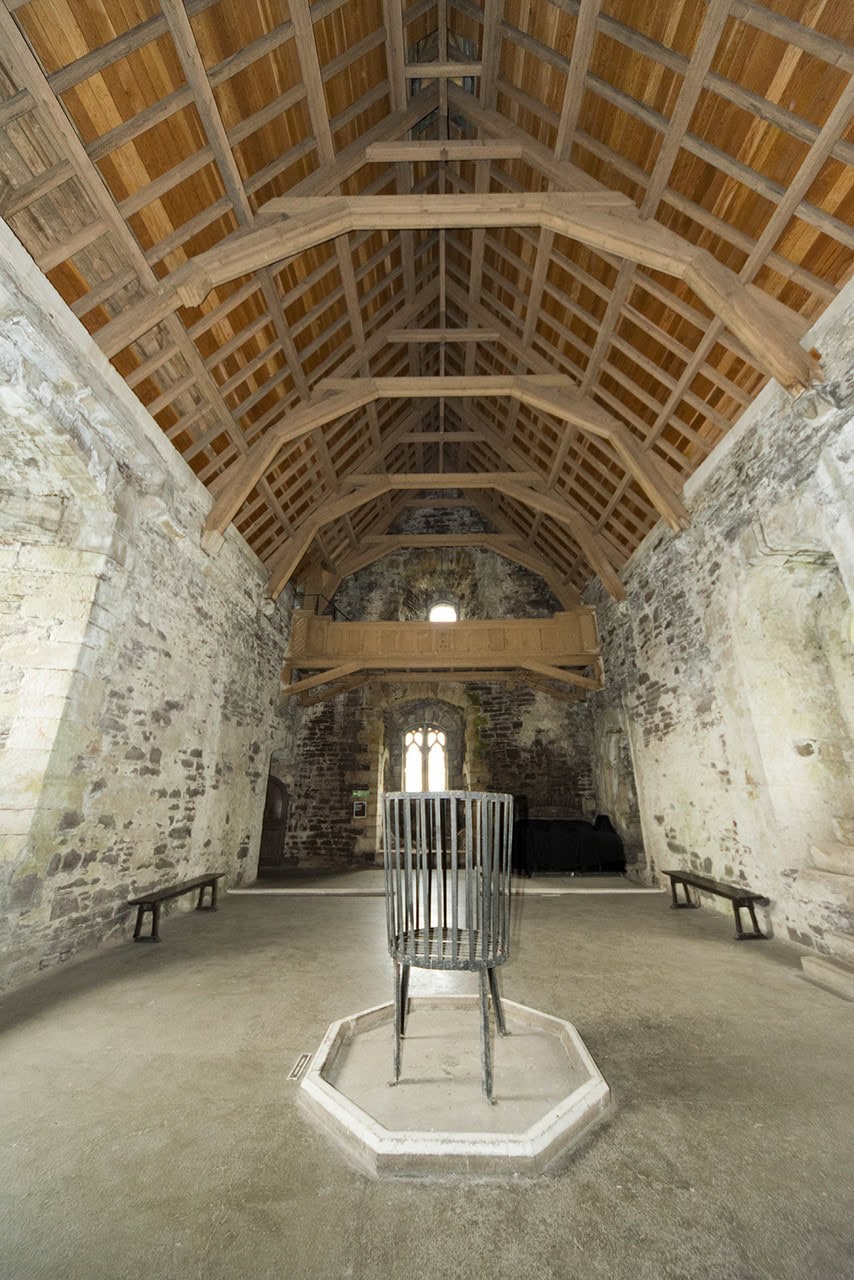
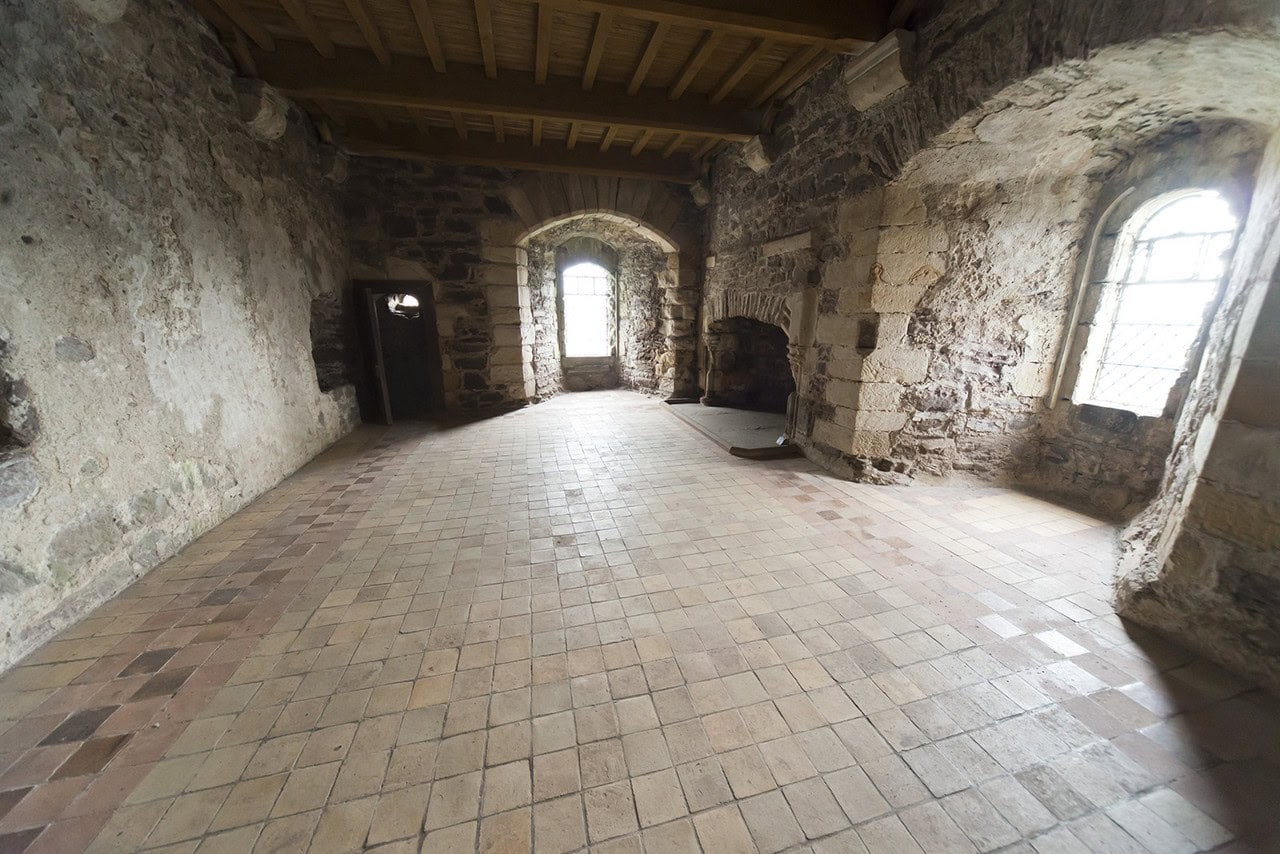
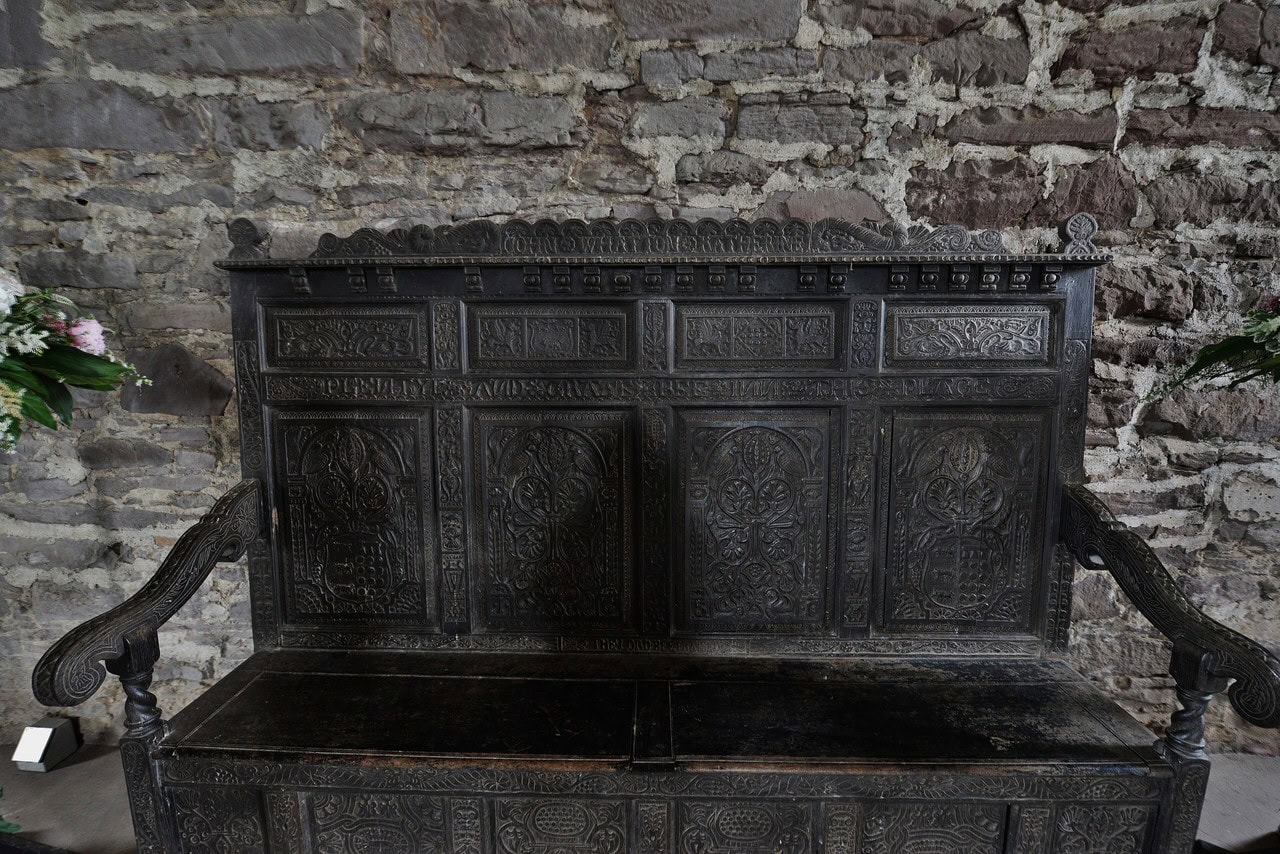
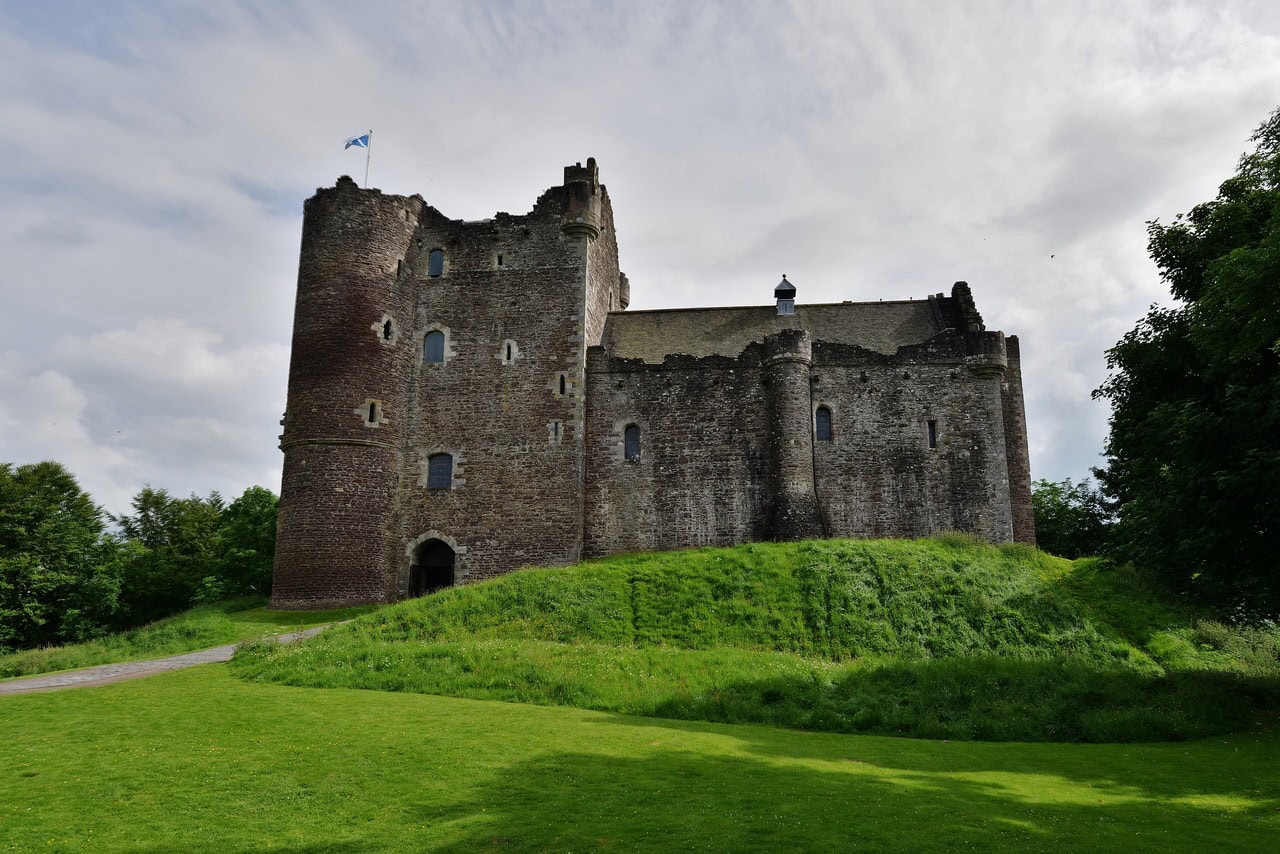
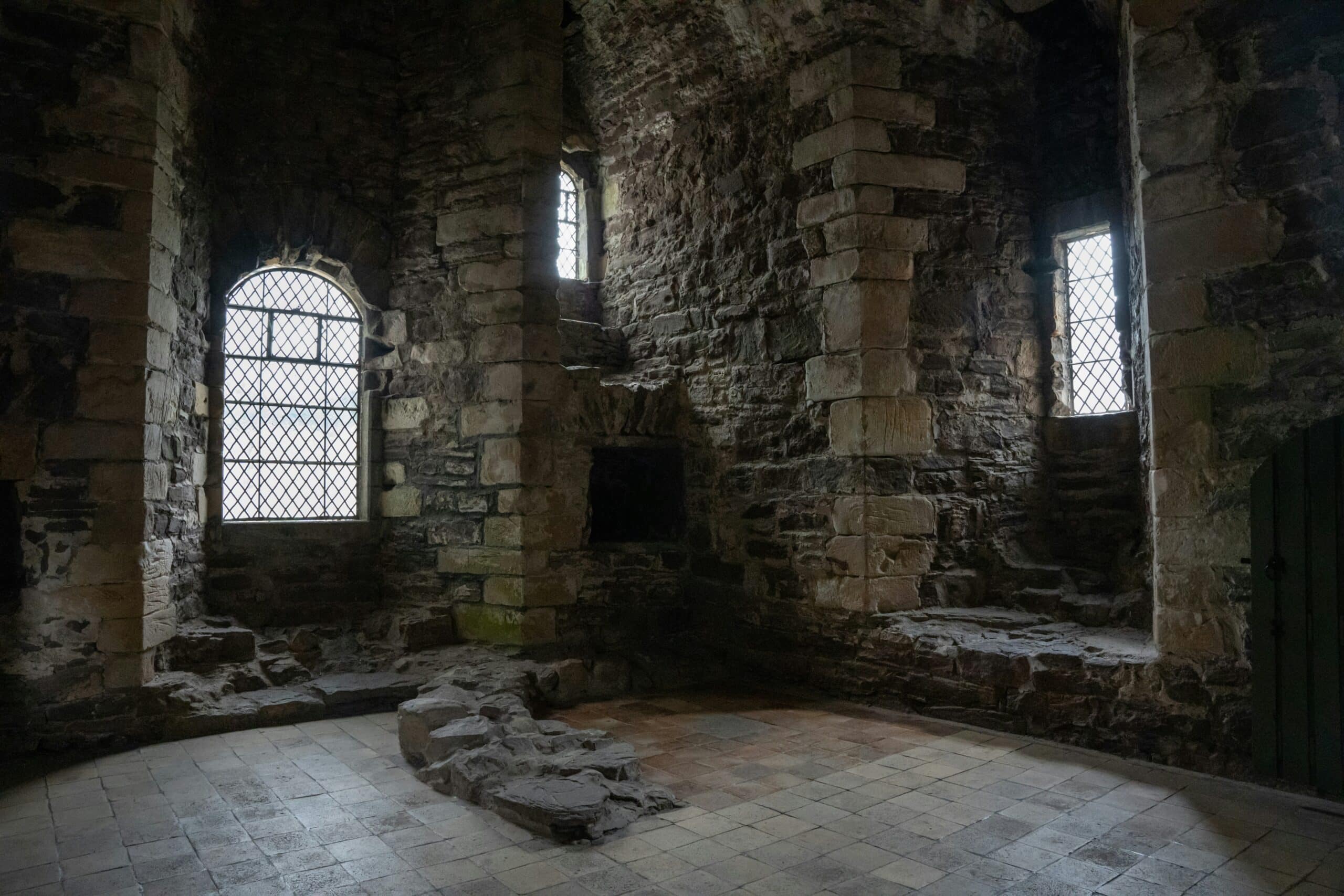
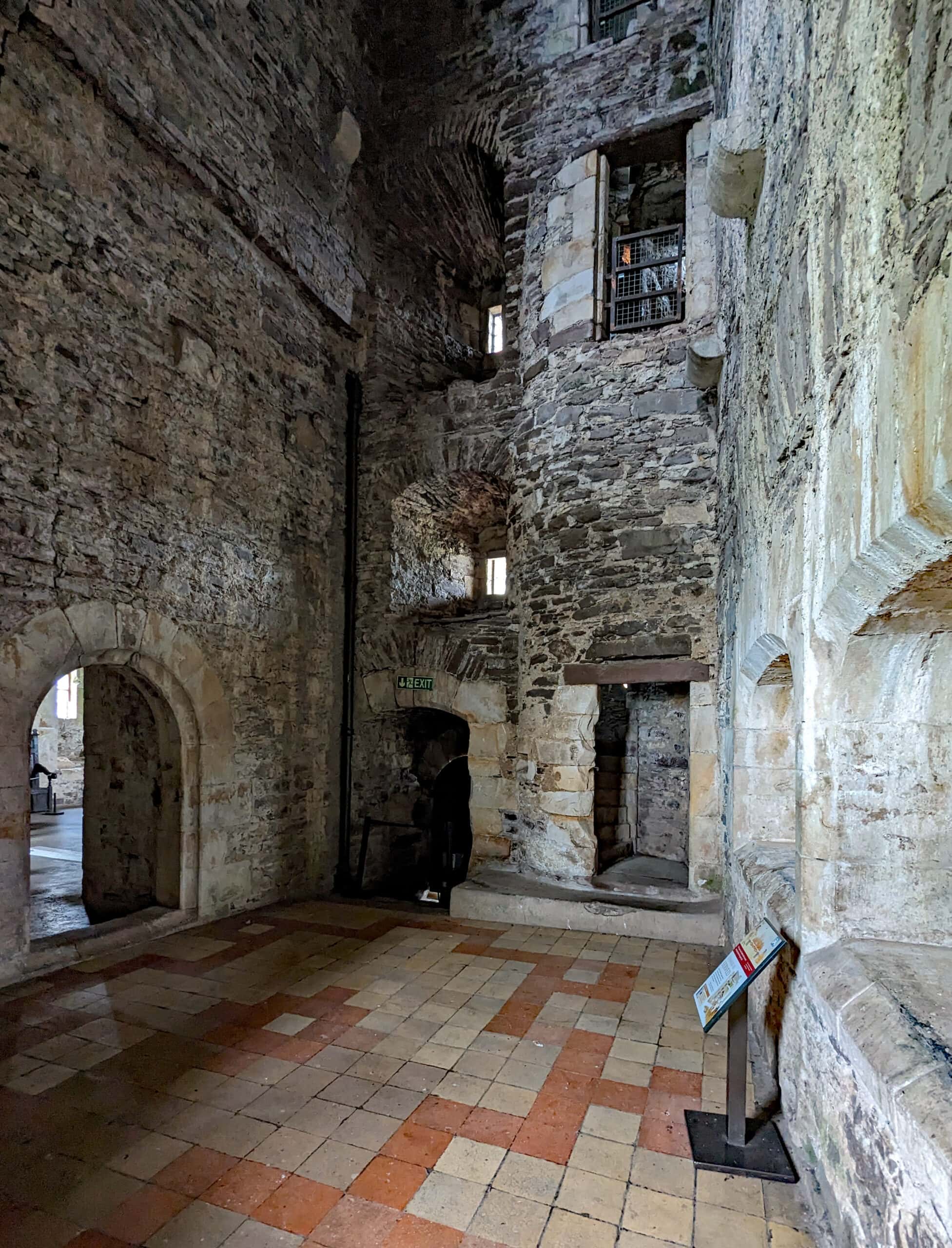
At the heart of the design is a tower-house set over the entrance passage, climbing close to thirty metres. Here the duke kept his own apartments, above a gateway still guarded by its iron yett and drawbar. The layout was deliberate: his lodging could be entered and sealed on its own, independent of the rest of the castle, so that a wary ruler could secure himself against his own garrison as readily as against an enemy at the gate. Within it sits the Lord’s Hall, sometimes called the Duke’s Hall, with a double fireplace, a musicians’ gallery and a carved oak screen, much of it renewed in the Victorian restoration.
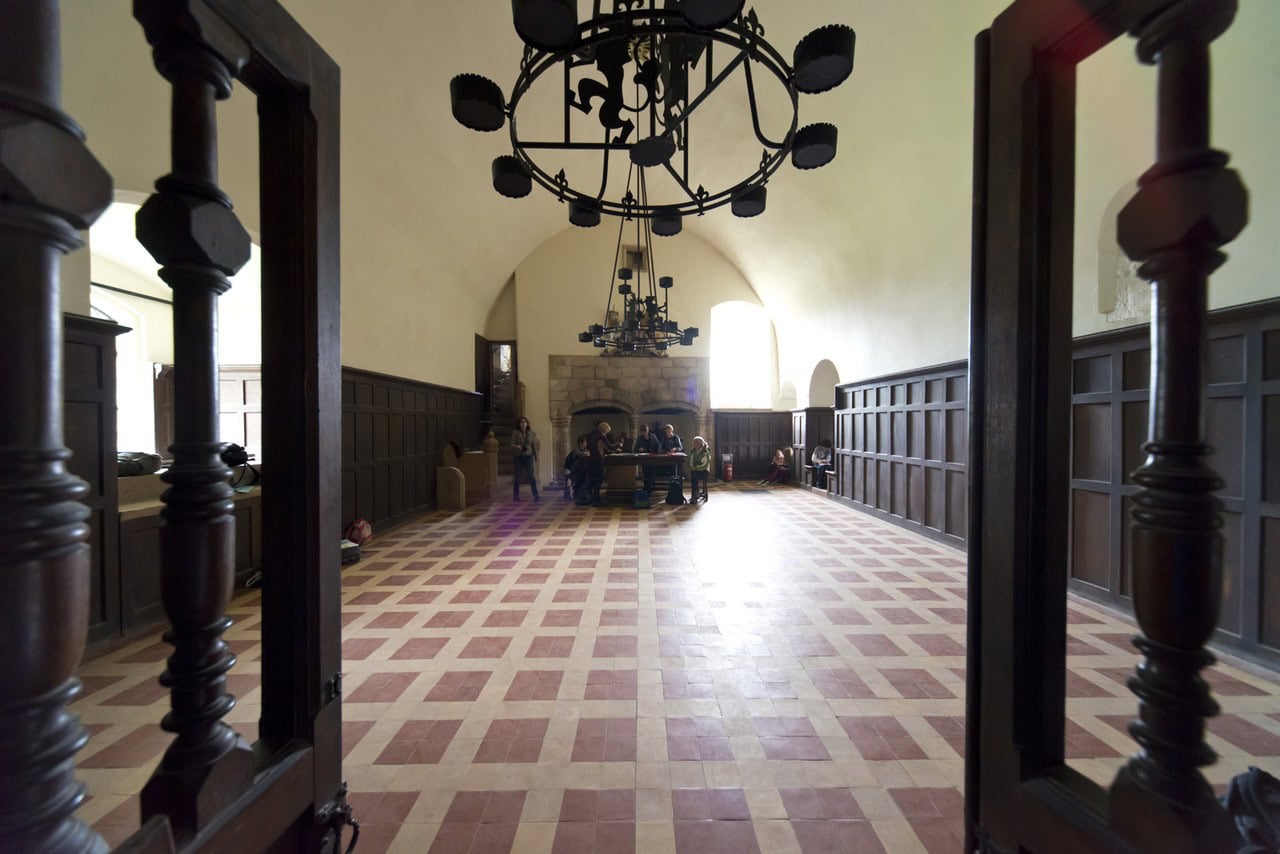
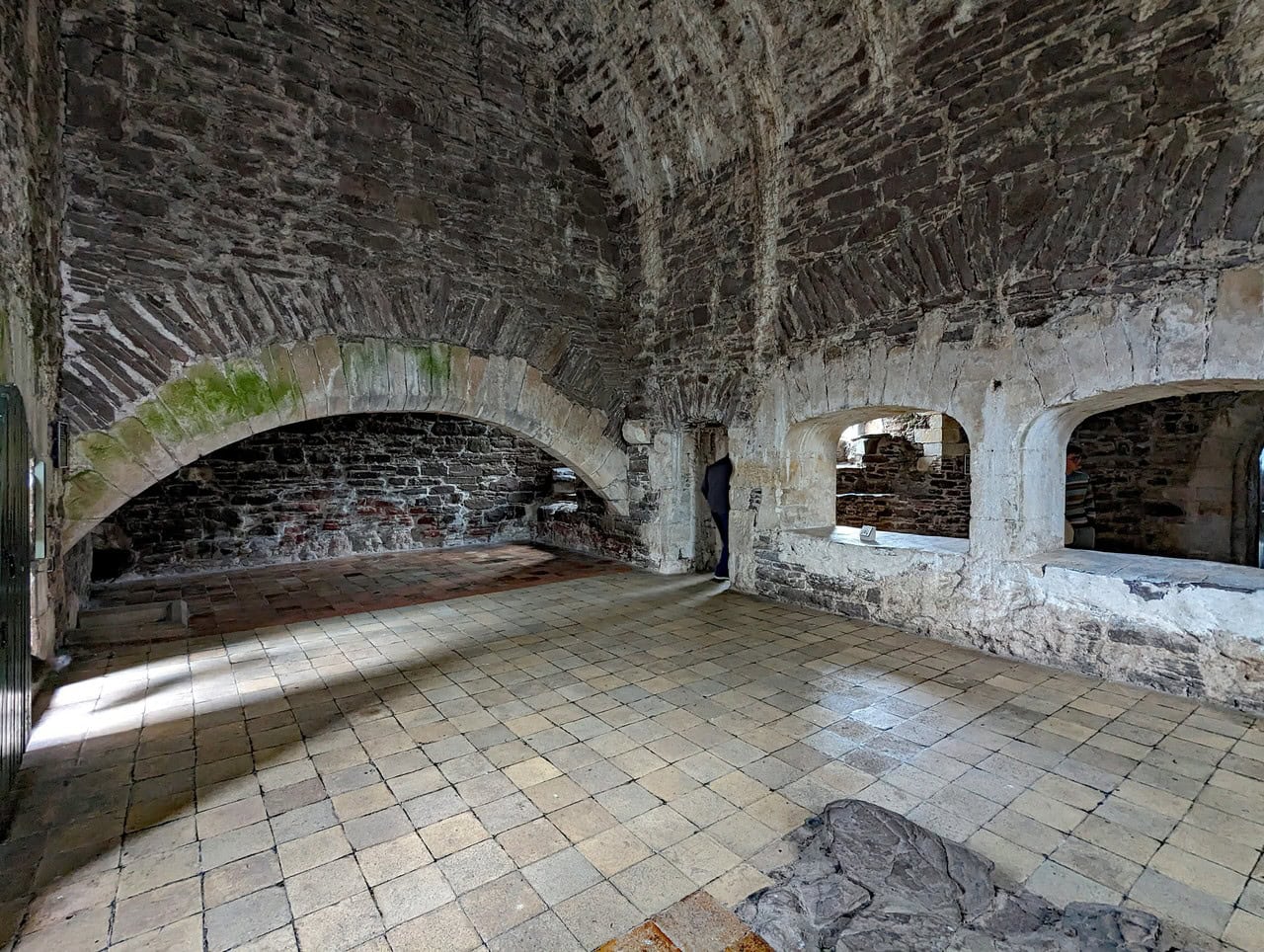
A great hall links this tower-house to a second tower holding the kitchen and two floors of guest chambers. That hall is the showpiece. Cathedral-like, the guidebooks call it, and the word fits: a tall, open space lit down its length, with a minstrels’ gallery at one end and, unusually for so grand a room, a central hearth open to the roof rather than a fireplace in the wall. It is an archaic touch in an otherwise forward-looking house, a deliberate echo of the old halls of state. Next door the kitchen tower is no afterthought either, its cavernous arched fireplace built to feed the crowds of lords and ladies Albany was said to entertain.
Prison, Decline and Restoration
Doune’s royal life faded after 1603, when James VI rode south to claim the English throne and the court that gave such castles their purpose went with him. The stronghold passed down through the Earls of Moray and slipped slowly toward ruin, yet it had one more turn on the historical stage. During the Jacobite rising of 1745 it was held for Bonnie Prince Charlie, and after the Battle of Falkirk in January 1746 it served as a prison for captured government soldiers.
Its most famous prisoners did not stay long. Locked in the rooms above the kitchen, high under the battlements with a drop of some seventy feet below, a group of them knotted their blankets into a rope and climbed down into the night. The escape was the work of the young playwright John Home, who later wrote the account we still read. Among the men held with him was John Witherspoon, a minister who would emigrate to America, lead the college that became Princeton, and sign the Declaration of Independence. Few castle windows can claim a prison break with a longer reach.
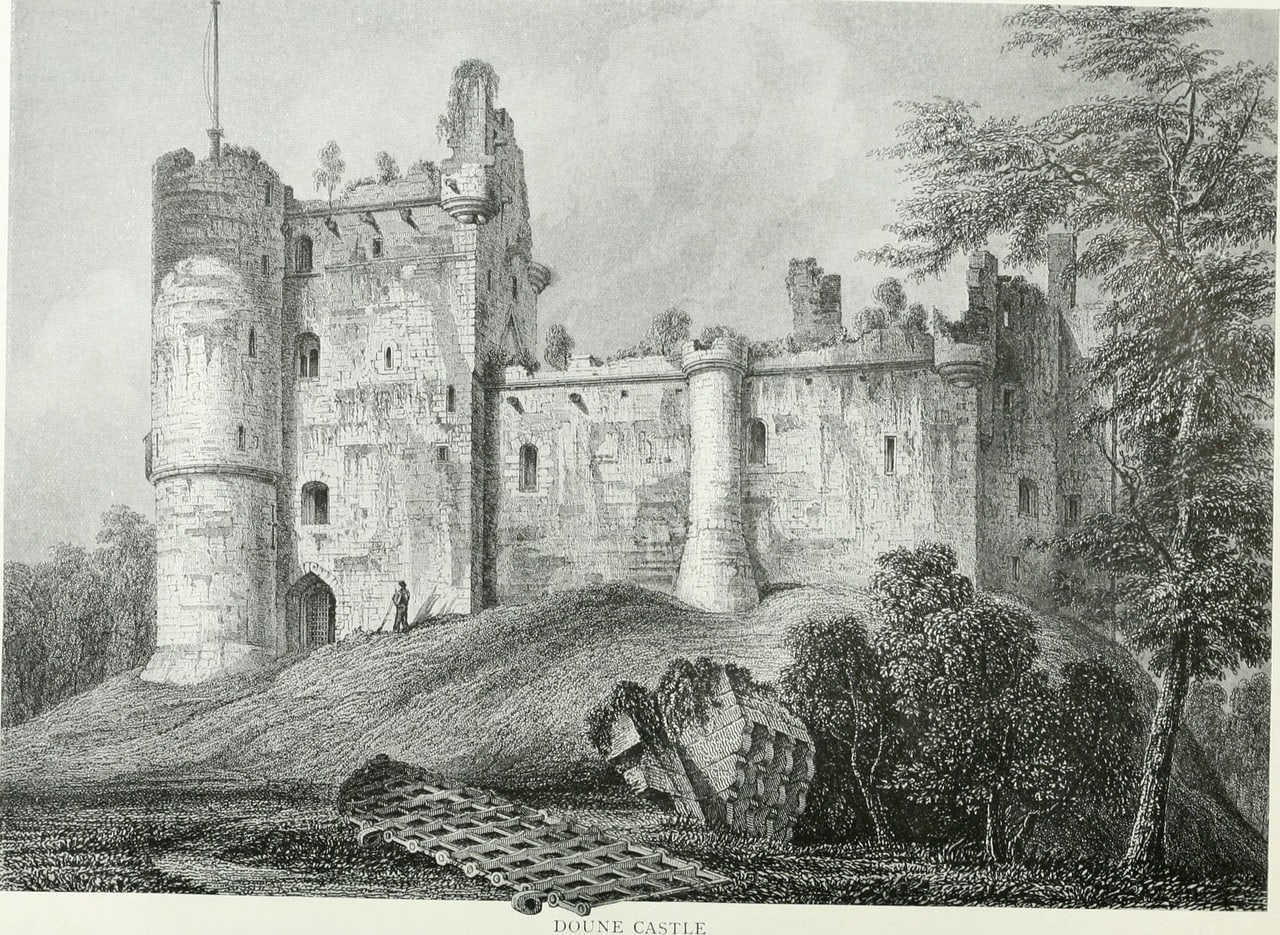
Rescue came in the 1880s. George Stuart, fourteenth Earl of Moray, ordered a thorough restoration, and in 1883 the architect Andrew Kerr re-roofed the towers, laid new floors, and fitted out the Lord’s Hall as it appears today. The work was careful for its era, and it is the reason Doune reads so whole: much of what looks medieval genuinely is, and the Victorian additions sit quietly inside the old walls. In 1984 the twentieth Earl of Moray gave the castle to the nation, and it now stands in the care of Historic Environment Scotland.
Doune on Screen
For all its real history, Doune is famous today for pretending to be other places. Its blend of intact medieval rooms, a photogenic courtyard, and easy reach from the central belt has made it one of Britain’s most filmed castles, and three productions above all have sent visitors flocking to a quiet Stirlingshire village.
The first was comedy. In 1974 the Monty Python team shot much of Monty Python and the Holy Grail here, using a single castle to play many: Camelot, Swamp Castle, and the notorious Castle Anthrax, whose ramparts a French soldier defends with insults and a flying cow. Terry Jones, who co-directed the film and appears in it as Prince Herbert, later came back to narrate the castle’s audio guide, and his commentary, equal parts history and helpless giggling, is still the thing most visitors quote on the way out.
Then came the fantasy. Doune stood in for Winterfell, the Stark family seat, in the original 2009 pilot of Game of Thrones, and the Feast of Winterfell was filmed in its great hall. When the show moved to full production the northern castle was rebuilt in Northern Ireland, but Doune keeps its claim as the place where Winterfell first took shape. A few years on, the castle found an even more devoted following as Castle Leoch, stronghold of Clan MacKenzie, through the first two seasons of Outlander. Sam Heughan, who plays Jamie Fraser, narrates the Outlander half of the audio tour and explains how the crew turned a Stirlingshire ruin into a living Highland keep.
Earlier audiences knew Doune from the screen too. It played the lists and halls of Ivanhoe as far back as the 1952 MGM film, and more recently the fortress appears in Outlaw King, the story of Robert the Bruce. The castle wears all these borrowed identities lightly. Walk in expecting a film set, and you find, pleasantly, a real one.
Visiting Doune Castle
List the 8 castles on this map
- Doune Castle — Stirling, Scotland
- Stirling Castle — Stirling, Scotland
- Edinburgh Castle — City of Edinburgh, Scotland
- Eilean Donan Castle — Highland, Scotland
- Urquhart Castle — Highland, Scotland
- Dunnottar Castle — Aberdeenshire, Scotland
- Kilchurn Castle — Argyll and Bute, Scotland
- Dunrobin Castle — Highland, Scotland
Doune Castle sits on the edge of Doune village, about eight miles north-west of Stirling, where the Ardoch Burn joins the Teith. The nearest railway station is Dunblane, roughly four and a half miles off, with trains from both Glasgow and Edinburgh; the number 59 bus from Stirling stops in the village and takes around half an hour. Drivers should know that parking at the castle itself is very limited, so Historic Environment Scotland steers cars to the free car parks in Doune village, a short walk away. Arrive car-free by train, bus or bike and admission falls by a quarter, which makes the greener way the cheaper one too.
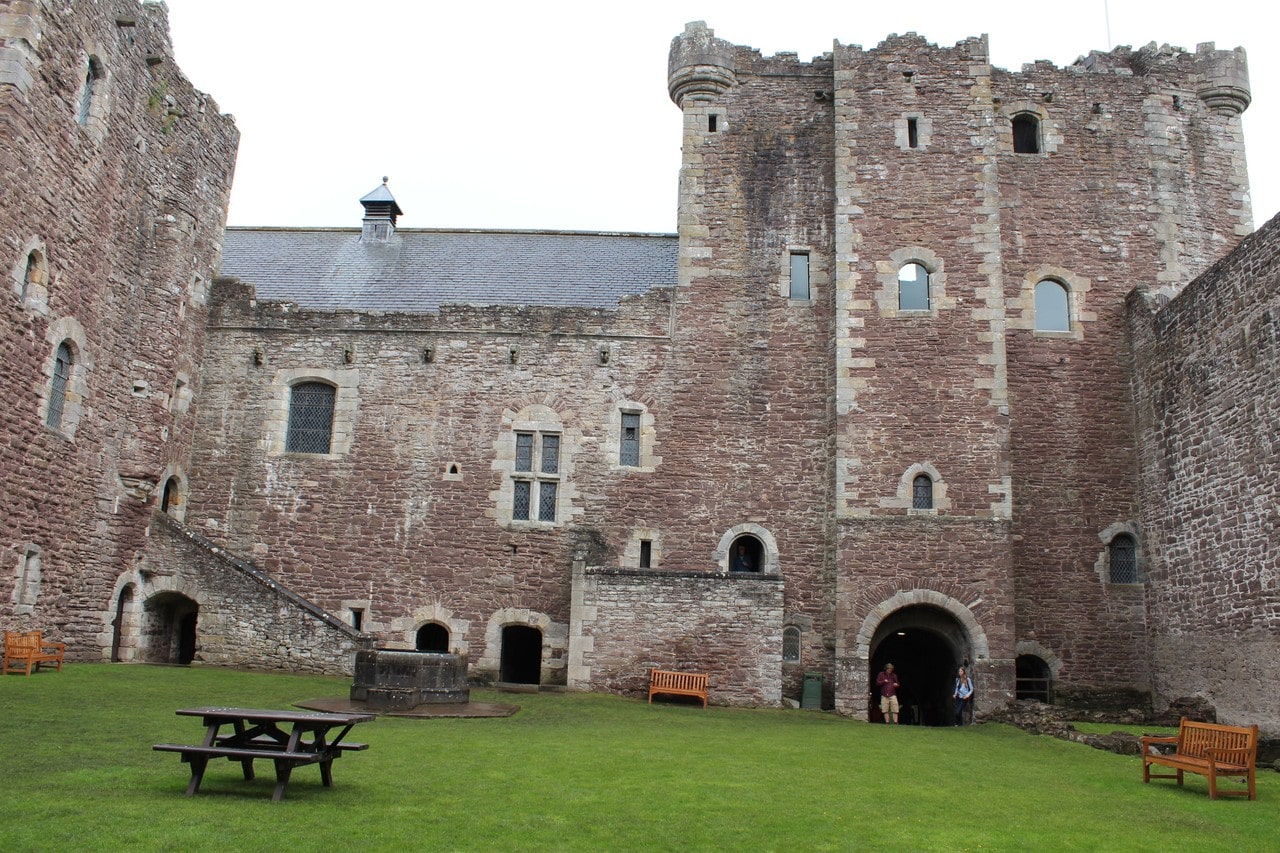
Walk up from the village and the gatehouse tower rises ahead of you, close to thirty metres of red-brown stone over the only way in, and the effect Albany wanted still lands. Inside, allow an hour or more. The audio guide comes with entry and repays the time, and because the thick walls swallow a mobile signal it is best downloaded before you go through the gate. In 2026 adult entry runs about ten to eleven pounds, cheaper online than at the door, with concessions and children less. Opening is daily, and the long summer daylight gives the fullest run of the castle; spring and autumn trade some of that light for thinner crowds at what has become a busy stop for film pilgrims. Prices and times shift from year to year, so confirm the current details on the official Historic Environment Scotland website before setting out.
If you are turning the visit into a night or two in the area, Stirling makes a natural base, and its own castle pairs beautifully with Doune for a medieval weekend. You can compare rates at hotels and guesthouses near Doune and Stirling through Booking.com, and if you would rather have the stories told for you, small-group Game of Thrones and Outlander tours from Edinburgh through GetYourGuide fold Doune into a full day of Scottish screen locations.
Some links on this page are affiliate links, which means StoneKeep Atlas may earn a small commission, at no extra cost to you, if you book through them.
More Views of Doune Castle
Beyond Doune Castle
Doune belongs to a growing family of Scottish castles on StoneKeep Atlas. Its closest companion is Stirling Castle, the royal fortress just down the road, whose great hall and Renaissance palace make the ideal second half of a Doune day out. Further afield, Edinburgh Castle crowns the capital on its volcanic rock, Urquhart Castle keeps watch over the shore of Loch Ness, and Eilean Donan mirrors itself in its Highland loch. If Doune leaves you dreaming of a night behind castle walls, our guide to staying in a Scottish castle gathers the country’s finest castle hotels. For the opposite condition, Kilchurn Castle in Argyll stands roofless at the head of Loch Awe, and at present you cannot go inside it at all, since the interior is closed for conservation and the visit is a walk around the outside. These Scottish castles are gathered in our guide to the castles of Scotland.
Conclusion
Few castles let you stand so completely inside the medieval past as Doune does. It was the seat of a man who ruled Scotland without ever wearing its crown, built in one confident sweep and then frozen, near enough, by his death and the long quiet that followed. That accident of history left a great household we can still walk through whole: the duke’s guarded lodging, the soaring hall with its open hearth, the kitchen raised to feed a court. That same completeness is what the cameras love, and it is why a castle in Stirlingshire has stood in for Camelot, Winterfell, and a Highland clan seat. Come for the films if you like. You will leave remembering the stones.
Principal Sources
- Historic Environment Scotland. “Doune Castle: History” and “History and Stories.” historicenvironment.scot.
- Royal Commission on the Ancient and Historical Monuments of Scotland (Trove, formerly Canmore). Doune Castle record. trove.scot.
- MacGibbon, David, and Thomas Ross. The Castellated and Domestic Architecture of Scotland, vol. i. Edinburgh, 1887-92.
- Fawcett, Richard. Scottish Architecture from the Accession of the Stewarts to the Reformation. Edinburgh University Press, 1994.
- Home, John. The History of the Rebellion in the Year 1745. London, 1802.
Image credits. Hero and additional photography by Johnny Briggs and Winston Tjia (Unsplash License). Exterior, interior and courtyard views by Andrew Shiva, Billy McCrorie, Steve Collis, HARTLEPOOLMARINA2014 and PaulT (Gunther Tschuch), via Wikimedia Commons (CC BY and CC BY-SA). The nineteenth-century engraving is by R. W. Billings, public domain, via the Internet Archive. Evening, sunlit courtyard and entrance-front views by Nataliya Hora, Richard Semik and Dennis Mohr via Adobe Stock. Freely licensed images are resized to fit; otherwise unaltered.