
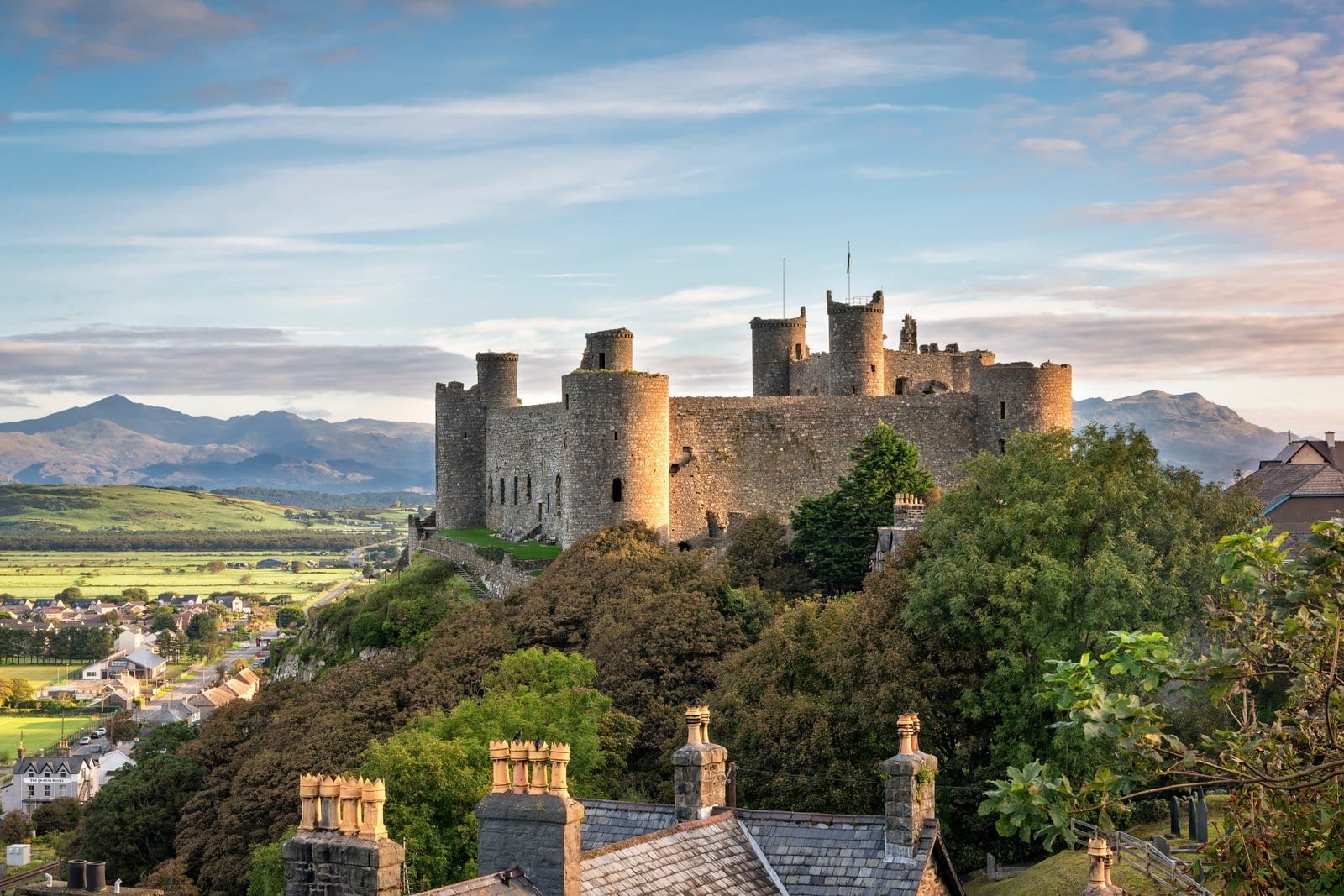
Harlech Castle
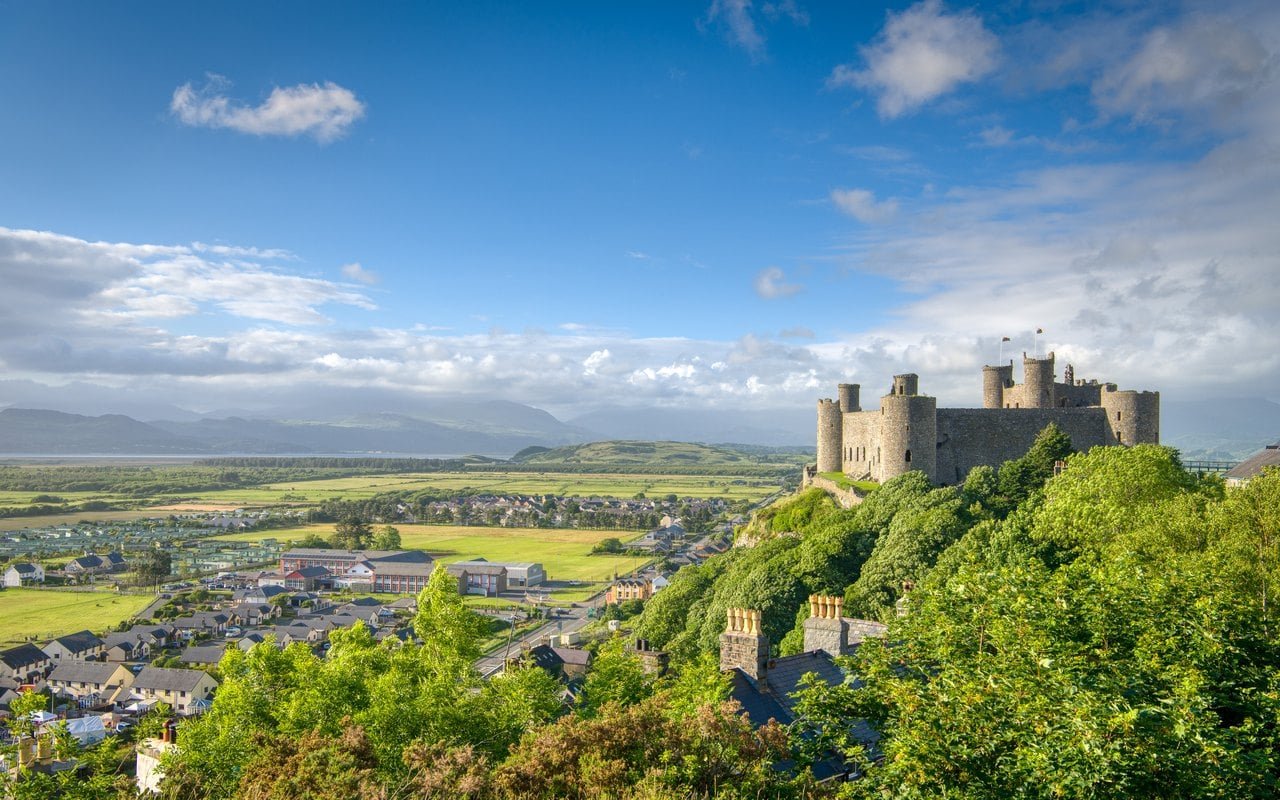
Harlech Castle, Castell Harlech, was begun for Edward I in 1283 on a rock above Tremadog Bay, one of the castles the king raised in north Wales after the death of Llywelyn ap Gruffudd in 1282. Master James of St George, who directed the king’s works in Wales, oversaw the building, and in 1290 Edward made him the castle’s constable. The rock falls away steeply on every side but the east, where the great gatehouse faces the town, and boats could once sail up to a water gate at its foot.
The sea runs through Harlech’s story. In Madog ap Llywelyn’s rising of 1294-95, ships from Ireland kept the castle supplied while the country around it was in revolt. Later wars tested it from the land: Owain Glyndŵr took it and kept his court there until English forces won it back, and it was held for the Lancastrians for seven years, until 1468, and for Charles I until 1647. Today the castle is roofless, its inner curtain, corner towers and gatehouse still standing high behind a rock-cut ditch on the east and south, while the sea that once reached its water gate lies far off beyond the dunes of the Morfa. In the stone, that story has two ends: the gatehouse facing the town, and the walled stair that climbs the rock from the water gate.
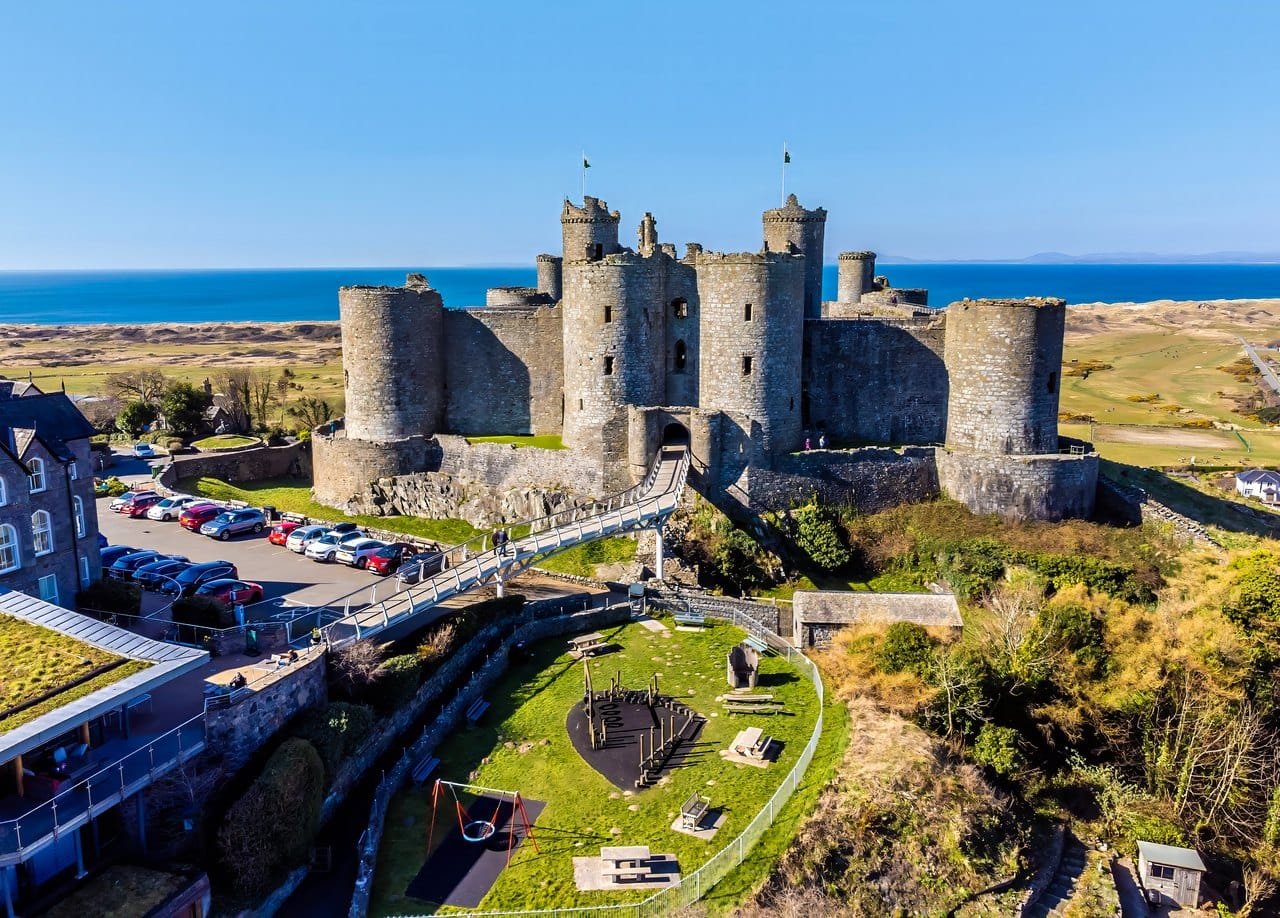
Quick Facts
| Location | Harlech, Gwynedd, Wales, on a rock above Tremadog Bay |
|---|---|
| Built | Begun 1283; main work 1283-1289, with additions about 1295 and in 1323-24 |
| Built for | King Edward I |
| Architectural style | Edwardian military architecture of the late 13th century, with early 14th-century additions |
| Castle type | Concentric (“walls within walls”) |
| Condition | Roofless: inner curtain, corner towers and gatehouse stand high, their floors gone; outer ward walls reduced in height; most inner-ward buildings at footing level |
| Owner / managed by | Crown property; in the care of Cadw |
| Designations | Scheduled monument ME044; Grade I listed building |
| UNESCO status | Part of the Castles and Town Walls of King Edward in Gwynedd World Heritage Site, inscribed in 1986 |
| Nearest town & station | Harlech; Harlech station (Transport for Wales), in the lower town, about 200 m from the castle in a straight line |
| Open to public | Yes, all year (closed 24-26 December and 1 January) |
| Official website | Cadw: Harlech Castle |
History
Begun in 1283 for Edward I
Harlech was begun in 1283, the year Edward I also began Conwy and Caernarfon. All three belong to Edward I’s castle-building in Wales after the fall of Gwynedd, and Arnold Taylor’s guidebook for Cadw, the Welsh Government’s historic environment service, describes Harlech as “one of a series of castles established in north Wales by King Edward I to secure the newly conquered principality.” The guidebook gives May 1283 for the start. The History of the King’s Works is more cautious: “The building works were probably begun early in June 1283.”
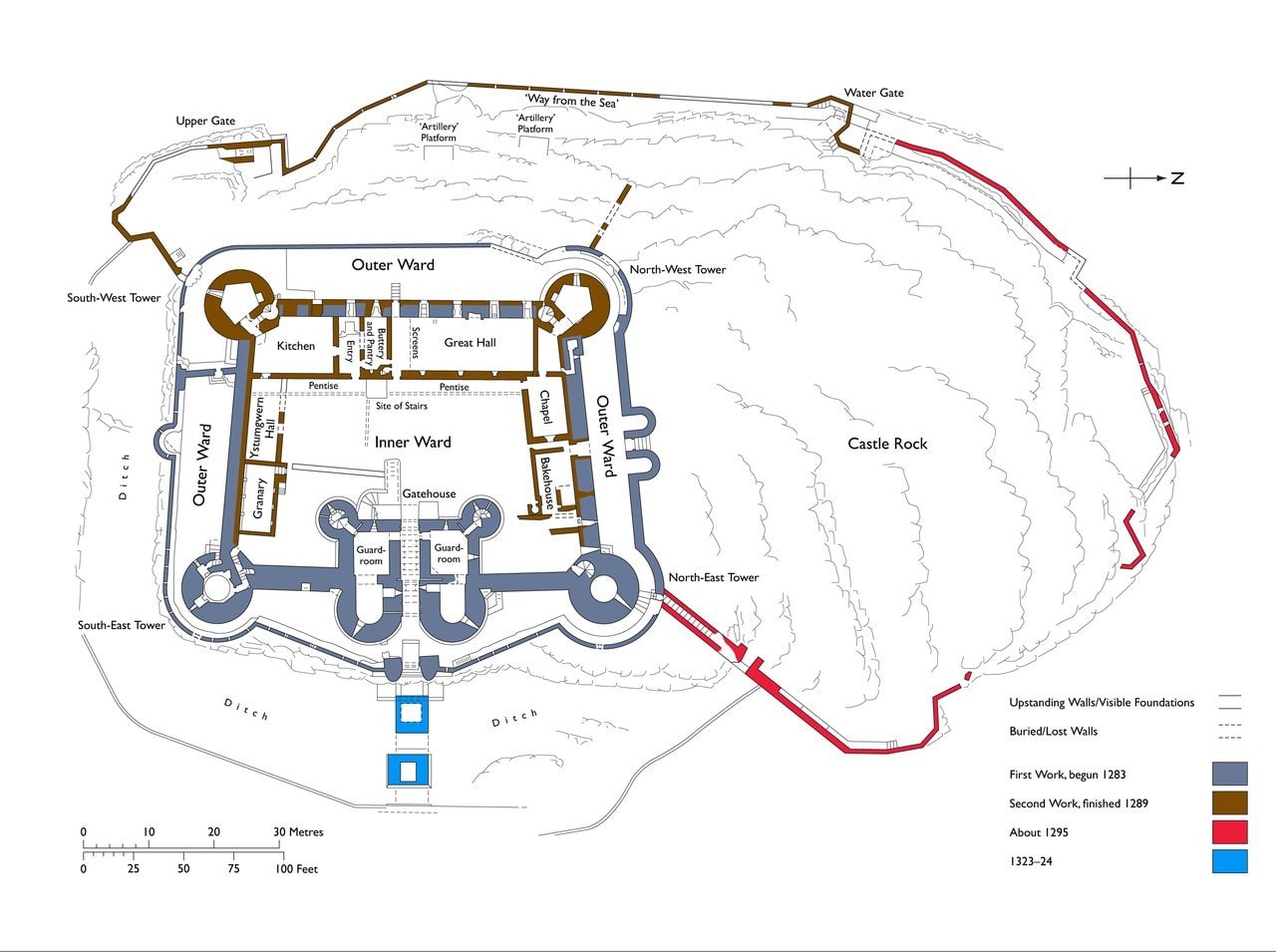
The main work was finished by 1289, Cadw’s listing record says, with further work about 1295 and in 1323-24. The phased plan on Cadw’s website marks the castle’s walls by date: the first work, begun in 1283; the second, finished in 1289; and additions of about 1295, 1305-06, 1323-24 and about 1600. On that plan the 1305-06 work is a wall on the courtyard side of the range it labels Ystumgwern Hall, against the south curtain, and the work of about 1600 is the lodging beside the chapel, on the north side of the inner ward. Cadw’s listing record puts the overall cost at around £9,500.
While the walls rose, the castle needed a keeper. Hugh de Wlonkeslowe was given its custody in October 1284, on condition that he kept thirty fencible men in garrison there, ten of them crossbowmen. Sir John de Bonvillars was appointed constable in 1285, at an annual fee of £149, and held the post until he died at the siege of Dryslwyn in August 1287. His widow, Agnes, then held the castle; Taylor writes that she “assumed the constable’s responsibilities at Harlech …” In July 1290 Edward I made Master James constable of Harlech, at 100 marks a year, and he held the post from 1290 to 1293. The grant reckoned the wages James already had into that sum, and the same day Agnes was ordered to deliver the castle to him. For those years, Taylor writes, James held the constableship “in conjunction with his post as master of the works.”
Madog ap Llywelyn’s Rising, 1294-1295
Harlech’s first test came with the rising Madog ap Llywelyn led across Wales. Robert de Staundon, justice of North Wales, who held the castle from 1293, was in charge when it began. John E. Morris, working from the Exchequer accounts, wrote that how far Harlech was in danger when the rising first broke out, in the autumn of 1294, “does not appear.” What does appear is isolation. During the rising of 1294-95, Harlech was cut off by land and kept supplied by sea from Ireland. In the spring of 1295 a ship and three barges, freighted there with provisions and crossbow ammunition, discharged their cargo at Harlech on 31 March and again on 6 April. Morris puts it plainly: “Robert de Staundon had been quite cut off from England except by sea.”
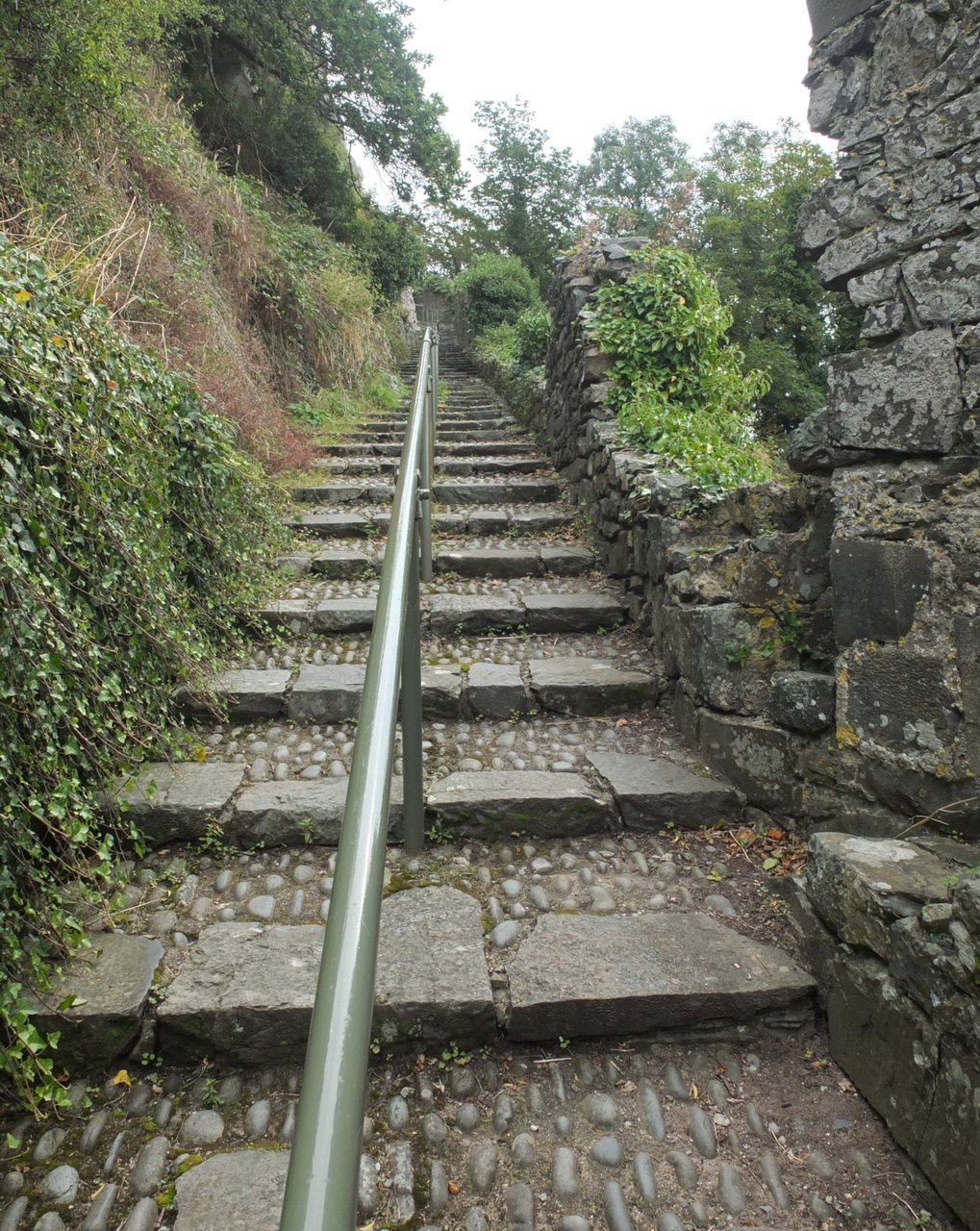
Cadw’s place page credits the Way from the Sea, the walled stair that climbs the rock from the water gate, with the castle’s survival: “This path of 108 steps rising steeply up the rock face allowed the besieged defenders to be fed and watered by ship.” That is Cadw’s reading. Morris records the ships but not where they unloaded, and Taylor’s guidebook calls the water gate “the point at which the castle could be entered when approached by sea,” adding that “supplies from ships were particularly important on the occasions the castle was besieged on its landward side”; neither says in so many words that the 1295 cargo came up the stair. By then the Way already existed: The History of the King’s Works records that it had been built by taskwork, ad tascham, by Ralf of Ocle before 1290, and Taylor’s timeline counts the “way from the sea” in the second building phase, completed in 1289.
The same timeline links the rising to Beaumaris: “1295 Beaumaris Castle … begun in response to a revolt led by Madog ap Llywelyn.” At Harlech, when John de Havering made a register of the garrisons in the summer of 1295, after the fighting, Robert de Staundon had thirty-seven men. As soon as the war was over, Taylor adds, steps were taken against the one area of potential weakness that remained: “Orders were now given for the rock to be enclosed with a wall of stone and lime, and a new tower was built over or near the water gate.”
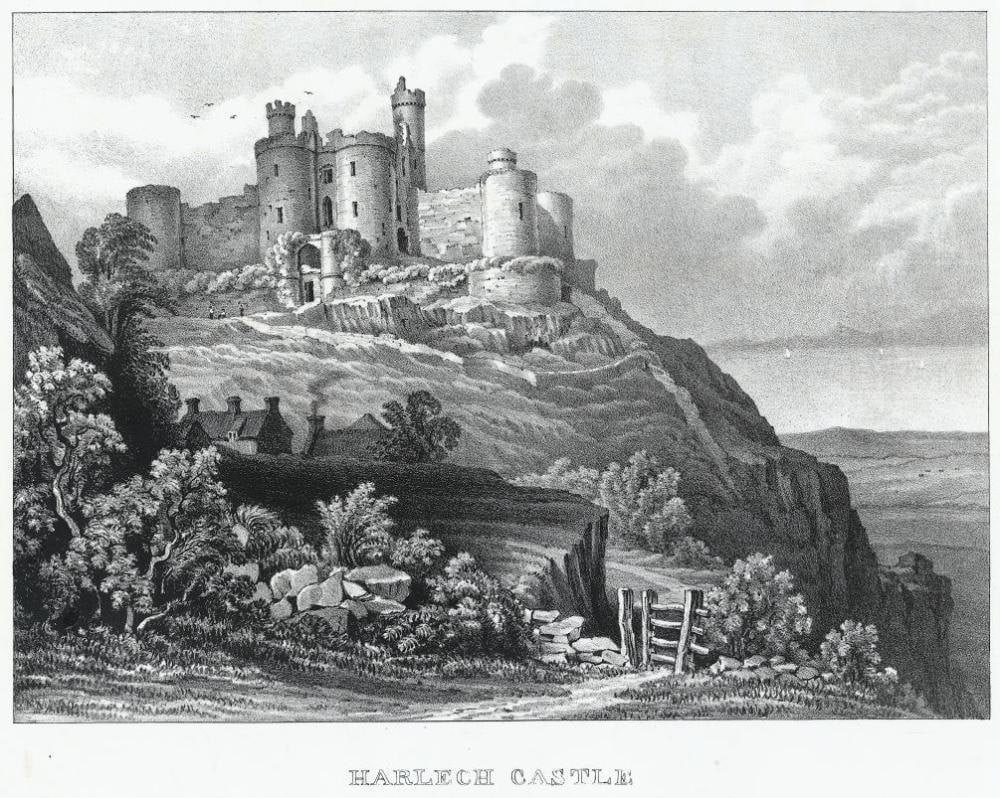
Owain Glyndŵr’s Harlech, 1404-1409
Before Glyndŵr held it, his rising had already reached the castle: an attack on Harlech in December 1401, the 1927 official guide records, “was only averted by the despatch of 100 men at arms and 400 archers from Chester to its relief.” Owain Glyndŵr took Harlech in 1404, after a long siege. Letters written in early 1404, as J. H. Wylie read them, show how close the garrison had come to giving up: all but seven of its men “agreed to give up the castle and receive a certain sum of money, and a day was fixed for the surrender to be carried out.” Cadw’s scheduling record says that Harlech then served as “his residence and court from 1404 until 1409,” and Taylor’s guidebook adds that his family lived there too. With Machynlleth, Taylor writes, it was one of the two places to which Glyndŵr summoned parliaments of his supporters. Wylie found him arranging to call one at Harlech for the summer of 1405, with four representatives summoned from every commote over which he had established his influence. In Taylor’s words, “There is a tradition that at one of these [parliaments], and Harlech is perhaps the more likely, he was formally crowned as prince of Wales in the presence of envoys from Scotland, France and Spain.” Harlech fills five rows of our ledger of how medieval castles fell, from 1295 to 1468.
In 1408-09 Harlech was again under siege. English forces under Prince Henry, the future Henry V, retook the castle in early 1409; Wylie names Gilbert, Lord Talbot, and his brother John as leading the final attack. He also records that large sums of money had been sent to the prince at Hereford in the summer of 1408, where stores of arrows, sulfur and saltpeter were gathered for the final sieges of Harlech and Aberystwyth. Guns did part of the work. Taylor’s guidebook notes: “One of the massive cannon employed by the attacking English force bore the name ‘the king’s daughter’; we have a reference to it bursting during the siege.” Taylor gives hunger an equal share in its fall: “Harlech appears to have fallen in early February 1409, as much due to a lack of supplies and exhaustion as to the effect of cannon balls.” Sir Edmund Mortimer, who had married Glyndŵr’s daughter, died during the siege, and Glyndŵr’s wife, his daughter and her four children were taken.
The Wars of the Roses and the Siege of 1468
In the summer of 1460 Harlech gave shelter to Queen Margaret of Anjou, the wife of Henry VI, and from 1461 it was held for the Lancastrians by a Welsh constable, Dafydd ab Ieuan ab Einion. For years nothing much was done about it. The Dictionary of Welsh Biography observes that “Dafydd was repeatedly called upon to surrender, though no active steps were taken to enforce the summons.” The chronicler John Warkworth recorded the castle’s place in the new reign in one sentence: “And so Kynge Edward was possessed of alle Englonde, excepte a castelle in Northe Wales called Harlake, whiche Sere Richard Tunstall kepte, the qwhiche was gotene afterwarde by the Lorde Harberde.”
The end came in 1468. Soon after midsummer, according to the annals attributed to William Worcester, Jasper Tudor landed in north Wales near Harlech with three French ships. In July 1468 Lord Herbert was commissioned to reduce Harlech, and Edward IV empowered him to raise a force variously estimated, Cadw’s guidebook says, at between 7,000 and 10,000 men. As Herbert entered north Wales, the annals add, his brother defeated Jasper in the field and forced him to flee. Harlech surrendered on 14 August 1468, after a siege of less than a month; fifty prisoners were taken, and the annals name Sir Richard Tunstall first among them. Seven years of holding out had ended in weeks. Herbert was created Earl of Pembroke on 8 September 1468, a reward the annals tie to the capture.
Cadw’s guidebook says the 1468 siege is “traditionally supposed” to have given rise to the song Men of Harlech. Cadw’s own history of the castle offers an alternative, asking whether the Welsh defenders of 1408-09 might be the true Men of Harlech.
The Civil War, 1644-1647
Harlech stayed in use after the Wars of the Roses. Cadw’s World Heritage Site management plan records that “Harlech continued in use during the sixteenth century as the home of the Merioneth Assizes, which no doubt resulted in the continued maintenance of the castle.” From the spring of 1644 it was held for the king by its constable, Colonel William Owen of Brogyntyn, whom the Dictionary of Welsh Biography makes governor from 16 May 1644. Taylor’s guidebook is careful about what followed: “The castle seems to have been under siege by a parliamentary force from late June 1646.”
By the following spring it was the last castle in England and Wales to hold out for the king. Cadw’s scheduling record calls it “the last mainland British castle to hold out for King Charles I …” Terms were signed on 13 March 1647. The articles fixed the handover to Major-General Thomas Mytton for Monday the fifteenth, and on Tuesday the sixteenth, in the account J. R. Phillips prints, the governor delivered the keys of the castle to Mytton. The garrison list names sixteen officers and gentlemen, some sick or already dead, and twenty-eight common soldiers. Taylor writes that the parliamentarians “are said to have rendered the castle untenable and to have destroyed the two gatehouse staircases (both renewed in modern times).”
Ruin and State Care
An order to demolish the castle was never carried out, and Harlech stayed with the Crown. Until 1914 responsibility for its care, as part of the Merioneth Crown Estate, lay with the Office of Woods and Forests, which Taylor credits with “many useful repairs”; in 1914 care passed to the Office of Works, and in 1969 ancient monuments in Wales became the responsibility of the Welsh Office. The walls found a new use in the Second World War. No. 10 (Inter-Allied) Commando had its headquarters in the town for a time, and the management plan records that the unit trained by “scaling the walls of Harlech Castle in the dark.” Harlech is now part of the Castles and Town Walls of King Edward in Gwynedd World Heritage Site, and UNESCO’s listing notes that it lies within the Snowdonia National Park.
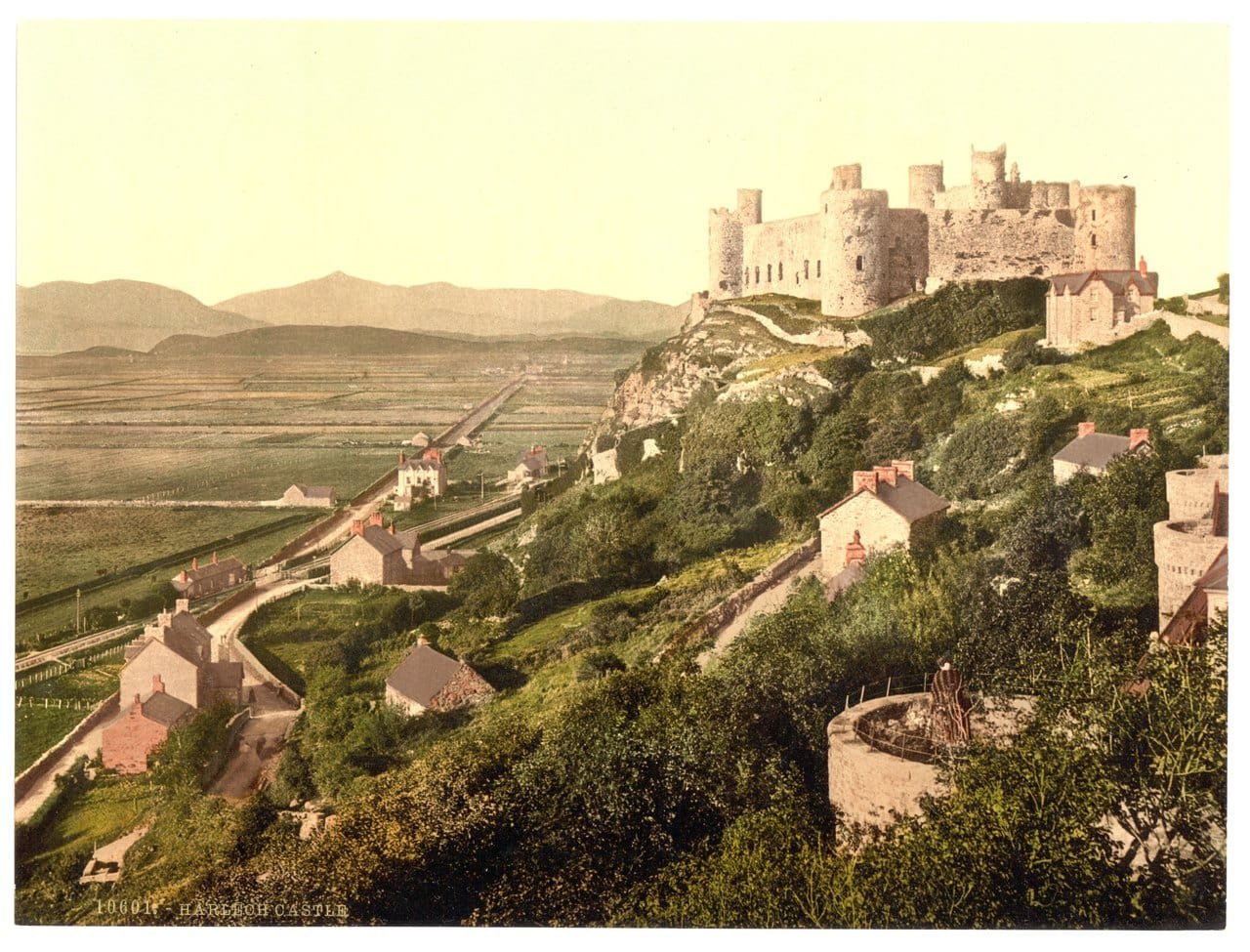
Architecture
The Plan on the Rock
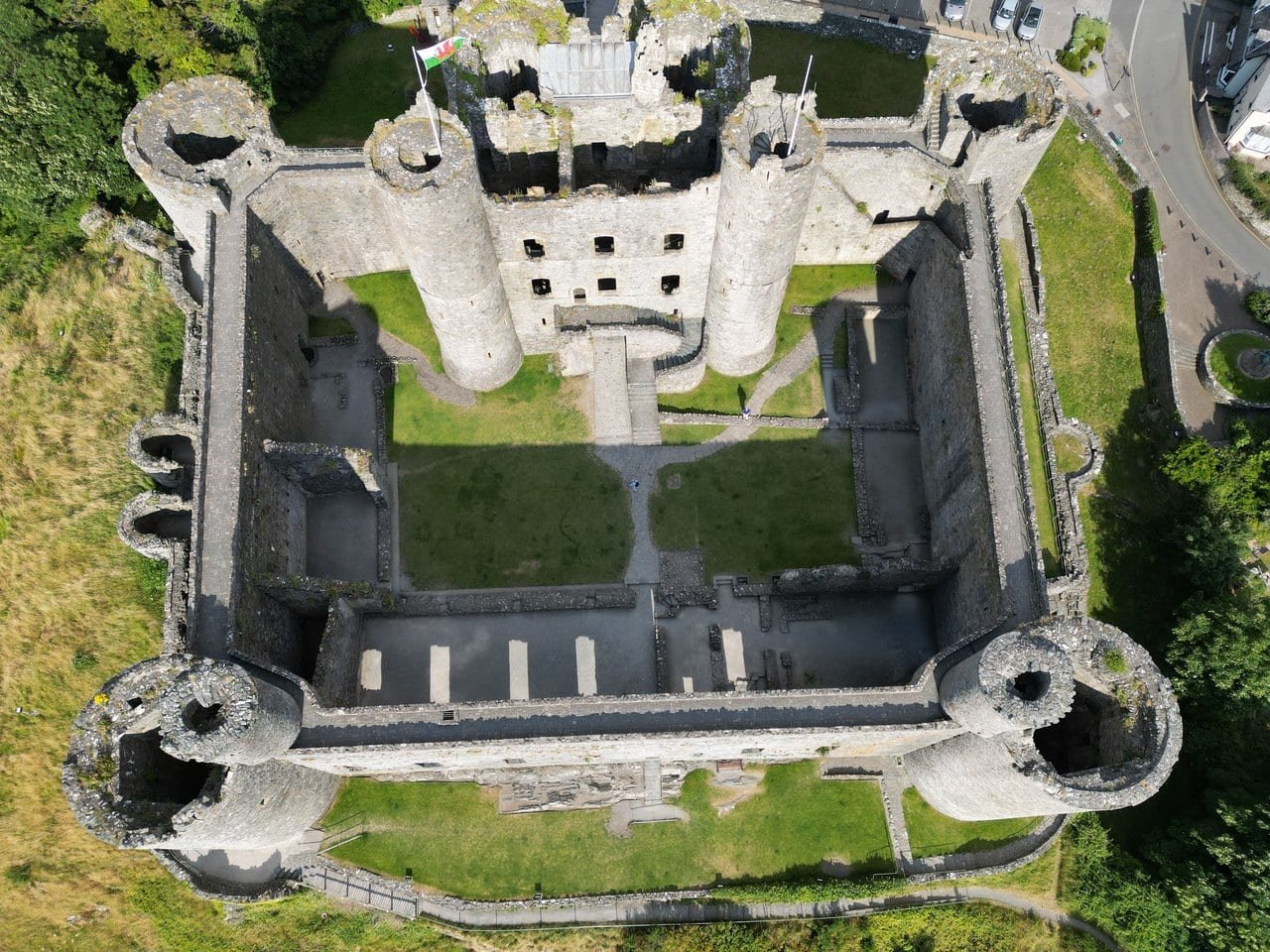
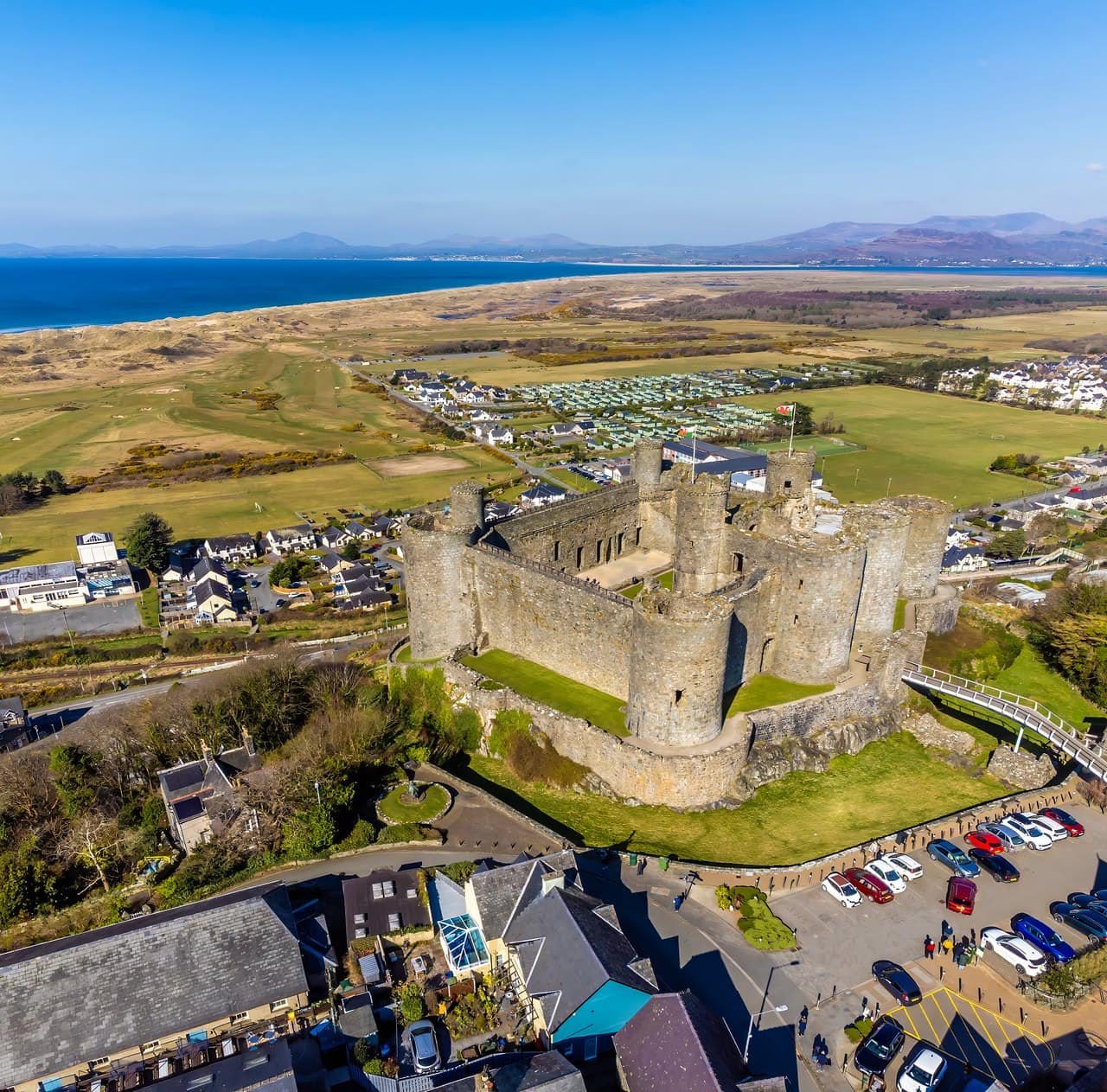
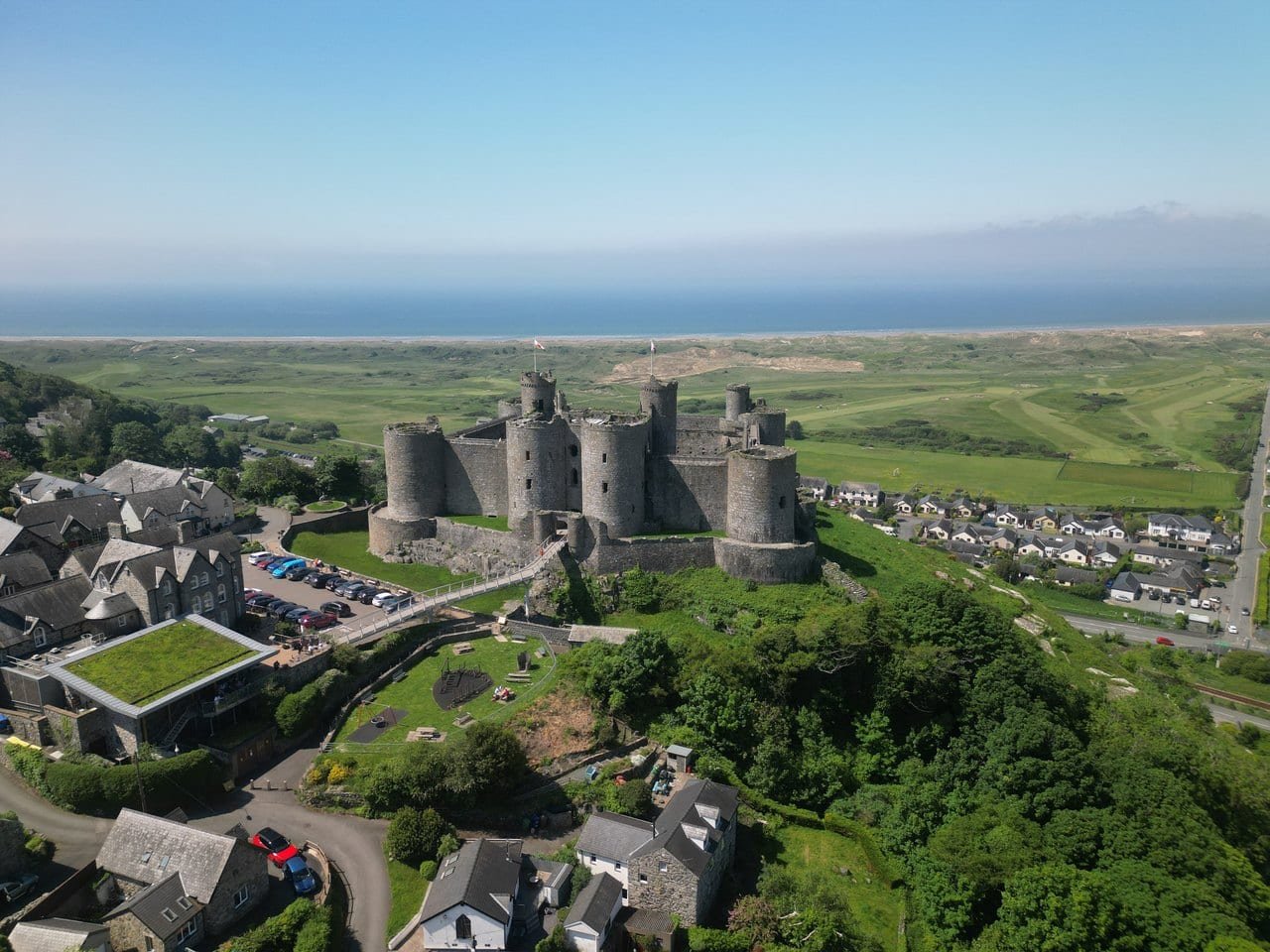
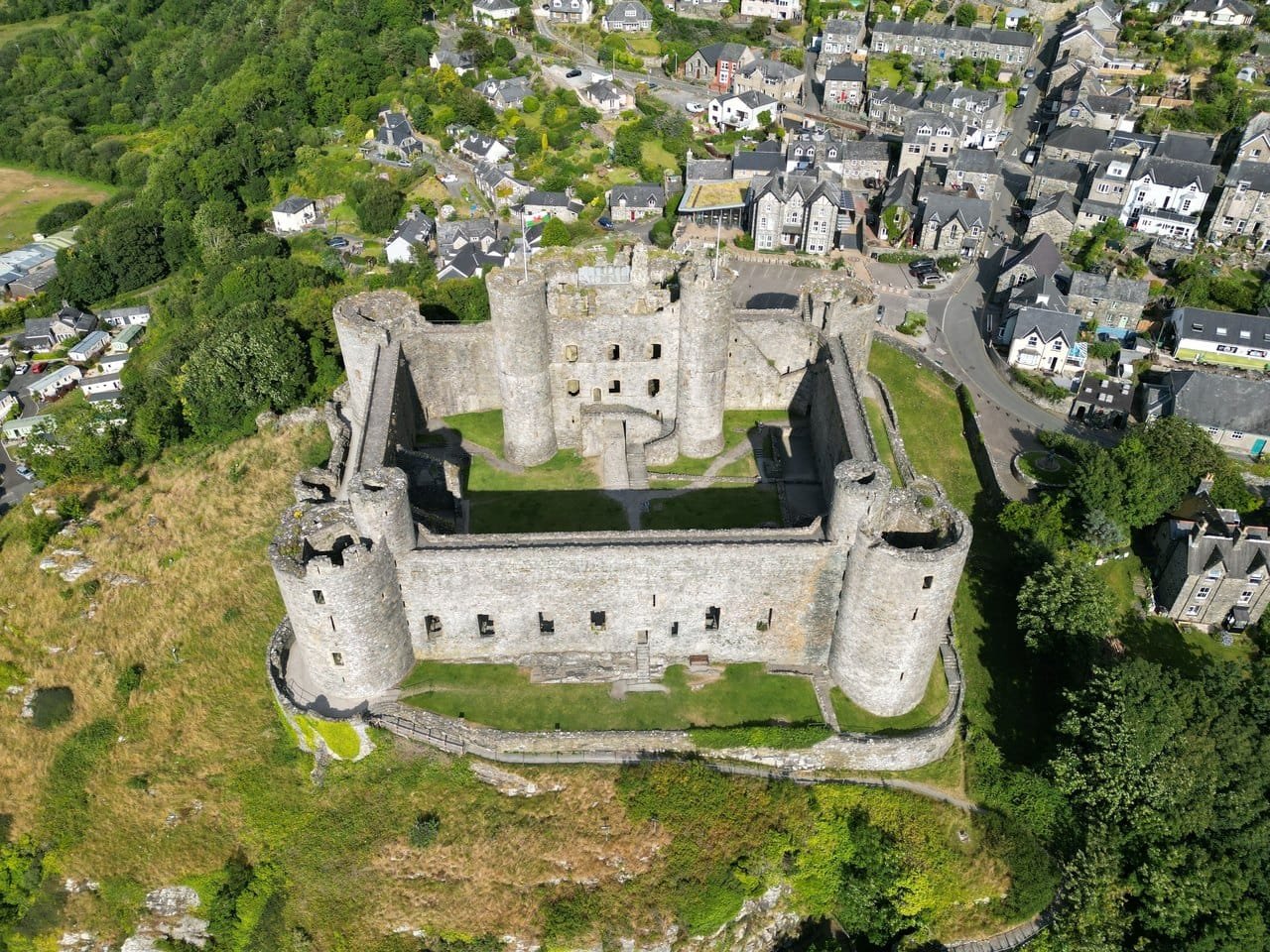
Cadw’s place page sums the plan up in one sentence: “Its classic ‘walls within walls’ design makes the most of daunting natural defences.” The scheduling record calls the castle “of concentric type,” and on this rock that means one line of walls set inside another. A roughly rectangular, high-walled inner ward sits within a lower-walled outer ward, which the record calls “a narrow secondary line of defence.” The inner curtain wall and the gatehouse still stand high, while the walls of the outer ward, the record says, “have been reduced in height.”
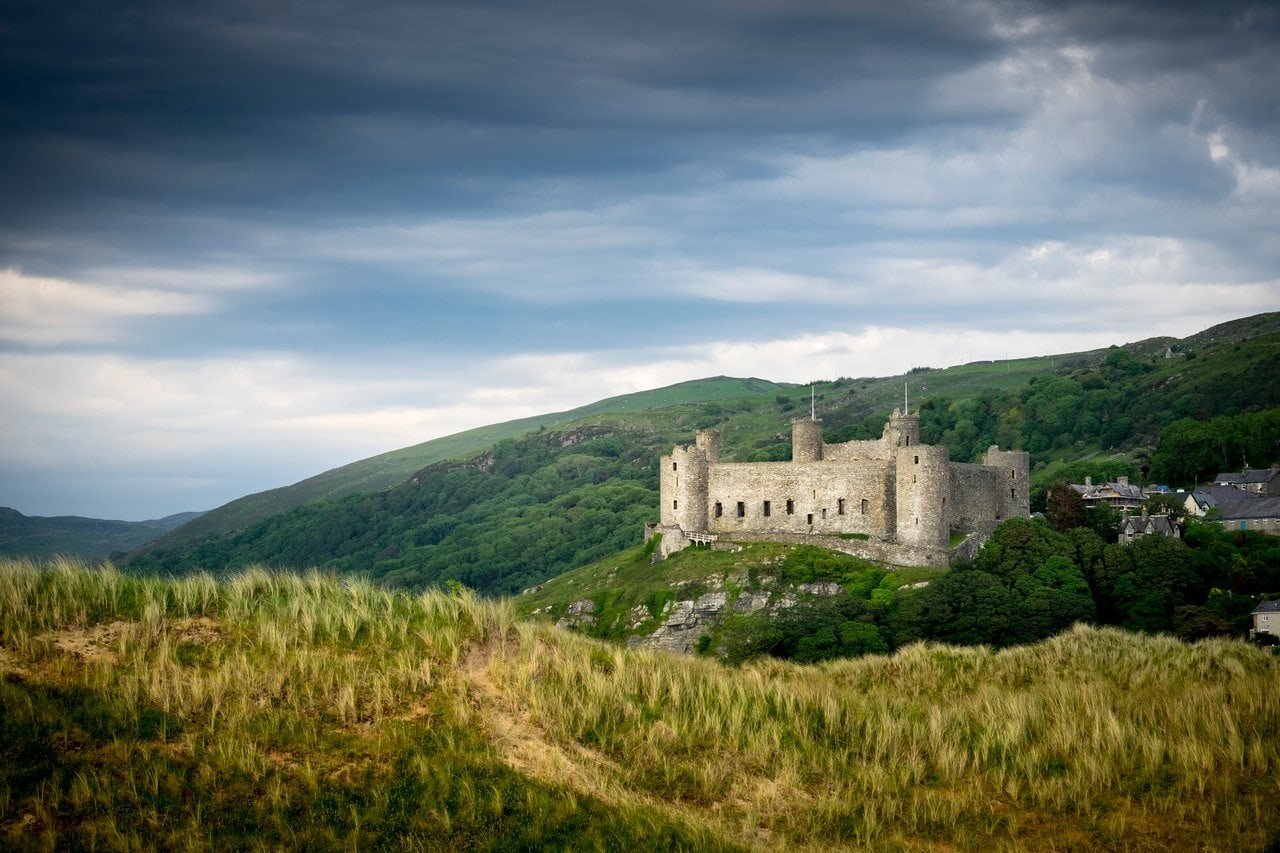
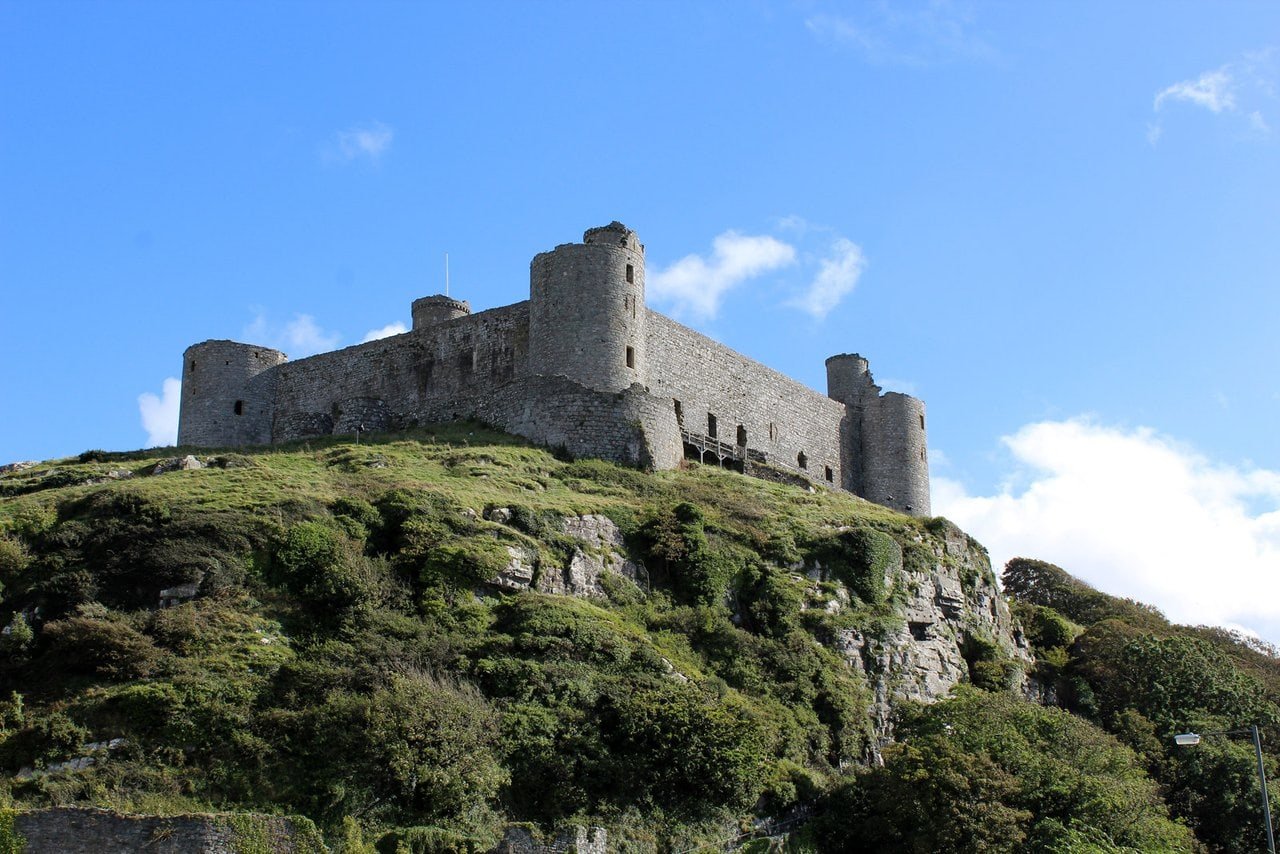
The rock supplies the rest. Taylor’s guidebook describes “a bold and rugged promontory, rising barely 200 feet (60m) above sea level,” falling away steeply on all sides except the east, the side of the town and the gatehouse. The scheduling record says the walls were built of “local Rhinog Grit and yellow sandstone.”
The Great Gatehouse
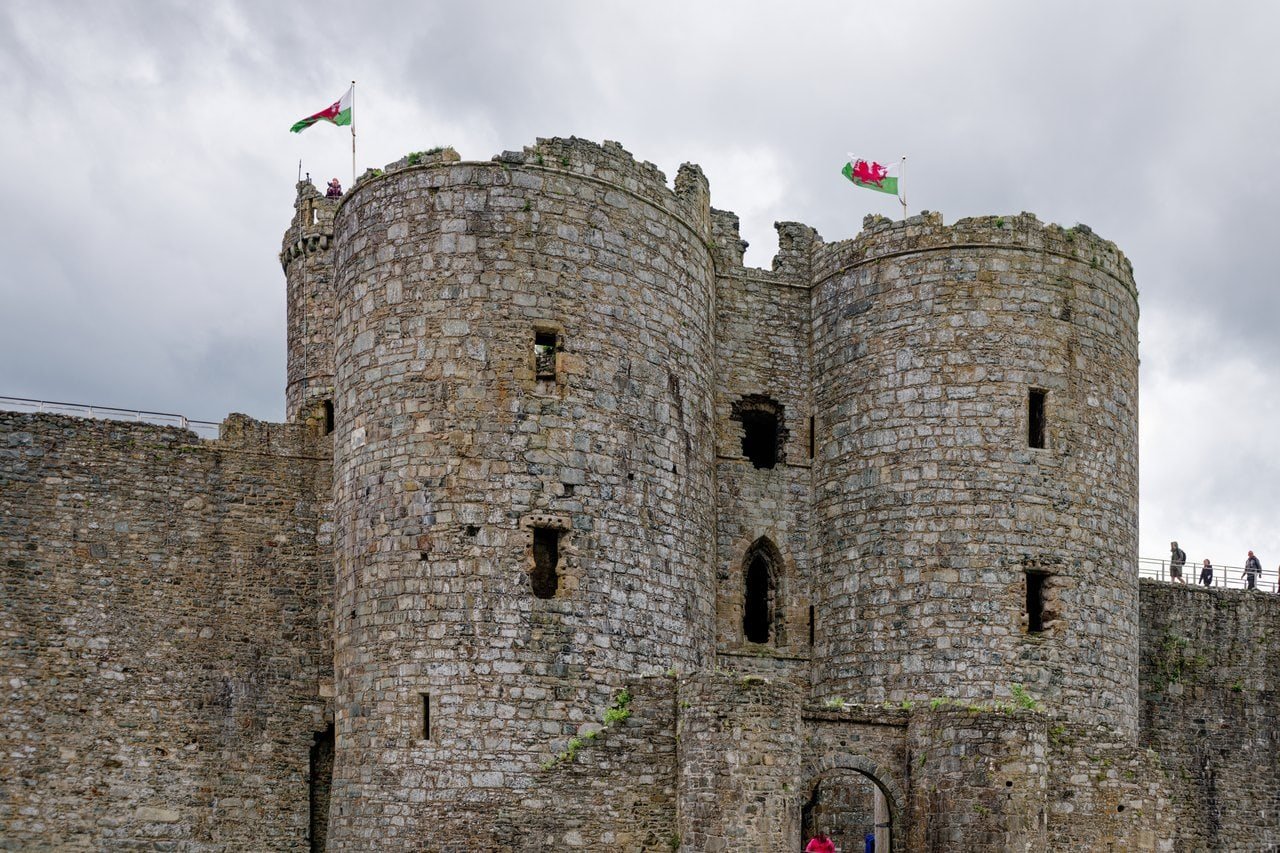
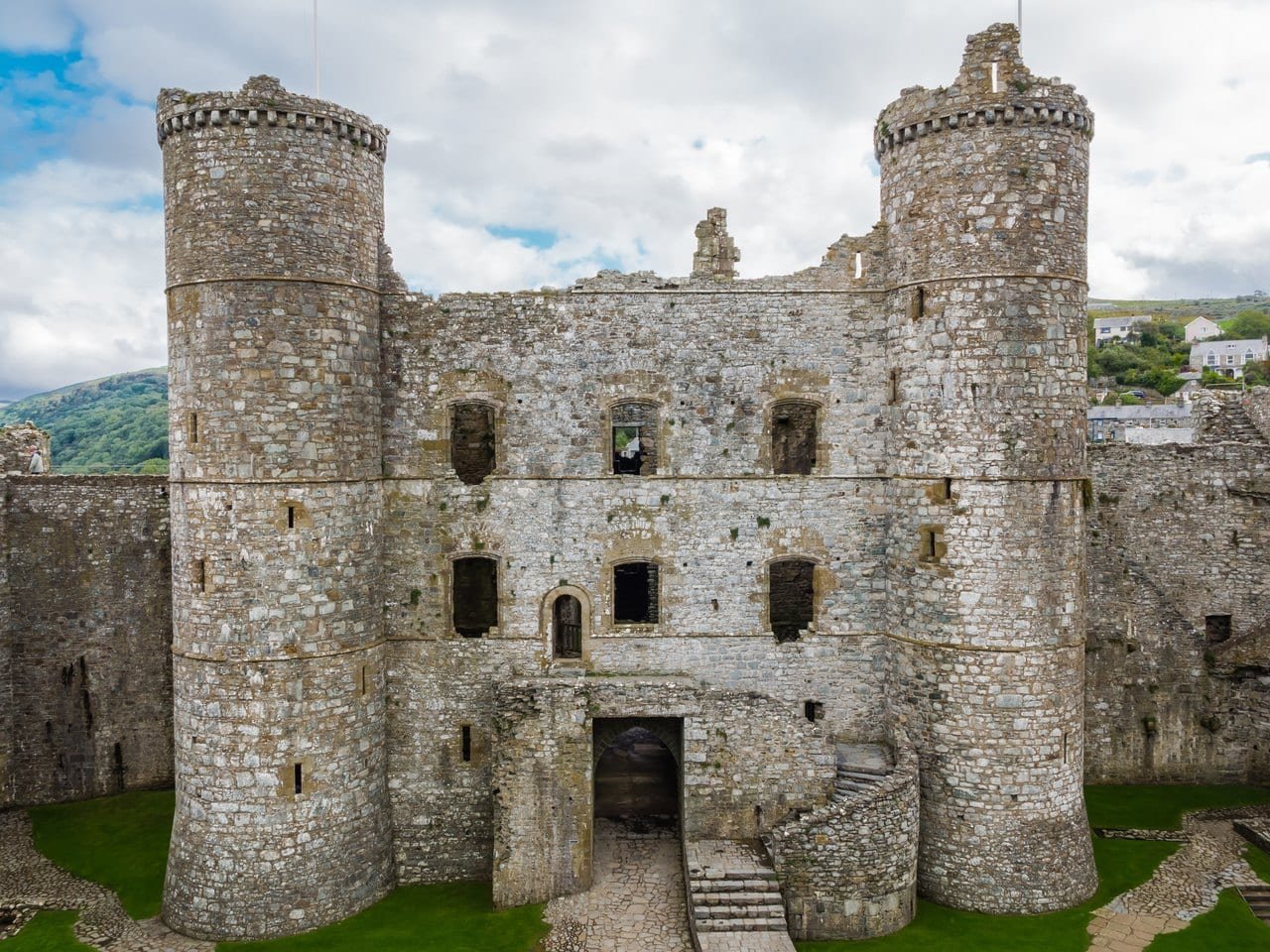
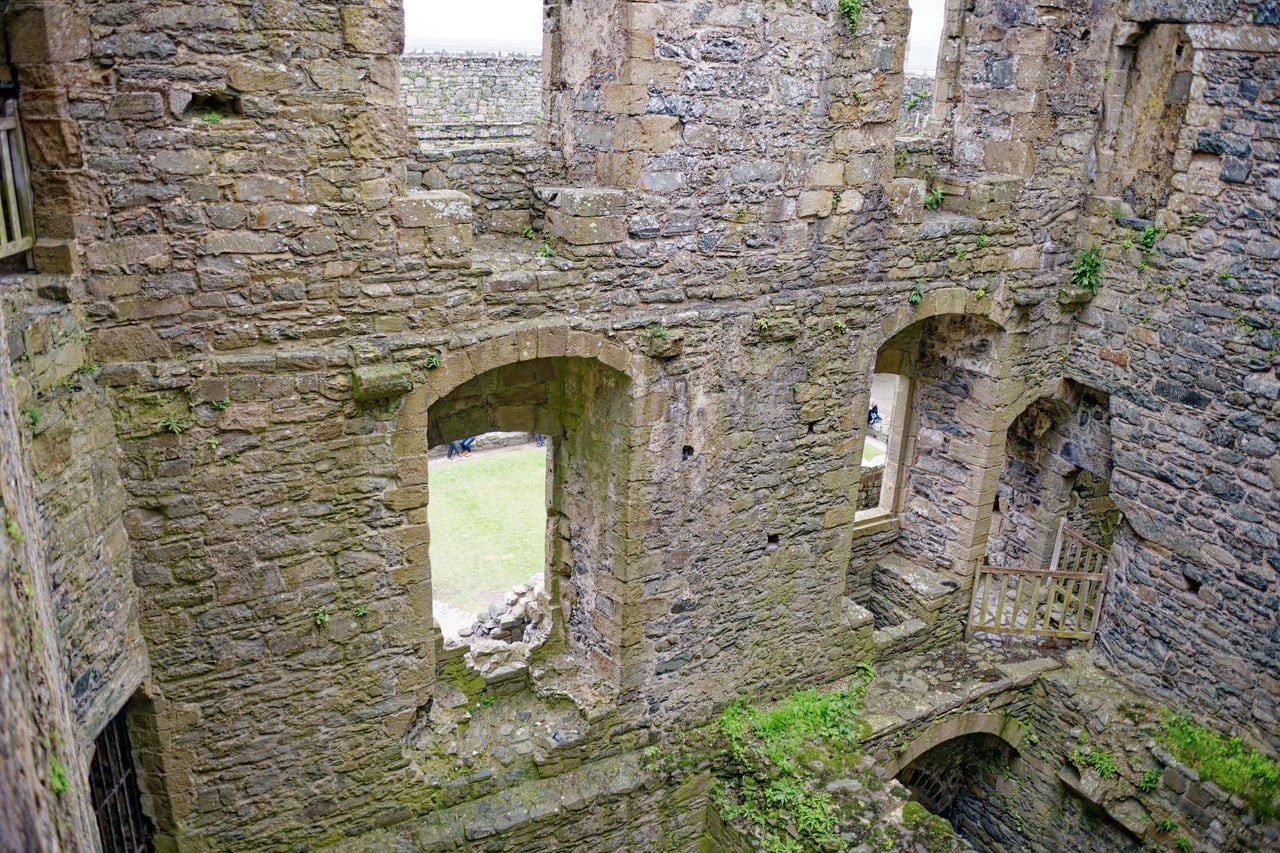
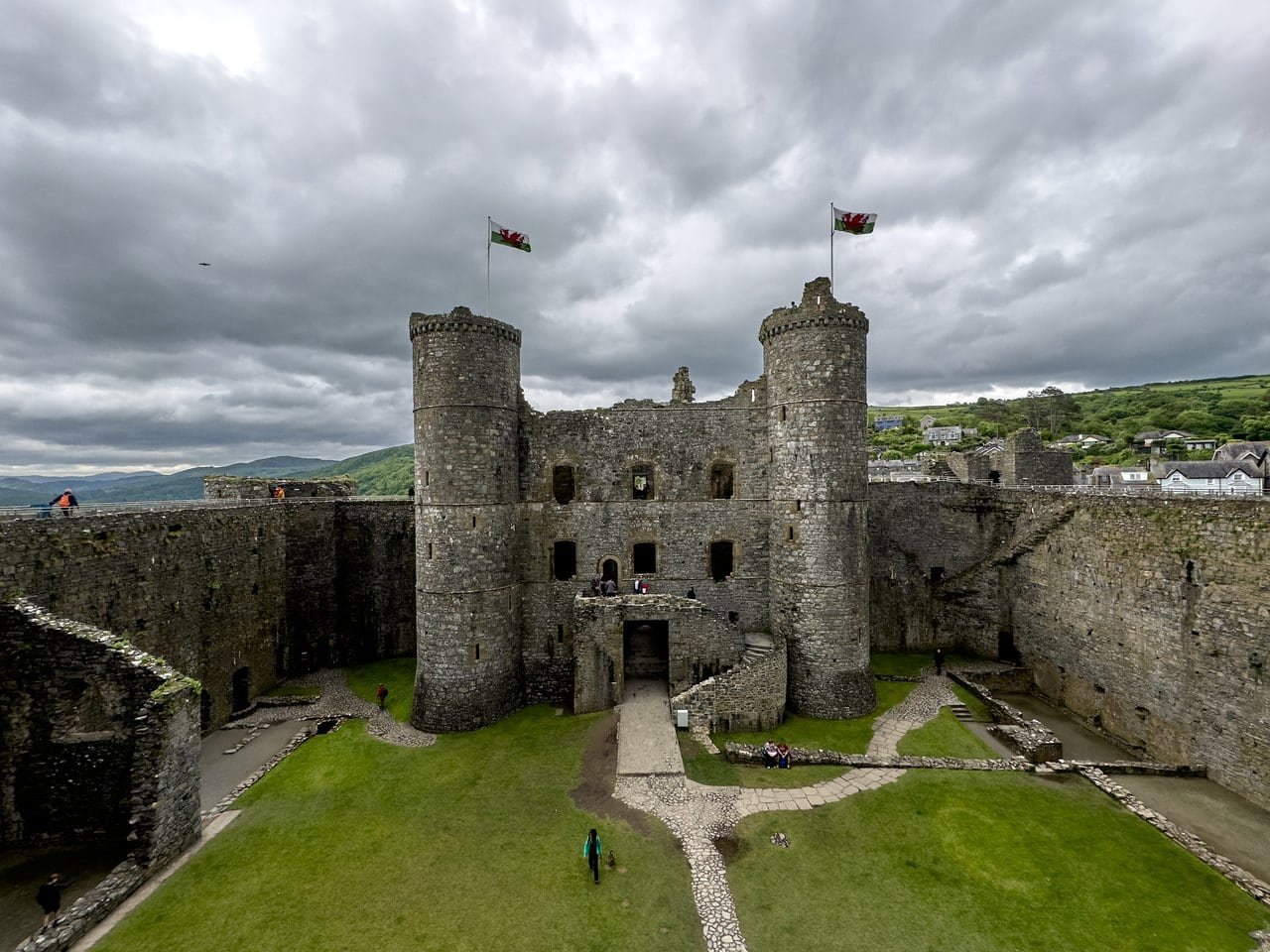
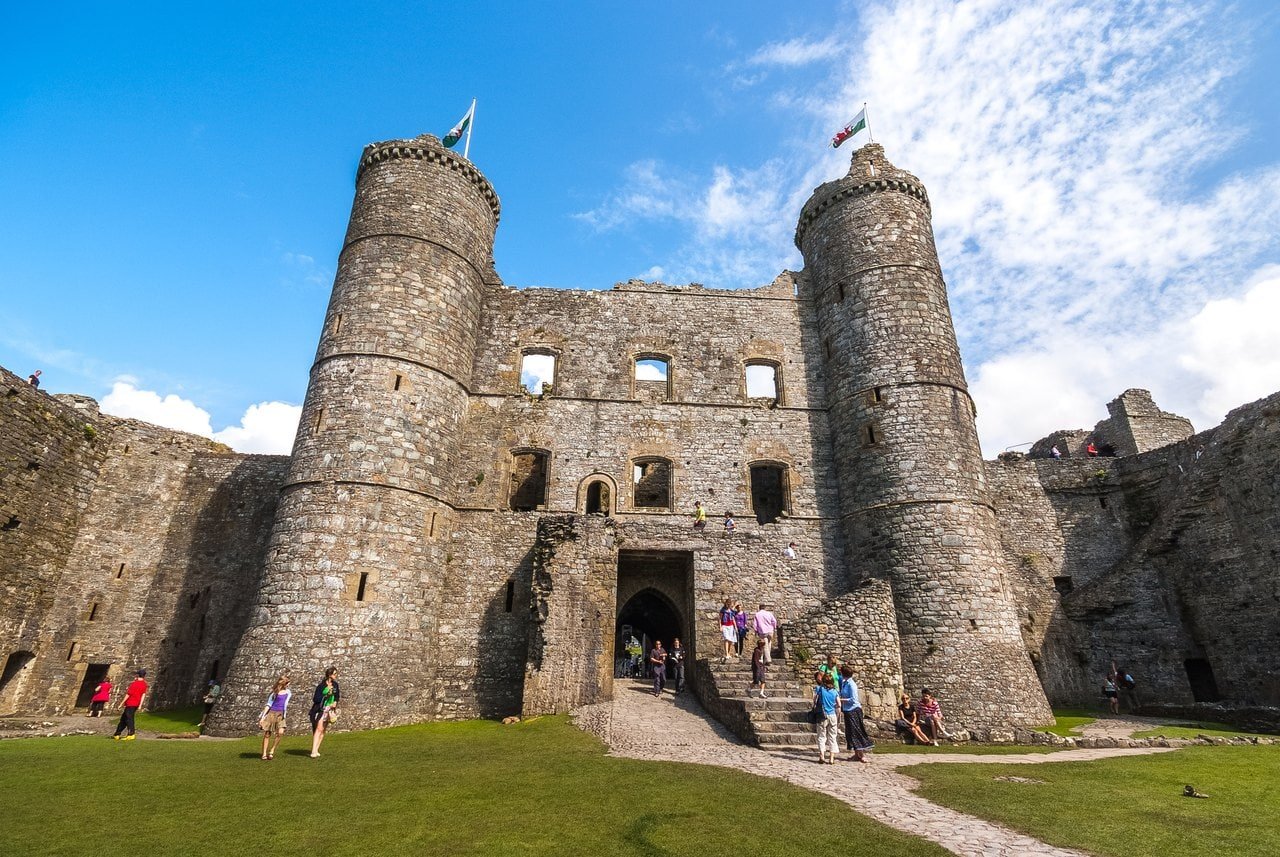
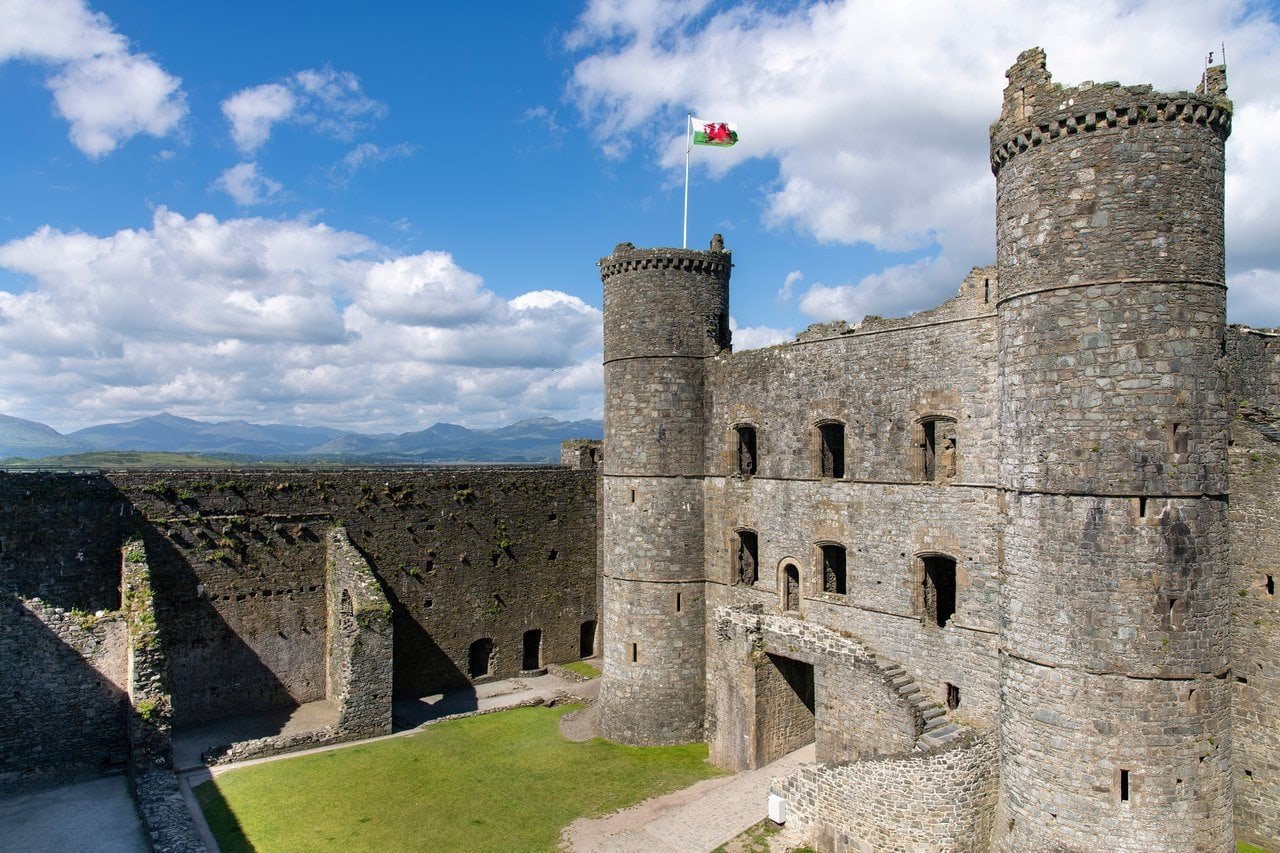
The great gatehouse faces east, and its outer front is framed by twin D-shaped towers. Cadw’s scheduling record describes “a pair of high D-shaped drum towers to the front, and a pair of narrower stair towers to the rear …” and singles the building out: “In the centre of the inner ward’s eastern (town-facing) wall is a large square gatehouse block and is the only surviving completed example of this form of gatehouse built for Edward I.” Its courtyard side is a different composition, a flat wall between the two slender stair towers, with six great windows, three to each upper floor, as Taylor counts them, and an external stone stair rising against it in three straight flights.
Behind those windows lay a suite of rooms on each upper floor, and the scheduling record hedges on who used them: “The first-floor apartment probably served as the constable’s quarters, whilst the upper floor rooms, of rather finer quality of detail, would have been reserved for important visitors.” Taylor thought that Master James lived in the castle with his wife, Ambrosia, “in all probability in the great gatehouse …” The building could also fight on its own. “The gatehouse was conceived as an independently defensible unit, and correspondingly could withstand assault from the inner ward, in the event that it fell to the enemy,” the record says.
Castle historians call a gatehouse like this a keep-gatehouse, a name D. J. Cathcart King credits to W. Douglas Simpson. A donjon is a castle’s great tower, and The History of the King’s Works says that at Harlech and Beaumaris “the gatehouse took the place of the donjon as the castle’s strongest feature.”
The Gate Passage
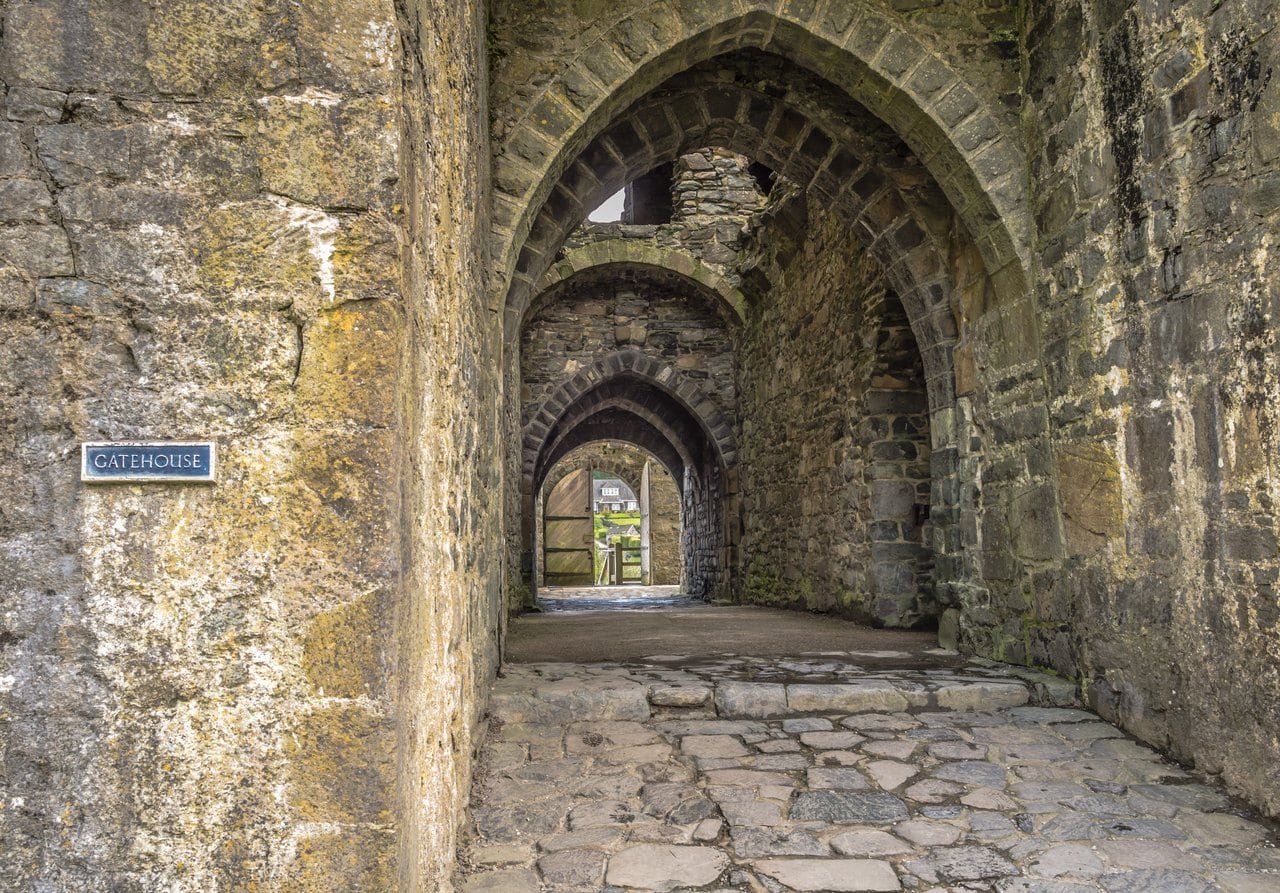
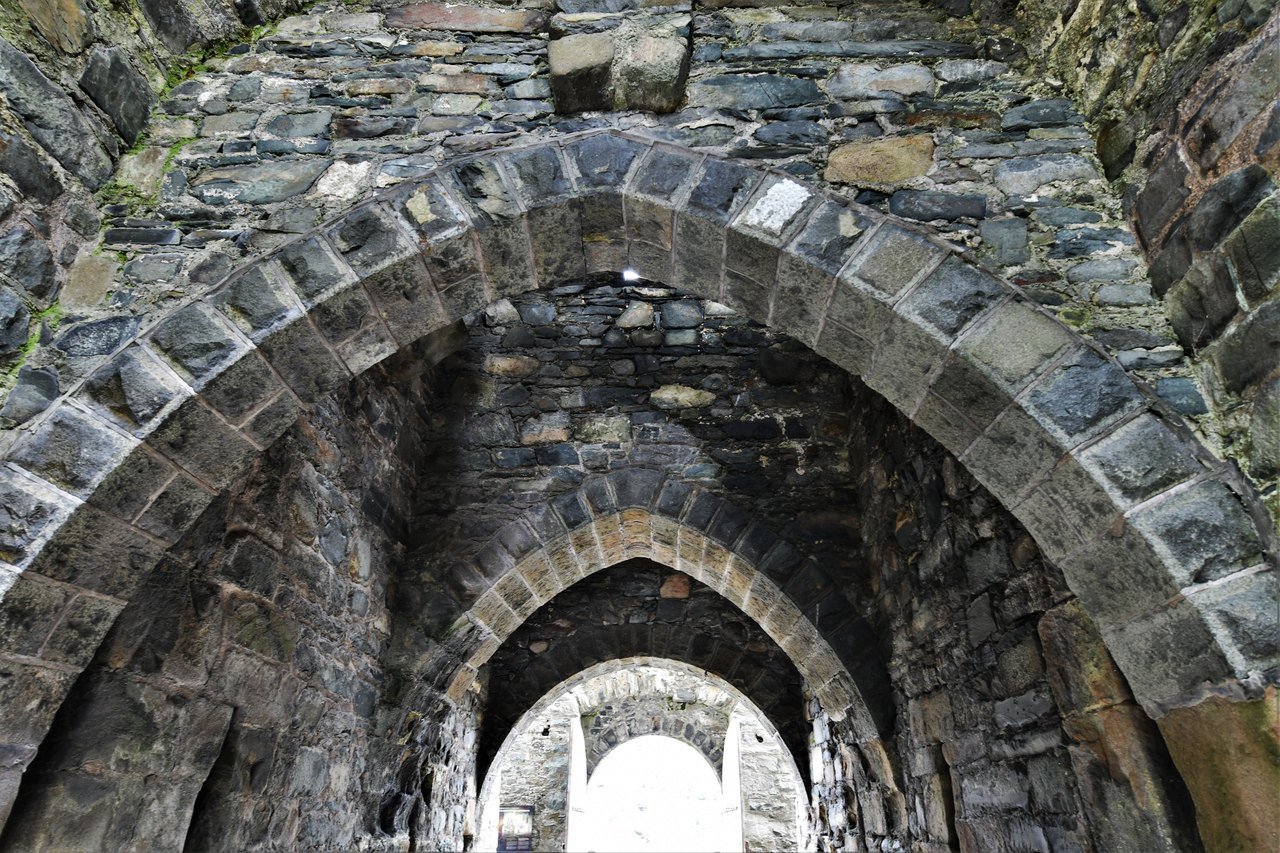
The passage was designed for three portcullises, worked from the first floor, Cadw’s records say, under the constable’s direct control. Taylor’s guidebook traces them in order. Behind the outer doors hung “a heavy portcullis, the grooves for which remain intact.” A second portcullis stood in front of the next arch, with a second two-leaved door beyond it, and at the inner end are “the grooves for a third portcullis barring entry to the courtyard …” In front of that there was possibly a third door, “but all evidence for this has now gone.”
Whether all three ever hung at once is less certain. The 1927 official guide says the inner entry “had also a portcullis at the western end, though this was done away with by an alteration in the arrangements of the first floor.” D. J. Cathcart King, writing of Harlech, says that “both here and at Beaumaris there were to have been three portcullises in each gate when finished …” Cadw’s records name murder-holes among the passage’s defenses alongside its portcullises and gates, and give no count of them.
The Inner Ward
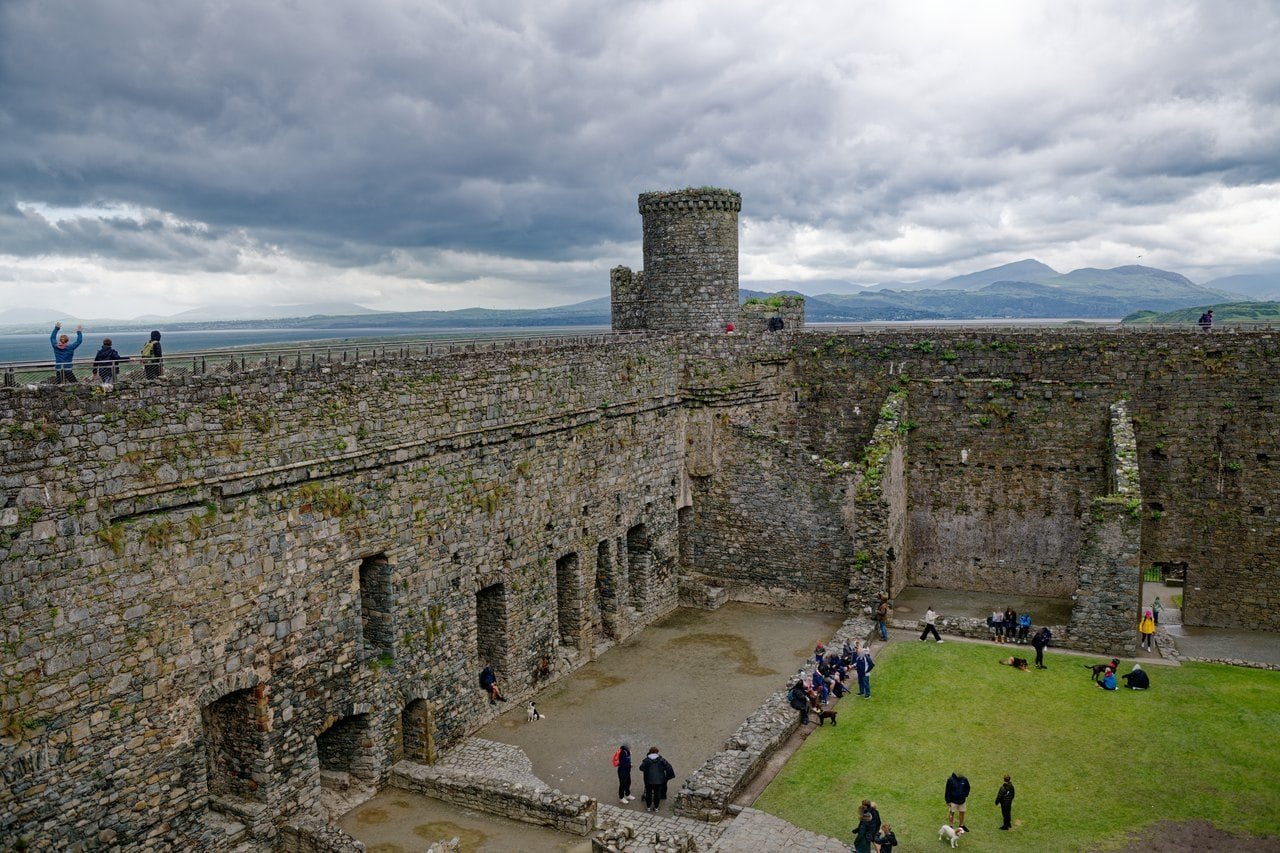
Little of what stood around the inner ward stands high today. The scheduling record puts it starkly: “Of these buildings, only the walls of the gabled chapel stand to any height; the remainder is reduced to foundation level.” Taylor’s guidebook describes more on the west side: of the hall, the outer wall stands in the west curtain with its four windows toward the sea, and the north gable rises to full height; a substantial fragment of the kitchen’s inner wall survives beside it. On the north side the chapel keeps its end walls, and on the south only footings remain. The plan on Cadw’s website names the rest by use: the kitchen, the buttery and pantry, the screens and the great hall, a chapel, a lodging, a granary and a well.
Towers and the Wall-Walk
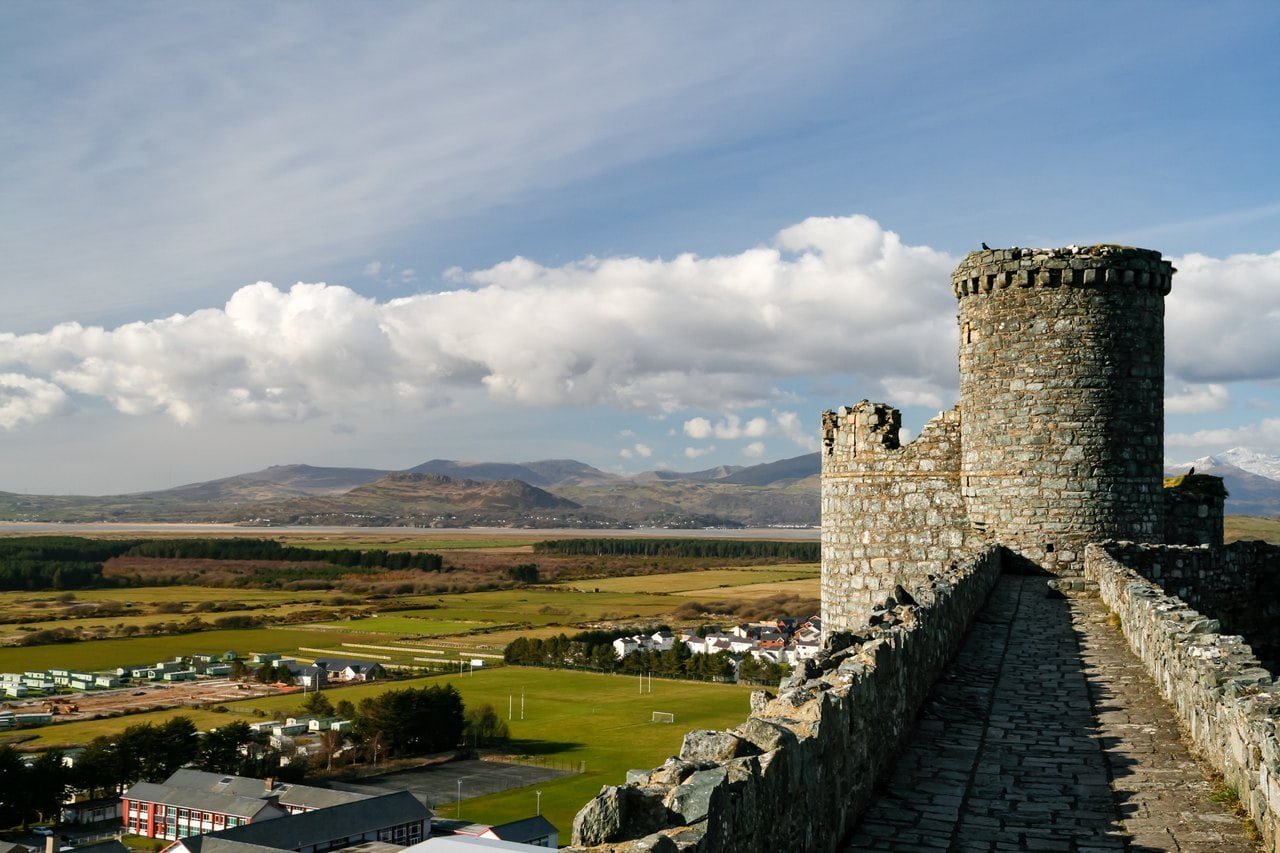
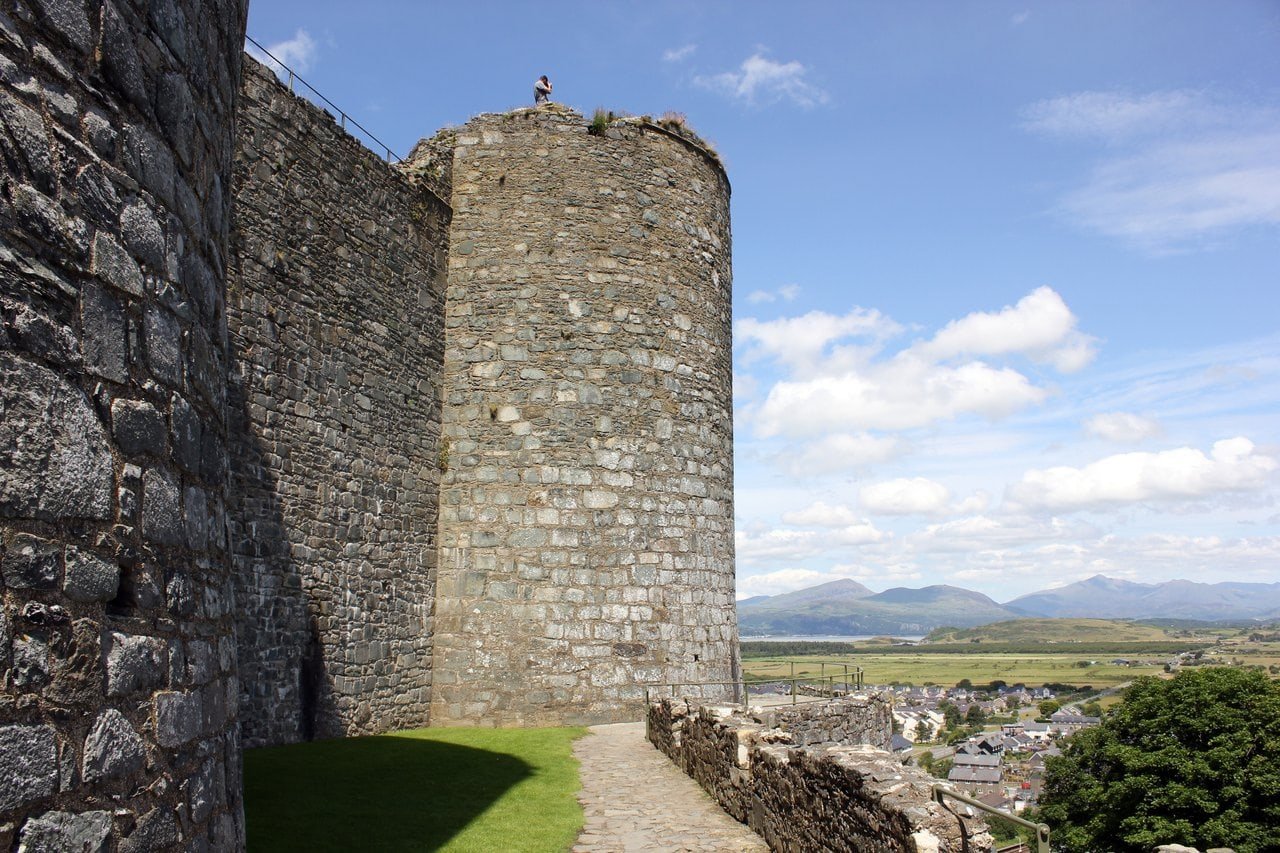
Four round towers hold the corners of the inner ward. A survey of 1343 called them the Prison, Garden, Weathercock and Chapel towers, and one of 1564 gave them other names again; Cadw’s plan now names them by the compass, North-East, South-East, South-West and North-West. Their interiors are mostly shells. Of the two western towers, Taylor’s guidebook writes: “In both of them the floors are missing and the staircases ruined and inaccessible, so that it is now only possible to inspect the interiors from below.”
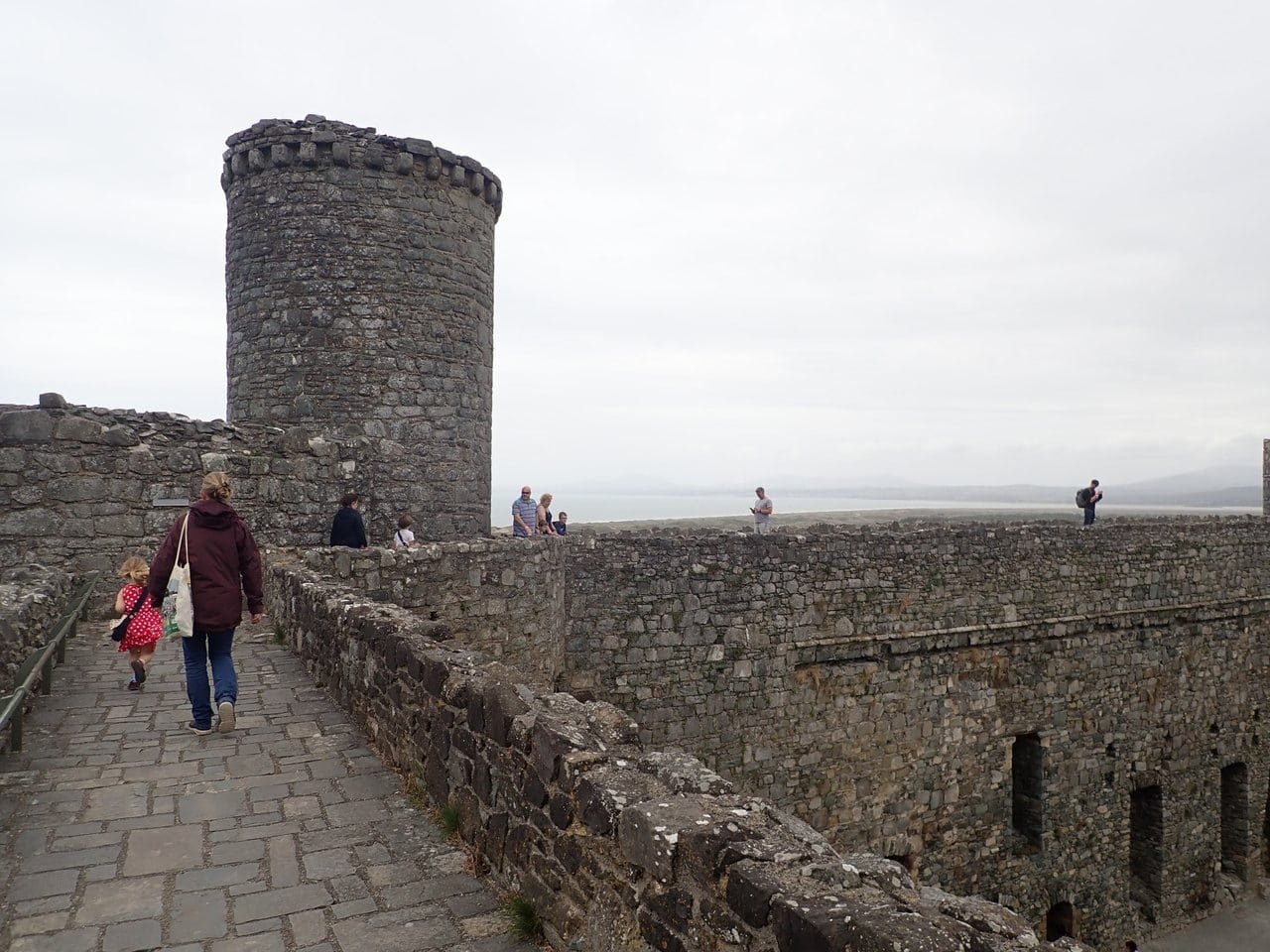
The wall-walk is one-way: once inside the castle, you reach it up a steep spiral stair on the right. Cadw warns that the light on that stair is dim and asks visitors to give their eyes time to adjust.
The Way from the Sea and the Water Gate
From the water gate at the foot of the rock, the Way from the Sea climbs the west side of the rock to an upper gate under the southwest tower. Taylor’s guidebook counts the climb: “From the water gate, 108 shallow steps lead up to an intermediate turret, where a fixed wooden ramp now occupies the position of a former drawbridge.” Cadw’s scheduling record, which calls the lower gate the “Gate-Next-the-Sea,” says that it “had its own drawbridge and portcullis system and was further covered by two rock-cut engine platforms above.”
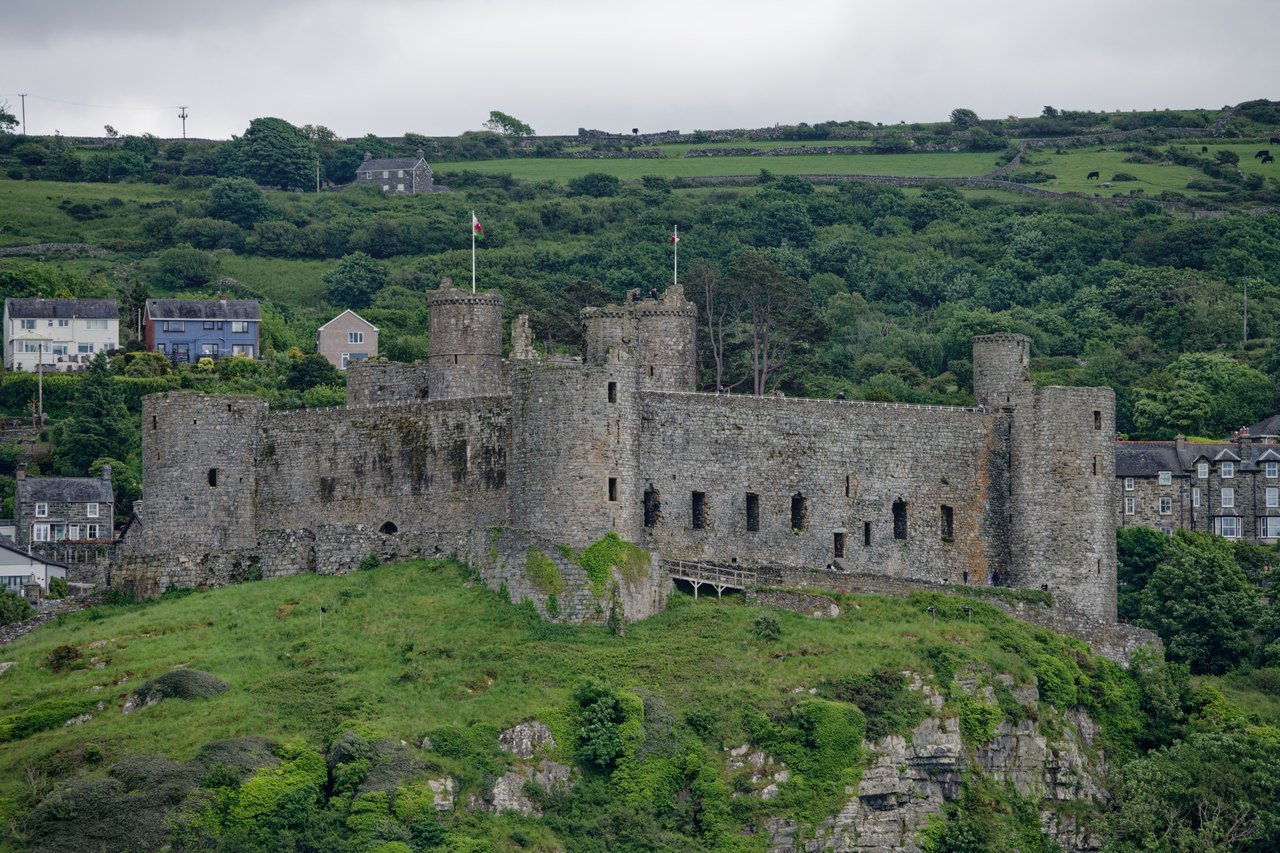
The water has gone. By the sixteenth century boats could no longer reach the water gate, and Harlech Marsh below the rock was reclaimed after the Enclosure Award of 1806. Cadw’s management plan sums up the change: “The relationship between Harlech Castle and the sea changed completely with coastal erosion, sand accretion and land reclamation.” Taylor’s guidebook places the water gate at the foot of the castle rock near the railway station.
The Outer Ward and the Ditch
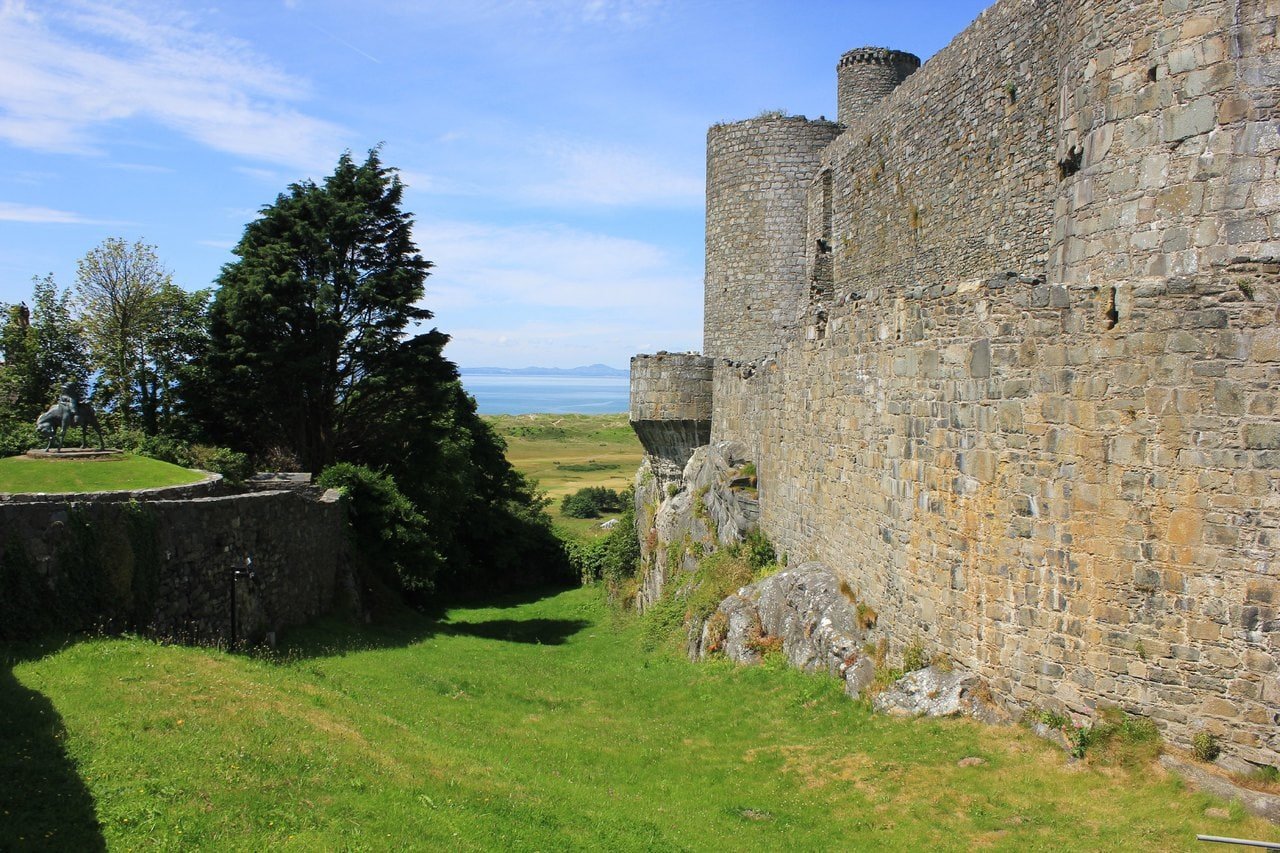
Between the two curtains runs the narrow outer ward. On the east and south its outer wall survives only as a low stump, with the bases of its arrowloops showing in what is left. What brought it down is disputed. Taylor’s guidebook suggests the English bombardment of 1408-09, writing that it may be to the battering of the cannon balls “that we should ascribe the loss of most of the outer curtain wall along the east and south sides of the castle,” while a caption in Cadw’s management plan puts the destruction down to Glyndŵr’s siege.
On the east and south, a deep rock-cut ditch separates the castle from the land, a dry ditch by design: in the words of Taylor’s guidebook, “This ditch was never intended to be water-filled; its scale alone was enough of an obstacle to mining or the bringing up of siege engines.” In front of the gatehouse, the footings of the two bridge towers added in 1323-24, under Edward II, remain in the ditch; the medieval bridge itself is gone. Seen from the car park, Taylor’s guidebook notes, only the ditch bridge towers, much of the low outer curtain wall and the high battlements are now wanting.
What Is Medieval and What Is Renewed
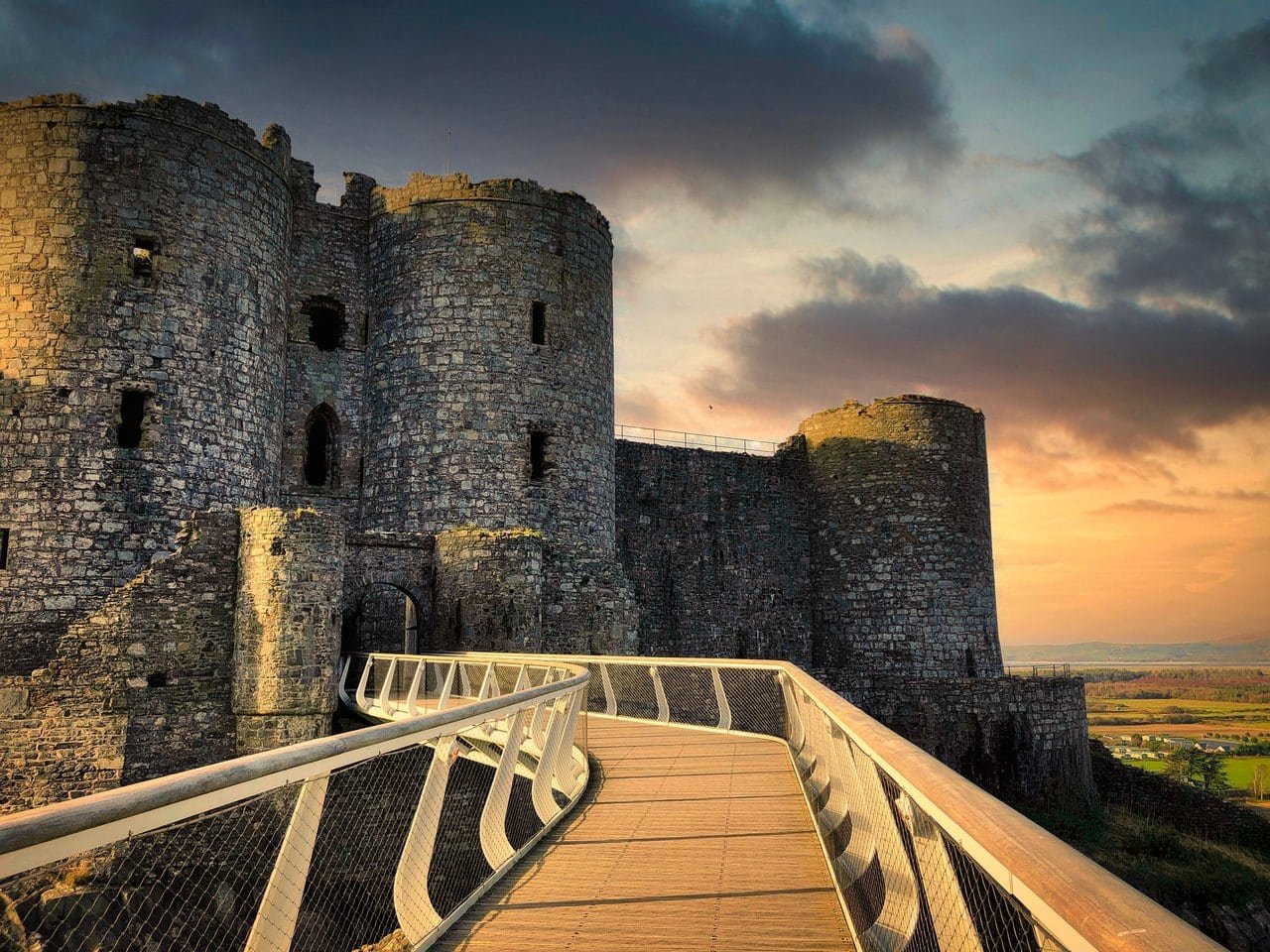
What stands at Harlech is medieval fabric, consolidated after the First World War, with some parts renewed. A general overhaul of the stonework and the excavation of the main ward were carried out under the direction of Charles Peers in the years after the war, Taylor’s guidebook records. The arches over the entrance passage were renewed before 1914, though the springers of three intermediate arches remain unrestored. Both gatehouse staircases have been renewed in modern times, and Taylor’s guidebook describes a reconstructed newel stair in the northeast tower. Inside, the gatehouse is a roofless shell with its floors gone; the same guidebook, in its 2002 edition, sends visitors up the external stair to a viewing platform in the first-floor doorway, from which almost all of the arrangements of the two upper floors can be seen. The entrance is modern too. Visitors now cross the ditch on a footbridge straight into the gatehouse, which, Cadw’s place page says, “allows you to enter this great castle as Master James intended …” The visitor center beside it was made from the former Castle Hotel in 2016, the management plan records.
Visiting Harlech Castle
List the 7 castles on this map
- Harlech Castle — Gwynedd, Wales
- Conwy Castle — Conwy County Borough, Wales
- Caernarfon Castle — Gwynedd, Wales
- Beaumaris Castle — Isle of Anglesey, Wales
- Caerphilly Castle — Caerphilly County Borough, Wales
- Dolbadarn Castle — Gwynedd, Wales
- Dolwyddelan Castle — Conwy County Borough, Wales
Prices, opening hours and parking charges are in the Admission table below.
Getting there
Trains stop at Harlech station, on Transport for Wales’s line between Machynlleth and Pwllheli; Cadw gives the route as “Shrewsbury-Machynlleth/Pwllheli,” and the operator’s timetable prints it together with the Aberystwyth trains, under the title “Birmingham – Aberystwyth and Machynlleth – Pwllheli.” Harlech station is about 200 m from the castle as the crow flies, but it sits in the lower town and the castle in the upper, so the walk up is steep. National Rail’s station page, read on 21 October 2026, lists no ticket office and no ticket machines there and says, “There is no taxi provision.” Lloyds Coaches’ G23, which runs between Barmouth and Porthmadog, also serves Harlech, with a stop at the railway station; check times with Traveline Cymru.
By road, Cadw lists the A496 from Barmouth and the A487 and A496 from Porthmadog, and it puts the castle on National Cycle Network Route 8. Cadw’s small pay car park, with accessible spaces, is at the front of the visitor center, café and apartments, beside the castle entrance. Parking in the lower part of the town means, in the words of Cadw’s access guide, “a very steep walk up to the castle (the road was in fact once in the Guinness World Record steepest street in the world).”
Admission
| Ticket | Price |
|---|---|
| Adult (Cadw prices 1 September 2026 to 31 March 2027; the next band is not yet published) | £10.40 |
| Junior (5-17), or student (photo ID shown on entry) | £7.20 |
| Senior (65+) | £9.30 |
| Family: 2 adults and up to 3 children | £33.30 |
| Family: 1 adult and up to 3 children | £22.90 |
| Children under 5; Cadw members; a disabled visitor and companion | Free |
| Cadw £1 ticket, for visitors on Universal Credit and other named benefits | £1 |
| Online booking (individual and family tickets) | 5% off the prices above, non-refundable |
| Blue Light Card holders, HM Armed Forces and veterans (individual admission, at the desk only) | 10% off |
| Cadw Explorer Pass, 3 days’ use in 7 (Cadw retail prices from 1 April 2026; family = 2 adults and up to 3 children or grandchildren under 18) | £28.00 one adult, £42.00 two adults, £67.20 family |
| Cadw Explorer Pass, 7 days’ use in 14 (Cadw retail prices from 1 April 2026; family as above) | £42.00 one adult, £63.00 two adults, £78.50 family |
| Arriving by train (Cadw and Transport for Wales 2-for-1, as read 22 October 2026) | For two visitors: the cheaper individual ticket is free when an adult (18+) shows a train ticket valid that day; heritage and scenic railway tickets excluded; not valid with any other offer |
| Castle car park (pay and display, as Cadw’s page read 22 October 2026; maximum stay 3 hours) | £2 for 1 hour, £3 for 2 hours, £4 for 3 hours; free for disabled visitors |
| Hours, 1 March to 30 June (as published by Cadw, no year attached) | 9.30am to 5pm |
| Hours, 1 July to 31 August | 9.30am to 6pm |
| Hours, 1 September to 31 October | 9.30am to 5pm |
| Hours, 1 November to 28 February | 10am to 4pm |
| Last admission | 30 minutes before closing |
| Closed | 24, 25 and 26 December and 1 January |
Harlech is among the Cadw sites that accept and sell the Explorer Pass. Checked against Cadw on 22 October 2026; confirm before traveling.
Suggested route
Start at the visitor center, which sells tickets and holds the café and an exhibition space, and cross the ditch by the footbridge straight into the gatehouse. Walk through the gate passage, under its succession of arches, into the inner ward, where the hall’s gable and the chapel’s end walls stand among the footings of the lost ranges. Finish on the wall-walk, which Cadw runs one way. Cadw’s place page tells the story of the Way from the Sea, but neither it nor the castle’s access guide, in the versions read for this guide in 2026, says whether visitors can use the stair, so ask Cadw before planning a visit around it.
Best time to visit
The castle is open all year except 24, 25 and 26 December and 1 January, and Cadw may close its monuments at short notice in extreme weather. It stays open later in July and August and keeps shorter hours from November to February; the times are in the table. Cadw charged more in June, July and August than in September in both 2025 and 2026, so a summer visit can cost more than the current band in the table shows. Wind matters on an exposed rock, and high winds are among the risks Cadw marks with signs around the site.
Photography
Personal photography is welcome. Cadw’s filming page tells anyone taking photos “for your own, personal use with just a camera and no additional equipment or dressing” to go ahead, while photography for commercial use needs Cadw’s permission. Under Cadw’s drone policy, operators adhering to the UK Drone Code may fly over Cadw monuments, but Cadw does not currently allow recreational drones to take off or land on its property. The same policy asks that any imagery of the scheduled monuments in its care stay personal wherever possible and not be published on third-party platforms, and that Cadw be informed, or given the opportunity to purchase it, if it is to be shared publicly or used to generate income or publicity.
For the classic view, Cadw’s guidebook points visitors to the castle seen from the south, with Snowdon’s peak behind it: the viewpoint, Taylor wrote in 2002, “lies just south of the town, on an open rocky knoll beside the Barmouth road.” Closer in, Cadw’s management plan singles out the view from the former Castle Hotel, now the visitor center, across the ditch, which “demonstrates the strength of the castle and its defences.” From the walls, the plan points to “the whole arc of the view over the Morfa to the sea and to Snowdonia.” The gatehouse faces east, so its front takes the morning light, and the castle’s west side, above the Morfa and facing Tremadog Bay, takes the evening light.
Accessibility
The path from the car park into the visitor center is flat and evenly paved, Cadw’s access guide says, and the center has wide automatic doors, low admission desks, an accessible exhibition space and café, and accessible toilets with baby-changing facilities. From it a modern footbridge with a gentle upward slope leads to the castle. Inside, the castle can be enjoyed from ground level, but its towers and wall-walks are reached by steep, narrow, uneven stairs, and Cadw’s place page rates the terrain Level 3, moderate. Gravel paths and cobbles can be hard going for some mobility scooters, and the access guide lists no parking for prams and scooters. A portable induction loop is available, and there is no audio tour. Near the castle, Cadw’s safety notes warn, a short boundary wall “drops to a dry moat,” and Cadw asks that children be supervised there. At Harlech station, National Rail lists staff help as unavailable, and step-free access to all platforms, which may be by long or steep ramps or via streets; the climb from the lower town to the castle is steep.
Cadw also lets five self-catering holiday apartments in the visitor-center building, a few meters from the gatehouse, through its own holiday accommodation pages. For other places to stay nearby, see hotels near Harlech Castle on Booking.com, and GetYourGuide lists tours that include the castle.
Some links on this page are affiliate links, which means StoneKeep Atlas may earn a small commission, at no extra cost to you, if you book through them.
More Views of Harlech Castle
Common Questions
How long does it take to visit Harlech Castle?
Cadw’s place page gives no visit time, and the answer depends on the walls. The ground floor can be seen at your own pace, but the wall-walk is a one-way system, and Cadw’s place page spells out the consequence: “The steps down are located at the end of the wall walk route; you are therefore required to follow the whole route.” So decide before you climb. Once you are up, the walk along the walls to the stair down is part of the visit, however long that takes you.
How was Harlech Castle supplied during a siege?
By sea, in Madog ap Llywelyn’s rising, when Harlech and Criccieth across the bay were both isolated. Arnold Taylor’s Cadw guidebook writes: “But the coastal position of the two strongholds enabled them to be supplied and victualled from Ireland by sea, and both held out.” John E. Morris’s study of the Exchequer accounts adds that the ship and three barges on that run had “eighteen crossbowmen and three archers serving as marines” aboard and that they unloaded at Criccieth too, on 3 and 11 April 1295.
Was Harlech Castle ever captured?
Yes, more than once, though it also held out when it was threatened. Its record runs: held out in 1294-95; saved in December 1401 by a relief from Chester; taken by Owain Glyndŵr in 1404; recovered by the English early in 1409; given up to the Yorkists in August 1468; and handed over to Parliament’s forces in March 1647. In 1403, the year before Glyndŵr took it, the garrison consisted of 10 men-at-arms and 30 archers, kept for £389 6s. 8d. a year, the 1927 official guide records.
Who owns Harlech Castle now?
The Crown, not Cadw. Arnold Taylor’s Cadw guidebook of 2002 states that “Harlech has always remained a property of the Crown,” and Cadw’s World Heritage Site management plan of 2018 says the same in its own words, that Harlech “remained the property of the Crown.” What Cadw holds is the castle’s care. Taylor’s timeline records that in 1984 responsibility for the care of Harlech was transferred to Cadw, and the castle has been in Cadw’s care since.
Do you have to pay to get into Harlech Castle?
Yes. Harlech is one of Cadw’s ticketed sites, and the current prices are in the Admission table above. Some visitors enter free, Cadw’s own members among them. Cadw’s free-access page adds that members of English Heritage, Manx Heritage and Historic Scotland are admitted to Cadw sites across Wales without charge “upon renewal of membership.” The arrangement works the other way for Cadw members at those bodies’ sites.
Can you take dogs into Harlech Castle?
Yes, on a lead and on the ground floor. Cadw’s place page says: “Dogs on short leads welcome to access ground floor levels of the site.” Its access guide puts the rule more strictly: “Dogs must be kept on leads at all times and non-assistance dogs must stay on the ground floor only.” The same guide lists a dog bowl among the castle’s facilities.
When was Harlech Castle built, and how long did it take?
Work started in 1283. The History of the King’s Works finds Harlech’s earliest appearance in the records toward the end of April that year, when a force of 560 infantry marched there from Castell-y-Bere. The work peaked three years later: in the summer of 1286, Arnold Taylor’s Cadw guidebook says, nearly 950 men were employed. Taylor sums up the pace: “Now some seven centuries old, Harlech was completed in all essentials from ground to battlements in a mere seven years.”
Beyond Harlech Castle
Beaumaris Castle, begun in 1295 on a flat site beside the Menai Strait, shows what the same king’s builders did where, in Cadw’s account, no natural constraints shaped the plan. Conwy Castle, begun in 1283 on a narrow rock at the corner of its walled town, was raised with a new town inside walls at the same time. Caernarfon Castle, begun the same year as a fortress, a royal residence and a seat of government, was never completed as planned. In Arnold Taylor’s account, the capture of Dolwyddelan Castle by 18 January 1283 opened the way through the Conwy valley, the Llanberis Pass and the Vale of Ffestiniog to Conwy, Caernarfon and Harlech. Dolbadarn Castle, at the foot of the Llanberis Pass, was a castle of the princes of Gwynedd taken in the same campaign. Criccieth Castle, “the Welsh castle across the bay” in Taylor’s guidebook, held out with Harlech in 1294-95, and it is reached by the same rail route: Cadw’s place page puts it 400 m from Criccieth station, on the Shrewsbury-Machynlleth/Pwllheli route it gives for Harlech. In south Wales, Caerphilly Castle, begun in 1268 by the Marcher lord Gilbert de Clare, stands in artificial lakes held back by dams. A separate guide on this site sets the king’s castles beside those of the Marcher lords and the princes, and answers how many castles Wales has, a question whose answer depends on what is counted.
Conclusion
Begun for Edward I in 1283 on a rock that boats could once reach, Harlech Castle is easiest to understand from its two ends. The great gatehouse faces the town and the landward approach, and it was designed to hold out even if the inner ward fell. The Way from the Sea runs down the other side of the rock to the water gate, where, in the words of Cadw’s scheduling record, “supplies were landed by ship.” Today the inner curtain, the corner towers and the gatehouse still stand high and roofless, and the outer wall is a low stump on the east and south. In the first of the castle’s wars its survival came by water, as did Criccieth’s across Tremadog Bay. From the castle, Cadw’s management plan counts among its significant views “the whole arc of the view over the Morfa to the sea and to Snowdonia.”
Principal Sources
- Cadw. “Cadw Drone Policy.” cadw.gov.wales
- Cadw. “Castell Cricieth.” Place page. cadw.gov.wales
- Cadw. “Castell Harlech.” Place page. cadw.gov.wales
- Cadw. “Castell Harlech Access Guide.” cadw.gov.wales
- Cadw. Castles and Town Walls of King Edward in Gwynedd World Heritage Site Management Plan 2018-2028. Cardiff: Cadw, 2018 (PDF). cadw.gov.wales
- Cadw. “Explorer Pass (3 and 7 day).” cadw.gov.wales
- Cadw. “Filming and Photography.” cadw.gov.wales
- Cadw. “Free Access Schemes.” cadw.gov.wales
- Cadw. Ground plan, Harlech Castle. cadw.gov.wales
- Cadw. “Harlech Apartments.” Cadw holiday accommodation. cadw.gov.wales
- Cadw. Listed Building 25500, Harlech Castle. Full Report. cadwpublic-api.azurewebsites.net
- Cadw. “More about Castell Harlech.” cadw.gov.wales
- Cadw. Scheduled Monument ME044, Castell Harlech. Full Report. cadwpublic-api.azurewebsites.net
- Cadw. “2 for 1 Entry Offer with Transport for Wales.” cadw.gov.wales
- Calendar of Various Chancery Rolls … Welsh Rolls, 1277-1326. London: HMSO, 1912. archive.org
- Colvin, H. M., gen. ed. The History of the King’s Works, vol. I: The Middle Ages. London: HMSO, 1963. archive.org
- Dictionary of Welsh Biography. “Dafydd ab Ifan ab Einion (fl. 1440-1468).” biography.wales
- Dictionary of Welsh Biography. “Herbert, William (died 1469), earl of Pembroke.” biography.wales
- Dictionary of Welsh Biography. “Owen, Sir John (1600-1666),” with William Owen (1607-1670). biography.wales
- King, D. J. Cathcart. The Castle in England and Wales: An Interpretative History. London: Croom Helm, 1988. archive.org
- Morris, John E. The Welsh Wars of Edward I. Oxford: Clarendon Press, 1901. archive.org
- National Rail. “Harlech.” Station page. nationalrail.co.uk
- Peers, C. R., and W. J. Hemp. Harlech Castle: Official Guide. London: HMSO, 1927. archive.org
- Phillips, John Roland. Memoirs of the Civil War in Wales and the Marches, 1642-1649, vol. II. London: Longmans, 1874. archive.org
- Stevenson, Joseph, ed. “Wilhelmi Wyrcester Annales Rerum Anglicarum.” In Letters and Papers Illustrative of the Wars of the English in France during the Reign of Henry the Sixth, vol. II, part 2. Rolls Series 22. London, 1864. archive.org
- Taylor, Arnold. Harlech Castle. 4th ed. Cardiff: Cadw, 2002.
- Transport for Wales. “Harlech Station.” tfw.wales
- Traveline Cymru. “Timetables.” traveline.cymru
- UNESCO World Heritage Centre. “Castles and Town Walls of King Edward in Gwynedd.” whc.unesco.org
- Warkworth, John. A Chronicle of the First Thirteen Years of the Reign of King Edward the Fourth. Edited by J. O. Halliwell. London: Camden Society, 1839. archive.org
- Wylie, James Hamilton. History of England under Henry the Fourth, vols. I-III. London: Longmans, 1884-1896. archive.org: vol. I, vol. II, vol. III
Image credits. Hero, the castle on its rock above the town: Photo: Valerie2000 / Adobe Stock; the gatehouse’s outer face and footbridge from the air: Photo: Nicola / Adobe Stock; W. Crane’s lithograph: Lithograph: W. Crane, CC0, via the National Library of Wales; the photochrom of about 1890-1900: Photochrom Print Collection, Library of Congress, public domain; Cadw’s phased plan: Plan: Cadw, Open Government Licence v1.0; the castle from directly above: Photo: Wirestock Creators / Adobe Stock; the gatehouse’s outer face: Photo: Tilman2007, CC BY-SA 4.0; the gatehouse’s inner face: Photo: hipproductions / Adobe Stock; an upper room of the gatehouse: Photo: Tilman2007, CC BY-SA 4.0; the gate passage: Photo: hipproductions / Adobe Stock; the inner ward from the wall-walk: Photo: Tilman2007, CC BY-SA 4.0; the wall-walk and a corner tower: Photo: Chris Jones / Adobe Stock; the castle from the west: Photo: Tilman2007, CC BY-SA 4.0; the steps of the Way from the Sea: Photo: habiloid, CC BY-SA 2.0; the outer ward: Photo: Jeff Buck, CC BY-SA 2.0; the rock-cut ditch: Photo: Jeff Buck, CC BY-SA 2.0; the footbridge to the gatehouse: Photo: Kev Jones / Wirestock Creators / Adobe Stock; the castle from the air above the town: Photo: Nicola / Adobe Stock; the gatehouse across the inner ward: Photo: Tilman2007, CC BY-SA 4.0. Source: 25500 Harlech Castle, Gatehouse Towers, seen from the wall walk Harlech 20240530 0070, Wikimedia Commons; the castle across the dunes: Photo: Radenbow / Adobe Stock; the gatehouse inner face with visitors: Photo: Ronin / Adobe Stock; the castle above the town and the flats: Photo: Sean / Adobe Stock; the gatehouse and the inner ward: Photo: Sonja / Adobe Stock; the castle above the golf links and dunes: Photo: Llywelyn2000, CC BY-SA 4.0. Source: Castell a Morfa Harlech, Gwynedd, Mai 2024 - Parc Cenedlaethol Eryri National Park 02, Wikimedia Commons; a gatehouse fireplace: Photo: Tilman2007, CC BY-SA 4.0. Source: 25500 Harlech Castle, Gatehouse, north rooms Harlech 20240530 0094, Wikimedia Commons; the gate passage arches: Photo: Michael Garlick, CC BY-SA 2.0. Source: Harlech Castle, The entrance gatehouse construction detail - geograph.org.uk - 6138231, Wikimedia Commons; visitors on the wall-walk: Photo: Eirian Evans, CC BY-SA 2.0. Source: Walking the walls of Harlech Castle - geograph.org.uk - 5909092, Wikimedia Commons; the castle rock from below: Photo: Chris Heaton, CC BY-SA 2.0. Source: Harlech Castle from below - geograph.org.uk - 5132686, Wikimedia Commons; the west curtain and gatehouse from the air: Photo: Wirestock Creators / Adobe Stock. Freely licensed images are resized to fit; any other change, such as a crop, is named in the credit.